Romans 15:4 "For whatever was written in earlier times was written for our instruction, so that through perseverance and the encouragement of the Scriptures we might have hope."
36 Then he put a little child among them. Taking the child in his arms, he said to them, 37 “Anyone who welcomes a little child like this on my behalf[a] welcomes me, and anyone who welcomes me welcomes not only me but also my Father who sent me.”
The Word of God for the Children of God.
Glory be to the Father, and to the Son, and to the Holy Ghost; as it was in the beginning, is now, and ever shall be, world without end. Amen, amen.
We like to think that welcoming someone is simple, easy, and uncomplicated.
As Christian people, Jesus calls us to welcome people in his name and, by doing so, welcome him and the one who sent him.
And so, we open our homes and enjoy times of fellowship or fun. We host bible studies and dinners; we build up our blessed small groups.
Sure, arranging for a dinner party or a social gathering or bible study may be hectic at times, but the payoff is worth it.
We surround ourselves with the people we enjoy, and, if we welcome others well, then, in turn, they welcome us. It’s a win/win situation.
But welcoming people, in the way Jesus calls us to, is not as polite or as neat as we might think. To welcome people, as Jesus does, is to reach out to the people we would rather not associate with – the people who don’t belong to our friend group or our inner circle.
In Luke 14:12-13, Jesus advises, “When you give a luncheon or dinner, do not invite your friends, your brothers or sisters, your relatives, or your rich neighbors; if you do, they may invite you back and so you will be repaid.But when you give a banquet, invite the poor, the crippled, the lame, the blind.”
Jesus turns the very idea of welcoming on its head, and it is this call to radical welcoming that he illustrates when he tells the disciples to welcome a child.
Now, today, we might think that it’s easy;
“Who wouldn’t want to welcome children?” we might say.
Children are cute and cuddly; they are the symbol of innocence and purity.
But in Jesus’ day, that’s not how children were viewed. Children were a nuisance. They were bothersome. They were a symbol of people who were dependent and in the way and who couldn’t contribute. The child was an image of the quintessential other, a person we would rather not have in our midst.
But this is the call of Christ.
We must be willing to see the presence of Christ in the other.
Jesus says, “Whoever receives one such child in my name receives me.”
To welcome others in Jesus’ name is not just to think about Jesus as we embrace the other person but to embrace the other just like you would embrace Jesus – with respect, with care, with love, and with service.
And where the proverbial rubber means the road is the call to do that to the people we would rather not associate with: the other, the annoying, the critical, the bothersome, the unfriendly.
Can we welcome the unwelcome as we would welcome Jesus?
Now this may make us feel uncomfortable.
But welcoming involves bearing possible discomfort for the sake of another person’s inclusion, care, and healing. After all, that’s what Jesus did for us.
The biggest example is the cross, where Jesus is handed over to suffering and death, so that we might feel the welcoming embrace of God.
There are times when Jesus stretches us beyond our comforts and calls us to welcome someone we would rather not welcome. We might even find ourselves praying, “Oh Jesus, please not them!” But Jesus makes clear that when we open our homes, our hands, and our hearts to the other—whoever they might be—He is present, and his gracious and healing love is revealed in powerful ways.
In the name of God, the Father and God the Son and God the Holy Spirit,
Let’s Pray:
Precious Jesus, I thank you for all the ways that you welcome me. I thank you that despite my failings and my sin, your arms are continually open to me. Time and again, despite what I have done, you extend your love to me – not because I deserve it, but because you are gracious and merciful and abounding in love. In that love, I hear your call to welcome others – to open my heart in an expression of your care. Lord, today, I feel your call to welcome someone whom I regard as different from me. Inside, I feel a lack of desire to welcome them; I may even go so far as to say that I dislike them. This person doesn’t fit my comfortable idea of welcoming.
But you remind me that refusing to be stretched marks a refusal to be transformed, and so I ask you to help me step forward in faith. Give me the strength to follow you outside my comforts. Help me embrace the people you bring me to, regardless of who they are. Give me eyes to see you in the people I welcome. And when this call makes me uncomfortable, remind me of the grace in which I stand—and the grace you call me to express. I pray all this in your holy name, Jesus, Amen.
Psalm 24 New Living Translation
Psalm 24
A psalm of David.
1 The earth is the Lord’s, and everything in it. The world and all its people belong to him. 2 For he laid the earth’s foundation on the seas and built it on the ocean depths.
3Who may climb the mountain of the Lord? Who may stand in his holy place? 4 Only those whose hands and hearts are pure, who do not worship idols and never tell lies. 5 They will receive the Lord’s blessing and have a right relationship with God their savior. 6 Such people may seek you and worship in your presence, O God of Jacob.[a] Interlude
7 Open up, ancient gates! Open up, ancient doors, and let the King of glory enter. 8 Who is the King of glory? The Lord, strong and mighty; the Lord, invincible in battle. 9 Open up, ancient gates! Open up, ancient doors, and let the King of glory enter. 10 Who is the King of glory? The Lord of Heaven’s Armies— he is the King of glory. Interlude
Glory be to the Father, and to the Son, and to the Holy Ghost; as it was in the beginning, is now, and ever shall be, world without end. Amen, amen.
91 You who live in the shelter of ‘Elyon, who spend your nights in the shadow of Shaddai, 2 who say to Adonai, “My refuge! My fortress! My God, in whom I trust!” — 3 he will rescue you from the trap of the hunter and from the plague of calamities; 4 he will cover you with his pinions, and under his wings you will find refuge; his truth is a shield and protection.
5 You will not fear the terrors of night or the arrow that flies by day, 6 or the plague that roams in the dark, or the scourge that wreaks havoc at noon. 7 A thousand may fall at your side, ten thousand at your right hand; but it won’t come near you. 8 Only keep your eyes open, and you will see how the wicked are punished.
9 For you have made Adonai, the Most High, who is my refuge, your dwelling-place. 10 No disaster will happen to you, no calamity will come near your tent; 11 for he will order his angels to care for you and guard you wherever you go. 12 They will carry you in their hands, so that you won’t trip on a stone. 13 You will tread down lions and snakes, young lions and serpents you will trample underfoot. 14 “Because he loves me, I will rescue him; because he knows my name, I will protect him. 15 He will call on me, and I will answer him. I will be with him when he is in trouble. I will extricate him and bring him honor. 16 I will satisfy him with long life and show him my salvation.”
The Word of God for the Children of God.
Glory be to the Father, and to the Son, and to the Holy Ghost; as it was in the beginning, is now, and ever shall be, world without end. Amen, amen.
The news and images emerging from the fires in California are hard to believe.
Skies have turned red, filled with hug clouds of smoke over cities and counties as Santa Anna winds 80-100 mph is fueling multiple wildfires across the state.
As the governor declares a state of emergency, families are evacuating to escape the flames, knowing they may never see their homes again. 10000 ++ structures have already burned down Livelihoods, businesses are being lost as firefighters and first responders do everything in their power to stop the spread of the fires.
At least 12 individuals have been killed with more to be accounted for as Cadaver dogs are brought in to begin their gruesome work as a dark result of these fires, while 200,000 citizens are without power and 180,000 have evacuated the area.
Approximately 35,000 acres have burned thus far and several of these fires are barely considered even “10% contained – one is not contained. These numbers will doubtless go up as these 75000 brave first responders are actively working to contain the fires and prevent them from spreading to more neighborhoods.
As you follow the news, we can do relatively little but continually lift up these in prayers for the state of California, for the first responders with their lives on the lines, for the recovery, for the victims experiencing such trauma, sudden loss.
Suffering after a disaster can seem isolating, lonely, traumatic seeing that many, even in our own communities, may not comprehend, understand what they are experiencing there. With this feeling can come a sense of hopelessness.
While feeling distraught, Psalm 34:8 reminds us where to find hope, “Taste and see that the Lord is good; blessed is the one who takes refuge in Him.”
Gratefully, God is very present in our situations, riding out the storms with us and being there for us afterward.
As 2 Corinthians 1:3-4 describes, we have a God who understands and is compassionate towards us in our suffering:
“Praise be to the God and Father of our Lord Jesus Christ, the Father of compassion and the God of all comfort, who comforts us in all our troubles, so that we can comfort those in any trouble with the comfort we ourselves receive from God.”
God understands our suffering beyond what we can comprehend.
He walks side by side with us through it with us and brings us out on the other side stronger.
Psalm 23:4 Complete Jewish Bible
4 Even if I pass through death-dark ravines, I will fear no disaster; for you are with me; your rod and staff reassure me.
Isaiah 43:1-2 Complete Jewish Bible
43 But now this is what Adonai says, he who created you, Ya‘akov, he who formed you, Isra’el: “Don’t be afraid, for I have redeemed you; I am calling you by your name; you are mine. 2 When you pass through water, I will be with you; when you pass through rivers, they will not overwhelm you; when you walk through fire, you will not be scorched — the flame will not burn you.
1 Peter 5:10 further explains,
“And the God of all grace, who called you to His eternal glory in Christ, after you have suffered a little while, will Himself restore you and make you strong, firm and steadfast.”
Even more so, He loves us through each and every distress, not letting anything come between us during these hardcore difficult, traumatic times. He does not leave us in our suffering, going through it alone or figuring it out on our own.
As the Apostle Paul spells out clearly in Romans 8:39-40,
“For I am convinced that neither death nor life, neither angels nor demons, neither the present nor the future, nor any powers, neither height nor depth, nor anything else in all creation, will be able to separate us from the love of God that is in Christ Jesus our Lord.”
Likewise, afterward, even in the worst situations,
God assures us:
“We are hard pressed on every side, but not crushed; perplexed, but not in despair; persecuted, but not abandoned; struck down, but not destroyed” (2 Corinthians 4:8-9).
For those who are presently experiencing, who have experienced disasters, the recovery time afterward can be hardcore excruciating, yet God urges in Psalm 27:14 to “Wait for the Lord; be strong and take heart and wait for the Lord.”
But waiting to see God’s goodness after a disaster can seem endless at times.
Still, He wants us to cling to the promise of His everlasting hope that He alone gives, looking for and expecting His goodness, His Shalom, again in our lives.
Isaiah 25:9 Complete Jewish Bible
9 On that day they will say, “See! This is our God! We waited for him to save us. This is Adonai ; we put our hope in him. We are full of joy, so glad he saved us!”
Although it may take us a while to tune in and hear those crickets and the birds singing and see the sun shining again, we can move ahead, even if it’s with the very tiniest of tiny baby steps, looking to see His goodness in the coming days.
After disasters, there is the hope and promise that God’s goodness will come again and follows us through this life.
As Psalm 23:6 assures, “Surely your goodness and love will follow me all the days of my life, and I will dwell in the house of the Lord forever.”
For many, there will be a time of looking back after walking through the tragic events which often brings a hard fought answer to your prayers for clarity, and pleas for the Shalom of Shalom’s where they are able to see more clearly God’s faithfulness and goodness, even though at those times they may have felt there was none to be found among the great mountains of ash and burned buildings.
In these moments of everyday revelation, there will certainly, and faithfully be a divine display, miraculous abundant revelations of His divinely orchestrated “aha” moments where Psalm 116:12 rings true for them: “What shall I return to the Lord for all His goodness to me?”
Psalm 116:12-14 Complete Jewish Bible
12 How can I repay Adonai for all his generous dealings with me? 13 I will raise the cup of salvation and call on the name of Adonai. 14 I will pay my vows to Adonai in the presence of all his people.
In the name of God, the Father and God the Son and God the Holy Spirit,
Let us Pray,
Father, we come to You with heavy hearts as wildfires rage and devastation spreads. We know that You are sovereign over all things, and we trust in Your wisdom even in the midst of chaos. Lord, we pray for the leadership across affected areas to make the best possible decisions for the safety and welfare of communities. Guide their steps with wisdom and urgency as they navigate these challenging circumstances, and may they look to You for strength and clarity.
Father, we lift up the firefighters, first responders, and all those risking their lives to protect others. Cover them with Your protection, give them endurance, and guide their efforts. May their bravery and selflessness reflect Your love and care in the face of such terrifying destruction.
We pray for the communities impacted by these fires—families who have lost homes, businesses, and loved ones. Comfort them in their grief and provide for their immediate needs. Stir up a spirit of unity and compassion among neighbors, that they may support and uplift one another. Protect the most vulnerable and provide shelter, safety, and peace amidst the fear and uncertainty.
Lord, we ask for Your Spirit to pour out over the land, calming the winds and rains, and bringing relief to the fires. May You be recognized and trusted even in this time of tragedy. Remind us of Your goodness and faithfulness, even when it feels hard to see.
God, we pray for peace to overcome fear, and faith to rise above despair. May those nearest to the danger feel Your presence and guiding hand. Let the hope and strength that only come from Your Son, Jesus, through Your Holy Spirit, bring comfort and assurance in the face of devastation.
“So do not fear, for I am with you; do not be dismayed, for I am your God. I will strengthen you and help you; I will uphold you with my righteous right hand.” – Isaiah 41:10
Psalm 46 New American Standard Bible
God, the Refuge of His People.
For the music director. A Psalm of the sons of Korah, [a]set to Alamoth. A Song.
46 God is our refuge and strength, A [b]very ready help in [c]trouble. 2 Therefore we will not fear, though the earth shakes And the mountains slip into the heart of the [d]sea; 3 Though its waters roar and foam, Though the mountains quake at its swelling pride. Selah
4 There is a river whose streams make the city of God happy, The holy dwelling places of the Most High. 5 God is in the midst of her, she will not be moved; God will help her [e]when morning dawns. 6 The [f]nations made an uproar, the kingdoms tottered; He [g]raised His voice, the earth quaked. 7 The Lord of armies is with us; The God of Jacob is our stronghold. Selah
8 Come, behold the works of the Lord, [h]Who has inflicted horrific events on the earth. 9 He makes wars to cease to the end of the earth; He breaks the bow and cuts the spear in two; He burns the chariots with fire. 10 “[i]Stop striving and know that I am God; I will be exalted among the [j]nations, I will be exalted on the earth.” 11 The Lord of armies is with us; The God of Jacob is our stronghold. Selah
Glory be to the Father, and to the Son, and to the Holy Ghost; as it was in the beginning, is now, and ever shall be, world without end. Amen, amen.
9 “Only be careful for yourself and watch over your soul diligently, so that you do not forget the things which your eyes have seen and they do not depart from your heart all the days of your life; but make them known to your sons and your grandsons. 10 Remember the day you stood before the Lord your God at Horeb, when the Lord said to me, ‘Assemble the people to Me, that I may have them hear My words so that they may learn to [a]fear Me all the days that they live on the earth, and that they may teach their children.’ 11 You came forward and stood at the foot of the mountain, and the mountain was burning with fire to the heart of the heavens: darkness, cloud, and thick gloom. 12 Then the Lord spoke to you from the midst of the fire; you heard the sound of words, but you saw no form—there was only a voice. 13 So He declared to you His covenant which He commanded you to perform, that is, the Ten [b] Commandments; and He wrote them on two tablets of stone. 14 The Lord commanded me at that time to teach you statutes and judgments, so that you would perform them in the land where you are going over to take possession of it.
The Word of God for the People of God
Glory be to the Father, and to the Son, and to the Holy Ghost; as it was in the beginning, is now, and ever shall be, world without end. Amen, amen.
This will probably sound odd to some, but the book of Deuteronomy is one of my favorite Old Testament books of the Bible. Much of Deuteronomy is a review and summary of the law, but nestled in between this review are valuable words of true wisdom from Moses. Today’s verse is one we should pause and consider.
From our text, Moses is speaking to the Israelites.
They are on the edge of the Promised Land. Moses is told h cannot pass over to the promised land in clear view of his eyes. Moses is old and he will die soon. As he reflects back on his 120 years of life, considers the length and breadth of his long life and sheer numbers and weight of experiences, he gives us these verses.
Deuteronomy 4:9-14 The Message
9 Just make sure you stay alert. Keep close watch over yourselves. Don’t forget anything of what you’ve seen. Don’t let your heart wander off. Stay vigilant as long as you live. Teach what you’ve seen and heard to your children and grandchildren.
10 That day when you stood before God, your God, at Horeb, God said to me, “Assemble the people in my presence to listen to my words so that they will learn to fear me in holy fear for as long as they live on the land, and then they will teach these same words to their children.”
11-13 You gathered. You stood in the shadow of the mountain. The mountain was ablaze with fire, blazing high into the very heart of Heaven. You stood in deep darkness and thick clouds. God spoke to you out of the fire. You heard the sound of words but you saw nothing—no form, only a voice. He announced his covenant, the Ten Words, by which he commanded you to live. Then he wrote them down on two slabs of stone.
14 And God commanded me at that time to teach you the rules and regulations that you are to live by in the land which you are crossing over the Jordan to possess.
He warns each of us to be careful and diligently keep our soul lest we forget the things we saw. What specifically did the Israelites see and experience from God?
When they were leaving Egypt, God sent 10 plagues.
Then, when it seemed they would have no escape, God parted the Red Sea and he wiped out the whole of the pursuing Egyptian army.
God had led them through the wilderness with a cloud by day and pillar of fire by night. God’s very presence was unmistakably with them every single day.
God had provided manna, quail and water throughout their 40 year journey.
God would fight for them over and over again.
And yet, as we continue to read into Deuteronomy, they would forget all of God’s goodness and provision for them. It’s human nature. When times are good, we are very happy and when times are hard we grumble and complain.
Through it all, we too soon forget. We especially forget God’s work in our lives.
Moses pleads with us to remember all the works of God in our lives and pass our faith to our spouses, our children and our children’s children. Too tell all of our neighbors and friends and coworkers. Tell them, witness to, testify about all God’s miracles, tell them about how God continuously works in our lives, tell them about how God has always worked through all history and is still working.
If we don’t tell of God’s works, we forget them and our children will not know.
God is faithful to us, let’s reflect, on that faithfulness and let us likewise reflect upon God’s goodness towards us, remember to be faithful teaching our children our grandchildren, our spouses our friends, coworkers, neighbors, of his works.
Many of us have truly beautiful memories and stories of our parents, siblings, pastors, teachers, or neighbors showing their love and care for us, and we will never forget to recount what they have done for us. Many of us also share these stories with our children, friends, coworkers, and others. All these wonderful stories will always be part of our personal history, always work to shape life.
Similarly, as believers in God, we remember stories of God’s deliverance, grace, protection, and greatness shown to us. Memories of our spiritual formation and personal blessings give us encouragement and strength.
We would not be who we are nor where we are without God and what he has done in our lives. And when we remember and tell our stories, God receives the glory. Our faith is strengthened, renewed. When we tell others, especially the next generations, we share with them our love for and dependence on the Lord.
We can always find so very many ways to remember. Some of us may use daily or weekly journaling, daily times of reflection with prayer, pictures, artwork, and music that remind us of those significant times and places where we have encountered God in our lives. Some families and churches also designate times to tell stories about the teachings of Jesus and Holy Spirit’s work in their lives.
What are some ways you remember God’s goodness?
Who are you going to tell of these wondrous events in your life with God?
In the name of God, the Father and God the Son and God the Holy Spirit,
Let us Pray,
Psalm 119:1-16 The Message
119 1-8 You’re blessed when you stay on course, walking steadily on the road revealed by God. You’re blessed when you follow his directions, doing your best to find him. That’s right—you don’t go off on your own; you walk straight along the road he set. You, God, prescribed the right way to live; now you expect us to live it. Oh, that my steps might be steady, keeping to the course you set; Then I’d never have any regrets in comparing my life with your counsel. I thank you for speaking straight from your heart; I learn the pattern of your righteous ways. I’m going to do what you tell me to do; don’t ever walk off and leave me.
* * *
9-16 How can a young person live a clean life? By carefully reading the map of your Word. I’m single-minded in pursuit of you; don’t let me miss the road signs you’ve posted. I’ve banked your promises in the vault of my heart so I won’t sin myself bankrupt. Be blessed, God; train me in your ways of wise living. I’ll transfer to my lips all the counsel that comes from your mouth; I delight far more in what you tell me about living than in gathering a pile of riches. I ponder every morsel of wisdom from you, I attentively watch how you’ve done it. I relish everything you’ve told me of life, I won’t forget a word of it.
* * *
Glory be to the Father, and to the Son, and to the Holy Ghost; as it was in the beginning, is now, and ever shall be, world without end. Amen, amen.
15 “I am the true vine, and My Father is the vinedresser. 2 Every branch in Me that does not bear fruit, He takes away; and every branch that bears fruit, He [a]prunes it so that it may bear more fruit. 3 You are already [b]clean because of the word which I have spoken to you. 4 Remain in Me, [c]and I in you. Just as the branch cannot bear fruit [d]of itself [e]but must remain in the vine, so neither can you unless you remain in Me. 5 I am the vine, you are the branches; the one who remains in Me, and I in him [f]bears much fruit, for apart from Me you can do nothing. 6 If anyone does not remain in Me, he is thrown away like a branch and dries up; and they gather them and throw them into the fire, and they are burned. 7 If you remain in Me, and My words remain in you, ask whatever you wish, and it will be done for you. 8 My Father is glorified by this, that you bear much fruit, and so [g]prove to be My disciples.
The Word of God for the Children of God.
Glory be to the Father, and to the Son, and to the Holy Ghost; as it was in the beginning, is now, and ever shall be, world without end. Amen, amen.
The Christian life is meant to be marked by union with God. By the powerful sacrifice of Jesus, from heaven to earth, to show the Way, the Truth, the Life and back to Heaven again – leaving an indelible physical presence with us all.
Jesus ascended into heaven to sit at the right hand of God. The Holy Spirit now dwells within us—longing to make his nearness known. He longs for his perfect love, peace and wisdom to be the foundation of everything we do, think, we feel.
Brother Lawrence wrote about a life lived in continual communion with God in the book, The Practice of the Presence of God.
He said
“I cannot imagine how religious persons can live satisfied without the practice of the presence of GOD. For my part I keep myself retired with Him in the depth of the centre of my soul as much as I can; and while I am so with Him I fear nothing; but the least turning from Him is insupportable.” The more we grow in our knowledge of the profound union that exists between our spirit and the Holy Spirit, the more we will discover our great need of his tangible, constant presence.
Maybe, individually, we are at a place where we don’t feel like we really know God. Maybe we believe we know of Him, know some small things about him, but don’t know him like a friend. Perhaps our churches are in that mindset?
In describing the process of coming to know God, Brother Lawrence wrote,
“In order to know God, we must often think of Him; and when we come to love Him, we shall then also think of Him often, for our hearts will be with our treasure.”
Ponder the imponderable! An amazing transformation takes place in our hearts as our long sleeping souls awake to our union with God. The truly immeasurable depths of His love, of His ultimate sacrifice in the face of his enemies, has that power to ignite us toward a lifestyle of seeking a greater communion with him.
In so many ways our God is infinitely more knowable than any other person.
Because God is spirit and now dwells within the hearts of believers, He is now perfectly able to reveal himself in deeper, more intimate more knowable ways than we can possibly have that measure of complete access to with anyone else.
He has the ability to reveal his thoughts, feelings, power, love, and will moment by moment and in ways that far surpass the miscommunication that language often brings. He speaks straight from his Spirit to ours that we may truly know him to greater depths than anyone else. The question is not can we know God, but are we willing to center our hearts and lives around the knowledge of him.
Pondering the imponderable! Take time in guided prayer to experience union with God. Ask Him to test your thoughts, reveal his nearness that you might know him in deeper, more tangible ways. May our moments be marked by God’s presence and love moment by moment as we seek to walk with Him in all we do.
Guided Prayer:
1. Meditate on Scripture about God’s nearness.
Allow the word of God to build up your faith to meet with God.
“Where shall I go from your Spirit? Or where shall I flee from your presence? If I ascend to heaven, you are there! If I make my bed in Sheol, you are there! If I take the wings of the morning and dwell in the uttermost parts of the sea, even there your hand shall lead me, and your right hand shall hold me.” Psalm 139:7-10
“Behold, I stand at the door and knock. If anyone hears my voice and opens the door, I will come in to him and eat with him, and he with me.” Revelation 3:20
2. Do you, will you, live in moment by moment union with God?
Is your whole life marked by his nearness? Know that God has the fullness of grace and mercy for you no matter what your relationship with him looks like.
Tell God to investigate your life, to rigorously test you and know your thoughts, reveal to you if there is any wickedness that desperately needs to be removed.
Offer that ultimate sacrifice of yourself, greater and greater still the greatest depths of your selfishness to desires that you’ll know his love to greater depths.
3. Ask God to reveal his nearness to you.
Take time to simply seek a greater knowledge of him. By straining the eyes of your heart and your soul, ceaselessly, relentlessly seeking only his face you will open your heart to experience that everything that comes from union with him.
Psalm 27:7-9 New American Standard Bible
7 Hear, Lord, when I cry with my voice, And be gracious to me and answer me. 8 When You said, “Seek My face,” my heart said to You, “I shall seek Your face, Lord.” 9 Do not hide Your face from me, Do not turn Your servant away in anger; You have been my help; Do not abandon me nor forsake me, God of my salvation!
“Then you will call upon me and come and pray to me, and I will hear you. You will seek me and find me, when you seek me with all your heart. I will be found by you, declares the Lord.” Jeremiah 29:12-14
“The Lord is good to those who wait for him, to the soul who seeks him.” Lamentations 3:25
“And without faith it is impossible to please him, for whoever would draw near to God must believe that he exists and that he rewards those who seek him.” Hebrews 11:6
Your God is both patient and kind. He longs to be with you so you might know his peace. Jesus is ALIVE! He longs for the foundation of your life to be his love.
Seek his face throughout your day today that your life may be marked by his nearness.
Don’t settle for an ordinary day, strive for the fullness of life God has for you.
May your life begin His Way, His Truth, His Life; to be marked by a moment to moment knowledge of God’s most intimate measures of His nearness and love.
In the name of God, the Father and God the Son and God the Holy Spirit,
Let us Pray,
Psalm 27 New American Standard Bible
A Psalm of Fearless Trust in God.
A Psalm of David.
27 The Lord is my light and my salvation; Whom should I fear? The Lord is the [a]defense of my life; Whom should I dread? 2 When evildoers came upon me to devour my flesh, My adversaries and my enemies, they stumbled and fell. 3 If an army encamps against me, My heart will not fear; If war arises against me, In spite of this I am confident.
4 One thing I have asked from the Lord, that I shall seek: That I may dwell in the house of the Lord all the days of my life, To behold the [b]beauty of the Lord And to [c]meditate in His temple. 5 For on the day of trouble He will conceal me in His [d]tabernacle; He will hide me in the secret place of His tent; He will lift me up on a rock. 6 And now my head will be lifted up above my enemies around me, And I will offer sacrifices in His tent [e]with shouts of joy; I will sing, yes, I will sing praises to the Lord.
7 Hear, Lord, when I cry with my voice, And be gracious to me and answer me. 8 When You said, “Seek My face,” my heart said to You, “I shall seek Your face, Lord.” 9 Do not hide Your face from me, Do not turn Your servant away in anger; You have been my help; Do not abandon me nor forsake me, God of my salvation! 10 [f]For my father and my mother have forsaken me, But the Lord will take me up.
11 Teach me Your way, Lord, And lead me on a level path Because of my enemies. 12 Do not turn me over to the [g]desire of my enemies, For false witnesses have risen against me, And the violent witness. 13 I certainly believed that I would see the goodness of the Lord In the land of the living. 14 Wait for the Lord; Be strong and let your heart take courage; Yes, wait for the Lord.
Glory be to the Father, and to the Son, and to the Holy Ghost; as it was in the beginning, is now, and ever shall be, world without end. Amen, amen.
11 Now Jesus[a] was praying in a certain place, and when he finished, one of his disciples said to him, “Lord, teach us to pray, as John taught his disciples.” 2 And he said to them, “When you pray, say:
“Father, hallowed be your name. Your kingdom come. 3 Give us each day our daily bread,[b] 4 and forgive us our sins, for we ourselves forgive everyone who is indebted to us. And lead us not into temptation.”
5 And he said to them, “Which of you who has a friend will go to him at midnight and say to him, ‘Friend, lend me three loaves, 6 for a friend of mine has arrived on a journey, and I have nothing to set before him’; 7 and he will answer from within, ‘Do not bother me; the door is now shut, and my children are with me in bed. I cannot get up and give you anything’? 8 I tell you, though he will not get up and give him anything because he is his friend, yet because of his impudence[c] he will rise and give him whatever he needs. 9 And I tell you, ask, and it will be given to you; seek, and you will find; knock, and it will be opened to you. 10 For everyone who asks receives, and the one who seeks finds, and to the one who knocks it will be opened. 11 What father among you, if his son asks for[d] a fish, will instead of a fish give him a serpent; 12 or if he asks for an egg, will give him a scorpion? 13 If you then, who are evil, know how to give good gifts to your children, how much more will the heavenly Father give the Holy Spirit to those who ask him!”
The Word of God for the Children of God.
Glory be to the Father, and to the Son, and to the Holy Ghost; as it was in the beginning, is now, and ever shall be, world without end. Amen, amen.
Prayer is an essential part of the life of a disciple of Jesus Christ.
1. When we pray we are speaking to our father God.
2. When we pray, we begin by honoring the greatness of God.
3. When we pray, we need to be in harmony with the priorities and plans of God.
4. When we pray, we express our dependence on God.
5. When we pray we ought to confess our sins before God.
6. When we pray we need to ask for spiritual protection.
7. When we pray, we are invited to come boldly to the throne of God.
Hebrews 4:16 Amplified Bible
16 Therefore let us [with privilege] approach the throne of grace [that is, the throne of God’s gracious favor] with confidence and without fear, so that we may receive mercy [for our failures] and find [His amazing] grace to help in time of need [an appropriate blessing, coming just at the right moment].
8. When we pray we must trust the goodness of God.
Charles Spurgeon once talked about a pastor having two legs:
a preaching/study leg and a prayer leg.
He said that “preachers needed to be balanced or else they’d walk funny. And I suppose you could also say that if one of those legs is incredibly short, you will end up spinning in circles.”
With a gimpy left hip, my prayer leg is that much shorter than my preaching leg.
In other words, I confess I probably shouldn’t be the one writing this article.
Now that most of you readers have probably left, for those of you readers remaining, I pray we can forgive each other, we be honest with each other?
There is something about the concept of prayer that seems a little, I don’t know…boring? How many sermons have you heard, devotions have you read?
That doesn’t sound right to say.
Uncomfortable? Unappealing?
None of these words are helping my case in the slightest.
We know that we ought to be people of prayer.
We know that God is the one who makes things happen, that we’re dependent upon Him, and that prayer is vital part of our relationship. But we still struggle.
In order to help with this, a whole bunch of very well-meaning, well educated well intentioned wise intelligent people have attempted to give us a nice simple definition of prayer:
“as we’re talking to our earthly fathers we’re talking to our Heavenly Father.”
Maybe that’s part of our problem.
Let’s think about this for a second.
Let’s say the wife and kids are out of town for the weekend and I want to invite a friend over.
How do I do it?
If I’m a guy, I’m probably not going to say, “Hey bro, want to come over so we can watch some football, have pizza, and maybe talk together afterwards too?”
Even if both of us are hungry for food, companionship and having a good talk, the reality is he’ll likely tell me he has to “do some work around the house” and won’t be able to come over. But what if I say, “Hey, the house is empty and I am buying, I am alone, want to come over and watch the game with me anyway”?
Chances are He’s all in this time.
We’ll probably have some conversation in-between timeouts – or if it’s an inferior sport we can quietly converse during a commercial. The point, though, is that us dudes don’t tend to schedule “guy talk time” on their “calendars.”
And I think that is why “prayer time” is starting from a deficit for many of us.
An idea occurred to me that if maybe we reframe our thinking on this a little. Compare it to say, more to “7 ways to get the most out of a ball game” and less on “7 ways to muster up the courage to attend our unscheduled ‘talk time.’”
I don’t want to cast my weighted fishing net too far, too fast here.
Some of us guys aren’t nearly as threatened as we are apt to believe by the idea of talking and they’re probably in a better place with this whole prayer thing.
They might be better ones more qualified to write this devotional article. But for the time being you have only got me. So presented here are seven things that I have found which have help me with my prayer time. I pray they may help you.
I’ll try to make each of them mercifully short.
1. Set a Time and Place
This is where we can learn something from sports.
If I say, “our favorite teams are playing against each other today,” you are immediately going to ask, “What time?”
An athletic contest has a specific time and place for the event.
Unless it’s a weather delay, and then you spend a couple hours watching old episodes of Bonanza or Gunsmoke while you wait for the tarps to come off.
Attendance would almost certainly plummet if they said,
“The game will start at some point today, maybe, be sure to show up at the ballpark sometime, whenever you get around to it, the game might be going on, it might not be going on. But you know, whatever. that is the chance you take when you buy in”
Instead, you set a specific time and place when you’re committed to something.
It means that it’s going to happen.
Prayer should be the same way.
If we say, “I’m going to devote some time to prayer every morning at 7 AM” we will get into a disciplined practiced habit of keeping that appointment — even though we might have a brief encounter with that occasional “rain delay.”
2. Use a Prayer Journal
I probably lost some of you here.
I’ve had people tell me, “we don’t keep journals.” It is too out of fashion.
I’m a writer so it’s a little less weird for me, but I hear you.
I’ll pretend for a second that I’m weirded out by keeping a journal, just for your sake. I’ll try to bring out that super macho part of me where I have a ‘pray’ shop and will go in there and ‘saw’ things (that is true of me, minus the macho part).
In my ‘pray’ shop I do have a few things written down in various places. In fact, I tend to keep a white board in there so I can write down pressing issues, think through writing plans, and make a list of topics I don’t actually have the next level of expertise to try to write about while I drive down to the grocery store.
Why do I do this? Because I am writing down things that are important.
Some of them I might even save because I pray I’ll keep coming back to it.
Consider keeping something like this.
You don’t have to call it a journal.
Call it something that makes you feel more manly if that’s your schtick.
Keep a captain’s log of all the important things you are thinking about and praying about.
3. Have a prayer list
I’ve found this to be helpful in keeping me focused.
I know another pastor of a pretty large church that has a high stack of prayer requests that he goes through daily. He prays maybe 10-20 seconds for each one, just pausing for a moment, thinks about the person, entrusts them to God.
It’s a beautiful thing because I’ve been on the receiving end of this prayer list ministry. He’d text me at times and say, “Just prayed for you today.” That’s one of the benefits of keeping a prayer list — it keeps us focused and allows us to do things like tell other people we’ve prayed for them. That can encourage others.
You can use the notes feature on your phone or keep a little notebook with you.
I need to do a much better job of this one as well. I’m far too confident in my own ability to remember things. I used to be much better at this when my life was a bit simpler, less worried about my surgically repaired heart. But now I have “a million” thoughts running through my head. I just forget things.
4. Pray the Psalms or Other Scripture
Discipline yourself to download a Bible App and spend time with it. You will find a God sized treasure trove of inspiration within that book of Psalms-Psalm 23.
Psalms are God’s own book of worship … Dig In …
5. Pray with Others
6. Use Prayer Apps or Tools
7. Learn Breath Prayers
Okay, this is where you’re going to think I’m a little crazy. And if you’re one of those super theological nerds (like myself) you might be a little uncomfortable thinking this sounds like New Age mumbo jumbo instead of scriptural practice.
I’ll admit that, in my opinion, some people take this a bit far and will go in some weird directions.
A breath prayer, though, is really just a prayer that can be said in a single breath.
Breath prayers are exactly what they sound like: prayers that can be said in a single breath. To practice this discipline — which has been shared by Christians for many ages — you simply take in a deep, calming breath and, while exhaling, pray quietly or aloud a simple phrase meant to reorient you to God’s presence, his kingdom, and his good will for you. It’s a practice that brings the whole person — heart, mind, and body — back to an awareness of God’s presence.
I think it’s a way for us to “pray continually.”
Remember earlier when I said I was awful at praying?
Well, the reality is that I’m probably being too hard on myself. I do these breath prayers many times throughout the day. I’ll give you an example.
I’m a pastor. This means that sometimes I have difficult hospital visits. Before entering almost every room I will pause, take in a big breath, and simply pray something like, “God, Help me be your presence to this hurting person.”
Sometimes my breath prayer is as simple as, “Lord Jesus, keep my mouth shut and don’t let me say something stupid.”
Or when people are being kids and I’m just wanting a month full of Sabbath rest, “Help me be more like Jesus for them for what they need is a boxing ring.”
You get the picture. This has you praying throughout the day.
Pick a few phrases that you can start with and practice these little breath prayers throughout your day.
Lord, I pray that ….
In the name of God, the Father and God the Son and God the Holy Spirit,
Let us Pray,
Psalm 17 Complete Jewish Bible
17 (0) A prayer of David:
(1) Hear a just cause, Adonai, heed my cry; listen to my prayer from honest lips. 2 Let my vindication come from you, let your eyes see what is right.
3 You probed my heart, you visited me at night, and you assayed me without finding evil thoughts that should not pass my lips. 4 As for what others do, by words from your lips I have kept myself from the ways of the violent; 5 my steps hold steadily to your paths, my feet do not slip.
6 Now I call on you, God, for you will answer me. Turn your ear to me, hear my words. 7 Show how wonderful is your grace, savior of those who seek at your right hand refuge from their foes. 8 Protect me like the pupil of your eye, hide me in the shadow of your wings 9 from the wicked, who are assailing me, from my deadly enemies, who are all around me. 10 They close their hearts to compassion; they speak arrogantly with their mouths; 11 they track me down, they surround me; they watch for a chance to bring me to the ground. 12 They are like lions eager to tear the prey, like young lions crouching in ambush.
13 Arise, Adonai, confront them! Bring them down! With your sword deliver me from the wicked, 14 with your hand, Adonai, from human beings, from people whose portion in life is this world. You fill their stomachs with your treasure, their children will be satisfied too and will leave their wealth to their little ones.
15 But my prayer, in righteousness, is to see your face; on waking, may I be satisfied with a vision of you.
Glory be to the Father, and to the Son, and to the Holy Ghost; as it was in the beginning, is now, and ever shall be, world without end. Amen, amen.
21 At that time I commanded Joshua: “You have seen with your own eyes all that the Lord your God has done to these two kings. The Lord will do the same to all the kingdoms over there where you are going. 22 Do not be afraid of them; the Lord your God himself will fight for you.”
23 At that time I pleaded with the Lord: 24 “Sovereign Lord, you have begun to show to your servant your greatness and your strong hand. For what god is there in heaven or on earth who can do the deeds and mighty works you do? 25 Let me go over and see the good land beyond the Jordan—that fine hill country and Lebanon.”
26 But because of you the Lord was angry with me and would not listen to me. “That is enough,” the Lord said. “Do not speak to me anymore about this matter. 27 Go up to the top of Pisgah and look west and north and south and east. Look at the land with your own eyes, since you are not going to cross this Jordan. 28 But commission Joshua, and encourage and strengthen him, for he will lead this people across and will cause them to inherit the land that you will see.”
The Word of God for the Children of God.
Glory be to the Father, and to the Son, and to the Holy Ghost; as it was in the beginning, is now, and ever shall be, world without end. Amen, amen.
Deuteronomy 3:22 in the King James Version of the Bible reads, “Ye shall not fear them: for the Lord your God he shall fight for you.”
This verse comes from the book of Deuteronomy, which is the fifth book of the Old Testament and is attributed to Moses.
The context of this verse is very important for understanding its meaning.
In the preceding verses, Moses is recounting to the Israelites the victories they had over the kings of the Amorites and Bashan.
He reminds them that it was not their own strength or military prowess that had enabled them to defeat these enemies, but rather it was the Lord alone who fought for them and gave them the victory. In verse 21, Moses encourages the Israelites to not be afraid of the enemies they will face as they continue their journey to possess the Promised Land, for it is the Lord who will fight for them.
One of the key themes of this verse is the now nearly foreign idea of courage, strength and trust in God’s protection.
The Israelites were facing formidable enemies as they advanced towards the Promised Land, and it would have been quite natural for them to feel fear and uncertainty entering a “promised” land they knew virtually nothing about.
However, Moses assures them that they do not need to fear because the Lord their God will be the one to fight for them. This theme of courage and strength in the face of an unknown measure of adversity and crisis level trust in God’s provision is a recurring motif throughout the Bible is particularly emphasized in the book of Deuteronomy – Moses’ final discourse before Joshua took over.
The verse also highlights the absolute sovereignty and limitless power of God.
The Israelites are reminded their victory over their enemies is not dependent on their own capabilities or resources, or lack thereof, but on the Lord alone who is and always will be able to fight for them and secure their success.
This serves as a powerful reassurance to the Israelites that their security and wellbeing are ultimately 100% safe in the hands of a mighty and faithful God.
Symbolically, this verse can be interpreted as a representation of the broader theme of spiritual warfare.
While the Israelites were facing physical battles against their enemies, the underlying message is that there are spiritual battles taking place as well.
The assurance that the Lord will fight “unbeatable foes” for them serves as a reminder that believers are not alone in their struggles against spiritual forces, but that God is actively interceding, continually intervening, on their behalf.
Additionally, this verse speaks highly to the concept of divine protection and provision. The Israelites were being led to a land flowing with milk and honey, but they had to face numerous challenges and adversaries along the way.
The promise that God would fight for them is an undeniable demonstration of his everlasting commitment to care for his people and to ensure that they will ultimately inherit the blessings he has promised to them from the beginning.
Deuteronomy 3:22 contains a powerful message of assurance, confidence and courage, of strength, trust, and divine intervention.
It reassures believers, even us today, that they can face their enemies with confidence, knowing that the Lord their God will be the one to fight for them.
This verse serves as a source of encouragement and hope for believers facing adversity and serves as a sure reminder of the faithfulness and power of God.
One too many of us will always trust in Chariots and Horses …
1 May the Lord answer you when you are in distress; may the name of the God of Jacob protect you. 2 May he send you help from the sanctuary and grant you support from Zion. 3 May he remember all your sacrifices and accept your burnt offerings.[b] 4 May he give you the desire of your heart and make all your plans succeed. 5 May we shout for joy over your victory and lift up our banners in the name of our God.
May the Lord grant all your requests.
6 Now this I know: The Lord gives victory to his anointed. He answers him from his heavenly sanctuary with the victorious power of his right hand. 7 Some trust in chariots and some in horses, but we trust in the name of the Lord our God. 8 They are brought to their knees and fall, but we rise up and stand firm. 9 Lord, give victory to the king! Answer us when we call!
I do not know of anyone who has not been afraid of something or someone at some time in their life.
Have you experienced the fear of a medical diagnosis, or of being harmed, or of being threatened by someone in authority, or of moving from a place of comfort and safety to a place that could be unwelcoming or even dangerous?
Have you feared growing old, or being alone in your old age, or perhaps of our losing your cognitive and or physical abilities or something you have worked for? Have you been getting afraid of losing loved ones or even your own life?
When we are afraid, it can be helpful to recall times when God demonstrated his love, care, and power.
We can trust in the Lord, who is faithful. We do not have to be afraid (Psalm 27:1).
Psalm 27:1-2 Complete Jewish Bible
27 (0) By David:
(1) Adonai is my light and salvation; whom do I need to fear? Adonai is the stronghold of my life; of whom should I be afraid? 2 When evildoers assailed me to devour my flesh, my adversaries and foes, they stumbled and fell.
Moses faced his own fears when hostile kings and their armies threatened the people of Israel (see Deuteronomy 2:24-3:11).
But God told him not to be afraid because God would defeat their enemies.
God told Moses to encourage and strengthen Joshua so he too would trust God, not rely on his own limited abilities or be afraid of other nations as they crossed the Jordan River. (Joshua 1:1-9)
Joshua 1:1-9 Christian Standard Bible
Encouragement of Joshua
1 After the death of Moses the Lord’s servant, the Lord spoke to Joshua son of Nun, Moses’s assistant: 2 “Moses my servant is dead. Now you and all the people prepare to cross over the Jordan to the land I am giving the Israelites. 3 I have given you every place where the sole of your foot treads, just as I promised Moses. 4 Your territory will be from the wilderness and Lebanon to the great river, the Euphrates River—all the land of the Hittites—and west to the Mediterranean Sea. 5 No one will be able to stand against you as long as you live. I will be with you, just as I was with Moses. I will not leave you or abandon you.
6 “Be strong and courageous, for you will distribute the land I swore to their ancestors to give them as an inheritance. 7 Above all, be strong and very courageous to observe carefully the whole instruction my servant Moses commanded you. Do not turn from it to the right or the left, so that you will have success wherever you go. 8 This book of instruction must not depart from your mouth; you are to meditate on[a] it day and night so that you may carefully observe everything written in it. For then you will prosper and succeed in whatever you do. 9 Haven’t I commanded you: be strong and courageous? Do not be afraid or discouraged, for the Lord your God is with you wherever you go.”
We can face our fears on our own, or we can listen to God. We should obey when the Spirit nudges or tells us to be still. God has our back. He will give us strength and courage to stand. The Lord is always with us and will always take care of us.
In the name of God, the Father and God the Son and God the Holy Spirit,
Let us Pray,
Psalm 8 Christian Standard Bible
Psalm 8
God’s Glory, Human Dignity
For the choir director: on the Gittith. A psalm of David.
1 Lord, our Lord, how magnificent is your name throughout the earth! You have covered the heavens with your majesty.[a] 2 From the mouths of infants and nursing babies, you have established a stronghold[b] on account of your adversaries in order to silence the enemy and the avenger.
3 When I observe your heavens, the work of your fingers, the moon and the stars, which you set in place, 4 what is a human being that you remember him, a son of man[c] that you look after him? 5 You made him little less than God[d][e] and crowned him with glory and honor. 6 You made him ruler over the works of your hands; you put everything under his feet: 7 all the sheep and oxen, as well as the animals in the wild, 8 the birds of the sky, and the fish of the sea that pass through the currents of the seas.
9 Lord, our Lord, how magnificent is your name throughout the earth!
Glory be to the Father, and to the Son, and to the Holy Ghost; as it was in the beginning, is now, and ever shall be, world without end. Amen, amen.
29 “But I said to them, ‘Don’t be afraid! 30 The Lord God is your leader, and he will fight for you with his mighty miracles, just as you saw him do in Egypt. 31 And you know how he has cared for you again and again here in the wilderness, just as a father cares for his child!’
The Word of God for the Children of God.
Glory be to the Father, and to the Son, and to the Holy Ghost; as it was in the beginning, is now, and ever shall be, world without end. Amen, amen.
Echoing the ancient pleading words of God’s sure and ancient promises,
that our heavenly Father desires us to hear and hear and hear for all eternity …
“Do not be Afraid!”
“The Lord is your Leader!”
“The Lord will fight for you with His mighty miracles!”
“The same way as He did when He led His people from Egypt to His Mountain!”
“He has cared for you, He has carried you, again and again, as a loving father constantly, continually, cares for his children, carry’s them on His shoulders!”
Deuteronomy 1:29-31 Complete Jewish Bible
29 “I answered you, ‘Don’t be fearful, don’t be afraid of them. 30 Adonai your God, who is going ahead of you, will fight on your behalf, just as he accomplished all those things for you in Egypt before your eyes, 31 and likewise in the desert, where you saw how Adonai your God carried you, like a man carries his child, along the entire way you traveled until you arrived at this place.
The picture of a father gently carrying his son is an incredibly heart and soul grabbing image of God’s love, and protection extended unto us as his children.
When we cannot go any further, when we cannot take one more step to save our lives, we’re drained of our desire, drive to thrive, too exhausted to keep going.
We feel beat up by life’s circumstances and don’t want to show up anymore.
I remember vividly watching a replay of the 1992 Olympics men’s 400-meter semifinals in Barcelona when British runner Jim Redmond injured his leg.
The announcer said, “He’s out!” Redmond was in obviously severe pain and couldn’t run, but he stood up, hopped on one foot, heading for the finish line.
The crowd cheered and clapped because he didn’t stop. He refused to quit. He wouldn’t let anyone help him until his dad ran out onto the course and wrapped his arms around him, told the officials he was the runners father, supporting, carrying his crying hopping son to the finish on the Olympic and World stage.
Redmond’s dad wore a cap that said, “Just Do It.” But Redmond’s pain was too intense, barely able to go one hop further and he cried hard. Yet the crowd never stopped cheering. The father held up his son until he made it to the finish line.
When we’re running our race in life and we cannot see our way through, losing our desire, our will to continue, the angels are in heaven, cheering (Psalm 91:11) and our heavenly Father will come to us, hold us up, gently carry us all the way.
Sometimes, life walks and tries to balance itself on the most decrepit of fences.
Still we are summoned by God and our fellow brothers and sisters in Christ to stop trying to do our own healing, place our full trust in our Heavenly Father.
Proverbs 3:5-8 Complete Jewish Bible
5 Trust in Adonai with all your heart; do not rely on your own understanding. 6 In all your ways acknowledge him; then he will level your paths.
7 Don’t be conceited about your own wisdom; but fear Adonai, and turn from evil. 8 This will bring health to your body and give strength to your bones.
There’s no reason to feel shame or guilt because you failed or fell far behind. We cannot “just do it.” Trust God will carry us through the wilderness. God is 100% always with us, wherever we are, He promises us that we WILL make it through.
In the name of God, the Father and God the Son and God the Holy Spirit,
Let’s Pray,
Psalm 23 Authorized (King James) Version
Psalm 23
A Psalm of David.
1 The Lord is my shepherd; I shall not want. 2 He maketh me to lie down in green pastures: he leadeth me beside the still waters. 3 He restoreth my soul: he leadeth me in the paths of righteousness for his name’s sake. 4 Yea, though I walk through the valley of the shadow of death, I will fear no evil: for thou art with me; thy rod and thy staff they comfort me. 5 Thou preparest a table before me in the presence of mine enemies: thou anointest my head with oil; my cup runneth over. 6 Surely goodness and mercy shall follow me all the days of my life: and I will dwell in the house of the Lord for ever.
Glory be to the Father, and to the Son, and to the Holy Ghost; as it was in the beginning, is now, and ever shall be, world without end. Amen, amen.
153 Look down upon my sorrows and rescue me, for I am obeying your commands. 154 Yes, rescue me and give me back my life again just as you have promised. 155 The wicked are far from salvation, for they do not care for your laws. 156 Lord, how great is your mercy; oh, give me back my life again.
157 My enemies are so many. They try to make me disobey, but I have not swerved from your will. 158 I loathed these traitors because they care nothing for your laws. 159 Lord, see how much I really love your demands. Now give me back my life and health because you are so kind. 160 There is utter truth in all your laws; your decrees are eternal.
The Word of God for the Children of God.
Glory be to the Father, and to the Son, and to the Holy Ghost; as it was in the beginning, is now, and ever shall be, world without end. Amen, amen.
With every botched career move, failed relationship, and deferred hope, we hear that familiar, accusatory whisper in our ears getting louder. “It’s too late now.”
Are you now, have you already, going through that soul shredding separation, divorce? Didn’t get that promotion? “Don’t preach “Just be happy where you’re at.” Another loan rejection? Did you really think this time would be different?”
Your Primary Care Doctor just told you that your heart is showing how tired you are, that shortness of breath you have been having is not due to “just age” but is actually the arteries around your heart working too hard to keep up with stress, and you need to be admitted to the Hospital to determine how close your Heart Attack is. Trust in the Lord with all your Heart suddenly means something else!
Death from a badly diseased poorly cared for heart or Death to those whispers?
“It sucks getting older … it is really a major drain when our body breaks down! And then it becomes to late to do anything meaningful or .01% life preserving.
I still love God with everything I have, but I don’t have that much left anymore.
Does it mean that my love for God is exponentially diminishing, disappearing?
Is it too late for me to pray expectantly for God to lift high my recovery, my rehabilitation, my last ditch, my only once in a lifetime John 16:33 moment?
John 16:31-33 Living Bible
31 “Do you finally believe this?” Jesus asked. 32 “But the time is coming—in fact, it is here—when you will be scattered, each one returning to his own home, leaving me alone. Yet I will not be alone, for the Father is with me. 33 I have told you all this so that you will have peace of heart and mind. Here on earth you will have many trials and sorrows; but cheer up, for I have overcome the world.”
It’s never too late to overcome.
To think and act differently.
To see that dream become reality or overturn 50 years of hard living or regret.
Truth: There are no time constructs or limits in God’s Kingdom, so we need to cease our believing the lies and focus on His truth. Beginning with the best one.
#1: God Never Gives Up
Ecclesiastes 3:11-14 Complete Jewish Bible
11 He has made everything suited to its time; also, he has given human beings an awareness of eternity; but in such a way that they can’t fully comprehend, from beginning to end, the things God does. 12 I know that there is nothing better for them to do than to be happy and enjoy themselves as long as they live. 13 Still, the fact that everyone can eat and drink and enjoy the good that results from all his work, is a gift of God. 14 I know that
whatever God does will last forever; there is nothing to add or subtract from it; and God has done it so that people will fear him.
God is the giver of second, third, and 1,000 chances.
He never stops believing in us, and time is irrelevant for Him.
He knows our dreams because He’s the one who imparted them within our minds and hearts when He created us.
The most important truth to remember when being tempted to quit going after a dream or goal is that God never quits nor forsakes us.
He’s always working for our good, always there for strength, and never gets discouraged by our failures, setbacks, or snail-like progress.
Whether you’re attempting to finally get healthy, rebuild your marriage, or restore a broken part of yourself, He won’t give up on your efforts, so don’t let the enemy mortgage any living space in your Temple convince you otherwise!
1 Corinthians 6:15-20 English Standard Version
15 Do you not know that your bodies are members of Christ? Shall I then take the members of Christ and make them members of a prostitute? Never! 16 Or do you not know that he who is joined[a] to a prostitute becomes one body with her? For, as it is written, “The two will become one flesh.” 17 But he who is joined to the Lord becomes one spirit with him. 18 Flee from sexual immorality. Every other sin[b] a person commits is outside the body, but the sexually immoral person sins against his own body. 19 Or do you not know that your body is a temple of the Holy Spirit within you, whom you have from God? You are not your own, 20 for you were bought with a price. So glorify God in your body.
Read the Word of God, study the Word of God, pray the Word of God asking God to increase our faith that He will move you forward to finish a good work in you.
Whether it’s an entrepreneurial venture, new mission or ministry endeavor you’ve been chipping away at for years or a bad habit you’ve been half-kicking and half-bearing more of the burden for decades, it’s simply never too late.
Choose to believe every morning brings new mercies, pressing in with prayer and trust that in God’s timing will be just right. This leads us to the next truth.
#2 Sometimes the Wait is Supposed to Feel Like an Eternity
Isaiah 40:27-31 Complete Jewish Bible
27 Why do you complain, Ya‘akov; why do you say, Isra’el, “My way is hidden from Adonai, my rights are ignored by my God”? 28 Haven’t you known, haven’t you heard that the everlasting God, Adonai, the Creator of the ends of the earth, does not grow tired or weary? His understanding cannot be fathomed. 29 He invigorates the exhausted, he gives strength to the powerless. 30 Young men may grow tired and weary, even the fittest may stumble and fall; 31 but those who hope in Adonai will renew their strength, they will soar aloft as with eagles’ wings; when they are running they won’t grow weary, when they are walking they won’t get tired.
In today’s instantly gratified world, we want immediate if not quicker results.
“We’ve prayed every day for a year, for five years, a decade, for two, three and four of those now, Lord. Why the holdup now? Who, what’s, holding you back?”
But sometimes God’s “slowness” is quite intentional, purposeful and can be an unexpected blessing arriving at a (God only knows) critical moment in our life.
He may be allowing us to sit in the pain or growing process (think cocooned caterpillar) until we’re refined, prepared, and positioned for the right time.
Take relationship struggles, for example. Heart and soul lessons can be learned, and revelations can be experienced during our process of working through a difficult relationship or heavily challenged marriage or a serious health crisis.
Psalm 139:23-24 Complete Jewish Bible
23 Examine me, God, and know my heart; test me, and know my thoughts. 24 See if there is in me any hurtful way, and lead me along the eternal way.
When it comes to our personal ambitions, our circumstances, our crises, what if we’re not quite mature enough for the influence/following/success change we have been praying for and working towards…just yet? Our taste for seeing, for accepting, the works of the Lord in our challenges, isn’t sufficiently developed?
It’s easy to mistake God’s slower pace for ambivalence or even abandonment.
It can feel utterly defeating when we still haven’t seen a prayer answered or years of toil come to fruition, but God is faithfully working in the meantime.
When struggling to believe God’s ability or even desire to help us change, the enemy would love for us to believe one of three lies: God’s forgotten about us. He’s obviously punishing us. Or he’s just plain chosen ambivalence towards us.
Maybe God’s trying to “test us” to see if we’ll crack, backslide, complain, etc.
All lies!
Consider viewing perceived delays and elongated struggles as His desire for our completeness instead. Crow’s feet and laugh lines aside, one of the true perks to our aging is seeing so many “waits,” and unanswered prayers come to fruition in ways no one could, would, never have expected in uncountable generations.
Psalm 33:11 Complete Jewish Bible
11 But the counsel of Adonai stands forever, his heart’s plans are for all generations.
Psalm 89:1-3 Complete Jewish Bible
89 (0) A maskil of Eitan the Ezrachi:
2 (1) I will sing about Adonai’s acts of grace forever, with my mouth proclaim your faithfulness to all generations; 3 (2) because I said, “Grace is built to last forever; in the heavens themselves you established your faithfulness.”
When you’re tempted to feel like it’s just too late, try to shift your focus to expectation, thanking God ahead of time for the change you’re believing and striving for. This will increase your faith and convert anxiousness to His hope.
#3 If We’re Not Dead Yet, It’s Not Too Late
In this youth-obsessed culture, it’s common to feel pressured to achieve, overcome, and accomplish all our life’s goals before age 40 or even 30.
I remember hitting 35 and feeling so disappointed that I hadn’t fulfilled my dream of getting married. I eventually did, several years later – thirteen to be more precise, but I remember wondering why on Earth I felt so panicked.
I often reflect on Joel 2:28-32,
“In the last days, I will pour out my Spirit on all people; your sons and daughters will prophesy, your young men will see visions, your old men will dream dreams.”
Then I reflect upon this part of Peter’s sermon at Pentecost … several hundred years later;
Acts 2:14-21 Living Bible
14 Then Peter stepped forward with the eleven apostles and shouted to the crowd, “Listen, all of you, visitors and residents of Jerusalem alike! 15 Some of you are saying these men are drunk! It isn’t true! It’s much too early for that! People don’t get drunk by 9:00 A.M.! 16 No! What you see this morning was predicted centuries ago by the prophet Joel— 17 ‘In the last days,’ God said, ‘I will pour out my Holy Spirit upon all mankind, and your sons and daughters shall prophesy, and your young men shall see visions, and your old men dream dreams. 18 Yes, the Holy Spirit shall come upon all my servants, men and women alike, and they shall prophesy. 19 And I will cause strange demonstrations in the heavens and on the earth—blood and fire and clouds of smoke; 20 the sun shall turn black and the moon blood-red before that awesome Day of the Lord arrives. 21 But anyone who asks for mercy from the Lord shall have it and shall be saved.’
Why would God continuously bless both younger and older people with dreams if it’s always too late for dreams to be realized?
Think of all the people who were legitimately old, let alone past 30, when God had just started his “good work” in them.
Sarah had a baby at 90 after she’d given up hope. Elizabeth’s barren womb was dry as dirt until God gifted her with a baby, and Ruth is estimated to be 40 years old (very old for the time) when she married Boaz and conceived a son, and we all know about Abraham. We shouldn’t allow this frenetic, achievement-based culture get close enough to convince us it’s ever too late to experience change.
Not knowing if we’ll ever become better versions of ourselves can be scary and unsettling. But God knows the struggle, and he’s faithful. And from all I observe about Jesus in the Bible, He was never in a rush. God’s in it for the long haul.
He sees the big “forever” picture and understands what it really takes to grow.
He always wants the best for us and is 100 percent committed and invested in our growth. After all, He’s the one who created, imparted our talents, abilities, and passions in the first place. Why wouldn’t He want to see them to fruition?
When we learn to trust God completely, we will be more confident and more peaceful while we allow Him control to work everything for your good, in His timing. You are not the exception to Philippians 1:6: “…He who began a good work in you will carry it on to completion until the day of Christ Jesus.” Alleluia! Amen!
In the name of God, the Father and God the Son and God the Holy Spirit,
Let us Pray,
Psalm 139 Living Bible
139 O Lord, you have examined my heart and know everything about me. 2 You know when I sit or stand. When far away you know my every thought. 3 You chart the path ahead of me and tell me where to stop and rest. Every moment you know where I am. 4 You know what I am going to say before I even say it. 5 You both precede and follow me and place your hand of blessing on my head.
6 This is too glorious, too wonderful to believe! 7 I can never be lost to your Spirit! I can never get away from my God! 8 If I go up to heaven, you are there; if I go down to the place of the dead, you are there. 9 If I ride the morning winds to the farthest oceans, 10 even there your hand will guide me, your strength will support me. 11 If I try to hide in the darkness, the night becomes light around me. 12 For even darkness cannot hide from God; to you the night shines as bright as day. Darkness and light are both alike to you.
13 You made all the delicate, inner parts of my body and knit them together in my mother’s womb. 14 Thank you for making me so wonderfully complex! It is amazing to think about. Your workmanship is marvelous—and how well I know it. 15 You were there while I was being formed in utter seclusion! 16 You saw me before I was born and scheduled each day of my life before I began to breathe. Every day was recorded in your book!
17-18 How precious it is, Lord, to realize that you are thinking about me constantly! I can’t even count how many times a day your thoughts turn toward me.[a] And when I waken in the morning, you are still thinking of me!
19 Surely you will slay the wicked, Lord! Away, bloodthirsty men! Begone! 20 They blaspheme your name and stand in arrogance against you—how silly can they be? 21 O Lord, shouldn’t I hate those who hate you? Shouldn’t I be grieved with them? 22 Yes, I hate them, for your enemies are my enemies too.
23 Search me, O God, and know my heart; test my thoughts. 24 Point out anything you find in me that makes you sad, and lead me along the path of everlasting life.
Glory be to the Father, and to the Son, and to the Holy Ghost; as it was in the beginning, is now, and ever shall be, world without end. Amen, amen.
4-5 If you want favor with both God and man, and a reputation for good judgment and common sense, then trust the Lord completely; don’t ever trust yourself. 6 In everything you do, put God first, and he will direct you and crown your efforts with success.
7-8 Don’t be conceited, sure of your own wisdom. Instead, trust and reverence the Lord, and turn your back on evil; when you do that, then you will be given renewed health and vitality.
The Word of God for the Children of God.
Glory be to the Father, and to the Son, and to the Holy Ghost; as it was in the beginning, is now, and ever shall be, world without end. Amen, amen.
Throughout our lives, we will continue to need God’s direction. Without God’s direction, we will be prone to get lost in our Christian walk. The good news is that God never leaves us, nor does He make our paths blurry. Instead, He makes our paths straight the more we lean on Him instead of our own understanding (Proverbs 3:5-8).
Proverbs 3:5-8 Amplified Bible
5 Trust in and rely confidently on the Lord with all your heart And do not rely on your own insight or understanding. 6 [a]In all your ways know and acknowledge and recognize Him, And He will make your paths straight and smooth [removing obstacles that block your way]. 7 Do not be wise in your own eyes; Fear the Lord [with reverent awe and obedience] and turn [entirely] away from evil. 8 It will be health to your body [your marrow, your nerves, your sinews, your muscles—all your inner parts] And refreshment (physical well-being) to your bones.
First and Foremost; Turning to the Bible and going to God in prayer are the main ways to ascertain God’s direction. The Bible tells us the direct words of God and prayer enables us to speak personally with Him. By practicing these spiritual disciplines, we can sense where God is leading us. As we are following and obeying Him, it will be impossible to miss His guidance, direction, truth.
If you are seeking God’s direction today, you have come to the right place. Never doubt the Lord’s guidance—He will always lead us where we need to be.
Here are a few Bible verses to turn to when you need God’s direction. Through these passages, trust you will be directed by the Lord in the way you should go:
1. Psalm 32:8
“I will instruct you and teach you in the way you should go; I will counsel you with my loving eye on you.” Psalm 32:8
Whenever we need God’s direction, we can turn to Psalm 32:8.
In this ancient passage, we are told by God that He will instruct us, teach us, and counsel us.
Since this is true, we take comfort in knowing God is already directing our steps.
His direction has already been made known to us as we are following Him today.
He is instructing us and teaching us in the way we should go through the Bible.
It is also comforting to know God is counseling us with His loving eye on us.
This means God always has His eyes on us and is protecting us.
Never will the Lord fail us.
He is directing us and guiding us each day.
Listen to His gentle nudge and continue to follow Him. (1 Samuel 3:1-10)
God will keep you safe and protected as you continue to follow Him.
2. Psalm 37:23-24
“The Lord makes firm the steps of the one who delights in him; though he may stumble, he will not fall, for the Lord upholds him with his hand.” Psalm 37:23-24
If we are faithfully following God, He will make our steps certain.
Psalm 37:23-24 starts out by saying, “The Lord makes firm the steps of the one who delights in him.”
What this part of Psalm 37:23-24 tells us is the Lord will make our steps firm if we are delighting in Him.
Those who delight in Him are those who love Him, obey Him, and follow Him.
If we are delighting in the Lord, He will make our steps firm and steadfast.
We also see that although we know we will certainly stumble, we will not fall.
The Lord will uphold us with His hand.
Therefore, even if we weave off course sometimes, God will place us back on the path we should be walking.
There will be times when we do stray; however, God will not allow us to fall.
Trust that He will straighten our paths and ensure His directions are known.
3. Jeremiah 10:23
“Lord, I know that people’s lives are not their own; it is not for them to direct their steps.” Jeremiah 10:23
The prophet Jeremiah is calling out to the Lord. He tells the Lord he knows the people of Israel’s lives are not their own, it is not for them to direct their steps.
Instead, it should be God directing their steps.
The lives of Israel belong to Him just as the lives of everyone in the world today belong to Him. Never should we be as bold to say we should direct our own steps—instead, we need to wise up, look up, look forward, trust God’s instructions to allow the Lord to direct our steps (Genesis 12:1-3).
Allowing the Lord alone to direct our steps looks like faithfully following Him, obeying Him, trusting Him and loving Him. Jesus will direct our steps if we let Him. It might be hard to discern His direction at times, but as long as we are obeying Him, we can trust that we are following His direction in our lives.
God has detailed plans for each one of our lives, and He will ensure we follow the right directions in order to fulfill these plans (Jeremiah 29:10-14).
4. Proverbs 20:24
“A person’s steps are directed by the Lord. How then can anyone understand their own way?” Proverbs 20:24
Each and every step is directed by the Lord.
As the writer of Proverbs says, “How then can anyone understand their own way?”
While this can be a confusing statement, we can interpret it to mean that God will direct our steps even if we are not aware at the time.
This is because God will fulfill His purposes in our lives—even if we mess up, even if we don’t know what’s next.
Whether we fail or not, God will still work through us and ensure we are going in the right direction.
If you are unsure of where God is leading you today, go to Him in prayer.
Use Proverbs 20:24 as a passage to direct your prayer.
Trust the Lord will give you clarity and guidance.
While we will not know all parts of God’s will on this side of heaven, we can trust Him with our steps. His directions will guide us and make our paths level.
5. John 14:6
“Jesus answered, ‘I am the way and the truth and the life. No one comes to the Father except through me.’” John 14:6
Our ultimate map is Jesus.
Since Jesus is “The Way,” we can know we are following the Father’s direction by obeying the Lord.
Jesus is the Way, the Truth, and the Life.
Trust Him, with baby steps, Follow Him with your entire heart today.
The Lord is the way to everything we need for our life and the life to come.
His directions will never fail us because He is our Good Shepherd (Psalm 23).
As you follow Jesus, don’t be afraid of where He leads.
Sometimes His directions might feel intimidating or scary, but resolve to make the choice to trust Him. Trust He will protect you and keep you safe. Whether He guides you to go on short and or long-term mission trips in distant lands, start leading a Bible study, or break away from a bad relationship, trust His direction.
God has a way of speaking to us and making His directions clear.
Listen to His voice and obey Him (Psalm 19).
God truly knows what is best for us, even if we don’t understand it at the time.
Go to Him in prayer, ask for His directions, and faithfully follow His leading.
The Father, Jesus, and the Holy Spirit are worthy of our trust.
God’s guidance in our lives will bring about our ultimate joy and sanctification.
The path might be difficult and strenuous at times; however, we can know God is working it out for our good (Romans 8:28).
Be it resolved then …
Choose to follow His direction today, see how your life changes for the better.
In the name of God, the Father and God the Son and God the Holy Spirit,
Let us Pray,
Psalm 121 Authorized (King James) Version
Psalm 121
A Song of degrees.
1 I will lift up mine eyes unto the hills, from whence cometh my help. 2 My help cometh from the Lord, which made heaven and earth. 3 He will not suffer thy foot to be moved: he that keepeth thee will not slumber. 4 Behold, he that keepeth Israel shall neither slumber nor sleep.
5 The Lord is thy keeper: the Lord is thy shade upon thy right hand. 6 The sun shall not smite thee by day, nor the moon by night. 7 The Lord shall preserve thee from all evil: he shall preserve thy soul. 8 The Lord shall preserve thy going out and thy coming in from this time forth, and even for evermore.
Glory be to the Father, and to the Son, and to the Holy Ghost; as it was in the beginning, is now, and ever shall be, world without end. Amen, amen.
1 These are the words that Moses spoke to all Israel across the Jordan River, in the desert, on the plain across from Suph, between Paran and Tophel, Laban, Hazeroth, and Di-zahab. (2 It is eleven days from Horeb to Kadesh-barnea along the Mount Seir route.) 3 It was in the fortieth year, on the first day of the eleventh month, that Moses spoke to the Israelites precisely what the Lord had commanded him for them. (4 This was after the defeat of Sihon, the Amorite king who ruled in Heshbon, and Og, Bashan’s king, who ruled in Ashtaroth and[a] Edrei.) 5 Beyond the Jordan, in the land of Moab, Moses began to explain this Instruction. He said the following:
Leaving Mount Horeb
6 At Horeb, the Lord our God told us: You’ve been at this mountain long enough. 7 Get going! Enter the hills of the Amorites and the surrounding areas in the desert, the highlands, the lowlands, the arid southern region, and the seacoast—the land of the Canaanites—and the Lebanon range, all the way to the great Euphrates River. 8 Look, I have laid the land before you. Go and possess the land that I[b] promised to give to your ancestors Abraham, Isaac, and Jacob, as well as to their descendants after them.
The Word of God for the Children of God.
Glory be to the Father, and to the Son, and to the Holy Ghost; as it was in the beginning, is now, and ever shall be, world without end. Amen, amen.
Thanks be to God for this gift of life which we carry with us into this new year.
Thanks be to God for this gift of time which we are called by God to utilize for the sake of His glory, to edify and build His Kingdom, preaching, teaching the Good News of His Son, Jesus Christ unto new life, leading to salvation in Him.
Every new year brings new opportunities and challenges for both the secular world and the Kingdom of God – when two influential powerful worlds collide .
Proverbs 27:17 Authorized (King James) Version
17 Iron sharpeneth iron; so a man sharpeneth the countenance of his friend.
In this forge, sparks fly everywhere, a whole lot of fire and heat is generated, a whole lot of hard work from mighty men with muscles and wills as large as the largest mountains, try to their utmost to give perfect shape to their creations.
As these two mighty warriors clash for victory, May the Lord prepare us all to receive something new, exciting and different in this year to improve our lives.
Many people begin the year by making New Year’s resolutions and promises, but that approach rarely works well. To receive from God, we must believe that He has prepared something miraculous for us. We need to dismiss all old tired ideas, ancient thoughts of not being worthy or deserving of God’s blessings.
We are all brought here right now by the Grace of God for His purposes. We may imagine and speculate what God will do for us, but we do/can never really know. (see 1 Corinthians 2:9).
To receive from God, we must fully believe He will continue to do as He says.
We cannot lean into our own understanding or dwell too much on the past because we might miss seeing God’s hand at work (Isaiah 43:19).
Isaiah 43:16-20 Authorized (King James) Version
16 Thus saith the Lord, which maketh a way in the sea, and a path in the mighty waters; 17 which bringeth forth the chariot and horse, the army and the power; they shall lie down together, they shall not rise: they are extinct, they are quenched as tow.
18 Remember ye not the former things, neither consider the things of old. 19 Behold, I will do a new thing; now it shall spring forth; shall ye not know it? I will even make a way in the wilderness, and rivers in the desert. 20 The beast of the field shall honour me, the dragons and the owls: because I give waters in the wilderness, and rivers in the desert, to give drink to my people, my chosen.
When God nudges us forward, we cannot allow old tired doubts, ancient fears to keep us in our (dis)comfort zones or be .1% satisfied with our current situation.
We can’t allow ourselves to talk ourselves out of what God wants to do through us. Let us recount, recall, remember our history with God, be ready to receive.
Let us continue to struggle with our doubts, so we can all, through the Word of God, cast those doubts far into the Sea of Forgetfulness, trust him and we can be more responsive, more prepared, more confident, intentional in our obedience.
We can plead the Holy Spirit to help us receive God’s blessings in this new year.
Do we doubt God needs us to step out, receive the blessings He waits to give us?
In the name of God, the Father, and God the Son and God the Holy Spirit,
Let us Pray,
Psalm 103 Authorized (King James) Version
Psalm 103
A Psalm of David.
1 Bless the Lord, O my soul: and all that is within me, bless his holy name. 2 Bless the Lord, O my soul, and forget not all his benefits: 3 who forgiveth all thine iniquities; who healeth all thy diseases; 4 who redeemeth thy life from destruction; who crowneth thee with lovingkindness and tender mercies; 5 who satisfieth thy mouth with good things; so that thy youth is renewed like the eagle’s.
6 The Lord executeth righteousness and judgment for all that are oppressed. 7 He made known his ways unto Moses, his acts unto the children of Israel. 8 The Lord is merciful and gracious, slow to anger, and plenteous in mercy. 9 He will not always chide: neither will he keep his anger for ever. 10 He hath not dealt with us after our sins; nor rewarded us according to our iniquities. 11 For as the heaven is high above the earth, so great is his mercy toward them that fear him. 12 As far as the east is from the west, so far hath he removed our transgressions from us. 13 Like as a father pitieth his children, so the Lord pitieth them that fear him. 14 For he knoweth our frame; he remembereth that we are dust.
15 As for man, his days are as grass: as a flower of the field, so he flourisheth. 16 For the wind passeth over it, and it is gone; and the place thereof shall know it no more. 17 But the mercy of the Lord is from everlasting to everlasting upon them that fear him, and his righteousness unto children’s children; 18 to such as keep his covenant, and to those that remember his commandments to do them.
19 The Lord hath prepared his throne in the heavens; and his kingdom ruleth over all. 20 Bless the Lord, ye his angels, that excel in strength, that do his commandments, hearkening unto the voice of his word. 21 Bless ye the Lord, all ye his hosts; ye ministers of his, that do his pleasure. 22 Bless the Lord, all his works in all places of his dominion: bless the Lord, O my soul.
Glory be to the Father, and to the Son, and to the Holy Ghost; as it was in the beginning, is now, and ever shall be, world without end. Amen, amen.


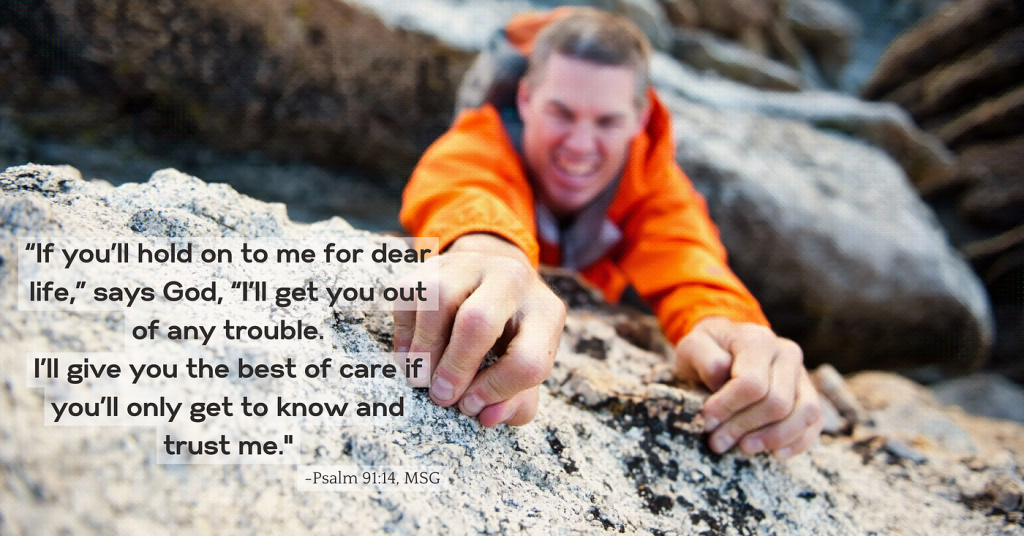

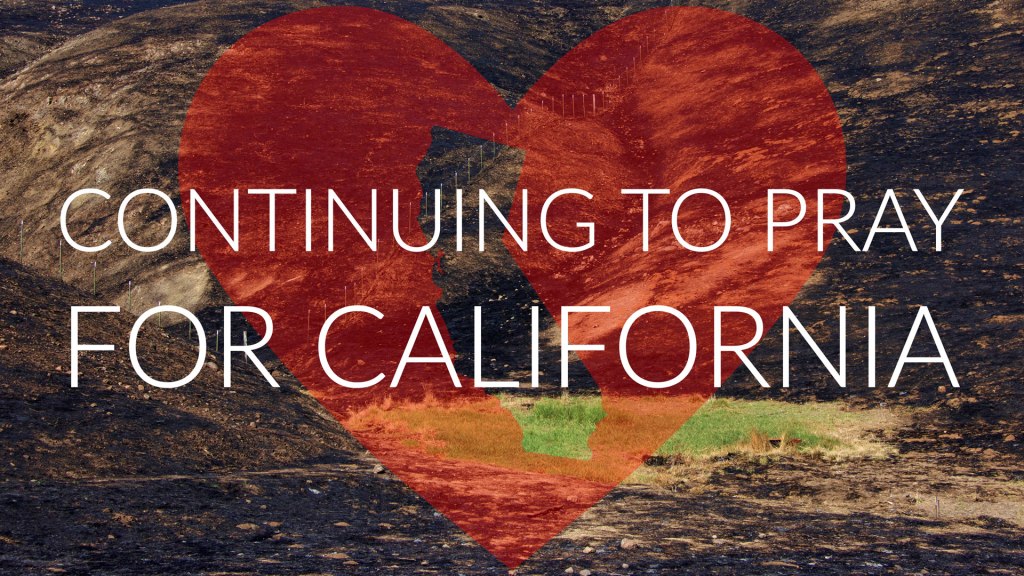

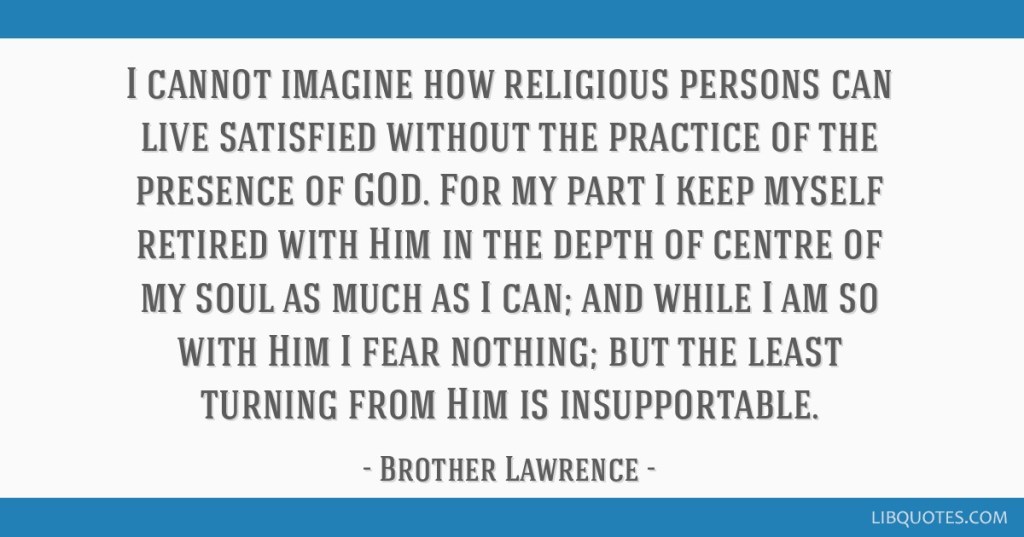



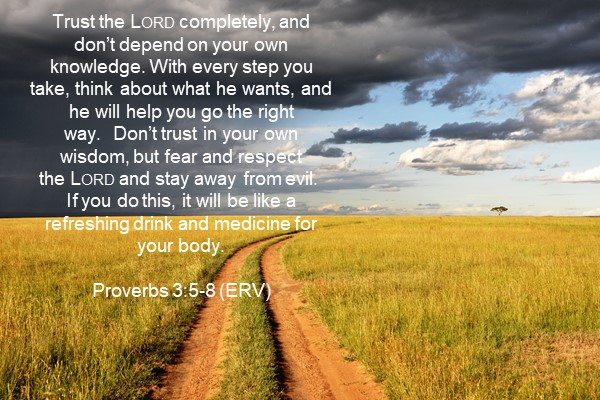
 Loving God, Living God, Loving Hope, Living Hope, Loving Living Life His Way! "Many things are possible for the person who has hope. Even more is possible for the person who has faith. And still more is possible for the person who knows how to love. But everything is possible for the person who practices all three virtues." - Brother Lawrence (1605-1691), Practicing the Presence of God (1692).