My God! My God! My ABBA Father, My Savior, How Great Art Thou on Earth as You are in Heaven? Psalm 19

Psalm 19 Complete Jewish Bible

19 (0) For the leader. A psalm of David:

2 (1) The heavens declare the glory of God,
the dome of the sky speaks the work of his hands.
3 (2) Every day it utters speech,
every night it reveals knowledge.
4 (3) Without speech, without a word,
without their voices being heard,
5 (4) their line goes out through all the earth
and their words to the end of the world.

In them he places a tent for the sun,
6 (5) which comes out like a bridegroom from the bridal chamber,
with delight like an athlete to run his race.
7 (6) It rises at one side of the sky,
circles around to the other side,
and nothing escapes its heat.

8 (7) The Torah of Adonai is perfect,
restoring the inner person.
The instruction of Adonai is sure,
making wise the thoughtless.
9 (8) The precepts of Adonai are right,
rejoicing the heart.
The mitzvah of Adonai is pure,
enlightening the eyes.
10 (9) The fear of Adonai is clean,
enduring forever.
The rulings of Adonai are true,
they are righteous altogether,
11 (10) more desirable than gold,
than much fine gold,
also sweeter than honey
or drippings from the honeycomb.
12 (11) Through them your servant is warned;
in obeying them there is great reward.

13 (12) Who can discern unintentional sins?
Cleanse me from hidden faults.
14 (13) Also keep your servant from presumptuous sins,
so that they won’t control me.
Then I will be blameless
and free of great offense.

15 (14) May the words of my mouth
and the thoughts of my heart
be acceptable in your presence,
Adonai, my Rock and Redeemer.

Glory be to the Father,
and to the Son, and to the Holy Ghost;
as it was in the beginning,
is now, and ever shall be,
world without end. Amen, amen.
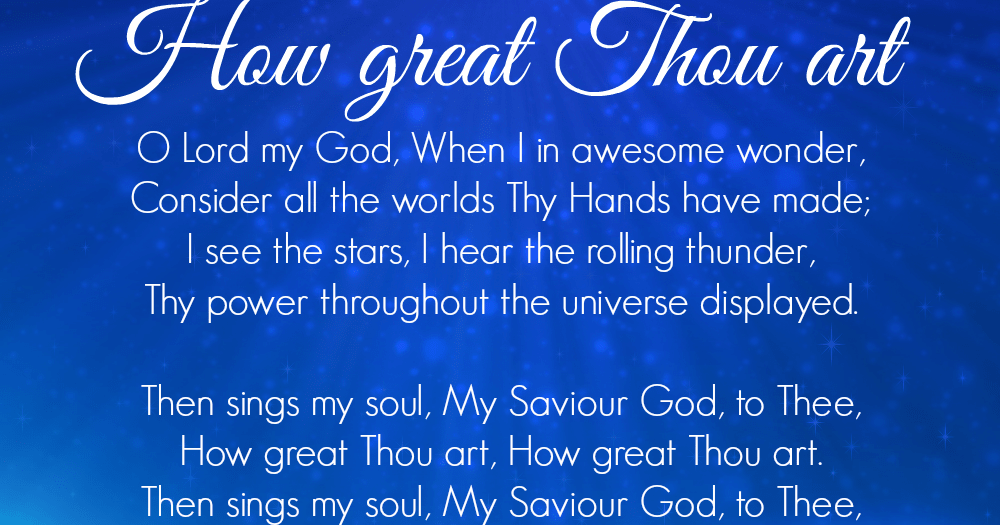
There’s nothing quite like a triumphant hymn to truly make you feel closer to the Lord. When you sing out those lyrics, it’s almost like His power, strength and majesty and love just wash over us. And one of the most powerful hymns of all time is ‘How Great Thou Art.’ I just love hearing this amazing hymn and now that I know the story behind the song, it makes it that much more beautiful.

The hymn “How Great Thou Art” is a timeless worship song, cherished by generations of believers for its inspiring description of God’s greatness.

Its verses resonate deeply in our souls, leading us into genuine moments of awe as we contemplate the wonder of who God is and how God works in our world.

“How Great Thou Art” is a classic hymn that remains popular today because it invites us to marvel in fresh ways at our Creator’s beautifully designed creation, His majesty, His Power and his inspiring, wonderful presence in our lives.

Each verse of this song serves as one gateway after another to understanding God more deeply and celebrating our great God in worship. When we sing the beloved hymn “How Great Thou Art,” we can grow closer to our great God.

The hymn originated as a poem written by Swedish pastor Carl Boberg in 1885.

Boberg was inspired to write the poem after experiencing a wondrous sight in nature: a sudden thunderstorm followed by a clear, beautiful view over a bay.

The poem was set to music in Sweden, and the song later went through various translations. In the 20th century, British missionary Stuart Hine translated the hymn into English and expanded it with additional verses. Hine’s version of “How Great Thou Art” became popular around the world after George Beverly Shea sang it during Reverend Billy Graham’s evangelistic crusades in the 1950s.

Just as a subtle or most likely, not so subtle reminder, here are some truths for us to contemplate an awesome God, “How Great Thou Art,” reveals about God.

1. God’s indescribable glory in creation.

The opening lines of “How Great Thou Art” exclaim:

“O Lord my God,/when I in awesome wonder,/consider all the worlds thy hands have made./I see the stars/I hear the rolling thunder,/Thy power throughout the universe displayed.”

This echoes Psalm 19:1, which declares: “The heavens declare the glory of God; the skies proclaim the work of his hands.”

It also evokes the imagery revealed in Psalm 29:3-4: “The voice of the Lord is over the waters; the God of glory thunders, the Lord thunders over the mighty waters. The voice of the Lord is powerful; the voice of the Lord is majestic.”

As we enjoy God’s creation – from the sparkling stars to the powerful thunder, to the forest glades we each wander through – we can’t help but marvel at the wondrous beauty of its precise design and power.

 Nature itself is evidence of God’s glory and creativity. Romans 1:20 points out:

“For since the creation of the world God’s invisible qualities – his eternal power and divine nature – have been clearly seen, being understood from what has been made, so that people are without excuse.” 

Psalm 104:24 celebrates God’s creative power: “How many are your works, LORD! In wisdom you made them all; the earth is full of your creatures.” 

Job 9:10 says about God: “He performs wonders that cannot be fathomed, miracles that cannot be counted.”

Throughout the entire song, “How Great Thou Art” emphasizes the importance of noticing the wonder of God’s work around us. Every single part of God’s creation shows us something valuable about God that can inspire us with awe. Singing “How Great Thou Art” can motivate us to spend time in nature as often as possible, experiencing environments that help us discover God’s greatness.

2. God’s holiness and righteousness.

Another profound truth “How Great Thou Art” reveals about God is his perfect holiness and righteousness.

The awe expressed in the hymn’s refrain, “Then sings my soul, My Savior God, to Thee,/How great Thou art, How great Thou art!” reminds us of the vision of God’s holiness the Bible describes in Isaiah 6:3, where the seraphim angels call to one another:

“Holy, holy, holy is the Lord Almighty; the whole earth is full of his glory.”

God’s holiness means that he is absolutely uncorrupted by sin and completely morally pure.

Psalm 145:17 “The Lord is righteous in all his ways and faithful in all he does.”

The hymn’s refrain captures the reverent awe we feel when we think about God’s great holiness and righteousness.

In 2 Corinthians 5:21, we see that God’s holiness and righteousness are accessible to us through relationships with Jesus: “God made him who had no sin to be sin for us, so that in him we might become the righteousness of God.”

This profound truth should inspire us to praise God like the hymn’s refrain does. It aught also to motivate us all to live lives that reflect God’s character by growing to be more holy ourselves.

Ephesians 4:24 encourages us to: “… put on the new self, created to be like God in true righteousness and holiness.” The refrain of “How Great Thou Art” calls us to strive for a greater, deeper, reverence for God’s majesty. It highlights a grateful response to God’s perfect nature, inspires us to make that response our own.

3. God’s constant presence with us.

“How Great Thou Art” reflects on God’s constant presence with us as it describes experiencing the extraordinary presence of God during ordinary moments like walking in nature: “When through the woods and forest glades I wander,/and hear the birds sing sweetly in the trees./ When I look down, from lofty mountain grandeur/And see the brook, and feel the gentle breeze.”

In Psalm 23:4, King David also uses the imagery of walking to describe the power of God’s constant presence:

“Even though I walk through the darkest valley, I will fear no evil, for you are with me; your rod and your staff, they comfort me.”

Throughout the Bible, God promises us to be present with us.

In Exodus 33:14, God assures Moses, “My presence will go with you, and I will give you rest.”

In Matthew 28:20, Jesus promises his disciples: “…And surely I am with you always, to the very end of the age.” 

God’s presence is a tangible reality we each can experience regularly through reading,  study, prayer, meditation, other spiritual disciplines and practices.

In fact, if we have saving relationships with Jesus, God’s Holy Spirit comes to live right inside our souls, as 1 Corinthians 3:16 points out: “Don’t you know that you yourselves are God’s temple and that God’s Spirit dwells in your midst?”

Psalm 139 beautifully describes God’s presence with us everywhere, pointing out in verses 7-10:

“Where can I go from your Spirit? Where can I flee from your presence? If I go up to the heavens, you are there; if I make my bed in the depths, you are there. If I rise on the wings of the dawn, if I settle on the far side of the sea, even there your hand will guide me, your right hand will hold me fast.”

In its refrain, “How Great Thou Art” encourages us all to notice God’s loving presence with us wherever we go – even unto the furthest reaches of eternity.

4. God’s plan to save us.

One of the most moving verses in “How Great Thou Art” declares: “And when I think that God, his Son not sparing, sent him to die, I scarce can take it in./That on the cross, my burden gladly bearing,/He bled and died to take away my sin.”

This verse reminds us of what is perhaps the most famous Bible verse of all, John 3:16: “For God so loved the world that he gave his one and only Son, that whoever believes in him shall not perish but have eternal life.”

John 3:17 Complete Jewish Bible

17 For God did not send the Son into the world to judge the world, but rather so that through him, the world might be saved.

The timeless hymn’s reflection on God’s profound love for us through Jesus’s coming and ultimate sacrifice invites each and every single one of us to feel a reverent awe at God’s wondrous plan to save our souls from sin and death.

Jesus’ death on the cross made it possible for humanity to connect with God again, as 2 Corinthians 5:17-18:

“Therefore, if anyone is in Christ, the new creation has come: The old has gone, the new is here! All this is from God, who reconciled us to himself through Christ and gave us the ministry of reconciliation.”

In Ephesians 1:7-8, The Bible highlights the enormous generosity of God’s grace through his plan to save us:

“In him we have redemption through his blood, the forgiveness of sins, in accordance with the riches of God’s grace that he lavished on us…”.

Isaiah 53:5 prophesies about Jesus’ healing work for us on the cross:

“But he was pierced for our transgressions, he was crushed for our iniquities; the punishment that brought us peace was on him, and by his wounds we are healed.” 

Jesus offers forgiveness from sins to all who place their faith in him, fulfilling God’s plan to save us.

Singing “How Great Thou Art” can help us focus on the greatest gift of all that God has given us through Jesus, the world’s Savior. Just like the song says, we “scarce can take it in,” but it’s still important to remember it on a regular basis.

5. God’s Unchanging promise of eternal life.

“How Great Thou Art” concludes with a triumphant declaration of hope:

“When Christ shall come with shout of acclamation/And take me home, what joy shall fill my heart./ Then I shall bow, in humble adoration,/And then proclaim: ‘My God, how great Thou art!’”

This evokes the promise of Revelation 21:4, which envisions our future joy in heaven, saying about God:

“He will wipe every tear from their eyes. There will be no more death or mourning or crying or pain, for the old order of things has passed away.”

Jesus describes our eternal life with him when he says in John 14:2-3:

“My Father’s house has many rooms; if that were not so, would I have told you that I am going there to prepare a place for you? And if I go and prepare a place for you, I will come back and take you to be with me that you also may be where I am.” 

Titus 1:2 assures us that we have “…the hope of eternal life, which God, who does not lie, promised before the beginning of time.”

When we sing the song “How Great Thou Art,” we joyfully celebrate the reality of this unending hope. “How Great Thou Art” reminds us that our great God has prepared great joy for us to experience in heaven with him for eternity. 

In conclusion, “How Great Thou Art” is an incredibly stirring powerful worship hymn that resoundingly declares and proclaims and celebrates God’s greatness.

It invites us to

explore the wonders of God’s glory displayed in creation,

explore God’s perfect holiness and righteousness,

explore God’s constant presence with us,

explore God’s loving plan to save us,

discover God’s promise of eternal life for all who choose relationships with him.

As we sing “How Great Thou Art,” we cannot help but to perceive, to receive so much more of God’s awe-inspiring greatness and worship him with gratitude.

In the name of God, the Father and God the Son and God the Holy Spirit,

Let us Pray,

Psalm 29 Complete Jewish Bible

29 (0) A psalm of David:

(1) Give Adonai his due, you who are godly;
give Adonai his due of glory and strength;
give Adonai the glory due his name;
worship Adonai in holy splendor.

The voice of Adonai is over the waters;
the God of glory thunders,
Adonai over rushing waters,
the voice of Adonai in power,
the voice of Adonai in splendor.

The voice of Adonai cracks the cedars;
Adonai splinters the cedars of the L’vanon
and makes the L’vanon skip like a calf,
Siryon like a young wild ox.

The voice of Adonai flashes fiery flames;
the voice of Adonai rocks the desert,
Adonai convulses the Kadesh Desert.
The voice of Adonai causes deer to give birth
and strips the forests bare —
while in his temple, all cry, “Glory!”
10 Adonai sits enthroned above the flood!
Adonai sits enthroned as king forever!
11 May Adonai give strength to his people!
May Adonai bless his people with shalom!

Glory be to the Father,
and to the Son, and to the Holy Ghost;
as it was in the beginning,
is now, and ever shall be,
world without end. Amen, amen.
https://translate.google.com/

The Fullness of God’s glory is on tour across the skies, God-craft on exhibit across the greatest horizon. Psalm 19

Psalm 19 Complete Jewish Bible

19 (0) For the leader. A psalm of David:

2 (1) The heavens declare the glory of God,
the dome of the sky speaks the work of his hands.
3 (2) Every day it utters speech,
every night it reveals knowledge.
4 (3) Without speech, without a word,
without their voices being heard,
5 (4) their line goes out through all the earth
and their words to the end of the world.

In them he places a tent for the sun,
6 (5) which comes out like a bridegroom from the bridal chamber,
with delight like an athlete to run his race.
7 (6) It rises at one side of the sky,
circles around to the other side,
and nothing escapes its heat.

8 (7) The Torah of Adonai is perfect,
restoring the inner person.
The instruction of Adonai is sure,
making wise the thoughtless.
9 (8) The precepts of Adonai are right,
rejoicing the heart.
The mitzvah of Adonai is pure,
enlightening the eyes.
10 (9) The fear of Adonai is clean,
enduring forever.
The rulings of Adonai are true,
they are righteous altogether,
11 (10) more desirable than gold,
than much fine gold,
also sweeter than honey
or drippings from the honeycomb.
12 (11) Through them your servant is warned;
in obeying them there is great reward.

13 (12) Who can discern unintentional sins?
Cleanse me from hidden faults.
14 (13) Also keep your servant from presumptuous sins,
so that they won’t control me.
Then I will be blameless
and free of great offense.

15 (14) May the words of my mouth
and the thoughts of my heart
be acceptable in your presence,
Adonai, my Rock and Redeemer.

The Word of God for the Children of God.

Glory be to the Father,
and to the Son, and to the Holy Ghost;
as it was in the beginning,
is now, and ever shall be,
world without end. Amen, amen.

Then Sings My Soul, My Savior God to Thee …

The hymn “How Great Thou Art” is a timeless worship song, cherished by generations of believers for its inspiring description of God’s greatness.

Its verses resonate deeply in our souls, leading us into moments of awe as we contemplate the wonder of who God is and how God works in our world.

“How Great Thou Art” is a classic hymn that remains popular today because it invites us to marvel in fresh ways at our Creator’s beautifully designed creation and his wonderful presence in our lives.

Each verse of this song serves as a gateway to understanding God more deeply and celebrating our great God in worship. When we are all singing this most beloved hymn “How Great Thou Art,” we truly grow closer to our great God.

The hymn originated as a poem written by Swedish pastor Carl Boberg in 1885. Boberg was inspired to write the poem after experiencing a wondrous sight in nature: a sudden thunderstorm followed by a clear, beautiful view over a bay.

The poem was set to music in Sweden, and the song later went through various translations. In the 20th century, British missionary Stuart Hine translated the hymn into English and expanded it with additional verses. Hine’s version of “How Great Thou Art” became popular around the world after George Beverly Shea sang it during the Billy Graham’s evangelistic crusades in the 1950s.

Here are five truths “How Great Thou Art” reveals about God.

1. God’s great glory in creation.

The opening lines of “How Great Thou Art” exclaim:

“O Lord my God,/when I in awesome wonder,/consider all the worlds thy hands have made./I see the stars/I hear the rolling thunder,/Thy power throughout the universe displayed.”

This echoes Psalm 19:1, which declares: “The heavens declare the glory of God; the skies proclaim the work of his hands.”

It also evokes the imagery in Psalm 29:3-4: “The voice of the Lord is over the waters; the God of glory thunders, the Lord thunders over the mighty waters. The voice of the Lord is powerful; the voice of the Lord is majestic.”

As we enjoy God’s creation – from the sparkling stars to the powerful thunder – we can’t help but marvel at the wondrous beauty of its precise design, power. 

Nature itself is evidence of God’s glory and creativity. 

Romans 1:20 points out: “For since the creation of the world God’s invisible qualities – his eternal power and divine nature – have been clearly seen, being understood from what has been made, so that people are without excuse.”

Psalm 104:24 celebrates God’s creative power: “How many are your works, LORD! In wisdom you made them all; the earth is full of your creatures.” 

Job 9:10 says about God: “He performs wonders that cannot be fathomed, miracles that cannot be counted.”

Throughout the entire song, “How Great Thou Art” emphasizes the importance of noticing the wonder of God’s work around us.

Every single part of God’s creation shows us something valuable about God that can inspire us with awe.

Singing “How Great Thou Art” can motivate us to spend time in nature as often as possible, experiencing environments that help us discover God’s greatness.

2. God’s holiness and righteousness.

Another profound truth “How Great Thou Art” reveals about God is his perfect holiness and righteousness.

The awe expressed in the hymn’s refrain, “Then sings my soul, My Savior God, to Thee,/How great Thou art, How great Thou art!” reminds us of the vision of God’s holiness the Bible describes in Isaiah 6:3, where the seraphim angels call to one another: “Holy, holy, holy is the Lord Almighty; the whole earth is full of his glory.”

God’s holiness means that he is absolutely uncorrupted by sin and completely morally pure.

As Psalm 145:17 says: “The Lord is righteous in all his ways and faithful in all he does.” The hymn’s refrain captures the full reverent awe we feel when we think, search Scriptures and meditate about God’s great holiness and righteousness.

In 2 Corinthians 5:21, we read that God’s holiness and righteousness are accessible to us through relationships with Jesus: “God made him who had no sin to be sin for us, so that in him we might become the righteousness of God.”

This profound truth should inspire us to praise God like the hymn’s refrain does. It should also motivate us to live lives that reflect God’s character by growing to be more holy ourselves. (1 Peter 1:15-16)

15 But like the Holy One who called you, be holy yourselves in all your conduct [be set apart from the world by your godly character and moral courage]; 16  because it is written, “You shall be holy (set apart), for I am holy.”

Ephesians 4:24 encourages us to: “… put on the new self, created to be like God in true righteousness and holiness.” The refrain of “How Great Thou Art” calls us to a deeper reverence for God’s majesty. It highlights a grateful response to God’s perfect nature and inspires us, motivates us, to make that response our own.

3. God’s constant presence with us.

“How Great Thou Art” reflects on God’s constant presence with us as it describes experiencing the extraordinary presence of God during ordinary moments like walking in nature: “When through the woods and forest glades I wander,/and hear the birds sing sweetly in the trees./ When I look down, from lofty mountain grandeur/And see the brook, and feel the gentle breeze.”

In Psalm 23:4, King David also uses the imagery of walking to describe the power of God’s constant presence: “Even though I walk through the darkest valley, I will fear no evil, for you are with me; your rod and your staff, they comfort me.”

Throughout the Bible, God promises us to be present with us.

In Exodus 33:14, God assures Moses, “My presence will go with you, and I will give you rest.”

In Matthew 28:20, Jesus promises his disciples: “…And surely I am with you always, to the very end of the age.” 

God’s presence is a tangible reality we can experience regularly through prayer, meditation, and other spiritual practices.

In fact, if we have saving relationships with Jesus, God’s Holy Spirit comes to live right inside our souls, as 1 Corinthians 3:16 points out: “Don’t you know that you yourselves are God’s temple and that God’s Spirit dwells in your midst?”

Psalm 139 beautifully describes God’s presence with us everywhere, pointing out in verses 7-10: “Where can I go from your Spirit? Where can I flee from your presence? If I go up to the heavens, you are there; if I make my bed in the depths, you are there. If I rise on the wings of the dawn, if I settle on the far side of the sea, even there your hand will guide me, your right hand will hold me fast.”

In its refrain, “How Great Thou Art” encourages us to notice God’s loving presence with us wherever we go.

4. God’s plan to save us.

One of the most moving verses in “How Great Thou Art” declares: “And when I think that God, his Son not sparing, sent him to die, I scarce can take it in./That on the cross, my burden gladly bearing,/He bled and died to take away my sin.”

This verse reminds us of what is perhaps the most famous Bible verse of all, John 3:16: “For God so loved the world that he gave his one and only Son, that whoever believes in him shall not perish but have eternal life.”

The hymn’s reflection on God’s profound love for us through Jesus’s ultimate sacrifice invites us to feel awe at God’s wondrous plan to save our souls from sin and death.

Jesus’ death on the cross made it possible for humanity to connect with God again, as 2 Corinthians 5:17-18:

“Therefore, if anyone is in Christ, the new creation has come: The old has gone, the new is here! All this is from God, who reconciled us to himself through Christ and gave us the ministry of reconciliation.”

In Ephesians 1:7-8, The Bible highlights the enormous generosity of God’s grace through his plan to save us:

“In him we have redemption through his blood, the forgiveness of sins, in accordance with the riches of God’s grace that he lavished on us…”.

Isaiah 53:5 prophesies about Jesus’ healing work for us on the cross:

“But he was pierced for our transgressions, he was crushed for our iniquities; the punishment that brought us peace was on him, and by his wounds we are healed.”

Jesus offers forgiveness from sins to all who place their faith in him, fulfilling God’s plan to save us.

Singing “How Great Thou Art” can help us focus on the greatest gift of all that God has given us through Jesus, the world’s Savior. Just like the song says, we “scarce can take it in,” but it’s still important to remember it on a regular basis.

5. God’s promise of eternal life.

“How Great Thou Art” concludes with a triumphant declaration of hope:

“When Christ shall come with shout of acclamation/And take me home, what joy shall fill my heart./ Then I shall bow, in humble adoration,/And then proclaim: ‘My God, how great Thou art!’”

This evokes the promise of Revelation 21:4, which envisions our future joy in heaven, saying about God:

“He will wipe every tear from their eyes. There will be no more death or mourning or crying or pain, for the old order of things has passed away.”

Jesus describes our eternal life with him when he says in John 14:2-3:

“My Father’s house has many rooms; if that were not so, would I have told you that I am going there to prepare a place for you? And if I go and prepare a place for you, I will come back and take you to be with me that you also may be where I am.” 

Titus 1:2 assures us that we have “…the hope of eternal life, which God, who does not lie, promised before the beginning of time.”

When we sing the song “How Great Thou Art,” we joyfully celebrate the reality of this hope. “How Great Thou Art” reminds us that our great God has prepared great joy for us to experience in heaven with him for eternity. 

In conclusion, “How Great Thou Art” is a powerful worship hymn that declares and celebrates God’s greatness.

It beckons us, it invites us, it empowers us. to explore, to discover, the wonders of God’s glory displayed in creation, God’s perfect holiness and righteousness, God’s constant presence with us, God’s loving plan to save each of us, and also God’s total promise of eternal life for all who choose relationships with him.

As we sing “How Great Thou Art,” we can perceive so much more of God’s awe-inspiring greatness and worship him with reverence and with gratitude.

Gather with your friends, start a hymn sing to the tune “row, row your boat.”

Lose yourself, fully and completely and utterly in the fullness of our God …

In the name of God the Father and God the Son and God the Holy Spirit,

Let us Pray,

Psalm 29 Complete Jewish Bible

29 (0) A psalm of David:

(1) Give Adonai his due, you who are godly;
give Adonai his due of glory and strength;
give Adonai the glory due his name;
worship Adonai in holy splendor.

The voice of Adonai is over the waters;
the God of glory thunders,
Adonai over rushing waters,
the voice of Adonai in power,
the voice of Adonai in splendor.

The voice of Adonai cracks the cedars;
Adonai splinters the cedars of the L’vanon
and makes the L’vanon skip like a calf,
Siryon like a young wild ox.

The voice of Adonai flashes fiery flames;
the voice of Adonai rocks the desert,
Adonai convulses the Kadesh Desert.
The voice of Adonai causes deer to give birth
and strips the forests bare —
while in his temple, all cry, “Glory!”
10 Adonai sits enthroned above the flood!
Adonai sits enthroned as king forever!
11 May Adonai give strength to his people!
May Adonai bless his people with shalom!

Glory be to the Father,
and to the Son, and to the Holy Ghost;
as it was in the beginning,
is now, and ever shall be,
world without end. Amen, amen.

https://translate.google.com/

What does it mean for us to have no other gods before God? Exodus 20:1-3

Exodus 20:1-3Amplified Bible

The Ten Commandments

20 Then God spoke all these words:

“I am the Lord your God, who has brought you out of the land of Egypt, out of the house of slavery.

“You shall have no other gods before Me.

The Word of God for the Children of God.

Adeste Fidelis. Venite Adoremus. Dominum.

Gloria. In Excelsis Deo. Alleluia, Alleluia, Alleluia, Amen.

Perhaps the most basic truth about the God of Scripture is He is the only one.

There is no other.

This truth ought to simplify things for us because it teaches us that there is only one who is the worthy object of our love, loyalty, and devotion.

But the hearts of men and women are not so easily convinced or instructed.

And so it is necessary for God to give us the first commandment: “You shall have no other gods before me.”

The danger is not that there are actual other gods for us to worship but that we have a proclivity for making them.

On first glance, this first command is straightforward.

To live for a god other than the true God would be like taking a second spouse while your first spouse is still alive and still happy to be your spouse.

Worse, it would be like taking a second spouse who is in truth a figment of your imagination.

It would be a seriously severe breach of an exclusive relationship.

We must not kid ourselves that we are immune from the possibility of breaking this commandment.

Many of us read it and then picture people bowing down before statues or going through elaborate rituals, and those mental images assure us that we are not in much danger of violating it.

Yet the commandments are not restricted to our outward actions but also relate to the disposition of our minds and hearts.

From this perspective, there is the tough realization we may not be as far from those mental images as we assume.

We may not have statues to which we bow down, but maybe we have segments of our lives that we keep away from God, preserving them under the authority and exclusive sovereignty of some other little “deity”—ourselves, perhaps.

Ask yourself:

“Do I joyfully acknowledge God’s exclusive comprehensive claim on my life?”

“Is God in Alpha to Omega charge of my family, my work, my relationships, my money, my dating, my use of my time, my talents, my gifts and my services?”

Take a close and honest look to see if there are portions of life you try to keep from Him.

In addition to our keeping, “secreting” things away from God, another form of danger is functionally replacing Him.

When we put our family, our job, our hobbies, or anything else in the place that is God’s alone, we violate the first commandment.

To the degree that we allow anyone or anything besides obedience to God to direct our course day to day, we defy His law.

So we are not so safe from the possibility of breaking this commandment as we may think!

While we must acknowledge the truth that there is one God, we must also beware our own ability to put things in His place.

If we do not daily submit ourselves to Him and entrust the entirety of our lives to Him, something will take His place.

We are made to worship.

The question is, are you going to worship the living God or are you going to pretend there is another?

Put serious focus on these words: ‘Thou shalt have no other gods before me.’

God’s Word leads us to the full life Christ died for us to live.

The Ten Commandments are guardrails for our modern-day lives.

We no longer live in the Old Testament church, where animal sacrifices upon altars were required for breaking God’s laws.

Today, we live under the new covenant, ushered in by Christ Jesus and His sacrifice on the cross to forgive our multitude of sins.

We cannot follow the Ten Commandments through our own sheer will but can aim to through the power of the Holy Spirit given to us at salvation.

Still, we will never hit the mark of perfection as Christ did. He loved the Father with His whole heart, soul, and mind.

Thankfully, perfection is not required of us.

What Does ‘Thou Shalt Have No Other Gods before Me’ Mean?

“Jesus replied: ‘Love the Lord your God with all your heart and with all your soul and with all your mind.’ This is the first and the greatest commandment. And the second is like it: ‘Love your neighbor as yourself.'” Matthew 22:37-39

In ancient times, and in some places and people groups around the globe today, people worship a variety of gods.

God clearly stated, “I am,” and commands His people to worship Him alone.

“No deity, real or imagined, is to rival the one true God in Israel’s heart and life” (NIV Study Bible).

Worshipping other gods gives a false sense of security from a source other than God, who is everywhere, all-powerful, and all-knowing.

The Hebrew, often translated as ‘besides me’ or ‘before me,’ means ‘in my presence.

The point is that nothing else can qualify as god in your life.

The true God is not only to be number one but the only one. 

Other gods can also constitute things we place higher than God in our lives.

The Bible defines these as idols, and they can be anything from money and possessions to food and working out or people and relationships.

Anything or anyone we place above God is another god.

As Christians, we are a “chosen people, a royal priesthood, a holy nation” 1 Peter 2:9). 

We are God’s people, set apart to live according to his ways.

His ways are not, and never will be, our ways.

Our tendencies are to cave to the cravings of our flesh and fall prey to the thinking they will give us the comfort and happiness we need.

God is faithful to bless us in this life, but there is no blessing bigger and more important than the source of the blessing.

Our marriages, best friends, jobs, houses, habits, and hobbies all take a serious backseat to the ONLY One who numbers our days.

Why Is it Important That ‘Thou Shalt Have No Other Gods before Me’ Is the First Commandment?

“For there is one God and one mediator between God and mankind, the man Christ Jesus, who gave himself as a ransom for all people.” [1 Timothy 2:5]

God’s laws are for our own good.

He is a loving Father who provides rules, boundaries, and discipline for His children as any good parent/caregiver does.

We don’t earn or keep our salvation by following God’s rules.

Obedience is a heart issue, which expresses our faith and trust in the Lord by instilling limits in our lives.

He has our best interest in mind.

Though Christians do not believe achieving the law is demanded for salvation, they still see the Ten Commandments as the establishment of God’s moral law. 

Jesus called people to an even higher standard by obeying the commandments not only in their behavior but also in their hearts and minds.

When we take the time to be with God each day through prayer, worship, and the Word, we get to know Him better.

We’re not promised an understanding of all of the ways of God, but the deeper our relationship is with Him, the more we trust and obey.

God’s timing in waiting until the third order to give the commandments was no coincidence.

He had already proven Himself as their Deliverer and Provider and it was time to test their faith and reveal His divine standards for them.

God’s people knew then He who He was to them: their Provider and Deliverer.

He is unchanging.

He’s still our Provider and Deliverer today, and so much more.

Why Did God Need to Say ‘Thou Shalt Have No Other Gods before Me’?

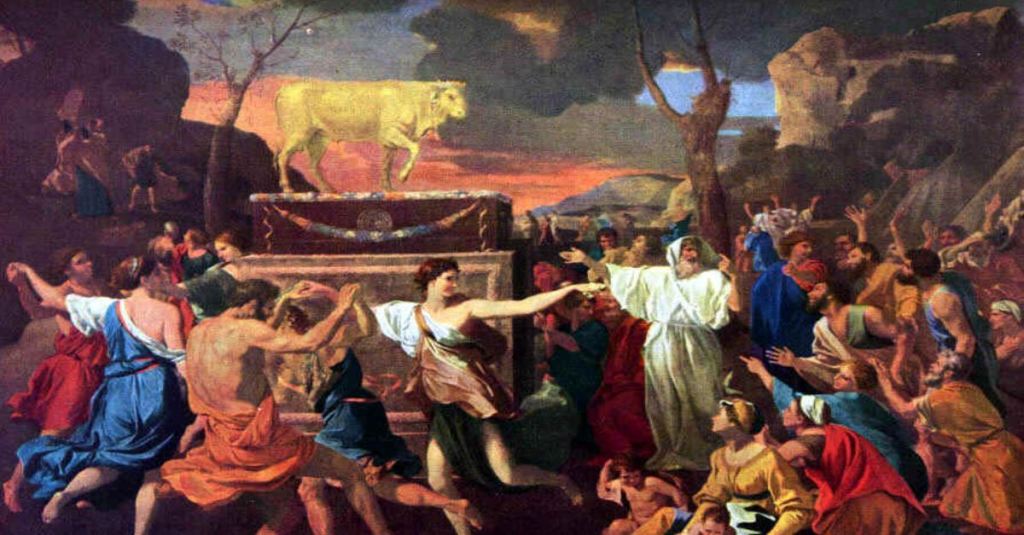
“When the people saw that Moses was so long in coming down from the mountain, they gathered around Aaron and said, ‘Come, make us gods who will go before us. As for this fellow Moses who brought us up out of Egypt, we don’t know what has happened to him.'” Exodus 32:1

God’s people struggled with faithfulness to Him.

In their fickleness, impatience, and lack of faith, they quickly turned to the temptation to worship as other nations did.

This time, it was by creating a golden calf representing Baal to worship.

But over time, Scripture mentions others gods they worshipped, too: Molek, Chemosh, Dagon, Asherah, and more.

In ancient times, this law steered people away from the many false gods worshipped by various cultures. 

God’s people were surrounded by other nations who worshipped other gods.

I imagine, much like we easily compare ourselves to others who live different lifestyles today, God’s ancient people often wondered what life would be like if they worshiped other gods.

It’s a temptation they often fell into and angered God with.

What Other Gods Might Christians Be Tempted to Bow Down to Today?

“Jesus said to him, ‘Away from me, Satan! For it is written: ‘Worship the Lord your God, and serve him only.'” Matthew 4:10

Before we are tempted to think of God’s ancient people in a bad light, we have to realize that the devil tempted even Jesus to worship other gods!

In the modern, new covenant age we live in, we are tempted every day to look outside of the providence, provision of God for something the world promises to give us.

In fact, the world will always tempt us to believe we are entitled to certain things, such as amenities and circumstances.

When we genuinely seek to obey it with all our hearts, the first commandment guards us against falling for those lies.

In Modern times, this Commandment is a warning against elevating money or other worldly things to god-like status in our lives.

We could include social media, the Internet, shopping, coffee, or even our gym memberships.

Anything we are tempted to find happiness and peace in other than God is a lie that will end up failing us. 

Outside of Christ, we are only wretched.

But in Christ Jesus, united to him, we are completely forgiven of our constant failure to keep them, his constant and perfect keeping of them is credited to us.

Jesus died for us, knowing we would not only be tempted by these things but fall prey to them, too.

Sometimes, we dive right in without much convincing or swaying.

The hope of Christ Jesus assures us forgiveness when we turn from those idols and other gods- no matter how deep we’re in – and come back to the Lord, who is our all in all.

The first commandment addresses a very human struggle, unavoidable even to the most faithful. Following this commandment perfectly is not God’s goal.

He knows we can’t do that.

He is much more concerned with our hearts, our trust in and obedience to Him.

The Holy Spirit will convict us when we’re falling off the rails.

And when we are genuinely repentant to turn back to Jesus, over and over again, He eagerly welcomes us all, washes us with His living water, again and again.  

God always has our best interest in mind.

He loves us so much He sacrificed His one and only Son Jesus on the cross for the forgiveness of our sins.

He saved us from ourselves before we saw our first fleck of sunlight.

He knit us in our mother’s womb with such care, gifted us with talents, and gave each of us a unique purpose on this earth no one else can accomplish.

Our God loves us wholly, perfectly, and completely.

In Him, we find peace and happiness, hope and comfort, encouragement and love.

The true gauge of our lives is measured only by God, the Father, through our relationship with Him through Christ Jesus, our Savior.

He alone knows, and can plumb the deepest depths of our hearts and our souls.

In the name of God, the Father and God the Son and God the Holy Spirit,

Let us Pray,

A Prayer to Have No Other Gods before God

Abba, Father. 

You are the best Father to us. Yahweh, You are the path to peace, hope, and grace. Christ Jesus, Messiah, we come to the Father through You alone, by Your sacrifice to forgive our sins. Holy Spirit, You convict and counsel us when we fall away and stray from the guardrails intended to help us live our lives to the full. Help us to cling to this commandment, to love You alone, God. May our lives bring glory to You, today and always. Help us to grow a love for Your Word that inspires us to come to You daily through it, Father. You tell us to pray about everything. Let us each take Your wisdom into every day of our lives and let it fill our hearts to the brim. We pray to saturate our minds with Your wisdom so that we follow it in our daily lives, Father. 

Adeste Fidelis. Venite Adoremus. Dominum.

Gloria. In Excelsis Deo. Alleluia, Alleluia, Alleluia, Amen.

https://translate.google.com/

My Soul Praises You, O’ Lord for I am So Fearfully and Wonderfully Made!

Praise the Lord, O my Soul! For I am fearfully and wonderfully made by God! You are made by God! I am made by God! Just as surely as ANY one has been made by God; we have been made by God. He knew us before anyone knew we were there. He had already devised plans for all of us before anyone planned our arrival. God made us well! How do we know? Look around at all God has made.

Psalm 139:13-16 The Message

13-16 Oh yes, you shaped me first inside, then out;
    you formed me in my mother’s womb.
I thank you, High God—you’re breathtaking!
    Body and soul, I am marvelously made!
    I worship in adoration—what a creation!
You know me inside and out,
    you know every bone in my body;
You know exactly how I was made, bit by bit,
    how I was sculpted from nothing into something.
Like an open book, you watched me grow from conception to birth;
    all the stages of my life were spread out before you,
The days of my life all prepared
    before I’d even lived one day.

The Word of God for the Children of God. Gloria! In Excelsis Deo! Alleluia! Amen.

14 
I will give thanks and praise to You, for I am fearfully and wonderfully made;
Wonderful are Your works,
And my soul knows it very well.

Psalm 139:14 is among the most quoted verses in the book of Psalms. However, not all of us really know what this verse really means. In this devotional, let me take some time to share with you 5 lessons for you to understand Psalm 139:14!

What can we learn from Psalm 139:14?

There are many important lessons we can learn from our verse for the day.

We can rather easily and quite eloquently turn it into a full Psalm 139:14 sermon because of the immeasurably, indescribably rich lessons this verse possesses.

This beautiful and inspiring verse gives us a glimpse of God’s creative work. He created us in a fearful and wonderful manner. Among God’s creation, it is only us that God personally hand made. He went down from His throne on high and step down to gather a handful of dirt and soil to form His most special creation.

God’s creation of man is intimate, personal, and most importantly, special.

We are the pinnacle of God’s creation and that means that you and I come with a great purpose devised and implemented by God Himself.

So, here are the five Psalm 139:14 lessons you should learn today.

Lesson Number 1: God’s wisdom is infinite

The Bible tells us we are created fearfully and wonderfully. As what we have already read, it takes a great measure of wisdom, I would say, supernatural wisdom and massive creative power beyond our imagination for a Being to create such a magnificent design.

Take a look at our human body, from the smallest subatomic unit to its biggest organ, is made with such intricate precision and complex design to support life.

No doubt: God our Creator is beyond our wildest imagination.

His ability is beyond us and is able to perform whatever He wishes.

He is sitting on His Majestic Throne on High and at the same time, playing out His great plan to bring forth as many children as possible to His Kingdom.

Lesson Number 2: Humans are not the product of evolution

It is really not the lack of evidence that is causing people to abandon their faith or deny the existence of God. The true reason is that people willfully ignore the evidence. If you have eyes to see, and ears to hear, then you will find a world of wonders that shouts the existence of an Intelligent Maker.

The human body, among the many amazing wonders on earth, is just a living testimony of the creative works of our heavenly Father. The human body is a super complicated creation, beyond words to simply just evolve from a single cell organism in a primordial soup.

When you carefully consider all scientific facts and studies, you will arrive at the conclusion that the universe is far too complex to be a product of random evolution. Indeed, it takes more faith in believing evolution than it does creation.

Lesson Number 3: God created you and me

Life is a miracle. Your very existence is a miracle itself.

The problem with us is that we get too accustomed to miracles that we don’t take the time to appreciate them anymore.

Genesis 1:26-27 Amplified Version tells us:

26 Then God said, “Let Us (Father, Son, Holy Spirit) make man in Our image, according to Our likeness [not physical, but a spiritual personality and moral likeness]; and let them have complete authority over the fish of the sea, the birds of the air, the cattle, and over the entire earth, and over everything that creeps and crawls on the earth.” 27 So God created man in His own image, in the image and likeness of God He created him; male and female He created them.

I want you to remember that God created you. Because of that, you are unique, special, and most importantly, have a purpose in life.

Don’t let other people tell you otherwise.

Nobody’s ugly, worthless, or not good enough. You are the child of the Living God and in your veins run the blood of a person created by God.

But what if you have physical challenges? Are you still a fearfully and wonderfully made person?

This is a hard question to answer especially for people who have those challenges or those people whose loved ones suffer from those conditions.

However, let me tell you. Even if you have such challenges, it doesn’t change the fact that you are still a child of God.

In such a situation, yes, it’s hard to understand why anyone is in a certain condition, that life seems to be unfair.

In God’s time, we will know the answer why, but don’t let your conditions be the cause of losing faith and hope. Instead, use it as a way to learn the lessons God wants you to learn. God will not give you a problem you cannot handle.

This might be a cliché, but still, I will say it: fear of the Lord is the beginning of wisdom. Just trust God’s timing, He will make all things beautiful in His time.

Lesson Number 4: We are made to give reverent praise and worship our Creator

In the realization of how awesome our human bodies are and how impressive the creation is, we must each bow down in humble adoration to God’s majesty.

Like David, when he fully and fearfully realized he was fearfully, wonderfully made, he praised God! He deeply recognized how marvelous God’s creation is.

God obviously does not need our praise. He is not a malignant narcissist who lives on an eternal chorus of flattery and adulation.

We need to worship God for our own sake. When we praise God, it helps us to remember YAHWEH and YAHWEH alone is our great Provider.

He is the Source of all good things that we have.

When we worship God, it helps us appreciate our great dependence on Him and His authority over us.

We ultimately submit to His will, do our best to fulfill His purpose in our lives.

Lesson Number 5: God is our Father

Do you know what’s really amazing that you should never forget?

It is that God is our Father.

King David knew we are created in the image of God and that we are His children.

It is comforting to note that God is genuinely our Father who takes care of us. He provides all our needs. He protects us, heals us, comforts us, listens to us, guides us, and most importantly, immeasurably and unconditionally loves us.

God already knew us even before we were born.

He wanted to build a close relationship with us.

He already knew us intimately.

Now, it is our turn to know Him deeper and better each day.

Final words

These are just but a few of the best lessons we can learn from Psalm 139:14.

Indeed, we are fearfully and wonderfully made.

This shows us how special we are in the sight of God.

No matter what problems you and I go through, just remember that God is our Creator and our Father.

He won’t leave you nor forsake you. He is always there to help us in times of needs, comfort us in times of suffering, and rejoice with us in times of our joy.

Because God loves us, we need to use this knowledge to encourage us and move us even closer to our Father. By doing so, we will then be able to experience the fearfully beautiful love, fearfully immense joy of God’s outpouring care for us.

Therefore, dear Christian, rejoice in the fearful wonder of your God. Rejoice in how he fearfully knit you and I together in our mother’s womb. From the very beginning he was taking care of us. Fearfully rejoice in how he knows all of our days. Nothing is beyond his knowledge or power.

He takes care of you and me each day of our lives until you and I wake up in the glory of heaven and are with our Lord Jesus forever. How fearfully, wonderfully our Creator and Father God works! All Praise to the Lord, the Almighty! Amen.

In the name of God, the Father and God the Son and God the Holy Spirit,

Let us pray,

Jeremiah 33:1-3 Amplified Version

Restoration Promised

33 Then the word of the Lord came to Jeremiah the second time, while he was still confined in the court of the guard, saying, “Thus says the Lord who made the earth, the Lord who formed it to establish it—the Lord is His name, ‘Call to Me and I will answer you, and tell you [and even show you] great and mighty things, [things which have been confined and hidden], which you do not know and understand and cannot distinguish.’

God my Creator and Father, teach me to do your will, for you are my God. May your Holy Spirit lead me on level ground. I see your faithfulness and goodness in what you have done for me throughout my life. I think about these things, and I thirst for you. Let me hear of your unfailing love every morning, for I am trusting you. Show me where to walk, for I give myself to you. Keep me on firm footing for the glory of your name. Alleluia! Alleluia! Alleluia! Amen.

https://translate.google.com/

I Am Pondering the Promises of God. I Am Pondering the Goodness of God!

In the mid to late 90’s people in the church began to say God is good— all the time— all the time—God is good. It’s easy to proclaim and to shout aloud the goodness of God when things are going great! Except life is not all about what goes good but what goes goofy too. What about when we just get mad at God?

“God is good, all the time; all of the time, God is good,” is a popular phrase used in the course of worship by many pastors, leaders, and believers. “Good” is who God is, what He does, and what we experience on His behalf. God, in His infinite goodness, is sovereign over every circumstance. He proclaimed each note of His creation, “good.” God purposefully brings every human life into existence upon the earth, intended for “good” works to bring glory and honor to His name.

We take as our text today, Psalm 65

Psalm 65 HCSB

God’s Care for the Earth

For the choir director. A Davidic psalm. A song.

Praise is rightfully Yours,[a]
God, in Zion;
vows to You will be fulfilled.
All humanity will come to You,
the One who hears prayer.
Iniquities overwhelm me;
only You can atone for[b] our rebellions.
How happy is the one You choose
and bring near to live in Your courts!
We will be satisfied with the goodness of Your house,
the holiness of Your temple.[c]

You answer us in righteousness,
with awe-inspiring works,
God of our salvation,
the hope of all the ends of the earth
and of the distant seas.
You establish the mountains by Your[d] power,
robed with strength.
You silence the roar of the seas,
the roar of their waves,
and the tumult of the nations.
Those who live far away are awed by Your signs;
You make east and west shout for joy.

You visit the earth and water it abundantly,
enriching it greatly.
God’s stream is filled with water,
for You prepare the earth[e] in this way,
providing people with grain.
10 You soften it with showers and bless its growth,
soaking its furrows and leveling its ridges.
11 You crown the year with Your goodness;
Your ways overflow with plenty.[f]
12 The wilderness pastures overflow,
and the hills are robed with joy.
13 The pastures are clothed with flocks
and the valleys covered with grain.
They shout in triumph; indeed, they sing.

The Word of God for the Children of God. In Excelsis Deo! Alleluia! Amen.

Our passage in Psalm 65 is a celebration of God’s goodness. It is a call to count our blessings. It is a reminder to cultivate thanksgiving and give praise to God for all that He has done for us and all that He is doing for us. “It is good to give thanks to the Lord, And to sing praises to [the Lord] . . .” (Ps. 92:1). Psalm 65  instructs us in how to do that. It leads us in a celebration of God’s providential care and provision. It leads us to ponder the goodness of God in our existence.

Psalm 65 is another psalm penned by David. This psalm and song centers around describing the great blessings of God. As we can see in verse 1, this is a psalm of praise for the great wonders and works of God through creation.

We will see David praise God for God’s grace, God’s might, and God’s prosperity to humanity. This is a worship psalm that could have been sung at any time. But due to the language of fulfilling vows and receiving plentiful harvests, this was like a psalm used during the Feast of Tabernacles.

This feast was one of the most joyful feasts of the Jewish people, lasting eight days in which the people of Israel celebrated the abundance of the harvest crops. Further, this is only one of three psalms that uses the word “atone” or “atonement.” This helps us tie this psalm to the Feast of Tabernacles because the Day of Atonement occurred five days before the Feast of Tabernacles.

God of Grace (65:1-4)

The psalm begins with David declaring that praise rightfully belongs to God in Zion. The psalm begins with what seems to be a very nationalistic psalm about the people of Israel and their feasts and offerings being performed at the sanctuary in Jerusalem. But verse 2 expands this worship psalm to all people. “O you who hears prayer; to you shall all flesh come” (ESV). This psalm expresses the universal need to come to God. All people on the earth, not just the Jewish people, not just God’s chosen people, everyone must come to God.

Verse 3 describes the crux of the problem for humanity. “When iniquities prevail against me, you atone for our transgressions”(ESV). When we read these words before the coming of Christ, we recognize that this is what the people of Israel understood the goodness of God is to be doing for them all.

The people recognized that their sins were against them and that God was making atonement for their sins. God was willing to make a covering for our sins. Notice that David does not say that the animals sacrificed atone for the people’s transgressions. David knew better than this. He says that it is God who is covering over the people’s sins.

David is declaring what Paul would would a thousand years later be teaching to the Ephesians: “But God, being rich in mercy, because of His great love with which He loved us, even when we were dead in our transgressions, made us alive together with Christ (by grace you have been saved)…” (Ephesians 2:4-5).

The day would one day come when the people needed to know and to also experience ONE Savior. God continued to show mercy toward the people by covering over their sins. But justification for God’s favorable treatment of us had to come through the death of His own Son. One of the inescapable roles of the Messiah was to come to the people of Israel and save them from their sins.

But there is another blessing that comes from the God of grace. Not only were the people’s sins covered, but the people could be brought near to God. “Blessed is the one you choose and bring near, to dwell in your courts!”

This is an incredibly beautiful picture of our ability to come near to God. Can you or I imagine what a source of confidence it was to the people to have God dwelling in the center of the camp? God dwelling in the tabernacle. A cloud over the tabernacle in the day and a fire over the tabernacle at night.

God was with his people and it was a great blessing to see God dwelling in their midst each day. “We shall be satisfied with the goodness of your house, the holiness of your temple!” The connection is that when God is near us, we can be relationally satisfied. We will find abundant provisions from the Lord when we remain near the Lord. God’s goodness overflows from his presence. Goodness and righteousness surround God and we all ought to desire to be near it all.

God of Might (65:5-8)

The second section of this psalm describes the power and might of the Lord. This stanza mentions two specific displays of God’s power in the earth. In verse 6 we read, “The one who by his strength established the mountains, being girded with might.” The mountains of the earth show God’s power and might.

We cannot move the mountains. It is a feat for us just to blaze a tunnel through a mighty mountain. The mountains of Yosemite speak to the power of God. The lofty expanse of the Rocky Mountains shows God’s might. To stand on top of any of the mountains of the earth is an indescribable majestic experience. God put these mountains on the earth to show his might.

The second way God shows his might is described in verse 7: “Who stills the roaring of the seas, the roaring of their waves, the tumult of the peoples.” The waves of the ocean are absolutely fascinating when you consider their power.

The power of a wave is unbelievable. Stand in the ocean and notice how a wave will push you back. Even with all of your might to walk forward, you will be pushed back by the ocean’s waves. Dive under a wave and you will feel the great force of it as it passes. One of my fondest memories as a child was the sound of the waves. Mom and Dad would pull into the beach parking lot and when you opened the door, you could hear the sound of the waves crashing. A calming yet powerful sound of the waves crashing on the shore reminds us of God’s power.

Why does the psalmist record these events in nature? Verse 8 tells us that we are to be in awe of the signs of God. These things exist so that we would seek after God. These are permanent signs that our parents enjoyed, that we enjoy, and that generations of children and their children’s children can enjoy.

All of it speaks to the power of God. The power is there to show us something very important. Notice verse 5: “By awesome deeds you answer us with righteousness, O God of our salvation, the hope of all the ends of the earth and of the farthest seas” (65:5; ESV). These things powerfully remind us of God’s power to answer prayer. David is telling us to look at the earth to see what good God can, will do, and remember that this same power is working to answer us.

God of Prosperity (65:9-13)

The third and final section of this psalm describes the bountifulness of God to his people. In these contemporary days, We are not much of an agrarian society as ancient Israel anymore. So, here, we need to place ourselves back in history as good people who lived off of the land and farmed it for sustenance and pay.

The first part describes the watering of the land for crops. David declares that it is God who visits the earth and waters it. This brings about the grain from planting. Further, God brings the showers on the earth to soften it for farming, by which people receive the blessing of growth from their harvest.

In verse 11 David continues by describing the harvest that people enjoy because God has made the earth profitable. Isn’t it interesting the different type of soils that exist on the earth so that all sorts of crops can be planted and harvested? This is not random chance but a thoughtful God who has prepared these things for humanity. Verses 12-13 describe the blessings of God as the pastures and the hills are made ready for the animals to eat and find provision. The earth is made ready by God for the people to harvest.

One of the keys to this section is the description of the abundance of the harvest. In verse 9, “you greatly enrich it” and “the river of God is full of water.” Notice verse 10, “You water its furrows abundantly.” Verse 11, “You crown the year with your bounty” and “your wagon tracks overflow with abundance.” Here is a picture of the cart having so much crop that some of the harvest is falling off the cart and being left behind on the ground. Finally, in verse 12 we read, “The pastures of the wilderness overflow.” This final section is all about how God blesses abundantly. God is not the least bit stingy when he does these things for the earth. God is overflowing with blessings to all flesh.

Tomorrow, we will expand on this Psalm to explore its applications for us today too also strive to identify several ways we can turn to to recognize the goodness of God on a daily basis. The challenges of our days merits such an examination.

In the name of the Father, the Son and the Holy Spirit, Let us enter into Prayer,

God of life and love We rejoice in your abundant gifts God of all peoples and all places We celebrate your generosity and grace God of the earth and the heavens We praise you for your provision You visit the earth and water it Softening it with showers and blessing its growth You compel springs to gush forth in the valleys From your lofty abode you water the mountains God of life and love We thank you for your abundant goodness and mercy as we bless your holy name!