How Jesus Viewed, Valued Women? A Girl is Restored to Life and a Woman is Healed from a discharge of blood for twelve years. Matthew 9:18-26 

Matthew 9:18-26 English Standard Version

A Girl Restored to Life and a Woman Healed

18 While he was saying these things to them, behold, a ruler came in and knelt before him, saying, “My daughter has just died, but come and lay your hand on her, and she will live.” 19 And Jesus rose and followed him, with his disciples.  20 And behold, a woman who had suffered from a discharge of blood for twelve years came up behind him and touched the fringe of his garment, 21 for she said to herself, “If I only touch his garment, I will be made well.” 22 Jesus turned, and seeing her he said, “Take heart, daughter; your faith has made you well.” And instantly[a] the woman was made well. 23 And when Jesus came to the ruler’s house and saw the flute players and the crowd making a commotion, 24  he said, “Go away, for the girl is not dead but  sleeping.” And they laughed at him. 25 But when the crowd had been put outside, he went in and took her by the hand, and the girl arose. 26 And the report of this went through all that district.

Word of God for the Children of God

Glory be to the Father,
and to the Son, and to the Holy Ghost;
as it was in the beginning,
is now, and ever shall be,
world without end. Amen, amen.

Jesus’s regard for women was much different from that of his contemporaries.

Jesus’s approach to women as “revolutionary” for his era. 

But was his treatment of women out of character with Old Testament revelation, or with later New Testament practice?

For Christ, women have an intrinsic value equal to that of men.

Scripturally, Jesus said, “. . . at the beginning the Creator ‘made them male and female’” (Matt. 19:4; cf. Gen. 1:27). Women are created in the image of God just as men are. Like men, they have self-awareness, personal freedom, a measure of self-determination, and likewise, personal responsibility for their actions.

Scholars point out that Jesus came to earth not primarily as a male but as a person. He treated women not primarily as females but as human beings.

Jesus recognized women as fellow human beings.

Disciples come in two sexes, male and female.

Females are seen by Jesus as genuine persons, not simply as the objects of male desire. 

Scholars believe the foundation-stone of Jesus’s attitude toward women was his vision of them as persons to whom and for whom he had come. He did not perceive them primarily in terms of their sex, age, or marital status; he seems to have considered them in terms of their relation (or lack of one) to God.

Three Clear Examples

Examples of this even-handed treatment of women by Jesus are found in the four Gospels.

First, Jesus regularly addressed women directly while in public.

This was unusual for a man to do (John 4:27).

The disciples were amazed to see Jesus talking with the Samaritan woman at the well of Sychar (John 4:7-26).

He also spoke freely with the woman taken in adultery (John 8:10–11). 

Luke, who gives ample attention to women in his Gospel, notes that Jesus spoke publicly with the widow of Nain (Luke 7:12–13), the woman with the bleeding disorder (Luke 8:48; cf. Matt. 9:22; Mark 5:34), and a woman who called to him from a crowd (Luke 11:27–28).

Similarly, Jesus addressed a woman bent over for eighteen years (Luke 13:12) a group of women on the route to the cross  (Luke 23:27-31) also giving Mary Magdalen the first preeminent mission at the empty tomb. (John chapter 20)

A second aspect of Jesus’s regard for the full intrinsic value of women is seen in how he spoke to the women he addressed.

He spoke in a thoughtful, caring manner.

Each synoptic writer records Jesus addressing the woman with the bleeding disorder tenderly as “daughter” (references above) and referring to the bent woman as a “daughter of Abraham” (Luke 13:16).

Also notice that Jesus called the Jewish women ‘daughters of Abraham’ (Luke 13:16), thereby according them a spiritual status equal to that of men.

Third, Jesus did not gloss over sin in the lives of the women he met. He held women personally responsible for their own sin as seen in his dealings with the woman at the well (John 4:16–18), the woman taken in adultery (John 8:10–11), and the sinful woman who anointed his feet (Luke 7:44–50).

Their sin was not condoned, but confronted.

Each woman had the personal freedom and a measure of self-determination to deal with the issues of sin, repentance, and forgiveness.

Jesus’s Valuation of Women Today

Even though clear role distinction is seen in Christ’s choice of the apostles and in the exclusive type of work they were given to perform, no barriers need exist between a believer and the Lord Jesus Christ, regardless of gender.

Jesus demonstrated only the highest regard for women, in both his life and teaching. He recognized the intrinsic equality of men and women, and Jesus continually showed the inherent worth and dignity of women as persons.

Jesus valued their fellowship, friendship, prayers, service, financial support, testimony and witness. He honored women, taught women, and ministered to women in thoughtful ways.

As a result, women responded warmly to Jesus’s ministry.

Have things changed too drastically today for us to see this same Jesus?

Not at all. Modern women can find the same rich fulfillment in serving Christ as did the Mary’s and Martha’s of Judea, or the Joanna’s and Susanna’s of Galilee.

Why and How He Healed

Luke 8:40-48 English Standard Version

Jesus Heals a Woman and Jairus’s Daughter

40 Now when Jesus returned, the crowd welcomed him, for they were all waiting for him. 41 And there came a man named Jairus, who was a ruler of the synagogue. And falling at Jesus’ feet, he implored him to come to his house, 42 for he had an only daughter, about twelve years of age, and she was dying.

As Jesus went, the people pressed around him. 43 And there was a woman who had had a discharge of blood for twelve years, and though she had spent all her living on physicians,[a] she could not be healed by anyone. 44 She came up behind him and touched the fringe of his garment, and immediately her discharge of blood ceased. 45 And Jesus said, “Who was it that touched me?” When all denied it, Peter[b] said, “Master, the crowds surround you and are pressing in on you!” 46 But Jesus said, “Someone touched me, for I perceive that power has gone out from me.” 47 And when the woman saw that she was not hidden, she came trembling, and falling down before him declared in the presence of all the people why she had touched him, and how she had been immediately healed. 48 And he said to her, “Daughter, your faith has made you well; go in peace.”

When Jesus came to live among us, he brought healing.

Jairus’ daughter was only 12 years old and she was dying.

The woman we read about today is another example of that healing power.

She crawled, snuck around the crowd touched Jesus and was instantly healed.

Jesus turned around and asked who had touched him.

He had felt healing power go out from him.

The woman came forward trembling, and “in the presence of all the people, she told Jesus why she had touched him and how she had been instantly healed.”

She was desperate in her approach, She testified to the healing power of Christ.

If you are a Christian, whether man or woman, you too have been healed by Christ in some way.

Even if you haven’t been healed physically, you have been healed spiritually.

The Bible tells us that at one time we (man and woman) were all dead in sin and blind to the truth of God.

As the hymn Amazing Grace states, “I once … was blind but now I see.”

We were all spiritually blind without Christ.

But he healed the eyes of our hearts (Ephesians 1:18) so that we can see.

Christ also calls all of us who are Christians to give testimony to his healing power in our lives.

That isn’t always easy.

We may be ashamed or embarrassed by the sins and character flaws that have infected our hearts before Christ healed us.

But without pointing to what was wrong with us, we can’t point back to his greatness and healing power.

In the name of God, the Father the Son and the Holy Spirit

Praying …

Psalm 113 English Standard Version

Who Is like the Lord Our God?

113 Praise the Lord!
Praise, O servants of the Lord,
    praise the name of the Lord!

Blessed be the name of the Lord
    from this time forth and forevermore!
From the rising of the sun to its setting,
    the name of the Lord is to be praised!

The Lord is high above all nations,
    and his glory above the heavens!
Who is like the Lord our God,
    who is seated on high,
who looks far down
    on the heavens and the earth?
He raises the poor from the dust
    and lifts the needy from the ash heap,
to make them sit with princes,
    with the princes of his people.
He gives the barren woman a home,
    making her the joyous mother of children.
Praise the Lord!

Glory be to the Father,
and to the Son, and to the Holy Ghost;
as it was in the beginning,
is now, and ever shall be,
world without end. Amen, amen.

https://translate.google.com/

Beyond my comfort and convenience, have I truly decided to follow Jesus? Luke 9:57-62

Luke 9:57-62 Amplified Bible

Exacting Discipleship

57 As they were going along the road, someone said to Him, “I will follow You wherever You go.” 58 And Jesus told him, “Foxes have holes and the birds of the air have nests, but the Son of Man has no place to lay His head.” 59 He said to another, “Follow Me [accepting Me as Master and Teacher].” But he said, “Lord, allow me first to go and [a]bury my father.” 60 But He said to him, “Allow the [spiritually] dead to bury their own dead; but as for you, go and spread the news about the kingdom of God.” 61 Another also said, “I will follow You, Lord [as Your disciple]; but first let me say goodbye to those at my home.” 62 But Jesus said to him, “No one who puts his hand to the plow and looks back [to the things left behind] is fit for the kingdom of God.”

Word of God for the Children of God

Glory be to the Father,
and to the Son, and to the Holy Ghost;
as it was in the beginning,
is now, and ever shall be,
world without end. Amen, amen.

It is time to get serious.

It is time to commit to a course of action.

Jesus was on His way to Jerusalem, and He was showing us what it really means to be His follower.

Following Jesus is not always easy or comfortable.

It may mean giving up things that feel safe or easy in our lives so we can do what God asks us to do.

As we look at these verses, we are invited to think about how our own journey with Jesus means stepping out of our comfort zones and facing challenges for His sake.

This devotion reminds us following Jesus can be hard and may require major League life transforming sacrifices. Jesus teaches us that true devotion to Him is more than just words- It means being 100% willing to make difficult choices.

Luke 9:51-56

The cost of…

1. Surrendering personal plans.

Jesus shows us how important it is to let go of our own plans to follow God’s purpose. Jesus knew He would face suffering, but He chose to go to Jerusalem anyway, showing that He trusted God’s plan more than His own comfort.

The Disciples wanted to call fire down on the Samaritan villagers because they misunderstood Jesus’ mission- They thought justice meant revenge; but Jesus’ way is different; it’s about sacrifice and humility.

This teaches us that being a follower of Jesus sometimes means giving up our personal dreams and our comfort to do what God asks. True discipleship means trusting that God’s plan is much better, even when it’s hard or uncomfortable.

From a spiritual point of view, surrendering our plans is an act of faith.

It means trusting that God’s wisdom and love are greater than our own ideas.

Jesus shows us that real commitment to God involves making a choice to focus on His Kingdom rather than our own safety or comfort.

Surrender is not just giving up but actively choosing to follow God’s will.

It’s about copying Jesus’ example, even if it means facing difficulties or hardship.

When we do this, we join in God’s work of saving and transforming lives.

We find true purpose and fulfillment not in personal comfort, but in a life of sacrifice, service, and trusting God’s perfect plan.

Luke 9:57-58

The cost of…

2. Prioritizing God’s mission over worldly attachments.

Jesus shows us that following Him requires more than just words; it involves real commitment, even if it means giving up some comforts.

When someone wants to follow Jesus, Jesus points out that He doesn’t have a permanent home or treasured possessions like other people- He is focused on God’s mission.

This teaches us that putting God’s work 1st might mean letting go of things we treasure, like money, comfort, gourmet foods or living standards, social status.

True discipleship means changing what we care about so that God’s plans become more important than temporary worldly things that can distract us from what truly matters forever.

Jesus’ words also remind us that following Him can come with a cost.

We are called to let go of attachments to our possessions, comfort, or even our personal plans if they stand in the way of God’s purpose.

The Bible teaches that our main allegiance should be to God’s Kingdom, not worldly things.

This passage encourages us to examine what we value most, (whether it’s possessions, popularity, or comfort)to ask if we are 0.01% willing to give those up to do God’s work.

Being a true follower of Jesus means being ready to face down challenges and sacrifices, just as Jesus Himself did, so His mission can go forward in our lives.

Luke 9:59-60

The cost of…

3. Total devotion and uncompromising obedience.

Jesus is calling people to follow Him wholeheartedly.

He wants us to be completely committed, even if it means giving up things that are important to us, like comfort, status, or family.

Jesus’s words remind us that being His disciple isn’t about doing things just when it’s easy or convenient.

Instead, it’s about making a firm decision to put God’s Kingdom 1st in our lives, no matter what it costs. Jesus Himself showed this kind of total obedience to God, and He asks us to do the same- Being above and beyond willing to leave behind anything that might keep us from fully following Him.

From a spiritual point of view, this passage shows us that following Jesus is not always easy or without sacrifice.

It’s a calling to live a life of complete devotion- Giving everything we are to God’s will.

True obedience means choosing to follow Jesus even when it’s difficult or costly, just like Jesus obeyed His Father’s plan for salvation.

It’s about surrendering ourselves completely, (heart, mind, soul, strength) and trusting that the reward of following Jesus is worth any sacrifice we make.

This kind of devotion reflects Jesus’s own life and mission and shows us that genuine discipleship involves a deep commitment that goes above and beyond comfort and convenience.

Luke 9:61-62

The cost of…

4. Unwavering commitment despite distractions and setbacks.

Following Jesus requires a strong and steady commitment, no matter what distractions or setbacks we face.

Spiritually, it shows us that being His disciple means putting Him 1st, even when other things in life try to pull us away.

Jesus’ reply to the person who wants to follow Him but 1st wants to say goodbye to family reminds us following Jesus might require significant deeply personal sacrifices that push us out of our comfort zones.

Trusting in God’s plan helps us stay focused on what truly matters, even when life gets tough or tempting things try to distract us from our spiritual purpose.

This teaching also shows us that true discipleship is about staying faithful during difficult times.

Jesus Himself stayed committed to His mission, even when faced with suffering and temptations.

As His followers, we are called to be just as faithful, knowing that setbacks and challenges are natural part of our journey. Our love for Jesus and obedience to Him should keep us steady, trusting that God’s plan will win in the end.

Being fully committed to Jesus means giving Him our whole heart, choosing to follow Him beyond comfort and convenience, and remaining faithful no matter what obstacles come our way.

Closing Thoughts

Jesus is asking us to follow Him with all our hearts, even when it’s hard and we have to leave our comfort behind.

His trip to Jerusalem shows us that being His disciple means we might have to make sacrifices, stay committed, and trust Him no matter what.

We are called to put God’s Kingdom 1st, instead of always choosing what’s easy and comfortable.

Remember, the good things Jesus gives us are worth any difficulty, and His grace will help us through every challenge.

Today, I want to invite you to answer Jesus’s call with a willing heart.

If you feel Him speaking to you, encouraging you to go beyond comfort and get closer to Him, now is the time to respond.

Whether you are taking that 1st step of faith or need to come back to Him, I encourage you to come forward and pray.

Ask Jesus to help and guide you.

Don’t wait- His love and plan for your life are waiting for you.

Come, and let’s walk together far beyond comfort and convenience into the wonderful, abundant life Jesus offers.

In the name of God, the Father the Son and the Holy Spirit

Praying …

Psalm 16 Complete Jewish Bible

16 (0) Mikhtam. By David:

(1) Protect me, God,
for you are my refuge.
I said to Adonai, “You are my Lord;
I have nothing good outside of you.”
The holy people in the land are the ones
who are worthy of honor; all my pleasure is in them.

Those who run after another god
multiply their sorrows;
To such gods I will not offer
drink offerings of blood
or take their names on my lips.

Adonai, my assigned portion, my cup:
you safeguard my share.
Pleasant places were measured out for me;
I am content with my heritage.

I bless Adonai, my counselor;
at night my inmost being instructs me.
I always set Adonai before me;
with him at my right hand, I can never be moved;
so my heart is glad, my glory rejoices,
and my body too rests in safety;
10 for you will not abandon me to Sh’ol,
you will not let your faithful one see the Abyss.
11 You make me know the path of life;
in your presence is unbounded joy,
in your right hand eternal delight.

Glory be to the Father,
and to the Son, and to the Holy Ghost;
as it was in the beginning,
is now, and ever shall be,
world without end. Amen, amen.

https://translate.google.com/

Engine of Repentance: Let us all take a good look at the way we are living, let us all reorder our lives under God. Lamentations 3:37-42

Lamentations 3:37-42 The Message

God Speaks Both Good Things and Hard Things into Being

37-39 Who do you think “spoke and it happened”?
    It’s the Master who gives such orders.
Doesn’t the High God speak everything,
    good things and hard things alike, into being?
And why would anyone gifted with life
    complain when punished for sin?

40-42 Let’s take a good look at the way we’re living
    and reorder our lives under God.
Let’s lift our hearts and hands at one and the same time,
    praying to God in heaven:
“We’ve been contrary and willful,
    and you haven’t forgiven.

Word of God for the Children of God

Glory be to the Father,
and to the Son, and to the Holy Ghost;
as it was in the beginning,
is now, and ever shall be,
world without end. Amen, amen.

How often do we actually take the time to humbly examine our ways?

Seriously. This is a serious question for these serious days we are navigating!

Think about it.

How often do we sit down and put our lives under God’s microscope?

We can glance over our everyday lives and not think much about them.

Yet, if we consider each passing thought, each insensitive or thoughtless word that comes spewing out of our mouth, every careless action that we do out of habit, how would they hold up against the Word?

Don’t we think, don’t we .01% believe it might be a good idea to actually make it a practice to regularly scrutinize our lives?

Yes, I said “”scrutinize”.

To judge ourselves.

Not in the way of condemning ourselves, but rather in the way of cleaning out our lives.

Even Paul said in 1 Corinthians 11:29-32.

1 Corinthians 11:29-32 The Message

29-32 If you give no thought (or worse, don’t care) about the broken body of the Master when you eat and drink, you’re running the risk of serious consequences. That’s why so many of you even now are listless and sick, and others have gone to an early grave. If we get this straight now, we won’t have to be straightened out later on. Better to be confronted by the Master now than to face a fiery confrontation later.

How do you know if someone has truly repented?

Does it involve more than simply feeling sorry?

One of the most common misconceptions about biblical repentance is that it is primarily an emotion.

We tend to measure the legitimacy of repentance by how badly the person feels about themselves. Lamentations offers a different view.

The mark of genuine repentance is more a matter of understanding than emotion.

Verse 40 describes the nature of true repentance: “Let us examine our ways and test them, and let us return to the LORD.”

Many people who are not yet Christians may have a hard time imagining themselves accepting Christ.

Maybe they have had some bad experiences with Christians in the past and can’t imagine themselves being one of “them.”

Perhaps they carry hurts or shame and they can’t imagine letting go of what happened a long time ago.

In situations like that, it can be helpful to provide someone with chances to “borrow” your faith for a while to try it on.

For instance, offering to pray for someone can be a great way to let people embrace your faith without strings attached.

You could say something like,

“When I’m feeling stressed, I find that prayer (just talking to God) really helps. Would you like me to pray for you?”

Most people are fairly open to being prayed for by someone else, even if they haven’t prayed much or aren’t sure what they believe about God or prayer.

Each situation of prayer and conversation about God registers in a person’s mind as a little faith experience.

Every time someone hears a good rumor of things God has done, or every time God’s Word somehow influences their own life story, they’ll begin to imagine what God might do in their whole life. And that’s a step in the right direction.

Repentance begins when we carefully consider our attitudes and actions, agree with God’s assessment, and then maybe turn ourselves around to face the Lord.

What is more, the engine that drives true repentance is hope.

The nature of this hope is expressed in verses 31–32.

It is the conviction that “no one is cast off by the Lord forever” if they come to Him in true repentance.

This assurance springs from God’s own compassion, an “unfailing love” that cannot be exhausted.

God’s unfailing love provides the theological framework for understanding the afflictions and sorrows that will continue to be the subject of this devotional.

Although there is a divine hand behind them (vv. 37–39),

God takes no pleasure in the injustices inflicted by the agents who enact His discipline or from the suffering experienced by His people (vv. 33–36).

Repentance is not stoic resignation that dispassionately accepts suffering.

Nor is it necessarily a kind of spiritual depression that fills us with self- loathing. Repentance is a biblically informed view of ourselves that has been enlightened by God’s goodness and holiness. We may be grieved by what we learn, but the ultimate goal is to compel us to lift our gaze to God’s mercy.

Go Deeper

Have you confused repentance with regret?

Have you spent so much time dwelling on your regret you have forgotten grace?

Psalm 32:1-2 New King James Version

The Joy of Forgiveness
A Psalm of David. A [a]Contemplation.

32 Blessed is he whose transgression is forgiven,
Whose sin is covered.
Blessed is the man to whom the Lord does not [b]impute iniquity,
And in whose spirit there is no deceit.

In the name of God, the Father the Son and the Holy Spirit ….

Praying …

Psalm 32 New King James Version

The Joy of Forgiveness
A Psalm of David. A [a]Contemplation.

32 Blessed is he whose transgression is forgiven,
Whose sin is covered.
Blessed is the man to whom the Lord does not [b]impute iniquity,
And in whose spirit there is no deceit.

When I kept silent, my bones grew old
Through my groaning all the day long.
For day and night Your hand was heavy upon me;
My vitality was turned into the drought of summer. Selah
I acknowledged my sin to You,
And my iniquity I have not hidden.
I said, “I will confess my transgressions to the Lord,”
And You forgave the iniquity of my sin. Selah

For this cause everyone who is godly shall pray to You
In a time when You may be found;
Surely in a flood of great waters
They shall not come near him.
You are my hiding place;
You shall preserve me from trouble;
You shall surround me with songs of deliverance. Selah

I will instruct you and teach you in the way you should go;
I will guide you with My eye.
Do not be like the horse or like the mule,
Which have no understanding,
Which must be harnessed with bit and bridle,
Else they will not come near you.

10 Many sorrows shall be to the wicked;
But he who trusts in the Lord, mercy shall surround him.
11 Be glad in the Lord and rejoice, you righteous;
And shout for joy, all you upright in heart!

Glory be to the Father,
and to the Son, and to the Holy Ghost;
as it was in the beginning,
is now, and ever shall be,
world without end. Amen, amen.

https://translate.google.com/

Do Please enlighten Yourselves: How Do YOU Worship God Appropriately? Deuteronomy 8:11-18 (Verses 17-18)

Deuteronomy 8:11-18 The Message

11-16 Make sure you don’t forget God, your God, by not keeping his commandments, his rules and regulations that I command you today. Make sure that when you eat and are satisfied, build pleasant houses and settle in, see your herds and flocks flourish and more and more money come in, watch your standard of living going up and up—make sure you don’t become so full of yourself and your things that you forget God, your God,

the God who delivered you from Egyptian slavery;
the God who led you through that huge and fearsome wilderness, those desolate, arid badlands crawling with fiery snakes and scorpions;
the God who gave you water gushing from hard rock;
the God who gave you manna to eat in the wilderness, something your ancestors had never heard of, in order to give you a taste of the hard life, to test you so that you would be prepared to live well in the days ahead of you.

17-18 If you start thinking to yourselves, “I did all this. And all by myself. I’m rich. It’s all mine!”—well, think again. Remember that God, your God, gave you the strength to produce all this wealth so as to confirm the covenant that he promised to your ancestors—as it is today.

Word of God for the Children of God

Glory be to the Father,
and to the Son, and to the Holy Ghost;
as it was in the beginning,
is now, and ever shall be,
world without end. Amen, amen.
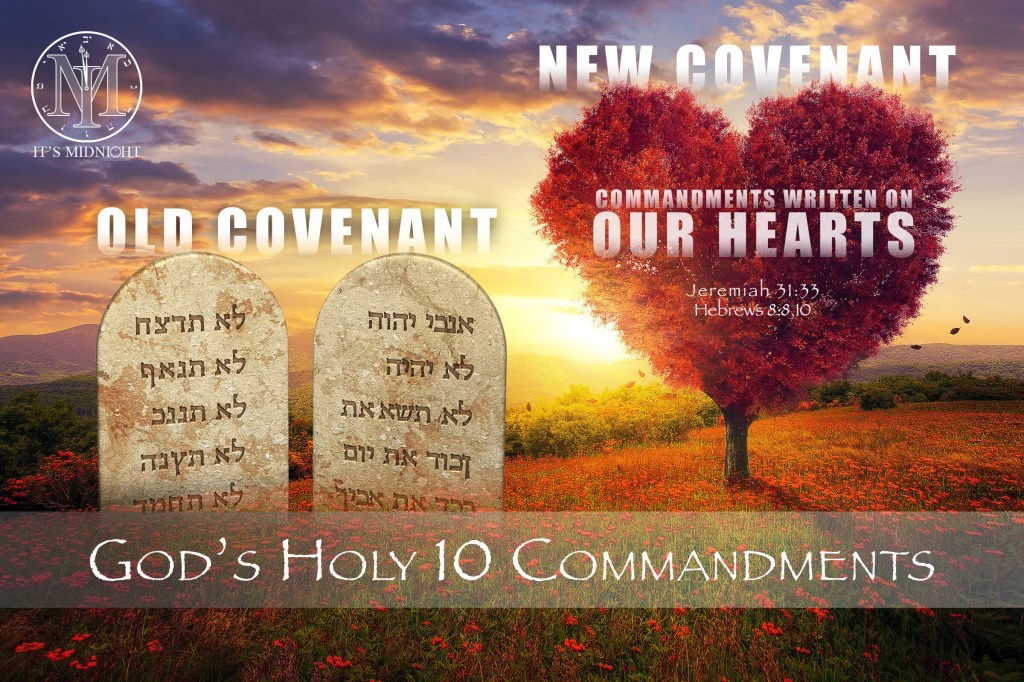
We all proclaim we are worshipers who are worshiping someone or something, whether that is God, ourselves, hero’s, food, money, sex, or something else.

But what is Christian worship? 

Many scholarly writers will define, envision, worship as “our response to God.”

How do we see Him, and likewise see ourselves in relation to Him?

How do we make Him the truest center of our lives in and through Christ?

If the sacrifices and rituals of the Old Testament are no longer expected, or seem out of touch with the times does that mean there are no expectations?

The Bible tells us that there is, in fact, such a thing as appropriate worship.

In fact, Christ worshiped the Father and taught us how to do so in ways which please him.

Worship in Spirit and Truth

“But the hour is coming, and is now here, when all of the true worshipers will worship the Father in spirit and truth, for the Father is seeking such people to worship him” (John 4:23).

Our worship must originate from within, from our hearts; it must be sincere, motivated by our love for God and highest gratitude for all He is and has done.

This is the spirit of worship.

But also, the Holy Spirit orchestrates our services and leads us in corporate praise of God. Along with the “S/spirit” of worship, Scholars points out that worship which pleases God “must never be mindless or based in ignorance.”

We worship intelligently based on what God has revealed in Scripture, not based on what simply “feels right.”

Yet, we must allow ourselves to be moved by what has been revealed to us, and moved by our personal relationship with Christ through the indwelling of the Holy Spirit.

Either one without the other leads to incomplete worship.

Besides this, we genuinely need the help of the Holy Spirit to keep the flow of worship directed in the only right direction there is- 100% God, 0% ourselves.

Without the Lord’s help in this way, we will naturally break towards idolatry.

John 3:27-30 Amplified Bible

27 John replied, “A man can receive nothing [he can claim nothing at all] unless it has been granted to him from heaven [for there is no other source than the sovereign will of God]. 28 You yourselves are my witnesses that I stated, ‘I am not the Christ (the Messiah, the Anointed),’ but, ‘I have [only] been sent ahead of Him [as His appointed forerunner and messenger to announce and proclaim His coming].’ 29 He who has the bride is the bridegroom; but the friend of the bridegroom, who stands by and listens to him, rejoices greatly because of the bridegroom’s voice. So this pleasure and joy of mine is now complete. 30 He must increase [in prominence], but I must decrease.

Worship Reverently

Psalm 95 Complete Jewish Bible

95 Come, let’s sing to Adonai!
Let’s shout for joy to the Rock of our salvation!
Let’s come into his presence with thanksgiving;
let’s shout for joy to him with songs of praise.

For Adonai is a great God,
a great king greater than all gods.
He holds the depths of the earth in his hands;
the mountain peaks too belong to him.
The sea is his — he made it —
and his hands shaped the dry land.

Come, let’s bow down and worship;
let’s kneel before Adonai who made us.
For he is our God, and we are the people
in his pasture, the sheep in his care.

If only today you would listen to his voice:
“Don’t harden your hearts, as you did at M’rivah,
as you did on that day at Massah in the desert,
when your fathers put me to the test;
they challenged me, even though they saw my work.
10 For forty years I loathed that generation;
I said, ‘This is a people whose hearts go astray,
they don’t understand how I do things.’
11 Therefore I swore in my anger
that they would not enter my rest.”

God is not our buddy.

He is not our co-pilot.

He is our Lord.

Jesus is King.

While he invites us into friendship (John 15:15), we must not treat him the way we treat many of our so-called friends – those people we only interact with on social media by “liking” them, or whom we will stay in touch with erratically.

To love Christ as our friend is to honor him and make much of him, expecting to recede into the shadows and to let everyone to see exactly how Jesus has been our friend to the point of death on a cross.

Friendship as defined by Christ is sacrificial, but with a joy that comes from profound love for God.

As our friend, he gave his life for us in order to obey and honor the Father.

This kind of friendship drives us to our knees in reverence and awe.

Although we are Christ’s friends, this friendship is designed to lead us into a proper, redeemed connectional relationship with a holy God who demands our maximum attention and our utmost submission throughout the day, every day.

When we behave selflessly, with joy, towards our neighbors, acting as their friends to the glory of God, we demonstrate a trusting reverence.

We recognize the Father’s power (over our own), which is terrible and beautiful at the same time. We humbly rejoice in it and do not take it minimally or lightly.

When we are giving the Lord proper reverence, it begins with a recognition of who he is. “Our Father, who is in Heaven, hallowed be your name” (Matthew 6:9).

“Hallowed” (the Greek hagiazó) means “to make holy, i.e. (ceremonially) purify or consecrate; (mentally) to venerate – hallow, be holy, sanctify.”

When we take time to understand who he is and what we owe him (our lives), we tend not to be so hasty and thoughtless about worship.

“The friendship of the Lord is for those who fear him, and he makes known to them his covenant” (Psalm 25:14).

God alone is to be honored and glorified by our worship.

We Exalt God

Psalm 30 Complete Jewish Bible

30 (0) A psalm. A song for the dedication of the house. By David:

2 (1) I will exalt you, Adonai, because you drew me up;
you didn’t let my enemies rejoice over me.
3 (2) Adonai my God, I cried out to you,
and you provided healing for me.
4 (3) Adonai, you lifted me up from Sh’ol;
you kept me alive when I was sinking into a pit.

5 (4) Sing praise to Adonai, you faithful of his;
and give thanks on recalling his holiness.
6 (5) For his anger is momentary,
but his favor lasts a lifetime.
Tears may linger for the night,
but with dawn come cries of joy.

(6) Once I was prosperous and used to say,
that nothing could ever shake me —
(7) when you showed me favor, Adonai,
I was firm as a mighty mountain.
But when you hid your face,
I was struck with terror.

9 (8) I called to you, Adonai;
to Adonai I pleaded for mercy:
10 (9) “What advantage is there in my death,
in my going down to the pit?
Can the dust praise you?
Can it proclaim your truth?
11 (10) Hear me, Adonai, and show me your favor!
Adonai, be my helper!”

12 (11) You turned my mourning into dancing!
You removed my sackcloth and clothed me with joy,
13 (12) so that my well-being can praise you and not be silent;
Adonai my God, I will thank you forever!

Raman or “exalt” means to “lift up.”

When we appropriately worship God, we raise His name above all other names.

We speak about Him to others and we declare that Jesus is better than any other “god” the world worships: money, power, love, sex, etc.

How can we lift up God when he is already exalted? 

Job 36:22 says “God is exalted in his power.” He does not need us to lift him up further, yet the heart that worships him wants all other hearts to do the same.

Worship that pleases God seeks to make his name known among those who do not know him.

There can be a private sort of worship, by which we emulate the quiet prayer time Jesus prioritized with the Father. But the believer who longs to see and know Jesus knows also that he deserves loud praise, above every other name.

Paul wrote “God has highly exalted [Jesus] and bestowed on him the name that is above every name” (Philippians 2:9).

No other name deserves such fame, devotion, attention, and effort.

We strive to make him famous where he is unknown.

“Through him then let us continually offer up a sacrifice of praise to God, that is, the fruit of lips that acknowledge his name” (Hebrews 13:15).

We Serve God

Romans 12:1-2 The Message

Place Your Life Before God

12 1-2 So here’s what I want you to do, God helping you: Take your everyday, ordinary life—your sleeping, eating, going-to-work, and walking-around life—and place it before God as an offering. Embracing what God does for you is the best thing you can do for him. Don’t become so well-adjusted to your culture that you fit into it without even thinking. Instead, fix your attention on God. You’ll be changed from the inside out. Readily recognize what he wants from you, and quickly respond to it. Unlike the culture around you, always dragging you down to its level of immaturity, God brings the best out of you, develops well-formed maturity in you.

When we say to the Lord “you alone are worthy” and submit to him, we are entrusting him with our lives.

We admit there is no King besides him to whom we can safely surrender, but also that we must submit, because he called Christ to serve and we follow Christ, even unto death.

Paul says as much, and Christ showed us the way by giving his body as a living sacrifice to the glory of God and for our salvation.

We serve God by giving him our lives and saying “do with me what you will.”

As we worship in spirit and truth, this helps us to properly hear God’s direction for our lives. We are not merely following a feeling, we are reading Scriptures, asking God for the revealed truth about what he has said and what he wants.

Some people are led abroad into missionary work.

Some become missionaries at home.

Some work to help pay for these missions.

Some stay home and minister in other ways.

Yet, in everything, we can give thanks, praise, and credit to God by receding as he comes forward.

If we have dreams, we ask God to make them his dreams so we can serve him lovingly and with joy.

1 Peter 5:1-7 The Message

He’ll Promote You at the Right Time

1-3 I have a special concern for you church leaders. I know what it’s like to be a leader, in on Christ’s sufferings as well as the coming glory. Here’s my concern: that you care for God’s flock with all the diligence of a shepherd. Not because you have to, but because you want to please God. Not calculating what you can get out of it, but acting spontaneously. Not bossily telling others what to do, but tenderly showing them the way.

4-5 When God, who is the best shepherd of all, comes out in the open with his rule, he’ll see that you’ve done it right and commend you lavishly. And you who are younger must follow your leaders. But all of you, leaders and followers alike, are to be down to earth with each other, for—

God has had it with the proud,
But takes delight in just plain people.

6-7 So be content with who you are, and don’t put on airs. God’s strong hand is on you; he’ll promote you at the right time. Live carefree before God; he is most careful with you.

We freely give Him the entirety our hearts and our whole minds for Kingdom purposes, to share the gospel and stir up our fellow Christians.

Sometimes this is painful. The New Testament tells us about the pain we will experience, but also how God will exalt the faithful who suffer for his sake.

What Goes in Comes Out

Colossians 3:15-17 The Message

15-17 Let the peace of Christ keep you in tune with each other, in step with each other. None of this going off and doing your own thing. And cultivate thankfulness. Let the Word of Christ—the Message—have the run of the house. Give it plenty of room in your lives. Instruct and direct one another using good common sense. And sing, sing your hearts out to God! Let every detail in your lives—words, actions, whatever—be done in the name of the Master, Jesus, thanking God the Father every step of the way.

He knows what goes on in our heads; there is no hiding.

“Even before a word is on my tongue, behold, O LORD, you know it altogether” (Psalm 139:4).

But it is also a choice we make, to let Him fill us up with the goodness that is true about him, best for the development of our spirits – for our fruitfulness.

Isaiah 55:8-11 The Message

8-11 “I don’t think the way you think.
    The way you work isn’t the way I work.”
        God’s Decree.
“For as the sky soars high above earth,
    so the way I work surpasses the way you work,
    and the way I think is beyond the way you think.
Just as rain and snow descend from the skies
    and don’t go back until they’ve watered the earth,
Doing their work of making things grow and blossom,
    producing seed for farmers and food for the hungry,
So will the words that come out of my mouth
    not come back empty-handed.
They’ll do the work I sent them to do,
    they’ll complete the assignment I gave them.

What we fill up on will also pour out of us, returning to God as worship if we have consumed things that please him.

Paul wrote we should be hungry for “whatever is true, whatever is honorable, whatever is just, whatever is pure, whatever is lovely, is commendable” (Philippians 4:8).

Philippians 4:4-9 The Message

4-5 Celebrate God all day, every day. I mean, revel in him! Make it as clear as you can to all you meet that you’re on their side, working with them and not against them. Help them see that the Master is about to arrive. He could show up any minute!

6-7 Don’t fret or worry. Instead of worrying, pray. Let petitions and praises shape your worries into prayers, letting God know your concerns. Before you know it, a sense of God’s wholeness, everything coming together for good, will come and settle you down. It’s wonderful what happens when Christ displaces worry at the center of your life.

8-9 Summing it all up, friends, I’d say you’ll do best by filling your minds and meditating on things true, noble, reputable, authentic, compelling, gracious—the best, not the worst; the beautiful, not the ugly; things to praise, not things to curse. Put into practice what you learned from me, what you heard and saw and realized. Do that, and God, who makes everything work together, will work you into his most excellent harmonies.

An extension of that truth is the way we use our money and time to honor what God has given us.

When we joyfully give back to him by giving to others, this is part of our worship.

We worship when we happily tithe; we worship when we volunteer gratefully.

Grateful giving acknowledges we know both in spirit and truth we are saved by the grace and mercy of our Savior that everything good comes from Him.

Whatever we give, it was his to start with.

We acknowledge that he is our sufficiency.

As one writer puts it,

“the biblical call to focus on worship rather than wealth […] encourages a lifestyle of stewardship, where material resources are viewed as tools for advancing God’s kingdom rather than personal gain. Generosity, contentment, and trust in God’s provision are hallmarks of a life oriented towards worship.”

The Trouble with Worship

God has given us the tools to worship him appropriately in the name of his Son Jesus Christ.

While we know how, putting this knowledge into practice is sometimes harder than we would like to admit.

This is why we need the Holy Spirit’s help when it comes to choosing whom to worship and how.

We can offer our worship as much as we like, but if our hearts are full of unacknowledged, unrepentant sin, he will not accept it (Hosea 8:13).

Therefore, we also need to understand the value of confession and repentance to our worship. These are essential elements, because when they sink in and we authentically, truly repent, pleading with God for a heart more in the image of his Son’s heart, the obstacles to true, wholehearted worship are falling away.

In the name of God, the Father the Son and the Holy Spirit,

Praying …

Psalm 84 The Message

84 1-2 What a beautiful home, God-of-the-Angel-Armies!
    I’ve always longed to live in a place like this,
Always dreamed of a room in your house,
    where I could sing for joy to God-alive!

3-4 Birds find nooks and crannies in your house,
    sparrows and swallows make nests there.
They lay their eggs and raise their young,
    singing their songs in the place where we worship.
God-of-the-Angel-Armies! King! God!
    How blessed they are to live and sing there!

5-7 And how blessed all those in whom you live,
    whose lives become roads you travel;
They wind through lonesome valleys, come upon brooks,
    discover cool springs and pools brimming with rain!
God-traveled, these roads curve up the mountain, and
    at the last turn—Zion! God in full view!

8-9 God-of-the-Angel-Armies, listen:
    O God of Jacob, open your ears—I’m praying!
Look at our shields, glistening in the sun,
    our faces, shining with your gracious anointing.

10-12 One day spent in your house, this beautiful place of worship,
    beats thousands spent on Greek island beaches.
I’d rather scrub floors in the house of my God
    than be honored as a guest in the palace of sin.
All sunshine and sovereign is God,
    generous in gifts and glory.
He doesn’t scrimp with his traveling companions.
    It’s smooth sailing all the way with God-of-the-Angel-Armies.

Glory be to the Father,
and to the Son, and to the Holy Ghost;
as it was in the beginning,
is now, and ever shall be,
world without end. Amen, amen.

https://translate.google.com/

Praying or Despairing? When You Don’t Have Any Friends, when you have no acquaintances to keep you company, our life in our isolation. Matthew 11:16-19

Matthew 11:16-19 Message

16-19 “How can I account for this generation? The people have been like spoiled children whining to their parents, ‘We wanted to skip rope, and you were always too tired; we wanted to talk, but you were always too busy.’ John came fasting and they called him crazy. I came feasting and they called me a boozer, a friend of the misfits. Opinion polls don’t count for much, do they? The proof of the pudding is in the eating.”

Word of God for the Children of God

Glory be to the Father,
and to the Son, and to the Holy Ghost;
as it was in the beginning,
is now, and ever shall be,
world without end. Amen, amen.

“The Son of Man came eating and drinking, and they say, ‘Here is a glutton and a drunkard, a friend of tax collectors and ‘sinners.’” (Matthew 11:19)

I met an individual last year was struggling with a serious illness. When I asked him if he knew Jesus, he said “Sorry, but I’m not ready to give my life to Jesus,”

“Have you told Jesus that?” I asked.

Judging from the stymied look on her face, the idea of praying was the farthest thing from his mind. “Why don’t you take time right now to tell Jesus? Whatever is on your heart, you can tell Him.”

The elderly man gave a smile when I reached for his hand and then bowed his head with mine saying,

“Lord, I…uh…they tell me I should give my life to you…and although I can’t, that is, I guess I won’t, I really do…I really want to believe. Please…help me.”

“You’re well on your way to believing in Christ,” I said after he finished praying.

How could I be so sure?

Because he had opened up his heart to encounter the Lord Jesus.

When someone engages God in prayer, they can never be quite the same.

That elderly man’s prayer, though feeble and faltering, meant the Savior, in turn, had a handhold on him. With much encouragement and prayers, it wasn’t long before he accepted Jesus and was welcomed into God’s family

The good news sounds great to those who see Jesus befriending them. In the gospels, the Lord Jesus is constantly presented as a friend of sinners. He moved among the “untouchable'” people as their friend before He became their Savior.

Who can you befriend on Jesus’ behalf today?

Ask God to bring to mind someone who needs Him, and how about you?

Do you need a friend today?

Ask Jesus to be with you in a way that will be a comfort to you.

What did Jesus say about associating with sinners?

Jesus said, “I have not come to call the righteous, but sinners” (Matt. 9:13).

For Jesus, calling sinners didn’t mean standing at a distance and shouting, “Hey, what you are doing is wrong! Stop doing that and come over here.”

Rather, it meant going to where the sinners actually were and being with them, associating with them.

Does the Bible say Jesus was a friend of sinners?

Jesus is called a friend of sinners (Matt. 11:19; Luke 7:34).

Them and us.

No matter what more we might say about his intentions, or the outcome of such friendship, Jesus freely associated with all sinners in a connectional, relational way before any change or expectation of repentance on the part of the sinners.

“In the name of the Father and of the Son and of the Holy Spirit …

Praying ….

Psalm 16 The Message

16 1-2 Keep me safe, O God,
    I’ve run for dear life to you.
I say to God, “Be my Lord!”
    Without you, nothing makes sense.

And these God-chosen lives all around—
    what splendid friends they make!

Don’t just go shopping for a god.
    Gods are not for sale.
I swear I’ll never treat god-names
    like brand-names.

5-6 My choice is you, God, first and only.
    And now I find I’m your choice!
You set me up with a house and yard.
    And then you made me your heir
!

7-8 The wise counsel God gives when I’m awake
    is confirmed by my sleeping heart.
Day and night I’ll stick with God;
    I’ve got a good thing going and I’m not letting go.

9-10 I’m happy from the inside out,
    and from the outside in, I’m firmly formed.
You canceled my ticket to hell—
    that’s not my destination!

11 Now you’ve got my feet on the life path,
    all radiant from the shining of your face.
Ever since you took my hand,
    I’m on the right way.

Glory be to the Father,
and to the Son, and to the Holy Ghost;
as it was in the beginning,
is now, and ever shall be,
world without end. Amen, amen.
https://translate.google.com/

So, God spoke: “Let us make human beings in our image, to make them   reflect our nature…”Genesis 1:26-28

Genesis 1:26-28 English Standard Version

26 Then God said, “Let us make man[a] in our image, after our likeness. And let them have dominion over the fish of the sea and over the birds of the heavens and over the livestock and over all the earth and over every creeping thing that creeps on the earth.”

27 So God created man in his own image,
    in the image of God he created him;
    male and female he created them.

28 And God blessed them. And God said to them, “Be fruitful and multiply and fill the earth and subdue it, and have dominion over the fish of the sea and over the birds of the heavens and over every living thing that moves on the earth.”

Word of God for the Children of God.

Glory be to the Father,
and to the Son, and to the Holy Ghost;
as it was in the beginning,
is now, and ever shall be,
world without end. Amen, amen.
Today, there’s a lot of talk about identity — owning our identity, claiming our identity — and it makes allot of Christians wonder: Does the Bible address this?

What Does God Say about Our Identity?

It turns out God has a lot to say about our identity, and his loving, generous, and merciful guidance starts right in the very first chapter of his holy Word.

In Genesis 1:27, we’re told, “God created mankind in his own image, in the image of God he created them; male and female he created them.”

That’s right — we’re made in the very image of love and goodness and also perfection itself: God Almighty.

That doesn’t mean we ourselves, on our own, are perfect.

But because we are made in God’s image, we know that we are special to him, beloved, and intentionally created.

We have the potential to be like him, though it is only through the saving power and merciful gift of Jesus Christ we are able to be saved, fully reconciled to God.  

That’s a beautiful and tremendously precious thing.

Many of us struggle with our identity.

Perhaps we self-identity based on our upbringing, or the sins of our past, or even the names bullies mocked and brutalized us on the school playground.

Maybe we’ve given ourselves inflated or false identities, identities that fade with the world.

But as Christians, we get a new and eternal identity.

And God has quite a lot to say about that.

The Bible contains a number of statements God makes about our identity.

Let’s dive in to see what these are.

We Are a New Creation in Christ

Those of us who are Christians get an unexpectedly wonderful gift when we choose to follow Jesus: We are new creations.

We get an entirely new start in life.

All of the mistakes of our past are wiped clean.

In 2 Corinthians 5:17, Paul writes, “Therefore, if anyone is in Christ, the new creation has come: The old has gone, the new is here!”

It reminds me of what Jesus talked about with Nicodemus in John 3:3 about being “born again.”

When we are born again as believers, baptized with water and Spirit into God’s heavenly family, we are then able to enter God’s kingdom.

We become part of a new identity, that of “Christ-follower.”

As John explains in John 3:16, “For God so loved the world that he gave his one and only Son, that whoever believes in him shall not perish but have eternal life.”

Remembering this clarifies everything.

We Are God’s Children

Another extraordinary truth is that we are sons and daughters of God, part of God’s family. 

John 1:12-13 tells us, “To all who did receive him, to those who believed in his name, he gave the right to become children of God — children born not of natural descent, nor of human decision or a husband’s will, but born of God.”

Ephesians 2:19 tells us that because Jesus destroyed the barrier between us and God, we who believe are “members of his household.”

Galatians 4:5-7 says that because of Jesus, we were adopted as God’s own — no longer a slave but God’s own child. (Ephesians 1:5 echoes this.)

As Romans 8:16 so passionately proclaims, “The Spirit himself testifies with our spirit that we are God’s children.”

Remembering that identity reminds us to behave as children who honor their heavenly Father.

We are ‘Heavenites’ — Citizens of Heaven

People from Brooklyn are called Brooklynites, while biblical people from Israel were called Israelites. We, however, are told in Scripture that we are citizens of heaven; therefore, we can claim identity as “Heavenites,” people of heaven.

Philippians 3:20 tells us clearly that “our citizenship is in heaven.”

Jesus himself said he was going ahead of us to his Father’s house — heaven — to prepare a place for us there in the many rooms that await (John 14:2-3).

Because we are citizens of heaven, we must take this seriously and do our best to live this way on earth.

Paul writes that we are “Christ’s ambassadors, as though God were making his appeal through us” (2 Corinthians 5:20), and that’s true.

For many, we are the face of God.

We shine his light and spread his word so that all may know, fulfilling Jesus’s Great Commission that he gave his followers in Matthew 28:19-20 to go and makes disciples of all nations, baptizing them and teaching them to obey.

We are not to love the world and its ways (1 John 2:15-17), but rather to love only God, and second to love others as ourselves (Matthew 22:36-40).

Remembering that identity reminds us to live our lives in a way that points to him, now and always.

We Are Part of God’s Body

The Bible is clear we are the body of Christ, with every person as a different part (1 Corinthians 12:27).

Some are teachers, healers, or prophets, just like there are eyes, ears, or feet.

Therefore, we must understand that our bodies are not our own.

Bought with a price, they are temples of the Holy Spirit who lives inside us (1 Corinthians 6:19-20).

Ephesians 1:22-23 says much the same, noting that Christ is our head.

In John 15, Jesus talks about being the true vine, while we are the branches.

As he explains, just as with branches on a tree, they are fully connected:

“If you remain in me and I in you, you will bear much fruit; apart from me you can do nothing” (John 15:5).

Remembering that identity helps when we walk in the world.

We Are Forgiven and Free

As followers of Jesus, we have the assurance that our sins are forgiven.

This means we’re no longer destined to agony but liberated for heavenly glory.

We’re not chained to the past but free for God’s good purpose.

As 1 John 2:12 says, “Your sins have been forgiven through Jesus.”

And as Galatians 5:1 reminds us,

“It is for freedom that Christ has set us free. Stand firm, then, and do not let yourselves be burdened again by a yoke of slavery.”

Remembering this helps us stand up straight when on assignment from God.

What are some more identities God gives us?

The Bible is filled with many more statements about our identity: beloved, strengthen, complete, made whole.

Here are only just a few:

At our core, our identity is found in our relationship with Jesus Christ.

To echo what our savior said in John 15:5, apart from him, we can do nothing.

Our identity is rooted in him, woven perfectly in a protective, loving bind that lasts for eternity.

We receive a God-given sense of purpose and belonging in this, liberating us for the good purposes God has for his glory.

And that is far better than anything this world can offer.

Our Identities in God, the Father, God the Son God the Holy Spirit

Thanks be to God!

In the name of God, the Father God the Son and God the Holy Spirit

Praying ….

Psalm 8 New American Standard Bible

The Lord’s Glory and Mankind’s Dignity.
For the music director; on the Gittith. A Psalm of David.

Lord, our Lord,
How majestic is Your name in all the earth,
You who have [a]displayed Your splendor above the heavens!
From the mouths of infants and nursing babies You have established [b]strength
Because of Your enemies,
To do away with the enemy and the revengeful.

When I [c]consider Your heavens, the work of Your fingers,
The moon and the stars, which You have set in place;
What is man that You think of him,
And a son of man that You are concerned about him?
Yet You have made him a little lower than [d]God,
And You crown him with glory and majesty!
You have him rule over the works of Your hands;
You have put everything under his feet,
All sheep and oxen,
And also the animals of the field,
The birds of the sky, and the fish of the sea,
Whatever passes through the paths of the seas.

Lord, our Lord,
How majestic is Your name in all the earth!

Glory be to the Father,
and to the Son, and to the Holy Ghost;
as it was in the beginning,
is now, and ever shall be,
world without end. Amen, amen.
https://translate.google.com/

That Darkness is My Closest Friend. The Darkness is My Only Best Friend.  The Only ‘Friend’ I have is Darkness. Psalm 88

Psalm 88 Young’s Literal Translation

88 A Song, a Psalm, by sons of Korah, to the Overseer, `Concerning the Sickness of Afflictions.’ — An instruction, by Heman the Ezrahite. O Jehovah, God of my salvation, Daily I have cried, nightly before Thee,

My prayer cometh in before Thee, Incline Thine ear to my loud cry,

For my soul hath been full of evils, And my life hath come to Sheol.

I have been reckoned with those going down [to] the pit, I have been as a man without strength.

Among the dead — free, As pierced ones lying in the grave, Whom Thou hast not remembered any more, Yea, they by Thy hand have been cut off.

Thou hast put me in the lowest pit, In dark places, in depths.

Upon me hath Thy fury lain, And [with] all Thy breakers Thou hast afflicted. Selah.

Thou hast put mine acquaintance far from me, Thou hast made me an abomination to them, Shut up — I go not forth.

Mine eye hath grieved because of affliction, I called Thee, O Jehovah, all the day, I have spread out unto Thee my hands.

10 To the dead dost Thou do wonders? Do Rephaim rise? do they thank Thee? Selah.

11 Is Thy kindness recounted in the grave? Thy faithfulness in destruction?

12 Are Thy wonders known in the darkness? And Thy righteousness in the land of forgetfulness?

13 And I, unto Thee, O Jehovah, I have cried, And in the morning doth my prayer come before Thee.

14 Why, O Jehovah, castest Thou off my soul? Thou hidest Thy face from me.

15 I [am] afflicted, and expiring from youth, I have borne Thy terrors — I pine away.

16 Over me hath Thy wrath passed, Thy terrors have cut me off,

17 They have surrounded me as waters all the day, They have gone round against me together,

18 Thou hast put far from me lover and friend, Mine acquaintance [is] the place of darkness!

Word of God for the Children of God

Glory be to the Father,
and to the Son, and to the Holy Ghost;
as it was in the beginning,
is now, and ever shall be,
world without end. Amen, amen.

No sadder psalmPsalm 88 is regarded as the saddest psalm, the most desolate of all 150 psalms. It is considered the most despairing and bleak passage in the Bible with its sobering themes of unrelenting darkness, sufferingagonyhelplessness, even  hopelessness, due to the apparent absence of God

It is a profound expression of anguish and despair. It has no uplifting or hopeful themes like many other psalms. Yet it is significant as an individual lament psalm where the psalmist knows nothing but sorrow and agony. But even in the darkness of his grief he turns to God for deliverance (Ps 88:1).

The bleakest of all the prayers in the psalms.

Psalm 88 is written by one who is ill for a long time, friendless, near to death and ends in darkness (Ps 88:18), in contrast to most psalms that end with a note of confidence or praise (Ps 13:1-2, 5-6; 22:1-2, 30-31).

It is a “psalm without hope,” a poignant, unrelenting and intense lament, expressing deep distressdespairanguish, a profound sense of abandonment.

He pours out his soul in a raw and honest prayer.

He describes his overwhelming suffering, both outward and inward, his physical and emotional afflictions, and a feeling of profound darkness and of being forsaken by both God and human companions.

Throughout the psalm, he questions God’s apparent absence and the purpose of his afflictions.

The tone remains bleak, and the psalm concludes with a sense of isolation, lonelinessdespair and darkness, making it a most somber and desolate psalm.

Unlike many other psalms of lament, Psalm 88 lacks any clear resolution or any expression of hope, highlighting the raw, unremitting nature of the psalmist’s suffering.

Hoping without hope.

The psalmist has almost given up on God, but not completely, as he still prays and hopes that God will save him from his predicament.

But it’s still a prayer as the psalmist continues to turn to God to voice his sheer anguish and call for help.

It is a model prayer for anyone who seems to have met with silence from God.

Skip it

Psalm 88 is skipped over by most pastors, who prefer Bible passages that are full of singing God’s praises and speaking of God’s goodness.

But Psalm 88 does the very opposite!

The author of this psalm does not speak of God positively at all.

In fact, he is blaming and accusing God for his whole life situation, being quite sarcastic, questioning God’s goodness, and more or less rebuking God out of his anguish and frustration!

It is one of the rawest, most insightful, and most human chapters of the Bible.

And in its rawest presentation it is absolutely beautiful, unbelievably grabbing at every single heart string God weaved into us and even strangely comforting.

No ComfortNo Hope and No Answers

The darkness deepens.

The darkest depths.

Darkness is my closest friend.

Darkness without light; trust without hope.

A prayer in the darkness of despair.

The darkness of the soul: patient faith, faithful patience.

A petition to be saved from death.

A cry from the grave.

A cry of pain and sorrow.

A desperate prayer from deep affliction.

A sermon for sufferers.

How to deal with dark times?

Facing the deepest darkness of despair and abandonment?

Contemplating the hidden God as the hostile God?

Life without Comfort (Ps 88:1-9). Complaints against God’s action.

Death without Hope (Ps 88:10-12). Challenges to God’s wisdom.

Questions without Answers (Ps 88:13-18). Charges against God’s conduct.

    While still praying and crying out to God to save him (Ps 88:1, 9, 13), the psalmist’s existential reality is as follows:

    1. Sleepless (Ps 88:1-2).
    2. Overwhelmed (Ps 88:3-5).
    3. Ruined (Ps 88:6-9).
    4. Dying (Ps 88:10-12).
    5. Rejected (Ps 88:13-14).
    6. Darkness (Ps 88:15-18).

    consider also these additional Questions:

    • Can you live a life without comfort (1-9)?
    • Can you die without hope (10-12)?
    • Can you live with questions without answers (13-18)?
    • Can you live when there is no light at the end of the tunnel?
    • Can you go on trusting God when you feel abandoned by God (and friends)?
    • Can you live by faith when the future seems dark and bleak?
    • Can you express raw, honest emotions of anger and frustration towards God during difficult times? Or just be thankful?

    In the name of God, the Father the Son and the Holy Spirit

    Praying …

    Psalm 86 Complete Jewish Bible

    86 (0) A prayer of David:

    (1) Listen, Adonai, and answer me,
    for I am poor and needy.
    Preserve my life, for I am faithful;
    save your servant,
    who puts his trust in you
    because you are my God.
    Take pity on me, Adonai,
    for I cry to you all day.

    Fill your servant’s heart with joy,
    for to you, Adonai, I lift my heart.
    Adonai, you are kind and forgiving,
    full of grace toward all who call on you.
    Listen, Adonai, to my prayer;
    pay attention to my pleading cry.
    On the day of my trouble I am calling on you,
    for you will answer me.

    There is none like you among the gods, Adonai;
    no deeds compare with yours.
    All the nations you have made
    will come and bow before you, Adonai;
    they will honor your name.
    10 For you are great, and you do wonders;
    you alone are God.

    11 Adonai, teach me your way,
    so that I can live by your truth;
    make me single-hearted,
    so that I can fear your name.
    12 I will thank you, Adonai my God,
    with my whole heart;
    and I will glorify your name forever.
    13 For your grace toward me is so great!
    You have rescued me from the lowest part of Sh’ol.

    14 God, arrogant men are rising against me,
    a gang of brutes is seeking my life,
    and to you they pay no attention.
    15 But you, Adonai,
    are a merciful, compassionate God,
    slow to anger
    and rich in grace and truth.
    16 Turn to me, and show me your favor;
    strengthen your servant, save your slave-girl’s son.
    17 Give me a sign of your favor,
    so that those who hate me
    will see it and be ashamed,
    because you, Adonai,
    have helped and comforted me.

    Glory be to the Father,
    and to the Son, and to the Holy Ghost;
    as it was in the beginning,
    is now, and ever shall be,
    world without end. Amen, amen.
    https://translate.google.com/

    God Tames the Surging Sea: “God is ruler over the surging sea: When its waves rise up, God’s voice alone, who speaks to them, making them still.” Psalm 89:8-13

    Psalm 89:8-13 New King James Version

    O Lord God of hosts,
    Who is mighty like You, O Lord?
    Your faithfulness also surrounds You.
    You rule the raging of the sea;
    When its waves rise, You still them.
    10 You have broken [a]Rahab in pieces, as one who is slain;
    You have scattered Your enemies with Your mighty arm.

    11 The heavens are Yours, the earth also is Yours;
    The world and all its fullness, You have founded them.
    12 The north and the south, You have created them;
    Tabor and Hermon rejoice in Your name.
    13 You have a mighty arm;
    Strong is Your hand, and high is Your right hand.

    Word of God for the Children of God

    Glory be to the Father,
    and to the Son, and to the Holy Ghost;
    as it was in the beginning,
    is now, and ever shall be,
    world without end. Amen, amen.

    Witness The Surging Sea

    The verse Psalms 89:9 from the King James Version of the Bible reads, “Thou rulest the raging of the sea: when the waves thereof arise, thou stillest them.”

    This verse is a powerful declaration of God’s sovereignty and control over the natural world, using the imagery of the sea and its waves to convey a sense of both chaos and calm.

    The theme of God’s power and authority is central to this verse.

    The image of the raging sea symbolizes the forces of nature that are beyond human control.

    The sea, with its unpredictable and tumultuous waves, has long been used as a symbol of chaos and disorder.

    In many ancient cultures, the sea was seen as a place of danger and mystery, a realm where only the gods held sway. In the Bible, the sea is often used as a metaphor for the forces of evil and chaos that threaten to overwhelm humanity.

    In contrast to this image of chaos, the verse asserts that God is the one who rules over the raging of the sea.

    This statement speaks to the belief in God’s ultimate power and authority.

    It conveys the idea that even the most uncontrollable and turbulent forces of nature are subject to God’s will.

    This theme of God’s sovereignty is a common thread throughout the Bible, as it emphasizes the belief God is in control of all things and that absolutely nothing is beyond his reach.

    The second part of the verse, “when the waves thereof arise, thou stillest them,” further emphasizes God’s ability to bring order out of chaos.

    It speaks to the idea that no matter how tumultuous and overwhelming the challenges we face may be, God has the power to calm the storm.

    This imagery of God stilling the waves is a high potency symbol of peace and tranquility. It conveys the message that in the midst of life’s storms and trials, we can find securest refuge and solace in God’s presence.

    The context of this verse is also important in understanding its significance.

    Psalms is a book of the Bible that is filled with songs and poetry that express a wide range of emotions, from joy and praise to despair and lament.

    Many of the psalms were written as expressions of faith in the midst of hardship and adversity.

    This verse, Psalm 89:9 in particular, can be seen as a source of comfort and hope for those who are facing difficult circumstances (Mark 4:35-41). It serves as a steadfast and true reminder that God is able to bring peace and order to the chaos of life, no matter how overwhelming it may seem.

    In addition to its thematic and contextual significance, this verse also holds symbolic value.

    The sea and its waves can be seen as symbols of the trials and tribulations that we face in life. Just as the sea can be tumultuous and unpredictable, so too can our experiences be filled with challenges and uncertainty.

    The image of God ruling over the raging sea serves as a reminder that we can find strength and stability in the midst of life’s storms by placing trust in God.

    In conclusion, Psalms 89:9 is a verse that conveys a powerful message of God’s sovereignty and control over the forces of nature.

    It speaks to the belief in God’s power to bring order out of chaos and to calm the storms of life.

    This verse serves as a source of reassurance and hope, reminding believers that no matter what challenges they may face, God is always present and always able to bring peace and tranquility. It is a timeless affirmation of faith in the midst of uncertainty and a reminder of the enduring power of God’s love and grace.

    In the name of God, the Father, God the Son and God the Holy Spirit …

    Praying …

    Psalm 65 New King James Version

    Praise to God for His Salvation and Providence
    To the Chief Musician. A Psalm of David. A Song.

    65 Praise is awaiting You, O God, in Zion;
    And to You the [a]vow shall be performed.
    O You who hear prayer,
    To You all flesh will come.
    Iniquities prevail against me;
    As for our transgressions,
    You will provide atonement for them.

    Blessed is the man You choose,
    And cause to approach You,
    That he may dwell in Your courts.
    We shall be satisfied with the goodness of Your house,
    Of Your holy temple.

    By awesome deeds in righteousness You will answer us,
    O God of our salvation,
    You who are the confidence of all the ends of the earth,
    And of the far-off seas;
    Who established the mountains by His strength,
    Being clothed with power;
    You who still the noise of the seas,
    The noise of their waves,
    And the tumult of the peoples.
    They also who dwell in the farthest parts are afraid of Your signs;
    You make the outgoings of the morning and evening [b]rejoice.

    You [c]visit the earth and water it,
    You greatly enrich it;
    The river of God is full of water;
    You provide their grain,
    For so You have prepared it.
    10 You water its ridges abundantly,
    You settle its furrows;
    You make it soft with showers,
    You bless its growth.

    11 You crown the year with Your goodness,
    And Your paths drip with abundance.
    12 They drop on the pastures of the wilderness,
    And the little hills rejoice on every side.
    13 The pastures are clothed with flocks;
    The valleys also are covered with grain;
    They shout for joy, they also sing.

    Glory be to the Father,
    and to the Son, and to the Holy Ghost;
    as it was in the beginning,
    is now, and ever shall be,
    world without end. Amen, amen.

    When the storms of life are raging, Stand by me Author: Charles Albert Tindley (1905)

    1 When the storms of life are raging, stand by me;
    when the storms of life are raging, stand by me;
    when the world is tossing me like a ship upon the sea,
    Thou who rulest the wind and water, stand by me.

    2 In the midst of tribulation, stand by me;
    in the midst of tribulation, stand by me;
    when the host of hell assail, and my strength begins to fail,
    Thou who never lost a battle, stand by me.

    3 In the midst of faults and failures, stand by me;
    in the midst of faults and failures, stand by me;
    when I’ve done the best I can, and my friends
    misunderstand,
    Thou who knowest all about me, stand by me.

    4 In the midst of persecution, stand by me;
    in the midst of persecution, stand by me;
    when my foes in war array, undertake to stop my way,
    Thou who rescued Paul and Silas, stand by me.

    5 When I’m growing old and feeble, stand by me;
    when I’m growing old and feeble, stand by me;
    when my life becomes a burden, and I’m nearing
    chilly Jordan,
    O Thou Lily of the Valley, stand by me.

    https://translate.google.com/

    The Words of Eternal Life. “Simon Peter answered him, “Lord, to whom else should we go? You alone have the words of eternal life.” John 6:66-71

    John 6:60-71 New King James Version

    Many Disciples Turn Away

    60 Therefore many of His disciples, when they heard this, said, “This is a [a]hard saying; who can understand it?”

    61 When Jesus knew in Himself that His disciples [b]complained about this, He said to them, “Does this [c]offend you? 62 What then if you should see the Son of Man ascend where He was before? 63 It is the Spirit who gives life; the flesh profits nothing. The words that I speak to you are spirit, and they are life. 64 But there are some of you who do not believe.” For Jesus knew from the beginning who they were who did not believe, and who would betray Him. 65 And He said, “Therefore I have said to you that no one can come to Me unless it has been granted to him by My Father.”

    66 From that time many of His disciples went [d]back and walked with Him no more.  67 Then Jesus said to the twelve, “Do you also want to go away?”

    68 But Simon Peter answered Him, “Lord, to whom shall we go? You have the words of eternal life. 69 Also we have come to believe and know that You are the [e]Christ, the Son of the living God.”

    70 Jesus answered them, “Did I not choose you, the twelve, and one of you is a devil?” 71 He spoke of Judas Iscariot, the son of Simon, for it was he who would betray Him, being one of the twelve.

    Word of God for the Children of God

    Glory be to the Father,
    and to the Son, and to the Holy Ghost;
    as it was in the beginning,
    is now, and ever shall be,
    world without end. Amen, amen.
    At some point in every Christian’s life, we come face-to-face with doubt.

    Something happens that we did not expect, and even the strongest among us begin to question everything about what and why we believe.

    The enemy is non-stop relentless in the presence of our pain, and he begins to apply pressure with three specific questions:

    “Is it true?”

    “Is it worth it?”

    “Is it remotely believable?”

    These questions are followed by countless others.

    Did God really say what’s in His word?

    Is all this really going to be worth it?

    If God really loved you, would you be suffering as much as you are now?

    Why am I bothering myself with my effort – I only achieve more confusion?

    This Biblical stuff is too hard to grasp, and it seems like you are worse off than before; wouldn’t it be easier to just run as the wind away or walk out on Jesus?

    In the scripture above, Jesus relays the utmost importance of “drinking His blood” and “eating His flesh.”

    This was a difficult lesson and many walked out on Him because it made them uncomfortable – is Jesus only looking for cannibals’ to become His followers?

    Jesus then asked His disciples if they were going to quit, too. But Peter answered Him, “To whom shall we go? You have the words of eternal life.”

    When the tsunami’s of doubt come and the enemy starts to ask hard questions, answer him with another: Where else could I go? Jesus has the words of eternal life, and no matter how utterly difficult life becomes, I will not walk out on Him.

    Words of Eternal Life
    John 6:67-69Amplified Bible

    67 So Jesus said to the twelve [disciples], “You do not want to leave too, do you?” 68 Simon Peter answered, “Lord, to whom shall we go? You [alone] have the words of eternal life [you are our only hope]. 69 We have believed and confidently trusted, and [even more] we have come to know [by personal observation and experience] that You are the Holy One of God [the Christ, the Son of the living God].”

    Crowds can be fickle, switching quickly from enthusiasm to rejection and even violence. Sometimes these dramatic swings are triggered by just a few words.

    Jesus’ teaching in John 6 shows his words can trigger rejection or lead to life.

    As Jesus’ reputation grew, the crowds of people around him dramatically increased.

    Why?

    Because he was a wonder worker.

    Just a day or two earlier, Jesus had fed a huge crowd of several thousand people (John 6:1-15).

    But while the crowds were drawn to his miraculous works, they didn’t always like his surprising teachings.

    At the synagogue in Capernaum, he had told the crowd that if they wanted to have eternal life, they had to eat of his body and drink of his blood (6:53-59).

    Turned off by that vision of cannibalistic behavior, many people rejected Jesus.

    Jesus asked his closest disciples if they wanted to leave too.

    Speaking on behalf of them all, Peter asked, “Lord, to whom shall we go?”

    And then he made this bedrock confession: “You have the words of eternal life.”

    When the Holy Spirit softens our hearts and opens our eyes to faith in Christ, we can see Jesus for who he really is, just as Peter did and, affirm our faith in Him.

    John 14:1-6 Amplified Bible

    Jesus Comforts His Disciples

    14 “Do not let your heart be troubled (afraid, cowardly). Believe [confidently] in God and trust in Him, [have faith, hold on to it, rely on it, keep going and] believe also in Me. In My Father’s house are many dwelling places. If it were not so, I would have told you, because I am going there to prepare a place for you. And if I go and prepare a place for you, I will come back again and I will take you to Myself, so that where I am you may be also. And [to the place]  where I am going, you know the way.” Thomas said to Him, “Lord, we do not know where You are going; so how can we know the way?” Jesus said to him,  “[a]I am the [only] Way [to God] and the [real] Truth and the [real] Life; no one comes to the Father but through Me.

    Jesus is the Son of God, our only truth for faith and life.

    Affirmation of Faith – Apostles’ Creed I believe in God, the Father Almighty, Maker of heaven and earth, and in Jesus Christ, His only Son, our Lord, who was conceived by the Holy Ghost, born of the Virgin Mary, suffered under Pontius Pilate, was crucified, dead and buried; He descended into hell; the third day He rose again from the dead; He ascended into heaven, and sitteth on the right hand of God the Father Almighty; from thence He shall come to judge the quick and the dead. I believe in the Holy Ghost, the holy catholic church, the communion of saints, the forgiveness of sins, the resurrection of the body, and the life everlasting. Amen.

    And then, like Peter, we can also unconditionally trust him as we live and serve.

    In the name of God, the Father and God the Son and God the Holy Spirit …

    Praying …

    Psalm 29 Complete Jewish Bible

    29 (0) A psalm of David:

    (1) Give Adonai his due, you who are godly;
    give Adonai his due of glory and strength;
    give Adonai the glory due his name;
    worship Adonai in holy splendor.

    The voice of Adonai is over the waters;
    the God of glory thunders,
    Adonai over rushing waters,
    the voice of Adonai in power,
    the voice of Adonai in splendor.

    The voice of Adonai cracks the cedars;
    Adonai splinters the cedars of the L’vanon
    and makes the L’vanon skip like a calf,
    Siryon like a young wild ox.

    The voice of Adonai flashes fiery flames;
    the voice of Adonai rocks the desert,
    Adonai convulses the Kadesh Desert.
    The voice of Adonai causes deer to give birth

    and strips the forests bare —
    while in his temple, all cry, “Glory!”
    10 Adonai sits enthroned above the flood!
    Adonai sits enthroned as king forever!
    11 May Adonai give strength to his people!
    May Adonai bless his people with shalom!

    Glory be to the Father,
    and to the Son, and to the Holy Ghost;
    as it was in the beginning,
    is now, and ever shall be,
    world without end. Amen, amen.

    https://translate.google.com/

    Lord, this is my prayer; there is not a single moment of my life for which I don’t have a need for your Direction. Psalm 119:73-80

    Psalm 119:73-80 New Revised Standard Version Updated Edition

    73 Your hands have made and fashioned me;
        give me understanding that I may learn your commandments.
    74 Those who fear you shall see me and rejoice,
        because I have hoped in your word.
    75 I know, O Lord, that your judgments are right
        and that in faithfulness you have humbled me.
    76 Let your steadfast love become my comfort
        according to your promise to your servant.
    77 Let your mercy come to me, that I may live,
        for your law is my delight.
    78 Let the arrogant be put to shame,
        for they have subverted me with guile;
        as for me, I will meditate on your precepts.
    79 Let those who fear you turn to me,
        so that they may know your decrees.
    80 May my heart be blameless in your statutes,
        so that I may not be put to shame.

    Word of God for the Children of God

    Glory be to the Father,
    and to the Son, and to the Holy Ghost;
    as it was in the beginning,
    is now, and ever shall be,
    world without end. Amen, amen.

    How Much More Knowledge Shall We Receive From the Lord?

    God knows us so well that he knows the best way to teach us what he wants us to know. Let’s celebrate when we learn the lesson, believe the promise, obey the command or trust in faith. We are all learning how to selflessly follow our Lord.

    Which verse or passage in the Bible – or maybe it’s an entire book – do you find too difficult to understand? What parts of the Bible do you feel you have to wade through every word trying figure out exactly what’s being said?

    The reality is that there are some things that our human minds simply cannot grasp – such as the true grandeur of heaven – until we pass from this life and into eternity and we are able to see things as God sees them.

    But the Bible is God’s letter to us and his instructions for how to live. He wants us to understand it.

    The good news is that because God is the one that created us, he understands the limitations of our understanding.

    So when we get frustrated with trying to understand something in the Bible, we can first remember God is our creator and already knows we are struggling. 

    The same God that fashioned and created us with His own hands, paying attention to every minute little detail even to the point of every human being having different fingerprints, is the same God who understands our weaknesses and frailties.

    But God did not leave us alone to figure things out.

    At the moment we became a Christian, the Holy Spirit moved in and took up residence within us.

    Part of the job of the Holy Spirit is to help us understand the Bible.

    In Psalm 119:73, the psalmist is asking God to give him understanding so he could learn God’s commandments.

    In essence, saying, “God you are the one you made me, now help me understand.”

    Any time we open God’s Word, we should begin with a prayer before reading the first word – a prayer asking the Holy Spirit to help us understand.

    1 John 2:27 says, “The anointing you received from Him remains in you, and you don’t need anyone to teach you. Instead, His anointing teaches you about all things and is true and is not a lie; just as He has taught you, remain in Him.”

    1 Corinthians 2:10 “Now God has revealed these things to us by the Spirit, for the Spirit searches everything, even the depths of God.”

    So when you are having a difficult time understanding the Bible, stop where you are and ask the Holy Spirit to help you.

    Another element to understanding God’s Word is that we must have a heart that is willing to do whatever God is saying to us.

    We don’t just read it so we can check the box on our daily Bible reading plan.

    We should be reading with the expectation that God will reveal something new to us – whether that is something about His character, the way He expects us to live as His children, or He uses His Word to convict us of sin.

    Whatever He reveals, the purpose is to make us more and more like Christ and to grow us as Christians as He prepares us to do His will.

    James 1:22 “Be doers of the word and not hearers only.”

    John 7:17 says, “If anyone wants to do His will, he will understand whether the teaching is from God or if I am speaking on My own.”

    So be sure you are willing to do whatever God might reveal to you as you are asking the Holy Spirit to help you understand.

    We also have to be willing to give up our own ideas.

    In Isaiah 53:6, we find that “we have all turned to our own way.”

    We can’t take a single verse out of the Bible and make it say what we want it to say to fit what we want to do.

    Proverbs 16:25 teaches, “There is a way that seems right to a man, but its end is the way to death.”

    Satan is called the “deceiver” in the Bible.

    From the very beginning of the Bible we find Satan deceiving Eve and he continues to deceive all the way through to Revelation.

    2 Corinthians 11:14 says, “And no wonder, for Satan himself masquerades as an angel of light.”

    And in Revelation 12:9, the Bible tells us what will happen to Satan:

    “The great dragon was hurled down – that ancient serpent called the devil, or Satan, who leads the whole world astray.”

    Satan knows that because you have been saved, that you do not belong to him.

    But if he can insert a spike strip in your roadway, and trip you up so you don’t understand the Bible, then you may not live the abundant, victorious life God intends for you or perhaps it will keep you from winning someone else to Christ.

    He wants to deceive us so we do not have a good understanding of the Bible.

    Rather than bringing our own creative clever ideas to the table when we open God’s Word, we should initially have a desire, a passion, to understand God’s Word His way, digging into the context and depend on Him to reveal it to us.

    If we expect to truly understand God’s Word, we can’t just sit down and read it – we have to study it.

    You might say, I go to church on Sunday and listen to the preacher and I’m part of a small group too.

    But how do you know if what they are teaching is Biblical truth if you are not studying it for yourself?

    2 Timothy 2:15 teaches, “Study to show thyself approved unto God, a workman that needeth not to be ashamed, rightly dividing the word of the truth.”

    If you want to truly understand the Bible, you have to study it in depth so that you can understand it accurately.

    Don’t just depend on your pastor to do the study work.

    Study it for yourself!

    As we are studying God’s Word, we need to compare spiritual things with spiritual (1 Corinthians 2:13).

    In other words we use the Bible to interpret the Bible.

    Let’s say you wanted to put a complex puzzle together or a modeled car.

    With all the pieces lying around you, how do you know what the finished product is supposed to look like?

    You look at the picture on the box.

    Studying God’s Word is much like that.

    When we come to a part we don’t understand we need to take the main topic of what we are studying, search the entire Bible for everything it has to say about that topic.

    There are many online helps for this.

    One of the easiest ways to see verses all on a single topic is go to openbible.info.

    https://www.openbible.info/

    The search bar will say, “What does the Bible say about” and you type in the topic. The website will pull up all the verses that pertain to that topic.

    You can then begin to study each verse in it’s own scriptural context. We can then get a full picture about what God has to say on the topic you are studying.

    Sometimes, we just need a sounding board too so we can process the thoughts that are revealed as we study.

    So we can maybe make an appointment with our pastors or another Godly saint more spiritually mature than us and talk with them about what we are studying.

    God can use these people to help us connect all the dots so we can understand what He is saying to us. Again, we should not just rely on their understanding.

    We have to do our own study work.

    We need to follow the teaching in Proverbs 3:5-6,

    “Trust in the Lord with all thine heart; and lean not unto thine own understanding. In all thy ways acknowledge him and he shall direct thy paths. 

    Understanding God’s Word requires us to trust God with all that we are, to set aside our own biased and faulty thinking as we acknowledge God and His truth. Then he alone will direct our paths and bring the understanding He wants to reveal to us.

    Lastly, remember God’s Word is “living and active, and sharper than any two-edged sword, piercing even to the dividing asunder of soul and spirit, and of the joints and marrow, and is a discerner of the thoughts and intents of the heart.”

    Because it is living, each time we come to study it, we can learn something new from it.

    Never think nor believe you will reach the maximum point of understanding the entirety of God’s Word.

    As we live and move through life and face different problems or seasons of life, God will assuredly reveal to us just what we need for that moment – then in the next moment, He will certainly show us something new to ponder and reflect.

    So, if you find yourself praying like the psalmist, “Give me understanding” remember:

    Remember that God’s Word is living and active.

    We can never stop studying His Word for each time we study it, he will reveal something new.

    God is our creator, He understands all of the limitations of our human minds.

    God didn’t leave us on our own to figure it out – He gave us the Holy Spirit to guide us into truth.

    We must have the heart to do His will as He reveals His truth to us.

    We must be willing to give up our ideas, trade them for understanding it God’s way

    We must be willing to study it – in depth – not just read it and we need to study it for ourselves rather than only depend on what someone else is saying.

    When trying to understand God’s Word we must compare spiritual things with spiritual by leaning hard into what the entire Bible has to say on a topic rather than a single verse.

    We can discuss what we are studying with spiritually mature Christians who can help us process our thoughts – but not to depend on them to give us the answer.

    We can utilize Bible study tools to help guide our study, but they should never replace the hard work of study or work of the Holy Spirit in our lives and they should not be our sole source of truth – only God can be our source of truth.

    We need walk ourselves to that place from which to trust God to bring us to the understanding He wants for us rather than leaning on our own understanding.

    in the name of God, the Father and God the Son and God the Holy Spirit

    Praying …

    Psalm 119:105-112 The Message

    105-112 By your words I can see where I’m going;
        they throw a beam of light on my dark path.
    I’ve committed myself and I’ll never turn back
        from living by your righteous order.
    Everything’s falling apart on me, God;
        put me together again with your Word.
    Adorn me with your finest sayings, God;
        teach me your holy rules.
    My life is as close as my own hands,
        but I don’t forget what you have revealed.
    The wicked do their best to throw me off track,
        but I don’t swerve an inch from your course.
    I inherited your book on living; it’s mine forever—
        what a gift! And how happy it makes me!
    I concentrate on doing exactly what you say—
        I always have and always will.

    * * *

    Glory be to the Father,
    and to the Son, and to the Holy Ghost;
    as it was in the beginning,
    is now, and ever shall be,
    world without end. Amen, amen.

    https://translate.google.com/