Yes! No! Maybe Maybe Not? Doubtful! Do Not Get Your Hopes Up! Forget It! Not On Any Day of the Week With a Y in It! Just How Do I Say ‘Yes’ to God? Proverbs 3:5-8

Proverbs 3:5-8 Complete Jewish Bible

Trust in Adonai with all your heart;
do not rely on your own understanding.
In all your ways acknowledge him;
then he will level your paths.

Don’t be conceited about your own wisdom;
but fear Adonai, and turn from evil.
This will bring health to your body
and give strength to your bones.

The Word of God for the Children of God.

Glory be to the Father,
and to the Son, and to the Holy Ghost;
as it was in the beginning,
is now, and ever shall be,
world without end. Amen, amen.
Those Hidden Conversations – God with My Sins

Trust in Adonai with all of your heart …!

Yes! No! Maybe Maybe Not? Doubtful! Do Not Get Your Hopes Up! Forget It! Not On Any Day of the Week With a Y in It!

Do not rely on your own understanding …!

Yes! No! Maybe Maybe Not? Doubtful! Do Not Get Your Hopes Up! Forget It! Not On Any Day of the Week With a Y in It!

In all your ways acknowledge Adonai …!

Yes! No! Maybe Maybe Not? Doubtful! Do Not Get Your Hopes Up! Forget It! Not On Any Day of the Week With a Y in It!

Then Adonai will level your Paths …!

Yes! No! Maybe Maybe Not? Doubtful! Do Not Get Your Hopes Up! Forget It! Not On Any Day of the Week With a Y in It!

Don’t be wide eyed and conceited about your own wisdom …!

Yes! No! Maybe Maybe Not? Doubtful! Do Not Get Your Hopes Up! Forget It! Not On Any Day of the Week With a Y in It!

But fear Adonai, and turn from evil …!

Yes! No! Maybe Maybe Not? Doubtful! Do Not Get Your Hopes Up! Forget It! Not On Any Day of the Week With a Y in It!

This will bring health to your body …!

Yes! No! Maybe Maybe Not? Doubtful! Do Not Get Your Hopes Up! Forget It! Not On Any Day of the Week With a Y in It!

And give strength to your Bones …!

Yes! No! Maybe Maybe Not? Doubtful! Do Not Get Your Hopes Up! Forget It! Not On Any Day of the Week With a Y in It!

Do we seriously want to learn how to say yes to God? Many of us do. But saying yes to what God asks may include saying no to what you want and to what others think is best…how do we simply say yes when it’s hard to do?

This is when things get hopelessly complicated right? It is so easy to go along with God’s program when we are on board, but what about when God’s “ask” requires us to risk too much, leave our comfort zones, or walk by blind faith?

Saying yes to God is a bold declaration. In our ‘wise’ finite minds, we have to be certain we know just what we are getting into before we claim we are “all in.”

What Does It Look Like to Say YES to GOD?

Since I am a person who constantly needs concrete, real-life examples, I have been praying, seeking God, and going back and forth into the Bible for some answers. I wanted to see what saying yes looks like. Does that make sense?

So I opened my link to Biblegateway.com, started by making a list of all the ordinary, flawed, messed up, scared, and insecure people in the Bible who said yes to God not knowing, suspecting, what it would mean for their lives.

People In The Bible Who Said YES To GOD

  • Noah said YES when God asked him to build the ark.
  • Abraham said YES when God asked him to sacrifice his only son.
  • Joseph said YES when God asked him to forgive his brothers who beat and sold him into slavery.
  • Moses said YES when God told him to go to Pharaoh and ask him to let the Israelites go.
  • Rahab said yes when asked to hide the Israelite spies and risk her own life and the lives of her family.
  • David said YES when God asked him to fight the giant Goliath with only a slingshot and a few stones.
  • Esther said YES when Mordecai told her to go to the king to save her people.
  • Daniel said YES when God told him not to bow down and worship other idols.
  • Mary said YES when the angel told her she would carry God’s son, Jesus.
  • The disciples said YES when Jesus asked them to leave everything behind and follow him.
  • Paul said YES when God asked him to deliver the good news of Jesus to the Gentiles.
  • Ananias said YES when Jesus told him to touch Paul’s eyes, restore his sight, begin his apostleship to the Gentiles, plant churches, write letters which eventually became the bulk of the New Testament, by far, the greatest evangelist of the 1st century church.

How Do We Say Yes to God?

Proverbs 3:5-8 Amplified Bible


Trust in and rely confidently on the Lord with all your heart
And do not rely on your own insight or understanding.

[a]In all your ways know and acknowledge and recognize Him,
And He will make your paths straight and smooth [removing obstacles that block your way].

Do not be wise in your own eyes;
Fear the Lord [with reverent awe and obedience] and turn [entirely] away from evil.

It will be health to your body [your marrow, your nerves, your sinews, your muscles—all your inner parts]
And refreshment (physical well-being) to your bones.

First, determine to say no in your mind.

“A person without self-control is like a house with its doors and windows knocked out.” – Proverbs 25:28 MSG

I like how the New King James Version put it as well:

“Whoever has no rule over his own spirit is like a city broken down, without walls.”

That word “spirit” can also mean mind.

And isn’t that the truth.

If we can’t rule our minds, then we are defenseless against the enemy’s schemes. We are like a home with its doors and windows knocked in. Anyone can come in and steal and kill whatever they want. A person without the ability to control their thoughts is the exact same person that the enemy will go after.

Telling yourself no means confronting the thoughts that are not from God.

Thoughts of rejection, insecurity, doubt, self-doubt… these things are not from God. And if those thoughts are running amok, and rampant in our minds, we are actually telling God no! We cannot believe both the world’s lies and God’s truth at the same time. If we are accepting the lies, then we are rejecting God’s Truth.

Where in your thought-life do you believe lies?

Second, have faith in God’s promises.

“Now faith is confidence in what we hope for and assurance about what we do not see.“ – Hebrews 11:1

Saying yes to God means stepping out into the unknown; moving forward in something that you believe God is asking you to do (it’s confirmed in His Word).

When those young people stood up before the whole church, they had no idea where God was going to lead them. I remember in fall 2005 confessing to my pastor that I was planning to be a great evangelist because I didn’t see any women in my future. He just laughed and told me no! I married my wife 2010.

If you read Hebrews 11, you’ll see all those ‘heroes of the faith’ who have gone before us with faith to see things that were unseen at the time.

Take the Patriarch Abraham for example; God asked him to leave his country and go somewhere else to establish a new covenant with Him. BY FAITH Abraham obeyed and went out even though he did not know where he was going (Hebrew 11:8-9 and Romans Chapter 4)

Here are more verses for mediation.

Do we .01% believe God when he says these things? Do you trust that He is working all things for YOUR GOOD? That He does have a purpose in your life?

“And we know that in all things God works for the good of those who love him, who have been called according to his purpose.” Romans 8:28

 “But those who hope in the LORD will renew their strength. They will soar on wings like eagles; they will run and not grow weary, they will walk and not be faint.”  –Isaiah 40:31

“When you pass through the waters, I will be with you; and when you pass through the rivers, they will not sweep over you. When you walk through the fire, you will not be burned; the flames will not set you ablaze.”-Isaiah 43:2

Even our lack of faith cannot thwart God’s purposes.

All of the saints spoken of in Hebrews 11 were flawed humans just like us, and God still used them.

Why? Because they (some very reluctantly) continued to say yes to Him!

Exodus 3:1-12 Amplified Bible

The Burning Bush

3 Now Moses was keeping the flock of Jethro (Reuel) his father-in-law, the priest of Midian; and he led his flock to the west side of the wilderness and came to Horeb (Sinai), the mountain of God. The [a]Angel of the Lord appeared to him in a blazing flame of fire from the midst of a bush; and he looked, and behold, the bush was on fire, yet it was not consumed. So Moses said, “I must turn away [from the flock] and see this great sight—why the bush is not burned up.” When the Lord saw that he turned away [from the flock] to look, God called to him from the midst of the bush and said, “Moses, Moses!” And he said, “Here I am.” Then God said, “Do not come near; take your sandals off your feet [out of respect], because the place on which you are standing is holy ground.” Then He said, “I am the God of your father, the God of Abraham, the God of Isaac, and the God of Jacob.” Then Moses hid his face, because he was afraid to look at God.

The Lord said, “I have in fact seen the affliction (suffering, desolation) of My people who are in Egypt, and have heard their cry because of their taskmasters (oppressors); for I know their pain and suffering. So I have come down to rescue them from the hand (power) of the Egyptians, and to bring them up from that land to a land [that is] good and spacious, to a land [b]flowing with milk and honey [a land of plenty]—to the place of the Canaanite, the Hittite, the Amorite, the Perizzite, the Hivite, and the Jebusite. Now, behold, the cry of the children of Israel has come to Me; and I have also seen how the Egyptians oppress them.

The Mission of Moses

10 Therefore, come now, and I will send you to Pharaoh, and then bring My people, the children of Israel, out of Egypt.” 11 But Moses said to God, “Who am I, that I should go to Pharaoh, and that I should bring the children of Israel out of Egypt?” 12 And God said, “Certainly I will be with you, and this shall be the sign to you that it is I who have sent you: when you have brought the people out of Egypt, you shall serve and worship God at this mountain.”

They ultimately rejected the lies of the enemy and continued to trust despite their very obvious and severe shortcomings.

This word is for us too.

This day, if God is asking you to move forward on something – say YES!

How will you know if God is asking you to say yes to something?

He will confirm it through His word.

Do not be shy to ask for confirmation, either!

Ask God to confirm what He is asking. He will do it.

In the name of God, the Father and God the Son and God the Holy Spirit,

Let us Pray,

Psalm 8 Complete Jewish Bible

(0) For the leader. On the gittit. A psalm of David:

2 (1) Adonai! Our Lord! How glorious
is your name throughout the earth!
The fame of your majesty
spreads even above the heavens!

3 (2) From the mouths of babies and infants at the breast
you established strength because of your foes,
in order that you might silence
the enemy and the avenger.

4 (3) When I look at your heavens, the work of your fingers,
the moon and stars that you set in place —
5 (4) what are mere mortals, that you concern yourself with them;
humans, that you watch over them with such care?

6 (5) You made him but little lower than the angels,
you crowned him with glory and honor,
7 (6) you had him rule what your hands made,
you put everything under his feet —
8 (7) sheep and oxen, all of them,
also the animals in the wilds,
9 (8) the birds in the air, the fish in the sea,
whatever passes through the paths of the seas.

10 (9) Adonai! Our Lord! How glorious
is your name throughout the earth!

Glory be to the Father,
and to the Son, and to the Holy Ghost;
as it was in the beginning,
is now, and ever shall be,
world without end. Amen, amen.
https://translate.google.com/

Worship that is Worthy; Worship of the Only One Who Is Worthy and it is not Me, Myself nor I nor any Angels! Revelation 5:12

Revelation 5:11-14 Complete Jewish Bible

11 Then I looked, and I heard the sound of a vast number of angels — thousands and thousands, millions and millions! They were all around the throne, the living beings and the elders; 12 and they shouted out,

“Worthy is the slaughtered Lamb to receive
power, riches, wisdom, strength,
honor, glory and praise!”

13 And I heard every creature in heaven, on earth, under the earth and on the sea — yes, everything in them — saying,

“To the One sitting on the throne
and to the Lamb
belong praise, honor, glory and power
forever and ever!”

14 The four living beings said, “Amen!” and the elders fell down and worshipped.

The Word of God for the Children of God.

Glory be to the Father,
and to the Son, and to the Holy Ghost;
as it was in the beginning,
is now, and ever shall be,
world without end. Amen, amen.
Bible scholars teach us that whenever a Roman emperor entered a city, the citizens shouted, “Worthy!” The apostle John, who had been exiled because he confessed Jesus as Lord, knew that only Jesus was worthy—not the emperor.

Today we are inspired, empowered, invited, welcomed, to see with spiritual eyes what John saw happening in heaven. We are summoned to join with the multitude of angels and other creatures in singing that the Lord is worthy.

God alone is worthy of all our praise and honor because he is the Creator and Savior. We owe every single breath to the One who has made us, and we have new life, purchased by the blood of Christ, because he was slain for our sake.

From the beginning, Our Lord Jesus, Our living Savior Jesus, the Lamb who was slain, He alone is worthy to open the scroll of history (explained in Rev. 6-9).

The One who died on the cross and who alone rose from the dead, giving us new life in order to serve and rule with him, is the One who now reigns. All authority in heaven and on earth belongs to him, and his kingdom will never come to end.

Shall we lift up our voices and sing with all the creatures of our God and King?

“To him alone. . . to God, the Father and God the Son and God the Holy Spirit be maximum praise and honor and glory and power, for ever and ever! . . . Amen.”

Asking Ourselves; Why Our Worship Is Worth It

Psalm 78:1-8 Complete Jewish Bible

78 (0) A maskil of Asaf:

(1) Listen, my people, to my teaching;
turn your ears to the words from my mouth.
I will speak to you in parables
and explain mysteries from days of old.

The things which we have heard and known,
and which our fathers told us
we will not hide from their descendants;
we will tell the generation to come
the praises of Adonai and his strength,
the wonders that he has performed.

He raised up a testimony in Ya‘akov
and established a Torah in Isra’el.
He commanded our ancestors
to make this known to their children,
so that the next generation would know it,
the children not yet born,
who would themselves arise
and tell their own children,
who could then put their confidence in God,
not forgetting God’s deeds,
but obeying his mitzvot.
Then they would not be like their ancestors,
a stubborn, rebellious generation,
a generation with unprepared hearts,
with spirits unfaithful to God.

The psalmist and music leader Asaph wrote Psalm 78 to give praise unto the Lord and offer a testimony of remembrance to future generations of God’s faithfulness. His testimony in word and song is as relevant today to remind our generation and those to come after us why “worship is worth it” regardless of whether we feel like it or the state of the times makes us doubt His presence.

1. We Must Keep the Chain Going

In Psalm 78:2-4, Asaph stated his purpose: “I will open my mouth with a parable; I will utter hidden things, things from of old—things we have heard and known, things our ancestors have told us. We will not hide them from their descendants; we will tell the next generation the praiseworthy deeds of the LORD, his power, and the wonders he has done.”

By current generations keeping the testimony of God’s faithfulness alive, future generations are admonished, reminded and, are too, given blessed assurance that our living Lord is capable and willing to handle the circumstances of today.

We voluntarily stress ourselves by contemplating the impact of inflation, the ethical and moral state of our country, the war in Ukraine, In Israel, effects of the pandemic, tepid enthusiasm, lukewarm spiritual condition of our churches.

However, our grandparents can give a very different testimony of fighting, living through world wars, pandemics, depressions, and segregation.

They did not have the technology and means of communication of today, yet, our God was actively present, did mighty things in spite of the circumstances.

Rest assured our Savior is still seated at the right hand of the Heavenly Father.

Paul, in his second letter to his fellow servant Timothy, gave special attention to the testimony passed down to him. He wrote, “I am reminded of your sincere faith, which first lived in your grandmother Lois and in your mother Eunice and, I am persuaded, now lives in you also.”

2 Timothy 1:1-10 Complete Jewish Bible

1 From: Sha’ul, an emissary of the Messiah Yeshua by God’s will, which holds forth a promise of life through being united with Messiah Yeshua

To: Timothy, my dear son:

Grace, mercy and shalom from God the Father and the Messiah Yeshua, our Lord.

I give thanks to God, whom, like my forbears, I worship with a clean conscience, as I regularly remember you in my prayers night and day. I am reminded of your tears, and I long to see you, so that I might be filled with joy. I recall your sincere trust, the same trust that your grandmother Lois and your mother Eunice had first; and I am convinced that you too now have this trust.

For this reason, I am reminding you to fan the flame of God’s gift, which you received through s’mikhah from me. For God gave us a Spirit who produces not timidity, but power, love and self-discipline. So don’t be ashamed of bearing testimony to our Lord or to me, his prisoner. On the contrary, accept your share in suffering disgrace for the sake of the Good News. God will give you the strength for it, since he delivered us and called us to a life of holiness as his people. It was not because of our deeds, but because of his own purpose and the grace which he gave to us who are united with the Messiah Yeshua. He did this before the beginning of time, 10 but made it public only now through the appearing of our Deliverer, the Messiah Yeshua, who abolished death and, through the Good News, revealed life and immortality.

Similarly, David wrote in Psalm 145:4, “One generation commends your works to another; they tell of your mighty acts.”

Our personal testimony of redemption is our greatest praise unto our Savior and serves as a witness to the world.  

2. We have Been Fed

God “opened the doors of heaven, and had rained down manna upon them to eat, and had given them corn of heaven” to feed His people.

We in the church age have been fed bountifully as well.

In John 6:51, Jesus described himself as the “living bread that came down from heaven.”

We have 66 books from which to feed upon.

In Matthew 4:4, Jesus indicated such when he spoke, “It is written: ‘Man shall not live on bread alone, but on every word that comes from the mouth of God.’”

This fact is complemented by Jesus’s words in John 6:63: “The Spirit gives life; the flesh counts for nothing. The words I have spoken to you—they are full of the Spirit and life..”

Charles Spurgeon wrote, “we will even now feed on Thee as our spiritual meat, and will pray Thee to chase away all wicked unbelief from us.”  

3. We have Been Clothed in His Provision

Yahweh, the covenant God of Israel, clothed His chosen people with a cloud in the daytime and “all the night with a light of fire.”

He used Moses and protected them with the “clave of rocks in the wilderness.”

Our inheritance and clothing today are solely given through the power and provision of Jesus Christ.

In Isaiah 61:10, the prophet wrote that the Lord, “has clothed me with garments of salvation and arrayed me in a robe of his righteousness.”

Job had this understanding as well when he wrote in 29:14, “I put on righteousness, and it clothed me.”

The proven failings of our self-righteousness are described to be as “filthy rags,” cogitating not only uselessness but also their repugnant nature in the eyes of an all-holy, all-righteous God. 

Ephesians 5:25-27 explains that He gave himself for the church “that he might sanctify and cleanse it with the washing of water by the word, that he might present it to himself a glorious church, not having spot, or wrinkle, or any such thing; but that it should be holy and without blemish.”

4. We have Been Cleansed

The long soul shaking, spirit quaking rollercoaster ride of disobedience to repentance to obedience and return to disobedience expounded in the journeys of the Israelites reveal God’s deliverance in terms of His mercy and grace.

Following a manifestation of judgment, “they remembered that God was their rock, and the high God their redeemer.”

The foundation of our covenant is the cleansing power of the blood of Christ.

Jesus’ words in Matthew 26:28 specified, “for this is my blood of the covenant, which is poured out for many of the forgiveness of sins.” 

Hebrews 9:14 asks us, “how much more will the blood of Christ, who through the eternal Spirit offered himself without blemish to God, purify our conscience from dead works to serve the living God.”

Christ was our propitiation, or deflection, from the wrath suffered as punishment for our sins.

Unlike the sacrificial system in the Old Testament, Jesus Christ was the perfect offering once and for all.

When we are connected through His cleansing and purifying blood shed on the cross, we are protected, granted the inheritance of Jesus Christ as a joint heir.

The Heavenly Father sees the imputed righteousness of His son upon the believer. This cleansing is an eternal sealing from sin’s dominion over our lives.

Thus, we are judgment proof for all of eternity.     

5. He is Always Present

God “made his own people to go forth like sheep, and guided them in the wilderness like a flock.”

Indeed, He is the good shepherd as extensively identified in Psalms 23.

David’s early life gave him a critical understanding of the importance of the shepherd being close to his flock. In Psalms 46:1, the psalmist declared the Lord to be “our refuge and strength, an ever-present help in trouble.”

The safety and provision of His flock are of the utmost importance to the shepherd.

Similarly, our pastors are the shepherds of our churches by feeding them only the pure doctrine and theology from the Word of God for their guidance and growth.

He is given the charge in Acts 20:28 to, “Keep watch over yourselves and all the flock of which the Holy Spirit has made you overseers. Be shepherds of the church of God, which he bought with his own blood.”   

6. He Fights Our Battles

In Psalm 78 verses 43-52, Asaph recalls how our mighty Lord ravaged Egypt precipitating the deliverance of His people.

He contaminated the rivers with blood, sent devouring flies and frogs, inundated the land with caterpillars and locusts, crops were decimated by hail and frost, and their cattle were slaughtered by hail and flocks by thunderbolts.

Further, the anger of the Lord sent the angel of death upon them. Despite the wrath and indignation, Asaph emphasized in verse 52 that our Lord, “made his own people to go forth like sheep, and guided them in the wilderness like a flock.”

The children of God in the Old Testament fought many of their battles against physical forces in claiming their land inheritances through the blessing of God.

Our inheritance is in Jesus Christ, an ever-present Lord and Savior.

His blood fought and won our battle over the judgment and dominion of sin.

However, like the Israelites had to drive out occupiers from their inheritance, we must use the power of the Holy Spirit to drive out the contemplations of the flesh and besetting sins by claiming the blessings of our covenant in our very own personal wildernesses in a world beset, over run, overwhelmed, with sin.

Paul in Ephesians 6:12, tells us that our battles are not against “flesh and blood, but against rulers, against the authorities, against cosmic powers over this present darkness, against the spiritual forces of evil in the heavenly places.”

These forces cannot be overcome with bullets or bombs, mines, hand grenades.

Our most effective arsenal needs only to consist of the power, the provision, protection, and guidance of the Holy Spirit as promised in the Word of God.

In the name of God, the Father and God the Son and God the Holy Spirit,

Let us Pray,

Psalm 145 Complete Jewish Bible

145 (0) Praise. By David:

(1) I will praise you to the heights, my God, the king;
I will bless your name forever and ever.
Every day I will bless you;
I will praise your name forever and ever.
Great is Adonai and greatly to be praised;
his greatness is beyond all searching out.
Each generation will praise your works to the next
and proclaim your mighty acts.
I will meditate on the glorious splendor
of your majesty and on the story of your wonders.
People will speak of your awesome power,
and I will tell of your great deeds.
They will gush forth the fame of your abounding goodness,
and they will sing of your righteousness.
Adonai is merciful and compassionate,
slow to anger and great in grace.
Adonai is good to all;
his compassion rests on all his creatures.
10 All your creatures will thank you, Adonai,
and your faithful servants will bless you.
11 They will speak of the glory of your kingship,
and they will tell about your might;
12 to let everyone know of your mighty acts
and the glorious majesty of your kingship.
13 Your kingship is an everlasting kingship,
your reign continues through all generations.
14 Adonai supports all who fall
and lifts up all who are bent over.
15 The eyes of all are looking to you;
you give them their food at the right time.
16 You open your hand
and satisfy the desire of every living thing.
17 Adonai is righteous in all his ways,
full of grace in all he does.
18 Adonai is close to all who call on him,
to all who sincerely call on him.
19 He fulfills the desire of those who fear him;
he hears their cry and saves them.
20 Adonai protects all who love him,
but all the wicked he destroys.
21 My mouth will proclaim the praise of Adonai;
all people will bless his holy name forever and ever.

Glory be to the Father,
and to the Son, and to the Holy Ghost;
as it was in the beginning,
is now, and ever shall be,
world without end. Amen, amen.
https://translate.google.com/

Jesus said, “Zacchaeus, Hurry and do Come down! Have Hope! Be the Hope! for I Must stay at your House today.” Luke 19:5-6

Luke 19:5-6 Easy-to-Read Version

When Jesus came to where Zacchaeus was, he looked up and saw him in the tree. Jesus said, “Zacchaeus, hurry! Come down! I must stay at your house today.”

Zacchaeus hurried and came down. He was happy to have Jesus in his house.

The Word of God for the Children of God.

Glory be to the Father,
and to the Son, and to the Holy Ghost;
as it was in the beginning,
is now, and ever shall be,
world without end. Amen, amen.

The story of Zacchaeus always fascinates me.

Zacchaeus heard that Jesus was coming to town. Word had spread about Jesus, and Zacchaeus wanted to get a glimpse of him. The crowds were so thick that Zacchaeus had to climb a tree in order to see Jesus pass by. But then Jesus stopped right in front of the tree little Zacchaeus was in, looked up at him, and said, “Zacchaeus, come down immediately. I must stay at your house today.”

The crowd overhearing this exchange was surprised—and not in a good way!

Zacchaeus was a tax collector for the Romans, and the people saw tax collectors as greedy collaborators who took advantage of the hardworking local citizens.

But then the crowd heard Jesus look and call up to only Zacchaeus.

But then the crowd witnessed Zacchaeus come down from the tree, ignoring the crowd, and what they were saying, the complaints they were voicing about him.

Then the crowd witnessed Jesus giving his full attention to Zacchaeus and not to anyone of them. None of them were being called to open their homes to Him.

Then the crowds witnessed Jesus walking and talking with Zacchaeus, walking away from the crowds and straight into the Roman Collaborators lavish home.

And not surprisingly they began to grumble and complain, get agitated at the offense of not being noticed, not being acknowledged, not even being invited.

And then finally, perhaps the last straw, they saw the door to Zacchaeus’ home being closed, probably being locked a hundred ways to Sunday, left out by Jesus.

Then they witnessed Jesus and Zacchaeus opening the door, hearing the locks being released, watching the two of them smiling, and conversing together.

But then in the days and weeks which followed, the crowd watched Zacchaeus transform. He gave generously to the poor, showed up at his neighbors’ doors, knocked, apologized, paid back four times what he had cheated from people.

This whole scene was unlike so many of Jesus’ other interactions with people.

Jesus didn’t heal Zacchaeus from a physical illness. He didn’t give Zacchaeus food or water. In fact, Jesus asked Zacchaeus for something—a place to stay.

In fact, Jesus offered Zacchaeus something he had probably given up on, had never been invited by anyone to receive hospitably – invitation to have hope.

If you’re like me, in these divided days, these suspicious days, these days when people are afraid to speak with for fear of giving offense, using all of the wrong pronouns, you might tend to wait for an invitation from someone to spend time with them—speak about Jesus to them, especially when you are “busy.” But is there anyone whom God might be prompting you to connect with Jesus today?

Risking what Jesus Risked, Reaching out in Prayer

John 17:20-26 Easy-to-Read Version

20 “I pray not only for these followers but also for those who will believe in me because of their teaching. 21 Father, I pray that all who believe in me can be one. You are in me and I am in you. I pray that they can also be one in us. Then the world will believe that you sent me. 22 I have given them the glory that you gave me. I gave them this glory so that they can be one, just as you and I are one. 23 I will be in them, and you will be in me. So they will be completely one. Then the world will know that you sent me and that you loved them just as you loved me.

24 “Father, I want these people you have given me to be with me in every place I am. I want them to see my glory—the glory you gave me because you loved me before the world was made. 25 Father, you are the one who always does what is right. The world does not know you, but I know you, and these followers of mine know that you sent me. 26 I showed them what you are like, and I will show them again. Then they will have the same love that you have for me, and I will live in them.”

With the indescribable exuberance of this new found faith, belief in Jesus, Zacchaeus had a new mission to fulfill, a new calling from God on his life.

Our own calling—our kingdom bound mission—starts with prayer. God works ever so powerfully through prayer, and we all can always go to God in prayer.

With deep faith in God, we can spend time with the Lord any time of the day.

In one of the best-known prayers in all the Bible, Jesus prays alone before His Father for you and me in John 17. What a comfort it is to read these words, see him reaching out to us. And what a role model he is for us in our life of prayer.

Many Christians and churches receive prayer requests regularly. Praying for neighbors or others (sometimes enemies?) in our life, whether for a specific request or general blessing, is a great way to participate in the work of the Lord.

We do not actually read of it happening in Luke’s Narrative, but I can envision both Zacchaeus and Jesus stopping before, in the midst of the angered crowd, to settle them down, bring peace into their lives and homes and community, and praying with and for and on behalf of those in the crowd who were stirred up.

And I can envision that the remaining life of Zacchaeus was spent leading in prayer, in community, in harmony, with his fellow villagers – in God’s name!

But I also want to encourage you to be a leader in prayer. Reaching out to others and asking “Come down from your sin and tell me How can I pray for you?” can be the exact moment of God, for God, words, exactly what people need to hear.

Joining God’s mission doesn’t necessarily mean moving to a different region or country; you can be in ministry, a missionary, right in your own neighborhood!

Many believers are often surprised that people who don’t seem to be religious will often welcome our invitation to be in prayer if they are actually being asked.

Being invited to come down from our Sycamore Trees to be a part of prayer with others reminds them that they matter, are seen not just by you, but also by God.

In the name of God, the Father and God the Son and God the Holy Spirit,

Let us Pray,

Psalm 84 Easy-to-Read Version

To the director: On the gittith. A song of praise from the Korah family.

84 Lord All-Powerful, the place where you live is so beautiful!
Lord, I cannot wait to enter your Temple.
    I am so excited!
Every part of me cries out to be with the Living God.
Lord All-Powerful, my King, my God,
    even the birds have found a home in your Temple.
They make their nests near your altar,
    and there they have their babies.
Great blessings belong to those who live at your Temple!
    They continue to praise you. Selah

Great blessings belong to those who depend on you for strength!
    Their heart’s desire is to make the trip to your Temple.
They travel through Baca Valley,
    which God has made into a place of springs.
    Autumn rains form pools of water there.
The people travel from town to town[a]
    on their way to Zion, where they will meet with God.

Lord God All-Powerful, listen to my prayer.
    God of Jacob, listen to me. Selah

God, watch over the king, our protector.[b]
    Be kind to him, the one you have chosen.
10 One day in your Temple is better
    than a thousand days anywhere else.
Serving as a guard at the gate of my God’s house is better
    than living in the homes of the wicked.
11 The Lord God is our protector and glorious king.[c]
    He blesses us with kindness and honor.
The Lord freely gives every good thing
    to those who do what is right.
12 Lord All-Powerful,
    great blessings belong to those who trust in you!

Glory be to the Father,
and to the Son, and to the Holy Ghost;
as it was in the beginning,
is now, and ever shall be,
world without end. Amen, amen.

https://translate.google.com/

Does Anyone Seriously Try to Get in Touch With, Envision, Connect With, The Day-to-Day Life of Rabbi Jesus? John 4:1-6

John 4:1-6 New Living Translation

Jesus and the Samaritan Woman

Jesus[a] knew the Pharisees had heard that he was baptizing and making more disciples than John (though Jesus himself didn’t baptize them—his disciples did).  So he left Judea and returned to Galilee.

He had to go through Samaria on the way. Eventually he came to the Samaritan village of Sychar, near the field that Jacob gave to his son Joseph.  6 Jacob’s well was there; and Jesus, tired from the long walk, sat wearily beside the well about noon time.

The Word of God for the Children of God.

Glory be to the Father,
and to the Son, and to the Holy Ghost;
as it was in the beginning,
is now, and ever shall be,
world without end. Amen, amen.

When in Bible Study, when we try to share a brief story of Jesus with others, we often focus on his birth, his death for our sake, and his resurrection. We might also mention some of those amazing things about his teachings and miracles.

But how often do we talk about or think of what Jesus’ day-to-day life was like?

Jesus was fully God and fully human, which means that he got thirsty, tired, and hungry. We are going to go on, presume being human, he had normal bodily functions, had to go to the bathroom to relieve himself sometime during the day, perhaps several times, one way or the other, every single day from birth.

Several passages in the Bible describe Jesus’ spending time with his followers and doing very human things: he feasts at a wedding, he walks, travels with his disciples, and in our reading today we observe that he also gets tired and gets weary and has to sit down by a well, where he asks a Samaritan woman for a drink of water—ends up in a friendly chat, telling her that he is the Messiah!

I wonder how many meals Jesus ate with his followers, how many walks he went on, and how many jokes he cracked over a campfire at night. I wonder if he ever took time out from the seriousness of his ministry and mission to just have some serious and prolonged efforts at just “cutting loose,” fun with the guys?

Did the infant Jesus burn his hand on a hot pot which was that day’s dinner? Did he as a growing and maturing youth and teenager, play neighborhood games?

I wonder how much the disciples learned by just seeing their Rabbi act just like one of the guys, smiling, crying, getting angry, chit chatting about who cares?

I wonder how much of Rabbi Jesus “rubbed off” on influencing his disciples just simply by his day to day actions, chit chats, calm moods, ‘in a crisis’ behaviors?

Mark 4:35-41 New Living Translation

Jesus Calms the Storm

35 As evening came, Jesus said to his disciples, “Let’s cross to the other side of the lake.” 36 So they took Jesus in the boat and started out, leaving the crowds behind (although other boats followed). 37 But soon a fierce storm came up. High waves were breaking into the boat, and it began to fill with water.

38 Jesus was sleeping at the back of the boat with his head on a cushion. The disciples woke him up, shouting, “Teacher, don’t you care that we’re going to drown?”

39 When Jesus woke up, he rebuked the wind and said to the waves, “Silence! Be still!” Suddenly the wind stopped, and there was a great calm. 40 Then he asked them, “Why are you afraid? Do you still have no faith?”

41 The disciples were absolutely terrified. “Who is this man?” they asked each other. “Even the wind and waves obey him!”

I wonder if Jesus’ disciples experienced God’s glory as much through Jesus’ everyday conversations and the way he lived each day as they did through his teachings, his ministry and mission, parables and miracles among the people.

We read much in the Gospels of the profound impact Rabbi Jesus had in drawing great crowds of the curious, the followers, the healed, the fed, the enlightened.

John 6:22-24 English Standard Version

I Am the Bread of Life

22 On the next day the crowd that remained on the other side of the sea saw that there had been only one boat there, and that Jesus had not entered the boat with his disciples, but that his disciples had gone away alone. 23 Other boats from Tiberias came near the place where they had eaten the bread after the Lord had given thanks. 24 So when the crowd saw that Jesus was not there, nor his disciples, they themselves got into the boats and went to Capernaum, seeking Jesus.

Maybe reading and studying and fellowshipping, we might come to see and to identify with Jesus and his disciples and come to the conclusion living a life like Jesus shared daily with his disciples is not nearly as intimidating as it sounds.

It should not be that difficult for us to see He did lots of ordinary things in his day-to-day living, just as we do. How can we help to bring the presence of Jesus in ordinary ways as we spend time with the people God has placed around us?

1 Corinthians 11:1 Amplified Bible

Christian Order

11 Imitate me, just as I imitate Christ.

Apostle Paul writes to the followers at Corinth

“imitate me, just as I imitate Christ.”

Was this meant that Paul had divine powers and the Corinthians should likewise display their divine powers as Paul did who was imitating Savior Jesus Christ?

Not by a long shot …

Paul knew he had no such divinity, did try to pass himself off as having them.

Neither were the Corinthians being led to believe that they had divine abilities.

Matthew 5:43-48 Amplified Bible

43 “You have heard that it was said, ‘You shall love your neighbor (fellow man) and hate your enemy.’ 44 But I say to you, [a]love [that is, unselfishly seek the best or higher good for] your enemies and pray for those who persecute you, 45 so that you may [show yourselves to] be the children of your Father who is in heaven; for He makes His sun rise on those who are evil and on those who are good, and makes the rain fall on the righteous [those who are morally upright] and the unrighteous [the unrepentant, those who oppose Him]. 46 For if you love [only] those who love you, what reward do you have? Do not even the tax collectors do that? 47 And if you greet only your brothers [wishing them God’s blessing and peace], what more [than others] are you doing? Do not even the Gentiles [who do not know the Lord] do that? 48 You, therefore, will be perfect [growing into spiritual maturity both in mind and character, actively integrating godly values into your daily life], as your heavenly Father is perfect.

Paul is here teaching them to be Imitator’s of Christ Like Behaviors … Love, Mercy, forgiveness, compassion, generosity, service, living Spiritual Gifts, actions towards towards God, one’s enemies, towards each other’s neighbor, getting your hands and feet and the rest of yourself into the work of ministry.

1 Corinthians 15:55-58 Amplified Bible

55 O death, where is your victory? O death, where is your sting?” 56 The sting of death is sin, and the power of sin [by which it brings death] is the law; 57 but thanks be to God, who gives us the victory [as conquerors] through our Lord Jesus Christ.

58 Therefore, my beloved brothers and sisters, be steadfast, immovable, always excelling in the work of the Lord [always doing your best and doing more than is needed], being continually aware that your labor [even to the point of exhaustion] in the Lord is not futile nor wasted [it is never without purpose].

What Jesus Did for us everyday! ‘Became A Weary Savior!’

John 4:4-6 Amplified Bible

Now [a]He had to go through [b]Samaria. So He arrived at a Samaritan town called Sychar, near the tract of land that Jacob gave to his son Joseph; and Jacob’s well was there. So Jesus, tired as He was from His journey, sat down by the well. It was then about the sixth hour (noon). 

Jesus took the “shortcut” between Judea in the south and Galilee in the north. He went through Samaria. He was weary and tired, thirsty and hungry from his long journey around his homeland – we can truly envision he was exhausted.

He rested by the historic site of Jacob’s well.

So much history and promise come together in this moment.

We expect something grand to happen. Jesus has come to the well dug by Father Israel. (Jacob’s name was changed to Israel. [1]) [1] Genesis 32:22-28.

What great word do we hear from Jesus?

What triumphant deed does he do?

None. At least, not at first.

Jesus’ primary initial action was simply to sit down.

He was a weary Savior.

He was an exhausted Savior!

He was thirsty, hungry and exhausted just as we would be on that journey.

Sounds almost bizarre as our hearts exalt, hold Jesus in the highest of places.

At the same time, something wondrous is once again revealed to us all: Jesus became flesh. Human flesh. Mortal flesh. Wearying flesh. He knows us not only because he is God, but also because he was one of us whose feet got dirty, whose arms and legs grew very tired, and whose stomach growled when it was empty.

Jesus is a Savior who knows us; he knows us not just because he is God, but also because has lived in our world, sharing our burdens, and feeling our weariness.

Can you begin to connect with, relate to Him who came to us to love, redeem us?

In the name of God, the Father and God the Son and God the Holy Spirit,

Let us Pray,

Psalm 42 Complete Jewish Bible

Book II: Psalms 42–72

42 (0) For the leader. A maskil of the descendants of Korach:

2 (1) Just as a deer longs for running streams,
God, I long for you.
3 (2) I am thirsty for God, for the living God!
When can I come and appear before God?

4 (3) My tears are my food, day and night,
while all day people ask me, “Where is your God?”
5 (4) I recall, as my feelings well up within me,
how I’d go with the crowd to the house of God,
with sounds of joy and praise from the throngs
observing the festival.

6 (5) My soul, why are you so downcast?
Why are you groaning inside me?
Hope in God, since I will praise him again
for the salvation that comes from his presence.
7 (6) My God, when I feel so downcast,
I remind myself of you
from the land of Yarden, from the peaks of Hermon,
from the hill Mizar.
8 (7) Deep is calling to deep
at the thunder of your waterfalls;
all your surging rapids and waves
are sweeping over me.
9 (8) By day Adonai commands his grace,
and at night his song is with me
as a prayer to the God of my life.
10 (9) I say to God my Rock,
“Why have you forgotten me?
Why must I go about mourning,
under pressure by the enemy?
11 (10) My adversaries’ taunts make me feel
as if my bones were crushed,
as they ask me all day long,
‘Where is your God?’ ”

12 (11) My soul, why are you so downcast?
Why are you groaning inside me?
Hope in God, since I will praise him again
for being my Savior and God.

Glory be to the Father,
and to the Son, and to the Holy Ghost;
as it was in the beginning,
is now, and ever shall be,
world without end. Amen, amen.
https://translate.google.com/

Bless the Lord, O my soul, with all that is within me to bless His Holy Name, forget none of these benefits; Being Healed, Transformed, Freed, and be truly Forgiven. Psalm 103:1-5

Psalm 103:1-5 Complete Jewish Bible

103 (0) By David:

(1) Bless Adonai, my soul!
Everything in me, bless his holy name!
Bless Adonai, my soul,
and forget none of his benefits!

He forgives all your offenses,
he heals all your diseases,
he redeems your life from the pit,
he surrounds you with grace and compassion,
he contents you with good as long as you live,
so that your youth is renewed like an eagle’s.

The Word of God for the Children of God.

Glory be to the Father,
and to the Son, and to the Holy Ghost;
as it was in the beginning,
is now, and ever shall be,
world without end. Amen, amen.
This is a special Psalm for me, so much so that I just feel like sliding deep into a comfortable chair and breathe, contentedly breathe. But there is so much more.

The Psalm is not only a familiar Psalm, but it opens our eyes and ears to the sheer totality of what God has done for His people. In Psalm 103:1–5, the author highlights the individual aspects of God’s love for his people. In 103:6–12 he binds, focuses, upon God’s concern with the community of believers together.

Psalm 103:1 The Psalmist acknowledges that being a person of faith in this God of Israel cannot praise half-heartedly.

Bless the Lord, O my soul; And all that is within me, bless His holy name!

The “soul” and “all that is within me” stresses that there is no medium ground with God. Either we are all in with God, or we are all outside of His realm. The Psalmist claims pointedly that with his whole heart and whole soul, the believer is committed in blessing/praising/worshipping Adonai God for all He has done.

Deuteronomy 6:4-19 Complete Jewish Bible

(A:vi, S: v) “Sh’ma, Yisra’el! Adonai Eloheinu, Adonai echad [Hear, Isra’el! Adonai our God, Adonai is one]; and you are to love Adonai your God with all your heart, all your being and all your resources. These words, which I am ordering you today, are to be on your heart; and you are to teach them carefully to your children. You are to talk about them when you sit at home, when you are traveling on the road, when you lie down and when you get up.  Tie them on your hand as a sign, put them at the front of a headband around your forehead, and write them on the door-frames of your house and on your gates.

(S: vi) 10 “When Adonai your God has brought you into the land he swore to your ancestors Avraham, Yitz’chak and Ya‘akov that he would give you — cities great and prosperous, which you didn’t build; 11 houses full of all sorts of good things, which you didn’t fill; water cisterns dug out, which you didn’t dig; vineyards and olive trees, which you didn’t plant — and you have eaten your fill; 12 then be careful not to forget Adonai, who brought you out of the land of Egypt, where you lived as slaves. 13 You are to fear Adonai your God, serve him and swear by his name. 14 You are not to follow other gods, chosen from the gods of the peoples around you; 15 because Adonai, your God, who is here with you, is a jealous God. If you do, the anger of  Adonai your God will flare up against you and he will destroy you from the face of the earth. 16 Do not put Adonai your God to the test, as you tested him at Massah [testing]. 17 Observe diligently the mitzvot of Adonai your God, and his instructions and laws which he has given you. 18 You are to do what is right and good in the sight of Adonai, so that things will go well with you, and you will enter and possess the good land Adonai swore to your ancestors, 19 expelling all your enemies ahead of you, as Adonai said.

In Psalm 103 v. 3, he notes that when we are in that relationship with God, the first aspect means that we remember: do not forget even one of God’s benefits.

In the swirl of life, anxiety, pressures, threats to life, we can easily slip into forgetfulness, especially with regard to what God has done for us.

Hence the Psalmists strong exhortation “And forget not all His benefits.” As an individual believer we are each called to remember, not forgetting one thing of what God has done, 100% refreshing our memory with all that God has done.

The first item of required remembrance is “Who forgives all your iniquities.” 

We live in a sinful world, we are too often tempted, and more than we’d like to admit, we sin. But God… reaches out to forgive us. We need to recall that such is our heritage as people of God. How often we need reminding? Thank You, Lord.

More remembrances: “Who heals all your diseases, Who redeems your life from destruction, Who crowns you with lovingkindness and tender mercies.”

I look back at the so many times I have been injured and those scars to prove it.

Even greater is God’s protection in the midst of injuries, diseases that affect all of us. Several times over the past six decades I am reminded of these “benefits” continually. The phrase “forget not all His benefits” is a call for us to take stock of our hard circumstances bless God, praise His name, repeatedly, continually.

In Psalm 103:6–12 the author now directs our attention to our life together as the people of God, as one people.

Some of the statements are looking back to the ancient days of Moses when God delivered the people.

The Lord executes righteousness and justice for all who are oppressed…”

Think of the great Exodus and recall the words exchanged between Moses and God at the burning bush, recall the indescribable holiness of that moment and when God sent the plagues to provoke the Egyptians to allow Israel to escape.

God not only delivered, God decisively delivered. As they were receiving the Law they rebelled and built for themselves their golden calf, God executed His own judgement. Yet, when, as he punished the one’s of that rebellious generation, He also sustained them with water and food in the wilderness for forty years.

The Lord is merciful and gracious, slow to anger, and abounding in mercy.
He will not always strive with us, nor will He keep His anger forever
(vv. 8-9).

The generation of Israelites learned in the hardest ways about God’s anger against sin. But they also began to learn that God does not retain His anger forever. Rather they learned of His mercy, grace, forgiveness—repeatedly.

He further illustrates this with

For as the heavens are high above the earth, so great is His mercy toward those who fear Him; As far as the east is from the west, so far has He removed our transgressions from us.(vv. 11–12).

See also Jeremiah 31:34 No more shall every man teach his neighbor, and every man his brother, saying, “Know the LORD,’ for they all shall know Me, from the least of them to the greatest of them, says the LORD. For I will forgive their iniquity, and their sin I will remember no more.”

Note that some of these actions of God are seen only in part in present our lives.

The key; healing, transformation, forgiveness, freedom are foremost in God’s work.

That sustains us until Jesus Christ returns and He brings the complete blessing of God’s salvation and deliverance.

Today we see glimpses of that, but the day will come when the fullness of what God has already accomplished for us will be proclaimed throughout creation.

All of these promises are foreshadowed in Psalm 103.

What a blessing that we can read, refresh, and remember all of this.

May the whole of Psalm 103 become an essential part of our memory work, and our surest, truest, proclamation of all what God has done, is doing, and will do.

In the name of God, the Father and God the Son and God the Holy Spirit,

Let us Pray,

Psalm 16 Complete Jewish Bible

16 (0) Mikhtam. By David:

(1) Protect me, God,
for you are my refuge.
I said to Adonai, “You are my Lord;
I have nothing good outside of you.”
The holy people in the land are the ones
who are worthy of honor; all my pleasure is in them.

Those who run after another god
multiply their sorrows;
To such gods I will not offer
drink offerings of blood
or take their names on my lips.

Adonai, my assigned portion, my cup:
you safeguard my share.
Pleasant places were measured out for me;
I am content with my heritage.

I bless Adonai, my counselor;
at night my inmost being instructs me.
I always set Adonai before me;
with him at my right hand, I can never be moved;
so my heart is glad, my glory rejoices,
and my body too rests in safety;
10 for you will not abandon me to Sh’ol,
you will not let your faithful one see the Abyss.
11 You make me know the path of life;
in your presence is unbounded joy,
in your right hand eternal delight.

Glory be to the Father,
and to the Son, and to the Holy Ghost;
as it was in the beginning,
is now, and ever shall be,
world without end. Amen, amen.

https://translate.google.com/

Does the Bible speak to us? As if, and when, we will want the Bible to Speak to us, what aught it to teach to us that God’s Word Is a Lamp Unto My Feet? Psalm 119:105

Psalm 119:105-112 Complete Jewish Bible

נ (Nun)

105 Your word is a lamp for my foot
and light on my path.
106 I have sworn an oath and confirmed it,
that I will observe your righteous rulings.
107 I am very much distressed;
Adonai, give me life, in keeping with your word.
108 Please accept my mouth’s voluntary offerings, Adonai;
and teach me your rulings.
109 I am continually taking my life in my hands,
yet I haven’t forgotten your Torah.
110 The wicked have set a trap for me,
yet I haven’t strayed from your precepts.
111 I take your instruction as a permanent heritage,
because it is the joy of my heart.
112 I have resolved to obey your laws
forever, at every step.

The Word of God for the Children of God.

Glory be to the Father,
and to the Son, and to the Holy Ghost;
as it was in the beginning,
is now, and ever shall be,
world without end. Amen, amen.
To be called a Christian is to believe in Jesus Christ and the supporting text that talks of life before, during, and after His time walking amongst people.

That text is the Bible, God’s Holy Word.

Within Scripture itself, aside from the various stories and characters we read about, there are several verses that give us insight into why God has blessed us with His Word to begin. One such verse is written in the Book of Psalms.

“Your word is a lamp for my feet and a light on my path.” (119:105)

Verses such as this are rare areas where the Bible talks about itself.

These verses highlight the importance of not only hearing God’s Word but living accordingly.

In order to live life according to God’s will, we first have to know how He has called us to live.

In order to know that, we cannot rely first on our own thinking, but instead, must actively read, study, listen to and discipline to hear what the Bible says.

This verse from Psalms 119 embodies the wisdom we receive from reading the Bible. The verse also reveals an important truth – to live like a Christian is to live like Christ, sacrificed all He had, who lived out God’s teachings perfectly.

How Is God’s Word a Lamp Unto My Feet?

The phrase “God’s word is a lamp unto my feet” is a metaphorical statement meant to emphasize the wisdom that comes from following God’s instruction.

This particular chapter 119 in the Book of Psalms is authored by an unknown person. Over the course of this passage, the author writes in an acrostic pattern, including twenty-two stanzas with eight lines each.

Each stanza begins with a letter of the Hebrew alphabet.

This chapter lacks a cohesive narrative as each stanza is written with varying topics and tones.

One underlying theme that is present throughout is the idea of understanding God’s Word. The writer assures people who follow God’s Word are blameless (119:3). The speaker wants to do better in following God, and that only occurs when living by the Lord’s precepts. The phrase “God’s word is a lamp unto my feet” appears far into the writing, as the 105 verse.

“Your word is a lamp for my feet and a light on my path.” (Psalm 119:105)

This verse furthers the idea that dependence, reliance, on God’s Word is the only way to successfully live as a Christian. Lamps are used in society to create a light for their movement and activity. The Hebrew word for lamp is niyr.

This description of a lamp is more equivalent to the subtle light of a candle.

The implication then is that there is limited visibility of the surrounding area, but just enough light to navigate.

With enough light to navigate through life, God gives us the narrowed direction that we need, not all at once, but as needed.

In this way, God’s Word operates for the speaker as a form of direction.

In the verses following 105, the writer continues on to ask God for teaching (Psalm 119:108). The speaker wants to learn from God. This illustrates God’s Word operating as a lamp in bringing wisdom into the mind of a believer.

When they compare God’s Word to being a light on a path, that pathway is life.

Within the details of Psalm 119, abiding by God’s word in every instance creates a more fulfilling life.

Walking in the light is very distinctive from walking in the ways of the wicked (Psalm 119:110). If God’s Word is a lamp, helping us to navigate the pathway of life, then we know God’s Word is intended to help us live prosperously.

God does not fully reveal the future with the lamp He gives us.

However, our prosperity in living by God’s Word is not contingent upon how much of the path ahead we can see. That prosperity is not contingent on any financial and occupational standards, but on a closeness with God. And He gives us just enough of the light of grace to be successful in life (2 Corinthians 12:9).

God is the speaker’s chief concern in Psalm 119 and according to Jesus is to be our chief concern too (Matthew 22:35-37).

If we can focus on loving God, obeying His Word, then we will have better lives.

This idea is not only present in Psalm 119 but also in other passages where God reveals similar commentary on His Word.

What Does God Say about His Word?

In addition to what we read in Psalm 119, there are other areas in the Bible where the Bible talks about itself and offers key insight into why reading God’s Word is vital for any Christian.

These other passages from Scripture complement the message from Psalm 119.

Upon reading, we can confirm that the Bible is intended to offer God’s wisdom alone to believers, and help us all to live according to God’s commandments, not other ideas that we sometimes confuse with God.

“For the word of God is alive and active. Sharper than any double-edged sword, it penetrates even to dividing soul and spirit, joints and marrow; it judges the thoughts and attitudes of the heart.” (Hebrews 4:12)

The Bible when followed or when ignored, reveals certain truths and emotions that lay in our hearts.

If God’s word is meant to edify our behavior, how we respond to His teachings will reveal characteristics about our beliefs, personality, and more.

For example, the Bible says to forgive others just as we ask God for forgiveness (Matthew 6:15).

If we find that exercising forgiveness is difficult, then God’s Word has revealed truth to us.

“Jesus answered, ‘It is written: ‘Man shall not live on bread alone, but on every word that comes from the mouth of God.’” (Matthew 4:4)

Reading, interpreting, and living by God’s Word is as essential as our daily food and drink. Jesus himself indicates the significance of applying God’s word to our lives. Just as we instinctively know to eat and drink to live and survive, and we make plans to do so, we should instinctively respond likewise to Scripture.

“All Scripture is God-breathed and is useful for teaching, rebuking, correcting and training in righteousness, so that the servant of God may be thoroughly equipped for every good work.” (2 Timothy 3:16-17)

Certain translations indicate that Scripture is God “inspired” rather than breathed. Whatever the translation or word choice, the Bible makes full admission that God Himself did not physically write the Bible.

Neither is Jesus known to have written anything.

Nevertheless, the purpose of the Bible is consistent throughout each book. By reading, we learn how and why we should aim to be more Christ-like. In this way, God redeems us from our sinful nature.

“Heaven and earth shall pass away: but my words shall not pass away.” (Mark 13:31)

The tangible things and people in our lives, and the ideas that they exclusively represent pass away with time. However, since the beginning of time, God’s Word has been true and has endured throughout the generations.

“This book of the law shall not depart out of thy mouth; but thou shalt meditate therein day and night, that thou mayest observe to do according to all that is written therein: for then thou shalt make thy way prosperous, and then thou shalt have good success.” (Joshua 1:8)

To live according to God’s Word is not as simplistic as rehearsing or reciting what Scripture says. Instead, to live by God’s Word means to narrowly design your life in a way that reflects, reveals, His teachings. God wants us to live so in tune with Scripture that we think about what He teaches throughout the day.

Why Reading Your Bible Is Important

The aforementioned verses from the Bible highlight God’s desire to improve our lives. By following His commandments we will live a life that is more mature, spiritually prosperous than what we would have outside of Him.

Recognizing that God’s Word is intended to redeem us by making us better people is important for any Christian to do early on in their faith journey.

If we call ourselves believers in Christianity, then we should understand what our religious text, the Bible, says about the high value of God’s truth, our faith.

The more disciplined, the more studious, the better versed we are in the Bible, the more we can learn what it means and looks like to become more like Jesus.

The more like Jesus we are, the more God can call us to His purpose, His service.

Not only will we be transformed, redeemed, but we can help God redeem others.

In the name of God, the Father and God the Son and God the Holy Spirit,

Let us Pray,

Psalm 119:1-16 Complete Jewish Bible

א (Alef)

119 How happy are those whose way of life is blameless,
who live by the Torah of Adonai!
How happy are those who observe his instruction,
who seek him wholeheartedly!
They do nothing wrong
but live by his ways.
You laid down your precepts
for us to observe with care.
May my ways be steady
in observing your laws.
Then I will not be put to shame,
since I will have fixed my sight on all your mitzvot.
I thank you with a sincere heart
as I learn your righteous rulings.
I will observe your laws;
don’t completely abandon me!

ב (Bet)

How can a young man keep his way pure?
By guarding it according to your word.
10 I seek you with all my heart;
don’t let me stray from your mitzvot.
11 I treasure your word in my heart,
so that I won’t sin against you.
12 Blessed are you, Adonai!
Teach me your laws.
13 I proclaim with my mouth
all the rulings you have spoken.
14 I rejoice in the way of your instruction
more than in any kind of wealth.
15 I will meditate on your precepts
and keep my eyes on your ways.
16 I will find my delight in your regulations.
I will not forget your word.

Glory be to the Father,
and to the Son, and to the Holy Ghost;
as it was in the beginning,
is now, and ever shall be,
world without end. Amen, amen.
https://translate.google.com/

What Do We Think, Just What Do We Believe, What Do We Actually Know It Means to “Work Out Our Salvation?” Philippians 2:12-13

Philippians 2:9-13 Complete Jewish Bible

Therefore God raised him to the highest place
and gave him the name above every name;

10 that in honor of the name given Yeshua,
every knee will bow —
in heaven, on earth and under the earth —
11 and every tongue will acknowledge[a]
that Yeshua the Messiah is Adonai —
to the glory of God the Father.

12 So, my dear friends, just as you have always obeyed when I was with you, it is even more important that you obey now when I am away from you: keep working out your deliverance with fear and trembling,[b] 13 for God is the one working among you both the willing and the working for what pleases him.

The Word of God for the Children of God.

Glory be to the Father,
and to the Son, and to the Holy Ghost;
as it was in the beginning,
is now, and ever shall be,
world without end. Amen, amen.
Do any of you love to work out?

Do any of you love to get on a treadmill and either walk or jog or run or sprint from what amounts to from the gym to the furthest, remotest place on earth?

What about lifting those weights – doing those bar bells in ever increasing weights, working those abdominal muscles to get those 6 or 12 pack of abs?

Anyone out there, male and female, who who are trying to become, or on their way to becoming a professional competitive body builder, weight lifter or the world’s strongest athlete, compete in an Olympic level Decathlon or Marathon?

If you are, I say … keep it up, get in shape, be competitive, follow your dreams, Exercise those heart muscles, lower your blood pressure, lower blood sugars.

God the Father Bless You! God the Son Bless You! God the Holy Spirit Bless You!

From my own personal experience from 18 1/2 years of military service, from my efforts to keep my own vital signs and sugar levels down, Triple Bypass Open Heart Surgery one year ago, from what I understand, it’s a fluid time ebbing and flowing from an acquired taste to an absolute medical necessity.

A person may begin a workout regimen and hate it right off the bat and quit, but then as they push themselves, keep at it week after week, they may begin to see positive results mentally, physically, or both. The hard work of working out almost becomes addicting and before they know it, they’ll do love to work out!

The bottom line is anything good for us requires hard work, whether it be monetarily, emotionally, physically, or even spiritually, and with that hard work, pain may come at the start. Seems to contradict the goal, doesn’t it?  

However, I believe that humans, by nature, have a desire to work out things for themselves. We read it in the Bible and we will see it in certain religions, where doing hard works is more palatable than accepting God’s free gift of salvation.  

So how do we reconcile Paul’s statement in Philippians 2:12b,

“Work out your salvation with fear and trembling?”

Doesn’t that contradict the fact that we cannot work our way into heaven and too God has given us the free gift of His Son Jesus who finished the work on the cross? 

Philippians 2:13 gives us the answer,  “For it is God who is at work in you, both to will and to work for His good pleasure.”

You might respond, “Okay, so… how do I work out my salvation?”

 Let’s look at how together:

Recognize God’s Power Within You

As we discussed above, working out takes willpower, discipline, and a stick-to-it attitude. There needs to be a strong desire to start working out, discipline to continue, and a spirit hardened stick-to-it attitude for it to become a habit.

We can apply this same series of attitudes to our walk of obedience to the Lord by first recognizing God’s power within us to renew our minds to that end.

The Apostle Paul tells us in the verse mentioned earlier that it is GOD who works in us!

Jeremiah 32:17 expands upon that further:

“We believe that you made the heavens and the earth by your great power and your outstretched arm. And that nothing is too hard for you, Lord God. So we pray boldly for things that are impossible apart from you.”  

So how do we apply this to working out our salvation?

By recognizing God’s power within us “both to will and to work for His good pleasure” (Philippians 2:13b).

Obedience unto God is hard.

Yes, I said it.

In our sinful state, even as children of God, we can easily fall prey to our selfish hearts and choose what we want rather than what God has called us to do.

Sometimes it can feel impossible to stop sinning. Like Romans 7:18b-19 says,

“For I have the desire to do what is good, but I cannot carry it out. For I do not do the good I want to do, but the evil I do not want to do—this I keep on doing.”  

Step 1 = the hardest one = If we want to recognize God’s power within us …

When we recognize God’s power within us, we will pray boldly for things that are impossible apart from God.

We need to ask God to help us with any besetting sin we might have and seek Him with our whole heart for help to walk in obedience day after day.

In doing so, we will be working out our salvation through the power of God at work within us.

Obey the Spirit’s Leading

Like me, I’m sure we have all had that “little nudge” from the Holy Spirit prompting us to do something.

Too often, though, we might respond like Moses in Exodus 4:13:

“But Moses said, ‘Pardon your servant, Lord. Please send someone else.’”

Moses felt that he did not have the gift of speech even though God told Him He would give Him the words to speak!

That being said, did Moses really even want to go?

It would appear that he didn’t want to under any other caveats and conditions other than his own. We can be like that, right? We try to justify our reasons, but the reality is, for whatever reason, we just don’t want to do it. It could be fear, it could be selfishness, it could be any number of reasons, all of which have their root in our adversary Satan trying to hard stop us in our tracks in serving God.  

Ephesians 2:10 says, “For we are God’s handiwork, created in Christ Jesus to do good works, which God prepared in advance for us to do.”

This is how we work out our salvation, by submitting, obeying the Holy Spirit’s leading, completing the works He prepared for us to do before the world began.

Repent of Anything Contrary to God’s Will

Even though we have received the free gift of salvation, it doesn’t mean that we have a free pass to sin or to live our lives independent from Christ.

I know I’m stating the obvious, but sometimes, we can and in truth, do, will act that way without even realizing we are doing it.

How do we act that way?

Through selfishness. And I’m sure you all would be nodding your heads in agreement. Selfishness is a real struggle for most people. It makes sense. Of course, we want to look out for ourselves, but we end up taking that too far.

I would say that a majority of the difficult stories (Jonah) in the Bible all had their root in selfishness and pride. Wanting what they wanted at any cost.

All acts of wars, all wars, will start in this manner. Most crimes are a result of complete hardened selfishness. Selfishness is wanting our will and not God’s.  

Philippians 2:3-7, leads up to our passage on working out salvation, says,

“Do nothing from selfishness or empty conceit, but with humility of mind regard one another as more important than yourselves; do not merely look out for your own personal interests, but also for the interests of others. Have this attitude in yourselves which was also in Christ Jesus, who, although He existed in the form of God, did not regard equality with God a thing to be grasped, but emptied Himself, taking the form of a bond-servant, and being made in the likeness of men.”

Here, we see in context that this is a means of working out our salvation.

How do we put this into practice?

By repenting of our selfishness whenever a selfish thought comes to mind and repenting immediately. We would then find that a lot of the issues we deal with such as anger, frustration and anxiety would all disappear.  

By becoming disciplined in this manner, immediately repenting of anything contrary to God’s will, we will indeed be working out our salvation through our accountability to God, Jesus and the Holy Spirit with every selfish thought.

In that moment, He will renew our minds to seek after His will. (Romans 12:1-2)

Loving Your Neighbor as Yourself

The interesting revelation about our topic on working out your salvation is how the entire passage in Philippians 2 is basically giving us God’s instructions on how to obey the second commandment which is “Love your neighbor as yourself” (Mark 12:30-31).

“Work out your salvation with fear and trembling” (Philippians 2:12b) is literally bookended by those admonitions.

What does it mean to workout your own salvation with fear and trembling?

This biblical statement implies a need to live out—to practice, demonstrate, and exhibit—the salvation which believers have in Christ. The concept of “fear and trembling” addresses worshipful respect for God. This echoes back to the context of every knee bowing before the Lord mentioned in verse 11.

Let’s take a look at Philippians 2:14-16b which are Paul’s final exhortations regarding working out your salvation.

“Do all things without grumbling or disputing;  so that you will prove yourselves to be blameless and innocent, children of God above reproach in the midst of a crooked and perverse generation, among whom you appear as lights in the world, holding fast the word of life.”

Now more than ever we need to work out our salvation by being lights in this fallen world through loving our neighbor as ourselves.  

This past April, we had the privilege of being able to see total eclipse of the sun.

There are no words to describe the experience.

When the moon fully covered the sun and we could take our eclipse glasses off, to see the licks of fire shooting out all around and to watch the darkness fall and the stars come out, we felt like we had a special glimpse into God’s handiwork.

I was especially struck by the sight when there was just the slightest sliver of sun showing through before the total eclipse, yet there was still a dusk-like lighting outside.

It amazed me so little of the sun could be showing and still create that much light!  

If you feel like you don’t have much to offer in the Kingdom of God, that you don’t have spiritual gifts that could do great things for God, I’m here to tell you that you do!

Even if you are not a great evangelist filling stadiums with thousands of people, your light has great impact.

You may feel your light is small, but like my experience with the eclipse, even though your perception of how you light up the world may seem small, I am now here telling you that your light is significantly impactful to those you come in contact with. 

Don’t ever feel that your light doesn’t matter because it does! 

Matthew 5:14-16 says,

“You are the light of the world. A city that is set on a hill cannot be hidden. Nor do they light a lamp and put it under a basket, but on a lampstand, and it gives light to all who are in the house. Let your light so shine before men, that they may see your good works and glorify your Father in heaven”.

When we show, reveal, the love of Christ to others and let our light shine to all mankind, we are working out our salvation.

So, What does it mean to workout your own salvation with fear and trembling?

This biblical statement implies a need to live out—to practice, demonstrate, and exhibit—the salvation which believers have in Christ. The concept of “fear and trembling” addresses reverent, worshipful respect for God. This echoes back to the context of every knee bowing before the Lord mentioned in verse 11.

Have you ever wondered why a visit to the gym is called a “workout”?

Maybe it’s because somewhere deep inside you is a strong, svelte, and trained body ready for rigorous competition.

But that body is not present here and now—it needs to be worked out!

It’s similar with farming.

Through plowing, planting, seeding, irrigation, fertilization, and weed control a farmer works out the results of a potential crop. One can only work out results if something already has potential to work hard, harder, hardest hardcore at it.

In today’s text, Philippians 2:12-13 Paul is urging us to engage in a spiritual workout and to take it seriously.

By grace, God—through the work of Jesus Christ—has placed into our lives the most precious of gifts: salvation to new life!

We do not earn our salvation by our own efforts; rather, we are each called to cultivate and develop this gift of God, provided at the cost of his own Son’s life.

We are to work it out to its full potential.

The Holy Spirit is our personal trainer for this workout.

Pointing us to Jesus, he urges us to be

“like-minded, having the same love, being one in spirit and of one mind. Do nothing out of selfish ambition or vain conceit. Rather, in humility value others above yourselves, not looking to your own interests but each of you to the interests of others” (Philippians 2:3-4).

That’s a big challenge, and it reminds us all that we still have much to work out.

May we all work out our salvation not in our own strength but by truly allowing GOD’s strength to showcase His power and the free gift of salvation that lives within us by recognizing God’s power, obeying the Spirit’s leading, repenting of anything contrary to God’s will, and loving God, our neighbors, as ourselves.

In the name of God, the Father and God the Son and God the Holy Spirit,

Let us Pray,

Psalm 27 Complete Jewish Bible

27 (0) By David:

(1) Adonai is my light and salvation;
whom do I need to fear?
Adonai is the stronghold of my life;
of whom should I be afraid?
When evildoers assailed me
to devour my flesh,
my adversaries and foes,
they stumbled and fell.
If an army encamps against me,
my heart will not fear;
if war breaks out against me,
even then I will keep trusting.

Just one thing have I asked of Adonai;
only this will I seek:
to live in the house of Adonai
all the days of my life,
to see the beauty of Adonai
and visit in his temple.
For he will conceal me in his shelter
on the day of trouble,
he will hide me in the folds of his tent,
he will set me high on a rock.
Then my head will be lifted up
above my surrounding foes,
and I will offer in his tent
sacrifices with shouts of joy;
I will sing, sing praises to Adonai.

Listen, Adonai, to my voice when I cry;
show favor to me; and answer me.
“My heart said of you, ‘Seek my face.’”
Your face, Adonai, I will seek.
Do not hide your face from me,
don’t turn your servant away in anger.
You are my help; don’t abandon me;
don’t leave me, God my savior.
10 Even though my father and mother have left me,
Adonai will care for me.
11 Teach me your way, Adonai;
lead me on a level path
because of my enemies —
12 don’t give me up to the whims of my foes;
for false witnesses have risen against me,
also those who are breathing violence.

13 If I hadn’t believed that I would see
Adonai’s goodness in the land of the living, . . .
14 Put your hope in Adonai, be strong,
and let your heart take courage!
Yes, put your hope in Adonai!

Glory be to the Father,
and to the Son, and to the Holy Ghost;
as it was in the beginning,
is now, and ever shall be,
world without end. Amen, amen.

https://translate.google.com/

What aught we to be remembering when our Christian lives feel way too small, and far too inconsequential? Matthew 18:1-7

Matthew 18:1-6 Complete Jewish Bible

18 At that moment the talmidim came to Yeshua and asked, “Who is the greatest in the Kingdom of Heaven?” He called a child to him, stood him among them, and said, “Yes! I tell you that unless you change and become like little children, you won’t even enter the Kingdom of Heaven! So the greatest in the Kingdom is whoever makes himself as humble as this child. Whoever welcomes one such child in my name welcomes me; and whoever ensnares one of these little ones who trust me, it would be better for him to have a millstone hung around his neck and be drowned in the open sea!  Woe to the world because of snares! For there must be snares, but woe to the person who sets the snare!

The Word of God for the Children of God.

Glory be to the Father,
and to the Son, and to the Holy Ghost;
as it was in the beginning,
is now, and ever shall be,
world without end. Amen, amen.
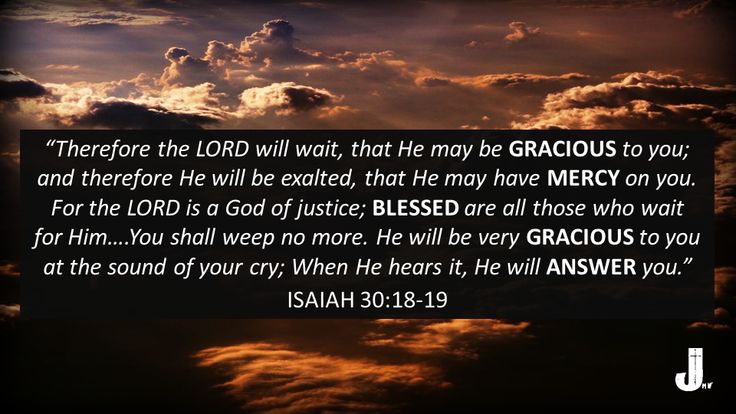
Growing Up Big and Strong and Wise Just to Become a Child

Matthew 18:1-6 Amplified Bible

Rank in the Kingdom

18 At that time the disciples came to Jesus and asked, “Who is greatest in the kingdom of heaven?” He called a little child and set him before them, and said, “I assure you and most solemnly say to you, unless you repent [that is, change your inner self—your old way of thinking, live changed lives] and become like children [trusting, humble, and forgiving], you will never enter the kingdom of heaven. Therefore, whoever [a]humbles himself like this child is greatest in the kingdom of heaven. Whoever receives and welcomes one [b] child like this in My name receives Me; but whoever causes one of these little ones who believe in Me to stumble and sin [by leading him away from My teaching], it would be better for him to have a heavy millstone [as large as one turned by a donkey] hung around his neck and to be drowned in the depth of the sea.

Stumbling Blocks

“Woe (judgment is coming) to the world because of stumbling blocks and temptations to sin! It is inevitable that stumbling blocks come; but woe to the person on whose account or through whom the stumbling block comes!

What does Jesus mean by saying we need to “change and become like little children”? One clue we have here is that Jesus is responding to the question “Who is the greatest in the kingdom of heaven?” And he replies, “Whoever takes the lowly position of this child is the greatest in the kingdom of heaven.”

In the Gospel Narratives about Jesus and his disciples (Matthew, Mark, Luke, and John), we find the disciples often argued over which of them was greatest; they seem to have been quite a competitive group. They were thinking of their greatness in terms of leadership, knowledge, ­power, influence, other things.

So Jesus is telling his disciples that they need to repent, change their inner selves, their selfish personal attitudes about greatness and become lowly and humble like little children. Jesus’ followers need to die to their selfish ambitions and realize that, just as little children depends on their parents and caregivers, we are all totally 100% dependent on God for all our needs and future living.

Here’s another thought from a short devotional I just read. A man in his sixties said, “Last week my five-year-old grandson said he wanted to be a firefighter when he grew up. I replied, ‘And when I grow up, I want to be a five-year-old curious little boy.’ My grandson stared at me with wide, wondering eyes.”

Have you looked around at God’s world with “wide, wondering eyes” lately?

That’s something I long for when I read the Bible every morning to hear the call from God’s only Son to change my mindset around, becoming like a little child.

What aught we to remember when our life feels inconsequential?

Matthew 18:1-7 The Message

Whoever Becomes Simple Again

18 At about the same time, the disciples came to Jesus asking, “Who gets the highest rank in God’s kingdom?”

2-5 For an answer Jesus called over a child, whom he stood in the middle of the room, and said, “I’m telling you, once and for all, that unless you return to square one and start over like children, you’re not even going to get a look at the kingdom, let alone get in. Whoever becomes simple and elemental again, like this child, will rank high in God’s kingdom. What’s more, when you receive the childlike on my account, it’s the same as receiving me.

6-7 “But if you give them a hard time, bullying or taking advantage of their simple trust, you’ll soon wish you hadn’t. You’d be better off dropped in the middle of the lake with a millstone around your neck. Doom to the world for giving these God-believing children a hard time! Hard times are inevitable, but you don’t have to make it worse—and it’s doomsday to you if you do.

Does your life ever feel small? 

Does your life ever feel inconsequential, irrelevant, without usable directions?

Mine sometimes does.

I have those unsettling experiences of irrelevance, and unusable smallness on just about every moment of everyday of the week that ends in the letter “Y”.  

All around me are a ton of things I should be about the business of doing which require an extended period of physical adrenaline pumping labor, but which also present the very real possibility of trouble with my heart and blood sugar.

I go so far, then in a new state of deliberate determination push myself beyond where I know I probably should not be. Knowing others are keeping very close eye on me, scared and worried something impactful might happen and I’ll need sudden medical attention. I have the unsettling feeling of being small, smaller, in their eyes, a burden and then I feel that unsettled feeling of “no confidence.”

Self defeating inconsequential self confidence and self defeating determination!

Everyone suddenly wants to protect me from myself, I deeply sense what they are trying to do on my behalf, even somewhere I deeply appreciate the effort.

But deep in my own spirit, I pray the Holy Spirit for them not to be so protective of me and just let me try the normal stuff I could have easily done before I had my triple bypass open heart surgery last July 2023. When I am engaged in my efforts, A deep desire, longing stirs up deep in my soul—something like an exhilarating hunger. I suddenly wondered what it would feel like to live again

Back at home, I knew that laundry was piled on our bedroom floor, and that the dishes would be nearly toppling in the kitchen sink. I know there are so very many tasks around my house to be done, yet life post triple bypass seemed so humdrum and un-noteworthy and undoable that I just could hardly stand it. 

As it turns out, this hunger I was feeling—this longing to know what  health, vitality and life lived in greatness and wellness feels like—came about long before my physical, mental and spiritual recovery. Those e disciples felt it, too. One day, they even dared ask Jesus “Who is the greatest in the kingdom of heaven?” (Matthew 18:1) 

Jesus didn’t name any hall of fame athlete or rock star. He didn’t list off kings, or Prophets or Bible heroes, or rich professionals well revered in their fields.

Instead, stunningly, he beckoned for a child to come and stand among them.

“‘Truly I tell you,’ he said, ‘unless you turn and become like children, you will never enter the kingdom of heaven. Whoever humbles himself like this child is the greatest in the kingdom of heaven. Whoever receives one such child in my name receives me…’” (Matthew 18:2-5). 

Earth-side, we perceive greatness as notoriety and wealth, great strength of body, mind and spirit, personal character without reproach, power and fanfare.

It involves being or having abundantly, uniquely more than someone else. But in the kingdom of heaven, with Jesus? Greatness looks more like humility, child like trust. Greatness looks like a child, automatically, innately, instinctively, honestly, dependently, and truthfully, turning to their Father for everything.

If we only remember to align, realign as often as is necessary, our life’s work to what the world deems ‘great,’ then our days will be filled with wrong headed striving and mounting measures and degrees of uncontainable discontentment.

We’ll be ever more subjected to the tidal waves of the fickleness of humanity.

But when we instead remember to align ourselves only with what Jesus values—when we humble our souls and trust in the only one that is truly great—we are able to bask in an eternal greatness that gives our souls rest and contentment. 

So when we find ourselves caught in a pattern of discontentment, wondering when our time will come, or if anyone will ever notice us, or if our lives will ever possess that magnetic essence of greatness, let’s remember to repent, to come back to that image of Jesus, pulling the child near and saying, “This. This is what greatness looks like in my kingdom. no self imposed stumbling blocks are allowed” 

Intersecting Faith and Life:

Are there moments when your life feels inconsequential, irrelevant, small?

Take note of any patterns.

Do you feel more bottomless than limitless whenever you get together with that one friend who seems to have a glamorous, exciting life? Or do you feel surging discontentment bubbling whenever you spend time on social media?

Once you are able to identify when, where, or what makes you feel “small,” you can and should pray to God, the Father, Son and Holy Spirit to pray for, develop strategies to help you fight the lie greatness comes from what the world hails, like fame and wealth or power and position. These strategies might include:

  • Limiting how often you expose yourself to these people or situations.
  • Reading, Studying, Praying, Memorizing Scripture to pray over yourself when you’re feeling overcome with discontentment or inferiority. 
  • Surround yourself with others whose lives model humility and surrender to the Lord.
  • Finding solitude, then stopping to ask the Holy Spirit to reorient your priorities and remind you who are—and who he was, is, and forever shall always remain. 

In the name of God, the Father and God the Son and God the Holy Spirit,

Let us Pray;

Matthew 6:5-13 Amplified Bible

“Also, when you pray, do not be like the hypocrites; for they love to pray  [publicly]  standing in the synagogues and on the corners of the streets so that they may be seen by men. I assure you and most solemnly say to you, they  [already] have their reward in full. But when you pray, go into your most private room, close the door and pray to your Father who is in secret, and your Father who sees [what is done] in secret will reward you.

“And when you pray, do not use meaningless repetition as the Gentiles do, for they think they will be heard because of their many words. So do not be like them  [praying as they do]; for your Father knows what you need before you ask Him.

“Pray, then, [a]in this way:

‘Our Father, who is in heaven,
[b]Hallowed be Your name.
10 
[c]Your kingdom come,
Your [d]will be done
On earth as it is in heaven.
11 
‘Give us this day our [e]daily bread.
12 
‘And forgive us our [f]debts, as we have forgiven our debtors [letting go of both the wrong and the resentment].
13 
‘And do not [g]lead us into temptation, but deliver us from [h]evil. [i][For Yours is the kingdom and the power and the glory forever. Amen.]’

Glory be to the Father,
and to the Son, and to the Holy Ghost;
as it was in the beginning,
is now, and ever shall be,
world without end. Amen, amen.

https://translate.google.com/

More Like Christ: Reviving, Carrying, Testifying, Messaging: “for you shall go out in His Joy, be led forth in Peace and into His whole and complete life” Isaiah 55:12-13.

Isaiah 55:12-13 Complete Jewish Bible

12 Yes, you will go out with joy,
you will be led forth in peace.
As you come, the mountains and hills
will burst out into song,
and all the trees in the countryside
will clap their hands.
13 Cypresses will grow in place of thorns,
myrtles will grow instead of briars.
This will bring fame to Adonai
as an eternal, imperishable sign.

The Word of God for the Children of God.

Glory be to the Father,
and to the Son, and to the Holy Ghost;
as it was in the beginning,
is now, and ever shall be,
world without end. Amen, amen.

Being a Carrier of Joy

As children of the Most High God, we are to be marked by contagious, unceasing joy. Through the Holy Spirit we have access to an unending supply of joy that comes from the wellspring of restored relationship with our heavenly Father.

God longs to fill us with his immeasurable joy that we might live the abundant life Jesus died to give us. He longs to make us children fashioned in the image of our Father that we might each share his unending joy to a world without hope.

By the Living Word and Power of God, may we discover the greater portion of joy available to us through the Spirit as you encounter the heart of your Father.

Isaiah 55:12-13 Amplified Bible

12 
“For you will go out [from exile] with joy
And be led forth [by the Lord Himself] with peace;
The mountains and the hills will break forth into shouts of joy before you,
And all the trees of the field will clap their hands.
13 
“Instead of the thorn bush the cypress tree will grow,
And instead of the nettle the myrtle tree will grow;
And it will be a memorial to the Lord,
For an everlasting sign [of His mercy] which will not be cut off.”
 

As disciples of Jesus, we are to carry the joy of our salvation everywhere we go.

You and I have the power to change atmospheres on earth with the joy of the Spirit. We have the power to brighten people’s days, break off heaviness, and lead, guide and direct and inspire people to a deeper revelation of the goodness of our Lord, Savior Jesus Christ when we instinctively reflect his joy to others.

God is a joyful God.

He is the inventor of happiness and fun. 

Luke 15:10 says, “Just so, I tell you, there is joy before the angels of God over one sinner who repents.” 

The Story of the Lost Coin

8-10 “Or imagine a woman who has ten coins and loses one. Won’t she light a lamp and scour the house, looking in every nook and cranny until she finds it? And when she finds it you can be sure she’ll call her friends and neighbors: ‘Celebrate with me! I found my lost coin!’ Count on it—that’s the kind of party God’s angels throw every time one lost soul turns to God.”

Nehemiah 8:10 tells us “the joy of the Lord is [our] strength.” 

Nehemiah 8:6-10 The Message

5-6 Ezra opened the book. Every eye was on him (he was standing on the raised platform) and as he opened the book everyone stood. Then Ezra praised God, the great God, and all the people responded, “Oh Yes! Yes!” with hands raised high. And then they fell to their knees in worship of God, their faces to the ground.

7-8 Jeshua, Bani, Sherebiah, Jamin, Akkub, Shabbethai, Hodiah, Maaseiah, Kelita, Azariah, Jozabad, Hanan, and Pelaiah, all Levites, explained The Revelation while people stood, listening respectfully. They translated the Book of The Revelation of God so the people could understand it and then explained the reading.

Nehemiah the governor, along with Ezra the priest and scholar and the Levites who were teaching the people, said to all the people, “This day is holy to God, your God. Don’t weep and carry on.” They said this because all the people were weeping as they heard the words of The Revelation.

10 He continued, “Go home and prepare a feast, holiday food and drink; and share it with those who don’t have anything: This day is holy to God. Don’t feel bad. The joy of God is your strength!”

In order to truly declare to the world who our heavenly Father is, we must be carriers of joy. We must be a people marked by the joy that only comes from restored relationship with an all-knowing, all-powerful, and all-loving God.

I have to confess before God here that it has taken me a long time to learn and an even longer time to realize the truth that circumstances, people, trials, work, and worldly stress do not have the inherent ability to thump on, steal, my joy.

It’s when I open my heart to outside elements that I allow stresses to come in like robbers and take what is rightfully mine in the Lord.

It’s only when I allow a fellow driver, a time crunch, a negative comment, or a troublesome problem to sledgehammer me down, take precedence over the joy and the hope I have in Jesus that I step outside of my allotted portion of peace.

Galatians 5:20-24 The Message

19-21 It is obvious what kind of life develops out of trying to get your own way all the time: repetitive, loveless, cheap sex; a stinking accumulation of mental and emotional garbage; frenzied and joyless grabs for happiness; trinket gods; magic-show religion; paranoid loneliness; cutthroat competition; all-consuming-yet-never-satisfied wants; a brutal temper; an impotence to love or be loved; divided homes and divided lives; small-minded and lopsided pursuits; the vicious habit of depersonalizing everyone into a rival; uncontrolled and uncontrollable addictions; ugly parodies of community. I could go on.

This isn’t the first time I have warned you, you know. If you use your freedom this way, you will not inherit God’s kingdom.

22-23 But what happens when we live God’s way? He brings gifts into our lives, much the same way that fruit appears in an orchard—things like affection for others, exuberance about life, serenity. We develop a willingness to stick with things, a sense of compassion in the heart, and a conviction that a basic holiness permeates things and people. We find ourselves involved in loyal commitments, not needing to force our way in life, able to marshal and direct our energies wisely.

23-24 Legalism is helpless in bringing this about; it only gets in the way. Among those who belong to Christ, everything connected with getting our own way and mindlessly responding to what everyone else calls necessities is killed off for good—crucified.

To be carriers of joy, we have to choose to value the fruit of the Spirit over worldly emotions.

We have to choose to only open our hearts to the things of God and shrug off that which is fleeting. If we don’t take control of our thoughts and cast any fear, worry, or doubt on the shoulders of our heavenly Father, the circumstances of this world will rule our emotions rather than the steadfast joy of the Spirit.

Isaiah 55:12 says, “For you shall go out in joy and be led forth in peace; the mountains and the hills before you shall break forth into singing, and all the trees of the field shall clap their hands.” 

The Lord longs to make us a people that go out in joy.

He longs to make us children who are overwhelmed by his love to the degree that the cares of this world pale in comparison to his grace and affections.

Ask the Lord for your share of Grace and His perspective today.

Psalm 139:23-24 The Message

23-24 Investigate my life, O God,
    find out everything about me;
Cross-examine and test me,
    get a clear picture of what I’m about;
See for yourself whether I’ve done anything wrong—
    then guide me on the road to eternal life.

Allow the Spirit to help you focus your attention on the true purpose for which you were created: restored relationship with your heavenly Father. Choose the joy of the Lord, resurrection of Jesus, over the stress and cares of the world.

Choose to “be led forth in peace” rather than led by your flesh. And experience today the lifestyle of carrying the joy of the Lord with you everywhere you go.

May others come to know the abundant goodness of our heavenly Father through the way you exude joy.

Guided Prayer:

1. Meditate on the importance of carrying joy. 

Allow Scripture to establish a new emphasis on joy for you.  

“A joyful heart is good medicine, but a crushed spirit dries up the bones.” Proverbs 17:22

“For the kingdom of God is not a matter of eating and drinking but of righteousness and peace and joy in the Holy Spirit.” Romans 14:17

“For you shall go out in joy and be led forth in peace; the mountains and the hills before you shall break forth into singing, and all the trees of the field shall clap their hands.” Isaiah 55:12

2. What do you allow to steal your joy? 

What circumstances, negative comments, or people have been robbing you of peace? Ask the Holy Spirit to reveal the root of whatever is stealing your joy.

“The hope of the righteous brings joy, but the expectation of the wicked will perish.” Proverbs 10:28

3. Surrender your emotions and thoughts to the Lord alone. 

Ask the Spirit to help you open your heart only to the things of him instead of the things of the world. Ask him to make you a carrier of joy.

And you became imitators of us and of the Lord, for you received the word in much affliction, with the joy of the Holy Spirit, so that you became an example to all the believers in Macedonia and in Achaia.” 1 Thessalonians 1:6-7

Our heavenly Father is much more patient than we often believe.

He is not in a rush with you.

He will not let you miss his perfect will for your life if you are willing to follow him in obedience.

Trust in his timing.

Cast off the burden of paving your own way to an impactful life. Take time to become a carrier of joy by resting in his presence and getting to know his heart.

Allow his perspective of patience to become your perspective. May you be filled with His peace and His joy in the knowledge of your God’s greater love for you.

In the name of God, the Father and God the Son and God the Holy Spirit,

Let us Pray,

Psalm 121 The Message

121 1-2 I look up to the mountains;
    does my strength come from mountains?
No, my strength comes from God,
    who made heaven, and earth, and mountains.

3-4 He won’t let you stumble,
    your Guardian God won’t fall asleep.
Not on your life! Israel’s
    Guardian will never doze or sleep.

5-6 God’s your Guardian,
    right at your side to protect you—
Shielding you from sunstroke,
    sheltering you from moonstroke.

7-8 God guards you from every evil,
    he guards your very life.
He guards you when you leave and when you return,
    he guards you now, he guards you always.

Glory be to the Father,
and to the Son, and to the Holy Ghost;
as it was in the beginning,
is now, and ever shall be,
world without end. Amen, amen.

https://translate.google.com/

Our Source of Authentic Happiness: I said to the Lord, “You are my Lord; I will have no good apart from you.” Psalm 16

Psalm 16 Complete Jewish Bible

16 (0) Mikhtam. By David:

(1) Protect me, God,
for you are my refuge.
I said to Adonai, “You are my Lord;
I have nothing good outside of you.”
The holy people in the land are the ones
who are worthy of honor; all my pleasure is in them.

Those who run after another god
multiply their sorrows;
To such gods I will not offer
drink offerings of blood
or take their names on my lips.

Adonai, my assigned portion, my cup:
you safeguard my share.
Pleasant places were measured out for me;
I am content with my heritage.

I bless Adonai, my counselor;
at night my inmost being instructs me.
I always set Adonai before me;
with him at my right hand, I can never be moved;
so my heart is glad, my glory rejoices,
and my body too rests in safety;
10 for you will not abandon me to Sh’ol,
you will not let your faithful one see the Abyss.
11 You make me know the path of life;
in your presence is unbounded joy,
in your right hand eternal delight.

The Word of God for the Children of God.

Glory be to the Father,
and to the Son, and to the Holy Ghost;
as it was in the beginning,
is now, and ever shall be,
world without end. Amen, amen.

I Will Have No Good Apart From God …

Psalm 16:1-3 New American Standard Bible 1995

The Lord the Psalmist’s Portion in Life and Deliverer in Death.

[a]Mikhtam of David.

16 Preserve me, O God, for I take refuge in You.
2 [b]I said to the Lord, “You are [c]my Lord;
I have no good besides You.”
As for the [d]saints who are in the earth,
[e]They are the majestic ones in whom is all my delight.

What do you treasure in this life?

We all have something that brings us great delight or somewhere that just seems restful and right.

Sometimes, though, we catch a glimpse of life without those earthly pleasures.

Maybe it’s illness or even bereavement that clarifies things for us.

What kind of car you drive away from the hospital when you find out that your loved one has been diagnosed with malignant cancer doesn’t matter, does it?

The same goes for your clothes, your jewelry, your gadgets, your house—all of a sudden, they’re not nearly as important as they once seemed.

We can and should enjoy what God has graciously given us.

He “richly provides us with everything to enjoy” (1 Timothy 6:17). It’s not that the good things of the earth are bad. But what we have in God is so delightful, so rich, that coming to know Him is like discovering a treasure hidden in a field.

That treasure so enraptures us that in our fullness of joy, we will do whatever it takes to get that field and the abundant delights it contains (Matthew 13:44).

Matthew 13:44 New American Standard Bible 1995

Hidden Treasure

44 “The kingdom of heaven is like a treasure hidden in the field, which a man found and hid again; and from joy over it he goes and sells all that he has and buys that field.

Without the treasure we have in God, as Psalm 16 tells us, we ultimately have no other good.

When we sit down to a bowl of toast, cereal or oatmeal or whatever breakfast may be, in our minds we ought to be saying, Apart from You, Lord, I have no good thing. You’re the one that made the grain to grow. You’re the one who provides my food. 

When we get up and walk out of the door, and have health and strength to do so, who makes it possible for us to walk? When we lie on our beds at night and we can enter into the rest of the evening, who alone makes it possible?

You have no ability even to see these letters, to hold up this book, or to comprehend what you are reading apart from the enabling grace of God.

Only He can preserve and sustain us. Only God gives to us “life and breath and everything” (Acts 17:25).

In the end, we will have no good apart from Him—but He has way more than enough goodness to go around. He is the source of all our treasures—and He is Himself our greater treasure.

When we see Him as He truly is, our natural response will be to make Him the center of our life, around which revolve thoughts, decisions, feelings, actions.

That is, you will say to Him, “You are my Lord,” for in His presence “there is fullness of joy,” and at His right hand are “pleasures forevermore” (Psalm 16:11).

Where else would you possibly prefer to take refuge, and what else would you treasure more than Him?

The Source of Happiness: our One pathway to God’s life

Psalm 16:7-11 Complete Jewish Bible

I bless Adonai, my counselor;
at night my inmost being instructs me.
I always set Adonai before me;
with him at my right hand, I can never be moved;
so my heart is glad, my glory rejoices,
and my body too rests in safety;
10 for you will not abandon me to Sh’ol,
you will not let your faithful one see the Abyss.
11 You make me know the path of life;
in your presence is unbounded joy,
in your right hand eternal delight.

God created us to enjoy the greatest of happiness: communion with him. We experience true happiness by loving God and enjoying intimacy with him.

In the presence of God there is fullness of joy.

The best gifts in life come from God.

But some people prefer to look elsewhere.

Many seek happiness in money; others, in fame and political power.

People also seek happiness in pleasures, or they follow their dreams of success, hoping to find fulfillment in their lives. But, in the end, they will only discover that those things offer only drugged fleeting. mirage and not true happiness.

Happiness is a legitimate desire.

Many people look for it eagerly every day of their lives, but they end up empty-handed.

The source of happiness is not in things or in our own selfish pursuits, but in God. The best things of this world cannot make us happy, but God can, because he created us, calls us by name, and makes us his own. We become truly happy only when we know God and love him, share Him, with all our heart and soul.

If we do not have a safe guide, it is impossibly easy to take the wrong pathways in life. And whom can we utterly trust but God to faithfully show us the way?

It’s been said that Psalm 16 is a psalm of lament. Yet by the time we finish reading it we can also come to a conclusion that it is a celebratory psalm. Just notice the ending of this psalm, “You make known to me the path of life; you will fill me with joy in your presence, with eternal pleasures at your right hand.”

“The path of life” – everyone’s talking about how to find it.

Books in Walmart are filled with such title.

“Joy in your presence” – in a world so dysfunctional and empty joy is the one missing ingredient. “Eternal pleasures at Your right hand” – while earthly goods only offer temporary pleasure God-derived pleasure offers a better alternative, a more lasting fulfillment in the pursuit of His will.

Who would not want any of these?

Psalm 16 also echoes Psalm 14’s assertion that there is no one who does good.

It states, “You are my Lord; apart from you I have no good thing.”

This is why we teach that goodness in and of ourselves alone is never enough to earn our ticket to heaven.

We need someone outside of us to redeem us from the sin nature passed down on us.

This is where a Savior needs to come in to save us – a Savior who once proclaimed through unequivocal terms, “I am the way, the truth, and the life, and no one can come to the Father except through Me” (John 14:6).

And this Savior’s name is Jesus.

Psalm 16 also contains an admonition, “Those who run after other gods will suffer more and more.”

King Solomon, touted to be the wisest person who ever lived, knows this principle all too well.

He pursued various gods in his lifetime – wealth, fame, education, sex and pleasure. He held nothing back and got everything he desired. When he assessed all that he had done and achieved in life, he astonishingly concluded that apart from God everything is but an absolute futility, like chasing after the wind.

The things that truly matter most in life are few and far between.

Faith in a a living and sovereign God is foremost of them. As the psalmist David looks up to this God and affirms His mighty presence he begins to worship, “I will praise the Lord, who counsels me; even at night my heart instructs me.”

While this psalm is considered a Messianic psalm which is ascribed to the suffering Jesus prophetically, we can say with David, “You will not leave my soul among the dead or allow your holy one to rot in the grave.”

In God, death loses its sting. Make God your refuge and He will keep you safe and secure – not from trouble but in spite of or in the midst of it all (Psalm 16:1).

In the name of God, the Father, and God the Son and God the Holy Spirit,

Let us Pray,

Psalm 40 Complete Jewish Bible

40 (0) For the leader. A psalm of David:

2 (1) I waited patiently for Adonai,
till he turned toward me and heard my cry.
3 (2) He brought me up from the roaring pit,
up from the muddy ooze,
and set my feet on a rock,
making my footing firm.
4 (3) He put a new song in my mouth,
a song of praise to our God.
Many will look on in awe
and put their trust in Adonai.

5 (4) How blessed the man who trusts in Adonai
and does not look to the arrogant
or to those who rely on things that are false.

6 (5) How much you have done, Adonai my God!
Your wonders and your thoughts toward us —
none can compare with you!
I would proclaim them, I would speak about them;
but there’s too much to tell!

7 (6) Sacrifices and grain offerings you don’t want;
burnt offerings and sin offerings you don’t demand.
Instead, you have given me open ears;
8 (7) so then I said, “Here I am! I’m coming!
In the scroll of a book it is written about me.
9 (8) Doing your will, my God, is my joy;
your Torah is in my inmost being.
10 (9) I have proclaimed what is right in the great assembly;
I did not restrain my lips, Adonai, as you know.
11 (10) I did not hide your righteousness in my heart
but declared your faithfulness and salvation;
I did not conceal your grace and truth
from the great assembly.”

12 (11) Adonai, don’t withhold your mercy from me.
Let your grace and truth preserve me always.
13 (12) For numberless evils surround me;
my iniquities engulf me — I can’t even see;
there are more of them than hairs on my head,
so that my courage fails me.
14 (13) Be pleased, Adonai, to rescue me!
Adonai, hurry and help me!
15 (14) May those who seek to sweep me away
be disgraced and humiliated together.
May those who take pleasure in doing me harm
be turned back and put to confusion.
16 (15) May those who jeer at me, “Aha! Aha!”
be aghast because of their shame.

17 (16) But may all those who seek you
be glad and take joy in you.
May those who love your salvation say always,
“Adonai is great and glorious!”

18 (17) But I am poor and needy;
may Adonai think of me.
You are my helper and rescuer;
my God, don’t delay!

Glory be to the Father,
and to the Son, and to the Holy Ghost;
as it was in the beginning,
is now, and ever shall be,
world without end. Amen, amen.

https://translate.google.com/