
If now is the best of times, or if now is the worst of times, what do we do if our Christmas’ are not feeling Merry and or very Bright? Galatians 4:4-7

Galatians 4:4-7 Amplified Bible

But when [in God’s plan] the proper time had fully come, God sent His Son, born of a woman, born under the [regulations of the] Law, so that He might redeem and liberate those who were under the Law, that we [who believe] might be adopted as sons [as God’s children with all rights as fully grown members of a family]. And because you [really] are [His] sons, God has sent the Spirit of His Son into our hearts, crying out, [a]“Abba! Father!” Therefore you are no longer a slave (bond-servant), but a son; and if a son, then also an heir through [the gracious act of] God [through Christ].

Word of God for the Children of God

Glory be to the Father,
and to the Son, and to the Holy Ghost;
as it was in the beginning,
is now, and ever shall be,
world without end. Amen, amen.

Contrary to the festive and joyous and uplifting songs of the season, sadly sometimes, for some, Christmas doesn’t feel merry or worth celebrating.

You listen and say to yourself,

“But, Christmas time doesn’t feel that way.  This year Christmas doesn’t feel merry at all!”

I’ve never heard anyone say it, but have felt it profoundly:

“I just don’t feel Christmas-y.”

This feeling can mean so many things:

  • I’m not feeling the emotions that are supposed to go along with this holiday.
  • I don’t feel worthy to participate in the celebrations and gifts.
  • I hurt, but Christmas doesn’t have room for my pain with its bright lights and happy songs.
  • God is not going to listen to my crying, nor touch my tears, care about my soul.

Maybe your heart aches, too.

We struggle under the weight of brokenness, grief, acute chronic debilitating health illness, or even sin, carrying the effects of the fall around like a blanket.

We miss loved ones!   

Maybe the engagement ring we’ve been hoping for (and the young man to go with it) still hasn’t shown up. 

Our arms are still empty and our heart cries out for our distant family. 

Maybe our marriage is struggling and there isn’t “peace on earth” in our home.

This could be our first year without a parent, spouse, or child because of death or relational collapse. 

Maybe our beloved has been deployed by the armed forces and cannot be home for the holidays.

We, or someone we love, may have been diagnosed with a devastating disability or debilitating illness. 

Maybe a history of abuse, addiction, injury, or trauma colors over the bright lights of mirth. 

MAYBE it’s “just” hormones leaving you feeling grumpy and not in the mood for lights, tinsel, and Christmas festivities, delicious cookies, and the turkey’s. 

My friends and readership, I have no idea the trials you face this year as you put up decorations, consume copious amounts of sugar, choose the perfect present, drink eggnog or whatever or however your cultural traditions celebrate . 

But, I want you to know you are not alone. 

And you are not outcast, because you don’t feel “Merry and Bright.”

God hears you loud and clear!

Psalm 40 The Message

40 1-3 I waited and waited and waited for God.
    At last he looked; finally he listened.
He lifted me out of the ditch,
    pulled me from deep mud.
He stood me up on a solid rock
    to make sure I wouldn’t slip.
He taught me how to sing the latest God-song,
    a praise-song to our God.
More and more people are seeing this:
    they enter the mystery,
    abandoning themselves to God

1. Remember, Christmas is especially  for the heart that doesn’t feel merry. 

The ache of our souls dims the glitter and glamor of the season, allowing the light of the Savior to shine through.  

Suffering requires us to pray constantly, feel our need for Savior in fresh ways. 

If (or when) we don’t feel worthy of the specialness and gifts that come in the holiday season, the truth of the Gospel becomes more real.

I desperately need my Savior.

I need someone to heal the brokenness wracked by the fall.  I need someone to to trust, walk with me as I navigate my pain, helping me carry these burdens.

The celebration of Jesus’ birth is undeniably beautiful because He is beautiful.

My weakness, frailty, and woundedness cannot harm the message of the love, hope and joy this season brings.  Instead, the fact that Christmas wont always feel merry, allows me to look again at the wonder of Emmanuel, God with us.

Nothing in me brought about Christmas, and nothing in me detracts from God’s greatest heaven sent experience gifted to us, born with all its angelic splendor.

Luke 2:8-18 English Standard Version

The Shepherds and the Angels

And in the same region there were shepherds out in the field, keeping watch over their flock by night. And an angel of the Lord appeared to them, and the glory of the Lord shone around them, and they were filled with great fear. 10 And the angel said to them, “Fear not, for behold, I bring you good news of great joy that will be for all the people. 11 For unto you is born this day in the city of David a Savior, who is Christ the Lord. 12 And this will be a sign for you: you will find a baby wrapped in swaddling cloths and lying in a manger.” 13 And suddenly there was with the angel a multitude of the heavenly host praising God and saying,

14 “Glory to God in the highest,
    and on earth peace among those with whom he is pleased!”[a]

15 When the angels went away from them into heaven, the shepherds said to one another, “Let us go over to Bethlehem and see this thing that has happened, which the Lord has made known to us.” 16 And they went with haste and found Mary and Joseph, and the baby lying in a manger. 17 And when they saw it, they made known the saying that had been told them concerning this child. 18 And all who heard it wondered at what the shepherds told them.

In those Christmas moments where we don’t feel merry, God has gives us hope.

Our joy and affection for Him can grow stronger in this time of year, even if we feel ostracized from the merriment that’s supposed to be the daily experience.

2. When Christmas does not feel merry, accept the reality of brokenness.

Your ache this Christmas stems from the brokenness.  We feel the weight of fractured relationships, abuse, addiction, trauma, death, loss, uncertainty, illness, caregiver overload, and exhaustion.  We live in a sin-scarred world.

You were created for paradise. 

Our souls know we were not created for a broken world. 

We long for Eden intensely, especially when hearing refrains of peace on earth, goodwill toward men drift through the air.

The deep desire of your soul for connection, safety, love, and peace point to a greater reality.  Jesus does not intend to leave his people in a place of ruin and suffering from all the recurring visions of unsightly wreckage all around us. 

Yet, for many, such visions of ugliness and the measures of pain and difficulty are our day-to-day realities.  This is why we need Emmanuel – God with us.

Our desperate need for redemption and salvation began in the beginning, at the Fall (Genesis 2-3), when everything completely unraveled in an instant, tearing away true life in God alone from the souls of Adam and Eve (thereby all of us). 

Yet, in that moment, God answered, promising a Messiah, a Savior who would soon come to reorder the world, and to create everything anew.

Isaiah 61:1-7 English Standard Version

The Year of the Lord’s Favor

61 The Spirit of the Lord God is upon me,
    because the Lord has anointed me
to bring good news to the poor;[a]
    he has sent me to bind up the brokenhearted,
to proclaim liberty to the captives,
    and the opening of the prison to those who are bound;[b]
to proclaim the year of the Lord’s favor,
    and the day of vengeance of our God;
    to comfort all who mourn;
to grant to those who mourn in Zion—
    to give them a beautiful headdress instead of ashes,
the oil of gladness instead of mourning,
    the garment of praise instead of a faint spirit;
that they may be called oaks of righteousness,
    the planting of the Lord, that he may be glorified.[c]
They shall build up the ancient ruins;
    they shall raise up the former devastations;
they shall repair the ruined cities,
    the devastations of many generations.

Strangers shall stand and tend your flocks;
    foreigners shall be your plowmen and vinedressers;
but you shall be called the priests of the Lord;
    they shall speak of you as the ministers of our God;
you shall eat the wealth of the nations,
    and in their glory you shall boast.
Instead of your shame there shall be a double portion;
    instead of dishonor they shall rejoice in their lot;
therefore in their land they shall possess a double portion;
    they shall have everlasting joy.

Jesus’ birth answers the groans of all creation, ours included (Romans 8:19-23)

He saw all the pain, and grief and suffering resulting from the brokenness of sin, and came to start the process of restoration. 

That which is broken will be restored, the wounded healed.   

The problem of sin, brokenness, suffering, and injustice solved once and for all.

Results of His coming leaves believers in Him in the oft-time uncomfortable already-not-yet, where we have the final promises of restoration but do not yet see it playing out completely in our lives, hearts, and circumstances. 

So, in the difficulties of each season, we cling to God’s gift of our Savior who came to save us bringing His always faithful promises to bring us life anew. 

Galatians 4:4-7 English Standard Version

But when the fullness of time had come, God sent forth his Son, born of woman, born under the law, to redeem those who were under the law, so that we might receive adoption as sons. And because you are sons, God has sent the Spirit of his Son into our hearts, crying, “Abba! Father!” So you are no longer a slave, but a son, and if a son, then an heir through God.

Our souls yearn for the glorious destiny He is planning for us, while we wait.

Look directly at your pain and suffering (no matter how “trivial” it seems).

Psalm 139:23-24 Amplified Bible

23 
Search me [thoroughly], O God, and know my heart;
Test me and know my anxious thoughts;
24 
And see if there is any wicked or hurtful way in me,
And lead me in the everlasting way.

To bask in the comfort of Jesus anytime of the year, Pray! Allow yourself to acknowledge the brokenness of the world and your own soul.  Don’t gloss over the pain, throwing tinsel and glitter till it shines.  Be honest with yourself.

Call hurt what it is – name it. Examine the hurt.  Allow (or force) yourself to stop (Psalm 46:10) long enough to acknowledge what you are feeling and why.

For many, our natural tendency is to gloss over our suffering and sin. 

Perhaps, a coat of royal icing, glitter will distract us from the pain underneath.

If we occupy ourselves with Hallmark movies and caroling, maybe we won’t feel the ache so deep, so heavy in our hearts. 

Maybe we can enjoy the festivities without having to look beneath the surface.

Yet, we can only walk in truth when we acknowledge our pain, suffering, hurt, and brokenness. 

Denial only serves, keeps us, separated from God, and thereby, from the truth of the Gospel.

“In the name of the Father and of the Son and of the Holy Spirit. Amen”

Praying ….

Psalm 24 Amplified Bible

The King of Glory Entering Zion.

[a]A Psalm of David.

24 The earth [b]is the Lord’s, and the fullness of it,
The world, and those who dwell in it.

For He has founded it upon the seas
And established it upon the streams and the rivers.

Who may ascend onto the [c]mountain of the Lord?
And who may stand in His holy place?

He who has clean hands and a pure heart,
Who has not lifted up his soul to what is false,
Nor has sworn [oaths] deceitfully.

He shall receive a blessing from the Lord,
And righteousness from the God of his salvation.

This is the generation (description) of those who diligently seek Him and require Him as their greatest need,
Who seek Your face, even [as did] Jacob. Selah.


Lift up your heads, O gates,
And be lifted up, ancient doors,
That the King of glory may come in.

Who is the King of glory?
The Lord strong and mighty,
The Lord mighty in battle.

Lift up your heads, O gates,
And lift them up, ancient doors,
That the King of glory may come in.
10 
Who is [He then] this King of glory?
The Lord of hosts,
He is the King of glory [who rules over all creation with His heavenly armies]. Selah.

Glory be to the Father,
and to the Son, and to the Holy Ghost;
as it was in the beginning,
is now, and ever shall be,
world without end. Amen, amen.
https://translate.google.com/

So God said, in effect, “If that’s what you want, that is what you will get.” by Celebrating the Savior in a Culture that celebrates stuff. Romans 1:24-25

Romans 1:24-25 The Message

24-25 So God said, in effect, “If that’s what you want, that’s what you get.” It wasn’t long before they were living in a pigpen, smeared with filth, filthy inside and out. And all this because they traded the true God for a fake god, and worshiped the god they made instead of the God who made them—the God we bless, the God who blesses us. Oh, yes!

Word of God for the Children of God

Glory be to the Father,
and to the Son, and to the Holy Ghost;
as it was in the beginning,
is now, and ever shall be,
world without end. Amen, amen.
In the 18th century, Jonathan Edwards preached a sermon called “Sinners in the Hands of an Angry God.”

This sermon included vivid illustrations of hell and declared only the mercy of God—a God furious about our sin—keeps any of us sinners out of hell.

People who heard that message were so gripped by it that they sat on the edge of their seat; they held the bench in front of them so tightly that their knuckles turned white.

Even before the sermon was finished, people were hanging heads, moaning and crying out, “What shall I do to be saved?”

How to celebrate holidays is always a difficult decision in our household.

To various degrees my wife and I both grew up in a home where God was at the center. In general, both our families, at their core, shared the same values, but their ideological approach to life, and specifically holidays, was quite different.

One of the most significant discrepancies is I was raised in a Jewish home from about the age of 7 with a half hearted belief in Santa Claus – not God nor Jesus. From the of 14, I angrily walked away from anything that hinted at religious. If anyone either floated or preached the notion of God, church, I’d instantly rebel.

In an attempt to keep the holiday focused on the birth of Jesus, my wife’s own parents made it clear there was a big jolly man in a red suit bringing gifts but only in department stores or riding on top of fire trucks looking like her father.

Truth is God gave us centuries ago the only gift we need, in the form of a baby conceived by the Holy Spirit, born of a virgin in a manger in Bethlehem of Judea.

And, any other material presents we received are as a result of God’s providence (as stewarded by parents). Conversely, my wife’s family celebrated Santa Claus, the “musical magic of Christmas,” and played St. Nick on Christmas morning.

Neither way to celebrate Christmas is wrong; both can promote the message of the gospel and provide a fun seasonal experience. However, it created a bit of a dilemma when we had reconcile, when deciding how to approach the holiday.

Through much deliberation, we reached a compromise that worked well for our family, allowing children to believe in Santa while also engaging in Scripture daily that focused the prophetic readings pointing toward the birth of Christ.

And, just when we thought we had it down, God blessed us with our grandchild. I share this detail because, while we tried to mitigate the focus of Christmas being on presents, it became increasingly complex when we had a child who cherished gifts by the bushels with a bright culturally commercial holiday tree.

And so, if your family, if like mine, is trying to keep the Christ in Christmas, as well as engage in celebrations with family, church members that involve gifts, let me offer the “solution” that the Lord had laid on my heart a few years ago.

Romans is a book filled with profound theology and an abundance of practical wisdom for living a godly life.

Paul begins his letter to the Christians in the Roman church by calling out the ways that they have allowed the culture to distract them from worshiping God.

Specifically, they were worshiping the created over the Creator.  

God hates idolatry to the extent that the first and second commandments focus on the concept that God is the only one deserving of our worship.

He tells us we should have no other God before Him, and we shouldn’t make idols.

What’s an idol?

Tim Keller explains it well in his book Counterfeit Gods,

“An idol is anything more important to you than God. Anything that absorbs your heart and imagination more than God. Anything you seek to give you what only God can give. Anything so central and essential to your life that you should lose it, your life would feel hardly worth living.”

Paul tells us the early church “exchanged the truth of God for a lie.”  

We do the same thing today; the culture tells us that the answer to our problems is one click away. Yet, when once we get that shiny new toy, it’s not long before that emptiness is felt again. The creation can’t give what only the Creator can.

This holiday season, think less about how you celebrate, more about the why.

What is your heart’s posture?

Are you using stuff to fill a void, to mask your emptiness?

Or, are you stewarding God’s blessings over your life well?

As we approach this season, may we be mindful, no matter how we choose to celebrate, we must always place God first.

Intersecting Faith & Life:

Psalm 139:23-24 Amplified Bible

23 
Search me [thoroughly], O God, and know my heart;
Test me and know my anxious thoughts;
24 
And see if there is any wicked or hurtful way in me,
And lead me in the everlasting way.

Take a moment today to pray the Lord to search your heart and give you clarity and guidance on how your family should celebrate the holidays, so that you and the Body of Christ may avoid a trap: worshiping the creation over the Creator.

Many churches today will purposely avoid teaching about the wrath of God and his judgment and punishment for sin. God is too often portrayed as easygoing and excessively tolerant of our offenses. But that is not the God of the Bible.

As in Jonathan Edwards’ day, we too need a reawakening to recover a right understanding of the wrath of God.

Edwards stated that if we are outside of the new life in Christ, a dreadful storm with the soul quaking shaking thunder of God’s wrath hangs over our heads.

Unsaved sinners are holding on by just a thread over the great furnace of hell’s punishment. If we have no interest in praying for a Mediator, we can do nothing to save ourselves. Our only true hope is to believe in the Lord Jesus for salvation.

Romans 10:9-13 Amplified Bible

because if you acknowledge and confess with your mouth that Jesus is Lord [recognizing His power, authority, and majesty as God], and believe in your heart that God raised Him from the dead, you will be saved. 10 For with the heart a person believes [in Christ as Savior] resulting in his justification [that is, being made righteous—being freed of the guilt of sin and made acceptable to God]; and with the mouth he acknowledges and confesses [his faith openly], resulting in and  confirming [his] salvation. 11 For the Scripture says, “Whoever believes in Him [whoever adheres to, trusts in, and relies on Him] will not be disappointed [in his expectations].” 12 For there is no distinction between Jew and Gentile; for the same Lord is Lord over all [of us], and [He is] abounding in riches (blessings) for all who call on Him [in faith and prayer]. 13 For “whoever calls on the name of the Lord [in prayer] will be saved.”

God can rescue us and can turn away evil.

God can spread a lavish banquet even in the presence of our enemies.

God can bring salvation—shadow of light in darkness, comfort in grief, peace in bitterness, healing in brokenness, and strength in weakness, authentic wisdom.

Why should we hope?

Because we have a shepherd who will lay down his life for his sheep in order to protect us.

Because we have a Savior who can travel down into the deepest, darkest hell any of us can imagine and come out alive.

Because there isn’t a single valley in the shadow of death that our shepherd cannot walk us through.

Because he claims us as his own and will never let us go.

That is why we can hope.

That is why we are prophets.

We have been given the message of hope and are told to share it.

How will others believe the good news unless they hear it, and how will they hear it unless they are told?

We have our assignment—go and bring the good news of Jesus Christ so that others too can have this hope.

Do you have that hope of Salvation?

Do you love the Lord Jesus Christ as your only Lord and Savior?

In the name of God, the Father, and of the Son, and of the Holy Spirit. Amen.

Praying …..

Psalm 15

A Description of the Godly

A psalm of David.

Lord, who can dwell in your tent?
Who can live on your holy mountain?

The one who lives blamelessly, practices righteousness,
and acknowledges the truth in his heart—
who does not slander with his tongue,
who does not harm his friend
or discredit his neighbor,
who despises the one rejected by the Lord[a]
but honors those who fear the Lord,
who keeps his word whatever the cost,
who does not lend his silver at interest
or take a bribe against the innocent—
the one who does these things will never be shaken.

Glory be to the Father,
and to the Son, and to the Holy Ghost;
as it was in the beginning,
is now, and ever shall be,
world without end. Amen, amen.
https://translate.google.com/

Besides Great Apparel, Posters, Key Chains, and Jewelry, Are We Sure We Know the Message “Faith Over Fear” Truly Conveys to us? Psalm 118:5 – 16

Psalm 118:5-16 Complete Jewish Bible

From my being hemmed in I called on Yah;
he answered and gave me more room.
With Adonai on my side, I fear nothing —
what can human beings do to me?
With Adonai on my side as my help,
I will look with triumph at those who hate me.

It is better to take refuge in Adonai
than to trust in human beings;
better to take refuge in Adonai
than to put one’s trust in princes.

10 The nations all surrounded me;
in the name of Adonai I cut them down.
11 They surrounded me on every side
in the name of Adonai I cut them down.
12 They surrounded me like bees
but were extinguished [as quickly] as a fire in thorns;
in the name of Adonai I cut them down.

13 You pushed me hard to make me fall,
but Adonai helped me.
14 Yah is my strength and my song,
and he has become my salvation.

15 The sound of rejoicing and victory
is heard in the tents of the righteous:
“Adonai’s right hand struck powerfully!
16 Adonai’s right hand is raised in triumph!
Adonai’s right hand struck powerfully!”

Word of God for the Children of God

Glory be to the Father,
and to the Son, and to the Holy Ghost;
as it was in the beginning,
is now, and ever shall be,
world without end. Amen, amen.
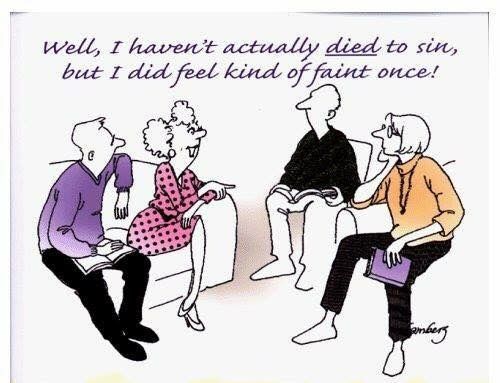
Psalm 118 is chock full of verses that many church-goers will know.

It’s a truly inspirational Psalm in its hope, joy, optimism, and faith.

Yet, we often isolate verses from this Psalm and miss out on the richness of them within the context of the whole Psalm.

Psalm 118 invites us to testify, witness to the goodness and sovereignty of God as complimentary attributes that implicitly invites all of us to assess our trust.

It is the combination of these attributes that makes God great.

His sovereignty alone would not invite trust, but rather fear.

For, if God is not good but can do all things then we may rightly fear what He will cause and bring about in our lives.

If, however, God is only good and not sovereign then we may know his love for us but it feels largely sentimental.

For, God cares but is incapable of intervening to help us in our time of need.

That God is both sovereign and good is truly remarkable and encouraging.

The dual attributes invites to surrender, unlock our long self imprisoned trust.

The Psalmist begins with the repeated phrase “the steadfast love of the Lord endures forever” (v. 1-4).

These verses invited Israel as a whole, the house of Aaron in particular, and all those who fear the Lord in general to trust, believe, in the goodness of this God.

He has an enduring love that can never be shaken, dissolved, or depleted.

It endures through all generations, through all magnitudes of storms through all of time, through all circumstances. Trust this God because He loves forever!

Then, the Psalmist gets personal.

He speaks of a time when the Psalmist called out to the Lord in distress (v. 5) and God in fact, answered Him. In fact, more pointedly, the Lord set him free.

He describes the Lord as being “on my side” or as his “helper.”

The confidence He has in God enables him to be fearless in the face of man.

“What can man do to me?” (v. 6).

Pushed to the wall, I called to God;
    from the wide open spaces, he answered.
God’s now at my side and I’m not afraid;
    who would dare lay a hand on me?
God’s my strong champion;
    I flick off my enemies like flies.
(Psalm 118:5-7 The Message)

We are getting a glimpse from the Psalmist as to just how powerful and capable this God is.

Verses 8-9 give us a comparison to show us just how reliable the Lord is. The Psalmist says plainly:

Psalm 118:8-9 English Standard Version

It is better to take refuge in the Lord
    than to trust in man.
It is better to take refuge in the Lord
    than to trust in princes.

God is ultimately greater than us all.

God is our ultimate Judge …

Matthew 12:33-37English Standard Version

A Tree Is Known by Its Fruit

33 “Either make the tree good and its fruit good, or make the tree bad and its fruit bad, for the tree is known by its fruit. 34 You brood of vipers! How can you speak good, when you are evil? For out of the abundance of the heart the mouth speaks. 35 The good person out of his good treasure brings forth good, and the evil person out of his evil treasure brings forth evil. 36 I tell you, on the day of judgment people will give account for every careless word they speak, 37 for by your words you will be justified, and by your words you will be condemned.”

2 Corinthians 5:6-10 Amplified Bible

So then, being always filled with good courage and confident hope, and knowing that while we are at home in the body we are absent from the Lord— for we walk by faith, not by sight [living our lives in a manner consistent with our confident belief in God’s promises]— we are [as I was saying] of good courage and confident hope, and prefer rather to be absent from the body and to be at home with the Lord. Therefore, whether we are at home [on earth] or away from home [and with Him], it is our [constant] ambition to be pleasing to Him. 10 For we [believers will be called to account and] must all appear before the [a]judgment seat of Christ, so that each one may be repaid for what has been done in the body, whether good or [b]bad [that is, each will be held responsible for his actions, purposes, goals, motives—the use or misuse of his time, opportunities and abilities].

Including those who consider themselves to be “untouchably above, beyond the scrutiny of the long arm of the Law, shielded from punishment’s” powerful men.

The Psalmist is not only free from the fear of man but he is free from ultimate dependence of man. God is more reliable. The combination of sovereignty and goodness makes Him a much better advocate, a better Savior, a better “refuge.”

What Does Faith Over Fear Really Mean?

Psalm 118:1-9 Legacy Standard Bible

Yahweh’s Lovingkindness Endures Forever

118 Give thanks to Yahweh, for He is good;
For His lovingkindness endures forever.
Oh let Israel say,
“His lovingkindness endures forever.”
Oh let the house of Aaron say,
“His lovingkindness endures forever.”
Oh let those who [a]fear Yahweh say,
“His lovingkindness endures forever.”

From my distress I called upon Yah;
Yah answered me and set me in a large place.
Yahweh is for me; I will not fear;
What can man do to me?
Yahweh is for me among those who help me;
Therefore I will look in triumph on those who hate me.
It is better to take refuge in Yahweh
Than to trust in man.
It is better to take refuge in Yahweh
Than to trust in nobles.

Having faith over fear involves considering the situation, weighing the options, and understanding the danger but then making the choice to fight through the fear and trust God anyway.

Luke 12:1-7 Legacy Standard Bible

Fear Only God

12 At this time, after [a]so many thousands of the crowd had gathered together that they were trampling on one another, He began saying to His disciples first, “Be on your guard for the leaven of the Pharisees, which is hypocrisy. But there is nothing covered up that will not be revealed, and hidden that will not be known.  Accordingly, whatever you have said in the dark will be heard in the light, and what you have [b]whispered in the inner rooms will be proclaimed upon the housetops.

“But I say to you, My friends, do not fear those who kill the body and after that have no more that they can do. But I will show you whom to fear: fear the One who, after He has killed, has authority to cast into [c]hell; yes, I tell you, fear Him!  Are not five sparrows sold for two [d]assaria? Yet not one of them is forgotten before God. 7 Indeed, the very hairs of your head are all numbered. Do not fear; you are more valuable than many sparrows.

It means pushing our fears to the side, permitting God to throw them into the sea of forgetfulness and replacing it with that faith which moves mountains.

The phrase “faith over fear” is quite a popular Christian saying that reflects a common sentiment found in biblical teachings.

It conveys the idea that faith in God should be significantly stronger and more influential in a person’s life than fear or anxiety. It encourages believers to trust God, His unfailing covenant promises rather than succumbing to fear or doubt.

One of the most incredible and inspiring passages in Scripture for believers is the story of when the Apostle Peter was called out of boat and invited by Jesus to walk upon the surface of the sea toward Jesus during a storm in Matthew 14.

In some ways, it is the “scary story” of the gospels because (at least in my mind) it seems like it could have started with the classic introduction,

“It was a dark and stormy night.”

The writer records the events like this:

And in the fourth watch of the night he came to them, walking on the sea. But when the disciples saw him walking on the sea, they were terrified, and said, “It is a ghost!” and they cried out in fear. But immediately Jesus spoke to them, saying, “Take heart; it is I. Do not be afraid” (Matthew 14:25-27, ESV).

This story is, primarily about the divinity of Jesus Christ.

It’s easy to mock Peter for his lapse in faith at the end of the story.

However, this amazing passage gives a miraculous glimpse into what is possible when we implicitly trust in God also have faith in the face of fear.

Additional Faith Over Fear Bible Verses

2 Timothy 1:7 – For God gave us a spirit not of fear but of power and love and self-control.

Psalm 27:1 – The Lord is my light and my salvation; whom shall I fear? The Lord is the stronghold of my life; of whom shall I be afraid?

Psalm 23:4 – Even though I walk through the valley of the shadow of death, I will fear no evil, for you are with me; your rod and your staff, they comfort me.

Psalm 56:3-4 – When I am afraid, I put my trust in you. In God, whose word I praise, in God I trust; I shall not be afraid. What can flesh do to me?

Proverbs 29:25 – The fear of man lays a snare, but whoever trusts in the Lord is safe.

John 14:27 – Peace I leave with you; my peace I give to you. Not as the world gives do I give to you. Let not your hearts be troubled, neither let them be afraid.

What Is Fear?

Nothing to fear but fear itself 

This means that fear itself, including the fear of death, can potentially be more paralyzing and harmful than the actual dangers we face. President Roosevelt encouraged people to face challenges bravely rather than be overcome by fear.

Eleanor Roosevelt later suggested, when asked, presumed that the original source was American naturalist, essayist, poet, and philosopher Henry David Thoreau (1817-1862), who wrote in his journal entry on September 7, 1851: Nothing is so much to be feared as fear”.

I will take it for granted that we have all heard the famous phrase, “There is nothing to fear but fear itself.”

I think we all know what it is like to fear something or someone legitimately.

Fear is our mind’s reaction to a perceived threat, and it comes in all shapes and sizes and affects people in different ways.

It might just cause stress in our bodies, or it might leave us breathless in panic.

Because it causes reactions, fear even sells tickets!

That’s why there are haunted houses, scary movies, and why kids tell scary bedtime stories.

In general, though, fear is a God-given feeling that motivates us to either advance and fight, turn and run away, or shrink down and hide.

Different situations may elicit one or more of those responses from us.

There are times that a healthy response of fear can help us and keep us safe or alive, but other times fear can paralyze us and put us in a worse or even more dangerous position than we were already in.

According to one study, some of the most common fears are of:

the dark, spiders, mice and snakes, of heights and flying, of dogs, of being underwater, humiliated in front of others, of germs or dirt, and of storms.

You could probably sum up all of these fears into a couple of general categories like fear of the unknown or fear of harm.

Whether we like to admit it or not, everyone desperately fears something. 

The irony of many kinds of fears (including the ones we just mentioned), is that they are normally not based on reality.

For example, while the bite from certain kinds of spiders or snakes could be dangerous, the chances of it being fatal is extremely low; even though many people are afraid of flying, it is much more common to get in a car crash; and although many people obsessively wash their hands, staying away from all germs would actually be significantly harmful for our health, ergo, not good.

Nevertheless, some situations (such as the ones Peter found himself in as his boat was so easily tossed around on the waves) are absolutely dangerous, and responding in fear is undeniably necessary understandable for our survival.

How Can Our Faith Overcome Our Fear?

The implicit faith and trust we have in God is based on what is “unseen and untouched” and is a “conviction of several layers of beliefs.” (Hebrews 11)

That means while we might fear something we can see or sense in front of us, our faith is in something which we cannot see nor sense in a physical way.

This is what the author of Hebrews meant when he wrote,

“Now faith is the assurance of things hoped for, the conviction of things not seen” (Hebrews 11:1, ESV).

Hebrews 11:1 Amplified Bible

The Triumphs of Faith

11 Now faith is the assurance (title deed, confirmation) of things hoped for (divinely guaranteed), and the evidence of things not seen [the conviction of their reality—faith comprehends as fact what cannot be experienced by the physical senses].

Hebrews 11:1-2 The Message

Faith in What We Don’t See

11 1-2 The fundamental fact of existence is that this trust in God, this faith, is the firm foundation under everything that makes life worth living. It’s our handle on what we can’t see. The act of faith is what distinguished our ancestors, set them above the crowd.

Notice in Matthew 14 Jesus didn’t chastise Peter or the other disciples for being fearful of the tumultuous storm or the darkness (or thinking that Jesus was a ghost!); he chastised them for not having enough faith to overcome their fear.

So, having faith in God’s provision or protection does not mean that it will eliminate our fear.

Nor is it blind acceptance of something you have not thought about or know nothing about — that is clearly blissful ignorance.

It is not saying you believe something that you’re not actually acting on — that is hypocrisy. And faith over fear is not making decisions without any doubts or concerns of those anticipated outcomes — that is carelessness or foolishness.

Instead, having significantly more faith in God over fear involves considering the situation, weighing the options, understanding the danger but then making the choice to fight through the fear and trust God anyway.

It means pushing our fear to the side and replacing it with faith.

Often, this involves an action (as when Peter literally and physically takes a few steps on top of the water), other times it is as simple as a mental state or inward decision to replace our anxiety with peace by “prayer and supplication with thanksgiving [letting] your requests be made known to God” (Philippians 4:5-7).

Faith over fear means we still participate in the things we value even if there is potential danger, because we have faith in God we believe it is worth the risk.

Those who highly value corporate worship still gather with fellow believers in the midst of high magnitude fear of persecution, discomfort, or even sickness.

Faith over fear is continuing to read Scripture or prayer in public, regardless of potential legal action, public scorn or physical harm such as Daniel in Daniel 6. 

Hebrews 10:19-25 Amplified Bible

A New and Living Way

19 Therefore, [a]believers, since we have confidence and full freedom to enter the Holy Place [the place where God dwells] by [means of] the blood of Jesus, 20 by this new and living way which He initiated and opened for us through the veil [as in the Holy of Holies], that is, through His flesh, 21 and since we have a great and  wonderful Priest [Who rules] over the house of God, 22 let us approach [God] with a true and sincere heart in unqualified assurance of faith, having had our hearts sprinkled  clean from an evil conscience and our bodies washed with pure water. 23  Let us seize and hold tightly the confession of our hope without wavering, for He who promised is reliable and trustworthy and faithful [to His word]; 24 and let us consider [thoughtfully] how we may encourage one another to love, good deeds, 25 not forsaking our meeting together [as believers for worship and instruction], as is the habit of some, but encouraging one another; and all the more [faithfully] as you see the day [of Christ’s return] approaching.

Faith over fear is continuing to take children to church services, public bible studies even though you know an unbelieving crowd will verbally abuse you.

It is believing the Bible’s account of Creation and the Fall, Jesus’ death and his resurrection, salvation, while being berated by atheistic students in schools.

There are many more models in Scripture of this concept of having faith that overcomes our fear we can learn from. In fact, the encouragement from God to “fear not” is one of the most common statements from the mouth of God!

For example, Moses still went to confront the Pharaoh despite his great fear and excuses. Joshua and the Israelites still marched around Jericho and faced other nations in battle despite their fear of larger and more equipped armies. Esther still approached her king even though she knew she could die for it.

What Does This Mean?

God places in our paths the most empowering and impactful opportunities to exercise our faith over fear as Christians.

James 4:6-9 Amplified Bible

But He gives us more and more grace [through the power of the Holy Spirit to defy sin and live an obedient life that reflects both our faith and our gratitude for our salvation]. Therefore, it says, “God is opposed to the proud and haughty, but  [continually] gives [the gift of] grace to the humble [who turn away from self-righteousness].” So submit to [the authority of] God. Resist the devil [stand firm against him] and he will flee from you. Come close to God [with a contrite heart] and He will come close to you. Wash your hands, you sinners; and purify your [unfaithful] hearts, you double-minded [people]. Be miserable and grieve and weep [over your sin]. Let your [foolish] laughter be turned to mourning and your [reckless] joy to gloom.

“draw near to God with a true heart in full assurance of faith”

even though God is the fearful, holy judge who will not even look on our sin because “our hearts [are] sprinkled clean from an evil conscience and our own bodies washed with pure water” (Hebrews 10:22, ESV).

Because of our victory over the grave through the Resurrection of Jesus Christ, we implicitly believe we have steadfast, immovable faith to move aside our fear.

Let us not be ones who “cower, shrink back and are destroyed;” let us be “those who have His strength of faith and preserve [our] souls” (Hebrews 10:39, ESV).

In the name of God, the Father, and of the Son, and of the Holy Spirit ….

Praying ….

Psalm 4 Amplified Bible

Evening Prayer of Trust in God.

To the Chief Musician; on stringed instruments. A Psalm of David.

Answer me when I call, O God of my righteousness!
You have freed me when I was hemmed in and relieved me when I was in distress;
Be gracious to me and hear [and respond to] my prayer.


O sons of men, how long will my honor and glory be [turned into] shame?
How long will you [my enemies] love worthless (vain, futile) things and seek deception and lies? Selah.

But know that the Lord has set apart for Himself [and dealt wonderfully with] the godly man [the one of honorable character and moral courage—the one who does right].
The Lord hears and responds when I call to Him.


Tremble [with anger or fear], and do not sin;
Meditate in your heart upon your bed and be still [reflect on your sin and repent of your rebellion]. Selah.

Offer righteous sacrifices;
Trust [confidently] in the Lord.


Many are saying, “Oh, that we might see some good!”
Lift up the light of Your face upon us, O Lord.

You have put joy in my heart,
More than [others know] when their wheat and new wine have yielded abundantly.

In peace [and with a tranquil heart] I will both lie down and sleep,
For You alone, O Lord, make me dwell in safety and confident trust.

Glory be to the Father,
and to the Son, and to the Holy Ghost;
as it was in the beginning,
is now, and ever shall be,
world without end. Amen, amen.

https://translate.google.com/

Watching, Waiting, Witnessing God’s Anointed, coming to a Little Town of big beginnings near nowhere Special. Micah 5:1-5

Micah 5:1-5 English Standard Version

The Ruler to Be Born in Bethlehem

[a] Now muster your troops, O daughter[b] of troops;
    siege is laid against us;
with a rod they strike the judge of Israel
    on the cheek.
2 [c] But you, O Bethlehem Ephrathah,
    who are too little to be among the clans of Judah,
from you shall come forth for me
    one who is to be ruler in Israel,
whose coming forth is from of old,
    from ancient days.
Therefore he shall give them up until the time
    when she who is in labor has given birth;
then the rest of his brothers shall return
    to the people of Israel.
And he shall stand and shepherd his flock in the strength of the Lord,
    in the majesty of the name of the Lord his God.
And they shall dwell secure, for now he shall be great
    to the ends of the earth.
And he shall be their peace.

Word of God for the Children of God

Glory be to the Father,
and to the Son, and to the Holy Ghost;
as it was in the beginning,
is now, and ever shall be,
world without end. Amen, amen.

If you had lived in the first century, this text would have sounded all wrong.

When Jewish people spoke of “going up” to Judea, the destination they had in mind was Jerusalem.

And when they spoke of a city connected with the great King David, what came to mind was again Jerusalem. Jerusalem was where the palace and temple were.

Jerusalem was the natural birthplace of anyone destined for a throne.

But Micah had prophesied a different birthplace for this future king.

Though Bethlehem was “small among the clans of Judah,” it was big in the eyes of God.

Bethlehem illustrates God’s method of operation.

“God chose the weak things of the world to shame the strong” (1 Corinthians 1:27). Why?

“So that no one may boast before him” (1:29).

Boasting is fueled by pride.

We climb the ladder of suc­cess pulling others down from the rung ahead of us.

We want to prove that we are big stuff.

But at Christ­mas we are on our way to Bethlehem, not Jerusalem.

When the prophet Micah announced a coming hope for the discouraged people of God, he opened with a surprising statement: revealing the promised Messiah would come not from Jerusalem—the royal city from which most of his original Jewish hearers would have anticipated a king to hail—but from Bethlehem.

From this small, unexpected town, God’s work would unfold before His people.

Jerusalem was the most prominent city in Israel.

It was the city of the great King David, the location of the temple, and the primary focus of God’s people.

Bethlehem would not have been on anyone’s radar.

It was “too little to be among the clans of Judah.”

It wouldn’t have made their Top 100 list, and it certainly wouldn’t have been in their Top 10. The significance of this Bethlehem is found in its insignificance.

Thinking about the rest of the Bible story, we realize this makes perfect sense.

This is how God works!

When Goliath taunted the people of Israel, the strong and brave soldiers of Israel fled.

Instead of “great” soldiers, God used an insignificant shepherd boy—from Bethlehem, of all places!—with five stones and a sling to deliver God’s people.

When the good news of the Messiah’s birth came, we might have expected that the cultural elite of the day would have been the first to hear of it, but instead, God brought the good news to a few insignificant shepherds. This is God’s way.

Those who dismiss the message of the Bible often stumble over the fact that God’s answer for the world lay in a baby who was born in cold dark obscurity.

This is not a message anyone would ever invent!

Yet it was into this insignificant place that the Messiah came to rule.

The tiny newborn boy who lay in a Bethlehem food trough was the one with a never-ending kingdom which far surpasses all other kingdoms.

Isaiah 61:1-8 English Standard Version

The Year of the Lord’s Favor

61 The Spirit of the Lord God is upon me,
    because the Lord has anointed me
to bring good news to the poor;[a]
    he has sent me to bind up the brokenhearted,
to proclaim liberty to the captives,
    and the opening of the prison to those who are bound;[b]
to proclaim the year of the Lord’s favor,
    and the day of vengeance of our God;
    to comfort all who mourn;
to grant to those who mourn in Zion—
    to give them a beautiful headdress instead of ashes,
the oil of gladness instead of mourning,
    the garment of praise instead of a faint spirit;
that they may be called oaks of righteousness,
    the planting of the Lord, that he may be glorified.[c]
They shall build up the ancient ruins;
    they shall raise up the former devastations;
they shall repair the ruined cities,
    the devastations of many generations.

Strangers shall stand and tend your flocks;
    foreigners shall be your plowmen and vinedressers;
but you shall be called the priests of the Lord;
    they shall speak of you as the ministers of our God;
you shall eat the wealth of the nations,
    and in their glory you shall boast.
Instead of your shame there shall be a double portion;
    instead of dishonor they shall rejoice in their lot;
therefore in their land they shall possess a double portion;
    they shall have everlasting joy.

For I the Lord love justice;
    I hate robbery and wrong;[d]
I will faithfully give them their recompense,
    and I will make an everlasting covenant with them.

Seeking, Searching, Recognizing, Implementing the pattern of God’s ways in those ancient days enables us to recognize the Messiah now that He has come.

It readies us for the reality that the one upon whom all God’s promises rested would die a humiliating death on a cross.

It reminds us that this is God’s way and always has been and always will be.

And it therefore changes the way we look at our lives. If you consider yourself of significance, beware: for such a view is often the precursor to being humbled.

If you consider yourself of little import, ability, influence, then be encouraged, for God works through insignificant people in insignificant places.

So be of no doubt that God can do great things through your insignificance.

That has always been His way.

Many of us struggle because we don’t have much to boast about.

But may I again remind you that God uses people (Luke 1:26-38) whose names would never appear in any papers to accomplish great things for his kingdom?

Truth is we’ll understand that better when we stand before God’s throne and hear his “Well done!” for those insignificant things that have truly mattered.

In the name of God, the Father the Son and the Holy Spirit,

Praying ….

Psalm 61

For the choir director; on a stringed instrument; by David.

Listen to my cry for help, O Elohim.
    Pay attention to my prayer.
From the ends of the earth, I call to you
    when I begin to lose heart.
    Lead me to the rock that is high above me.
You have been my Machseh,
    a Migdal-Oz against the enemy.
I would like to be a guest in your tent forever
    and to take refuge under the protection of your wings. Selah
        O Elohim, you have heard my vows.
            You have given me the inheritance
                that belongs to those who fear your name.
Add days upon days to the life of the king.
    May his years endure throughout every generation.
May he sit enthroned in the presence of Elohim forever.
    May mercy and truth protect him.
Then I will make music to praise your name forever,
    as I keep my vows day after day.

Glory be to the Father,
and to the Son, and to the Holy Ghost;
as it was in the beginning,
is now, and ever shall be,
world without end. Amen, amen.
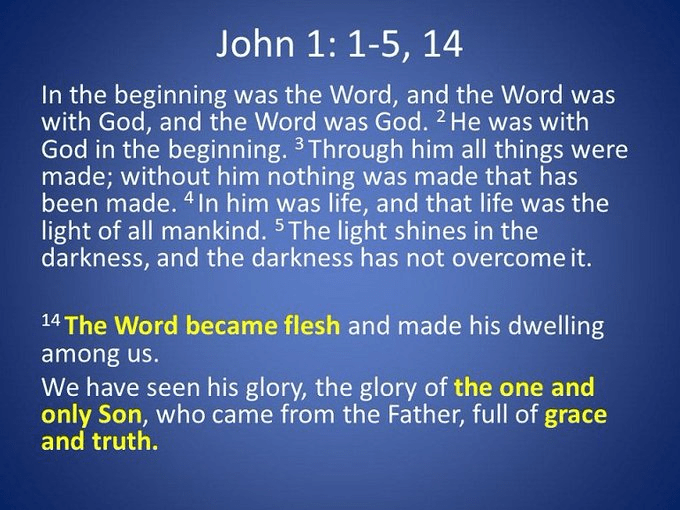
https://translate.google.com/

By God’s Mercy and Favor, Let us all strive to be empathetic Christians, to enhance our fellowship and worship, Kingdom usefulness unto the Master. Luke 1:57-66

Luke 1:57-66 English Standard Version

The Birth of John the Baptist

57 Now the time came for Elizabeth to give birth, and she bore a son. 58 And her neighbors and relatives heard that the Lord had shown great mercy to her, and they rejoiced with her. 59 And on the eighth day they came to circumcise the child. And they would have called him Zechariah after his father, 60 but his mother answered, “No; he shall be called John.” 61 And they said to her, “None of your relatives is called by this name.” 62 And they made signs to his father, inquiring what he wanted him to be called. 63 And he asked for a writing tablet and wrote, “His name is John.” And they all wondered. 64 And immediately his mouth was opened and his tongue loosed, and he spoke, blessing God. 65  And fear came on all their neighbors. And all these things were talked about through all the hill country of Judea, 66 and all who heard them laid them up in their hearts, saying, “What then will this child be?” For the hand of the Lord was with him.

Word of God for the Children’s of God

Glory be to the Father,
and to the Son, and to the Holy Ghost;
as it was in the beginning,
is now, and ever shall be,
world without end. Amen, amen.

The story of Jesus’ birth is intertwined with another miraculous birth—that of John, who was born to Elizabeth and Zechariah in their old age.

Though Zechariah did not believe at first that this could happen, God fulfilled his promise.

And when Zechariah named the child John, as the angel had instructed, he was able to speak again (see Luke 1:11-20). The name John means “God is gracious.”

While we might be used to thinking of God’s grace in the birth and life of Jesus, we should also ask about other ways we see God’s grace at work in this season.

Maybe you have seen a strained relationship restored, or an illness healed.

Maybe you have noticed temptations lifted, or fears relieved.

Can we name such gifts as illustrations of God’s grace?

Not only did Zechariah and Elizabeth receive God’s mercy; they invited their neighbors and relatives to share in their joy in what God had done for them.

Psalm 23 Authorized (King James) Version

Psalm 23

A Psalm of David.

The Lord is my shepherd; I shall not want.
He maketh me to lie down in green pastures:
he leadeth me beside the still waters.
He restoreth my soul:
he leadeth me in the paths of righteousness for his name’s sake.
Yea, though I walk through the valley of the shadow of death,
I will fear no evil: for thou art with me;
thy rod and thy staff they comfort me.
Thou preparest a table before me in the presence of mine enemies:
thou anointest my head with oil; my cup runneth over.
Surely goodness and mercy shall follow me all the days of my life:
and I will dwell in the house of the Lord for ever.

During the Christmas season, many of us have opportunities to gather with family and friends.

Do we also sacrifice time with others in ministry and mission, to share with them our experiences of God’s mercy to us?

Luke 15:31-32 The Message

31-32 “His father said, ‘Son, you don’t understand. You’re with me all the time, and everything that is mine is yours—but this is a wonderful time, and we had to celebrate. This brother of yours was dead, and he’s alive! He was lost, and he’s found!’”

As members of the Body of Christ, we are called to a deeper level of connection with one another. Empathy is a vital aspect of this connection, allowing us to understand and enter into each other’s feelings.

In 1 Corinthians 12:26, the apostle Paul writes, “If one member suffers, all the members suffer with it.”

Ephesians 4:1-6 The Message

To Be Mature

1-3 In light of all this, here’s what I want you to do. While I’m locked up here, a prisoner for the Master, I want you to get out there and walk—better yet, run!—on the road God called you to travel. I don’t want any of you sitting around on your hands. I don’t want anyone strolling off, down some path that goes nowhere. And mark that you do this with humility and discipline—not in fits and starts, but steadily, pouring yourselves out for each other in acts of love, alert at noticing differences and quick at mending fences.

4-6 You were all called to travel on the same road and in the same direction, so stay together, both outwardly and inwardly. You have one Master, one faith, one baptism, one God and Father of all, who rules over all, works through all, and is present in all. Everything you are and think and do is permeated with Oneness.

This command grows out of the doctrine that the church is one, with one interest, and therefore, we should have common sympathy in its joys and sorrows.

Christmas is a season for reflecting on God’s grace and mercy to his people.

For Christ’s glory may you name, and celebrate, and share that mercy today.

In the name of God, the Father the Son and the Holy Spirit ….

Praying ….

Psalm 28 English Standard Version

The Lord Is My Strength and My Shield

Of David.

28 To you, O Lord, I call;
    my rock, be not deaf to me,
lest, if you be silent to me,
    I become like those who go down to the pit.
Hear the voice of my pleas for mercy,
    when I cry to you for help,
when I lift up my hands
    toward your most holy sanctuary.[a]

Do not drag me off with the wicked,
    with the workers of evil,
who speak peace with their neighbors
    while evil is in their hearts.
Give to them according to their work
    and according to the evil of their deeds;
give to them according to the work of their hands;
    render them their due reward.
Because they do not regard the works of the Lord
    or the work of his hands,
he will tear them down and build them up no more.

Blessed be the Lord!
    For he has heard the voice of my pleas for mercy.
The Lord is my strength and my shield;
    in him my heart trusts, and I am helped;
my heart exults,
    and with my song I give thanks to him.

The Lord is the strength of his people;[b]
    he is the saving refuge of his anointed.
Oh, save your people and bless your heritage!
    Be their shepherd and carry them forever.

Glory be to the Father,
and to the Son, and to the Holy Ghost;
as it was in the beginning,
is now, and ever shall be,
world without end. Amen, amen.
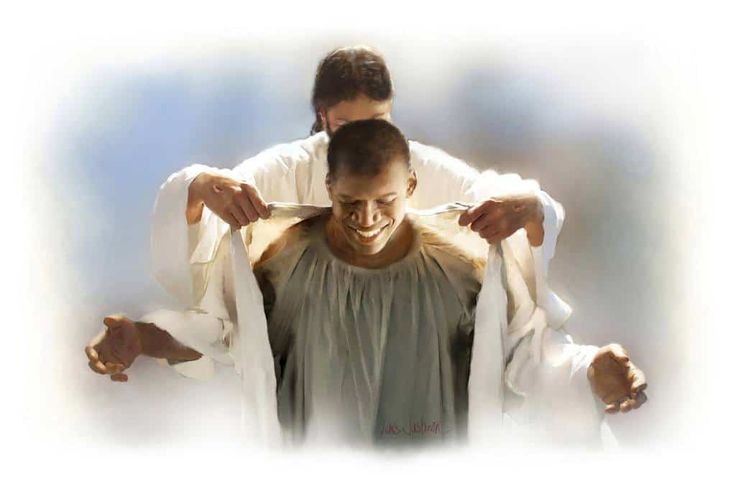
https://translate.google.com/

Is this some kind of a divine prank? Our Finding Joy in the Endurance of Struggle when they do not have any time or inclination to start looking? Romans 5:1-5

Romans 5:1-5 Common English Bible

Therefore, we have peace with God

Therefore, since we have been made righteous through his faithfulness,[a] we have peace with God through our Lord Jesus Christ. We have access by faith into this grace in which we stand through him, and we boast in the hope of God’s glory. But not only that! We even take pride in our problems, because we know that trouble produces endurance, endurance produces character, and character produces hope. This hope doesn’t put us to shame, because the love of God has been poured out in our hearts through the Holy Spirit, who has been given to us.

Word of God for the Children of God

Glory be to the Father,
and to the Son, and to the Holy Ghost;
as it was in the beginning,
is now, and ever shall be,
world without end. Amen, amen.
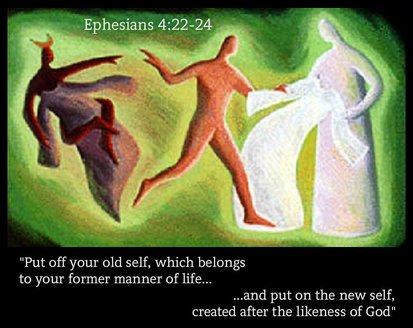
Past 2 1/2 years, I’ve been through several seasons of struggle and suffering.

And there’s something I really wrestle with when I am in the thick of it.

It’s a verse and a call to action in the Bible, actually.

That simultaneously perplexes and convicts me.

It’s the odd encouragement to rejoice and be glad in our hurts and hardships. Of course, I want to be filled with joy at all times, regardless of what surrounds me.

To be completely honest, my heart seems to resist finding its way to stepping more purposely, less tentatively, deliberately shifting my outlook from “why bother?” into positive and pleasant perspectives when it’s tossed into turmoil. 

Romans 5:3-5 Amplified Bible

And not only this, but [with joy] let us exult in our sufferings and rejoice in our hardships, knowing that hardship (distress, pressure, trouble) produces patient endurance; and endurance, proven character (spiritual maturity); and proven character, hope and confident assurance [of eternal salvation]. Such hope [in God’s promises] never disappoints us, because God’s love has been abundantly poured out within our hearts through the Holy Spirit who was given to us.

One instance the Bible encourages this behavior is in Romans 5:3-5, when it tells us to rejoice when we run into problems. And this frankly can feel like a sharp smack in the face, punch to my solar plexus and adding insult to injury.

We may already be feeling pretty down, and likely far from rejoicing, and then we are being told to rejoice in it!?

Which may knock us further down with self-disappointment.

But, regardless of the joy we may or may not muster in the mud of a problem, I bet we can kind of agree we both want the result referenced at the latter part of the verse, acknowledging, thru Christ we’ll receive endurance from these trials.

2 Corinthians 12:7-10 New American Standard Bible

A Thorn in the Flesh

Because of the extraordinary greatness of the revelations, for this reason, to keep me from exalting myself, there was given to me a thorn in the flesh, a  messenger of Satan to [a]torment me—to keep me from exalting myself! Concerning this I pleaded with the Lord three times that it might leave me.  And He has said to me,  “My grace is sufficient for you, for power is perfected in weakness.” Most gladly, therefore, I will rather boast [b]about my weaknesses, so that the power of Christ may dwell in me. 10 Therefore I delight in weaknesses, in [c]insults, in distresses, in  persecutions, in difficulties, in behalf of Christ; for when I am weak, then I am strong.  

Personally speaking, in order to motivate me to seek and see the positive in my difficulties, it helps to understand the benefit of doing so.

It helps to understand the benefit of the promised result.

In this case, sufficient endurance, grace, strength.

And friend, we definitely need all God’s endurance in this life laid out for us. 

Nowadays people are too eager to give up in the face of ­changes or hardships.

People give up on their education, career, marriage, and friends all too easily when things do not go their way. Sadly, people treat spiritual matters similarly.

People leave their church over a minor disagreement.

Others give up on their faith because of socio-economic, political, cultural pressure or overwhelming feeling God does not, will not answer their prayers.

Let us not lose heart.

“Though outwardly we are wasting away, yet inwardly we are being renewed day by day. For our light and momentary troubles are achieving for us an eternal glory that far outweighs them all” (2 Corinthians 4:16-17).

A quick Google search defined endurance as “the power of enduring an unpleasant or difficult process or situation without giving way,” and “the capacity of something to last or to withstand wear and tear.”

And because life is hard, difficult, and unpleasant at times, of course, we need endurance.

The beautiful blessing for us Christians, who lean on the Lord through our problems, is we develop this endurance one season of dependence at a time.

We are increasing our capacity to withstand the wear and tear of life, which we know is inevitable. Meaning our problems are one by one strengthening us.

By the power of God, strengthening our character, strengthening our ability to take on the next trial with more of God’s peace and grace, and his increased patience and love. All the while reflecting more of him into a watchful world. 

Do you struggle to see joy in your suffering?

But can you see .01% the value in gaining endurance to continue to withstand the inevitable, unending flow, floods of tribulations and trials in this world?

And isn’t that what we all want?

To be able to better handle what comes our way?

Because we know so much tough stuff will keep coming.

I don’t know about you, but one of my greatest fears is that I won’t be able to handle the hard things on the horizon or that will unexpectedly come my way.

So, if you could assure me the hard thing I’m going through now will allow me to better “find God first!” pray to patiently contend with the things I will face in the future. Finding God first, foremost, isn’t that reason to rejoice? I believe so. 

Intersecting Faith & Life: 

It certainly isn’t always natural, or even comfortable.

In fact, it can be really hard when you’re walking through a dark valley.

But I believe there is still a good reason to rejoice and praise God for what he is doing through it.

He is the author of all things and has authority over all things surrounding you.

This includes your problems, your trials, and your suffering.

He will use it to strengthen you; he will use your struggles to serve you and serve others.

And though no, it isn’t pleasant to walk through hard things, we can walk those hard paths and valley’s, knowing they will create new strength and goodness.

And that is always something worth rejoicing and thanking God for. 

Let this encourage you today when you consider the difficulties swarming around you.

Know that through this very thing, God will bring about the person in you who will better deal with tomorrow’s difficulties.

Opening wide the door to greater ease and peace along the journey of your life.

And we can all figure out why we rejoice and praise God for today and every day.

In the name of God, the Father the Son and the Holy Spirit ….

Praying ….

Psalm 61 New American Standard Bible

Confidence in God’s Protection.
For the music director; on a stringed instrument. A Psalm of David.

61 Hear my cry, God;
Give Your attention to my prayer.
From the end of the earth I call to You when my heart is faint;
Lead me to the rock that is higher than I.
For You have been a refuge for me,
A tower of strength against the enemy.
Let me [a]dwell in Your tent forever;
Let me take refuge in the shelter of Your wings. Selah

For You have heard my vows, God;
You have given me the inheritance of those who fear Your name.
You will [b]prolong the king’s [c]life;
His years will be like generations.
He will [d]sit enthroned before God forever;
Appoint faithfulness and truth that they may watch over him.
So I will sing praise to Your name forever,
That I may pay my vows day by day.

Glory be to the Father,
and to the Son, and to the Holy Ghost;
as it was in the beginning,
is now, and ever shall be,
world without end. Amen, amen.

https://translate.google.com/

What we have been taught, what we have learned from others who have certainly tried their hand at writing a cogent story of the wonderful harvest of Scripture and history. Luke 1:1-4

Luke 1:1-4 Amplified Bible

Introduction

Since [as is well known] many have undertaken to compile an orderly account of the things which have been fulfilled among us [by God], exactly as they were handed down to us by those [with personal experience] who from the beginning [of Christ’s ministry] were eyewitnesses and ministers of the word [that is, of the teaching concerning salvation through faith in Christ], it seemed fitting for [a]me as well, [and so I have decided] after having carefully searched out and investigated all the events accurately, from the very  beginning, to write an orderly account for you, most excellent Theophilus; so that you may know the exact truth about the things you have been [b]taught [that is, the history and doctrine of the faith].

Word of God for the Children of God

Glory be to the Father,
and to the Son, and to the Holy Ghost;
as it was in the beginning,
is now, and ever shall be,
world without end. Amen, amen.

The Christmas story is familiar to many people throughout the world, wherever the message of Christ has spread.

In various parts of our world today, though, the Christmas season has become a time when focusing on Jesus competes with focusing on our shopping for that ideal gift for that ideal person, holiday parties and meals, and a frenzied rush.

In the book of Luke, the story of Jesus begins with a reminder that can help us even today in our world of competing ideals.

Luke writes to a reader called Theophilus (“friend of God”) so that this person may know deep-down the narration of this story of Jesus is certain and true.

God wants the Christmas story to inspire a kind of certainty in us. This is not intended to promote pride or superiority, as if to suggest that we know God better than anyone else. Instead, this is to instill wonder at the reality of the birth of Christ and what it means for the whole world (see John 3:16-18).

Do you feel over (under) whelmed by the busyness of the Christmas season?

Do the holidays remind us of stress and hurt from the past that have not healed?

In this festive season, turn again to the story of what God has “fulfilled among us”—the promise to provide an always living Savior, who is Christ the Lord.

Give testimony, witness to how Jesus changes, transforms the lives of all who come into contact with him, fervently praying to let his birth renew in you the absolute certainty of God’s love for us all.

And You shall teach them diligently to your [a]children ….

Deuteronomy 6:4-9 Amplified Bible

“Hear, O Israel! The Lord is our God, the Lord is one [the only God]! You shall love the Lord your God with all your heart and mind and with all your soul and with all your strength [your entire being]. These words, which I am commanding you today, shall be [written] on your heart and mind. You shall teach them diligently to your [a]children [impressing God’s precepts on their minds and penetrating their hearts with His truths] and shall speak of them when you sit in your house and when you walk on the road and when you lie down and when you get up. And you shall bind them as a sign on your hand (forearm), and they shall be used as [b]bands (frontals, frontlets) on your forehead. You shall write them on the [c]doorposts of your house and on your gates.

As with any historian, Luke sets out to use all the available source material and eyewitness accounts of all that the Lord Jesus began to do, to teach during His earthly life.

Luke’s Gospel begins with the joyful news of the conception and birth of John the Baptist, appointed by God, to be the voice of one crying in the wilderness: “Prepare ye the way of the Lord, make His paths straight.”

Though all Scripture is the divinely inspired, inerrant Word of God, which is profitable for doctrine, for reproof, for correction, and for our instruction in righteousness, Luke makes it very clear that accurate historical research and the testimony of reliable witnesses of that day, contributed to the authority and authenticity of its content.

Throughout the centuries, the enemy has employed many strategies to discredit the truth of the Word of Almighty God.

Even in these early years of the fledgling first century Church, there were many false writings, false teachings, false doctrines, false gospels, false prophets, and false witnesses that were flooding into the early Church.

And so in his narrative to Theophilus, Luke narrates it very clearly that he has carefully investigated everything to do with the life of the Lord Jesus Christ and written it down meticulously and in sequential order.

He started from the very beginning of Christ’s earthly life: “So that you may know the exact truth about the things you have been taught.”

The salvation message of Luke’s Gospel is:

“Good tidings of great joy to all people.”

The core content of Luke’s Gospel is;

Jesus Christ has come to seek and to save that which was lost, both Jew and Gentile, male and female, young and old, rich and poor.

Satan continues to employ deceptive strategies to discredit all of God’s Word, continue ruthless attacks on the Gospel of our risen, living Savior Jesus Christ.

2 Timothy 2:14-18 Amplified Bible

An Unashamed Workman

14 Remind the people of these facts, and solemnly charge them in the presence of God to avoid petty controversy over words, which does no good, and [upsets and undermines and] ruins [the faith of] those who listen. 15 Study and do your best to present yourself to God approved, a workman [tested by trial] who has no reason to be ashamed, accurately handling and skillfully teaching the word of truth. 16 But avoid all irreverent babble and godless chatter [with its profane, empty words], for it will lead to further ungodliness, 17 and their teaching will spread like gangrene. So it is with Hymenaeus and Philetus, 18 who have deviated from the truth. They claim that the resurrection has already taken place, and they undermine the faith of some.

2 Timothy 4:1-4 Amplified Bible

“Preach the Word”

4 I solemnly charge you in the presence of God and of Christ Jesus, who is to judge the living and the dead, and by His appearing and His kingdom: preach the word [as an official messenger]; be ready when the time is right and even when it is not [keep your sense of urgency, whether the opportunity seems favorable or unfavorable, whether convenient or inconvenient, whether welcome, unwelcome]; correct [those who err in doctrine or behavior], warn [those who sin], exhort and encourage [those who are growing toward spiritual maturity], with inexhaustible patience and [faithful] teaching. For the time will come when people will not tolerate sound doctrine and accurate instruction [that challenges them with God’s truth]; but  wanting to have their ears tickled [with something pleasing], they will accumulate for themselves [many] teachers [one after another, chosen] to satisfy their own desires and to support the errors they hold, and will turn their ears away from the truth and will wander off into myths and man-made fictions [and will accept the unacceptable].

Within our 21st century technologically complex, highly secretive information accelerated, all too deceptively evil, faked and falsified misdirected paranoid greedy politically charged age, in our post-modern, historically and biblically dumbed down culture, it is possible, it would badly deceive the elect of God.

Be diligent, sober and vigilant, for the enemy prowls as a roaring lion is seeking to systematically dismantle the gospel of Christ and cause our faith to flounder.

As believers in Christ, we are also students.

We need to learn God’s Word, grow in the grace and knowledge of the Savior.

We need to absorb God’s Word continuously in order to be transformed by the power of his Spirit, who works in us, teaches us the truth and wisdom of God.

On a daily basis we need to walk in step with the Lord and his Spirit, growing to know God and to share his love with others everywhere.

There’s a tale of a man on a stroll who hears a voice say to him: “Gather some pebbles.” Though he sees no one, the voice persists: “Gather some pebbles and put them in your pocket, and tomorrow you will be both glad and sorry.”

Intrigued, the man thinks, “Why not?”

So he picks up a few pebbles and puts them in his pocket.

The next day he discovers they have been transformed into diamonds.

Then he feels gladness for taking some, and he is sorry for not taking more.

Similarly, our study of God’s Word may not reveal its benefits right away.

Yet over time, nuggets of truth and wisdom will prove to be invaluable treasures—blessing our lives in countless ways.

Let us hold fast to that truth and wisdom (Proverbs 3:5-8) which you all have, knowing that the Lord Jesus is the Way, the Truth, and the Life, and that in Him we each have forgiveness of sins and life everlasting, to His praise and glory.

In the name of God, the Father the Son and the Holy Spirit ….

Praying …..

Psalm 19 Amplified Bible

The Works and the Word of God.

To the Chief Musician. A Psalm of David.

19 The heavens are telling of the glory of God;
And the expanse [of heaven] is declaring the work of His hands.

Day after day pours forth speech,
And night after night reveals knowledge.

There is no speech, nor are there [spoken] words [from the stars];
Their voice is not heard.

Yet their voice [in quiet evidence] has gone out through all the earth,
Their words to the end of the world.
In them and in the heavens He has made a tent for the sun,

Which is as a bridegroom coming out of his chamber;
It rejoices as a strong man to run his course.

The sun’s rising is from one end of the heavens,
And its circuit to the other end of them;
And there is nothing hidden from its heat.


The law of the Lord is perfect (flawless), restoring and refreshing the soul;
The statutes of the Lord are reliable and trustworthy, making wise the simple.

The precepts of the Lord are right, bringing joy to the heart;
The commandment of the Lord is pure, enlightening the eyes.

The fear of the Lord is clean, enduring forever;
The judgments of the Lord are true, they are righteous altogether.
10 
They are more desirable than gold, yes, than much fine gold;
Sweeter also than honey and the drippings of the honeycomb.
11 
Moreover, by them Your servant is warned [reminded, illuminated, and instructed];
In keeping them there is great reward.
12 
Who can understand his errors or omissions? Acquit me of hidden (unconscious, unintended) faults.
13 
Also keep back Your servant from presumptuous (deliberate, willful) sins;
Let them not rule and have control over me.
Then I will be blameless (complete),
And I shall be acquitted of great transgression.
14 
Let the words of my mouth and the meditation of my heart
Be acceptable and pleasing in Your sight,
O Lord, my [firm, immovable] rock and my Redeemer.

Glory be to the Father,
and to the Son, and to the Holy Ghost;
as it was in the beginning,
is now, and ever shall be,
world without end. Amen, amen.

https://translate.google.com/

Tis again, that ponderous season we eagerly celebrate all the anticipated, tiresome years of hurry up and wait. Hebrews 9:23-28

A wooden manger and three wooden crosses

Hebrews 9:23-28 New King James Version

Greatness of Christ’s Sacrifice

23 Therefore it was necessary that the copies of the things in the heavens should be [a]purified with these, but the heavenly things themselves with better sacrifices than these. 24 For Christ has not entered the holy places made with hands, which are  [b] copies of the true, but into heaven itself, now to appear in the presence of God for us; 25 not that He should offer Himself often, as the high priest enters the Most Holy Place every year with blood of another— 26 He then would have had to suffer often since the foundation of the world; but now, once at the end of the ages, He has appeared to put away sin by the sacrifice of Himself. 27 And as it is appointed for men to die once, but after this the judgment, 28 so Christ was offered once to bear the sins of many. To those who eagerly wait for Him He will appear a second time, apart from sin, for salvation.

Word of God for the Children of God

Glory be to the Father,
and to the Son, and to the Holy Ghost;
as it was in the beginning,
is now, and ever shall be,
world without end. Amen, amen.

Jesus came to earth some 2000 years ago.

God, taking on human form.

Born into this world to a peasant girl.

He lived among us for maybe 33 years.

And then was brutally crucified on a Roman cross.

Three days later he rose up from the grave, conquering death.

He sits now at the right hand of God.

And from that moment his followers look for him to return someday.

But why did he do this?

The author of Hebrews tells us here that his death was a sacrifice.

A sacrifice that would take away the sins of many.

Jesus is the perfect lamb who could, once and for all, wash us clean of our sins.

His sacrifice was one of atonement.

His sacrifice was to take away the sins of many people. 

1 John 2:2 tells us he was the atoning sacrifice for the sins of the whole world.

But in a special way for believers, for those who accept him as savior and Lord.

And he is returning a second time.

This time it is not as a sacrifice.

It is not for the world.

He is returning, bringing salvation, for those looking forward to his return.

We rightly say that we have been saved.

But that salvation is not complete until he returns for us, taking us to be with him forever (John 14:1-3).

There are many things in life that we look forward to.

But which of them is better than Christ’s return for those who are his own?

But, are we 10/10 ‘EAGERLY’ waiting for CHRIST to RETURN? 

Hebrews 9:27-28 Amplified Bible

27 And just as it is appointed and destined for all men to die once and after this [comes certain] judgment, 28 so Christ, having been offered once and once for all to bear [as a burden] [a]the sins of many, will appear a second time [when he returns to earth], not to deal with sin, but to bring salvation to those who are eagerly and  confidently waiting for Him.

The anonymous writer of Hebrews presents a contrast between the Old and New Covenant in the above passage.

Under the Old Covenant, the law condemned sinners to die and face the judgment.

However under the New Covenant Christ, as God’s ‘perfect sacrifice’, was offered once to bear all the sins of humankind.

He finished that work at the cross, but will come to take us to His home in heaven.

This will be the culmination of our salvation; we will receive glorified bodies and be forever beyond the reach of sin.

The expression, those who ‘eagerly’ wait for Him, is a description of all true believers who belong to Christ (1 Cor. 15:23) – who are “the dead in Christ” and  “we who are alive and remain” (1 Thess. 4:16, 17).

Hebrews 9:24–28 mentions three appearances of Christ: past appearance for our salvation (v. 26), present appearance for our sanctification (v. 24), and future appearance for our glorification (v. 28).

This may be described further as follows:

  1. Jesus has appeared (v. 26). This refers to the first time when He came to earth to save us from the penalty of sin (the past tense of salvation).
  2. Jesus now appears (v. 24). This refers to His present ministry to save us from the power of sin (the present tense of salvation).
  3. Jesus will appear (v. 28). This speaks of His imminent return when He will save us from the presence of sin (the future tense of salvation).

Jesus Christ appeared on earth once to accomplish His atoning work (v. 26).

Then He entered “into heaven,” opening the way for our access to God (v. 24).

One day He will reappear to consummate our salvation.

Are we eagerly waiting and looking forward for our Lord Jesus Christ to return?

Are we maintaining a steady relationship with God on a day-to-day basis?

Are we seeking God’s interest and His kingdom before anything in our lives? 

If not, let us make a new commitment to God’s kingdom values, and give Him the top priority in our daily living!

“Beloved, now we are children of God; and it has not yet been revealed what we shall be, but we know that when He is revealed, we shall be like Him, for we shall see Him as He is. And everyone who has this hope in Him purifies himself, just as He is pure.” (1 John 3:2-3) 


“In the name of God, the Father and of the Son and of the Holy Spirit. Amen”

Praying …..

Psalm 27

By David.

Yahweh is my light and my salvation.
    Who is there to fear?
    Yahweh is my life’s fortress.
    Who is there to be afraid of?

Evildoers closed in on me to tear me to pieces.
    My opponents and enemies stumbled and fell.
        Even though an army sets up camp against me,
            my heart will not be afraid.
        Even though a war breaks out against me,
            I will still have confidence in the Lord.

I have asked one thing from Yahweh.
    This I will seek:
    to remain in Yahweh’s house all the days of my life
        in order to gaze at Yahweh’s beauty
            and to search for an answer in his temple.
He hides me in his shelter when there is trouble.
    He keeps me hidden in his tent.
    He sets me high on a rock.
Now my head will be raised above my enemies who surround me.
    I will offer sacrifices with shouts of joy in his tent.
    I will sing and make music to praise Yahweh.
Hear, O Yahweh, when I cry aloud.
    Have pity on me, and answer me.
When you said,
    “Seek my face,”
        my heart said to you,
            “O Yahweh, I will seek your face.”[a]
Do not hide your face from me.
    Do not angrily turn me away.
        You have been my help.
            Do not leave me!
                Do not abandon me, O Elohim, my savior!
10 Even if my father and mother abandon me,
    Yahweh will take care of me.
11 Teach me your way, O Yahweh.
    Lead me on a level path
    because I have enemies who spy on me.
12 Do not surrender me to the will of my opponents.
    False witnesses have risen against me.
        They breathe out violence.
13 I believe that I will see the goodness of Yahweh
    in this world of the living.

14 Wait with hope for Yahweh.
    Be strong, and let your heart be courageous.
    Yes, wait with hope for Yahweh.

Glory be to the Father,
and to the Son, and to the Holy Ghost;
as it was in the beginning,
is now, and ever shall be,
world without end. Amen, amen.

https://translate.google.com/

On a good day, to enjoy yourself; On a bad day, to examine your conscience. Share a true heart of thankfulness, all the live long days God gives everyday! Ecclesiastes 7:8-18

Ecclesiastes 7:8-18 New American Standard Bible

The end of a matter is better than its beginning;
Patience of spirit is better than arrogance of spirit.
Do not be [a]eager in your spirit to be angry,
For anger resides in the [b]heart of fools.
10 Do not say, “Why is it that the former days were better than these?”
For it is not from wisdom that you ask about this.
11 Wisdom along with an inheritance is good,
And an advantage to those who see the sun.
12 For wisdom is [c]protection just as money is [d]protection,
But the advantage of knowledge is that wisdom keeps its possessors alive.
13 Consider the work of God,
For who is able to straighten what He has bent?
14 On the day of prosperity be happy,
But on the day of adversity consider:
God has made the one as well as the other
So that a person will not discover anything that will come after him.

15 I have seen everything during my [e]lifetime of futility; there is a righteous person who perishes in his righteousness, and there is a wicked person who prolongs his life in his wickedness. 16 Do not be excessively righteous, and do not be overly wise. Why should you ruin yourself? 17 Do not be excessively wicked, and do not be foolish. Why should you die [f]before your time? 18 It is good that you grasp one thing while not [g]letting go of the other; for one who fears God comes out with [h]both of them.

Word of God for the Children of God

Glory be to the Father,
and to the Son, and to the Holy Ghost;
as it was in the beginning,
is now, and ever shall be,
world without end. Amen, amen.
“When times are good, be happy; but when times are bad, consider this: God has made the one as well as the other.” – Ecclesiastes 7:14  

It’s now Thanksgiving season, and I have naturally been thinking of all I am thankful for.

God, life, family, friends, jobs, material blessings, church, etc.

Those are all things I am absolutely thankful for, but year after year it all just seems, too familiar, too routine, too “blah” “ho-hum” ugh, predictable.

Saying I’m thankful for my family, etc. just doesn’t seem like enough for some reason. It doesn’t seem honest enough. It doesn’t show the reality of my days.

It doesn’t show the depth of my thoughts of depravity – to just finally forget it all – stop answering my phone and similar such excuses, things of this nature .

It is all just too superficial.

You may get what I’m saying.

You may not. 

But hear my heart, here. 

I have gotten to know a number of souls in the past five years or so who live day to day through situations and relationships I cannot even begin to understand.

Their hearts and minds carry burdens that I would not allow myself to imagine, I cannot even fathom because, in all honesty, I have lived a fairly “bruised” life.

There have been hang-ups, hiccups, hurry-ups, h_ll no’s, along the way, some unfortunate choices, and some major league, hall of fame worthy regrets.

However now, through it all, through divinely revealed 20/20 hindsight, I trust that without question, that I was always loved and forgiven and accepted too.

But some whom I speak of have never had the security I feel.

They don’t have “their people” who they can say with absolute certainty will always love them and stand by them as long as they are able.

They don’t know, without a doubt, that there is a God who loves them and will never leave them because no one in their life has truly modeled a love like that.

It’s because of them that thankfulness takes on a new meaning this year.

I can’t just give a blanket statement anymore.

I need to tell them and others exactly what I am thankful for and Who alone is responsible for every good thing in my life.

Because I can’t guarantee them family or friends who will always be there.

But I can guarantee them that there is a Savior who loves them and will never let them go.

And we, as Believers, can help introduce them to  Him….the One a true heart of thankfulness comes from.

Here are 3 things to consider when you share Jesus, not only this Thanksgiving season, but throughout the year:

1. Talk to the Lord and proclaim His name out loud.

When Jesus was about to raise Lazarus from the dead he said: “Father, thank you for hearing me. You always hear me, but I said it out loud for the sake of all these people standing here, so that they will believe you sent me.” – John 11:41-42

Jesus didn’t need to talk to the Lord out loud.

He did it so those around Him would hear and recognize and acknowledge that this miracle came from God.

If He had not, they might have given credit to his human flesh. 

It is our turn to acknowledge, out loud, publicly, for all to hear, where all of our thankfulness is due.

When we do that, when we claim the name of our Savior Jesus and share with others about all that He has done in our lives, it can’t help but resonate with those who might not know Him yet. 

2. Remember to thank Him in the good and the bad. 

If we can share thankfulness in the good things, awesome. But if we want to make even more of an impression… share thankfulness for the hard things too.

“When times are good, be happy; but when times are bad, consider this: God has made the one as well as the other.” – Ecclesiastes 7:14

I am thankful for all of those times the Lord has brought me to my knees in tears because they humbled me. I am thankful for those health issues I’ve had recently because they’ve show me the stark limits of my humbled humanity.

When opportunities arise in everyday conversation, when we are sharing life with others, talk about the One who gives you life.

Say His name out loud for others to hear.

If others hear us talk about the Lord outside of church-away from the Christian setting where we are “supposed to”- it may mean more.

If we publicly show others that we think enough of Jesus to give Him all of the credit for our good days and trust Him to guide our steps in the hard things too, it may plant seeds that will grow in time. 

3. Keep it simple and speak gently.

“But in your hearts revere Christ as Lord. Always be prepared to give an answer to everyone who asks you to give the reason for the hope that you have. But do this with gentleness and respect,” – 1 Peter 3:15

The majority of the people you talk to are not Bible scholars.

Many may have never even read one.

You don’t need fancy answers and highfalutin talk to impress anyone.

You just need to speak your heart, simply.

Go ahead and have an idea of what you would tell someone about the Lord and all He has done in your life, so that the next time you have an opportunity, you don’t back down because you feel unprepared.

Don’t believe the lies Satan may whisper in your ear, that you are not qualified enough to share about the Lord or that you are undeserving of that opportunity.

You are a child of the King and He wants you to share!

And finally, speak gently because you never know what someone has been through or what negative experiences they may have had with “church.”

Going Deeper with God – Living through Good and Bad

https://www.thegospelcoalition.org/reviews/eat-this-book/

In Eat this Book, Eugene Peterson teaches us to chew on a passage of scripture, digest it and then put it to use in practical ways. Our early Christian fathers and mothers called this process Lectio Divina. Ecclesiastes 7:13-14 re- minds us that the life God breathed into us is replete with good and bad times and how to live through it all.

Ecclesiastes 7: 13-14 (NIV)

13 Consider what God has done: 

Who can straighten what he has made crooked?
14 When times are good, be happy;
    but when times are bad, consider this:
God has made the one  as well as the other.
Therefore, no one can discover
    anything about their future.

CHEWING

When I ran across Ecclesiastes 7:13-14 recently, I was struck by the concept of straightening what God has made “crooked.”  First of all, what does it mean to say that God chose to make anything crooked rather than straight?  In my reading about this concept I found a variety of possibilities:

  • God makes our lives “crooked” at some point to prepare and train us for the role he has planned for us.  Think of Abraham, Joseph, Moses, David – the list goes on. (Rodelio Mallari, Sermon Central)
  • Crooked things are the events of life that thwart our inclinations, the difficulties which meet us in life that we cannot alter (Pulpit Commentary).
  • Crooked things are things that are uncomfortable or  painful or do not work out the way we want (Lonnie Atwood, Cazenovia Park Baptist Church, Buffalo, NY).
  • Our lives are made up of events which are “straight” – those that meet our expectations-and events which are “crooked” – which by their seeming inequality baffle our comprehension (Barnes Notes on the Bible).

And then there is the phrasing of Eugene Peterson in The Message:

Take good look at God’s work. Who could simplify and reduce Creation’s curves and angles to a plain straight line?

On a good day, enjoy yourself;
On a bad day, examine your conscience.
God arranges for both kinds of days
So that we won’t take anything for granted.

Peterson tells us that not only can we not understand God’s geometry, we can do nothing to change it.

We can only take the good days and the bad days as they come.

Perhaps God for some reason wants this crooked thing in my life to be crooked; who am I to bitterly complain about it?

Trying to argue about how and when and why both the good and bad days are apportioned in our lives (or in someone else’s) is not only foolhardy but also not our role.

We are not privy to how God works; we can only accept what comes and believe that it will all work out for our good.  

DIGESTING

Try this experiment in soul training for at least two weeks – or a month if you can summon up the discipline:

  1.  Put your favorite translation of Ecclesiastes 7:13–14 on a card or in your phone. Read it every morning.
  2. At the end of each day, use any of the definitions of “crooked” in the “Chewing” section  above to help you find and list the crooked things that have surfaced in your life that day. Also include memories of crooked things that surfaced today unbidden.
  3. Note how you handled the crooked things. Did you complain? (I do – endlessly.) Did you get depressed? Did you doubt your ability or wisdom to handle them? Did you get mad at someone – yourself, someone in your life, a person whom you contacted to fix the crookedness? Did you pray about them? Compare those responses with those recommended in Ecclesiastes 13 -14.
  4. At the end of each week, journal about your experience with  these verses.  Or talk to a friend or family member. At the end of the month intentionally choose better ways to respond to your crooked things and begin implementing them.
  5. Once you have practiced this soul training and are comfortable with it, introduce it to your family or small group. Share with each other your responses and attitudes  to crooked things in your life.

MORE FOOD FOR THOUGHT

“When we are crushed like grapes, we cannot think of the wine we will become. The sorrow overwhelms us, makes us throw ourselves on the ground, faced down, and sweat drops of blood. Then we need to be reminded that our cup of sorrow is also our cup of joy and that one day we will be able to taste the joy as fully as we now taste the sorrow” (Henri Nouwen, You are the Beloved).

In the name of God, the Father the Son and the Holy Spirit …

Praying …..

Ecclesiastes 3:1-15 New American Standard Bible
A Time for Everything

There is an appointed time for everything. And there is a time for every matter under heaven—

A time to give birth and a time to die;
A time to plant and a time to uproot what is planted.
A time to kill and a time to heal;
A time to tear down and a time to build up.
A time to weep and a time to laugh;
A time to mourn and a time to dance.
A time to throw stones and a time to gather stones;
A time to embrace and a time to shun embracing.
A time to search and a time to give up as lost;
A time to keep and a time to throw away.
A time to tear apart and a time to sew together;
A time to be silent and a time to speak.
A time to love and a time to hate;
A time for war and a time for peace.

What benefit is there for the worker from that in which he labors? 10 I have seen the task which God has given the sons of mankind with which to [a]occupy themselves.

God Set Eternity in the Heart of Mankind

11 He has made everything appropriate in its time. He has also set eternity in their heart, without the possibility that mankind will find out the work which God has done from the beginning even to the end.

12 I know that there is nothing better for them than to rejoice and to do good in one’s lifetime; 13 moreover, that every person who eats and drinks sees good in all his labor—this is the gift of God. 14 I know that everything God does will remain forever; there is nothing to add to it and there is nothing to take from it. And God has so worked, that people will [b]fear Him. 15 That which is, is what has already been, and that which will be has already been; and God [c]seeks what has passed by.

Glory be to the Father,
and to the Son, and to the Holy Ghost;
as it was in the beginning,
is now, and ever shall be,
world without end. Amen, amen.
https://translate.google.com/

When believers lose their First Love, their zeal for God fades, leaving them barely any outward religious activity, visibly emptied hearts disconnected from genuine fellowship with Him. Revelation 2:1-7

Revelation 2:7 New American Standard Bible

The one who has an ear, let him hear what the Spirit says to the churches. To the one who overcomes, I will grant to eat from the tree of life, which is in the Paradise of God.’

Word of God for the Children of God

Glory be to the Father,
and to the Son, and to the Holy Ghost;
as it was in the beginning,
is now, and ever shall be,
world without end. Amen, amen.

Among the seven letters to the churches in Revelation, the message to the church in Ephesus stands out for its piercing relevance to believers today.

The Ephesian church was active, doctrinally sound, morally upright, and resilient under persecution. Yet, despite these commendable traits, the risen Christ issued a solemn charge: “You have left your first love.” (Revelation 2:4)

This divine complaint reveals spiritual decline often begins not with visible sin, but with the cooling of love toward God.

The Lord Jesus Christ, walking among the lampstands (symbolic of His churches), discerned that beneath their orthodoxy and their diligence lay a diminishing affection for Him.

The tragedy of losing one’s first love is that everything may appear healthy outwardly: attendance, service, giving, and worship while the heart has grown cold.

In today’s church, the same condition persists.

Many believers retain form but have lost fire.

The complaint of Christ to Ephesus echoes to us: “You have left your first love.” It was not that they had lost their salvation, but that their love had declined.

Love is the heartbeat of Christian life (1 Corinthians 13:1–3).

Without it, our faith becomes mechanical, worship empty, our service hollow.

Jesus desires not mere activity, but affection; not only hands that serve, but hearts that burn.

2. THE MEANING OF “FIRST LOVE”

The phrase “first love” in Revelation 2:4 is translated from the Greek words ten agapen sou ten proten, literally, “your love, the first.”

The word agape denotes divine, sacrificial love that flows from the Holy Spirit (Romans 5:5).

The adjective proten means first in both time and rank.

Thus, first love means the supreme, original, fervent love believers once had for Christ at the beginning of their faith.

When a person is newly converted, the awareness of grace, forgiveness, and new life fills the heart with awe and joy.

There is zeal for prayer, hunger for Scripture, eagerness for fellowship, and boldness in witness.

That early devotion is marked by purity, freshness, and delight in communion with Christ.

“First love” is the believer’s heartfelt response to the overwhelming revelation of God’s love in Christ.

It mirrors the words of John: “We love Him because He first loved us.” (1 John 4:19).

This love is not sentimental emotion but a total surrender of the heart, mind, and will to God.

When believers lose that first love, they do not necessarily cease to love God; rather, their love becomes lukewarm, routine, and divided.

Their affection wanes, zeal diminishes, and devotion becomes formal.

The fire that once burned bright now flickers dimly.

3. THE CHARACTERISTICS OF FIRST LOVE

To grasp the seriousness of losing first love, we must recall what characterises it:

a)  Deep Gratitude for Salvation — The first love begins with profound thankfulness for the mercy of God (Psalm 103:1-5).

Early believers constantly remember the pit from which they were drawn.

b) Unquenchable Hunger for God’s Presence — Like David, the soul thirsts for God: “My soul followeth hard after Thee.” (Psalm 63:8)

c) Joyful Obedience — Commands are not burdensome because love motivates obedience (John 14:151 John 5:3).

d) Fervent Prayer and Worship — Love longs for communion.

In the first love, believers pray not out of duty but desire.

e) Generous Sacrifice — Love compels giving.

Early believers willingly gave up possessions and comfort (Acts 2:44–45).

f) Passion for Souls — First love produces evangelistic fire; believers cannot keep silent about Christ (Acts 4:20).

When these traits fade, love has begun to decline.

4. THE EVIDENCE OF LOSING FIRST LOVE

Losing first love is a gradual process—rarely a sudden fall.

The Ephesian believers continued in service, but their motivation had shifted. Paul had once commended their faith and love (Ephesians 1:15), but decades later, John records that love had waned.

The following evidences often accompany this loss:

a) Coldness in Devotion: Prayer becomes mechanical; worship loses intimacy (Psalm 51:10–12).

b) Preoccupation with Duty: Service is done out of habit, not heart (Luke 10:38–42).

c) Loss of Joy in the Word: Reading Scripture becomes an obligation rather than delight (Psalm 119:97).

d) Neglect of Fellowship: Isolation replaces loving community (Hebrews 10:25).

e) Indifference to Sin: The conscience becomes dull (Ephesians 4:18-19).

f) Diminished Love for Others: Bitterness and criticism replace compassion (1 John 4:20–21).

The warning is subtle but deadly.

Jesus told the church in Laodicea, “Because thou art lukewarm, I will spue thee out of my mouth.” (Revelation 3:16). Lukewarmness is often the fruit of lost first love.

5. BIBLICAL EXAMPLES OF LOST DEVOTION

Scripture provides sobering examples of individuals and groups who once loved God deeply but drifted away.

a) Israel in the Wilderness

God lamented through Jeremiah: “I remember thee, the kindness of thy youth, the love of thine espousals, when thou wentest after Me in the wilderness.” (Jeremiah 2:2).

Israel once followed God passionately, but later turned to idols.

Their story mirrors how believers can forsake the God who first redeemed them (Hosea 2:13).

b) Samson

Once empowered by the Spirit, Samson’s heart turned to worldly pleasures (Judges 16:4–21).

His affection shifted from divine purpose to carnal desire, leading to loss of strength and fellowship.

c) Solomon

Early in his reign, Solomon loved the Lord (1 Kings 3:3), but later, his heart was turned by foreign wives (1 Kings 11:4).

Intellectual brilliance and success cannot preserve love without vigilance.

d) Demas

Paul wrote, “Demas hath forsaken me, having loved this present world.”

(2 Timothy 4:10). Demas’ love for the world eclipsed his love for Christ—a timeless danger for modern believers.

e) The Church in Ephesus

Despite being doctrinally strong, they failed in the greatest commandment:

to love the Lord with all their heart (Matthew 22:37–38).

Orthodoxy without affection leads to spiritual sterility.

6. DOCTRINAL IMPLICATIONS OF LOSING FIRST LOVE

Theologically, losing first love has profound implications:

a). Love is the Essence of Christianity

Jesus declared love as the greatest commandment (Matthew 22:37–40).

The entire law and prophets hang on it.

Without love, obedience is empty and faith is dead (1 Corinthians 13:1-3).

b). Love is Evidence of Regeneration

The presence of divine love is the mark of true conversion (1 John 3:14). Declining love may indicate spiritual immaturity or backsliding.

d). Love is the Motivation for Service

Paul declared, “The love of Christ constraineth us.” (2 Corinthians 5:14).

Without love, ministry becomes performance.

God values motivation as much as action (1 Samuel 16:7).

e). Love is the Fulfilment of the Law

Romans 13:10 affirms that love is the fulfilling of the law. When love fades, legalism replaces relationship.

f). Christ Evaluates the Heart

In Revelation 2:4, Christ addresses not outward works but inward affection. His eyes, “like flames of fire” (Revelation 1:14), discern the motives behind deeds.

Losing first love thus grieves the Spirit (Ephesians 4:30) and diminishes divine fellowship.

7. THE CALL TO REMEMBER

The first remedy Christ prescribes is “Remember from whence thou art fallen.” (Revelation 2:5)

Memory is a spiritual instrument of revival.

To remember is to reflect on past intimacy, to recognize decline, and to stir holy longing. Israel was often called to remember God’s works (Deuteronomy 8:2).

The prodigal son “came to himself” when he remembered his father’s house (Luke 15:17).

Believers must deliberately recall:

The joy of their salvation (Psalm 51:12)

The fervour of early devotion (Jeremiah 2:2)

The moments of answered prayer and communion

Forgetting divine mercies leads to spiritual lethargy (Psalm 106:13). Remembering rekindles gratitude and repentance.

8. THE CALL TO REPENT

Christ’s second command is “Repent.”

The Greek word metanoeo means “to change one’s mind and direction.”

Repentance is not mere remorse; it is a decisive turning from spiritual complacency back to wholehearted devotion.

John the Baptist, Jesus, and the apostles all began their ministries with the call to repent (Matthew 4:17Acts 2:38).

In Revelation 2, repentance is addressed to believers, proving that Christians too can fall into spiritual apathy.

True repentance includes:

1. Recognition of decline (Psalm 139:23–24)

2.  Confession of coldness (1 John 1:9)

3.  Renunciation of rival affections (Colossians 3:5)

4.  Restoration of fellowship (James 4:8-10)

Repentance is both a duty and a gift.

It is God who grants the grace to turn (Acts 11:18).

Without repentance, love cannot be restored, and the lampstand (symbol of divine approval) may be removed.

9. THE CALL TO RETURN

The third instruction is “Do the first works.” (Revelation 2:5).

Love is rekindled through action.

As faith without works is dead (James 2:17), love without expression withers.

Returning to first works means:

1.  Renewed prayer life (Luke 18:1)

2. Restored hunger for the Word (Jeremiah 15:16)

3.  Revival of worship (John 4:24)

4.  Recommitment to evangelism (Mark 16:15)

5.  Rekindled fellowship with believers (Acts 2:42)

The principle is simple: do again what you did when your heart was on fire.

Spiritual fervor follows obedience.

As the two disciples on the Emmaus road discovered, hearts burn again when Christ walks beside us in the Word (Luke 24:32).

10. RESTORATION AND RENEWAL OF FIRST LOVE

When believers heed Christ’s call to remember, repent, and return, renewal follows. God delights to restore the contrite heart (Isaiah 57:15).

a) Restoration of Joy

David prayed, “Restore unto me the joy of thy salvation.” (Psalm 51:12). Joy is the fruit of revived love.

b) Restoration of Fellowship

Confession reopens intimacy with God (1 John 1:7).

The believer enjoys once more the warmth of communion in the Spirit.

c) Restoration of Power

When love is renewed, power follows.

Samson’s hair grew again, and his strength returned (Judges 16:22).

A heart ablaze with love becomes a vessel of divine power.

d) Restoration of Witness

The lampstand, once dim, shines again.

Love draws the lost, for love is the greatest evangelistic force (John 13:35).

e) Restoration of Reward

To the overcomers in Ephesus, Jesus promised access to the tree of life (Revelation 2:7).

Eternal reward awaits those who love Him steadfastly (2 Timothy 4:8).

CONCLUSION:

The greatest danger to the church today is not external persecution but internal coldness.

The Lord’s rebuke in Revelation 2:4–5 remains a prophetic warning: “You have left your first love.”

Christ does not accuse the world; He addresses His bride.

He longs for love that is pure, undivided, and passionate.

His desire echoes the plea of Song of Solomon 8:6 — “Set me as a seal upon thine heart, for love is strong as death.”

To lose first love is to lose the essence of Christianity.

But to regain it is to rediscover heaven on earth. Let every believer examine their heart (2 Corinthians 13:5), for revival begins when love is rekindled.

Let us, therefore, pray as David did: “Wilt thou not revive us again: that thy people may rejoice in thee?” (Psalm 85:6). May the Holy Spirit fan the flames once more until our hearts burn with holy passion for Christ, our first, only, eternal love.

In the name of God, the Father the Son and the Holy Spirit…..

Praying ……….

Psalm 85Christian Standard Bible

Psalm 85
Restoration of Favor
For the choir director. A psalm of the sons of Korah.

Lord, you showed favor to your land;
you restored the fortunes of Jacob.[a]
You forgave your people’s guilt;
you covered all their sin. Selah
You withdrew all your fury;
you turned from your burning anger.

Return to us, God of our salvation,
and abandon your displeasure with us.
Will you be angry with us forever?
Will you prolong your anger for all generations?
Will you not revive us again
so that your people may rejoice in you?
Show us your faithful love, Lord,
and give us your salvation.

I will listen to what God will say;
surely the Lord will declare peace
to his people, his faithful ones,
and not let them go back to foolish ways.
His salvation is very near those who fear him,
so that glory may dwell in our land.

10 Faithful love and truth will join together;
righteousness and peace will embrace.
11 Truth will spring up from the earth,
and righteousness will look down from heaven.
12 Also, the Lord will provide what is good,
and our land will yield its crops.
13 Righteousness will go before him
to prepare the way for his steps.

Glory be to the Father,
and to the Son, and to the Holy Ghost;
as it was in the beginning,
is now, and ever shall be,
world without end. Amen, amen.

https://translate.google.com/