Romans 15:4 "For whatever was written in earlier times was written for our instruction, so that through perseverance and the encouragement of the Scriptures we might have hope."
25 And a [a]lawyer stood up and put Him to the test, saying, “Teacher, what shall I do to inherit eternal life?” 26 And He said to him, “What is written in the Law? [b]How does it read to you?” 27 And he answered, “You shall love the Lord your God with all your heart, and with all your soul, and with all your strength, and with all your mind; and your neighbor as yourself.” 28 And He said to him, “You have answered correctly; do this and you will live.” 29 But wishing to justify himself, he said to Jesus, “And who is my neighbor?”
The Good Samaritan
30 Jesus replied and said, “A man was going down from Jerusalem to Jericho, and fell among robbers, and they stripped him and [c]beat him, and went away leaving him half dead. 31 And by chance a priest was going down on that road, and when he saw him, he passed by on the other side. 32 Likewise a Levite also, when he came to the place and saw him, passed by on the other side. 33 But a Samaritan, who was on a journey, came upon him; and when he saw him, he felt compassion, 34 and came to him and bandaged up his wounds, pouring oil and wine on them; and he put him on his own beast, and brought him to an inn and took care of him. 35 On the next day he took out two [d]denarii and gave them to the innkeeper and said, ‘Take care of him; and whatever more you spend, when I return I will repay you.’ 36 Which of these three do you think proved to be a neighbor to the man who fell into the robbers’ hands?” 37 And he said, “The one who showed mercy toward him.” Then Jesus said to him, “Go and do [e]the same.”
The Word of God for the Children of God.
Glory be to the Father, and to the Son, and to the Holy Ghost; as it was in the beginning, is now, and ever shall be, world without end. Amen, amen.
Are We So Unconcerned We Simply Just Walk on By?
Luke 10:30-32 Amplified Bible
Parable of the Good Samaritan
30 Jesus replied, “A man was going down from Jerusalem to Jericho, and he encountered robbers, who stripped him of his clothes [and belongings], beat him, and went their way [unconcerned], leaving him half dead. 31 Now by coincidence a priest was going down that road, and when he saw him, he passed by on the other side. 32 Likewise a Levite also came down to the place and saw him, and passed by on the other side [of the road].
A Facebook post told the story of a pastor who on his first Sunday in the pulpit at a large suburban church decided to come disguised as a homeless person.
Before the service began, he walked around in his filth, mumbling a greeting.
Only three people bothered to greet him in return.
Walking with his head down, he asked several people for money to buy his breakfast at the McDonald’s just across the street, people hurried past him.
After all, you don’t give money to a panhandler.
Besides, who knew why he was homeless?
Who knew if he was actually homeless – he might be faking it, parking his Cadillac a few blocks away in the parking garage. Many are clever conmen.
He might have been an addict who had ruined his life with drugs or alcohol.
The church members, however, simply “passed by to the other side.”
That’s what the priest and Levite in Jesus’ parable did.
Perhaps in a hurry to serve in worship, or tired and needing to get home, or simply not wanting to get involved, the priest and Levite looked the other way.
They might have witnessed the man being beaten. Not wanting to get hurt or themselves. they decide that the robbed and beaten man was not their problem, and stopping to help as the law had required them to do, could be dangerous.
Of course the real danger is to your own soul in passing by without helping.
It’s definitely much easier to look the other way. For seven years I regularly drove past several homeless shelters without ever bothering to stop and ask how, if they needed any help. I convinced myself I was far too busy to bother.
Considering that I worked at a residential program for homeless veterans at the time as a case manager, 20/20 hindsight, wondering if I should have stopped.
An Ancient Conflict, A New Struggle With Need
Matthew 26:6-13 Amplified Bible
The Anointing in Bethany
6 Now when Jesus was [back] in Bethany, at the home of [a]Simon the leper, 7 a [b] woman came to Him with an alabaster vial of very expensive [c] perfume and she poured it on Jesus’ head as He reclined at the table. 8 But when the [d]disciples saw it they were indignant and angry, saying, “Why all this waste [of money]? 9 For this perfume might have been sold at a high price and the money given to the poor.” 10 But Jesus, aware [of the malice] of this [remark], said to them, “Why are you bothering the woman? She has done a good thing to Me. 11 For you always have the poor with you; but you will not always have Me. 12 When she poured this perfume on My body, she did it to prepare Me for burial. 13 I assure you and most solemnly say to you, wherever this gospel [of salvation] is preached in the whole world, what this woman has done will also be told in memory of her [for her act of love and devotion].”
These are far too common situations:
Families living paycheck to paycheck. Single mothers trying to stretch their resources farther and farther, having to choose between food, utilities and rent.
Homeless men and women on street corners with their children holding signs say, “please help my children” “Will work for food.” the Children are poorly dressed, some can be seen with swollen bellies because they don’t have food.
In place of the rich provision given by God in Eden, we now find poverty and material need. Sometimes poverty is the result of injustice and oppression as we see in many developing nations around the globe, as we witness in Gaza Strip.
Other times it stems from bad choices made by people in need.
Still other times it comes from circumstances beyond people’s control: injury, disability, corporate downsizing, the effects and affects of dealing with wars.
As affluent societies, we’ll “struggle” to know how to respond to inequality.
We assign blame, we walk across the streets, pass by, often in simplistic ways.
Jesus’ words in Matthew 26 about the poor have sometimes been used as an excuse to avoid helping people in need.
But he was simply describing the never ending brokenness in which we live.
He also taught that in caring for needy people on his behalf, we will serve Jesus himself (Matthew 25:37-40). The woman who anointed Jesus was weak and broken. He protected her dignity and honored her struggle while some of the disciples indignantly, angrily wondered out loud why should anyone bother.
The poor are always with us. The struggling are also always with us, The hungry are always going to be with us standing in corners. Perhaps in this moment our love for Jesus will yield a refreshed willingness to care for the weak, struggling, those who our societies and cultures refer to as “least of these,” marginalized.
Matthew 10:41-42 Amplified Bible
41 He who receives and welcomes a prophet because he is a prophet will receive a prophet’s reward; and he who receives a righteous (honorable) man because he is a righteous man will receive a righteous man’s reward. 42 And whoever gives to one of these little ones [these who are humble in rank or influence] even a cup of cold water to drink because he is my disciple, truly I say to you, he will not lose his reward.”
If you, like me, have passed by on the other side, ask for forgiveness, and ask the Lord to give you a second chance. Then watch for opportunities to serve.
In the name of God, the Father and God the Son and God the Holy Spirit,
Let us Pray,
Psalm 23 New American Standard Bible 1995
The Lord, the Psalmist’s Shepherd.
A Psalm of David.
23 The Lord is my shepherd, I [a]shall not want. 2 He makes me lie down in green pastures; He leads me beside [b]quiet waters. 3 He restores my soul; He guides me in the [c]paths of righteousness For His name’s sake.
4 Even though I walk through the [d]valley of the shadow of death, I fear no [e]evil, for You are with me; Your rod and Your staff, they comfort me. 5 You prepare a table before me in the presence of my enemies; You [f]have anointed my head with oil; My cup overflows. 6 [g]Surely goodness and lovingkindness will follow me all the days of my life, And I will [h]dwell in the house of the Lord [i]forever.
Glory be to the Father, and to the Son, and to the Holy Ghost; as it was in the beginning, is now, and ever shall be, world without end. Amen, amen.
21 And although you were at one time estranged and alienated and hostile-minded [toward Him], participating in evil things, 22 yet Christ has now reconciled you [to God] in His [a]physical body through death, in order to present you before the Father holy and blameless and beyond reproach— 23 [and He will do this] if you continue in the faith, well-grounded and steadfast, and not shifting away from the [confident] hope [that is a result] of the gospel that you have heard, which was proclaimed [b]in all creation under heaven, and of which [gospel] I, Paul, was made a minister.
The Word of God for the Children of God.
Glory be to the Father, and to the Son, and to the Holy Ghost; as it was in the beginning, is now, and ever shall be, world without end. Amen, amen.
Love Rejoices With the Truth
Love does not delight in evil.
Evil is anything that spoils, corrupts, pollutes, disables, destroys God’s good creation.
On the sixth day of creation “God saw all that he had made, and it was very good” (Genesis 1:31).
There was no trace of evil—evil has no right to exist in this universe.
When Adam and Eve listened to the devil and sinned against God, evil began to have its destructive way throughout the creation.
As a result of their sin, every human being is born with a tendency to delight in evil.
For example, we are delighted when an enemy’s reputation is ruined, or when we discover that someone we envy is having financial and or marital problems.
We make fun of people who look different, with mental and physical difficulty.
We delight in bad news and demeaning “jokes” concerning people who are of a different class, race, ethnicity, gender or sexual orientation or religious faith.
But God’s love poured into our heart moves us to rejoice with the truth that God is reclaiming and restoring his good creation through his Son.
“God was pleased to have all his fullness dwell in him, and through him to reconcile to himself all things…by making peace [with believers] through his blood, shed on the cross.” We rejoice with the truth that “if anyone is in Christ, he is a new creation; the old has gone, the new has come!” (Colossians 1:19-20, 2Corinthians 5:17)
Reality is, Though, We Never Quite Seem to Move On
Most 21st-century Western people would say human beings are, overall, good.
One day’s worth of news, however, will quickly call such a notion into question.
And one day in our own biased and prejudiced company should also undermine the claim that we are, “overall good.”
For, if we’re completely honest, we must admit that our thoughts, own hearts are unruly and out of control—and popular solutions to this problem, such as social media posting, social engineering, greater education or changes to social circumstances, just never seem to fix things. Humanity continues to be a mess.
When we turn to the Bible, we discover an ugly truth about ourselves: the reason we feel alienated from the people around us—the reason I sometimes feel alienated from myself—is because we’re far and away alienated from God.
Our horizontal alienation is indicative of a far more serious vertical alienation.
God made us so that we might have an intimate relationship with Him, yet our minds and our tongues are turned away from Him. We don’t think of Him. We don’t love Him as He loves us. We don’t even look for Him as He looks for us.
There is, however, good news.
As followers of Christ, while we were once wasting away, we have now been renewed. We were alienated, but now we’ve been reconciled. We lived in a dark place, and now we’ve been brought into the light. We were trapped, and now we’ve been set free. We were dead, and now we’ve been made alive with Christ.
That’s the reality of the experience of those who know God as He has revealed Himself through His word.
This transformation isn’t simply the result of a decision to revamp life.
At some point, most of us have thought, “I’m turning over a new leaf and making a change. I’m going to be more thankful this year than I was last year.”
And good! There’s nothing wrong with that at all. Our friends and family would probably be thrilled to hear it and actually lived out! But that alone is not the end goal for a Christian though. Rather, change in a Christian’s life is motivated and initiated only by the saving grace of God. We go on as we began: by grace.
The good news of the gospel is the fact that Jesus of Nazareth came on our behalf to bring an end to our alienation.
He, and He alone, has done what we most need but could not do for ourselves.
So the call to us is very simple: to “continue in the faith … not shifting from … the gospel.”
We never need to move on from the simple gospel of Christ crucified, risen, and reigning; in fact, we dare not.
And yet how easy it is for us to grow cold to these truths; for familiarity to breed if not contempt, then stone hardened apathy and mind numbing complacency.
So consider your heart honestly. Acknowledge your sin. And come back to the gospel once more, in awe “that thou, my God, should’st die for me.”[1]
In the name of God, the Father and God the Son and God the Holy Spirit,
Let us Pray,
Psalm 108 The Message
Praise and Supplication to God for Victory.
A Song. A Psalm of David.
108 1-2 I’m ready, God, so ready, ready from head to toe. Ready to sing, ready to raise a God-song: “Wake, soul! Wake, lute! Wake up, you sleepyhead sun!”
3-6 I’m thanking you, God, out in the streets, singing your praises in town and country. The deeper your love, the higher it goes; every cloud’s a flag to your faithfulness. Soar high in the skies, O God! Cover the whole earth with your glory! And for the sake of the one you love so much, reach down and help me—answer me!
7-9 That’s when God spoke in holy splendor: “Brimming over with joy, I make a present of Shechem, I hand out Succoth Valley as a gift. Gilead’s in my pocket, to say nothing of Manasseh. Ephraim’s my hard hat, Judah my hammer. Moab’s a scrub bucket— I mop the floor with Moab, Spit on Edom, rain fireworks all over Philistia.”
10-11 Who will take me to the thick of the fight? Who’ll show me the road to Edom? You aren’t giving up on us, are you, God? refusing to go out with our troops?
12-13 Give us help for the hard task; human help is worthless. In God we’ll do our very best; he’ll flatten the opposition for good.
Glory be to the Father, and to the Son, and to the Holy Ghost; as it was in the beginning, is now, and ever shall be, world without end. Amen, amen.
38-42 “Here’s another old saying that deserves a second look: ‘Eye for eye, tooth for tooth.’ Is that going to get us anywhere? Here’s what I propose: ‘Don’t hit back at all.’ If someone strikes you, stand there and take it. If someone drags you into court and sues for the shirt off your back, giftwrap your best coat and make a present of it. And if someone takes unfair advantage of you, use the occasion to practice the servant life. No more tit-for-tat stuff. Live generously.
The Word of God for the Children of God.
Glory be to the Father, and to the Son, and to the Holy Ghost; as it was in the beginning, is now, and ever shall be, world without end. Amen, amen.
What do you do when your spouse forgets to pay a bill on time?
Or when your friend makes an insensitive comment?
Or when another driver cuts you off?
What is your first instinct?
An extra lean into your vehicles horn an extra minute or two or three or more?
Follow after them with the idea that at the first opportunity to do the exact same thing and try to cut them off and endangering everyone around you too?
Road Rage? Hit their vehicle from behind with yours?
Road Rage? Wait until the next stop light to stop your vehicle next to theirs, get out of your vehicle and “rage against the system” and their vehicle with fists?
Or maybe, infinitely worse and infinitely more dangerous – reveal a firearm?
Maybe you are the kind of person cannot wait, who wants to fight back when someone hurts you or someone you love, or makes things too difficult for you?
You raise your voice.
You raise your stress levels
You raise your blood pressure and pulse rate.
Your mind and your body goes into dangerous measures of overdrive.
You “dip your tongue” in some ‘wildly inflammable rhetoric’ and light up.
Your soul is seething, light your tongue, You make personal verbal attacks.
Or maybe you’re not the type to lash out.
Instead, you give people the silent treatment.
You ignore them, you avoid them, you do not make eye contact, stop returning email and texts, or you walk out of the room and refuse to discuss any more.
The desire to retaliate is actually rooted in a God-given desire for justice.
We understand intuitively that people should definitely be held accountable for things that they’ve done. Consequences must come. But our best ideas of justice are far too easily tainted by our own anger, our feelings of self-righteousness.
In this passage from the Beatitudes, Jesus leads us in a better way, inviting us to entertain a different mindset, let go of revenge and to trust God as our defender.
God sees and knows our suffering.
God knows our bent to engage our self wills before we engage our prayer life.
But God is also very particular about how we go about engaging our neighbors.
Leviticus 19:17-18 New American Standard Bible 1995
17 ‘You shall not hate your [a]fellow countryman in your heart; you may surely reprove your neighbor, but shall not incur sin because of him. 18 You shall not take vengeance, nor bear any grudge against the sons of your people, but you shall love your neighbor as yourself; I am the Lord.
He longs for justice to be done. And in his mercy, God also desires that all people would turn to Him from sin, come to faith, and have new life in him.
Accept that Vengeance Is the Lord’s Department
Matthew 5:38-42 Easy-to-Read Version
Jesus Teaches About Fighting Back
38 “You have heard that it was said, ‘An eye for an eye, and a tooth for a tooth.’[a]39 But I tell you, don’t fight back against someone who wants to do harm to you. If they hit you on the right cheek, let them hit the other cheek too. 40 If anyone wants to sue you in court and take your shirt, let them have your coat too. 41 If a soldier forces you to walk with him one mile,[b] go with him two. 42 Give to anyone who asks you for something. Don’t refuse to give to anyone who wants to borrow from you.
When Jesus uttered these familiar words, to whom was He speaking?
Who was Jesus telling to “stand still,” endure evil and resist retaliation?
It may seem simple, but this question gets at an important distinction that was in the mind of the apostle Paul as he penned his letter to the Romans chapter 12.
Romans 12:17-20 Easy-to-Read Version
17 If someone does you wrong, don’t try to pay them back by hurting them. Try to do what everyone thinks is right. 18 Do the best you can to live in peace with everyone. 19 My friends, don’t try to punish anyone who does wrong to you. Wait for God to punish them with his anger. In the Scriptures the Lord says,
“I am the one who punishes; I will pay people back.”
20 But you should do this:
“If you have enemies who are hungry, give them something to eat. If you have enemies who are thirsty, give them something to drink. In doing this you will make them feel ashamed.[a]”
In chapter 12:17, he exhorts his readers to “repay no one evil for evil” and to “overcome evil with good”(v 21), echoing the Lord’s teaching: that we should turn the other cheek.
And yet, just a few verses later in Romans 13, he says that God has established civil authorities as His servants for the purpose of approving what is good and punishing what is evil (13:1-5).
Obey Your Government Rulers
13 All of you must obey the government rulers. Everyone who rules was given the power to rule by God. And all those who rule now were given that power by God. 2 So anyone who is against the government is really against something God has commanded. Those who are against the government bring punishment on themselves. 3 People who do right don’t have to fear the rulers. But those who do wrong must fear them. Do you want to be free from fearing them? Then do only what is right, and they will praise you.
4 Rulers are God’s servants to help you. But if you do wrong, you have reason to be afraid. They have the power to punish, and they will use it. They are God’s servants to punish those who do wrong. 5 So you must obey the government, not just because you might be punished, but because you know it is the right thing to do.
Sometimes, then, evil is quicker to be repaid, justice then served by governing authorities and at other times, unjustly, it is not—at least not immediately.
Both Paul and Jesus recognized an important distinction we must remember between the way individual Christians ought to respond to evil done to them (dealt with in Romans 12) the execution of rule of law (dealt with in Romans 13).
Christians are not to take justice into their own hands.
Rather, we are to entrust the repayment of evil to the authorities God has put in place. Civil authorities are one example. When they fulfill their roles rightly and justly, they serve as a deterrent to bad conduct but not to good. They are there to faithfully serve people, execute the rule of law, to punish those who violate it.
Understanding that God is perfectly just will free us to obey Jesus’ command to stand still, turn the other cheek. This is not a call to pretend that the evil done to us is not evil or to embrace a despairing outlook that says there is no justice or that justice is not equally applied or unjustly applied or it is vengefully applied.
Nor it is a call to accept, when we are victims, that we must not make recourse to the civil authorities for legislative and judicial actions to address injustice.
No, Christians are called to and can endure evil because vengeance belongs to the Lord (Romans 12:19).
On occasion, He permits that vengeance to be carried out in this life as He authorizes human governments to “wield, bear the sword” (Romans 13:4).
But on the judgement day of the Lord, He will be the one directly carrying out His righteous justice, and so every evil done in His world will be repaid in full.
We wont know what that will mean nor how the Lord will manifest His justice.
But, we absolutely must trust that God is always far more righteous than us!
Psalm 65:5-8 New American Standard Bible 1995
5 By awesome deeds You answer us in righteousness, O God of our salvation, You who are the trust of all the ends of the earth and of the farthest [a]sea; 6 Who establishes the mountains by His strength, Being girded with might; 7 Who stills the roaring of the seas, The roaring of their waves, And the tumult of the peoples. 8 They who dwell in the ends of the earth stand in awe of Your signs; You make the [b]dawn and the sunset shout for joy.
You and I, then, are max free to seek justice from the authorities that God has instituted to protect people and punish wrongdoing. Equally, we are free to turn the other cheek, resisting the all-too-natural urge to take matters into our own hands and enact our own vengeance. Justice will come, and not from our hands.
In the name of God, the Father and God the Son and God the Holy Spirit,
Let us Pray,
Father, help me to turn my hurts over to you rather than seeking revenge. Give me the wisdom to respond with patience and compassion when I feel offended. Amen.
Psalm 65 New American Standard Bible 1995
God’s Abundant Favor to Earth and Man.
For the choir director. A Psalm of David. A Song.
65 There will be silence [a]before You, and praise in Zion, O God, And to You the vow will be performed. 2 O You who hear prayer, To You all [b]men come. 3 [c]Iniquities prevail against me; As for our transgressions, You [d]forgive them. 4 How blessed is the one whom You choose and bring near to You To dwell in Your courts. We will be satisfied with the goodness of Your house, Your holy temple.
5 By awesome deeds You answer us in righteousness, O God of our salvation, You who are the trust of all the ends of the earth and of the farthest [e]sea; 6 Who establishes the mountains by His strength, Being girded with might; 7 Who stills the roaring of the seas, The roaring of their waves, And the tumult of the peoples. 8 They who dwell in the ends of the earth stand in awe of Your signs; You make the [f]dawn and the sunset shout for joy.
9 You visit the earth and cause it to overflow; You greatly enrich it; The [g]stream of God is full of water; You prepare their grain, for thus You prepare [h]the earth. 10 You water its furrows abundantly, You [i]settle its ridges, You soften it with showers, You bless its growth. 11 You have crowned the year [j]with Your [k]bounty, And Your [l]paths drip with fatness. 12 The pastures of the wilderness drip, And the hills gird themselves with rejoicing. 13 The meadows are clothed with flocks And the valleys are covered with grain; They shout for joy, yes, they sing.
Glory be to the Father, and to the Son, and to the Holy Ghost; as it was in the beginning, is now, and ever shall be, world without end. Amen, amen.
19 Do not quench [subdue, or be unresponsive to the working and guidance of] the [Holy] Spirit. 20 Do not scorn or reject gifts of prophecy or prophecies [spoken revelations—words of instruction or exhortation or warning]. 21 But test [a]all things carefully [so you can recognize what is good]. Hold firmly to that which is good. 22 Abstain from every form of evil [withdraw and keep away from it].
23 Now may the God of peace Himself sanctify you through and through [that is, separate you from profane and vulgar things, make you pure and whole and undamaged—consecrated to Him—set apart for His purpose]; and may your spirit and soul and body be kept complete and [be found] blameless at the coming of our Lord Jesus Christ.
The Word of God for the Children of God.
Glory be to the Father, and to the Son, and to the Holy Ghost; as it was in the beginning, is now, and ever shall be, world without end. Amen, amen.
In his final greeting to the Church at Thessalonica, Apostle Paul gives various warnings and exhortations to the Body of Christ on how to live a godly life that is worthy of our position in Christ.
Here in verses 19-22 we are called to a life of examination, life which is devoted to self examination: “Not quench the Holy Spirit. Not to scorn the Word of God. But test all things, examine everything carefully, against the Word of God and to hold fast that which is good, genuine, and true. so you can recognize what is good]. Abstain from every form of evil [withdraw and keep away from it].”
In order to be so devoted and disciplined do so we need to be like the Berean believers who searched the Scriptures daily to see if the things they were being taught in their churches and assemblies were true to Scripture, or if there was a big, subtle, distortion of biblical truth or watering down of God’s Word of grace.
God has set clear biblical standards for the normal Christian life, as outlined in the Church epistles and which are founded on the teachings of the apostles and prophets, with Christ Jesus Himself being the foundation stone. The single and unique standard of truth by which we are to test all things is the Word of God.
What does it mean to prove all things?
He told them, “Prove all things…” (1 Thessalonians 5:21). The word “prove” is the Greek word ‘dokimadzo’, which means to approve after testing. In other words, don’t simply believe everything you hear. Test it before you accept it.
This means to examine closely in order to determine its authenticity.
Just because an actor or athlete gives thanks to God after a “performance” doesn’t mean that we should risk our life, then do everything else they do.
Proverbs 30:1-9 Amplified Bible
The Words of Agur
30 The words of [a]Agur the son of Jakeh, the oracle:
The man says to Ithiel, to Ithiel and to Ucal:
2 Surely [b]I am more brutish and stupid than any man, And I do not have the understanding of a man [for I do not know what I do not know]. 3 I have not learned [skillful and godly] wisdom, Nor do I have knowledge of the Holy One [who is the source of wisdom]. 4 Who has ascended into heaven and descended? Who has gathered the wind in His fists? Who has bound the waters in His garment? Who has established all the ends of the earth? What is His name, and what is His Son’s name? Certainly you know!
5 Every word of God is tested and refined [like silver]; He is a shield to those who trust and take refuge in Him. 6 Do not add to His words, Or He will reprove you, and you will be found a liar.
7 Two things I have asked of You; Do not deny them to me before I die: 8 Keep deception and lies far from me; Give me neither poverty nor riches; Feed me with the food that is my portion, 9 So that I will not be full and deny You and say, “Who is the Lord?” Or that I will not be poor and steal, And so profane the name of my God.
Let us read, pray, mark, study, learn, and inwardly digest God’s Word, and study the truth to show ourselves approved, rightly dividing the Word of truth.
Let us remember that the Word of God is alive and powerful and sharper than a short, swift razor-sharpened two-edged sword, which is able to pierce between our resistances of the soul and Holy spirit, can slice between joint and marrow.
Proverbs 30:7-9 Amplified Bible
7 Two things I have asked of You; Do not deny them to me before I die: 8 Keep deception and lies far from me; Give me neither poverty nor riches; Feed me with the food that is my portion, 9 So that I will not be full and deny You and say, “Who is the Lord?” Or that I will not be poor and steal, And so profane the name of my God.
DO NOT QUENCH THE HOLY SPIRIT …
nor [subdue, or be unresponsive to the working and guidance of] the [Holy] Spirit.
The power of God’s Word against our hearts and souls exposes the innermost thoughts of our hearts, can hardcore judge our very motives and secret desires.
Acts 10:9-23 Amplified Bible
9 The next day, as they were on their way and were approaching the city, Peter went up on [a]the roof of the house about the sixth hour (noon) to pray, 10 but he became hungry and wanted something to eat. While [b]the meal was being prepared he fell into a trance; 11 and he saw the sky opened up, and an [c]object like a great sheet descending, lowered by its four corners to the earth, 12 and it contained all kinds of four-footed animals and crawling creatures of the earth and birds of the air. 13 A voice came to him, “Get up, Peter, kill and eat!” 14 But Peter said, “Not at all, Lord, for I have never eaten anything that is common (unholy) and [ceremonially] unclean.” 15 And the voice came to him a second time, “What God has cleansed and pronounced clean, no longer consider common (unholy).” 16 This happened three times, and then immediately the object was taken up into heaven.
17 Now Peter was still perplexed and completely at a loss as to what his vision could mean when the men who had been sent by Cornelius, having asked directions to Simon’s house, arrived at the gate. 18 And they called out to ask whether Simon, who was also called Peter, was staying there. 19 While Peter was thoughtfully considering the vision, the Spirit said to him, “Now listen, three men are looking for you. 20 Get up, go downstairs and go with them without hesitating or doubting, because I have sent them Myself.” 21 Peter went down to the men and said, “I am the one you are looking for. For what reason have you come?” 22 They said, “Cornelius, a centurion, an upright and God-fearing man well spoken of by all the Jewish people, was divinely instructed by a holy angel to send for you to come to his house and hear what you have to say.” 23 So Peter [d]invited them in and gave them lodging [for the night].
May we please make it a daily practice, keep an open mind, a disciplined priority to test all things this world presents to us as ‘correct’ ideologies, theologies, to hold fast to that which is God, the Father, God the Son God the Holy Spirit says is good, may we do so in godly love, in humble submission to the Holy Spirit?
In the name of God, the Father and God the Son and God the Holy Spirit,
Let us Pray,
Heavenly Father, instill in me a desire to know You more and to study Your Word diligently and prayerfully so that I may be approved unto God. Help me to examine all things carefully and to hold fast to all that is good, genuine, and true, as outlined in Your Word of grace. In Jesus’ name I pray, AMEN.
Psalm 119:1-16 Amplified Bible
Meditations and Prayers Relating to the Law of God.
119 How blessed and favored by God are those whose way is blameless [those with personal integrity, the upright, the guileless], Who walk in the law [and who are guided by the precepts and revealed will] of the Lord. 2 Blessed and favored by God are those who keep His testimonies, And who [consistently] seek Him and long for Him with all their heart. 3 They do no unrighteousness; They walk in His ways. 4 You have ordained Your precepts, That we should follow them with [careful] diligence. 5 Oh, that my ways may be established To observe and keep Your statutes [obediently accepting and honoring them]! 6 Then I will not be ashamed When I look [with respect] to all Your commandments [as my guide]. 7 I will give thanks to You with an upright heart, When I learn [through discipline] Your righteous judgments [for my transgressions]. 8 I shall keep Your statutes; Do not utterly abandon me [when I fail].
Beth.
9 How can a young man keep his way pure? By keeping watch [on himself] according to Your word [conforming his life to Your precepts]. 10 With all my heart I have sought You, [inquiring of You and longing for You]; Do not let me wander from Your commandments [neither through ignorance nor by willful disobedience]. 11 Your word I have treasured and stored in my heart, That I may not sin against You. 12 Blessed and reverently praised are You, O Lord; Teach me Your statutes. 13 With my lips I have told of All the ordinances of Your mouth. 14 I have rejoiced in the way of Your testimonies, As much as in all riches. 15 I will meditate on Your precepts And [thoughtfully] regard Your ways [the path of life established by Your precepts]. 16 I will delight in Your statutes; I will not forget Your word.
Glory be to the Father, and to the Son, and to the Holy Ghost; as it was in the beginning, is now, and ever shall be, world without end. Amen, amen.
11 People with good sense are slow to anger, and it is their glory to overlook an offense.
The Word of God for the Children of God.
Glory be to the Father, and to the Son, and to the Holy Ghost; as it was in the beginning, is now, and ever shall be, world without end. Amen, amen.
Possessing the Wisdom to Overlook an Offense
In a world with the internet, deeply hurtful social media tactics and more, how do we move past offenses where others knowingly or unknowingly wound us?
It can be even more disappointing and discouraging when a fellow Christian offends us, because we believe we should have higher expectations for them.
Like Romans 12:10 encourages, we hope believers will give preference to one another.
Romans 12:9-13 Easy-to-Read Version
9 Your love must be real. Hate what is evil. Do only what is good. 10 Love each other in a way that makes you feel close like brothers and sisters. And give each other more honor than you give yourself. 11 As you serve the Lord, work hard and don’t be lazy. Be excited about serving him! 12 Be happy because of the hope you have. Be patient when you have troubles. Pray all the time. 13 Share with God’s people who need help. Look for people who need help and welcome them into your homes.
Likewise, we hope Christians grasp the concept of “taming their wild tongues” and the true importance of the words we speak, remembering how one day we will all have to give an account for every empty word spoken (Matthew 12:36).
Matthew 12:33-36 Easy-to-Read Version
What You Do Shows What You Are
33 “If you want good fruit, you must make the tree good. If your tree is not good, it will have bad fruit. A tree is known by the kind of fruit it produces. 34 You snakes! You are so evil. How can you say anything good? What people say with their mouths comes from what fills their hearts. 35 Those who are good have good things saved in their hearts. That’s why they say good things. But those who are evil have hearts full of evil, and that’s why they say things that are evil. 36 I tell you that everyone will have to answer for all the careless things they have said. This will happen on the day of judgment.
Still, even in the midst of all of these hurtful experiences, God gives us the opportunity to learn how to work through offenses. And if we’re willing to submit to Him, He will refine and fine-tune our hearts during the process.
Looking Honestly at Ourselves
Psalm 101:1-5 Easy-to-Read Version
A song of David.
101 I will sing about love and justice. Lord, I will sing to you. 2 I will be careful to live a pure life. I will live in my house with complete honesty. When will you come to me? 3 I will not even look at anything shameful.[a] I hate all wrongdoing. I want no part of it! 4 I will not be involved in anything dishonest. I will have nothing to do with evil. 5 I will stop anyone who secretly says bad things about a neighbor. I will not allow people to be proud and think they are better than others.
Taking on the hardcore challenge of overlooking offenses is good work for us to do. As we work to truly forgive others, we’ll uncover and discover weaknesses in ourselves, ones we likely did not know were even resting, residing, within us.
Offenses have a way of shining a spotlight within us, exposing secret areas in our hearts and souls that could use revealing and sacrificing. If we truly want God to transform and renew us (Romans 12:1-2), then we want to be willing to examine our own behaviors and attitudes, like 2 Corinthians 13:5 urges us to do.
2 Corinthians 13:5-9 Easy-to-Read Version
5 Look closely at yourselves. Test yourselves to see if you are living in the faith. Don’t you realize that Christ Jesus is in you? Of course, if you fail the test, he is not in you. 6 But I hope you will see that we have not failed the test. 7 We pray to God that you will not do anything wrong. Our concern here is not for people to see that we have passed the test in our work with you. Our main concern is that you do what is right, even if it looks as if we have failed the test. 8 We cannot do anything that is against the truth but only what promotes the truth. 9 We are happy to be weak if you are strong. And this is what we pray—that your lives will be made completely right again.
So overall if we are each courageously willing, this purging process can help us experience a godly type of gratefulness for the cleansing work it does within us (1 Thessalonians 5:18).
1 Thessalonians 5:14-22 Easy-to-Read Version
14 We ask you, brothers and sisters, to warn those who will not work. Encourage those who are afraid. Help those who are weak. Be patient with everyone. 15 Be sure that no one pays back wrong for wrong. But always try to do what is good for each other and for all people.
16 Always be full of joy. 17 Never stop praying. 18 Whatever happens, always be thankful. This is how God wants you to live in Christ Jesus.
19 Don’t stop the work of the Holy Spirit. 20 Don’t treat prophecy like something that is not important. 21 But test everything. Keep what is good, 22 and stay away from everything that is evil.
In the sitcom “King of Queens” Lyin’ Hearted episode, Carrie’s (Leah Remini) father, Arthur (Jerry Stiller), is in hospital for heart surgery.
While looking through his important papers , Carrie discovers dad withheld significant opportunities from her that would have made her life far better.
Deeply hurt, offended, and disappointed by these discoveries, Carrie’s first reaction is to lash out and hurt him back.
But in a split moment, where it looks likes she’s losing him to cardiac arrest, her heart dramatically changes from grudges to forgive him. Within minutes Carrie realizes how her father’s offenses do not outweigh her love for him.
Like her character experienced, when it comes to responding to an offense, it’s far more beneficial and wise to look at the whole picture to see just what really matters to us, especially when it comes to responding to the failures of others.
Seek FIRST the Kingdom of God, His Righteousness
Matthew 6:25-34 Easy-to-Read Version
Put God’s Kingdom First
25 “So I tell you, don’t worry about the things you need to live—what you will eat, drink, or wear. Life is more important than food, and the body is more important than what you put on it. 26 Look at the birds. They don’t plant, harvest, or save food in barns, but your heavenly Father feeds them. Don’t you know you are worth much more than they are? 27 You cannot add any time to your life by worrying about it.
28 “And why do you worry about clothes? Look at the wildflowers in the field. See how they grow. They don’t work or make clothes for themselves. 29 But I tell you that even Solomon, the great and rich king, was not dressed as beautifully as one of these flowers. 30 If God makes what grows in the field so beautiful, what do you think he will do for you? It’s just grass—one day it’s alive, and the next day someone throws it into a fire. But God cares enough to make it beautiful. Surely he will do much more for you. Your faith is so small!
31 “Don’t worry and say, ‘What will we eat?’ or ‘What will we drink?’ or ‘What will we wear?’ 32 That’s what those people who don’t know God are always thinking about. Don’t worry, because your Father in heaven knows that you need all these things. 33 What you should want most is God’s kingdom and doing what he wants you to do. Then he will give you all these other things you need. 34 So don’t worry about tomorrow. Each day has enough trouble of its own. Tomorrow will have its own worries.
In overlooking offenses, seeking to be wiser than most, we can surely seek God first and foremost for His wisdom, asking Him to lead us in our responses and actions, and to reveal how they may affect our relationships in the long run.
Instead of laser focusing on others’ lack of love and wisdom towards us, we can first turn ourselves off, change the energy to love towards them, choosing to offer them forgiveness, patience even when it seems like they don’t deserve it.
Like Colossians 3:13 reminds us, “Bear with each other and forgive one another if any of you has a grievance against someone. Forgive as the Lord forgave you.”
Colossians 3:8-17 Easy-to-Read Version
8 But now put these things out of your life: anger, losing your temper, doing or saying things to hurt others, and saying shameful things. 9 Don’t lie to each other. You have taken off those old clothes—the person you once were and the bad things you did then. 10 Now you are wearing a new life, a life that is new every day. You are growing in your understanding of the one who made you. You are becoming more and more like him. 11 In this new life it doesn’t matter if you are a Greek or a Jew, circumcised or not. It doesn’t matter if you speak a different language or even if you are a Scythian.[a] It doesn’t matter if you are a slave or free. Christ is all that matters, and he is in all of you.
Your New Life With Each Other
12 God has chosen you and made you his holy people. He loves you. So your new life should be like this: Show mercy to others. Be kind, humble, gentle, and patient. 13 Don’t be angry with each other, but forgive each other. If you feel someone has wronged you, forgive them. Forgive others because the Lord forgave you. 14 Together with these things, the most important part of your new life is to love each other. Love is what holds everything together in perfect unity. 15 Let the peace that Christ gives control your thinking. It is for peace that you were chosen to be together in one body.[b] And always be thankful.
16 Let the teaching of Christ live inside you richly. Use all wisdom to teach and counsel each other. Sing psalms, hymns, and spiritual songs with thankfulness in your hearts to God. 17 Everything you say and everything you do should be done for Jesus your Lord. And in all you do, give thanks to God the Father through Jesus.
God’s Word explains that when we overlook offenses, it reflects well on us.
Proverbs 19:11 Easy-to-Read Version
11 Experience makes you more patient, and you are most patient when you ignore insults.
Proverbs 19:11 The Message
11 Smart people know how to hold their tongue; their grandeur is to forgive and forget.
Godly handling of offense also helps us to wisely experience it less and less, not because others aren’t offending us, but because we aren’t receiving it into lives.
What “triggers” a feeling within you that “you have just been offended?”
Who has offended you?
What has offended you?
Knowing exactly who you are, What is your first response most likely to be?
Should you to engage in, practice an age old effort of “grabbing your tongue?”
Did not quite remember to grab and stifle your fiery tongue soon enough …?
Remembering to always be including yourself, Who do you need to forgive?
What part and parts of the Word of God need to be vigorously consulted now?
Take time today to pray forgiveness over any offenses you are holding onto.
In the name of God, the Father and God the Son and God the Holy Spirit,
Let us Pray,
Matthew 6:7-13 The Message
7-13 “The world is full of so-called prayer warriors who are prayer-ignorant. They’re full of formulas and programs and advice, peddling techniques for getting what you want from God. Don’t fall for that nonsense. This is your Father you are dealing with, and he knows better than you what you need. With a God like this loving you, you can pray very simply. Like this:
Our Father in heaven, Reveal who you are. Set the world right; Do what’s best— as above, so below. Keep us alive with three square meals. Keep us forgiven with you and forgiving others. Keep us safe from ourselves and the Devil. You’re in charge! You can do anything you want! You’re ablaze in beauty! Yes. Yes. Yes.
Glory be to the Father, and to the Son, and to the Holy Ghost; as it was in the beginning, is now, and ever shall be, world without end. Amen, amen.
12 “I have many more things to say to you, but you cannot bear [to hear] them now. 13 But when He, the Spirit of Truth, comes, He will guide you into all the truth [full and complete truth]. For He will not speak on His own initiative, but He will speak whatever He hears [from the Father—the message regarding the Son], and He will disclose to you what is to come [in the future]. 14 He will glorify and honor Me, because He (the Holy Spirit) will take from what is Mine and will disclose it to you. 15 All things that the Father has are Mine. Because of this I said that He [the Spirit] will take from what is Mine and will reveal it to you.
The Word of God for the Children of God.
Glory be to the Father, and to the Son, and to the Holy Ghost; as it was in the beginning, is now, and ever shall be, world without end. Amen, amen.
Can we bear to hear what the Spirit of Truth is saying?
12 “I have many more things to say to you, but you cannot bear [to hear] them now.
Can the Body of Christ, the Church, Christ’s Church 2024, handle the truth?
Your doctor tells you, after an MRI scan, that there are spots on your lungs.
The Cardiologist tells you that your Widow Making Artery is 99% blocked.
You receive an Email from your Corporate CEO that says Your company must soon file for bankruptcy after you have given them 45 years of loyal service.
Your teenage or your young-adult new graduate must live with you because the job market has flat-lined – after you just received notice of your job collapsing.
Let’s be honest, the truth can sometimes slam us in the gut with the might of Hercules and send our lives reeling into places we never would ever imagine.
We have to admit that the truth is hard to handle without help.
But Jesus helps by providing a helper, the Spirit of truth.
Jesus was preparing to leave his disciples and return to his Father, and his disciples were afraid.
They imagined themselves spending much time with Jesus, learning about his kingdom and having many fruitful years with Jesus finding their places in it.
The truth they could not handle was that Jesus had to leave them. Their lives had to transition from the God they could see to the God who would be in them.
But Jesus gave them truth they could handle.
The Spirit of God would remind them of the truth of Jesus as the only Savior whom they—and we—will ever need.
The Spirit takes us by the hand and helps us to live into the words and actions of the Father and the Son.
Do we have the spiritual capacity, spiritual maturity to handle that truth 2024?
Has the Spirit of Truth been speaking to you this past week, month, year?
Am I, are you, is the Body of Christ, the Church, Christ’s Church, taking his counsel to heart? Letting the Spirit lead you, guide you every step of the way?
Is Our Heart Broken or Strengthened By the Truth?
John 14:1-6 Amplified Bible
Jesus Comforts His Disciples
14 “Do not let your heart be troubled (afraid, cowardly). Believe [confidently] in God and trust in Him, [have faith, hold on to it, rely on it, keep going and] believe also in Me. 2 In My Father’s house are many dwelling places. If it were not so, I would have told you, because I am going there to prepare a place for you. 3 And if I go and prepare a place for you, I will come back again and I will take you to Myself, so that where I am you may be also. 4 And [to the place] where I am going, you know the way.” 5 Thomas said to Him, “Lord, we do not know where You are going; so how can we know the way?” 6 Jesus said to him, “[a]I am the [only] Way [to God] and the [real] Truth and the [real] Life; no one comes to the Father but through Me.
Through the Twentieth Century, church membership in America stayed at roughly 70% of adults.
In the last two-and-a-half decades, church membership has declined from 69% down to 48% today.
This shocking schism, this people leaving Protestant denominations, has a direct correlation with politics issues: LGTBQI, morally right or morally wrong; sin or not a sin, ordination of gay clergy, same sex weddings, parental control, parents have a say in what schools teach versus educators making all of the decisions; authority, national versus state control of rights; family formation, live together versus marriage; the right to life, pro-choice versus anti-abortion.
Rather than settle these disagreements (by Philippians 2:1-4) the Episcopal, Presbyterian, Methodist and Lutheran denominations have chosen to divide their churches. Many are the laity and pastors that ask, “What to do next?”
Last night, I read a stark quote from one Reformation leader, Martin Luther, “The sin underneath all our sins is to trust the lie of the serpent that we cannot trust the love and grace of Christ and must take matters into our own hands.”
Luther was writing about the Roman Catholic Church losing its way.
Do we Protestants have a similar problem today?
Is the schism because some Protestants have trusted in “the lie of the serpent” and taken “matters into our own hands” (Isaiah 53)?
Is the schism about what the scriptures say versus what some want them to say?
To answer these questions, I looked at the denomination with which I have spent my last couple of decades, the United Methodist Church.
In 1786, John Wesley, the foremost leader in the Methodist movement, said,
“I am not afraid that the people called Methodists should ever cease to exist either in Europe or America. However, I am afraid lest they should only exist as a dead sect, having the form of religion without the power. And this undoubtedly will be the case unless they hold fast both [to] the doctrine, spirit, and discipline with which they first set out.”
In my well or ill considered (depending on whose theology you ask) opinion, John Wesley’s fear is now real; we have abandoned “the doctrine, spirit, and discipline with which they first set out.” We are guilty of defection, apostasy.
John and Charles Wesley, both clergy in the Church of England, started a movement within that church based on the idea being a real Christian rather than a nominal Christian required more than attending church on Sunday.
Real Christianity required “simple living, ministering to the poor, the infirmed and the incarcerated.”
After much thought, after much prayer and study of the truth revealed through the Scriptures, after much conversation with my wife, a ‘fired’ local Pastor in the United Methodist Church, it pains us greatly to accept that our beloved United Methodist Church has moved much too far away from the Methodist movement started by the Wesley brothers and their Holy Club.
Reverend John Wesley’s Stance: Scripture is the primary source and standard for Christian doctrine.
Wesley said, “If you need no book but the Bible, you are got above St. Paul.”
We have gotten above St. Paul.
I am now going to address briefly some of the questions leading to this schism.
There are several articles posted online by some in the United Methodist Church saying that Paul’s words from Galatians 3:26-28 make LGBTQI lifestyles okay.
Galatians 3:26-28Amplified Bible
26 For you [who are born-again have been reborn from above—spiritually transformed, renewed, sanctified and] are all children of God [set apart for His purpose with full rights and privileges] through faith in Christ Jesus. 27 For all of you who were baptized into Christ [into a spiritual union with the Christ, the Anointed] have clothed yourselves with Christ [that is, you have taken on His characteristics and values]. 28 There is [now no distinction in regard to salvation] neither Jew nor Greek, there is neither slave nor free, there is neither male nor female; for you [who believe] are all one in Christ Jesus [no one can claim a spiritual superiority].
My findings:
In that scripture Paul writes, “There is neither Jew nor Greek, there is neither slave nor free, there is neither male nor female; for you are all one in Christ Jesus.”
Scholars have long disputed to what extent the verse actually means to negate all those differences between Jews and Greeks, women and men, and so forth.
However, there is near unanimous agreement that this scripture certainly means that all people who believe have the opportunity to become Christians.
Just Leave it all to God?” Does Galatians 3:26-28 also make LGBTQI “okay?”
Some pertinent illustrations counter this absurdity:
A man engaged in adulterer confesses Christ and joins a church. Is the church to say, if feels good to know that the church says to keep on committing adultery?
A gossiper confesses Christ and joins a church. Is the church to say, you do not have to give up your gossiping, after all, it is amusingly, certainly entertaining.
A person practices one of the LGBTQ lifestyles confesses Christ and joins a church. Is the church to say, continue in that lifestyle?
Thomas a’ Kempis summed up our current dilemma 600 years ago,
“Many people, although they often hear the Gospel, feel little desire to follow it, because they lack the spirit of Christ.”
Look at what the scriptures say about LGBTQ for yourself.
Here is one example:
Drag queens, Deuteronomy 22:5, “A woman shall not wear a man’s apparel, nor shall a man put on a woman’s garment, for whoever does such things is abhorrent to the LORD your God.”
“Or do you not know that the unrighteous will not inherit the kingdom of God? Do not be deceived: neither the sexually immoral, nor idolaters, nor adulterers, nor men who practice homosexuality, nor thieves, nor the greedy, nor drunkards, nor revilers, nor swindlers will inherit the kingdom of God.”
“Then Jesus told his disciples, ‘If anyone would come after me, let him deny himself and take up his cross and follow me.’”
I am not citing LGBTQI activities because they are different from other sins, no worse no better, but because these are culturally trendy in our time. Do not feel high and mighty because you do not committee these particular sins.
Romans 3:23, “For all have sinned and come short of the glory of God.”
Paul makes this hardcore in your face statement of truth knowing that Jesus gave every sinner a goal, “Go and sin no more”.
After we have accepted Christ, Baptized into the faith, one of our goals is to stop sinning. We, sinner all, are to do our best to grow in sanctification.
“I will rescue you from your people and from the gentiles—to whom I am sending you to open their eyes so that they may turn from darkness to light and from the power of Satan to God, so that they may receive forgiveness of sins and a place among those who are sanctified by faith in me.”
God calls us to be sanctified and open the eyes of others that they may be turned from darkness to light.
Are We “too busy being too rigid” in our Orthodoxy?
Matthew 23:1-12 Amplified Bible
Phariseeism Exposed
23 Then Jesus spoke to the crowds and to His disciples, 2 saying: “The scribes and Pharisees have seated themselves in Moses’ chair [of authority as teachers of the Law]; 3 so practice and observe everything they tell you, but do not do as they do; for they preach [things], but do not practice them. 4 The scribes and Pharisees tie up [a]heavy loads [that are hard to bear] and place them on men’s shoulders, but they themselves will not lift a finger [to make them lighter]. 5 They do all their deeds to be seen by men; for they make their [b]phylacteries (tefillin) wide [to make them more conspicuous] and make their [c]tassels long. 6 They love the place of distinction and honor at feasts and the best seats in the synagogues [those on the platform near the scrolls of the Law, facing the congregation], 7 and to be greeted [with respect] in the market places and public forums, and to have people call them Rabbi. 8 But do not be called Rabbi (Teacher); for One is your Teacher, and you are all [equally] brothers. 9 Do not call anyone on earth [who guides you spiritually] your father; for One is your Father, He who is in heaven. 10 Do not let yourselves be called leaders or teachers; for One is your Leader (Teacher), the Christ. 11 But the greatest among you will be your servant. 12 Whoever exalts himself shall be humbled; and whoever humbles himself shall be raised to honor.
Are we so “heaven bound that we are no earthly good” to our Good Shepherd?
Are we too rigidly legalistically “earthly good that we aren’t heavenly bound?”
That we too soon forget the truth of these words spoken by our Good Shepherd?
John 10:11-18 amplified
11 [a]I am the Good Shepherd. The Good Shepherd [b]lays down His [own] life for the sheep. 12 But the hired man [who merely serves for wages], who is neither the shepherd nor the owner of the sheep, when he sees the wolf coming, deserts the flock and runs away; and the wolf snatches the sheep and scatters them. 13 The man runs because he is a hired hand [who serves only for wages] and is not concerned about the [safety of the] sheep. 14 I am the Good Shepherd, and I know [without any doubt those who are] My own and My own know Me [and have a deep, personal relationship with Me]— 15 even as the Father knows Me and I know the Father—and I lay down My [very own] life [sacrificing it] for the benefit of the sheep. 16 I have [c]other sheep [beside these] that are not of this fold. I must bring those also, and they will listen to My voice and pay attention to My call, and they will become [d]one flock with one Shepherd.17 For this reason the Father loves Me, because I lay down My [own] life so that I may take it back. 18 No one takes it away from Me, but I lay it down voluntarily. I am authorized and have power to lay it down and to give it up, and I am authorized and have power to take it back. This command I have received from My Father.”
Looking carefully, studiously at verse 16 I have [a]other sheep [beside these] that are not of this fold. I must bring those also, and they will listen to My voice and pay attention to My call, and they will become [b]one flock with one Shepherd.
Who exactly did Jesus have so deeply, futuristically, weighing on in mind?
In 2024 and beyond, Who exactly do we think and/or believe are all of those;
“other sheep that are not of this fold, whom he MUST bring, who will then listen to his voice and pay attention to his call and become one flock with one Shepherd?”
Do we too easily forget that Jesus entered the taboo vigorously hated Samaria to talk to the woman at the well about the severe gravity of her sins and invited her
JOHN 4:7-14 AMPLIFIED
The Samaritan Woman
7 Then a woman from Samaria came to draw water. Jesus said to her, “Give Me a drink”— 8 For His disciples had gone off into the city to buy food— 9 The Samaritan woman asked Him, “How is it that You, being a Jew, ask me, a [a]Samaritan woman, for a drink?” (For Jews have nothing to do with Samaritans.) 10 Jesus answered her, “If you knew [about] God’s gift [of eternal life], and who it is who says, ‘Give Me a drink,’ you would have asked Him [instead], and He would have given you living water (eternal life).” 11 She said to Him, “Sir, [b]You have nothing to draw with [no bucket and rope] and the well is deep. Where then do You get that living water? 12 Are You greater than our father [c]Jacob, who gave us the well, and who used to drink from it himself, and his sons and his cattle also?” 13 Jesus answered her, “Everyone who drinks this water will be thirsty again. 14 But whoever drinks the water that I give him will never be thirsty again. But the water that I give him will become in him a spring of water [satisfying his thirst for God] welling up [continually flowing, bubbling within him] to eternal life.”
That when she acknowledged this as truth, that she was known by Jesus even in the depths of the long taboo region of Samaria, she went and told others of Him.
john 4:19-26 amplified
19 The woman said to Him, “Sir, I see that You are a prophet. 20 Our fathers worshiped on this mountain, but you Jews say that the place where one ought to worship is in Jerusalem [at the temple].” 21 Jesus replied, “Woman, believe Me, a time is coming [when God’s kingdom comes] when you will worship the Father neither on this mountain nor in Jerusalem. 22 You [Samaritans] do not know what you worship; we [Jews] do know what we worship, for salvation is from the Jews. 23 But a time is coming and is already here when the true worshipers will worship the Father in spirit [from the heart, the inner self] and in truth; for the Father seeks such people to be His worshipers. 24 God is spirit [the Source of life, yet invisible to mankind], and those who worship Him must worship in spirit and truth.” 25 The woman said to Him, “I know that Messiah is coming (He who is called Christ—the Anointed); when that One comes, He will tell us everything [we need to know].” 26 Jesus said to her, “I who speak to you, am He (the Messiah).”
The taboo Samaritans already knew that “Messiah is coming, He who is called the Christ-the Anointed, was coming, who would tell them everything they needed to know” but the message of that truth would not be coming from the Jews because it was strictly taboo, strictly forbidden, strictly “all hands off.”
Not caring one inch about was is strictly taboo, strictly forbidden, strictly “all hands off,” Jesus entered beyond that border straight into “no man’s land!”
And Jesus calmly said to her:
26 Jesus said to her, “I who speak to you, am He (the Messiah).”
If as the Body of Christ are covenanted by God, revealed through the indelible authority of His Holy Scriptures alone, to imitate, to be Imitators of Christ;
1 corinthians 4:14-17 Amplified
14 I do not write these things to shame you, but to warn and advise you as my beloved children. 15 For even if you were to have ten thousand teachers [to guide you] in Christ, yet you would not have many fathers [who led you to Christ and assumed responsibility for you], for I became your father in Christ Jesus through the good news [of salvation]. 16 So I urge you, be imitators of me [just as a child imitates his father]. 17 For this reason I have sent Timothy to you, who is my beloved and faithful child in the Lord, and he will remind you of my way of life in Christ [my conduct and my precepts for godly living], just as I teach everywhere in every church.
1 Corinthians 11:1-3 amplified
Christian Order
11 Imitate me, just as I imitate Christ.
2 I praise and appreciate you because you remember me in everything and you firmly hold to the [a]traditions [the substance of my instructions], just as I have passed them on to you. 3 But I want you to understand that Christ is the head (authority over) of every man, and man is the head of woman, and God is the head of Christ.
Should there exist any place which is taboo, forbidden, untouchable, hands off, to mission and ministry as commanded by Jesus Himself (Matthew 28:16-20?)
You, Me, Church: Confronted by the Spirit of Truth
Matthew 16:13-15 Amplified Bible
Peter’s Confession of Christ
13 Now when Jesus went into the [a]region of Caesarea Philippi, He asked His disciples, “Who do people say that the Son of Man is?” 14 And they answered, “Some say John the Baptist; others, Elijah; and still others, Jeremiah, or [just] one of the prophets.” 15 He said to them, “But who do you say that I am?”
Considering what has just happened within the United Methodist Church, with disaffiliation, the truth of what has happened with the Methodist Church of the Ivory Coast, birth and beginning of the coming together of the Global Methodist Church denomination, the unquestioned complexities and divisiveness of those issues which has vigorously brought us to a point in the history of the Church,
We, who are the current manifestation of the Body of Christ, the Church, of whom Jesus Christ is the only head and the only single absolute authority,
For the sake of all those generations of “Great Clouds of Witnesses” yet to be;
Hebrews 12:1-8 Amplified Bible
Jesus, the Example
12 Therefore, since we are surrounded by so great a cloud of [a]witnesses [who by faith have testified to the truth of God’s absolute faithfulness], stripping off every unnecessary weight and the sin which so easily and cleverly entangles us, let us run with endurance and active persistence the race that is set before us, 2 [looking away from all that will distract us and] focusing our eyes on Jesus, who is the Author and Perfecter of faith [the first incentive for our belief and the One who brings our faith to maturity], who for the joy [of accomplishing the goal] set before Him endured the cross, [b]disregarding the shame, and sat down at the right hand of the throne of God [revealing His deity, His authority, and the completion of His work].
3 Just consider and meditate on Him who endured from sinners such bitter hostility against Himself [consider it all in comparison with your trials], so that you will not grow weary and lose heart.
A Father’s Discipline
4 You have not yet struggled to the point of shedding blood in your striving against sin; 5 and you have [c]forgotten the divine word of encouragement which is addressed to you as sons,
“My son, do not make light of the discipline of the Lord, And do not lose heart and give up when you are corrected by Him; 6 For the Lord disciplines and corrects those whom He loves, And He punishes every son whom He receives and welcomes [to His heart].”
7 You must submit to [correction for the purpose of] discipline; God is dealing with you as with sons; for [d]what son is there whom his father does not discipline? 8 Now if you are exempt from correction and without discipline, in which all [of God’s children] share, then you are illegitimate children and not sons [at all].
As believers, as the Body of Christ, the church, looking and considering and studying and praying the Word of God, at the forbidden borders of Samaria,
Regardless of personal Ideologies and Theologies, alongside, standing with the disciples on the hill top or the mountain top, looking at Jesus, listening to Jesus, ‘hearing’ Jesus looking down and into the [a]region of Caesarea Philippi, He asked His disciples, “Who do people say that the Son of Man is?”
Are we able to truthfully answer the question of “Who do we say Jesus is?”
Whether a “faked, foolish, fraudulent, fabrication of our culture?” (Psalm 14)
Whether “John the Baptist (with and without his head attached)?”
Whether “Jeremiah or some other Prophet, free, or imprisoned in a cistern?”
Or as Peter so courageously confessed at the prompting of the Holy Spirit,
Matthew 16:16-17 Amplified Bible
16 Simon Peter replied, “You are the Christ (the Messiah, the Anointed), the Son of the living God.” 17 Then Jesus answered him, “Blessed [happy, spiritually secure, favored by God] are you, Simon son of Jonah, because flesh and blood (mortal man) did not reveal this to you, but My Father who is in heaven.
Then, regardless of our Ideologies and Theologies accept the responsibility, under the authority of God, the Father, Son and Holy Spirit, accountability;
Matthew 16:18-19 Amplified Bible
18 And I say to you that you are [a]Peter, and on this [b]rock I will build My church; and the [c]gates of Hades (death) will not overpower it [by preventing the resurrection of the Christ]. 19 I will give you the keys (authority) of the kingdom of heaven; and whatever you bind [forbid, declare to be improper and unlawful] on earth [d]will have [already] been bound in heaven, and whatever you loose [permit, declare lawful] on earth [e]will have [already] been loosed in heaven.”
Without regard for our personal Ideologies and Theologies, without completely melting down, or at the will of God, surrendering unto God, then melting down, handle the weight, the burden of what truth is revealed by the Spirit of Truth?
Without regard for our personal Ideologies and Theologies, can we Koinonia?
In the name of God, the Father and God the Son and God the Holy Spirit,
Let us Pray,
Psalm 51 New American Standard Bible 1995
A Contrite Sinner’s Prayer for Pardon.
For the choir director. A Psalm of David, when [a]Nathan the prophet came to him, after he had gone in to Bathsheba.
51 Be gracious to me, O God, according to Your lovingkindness; According to the greatness of Your compassion blot out my transgressions. 2 Wash me thoroughly from my iniquity And cleanse me from my sin. 3 For [b]I know my transgressions, And my sin is ever before me. 4 Against You, You only, I have sinned And done what is evil in Your sight, So that You [c]are justified [d]when You speak And [e]blameless when You judge.
5 Behold, I was brought forth in iniquity, And in sin my mother conceived me. 6 Behold, You desire truth in the [f]innermost being, And in the hidden part You will make me know wisdom. 7 [g]Purify me with hyssop, and I shall be clean; [h]Wash me, and I shall be whiter than snow. 8 [i]Make me to hear joy and gladness, Let the bones which You have broken rejoice. 9 Hide Your face from my sins And blot out all my iniquities.
10 Create [j]in me a clean heart, O God, And renew [k]a steadfast spirit within me. 11 Do not cast me away from Your presence And do not take Your Holy Spirit from me. 12 Restore to me the joy of Your salvation And sustain me with a willing spirit. 13 Then I will teach transgressors Your ways, And sinners will [l]be converted to You.
14 Deliver me from bloodguiltiness, O God, the God of my salvation; Then my tongue will joyfully sing of Your righteousness. 15 O Lord, [m]open my lips, That my mouth may declare Your praise. 16 For You do not delight in sacrifice, otherwise I would give it; You are not pleased with burnt offering. 17 The sacrifices of God are a broken spirit; A broken and a contrite heart, O God, You will not despise.
18 By Your favor do good to Zion; [n]Build the walls of Jerusalem. 19 Then You will delight in [o]righteous sacrifices, In burnt offering and whole burnt offering; Then [p]young bulls will be offered on Your altar.
Psalm 139:23-24New American Standard Bible 1995
23 Search me, O God, and know my heart; Try me and know my anxious thoughts; 24 And see if there be any [a]hurtful way in me, And lead me in the everlasting way.
Glory be to the Father, and to the Son, and to the Holy Ghost; as it was in the beginning, is now, and ever shall be, world without end. Amen, amen.
11 Now when Job’s three friends heard of all this adversity that had come upon him, each one came from his own place, Eliphaz the Temanite, Bildad the Shuhite, and Zophar the Naamathite; for they had made an appointment together to come to sympathize with him and to comfort him. 12 When they looked from a distance and did not recognize him [because of his disfigurement], they raised their voices and wept; and each one tore his robe [in grief] and they threw dust over their heads toward the sky [in sorrow]. 13 So they sat down on the ground with Job for seven days and seven nights and no one spoke a word to him, for they saw that his pain was very great.
The Word of God for the Children of God.
Glory be to the Father, and to the Son, and to the Holy Ghost; as it was in the beginning, is now, and ever shall be, world without end. Amen, amen.
When you saw I was Sick, and You Cared for Me
Matthew 25:35-40 Amplified Bible
35 For I was hungry, and you gave Me something to eat; I was thirsty, and you gave Me something to drink; I was a stranger, and you invited Me in; 36 I was naked, and you clothed Me; I was sick, and you visited Me [with help and ministering care]; I was in prison, and you came to Me [ignoring personal danger].’ 37 Then the righteous will answer Him, ‘Lord, when did we see You hungry, and feed You, or thirsty, and give You something to drink? 38 And when did we see You as a stranger, and invite You in, or naked, and clothe You? 39 And when did we see You sick, or in prison, and come to You?’ 40 The King will answer and say to them, ‘I assure you and most solemnly say to you, to the extent that you did it for one of these brothers of Mine, even the least of them, you did it for Me.’
There are so many excuses people make for paying little or no attention to those who are sick:
“I don’t like visiting people in the hospital, it makes me feel uncomfortable.”
“I can’t take the smell in the nursing home. There is a lady there who keeps yelling, ‘Take me home!’ and I can’t handle it.”
“I don’t know or wont know what to say when I am with that person.”
“Actually, isn’t that the pastor’s job? And, besides, I am too busy.”
Sad to have to confess this, I have tried to make these excuses as well.
Jesus simply cuts through all of the excuses and he says, “I was sick and you looked after me,” or, “I was sick and . . . you did not care to look after me.”
While our health-care systems can help with just about most of a sick person’s physical needs, their critical need for spiritual and emotional needs remain.
Visiting a person who is sick will often make a greater impact than we know.
Other patients, Family, health care workers, and staff also definitely notice when the sick are and are not being visited.
Yes, visiting with people who are ill can sometimes be challenging ministry.
It pushes us outside of our comfort zones.
But, as with many things, it usually gets easier with practice.
And we will often find that we are blessed by making a visit!
And what greater blessing can there be than to hear the Lord say, “When you saw that I was sick and you came to me, ministered to me, looked after me”!
Engaging Visitation Ministry: Hard Lessons We Must Learn from Observing the Actions of Job’s Friends.
Job 2:11-13 The Message
Job’s Three Friends
11-13 Three of Job’s friends heard of all the trouble that had fallen on him. Each traveled from his own country—Eliphaz from Teman, Bildad from Shuhah, Zophar from Naamath—and went together to Job to keep him company and comfort him. When they first caught sight of him, they couldn’t believe what they saw—they hardly recognized him! They cried out in lament, ripped their robes, and dumped dirt on their heads as a sign of their grief. Then they sat with him on the ground. Seven days and nights they sat there without saying a word. They could see how rotten he felt, how deeply he was suffering.
Some of my very biggest regrets stem from not responding to friends’ and family members’ pain with the true compassion and support they needed.
Unfortunately, there’ve been one too many uncomfortable times when I’ve attempted to “easily fix” a situation rather than simply remaining present.
The problem is, when I focus on solutions, I tend to feed my pride and form inaccurate assumptions. Worse, such behavior usually causes the other person to feel judged, imposed upon, unheard, and likely, very minimized and alone.
Perhaps this is why I’m so intrigued by Job’s friends in the book of Job.
I find their sincere efforts, words and conclusions convicting, not because of their accuracy, but rather, because of the discomfort they reveal within me.
Maybe you can also relate? Many of us long to love like Jesus but, sadly, find ourselves clumsily acting like Job’s friend’s Eliphaz, Bildad, and Zophar.
Here are four lessons we can learn from Job’s friends about Visitation Ministry.
1. Recognize and Remain Alert to Compassion Fatigue
Galatians 6:9-10 The Message
9-10 So let’s not allow ourselves to get fatigued doing good. At the right time we will harvest a good crop if we don’t give up, or quit. Right now, therefore, every time we get the chance, let us work for the benefit of all, starting with the people closest to us in the community of faith.
When someone we care about experiences hardship, we often reach out with heartfelt empathy.
Initially, we might even operate well from that sympathetic place.
Over time, however, our discomfort with discomfort can trigger within us a strong desire to escape our own unpleasant emotions.
This, in turn, can cause us to become dismissive, callus, or judgmental.
Evaluating Job’s friend’s behavior, I wonder if they suffered from compassion fatigue.
This occurs when someone else’s trauma leads us to become spiritually and emotionally exhausted.
I could understand why Eliphaz, Bildad, and Zophar might have felt this way.
They obviously cared a great deal for Job.
After all, they each planned for, traveled some distance to offer him solace.
Notice their reaction upon arriving.
Job 2:11-13 NIV says,
“When they saw him from a distance, they could hardly recognize him; they began to weep aloud, and they tore their robes and sprinkled dust on their heads. Then they sat on the ground with him for seven days and seven nights. No one said a word to him, because they saw how great his suffering was.”
They expressed intense, unfiltered emotion.
Then they sat with him, in silence, for a full week — 168 hours.
I’ve never remained present with someone for even half that time, or one tenth of that time let alone trying such a marathon visit without ever even speaking.
How long can anyone really maintain a marathon of silence when with friends?
But then, perhaps feeling a degree of safety with his friends, Job expressed the depth of his grief.
Eliphaz, Bildad, and Zophar listened for 26 verses, without interrupting or correcting.
By chapter four, however, it appears as if Eliphaz reached his empathetic limit.
He spent the next two chapters, 48 verses, sermonizing and chastising Job.
I can understand why he might have felt compelled to do this.
It hurts to sit with those who are in pain.
Our empathy makes us want to do something!
If, as was the case with Job, there’s nothing we can do to ease the person’s sorrow, we might try to argue it away.
However, when we enter the situation alert to our shortcomings, we’re more apt to kindly excuse ourselves from the room to regain our emotional capacity.
Then, we can return with a renewed ability to remain present.
Or, we might recognize that we’re unable to quietly sit with them in their pain.
If so, it’s often kinder to ourselves to excuse ourselves, offer condolences and pray with them, leave than to speak words that will cause further wounding.
2. Don’t just Assume God Wants You to Speak for Him
Job 4:12-21 The Message
12-16 “A word came to me in secret— a mere whisper of a word, but I heard it clearly. It came in a scary dream one night, after I had fallen into a deep, deep sleep. Dread stared me in the face, and Terror. I was scared to death—I shook from head to foot. A spirit glided right in front of me— the hair on my head stood on end. I couldn’t tell what it was that appeared there— a blur . . . and then I heard a muffled voice:
17-21 “‘How can mere mortals be more righteous than God? How can humans be purer than their Creator? Why, God doesn’t even trust his own servants, doesn’t even cheer his angels, So how much less these bodies composed of mud, fragile as moths? These bodies of ours are here today and gone tomorrow, and no one even notices—gone without a trace. When the tent stakes are ripped up, the tent collapses— we die and are never the wiser for having lived.’”
In Job 4, we see an additional reason for Eliphaz’s prideful statements.
He tells of a “secret word” he received in the middle of the night and a “spirit” that “glided past [his] face” (v. 15).
This supernatural being told him, in essence, that no mortal, all of whom God charges with error, can be more righteous than God (vs. 17-19).
While this is true, that doesn’t mean the Lord wanted Eliphaz to speak these words to Job.
Considering the self-righteousness and pride evident in Eliphaz’s lengthy monologue, it seems more likely God meant this revelation for him.
In my experience, the Lord much prefers to speak to His children directly.
That doesn’t mean He never calls us to share truth. But may this always come only from extensive prayer, self-evaluation, and a humble and cleansed heart.
I’m likewise reminded of Jesus words in Matthew 7:1-5, where He said,
A Simple Guide for Behavior
7 1-5 “Don’t pick on people, jump on their failures, criticize their faults—unless, of course, you want the same treatment. That critical spirit has a way of boomeranging. It’s easy to see a smudge on your neighbor’s face and be oblivious to the ugly sneer on your own. Do you have the nerve to say, ‘Let me wash your face for you,’ when your own face is distorted by contempt? It’s this whole traveling road-show mentality all over again, playing a holier-than-thou part instead of just living your part. Wipe that ugly sneer off your own face, and you might be fit to offer a washcloth to your neighbor.
Notice, He didn’t say ignore your brother’s sawdust.
But He did tell us to deal decisively with our “holier than thou” selves first.
This helps remove our self-deception and biases and correct our perspective.
3. Check Your Theology against the Holy Scriptures
2 Timothy 2:8-18 New American Standard Bible 1995
8 Remember Jesus Christ, risen from the dead, descendant of David, according to my gospel, 9 [a]for which I suffer hardship even to imprisonment as a criminal; but the word of God is not imprisoned. 10 For this reason I endure all things for the sake of those who are chosen, so that they also may obtain the salvation which is in Christ Jesus and with it eternal glory. 11 It is a trustworthy statement:
For if we died with Him, we will also live with Him; 12 If we endure, we will also reign with Him; If we [b]deny Him, He also will deny us; 13 If we are faithless, He remains faithful, for He cannot deny Himself.
An Unashamed Workman
14 Remind them of these things, and solemnly charge them in the presence of God not to wrangle about words, which is useless and leads to the ruin of the hearers. 15 Be diligent to present yourself approved to God as a workman who does not need to be ashamed, accurately handling the word of truth. 16 But avoid worldly and empty chatter, for [c]it will lead to further ungodliness, 17 and their [d]talk will spread like [e]gangrene. Among them are Hymenaeus and Philetus, 18 men who have gone astray from the truth saying that the resurrection has already taken place, and they upset the faith of some.
Based on what we read in Job, his friends adhered to what scholars refer to as retribution theology.
In short, they believed God punished the sinful through suffering and always showered the righteous with blessings.
According to this, a person deserved their afflictions.
Sadly, many today hold the same view, often referred to as the prosperity gospel.
This biblical distortion claims that God longs for all of His children to enjoy a bountiful, pain-and-sickness-free life.
Therefore, one only needs to pray with faith to receive total healing from whatever ails them.
Often, this perspective stems from building a worldview around a few passages, such as Isaiah 53:5, while ignoring or downplaying other sections of Scripture, such as when Jesus said all His followers would forever experience suffering.
John 16:29-33 New American Standard Bible 1995
29 His disciples *said, “Lo, now You are speaking plainly and are not [a]using a figure of speech. 30 Now we know that You know all things, and have no need for anyone to question You; by this we believe that You came from God.” 31 Jesus answered them, “Do you now believe? 32 Behold, an hour is coming, and has already come, for you to be scattered, each to his own home, and to leave Me alone; and yet I am not alone, because the Father is with Me. 33 These things I have spoken to you, so that in Me you may have peace. In the world you have tribulation, but take courage; I have overcome the world.”
I’m convinced this is one of the reasons God included the book of Job in Scripture.
He wanted us to see a “blameless and upright” man endure more trauma than most of us will ten times over.
I’m certain He intended for us to gain comfort in Job’s spiritual wrestling, and to recognize how this increased his intimacy with God.
And through his friends’ callous responses, He exposes and convicts our inner Pharisees — the parts of us too quick to pass judgment and slow to show mercy.
4. Unburden your heart, Trust Jesus to Be the Savior
John 14:1-6 New American Standard Bible 1995
Jesus Comforts His Disciples
14 “Do not let your heart be troubled; [a]believe in God, believe also in Me. 2 In My Father’s house are many dwelling places; if it were not so, I would have told you; for I go to prepare a place for you. 3 If I go and prepare a place for you, I will come again and receive you to Myself, that where I am, there you may be also. 4 And you know the way where I am going.” 5 Thomas *said to Him, “Lord, we do not know where You are going, how do we know the way?” 6 Jesus *said to him, “I am the way, and the truth, and the life; no one comes to the Father but through Me.
This was something I struggled with as an only son.
When my mom was dying from heart attacks, I longed to take and shield her from all the pain and to quickly eradicate whatever suffering she did experience.
God continually reminded me, however, of the unbridled joy He was building into her soul. While He never restored her, He did use this to transform her children into the godly, courageous, compassionate adults we each are today.
It was in my darkest seasons that I most needed to trust and believe that God held her close, led her to his side, and had far more beautiful plans for her.
While my role as her son indeed was to nurture and protect her, my greatest task was to point her to Jesus. I am not, was not, never could be her Savior.
That role belongs to Christ and Him alone, and He’s more than capable of tending to my daughter’s deepest needs — and of caring for all mankind.
Job’s friends seemed to experience something of a role reversal.
Instead of their encouraging Job to pray, continue to seek and wrestle with God, they rushed in with all their extremely primitive self help “logical” solutions.
If only Job would follow their advice, repent of whatever unconfessed sin they felt certain led to his heartache, God would restore him to health and wealth.
Imagine how different their conversation might have looked and sounded had they simply prayed first, asked Job, “What is God saying to you in this season?”
And, instead of blasting Job with all manner and measure and burden of illogic; “What do you most need from me now?”
What if they had first determined to listen to Job, pray with Job, intercede for Job and then did the Psalm 46:10: wait for the gentle whisper of the Holy Spirit.
I recognize this isn’t easy.
It is not supposed to be easy.
It is just supposed to be most humble and more Christ like than man made.
Proverbs 3:5-12 New American Standard Bible 1995
5 Trust in the Lord with all your heart And do not lean on your own understanding. 6 In all your ways acknowledge Him, And He will make your paths straight. 7 Do not be wise in your own eyes; Fear the Lord and turn away from evil. 8 It will be healing to your [a]body And refreshment to your bones. 9 Honor the Lord from your wealth And from the first of all your produce; 10 So your barns will be filled with plenty And your vats will overflow with new wine. 11 My son, do not reject the [b]discipline of the Lord Or loathe His reproof, 12 For whom the Lord loves He reproves, Even as a father corrects the son in whom he delights.
It’s hard to see those we love hurt.
In our shrinking congregations, in diminishing and disappearing churches, our “get-fixed-quick” culture, we can easily fall into the same traps as Job’s well intentioned friends, which will only risk leading us into a further wounding.
Or we can pray to God, process and deal with our discomfort and compassion fatigue and to resist trying to act like the Holy Spirit in someone else’s life.
May we also study scripture, consider where we might have holes or distortions in our theology and remember that our friends and family don’t need us to be their Savior because they’ve already got one in Jesus. And may we remember, when someone is hurting, they all need our presence more than our solutions.
In the name of God, the Father and God the Son and God the Holy Spirit,
Let us Pray,
Jesus, we are experts at making excuses. Please fill us with compassion instead of excuses, and help us to truly care for one another. We pray in your name. Amen.
Psalm 8 New American Standard Bible 1995
The Lord’s Glory and Man’s Dignity.
For the choir director; on the Gittith. A Psalm of David.
8 O Lord, our Lord, How majestic is Your name in all the earth, Who have [a]displayed Your splendor above the heavens! 2 From the mouth of infants and nursing babes You have established [b]strength Because of Your adversaries, To make the enemy and the revengeful cease.
3 When I [c]consider Your heavens, the work of Your fingers, The moon and the stars, which You have [d]ordained; 4 What is man that You [e]take thought of him, And the son of man that You care for him? 5 Yet You have made him a little lower than [f]God, And You crown him with glory and majesty! 6 You make him to rule over the works of Your hands; You have put all things under his feet, 7 All sheep and oxen, And also the [g]beasts of the field, 8 The birds of the heavens and the fish of the sea, Whatever passes through the paths of the seas.
9 O Lord, our Lord, How majestic is Your name in all the earth!
31 “But when the Son of Man comes in His glory, and all the angels with Him, then He will sit on His glorious throne. 32 All the nations will be gathered before Him; and He will separate them from one another, as the shepherd separates the sheep from the goats; 33 and He will put the sheep on His right, and the goats on the left.
34 “Then the King will say to those on His right, ‘Come, you who are blessed of My Father, inherit the kingdom prepared for you from the foundation of the world. 35 For I was hungry, and you gave Me something to eat; I was thirsty, and you gave Me something to drink; I was a stranger, and you invited Me in; 36 naked, and you clothed Me; I was sick, and you visited Me; I was in prison, and you came to Me.’ 37 Then the righteous will answer Him, ‘Lord, when did we see You hungry, and feed You, or thirsty, and give You something to drink? 38 And when did we see You a stranger, and invite You in, or naked, and clothe You? 39 When did we see You sick, or in prison, and come to You?’ 40 The King will answer and say to them, ‘Truly I say to you, to the extent that you did it to one of these brothers of Mine, even the least of them, you did it to Me.’
41 “Then He will also say to those on His left, ‘Depart from Me, accursed ones, into the eternal fire which has been prepared for the devil and his angels; 42 for I was hungry, and you gave Me nothing to eat; I was thirsty, and you gave Me nothing to drink; 43 I was a stranger, and you did not invite Me in; naked, and you did not clothe Me; sick, and in prison, and you did not visit Me.’ 44 Then they themselves also will answer, ‘Lord, when did we see You hungry, or thirsty, or a stranger, or naked, or sick, or in prison, and did not [a]take care of You?’ 45 Then He will answer them, ‘Truly I say to you, to the extent that you did not do it to one of the least of these, you did not do it to Me.’ 46 These will go away into eternal punishment, but the righteous into eternal life.”
The Word of God for the Children of God.
Glory be to the Father, and to the Son, and to the Holy Ghost; as it was in the beginning, is now, and ever shall be, world without end. Amen, amen.
In a Season of Missions: Caring for People in Need
Matthew 25:35-36 New American Standard Bible 1995
35 For I was hungry, and you gave Me something to eat; I was thirsty, and you gave Me something to drink; I was a stranger, and you invited Me in; 36 naked, and you clothed Me; I was sick, and you visited Me; I was in prison, and you came to Me.’
Summer is just around the corner which means schools are off until the fall and the children have three months or so of fun in the sun or freedom of mountains.
It is a time families will spend all year planning for those well earned vacations.
Please do enjoy yourselves in whatever those fun and freedom adventures are.
However, fun stuff is never going to be the only business opportunity in town.
For churches, it is also the time to be about the business of helping and caring for others – whether it be in local missions, driving or flying to another region or state for in country missions or going abroad to another country to help out.
News reports have noted that the world has an overabundance of used clothing.
In many ways, that is a good thing. Even the poorest of the poor can have access to clothing! But does that make Jesus’ statement irrelevant in the 21st century?
No. The clothing that people may have is not always suitable. A warm parka in subzero weather is a necessity! There is also another sense in which people who sleep inside a wet cardboard box in the dead of winter are in need of “clothing.”
We do not have to walk far, extreme poverty still exists. There are countless people in the world with insufficient resources to pay for housing, buy food, and access medical care—not to mention paying for education and other costs to maintain a livelihood. What should our response be in the face of poverty?
The world is blessed with many organizations that strive to meet urgent needs and to uproot the causes of poverty. Issues are complex, and solutions are difficult to find. Though we may feel, and maybe often be, powerless to create completely effective solutions to these issues, a godly love for mercy calls for prayerful compassion, a missional heart when tempted to turn two blind eyes .
We genuinely need to seek God’s help and wisdom in caring for people in need.
Matthew 25:40. The fragrant aroma of your heart
40 The King will answer and say to them, ‘I assure you and most solemnly say to you, to the extent that you did it for one of these brothers of Mine, even the least of them, you did it for Me.’
This verse is often used in teaching that we are to aid, help the poor and less fortunate people — and we absolutely should at every Kingdom opportunity.
However, there’s a part of this verse that is almost not noticeable.
Jesus says, “inasmuch [to the extent] that as you did it to one of the least of these My brethren…”
So, who exactly are His brethren?
Did He mean the disciples?
His half-brothers that Mary and Joseph had after Him?
His earthly relatives?
Those who sat down on and around the Mount of Beatitudes to hear his words?
Those whom Jesus had compassion for, whom he told his disciples: “you feed them!” those thousands upon thousands who came, showed up to receive the abundance of bread and fish from the meagerness which the disciples brought?
All those whom the Gospel Narrative identified, considered to be, untouchable?
How about all those folks called “Samaritans” who were avoided at all costs?
And if we were to go over to Matthew 12:50, we find that “Whoever does the will of My Father in heaven is My brother and sister and mother.”
His brethren are His followers who seek to do God’s will – just about everyone.
We should care for all those “least of these.” We should treat His brethren with humble compassion as we recognize they are His servants carrying out His will.
How we treat them expresses our love for and commitment to Jesus Himself.
But when we treat them harshly, it exposes our lack of devotion to Him.
Jesus holds us accountable in how we live our lives.
If we claim to live for Christ but our actions demonstrate differently, we need to examine the validity of our salvation.
With Christ living in us, we should be a mirrored reflection of His character.
Jesus cared, treated others with love, kindness and grace – and so should we.
When His character shows through our actions, we put Him on display to the world around us.
Jesus commanded too in John 13:34-35, “A new commandment I give to you, that you love one another: just as I have loved you, you also are to love another. By this all people will know that you are my disciples, if you have love for one another.”
Ways our Actions will Speak Louder Than our Words
James 1:19-25Amplified Bible
19 Understand this, my beloved brothers and sisters. Let everyone be quick to hear [be a careful, thoughtful listener], slow to speak [a speaker of carefully chosen words and], slow to anger [patient, reflective, forgiving]; 20 for the [resentful, deep-seated] anger of man does not produce the righteousness of God [that standard of behavior which He requires from us]. 21 So get rid of all uncleanness and [a]all that remains of wickedness, and with a humble spirit receive the word [of God] which is implanted [actually rooted in your heart], which is able to save your souls. 22 But prove yourselves doers of the word [actively and continually obeying God’s precepts], and not merely listeners [who hear the word but fail to internalize its meaning], deluding yourselves [by unsound reasoning contrary to the truth]. 23 For if anyone only listens to the word [b]without obeying it, he is like a man who looks very carefully at his natural face in a mirror; 24 for once he has looked at himself and gone away, he immediately forgets [c]what he looked like. 25 But he who looks carefully into the perfect law, the law of liberty, and faithfully abides by it, not having become a [careless] listener who forgets but [d]an active doer [who obeys], he will be blessed and favored by God in what he does [in his life of obedience].
Most of us are familiar with the saying, “Actions speak louder than words.”
This is a true saying and something that we need to reflect on in our daily lives.
Although this saying is not in the Bible, it is in full agreement with the Bible.
As James tells us, we cannot only read the Bible; we have to also do what it says. (James 1:19-25).
In this way, we can see that our actions speak louder than our words.
Just as James says that we need to do what the Bible says rather than to just read it, we also need to also convey in, and through our actions, what our words say.
Words don’t mean as much if our actions fall flat, fail to show them to be true.
If we claim we love someone, yet we are mean to them, put them down, and speak badly of them, then we are not really showing them love. Instead, we are merely claiming we love them while our actions are doing the exact opposite.
As Christians, can we see how this can get dangerous.
We need to always ensure that our actions and our words are in alignment with the commandment of God; to Love God and each other with all of our strength.
In other words, we don’t need to say one thing and do the exact opposite.
This is true for our dealings with loved ones, acquaintances, people we don’t know, and God.
In everything we say and everything we do, we need to make sure our words and actions are in maximum agreement with God and each other.
With this said, there are also times when our actions speak louder than words.
This can be seen as both a good thing and bad thing, depending on the context.
If your actions are speaking louder than your words in a good way, then it is going to be something positive in your life. However, if your actions are speaking louder than your words in a negative way, then it is going to be a negative thing in your life.
As we look at these things, we can see that your actions speaking louder than your words may or may not be a good thing.
Depending on the circumstances and the situation, you should be able to tell if it is a good thing or a bad thing.
As Christians, we need to always strive that our actions speak louder than our words in a good way.
Here are five suggested ways our actions are speaking louder than our words.
1. In Apologies
Phillipians 2:1-4 amplified
Be Like Christ
2 Therefore if there is any encouragement and comfort in Christ [as there certainly is in abundance], if there is any consolation of love, if there is any fellowship [that we share] in the Spirit, if [there is] any [great depth of] affection and compassion, 2 make my joy complete by being of the same mind, having the same [a]love [toward one another], knit together in spirit, intent on one purpose [and living a life that reflects your faith and spreads the gospel—the good news regarding salvation through faith in Christ]. 3 Do nothing from selfishness or empty conceit [through factional motives, or strife], but with [an attitude of] humility [being neither arrogant nor self-righteous], regard others as more important than yourselves. 4 Do not merely look out for your own personal interests, but also for the interests of others.
Considering the weight and the burdens of the fallout from General Conference 2024, the weight of the negativity of rhetoric, accusations being thrown about and the vast ranges of offence perceived and emotionally delivered, expressed, it is probably not a bad idea that someone break into those impasses that now exist between all sides and simply humble themselves before God and repent.
One way your actions speak louder than your words is in your apologies to God the Father and God the Son and God the Holy Spirit for grieving them so badly.
Anybody can cry, say, and repeat ad nauseum “I’m sorry,” but your actions before God and His throne room are what determines if you actually mean it.
Crying, Saying, “I’m sorry” does not prove anything. Many of us are taught to say “I’m sorry” from the time we are children, even if we don’t mean it at all.
This is something we need to exercise greatest initiative to change because we should not be saying we are sorry if we don’t actually repent and truly mean it. (Individual and Corporate Church Psalm 51 measure of genuine repentance!)
If we are truly sorry, we will show it in our actions. As an example, maybe a man was unfaithful to his wife. He couldn’t just come up to her and say he was sorry.
Apologizing is appreciated, but it doesn’t help in his case-it must go far deeper.
Instead, he has to repent before God whom he offended, show in his prayers, his humility and actions exactly how sorry he is. He should still apologize to all aggrieved parties; however, he also has to authentically show it in his actions.
He can do this by being extra caring with his wife, taking any steps she needs to heal, and going to couples therapy if this is something she wants to do. He also has to be willing to step aside and accept her decision to end the marriage.
While this would be painful for both of them, he has to absolutely respect her decision, continue to show in his actions how sorry he is, even after the divorce if that is how they decide their relationship comes to a mutual conclusion.
It could be that if he showed in his actions how much he loves his wife and is sorry for what he had done, perhaps she will be able to forgive him, and he will forgive her, they’ll be able to continue to work on the hardcore healing process.
2. Being There for Others, Bearing others burdens.
Proverbs 27:17-18 Amplified Bible
17 As iron sharpens iron, So one man sharpens [and influences] another [through discussion]. 18 He who tends the fig tree will eat its fruit, And he who faithfully protects and cares for his master will be honored.
A second way your actions speak louder than your words is when you are there for someone.
After we have gone through a difficult time, we often need someone to be there for us while we are just trying to make heads or tails out of all of that adversity.
We can say all day that we would be there for someone, but when the time would actually come, would we really be there?
I had many friends who said they would be there for me no matter what, only to have no visible source of support in my early days of my heart surgery recovery.
As you can see, their words and actions did not match. Through their actions, I was hearing the message that I didn’t always matter to them the way they did to me. Maybe you have also been through the same thing, and it really hurts you.
Know that your feelings are valid even if other people have invalidated them in the past. It was wrong of your friends not to be there as, when you needed them and as you can see, in that moment their actions spoke louder than their words.
This is why we need to ensure our actions are speaking louder than our words in a good way. Being there for others can be difficult, but as much as we truly love them, we should make every possible effort not see them as an inconvenience.
At times I saw myself an inconvenience because of how my friends treated me.
Pray! We need to ensure that we never make anyone feel bad about themselves through our actions. This is what happens when our actions hurt others. People observe us, assess us, pay attention to what we all do — not to just what we say.
3. In our steady march towards the Faith of Abraham
Hebrews 11:17-19 Amplified Bible
17 By faith Abraham, when he was tested [that is, as the testing of his faith was still in progress], [a]offered up Isaac, and he who had received the promises [of God] was ready to sacrifice his only son [of promise]; 18 to whom it was said, “Through Isaac your descendants shall be called.” 19 For he considered [it reasonable to believe] that God was able to raise Isaac even from among the dead. [Indeed, in the sense that he was prepared to sacrifice Isaac in obedience to God] Abraham did receive him back [from the dead] figuratively speaking.
A third way our actions speak louder than your words is in our faith journey.
The Apostle John tells us, “Dear children, let us not love with words or speech but with actions and in truth” (1 John 3:18).
1 John 3:18-20 Amplified Bible
18 Little children (believers, dear ones), let us not love [merely in theory] with word or with tongue [giving lip service to compassion], but in action and in truth [in practice and in sincerity, because practical acts of love are more than words]. 19 By this we will know [without any doubt] that we are of the truth, and will assure our heart and quiet our conscience before Him 20 whenever our heart convicts us [in guilt]; for God is greater than our heart and He knows all things [nothing is hidden from Him because we are in His hands].
As the Apostle John teaches us, we do not need to love only with words but in action and in truth. This applies to all areas of our lives, including in our faith. We can’t claim to be a follower of God if we are denying Him in our actions.
We have to listen to what the Bible says and obey it.
It is of no benefit if we do not follow what the Bible says.
If our actions are speaking louder than our words, then we should be showing in our lives our love for Christ rather than occasionally saying we are Christians.
Individuals should know we are Christians based on our actions.
As the Gospels teach us, following Jesus means loving others, respecting them, and extending forgiveness to them as God extended His forgiveness unto us.
Matthew 9:10-13 Amplified Bible
10 Then as Jesus was reclining at the table in Matthew’s house, many tax collectors and [a]sinners [including non-observant Jews] came and ate with Him and His disciples. 11 When the Pharisees saw this, they asked His disciples, “Why does your Master eat with tax collectors and sinners?” 12 But when Jesus heard this, He said, “Those who are healthy have no need for a physician, but [only] those who are sick. 13 Go and learn what this [Scripture] means: ‘I desire compassion [for those in distress], and not [animal] sacrifice,’ for I did not come to call [to repentance] the [self-proclaimed] righteous [who see no need to change], but sinners [those who recognize their sin and actively seek forgiveness].”
Through all these things, we will be able to ensure our actions speak louder than our simple words. We would not be known as followers of Christ just by “proclaiming” ourselves to be true Christians in the New Testament times.
Rather, the Lord tells us by their fruit we will recognize them (Matthew 7:16).
Matthew 7:15-20Amplified Bible
A Tree and Its Fruit
15 “Beware of the false prophets, [teachers] who come to you dressed as sheep [appearing gentle and innocent], but inwardly are ravenous wolves. 16 By their fruit you will recognize them [that is, by their contrived doctrine and self-focus]. Do people pick grapes from thorn bushes or figs from thistles? 17 Even so, every healthy tree bears good fruit, but the unhealthy tree bears bad fruit. 18 A good tree cannot bear bad fruit, nor can a bad tree bear good fruit. 19 Every tree that does not bear good fruit is cut down and thrown into the fire. 20 Therefore, by their fruit you will recognize them [as false prophets].
If we take our faith in Jesus seriously, it will decisively show in our daily lives.
However, if we choose to not take our faith seriously, we will be giving a bad name to our Savior and Lord.
4. Listening to Others
James 1:19-22Amplified Bible
19 Understand this, my beloved brothers and sisters. Let everyone be quick to hear [be a careful, thoughtful listener], slow to speak [a speaker of carefully chosen words and], slow to anger [patient, reflective, forgiving]; 20 for the [resentful, deep-seated] anger of man does not produce the righteousness of God [that standard of behavior which He requires from us]. 21 So get rid of all uncleanness and [a]all that remains of wickedness, and with a humble spirit receive the word [of God] which is implanted [actually rooted in your heart], which is able to save your souls. 22 But prove yourselves doers of the word [actively and continually obeying God’s precepts], and not merely listeners [who hear the word but fail to internalize its meaning], deluding yourselves [by unsound reasoning contrary to the truth].
A fourth way your actions speak louder than your words is in your listening skills. If you are truly listening to others, you will respect what they say.
On the other hand, if you only say you are listening to others, but deny it in your actions, your negative actions will be conveyed in your dealings with others.
People are quick to notice if you are not truly listening to them. If a loved one kindly asks you to be respectful of their space and you claim to say you will, yet then later invade their personal space, you are not really listening to them.
In the same way, if a wife tells her husband she feels she is not being heard, he needs to start paying attention to what she is saying.
His wife is saying she is not feeling heard because her husband is not displaying in his actions what she has spoken to him about.
As we can see, yet again, it is important that our actions speak louder than our words because they can easily go in the opposite direction.
Listening to others is a good way to show that you are truly taking time out of your day to be present with your loved ones.
Don’t only listen to them — fully engage yourself in what they are saying and allow your actions to reflect what you listened to.
If your loved one asked you to give them a drive home from work, do this.
In the same way, if your loved one asked you to pick up some groceries from the supermarket or medicine from the pharmacy, you will show in your actions you were listening when you returned home with the bags of groceries, medicine.
All of these things cause our actions to be louder than our words.
We just have to make sure they are louder than our words in a good way.
Never allow your actions to speak louder than your words in a negative way because it can really hurt people in your life.
Invest in spending time with your loved ones and truly listen to them.
By listening to them, it will shape your actions in a way that you can fully show them you love them.
5. Serving God together in Mission and Ministry
Acts 2:43-47 Amplified Bible
43 A sense of awe was felt by [a]everyone, and many wonders and signs (attesting miracles) were taking place through the apostles. 44 And all those who had believed [in Jesus as Savior] [b]were together and had all things in common [considering their possessions to belong to the group as a whole]. 45 And they began selling their property and possessions and were sharing the proceeds with all [the other believers], as anyone had need. 46 Day after day they met in the temple [area] continuing with one mind, and breaking bread in various private homes. They were eating their meals together with joy and generous hearts, 47 praising God continually, and having favor with all the people. And the Lord kept adding to their number daily those who were being saved.
A fifth way your actions speak louder than your words is in the way you serve God. If we claim to be serving God, we must likewise prove it in our actions.
Anybody could say they are a follower of God, but their actions for the Kingdom of God are what will truly tell us if they are or are not serious about serving God.
Living for God is not a one-time thing.
Rather, it is an everyday life decision.
If we are truly focused on serving God, we will show it in our actions.
If you want your actions to be louder than your words in your service to God, you have to obey God’s teachings in the Bible.
They should become part of your life and it will not be a burden if you are genuine in the way you want to serve God.
The Lord tells us to not lie, cheat, steal, or endorse sin.
We cannot say we are truly living in a way for our actions to speak louder than our words if we are doing these very things.
Living for God by serving our neighbors in their neighborhood , will be shown in our actions if you are genuinely wanting to serve Him. Don’t only claim to serve God — make sure you are actually serving Him with your entire heart.
You will have a much better life , a more abundantly blessed life if we choose to serve God with our life rather than just “claiming” to know Him in your words.
Your actions will speak louder than your words if you are faithfully living in accordance with God’s Word.
God will take definitely notice of this and He will be pleased with your actions.
Matthew 25:14-28 Amplified Bible
Parable of the Talents
14 “For it is just like a man who was about to take a journey, and he called his servants together and entrusted them with his possessions. 15 To one he gave five [a]talents, to another, two, and to another, one, each according to his own ability; and then he went on his journey. 16 The one who had received the five talents went at once and traded with them, and he [made a profit and] gained five more. 17 Likewise the one who had two [made a profit and] gained two more. 18 But the one who had received the one went and dug a hole in the ground and hid his master’s money.
19 “Now after a long time the master of those servants returned and settled accounts with them. 20 And the one who had received the five talents came and brought him five more, saying, ‘Master, you entrusted to me five talents. See, I have [made a profit and] gained five more talents.’ 21 His master said to him, ‘Well done, good and faithful servant. You have been faithful and trustworthy over a little, I will put you in charge of many things; share in the joy of your master.’
22 “Also the one who had the two talents came forward, saying, ‘Master, you entrusted two talents to me. See, I have [made a profit and] gained two more talents.’ 23 His master said to him, ‘Well done, good and faithful servant. You have been faithful and trustworthy over a little, I will put you in charge of many things; share in the joy of your master.’
24 “The one who had received one talent also came forward, saying, ‘Master, I knew you to be a harsh and demanding man, reaping [the harvest] where you did not sow and gathering where you did not scatter seed. 25 So I was afraid [to lose the talent], and I went and hid your talent in the ground. See, you have what is your own.’
26 “But his master answered him, ‘You wicked, lazy servant, you knew that I reap [the harvest] where I did not sow and gather where I did not scatter seed. 27 Then you ought to have put my money with the bankers, and at my return I would have received my money back with interest. 28 So take the talent away from him, and give it to the one who has the ten talents.’
Obey His teachings, such as the Great Commission (Matthew 28:18-20).
Considering the weight of current circumstances of the church, this can be a challenging daunting subject for many, yet it is something Jesus calls us to do.
Concerning ministry and missions, we can only serve Him by either going ourselves, sending/being with others, or donating to mission organizations.
God wants us to be involved with missions because it involves helping the lost come to know Him. You can demonstrate in your actions that you are truly serving God by obeying all aspects of His teachings, including the hard ones.
Your actions always speak louder than your words, and this is why we need to ensure that our actions are speaking louder than our words in a positive way.
In the name of God, the Father and God the Son and God the Holy Spirit,
133 Behold, how good and how pleasant it is For brothers to dwell together in unity! 2 It is like the precious oil [of consecration] poured on the head, Coming down on the beard, Even the beard of Aaron, Coming down upon the edge of his [priestly] robes [consecrating the whole body]. 3 It is like the dew of [Mount] Hermon Coming down on the hills of Zion; For there the Lord has commanded the blessing: life forevermore.
Glory be to the Father, and to the Son, and to the Holy Ghost; as it was in the beginning, is now, and ever shall be, world without end. Amen, amen.
5 1-3 I have a special concern for you church leaders. I know what it’s like to be a leader, in on Christ’s sufferings as well as the coming glory. Here’s my concern: that you care for God’s flock with all the diligence of a shepherd. Not because you have to, but because you want to please God. Not calculating what you can get out of it, but acting spontaneously. Not bossily telling others what to do, but tenderly showing them the way.
4-5 When God, who is the best shepherd of all, comes out in the open with his rule, he’ll see that you’ve done it right and commend you lavishly. And you who are younger must follow your leaders. But all of you, leaders and followers alike, are to be down to earth with each other, for—
God has had it with the proud, But takes delight in just plain people.
6-7 So be content with who you are, and don’t put on airs. God’s strong hand is on you; he’ll promote you at the right time. Live carefree before God; he is most careful with you.
The Word of God for the Children of God.
Glory be to the Father, and to the Son, and to the Holy Ghost; as it was in the beginning, is now, and ever shall be, world without end. Amen, amen.
A Word to the Church: Seeking His Kingdom First?
1 Peter 5:1-7 Amplified Bible
Serve God Willingly
5 Therefore, I strongly urge the elders among you [pastors, spiritual leaders of the church], as a fellow elder and as an eyewitness [called to testify] of the sufferings of Christ, as well as one who shares in the glory that is to be revealed: 2 shepherd and guide and protect the flock of God among you, exercising oversight not under compulsion, but voluntarily, according to the will of God; and not [motivated] for shameful gain, but with wholehearted enthusiasm; 3 not lording it over those assigned to your care [do not be arrogant or overbearing], but be examples [of Christian living] to the flock [set a pattern of integrity for your congregation]. 4 And when the Chief Shepherd (Christ) appears, you will receive the [conqueror’s] unfading crown of glory. 5 Likewise, you younger men [of lesser rank and experience], be subject to your elders [seek their counsel]; and all of you, clothe yourselves with humility toward one another [tie on the servant’s apron], for God is opposed to the proud [the disdainful, the presumptuous, and He defeats them], but He gives grace to the humble.
6 Therefore humble yourselves under the mighty hand of God [set aside self-righteous pride], so that He may exalt you [to a place of honor in His service] at the appropriate time, 7 casting all your cares [all your anxieties, all your worries, and all your concerns, once and for all] on Him, for He cares about you [with deepest affection, and watches over you very carefully].
Anxiety can creep up at times when we least expect it and quickly overwhelm us.
Or it can take up unwelcome and apparently permanent residence in our lives.
Few people do not experience it; few Churches will not have to contend with it.
All those inevitable cares and concerns will take on different faces, manifest themselves very deeply throughout the life of the church and may be propelled by different circumstances, but overall, the issue itself is remarkably common.
When we face anxiety, we often try to ignore it by distracting our minds:
“Let me listen to some different liturgy, or to worship music. Let me go for a drive, look for a church that meets my vision of the correct Kingdom of God. Let me run one mile or a marathon. Let me do something… just let me run away!”
Notice, though, that in verses 6 and 7, Peter does not say we are to deny, ignore, or flee from anxiety. Instead, we should be “casting all [our] anxieties on him.”
The Greek word for “cast” here is a decisive, energetic action word.
It could be used to describe vigorously throwing out a heaping bag of trash.
We don’t put painstaking effort into moving it; we simply grab it and hurl it with great force into the bin. Likewise, instead of going through our days pressed down by the burden of anxiety, we throw it, we hurl it, upon the Lord.
To do this requires us to give up our pride—our desire to control and triumph over circumstances – seek Ye first the Kingdom of God and His righteousness.
Being humble is what enables us to give our worries to God: humility’s presence leads to anxiety’s absence.
When, with our own perverted righteousness, we attempt to take matters into our own hands through too much worry, we indicate an absence of humility.
We are significantly more concerned with ourselves than with our heavenly Father, or more determined to navigate our own course than to leave it to Him.
There will always be a circumstance that can make we the Church very anxious.
Peter doesn’t address any specific circumstances, though; rather, he addresses the anxiety produced by the circumstances which are specific to his own time.
Considering How We Grow and Mature in Christ?
Luke 12:13-34 English Standard Version
The Parable of the Rich Fool
13 Someone in the crowd said to him, “Teacher, tell my brother to divide the inheritance with me.” 14 But he said to him, “Man, who made me a judge or arbitrator over you?” 15 And he said to them, “Take care, and be on your guard against all covetousness, for one’s life does not consist in the abundance of his possessions.” 16 And he told them a parable, saying, “The land of a rich man produced plentifully, 17 and he thought to himself, ‘What shall I do, for I have nowhere to store my crops?’ 18 And he said, ‘I will do this: I will tear down my barns and build larger ones, and there I will store all my grain and my goods. 19 And I will say to my soul, “Soul, you have ample goods laid up for many years; relax, eat, drink, be merry.”’ 20 But God said to him, ‘Fool! This night your soul is required of you, and the things you have prepared, whose will they be?’ 21 So is the one who lays up treasure for himself and is not rich toward God.”
Do Not Be Anxious
22 And he said to his disciples, “Therefore I tell you, do not be anxious about your life, what you will eat, nor about your body, what you will put on. 23 For life is more than food, and the body more than clothing. 24 Consider the ravens: they neither sow nor reap, they have neither storehouse nor barn, and yet God feeds them. Of how much more value are you than the birds! 25 And which of you by being anxious can add a single hour to his span of life?[a]26 If then you are not able to do as small a thing as that, why are you anxious about the rest? 27 Consider the lilies, how they grow: they neither toil nor spin,[b] yet I tell you, even Solomon in all his glory was not arrayed like one of these. 28 But if God so clothes the grass, which is alive in the field today, and tomorrow is thrown into the oven, how much more will he clothe you, O you of little faith! 29 And do not seek what you are to eat and what you are to drink, nor be worried. 30 For all the nations of the world seek after these things, and your Father knows that you need them. 31 Instead, seek his[c] kingdom, and these things will be added to you.
32 “Fear not, little flock, for it is your Father’s good pleasure to give you the kingdom. 33 Sell your possessions, and give to the needy. Provide yourselves with moneybags that do not grow old, with a treasure in the heavens that does not fail, where no thief approaches and no moth destroys. 34 For where your treasure is, there will your heart be also.
We the Church of today, have to navigate with God, the Father and God the Son and God the Holy Spirits guidance and direction – the complexities of our stuff.
The vast complexities of our anxieties being gender issues, sexual orientation, racism, clergy sex abuse and the Boy Scouts sex abuse against our children, the shrinking and closure of our churches, and left – right theological extremism, the right to life, the freedom of choice, abortion, false teachers, and much more.
Our mountains and oceans of anxiety itself is what we ought to be casting upon the Lord, doing exactly what the Bible says to do: repenting, bowing, kneeling, humbling ourselves under God’s hand, saying, “My Father knows best. He cares for me better than I can care for myself.” When worries weigh us down, we can refuse to be burdened by them by calling to mind the Lord’s willingness to help.
Churches, their leaders and their congregations are very definitely struggling through today, seriously wondering how they’re going to make it to tomorrow.
Perhaps it’s been a long time since they knelt beside their altars and truly cast their burdens upon the only One who is able to carry it, saying, “God, I cannot, my Church cannot live its life with this burden on our back. Take it. It’s all Yours.”
If that’s you, if that’s your Church, for Kingdom’s sake don’t hesitate any more.
Pray, seek God’s Will, Kingdom first, Cast your anxieties into the loving arms of your heavenly Father and to experience the freedom, peace only He can provide.
In the name of God, the Father and God the Son and God the Holy Spirit,
Let us Pray,
Psalm 91 tHE MESSAGE
91 1-13 You who sit down in the High God’s presence, spend the night in Shaddai’s shadow, Say this: “God, you’re my refuge. I trust in you and I’m safe!” That’s right—he rescues you from hidden traps, shields you from deadly hazards. His huge outstretched arms protect you— under them you’re perfectly safe; his arms fend off all harm. Fear nothing—not wild wolves in the night, not flying arrows in the day, Not disease that prowls through the darkness, not disaster that erupts at high noon. Even though others succumb all around, drop like flies right and left, no harm will even graze you. You’ll stand untouched, watch it all from a distance, watch the wicked turn into corpses. Yes, because God’s your refuge, the High God your very own home, Evil can’t get close to you, harm can’t get through the door. He ordered his angels to guard you wherever you go. If you stumble, they’ll catch you; their job is to keep you from falling. You’ll walk unharmed among lions and snakes, and kick young lions and serpents from the path.
14-16 “If you’ll hold on to me for dear life,” says God, “I’ll get you out of any trouble. I’ll give you the best of care if you’ll only get to know and trust me. Call me and I’ll answer, be at your side in bad times; I’ll rescue you, then throw you a party. I’ll give you a long life, give you a long drink of salvation!”
Glory be to the Father, and to the Son, and to the Holy Ghost; as it was in the beginning, is now, and ever shall be, world without end. Amen, amen.
3 But realize this, that in the last days difficult times will come. 2 For men will be lovers of self, lovers of money, boastful, arrogant, revilers, disobedient to parents, ungrateful, unholy, 3 unloving, irreconcilable, malicious gossips, without self-control, brutal, [a]haters of good, 4 treacherous, reckless, conceited, lovers of pleasure rather than lovers of God, 5 holding to a form of [b]godliness, although they have denied its power; Avoid such men as these. 6 For among them are those who [c]enter into households and captivate [d]weak women weighed down with sins, led on by various impulses, 7 always learning and never able to come to the [e] knowledge of the truth. 8 Just as Jannes and Jambres opposed Moses, so these men also oppose the truth, men of depraved mind, rejected in regard to the faith.
10 Now you followed my teaching, conduct, purpose, faith, patience, love, [g] perseverance, 11 persecutions, and sufferings, such as happened to me at Antioch, at Iconium and at Lystra; what persecutions I endured, and out of them all the Lord rescued me! 12 Indeed, all who desire to live godly in Christ Jesus will be persecuted. 13 But evil men and impostors will proceed from bad to worse, deceiving and being deceived. 14 You, however, continue in the things you have learned and become convinced of, knowing from whom you have learned them, 15 and that from childhood you have known the sacred writings which are able to give you the wisdom that leads to salvation through faith which is in Christ Jesus. 16 All Scripture is [h]inspired by God and profitable for teaching, for reproof, for correction, for [i] training in righteousness; 17 so that the man of God may be adequate, equipped for every good work.
The Word of God for the Children of God.
Glory be to the Father, and to the Son, and to the Holy Ghost; as it was in the beginning, is now, and ever shall be, world without end. Amen, amen.
What do we believe is the meaning of 2Timothy 3:1-5?
2 Timothy 3:1-5Amplified Bible
“Difficult Times Will Come”
3 But understand this, that in the last days dangerous times [of great stress and trouble] will come [difficult days that will be hard to bear]. 2 For people will be lovers of self [narcissistic, self-focused], lovers of money [impelled by greed], boastful, arrogant, revilers, disobedient to parents, ungrateful, unholy and profane, 3 [and they will be] unloving [devoid of natural human affection, calloused and inhumane], irreconcilable, malicious gossips, devoid of self-control [intemperate, immoral], brutal, haters of good, 4 traitors, reckless, conceited, lovers of [sensual] pleasure rather than lovers of God, 5 holding to a form of [outward] godliness (religion), although they have denied its power [for their conduct nullifies their claim of faith]. Avoid such people and keep far away from them.
What is the meaning of 2 Timothy 3:1-5? I don’t know about you, but I have too often heard people recite these verses as evidence that we are living in the End Times. If you look at this following list, you would be hard-pressed to disagree.
Let’s go through the list quickly:
Difficult times – certainly many would say our 2024 times are difficult
Lovers of self – people sure do look out for number one over everything else
Lovers of money – we are a money loving world
Boastful, arrogant, revilers – all true of people today
Disobedient to parents – scarily true, thanks to Dr. Spock for this one
Brutal, haters of good, treacherous, reckless, conceited – all true
Lovers of pleasure rather than lovers of God – It’s all about what makes people feel good and God has been removed from all areas of life
Holding to a form of godliness although they have denied its power – Everyone thinks they’re good people and going to heaven, though they want nothing to do with the God who is in Heaven.
There we have it. These verses are evidence that we are living in the End Times.
There’s only one problem.
These verses are not speaking about society in general. They are speaking about a very specific group of people.
The People Mentioned in 2 Timothy 3
Here’s the reality: people have always been like this. Go through the list again and think of a time that those types of people did not exist.
We see them today, for sure, but they were around 100 years ago as well.
They were there in the time of Jesus; just look at the Pharisees.
They were there in the times of the Jewish Kings and the Jewish Judges.
They were there when Joseph was thrown into the pit and then sold into slavery.
They were there when Noah was building the Ark.
So if these people have always been around, then why would God give us this passage from Timothy ?
It’s like saying, “The End Times will come about when people are walking and talking.”
The whole entire world itself cannot be the subject of these verses.
Although it is sufficient to acknowledge there is no shortage of these people living amongst us as our neighbors, governing authorities, business leaders. and a whole host of other common places including of our own workplaces.
But, the “whole world,” It makes no sense.
We just cannot rationally lump everybody into these categories Paul mentions.
He must have something else in mind.
God gives us these verses to look at ourselves, The Church.
Christians are the subject God has in focus in these verses.
The Church in History
Throughout her history, the Church has been known as sanctified.
In other words, she was separated out from the world.
She did not look like the world, sound like the world, or act like the world.
This was why people were drawn to her in the first place.
She was different from anything else in the world.
Here is one view of what Christians looked like, from a Greek convert named Aristides:
“They love one another. They never fail to help widows; they save orphans from those who will hurt them. If they have something, they give freely to the man who has nothing; if they see a stranger, they take him home and are happy, as though he were a real brother. They don’t consider themselves brothers and sisters in the usual sense, but brothers instead through the Spirit, in God.”
“The Christians’ God expected that His followers would acknowledge His love by sacrificing themselves for others. They were to extend God’s love not merely to their families and friends but to their enemies as well. “Love one another” became their standard… (Regarding those who had fallen ill due to the plague) The care Christians showed often did result in their succumbing to the plague themselves. But paradoxically, their compassion did not deplete Christian ranks in the long term – quite the reverse. Tending to the sick increased the disease survival rate by as much as two-thirds and this witness attracted many new converts. By acting on the teachings of Christ, without regard to their own welfare, these Christians, against all expectations, progressed from being a small sect to the dominant cultural group.“
This is what the church looked like – loving selflessly, persecuted unto death, giving sacrificially.
Testing Ourselves and Testing the Church
2 Timothy 3:10-17 Amplified Bible
10 Now you have diligently followed [my example, that is] my teaching, conduct, purpose, faith, patience, love, steadfastness, 11 persecutions, and sufferings—such as happened to me at Antioch, at Iconium, and at Lystra; what persecutions I endured, but the Lord rescued me from them all! 12 Indeed, all who delight in pursuing righteousness and are determined to live godly lives in Christ Jesus will be hunted and persecuted [because of their faith]. 13 But evil men and impostors will go on from bad to worse, deceiving and being deceived. 14 But as for you, continue in the things that you have learned and of which you are convinced [holding tightly to the truths], knowing from whom you learned them, 15 and how from childhood you have known the sacred writings (Hebrew Scriptures) which are able to give you the wisdom that leads to salvation through faith which is in Christ Jesus [surrendering your entire self to Him and having absolute confidence in His wisdom, power and goodness]. 16 All Scripture is God-breathed [given by divine inspiration] and is profitable for instruction, for conviction [of sin], for correction [of error and restoration to obedience], for training in righteousness [learning to live in conformity to God’s will, both publicly and privately—behaving honorably with personal integrity and moral courage]; 17 so that the [a]man of God may be complete and proficient, outfitted and thoroughly equipped for every good work.
We go back to the passage in 2 Timothy 3 and review these aspects again.
However, this time with an eye to the Church today rather than the world as the subject of Paul’s writing:
Difficult times – Christians are the most persecuted people group in the world, even now in America
Lovers of self – Unfortunately, most Christians now look like the world, putting themselves and their families before others
Lovers of money – As Christians look more like the world, they also act like the world. Ask them to put all the money that is in their wallet into the offering. Good luck with that.
Boastful, arrogant, revilers – just check out the social media of many Christians
Disobedient to parents – scarily most Christians raise their children using the wisdom of the world rather than the wisdom of the Bible, resulting in Christians who always spare the rod
Ungrateful, unholy, unloving – Can you be a Christian and be ungrateful, unholy and unloving? Look at the members of your nearest megachurch and it will be easy to find them.
Irreconcilable, malicious gossips – I’ve met many Christians who are unforgiving and gossips
Without self-control – Ask a Christian to fast for a day. How about pray for an hour? Or study the Bible for an hour? Too hard, can’t do it. Zero discipline.
Brutal, haters of good, treacherous, reckless, conceited – Christians hate those who disagree with them. They can be brutal in their thought, words and deeds. Most Christians hate the idea of Discipline, Humility, Meekness and Sacrifice – all good things. Many are thoughtless. Most are proud.
Lovers of pleasure rather than lovers of God – How many Christians would rather go to a 3-hour church service or prayer meeting than to a movie or ball game?
Holding to a form of godliness although they have denied its power – Most Christians more resemble the Pharisees of Jesus’ time than they resemble Jesus. Jesus called them white washed tombs.
Matthew 23:25-28 Amplified Bible
25 “Woe to you, [self-righteous] scribes and Pharisees, hypocrites! For you clean the outside of the cup and of the plate, but inside they are full of extortion and robbery and self-indulgence (unrestrained greed). 26 You [spiritually] blind Pharisee, first clean the inside of the cup and of the plate [examine and change your inner self to conform to God’s precepts], so that the outside [your public life and deeds] may be clean also.
27 “Woe to you, [self-righteous] scribes and Pharisees, hypocrites! For you are like whitewashed tombs which look beautiful on the outside, but inside are full of dead men’s bones and everything unclean. 28 So you, also, outwardly seem to be just and upright to men, but inwardly you are full of hypocrisy and lawlessness.
What is to be our Response
Are we in the End Times?
Does the Church, our home church, look like 2 Timothy 3, Matthew 23:25-28?
Maybe, maybe not.
The more important question is what are we to BIBLICALLY do about this?
2 Timothy 3:14-17 Amplified Bible
14 But as for you, continue in the things that you have learned and of which you are convinced [holding tightly to the truths], knowing from whom you learned them, 15 and how from childhood you have known the sacred writings (Hebrew Scriptures) which are able to give you the wisdom that leads to salvation through faith which is in Christ Jesus [surrendering your entire self to Him and having absolute confidence in His wisdom, power and goodness]. 16 All Scripture is God-breathed [given by divine inspiration] and is profitable for instruction, for conviction [of sin], for correction [of error and restoration to obedience], for training in righteousness [learning to live in conformity to God’s will, both publicly and privately—behaving honorably with personal integrity and moral courage]; 17 so that the [a]man of God may be complete and proficient, outfitted and thoroughly equipped for every good work.
If we think or believe that the Church today indelibly proves we are living in the End Times, how then will you and I and the Church conduct ourselves today?
Will you reach out to a lost person to share the gospel before it’s too late?
Will you or I or we the church repent and confess and decide to become obedient to the word of God in all ways, not only just those things that you can do easily?
Here’s the truth: whether we are in the End Times or not, Jesus has given us a playbook to live by.
Matthew 9:35-38 Amplified Bible
35 Jesus went throughout all the cities and villages [in Galilee], teaching in their synagogues and proclaiming the good news (gospel) of the kingdom, and healing every kind of disease and every kind of sickness [His words and His works reflecting His Messiahship].
36 When He saw the crowds, He was moved with compassion and pity for them, because they were dispirited and distressed, like sheep without a shepherd. 37 Then He said to His disciples, “The harvest is [indeed] plentiful, but the workers are few. 38 So pray to the Lord of the harvest to send out workers into His harvest.”
He expects that we will follow it regardless of how soon His coming might be.
The reason He did not give us a Time and Date of His coming is so that every day, we might live as if it was the last day.
Acts 2:43-47 Amplified Bible
43 A sense of awe was felt by [a]everyone, and many wonders and signs (attesting miracles) were taking place through the apostles. 44 And all those who had believed [in Jesus as Savior] [b]were together and had all things in common [considering their possessions to belong to the group as a whole]. 45 And they began selling their property and possessions and were sharing the proceeds with all [the other believers], as anyone had need. 46 Day after day they met in the temple [area] continuing with one mind, and breaking bread in various private homes. They were eating their meals together with joy and generous hearts, 47 praising God continually, and having favor with all the people. And the Lord kept adding to their number daily those who were being saved.
If every Christian did these things, the Church would look completely different.
It would look more like the early church that we read about earlier.
We may not be able to change the Church in a day, but we can change ourselves.
Let’s live like Biblical Christians (Acts 2), even as we watch, wait for His return.
In the name of God, the Father and God the Son and God the Holy Spirit,
Let us Pray,
Psalm 84 The Message
84 1-2 What a beautiful home, God-of-the-Angel-Armies! I’ve always longed to live in a place like this, Always dreamed of a room in your house, where I could sing for joy to God-alive!
3-4 Birds find nooks and crannies in your house, sparrows and swallows make nests there. They lay their eggs and raise their young, singing their songs in the place where we worship. God-of-the-Angel-Armies! King! God! How blessed they are to live and sing there!
5-7 And how blessed all those in whom you live, whose lives become roads you travel; They wind through lonesome valleys, come upon brooks, discover cool springs and pools brimming with rain! God-traveled, these roads curve up the mountain, and at the last turn—Zion! God in full view!
8-9 God-of-the-Angel-Armies, listen: O God of Jacob, open your ears—I’m praying! Look at our shields, glistening in the sun, our faces, shining with your gracious anointing.
10-12 One day spent in your house, this beautiful place of worship, beats thousands spent on Greek island beaches. I’d rather scrub floors in the house of my God than be honored as a guest in the palace of sin. All sunshine and sovereign is God, generous in gifts and glory. He doesn’t scrimp with his traveling companions. It’s smooth sailing all the way with God-of-the-Angel-Armies.
Glory be to the Father, and to the Son, and to the Holy Ghost; as it was in the beginning, is now, and ever shall be, world without end. Amen, amen.

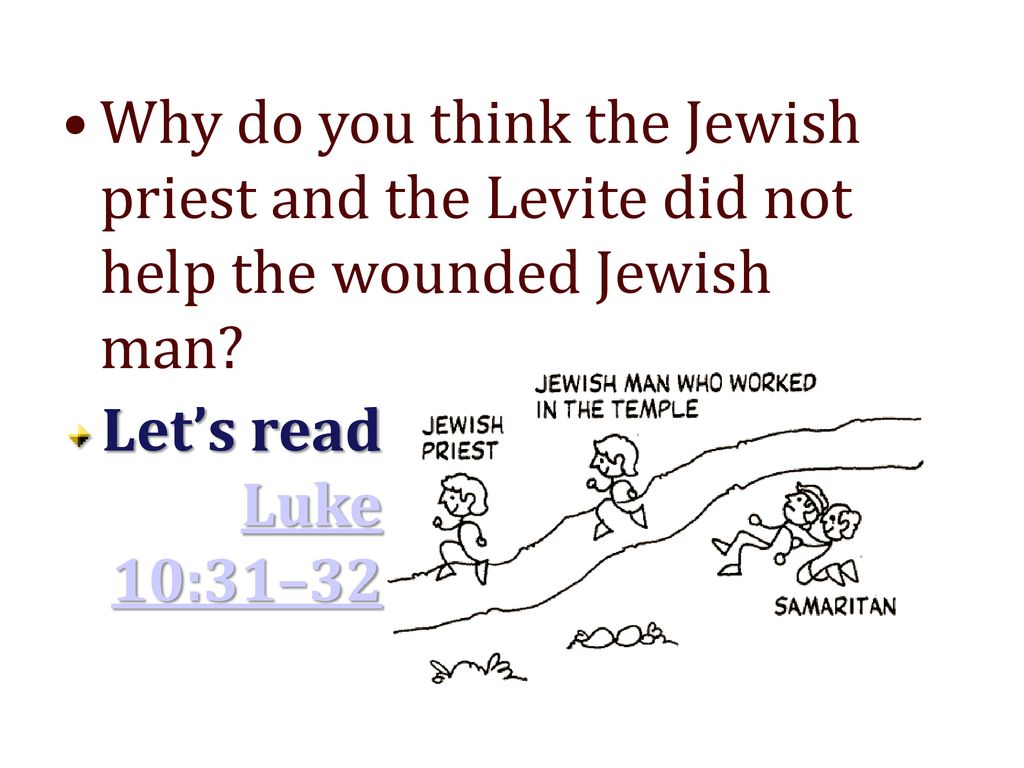






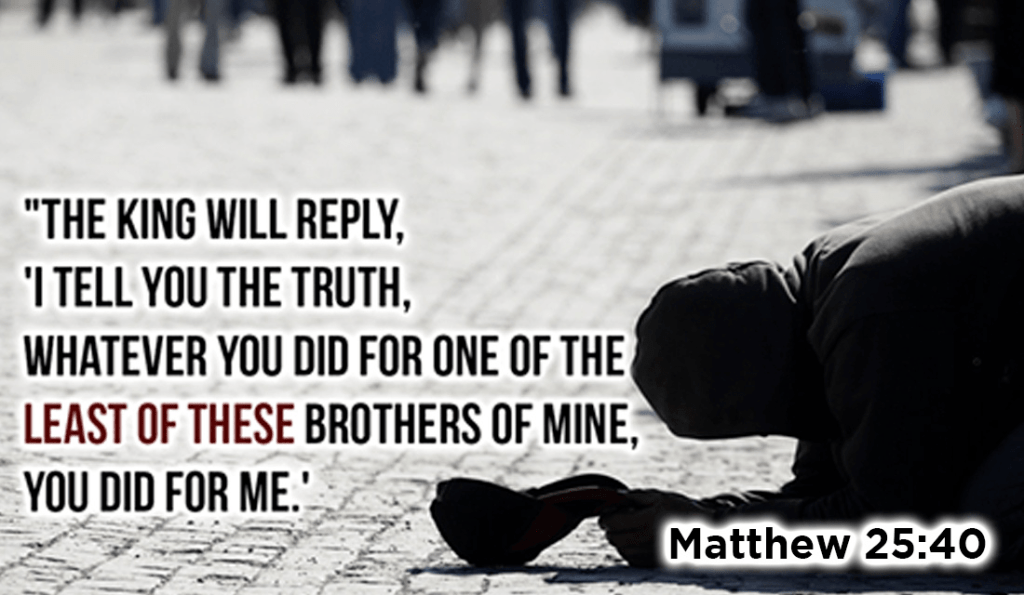


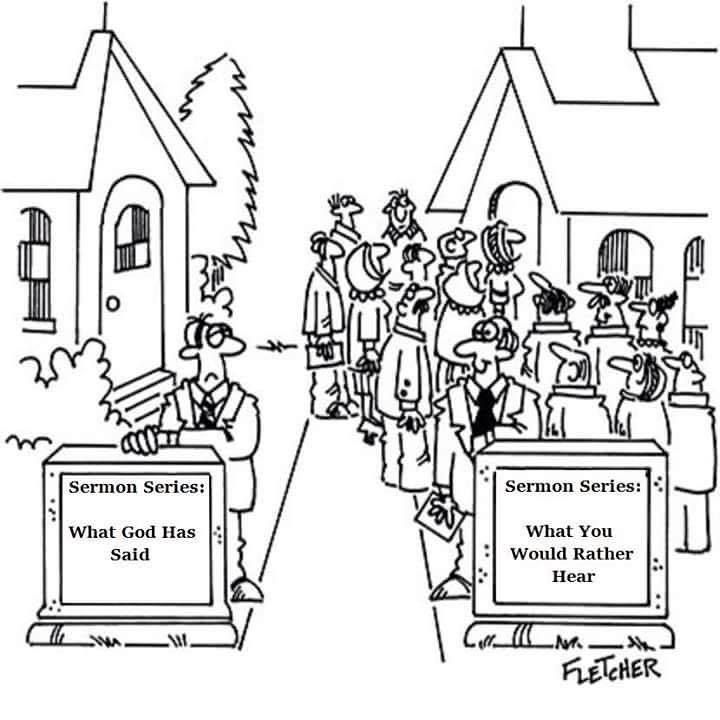
 Loving God, Living God, Loving Hope, Living Hope, Loving Living Life His Way! "Many things are possible for the person who has hope. Even more is possible for the person who has faith. And still more is possible for the person who knows how to love. But everything is possible for the person who practices all three virtues." - Brother Lawrence (1605-1691), Practicing the Presence of God (1692).