Romans 15:4 "For whatever was written in earlier times was written for our instruction, so that through perseverance and the encouragement of the Scriptures we might have hope."
1 I trust in the Lord for protection. So why do you say to me, “Fly like a bird to the mountains for safety! 2 The wicked are stringing their bows and fitting their arrows on the bowstrings. They shoot from the shadows at those whose hearts are right. 3 The foundations of law and order have collapsed. What can the righteous do?”
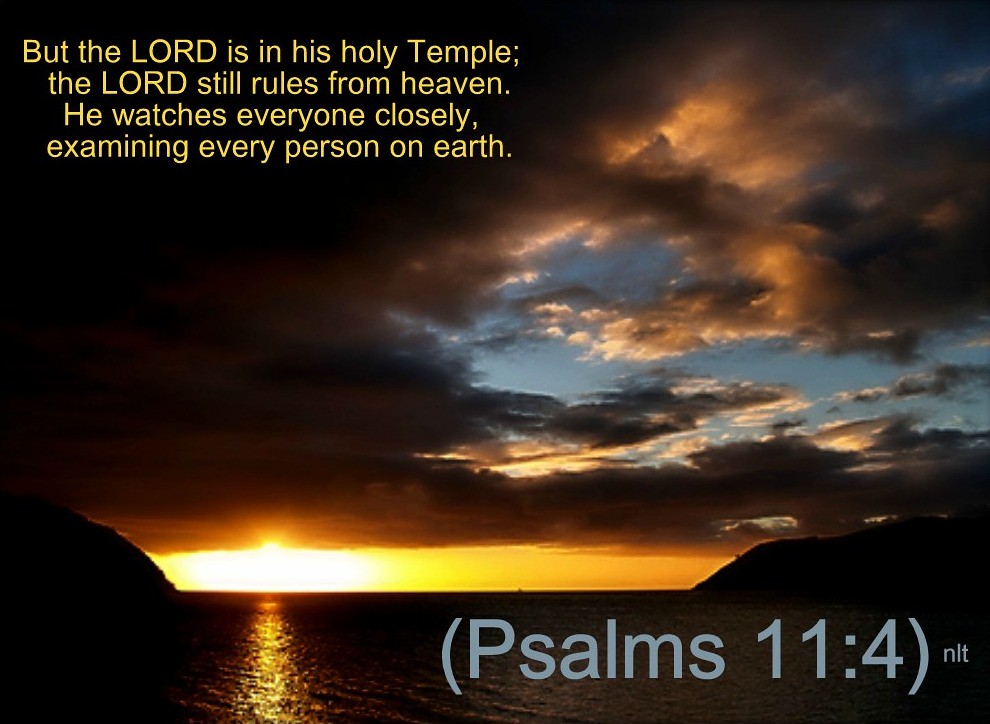
4 But the Lord is in his holy Temple; the Lord still rules from heaven. He watches everyone closely, examining every person on earth. 5 The Lord examines both the righteous and the wicked. He hates those who love violence. 6 He will rain down blazing coals and burning sulfur on the wicked, punishing them with scorching winds. 7 For the righteous Lord loves justice. The virtuous will see his face.
Word of God for the Children of God
Glory be to the Father, and to the Son, and to the Holy Ghost; as it was in the beginning, is now, and ever shall be, world without end. Amen, amen.
It’s possible for all of us to read certain passages or verses of Scripture many times yet miss goldmines of truth. Sometimes we pass by and or skim over because we think we’re overly familiar with what we’ve read, and other times it’s because we don’t take the time to meditate and savor the wealth before us.
So let’s take this glorious opportunity God has just gifted to us to dwell on the truth that “the LORD is in his holy temple.” This simple truth offers both comfort and chastening. Its reality is 100% affirmed in many places in the Old Testament (for example Habakkuk 2:20; Psalm 18:6; Micah 1:2), but David provides some additional angles from which to consider it here in Psalm 11.
The first is that “the LORD’s throne is in heaven,” absolutely making Him the exaltedLord. He reigns not as a mortal with limited perspective and control but as the all-powerful, immortal, all-knowing God, Creator of heaven and earth.
He always and forever outlasts all rulers, all nations are as nothing before Him.
Second, God is the observing Lord: “His eyes see.”
From the exalted position of His heavenly throne, nothing is hidden from God’s sight. No good thing done in His name goes unobserved, and no impure motive or thought is secret to Him. (Psalm 139)
What a comfort to know every day of our lives, going back to when we were merely “unformed substance,” is visible to God (Psalm 139:15-16)!
And what a sobering reality to realize every word, thought, and deed is laid bare before Him!
Third, God is the examining Lord: “The LORD tests the righteous.”
His tests are not always or often easy, but they are always precisely what we need. None of us will ever reach heaven without tests and trials along the way.
This may be our all time most unpleasant reality to consider, but it should be most precious to us, for it means we will not panic when God, in His sometimes inscrutable wisdom, narrowly routes a path thru a valley shadowed by death.
God’s tests are never sent without a glorious purpose; they are always for the sake of preparing us for the day when we too shall see Him in His holy temple.
Keep the truth of this verse in mind the next time you feel as though “the foundations are destroyed” (Psalm 11:3).
The instability we sometimes feel is meant to remind us that worldly stability is only an illusion and that true security is found in God alone. He alone is exalted, He alone sees all, and He alone directs our lives and tests us for our good.
When our foundations tremble, crumble, we can remember that this world is not our home and that our sovereign God is leading us to one day inhabit a city with foundations that will not shake (Hebrews 11:10; 12:28). You can know that He is in His holy temple—and He has promised to bring you to that very place.
In the name of God, the Father and God the Son and God the Holy Spirit,
Praying …
Psalm 46 Authorized (King James) Version
Psalm 46
To the chief Musician for the sons of Korah, A Song upon Alamoth.
1 God is our refuge and strength, a very present help in trouble. 2 Therefore will not we fear, though the earth be removed, and though the mountains be carried into the midst of the sea; 3 though the waters thereof roar and be troubled, though the mountains shake with the swelling thereof. Selah. 4 There is a river, the streams whereof shall make glad the city of God, the holy place of the tabernacles of the most High. 5 God is in the midst of her; she shall not be moved: God shall help her, and that right early. 6 The heathen raged, the kingdoms were moved: he uttered his voice, the earth melted. 7 The Lord of hosts is with us; the God of Jacob is our refuge. Selah. 8 Come, behold the works of the Lord, what desolations he hath made in the earth. 9 He maketh wars to cease unto the end of the earth; he breaketh the bow, and cutteth the spear in sunder; he burneth the chariot in the fire.
10 Be still, and know that I am God: I will be exalted among the heathen, I will be exalted in the earth. 11 The Lord of hosts is with us; the God of Jacob is our refuge. Selah.
Glory be to the Father, and to the Son, and to the Holy Ghost; as it was in the beginning, is now, and ever shall be, world without end. Amen, amen.
7 A good name is better than precious ointment, And the day of death than the day of one’s birth; 2 Better to go to the house of mourning Than to go to the house of feasting, For that is the end of all men; And the living will take it to heart. 3 [a]Sorrow is better than laughter, For by a sad countenance the heart is made [b]better. 4 The heart of the wise is in the house of mourning, But the heart of fools is in the house of mirth.
Word of God for the Children of God
Glory be to the Father, and to the Son, and to the Holy Ghost; as it was in the beginning, is now, and ever shall be, world without end. Amen, amen.
“For this is the end of all mankind, and the living will lay it to heart.” – Ecclesiastes 7:2
This is one of those verses in the Bible that serves as a sober reminder to all of us that we will, one day, die, and that day could be any moment of any day.
It could be today for any one of us.
Now think about James 4, which just reminds us that our life is a mist, it’s a small gust of wind, barely visible vapor. It’s here one second and gone the next.
That’s part of the picture in Ecclesiastes 7,“This is the end of all mankind,” and listen to this phrase, “The living will lay it to heart.” Those who live who are wise, remember Ecclesiastes, this is a big part of wisdom literature in the Bible.
Reminded of God’s Wisdom
Ecclesiastes 7:1-4 The Message
Don’t Take Anything for Granted
7 A good reputation is better than a fat bank account. Your death date tells more than your birth date.
2 You learn more at a funeral than at a feast— After all, that’s where we’ll end up. We might discover something from it.
3 Crying is better than laughing. It blotches the face but it scours the heart.
4 Sages invest themselves in hurt and grieving. Fools waste their lives in fun and games.
There is wisdom that’s found in living daily, with the reality that none of us is going to be guaranteed any more tomorrows, and so we make the most of today.
Doesn’t this just lead us like, “Oh, just think about how this leads us to pray and then to live”?
What if you knew today was your last day, how would that change the way you love the people around you, the way you then speak to those people around you, the way you prioritize, rationalize, reprioritize any number of different things?
Now, obviously, there’s a sense in which that kind of thinking falters a bit. I mean if you knew today was the last day, you might not go to work, or do email, or this or that in the same way that… Well, we need to do sometimes on a daily basis in our jobs as we faithfully follow the Triune God and provide for families.
Ecclesiastes 7:2 Helps Us Honor God
Psalm 23 The Message
23 1-3 God, my shepherd! I don’t need a thing. You have bedded me down in lush meadows, you find me quiet pools to drink from. True to your word, you let me catch my breath and send me in the right direction.
4 Even when the way goes through Death Valley, I’m not afraid when you walk at my side. Your trusty shepherd’s crook makes me feel secure.
5 You serve me a six-course dinner right in front of my enemies. You revive my drooping head; my cup brims with blessing.
6 Your beauty and love chase after me every day of my life. I’m back home in the house of God for the rest of my life.
We go to school, raise our families, whatever it might be, but it is good to think, “Okay, how can I live, love, work today in a way I’m ready to see Jesus’ face?
How can I relate to others today in a way that I’m ready to see Jesus’ face, and they are ready to see Jesus’ face?”
It changes the way you live when you lay it to heart, your life is a vapor, a mist.
So we pray, God, help us today to make the most of the day we have.
And if we’re listening to this prayer tonight, tomorrow, to make the most of each moment, each day with you.
Before you God, we want to be found faithful before you, when we want to stand before you on that day.
And if it’s today, hear you say, “Well done, good, and faithful servant.”
Ecclesiastes 7:2 Leads Us to Pray for God’s Grace
Isaiah 40:8 The Message
6-8 A voice says, “Shout!” I said, “What shall I shout?”
“These people are nothing but grass, their love fragile as wildflowers. The grass withers, the wildflowers fade, if God so much as puffs on them. Aren’t these people just so much grass? True, the grass withers and the wildflowers fade, but our God’s Word stands firm and forever.”
God, we pray for your grace to live before you, that could happen today, and to live before others like this.
Triune God makes echelons more sense, not that it didn’t before, but your great commandment. Still covenanted to love you with all our heart, soul, mind, and strength, and I love others as ourselves.
Triune God, help us to do that today, help us to love you wholeheartedly and love others selflessly, and seems like the wisest way to live today if we knew it was going to be our last. So, God helps us to do this, help us to love you, love others, care for others, speak to others in a way that points them to you, walk in holiness before you, share the gospel, to share the good news that has all of the power to transform people’s lives around us for all of eternity.
Called to Share the Gospel with Urgency
Acts 2:14-21 The Message
Peter Speaks Up
14-21 That’s when Peter stood up and, backed by the other eleven, spoke out with bold urgency: “Fellow Jews, all of you who are visiting Jerusalem, listen carefully and get this story straight. These people aren’t drunk as some of you suspect. They haven’t had time to get drunk—it’s only nine o’clock in the morning. This is what the prophet Joel announced would happen:
“In the Last Days,” God says, “I will pour out my Spirit on every kind of people: Your sons will prophesy, also your daughters; Your young men will see visions, your old men dream dreams. When the time comes, I’ll pour out my Spirit On those who serve me, men and women both, and they’ll prophesy. I’ll set wonders in the sky above and signs on the earth below, Blood and fire and billowing smoke, the sun turning black and the moon blood-red, Before the Day of the Lord arrives, the Day tremendous and marvelous; And whoever calls out for help to me, God, will be saved.”
God, we pray that you would help us to live like that, knowing that the people around us are not guaranteed tomorrow either, that they could be gone tomorrow.
And so help us to share the gospel with urgency today as we pray for unreached people all the time.
God, we pray for the spread of the gospel to billions, three billion-plus people who have little to no knowledge of the gospel right now, many who will not make it to tomorrow, without ever hearing the good news of your grace.
Help us in our lives and our families and churches to make this gospel known among all the nations in the little bit of time you’ve given us on this earth. God, we pray you’d help us to live with the end in mind and to lay all of this to heart today. In Jesus’ name, we pray. Amen.
Why is it better to go to a funeral than a party?
Why is a funeral better than a party? Because it reminds us that everyone dies, and the living need to take this to heart.
Seeing someone ready to be buried makes us think about life’s brevity. We realize death is coming for all, and this should affect how we live.
What does it mean sorrow is better than laughter?
The New Living Translation says that the reason why sorrow is better than laughter is because “sadness has a refining influence on us.”
As unenjoyable as sorrow might be, it actually has the power to affect me in a profound, life-changing way that laughter has never been capable of doing.
Book of Ecclesiastes in the Old Testament written by King Solomon, the wisest man that ever lived. He wrote much of the Book of Proverbs as well.
He had experimented in his youth with living life to the fullest.
Chasing after all kinds of pleasure: food, drink, women; trying to find the meaning of life in his riches or in his great accomplishments.
But he always came back to the same theme – You have heard what he wrote: “Vanity of Vanities, all is vanity.” It is all Chasing after the Wind.
He knew life was empty and meaningless and futile when viewed “under the sun” = without a personal relationship with God who alone can give meaning to our lives.
So in this short verse he gives us God’s perspective on dealing with our mortality.
Laughing and feasting provide a escape from the pressures of life but they do not prepare us for death.
Something about contemplating death turns our thoughts towards the eternal rather than the temporal and makes us ask the tough questions.
What are some of those tough questions?
Remember Solomon tells us it is better to go to a house of mourning than to go to a house of feasting.
1) Tough Question #1: What’s so valuable about coming face to face with death?
Somehow what we are experiencing together today, despite the mourning, the grief, the sorrow, is more valuable than times of feasting and happiness.
How can that be? There’s an illustration in the Bible that I think provides the answer.
Apostle Peter writes in his second epistle people in our day will end up mocking the promise of Jesus coming back to earth, will hold men accountable.
Where is the promise of His coming? People scoff.
We are just eating and drinking and having a grand old time. We don’t have to answer to God.
But Peter points back to the days of Noah – just before God brought judgment via a worldwide flood – people were ignoring God in similar fashion. Forcing us to face the reality of death in a service like this helps prevent God’s judgment from taking us by surprise.
2) Tough Question #2: Why are we all headed for death anyway?
Death entered into this world back when sin entered into this world.
Death physically is the separation of the body from the spirit.
But even more importantly, death spiritually involves our separation from the God who created us who is perfectly holy.
We are all sinners. That should be no surprise to anyone here. I have been blessed already with 1 grandkid. I love them to death. But I’m not surprised to find that they all can be selfish and disobey their parents. You have to teach kids to behave and share their toys; you don’t have to teach them how to sin.
So it’s no surprise that as adults we wrestle with selfishness, with pride, with various appetites of the flesh.
No matter how hard we try, we are not going to escape sin.
The wages of sin is death.
Wages are what you get for what you do. [I’m retired now, so I don’t get any more financial wages. I hope that doesn’t mean I’m not doing anything.]
After death comes the judgment where we stand accountable before God.
There is no escaping that accountability.
We can deny that reality.
We can hide behind a life of pleasure – of escapism – of trying to avoid the unpleasantness of death.
We can even try to stay young by watching our diet and exercising.
But we won’t escape death.
3) Tough Question #3: How can we be prepared to face God? How can we who are sinners end up spending eternity with a God who is holy?
Here’s where people have invented all types of humanistic and religious systems to attempt to erase their sins and wipe the slate clean.
They all center around some type of works approach to do enough good so that we can earn God’s favor. But the truth is we can never be good enough.
It’s not about going to church. It’s not about being baptized or confirmed.
It’s not about reading your Bible and praying.
Don’t get me wrong; those are good activities. But they can’t save you.
What you need is to enter into a personal relationship with Jesus Christ.
In the name of God, the father and God the Son and God, the Holy Spirit,
Praying …
Psalm 84 The Message
84 1-2 What a beautiful home, God-of-the-Angel-Armies! I’ve always longed to live in a place like this, Always dreamed of a room in your house, where I could sing for joy to God-alive!
3-4 Birds find nooks and crannies in your house, sparrows and swallows make nests there. They lay their eggs and raise their young, singing their songs in the place where we worship. God-of-the-Angel-Armies! King! God! How blessed they are to live and sing there!
5-7 And how blessed all those in whom you live, whose lives become roads you travel; They wind through lonesome valleys, come upon brooks, discover cool springs and pools brimming with rain! God-traveled, these roads curve up the mountain, and at the last turn—Zion! God in full view!
8-9 God-of-the-Angel-Armies, listen: O God of Jacob, open your ears—I’m praying! Look at our shields, glistening in the sun, our faces, shining with your gracious anointing.
10-12 One day spent in your house, this beautiful place of worship, beats thousands spent on Greek island beaches. I’d rather scrub floors in the house of my God than be honored as a guest in the palace of sin. All sunshine and sovereign is God, generous in gifts and glory. He doesn’t scrimp with his traveling companions. It’s smooth sailing all the way with God-of-the-Angel-Armies.
Glory be to the Father, and to the Son, and to the Holy Ghost; as it was in the beginning, is now, and ever shall be, world without end. Amen, amen.
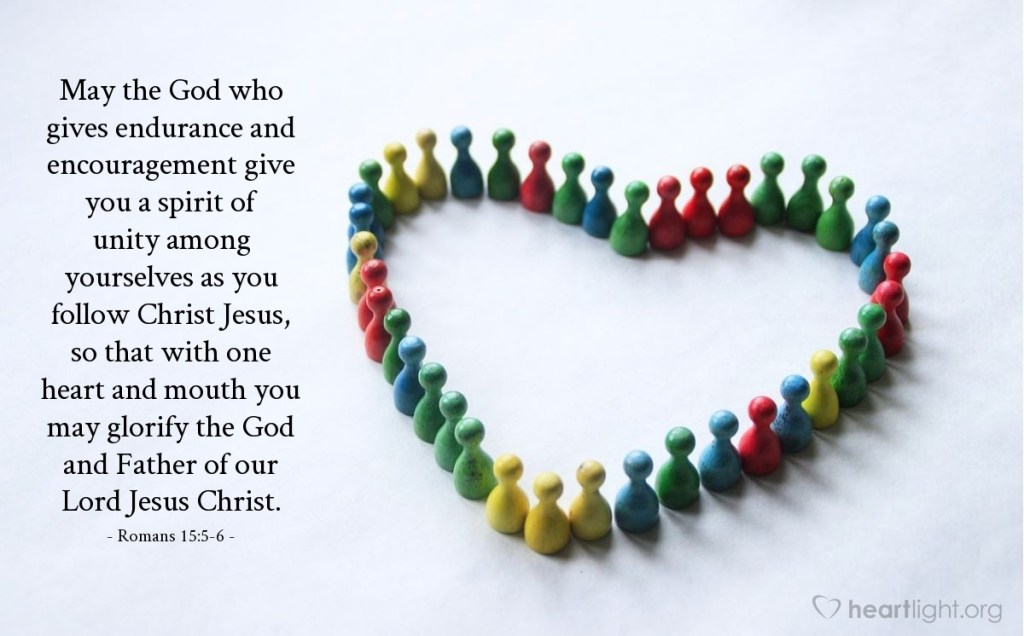
5 Now the God of patience and consolation grant you to be likeminded one toward another according to Christ Jesus: 6 that ye may with one mind and one mouth glorify God, even the Father of our Lord Jesus Christ. 7 Wherefore receive ye one another, as Christ also received us to the glory of God.
Word of God for the Children of God.
Glory be to the Father, and to the Son, and to the Holy Ghost; as it was in the beginning, is now, and ever shall be, world without end. Amen, amen.
One of the greatest obstacles to the spread of the gospel today is divisiveness in the church. This problem is not new, but that doesn’t make it any less serious. Paul indicates that the division between Jew and Gentile followers of Jesus was problematic in the early church.
Though we need not agree or know about everything, the Bible emphasizes that all followers of Jesus Christ should demonstrate unity. We can achieve this by following the example of Jesus as we serve one another. We should pray that God will give us “the same attitude of mind toward each other that Jesus Christ had.” We should also praise God for the privilege of Christian relationships.
This will bring glory to God.
Paul instructs his readers to praise, rejoice, and sing hymns to express their unity and to glorify God for his mercies.
Shouldn’t we who have received God’s great salvation in the one Savior, Jesus Christ, lift up our voices to praise him in unity?
One of my great privileges has been to listen to that worship of God with sisters and brother from many different lands, but also to participate. Though often I cannot understand the words being sung nor the culture and traditions from which it is being inspired from, I know we are one in the Spirit and in the Lord.
It thrills my heart to no end to not just sing praises to God, but also to preach the Gospel with these believers because I was invited to. I know the fiery power of the Holy Spirit is 100% there with us as we worship Savior, Jesus, together.
What is the meaning of Romans 15 5?
All Christians must please each other and not themselves.
After all, Christ didn’t come to please Himself.
With God’s help and encouragement, everyone in the church can live together in harmony and glorify God with one, unified voice, as they all serve each other ahead of themselves.
What is the meaning of Romans 15 6?
Romans 15:6, “that with one accord you may with one mouth glorify the God and Father of our Lord Jesus Christ,” emphasizes the importance of unity, harmony among believers, calling them to praise God with a unified voice and heart.
Unity of Mind and Voice: The verse highlights the need for Christians to be united in their thinking and expression, both in their hearts and in their words.
Glorifying God: The ultimate purpose of this unity is to glorify God, the Father of our Lord Jesus Christ.
Harmony and Agreement: The verse suggests that Christians should strive for harmony and agreement in their worship and actions, reflecting the unity they share in Christ.
Transcendence of Differences: This unity should transcend cultural, ethnic, and other differences, allowing believers to come together in praise and service to God.
A Prayer for Unity: Some interpret this verse as a prayer from Paul, seeking that the church in Rome would be united in their faith and worship.
Importance of Worship: The verse emphasizes the importance of public worship and the need for believers to come together to praise God with one voice.
Serving God Together: The idea of unity in worship and service is also linked to the concept of serving one another, as Christians are called to live in harmony and support each other.
Reflecting Christ’s Love: The unity called for in this verse is a reflection of the love and unity Christians share in Christ, and its intended to bring glory to God.
In what ways do you and I strive for unity and community with other believers?
In the name of God, the Father and God the Son and God the Holy Spirit,
Praying …
Psalm 133 Authorized (King James) Version
Psalm 133
A Song of degrees of David.
1 Behold, how good and how pleasant it is for brethren to dwell together in unity! 2 It is like the precious ointment upon the head, that ran down upon the beard, even Aaron’s beard: that went down to the skirts of his garments; 3 as the dew of Hermon, and as the dew that descended upon the mountains of Zion: for there the Lord commanded the blessing, even life for evermore.
Glory be to the Father, and to the Son, and to the Holy Ghost; as it was in the beginning, is now, and ever shall be, world without end. Amen, amen.
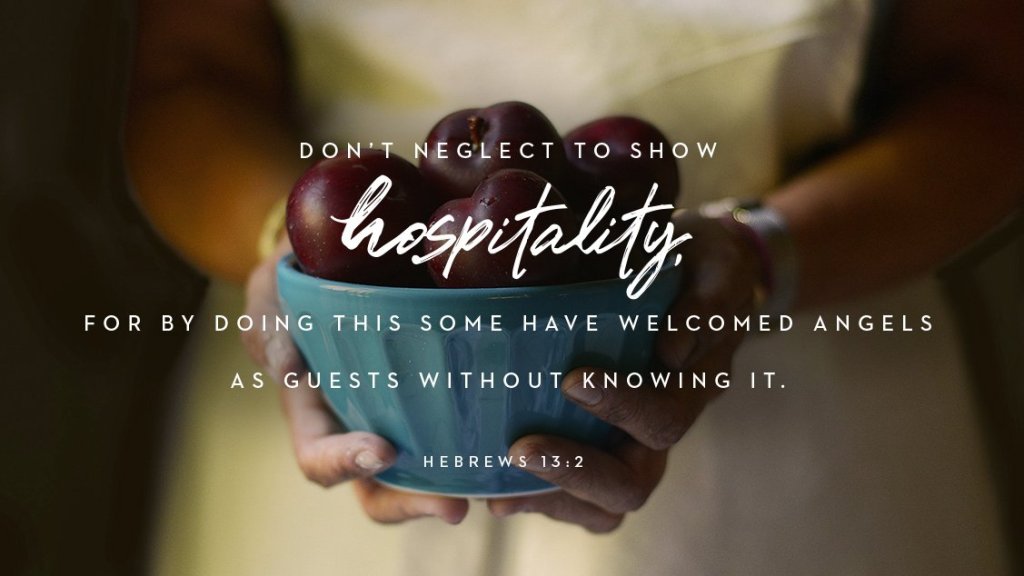
13 1-4 Stay on good terms with each other, held together by love. Be ready with a meal or a bed when it’s needed. Why, some have extended hospitality to angels without ever knowing it! Regard prisoners as if you were in prison with them. Look on victims of abuse as if what happened to them had happened to you. Honor marriage, and guard the sacredness of sexual intimacy between wife and husband. God draws a firm line against casual and illicit sex.
5-6 Don’t be obsessed with getting more material things. Be relaxed with what you have. Since God assured us, “I’ll never let you down, never walk off and leave you,” we can boldly quote,
God is there, ready to help; I’m fearless no matter what. Who or what can get to me?
7-8 Appreciate your pastoral leaders who gave you the Word of God. Take a good look at the way they live, and let their faithfulness instruct you, as well as their truthfulness. There should be a consistency that runs through us all. For Jesus doesn’t change—yesterday, today, tomorrow, he’s always totally himself.
Word of God for the Children of God
Glory be to the Father, and to the Son, and to the Holy Ghost; as it was in the beginning, is now, and ever shall be, world without end. Amen, amen.
True or False: Hospitality Bridges Barriers?
True or False: Hospitality Builds “easy for anyone – soggy paper bag, house of overused cards etcetera, to knock down, no prayer to God required” Barriers?
True or False: Hospitality Builds tall privacy fences between neighbors which promote “friendly but unseen, unheard, unbothered, anonymous relationships?
True or False: Hospitality Builds unknown, hidden, underwater, underground Minefields – waiting for any number of people to blindly, confidently, secretly (with sincerity, with the best of intentions, walk or run into or stumble upon?
True or False: Hospitality can only Build empty Abandoned Haunted Houses?
True or False: Hospitality builds magnificent palatial mansions nobody or just 1 somebody has financial, material resources, to actually occupy as their home?
True or False: Hospitality is a Chivalrous or Warlike White Knight riding a White Majestic Stallion in front of a heavily fortified Castle politely, or not so politely, asking or demanding for the drawbridge to be lowered by the evil Black Knight?
True or False: Hospitality has no self-confidence or self-esteem to even start a building project of any magnitude and stays behind, preferring its anonymity?
True or False: Hospitality is a malicious, evil, serial, malignant liar and a fraud?
True or False: Hospitality is serving a well deserved Life plus eternity, prison sentence in the ultimate inescapable underground maximum security prison?
True or False: We can authentically say with conviction that Hospitality is an authentic Best Friend Forever, or in reality, our very worst all time, enemy?
True or False: As Christians we can easily recognize Hospitality according to the Word of God for the Children of God – and to obediently listen, and learn about living in hospitality and with hospitality, among our neighbors, family of faith?
Hebrews 13:1-8 Amplified Bible
The Changeless Christ
13 Let love of your fellow believers continue. 2 Do not neglect to extend hospitality to strangers [especially among the family of believers—being friendly, cordial, and gracious, sharing the comforts of your home and doing your part generously], for by this some have entertained angels without knowing it. 3 Remember those who are in prison, as if you were their fellow prisoner, and those who are mistreated, since you also are in the body [and subject to physical suffering]. 4 Marriage is to be held in honor among all [that is, regarded as something of great value], and the marriage bed undefiled [by immorality or by any sexual sin]; for God will judge the sexually immoral and adulterous.5 Let your character [your moral essence, your inner nature] be free from the love of money [shun greed—be financially ethical], being content with what you have; for He has said, “I will never [under any circumstances] desert you [nor give you up nor leave you without support, nor will I in any degree leave you helpless], nor will I forsake or let you down or relax My hold on you [assuredly not]!” 6 So we take comfort and are encouraged and confidently say,
“The Lord is my Helper [in time of need], I will not be afraid. What will man do to me?”
7 Remember your leaders [for it was they] who brought you the word of God; and consider the result of their conduct [the outcome of their godly lives], and imitate their faith [their conviction that God exists and is the Creator and Ruler of all things, the Provider of eternal salvation through Christ, and imitate their reliance on God with absolute trust and confidence in His power, wisdom, and goodness]. 8 Jesus Christ is [eternally changeless, always] the same yesterday and today and forever.
In the name of God, the Father and God the Son and God the Holy Spirit,
Praying,
Psalm 100 Amplified Bible
All Men Exhorted to Praise God.
A Psalm of Thanksgiving.
100 Shout joyfully to the Lord, all the earth. 2 Serve the Lord with gladness and delight; Come before His presence with joyful singing. 3 Know and fully recognize with gratitude that the Lord Himself is God; It is He who has made us, [a]not we ourselves [and we are His]. We are His people and the sheep of His pasture.
4 Enter His gates with a song of thanksgiving And His courts with praise. Be thankful to Him, bless and praise His name. 5 For the Lord is good; His mercy and lovingkindness are everlasting, His faithfulness [endures] to all generations.
Glory be to the Father, and to the Son, and to the Holy Ghost; as it was in the beginning, is now, and ever shall be, world without end. Amen, amen.
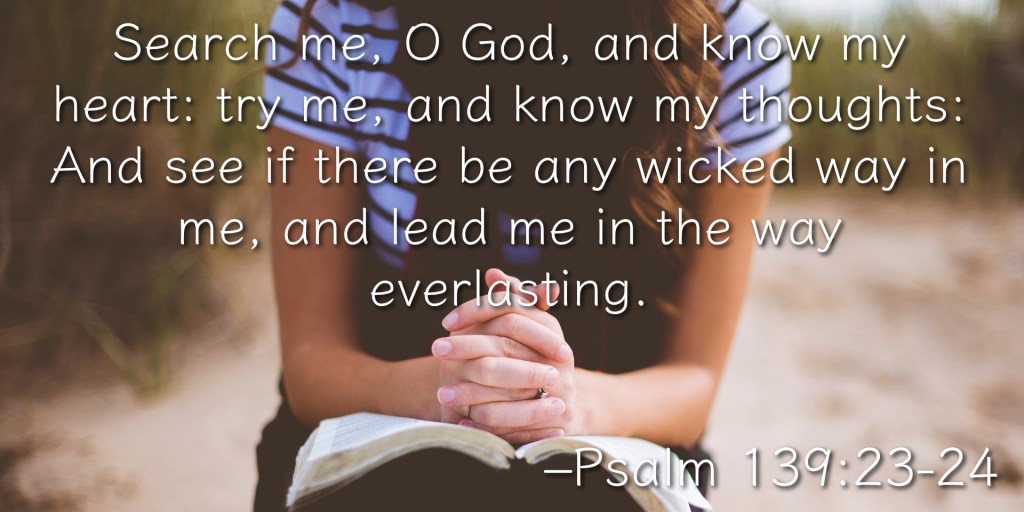
23 Search me, O God, and know my heart: try me, and know my thoughts: 24 and see if there be any wicked way in me, and lead me in the way everlasting.
Word of God for the Children of God
Glory be to the Father, and to the Son, and to the Holy Ghost; as it was in the beginning, is now, and ever shall be, world without end. Amen, amen.
Engaging in meaningful personal reflection leads to self-discovery and growth. Taking quality and quantity of time to just explore our thoughts, emotions, and actions can lead us, move us to redemptive, healing, empowering outcomes.
Then came July 14 – 17th 2023 …
1 failed Cardiac Stress Test
Cardiac Catheterization showing 3 arteries greater than 90% blocked – the “widow making” artery being 99% blocked.
July 17, 2023 Triple Bypass Surgery …
5 and 1/2 hours surgery, 80 minutes of which my heart was deliberately stopped then kept sedated 24 hours in the CICU … woken up and I WAS alive! God is God!
In my own life, I’ve experienced the benefit of reflective practices. Through the examen of Ignatius, for example, I have learned to discern God’s presence in my daily life, identify those areas for improvement, seek God’s guidance for the future. This exercise has brought clarity, peace, and a deep sense of purpose.
From praying Psalm 139:23-24 daily during my recovery, rehabilitation, taking a personal inventory was also very beneficial to me.
By honestly assessing my incoming strengths, weaknesses, and values, I’ve been able to make intentional decisions aligned with my beliefs and aspirations. This self-awareness has led to personal growth and a stronger sense of identity.
Imagination is important in reflective practices.
Envisioning different outcomes or a favorable future can inspire hope, motivate us, and build our resilience.
We can see beyond our current situation and consider new possibilities.
Psalm 139:23-24 reminds me to invite God into my self-reflection, asking him to reveal any areas in our lives that need attention redemption and guidance.
100% Honesty as the only process this process leads us on a path of healing and empowerment guided by the Lord’s wisdom and grace.
1. Take time to be holy, speak oft with thy Lord; abide in him always, and feed on his word. Make friends of God’s children, help those who are weak, forgetting in nothing his blessing to seek.
2. Take time to be holy, the world rushes on; spend much time in secret with Jesus alone. By looking to Jesus, like him thou shalt be; thy friends in thy conduct his likeness shall see.
3. Take time to be holy, let him be thy guide, and run not before him, whatever betide. In joy or in sorrow, still follow the Lord, and, looking to Jesus, still trust in his word.
4. Take time to be holy, be calm in thy soul, each thought and each motive beneath his control. Thus led by his spirit to fountains of love, thou soon shalt be fitted for service above.
Take Time to Be Holy,Text: William D. Longstaff, 1822-1894 Music: George C. Stebbins, 1846-1945
In the name of God, the father, God the son and God, the Holy Spirit,
Praying …
Psalm 15
A Psalm of David.
1 Lord, who shall abide in thy tabernacle? who shall dwell in thy holy hill? 2 He that walketh uprightly, and worketh righteousness, and speaketh the truth in his heart. 3 He that backbiteth not with his tongue, nor doeth evil to his neighbour, nor taketh up a reproach against his neighbour. 4 In whose eyes a vile person is contemned; but he honoureth them that fear the Lord. He that sweareth to his own hurt, and changeth not. 5 He that putteth not out his money to usury, nor taketh reward against the innocent. He that doeth these things shall never be moved.
Glory be to the Father, and to the Son, and to the Holy Ghost; as it was in the beginning, is now, and ever shall be, world without end. Amen, amen.
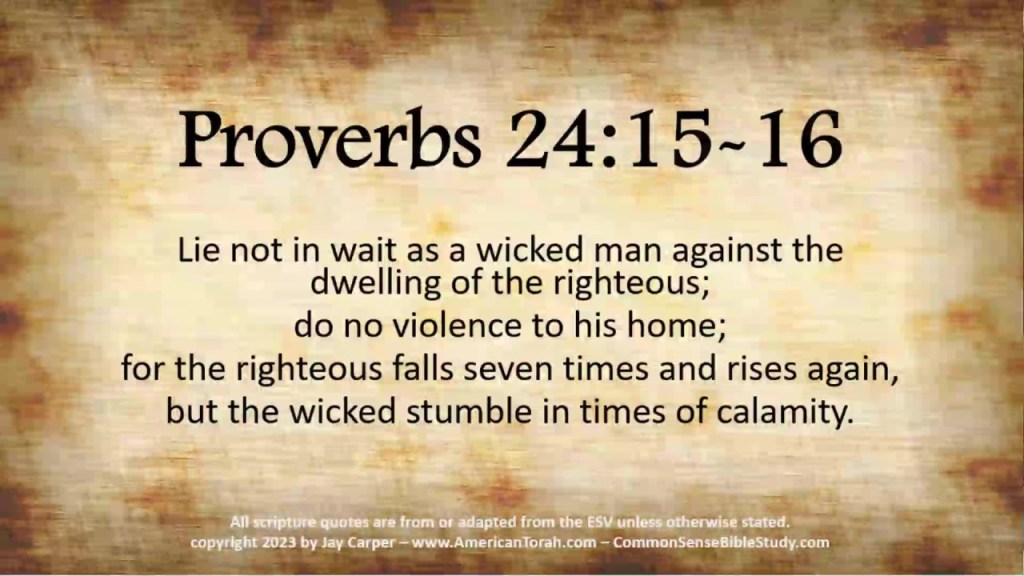
15 Don’t set an ambush, you wicked one, at the camp of the righteous man; don’t destroy his dwelling. 16 Though a righteous person falls seven times, he will get up, but the wicked will stumble into ruin.
Word of God for the Children of God.
Glory be to the Father, and to the Son, and to the Holy Ghost; as it was in the beginning, is now, and ever shall be, world without end. Amen, amen.
Learning Something From our Mistakes.
Learning Nothing From our Mistakes.
Living with the thought that we can, we will, never make Mistakes.
I can anticipate the response that is coming: “I know that all God’s commands are spiritual, but I’m not. Isn’t this also your experience?” Yes. I’m full of myself—after all, I’ve spent a long time in sin’s prison. What I don’t understand about myself is that I decide one way, but then I act another, doing things I absolutely despise. So if I can’t be trusted to figure out what is best for myself and then do it, it becomes obvious that God’s command is necessary.
But I need something more! For if I know the law but still can’t keep it, and if the power of sin within me keeps sabotaging my best intentions, I obviously need help! I realize that I don’t have what it takes. I can will it, but I can’t do it. I decide to do good, but I don’t really do it; I decide not to do bad, but then I do it anyway. My decisions, such as they are, don’t result in actions. Something has gone wrong deep within me and gets the better of me every time.
And so, our human condition moves us, trips us, face plants, us through life
I’ve come to appreciate the value of learning from mistakes and of reframing failures as opportunities for growth.
The insights shared by mentors, friends, and even strangers have profoundly shaped my understanding of resilience and perseverance.
When I was younger, I viewed failure as a reflection of my inadequacy.
But a mentor once told me, “Failure is never the opposite of success; it is a crucial part of it.”
That helped me to see mistakes not as automatic dead ends but as stepping stones toward improvement and wisdom.
A memorable example was a project I led that did not go as planned.
I immediately felt defeated, but a wise colleague encouraged me to analyze what went wrong and what could be done differently the next time.
That helped me to see the experience as a learning opportunity.
I also recall a Pastor sharing a story of his own failure in ministry.
His transparency, honesty and humility taught me that even the people we look up to experience setbacks.
This encouraged me to view failure as a shared human experience.
What does Proverbs 24:16 really mean?
Here, Solomon expresses true confidence that godly people can recover from setbacks. Those who do evil will surely fall when they are struck by adversity.
In an earthly sense, this is generally true yet not an absolute guarantee (Psalm 73:2–3). In an eternal sense, however, this principle is universal.
Proverbs 24:16 reminds us that setbacks are not the end. God calls us to keep getting up, to trust Him, and to move forward with hope. No matter how many times we fall, His grace is always sufficient, always there to help us rise again.
Righteous people are not those who will never fall.They do not escape the suffering that attends life in this fallen world(Proverbs 24:16).
Importantly, the righteous man or woman may fall as many as “seven times.”
The number seven often symbolizes completeness in Scripture.
Learning from our mistakes means our humbly acknowledging them, seeking that feedback, and making necessary adjustments. It involves humility and a true willingness to change. By reframing failure, we can grow in resilience, deepen our trust in God’s guidance, and continue moving forward with hope.
In the name of God, the Father God the Son and God the Holy Spirit,
Praying …
Psalm 121
A Song of degrees.
1 I will lift up mine eyes unto the hills, from whence cometh my help. 2 My help cometh from the Lord, which made heaven and earth. 3 He will not suffer thy foot to be moved: he that keepeth thee will not slumber. 4 Behold, he that keepeth Israel shall neither slumber nor sleep.
5 The Lord is thy keeper: the Lord is thy shade upon thy right hand. 6 The sun shall not smite thee by day, nor the moon by night. 7 The Lord shall preserve thee from all evil: he shall preserve thy soul. 8 The Lord shall preserve thy going out and thy coming in from this time forth, and even for evermore.
Glory be to the Father, and to the Son, and to the Holy Ghost; as it was in the beginning, is now, and ever shall be, world without end. Amen, amen.
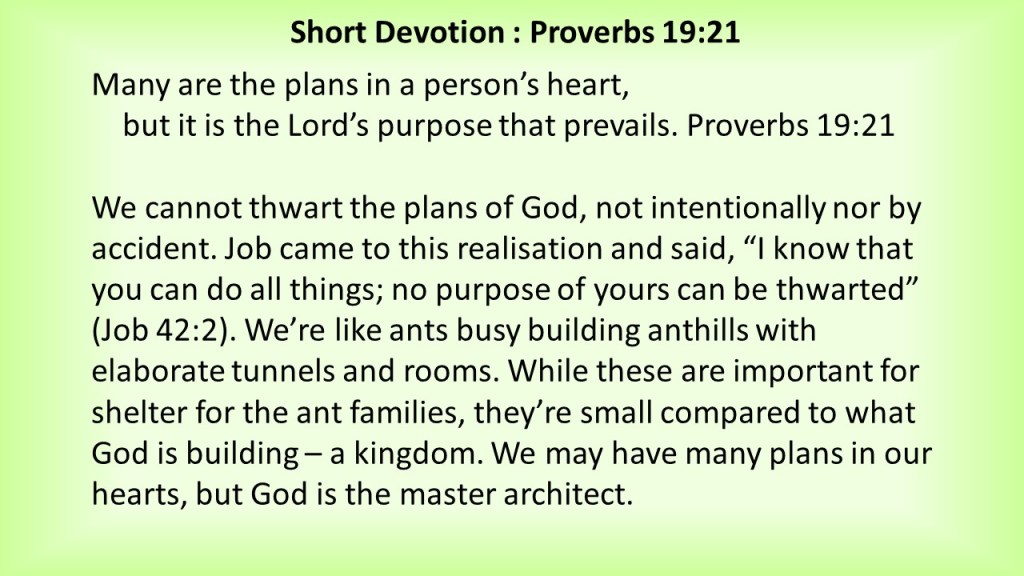
21 There are many plans in a man’s heart, Nevertheless the Lord’s counsel—that will stand.
Th Word of God for the Children of God
Glory be to the Father, and to the Son, and to the Holy Ghost; as it was in the beginning, is now, and ever shall be, world without end. Amen, amen.
Where is the wisdom hiding behind a man or woman’s eyes? Outside of God’s good and perfect plan, however, even the best plans of mankind can end up in disappointment and even defeat. It’s when we hold to God’s promises found in Holy Scripture, we remember that God’s plans are always greater than our own.
What does it mean when Solomon says ‘Many Are the Plans of a Person’s Heart’but the advice of the Lord will stand ?
Goals are an essential part of human life.
Having something to aspire to and work towards is often what gives people purpose, motivation, and a reason to get up in the morning. Without goals, whether big or small, people can quickly stagnate and decline, losing a sense of purpose and even hope in life.
Of course, a goal can be as simple as wanting to finish a good book, learn a new skill, or go for a walk every morning.
Does God Give Us Goals?
For Christians, goals can include trying to spend a few minutes reading the Bible in the morning, getting involved more in their local church, or our memorizing more Scripture.
Even something as mundane as getting dressed to go to work or making breakfast gives us a reason to get up and get moving.
On the other hand, our goals can also be massive, long-term, and seemingly impossible. They may involve moving, starting a business, or making wildly significant life changes.
Dreaming beyond what is comfortable, easy, or safe is what inspired some of history’s greatest innovators, entrepreneurs, and dreamers to take risks, persevere through hardship, ridicule, and failure, and push the boundaries of what we once thought was humanly possible.
We tell their stories and marvel at their achievements, aspiring to reach new heights in our own lives because of their example. That’s not inherently a bad thing. Role models are essential to the health of the individual and the survival of any culture or society.
And while human examples are always going to be flawed and never perfect, God has given us the ultimate example to learn from and follow in Jesus Christ.
Likewise, many of God’s followers throughout Scripture set their hearts and minds on the things exclusively of God, pursuing both long-term and short-term goals in their own lives.
For example, the Apostle Paul longed to visit fellow believers and local churches in person even though he was often prevented or incapable of traveling due to imprisonment or the demands of his ministry.
As a long-term goal, Paul hoped to preach the gospel and minister to the believers in Rome (Romans 1:11; Acts 25:11-12)
And looking to eternity,
Ecclesiastes 3:11-14 Complete Jewish Bible
11 He has made everything suited to its time; also, he has given human beings an awareness of eternity; but in such a way that they can’t fully comprehend, from beginning to end, the things God does. 12 I know that there is nothing better for them to do than to be happy and enjoy themselves as long as they live. 13 Still, the fact that everyone can eat and drink and enjoy the good that results from all his work, is a gift of God. 14 I know that
whatever God does will last forever; there is nothing to add or subtract from it; and God has done it so that people will fear him.
Paul determined,
“I count all things to be loss in view of the surpassing value of knowing Christ Jesus my Lord, for whom I have suffered the loss of all things, and count them all mere rubbish, so that I may gain Christ”(Philippians 3:8).
Immediate, short-term, and long-term goals were always present in Paul’s heart throughout his ministry, with Christ at the center of all of them. The same should be equally true for Christians of all generations.
Many of the goals and dreams we have, as well as the plans we have developed to achieve them, are God-inspired, God-honoring, and God-oriented.
And when our passion merges with God’s good plan and purpose for the world, our dreams are in a wonderful place.
In fact, Jesus told His followers that “where the thief comes only to steal and kill and destroy; I came so that they would have life, and have it abundantly” (John 10:10).
That is God’s desire for our lives, something He often accomplishes through our goals and dreams.
Understanding the relationship, we share with God as children to a loving Father is essential for stepping into the abundant life God has for us.
Accordingly, there’s also good reason to move forward with joy when we know that God delights in our goals and dreams.
Is it Wrong to Have Plans?
In many instances, it was God who put those dreams and ideas in our hearts in the first place. (1 Kings 3:4-15)
The worst thing we could do is hesitate or sit back when God has given us the green light and the freedom to go for it.
However, though many of our dreams are God-inspired and pleasing to the Father, some are simply not.
Beyond our lowly sinful desires, which must be overcome and rejected, sometimes there is nothing inherently wrong or inherently sinful about our dreams and goals. Our priorities, however, are simply out of alignment.
Certain plans take precedence over the things God has asked us to do or wants for our life.
We get distracted by our many aspirations that we forget to pursue or make time for what truly matters most.
This is why Solomon, like many figures in the Bible, recognized the importance of calibrating plans and passions to God’s will and desire (Proverbs 19:21).
Big or small, our plans are ultimately subject to the will and sovereignty of God.
To put that into perspective, when the children of Israel returned from captivity in Babylon and Persia, God instructed the former exiles to begin rebuilding the temple.
Initially, they were eager to get started on a project many of them had probably dreamed about while in captivity.
However, after just two years of work, construction had ceased.
Rather than being motivated to finish, the people had become discouraged by opposition and distracted by other plans and projects in their lives.
And so, for the next 14 years, the temple was left unfinished while the Israelites worked on building their own houses and finishing other goals.
Some of those plans were good, fine, there was nothing wrong with their desire to build a home and take care of their families; their priorities, however, were out of alignment, prompting God to send the prophet Haggai to encourage His people to get back to work on the temple (Haggai 1:1-11).
In this instance, the Israelites hadn’t outright refused to work the temple, they had simply put it off for another day.
Seeking God’s advice on the matter would have given the Israelites the guidance they needed to know which task to start and finish first.
Accordingly, when God’s plans are put off, our plans often suffer. When God’s goals are pursued first, He often helps our plans fall into place.
In other Proverbs, Solomon also writes:
The plans of the heart belong to a person, but the answer of the tongue is from the Lord. All the ways of a person are clean in his own sight, but the Lord examines the motives. Commit your works to the Lord, and your plans will be established(16:1-3).
The mind of a person plans his way, but the Lord directs his steps(16:9).
Trust in the Lord with all your heart and do not lean on your own understanding. In all your ways acknowledge Him, and He will make your paths straight(3:5-6)
It takes disciplined trust and humility to surrender to God’s way of doing things, especially when His plans aren’t always clear. However, in our goals and how we choose to pursue them, our priorities are ultimately revealed.
What Does This Mean?
Again, Christians would be wise to heed the counsel of the Lord and the wisdom of His Word.
Our plans are big.
They are many. Outside of God’s good and perfect plan, however, even the best plans of man can end in disappointment and even defeat.
It’s when we hold to God’s promises found in Scripture, we remember that all of God’s plans are always greater than our own. Best of all, they are 100% good.
As Jeremiah writes, “For I know the plans that I have for you,’ declares the Lord, ‘plans for prosperity and not for disaster, to give you a future and a hope”(Jeremiah 29:11).
In the name of God, the Father, God the Son and God the Holy Spirit,
Pray …
Psalm 100 Complete Jewish Bible
100 (0) A psalm of thanksgiving:
(1) Shout for joy to Adonai, all the earth! 2 Serve Adonai with gladness. Enter his presence with joyful songs.
3 Be aware that Adonai is God; it is he who made us; and we are his, his people, the flock in his pasture.
4 Enter his gates with thanksgiving, enter his courtyards with praise; give thanks to him, and bless his name. 5 For Adonai is good, his grace continues forever, and his faithfulness lasts through all generations.
Glory be to the Father, and to the Son, and to the Holy Ghost; as it was in the beginning, is now, and ever shall be, world without end. Amen, amen.
17 “You shall not covet [that is, selfishly desire and attempt to acquire] your neighbor’s house; you shall not covet your neighbor’s wife, or his male servant, or his female servant, or his ox, or his donkey, or anything that belongs to your neighbor.”
Word of God for the Children of God
Glory be to the Father, and to the Son, and to the Holy Ghost; as it was in the beginning, is now, and ever shall be, world without end. Amen, amen.
The Ten Commandments end with a call to contentment, truly the other side of the bookends to where we started. The Lord begins His commandments calling His people to love and worship only Him, to never worship any idols. God now finishes His commandments calling His people into a covenant of contentment with everything that God gifts to us, that their love and worship brings with it.
This is a call to be thankful and content with the life that God has given you; To not crave or desire what others have or despise what you have been given, but to be fully and utterly, perfectly thankful for the life that God designed for you.
Excessive material consumption has become a way of life and no matter how much we obtain or have, it is never enough. We obtain the job we thought was 100% right for us and quickly are 100% dissatisfied until we get the promotion.
We buy the house to only desire one bigger and nicer. There is not one aspect of our life that we don’t desire more in. Even in ministry we desire different gifts, a greater platform, or for God to bless more than He has chosen to do so.
With all this desire never quenched, we become frustrated and ungrateful.
It’s hard to live in peace and thanksgiving when you never have what you actually desire.
In this frustration, sin takes root.
We soon begin to miss all the great blessings that God has blessed us with because we are always focused on what others have or what we don’t have.
In this 10th commandment God calls us to peace in contentment. If God wanted us to have more, we would have it. If we needed different circumstances or abilities, we would have them. Instead of always saying “if only this” and “if only that,” God calls us to rest in all that He has done in and through our life.
There will always be someone who has more, is blessed differently, or is experiencing life from different angles than you. However, there is only one you. Only one you that He walks with daily in the exact way that He does.
God chose you from the beginning of time.
God desired you into existence.
God sent His Son to die so that you one day would not.
He counts all the hairs on your head and gave you air to breathe today simply because He wants you live. Everything you have, no matter how much or little, is because God loves and cares for you. That should be enough for true Shalom.
The world will always gift us with disappointments and leave us thirsty. It will never provide you what you are looking for, even if you find it.
They only part of life which truly offers peace is Christ!
Jesus is where all of our joy comes from.
That is why as believers we can smile while poor or rich, sick or healthy.
We praise His name in all seasons because He is the only one that is worthy of praise. The only One that offers 100% Shalom and 100% contentment.
In the name of God, the father and God the Son and God, the Holy Spirit,
Pray,
Psalm 23 Complete Jewish Bible
23 (0) A psalm of David:
(1) Adonai is my shepherd; I lack nothing. 2 He has me lie down in grassy pastures, he leads me by quiet water, 3 he restores my inner person. He guides me in right paths for the sake of his own name. 4 Even if I pass through death-dark ravines, I will fear no disaster; for you are with me; your rod and staff reassure me.
5 You prepare a table for me, even as my enemies watch; you anoint my head with oil from an overflowing cup.
6 Goodness and grace will pursue me every day of my life; and I will live in the house of Adonai for years and years to come.
Glory be to the Father, and to the Son, and to the Holy Ghost; as it was in the beginning, is now, and ever shall be, world without end. Amen, amen.
“I hold the maxim no less applicable to public than to private affairs, that honesty is the best policy.”
Farewell Address to the People of the United States | Monday, September 19, 1796
“Truth will ultimately prevail where pains is taken to bring it to light.”
Letter to Charles M. Thruston | Sunday, August 10, 1794
“Still I hope I shall always possess firmness and virtue enough to maintain (what I consider the most enviable of all titles) the character of an honest man.”
George Washington to Alexander Hamilton | Thursday, August 28, 1788
Every command of Scripture serves not only as an instruction for our lives but also as a reflection of who God is.
The command against adultery is rooted in His faithfulness.
The forbidding of murder flows from the life-giving Lord.
And so it is with the ninth commandment against bearing false witness, which comes from the promise-keeping God of all truth, who does not and cannot lie (Numbers 23:19).
What does the Lord have in view when He instructs us not to bear false witness?
It is surely safe to assume that this commandment concerns any form of speech that is far less than truthful.
There are many ways we fall short.
We do it by outright deceit, when we provide false information or withhold the truth in some way.
We do it when we participate in rumors, spreading gossip about others.
We do it by slandering and flattering others.
We do it when we exaggerate the truth, give false impressions, and are careless with the facts. All of this falls short of the divine standard.
In a Court of Law …
According to Maryland Code, Criminal Law §9-101, a person commits the crime of perjury if they “willfully and falsely” make a statement about a “material fact” after taking an oath or any other affirmation under state law.
What is the penalty for perjury in Maryland?
§1621 specifies that those found guilty of perjury may be imprisoned for up to five years or fined according to the statutory guidelines. These guidelines allow for fines of up to $250,000.
A vital component of fighting against the temptation to lie is to understand why we lie in the first place.
The source of lies is none other than Satan himself, about whom Jesus says, “When he lies, he speaks out of his own character, for he is a liar and the father of lies” (John 8:44).
Deceit was his strategy in the Garden of Eden, when he approached Eve with a lying tongue.
Tragically, we are often driven by the same motives as the Evil One when we lie: pride, hatred, and fear. We lie out of pride when we want others to think highly of us. We deceive out of hatred because we want to tear down someone else.
We speak untruth out of a fear of the consequences that we think would result from the raw truth being known. In all of this, we lie because in those moments we love ourselves more than we love God and our neighbors.
The reality is that God hates deception (Proverbs 6:16-19).
Proverbs 6:16-19 Living Bible
16-19 For there are six things the Lord hates—no, seven: haughtiness, lying, murdering, plotting evil, eagerness to do wrong, a false witness, sowing discord among brothers.
In order for us to walk in the truth, we must crucify our pride and be more concerned with what God thinks of us than with what someone else thinks.
We must put away malice and pursue love for others, committing to never speaking slanderously or spreading gossip.
And we must fight an ungodly fear of man, replacing it with the fear of God, who came in flesh, declared Himself to be “the way, and the truth, and the life” (John 14:6).
The Lord Jesus has given His people His Spirit of truth (John 15:26), who empowers us to walk in the truth and put away falsehood.
Only by His power are we increasingly conformed into the image of Christ and ever more reflecting the character of the God who gave the 9th commandment.
Consider now in which situations and in what ways you are most often tempted to bear false witness.
On this first day of Lent consider, pray about how will the immutable truth about Jesus, His saving gospel, His indwelling Spirit motivate you to speak differently from now on—to speak the whole truth, as a follower of the truth?
In the name of God, the Father, God the Son and God the Holy Spirit,
Pray …
Psalm 15 Living Bible
15 Lord, who may go and find refuge and shelter in your tabernacle up on your holy hill?
2 Anyone who leads a blameless life and is truly sincere. 3 Anyone who refuses to slander others, does not listen to gossip, never harms his neighbor, 4 speaks out against sin, criticizes those committing it, commends the faithful followers of the Lord, keeps a promise even if it ruins him, 5 does not crush his debtors with high interest rates, and refuses to testify against the innocent despite the bribes offered him—such a man shall stand firm forever.
Glory be to the Father, and to the Son, and to the Holy Ghost; as it was in the beginning, is now, and ever shall be, world without end. Amen, amen.
22 A good name is to be chosen rather than great riches, and favor is better than silver or gold. 2 The rich and the poor meet together; the Lord is the maker of them all. 3 A prudent man sees danger and hides himself; but the simple go on, and suffer for it. 4 The reward for humility and fear of the Lord is riches and honor and life. 5 Thorns and snares are in the way of the perverse; he who guards himself will keep far from them.
Word of God for the Children of God
Glory be to the Father, and to the Son, and to the Holy Ghost; as it was in the beginning, is now, and ever shall be, world without end. Amen, amen.
Throughout the scope of human history, society after society has separated and valued people by a sense that some inherently have far more worth than others.
Whether it is called a pecking order, a caste system, gender bias, racial bias, ignorance, arrogance, political snobbery, social standing, or elitism, it is based on our faked flawed, fallen, and fleshly status systems and is offensive to God.
The Lord, our Eternal God and Creator, crafted each person in the womb of his or her mother [1] and fashioned every single person in His divine image. [2] He wants everyone to come to Him in repentance and find new life through faith in His Son, Jesus of Nazareth. [3] When we humbly come to Jesus Christ in faith and baptism, Paul says God erases all the distinctions based in our fleshly values:
For you are all children of God through faith in Christ Jesus. And all who have been united with Christ in baptism have put on Christ, like putting on new clothes. There is no longer Jew or Gentile, slave or free, male and female. For you are all one in Christ Jesus. And now that you belong to Christ, you are the true children of Abraham. You are his heirs, and God’s promise to Abraham belongs to you. [4]
Each and every person on earth is someone Christ died to save. [5] That’s why we will find folks from every language, tribe, nation, people praising Savior Jesus together as one family, praising the Lord for what He has done to save us. [6]
Today’s relationship proverb reminds us that God made the rich and poor.
He values both. He wants both to know Jesus.
And, He put us on earth to share His grace with both and value all! He wants us to tear down the barriers that separate us and let the Holy Spirit create one new humanity comprised of all kinds of people. [7]
This realization should humble us, call us to Jesus’ mission, lead us to abandon our prejudices, keep us from making superficial judgments of others, and help us realize that we have much more in common than we have in differences.
If we are going to love God, love our neighbor’s, love as we should, then we must love each other without using labels and thoughts that divide us. [8]
In the name of God, the father the Son and the Holy Spirit,
Pray …
Psalm 15 Revised Standard Version
Who Shall Abide in God’s Sanctuary?
A Psalm of David.
15 O Lord, who shall sojourn in thy tent? Who shall dwell on thy holy hill?
2 He who walks blamelessly, and does what is right, and speaks truth from his heart; 3 who does not slander with his tongue, and does no evil to his friend, nor takes up a reproach against his neighbor; 4 in whose eyes a reprobate is despised, but who honors those who fear the Lord; who swears to his own hurt and does not change; 5 who does not put out his money at interest, and does not take a bribe against the innocent.
He who does these things shall never be moved.
Glory be to the Father, and to the Son, and to the Holy Ghost; as it was in the beginning, is now, and ever shall be, world without end. Amen, amen.





 Loving God, Living God, Loving Hope, Living Hope, Loving Living Life His Way! "Many things are possible for the person who has hope. Even more is possible for the person who has faith. And still more is possible for the person who knows how to love. But everything is possible for the person who practices all three virtues." - Brother Lawrence (1605-1691), Practicing the Presence of God (1692).