Romans 15:4 "For whatever was written in earlier times was written for our instruction, so that through perseverance and the encouragement of the Scriptures we might have hope."
5 Now the God of patience and consolation grant you to be likeminded one toward another according to Christ Jesus: 6 that ye may with one mind and one mouth glorify God, even the Father of our Lord Jesus Christ. 7 Wherefore receive ye one another, as Christ also received us to the glory of God.
Word of God for the Children of God.
Glory be to the Father, and to the Son, and to the Holy Ghost; as it was in the beginning, is now, and ever shall be, world without end. Amen, amen.
One of the greatest obstacles to the spread of the gospel today is divisiveness in the church. This problem is not new, but that doesn’t make it any less serious. Paul indicates that the division between Jew and Gentile followers of Jesus was problematic in the early church.
Though we need not agree or know about everything, the Bible emphasizes that all followers of Jesus Christ should demonstrate unity. We can achieve this by following the example of Jesus as we serve one another. We should pray that God will give us “the same attitude of mind toward each other that Jesus Christ had.” We should also praise God for the privilege of Christian relationships.
This will bring glory to God.
Paul instructs his readers to praise, rejoice, and sing hymns to express their unity and to glorify God for his mercies.
Shouldn’t we who have received God’s great salvation in the one Savior, Jesus Christ, lift up our voices to praise him in unity?
One of my great privileges has been to listen to that worship of God with sisters and brother from many different lands, but also to participate. Though often I cannot understand the words being sung nor the culture and traditions from which it is being inspired from, I know we are one in the Spirit and in the Lord.
It thrills my heart to no end to not just sing praises to God, but also to preach the Gospel with these believers because I was invited to. I know the fiery power of the Holy Spirit is 100% there with us as we worship Savior, Jesus, together.
What is the meaning of Romans 15 5?
All Christians must please each other and not themselves.
After all, Christ didn’t come to please Himself.
With God’s help and encouragement, everyone in the church can live together in harmony and glorify God with one, unified voice, as they all serve each other ahead of themselves.
What is the meaning of Romans 15 6?
Romans 15:6, “that with one accord you may with one mouth glorify the God and Father of our Lord Jesus Christ,” emphasizes the importance of unity, harmony among believers, calling them to praise God with a unified voice and heart.
Unity of Mind and Voice: The verse highlights the need for Christians to be united in their thinking and expression, both in their hearts and in their words.
Glorifying God: The ultimate purpose of this unity is to glorify God, the Father of our Lord Jesus Christ.
Harmony and Agreement: The verse suggests that Christians should strive for harmony and agreement in their worship and actions, reflecting the unity they share in Christ.
Transcendence of Differences: This unity should transcend cultural, ethnic, and other differences, allowing believers to come together in praise and service to God.
A Prayer for Unity: Some interpret this verse as a prayer from Paul, seeking that the church in Rome would be united in their faith and worship.
Importance of Worship: The verse emphasizes the importance of public worship and the need for believers to come together to praise God with one voice.
Serving God Together: The idea of unity in worship and service is also linked to the concept of serving one another, as Christians are called to live in harmony and support each other.
Reflecting Christ’s Love: The unity called for in this verse is a reflection of the love and unity Christians share in Christ, and its intended to bring glory to God.
In what ways do you and I strive for unity and community with other believers?
In the name of God, the Father and God the Son and God the Holy Spirit,
Praying …
Psalm 133 Authorized (King James) Version
Psalm 133
A Song of degrees of David.
1 Behold, how good and how pleasant it is for brethren to dwell together in unity! 2 It is like the precious ointment upon the head, that ran down upon the beard, even Aaron’s beard: that went down to the skirts of his garments; 3 as the dew of Hermon, and as the dew that descended upon the mountains of Zion: for there the Lord commanded the blessing, even life for evermore.
Glory be to the Father, and to the Son, and to the Holy Ghost; as it was in the beginning, is now, and ever shall be, world without end. Amen, amen.
3 We give thanks to God, the Father of our Lord Jesus Christ, as we pray always for you, 4 for we have heard of your faith in Christ Jesus [how you lean on Him with absolute confidence in His power, wisdom, and goodness], and of the [unselfish] [a]love which you have for all the saints (God’s people); 5 because of the [confident] hope [of experiencing that] which is reserved and waiting for you in heaven. You previously heard of this hope in the message of truth, the gospel [regarding salvation] 6 which has come to you. Indeed, just as in the whole world the gospel is constantly bearing fruit and spreading [by God’s power], just as it has been doing among you ever since the day you first heard of it and understood the grace of God in truth [becoming thoroughly and deeply acquainted with it]. 7 You learned it from [our representative] Epaphras, our beloved fellow bond-servant, who is a faithful minister of Christ on our behalf 8 and he also has told us of your love [well-grounded and nurtured] in the [Holy] Spirit.
The Word of God for the Children of God.
Adeste Fidelis! Venite Adoremus! Dominum.
Gloria! In Excelsis Deo! Alleluia, Alleluia, Alleluia, Amen.
The Root Of Our Hope Is Our Savior Jesus
It’s wonderful when someone comes into the kingdom of God.
That person receives God’s gift of grace through faith in Jesus, and they begin a new life of walking with the Holy Spirit.
The new believer realizes that the full measure of their “sacred cow” plans for their old life of selfish pursuits offers them nothing that will ever satisfy them.
By their new hope in Christ Jesus, they have turned their back on the darkness and are enjoying the light of the world, Savior Jesus – Praise God for his love!
Paul is filled with thanks to hear that the people of Colossae have come to faith in Christ Jesus and are showing their love for all God’s people.
He even says, “We always thank God . . . when we pray for you . . .”
They have become wonderful examples of living by faith in Jesus.
They believe and trust, they love, and they hope in what God has already stored up in heaven for them.
Drawing all this together, today we can echo with great assurance with Paul that the new faith of the Colossian believers is decisively rooted in Jesus Christ.
Friends, my prayer is you will have faith in Christ Jesus; my hope for you is that in Jesus’ name you are loving others, giving yourself up for them, and growing in hope in all that God has promised and is storing up for you and me in heaven.
Stay rooted in Christ, stay united in His hope anticipating the reality of our own resurrection, the reality of God’s coming kingdom on earth as it is in heaven.
The Hope of Resurrection Brings Us All Together
What is the basis for Christian unity?
What is the basis for being able to correct another believers doctrine?
What is the foundation of love and faith in the Christian life?
Paul answers these questions in the beginning of his letter to the church at Colossae.
In the beginning of Colossians, Paul teaches that the basis of Christian faith and love is hope.
We can view hope as elemental to the gospel message, proclaimed to all who believe.
This foundation of hope in the gospel unites us with other believers, for all believers share the same foundation of the message of Christ.
From those foundations proceed faith and love, essential to the character of believers.
Faith And Love As Reasons For Giving Our Thanks
Paul thanks God for the faith and love evident in the church at Colossae.
The believers at Colossae were believers in Christ Jesus, found in Him and known by Him.
Their faith set them on the side of light.
For, Christians have been rescued from darkness and transferred to the Kingdom of the Son, Jesus Christ (Colossians 1:13-14).
The Incomparable Christ
13 For He has rescued us and has drawn us to Himself from the dominion of darkness, and has transferred us to the kingdom of His beloved Son, 14 in whom we have redemption [because of His sacrifice, resulting in] the forgiveness of our sins [and the cancellation of sins’ penalty].
Faith is what made these believers dwell in a new understanding about life, truth, what matters on this earth, and what matters for times to come.
And Paul even heard about the faith of the Colossians, so completely notable was their expression of it.
Paul also heard about the love that believers had for the saints.
The believers had love for their fellow believers, and this was an outworking of the eternal truths of the gospel.
Their love is further identified in the letter as being “in the Spirit” (Colossians 1:8), the mark of its veracity.
Paul notes the rich and beautiful Christian love of the Colossian church:
Colossians 2:1-3 Amplified Bible
You Are Built Up in Christ
2 For I want you to know how great a struggle I have for you and for those [believers] at [a]Laodicea, and for all who [like yourselves] have never seen me face to face. 2 [For my hope is] that their hearts may be encouraged as they are knit together in [unselfish] [b]love, so that they may have all the riches that come from the full assurance of understanding [the joy of salvation], resulting in a true [and more intimate] knowledge of the [c]mystery of God, that is, Christ, 3 in whom are hidden all the treasures of wisdom and knowledge [regarding the word and purposes of God].
Paul will ultimately write to the church at Colossae about heresy creeping in, and with that in mind, he writes he desires the body of Christ to be encouraged together with hearts unified in love.
This is Paul’s desired way for the church to have reception of truth and correction of error: to write to a church about these matters who is knit together in the love of Christ.
Then, they would be able to further share in the genuine message of Christ, separate truth from error, and have the full experience of Christ leading and guiding in truth amidst His very own body at Colossae.
No wonder Paul thanks God for the love he sees in the saints at Colossae: it gave him genuine confidence about the message of correction he would be sharing.
That love in the context of faith was made possible by the foundation of hope in Christ and Christ alone present in the church.
The Hope of the Gospel in Us
Hope as a Foundation
Paul credits hope as the foundation for the believers’ virtues. Hope is the basis for Christian faith and love.
Hope is the basic element of the faith — that we have a future with Christ through the truth of the gospel.
And hope is the basis for Christian love — that we have a future with One who unites all believers.
Faith springs from the message of hope. Love flows through the message of hope because the message is what unites the church, one to another.
Hope from the Gospel
Hope comes from the gospel, the word of truth.
The hope of the gospel is restored union and communion with Jesus Christ, the God who made us.
Colossians 1:27 says that Jesus Christ in us is the hope of glory.
Surely this is the center of Paul’s message in the opening words of his letter.
Hope is the basis for faith and love — and the basis for this hope is that we have restored relationship with Jesus Christ.
This relationship means we have a future of even closer communion with Jesus when we are one day with Him in glory.
Hope Passed On
The word of truth is learned through the teaching of another.
The gospel is passed from person to person through teaching.
Hope becomes passed through the fellowship and instruction of other believers.
Not only had Paul and this church not met face-to-face, so it was with many believers spread throughout the world.
The gospel — the hope of Christ — spreading is an encouraging point of union between Paul and the church a Colossae.
Their shared hope is spread by Jesus Christ who would surely build His church (Matthew 16:18).
Hope is the foundation from which virtues spring and is testified to in the gospel of Christ.
The Blessed Unity of Believers’ Shared Foundation of Hope
Because Paul and his fellow believers at Colossae had a strong foundation of hope — with evidence he could hear about — he is solidified in his union with them through Christ.
Paul’s Connection with the Church at Colossae
Paul uses this expression of prayer-filled thanks to establish his unity with the church at Colossae.
He would be writing to warn against heresy creeping into the church.
But at this juncture, He is establishing truths about the faith, love, and hope that are basic to the Christian message.
He heard about this church’s faith through Epaphras, not being a church that he planted.
But he had thanksgiving-filled unity with this church nonetheless because of the message of the gospel.
Paul’s Connection with All Churches
With thanks, Paul indicates that the message of the gospel was spreading throughout the world — and not only through Paul’s ministry.
What joy that these Christians could receive a message of warning through Paul based on Christian gospel unity — and not based upon personal connection.
Many could, and indeed would, be wary to receive correction from someone not personally known, but Paul would deliver this message faithfully and with great hope that it would prayerfully be received well by those he had never even met.
Through the unity of the gospel and on the basis of broad Christian unity through Jesus Christ, Paul would be proceeding with his message of correction.
Suggested Points of Meditation and Application
As we consider Paul’s opening comments of the letter to the Colossians, we can note hope as the central theme, and basis for his commitment and unity with the church members.
This commitment and unity comes from a heart that shares the indwelling of Christ Jesus through the ministry of the Holy Spirit with fellow believers.
As you take these teachings to heart, pray over the following application points:
1. Strengthen your understanding with conviction in the hope that you have
2. Ensure that you are loving others in the church because of the hope that you share from the hope to be found only in resurrection of our Savior Christ Jesus.
3. Know that your hope means your faith is in a different world, for a different life to come. John 17:6-12Amplified.
6 “I have manifested Your name [and revealed Your very self, Your real self] to the people whom You have given Me out of the world; they were Yours and You gave them to Me, and they have kept and obeyed Your word. 7 Now [at last] they know [with confident assurance] that all You have given Me is from You [it is really and truly Yours]. 8 For the words which You gave Me I have given them; and they received and accepted them and truly understood [with confident assurance] that I came from You [from Your presence], and they believed [without any doubt] that You sent Me. 9 I pray for them; I do not pray for the world, but for those You have given Me, because they belong to You; 10 and all things that are Mine are Yours, and [all things that are] Yours are Mine; and I am glorified in them. 11 I am no longer in the world; yet they are still in the world, and I am coming to You. Holy Father, keep them in Your name, the name which You have given Me, so that they may be one just as We are. 12 While I was with them, I was keeping them in Your name which You have given Me; and I guarded them and protected them, and not one of them was lost except [a]the son of destruction, so that the Scripture would be fulfilled.
4. Trust a shared foundation of hope with other believers provides a foundation for doctrinal correction—should you ever be placed in the position of giving or receiving such correction
5. Be ever more thankful to God than to humanity for the unity of the gospel being spread throughout the world.
Resurrection of Hope
It’s not the experience of hope but the object of hope that is stored up for us in heaven–and that gives rise to faith and love, says the apostle Paul.
Colossians 1:27, Paul talks about “the hope of glory,” meaning the final unveiling of our salvation, when “righteousness and peace kiss each other” (Psalm 85:10).
This grand source of hope does not mean we ignore this present life.
Instead, this hope encourages love.
In a sermon on this text, author John Piper says,
“Only one thing satisfies the heart whose treasure is in heaven: doing the works of heaven. And heaven is a world of love.”
He adds, “It’s not the cords of heaven that bind the hands of love. It is the love of money and leisure and comfort that do that, and the power to sever those cords is Christian hope.”
To live in the utter certainty, centrality of the hope of His coming glory, frees us all from greed and bitterness, despair and laziness, from impatience and envy.
Being fully captivated by this future Paul says we’ve heard about in the gospel empowers, inspires, moves us forward against the tsunami’s of culture, to give us grace to live in faith and in love to become examples of God’s new creation.
In the name of God, the Father and God the Son and God the Holy Spirit,
Let us Pray,
In your kingdom, Lord, there are no favourites, all are equal, all carry the image of the one who made all things, and all are welcome in your home. You forgive those who in humility make the journey to repentance, even those who now reject you. Such love,Such faith, Such hope, beyond our imagining. Such love, Such faith, Such hope, that could die for us. Such love, Such faith, Such hope, sown into hearts, that we might display its beauty through hopeful lives and hope-filled words. Thank you Lord!
Adeste Fidelis! Venite Adoremus! Dominum.
Gloria! In Excelsis Deo! Alleluia, Alleluia, Alleluia, Amen.
My Prayer is “Lord have Mercy! Christ, have Mercy! Lord have Mercy upon Me!!!”
Today, I am pondering how God treats us much, much better than we deserve.
Today, I am pondering just how much better we could be if we ourselves treated others, others being those whom God has called to be our neighbors, as God has treated us from the very beginning of all things. God mercifully created all of us. He gave us the responsibility to be care-full, care-filled stewards of each other. Yet, it is obvious even to the untrained, unobservant observer, there is failure! Even in the midst of all of our greatest failures to care for each other, God, in the single greatest act of mercy sent His Son Jesus to us to save, not condemn.
That fundamental, undergirding spiritual truth is the reality of grace. He has seen us in our very worst sins and had mercy on us because of his great love for us (see Romans 6:6-12). Even though we have repeatedly proved unfaithful and undependable, both individually and as a group, God has yet been gracious and profoundly merciful. He has repeatedly offered forgiveness, help, redemption, and salvation when we least deserved it. We have all been failures as stewards. We have had more than our fair share of success stories, but those failures ….!
Rather than dealing with us strictly as law would demand, God has dealt with us as a loving father does with his children. This conditioning reality must show up in us also. How can we truly claim to be his children and not be merciful as God has always been merciful with us? What about our mutual stewardship?
How can we call for retribution against our brothers and sisters, when fairness would demand we pay a great penalty for our sin? In the Kingdom family, mercy rules. When that mercy is so easily brushed aside, forgotten by us, then God has promised to judge our very own standard of mercilessness when he judges us. Matthew 7:1-2. Yet as long as we are merciful to others, God will show us mercy.
The Beatitudes are a description of the characteristics of people who belong to Christ’s kingdom. Matthew 4 we read Jesus was preaching, “Repent, for the kingdom of heaven is at hand.” Then Jesus went through Galilee proclaiming the gospel of the kingdom and is healing diseases and afflictions among the people. As Jesus goes up the mountain, he is reenacting the great law-giver Moses going up the mountain and receiving the Law from God’s own fingers. Jesus is now declaring the law, that is, the covenant of the kingdom of heaven.
In Matthew 5:7 Jesus said, “Blessed are the merciful, for they shall receive mercy.”
Matthew 5:7 The Message
7 “You’re blessed when you care. At the moment of being ‘care-full,’ you find yourselves cared for.
The Word of God for the Children of God. Gloria! In Excelsis Deo! Alleluia! Amen.
You are blessed when you care.
Someone else is being blessed when you care.
Your family is being blessed when you care.
Your friends are being blessed when you care.
Your next-door neighbors are being blessed when you care.
Your community is being blessed when you care.
Being across the globe as I am, I am blessed when you care.
The Body of Christ is being blessed when you care.
At the moment of being care – full you find yourselves cared for.
At the moment you are being care – full I find myself being cared for.
At the moment of being care – filled you find yourselves being cared for.
At the moment you are being care – filled, I find myself being cared for.
Jesus came to give us life, a life full of abundance.
Jesus came to give us life, a life filled with abundance.
Jesus came to care about our lives full of abundance.
Jesus came to care about our lives being filled to abundance
Jesus came to care for our lives filled with abundance.
In the single greatest act of mercy, God sent His Son to show He cares.
In the single greatest act of mercy, God sent His Son to care about us.
In the single greatest act of mercy, God sent His Son to care for us.
What else can be said here?
What else can God do here which He has not already done in abundance?
How much more will God continue to do for us through His Son Jesus?
What about this continuous revelation of mercy we have done nothing for?
Understanding God’s revelation of Mercy
The word “mercy” is used in the Gospel of Matthew to refer to showing compassion, pity, and favor toward the suffering and needy (Matthew 9:27; 15:22; 17:15; 18:33; 20:30).
We get a good experience for this word when we read the parable of the Good Samaritan (Luke 10). Remember that there was a man who fell among robbers and was suddenly beaten severely. A priest and a Levite pass by and do not offer assistance. But a Samaritan, someone the Israelites avoided at all costs, comes to his aid, takes him to an inn, and pays for his care. Jesus then asks, “Which of these three, do you think, proved to be a neighbor to the man who fell among the robbers?” (Luke 10:36) The lawyer responded, “The one who showed him mercy” (Luke 10:37). Here we see that mercy is showing compassion, pity, and favor.
Mercy, therefore, is not just a feeling. Mercy is not some detached feeling or a sentiment that does nothing. Mercy is a feeling that causes the individual to act.
Sometimes we describe mercy as not giving to others what they deserve. While there is truth to this declaration, we are going to see that this is not a complete definition for mercy. Mercy is not merely refusing to bring judgment on those deserving of judgment. Mercy is genuine compassion expressed in genuine help and selfless, sacrificial compassion and selfless concern shown in selfless acts.
The people in God’s kingdom are those who are free givers of mercy. Mercy is something that is freely shown, not merely felt. Later in Matthew, Jesus will call mercy one of the weightier matters of the law (Matthew 23:23).
Matthew 23:23 Amplified Bible
23 “Woe to you, [self-righteous] scribes and Pharisees, hypocrites! For you give a tenth (tithe) of your mint and dill and cumin [focusing on minor matters] and have neglected the weightier [more important moral and spiritual] provisions of the Law: justice and mercy and faithfulness; but these are the [primary] things you ought to have done without neglecting the others.
Mercy was not a characteristic of 1st century culture, nor ours today. A popular Roman philosopher called mercy, “The disease of the soul.” It was the sign of supreme weakness. The Roman world in Jesus’ day did not show a lot of mercy.
Jesus healed the sick, gave sight to the blind, made the lame to walk, the deaf to hear, and raised the dead. He was the friend of sinners. He forgave prostitutes, tax collectors, and religious rulers. He took children in His arms and blessed them. He showed mercy to everyone and in return they betrayed him, they repeatedly attempted to stone Him, throw him off cliffs and united to kill Him.
The ancient world then was a place of coercive violence and intimidation, but not mercy. The quality and quantity of Mercy was not very “politically correct.”
Just like the other beatitudes in which Jesus promises blessing for living in ways contrary to our nature, He climbs a hill, the people gather around him, and He says in Matthew 5:7, “Blessed are the merciful, for they shall obtain mercy.”
Matthew 5:43 records the saying was to love your neighbor and hate your enemy. We see in these cultures that mercy, if it was given, was reserved for those who had been merciful only to you. Our world today is not far removed spiritually from the Roman world when Jesus gave these blessed statements.
One too many world cultures say the same thing: “If you don’t look out for yourself, no one else will.” Another slogan today: “Don’t get mad, get even.” People are still treated like things, power is the supreme deity, and financial success is the most important thing in life. There is even the saying to, “Show no mercy ever.” Today, just as then, mercy is weakness in the minds of most.
The Standard of Mercy of God our Creator
We see Jesus showing mercy on many occasions. He looked on people and was moved with pity and compassion (Matthew 9:36; 14:14; 15:32). Jesus showed compassion on the sinful woman caught in adultery. Jesus always showed compassion and love toward the people. This is what attracts us to Jesus!
He truly cared for people. He had a legitimate concern for their needs and difficulties. In fact, we see the ugliness of the human heart with how the religious leaders treated Jesus. You will notice in the gospels the more Jesus showed mercy and compassion, the more the religious leaders hated Jesus and looked for opportunities to kill him.
The hatred grew so great that the people and leaders betrayed him, had Jesus arrested without cause, nailed to a cross. Yet, even while hanging on the cross, with nails driven through his outstretched hands, we see the mercy of Jesus. “Father, forgive them; for they do not know what they are doing” (Luke 23:34).
Notice in this we see a distinction between mercy and forgiveness. The mercy of our Lord is the basis for his desire to forgive us. “…he saved us, not because of works done by us in righteousness, but according to his own [standard of] mercy, by the washing of regeneration and renewal of the Holy Spirit, whom he poured out on us richly through Jesus Christ our Savior…” (Titus 3:5–6).
Mercy was the basis upon which forgiveness was extended. God’s forgiveness of our sins flow from his abundant mercy.
But God, being rich in mercy, because of the great love with which he loved us, even when we were dead in our trespasses, made us alive together with Christ—by grace you have been saved— and raised us up with him and seated us with him in the heavenly places in Christ Jesus, (Ephesians 2:4–6 ESV)
Please notice that Ephesians makes the same distinction between mercy and forgiveness. Because God is rich in mercy with great love for us, he saved us by grace and made us alive together with Christ. While Jesus is on the cross, we see his full extent of mercy as he extends the opportunity of forgiveness to them.
We must be merciful because this is the very character of God. Jesus declared, “Be merciful, even as your Father is merciful” (Luke 6:36). The mercy of God should be renewed in our minds and hearts at least every Sunday as we partake of the Lord’s Supper. The Lord’s Supper reminds us of the mercy of God that we have experienced. God’s mercy is the covenanted basis of our own forgiveness.
This covenant teaches us something valuable. Our lack of forgiveness and our unwillingness to forgive others comes from a lack of mercy for others. Mercy drives forgiveness. If I am not driven to be forgiving, then I am not driven to be merciful. If I am not merciful, then I am not living in the kingdom of heaven.
The Challenge of God’s Standard of Mercy
Mercy is a challenge to develop in our character. Showing mercy means making ourselves vulnerable. We will be hurt by what other people do to us. We will extend ourselves to help people without reciprocation or thanks. We will give of ourselves unto those who need us without regard for receiving something in return. Compassion and pity are not often praised in our world, but it is the very heart of God, revealed through Jesus Christ, that we are showing to the world.
Mercy is not earned. Just like grace is no longer grace if it is earned, mercy is no longer mercy if it is deserved. Mercy is compassion that is undeserved. We are not to show mercy to whom we think deserve our mercy. We are to be like the character of God, extending mercy to all. Show mercy when people sin against us. The merciful expend a great measure of themselves to freely assist others.
But sometimes we misunderstand mercy. Mercy does not mean sin is ignored. We know this because God is merciful toward us but that does not mean our sins are ignored. Mercy recognizes the reality of sin. Mercy has the recognition of wrongdoing. Jesus did not show mercy by pretending that people were not sinning. Jesus did not show mercy by not convicting the people of their sins.
Jesus was being merciful by identifying sins and giving sinners the hope for forgiveness through him. Mercy identifies our sin but then shows the way to reconciliation with God. Mercy does good toward the other even in the face of opposition or evil.
Now think about what Jesus taught a couple times in the Gospel of Matthew: “I desire mercy, not sacrifice.” This declaration ought to be weighty to us and must not be emptied of its impact. God wants people who have a heart for him and for others. God does not want passive, heartless, soulless pew sitters.
We are people who help and heal. I am so troubled to hear how often Christians have an argument or a moment of an unkind word, and rather than showing mercy, there is division. People leave the congregation and go to another.
People get their feelings hurt and dwell in bitterness and leave. Going to church is not the test to know if you have received God’s mercy. Being merciful to others is the test to know if you have in truth experienced and received God’s mercy. Mercy is not desiring for other people to do good for others. Mercy is when we seek and act upon opportunities to be mercy givers, like the Good Samaritan in Luke 10.
Think about what the prophet Micah declared to the people:
And what does the Lord require of you? To act justly and to love mercy [kindness; ESV] and to walk humbly with your God. (Micah 6:8 NIV)
They Shall Receive God’s Standard of Mercy
The sinner’s plea can only be the words, “God, be merciful to me, a sinner” (Luke 18:13). God only shows mercy to the merciful. “Blessed are the merciful for they shall receive mercy.”
Listen to the chilling words of James:
For judgment is without mercy to one who has shown no mercy. Mercy triumphs over judgment. (James 2:13 ESV)
What terrifying words to hear! Judgment will be without mercy to the one who has shown no mercy.
We also have another saying: that person is getting what they deserve. But is that what we want to have happen to us? Do we want to get what we deserve for how we have treated others?
I know I have made many, many mistakes and I do not want to get what I truly deserve. for making them. You know others have been merciful toward you with your flaws and errors. Yet how often we will refuse to help people and refuse to be merciful because we think the person should not have put themselves in this mess in the first place! “They are only getting what they deserve.”
But we want others to be merciful toward us and not give us what we deserve. Further, we want God to be merciful toward us and not give us what we deserve. Do we seriously want to get what we deserve for how we have treated God?
Mercy toward others begins in our lives by having a penetrating awareness of our own desperate need of mercy from others, and especially from God.
It is mercy that shows compassion to the helpless (Luke 10:37) and extends forgiveness even to the one who gives repeated offense (Matthew 18:21-22). But this is what is important: mercy is not prompted by the appeal of certain qualities of the offender. We see this truth when God showed mercy to us through the cross (Romans 5:8-10).
Matthew 18:33 “And should not you have had mercy on your fellow servant, as I had mercy on you?” God’s standard of mercy compels us to be gracious, kind, compassionate, merciful toward others. We love God because He first loved us!
Blessed are the merciful for they shall receive mercy.
Oh, how we need this!
Oh, how we need to live this!
Oh, how we need to love this!
Oh, how we need to move on this!
Oh, how we need to go forth with this!
Oh, how we need to experience this!
Oh, how we need to reveal this!
Pray! Let God’s mercy transform your heart to be mercy givers to all people.
Let mercy flow like as an everlasting stream flowing from the heart of God!
In the name of God, the Father, and God the Son and God the Holy Spirit,
Let us pray,
Heavenly Father, how I praise and thank You for Your manifold mercy towards me, in that while I was yet a sinner, and at enmity with You… You did not give me what I deserve, but showed me mercy and love, by redeeming my life and clothing me in the righteousness of Christ. May I imitate the merciful way that Christ lived by bestowing Your mercy and compassion on all those with whom I come in contact. May I live as You would have me live in Jesus’ name – and for His glory, Alleluia! Alleluia! Alleluia! AMEN.
The 16th century German theologian, Martin Luther is credited with saying “A religion which gives nothing, which costs nothing, and which suffers nothing, is worth nothing.”
We understand the value of anything is determined by its investment, either in time, money, or personal sacrifice. When Savior Jesus Christ says, “follow me,” he is beckoning us, not just to go to the nearest trendiest outdoor cafe, hang out with him, or tag along, but instead unto a devout, different, and dedicated, life.
An old time, circuit riding preacher, Alex Johnson, in his sermon “It’s easy to become a Christian, but so very much harder to live as a Christian,” observed that “the mark of a great leader is the demands he makes upon his followers.”
In today’s devotional Bible passage from Luke, Jesus reminds us of the value of “future investments,” discipleship and its sacrificial demands upon the lives of those who choose and desire to follow Him to Follow Him EVERY SINGLE DAY!
Luke 9:23-27 The Message
23-27 Then he told them what they could expect for themselves: “Anyone who intends to come with me has to let me lead. You’re not in the driver’s seat—I am. Don’t run from suffering; embrace it. Follow me and I’ll show you how. Self-help is no help at all. Self-sacrifice is the way, my way, to finding yourself, your true self. What good would it do to get everything you want and lose you, the real you? If any of you is embarrassed with me and the way I’m leading you, know that the Son of Man will be far more embarrassed with you when he arrives in all his splendor in company with the Father and the holy angels. This isn’t, you realize, pie in the sky by and by. Some who have taken their stand right here are going to see it happen, see with their own eyes the kingdom of God.”
The Word of God for the Children of God. Gloria! In Excelsis Deo! Alleluia! Amen.
Master Rabbi Jesus had just finished His ministry in the Galilee area and set His face to Jerusalem. He started to prepare His followers for His fast-approaching death and resurrection. He earnestly started to train His disciples for their post resurrection mission and ministry and increasingly, He has made hints to his disciples about His person, His sacrifice on the cross and his coming kingdom.
Jesus not only started to explain privately to His disciples about His mission and ministry – His death and resurrection, but He has also talked to the gathering crowds about what it genuinely means for a believer, to become a true disciple of His – and we read that Jesus said unto all,“ if anyone would come after Me, let him deny himself and take up his cross daily and follow Me.”
All believers are children of God but there is a vital difference between being saved as a son and following the Lord as His disciple. (Ephesians 1:3-14)
We are saved from our sins because we trusted Jesus as Savior, who died on the cross – we are saved by grace through faith in Christ. (Ephesians 2:8-10)
But to become a true disciple we must make critical sacrifices in how we view and perceive the world and the circumstances we are daily presented through it.
We must look in the mirror and essentially believe that who and what we see looking back at us has quite a few and very different interpretations when seen only through the tainted eyes of mankind versus the eyes of Savior Jesus Christ.
From somewhere beyond our biases and prejudices, Jesus here covenants with us to not see the world as we see it – endless vistas of hopelessness and “see the world as He sees it,” with an everlasting hope for an eternal future far beyond our understanding, far, far beyond our time and season of living on this planet.
But to get to that ultimate place of hope, we have to ultimately sacrifice those “treasures we treasure beyond everything, and everyone else,” take up our own cross, daily, and follow the Lord Jesus – we are to walk the way of the cross. (Matthew 6:19-21, Matthew 13:44-52, Matthew 19:16-22, Luke 12:13-21)
James 1:19-25 ESV
Hearing and Doing the Word
19 Know this, my beloved brothers: let every person be quick to hear, slow to speak, slow to anger; 20 for the anger of man does not produce the righteousness of God. 21 Therefore put away all filthiness and rampant wickedness and receive with meekness the implanted word, which is able to save your souls.
22 But be doers of the word, and not hearers only, deceiving yourselves. 23 For if anyone is a hearer of the word and not a doer, he is like a man who looks intently at his natural face in a mirror. 24 For he looks at himself and goes away and at once forgets what he was like. 25 But the one who looks into the perfect law, the law of liberty, and perseveres, being no hearer who forgets but a doer who acts, he will be blessed in his doing.
To be a disciple it must not only be hearing the Word and being a listener, but it is also add doing the Word and sacrificially applying it to our everyday agendas.
Hebrews 12:1-2 ESV
Jesus, Founder and Perfecter of Our Faith
12 Therefore, since we are surrounded by so great a cloud of witnesses, let us also lay aside every weight, and sin which clings so closely, and let us run with endurance the race that is set before us, 2 looking to Jesus, the founder and perfecter of our faith, who for the joy that was set before him endured the cross, despising the shame, and is seated at the right hand of the throne of God.
It is not only knowing that Christ has identified with our sins – (sonship) – but that we are to reciprocate in kind and identify with Christ – (discipleship)… We are to identify with His sacrifice and surrender, His crucifixion, His suffering.
We are covenanted to be like Christ in His humanity and to deny ourselves if we are to be His disciples – but to do so we are to surrender our lives to the Spirit, to give ourselves as a willing and living sacrifice to the Father and then to say as did Christ, thy will not mine be done. Self, the self-life and all that is connected with the old sin nature, must remain thoroughly consigned unto God’s Grace.
The world does not understand this kind of life and worldly Christians have opted to keep “self on the throne of their life” – but to follow the way of the cross we are to give our lives to the Lord. Our life is to be a life of surrender, suffering, sacrifice and service to the Him.
If you and I freely choose to give up your lives for the Lord, you and I will not lose it but rather, by making the choice for salvation through Christ to save it.
Following the Lord in sacrificing, surrendering and re-surrendering, suffering and service is a daily discipline – as Jesus said, “if anyone would come after Me, let him deny himself and take up his cross daily and follow Me.”
As the founder of Methodism Reverend John Wesley famously quipped in his well-considered advice about being a day-to-day Christian every single day.
“Do all the good you can, By all the means you can, In all the ways you can, In all the places you can, At all the times you can, To all the people you can, As long as ever you can.”
What are the kingdom implications for Christians in these days of pandemic?
Social Isolation, Quarantine, Social Distancing, Mask on Mask off, vaccination!!
The day-to-day challenge is even greater to be the Body of Christ, the Church in such a sacrificial way as not to risk the safety of others and to make others sick.
Jesus asks us to surrender ourselves, to deny ourselves. To just say “no” to our- selves. This is more than just denying oneself of personal comfort, pleasures or possessions. It is giving up, surrendering, re-surrendering, self-gratification. Self-indulgence. Self-centeredness. Self-interest, not cause harm unto others.
Denying self goes against the grain. It’s not what our self-seeking culture is about. In our technology driven, virtual reality existence, everything today is geared toward self- gratification, self-satisfaction. Self-love. Self-devotion.
Jesus calls for self-denial. Self-sacrifice. Self-abasement. Self-control. Self-surrender and re-surrender and a growing and a maturing self-discipline.
Discipleship calls for a covenant commitment
Jesus simply says, “Follow Me.” This is the natural result of self-denial and cross bearing. He is the motivation for what we do, who we are, and how we live.
Following Jesus leads to ministry and mission. Following Savior Jesus leads us to involvement in the lives of others. And not just the comfortable environment of fellow Christians. But it leads us to interact with the less fortunate who need our help. With sinners with whom we can share the Words of the Gospel. With opponents of Christianity to whom we can present a sure defense of the gospel.
Disciplined following of Jesus leads us to Bible study. Prayer. Worship. And fellowship. Following Jesus leads to an intimate relationship with the Father.
Ironically, following Jesus leads us to save ourselves by losing our ourselves as His disciple. The disciple’s questions to paraphrase Jesus is not “What can I get?” But “What can I give?” Not “What is the safe thing?” But “What is the right thing?” Not “What is the obvious thing?” but the “Love of Christ” thing!
In this time when we are “sequestered” to our homes, travel is limited and our public church assemblies are cancelled or curtailed for health and safety, we’re reminded that covenant discipleship is so much more than church attendance.
The day-to-day Christian life is a daily disciplined life, a devoted discipled life and a continual discipling life. It’s a disciplined life to surrendering it all to God.
“Give me one hundred preachers who fear nothing but sin, and desire nothing but God, and I care not a straw whether they be clergymen or laymen; such alone will shake the gates of hell and set up the kingdom of heaven on Earth.” ― The Right Reverend John Wesley, (1703-1791) Founder of Methodism
In the name of God, the Father, and God the Son and God the Holy Spirit,
Let us now pray,
Loving Father, more and more I want to surrender my life to You, to take up my cross daily as a willing sacrifice and to cry out, thy will not mine be done. I pray that my old self-life will remain firmly nailed to the cross as I submit to Your leading and guiding in all I say and do, in Christ’s name I pray, Alleluia! AMEN.
What Jesus Did! ‘The Lord Is There!’ What Hope is Given! “The Lord is There! What Mercy is Revealed! “The Lord is There!” What Assurance is Experienced! “The Lord is There!” What Grace is made Available to us! “The Lord is There!”
Our Lord and Savior Jesus Christ manifests His presence in a special way when two or more of His disciples meet to pray. The promise is “that if two of you shall agree on earth as touching anything that they shall ask, it shall be done for them of My Father which is in heaven. For where two or three are gathered together in My Name, there am I in the midst of them” (Matthew 18:19-20).
Matthew 18:18-20 The Message
18-20 “Take this most seriously: A yes on earth is yes in heaven; a no on earth is no in heaven. What you say to one another is eternal. I mean this. When two of you get together on anything at all on earth and make a prayer of it, my Father in heaven goes into action. And when two or three of you are together because of me, you can be sure that I’ll be there.”
The Word of God for the Children of God. Gloria! In Excelsis Deo! Alleluia! Amen.
How we ought to rejoice to know that where two or three are gathered together in the name of our Lord and Savior Jesus Christ, He has promised to be there among us – for He is the Head of our church, we are all members of His body!
Scripture is clear, as believers we are the corporate body of Christ and when two or more members of Christ’s body are united in prayer or praise, thanksgiving or worship – we are in a small way fulfilling Christ’s high priestly prayer: that we may be one, even as He is One with the Father. Christ is the Head of the body – and when as few as two or three members are united together in Him, they are one community of faith, one with Christ, who is the Head of His growing body.
What an indescribable joy it is to know that Jesus has promised to work in and through the prayer and praises of His people. What an immeasurable comfort to know He is with us as we unite together in fellowship around a shared meal or simply join together, we break bread, pass the cup of blessing, in remembrance of Him. How undeniably important to keep Jesus in His rightful place, as HEAD.
When we come to the Lord in prayer or praise, whether it be individually and corporately. I must decrease and He must increase, for there is one Lord; one faith; one baptism into the body of Christ and there is One Head, who is to guard and guide us individually and corporately. (John 3:27-30 AKJV)
He must completely increase, we must sacrificially decrease so that it is Christ’s beautiful Spirit of unity in the faith, which leads us and guides us as we come together in His name – for prayer and petitions; conversation and communion; a simple communal meal or a meeting of fellowship and church governance ‘for where two or three are gathered together in My name, I am there among them.’
This well beloved, oft quoted, oft prayed passage of Scripture must also be clearly understood in its proper historical context when Matthew wrote it.
We must also be aware of Several key understandings implicit in this passage:
Because the Lord is present when two or three of his disciples are gathered together, his sovereign power and sovereign authority are present, too.
The power of two or three to agree is not a general statement — in other words, this is not a blanket promise that if two Christians agree about something, God will have to carry it out. It is in the “legal” context of church discipline, sin, and fellowship that these verses apply. (Deuteronomy chapters 17 and 19)
Because the sovereign power and the authority of the Lord are ever-present, the agreement between these gathered Christians is a reflection of what has already happened in heaven, not vice versa!
To understand exactly what Jesus means in Matthew 18:18-20 we have to look at the context, which includes the surrounding verses in the passage, and the passage before and after, the background of the book and author, including the original audience. Sometimes even just the heading of a passage can helps us.
The heading for Matthew 18:15-17 ESV is,“If Your Brother Sins Against You,” or “Dealing with Sin in the Church” in another translation.
Matthew 18:15-17 ESV
If Your Brother Sins Against You
15 “If your brother sins against you, go and tell him his fault, between you and him alone. If he listens to you, you have gained your brother. 16 But if he does not listen, take one or two others along with you, that every charge may be established by the evidence of two or three witnesses. 17 If he refuses to listen to them, tell it to the church. And if he refuses to listen even to the church, let him be to you as a Gentile and a tax collector.
Not all biblical translations and versions include the phrase “against you,” but either way we can and should clearly also gather that this passage is about sin and discipline in the Christian community, specifically His Body – the church.
Matthew’s original audience was likely comprised of mostly Jewish believers and some Gentile believers; his gospel was also an evangelistic tool for Jews who did not yet believe as well as good news for Gentiles who did not believe. The Jews reading Matthew’s gospel would have immediately known that this passage dealt with church discipline. Why? Because the passage would have clearly reminded them of the passages in Deuteronomy, concerning the law.
Deuteronomy 17 and 19 speak of 2 or 3 witnesses gathered to testify in court. The witnesses were necessary to establish a case in court.
The Hebrew Bible (Hebrew [Old] Testament) was Jesus’ Bible, and He used it in preaching and teaching. Jewish readers or listeners would have been all too familiar with allusions to Hebrew Bible passages; they knew their Bible well. Unlike most modern Christians, they would not have needed cross-references. This is just another reason to know God’s Word well and to study both the Old Testament and New Testament, neglecting neither.
This does not in any way shape or form mean Savior Jesus does not hear our prayers when we pray alone or with two or three people etc. …He does. (John 14:13-14, John 15:16, John 16:23-25-27 Authorized King James Version)
Our Lord and Savior is present when his people gather together. The fellowship they share is vital. The decisions that are made under the Lord’s guidance by the Christians gathered reflect the decisions in heaven. To put it succinctly: Jesus clearly wants all his disciples to be a redemptive community of Godly character.
When we come to our Lord and Savior Jesus Christ in prayer or praise, whether it be individually and corporately as the local church. We must each sacrificially decrease, and Savior Jesus Christ must then absolutely increase, for there is one Lord; one faith; one baptism into the body of Christ and there is One Head, who is to guard and guide us individually and corporately as communities of faith.
It is important to realize that inherent in the whole procedure is love for each member of the fellowship, including the fallen brother. It is the concern of a family. Where consuming love for truth and the church flow together, Jesus says that “whatsoever you shall bind on earth shall be bound in heaven, and whatever you loose on earth shall be loosed in heaven” (Matthew 18:18).
We must sacrificially decrease so that it is Christ’s beautiful Spirit of unity in the faith, which leads us and guides us in all things as we come together in His name – for prayer and petitions; conversation and communion; for a simple communal meal or a meeting of fellowship, and church governance, for ‘where two or three are gathered together in My name, I Jesus am there among them.’
What do you believe God for today? Not what you ask, but what do you expect that He will answer? This may well disclose our faith — and our likeness to Christ. Yet it may also urge us to rise to a higher life in the fullness of His Spirit. Think of the potential, the unlimited vistas of prayer open to us! “If two of you shall agree on earth as touching anything that they shall ask, it shall be done for them by My Father which is in heaven. For where two or three are gathered together in My Name, there am I in the midst of them” (Matthew 18:19-20).
In the name of God, the Father, God the Son and God the Holy Spirit,
Let us now pray,
Loving Father, how glorious it is to know that the Lord Jesus is my living Head. May He lead and guide all my intercessions and prayers – my conversation and communion with others, both individually and corporately. As I gather together with other brothers and sisters, to pray and praise and worship You, I thank You that Christ is the Head in our midst. May all I say and do, both individually and corporately be honoring to You, in Jesus’ name I pray, Alleluia! Alleluia! AMEN.
Knowing is not the same as Experiencing! “Knowing” Christ is not mere head knowledge about the Bible and about Christian doctrine. Nor is it just having emotions. To know the Lord Jesus Christ certainly includes intelligent thinking and having feelings, but it is primarily aspiritual experiencewith the reality of the living God. This knowledge is supernatural (initiated and sustained by God through our trust in him) and it reaches from the heavens to the inner depths of persons, then flows out to other people and the environment. To know Christ today is to experience an interactive relationship with him in the Kingdom of God.
This concept of “Abiding in Christ” is one of the most important experiences we can have and learn life from. The word itself is a verb. Abiding is therefore an action and means to continue, remain, dwell, live, or to lodge. We can then say that to abide in Christ is to remain and continue in, to live and dwell in Christ.
John 15:1-8 J.B. Phillips New Testament
Jesus teaches union with himself
15 1-8 “I am the real vine, my Father is the vine-dresser. He removes any of my branches which are not bearing fruit and he prunes every branch that does bear fruit to increase its yield. Now, you have already been pruned by my words. You must go on growing in me and I will grow in you. For just as the branch cannot bear any fruit unless it shares the life of the vine, so you can produce nothing unless you go on growing in me. I am the vine itself; you are the branches. It is the man who shares my life and whose life I share who proves fruitful. For the plain fact is that apart from me you can do nothing at all. The man who does not share my life is like a branch that is broken off and withers away. He becomes just like the dry sticks that men pick up and use for the firewood. But if you live your life in me, and my words live in your hearts, you can ask for whatever you like, and it will come true for you. This is how my Father will be glorified—in your becoming fruitful and being my disciples.
The Word of God for the Children of God. Gloria! In Excelsis Deo! Alleluia! Amen.
When Jesus tells us to abide in Him, there’s a very good reason. So, let’s take a look at this section of Scripture. Let’s take a few moments, devote ourselves, to know why abiding is so critically important to living the Christian experience.
“He who abides in Me, and I in him, bears much fruit; for without Me you can do nothing.”(John 15:5b NKJV)
• Here our abiding in Christ directly affects our work and responsibilities
“If anyone does not abide in Me, he is cast out as a branch and is withered; and they gather them and throw them into the fire, and they are burned.”(John 15:6 NKJV)
• Here our abiding in Christ, or lack thereof, directly affects our eternal life
“If you abide in Me, and My words abide in you, you will ask what you desire, and it shall be done for you.”(John 15:7 NKJV)
• Here our abiding in Christ directly affects our communication with God
“Whoever abides in Him does not sin.”(1 John 3:6a NKJV)
• Here our abiding in Christ directly affects our walk with God
A proper understanding of what it means to Abide in Christ is therefore critical.
We discover it was such an abiding relationship that Jesus had with the Father, which energized and defined His ministry. When he’s confronting the religious leaders who said He was blaspheming by calling Himself the Son of God, Jesus said,
“If I do not do the works of My Father, do not believe Me; but if I do, though you do not believe Me, believe the works, that you may know and believe that the Father is in Me, and I in Him”(John 10:37-38 NKJV)
When Philip asked Jesus to show them the Father, Jesus said,
“Do you not believe that I am in the Father, and the Father in Me? The words that I speak to you I do not speak on My own authority; but the Father who dwells in Me does the works”(John 14:10 NKJV)
Speaking of the coming resurrection of believers, Jesus talks about how vital this connection with His Father is.
I can of Myself do nothing. As I hear, I judge; and My judgment is righteous, because I do not seek My own will but the will of the Father who sent Me”(John 5:30 NKJV)
Jesus had an intimate abiding relationship with the Father, and we must then ask ourselves this important question; if this relationship was necessary for His ministry, then how important today such an intimate abiding relationship with Jesus is required if we are going to live fruitful, effective lives here on earth.
This is actually Jesus’ prayer for us.
“That they all may be one, as You, Father, are in Me, and I in You; that they also may be one in Us, that the world may believe that You sent Me”(John 17:21 NKJV)
Returning back to our text, Jesus says that just as a branch needs to be vitally connected to the vine, so believers need to be vitally connected to Him. Just as Jesus could do nothing outside the Father’s will, we can do nothing on our own. We need this vital connection, and then we can say like the Apostle Paul, “I can do all things through Christ who strengthens me.”(Philippians 4:10-13 NKJV)
Therefore, when we DO learn how to abide in Christ, He will provide life and strength so we can live productive and effective lives. But even more, we can experience intimate fellowship with God, experience belonging to His family.
Being welcomed members of God’s family, we have all the power and privileges that go along with it. Our only problem is while it’s all ours, we don’t know how to fully experience them, because we have not learned how to abide in Christ.
The more we actively share Christ’s life and let Him share ours, the more we’ll enjoy the full benefits of being branches attached to the vine, that is, members of His body and sharers of His grace and belonging to His Kingdom. We also tap into His utterly limitless protection, strength, guidance, and companionship.
This knowledge of the reality of God’s presence and action in our lives is the true foundation of life and faith. Biblical faith in God (our trust or confidence in him) as opposed to sight (physical circumstances and our feelings about them), not knowledge. By Faith We Experience, We Understand. Now faith is the substance of things hoped for, the evidence of things not seen. 2 For by it the elders obtained a good testimony.(Hebrews 11:1-2 NKJV).Experiencing Christ =’s our Testimony.
Faith is based on previous experience and previous knowledge of reality and then extends outward echelons beyond that. We can know the reality of Christ — historically and reasonably, certainly, but also personally and spiritually.
“Now this is eternal life,” Jesus prayed, “that they may know you, the only true God, and Jesus Christ, whom you have sent.”(John 17:3)
Are WE Experiencing Intimacy with Jesus?
We call this knowledge of God “Intimacy with Jesus.” It’s us having the kind of relationship with Jesus which he has with the Father — he shows us this divine life throughout the Gospels and provided our access to this through his cross and resurrection. Jesus’ word for this divine intimacy is abide. Recall that Jesus said, “Abide in me as I abide in the Father, and you will bear much fruit.” (My paraphrase; see John 15:1-17.)
Intimacy with Jesus is the source of everything that is good in our lives. The blessing of enjoying God’s love, the wisdom to live right and well, and the power to advance God’s kingdom all are based in our intimacy with Jesus. But how do we know if we’re truly intimate with Jesus? What does it mean to abide in Christ? There are a lot of different ideas about this floating around today!
The experience of knowing Christ today is somewhat unique to each person but it includes some interrelated aspects that anyone can experience. Once we’ve had a taste of intimacy with Jesus, we find it so wonderful we want to experience it all the time! We might even secretly wish that we could bottle it! Except, our experience of intimacy with Jesus is not under our control; it ebbs and flows — varying by personality, season of life, and the sovereign work of the Holy Spirit.
It is ONLY but by the Grace of God that We A-B-I-D-E in Christ Together!
It’s only by God’s grace to us through Jesus Christ that we can know him personally and collectively. But grace does not mean being passive. Grace is opposed to earning, but not effort. It’s up to each of us to respond to God’s initiative and learn to, “Grow in the grace and knowledge of our Lord and Savior Jesus Christ” (2 Peter 3:18).
To grow in grace begins with being “born from above” (John 3:3). It’s only as we confess our sins and put our trust in Jesus Christ as our Lord and Savior that the Holy Spirit comes to live in us, and we enter into the eternal kind of life with Jesus in the Kingdom of the Heavens. Abiding in Christ begins with the new birth.
The grace of God is meant to go beyond forgiving our sins, it also to heal our hurts, fill our emptiness, and give us strength for life and work. Ultimately, God’s grace is not just “underserved merit,” but it’s also God acting powerfully and kindly in our lives.
This is essential because we need God! But are we connected with our needs and emotions? If not, then we cannot very well connect to God. To know and experience God at work in our lives requires that we be emotionally honest and vulnerable with God and with people we trust in the body of Christ.
To understand abiding we need to remember our relationships with God, and with others, and with self are very much intertwined. God is a community and relationship with God is communal. The Greatest Commandment that Jesus gave us is a golden triangle of love (Mark 12:29-31). “We love because God first loved us”(1 John 4:19) and a primary way which God shows his love for us is through our genuine “love one another” relationships in the Body of Christ.
A-B-I-D-E in Christ
Let’s highlight five essential and diverse aspects of abiding in an interactive relationship with Christ.
To A-B-I-D-E in Christ is:
Awe-Filled Wonder for God
Psalm 100 The Message
100 1-2 On your feet now—applaud God! Bring a gift of laughter, sing yourselves into his presence.
3 Know this: God is God, and God, God. He made us; we didn’t make him. We’re his people, his well-tended sheep.
4 Enter with the password: “Thank you!” Make yourselves at home, talking praise. Thank him. Worship him.
5 For God is sheer beauty, all-generous in love, loyal always and ever.
“I am the true vine, and my Father is the vinedresser… I am the vine; you are the branches. Whoever abides in me and I in him, he it is that bears much fruit, for apart from me you can do nothing.”(John 15:1, 5, ESV)
This is the focus of knowing Christ today.
Worshiping Jesus and his Father — it’s about God, not me! We worship God not just by singing songs of praise to him but by bringing our daily lives straight into his kingdom or government and doing that together.
Appreciating God (e.g., the beauty of his creation, forgiveness for our sins, and the gift of eternal living with him).
Being humbled in God’s presence — even in adoring silence, looking to him and waiting on him.
Becoming like Jesus
1 John 2:4-6 The Message
4-6 If someone claims, “I know him well!” but doesn’t keep his commandments, he’s obviously a liar. His life doesn’t match his words. But the one who keeps God’s word is the person in whom we see God’s mature love. This is the only way to be sure we’re in God. Anyone who claims to be intimate with God ought to live the same kind of life Jesus lived.
“If you keep my commandments, you will abide in my love, just as I have kept my Father’s commandments and abide in his love… This is my commandment, that you love one another as I have loved you.”(John 15:10, 12, ESV)
This is the bottom line of knowing Christ (this is observable by others).
Becoming like Jesus is more than behavioral obedience, it means your character — who you are when you’re not performing on stage — is being transformed by God’s grace to be the kind of person who obeys Jesus’ teachings from your heart.
We are to manifest the fruit of the Holy Spirit, especially love for one another in the Body of Christ and love for our neighbors, but also (gasp) to show love even for our enemies (e.g., “Bless those that curse you.”)
In-formed by the Word
Romans 12:1-2 The Message
Place Your Life Before God
12 1-2 So here’s what I want you to do, God helping you: Take your everyday, ordinary life—your sleeping, eating, going-to-work, and walking-around life—and place it before God as an offering. Embracing what God does for you is the best thing you can do for him. Don’t become so well-adjusted to your culture that you fit into it without even thinking. Instead, fix your attention on God. You’ll be changed from the inside out. Readily recognize what he wants from you, and quickly respond to it. Unlike the culture around you, always dragging you down to its level of immaturity, God brings the best out of you, develops well-formed maturity in you.
“If you abide in me, and my words abide in you, ask whatever you wish, and it will be done for you.”(John 15:7, ESV)
This is the reasonableness of knowing Christ today.
To be in-formed by Scripture is more than head knowledge — it’s relying on God’s words through study, meditation, and prayer so that they live in you and draw you closer to Jesus.
We’re to live in an ongoing conversational relationship with God, guided by the teachings of the Bible (like the Psalmist).
Devoted to God
Psalm 63:1-4 The Message
God—you’re my God! I can’t get enough of you! I’ve worked up such hunger and thirst for God, traveling across dry and weary deserts.
2-4 So here I am in the place of worship, eyes open, drinking in your strength and glory. In your generous love I am really living at last! My lips brim praises like fountains. I bless you every time I take a breath; My arms wave like banners of praise to you.
“As the Father has loved me, so have I loved you. Abide in my love… No longer do I call you servants, for the servant does not know what his master is doing; but I have called you friends, for all that I have heard from my Father I have made known to you.”(John 15:9, 15)
This is the heart of knowing Christ today.
Devotion to God is not just an emotion or impulse that comes and goes, it’s the soul’s longing for more and more of God, to love him more and to experience him more.
We cry out for God because we need his love to cover our sins, heal our hurts, and empower us to overcome our struggles.
If your heart is for God then you’ll be affectionate with him, showing a special tenderness for the Lord which at special times may be felt as “the Jesus burn” like the disciples on the Road to Emmaus experienced.
Experiencing the Holy Spirit
“Speak Lord, for your servant is listening.” (1 Samuel 3:9 and 10, NIV)
Jesus says, “Come to me, all who labor and are heavy laden, and I will give you rest… My yoke is easy, and my burden is light.” (Matthew 11:28, 30, ESV)
“These things I have spoken to you, that my joy may be in you, and that your joy may be full.”(John 15:11, ESV)
This is the blessing of knowing Christ today.
To experience life with God is to enjoy the “easy yoke” and “light burden” that Jesus offers in your day-to-day life — the hope that is an anchor for the soul, the peace that passes understanding, the joy unspeakable and full of glory.
“Experience” is not the same thing as emotions, though it normally includes our feelings. Experiencing involves all the functions of our person: thinking, awareness, observations of our environment, memory, emotions, willing/choosing, bodily sensations and activity, social connections, and soul.
We can grow in our confidence and courage to Venture on God and then finding that indeed the hand of the Lord was at work, what you accomplished was more than you could’ve done on your own.
Occasionally we may also experience supernatural manifestations like hearing God’s voice (usually as divinely inspired thoughts or impressions), feeling the “warmth of the Spirit” or tingling in your body, or having visions.
What does “abiding” in Christ look like? Praying about everything, feeding on and experiencing wondrous truth, His Word daily, and obediently following His lead throughout the week. It is our listening to and singing worship music that helps you to focus your whole being on praising and believing and trusting Him.
Every Christian I know wants to live an effective life for Jesus. The #1 key to our succeeding in this is striving, abiding in him. Abiding in Christ is foundational to centering our whole life around God. Tapping into Christ’s presence and His power is what will allow us to bear good fruit in this life. It is my true hope after today we’re more equipped and empowered to live out a life centered about God.
In the name of God, the Father, God the Son and God the Holy Spirit, let us pray,
Dear Father, Who art in heaven, I raise to thank You that You are my heavenly Husbandman and that You tend my life with such care and concern. Cleanse me and prune me and take away anything that you discover in me that does not glorify Your holy name.
Thank You, Father, that I am a heavenly branch that is united to my heavenly Vine, the lovely Lord Jesus Christ. May His life flow through mine as sap flows through the branch that is engrafted into its parent stem. Fill me with His fullness so that I may live and move and grow and bear fruit as I abide more and more in Him. In Jesus’ name, Alleluia! Alleluia! Alleluia! Amen.
How do you and I view and react to the world around us? Do you and I have a Biblical worldview? Do you and I see and view the world through the leaves, the ever spreading vines of a carefully grown, well manicured thorn laden rose tree?
Colossians 2:8-12 NASB
8 See to it that there is no one who takes you captive through philosophy and empty deception in accordance with human tradition, in accordance with the elementary principles of the world, [a]rather than in accordance with Christ. 9 For in Him all the fullness of Deity dwells in bodily form, 10 and in Him you have been made [b]complete, and He is the head [c]over every ruler and authority; 11 and in Him you were also circumcised with a circumcision performed without hands, in the removal of the body of the flesh by the circumcision of Christ, 12 having been buried with Him in baptism, in which you were also raised with Him through faith in the working of God, who raised Him from the dead.
The Word of God for the Children of God. In Excelsis Deo! Alleluia! Amen.
Hot button topics. Politically Incorrect, Aggressively Divisive and Taboo topics. Topics few people are prepared to converse about, have meaningful discussions and debates over without either side being prepared for open vitriolic warfare. The idea of civilized, non judgmental conferences and educational moments? Those topics for which only highly skilled, well reputed mediators dare to tread. Yet these hot plate topics rigorously define nearly every individuals world view.
Immigration, Abortion. Euthanasia. Pornography. Same-sex marriage. Gender, Transgender rights. Embryonic research. Genetic enhancement. You can add to this mix COVID, mandated vaccines, out of control government spending, etc.
Christians and Non Christians who are surveying the cultural landscape in the West have a clear sense that things are headed in a destructive direction. While most believers can easily (readily?) identify the symptoms of decline, few feel competent to diagnose and address the root causes. There are many complex factors, concerns behind these developments, but one invaluable tool for better understanding and engaging with our culture is the concept of worldview.
What is a worldview. The fact is, everyone has a worldview. It is how we see the world around us and we interpret and react to events. A worldview is the core of what we steadfastly truly believe (not just give lip service to), likewise defend.
It answers the basic questions of life:
How did we get here (creation and the universe)?
Where are we going (the meaning of history)?
What is the nature of reality (physical or spiritual or both)?
What is the nature of God, or transcendent reality? (is there a higher power?)
What is the nature of truth (objective or subjective)?
What is the nature of human beings? (who are we and how did we get here?)
What happens to human beings when they die? (is there eternal life?)
What guidelines determine human behavior? (ethics and morals, who decides?)
Where did we (human kind) go wrong? (or have we gone wrong?)
Is there a fix?
How these questions are answered determines our outlook on the world. These are just a few of the questions that define our worldview. For example, if we have a naturalist or humanistic worldview where we are just a comic accident and there is a natural explanation to all that there is, then humans are just highly developed, evolved animals. If that is the case then, so what is the big deal about abortion, euthanasia, homosexuality, mandated vaccines, the like?
If we are here by accident, then who are you to tell me what my morals should be, to dare question my ethics, Who are you to tell me what is right and wrong?
The fact is, our worldview matters. It matter in how re react, in a God honoring way to the world around us. The worldviews of others in our culture explains why we as a people, a nation, a culture, is headed in a destructive direction.
Over the course of this devotion, we will explore our worldview, then contrast it with the worldviews of our culture, try to sort out world versus. Christian view.
We genuinely need to critically examine our own view of the world. Paul tells us:
2 Corinthians 13:5 NASB
5 Test yourselves to see if you are in the faith; examine yourselves! Or do you not recognize this about yourselves, that Jesus Christ is in you—unless indeed you [a] fail the test?
Do we have a true Biblical Worldview? Notice I am no longer saying a Christian worldview. I will now be deliberately changing that term because the very word “Christian” has been so grievously altered, misused, deliberately misapplied, and distorted over time. But I will use the term “Biblical Worldview” meaning, “does our view of the world measure up to what the Word of God tells us, not someone’s concept of what a Christian ought to believe or ought to live?”
1 Timothy 6:20-21 NASB
20 Timothy, protect what has been entrusted to you, avoiding worldly, empty chatter and the opposing arguments of what is falsely called “knowledge” — 21 which some have professed and thereby have gone astray [a]from the faith.
Here’s the problem. According to recent survey (May 2021) commissioned by the Family Research Council under the direction of George Barna:
* 80 percent of born-again Christians claim to have a biblical worldview, but only 19 percent have one.
* 74 percent of conservatives claim to have a biblical worldview, but only 16 percent do.
* 44 percent of millennials (ages 25-40) claim a biblical worldview; only 4 percent have one.
This only represents just a small sample of people who were surveyed. If we were to do this self same sample on a significantly wider and broader scope, how would these results change – would the percentages increase of decrease?
As I further perused the report of the statistics for mainline Protestant churches and evangelical churches, the magnitude of numbers were just about as dire:
* 69% of adults who attend a mainline Protestant church (Presbyterian, Lutheran, Episcopal, etc.) claim they have a biblical worldview, but only 8% actually have one.
* 81% who attend an evangelical church (many non-denominational and most Baptist) claim they have a biblical worldview, but only 21% actually have one.
No wonder the church is in trouble today. Most of the so-called “born-again” believers do not know what they believe, or they do not realize that their beliefs are corrupted by the world.
This corruption of beliefs didn’t happen by accident. We are exposed to the philosophies of the world every day, through the culture we live in, through TV shows piped into our living rooms, through our news sources, through the internet and let us not speak about social media and its effect on our world.
Very little of what we are exposed to in the world reflect the Judeo-Christian principles which formed and guided this nation for many years. Since WW2, we have seen a marked moral decline in our culture. America is quickly going the way of Europe, which has virtually been godless for many years, where now most churches and cathedrals there are merely museums of an era gone by.
We do not need to tell or yell at each other how worldview has grown, being very intolerant of anything espousing biblical values. Our Christian foundations are being systematically destroyed. King David asked the question in his day:
Psalm 11:1-3 NASB
11 In the Lord I take refuge; How can you say to my soul, “Flee as a bird to your mountain? 2 For, behold, the wicked bend the bow, They have [a]set their arrow on the string To shoot in darkness at the upright in heart. 3 If the foundations are destroyed, What can the righteous do?”
The worldview of those in our modern culture has invaded the church. In our postmodern culture, truth itself has been lost and is now relative. What is true for you may not be what is true for me and vise-versa. Whereas formally a difference of opinion was tolerated, now anything that does not agree with the current worldview, what is considered politically correct, or the current cultural norms, are now labeled as bigoted and intolerant, and other negative adjectives.
In our current “woke” “cancel culture” we can no longer even say 2+2=4. Even the truth of mathematics is now subjective to whatever you want 2+2 to equal.
A young man who had recently graduated from high school, told me about a mathematics teacher who labeled him a “bigot” for thinking it was important to get the right answer. “As long as students worked together in a group and achieved consensus, the teacher insisted, the outcome was also acceptable.”
Here is a fact that we can and must live with.
There is absolute truth in the universe. And He can be known.
John 14:6 NASB
6 Jesus *said to him, “I am the way, and the truth, and the life; no one comes to the Father except through Me.
Jesus also said that:
John 8:31-32 NASB
The Truth Will Set You Free
31 So Jesus was saying to those Jews who had believed Him, “If you continue in My word, then you are truly My disciples; 32 and you will know the truth, and the truth will set you free.”
But what the world calls the truth and Bible calls the truth are often two different things. When we see the world with spiritual eyes guided by the Holy Spirit, we see the world differently from others.
1 Corinthians 2:12-16 NASB
12 Now we have not received the spirit of the world, but the Spirit who is from God, so that we may know the things freely given to us by God. 13 We also speak these things, not in words taught by human wisdom, but in those taught by the Spirit, [a]combining spiritual thoughts with spiritual words.
14 But [b]a natural person does not accept the things of the Spirit of God, for they are foolishness to him; and he cannot understand them, because they are spiritually discerned. 15 But the one who is spiritual discerns all things, yet he himself is [c]discerned by no one. 16 For who has known the mind of the Lord, that he will instruct Him? But we have the mind of Christ.
But the very real, unspoken problem in the church is we are surrounded by the world and are daily being bombarded by the philosophies of the world. There are ultra slick talking politicians and others who can sell a drowning man water. And we, being ignorant of the Scriptures will accept human reasoning and the arguments of why the world is the way it is. This is nothing new. There has always been those who will raise doubt in our minds since the Garden of Eden.
Genesis 3:1 NASB
The Fall of Mankind
3 Now the serpent was more cunning than any animal of the field which the Lord God had made. And he said to the woman, “Has God really said, ‘You shall not eat from any tree of the garden’?”
Romans 1:25 NASB
25 For they exchanged the truth of God for [a]falsehood, and worshiped and served the creature rather than the Creator, who is blessed [b]forever. Amen.
Most of the letters in the New Testament, those of Paul, Peter, James and John, spend a great deal of time warning the early church about the deception of false teachers and about heresies that creep into the fellowship.
Today’s verses are typical of these warnings.
We are warned not be taken captive from “philosophy and empty deception in accordance with human tradition.” Philosophy means the “love of wisdom.” Seeking wisdom is not evil in and of itself, for the book of Proverbs has a fair amount to say about seeking wisdom.
But seeking human wisdom, wisdom that is apart for Jesus is evil.
Colossians 2:1-3 NASB
You Are Built Up In Christ
2 For I want you to know how great a struggle I have in your behalf and for those who are at Laodicea, and for all those who have not [a]personally seen my face, 2 that their hearts may be encouraged, having been knit together in love, and that they would attain to all the wealth [b]that comes from the full assurance of understanding, resulting in a true knowledge of God’s mystery, that is, Christ Himself, 3 in whom are hidden all the treasures of wisdom and knowledge.
Seeking after human wisdom and saying that through human reasoning all can be answered, is evil because that is the core of the humanist worldview. Humanist view is the humans are the end of all things intellectually. So we are warned about human reasoning and philosophy, because: human reasoning is “in accordance with the elementary principles of the world, rather than in accordance with Christ.”
The term “elementary principles of the world” has been debated by scholars for years. But those things of the “natural world” like “earth, fire, wind, and water,” what the ancients thought everything was composed of.
Today, our elementary things of the world consist of the “big bang” and the millions and billions of years of random chance (evolution) as the explanation as to why of where we are here today, and this naturalism worldview has been taught in our school for almost 100 years. No wonder the kids today think the things of the Bible are mere fairy tales. None of these things are from Christ, Who is more than the Author of Truth, He is Truth. Paul also warned Timothy:
1 Timothy 6:20-21 NASB
20 Timothy, protect what has been entrusted to you, avoiding worldly, empty chatter and the opposing arguments of what is falsely called “knowledge” — 21 which some have professed and thereby have gone astray [a]from the faith.
We need to hold tight to what we have been given. Paul says to “protect,” other translations has “guard.” This is a command. Hold these close, the truth of the Scriptures. Do we understand it all. No, but our lack of understanding does not change the truth. If anything, it should encourage us to study all the more. We need to avoid “worldly, empty chatter and the opposing arguments.” This is also a command in the form of a participle. We are to avoid these things.
Paul tells us that many Christians have fallen for these false knowledge (or outright lies) and by doing so “have gone astray from the faith.” The Bible is true in all that is says, whether of history, of science, or of the things and nature of God. If we have a true Biblical worldview, we would be vastly different from the world around us and we need to be ready for the world to “easily” label us as believing backwards, bigoted, homophobic, and a host of other negative terms.
But Jesus is returning soon.
Luke 18:1-8 NASB
Parables on Prayer
18 Now He was telling them a parable to show that at all times they ought to pray and not become discouraged, 2 saying, “In a certain city there was a judge who did not fear God and did not respect any person. 3 Now there was a widow in that city, and she kept coming to him, saying, ‘Give me justice against my [a]opponent.’ 4 For a while he was unwilling; but later he said to himself, ‘Even though I do not fear God nor respect any person, 5 yet because this widow is bothering me, I will give her justice; otherwise [b]by continually coming she will wear me out.’” 6 And the Lord said, “Listen to what the unrighteous judge *said; 7 now, will God not bring about justice for His elect who cry out to Him day [c]and night, and will He delay long for them? 8 I tell you that He will bring about justice for them quickly. However, when the Son of Man comes, will He find [d]faith on the earth?”
When He returns, will he find us believing Him, obeying Him, reacting to the world based on his truth, or will we be found with the rest the world? Will he find us doing His will or our will and the will of the world? Important questions!
In the name of the Father and the Son and the Holy Spirit, Let us now Pray,
Heavenly Father, thank You for Jesus and that all things were made by Him and for Him. I realize that without Him there is no meaning in life. Keep me from being influenced by the enticing arguments, idle philosophies and crude notions of human traditions, which inevitably look for answers to life, anywhere except to the truth, which is only found in the Lord Jesus Christ as recorded in the Word of God. Thank You that He is the only way, the only truth and the only life. May I grow in grace and in a knowledge of Jesus day by day Alleluia! Alleluia! Alleluia! AMEN.
One of the hardest things in life is to get along with others. We are all different, we are all singularly unique in our personalities and we will surely have our own opinions. We will have disagreements and disapproving of what others may do.
Sadly, in our impossibly fractured culture, we live with the tension of disunity every waking moment. Hate, dissension, and contempt flood our news feeds daily. Whether we are discussing politics, racism, cultures, parenting, church practices, or “social justice,” we set up divisions, demand everyone take a side.
We freely do the “slice and dice” thing against our “opponents” with snarky wit and verbal ingenuity but only leave behind a trail of broken relationships.
While this may come across as being normative of the social media culture, as believers, this should not be so! Our unity is crucial for the sake of the Gospel. From Genesis through Revelation there is only one overarching message we all should be remembering and striving for: We Love God, Love Neighbor and Self.
If one is claiming to be a Christian, we should be getting along with all others, especially those non believers. After one is born-again into the family of God, one has an obligation and is commanded to get along with all fellow Christians. But, somewhere along the space time continuum, it all got seriously messed up!
And God, through His Son Jesus Christ and the ministry and works of the Holy Spirit has been trying everything under the sun to restore that unity of purpose.
There is much in God’s Word about getting along – even with those who seem our alleged enemies – those who would hate, divide, sow dissension among us.
We even get a sense of what that experience of His Unity is supposed to feel like.
Psalm 133 NRSV
Psalm 133
The Blessedness of Unity
A Song of Ascents.
1 How very good and pleasant it is when kindred live together in unity! 2 It is like the precious oil on the head, running down upon the beard, on the beard of Aaron, running down over the collar of his robes. 3 It is like the dew of Hermon, which falls on the mountains of Zion. For there the Lord ordained his blessing, life forevermore.
The Word of God for the Children of God. In Excelsis Deo! Amen.
Today, Let Us Each Ponder This Thought: “Love is the doorway through which the human soul passes from selfishness to service and from solitude to kinship with all mankind.” — Author Unknown
There is something both truly delightful and refreshing about unity among the Children of God. When our senseless divisions are removed and long-standing conflicts are resolved, unity breaks through and love finally wins. For example, most people delight in beautiful ambiance, romantic music, fine wines, and a sumptuous meal. These are considered the finer things of life. But God defines the very finest of all delights—the unity of the Body of Christ – The Church.
What does the Psalm say to us today?
Verse 1
What are the best delights for God and man? What are the highest achievements a human can have on this earth? Only the right values can tell us the right answers to these questions, and only God Himself can establish these values. Man impresses himself with his military prowess, his intellectual capacities, technological developments. Henry Ford and Albert Einstein are heroes to many because they developed technology and greatly expanded the bounds of science.
But what does God’s Word define as the highest values of all? What is Jesus Christ’s perspective on this? What was His primary prayer petition while He was here on earth? “I in them, and Thou in me, that they may be made perfect in one” (John 17:23). He repeats this petition three times in His wonderful prayer spoken at the end of His earthly ministry. Jesus loves oneness in His body. He desires it. He preaches it, He intercedes, prays for it, and nurtures it.
Truly, sustained unity among men is a supernatural thing. It is a refreshing, beautiful reality in the Church of Jesus Christ. If there is restored relationship and peace between a holy God and the believer and the non believing who are still our neighbors, there had better be some reflection of a living unifying hope between the professing communities of believers and non professing neighbor.
If church-going professing Christians have lost the unity between themselves entirely and all is unreconciled, then they must still need to be reconciled with God. If they have no love of the brethren or affinity for uniting with those who are still their neighbors, the love of God must not reside in them (1 John 4:20).
Thus, the miracle of Christ’s reconciling work must be witnessed first and foremost within the body of the church. Nothing on earth is of higher value than the love between brethren. David and Jonathan seem to have experienced it (1 Samuel 18). Within the Church established by Jesus Christ, friendship and unity should be normative, a tremendous testimony into the world around us.
Verses 2-3
Two analogies are used in these verses to help us understand the beauty of true biblical unity. It is like precious ointment poured upon Aaron’s head at his installation as High Priest in Israel (Exodus 29:7, 30:23, Leviticus 18:12).
Like a fragrant oil that creates an extremely pleasant and peaceful atmosphere, genuine unity between brothers and sisters in the church makes the church a comfortable and attractive place to be. Disunity in the church, especially among the leadership, or between laity and leadership results in extreme discomfort, loss, pain, spiritual decay, and sometimes even the collapse of entire churches.
The second analogy describes unity between brothers as something like the well spring of life. Without the morning dew from the heavens watering down upon our earth, no vegetation will ever grow, no life sustained (Deuteronomy 33:28). That is what distinguishes all those green covered hills of Zion from the desert. Typically, water runoff from the highest mountains (such as Mount Hermon at 9,230 ft.), served as a major source of irrigation for the fields and hills below.
Without unity in the body, we will have dried up, untillable or dry rocky fields, withered fruit, and a languishing kingdom work. May God give us this blessing of unity in rich abundance, here and now! When the early church gathered with one accord, with a unified faith in the risen Christ, the Spirit of God came upon them and filled the place with His power (Acts 2) and many souls came to belief. Unity is the precursor to powerful work in the church of our Lord Jesus Christ.
Not only does our Lord Jesus Christ desire the blessing of unity, He commands it. It is more than a directive. It is a certain reality, because He will ordain that unity. One way or another, He will bring it to pass in Zion. You can count on it.
Of course, He may bring it about through persecution, trials, and by pruning the vine (John 15:1-17). Our local churches may face obstacles along the way, such as -false brothers, divisive factions, and heretical schisms. But, do please mark these Gospel words well. Our Lord commands the blessing and He will have it.
How should I apply Psalm 133 to My life?
Let us appreciate unity and seek unity in the church body. We ought to strive to keep the unity of the Holy Spirit in the bond of peace (Ephesians 4:1-3 NRSV).
Unity in The Body of Christ
4 I therefore, the prisoner in the Lord, beg you to lead a life worthy of the calling to which you have been called, 2 with all humility and gentleness, with patience, bearing with one another in love, 3 making every effort to maintain the unity of the Spirit in the bond of peace.
This text may come about by humbling ourselves, confessing our sins, and sacrificing and imprisoning our own pride and comforts in the process. We may need to go the extra ten miles to open up communication channels and resolve conflicts with our brothers and sisters. Unity 101 happens within the Christian family. Whenever there are offenses, we should be less about anger, carrying a grudge, quick to confess our own sins, and even quicker to forgive one another.
Does Psalm 133 teach me to worship God?
Corporate worship pleasing to God is based upon Truth, genuine love for one’s neighbor and self, and one unified confession (John 4:19-24). We have the greatest basis for unity on earth, because we know that we are undeserving, wretched sinners who have all been wonderfully saved by the same Savior.
We ought to have a special appreciation for the gifts that the Spirit of God pours out upon Aaron, and any other person who ministers in the church. To despise prophesying or any other gift in the church is to despise the Spirit who is the Giver of these gifts (1 Thessalonians 5:20, James 1:17-18, Hebrews 2:1-4).
Hebrews 2:1-4 NRSV Warning to Pay Attention
2 Therefore we must pay greater attention to what we have heard, so that we do not drift away from it. 2 For if the message declared through angels was valid, and every transgression or disobedience received a just penalty, 3 how can we escape if we neglect so great a salvation? It was declared at first through the Lord, and it was attested to us by those who heard him, 4 while God added his testimony by signs and wonders and various miracles, and by gifts of the Holy Spirit, distributed according to his will.
When we are despising the preaching, the prayers, or any other contribution to the church, we quench the Spirit of God. Why should He pour out any more gifts upon a congregation that despises the gifts He has already given? The oil which is pouring off of Aaron’s head represents the unity of the Spirit in the bond of peace (Ephesians 4:1-3). This unity is complemented by a multiplicity of gifts that will only come from the outpouring of the Spirit of God upon the church.
Family and Koinonia Discussion Questions:
1. What are the things that create disunity in our families? in our communities? and in our church? Did we play a role? Have we witnessed any of these things?
2. Do we appreciate the gifts which God has given our family, our communities our churches? Who are the generous ones in our family? In our community? Who has been sharing gifts lately in our church, how can we appreciate them?
In the name of the Father and the Son and the Holy Spirit, Let us, in Unity, pray!
Father, Son and Holy Spirit, I pray that I may learn to live together with all my brothers and sisters in Christ in godly love and unity, and to Your praise and honor and glory. Protect me, protect us, from wanton discord, disunity or division and help all Your children to stand firm in the faith, once offered to the saints through the death and resurrection of our Lord Jesus Christ, Who has caused us to be united together in Him – in Whose name I now do pray, AMEN.




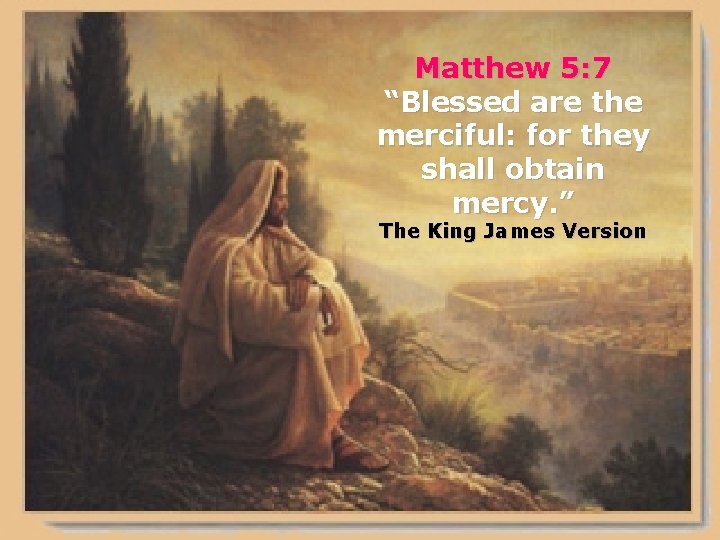

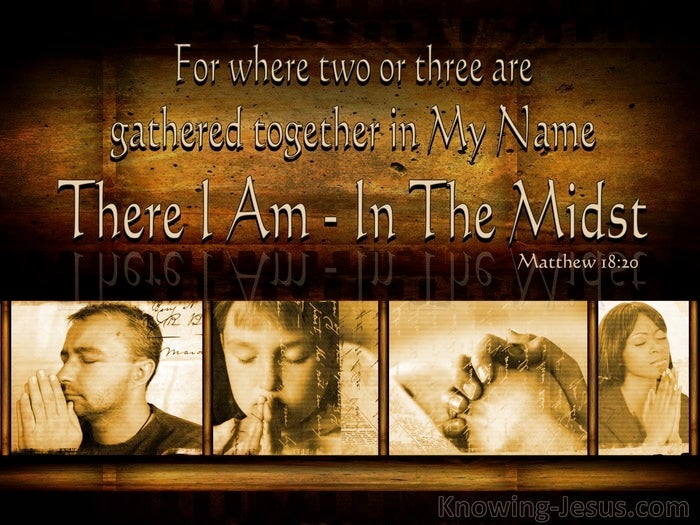


 Loving God, Living God, Loving Hope, Living Hope, Loving Living Life His Way! "Many things are possible for the person who has hope. Even more is possible for the person who has faith. And still more is possible for the person who knows how to love. But everything is possible for the person who practices all three virtues." - Brother Lawrence (1605-1691), Practicing the Presence of God (1692).