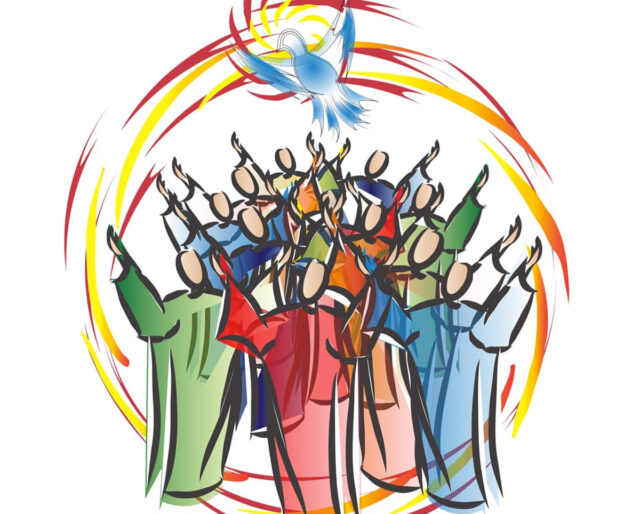
God’s Growing Kingdom 2024: Let us just talk a little about some of those Radical Demands of Following Jesus. Acts 2: 1-13

Acts 2:1-13 New American Standard Bible 1995

The Day of Pentecost

When the day of Pentecost [a]had come, they were all together in one place. And suddenly there came from heaven a noise like a violent rushing wind, and it filled the whole house where they were sitting. And there appeared to them tongues as of fire [b]distributing themselves, and [c]they  [d] rested on each one of them. And they were all filled with the Holy Spirit and began to speak with other [e]tongues, as the Spirit was giving them [f]utterance.

Now there were Jews living in Jerusalem, devout men from every nation under heaven. And when this sound occurred, the crowd came together, and were bewildered because each one of them was hearing them speak in his own [g] language. They were amazed and astonished, saying, “[h]Why, are not all these who are speaking Galileans? And how is it that we each hear them in our own [i] language [j]to which we were born? Parthians and Medes and Elamites, and residents of Mesopotamia, Judea and Cappadocia, Pontus and [k]Asia, 10 Phrygia and Pamphylia, Egypt and the districts of Libya around Cyrene, and [l]visitors from Rome, both Jews and [m]proselytes, 11 Cretans and Arabs—we hear them in our own tongues speaking of the mighty deeds of God.” 12 And they all continued in amazement and great perplexity, saying to one another, “What does this mean?” 13 But others were mocking and saying, “They are full of [n] sweet wine.”

The Word of God for the Children of God.

Glory be to the Father,
and to the Son, and to the Holy Ghost;
as it was in the beginning,
is now, and ever shall be,
world without end. Amen, amen.

God’s Growing Kingdom 2024

On the day of Pentecost, God-fearing Jews from many nations were staying in Jerusalem.

They were gathering to celebrate the Feast of Weeks that God had established for his people Israel some 1,500 years earlier (Deuteronomy 16:9-12).

“You shall count seven weeks for yourself; you shall begin to count seven weeks from the time you begin to put the sickle to the standing grain. 10 Then you shall [a] celebrate the Feast of Weeks to the Lord your God with a tribute of a freewill offering of your hand, which you shall give just as the Lord your God blesses you; 11 and you shall rejoice before the Lord your God, you and your son and your daughter and your male and female servants and the Levite who is in your [b]town, and the stranger and the [c]orphan and the widow who are in your midst, in the place where the Lord your God chooses to establish His name. 12 You shall remember that you were a slave in Egypt, and you shall be careful to observe these statutes.

They all converged on the temple on Pentecost (fifty days after the Feast of Passover) to bring their offerings of the best firstfruits of their harvests.

That day people from many nations heard the good news of Jesus for the first time. And about 3,000 believed and were baptized (Acts 2:41).

Scholars estimate that the world population was about 300 million people at that time.

That is 1/27th of today’s population.

At the time of his birth, the earth’s entire population was just 300 million, smaller than the U.S. by itself today. The United States 2023 population is estimated at 339,996,563 people at mid year. the United States population is equivalent to 4.23% of the total world population. the U.S.A. ranks number 3 in the list of countries (and dependencies) by population.

In biblical times it is estimated that about 45 million of those people, including Jesus himself, had lived in the Roman Empire, whose borders stretched in Jesus’ time from modern-day Portugal in the west to Turkey in the east.

From there, it took 1,800 years for the world’s population to grow to a billion.

Prior to the 1800s there were few formal immigration laws.

But with the world’s population at over 8 billion today, almost every country has decided to regulate immigration.

Christians are free to differ and disagree over the details of immigration laws.

However, as immigrants, migrants, refugees, and others cross borders today, many hear the gospel for the first time.

God’s people have the opportunity and responsibility to share the gospel with them. As the gospel is shared, many people continue to enter God’s kingdom each day! That of course is a good thing—regardless of views on immigration.

What Are those Radical Demands of Following Jesus?

Luke 14:25-35 The Message

Figure the Cost

25-27 One day when large groups of people were walking along with him, Jesus turned and told them, “Anyone who comes to me but refuses to let go of father, mother, spouse, children, brothers, sisters—yes, even one’s own self!—can’t be my disciple. Anyone who won’t shoulder his own cross and follow behind me can’t be my disciple.

28-30 “Is there anyone here who, planning to build a new house, doesn’t first sit down and figure the cost so you’ll know if you can complete it? If you only get the foundation laid and then run out of money, you’re going to look pretty foolish. Everyone passing by will poke fun at you: ‘He started something he couldn’t finish.’

31-32 “Or can you imagine a king going into battle against another king without first deciding whether it is possible with his ten thousand troops to face the twenty thousand troops of the other? And if he decides he can’t, won’t he send an emissary and work out a truce?

33 “Simply put, if you’re not willing to take what is dearest to you, whether plans or people, and kiss it good-bye, you can’t be my disciple.

34-35 “Salt is excellent. But if the salt goes flat, it’s useless, good for nothing.

“Are you listening to this? Really listening?”

Without any doubt, there are a great number of the teachings of Jesus that are often easy to remember and even memorize, a bit more difficult perhaps to understand, discern, then extremely challenging to live out in our daily lives.

These lessons are frequently, but not always, described by Jesus through parables, as was his way of teaching. For example:

  • The parable of the talents. (Matthew 25:14-30; Luke 19:12-28)
  • The rich young ruler. (Matthew 19:16-23; Mark 10:17-27; Luke 18:18-30)
  • God or money – we each have to choose. (Matthew 5:38-42)
  • Forgive others, or God won’t forgive you. (Matthew 6:14-15)
  • Serve the poor and needy – or go to hell. (Matthew 25:41-46)
  • Blessed are the poor, the hungry, those who weep, and those who are hated. (Luke 6:20-23)
  • Woe to the rich, and those who are well fed, and those who laugh now, and when everyone speaks well of you. (Luke 6:23-26)

And we could go on. “Turn the other cheek.” “Love your enemies.”

In these and many—perhaps most—of Jesus’ parables, he taught about the life we are called to live—the real terms of discipleship.

He taught about what it would mean to truly follow him.

Perhaps, though, one of the most compelling is when Jesus taught that we must count the cost of becoming his disciples.

Luke 14:25-35 New International Version

The Cost of Being a Disciple

25 Large crowds were traveling with Jesus, and turning to them he said: 26 “If anyone comes to me and does not hate father and mother, wife and children, brothers and sisters—yes, even their own life—such a person cannot be my disciple. 27 And whoever does not carry their cross and follow me cannot be my disciple.

28 “Suppose one of you wants to build a tower. Won’t you first sit down and estimate the cost to see if you have enough money to complete it? 29 For if you lay the foundation and are not able to finish it, everyone who sees it will ridicule you, 30 saying, ‘This person began to build and wasn’t able to finish.’

31 “Or suppose a king is about to go to war against another king. Won’t he first sit down and consider whether he is able with ten thousand men to oppose the one coming against him with twenty thousand? 32 If he is not able, he will send a delegation while the other is still a long way off and will ask for terms of peace. 33 In the same way, those of you who do not give up everything you have cannot be my disciples.

34 “Salt is good, but if it loses its saltiness, how can it be made salty again? 35 It is fit neither for the soil nor for the manure pile; it is thrown out.

“Whoever has ears to hear, let them hear.”

Wait…what? Hate father and mother, wife and children? Hate our own life?

If those are the terms of discipleship, then we would certainly each be smart to measure that cost, wouldn’t we? But…is that really what Jesus meant?

An Argument Against Cultural Christianity

During his ministry, Jesus had a great many crowds following him, very often thousands upon thousands.

Everyone had heard about the miracles, the healings, and free food!

But Jesus knew their hearts were not always with him. He knew they desired the benefits of what he did.

They wanted to reap the rewards.

They loved his gifts—but not him.

They loved the idea of Jesus without understanding who he truly was. 

We see them even today.

Jesus is the one who is going to get us into paradise when we die, right?

He died on the cross to pay for our sins and to give us our forever home in heaven. Right? That’s all, folks! We have our mansion in the sky waiting for us!

Leave it to Jesus to mess up our comfortable lives. Jesus knows our hearts; clearly, a comfortable easy chair life here on earth was not his expectation.

How many today speak the words yet don’t live them out?

How many today can memorize the teachings but not apply them to their lives?

How many put on the show of performing deeds in and for church yet don’t know Christ in their hearts?

We see them even in church.

They have the verses memorized and repeat them as if they believe the words to be true. And maybe they do believe them – but the words don’t move from their heads to their hearts. But God will not be mocked, and Jesus will not be fooled:

Matthew 7:21-29 New International Version

True and False Disciples

21 “Not everyone who says to me, ‘Lord, Lord,’ will enter the kingdom of heaven, but only the one who does the will of my Father who is in heaven.  22 Many will say to me on that day, ‘Lord, Lord, did we not prophesy in your name and in your name drive out demons and in your name perform many miracles?’ 23 Then I will tell them plainly, ‘I never knew you. Away from me, you evildoers!’

The Wise and Foolish Builders

24 “Therefore everyone who hears these words of mine and puts them into practice is like a wise man who built his house on the rock. 25 The rain came down, the streams rose, and the winds blew and beat against that house; yet it did not fall, because it had its foundation on the rock. 26 But everyone who hears these words of mine and does not put them into practice is like a foolish man who built his house on sand. 27 The rain came down, the streams rose, and the winds blew and beat against that house, and it fell with a great crash.”

28 When Jesus had finished saying these things, the crowds were amazed at his teaching, 29 because he taught as one who had authority, and not as their teachers of the law.

The lesson certainly seems directed at those who do the work and go through the motions but have never given their hearts to Christ.

Or perhaps they made the claim, knowing the expectation, but had never actually lived out the words.

After all, if indeed they had prophesied, cast out demons, and performed miracles in his name, then Jesus would indeed have known them.

Either way, the lesson is that mere words or mere acts without faith—without heart—are not the discipleship Jesus is looking for.

James, the brother of Jesus, put it this way:

James 2:14-24 New International Version

Faith and Deeds

14 What good is it, my brothers and sisters, if someone claims to have faith but has no deeds? Can such faith save them? 15 Suppose a brother or a sister is without clothes and daily food. 16 If one of you says to them, “Go in peace; keep warm and well fed,” but does nothing about their physical needs, what good is it? 17 In the same way, faith by itself, if it is not accompanied by action, is dead.

18 But someone will say, “You have faith; I have deeds.”

Show me your faith without deeds, and I will show you my faith by my deeds. 19 You believe that there is one God. Good! Even the demons believe that—and shudder.

20 You foolish person, do you want evidence that faith without deeds is useless[a]? 21 Was not our father Abraham considered righteous for what he did when he offered his son Isaac on the altar? 22 You see that his faith and his actions were working together, and his faith was made complete by what he did. 23 And the scripture was fulfilled that says, “Abraham believed God, and it was credited to him as righteousness,”[b] and he was called God’s friend. 24 You see that a person is considered righteous by what they do and not by faith alone.

In other words, if you claim to have faith but it has no impact on how you live your life, your faith is worthless.

If your life isn’t following the teachings of Christ, then you are still lost despite your words.

So many today say they believe.

They love the idea of eternal life, escaping hell, and being able to pray whenever they need anything.

But they are unwilling to give up their earthly desires and the life they now live.

They are more in love with their sinful habits than with Jesus.

1 John 2:15-17 New International Version

On Not Loving the World

15 Do not love the world or anything in the world. If anyone loves the world, love for the Father[a] is not in them. 16 For everything in the world—the lust of the flesh, the lust of the eyes, and the pride of life—comes not from the Father but from the world. 17 The world and its desires pass away, but whoever does the will of God lives forever.

The Cost of Discipleship

So what is it that Jesus expects of us…really?

Jesus often uses hyperbole to make his point.

Clearly, Jesus would not expect us to “gouge out our eye” or “cut off our hand” if they cause us to sin. (Matthew 5:29-32)

Neither are we to truly “hate” our father and mother, our wife and children, or our brothers and sisters.

We know this, as we are called to hate no one.

But Jesus is unmistakable in what he does expect: He wants everything from us.

He wants our full commitment, our entire hearts, entire souls, all our strengths.

Luke 9:21-25 New International Version

Jesus Predicts His Death

21 Jesus strictly warned them not to tell this to anyone. 22 And he said, “The Son of Man must suffer many things and be rejected by the elders, the chief priests and the teachers of the law, and he must be killed and on the third day be raised to life.”

23 Then he said to them all: “Whoever wants to be my disciple must deny themselves and take up their cross daily and follow me. 24 For whoever wants to save their life will lose it, but whoever loses their life for me will save it. 25 What good is it for someone to gain the whole world, and yet lose or forfeit their very self?

We often tend to understate the meaning of “bearing our cross.”  

But when Jesus spoke those words, his listeners thought of the cross only as a means of execution.  

We use it as a metaphor.

Jesus was asking them to put to death their prior lives and follow him.

To die to themselves, to life as they know it, to everything they hold near and dear – to follow him to the cross. 

Jesus often spoke volumes with just a few words – this being one of those times.

When he calls us to “count the cost,” he does not want us to think we can go halfway naively or be surprised later with the expectations.

And there is no negotiating.

The gift of eternal life is free to anyone who asks and believes (John 3:16) – but it is not a free welfare program.

It requires a commitment on our part – a transfer of ownership of our lives, if you will, to him.

To follow him and follow his commands and teachings.

We can no longer simply follow our own selfish desires – we must give up our “me-first” attitudes and approach to life.

Jesus once described the kingdom of heaven in this way:

Matthew 13:44-51 New International Version

The Parables of the Hidden Treasure and the Pearl

44 “The kingdom of heaven is like treasure hidden in a field. When a man found it, he hid it again, and then in his joy went and sold all he had and bought that field.

45 “Again, the kingdom of heaven is like a merchant looking for fine pearls. 46 When he found one of great value, he went away and sold everything he had and bought it.

The Parable of the Net

47 “Once again, the kingdom of heaven is like a net that was let down into the lake and caught all kinds of fish. 48 When it was full, the fishermen pulled it up on the shore. Then they sat down and collected the good fish in baskets, but threw the bad away. 49 This is how it will be at the end of the age. The angels will come and separate the wicked from the righteous 50 and throw them into the blazing furnace, where there will be weeping and gnashing of teeth.

51 “Have you understood all these things?” Jesus asked.

“Yes,” they replied.

Yes! They Replied … Reality would later prove radically different in the Garden of Gethsemane and again in the courtyard and again at the Hill called Calvary.

In each parable, the man sold everything he had.

Each gave up everything to gain the valuable treasure he had found.

That is what Jesus asks of us – to give up all we have, all we are, to be called his disciple.

What Is the Reward?

The disciples of Jesus are either all in—or they are not in at all.

Jesus has laid down some pretty high costs, but with those costs come some incredible rewards.

Matthew 7:24-29 New International Version

The Wise and Foolish Builders

24 “Therefore everyone who hears these words of mine and puts them into practice is like a wise man who built his house on the rock. 25 The rain came down, the streams rose, and the winds blew and beat against that house; yet it did not fall, because it had its foundation on the rock. 26 But everyone who hears these words of mine and does not put them into practice is like a foolish man who built his house on sand. 27 The rain came down, the streams rose, and the winds blew and beat against that house, and it fell with a great crash.”

28 When Jesus had finished saying these things, the crowds were amazed at his teaching, 29 because he taught as one who had authority, and not as their teachers of the law.

When we simply give lip service to giving our lives to Christ, the words become like political talking points written on cardboard.

They have no strength, no foundation.

Like a house built on sand and cardboard, Christianity cannot stand against the storms of life.

But when we build the house—build our lives—on the rock of faith in Jesus Christ, we can withstand anything and everything that comes against us and will not fall.

We will not fall because our faith is built on the foundation of Jesus Christ.

By losing our lives, we save them. (Luke 9:24) 

When we give up ourselves and give up our lives, we will be repaid at the resurrection of the righteous. (Luke 14:14)

In other words, what we think we lose here is nothing compared to what we gain with Jesus in eternity.

Paul expressed it very well when he said:

Philippians 3:7-11 New International Version

But whatever were gains to me I now consider loss for the sake of Christ. What is more, I consider everything a loss because of the surpassing worth of knowing Christ Jesus my Lord, for whose sake I have lost all things. I consider them garbage, that I may gain Christ and be found in him, not having a righteousness of my own that comes from the law, but that which is through faith in[a] Christ—the righteousness that comes from God on the basis of faith.  10 I want to know Christ—yes, to know the power of his resurrection and participation in his sufferings, becoming like him in his death, 11 and so, somehow, attaining to the resurrection from the dead.

This Pentecost Day of 2024 and in the days, months ahead, May we each say,

“I consider everything I have lost garbage that I may gain Christ.”

In the name o God, the Father and God the Son and God the Holy Spirit,

Let us Pray,

Psalm 16 The Message

16 1-2 Keep me safe, O God,
    I’ve run for dear life to you.
I say to God, “Be my Lord!”
    Without you, nothing makes sense.

And these God-chosen lives all around—
    what splendid friends they make!

Don’t just go shopping for a god.
    Gods are not for sale.
I swear I’ll never treat god-names
    like brand-names.

5-6 My choice is you, God, first and only.
    And now I find I’m your choice!
You set me up with a house and yard.
    And then you made me your heir!

7-8 The wise counsel God gives when I’m awake
    is confirmed by my sleeping heart.
Day and night I’ll stick with God;
    I’ve got a good thing going and I’m not letting go.

9-10 I’m happy from the inside out,
    and from the outside in, I’m firmly formed.
You canceled my ticket to hell—
    that’s not my destination!

11 Now you’ve got my feet on the life path,
    all radiant from the shining of your face.
Ever since you took my hand,
    I’m on the right way.

Glory be to the Father,
and to the Son, and to the Holy Ghost;
as it was in the beginning,
is now, and ever shall be,
world without end. Amen, amen.
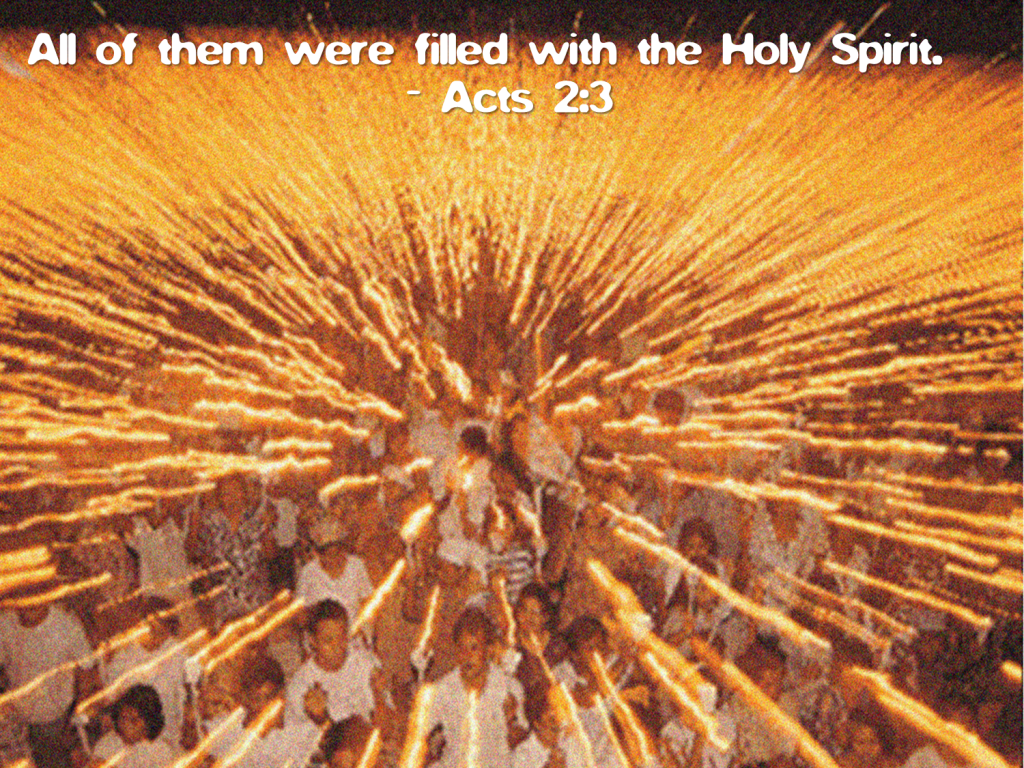
https://translate.google.com/

Why (and How) Should We Pray the Names of Our God? Psalm 46:10-11

Isaiah 43 But now this is what Adonai says,
he who created you, Ya‘akov,
he who formed you, Isra’el:
“Don’t be afraid, for I have redeemed you;
I am calling you by your name; you are mine.
2 When you pass through water, I will be with you;
when you pass through rivers, they will not overwhelm you;
when you walk through fire, you will not be scorched —
the flame will not burn you.
3 For I am Adonai, your God,
the Holy One of Isra’el, your Savior —
I have given Egypt as your ransom,
Ethiopia and S’va for you.
4 Because I regard you as valued and honored,
and because I love you.
For you I will give people,
nations in exchange for your life.
5 Don’t be afraid, for I am with you.
I will bring your descendants from the east,
and I will gather you from the west;
6 I will say to the north, ‘Give them up!’
and to the south, ‘Don’t hold them back!
Bring my sons from far away,
and my daughters from the ends of the earth,
7 everyone who bears my name,
whom I created for my glory —
I formed him, yes, I made him.’”

Psalm 46 Names of God Bible

Psalm 46

For the choir director; a song by the descendants of Korah; according to alamoth.[a]

Elohim is our Machseh and strength,
    an ever-present help in times of trouble.
That is why we are not afraid
    even when the earth quakes
        or the mountains topple into the depths of the sea.
            Water roars and foams,
                and mountains shake at the surging waves. Selah

There is a river
    whose streams bring joy to the city of Elohim,
        the holy place where Elyon lives.
Elohim is in that city.
    It cannot fall.
        Elohim will help it at the break of dawn.
Nations are in turmoil, and kingdoms topple.
    The earth melts at the sound of God’s voice.

Yahweh Tsebaoth is with us.
    The Elohim of Jacob is our stronghold. Selah

Come, see the works of Yahweh,
    the devastation he has brought to the earth.
        He puts an end to wars all over the earth.
            He breaks an archer’s bow.
            He cuts spears in two.
            He burns chariots.
10 Let go of your concerns!
    Then you will know that I am Elohim.
        I rule the nations.
        I rule the earth.

11 Yahweh Tsebaoth is with us.
    The Elohim of Jacob is our stronghold. Selah

The Word of God for the Children of God.

Adeste Fideles! Laeti Triumphantes! Venite Adoremus! Dominum.

Gloria! In Excelsis Deo! Alleluia, Alleluia, Alleluia, Amen.

Guess What Neighbors? God IS 100% on OUR Side!

The first words of Psalm 46 announces its overarching theme to the reader:

God is God Alone!

God is our ALL in ALL!

God is our Refuge—God is our Fortress, God is our Shelter, God is our Ever Present Help in Times of Struggle.

God is also our Strength, God is also our help—God is the One who deals with the perils surrounding us.

And because God is our refuge and help, we have nothing to fear, even if nature throws its worst tantrums at us – we do not have to pretend to be Him to Live.

The Gospel of God is replete with empowering and inspiring examples of this.

A substantial number of boats including a group of Jesus’ followers feared for their lives in a storm one day, out on a boat far into the middle of a huge lake.

In complete panic, their normalcy broke down and betrayed the disciples.

All of their best and greatest skills at being PhD boat handlers and fishermen, at conflict management and resolution of same conflict evaporated in an instant.

Them, and undoubtedly every single of the occupants of all the other little boats with them upon the lake were now echelons beyond their PhD’s in lake survival.

The disciples had done everything they knew to do and then some – nothing proved to be the least bit successful – until they “woke up” and went to Jesus!

Is there anyone out there, even one single person out there in the vastness of this globe of ours, who is reading this devotional right now who can identify?

Is there anyone out there, even one single person who could use even 0.01% of that “wokeness” those disciples and boatmen suddenly discovered that night?

Then their Teacher stood up and said to the wind and the sea, “Quiet! Be still!”

Then seemingly just as fast, the wind quit; there was dead calm.

“Who is this?” they asked. “Even the wind and the waves obey him!” (See Mark 4:35-41.)

The Lord Almighty was in that boat and every single other boat on that lake as their strength, their helper in their needs; the God of Jacob was their refuge.

Our faith is always being subjected to storms and earthquakes. Where can we find safety and security?

Listen, again and again to Psalm 46: “God is our refuge and strength, an ever-present help in trouble. Therefore we will not fear, though the earth give way. . . .”

There is a certain and trustworthy basis for our faith—the God who made us and everything in our world.

In all circumstances, no matter how terrible or frighten­ing, our unchanging God is our refuge and strength.

What Really Happened at Pentecost?

Acts 2:1-4 Names of God Bible

The Believers Are Filled with the Holy Spirit

When Pentecost, the fiftieth day after Passover, came, all the believers were together in one place. Suddenly, a sound like a violently blowing wind came from the sky and filled the whole house where they were staying. Tongues that looked like fire appeared to them. The tongues arranged themselves so that one came to rest on each believer. All the believers were filled with the Holy Spirit and began to speak in other languages as the Spirit gave them the ability to speak.

Jesus’ followers were all together when a sound like the blowing of a mighty wind came from heaven.

What appeared to be tongues of fire separated and rested on each of them, they were each filled with the Holy Spirit and they began to speak in other tongues.

After Jesus’ ascension, his followers, about 120 of them, continued to meet in Jerusalem. 

Acts 2:1-13 Luke records the events of this Pentecost, about 10 days after Jesus’ ascension. Jesus’ followers were all together when a sound like the blowing of a mighty wind came from heaven and filled the place where they were staying.

What appeared to be tongues of fire separated and rested upon each of them, they each were filled with the Holy Spirit and began to speak in other tongues.

When this happened, a crowd gathered to investigate the noise.

And when they did, they heard Jesus’ followers all speaking in the native languages of the listeners.

The crowd of thousands had come to celebrate the harvest, and were from all over the known world, with many different native languages. (verses 7-11)

Yet, each one was hearing what was said in their own native language.

This confused the crowd, but Peter explained to them that what they were experiencing was the fulfillment of a prophecy in Joel 2:28-32.

An ancient prophecy that included God pouring out his Spirit upon all people.

Peter then proceeded to preach his first sermon, explaining who Jesus was and the significance of what had happened to him.

Then Peter called on them to repent and turn their hearts to Jesus for salvation.

And that day, 3,000 people believed and were saved.

And that very same day, 3000 people responded completely out of character and they believed that God was their Refuge, God was their Strength and their Help!

That God and God alone was the Answer – through Jesus Christ the Resurrected!

What if, With Those 3000, We ALL Celebrated God?

Psalm 100 Names of God Bible

Psalm 100

A psalm of thanksgiving.

Shout happily to Yahweh, all the earth.
Serve Yahweh cheerfully.
    Come into his presence with a joyful song.
Realize that Yahweh alone is Elohim.
    He made us, and we are his.[a]
    We are his people and the sheep in his care.
Enter his gates with a song of thanksgiving.
    Come into his courtyards with a song of praise.
    Give thanks to him; praise his name.

Yahweh is good.
    His mercy endures forever.
    His faithfulness endures throughout every generation.

In the indescribable moment which was that first Pentecost,

Try to imagine, if anyone can, what would the sound be like when 3000 people filled with Holy Spirit all suddenly started singing 3000 choruses of Hallelujah?

Started uncontrollably singing, belting out, 3000 plus choruses of “Hallelujah” in the presence of our enemy Satan, directly into our enemy Satan’s ear drums?

What if with the 3000, Studied and Prayed God too?

Acts 2:43-47 Names of God Bible

43 A feeling of fear came over everyone as many amazing things and miraculous signs happened through the apostles. 44 All the believers kept meeting together, and they shared everything with each other. 45 From time to time, they sold their property and other possessions and distributed the money to anyone who needed it. 46 The believers had a single purpose and went to the temple every day. They were joyful and humble as they ate at each other’s homes and shared their food. 47 At the same time, they praised God and had the good will of all the people. Every day the Lord saved people, and they were added to the group.

If we have ever gathered together with our brothers and sisters, neighbors, done a Bible study about the names of God, we were likely blessed to discover the wonderful ways God is described throughout the Old and New Testaments.

Rich with meaning, the names of God not only point to who He is, they give us an indescribably clear picture of what our God has done, is doing, and will do.

Praying the names of God can be a wonderful reminder of His holy attributes.

It can be an unbelievably powerful way to honor, celebrate and worship Him.

And the overwhelming peace we receive, by the mere mention of His name, is both undeniably comforting, deeply reassuring for the time in which we live.

Here are a few reasons why we should pray the names of God, examples of how. 

1. Affirmation

Praying the names of God brings affirmation to our hearts, minds, and souls.

As we all know, doubt creeps in and causes us to question the Lord we love.

Yet, fear and doubt quickly dissipate when we practice being in His Presence, we discipline ourselves to focus our thoughts upon affirming our Lord and Savior.

Here is an example of how you can pray and affirm who God is:

Sovereign God, Maker of heaven and earth,

I know that You are the Alpha and Omega, the beginning and the end. There is nothing that escapes your sovereignty. I can trust You in all things. Today, Adonai, I bring all my fears and doubts to You. I lay them at Your feet. I ask that You affirm in my heart exactly who You are. By the power of Your Holy Spirit, give me the assurance that You are who You say you are. Forgive me of any doubts that I’ve allowed to circle my mind. I will continue to draw from the deep well of certainty that You are my Father in heaven. You are my Lord and Savior. And You are my Mighty God, my Counselor, my Prince of Peace. Alleluia, Alleluia, Alleluia, Amen.

2. Declaration

Praying the names of God declares who He is the mighty things He has done.

When we feel weak and weakened, discouraged, or even tempted by the enemy, we can call upon the name of the Lord boldly, knowing He is Mighty to Save. 

Here is an example of how you can pray and declare who God is:

Lord God Almighty,

There is no one like You! As Your word says, You are the great I AM. You are the Chief Cornerstone of my faith. There is no other foundation. There is no other way. For You are the Way, the Truth and the Life. I worship all of You today and declare Your praise. In every area of my life, I know You are working to refine me and restore me. Thank You, Lord for being my Helper in all my times and needs, my best Forever Friend. I forever lift up Your name, declare who You are. Alleluia, Alleluia, Alleluia,

In Jesus’ name I pray, Amen.

3. Comfort

Praying the names of God brings comfort to our weary souls.

Just by speaking the names of the Lord aloud, a sense of peace washes over us by His Holy Spirit.

Throughout the Scriptures, we are given wonderful words of hope and joy.

Turn your prayers into reminders of God’s steadfast love, be comforted today.

Here is an example of how you can pray and remember the God of all comfort:

Abba Father,

Hallowed be thy Name,

How I long to remain in Your Fatherly presence. For in You, I find peace and rest. You truly are the God of all Comfort. You lead me to quiet pastures; You lead me to still waters, You shepherd and restore my soul. Please help me abide in You – the True Vine. I need Your loving protection to guard against the winds of change that blow. I need Your words of truth to settle my wandering heart. Keep me from stumbling. Thank You, Lord, for being my blessed hope. Thank You for being El-Roi, the God who sees everything, who sees everyone, who sees everywhere all of the time. My Abba, My Heavenly Father, You are Faithful and True! Alleluia, Alleluia, Alleluia, In the beautiful name of Jesus I pray, Amen.

4. Surrender

Praying the names of God is a form of surrender.

With all the worries, responsibilities, and burdens we carry, we so desperately need to surrender everything to the God who redeems.

He not only redeems our lives from sin and death, He redeems us each new day. 

Here is an example of how you can pray and surrender everything to God:

Holy God,

I surrender everything to You today. Every anxiety, every worry, and every trial — I hand them over to You. I know, Lord, that You are my Kinsman Redeemer and my Restorer of the Breach. In You I put my full trust. Lord, I am tired of trying to control everything around me. I surrender all control to You, for you are my Rock and my fortress. You are my refuge and hiding place. As you offer new mercies every morning, I thank You and praise You for Your goodness. I surrender my life to You and seek to walk in all Your ways. I look to You, the Author and Finisher of my faith. Thank You for hedging me in, all around, behind and before. I will continue to walk hand in hand, in-step with Your Holy Spirit, in all wisdom and truth. Alleluia, Alleluia, Alleluia, In the precious name of Jesus I pray, Amen

5. Wisdom

Praying the names of God is a way of seeking wisdom.

As the tides of culture change, and our faith is greatly tested, we need the wisdom of God over our own now more than ever.

One way to solidify your beliefs and walk in the wisdom of the Lord is to pray His holy name.

By fully relying on His infinite knowledge, on the magnitude of His Truth, from His holy Word we can remain steadfast, confident and sure of what we believe.

Here is one example of how you can pray and seek God’s wisdom:

Ancient of Days,

How vast are Your judgments and how true are Your words. You are completely trustworthy. Lord, please give me heavenly wisdom as mentioned in James 3:17 — wisdom that is pure, peace-loving, considerate, submissive, full of mercy and good fruit, impartial and sincere. You, Lord, are the only wise God. There is no one like You — holy, perfect, and just. You are the Branch — beautiful and glorious. Our wisdom is as foolishness to You, but Your wisdom is righteous and sure. Thank you, Lord, for being my God and King. Thank you for being Lord of my life. I will seek Your wisdom daily, and ask for the strength to walk in that wisdom. Alleluia, Alleluia, Alleluia,

In Jesus’ holy name, Amen.

In the name of God, the Father and God the Son and God the Holy Spirit,

Let us Pray,

Psalm 46 Complete Jewish Bible

46 (0) For the leader. By the descendants of Korach. On ‘alamot [high-pitched musical instruments?]. A song:

2 (1) God is our refuge and strength,
an ever-present help in trouble.
3 (2) Therefore we are unafraid,
even if the earth gives way,
even if the mountains tumble
into the depths of the sea,
4 (3) even if its waters rage and foam,
and mountains shake at its turbulence. (Selah)

5 (4) There is a river whose streams
gladden the city of God,
the holy habitation of ‘Elyon —
6 (5) God is in the city.
It will not be moved —
when daybreak comes, God will help it.
7 (6) Nations were in turmoil,
kingdoms were moved;
his voice thundered forth,
and the earth melted away.

8 (7) Adonai-Tzva’ot is with us,
our fortress, the God of Ya‘akov. (Selah)
9 (8) Come and see the works of Adonai,
the astounding deeds he has done on the earth.
10 (9) To the ends of the earth he makes wars cease —
he breaks the bow, snaps the spear,
burns the shields in the fire.
11 (10) “Desist, and learn that I am God,

supreme over the nations,
supreme over the earth.”

12 (11) Adonai-Tzva’ot is with us,
our fortress, the God of Ya‘akov. (Selah)

The Word of God for the Children of God. Adeste Fideles! Laeti Triumphantes! Venite Adoremus! Dominum.

Gloria! In Excelsis Deo! Alleluia, Alleluia, Alleluia, Amen.

https://translate.google.com/

Did The Holy Spirit Empower Only 12 Disciples On The Day Of Pentecost? Acts 2:1-13

Healthy relationships are all about people savoring time together.

Sometimes it may happen with the need to take care of a family matter. Sometimes it may happen when we’re not quite sure what to do next and find comfort in simply being together.

That’s probably what was happening with the apostles when God’s Spirit lit them up and enabled them to “come out of their normal character” and do the unexpected.

Acts 2:1-13 English Standard Version

The Coming of the Holy Spirit

When the day of Pentecost arrived, they were all together in one place. And suddenly there came from heaven a sound like a mighty rushing wind, and it filled the entire house where they were sitting. And divided tongues as of fire appeared to them and rested[a] on each one of them. And they were all filled with the Holy Spirit and began to speak in other tongues as the Spirit gave them utterance.

Now there were dwelling in Jerusalem Jews, devout men from every nation under heaven. And at this sound the multitude came together, and they were bewildered, because each one was hearing them speak in his own language. And they were amazed and astonished, saying, “Are not all these who are speaking Galileans? And how is it that we hear, each of us in his own native language? Parthians and Medes and Elamites and residents of Mesopotamia, Judea and Cappadocia, Pontus and Asia, 10 Phrygia and Pamphylia, Egypt and the parts of Libya belonging to Cyrene, and visitors from Rome, 11 both Jews and proselytes, Cretans and Arabians—we hear them telling in our own tongues the mighty works of God.” 12 And all were amazed and perplexed, saying to one another, “What does this mean?” 13 But others mocking said, “They are filled with new wine.”

The Word of God for the Children of God.

Adeste Fideles! Laeti Triumphantes! Venite Adoremus! Dominum.

Gloria! In Excelsis Deo! Alleluia, Alleluia, Alleluia, Amen.

What Happened at Pentecost, and Why Does It Matter Today?

At His first coming, our Lord Jesus Christ inaugurated His kingdom on earth.

The disciples expected a triumphant warrior king, but instead, Jesus likened His kingdom unto a mustard seed that expands progressively and grows organically (Matthew 13:31–32).

The church now occupies the time when the kingdom comes progressively as the word of the Gospel goes out to the ends of the earth.

Christ has ascended and sent His Spirit, and so we live between two fixed points: Pentecost and the Parousia (Christ’s second coming).

During this time in between, we are to advance the Gospel until Jesus returns.

Only then, at His final advent, will Christ’s kingdom come universally.

If we want to understand our place in redemptive history, then we ought to understand something of that first point of our period in salvation history:

Pentecost. Only when we begin to grasp the events of that momentous day recorded in Acts 2 will we comprehend our church mission between the times.

Questioning the Restoring of the Kingdom

To understand Pentecost, we have to consider the conversation that sets up the story.

Just before the Lord Jesus ascended, the apostles asked Him, “Lord, will you at this time restore the kingdom to Israel?” (Acts 1:6).

Jesus responded, “It is not for you to know times or seasons that the Father has fixed by his own authority” (verse 7).

Even after the resurrection, the apostles expected a triumphant kingdom to break in.

But the book of Acts goes on to describe the progressive expansion of the kingdom not by force but by the preaching of the Gospel.

In Acts 1:8, Jesus provides the framework for the entire book:

“But you will receive power when the Holy Spirit has come upon you, and you will be my witnesses in Jerusalem and in all Judea and Samaria, and to the end of the earth” (emphasis added).

After this, the apostles were left “gazing into heaven” upon witnessing Christ ascend (v. 10).

They were also left waiting for the Holy Spirit, as the Lord instructed them (verse 4).

What Happened at Pentecost?

Pentekoste—Greek for “fiftieth”—was the second of three great annual festivals that brought Jews from all over the world to Jerusalem.

Fifty days after the Passover, many would make their pilgrimage to celebrate Pentecost, which was a time of thanksgiving and praise to God for the first wheat harvest of the season.

Acts 2:1–4 describes what happened on that day when God poured out His Spirit on the apostles:

When the day of Pentecost arrived, they were all together in one place. And suddenly there came from heaven a sound like a mighty rushing wind, and it filled the entire house where they were sitting. And divided tongues as of fire appeared to them and rested on each one of them. And they were all filled with the Holy Spirit and began to speak in other tongues as the Spirit gave them utterance.

We can describe what took place at Pentecost using four adjectives.

1. Unmistakable

Pentecost was unmistakable because of its three distinct phenomena, which served to make it perfectly clear that Jesus had indeed come to His people by His Spirit.

First, there was an unmistakable “sound like a mighty rushing wind” that “filled the entire house” where the believers had gathered.

Second, there were what seemed to be “tongues … of fire” dividing and resting upon them individually.

And third, being “filled with the Holy Spirit,” the believers “began to speak in other tongues”—that is, languages other than their own—“as the Spirit gave them utterance.”

Each of these signs by itself would have been miraculous.

Taken together, they leave us without any room for questioning that God did a mighty work by His Spirit.

2. Unconditional

Pentecost was also unconditional.

There was no requirement, no description of process, no indication of pattern.

Rather, God acted irrespective of any man-made conditions.

This has to be pointed out because from time to time, people will say,

“Well, you see, if we are really going to be Holy Spirit people, then we would have to go back through the same process, the same pattern, and fulfill the same conditions as the early church.”

But that was simply not the case with Pentecost.

If there was any condition, it was the condition we the Children of God had to wait patiently—which could hardly be described as any real condition at all.

3. Unavoidable

Pentecost was also unavoidable in the sense that what happened in the house where they were gathered spilled out into the community.

The rushing wind, the tongues of fire, and the new languages being spoken caused such a commotion the “devout men from every nation under heaven” could not avoid the hubbub (Acts 2:5) and began hearing “the mighty works of God” in their own languages (verse 11).

Upon hearing, some “were amazed and perplexed” (verse 12), while others mocked (verse 13).

Nevertheless, none could avoid the events of Pentecost.

4. Unrepeatable

Lastly, we need to view the miraculous events of Pentecost in terms of the whole story of Jesus—His incarnation, death, resurrection, and ascension.

When we do, we see that Pentecost is unrepeatable.

Neither the death of Jesus nor His ascension is a repeatable event.

The same is true for Pentecost.

This is not to say that the experience of God the Spirit in the life of the church was somehow locked two thousand years ago.

But at Pentecost, when the river was opened and the pouring out took place in this unmistakable, unconditional, unavoidable fashion, it was also done in an unrepeatable way.

There is no need for a second Pentecost.

The Good News of Pentecost

All that unfolded at this particular Pentecost surely was equal parts spectacular and confusing.

The apostle Peter heard the questions and cries from the crowd and quickly went on to explain the events that had just happened:

“This Jesus God raised up, and of that we all are witnesses. Being therefore exalted at the right hand of God, and having received from the Father the promise of the Holy Spirit, he has poured out this that you yourselves are seeing and hearing.” (Acts 2:32–33)

Just as Jesus had abstained from earthly ministry until His baptism, when the Holy Spirit came upon Him, so He had made clear to His followers, You need divine enablement for understanding and proclamation. 

He had anticipated, promised the Spirit in His own ministry (Luke 24:49; John 14:26).

When Peter quoted from Joel 2:32 (Acts 2:16–21), he showed that Pentecost was in God’s plan all along and highlighted the very best news of his day and ours:

“It shall come to pass that everyone who calls upon the name of the Lord shall be saved.”

Amid the chaos and upheavals of life, we can yet find gladness in God’s presence when we call upon the name of Jesus Christ.

Acts 2:37–39 then shows us what it looks like to “call upon the name of the Lord” in more detail.

The Jews who were “cut to the heart” asked Peter and the apostles, “Brothers, what shall we do?” Peter responded, “Repent and be baptized every one of you in the name of Jesus Christ for the forgiveness of your sins, and you will receive the gift of the Holy Spirit” (emphasis added).

To repent is more than simply being sorry for your wrongdoings.

It means changing your mind about sin itself.

It means viewing sin the way God does: as having overstepped His boundaries and missed the mark.

It means acknowledging the wrong direction you’ve been going.

It involves a change of heart, a change of mind, and a change of direction.

Baptism, meanwhile, is the unashamed public announcement that you’re fully committed to a new life in Christ.

When we call upon the name of Jesus, God offers us a whole new start, a whole new beginning.

God can and in truth, does, give us when we confess our belief and faith in Christ that fresh start because He grants the Holy Spirit to come and live in us.

Notice, though, that this new beginning is for “those who received his word” (verse 41, emphasis added), not for those who merely heard it.

You see, the Bible does not teach we are automatically forgiven just because Jesus died on the cross.

You and I must individually receive Christ and make Him your own.

Babel Reversed

With the coming of the Spirit and the forgiveness of sins being proclaimed in at least fifteen languages (Acts 2:9–11), Pentecost was essentially a reversal of what had happened at Babel, when human languages were confused and the nations were scattered (Genesis 11:1–9).

On that unforgettable day in Jerusalem, the language barrier was supernaturally overcome as a sign that the nations would be gathered together in Christ.

Instead of assimilating all of God’s people under a common tongue, Pentecost makes clear that every language is an appropriate vehicle for the praise and the proclamation of Jesus.

The heart language of men and women and children, in their own native land, of their birth, will be able to receive this fantastic news, just as at Pentecost.

We don’t want people to have to learn English as a second language solely in order to discover and experience “the mighty works of God” (Acts 2:11).

We want even the most remote, unreached people groups to rejoice in God the Father, God the Son and Holy Spirit with us all in their own unique languages.

Ultimately, this is why Pentecost happened, why God has left us His Spirit: so that we can continue the great work of proclaiming the good news of the Gospel to the ends of the earth (Acts 1:8).

One day, we will see with the apostle John “a great multitude that no one could number, from every nation, from all tribes and peoples and languages.” And these people of every tongue will be singing the same song together: “Salvation belongs to our God who sits on the throne, and to the Lamb!” (Revelation 7:9–10).

Actions Always Speak Louder Than Words

There is an old saying that “Actions Will Always Speak Louder Than Words.”

We read about the day of Pentecost in Acts 2, where we find Jesus’ disciples and 120 other of his followers, including his mother, Mary, along with some of his brothers, all huddled in an upstairs room in Jerusalem.

They are hiding out for fear of local religious authorities, but they are also waiting for something Jesus, their beloved teacher and leader, has promised them, “some days hence” – being the outpouring of the Holy Spirit.

Suddenly, a sound like a violent wind fills the room where the disciples are hunkered down and tongues of fire seem strangely to hover over their heads.

Even stranger, those gathered in the room miraculously begin to speak in the languages of the wide variety of pilgrims gathered in Jerusalem to celebrate the Festival of Weeks.

The Spirit of God gave Jesus’ apostles the ability to speak in many languages on that day of Pentecost written about in Acts 2, and the same Spirit enables us to speak and to act in winsome ways today.

Through the power of the Holy Spirit, God’s kingdom is advancing, and God has called has equipped each and every single one of us who believe, who have faith to be his witnesses in whatever circumstances we may find ourselves.

Because in one single moment on any given day anointed, designated by God, we have to walk outside of our Upper Rooms, meet the ministry calling of God.

There are people outside that door that God has deliberately placed in our path.

Pilgrims on their own spiritual journey and we cannot tell them to “get lost” or “get out of our way because they bother us.”

And we cannot form a cordon of body guards or Roman Centurions to move out in front of us and unceremoniously move them at spear point out of our way.

God desires them to receive the Gospel of Jesus Christ too.

They are going to want to know what is going on and God wants them to know what is going on and we need to be mightily responsive to this the Will of God.

In that crowd outside the Upper Room, Some of these pilgrims, seeing this strange sight, ask, “Are these fishermen drunk this early in the morning?”

There is an old saying that “Actions Will Always Speak Louder Than Words.”

Then Peter, filled with the Holy Spirit, filled with more courage, more boldness than at any other time in his life separates himself from his normal character.

Because sometimes God no longer has any good use for “normal characters.”

Because we will one day come to realize that reality about ourselves too.

We no longer have any good use for our “normal characters” either.

And in a move which is completely, and radically shocking to our “normal characters, we realize the will of our God and our Savior is superior to ours.

And we suddenly find we are placing our whole selves on God’s path for us all.

Then the Apostle Peter, filled with the Holy Spirit, rejects the explanation of drunkenness for this miraculous event, seizes the moment and preaches one of the most powerful and most important sermons in the entire New Testament.

Peter points us to the prophet Joel’s words in the Old Testament (Joel 2:28-32) promising an outpouring of the Holy Spirit on all of God’s people, which fulfills a promise that Jesus had made in the Upper Room.

Then a very sober Peter suddenly opened his mouth, gave the people the Word:

This Jesus, whom you crucified, Peter informs the crowd, is the Messiah, the Christ, God’s promised Savior who conquered sin and death.

When the crowd hears Peter’s piercing words, many are “cut to the heart,” and come rushing forward to ask, “What should we do?”

There is an old saying that “Actions Will Always Speak Louder Than Words.”

Peter calls on them to repent and believe in Jesus as their Lord and Savior.

The Holy Spirit moves among the thousands gathered and starts convicting.

Many hearts are touched, many souls are moved, many lives are shaken up.

Many in the gathered crowd do, and three thousand are baptized on Pentecost.

What Then Becomes The Significance of Pentecost?

In short, Pentecost, though originally a Hebrew religious festival, becomes the high watershed moment in God’s plan of salvation.

God, The Creator and Shaker of the Universe chose the exact moment to send forth the Holy Spirit which was during the Jewish national holiday, known as Pentecost, the Feast of Harvest, which was 50 days after the crucifixion of Jesus.

It was the celebration of the wheat harvest, and was intended to remind the people of their 400 years of bondage spent in Egypt and it marked the giving of the Ten Commandments on Mount Sinai.

They were there to bring their first fruit offerings to God to celebrate with great rejoicing in music, dance because they had been delivered from their bondage.

Everyone was invited to this feast, including Levites, servants, sons and daughters, the fatherless, the widow, even strangers (Deuteronomy 16:9-12).

The Day of Pentecost was so incredible, so utterly miraculous that it affected the entire human race and their relationship to God and their Savior Christ.

The Holy Spirit of God was sent forth, given as a gift from the Father as the confirmation that the New Covenant of grace – paid for by the shed blood of Jesus, and now written on the heart of every Christian – is more effectual than the Law given at Mount Sinai that was written on stone (2 Corinthians 3:3-18).

It also confirms that those who place their trust in Jesus find true deliverance and healing from the penalty of sin.

There was and is no better reason or rationale to celebrate with great rejoicing in music and dance on that day – that very first birthday of the Body of Christ!

Why Did the First Believers Receive the Holy Spirit Via Tongues of Fire?

When the feast of Pentecost arrived, “tongues of fire” descended upon each disciple (Acts 2:3). 

“Fires will always attract people.”

Acts 2, the disciples were waiting in Jerusalem for the coming of the Holy Spirit.

Jesus had given the Great Commission but then told them to wait for the power of the Holy Spirit they would need to be his witnesses (Luke 24:19).

So they waited.

When the feast of Pentecost arrived, the Spirit descended, and “tongues of fire” were upon each disciple (Acts 2:3).

The disciples went out into the city and began speaking in other languages, declaring the mighty works of God.

Inevitably, subtly, not so subtly, great gatherings of people took notice.

Thousands had their curiosity “tickled” had elbows stuck into their ribcage heard the message from Peter that day, believed and received the Holy Spirit.

Fires attract people.

People will come from miles in every direction just to see what is burning.

Pentecost Day was no different.

God was counting on that human nature, that inane curiosity being peaked.

This is commonly known as the birth of the church, the beginning of the gathering of disciples and the ministry Jesus had set out for them, further detailed in the rest of Acts through Peter and Paul.

The Gospel of the Kingdom was preached.

Fire also inevitably spreads in whatever direction it wants to go.

And as the Winds of God blow where they may, Holy Spirit fire spreads out.

As the Winds of God are unstoppable, so are the Fires of the Holy Spirit!

For all who would come to God, confess Jesus Christ as their Lord and Savior, the following are three hugely significant and timeless truths of Pentecost.

  • Pentecost and the outpouring of the Holy Spirit reminds and assures us that Jesus keeps his promises. Now, when old and young, women and men, and people from every other race and ethnicity, as well as every walk of life, claim Jesus as their Lord and Savior, they receive new life through the Holy Spirit. Moreover, the Holy Spirit unites us to Jesus and assures us deep in our hearts that we belong to God and that nothing will ever separate us from his love.
  • Pentecost also marks the birthday of the church. In the Old Testament, God’s people consisted only of Israel. Pentecost heals the divisions and animosity of the Tower of Babel (Genesis 11:1-9), where because of pride and arrogance, people were divided by language and race. At Pentecost, through the outpouring of the Holy Spirit, people from every tongue, race, and nation are brought together in Jesus Christ. God has reconciled us individually to himself through his son Jesus, and through him we have been made one body in the church.
  • Finally, Pentecost reminds us of the church’s primary purpose: to share the love of Jesus to the ends of the earth. Throughout the remaining chapters of Acts, we see the Apostles and all of Jesus’ followers continue his mission to proclaim God’s love. Significantly, Acts’ open-ended conclusion clearly indicates the church’s mission to proclaim the gospel is to continue until Jesus comes again. When the church shares the love of Jesus in word and deed, it carries out God’s purpose and plan to redeem and restore our fallen world.

Today we celebrate God, His Son Jesus and the gift of the fires of the Holy Spirit.

But our cele­bration of Pentecost is not so much meant to be talked about as it is to be lived—in word and deed – which need to speak far louder than the worlds.

By the incomparable power of the Spirit working through us, our words and fruit-filled actions are the building tools God uses to build up His kingdom.

Somewhere, somehow, we need to model the boldness and courage of Peter.

We need to realize that God has no more use for our “normal characters” as God had no more use for Peter’s “normal character.”

God simply does not need, nor does God require anyone’s “normal characters.”

Our “normal characters” accomplish exactly nothing for the Kingdom of God.

One day, our “normal characters” will have that full on encounter with their Creator God, the Way, Life and Truth of Jesus and the fires of the Holy Spirit.

Then when that happens,

I want to be there to witness what happens to that so called “normal character.”

I pray too that many others will gather at that bonfire to witness God at work.

I pray many others will also come to their time of repentance, belief in God, the Father and God the Son and God the Holy Spirit in a time of Holy celebration.

In the name of God, the Father and God the Son and God the Holy Spirit,

Let us Pray,

Come, Holy Spirit, fill the hearts of Your faithful and kindle in us the fire of Your love.  Send forth Your Spirit and we shall be created.  And You shall renew the face of the earth. O, God, Who by the light of the Holy Spirit did instruct the hearts of the faithful, grant that by the same Holy Spirit we, the church may be truly wise and ever enjoy Your consolations. Through Christ who is our Lord, our Savior and our Eternal King.

Adeste Fideles! Laeti Triumphantes! Venite Adoremus! Dominum.

Gloria! In Excelsis Deo! Alleluia, Alleluia, Alleluia, Amen.

https://translate.google.com/

ACTS 2 – PENTECOST! GOD FULFILLS HIS PROMISE! THE HOLY SPIRIT IS POURED OUT UPON THE CHURCH.

How often do we really seriously pause and meditate upon God’s desire to be close to us and among us? It should be an important part of our understanding of God. After all, God created us all to love, serve and communicate with him.

The God of the Old and New Testaments is a Triune God who wants to be with and among His creation and His children in such a way as to celebrate them.

That’s us! So, He moves in his spirit as close to us as we will allow him to come.

In the beginning, when God created the heavens, the earth and then us, God came down and walked and talked to us, with us and among us in the garden.

God was exactly that close. God was interested in being “talking and walking” close to us, exactly because God wanted to be “talking and walking close to us.

Even after we somehow managed to get ourselves into serious trouble with sin, separated ourselves from his presence, he continually “stayed home.” He never gave up on us, let us out of his sight. God rescued humanity over and over again.

And Scripture tells us that in the fullness of time, God came to earth where the sin problem was, and still is. Jesus, the word became flesh and lived among us.

This was certainly something new, God becoming flesh! God coming among us.

Nothing, whether political, social, moral, economic or spiritual would ever be the same again. Yet although this looked different, it turns out to be the same story. It was God wanting to be among his people and to restore us to his image.

That very first Pentecost marks and celebrates the powerful beginning of a global movement of the power of God’s presence sweeping across the earth.

As we again read the account of what happened as the Spirit descended with power on God’s people, place yourself in their midst. Imagine for more than just this one Sunday’s day of Worship, what it would look like, sound like, and feel like to witness firsthand such a powerful movement of God’s Spirit.

Pentecost means so much to us as believers. The day of Pentecost changed everything for us. Today we will celebrate! Today we’ll explore walking with the Holy Spirit and how he affects our daily life so much. May your heart grow in gratitude and friendship with the Spirit today as a result of your time with him.

Today, as we gather, may there be a fresh anointing of the Holy Spirit upon you!

Acts 2:1-13 Amplified Bible

The Day of Pentecost

When the day of [a]Pentecost had come, they were all together in one place, and suddenly a sound came from heaven like a rushing violent wind, and it filled the whole house where they were sitting. There appeared to them tongues resembling fire, which were being distributed [among them], and they rested on each one of them [as each person received the Holy Spirit]. And they were all filled [that is, diffused throughout their being] with the Holy Spirit and began to speak in other [b]tongues (different languages), as the Spirit was giving them the ability to speak out [clearly and appropriately].

Now there were Jews living in Jerusalem, devout and God-fearing men from every nation under heaven. And when this sound was heard, a crowd gathered, and they were bewildered because each one was hearing those in the upper room speaking in his own language or dialect. They were completely astonished, saying, “Look! Are not all of these who are speaking Galileans? Then how is it that each of us hears in our own language or native dialect? [Among us there are] Parthians, Medes and Elamites, and people of Mesopotamia, Judea and Cappadocia, Pontus and [c]Asia [Minor], 10 Phrygia and Pamphylia, Egypt and the districts of Libya around Cyrene, and the visitors from Rome, both Jews and proselytes (Gentile converts to Judaism), 11 Cretans and Arabs—we all hear them speaking in our [native] tongues about the mighty works of God!” 12 And they were beside themselves with amazement and were greatly perplexed, saying one to another, “What could this mean?” 13 But others were laughing and joking and ridiculing them, saying, “They are full of sweet wine and are drunk!”

The Word of God for the Children of God. Gloria! In Excelsis Deo! Alleluia! Amen.

The Holy Spirit is our greatest gift.

When the disciples received the Spirit, they began living as Jesus did.

They believed in the promise of God to always be with and among them. They finally began believing in themselves. speaking to, healing, and transforming a “conquered” world that had known no restored relationship with their Creator.

And Scripture makes it clear that our lives are to follow their example.

We have been given the same Holy Spirit as those first disciples, the same Holy Spirit who moved so powerfully in the Creation Story, revealing to us our loving heavenly Father to a world in desperate need of relationship with their Creator.

What a glorious vision comes to my soul of God quite literally; “among us!”

With that vision clearly before me, I feel there are three areas in which the Spirit would anoint us more powerfully today as he did the disciples at Pentecost.

Let’s boldly seek out all that the Spirit would do in our hearts and lives today.

The first act of the disciples upon being filled with the Spirit at Pentecost was to come out from behind the Upper Rooms “locked” doors to ‘speak’ to all who had gathered in Jerusalem to celebrate God’s long covenanted Day of Pentecost.

All who had gathered to worship God in the Temple, who had brought their required sacrifices of “first fruits,” a captive audience” to be blessed of God for a good harvest and a prosperous life that year, who would ‘listen,’ to the Priests and scribes explaining all the powerful acts that were going on around them.

Except, this harvest celebration was immediately recognized as being different. It was not the Priests nor the Scribes nor the Elders of the Temple speaking and preaching and teaching them. It was no longer “Temple Business” as usual.

It was a complete newcomer – Peter, it is an uneducated Galilean fisherman!

And this complete newcomer’s words were speaking mightily different words to them. Words they’d undoubtedly never heard spoken before and much to their surprise, the were words they could understand and be mightily inspired by – in every one of their own native tongues and dialects of their own native lands.

And with the preaching of Peter several thousand listeners accepted the free gift of salvation in the name of someone whom they’d probably never met nor had ever talked to nor walked side by side with nor shared a meal with or heard on any street corner nor transacted any business with – Jesus Christ of Nazareth.

In these 21st century days, we too will gather amongst people whom we have seldom or never met, whom we never or seldom shared meals with, or heard on any street corner, nor ever seriously thought to share in any celebration of God with. We are now that world community gathered outside the Temple that day.

Like those first century thousands who gathered in Jerusalem, we too, who are marked by the Spirit’s presence are disciples who move forth the power of love. 

Acts 1:8 “But you will receive power when the Holy Spirit has come upon you, and you will be my witnesses in Jerusalem and in all Judea and Samaria, and to the end of the earth.” 

The Spirit longs to use us to proclaim the goodness of God’s love to this lost and dying world.

The Holy Spirit longs to fill us with the desire to love this world the way he does. 

1 Corinthians 16:14 says, “Let all that you do be done in love.” 

Galatians 5:22-23 Amplified says,

22 But the fruit of the Spirit [the result of His presence within us] is love [unselfish concern for others], joy, [inner] peace, patience [not the ability to wait, but how we act while waiting], kindness, goodness, faithfulness, 23  gentleness, self-control. Against such things there is no law.

And in Mark 12:31, Jesus says that the second greatest commandment is, “You shall love your neighbor as yourself.” 

Is your life marked by love for others?

Does our life “bear good fruit” for God’s Kingdom in the name of the Father, the Son, Holy Spirit?

Or does it bear “bad fruit” “sour wine” for ‘worldly’ consumption, drunkeness?

Do you live your life in service to your heavenly Father and his children?

Seek out a fresh encounter with the Holy Spirit today.

It’s the Spirit who bears the fruit of love in your life.

You cannot love nor serve others on your own, for true love and service comes solely from God.

But the Spirit longs to fill you with a desire and anointing to love and serve all others around you that they might better know the love of the heavenly Father.

The coming of the Holy Spirit also brought powerful unity to the disciples. 

Acts 2:44-47 Amplified says,

44 And all those who had believed [in Jesus as Savior] [a]were together and had all things in common [considering their possessions to belong to the group as a whole]. 45 And they began selling their property and possessions and were sharing the proceeds with all [the other believers], as anyone had need. 46 Day after day they met in the temple [area] continuing with one mind, and breaking bread in various private homes. They were eating their meals together with joy and generous hearts, 47 praising God continually, and having favor with all the people. And the Lord kept adding to their number daily those who were being saved.

Only the Spirit can bring unity between broken, competitive, and needy people.

Only through the Holy Spirit do we have the ability to love and accept others regardless of our differences and unite toward the common goal of loving God and others wholeheartedly.

Paul writes in Ephesians 4:1-3 Amplified, 

Unity of the Spirit

4 So I, the prisoner for the Lord, appeal to you to live a life worthy of the calling to which you have been called [that is, to live a life that exhibits godly character, moral courage, personal integrity, and mature behavior—a life that expresses gratitude to God for your salvation], with all humility [forsaking self-righteousness], and gentleness [maintaining self-control], with patience, bearing with one another [a]in [unselfish] love. Make every effort to keep the oneness of the Spirit in the bond of peace [each individual working together to make the whole successful].

In and amongst our own generations, can we genuinely say we too are a disciple marked by a desire to “maintain the unity of the Spirit in the bond of peace?” 

In and amongst our own generations, can we genuinely say before God, we too are a genuine Christian marked by grace-filled love for your fellow believers?

In and amongst our own generations, we all absolutely and desperately need to seek out, with all vigor, a greater anointing, desire from the Spirit toward unity.

We cannot be selfless in our own strength.

We need the help of the God of perfect love to pursue unity through humility.

In and amongst our own generations, seek out a desire and anointing to be a person who works tirelessly toward the goal of unity instead of division today.

In and amongst our own generations, we absolutely need to spend time in God’s presence together allowing him to transform our hearts to look more like HIS!

Lastly, Pentecost filled the disciples with the ability to connect directly to God through the avenue of the Holy Spirit.

Paul writes in 1 Corinthians 2:6-10 Amplified,

Yet we do speak wisdom among those spiritually mature [believers who have teachable hearts and a greater understanding]; but [it is a higher] wisdom not [the wisdom] of this present age nor of the rulers and leaders of this age, who are passing away; but we speak God’s wisdom in a mystery, the wisdom once hidden [from man, but now revealed to us by God, that wisdom] which God predestined before the ages to our glory [to lift us into the glory of His presence]. None of the rulers of this age recognized and understood this wisdom; for if they had, they would not have crucified the Lord of glory; but just as it is written [in Scripture],

“Things which the eye has not seen, and the ear has not heard,
And which have not entered the heart of man,
All that God has prepared for those who love Him [who hold Him in affectionate reverence, who obey Him, and who gratefully recognize the benefits that He has bestowed].”

10 For God has unveiled them and revealed them to us through the [Holy] Spirit; for the Spirit searches all things [diligently], even [sounding and measuring] the [profound] depths of God [the divine counsels and things far beyond human understanding].

Acts 15:27-29 Amplified says,

27 So we have sent Judas and Silas, who will report by word of mouth the same things [that we decided in our meeting]. 28 For it seemed good to the Holy Spirit and to us not to place on you any greater burden than these essentials: 29 that you abstain from things sacrificed to idols, and from [consuming] blood, and from [eating the meat of] things that have been strangled, and from sexual impurity. If you keep yourselves from these things, you will do well. Farewell.”

These first century disciples knew God’s desires, received revelation from him, were steadily being inspired, transformed into the likeness of Christ through fellowshipping with God the Father, God the Son and God the Holy Spirit.

We as disciples are to be marked by direct connection with the Holy Spirit.

Paul and Peter had no special human ability to talk to God.

Prior to the coming of the Holy Spirit, Peter was an uneducated fisherman. Paul was zealously persecuting the followers of the very God he was trying to serve.

Peter chose his own personal safety over the very life of Jesus, who had shown him such an immeasurable degree of wisdom, forgiveness, love and grace.

It was only with the Holy Spirit that these men were able to connect to God so deeply, and we can have that same connection today.

So, in and amongst our own generations, are you a believer who is genuinely marked by direct connection with the Holy Spirit?

In and amongst our own generations, can we genuinely say before God, we all spend quality time and abundant energy, seeking his presence, his wisdom, his truth, his counsel, and his fresh “every single day of our lives,” anointing?

In and amongst our own generations, let’s be children of God who pursue deeper connection with our heavenly Father today.

In and amongst our own generations, let’s seek the face of God as the early disciples did and be believers marked by relationship with the Holy Spirit.

Spend time during guided prayer pursuing all that the Spirit would do in you.

Open your heart and mind to be transformed by his love. And commit to living your life with direct connection to the God who dwells within you.

In the name of God, the Father, God the Son and God the Holy Spirit,

1. Meditate on the Spirit’s desire and ability to anoint us with the power and desire to love others. 

Ask him to show you how to better love others today. Ask his forgiveness for any way in which you have been hurtful to those whom he loves. And receive the anointing to love people from his heart and strength rather than your own.

“But you will receive power when the Holy Spirit has come upon you, and you will be my witnesses in Jerusalem and in all Judea and Samaria, and to the end of the earth.” Acts 1:8

“Let all that you do be done in love.” 1 Corinthians 16:14

“You shall love your neighbor as yourself.” Mark 12:31

2. Now meditate on God’s desire to use you to bring unity to his children. 

Confess to God anyone who annoys you or angers you. Confess anyone whom you have a hard time loving. Ask him for his heart for that person. Ask him to fill you up with a supernatural ability to love those who are difficult or different. Ask him to help you be a person who pursues unity.

“And all who believed were together and had all things in common. And they were selling their possessions and belongings and distributing the proceeds to all, as any had need. And day by day, attending the temple together and breaking bread in their homes, they received their food with glad and generous hearts, praising God and having favor with all the people. And the Lord added to their number day by day those who were being saved.” Acts 2:44-47

“I therefore, a prisoner for the Lord, urge you to walk in a manner worthy of the calling to which you have been called, with all humility and gentleness, with patience, bearing with one another in love, eager to maintain the unity of the Spirit in the bond of peace.” Ephesians 4:1-3

3. Now seek after a direct connection to the Holy Spirit. 

Ask him to guide you into the knowledge of his presence. Ask him to show you the overwhelming love, grace, and anointing he has for you today. Seek out answers to any questions you have of him. May you discover a wellspring of friendship in the Holy Spirit today.

“But for me it is good to be near God; I have made the Lord God my refuge, that I may tell of all your works.” Psalm 73:28

“These things God has revealed to us through the Spirit. For the Spirit searches everything, even the depths of God.” 1 Corinthians 2:10

“And we impart this in words not taught by human wisdom but taught by the Spirit, interpreting spiritual truths to those who are spiritual.” 1 Corinthians 2:13

Go

It’s crucial that we as children of God seek out all that he longs to give us.

Relationship with God is meant to be anything but stale, stagnant, and weak.

The disciples demonstrated that those filled with the Spirit of God are to be marked by adventure, mystery, and the miraculous.

God has a story for the ages written with you in mind.

He has a plan beyond what you could ever imagine if you will seek him out, trust him, and follow him.

Rest today in the fact God loves you enough to lead you away from a mundane life. Pursue his plans and watch as he fills your life with adventure and wonder.

In the name of God, the Father and God the Son and God the Holy Spirit,

Let us Pray,

Absolute Joy of Heaven, we are so blessed that You came to dwell in each of us on Pentecost, when Your church was born. Surely, through Your Spirit, we have died to sin and are alive to holiness. May we each serve You faithfully, in praise, prayer, and loving service to others, as we are changed from glory to glory. May we each walk as children of the light, in all goodness, righteousness, and truth. Gloria! In Excelsis Deo! Alleluia! Alleluia! Alleluia! Amen.

https://translate.google.com/