Romans 15:4 "For whatever was written in earlier times was written for our instruction, so that through perseverance and the encouragement of the Scriptures we might have hope."
Author: Thomas E Meyer Jr
Formerly Homeless Sinner
Now, Child of God, Saved by Grace.
1 In the beginning God created the heavens and the earth. 2 The earth was unformed and void, darkness was on the face of the deep, and the Spirit of God hovered over the surface of the water. 3 Then God said, “Let there be light”; and there was light. 4 God saw that the light was good, and God divided the light from the darkness. 5 God called the light Day, and the darkness he called Night. So there was evening, and there was morning, one day.
The Word of God for the Children of God.
Glory be to the Father, and to the Son, and to the Holy Ghost; as it was in the beginning, is now, and ever shall be, world without end. Amen, amen.
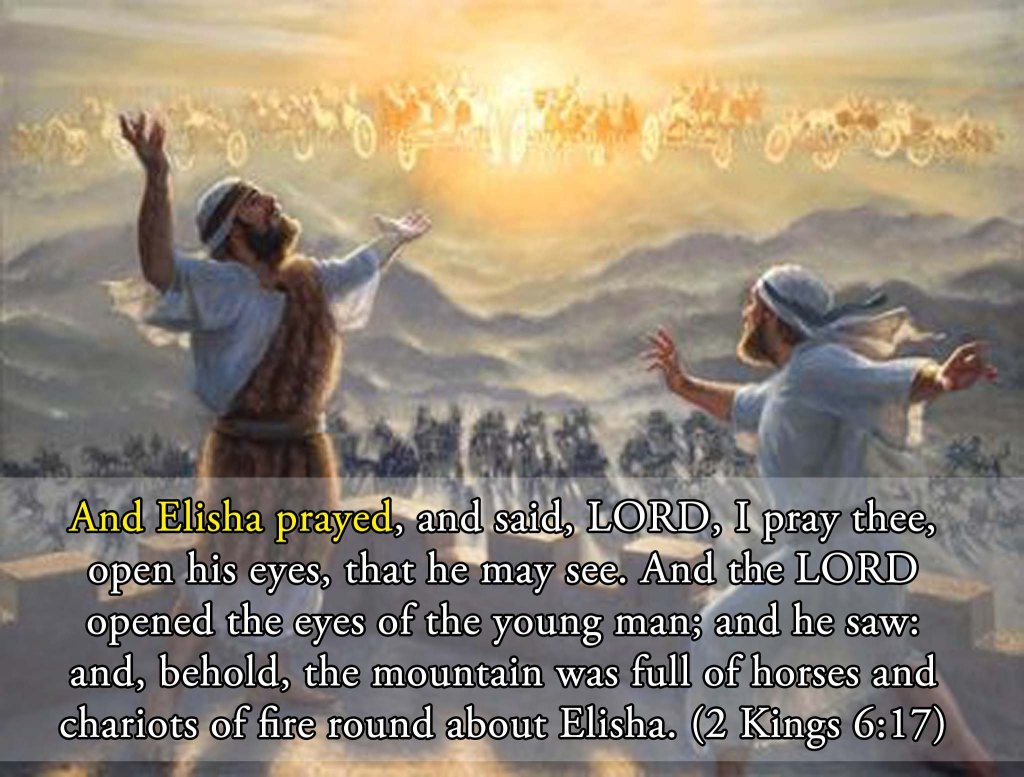
Have you ever stood on top of a cliff, have you ever watched a seagull or a tern that seems to just hang in the air over the waters? The wind may be blustering waves and waters roaring, but the bird still soars calmly over the rough ocean.
That image of hovering over turbulent waters is how the Bible first describes the Spirit of God. The word for “hovering” indicates a high degree of care, even concern, in its action, and it is unmistakably linked to the behavior of protective birds that brood over their nests, guarding and keeping their clutch warm and safe as it develops. From the beginning the Holy Spirit, in his protective love, hovered over the surface of the unformed deep and even now, continues to care.
The story of creation in Genesis was given to God’s people at a time when other stories about the beginning of the world were filled with themes of violence and chaos. Into that unsettled situation, the Genesis story came as a blessed gift revealed God’s purposeful, loving intention to make all things good, beautiful.
At the time, it would have sounded far different from the other creation stories.
And because love and goodness are at the center of this story, it continues to invite people to know God as the loving, protective Creator that he is. As we’ll explore, discover, many other passages in the Bible also teach us something about “in the beginning God ….” through the imagery of the creation story.
In the name of God, the Father and God the Son and God the Holy Spirit,
Let us Pray,
Psalm 19 Complete Jewish Bible
19 (0) For the leader. A psalm of David:
2 (1) The heavens declare the glory of God, the dome of the sky speaks the work of his hands. 3 (2) Every day it utters speech, every night it reveals knowledge. 4 (3) Without speech, without a word, without their voices being heard, 5 (4) their line goes out through all the earth and their words to the end of the world.
In them he places a tent for the sun, 6 (5) which comes out like a bridegroom from the bridal chamber, with delight like an athlete to run his race. 7 (6) It rises at one side of the sky, circles around to the other side, and nothing escapes its heat.
8 (7) The Torah of Adonai is perfect, restoring the inner person. The instruction of Adonai is sure, making wise the thoughtless. 9 (8) The precepts of Adonai are right, rejoicing the heart. The mitzvah of Adonai is pure, enlightening the eyes. 10 (9) The fear of Adonai is clean, enduring forever. The rulings of Adonai are true, they are righteous altogether, 11 (10) more desirable than gold, than much fine gold, also sweeter than honey or drippings from the honeycomb. 12 (11) Through them your servant is warned; in obeying them there is great reward.
13 (12) Who can discern unintentional sins? Cleanse me from hidden faults. 14 (13) Also keep your servant from presumptuous sins, so that they won’t control me. Then I will be blameless and free of great offense.
15 (14) May the words of my mouth and the thoughts of my heart be acceptable in your presence, Adonai, my Rock and Redeemer.
Glory be to the Father, and to the Son, and to the Holy Ghost; as it was in the beginning, is now, and ever shall be, world without end. Amen, amen.
20 (19) But oh, how great is your goodness, which you have stored up for those who fear you, which you do for those who take refuge in you, before people’s very eyes! 21 (20) In the shelter of your presence you hide them from human plots, you conceal them in your shelter, safe from contentious tongues.
22 (21) Blessed be Adonai! For he has shown me his amazing grace when I was in a city under siege. 23 (22) As for me, in my alarm I said, “I have been cut off from your sight!” Nevertheless, you heard my pleas when I cried out to you.
24 (23) Love Adonai, you faithful of his. Adonai preserves the loyal, but the proud he repays in full. 25 (24) Be strong, and fill your hearts with courage, all of you who hope in Adonai.
The Word of God for the Children of God.
Glory be to the Father, and to the Son, and to the Holy Ghost; as it was in the beginning, is now, and ever shall be, world without end. Amen, amen.
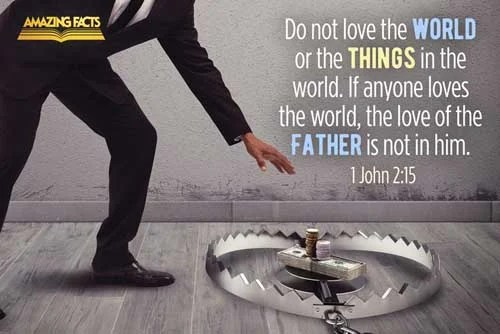
Sometimes the suffering of life feels overwhelming, as if we are under attack surrounded on all sides and can’t find any relief from any one single direction.
We may be debilitated by the grief of losing a loved one. Or maybe we are sick from a medical condition or treatment. Our marriage may be in a whole lot of distress, perhaps even on the brink of separation and divorce. Whatever the case, there are days, long seasons when we feel the weight of the world on us.
And our pleas ring out, cry out,, shriek out; from our places of silent panic;
“Lord, have mercy.”
The psalmist here in Psalm 31 is feeling besieged by relentless human forces, along with the sudden abandonment of his friends. He uses words like distress, anguish, groaning, affliction, forgotten, and terror. He fears that he will die at the hands of his enemies, and he cries out to God in agony.
“Lord, have mercy.”
Perhaps we can all recall a time or two or three when we felt that way, when the walls, ceiling the roof of the house seemed to be closing, collapsing in on you.
While my personal suffering pales in comparison to that of a whole population of people contending with one of a host of debilitating chronic illnesses, I do remember feeling particularly burdened when—I was urgently admitted for open heart surgery—my sister who came down to help my wife ended up in the same hospital as I did with a bad cellulitis in both feet and was unable to walk.
In our mutual efforts at recovering, a group of compassionate nurses made it possible for us to see each other – her in her reclining chair and me in mine. We had a chance to have a deeply meaningful brother older sister talk, prayer time.
Now, almost 15 months later, we are able to look back on those turbulent times, we can see how the Lord was with us, delivered us from our tumult. God 100% answers cries of his people, shines his loving face on us, lighting up our dark.
This one isolated testimony out of undoubtedly the million if not billions more of our God mercifully answering the cries and shrieks of His suffering Children.
Perhaps now is a good time to recount your own story of God “on your jobsite.”
Perhaps even become inspired to imitate, to act, as God acted on your behalf?
More Like Our Rabbi: Imitating the Father’s Mercy
Matthew 7:7-14 Amplified Bible
Prayer and the Golden Rule
7 “[a]Ask and keep on asking and it will be given to you; seek and keep on seeking and you will find; knock and keep on knocking and the door will be opened to you. 8 For everyone who keeps on asking receives, and he who keeps on seeking finds, and to him who keeps on knocking, it will be opened. 9 Or what man is there among you who, if his son asks for bread, will [instead] give him a stone? 10 Or if he asks for a fish, will [instead] give him a snake? 11 If you then, evil (sinful by nature) as you are, know how to give good and advantageous gifts to your children, how much more will your Father who is in heaven [perfect as He is] give what is good and advantageous to those who keep on asking Him.
12 “So then, in everything treat others the same way you want them to treat you, for this is [the essence of] the Law and the [writings of the] Prophets.
The Narrow and Wide Gates
13 “Enter through the narrow gate. For wide is the gate and broad and easy to travel is the path that leads the way to destruction and eternal loss, and there are many who enter through it. 14 But small is the gate and narrow and difficult to travel is the path that leads the way to [everlasting] life, and there are few who find it.
Luke 6:35-36 Amplified Bible
35 But love [that is, unselfishly seek the best or higher good for] your enemies, and do good, and lend, [a]expecting nothing in return; for your reward will be great (rich, abundant), and you will be sons of the Most High; because He Himself is kind and gracious and good to the ungrateful and the wicked. 36 Be merciful (responsive, compassionate, tender) just as your [heavenly] Father is merciful.
“Be merciful, even as your Father is merciful” is a summary statement of Jesus’ famous teaching in the Beatitudes (Luke 6:20-23) and indeed would be a good motto for every believer’s life.
These words underscore all Jesus has previously said concerning how we are to treat others—especially those who hate us for our faithfulness to Him (v 22).
Luke 6:20-23Amplified Bible
The Beatitudes
20 And looking toward His disciples, He began [a]speaking: “Blessed [spiritually prosperous, happy, to be admired] are you who are poor [in spirit, those devoid of spiritual arrogance, those who regard themselves as insignificant], for the kingdom of God is yours [both now and forever]. 21 Blessed [joyful, nourished by God’s goodness] are you who hunger now [for righteousness, actively seeking right standing with God], for you will be [completely] satisfied. Blessed [forgiven, refreshed by God’s grace] are you who weep now [over your sins and repent], for you will laugh [when the burden of sin is lifted]. 22 Blessed [morally courageous and spiritually alive with life-joy in God’s goodness] are you when people hate you, and exclude you [from their fellowship], and insult you, and scorn your name as evil because of [your association with] the Son of Man. 23 Rejoice on that day and leap for joy, for your reward in heaven is great [absolutely inexhaustible]; for their fathers used to treat the prophets in the same way.
This should, however, also prompt us to pray:
“God, what does being merciful actually look like?”“Open my eyes, unclog my ears that I may hear their crying, their shrieks for help, that I may see visions of mercy thou hast for me, them, open mine ears, mine eyes and illumine me, Spirit Divine.”
As our wiser and tender and compassionate Shepherd, Jesus does not leave us to figure out this principle for ourselves. Rather, He gives us specific instructions on exactly what it means for you, me, we, imitate our merciful heavenly Father.
God “is kind to the ungrateful and the evil.”
As His children, we must realize that we are so mightily challenged by these Gospel Words, called to demonstrate this same kindness by loving our enemies, returning goodness and kindness for evil, giving to others without expecting anything in return. Notice Jesus lists no exemptions or get-out clauses here.
Having called us to be vessels of God’s kindness, Jesus then immediately says that we are not to judge others (Luke 6:37-38).
Luke 6:37-38 Amplified Bible
37 “[a]Do not judge [others self-righteously], and you will not be judged; do not condemn [others when you are guilty and unrepentant], and you will not be condemned [for your hypocrisy]; pardon [others when they truly repent and change], and you will be pardoned [when you truly repent and change]. 38 Give, and it will be given to you. They will pour into your lap a good measure—pressed down, shaken together, and running over [with no space left for more]. For with the standard of measurement you use [when you do good to others], it will be measured to you in return.”
He is not asking us to suspend our critical faculties in our relationships; we have to use our minds to discern between truth and error or good and evil.
Likewise Jesus is not teaching that we are to turn a blind eye to sin or refuse to offend others, point out errors. Rather, when Jesus commands us not to judge, He is condemning a spirit of self-righteous, self-exalting, hypocritical, harsh judgmentalism—an approach which seeks to highlight, shine the brightest neon lights on the faults of others, always brings with it the flavor of bitterness.
An unkind spirit completely violates Jesus’ exhortation to overflow with mercy towards both friend and enemy. Each and everyone of us needs to identify any spirit of judgment we may be harboring, to root it out, and to replace cruelty with kindness and harshness with patience, self-control and understanding.
This is how we show to others the kind of mercy that God has shown to us.
A (possibly apocryphal) story is told of how, when Queen Elizabeth II was a girl, she and her sister, Margaret, would be told by their mother before they went to a party, “Remember: royal children, royal manners.”
Their behavior would not make them members of the royal family, but it would demonstrate their royal character and royal membership in that royal family.
Fellow Christians, you and I are members of the royal family of the universe, with the King of creation as our Father. Be sure that your manners reflect who you are and whose you are. Be merciful, even as your Father is 100% merciful.
In the name of God, the Father and God the Son and God the Holy Spirit,
Let us Pray,
Psalm 23 Easy-to-Read Version
A song of David.
23 The Lord is my shepherd. I will always have everything I need.[a] 2 He gives me green pastures to lie in. He leads me by calm pools of water. 3 He restores my strength. He leads me on right paths[b] to show that he is good. 4 Even if I walk through a valley as dark as the grave,[c] I will not be afraid of any danger, because you are with me. Your rod and staff[d] comfort me. 5 You prepared a meal for me in front of my enemies. You welcomed me as an honored guest.[e] My cup is full and spilling over. 6 Your goodness and mercy will be with me all my life, and I will live in the Lord’s house[f] a long, long time.[g]
Glory be to the Father, and to the Son, and to the Holy Ghost; as it was in the beginning, is now, and ever shall be, world without end. Amen, amen.
11 ‘Give us this day [a]our daily bread. 12 ‘And forgive us our debts, as we also have forgiven our debtors.
The Word of God for the Children of God.
Glory be to the Father, and to the Son, and to the Holy Ghost; as it was in the beginning, is now, and ever shall be, world without end. Amen, amen.
Welcome, dear friends, to this blessed gathering where we bask in the warmth of God’s love, where we find solace in His comforting embrace, and where we seek wisdom from His sacred word. Today, we turn our hearts and minds to a passage of scripture that, like a beacon in the storm, guides our way through the complexities of life, illuminating the path of righteousness before us.
Let us turn together to the Gospel narrative of Matthew, chapter 6, verses 11 and 12, where it is written,
“Give us this day our daily bread. And forgive us our trespasses, as we also have forgiven our trespassers.”
Somewhere within these words, we will find a profound truth about the nature of our relationship with our Heavenly Father. Like a loving parent, He is ever ready to provide for us, to forgive us, and to guide us in forgiving others. These are the main points we shall reflect upon today: God as our Grand Provider, the Grace in God’s Forgiveness, and the very truest Guidance to Grant Forgiveness.
Reverend Dr. Billy Graham once said, “Christ can take the most sin-laden, selfish, evil person and bring forgiveness and new life.”
Indeed, God, our Provider, leads us to a life of true holiness. He who provides for us our daily bread, who sustains us in times of need, and who, in His infinite mercy and grace, forgives us our debts, is deserving of our deepest reverence.
Yet, His grace does not stop at forgiveness.
He also guides us, as we strive to forgive those who have wronged us.
This is a challenging task, one requiring strength of character and depth of faith. But as we shall see, it is through the act of forgiveness we truly embody the teachings of Christ, through forgiveness that we find our own redemption.
Let us now silence our souls, give pause to our guilts, bow our heads in prayer, as we seek out our God’s greater guidance, wisdom, in understanding His word.
Heavenly Father, we come before You today with open hearts and minds, ready to receive Your divine wisdom. As we reflect on Your word, may we be reminded of Your unwavering love for us, Your constant provision, the grace You so freely give. Guide us, Lord, as we strive to forgive as You have forgiven us. May Your word be a lamp unto our feet, a light unto our path. In Jesus’ name, we do pray. Amen.
Let’s get started!
God as our Grand Provider
God is known as Jehovah-Jireh, the Lord who provides.
And one of the earliest stories of God’s miraculous provision unfolds when God asks Abraham to offer his promised son Isaac as a sacrifice but provides a ram.
In the heart of the holy scriptures we find a truth that is as comforting as it is profound. The Lord, in His boundless love and mercy, is our provider.
He gives us what we need, when we need it.
This is not a promise of excess or luxury, but of sufficiency.
Our daily bread, our daily provision of a loaf of bread, a simple yet powerful symbol of sustained sustenance and life even spiritual life, is assured to us.
More than about our physical needs: Yes, He provides food for our bodies, but He also nourishes our souls. He feeds us with His Words of life, love, with peace, with joy, and with hope. These are the true spiritual nutrients that sustain us as we navigate the challenges of our lives. They are the bread of life that fills us with the strength to carry on, even when the road is steep, the journey is hard.
How does He provide for us?: How does He ensure that we have our daily bread?
The answer lies in His creation.
The earth and all its abundant bounty, the seasons in their cycle of life, death, and renewal, the sun and the rain that nurture the soil, the plants that grow, the trees that give their myriad upon myriad of fruits and the animals that roam – the waters which sate our thirsts, its food sources, all these are His provisions.
Given to us at the Beginning, (Genesis 1-2) they are His created gifts to us, a living eternal testament to His faithfulness, His truths, His love, and His care.
He provides for our emotional and mental well-being: He gives us the capacity to love and to be loved, to feel joy and sadness, to experience beauty and pain.
These are the experiences that shape us, make us human. He knows every cell in our body, knitted, they are the threads that weave the very tapestry of our lives.
Our spiritual needs: How does He provide for them?
The answer is simple yet profound.
He gives us Himself.
He is the bread of life, the living water, the waters of life, the source of all that is good and pure. He is the one who fills the emptiness within us, who satisfies our deepest hunger, quenches our deepest thirst. He is the one who gives an eternal meaning to our lives, who gives each of us His unique purpose to our existence.
He provides us with guidance: He gives us His word, a lamp to our feet and a light to our path.
He gives us His Spirit, a counselor and comforter, to guide us in all truth. He gives us His Son, a perfect example of love and obedience, to show us the way.
Let us remember each and every day to be 100% thankful for His provision: Let us appreciate the food on our table, the water we drink, the gift of a family, the love in our hearts, the beauty around us, the experiences that shape us, the truest guidance that leads us to quiet meadows, and the Savior who saves us.
Let us remember every good, perfect gift comes from Him, our Jehovah Jireh.
Grace in God’s Forgiveness
What is the Hebrew word for God who forgives?
El Nasah
– “God” – “Elohim.”
This is the first name used for God as found in Gen. 1:1. – “God-Who-Forgives” – “El Nasah.”
The Hebrew “El” means “God” and “nasah” means “to forgive,” or “to bear.”
The LORD answered those who prayed to Him on behalf of the people of God.
As we reflected on God’s role as our Grand Provider, we are naturally led to consider another facet of His divine character, that of His boundless grace in forgiveness … acknowledging, receiving, sharing the blessed gift of happiness.
32 How blessed is he whose transgression is forgiven, Whose sin is covered! 2 How blessed is the man to whom the Lord does not impute iniquity, And in whose spirit there is no deceit!
3 When I kept silent about my sin, my [b]body wasted away Through my [c]groaning all day long. 4 For day and night Your hand was heavy upon me; My [d]vitality was drained away as with the fever heat of summer. [e]Selah. 5 I acknowledged my sin to You, And my iniquity I did not hide; I said, “I will confess my transgressions to the Lord”; And You forgave the [f]guilt of my sin. Selah. 6 Therefore, let everyone who is godly pray to You [g]in a time when You may be found; Surely in a flood of great waters they will not reach him. 7 You are my hiding place; You preserve me from trouble; You surround me with [h]songs of deliverance. Selah.
8 I will instruct you and teach you in the way which you should go; I will counsel you with My eye upon you. 9 Do not be as the horse or as the mule which have no understanding, Whose trappings include bit and bridle to hold them in check, Otherwise they will not come near to you. 10 Many are the sorrows of the wicked, But he who trusts in the Lord, lovingkindness shall surround him. 11 Be glad in the Lord and rejoice, you righteous ones; And shout for joy, all you who are upright in heart.
Many people are plagued with a deep guilt. They live as lifelong prisoners of sin, without peace in their souls. As a result, too many people have sought refuge in false solutions, attempts to appease their feelings of guilt have failed miserably.
Some people try to escape this overwhelming feeling by going on adventures.
Others try to numb or kill themselves with alcohol or drugs, creating even deeper pain. Some try to calm their anguish with self-help philosophies and mystical experiences. But no ritual or exercise can alleviate a guilty conscience.
Only the spilled life blood of Jesus can blot out our sins, free us from the guilt of our wrongdoing. Only Savior Jesus can break the bars of our prison, break our chains. Only Jesus can offer us true forgiveness and eternal happiness. Seeking forgiveness from another source is like trying to find water in a dried-up well.
The psalmist learned similarly that while he kept silent (not seeking God’s forgiveness), his “bones wasted away,” his “strength was sapped as in the deep heat of summer.” Only when he opened his heart to God and acknowledged his sin did he find healing for the affliction of his soul. For he found that God, in His infinite capacity for compassion and for mercy, “forgave the guilt of [his] sin.”
By that release from guilt, the Psalmist also found the greatest happiness in his being able to share the enormity, the magnitude in his soul – and share it, teach it, model it for the maximum benefit of all the countless generations of others.
8 I will instruct you and teach you in the way which you should go; I will counsel you with My eye upon you. 9 Do not be as the horse or as the mule which have no understanding, Whose trappings include bit and bridle to hold them in check, Otherwise they will not come near to you. 10 Many are the sorrows of the wicked, But he who trusts in the Lord, lovingkindness shall surround him. 11 Be glad in the Lord and rejoice, you righteous ones; And shout for joy, all you who are upright in heart.
For the Lord rejoices over the return of even one unrepentant sinner …
Luke 15:1-10 Complete Jewish Bible
15 The tax-collectors and sinners kept gathering around to hear Yeshua, 2 and the P’rushim and Torah-teachers kept grumbling. “This fellow,” they said, “welcomes sinners — he even eats with them!” 3 So he told them this parable: 4 “If one of you has a hundred sheep and loses one of them, doesn’t he leave the other ninety-nine in the desert and go after the lost one until he finds it? 5 When he does find it, he joyfully hoists it onto his shoulders; 6 and when he gets home, he calls his friends and neighbors together and says, ‘Come, celebrate with me, because I have found my lost sheep!’ 7 I tell you that in the same way, there will be more joy in heaven over one sinner who turns to God from his sins than over ninety-nine righteous people who have no need to repent.
8 “Another example: what woman, if she has ten drachmas and loses one of these valuable coins, won’t light a lamp, sweep the house and search all over until she finds it? 9 And when she does find it, she calls her friends and neighbors together and says, ‘Come, celebrate with me, because I have found the drachma I lost.’ 10 In the same way, I tell you, there is joy among God’s angels when one sinner repents.”
Because of your forgiveness, mercies, O Lord, we are not consumed. Your forgiveness cancels the power of guilt and sin. We praise you, Lord, in the name of Jesus. Amen.
My God! How Great Thou Art!
My Savior Jesus! How Great Thou Art!
My Intercessor, Spirit of Truth, My Holy Spirit! How Great Thou Art!
Hallelujah! Hallelujah! Hallelujah!
Amen! Amen! Amen!
In the name of God, the Father and God the Son and God the Holy Spirit,
Let us Pray,
Psalm 42 Complete Jewish Bible
Book II: Psalms 42–72
42 (0) For the leader. A maskil of the descendants of Korach:
2 (1) Just as a deer longs for running streams, God, I long for you. 3 (2) I am thirsty for God, for the living God! When can I come and appear before God?
4 (3) My tears are my food, day and night, while all day people ask me, “Where is your God?” 5 (4) I recall, as my feelings well up within me, how I’d go with the crowd to the house of God, with sounds of joy and praise from the throngs observing the festival.
6 (5) My soul, why are you so downcast? Why are you groaning inside me? Hope in God, since I will praise him again for the salvation that comes from his presence. 7 (6) My God, when I feel so downcast, I remind myself of you from the land of Yarden, from the peaks of Hermon, from the hill Mizar. 8 (7) Deep is calling to deep at the thunder of your waterfalls; all your surging rapids and waves are sweeping over me. 9 (8) By day Adonai commands his grace, and at night his song is with me as a prayer to the God of my life. 10 (9) I say to God my Rock, “Why have you forgotten me? Why must I go about mourning, under pressure by the enemy? 11 (10) My adversaries’ taunts make me feel as if my bones were crushed, as they ask me all day long, ‘Where is your God?’ ”
12 (11) My soul, why are you so downcast? Why are you groaning inside me? Hope in God, since I will praise him again for being my Savior and God.
Glory be to the Father, and to the Son, and to the Holy Ghost; as it was in the beginning, is now, and ever shall be, world without end. Amen, amen.
23 [a]For I received from the Lord Himself that [instruction] which I passed on to you, that the Lord Jesus on the night in which He was betrayed took bread; 24 and when He had given thanks, He broke it and said, “This is (represents) My body, which is [offered as a sacrifice] for you. Do this in [affectionate] remembrance of Me.” 25 In the same way, after supper He took the cup, saying, “This cup is the new covenant [ratified and established] in My blood; do this, as often as you drink it, in [affectionate] remembrance of Me.” 26 For every time you eat this bread and drink this cup, you are [symbolically] proclaiming [the fact of] the Lord’s death until He comes [again].
The Word of God for the Children of God.
Glory be to the Father, and to the Son, and to the Holy Ghost; as it was in the beginning, is now, and ever shall be, world without end. Amen, amen.
A Time for Silent Recall, for Proclaiming the Sacrifice
1 Corinthians 11:23-26 Disciples’ Literal New Testament
The Lord’s Supper Is a Remembrance of What He Did For Us
23 For I received from the Lord what I also handed-over[a] to you— that the Lord Jesus, in the night on which He was being handed-over, took bread. 24 And having given-thanks, He broke it and said “This is My body, the one being given[b] for you. Be doing this for My remembrance”. 25 Similarly also the cup after the dining[c], saying, “This cup is the new covenant in My blood. Be doing this, as-often-as you drink it, for My remembrance”. 26 For as-often-as you eat this bread and drink the cup, you are proclaiming the death of the Lord, until which time He comes.
Today is Sunday, and if you attend a worship service today, you might celebrate the Lord’s Supper, or Holy Communion. Many churches around the world will gather and focus on the simple loaf of bread and cup and hear these powerful words: “This is my body, given for you. . . . This is my blood, shed for you.”
In a way, the tangible elements of bread and grape juice (or wine) bear witness to the limitless love of Jesus shown in his sacrifice on the cross. We are invited to take and eat so that we may remember and believe that in Jesus’ death and resurrection we find forgiveness and new life. We are also reminded that when we participate in communion, we “recall and proclaim the Lord’s death” until he returns. Communion itself is a witness unto Jesus and all he has done for us.
I remember an enormously powerful experience of communion many years ago.
It was on the day of my wife’s and mine wedding.
As the Clergy proceeded through the liturgy of Marriage, in the background was the Bread and the Cup of Communion waiting for the moment of consecration.
In the modest sized Methodist Church where we were Married, the wife and I were both excited for each other, profoundly humbled before the Lord our God.
For the Wife and I what mattered the most was not just the moment of joining but the above and beyond all other things, celebrating, recalling Jesus’ place in our lives, in this holy moment of marriage – God #1 Jesus #1 Holy Spirit #1.
Love and sacrifice and service unto God first and foremost, then our neighbors and then each other. (Mark 12:28-34 Complete Jewish Bible)
28 One of the Torah-teachers came up and heard them engaged in this discussion. Seeing that Yeshua answered them well, he asked him, “Which is the most important mitzvah of them all?” 29 Yeshua answered, “The most important is,
‘Sh’ma Yisra’el, Adonai Eloheinu, Adonai echad [Hear, O Isra’el, the Lord our God, the Lord is one],30 and you are to love Adonai your God with all your heart, with all your soul, with all your understanding and with all your strength.’[a]
There is no other mitzvah greater than these.” 32 The Torah-teacher said to him, “Well said, Rabbi; you speak the truth when you say that he is one, and that there is no other besides him; 33 and that loving him with all one’s heart, understanding and strength, and loving one’s neighbor as oneself, mean more than all the burnt offerings and sacrifices.” 34 When Yeshua saw that he responded sensibly, he said to him, “You are not far from the Kingdom of God.” And after that, no one dared put to him another sh’eilah.
*sh’eilah* The word in Hebrew means simply “question,” but among Jews speaking English it means “a question about Torah or halakhah” …
Halakhah, in Judaism, the totality of laws and ordinances that have evolved since biblical times to regulate religious observances and the daily life and conduct of the Jewish people.
As my Wife and I held those symbols of Jesus’ death in our hands, we saw with fresh eyes how his sacrifice brings life. We had both brought our “baggage,” and we placed them upon His Altar, sacrificing them as Christ sacrificed for us.
As we served the Elements, as we first served God, as we served the assembled wedding guests and officiants, we prayed that we set an example for the guests of the absolute primacy of God, the Father and God the Son and God Holy Spirit in our wedded lives and by divine extension into wedded lives of the assembled.
We decided God alone brought us together. God had decided that our purpose here wasn’t finished. In life in the primacy of service to God, our neighbors and ourselves, and in death, we all belong to him—the one who gave his all for us.
As you each proceed to receive holy Communion, recall first and foremost, in and echelons above all that we our ever so flawed and finite selves hold being primary, having all or nothing primacy in our day to day lives, Jesus, you are the bread of life. As we worship you, may we experience close communion with you and our brothers and sisters in faith. Thank you for the gift of your life. Alleluia! Amen.
In the name of God, the Father and God the Son and God the Holy Spirit,
Let us Pray,
Psalm 23 Complete Jewish Bible
23 (0) A psalm of David:
(1) Adonai is my shepherd; I lack nothing. 2 He has me lie down in grassy pastures, he leads me by quiet water, 3 he restores my inner person. He guides me in right paths for the sake of his own name. 4 Even if I pass through death-dark ravines, I will fear no disaster; for you are with me; your rod and staff reassure me.
5 You prepare a table for me, even as my enemies watch; you anoint my head with oil from an overflowing cup.
6 Goodness and grace will pursue me every day of my life; and I will live in the house of Adonai for years and years to come.
Tehillim 23 Orthodox Jewish Bible
23 (Mizmor of Dovid). Hashem is my Ro’eh (Shepherd); I shall not lack.
2 He maketh me to lie down in greenpastures; He leadeth me beside the mei menuchot (tranquil waters).
3 He restoreth my nefesh; He guideth me in the paths of tzedek l’ma’an Shmo (righteousness for the sake of His Name).
4 Yea, though I walk through the Gey Tzalmavet (Valley of the Shadow of Death), I will fear no rah (evil); for Thou art with me; Thy shevet (rod) and Thy staff they comfort me.
5 Thou preparest a shulchan before me in the presence of mine enemies: Thou anointest my head with shemen (olive oil); my kos runneth over.
6 Surely tov and chesed shall follow me kol y’mei chaiyyai (all the days of my life): and I will dwell in the Bais Hashem l’orech yamim (for length of days, whole life.
Glory be to the Father, and to the Son, and to the Holy Ghost; as it was in the beginning, is now, and ever shall be, world without end. Amen, amen.
10 Why, Adonai, do you stand at a distance? Why do you hide yourself in times of trouble? 2 The wicked in their arrogance hunt down the poor, who get caught in the schemes they think up.
3 For the wicked boasts about his lusts; he blesses greed and despises Adonai. 4 Every scheme of the wicked in his arrogance [says], “There is no God, [so] it won’t be held against me.” 5 His ways prosper at all times. Your judgments are way up there, so he takes no notice. His adversaries? He scoffs at them all. 6 In his heart he thinks, “I will never be shaken; I won’t meet trouble, not now or ever.” 7 His mouth is full of curses, deceit, oppression; under his tongue, mischief and injustice. 8 He waits near settlements in ambush and kills an innocent man in secret; his eyes are on the hunt for the helpless. 9 Lurking unseen like a lion in his lair, he lies in wait to pounce on the poor, then seizes the poor and drags him off in his net. 10 Yes, he stoops, crouches down low; and the helpless wretch falls into his clutches. 11 He says in his heart, “God forgets, he hides his face, he will never see.”
12 Arise, Adonai! God, raise your hand! Don’t forget the humble! 13 Why does the wicked despise God and say in his heart, “It won’t be held against me”? 14 You have seen; for you look at mischief and grief, so that you can take the matter in hand. The helpless commits himself to you; you help the fatherless. 15 Break the arm of the wicked! As for the evil man, search out his wickedness until there is none left.
16 Adonai is king forever and ever! The nations have vanished from his land. 17 Adonai, you have heard what the humble want; you encourage them and listen to them, 18 to give justice to the fatherless and oppressed, so that no one on earth will strike terror again.
The Word of God for the Children of God.
Glory be to the Father, and to the Son, and to the Holy Ghost; as it was in the beginning, is now, and ever shall be, world without end. Amen, amen.
Having consistent and transformational encounters with God while on earth is meant to be foundational to the Christian life. Our God has not left us. Our God has not changed, cannot be changed, will not change, will never be changed. He is, was and forever be the same God – today, yesterday and every last tomorrow.
Through the sacrifice of Jesus, we’ve been filled with the very Spirit of God who longs to reveal to us daily the nearness and love of our heavenly Father. We are never left alone. There is nowhere we can flee from the presence of our God. It is likewise true God can always be found-sometimes in the most common places.
However, as much the Hebrews 13:8 remains forever true and unchangeable, it is more than well established through the Word of God that while things will always proceed according to God’s plan, humankind’s plan always, inevitably, falls apart and humanity struggles to regain the degree and measure of control they falsely believe they exercise over divine providence, and God ‘vanishes.’
Humankind inevitably will become all kind of flustered, frustrated and frayed.
10 Why do You stand far away, O Lord? Why do You hide [Yourself, veiling Your eyes] in times of trouble?Psalm 10:1
The pitiful cries that are recorded in this Psalm 10 could be the words of many believers today.
Times of deepest troubles and severe persecution are touching every member of the Body of Christ in one way or another, many are repeatedly crying out: “Lord, why do you stand far off? Why do you (always) hide yourself in times of trouble?”
What the Psalmist recorded 3000 years ago, mirrors the happenings of today, as many continue to ask, “Why does the Lord our God seem to remain silent while the innocents suffer? Why are those arrogant, evil men permitted to go unchallenged?”
We may not or never understand the full plans and purposes of God, but He has already appointed a time, a time known only to Him, to judge evil, the wicked.
We may be grieved by the wars, the atrocities, the incredible measures and degrees and divisiveness that are taking place today, but God has appointed a day to finish transgression, put an end to sin, to atone for wickedness, to bring in everlasting righteousness, to set His King upon His holy Hill in Jerusalem.
For two thousand years, God has been pouring out grace upon grace, upon grace not willing that any should perish. But the day is coming when wicked and evil man will be called to a final account of their sins, day of wrath is surely coming when nations will be judged, and God will wipe away every tear from our eyes.
Jesus taught us in John 4:23, “But the hour is coming, and is now here, when the true worshipers will worship the Father in spirit and truth, for the Father is seeking such people to worship him.” Your heavenly Father is seeking your worship. He longs for it. He so places highest values on your love, adoration that he would send his Son to die that the path to encountering him would be made available.
You, me, we, were first and foremost created to worship. You, me, we were all created to receive the love of your Creator and in response give him your heart.
You, me, we, will never feel as whole as when our hearts is connected to our Heavenly Father’s heart and you, me, we are giving, receiving love in worship.
Psalm 29 Complete Jewish Bible
29 (0) A psalm of David:
(1) Give Adonai his due, you who are godly; give Adonai his due of glory and strength; 2 give Adonai the glory due his name; worship Adonai in holy splendor.
3 The voice of Adonai is over the waters; the God of glory thunders, Adonai over rushing waters, 4 the voice of Adonai in power, the voice of Adonai in splendor.
5 The voice of Adonai cracks the cedars; Adonai splinters the cedars of the L’vanon 6 and makes the L’vanon skip like a calf, Siryon like a young wild ox.
7 The voice of Adonai flashes fiery flames; 8 the voice of Adonai rocks the desert, Adonai convulses the Kadesh Desert. 9 The voice of Adonai causes deer to give birth and strips the forests bare — while in his temple, all cry, “Glory!” 10 Adonai sits enthroned above the flood! Adonai sits enthroned as king forever! 11 May Adonai give strength to his people! May Adonai bless his people with shalom!
The Christian life is to be marked by disciplined heartfelt, genuine worship: worship filled with God’s presence and intimate nearness and nearness to the heartbeat of God that responds to a true encounter with the heart of God.
If that type of worship is new to you, that’s okay!
If the idea of encountering God in worship is new to you, there is joy and grace at the place of new beginnings.
Don’t allow your past to dictate the possibilities of your future.
Don’t allow past experiences where worship might not have been filled with encountering Jesus make you believe our future times of our worship won’t be marked by the power and intimacy and God’s presence. (Isaiah 6:1-10)
Where else Do We See the Gospel in the Psalms?
Asking how we see the gospel in the book of Psalms feels a little like asking, “How do we see the gospel in The Methodist Hymnal.”
Isn’t it there in every single song (hopefully)?
Of course, the Old Testament is different. But this is a book of music which Old Testament believers would have used to express their faith in the living God.
In order to see the gospel in Psalms do we need to analyze every single chapter?
Are these not individual songs?
Or is there a unified theme to the Psalms which also points to the gospel?
I will argue that the Psalms not only point us to Jesus individually, the Book of Psalms as a compilation which will also point us to the finished work of Christ.
How Do You Find the Gospel in the Old Testament?
I suppose before understanding how to find the gospel in the OT, it’d be helpful for us to define the gospel.
The simplest definition is one given by JI Packer: God saves sinners.
If you’d like to put a bit more meat on your gospel presentation, I use two different frameworks with four points each.
The first is God—Man—Christ—Response.
The second is more of a story: Creation—Fall—Redemption—Glory.
The first presentation centers upon God’s character and how humanity fails to meet God’s holy standard, as such the judgment of God is upon us.
But the good news is that Jesus Christ fixes this by fulfilling what is required through his life, death and resurrection.
Our only fitting response, then, is to respond to Him in repentance and faith.
When this happens, we are united to Christ and his record becomes our record.
The second presentation centers upon the overarching story of the Bible.
God lovingly created us to love Him and enjoy Him forever.
We were made for rest, rule, and relationship.
But we made shipwreck of this, and so rather than having the blessings of obedience we are under the curse of disobedience.
Rather than having peace (rest), purpose (ruling), and healthy relationship we often experience the opposite.
Ultimately, we are alienated from God. But thankfully God sent His Son, Jesus Christ, to bear our curse and to fulfill what God intended for humanity.
As such we now experience the blessings of Jesus’ obedience in our place.
He restores the rest, rule, and relationship we were created to enjoy.
Someday everything will be ultimately restored and we will live in a new heaven and a new earth.
We could write entire books focusing on these various themes of the gospel.
But every gospel story follows this basic skeleton.
No matter where you find yourself in the Old Testament (or New Testament) you can find one of these various threads.
Every place in Scripture is either telling you something about God, something about our rebellion, something about His rescue, or something about our future restoration.
If you can spot this, then you can fill out the rest of the story.
The Gospel in Psalms
For my studies, I have often compared the book of Psalms to a hymnbook.
That’s not entirely true.
It was a collection of poems throughout the history of Israel, many of which were set to music.
Most believe the 150 Psalms were compiled at some point after the Babylonian exile. How were they compiled? Did an ancient exiled editor just randomly pick a few poems, stick them together willy dilly, and then give them numbers?
Or was there an intentional structure?
The first clue that there is an intentional structure is that many have headings.
In fact, we notice that there are five Books of the Psalms. This is likely intentional and connected to the Pentateuch (the first five books of the Old Testament). We also see that each of these books ends with a doxology.
This structure can help us understand the overall theme of the book of Psalms.
Taking the first two books as a bit of a thesis, I appreciate the summary given by The Bible Project.
They say, it is “the prayer book of God’s people as they strive to be faithful to the Torah as they wait for the Messianic Kingdom.”
How do these five books of Psalms support that theme?
And more importantly how does the story of the Psalms point to Christ?
Book I
Almost all of the psalms of Book I are attributed to David.
They carry a strong theme of fidelity to the Torah and the nature of the Davidic King and kingdom.
But they are often set in the middle of distressing situations.
Saul’s pursuit of David plays a prominent role throughout these.
And yet through this distress, we see a settled disposition to trust in the Lord.
The theme here is that of confrontation with the results of the fall.
The seed of the woman will crush the head of the serpent.
We see this theme played out through the conflict of Book I.
Book II
In Book II we are introduced to the Sons of Korah (Ps. 42-49), one psalm of Asaph (50), and then another group of psalms attributed to David (51-71).
It closes with a psalm of Solomon (72).
In this book, the posture towards the world is a bit different. Rather than a confrontation we see more of an invitation. Here the Abrahamic blessing is extended through the reign of the Messiah’s kingdom. But it is still set within a background of lament and longing and an underlying desire for repentance.
Book III
In Book III it is as if all the wheels come off of the locomotive.
The psalms further darken until they reach their climax in Psalm 88.
That is the psalm of lament where there is no positive turn.
It is only darkness.
But the book ends with a bit of a higher note in Psalm 89 as it points toward the promise of a messianic kingdom, but now it does so in light of the exile and the collapse of the Davidic Kingdom. How can the Messiah come through this?
How can a king sit on David’s throne when the people are divided, scattered?
Book IV
Book IV, opening with Psalm 90, seems like a response to the questions and the problems which the fall of the Davidic kingdom brings.
Psalm 90 goes back to Moses and his call of repentance after the incident of the golden calf.
This is likely where the people are during the time when these psalms are compiled. There is an obvious theme here of the truth that “the Lord reigns.”
That is the answer to the exile. God is still able to bring that which He promised.
Book V
Book V has within it two sub-books: the Hallel and the Songs of Ascent.
These point to the promise of a new Exodus. Positioned within the middle of these sub-books is Psalm 119 — that really long psalm all about delight in the Torah. Once again, we see the original theme of the book of the Psalms.
The whole thing concludes with five Hallelu-Yah’s (Praise the Lord) — pointing to God’s coming rule and reign.
The Psalms are a recasting of the history of Israel (really of all of humanity).
It tells the story of the gospel. God has decisively crushed the head of the serpent, but we are not yet there. We do not yet fully live in this redemption.
Therefore, we have some of the same struggles as the psalmist did. We have seasons of lament, where we are honest with God about our grief.
And we also have times of praise, prayer and worship — when the kingdom appears to be vividly breaking into our here and now.
The gospel is in the structure of the Psalms through pointing to the coming Rescuer. Each of the Psalms point to Jesus. He is the long awaited for King.
He is the hope of the nations.
The Gospel in Psalm 88
Psalm 88 Complete Jewish Bible
88 (0) A song. A psalm of the sons of Korach. For the leader. Set to “Sickness that Causes Suffering.” A maskil of Heiman the Ezrachi.
2 (1) Adonai, God of my salvation, when I cry out to you in the night, 3 (2) let my prayer come before you, turn your ear to my cry for help! 4 (3) For I am oversupplied with troubles, which have brought me to the brink of Sh’ol. 5 (4) I am counted among those going down to the pit, like a man who is beyond help, 6 (5) left by myself among the dead, like the slain who lie in the grave — you no longer remember them; they are cut off from your care.
7 (6) You plunged me into the bottom of the pit, into dark places, into the depths. 8 (7) Your wrath lies heavily on me; your waves crashing over me keep me down. (Selah) 9 (8) You separated me from my close friends, made me repulsive to them; I am caged in, with no escape; 10 (9) my eyes grow dim from suffering.
I call on you, Adonai, every day; I spread out my hands to you. 11 (10) Will you perform wonders for the dead? Can the ghosts of the dead rise up and praise you? (Selah) 12 (11) Will your grace be declared in the grave, or your faithfulness in Abaddon? 13 (12) Will your wonders be known in the dark, or your righteousness in the land of oblivion?
14 (13) But I cry out to you, Adonai; my prayer comes before you in the morning. 15 (14) So why, Adonai, do you reject me? Why do you hide your face from me?
16 (15) Since my youth I have been miserable, close to death; I am numb from bearing these terrors of yours. 17 (16) Your fierce anger has overwhelmed me, your terrors have shriveled me up. 18 (17) They surge around me all day like a flood, from all sides they close in on me. 19 (18) You have made friends and companions shun me; the people I know are hidden from me.
Psalm 88 is horribly depressing.
Unlike the other psalms of lament, there is not a glimmer of hope here.
I believe this is an expression of what happens when the curses of Deuteronomy 28 fall upon a people.
It is precisely the situation which the exilic community is facing.
And with all of this pain comes deep questions.
There are two questions which are crying out during an exile.
If the curse of the Law has fallen upon them, has their sin cut them off from God forever? How can an unholy people ever expect to return to a right relationship with God? Could they ever come back to the land? (That’s all one question, but trauma tends to ask the same question in multiple says).
But these questions are cast against the background of God’s promises.
How can this be?
Has God cut them off forever?
Will they ever again be recipients of these great promises?
What does this mean for God’s name throughout the world?
Does this now mean that Babylon is more powerful?
Are they the victors? Did the serpent win?
Ever feel this way yourself?
I know I’ve had very dark nights of the soul.
I have felt in my bones the pain of Psalm 88. On one particularly low occasion I found myself praying Psalm 88. I felt like the psalm was written for me.
This is my situation.
This embodies my hurt.
But then I started to think of Christ.
Wait…Psalm 88 isn’t my psalm, it’s His.
If anyone can pray Psalm 88 it is Christ who drank of the curse on our behalf.
Jesus truly did bear in His body the full weight of the Deuteronomic curse.
Even though I’ve felt Psalm 88, and even though I may go through seasons where I can pray this and identify with it, I haven’t experienced it as deeply as Christ. He has gone several echelons deeper into the pit than I will ever go.
This is good news because the story doesn’t end with Psalm 88. We’re meant to read it with Psalm 89. And Psalm 89 invites us to hope in the coming Messiah.
That coming Messiah is Jesus — the resurrected One. As He shares in the death of Psalm 88, which our sin has brought about, He ultimately conquered death.
He did not stay in the grave. And through our union with Him, we won’t either!
In the name of God, the Father and God the Son and God the Holy Spirit,
Let us Pray,
Psalm 89 Complete Jewish Bible
89 (0) A maskil of Eitan the Ezrachi:
2 (1) I will sing about Adonai’s acts of grace forever, with my mouth proclaim your faithfulness to all generations; 3 (2) because I said, “Grace is built to last forever; in the heavens themselves you established your faithfulness.”
4 (3) You said, “I made a covenant with the one I chose, I swore to my servant David, 5 (4) ‘I will establish your dynasty forever, build up your throne through all generations.’” (Selah)
6 (5) Let the heavens praise your wonders, Adonai, your faithfulness in the assembly of the angels. 7 (6) For who in the skies can be compared with Adonai? Which of these gods can rival Adonai, 8 (7) a God dreaded in the great assembly of the holy ones and feared by all around him?
9 (8) Adonai Elohei-Tzva’ot! Who is as mighty as you, Yah? Your faithfulness surrounds you. 10 (9) You control the raging of the sea; when its waves rear up, you calm them. 11 (10) You crushed Rahav like a carcass; with your strong arm you scattered your foes. 12 (11) The heavens are yours, and the earth is yours; you founded the world and everything in it. 13 (12) You created north and south; Tavor and Hermon take joy in your name.
14 (13) Your arm is mighty, your hand is strong, your right hand is lifted high. 15 (14) Righteousness and justice are the foundation of your throne; grace and truth attend you.
16 (15) How happy are the people who know the joyful shout! They walk in the light of your presence, Adonai. 17 (16) They rejoice in your name all day and are lifted up by your righteousness, 18 (17) for you yourself are the strength in which they glory. Our power grows by pleasing you, 19 (18) for our shield comes from Adonai — our king is from the Holy One of Isra’el.
20 (19) There was a time when you spoke in a vision; you declared to your loyal [prophets], “I have given help to a warrior, I have raised up someone chosen from the people. 21 (20) I have found David my servant and anointed him with my holy oil. 22 (21) My hand will always be with him, and my arm will give him strength. 23 (22) No enemy will outwit him, no wicked man overcome him. 24 (23) I will crush his foes before him and strike down those who hate him. 25 (24) My faithfulness and grace will be with him; through my name his power will grow. 26 (25) I will put his hand on the sea and his right hand on the rivers. 27 (26) He will call to me, ‘You are my father, my God, the Rock of my salvation.’ 28 (27) I will give him the position of firstborn, the highest of the kings of the earth. 29 (28) I will keep my grace for him forever, and in my covenant be faithful with him. 30 (29) I will establish his dynasty forever, and his throne as long as the heavens last.
31 (30) “If his descendants abandon my Torah and fail to live by my rulings, 32 (31) if they profane my regulations and don’t obey my mitzvot, 33 (32) I will punish their disobedience with the rod and their guilt with lashes. 34 (33) But I won’t withdraw my grace from him or be false to my faithfulness. 35 (34) I will not profane my covenant or change what my lips have spoken. 36 (35) I have sworn by my holiness once and for all; I will not lie to David — 37 (36) his dynasty will last forever, his throne like the sun before me. 38 (37) It will be established forever, like the moon, which remains a faithful witness in the sky.” (Selah)
39 (38) But you spurned your anointed one, rejected and vented your rage on him. 40 (39) You renounced the covenant with your servant and defiled his crown in the dust. 41 (40) You broke through all his defenses and left his strongholds in ruins. 42 (41) All who pass by plunder him; he is an object of scorn to his neighbors. 43 (42) You raised up the right hand of his foes and made all his enemies rejoice. 44 (43) You drive back his drawn sword and fail to support him in battle. 45 (44) You brought an end to his splendor and hurled his throne to the ground. 46 (45) You cut short the days of his youth and covered him with shame. (Selah)
47 (46) How long, Adonai? Will you hide yourself forever? How long will your fury burn like fire? 48 (47) Remember how little time I have! Was it for no purpose that you created all humanity? 49 (48) Who can live and not see death? Who can save himself from the power of the grave? (Selah) 50 (49) Where, Adonai, are the acts of grace you once did, those which, in your faithfulness, you swore to David? 51 (50) Remember, Adonai, the taunts hurled at your servants, which I carry in my heart [from] so many peoples! 52 (51) Your enemies, Adonai, have flung their taunts, flung them in the footsteps of your anointed one.
53 (52) Blessed be Adonai forever. Amen. Amen.
Glory be to the Father, and to the Son, and to the Holy Ghost; as it was in the beginning, is now, and ever shall be, world without end. Amen, amen.

21-22 They said, “Nobody wrote warning us about you. And no one has shown up saying anything bad about you. But we would like very much to hear more. The only thing we know about this Christian sect is that nobody seems to have anything good to say about it.”
23 They agreed on a time. When the day arrived, they came back to his home with a number of their friends. Paul talked to them all day, from morning to evening, explaining everything involved in the kingdom of God, and trying to persuade them all about Jesus by pointing out what Moses and the prophets had written about him.
24-27 Some of them were persuaded by what he said, but others refused to believe a word of it. When the unbelievers got cantankerous and started bickering with each other, Paul interrupted: “I have just one more thing to say to you. The Holy Spirit sure knew what he was talking about when he addressed our ancestors through Isaiah the prophet:
Go to this people and tell them this: “You’re going to listen with your ears, but you won’t hear a word; You’re going to stare with your eyes, but you won’t see a thing. These people are blockheads! They stick their fingers in their ears so they won’t have to listen; They screw their eyes shut so they won’t have to look, so they won’t have to deal with me face-to-face and let me heal them.”
28 “You’ve had your chance. The non-Jewish outsiders are next on the list. And believe me, they’re going to receive it with open arms!”
30-31 Paul lived for two years in his rented house. He welcomed everyone who came to visit. He urgently presented all matters of the kingdom of God. He explained everything about Jesus Christ. His door was always open.
The Word of God for the Children of God.
Glory be to the Father, and to the Son, and to the Holy Ghost; as it was in the beginning, is now, and ever shall be, world without end. Amen, amen.
GOD Will Take Care of Me? I Just Got Bit by a Poisonous Snake!
Yes! No! Maybe Maybe Not? I Doubt it! Not Worth Believing! Not Worth One Single Moment of My Time! You’ll Stop Talking and Just Keep Walking on By! Not on Any Day of the Week Which has a ‘Y’ at the End of it! Tell it to the Hand!
In moments of despair, depression, and disillusionment, we all need to take a cue from our brother Paul and shake it off. Literally, Paul shook the snake off him and didn’t suffer any effects from what should have been a lethal bite.
Friend, I’m gonna tell on myself and keep it real here: I am hardcore horrible at shaking things off and choosing to believe the best. But so I want to emphasize shaking off disillusionment is key to getting back up when life knocks us down.
And when we shake all of that slithering snake bit envenomated trash off us, we need not make ourselves, obligate ourselves, suffer any ill effects from it either.
Meaning, when you start spiraling into disillusionment, you have to first stop obsessing over the lie that you have been abandoned by God and shake it off.
But we have to be assertive, we have to be God seeking, ready to take things a step further, make sure the venom of catastrophizing isn’t lingering inside us.
Paul learned the hardcore way what we have to learn, too: when you make it through the storm and all hell breaks loose on the shore— when you’ve been through all and it still keeps coming— we’ve got to pick up our Bibles, read the Word of God, Pray and Pray some more. God will hear us and we shake! it! off!
Bad memories? Bad Experiences? Bad Judgement? Bad Choices? Bad Decisions? Bad Results! Catastrophic Results! Lingering Results! My Sin is ever before Me!
Who of humanity can actually, genuinely, truthfully claim they have not been there, done that, have one or two or 10 mega tons of hardcore hardened regret?
I Suggest Raise Up! Pray Up! Pound your chest right now and say, “Get off me!”
Nah, you didn’t do it.
By my own confession, personal experience; You didn’t say it out loud. You said it in our head, and that doesn’t count. Say it out loud so the whole of your soul is shaken, is stirred, you can hear yourself, feel yourself, making that declaration.
Say it again so you feel it in your soul.
Say it a third time so the devil and his demons start shaking!
The Bible gives no record of Paul screaming, running around, or freaking out.
Why?
I think it’s because he didn’t do any of that.
Paul knew he wasn’t going to die on Malta.
Paul didn’t make a scene because he knew Rome was waiting, Rome was where Paul would proclaim the gospel of the risen Messiah before Caesar himself.
Well, friend, I’m with Paul.
I’m not going to inflict more suffering upon myself die on my Malta, because my arrest, prison in Rome is waiting too. Paul told his crew in the middle of a storm, “This has to happen.” And I’m telling myself, “This has to happen” too.
If you are shipwrecked and gasping, grasping for life, you’ve been on “Malta” trying to figure out why you’re there, I want to point you back to the who.
Who is in control of your life?
Who cares? Who loves you? Who gave you the vision or dream for your life?
I pray that you answered “God” to all of those questions, stand firm in the faith that has brought you this far. It’s time to shake off the disillusionment.
This action isn’t just for you.
It’s for everyone who is watching you too!
See, when Paul got bit by the snake, no one came around him to help.
Everyone stood there, watched to see what he would do or what would happen.
Child of God, people are watching you.
People are always going to be watching you and for you, to start that fatal walk.
People are waiting for you to lose it, to walk away, or to curl up and die. But look at you! You are still here, still surviving and steadfastly refusing to ever give up.
I’m standing up! I am putting my running shoes on and tying them tight. and giving God some praise because God is still here, you are going to shake it off.
Speed Dial God Pick, Pray, yourself up and get ready because Rome is waiting.
Do we know what to do in our own Malta?
If we find ourselves there, how should we live?
Remember, dear friend, Paul didn’t want to go to Malta either.
Visiting Malta was not at all in his plan.
And yet . . .
When a viper attacks Paul, the local islanders think he will die. But Paul shakes the snake off, and no harm comes to him. When Paul does not die, the people think he is a god. But no, Paul is not a god. He does represent God, however.
Paul is almost all the way to Rome, but the witness of God through him continues every step of the way. Paul is on Malta because of a storm and a shipwreck. Paul gathers kindling for bringing warmth. And God continues to take care of him in different ways. God also takes care of the people of Malta.
The chief official of the island opens his home to welcome the shipwrecked visitors. During this time, God heals the official’s sick father through Paul.
A single moment of recognizing opportunity, sharing hospitality, becomes the momentous setting to see God’s healing power, many others are healed also.
At first glance, we see Paul shipwrecked on an island, delayed for three months on his journey to Rome. But soon we can see that God has brought Paul and the others there to bring presence, assurance, healing and the good news of Jesus.
In addition, we see God taking care of Paul and the others by bringing them to Malta. But then we also see that God takes care of Malta by bringing Paul and the others there and we witness the testimony of the healed being sent forth!
And as they travel on to Rome, they meet other people and are welcomed and encouraged. Doors are kept open! God, the Disciples are visible, welcoming!
May we too take heart and learn from God this day.
May we the Body of Christ, His Church in the world, be people who look again and again to see our God who is always at work taking care of us and others.
In the name of God, the Father and God the Son and God the Holy Spirit,
Let us Pray,
Psalm 46 The Message
46 1-3 God is a safe place to hide, ready to help when we need him. We stand fearless at the cliff-edge of doom, courageous in seastorm and earthquake, Before the rush and roar of oceans, the tremors that shift mountains.
Jacob-wrestling God fights for us, God-of-Angel-Armies protects us.
4-6 River fountains splash joy, cooling God’s city, this sacred haunt of the Most High. God lives here, the streets are safe, God at your service from crack of dawn. Godless nations rant and rave, kings and kingdoms threaten, but Earth does anything he says.
7 Jacob-wrestling God fights for us, God-of-Angel-Armies protects us.
8-10 Attention, all! See the marvels of God! He plants flowers and trees all over the earth, Bans war from pole to pole, breaks all the weapons across his knee. “Step out of the traffic! Take a long, loving look at me, your High God, above politics, above everything.”
11 Jacob-wrestling God fights for us, God-of-Angel-Armies protects us.
Glory be to the Father, and to the Son, and to the Holy Ghost; as it was in the beginning, is now, and ever shall be, world without end. Amen, amen.
5 Trust in Adonai with all your heart; do not rely on your own understanding. 6 In all your ways acknowledge him; then he will level your paths.
7 Don’t be conceited about your own wisdom; but fear Adonai, and turn from evil. 8 This will bring health to your body and give strength to your bones.
The Word of God for the Children of God.
Glory be to the Father, and to the Son, and to the Holy Ghost; as it was in the beginning, is now, and ever shall be, world without end. Amen, amen.
Those Hidden Conversations – God with My Sins
Trust in Adonai with all of your heart …!
Yes! No! Maybe Maybe Not? Doubtful! Do Not Get Your Hopes Up! Forget It! Not On Any Day of the Week With a Y in It!
Do not rely on your own understanding …!
Yes! No! Maybe Maybe Not? Doubtful! Do Not Get Your Hopes Up! Forget It! Not On Any Day of the Week With a Y in It!
In all your ways acknowledge Adonai …!
Yes! No! Maybe Maybe Not? Doubtful! Do Not Get Your Hopes Up! Forget It! Not On Any Day of the Week With a Y in It!
Then Adonai will level your Paths …!
Yes! No! Maybe Maybe Not? Doubtful! Do Not Get Your Hopes Up! Forget It! Not On Any Day of the Week With a Y in It!
Don’t be wide eyed and conceited about your own wisdom …!
Yes! No! Maybe Maybe Not? Doubtful! Do Not Get Your Hopes Up! Forget It! Not On Any Day of the Week With a Y in It!
But fear Adonai, and turn from evil …!
Yes! No! Maybe Maybe Not? Doubtful! Do Not Get Your Hopes Up! Forget It! Not On Any Day of the Week With a Y in It!
This will bring health to your body …!
Yes! No! Maybe Maybe Not? Doubtful! Do Not Get Your Hopes Up! Forget It! Not On Any Day of the Week With a Y in It!
And give strength to your Bones …!
Yes! No! Maybe Maybe Not? Doubtful! Do Not Get Your Hopes Up! Forget It! Not On Any Day of the Week With a Y in It!
Do we seriously want to learn how to say yes to God? Many of us do. But saying yes to what God asks may include saying no to what you want and to what others think is best…how do we simply say yeswhen it’s hard to do?
This is when things get hopelessly complicated right? It is so easy to go along with God’s program when we are on board, but what about when God’s “ask” requires us to risk too much, leave our comfort zones, or walk by blind faith?
Saying yes to God is a bold declaration. In our ‘wise’ finite minds, we have to be certain we know just what we are getting into before we claim we are “all in.”
What Does It Look Like to Say YES to GOD?
Since I am a person who constantly needs concrete, real-life examples, I have been praying, seeking God, and going back and forth into the Bible for some answers. I wanted to see what saying yes looks like. Does that make sense?
So I opened my link to Biblegateway.com, started by making a list of all the ordinary, flawed, messed up, scared, and insecure people in the Bible who said yes to God not knowing, suspecting, what it would mean for their lives.
People In The Bible Who Said YES To GOD
Noah said YES when God asked him to build the ark.
Abraham said YES when God asked him to sacrifice his only son.
Joseph said YES when God asked him to forgive his brothers who beat and sold him into slavery.
Moses said YES when God told him to go to Pharaoh and ask him to let the Israelites go.
Rahab said yes when asked to hide the Israelite spies and risk her own life and the lives of her family.
David said YES when God asked him to fight the giant Goliath with only a slingshot and a few stones.
Esther said YES when Mordecai told her to go to the king to save her people.
Daniel said YES when God told him not to bow down and worship other idols.
Mary said YES when the angel told her she would carry God’s son, Jesus.
The disciples said YES when Jesus asked them to leave everything behind and follow him.
Paul said YES when God asked him to deliver the good news of Jesus to the Gentiles.
Ananias said YES when Jesus told him to touch Paul’s eyes, restore his sight, begin his apostleship to the Gentiles, plant churches, write letters which eventually became the bulk of the New Testament, by far, the greatest evangelist of the 1st century church.
How Do We Say Yes to God?
Proverbs 3:5-8 Amplified Bible
5 Trust in and rely confidently on the Lord with all your heart And do not rely on your own insight or understanding. 6 [a]In all your ways know and acknowledge and recognize Him, And He will make your paths straight and smooth [removing obstacles that block your way]. 7 Do not be wise in your own eyes; Fear the Lord [with reverent awe and obedience] and turn [entirely] away from evil. 8 It will be health to your body [your marrow, your nerves, your sinews, your muscles—all your inner parts] And refreshment (physical well-being) to your bones.
First, determine to say no in your mind.
“A person without self-control is like a house with its doors and windows knocked out.” – Proverbs 25:28 MSG
I like how the New King James Version put it as well:
“Whoever has no rule over his own spirit is like a city broken down, without walls.”
That word “spirit” can also mean mind.
And isn’t that the truth.
If we can’t rule our minds, then we are defenseless against the enemy’s schemes. We are like a home with its doors and windows knocked in. Anyone can come in and steal and kill whatever they want. A person without the ability to control their thoughts is the exact same person that the enemy will go after.
Telling yourself no means confronting the thoughts that are not from God.
Thoughts of rejection, insecurity, doubt, self-doubt… these things are not from God. And if those thoughts are running amok, and rampant in our minds, we are actually telling God no! We cannot believe both the world’s lies and God’s truth at the same time. If we are accepting the lies, then we are rejecting God’s Truth.
Where in your thought-life do you believe lies?
Second, have faith in God’s promises.
“Now faith is confidence in what we hope for and assurance about what we do not see.“ – Hebrews 11:1
Saying yes to God means stepping out into the unknown; moving forward in something that you believe God is asking you to do (it’s confirmed in His Word).
When those young people stood up before the whole church, they had no idea where God was going to lead them. I remember in fall 2005 confessing to my pastor that I was planning to be a great evangelist because I didn’t see any women in my future. He just laughed and told me no! I married my wife 2010.
If you read Hebrews 11, you’ll see all those ‘heroes of the faith’ who have gone before us with faith to see things that were unseen at the time.
Take the Patriarch Abraham for example; God asked him to leave his country and go somewhere else to establish a new covenant with Him. BY FAITH Abraham obeyed and went out even though he did not know where he was going(Hebrew 11:8-9and Romans Chapter 4)
Here are more verses for mediation.
Do we .01% believe God when he says these things? Do you trust that He is working all things for YOUR GOOD? That He does have a purpose in your life?
“And we know that in all things God works for the good of those who love him, who have been called according to his purpose.”–Romans 8:28
“But those who hope in the LORD will renew their strength. They will soar on wings like eagles; they will run and not grow weary, they will walk and not be faint.” –Isaiah 40:31
“When you pass through the waters, I will be with you; and when you pass through the rivers, they will not sweep over you. When you walk through the fire, you will not be burned; the flames will not set you ablaze.”-Isaiah 43:2
Even our lack of faith cannot thwart God’s purposes.
All of the saints spoken of in Hebrews 11 were flawed humans just like us, and God still used them.
Why? Because they (some very reluctantly) continued to say yes to Him!
Exodus 3:1-12 Amplified Bible
The Burning Bush
3 Now Moses was keeping the flock of Jethro (Reuel) his father-in-law, the priest of Midian; and he led his flock to the west side of the wilderness and came to Horeb (Sinai), the mountain of God. 2 The [a]Angel of the Lord appeared to him in a blazing flame of fire from the midst of a bush; and he looked, and behold, the bush was on fire, yet it was not consumed. 3 So Moses said, “I must turn away [from the flock] and see this great sight—why the bush is not burned up.” 4 When the Lord saw that he turned away [from the flock] to look, God called to him from the midst of the bush and said, “Moses, Moses!” And he said, “Here I am.” 5 Then God said, “Do not come near; take your sandals off your feet [out of respect], because the place on which you are standing is holy ground.” 6 Then He said, “I am the God of your father, the God of Abraham, the God of Isaac, and the God of Jacob.” Then Moses hid his face, because he was afraid to look at God.
7 The Lord said, “I have in fact seen the affliction (suffering, desolation) of My people who are in Egypt, and have heard their cry because of their taskmasters (oppressors); for I know their pain and suffering. 8 So I have come down to rescue them from the hand (power) of the Egyptians, and to bring them up from that land to a land [that is] good and spacious, to a land [b]flowing with milk and honey [a land of plenty]—to the place of the Canaanite, the Hittite, the Amorite, the Perizzite, the Hivite, and the Jebusite. 9 Now, behold, the cry of the children of Israel has come to Me; and I have also seen how the Egyptians oppress them.
The Mission of Moses
10 Therefore, come now, and I will send you to Pharaoh, and then bring My people, the children of Israel, out of Egypt.” 11 But Moses said to God, “Who am I, that I should go to Pharaoh, and that I should bring the children of Israel out of Egypt?” 12 And God said, “Certainly I will be with you, and this shall be the sign to you that it is I who have sent you: when you have brought the people out of Egypt, you shall serve and worship God at this mountain.”
They ultimately rejected the lies of the enemy and continued to trust despite their very obvious and severe shortcomings.
This word is for us too.
This day, if God is asking you to move forward on something – say YES!
How will you know if God is asking you to say yes to something?
He will confirm it through His word.
Do not be shy to ask for confirmation, either!
Ask God to confirm what He is asking. He will do it.
In the name of God, the Father and God the Son and God the Holy Spirit,
Let us Pray,
Psalm 8 Complete Jewish Bible
8 (0) For the leader. On the gittit. A psalm of David:
2 (1) Adonai! Our Lord! How glorious is your name throughout the earth! The fame of your majesty spreads even above the heavens!
3 (2) From the mouths of babies and infants at the breast you established strength because of your foes, in order that you might silence the enemy and the avenger.
4 (3) When I look at your heavens, the work of your fingers, the moon and stars that you set in place — 5 (4) what are mere mortals, that you concern yourself with them; humans, that you watch over them with such care?
6 (5) You made him but little lower than the angels, you crowned him with glory and honor, 7 (6) you had him rule what your hands made, you put everything under his feet — 8 (7) sheep and oxen, all of them, also the animals in the wilds, 9 (8) the birds in the air, the fish in the sea, whatever passes through the paths of the seas.
10 (9) Adonai! Our Lord! How glorious is your name throughout the earth!
Glory be to the Father, and to the Son, and to the Holy Ghost; as it was in the beginning, is now, and ever shall be, world without end. Amen, amen.
11 Then I looked, and I heard the sound of a vast number of angels — thousands and thousands, millions and millions! They were all around the throne, the living beings and the elders; 12 and they shouted out,
“Worthy is the slaughtered Lamb to receive power, riches, wisdom, strength, honor, glory and praise!”
13 And I heard every creature in heaven, on earth, under the earth and on the sea — yes, everything in them — saying,
“To the One sitting on the throne and to the Lamb belong praise, honor, glory and power forever and ever!”
14 The four living beings said, “Amen!” and the elders fell down and worshipped.
The Word of God for the Children of God.
Glory be to the Father, and to the Son, and to the Holy Ghost; as it was in the beginning, is now, and ever shall be, world without end. Amen, amen.
Bible scholars teach us that whenever a Roman emperor entered a city, the citizens shouted, “Worthy!” The apostle John, who had been exiled because he confessed Jesus as Lord, knew that only Jesus was worthy—not the emperor.
Today we are inspired, empowered, invited, welcomed, to see with spiritual eyes what John saw happening in heaven. We are summoned to join with the multitude of angels and other creatures in singing that the Lord is worthy.
God alone is worthy of all our praise and honor because he is the Creator and Savior. We owe every single breath to the One who has made us, and we have new life, purchased by the blood of Christ, because he was slain for our sake.
From the beginning, Our Lord Jesus, Our living Savior Jesus, the Lamb who was slain, He alone is worthy to open the scroll of history (explained in Rev. 6-9).
The One who died on the cross and who alone rose from the dead, giving us new life in order to serve and rule with him, is the One who now reigns. All authority in heaven and on earth belongs to him, and his kingdom will never come to end.
Shall we lift up our voices and sing with all the creatures of our God and King?
“To him alone. . . to God, the Father and God the Son and God the Holy Spirit be maximum praise and honor and glory and power, for ever and ever! . . . Amen.”
Asking Ourselves; Why Our Worship Is Worth It
Psalm 78:1-8 Complete Jewish Bible
78 (0) A maskil of Asaf:
(1) Listen, my people, to my teaching; turn your ears to the words from my mouth. 2 I will speak to you in parables and explain mysteries from days of old.
3 The things which we have heard and known, and which our fathers told us 4 we will not hide from their descendants; we will tell the generation to come the praises of Adonai and his strength, the wonders that he has performed.
5 He raised up a testimony in Ya‘akov and established a Torah in Isra’el. He commanded our ancestors to make this known to their children, 6 so that the next generation would know it, the children not yet born, who would themselves arise and tell their own children, 7 who could then put their confidence in God, not forgetting God’s deeds, but obeying his mitzvot. 8 Then they would not be like their ancestors, a stubborn, rebellious generation, a generation with unprepared hearts, with spirits unfaithful to God.
The psalmist and music leader Asaph wrote Psalm 78 to give praise unto the Lord and offer a testimony of remembrance to future generations of God’s faithfulness. His testimony in word and song is as relevant today to remind our generation and those to come after us why “worship is worth it” regardless of whether we feel like it or the state of the times makes us doubt His presence.
1. We Must Keep the Chain Going
In Psalm 78:2-4, Asaph stated his purpose: “I will open my mouth with a parable; I will utter hidden things, things from of old—things we have heard and known, things our ancestors have told us. We will not hide them from their descendants; we will tell the next generation the praiseworthy deeds of the LORD, his power, and the wonders he has done.”
By current generations keeping the testimony of God’s faithfulness alive, future generations are admonished, reminded and, are too, given blessed assurance that our living Lord is capable and willing to handle the circumstances of today.
We voluntarily stress ourselves by contemplating the impact of inflation, the ethical and moral state of our country, the war in Ukraine, In Israel, effects of the pandemic, tepid enthusiasm, lukewarm spiritual condition of our churches.
However, our grandparents can give a very different testimony of fighting, living through world wars, pandemics, depressions, and segregation.
They did not have the technology and means of communication of today, yet, our God was actively present, did mighty things in spite of the circumstances.
Rest assured our Savior is still seated at the right hand of the Heavenly Father.
Paul, in his second letter to his fellow servant Timothy, gave special attention to the testimony passed down to him. He wrote, “I am reminded of your sincere faith, which first lived in your grandmother Lois and in your mother Eunice and, I am persuaded, now lives in you also.”
2 Timothy 1:1-10 Complete Jewish Bible
1 From: Sha’ul, an emissary of the Messiah Yeshua by God’s will, which holds forth a promise of life through being united with Messiah Yeshua
2 To: Timothy, my dear son:
Grace, mercy and shalom from God the Father and the Messiah Yeshua, our Lord.
3 I give thanks to God, whom, like my forbears, I worship with a clean conscience, as I regularly remember you in my prayers night and day. 4 I am reminded of your tears, and I long to see you, so that I might be filled with joy. 5 I recall your sincere trust, the same trust that your grandmother Lois and your mother Eunice had first; and I am convinced that you too now have this trust.
6 For this reason, I am reminding you to fan the flame of God’s gift, which you received through s’mikhah from me. 7 For God gave us a Spirit who produces not timidity, but power, love and self-discipline. 8 So don’t be ashamed of bearing testimony to our Lord or to me, his prisoner. On the contrary, accept your share in suffering disgrace for the sake of the Good News. God will give you the strength for it, 9 since he delivered us and called us to a life of holiness as his people. It was not because of our deeds, but because of his own purpose and the grace which he gave to us who are united with the Messiah Yeshua. He did this before the beginning of time, 10 but made it public only now through the appearing of our Deliverer, the Messiah Yeshua, who abolished death and, through the Good News, revealed life and immortality.
Similarly, David wrote in Psalm 145:4, “One generation commends your works to another; they tell of your mighty acts.”
Our personal testimony of redemption is our greatest praise unto our Savior and serves as a witness to the world.
2. We have Been Fed
God “opened the doors of heaven, and had rained down manna upon them to eat, and had given them corn of heaven” to feed His people.
We in the church age have been fed bountifully as well.
In John 6:51, Jesus described himself as the “living bread that came down from heaven.”
We have 66 books from which to feed upon.
In Matthew 4:4, Jesus indicated such when he spoke, “It is written: ‘Man shall not live on bread alone, but on every word that comes from the mouth of God.’”
This fact is complemented by Jesus’s words in John 6:63: “The Spirit gives life; the flesh counts for nothing. The words I have spoken to you—they are full of the Spirit and life..”
Charles Spurgeon wrote, “we will even now feed on Thee as our spiritual meat, and will pray Thee to chase away all wicked unbelief from us.”
3. We have Been Clothed in His Provision
Yahweh, the covenant God of Israel, clothed His chosen people with a cloud in the daytime and “all the night with a light of fire.”
He used Moses and protected them with the “clave of rocks in the wilderness.”
Our inheritance and clothing today are solely given through the power and provision of Jesus Christ.
In Isaiah 61:10, the prophet wrote that the Lord, “has clothed me with garments of salvation and arrayed me in a robe of his righteousness.”
Job had this understanding as well when he wrote in 29:14, “I put on righteousness, and it clothed me.”
The proven failings of our self-righteousness are described to be as “filthy rags,” cogitating not only uselessness but also their repugnant nature in the eyes of an all-holy, all-righteous God.
Ephesians 5:25-27 explains that He gave himself for the church “that he might sanctify and cleanse it with the washing of water by the word, that he might present it to himself a glorious church, not having spot, or wrinkle, or any such thing; but that it should be holy and without blemish.”
4. We have Been Cleansed
The long soul shaking, spirit quaking rollercoaster ride of disobedience to repentance to obedience and return to disobedience expounded in the journeys of the Israelites reveal God’s deliverance in terms of His mercy and grace.
Following a manifestation of judgment, “they remembered that God was their rock, and the high God their redeemer.”
The foundation of our covenant is the cleansing power of the blood of Christ.
Jesus’ words in Matthew 26:28 specified, “for this is my blood of the covenant, which is poured out for many of the forgiveness of sins.”
Hebrews 9:14 asks us, “how much more will the blood of Christ, who through the eternal Spirit offered himself without blemish to God, purify our conscience from dead works to serve the living God.”
Christ was our propitiation, or deflection, from the wrath suffered as punishment for our sins.
Unlike the sacrificial system in the Old Testament, Jesus Christ was the perfect offering once and for all.
When we are connected through His cleansing and purifying blood shed on the cross, we are protected, granted the inheritance of Jesus Christ as a joint heir.
The Heavenly Father sees the imputed righteousness of His son upon the believer. This cleansing is an eternal sealing from sin’s dominion over our lives.
Thus, we are judgment proof for all of eternity.
5. He is Always Present
God “made his own people to go forth like sheep, and guided them in the wilderness like a flock.”
Indeed, He is the good shepherd as extensively identified in Psalms 23.
David’s early life gave him a critical understanding of the importance of the shepherd being close to his flock. In Psalms 46:1, the psalmist declared the Lord to be “our refuge and strength, an ever-present help in trouble.”
The safety and provision of His flock are of the utmost importance to the shepherd.
Similarly, our pastors are the shepherds of our churches by feeding them only the pure doctrine and theology from the Word of God for their guidance and growth.
He is given the charge in Acts 20:28 to, “Keep watch over yourselves and all the flock of which the Holy Spirit has made you overseers. Be shepherds of the church of God, which he bought with his own blood.”
6. He Fights Our Battles
In Psalm 78 verses 43-52, Asaph recalls how our mighty Lord ravaged Egypt precipitating the deliverance of His people.
He contaminated the rivers with blood, sent devouring flies and frogs, inundated the land with caterpillars and locusts, crops were decimated by hail and frost, and their cattle were slaughtered by hail and flocks by thunderbolts.
Further, the anger of the Lord sent the angel of death upon them. Despite the wrath and indignation, Asaph emphasized in verse 52 that our Lord, “made his own people to go forth like sheep, and guided them in the wilderness like a flock.”
The children of God in the Old Testament fought many of their battles against physical forces in claiming their land inheritances through the blessing of God.
Our inheritance is in Jesus Christ, an ever-present Lord and Savior.
His blood fought and won our battle over the judgment and dominion of sin.
However, like the Israelites had to drive out occupiers from their inheritance, we must use the power of the Holy Spirit to drive out the contemplations of the flesh and besetting sins by claiming the blessings of our covenant in our very own personal wildernesses in a world beset, over run, overwhelmed, with sin.
Paul in Ephesians 6:12, tells us that our battles are not against “flesh and blood, but against rulers, against the authorities, against cosmic powers over this present darkness, against the spiritual forces of evil in the heavenly places.”
These forces cannot be overcome with bullets or bombs, mines, hand grenades.
Our most effective arsenal needs only to consist of the power, the provision, protection, and guidance of the Holy Spirit as promised in the Word of God.
In the name of God, the Father and God the Son and God the Holy Spirit,
Let us Pray,
Psalm 145 Complete Jewish Bible
145 (0) Praise. By David:
(1) I will praise you to the heights, my God, the king; I will bless your name forever and ever. 2 Every day I will bless you; I will praise your name forever and ever. 3 Great is Adonai and greatly to be praised; his greatness is beyond all searching out. 4 Each generation will praise your works to the next and proclaim your mighty acts. 5 I will meditate on the glorious splendor of your majesty and on the story of your wonders. 6 People will speak of your awesome power, and I will tell of your great deeds. 7 They will gush forth the fame of your abounding goodness, and they will sing of your righteousness. 8 Adonai is merciful and compassionate, slow to anger and great in grace. 9 Adonai is good to all; his compassion rests on all his creatures. 10 All your creatures will thank you, Adonai, and your faithful servants will bless you. 11 They will speak of the glory of your kingship, and they will tell about your might; 12 to let everyone know of your mighty acts and the glorious majesty of your kingship. 13 Your kingship is an everlasting kingship, your reign continues through all generations. 14 Adonai supports all who fall and lifts up all who are bent over. 15 The eyes of all are looking to you; you give them their food at the right time. 16 You open your hand and satisfy the desire of every living thing. 17 Adonai is righteous in all his ways, full of grace in all he does. 18 Adonai is close to all who call on him, to all who sincerely call on him. 19 He fulfills the desire of those who fear him; he hears their cry and saves them. 20 Adonai protects all who love him, but all the wicked he destroys. 21 My mouth will proclaim the praise of Adonai; all people will bless his holy name forever and ever.
Glory be to the Father, and to the Son, and to the Holy Ghost; as it was in the beginning, is now, and ever shall be, world without end. Amen, amen.
5 When Jesus came to where Zacchaeus was, he looked up and saw him in the tree. Jesus said, “Zacchaeus, hurry! Come down! I must stay at your house today.”
6 Zacchaeus hurried and came down. He was happy to have Jesus in his house.
The Word of God for the Children of God.
Glory be to the Father, and to the Son, and to the Holy Ghost; as it was in the beginning, is now, and ever shall be, world without end. Amen, amen.
The story of Zacchaeus always fascinates me.
Zacchaeus heard that Jesus was coming to town. Word had spread about Jesus, and Zacchaeus wanted to get a glimpse of him. The crowds were so thick that Zacchaeus had to climb a tree in order to see Jesus pass by. But then Jesus stopped right in front of the tree little Zacchaeus was in, looked up at him, and said, “Zacchaeus, come down immediately. I must stay at your house today.”
The crowd overhearing this exchange was surprised—and not in a good way!
Zacchaeus was a tax collector for the Romans, and the people saw tax collectors as greedy collaborators who took advantage of the hardworking local citizens.
But then the crowd heard Jesus look and call up to only Zacchaeus.
But then the crowd witnessed Zacchaeus come down from the tree, ignoring the crowd, and what they were saying, the complaints they were voicing about him.
Then the crowd witnessed Jesus giving his full attention to Zacchaeus and not to anyone of them. None of them were being called to open their homes to Him.
Then the crowds witnessed Jesus walking and talking with Zacchaeus, walking away from the crowds and straight into the Roman Collaborators lavish home.
And not surprisingly they began to grumble and complain, get agitated at the offense of not being noticed, not being acknowledged, not even being invited.
And then finally, perhaps the last straw, they saw the door to Zacchaeus’ home being closed, probably being locked a hundred ways to Sunday, left out by Jesus.
Then they witnessed Jesus and Zacchaeus opening the door, hearing the locks being released, watching the two of them smiling, and conversing together.
But then in the days and weeks which followed, the crowd watched Zacchaeus transform. He gave generously to the poor, showed up at his neighbors’ doors, knocked, apologized, paid back four times what he had cheated from people.
This whole scene was unlike so many of Jesus’ other interactions with people.
Jesus didn’t heal Zacchaeus from a physical illness. He didn’t give Zacchaeus food or water. In fact, Jesus asked Zacchaeus for something—a place to stay.
In fact, Jesus offered Zacchaeus something he had probably given up on, had never been invited by anyone to receive hospitably – invitation to have hope.
If you’re like me, in these divided days, these suspicious days, these days when people are afraid to speak with for fear of giving offense, using all of the wrong pronouns, you might tend to wait for an invitation from someone to spend time with them—speak about Jesus to them, especially when you are “busy.” But is there anyone whom God might be prompting you to connect with Jesus today?
Risking what Jesus Risked, Reaching out in Prayer
John 17:20-26 Easy-to-Read Version
20 “I pray not only for these followers but also for those who will believe in me because of their teaching. 21 Father, I pray that all who believe in me can be one. You are in me and I am in you. I pray that they can also be one in us. Then the world will believe that you sent me. 22 I have given them the glory that you gave me. I gave them this glory so that they can be one, just as you and I are one. 23 I will be in them, and you will be in me. So they will be completely one. Then the world will know that you sent me and that you loved them just as you loved me.
24 “Father, I want these people you have given me to be with me in every place I am. I want them to see my glory—the glory you gave me because you loved me before the world was made. 25 Father, you are the one who always does what is right. The world does not know you, but I know you, and these followers of mine know that you sent me. 26 I showed them what you are like, and I will show them again. Then they will have the same love that you have for me, and I will live in them.”
With the indescribable exuberance of this new found faith, belief in Jesus, Zacchaeus had a new mission to fulfill, a new calling from God on his life.
Our own calling—our kingdom bound mission—starts with prayer. God works ever so powerfully through prayer, and we all can always go to God in prayer.
With deep faith in God, we can spend time with the Lord any time of the day.
In one of the best-known prayers in all the Bible, Jesus prays alone before His Father for you and me in John 17. What a comfort it is to read these words, see him reaching out to us. And what a role model he is for us in our life of prayer.
Many Christians and churches receive prayer requests regularly. Praying for neighbors or others (sometimes enemies?) in our life, whether for a specific request or general blessing, is a great way to participate in the work of the Lord.
We do not actually read of it happening in Luke’s Narrative, but I can envision both Zacchaeus and Jesus stopping before, in the midst of the angered crowd, to settle them down, bring peace into their lives and homes and community, and praying with and for and on behalf of those in the crowd who were stirred up.
And I can envision that the remaining life of Zacchaeus was spent leading in prayer, in community, in harmony, with his fellow villagers – in God’s name!
But I also want to encourage you to be a leader in prayer. Reaching out to others and asking “Come down from your sin and tell me How can I pray for you?” can be the exact moment of God, for God, words, exactly what people need to hear.
Joining God’s mission doesn’t necessarily mean moving to a different region or country; you can be in ministry, a missionary, right in your own neighborhood!
Many believers are often surprised that people who don’t seem to be religious will often welcome our invitation to be in prayer if they are actually being asked.
Being invited to come down from our Sycamore Trees to be a part of prayer with others reminds them that they matter, are seen not just by you, but also by God.
In the name of God, the Father and God the Son and God the Holy Spirit,
Let us Pray,
Psalm 84 Easy-to-Read Version
To the director: On the gittith. A song of praise from the Korah family.
84 Lord All-Powerful, the place where you live is so beautiful! 2 Lord, I cannot wait to enter your Temple. I am so excited! Every part of me cries out to be with the Living God. 3 Lord All-Powerful, my King, my God, even the birds have found a home in your Temple. They make their nests near your altar, and there they have their babies. 4 Great blessings belong to those who live at your Temple! They continue to praise you. Selah
5 Great blessings belong to those who depend on you for strength! Their heart’s desire is to make the trip to your Temple. 6 They travel through Baca Valley, which God has made into a place of springs. Autumn rains form pools of water there. 7 The people travel from town to town[a] on their way to Zion, where they will meet with God.
8 Lord God All-Powerful, listen to my prayer. God of Jacob, listen to me. Selah
9 God, watch over the king, our protector.[b] Be kind to him, the one you have chosen. 10 One day in your Temple is better than a thousand days anywhere else. Serving as a guard at the gate of my God’s house is better than living in the homes of the wicked. 11 The Lord God is our protector and glorious king.[c] He blesses us with kindness and honor. The Lord freely gives every good thing to those who do what is right. 12 Lord All-Powerful, great blessings belong to those who trust in you!
Glory be to the Father, and to the Son, and to the Holy Ghost; as it was in the beginning, is now, and ever shall be, world without end. Amen, amen.
4 Jesus[a] knew the Pharisees had heard that he was baptizing and making more disciples than John 2 (though Jesus himself didn’t baptize them—his disciples did). 3 So he left Judea and returned to Galilee.
4 He had to go through Samaria on the way. 5 Eventually he came to the Samaritan village of Sychar, near the field that Jacob gave to his son Joseph. 6 Jacob’s well was there; and Jesus, tired from the long walk, sat wearily beside the well about noon time.
The Word of God for the Children of God.
Glory be to the Father, and to the Son, and to the Holy Ghost; as it was in the beginning, is now, and ever shall be, world without end. Amen, amen.
When in Bible Study, when we try to share a brief story of Jesus with others, we often focus on his birth, his death for our sake, and his resurrection. We might also mention some of those amazing things about his teachings and miracles.
But how often do we talk about or think of what Jesus’ day-to-day life was like?
Jesus was fully God and fully human, which means that he got thirsty, tired, and hungry. We are going to go on, presume being human, he had normal bodily functions, had to go to the bathroom to relieve himself sometime during the day, perhaps several times, one way or the other, every single day from birth.
Several passages in the Bible describe Jesus’ spending time with his followers and doing very human things: he feasts at a wedding, he walks, travels with his disciples, and in our reading today we observe that he also gets tired and gets weary and has to sit down by a well, where he asks a Samaritan woman for a drink of water—ends up in a friendly chat, telling her that he is the Messiah!
I wonder how many meals Jesus ate with his followers, how many walks he went on, and how many jokes he cracked over a campfire at night. I wonder if he ever took time out from the seriousness of his ministry and mission to just have some serious and prolonged efforts at just “cutting loose,” fun with the guys?
Did the infant Jesus burn his hand on a hot pot which was that day’s dinner? Did he as a growing and maturing youth and teenager, play neighborhood games?
I wonder how much the disciples learned by just seeing their Rabbi act just like one of the guys, smiling, crying, getting angry, chit chatting about who cares?
I wonder how much of Rabbi Jesus “rubbed off” on influencing his disciples just simply by his day to day actions, chit chats, calm moods, ‘in a crisis’ behaviors?
Mark 4:35-41 New Living Translation
Jesus Calms the Storm
35 As evening came, Jesus said to his disciples, “Let’s cross to the other side of the lake.” 36 So they took Jesus in the boat and started out, leaving the crowds behind (although other boats followed). 37 But soon a fierce storm came up. High waves were breaking into the boat, and it began to fill with water.
38 Jesus was sleeping at the back of the boat with his head on a cushion. The disciples woke him up, shouting, “Teacher, don’t you care that we’re going to drown?”
39 When Jesus woke up, he rebuked the wind and said to the waves, “Silence! Be still!” Suddenly the wind stopped, and there was a great calm. 40 Then he asked them, “Why are you afraid? Do you still have no faith?”
41 The disciples were absolutely terrified. “Who is this man?” they asked each other. “Even the wind and waves obey him!”
I wonder if Jesus’ disciples experienced God’s glory as much through Jesus’ everyday conversations and the way he lived each day as they did through his teachings, his ministry and mission, parables and miracles among the people.
We read much in the Gospels of the profound impact Rabbi Jesus had in drawing great crowds of the curious, the followers, the healed, the fed, the enlightened.
John 6:22-24 English Standard Version
I Am the Bread of Life
22 On the next day the crowd that remained on the other side of the sea saw that there had been only one boat there, and that Jesus had not entered the boat with his disciples, but that his disciples had gone away alone. 23 Other boats from Tiberias came near the place where they had eaten the bread after the Lord had given thanks. 24 So when the crowd saw that Jesus was not there, nor his disciples, they themselves got into the boats and went to Capernaum, seeking Jesus.
Maybe reading and studying and fellowshipping, we might come to see and to identify with Jesus and his disciples and come to the conclusion living a life like Jesus shared daily with his disciples is not nearly as intimidating as it sounds.
It should not be that difficult for us to see He did lots of ordinary things in his day-to-day living, just as we do. How can we help to bring the presence of Jesus in ordinary ways as we spend time with the people God has placed around us?
1 Corinthians 11:1 Amplified Bible
Christian Order
11 Imitate me, just as I imitate Christ.
Apostle Paul writes to the followers at Corinth
“imitate me, just as I imitate Christ.”
Was this meant that Paul had divine powers and the Corinthians should likewise display their divine powers as Paul did who was imitating Savior Jesus Christ?
Not by a long shot …
Paul knew he had no such divinity, did try to pass himself off as having them.
Neither were the Corinthians being led to believe that they had divine abilities.
Matthew 5:43-48 Amplified Bible
43 “You have heard that it was said, ‘You shall love your neighbor (fellow man) and hate your enemy.’ 44 But I say to you, [a]love [that is, unselfishly seek the best or higher good for] your enemies and pray for those who persecute you, 45 so that you may [show yourselves to] be the children of your Father who is in heaven; for He makes His sun rise on those who are evil and on those who are good, and makes the rain fall on the righteous [those who are morally upright] and the unrighteous [the unrepentant, those who oppose Him]. 46 For if you love [only] those who love you, what reward do you have? Do not even the tax collectors do that? 47 And if you greet only your brothers [wishing them God’s blessing and peace], what more [than others] are you doing? Do not even the Gentiles [who do not know the Lord] do that? 48 You, therefore, will be perfect [growing into spiritual maturity both in mind and character, actively integrating godly values into your daily life], as your heavenly Father is perfect.
Paul is here teaching them to be Imitator’s of Christ Like Behaviors … Love, Mercy, forgiveness, compassion, generosity, service, living Spiritual Gifts, actions towards towards God, one’s enemies, towards each other’s neighbor, getting your hands and feet and the rest of yourself into the work of ministry.
1 Corinthians 15:55-58 Amplified Bible
55 O death, where is your victory? O death, where is your sting?” 56 The sting of death is sin, and the power of sin [by which it brings death] is the law; 57 but thanks be to God, who gives us the victory [as conquerors] through our Lord Jesus Christ.
58 Therefore, my beloved brothers and sisters, be steadfast, immovable, always excelling in the work of the Lord [always doing your best and doing more than is needed], being continually aware that your labor [even to the point of exhaustion] in the Lord is not futile nor wasted [it is never without purpose].
What Jesus Did for us everyday! ‘Became A Weary Savior!’
John 4:4-6 Amplified Bible
4 Now [a]He had to go through [b]Samaria. 5 So He arrived at a Samaritan town called Sychar, near the tract of land that Jacob gave to his son Joseph; 6 and Jacob’s well was there. So Jesus, tired as He was from His journey, sat down by the well. It was then about the sixth hour (noon).
Jesus took the “shortcut” between Judea in the south and Galilee in the north. He went through Samaria. He was weary and tired, thirsty and hungry from his long journey around his homeland – we can truly envision he was exhausted.
He rested by the historic site of Jacob’s well.
So much history and promise come together in this moment.
We expect something grand to happen. Jesus has come to the well dug by Father Israel. (Jacob’s name was changed to Israel. [1]) [1] Genesis 32:22-28.
What great word do we hear from Jesus?
What triumphant deed does he do?
None. At least, not at first.
Jesus’ primary initial action was simply to sit down.
He was a weary Savior.
He was an exhausted Savior!
He was thirsty, hungry and exhausted just as we would be on that journey.
Sounds almost bizarre as our hearts exalt, hold Jesus in the highest of places.
At the same time, something wondrous is once again revealed to us all: Jesus became flesh. Human flesh. Mortal flesh. Wearying flesh. He knows us not only because he is God, but also because he was one of us whose feet got dirty, whose arms and legs grew very tired, and whose stomach growled when it was empty.
Jesus is a Savior who knows us; he knows us not just because he is God, but also because has lived in our world, sharing our burdens, and feeling our weariness.
Can you begin to connect with, relate to Him who came to us to love, redeem us?
In the name of God, the Father and God the Son and God the Holy Spirit,
Let us Pray,
Psalm 42 Complete Jewish Bible
Book II: Psalms 42–72
42 (0) For the leader. A maskil of the descendants of Korach:
2 (1) Just as a deer longs for running streams, God, I long for you. 3 (2) I am thirsty for God, for the living God! When can I come and appear before God?
4 (3) My tears are my food, day and night, while all day people ask me, “Where is your God?” 5 (4) I recall, as my feelings well up within me, how I’d go with the crowd to the house of God, with sounds of joy and praise from the throngs observing the festival.
6 (5) My soul, why are you so downcast? Why are you groaning inside me? Hope in God, since I will praise him again for the salvation that comes from his presence. 7 (6) My God, when I feel so downcast, I remind myself of you from the land of Yarden, from the peaks of Hermon, from the hill Mizar. 8 (7) Deep is calling to deep at the thunder of your waterfalls; all your surging rapids and waves are sweeping over me. 9 (8) By day Adonai commands his grace, and at night his song is with me as a prayer to the God of my life. 10 (9) I say to God my Rock, “Why have you forgotten me? Why must I go about mourning, under pressure by the enemy? 11 (10) My adversaries’ taunts make me feel as if my bones were crushed, as they ask me all day long, ‘Where is your God?’ ”
12 (11) My soul, why are you so downcast? Why are you groaning inside me? Hope in God, since I will praise him again for being my Savior and God.
Glory be to the Father, and to the Son, and to the Holy Ghost; as it was in the beginning, is now, and ever shall be, world without end. Amen, amen.