Romans 15:4 "For whatever was written in earlier times was written for our instruction, so that through perseverance and the encouragement of the Scriptures we might have hope."
23 The [former successive line of] priests, on the one hand, existed in greater numbers because they were each prevented by death from continuing [perpetually in office]; 24 but, on the other hand, Jesus holds His priesthood permanently and without change, because He lives on forever. 25 Therefore He is able also to save forever (completely, perfectly, for eternity) those who come to God through Him, since He always lives to intercede and intervene on their behalf [with God].
The Word of God for the Children of God
Adeste Fidelis. Venite Adoremus. Dominum
Gloria. In Excelsis Deo. Alleluia, Alleluia, Alleluia, Amen.
Jesus’ sacrificial work as our High Priest is a finished work, a once-and-for-all accomplishment with regard to sin.
There is no need for repetition and no possibility of addition.
But why is it, exactly, that He is able to “save to the uttermost those who draw near to God through him”?
Because, first, Christ’s role as our Great High Priest is the solution to our rebellion.
Deep down inside, each of us knows that we have rejected our dependence upon God, instead making a bid for independence.
In trying to live our lives independently, we reveal that our stubborn hearts are curved into themselves.
We pridefully think, “I don’t need an advocate. I don’t need anybody to do anything on my behalf. I can handle this myself.”
But despite the fact that we have rebelled against God, amazingly, He seeks us out and saves us.
Jesus brings about reconciliation by dealing with our alienation from God, which is two-sided: we are alienated on our side by our sin and on God’s side by His wrath.
Jesus has paid the penalty for our sins; He has satisfied God’s wrath by offering Himself as an unblemished sacrifice.
Second, Jesus saves “to the uttermost” because He has destroyed the leverage that the Evil One uses to fill us with fear.
In Hebrews 2, the writer explains, “Since therefore the children share in flesh and blood, he himself likewise partook of the same things, that through death he might destroy the one who has the power of death, that is, the devil, and deliver all those who through fear of death were subject to lifelong slavery”(verses 14-15).
Through His own death, Jesus has set us free from Satan’s grip, liberating us from what ought to be our greatest fear: death itself.
When Satan seeks to accuse us before the Father, Jesus is, as it were, able to point out that his words are empty—that he has nothing to say against us.
And Jesus’ priestly work still continues in His continual intercession on our behalf.
In Jesus we have a Priest who sheds His grace on our lives day by day through His heavenly mediation.
As Jesus enjoys being in His Father’s presence today, right now, He is not offering a sacrifice, but rather speaking as our advocate before the Father.
We may picture Him standing by His Father, saying, That one is mine. I died for him. He is covered by my blood and is clothed in my righteousness.
So, “When Satan tempts me to despair, and tells me of my guilt within / Upward I look and see Him there, who made an end of all my sin.”
Therefore, “I know that while in heaven He stands, no power can bid me thence depart.”
Jesus, your Priest forever, stands in His Father’s presence today, speaking of you and for you.
There is nothing to fear.
The more we learn of God’s Word and come to an understanding of Who God is, what He is doing, all that He has planned for those that love Him, the more we see an unveiling of His glory upon glory and the more we recognise God’s grace upon grace that is daily being showered upon all His blood-bought children.
Our risen, ascended, and glorified Saviour has saved us to the uttermost.
Our Kinsman-Redeemer,
Who has rescued us from our sins and seated us together with Himself in heavenly places as sons of God and joint-heirs with Christ, is currently seated on the right hand of the Majesty on high, interceding for you, praying for me, defending His children from the accusations of the enemy, and protecting the Church, which is His Body, with His never-ending intercessions to the Father.
Christ ever lives,
Christ ever intercedes
– for He has power to save through the merit of His atoning work on the cruel Cross of Calvary and His glorious Resurrection.
All power has been given to Him by the Father and so He can, with absolute authority, declare His ability to save to the uttermost, all that trust in His name.
For Christ has promised to save us from the power of sin, the guilt of sin, the nature of sin, and the punishment of sin, but also to sanctify to the uttermost,
body, soul, and spirit as day by day His Holy Spirit is conforming us into the image and likeness of Christ Jesus our Lord.
His saving grace is not only for the eternal ages to come but will be carried through to its ultimate completion, for He will never abandon any that have trusted in His name as Savior and who have come to Him for pardon and peace.
There is no time nor place where His sacrifice of intercession does not reach us, thus underlining His promise: “I will never leave you nor forsake you.”
The more we learn of God’s Word, the wonderful covenant relationship He has with His Church, the more we discover His showers of blessing and abundant privileges raining down upon our heads and come to an understanding of Who God is, what He is doing, and all that He has planned for those that love Him.
The more we see an unveiling of His glory upon glory, the more we recognise God’s grace upon grace that is daily being showered upon all His blood-bought children.
Surely, and certainly, most abundantly blessed and assuredly, we should each love to the uppermost the Resurrected One Who has saved us to the uttermost.
Christ is our heavenly priest.
Like each of the time limited ancient priests in Israel who interceded for the people with God, so eternal Jesus intercedes with the Father on our behalf.
Jesus is our forever advocate and our everlasting best friend.
He takes our requests to the Father.
I am so thankful that Jesus has my back.
He understands me and knows what I need.
He is my BFF!
In the name of God, the Father and God the Son and God the Holy Spirit,
Let us Pray,
Psalm 100 The Message
100 1-2 On your feet now—applaud God! Bring a gift of laughter, sing yourselves into his presence.
3 Know this: God is God, and God, God. He made us; we didn’t make him. We’re his people, his well-tended sheep.
4 Enter with the password: “Thank you!” Make yourselves at home, talking praise. Thank him. Worship him.
5 For God is sheer beauty, all-generous in love, loyal always and ever.
Heavenly Father, we thank You and we praise and honor and glorify You for the life and ministry of Your Son Jesus Who has saved and sanctified me to the uttermost and is now daily interceding for me. Praise Your wonderful name. In Jesus’ name, AMEN.
23 The [former successive line of] priests, on the one hand, existed in greater numbers because they were each prevented by death from continuing [perpetually in office]; 24 but, on the other hand, Jesus holds His priesthood permanently and without change, because He lives on forever. 25 Therefore He is able also to save forever (completely, perfectly, for eternity) those who come to God through Him, since He always lives to intercede and intervene on their behalf [with God].
The Word of God for the Children of God.
Adeste Fidelis. Venite Adoremus. Dominum.
Gloria. In Excelsis Deo. Alleluia, Alleluia, Alleluia, Amen.
What The Heart Of The Young Man Said To The Psalmist.
Tell me not, in mournful numbers,
Life is but an empty dream!
For the soul is dead that slumbers,
And things are not what they seem.
Life is real! Life is earnest!
And the grave is not its goal;
Dust thou art, to dust returnest,
Was not spoken of the soul.
Not enjoyment, and not sorrow,
Is our destined end or way;
But to act, that each to-morrow
Find us farther than to-day.
Art is long, and Time is fleeting,
And our hearts, though stout and brave,
Still, like muffled drums, are beating
Funeral marches to the grave.
In the world’s broad field of battle,
In the bivouac of Life,
Be not like dumb, driven cattle!
Be a hero in the strife!
Trust no Future, howe’er pleasant!
Let the dead Past bury its dead!
Act,— act in the living Present!
Heart within, and God o’erhead!
Lives of great men all remind us
We can make our lives sublime,
And, departing, leave behind us
Footprints on the sands of time;
Footprints, that perhaps another,
Sailing o’er life’s solemn main,
A forlorn and shipwrecked brother,
Seeing, shall take heart again.
Let us, then, be up and doing,
With a heart for any fate;
Still achieving, still pursuing,
Learn to labor and to wait.
A Highly Offensive Contemporary Psalm for Life.
It’s not all about you.
But, then again, neither is it about me.
Urgently Needed Reminder: God’s Psalm for Life.
I would say that the question most frequently asked by Christians is this: is it possible for me to lose my salvation?
It bothers so many of us.
We know the stakes.
And the possibility of having got it wrong, haunts so many believers.
This message is the first of at least two in a small series that are stand- alone messages but which, I pray will all bear upon the question of eternal security.
Do we believe that the Blood of Christ cleanses us from sin?
Absolutely – no problem there – just read 1 John 1:9.
Do we accept that no-one can snatch us away from God?
Of course we do – the Bible says so.
No one can snatch us out of the Father’s hand – John 10:28-29 makes that one quite clear
But here’s where agreement ends and doubts begin!
We hear so many things that can make us insecure – particularly if we’re really struggling to the live the lives we know we should.
So many doubts.
So many fears and apprehensions.
So many different slants and theories.
When do we get saved?
Is it at a particular point in time?
Or does it develop over a certain measure of time?
Is it possible to stop believing and lose it all?
Can we blow it by persisting in willful sin?
Or does that willful sin show that we’ve already blown it in the first place?
After all – the tree is known by its fruit! [Psalm 1, Matthew 7:15-19, 12:33-35]
So – to extend that principle a little – can we forfeit Eternal Life – not just by sinning – but by being unfruitful and unproductive in our lives?
Carelessly allowing our salvation to slip straight through our very own fingers – as Hebrews 2:1-4 seems to suggest?
Give Heed
2 [a]For this reason [that is, because of God’s final revelation in His Son Jesus and because of Jesus’ superiority to the angels] we must pay much closer attention than ever to the things that we have heard, so that we do not [in any way] drift away from truth. 2 For if the message given [b]through angels [the Law given to Moses] was authentic and unalterable, and every violation and disobedient act received an appropriate penalty, 3 how will we escape [the penalty] if we ignore such a great salvation [the gospel, the new covenant]? For it was spoken at first by the Lord, and it was confirmed to us and proved authentic by those who personally heard [Him speak], 4 [and besides this evidence] God also testifying with them [confirming the message of salvation], both by signs and wonders and by various miracles [carried out by Jesus and the apostles] and by [granting to believers the] gifts of the Holy Spirit according to His own will.
We’re going to examine these fears and see if they have any basis in reality.
What does the Word of God actually teach?
But don’t just take my word for it. Like the Bereans – examine this subject for yourself.
I’m confident that when you understand the principles by which God operates – understand His motivations in relation to your salvation, you’ll put to rest these doubts, fears; you’ll appreciate the yawning gulf that divides human reasoning from Divine wisdom and Infinite Love and Grace.
This first devotion is entitled: ‘It’s not all about you’
We’ll discuss this in a moment – but first let’s address a couple of the concerns we mentioned at the beginning.
Among the various positions adopted on the question of eternal security, what undisputed facts can we all agree on – if we take the Word of God at face value?
What does the Bible clearly teach about eternal life?
Well – the first thing we find is that:
Eternal life is a present possession!
It’s not something we have to wait to receive;
It is not something we grow into;
And not something that develops gradually.
The Bible does talk about aspects of our salvation that still lie in the future – but entering into a relationship with God – and receiving the gift of eternal life – is something that happens at a particular point in our lives!
In John 5:24 Jesus said these words:
“Very truly I tell you, whoever hears my word and believes him who sent me has eternal life and will not be judged but has crossed over from death to life.
Then in Ephesians 2:4-5 we read:
But because of his great love for us, God, who is rich in mercy, made us alive with Christ even when we were dead in transgressions—it is by grace you have been saved.
And finally, Paul says in Romans 5:1-2
Therefore, since we have been justified through faith, we have peace with God through our Lord Jesus Christ, through whom we have gained access by faith into this grace in which we now stand. And we boast in the hope of the glory of God.
So that’s quite clear.
Salvation isn’t something we’re looking forward to – it’s something that occurs in one point of time!
So you and I are either saved right now or we’re not saved at all!
So what’s the next thing we can agree on?
It’s this.
It appears that we can be sure that we have eternal life.
God intends for us to have confidence – to be able to rest quietly in the knowledge and complete assurance of salvation – no shadow of a doubt!
John writes in his first epistle, chapter 5:13:
I write these things to you who believe in the name of the Son of God so that you may know that you have eternal life.
In Romans 8:16 Paul says:
The Spirit himself testifies with our spirit that we are God’s children.
And in2 Timothy 1:12, we hear Paul’s stirring words:
I know whom I have believed, and am convinced that he is able to guard what I have entrusted to him until that day.
Some people would – of course – say that this confidence is conditional upon us showing the fruits of salvation in our lives.
They say, in other words, that we can be sure of our salvation as long as we have it – but that’s no guarantee that we can’t lose it!
So the questions which remain to be answered are this:
Is it possible for us to lies lose our salvation?
Is it possible to cease being a Christian?
Can we be saved one minute – but lost the next?
Ok. If we want to get down to what the Bible actually says, we’ll need to scrap some of this misleading terminology once and for all.
Losing your salvation is not a term used in Scripture at all!
And for very good reason!
Certainly salvation is spoken of as a gift – but not as an object: a thing that can be dropped, given away or lost.
This gift is nothing less than the gift of new life – eternal life!
So can you lose your Salvation?
Well – what happens if you lose your life?
You die, of course!
So the real question should be this:
If a man is reborn (through the process of the new birth) and consequently has eternal life – can he die again?
And that puts an entirely different complexion on things!
Can a life be described as eternal if it can end – and you can die again?
Christ is our life.
Can He die again?
Well – actually He can’t!
Romans 6:8-11 Amplified Bible
8 Now if we have died with Christ, we believe that we will also live [together] with Him, 9 because we know [the self-evident truth] that Christ, having been raised from the dead, will never die again; death no longer has power over Him. 10 For the death that He died, He died to sin [ending its power and paying the sinner’s debt] once and for all; and the life that He lives, He lives to [glorify] God [in unbroken fellowship with Him]. 11 Even so, consider yourselves to be dead to sin [and your relationship to it broken], but alive to God [in unbroken fellowship with Him] in Christ Jesus.
When you think it through – it’s actually nonsense to talk about losing salvation – because of the very meaning of the word.
In certain circumstance I can save myself – but if I’m saved by someone else – by very definition I’m not contributing to the action.
Christ saves me!
If I were to perish for any reason – then in actual fact he wouldn’t have saved me.
But let’s start from the beginning
As we said before: it’s not all about you, neither is it about me!
Salvation is not all about us.
What do I mean by that – and what bearing does it have on our eternal security?
In the Garden of Eden, Satan had effectively stolen God’s creation from him.
We belonged to God – we were created differently from the animals.
Mankind was His special creation – formed in His image so that He could enjoy fellowship with us forever – loving Him and being loved by Him for all eternity.
Now you can’t force a person to love you.
The relationship for which God created us, had to be based on our willingness to have, continue fellowship with Him, to freely offer Him our love and devotion.
So in that sense – maintaining a continuous relationship with God was man’s responsibility.
We were born with a self-determining free-will and this privilege and dignity is something God would never over-ride.
So, ultimately, He had to risk losing us.
He had to take the chance of us turning our backs on Him.
And that’s exactly what happened!
Adam and Eve transferred their allegiance to Satan.
They passed from God’s control to Satan’s authority.
But Satan wasn’t going to win.
God already had a plan – a plan of Salvation – in order to regain what Satan had been allowed to steal from him; a plan to repossess that which He had lost.
Luke 19:10: For the Son of Man came to seek and to save what was lost.
Lost by whom?
Once again we make it all about us.
We were lost – we say – in sin.
But surely a natural reading of what Christ said would be we were lost to God – He had lost us – and that He had come to recover us: to save us – to get us back.
And that’s what redemption is all about!
In the OT the word translated “redeem” is pa^da^h and it means: to ransom, redeem, rescue, or deliver. [Isaiah 50:2 ESV]
In the Roman world, the market place was called the agora.
Exagorazo therefore literally means – to take out of the market place – hence – to purchase.
According to Strongs Concordance, it means: To recover from the power of another, to ransom by paying a price.
Of course, being recovered or ransomed implies that we formerly belonged to someone else – who then paid a price to get us back.
And that’s what our English word redeem conveys.
It comes from two Latin words meaning: to buy again or to buy back.
So – if I redeem something, I recover or ransom something that once belonged to me.
God did that – He once owned us because He created us.
He then lost us when we sinned – so He set out to recover which was lost – to ransom us – to buy us back – to redeem us – the price He paid was staggering:
it was the life of His own beloved Son!
The life blood of Jesus Christ was the currency that was used.
1 Peter 1:18-19 says this:
For you know that it was not with perishable things such as silver or gold that you were redeemed from the empty way of life handed down to you from your ancestors, but with the precious blood of Christ, a lamb without blemish or defect.
We were redeemed from the slave market of sin and are now twice-owned!
You and I are twice owned.
God created us – lost us and bought us back.
We are now his treasured possession – He purchased us.
A transaction has taken place and the highest possible price was paid:
the full asking price demanded by the law to free us from sin – the life blood of Jesus Christ, God’s only Son.
So 1 Corinthians 6:19-20 says.
You are not your own; you were bought at a price.
That’s redemption!
Do we get that?
We no longer belong to ourselves.
God paid the highest possible price to get us back.
We are now His property!
Titus 2:14 says that he:
gave himself for us to redeem us from all wickedness and to purify for himself a people that are his very own, eager to do what is good.
It’s not all about us.
It’s not purely for our benefit!
We are now his inheritance!
Paul says to the Ephesians in chapter 1:18:
I pray that the eyes of your heart may be enlightened in order that you may know the hope to which he has called you, the riches of his glorious inheritance in his holy people….
As Israel was continually referred to as God’s inheritance, we are His spiritual people – His glorious inheritance – His new creation.
2 Corinthians 5:17:
Therefore, if anyone is in Christ, he is a new creation: Old things have gone, new things are here!
We’ve already seen that in the first creation, man was responsible for maintaining fellowship with God and he failed.
But do you believe that God will allow Satan to once again usurp him successfully?
To once again frustrate His purposes and steal away his possession?
One that He paid for with the death of his Son?
And that would happen if just one believer were to lose his Salvation – because effectively Christ would have died again.
Grace wouldn’t be reigning through righteousness – sin would once again be reigning through death (at least in that one life)!
A death, by the way, which has been destroyed by the death and resurrection of the Lord Jesus Christ.
Not a chance!
Things are different now.
In the new creation, the responsibility of maintaining our relationship with God is now His responsibility – not ours.
And why? Because He bought us and we are His possession.
Remember 1 Corinthians 6:19b-20
You are not your own; you were bought at a price.
This involves ownership.
We actually don’t have the right to give ourselves away again – in any way shape or form.
We’re God’s property!
In fact, God made certain that we couldn’t blow it again – either as a new race or as individuals.
Let us now look at how he protected us as individuals – how he has further guaranteed that we’ll never die again.
It’s found in Romans 4:16.
Here the Apostle Paul writes these wonderful words:
Therefore, the promise comes by faith, so that it may be by grace and may be guaranteed to all Abraham’s offspring-not only to those who are of the law but also to those who are of the faith of Abraham. He is the father of us all.
Notice here what God has done.
So that the responsibility for our salvation might be taken out of our hands altogether –
in other words, so that it might be by grace, entirely on the basis of a free gift – with us contributing nothing at all,
he made its acquisition conditional upon upon faith – simply believing – so that we have no active part to play – just to receive what is offered!
Ephesians 2:8-9 therefore says:
For it is by grace you have been saved, through faith-and this not from yourselves, it is the gift of God-not by works, so that no-one can boast.
So God took on the responsibility for the whole thing so that the promise could be guaranteed.
He had to!
Sin had to be paid for – that took the death of Christ.
We had no part in that – except, of course, in the fact He was representing us.
And our new life had to be perfect forever.
To those who say that we can lose our salvation by sin in our lives, I would remind them that it only took one sin to sink the whole human race!
I mean, what estimation do we have of God?
Do we think that He can tolerate a certain level of sinning and then if it gets beyond that, He’ll say: “Ok, that’s enough!”
It took one sin to sink the human race!
You think you can lose your salvation by sinning?
Then fine – but remember this: you lost it with the first sin you committed after you got saved!!
What is good enough for God is absolute and total perfection or nothing at all!!
And He guaranteed that too – by imparting to us the life of Christ by way of the new birth!
As I said, our salvation consisted of God taking back what belonged to him.
And doing so by paying the price for our freedom.
I mean – Consider what happened at the moment of our salvation.
A transaction took place.
A deposit was paid on us.
We were set aside as his property.
That’s pretty much a guarantee of eternal life isn’t it?
14 The Spirit is the [a]guarantee [the first installment, the pledge, a foretaste] of our inheritance until the redemption of God’s own [purchased] possession [His believers], to the praise of His glory.[Ephesians 1:14 Amplified]
In fact, Ephesians 1:14 describes the Holy Spirit as: a deposit guaranteeing our inheritance until the redemption of those who are God’s possession—to the praise of his glory.
There’s the guarantee.
It’s because a deposit has been paid. And this deposit is the Holy Spirit.
It’s a word of Hebrew origin and means: a pledge – that is, part of the purchase money or property given in advance as security for the rest.
It’s the money which, when a purchase takes place, is given as a down-payment – in effect, a pledge that the full amount will subsequently be paid!
When you were saved – did you receive the Holy Spirit??
Of course you did!
And if you did – then God’s already paid a deposit on you.
The Holy Spirit is the down-payment!
The Holy Spirit is also a seal on God’s property!
In ancient times, when property was purchased, it was sealed by the new owner with his own distinctive mark – just like cattle was branded in the old West.
This was to protect the goods and to ensure that nobody else could claim them or interfere with them.
In our case, we were also branded or sealed, just to make sure that we were His – that no-one else could claim us.
The Bible says – in Ephesians 1:13:
When you believed, you were marked in him with a seal, the promised Holy Spirit.
The word for seal is the noun from the Greek verb sphragizō – and it’s used 13 times in the Bible.
It means: to stamp for security or preservation – usually with a signet ring or private mark.
That happened when you believed!
It’s not a hope; it’s not a promise.
It’s a done deal!
It doesn’t say ‘if you continue to believe’
Having believed – the verb here is in what is called the aorist tense.
It’s a one-time process that’s already been completed in your life if you’ve come to Christ!
You and I have been sealed.
The seal signified that the goods belonged to the owner of seal or the mark.
Remember – it’s not all about you.
You’re his property now.
And the seal – the Holy Spirit in our case – is a guarantee that the goods will reach their destination in the same condition that they left!
Nobody can get at you except by breaking the seal!
Is there something out there that is greater than the love of God?
More effective than the blood of Christ?
More powerful than the indwelling Holy Spirit?
Doesn’t the Bible say: greater is He that is in you than He that is in the world.?
The Holy Spirit can’t be overcome.
He can’t be ejected from the believer.
In other words – the seal can’t be broken.
It’s His seal – we are His property!
In fact His seal is an absolute guarantee!!
2 Corinthians 1:21-22:
Now it is God who makes both us and you stand firm in Christ. He anointed us, set his seal of ownership on us, and put his Spirit in our hearts as a deposit, guaranteeing what is to come.
How could our salvation be guaranteed if it was up to us in any way whatsoever?
Adam and Eve were created perfect, in idyllic surroundings and in personal contact and communion with God every day.
Yet they still blew it.
But God has purchased or redeemed us and put his personal seal within us.
Make no mistake about this.
If one sealed soul were to be lost, then the seal will have been broken!
The promise and guarantee of God will have been made void!
And God is very serious about keeping His Word.
It abides forever.
He warns us about making oaths because in doing so, we’re undertaking something that only God Himself is able to do – absolutely guarantee the fulfillment of an oath.
And if one saved soul were to be lost:
Satan would have won again!
The deposit would have been lost!
Good faith in purchase destroyed!
And no power in universe can do that!
God has his own plans for His possession
Nothing and nobody is going to steal us away again.
No power in the universe is going to thwart and frustrate His purposes!
Examine what is known as the Golden chain in Romans 8:30:
And those he predestined, he also called; those he called, he also justified; those he justified, he also glorified.
And so Paul says in Romans 8:38-39:
For I am convinced that neither death nor life, neither angels nor demons, neither the present nor the future, nor any powers, neither height nor depth, nor anything else in all creation, will be able to separate us from the love of God that is in Christ Jesus our Lord.
But sometimes it sounds counter – intuitive, doesn’t it!
As human beings, seeing everything from a humanistic perspective, we’ve been so ingrained with concepts like:
There’s no such thing as a free lunch!
If it sounds too good to be true – it probably is!
You only get out of something what you put in!
And so forth!
So Christians, without realizing it, often rebel against the principle of Grace – the free unconditional love of God, His gift of Grace – Eternal Life in Christ.
They might say – and you’ve all heard these objections:
Sure – nothing can snatch us out of the Father’s hand – but surely we can:
by our own choice.
or our own actions.
lose our salvation.
I mean – there has to be consequences for how we live our lives!
So there’s the question.
Salvation is free, but can we, by free choice, stop being covered by blood of Christ?
Can we ourselves break the seal?
Void the contract?
Undo God’s work in us.
Make ineffective the blood of Christ.
Reverse the effects of the death of Christ in our lives?
See how silly that starts to sound!
Well – Some say that we can and they will give a variety of reasons:
Living a sinful life.
No longer believing.
Not persevering with works of righteousness.
Well, you’ll find each of these objections will resolve itself from the Word of God.
For the moment, just remember one important thing:
Man had a relationship with God.
The maintenance of that relationship was man’s responsibility.
Man failed to live up to the terms of that relationship.
Because of this, he passed from communion with God into the power of Satan.
God, by the death of Christ, went to amazing lengths to buy back or redeem His lost possession.
We now belong to Him – signed, sealed and delivered.
Our safety and maintenance in that relationship is now up to Him – and Him alone!!
May God bless His Word to each one of us! Amen
In the name of God, the Father and God the Son and God the Holy Spirit,
Let us Pray,
Almighty God, you are the source of all light. You divinely separated light from darkness so that we may have the beauty of the light of day. Dear Lord, illuminate this day and enlighten us as we seek to know you through your word. May we be led by your light so our hearts may be opened to your word. We pray that we receive every word you speak to us today. Holy and gracious God, you are the greatest of all. You are full of wonders that no mere human can comprehend. Lord, I seek to understand you and your ways so that I can live according to your commandments. I pray for your divine illumination in my heart and mind. Help me see what you intend for me to see. Help me understand what you intend for me to understand. Open my eyes and my ears, my mouth, to see you and hear, speak your whispers.
Adeste Fidelis. Venite Adoremus. Dominum.
Gloria. In Excelsis Deo. Alleluia, Alleluia, Alleluia, Amen.
18 At that time the disciples came to Jesus and asked, “Who is greatest in the kingdom of heaven?” 2 He called a little child and set him before them, 3 and said, “I assure you and most solemnly say to you, unless you repent [that is, change your inner self—your old way of thinking, live changed lives] and become like children [trusting, humble, and forgiving], you will never enter the kingdom of heaven. 4 Therefore, whoever [a]humbles himself like this child is greatest in the kingdom of heaven. 5 Whoever receives and welcomes one [b] child like this in My name receives Me; 6 but whoever causes one of these little ones who believe in Me to stumble and sin [by leading him away from My teaching], it would be better for him to have a heavy millstone [as large as one turned by a donkey] hung around his neck and to be drowned in the depth of the sea.
The Word of God for the Children of God.
Adeste Fidelis! Venite Adoremus! Dominum.
Gloria! In Excelsis Deo! Alleluia! Alleluia! Alleluia! Amen.
Growing Up to Become a Child
What does the man, Rabbi Jesus, mean by saying to his disciples that we each need to “change and become like the little children who are among us”?
One clue we have here is that Jesus is responding to the question “Who is the greatest in the kingdom of heaven?”
And he replies, “Whoever takes the lowly position of this child is the greatest in the kingdom of heaven.”
In the Gospel narratives about Jesus and his disciples (Matthew, Mark, Luke, and John), we somehow find that the disciples often argued over which of them was, is and is about to become greatest; they seem to have been a competitive group.
And it seems they were thinking of greatness in terms of authority, leadership, knowledge, power, influence, “one above equals,” thrones and of other things.
So Jesus is seemingly telling all of his disciples that they need to change their attitudes about greatness and to become lowly and humble like little children.
Jesus’ followers, whether ancient or contemporary need to die to their selfish ambitions, realize that, just as little children depend on parents and caregivers, we are all totally dependent on Father God for all our needs and future living.
Here’s another hypothetical thought. A man in his sixties said, “Last week my five-year-old grandson said he wanted to be a firefighter when he grew up. I replied, ‘And when I grow up, I want to be a five-year-old boy.’ My grandson stared at me with wide, wondering eyes.”
Have you looked around at your own children or grandchildren and pictured yourself having such a “wide eyed wondering hypothetical conversation?”
Have you looked around at God’s world with “wide, wondering eyes” lately?
That’s something which I long for when I look at my own almost nine year old grandson when hear the clarion call to change and to become like a little child.
Descriptions of a Childlike Faith
Rabbi Jesus’ statement to His disciples in Matthew 18:3 about them not entering the kingdom of heaven unless they are converted and become as little children speak volumes and volumes of truth of the importance of living a childlike faith.
But what is childlike faith?
What makes one’s faith childlike?
Faith which is Rooted in Security
During the days of childhood, one learns how to survive and prosper, how to live under authority, how to live, love and share, and how to serve and praise.
A well-cared-for child has no worries about house or car or any credit card payments, no anxious moments over getting married to the right one, career or job opportunities, no apprehensions about failure, no thoughts of vengeance.
David exemplified this kind of faith while he was on the run from Saul.
131 Lord, my heart is not proud, nor my eyes haughty; Nor do I involve myself in great matters, Or in things too difficult for me. 2 Surely I have calmed and quieted my soul; Like a weaned child [resting] with his mother, My soul is like a weaned child within me [composed and freed from discontent].
In Psalm 131:1-2, David compared the calmness and serenity he had in the Lord to that of a weaned child with his mother.
Composed, content with God and the works He was doing in his life, David did not concern himself with great matters such as any selfish ambition and self-promotion – rather, he found serenity and security in his relationship with God.
Surely goodness and mercy and unfailing love shall follow me all the days of my life, And I shall dwell forever [throughout all my days] in the house and in the presence of the Lord. (Psalm 23:6)
To have a childlike faith is to find serenity and security in our relationship with God no matter the circumstance.
Faith Which Praises
Jesus loved children. He loved to use children to teach hard-headed and hard-hearted grown-ups about faith and praise.
While preaching in the region of Judea, Christ was encircled by a great crowd.
Matthew 19:13-15Amplified Bible
Jesus Blesses Little Children
13 Then children were brought to Jesus so that He might place His hands on them [for a blessing] and pray; but the disciples reprimanded them. 14 But He said, “Leave the children alone, and do not forbid them from coming to Me; for the kingdom of heaven belongs to such as these.” 15 After placing His hands on them [for a blessing], He went on from there.
He later reminded the priests and scribes that “the mouth of babes and nursing infants” would offer praise fitting for God’s Anointed (Matthew 21:16).
When Jesus entered Jerusalem riding on a colt, a very great multitude that included children cried out saying, “Hosanna to the Son of David! Blessed is He who comes in the name of the Lord! Hosanna in the highest” (Matthew 21:9)!
The sound of the children praising Jesus in the temple courts made the chief priests and scribes indignant.
In response, Jesus quoted from Psalm 8:2.
God does not only want prayer in His house, He also delights in praise.
To have a childlike faith is to have a heart that always longs to praise and glorify God in each and every life’s circumstance.
Faith Which Believes
Jesus used the lad with the five barley loaves and the two small fish to feed five thousand people (John 6:9).
To show His power over death, Jesus used a little girl. Jairus, a ruler in the synagogue, fell at Jesus’ feet begging Him to come to his house and save his dying twelve-year-old daughter.
Jesus agreed and tried to make His way with Jairus, but the surrounding crowd made the trip difficult.
Word came that Jairus’ daughter had died.
But Jesus responded, “Do not be afraid, only believe and she will be made well” (Luke 8:50).
At the house, as the parents wept over their loss, Jesus said, “She is not dead but sleeping” (Luke 8:52).
Through tears, the people laughed at the impossibility of what they heard.
Jesus then asked everyone to leave the room, and then He said, “Little girl, arise” (Luke 8:54), and she did!
Romans 4:17 says that “God gives life to the dead and calls those things which do not exist as though they did.”
Jesus spoke to the girl with the power of God, and she was raised from the dead.
Jairus’ faith definitely played a part in the miracle healing of his daughter just like the faith of the woman who had been bleeding for 12 years had made her well (Luke 8:43-48).
Nothing is impossible with God if we would just believe.
This is what it means to have childlike faith.
Faith Which is Humble
Another time, Jesus used a child to teach humility.
In Matthew 18:1-5, we read how the disciples came to Jesus asking, “Who then is the greatest in the kingdom of heaven?” and how did Jesus respond?
He called a little child to Him, set the little child in the midst of them, and said, “Assuredly I say to you, unless you are converted and become as little children, you will by no means enter the kingdom of heaven.”
He then went on to say, “Therefore whoever humbles himself as this little child is the greatest in the kingdom of heaven. And whoever receives one little child like this in My name receives Me.”
The fact that Jesus had been sharing with the disciples that truth about His approaching suffering and death did not affect them for they were thinking only of, about themselves and what position they would have in His Kingdom.
So self-absorbed were the disciples in this matter that they actually argued with each other in the presence of Rabbi Jesus himself (Luke 9:46).
Pride – the very sin that caused Satan to be cast down from heaven is what’s causing people to think of themselves more highly than others.
When Christians are living for themselves and not for others, conflict and division are bound to result (James 4:1-2).
True humility means knowing ourselves, accepting ourselves, and being ourselves – our best self – to the glory of God ALONE!.
It means avoiding two extremes:
Thinking less of ourselves than we ought to (as did Moses when God called him, Exodus 3:11), or thinking more of ourselves than we should (Romans 12:3).
The truly humble person does not deny the gifts God has given him or her but uses them to the glory of God.
The truly humble person also helps to build up others, not to tear them down.
Hebrews 12:1-3Amplified Bible
Jesus, the Example
12 Therefore, since we are surrounded by so great a cloud of [a]witnesses [who by faith have testified to the truth of God’s absolute faithfulness], stripping off every unnecessary weight and the sin which so easily and cleverly entangles us, let us run with endurance and active persistence the race that is set before us, 2 [looking away from all that will distract us and] focusing our eyes on Jesus, who is the Author and Perfecter of faith [the first incentive for our belief and the One who brings our faith to maturity], who for the joy [of accomplishing the goal] set before Him endured the cross, [b]disregarding the shame, and sat down at the right hand of the throne of God [revealing His deity, His authority, and the completion of His work].
3 Just consider and meditate on Him who endured from sinners such bitter hostility against Himself [consider it all in comparison with your trials], so that you will not grow weary and lose heart.
This person is a stepping-stone, not a stumbling block.
This person is a building block not a stumbling block.
Thus, we must seek to remove from our lives anything that makes us stumble.
If we don’t, we will cause others to stumble as well.
Which Jesus Himself said was not a very good, very healthy, very wise, idea.
Matthew 18:6Amplified Bible
6 but whoever causes one of these little ones who believe in Me to stumble and sin [by leading him away from My teaching], it would be better for him to have a heavy millstone [as large as one turned by a donkey] hung around his neck and to be drowned in the depth of the sea.
An unspoiled child has the characteristics that make for humility: trust, dependence, a desire to make others happy, and an absence of boasting or selfish desires to be greater than others.
By our nature, we are all rebels who want to be celebrities instead of servants.
And so we need a great deal of teaching for us to learn the lesson of humility.
Concluding Thoughts ….
As Christians, we are encouraged to have childlike faith.
To have faith like a child is to completely embrace, trust our heavenly Father’s goodness, care, provision, leadership, His security, vigilance and protection.
Have you experienced the peace of a well-cared-for child in letting Jesus take care of your worries?
Have you found the healing that faith in Jesus brings?
Have you praised His name with the joy of a child?
Have you answered Jesus’ call in childlike faith, asking Him to be your Savior?
In the name of God, the Father and God the Son and God the Holy Spirit,
Let us Pray,
Psalm 17The Message
17 1-2 Listen while I build my case, God, the most honest prayer you’ll ever hear. Show the world I’m innocent— in your heart you know I am.
3 Go ahead, examine me from inside out, surprise me in the middle of the night— You’ll find I’m just what I say I am. My words don’t run loose.
4-5 I’m not trying to get my way in the world’s way. I’m trying to get your way, your Word’s way. I’m staying on your trail; I’m putting one foot In front of the other. I’m not giving up.
6-7 I call to you, God, because I’m sure of an answer. So—answer! bend your ear! listen sharp! Paint grace-graffiti on the fences; take in your frightened children who Are running from the neighborhood bullies straight to you.
8-9 Keep your eye on me; hide me under your cool wing feathers From the wicked who are out to get me, from mortal enemies closing in.
10-14 Their hearts are hard as nails, their mouths blast hot air. They are after me, nipping my heels, determined to bring me down, Lions ready to rip me apart, young lions poised to pounce. Up, God: beard them! break them! By your sword, free me from their clutches; Barehanded, God, break these mortals, these flat-earth people who can’t think beyond today.
I’d like to see their bellies swollen with famine food, The weeds they’ve sown harvested and baked into famine bread, With second helpings for their children and crusts for their babies to chew on.
15 And me? I plan on looking you full in the face. When I get up, I’ll see your full stature and live heaven on earth.
Adeste Fidelis! Venite Adoremus! Dominum.
Gloria! In Excelsis Deo! Alleluia! Alleluia! Alleluia! Amen.
4 Now there are [distinctive] varieties of spiritual gifts [special abilities given by the grace and extraordinary power of the Holy Spirit operating in believers], but it is the same Spirit [who grants them and empowers believers]. 5 And there are [distinctive] varieties of ministries and service, but it is the same Lord [who is served]. 6 And there are [distinctive] ways of working [to accomplish things], but it is the same God who produces all things in all believers [inspiring, energizing, and empowering them]. 7 But to each one is given the manifestation of the Spirit [the spiritual illumination and the enabling of the Holy Spirit] for the common good. 8 To one is given through the [Holy] Spirit [the power to speak] the message of wisdom, and to another [the power to express] the word of knowledge and understanding according to the same Spirit; 9 to another [wonder-working] faith [is given] by the same [Holy] Spirit, and to another the [extraordinary] gifts of healings by the one Spirit;10 and to another the working of [a]miracles, and to another prophecy [foretelling the future, speaking a new message from God to the people], and to another discernment of spirits [the ability to distinguish sound, godly doctrine from the deceptive doctrine of man-made religions and cults], to another various kinds of [unknown] tongues, and to another interpretation of tongues. 11 All these things [the gifts, the achievements, the abilities, the empowering] are brought about by one and the same [Holy] Spirit, distributing to each one individually just as He chooses.
The Word of God for the Children of God.
Adeste Fidelis! Venite Adoremus! Dominum.
Gloria! In Excelsis Deo! Alleluia! Alleluia! Alleluia! Amen.
Spiritual Gift of Faith
Today, let’s learn something about the spiritual gift of faith.
Your first reaction to this might be, “How can faith be a gift?
Aren’t we all supposed to have faith as believers in Jesus Christ?”
Faith is absolutely a gift!
It is specifically mentioned as a spiritual gift in scripture (1 Corinthians 12:9).
Because it is a spiritual gift, that means not everyone has the gift of faith.
And that’s okay.
We can all strive for faith, but for some people the confidence in the truth of God comes more naturally than to others.
Do you know a person who can continue to trust in God no matter what comes their way?
A person who can see where God is working in your life when you can’t see it?
People with the spiritual gift of faith are unshakeable in their reliance on God’s promises and are a source of encouragement for the rest of us when we feel like embracing the world or giving up on God or think that God has given up on us.
Here is how we can define the gift of faith:
Faith is the exceptional ability to hold fast to the truth of God in Jesus Christ in spite of pressures, problems, and obstacles to faithfulness.
Much more than just belief, faith is a gift which empowers an individual or a group of people to hold fast to its identity in Christ in the face of any challenge.
The gift of faith enables believers to rise above pressures and problems that might otherwise cripple them.
Faith is characterized by an unshakable trust in Jehovah God to deliver on God’s promises, no matter what.
The gift of faith inspires those who might be tempted to give up to hold on.
Those gifted with Faith create a foundation upon which true community can be built and sustained.
It is critical for people possessing the gift of Faith to make, take opportunities to share their beliefs, their learning, most importantly, their life experiences.
Faith stories have powerful and transforming effects.
Faith is a prominent gift in witnessing congregations, where personal stories are shared in group settings, worship, Sunday school classes, or Bible studies.
Faith is the exceptional ability to hold fast to the truth of God in Jesus Christ in spite of pressures, problems, and obstacles to faithfulness.
Our Bible gives us many examples of individuals with the spiritual gift of faith.
Hebrews 11:1-12 The Message
Faith in What We Don’t See
11 1-2 The fundamental fact of existence is that this trust in God, this faith, is the firm foundation under everything that makes life worth living. It’s our handle on what we can’t see. The act of faith is what distinguished our ancestors, set them above the crowd.
3 By faith, we see the world called into existence by God’s word, what we see created by what we don’t see.
4 By an act of faith, Abel brought a better sacrifice to God than Cain. It was what he believed, not what he brought, that made the difference. That’s what God noticed and approved as righteous. After all these centuries, that belief continues to catch our notice.
5-6 By an act of faith, Enoch skipped death completely. “They looked all over and couldn’t find him because God had taken him.” We know on the basis of reliable testimony that before he was taken “he pleased God.” It’s impossible to please God apart from faith. And why? Because anyone who wants to approach God must believe both that he exists and that he cares enough to respond to those who seek him.
7 By faith, Noah built a ship in the middle of dry land. He was warned about something he couldn’t see, and acted on what he was told. The result? His family was saved. His act of faith drew a sharp line between the evil of the unbelieving world and the rightness of the believing world. As a result, Noah became intimate with God.
8-10 By an act of faith, Abraham said yes to God’s call to travel to an unknown place that would become his home. When he left he had no idea where he was going. By an act of faith he lived in the country promised him, lived as a stranger camping in tents. Isaac and Jacob did the same, living under the same promise. Abraham did it by keeping his eye on an unseen city with real, eternal foundations—the City designed and built by God.
11-12 By faith, barren Sarah was able to become pregnant, old woman as she was at the time, because she believed the One who made a promise would do what he said. That’s how it happened that from one man’s dead and shriveled loins there are now people numbering into the millions.
Verse 4 – By faith, Abel brought a better sacrifice to God than Cain
Verse 5 – By faith, Enoch skipped death
Verse 7 – By faith, Noah built a ship
Verse 8 – By faith, Abraham said yes to God
Verse 11 – By faith, barren Sarah became pregnant
Faith in Scripture ….
Mark 9:23 (NRSV) Jesus said to him, “If you are able!—All things can be done for the one who believes.”
Luke 8:48 (NRSV) He said to her, “Daughter, your faith has made you well; go in peace.”
Luke 17:19 (NRSV) Then he said to him, “Get up and go on your way; your faith has made you well.”
Luke 18:42 (NRSV) Jesus said to him, “Receive your sight; your faith has saved you.”
Romans 4:18-21 (NRSV) Hoping against hope, he believed that he would become “the father of many nations,” according to what was said, “So numerous shall your descendants be.” He did not weaken in faith when he considered his own body, which was already as good as dead (for he was about a hundred years old), or when he considered the barrenness of Sarah’s womb. No distrust made him waver concerning the promise of God, but he grew strong in his faith as he gave glory to God, being fully convinced that God was able to do what he had promised.
God gives us believers gifts of the Holy Spirit.
We do not know why exactly God’s will is for us to have any of these gifts, but we are thankful for any blessings, gifting’s, and corrections that He gives us.
Faith — it is a gift, and all we need is about the size of a mustard seed (Matthew 17:20).
To each and every one of us, a measure of faith has been assigned by God (Romans 12:3).
Moses had faith to lead Israel to the Promised Land, Sarah had faith that she would conceive even in her old age, and Noah had faith that God had spoken to him to build the ark even when everyone thought he was crazy (Hebrews 11).
There isn’t any formula that is alongside this gift of faith, and to think that there would be, it would be much more difficult to have faith.
Believing in faith is easy, but in our finite minds, thoughts barricade what is truly simple.
For by grace you have been saved through faith. And this is not your own doing; it is the gift of God, not a result of works, so that no one may boast (Ephesians 2:8-9).
Faith without proof
There are miracles everywhere mentioned in the New Testament.
Many people today have seen what the goodness of God can do through miracles.
In Mark 2, Jesus was in a crowded house in Capernaum.
There were four men carrying a paralytic man, trying to reach Jesus.
They had to make a hole in the roof of the house in order to bring the paralyzed man to be healed by Jesus.
This act was an act of faith by the four men, and Jesus saw their faith in the man being healed of his affliction.
Well, the man not only got healed but his sins were forgiven.
Miracles are a wondrous gift, but having faith without seeing is believing that it is possible even though it seems impossible (2 Corinthians 5:7).
“Now faith is the substance of things hoped for, the evidence of things not seen”(Hebrews 11:1).
Our hope is in Christ alone.
Without faith, there is no hope.
We have faith that when winter begins to thaw, and all the snow begins to fade away, that the seeds that were planted in the previous season shall burst forth.
Springtime is a time of refreshment, a time of anticipated, expectant joy to see what was planted, will be planted and is to soon come up from the cold ground.
We don’t see the seeds with our own eyes, but by faith, we have the hope to see green leaves, diverse colors of flowers coming up to bring out joy and harvest.
Childlike Faith ….
Matthew 18:1-6 Amplified Bible
Rank in the Kingdom
18 At that time the disciples came to Jesus and asked, “Who is greatest in the kingdom of heaven?” 2 He called a little child and set him before them, 3 and said, “I assure you and most solemnly say to you, unless you repent [that is, change your inner self—your old way of thinking, live changed lives] and become like children [trusting, humble, and forgiving], you will never enter the kingdom of heaven. 4 Therefore, whoever [a]humbles himself like this child is greatest in the kingdom of heaven. 5 Whoever receives and welcomes one [b] child like this in My name receives Me; 6 but whoever causes one of these little ones who believe in Me to stumble and sin [by leading him away from My teaching], it would be better for him to have a heavy millstone [as large as one turned by a donkey] hung around his neck and to be drowned in the depth of the sea.
Children are like sponges.
Children are naturally inquisitive about almost everything in their little world.
They max out their efforts absorbing everything they can see, smell, taste, and touch, and hear.
In a classroom, it is a teacher’s job to assure that the children are learning what is being taught.
Children learn from their families as to what is wrong and what is right.
But what they are the best at is having faith.
Think about the inquisitiveness of your own children right now.
What are they constantly getting themselves into?
What holds their “undivided” attention?
What is their “wish-list?”
What are their dreams?
As it might be applicable, be observant and give an answer to those questions for those of us who have grandchildren or great grandchildren inside our lives.
Think about when you were a child, what did you have hope for?
I hoped that I could see the world that God created.
As I got older, I realized what goes into making those dreams come true.
I then began to see that it may not ever happen, and my faith became less in that area of my life.
I let my fears become more and more of my reality because I didn’t truly believe that I could travel the world.
But, perhaps, one season, by God’s Grace, that dream of travel will come true.
I believe and have faith God will bring me to places that He wills for my life.
In Romans 10:17, the Bible states, “So faith comes from hearing, and hearing through the word of Christ.”
Our thoughts can be louder than the Word of God if we let them.
The Holy Spirit within us shows us what is truth and what is not.
The gift of faith is truth and grace that has been given to us through the sacrifice of Jesus Christ.
The spiritual gift of faith is steadfastly believing the truth, God’s truth alone.
No matter what happens whether you receive what you are believing in or not, your confidence cannot be swayed.
The fear, worry, and circumstances do not determine your level of faith.
If God has given you this spiritual gift of faith, then trust, without doubt, that He will absolutely do as He absolutely wills for your life.
In the name of God, the Father and God the Son and God the Holy Spirit,
Let us Pray,
All-Powerful Father, I bow before You because You are awesome and worthy of all the praise. Your word declares that I can do all things through You who strengthens me! I put all my trust in You. You alone are my God. You alone are my joy. You are my heart and my soul. You are the grass under my feet and the sky above. You are seen and unseen, Father. Keep me at Your right hand forever, fill me with Your grace, and make me Yours all the days of my life. Father, we thank you for everything, and we love you with all that we are. I pray that those that have been given this spiritual gift of faith will never waiver. I pray that we will trust and believe you always God.
Adeste Fidelis! Venite Adoremus! Dominum.
Gloria! In Excelsis Deo! Alleluia! Alleluia! Alleluia! Amen.
6So then, being always filled with good courage and confident hope, and knowing that while we are at home in the body we are absent from the Lord— 7 for we walk by faith, not by sight [living our lives in a manner consistent with our confident belief in God’s promises]— 8 we are [as I was saying] of good courage and confident hope, and prefer rather to be absent from the body and to be at home with the Lord. 9 Therefore, whether we are at home [on earth] or away from home [and with Him], it is our [constant] ambition to be pleasing to Him. 10 For we [believers will be called to account and] must all appear before the [a]judgment seat of Christ, so that each one may be repaid for what has been done in the body, whether good or [b]bad [that is, each will be held responsible for his actions, purposes, goals, motives—the use or misuse of his time, opportunities and abilities].
The Word of God for the Children of God.
Adeste Fidelis! Venite Adoremus! Dominum.
Gloria! In Excelsis Deo! Alleluia! Alleluia! Alleluia! Amen.
What does it mean to live by Faith?
Those words seem simple enough, yet it may be a lot tougher than we think.
It requires tremendous courage and strength.
Preaching the gospel to the world brought Paul and his co-workers much suffering.
Yet they continued the work contending for the faith.
They refused to quit and “pressed toward the mark of the high calling of God in Christ Jesus.” (Philippians 3:14)
Living in the end times requires living by faith and not by what we see going on around us.
Yet it is a journey of tremendous hope, blessing and reward.
Walking by faith and not by sight requires you to trust God, not knowing where you are at times in the larger scope of God’s plan and purpose.
Take the example of Abraham, “when called to go to a place he would later receive as his inheritance, obeyed and went, even though he did not know where he was going”. (Hebrews 11:8)
That’s walking by faith.
Walking by faith requires a strong determination to follow God’s plan as outlined in the bible, regardless what life throws your way.
Like 2 Corinthians 4:18 urges us, “So we fix our eyes not on what is seen, but on what is unseen, since what is seen is temporary, but what is unseen is eternal.”
It is a deep trust in what cannot be seen that provides hope.
Paul wrote to the church at Corinth that “we walk by faith and not by sight” (2 Corinthians 5:7).
Jesus stated, “Blessed are those who have not seen and yet have believed” (John 20:29).
Jesus ascended and left his Spirit as a guarantee.
Walking by faith is sometimes lonely, except for the presence of Christ by his Spirit, left to all believers as a “guarantee” (2 Corinthians 5:5).
Christians are frequently called to stand firm in spite of the isolated place their faith leads them to.
Our faith is reasonable, but there are aspects of the gospel we accept on faith and are unable to see.
What are these invisible things?
And what is the walk of faith?
The Second Letter to Corinth
First of all, here is some context for 2 Corinthians 5:7.
Paul’s relationship with the church at Corinth was a difficult one.
Paul had led them to faith with the assistance of mature believers in Christ, but when Paul was gone the church was easily swayed by outsiders who opposed his teaching.
In Paul’s absence, they fell apart and it was easy for opponents to convince the church that his suffering was a sign that Paul’s faith was actually folly.
If Jesus Christ has really come to save sinners, how could the apostle’s life be so horrendous?
To Paul’s mind, his way of life represented faith.
How else could someone suffer so much, if not for the reasonable expectation of eternal gain? (ESV Study Bible, Introduction to 2 Corinthians).
The Corinthian church was struggling, and Apostle Paul’s letter suggests a big part of the problem was the followers trusting the Holy Spirit to work in their lives and coming to that place in their life of trusting in the promise of Heaven.
Faith is trust.
Fabulous Adventures In Trusting Him!
Fantastic Adventures In Trusting Him!
Fulfilling Adventures In Trusting Him!
Futuristic Adventures In Trusting Him!
But faith in Christ does not come in the exact instant we snap our fingers.
Time and effort, trials and tribulations, radically counter cultural responses.
Faith not in what we see ‘Now’ but what we cannot see in Eternity
2 Corinthians 5:1-5Amplified Bible
The Temporal and Eternal
5 For we know that if the earthly tent [our physical body] which is our house is torn down [through death], we have a building from God, a house not made with hands, eternal in the heavens. 2 For indeed in this house we groan, longing to be clothed with our [immortal, eternal] celestial dwelling, 3 so that by putting it on we will not be found naked. 4 For while we are in this tent, we groan, being burdened [often weighed down, oppressed], not that we want to be unclothed [separated by death from the body], but to be clothed, so that what is mortal [the body] will be swallowed up by life [after the resurrection]. 5 Now He who has made us and prepared us for this very purpose is God, who gave us the [Holy] Spirit as a pledge [a guarantee, a down payment on the fulfillment of His promise].
What does the gospel tell us which we cannot prove by way of anything other than faith?
For one thing, we cannot see what awaits the faithful around the next bend in their roadways, over the next mountain— eternal life in the Kingdom of God.
Apostle Paul is confident: “For we know that if the tent that is our earthly home is destroyed, we have a building from God” (verse 1).
That building is the individual body, the church body, a real Kingdom, invisible to us for now. “We know,” says Paul; not “we believe,” or “we imagine.”
The original Greek uses “eidó,” which means “be aware, behold, consider, perceive.” “Knowing” in this sense combines knowledge with an intelligent perception of an idea, which cannot be physically represented —just yet.
Paul based his belief in eternal life on sound, objective evidence as well as his subjective, personal experience of Christ.
His suffering could have become a distraction from this truth — it certainly was for the Corinthians.
To Paul, his counter cultural response to immediate suffering was supposed to demonstrate his deep trust in what could not be seen, provide a reason to hope.
Christians “look not to the things that are seen but to the things that are unseen. For the things that are seen are transient, but the things that are unseen are eternal” (2 Corinthians 4:18).
A Connecting Faith
Christ’s message of eternal salvation through his death and resurrection was explosive.
Master Pharisee Saul, before becoming Paul, had originally sought to persecute these blasphemers, run them all to ground, imprison them all until he realized that the Old Testament had been leading Israel unto the empty tomb all along.
When Apostle Paul described the body as a “tent” (2 Corinthians 5:1), he was also connecting the new church with the Old Testament.
God’s people had frequently been sojourners, both in the days before Solomon and during Jesus’ ministry.
Moses and the Israelites followed a pillar of smoke and a pillar of fire, setting up temporary Sukkoth shelters to cover themselves against cold desert nights.
They had nowhere to permanently call “home” until Solomon built the temple.
The body as a “tent” evokes the Israelite’s trust God would meet their needs day by day.
A tent is impermanent, just like a body is temporary, but once this covering is shed God provides something eternally better.
Faith in the Spirit
2 Corinthians 3:15-18Amplified Bible
15 But to this day whenever Moses is read, a veil [of blindness] lies over their heart; 16 but whenever a person turns [in repentance and faith] to the Lord, the veil is taken away. 17 Now the Lord is the Spirit, and where the Spirit of the Lord is, there is liberty [emancipation from bondage, true freedom]. 18 And we all, with unveiled face, continually seeing as in a mirror the glory of the Lord, are progressively being transformed into His image from [one degree of] glory to [even more] glory, which comes from the Lord, [who is] the Spirit.
As believers, to some extent, we already see more than those who choose to turn their faces from God.
We have an “unveiled face,” although we only see “in a mirror dimly” for now, it is by faith we believe we will one day see Christ “face to face”(1 Corinthians 13:12).
Meanwhile, we have the Holy Spirit.
Here is one aspect of the Christian life we cannot lay hands on and inspect up close.
There are ways to detect the Spirit in us; evidence of “fruit.”
When one has grown in any of these ways, the Holy Spirit is responsible, and we are invited to delve into and recognize this gift living inside of us and in others.
The Spirit is not a virus or an implant; it cannot be scrutinized with the naked eye or under a microscope.
Everyone holds a belief in something, and Paul says we can be confident.
That is the word used in the NIV and KJV for “courage” so “we are always of good courage” (2 Corinthians 5:6, ESV) is a statement of certainty.
Faith is not blind; it merely sees in other ways.
Every Faithful, Faith-Filled Christian
1 Peter 3:13-15Amplified Bible
13 Now who is there to hurt you if you become enthusiastic for what is good? 14 But even if you should suffer for the sake of righteousness [though it is not certain that you will], you are still blessed [happy, to be admired and favored by God]. Do not be afraid of their intimidating threats, nor be troubled or disturbed [by their opposition]. 15 But in your hearts set Christ apart [as holy—acknowledging Him, giving Him first place in your lives] as Lord. Always be ready to give a [logical] defense to anyone who asks you to account for the hope and confident assurance [elicited by faith] that is within you, yet [do it] with gentleness and respect.
Every faithful believer sees something that is not visceral but still real — much of our knowledge is like that.
We believe someone is trustworthy based on actions, which demonstrate their character.
We know that an event took place in history based on statements of witnesses and on physical remains.
We must examine the evidence and be ready to give our testimony, “always being prepared to make a defense to anyone who asks you for a reason for the hope that is in you” (1 Peter 3:15).
We all live by faith in something, although not the same things.
It is theologically accurate to say and to insist that the Christian must always seek to live by faith and trust in God and his promises, and not be motivated by only what he or she can see and hear in their present circumstances.
But the Apostle Paul says the church at Corinth is already doing that.
Apostle Paul “directly and unequivocally says that we, all believers, do, in fact, live by faith.”
This faith must also stand firmly by the strength of internal reasoning, against external forces, and without an apostle to hold one’s hand in a spiritual sense.
The Corinthians’ faith was strong in the presence of mature disciples such as Priscilla and Aquila (Acts 18:18) but definitely blindsided by “partisanship, with the Corinthians factionalizing behind rival leaders.”
Paul knew what made “considerate and appropriate relating especially hard at Corinth,” which was an “unusually diverse” and tough, working-class culture.
Paul sought to “overcome the tensions these differences were bringing into the community” by talking about how to just love one another in Christ-like ways.
What Does it Mean to Walk by Faith?
Ephesians 4:1-6 Amplified Bible
Unity of the Spirit
4 So I, the prisoner for the Lord, appeal to you to live a life worthy of the calling to which you have been called [that is, to live a life that exhibits godly character, moral courage, personal integrity, and mature behavior—a life that expresses gratitude to God for your salvation], 2 with all humility [forsaking self-righteousness], and gentleness [maintaining self-control], with patience, bearing with one another [a]in [unselfish] love. 3 Make every effort to keep the oneness of the Spirit in the bond of peace [each individual working together to make the whole successful]. 4 There is one body [of believers] and one Spirit—just as you were called to one hope when called [to salvation]— 5 one Lord, one faith, one baptism,6 one God and Father of us all who is [sovereign] over all and [working] through all and [living] in all.
And what about the action of walking in faith? “I therefore, a prisoner for the Lord, urge you to walk in a manner worthy of the calling to which you have been called,” wrote Paul (Ephesians 4:1).
Our walk as Christians should be identifiably different from the walk of one who does not believe and has been saved by grace.
There is a practical element, which must not be overlooked, for if we love God there will be an outpouring of that love towards others.
Jesus embodied a unifying love for the marginalized and Paul taught that their Savior was the best example of “what a Christian leader should look like. It could hardly be more dramatically countercultural, and Paul lived out this leadership style in person.”
Yet walking, or living, by faith, is also about our relationship with Christ “God is looking for not only a clinging bride but also a walking partner.”
13 No one has greater love [nor stronger commitment] than to lay down his own life for his friends. 14 You are my friends if you keep on doing what I command you. 15 I do not call you servants any longer, for the servant does not know what his master is doing; but I have called you [My] friends, because I have revealed to you everything that I have heard from My Father. 16 You have not chosen Me, but I have chosen you and I have appointed and placed and purposefully planted you, so that you would go and bear fruit and keep on bearing, and that your fruit will remain and be lasting, so that whatever you ask of the Father in My name [as My representative] He may give to you.(John 15:13-16)
When we walk with him, we recognize that worship of Christ is not so much a “catalyst” to action but “an everyday walk of unbroken communion with our Lord and friend.”
Jesus calls us “friend,” and we are called to live our lives close to him, confident and worshipful.
This is personal and real — other people cannot fill in for Jesus, whether they are our pastors or mentors or BFFs.
Such individuals promote growth, but they are not the vine.
Only Jesus is the vine (John 15).
Is Sight Coming?
Will we see Jesus when we die?
Paul says it himself: We see dimly today, but the mist will lift one day revealing his face – the veil between God and man was torn when Jesus died on the cross.
John 20:11-18Amplified Bible
11 But Mary [who had returned] was standing outside the tomb sobbing; and so, as she wept, she stooped down and looked into the tomb; 12 and she saw two angels in white sitting there, one at the head and one at the feet, where the body of Jesus had lain. 13 And they said to her, “Woman, why are you crying?” She told them, “Because they have taken away my Lord, and I do not know where they have laid Him.” 14 After saying this, she turned around and saw Jesus standing there, but she did not know that it was Jesus. 15 Jesus said to her, “Woman, why are you crying? For whom are you looking?” Supposing that He was the gardener, she replied, “Sir, if you are the one who has carried Him away from here, tell me where you have put Him, and I will take Him away.” 16 Jesus said to her, “Mary!” She turned and said to Him in [a] Hebrew, “Rabboni!” (which means, Teacher). 17 Jesus said to her, “[b]Do not hold Me, for I have not yet ascended to the Father; but go to My brothers and tell them, ‘I am ascending to My Father and your Father, and to My God and your God.’” 18 Mary Magdalene came, reporting to the disciples that she had seen the Lord and that He had said these things to her.
So, while we cannot fully see him as Mary Magdalene did right now, this definitely does not mean that we are cut off from fellowship with the Lord.
Living by faith, not by sight, is no hindrance to communion with our Savior.
In the name of God, the Father and God the Son and God the Holy Spirit,
Let us Pray,
Psalm 24The Message
24 1-2 God claims Earth and everything in it, God claims World and all who live on it. He built it on Ocean foundations, laid it out on River girders.
3-4 Who can climb Mount God? Who can scale the holy north-face? Only the clean-handed, only the pure-hearted; Men who won’t cheat, women who won’t seduce.
5-6 God is at their side; with God’s help they make it. This, Jacob, is what happens to God-seekers, God-questers.
7 Wake up, you sleepyhead city! Wake up, you sleepyhead people! King-Glory is ready to enter.
8 Who is this King-Glory? God, armed and battle-ready.
9 Wake up, you sleepyhead city! Wake up, you sleepyhead people! King-Glory is ready to enter.
10 Who is this King-Glory? God-of-the-Angel-Armies: he is King-Glory.
Adeste Fidelis! Venite Adoremus! Dominum.
Gloria! In Excelsis Deo! Alleluia! Alleluia! Alleluia! Amen.
11 Therefore, since we know the fear of the Lord [and understand the importance of obedience and worship], we persuade people [to be reconciled to Him]. But we are plainly known to God [He knows everything about us]; and I hope that we are plainly known also in your consciences [your God-given discernment]. 12 We are not commending ourselves to you again, but are giving you an occasion to be [rightfully] proud of us, so that you will have an answer for those who take pride in [outward] appearances [the virtues they pretend to have] rather than what is [actually] in heart. 13 If we are out of our mind [just unstable fanatics as some critics say], it is for God; if we are in our right mind, it is for your benefit. 14 For the love of Christ controls and compels us, because we have concluded this, that One died for all, therefore all died; 15 and He died for all, so that all those who live would no longer live for themselves, but for Him who died and was raised for their sake.
The Word of God for the Children of God.
Adeste Fidelis! Venite Adoremus! Dominum.
Gloria! In Excelsis Deo! Alleluia! Alleluia! Alleluia! Amen.
2 Corinthians 5:14-15 – What Controls You?
2 Corinthians 5:14-15 New American Standard Bible
14 For the love of Christ controls us, having concluded this, that one died for all, therefore all died; 15 and He died for all, so that those who live would no longer live for themselves, but for Him who died and rose on their behalf.
When you wake up every morning, what is the first thing you think of?
When you make a decision, what is the motivating factor?
These are both important questions we should be asking ourselves.
The Apostle Paul tells us what the answer should be if we are Christians, that “the love of Christ controls us”.
This “love of Christ” is not a vague notion, but can be present in two ways.
First, it is that we understand the love Christ had for us through his death.
Second, it is that our understanding of his love brings us to love him, and then our love of Jesus controls us.
It can be a struggle though, to envision what this love looks like.
Often when we hear the word love, we think of silly notes, bouquets of flowers, or even “puppy-dog” eyes for someone.
But when we only think of love in this manner, we do it a great disservice.
Especially considering we don’t always have intense emotions or feelings directed toward Jesus.
Paul’s words today should help use to realize this love is not simply a feeling for someone, but an action that stems from our “abiding” in his love (John 15:9).
But, what if ….
What if you are among those who had a bad experience with a friend or fellowship of friends, a fellowship of believers, a denomination, a local church, or several, there is that inexorable raw, that persistent pull to withdraw, walk with God alone – away, if not very far away, from all which dropped one betrayal after another on your head?
What if we just “need” some significant “walking alone with God time” for awhile?
Without, however, our losing total faith or every sight in that there is a very definite value in being a part of a living and growing body of Christ that is beyond measure?
Can I Walk With GOD Alone?
Can I walk with God alone?
It is important to recognize just what is meant by this question.
At its heart is the concept of walking with God; to be in an active and growing and spiritually fulfilling, maturing and connectional relationship with God.
Can I have an active, growing, spiritually fulfilling, maturing and connectional, relationship with God and still be apart from being in a community of believers?
In other words, is it possible to be a Lone Ranger type of Christian?
Why Is There a Need to be a Lone Ranger Christian?
There are a couple of reasons why someone might ask this question.
The first is because they are living in isolation from other believers or there is great physical distance between my house, my neighbors and neighborhoods.
There are places too in the world that are seriously hostile to faith in Christ.
Or places that faith is not practiced in the open but have gone “underground.”
And in those cases, the one who comes to faith will find themselves unable or even reluctant to gather together with willingly join with other believers.
In such cases, can they or will they still be able to effectively walk with God?
The other reason is likely more common.
A person has had a bad experience a “Christian” friend or fellowship or with a local church, and maybe several of them, perhaps even an entire denomination.
And, as a result, they have withdrawn from what they call the organized church.
They have not rejected faith in God, and still want to walk with Him.
But they are no longer interested in being a part of a community of believers.
In such cases and circumstances, will they be able to effectively walk with God?
The Community of Believers
It is worthwhile looking at what is meant here by being a part of a community of believers.
I am not referring to simply attending a local church and participating in some of its activities.
That is not bad, but it is not enough.
We are called on to be more than a loose collection of individuals who gather weekly.
John 17:20-21 New American Standard Bible
20 “I am not asking on behalf of these alone, but also for those who believe in Me through their word, 21 that they may all be one; just as You, Father, are in Me and I in You, that they also may be in Us, so that the world may [a]believe that You sent Me.
In John 17:20-21, we find Jesus praying for those who would believe because of the message of his apostles; that’s us.
And in this prayer, he says,
“I pray also for those who will believe in me through their message, that all of them may be one, Father, just as you are in me and I am in you.”
His prayer is that we may be united as believers.
That we might be one.
In similar fashion to the unity enjoyed within the Trinity – Father, Son, Holy Spirit.
We might identify a number of things Jesus came to do, especially redemption and reconciliation (2 Corinthians 5:16-21).
But chief among them was the establishment of a new covenant people.
Jesus’ prayer, and expectation, for His people is that we be one.
And that is not compatible with walking alone.
We are to walk together.
What Does the Bible Teach?
One of the most explicit calls in the Scripture to be in community is found in Hebrews 10:24-25.
“And let us consider how we may spur one another on toward love and good deeds, not giving up meeting together, as some are in the habit of doing, but encouraging one another — and all the more as you see the Day approaching.”
Some, even in the earliest church, seem to have given up meeting with other believers.
They had left the community of faith.
And the anonymous author of Hebrews definitely encourages those who remain to continue meeting together.
Why?
To encourage each other.
They were living in a time and place where it was challenging to be believers.
While together, they could encourage each other to continue faithfully.
And, while they are together, they can “spur one another on toward love and good deeds.”
This goes beyond simple encouragement to continue faithfulness.
This looks at poignantly challenging each other to be growing in the faith and in fruitfulness.
It carries with it a high note of personal and corporate (church) accountability.
That is all incomplete, lacking, when we do not meet together in community.
The Advantage of community
What are the advantages of being a part of a community of faith?
Some have been mentioned above, but identified below are at least five advantages of walking with God in community with other believers:
We can encourage each other. We all need encouragement from time to time. Especially to be encouraged to walk faithfully with God. To be involved in spiritual disciplines. And to lift us up when we have fallen or are in a low place.
To hold each other accountable. Accountability is not something that we typically value. But it is important. It definitely helps me to be more disciplined when I know that others will be holding me accountable.
Corporate worship is important. Yes, I can, and do, worship out in the creation. And I find it enriching and valuable. But worshiping together with other believers is also beneficial. Corporate worship, if it is genuine and God-focused, is something that I cannot duplicate when by myself. Worshiping with others enhances my own worship experience.
Sharing together in Bible Study. I study the Bible more by myself than I do with others. But that corporate Bible study is important. Sharing and discussion help me to stay centered. And I find that I actually go deeper in the Word when doing it with others. Their questions and comments draw me deeper into the Word.
God has called us to be a part of the body of Christ. And he has uniquely equipped each of us to serve within the body. If I am not a part of a body, and serving appropriately, then I am hurting the body. As well, if I am not a part of a body, then I am missing out on the other gifting God has given that body. I am like an eye that has nobody to provide sight for or to receive support from.
The Disadvantage of “Going at it alone.”
In addition to missing out on the advantages listed above, attempting to “go it alone” to “Lone Ranger Christianity” in your relationship with God carries with it the following disadvantages:
We are acting in disobedience to Scriptural instruction to join with other believers. Can I really expect to walk in union with God when I am not in union with the body of Christ?
What happens when I fall, or when doubt comes my way? Most of us will likely experience doubt in our faith, often more than once. If there is no one around to help, even indirectly, it can be challenging to overcome it.
You will never reach your true potential as a child of God apart from the body of Christ. We are called to work, grow, and serve together. It is not enough to simply have a personal relationship with God.
The Value of Community
Can you follow God apart from a community of believers?
It is possible, especially if there are no other believers where you are.
And if that is the case God will provide for you in other ways.
But if you are among those who are “burnt out” on church, I would encourage you to not just drop out and go it on your own.
The value of being a part of a living and growing body of Christ is beyond measure, and it is essential for being the person God has called you to be.
A community with a goal that is blessed by God can do amazing things.
Together they can reach neighborhoods, serve unserved groups, and bless countless people.
What it takes is a vision of something greater—possibly even something that they could never imagine on their own.
Of course, it also takes the God who is bigger than we could ever imagine.
Churches are communities of bruised reeds and smoldering wicks.
Often there are folks in churches who pretend to “have it all together,” but no one’s life is altogether free of hang-ups, hiccups, and troubles and struggles.
Yet Jesus, the Servant, gives us hope! “In this world you will have trouble,” he says, “But take heart! I have overcome the world” (John 16:33).
Some of my favorite times in church have been celebrations of communion, when I have seen in people’s eyes a longing for the day when Jesus will return and “wipe every tear from their eyes.
There will be no more death or mourning or crying or pain. . . .” (Revelation 21:4).
God our Father, Son and Holy Spirit, please come utterly, completely, quickly!
We need thy community amongst our own to be the church you need us to be!
In the name of God, the Father and God the Son and God the Holy Spirit,
Let us Pray,
Psalm 42The Message
42 1-3 A white-tailed deer drinks from the creek; I want to drink God, deep drafts of God. I’m thirsty for God-alive. I wonder, “Will I ever make it— arrive and drink in God’s presence?” I’m on a diet of tears— tears for breakfast, tears for supper. All day long people knock at my door, Pestering, “Where is this God of yours?”
4 These are the things I go over and over, emptying out the pockets of my life. I was always at the head of the worshiping crowd, right out in front, Leading them all, eager to arrive and worship, Shouting praises, singing thanksgiving— celebrating, all of us, God’s feast!
5 Why are you down in the dumps, dear soul? Why are you crying the blues? Fix my eyes on God— soon I’ll be praising again. He puts a smile on my face. He’s my God.
6-8 When my soul is in the dumps, I rehearse everything I know of you, From Jordan depths to Hermon heights, including Mount Mizar. Chaos calls to chaos, to the tune of whitewater rapids. Your breaking surf, your thundering breakers crash and crush me. Then God promises to love me all day, sing songs all through the night! My life is God’s prayer.
9-10 Sometimes I ask God, my rock-solid God, “Why did you let me down? Why am I walking around in tears, harassed by enemies?” They’re out for the kill, these tormentors with their obscenities, Taunting day after day, “Where is this God of yours?”
11 Why are you down in the dumps, dear soul? Why are you crying the blues? Fix my eyes on God— soon I’ll be praising again. He puts a smile on my face. He’s my God.
Adeste Fidelis! Venite Adoremus Dominum.
Gloria! In Excelsis Deo! Alleluia! Alleluia! Alleluia! Amen.
The real question behind this promise is very simple: How do I define success for my plans? The answer is very simple as well: bringing glory to God for his grace (see Eph. 1:6, 12, 14). Committing our works and plans unto God means surrendering them into to God’s will (James 4:13-15), trusting that God will be 100% glorified in them (Col. 3:17), and recognizing that it is not in our power to properly guide our own steps (Prov. 16:9). God longs to bless us and empower us — not for our own selfish ambition (James 3:16), but for our eternal good (Rom. 8:28) and God’s glory. Like Jesus, when we commit our plans and works unto, into, to the Lord, we are saying, “Not my will, Father, but yours be done!”
Proverbs 16:3 NRSV
3 Commit your work to the Lord, and your plans will be established.
The Word of God for the Children of God. Gloria! In Excelsis Deo! Alleluia! Amen.
This verse tells us we should rely on God in all things. Whether the matters are great or small, we should entrust them to God and look up to Him, because God holds sovereignty over everything and there is nothing difficult if we rely on God. However, in reality, when we encounter difficulties, we don’t first come before God to pray or search, rather, we plan this or that for our selfish desires.
As a result, we take detours, always fail, and cannot see God’s blessings. When we pray to God sincerely, commit our real difficulties to Him, and put aside our selfish desires and intentions, God will always open a way out for us, allowing us the opportunity to observe, see His great power and authority in experience.
The length and breadth of God’s Word reveals to us a rather simple message:
God says,
“It’s very simple now: Look upon Me with your heart and your spirit will immediately become strong, you will have a path to practice, and I will guide your every step. My word shall be revealed to you at all times and in all places. No matter where or when, or how adverse the environment is, I will show you clearly and My heart shall be revealed to you if you look to Me with your heart; this way you will run down the road ahead and never lose your way.”
Relevant Words of God:
In that blessed moment, when you take that first baby step, look to God with your whole self, it is possible that He does not give you any feeling or any clear ideas, much less any clear directions, but He allows you some understanding.
Or maybe it is this time you have not understood anything, yet it is right that you first look to God. People practicing in this way is not done to follow rules, but rather it is the need of their hearts and is how man should first practice.
It is not that you can obtain enlightenment and guidance every time you look to God and call on God; this spiritual state in man’s life is normal and natural, and looking foremost to God is the normal interaction with God in people’s hearts.
Sometimes, looking to God does not mean asking God to do something using specific words, or asking Him for specific guidance or protection. Rather, it is that when people encounter some issue, they are able to call on Him sincerely.
So, what is God doing there when people call on Him?
When someone’s heart stirs and they realize they have this thought: “Oh God, I can’t do this myself, I don’t know how to do it, and I feel weak and negative…,”
When these thoughts arise in them, does God not know about it?
When these thoughts arise in people, are their hearts sincere?
When they call on God sincerely in this way, does God assent to help them?
Despite the fact that they may not have spoken a word, they show sincerity, and so God assents to help them.
When someone encounters an especially thorny difficulty, when they have no one to turn to, and when they feel particularly helpless, they put their only hope in God. What are their prayers like? What is their state of mind? Are they trying to be genuinely sincere? Is there any adulteration within them at that time?
It is only when you trust God as though He were the very last straw that you clutch onto to save your life, hoping that He will help you, that your heart is sincere. Though you may not have said much, your heart has already stirred.
That is, you give your sincere heart to God, and God listens. When God listens, He sees your difficulties, and He will enlighten you, guide you, and help you.
Lots of times, we lean far too much on ourselves for things. We might not have had the best parents, or upbringing, or teaching, or mentors, or best of friends and it can cause us to mightily doubt God’s love and ability to help in our lives. When people have let us down, it can be easy to not want to trust God for things.
Today’s Bible verse from Proverbs 16:3 really comes down to our trust. It’s a challenge to put your trust in God. Rather than relying solely on yourself for everything, it asks you to trust God. Trust doesn’t always come easily, however.
It can be really hard to trust something as big as your future and plans to God.
YET! That’s what this verse is commanding us to figure out how to do. It is saying the only path to abundant life is to trust God with your plans, trust Him with your efforts. Can you 100% trust God with these things because He’s good?
Faith …..
Hope …..
Love …..
But the greatest of these is ……
I just noticed, The Apostle Paul never mentioned TRUST in 1 Corinthians 13:13!
Deliberate and Intentional or Unplanned and Unintentional?
What do you think about that oversight?
What do you believe about that oversight?
What does your very own intimately personal experience tell you?
Is there a similar place for TRUST in that verse from 1 Corinthians 13:13?
Trust in our fellow man is a dangerous proposition (Psalm 118:8-9) Arriving at that exact conclusion is a time-honored process of trial and error and hurting.
Trusting in God is a dangerous proposition too but for different and much safer reasons (Psalm 4:8, Psalm 12:5 18:1-3, Psalm 23, Psalm 91, Psalm 107 et. al).
Give God a chance. Give Jesus a chance! Give the Holy Spirit a chance! He isn’t going to let you down like people may have in your life. He’s going to always be there to walk you through the challenges life brings. So, PRAY! Decide today to grow trust in God for your future. Trust in Him and watch your plans succeed!
Come and Find the Quiet Center … Shirley Erena Murray, Hope Publishing, 1992
Come and find the quiet center
     in the crowded life we lead,
          find the room for hope to enter,
               find the frame where we are freed:
clear the chaos and the clutter,
     clear our eyes, that we can see
          all the things that really matter,
               be at peace, and simply be.

Silence is a friend who claims us,
     cools the heat and slows the pace,
          God it is who speaks and names us,
               knows our being, touches base,
making space within our thinking,
     lifting shades to show the sun,
          raising courage when we're shrinking,
               finding scope for faith begun.

In the Spirit let us travel,
     open to each other's pain,
          let our loves and fears unravel,
               celebrate the space we gain:
there's a place for deepest dreaming,
     there's a time for heart to care,
          in the Spirit's lively scheming
               there is always room to spare!
In the name of God, the Father and God the Son and God the Holy Spirit,
Let us Pray,
Father, I want your will to be my plans. I want your glory to be my goal. I have things that I want to do. However, if these plans are not for your glory, if these plans are not a blessing to my family or those over whom I have influence, then please defeat me in those plans. Please guide me into other areas of blessing. I want you to be above all else glorified in what I do. I only want to go where your grace leads me. I commit my ways, my plans, and my works to you and to your glory. In Jesus’ name I pray. Alleluia! Alleluia! Alleluia! Amen.
Trust. It can’t be half-hearted. Either it is a full trust, or it is ‘trust’ clouded with suspicion and doubt. So, as we face the everyday challenges of life, or as we look for answers to deep and difficult problems, let’s put our full trust in the LORD.
Pray! Let’s ask for his wisdom and guidance as we make our choices. Let’s give him praise for the good in our life and seek his blessing for the long days ahead. Why? Because he longs to bless us with a wise life, both now, and forevermore.
Proverbs 3:5-8 New Revised Standard Version
5 Trust in the Lord with all your heart, and do not rely on your own insight. 6 In all your ways acknowledge him, and he will make straight your paths. 7 Do not be wise in your own eyes; fear the Lord, and turn away from evil. 8 It will be a healing for your flesh and a refreshment for your body.
The Word of God for the Children of God. Gloria! In Excelsis Deo! Alleluia! Amen.
Faith ….
Hope ….
Love ….
And the Greatest of these is …..
Resigning yourself into God’s care is an act of faith. It’s easy for Christians to say in a hopeful general way, “The Lord’s will be done,” but it’s another matter entirely for us to resign ourselves into the Lord’s loving hands about a specific circumstance which we have no answer. In the Bible when someone approached this walk of self-resignation, it was done with great seriousness of thought.
And the Greatest of these is …… TRUST?
Can there be faith, hope and love absent a maximum measure of genuine trust?
Merely saying the words, “I trust the Lord completely,” isn’t sufficient to prove that we possess a total 100% ‘genuine’ trust in him. It must be a free and willing surrender. Consider Egypt’s Pharaoh: Only when he could not hold out against God’s plagues any longer did, finally resigns to let Israel take their wilderness journey toward the Promised Land (see Exodus 12:29-32).
Likewise, many people living in these higher than high -risk contemporary of times has said, “I give in, I commit, I trust,” only after they have seen no other way out of their situations. But true resignation, the kind that pleases God, is done willingly to His Standard, prior to our coming to our wit’s end. We are to act in covenant with the Lord, giving him a blank check and letting him fill it in.
God cannot and will not accept no less than our all. If we resign our lives to him only half-heartedly, with any kind of reservation, we are as guilty as Ananias and Sapphira. They pretended to give their all to the Lord, but in reality, they held back a part and they paid with their lives (see Acts 5:1-11). There can be no deals or restrictions placed on our Lord. Contrast Acts 2:43-47 with 5:1-11!
“Trust in the Lord with all your heart, and lean not on your own understanding; in all your ways acknowledge Him, and He shall direct your paths” (Proverbs 3:5-6).
“Trust in Him at all times, you people; pour out your heart before Him” (Psalm 62:8).
Although the psalmists say we’re to trust in God at all times, our pride always makes us want to keep control of our lives. It is surprising how stubborn and fleeting and woefully willful each one of us can be. Our surrender to him — in our thoughts, our actions, our desires — is by nature a daily, ongoing work.
We are repeatedly reminded, (gently, not so gently) “The just shall live by his faith” (Habakkuk 2:4). How reassuring to know that as we reach to him in faith, our Master will carry us through all hardships and natural impossibilities. How reassuring to know, to experience, as we stretch our finite hopes heavenward, it is our resurrected Savior Jesus who rose from the grave – turned our dying hope unto an ever-lasting and ever-living hope for a prosperous and blessed future.
We often get too easily wrapped up in the pursuit of happiness. It’s easy to think that if we could just do or be better that we would have it made. So, we work, and we work, trying to get more friends, or improve our grades to get into a better college. We do things like getting a job after school so we can get a car. We believe if we can do enough, be enough or have enough, we will be happy.
The problem with our doing more, with our being more, or our having more is that these things are empty. There’s no number of good grades that will truly make us happy in the long run. No number of friends, or money will complete us. We can try and work to fill our life with stuff, still feel impossibly empty.
Today’s Bible verse addresses these issues.
The last part of this verse from Proverbs 3 talks about not depending on our own understanding. What that means is do not depend too heavily on what we think seems good. Don’t depend on what we see on TV or what we hear in the halls at school from our friends to tell us what will make us all 1000% happy.
True happiness comes from a relationship of maturing trust with Jesus Christ.
When you let 100% of Jesus into your life, He will show you how He sees you.
It’s when you get to know and trust Jesus, you will find true happiness. If you want to be happy and live your life to the fullest, you need to choose to do what this verse says. You need to trust the Lord with all your heart. This isn’t always easy, it is not always supposed to be easy, but if you’ll spend some time getting to know God, you will see trusting in Him brings you true maturing happiness.
So, choose today to trust in the Lord. Don’t get caught up in all the things of life and let them steal your happiness. Trust in God and look to Him for answers.
Psalm 27
Triumphant Song of Confidence
Of David.
1 The Lord is my light and my salvation; whom shall I fear? The Lord is the stronghold[a] of my life; of whom shall I be afraid?
2 When evildoers assail me to devour my flesh— my adversaries and foes— they shall stumble and fall.
3 Though an army encamp against me, my heart shall not fear; though war rise up against me, yet I will be confident.
4 One thing I asked of the Lord, that will I seek after: to live in the house of the Lord all the days of my life, to behold the beauty of the Lord, and to inquire in his temple.
5 For he will hide me in his shelter in the day of trouble; he will conceal me under the cover of his tent; he will set me high on a rock.
6 Now my head is lifted up above my enemies all around me, and I will offer in his tent sacrifices with shouts of joy; I will sing and make melody to the Lord.
7 Hear, O Lord, when I cry aloud, be gracious to me and answer me! 8 “Come,” my heart says, “seek his face!” Your face, Lord, do I seek. (Psalm 27:1-8 NRSV)
In the name of God, the Father and God the Son and God the Holy Spirit,
Let us Pray,
O Lord my God, my eternal Father, thank you that you are my ever-present help in times of trouble. Help me to trust in what is unseen. Remind me of the truth of your power, that you surround me, and that you are fighting for me. Give me favor and breakthrough in my life. You are the King of ages, immortal, invisible, the only wise God, my Savior. To you be all measures of honor and glory forever and ever. Through Jesus Christ, our Lord, Alleluia! Alleluia! Alleluia! Amen.
Why must we endure trials? The truth is that even Christ had to suffer. Jesus Christ was born perfect and never sinned, but to be prepared for what God had sent him to do, he had to suffer. Luke 24:26 says it was “necessary.” Hebrews 2:18 says that Christ “suffered” when he was tempted. Hebrews 5:8-9 says, “Son though he was, he learned obedience from what he suffered and once made perfect, he became the source of eternal salvation for all who obey him.”
For God so LOVED the world! He sent His Son – not to condemn but to offer life – life in an unimaginable abundance! If Christ suffered, why would we not, and for the same reason? Peter said we are in the furnace of affliction to be purified (1 Peter 1:7). God is our good Father, and a good Father disciplines his children whom he loves (Proverbs 3:12). If you are not facing trial, you will. Accept it!!! Walk through it! faithfully, obediently trusting God. let Savior God work in you!!!
James 1:12-18 New American Standard Bible
12 Blessed is a man who perseveres under trial; for once he has [a]been approved, he will receive the crown of life which the Lord has promised to those who love Him. 13 No one is to say when he is tempted, “I am being tempted [b]by God”; for God cannot be tempted [c]by evil, and He Himself does not tempt anyone. 14 But each one is tempted when he is carried away and enticed by his own lust. 15 Then when lust has conceived, it gives birth to sin; and sin, when it has run its (full) course, brings forth death. 16 Do not be [d]deceived, my beloved brothers and sisters. 17 Every good thing given, and every perfect gift is from above, coming down from the Father of lights, with whom there is no variation or [e]shifting shadow. 18 In the exercise of His will He gave us birth by the word of truth, so that we would be [f]a kind of first fruits [g]among His creatures.
The Word of God for the Children of God. Gloria! In Excelsis Deo! Alleluia! Amen.
We are definitely living in uncertain times. There is much going on around us which is not even minimally pleasing to any of our six senses. There is much going on around us which we do not understand, and much which others would rather we not try to understand – just accept and muddle through as best as we can figure out for ourselves and those within our limited spheres of influence.
From the midst of all that which surrounds us and threatens to envelop us, we seek out, receive the greater wisdom and truth from the Word of God. We read now and should prepare ourselves to receive our God’s encouragement to His Children from James 1:12-18. Such should serve as a protection for us. It should guard us from having distorted views of God and of our situation. James offers three reminders that should help us think rightly about God in times of trial.
As We Face Trials, We Must Remember that God Has Promised a Good Reward for Those Who Love Him (1:12)
A blessed people– We don’t usually equate suffering with being blessed, but this is the adjective James uses to describe those who remain firm in their faith and confident in God amid trials.
The promise of God– While this verse has much to say about our response to suffering, the main focus is on the promise of God. God has promised eternal life to those who love Him (the crown of life).
Remaining steadfast– The call to steadfastness is a call to faith and trust in God. While this may seem to imply a works based salvation, we know from Scripture that our love for God and our enduring faith are both gifts from Him given by His grace.
As we Face Trials, We Must Remember that God does not use Trials to Tempt Us to Sin (1:13-15)
Let no one say– James understands human nature well and he knows that when the pressure is really and heavily upon us, we will be tempted to sin. Amid that temptation we may also be inclined to point the finger at God and to accuse Him of being the source of our temptation. James wants to impart wisdom to us to understand God rightly. He warns us against accusing God of being a tempter.
The character of God – God is holy (vs. 13)– In order to prove his point James speaks and writes and he appeals to the holiness of God. Because God is holy and cannot sin, He cannot be tempted, and He will not tempt anyone to sin.
The actual source of temptations – Our own desires (vs. 14) – In verse 14 James explains our temptation to sin does not come from outside of us. Temptation is not an outside force, but an inner battle. The source of our temptations is the evil desires of our hearts. (Mark 7:14-1521-23; Romans 7:18-25; Jeremiah 17:9)
The results of giving into evil desires – Sin and death (vs. 15) – Reverend Dr. Daniel Doriani, Professor of Biblical and Systematic Theology at Covenant Theological Seminary – [James] personifies evil, saying temptations and desires come together to “conceive.” Their offspring is named “sin.” Sin grows up and sin becomes a parent too. The name of its child is “death.” As surely as our physical conception leads to birth, this kind of ‘sin’ conception “gives birth to death.”
As We Face Trials, We Must Remember that God is the Giver of Good Gifts (1:16-18)
The character of God as the giver of good gifts(vs. 16-17) – God is holy. Since He is holy everything that comes from Him is good and perfect and that even extends to our trials. Even our trials can be seen as good gifts that God allows in order to produce something greater in us. God does not give us anything that is intended to harm us or cause us to sin; everything that comes from His hand is intended grow us and to mature us and strengthen us with God’s own wisdom.
The unchanging God– In times that are uncertain and inconsistent we can find a living hope in recognizing God’s unchanging and never wavering character.
God’s greatest gift – Our salvation (vs. 18) – As James brings this section to a close, he ends with the reminder of the greatest gift that God has given, namely our salvation. Our world is cursed by sin and struggles, but God has promised to make all things new. We are a kind of firstfruits as even now God is making us more and more into the image of His Son.
Summary – We are living in an unprecedented time and now more than ever we must strive to think rightly about God and His dealing with us. Regardless of what we face we can be confident in what God has promised, that He remains the giver of every good and perfect gifts. We can also be sure, certain, that any temptation to sin is not from Him, but from our own hearts. Thankfully we know that in Christ we can have victory over the sinful desires of our hearts.
Jesus said the greatest commandment is to “Love the Lord your God with all your heart and with all your soul and with all your mind” (Matthew 22:37).
He said that the whole law is summed up in this one command, especially combined with the covenant command of loving your neighbor as yourself.
Indeed, can sin be committed without first breaking this Great Commandment? For those who love the Lord, there is the promise of the “crown of life.” “The crown of life” seems most likely to be another term for abundant life, eternal life, and heavenly reward. Some make distinctions between different crowns listed throughout Scriptures, but it seems to generally mean eternal reward.
James notes that this reward is available only to those who love God. The question then becomes, what does it mean to love God? This answer can be found in three passages within Deuteronomy.
1) Maintaining Fullness of Heart (Deuteronomy 6:5; also, Matthew 23:37; Mark 12:30; and Luke 10:27) – In this verse, we see one must love God with their whole heart. This is a complete commitment and one’s love of God cannot be defined by a partial undertaking.
When Christ called people to follow Him, it was exhaustive, requiring that one give their whole life (Luke 14:25-33). This call included the entirety of one’s heart. Therefore, one is to have a whole heart directed towards Him. Your heart cannot be divided between two worlds, which means that even the smallest corner must be given over to Him in service and sacrifice (See Romans 12:1-2).
2) Maintaining His Ways (Deuteronomy 10:12) – The people of God are called to walk according to the precepts of God. God has outlined His will for every believer, and if one loves Him, they will indeed walk according to that will.
The idea of walk here indicates this is to be a steadfast way of life. Walking according to the ways of God is not something that one chooses to do only part of the time. Remembering each of us continuously battles our sinful nature, each person must make it a priority to put the ways of God first, so that God is made known by the way in which one lives.
3) Maintaining His Word (Deuteronomy 11:1) – Finally, one who loves God will keep the charge of God, the statutes of God, rules of God, and commandments of God. As one who loves God, a believer will keep His law.
Throughout the Bible, the authors (through divine inspiration of course!) refer to it as the law. Being all sufficient (2 Timothy 3:16) the Scripture is meant to be both a guideline and the authority for how you live. Therefore, be in it daily and seek just how to live it, doing so in an act of obedience because you love God.
James has issued the call to persevere through trials, knowing that a person will be made complete through them, noting that they will receive the crown of life.
This crown of life is the motivation of obedience for every believer, not because they desire to have a crown, but because they desire to be in the presence of the true and holy God. Therefore, maintain His ways as outlined in His word, with a fullness of heart. May God, know we love Him by our deeds of trust, obedience.
In the name of God, the Father and God the Son and God the Holy Spirit,
Let us Pray,
The Prayer of St. Patrick, Patron Saint of Ireland
I arise today Through a mighty strength, the invocation of the Trinity, Through belief in the Threeness, Through confession of the Oneness of the Creator of creation. I arise today Through the strength of Christ’s birth with His baptism, Through the strength of His crucifixion with His burial, Through the strength of His resurrection with His ascension, Through the strength of His descent for the judgment of doom. I arise today Through the strength of the love of cherubim, In the obedience of angels, In the service of archangels, In the hope of resurrection to meet with reward, In the prayers of patriarchs, In the predictions of prophets, In the preaching of apostles, In the faith of confessors, In the innocence of holy virgins, In the deeds of righteous men. I arise today, through The strength of heaven, The light of the sun, The radiance of the moon, The splendor of fire, The speed of lightning, The swiftness of wind, The depth of the sea, The stability of the earth, The firmness of rock. I arise today, through God’s strength to pilot me, God’s might to uphold me, God’s wisdom to guide me, God’s eye to look before me, God’s ear to hear me, God’s word to speak for me, God’s hand to guard me, God’s shield to protect me, God’s host to save me From snares of devils, From temptation of vices, From everyone who shall wish me ill, afar and near. I summon today All these powers between me and those evils, Against every cruel and merciless power that may oppose my body and soul, Against incantations of false prophets, Against black laws of pagandom, Against false laws of heretics, Against craft of idolatry, Against spells of witches and smiths and wizards, Against every knowledge that corrupts man’s body and soul; Christ to shield me today Against poison, against burning, Against drowning, against wounding, So that there may come to me an abundance of reward. Christ with me, Christ before me, Christ behind me, Christ in me, Christ beneath me, Christ above me, Christ on my right, Christ on my left, Christ when I lie down, Christ when I sit down, Christ when I arise, Christ in the heart of every man who thinks of me, Christ in the mouth of everyone who speaks of me, Christ in every eye that sees me, Christ in every ear that hears me. I arise today Through a mighty strength, the invocation of the Trinity, Through belief in the Threeness, Through confession of the Oneness of the Creator of creation.
We cannot trust a person until we know him or her. It is the same with God too. How well do you actually know God and how well do you genuinely know God? How have you experienced God working in you through those difficult places? Do you 100% believe there is even a 0.1% chance of breakthrough in your life? I pray you will come to find out the truth of “breakthrough!” This devotional will throw light on knowing and trusting God through all the situations of our life.
Psalm 91:1-2 New American Standard Bible
Security of One Who Trusts in the Lord.
91 One who dwells in the shelter of the Most High Will lodge in the shadow of the Almighty. 2 I will say to the Lord, “My refuge and my fortress, My God, in whom I trust!”
The Word of God for the Children of God. Gloria! In Excelsis Deo! Alleluia! Amen.
For those of us who were born and brought up in Christian homes, Psalm 91 is a familiar one, which many of us may have read or even memorized as a child. Nonetheless, in this devotional we will explore as to what it means to trust in God as the Psalmist declared about God in the above-mentioned verse.
Truth be Revealed, we will only truly trust a person only when we get to know him or her. It is the same with God, we can trust Him only when we know who He is, and only when we are able to comprehend His divine attributes. When Jesus lived here on earth, he chose twelve men to be His disciples. A closer look at their lives will perhaps help us understand why they decided to trust in Jesus.
1. Peter, the fisherman
Peter was a fisherman by profession, but the day he met Jesus who filled his empty nets with a miraculous and bountiful catch, Peter chose to follow and trust Jesus immediately without any hesitation. The reason Peter gave up his livelihood which included his boat and nets to follow after Jesus, was because Peter instantly trusted Jesus. Peter believed that if he made Jesus his Master, He would take care of him, and provide him with all that he ever needed.
2. Matthew, the tax collector
Levi/Matthew who was another disciple, was a tax collector for the Roman government. Matthew always sought to align himself with the powerful and when he heard the call of Jesus, he understood that Jesus was much greater than the Roman Government that he was working for. So, at the call of Jesus, he too surrendered his riches and left everything as it was and followed after Jesus.
Every disciple of Jesus who followed Him did so because they curious what might be waiting if they trusted Him, as a result heeded His call to follow Him.
We too have at some point in our life must make a decision to trust someone. I am not an island; you are not an island unto ourselves. To get through this life feeling as though we are not and never were alone, and never have to be alone, we must (timidly) step forth in faith, baby-steps to trust on at least one front. Humanity is too likely to repeatedly let us down, serving their own interests,
We look to the examples set forth by God through His Scriptures to follow Jesus and to be “hip to hip” alongside His disciples. The point that each of us need to ponder is whether we have learnt to completely trust Him in all circumstances.
Trusting Jesus through the storms
We read in Matthew 8:23-24(NRSV), “23 And when he got into the boat, his disciples followed him. 24 A windstorm arose on the sea, so great that the boat was being swamped by the waves; but he was asleep.
Some of the disciples of Jesus who accompanied Him on the boat that day were seasoned fishermen who had probably encountered many fierce storms in the very same sea. Strangely, the storm that challenged them that day seemed to be unlike any that they had seen before. The winds were so fierce and the waves so boisterous that they were quickly overwhelmed with the fear of sudden death. In the midst of such a raging storm, Jesus was fast asleep in that same boat.
When the disciples set out with Jesus, they got into the boat following Jesus.
We read in Matthew 8:23 that the disciples simply did so because Jesus went on board a fishing boat. When the storm raged on with intensity, and threatened their very lives, they might have wondered if they did the right thing to follow Jesus into that boat. They had probably decided to follow Jesus with hope that they would have absolute safety and personal security, no storms whatsoever.
But the storm they encountered, proved to be contradictory to their belief.
There may be those who are stressed out with such incredible hardships and are praying, wondering as to why the Lord has not intervened or revealed Himself, to somehow, in some way ease or even miraculously eliminate their situation.
Do keep in mind that we have a God who is altogether trustworthy. Our many difficulties might make us speculate if we made the right decision to follow Jesus. Our Savior Jesus wants to assure such people that there is no need to be perturbed, for the Lord is with us all the time.
For others who might pontificate that they are weak in their faith, let us be comforted that even the disciples of Jesus, who were with Him, and saw all the wonders He performed, were completely perplexed in the midst of that storm.
We read in Matthew 8:25 (NRSV),“25 And they went and woke him up, saying, “Lord, save us! We are perishing!”
Jesus and the disciples were all in the exact same boat, but the way they each addressed Jesus was as if He were somewhere else, and not with them in their crisis. That is why they said to Jesus, “Master, save us, we are drowning!”
What they failed to realize was that Jesus was in their boat, and as long as He was there, there would be no way that their boat would drown, and they would not die without fulfilling their life’s mission. Jesus woke up, got up and ordered the winds “to be still,” the waves “to be still,” they immediately calmed down.
In the midst of our fears, let us say along with the Psalmist, ‘my God, in whom I (with maximum possible confidence) trust’ for when we affirm this over and over again, our faith will “grow up,” and our hearts will be filled with courage.
We read in Psalm 107:1-3 (NRSV),
Thanksgiving for Deliverance from Many Troubles
1 O give thanks to the Lord, for he is good; for his steadfast love endures forever. 2 Let the redeemed of the Lord say so, those he redeemed from trouble 3 and gathered in from the lands, from the east and from the west, from the north and from the south.[a]
This is the word of steadfast and immovable encouragement from the Lord that we should trust Him completely in all life’s situations for all our breakthroughs.
The truths which are so intricately intertwined within this beautiful Psalm 91 are precious promises that every one of God’s blood-bought children are able to claim as their own. However, the majority of theologians correctly identify this section as a Messianic psalm… for our Lord and Savior Jesus is the only One Who truly dwells in the shelter of the Most High. He is the Man of men, Who abides forever in the shadow of the Almighty.
When the eternal Son of God was born into His own creation as the perfect Son of Man, He lived His life dwelling in the shelter of the Most High God. He abodes in the shadow of the Almighty.
He depended entirely on the Father as His refuge, strength and fortress and demonstrated to us all how a man should live – by trusting God in all things.
In many respects, the Lord Jesus is the only Man Who can legitimately claim God as His refuge and fortress – His God in Whom He trusted implicitly. But praise God that even when we fail, “GOD IS still our refuge and our strength,” because of our position IN Christ.
Our Lord and Savior Jesus is the one and the only Person Who could honestly claim God as His refuge and fortress – and He did this on our account because He went to the Cross for us – in obedience to His Father’s will.
Ephesians 2:8-10 We who are saved by grace through faith, find our everlasting refuge in Christ, Who took the ultimate punishment for our sin and became our strong Fortress, strength, our everlasting Refuge, and the Rock of our salvation.
Jesus is the only One who can legitimately confess that the Lord is My God, in Whom I place my trust, and Who will deliver me from the snare of the fowler and the deadly pestilence.
Throughout His earthly life, the Lord Jesus was hidden under the shadow of His Father’s wings, in Whom He sought ultimate refuge. God was His hiding place Who preserved Him from all trouble, and because we are IN Christ, we can also sing songs of deliverance for God’s faithfulness and favour towards us. We can also claim and trust our God to be our mighty Shield and an eternal Bulwark.
Throughout His earthly life, the Lord Jesus maintained ongoing and never-failing fellowship with His Father. He only did the things which He heard from His Father. He only did those things that He saw His Father doing.
Throughout His earthly ministry, the Lord Jesus was ready and willing to say, “Thy Will, not Mine be done.” He was 100% able to trust the Lord with every circumstance of His life, for His undivided hope was in God.
Jesus was free from every fear because His trust was in God, and in the power of the Almighty, He fulfilled all righteousness and became qualified to become the perfect, sinless sacrifice for the sake of mankind.
And we are called to imitate the way He lived. We are to hide under the shadow of His wings every moment of the day and say to Him – You are my Refuge and Fortress. You are my God, in Whom I trust.
Although the Lord Jesus was fully God, in full trust, he literally surrendered all He was and had. He lived His entire life as a Man. He lived His life and faced His death in utter and total dependence upon His heavenly Father for everything.
Although the Lord Jesus was the eternal God, He lived His life as a perfect Man, setting an example to every member of the human race… showing every child of God how our heavenly Father expects each one of us to live.
Can there be any doubt left that the man who penned this Messianic psalm was himself absolutely convinced of the wonderful security that is found in the Lord his God because his faith was credited to him as righteousness, and he could legitimately confess that his trust was in the Most High God – the Almighty King of all Creation Who is a thousand times a thousand times magnified as the Sovereign Ruler of all, the Divine Protector of those that believe on His name.
But the psalmist was inspired to write words that would look forward to the God-Man, Who was wounded for our transgressions and bore the sin of the world on His shoulders, so that all who trust in Him can identify with His death, burial, and resurrection to a new life, and state confidently 100%, “He who dwells in the shelter of the Most High, will abide in the shadow of the Almighty. I will say to the LORD, ‘You are my refuge and my fortress, my God, in whom I trust!”
In the name of God, the Father and God the Son and God the Holy Spirit,
Let us pray,
O Lord, my God, I am here to say thank you that your work is perfect, your ways are 100% just, you are a God of faithfulness. You have said that in all things at all times, you will supply all that I need. Please help me to trust in your power to bring breakthroughs in situations where I cannot find a solution. Be exalted far above me and far above the heavens, O Savior God. Let Your glory be above all the earth. Through Jesus Christ, our Lord, Alleluia! Alleluia! Alleluia! Amen.


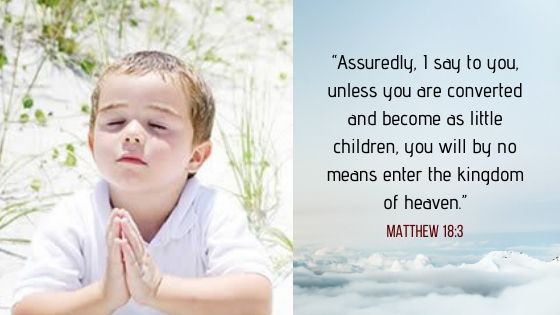

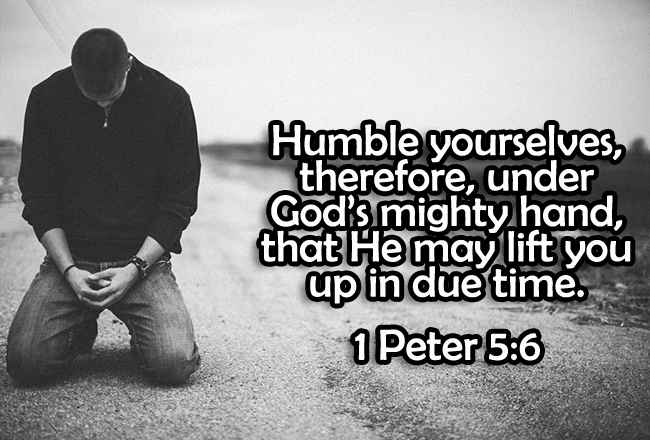








 Loving God, Living God, Loving Hope, Living Hope, Loving Living Life His Way! "Many things are possible for the person who has hope. Even more is possible for the person who has faith. And still more is possible for the person who knows how to love. But everything is possible for the person who practices all three virtues." - Brother Lawrence (1605-1691), Practicing the Presence of God (1692).