Studying, Meditating, Pondering Upon Ways We Can Hear from God Regularly. Habakkuk 2:1-4

Habakkuk 2:1-4 Amplified Bible

God Answers the Prophet

I will stand at my guard post
And station myself on the tower;
And I will keep watch to see what He will say to me,
And what answer I will give [as His spokesman] when I am reproved.

Then the Lord answered me and said,
“Write the vision
And engrave it plainly on [clay] tablets
So that the one who reads it will run.

“For the vision is yet for the appointed [future] time
It hurries toward the goal [of fulfillment]; it will not fail.
Even though it delays, wait [patiently] for it,
Because it will certainly come; it will not delay.


“Look at the proud one,
His soul is not right within him,
But the righteous will live by his faith [in the true God].

The Word of God for the Children of God.

Adeste Fidelis! Venite Adoremus! Dominum.

Gloria! In Excelsis Deo! Alleluia, Alleluia, Alleluia, Amen.

God is constantly speaking to people.

But too often, they miss out on hearing God’s messages because they seek His guidance only occasionally – usually when they are going through a crisis or they are about to be facing a major life decision – family, health, finance, career.

Then, with a dire need to hear from God, people will become confused and then become sad, and frustrated when they do not clearly hear what they should do.

They start to wonder when and how to hear from God and why they are not.

It does not have to be that way.

God wants everyone to hear His messages clearly, and it’s possible to do so.

The key is to forget about formulas and gimmicks for hearing from God, and to focus instead on developing the kind of relationship with God will empower you and me to hear God speaking regularly.

The closer you get to God, the more you can enjoy ongoing conversations with Him, both listening and hearing from Him, and the more God will use those conversations to transform you into the person He wants me, you to become.

Simple Keys to Hearing God’s Voice

There are a few simple keys that can be found in Habakkuk 2:1-2, which unlocks the treasure of hearing God’s voice.

Using these simple keys together allows the hearer of God’s voice on a daily basis.

Being intentional about hearing God’s voice is a critical step.

In Habakkuk 2:2, Habakkuk knew the sound of God speaking to him.

Elijah also described this as a still, small voice (1 Kings 19:12-13).

Do you know that we can listen to God in an inner audible voice?

God does speak that way to us at times.

However, we find that God’s voice usually comes as spontaneous thoughts or flowing thoughts.

Have you ever experienced driving down the road, and had a thought come to you to pray for a certain person or situation?

Don’t you think it’s God’s voice telling you to pray?

It’s not really an audible voice most of the time.

Instead, it’s a spontaneous thought.

It’s God who is already giving us a prophetic discernment to pray for this person.

Usually, humans are able and capable to experience, Holy Spirit-level communication as spontaneous thoughts, impressions, and visions, and Scripture communicates in many ways.

For example, one definition of ‘paga’, a Hebrew word for intercession, is “a chance encounter or an accidental intersecting.”

When God gives us a burden for specific people, He does it through ‘paga’, a chance-encounter thought “accidentally” coming into our minds.

The inexperienced prophet might consider it a chance encounter, spontaneous or owing thoughts.

Even Satan can plant deception in our minds through spontaneous thoughts.

Paul tells us to take captive of those thoughts (2 Corinthians 10:5).

Have you encountered evil thoughts coming to you in the middle of prayer and worship times?

There are different things going on in our minds.

Humans are usually responsible for analytical thoughts.

Spontaneous good thoughts come from the Holy Spirit, and spontaneous evil thoughts come from evil spirits.

God’s thoughts line up with Scripture and His different names and roles: Comforter, Counselor, Teacher, Giver of Life, Healer, and Deliverer.

God’s thoughts edify, exhort, and comfort you.

They are pure, peaceable, gentle, reasonable, full of mercy, good fruits, and are unwavering (James 3:17).

On the other hand, Satan’s thoughts line up with his different names as well: Accuser, adversary, thief who comes to steal, kill, and destroy. Satan’s thoughts condemn, bring despair, rejection, fear, doubt, unbelief, and misery all together. Satan’s thoughts also bring jealousy and selfish ambition (James. 3:14-15).

Studying, Pondering, Meditating, Ways to Regularly Hear from God

1. Recognize that God created you for a very personal relationship.

By design, the way we hear best from God is in the context of a friendship with Him.

God intends for us to figure out His will freely and intelligently as you engage in regular conversations with Him.

God’s will is to be personally present with you and speaking with you moment by moment as you go through life.

Then we’ll grow to understand Him more and become more like His Son, Jesus.

2. Consider your motives for wanting to hear from God.

Honestly reflect on why you want to hear from God.

Is it because we are truly open to whatever God has to say and committed to putting His guidance into action and fulfilling His purposes, even when doing so is so fully, completely and utterly enveloping, overwhelming, challenging?

Or is it for a selfish reason, such as wanting to feel righteous or comforted?

Confess and repent of any wrong motives.

Ask God to give you an openness to hear and respond faithfully to what He wants to tell you.

3. Make your goal more than just hearing God.

But seek first his kingdom and his righteousness, and all these things will be given to you as well. – Matthew 6:33

While it’s important to hear from God, that shouldn’t be your ultimate goal.

Instead, make your main goal to become a spiritually mature person in a close relationship with God.

That’s the only way we’ll clearly and correctly hear what God has to say to us.

4. Know that you’re important to God, but be humble.

Have the confidence that God is willing to speak to you just as powerfully as He did to the ancient people in the Bible, because He values you, me, just as much.

However, do not let pride creep into your soul, because you must be humble in order to faithfully receive and respond to the messages God has for you and me.

5. Don’t try to force God to tell you something.

No matter how much you want to hear from God about something or how hard you may try to convince Him to speak to you.

We will only hear from God when He chooses to communicate with us.

Focus on developing a respectful relationship with God and wait for His timing to deliver messages to you.

Also, if God chooses not to give you specific guidance about something you’ve prayed about, what you’re considering is within the Bible’s moral principles,

we can confidently go ahead and make our own decision about what to do and still be within God’s will.

6. Recognize that God communicates in many forms.

God may choose any one of many different ways to communicate to you, me, according to what’s best at particular times and in particular circumstances.

You may sometimes hear God’s message in dramatic ways, such as through angels, visions, or miraculous events.

But more often, we will hear God speaking through our thoughts, and He will use ordinary practices such as reading and studying the Bible, praying quietly, learning from circumstances, or seeking counsel from other Christians to reach out to us as you think about them.

God will also use dramatic, even miraculous means to get our attention when necessary, but His goal is for you and me to be so closely connected to Him that you and I will pay attention whenever He speaks to us.

Usually, God speaks through what people have described as a “still, small voice” (1 Kings 19:12-13) to encourage those He loves to choose to keep walking closely with Him through life.

7. Renew your mind.

Since God often speaks to you through your mind and wants you to develop what the Bible calls the “mind of Christ” (the ability to make decisions as Jesus would), it’s crucial for you to follow the Bible’s urging in Romans 12:2:

“Do not conform to the pattern of this world, but be transformed by the renewing of your mind. Then you will be able to test and approve what God’s will is – His good, pleasing and perfect will.”

As we invite the Holy Spirit to renew your mind every day, He will cleanse it from such dirt and clutter as false beliefs and attitudes, unhealthy feelings, and misguided plans.

Then the Holy Spirit will minister to us, intercede, work to replace all of that spiritual mess with true thoughts that more genuinely reflect God’s purposes.

8. Invite the living Word to help you when you read scripture.

The Word of God is a living, creative force – Jesus Himself – and He is actively at work when you read God’s written word – the Bible – prayerfully.

Hebrews 4:12 Amplified Bible

12 For the word of God is living and active and full of power [making it operative, energizing, and effective]. It is sharper than any two-edged [a]sword, penetrating as far as the division of the [b]soul and spirit [the completeness of a person], and of both joints and marrow [the deepest parts of our nature], exposing and judging the very thoughts and intentions of the heart.

As we read the Bible, as we study the Bible, we ask Jesus to make the Bible’s words come alive for us and through the ministry of the Holy Spirit, become conduits through which He sends His thoughts, faith, and love into your soul.

1 Timothy 4:12-14 Amplified Bible

1Let no one look down on [you because of] your youth, but be an example  and set a pattern for the believers in speech, in conduct, in love, in faith, and in [moral] purity.  13 Until I come, devote yourself to public reading [of Scripture], to preaching and to teaching [the sound doctrine of God’s word]. 14 Do not neglect the spiritual gift within you, [that special endowment] which was intentionally bestowed on you [by the Holy Spirit] through prophetic utterance when the [a]elders laid their hands on you [at your ordination].

Then discipline yourself to focus on what He sends you and strive and work to orient yourself towards a pattern of faith so it will begin to transform your life.

9. Recognize God’s voice above all others.

By experience, you can learn to recognize God’s voice when He speaks, and to confidently respond to what He says.

When thoughts recur, pray about them to discern if they may be coming from God.

Keep in mind that God will never send you and me any message that contradicts the Bible’s principles.

Also, God’s voice carries the weight of authority within it, and expresses a spirit of compassion, peace, confidence, joy, assurance, reasonableness and goodwill.

If you think or believe that God may speaking to you, ask Him to confirm so as we study and meditate on the Bible, as we are alert to the circumstances we’ll encounter, or as we experience the Holy Spirit’s impressions in our mindsets.

10. Set aside time regularly to listen for God’s messages.

2 Timothy 2:14-15 Amplified Bible

An Unashamed Workman

14 Remind the people of these facts, and solemnly charge them in the presence of God to avoid petty controversy over words, which does no good, and [upsets and undermines and] ruins [the faith of] those who listen. 15 Study and do your best to present yourself to God approved, a workman [tested by trial] who has no reason to be ashamed, accurately handling and skillfully teaching the word of truth.

Make a plan to discipline your mind and your heart and soul, make a habit of intentionally and expectantly listening for whatever God may want to tell you.

It’s more important to become a person who listens regularly to God than it is to constantly ask God to give you guidance.

Set aside sometime today to begin listening for God’s voice and hearing his promises and plans for you.

Perhaps even keep a journal to remember the things he brings to life in you.

You open your Bible, but quickly become distracted.

You want to dig deeper, but you don’t know where to begin.

Frustrated, you close the book.

It’s not that you don’t love God—in fact, you long for more intimacy with God.

Maybe God is calling you to deeper waters . . .

Imagine yourself purposely, randomly, opening to a passage of God’s Word and by spending time, its becoming so engaging that you actually lose track of time.

Imagine yourself digging deep, and deeper still into God’s Word and seeing it, and hearing it come alive in amazing ways you had never experienced before.

Imagine starting each day—not with a tiny nugget of truth you hope will get you through—but through hearing a fresh encounter with our living Savior.

In the name of God, the Father and God the Son and God the Holy Spirit,

Let us Pray,

Come, Holy Spirit, fill the hearts of Your faithful and kindle in us the fire of Your love.  Send forth Your Spirit and we shall be created.  And You shall renew the face of the earth. O, God, Who by the light of the Holy Spirit did instruct the hearts of the faithful, grant that by the same Holy Spirit we may be truly wise and ever enjoy Your consolations. Through Christ our Lord. Alleluia, Amen.

Adeste Fidelis! Venite Adoremus! Dominum.

Gloria! In Excelsis Deo! Alleluia, Alleluia, Alleluia, Amen.

https://translate.google.com/

To know God, to believe in God, to Follow Jesus, We Need to Learn to Listen to His Voice. Exodus 3:1-5

When all is said and done, and the whole Truth is being Told, OUR problem when it comes to OUR listening is not God hearing us, it is us hearing God.

Softly and tenderly, Jesus is calling,
calling for you and for me;
see, on the portals he’s waiting and watching,
watching for you and for me.
Refrain:
Come home, come home;
ye who are weary come home;
earnestly, tenderly, Jesus is calling,
calling, O sinner, come home!

Exodus 3:1-5Amplified Bible

The Burning Bush

Now Moses was keeping the flock of Jethro (Reuel) his father-in-law, the priest of Midian; and he led his flock to the west side of the wilderness and came to Horeb (Sinai), the mountain of God. The [a]Angel of the Lord appeared to him in a blazing flame of fire from the midst of a bush; and he looked, and behold, the bush was on fire, yet it was not consumed. So Moses said, “I must turn away [from the flock] and see this great sight—why the bush is not burned up.” When the Lord saw that he turned away [from the flock] to look, God called to him from the midst of the bush and said, “Moses, Moses!” And he said, “Here I am.” Then God said, “Do not come near; take your sandals off your feet [out of respect], because the place on which you are standing is holy ground.”

The Word of God for the Children of God. Gloria! In Excelsis Deo! Alleluia! Amen.

If I were to ask you ladies if you husbands are good listeners, most of you would probably respond with a resounding: “no.”

If I were to ask you gentlemen if your wives are good listeners, most of you would probably respond in much the same way the ladies did.

If I were to ask you parents if your children are good listeners, I believe I would get a lot of “no’s.”

If I turned that around and asked you teenagers if your parents listen to you, I am sure that I would get a loud and resounding “no.”

If I were to ask each Christian man or Christian woman if you were a good listener to the voice of the Lord, I believe the answer is “no” once again even though the Bible says in John 10:27-28 that my sheep hear my voice.

In these days in which we are living in, we must learn to be good listeners if we are going to be followers of God, the Father, His Son Jesus and the Holy Spirit.

Do you know who the best listener is?

It is God.

All the way from the very deepest place in all eternity – God heard!

In the Book of Exodus, the Lord tells us (Exodus 3:7) that the Lord heard the cries of the Israelites under the cruel hand of the Egyptian taskmasters.

Psalm 5:3, the psalmist confirms that the Lord hears my prayers.

Psalm 20, the Lord confirms that He hears my cries in times of trouble.

Make no mistake about it: The Lord listens well to ALL of His Children.

Our problem when it comes to listening is not God hearing us, it is us hearing God.

In the Book of Revelation in the Lord’s messages to the seven churches John writes under inspiration of God these words, “Whoever has ears, let them hear what the Spirit says to the churches.”

And then in the Gospels Jesus used that same expression. Mark 4:23 (NKJV) 23 If anyone has ears to hear, let him hear.”

Those were Jesus’ own words and He recognized that many do not hear him.

So, I have to ask myself the question:

“What is the problem that I don’t hear God?”

And that is what we are going to look at today.

What hinders us from hearing the Lord?

To do that I want to look at the encounter at the burning bush when God spoke to Moses, and he heard clearly what God had to say.

Exodus 3:1-5International Children’s Bible

The Burning Bush

One day Moses was taking care of Jethro’s sheep. Jethro was the priest of Midian and also Moses’ father-in-law. Moses led the sheep to the west side of the desert. He came to Sinai, the mountain of God. There the angel of the Lord appeared to Moses in flames of fire coming out of a bush. Moses saw that the bush was on fire, but it was not burning up. So Moses said, “I will go closer to this strange thing. How can a bush continue burning without burning up?”

The Lord saw Moses was coming to look at the bush. So God called to him from the bush, “Moses, Moses!”

And Moses said, “Here I am.”

Then God said, “Do not come any closer. Take off your sandals. You are standing on holy ground.

Point #1

Hearing God ‘s voice will require effort on my part.

Moses took his sheep to a place where He knew that He could talk with God.

Do I make the effort to go to a place where I can talk with God?

1 Now Moses was tending the flock of Jethro his father-in-law, the priest of Midian. And he led the flock to the back of the desert, and came to Horeb, the mountain of God.

Moses lives in the land of Midian on the backside of the desert tending the sheep of Jethro, his father-in-law.

So, as we come to Exodus 3, Moses is going to take his sheep out to pasture.

But please notice here that Moses is not taking the sheep in the back pasture an acre or two from Jethro’s house. Look at a Map. Moses has set out to take them about twenty-five miles (25) miles to the pastureland around Mt. Horeb.

There were many mountain ranges near Midian, but Moses headed to a specific mountain range- Horeb.

Horeb has two meanings:

Mountain of YHWH and it is also called the Mount of God. You might have heard this Mountain also referred to a Mt. Sinai in some places. It would become the place later where God would then write, give Moses the Ten Commandments.

The fact that Moses would take those sheep that far tells me how badly Moses wanted to hear from God.

What kind of effort do you and I make to hear from God?

Are we “that” willing to get up early to seek the Lord since He gives us a promise in Scripture? 

Proverbs 8:17 (KJV) I love them that love me; and those that seek me early shall find me.

Isaiah went to the house of the Lord to hear from God, and there He meet the Lord High and lighted up.

And it was there that Isaiah carried on a conversation with God.

And Jesus would always go to a secluded place to listen to the Words of His Father.

In all three cases, there was an effort- to get up early, to go to the church house, and or to go some distance away to find a secluded place to talk to God.

What effort do we put in to listening to God?

No effort?

Then we are probably not hearing from God.

And actually, there are times that God must put you in certain places to get you to listen to Him.

I noticed that I am a pretty good listener to God when I am in a hospital bed.

I also notice that I am a good listener when troubles are attacking me at all sides.

But let me tell you what I have found out in my life.

It is so much better for me when I make more than the minimal effort to listen to God rather than just waiting for God to arrange the meeting to listen to Him.

Point# 2

Hearing God’s voice will require vigorously exercising a spiritual curiosity about what God is doing around me that a lot of Christians lack. Do I even look to see God doing things around me, do I bother to ask God “what are You trying to tell me?”

Exodus 3:2-3 (NKJV) 2 And the Angel of the LORD appeared to him in a flame of fire from the midst of a bush. So, he looked, and behold, the bush was burning with fire, but the bush was not consumed. 3 Then Moses said, “I will now turn aside and see this great sight, why the bush does not burn.”

Remember, Moses is working. He is managing a flock of sheep for his father-in-law.

Ladies, do you know how hard it is to have a conversation with your husband when he is at work?

Gentlemen, do you know how hard it is to have a conversation with your wives when they are trying very hard to prepare you your supper when you get home?

Most of you are going to get a one- or two-word answer and then bye.

Guys when they are working are single focused. Ladies are very diligent in their efforts not to undercook or burn the food, to not over or under season the meal.

I am sure there would be a lot of guys who saw the burning bush and said to themselves that is “just simply too weird” and kept on walking by. And after they passed it by, they would give no more second thought of it or about it.

Moses, on the other hand, had a spiritual curiosity, after all he did take his sheep to the Mount of God.

So, ladies, gentlemen, He may have been expecting something from God.

Moses approached near the bush and ultimately had a conversation with God.

With all the upheaval going on around us, any curious Christians should have begun a conversation with God as to why so much negativity is assailing them.

War in the Ukraine, raising prices at the Gas Pumps, Housing Costs, Student Debt, National Debt, Political intrigue, Economic Upheavals on Wall Street and other World Markets, Gun Violence, Hot button controversial topics such as the issue of Immigration, Abortion, Extremism are all making news at a rapid pace.

I would want to know: “God, are we to be preparing us for the end times?”

God are you just giving us a glimpse of what is going to happen in the future?

And that peaked curiosity starts a conversation with God just as that burning bush started a conversation between God and Moses which resulted in change.

Look for things God is doing in your life or in the world, be curious, because that just may be God’s way of reaching out wanting to start a conversation with you.

Point # 3

Hearing God’s voice will require an expectation that I am going to hear God’s voice. If I go into prayer not expecting to hear from God, I am not going to hear from God. Moses took his sheep to Mt. Horeb expecting to hear from God.

4 So when the LORD saw that he turned aside to look, God called to him from the midst of the bush and said, “Moses, Moses!” And he said, “Here I am.”

I told you that Moses came to Mt. Horeb expecting to hear from God.

Let me tell you why I believe that is the case. I have two reasons that I say that:

(1) The way that God addressed Moses by calling out his name twice Moses, Moses. In the Jewish language when two words are repeated back-to-back it is for emphasis. It is like saying Moses I have been waiting for you.

When I was a young boy if my mother hollered “Tom, Tom” meant that she had been waiting on me. God was telling Moses; I have been waiting on you.

(2) Look at Moses’ response. He did not say “Yes, Lord” but rather “here I am”. I finally made it here.

Make no mistake, Moses walked 25 miles out of his way to Mt. Horeb expecting to hear from God. And God waited for Moses to get there.

Conclusion

Verse 5 says “…for the place where you stand is holy ground.” 

Wherever it is you and God are communicating (that is talking to and listening to God) that is Holy Ground.

It could be any church house, your back porch, or 25 miles from “wherever”.

When is the last time you have been on Holy Ground?

Today, Jesus invites you to Holy Ground.

Will you come talk and listen to God as the invitation is offered?

Will we try just that much harder to hear what the Lord is saying to us?

“Speak, Lord, for your Servant is Listening.”

“You have my attention, Lord, I pray my ears are hearing you correctly.”

In the name of God, the Father and God the Son and God the Holy Spirit,

Lord God, my Way-maker, I know you have a destiny for me to achieve in this life. I want to follow the plan that you have laid out. Help me to understand and follow your call. Show me your will for my life and what I need to do right now to get started. Enable me to know who I am in Christ, and the special gifts and abilities you have given me. Give me the spirit of wisdom and revelation as I seek to know you more intimately. Gloria! Alleluia! Alleluia! Alleluia! Amen.

https://translate.google.com/

From defeat and disobedience, from testing God to acceptance. How do we hear Him when He speaks? 1 Samuel 3 

The core Truth of the whole matter for believers is this: God means what he says. From the first line to the last line of the Word of God, what God says goes. His powerful Word is sharp as a surgeon’s scalpel, cutting through everything, whether doubt or defense, laying us open to listen and obey.

Nothing and no one can resist the revelation of God’s Word.

There is absolutely no escape from the revelation of God’s Word.

We cannot avoid it, nor can we get away from it—no matter what.

1 Samuel 3:1-11Easy-to-Read Version

God Calls Samuel

The boy Samuel was Eli’s helper and served the Lord with him. At that time the Lord did not speak directly to people very often. There were very few visions.

Eli’s eyes were getting so weak that he was almost blind. One night he went to his room to go to bed. The special lamp in the Lord’s temple[a] was still burning, so Samuel lay down in the temple near where the Holy Box was. The Lord called Samuel, and Samuel answered, “Here I am.” Samuel thought Eli was calling him, so he ran to Eli and said, “Here I am. You called me.”

But Eli said, “I didn’t call you. Go back to bed.”

So Samuel went back to bed. Again the Lord called, “Samuel!” Again Samuel ran to Eli and said, “Here I am. You called me.”

Eli said, “I didn’t call you. Go back to bed.”

Samuel did not yet know the Lord because the Lord had not spoken directly to him before.[b]

The Lord called Samuel the third time. Again Samuel got up and went to Eli and said, “Here I am. You called me.”

Finally, Eli understood that the Lord was calling the boy. Eli told Samuel, “Go to bed. If he calls you again, say, ‘Speak, Lord. I am your servant, and I am listening.’”

So Samuel went back to bed. 10 The Lord came and stood there. He called as he did before, saying, “Samuel, Samuel!”

Samuel said, “Speak. I am your servant, and I am listening.”

11 The Lord said to Samuel, “I will soon do things in Israel that will shock anyone who hears about them.

The Word of God for the Children of God. Gloria! In Excelsis Deo! Alleluia! Amen

Every Single Day, The Word of God for the Children of God reveals Truth ….

The heavens tell about the glory of God.
    The skies announce what his hands have made.
Each new day tells more of the story,
    and each night reveals more and more about God’s power.
You cannot hear them say anything.
    They don’t make any sound we can hear.

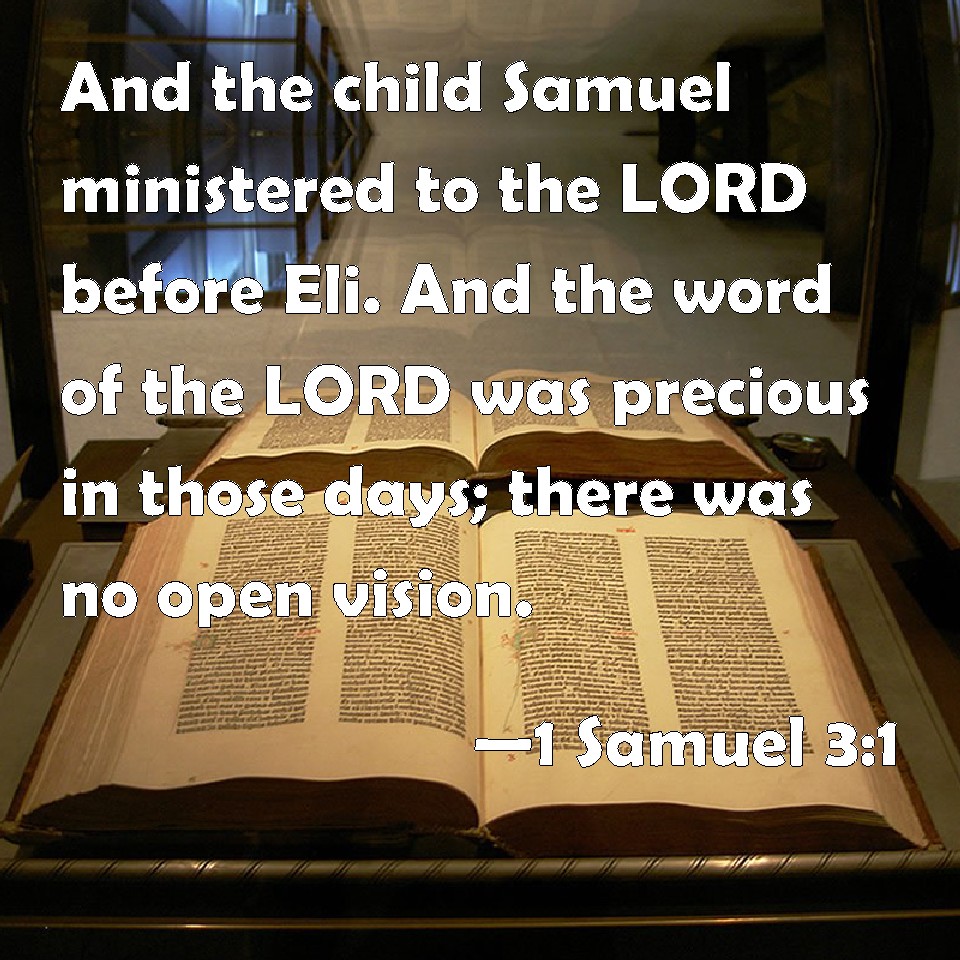
Except, in the days of Eli the Judge, we read 1 Samuel 3:1 when the central truth of the day was – “the word of the Lord was [indeed] precious but there were no open visions.” God was still revealing Himself, but the people had gone numb.

The Judge Eli had grown old and was nearly blind – both physically, spiritually.

I can particularly relate to the opening verse of the reading from 1 Samuel.

“During the time young Samuel was minister to the Lord under Eli, a revelation of the Lord was uncommon and vision infrequent.”

For Judge Eli it took several tries before the source of the message to Samuel became apparent. In today’s world perhaps we have come not to expect such revelation.

Perhaps this lack of expectation has led us to become bad listeners. (I know this is one trait which is lacking in my prayer and in my family interactions as well.)

Perhaps it’s the incredible effort it takes to be a Godly family (Ephesians 6:1-3), to raise children according to Proverbs 22:6 Train up a child in the way he should go [teaching him to seek God’s wisdom and will for his abilities and talents], Even when he is old he will not depart from it, contrary to the noise of counter-culture.

It is perhaps all of the continuous distractions and extraneous noise we hear as we walk or ride or drive down the street with both our ear buds stuck in our ears blaring and blasting all of our favorite music collections over all of the car horns telling us to move or turn faster – we don’t hear the siren directly behind us, so, in disobedience, we do not pull over to the side of the road as the law requires.

Then, as fate and luck would have it, we also fail to notice the police car who has turned their lights on, who pulls in behind us, then gives us a blast of his siren.

Perhaps it is our 21st century Being Christian and Being Church and Doing Life.

It is impossible for one person to reach the whole world. What about people groups reaching people groups? What about communities of faith reaching out together to other communities? Indeed, there are no lone-ranger Christians.

Being Church is not about personal devotions or individual heroics.

It is about 21st century living as a Church by God weaving together visible faith through “gospel communities.”  

This means doing church isn’t about activities within a church building. It means flourishing Christian witnesses all over our world.

In sum total, considering 1 Samuel 3:1 as it communicates and relates to us, we fail to notice the obvious things which makes God the biggest difference in life.

As the blind and aged and spiritually numbed Eli failed to recognize God’s voice when the youthful Samuel came rushing from his place of sleep to Eli’s room.

I fail, you fail, we all fail to recognize the voice of God because, perhaps, in our own day and age, visions and revelations are too easily believed to be much too infrequent or even more significantly, (GASP) non-existent.

How do we hear God when He speaks?

First Samuel 3:1 shows us a picture of God’s faithfulness to speak to us even when we have ignored Him in the past.

When God Speaks

In 1 Samuel 3, we read that Samuel was serving God without yet knowing Him. The very same thing happens today, doesn’t it? Many people are “religious”, and they adhere to perfunctory rules without having a relationship with Him.

The people of Israel had cut themselves off from the Lord, and so the Lord had cut Himself off from them.

For this reason, we read in 1 Samuel 3:1,

“Word from the Lord was rare in those days.” He no longer communicated with His people because they turned a whole society, a whole community, a whole culture of collective deaf ears to Him. They just did not listen to Him.

Even Samuel did not recognize the voice of God when God called him.

But Eli, as dim as he had grown spiritually, realized that God was speaking.

Even through his own spiritual numbness, He told Samuel to respond to God and listen to whatever He had to say. Samuel obeyed, listening as God told him that the line of Eli would be destroyed as a result of sin.

This prophecy reveals a major transition in the history of Israel, marking the moment Samuel became a true servant of the Lord, a recipient of His word.

Today, a keyway we hear from God is through reading the Word and through prayer. God is not silent when we read Scripture; He is faithful to teach us.

Because of God’s immeasurable measure of faithfulness, through our own sin of spiritual numbness, spiritual unawareness, we should turn to God, “shake out the cobwebs” train ourselves to hear His voice, listening when God speaks to us.

In the time of Samuel revelations and visitation from God were uncommon. So much so that when the Lord called Samuel, he did not recognize that it was the Lord. He thought his teacher was saying his name.

He couldn’t even imagine that the Lord would call to him. But once he realized that it was, in truth, the Lord, he was of course happy to do the Lord’s bidding.

I’m afraid we are in times like Samuel’s. Revelations and visitations from God seem uncommon now. In fact, today if people would say that God spoke out loud to them, they would be viewed as insane. People seem to think that God is far away, or at least does not directly and physically interact with people.

Someone like Samuel, hearing his name called out loud, might himself suspect insanity instead of a visitation from God. But I truthfully believe God does call to us and does reveal himself and visit. Maybe not with an audible voice, but in far more subtle ways in our everyday lives.

All the time, all around us there are opportunities to help others physically and spiritually. In the Gospel, Jesus is healing people, and when others ask for him, he says “Let us move on to the neighboring villages so that I may proclaim the good news there also. That is what I have come to do.” (Mark 1:38, Luke Chapter 15)

Every day there are opportunities for us to proclaim the good news. We are here to do his will, and that is to help people however we can.

Last month during the Easter season, I saw many opportunities from God to help someone heal. Every day God was asking me to make a sacrifice and help. And so, every day, I would re-devote myself to God’s Word by these devotions I send out literally into the whole world so God can “shake out our cobwebs!”

It’s not a lot, but whatever I can do. And I am grateful for this opportunity from God to be able to help in whatever way I can. From my dining room into God’s Kingdom, it’s only a tiny bit, but when God calls, we should all do what we can.

Every day we look around us at all the opportunities there are to proclaim the good news, we need to hear Samuel when he realized he was being called. We need to look around us and say, “Speak, for your servant is listening.”

We need to hear the Lord when he calls.

When we hear or see vast numbers of the opportunities for doing good for God’s sake, we need to do God’s bidding.

“Here am I, Lord, I will come to do your will.”

“Here am I, Lord; I have come to do your will.”

In the name of God, the Father and God the Son and God the Holy Spirit,

Let us Pray,

I am no longer my own, but thine.
Put me to what thou wilt, rank me with whom thou wilt.
Put me to doing, put me to suffering.
Let me be employed for thee or laid aside for thee,
exalted for thee or brought low for thee.
Let me be full, let me be empty.
Let me have all things, let me have nothing.
I freely and heartily yield all things to thy pleasure and disposal.
And now, O glorious and blessed God, Father, Son and Holy Spirit,
thou art mine, and I am thine.
So be it.
And the covenant which I have made on earth,
let it be ratified in heaven.
Alleluia! Alleluia! Alleluia! Amen

 https://translate.google.com/

God Speaks! Are we Hearing Him or Are We Instead Testing Him? Mark 12:28-34

Simplify!

“Simplicity, simplicity, simplicity! I say, let your affairs be as two or three, and not a hundred or a thousand; instead of a million count half a dozen, and keep your accounts on your thumb-nail …Simplify. Simplify.”

Those are the words of Henry David Thoreau, the American writer, who in the early 19th century, for two years, lived alone, isolated by the shore of Walden Pond in the woods of Massachusetts.

Simplify.

Do you have any interest in simplifying your life?

Does that sound appealing to you?

Do you feel like we tend to complicate things, even spiritual things?

In terms of the purpose of your life, what would God have you do?

We need answers, don’t we?

But where will you go to find your answers? Out into the woods like Thoreau?

Well, to discover answers it is helpful to use another quote by Thoreau’s: [he said] we must

“drive life into a corner and reduce it to its lowest terms”. “Simplify. Simplify.”

I believe Henry David Thoreau is right, because this is precisely what Jesus himself does in our passage today.

What is the most important thing you can do? Answer is “Simplify your life!”

What is the most important thing we can do in our relationship with God?

Answer: Simplify it down to its most basic terms: Hear God!

What is the most complicated thing we can do in our relationship with God?

Answer: Test Him! Repeatedly ask “Whom, What, Where When and Why!”

Hear God or Test God?

Hear God or Resort to “turning your hearing aids off” Selective Hearing

Trust and Obey unless you personally believe there is definitely another way.

Take your Bibles and turn with me to Mark chapter 12.

Mark 12:28-34Christian Standard Bible

The Primary Commands

28 One of the scribes approached. When he heard them debating and saw that Jesus answered them well, he asked him, “Which command is the most important of all?”

29 Jesus answered, “The most important[a] is Listen, Israel! The Lord our God, the Lord is one.[b] 30 Love the Lord your God with all your heart, with all your soul, with all your mind, and with all your strength.[c][d] 31 The second is, Love your neighbor as yourself.[e] There is no other command greater than these.”

32 Then the scribe said to him, “You are right, teacher. You have correctly said that he is one, and there is no one else except him. 33 And to love him with all your heart, with all your understanding, [f] and with all your strength, and to love your neighbor as yourself, is far more important than all the burnt offerings and sacrifices.”

34 When Jesus saw that he answered wisely, he said to him, “You are not far from the kingdom of God.” And no one dared to question him any longer.

The Word of God for the Children of God. Gloria! In Excelsis Deo! Alleluia! Amen.

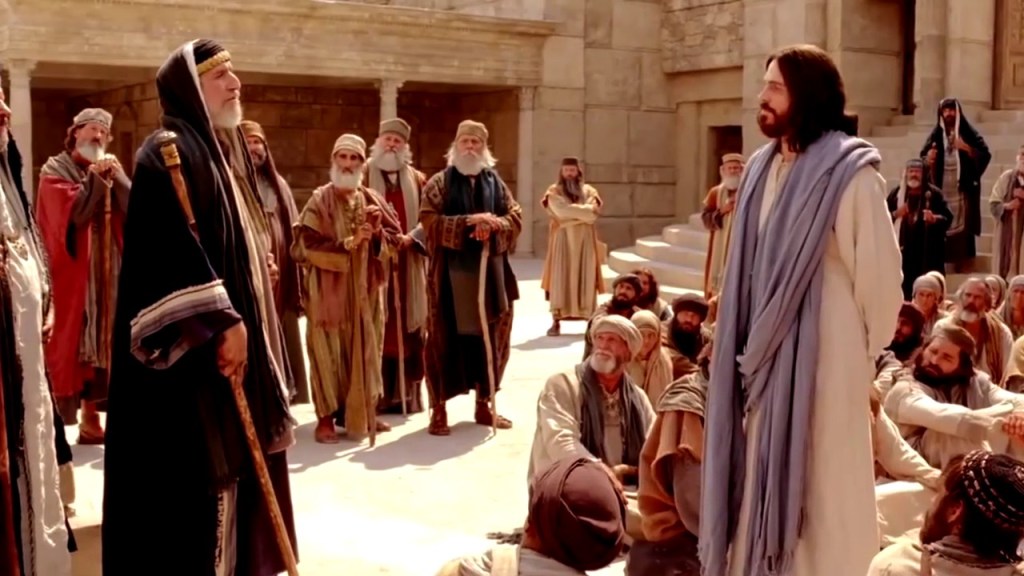
The Sadducees come to Jesus to debate and to test him – their intention is to try and “trip him up” that they might publicly embarrass and humiliate him. They want to “hear” what Jesus has to say about how he prioritizes God and the Law.

Jesus “heard” their words very well. Jesus also heard their hearts beating at the anticipation of taking Jesus down in full view of the gathered and gathering crowds of onlookers who also waited to “hear” how Jesus would respond now.

But notice here Jesus “hears the question” and also hears the murmurs and the curious silence of those who have gathered, he does not hesitate in responding.

For Him the answer is obvious. And it should have been for all of them as well, seeing as how they “heard themselves’ reciting the ‘answer’ twice every day!

You see, the greatest of all the OT commandments came from Deuteronomy chapter 6, from a section recited daily by faithful Jews everywhere, even today; a confession called the Shema. It’s exactly what Jesus quotes in verse 29 and 30.

So, what do we see here? We see a scribe coming to Jesus, listening in as Christ interacts with the Sadducees back in verses 18-27. From what we can tell, the scribe doesn’t seem motivated by jealousy or ill-will. He seems to ask Jesus this question because he simply recognizes there is wisdom in the words of Christ.

Here the Scribe was listening from a short discrete distance to the exchange of words between the Sadducees and Jesus. The Scribe was trying very hard to hear the responses as the conversation took place in real time.

As the Scribe was in the active process of hearing the exchange of words, he was also actively trying to hear the message both were trying to communicate to each other. Hearing these messages, the Scribe knew, would help him respond most efficiently and effectively back to both parties.

The conversation between the Sadducees and Jesus ends. And immediately the Scribe becomes more than just a little bit curious about the exchange, instead also becoming complementary at the words Jesus spoke (Verses 32-33).

Did you also notice the Scribe made no further effort to complicate the moment, add to the debate, by asking Jesus’ dozens more complex theological questions? I believe He heard the correctness and simplicity of Jesus’ few spoken words.

He undoubtedly had more questions he wanted to ask and have answered to suit his own particular nuanced theological interpretations, understandings.

He undoubtedly would’ve enjoyed sitting on a bench in the Temple to debate him. Instead, the Scribe heard the simplicity of Jesus’ words and approached him on the basis of that simplicity and acknowledged with Jesus the simplicity of them.

Simplify! Simplify! Simplify!

Now, I want you to notice something else here.

Do you see how Jesus takes advantage of this opportunity? Jesus is not simply humoring a peripheral question asked by a scribe with misplaced priorities.

This scribe has asked a fantastic question, and Jesus makes the most of the opportunity by giving not just the greatest commandment, but the second most important command as well.

What I’m saying is that this is not just a question that was important to the scribe. It is a question that was and is important to Jesus. Why? Because in it, Jesus has the opportunity to simplify the issue of man’s highest end before God.

And did you notice, the scribe understood the importance of Jesus’ answer.

His response to Jesus in verse 33 simply reveals that this man recognized how obedience to these commands was far more important than obedience to all of the sacrificial laws of the Hebrew Testament.

Such laws were simply worthless if a worshiper’s heart was not aligned with the simplicity of God’s greatest law.

And then something else odd happens. The text takes us in a very interesting direction. A Scribe steps forward and seeing that Jesus had answered well… he simply asks a sincere question of Jesus. “Which commandment is first of all.”

And Jesus again, answers wisely quoting scripture in verse 29. “Hear, O Israel: The Lord our God, the Lord is one; and you shall love the Lord your God with all your heart, and with all your soul, and with all your mind, and with all your strength,” … and to that he adds, “you shall love your neighbor as yourself.”

And then here, the really amazing thing happens.

We have a Scribe, an ‘expert in the law’ who “gets it” without further debate.

Not only does he understand what Jesus is saying… he takes it another step.

You see… one thing you have to understand about the Scribes is that they were very strict about following the rules… the letter of the law.

They made completely sure that they did everything just so. So much so they made everything far too complex, often missing the very simple point of what God was really calling them to do.

And Jesus, in a way of “rebuking them”… pointed them to the heart of their calling. Love God, and love neighbor. It’s as exquisitely simple as exactly that.

And the scribe echoed back to him… in verse 32.

“You are right, Teacher; you have truly said that he is one, and there is no other but he; and to love him with all the heart, with all the understanding, and with all the strength, and to love one’s neighbor as oneself, is much more than all whole burnt offerings and sacrifices.”

And Jesus replied back to him in verse 34… “seeing that he answered wisely, he said to him, “You are not far from the kingdom of God.”

Or we might also re-write that verse this way by adding to it this thought… “Jesus, knowing that the Scribe had heard him … “seeing that he answered wisely, ….” he said to him, “you are not far from the Kingdom of God.”

What made this Scribe so different?

Why, amidst so many examples of Scribes on the wrong side of it all, do we have this one shining example of a Scribe “gone right?”

Thinking about this, I believe there is enough evidence in today’s scripture for us to understand what makes this Scribe stand apart.

First of all… he came with a heart that was all about listening and hearing rather than a heart that was all about testing.

Instead of coming into the conversation with his mind already made up, already thinking his way was the only way… he came seeking to listen, seeking to hear, seeking to know… seeking to understand… perhaps even to actually learn God.

What about us? I think that we too… far too often fail to listen and rather come to the conversation with our minds already made up we are going to test God with a whole host of theological debates, exercises in theological semantics.

Here, in today’s lesson… we have a bunch of the “bad guys” (Sadducees) setting the example for those of us more inclined to incessantly question and debate …

Then we have the Scribe who models and sets the example of “enough debate!” Hear what God in Christ Jesus is saying to His Children through the length and breadth and width and height of His everlasting and ever living Holy Scriptures.

“May we one day acknowledge the difference between the two approaches. May we be willing to hear and listen to those simple truths so that we may hear. May we come with learning hearts seeking rather than with hearts that are testing.”

This “I Will” “first hear the Word of God, listen to the Word of God, listen to Jesus as he “keeps it simple smart” first is exactly what set the Scribe apart.

He was willing to keep the primacy of God first and really listen and pay close attention to that … and as a result he actually heard what Jesus was saying.

And this is my second point… the Scribe heard the message… and the message was this:

Talk with God, Hear God, Listen to God, Love God with all your 1) heart, all your 2) soul, all your 3) mind, and all your 4) strength. Again… the English words are good, but they come far short of what is being said in the original Greek.

https://www.blueletterbible.org/kjv/mar/12/28-34/s_969028

Take the time to go through each individual word of each individual verse.

Learn the Nuances. Listen to and then Hear God speak through the nuances.

For example, begin with the nuanced understanding behind

1) the heart… is so much more than this thing in our chests.

It not only represents the center of all of our physical being… it represents the very center of our spiritual life.

More than that, it represents all of our passion, our desires, our appetites, even our affections… and Jesus calls us to direct all of them rightfully towards God.

Then move on to learning the nuances of the rest – Soul, Mind and Strength.

God, through His Son Christ Jesus, is definitely trying to converse with you.

Insert yourselves into this picture – Become the Scribe, the Crowd, and Jesus.

Hear what God really has to say – what God really wants us to hear and learn.

Without making this section into its own mini sermon…

Just think about all the things in this life we are passionate about, all the things that take priority… more often than not, these things are not God. And yet… this is the example set for us in today’s scripture.

We are covenanted to make God #1.

We are covenanted to listen, hear, and learn from God first!

We are covenanted to be doers of the truth of God first!

In the name of God, the Father and God the Son and God the Holy Spirit,

Let us Pray,

Almighty God, we ask you to clean our minds and hearts of all the things that may prevent us from hearing your word. Empty our hearts of doubt and empty our minds of preconceptions and assumptions. May we know that you are the source of our knowledge. Prepare our hearts to be ready to accept your truth. Help us be capable of hearing your voice speaking to us. Gloria! Alleluia! Amen.

https://translate.google.com/

God speaks into One ear, and we end up coming out the other. Our habit of Selective Listening, Elective Hearing.

“I do not know why I should say anything to anyone anymore. It only goes in one ear and comes straight out the other with no stops anywhere in between!”

George Stewart – In One Ear and out the Other (1978) Lyrics

When someone talks, be sure you listen
When someone speaks, be sure you hear
‘Cause only if you listen to what they say
Then what they say will be perfectly clear

Don’t let it go in
One ear and out the other
Don’t let it go in
One ear and out the other
Don’t let those messages slip away
Be sure you know, you know what people say
Don’t let it go in
One ear and out the other
Don’t let it go in
One ear and out the other

When someone talks, you’re gonna listen
When someone speaks, you’re gonna hear
‘Cause if you really listen to what they say
Then what they say will be perfectly clear

Don’t let it go in
One ear and out the other
Don’t let it go in
One ear and out the other
Don’t let those messages slip away
Be sure you understand what people say
Don’t let it go in
One ear and out the other
Don’t let it go in
One ear and out the other

Don’t let God’s messages slip away
You’ll understand what the King of Heaven says
Don’t let it go in
One ear and out the other

Listen to what people say

When teachers talk, children will listen
When parents speak, the kids will hear
If everybody listens to what they say
Then what they say will be perfectly clear

Don’t let it go in
One ear and out the other
Don’t let it go in
One ear and out the other
Don’t let those messages slip away
Be sure you know, you know what people say
Don’t let it go in
One ear and out the other…

1 Kings 22:13-18 New American Standard Bible

Micaiah Predicts Defeat

13 Then the messenger who went to summon Micaiah spoke to him saying, “Behold now, the words of the prophets are [a]unanimously favorable to the king. Please let your word be like the word of one of them, and speak favorably.” 14 But Micaiah said, “As the Lord lives, whatever the Lord says to me, I shall speak it.”

15 When he came to the king, the king said to him, “Micaiah, should we go to battle against Ramoth-gilead, or should we refrain?” And he said, “Go up and succeed, for the Lord will hand it over to the king!” 16 Then the king said to him, “How many times must I make you swear that you will tell me nothing but the truth in the name of the Lord?” 17 So he said,

“I saw all Israel
Scattered on the mountains,
Like sheep that have no shepherd.
And the Lord said,
‘These people have no master.
Each of them is to return to his house in peace.’”

18 Then the king of Israel said to Jehoshaphat, “Did I not tell you that he would not prophesy anything good regarding me, but only bad?”

The Word of God for the Children of God. Gloria! In Excelsis Deo! Alleluia! Amen.

One problem that plagues the church of our day is the plague of “Selective Hearing”. In other words, we hear only that part of a message that agrees with our own point of view, and we discard anything that doesn’t agree with us.

As a retired professional Psychiatric Registered Nurse, I have often run into this attitude in counseling sessions. I know that the first duty, and probably the most important thing that we can do as a counselor is to just sit and listen as those who come for counseling sit, vent their feelings, frustrations and anger.

Most often people who want to counsel really don’t want to hear the truth, or to even hear the counselor’s opinion, they just want to talk to someone who will listen and then return their self-opinion of what is wrong. That’s all they want.

This is the story of Ahab, King of Israel, who persuades Jehoshaphat, King of Judah to join him in a battle for Ramoth-Gilead. Syria had won this territory from Israel in a battle some three years prior and had occupied it for all that time. Now Ahab wanted it back.

Ahab was the evilest king that Israel ever had.

In the beginning of I Kings chapter 21 we can read the story of how that he wanted to purchase or trade a vineyard from Nabaoth that was adjacent to the king’s palace.

When Nabaoth refused to trade or sell the land of his ancestors, Ahab went into his room, crying, pouting, lying across his bed, refused to eat like a spoiled brat.

His wife Jezebel came in and made matters worse by plotting to get the vineyard for nothing. She sent word to all the nobles in the city to call a fast and to place Nabaoth in a high position among the nobles. Then she had hired two “sons of belial” or sons of the devil, to falsely accuse Nabaoth of blasphemy against God.

Nabaoth was stoned to death and the king took the vineyard by default.

In 1 Kings 21:25 we read God’s opinion of the character of Ahab, “But there was none like unto Ahab, which did sell himself to work wickedness in the sight of the LORD, whom Jezebel his wife stirred up.”

Just to make a quick point here, I know that Ahab had to answer for his own evil heart, and he really had no one to blame for his idolatry than himself.

He could have chosen to not listen to Jezebel. But I wonder if he would have been a better king if he had not married an idolatrous and evil plotting queen?

She certainly pressed him on to disobey God and fall deeper into sin. Jezebel was a heathen princess, beautiful to look upon, but with a heart of malicious sin!

I wonder about Ahab since he does repent at one point because he recognized the judgment of God that was to come but Jezebel wouldn’t allow that to happen for long.

Throughout his reign as King, Ahab had been held accountable to his evil deeds by the prophets of God who dared stand up to him.

One of those prophets was Micaiah.

Micaiah was well known in the court of Ahab because Micaiah had come time and again to warn Ahab of the consequences of his evil deeds. Ahab dreaded the appearance of Micaiah, yet he knew that he could not kill Micaiah or face the wrath of the people of Israel who had confidence in the prophet.

Now Ahab’s heart was set for war to regain his lost territory and to regain his prestige in the land of Israel. No king would sit for long without attempting to win back that which was taken from him in battle and Ahab was no different.

Ahab, evil though he was, still understood that Israel needed to think that the Lord God was with them before they went into battle, so he called for 400 “prophets” to come and prophesy for his coming victory over Syria.

These so called “prophets” were nothing more than “yes men” or false prophets who ticked the ears of Ahab and always had good things to say to him.

After all, that was exactly what Ahab wanted to hear and they were no fools.

If Ahab didn’t like your prophecy, he could, without a second thought, or fear of recrimination, simply put you to death. As a result of this threat hanging over them, they told Ahab exactly what they thought Ahab would want to hear.

Have you ever felt that you needed an answer from God concerning anything in your life, but you were afraid of what the answer would be?

It’s far more pleasant to have someone say something good about your life than to hear the truth.

In fact, we often go to great lengths so that we don’t have to hear the truth. We will choose to talk to and listen to only those who we already know will agree with us. We avoid anyone who may want to disagree with us like a plague.

We don’t want to really know the truth. We just want someone else to just agree with us and put a stamp of approval on what we wanted in the first place.

It is as though their agreement with us gives us a false sense of being right and we rush headlong into disobedience of the Word of God.

All 400 of these false prophets and “yes men” prophesied good things to Ahab.

They foretold of great victories, of the coming glory to Ahab and Jehoshaphat in the war just ahead, but Jehoshaphat wasn’t satisfied with their prophesying.

Something just seemed to be wrong. It was as though all of these 400 men had planned in advance to all say exactly the same thing much as a bunch of parrots.

Ahab was content to hear what he wanted to hear and didn’t care if it were true or not. Either that or he just disregarded anything disagreeable that anyone had said and decided to do what he wanted no matter what the prophets foretold.

But Jehoshaphat still feared God and asked if there were any prophets in Israel who were not “yes men” to the king? Was there one man, in all of Israel, who would truthfully give the Word of the Lord without fear of Ahab’s revenge?

Sometimes we have to stand alone in our faith in God. Remember this: that God alone makes a majority and it’s always best to be on his team regardless of how many people raise up, shout, disagree or stand against you and persecute you.

Matthew 10:28 says it another way,

“… fear not them which kill the body but are not able to kill the soul: but rather fear him which is able to destroy both soul and body in hell.”

Just think about it.

Even if we lose the battle of “political correctness” and “theological semantics” with men, we still win with God as long as we speak all truth from God’s Word.

Ahab was so determined to do his own will and to hear nothing but positive things that he did his best to keep any negative prophet from coming into his court but now he had no choice for he knew that Jehosphaphat would not join him in the battle unless a true prophet of God were brought forth.

Ahab hated Micaiah! He despised this true man of God. Ahab is like so many in our churches today who would rather believe a lie than to hear the truth.

Speaking of the last days and the coming of the man called the “Antichrist,” Paul had this to say about the hearts of the people who were on the face of the earth at that time, “And for this cause God shall send them strong delusion, that they should believe a lie: That they all might be damned who believed not the truth but had pleasure in unrighteousness.” 2 Thessalonians 2:11-12

Right now, the only thing that keeps Satan at bay is the Holy Spirit operating through the church as a watchdog against Satan’s evils.

Matthew 24:36-41 NIV

The Day and Hour Unknown

36 “But about that day or hour no one knows, not even the angels in heaven, nor the Son, [a] but only the Father. 37 As it was in the days of Noah, so it will be at the coming of the Son of Man. 38 For in the days before the flood, people were eating and drinking, marrying and giving in marriage, up to the day Noah entered the ark; 39 and they knew nothing about what would happen until the flood came and took them all away. That is how it will be at the coming of the Son of Man. 40 Two men will be in the field; one will be taken and the other left. 41 Two women will be grinding with a hand mill; one will be taken and the other left.

What do you think will happen when the true church, the Body of Christ, is taken away in the rapture?

I shudder to think of the flood of evil, sin and great debauchery that will cover the earth to an even greater depth than the flood of water in Noah’s day.

Yes, Jesus said, just as it was in the days of Noah, evil will abound, and the heart of man will be deceived into believing a lie from the devil that will end in man’s eternal damnation.

As we can see that spirit of the antichrist was already living in the heart of Ahab and he loved the lies more than the truth.

It would eventually bring destruction upon him and his household.

It was foretold in I Kings chapter 21 that anyone of Ahab’s house who died in the city would be eaten by the dogs and anyone who died outside of the city would be eaten by the fowls of the air, and that Ahab’s own blood would be licked from the city streets by dogs.

The fearsome news of these prophecies had actually brought Ahab to a place of repentance for a while, but his repentance was short lived. As soon as the shock had passed and he had time to forget about it, he was back to business as usual.

Ahab warned Jehoshaphat that Micaiah would have nothing good to say.

Ahab had never heard one prophetic utterance from the mouth of this prophet to encourage him in doing what Ahab wanted to do.

Ahab never realized that the reason he never heard any good thing is that he was continuing to walk in disobedience to God. How could he expect to hear anything good when all he did was evil in the sight of God?

There are many in the church today who say preachers who preach full gospel messages of impending judgment from God are just negative individuals who should be disregarded or even silenced so that peace could reign.

Most people don’t want to hear the truth. They love to hear teaching of love, mercy, grace and they praise those voices that foretell those better times are soon coming and that man will ultimately usher in his own age of peace and prosperity.

The truth is this – They simply don’t want to hear the full truth.

What they fail to understand is that it is only those preachers who are telling the truth. All others are false prophets who have the spirit of antichrist to deceive as many as possible into believing their lies.

There are multitudes of “ministers” who claim to be God’s messengers to the church who refuse to even admit that judgment is coming.

Their message of peace and prosperity is very easy to swallow but leads to a complacent, weak, even dead church that will face eternity without God.

It is God’s “very toughest” expressions of love, mercy and grace that allows his true ministers to speak the truth of the coming judgment so that perhaps some will come to God in true repentance through the true preaching of the gospel.

Ahab sent a messenger to get Micaiah.

This messenger was convinced that Ahab was the one to follow.

I read this passage over and over again and I cannot help but wonder if he really genuinely understood where Ahab was leading him?

Like so many so-called “Good Sunday Christians” in our modern-day church, he was only faithfully going to go so far following the orders of the king (the preacher) and didn’t question whether he was really in the will of God or not.

In fact, he copied his leaders thoughts, actions and mannerisms and even attempted to stop trouble by asking Micaiah to say the same things that the other 400 prophets said so that there would be no trouble.

Are we aware enough to know that by our selective hearing, sometimes the lie of the “sons of belial” comes from the lips of those who we think are spiritually minded? If we are not very careful, we can also be one of those used to hinder or even stop the flow of the Holy Spirit and spread the lies of Satan to stop the truth from being told?

Micaiah came into the court of Ahab, with Jehoshaphat listening, and began to say the same thing that all of the other prophets had said. He “prophesied” of great victory for Ahab against Syria.

But Ahab believed he knew, in his heart, that Micaiah was just mocking him.

1 Kings 22:16, “And the king said unto him, How many times shall I adjure thee that thou tell me nothing but that which is true in the name of the LORD?”

Even in his sinful condition Ahab knew the difference between the truth and a lie. “All right, quit mocking, and tell me the truth. I know you have something negative to say, so just get it over with,” was the attitude of Ahab as he spoke to Micaiah.

The world knows the difference between the truth and the lie. So does every member of the church. The Holy Spirit will ever be a reminder of what is truth and what is not. Even when we refuse the listen and obey the truth, we will still know when we are in disobedience.

We can harden our hearts, refuse to repent, and continue in sin but our own heart will condemn us because God won’t let us forget what the truth is.

No man will have an excuse when we stand before God in judgment. Every man will know exactly where he stands before he ever faces God.

We can keep on practicing Selective Hearing but that will be no excuse for living in disobedience to God’s Word. Ignorance of the Law is no excuse in the courts of man and it will be no excuse in the court of the Lord God either.

Now the truth was said as God directed Micaiah – Ahab would be defeated, and the people of Israel would be scattered as though they had no shepherd.

What was Ahab’s reaction? 

1 Kings 22:16, … Ahab looked over at Jehoshaphat in total disgust and said something like this (just like our modern thinking), “Didn’t I tell you? He never has a good prophecy for me! Everything he tells me is nothing but bad news!”

“That’s why I didn’t want to call him in the first place! Now look at what you have forced me to do. I didn’t want to hear any negative! All I ever wanted was positive talk! Now it’s going to take me all day to get that negative thought out of my mind! These just ruins everything!”

You have to have Father, Son and Holy Spirit positive thoughts, picture their victory in your mind, write good slogans all over the refrigerator, the mirrors in the dressing room and everywhere to get the right results, not hear and listen to some negative old prophet with a message of repentance and acknowledgment God’s truth isn’t always going to be the palatable to eat and pleasant to hear.

It’s not always sweet to taste and easy to swallow. Sometimes it’s downright the most bitter food to take into our mouths. But, like a bad tasting medicine that helps us to heal, if the truth of God is heard and obeyed it brings healing to our souls, healing to our land and life that is more abundant and eternal.

One of the saddest parts of this whole scenario is that King Jehoshaphat was also fooled and became an unwitting part of Ahab’s disobedience.

Here was a king who was attempting to live in God’s will. He had every solid appearance of being a good king except for one all important things. He didn’t remove the idols from Judah that were already there when he became king.

Because he was used to compromising, it was easy for him to be led astray by Ahab. When the battle started, he was chased from the battlefield by the Syrians who thought that he was Ahab.

Meanwhile, Ahab disguised himself so that he would be harder to find and kill.

How many ministers do we know which have disguised themselves and have gone into deep hiding or have simply blended in with the rest of their misled congregations? They have trapped themselves and others by their own lies.

You can’t hide from God (Psalm 139). His judgments are sure! Whether you believe them or not, or whether you accept them or not, is immaterial! The fact is that God’s judgments will come, and his perfect will must be accomplished.

How does this prophetic story end? The hidden Ahab was shot by a stray arrow.

One of the Syrian archers just drew back his bow and shot into the air at no specific target. That arrow was like a guided missile, led by the laser sight of God’s own hand of judgment, it struck Ahab right between the shoulder blades.

Ahab died in his chariot. His blood was washed from the chariot at the same spot where Nabaoth died, and the dogs licked up Ahab’s blood from the ground.

God’s judgments are sure!

Ahab died because he had selective hearing! He only heard and wanted to hear those things that he agreed with or that made him feel “theologically” good.

In closing let me say that we cannot afford to have selective hearing any more than Ahab could. We must hear and obey the truth of God’s Word!

There is coming a day of judgment soon. Only those who have opened their ears to hear the truth and have learned to obey God will enter Heaven’s glory. Get rid of your selective hearing and let’s hear the whole counsel of God’s truth.

In the name of God, the Father and God the Son and God the Holy Spirit,

Let us Pray,

Dear God, I desire to do according to your will. I desire to walk in your ways. I desire to have a heart that is more like yours. Lord, I desire this so I can be illuminated in my heart and mind. I pray for this because I want to recognize your word and hear your voice. I do not want to be deceived by preachers and prophets who claim to preach your word but actually are false teachers. I ask that you grant me these desires, oh Lord. Alleluia! Alleluia! Alleluia! Amen.

https://translate.google.com/