Romans 15:4 "For whatever was written in earlier times was written for our instruction, so that through perseverance and the encouragement of the Scriptures we might have hope."
13 I do not want you to be unaware, [a]brothers and sisters, that many times I have planned to come to you, (and have been prevented so far) so that I may have some fruit [of my labors] among you, even as I have among the rest of the Gentiles. 14 I have a duty to perform and a debt to pay both to Greeks and to barbarians [the cultured and the uncultured], both to the wise and to the foolish. 15 So, for my part, I am ready and eager to preach the gospel also to you who are in Rome.
The Word of God for the Children of God. Gloria! In Excelsis Deo! Alleluia! Amen.
If you were to ask or have someone, ask, “For whom is God’s Word written?” someone will usually reply, “For quite literally everyone who has a birthday.”
But when you enter into those moments of “insufficiency,” ask a few more poignant questions and specifically dig deeper into the deeper issues which make you who you are, you probably begin to see an answer is not so simple.
Is the Bible written for people who say, act: “I could or could not care less?”
Is it written for people who cannot read Hebrew or Greek or Latin or English?
Is it written for the aware and the unaware, the agnostics or the atheists?
In this techno driven age, is it written just for people with or without a Wi-Fi, an internet connection, an IP address, social media, an email, a ‘smartphone’?
Is it written for those individuals who cannot unglue themselves from their smart phone screens or hopelessly, zealously lost in “intense” video games?
For example,
if I took all the letters I wrote to my wife while we were dating, and made them into a book, and then asked for whom it was written, what would the answer be?
Paul’s letter is for Greeks and non-Greeks, wise and foolish. rich and poor, the healthy and the unhealthy, the educated and the uneducated, believer or non.
But somewhere in that mix I too am included. God’s “letter” is for me too—not based on my gender, skin color, ethnicity, nationality or amount of wisdom.
It is for me, and you because God loves us and calls us to belong to him in Jesus.
Here’s what this means:
If I lean toward the foolish end,
God’s Word is for me.
If I am already wise and seasoned,
God’s Word is for me.
Why? Because God is not interested in simply teaching me theology.
God wants me to know him and hear him and love him.
That’s the whole point of the Gospel.
And that is why God’s letter through Paul to the Romans is for you.
God’s desire, as with any letter, is that you open it and read it
—and to do so more than just once or twice or a few times in your life.
Obligated to Proclaim
Romans 1:14-17New American Standard Bible
14 I am [a]under obligation both to Greeks and to the [b]uncultured, both to the wise and to the foolish. 15 So, for my part, I am eager to preach the gospel to you also who are in Rome.
16 For I am not ashamed of the gospel, for it is the power of God for salvation to everyone who believes, to the Jew first and also to the Greek. 17 For in it the righteousness of God is revealed [c]from faith to faith; as it is written: “[d]But the righteous one will live by faith.”
These verses in Romans are a powerful introduction to this Book.
As Paul says, I am in absolute love the Gospel of my Savior.
As Paul says, I am in absolute love with my Savior Jesus Christ!
I’m not the least bit ashamed of it, this the “absolute greatest possible” good news Jesus Christ came for me, has died on the cross and risen from the grave.
I absolutely positively, love the Gospel.
I absolutely, positively, want to proclaim it boldly in the world around me.
But then he says right before that, “Not only do I want to; I have a duty to God! I’m under covenant obligation both to Greeks and to barbarians, both the wise and the foolish, the rich and the poor, the healthy and the unhealthy, to preach this gospel. That’s why I’m eager to preach to those of you who are in Rome.”
As a Pharisee, I’m sure Paul felt obligated to give instructions on how to live.
In fact, the Pharisees of his day were well known and thoroughly despised for preaching, teaching, heaping, a lot of extra obligations onto the Jewish Law.
So much so, the people were being “spiritually immobilized,” at a prolonged “spiritual standstill” and stood virtually little, no chance, of keeping the Law.
Even Rabbi Jesus commented on their behavior by saying, “You nullify the word of God by your tradition that you have handed down” (Mark 7:13a).
This is why I find it so amazing that after only one encounter with Jesus, Paul exclaims, “I am obligated—to people—to everyone—to preach Jesus!
What a complete turnaround! Instead of insisting on rules and making the people miserable, Paul wanted everyone to know the person of Jesus Christ.
The Gospel of Jesus changed Saul from a zealous persecutor of the followers into Apostle Paul, from someone who had every reason to be confident in his righteous actions to someone who discounted it all for the sake of Christ.
In his letter to the Philippians, Paul wrote,
“But whatever were gains to me I now consider loss for the sake of Christ. What is more, I consider everything a loss because of the surpassing worth of knowing Christ Jesus my Lord, for whose sake I have lost all things. I consider them garbage, that I may gain Christ and be found in him, not having a righteousness of my own that comes from the law, but that which is through faith in Christ—the righteousness that comes from God on the basis of faith” (Philippians 3:7-9).
This is the power the gospel has in our lives.
It changes us from trying and coming up short to surrendering and gaining all.
On that Damascus Road, Jesus acted, changed Saul and renamed him Paul.
Understanding the gospel also transformed his passionate nature into a force in the early Church.
In the very same way, he zealously felt obligated to uphold the law, he was then obligated to preach about Christ to everyone, especially to those at the margins.
The beautiful thing is that we, too, can zealously let the gospel change us.
No matter where we start, the gospel has the power to transform us into new creations (2 Cor. 5:17). The rest of this letter is about this wonderful discovery.
These Verses from Romans Emphasizes our Need to Share the Gospel with all.
Zealously and Without Exception or Purpose of Evasion ……
Ownership of the Gospel creates a covenant obligation with the Gospel.
Acts 8:25-35New American Standard Bible
An Ethiopian Receives Christ
25 So, when they had solemnly testified and spoken the word of the Lord, they started back to Jerusalem, and were preaching the gospel to many villages of the Samaritans.
26 But an angel of the Lord spoke to Philip, saying, “Get ready and go [a]south to the road that descends from Jerusalem to Gaza.” ([b]This is a desert road.) 27 So he got ready and went; and [c]there was an Ethiopian eunuch, a court official of [d]Candace, queen of the Ethiopians, who was in charge of all her treasure; and he had come to Jerusalem to worship, 28 and he was returning and sitting in his [e]chariot and was reading Isaiah the prophet. 29 Then the Spirit said to Philip, “Go up and join this [f]chariot.” 30 Philip ran up and heard him reading Isaiah the prophet, and said, “Do you understand what you are reading?” 31 And he said, “Well, how could I, unless someone guides me?” And he invited Philip to come up and sit with him. 32 Now the passage of Scripture which he was reading was this:
“He was led like a sheep to slaughter; And like a lamb that is silent before its shearer, So He does not open His mouth. 33 In humiliation His justice was taken away; Who will [g]describe His [h]generation? For His life is taken away from the earth.”
34 The eunuch answered Philip and said, “Please tell me, of whom does the prophet say this? Of himself, or of someone else?” 35 Then Philip opened his mouth and beginning from this Scripture he preached Jesus to him.
We cannot pretend we do not have the Gospel.
We cannot pretend we have not heard it for ourselves.
We are under a duty and covenant obligation to preach and teach the Gospel to all the nations – Matthew 28:16-20, Acts 1:8
And then Paul gets later in the book. He says, “I’m eager to get this gospel to Spain,” but he says these words, “I am under obligation.” (Romans 15:22-25)
Apparently in Paul’s mind, ownership of the gospel creates an obligation with the gospel because he knows the gospel; because he knows the good news of God’s grace in Christ, he owes it to God to make it known to all other people.
And so, I do pray! I want to encourage each of us to ponder and meditate about making the “genuine” effort to faithfully fulfill this sacred duty and obligation in each of our lives, for the souls of the uncountable billions who haven’t heard.
Romans 10:14-15New American Standard Bible
14 How then are they to call on Him in whom they have not believed? How are they to believe in Him whom they have not heard? And how are they to hear without a preacher? 15 But how are they to preach unless they are sent? Just as it is written: “How beautiful are the feet of those who [a]bring good news of good things!”
Now, we have the Gospel.
We have the good news of God’s grace in Christ.
We possess the Gospel.
It creates in us a duty, a holy and a sacred obligation unto God, with the Gospel, because we have knowledge of Christ, we owe knowledge about Christ to others.
In the name of God, the Father and God the Son and God the Holy Spirit,
Let us Pray,
King of Kings, Lord of Lords, thank you that you are great and abundant in power, your understanding is beyond measure. In your wisdom, you have created the church, described as Christ’s body. May we work together as members of one body, using the gifts and abilities you have given us to faithfully love and serve one another. Would we find our strength from Jesus, the head of the body. May the Lord make us increase and abound in love for each other. May you establish our hearts as blameless in holiness before you. Through Jesus Christ, our Savior, Amen.
1: acting in accord with divine or moral law: free from guilt or sin. 2a: morally right or justifiable a righteous decision. b: arising from an outraged sense of justice or morality righteous indignation.
What is the spiritual meaning of righteousness?
Righteousness is the quality or state of being morally correct and justifiable.
It can be considered synonymous with “rightness” or being “upright”.
It can be found in Indian religions and Abrahamic traditions, among other religions, as a theological concept.
What are the principles of righteousness?
Righteousness is a composite of all that is good.
Righteousness embraces the principles of heavenly power and law by which all things of God are handled and controlled and governed.
In righteousness there is great simplicity. In every case that confronts us in life there is either a right way or a wrong way to proceed.
Who is a righteous person according to the Bible? (Psalm 1)
Bible says that a righteous person is someone who does not live in the counsel of the wicked and who leaves between his desires and God’s commands.
The one who drives himself to do good even when he does not feel like it, who will wait for justice rather than turning away from it- this man has integrity.
I continue my search of God’s Holy Scriptures so to compare and contrast, explore and also strive to understand: My Righteousness against My God’s.
Proverbs 11:1-11Authorized (King James) Version
11 A false balance is abomination to the Lord: but a just weight is his delight.
2 When pride cometh, then cometh shame: but with the lowly is wisdom.
3 The integrity of the upright shall guide them: but the perverseness of transgressors shall destroy them.
4 Riches profit not in the day of wrath: but righteousness delivereth from death.
5 The righteousness of the perfect shall direct his way: but the wicked shall fall by his own wickedness.
6 The righteousness of the upright shall deliver them: but transgressors shall be taken in their own naughtiness.
7 When a wicked man dieth, his expectation shall perish: and the hope of unjust men perisheth.
8 The righteous is delivered out of trouble, and the wicked cometh in his stead.
9 An hypocrite with his mouth destroyeth his neighbour: but through knowledge shall the just be delivered.
10 When it goeth well with the righteous, the city rejoiceth: and when the wicked perish, there is shouting.
11 By the blessing of the upright the city is exalted: but it is overthrown by the mouth of the wicked.
The Word of God for the Children of God. Gloria! In Excelsis Deo! Alleluia! Amen.
Before standardized weights and measures, and a government department to enforce them, merchants were responsible for accurate scales and weights.
You bought and sold most of your commodities and foodstuffs by weight.
This was no small matter, as the integrity and prosperity of the nation’s economy depended on trustworthy transactions.
Business integrity is part of godliness.
God counts economic cheating or compromise to be an abomination.
This word means a combination of disgust and hatred, abhorrence, detestation, and loathing.
If you want to get ahead, then be careful in all your transactions, even making sure your motives are just and pure (Proverbs 11:3; 19:1; Proverbs 20:7,14),
and looking out with special care for widows, orphans, and the poor (Proverbs 23:10-11; 22:9). It is far better to be generous and liberal than to be cheap and stingy (Proverbs 11:24-27; Ecclesiastes 11:1-6; Isaiah 32:8).
The omniscient God, seeing and knowing all things, takes very close interest in the ounces and pounds, liters and pints, dollars and cents, of your daily life. Let every greedy and stingy thief beware! He does not watch from a distance
You will never get ahead cheating.
It is far better to pay and perform beyond expectations, than to cut corners or shortchange anyone.
Generosity is far superior to frugality.
It is a very small mind, motivated by a dead soul, which thinks cheating is how to get ahead (Proverbs 11:24-26; 28:8).
A large mind, directed by a loving and generous heart, is God’s delight. He will bless the righteous.
Godly men are perfectly honest.
They never take advantage of others.
They go beyond bare duty; they pay more than their share; they keep every term of a contract; they tip generously; they pay debts on time; they despise small thefts; they never lay out sick, when they are well; they disclose all problems with things they sell; they do not barter down a price, then call it a great deal; they communicate promptly and openly.
The Lord avenges any defrauding (1 Thessalonians 4:6; 1 Corinthians 6:8).
He measures every relationship and transaction with His holy and divine scales of perfect righteousness.
Have you been found wanting?
Your prayers will stop at the ceiling (Proverbs 15:29; Psalms 66:18);
He will blow against you (Proverbs 13:15; Psalms 34:16);
and you will never get ahead (Proverbs 13:11; 20:21; Jeremiah 17:11).
The Lord delights in honest men (Proverbs 12:22; Psalms 11:7; Luke 6:37-38).
What a glorious blessing indeed to have the Most-High God delighting in you for your daily integrity!
Watch every trade!
Owe no man anything! Be void of offence before God and men! Let the pure honesty and generosity of the Lord Jesus Christ be seen in your every action.
God is fair and right, and He expects you to be fair and right.
He is perfect, He hates cheating or compromise in your dealings; He loves honesty and integrity. He will ruin you professionally, if you cheat; but He will bless you abundantly, if you are just and fair. Solomon taught this lesson to his son more than once (Proverbs 16:11; 20:10,23).
Proverbs 11:2Authorized (King James) Version
2 When pride cometh, then cometh shame: but with the lowly is wisdom.
The proud hypocrite deceives himself into ignoring realities in the conduct of his life the meek and humble person quickly recognizes and takes into account.
The proud person’s vanity pushes him into conduct that will end in shame.
The humble person’s attitude stands in vivid contrast, for his wisdom prevents him from pursuing the same conduct.
This produces even more wisdom when good fruit is produced from good trees because it positively reinforces his right decision.
This pride seen in Proverbs 11:2 literally means “boiling up,” or we might say, “puffed up.”
The proud person has an inflated opinion of himself and/or his possessions, abilities, powers, and accomplishments.
This exists because pride has deceived him about his importance.
He is the center of the world! The day is coming soon when everyone’s proud ego will be deflated, and man’s haughty self-regard will be stripped away.
There is a safe way to live – obey the bible.
And there is a dangerous way to live – do what feels good and sounds good.
By committing to only obey the bible at all times, you will have clear direction for every situation, but they are not easy choices to make or to try to live by.
But living your life by your own feelings and choices will often lead you to confusion and difficulty, and it will certainly put you on a destructive path.
Now what is integrity?
It is the glorious character trait of always doing what is right, regardless of difficulties or consequences.
It is the upright who have integrity.
What is perverseness?
It is turning away from what is right to act contrary to law or nature.
It is transgressors, or sinners, who are perverse, for they choose to reject moral restrictions.
The upright always do what is right – they have integrity.
Their confusion in life is minimal, for they have chosen to follow what is right in every choice and dilemma.
They have a constant guide.
Transgressors do whatever they want – they are perverse.
They have no standards or parameters for their actions, and their perversity will surely lead them down a destructive path of moral and ethical confusion.
What is right?
Whatever the Bible says is right!
Anything to the contrary is perverse and wrong.
The Bible should be exalted on every subject, and all other opinions should be hated (Psalms 119:128).
Such a rule defines Bible Christianity.
It does not matter what a religious leader thinks, what is socially acceptable, what is traditional, or what will win you a promotion.
The wicked, perverse in their rejection of God’s word, are confused about the simplest matters and end up in destruction.
The rule of wisdom is to live by integrity – always obeying the bible – which gives a constant and continuous and decisively sound moral and ethical guide.
The blessed Lord Jesus Christ always did those things that pleased His Father.
He had perfect integrity and prudence in obeying the word of God and living a perfect life.
For those who confess Him with their whole hearts and believe on Him, He is the Source and Means of everlasting righteousness.
Proverbs 11:4Authorized (King James) Version
4 Riches profit not in the day of wrath: but righteousness delivereth from death.
If you asked most people if they would rather have riches or righteousness – most likely most would answer that they would like riches sprinkled with a pinch of God here another pinch of Jesus, there and a smidgeon of Holy Spirit.
That is due to two facts.
First, I believe it is related to the fact that mankind is lost and ignorant of their true position before God.
Second, I believe it is related to the fact that the rich man in the story of Lazarus and the Rich Man – has not yet had his message broadcast out to the world as he himself would have wanted it written by himself with his own pen, in his style.
Proverbs tells us that riches do not profit us in the day of wrath.
If riches are all that we have – we are seriously in trouble.
Note that we read here of the day of wrath.
This refers to the day that God releases His wrath on those who have rejected His Son, the Lord Jesus Christ.
That will be a sobering day indeed for the rich.
They have stored up their wealth when they should have used it for the glory of God and the advance of the gospel of Jesus Christ.
On that day, their riches will mean nothing. Honored on earth among men – riches are despised in heaven – unless they have been used for the glory of God.
Two men would love to testify to this fact. The first is the rich man who did nothing to alleviate the pain and suffering of a poor beggar named Lazarus.
Lazarus lay at the rich man’s gate; his only ministers were dogs that licked his sores. He longed to be fed with the scraps that fell from the rich man’s table.
He received nothing from him.
Both died and the rich man was cast into hell and Lazarus was taken into Abraham’s bosom.
– The rich man – suffering miserably – asked that someone be sent to tell his brothers of this place.
He knew that riches would not deliver him from hell – only righteousness would do.
The second man who would love to testify would be the rich farmer who thought he had it made because he had a bumper crop.
Faced with filled barns already, he wondered what to do with his bountiful harvest.
He decided to build bigger barns, fill them and then say to himself that he was set for life.
He trusted riches, not righteousness.
He lost.
The Lord called this man a fool and told him that he would die that night – and what would he do for his own soul.
Riches will not profit us in that day when we face the judgment of God.
Only righteousness will do.
Actually, only a certain kind of righteousness will do too.
That is the righteousness of Jesus Christ.
That alone will stand in that awful day.
Nothing else will matter except we’ve repented, turned in faith to Jesus Christ.
What He did on the cross will pay for our sins – what He did will allow us to be credited with a perfect righteousness, will cause us to be accepted before God.
Only what He did – only His righteousness will matter.
It will save us from death.
In light of this truth – what are you trusting in on the day of God’s wrath?
You may think it is not coming – that God is too nice to judge anyone.
The fact of Scripture is to the contrary.
God will judge – He will call us to an accounting – and He will accept only one thing on that day to make us acceptable in His sight.
Only the blood of Jesus to cleanse us of all unrighteousness. Only the blood will help us to escape the wrath of God. Now let me ask the question . . . On the day of God’s wrath what do you want to have – God’s riches or our own righteousness?
In Psalm 90, as Moses meditates on his own life’s shortness, he asks God,
“Who knoweth the power of thine anger? even according to thy fear, so is thy wrath (Psalm 90:11)?”
Death is the debt owed to God’s justice, not to nature.
Since God made man in His image, to be loved and to love, death is not “a part of life,” as materialists’ prattle, attempting to quiet their own fears. Because of sin, death unnaturally ends life, so that since sin entered the world, “It is appointed unto man once to die and after that the judgment (Hebrews 9:27).”
When one stands before God as our appointed judge (Acts 17:31), riches which he or she has accumulated in their lifetimes will not help at all.
In this life, riches command respect, buy the best lawyers, and may even bribe the judge.
But in the day of wrath, riches will not sway the Judge, nor remove the sting of God’s wrath.
The only help in the day of wrath is righteousness.
If God is for us, then who will be against us (Romans 8:31)?
The second death will not hurt us, so the judgment presaged by the first death will not alarm the righteous, whose goodness will deliver them from death.
Here the proverb ends, but since “all have sinned and come short of the glory of God (Romans 3:23)” and “there is none that does good, no, not one (Romans 3:10, Psalm 14:1),” the proverb provokes within us a deep and serious question.
How can anyone be righteous before God and survive His Wrath and Judgment?
Jewish animal sacrifices ended when Rome destroyed the Jerusalem Temple in 70 A.D., and wherever news about Jesus Christ has gone, animal sacrifices for believers and non-believers alike have ceased.
Nevertheless, the Bible assures us often that God will mercifully forgive sin, or how could anyone stand before Him (Psalm 130)?
Only by the death of our Lord Jesus Christ.
The news about Christ, proclaimed by the Church since the Day of Pentecost, announces the victory of the Son of David over sin and death.
As the Hebrew Scriptures prophesied, Jesus voluntarily died on a cross, the Lamb of God given for the sins of His People.
After three days, He rose to life again, appearing to many chosen witnesses.
His sacrifice on the cross bought us forgiveness for all who have repented and believe in Him. and also, they are imputed with righteousness, not ours, but Christ’s imputed righteousness was imparted as a free gift by faith alone.
This righteousness delivers from death on the day of wrath, when riches will be of no use.
Proverbs 11 Verse 5: “The righteousness of the perfect (the blameless) shall direct his way: but the wicked shall fall by his own wickedness.”
The “perfect”—those who are morally upright—better translated “blameless,” will live by the standards of integrity and honesty.
A “blameless” person is one who is above reproach.
It does not mean that he must be sinless, but his life must be lived so nobly that there won’t be any loopholes for others to latch onto and criticize.
There are some irresponsible people who will accuse.
We might be unjustly blamed for wrong, but there must be nothing in our lives that could truthfully be used to bring minimal shame to the cause of Christ.
The “wicked” (those who have no respect for God and holy things) will fall beneath the load of their sins.
Proverbs 11 Verse 6: The righteousness of the upright delivers them, but the unfaithful are trapped by evil desires.
One of the great principles of wisdom is the certain and sure consequences for both righteousness and wickedness.
Solomon repeated this rule many times to get the attention of his son and citizens. In this chapter alone, compare this proverb to others very similar in their wording, their lesson –Proverbs 11:3,4,5,7,8,10,12,19,20,21,23,27,28,31.
The repetition is not wasted.
Check your heart, dear reader.
Is there a tendency within us to think or believe Solomon’s proverbs like this one are boring or worse – irrelevant to our contemporary times and seasons?
Would you or I rather read and consider one about love, business, relationships, or wealth? Pray! Let’s be careful. The density and distribution of these proverbs are also by divine wisdom. The repetitions of the rule above are 100% necessary.
Love, business, relationships, and wealth will take care of themselves, if you live a wise life of righteousness.
Your heart is cold toward righteousness due to sin that is in your body.
And the devil himself suggests anything he can to distract you from learning and growing in righteousness.
Furthermore, the world only suggests and sells naughtiness; it never promotes righteousness. These foes conspire to destroy you. Solomon was not redundant.
An upright person does what is right, as defined by God, all the time, and with all the necessary and required zeal.
This is righteousness.
They are delivered or saved from the pain and trouble of sin, both in this world and in the next.
A transgressor is a person who breaks God’s laws, and he wallows and eventually drowns in the misery of their choice, in this world and the next.
Consider this world.
The upright man learns and applies the righteous laws of God to his life.
God and men favor him, and he is delivered from the delusions and dysfunction of others (Proverbs 3:1-4; Joshua 1:7-9; Psalms 1:1-6; Luke 2:52).
But the transgressor, blinded and deceived by his evil ways, falls into all sorts of avoidable trouble, for God, men, and natural laws are set together to crush him with its consequences (Proverbs 1:31; 8:36; 13:15).
Consider the next world.
The honorable and upright man, with good fruits of righteousness proving his regeneration and salvation, gains their entrance to heaven by God’s free grace in their Lord and Savior Jesus Christ (1 Thessalonians 1:2-4; 2 Peter 1:5-11).
But the unrepentant transgressor, wishing he had never been born, faces the dread sovereign Judge of the universe to be punished during an eternity in the lake of fire (Ecclesiastes 12:13-14; Revelation 20:11-15; 21:8).
Learn to relate, learn to connect the dots in your life, where the dots are the choices and events of your life. If you rebel against Bible wisdom and foolishly follow the world, you will surely suffer painful and punishing results. If you fear God and live by the Bible, you’ll be certainly protected and blessed by the Lord.
Joseph made many wise choices regarding his father, brothers, Potiphar, Potiphar’s wife and Pharaoh.
There likely were sometimes that he wondered if his straightforward honorable righteous living was worth it when he was sold into slavery by his brothers, and even more so when he was thrown into prison because of Potiphar’s evil wife…
But if you connect the dots, where did they end for Joseph?
He was made ruler of Egypt and able to save and provide for his whole family.
Samson was a young man like Joseph, but he would not listen to his parents and marry a girl from Israel.
He wanted a Philistine girl instead.
He had several providential victories in his life by his great strength.
He may have thought God was turning a blind eye to his sexual sins.
But if you connect the dots, where did they end for Samson? He was betrayed by his last Philistine lover, had both eyes put out, and then he committed suicide.
You are placing dots on the map of your life today.
If you reject God’s wisdom and the instruction of authorities in your life, your future will most certainly be painful and decisively, directly, full of trouble.
But if you are upright and live righteously today, there is an expected end for you that will be your honorable righteous living and the blessings of our God.
When a wicked man dies, his expectation will perish, And the hope of the unjust perishes… Proverbs 11:7 NKJV
The true test of a man and his choices is how he dies.
More accurately it is what happens to him after he dies.
That is what this proverb addresses today.
When a wicked man dies – everything dies with him.
He has no expectations beyond this world.
During his life he lived for the things of this world – and now that he is dead – he has to face the fact that he lost everything at the moment he died.
You leave it all behind. The wicked man’s expectation was centered in this world. He bet his entire life that this was all that there is – that there is no afterlife. He figured that all he did will adequately speak for him on that day.
All that he can look forward to from that moment on is the wrath of God.
In the parable of the Rich Man and Lazarus Abraham spoke to the rich man who was in torment in flame after death.
He reminded him that he received his good things in this life.
He rejected God – rejected serving God
– and rejected living for God rather than for his own selfish agenda.
He thought that God did not exist – that heaven was just a state of mind
– that judgment day was just a device used by Christian preaches to get people to walk down the aisle during an altar call at church.
He was radically wrong!
God is real – and He is holy and just.
The strong man and the complete weakling are identical before the throne of God. The strong man does not want to humble himself before the Lord. But no matter what he does – his hope and his expectation perish before the Lord.
Proverbs 11 Verse 8:The righteous person is rescued from trouble, and it falls on the wicked instead
Let the wicked suffer instead of you! God will save you from trouble and punish the wicked instead, if you live righteously. He makes a difference among men by protecting those who live godly lives and judging the wicked in their place.
There is a reward for a righteous man (Psalms 58:11).
Psalm 58:11Authorized (King James) Version
11 So that a man shall say, Verily there is a reward for the righteous: verily he is a God that judgeth in the earth.
God delivers him from trouble. When a righteous man is saved out of a calamity, God redirects the judgment, trouble against wicked men (Proverbs 24:15-16).
The Lord loves the righteous, He sacrifices the wicked for him (Proverbs 21:18).
What is the lesson?
God blesses and favors those who obey Him, and He judges and punishes those who do not.
If you are on the Lord’s side, He will bless you, but He will despise and destroy His enemies.
This is the God of the Bible, though most do not know Him.
The crucial point is that you are convicted to live a godly life for Him.
The Lord has not promised the righteous will not have troubles, but He has promised to deliver them from those troubles (Job 5:17-27; Psalms 34:4-7,17-19; 50:14-15; 66:12; 91:14-16).
You can see Jacob, Joseph, David, Job, Daniel, Paul, and others delivered out of trouble (Genesis 39:1-3; 48:15-16; 2 Sam 22:1; Job 42:10-17; Daniel 1:17-21; 2 Timothy 4:17).
Pharaoh and Egypt thought they could abuse the Israelites living in their nation.
He tried to kill their children; he overworked them without compensation; he mocked Moses and Moses’ God.
What happened?
God moved Israel to Canaan, ravaged the nation by a variety of plagues, killed Pharaoh’s firstborn son the firstborn in every Egyptian family, confiscated the nation’s wealth for Israel’s back pay, and drowned the army in the Red Sea.
Haman plotted in hatred to hang Mordecai on gallows he had built for the purpose, but God delivered Mordecai, and Haman was hung in his place (Esther 7:9-10).
Instead of Mordecai twitching with a snapped neck, it was Haman.
Understanding Christians have rejoiced with smiles at this reversal of fortune for centuries. But that was not all; before he got to hang, Haman was ordered to lead Mordecai through the streets of the city for special honor.
Wicked Medes in the government of Darius conspired and had Daniel thrown in a den of lions for his faith in God and daily prayers.
But they and their families ended up being ravaged and eaten by the same lions that the previous night had no interest in Daniel (Daniel 6:24).
This is redirected violence perfectly suitable for families of the wicked.
Nebuchadnezzar’s best soldiers were burned alive by the very flames they had prepared for Daniel’s three friends (Daniel 3:22).
They overheated their furnace for capital crimes, and it burned them to death while not even singeing the hair of the three. The Hebrew youth had purposed they would not participate in false religion, and God delivered them for it.
Sixteen Roman soldiers died instead of Peter by the Lord’s glorious deliverance of him from prison (Acts 12:18-19).
The angel of God woke Peter during the night and saved him from his planned execution the next day, but the foolish soldiers loyal to Rome died in his place.
The proverbs being placed before us are very true.
Are you and I one of the righteous?
The righteous are so precious in God’s affections that He will gladly sacrifice the wicked for them (Isaiah 43:3-4).
Israel was very sure they were doomed when trapped against the Red Sea by Pharaoh’s armies (Exodus 14:10-12), but the LORD delivered them gloriously through it and drowned Pharaoh’s army in it (Exodus 14:21-31).
Consider the celebratory song and dance of Israel in light of the fulfillment of this proverb (Exodus 15:1-21).
There is a reward for the righteous.
There is no need to fret because of the prosperity or the persecutions of the wicked.
They do not see their day coming, but the righteous do.
The Lord laughs about what He will do to the wicked (Psalms 2:1-12; 37:12-13),
and the righteous should laugh with Him (Psalms 52:1-7; 58:6-11).
Are you one of the righteous?
Proverbs 11:9Authorized (King James) Version
9 An hypocrite with his mouth destroyeth his neighbour: but through knowledge shall the just be delivered.
When words fly like daggers through the air you can be assured that you are dealing with a godless man.
The godless man is the one who destroys his neighbor with his mouth.
The term godless here refers to a man who is impious, filthy, and godless.
The root of this word speaks of how he turns away, wants nothing to do with God.
As a result, we see in Scripture where one who is like this is morally unclean (Job 13:16) and whose character lacks any of the positive aspects of godliness.
Consider the fruit of the Spirit, love, joy, peace, patience, kindness, goodness, faithfulness, gentleness, and self-control.
This man, this transgressor has none of these qualities.
We also read in Scripture that because of this the transgressor often clashes with and is in almost constant and continuous conflict with the righteous.
We read here that the righteous will be delivered through knowledge.
I believe this deliverance is two-fold.
First, we will be delivered from the godless who want to destroy us with their words.
Several times in the New Testament we are urged to let our behavior be such that when the wicked seek to destroy us with accusations and lies – our actions and lifestyle will be such that it will answer their lies.
The way we live consistently will be a rebuke to them.
We will not have to answer or come back with our own attacks, because those around us will laugh them to scorn.
They know us – and they will reject such attacks.
That deliverance comes through “knowledge.”
Knowledge means not just a head-knowledge, but one that truly results in discernment, insight, and wisdom.
We get such knowledge from God’s Word – and from a life spent seeking Him and walking with Him.
The second way I believe we will be delivered is that we will not be led into “the fight.”
When someone tries to destroy you with their mouth – the natural thing to experience is a strong desire to launch a counterattack.
They throw stones – we throw knives.
They shoot bullets – we drop bombs.
You can imagine where this all leads.
The righteous is delivered in part by “killing your opponent with kindness.”
Matthew 5:43-48Authorized (King James) Version
43 Ye have heard that it hath been said, Thou shalt love thy neighbour, and hate thine enemy. 44 But I say unto you, Love your enemies, bless them that curse you, do good to them that hate you, and pray for them which despitefully use you, and persecute you; 45 that ye may be the children of your Father which is in heaven: for he maketh his sun to rise on the evil and on the good, and sendeth rain on the just and on the unjust. 46 For if ye love them which love you, what reward have ye? do not even the publicans the same? 47 And if ye salute your brethren only, what do ye more than others? do not even the publicans so? 48 Be ye therefore perfect, even as your Father which is in heaven is perfect.
You do not respond in kind – you respond in kindness!
This changes everything.
They may continue to attack, and often will (sometimes kindness drives a person who is seeking to destroy you even crazier with anger).
But as those around us watch the proceedings – they see clearly the one who is acting godly – and the one who is spinning out of control.
In the end, we are delivered from our greatest foe – and that is not the one attacking us.
We are delivered from ourselves. Something deep within wants to rise up and take control – and by the way – that is our flesh.
Instead, we need to have Christ in us respond.
He will grant us power to respond with kindness and love – with mercy and forgiveness.
Know this – respond like this and two things will happen.
First, you will be delivered from your own worst aspects of your flesh.
Second, you will win in the end. Jesus was led like a lamb to the slaughter – and as a sheep before His shearers is silent – so He did not open His mouth.
That response, dear saints, won in the end.
It did at the cross – it most assuredly did when He walked out of His tomb!
And it will for everyone who embraces Him responding like that in their lives through His Holy Spirit now.
Proverbs 11:10Authorized (King James) Version
10 When it goeth well with the righteous, the city rejoiceth: and when the wicked perish, there is shouting.
King Solomon’s astute political observations and wisdom reveal that cities and nations much prefer policies which benefits godly men more so than those than those which benefit wicked men.
Exceptions to this general rule do not matter.
Support for godly leaders and policies will cause joy, and when wicked leaders, policies, or men die, there is also good reason for celebration.
There are two ways to improve the spirit of a political entity or an organization.
Either favor the cause of righteousness by helping and protecting good men or punish the way of wickedness by exposing and destroying evil men.
Any person in authority must remember both rules to enact and enforce policies that help the righteous and hurt the wicked.
Should good people celebrate the destruction of the wicked?
Should they rejoice at the promotion of the righteous?
Yes, and yes!
The difference between righteous and wicked men is enormous, and even citizens with little nobility or religion can appreciate the difference.
But God’s people know the difference even better and celebrate accordingly.
A nation’s citizens appreciate a benevolent, faithful, and wise ruler; they mourn a foolish, oppressing, and selfish ruler (Proverbs 29:2).
Egypt rejoiced to have Joseph, and Babylon to have Daniel.
Shushan, the capital of Persia, mourned when wicked Haman was promoted, but they rejoiced when Mordecai replaced him (Esther 4:15; 8:15).
Israel celebrated their great blessings to have David and Solomon as kings (2 Samuel 6:14-19; 1 Kings 4:20-25).
When King Asa initiated a revival in Judah, many left their homes in Israel and moved to be under such a good king (2 Chronicles 15:8-19).
It was the same under good King Hezekiah (2 Chronicles 30:21-27).
Therefore, wise citizens will pray for their leaders, for in the prosperity of good rulers they will obtain their own blessing (Jeremiah 29:4-7; 1 Timothy 2:1-2).
Vengeance is the Lord’s; He will repay (Romans 12:19).
Both destruction, promotion come from the Lord (Psalm 75:6-7; Isaiah 13:6).
Those who fear the God of heaven know there are no accidents, coincidences, or acts of nature. They know He uses whirlwinds, hurricanes and tornadoes, and He uses waves, tsunamis and hurricane surges (Nahum 1:3).
When calamities and disasters strike the enemies of God, the people of God rejoice.
Israel danced at the Red Sea, when the bodies of Pharaoh and his army washed up on shore (Exodus 14:30-31; 15:1-21).
The psalmist wrote about the happy event of seeing Babylon’s children dashed against rocks (Psalms 137:8-9).
And the apostles and prophets of God also rejoice over the destruction of spiritual Babylon (Revelation 18:6,20).
Godly men make a difference between personal enemies and God’s enemies.
You have no right to rejoice when a personal enemy is in trouble (Proverbs 24:17-18; Job 31:29-30; Psalms 35:11-14).
Instead, you should pray for him and do what you can for him (Matthew 5:43-48; Romans 12:17-21).
You can only justify hating God’s enemies (Psalms 52:6-7; 139:22-23).
By the blessing of the upright a city is exalted, But by the mouth of the wicked it is torn down. Proverbs 11:11
The upright and the wicked have a way of affecting the cities in which they live.
The upright are said to exalt a city by the way they speak.
They bless the city.
The word for bless means to bestow favor upon something or speak well of it.
What is interesting about this word is that its root form has the idea of kneeling and blessing.
What I see here is that the upright man doesn’t just speak blessings over his city – he primarily blesses it when he falls to his knees and prays for it.
The blessing here is when a city has many praying, godly men within it.
The wicked though, have no such blessing.
They only tear a city down with their actions and words.
It is telling what this passage calls these people. They are called, “the wicked.”
The term refers to the wicked – and one of the ways they are described it as the “criminally wicked.”
These men not only do not bless the city – they are violently taking from it – and promoting a criminal and lawless lifestyle.
No wonder that the city is torn down by their actions. Their actions promote people disobeying the law and living a selfish and self-centered lifestyle.
The Indescribable Richness and Genuine Value of Righteousness
Jeremiah 23:5-6Authorized (King James) Version
5 Behold, the days come, saith the Lord, that I will raise unto David a righteous Branch, and a King shall reign and prosper, and shall execute judgment and justice in the earth. 6 In his days Judah shall be saved, and Israel shall dwell safely: and this is his name whereby he shall be called, The Lord our righteousness.
It will always give a Christian the greatest calm, quiet, ease, and peace to think of the perfect righteousness of Christ.
How often are the saints of God downcast and sad!
I do not think they ought to be.
I do not think they would be if they could always see their perfection in Christ.
There are some who are always talking about corruption and the depravity of the heart and the innate evil of the soul. This is quite true, but why not risk it all and dare go a little bit further and remember that we are perfect in Christ Jesus.
It is no wonder that those who are dwelling upon their own corruption should wear such downcast looks; but surely if we call to mind “Christ Jesus, whom God made . . . our righteousness,” we shall be of good cheer.
What though distresses may afflict me, though Satan assault me, though there may be many distressing things to be experienced before I get to heaven,
those are done for me in the covenant of divine grace; there is nothing wanting in my Lord–Christ has done it all.
On the cross He said, “It is finished!” and if it be finished,
then am I complete in Him, can rejoice with joy unspeakable and full of glory,
“Not having a righteousness of my own that comes from the law, but which comes through faith in Christ, the righteousness from God that depends on faith.” (Philippians 3:9)
You will not find on this side of heaven a holier people than those who receive into their hearts the doctrine of Christ’s righteousness.
When the believer says, “I live on Christ alone; I rest on Him solely for salvation; and I believe that, however unworthy, I am still saved in Jesus,”
then there rises up as a motive of gratitude this thought: “Shall I not live to Christ? Shall I not love Him and serve Him, seeing that I am saved by His merits?” “The love of Christ controls us,” “that those who live might no longer live for themselves but for him who for their sake died and was raised.”
If saved by Christs’ imputed righteousness, we shall greatly value imparted righteousness. (2 Corinthians 5:14-15)
In the name of God, the Father and God the Son and God the Holy Spirit,
King of Kings, Lord of Lords, thank you that you are great and abundant in power, your understanding is beyond measure. In your wisdom, you have created the church, described as Christ’s body. May we work together as members of one body, using the gifts and abilities you have given us to faithfully love and serve one another. Would we find our strength from Jesus, the head of the body. May the Lord make us increase and abound in love for each other. May you establish our hearts as blameless in holiness before you. Through Savior Jesus Christ, our Lord, Amen.
13 Then Jesus came from Galilee to John at the Jordan [River], to be baptized by him. 14 But John tried to prevent Him [vigorously protesting], saying, “It is I who need to be baptized by You, and do You come to me?” 15 But Jesus replied to him, “Permit it just now; for this is the fitting way for us [a]to fulfill all righteousness.” Then John permitted [it and baptized] Him. 16 After Jesus was baptized, He came up immediately out of the water; and behold, the heavens were opened, and he (John) saw the [b]Spirit of God descending as a dove and lighting on Him (Jesus), 17 and behold, a [c]voice from heaven said, “This is My beloved Son, in whom I am well-pleased and delighted!”
The Word of God for the Children of God. Gloria! In Excelsis Deo! Alleluia! Amen.
Each Baptism brings a special Joy.
This morning, our Pastor is dedicating an infant
This morning at the Pentecostal Church of which my wife and I are members, is baptizing seven individuals by complete immersion – so it is going to be a truly joyous and an exceptionally special time of magnifying our Savior, Jesus Christ.
The dedication of an infant as Christ was dedicated at the Temple.
Seven people placing Jesus Christ into the direct center of their lives.
Oh, what a day of rejoicing and celebration it will certainly be for many.
In the name of God, the Father and God the Son and God the Holy Spirit!
There are many days when I consider my own baptism and its deeper meaning.
It is a complicated subject for me because my faith upbringing is a complicated one – born into the Church of the Brethren and I believe baptized as an infant.
Converted to the Jewish faith when I was 8 years old – Mikvah at 9 years old.
Came back to the Methodist Church at 41 years old, “conditionally baptized” by the sprinkling of water over my head.
Now, a member of the Pentecostal Church which does not baptize infants and baptizes with full immersion as Jesus was in Matthew Chapter Three.
I have considered being baptized by immersion in the Pentecostal Church.
But I am not sure of the theology – One God! One Baptism is how I was taught.
I am not sure that being Baptized in the Pentecostal Church would not be taking God’s Grace for granted – as God said,
“Thou shalt not test me as you did at the Waters of Meribah ……” which cost Moses dearly – being able to look at the “promised land” FROM A DISTANCE! and NOT BEING ABLE TO ENTER IT!
So, I am in kind of a quandary – seeking scriptural guidance and my Pastors.
And today, with the joy of the Holy Spirit before me and 7 baptisms about to unfold before me today at worship …. I am pondering “my Baptism” again.
Untold thousands of churches around the world consider the story of Jesus’ baptism every year.
That helps people reflect on their own baptism.
Maybe you were baptized because of your own decision.
Or maybe your parents presented you for baptism.
What might change if we thought of baptism as the defining reality of our life?
What does the Bible teach about water baptism?
• Is it necessary for salvation?
• Who’s it for?
• Is it optional?
• How important is it?
• What does it mean?
• Is any mode of baptism, whether sprinkling, pouring or full immersion, acceptable?
I’ll seek to answer each of these questions today from our only authority—the Bible.
Let’s explore six truths about baptism, each beginning with an “I” to remember more easily.
I. FIRST, I WOULD LIKE TO EXPLORE – BAPTISM IS INSUFFICIENT
What I mean is that water baptism is insufficient to save you from sin.
Baptism does not impart to us any grace, merit, or goodness before a holy God.
It does not take away original sin.
Jesus was the perfect Son of God who never sinned, so He certainly did not need salvation from sin, but in our text, we see that He came to John to be baptized.
The Bible is very clear that the only way to be saved is by believing in Jesus for our salvation, not by anything WE do, even if it’s religious in nature.
There are only three verses in the Bible that SEEM to imply that baptism is necessary for salvation, but a closer examination of the context and the original language clears up every one of them, as any good commentary will do.
On the other hand, there are scores, if not hundreds, of Bible verses that teach in unequivocal terms salvation is obtained by faith in Jesus for your salvation.
If baptism were necessary for salvation, Jesus and these writers of Scripture would have been grossly negligent to say that we’re saved by believing in Jesus Christ for our salvation without mentioning the co-condition of baptism!
Add to this the fact that the thief on the cross simply BELIEVED in Jesus, but obviously had not been baptized—yet a dying Jesus assured him that by his believing on Him: “Today you will be with me in paradise.” (Luke 23:43).
And what do we do with John 4:2, where John tells us that “…Jesus himself baptized not, but his disciples.” or 1 Corinthians 1:17, where Paul says, “For Christ sent me not to baptize, but to preach the gospel…”
– If baptism were a condition of salvation, is it even remotely conceivable that Jesus and Paul would have delegated this soul-saving responsibility to others?
—I do not believe it would be so.
Obviously, as important as baptism is, it is INSUFFICIENT to save.
II. SECOND, EXPLORING THAT BAPTISM IS ILLUSTRATIVE –
In Romans 6:3-4, Paul says, “Know ye not, that so many of us as were baptized into Jesus Christ were baptized into his death? 4 Therefore we are buried with him by baptism into death: that like as Christ was raised up from the dead by the glory of the Father, even so we also should walk in newness of life.”
In New Testament days, symbols were very important.
Christ instituted two ordinances for the church to follow, and both of them are extremely and visually rich symbols expressing the core truths of God’s Gospel.
1. One was communion, or the Lord’s Supper.
We are all familiar with the fact that the bread is symbolic of Jesus’ body that was given for us, and the juice symbolizes the blood Jesus shed for our sins.
That is indeed, a potent and a powerful visual picture, isn’t it?
2. From Romans 6, Paul teaches that baptism pictures the death, burial and resurrection of Christ, which Paul said in 1 Corinthians 15:1-7 is what the Gospel is.
Now there’s only one mode of baptism that can symbolize death, burial and resurrection, and that’s immersion.
There are other reasons why we might come believe that only baptism by complete immersion is biblical water baptism:
1. First, the Greek word for baptize is ‘baptizō’ which literally means “to dip, submerge, plunge.”
Matthew 3:11 KJV …… 11 I indeed baptize you with water unto repentance. but he that cometh after me is mightier than I, whose shoes I am not worthy to bear: he shall baptize you with the Holy Ghost, and with fire:
It was the word used by cloth sellers for dying cloth and fabrics.
They would COMPLETELY SUBMERGE the fabric into the dye.
The command to be baptized was literally a command to be SUBMERGED.
2. Another line of evidence is that in many instances of baptism in the Gospels and Acts, we are told that they went “DOWN INTO” the water to be baptized or that they “CAME UP OUT OF” the water after baptism.
–We see that in our text, Matthew 3, in verse 16: “And Jesus, when he was baptized, went up straightway out of the water…”
–In the story of the Ethiopian Eunuch in Acts 8:38, Luke says, “And he commanded the chariot to stand still: and they went down both into the water, both Philip and the eunuch; and he baptized him.”
Question: Why go “down into” the water and have to “come out of” the water just to be sprinkled or poured on?
Wouldn’t it make more sense for the baptizer to get a bowl and enough water from the river and pour it over the head rather than having to go down into the water, dunk and get your clothes soaking wet just to be sprinkled or poured on?
3. Other evidence is the fact that the early church only practiced immersion, a fact admitted even by the Roman Catholic Church, Reformers Martin Luther and John Calvin and many additional prominent Anglican scholars …… —
Baptism by immersion ILLUSTRATES something—the death, burial and resurrection of our Savior for our sins.
III. THIRD, I WOULD LIKE TO EXPLORE THAT BAPTISM IS IDENTIFICATION
Historically baptism was how a person publicly IDENTIFIED himself with Christ and the core teachings of the Gospel.
Reverend Dr. M.R. DeHaan put it this way:
In the early days of the church…, baptism was a declaration that the believer was definitely identifying himself with that group of people who were called Christians and were despised and hated.
To be a Christian meant something. To identify yourself with those who were called Christians meant persecution, maybe death; it meant being ostracized from your family, shunned by friends.
And the one act, the final declaration of this identification was BAPTISM.
As long as a man gathered with Christians, he was tolerated, but when once he submitted to baptism, he declared to the world, I BELONG TO THIS DESPISED GROUP, and immediately he was persecuted, hated, and despised.
In baptism, therefore, the believer entered into the fellowship of the sufferings of Christ. A person might be a believer and keep it strictly a secret and thus they avoid unpleasantness and suffering, but once he submitted to public baptism, he had burned his bridges behind him. . .”
When we are baptized, we are publicly confessing our allegiance to Christ.
Jesus said, “Whosoever therefore shall confess me before men, him will I confess also before my Father which is in heaven.” (Matthew 10:32)
By identifying with Christ and God’s Gospel message of His death, burial and resurrection, we are, most decisively, publicly, taking our stand with Christ.
You and I are saying, “I belong to Christ and I’m signifying so with the symbol of baptism,” much the same way a person who wears their wedding ring does.
When I wear my wedding ring, I’m saying to everyone out there, “I belong to someone, and I am not in the very least bit ashamed to let everyone know it.”
The person being baptized is saying the same thing: He’s saying,
“I belong to Jesus Christ, and I am never ashamed to let everyone know it.”
IV. I WOULD LIKE TO EXPLORE THAT BAPTISM IS INTENTIONAL
Every instance is a person being baptized AFTER his salvation—choosing intentionally to obey Christ’s command of his own free will to be baptized.
Acts 16:28-31 Amplified
28 But Paul shouted, saying, “Do not hurt yourself, we are all here!” 29 Then the jailer called for torches and rushed in, and trembling with fear he fell down before Paul and Silas, 30 and after he brought them out [of the inner prison], he said, “Sirs, what must I do to be saved?”
The Jailer Converted
31 And they answered, “Believe in the Lord Jesus [as your personal Savior and entrust yourself to Him] and you will be saved, you and your household [if they also believe].”
In this passage, the Philippian jailor asked Paul and Barnabas in verse 30, “Sirs, what must I do to be saved?” Paul didn’t miss a beat and his answer was simple in verse 31: “Believe on the Lord Jesus Christ, and thou shalt be saved, and thy house.”
Paul didn’t mean that if this jailor trusted in Christ, his whole household would be saved by proxy, but if he and his household would be saved, they must each [intentionally] believe on [that is, “rely on” or “trust in”] the Lord Jesus Christ.
Then verse 32 says, “And they spoke unto him the word of the Lord, and to all that were in his house.”
Why would this be emphasized?
To show that the household heard the Gospel so, with intent, they could believe.
Verse 33 continues: “And he took them [with intent] the same hour of the night, and washed their stripes; and was baptized, he and all his, straightway.”
Nope—Luke lays the matter to rest once and for all in verse 34 where he says:
“And when he had brought them into his house, he set meat before them, and rejoiced, believing in God with all his house.”
Did we get that? —He and all his house BELIEVED!
Lest you’re unsure that’s what Luke meant, the Greek scholar, A.T. Robertson, says this ……
“The whole household (family, warden, slaves) heard the word of the Lord, believed in the Lord Jesus Christ…and were baptized, and rejoiced.”
Baptism is for believers, and since he and everyone in his house BELIEVED, they were acceptable candidates for baptism.
V. FIFTH, I WOULD LIKE TO EXPLORE THAT BAPTISM IS IMITATION
Matthew 3:14-15 Amplified
14 But John tried to prevent Him [vigorously protesting], saying, “It is I who need to be baptized by You, and do You come to me?” 15 But Jesus replied to him, “Permit it just now; for this is the fitting way for us [a]to fulfill all righteousness.” Then John permitted [it and baptized] Him.
Our text tells us that Jesus was baptized.
He explained the reason in verse 15 – “…to fulfill all righteousness.”
By being baptized, we are doing something righteous because God has now commanded it.
Jesus wanted to set an example for us because He always did what was righteous.
In 1 Peter 2:21 Peter said, “For even hereunto were ye called…that ye should follow his steps.”
Jesus commanded all believers to be baptized in Matthew 28:19, and He was always obedient to the Father.
You should follow His example by obeying His command to be baptized.
VI. LASTLY, PLEASE NOTE THAT BAPTISM IS IMPORTANT
In verse 13 of our text, we read something significant, where Matthew says,
“Then cometh Jesus from Galilee to Jordan unto John, to be baptized of him.”
Mark’s Gospel tells us that the city in Galilee Jesus came from was Nazareth.
A quick look at a map shows that Jesus walked 60 miles ON FOOT to be baptized.
It must have been very important to Him, and it should likewise be for us.
Being baptized is important because we’re COMMANDED to be baptized.
JESUS commanded us to be baptized once we have believed.
Well, do we need any other reason than that?
It’s a serious thing to intentionally disobey the Lord’s commands.
The APOSTLES also commanded baptism.
In our modernized, “comfort zone Christianity,” believers tend to take God’s commandments too lightly, and that’s increasingly true of believers’ baptism.
But where Christianity shines brightest and strongest, the opposite is true.
As Chuck Colson points out in his book, The Body: Being Light in Darkness:
“Most Westerners take baptism for granted, but for many in the world the act requires immense courage. Countries like Nepal, it once meant imprisonment. For Soviet or Chinese or Eastern bloc believers, it was like putting their own signatures to their own death warrant.” (The Body: Being Light in Darkness by Charles Colson and Ellen Santilli Vaughn, 1992, Word Publishing, page 137.)
Folks, obeying the Lord in believer’s baptism is IMPORTANT!
Search the book of Acts—the history book of the first century church—and you’ll find one consistent pattern
—believers uniformly followed the Lord in believer’s baptism.
It was so important in the early church, that even those who had already been baptized under John the Baptist’s baptism were re-baptized in Jesus’ name to publicly declare their maximum allegiance to Jesus Christ and their maximum expression of their complete faith in His life, death, burial and resurrection.
It was so important in the book of Acts believers didn’t go through discipleship classes before submitting to baptism or wait to make sure they were “ready.”
Every instance of baptism in Acts was IMMEDIATELY after they believed in Christ for salvation.
If we have placed our trust in the Lord Jesus Christ for our salvation and have the assurance that we are saved, we don’t need to understand fully its meaning, or wait till you feel worthy, or feel you have to prepare in some way.
If you and I have an obedient heart to your Lord, you and I will intentionally obey His command and to follow His example and be baptized without delay.
In the name of God, the Father and God the Son and God the Holy Spirit,
Let us Pray,
Dear heavenly Father, we give you thanks and praise that in your mercy you brought us to baptism, and there gave us Jesus’ holiness in exchange for our sin and impurity. Thank you for our parents who brought us up in the faith and to our baptism, thank you for those other people whom you used to bring us the complete Gospel truth, and thank you for our pastors and teachers in the faith.
We pray for the baptized people of God, that we may hang on to the fullness of your promises in true faith, especially when we experience the wilderness of sin and the evil within, and temptations and trials from outside. I Pray, strengthen us with your Holy Spirit so that our Savior Jesus’ victory may be our victory. Alleluia! Amen!
We are called. We are sent: Taking our Savior’s Gospel to the end of the world requires us to change as well as requiring the Church to change. God has given each of us has the opportunity to change and grow until our very last breath.
Every living thing must change to survive and fulfill its purpose.
Change is absolutely necessary to life.
If we choose or decide we are unwilling and we steadfastly refuse to change, what we do is we elect to live the balance of life in stagnation.
Many lives could be drastically improved if people would only embrace change.
To change, first there must absolutely be a change of heart, body, soul, mind, a change attitude, an acceptance of change of lifestyle and a change of direction.
The church at Jerusalem had begun a good work but were slow to embrace change.
Yes, they willingly sent representatives to Samaria and then to Antioch, but control was limited.
The church at Jerusalem was basically a Jewish congregation whose background limited their vision for expansion.
Yet the church with a vison for worldwide ministry, must embrace a broader vision.
The book of Acts can be divided into three areas: The ministry of the church at Jerusalem, the ministry of the Church at Samaria and Antioch, and the ministry of the church to the world.
In today’s devotional lesson, we see the early church in transition. This is the beginning of missionary ministry to spread of the gospel message around the known world. Paul now replaces Peter as the central figure in the book of Acts.
This lesson begins the first of the Apostle Paul’s three missionary journeys.
After delivering the famine relief money to the elders at Jerusalem, Paul and Barnabas returned to Antioch.
They took with them John Mark, a cousin of Barnabas.
The Church at Antioch now became the base of operation for Paul’s missionary ministry.
Jerusalem was still the mother church, but the missionary church was Antioch.
The Mother Church was basically Jewish, but the Missionary church was filled with men of diverse background.
Two things stand out about this diverse church.
First, they were people committed to the leading and working of the Holy Spirit, and secondly, they were Spirit gifted prophets, teachers who gave themselves to humility, prayer and fasting, seeking God’s will for the next move of the church.
These prophets and teachers disciplined themselves, were actively seeking out God’s will for their callings, Ministry plan, Missional direction for the Church.
What is the plan?
What is the next move?
Read Acts 13:2
2 While they were serving the Lord and fasting, the Holy Spirit said, “Set apart for Me Barnabas and Saul (Paul) for the work to which I have called them.”
The Holy Spirit of God was preparing people, getting people ready to take His Church and their calling their ministry and their mission unto the next level.
“Take it to the Next Level!”
Today that phrase has become a common expression.
What does it mean?
What does it require?
Do we have the right stuff to take ministry to the next level?
The church at Antioch was positioned to take the gospel to the next level.
Acts 1:8 Amplified Bible
8 But you will receive power and ability when the Holy Spirit comes upon you; and you will be My witnesses [to tell people about Me] both in Jerusalem and in all Judea, and Samaria, and even to the ends of the earth.”
In the book of Acts, Chapters 1-7 deals with the gospel in the city of Jerusalem.
Chapters 8-12 Learning whom God has “Set Apart,” “Called and will be Sent.”
Being introduced to who the “major players” of the early church, tasked with the Mission and Ministry, taking and proclaiming and teaching the Gospel of our Savior Jesus Christ “into, unto the whole world”- into Judea and Samaria.
Chapter 13 marks the beginning of Mission and Ministry taking the gospel unto the utmost part of the world, the whole earth.
Chapter 13 marks a clear change in the direction of the church.
They had one Message – the unchanging truth of the Word of God.
The church at Antioch were willing to take that unchanging truth into the “known world,” to communicate change, embrace Christ, embrace change.
Many of us realize that change inevitable.
Growing and maturing things must inevitably embrace change.
The Church must embrace change to survive and fulfill their purpose.
Embracing Christ, embracing change is necessary for the life of the church.
If the church is unwilling to embrace their Savior Jesus Christ, embrace change, she elects to embrace the world, live the balance of her existence in stagnation.
Many Churches could drastically improve their outreach, if only they would embrace their Savior Jesus Christ and embrace the change, He gave His life for.
Embracing real change means really embracing a change of mind, a change of attitude, a change of style and sometimes even their environment or location.
The early church at Jerusalem had begun a good work, it would always be the foundation, they were embracing their Savior and God was now on the move.
Now once again, the church must embrace change because God is on the move.
Remember unchanging, relentless God is always and forever is on the move.
God still on mission and His church still has a mandate.
In the early days of Christianity, Jerusalem was the center of operations.
But now God is moving his center of operations to Antioch.
Why would God move the headquarters, his center of operations?
Many historians and Bible scholars say that the Church at Jerusalem were narrow and restrictive in its focus.
They were unsure about the limitations of the gospel message.
They were perhaps too reluctant to move too fast because they were unsure of what it meant, how mightily it would genuinely impact their personal futures.
God simply moved on. God always moves on when a church loses its missions mindedness and compassion for souls.
Many today have lost their mission mindedness, thinking only of themselves, pursuing self-gratification.
Many “pew warmers” fail to realize that the fulfilment they seek, the joy they hunger for is found is found beyond the dust in their pews, in obeying the call of Holy Spirit, giving instead of receiving. That’s another lesson for another time.
Antioch was a newly formed nimble church, so God choose to use it as the launching pad to take ministry to the next level!
Throughout history, God’s mission has been to take the Gospel message to the whole world that all could be saved.
The book of Acts reveals God’s pattern for advances His mission and expanding His Church.
God had “set apart” and chose to use these men – Paul, Barnabas, Mark, Peter.
God began at Jerusalem with a small group of men, but they became narrow in their focus and God moved on.
Then a fresh move of God began at Antioch with a small group of multicultural, multiracial, multiethnic men, “Set Apart” “Called and Sent” to be His servants.
God selected men who accepted the call and embraced His mission.
There are several things that positioned the Church for missionary ministry.
First, they were called out by God.
Not every believer, follower in the church at Antioch would or could be used for this special kingdom Expansion.
Acts 13:2Amplified Bible
2 While they were serving the Lord and fasting, the Holy Spirit said, “Set apart for Me Barnabas and Saul (Paul) for the work to which I have called them.”
God selected Barnabas, a Levite from the island of Cyprus, cousin to John Mark.
The name Barnabas means “son of Consolation” or “son of exhortation.”
When we first learn of him, Barnabas had moved to Jerusalem, and acquired property there.
He sold “a field,” and contributed its price to the support of the poorer members of the church at Jerusalem.
His unique gifts would be extremely valuable in carrying gospel to unknown regions of the world.
Then God selected Rabbi Saul, a brilliant scholar and Pharisee fully devoted to God, maximumly zealous for the Word of God, for God’s full, complete truth.
On the Damascus Road, the Resurrected Jesus Himself touched Saul’s eyes.
Completely blinded and helpless, Saul rested, fasted and prayed for three days.
Jesus himself called and sent his servant Ananias to Saul/Paul, to touch his eyes and release him from his sudden condition of blindness. (Acts 9:10-17)
10 Now in Damascus there was a disciple named Ananias; and the Lord said to him in a vision, “Ananias.” And he answered, “Here I am, Lord.” 11 And the Lord said to him, “Get up and go to the street called [a]Straight, and ask at the house of Judas for a man from Tarsus named Saul; for he is praying [there], 12 and in a vision he has seen a man named Ananias come in and place his hands on him, so that he may regain his sight.” 13 But Ananias answered, “Lord, I have heard from many people about this man, especially how much suffering and evil he has brought on Your saints (God’s people) at Jerusalem; 14 and here [in Damascus] he has authority from the high priests to put in chains all who call on Your name [confessing You as Savior].” 15 But the Lord said to him, “Go, for this man is a [deliberately] chosen instrument of Mine, to bear My name before the Gentiles and kings and the sons of Israel; 16 for I will make clear to him how much he must suffer and endure for My name’s sake.” 17 So Ananias left and entered the house, and he laid his hands on Saul and said, “Brother Saul, the Lord Jesus, who appeared to you on the road as you came [to Damascus], has sent me so that you may regain your sight and be filled with the Holy Spirit [in order to proclaim Christ to both Jews and Gentiles].”
Saul became Paul the apostle to the Gentiles who speaks several languages.
Acts 9:18-25 Amplified
18 Immediately something like scales fell from Saul’s eyes, and he regained his sight. Then he got up and was baptized; 19 and he took some food and was strengthened.
Saul Begins to Preach Christ
For several days [afterward] Saul remained with the disciples who were at Damascus. 20 And immediately he began proclaiming Jesus in the synagogues, saying, “This Man is the Son of God [the promised Messiah]!” 21 All those who heard him continued to be amazed and said, “Is this not the man who in Jerusalem attacked those who called on this name [of Jesus], and had come here [to Damascus] for the express purpose of bringing them bound [with chains] before the chief priests?” 22 But Saul increased in strength more and more, and continued to perplex the Jews who lived in Damascus by examining [theological evidence] and proving [with Scripture] that this Jesus is the Christ (the Messiah, the Anointed).
Paul was a visionary Christian statesman and strong evangelist with the shepherd heart.
Paul grew up as a prominent citizen of Tarsus.
The city of Tarsus surpassed all other universities, such as Alexandria and Athens, in the study of philosophy and educational literature.
Paul was a well-educated, free born Jew with an expanded world view.
God selected, “Set Apart,” these two men for this special assignment.
In our zeal to share the gospel, we will sometimes seriously underestimate the importance of the call of God upon our lives.
God had uniquely gifted Barnabas and Paul for the beginning phrase of this ministry expansion.
They were uniquely gifted with the right educational background, linguistics skills, openness with a consuming desire, physical strength and the spiritual sensitivity necessary for this critically essential, vitally important assignment.
I believe all the men in the church at Antioch were gifted, but not all were chosen for this special assignment.
Not all believers can do effective street ministry.
Not all ministers can plant new churches and new faith communities.
As the saying goes,
“If God guides, He will provide.
If it’s God’s choice, it’s God invoice.
If it’s God’s will, then its Gods bill.”
The church at Antioch prayed and fasted, and then God selected Barnabas and Paul for the new expansion of the growing and maturing church.
A side note, John Mark, who was a cousin to Barnabas chose to accompany them on their journey soon became homesick and turn back.
Not everyone can be used in the pioneering stage of laying the groundwork for new ministry.
God must select them.
To be commissioned, often “seasoned” for ministry and missions,
we must be prayerfully open to the timing of the Holy Spirit.
1. These Believers Were Prayerfully Open.
The Believers at Antioch was open to God. They were opened to one another, and they were opened to Change.
This church did not follow the exact pattern of the Church at Jerusalem.
They used a leadership team of prophets and teachers to guide the church.
They all expected to hear from God.
They understood and appreciated their Jewish background but did not allow it to hinder the flow of the Spirit.
They were opened to one another, appreciating the gifts and abilities of one another.
Even though they were enjoying the fellowship, they were opened to the Holy Spirit.
If we are going to be commissioned for ministry, we must be prayerfully open.
If we are going to be commissioned for mission, we must be prayerfully open.
Acts 13:1, 2a Now there were in the church that was at Antioch certain prophets and teachers; as Barnabas, and Simeon that was called Niger, and Lucius of Cyrene, and Manaen, which had been brought up with Herod the tetrarch, and Saul. As they ministered to the Lord, and fasted, the Holy Ghost said….
Isaiah 43:18, 19 Remember ye not the former things, neither consider the things of old. Behold, I will do a new thing; now it shall spring forth; shall ye not know it? I will even make a way in the wilderness, and rivers in the desert.
This church was willing to embrace God was definitely doing something new.
There are still some new things in God.
God has new styles, new approaches, new songs, and even new dances.
God never changes, compromises his standards, but his methods often change.
Message and the mission are the same, but the methods always changed.
Transportation is still transportation, but the methods of transportation has changed.
Church is still the church, but its methods of reaching the masses have changed and will always and must continually and must continuously change.
If we are going to be “called and sent,” “set apart,” used today (2022), we must embrace new effective methods of spreading the gospel of the Lord Jesus Christ.
Today, the church uses simple and complex websites, social media, podcast, radio, television, books, tapes and CDs, DVD’s a monthly, quarterly newsletter, giant screens, multi-media, power point and a host of other techno things.
Ministers are using every available means to spread the gospel.
I believed Jesus would be using everything at his disposal, so did Paul and Peter.
The Church at Antioch was open to new things.
The church must remember to gather to glean and then scatter to sow.
There is a time to gathering to learn and grow.
However, there must also be a time to scatter and sow.
There must also be a time of harvesting what was sowed and for gleaning.
The church at Antioch was open to God and it was also open to one another.
2. These Believers Recognized God’s Voice, Embraced the Door of Opportunity
Acts 13:2 “As they ministered to the Lord, and fasted, the Holy Ghost said, separate me Barnabas and Saul for the work whereunto I have called them.”
The Church at Antioch was able to recognize God’s voice and embrace this new door of opportunity.
They did not see their church as an end.
Their church was a means to an end.
God was calling leading members of their church to enter new harvest fields of kingdom enterprise.
It would be a ministerial opportunity and missionary journey fraught with great risks, with little creature comfort, long days, long walks, sleepless nights, much opposition, relentless persecution, and threats of great suffering – even death.
It was an assignment full of possibilities.
Barnabas and Paul saw it as a great door of opportunity.
1Corinthians 16:9 Paul describes his work, “For a great door and effectual is opened unto me, and there are many adversaries.”
Paul recognized it as “a great door for effective work.”
We too must be prayerfully open to see the wonderful doors of opportunity in our generation.
This commission would take these believers to many major cities and regions like Corinth, Ephesus, and Macedonia.
God working with them confirming his word with signs and wonders.
These were areas where few Christians would venture.
Some cities were major financial and commercial center, rich and cultured.
These cities were full of idolatry, wonders of the ancient world filled with immorality, polytheism and legalized prostitution.
Yet Paul saw these cities with thousands of lost souls as opportunities for the spread of the gospel of Jesus Christ.
The difference between a pessimist and an optimist is that a pessimist sees a problem in every opportunity…an optimist sees opportunity in every problem.
God provides gifted ministers and wonderful ministry opportunities that lives can be touched with the gospel of Jesus Christ.
Each believer must catch the vision of reaching the lost in their personal world, seize the opportunities by sharing the gospel with other as the Holy Spirit leads.
Are you and I ready to do our part in this kingdom of God enterprise?
I pray you and I will embrace Christ’s voice and embrace our opportunities.
3. These Believers Accepted the Challenge as Their Life’s Obligation.
Acts 13:3Amplified Bible
3 Then after fasting and praying, they laid their hands on them [in approval and dedication] and sent them away [on their first journey].
The believers at Antioch embraced this new call of God as their life obligation.
Barnabas and Paul became spiritual debtors.
When the church had prayed for them and laid hands on them, they release them to the work of ministry and mission.
Barnabas and Paul accepted their new assignment as a divine obligation to take the gospel of Jesus Christ to the world.
I wonder if believers today feel an obligation to take the gospel to the world?
Or do most believers step back and decide to leave it to the ordained clergy?
It is wise here to carefully note there was no ordained clergy in the church at Antioch, just prayerful believers who took the great commission seriously.
Every believer has a vital part to play in carrying the gospel to all the world.
If you cannot go, at least assist in sending some faithful evangelist.
These believers accepted their ministry and mission as their life’s obligation.
Each and every believer has been uniquely gifted by the Holy Spirit to fulfill their respective roles in the kingdom.
I cannot do your part of the work for you, and you cannot do my part of the work for me.
We are all “set apart” “called and sent and commissioned” to do God’s work.
Paul didn’t say here that “a great door” had opened for Barnabas and Timothy.
Paul said, “a great door has been open unto me.”
He felt the obligation.
He was obligated to God, to the church that sent him and unto the lost people everywhere.
Paul embraced the mission and did the work. God is still opening doors, but it is our responsibility to go through them.
Do we really care what happens to the unsaved people around us?
Barnabas and Paul embraced the challenge by declaring, “Yes, we care and yes we can!”
The church at Antioch was positioned, was “set apart” “called and sent and commissioned” for missionary ministry because they were prayerfully open: open to God, Savior Jesus, the Spirit, open to change, and open to one another.
The church was positioned for ministry because they recognized the voice of God and His door of opportunity.
The need was great, the crowds were massive, and the laborers were few.
This church answered the call.
They embraced the mission and accepted the challenge as an obligation.
Each person accepted their assignment as an obligation. Paul felt himself a debtor to Christ for all the grace he had received. Regardless of the opposition, Paul was willing to press on. He was willing to face opposition if necessary.
Romans 1:14-17Amplified Bible
14 I have a duty to perform and a debt to pay both to Greeks and to barbarians [the cultured and the uncultured], both to the wise and to the foolish. 15 So, for my part, I am ready and eager to preach the gospel also to you who are in Rome.
16 I am not ashamed of the gospel, for it is the power of God for salvation [from His wrath and punishment] to everyone who believes [in Christ as Savior], to the Jew first and also to the Greek. 17 For in the gospel the righteousness of God is revealed, both springing from faith and leading to faith [disclosed in a way that awakens more faith]. As it is written and forever remains written, “The just and upright shall live by faith.”
4. These Believers Faced the Problems but Saw Possibility in Every Problem.
They move in faith, willingly faced every problem because they could see the possibility.
Whenever God moves, there are always people who want to oppose Him.
Some oppose the work of God without realizing what they are doing.
Others knowingly oppose the word of God and good.
The first problem, Barnabas and Paul was Elymas, a sorcerer who withstood the faith and the Message of the gospel.
Later, at Ephesus, it was open opposition from the worshippers of Diana and businessmen who made their living by selling idols of Diana.
Opposition will always come from outside forces that resist the advancement of Christ and His Kingdom message.
Then came opposition from within the movement.
Immature Christians who will oppose other Christians because of the lack of knowledge.
Paul and Barnabas were opposed by Jewish Christians who should have been glad to see the spread of this new movement.
God was working among the Gentiles was a concept that many Christian Jews could not receive.
Barnabas and Paul pressed on because the saw the possibility in every problem and in every sin darkened soul when Savior Christ was added to their kingdom.
But perhaps the worst opponents of the gospel today, we face is not persecution from our enemies from without or within,
but its nominal Christians who hear the messages, understand the mission, see lost people, but do nothing, “waiting for all those others” to make a difference.
Those who never ask themselves, “What am I doing to make a real difference in our church, our community, our work, our school?”
Am I really a soldier of the cross? Maybe it is time to Re-Think our assignment.
Those commissioned for the mission are:
Christians prayerfully open to God,
Christians prayerfully open to change,
Christians who are prayerfully open to one another;
Christians, who are recognizing the voice of God,
Christians who are recognizing His door of opportunity is always open,
Christians who always see the need, value people and will seize the moment.
Christians who are positioned for ministry will embraced the opportunity and accept the challenge as an obligation.
Finally, Christian believers must expect opposition and be willing to labor and work and press on towards the upward goal of Christ, despite the opposition.
All kinds of doors will always be open before sincere Christians.
Christians must be disciplined, must prayerfully consider every opportunity.
Some are just distractions.
Others are good ideas masquerading as God ideas designed to consume precious resources.
There will be always and forever be opponents, from within and without, but Christians should neither meditate nor ponder on the problem, they must seize the opportunities within the problem, embrace the greater truth of their Savior.
Christian must choose to be a part of the solution, not the problem.
I choose to do my part!
I choose to be open to the Holy Spirit and to other Christians;
I seek to hear God’s voice and recognize His doors of opportunity:
I choose to embrace that opportunity as a divine obligation;
and I choose to do my part in the Kingdom of God even in the face of opposition.
1 Corinthians 15:58Amplified Bible
58 Therefore, my beloved brothers and sisters, be steadfast, immovable, always excelling in the work of the Lord [always doing your best and doing more than is needed], being continually aware that your labor [even to the point of exhaustion] in the Lord is not futile nor wasted [it is never without purpose].
As born-again, baptized believers we are “set apart.” by God.
As born-again baptized believers we are “called and sent” by God.
As born-again baptized believers we are commissioned for ministry.
As born-again baptized believers we are commissioned for missions.
Amen?
In the name of God, the Father and God the Son and God the Holy Spirit,
Let us Pray,
All-Knowing God, thank you that you are our shield and strength. Your word says that you will bless your church abundantly. Please protect our church leaders, both ordained and laity, from attack and fill them with fresh vision as they labor to shepherd your people. Strengthen their spirit and restore their souls through the work of your Holy Spirit. May they find rest in your loving care. May the love of the Father, the tenderness of the Son, and the presence and intercession of the Holy Spirit, quicken, gladden our hearts and bring peace unto our souls, today and for all days. Through Jesus Christ, our Savior, Gloria! Alleluia! Alleluia! Amen.
25 Now large crowds were going along with Jesus; and He turned and said to them, 26 “If anyone comes to Me, and does not [a]hate his own father and mother and wife and children and brothers and sisters, yes, and even his own life [in the sense of indifference to or relative disregard for them in comparison with his attitude toward God]—he cannot be My disciple. 27 Whoever does not carry his own cross [expressing a willingness to endure whatever may come] and follow after Me [believing in Me, conforming to My example in living and, if need be, suffering or perhaps dying because of faith in Me] cannot be My disciple. 28 For which one of you, when he wants to build a watchtower [for his guards], does not first sit down and calculate the cost, to see if he has enough to finish it? 29 Otherwise, when he has laid a foundation and is unable to finish [the building], all who see it will begin to ridicule him, 30 saying, ‘This man began to build and was not able to finish!’ 31 Or what king, when he sets out to meet another king in battle, will not first sit down and consider whether he is strong enough with ten thousand men to encounter the one who is coming against him with twenty thousand? 32 Or else [if he feels he is not powerful enough], while the other [king] is still a far distance away, he sends an envoy and asks for terms of peace. 33 So then, none of you can be My disciple who does not [carefully consider the cost and then for My sake] [b]give up all his own possessions.
The Word of God for the Children of God. Gloria! In Excelsis Deo! Alleluia! Amen.
As a homeowner, I absolutely need to keep my lawn mowed in the summertime, and that’s something I definitely find I enjoy doing for myself and for my wife.
As we have felt, the weather can get warm in August, so I can spend quite a bit of energy doing the lawn. The exercise is good, but when I am done, I can tell I have used up a lot of strength and energy. It costs me something to do the work.
In our Gospel reading for today, Rabbi Jesus talks about the cost of following him. Some of his words sound harsh, and sometimes Jesus spoke this way to make clear that following him is not easy. Instead, it can be very hard work.
For example, following Master Rabbi Jesus can mean that our relationships with family and friends become strained because they do not believe in him.
In those ancient of first century days, it meant, as Peter, James and John found out, to completely walk away from the family business. It meant as Matthew and Zacchaeus would find out – utterly walking away from incredible wealth.
It meant yoking themselves to their new teacher Rabbi Jesus, walking away from their homes – into the Judean wilderness – to live – who knows where.
Luke 9:57-60Amplified Bible
Exacting Discipleship
57 As they were going along the road, someone said to Him, “I will follow You wherever You go.” 58 And Jesus told him, “Foxes have holes and the birds of the air have nests, but the Son of Man has no place to lay His head.” 59 He said to another, “Follow Me [accepting Me as Master and Teacher].” But he said, “Lord, allow me first to go and [a]bury my father.” 60 But He said to him, “Allow the [spiritually] dead to bury their own dead; but as for you, go and spread the news about the kingdom of God.”
As Peter also found out, it meant leaving his wife and Mother-in-law behind to following this Master Rabbi Jesus in walking all over the Judean Countryside.
As Jesus’ own Mother found out – the composition and definition of family and the cost of yoking themselves to Master Rabbi/Teacher Jesus can sound harsh.
Mark 3:31-35Amplified Bible
31 Then His mother and His brothers arrived and standing outside they sent word to Him and called for Him. 32 A crowd was sitting around Him, and they said to Him, “Look! Your mother and Your brothers are outside asking for You.” 33 And He replied, “Who are My mother and My brothers?” 34 Looking at those who were sitting in a circle around Him, He said, “Here are My mother and My brothers! 35 For [a]whoever does the will of God [by believing in Me, and following Me], he is My brother and sister and mother.”
In another passage Jesus states the same thing in a way easier to understand:
“Anyone who loves their father or mother . . . [or] son or daughter more than me is not worthy of me” (Matthew 10:37).
In other words, we agree to yoke ourselves to a supernatural anointing that means great personal sacrifice – careers, income, homes, and even family.
It means walking away from our reputations into a lifestyle completely, 100% utterly opposite of those which others – family, friends, coworkers – even, if our lives have fallen so far away – into crime, living in and among the high-risk criminal lifestyle of street gangs, drug dealing, drug distribution, even prison. and whatever other high impact behaviors which separates us from God’s life.
Consider what the Roman Centurion risked (Acts 10 and 11) to know more of God and his Son Jesus – to become, with his family and household – baptized.
For a Roman citizen to become baptized into Christ – Risked his very own Life!
We need to seriously, severely consider what it means to “utterly renouncing” our most valuable possessions which are the very highest personal value to us.
Matthew 16:24-27Amplified Bible
Discipleship Is Costly
24 Then Jesus said to His disciples, “If anyone wishes to follow Me [as My disciple], he must deny himself [set aside selfish interests] and take up his cross [expressing a willingness to endure whatever may come] and follow Me [believing in Me, conforming to My example in living and, if need be, suffering or perhaps dying because of faith in Me]. 25 For whoever wishes to save his life [in this world] will [eventually] lose it [through death], but whoever loses his life [in this world] for My sake will find it [that is, life with Me for all eternity]. 26 For what will it profit a man if he gains the whole world [wealth, fame, success], but forfeits his soul? Or what will a man give in exchange for his soul? 27 For the Son of Man is going to come in the glory and majesty of His Father with His angels, and then He will repay each one in accordance with what he has done.
Risking all of the relationships we have made – risking literally everything we have, everything we are for those whom we do not know – who knows where.
In other words, to follow Jesus, we need to put him absolutely first in our lives.
We need to be willing to put aside everything else we have to be his disciples.
And we need to stick to our decisions and defend our decisions, no matter what. There is absolutely no turning back regardless of how our fortunes may change.
Luke 9:58-62Amplified Bible
58 And Jesus told him, “Foxes have holes and the birds of the air have nests, but the Son of Man has no place to lay His head.” 59 He said to another, “Follow Me [accepting Me as Master and Teacher].” But he said, “Lord, allow me first to go and [a]bury my father.” 60 But He said to him, “Allow the [spiritually] dead to bury their own dead; but as for you, go and spread the news about the kingdom of God.” 61 Another also said, “I will follow You, Lord [as Your disciple]; but first let me say goodbye to those at my home.” 62 But Jesus said to him, “No one who puts his hand to the plow and looks back [to the things left behind] is fit for the kingdom of God.”
Some decisions like these are not particularly hard to make – it comes naturally to them because it is what their mothers and Fathers did, how they were raised.
Proverbs 22:6Amplified Bible
6 Train up a child in the way he should go [teaching him to seek God’s wisdom and will for his abilities and talents], Even when he is old, he will not depart from it.
It is “an old family tradition” because Grand Ma, Grand Pa first set the example.
2 Timothy 1:5-6Amplified Bible
5 I remember your sincere and unqualified faith [the surrendering of your entire self to God in Christ with confident trust in His power, wisdom and goodness, a faith] which first lived in [the heart of] your grandmother Lois and your mother Eunice, and I am confident that it is in you as well. 6 That is why I remind you to [a]fan into flame the gracious gift of God, [that inner fire—the special endowment] which is in you through the laying on of my hands [with those of the elders at your ordination].
Still others, need to learn what it means to utterly renounce their former selves.
Levi – the very much hated Tax Collector who became Matthew.
Wee little Zacchaeus – to climb the Sycamore tree, stop defrauding the people.
The several time divorced Samaritan Woman at the well ……
The Tax Collectors who sat and shared a meal with Jesus ……
The Uncurable, Untouchable Lepers ……
The Uncurable, Untouchable Woman with the Issue of Blood ……
The Severely Mentally Ill – the chained one whole villages named “Legion.”
The Prostitute everyone was willing to stone and sacrifice to “entrap Jesus.”
The Rich Young Ruler who was told to sell literally every possession he had.
The Blind Bartimaeus ……
The Crippled man at the Pool of Bethesda who had been trying for thirty-seven years for someone to place him in the healing waters, but instead, pushed aside.
The man, crippled from birth, for whom four men cut a hole through the roof, to lower him down and into the presence of Jesus and glaring eyes of people.
A crippled man, lame from his mother’s womb, unable to walk, who was carried by his friends every day to the Temple gate called “beautiful” to beg alms and expect only alms but who we read instead encountered both Peter and John –
Acts 3:1-10Amplified Bible
Healing the Lame Beggar
3 Now Peter and John were going up to the temple at the hour of prayer, the ninth hour (3:00 p.m.), 2 and a man who had been unable to walk from birth was being carried along, whom they used to set down every day at that gate of the temple which is called [a]Beautiful, so that he could beg alms from those entering the temple. 3 So when he saw Peter and John about to go into the temple, he began asking [them] for coins. 4 But Peter, along with John, stared at him intently and said, “Look at us!” 5 And the man began to pay attention to them, eagerly expecting to receive something from them. 6 But Peter said, “Silver and gold I do not have; but what I do have I give to you: In the name (authority, power) of Jesus Christ the Nazarene— [begin now to] walk and go on walking!” 7 Then he seized the man’s right hand with a firm grip and raised him up. And at once his feet and ankles became strong and steady, 8 and with a leap he stood up and began to walk; and he went into the temple with them, walking and leaping and praising God. 9 All the people saw him walking and praising God; 10 and they recognized him as the very man who usually sat begging for coins at the Beautiful Gate of the temple, and they were filled with wonder and amazement and were mystified at what had happened to him.
Even Great Leaders of the Temple – Named Nicodemus ……
Joseph of Arimathea ……
A blinded Master Pharisee, Master Zealot Saul who became the Apostle Paul.
Needed to know what would mean to literally renounce everything for Jesus.
Friends, making the choice, making the decision, following Jesus with quite literally everything I have has cost me much more than I can admit to here.
Sacrifices of my-self for the sake of my health, my dreams, my hopes, my home, my wife, my family, my Savior and His Kingdom have been serious.
Yet there is so much more – God only knows – which must be renounced but I have not the courage or the full and unwavering faith and trust in God to do.
I have much to learn and many areas of my life which require “crucifixion.”
It’s that part of my life where I have to confront those who might ridicule me, bully me, laugh at me, betray me, or may just try to do even worse than those.
To achieve an abundance of life which the Apostle Paul described as ……
Galatians 2:20-21Amplified Bible
20 I have been crucified with Christ [that is, in Him I have shared His crucifixion]; it is no longer I who live, but Christ lives in me. The life I now live in the body I live by faith [by adhering to, relying on, and completely trusting] in the Son of God, who loved me and gave Himself up for me. 21 I do not ignore or nullify the [gracious gift of the] grace of God [His amazing, unmerited favor], for if righteousness comes through [observing] the Law, then Christ died needlessly. [His suffering and death would have had no purpose whatsoever.]”
Not that Paul ever expected to achieve it while he was alive – but he made it his one day-to-day goal to “steadfastly and immovably,” to “faithfully” strive for.
But, one day, rest assured, nothing will separate me from the love of my Savior.
In the name of God, the Father and God the Son and God the Holy Spirit,
Let us Pray,
Lord Jesus Christ, Author of my life, Perfector of my faith, when I am confused about what I should do, give me wisdom and understanding. Show me your ways. When I don’t know what to do, would you send your Holy Spirit to direct my thoughts, words and deeds. May the word of Christ dwell in me richly, teaching me in all wisdom. May I live with thankfulness in my heart to God. Whatever I do, in word or deed, may I do everything in the name of the Lord Jesus, giving thanks to God the Father. Through Jesus Christ, our Lord. Gloria! Alleluia! Alleluia! Alleluia! Amen.
4 After this I looked, and behold, [a]a door standing open in heaven! And the first voice which I had heard, like the sound of a [war] trumpet speaking with me, said, “Come up here, and I will show you what must take place after these things.” 2 At once I was in [special communication with] the Spirit; and behold, a throne stood in heaven, with One seated on the throne. 3 And He who sat there appeared like [the crystalline sparkle of] [b]a jasper stone and [the fiery redness of] a sardius stone, and encircling the throne there was a rainbow that looked like [the color of an] emerald. 4 Twenty-four [other] thrones surrounded the throne; and seated on these thrones were [c]twenty-four elders dressed in white clothing, with crowns of gold on their heads.
The Word of God for the Children of God. Gloria! In Excelsis Deo! Alleluia! Amen.
This morning I find myself meditating upon the Book of Revelation and its stark description of worship in heaven and the songs of praise sung to God.
Meditating about worshiping in God’s presence has set my heart on eternity, the greatness of God, the grandeur of the throne room of God, the angels are singing loud and the wonderful things He has done for us and will do for us.
I got to pondering about how exactly how thrilling will it be to be in the very Presence of the Lord with saints from every tribe, tongue, nation, and period throughout all of history doing nothing but lifting high the name of Jesus!
Below is a list of verses from Revelation describing worship in heaven.
As you read them, I encourage you to use the words for your own praise and worship to our Maker and Savior, as well as dwell on the following themes:
The holiness and greatness of God
The content of the praises, specifically the gospel, in which Christ redeems people from every nation through His blood
The benefits believers have in Christ
The diversity of worshippers in heaven
The justice of God
Worship in Heaven According to Revelation
And the four living creatures, each of them with six wings, are full of eyes all around and within, and day and night they never cease to say, “Holy, holy, holy, is the Lord God Almighty, who was and is and is to come!”
And whenever the living creatures give glory and honor and thanks to him who is seated on the throne, who lives forever and ever, the twenty-four elders fall down before him who is seated on the throne and worship him who lives forever and ever. They cast their crowns before the throne, saying, “Worthy are you, our Lord and God, to receive glory and honor and power, for you created all things, and by your will they existed and were created.” (Revelation 4:8-11)
And they sang a new song, saying,
“Worthy are you to take the scroll and to open its seals, for you were slain, and by your blood you ransomed people for God from every tribe and language and people and nation, and you have made them a kingdom and priests to our God, and they shall reign on the earth.”
Then I looked, and I heard around the throne and the living creatures and the elders the voice of many angels, numbering myriads of myriads and thousands of thousands, saying with a loud voice, “Worthy is the Lamb who was slain, to receive power and wealth and wisdom and might and honor and glory and blessing!”
And I heard every creature in heaven and on earth and under the earth and in the sea, and all that is in them, saying, “To him who sits on the throne and to the Lamb be blessing and honor and glory and might forever and ever!” And the four living creatures said, “Amen!” and the elders fell down and worshiped. (Revelation 5:9-14)
When he opened the fifth seal, I saw under the altar the souls of those who had been slain for the word of God and for the witness they had borne. They cried out with a loud voice, “O Sovereign Lord, holy and true, how long before you will judge and avenge our blood on those who dwell on the earth?” (Revelation 6:9-10)
After this I looked, and behold, a great multitude that no one could number, from every nation, from all tribes and peoples and languages, standing before the throne and before the Lamb, clothed in white robes, with palm branches in their hands, and crying out with a loud voice, “Salvation belongs to our God who sits on the throne, and to the Lamb!” And all the angels were standing around the throne and around the elders and the four living creatures, and they fell on their faces before the throne and worshiped God, saying, “Amen! Blessing and glory and wisdom and thanksgiving and honor and power and might be to our God forever and ever! Amen.” (Revelation 7:9-12)
And the twenty-four elders who sit on their thrones before God fell on their faces and worshiped God, saying, “We give thanks to you, Lord God Almighty, who is and who was, for you have taken your great power and begun to reign. The nations raged, but your wrath came, and the time for the dead to be judged, and for rewarding your servants, the prophets and saints, and those who fear your name, both small and great, and for destroying the destroyers of the earth.” Then God’s temple in heaven was opened, and the ark of his covenant was seen within his temple. There were flashes of lightning, rumblings, peals of thunder, an earthquake, and heavy hail. (Revelation 11:17-19)
And they sing the song of Moses, the servant of God, and the song of the Lamb, saying, “Great and amazing are your deeds, O Lord God the Almighty! Just and true are your ways, O King of the nations! Who will not fear, O Lord, and glorify your name? For you alone are holy. All nations will come and worship you, for your righteous acts have been revealed.” (Revelation 15:3-4)
And I heard the angel in charge of the waters say, “Just are you, O Holy One, who is and who was, for you brought these judgments. For they have shed the blood of saints and prophets, and you have given them blood to drink. It is what they deserve!” And I heard the altar saying, “Yes, Lord God the Almighty, true and just are your judgments!” (Revelation 16:5-6)
After this I heard what seemed to be the loud voice of a great multitude in heaven, crying out, “Hallelujah! Salvation and glory and power belong to our God, for his judgments are true and just; for he has judged the great prostitute who corrupted the earth with her immorality and has avenged on her the blood of his servants.”
Once more they cried out, “Hallelujah! The smoke from her goes up forever and ever.” And the twenty-four elders and the four living creatures fell down and worshiped God who was seated on the throne, saying, “Amen. Hallelujah!” And from the throne came a voice saying, “Praise our God, all you his servants, you who fear him, small and great.” Then I heard what seemed to be the voice of a great multitude, like the roar of many waters and like the sound of mighty peals of thunder, crying out, “Hallelujah! For the Lord our God the Almighty reigns.
Let us rejoice and exult and give him the glory, for the marriage of the Lamb has come, and his Bride has made herself ready; it was granted her to clothe herself with fine linen, bright and pure”— for the fine linen is the righteous deeds of the saints. And the angel said to me, “Write this: Blessed are those who are invited to the marriage supper of the Lamb.” And he said to me, “These are the true words of God.” (Revelation 19:1-9)
So, as you have meditated and pondered these verses over the past few minutes,
Will you now tell God, the Father, Son and Holy Spirit exactly how do you feel?
You are standing in the doorway to heaven.
Before you, taking central stage, is God sitting on his great throne.
You cannot make him out clearly because of the dazzling splendor.
You see something like bright, beautiful jewels.
An emerald rainbow surrounds the throne, and from the throne shoots forth flashes of lightning, and rumblings and peals of thunder, and before the throne stand burning seven torches of fire.
Can you tell God that you feel the unquestioned, undeniable majesty of God?
Or is the fullness of your heart and soul and mind just far too deep in minutiae?
A few concluding observations:
We often love to praise God for loving us, but how often do we praise Him for His judgment? How often do we even speak of His judgment? Not speaking of God as a god of judgment can reflect a one-dimensional view of God who is love, but also a God of holiness and justice that hates sin enough to send people to hell for all of eternity. This should cause us a holy fear of God and magnify in our hearts His awesome justice and mercy shown to us in Christ on the cross.
The mighty works of God throughout history have not come to an end. A reason why a “new” song is sung is because God will do amazing works at the end of history that He hasn’t received praise for yet. When God does something great in your life–praise Him for His marvelous works! (To go deeper, see Psalm 107.)
We are only able to clothe ourselves in bright and pure fine linen and worship our true God through the blood of the lamb spilt for us. Praise be to God for His unlimited authority, undeniable, immeasurable grace shown us in the gospel!
In the name of God, the Father and God the Son and God the Holy Spirit,
Let us Pray,
Heavenly Father, on a regular basis, life reminds us how little control we have over anything—over the quality of the weather, or the quantity, measure, of our disappointments; over unexpected windfalls, and days that take the wind out of us; and over circumstances we don’t like, and people we do love; over local and national and international news, or our limited views, our children’s views.
Yet, Father, through the riches of your grace, we are actually becoming more comfortable with acknowledging you are God, and we are not. Just keep giving us an unobstructed, undiminished, 20/20 sighting of you sitting upon your throne, totally engaged and joyfully and absolutely sovereign over everything.
We don’t really need a timeline of when everything’s going to be okay. All we need to know, in our heart of hearts, is that you are at work for your pleasure and your purpose alone in our lives, and that your plans for us are good—even in the moments (seasons) when it might seem, overwhelmingly so, otherwise.
Since you’ve given Jesus for our perfect and full salvation, we can be certain that you’ll never withhold anything central to your purpose for our lives, or for the entire cosmos. You quite literally DO have the whole world in your hands.
You promise sufficient grace, not the satisfaction of our agenda. You promise to make us like Jesus every day; not to place us in a hammock under a cool breeze. You promise full redemption, not immediate relief. Thank you. Father, we want to want what you want, more fully, gladly, and quickly. So very Amen we pray, in our Lord and Savior Jesus’ kind and always to be exalted and glorious name.
Your resume is a valuable tool, whether you are a high school student looking for that first part-time job, a seasoned employee hoping to secure a prestigious promotion high pay position with a leading company, or something in between.
On your resume, you will definitely boast about the degrees you have earned, the awards you have been given, or the success you have enjoyed on the job. It will include a “diverse array” of “relevant” on the job hands-on experiences.
But what happens when we make these “relevant hands-on” qualities into the very central piece of who we are in the context of the new role we want to fulfil?
It’s ever so easy to get so wrapped up in our identity as employees, employers, students, or parents that we can feel as if our worth depends on the work we do.
Leaving our “original” or “former” work behind—whether it is temporarily or permanently—causes us to lose that particular sense of identity from that job.
If we experienced failure in our work, it probably leaves us feeling worthless, and looking for “self-redemption” while success creates a sense of arrogance and superiority. Our work is distorted by sin when we make it into our identity.
The Apostle Paul’s resume was most definitely unmatched by most others.
In our reading for today from Philippians 3:7-11, Paul lists every quality that could have formed his identity: a top-notch education, professional success, religious devotion, moral excellence, and more.
Yet he is unhesitatingly, unashamed in the least to add that he would gladly throw it all away in exchange for a better identity as a child of God in Christ.
Your resume is not your identity; God has made you someone far greater than the sum of your accomplishments and failures.
What to do with that possibility?
“Rest” in the joy that your identity is found in Jesus!
Get “Energized for God” and “Keep going and going and going and going.”
Going and going and going into all of the cities and villages, teaching in their synagogues and proclaiming the Good News of the Kingdom. Matthew 9:35
Going and going and going …. Walking, Running, the Hard Road before us …. “Listen carefully: I am sending you out like sheep among wolves; so be wise as serpents, and innocent as doves [have no self-serving agenda]. Matthew 10:16
Going and Going and Going and Going ….
Motivated ONLY by the FIRST Love of our Resurrected Savior Jesus Christ, Tend the Lambs and Feed the Sheep of God’s Kingdom on Earth …. John 21:15-17
Spread the Gospel as Jesus Commanded: Matthew 28:16-20
Witnessing unto the Lord Jesus Christ unto the “ends of the earth.” Acts 1:8
“Let us therefore make every effort to do what leads to peace and to mutual edification” (Romans 14:19)
Always ready to testify unto our Lord and Savior Jesus Christ as to the eternal hope that is within us, and which surrounds our every single step. 1 Peter 3:15
So, prepare your minds for action, be completely sober [in spirit—steadfast, self-disciplined, spiritually and morally alert], fix your hope completely on the grace [of God] that is coming to you when Jesus Christ is revealed. 1Peter 1:13
Philippians 3:7-11Amplified Bible
7 But whatever former things were gains to me [as I thought then], these things [once regarded as advancements in merit] I have come to consider as loss [absolutely worthless] for the sake of Christ [and the purpose which He has given my life]. 8 But more than that, I count everything as loss compared to the priceless privilege and supreme advantage of knowing Christ Jesus my Lord [and of growing more deeply and thoroughly acquainted with Him—a joy unequaled]. For His sake I have lost everything, and I consider it all garbage, so that I may gain Christ, 9 and may be found in Him [believing and relying on Him], not having any righteousness of my own derived from [my obedience to] the Law and its rituals, but [possessing] that [genuine righteousness] which comes through faith in Christ, the righteousness which comes from God on the basis of faith. 10 And this, so that I may know Him [experientially, becoming more thoroughly acquainted with Him, understanding the remarkable wonders of His Person more completely] and [in that same way experience] the power of His resurrection [which overflows and is active in believers], and [that I may share] the fellowship of His sufferings, by being continually conformed [inwardly into His likeness even] to His death [dying as He did]; 11 [a]so that I may attain to the resurrection [that will raise me] from the dead.
The Word of God for the Children of God. Gloria! In Excelsis Deo! Alleluia! Amen.
Several years ago. I heard, was inspired by a testimony given by a Lay Person on a 3-day Spiritual Retreat. The title of the Witness Talk was “Christian Action.”
He testified to us that as he read, and studied the New Testament Epistles, he became thoroughly convinced Apostle Paul was the original Energizer Bunny.
I guess, maybe just a little, you remember those battery commercials where a mechanical pink bunny would zoom across the screen beating a bass drum and it would just keep on going and going and going never stopping for anything.
The implication was it was using the power of Energizer batteries, which were long lasting.
The Testifiers implication about Apostle Paul was nothing stopped him; things like being blinded, walking long hard roads, great distances between cities and villages, being wrongfully arrested, 39 lashes, being beaten, being stoned with rocks, great storms upon the high seas, panicked crew members, shipwrecked, snake bit, robbers, assassins, sleepless nights, hunger, thirst and in cold and exposure, great physical and Spiritual weakness, and those thorns in his side …
You get the picture. I get it.
This guy did not know how or why or when or where to give up living for his Lord and Savior Jesus Christ; he simply kept on going like the Energizer Bunny.
Energizer-Bunny (Christian) definition: (slang) A person who seems to have limitless energy and endurance (for the sake of God, Jesus and Holy Spirit).
Luke 9:23-24 Amplified Bible
23 And He was saying to them all, “If anyone wishes to follow Me [as My disciple], he must deny himself [set aside selfish interests]and take up his cross DAILY [expressing a willingness to endure whatever may come] and follow Me [believing in Me, conforming to My example in living and, if need be, suffering or perhaps dying because of faith in Me].24 For whoever wishes to save his life [in this world] will [eventually] lose it [through death], but whoever loses his life [in this world] for My sake, he is the one who will save it [from the consequences of sin and separation from God].
This is a most laudable endeavor for any of our Brothers and Sisters in Christ.
We are called to Love God, our Neighbor and ourselves with everything we are.
You may be that Brother and Sister in Christ with that drive – God Bless You!
But in this time and in this season, I am not him, nor am I the Energizer Bunny.
I become fatigued. I want to quit. I want to not have to face any harder things than I am right now. “I simply have far, far too much on my ‘Christian Plate!’
The thing of it is, is that there is no time when this life is not being tough, and sometimes we need to face it head-on and keep doing good no matter the cost.
As my dad would frequently tell me when I was a boy, and as my Leading Petty Officer in Navy Basic, “Son, sometimes you just need to keep on keeping on.”
“Gut it out!”
“Get back up and on your Bike and just keep pedaling ….!”
“Never, ever look back ….!”
I got to be frank with you all.
Fatigue really gets me really tired sometimes.
It hits me hard, and I want to quit.
This is difficult for me because I’ve been daily working on and writing these blog entries now for nine (9) straight months without one single day missed.
Through my daily preparation of these blog entries, the Word of God, my Bible readings, my studies, my prayers, my hours of research through Commentaries and so much more efforts at being “curious,” I simply cannot remember it all.
God, the Father and God the Son and God the Holy Spirit has revealed unto me:
I found out that there’s this push in me to not be a quitter.
The reason for this is many, but one thing is for sure is that when I was a young boy, I had too many someone’s tell me I give up too easy and that I am a quitter.
Navy Basic Training as an 18-year-old, everyone was telling me: “never quit!” because you have the “rest of your life” to live out from what you learn here.”
In Army Officer Basic Training in Fort Sam Houston Texas, as a 29-year-old newly minted Nurse Corps Officer, everyone was in my face, commanding me –
“You are an Officer Now – You are Grown Up Now, Never Quit on yourself!”
“You are an Officer Now – You are in Charge Now, Never Quit on your men!”
“You are an Officer now and Quitting is NEVER an option on the Battlefield!”
“If you never quit – you will never die …!”
“If you never quit moving- you will never give the other guy a “good” target!”
And the marching orders and the cadence of the beating drums – kept going!
And I was as eager, if not trying to be more eager, to do my part and far more.
What I didn’t know at the time is that quitting some things is okay – like calling a halt to my military career when my father became terminally ill with COPD.
Then there is “every single day living into and out from” the “Christian Life” which Paul speaks these very poignant and yet deeply inspiring words to:
Philippians 3:7-11The Message
7-9 The very credentials these people are waving around as something special, I’m tearing up and throwing out with the trash—along with everything else I used to take credit for. And why? Because of Christ. Yes, all the things I once thought were so important are gone from my life. Compared to the high privilege of knowing Christ Jesus as my Master, firsthand, everything I once thought I had going for me is insignificant—dog dung. I’ve dumped it all in the trash so that I could embrace Christ and be embraced by him. I didn’t want some petty, inferior brand of righteousness that comes from keeping a list of rules when I could get the robust kind that comes from trusting Christ—God’s righteousness.
10-11 I gave up all that inferior stuff so I could know Christ personally, experience his resurrection power, be a partner in his suffering, and go all the way with him to death itself. If there was any way to get in on the resurrection from the dead, I wanted to do it.
but now most things, require our re-prioritization of our values, like not ever giving up on doing good is something you and I do not ever want to quit doing.
Matthew 6:19-26The Message
A Life of God-Worship
19-21 “Don’t hoard treasure down here where it gets eaten by moths and corroded by rust or—worse! —stolen by burglars. Stockpile treasure in heaven, where it’s safe from moth and rust and burglars. It’s obvious, isn’t it? The place where your treasure is, is the place you will most want to be, and end up being.
22-23 “Your eyes are windows into your body. If you open your eyes wide in wonder and belief, your body fills up with light. If you live squinty eyed in greed and distrust, your body is a musty cellar. If you pull the blinds on your windows, what a dark life you will have!
24 “You can’t worship two gods at once. Loving one god, you’ll end up hating the other. Adoration of one feeds contempt for the other. You can’t worship God and Money both.
25-26 “If you decide for God, living a life of God-worship, it follows that you don’t fuss about what’s on the table at mealtimes or whether the clothes in your closet are in fashion. There is far more to your life than the food you put in your stomach, more to your outer appearance than the clothes you hang on your body. Look at the birds, free and unfettered, not tied down to a job description, careless in the care of God. And you count far more to him than birds.
Giving up completely – relying on our past as the best guide towards our future.
Giving up completely not relying solely upon those “rusty worldly resources.”
Never giving up on God, the Father!
Never quitting on God, the Father!
Never giving up on God, the Son!
Never quitting on God, the Son!
Never giving up on God, the Holy Spirit!
Never quitting on God, the Holy Spirit!
Never giving up doing GOD things that are good and noble and loving and true!
Never quit doing GOD things that are 100% good and noble and loving and true!
ONLY AND FOREVER AND EVER, ALLELUIA! AMEN, BECAUSE ….
Philippians 3:9-11 Easy-to-Read Version
9 I want to belong to him. In Christ I am right with God, but my being right does not come from following the law. It comes from God through faith. God uses my faith in[a] Christ to make me right with him. 10 All I want is to know Christ and the power that raised him from death. I want to share in his sufferings and be like him even in his death. 11 Then there is hope that I myself will somehow be raised from death.
In the name of God, the Father and God the Son and God the Holy Spirit,
Let us Pray,
God my Father, God, Author of my Life, all wisdom and understanding is found in you. Your word brings wisdom and instruction, giving me insight. Your word teaches me knowledge and discernment. Your word helps me understand the confusion in this world. Your word instructs me in what is right, just and fair. You say that fools despise knowledge and instruction but that the fear of the Lord is the beginning of wisdom. Lord, may I come before you in reverence and find that you are faithful to fulfill all your promises. Your word always achieves your purposes, it never fails. Through our Savior Jesus Christ, our Lord. Amen.
19 So then, let us pursue [with enthusiasm] the things which make for peace and the building up of one another [things which lead to spiritual growth]. 20 Do not, for the sake of food, tear down the work of God. All things indeed are [ceremonially] clean, but they are wrong for the person who eats and offends [another’s conscience in the process]. 21 It is good [to do the right thing and] not eat meat or drink wine or do anything that offends your brother, and which weakens him spiritually.
Romans 14:19-21The Message
19-21 So let’s agree to use all our energy in getting along with each other. Help others with encouraging words; don’t drag them down by finding fault. You’re certainly not going to permit an argument over what is served or not served at supper to wreck God’s work among you, are you? I said it before and I’ll say it again: All food is good, but it can turn bad if you use it badly, if you use it to trip others up and send them sprawling. When you sit down to a meal, your primary concern should not be to feed your own face but to share the life of Jesus. So be sensitive and courteous to the others who are eating. Do not eat or say or do things that might interfere with the free exchange of love.
The Word of God for the Children of God. Gloria! In Excelsis Deo! Alleluia! Amen.
From one of those many “feel good” stories I receive on my Facebook feed.
“Yesterday my young son and went to the local Animal Shelter. I adopted the oldest, sickest, and sorest shelter dog. I’ll never forget his eyes. When I went into the cage he didn’t even bother to look, he knew I wouldn’t even see him.
Curling around the corner He’d accepted his fate. The volunteer said to me many times… Are you sure this one? Are you sure? He was abandoned six months ago. Many have looked at him. YES! This is our dog. He opened the cage and the other dogs fell on me. I ran towards that old and sullen dog as he cowered in the corner shaking and shivering, suddenly he looked at me as if he saw an angel… I hugged him and told him now; he will be happy again. Now, he sleeps in my son’s lap… probably the first peaceful sleep he ever had.”
On a nearby wall of the animal shelter hung an old sign:
“Give it a life. Give it a hug. They need all of us all of the time.”
“From a dad and his son who just saved a lost soul.“
Make every Effort to Pursue Peace and Mutual Edification—Romans 14:19
“Make every effort!”
“Make every effort???”
“Make every effort to do the minimum with the maximum amount of effort.”
“Make every effort to do the maximum with the minimum amount of effort.”
Those statements present our 2o22 representation of alleged “Christianity,” quite the significant personal and corporate (meaning our church) challenge.
“Make every effort …!”
But notice where that exertion is to be focused: peace and mutual edification.
Both sides of this exhortation are two-way responsibilities.
I must pursue and share peace if I am going to have it myself.
I must edify, be open to being edified, if mutual edification is going to happen.
In other words, we live with other people in God’s family.
He wants us to be responsible for making relationships work in our spiritual family.
He reminds us it will require strenuous effort.
But isn’t that true in every family relationship?
Love means sacrifice, effort, and concern for others. When we all share our love willingly, however, we are much more likely to see blessings coming back to us!
Instead of taking this “maximum effort with maximum effect” seriously, what have we instead accomplished with the minimum effort with maximum effect?
DIVISION – “US versus THEM” IRRECONCILABLE MINUTIAE – CHASMS –
Mind the Chasm ….
Make the effort to “mind the chasm” ….
Make every effort to “mind the chasm!”
Make the effort to Mind the Chasm with the maximum amount of effort ….
With maximum effort, “Mind the chasm” between God and HIS Neighborhood.
With minimum effort, “Mind the chasm” between God and HIS Neighborhood.
With maximum effort, “Mind the chasm” between God’s Neighborhood and our “irreconcilable” nit-picky Minutiae ministering inside of God’s Neighborhood.
With minimum effort, “Mind the chasm” between God’s Neighborhood and our “irreconcilable” nit-picky Minutiae ministering inside of God’s Neighborhood.
Make every effort to “hit the ground running” pursue [with enthusiasm] the things which make for peace and the building up of one another [things which lead to spiritual growth].
Make the effort to Mind the chasm with the minimum amount of effort ….
Make the minimal effort to “hit the ground walking” to pursue [with enthusiasm] the things which make for peace and the building up of one another [things which lead to spiritual growth].
Make the effort to Mind the chasm with no effort whatsoever …. in other words,
make no effort at all to expend any level of energy to barely “look up from our smart phones” to pursue [with {any}enthusiasm {from our church pews}] the things which make for peace and the building up of one another [things which lead to spiritual growth]. – Make the maximum effort to pursue the Status Quo.
In other words, make every single effort to be like the guy who ignored Lazarus:
Luke 16:25-26Amplified Bible
25 But Abraham said, ‘Son, remember that in your lifetime you received your good things [all the comforts and delights], and Lazarus likewise bad things [all the discomforts and distresses]; but now he is comforted here [in paradise], while you are in severe agony. 26 And besides all this, between us and you [people] a great chasm has been fixed, so that those who want to come over from here to you will not be able, and none may cross over from there to us.’
Luke 16:25-26The Message
25-26 “But Abraham said, ‘Child, remember that in your lifetime you got the good things and Lazarus the bad things. It’s not like that here. Here he’s consoled and you’re tormented. Besides, in all these matters there is a huge chasm set between us so that no one can go from us to you even if he wanted to, nor can anyone cross over from you to us.’
Jesus taught his followers highly insightful things about the kingdom of God.
Care and compassion for everyone in God’s Neighborhood without exception.
With maximum effort expended: Breaking down those “uncrossable” barriers.
Risk everything to take a sledgehammer, vigorously pound into and through “worldly values, worldly traditions, rituals, worldly morals, worldly ethics.”
To rigorously pound down, pound through every single facet of what divides us.
Without any mind or thought for whose agenda was more right or more wrong, thoughts of whose beliefs were more correct than the others, care for the poor was high on his agenda, as we see in his parable about the rich man, Lazarus.
Lazarus, an extremely poor man, was covered with sores and was hungry. An untouchable. For who knows how long, he lay outside the gate of a wealthy man who lived in power and luxury. But he was ignored, and his needs went unmet.
When the poor man died, he was taken to rest with Abraham, where he finally was comforted. And when the rich man died, he was consigned to Hades, where he was in torment. He pleaded for relief and begged for a warning to be sent to his brothers. Abraham explained that there was an impassable gap between them, and that the man’s brothers already had all the instructions they needed.
The chasm is the result of the “rich man” ignoring all of God’s teachings about neighbor love and justice for all of our brothers and sisters. These teachings are plentiful in the Bible, reminding us God loves the all poor, the sinners, demands justice for all of them, and “upholds the cause of all the needy” (Psalm 140:12).
The reasons for God loving everyone in His neighborhood are often complex and far beyond our ability to question, but the reality is simple: there is great need to pursue [with enthusiasm] the things which make for peace and the building up of one another [things which lead to spiritual growth].
God’s Word still reminds us of his special care for every single neighbor we share with God in His Neighborhood. The reality is that God’s Word does not allow, make any room whatsoever, for exceptions to living out the example of Jesus established in his earthly ministry to follow as we love all our neighbors.
Make Every Effort to Pursue Maximum Peace and Maximum Mutual Edification—Romans 14:19.
Romans 14:19-21NKJV
19 Therefore let us pursue the things which make for peace and the things by which one may [a]edify another. 20 Do not destroy the work of God for the sake of food. All things indeed are pure, but it is evil for the man who eats with [b]offense. 21 It is good neither to eat meat nor drink wine nor do anything by which your brother stumbles [c]or is offended or is made weak.
As believers we have more in common than we acknowledge with our brothers and sisters in Christ than we have with the natural family we were born into.
When we accepted Jesus as our Savior, we were reborn into God’s family and now share with everyone a wonderful heavenly heritage based on His promises.
This all stems from faith in Jesus and is a bond that will transcend both time and distance. We will spend all eternity with these people, so it makes sense for us to aim and eagerly pursue harmony and mutual edification with each other.
So many times, we let nit-picky minutiae, minor divisions separate and cause dissension among us instead of realizing that we were ALL called into one body.
We should be pursuing peace among each other, encouraging and building up one another instead of tearing each other down by our actions and behaviors.
No matter what personal and or “Christian” or “Biblical” convictions we hold to we are to always give a greater measure of consideration to every one of our fellow brethren and conduct our “Christianity” in God’s neighborhood, behave in such a way that will build them up instead of causing confusion in their lives.
The Apostle Paul said in the previous verses of Romans chapter 14 ….
“For the kingdom of God is not a matter of eating and drinking, but of righteousness, peace and joy in the Holy Spirit, because anyone who serves Christ in this way is pleasing to God and approved by men” (Romans 14:17-18).
There are infinitely more important things to consider than satisfying our own needs. We are all a part of the kingdom and what we do has eternal significance.
So many people struggle for acknowledgment and validation over these kinds of issues such as “eating, drinking” or “traditions” and “doctrines” of the church.
But Paul gave a great rule of thumb in 1 Corinthians,
“So, whether you eat or drink or whatever you do, do it all for the glory of God. Do not cause anyone to stumble, whether Jews, Greeks or the church of God- even as I try to please everybody in every way. For I am not seeking my own good but the good of many, so that they may be saved” (I Corinthians 10:31-33).
God’s Word! The bottom line is that whatever you do make sure you are doing it for the glory of God, and absolutely none of your own and it will be accepted.
Our behavior should be above reproach in this world not because our acceptance with God our Father and Jesus Christ our Savior depends on it, but because our “truest” behavior will be seen by others and by this thereby glorify our Father in heaven or make every single effort to run like crazy in the opposite direction.
Paul sought to please others in order that many would be saved. The same principle applies to us today, we should not seek our own interest, but the interests of Christ and all of our actions should build and encourage His body.
What an amazing thing to belong to something so wonderful.
We do not belong to ourselves anymore and as such we should live like WHO we are and WHOSE we are.
Today I pray that we will behave with an eternal perspective in life and that our behavior and our actions reflect that mindset.
May you live your life making every effort, leading to the maximum pursuit of peace and mutual edification in the body of Christ and your actions lead others into this fellowship by turning them towards Jesus who can save them, Amen.
In the name of God, the Father and God the Son and God the Holy Spirit,
Let us Pray,
Dear Heavenly Father, turn me towards the Cross where your Son died for me. Pray, forgive me for my impatience and selfishness. Defeat the bad attitude of shallow divisiveness that I often display in arguments and disagreements with others in your family. Energize me by your Spirit to see areas where I can be a truer blessing and an encouragement to others. In Jesus’ name I pray. Amen.
13 Then let us not criticize one another anymore, but rather determine this—not to put an obstacle or a stumbling block or a source of temptation in another believer’s way. 14 I know and am convinced [as one] in the Lord Jesus that nothing is unclean [ritually defiled, and unholy] in itself; but [nonetheless] it is unclean to anyone who thinks it is unclean. 15 If your brother is being hurt or offended because of food [that you insist on eating], you are no longer walking in love [toward him]. Do not let what you eat destroy and spiritually harm one for whom Christ died.
The Word of God for the Children of God. Gloria! In Excelsis Deo! Alleluia! Amen.
It is so easy (actually far too easy) for us to be incredibly judgmental of others.
We don’t know their struggles.
We don’t know their situation.
Most of all, we don’t know their hearts or their souls or their minds.
When we are judgmental, we erect a barrier between others and ourselves.
We often spread that judgmental impression to others in gossip.
Our stubbornness to only view them with a judgmental spirit erects a barrier, a true stumbling block, that can cause them to become discouraged and stumble.
It is easy to read a passage such as our text, think it does not apply to us today.
In general, we do not see the dietary struggles that the early church experienced because we are not barely trained with the Old Testament laws and regulations, they were trained in.
However, the underlining principal that the Apostle Paul is addressing in this passage still very much applies to our being accountable for Christian Actions.
First: Christian Actions first!
We are to judge ourselves to make sure we are not causing others to stumble by our actions.
This should be a mindset not to use our freedom to destroy the faith of our brothers and sisters.
Paul was fully convinced that no food was unclean, but it was how that food was received that made it unclean for that individual.
If they were not receiving from a mindset of faith, then to them it was unclean.
Sometimes these truths take a while to take hold in our lives.
Paul told Timothy,
“For everything God created is good, and nothing is to be rejected if it is received with thanksgiving, because it is consecrated by the word of God and prayer” (1 Timothy 1:4-5).
Everything that God made is good and nothing has to be refused if we receive it with grateful hearts and thanksgiving and from a mindset of true genuine faith.
This struggle between the old covenant law and the new and better covenant that we enjoy today extends far past dietary laws of eating and drinking.
Early Christians struggled over these things because they did not understand that they were a shadow of the things to come.
Colossians 2 speaks directly to this very thing,
“Therefore, do not let anyone judge you by what you eat or drink, or with regard to a religious festival, a New Moon celebration or a Sabbath day. These are a shadow of the things that were to come; the reality, however, is found in Christ” (Colossians 2:16-17).
Likewise, it is still true to this day, today, that some Christians still hold to Old Testament ritual without any idea that the ritual has become reality in Christ.
But now that our Savior Jesus Christ has come, the rituals are meaningless and can, sadly, become oppressive. This is why it is important to fully understand the differences in the covenants so we can walk in the freedom and liberty that Christ purchased for us, His enemy, ratifying it with His precious life’s blood.
The bottom line is that we are all in different stages of maturity in Christ. We should encourage one another, and we should decide to walk in the freedom that Christ has revealed to us while making up our minds not to cause our brothers and sisters in Christ to stumble in their faith by our faulty actions.
In the first twelve verses of chapter 14 Paul has taught Christians in that church to stop passing judgments on each other and despising each other.
Jewish Christians were condemning Gentiles Christians about eating unclean foods and not keeping the festivals of Moses.
Gentile Christians was despising Jewish Christians for not eating with them, eating all foods, and for keeping the Sabbath and other feasts of Moses.
They were to recognize God had received them both and that God was the judge.
Therefore, they were to welcome and accept one another, but not for the purpose of disputing over these things.
Paul is going to pursue this thinking further as he directs these early Christians concerning how to, and how not to act over these significantly divisive issues.
Romans 14:13-15ESV
Do Not Cause Another to Stumble
13 Therefore let us not pass judgment on one another any longer, but rather decide never to put a stumbling block or hindrance in the way of a brother. 14 I know and am persuaded in the Lord Jesus that nothing is unclean in itself, but it is unclean for anyone who thinks it unclean. 15 For if your brother is grieved by what you eat, you are no longer walking in love. By what you eat, do not destroy the one for whom Christ died.
Never Put a Stumbling Block in The Way of Another Christian (14:13)
This is the key thought for this paragraph.
Stop passing judgment on one another.
Instead, resolve to never put a stumbling block or hindrance in the way of a brother.
The same Greek word is used for what is translated “pass judgment” and “decide” in the ESV in verse 13.
Literally, this would read:
“Therefore, let us not judge one another any longer, but rather judge to never put a stumbling block or hindrance in the way of a brother.”
In a sense Apostle Paul is saying that if you are going to judge, judge to never put a hindrance in your brother’s way. Stop judging one another.
Determine to not be a stumbling block or a hindrance.
This is a very important principle that we also must determine to do in our lives.
We need to make the Christian decision to never put a stumbling block in the way of our Christian brethren.
This is one point that we find in parallel to 1 Corinthians 8-10.
At the end of 1 Corinthians 8 Paul teaches that he would never eat meat again to keep his brother or sister from stumbling.
In chapter 9 Paul taught that he forfeits his rights for the sake of the gospel.
These points are similarly made here in Romans 14.
We need to determine that we will choose not to do things when we know that such an activity is going to be a hindrance to other Christians.
The question is not simply is this okay for me to do.
The question is also is this something that could cause my brother or sister in Christ to engage in sin or be weak in conscience.
Do Not Grieve Your Brother (14:14-15)
Paul continues in verse 14 about his knowledge in the Lord that there is nothing clean or unclean any longer in Christ.
But can you imagine how difficult this knowledge was for those who grew up in Judaism?
All their lives they were rightly taught that certain foods defiled, and only other foods were clean for eating.
For years the conscience had been trained that these foods were unclean.
Even Peter did not readily accept this when three times in a vision God said, “Rise, kill and eat.”(Acts 10:13)(Whole thought: Acts 10:9-22)
Now these Jews had become Christians.
How difficult it was for them to change their eating habits from being Jews to liberated Christians.
Paul knows that all foods are clean.
However, for those who think the food is unclean, it is unclean.
The other parallel to 1 Corinthians 8-10 is found at this point also.
What another person believes is just as important as what you believe.
If a person sees the food as unclean, they should not engage in eating that food.
One can easily imagine the Jewish Christian knowing that the food is okay to eat, but the conscience is so strong that it will not allow that Jewish Christian to eat that meat.
Rather than instructing the strong to teach the weak the truth so that they are no longer weak, Apostle Paul is calling upon the strong to stop, to empathize, to come to a place where they try to understand where the weak are coming from.
The strong need to understand that the conscience is involved.
It is not simple for them to change regarding foods.
It is not so simple a thing for individuals to “dismantle” their belief systems.
It took them a lifetime to arrive at that place of practice and understanding.
Verse 15 capitalizes on this thought.
If your brother is grieved by what you eat, you are no longer walking in love.
You know you have a liberty, but you must have concern for your brother above all else.
We must have the determination to not put a stumbling block in the way of any person.
If we do not care what we are doing is causing a problem for another Christian, then we have a bigger problem.
The bigger problem is that we are not acting with the love that Jesus commands.
There may be things I think we should do in our worship or in our gatherings.
But I know that this could and would cause problems for other members.
Should I bully them into going along with me because “only I” have the proper understanding of the scriptures?
Absolutely not.
We may have beliefs concerning the scriptures which are different than the beliefs of others.
Should we “push” them into “seeing things my way?”
No. We are commanded to work with one another.
We are commanded by God to be more considerate, understanding about where the other person is coming from.
We need to consider that the other person may have serious convictions or a trained conscience that we do not want to “rush headlong into” and violate.
We need to acknowledge, recognize there are occasions when we need to hold back from our freedom for the sake of those whose Christian faith would be irreparably damaged by such behavior.
Paul gives us a very important thought that we must continue to keep in mind: “By what you eat, do not destroy the one for whom Christ died.”
How many ways to “stumble all over ourselves” to damage the faith of another?
How could we possibly live with ourselves if we ruin the faith of another?
We cannot and must not use our liberties to be a hindrance to another Christian.
Romans 14:13-14The Message
13-14 Forget about deciding what’s right for each other. Here’s what you need to be concerned about: that you don’t get in the way of someone else, making life more difficult than it already is. I’m convinced—Jesus convinced me! —that everything as it is in itself is holy. We, of course, by the way we treat it or talk about it, can contaminate it.
How we do this is by first Loving God, then loving our neighbor as ourselves.
In the previous chapter Paul summarized that our duty was to love and act in love toward one another (Romans 13:10).
If we ignore the influence our own actions have on others, we are not walking in love. So, we must continue towards the freedom into which we have been called while loving our God and extending grace and patience with all fellow believers.
As an incredibly wise sage once wrote some three thousand years ago:
(Ecclesiastes 3:1 KJV)
“To everything there is a season, and a time to every purpose under the heaven.”
And only God knows the end of it all ….
And in the end of it all, only God’s judgement of it all matters in the end.
Ecclesiastes 12:13-14Amplified Bible
13 When all has been heard, the end of the matter is: fear God [worship Him with awe-filled reverence, knowing that He is almighty God] and keep His commandments, for this applies to every person. 14 For God will bring every act to judgment, every hidden and secret thing, whether it is good or evil.
In the name of God, the Father and God the Son and God the Holy Spirit,
Let us Pray,
God my Father, I ask you to conform my attitude toward others to match the redemptive grace you have for them. I want to be more patient with the failures of others, just as you are patient with mine. Forgive me for not being more of an encouragement to those who are weak and struggling and open my eyes to the ways I can be a blessing to them. Forgive me for those times when I have been a hindrance to others and pray, open my heart to share your blessings with them. Please use me to be an instrument of grace. In my Savior Jesus’ name. Amen.
30 I went by the field of the lazy man, And by the vineyard of the man lacking understanding and common sense; 31 And, behold, it was all overgrown with thorns, And nettles were covering its surface, And its stone wall was broken down. 32 When I saw, I considered it well; I looked and received instruction. 33 “Yet a little sleep, a little slumber, A little folding of the hands to rest [and daydream],” 34 Then your poverty will come as a robber, And your want like an armed man.
The Word of God for the Children of God. Gloria! In Excelsis Deo! Alleluia! Amen.
Our text in Proverbs 24 speaks of the sluggard, the slothful man, the man too lazy to work.
What is the biblical meaning of the word sluggard?
: a habitually lazy person.
What kind of person is a sluggard?
A sluggard is a lazy, sleepy, slow-moving person. A sluggard is likely to oversleep and even snooze through class or work. If you’re alert and hard-working, no one will ever call you a sluggard or a slug. Being a sluggard is a great way to fail a class, lose a job, go broke or just fall behind in general.
I want us to think about this subject and apply it to the Christian life.
Why talk about Laziness in the “Christian Life”?
Because I am convinced there are too many lazy Christians in the Body of Christ.
Lazy in what way?
Lazy in worship and work.
What am I talking about?
It should be obvious. Some of us are not faithful in their church attendance.
Acts 2:43-47 Amplified
43 A sense of awe was felt by [a]everyone, and many wonders and signs (attesting miracles) were taking place through the apostles. 44 And all those who had believed [in Jesus as Savior] [b]were together and had all things in common [considering their possessions to belong to the group as a whole]. 45 And they began selling their property and possessions and were sharing the proceeds with all [the other believers], as anyone had need. 46 Day after day they met in the temple [area] continuing with one mind, and breaking bread in various private homes. They were eating their meals together with joy and generous hearts, 47 praising God continually, and having favor with all the people. And the Lord kept adding to their number daily those who were being saved.
It should be obvious. Some of us are not faithful in their Bible Reading.
Psalm 119:9-16 Amplified
Beth.
9 How can a young man keep his way pure? By keeping watch [on himself] according to Your word [conforming his life to Your precepts]. 10 With all my heart I have sought You, [inquiring of You and longing for You]; Do not let me wander from Your commandments [neither through ignorance nor by willful disobedience]. 11 Your word I have treasured and stored in my heart, That I may not sin against You. 12 Blessed and reverently praised are You, O Lord; Teach me Your statutes. 13 With my lips I have told of All the ordinances of Your mouth. 14 I have rejoiced in the way of Your testimonies, As much as in all riches. 15 I will meditate on Your precepts And [thoughtfully] regard Your ways [the path of life established by Your precepts]. 16 I will delight in Your statutes; I will not forget Your word.
It should be obvious. Some of us are not faithful in their Study of Scriptures.
2 Timothy 3:10-17 Amplified
10 Now you have diligently followed [my example, that is] my teaching, conduct, purpose, faith, patience, love, steadfastness, 11 persecutions, and sufferings—such as happened to me at Antioch, at Iconium, and at Lystra; what persecutions I endured, but the Lord rescued me from them all! 12 Indeed, all who delight in pursuing righteousness and are determined to live godly lives in Christ Jesus will be hunted and persecuted [because of their faith]. 13 But evil men and impostors will go on from bad to worse, deceiving and being deceived. 14 But as for you, continue in the things that you have learned and of which you are convinced [holding tightly to the truths], knowing from whom you learned them, 15 and how from childhood you have known the sacred writings (Hebrew Scriptures) which are able to give you the wisdom that leads to salvation through faith which is in Christ Jesus [surrendering your entire self to Him and having absolute confidence in His wisdom, power and goodness]. 16 All Scripture is God-breathed [given by divine inspiration] and is profitable for instruction, for conviction [of sin], for correction [of error and restoration to obedience], for training in righteousness [learning to live in conformity to God’s will, both publicly and privately—behaving honorably with personal integrity and moral courage]; 17 so that the [a]man of God may be complete and proficient, outfitted and thoroughly equipped for every good work.
It should be obvious. Some of us are not faithful in teaching their children.
Proverbs 22:6 Amplified:
Train up a child in the way he should go [teaching him to seek God’s wisdom and will for his abilities and talents], Even when he is old, he will not depart from it.
It should be obvious. Some of us are far too wise in their own eyes.
We are either lazy, indifferent or perhaps distracted by other things – like maybe making one too many excuses to excuse away our sluggard ways.
Proverbs 3:1-8 Amplified
The Rewards of Wisdom
3 My son, do not forget my [a]teaching, But let your heart keep my commandments; 2 For length of days and years of life [worth living] And tranquility and prosperity [the wholeness of life’s blessings] they will add to you. 3 Do not let mercy and kindness and truth leave you [instead let these qualities define you]; Bind them [securely] around your neck, Write them on the tablet of your heart. 4 So, find favor and high esteem In the sight of God and man. 5 Trust in and rely confidently on the Lord with all your heart And do not rely on your own insight or understanding. 6 [b]In all your ways know and acknowledge and recognize Him, And He will make your paths straight and smooth [removing obstacles that block your way]. 7 Do not be wise in your own eyes; Fear the Lord [with reverent awe and obedience] and turn [entirely] away from evil. 8 It will be health to your body [your marrow, your nerves, your sinews, your muscles—all your inner parts] And refreshment (physical well-being) to your bones.
And the same principles hold for our Christian service or Christian work.
Proverbs 6:6-11 Amplified
6 Go to the ant, O lazy one; Observe her ways and be wise, 7 Which, having no chief, Overseer or ruler, 8 She prepares her food in the summer And brings in her provisions [of food for the winter] in the harvest. 9 How long will you lie down, O lazy one? When will you arise from your sleep [and learn self-discipline]? 10 “Yet a little sleep, a little slumber, A little folding of the hands to lie down and rest”— 11 So, your poverty will come like an approaching prowler who walks [slowly, but surely] And your need [will come] like an armed man [making you helpless].
Let’s consider three thoughts about the sluggard.
From Proverbs 24:30-34
1- His nature is evident (30-31)
2- His failure is applied (32)
3- His life is poor (33-34)
I. HIS NATURE IS EVIDENTTO ANYONE OBSERVING THE BEHAVIOR
V. 30-31 “I went past the field of the sluggard, past the vineyard of the man who lacks judgment; thorns had come up everywhere, the ground was covered with weeds, and the stone wall was in ruins.”
The writer was saying, “I went past the field of the sluggard and SAW…”
He SAW the thorns and the weeds that had grown up.
He saw the apparent evidence of the man’s apparent laziness.
Missionary Hudson Taylor once said: “If your father and mother, your sister and brother, if the very cat and dog in the house, are not happier for your being Christian, it is a question whether you really are.”
The nature of a person is evident in the way they live, the things they do, the words they speak, etc. A lazy person’s life speaks for itself.
The nature of the Christian is evident in the way they live, the things they do, the words they speak, the ways they act and interact and relate and connect.
A spiritually lazy Christian’s life will inevitably speak of, for itself, by itself.
II. HIS FAILURE IS APPLIED
V. 32 “I applied my heart to what I observed and learned a lesson from what I saw.”
In his first sermon, the new preacher at the church in Lexington, Kentucky preached against gambling on horses.
Sometime later a deacon and several laity, came to him and said, “Folks didn’t appreciate that sermon. A lot of horses are raised in this part of the country.”
The next Sunday he preached about the evils of smoking. Again, that same deacon and those same laity pulled him aside and said, “Too many folks in these parts make their living growing tobacco. You can’t preach about that.”
The third Sunday came, and he preached against the evils of drinking whiskey, only to be told by that same deacon, those same laity that there was a large still less than a mile from the church and many church members worked there.
The frustrated preacher said, “Well, what in the world can I preach about?” The deacon and the laity said, “Preach against those heathen men from Mars. There isn’t a single one of them within a hundred thousand million miles of us.”
The next week the frustrated preacher delivered a well thought out message from John 3:16. What can go wrong preaching from this old familiar favorite?
The Deacon and the laity all shook hands with the minister after the service. “That was a wonderful sermon, the best we ever heard!” they told him, “– just wonderful. Everything said applies to someone I know. (But, not really to us)”
The spiritually lazy person is quick to point his finger at someone else, saying, “We have known for a long time that So and so needed to hear that sermon,” but they may never consider applying the truth of a sermon for their own life.
James 1:22 “But be ye doers of the Word and not hearers only, deceiving your own selves.” KJV
The whole point of scripture is our diligent and disciplined application of it.
How does this passage or that passage apply to me, to my life?
The Word of God is not just meant to educate us but also to change us.
“I applied my heart to what I observed and learned a lesson from what I saw.” I applied to MY heart what I saw, and “I” learned a lesson from what I saw.
Now, not only should we try to apply the Word of God to our lives, but also the mistakes of others. When we hear the excuses, see the mistakes of others, we should learn a lesson. WE SHOULD LEARN FROM THE MISTAKES OF OTHERS!
III. HIS LIFE IS POOR
V. 33-34 “A little sleep, a little slumber, a little folding of the hands to rest and poverty will come on you like a bandit and scarcity like an armed man.”
Poverty in some form comes to the person who is lazy.
The case of the farmer in Proverbs 24, he might not have a crop, consequently, have no money with which to support family. No money, no food on the table.
Do you realize that doing little or nothing can get you into trouble?
ILLUSTRATION.
A man lived in a very low-lying area near a river. A man in a jeep drove up one day, said, “This area is about to be flooded. You need to get out of here!”
The man replied, “I’ll just stay here, trust the Lord to take care of me.” Soon the rush of water was swirling around his front porch as he sat in his rocking chair.
Soon after that, a man came by in a boat, saying, “You need to get out of here. The water is moving in faster and getting higher and higher.” The man replied, “I’ll be okay. I’m just going to sit here in my rocking chair trust in the Lord.”
Finally, the man ended up on his roof because of the rising water.
It had already flooded his house. Suddenly, a helicopter appeared overhead and lowered a chair so he could be taken to safety. He shouted back, “It’s okay. I’ll stay here in my faithful rocking chair. I’m trusting the Lord to take care of me.”
Well, the faithful chair floated away, and the man drowned and in heaven, he complained to the Lord He hadn’t taken care of him. And the Lord said, “Hey! I sent you a jeep, a boat, a helicopter. WHAT ELSE DID YOU WANT ME TO DO?”
Several very Christian applications can be made to this most familiar story but the one I want to make is this: Doing nothing will get you into trouble! Doing nothing with a person’s life will get them into trouble: trouble with the law, and trouble with their family and neighbors, they may all become poverty-stricken!
2 Thessalonians 3:10 “For even when we were with you, we gave you this rule: If a man will not work, he shall not eat.”
That is the rule of God, but it is also pretty much the standard rule of life.
If we don’t work, we won’t eat.
If we are not being the Body of Christ, loving God, devotedly, and diligently, prayerfully, prudently, ministering to our neighbors in God’s neighborhood,
In fact, quite a few others may not have any friends, “manna” to eat, clothes to wear, to have a bed to sleep in and a house to live in! Laziness leads to poverty!
“Sluggards” and their laziness always leads to trouble in some form or another.
It’s been said that idleness is the devil’s workshop.
That is a workshop that is always best left empty and absolutely left abandoned.
Besides you get nothing accomplished for the edifying of the kingdom of God!
Since when has that ever been a sound biblical principle, we should ever desire?
In the name of God, the Father and God the Son and God the Holy Spirit,
Let us Pray,
King of Kings, Lord of Lords, thank you that you are great and abundant in power, your charity and understanding is beyond measure. In your greatest wisdom, you have created the church, described as Christ’s body. May we work cease from our laziness, come together as members of one body, using the gifts and abilities you have given us to faithfully love and serve one another. Would we find our strength from Jesus, the head of the body. May the Lord make us increase and abound in thy love for each other. May you establish our hearts as blameless in holiness before you. Through Jesus Christ, our Savior, Amen.



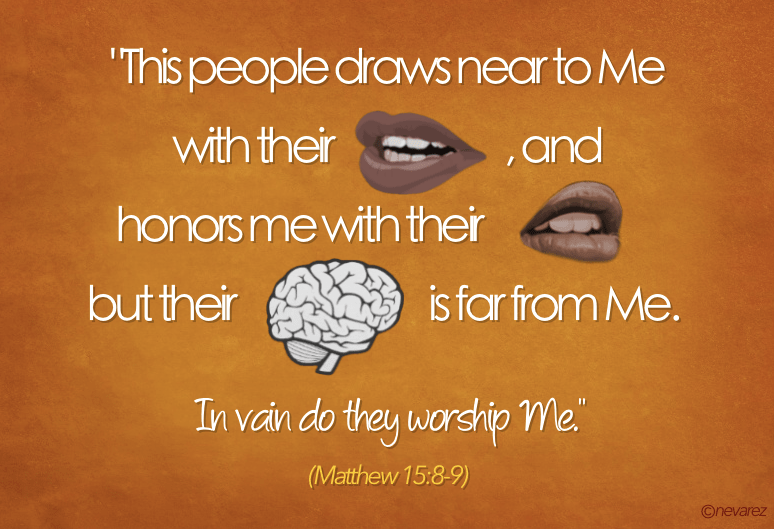



 Loving God, Living God, Loving Hope, Living Hope, Loving Living Life His Way! "Many things are possible for the person who has hope. Even more is possible for the person who has faith. And still more is possible for the person who knows how to love. But everything is possible for the person who practices all three virtues." - Brother Lawrence (1605-1691), Practicing the Presence of God (1692).