Romans 15:4 "For whatever was written in earlier times was written for our instruction, so that through perseverance and the encouragement of the Scriptures we might have hope."
1 How well God must like you— you don’t walk in the ruts of those blind-as-bats, you don’t stand with the good-for-nothings, you don’t take your seat among the know-it-alls.
2-3 Instead you thrill to God’s Word, you chew on Scripture day and night. You’re a tree replanted in Eden, bearing fresh fruit every month, Never dropping a leaf, always in blossom.
4-5 You’re not at all like the wicked, who are mere windblown dust— Without defense in court, unfit company for innocent people.
6 God charts the road you take. The road they take leads to nowhere.
Word of God for the Children of God
Glory be to the Father, and to the Son, and to the Holy Ghost; as it was in the beginning, is now, and ever shall be, world without end. Amen, amen.
Finding, embracing our Happiness in What We Avoid
Psalm 1
The Two Ways
1 How happy is the one who does not walk in the advice of the wicked or stand in the pathway with sinners or sit in the company of mockers! 2 Instead, his delight is in the Lord’s instruction, and he meditates on it day and night. 3 He is like a tree planted beside flowing streams[a] that bears its fruit in its season, and its leaf does not wither. Whatever he does prospers.
4 The wicked are not like this; instead, they are like chaff that the wind blows away. 5 Therefore the wicked will not stand up in the judgment, nor sinners in the assembly of the righteous.
6 For the Lord watches over the way of the righteous, but the way of the wicked leads to ruin.
Happiness includes having the courage to avoid destructive situations. We can draw the line in uncertain friendships. We can walk away from compromising situations. We can say no to opportunities that could lead to wrongdoing.
This is how God describes his followers who seek to honor him and to live by his Word. When we are supplied with wisdom from God, we can avoid misfortunes, regrets, and many troubles by learning to exactly how say no before it’s too late.
Rather than walking in step with the wicked, “those who belong to Christ Jesus” can “keep in step with the Spirit” (Galatians 5:24-25).
In Christ, we are given new life and “called to be free” (5:13).
It doesn’t mean we are free to follow our old sinful nature. Rather, we are called to “serve one another humbly in love” (5:13), following the whole law of God.
If we walk in the way of the wicked, stand proudly with sinners, or sit dutifully among mockers, we will be just like them, and we will not enjoy the happiness of life that God wants for us.
We will be blown away like dust in the wind, for “the way of the wicked leads to destruction.”
Psalm 1 is often described as teaching about the two ways: the way of godly wisdom, and the way of foolish wickedness. “Blessed [or happy] is the one who . . .” avoids the way of wickedness but delights in the way of the Lord.
God’s truth will always outweigh and outlive all its detractors.
As the prophet Isaiah proclaims, “The grass withers, the flower fades, but the word of our God will stand forever” (Isaiah 40:8).
As the Psalter opens, we find that the blessed person—the truly happy one—delights in the enduring truth of God’s word.
The very words of the Lord are precious to them; each word tastes sweeter than honey (Psalm 19:10).
Yet such a person doesn’t only delight in the law of the Lord; they also meditateupon it.
Meditation is akin to the process of digestion.
It is possible, in physical terms, just to stick food in your mouth and do nothing with it, but that will add nothing of nutritional value to your body.
We risk the same with God’s word if we come to it Sunday by Sunday and turn to it day by day without intentional meditation.
Often we feel as if our lives are racing by at 100 miles an hour.
Daily time in God’s word becomes a chore to complete, just to say we’ve done it.
Instead, we need to continually find ways to store up God’s word in our hearts (Psalm 119:11).
We need consciously to take time to chew it over, to ask throughout the day, “What does this verse really mean? How should it shape my thoughts and actions in this situation? What is it showing me about the glory of God? How might God use it to conform me to the image of Christ?”
We are not called to snack on the Scriptures but to feast on them.
There is no end to God’s excellencies, there is no end to the riches of His word.
What will it mean for you to meditate on it?
By prayer, seek the help of the Spirit of God to harness your heart and mind to the text.
Carefully consider what the Bible has to say.
Ponder it.
Probe it.
Chew on it
throughout the day to release as many soul-nourishing nutrients as you can.
Psalm 139:23-24 Christian Standard Bible
23 Search me, God, and know my heart; test me and know my concerns. 24 See if there is any offensive[a] way in me; lead me in the everlasting way.
What does Psalm 1:2 teach us?
It explains that in which true blessedness –deep, rich, real, God-bestowed, God-centered happiness– consists. And it does so in the very first sentence.
Psalm 1:1-2 “Blessed is the man” . . . [whose] “delight is in the law of the Lord.”
Notice there is no opposition of blessing and obedience, or of delight and duty.
What is the simple explanation of Psalm 1?
Psalm 1 is called a wisdom psalm because we learn that happiness results from our choice to follow God’s direction of life.
In this psalm the writer sets forth two ways or two directions in life.
One is the right way that leads to happiness, and the other is the wrong way that leads to misery.
What is the moral of Psalms 1?
Psalm 1 proclaims truths echoed in the book of Proverbs: that
following the wisdom of God is the best and wisest way to live.
Like Proverbs, this psalm declares that those who obey God’s teachings can avoid serious consequences arising from committing to sin and disobedience.
What is the warning in Psalm 1?
This Psalm has a warning and a promise.
The warning describes the downward journey of a person who would rather listen to the chorus of this world rather than the word of God.
While the great promise of His happiness is for the righteous only.
And as you meditate on the law of your Lord, ask God not just to increase your knowledge of Him but o change you from the inside out to be more like His Son.
As you see His word go to work in your heart and mind and life, you will come more and more to experience continuous delight in reading it and living by it.
In the name of God, the Father the Son and the Holy Spirit
Praying ….
Psalm 32
The Joy of Forgiveness
Of David. A Maskil.
1 How joyful is the one whose transgression is forgiven, whose sin is covered! 2 How joyful is a person whom the Lord does not charge with iniquity and in whose spirit is no deceit!
3 When I kept silent, my bones became brittle from my groaning all day long. 4 For day and night your hand was heavy on me; my strength was drained[a] as in the summer’s heat.Selah 5 Then I acknowledged my sin to you and did not conceal my iniquity. I said, “I will confess my transgressions to the Lord,” and you forgave the guilt of my sin. Selah
6 Therefore let everyone who is faithful pray to you immediately.[b] When great floodwaters come, they will not reach him. 7 You are my hiding place; you protect me from trouble. You surround me with joyful shouts of deliverance. Selah
8 I will instruct you and show you the way to go; with my eye on you, I will give counsel. 9 Do not be like a horse or mule, without understanding, that must be controlled with bit and bridle or else it will not come near you.
10 Many pains come to the wicked, but the one who trusts in the Lord will have faithful love surrounding him. 11 Be glad in the Lord and rejoice, you righteous ones; shout for joy, all you upright in heart.
Glory be to the Father, and to the Son, and to the Holy Ghost; as it was in the beginning, is now, and ever shall be, world without end. Amen, amen.
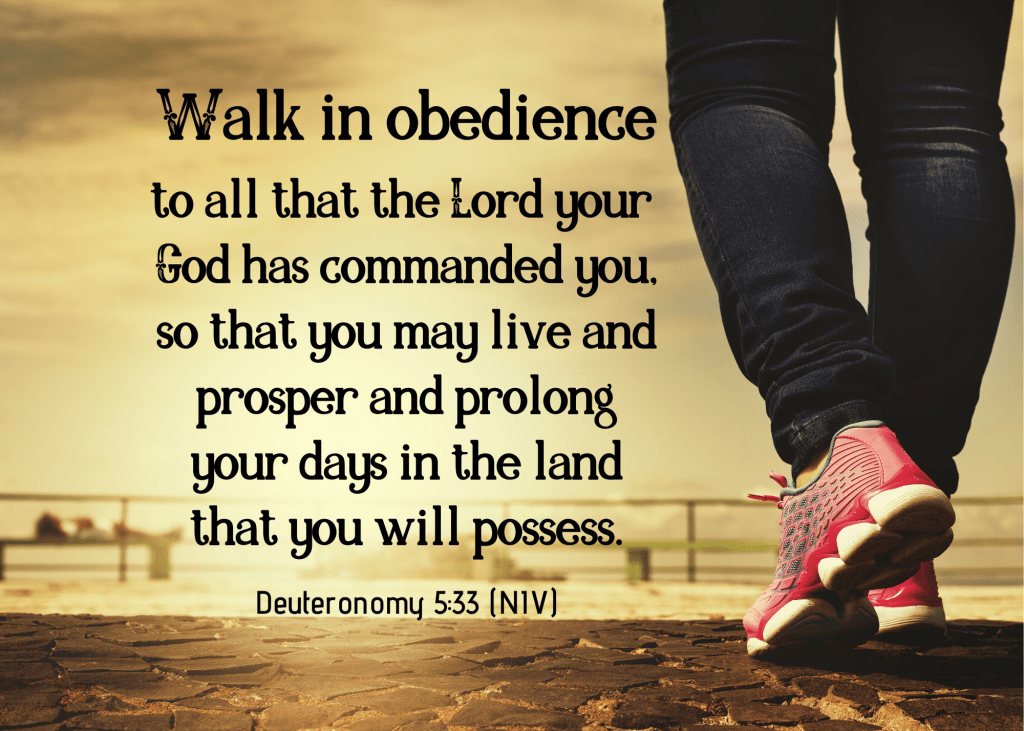
28 “And the Lord heard your words, when you spoke to me. And the Lord said to me, ‘I have heard the words of this people, which they have spoken to you. They are right in all that they have spoken. 29 Oh that they had such a heart as this always, to fear me and to keep all my commandments, that it might go well with them and with their descendants[a] forever! 30 Go and say to them, “Return to your tents.” 31 But you, stand here by me, and I will tell you the whole commandment and the statutes and the rules that you shall teach them, that they may do them in the land that I am giving them to possess.’32 You shall be careful therefore to do as the Lord your God has commanded you. You shall not turn aside to the right hand or to the left. 33 You shall walk in all the way that the Lord your God has commanded you, that you may live, and that it may go well with you, and that you may live long in the land that you shall possess.
The Word of God for the Children of God.
Glory be to the Father, and to the Son, and to the Holy Ghost; as it was in the beginning, is now, and ever shall be, world without end. Amen, amen.
Where does Deuteronomy 5:32-33 Lead Us?
Deuteronomy 5:32-33 in the King James Version of the Bible says:
“Ye shall observe to do therefore as the Lord your God hath commanded you: ye shall not turn aside to the right hand or to the left. Ye shall walk in all the ways which the Lord your God hath commanded you, that ye may live, and that it may be well with you, and that ye may prolong your days in the land which ye shall possess.”
This passage comes from the book of Deuteronomy, which is the fifth book of the Bible and is attributed to Moses. Deuteronomy is a book of laws and guidance for the Israelites as they prepare to enter the Promised Land.
In this specific passage, Moses is reiterating the importance of explicitly following the commands and instructions of the Lord in order to live a prosperous and fulfilling life.
The themes present in this passage are obedience, guidance, and the promise of blessings. The overarching theme is the sheer importance of obedience to God’s commands in order to walk, to experience, a blessed, good and prosperous life.
The passage emphasizes the idea that following God’s instructions will lead to blessings and a fulfilling life.
The context of this passage is important to understand its significance.
The Israelites had been wandering in the wilderness for forty years, and they were about to enter the Promised Land.
Moses, their leader for the last 40 years, knew that they needed to be reminded of the importance of following God’s commands in order to succeed in their new land. The book of Deuteronomy is essentially Moses’ final speeches to the Israelites, and he is impressing upon them the importance of obedience to God’s laws as they enter the land that God had promised to their ancestors.
The symbolism in this passage lies in the instructions to “not turn aside to the right hand or to the left” and to “walk in all the ways which the Lord your God hath commanded you.”
This symbolism represents the critical idea of our staying on the path that God has set for us, not straying nor walking neither to the left or to the right from it.
It also symbolizes the idea of being disciplined, devoted, focused and 10000% committed to following God’s commands in order to experience the blessings and prosperity that he has promised.
The ancient passage can also be interpreted on a much deeper, spiritual level.
It can be seen as a metaphor for the Christian journey, with the “land we are promised” representing the spiritual promised land that believers are striving towards.
In this context, the passage emphasizes the over abundance of importance of following God’s commands, neither straying nor walking to the right or left in order to experience the fullness of life and His blessings in the spiritual realm.
Overall, this ancient biblical text from Deuteronomy 5:32-33 is a powerful reminder of the importance of straight line obedience to God’s commands.
It serves as a travel guide for living a fulfilling and prosperous life, both in the physical and spiritual realms. The passage carries a message of deep hope and a sure and true promise, reminding all believers by following God’s instructions, they will experience abundant blessings and a spiritually rich, meaningful life.
In the name of God, the Father and God the Son and God the Holy Spirit,
Let us Pray,
Psalm 1
The Two Ways
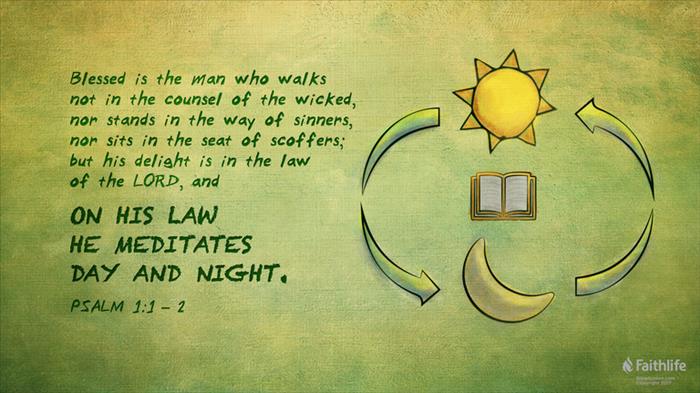
1 How happy is the one who does not walk in the advice of the wicked or stand in the pathway with sinners or sit in the company of mockers! 2 Instead, his delight is in the Lord’s instruction, and he meditates on it day and night. 3 He is like a tree planted beside flowing streams[a] that bears its fruit in its season, and its leaf does not wither. Whatever he does prospers.
4 The wicked are not like this; instead, they are like chaff that the wind blows away. 5 Therefore the wicked will not stand up in the judgment, nor sinners in the assembly of the righteous.
6 For the Lord watches over the way of the righteous, but the way of the wicked leads to ruin.
Glory be to the Father, and to the Son, and to the Holy Ghost; as it was in the beginning, is now, and ever shall be, world without end. Amen, amen.
Everybody’s got to walk that lonesome valley,
they’ve got to walk it by their selves.
There’s nobody here can walk it for them,
they’ve got to walk it by their selves.
My father’s got to walk that lonesome valley,
he’s got to walk it by his self.
There’s nobody here can walk it for him,
he’s got to walk it by his self.
My mother’s got to walk that lonesome valley
she’s got to walk it by her self.
There’s nobody here can walk it for her,
she’s got to walk it by her self.
My brother’s got to walk that lonesome valley,
he’s got to walk it by his self.
There’s nobody here can walk it for him,
he’s got to walk it by his self.
Most sinners got to walk this lonesome valley,
they’ve got to walk it by their selves.
There’s nobody here can walk it for them,
they’ve got to walk it by their selves.
Everybody’s got to walk that lonesome valley,
they’ve got to walk it by their selves.
There’s nobody here can walk it for them,
they’ve got to walk it by their selves.
Psalm 1 GOD’S WORD Translation
BOOK ONE
(Psalms 1–41)
1 Blessed is the person who does not follow the advice of wicked people, take the path of sinners, or join the company of mockers. 2 Rather, he delights in the teachings of the Lord and reflects on his teachings day and night. 3 He is like a tree planted beside streams— a tree that produces fruit in season and whose leaves do not wither. He succeeds in everything he does.[a]
4 Wicked people are not like that. Instead, they are like husks that the wind blows away. 5 That is why wicked people will not be able to stand in the judgment and sinners will not be able to stand where righteous people gather.
6 The Lord knows the way of righteous people, but the way of wicked people will end.
Gloria! In Excelsis Deo! Alleluia, Alleluia, Alleluia, Amen.
Rather He Delights Himself in the Teachings of the Lord.
Right from the start, I look at that word “Rather” and in my Christian frame of mind, I wonder – in whose other teachings would the Psalmist rather delight?
Verse 1 drops the answers into the exact center of our spiritual consciousness:
1 Blessed is the person who does not follow the advice of wicked people, take the path of sinners, or join the company of mockers.
Following the Advice of Wicked People.
Take the Path of Sinners.
Join in the Company of Mockers.
Psalm 1 is called the preamble to the book of Psalms.
That is, it serves as an introduction to the entire book.
What is said in Psalm 1 is relevant to all the rest of the book of Psalms.
Charles Spurgeon viewed it this way:
“The matter of the first Psalm, which may be looked upon, in some respects, as the text upon which the whole of the Psalms make up a divine sermon.”
The psalms begin with these words: “Blessed is the man.” In Psalm 1, God addresses man’s most basic question: How can I be happy (blessed) in this life?
Is this true? Does God really want us to be happy?
Absolutely!
And this happiness is not temporary, but perpetual.
The word translated blessed is plural in the original Hebrew.
That is, it means perpetual blessings. It can be read blessedness’s or happiness’s.
So how can I be happy, truly happy?
Not Following the Advice of Wicked People.
Not Taking the Path of Sinners.
Not Joining in the Company of Mockers.
Very wise and very sage advice when spoken with Authority in any age.
Join in with the crowds residing within the bounds of the “evils of this age?”
Join in with crowds residing within the boundless salvation of Almighty God?
Choosing the directions for our lives, Psalm 1 is called a wisdom psalm because we learn that happiness results from our choice to follow God’s direction of life.
In this psalm the writer sets forth two ways or two directions to choose in life.
One is specifically stated to the right way that leads us to happiness in the Lord, the other is specifically stated to be the wrong way that leads to worldly misery.
The Right Way
Psalm 1:1-3 Amplified Bible
Book One
The Righteous and the Wicked Contrasted.
1 [a]Blessed [fortunate, prosperous, and favored by God] is the man who does not walk in the counsel of the wicked [following their advice and example], Nor stand in the path of sinners, Nor sit [down to rest] in the seat of [b]scoffers (ridiculers). 2 But his delight is in the law of the Lord, And on His law [His precepts and teachings] he [habitually] meditates day and night. 3 And he will be like a tree firmly planted [and fed] by streams of water, Which yields its fruit in its season; Its leaf does not wither; And in whatever he does, he prospers [and comes to maturity].
The wisdom of Psalm 1 captures a fundamental teaching found in both the Old and New Testaments.
In the writings of the Old Testament God teaches His people that one’s choice of one’s life’s mindset will determine both the direction, the outcome of their life.
Deuteronomy 30:19-20 Amplified Bible
19 I call heaven and earth as witnesses against you today, that I have set before you life and death, the blessing and the curse; therefore, you shall choose life in order that you may live, you and your descendants, 20 by loving the Lord your God, by obeying His voice, and by holding closely to Him; for He is your life [your good life, your abundant life, your fulfillment] and the length of your days, that you may live in the land which the Lord promised (swore) to give to your fathers, to Abraham, Isaac, and Jacob.”
Choosing to live one’s life in the 24×7 mindset of God, the Father and God the Son and God the Holy Spirit, by obeying His voice and holding closely to Him:
For He IS your life
For He is your GOOD life
He is your ABUNDANT life
He is your FULFILLMENT of life
He is the LENGTH OF OUR DAYS that we may live in the land which the Lord promised (swore, gave an oath to) to give to your fathers and the Patriarchs.
In Matthew’s Narrative of the Gospel,
Jesus’ message to the crowds is to choose the right way in life:
Matthew 7:13-14 Amplified Bible
The Narrow and Wide Gates
13 “Enter through the narrow gate. For wide is the gate and broad and easy to travel is the path that leads the way to destruction and eternal loss, and there are many who enter through it. 14 But small is the gate and narrow and difficult to travel is the path that leads the way to [everlasting] life, and there are few who find it.
Choosing the Right Path
First, in Psalm 1:1 we learn that happiness comes by choosing to walk on a righteous path.
This determination is directly connected to other people.
Each line in this verse teaches us to avoid the wrong kinds of interpersonal relationships – our choice of friends make all the difference in our lives.
Notice what this verse says:
“Blessed is the man that walketh not in the counsel of the ungodly.”
Choosing the righteous path includes refusing advice from those who hold godless values and whose moral and ethical choices violate the laws of God.
The second line goes a step further: “nor standeth in the way of sinners.”
It is one thing to listen to wicked counsel.
It is quite another to decisively side and to compromise with that viewpoint.
Instead, the happy person refuses to follow the worldly crowd.
You don’t see him “hanging out” with those who pursue sin as a lifestyle.
Finally, he refuses to sit and associate with those whose conversations mock and curse God: “nor sitteth in the seat of the scornful.”
If you and I want to choose to be miserable, we make our best friends those who are scornful, critical and disrespectful.
The three verbs—walk, stand and sit—show the oily, slippery slope of evil.
Evil is not passive.
It is ever descending.
The longer we go slipping and sliding, the worse we get -as a pattern of evil choices causes a downward spiral in our character that leads to destruction.
Hungering for God’s Word
Second, Psalm 1:2 resoundingly declares happiness comes by developing a strong appetite for God’s Word and NOT Satan’s incessant barrage of lies.
We learn to enjoy the Bible by nurturing the disciplined habit of meditation.
Meditation involves a 24/7—“day and night”—focus on the Scripture.
This means individually, in Koinonia fellowship seeking to better understand the Bible’s true meaning, as well as, its correct application to us personally.
The Spirit of God makes the Word of God satisfying to the soul of man.
The Scriptures are “sweeter than honey”(Psalm 119:103) and “more to be desired [desirable] are they than gold” (Psalm 19:10).
In some contexts the word meditate can be translated growl or groan or moan.
It conveys the idea of muttering.
Perhaps you know someone who walks around mumbling to himself.
We tend to view such behavior as socially odd.
But the reality is that all of us talk to ourselves inside our heads all the time.
There is a mental discussion going on continuously.
Some people simply express parts of their dialogue audibly.
This mental conversation is meditation.
God blesses us as we mull over His words day and night (Psalm 1:2).
The reason this way of life makes one so happy is that is fulfills the purpose for which we were created.
God’s first command to man was to “be fruitful” (Genesis 1:28).
Psalm 1 describes the happy man as being “like a tree planted by the rivers of water, that bringeth forth his fruit in his season; his leaf also shall not wither; and whatsoever he doeth shall prosper” (Psalm 1:3).
Fruit bearing is the result of deep roots’ finding their way, winding their way, to an abundant supply of nourishment from underground streams of water.
God’s Word is an all-sufficient, eternal supply of empowering grace for all of life – even during difficult, seemingly barren times, the Word will sustain life.
A fruitful life is a blessed life.
So David states that God’s way to happiness is being separated from the world, utterly saturated with the Word, and fruitful and successful in doing God’s will.
The Wrong Way
Psalm 1:4-6 Amplified Bible
4 The wicked [those who live in disobedience to God’s law] are not so, But they are like the chaff [worthless and without substance] which the wind blows away. 5 Therefore the wicked will not stand [unpunished] in the judgment, Nor sinners in the assembly of the righteous. 6 For the Lord knows and fully approves the way of the righteous, But the way of the wicked shall perish.
David goes on in verse 4 to contrast the way of the righteous with the way of the ungodly: “the ungodly are not so.”
Charles Spurgeon makes a powerful point when he notes that the Hebrew proposes a double negative: “‘Not so the ungodly, no so.’Oh! how terrible is it to have a double negative put upon the promises! and yet this is just the condition of the ungodly.”
Ungodliness will never, never prosper!
In the end ungodly people’s lives are deemed as “chaff.”
In other words, they are deemed pointless, worthless, lifeless and useless.
They will be driven away by the wind of God’s judgment.
They will not dwell with the people of God in the congregation of the righteous (Psalm 1:5).
At the end of the passage, the psalmist sets forth two directions
—the way of the righteous and the way of the ungodly;
two decisions—to meditate on God’s Word or to listen to ungodly counsel;
and two destinies—the righteous will enjoy God’s presence forever, but the ungodly will perish.
Psalm 1 The Message
1 How well God must like you— you don’t walk in the ruts of those blind-as-bats, you don’t stand with the good-for-nothings, you don’t take your seat among the know-it-alls.
2-3 Instead you thrill to God’s Word, you chew on Scripture day and night. You’re a tree replanted in Eden, bearing fresh fruit every month, Never dropping a leaf, always in blossom.
4-5 You’re not at all like the wicked, who are mere windblown dust— Without defense in court, unfit company for innocent people.
6 God charts the road you take. The road they take leads to nowhere.
Lonesome Valley
The Carter Family
Everybody’s got to walk that lonesome valley, they’ve got to walk it by their selves. There’s nobody here can walk it for them, they’ve got to walk it by their selves.
My father’s got to walk that lonesome valley, he’s got to walk it by his self. There’s nobody here can walk it for him, he’s got to walk it by his self.
My mother’s got to walk that lonesome valley she’s got to walk it by her self. There’s nobody here can walk it for her, she’s got to walk it by her self.
My brother’s got to walk that lonesome valley, he’s got to walk it by his self. There’s nobody here can walk it for him, he’s got to walk it by his self.
Most sinners got to walk this lonesome valley, they’ve got to walk it by their selves. There’s nobody here can walk it for them, they’ve got to walk it by their selves.
Everybody’s got to walk that lonesome valley, they’ve got to walk it by their selves. There’s nobody here can walk it for them, they’ve got to walk it by their selves.
Choosing This Day Your Path Unto True Happiness?
About You Discovering Your Path to True Happiness?
About You Walking On Your Path to True Happiness?
In the name of God, the Father and God the Son and God the Holy Spirit,
Let us Pray,
Lord, we ask that you will make us a blessed people who do not walk in the wicked’s counsel, stand in the sinners’s way, or sit in the scoffers’s seat, but who find such delight in your instruction that it is always on our hearts, minds, and lips.
Make us like a well-watered tree, nurtured to bear fruit and prosperous in all you give us to do. Keep us from being like those who oppose you. Their plans have the appearance of wisdom, but will ultimately come to nothing when you come to weigh and measure human works.
We trust you and know that your judgment is always righteous. Thank you for showing us your path—the path that leads to life—in your Word and through your Son Jesus Christ. Amen.
It pays to pay attention to whom you pay attention to.
But how do I know the difference between good advice and bad?
In my files I have the following pieces of advice that you may want to consider:
· Always keep your words soft and sweet, just in case you have to eat them.
· Never buy a car you cannot push to the service station five miles away.
When everything’s coming your way, you’re probably in the wrong lane.
· Find out what you do not do well, then do not do it.
· Never put both feet in your mouth at the same time, because then you won’t have any legs to stand on.
· An ounce of prevention is worth a pound of bandages and adhesive tape.
· It may be that your sole purpose in life is simply to serve as a warning to others.
The world is filled with people who would like to give us advice.
And the Bible SAYS it is a good thing to listen to advice.
For example:
Proverbs 12:15 “The way of a fool seems right to him, but a wise man listens to advice.”
Proverbs 15:22 “Plans fail for lack of counsel, but with many advisers they succeed.”
Proverbs 19:20-21 “Listen to advice and accept instruction, and in the end you will be wise.
Proverbs 16:1 “The plans and reflections of the heart belong to man, But the [wise] answer of the tongue is from the Lord.
Interestingly enough those proverbs were written by Solomon for the benefit of his sons – those who would come to sit on the very throne of Israel after he died.
Repeatedly – throughout Proverbs – Solomon would say things like this:
“Listen, my son, to your father’s instruction and do not forsake your mother’s teaching.” Proverbs 1:8
From One Generation to the next, we try to impart the very best advice to then that they might come to avoid making the same mistakes we made, they would come to make better, sounder and much more thoroughly considered decisions.
But does this always work?
It would be so much greater than great for everyone in whole the world if it did.
But as we are about to read and consider from our biblical text – our answer is:
Obviously, Unfortunately, Ultimately, NOT!
1 Kings 12:1-19Amplified Bible
King Rehoboam Acts Foolishly
12 Rehoboam went to [a]Shechem, for all Israel had come to Shechem to make him king. 2 Now when Jeroboam the son of Nebat heard about it, he was living in Egypt (for he was still in Egypt, where he had fled from King Solomon). 3 So they sent word and called for him, and Jeroboam and all the assembly of Israel came and spoke to Rehoboam, saying, 4 “Your father made our yoke (burden) heavy; so now lighten the hard labor and the heavy yoke your father imposed on us, and we will serve you.” 5 Rehoboam replied to them, “Leave for three days, then come back to me [for my decision].” So, the people left.
6 King Rehoboam consulted with the elders who had served and advised his father Solomon while he was still alive and said, “How do you advise me to answer this people?” 7 They spoke to him, saying, “If you will be a servant to this people today, and will serve them and grant their request, and speak good words to them, then they will be your servants forever.” 8 But he [b]ignored the advice which the elders gave him and consulted the young men who grew up with him and served him. 9 He said to them, “What do you advise that we answer this people who have said to me, ‘Lighten the yoke (burden) which your father put on us’?” 10 The young men who had grown up with him answered, “This is what you should say to this people who told you, ‘Your father made our yoke heavy, but as for you, make our yoke lighter’—say this to them: ‘My little finger is thicker than my father’s loins [and my reign will be even more severe]. 11 And now, whereas my father loaded you with a heavy yoke, I will add to your yoke. My father disciplined you with whips, but I will discipline you with [c]scorpions.’”
12 Jeroboam and all the people came back to Rehoboam on the third day, just as the king had instructed, saying, “Return to me on the third day.” 13 The king answered the people harshly and [d]ignored the advice which the elders had given him, 14 and spoke to them in accordance with the advice of the young men, saying, “My father made your yoke heavy, but as for me, I will add to your yoke; my father disciplined you with whips, but I will discipline you with scorpions.” 15 So the king did not listen to the people; for the situation was from the Lord, so that He might fulfill His word which He spoke through Ahijah the Shilonite to Jeroboam the son of Nebat.
The Kingdom Divided, Jeroboam Rules Israel
16 So when all [the ten northern tribes of] Israel saw that the king did not listen to them, the people replied to the king, saying,
“What portion do we have in David? We have no inheritance in the son of Jesse; To your tents, O Israel! Look now after [e]your own house, David!”
Then Israel went back to their tents. 17 But as for the sons (descendants) of Israel who lived in the cities of Judah [including Benjamin], Rehoboam reigned over them. 18 Then King Rehoboam sent [f]Adoram, who was in charge of the forced labor [to represent him], and all Israel stoned him to death. And King Rehoboam quickly mounted his chariot to escape to Jerusalem. 19 So Israel (the ten northern tribes) has rebelled against the house (royal line) of David to this day (the date of this writing).
The Word of God for the Children of God. Gloria! In Excelsis Deo! Alleluia! Amen.
Solomon’s oldest son was Rehoboam.
Solomon’s oldest son was Rehoboam, and today we’re reading about the day Rehoboam sought that very kind of advice.
When Solomon died, his throne was passed down to his eldest son Rehoboam.
Rehoboam was approached by his people saying they needed relief from the high taxes his father had imposed during his reign to build the Temple and to govern and run the kingdom.
Wisely, Rehoboam asked for 3 days so that he could consult with his advisors.
1st he goes to his father’s advisors… older men whom Solomon trusted for good advice.
These men tell Rehoboam to listen to the people.
They say, “If today you will be a servant to these people and serve them and give them a favorable answer, they will always be your servants.” 12:7
But Rehoboam rejected the advice of these Elders.
Instead, Rehoboam goes to his friends, his younger inexperienced friends … and asks their advice.
But HIS friends are not wise and experienced men.
They are proud, arrogant and selfish men.
They like to “talk big”.
They probably spend a great deal of their time sitting around and making fun of people who aren’t like them.
These are men who probably enjoyed the “trash talk” of their day.
And you can tell – that’s the kind of men they are – from the kind of answer they give Rehoboam
“Tell these people who have said to you, ‘Your father put a heavy yoke on us, but make our yoke lighter’— tell them, ‘My little finger is thicker than my father’s waist. My father laid on you a heavy yoke; I will make it even heavier. My father scourged you with whips; I will scourge you with scorpions.’”
Now, it doesn’t take much of a genius to realize that this was definitely NOT the smartest advice they could have given in that moment when Charity is required.
Those were not words destined to make a whole lot of people very happy with their new King Rehoboam.
Those weren’t the words a good king would say.
Those were the words of tyrants and bullies.
People who like to push others around.
(Pause…) But those were the words Rehoboam listened to.
Where Charity and Love Prevail ….
Where Greed and Avarice Prevail ….
And so, when the people of Israel reassembled 3 days later,
King Rehoboam shows off for his friends and as a result — he loses nearly everything he’d inherited from his father. He lost more than half his kingdom and neither he nor any of his descendants could ever get it back again.
From that day forward,
the 10 tribes of Israel (to the North) and the two tribes of Judah (to the South and ruled by the descendants of Rehoboam) were never to be reunited again.
The ultimate focus of this devotional message today is this:
Proverbs 16:1 Amplified Bible
Contrast the Upright and the Wicked
16 The plans and reflections of the heart belong to man, But the [wise] answer of the tongue is from the Lord.
It pays to pay attention to who you pay attention to.
NOT ALL advice is good advice.
Psalm 1 Amplified Bible
Book One
The Righteous and the Wicked Contrasted.
1 [a]Blessed [fortunate, prosperous, and favored by God] is the man who does not walk in the counsel of the wicked [following their advice and example], Nor stand in the path of sinners, Nor sit [down to rest] in the seat of [b]scoffers (ridiculers). 2 But his delight is in the law of the Lord, And on His law [His precepts and teachings] he [habitually] meditates day and night. 3 And he will be like a tree firmly planted [and fed] by streams of water, Which yields its fruit in its season; Its leaf does not wither; And in whatever he does, he prospers [and comes to maturity].
4 The wicked [those who live in disobedience to God’s law] are not so, But they are like the chaff [worthless and without substance] which the wind blows away. 5 Therefore, the wicked will not stand [unpunished] in the judgment, Nor sinners in the assembly of the righteous. 6 For the Lord knows and fully approves the way of the righteous, But the way of the wicked shall perish.
In that short Psalm, God warns us to be careful who we hang around with.
Who we listen to.
Blessed [fortunate, prosperous, and favored by God] is the man who does
· Doesn’t walk in the counsel of the wicked
· Doesn’t stand in the way of the sinners
· Doesn’t sit in the seat of mockers.
Why not?
Why don’t I want to spend time with these folks?
Because, the reason they are the way they are, is because they think the way they think.
God tells us these folks are more wise in their own eyes than in God’s eyes.
They won’t stand in the judgment.
They’re not going to sit with the righteous in the last day.
They will perish!
And you DO NOT want to go where they end up.
Their actions and their words tell us what kind of people they are, and what kind of advice they’d give us.
What about Psalm 1 makes it so relevant here?
Psalm 1 is called the preamble to the book of Psalms.
That is, it serves as an introduction to the entire book.
What is said in Psalm 1 is relevant to all the rest of the book of Psalms.
Reverend Charles Haddon Spurgeon viewed it this way:
The matter of the first Psalm, which may be looked upon, in some respects, as the text upon which the whole of the Psalms make up a divine sermon.
The psalms begin with these words: “Blessed is the man.”
In Psalm 1, God addresses man’s most basic question: How can I be happy (blessed, fortunate, prosperous, favored by God) in this life?
Is this true?
Does God really want us to be blessed, fortunate, prosperous, favored by God?
Absolutely!
And this happiness is not temporary, but perpetual.
The word translated blessed is plural in the original Hebrew.
That is, it means perpetual blessings.
It can be read blessedness’s or happiness’s.
So how can I be happy, truly happy?
Psalm 1 is called a wisdom psalm because we learn that happiness results from our choice to follow God’s direction of life.
In this psalm the writer sets forth two ways or two directions in life.
One is the right way that leads to happiness,
and the other is the wrong way that leads to misery.
The Right Way
Psalm 1:1–3 Blessed is the man that walketh not in the counsel of the ungodly, nor standeth in the way of sinners, nor sitteth in the seat of the scornful. But his delight is in the law of the Lord; and in his law doth he meditate day and night. And he shall be like a tree planted by the rivers of water, that bringeth forth his fruit in his season; his leaf also shall not wither; and whatsoever he doeth shall prosper.
Psalm 1 captures a basic fundamental teaching found in both the Old and New Testaments.
In the Old Testament God teaches His people that one’s choice will determine both the direction and the outcome of your life.
I call heaven and earth to record this day against you, that I have set before you life and death, blessing and cursing: therefore choose life, that both thou and thy seed may live. (Deuteronomy. 30:19)
In the New Testament, Jesus’ message to the crowds is to choose the right way in life:
Enter ye in at the strait gate: for wide is the gate, and broad is the way, that leadeth to destruction, and many there be which go in thereat: because strait is the gate, and narrow is the way, which leadeth unto life, and few there be that find it. (Matthew. 7:13–14)
Choosing the Right Path
First, in Psalm 1:1 we learn that happiness comes by choosing to walk on a righteous path.
This determination is directly connected to other people.
Each line in this verse tells us to avoid the wrong kinds of interpersonal relationships.
Your friends and your enemies make all the difference in your life.
Notice what this verse says: “Blessed is the man that walketh not in the counsel of the ungodly.”
Choosing the righteous path includes refusing advice from those who hold godless values and whose moral choices violate the laws of God.
The second line goes a step further: “nor standeth in the way of sinners.”
It is one thing to listen to wicked counsel. It is another to decisively side with that viewpoint. Instead, the happy person refuses to follow the worldly crowd.
You don’t see him “hanging out” with those who pursue sin as a lifestyle.
Finally, he refuses to sit and associate with those whose conversations mock and curse God: “nor sitteth in the seat of the scornful.”
If you want to be miserable, make your best friends those who are scornful, critical and disrespectful.
The three verbs—walk, stand and sit—show the slippery slope of evil. Evil is not passive. It is ever descending. The longer you go, the worse you get. A pattern of evil choices causes a downward spiral in character that leads to destruction.
But we must also be very careful with our interpretation of this “right way.”
“Our interpretation” and “Our actions which follow our interpretation,” can go horribly wrong, and the only thing created is useless division inconsistent with the Words and essential Gospel Teachings of our Lord and Savior Jesus Christ.
Jesus took His disciples into the much hated, thoroughly avoided Samaria to interact with the Woman at the Well with the message: How to Worship God.
John 4:15-25 Amplified
15 The woman said to Him, “Sir, give me this water, so that I will not get thirsty nor [have to continually] come all the way here to draw.” 16 At this, Jesus said, “Go, call your husband and come back.” 17 The woman answered, “I do not have a husband.” Jesus said to her, “You have correctly said, ‘I do not have a husband’; 18 for you have had five husbands, and the man you are now living with is not your [a]husband. You have said this truthfully.” 19 The woman said to Him, “Sir, I see that You are a prophet. 20 Our fathers worshiped on this mountain, but you Jews say that the place where one ought to worship is in Jerusalem [at the temple].” 21 Jesus replied, “Woman, believe Me, a time is coming [when God’s kingdom comes] when you will worship the Father neither on this mountain nor in Jerusalem. 22 You [Samaritans] do not know what you worship; we [Jews] do know what we worship, for salvation is from the Jews. 23 But a time is coming and is already here when the true worshipers will worship the Father in spirit [from the heart, the inner self] and in truth; for the Father seeks such people to be His worshipers. 24 God is spirit [the Source of life, yet invisible to mankind], and those who worship Him must worship in spirit and truth.” 25 The woman said to Him, “I know that Messiah is coming (He who is called Christ—the Anointed); when that One comes, He will tell us everything [we need to know].”
Jesus sat with and shared a meal with the hated, thoroughly avoided ones.
Matthew 9:9-13 Amplified
Matthew Called
9 As Jesus went on from there, He saw a man named Matthew (Levi) sitting in the tax collector’s booth; and He said to him, “Follow Me [as My disciple, accepting Me as your Master and Teacher and walking the same path of life that I walk].” And Matthew got up and followed Him.
10 Then as Jesus was reclining at the table in Matthew’s house, many tax collectors and [a]sinners [including non-observant Jews] came and ate with Him and His disciples. 11 When the Pharisees saw this, they asked His disciples, “Why does your Master eat with tax collectors and sinners?” 12 But when Jesus heard this, He said, “Those who are healthy have no need for a physician, but [only] those who are sick. 13 Go and learn what this [Scripture] means: ‘I desire compassion [for those in distress], and not [animal] sacrifice,’ for I did not come to call [to repentance] the [self-proclaimed] righteous [who see no need to change], but sinners [those who recognize their sin and actively seek forgiveness].”
John 21:15-17 Amplified
The Love Motivation
15 So when they had finished breakfast, Jesus said to Simon Peter, “Simon, son of John, do you love Me more than these [others do—with total commitment and devotion]?” He said to Him, “Yes, Lord; You know that I [a]love You [with a deep, personal affection, as for a close friend].” Jesus said to him, “Feed My lambs.” 16 Again He said to him a second time, “Simon, son of John, do you love Me [with total commitment and devotion]?” He said to Him, “Yes, Lord; You know that I love You [with a deep, personal affection, as for a close friend].” Jesus said to him, “Shepherd My sheep.” 17 He said to him the third time, “Simon, son of John, do you love Me [with a deep, personal affection for Me, as for a close friend]?” Peter was grieved that He asked him the third time, “Do you [really] [b]love Me [with a deep, personal affection, as for a close friend]?” And he said to Him, “Lord, You know everything; You know that I love You [with a deep, personal affection, as for a close friend].” Jesus said to him, “Feed My sheep.
John 10:11-18 Amplified
11 [a]I am the Good Shepherd. The Good Shepherd [b]lays down His [own] life for the sheep. 12 But the hired man [who merely serves for wages], who is neither the shepherd nor the owner of the sheep, when he sees the wolf coming, deserts the flock and runs away; and the wolf snatches the sheep and scatters them. 13 The man runs because he is a hired hand [who serves only for wages] and is not concerned about the [safety of the] sheep. 14 I am the Good Shepherd, and I know [without any doubt those who are] My own and My own know Me [and have a deep, personal relationship with Me]— 15 even as the Father knows Me and I know the Father—and I lay down My [very own] life [sacrificing it] for the benefit of the sheep. 16 I have [c]other sheep [beside these] that are not of this fold. I must bring those also, and they will listen to My voice and pay attention to My call, and they will become [d]one flock with one Shepherd. 17 For this reason the Father loves Me, because I lay down My [own] life so that I may take it back. 18 No one takes it away from Me, but I lay it down voluntarily. I am authorized and have power to lay it down and to give it up, and I am authorized and have power to take it back. This command I have received from My Father.”
The essential key here to properly contextualizing and applying the essential lessons from the Word of God from Psalm 1 into our New Covenant times is:
Hungering for God’s Word – ALL OF IT!
Second, Psalm 1:2 declares that happiness comes by developing a strong appetite for God’s Word.
We learn to enjoy the Bible by nurturing the disciplined habit of meditation.
Meditation involves a 24/7— “day and night”—focus on the Scripture.
This means seeking to understand the Bible’s meaning as well as its application to us personally.
The Spirit of God makes the Word of God satisfying to the soul of man.
The Scriptures are “sweeter than honey” (Psalm. 119:103) and “more to be desired [desirable] are they than gold” (Psalm. 19:10).
In some contexts, the word meditate can be translated growl or groan or moan.
It conveys the idea of muttering.
Perhaps you know someone who walks around mumbling to himself.
We tend to view such behavior as socially odd.
But the reality is that all of us talk to ourselves inside our heads all the time.
There is a mental discussion going on continuously.
Some people simply express parts of their dialogue audibly.
This mental conversation is meditation.
God blesses us as we mull over ALL OF HIS Words, both day and night.
The reason this way of life makes one so happy is that is fulfills the purpose for which we were created.
God’s first command to man was to “be fruitful” (Genesis. 1:28).
Psalm 1 describes the happy man as being “like a tree planted by the rivers of water, that bringeth forth his fruit in his season; his leaf also shall not wither; and whatsoever he doeth shall prosper” (Psalm 1:3).
Fruit bearing is the result of deep roots’ finding an abundant supply of nourishment from underground streams of water. God’s Word is an all-sufficient, eternal supply of empowering grace for all of life.
Even during difficult, seemingly barren times, the Word will sustain life.
A fruitful life is a blessed life.
So, David states that God’s way to happiness is being in, but separated from the world, saturated with the Word, and fruitful and successful in doing God’s will.
Jesus’ High Priestly Prayer for us as we navigate through our seasons today;
John 17:13-21 Amplified
The Disciples in the World
13 But now I am coming to You; and I say these things [while I am still] in the world so that they may experience My joy made full and complete and perfect within them [filling their hearts with My delight]. 14 I have given to them Your word [the message You gave Me]; and the world has hated them because they are not of the world and do not belong to the world, just as I am not of the world and do not belong to it. 15 I do not ask You to take them out of the world, but that You keep them and protect them from the evil one. 16 They are not of the world, just as I am not of the world. 17 Sanctify them in the truth [set them apart for Your purposes, make them holy]; Your word is truth. 18 Just as You commissioned and sent Me into the world, I also have commissioned and sent them (believers) into the world. 19 For their sake [e]I sanctify Myself [to do Your will], so that they also may be sanctified [set apart, dedicated, made holy] in [Your] truth.
20 “I do not pray for these alone [it is not for their sake only that I make this request], but also for [all] those who [will ever] believe and trust in Me through their message, 21 that they all may be one; just as You, Father, are in Me and I in You, that they also may be one in Us, so that the world may believe [without any doubt] that You sent Me.
The Wrong Way
Psalm 1:4–6 The ungodly are not so: but are like the chaff which the wind driveth away. Therefore the ungodly shall not stand in the judgment, nor sinners in the congregation of the righteous. For the Lord knoweth the way of the righteous: but the way of the ungodly shall perish.
David goes on in verse 4 to contrast the way of the righteous with the way of the ungodly: “the ungodly are not so.”
Reverend Charles Haddon Spurgeon makes a powerful point when he notes that the Hebrew proposes a double negative:
“‘Not so the ungodly, no so.’ Oh! how terrible is it to have a double negative put upon the promises! and yet this is just the condition of the ungodly.”
Ungodliness will never, never prosper!
In the end ungodly people’s lives are deemed as “chaff.”
In other words, they are worthless, lifeless and useless.
They will be driven away by the wind of God’s judgment.
They will not dwell with the people of God in the congregation of the righteous (Psalm 1:5).
At the end of the passage, the psalmist sets forth two directions
—the way of the righteous and the way of the ungodly; two decisions
—to meditate on God’s Word or to listen to ungodly counsel; and two destinies
—the righteous will enjoy God’s presence forever, but the ungodly will perish.
So let me repeat: It pays to pay attention to who you pay attention to.
BUT who SHOULD I pay attention to?
Well, the reason Jesus created the church was so that we could look to each other for support and advice.
When you listen to the counsel of fellow Christians, you at least stand a good chance of getting Biblical advice.
But it’s interesting. The first people Rehoboam consulted were the Elders.
1Kings 12:6 tells us “Then King Rehoboam consulted the elders who had served his father Solomon during his lifetime. ‘How would you advise me to answer these people?’ he asked.”
Now, of course, these were not exactly “Elders” like a church might have.
They were older men whom Solomon had trusted for advice when he was King.
But older men have always the standard advisors in the Bible.
When Moses was leading the people out of Egypt, he was helped by 70 Elders of Israel, and these 70 Elders were often part of God’s dealing with His people because these 70 men were recognized leaders and wise men in Israel. Numbers 11:16, 25
Later, Elders of each city would sit at the city gates, and they’d act as judges in civil disputes. Deuteronomy 25:7
And throughout much of Israel’s history, the Elders of the people often guided Israel both in good and bad ways.
And that continued once God began His church.
Paul told the two young preachers – Timothy and Titus – to appoint Elders in their churches.
But these Elders were not just to be older men.
“An elder must be blameless, the husband of but one wife, a man whose children believe and are not open to the charge of being wild and disobedient.
Since an overseer is entrusted with God’s work, he must be blameless— not overbearing, not quick-tempered, not given to drunkenness, not violent, not pursuing dishonest gain. Rather they must be hospitable, one who loves what is good, who is self-controlled, upright, holy and disciplined.
He must hold firmly to the trustworthy message as it has been taught, so that they can encourage others by sound doctrine and refute those who oppose it.” Titus 1:6-9
When God began His church, He intended that Elders, both ordained and Laity, should be the ultimate “advisors” for church.
They had to be men with a proven track record.
They had to be good husbands and fathers.
They had to have a good reputation in the community.
AND they had to be men who stood firmly with good doctrine because their main job was
“… encourage others by sound doctrine”
“… and refute those who oppose it”
That’s why it is so critical for a church to prayerfully consider who gets to be an Elder.
These men are the guardians of Christ’s bride/ His church.
They stand beside the preacher to do the work of the ministry.
They stand before the congregation to lead.
And they are here to help give you and I Godly advice when we need it.
And they can be counted on to give good advice because…
· they are good fathers
· they are good husbands
· They are men you can trust to stand with God’s Word.
But my point is this:
When you need advice… look to God’s people (that’s why God formed the church)
When you need serious advice… look to your Elders (that’s why God formed the Eldership)
If you follow this guideline in your life God will protect the things that are important to you.
If you don’t, you may end up listening to foolish people– whose advice may cost you everything you hold precious.
Now Solomon gave one more piece of guidance to his son Rehoboam that Rehoboam ignored:
“Trust in the LORD with all your heart and lean not on your own understanding; in all your ways acknowledge him, and he will make your paths straight. Do not be wise in your own eyes; fear the LORD and shun evil.”Proverbs 3:4-7
In this entire story in I Kings 12, we don’t find ONE time that Rehoboam even prayed to God.
He never consulted the priests at the Temple.
He never visited one of the Prophets God used to proclaim His will.
Even when he visited with the Elders for advice, He wasn’t really looking for God’s will.
Rehoboam was looking for someone who would agree with what he’d already decided to do.
One person observed: “When we ask others for their advice, we are usually, actually, looking for a willing accomplice.” Marquis de la Grange
Rehoboam was looking for a willing accomplice.
He wasn’t looking for God’s advice or counsel.
He probably had already made up his mind what he wanted to do and his friends only confirmed the decision he’d already made.
But why would Rehoboam ignore God?
Why seek his own counsel rather than God’s?
Perhaps because Rehoboam thought he was wiser than both his father and God.
He didn’t think God would be wise enough for him to do what was best for him?
Why would he want to entrust his life to the wisdom of God when he did not believe God’s wisdom would be wise enough for him in the important matters.
Why would we want to entrust our life to the wisdom of God when/if we do not believe God’s wisdom will/would be wise enough for us in our critical times?
But Paul wrote: “… I am not ashamed, for I know whom I have believed and am persuaded that
He is [wise enough, able enough {my emphasis}] able to keep what I have committed to Him until that Day.” 2 Timothy 1:12 (NKJV)
In other words, Paul believed that no matter what happened in his life – if he entrusted that which was precious to God’s hands – God would take care of it.
Finally,
Anne Graham Lotz, in her book Just Give Me Jesus declared:
“No means of measure can define God’s limitless love…
No far-seeing telescope can bring into visibility the coastline of His shoreless supply…
No barrier can hinder Him from pouring out His blessings…
· He forgives and He forgets
· He creates and He cleanses.
· He restores and He rebuilds
· He heals and He helps
· He reconciles and He redeems
· He comforts and He carries
· He lifts and He loves.
He is the God of the 2nd chance, the fat chance, the slim chance…
Just give me Jesus!
He makes change possible!
Just give me Jesus.
Just give me His counsel and guidance.
Just give me His will and way for my life.”
And the best way to have those blessings in your life?
Is to give your not so “wise” self to GOD’S “WISER SELF” completely.
In the name of God, the Father, and God the Son and God the Holy Spirit,
Let us Pray,
Lord of wisdom, I sometimes finding understanding my life and my connection to the Bible to be far too difficult. I know you want me to apply your word to my life. I thank you for giving me your word so I can grow in my relationship with you. Help me to grasp what you want me to know as I read your revealed word. Open my eyes to see the wonderful truths in your instructions. Be my teacher, so I can live and obey your word. Thank you for your much wiser advice. Amen.
Is there any way in which we can be secured in this ever-changing world? Is our “impossible” dream of stability possible? Is revival and renewal even possible within our hearts and within our souls today? The lessons in Psalms One serves as great encouragement for those who dare to walk upright in a fallen world.
Psalm 1 The Message
1 How well God must like you— [when] you don’t walk in the ruts of those blind-as-bats, you don’t stand with the good-for-nothings, you don’t take your seat among the know-it-alls.
2-3 Instead you thrill to God’s Word, you chew on Scripture day and night. You’re a tree replanted in Eden, bearing fresh fruit every month, Never dropping a leaf, always in blossom.
4-5 You’re not at all like the wicked, who are mere windblown dust— Without defense in court, unfit company for innocent people.
6 God charts the road you take. The road they take leads to nowhere.
The Word of God for the Children of God. Gloria! In Excelsis Deo! Alleluia! Amen.
Is there any way that we can be secured in this ever-changing world? Is our “impossible” dream of stability possible? Do we all still accept that the word “impossible” ought to be spoken? Is revival and renewal even possible today! Is it possible that our hearts and our souls and our hands and our feet and our lives can once again reach our atrophying spirits? Are we so weighed down by the whole host of worldly concerns that our heavenly focus is been distorted, pressed down to the thinness of a penny or a dime through an arcade machine?
There is only one important difference between saints and sinners, and that is the life blood of our Lord and Savior Jesus. There is nothing else that separates us. We are Godly for one reason and one reason only, because we have accepted the full sovereignty of God, the Father, God the Son and God the Holy Spirit in our lives and been born from above and have taken on the nature of Christ by believing in the full life, death, burial, and resurrection of Jesus through faith.
The lessons in Psalms one serves as great encouragement for those who dare to walk upright in a fallen world. Are these verses then instructing us not to ever or even associate with sinners? Not really. Jesus hung out with the sinners of His day – the tax collectors and even the “questionable” women, but he did it to redeem them, not to gain their supposed “wisdom”. There is a difference.
These verses are instructing us to not draw wisdom from the “counsel of the ungodly” or hang out with the “scornful” – those who dare to mock God.
So many times, we try to gain wisdom from universities, scholars, and leaders in our country that don’t know God. They don’t have any understanding of what is right or wrong, or what is truth. Listening to them can give us knowledge, but they don’t hold ultimate wisdom. We have to pray that we are not led down the wrong “rabbit trail,” the wrong path as “knowledge puffs up” (1 Corinthians 8:2).
That is why who we are listening to and whom we are walking with alongside and within our lives is so critically important. Priority 1: We need godly wisdom.
True wisdom is only found in one place as it says in verse 2, the “law of the LORD”. The blessed man finds his delight in the “law of the LORD”.
First the psalmist makes it clear that there are only two roads in life. There are only two paths of life. The godly path or the ungodly path are manifested in the choices we make. Our decisions are important. First, everyone must decide.
God graciously granted us the gift of “self-determination.” Everyone single one of us freely choose the “path of life” as he or she pleases. The decision is yours. The decision is mine as are the consequences. Secondly, not choosing is not an option. Even our indecision is a choice either for God or against God. Finally, no one gets to freely choose the consequences of the choice. Each choice is leading us somewhere. Every decision is drawing us closes to God or a way from God.
We must choose to decide whether or not to allow God access into our lives. In order to experience change, we must desire change. We must desire to embrace either the ways of the acculturated world or God, God’s word. It is a choice. We must be opened to God. If we are going to live stable in an unstable world, then make good choices about where you walk, where you sit and where you stand.
Psalm 63 The Message
63 God—you’re my God! I can’t get enough of you! I’ve worked up such hunger and thirst for God, traveling across dry and weary deserts.
2-4 So here I am in the place of worship, eyes open, drinking in your strength and glory. In your generous love I am really living at last! My lips brim praises like fountains. I bless you every time I take a breath; My arms wave like banners of praise to you.
5-8 I eat my fill of prime rib and gravy; I smack my lips. It’s time to shout praises! If I’m sleepless at midnight, I spend the hours in grateful reflection. Because you’ve always stood up for me, I’m free to run and play. I hold on to you for dear life, and you hold me steady as a post.
9-11 Those who are out to get me are marked for doom, marked for death, bound for hell. They’ll die violent deaths; jackals will tear them limb from limb. But the king is glad in God; his true friends spread the joy, While small-minded gossips are gagged for good.
Every moment we are alive and upright and breathing we are constantly and continuously at a crossroads we cannot always see or even be aware of in life. We will constantly and continuously encounter a series of choices and then more choices after that with each breath we take and with every step we take. Some are so easy we do not even think about them overmuch – its automatic. Then we inevitably run into to those moral and ethical crossroads where the decision of what path to take becomes muddled by “what everyone else does.”
Every crossroads has an end point where we must stop what we are doing in that exact and exacting moment and ponder, decide to go to the left or to the right of to go straight or to stay put. Now, what is it which dictated direction?
There are thousands upon thousands of books which offer a whole host of ideas, guidance, recommendations and suggestions. Many are quite worthy to giving serious consideration to. Very intelligent and well-meaning people write them. Their hearts are in a good place. Their experiences are completely legitimate. Their honesty and integrity in communicating their care of others is crystal. I consider quite a few of these writings in my researching for each devotional.
Yet, to get the maximum balance of “do I or do I not” apply their principles, I weigh them heavily with and against the Word of God revealed in Scriptures. God has got a far better grip on my and everyone else’s reality than I ever do. I accept that God’s wisdom has some very significant lessons for me to ponder over through a disciplined course of study and prayer and waiting on my God. God has all of the answers I will ever need in my life – His methods are better!
What does that mean?
The law of the Lord is the instructions, teachings, and words of God that are superior to the words of man. That is where the “blessed man” finds his hope, and what we need to cleave to. The blessed man (or woman) knows that above all his earthly wisdom and thoughts, he can run to the words of God and find truth and life. He (or she) knows above everything that his bread and his food, his nourishment for life are found exclusively in one place – the Word of God.
So, what does he and she do?
The blessed man meditates on the “law” and the teachings of God “day and night”. He or she cannot ever get enough. He and she always put the words of God always before them and chews on them over and over and over again. He does not stop regardless of how difficult the words are [to hear and obey].
The blessed man who is constantly meditating on the Word of God is BLESSED. He is like a deeply rooted tree that grows fruit and is nourished by the waters of God. He doesn’t get weak or get sickly; the blessed man, woman is producing life and has vibrancy. This verse says that “whatever he does shall prosper.”
Why is he prospering? Why is he or she blessed?
Because they have found THE source of life – the Word of God, the teachings of the law, the teachings of Jesus. They have found stability and freedom and will produce good fruit that is eternal because they are focused on eternal things.
Colossians 3:1-4 The Message
He Is Your Life
3 1-2 So if you’re serious about living this new resurrection life with Christ, act like it. Pursue the things over which Christ presides. Don’t shuffle along, eyes to the ground, absorbed with the things right in front of you. Look up and be alert to what is going on around Christ—that’s where the action is. See things from his perspective.
3-4 Your old life is dead. Your new life, which is your real life—even though invisible to spectators—is with Christ in God. He is your life. When Christ (your real life, remember) shows up again on this earth, you’ll show up, too—the real you, the glorious you. Meanwhile, be content with obscurity, like Christ.
I sometimes wish prosperity in our souls and in our families happened by osmosis. I wish a fairy godmother just waves a wand and we would prosper.
I wish that prosperity where our businesses or jobs just flourished was the result of just a snap of our fingers, but it was never meant to work that way.
It takes hard work and being connected to a Source. It takes running to God and staying tied to the Source of Life especially on these days when the adversary is fighting tooth and nail to keep us from the presence of God. If we are planted by the deeply refreshing rivers of the presence of God, we know what we will reap eventually. We will reap prosperity in our souls, our families, our finances, and our lives. We will find the ultimate HOPE and PROSPERITY which is JESUS.
That is God’s desire for us that we would be fully fed and watered, so that we will produce fruit. Isn’t that your desire as well?
Proverbs 5:15 says “Drink water from your own cistern and running water from your own well.”
It is time for the 21st century manifestation of the Body of Christ to grow up and just learn how to water and feed themselves. That is why the Psalms are such a crucial starting place, because they are easy to digest. We cannot continue to depend on others to feed us – we must learn to feed ourselves the Word of God.
1. Make good decisions about where you walk, where you sit and where you stand.
Psalm 1:1-3 AKJV“Blessed is the man that walketh not in the counsel of the ungodly, nor standeth in the way of sinners, nor sitteth in the seat of the scornful. But his delight is in the law of the Lord; and in his law doth he meditates day and night. And he shall be like a tree planted by the rivers of water, that bringeth forth his fruit in his season; his leaf also shall not wither; and whatsoever he doeth shall prosper.”
a. Refuse to walk in the counsel of the ungodly (listen, follow the advice, be influenced by their actions and opinions)
b. Refuse to stand in the way of sinners (live by their choices, practice their lifestyle, nor adopted their attitude)
c. Refuse to sit in their company and partake in their sin (they take comfort in opposition against God)
There are ways that we can be secured in this ever-changing world.
There is a way to fulfil the “impossible” dream God has for us. We can be stable in an unstable environment.
After all the ups and downs experienced in the Joseph’s life, the bible said: Genesis 41:52 Joseph named his second son Ephraim, for he said, “God has made me fruitful in this land of my suffering.” The word “fruitful” means productive, rich, abundant, successful, fertile and rewarding.
In other words, stability in the midst of instability is very much possible even in this chaotic world which is full of uncertainty and sufferings. In Psalm 1, the Lord reveals to us the secret on how we can be stable in this unstable world. If we are going to live stable lives in an unstable world, study God’s Word, make good choices about where you walk, and where you sit and where you stand.
2. Make good decisions about what we delight in and what we meditate on.
Psalm 1:2“But his delight is in the law of the LORD, and on his law, he meditates day and night.” Those who are blessed by God not only must turn and flee from evil, but they must also build their lives up around the Words of the Lord. They must seek to diligently obey God’s will out of hearts that genuinely take great pleasure in knowing God’s way and word. Their heart must be captivated by His Living Word (Hebrews 4:12). Meditating on His word allows God’s word to shape our thinking, guide our actions, control our emotions and transform our lives.
3. Make good decisions about where we are planted because where we are planted determines our productivity.
Psalm 1:3 “He is like a tree planted by streams of water, which yields its fruit in season and whose leaf does not wither. Whatever he does prospers.”
The outcome of those who faithfully seek God and His word is fruitfulness. The word planted talks about stability. It is one of the CONDITIONS which should be met before our lives become spiritually fruitful. The word of God has become the moral FOUNDATION of their life. (Psalm 119:105, 2 Timothy 3:10-17)
This third verse from Psalm One describes the benefits of a stable life as a life full of God’s blessing and favor. I believe these verses contain the secret of a fruitful and stable life in this unstable world. We must choose an upright walk against the evil system of the world. “Blessed is the man who does not walk in the counsel of the wicked.” We must choose a righteous stand with God and His word which is contrary to acculturated ways of the world. We must choose not to stand in the way of sinners or to sit on compromising seat with the scorners.
If we are going to live stable in an unstable world, I must choose to witness to sinners but the fellowship of the saints. I must develop a heart full of passion for the word of God. I choose to delight is in the law of the LORD and to fill my mind with the word of God by meditating in it day and night.
4. Make good decisions about what it means to be a godly and righteous.
The righteous in these verses are those whose lives are marked by consistency and stability between their Christian walk and talk. How consistent are you?
Their lives are certified by effectiveness, productivity. How productive are you?
John 14:11-14 The Message
11-14 “Believe me: I am in my Father and my Father is in me. If you can’t believe that, believe what you see—these works. The person who trusts me will not only do what I’m doing but even greater things, because I, on my way to the Father, am giving you the same work to do that I’ve been doing. You can count on it. From now on, whatever you request along the lines of who I am and what I am doing, I’ll do it. That’s how the Father will be seen for who he is in the Son. I mean it. Whatever you request in this way, I’ll do.
The righteous are those lives which are proven by evidence of transformation and productivity and recovery. How much sin do you tolerate in your life?
Finally, their lives are those which are confirmed by God’s favor, success and prosperity. “Whatever he does prospers”
Are you a prosperous person in your walk with God?
The strength of our stability always depends on the foundation where we stand. Christ and his word should always be the foundation of our life. A favorable environment increasing productivity and the blessings of God flow freely!
We must be born again with His life, filled with His Holy Spirit, and then discipled and disciplined into His daily food and water – the Word of God. This is the only sure and genuine path to maturity, substance, and true prosperity.
“For the LORD knows the way of the righteous, But the way of the ungodly shall perish.” (Verse 6)
Psalm 1:6
I love the promise in verse 6 that the “LORD knows the way of the righteous.” The Lord is aware of where we are going. He is intimately involved in our lives, and he has numbered even the hairs on our heads. (Matthew 10:30) It is so comforting to know that God cares about you and me and that if we call on the Name of the Lord that we will be saved (Acts 2:21). We can rest in those truths.
In the name of God, the Father and God the Son and God the Holy Spirit,
Let us Pray,
When I see, O Lord, the power of your Word, I wonder if I can see the power in my own life? I see the mistakes, and all of the times I walked in the way of the wicked. Forgive me. I have sat down at the table of the ungodly. Your law reveals the path away from evil. Your word is my delight, my satisfaction. I can find no other thing to fill me. Sinful habits, selfish ambitions, unbridled pride all try to fill me up with good things. Like the chaff, the wind blows away the pleasures and I’m left empty. And alone. For God, you see my life when I walk in righteousness. Not because I have to be perfect, but because walking with you makes me righteous. Help me to walk. Help me to meditate. Help me to grow in your instruction. My joy, my fruit, my peace will come from the streams of your living waters. Alleluia! Alleluia! Alleluia! Amen.






 Loving God, Living God, Loving Hope, Living Hope, Loving Living Life His Way! "Many things are possible for the person who has hope. Even more is possible for the person who has faith. And still more is possible for the person who knows how to love. But everything is possible for the person who practices all three virtues." - Brother Lawrence (1605-1691), Practicing the Presence of God (1692).