Romans 15:4 "For whatever was written in earlier times was written for our instruction, so that through perseverance and the encouragement of the Scriptures we might have hope."
1 The beginning of the [facts regarding the] good news of [a]Jesus Christ, the Son of God.
2 As it is written and forever remains in the [writings of the] prophet Isaiah:
“Behold, I send My messenger ahead of You, Who will prepare Your way— 3 A voice of one shouting in the wilderness, ‘Prepare the way of the Lord, [b]Make His paths straight!’”
4 [c]John the Baptist appeared in the wilderness preaching a baptism of repentance for the forgiveness of sins [that is, requiring a change of one’s old way of thinking, turning away from sin and seeking God and His righteousness]. 5 And all the country of Judea and all the people of Jerusalem were continually going out to him; and they were being baptized by him in the Jordan River, as they confessed their sins. 6 John wore clothing made of camel’s hair and had a [wide] leather [d]band around his waist, and he ate locusts and wild honey. 7 And he was preaching, saying, “After me comes He who is mightier [more powerful, more noble] than I, and I am not worthy to stoop down and untie the straps of His sandals [even as His slave]. 8 As for me, I baptized you [who came to me] with water [only]; but He will baptize you [who truly repent] [e]with the Holy Spirit.”
The Word of God for the Children of God. Gloria! In Excelsis Deo! Alleluia! Amen.
For everything under the sun – there is a time and a season.
For everything under the sun – there is a beginning and there is an ending.
For everyone under the sun – there is a time and a season.
For everyone under the sun – there is a beginning and there is an ending.
And then there is Jesus, the Son of God – the Son of Man who was there in the very beginning, by whom and through whom all things were created, He was continually existing, all things came into existence through Him, and without Him not even one thing was made that has come into being – Fathom all of that!
In Him was life [and the power to bestow life], and the life was the Light of men.
He was there in the beginning of all things – Co-Eternally with God the Father.
And of His Kingdom – there shall be NO END. (Luke 1:33)
He has NO ending – He is Eternal – Forever and Ever – Alleluia! Alleluia! Amen.
Like all of the Gospel writers – they tried to Fathom the eternal Son of God.
Like all of the Gospel writers – they tried to communicate their understanding of the eternal Son of God, to the everyday men and women of their times, to a specific targeted audience – they desired for the everyday person to know Him!
Like all the Gospel writers Mark introduces us to Jesus Christ, the eternally begotten Son of God and prophesied Savior of the world, but we discover Mark’s specific focus is upon the humanity of Jesus, as servant of all – and the divinely appointed name of “Jesus’, which is specifically linked with His humanity, His name specifically means “God is Salvation’.
Luke 1:26-38 Amplified
Jesus’ Birth Foretold
26 Now in the sixth month [of Elizabeth’s pregnancy] the angel Gabriel was sent from God to a city in Galilee called Nazareth, 27 to a virgin [a]betrothed to a man whose name was Joseph, a descendant of the house of David; and the virgin’s name was Mary. 28 And coming to her, the angel said, “Greetings, favored one! The Lord is with you.” 29 But she was greatly perplexed at what he said, and kept carefully considering what kind of greeting this was. 30 The angel said to her, “Do not be afraid, Mary, for you have found favor with God. 31 Listen carefully: you will conceive in your womb and give birth to a son, and you shall name Him Jesus. 32 He will be great and eminent and will be called the Son of the Most High; and the Lord God will give Him the throne of His father David; 33 and He will reign over the house of Jacob (Israel) forever, and of His kingdom there shall be no end.” 34 Mary said to the angel, “How will this be, since I am a virgin and have no intimacy with any man?” 35 Then the angel replied to her, “The Holy Spirit will come upon you, and the power of the Most High will overshadow you [like a cloud]; for that reason the holy (pure, sinless) Child shall be called the Son of God. 36 And listen, even your relative Elizabeth has also conceived a son in her old age; and she who was called barren is now in her sixth month. 37 For with God nothing [is or ever] shall be impossible.” 38 Then Mary said, “[b]Behold, I am the servant of the Lord; may it be done to me according to your word.” And the angel left her.
The personal name “Jesus’ was given to Him at the time of His birth, for He will be great and eminent and will be called the Son of the most high and God shall give Him the Throne, God and shall save His people from their sin, He himself shall redeem a lost world by means of His sinless life and substitutionary death.
And although the Lord Jesus was the eternal Son of God, and equal in honor and glory with the Father.. Mark announces the beginning of the good news of Jesus Christ from the human perspective – tracing the gospel of Jesus from His lowly birth in a lowly stable unto His glorious resurrection and ascension into heaven.
While Matthew wrote his narration to identify Jesus as the Jewish messiah and King of Israel, Mark’s narrative audience was primarily to the Romans, where their connection, relationship to Jesus is portrayed to them as the Servant of all.
John’s principal desire was to emphasize the deity of the eternal Son of God, while Luke’s narrative aim was to bring out the empathetic ministry of the lowly Son of Man – but from the beginning.. Mark’s emphasis is on Christ’s servant-hood, for we read that: even the Son of Man came not to be ministered unto, but to serve and to give His life as a ransom for many. (Mark 10:35-45)
The gospel of Jesus Christ continues today and will extend into the eternal ages to come, and Mark simply records the beginning section of this good news.
From the beginning Jesus was the prophesied child of an everyday common woman of her times and her seasons and declared to be the promised Saviour..
Who came at the appointed time to tabernacle in the world with His creation. He came as the suffering servant of God, Whose life, death, burial and resurrection would be good news for all who would trust in His sacrificial death for salvation.
The Gospel Narrator Mark tells us all of Jesus’ historical beginning – when the eternal, uncreated God stripped Himself of the glory He had with the Father and stepped into time, by taking upon Himself mortal flesh and becoming a man.
And throughout His life the man Jesus demonstrated the only way humanity can live in fellowship, relate, connect, with a holy God:- by saying and doing those things He heard from the Father – by abiding in the Father; living in total dependence upon Him – and walking in complete obedience to the Father’s will.
Although Christ was the eternal Son of God… we discover Him to be the humble servant of God, Who walked in spirit and truth, lived in humble submission to the leading and guidance of the Holy Spirit and became servant of all – so that by His coming, by His life, His death, His burial and His resurrection, all who believe on Him should not perish but be saved by grace through faith in HIM.
The Gospel of Jesus Christ continues unabated, unhindered, unashamedly, to this day and we who have made our heartfelt full throated confession, came to belief, trusted in Him as Saviour, have been made ministers of this good news.
Let us tell of this glorious truth, locally and abroad, of the glorious truth of the Gospel of our Savior Jesus Christ Who came, gave His life as a ransom for many.
In the name of God, the Father and God the Son and God the Holy Spirit,
Let us Pray,
My Heavenly Father, thank You for Your Word and the wonderful truth that it contains. Thank You that Jesus set aside His heavenly glory and took upon Himself the humble status of a Servant of all.. so that He could identify with our humanity and pay the price for our sin – a price that we are unable to pay. Thank you for this Gospel of Mark, through which the common man may find a way to relate and to connect and identify with the deity He has always had. I pray that I may follow in His footsteps and live in humble submission to Your Holy Spirit all the days of my life, and only do those things that I hear from Your – this I ask in Jesus name, AMEN.
16 Now while Paul was waiting for them at Athens, his spirit was greatly angered when he saw that the city was full of idols. 17 So he had discussions in the synagogue with the Jews and the God-fearing Gentiles, and in the market place day after day with any who happened to be there. 18 And some of the [a] Epicurean and Stoic philosophers began to engage in conversation with him. And some said, “What could this idle babbler [with his eclectic, scrap-heap learning] have in mind to say?” Others said, “He seems to be a proclaimer of strange deities”—because he was preaching the good news about Jesus and the resurrection. 19 They took him and brought him to the [b]Areopagus (Hill of Ares, the Greek god of war), saying, “May we know what this [strange] new teaching is which you are proclaiming? 20 For you are bringing some startling and strange things to our ears; so we want to know what they mean.” 21 (Now all the Athenians and the foreigners visiting there used to spend their [leisure] time in nothing other than telling or hearing something new.)
Sermon on Mars Hill
22 So Paul, standing in the center of the Areopagus, said: “Men of Athens, I observe [with every turn I make throughout the city] that you are very religious and devout in all respects. 23 Now as I was going along and carefully looking at your objects of worship, I came to an altar with this inscription: ‘TO AN [c]UNKNOWN GOD.’ Therefore what you already worship as unknown, this I proclaim to you. 24 The God who created the world and everything in it, since He is Lord of heaven and earth, does not dwell in temples made with hands; 25 nor is He [d]served by human hands, as though He needed anything, because it is He who gives to all [people] life and breath and all things. 26 And He made from one man every nation of mankind to live on the face of the earth, having determined their appointed times and the boundaries of their lands and territories. 27 This was so that they would seek God, if perhaps they might grasp for Him and find Him, though He is not far from each one of us. 28 For in Him we live and move and exist [that is, in Him we actually have our being], as even some of [e]your own poets have said, ‘For we also are His children.’ 29 So then, being God’s children, we should not think that the Divine Nature (deity) is like gold or silver or stone, an image formed by the art and imagination or skill of man. 30 Therefore God overlooked and disregarded the former ages of ignorance; but now He commands all people everywhere to repent [that is, to change their old way of thinking, to regret their past sins, and to seek God’s purpose for their lives], 31 because He has set a day when He will judge the inhabited world in righteousness by a Man whom He has appointed and destined for that task, and He has provided credible proof to everyone by raising Him from the dead.”
32 Now when they heard [the term] resurrection from the dead, [f]some mocked and sneered; but others said, “We will hear from you again about this matter.” 33 So Paul left them. 34 But some men joined him and believed; among them were Dionysius, [a judge] of the Council of Areopagus, and a woman named Damaris, and others with them.
The Word of God for the Children of God. Gloria! In Excelsis Deo! Alleluia! Amen.
One Sunday as they drove home from church, a little boy turned to his father and said, “Daddy, there’s something weird about the preacher’s message this morning that I don’t understand.”
The father said, “Oh? What is it?”
The little boy replied, “Well, he said that God is bigger than we are. He said God is so big that He could hold the world in His hand. Is that true?”
The father replied, “Yes, that’s true, son.”
“But daddy, he also said that God comes to live inside of us when we believe in Jesus as our Savior.
Is that true, too?”
Again, the father assured the little boy that what the pastor had said was true.
With a puzzled look on his round face the little boy then asked, “If that is true, if God is way, way bigger than us and He lives in us, wouldn’t He show through?”
I love that little story; it’s cute, and it makes me smile. However to effectively communicate the good news it does take more than a smiling silent witness.
Don’t get me wrong there are times that it is appropriate.
But a silent witness, smiling or otherwise, in and of its self will never bring in the harvest called for by God – it will never get a conversion or commitment.
Sometimes it seems difficult to communicate the love of Christ to others. It is easy to feel overwhelmed by the sheer weight of Biblical data and too become tongue-tied when trying to correctly share how one can know Savior Christ.
So what does it take to clearly and effectively communicate the good news of the gospel?
To find the answer to this question let’s turn to the manual.
The answer book!
God’s Word for God’s Children!
Come with me again to the Book of Acts of the Apostles, the 17th chapter.
This is the story of the Apostle Paul in Athens.
The Apostle Paul was arguably one of the most effective first century communicators of the good news of the gospel.
Paul was an effective communicator of the good news of the gospel because;
1. He had a powerful passion for the message itself – it drove him forward.
Acts 17:16 While Paul was waiting for them in Athens, he was greatly distressed to see that the city was full of idols.
Please try to understand ‘passion’ – I am not talking about an emotion.
The greatest problem of emotions is that change, wax and wane too easily.
I am talking about the definition that Webster gives that says:
– An intense, driving or overmastering conviction.
Do you see what fuels passion according to this definition? —— Passion is fueled by a deep and unwavering conviction to “I must get something done.”
His passion was fueled by the conviction that every man, women, boy or girl faces heaven or hell – and Jesus Christ was the only path to one’s salvation.
That there is no in between.
No one will receive a sentence of 2 to 20 years.
It is a forever and ever and ever and ever sentence of eternal never ending separation from God – in torment and burning in hell. (Luke 16:19-31)
Why was he distressed?
Because of his deep conviction and understanding these people were doomed to an eternity in hell unless the strong power of idolatry was broken in their lives.
A. Notice what Paul saw – He literally saw the idolatry everywhere he looked.
1. As Paul moved about Athens he was not impressed by the great glitz and the grandeur of the Greeks, he wasn’t taken or overwhelmed by the Acropolis or the Parthenon – buildings considered even today to be true wonders of the world.
2. As Jesus’ own soul zealously saw the Israelites (Matthew 23:37) (Luke 13:34), Paul’s passion for Christ, Paul’s zealousness saw the lost ness of the Athenians!
3. What do we see as we walk or drive through our neighborhoods, walk through the shopping Malls, move about our own workplaces and visit the “sights of our cities?“
B. If we are going to be effective communicators we must look and pray to God our Father whose first passion sent His Son to us – for that same #1 Passion!
2ndly Paul was an effective communicator of the good news of the gospel because:
2. He engages people on common ground.
Acts 17:22-23
22 Paul then stood up in the meeting of the Areopagus and said: “Men of Athens! I see that in every way you are very religious.
23 For as I walked around and looked carefully at your objects of worship, I even found an altar with this inscription: TO AN UNKNOWN GOD. Now what you worship as something unknown I am going to proclaim to you.
A. He uses the familiar to explain the unfamiliar or unknown.
1. Talks about them being very “religious” – trying not to offend ‘lesser god’s.’
2. Talks about one specific idol they have – all the god’s of the Greek Pantheon
3. Tells them he knows his God is their “Unknown God!” – known to Everyone!
B. Jesus used the same approach (common ground or interest) with the woman at the well in John chapter 4.
John 4:7-11 Amplified
The Samaritan Woman
7 Then a woman from Samaria came to draw water. Jesus said to her, “Give Me a drink”— 8 For His disciples had gone off into the city to buy food— 9 The Samaritan woman asked Him, “How is it that You, being a Jew, ask me, a [a] Samaritan woman, for a drink?” (For Jews have nothing to do with Samaritans.) 10 Jesus answered her, “If you knew [about] God’s gift [of eternal life], and who it is who says, ‘Give Me a drink,’ you would have asked Him [instead], and He would have given you living water (eternal life).” 11 She said to Him, “Sir, [b]You have nothing to draw with [no bucket and rope] and the well is deep. Where then do You get that living water?
One of those barriers to effectively communicating the Good News of the Gospel is the belief that there is no common ground between them and the “stranger.”
No Common Ground – therefore No Conversation – therefore no “Known God.”
A quick shrug of the shoulders – no common ground – no conversation ensues and that “Unknown God” remains that “Unknown God,” lost to our “wisdom.”
Lost to our “wisdom” because in ‘our wisdom’ we feel we have nothing to say or somehow believe that our words have no value to the Kingdom (Exodus 4:1-5).
Lost to our “wisdom” because in “our wisdom” we are tired of words because too many of the “right words on deaf ears” already been spoken and ignored.
Lost to our “wisdom” because in “our wisdom” we find it too easy to be mad and get too easily offended – let emotions govern how we see our neighbors.
Lost to our “wisdom” because in “our wisdom” we raise the authority and the power of our words above and beyond the power behind the Word of our God. (Proverbs 1:1-7, 20-33, Proverbs 3:5-8, Proverbs 8:11-20, Proverbs 16:1-9, Proverbs 29:18, Isaiah 1:18-20, Isaiah 2:1-4, Isaiah 55:10-13, Hebrews 4:12)
Lost to our “wisdom” because in “our wisdom” we have somehow become too easily contented with being a “Divided” Body of Christ (1 Corinthians 1:10-17).
Lost to our “wisdom” because in “our wisdom” we think our words are wasted, useless, because God is going to do what God is going to do anyway. (Jonah 4:2)
So many excuses – too many wrong headed reasons, rationales to keep silent.
Too many opportunities to believe we have nothing to contribute nor want to contribute because we are too mad at everything and prefer to wash our hands of any responsibility or accountability to help our neighbors. (Matthew 27:24)
So many excuses – so many reasons and rationales – offered up to the God we allegedly believe and confess “we know” to let ‘the kingdom be the kingdom.’
For which Jesus gives an answer ….
John 13:34-35 (Amplified)
34 I am giving you a new commandment, that you [a]love one another. Just as I have loved you, so you too are to love one another. 35 By this everyone will know that you are My disciples, if you have love and unselfish concern for one another.”
John 14:11-14 (Amplified)
11 Believe Me that I am in the Father and the Father is in Me; otherwise believe [Me] because of the [very] works themselves [which you have witnessed].12 I assure you and most solemnly say to you, anyone who believes in Me [as Savior] will also do the things that I do; and he will do even greater things than these [in extent and outreach], because I am going to the Father.13 And I will do whatever you ask in My name [[a]as My representative], this I will do, so that the Father may be glorified and celebrated in the Son. 14 If you ask Me anything in My name [as My representative], I will do it.
John 15:9-11 (Amplified)
9 I have loved you just as the Father has loved Me; remain in My love [and do not doubt My love for you]. 10 If you keep My commandments and obey My teaching, you will remain in My love, just as I have kept My Father’s commandments and remain in His love. 11 I have told you these things so that My joy and delight may be in you, and that your joy may be made full and complete and overflowing.
John 15:12-16 (Amplified)
Disciples’ Relation to Each Other
12 “This is My commandment, that you [a]love and unselfishly seek the best for one another, just as I have loved you. 13 No one has greater love [nor stronger commitment] than to lay down his own life for his friends. 14 You are my friends if you keep on doing what I command you. 15 I do not call you servants any longer, for the servant does not know what his master is doing; but I have called you My] friends, because I have revealed to you everything that I have heard from My Father. 16 You have not chosen Me, but I have chosen you and I have appointed and placed and purposefully planted you, so that you would go and bear fruit and keep on bearing, and that your fruit will remain and be lasting, so that whatever you ask of the Father in My name [as My representative] He may give to you.
C. I am thoroughly, passionately convinced that the Holy Spirit gives us these same scriptural invitations, GOD openings and opportunities every single day.
We just aren’t deliberately, intentionally, passionately looking for them and recognizing them with the same deliberation, intent, passion as Paul did.
Reminds me to the story … of a guy who “prayed” this prayer every morning:
“Lord, if you really and truly and passionately want me to Your witness to someone, somewhere today, please give me a sign to show me who it is.”
One day he found himself on a bus when a big, burly man sat next to him.
The bus was nearly empty but this hulking guy sat next to our praying friend.
The timid Christian anxiously waited for his stop so he could exit the bus.
But before he could get either very nervous about the man next to him, or as far away from him as he could as quick as he could exit the bus, the big guy burst into tears and began to weep uncontrollably, then cried out with a loud voice,
“Life is nothing to me anymore, just no purpose anywhere, I need to be saved. I am a lost sinner and I need the Lord. Won’t somebody tell me how to be saved?”
He turned to the Christian and pleaded, “Can you show me how to be saved?”
The believer immediately bowed his head, praying, “Lord, is this Your sign?”
Most of the time it just doesn’t happen like that.
But if we have a passion that is driven by a deep conviction we will be watching, looking for opportunities to “give an answer” in the message of the good news.
You see the point is this –
We don’t need another sign from God because we have a LIVING HOPE in Christ:
1 Peter 3:14-16 (Amplified)
14 But even if you should suffer for the sake of righteousness [though it is not certain that you will], you are still blessed [happy, to be admired and favored by God]. Do not be afraid of their intimidating threats, nor be troubled or disturbed [by their opposition]. 15 But in your hearts set Christ apart [as holy—acknowledging Him, giving Him first place in your lives] as Lord. Always be ready to give a [logical] defense to anyone who asks you to account for the hope and confident assurance [elicited by faith] that is within you, yet [do it] with gentleness and respect. 16 And see to it that your conscience is entirely clear, so that every time you are slandered or falsely accused, those who attack or disparage your good behavior in Christ will be shamed [by their own words].
You see the point is –
We do not need another “sign” to know IF God and Christ wants us to witness:
He has already commanded us to go, be his witness. Matthew 28:16-20, Mark 16:15, Luke 24:25-31 then 32-35 then 36-49, feed one another John 21:15-19.
Ye shall receive power, after that the Holy Ghost is come upon you, Ye shall be my witnesses … yea, unto the uttermost part of the earth: Acts 1:1-8KJV.
Apostle Paul was an effective communicator of the good news because he had a deep, powerful passion, because he engaged the people on common ground and
3rdly because:
3. He kept it Simple!
Paul presented 3 simple points:
1- God is the Creator and owner of the universe …. Acts 17:24
2 – God wants everyone to know him … Acts 17:26-27
3 – Men must repent for judgment day is coming. Acts 17:30-31
You can’t get much simpler than that.
The point is that the enemy wants you and I to think and believe with our whole hearts the effective communication of the good news is complex and difficult.
The Adversary wants you and I to think and believe that you, I, need to be an expert in Greek and Hebrew, Biblical Scholarship to communicate the gospel.
The Truth is simple; the gospel is simple
· Every man is a sinner
· God loves every man, wants a relationship with all sinners
· He died to pay the penalty for every man sin …
· By repentance and faith we can be reconciled to God (2 Corinthians 5:17-21)
The point is every born again believer can communicate the gospel.
Apostle Paul was an effective communicator of the good news because he had a deep, and powerful passion for all things Jesus Christ, he engaged the people on common ground (issues), and because he kept it simple and finally because …
4. He was realistic in his expectations
A. We must realize not everyone is going to respond nicely when we present Christ, but we must yet continue to respond to him or her in faith and love.
Acts 17:32 (Amplified)
32 Now when they heard [the term] resurrection from the dead, [a]some mocked and sneered; but others said, “We will hear from you again about this matter.”
But we must also realize that the gospel the good news will not return void.
Acts 17:33-34 (Amplified)
33 So Paul left them. 34 But some men joined him and believed; among them were Dionysius, [a judge] of the Council of Areopagus, and a woman named Damaris, and others with them.
And as discouraging and disheartening as this fact can definitely be ….
Believe that God gives us His Answer and His Assurance on this matter too:
Isaiah 55:10-13 (Amplified)
10 “For as the rain and snow come down from heaven, And do not return there without watering the earth, Making it bear and sprout, And providing seed to the sower and bread to the eater, 11 So will My word be which goes out of My mouth; It will not return to Me void (useless, without result), Without accomplishing what I desire, And without succeeding in the matter for which I sent it. 12 “For you will go out [from exile] with joy And be led forth [by the Lord Himself] with peace; The mountains and the hills will break forth into shouts of joy before you, And all the trees of the field will clap their hands. 13 “Instead of the thorn bush the cypress tree will grow, And instead of the nettle the myrtle tree will grow; And it will be a memorial to the Lord, For an everlasting sign [of His mercy] which will not be cut off.”
How eager are we for such an “Athenian Experience” as Apostle Paul was?
Are our hearts and souls as “greatly distressed and disturbed” as Paul’s?
What do we really think and believe to be the value of our “wisdom” to God?
In the name of God, the Father and God the Son and God the Holy Spirit,
Let us Pray,
God, from the beginning, you were the word. You sent your only son to save us all and he even allowed himself to be tortured and crucified to obey you. Bless me with the gift of passion and understanding and of unshaken faith in you. Let me know the meaning of your words of ministry and mission in the Bible, how to live accordingly. Open the door of my heart, and fill me with your light and understanding. Amen.
16 Now while Paul was waiting for them at Athens, his spirit was greatly angered when he saw that the city was full of idols. 17 So he had discussions in the synagogue with the Jews and the God-fearing Gentiles, and in the market place day after day with any who happened to be there. 18 And some of the [a] Epicurean and Stoic philosophers began to engage in conversation with him. And some said, “What could this idle babbler [with his eclectic, scrap-heap learning] have in mind to say?” Others said, “He seems to be a proclaimer of strange deities”—because he was preaching the good news about Jesus and the resurrection. 19 They took him and brought him to the [b]Areopagus (Hill of Ares, the Greek god of war), saying, “May we know what this [strange] new teaching is which you are proclaiming? 20 For you are bringing some startling and strange things to our ears; so we want to know what they mean.”
The Word of God for the Children of God. Gloria! In Excelsis Deo! Alleluia! Amen.
In our Scripture text today we hear about the Apostle Paul in the city of Athens.
This Greek city was an intellectual centre of its day.
Here the philosophers, intellectuals, and students would gather to discuss the latest intellectual fads.
Athens was also a pagan city.
As many as 30,000 statues had been erected as idols to various gods in the city.
Archaeologists and Historians suggest that there were more idols in the city of Athens than in all the rest of Greece combined.
There can be no doubt that the Greeks were religious people.
They had a different god for almost every aspect of life.
They believed their gods were able to bring fortune or evil.
They had even spent the resources and built, dedicated an altar ‘To an Unknown God’ just in case they may have missed giving honor to one of the myriad gods.
It would have been easy for Paul to shy away from even opening his mouth in this pagan city.
We would understand that.
But Dr. Luke records,
“So (Paul) reasoned in the synagogue with the Jews and the devout persons, and in the marketplace every day with those who met him. Some of the Epicurean and Stoic philosophers also were conversing with him” (Acts 17:17,18).
In amongst all those pagan statues, the Apostle to the Gentiles, Paul, debated with the great teachers of Athens and the Jewish leaders in their synagogues.
This was tough going.
It was even dangerous.
Paul knew that if he was going to speak with, debate, preach, teach anyone, he had to step out of his comfort zone, and put himself at risk to speak the truth.
Let’s face it – it’s easy to hang around with Christians.
We worship the same God, the Father and God the Son and Holy Spirit.
We share the same values, and we speak the same language (that is, we all know what we mean when we talk of Salvation, Redemption and Holy Communion.
It is natural for us to gravitate towards the people who are more like ourselves.
Paul had a lot to do with his fellow Jewish Leaders and Christian friends and the congregations that were scattered around in most of the large towns and cities.
When he was in Athens, we notice that (as was his tradition) Paul first of all had deep discussions with both Jewish leadership & Gentiles who worshipped God.
It’s worth noting how Paul intentionally stepped out of his comfort zone to share the Good News with those who were caught up in pagan ways.
Notice what I said about Apostle Paul’s actions – they were intentional – they were deliberately, innately made, a decision to make the most of the moment.
To hesitate, to stall, to put it off, would mean a lost opportunity.
Think what would have happened if Paul (who made all that effort just to get to Athens) hesitated, said to himself, “I’ll wait for a while and see what happens”.
Maybe you, like me, have let what we know to be a decisive moment go by and afterwards regretted not saying or doing something when we had the chance.
Paul followed a general pattern as he traveled.
Upon entering a city, he would go first to the local Jewish synagogue.
At some point, he would explain from the Scriptures about Jesus, the Messiah.
Some Jews and Godfearing Gentiles would listen carefully, ask their questions, Paul would answer and they come to faith, but others would leave and oppose Paul and angrily stir up crowds against him as he taught in the marketplace.
Apparently they did not want to risk “offending” any of the myriad known and unknown gods and idols and the myriad of “high priests and temple leaders.”
No one was going to be allowed to upset or disrupt their accepted “status-quo.”
To quiet the mobs and stay safe, (perhaps even to stir up debates there) Paul often had to leave, and the pattern would repeat when he went to another town.
In Acts 17, however, we see a change in the pattern, though. Paul went to Athens while Silas and Timothy stayed in Berea a little longer.
In Athens, Paul went to the synagogue and then to the marketplace, and some Greek philosophers brought him to the Areopagus, where ideas were debated.
When addressing the intellectuals of his day in the city of Athens, Apostle Paul discovered that his audience of hearers and listeners had been influenced by two fundamental ideas: Stoicism and Epicureanism.
The Philosophy of Stoicism holds that the events of the world are determined by a merciless, cold, and impersonal fate, while the Philosophy Epicureanism teaches that what is good is determined by what will bring the most pleasure.
Neither one of these philosophies hold up for the children of Almighty God.
One of the most distinctive features of Christianity is the way in which we are able to articulate our view of the world.
In contrast to much of the diverse culture around us, we know that every single second of our lifetime rests in God’s hands (Psalm 31:15)—that we’re neither trapped in the grip of blind forces nor tossed about on an ocean of chance.
Whether people have been drawn in by Marxism, Hinduism, nihilism, or any one of countless other philosophies and religions, they are all faced with myriad questions and hosts of complex nuances, insecurities, regarding their beliefs.
Have they been caught in a struggle for a classless society or in an endless cycle of birth and death?
Perhaps they’re convinced that overall, life has really little to no meaning at all.
No matter someone’s simple, complex or “unanswerable, or imponderable” their questions or hardcore beliefs are, God provides every answer they need.
Instead of their feeling as if they are living life caged by a senseless, uncaring fate or endless uncertainty, as believers we now believe with unfailing hope.
“Since you cannot do good to all, you are to give special attention to all of those who, by the sheer accidents of time, or of place, or circumstances, are brought into and unto a closer connection with you and God.” – Saint Augustine of Hippo.
We need to be especially deliberate and intentional when it comes to talking and debating about our Savior Jesus to unbelievers or those who have fallen away.
Like Jesus at the Samaritan well and Paul in Athens we need to be deliberate about connecting with those who are not part of the Kingdom of God.
Of course, there are risks – being ridiculed, being called a religious freak, having your physical body attacked or imprisoned or feelings hurt, but as is often the case when someone needs rescuing, there are risks and dangers.
If we are not so deliberate, if we are not intentional, then we can easily lose a golden “GOD” opportunity to speak God’s truth when it was needed the most.
We, like the Apostle Paul, those first, first century and early Biblical writers of the subsequent centuries, are now stewards of all the answers God has given us through His word—answers we must share with all the “Athens” of the world.
He has given us a great confidence, and the greatest answer: His name is Jesus.
The question, therefore, is not whether we have a message that can answer the deepest longings, most imponderable answers to impossible questions of every human, the various objections of every other philosophy and religion: we do.
The question is whether we will get all on fire for God and share that message.
Give me one hundred preachers who fear nothing but sin and desire nothing but God, and I care not whether they be clergymen or laymen, they alone will shake the gates of Hell and set up the kingdom of Heaven upon Earth. Rev. John Wesley
When Paul was in Athens, he saw what others did not see, he did not enjoy the impressive touristy sites or stand in awe of the city’s intellectual reputation.
Quickened by the Holy Spirit, Paul saw a city lost in idol-worship, and “his spirit was provoked, “stirred up mightily” within him,” for every time an idol is worshiped, his, our, Savior Jesus, is robbed of the glory that He alone deserves.
“So,” without any regard for his own personal reputation, Paul reasoned with and proclaimed the gospel of resurrection hope to the inhabitants of that city. (Acts 17:18)
So, the Apostle to the Gentiles, Paul, jumps into the life of the city of Athens,
And with both feet securely cemented upon the Rock, Foundation of his Savior Jesus Christ and with a full throated oratory second to no one, talks about God.
He says:
• God made the world! Since He is Lord of heaven and earth, does not need even one temple to live in – let alone hundreds if not thousands of them. • God gives maximum life in abundance and breath to all living creatures. • God created all the people of the world and gave them countries to live in. • God is above all things and doesn’t have any particular needs that can be satisfied by the words of human wisdom, works of human hands and feet. • God is not, never will be far away from any of us, wants people to seek him.
Can you and I see what Paul has done for the rest of us on Mars Hill here?
He hasn’t hit them over the head with a whole lot of ‘Jesus talk’.
He has said very little that the learned teachers of Athens would disagree with.
He has built a relationship with them.
They are becoming curious and they are growing more curious by the moment and by the thoughts which are being freely expressed in that very public forum.
They are listening.
God is working ….
The Holy Spirit is weaving the words and simple truths of Jesus into their souls.
They are agreeing.
Paul knows that you can’t come in cold and expect people to listen to the important message he has to tell them. He first built a rapport with them.
The often overlooked if not completely, deliberately ignored truth: There are lots of people in our lives which we have never taken the time to get to know.
While out walking, we can stop to talk to the new neighbour who is washing his car, or we can stroll on by.
We can linger around after church and talk to people we hardly know, or the stranger who is visiting for the first time, or we can ignore them.
At the local restaurant where we sit down to lunch after church to discuss the days worship and the days Scripture and the impact of the Pastor’s Sermon,
There will be a host or a hostess – there will be a server – someone to take our order – who might just “randomly” find themselves “within easy earshot …!”
“Are you busy today?” What is the Chef’s Special for Today?”
“What do you personally recommend we try today?” “How is it with your day?”
When they casually ask, “is that all, will there be anything else for today?”
Try responding … “Yes! there is one more thing – “How is it with your Soul?”
And “SNAP!”
In that exact instant – without saying God, the Father, the Son, Holy Spirit …
God, the Father and God the Son, God the Holy Spirit “introduced themselves!
Who knows what opportunities might arise in your conversation to share your faith, or how you can help when a crisis arises and they come seeking your help.
Wherever you live, wherever I live, in one way or another we will inevitably find ourselves in a modern-day Athens – whether geographically or by the internet.
What are the myriad of idols that those around you are worshiping?
Is your spirit provoked by that?
You have an answer that satisfies human longing in a way no idol can.
You have an opportunity to bring glory to God.
With whom can you reason today?
Can I share with you of the God who brings meaning and hope to life?
Can I tell you about the answers I have found in coming to know Jesus Christ?”
Paul took this opportunity to draw people’s attention to the “unknown God” that was mentioned on an altar nearby.
Paul was “greatly distressed” at seeing so many idols in Athens, and he wanted to tell risk it all, tell everyone about the true God whom they all needed to know.
When was the last time your heart was distressed and troubled in this way?
We live in a world of idols today too.
The idols of social networks, technology, individualism, materialism, greed, money, political and military power, and so much more are all around us.
There are “tons and tons” of people, inhabiting “tons and tons more” places who are and who have “tons and more tons” of those imponderable questions which no one else can even begin to provide reasonably ponderable answers to.
There is only just one with all of the answers to every imaginable, imponderable question we may have the courage, the intentionality, be able to imagine to ask:
John 14:5-6 (Amplified)
5 Thomas said to Him, “Lord, we do not know where You are going; so how can we know the way?” 6 Jesus said to him, “[a]I am the [only] Way [to God] and the [real] Truth and the [real] Life; no one comes to the Father but through Me.
We can follow Paul’s pattern of engagement, or we can scroll on through life …
Some may appear to “fall asleep” during the Pastor’s efforts at teaching them.
Others may just come across as “being polite” or “completely disinterested.”
There is always one inescapable truth which the Apostle Paul always knew …
No matter how “unknown” that “unknown god (unknowable GOD) is to the people who do not yet know Him or do not desire to ever get close enough …
God never slumber or sleeps …. Psalm 121
There is no place anyone can ever hide from God …. Psalm 139
God is ALWAYS coming to His Garden, ALWAYS looking for you and there is nothing or no one who can ever hide anything from Him … Genesis3:8-13
For theeyesoftheLord move to and fro throughout the earth so that He may support those whose heart is completely His. 2 Chronicles 16:9a
God is going to do whatever it is God is going to do … Isaiah 55:10-13
And even if we somehow thought we were clever enough or wise enough …
There is not one thing anyone of us can do about any of what God does for us.
May God give us the courage and the wisdom through the Holy Spirit to seize the moment to speak clearly and appropriately and deliberately, intentionally, about our Lord and Savior Jesus Christ who is life and gives life and salvation.
Let God guide us as we make better use of those small windows of opportunity.
In the name of God, the Father and God the Son and God the Holy Spirit,
Let us Pray,
Lord God my Father, Creator and Author of my life, Giver of all Wisdom, I need You. Lord, I feel held back by my timidity and fear of what others think of me. In times when I should speak up, I remain silent. And because of this, I feel like I let You down. Help me to show sure confidence in You and to be bold in saying what needs to be said. I ask I be granted the courage to not let others talk over me. Please ease my fears that others will dislike me because of my words. Give me the wisdom to speak truthfully and sensitively. You are my #1 source of boldness and strength. Amen.
18 So then as through one trespass [Adam’s sin] there resulted condemnation for all men, even so through one act of righteousness there resulted justification of life to [a]all men. 19 For just as through one man’s disobedience [his failure to hear, his carelessness] the many were made sinners, so through the obedience of the one Man the many will be made righteous and acceptable to God and brought into right standing with Him.
The Word of God for the Children of God. Gloria! In Excelsis Deo! Alleluia! Amen.
In Romans chapter 5 Paul reveals some good news and some bad news.
The bad news is that everyone is a sinner.
And according to Paul we all have Adam to thank for that.
Adam and his Wife Eve committed the first recorded sin in the bible which was – eating fruit from the tree of knowledge of good and evil.
Something God told them not to do.
They could eat of any other tree in the garden, including the Tree of Life, but not the Tree of knowledge of good and evil.
Why? Because God knew it would bring about a death.
Adam and Eve had a choice, to choose life or to choose death.
God wanted them to choose life so he told them not to eat of this other tree.
But for whatever reasons or rationale, they both ate of the fruit from the tree God told them not to.
And they died.
They didn’t die physically right away, though death was now definitely going to be part of humanities life cycle.
But they died in the sense that they died to their Creator God that day.
You see their eating of that “forbidden fruit” was an act of disobedience, it was an act of opposition, an act of pride, an act of rebellion, an act of the will to do exactly what they wanted instead of what God had commanded them to do.
The result was that they were cast out of God’s dwelling place the Garden of Eden. Their sin resulted an awareness of evil, in being separated from God.
The Word of God for His Children also tells us that ever since Adam and Eve ate of the fruit in the garden humanity has been infected with sin.
Ever since then sin has become a part of life and a way of life for some.
Sin that began with Adam and Eve is seen in their two wonderful boys Cain and Abel when Cain kills his brother.
Sin becomes rampant in the world so God has Noah build an Ark before he floods the world.
And then there is the Tower of Babel where the builders are motivated to build a grand tower to make their names great, greater and greatest above God, which is another way of saying feeding their voracious appetite for feasting on pride.
Whether we like it or not, the bible teaches that we have a sinful nature.
That means ever since birth we gravitate to sinning, we lean towards sinning, we are inclined to sin.
That doesn’t mean we are not capable of doing some good, but our tendency is to over zealously live and love ourselves first – far more than God first loved us.
Now if that’s not enough bad news there is more.
The wages of sin according to the bible is death according to Romans 6.23.
Physical death which we are all aware of.
A spiritual death which is a break in communion with God.
And for those who do not deal with the sin in their lives according to scripture there is an eternal death in a state of Christ-less eternity the church refers to as hell. So as you can probably deduce, humanity was, is in a deep heap of trouble.
Are you ready for some good news?
Hear the text again.
“For just as through the disobedience of the one man the many were made sinners, so also through the obedience of the one man many will be made righteous…But where sin increased, grace increased all the more, so that, just as sin reigned in death, so also grace might reign through righteousness to bring eternal life through Jesus Christ our Lord.”
Paul tells us that what Jesus did through his unconditional obedience to God is far greater than anything Adam did through his unconditional disobedience.
When Adam ate from the tree of the knowledge of good and evil, he not only caused sin to enter the universe, but he made us sinners. Through Adam, we inherited a sin nature which causes us to sin all the live long day and night.
Because of this, trying to live a good life or by the Ten Commandments with no God or Savior or a constant reminder of our sin in our life, inevitably will fail.
We were born with a nature contrary to God’s law.
This contrary nature pushes against those standards.
Therefore, we cannot break free from sin’s grasp on our own.
We can never be good enough because our nature sets us up to fail.
Because we were born into sin, we experience everything Adam offers us:
Death (vs. 15, 17),
judgement (vs. 16),
condemnation (vs. 18),
being sinners (vs. 19),
the increase of sin and death (v. 20),
and sin reigning and polluting everything (v. 21).
But Paul’s key point at the end of Romans 5 is that the gift of Jesus has no comparison with the result of one man’s sin because it overshadows and outshines it in every way imaginable!
In point of fact, the Apostle Paul is courageous enough to dare point out that judgement and condemnation followed Adam’s one sin but the gift Jesus offers followed many sins.
If we sin because of our sin nature, try to imagine exactly how many sins we are talking about.
Every person’s disobedience from the time of Adam, until now.
That’s a lot of trespasses.
This is where Jesus’ gifts shine, because He offers them amid all of this brokenness.
If under sin judgement, we are aware of our condemnation, the opposite must also be true.
Through Jesus we should know we are forgiven, righteous and holy, the good news continues, in Christ, we have received this reconciliation (Romans 5:11).
And that means what Christ has done in his obedience to God is greater than anything you have done through your disobedience.
Take a deep breath, take several prayerful and worshipful moments to stop and thank Creator God – He offers the permanent solution to sin and death in Jesus.
God’s grace is so abundant we should celebrate it every single chance we get!
Paul wrote, “Where sin abounds, grace abounds even more.”
Hear this,
The bad news is that we are hopeless “all the live long day” sinners at heart.
The good news is that God still loves us NEVERTHELESS.
The bad news is that we were powerless to do anything about our sin, the good news is that NEVERTHELESS God acted on our behalf.
Bad news is that we are “all the live long day” ungodly sinners, NEVERTHELESS God justifies us through the life, death of Savior Jesus the Christ upon the cross!
The New and Better Adam
As by the one man’s disobedience the many were made sinners, so by the one man’s obedience the many will be made righteous.Romans 5:19
Adam, the first man, was made in the image of God.
The Lord gave Adam a role unique in all creation, yet he failed to fulfill it and was sent out of Eden.
God then made a new start with the Israelites; they were called to be His people.
They displayed His character as and when they obeyed His law.
Like Adam, though, the Israelites failed in their role and were sent into exile.
Gloriously, when we come to the New Testament, we discover where Adam and Israel failed, Jesus succeeded. Jesus is what the people of God were meant to be:
the new and better Adam, the true Israel. He is descended from Adam, and He identifies with Adam’s race. He identifies with us completely, yet unlike Adam, Jesus was tempted and did not sin (Hebrews 4:15).
What we have in our Lord and Savior Jesus is the only human being who ever absolutely 100% obeyed God, the only one with whom God is always pleased.
He kept every letter of the law.
Therefore, Jesus is the one person, the only persona to have lived who doesn’t and never did deserve to be violently, lethally banished from God’s presence.
But He was banished.
On the cross, He with maximum obedience, willingly, unconditionally, faced the punishment all sinners deserve—sinners who are bound up in Adam’s sin.
All of humanity finds its heritage in Adam, both by nature and by descent.
We are born in sin and united with Adam in our rebellion against God.
There is no exception.
The only answer to humanity’s predicament?
Is for men and women to be introduced to the only person who kept the law perfectly and who did not deserve to be banished from God, but who then was obedient to the point of death on the cross so sinners may, by grace through faith, receive all that He deserves instead of bearing all that Adam deserved.
Romans 10:1-4 Amplified
The Word of Faith Brings Salvation
10 Brothers and sisters, my heart’s desire and my prayer to God for Israel is for their salvation. 2 For I testify about them that they have a certain enthusiasm for God, but not in accordance with [correct and vital] knowledge [about Him and His purposes]. 3 For not knowing about God’s righteousness [which is based on faith], and seeking to establish their own [righteousness based on works], they did not submit to God’s righteousness. 4 For Christ is the end of the law [it leads to Him and its purpose is fulfilled in Him], for [granting] righteousness to everyone who believes [in Him as Savior].
Romans 1o:5-8 Amplified
5 For Moses writes that the man who practices the righteousness which is based on law [with all its intricate demands] shall live by it. 6 But the righteousness based on faith [which produces a right relationship with Him] says the following: “Do not say in your heart, ‘Who will ascend into Heaven?’ that is, to bring Christ down; 7 or, ‘Who will descend into the abyss?’ that is, to bring Christ up from the dead [as if we had to be saved by our own efforts, doing the impossible].” 8 But what does it say? “The word is near you, in your mouth and in your heart”—that is, the word [the message, the basis] of faith which we preach—
Romans 10:9-13 Amplified
9 because if you acknowledge and confess with your mouth that Jesus is Lord [recognizing His power, authority, and majesty as God], and believe in your heart that God raised Him from the dead, you will be saved. 10 For with the heart a person believes [in Christ as Savior] resulting in his justification [that is, being made righteous—being freed of the guilt of sin and made acceptable to God]; and with the mouth he acknowledges and confesses [his faith openly], resulting in and confirming [his] salvation. 11 For the Scripture says, “Whoever believes in Him [whoever adheres to, trusts in, and relies on Him] will not be disappointed [in his expectations].” 12 For there is no distinction between Jew and Gentile; for the same Lord is Lord over all [of us], and [He is] abounding in riches (blessings) for all who call on Him [in faith and prayer]. 13 For “whoever calls on the name of the Lord [in prayer] will be saved.”
This truth of Salvation through Christ ALONE is the exact heart of everything.
Acts 4:8-12 Amplified
8 Then Peter, filled with [the power of] the Holy Spirit, said to them, “Rulers and elders of the people [members of the Sanhedrin, the Jewish High Court], 9 if we are being put on trial today [to interrogate us] for a good deed done to [benefit] a disabled man, as to how this man has been restored to health, 10 let it be known and clearly understood by all of you, and by all the people of Israel, that in the name of Jesus Christ the Nazarene, whom you [demanded be] crucified [by the Romans and], whom God raised from the dead—in this name [that is, by the authority and power of Jesus] this man stands here before you in good health. 11 This Jesus is the stone which was despised and rejected by you, the builders, but which became the [a]chief Cornerstone. 12 And there is salvation in no one else; for there is no other name under heaven that has been given among people by which we must be saved [for God has provided the world no alternative for salvation].”
For believers, all that was formerly true of us found its root in one act of Adam, while all that is true of us now is the result of the absolute obedience of Christ.
In the name of God the Father, and God the Son and God the Holy Spirit,
Let us Pray,
O’ My Creator and Creating God,
Source of Perfect Love which will never let me go ….
This is love. Not that you spoke words of comfort, walked with the unclean and unloved, shared wisdom, bread and wine, brought healing into lives and challenged the status quo.
This is love. That you spoke the word of God, walked a painful road to the Cross, shared living water, bread of life, brought Salvation to the world and, in this love, died for the sake of all.
This is love. It is a lifeless, yet soon obedient seed in Your hand obediently being sown into the very hardest ground, which will very soon obediently open and germinate, which will very soon obediently blossom and flower, and will very soon obediently spreads its sweet perfume.
Gloria! In Excelsis Deo! Alleluia! Alleluia! Alleluia! Amen!
2 So you, my son, be strong [constantly strengthened] and empowered in the grace that is [to be found only] in Christ Jesus. 2 The things [the doctrine, the precepts, the admonitions, the sum of my ministry] which you have heard me teach [a]in the presence of many witnesses, entrust [as a treasure] to reliable and faithful men who will also be capable and qualified to teach others. 3 Take with me your share of hardship [passing through the difficulties which you are called to endure], like a good soldier of Christ Jesus. 4 No soldier in active service gets entangled in the [ordinary business] affairs of civilian life; [he avoids them] so that he may please the one who enlisted him to serve. 5 And if anyone competes as an athlete [in competitive games], he is not crowned [with the wreath of victory] unless he competes according to the rules. 6 The hard-working farmer [who labors to produce crops] ought to be the first to receive his share of the crops. 7 Think over the things I am saying [grasp their application], for the Lord will grant you insight and understanding in everything.
The Word of God for the Children of God. Gloria! In Excelsis Deo! Alleluia! Amen.
The hardcore truth and reality is we wrestle everyday with ourselves and others with complex, divisive, highly charged emotional issues in the Christian faith.
Somewhere on television or social media or the internet, we are all presented with matters of the faith which challenge our adherence to the precepts of God.
We wrestle with ourselves over whether or not what we are presented with is in the “will of God” according to what we read, how we interpret the Word of God.
“What does the Word of God for the Children of God say about (fill in the blank)
There is no denomination which does not wrestle and struggle with something which is near and dear and much beloved and much cherished and protected.
Denominations raise and denominations fall.
Churches raise and thrive or Churches wither away and cease being churches, all on how/what a particular group of “faith-filled” faithful Christians believe.
Matters of doctrine ….
Matters of dogma ….
Matters of understanding and administering the Sacraments ….
If it Matters to God then it should Matter to Man All the Time … Yes? … No?
All People Matter All of the Time > just some of the Time? > not at Anytime?
God Matters All of the Time > just some of the Time > not at Anytime at all?
The “sum total” of each of our life experiences leads us to our understanding of “believing or not believing or flat denial” of God the Father, Son, Holy Spirit.
It comes down to our obedience to God and adherence faith being “black and white” either all of one set standard of beliefs or the other – no compromise.
We wrestle with ourselves and our brothers and sisters in our Savior Jesus and the end result is basically and unfortunately what the Apostle Paul described:
1 Corinthians 1:10-13 (Amplified)
10 But I urge you, believers, by the name of our Lord Jesus Christ, that all of you be in full agreement in what you say, and that there be no divisions or factions among you, but that you be perfectly united in your way of thinking and in your judgment [about matters of the faith]. 11 For I have been informed about you, my brothers and sisters, by those of Chloe’s household, that there are quarrels and factions among you. 12 Now I mean this, that each one of you says, “I am [a disciple] of Paul,” or “I am [a disciple] of Apollos,” or “I am [a disciple] of Cephas (Peter),” or “I am [a disciple] of Christ.” 13 Has Christ been divided [into different parts]? Was Paul crucified for you? Or were you baptized into the name of Paul? [Certainly not!]
We wrestle with ourselves, with our brothers and sisters in Christ to the point where our own pre-occupation and over zealousness for the coming wrestling match overshadows our pre-occupation and zealousness for the Lord our God.
Try and describe that indescribable and unnecessary infliction of suffering on those who are observing us – upon those who are on the very cusp of belief?
Try and describe that indescribable and unnecessary infliction of suffering on the accepted, perceived character, reputation of “the Christian” by the athiest.
By our zealousness for fighting each other and creating division – who is not coming to koinonia, relationship and connection with God, Jesus, the Spirit?
As the Apostle Paul tries to “hammer home” in 1 Corinthians 1:17 (Amplified)
17 For Christ did not send me [as an apostle] to baptize, but [commissioned and empowered me] to preach the good news [of salvation]—not with clever and eloquent speech [as an orator], so that the cross of Christ would not be [a]made ineffective [deprived of its saving power].
“SO THAT THE CROSS OF CHRIST WOULD NOT BE MADE INEFFECTIVE – DEPRIVED OF ITS SAVING POWER! by our harsh divisive squabbling …
Philippians 4:5-7 Amplified
5 Let your gentle spirit [your graciousness, unselfishness, mercy, tolerance, and patience] be known to all people. The Lord is near. 6 Do not be anxious or worried about anything, but in everything [every circumstance and situation] by prayer and petition with thanksgiving, continue to make your [specific] requests known to God. 7 And the peace of God [that peace which reassures the heart, that peace] which transcends all understanding, [that peace which] stands guard over your hearts and your minds in Christ Jesus [is yours].
Pre-occupation, Zealousness for the fight which leads to insufferable division.
Pre-occupation, Zealousness for the fight which leads us to the Peace of Christ.
Wrestling with God ….
Wrestling with the Cross of our Lord and Savior Jesus Christ ….
Having koinonia, connection, a relationship with God changes everything.
Many images and terms are used to describe the change that happens when we enter an intimate, vibrant and indescribably meaningful relationship with God.
“Salvation,” “adoption,” “redemption,” being “born again” and many other terms describe what miracles happen when the fullest measure of God’s grace enters our lives and transforms us, literally re-makes us his beloved children.
Not only are we called new creatures who now relate to God differently, but we begin koinonia, connecting, relating to other people and nature differently too.
What does wrestling with God mean?
Is wrestling with God “allowed,” or is that off-limits?
Should we wrestle with God?
Depending on your understanding of who God is, you might initially think that the answer to this question is “No.”
God is a lofty, powerful being you shouldn’t trifle with.
So, the idea of wrestling with him seems flippant, arrogant, and even disrespectful. It seems too much like playing with or disobeying God.
However, one of the ways God describes himself is
“The Lord, the Lord, the compassionate and gracious God, slow to anger, abounding in love and faithfulness” (Exodus 34:6).
Another passage reminds us that
“The high and lofty one who lives in eternity, the Holy One, says this: “I live in the high and holy place with those whose spirits are contrite and humble. I restore the crushed spirit of the humble and revive the courage of those with repentant hearts.”” (Isaiah 57:15).
Isaiah 1:18-20
“Let Us Reason”
18 “Come now, and let us reason together,” Says the Lord. “[a]Though your sins are like scarlet, They shall be as white as snow; Though they are red like crimson, They shall be like wool. 19 “If you are willing and obedient, You shall eat the best of the land; 20 But if you refuse and rebel, You shall be devoured by the sword.” For the mouth of the Lord has spoken.
Isaiah 2:1-4
God’s Universal Reign
2 The word [from God] which Isaiah son of Amoz saw [in a vision] concerning [the nation of] Judah and [its capital city] Jerusalem.
2 Now it will come to pass that In the last days The mountain of the house of the Lord Will be [firmly] established as the [a]highest of the mountains, And will be exalted above the hills; And all the nations will stream to it. 3 And many peoples shall come and say, “Come, let us go up to the mountain of the Lord, To the house (temple) of the God of Jacob; That He may teach us His ways And that we may walk in His paths.” For the law will go out from Zion And the word of the Lord from Jerusalem. 4 And He will judge between the nations, And will mediate [disputes] for many peoples; And they will beat their swords into plowshares and their spears into pruning hooks. Nation will not lift up the sword against nation, And never again will they learn war.
God will judge between the nations ….
God will mediate disputes for many peoples ….
Then they will beat their swords into plowshares and their spears into pruning hooks …..
Nation will not lift up the sword against nation,
And never again will they learn war.
Those Word of God for His Children are nearly three thousand years old.
Now, here we are in the Year of Our Lord and Savior – 2022 ….
Now, substitute the word ‘nation(s) with the word ‘denomination(s) …
And what, how, might that vision of the Kingdom of God manifest itself as?
God dwells with those who are humble and repentant, and if we are his children, that means us. In many other places, we are reminded that God is willing to meet us in our weakness, that he knows us through and through.
All this is in the Hebrew [Old] Testament!
The God of the Hebrew [Old] Testament is the same as the God and Father of Jesus in the New Testament. (Hebrews 13:8)
To help us understand God better, and what wrestling with God is all about,
we can take a long and well prayed and considered look at a few examples of people wrestling with God throughout the Bible, such as Abraham, Moses, Daniel, Jacob, Hannah, Paul, the unnamed Canaanite woman, the unnamed Samaritan woman, and Jesus with his Father in the garden of Gethsemane.
This wrestling took several forms.
Sometimes wrestling with God is about going back repeatedly in prayer over something that is confusing us that he has said or that is happening in our lives.
Sometimes, the wrestling looks a bit like negotiating with God, and at other times it looks like reminding God of his promises while asking him to act.
At other times wrestling with God is about struggling to come to terms with obedience, God’s will for our lives and seeking strength to go with God’s plan.
Abraham (Genesis 18:16-33)
When God was about to destroy the city of Sodom because its people were high-handed sexual sinners, Abraham “bargained” – pleaded with the Lord and entered what can best be described as negotiations for the lives of the others.
Abraham approached the Lord and said, “Will you sweep away the righteous with the wicked? What if there are fifty righteous people in the city? Will you really sweep it away and not spare the place for the sake of the fifty righteous people in it?… Far be it from you! Will not the Judge of all the earth do right?”
God agreed to spare the city if fifty righteous people were found in it. Abraham then went on to lower that number, each time asking God not to be angry with him. The Lord wasn’t angry with him. “What if there are only forty-five?… what if there are only thirty?… what if there are only twenty?… let me speak just once more. What if only ten can be found there?”
The Lord relented, saying that he would spare the city if only ten righteous people were found in it.
We know, as it turned out, Sodom didn’t have even ten righteous people in it, and so it was destroyed.
The key thing to note is that Abraham was bold with God, even going as far as to remind God of his righteous character, that surely he would do the right thing!
Jacob (Genesis 32:22-32)
Jacob, who was Abraham’s grandson, also wrestled with God.
This one was a little different because Jacob wrestled with God all night and God dislocated Jacob’s hip, which gave him a limp for the rest of his life.
This is one of those strange stories from the Bible that are a tad baffling.
Jacob wrestled with what he thought was a man but turned out to be God, and he received a blessing because he “would not let go until he had his blessing.”
This blessing was a confirmation of the steadfast promises and blessings God had given his grandfather before him. Why would God wrestle with any human being? Why would it even be anything like a wrestling contest lasting all night?
Jacob was a “deceitful” man who all his life had struggled with relating to family and to people – though God’s sure promises for his life were clear, he innately lied, conned, and manipulated situations and people to get his way.
His name Jacob means “deceiver,” and when he wrestled with God that night, he was facing his biggest challenge, and the situation was out of his hands –
he had just fled from his uncle who had for years repeatedly deceived him and was about to face his estranged brother Esau, who could very well take his life.
He was at his wit’s end, and powerless to control the situation.
He wrestled with God and was blessed, his name changed from “deceiver” to “Israel” which means “he struggles with God,” and from this encounter, he was changed – not only because of his limp but in how he related with people.
The Canaanite woman (Matthew 15:21-28) A woman who wasn’t part of Israel dared it all, came to Jesus asking him to help her demon-possessed daughter.
Jesus didn’t answer.
She could have felt great shame, hidden her face, gone away at once, but she dared to be persistent, even when Jesus’ disciples urged him to send her away.
When Jesus does answer her, he tells her that he was sent for the “lost sheep of Israel,” of whom she isn’t part.
Does she give up?
On the contrary, she dares to persist.
He then tells her “It is not right to take the children’s bread and toss it to the dogs.”
In saying this, Jesus isn’t calling her a dog, he’s pointing out that his ministry was primarily aimed at Israel.
But the woman dares to be persistent. She doesn’t take “no” for an answer.
She tells Jesus in no uncertain terms that even dogs get the crumbs that fall from their master’s table, meaning that even though she knows Jesus was sent to minister to the people of Israel, she too can still benefit from his ministry.
Jesus said to her, “Woman, you have great faith! Your request is granted.”
That woman didn’t take Jesus’ responses at face value.
She courageously, for the benefit of her daughter, fought hard with and against herself, yet she persisted despite the many obstacles, and this is like what Jesus said to his disciples when he told them to be persistent in prayer (Luke 18:1-8).
Paul (2 Corinthians 12:1-10)
Lastly, we look to God’s Apostle to the Gentiles, Apostle Paul, who was given a “thorn in the flesh, a messenger of Satan, to persistently torment” him.
We don’t know for sure what the real nature of this thorn was, but we do know he was given this thorn to keep him from becoming overly conceited about the amazing spiritual experiences he had received throughout his many journey’s.
He asked God three times to remove that thorn, but the Lord told him “My grace is sufficient for you, for my power is made perfect in weakness.”
This is one of those situations, just as when Jesus wrestled with the Father if there was any other way to accomplish his task without having to go to the cross (Luke 22:39-46), where the wrestling naturally just happens through our circumstances, but we gain wisdom to accept God’s will and His way as best.
Sometimes, people in the Bible wrestle with God and God grants that for which they are praying.
Other times, we can wrestle with God and be transformed by the experience so that we gain wisdom to accept the answer that God has already given.
The Word of God appears to encourage wrestling with God because God is not far off from us, and we are called to be active participants in our lives of faith.
From Genesis to Revelation, people throughout the Bible wrestled with God over childlessness, their fears, anxieties, with many other life an death issues.
We wrestle with God in an effort to gain clarity about his purposes for our lives, to make requests known to him, and sometimes even as part of the process of confessing, acknowledging, and obediently accepting what God plans for us.
127 Unless the Lord builds the house, They labor in vain who build it; Unless the Lord guards the city, The watchman keeps awake in vain. 2 It is vain for you to rise early, To retire late, To eat the bread of anxious labors— For He gives [blessings] to His beloved even in his sleep.
3 Behold, children are a heritage and gift from the Lord, The fruit of the womb a reward. 4 Like arrows in the hand of a warrior, So are the children of one’s youth. 5 How blessed [happy and fortunate] is the man whose quiver is filled with them; They will not be ashamed When they speak with their enemies [in gatherings] at the [city] gate.
When and where two or three – they dare to gather, to speak (in the name of the Lord their God) with each man their enemies [in gatherings] at the [city] gate ….
Invited to wrestle God, knowing we can wrestle with God, being able to wrestle with God is part of what it truly means for us to be the children, friends of God.
In the name of God, the Father and God the Son and God the Holy Spirit,
Let us Pray,
My Strong Father, You are the only author and sustainer of my soul. Lord, I thank You for the measure of strength that You give. You embolden me with courage and cause me to stand upright. I am so grateful for Your presence in my life. In all of life, may I turn to You for an increase in these qualities. Keep me from looking within myself or to sources other than You. I thank You in the name of the Son. Amen.
2 So you, my son, be strong [constantly strengthened] and empowered in the grace that is [to be found only] in Christ Jesus. 2 The things [the doctrine, the precepts, the admonitions, the sum of my ministry] which you have heard me teach [a]in the presence of many witnesses, entrust [as a treasure] to reliable and faithful men who will also be capable and qualified to teach others. 3 Take with me your share of hardship [passing through the difficulties which you are called to endure], like a good soldier of Christ Jesus. 4 No soldier in active service gets entangled in the [ordinary business] affairs of civilian life; [he avoids them] so that he may please the one who enlisted him to serve. 5 And if anyone competes as an athlete [in competitive games], he is not crowned [with the wreath of victory] unless he competes according to the rules. 6 The hard-working farmer [who labors to produce crops] ought to be the first to receive his share of the crops. 7 Think over the things I am saying [grasp their application], for the Lord will grant you insight and understanding in everything.
The Word of God for the Children of God. Gloria! In Excelsis Deo! Alleluia! Amen.
Our lives today are pretty easy.
We expect that others (conscientious Christians) will automatically work hard, ponder how they will sacrifice over much just to make our lives easier for us.
We don’t know what it means to wait for something anymore.
If you want food, simply go to a fast food joint.
If you want a new record, click a link on your computer instead of waiting in line at a record store.
If you want to know what a friend is doing, text them instead of calling or check out their Facebook or Twitter page.
We have became a people who consume food, entertainment, news, and so on.
But the obvious observation to be made here is – have we become a people who consume the manna of God, the Father and God the Son and God the Holy Spirit.
Unfortunately we have brought this into the church as well.
We go to church because we know we can consume a great worship experience.
We don’t have to do anything on our part because the lights are set low, the music is excellently performed, and we don’t have to think about the Bible because we are told by our Pastors precisely what to believe and how to act.
It dawned on me: this can foster a consumerist mentality in the body of Christ.
The consumerist mentality not only deals with our experience at church, but extends back into our personal experience as we read the Bible individually.
We have a study Bible which gives us the answer right away, or we are one click away from a Bible site to explain to us the meaning of a given text.
Or even the daily devotion in the email every morning (yes we know). These are not bad resources, but can cause us to be dependent on them instead of God.
In 2 Timothy, Paul is imparting his wisdom, giving instructions to Timothy.
Some of these instructions were hard to understand, even harder to grasp and then give it application and Paul did not want Timothy to just depend on him.
Instead, he said Timothy should “read Paul’s words” “try to understand the message,” but depend on God, the Holy Spirit alone that was dwelling in Him.
Paul’s message to his student Timothy: We must be very careful that we don’t become a simple consumer, but learn to pray over everything, think long and hard over what we have read and ask God to give us wisdom, understanding.
Through my own experience, there tends to be much greater joy in God’s word when we think and pray often over it than just read what others have said of it.
The Apostle Paul was acutely aware that at any time the Emperor himself could come down from his throne, knock on Paul’s prison door and demand his life.
The Apostle Paul here knows and accepts that his life is near its appointed end and he feels deep within his soul the message of Savior Christ must go forth.
When we become older, and prayerfully wiser, we start pondering our spiritual heritage and too our “faith-filled” faith in Jesus Christ, and we begin to wonder whether or not the succeeding generations will carry on what we have learned.
So, we try to provide up and coming generations of young and younger people with positive exposure to our morals, ethics, worship attitudes and practices, hoping against hope that our values and worship practices will rub off on them;
However, it can sometimes be very difficult to efficiently, effectively instill our hard fought, harder won morals ethics, “Godly” values in another generation.
Usually, when separate generations convene together, viewpoints tend to clash.
In families we witness the soils of bitterness and divisiveness raise up between young people and adults, leading to sowing the seeds of generational divisions.
There are a few examples in Scripture that might lead us to strongly conclude that it’s difficult to accomplish the task of ministering into other generations.
For example,
Acts 13:36 says, “For David, after he had served the purpose of God in his own generation, fell asleep, and was laid among his fathers, and underwent decay.”
This verse from Dr. Luke implies his deep and deeper belief that the ‘great’ King David was only able to effectively “reach,” to disciple, “of his own generation.”
The pages of Scripture frequently records that it “normally” takes a new and younger generation to provide leadership to communicate to new generations.
Perhaps the best example in the Bible is that of Moses and Joshua.
God selected Moses to lead the children of Israel out of the land of Egypt, but he used Joshua, not Moses, to teach, lead, reach a new generation into a new land.
It appears as though, even in 2022 we are only able to effectively minister to our own generation, but we still observe with a crystal clarity in the Bible where we are supposed to try and reach other generations with the gospel of Jesus Christ.
For example, David said in Psalm 71:17-18,
“Since my youth, O God, you have taught me, and to this day I declare your marvelous deeds. Even when I am old and gray, do not forsake me, O God, till I declare your power to the next generation, your might to all who are to come.”
We can see from these verses that we are not exempt from sharing the love of Christ with our generation but with the “next generation” and with “all who are to come.” We might not be as effective with another age group as with our own, but we still need to teach the ways of Jesus to the succeeding generations.
Put yourself into Timothy’s shoes for a moment – he was the pastoral leader of his rather sizable faith community – he has just read this letter from his mentor Apostle Paul – which leads him to think he will not be hearing from him again.
He still has his responsibilities to the people he leads – but n0w what becomes of the future where the words and writings of Paul cease to come from Paul?
There is suddenly this vacuum – and all one’s hope seems to get sucked out.
Have you ever been in a situation when you just didn’t know what to do?
There just didn’t seem to be any good options or maybe there were several good possibilities but you didn’t know which one to pursue? You’ve made pro and con lists of all your choices, but it’s not clear what your next step should be.
Your heart cries out,
“I wish God would just tell me what to do.”
But all you get is silence.
Wouldn’t it be nice if we could talk to God just like we talk to our friends and ask Him what to do?
Imagine this scenario as Timothy might have:
You ask God a question.
He answers. You hear His voice. You answer. He responds, then asks you a question. You respond. He tells you what to do. You have a conversation.
How do you have a conversation with anyone?
You ask questions.
You share your ideas.
More importantly, you listen ….
Think over what I say, for the Lord will give you understanding in everything. 2 Timothy 2:7 ESV
Imagine young Timothy trying to have a “final” conversation with his mentor:
Timothy: Okay, wait a minute, Paul. You tell me to think before I preach and act, but isn’t the organ of our thinking fallen and unreliable and unwise too?
Paul: Yes, your mind lacks wisdom is fallen and fallible. Yes, it is prone to self-justifying errors. But Christ alone is in the business of “renewing our minds” (Romans 12:2; Ephesians 4:23).
Do you think there is some unfallen part of you that you could substitute for your mind? We are fallen and depraved in every part. You can’t retreat from thinking yourself into some other safe, untainted faculty of knowing.
Take note, Timothy: even in raising the objection against thinking you are thinking! You can’t escape the necessity of thinking. God’s call is to do it well.
Timothy: But, Paul, I don’t want to become a cold, impersonal intellectual.
Paul: There is danger on both sides, Timothy. There is cold knowledge, and there is a red hot zeal that “is not according to knowledge” (Romans 10:2).
But thinking does not have to cool your zeal. In fact, in my life the vigorous exercise of my mind in spiritual things causes me to boil inside, not to freeze.
You are right not to want to become “impersonal.”
That happens when thinking is emphasized to the exclusion of feeling about people; and reason is exalted above love.
But note this, Timothy: abandonment of thinking is the destruction of persons.
Yes, there is significantly more to personal relationships than thinking, but they are less human without it. God honored his image in us when he said, “Come, let us reason together” (Isaiah 1:18). Should we do less?
Timothy: But, Paul, should I not just take you at your obviously wiser words, and not ‘think’ ask so many questions? You’re an apostle, and speak for God.
Paul: Take what, Timothy?
Timothy: Your words, what you say in your letters.
Paul: Do you mean the black marks on some fleeting piece of parchment?
Timothy: No. What they are meant to stand for. You know. What they mean.
Paul: How do you think or believe you genuinely know what I mean, Timothy?
Timothy: I carefully and deeply read each word and though of what you write.
Paul: You mean you pass your eyes over the black marks on the parchment?
Timothy: No, do not just glance over them – I . . . I try hard to think about it. I pray and ask how the words and sentences fit together. I look for what it means.
Paul: That’s right, Timothy. Thinking and asking questions is the only way you will ever understand what I want to communicate in my letters.
And either you do it poorly, or you do it well. So “do not be a child in your thinking: be a babe in evil, but in thinking be mature” (1 Corinthians 14:20).
As the Master said, “wise as serpents and innocent as doves” (Matthew 10:16).
Timothy: But, Paul, I am confused here – won’t I become arrogant and boastful by using my mind on my own won’t I discover not too Godly things on my own?
Paul: Timothy, you never have and never will discover anything “on your own.”
And you would know this if you had thought more deeply about what I said.
What I said was:
And what you apparently overlooked was …
“Think over and about what I say, but remember this only exhortation:
“for God ALONE will grant you a measure of understanding in everything.”
The Lord, Timothy, the Lord! “From him, through him, and to him are all things. To him be the glory!” (Romans 11:36)
He is the only ground on which all the Word of God stands and speaks to us.
He is the only true Foundation of your faith and only true goal of all thought.
So, be strong, Timothy – for you stand upon the faith of your fathers who stood most upright, the firmest, surest on ALL of the promises of the Lord your God.
So think, Timothy. Gird up your mind and think on all of the Promises of God!
Pray to God the Holy Spirit to Bring this wisdom to the forefront of your mind …
Savior Jesus said, 33 But first and most importantly seek (aim at, strive after) His kingdom and His righteousness [His way of doing and being right—the attitude and character of God], and all these things will be given to you also.
34 “So do not worry about tomorrow; for tomorrow will worry about itself. Each day has enough trouble of its own.(Matthew 6:33-34 Amplified)
Remain steadfast and immovable upon all of the promises of God which came true through the coming of Christ – his life – his ministry – his teachings – his crucifixion – his death – his resurrection and ascension – grasp them – to LIVE!
In the name of God the Father and God the Son and God the Holy Spirit,
Let us Pray,
God of my whole life, My God of encouragement, there are so many philosophies and views out there. Give me an acceptable measure of understanding of your truth, so I can know what is right. May the Word of God through the Holy Spirit of God guide me into a daily measure of all truth. May I also be taught by Spirit-filled ministers and teachers of your word. I pray that through Your Scriptures, I will be pure in heart and mind, so that I don’t block your truth through my sin and stubbornness. I know your truth is my only foundation for spiritual maturity and for wisdom in all parts of my life. As I walk in your truth, help me better live out your purpose for my life. Amen.
13 How long, O Lord? Will You forget me forever? How long will You hide Your face from me? 2 How long must I take counsel in my soul, Having sorrow in my heart day after day? How long will my enemy exalt himself and triumph over me?
3 Consider and answer me, O Lord my God; Give light (life) to my eyes, or I will sleep the sleep of death, 4 And my enemy will say, “I have overcome him,” And my adversaries will rejoice when I am shaken.
5 But I have trusted and relied on and been confident in Your lovingkindness and faithfulness; My heart shall rejoice and delight in Your salvation. 6 I will sing to the Lord, Because He has dealt bountifully with me.
The Word of God for the Children of God. Gloria! In Excelsis Deo! Alleluia! Amen.
Silence, disappointment, doubt, and suffering are not things that are foreign to Christians – they are common to us all.
When we are at our end, desperate, alone, surrounded by darkness, it seems like God is not there, is deliberately, intentionally maliciously hiding his face; those feeling of abandonment can be devastating to the maximum.
It can feel worse than the trouble itself to feel alone in our pain.
As we set our hopes and prayers on something, someone, our trust, our heart, and it shatters at our feet, this can hurt more than to have never hoped at all.
They say it is better to have loved and lost than to never have loved at all, but the pain and loss of not knowing love or having known true love are very real.
Silence hurts.
Theodicy, the issue of how a loving God can allow suffering, is a perennial atheist question, and a legitimate and honest one.
But I think it is first and foremost a question for believers.
It is of vital importance to us, precisely because we do believe in a good and sovereign God, that we resolve this issue with ourselves and with God.
It’s crucial and vital to our spiritual development and a healthy growing trust with God that we face these questions and our pain head on.
That is what this devotional is prayerfully going to be about.
Theodicy is not a cold theological question.
It is one of passion. “I cry to you God but you do not answer. I stand before you, and you don’t even bother to look” screams Job in genuine state of desperation.
Clever intellectual answers won’t cut it here.
The deeply desperate answer we each seek in our pain is not so much one of explanation but of relief.
When we desperately cry “Why!” what we genuinely mean is “Make it stop.”
Before we can really approach an answer to the problem we need to stop for a moment, realize just how close this question is intertwined with our very being.
We cannot approach this from a distance.
This is not even close to being a neutral subject, or anonymous topic for us.
It deals with our entire lives in the most intimate and central way imaginable.
So long as we, our allegedly not too foolish theories, stay on an intellectual level and do not touch us so close to where we live, they will remain merely academic.
We must yet each approach these questions from a different angle, a personal angle, a Father, Son and Holy Spirit angle, if we truly want an answer that will touch us and heal us rather than only a superficial and theoretical explanation.
Whether atheist, believer, or never introduced to God, these are our questions, no amount of mental gymnastics can make the questions, our needs, go away.
We have all these myriad questions because God has placed them in our hearts.
God always wants us to ask – when we stop asking we stop being truly human.
God wants us to perpetually, persistently, perseveringly, ask Him “why me?!”“why must I long suffer like this?!” “Why must my suffering persist?”(Luke 18:1-8)
Jesus said, deeply pleaded, Matthew 6:33 AKJV: But seek ye first the kingdom of God, and his righteousness; and all these things shall be added unto you.
God is to bring it to a point where even our darkness asks: “why am I yet here?”
God has given all of us an inborn need for love and meaning – Psalm 139:1-18
139 O Lord, you have searched me [thoroughly] and have known me. 2 You know when I sit down and when I rise up [my entire life, everything I do]; You understand my thought from afar. 3 You scrutinize my path and my lying down, And You are intimately acquainted with all my ways. 4 Even before there is a word on my tongue [still unspoken], Behold, O Lord, You know it all. 5 You have enclosed me behind and before, And [You have] placed Your hand upon me. 6 Such [infinite] knowledge is too wonderful for me; It is too high [above me], I cannot reach it.
7 Where can I go from Your Spirit? Or where can I flee from Your presence? 8 If I ascend to heaven, You are there; If I make my bed in Sheol (the nether world, the place of the dead), behold, You are there. 9 If I take the wings of the dawn, If I dwell in the remotest part of the sea, 10 Even there Your hand will lead me, And Your right hand will take hold of me. 11 If I say, “Surely the darkness will cover me, And the night will be the only light around me,” 12 Even the darkness is not dark to You and conceals nothing from You, But the night shines as bright as the day; Darkness and light are alike to You.
13 For You formed my innermost parts; You knit me [together] in my mother’s womb. 14 I will give thanks and praise to You, for I am fearfully and wonderfully made; Wonderful are Your works, And my soul knows it very well. 15 My frame was not hidden from You, When I was being formed in secret, And intricately and skillfully formed [as if embroidered with many colors] in the depths of the earth. 16 Your eyes have seen my unformed substance; And in Your book were all written The days that were appointed for me, When as yet there was not one of them [even taking shape].
17 How precious also are Your thoughts to me, O God! How vast is the sum of them! 18 If I could count them, they would outnumber the sand. When I awake, I am still with You.
Ultimately, until “every tear is wiped away” we will silently carry these heavy, and very deeply intimate questions around with us – in the silence of our hearts.
As soon as we stop asking why, as soon as we stop yearning for justice, yearning for God to step in unannounced, to touch, to heal, to restore, as we all dispel the reality, the devastating effects and the affects of spiritual darkness, as soon as we casually justify suffering, Hell, there will be something very wrong with us.
God gave us His Spoken Word – The Words of God for His Beloved Children.
Through however many opportunities for ancient scriptural editors to modify, to remove those passages which might be too harsh for future contemplation,
Guess what?
We still have these “ancient words, these “ancient truths” as God spoke them.
Keeping ancient desperate pleas like Psalm 13 in the Scriptural Canon means God has a very specific 2022 intention for them which ancient New Testament writers and ancient biblical editors and too interpreters succinctly recognized:
We should never stop asking these “why me” questions on our side of eternity!
It is absolutely fundamental to who we are, how Father God reveals His Image.
What we need to learn and know is how to live healthily with these questions.
13 How long, O Lord? Will You forget me forever? How long will You hide Your face from me? 2 How long must I take counsel in my soul, Having sorrow in my heart day after day? How long will my enemy exalt himself and triumph over me?
The importance of persistent prayer, how to live in the raising tension of being in a fallen world, full of pain, injustice, but having hope and trust in a good God.
3 Consider and answer me, O Lord my God; Give light (life) to my eyes, or I will sleep the sleep of death, 4 And my enemy will say, “I have overcome him,” And my adversaries will rejoice when I am shaken.
These eternally complex, “unanswerable,” “unknowable” questions – because they are so deeply ingrained in our being, so crucial to us – have the potential to pull us into despair and away from God, or, if we have the courage to face them, can tell us a great deal about ourselves, about what life is about, and who God is.
Psalm 23 (Authorized King James Version)
1 The Lord is my shepherd; I shall not want. 2 He maketh me to lie down in green pastures: he leadeth me beside the still waters. 3 He restoreth my soul: he leadeth me in the paths of righteousness for his name’s sake. 4 Yea, though I walk through the valley of the shadow of death, I will fear no evil: for thou art with me; thy rod and thy staff they comfort me. 5 Thou preparest a table before me in the presence of mine enemies: thou anointest my head with oil; my cup runneth over. 6 Surely goodness and mercy shall follow me all the days of my life: and I will dwell in the house of the Lord for ever.
The real question becomes, “what does God want to tell us by making us ask?”
5 But I have trusted and relied on and been confident in Your lovingkindness and faithfulness; My heart shall rejoice and delight in Your salvation. 6 I will sing to the Lord, Because He has dealt bountifully with me.
But sometimes trusting and relying on God is easier said than done.
When your health is failing, your finances are taking a beating, or you lose someone you love, or your job or marriage is on the line, or something happens to your child, it’s not always easy to say, “But I trust in your unfailing love.”
When life becomes a valley, it can be a challenge to “sing the LORD’s praise.”
And yet the only way to live is by trusting the Lord through persistent Prayer.
You can’t always trust your health or your investments because they can fail you at any time. You can’t bank on your government because its power is quite firm, expansive. The only one we can really trust is the Lord. He never fails us.
It is only God’s grace that enables us to perpetually, persistently, perseveringly say, shout and sing: “I will sing the LORD’s praise, for he has been good to me.”
In the name of God, the Father and God the Son and God the Holy Spirit,
Let us persistently, perpetually, perseveringly, Pray,
God, my Fortress, what a joy it is to have a friend in Jesus. Even when I am overcome by feelings of abandonment, prolonged silence, You are there with me. I know that I am never truly alone. Fill me with Your love and direct me in the way I am to love all neighbors. Change my priorities away from needing approval from other people to instead having comfort in knowing that I am accepted by You. Thank You, Father. Thank You Jesus and Holy Spirit. Gloria! In Excelsis Deo! Alleluia! Alleluia! Amen.
7 The Lord said, “I have in fact seen the affliction (suffering, desolation) of My people who are in Egypt, and have heard their cry because of their taskmasters (oppressors); for I know their pain and suffering. 8 So I have come down to rescue them from the hand (power) of the Egyptians, and to bring them up from that land to a land [that is] good and spacious, to a land [a]flowing with milk and honey [a land of plenty]—to the place of the Canaanite, the Hittite, the Amorite, the Perizzite, the Hivite, and the Jebusite. 9 Now, behold, the cry of the children of Israel has come to Me; and I have also seen how the Egyptians oppress them.
The Word of God for the Children of God. Gloria! In Excelsis Deo! Alleluia! Amen.
This is probably one of the more difficult devotions or teachings I’ve had to present, because of the overarching question of how can I bring comfort and 0.01% peace to those who are in pain and going through a time of suffering?
But then I realized that I cannot, only God can, and so my prayer for you now is that God would intercede and bring you the healing and peace that you need.
Because we have all been born with the sin nature, we will, therefore, from the time of our birth to the time of our death, experience diverse kinds and levels of pain and suffering, whether it is either physical, emotional, or spiritual, which are caused by various reasons, like acute, chronic illnesses, persecution, abuse.
Since pain and suffering begins from childbirth, when we are developmentally not yet aware of it, then the moments we recognize the pain and suffering and its source, we spend much of our time and energy trying to avoid or eliminate it.
If you watch TV commercials, you have probably noticed that many of them advertise how to manage pain.
They advertise Aspirin, Tylenol, Advil, Aleve, and a dozens of other OTC drugs.
However, such solutions are only, most likely, temporary and transient.
They manage the pain, but they do not necessarily eliminate it.
But no matter which type of pain and suffering it is, it is still pain and suffering, and shouldn’t be so easily and casually sloughed off as if it doesn’t hurt.
Because to us, who are in pain, it does, and the pain is real, and trying to tell ourselves or tell others that it isn’t real, just causes additional pain usually in the form of depressive thinking that no one really understands or cares.
Now, some try to avoid or eliminate the pain and suffering through drugs and alcohol, but these never eliminate the pain or suffering, rather they mask it.
As an inevitable and definitely tragic result it spins and whisks us away into a ceaseless cycle of addictions which only exasperates our pain and suffering.
For some they turn to religion attempting to coax God to help them by keeping religion’s many rules and regulations, only to be discouraged, disappointed and deeply disillusioned when they realize that through all their manipulations and maneuverings nothing has really changed, and they are in just as much pain, or experiencing the same amount, or find an increase in their overall suffering.
This has caused many to turn away from religion, which isn’t a bad idea, because in truth religion doesn’t help one bit.
The only thing, or should I say person that will help is the Lord God of the Bible, our Comforter and Great Physician, the One who created us and knows all about us, and from beginning to end, knows what we need, what is best for our lives.
From the beginning of all things, God has always been acutely aware of the presence and catastrophically destructive nature of both chaos and disorder.
From the beginning of all things, God had a decisive plan to address it and s in the beginning of all things we have these words spoken by the mouth of God:
Genesis 1:1-5 AmplifiedIn the beginning God ([a]Elohim) [b]created [by forming from nothing] the heavens and the earth. 2 The earth was [c]formless and void or a waste and emptiness, and darkness was upon the face of the deep [primeval ocean that covered the unformed earth]. The Spirit of God was moving (hovering, brooding) over the face of the waters. 3 And God said, [d]“Let there be light”; and there was light. 4 God saw that the light was good (pleasing, useful) and [e]He affirmed and sustained it; and God separated the light [distinguishing it] from the darkness. 5 And God called the light day, and the darkness He called night. And there was [f]evening and there was [g]morning, one day.
Now, in the beginning God’s plan was for us to live in perfect harmony with Him in a place where pain and suffering never existed: the Garden of Eden.
But the wily serpent opened his mouth and spit out its venom and sin entered the “perfect” picture resulting in pain and suffering, even with the earth itself.
To Adam the Lord said, “Cursed is the ground for your sake; in toil you shall eat of it all the days of your life. Both thorns and thistles it shall bring forth for you” (Genesis 3:17b-18a NKJV)
The key to those verses is where the Lord tells Adam that the earth is cursed through Adam’s sin.
Because of this curse, the Word of God says that all of creation is waiting for humanity’s final redemption when it will be liberated from its ongoing decay, for which it is groaning for even today, which is the cause of all these natural disasters that are bringing suffering to many around the world (Romans 8:22).
And so, no matter where we go, why we choose to go there or what we try to do to escape ‘from there’, pain and suffering are a part of the human existence.
It is this, probably more than anything else that has caused many to turn away from God saying how hard it is believing in a God who would allow such deep, rampant evil, pain, and suffering to go unchecked, not eliminate it altogether.
A common statement is, “Why do bad things happen to good people?” But the reality is that good and bad things happen to both good and bad people.
Jesus said that God causes the sun to rise on the evil and the good, and sends rain on the righteous and the unrighteous” (Matthew 5:45).
So, to the question of why we are going through pain and suffering, I simply have no easy answer,
but let me try to with you share what I do know, and what I have experienced.
There are three major reasons as to why we experience pain and suffering.
Three Major Reasons For Pain and Suffering
1. Sin
“Therefore, just as sin entered the world through one man, and death through sin, and in this way death came to all people, because all sinned.” (Romans 5:12 NKJV)
There is great hesitation on my part to list this as a reason, and that’s because the damage that the faith movement has done.
But the truth is that disease, illness, and death are a direct result of sin.
Yet, at the same time, pain and suffering isn’t necessary a punishment for our sins, but rather we experience these things because we are trying to live, survive in a deeply sin-filled and sin-broken and sin-shattered and sin-diseased world.
And this really shouldn’t surprise anyone, and if you really start boiling down the reasons people give as to why there is evil, pain, and suffering, they have to admit, while they are mad and upset with God for not stopping it, the reason for the evil lies deep in the secret recesses of the heart of man, not the heart of God.
The evil that is found in the world today is generally the result of our own or other’s destructive behaviors, like drinking and doing drugs, or cheating, lying, coveting, any number of other egocentric self-centered attitudes and habits.
Many diseases come through humanity’s sin and our neglect of God’s laws, which throughout the generations has mutated causing genetic defects, which have, like sin, been passed down from one generation to another.
But sin is not the only thing that brings pain and suffering, the author of that sin is also a culprit.
2. Satan
“He who sins is of the devil, for the devil has sinned from the beginning. For this purpose the Son of God was manifested, that He might destroy the works of the devil.” (1 John 3:8 NKJV)
What the Bible says is that Satan was the original source of sin and evil. In fact, Satan’s name means adversary or opponent.
He is the one that opposes and stands against everything that is of God.
It began when he was the guardian angel full of wisdom and beautiful beyond compare.
But we are told that pride and wickedness entered into his heart making him think that he was all that plus a bag of chips, and that he was just as wise and powerful as God, and God tossed him out for it.
Satan is then what we might call the author of sin.
He was the one who tempted humanity and got them to fall (Genesis 3:1-6), so, thus as the tempter he has been responsible for much of the sin that we find in the world today.
Whenever we consider suffering, Job immediately comes to mind. And from what happened to Job we see that everything he suffered, and the pain he endured, was the direct the result of Satan’s manipulations.
And yet, while Satan authored what happened to Job, God allowed it, but God put limits on what Satan could do.
To Satan, God said, “Everything he has is in your power, but on the man himself do not lay a finger” (Job 1:12).
And even after losing everything, including his children, Job didn’t crack, but still gave glory to God.
Satan then said that Job would curse God if he were allowed to strike him with disease and pain, and while the Lord allowed it, He said, “He is in your hands; but you must spare his life” (Job 2:6).
And still Job did not sin, even in His words.
What this story tells us is that God is not the cause of our suffering, and as such is not the cause of our illnesses and pain.
Yes, it does pass through the hands of God, but Satan authors it.
I have heard it said and quoted from a few places …
“There is nothing–no circumstance, no trouble, no testing–that can ever touch me until, first of all, it has gone past God and past Christ right through to me. If it has come that far, it has come with a great purpose, which I may not understand at the moment.”
And let’s not forget the age-old reason why we have pain and suffering:
3. Age
“And the Lord said, ‘My Spirit shall not strive with man forever, for he is indeed flesh; yet his days shall be one hundred and twenty years.’” (Genesis 6:3 NKJV)
God created humanity as perfect, but when sin entered the picture, so did decay and death.
And so it boils down to sin, because it is the sin of Adam, which has been passed down to all of us that we get old and die.
And so, age is a reason why we deal with the pain and suffering that we do.
The older I get the more my body will start breaking down, and therefore such pain shouldn’t take me by surprise.
And when I take this attitude toward what I am going through, I don’t have to suffer emotionally by getting depressed and disappointed with life.
Therefore, the longer we live, the more likely it is that we will have physical problems, have to rely on the Grace of Jesus Christ to keep us ‘young,’ strong.
Hindrances to Healing
Since we pray and ask God for His healing touch, what are some of the hindrances that prevent healings from taking place.
1. Doubting God’s Goodness
How will we handle trouble?
Will it bring us closer to God, or will it turn us away from God?
Satan uses pain to make people doubt God’s goodness.
He wants to inject doubt into our minds until we distrust the nature and character of God.
Satan seeks to promote bitterness and hatred towards God because of pain.
If Satan can make us angry with God or make us react with bitterness and hatred toward God or others,
he will be directing, guiding, and leading us down a path of self-destruction.
2. Wrong Counsel
There is a lot of bad counsel and doctrine within the church today, and it centers upon why people are in pain and suffering.
They are told that it is a direct result of their own sin. Now, as we have look at so far, we have seen that this mostly bogus, and infinitely far from being biblical.
And this really isn’t new thinking, it was around all the way back to Job, which is actually before the time of Moses and the Law.
We see this thinking in those who came to consul and counsel Job through this time of intense suffering and pain.
They believed that suffering was the result of an unavoidable law that every cause produces an effect.
In other words, we reap what we sow.
Basically they said, “Job, acknowledge your sinfulness and confess.”
But Job held on to his conviction regarding his personal integrity.
And as we see in the Scriptures, Job’s pain and suffering wasn’t through anything evil or sinful that he did; it was because He was good and upright, which is God’s own description of Job (Job 1:8).
And so, another hindrance to healing is wrong counsel, which produces wrong praying on our part.
3. Not Waiting long enough on God
The Bible says that those who wait upon the Lord will renew their strength (Isaiah 40:31).
The Apostle James tells us to be patient until the Lord comes back, and in so doing reminds us that in the midst of whatever it is that we are going through that there is an end in sight.
And for us as believers that end is heaven in the presence of God for all eternity.
Our problem is that we don’t want to hear this.
We don’t like to hear the word “wait,” or “soon.”
We want our healing now, so we not so reluctantly settle for temporary fixes rather than waiting and growing deeper in our connection and relationship with God to be the one to direct, guide us through these times of suffering and pain.
Suffering and pain sometimes are the best teacher we have, because it forces us to focus on God, allowing the Holy Spirit to dig deeper into our lives so that we can come out as precious gems, and as refined gold through the fiery trials.
However, if we are not waiting on God because we do not feel God’s presence in whatever we are going through, we will rush forward only to find ourselves out of God’s will.
Please understand feelings lie, and feelings can also be manipulated by Satan.
So instead of trusting in our feelings, let’s trust in God that He has a plan and a purpose that is the hope of our future.
“For I know the thoughts that I think toward you, says the Lord, thoughts of peace and not of evil, to give you a future and a hope.” (Jeremiah 29:11 NJKV)
4. Resignation
Resignation and acceptance are not the same.
Instead they are two different things.
Resignation accepts that pain and suffering is something that we’re meant to go through, and therefore, there’s nothing that we can do about it.
Whereas acceptance meets the tragedies of life with God’s destiny, that God has a plan and purpose.
What acceptance says is that while we have to go through times of pain and suffering, we can do all things through Christ Jesus who gives us the strength (Philippians 4:13).
Now, before we move on to what the Bible says about the reasons for pain and suffering, let’s take a look at a couple of examples from the Bible.
Example from Job’s Life
I think it’s interesting to note that pain and suffering were the first things God communicates to humanity, seeing that Job was before the time of Moses, and hence the Law.
Instead of first giving us the Ten Commandments, God tells us about a man named Job, and shows us how to handle the difficulties that life presents.
Now, as we have seen, God allowed Satan to bring pain and suffering to Job’s life, even though Job was blameless and upright.
But instead of bringing an accusation against God for his apparent mistreatment, Job never sinned in His response.
Job said, “‘Naked I came from my mother’s womb, and naked shall I return there. The Lord gave, and the Lord has taken away; blessed be the name of the Lord.’ In all this Job did not sin nor charge God with wrong” (Job 1:21-22 NKJV)
Later when his wife told him to curse God and die, Job said, “‘Shall we indeed accept good from God, and shall we not accept adversity?’ In all this Job did not sin with his lips” (Job 2:10 NKJV).
Job spoke and acted in a right way to the indescribable pain and suffering he was undeniably going through, even though he didn’t fully understand why.
We must take such a response to heart, because this is one of the best witnesses we have for God.
It is where we trust in His faithfulness and rely upon His mercy and grace.
Example from Paul’s Life
The Apostle Paul, like Job, had a great handle on God’s purpose and plan for suffering, and the only reasonable answer came directly from the Lord Himself.
Consider all that Paul went through in his life: he was whipped and beaten within an inch of his life several times, he was stoned and left for dead, he suffered shipwrecks, mistreated, threatened with death by both the Jews and Romans, and was suffering through an incurable disease.
It is this last issue, that is, his incurable disease that we find God’s answer.
God gave Paul a glimpse of heaven, but to keep Paul humble, God allowed Satan to buffet Paul with what he describes as a thorn in the flesh.
Paul said, “And lest I should be exalted above measure by the abundance of the revelations, a thorn in the flesh was given to me, a messenger of Satan to buffet me, lest I be exalted above measure. Concerning this thing I pleaded with the Lord three times that it might depart from me. And He said to me, ‘My grace is sufficient for you, for My strength is made perfect in weakness.’ Therefore most gladly I will rather boast in my infirmities, that the power of Christ may rest upon me” (2 Corinthians 12:7-9 NKJV).
Paul suffered greatly in many ways, but it was all for God’s glory, that is, God got all the glory as Paul was able to say, “I can do all things through Christ who strengthens me” (Philippians 4:13 NKJV)
Biblical Reasons for Pain and Suffering
In regards to the suffering of God’s people, the prophet Isaiah said that God responded to their suffering with sympathy and compassion.
He wrote, “In all their affliction He was afflicted, and the Angel of His Presence saved them; in His love and in His pity He redeemed them; and He bore them and carried them all the days of old” (Isaiah 63:9 NKJV).
What I see is that God gets no pleasure from what we suffer, but rather has something planned out for good.
“And we know that all things work together for good to those who love God, to those who are the called according to His purpose.” (Romans 8:28 NKJV)
1. God’s Glory
As we saw in Paul’s life, in all situations and circumstances, good, bad and catastrophic, God’s grace is sufficient to comfort and strengthen us. While Paul prayed for a healing, God said that He would get him through it by His grace.
The diverse and various measures and degrees of painful circumstances that we are feeling cannot compare to the joy that’s coming was Paul’s take in the end.
He said, “For I consider that the sufferings of this present time are not worthy to be compared with the glory which shall be revealed in us.” (Romans 8:18 NKJV)
Consider those three young men, from the Book of Daniel: Shadrach, Meshach, and Abed-Nego who were thrown into the Nebuchadnezzar fiery furnace. They weren’t delivered from the flames, but rather, with God, through the flames.
And God got all the glory as Nebuchadnezzar said,
“Blessed be the God of Shadrach, Meshach, and Abed-Nego, who sent His Angel and delivered His servants who trusted in Him, and they have frustrated the king’s word, and yielded their bodies, that they should not serve nor worship any god except their own God!” (Daniel 3:28 NKJV)
And speaking to this horrendously wrong counsel of a person’s suffering as a direct result of their sin, Jesus said that the man who was born blind wasn’t due to his or his parent’s sin, but for the distinct purpose that through his healing God would receive all the glory.
“Now as Jesus passed by, He saw a man who was blind from birth. And His disciples asked Him, saying, ‘Rabbi, who sinned, this man or his parents, that he was born blind?’ Jesus answered, ‘Neither this man nor his parents sinned, but that the works of God should be revealed in him’” (John 9:1-3 NKJV).
2. Our Witness
Earlier, while looking at the example of Job, I said that how we handle our pain and suffering is one of the best witnesses we have for God.
It is where we trust in His faithfulness and rely upon His mercy and grace.
The suffering we experience is our chance to tell the world, especially those within our sphere of influence, that our lives are consistent with our beliefs.
And our lives cannot be consistent until we learn to be consistent in our time with God.
But look at what the Bible says is one of the reasons we go through these times of pain and suffering.
“Blessed be the God and Father of our Lord Jesus Christ, the Father of mercies and God of all comfort, who comforts us in all our tribulation, that we may be able to comfort those who are in any trouble, with the comfort with which we ourselves are comforted by God.” (2 Corinthians 1:3-4)
Sometimes are we are the only Bible people will ever read.
People tend to form their opinions and conclusions about Jesus Christ based a lot upon how we live our lives during these times of trials and tribulations.
It is how we live and endure these times of pain and suffering that will make a difference in the lives of others.
We witness for the Lord through our living for eternity rather than for the temporary, and it by not losing hope when everything seems to be hopeless.
3. Our Character
In James 5:11 it says, “Indeed we count them blessed who endure. You have heard of the perseverance of Job and seen the end intended by the Lord–that the Lord is very compassionate and merciful.”
James uses the example of the prophets and Job, people whose lives were marked by difficult circumstances that often times they didn’t understand, but through which God forged their spiritual character.
I really and truly believe that James wants to shift our attention from what is happening to us in order to use what God is forming inside us. He uses Job to show us what grief, patience and following God in the midst of pain can do.
Character isn’t built when life is easy, but rather it is when life gets tough and we make the choice and the decision remain faithful to our Great Physician.
“But we also glory in tribulations, knowing that tribulation produces perseverance; and perseverance, character; and character, hope.” (Romans 5:3-4 NKJV)
Job said, “He knows the way that I take; when He has tested me, I shall come forth as gold.” (Job 23:10 NKJV)
But there is no refinement without the flames and roaring bonfires of affliction.
What Can We Do?
1. Get Into God’s Word
“My son, give attention to my words; incline your ear to my sayings. Do not let them depart from your eyes; keep them in the midst of your heart; for they are life to those who find them, and health to all their flesh.” (Proverbs 4:20-22 NKJV)
2. Prayer
Is anyone among you sick? Let him call for the elders of the church, and let them pray over him, anointing him with oil in the name of the Lord … pray for one another, that you may be healed. The effective, fervent prayer of a righteous man avails much.” (James 5:14, 16b NKJV)
3. Believe
“Do not let your heart be troubled (afraid, cowardly). Believe [confidently] in God and trust in Him, [have faith, hold on to it, rely on it, keep going and] believe also in Me. 2 In My Father’s house are many dwelling places. If it were not so, I would have told you, because I am going there to prepare a place for you. 3 And if I go and prepare a place for you, I will come back again and I will take you to Myself, so that where I am you may be also. (John 14:1-3)
“The prayer of faith will save the sick, and the Lord will raise him up.” (James 5:15a NKJV)
4. Live in such a manner that others may see the Gospel of Jesus Christ in you.
15 Therefore see that you walk carefully [living life with honor, purpose, and courage; shunning those who tolerate and enable evil], not as the unwise, but as wise [sensible, intelligent, discerning people], 16 [a]making the very most of your time [on earth, recognizing and taking advantage of each opportunity and using it with wisdom and diligence], because the days are [filled with] evil. 17 Therefore do not be foolish and thoughtless, but understand and firmly grasp what the will of the Lord is. 18 Do not get drunk with wine, for that is wickedness (corruption, stupidity), but be filled with the [Holy] Spirit and constantly guided by Him. 19 [b]Speak to one another in psalms and hymns and spiritual songs, [offering praise by] singing and making melody with your heart to the Lord; 20 always giving thanks to God the Father for all things, in the name of our Lord Jesus Christ;21 being subject to one another out of reverence for Christ.(Ephesians 5:15-21)
In Conclusion ….
When it comes to pain and suffering, let’s first go to God and pray for a healing, along with getting His take on what’s going on.
We also need to secure services of those in the medical profession, let’s pray for our doctors and healthcare team members God would give them the wisdom to deal rightly and with wisdom not their own, with what we are going through.
We need to go to our Great Physician being God for answers and deliverance, but please catch this, that is, God goes one step further. He gives to us Himself.
God gives Himself as a husband to the divorced, the orphaned and widowed, the pilgrim and the refugee and the “strangers in a strange land – not of their own.
He gives Himself as the bridegroom to those who are single.
And to the orphan, He becomes their Father.
God becomes the great physician to those who are sick, and the Wonderful Counselor to those who are depressed and going through emotional turmoil.
And God becomes the bread of life, and the living waters to those who hunger and thirst for righteousness.
Having that relationship with our Savior Christ Jesus is the genuine answer, as He is the Word that was made flesh, and who died upon the cross for our sins so that we can have a right connection, koinonia, relationship with Him, and then live for all eternity in heaven where there is no more crying, pain or suffering.
God is good, not because he explains or gives us reasons why we suffer, or takes pain and suffering away, but because He fully experienced more than enough pain and suffering for all of us, explained Himself, His plan for our salvation there upon the cross. God is good because Jesus Christ fully gave Himself for us.
God is not the author of suffering; instead God is the author of good (James 1:13-17).
In the name of God, the Father and God the Son and God the Holy Spirit,
Let us Pray,
Gracious Father, my heart has grown a little cold for some reason, and I am have lost touch with Your love and compassion for others. I ask You to please touch my heart of stone and give me a heart of flesh that beats in unison with Your compassionate heart for those around me. Please open my spiritual eyes and lead me in Your love to others. My Righteous God, the general atmosphere in the world today is one of hatred and anger, pain and anguish. Help me, Lord, to not fall prey to this way of thinking. Please help me go against society’s typical hatred and anger. Instead, enable me to look at and react to people through the lens of Your compassionate love. Let my life be lived as one who only magnifies my Savior Jesus Christ. Amen.
17 Deal bountifully with Your servant, That I may live and keep Your word [treasuring it and being guided by it day by day]. 18 Open my eyes [to spiritual truth] so that I may behold Wonderful things from Your law. 19 I am a stranger on the earth; Do not hide Your commandments from me. 20 My soul is crushed with longing For Your ordinances at all times. 21 You rebuke the presumptuous and arrogant, the cursed ones, Who wander from Your commandments. 22 Take reproach and contempt away from me, For I observe Your testimonies. 23 Even though princes sit and talk to one another against me, Your servant meditates on Your statutes. 24 Your testimonies also are my delight And my counselors.
The Word of God for the Children of God. Gloria! In Excelsis Deo! Alleluia! Amen.
“Let courage rise with danger, and strength to strength oppose!”
Let’s face it! As Christians, we are beginning to feel more and more like strangers in enemy occupied territory.
However, “With God on our side, how can we lose?”
It feels like we are strangers because, with the world coming into our living rooms via television, we witness the radical treatment Christians are being subjected to in anti-Christian parts of the world, and in our own country we are increasingly told we must exclude Christ from public display and conversation.
Whereas our devotion to the Word of God has always been an identifying mark of God’s servants, such devotion nowadays risks alienating and dividing us too.
Thus, we can understand why we could say what the psalmist said many years ago – “I am a stranger on earth” (119:19a). God’s servant felt it then. We feel it today. We are all pilgrims passing through, but, with a message and a mission.
Our message is God’s Word. Our mission is Be true to God’s Word – with an openness to learning it and living it, and with the courage to profess it, practice it, and proclaim it in the face of opposition.
Thus, we can say with the psalmist that we have been
“Blessed with an ever living Courage by the Word of God” – Psalm 119:17-24
God’s Word gives us courage.
Courageous Christians, when rooted in God’s Word, stand upright and strong during the storms of life!
Psalm 31:23-24 Amplified23 O love the Lord, all you His godly ones! The Lord preserves the faithful [those with moral and spiritual integrity] And fully repays the [self-righteousness of the] arrogant. 24 Be strong and let your hearts take courage, All you who wait for and confidently expect the Lord.
That being the case, would not we want to pray as did the psalmist?
“Open my eyes so that I may contemplate (meditate upon) wonderful things (blessed assurances) from Your Word . . . Your instruction . . . Your commands . . . Your judgments . . . Your decrees . . . Your statutes.” In other words:
Whatever God has communicated to you and me about His ways and His Will . . . taught us on how to conduct our lives as His children . . . ordered us to do in how we relate to Him and to others . . . decided about requests we have made of Him and petitions we have presented to Him . . . foreordained to be . . . said as if it has already been carved in stone (Job 19:23-27)– all of this constitutes God’s Word.
The imagery of “eyesight” is used by the psalmist as we should use it: Ask God to turn our eyes away from those things in life that have no “lasting” value – i.e., teachings, values or actions, morals and ethics which are opposed to the Word of LORD God. Ask God to help us stay focused on His Word and His ways.
From time to time our spiritual vision becomes a bit blurred by distractions and disruptions which interferes with our daily prayer routine – and, before I know it, our spiritual discernment loses its cutting edge and we find ourselves in need of renewed vision – clarity – something which won’t happen on our own effort.
We need the help of someone greater than ourselves.
I need the prescribed meditations that the psalmist recommends. “Open my eyes that I may contemplate (meditate on) the wonderful things in Your Law.”
When we contemplate . . . meditate . . . think intensely, intently in a quiet place about greater wisdom, God’s Word, that which inevitably jumps out at us is a renewed understanding of Who God is – His character traits . . . that, if adopted by us and indelibly impressed upon our minds, becomes a part of who we are.
This “merger” of our spirit with the Spirit of God is the dynamic that blesses us with the real courage to do His Will in a world that opposes God and His people.
Psalm 119:23-24 English Standard Version
23 Even though princes sit plotting against me, your servant will meditate on your statutes. 24 Your testimonies are my delight; they are my counselors.
The Wisdom and Words and Precepts of God are not simply a thick rule book God threw down from atop Mount Sinai or E-Mails or Tweets to stir things up.
Rather, it’s a collection of testimonies, or the story of God coming through for his people.
Though Scripture does contain lists like the Ten Commandments and books like Leviticus with its Laws, it is primarily comprised of the stories of God’s people.
In short, the Bible is a book about God written by him through people.
The very way that he chose to reveal himself to us displays that he wants to be in relationship with us.
And, like the Psalmist, those very ancient testimonies should be our delight!
We should delight in them because:
They are true and unflinching (John 17:17; Mark 14:66-72).
They speak to every direction of life because God’s scope is unlimited (Isaiah 48:3).
They are infinitely wise (Proverbs 3, Proverbs 8, Isaiah 55:10-13, 1 Corinthians 1:18-25; 2 Timothy 3:16-17), even if too many of the people in them were not.
Revisit these Scriptures when you meet with God in his word and be thankful.
From God’s first words of the Book of Genesis to God’s last word in Revelation, we have the greatest source of truth, direction and wisdom that has ever been.
And again, how did God choose to teach and reveal these to us?
Through the stories of both the faithful and unfaithful in Scripture.
Not only do we witness the blessing of the righteous but the end result of wickedness.
God shows us in real life through real people how real Christianity ought to be really lived.
He has not left us in the dark.
He has brought us into His Marvelous Light ….
Psalm 118:22-24English Standard Version
22 The stone that the builders rejected has become the cornerstone.[a] 23 This is the Lord’s doing; it is marvelous in our eyes. 24 This is the day that the Lord has made; let us rejoice and be glad in it.
Ancient Words …. Ever True …. Forever …. Changing Me …. Changing You ….
In the name of God, the Father and God the Son and God the Holy Spirit,
Let us Pray,
Father, faithful One, teach me your divine wisdom. Inspire me, Empower me to understand wise teaching. Give insight to my simple mind. Help me to live a life that is disciplined and successful, based on the wise teachings of your word. Give me the portion of knowledge I need to make smart decisions and glorify you in all that I do. I know that reverence for you is the beginning of wisdom. Help me listen when you correct me, and not neglect your instruction. I know when I follow your wisdom, I read, listen and give heed to the ancient testimonies, I will receive grace and honor and magnify my Jesus. Gloria! In Excelsis Deo! Alleluia! Alleluia! Alleluia! Amen.
18 “Come now, and let us reason together,” Says the Lord. “[a]Though your sins are like scarlet, They shall be as white as snow; Though they are red like crimson, They shall be like wool. 19 “If you are willing and obedient, You shall eat the best of the land; 20 But if you refuse and rebel, You shall be devoured by the sword.” For the mouth of the Lord has spoken.
The Word of God for the Children of God. Gloria! In Excelsis Deo! Alleluia! Amen.
I want to begin by looking at this three thousand year old open invitation.
“Now come and let us reason together saith the Lord.”
You know it seems to me as the more we read the Bible and study God’s Word that we find the Lord is constantly calling and inviting mankind to come to him.
And of all the wonderful things God is, He is genuinely Reasonable, He is Just.
A God who offers who does not “stay mad for very long” offers His rebellious children a voice of reason, and a call to the sinner and the backslider to return.
Romans 12:1 God’s personal invitation says, “Present your bodies a living sacrifice, holy and acceptable unto God which is your reasonable service.”
In Jeremiah 3:22 the Lord God’s personal invitation says, “Return ye backsliding children and I will heal your backsliding.”
In Jeremiah 29:10-14 the Lord’s promise to His rebellious children about to be taken into a 70 year exile in Babylon reads like a giant sized God type bear hug:
10 “For thus says the Lord, ‘When seventy years [of exile] have been completed for Babylon, I will visit (inspect) you and keep My good promise to you, to bring you back to this place. 11 For I know the plans and thoughts that I have for you,’ says the Lord, ‘plans for peace and well-being and not for disaster, to give you a future and a hope. 12 Then you will call on Me and you will come and pray to Me, and I will hear [your voice] and I will listen to you. 13 Then [with a deep longing] you will seek Me and require Me [as a vital necessity] and [you will] find Me when you search for Me with all your heart. 14 I will be found by you,’ says the Lord, ‘and I will restore your fortunes and I will [free you and] gather you from all the nations and from all the places where I have driven you,’ says the Lord, ‘and I will bring you back to the place from where I sent you into exile.’”
In Malachi 3:7 the Lord said, “Return unto me and I will return unto you.”
Our text today from Isaiah 1:18 says, “Come now and let us reason together.”
As I read this, I just realized that this is not a call to trial or a call to judgement.
It’s an open invitation to forgiveness an mercy, to open up our hearts and listen to what the Lord might just speak to us, that we might hear His voice of reason.
I think of the prodigal son. You know, the Bible says he came to himself from the midst the moment of watching pigs, joyously eating their food in a pig sty, and I believe that suddenly the voice of reason could speak and reach out to him.
Luke 15:14-17 “14 Now when he had spent everything, a severe famine occurred in that country, and he began to do without and be in need. 15 So he went and forced himself on one of the citizens of that country, who sent him into his fields to [a]feed pigs. 16 He would have gladly eaten the [carob] pods that the pigs were eating [but they could not satisfy his hunger], and no one was giving anything to him. 17 But when he [finally] came to his senses, he said, ‘How many of my father’s hired men have more than enough food, while I am dying here of hunger!”
The voice of reason, an inner voice, spoke some very important facts to him:
He had spent his entire inheritance, he had no job and had no source of income.
There is a great famine in the land and the food is running out.
I am slowly starving and I don’t have very many people to rely on for help.
The only job I can get is “feeding someone else’s pigs.”
The only food my stomach desires are the Carob pods found in a filthy pig sty.
He’d gladly get filthy, fight the pigs, steal those filthy Carob pods from the pigs.
With each thought he had, he got progressively closer to his “maximum worst” image of “exactly how much worsen that worse can this whole situation get?”
The greater the degree and measure of “worsen than worse” got, the greater the sound of the voice, the greater the impact of the “voice of reason” became.
Now his thoughts were turning away from the worst of the worst possible ….
And becoming “There is bread enough to spare in my father’s house.”
He didn’t know and probably did not even care over much if his father would accept him as a son again or not, but he knew he would not let himself starve.
Luke 15:18-19 “18 I will get up and go to my father, and I will say to him, “Father, I have sinned against heaven and in your sight. 19 I am no longer worthy to be called your son; [just] treat me like one of your hired men.”
The Voice of Reason redirected, humbled his thoughts – “I am GOING HOME!”
The voice of reason sent him back and brought him back to his father’s house.
His father’s love restored his sonship.
Luke 15:20-24“20 So he got up and came to his father. But while he was still a long way off, his father saw him and was moved with compassion for him, and ran and embraced him and kissed him. 21 And the son said to him, ‘Father, I have sinned against heaven and in your sight; I am no longer worthy to be called your son.’ 22 But the father said to his servants, ‘Quickly bring out the best robe [for the guest of honor] and put it on him; and give him a [a]ring for his hand, and sandals for his feet. 23 And bring the fattened calf and slaughter it, and let us [invite everyone and] feast and celebrate; 24 for this son of mine was [as good as] dead and is alive again; he was lost and has been found.’ So they began to celebrate.”
I believe the voice of reason spoke to Saul on the road to Damascus.
Jesus “impeded, interceded, questioned and reasoned” with Saul.
And didn’t He do so in a decisively, directly, definitively humbling manner?
Acts 9:1-9 Now [a]Saul, still breathing threats and murder against the disciples of the Lord [and relentless in his search for believers], went to the [b]high priest, 2 and he asked for letters [of authority] from him to the synagogues at Damascus, so that if he found any men or women there belonging to [c]the Way [believers, followers of Jesus the Messiah], men and women alike, he could arrest them and bring them bound [with chains] to Jerusalem. 3 As he traveled he approached Damascus, and suddenly a light from heaven flashed around him [displaying the glory and majesty of Christ]; 4 and he fell to the ground and heard a voice [from heaven] saying to him, “Saul, Saul, why are you persecuting and oppressing Me?” 5 And Saul said, “Who are You, Lord?” And He answered, “I am Jesus whom you are persecuting, 6 now get up and go into the city, and you will be told what you must do.” 7 The men who were traveling with him [were terrified and] stood speechless, hearing the voice but seeing no one. 8 Saul got up from the ground, but though his eyes were open, he could see nothing; so they led him by the hand and brought him into Damascus. 9 And he was unable to see for three days, and he neither ate nor drank.
He asked Saul, “Why are you persecuting and oppressing me?”
When God has a plan for your life, and you decide you have a better plan, things are going to be very hard.
When we get into our maximum mode of maximum impact sinful rebellion ….
You can count on getting God’s attention – and then God is going to get Yours!
The Voice of Reason – gong to start seriously banging against your conscience.
Ask brother Jonah – Him and his smartphone are in the belly of a “great fish.”
And I hope and pray there is some seriously outstanding reception down there!
I’d be willing to “bet the farm” Jonah had a whale of a conversation with God!
The truth of the matter – from the first verse of Genesis through the very last verse of Book of Revelation – God’s invitation is 100% consistently available,
but, ….
and isn’t there always a but (sometimes spelled “butt”) to be kicked around:
The road away from God is always going to be an extraordinarily rough road.
God reasoned with Abraham over Sodom and Gomorrah.
God repeatedly reasoned with Moses on the back side of the desert and Moses could not find a question nor an excuse that God did not have an answer for.
Now it is 2022! God is calling a meeting. What should we say at this meeting?
Should we plead our innocence?
Surely not, for we all have sinned, fall short of the glory of God. (Romans 3:23)
Should we list our excuses?
No. This meeting is not to discuss guilt or innocence.
That part is already been more than adequately and sufficiently stated by God.
Our sins are as scarlet.
We can’t hide our sin from God. (Genesis 3:7-13 NKJV)
7 Then the eyes of both of them were opened, and they knew that they were naked; and they sewed fig leaves together and made themselves [a]coverings.
8 And they heard the [b]sound of the Lord God walking in the garden in the [c]cool of the day, and Adam and his wife hid themselves from the presence of the Lord God among the trees of the garden.
9 Then the Lord God called to Adam and said to him, “Where are you?”
10 So he said, “I heard Your voice in the garden, and I was afraid because I was naked; and I hid myself.”
11 And He said, “Who told you that you were naked? Have you eaten from the tree of which I commanded you that you should not eat?”
12 Then the man said, “The woman whom You gave to be with me, she gave me of the tree, and I ate.”
13 And the Lord God said to the woman, “What is this you have done?”
The woman said, “The serpent deceived me, and I ate.”
How many voices do you hear here?
The Serpents, Eve’s and Adam’s ….
The Voice of the master deceiver ….
The Voices of those who were so easily deceived ….
The Voice of God ….
Whose voice, whose voices are we most apt to listen to or want to hear?
Answers depends on where your heart and soul and whole life are in the exact moment the voices are “clearly and unmistakably heard” and considered too.
From the text of today’s devotional passage from Isaiah 1:18-20 …
It sticks out like a blood red orange on a newly fallen patch of fresh snow.
God is calling a meeting with him, not to establish guilt, but to arrange pardon.
God is not asking for compensation or for retribution for your past.
Jesus took care of that at Calvary.
God is asking us, not demanding from us, for our obedience and repentance.
See how reasonable he is?
As with all invitations there is an appointed time.
Verse 18 says the time for this meeting is NOW.
Now God has already stated his will in this.
He said what he would do.
He is willing to blot out all our transgressions and make us white and clean.
The price has already been paid.
But, verse 19 & 20 tells us he is going to leave the choice up to us.
Only believe?
The devils believe.
You can believe in salvation and never be saved.
You must act on what you believe.
Verse 19 says, If ye be willing and obedient.
Some are willing to be saved, but not obedient to the instruction.
To be saved or renewed today, we will not only have to be willing to hear and prayerfully consider the words of God’s invitation, but also willingly obedient.
You and I are not hearing a call in our collective hearts that is for someone else.
God didn’t dial the wrong number.
God does not dial wrong numbers.
Even in the Year of our Lord, Savior 2022
The Lord says,
Come now, let us reason together. If ye be willing and obedient, ye shall eat the good of the land.If we are not willing – the sword will also be another choice.
Most people are willing to be blessed, but not willing to live for Jesus.
We can know peace, love, joy, and comfort, if not the sword of the world will devour or overcome us.
That is not a threat, it is just the way things are.
It is just the unmistakable reality, harsh truth of how God has ordered things.
Listen to the Voice of Reason today.
Listen to the Voice of God …
Listen to the Words of the Logos – Jesus Christ, our Lord and Savior …
Listen to the whispers of the Holy Spirit as we are reminded of God’s Voice.
There will always and forever be bread enough to spare in the Father’s house.
COME LET US EAT AND LET US REASON TOGETHER, SAITH THE LORD.
And ponder the question:
“What is the Voice of Reason and Truth telling me in this exact moment …?”
In the name of God the Father and God the Son and God the Holy Spirit,
Let us Pray,
God of all truth and wisdom, sometimes I not sure if I’m actually hearing your voice, or if it’s just my own thoughts or even another spirit. Sharpen my spiritual hearing, Lord, so I can recognize your words when you are speaking to me. Help me know it’s really you, with no doubt or second-guessing. When I’m asking for your guidance in important decisions, give me your peace that surpasses understanding with your answer. Help me to always remember that your words to me will never go against your written word in the Bible. Give me a clear mind and push out all my confusion. Let me always exalt, always magnify my Savior Jesus! Alleluia! Alleluia! Amen.


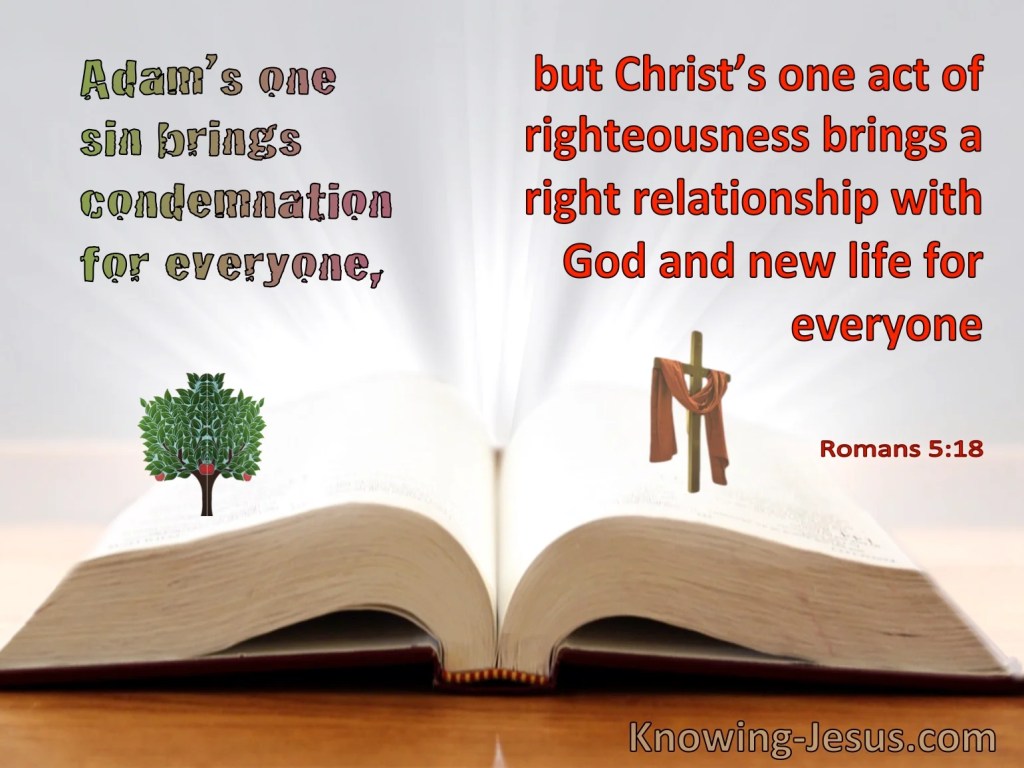






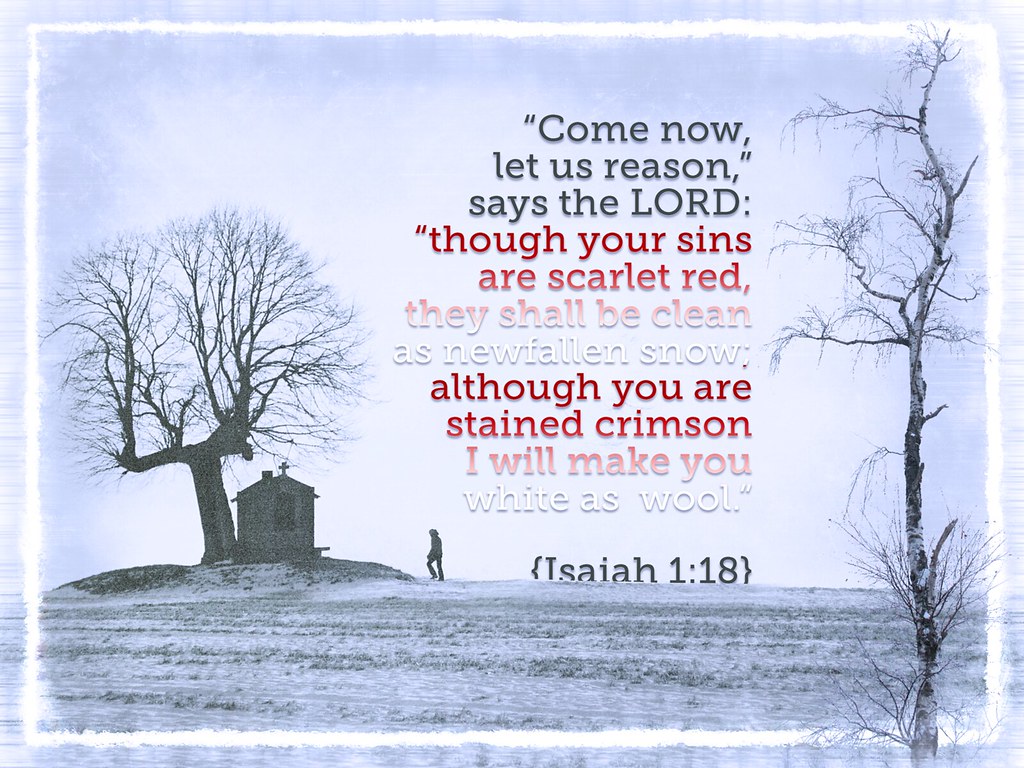
 Loving God, Living God, Loving Hope, Living Hope, Loving Living Life His Way! "Many things are possible for the person who has hope. Even more is possible for the person who has faith. And still more is possible for the person who knows how to love. But everything is possible for the person who practices all three virtues." - Brother Lawrence (1605-1691), Practicing the Presence of God (1692).