Romans 15:4 "For whatever was written in earlier times was written for our instruction, so that through perseverance and the encouragement of the Scriptures we might have hope."
6 So we always have confidence. We know that while we live in this body, we are away from the Lord. 7 We live by what we believe will happen, not by what we can see. 8 So I say that we have confidence. And we really want to be away from this body and be at home with the Lord. 9 Our only goal is to always please the Lord, whether we are living here in this body or there with him. 10 We must all stand before Christ to be judged. Everyone will get what they should. They will be paid for whatever they did—good or bad—when they lived in this earthly body.
Gloria! In Excelsis Deo! Alleluia, Alleluia, Alleluia, Amen.
“Life is a Journey, Not a Destination”
Ralph Waldo Emerson said, “Life is a journey, not a destination.”
While each one of us on a journey in life, that journey does lead to a destination – either eternal life in heaven, or eternal torment in hell.
But our devotional text from 2 Corinthians 5:7, focuses on the journey.
Paul wrote to the young, heavily divided and struggling Corinthian church and said, “For we walk by faith, not by sight.”
Whether we are a believer in God, or we do not believe in God, or we are right now struggling to believe or to continue to believe, every individual must now choose which path their journey will take – the path of life or the path of sight.
Walking by faith, living by believing in what will happen as opposed to seeing what will happen is like our leaving our homes, taking journey with a blindfold on, “walking in some direction” and trusting God to get you He’s leading you.
But if you leave your home, look at and pick your own direction, you walk by sight where you want to go, then you see the path and each step along the way.
You see what is before you – you see the potential obstacles, the potential risks and the potholes and the pitfalls – you see them and then automatically avoid.
But, how does all that change if you cannot see where you are going?
If you cannot assess the quality of the terrain and the environment you travel?
You can’t see the raised portions of the side walks which present a trip hazard?
You cannot see the puddles of water sure to get your socks, shoes and feet wet?
Where are the curbs you need to stop at to avoid walking into oncoming traffic?
Walking by what we can see is easy and such listed obstacles and threats to our physical health and spiritual wellbeing are otherwise so very easily avoidable.
Paul understood well this analogy on the Damascus Road when he went from walking by faith and fury after the new followers to sudden blindness courtesy of the risen Jesus when Paul encountered, experienced the very brightest light.
Suddenly and without explanation and with no time for defense of self, he was blinded by the incomparable light of the risen Jesus.
Now he could no longer rely on his vast knowledge of himself, his own survival skills to live and visually walk his own path and road from one town to another.
In an instant he was full of all the self confidence in the world, then reduced to that anxious and fearful someone who needed help with literally everything.
From immediate instant confidence into an immediate, instant helplessness.
He had no idea when or if ever he would regain his sight.
He had to figure out what all that change meant to the rest of his life.
And standing there on that Damascus Road, the risen Jesus left him with no instructions, no road maps, no guide books, no walking sticks, no nothing!
His companions took him to someone’s home and there Saul sat – in Prayer and in Fasting until some response was to come from somewhere, somehow.
The operative thing we each need to see is the choice of responses Saul had available to him and how he how fast and how instinctively he chose prayer.
We read nowhere in the Word of God Saul went into wild, flailing, hysterics.
His first instinctive response was to the spiritual disciplines of prayer, fasting.
How about our own most instinctive, most immediate response to any crisis?
Praying and Leaning into God’s Equipping
2 Corinthians 5:7 Easy-to-Read Version
7 We live by what we believe will happen, not by what we can see.
It is always disheartening to feel as though I have reached a significant point in my journey only to ask, “Now what, Lord?”
God has put a desire in my heart to write for Him which I cannot calm.
I wrestle and fight, clawing for any direction or insight or wisdom not my own.
God tells me to listen, watch, do the next thing, and wait.
He reminds me not to worry about the future, but to wait on Him.
Obediently, I try my best to research, learn, write, pursue, listen, follow …and wait.
I choose to trust Who is leading me, even when it feels like I am always walking with blinders on, I have no walking stick to use and I can’t see and cannot know and cannot watch the results of my efforts unfold before me and my own eyes.
God gave me the desire to write and keep right on writing, but it is up to me to raise up every morning to pray and to fast and to study, to put all the work in.
A work He promised to equip me for!
Isaiah 55:8-11 Easy-to-Read Version
People Cannot Understand God
8 The Lord says, “My thoughts are not like yours. Your ways are not like mine. 9 Just as the heavens are higher than the earth, so my ways are higher than your ways, and my thoughts are higher than your thoughts.
10 “Rain and snow fall from the sky and don’t return until they have watered the ground. Then the ground causes the plants to sprout and grow, and they produce seeds for the farmer and food for people to eat. 11 In the same way, my words leave my mouth, and they don’t come back without results. My words make the things happen that I want to happen. They succeed in doing what I send them to do.
The road and the devotionals can be can be long and precarious, and often we don’t know the destination … what God is going to do with them, but God does.
He will equip us when we don’t feel capable or worthy of His calling on our lives.
Our calling is to do the work He has assigned us, wait for Him to clear the way.
I am learning to take each day as it comes, trusting Him to lead and guide my steps and my writings.
I try to plant my boots and my roots in securely into His ways and His truth.
I am too often overwhelmed with all the roads I could veer off onto, but He quietly reassures me with each effort that He alone will guide me through.
I feel dwarfed among thousands of Christian theologians, commentators and writers, but He gently tells me He’ll help my voice reach who it is intended for.
It may not be the masses; it may only be intended for one.
It may be for someone tomorrow; it may be for someone years down the road.
Philippians 2:12-13 Easy-to-Read Version
Be the People God Wants You to Be
12 My dear friends, you always obeyed what you were taught. Just as you obeyed when I was with you, it is even more important for you to obey now that I am not there. So you must continue to live in a way that gives meaning to your salvation. Do this with fear and respect for God. 13 Yes, it is God who is working in you. He helps you want to do what pleases him, and he gives you the power to do it.
God did not call me nor anyone and everyone else into something big only to leave us hanging and struggling on the side of some ditch to figure our life out.
He is not reliant on our human ability to pick the right road.
He works within us.
It is our calling to fully rely on God instead of ourselves.
It is our calling to fully relay on our Savior Jesus instead of ourselves.
It is our calling to fully rely on God, the Holy Spirit instead of ourselves.
Even when the road ahead of us is full of seen and unseen fog, seen and unseen potholes, pitfalls, stumbling blocks we can keep our both eyes fully on Jesus.
Psalm 121 The Message
121 1-2 I look up to the mountains; does my strength come from mountains? No, my strength comes from God, who made heaven, and earth, and mountains.
3-4 He won’t let you stumble, your Guardian God won’t fall asleep. Not on your life! Israel’s Guardian will never doze or sleep.
5-6 God’s your Guardian, right at your side to protect you— Shielding you from sunstroke, sheltering you from moonstroke.
7-8 God guards you from every evil, he guards your very life. He guards you when you leave and when you return, he guards you now, he guards you always.
Even if we cannot nor ever see the words of the Psalmist before our eyes;
We can 100% trust Him with each day, task, and notion to do things for Him.
In the name of God, the Father and God the Son and God the Holy Spirit,
Let us Pray,
Lord, You have placed a desire and calling on my life. I have heard Your voice and know the direction You want me to go. However, I am overcome by discouragement. I can’t see the road ahead and need Your strength to keep moving forward. I need Your sight, Lord, and Your leading. Forgive me, Lord, for taking hold of things that do not belong to me. Forgive me for striving in my power to try and manifest things that were never intended for me. Help me to see clearly what You have for me. I surrender my calling to You and place it securely in Your ever more wise, ever more capable hands. Reveal and inspire me with Your Holy Spirit. I trust You to equip me for all You want me to say and to do. You did not call me to do Your will because of my ability but because of my willingness. Take my worry and strife and turn it into glory-filled work. Give me discernment when I start to go down the wrong path.
I rebuke the enemy and the distractions that he is placing in my path. I pray for strength against laziness or complacency. I come against the lies that enslave me, telling me I am not good enough, I don’t have what it takes, or that I will never get to where I want to go. I stand firmly on the truth and promise that You are with and will never leave me. I surrendered all my heart’s desires and ask You to lead every moment of every day. Thank You, Jesus, for Your everlasting love, and the many treasures of life You have stored up for me in the heavens I have never, ever seen.
67 Now Zacharias his father was filled with the Holy Spirit and empowered by Him, and he prophesied, saying,
68 “Blessed (praised, glorified) be the Lord, the God of Israel, Because He has visited us and brought redemption to His people, 69 And He has raised up a [a]horn of salvation [a mighty and valiant Savior] for us In the house of David His servant— 70 Just as He promised by the mouth of His holy prophets from the most ancient times— 71 Salvation from our enemies, And from the hand of all who hate us; 72 To show mercy [as He promised] to our fathers, And to remember His holy covenant [the promised blessing], 73 The oath which He swore to Abraham our father, 74 To grant us that we, being rescued from the hand of our enemies, Might serve Him without fear, 75 In holiness [being set apart] and righteousness [being upright] before Him all our days. 76 “And you, child, will be called a prophet of the Most High; For you will go on before the Lord (the Messiah) to prepare His ways; 77 To give His people the knowledge of salvation By the forgiveness of their sins, 78 Because of the tender mercy of our God, With which the Sunrise (the Messiah) from on high will dawn and visit us, 79 To shine upon those who sit in darkness and in the shadow of death, To guide our feet [in a straight line] into the way of peace and serenity.”
80 The child continued to grow and to become strong in spirit, and he lived in the deserts until the day of his public appearance to Israel [as John the Baptist, the forerunner of the Messiah].
The Word of God for the Children of God.
Adeste Fidelis! Venite Adoremus! Dominum!
Gloria! In Excelsis Deo! Alleluia! Alleluia! Alleluia! Amen.
On one particular Christmas Eve a long time ago, in a place lost to the ages, A grandmother played several Christmas carols on an old piano for her 4-year-old granddaughter.
When she played “Away in a Manger,” the grandmother started to sing as she played. After just a few words, the grand daughter tugged on her grandmother’s sleeve and said, “Please just let the piano sing it, Grandma.”
Do you ever feel that way when you sing these much loved Christmas Carols?
That nobody wants to hear your voice?
Your response ….
“Well, my child, when we sing, we aren’t singing for others, we are singing for God, making a joyful joy-filled noise and God always wants to hear His children sing, and make all kinds of joyful joy-filled noises.”
Mary’s song in Luke 1:46-55 is one of the verses in this grand musical introduction to Luke’s Gospel.
Another verse in this musical masterpiece is the song of Zacharias.
It is found in Luke 1:67-80. It is the second verse.
One organist tells of the time she was directing the children’s church musical Christmas play. She asked one of her daughters and another little boy if they would be willing to play two verses of “Silent Night” on their flutes. The boy answered and said, “But Mrs. (_______), I can only play the first verse.”
This is the way it is with the song of Zacharias.
It’s the second verse of this song, and it picks up where Mary left off, but really, it’s more of the same. It’s the same song, second verse, with the same theme, similar ideas, and related words. Both verses focus on the single greatest theme ever found. Both focus on God’s salvation, Immanuel as the Savior of the world.
Before we look at Zacharias’s song, let me ask you a question. If you had not been able to talk for a year, what would you say when you finally could speak?
For nine months, Zechariah the priest was under verbal house arrest.
He could not utter a word to his friends, neighbors, or relatives.
But later, after his son was born and he could speak again, Zechariah could not hold back an eruption of the gospel.
The Holy Spirit set his heart on fire.
A new song for a doubting man announced the new work of God—redeeming, and remembering, and releasing, the light of his salvation into a dark world.
As a priest, Zechariah had likely been on the lookout answers for his prayers, for a new generation, vision for the redemptive promises of God to be fulfilled.
Now, with the angels visit, with the actual birth of his son, he burst forth with God’s promises to share with everyone – and he did it by singing a new song.
A new song for a doubting, righteous, a devout and priestly man ….
Zechariah knew the Hebrew Testament Scriptures; he knew of the prophecies, he knew that someday it would be revealed to all that redemption was coming.
It was the amazing old story that God still had a purpose for his people Israel.
Redemption usually comes when we have no more tricks up our sleeves or plan B’s to pull out of our hats.
Redemption is out of our control.
God never begins with us.
He is always ahead of us.
Redemption is the miracle of God’s redeeming power to make the dream of forgiveness, mercy, and second chances possible for everyone who believes.
That’s why Zacharias sings, “Praise be to the Lord, the God of Israel, because he has come to his people and redeemed them.”
The Benedictus was, no doubt, formed in the heart of Zacharias during the long months of angelic enforced muteness, when he was not able to speak one word.
One cannot help thinking that the mind and heart of Zacharias during all those nine months had been wavering between his doubts and filling with this song.
And now, with the birth of his son, holding onto his son, it burst forth at once – as a flower suddenly bursts out where there was but a tiny green bud yesterday.
Zacharias, with the first words out of his mouth after nine months of silence, bursts forth his joyful, joy-filled praises of God, prophecies about the future.
Luke 1:67-68Authorized (King James) Version
67 And his father Zacharias was filled with the Holy Ghost, and prophesied, saying,
68 Blessed be the Lord God of Israel; for he hath visited and redeemed his people,
Zacharias is going to prophecy about, and praise God for two things.
First, for the salvation that is to come through the Messiah (Luke 1:68-75), and second, he adds some of his own praise for his own newborn son because he will be the prophet who will soon prepare the way for the Messiah (Luke 1:76-79).
So let’s look at both sections one at a time.
First, Zacharias praises God for salvation.
1. Praise to God for Salvation (Luke 1:68-75)
These verses are a treatise on salvation.
They tell us of the greatest gift God has ever sent to earth – the gift of salvation through Jesus Christ.
Zacharias probably spoke these verses thinking primarily of praising God for His fulfillment of His promises to the nation of Israel to deliver her from her enemies and restore her once again to her rightful place among the nations.
So when he speaks of salvation in these verses, he means temporal, physical salvation from enemies like the Roman government.
We will see this when we look at Luke 1:69.
So although these verses do not directly apply to us, we can draw principles from them and apply the principles.
The main principle is that Jesus Christ came to save us from our enemies.
Our greatest enemies are sin and Satan, death and hell.
Jesus Christ came to deliver and save us from these enemies.
So I want us to look at these verses from that perspective.
It is in Luke 1:68 where we learn that God is the author of our salvation.
A. The Author of Salvation (Luke 1:68)
Luke 1:68. Blessed is the Lord God of Israel, For He has visited and redeemed His people,
We will too often underestimate the magnificence of the plan of salvation that originated in the mind of God.
The plan of salvation which the Bible teaches is completely unlike any other plan of salvation we find among the man made world religions.
And only a God like ours could have thought it up, and brought it to pass.
The first words out of Zacharias’ mouth are praise to God for what He has done and will do in the years to come.
He is about to redeem Israel, ransom captive Israel.
Deliver them from their bondage.
This is the purpose of salvation.
B1. The Purpose (Luke 1:69)
Luke 1:69. And has raised up a horn of salvation for us In the house of His servant David,
It appears that Zacharias knows that Mary and Joseph were of royal decent.
That the son Mary carries will be of the house of David.
The horn in Scripture signifies glory and dignity, strength and power.
An elk or a white tail buck is considered majestic and mighty by the size and shape of its antlers.
The Messiah is likened to just such a horn.
He is strong and majestic.
He is mighty.
And since He is the horn of salvation, He is strong to save.
Strong to save from what?
Well, the word “salvation” is used in the Bible many, many different ways.
Here, Zacharias seems to be using it in reference to deliverance from their enemies.
Deliverance from Rome and the Idumean King Herod, sitting on the throne in Jerusalem.
So the horn of salvation means that the Messiah will be strong to save them from their enemies.
Zacharias got this truth about salvation from the Word of God.
This is what he says in Luke 1:70.
C1. The Record (Luke 1:70)
Luke 1:70. As He spoke by the mouth of His holy prophets, Who have been since the world began,
About Christmas time, a family was expecting their oldest son to come home from years long deployment overseas.
He was arriving on the midnight plane.
All the younger children were excited, and wanted to stay up until his arrival.
They begged their father to let them stay up. But he replied, “No, it will be too long for you to wait; you must go to rest; you will see John in the morning.”
This is how the ancient prophets spoke about the Messiah – their eldest brother Jesus – they waited and waited, they longed to see him come, but their father in heaven caused them to enter their rest, their graves way long before His arrival.
David prayed,
“Father, let me see the Horn of Salvation of which I sang so well.” (Psalm 18:2)
Job, in the midst of his pain and suffering, begged, “Father, let me see my living Redeemer. Oh, that there might be someone to intercede for me before God.” (Job 19:21-27)
But to all of these pleas, God their Father says, “No, my child, you must rest.”
We read in Hebrews 11 that “they were stoned, they were sawn in two, were tempted, were slain with the sword. They wandered about in sheepskins and goatskins, in dens and caves of the earth. And all these, having obtained a good testimony through faith, did not receive the promise” (Hebrews 11:37-38).
I am so thankful that I live after the time of Christ rather than before.
We have received the promise.
We have seen the fullness of God’s grace, mercy and love, poured out upon us in Jesus Christ.
The Hebrew Testament is a bunch of stories and hard to understand writings.
It is the cries of those who came before us to see what we have seen, to hear what we have heard, to know what we have known.
The Hebrew Testament is an ages long account of people longing to see Jesus.
Do you and I realize how blessed we are to be living after the time of Christ?
Zacharias does.
Having referred to the Word of God, he now goes back to focus again on the purpose of salvation – to save us from our enemies.
B2. The Purpose (Luke 1:71)
Luke 1:71. That we should be saved from our enemies And from the hand of all who hate us,
Who is it that hates us most?
Satan.
He hates us because we belong to God, and Satan hates everything that belongs to God.
The world hates us also.
Jesus said that the world will hate us because it hated Him first.
Our sinful flesh also hates us.
We are somewhat severely conflicted up.
We have a new nature which strives to be like Christ, and we have an old, dead nature, called our flesh, which seeks to drag us back into our old way of living.
The old nature hates the new way of life and hates our new identity.
It too is an enemy.
Jesus came to deliver us from the hand, or rule, of all these enemies. He came to deliver us from Satan, the world, and our flesh. He came to deliver us from sin.
Again, Zacharias gleaned these truths from Scripture which he alludes to again in Luke 1:72-73.
C2. The Record (Luke 1:72-73)
Luke 1:72-73. To perform the mercy promised to our fathers And to remember His holy covenant, The oath which He swore to our father Abraham:
This salvation from our enemies was a promise, a covenant, an oath to the people of the Hebrew Testament, but by the mercy of God, the fulfillment of these promises has been poured out upon those who follow Jesus Christ.
Apostle Paul tells us that we are Abraham’s spiritual seed (Romans 9:7).
So again, the Bible tells us about this salvation.
Now, in Luke 1:74-75, Zacharias repeats himself again, and focuses one more time on the purpose of salvation.
B3. The Purpose (Luke 1:74-75)
Luke 1:74a. To grant us that we, Being delivered from the hand of our enemies,
This is just like a musical piece.
There’s repetition.
There are refrains and choruses.
Parts and counterparts.
Singing and echoes.
He said in verse 69 that the purpose of the Messiah’s coming was to save us from our enemies.
Then he tells us in verse 70 that he got this truth from the Bible – that it was a promise made to the forefathers, but only now fulfilled.
Then in verse 71, he said once again that the purpose of these promises was to deliver God’s people from their enemies.
Zacharias repeats himself in Luke 1:72-73, stating he learned these truths from the Bible, and finally, once again, in Luke 1:74, the purpose of this salvation is to deliver us from our enemies.
Do you get the idea that Zacharias is trying to make a point?
What the Word of God promised has now been fulfilled in Jesus Christ.
Salvation from our enemies has come.
This is what Zacharias says over and over.
Why?
He finally tells us in the last part of Luke 1:74 and on into Luke 1:75.
Luke 1:74b-75. That we…Might serve Him without fear, In holiness and righteousness before Him all the days of our life.
Now that we have been saved from our enemies, we are to serve Him, all the days of our lives.
And it says that we can do this without fear.
People in the Hebrew Testament lived in constant fear of God.
There is still a fear of the Lord we live under today, but there is also an intimacy and friendship we can have with God through Jesus Christ that was never before available to God’s people.
We call Him Father. Jesus can be our friend. We are filled with the Holy Spirit.
He has not given us a spirit of fear, but of love and acceptance.
Romans 8:15 says that He has not given us a spirit that makes us a slave again to fear, but he has given us a spirit of sonship, and by Him, we cry, Abba, Father.
We do not serve Him out of fear any more, but out of joy, love and gratitude.
Though we were all slaves to Satan, we have been set free through Jesus Christ.
As His freedmen, we owe God a willing, cheerful and delightful service, without fear, and a constant, persevering service all the days of our lives.
Well, from here Zacharias moves on to talk about his son, John, and the part he will play in the plan of God.
He sings praises for John for being the one to prepare the way for the Messiah.
2. Praise to God for his son, John (Luke 1:76-79)
Luke 1:76. And you, child, will be called the prophet of the Highest; For you will go before the face of the Lord to prepare His ways,
John will also fulfill prophecies out of Isaiah and elsewhere about going before the Messiah to prepare the way for the Lord.
Zacharias recognizes these prophecies here and emphasizes them – especially this aspect about John preparing the way for the Messiah.
It’s an important task to prepare the way for the coming of Jesus Christ.
But did you know that you and I can do it too?
It is ALL within our own doing today!
Did you realize that we too can prepare the way for the Messiah?
We can prepare the way for others to meet the Messiah.
Although He has already come, He is coming again, and He has called us to prepare the way for His second coming.
How?
First, by preparing ourselves.
A lot of times, things in our lives are great stumbling blocks to people who would come to Christ.
But if we repent of these things, and, as Zacharias says in Luke 1:75, love God, serve God, love neighbors, serve neighbors in holiness and righteousness, it will go a very long way in preparing the way for others to meet the Messiah.
Some non-Christians have noted that the worst parts about Christianity are the Christians.
They say they would become a Christian if it weren’t for all the Christians.
Mahatma Ghandi thought this, as did Mark Twain.
May they not say such things about you and me.
Let us live for Christ, and so prepare the way for Him.
You can also prepare the way for the Messiah to return to earth by supporting missions through giving and praying.
Jesus will not return to earth until every person on earth has heard the good news of eternal life.
This will not be completed until the end of the tribulation, but we should be helping in the progress right now by supporting and praying for missionaries who are working among the unreached people groups.
Thirdly, we can also prepare for Christ’s coming by witnessing to friends and neighbors.
Right now we are living in what the Bible calls “The Time of the Gentiles.”
It is the time when God has temporarily set aside Israel as His chosen vessel to reach the world for Jesus Christ, and is now using the church.
The Bible tells us God has a certain number of Gentiles He wants to see saved.
When that number is reached, when the full number of gentiles has come in (Romans 11:25), then the rapture of the church will happen and we will forever more be with the Lord.
Maybe that person you know you should share the Gospel with, but haven’t, is the one God is waiting for.
Do you want to prepare the way for the Lord?
Share Him with your friends and neighbors.
Support missions work being done around the world, serve God in holiness and righteousness – all of these things will help prepare the way for His coming.
Luke 1:77-79 explains what Messiah will do after John has prepared the way.
It’s interesting that Zacharias doesn’t spend much time praising his son, John.
Praising his son leads him to praise the Savior.
There are three things he praises Jesus for.
One, to give knowledge,
Two to give light, and
Three, to give peace.
A. Knowledge (Luke 1:77-78)
Luke 1:77-79. To give knowledge of salvation to His people By the remission of their sins, Through the tender mercy of our God, With which the Dayspring from on high has visited us;
The tender mercy of God is one of the most intimate truths in Scripture.
The words bring to mind a loving mother tenderly caring for her children.
They picture a father, gently teaching a toddler to walk.
Some people think and believe of God only as this demanding, angry, frowning judge who sits on his throne casting about lightning bolts and natural disasters.
This is not the picture of Luke 1:78.
God, though He is the God of thundershowers, is also the God of dewdrops.
Though He did create the unbending oak tree, he also created the tiny blade of grass – He is the God who heals. He is the God who mends – who also restores.
We have bruised and feeble souls, and He washes and cleanses our wounds with the most gentle of hands.
God is not harsh towards you and me, but is full of tender mercy.
The word Dayspring could also be translated “Sunrise” but the dayspring is the part of the sunrise that is before the sun actually rises.
Those of you who are up before sunrise, know that dawn begins with a glow above the eastern mountains.
As the sunrise progresses, the glow gets brighter and brighter until right before the sun peaks over the eastern mountains, rays of light burst up into the sky.
This is the dayspring.
It is the few minutes or even seconds of the dawn right before the sun appears.
This is what Zacharias is talking about.
It’s been a long night.
The day is almost here.
The sun has almost risen.
But He has not come yet.
But it is the dayspring.
In a few moments, the sun will come, and the day will begin.
This is the second thing the Messiah brings.
The world was in a dark night, black with sin, but Jesus was the sunrise, bringing light.
B. Light (Luke 1:79a)
Luke 1:79a. To give light to those who sit in darkness and the shadow of death,
Have you ever been lost in the dark?
It’s a terrifying experience, especially if you are in unfamiliar territory.
For all you know, one step in any direction might lead you off cliff.
If you are trying to get somewhere, you have no idea if the direction you are headed is the right direction or not.
Oftentimes, the best thing to do in such situations, is just sit down and wait for daylight.
This is what Zacharias says the world has done.
They have been lost in the darkness, and so rather than move about trying to find their way home when they might actually be going the wrong direction, they just sit there, in the darkness, waiting for either death or light.
Those are our only two options when we are lost – to die, or to receive light.
The world doesn’t know where to turn spiritually.
Though on the outside, they are going here, and going there, and making money, and having a good time eating and drinking, inside, they are lost in the dark, and just sitting there.
They don’t know which way to turn.
They don’t know where they should go.
They don’t know where truth is, and how to find God.
They’re walking in the dark.
It’s just a matter of time before they fall into a ditch or off a cliff.
Most of the world, however, just sits there, in the darkness, waiting either for death or light.
Zacharias says that light comes with Jesus Christ, the Dayspring from on high.
He is the dawn of a new day shining into the darkness, bringing light to those who are dying.
Believing in Jesus Christ for eternal life is the only way this light shines into our lives – all other attempts to receive the light are but deeds of darkness.
We only receive the light when we place our faith in Jesus Christ.
But even once this is done, and the light shines into our lives, we still go through times and periods of darkness.
It is just like the seasons.
We are currently in the darkest part of the year.
If you have a work schedule like many, you get up while it is still dark, get to work before the sun comes up, and leave work after the sun goes down.
Unless you make a point to go outside during the daytime, we could go for days without seeing the sun.
This has a terrible effect on my attitude and demeanor.
I get depressed and easily tired.
This is sometimes the way it is in our Christian lives.
Even after we have been delivered from the darkness of sin, that old body of death still clings on.
It’s amazing how strong a dead body can be.
Do we ever feel ourselves being dragged back into the old patterns of sin that we hate so much, but seem to have such a strong and irresistible pull on us?
Do we ever feel that though we have seen the dawning of a great light, darkness still clings to our soul?
We feel deadness in prayer, deadness in reading the Word, deadness in hearing the words of truth, deadness in desires after the Lord, deadness to everything holy, righteous, spiritual, heavenly and divine?
Do we ever feel a numbness, a fleshliness, a worldliness that seems to freeze up every Godly desire of our souls?
I do and countless many others as well.
I feel that way this week leading up to Christmas and then the coming new year.
Which is why I am so thankful and joyful to God to be reading Zacharias’ final words at the end of Luke 1:79.
Jesus brings knowledge, light, and finally, peace.
C. Peace (Luke 1:79b)
Luke 1:79b. To guide our feet into the way of peace.
That’s what we all want.
Peace.
We don’t want the way of worry and war.
We don’t want the way of anxiety and fear.
We don’t want the way of rebellion and restlessness.
We want the way of peace.
Peace.
The heart that is at peace is full of joy and contentment.
It is at peace with God and peace with one another.
It does not worry or fret.
It is not depressed or gloomy.
The life of peace is the life of light and joy.
Doesn’t that sound nice?
But how do we get it? .
How do we arrive at this way of peace?
How do we find it?
Guess what?
We don’t find it.
Jesus leads us to it.
This is what these last words tell us.
Jesus has come to guide our feet into the way of peace.
You don’t find peace on your own.
You don’t get to peace on your own.
You don’t cheer yourself up with movies and music, eating and entertainment, or even with relatives and recreation.
How do you get to peace?
You follow Jesus.
You let him guide you.
He knows the way because HE IS THE WAY.
He is not going to force peace upon you.
He will not make you be at peace.
But if you want to follow him there, He will gladly lead.
How do you let him lead?
You let Jesus lead by giving a portion of every single day to read the Bible and pray.
Before you read the Word, pray, saying,
“Jesus, show me something today from your Word. Give me a promise. Give me a truth. Give me an encouraging Word. Give me a correction if need be. I just so want to hear truth from you today. I want to be guided into the ways of thy peace.”
And then read the Scriptures, trying to understand what they say, and looking for a verse which God has especially for you.
When you find it, pray it.
Pray that verse, pray that passage, pray that promise.
Pray it for yourself.
Pray it for your family.
Pray it for the church.
Jesus came to this earth to fulfill the promises of God, to bring salvation, to reveal the tender mercy of God, and break forth as light into the darkness and guide our way into the way of peace.
You and I will surely and certainly miss it all, if you and I neglect the Word.
Zacharias could have never said another word in his life except for this song, and it would have been some of the best words every spoken.
They are full of tender truths and precious promises about Jesus Christ.
Though he had been mute for nine months, he probably spent that much time thinking of what he would say if he could ever speak again.
And here he said it. It’s all to the praise and honor and glory of Jesus Christ.
We too have a mission in this world. Today we are called to bring the light of Jesus to others. We must be agents of His peace in a world torn apart by sin. And by the Holy Spirit of God living in us, we can carry out this work in Jesus’ name!
It is ALL easily within our Doing ….
In the name of God, the Father and God the Son and God the Holy Spirit,
Let us Pray,
Dear Father, thank you for redeeming the broken places in my life for your glory. Help me to sing a new song of grace today.Lord Jesus, pour out your Holy Spirit on us. Make us strong in you so that we will carry on the great mission to which you have called us. We bless you, O God, that you have come and have redeemed your people, raising up for us a strong Savior from the family of your servant David, as you promised through your prophets long ago. You have rescued us from the grip of our enemy; you have enabled us to serve you without fear, in holiness and righteousness before you all our days. We thank you that you have given to us, your people, the knowledge of salvation through the forgiveness of our sins; and that by your tender mercy the Sun has risen into heaven to shine on all who live in darkness and in the shadow of death, and to guide our feet into the way of peace. Help us to tell others of you, the Savior of the world. In your name we pray. Gloria! Alleluia! Alleluia! Amen.
12 We ask you, brothers, to respect those who labor among you and are over you in the Lord and admonish you, 13 and to esteem them very highly in love because of their work. Be at peace among yourselves. 14 And we urge you, brothers, admonish the idle,[a] encourage the fainthearted, help the weak, be patient with them all. 15 See that no one repays anyone evil for evil, but always seek to do good to one another and to everyone. 16 Rejoice always, 17 pray without ceasing, 18 give thanks in all circumstances; for this is the will of God in Christ Jesus for you.
The Word of God for the Children of God. Gloria! In Excelsis Deo! Alleluia! Amen.
Signs of the Thanksgiving season are everywhere this week.
Everywhere we go we are consistently reminded by everyone an everything we see we are to give thanks for all that we have, especially our friends and family.
But what if maybe you an I do not feel thankful?
Maybe this year we are unable to locate one single reason to be thankful.
Maybe you an I are lacking close relationships or recently have gone through a major breakup or loss of a loved one. Maybe you an I do have others in our life, but our relationships are too complex, too conflictual or way too disappointing.
Perhaps the economic climate in our families precludes our usual shopping day.
Perhaps we have lost our job or have serious or chronic health problems, which make it difficult to feel thankful.
Or we might struggle with homelessness, a new high risk of homelessness or addictions, or depression or other mental health problems that make getting through every day a huge challenge we do not feel like confronting.
Maybe there is someone in our family who has become seriously ill and is now unable to participate in the festivities, maybe they have moved far away, there is no money anywhere for anybody to travel the distance now between you both.
Maybe our loved ones are members of the Armed Forces of our countries and the situation is such that no one is able to get those “orders” to travel home.
Perhaps we now have no home to go to because of major weather events which have destroyed the home or flooded it out or made it uninhabitable an unsafe.
Perhaps the home you knew or had just bought, has burned to the ground.
Perhaps the home you knew is now the home you can never go back to because you are a refugee or an immigrant fleeing a dangerous and unstable situation.
If one of these situations resonates with you, or resonates with me, we might not be feeling very thankful this season and we pray others to leave us alone.
For some other people, reminders to be thankful can bring joy. But what are the effects of being prompted to be thankful when you just aren’t feeling thankful?
Unfortunately, when you aren’t feeling thankful, even the minutest, smallest of reminders to be thankful are “offensive,” can make you and me feel even worse.
When you are struggling, being prompted to be thankful may seem insensitive.
You may feel misunderstood, alone, or isolated.
You might feel like everyone around you is thankful and full of joy, and you are alone in your thanklessness.
You may feel annoyed or even angry if it seems that others want you to be thankful to fit their schema for the holiday. If you have tried to feel thankful and just cannot bring yourself to do it, you may feel disappointed in yourself.
I confess… some days I don’t feel thankful.On those days I can still make of list of all my blessings, but instead of it propelling feelings of gratitude it makes me feel that much more guilty its not there, you cannot put it there.
It’s a horrible feeling to be trying with everything you have to feel something you know you should be feeling but are not and do not believe you are allowed.
Does that ever happen to you?
Is this a familiar sensation?
If this is how you feel, getting through the holiday can be challenging.
Here are some ideas for making it a bit easier.
1. Accept your feelings and be compassionate with yourself.
You may think that you are supposed to feel thankful on Thanksgiving.
This is especially true if there are some aspects of your life that are positive, such as good health or a steady job.
However, sometimes our struggles weigh heavily on us, making it difficult to appreciate our blessings.
If this is happening to you, that is alright.
It happens to the best of us.
Not being able to feel thankful doesn’t make someone a “bad person.”
You may be having a tough time, and the tough times may be fleeting or may be more longstanding.
Either way, please see yourself as a good person, and treat yourself with the compassion and understanding that you deserve.
Accepting your feelings is important because it can bring you more peace than trying to fight them.
In addition, accepting your feelings is important because denying feelings can lead to other problems.
“Fake it till you Make it?”
If you are determined to stride into Thanksgiving pretending to feel something that you don’t, this façade can crumble in a hurry during the day, leading you to feel embarrassed or even worse than when you started in the first place.
2. Make a plan for challenging interactions.
Many holidays have fallen apart as a result of quibbling throughout the day or full-blown arguments.
If you somehow anticipate being annoyed, irritated or provoked by someone during the day, whether it’s your mother-in-law, third cousin, or own spouse or child, make a plan now for how you will react. First, foremost – Pray to God!
Thanksgiving dinner is definitely not the most opportune time for proving that case you are right or making a case for something controversial that is vitally important to you, especially if you are out of sorts and not feeling your best.
Instead of trying to win those arguments, try embracing the goal of getting through the day with as much of God’s grace and God’s peace as possible.
To do this, you need to think about what you will do when someone sets you off or gets under your skin that will deescalate the tension.
This could be ignoring a comment, agreeing if you can, agreeing to disagree, changing the subject, or saying you aren’t going to talk about a particular topic.
Doing any of these things will probably mean that you are being the bigger person. This may not be “fair,” may seem like you are avoiding, but it will increase the chances of you making it through your day with less stress.
3. Make a plan if you are going to spend the day alone.
For any number of reasons, many people find themselves dining alone on Thanksgiving when they rather would spend the day with others.
There are ways to get around this: inviting others to your home, asking a friend if you can join them (even if doing so is a little awkward), or volunteering at a church or at a homeless shelter or other location serving Thanksgiving dinner.
If none of these ideas appeal to you or are possible, you can still make peace with the holiday on your own. The irony here is that many of us would typically be thrilled to have a day to ourselves with no expectations for productivity.
However, the day can feel mightily empty when it’s a holiday.
Now is the time to start re-framing how you think about this day on your own.
This may not be what you wanted, but it’s what you have.
So, how can you make the best of it?
What would you do if the day were not a holiday?
Thinking about this now is important so you can research what shops or restaurants will be closed and gather whatever you need for your day now.
Remember too that a good plan does not necessarily mean that you won’t have feelings of sadness or disappointment.
But a good plan for filling the time with things you enjoy should help the hours roll by faster and with more pleasant moments.
4. End the day with something to look forward to.
What do you most enjoy doing in the hour or two before going to sleep?
Maybe it’s a cozy spot with a good book, or a bath and glass of wine, or a long drive, or walk outside.
Whatever it is, do it.
If you have a busy day with friends or family, prioritize carving out and protecting this time.
If you are on your own, save these activities for the end of the day.
Doing this will serve two purposes.
First, you will have something to look forward to as you make your way through your day.
Second, it is a way of rewarding yourself.
By evening, you will have made it through a day that you found challenging.
This is not an easy feat, and you should take pride in what you have done.
How Does the Word of God encourage Us during particularly Hard Times?
1 Thessalonians 5:12-18New American Standard Bible
Christian Conduct
12 But we ask you, brothers and sisters, to recognize those who diligently labor among you and [a]are in leadership over you in the Lord, and give you [b]instruction, 13 and that you regard them very highly in love because of their work. Live in peace with one another. 14 We urge you, brothers and sisters, admonish the [c]unruly, encourage the fainthearted, help the weak, be patient with everyone. 15 See that no one repays another with evil for evil, but always seek what is good for one another and for all people. 16 Rejoice always, 17 pray without ceasing, 18 in everything give thanks; for this is the will of God for you in Christ Jesus.
As believers, we are taught to pray.
But what are we taught to pray?
The Word of God for the Children of God
– Begin to Reflect upon something an someone far, far greater than yourself,
Upon God, the Father an Go the Son and Holy Spirit,
Even if you do not know the words – Sing Psalms ….
For example ….
Psalm 42English Standard Version
Book Two
Why Are You Cast Down, O My Soul?
To the choirmaster. A Maskil[a] of the Sons of Korah.
42 As a deer pants for flowing streams, so pants my soul for you, O God. 2 My soul thirsts for God, for the living God. When shall I come and appear before God?[b] 3 My tears have been my food day and night, while they say to me all the day long, “Where is your God?” 4 These things I remember, as I pour out my soul: how I would go with the throng and lead them in procession to the house of God with glad shouts and songs of praise, a multitude keeping festival.
5 Why are you cast down, O my soul, and why are you in turmoil within me? Hope in God; for I shall again praise him, my salvation[c]6 and my God.
My soul is cast down within me; therefore I remember you from the land of Jordan and of Hermon, from Mount Mizar. 7 Deep calls to deep at the roar of your waterfalls; all your breakers and your waves have gone over me. 8 By day the Lord commands his steadfast love, and at night his song is with me, a prayer to the God of my life. 9 I say to God, my rock: “Why have you forgotten me? Why do I go mourning because of the oppression of the enemy?” 10 As with a deadly wound in my bones, my adversaries taunt me, while they say to me all the day long, “Where is your God?”
11 Why are you cast down, O my soul, and why are you in turmoil within me? Hope in God; for I shall again praise him, my salvation and my God.
But why should we pray when we do not feel like it?
But why should we pray when we cannot bring ourselves to do it?
Prayer, even the most silent and most anguished of prayers brings us into a time of sacred communion with God, the maker and sustainer of the universe.
God gives us life, and he sustains our daily living.
We should pray because God has everything we need and wants us to flourish.
What’s more, we should pray, even in silence, even when we feel like crying because in prayer we give thanks to God for all that he is and all that he does.
In prayer, even the most silent and anguished prayer, we recognize our utter dependence on God. It can be hard to admit that we are completely dependent.
But at the same time every anguished prayer opens our hearts to more fully experience the breathtaking scope of God’s amazing grace and mercy for us.
Thanksgiving in prayer is not just a good idea or a suggestion, though.
It’s a command, as the apostle Paul reminds us.
By rejoicing always, praying continually, we obey the will of God for us in Christ Jesus who taught His disciples to pray, under any and every last circumstance:
From the Scriptures:
He (Jesus) was praying in a certain place, and after he had finished, one of his disciples said to him, “Lord, teach us to pray, as John taught his disciples.” He said to them, “When you pray, say:
Father, hallowed be your name. Your kingdom come. Give us each day our daily bread. And forgive us our sins, for we ourselves forgive everyone indebted to us. And do not bring us to the time of trial. –Luke 11:1-4 (NRSV)
Pray then in this way: Our Father in heaven, hallowed be your name. Your kingdom come, Your will be done, On earth as it is in heaven. Give us this day our daily bread, And forgive us our debts, as we also have forgiven our debtors. And do not bring us to the time of trial, but rescue us from the evil one. For if you forgive others of their trespasses, your heavenly Father will also forgive you; but if you do not forgive others, neither will your Father forgive your trespasses. –Matthew 6:9-15 (NRSV)
Sometimes we think of such “continual” commands as an even worse burden.
But obeying this command (1 Thessalonians 5:12-18)will bless us beyond measure, put us in the best position for loving and serving God in the world.
So when you pray today (and always), spend time communing with God, ask him for whatever you need, in the living Word of God and feel the strong rush of his grace and mercy resulting in a sense of gratitude that shapes all you do.
In the name of God, the Father and God the Son and God the Holy Spirit,
Let us Pray,
Creator God, your mighty hand threw chaos aside, your hand created heaven and earth, your hand threw the stars into space and the same hand which created me, now reaches down to me with the very gentlest and healing of touches. Yet God, I don’t have the strength to deal with the situation I am facing right now. I pray please uphold me with your stronger than my own righteous right hand. I don’t know what else to do now, or who else to turn to, please help me. You say that I do not need to be afraid, do not need to let my heart be troubled or dismayed because you are my God and you are with me. Still I hurt! Help me to know your presence in the midst of my circumstances and draw strength from you. Through Jesus Christ, our Lord. Amen.
31 “When the Son of Man comes in His glory, and all the [a]holy angels with Him, then He will sit on the throne of His glory. 32 All the nations will be gathered before Him, and He will separate them one from another, as a shepherd divides his sheep from the goats. 33 And He will set the sheep on His right hand, but the goats on the left. 34 Then the King will say to those on His right hand, ‘Come, you blessed of My Father, inherit the kingdom prepared for you from the foundation of the world: 35 for I was hungry and you gave Me food; I was thirsty and you gave Me drink; I was a stranger and you took Me in; 36 I was naked and you clothed Me; I was sick and you visited Me; I was in prison and you came to Me.’
37 “Then the righteous will answer Him, saying, ‘Lord, when did we see You hungry and feed You, or thirsty and give You drink? 38 When did we see You a stranger and take You in, or naked and clothe You? 39 Or when did we see You sick, or in prison, and come to You?’ 40 And the King will answer and say to them, ‘Assuredly, I say to you, inasmuch as you did it to one of the least of these My brethren, you did it to Me.’
41 “Then He will also say to those on the left hand, ‘Depart from Me, you cursed, into the everlasting fire prepared for the devil and his angels: 42 for I was hungry and you gave Me no food; I was thirsty and you gave Me no drink; 43 I was a stranger and you did not take Me in, naked and you did not clothe Me, sick and in prison and you did not visit Me.’
44 “Then they also will answer [b]Him, saying, ‘Lord, when did we see You hungry or thirsty or a stranger or naked or sick or in prison, and did not minister to You?’ 45 Then He will answer them, saying, ‘Assuredly, I say to you, inasmuch as you did not do it to one of the least of these, you did not do it to Me.’ 46 And these will go away into everlasting punishment, but the righteous into eternal life.”
The Word of God for the Children of God. Gloria! In Excelsis Deo! Alleluia! Amen.
Grace be unto you and peace, from God our Father and from our Lord, Jesus Christ and the Holy Spirit. Alleluia! Alleluia! Alleluia! Amen.
Let us pray:
Dear Heavenly Father, we save for you our highest thanks and praise that through your Son, our Savior, Jesus the Christ, you have revealed your glorious will for our lives, and have redeemed us from sin and death. Through the power of your Holy Spirit, open our hearts and minds to your Word and the grace contained therein, that we might come to gain a deeper appreciation for all that our Lord has done for us, and come to embrace him as our redeemer. This we ask in his holy name. Amen.
Today, we celebrate another Sunday of our church year, a Sunday, just as every other Sunday which preceded this one – we will honor Jesus the Christ as King.
It is a day to remember that through the power of the Holy Spirit, God calls us to acknowledge Jesus, and Jesus alone, who alone is the only One worthy to be our Lord, an our Savior – who will one day come, judge the world in righteousness.
Our Gospel lesson for this morning is one of two of Christ’s teachings on the subject of his future judging of the world, recorded in Matthew’s Gospel.
The first occurs at the end of what has become known as “The Sermon on the Mount,” where Jesus says:
“Not everyone who says to me, ‘Lord, Lord,’ will enter the kingdom of heaven, but only the one who does the will of my Father in heaven. On that day many will say to me, ‘Lord, Lord, did we not prophesy in your name, and cast out demons in your name, and do many deeds of power in your name?’ Then I will declare to them, ‘I never knew you; go away from me, you evildoers.’”
In this passage, the judgement of condemnation seems to fall upon those who use Jesus’ name in a casual manner, as if they really did not know and did not understand Jesus from the very deepest depths of their hearts and their souls.
Simply engaging in acts of ministry is not what Jesus wants. He wants us to know him in such an intimate way, that all of our actions, and all of the ways that we live our lives, naturally flow from our koinonia relationship with him.
Our Gospel lesson for today, the emphasis of our Lord’s judgement again seems to fall upon truly knowing Jesus from the heart, in such an intimate way, as we encounter persons in need, we respond to them as Jesus would have responded.
Just listen to how personal and intimate, Jesus makes his judgement.
“For I was hungry and you gave me food, I was thirsty and you gave me something to drink, I was a stranger and you welcomed me, I was naked and you gave me clothing, I was sick and you took care of me, I was in prison and you visited me…” And the king will answer them, “Truly I tell you, just as you did it to one of the least of these who are members of my family, you did it to me.”
The interesting thing about our lesson for today is the fact those who did what Jesus would have expected, did so without trying to earn our Lord’s good favor.
Because they knew Jesus so intimately, so personally, they didn’t even realize that they were acting the way that Jesus desired.
From knowing Savior Jesus, their life had been so dramatically and thoroughly changed, in such a way they just naturally responded to care for those in need.
It was not as if they knowingly set out and acted in such a way to earn brownie points from our Lord come judgement day.
The fact that those whom our Lord blessed and invited into the kingdom of God, did not even know that they had done these things, is a clear statement that it is not our deeds that make us righteous, but our intimate relationship with Jesus.
As the story goes, in a large Christian University, two persons were called upon to recite the 23rd Psalm of David, in a study group focusing on how hearing the Word of God proclaimed, can effect us in diverse, various ways, even change the meaning of a certain text.
One chosen to recite the psalm was a PhD professor trained in the techniques of Biblical Story Telling, speech, drama and music.
As a result, he intoned the psalm with great beauty and power.
When he had finished, those in the class applauded with enthusiasm, and asked him to repeat those verses, they again might hear his beautiful performance.
Then the second person was asked to recite the text.
She was a young first year student, who had yet to pick a major.
With no musical talent or inclination, she chose to recite the whole psalm from her own memory as she was taught to by her mom and dad, her grandparents.
“The Lord is my shepherd, I shall not want…
When this young first year non-matriculated student finished reciting that psalm, not one single sound came from anyone the class, even the teacher.
Instead, the students sat quietly, in a deep mood of prayer and devotion.
Finally, the professor stood and addressed the class.
“I have a confession to make,” he said.
“The difference between what you have just heard from my student, from what you have also just heard from me, is that with all of my years of education and of my training. I may know the psalm, but she knows the psalm and loves the shepherd.”
Now I share this illustration with you today, not to simply point to the merits and differences between someone reciting the psalm versus intoning the psalm.
I personally enjoy intoning the psalms, because I deeply believe that is exactly how they were intended to be spoken and heard and felt in a worship setting.
They were ancient hymns and meant to come from the very depths of our souls.
But what is important to me, is that we intone or recite or sing the psalms with maximum conviction, as if we realize that they are written by persons who did know the Shepherd, who understood the context of the shepherd, to convey full of their relationship with God, so that we might come to know God, as did they.
And I believe that this is where these lessons of Jesus about the final judgment ask us to focus our maximum attention on not just Sundays, but every last day.
To honor God, the Father and God the Son and God the Holy Spirit as sovereign.
It is not so important to know a lot of facts about Jesus, as it is to know Jesus.
Of course, the fact that I have just said this, may give maximum impetus to my readership to question why I have them learn so many facets about the Bible and Jesus. But through learning those facets, it is my hope and prayer that they might come to know God, and begin to relate to Jesus as their redeemer King!
It is for that reason, I have stressed to my readership that doing their daily devotions is more important than scoring aces on their “worldly” quizzes.
Even if my readership misses a few major points here or minor there, I can always tell, through their participation in ‘class’ if they understand truth.
And I can an do try to teach a lot of truths in the long course of my writings.
But TRUTH is – I can NEVER teach them to enter into a relationship with Christ.
That is something I have to prayerfully hand over to the grace of God, and the matchless power of the Word of God, Jesus, and His Spirit, to bring to fruition.
I think Luther put it as well as it can be stated, when he said:
“I believe that I cannot by my own understanding or effort believe in Jesus Christ my Lord, or come to him as my Savior. But the Holy Spirit has called me through the Gospel, enlightened me with his gifts, and sanctified and kept me in true faith.“
What a marvelous insight, for here Luther is insisting that even our belief in Christ is not something that we can take credit in.
For if it would not have been for the love of God working through the church, through the power of the Holy Spirit, we would not even have the opportunity to have heard of Jesus the Christ, let alone come into relationship with him.
But all the highest praise and thanks be to God that he has given us the gift of his Holy Spirit, which has inspired his Beloved Children and church to proclaim his Word, and celebrate the Sacraments, that we might all come to know Jesus, and allow him to become, not only a part of our lives, but through our intimate relationship with him, experience the only direction by which we live our lives.
I remember this story from years past, from my own non-matriculated days.
During the French revolution, a mother of two children wondered through the woods for three days, trying to survive on roots and leaves.
On the third day, she heard some soldiers approaching and quickly hid herself and the children behind some bushes. Several of the young soldiers prodded the bushes with their bayonets, to see what a slight rustling noise might look like.
When they saw the starving woman and her two children, they immediately gave them loaves of brown bread from their own meager soldierly rations.
The mother took them eagerly, broke one into two pieces and gave one piece to each of her children. “Is she not hungry,” said the soldier’s comrade. “No,” he said, “It is because she is a mother and loves her children more than her self.”
Matthew 26:26-30 NKJV
Jesus Institutes the Lord’s Supper
26 And as they were eating, Jesus took bread, [a]blessed and broke it, and gave it to the disciples and said, “Take, eat; this is My body.”
27 Then He took the cup, and gave thanks, and gave it to them, saying, “Drink from it, all of you. 28 For this is My blood of the [b]new covenant, which is shed for many for the [c]remission of sins. 29 But I say to you, I will not drink of this fruit of the vine from now on until that day when I drink it new with you in My Father’s kingdom.”
30 And when they had sung a hymn, they went out to the Mount of Olives.
Well, on the night in which he was betrayed, Jesus took a loaf of bread, broke it and shared it with us all. Then he lovingly gave up his all he had on the cross, wearing a crown of thorns, and was mocked as being the King of the Jews. Well, today, today celebrate that he is the King, not only of the Jews, but of the world.
As we solemnly approach this coming Thanksgiving – this time of family and togetherness, this coming season of Advent as we remember and recount the ancient story and prophetic passages from God’s Holy Scriptures, to again be aware of how they have impacted those who came before us, how they impacted our lives, how they will continue to impact them and those of our own children, and every single countless future generations of all the children yet to be born,
Then we enter into the wondrous season of Christmas, the season of gift giving, that absolutely positively the greatest gift in all history was the gift of our God,
In a matchless expression of His matchless Charity and Grace – His own Son!
Immanuel – God with Us and God within Us – Alpha to Omega – for all time!
Jesus Christ – Our King!
Jesus Christ, Our Lord!
Jesus Christ – Our Savior!
Ponder that for a while – a long while, an Alpha to Omega while.
Experience what God will most certainly do for you …..
Until then, ……
We might want to get a little more Alpha to Omega practical experience in ……
Psalm 23 AKJV
Psalm 23
A Psalm of David.
1 The Lord is my shepherd; I shall not want. 2 He maketh me to lie down in green pastures: he leadeth me beside the still waters. 3 He restoreth my soul: he leadeth me in the paths of righteousness for his name’s sake. 4 Yea, though I walk through the valley of the shadow of death, I will fear no evil: for thou art with me; thy rod and thy staff they comfort me. 5 Thou preparest a table before me in the presence of mine enemies: thou anointest my head with oil; my cup runneth over. 6 Surely goodness and mercy shall follow me all the days of my life: and I will dwell in the house of the Lord for ever.
In the name of God, the Father and God the Son and God the Holy Spirit,
3 Though an host should encamp against me, my heart shall not fear: though war should rise against me, in this will I be confident. 4 One thing have I desired of the Lord, that will I seek after; that I may dwell in the house of the Lord all the days of my life, to behold the beauty of the Lord, and to enquire in his temple. (Psalm 27:3-4)
This I shall yet in everlasting praise, Pray to the Shepherd King of my life ….
To our God and soon coming Savior, I give You thanks. God, I pray today that You will reveal yourself to me and those in my life. May we have an encounter from the true and living God. I pray that the desires of our hearts shall be to seek after You that we may know You and that we will be men and women after God’s own heart, Amen.
12 For the word of God is living and active and full of power [making it operative, energizing, and effective]. It is sharper than any two-edged [a]sword, penetrating as far as the division of the [b]soul and spirit [the completeness of a person], and of both joints and marrow [the deepest parts of our nature], exposing and judging the very thoughts and intentions of the heart. 13 And not a creature exists that is concealed from His sight, but all things are open and exposed, and revealed to the eyes of Him with whom we have to give account.
14 Inasmuch then as we [believers] have a great High Priest who has [already ascended and] passed through the heavens, Jesus the Son of God, let us hold fast our confession [of faith and cling tenaciously to our absolute trust in Him as Savior]. 15 For we do not have a High Priest who is unable to sympathize and understand our weaknesses and temptations, but One who has been tempted [knowing exactly how it feels to be human] in every respect as we are, yet without [committing any] sin.
The Word of God for the Children of God. Gloria! In Excelsis Deo! Alleluia! Amen.
“Nothing in all creation is hidden from God’s sight. Everything is uncovered and laid bare before the eyes of him to whom we must give account” (Hebrews 4:13).
He who created all things seen and unseen, is present to all things seen or unseen at all times.
It is he who sustains all things in their being in every moment.
Nothing can hide or be hidden from his gaze.
Human beings, of course, are the only creatures in God’s creation who can conceive of the idea of hiding from God.
And there is a good reason for this.
We are the only creatures who have been given an intellect with which we can come to know the difference between what is morally good and what is morally evil, along with a moral will, the freedom to choose to do what is right, good and true, or refuse to go along with that knowledge for our own selfish reasons.
When we sin we are, quite literally, choosing to deny the truth.
And most of the time we know it.
But here is the kicker for us.
We have also been given a conscience.
God has written the instinct for the good into every human heart. And when we choose to go against that natural, God-given instinct, that is called sin.
Our conscience works in two ways:
Before the choice to sin, we experience the inner struggle between knowing that a given choice is wrong, which is matched against, and often overwhelmed by, the immediate desire for some kind of perceived immediate pleasure, or gain.
The second way conscience is experienced is after the chosen act is done.
If we have chosen to remain true to God’s law, we experience the peace and the satisfaction of knowing we did what was right, even if the result was suffering.
If, on the other hand, we choose to go against our conscience, we experience the bitter, burning pangs of sorrow and guilt.
Our greatest danger is in the fact that we can “numb” our consciences into silence by getting into the habit of sinning to the point that our conscience no longer stirs.
When this happens our souls are in real danger of losing all hope of eternal happiness with the Lord in heaven.
This is why a daily examination of conscience and prayerful reflection is a good habit to develop.
The brutal truth is, it is for our own good for us to develop, activate the habits of choosing the good and recognizing and turning away from all of the undeniably powerful temptations of immediate gratification we are constantly exposed to.
It is in choosing to defy our consciences that we also fall into the folly of trying to hide our actions, and our guilts.
We may be able to successfully “pull the wool” over the eyes of those we have sinned against, temporarily, or even permanently, but God, who sees all and knows all, cannot be hidden from, not matter how we try.
Our every action is before him and we will have to give an account for willful actions in defiance of his law on the Last Day.
All choices have their unavoidable and undeniable consequences.
They come whether we want them or not.
We are reminded here of the admonition in Deuteronomy 30:15-20 Amplified
Choose Life
15 “Listen closely, I have set before you today life and prosperity (good), and death and adversity (evil); 16 in that I command you today to love the Lord your God, to walk [that is, to live each and every day] in His ways and to keep His commandments and His statutes and His judgments (precepts), so that you will live and multiply, and that the Lord your God will bless you in the land which you are entering to possess. 17 But if your heart turns away and you will not hear and obey, but are drawn away and worship other gods and serve them, 18 I declare to you today that you will certainly perish. You will not live long in the land which you cross the Jordan to enter and possess. 19 I call heaven and earth as witnesses against you today, that I have set before you life and death, the blessing and the curse; therefore, you shall choose life in order that you may live, you and your descendants, 20 by loving the Lord your God, by obeying His voice, and by holding closely to Him; for He is your life [your good life, your abundant life, your fulfillment] and the length of your days, that you may live in the land which the Lord promised (swore) to give to your fathers, to Abraham, Isaac, and Jacob.”
Is it not wise, then, listen to God, to read and to study and pray over His Living, Active Word, to choose life and blessing, and foolish to choose death and curse?
If we choose life and blessing, there will be no reason to hide.
If we choose to do God’s will, to live in accord with his divine law written into our hearts, we will never have to hide.
But choose sin and no amount of hiding, no amount of trying to bury our heads deep within the sand will keep us from God’s eyes and his righteous judgement.
In the name of God, the Father and God the Son and God the Holy Spirit,
Let us Pray,
Holy and gracious God, you are the greatest of all. You are full of wonders that no mere human can ever hope to comprehend or understand. Lord, I seek to understand you, your Living and Active Word and your ways so that I can live according to your commandments. I pray for your divine illumination in my heart and mind. Help me see what you intend for me to see. Help me understand what you intend for me to understand. Open my eyes and my ears to see you and hear your whispers. Amen.
16 So Joshua got up early in the morning and brought Israel forward by [h]tribes, and the tribe of Judah was selected. 17 So he brought the family of Judah forward, and he selected the family of the Zerahites; then he brought the family of the Zerahites forward man by man, and Zabdi was selected. 18 And he brought his household forward man by man; and Achan, son of Carmi, son of Zabdi, son of Zerah, from the tribe of Judah, was selected.
19 Then Joshua said to Achan, “My son, I implore you, give glory to the Lord, the God of Israel, and give praise to Him [in recognition of His righteous judgments]; and tell me now what you have done. Do not hide it from me.” 20 So Achan answered Joshua and said, “In truth, I have sinned against the Lord, the God of Israel, and this is what I have done: 21 when I saw among the spoils [in Jericho] a [a]beautiful robe from Shinar (southern Babylon) and two hundred shekels of silver and a bar of gold weighing fifty shekels, I wanted them and took them. Behold, they are hidden in the ground inside my tent, with the silver underneath.”
22 So Joshua sent messengers, and they ran to the tent; and they saw the stolen objects hidden in his tent, with the silver underneath. 23 And they took them from the tent and brought them to Joshua and to all the sons of Israel, and [b] spread them out before the Lord. 24 Then Joshua and all Israel with him, took Achan the son of Zerah, the silver, the [royal] robe, the bar of gold, [c]his sons, his daughters, his oxen, his donkeys, his sheep, his tent, and everything that he had; and they brought them up to the Valley of Achor (Disaster). 25 Joshua said, “Why have you brought disaster on us? The Lord will bring you disaster this day.” Then all Israel stoned them [to death] with stones; afterward they burned their bodies in the fire. 26 Then they piled up over him a great heap of stones that remains to this day. Then the Lord turned from the fierceness of His anger. Therefore the name of that place has been called the Valley of Achor (Disaster) to this day.
The Word of God for the Children of God. Gloria! In Excelsis Deo! Alleluia! Amen.
Soon after they fell into sin Adam and Eve tried to hide themselves in the thickest of bushes and hide their guilt behind coverings made of fig leaves.
Later because of their acute awareness of the magnitude of their sin they also vainly attempted to run as far away as they could, hide themselves from God.
Adam and Eve’s son Cain thought he could hide the guilt of shedding his brother’s innocent blood by claiming that he was not his brother’s keeper.
Joseph’s brothers attempted to cover the magnitude of their sin of selling him into slavery by staining his clothing with an animal’s blood and crying, telling their father he had been devoured by a wild beast – causing severe distress.
Moses tried to bury his guilt in the sand after he killed an Egyptian.
King David also tried to bury the truth, cover up the depth of his sin of adultery by having Bathsheba’s husband Uriah the Hittite killed at the front of battle.
For a short time it seemed as though he had believed he had successfully buried the truth about what he had done, from the eyes of those who could cause harm.
But as we know in His time, God brought the magnitude of those sins into light.
Time and time again God’s revealing and convicting Word tells us about people who went to lengths, tried to cover up or bury their sins in one way or another.
I have just given you but a few examples of this but know there are many more.
In this Old Testament Lesson from the Book of Joshua we meet another person in a long line of “quiet” sinners who thought they could hide and secret their sins from all of the prying eyes of those around them and even from God!
In the story of Achan we hear how he treasured the spoils of mankind, carried them away in secret, literally tried to bury his sins in the ground under his tent.
But this is much more than history lesson.
In the Word of God to which we will now direct our attention for our devotional today – we will also see the depths of deceit in ourselves in the ancient story.
We too have attempted to cover up our sins and bury them in the deep recesses of our hearts and minds – moving quietly into our backyards and bury our sins.
As we read in the early verses of the Creation story, this the devil has often led us to believe the delusion we can, we will, cover up secret sins or private guilt.
Like Achan we may can hide much and then think our sin will not be uncovered.
But we need to remember we can hide whatever we want from the prying eyes of man but nothing can be hidden from God and the guilt of our sins still stands.
So today I pray God the Holy Spirit will lead each of us to consider one question:
“WHAT HAS BEEN “SECRETLY” BURIED UNDER OUR “Achan’s TENT?”
I. Stop hiding your sins and confess them to God
II. Trust that Christ was punished for your sins
Disaster had descended upon the Israelites.
After their spectacular victory at Jericho, where the walls came tumbling down, they were defeated by the people of Ai.
From a human perspective it should have been an easy victory against an insignificant city.
But the victorious army that Joshua sent against the Aites was soundly beaten and thoroughly embarrassed.
They were sent fleeing in retreat.
The Children of Israel were devastated by this defeat.
We are told in the verses leading up to our Old Testament Lesson that the “hearts of the people melted and became like water.”
Joshua was also left stunned and confused.
With his face in the dirt he poured out his discouragement and disappointment to the LORD in prayer.
The LORD then spoke to Joshua explaining what had happened.
“Israel has sinned; they have violated my covenant, which I commanded them to keep. They have taken some of the devoted things; they have stolen, they have lied, they have secretly put them with their own possessions.”
During the previous battle against Jericho somebody had taken some of the things that were devoted to the LORD.
God had commanded that everything be destroyed.
God went on to explain the result of the magnitude of this secret transgression.
“That is why the Israelites cannot stand against their enemies; they turn their backs and run because they have been made liable to destruction. I will not be with you anymore unless you destroy whatever among you is solely devoted to destruction.”
Our Hebrew [Old] Testament Lesson begins with the consecrated process that Joshua used to discover, uncover the one who had sinned against the LORD.
I.
In order to first discover and then reveal the guilty party all the Israelites were to appear before the LORD and he would start selecting first one tribe and then one clan, then one family, and then finally one person – to shed the spotlight.
Our text tells us,
“16 Early the next morning Joshua had Israel come forward by tribes, and Judah was taken. 17 The clans of Judah came forward, and he took the Zerahites. He had the clan of the Zerahites come forward by families, and Zimri was taken. 18 Joshua had his family come forward man by man, and Achan son of Carmi, the son of Zimri, the son of Zerah, of the tribe of Judah, was taken.”
Try to imagine what Achan was thinking as his guilt was slowly being revealed!
He could not run away and hide from what he had done.
Although he had buried the evidence of his sin under his tent God knew it was there. And very soon all his fellow Israelites would also know what he had done.
Like a runaway freight train God’s justice was bearing down hard upon Achan.
It probably came as a relief to Achan when Joshua said,
“My son, give glory to the LORD, the God of Israel, and give him the praise. Tell me what you have done; do not hide [bury, secret] it from me.”
Joshua asked Achan to confess the wicked thing he had done.
God obviously knew what he had done and he couldn’t hide it from God, Joshua encouraged Achan to give God glory, even high praise, as he confessed his sins.
“20 Achan replied, “It is true! I have sinned against the LORD, the God of Israel. This is what I have done: 21 When I saw in the plunder a beautiful robe from Babylonia, two hundred shekels of silver and a wedge of gold weighing fifty shekels, I coveted them and took them. They are hidden in the ground inside my tent, with the silver underneath.”
Just as he had tried to secretly carry away the plunder, then secretly bury the evidence of his sin deep under his tent so too he had attempted to bury the guilt of the magnitude of his sin deep within the most secret recesses in his heart.
In his confession Achan exhaled all guilt to Joshua.
He breathed out the facts about how sin had taken hold of him and what he had done. He no longer tried to hide his sin. He stood up, confessed fully to Joshua.
Once again so that Achan’s story means more to us than a Bible History lesson let’s get back to the question that these verses of Scripture set before us.
“What’s buried deep under yours and mine Achan’s tent?”
“What’s spoils, treasures of sins, is buried deep in our own hearts “backyards?”
Is it a craving of yours or mine own body or a lust of your or mine own soul?
Perhaps you and I have buried a guilty pleasure or a secret addiction that you and I believe is unknown to anyone but you and me.
Are you and I being unfaithful in thoughts, words, or actions to our wedding vows? At our places of employment have we found a seemingly innocent way to “hold back our efforts,” cheat or steal? Are we living a lie at school or at church?
As we answer these questions, “What’s buried under our Achan’s tent?” let’s be brutally honest with ourselves and even more brutally honest with Father God.
Give all of our praise and honor and glory and HONESTY unto our Creator God!
Perhaps making confession We know He sees all we do and He knows all we see.
May we have the holy boldness to dare to echo King David’s words recorded in
Psalm 69:5, “You know my folly, O God; my guilt is not hidden from you.”
In the full presence of God, as Joshua stood before Achan, encouraged Achan, in Christ, we are also encouraged to stop hiding our sins and confess them to God.
32 How blessed is he whose wrongdoing is forgiven, Whose sin is covered! 2 How blessed is a person whose guilt the Lord does not take into account, And in whose spirit there is no deceit!
3 When I kept silent about my sin, my [b]body wasted away Through my [c]groaning all day long. 4 For day and night Your hand was heavy upon me; My [d]vitality failed as with the dry heat of summer. Selah 5 I acknowledged my sin to You, And I did not hide my guilt; I said, “I will confess my wrongdoings to the Lord”; And You forgave the guilt of my sin. Selah 6 Therefore, let everyone who is godly pray to You [e]in a time when You may be found; Certainly in a flood of great waters, they will not reach him. 7 You are my hiding place; You keep me from trouble; You surround me with [f]songs of deliverance. Selah
8 I will instruct you and teach you in the way which you should go; I will advise you with My eye upon you. 9 Do not be like the horse or like the mule, which have no understanding, Whose trappings include bit and bridle to hold them in check, Otherwise they will not come near to you. 10 The sorrows of the wicked are many, But the one who trusts in the Lord, goodness will surround him. 11 Be glad in the Lord and rejoice, you righteous ones; And shout for joy, all you who are upright in heart.
Today, God the Father offers all of us who are tired of running away from our secret sins and guilt that accompanies them a chance to confess them to him.
Like Achan let’s stop hiding our sins and confess them to God.
What’s buried under your tent?
What’s buried under my own tent?
What sins have you been “secretly hiding” “secretly burying” in your backyard?
What sins have I been “secretly hiding” “secretly burying” in my backyard?
Our best forever friends may not know about them, our family may be unaware of them but rest assured, God the Father, Son and Spirit, sees all and knows all.
Whatever sins you and I have tried to “successfully” hide from God and bury away from the prying eyes of all others will not and cannot long stay hidden.
Tell the gut-level truth to God.
Make NO excuses –
Tell NO Lies –
Do not blame others, do not even try to “hide” the shovel behind your backs.
Simply say, “God, for too long I have hidden these sins from you and others. I will no longer hide them from you. I will confess the secrets I have buried.”
II. So how did things end for Achan, his family, friends and the Israelites?
I suppose the story does not end the way we might expect nor with the outcome for which we might hope in the year of our Lord and Savior Jesus Christ 2022.
The consequences for Achan’s sins fell squarely on him and his family.
After Joshua sent men to retrieve the evidence of Achan’s guilt buried in the ground under his tent justice was carried out.
“24 Then Joshua, together with all Israel, took Achan son of Zerah, the silver, the robe, the gold wedge, his sons and daughters, his cattle, donkeys and sheep, his tent and all that he had, to the Valley of Achor. 25 Joshua said, “Why have you brought this trouble on us? The LORD will bring trouble on you today.” Then all Israel stoned him, and after they had stoned the rest, they burned them. 26 Over Achan they heaped up a large pile of rocks, which remains to this day. Then the LORD turned from his fierce anger. Therefore that place has been called the Valley of Achor (disaster) ever since.”
Achan received the punishment that God had said would befall anyone who did what he had done.
If we are honest with each other we probably have to admit that we are left wondering why things ended this way.
If Achan confessed his sin why was he still punished?
His confession seems sincere.
Isn’t the LORD a merciful and gracious God?
Isn’t the Lord slow to anger and abounding in steadfast love?
Perhaps it would be best to not to dig too deeply into the justice of a holy God.
From Achan’s example the Israelites learned how serious God is about sin.
If he doesn’t punish the guilty then he is not just.
Achan received the consequences for his actions and all the Israelites learned a brutally harsh and brutally sobering lesson from it.
Now as we look at the sins we have tried to bury under our tents should we be afraid to confess them?
If God is just won’t we be punished as Achan was?
The consequences for our sins should be even worse than what Achan experienced.
What do I mean by that?
Sin brings eternal punishment.
We should be unceremoniously removed from God’s presence forever in hell!
We should die eternally.
Imagine if our secret sins were laid out today for everyone to see.
And with God and everyone else looking at them we realized there is no escape—no place to hide.
Isaiah 53:5-10 NASB
5 But He was [a]pierced for our offenses, He was crushed for our wrongdoings; The punishment for our [b]well-being was laid upon Him, And by His wounds we are healed. 6 All of us, like sheep, have gone astray, Each of us has turned to his own way; But the Lord has caused the wrongdoing of us all To [c]fall on Him.
7 He was oppressed and afflicted, Yet He did not open His mouth; Like a lamb that is led to slaughter, And like a sheep that is silent before its shearers, So He did not open His mouth. 8 By oppression and judgment He was taken away; And as for His generation, who considered That He was cut off from the land of the [d]living For the wrongdoing of my people, to whom the blow was due? 9 And His grave was assigned with wicked men, Yet He was with a rich man in His death, Because He had done no violence, Nor was there any deceit in His mouth.
10 But the Lord desired To crush Him, [e]causing Him grief; If He renders [f]Himself as a guilt offering, He will see His[g]offspring, He will prolong His days, And the [h]good pleasure of the Lord will prosper in His hand.
As the stones of God’s righteous anger are about to strike us right now, as they struck Achan in those most ancient of days, our Savior Jesus takes our place.
Jesus takes our guilt and punishment upon himself.
That’s the truth we remember so vividly during Lent.
We again follow Jesus to the cross to see his sacrifice for us.
Our trust that Christ was punished for our sins is strengthened, by His stripes we were healed.
God said to Adam and Eve, “You must not eat from the tree of the knowledge of good and evil, for when you eat of it you will surely die.” (Genesis 2:17)
God’s justice is stricter than any justice human courts have demanded.
It is absolute and unbending. The LORD said, “The soul who sins is the one who will die.” (Ezekiel 18:4)
In Romans 6:23 the Apostle Paul declared that “the wages of sin is death.”
There is one demand under God’s justice–complete holiness.
There is one sentence under God’s justice for not being holy.
That is eternal death—eternal separation from God in hell.
If we break God’s commandments only one time we must be condemned.
James tells us, “For whoever keeps the whole law and yet stumbles at just one point is guilty of breaking all of it.” (James 2:10)
Thank God that our Savior has kept the “whole law” of God in our place and suffered the consequences of our disobedience.
He was punished in our place to that we ourselves can escape punishment.
Today we have the opportunity to walk away from the sins that control us.
Unlike Achan we can live another day to serve God out of thankfulness and love.
The power of mercy and forgiveness in the believer’s life was expressed well by an anonymous author in a poem called:
THERE’S FORGIVENESS.
“Do not struggle alone, in fear and distress / As if there’s no hope, just your ugliness. Our Lord offers grace, not judgment deserving, / He longs for your love and your soon returning.
THERE’S FORGIVENESS. It’s tough cutting through the darkness of sin / Striving for answers, His favor to win. He stands with His arms outstretched and extended / To hold and restore you, just mercy intended.
THERE’S FORGIVENESS. Why search other places your answers to find / To fill the vast void and touch the divine. Lay down your excuses and learn to confess / Your sins and your shame to His holiness.
THERE’S FORGIVENESS. His promise is certain, “I will forgive,” / Cleansing and freedom, it’s yours to live. From no other source full joy will you find. / He is your victory, your peace so sublime.
THERE’S FORGIVENESS. There’s no one beyond the reach of His arm / To pick up and pardon, to rescue from harm. Return to the Master of your faith’s beginning. / Give Him your all, and you’ll find yourself winning.
THERE’S FORGIVENESS. Yes, friends in Jesus, there is forgiveness. For whatever you and I have buried under tents of our lives there is forgiveness because Christ was punished for our sins.
As we “look under our tent” so to speak we will find sins that we try to hide from God and perhaps others.
Like Achan we are led to confess them and not to hide them any longer.
And today our story has a different ending than Achan’s.
The punishment for our sins fell on Jesus.
We are able to live a new life as he empowers us to overcome our secret sins.
Glory be to the Father an to the Son an to the Holy Ghost.
As it was in the beginning, is now an ever shall be,
Worlds without end!
Amen, Amen and Amen.
In the name of God, the Father and God the Son and God the Holy Spirit,
Let us Pray,
Eternal Father, you know my past, present and future, nothing is unknown to you. Eternal Father, ever loving and ever Merciful Son, strong to forgive, strong to save, When I worry about what is ahead of me, please calm my fears with the knowledge that you go before me. Holy Spirit, I will never be alone because you will always be with me. You have promised that you will not fail me or forsake me and you are faithful to keep all your promises. Take away my fear and replace it with faith in your unending love. Through Jesus Christ, our Savior. Gloria Patri, Alleluia! Amen.
32 Blessed is the one whose transgression is forgiven, whose sin is covered. 2 Blessed is the man against whom the Lord counts no iniquity, and in whose spirit there is no deceit.
3 For when I kept silent, my bones wasted away through my groaning all day long. 4 For day and night your hand was heavy upon me; my strength was dried up[b] as by the heat of summer. Selah
5 I acknowledged my sin to you, and I did not cover my iniquity; I said, “I will confess my transgressions to the Lord,” and you forgave the iniquity of my sin. Selah
6 Therefore let everyone who is godly offer prayer to you at a time when you may be found; surely in the rush of great waters, they shall not reach him. 7 You are a hiding place for me; you preserve me from trouble; you surround me with shouts of deliverance. Selah
8 I will instruct you and teach you in the way you should go; I will counsel you with my eye upon you. 9 Be not like a horse or a mule, without understanding, which must be curbed with bit and bridle, or it will not stay near you.
10 Many are the sorrows of the wicked, but steadfast love surrounds the one who trusts in the Lord. 11 Be glad in the Lord, and rejoice, O righteous, and shout for joy, all you upright in heart!
The Word of God for the Children of God. Gloria! In Excelsis Deo! Alleluia! Amen.
Notice the first two verses of Psalm 32 tell us about a threefold liberation—our transgressions forgiven, our sins covered, and our sin is not counted against us.
Praise God from whom all blessings flow, bless my soul and pass the joy!
But then we run headlong into this qualifier: “… in whose spirit is no deceit.”
In deceit we deliberately misrepresent ourselves; we retreat to our secret places, we deliberately and with much malice, give a false impression of our goodness.
Does God then count our sins against us?
I am still forgiven, but there is little less magnitude of max joy to pass around!
Deceit is about our deliberately, intentionally initiating a “secret conspiracy” to cover ourselves up, starting with covering up our failures even unto ourselves.
Without much effort at all we will immediately, if not sooner deny our sin, we will white wash it, reason it away, we will rationalize it out of existence, make excuses for it, compare ourselves to others whom we judge to be worse sinners.
From all of our best, worst efforts, to wall ourselves away from the bitter reality of exactly what is in front of us, with our deceit we no longer sense God’s grace.
Psalm 32:3-4 English Standard Version
3 For when I kept silent, my bones wasted away through my groaning all day long. 4 For day and night your hand was heavy upon me; my strength was dried up[a] as by the heat of summer. Selah
David himself confesses the dangerous effects of the magnitude of his deceit .
And his own personal awareness of God doing a “romp and stomp” on his soul.
“For when I kept silent, my bones wasted away …. through my groaning all day long. For day and night Your hand was heavy on me; my strength was sapped.”
Talk about “Where’s the joy?”!
It was more like David was killing his own Joy with every secret effort he made.
But then David came to his senses:
Psalm 32:5 English Standard Version
5 I acknowledged my sin to you, and I did not cover my iniquity; I said, “I will confess my transgressions to the Lord,” and you forgave the iniquity of my sin. Selah
David acknowledged the magnitude of his deceit to God, no longer tried to cover it up, no longer tried to keep it locked up behind a thousand doors, locked up by a thousand and one different misshapen keys, deep in unwritten secret places.
With deceit finally confessed, sin is covered by God’s forgiving, healing grace.
When we deceive ourselves, we try to hide our sin.
When we deceive ourselves, we try to reason with our sin.
When we deceive ourselves, we try to rationalize it away.
Reasoning with sin is quite literally and scripturally impossible.
Rationalizing it away is quite literally and scripturally impossible.
When has anyone ever long kept a secret hidden away from God?
Isaiah 1:18-20 English Standard Version
18 “Come now, let us reason[a] together, says the Lord: though your sins are like scarlet, they shall be as white as snow; though they are red like crimson, they shall become like wool. 19 If you are willing and obedient, you shall eat the good of the land; 20 but if you refuse and rebel, you shall be eaten by the sword; for the mouth of the Lord has spoken.”
Isaiah 2:1-4 English Standard Version
The Mountain of the Lord
2 The word that Isaiah the son of Amoz saw concerning Judah and Jerusalem.
2 It shall come to pass in the latter days that the mountain of the house of the Lord shall be established as the highest of the mountains, and shall be lifted up above the hills; and all the nations shall flow to it, 3 and many peoples shall come, and say: “Come, let us go up to the mountain of the Lord, to the house of the God of Jacob, that he may teach us his ways and that we may walk in his paths.” For out of Zion shall go forth the law,[a] and the word of the Lord from Jerusalem. 4 He shall judge between the nations, and shall decide disputes for many peoples; and they shall beat their swords into plowshares, and their spears into pruning hooks; nation shall not lift up sword against nation, neither shall they learn war anymore.
The reality is that mankind will be judged by God and God alone
The reality of it all is the “nation of sin” will be judged by God alone.
The reality of it all is the relationship between man and sin will be judged.
The reality is God judges both the “nations of man” and “nations of sin” either trying to “live” in close harmony with each other or “at each other’s throats.”
The reality is God alone judges the maximum strength, durability of the walls these two “nations” have constructed to hide their efforts from “prying eyes.”
1 Chronicles 28:9 English Standard Version
David’s Charge to Solomon
9 “And you, Solomon my son, know the God of your father and serve him with a whole heart and with a willing mind, for the Lord searches all hearts and understands every plan and thought. If you seek him, he will be found by you, but if you forsake him, he will cast you off forever.
But there are only two true hiding places.
The Mountain of God – where we will all gather to learn only of His ways.
The Cross of Jesus Christ where Christ settled the matter – once for all time.
John 19:28-30 English Standard Version
The Death of Jesus
28 After this, Jesus, knowing that all was now finished, said (to fulfill the Scripture), “I thirst.” 29 A jar full of sour wine stood there, so they put a sponge full of the sour wine on a hyssop branch and held it to his mouth. 30 When Jesus had received the sour wine, he said, “It is finished,” and he bowed his head and gave up his spirit.
Our choices are crystal clear – believe God is deliberately trying to hide Himself from us, therefore we try hiding our sin from God, to live in harmony with sin, all the while moaning and groaning, crying and whining from our inequalities,
Or… Just brutally surrender ourselves to the .01% possibility of irrepressible joy.
Psalm 32:6-7 English Standard Version
6 Therefore let everyone who is godly offer prayer to you at a time when you may be found; surely in the rush of great waters, they shall not reach him. 7 You are a hiding place for me; you preserve me from trouble; you surround me with shouts of deliverance. Selah
“You are my hiding place,” the psalmist says to God.
Being covered by Grace is so much easier that covering over our deceit.
Being covered by Grace is so much better than covering over our deceit.
Being covered by Grace is so much healthier than covering up our deceit.
Being covered by Grace is so much the wiser choice than destroying our Joy.
Will we this day … Receive this Grace for the very first time?
Will we this day … Receive a fresh anointing of this Grace today?
In the name of God, the Father and God the Son and God the Holy Spirit,
Let us Pray,
Lord Jesus Christ, you are the name above every other name. Your name is like a fortified tower in which I can find safety and security. When I am troubled, I can find refuge and peace in your name. When I feel weak, I can find refuge and strength in your name. When I feel overwhelmed, I can find refuge and rest in your name. When I feel surrounded by pressures on every side, I can find safety, stability in your name. Your name is revealed! Your name is beautiful, Lord, help me to rely on you. Through Jesus Christ, our Savior. Gloria! In Excelsis Deo! Alleluia! Alleluia! Alleluia! Amen.
137 By the rivers of Bavel we sat down and wept as we remembered Tziyon. 2 We had hung up our lyres on the willows that were there, 3 when those who had taken us captive asked us to sing them a song; our tormentors demanded joy from us — “Sing us one of the songs from Tziyon!”
4 How can we sing a song about Adonai here on foreign soil? 5 If I forget you, Yerushalayim, may my right hand wither away! 6 May my tongue stick to the roof of my mouth if I fail to remember you, if I fail to count Yerushalayim the greatest of all my joys.
7 Remember, Adonai, against the people of Edom the day of Yerushalayim’s fall, how they cried, “Tear it down! Tear it down! Raze it to the ground!”
8 Daughter of Bavel, you will be destroyed! A blessing on anyone who pays you back for the way you treated us! 9 A blessing on anyone who seizes your babies and smashes them against a rock!
The Word of God for the Children of God. Gloria! In Excelsis Deo! Alleluia! Amen.
Repentance and Forgiveness ….
Deuteronomy 30:1-3 English Standard Version
Repentance and Forgiveness
30 “And when all these things come upon you, the blessing and the curse, which I have set before you, and you call them to mind among all the nations where the Lord your God has driven you, 2 and return to the Lord your God, you and your children, and obey his voice in all that I command you today, with all your heart and with all your soul, 3 then the Lord your God will restore your fortunes and have mercy on you, and he will gather you again from all the peoples where the Lord your God has scattered you.
And when all of these things have come upon you, the blessings and the curses which God had set before His Children in those ancient of Days – their Exile.
And the people call them to mind (thank you Holy Spirit) among all the nations where the Lord their God has unceremoniously driven them – into their exile, to the rivers of Babylon where they now sit defeated, angry and bitter. Psalm 137.
And when all of these things have come upon us, the blessings and the curses which God has set before His beloved Children in these most modern of days – (I will leave it to the reader to fill in their own personal “blessings an curses.”)
And when we the Children of God call them to their own minds (thank you Holy Spirit) among all of the places among the nations, where the Lord our God has unceremoniously driven us – where we now sit (wherever our backsides are), where we contemplate our own senses of deep defeat and anger and bitterness. (However any of us today, God’s children identify themselves with Psalm 137)
Those exiled Children of God in those ancient of days now long gone, were called by God to return to Him with all of their hearts, with all of their souls.
Today, from where ever it is we ourselves feel we are about to forever languish in our extended, indeterminate periods of personal exiles, God is calling us too.
You, the reader, might now have the very distinct impression this devotional is about our entering into a time and season of repentance – true, but not exactly.
There is something critically important which needs to be addressed first before we get to God’s call upon our lives to enter into an extended time of repentance.
That critically important something is – our getting gut level of God – to beyond the one place where our anger, our bitterness and our defeats keep us all prisoners.
Psalm 137, this song of the embittered exiles, this prayer comes to us white hot.
Its raw, open, and continuously salted wound forbids our tendency to ask the questions we so desperately to have answered but are simply far too bitter to ask, give smooth answers in the face of impossible to conceive personal cruelty.
The personal injuries go indescribably, undeniably deep – deeper than we dare to even minimally make even a minimal effort to conceive, try to identify with.
As you read, sing, this song, dare to imagine the scene that birthed this psalm.
The Babylonian guards taunted Jewish slaves, saying, “Hey, sing us a song about how your God is the greatest!” Though the slaves refused to sing, they also refused to forget. They stayed angry and bitter about Babylon’s injustice.
Maybe you know a person who was victimized.
Maybe you were the one whose trust was being abused, victimized or violated.
Maybe you are the one who can so quickly and painfully and bitterly identify with the absolute rawness of the emotions being expressed in these few verses.
Something at work or about your work …
Something about your marriage …
Something about your relationship with your children …
Something about your relationship with someone who thought had your best interests in mind, but then, when the iron sharpened the iron – it was betrayal.
Maybe you are the one whose wondering – Why God? or Where is our God now?
Maybe someone is right now bullying, mocking or has mocked your outrage.
Kicking sand in your face and refuses stop despite your most tearful pleas.
Maybe we are among the many who were raised to think that there are not too many real and actual victims in our world, we suspect most sufferers “by their own behaviors, asked for it” or “brutally deserved, got what they had coming.”
But the psalms do not tolerate keeping such a distance from human suffering.
They make us grapple with the depths of our own personal knowledge and our own pained up experiences of “man’s inhumanity towards man,” bitterness.
They make us grapple with ourselves where we ourselves simply refuse to go.
The Pandora’s boxes of our hearts and souls for which we long trashed the key.
They make us grapple with evil’s reality, demanding that we hate injustice and oppression. They experience, and express, anger on behalf of we, the oppressed.
Psalm 137 stuns, us with the depths of its emotional impact on our entire souls.
And the question needs to be asked before we get to anything called repentance,
Can we ourselves be that gut level brutally honest with ourselves, with God?
Bitterness is a pill no one wants to swallow, forcibly shoved down their throats.
Being bullied or mocked and scorned is nowhere anyone wants to live for long.
Living with the bitterness of betrayal constantly in your mouth is no way to eat, the constant reminder of its taste is definitely no way for anyone to enjoy a life.
But, there it was for those exiles – the reality and all of its excruciating tastes.
Blessings and curses…the bitter taste of God’s blessings, daily eating the curses.
The desire for exacting revenge at all costs, and chewing and swallowing on the chance to bless your enemies with every imaginable curse at every opportunity.
Hating evil is critical for a healthy spiritual life.
Feeling like you are eating, digesting the evil is quite another matter entirely.
Feeling like we need to vomit evil onto someone, if not everyone else, in our sphere of influence, including ourselves, is a feeling we need to acknowledge.
We need to acknowledge before God the depths of exactly where we are in life.
As the Psalmist who wrote Psalm 137, as the ancient editors left it there for us,
There is a definite need for us to be brutally honest with ourselves and with our God, acknowledging and affirming the correctness, necessity of true honesty.
It is absolutely Okay with being brutally honest with yourself and with God too.
Psalm 137 is clearly meant to completely, utterly bust up our sin hardened soul.
To boldly go where no one would dare to go before – the depths of their souls.
To bust up every last vestige of ourselves so, God and God alone can, piece by painful piece, reshape it, reshape us, put our souls and ourselves back together.
Being Honest With Ourselves and Being Honest with God
The best thing we can do for ourselves, our connection and our relationship with God is to be hyper-zealous in expressing our vulnerability before Him.
This means being brutally honest with our selves (Psalm 51, then Psalm 32) and being even more brutally honest with Him.
Please tell me, what relationship is healthy without being brutally honest?
If we absolutely value them as much as God absolutely does, there are none and yet we still seem to think we can’t or shouldn’t be as honest with God as is with us and therefore we also absolutely need to be with the entirety of ourselves.
Our honesty solves a million hurts before they can even be formed and it is the beginning of breaking walls already created.
I can hear you right now,
“But God knows everything, so why do I need to be honest with Him?”
It is about the relationship.
It is two sided.
He knows but He wants your whole heart.
This means when we take a step of faith, as being absolutely vulnerable requires, He knows we heard Him, He know we listened, He delights in us.
“But let him who boasts boast of this, that he understands and knows Me, that I am the LORD who exercises lovingkindness, justice and righteousness on earth; for I delight in these things,” declares the LORD.” Jeremiah 9:24
He delights in us as we see Him for who He is – that He is absolutely loving, kind, merciful, forgiving and righteous and just.
This means unhesitatingly taking all of your heartaches, your worries, your thoughts, and your sins to Him!
Being brutally honest because HE DOES KNOW but when we bring Him these things, we submit them to Him as well.
When we lay them at His feet where they belong, unexplainable peace will follow, Peace even when we are still in the situation because He is with us.
I remember walking down the sanctuary hallway at church and feeling deeply frustrated about where God had placed me. I didn’t want to be there. I wanted to feel different. I thought, “eh I can’t be used here. I don’t even want to be here.”
I knew God knew all about my frustrations but when I prayed about it, He changed my heart.
Does this mean all of a sudden that I loved my church?
No, but my prayer changed after I laid my heartbreak of that season down.
My prayer changed from, “Please change this situation” to “Jesus, please show me something more of yourself because I see too much of myself to be any use here.”
I wanted to know why because He is a loving and just God.
All of a sudden, I wanted to stay where I had wanted to hide and flee from, to see just exactly how He was going to do it. I constantly fought with thoughts about why here, but God was faithful in putting a fire of impacting others in me.
He wants to change my thoughts, He wants to transform, shape our thoughts, but we must FIRST allow Him to. This starts with laying them down before Him.
Step 1: Know what you are thinking.
When I started this blog, I prayed to God to use me through these words He gave me. I made a promise to God, myself to be honest about where I was, even when it wasn’t pretty because when I admitted to the struggles, could change occur.
Have these efforts been a Success or Failure – I cannot say …. the blog continues and so, therefore does the works of God – to continually shape, reshape my life.
My Life is still My Life, but I daily pray my life gradually becomes more like His.
This is why we must be vulnerable with Him. He wants to turn our heartaches into triumphs, but He won’t force His way in. He wants us to hand Him all the keys to our Pandora’s box and help us walk away from them and not fall back in.
He absolutely wants to show us how to live abundantly.
This also means doing so truthfully.
I didn’t like where I had been planted by God at first and it did not change just because I thought I could get used to bitterness, no it took a change of thoughts.
I had to pray daily, continuously that God would use me in spite of me and show me something new there. That He would give me a mission. And WOW, He did!
Step 2: Tell Him what you are feeling and thinking.
Admitting where we are takes strength.
Let me be honest with you, it takes guts.
Can we admit we are NOT strong enough to beat defeat bitterness on our own?
Can we admit we are NOT able to fix our defeat and bitterness ourselves?
Feelings are fleeting but boy, they are painfully real when you experience them.
He is not afraid of what you are feeling – but we are absolutely afraid of them.
Let the entire truth of God through His Living Word overtake all your feelings.
I told Him where I was at with it.
I didn’t like it, but I chose to accept it.
To trust that His reasons are better – Proverbs 3:1-12, 16:1-7, Isaiah 1:17-20
Step 3: Let His Word speak to you.
Our knowledge and experience of our Savior Christ is absolutely greater than our knowledge and experience of our bitterness, our fears and our worries.
Knowing these awesome truths led me to chase after Him.
To seek what He wanted with whole lot more love over what I did at the time.
Now, I would not take it back, but you know what they say, hindsight is 20/20.
Genesis to Revelation: He knows the beginning, the end with every in between.
“A thorough knowledge of the Bible is worth more than a college education.” President Theodore Roosevelt
In a miracle of the cross, Jesus teaches us to love our enemies – even when our greatest enemies are not those who have embittered us – but is only ourselves.
So we trust vengeance to him alone.
Psalm 137 shows there is no room for false piety or trying to appear respectable.
Reading, Praying, Studying, Sharing, Magnifying the Word of God means we can be brutally honest with God about what we ourselves are brutally feeling.
We can even bring our worst kind of bitter anger to God and lay it at his feet.
Because God so love the World …. Because God so loved every single one of us, God got brutally honest in His expression of desire for everlasting relationship.
On a Hill far away …. stood an Old Rugged Cross … the emblem of suffering ….
In the name of God, the Father and God the Son and God the Holy Spirit,
Let us Pray,
1. Jesus, keep me near the cross; there a precious fountain, free to all, a healing stream, flows from Calvary’s mountain. Refrain: In the cross, in the cross, be my glory ever, till my raptured soul shall find rest beyond the river.
2. Near the cross, a trembling soul, love and mercy found me; there the bright and morning star sheds its beams around me. (Refrain)
3. Near the cross! O Lamb of God, bring its scenes before me; help me walk from day to day with its shadow o’er me. (Refrain)
4. Near the cross I’ll watch and wait, hoping, trusting ever, till I reach the golden strand just beyond the river. (Refrain)
A psychology professor at a Midwestern University recently asked faculty members for the ‘most unusual, bizarre, and amazing student excuses’ they had ever heard. He got dozens of responses from his fellow professors:
* Grandparent death:
an old favorite, but one professor’s class established some sort of record when 14 of 250 students reported their grandmother’s death just before final exams.
In another class a student reported that he could not take a test because of his grandmother’s death.
When the professor expressed condolences a week later, the student replied, ‘Don’t worry, she was almost terminal, but she is feeling much better now.’
* Car Problems: “I had an accident, the police impounded the car, and my paper is in the glove compartment.”
* Animal Trauma: “I can’t be at the exam because my cat is having kittens and I am her coach.”
* More Animal Trauma: “At dinner last night, my dog ate all of my study notes, and he has not pooped yet this morning – can we postpone this until he does?”
We seem to have an excuse for everything, don’t we?
There are even websites on the internet that will help you generate an excuse!
It is true… you type in the type of excuse you need, and it generates one for you (www.zompist.com/excuse.html).
Also, you can even learn about how to
“Deliver a Fake Doctor’s Note and Making It Stick: 6 Must-Use Tips!”
I find that totally amazing!
What exactly is an excuse?
In a court of law, “an excuse is a defense in which a defendant argues that he or she was not liable for his or her actions at the time a law was broken and thus he or she should not be held liable for a crime. Excuses include diminished responsibility, duress, infancy, insanity, involuntary intoxication, mistake, provocation, and unconsciousness (http://en.wikipedia.org/wiki/Excuse).
I think my favorite excuse from that list is ‘infancy.’
“I was a baby when the crime happened… it wasn’t me!”
Excuse is a reason we give when something happens that does not go our way.
It is the ‘why’ we did something when we get caught.
It is our reasons for not doing something we know we should do.
The Bible is full of people making excuses and making excuses is as old as human beings.
You know the story from Genesis chapter 3. Adam ate the forbidden fruit, then when confronted about it, he came up with an excuse: “The woman you put here with me– she gave me some fruit from the tree, and I ate it” (verse 12).
Then the blame was shifted to Eve. What did Eve have to say? Genesis 3:13 records her excuse: “The serpent deceived me, and I ate.”
It was the serpent’s turn, and guess what – he didn’t have a leg to stand on!
Exodus 32 shares with us the story of the Golden Calf.
The people of God finally arrived from Egypt and settled at the mountain of God to receive the Ten Commandments.
Moses was gone a long time and the people became restless.
The people wanted Aaron, Moses’ brother, to make idols they could worship.
They gave him gold. Aaron made a calf. They were persistent in their request.
Moses returned with the Ten Commandments in hand and asked Aaron if he had made the idol.
What was Aaron’s response? Aaron is trying to explain himself and says,
“So, I told them, ’Whoever has any gold jewelry, take it off.’ Then they gave me the gold, and I threw it into the fire, and out came this calf!” (Exodus 32:24).
Aaron was not to blame… the fire was. Ridiculous and almost comical if the sin were not so grave, have such a bitter taste and have such lethal consequences.
God wants to have a relationship with us, and He wants that relationship to be the most important.
But we default to our sinful unrighteous humanity, and we make our excuses.
It is the great conundrum of mankind – We always have excuses after excuses.
We are going to look at a parable today where the invited guests made excuses.
Let’s read this story from Jesus.
Luke 14:16-24Amplified Bible
Parable of the Dinner
16 But Jesus said to him, “A man was giving a big dinner, and he invited many guests; 17 and at the dinner hour he sent his servant to tell those who had been invited, ‘Come, because everything is ready now.’ 18 But they all alike began to make excuses. The first one said to him, ‘I have purchased a piece of land and I have to go out and see it; please consider me excused.’ 19 Another one said, ‘I have purchased five yoke of oxen, and I am going to try them out; please consider me excused.’ 20 And another said, ‘I have [recently] married a wife, and for that reason I am unable to come.’ 21 So the servant came back and reported this to his master. Then [his master,] the head of the household, became angry [at the rejections of his invitation] and said to his servant, ‘Go out quickly into the streets and the lanes of the city and bring in here the poor and the disabled and the blind and the lame.’ 22 And the servant [after returning] said, ‘Sir, what you commanded has been done, and still there is room.’ 23 Then the master told the servant, ‘Go out into the highways and along the hedges, and compel them to come in, so that my house may be filled [with guests]. 24 For I tell you, not one of those who were invited [and declined] will taste my dinner.’”
The Word of God for the Children of God. Gloria! In Excelsis Deo! Alleluia! Amen.
The parable from Luke’s narrative describes for us a great banquet to which the master of the house had extended invitations far and wide.
No time had been noted in the invitation, but the understanding of the day was, once all was ready, notification would go out to all who accepted.
The moment arrived.
The servants were dispatched to gather the guests.
The minimal, if not automatic expectation would be that those invited would drop what they were doing and simply come, because to accept the invitation beforehand and then make an excuse when the day came was a grave insult.
And yet the excuses come.
Everyone knew that the banquet was being prepared and they were supposed to have cleared their schedules.
All who were invited gave excuses.
Other things and other people were subtly, suddenly taking priority over the banquet that was prepared.
Excuse One:
One man said he was too involved in his business.
The man had bought a piece of ground and needed to look after it.
A person can become too involved in any business, not just the business of developing property or farming.
A person’s business, profession, and affairs can often consume all of life.
Other things fall away, and the business is all that matters.
Excuse Two:
Another man said that he was too wrapped up in new purchases.
The oxen had just been purchased.
They were a new possession and the owner wanted to try them out.
So, it is with new purchases such as houses, cars, bikes, records and CDs, books, radios, televisions, and a host of other material things.
The Bible tells us over and over again, over emphasizes material things can take root in our lives and the love of things can become most important in our lives.
Excuse Three:
Still another man said that he was too wrapped up with his family.
This man had just got married.
We know that marriage is ordained by God and that getting married is certainly a good thing.
I think the master of the banquet would have liked it if preparations had been made to attend. Maybe this man could have brought his new wife along, but just says, “I can’t come.” Family can also become an all-consuming issue in our life.
ONE INTERPRETATION
So what does this parable mean?
As in all parables, there is a surface story and then the spiritual meaning underneath.
This is a story about a prepared banquet and all the guests excuse themselves from coming.
The key to interpreting this parable comes in Luke 14:15 right before Jesus gives the parable.
Jesus is eating in a pharisee’s house (Luke 14:1-14) and is discussing spiritual matters with those attending.
One of the people at the table says,
“Blessed is the man who will eat at the feast in the kingdom of God.” (Verse 15)
Who is the one preparing the banquet in the parable? God.
What is the banquet?
The Kingdom of God / Christian Faith and Life / Christianity
Who are those invited? Us / People / Believers / Non-Believers
ONE APPLICATION?
How does this parable apply to us?
What is the meaning of Jesus’ story about this banquet and the excuses?
How are we to strive to understand the complexities of this parable in our lives?
One 2022 application for this parable comes I believe, in looking at our own personal application of our daily Christianity in the different excuses given.
You see, God absolutely wants us to make Him a priority.
Except, too any of us absolutely do not want God being their #1 priority!
The parable is all about this prepared banquet that all of these people were supposed to attend and were supposed to make a priority.
God wants to be a priority in our lives.
He wants His Word to be the primary influence in our lives.
He wants our Sabbaths to be dedicated to Him.
He wants our worship to be directed at only Him.
He wants the “first fruits” of our resources to honor Him first.
God absolutely wants to have a relationship with us, and absolutely He fully wants that relationship to be the most important of all of our relationships.
But we default to our sinful and unrighteous humanity – and we make excuses.
* Maybe your business has taken over your life and you have no time for God. What is your excuse?
* Maybe the ‘things’ of life and the pursuit of them is more important than God in this moment, this time and this season. What is your excuse?
* Maybe you haven’t cracked open your Bible in quite a while. Have not had a conversation with Father, Son and Holy Spirit lately. What is your excuse?
* Maybe you are holding onto a grudge and just won’t forgive someone. What is your excuse?
* Maybe you are living like a “Christian” on Sundays, but on Monday through Saturday, you are not so sure you can account for “faith.” What is your excuse?
* Maybe all the effort you expend in your devotion and obedience to God has “tired you out,” “completely exhausted your spirit.” What is your excuse?
* Maybe you have decided not to give of your “first fruits” and your tithing. What is your excuse?
A whole lot of “Maybe’s” are going on all around us – so, our excuses are flying.
We are struggling to generate “just one more excuse” to get through our day.
There is no one alive right now who can deny “wanting just one more excuse!”
You see the Christian life is an exhausting one, all about giving God the priority and living and loving and moving forth in ministry under His Lordship alone.
When you accept Jesus Christ into your life, you accept Him as Savior and Lord.
Most of us have no problem with accepting Jesus as Savior.
We know that we cannot earn our way into Heaven, and we need God, and we need our sins washed away. We need Jesus. Yet, we cannot forget that He is Lord of our life as well. He is our priority, and it’s His will that should be sought after.
I have no idea what your excuse is for God or what the issue is. We all do it. We all give God excuses of why we can’t be faithful. I want to encourage you this day to rid yourself of your excuse and commit yourself to being faithful to God.
As tired and exhausted as we all undoubtedly are in these 2022 times, seasons, there is no excusing our way out of our innate needs for connections with God.
God is absolutely aware of these needs.
There is no time when He is not absolutely aware of these needs.
Isaiah 1:18-20Amplified Bible
“Let Us Reason”
18 “Come now, and let us reason together,” Says the Lord. “[a]Though your sins are like scarlet, They shall be as white as snow; Though they are red like crimson, They shall be like wool. 19 “If you are willing and obedient, You shall eat the best of the land; 20 But if you refuse and rebel, You shall be devoured by the sword.” For the mouth of the Lord has spoken.
The “Invitation to Come and Let Us Reason” is always there.
It has been in the Scriptures for thousands of years.
Ancient Biblical Editors have had uncountable opportunities to remove it.
What if they had removed those words all those thousands of years ago …?
Would that have given us “that one more final excuse” to give to God for why we are such prolific excuse makers – “It was nowhere in your Word, God!”
“Since it was not there in the first place – how can I be held accountable now?”
Do you believe our Lord God has a severe, chronic case of: “exhausted ears?”
His invitation has, in absolute fact, withstood the test of time and mankind.
It is our choice to stop – even for a few brief moments – “why all the excuses?”
There’re definite consequences for not stopping – “but if you refuse, God says.”
There are very definitely, decisively, eternally, consequences to continuing.
One day, Church – All of our excuses will have to absolutely have to stop!
One day, Church – All of our excuses will stop – then God our righteous Judge ….
In the name of God, the Father and God the Son and God the Holy Spirit,
Let us Pray,
Lord God, my Way-maker, I know you have a destiny for me to achieve in this life. I want to follow the plan that you have laid out. Help me to understand and follow your call. Show me your will for my life and what I need to do right now to get started. Enable me to know who I am in Christ, and the special gifts and abilities you have given me. Give me the spirit of wisdom and revelation as I seek to know you more intimately. Alleluia! Alleluia! Alleluia! Amen.
32 Now when the people saw that Moses delayed coming down from the mountain, they gathered together before Aaron and said to him, “Come, make us a [a]god who will go before us; as for this Moses, the man who brought us up from the land of Egypt, we do not know what has become of him.” 2 So Aaron replied to them, “Take off the gold rings that are in the ears of your wives, your sons and daughters, and bring them to me.” 3 So all the people took off the gold rings that were in their ears and brought them to Aaron. 4 And he took the gold from their hands, and fashioned it with an engraving tool and made it into a molten [b]calf; and they said, “This is your god, O Israel, who brought you up from the land of Egypt.” 5 Now when Aaron saw the molten calf, he built an altar before it; and Aaron made a proclamation, and said, “Tomorrow shall be a feast to the Lord!”
Exodus 32:21-24Amplified Bible
21 Then Moses said to Aaron, “What did this people do to you, that you have brought so great a sin on them?” 22 Aaron said, “Do not let the anger of my lord burn; you know the people yourself, that they are prone to evil. 23 For they said to me, ‘Make us a god who will go before us; as for this Moses, the man who brought us out of the land of Egypt, we do not know what has become of him.’ 24 I said to them, ‘Let whoever has gold [jewelry], take it off.’ So, they gave it to me; then I threw it into the fire, and out came this calf.”
The Word of God for the Children of God. Gloria! In Excelsis Deo! Alleluia! Amen.
Accountability is absolutely essential for any society to function, and Christian accountability is no different. We are all held accountable in one way or another.
For example, there are laws to obey and if we fail to be obedient, we may have to be called to account and suffer the consequences set by the officials who hold us accountable. One’s accountability is simply being responsible for one’s actions.
Pathological excuse making (lying) is not a clinical diagnosis, though it can sometimes be a very definitive symptom of many other underlying issues.
Some people get so accustomed to lying they do so even when there is no clear purpose, and when their lies are easily disproven, leaves everyone scratching their heads over the point of their efforts at so easily creating the deceptions.
Over the years, I’ve experienced a large number of these people — and I have gained some insight into the ways they initially think, react and they speak.
Believe it or not, their rationales and reactions make some “obvious” sense, when you look at it through their eyes and listen to them try to explain them.
Here are some of the reasons behind their ‘rational’ reactionary excuse making.
1. The lie does matter to them. The number one reason people make excuses when it just doesn’t matter is because they actually do think it does matter.
While everyone around them thinks it’s an inconsequential issue, the liar believes it is critically important. They may be putting undeserved emphasis or pressure on themselves, or on the issue, but you won’t know unless you ask something like, “It seems like this issue is really important to you — why?”
2. Telling the truth feels like giving up control.
Often, people tell make excuses because they are trying to control a situation and exert influence toward getting the decisions or reactions they want. The truth can be “inconvenient” because it might not conform to their narrative.
3. They make their excuses because they don’t want to disappoint or harm you.
It may not feel like it to you, but people who tell one excuse after the other are often worried about their losing the respect of those around them. They want you to like them, be impressed, believe and value them. And they’re worried that the truth might lead you to rejecting or shaming them.
4. Lies lead to more lies.
I am sure we all saw the movie Pinocchio where his nose grew every time he lied. We tell a little bitty lie, but then to cover that lie, we have to tell another one, then another, and another — each gets bigger and bigger.
Finally, we’re arguing about senseless points because to admit anything correct creates the real (but unwanted) potential of the entire house of cards tumbling.
If a chronic liar admits to any single lie, they feel like they’re admitting to being a liar, and then you’ll have reason to distrust them and just cast them aside.
5. it’s not a lie to them.
When under pressure, our thinking about the big picture can be challenged.
Our memory of things is actually quite unreliable.
Our memories are influenced by many things, that they change over time, and that they are essentially reconstructed each time we think about them.
Often, repetitive liars feel so much pressure in the moment that their memory becomes simply unreliable. When they say something, it’s often because they genuinely believe, at that moment, that it is the truth.
Their memory has been overwhelmed by stress, current events, and their desire to find a way, find any way, to make this particularly stressful situation work.
Sometimes, this can become so severe that the person almost seems to have created, generated and then fully manifested, a complete alternate world in their head, one that conforms to their moment-by-moment beliefs and needs.
6. They desperately need and want it to be true.
Finally, the excuse maker might want their excuse to be true so badly that their desire and needs again compel and overwhelm their instinct to tell the truth.
Sometimes, excuse makers hope that they can make something come true by “sheer will” saying it over and over, and by believing it as hard as they can.
In today’s environment of “alternative facts and weaponized narratives,” it’s hard particularly hard not to see this as somewhat justified.
Please remember this – People, by and large, are accountable, honest by default.
Most people tell the truth most of the time.
Our very capacity for language is built on an assumption of honesty — we agree the words we use mean the very same thing consistently, and we do not seek to deliberately use words deceptively because this would render language and the very communication of ideas would become “weaponized” and implausible.
Some people lie more than others, but even frequent liars are actually honest most of the time. But it stands out dramatically when their deceptions are so blatant, so easily disproven, and seemingly implausible and unimportant.
As frustrating as it is when people tell whoppers, we can begin to understand the motivations behind them.
Asking the person, “Why is this situation so important to you?” or,
“Why do you need me to see this the same way you do?” can be a useful, non-threatening way to get at the foundations of stress and desperation that often underlie deceptions.
Don’t ask, “Why are you lying?”
We need to remember that the person is often motivated by not being seen as a liar, and this question paints them into a corner they are going to fight against.
Of course, understanding a “Whopper of an Excuse” makers motivations and having empathy in such situations is valuable.
But to function effectively in the real world, we also need people to learn to be more honest and accountable to their actions and ever apparent dishonesty.
Communicating empathy for a person’s desperation can be a valuable tool to give them permission to tell the truth.
And then, recognizing and reinforcing when a person does tell the truth is a powerful way to get more truth-telling. It shows people that the truth is not actually scary, and that the world won’t end when the real truth comes out.
Exodus 32:21-24Amplified Bible
21 Then Moses said to Aaron, “What did this people do to you, that you have brought so great a sin on them?” 22 Aaron said, “Do not let the anger of my lord burn; you know the people yourself, that they are prone to evil. 23 For they said to me, ‘Make us a god who will go before us; as for this Moses, the man who brought us out of the land of Egypt, we do not know what has become of him.’ 24 I said to them, ‘Let whoever has gold [jewelry], take it off.’ So, they gave it to me; then I threw it into the fire, and out came this calf.”
Today we are going to learn how Moses’ brother Aaron when confronted for making a molten calf communicates to Moses that “Whopper of an Excuse.”
Let’s jump into today’s scripture to find out all the details.
We have in this chapter an interesting contrast between man’s way of worship and God’s way of worship.
Moses was in the Mount receiving from God careful instruction as to how future worship was to be conducted.
Its aim was in order to prevent any misconception of God.
But here at ground level, the people, assisted by Aaron, worked out their own way of worshipping God.
A way that could only have led them back into idolatry and rejection of all that was good and right in what the only living true God Yahweh had given them.
The chapter begins with the people being fearful of what has happened to Moses and rebelling against Yahweh.
Moses was in the Mount for forty days and forty nights receiving his written instructions from Father God Yahweh.
The people waiting in the plain below became restless, uneasy to worship.
They had somewhat fearfully seen him ascend and disappear into the cloud and then they had waited and waited, and he had not returned.
After that a whole moon period had passed and he had still not returned.
They knew personally the fearful nature of this God Who was in the Mountain and the warning of what would happen to any who approached the Mountain (Exodus chapter 32 verses 19.21).
Thus, they began to feel certain that they would not see Moses anymore.
By now they were most likely not sure whether they wanted to have anything more to do with this terrible God Who revealed Himself in the way that He had and had made such terrible threats against their lives if they dare approached.
They had agreed a covenant with Him out of a combination of gratitude and fear, but now they were not so sure that that was what they wanted.
They preferred gods with whom they could be more familiar, like the gods they had known in Egypt whom others worshipped.
Exodus 32:1 Amplified
The Golden Calf
32 Now when the people saw that Moses delayed coming down from the mountain, they gathered together before Aaron and said to him, “Come, make us a [a]god who will go before us; as for this Moses, the man who brought us up from the land of Egypt, we do not know what has become of him.”
It is understandable that the people would become alarmed.
In their minds, their very nerves had reached a breaking point at some of the revelations from the mountain. And Moses had now been gone for a long time.
Yes, the God Yahweh had delivered them, but they decided they wanted nothing to do with this God of the mountains whom unseen and who frightened them.
Does this “worship” sound like something straight out of our 21st century?
Worshipping a “God who was threatening and punitive versus all about “love?”
If one feels they have to choose between an always “threatening” and an always “punitive” versus an always “loving” and always “empathetic” God, which pew do you believe people will feel more compelled towards ‘visibly’ worshipping?
Rather would the Israelites like to approach Yahweh through the kind of images they were familiar with in Egypt, awe inspiring, but without causing trouble?
They wanted a god which was created by human hands to human standards and made to their socio-cultural, their own working socio-economic requirements.
As you know up to this point it was Yahweh Who had gone before them in the pillar of cloud and fire.
But that pillar had disappeared onto the mountain along with Moses.
Now they wanted visible representations of Yahweh instead, so that He could go before them in a way that was controllable.
They wanted Yahweh’s power on their behalf, they wanted to feel comfortable with Him.
They had had enough of this fierce God of the mountains, who fortunately for them and their personal security and physical safety, seemed to remain in the Mountain. They wanted to be on their way, and quickly, so that they could get away from Him. Thus, they demanded of Aaron to make their man-made God.
Now to see this in 2022, in a way, you have to consider the pressure on Aaron.
The people gathered together and sought him out. They were in an ugly mood and Aaron felt threatened. – Does this sound .1% familiar to our 2022 church?
Their confrontation with Aaron was a serious mixture of contempt and anger.
And here is where all the vitriolic excuses start flying in every which direction.
…. “After all he and Moses were the ones who “brought all this upon them.””
But their resentment is loud and clear, filled with high potential for violence.
No sympathy with Moses, only enmity.
Yes, he had delivered them from Egypt, but what had happened to him now?
He had trusted this mountain God, who surely was not the Yahweh Who had delivered them out of Egypt.
And look what good it had done him.
Where was he?
He had disappeared and they did not know where he was.
Indeed, in their minds he was most probably dead – never to be seen again.
And he deserved it. What they wanted was immediate help and assurance from someone they knew and relied on, and to return to the old compromising ways.
32:2 And Aaron said to them, “Break off the golden earrings which are in the ears of your wives, your sons, and your daughters, and bring them to me.”
It is clear from this that both men (‘your sons’) and women in Israel wore earrings.
And Genesis 35.4, where their earrings are closely connected to their false gods and have to be disposed of, makes clear these had strong religious significance.
They were thus very suitable for the making of ‘their standardized gods’ and would automatically give maximum credence to all the gods which were made.
32:3 So all the people broke off the golden earrings which were in their ears and brought them to Aaron.
The people responded willingly.
This demonstrates how concerned they were and how urgently they felt the need to escape. After the extraordinary events of a month previously they felt a religious need, and that they had been deserted, and so they were willing to offer their valuables if it meant that they could have a god whom they could see.
32:4 And he received the gold from their hand, and he fashioned it with an engraving tool, and made a molded calf. Then they said, “This is your god, O Israel that brought you out of the land of Egypt!”
Aaron received the earrings from them, melted them down and fashioned a golden calf.
Notice how specific this is.
Later he will make the excuse that it just somehow happened.
Please take note that it is never described as ‘the golden calf’. It is a ‘molted calf’.
One fashioned and shaped.
The use of ‘calf’ rather than ‘bull’ is probably deliberate in order to put it in proper perspective. Before God this great bull was but an infant.
The significance of this raises complicated questions which are linked to today.
We demand immediate results from our politicians when we feel we are being threatened by highly stressful, “catastrophic events” and as radical changes are being “thrust” into our psyche’s, we react highly emotionally, highly irrational.
We want our “ordered way” – the way we ourselves believe we should have our lives ordered – according to our biblical view versus our worldview standards.
We highly demand of our ‘leadership” a suitable way that immediately moves us forward toward the future where we alone believe our God wants us to go.
No other way is acceptable to us. No other view of the future becomes tolerable.
It is no bother whatsoever to us to leave “Moses” behind – on the Mountain top.
Along the way, we leave YAHWEH behind to – “deal with a dead, dying Moses.”
“Find us our ‘Aaron!’ We will gladly turn over our ‘riches’ to fashion our “God!”
“We’ll gladly “worship” the “God” which is fashioned by Aaron’s great skills!”
“Moses had his chance, clearly he was never truly strong enough for the task!”
“YAHWEH had His chance too – but, seriously folks, He was just too harsh, too judgmental, much too threatening to our physical and spiritual well-beings!”
So, we the Christians of these times of crisis and seasons of great adversity of this, the 21st century we must minister and unto, fashion our “Golden Calves!”
“Our Golden Calves” according to our “worshipful” standards of our ‘future’ in our living, our moving, ministering to our neighbors in “God’s neighborhood.”
Our 2022 “Christian” response to the enormous spiritual pressure Aaron felt?
We fervently hope, we thrice fervently pray our YAHWEH sees “it our way!”
We fervently hope, we thrice fervently pray YAHWEH won’t get ‘too mad’?
Our “”Way?” – through our “we versus them” uncompromisingly divided eyes?
1 Corinthians 1:10-15Amplified Bible
10 But I urge you, believers, by the name of our Lord Jesus Christ, that all of you be in full agreement in what you say, and that there be no divisions or factions among you, but that you be perfectly united in your way of thinking and in your judgment [about matters of the faith]. 11 For I have been informed about you, my brothers and sisters, by those of Chloe’s household, that there are quarrels and factions among you. 12 Now I mean this, that each one of you says, “I am [a disciple] of Paul,” or “I am [a disciple] of Apollos,” or “I am [a disciple] of Cephas (Peter),” or “I am [a disciple] of Christ.” 13 Has Christ been divided [into different parts]? Was Paul crucified for you? Or were you baptized into the name of Paul? [Certainly not!] 14 I thank God that I did not baptize any of you except Crispus and Gaius,15 so that no one would say that you were baptized into my name.
1 Corinthians 3:1-9Amplified Bible
Foundations for Living
3 However, brothers and sisters, I could not talk to you as to spiritual people, but [only] as to [a]worldly people [dominated by human nature], mere infants [in the new life] in Christ! 2 I fed you with milk, not solid food; for you were not yet able to receive it. Even now you are still not ready. 3 You are still [b]worldly [controlled by ordinary impulses, the sinful capacity]. For as long as there is jealousy and strife and discord among you, are you not [c]unspiritual, and are you not walking like ordinary men [unchanged by faith]? 4 For when one of you says, “I am [a disciple] of Paul,” and another, “I am [a disciple] of Apollos,” are you not [proving yourselves unchanged, just] ordinary people?
5 What then is Apollos? And what is Paul? Just servants through whom you believed [in Christ], even as the Lord appointed to each his task. 6 I planted, Apollos watered, but God [all the while] was causing the growth. 7 So neither is the one who plants nor the one who waters anything, but [only] God who causes the growth. 8 He who plants, and he who waters are one [in importance and esteem, working toward the same purpose]; but each will receive his own reward according to his own labor. 9 For we are God’s fellow workers [His servants working together]; you are God’s cultivated field [His garden, His vineyard], God’s building.
Struggling mightily and vitriolically against the constant prodding of the Holy Spirit to remember a central tenet of our living, moving and being, ministering to our “neighbors” for the sake of God’s Kingdom in God’s own neighborhood:
By Jesus’ own Words spoken to us – as He confronted His own eternal destiny:
John 10:11-18Amplified Bible
11 [a]I am the Good Shepherd. The Good Shepherd [b]lays down His [own] life for the sheep. 12 But the hired man [who merely serves for wages], who is neither the shepherd nor the owner of the sheep, when he sees the wolf coming, deserts the flock and runs away; and the wolf snatches the sheep and scatters them. 13 the man runs because he is a hired hand [who serves only for wages] and is not concerned about the [safety of the] sheep. 14 I am the Good Shepherd, and I know [without any doubt those who are] My own and My own know Me [and have a deep, personal relationship with Me]— 15 even as the Father knows Me, and I know the Father—and I lay down My [very own] life [sacrificing it] for the benefit of the sheep. 16 I have [c]other sheep [beside these] that are not of this fold. I must bring those also, and they will listen to My voice and pay attention to My call, and they will become [d]one flock with one Shepherd. 17 For this reason the Father loves Me, because I lay down My [own] life so that I may take it back. 18 No one takes it away from Me, but I lay it down voluntarily. I am authorized and have power to lay it down and to give it up, and I am authorized and have power to take it back. This command I have received from My Father.”
We have “our ways” and YAHWEH has His and Moses and Aaron are long dead.
The Apostle Paul is also long since dead as are all of the Apostles ….
But JESUS IS 100% STILL VERY MUCH ALIVE AND SITTING WITH HIS FATHER!
So, what about pondering our accountability to God & 21st Century Christianity?
In the name of God, the Father and God the Son and God the Holy Spirit,
Let us dare to Pray,
God of all truth, Author of all Wisdom, Author of my Life, sometimes I not so sure if I’m actually hearing your voice, or if it’s just my own thoughts or even another spirit. Please Sharpen my spiritual hearing, Lord, so I can recognize your words when you are speaking to me. Help me know it’s really you, with no doubt or second-guessing. When I’m asking for your guidance in important decisions, give me your peace that surpasses understanding with your answer. Help me remember that your words to me will never go against your written word in the Bible. Give me a clear mind and push out all my confusion. Alleluia! Alleluia! Amen.

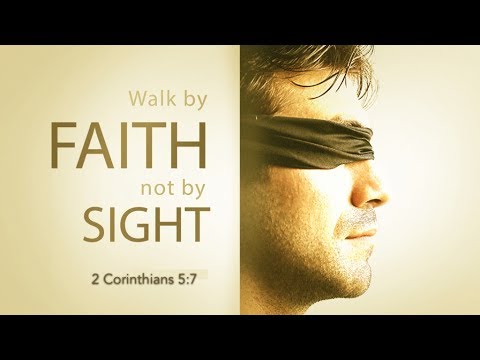



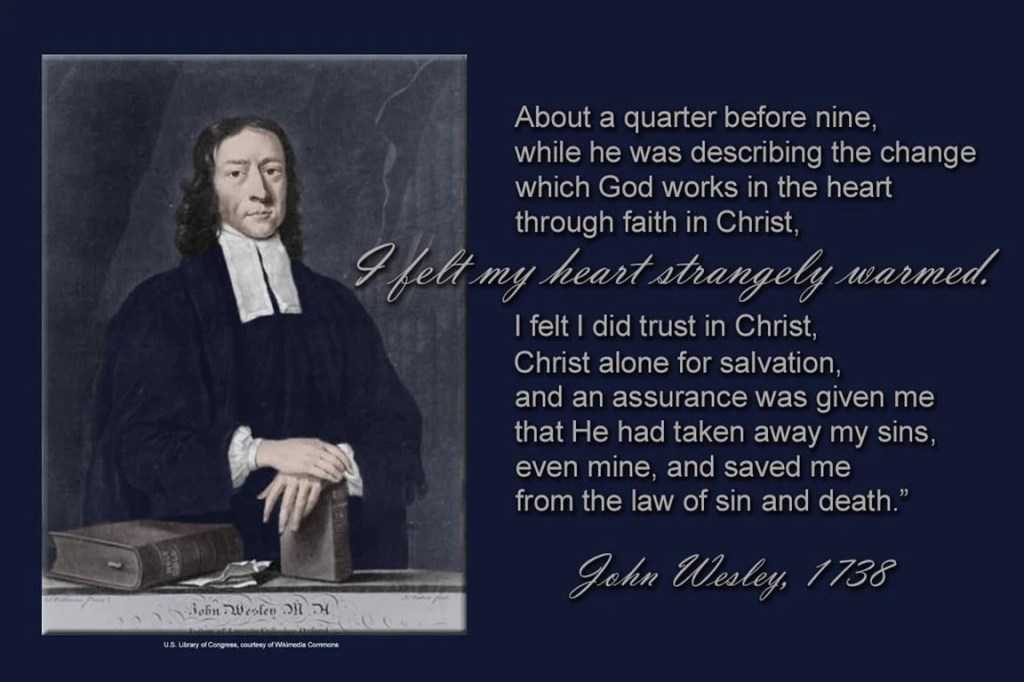





 Loving God, Living God, Loving Hope, Living Hope, Loving Living Life His Way! "Many things are possible for the person who has hope. Even more is possible for the person who has faith. And still more is possible for the person who knows how to love. But everything is possible for the person who practices all three virtues." - Brother Lawrence (1605-1691), Practicing the Presence of God (1692).