Beautiful Lessons in Love from Song of Solomon. Song of Solomon 1:1-4

HOW CAN WE NAME A LOVE?

How can we name a love
that wakens heart and mind,
indwelling all we know
or think or do
or seek or find?
Within our daily world,
in every human face,
Love’s echoes sound
and God is found,
hid in the commonplace.

If we awoke to life
upheld by loving care
that asked no great reward
but firm, assured,
was simply there,
we can, with parents’ names,
describe, and thus adore,
love unconfined,
our Father kind,
our Mother strong and sure.

When people share a task,
and strength and skills unite
in projects old or new,
to make or do
with shared delight,
our Friend and Partner’s will
is better understood,
that all should share,
create, and care,
and know that life is good.

So in a hundred names,
each day we all can meet
a presence, sensed and shown
at work, at home,
or in the street.
Yet names and titles all
shine in a brighter sun:
In Christ alone
is full love grown
and life and hope begun.

Brian Wren, Words © 1975, rev. 1995 Hope Publishing Company

Song of Solomon 1:1-4 Amplified Bible

The Young Shulammite Bride and Jerusalem’s Daughters

The [a]Song of Songs [the best of songs], which is Solomon’s.

[b](The Shulammite Bride)


“May he kiss me with the kisses of his mouth!” [Solomon arrives, she turns to him, saying,]
“For your love is better than wine.


“The aroma of your oils is fragrant and pleasing;
Your name is perfume poured out;
Therefore the maidens love you.


“Draw me away with you and let us run together!
Let the king bring me into his chambers.”

The Word of God for the Children of God.

Adeste Fideles! Laeti Triumphantes! Venite Adoremus! Dominum.

Gloria! In Excelsis Deo! Alleluia, Alleluia, Alleluia, Amen.

We Will Sing Your Songs and We Will Rejoice In Thee

Song of Solomon 1:2-4 The Message

The Woman

2-3 Kiss me—full on the mouth!
    Yes! For your love is better than wine,
    headier than your aromatic oils.
The syllables of your name murmur like a meadow brook.
    No wonder everyone loves to say your name!

Take me away with you! Let’s run off together!
    An elopement with my King-Lover!
We’ll celebrate, we’ll sing,
    we’ll make great music.
Yes! For your love is better than vintage wine.
    Everyone loves you—of course! And why not?

If this Hebrew love song was modernized, it would be steamier than most romance novels out there!

It is full of passion, desire, pursuit, possession and pleasure.

Like a ballad, it tells the sensual love story of a man and woman, their longing for the day when they can fully give themselves to each other, their wedding (Song 3:11), the consummation of their love, and their love life together. 

C.S. Lewis wrote a timeless book called The Four Loves which summarizes four kinds of human love and four Greek words for love:

affection (storgé),

friendship (phileō),

romantic love (eros),

and the love of God (agapé).

The Bible is and should be our authority on the topic of love because love (agapé) comes from God and God is love (1 John 4:7-8).

Even though the love God has for us is a unique and wholly unconventional type of love, the Bible is also our complete authority on all other types of love.

The Four Types of Love

Storgé, or family affection, is mentioned only one time, in Romans 12:9-10. 

Romans 12:9-10 The Message

9-10 Love from the center of who you are; don’t fake it. Run for dear life from evil; hold on for dear life to good. Be good friends who love deeply; practice playing second fiddle.

Phileō is used many times in Scripture (see example in John 21:15-17).

John 21:15-17 GOD’S WORD Translation

Jesus Speaks with Peter

15 After they had eaten breakfast, Jesus asked Simon Peter, “Simon, son of John, do you love me more than the other disciples do?”

Peter answered him, “Yes, Lord, you know that I love you.”

Jesus told him, “Feed my lambs.”

16 Jesus asked him again, a second time, “Simon, son of John, do you love me?”

Peter answered him, “Yes, Lord, you know that I love you.”

Jesus told him, “Take care of my sheep.”

17 Jesus asked him a third time, “Simon, son of John, do you love me?”

Peter felt sad because Jesus had asked him a third time, “Do you love me?” So Peter said to him, “Lord, you know everything. You know that I love you.”

Jesus told him, “Feed my sheep. 

Agape’ is the word for love used most often in the Bible, being therefore the type of love upon which we should focus the hardest. 

1 Corinthians 13:3-10 The Message

3-7 If I give everything I own to the poor and even go to the stake to be burned as a martyr, but I don’t love, I’ve gotten nowhere. So, no matter what I say, what I believe, and what I do, I’m bankrupt without love.

Love never gives up.
Love cares more for others than for self.
Love doesn’t want what it doesn’t have.
Love doesn’t strut,
Doesn’t have a swelled head,
Doesn’t force itself on others,
Isn’t always “me first,”
Doesn’t fly off the handle,
Doesn’t keep score of the sins of others,
Doesn’t revel when others grovel,
Takes pleasure in the flowering of truth,
Puts up with anything,
Trusts God always,
Always looks for the best,
Never looks back,
But keeps going to the end.

8-10 Love never dies. Inspired speech will be over some day; praying in tongues will end; understanding will reach its limit. We know only a portion of the truth, and what we say about God is always incomplete. But when the Complete arrives, our incompletes will be canceled.

That leaves romantic love, or sexual desire.

The Greek word eros is never found in the Bible.

A Hebrew equivalent is found in the Old Testament however.

The Hebrew word, ‘ahabah, is used repeatedly in the Song of Solomon and though it does not explicitly refer to romantic love or sexual desire, in the context of the Song of Solomon, it does. 

“Let him lead me to the banquet hall, and let his banner over me be love. Strengthen me with raisins, refresh me with apples, for I am faint with love” (Song of Solomon 2:4-5).

“Do not arouse or awaken love until it so desires” (Song of Solomon 2:7, 3:5, 8:4).

“Daughters of Jerusalem, I charge you—if you find my beloved, what will you tell him? Tell him I am faint with love” (Song of Solomon 5:8).

“Place me like a seal over your heart, like a seal on your arm; for love is as strong as death, its jealousy unyielding as the grave. It burns like blazing fire, like a mighty flame. Many waters cannot quench love; rivers cannot sweep it away. If one were to give all the wealth of one’s house for love, it would be utterly scorned” (Song of Solomon 8:6-7).

Who Wrote the Song of Solomon?

The author of the Song of Solomon, known as the Song of Songs, was King Solomon, son of King David, who reigned over Israel for 40 years (971-931 B.C.).

Solomon is best remembered for his wisdom. 

1 Kings 4:32 lets us know that Solomon “spoke three thousand proverbs and his songs numbered a thousand and five.”

He wrote 1,005 songs and the Song of Solomon was his very best, which is why it is referred to as the “Song of Songs.” it is the most excellent of all songs!

This fact is debated by scholars, but it seems as if Solomon is also “the beloved” in this love song.

The Shulamite woman (Song of Solomon 6:13) was likely Solomon’s first wife (though he went on to marry 699 other women).

In this song, “Solomon recounts (1) his own days of courtship, (2) the early days of his first marriage, followed by (3) the maturing of this royal couple through the good and bad days of life” (MacArthur Study Bible notes).

The Song of Solomon stands out in Scripture as the only book that seemingly has nothing to do with God, even though “all 117 verses in Solomon’s Song have been recognized by the Jews as a part of their sacred writings.

Along with Ruth, Esther, Ecclesiastes, and Lamentations, it is included among the OT books of the Megilloth, or ‘five scrolls.’ The Jews read this song at the Passover, calling it ‘the Holy of Holies’” (MacArthur Study Bible notes).

It may seem to have nothing to do with God, but romantic love has everything to do with God!

It is completely accurate to say that God is the inventor and author of romantic love which naturally makes Him the authority on the subject! Therefore, we should care very much about what God thinks about romance and marriage.

How Does This Song Apply To Our Lives

So how can this Jewish love song apply to our lives?

Here are at least two ways:

1. Sexual intimacy is reserved for marriage and should be highly honored and protected.

There is a “charge” given three times in the Song of Solomon, reminding us not to “arouse or awaken love until it so desires” (Song of Solomon 2:7, 3:5, 8:4). 

In the context and scripts of the range of modern-day TV shows, Reality TV shows of and from every conceivable “love” angle and ideological spectrum and movies, we will sometimes hear the all too ambiguous advice given unto teens to wait to have sex till “it finally feels right” “until it’s finally the right person.

That’s not even close to what Solomon’s wife is saying at all.

She is expressing her absolute commitment to wait until love can be aroused or awakened in the context of complete commitment and possession!

“My beloved is mine and I am his” (2:16).

Solomon refers to his bride as “a garden locked up,” “a spring enclosed, a sealed fountain” (4:12).

Until marriage, she did not open herself to him (4:15).

This theme of faithfulness and fidelity is all through Scripture, and the reason is that the sacred covenant of marriage is pointing directly to the mystery and covenant relationship between Husband and Wife, to Christ and His Church.

Hebrews 13:4 GOD’S WORD Translation

Marriage is honorable in every way, so husbands and wives should be faithful to each other. God will judge those who commit sexual sins, especially those who commit adultery.

Those are strong words!

Why does God care so much about the sanctity of marriage?

Again, it is because it points at His relationship with His covenant people:

Ephesians 5:31-32 GOD’S WORD Translation

31 That’s why a man will leave his father and mother and be united with his wife, and the two will be one. 32 This is a great mystery. (I am talking about Christ’s relationship to the church.)

2. Love and Attraction are Powerful Forces for Good or For Evil.

Solomon left us a beautiful song about the holy love between a man and a woman which points us both to the importance of faithfulness and to the very heart of God and His covenant of love with us.

Sadly though, that is not the only example which Solomon left us.

1 Kings 11:1-4 GOD’S WORD Translation

Solomon’s Idolatry

11 King Solomon loved many foreign women in addition to Pharaoh’s daughter. He loved Hittite women and women from Moab, Ammon, Edom, and Sidon. They came from the nations about which the Lord had said to the people of Israel, “Never intermarry with them. They will surely tempt you to follow their gods.” But Solomon was obsessed with their love. He had 700 wives who were princesses and 300 wives who were concubines.[a] In his old age, his wives tempted him to follow other gods. He was no longer committed to the Lord his God as his father David had been.

Solomon, known for his vast breadth of wisdom, was also guilty of severe infidelity in his relationship with God.

Sadder than the fact that his heart was divided between hundreds of women, “his heart was not fully devoted to the Lord his God.”

If there is anything we learn from Solomon, may it be the devastating choice of allowing our hearts to be led astray from our first Love! (Isaiah Chapter 53)

Take me away with you–let us hurry! Let the king bring me into his chambers. We rejoice and delight in you; we will praise your love more than wine. How right they are to adore you! Song Of Solomon 1:4 

Most people have someone who they love to be around.

They desire to be with that person all the time.

This is especially true of newly married couples.

They want to be together.

They hate being apart from each other and love to spend all their time together.

Young children often want to spend time with one of their parents, the dad or the mom.

They love their parents and they cannot stand being away from the parent.

The reason that people love to spend time with someone is that they love that person.

Solomon shows a scene of a woman who is eager to be brought away by the king.

She is in a hurry to have it happen.

Her friends also realize the value of this relationship.

While this may be meant to be just a relationship between a man and woman, it can also represent the relationship between a person and God.

God is always seen as the ultimate king. Jesus is called the King.

The believer in Jesus should have a desire to be with God in the most intimate of places, not just in the public open spaces.

The intimate place shows the relationship at its very highest level.

Often believers are too easily content just to be with God on Sunday in church, but will mostly ignore Him going through their busyness the rest of the week.

Their heart is really not in the relationship, but just on getting out of hell.

When one realizes how much Jesus (The King) has done for him, he will also desire to be with God immediately.

He will not want to wait for a later time, but wants to spend time getting to know God more and more.

The relationship with God will take priority over any other relationship or action.

When you take a look at your life, when you take a look at your spouse, take a long look into your bathroom mirror, who do you want to be around more?

When you read, study and pray over the Word of God for His Children, what questions of God and His Love are you asking, what answers are you seeking?

Are you seeking just to make friends friends on this earth, with this earth and to have a worldly good time, even though you already know it is only temporary?

Or is your heart’s desire to be with God?

Or is your heart and soul looking to embrace, to live the truth of God’s Love?

John 3:16-17 New American Standard Bible

16 “For God so loved the world, that He gave His only Son, so that everyone who believes in Him will not perish, but have eternal life. 17 For God did not send the Son into the world to judge the world, but so that the world might be saved through Him.

Seek to get to know the intimacy of God more and more in the intimate places.

These are the very private places of your life, in the very quiet times of prayer and bible study and Koinonia Fellowship – Get to know His great love for you.

I pray today that you will come to know the intimacy of Jesus alone as your Lord and Savior; that you will know God’s most intimate love for you; and that you will seek to spend more time with God; and that God will be your one true love above all others.

In the name of God, the Father and God the Son and God the Holy Spirit,  

Let us Pray,

Psalm 40 The Message

40 1-3 I waited and waited and waited for God.
    At last he looked; finally he listened.
He lifted me out of the ditch,
    pulled me from deep mud.
He stood me up on a solid rock
    to make sure I wouldn’t slip.
He taught me how to sing the latest God-song,
    a praise-song to our God.
More and more people are seeing this:
    they enter the mystery,
    abandoning themselves to God.

4-5 Blessed are you who give yourselves over to God,
    turn your backs on the world’s “sure thing,”
    ignore what the world worships;
The world’s a huge stockpile
    of God-wonders and God-thoughts.
Nothing and no one
    compares to you!
I start talking about you, telling what I know,
    and quickly run out of words.
Neither numbers nor words
    account for you.

Doing something for you, bringing something to you—
    that’s not what you’re after.
Being religious, acting pious—
    that’s not what you’re asking for.
You’ve opened my ears
    so I can listen.

7-8 So I answered, “I’m coming.
    I read in your letter what you wrote about me,
And I’m coming to the party
    you’re throwing for me.”
That’s when God’s Word entered my life,
    became part of my very being.

9-10 I’ve preached you to the whole congregation,
    I’ve kept back nothing, God—you know that.
I didn’t keep the news of your ways
    a secret, didn’t keep it to myself.
I told it all, how dependable you are, how thorough.
    I didn’t hold back pieces of love and truth
For myself alone. I told it all,
    let the congregation know the whole story.

11-12 Now God, don’t hold out on me,
    don’t hold back your passion.
Your love and truth
    are all that keeps me together.
When troubles ganged up on me,
    a mob of sins past counting,
I was so swamped by guilt
    I couldn’t see my way clear.
More guilt in my heart than hair on my head,
    so heavy the guilt that my heart gave out.

13-15 Soften up, God, and intervene;
    hurry and get me some help,
So those who are trying to kidnap my soul
    will be embarrassed and lose face,
So anyone who gets a kick out of making me miserable
    will be heckled and disgraced,
So those who pray for my ruin
    will be booed and jeered without mercy.

16-17 But all who are hunting for you—
    oh, let them sing and be happy.
Let those who know what you’re all about
    tell the world you’re great and not quitting.
And me? I’m a mess. I’m nothing and have nothing:
    make something of me.
You can do it; you’ve got what it takes—
    but God, don’t put it off.

Lord, my Heavenly Father, allow me to receive Your most intimate love for me and to share that level of intimacy love with all those who are my neighbors, Just as Christ loved the Church so are we to love all. In Christ Jesus Holy and Precious name I pray!

Adeste Fideles! Laeti Triumphantes! Venite Adoremus! Dominum.

Gloria! In Excelsis Deo! Alleluia, Alleluia, Alleluia, Amen.

Do We Have Any Earthly Idea How to Be Satisfied in God? Psalm 119:57-64

Psalm 119:57-64 The Message

57-64 Because you have satisfied me, God, I promise
    to do everything you say.
I beg you from the bottom of my heart: smile,
    be gracious to me just as you promised.
When I took a long, careful look at your ways,
    I got my feet back on the trail you blazed.
I was up at once, didn’t drag my feet,
    was quick to follow your orders.
The wicked hemmed me in—there was no way out—
    but not for a minute did I forget your plan for me.
I get up in the middle of the night to thank you;
    your decisions are so right, so true—I can’t wait till morning!
I’m a friend and companion of all who fear you,
    of those committed to living by your rules.
Your love, God, fills the earth!
    Train me to live by your counsel.

The Word of God for the Children of God.

Adeste Fideles! Laeti Triumphantes! Venite Adoremus! Dominum.

Gloria! In Excelsis Deo! Alleluia, Alleluia, Alleluia, Amen.
As believers, we tend to say, ‘God is all I need’, but over any expanse of time we repeatedly learn that particular statement is not always true in our daily lives.

Many of us seek satisfaction in whatever form, if not perfection, in whatever form we can find it in our lives.

We want so very much to “live in the abundance of God” “abundant blessings of God,” to believe that God is enough, but yet we still chase fulfillment elsewhere.

I mean, who does not want significantly more than their own “fair share” of the abundance, the abundant life, which God offers to all His Children who believe?

Who does not want to feast on the “abundance of quail and manna” which God provided to the Israelites in their 40 plus years of circling the vast wilderness?

Who does not want to be the one’s to partake of the miraculous supply of food Jesus gave the thousands of hungry people from a few loaves of bread and fish?

Who wouldn’t want to have this prayer of Psalm 69:13 answered for their life;

But as for me, my prayer is to You, O Lord, at an acceptable and opportune time;
O God, in the greatness of Your favor and in the abundance of Your lovingkindness,
Answer me with truth [that is, the faithfulness of Your salvation].

The truth is: we were all designed for perfection—to be truly satisfied, to max out all their measures of “satisfaction” and this is why so many of us long for it.

If we look at the Bible in the very beginning, God created a perfect world for us to inhabit.

In Genesis, He designed for us to live surround by complete satisfaction.

It was indescribably beautiful, undeniably fulfilling, and beyond measure completely satisfying in every way – no sadness, emptiness, or confusion.

However, insert Adam and Eve.

Subtly enticed by the serpent, they made a choice against God’s will, and due to their choice, the consequences of their sin “dissatisfaction” entered the world.

So now, fast forward to today, we now live in a broken, fallen, sin-filled world.

But the great news is God is coming back for His people.

He promises in His forever Living and forever Active Word that He brings us back to perfection as Eden is restored in the last chapters of Revelation.

Revelation 21:3-5 The Message

3-5 I heard a voice thunder from the Throne: “Look! Look! God has moved into the neighborhood, making his home with men and women! They’re his people, he’s their God. He’ll wipe every tear from their eyes. Death is gone for good—tears gone, crying gone, pain gone—all the first order of things gone.” The Enthroned continued, “Look! I’m making everything new. Write it all down—each word dependable and accurate.”

The truth is this: the more we do crave and thirst for satisfaction in this fallen world we live in, the more disappointed we inevitably become, because it will never truly satisfy the longing placed in our hearts from the very beginning.

Everyone’s Never-Ending Hunger and Thirst

Our hunger and thirst for satisfaction starts from the first day we are born.

From the very first moments after we are born, we instinctively hunger and thirst for milk from our mother’s breast – and gorge ourselves when given it.

From the time we were children, we search to be satisfied with that new bike, new toys which help us interact with our environments, or a new video game.

We eagerly wait for all of those things we believe are going to make us happy.

As teenagers, we sought satisfaction in good grades, excelling in sports, making friends, comradery, our getting our very first car, or a boyfriend or a girlfriend.

As growing and maturing adults, we think of an education, a career, a spouse, a bigger house, children, or that one high-paying position will quench our thirst.

But always and forever in the end of it all, we are usually still left wanting more.

We are left with this gap, and time and time again; it is never fulfilled.

A gap between this fallen world and a world full of abundance and satisfaction.

There will always be a gap, otherwise we would never have a need for God.

Ecclesiastes 3:9-13 The Message

9-13 But in the end, does it really make a difference what anyone does? I’ve had a good look at what God has given us to do—busywork, mostly. True, God made everything beautiful in itself and in its time—but he’s left us in the dark, so we can never know what God is up to, whether he’s coming or going. I’ve decided that there’s nothing better to do than go ahead and have a good time and get the most we can out of life. That’s it—eat, drink, and make the most of your job. It’s God’s gift.

Think about it: if all the things we sought after never disappointed us, leaving us hungry, thirsty for more, we would have no need to thirst after God Himself.

We would already be filled by ‘things’, leaving no room for God to be in our life.

As Christ followers, and because Christ gave his life for us, we can be 100% satisfied in God and God alone, even while living in this abundantly messy, abundantly stressful, very wide middle path between Genesis and Revelation.

We can learn to not just say the words, but rather believe the words: that God is all I need—He is enough.

God, Our Portion

Psalm 119:57-64 New King James Version

ח HETH

57 You are my portion, O Lord;
I have said that I would keep Your words.
58 I entreated Your favor with my whole heart;
Be merciful to me according to Your word.
59 I thought about my ways,
And turned my feet to Your testimonies.
60 I made haste, and did not delay
To keep Your commandments.
61 The cords of the wicked have bound me,
But I have not forgotten Your law.
62 At midnight I will rise to give thanks to You,
Because of Your righteous judgments.
63 I am a companion of all who fear You,
And of those who keep Your precepts.
64 The earth, O Lord, is full of Your mercy;
Teach me Your statutes.

With words such as “Though the wicked bind me with ropes,” the psalmist continues his lament in this section of Psalm 119.

The laments of this psalm are often raw and deep.

And yet we can sense that the psalmist finds safety in the promises and love of the Lord, the surest source of comfort and protection.

Notice that this section begins with the words “You are my portion, Lord. . . .”

This is likely a reference to the way God gave portions of the promised land to the tribes of Israel (see Joshua 13-21).

Allotments were given to all of the tribes except for the tribe of Levi, because God had dedicated the Levites to serve and lead in the worship of the Lord.

Their apportioned service to God included everything from offering sacrifices to teaching the law, and from leading in worship to taking care of all the materials used in the Tabernacle for worship (see Exodus 25-30).

As Joshua explained to the people, “The Levites . . . do not get a portion among you, because the priestly service of the Lord is their inheritance” (Joshua 18:7).

In a similar way, the psalmist has nothing and no one but God to depend on.

The Lord is his portion, his inheritance.

In utter dependence and trust, the psalmist takes everything to God in prayer, including his laments.

With God as our portion, we too have the privilege of taking all our troubles and cares to the One whose guidance and instruction give us full life.

The Cup Which Satisfies

The way to be truly max satisfied in God is to fill your cup with Him daily—and please note here that I’m not referring to your salvation.

Being saved and being filled are two different things.

Being saved is when you accept Christ into your heart and commit your life to walking with Him.

This is the salvation you are given freely by the grace of God.

Your salvation never goes away. (John 3:16).

Being filled refers to God’s Holy Spirit, which is the gift Jesus left us after He died on the cross, filling you up.

As believers who accept Christ’s salvation, we have max access to this gift.

In fact, the “Holy Spirit lives in us” (John 14:17).

But we also live in our flesh, so we have to nurture our spirit daily.

The Holy Spirit is meant to fill us up to be our daily guide, counselor, “helper” and “teacher” and intercessor (John 14:15-18, 26, Romans 8:26-27).

How Can We Be Satisfied in God’s Presence?

John 14:15-18 New King James Version

Jesus Promises Another Helper

15 “If you love Me, [a]keep My commandments. 16 And I will pray the Father, and He will give you another [b]Helper, that He may abide with you forever— 17 the Spirit of truth, whom the world cannot receive, because it neither sees Him nor knows Him; but you know Him, for He dwells with you and will be in you. 18 I will not leave you orphans; I will come to you.

Jesus’ disciples were upset.

For three years they had been with Jesus.

They had walked with him and talked with him.

And now he suddenly announces that he was about to leave.

How could they possibly go on without him?

How could they face the challenges of life without his daily presence?

In his farewell address the Lord Jesus put the disciples’ minds at ease.

He told them that his returning to the Father was for their good (John 16:7).

He promised to send the Holy Spirit, who would live in them and teach them about living for God.

And through the Spirit they’d be able to enjoy God’s presence always.

Through the Holy Spirit you and I can experience God’s presence every moment of the day.

All we have to do is ask.

As Jesus says in Luke 11:13, “If you … know how to give good gifts to your children, how much more will your Father in heaven give the Holy Spirit to those who ask him!”

The most important prayer we can pray each day is to ask for the all-powerful presence and guidance of the Holy Spirit.

When we have the Holy Spirit guiding us each day, we will not only experience the abundance of God’s presence in our own lives, but we’ll also be able to show God’s presence to others as we live God’s way, displaying the fruit of the Spirit. (Galatians 5:22-23)

Thank you Lord for leaving us with such a gift!

It is perhaps a worn out cliché to repeatedly say

“Nothing comes naturally to living in the Spirit.”

One day I can react to a situation in my flesh, while the next day I allow God to fill me up with the Holy Spirit, and my reaction can be completely different.

This is why daily filling up your cup and nurturing our spirit is so important.

In the name of God, the Father and God the Son and God the Holy Spirit,

Let us Pray,

Psalm 40:1-10 The Message

40 1-3 I waited and waited and waited for God.
    At last he looked; finally he listened.
He lifted me out of the ditch,
    pulled me from deep mud.
He stood me up on a solid rock
    to make sure I wouldn’t slip.
He taught me how to sing the latest God-song,
    a praise-song to our God.
More and more people are seeing this:
    they enter the mystery,
    abandoning themselves to God.

4-5 Blessed are you who give yourselves over to God,
    turn your backs on the world’s “sure thing,”
    ignore what the world worships;
The world’s a huge stockpile
    of God-wonders and God-thoughts.
Nothing and no one
    compares to you!
I start talking about you, telling what I know,
    and quickly run out of words.
Neither numbers nor words
    account for you.

Doing something for you, bringing something to you—
    that’s not what you’re after.
Being religious, acting pious—
    that’s not what you’re asking for.
You’ve opened my ears
    so I can listen.

7-8 So I answered, “I’m coming.
    I read in your letter what you wrote about me,
And I’m coming to the party
    you’re throwing for me.”
That’s when God’s Word entered my life,
    became part of my very being.

9-10 I’ve preached you to the whole congregation,
    I’ve kept back nothing, God—you know that.
I didn’t keep the news of your ways
    a secret, didn’t keep it to myself.
I told it all, how dependable you are, how thorough.
    I didn’t hold back pieces of love and truth
For myself alone. I told it all,
    let the congregation know the whole story.

Lord God, Creator of all life, please fill us with your Holy Spirit and help us to show in our lives the fruit of the Spirit. We ask all this for Jesus’ sake and in his name. Amen.

Adeste Fideles! Laeti Triumphantes! Venite Adoremus! Dominum.

Gloria! In Excelsis Deo! Alleluia, Alleluia, Alleluia, Amen.

https://translate.google.com/

What Can Make Us All Whole Again? Only The Purifying Life Blood of Our Lord and Savior Jesus Christ. 1 John 1:7

1 John 1:5-10 New International Version

Light and Darkness, Sin and Forgiveness

This is the message we have heard from him and declare to you: God is light; in him there is no darkness at all. If we claim to have fellowship with him and yet walk in the darkness, we lie and do not live out the truth. But if we walk in the light, as he is in the light, we have fellowship with one another, and the blood of Jesus, his Son, purifies us from all[a] sin.

If we claim to be without sin, we deceive ourselves and the truth is not in us. If we confess our sins, he is faithful and just and will forgive us our sins and purify us from all unrighteousness. 10 If we claim we have not sinned, we make him out to be a liar and his word is not in us.

The Word of God for the Children of God.

Adeste Fideles! Laeti Triumphantes! Venite Adoremus! Dominum.

Gloria! In Excelsis Deo! Alleluia, Alleluia, Alleluia, Amen.

But if we walk in the light, as he is in the light, we have fellowship with one another, and the blood of Jesus his Son cleanses us from all sin. 1 John 1:7 ESV

A believer in Jesus Christ must be humbled by the fact that the righteousness that he or she has received is because of the blood of Jesus at Calvary.

When Jesus was crucified he was bleeding from the cross for you and for everyone in the world.

Even as he was dead on the cross he continued to shed his blood.

But when they came to Jesus, and saw that he was dead already, they brake not his legs: But one of the soldiers with a spear pierced his side, and forthwith came there out blood and water. (John 19:33-34, KJV)

This is he that came by water and blood, even Jesus Christ; not by water only, but by water and blood. And it is the Spirit that beareth witness, because the Spirit is truth. (1 John 5:6, KJV)

In the Old Testament times there was the first covenant in which the sins of the people of Israel had to be covered up by the shedding of the blood of an animal.

However, with the arrival of Jesus Christ came a new and better covenant in which he became the perfect sacrifice for our sins. 

Hebrews chapter 9 provides for us a comparison and contrast of “cleanliness.”

What Can Wash Away My Sins-Hebrews 9

Hebrews 9 New International Version

Worship in the Earthly Tabernacle

Now the first covenant had regulations for worship and also an earthly sanctuary. A tabernacle was set up. In its first room were the lampstand and the table with its consecrated bread; this was called the Holy Place. Behind the second curtain was a room called the Most Holy Place, which had the golden altar of incense and the gold-covered ark of the covenant. This ark contained the gold jar of manna, Aaron’s staff that had budded, and the stone tablets of the covenant. Above the ark were the cherubim of the Glory, overshadowing the atonement cover. But we cannot discuss these things in detail now.

When everything had been arranged like this, the priests entered regularly into the outer room to carry on their ministry. But only the high priest entered the inner room, and that only once a year, and never without blood, which he offered for himself and for the sins the people had committed in ignorance. The Holy Spirit was showing by this that the way into the Most Holy Place had not yet been disclosed as long as the first tabernacle was still functioning. This is an illustration for the present time, indicating that the gifts and sacrifices being offered were not able to clear the conscience of the worshiper. 10 They are only a matter of food and drink and various ceremonial washings—external regulations applying until the time of the new order.

The Blood of Christ

11 But when Christ came as high priest of the good things that are now already here,[a] he went through the greater and more perfect tabernacle that is not made with human hands, that is to say, is not a part of this creation. 12 He did not enter by means of the blood of goats and calves; but he entered the Most Holy Place once for all by his own blood, thus obtaining[b] eternal redemption. 13 The blood of goats and bulls and the ashes of a heifer sprinkled on those who are ceremonially unclean sanctify them so that they are outwardly clean. 14 How much more, then, will the blood of Christ, who through the eternal Spirit offered himself unblemished to God, cleanse our consciences from acts that lead to death,[c] so that we may serve the living God!

15 For this reason Christ is the mediator of a new covenant, that those who are called may receive the promised eternal inheritance—now that he has died as a ransom to set them free from the sins committed under the first covenant.

16 In the case of a will,[d] it is necessary to prove the death of the one who made it, 17 because a will is in force only when somebody has died; it never takes effect while the one who made it is living. 18 This is why even the first covenant was not put into effect without blood. 19 When Moses had proclaimed every command of the law to all the people, he took the blood of calves, together with water, scarlet wool and branches of hyssop, and sprinkled the scroll and all the people. 20 He said, “This is the blood of the covenant, which God has commanded you to keep.”[e] 21 In the same way, he sprinkled with the blood both the tabernacle and everything used in its ceremonies. 22 In fact, the law requires that nearly everything be cleansed with blood, and without the shedding of blood there is no forgiveness.

23 It was necessary, then, for the copies of the heavenly things to be purified with these sacrifices, but the heavenly things themselves with better sacrifices than these. 24 For Christ did not enter a sanctuary made with human hands that was only a copy of the true one; he entered heaven itself, now to appear for us in God’s presence. 25 Nor did he enter heaven to offer himself again and again, the way the high priest enters the Most Holy Place every year with blood that is not his own. 26 Otherwise Christ would have had to suffer many times since the creation of the world. But he has appeared once for all at the culmination of the ages to do away with sin by the sacrifice of himself. 27 Just as people are destined to die once, and after that to face judgment, 28 so Christ was sacrificed once to take away the sins of many; and he will appear a second time, not to bear sin, but to bring salvation to those who are waiting for him.

We have all seen the commercials on television or on the internet advertising all kinds of the best laundry soap for all the very worst kinds of stains imaginable.

We see the kids rolling around in all kinds of mud puddles, stomping mud pits, rubbing their muddy hands all over their clothes and parents looking stunned.

Their eyes and mouths are all wide open, and their facial expressions and their slouched and bewildered bodily postures say: “What detergent will clean that?”

Or to try and tone it down a bit, when kids play outside and get a bit sweaty, we will softly often say to them, “OK, jump in the shower and do a quick rinse-off.”

Other times, when they have played outside for hours and they need more than just a quick rinse—they need that deep-cleaning shower or a soak in the tub.

Then parents get on their hands and knees, with soap and start the scrubbing.

In some ways, the old Hebrew cove­nant laws of cleansing the body and the spirit and the soul after a time of uncleanness provided just a quick rinse.

It wasn’t any kind of deep-down cleaning – that would take too much time..

But then, the millions of people needed to be cleansed through and through.

But then, the millions of people needed to be cleansed once and for all time.

Today there are billons and we all need to be max cleansed from our lives of sin.

What the old laws could not ever hope to do, as there were simply not enough High Priests to do it, directly and decisively points us all today, to that only someone who could provide a “one and forever done” max full, deep cleaning.

That High Priest is Jesus Christ, whose coming, whose life, ministry, whose death and whose resurrection for our sake, provided purification once for all.

The Old Hebrew Testament law included ritualized ceremonial Temple practices of washing to be clean.

What soap was used in the Bible?

There are also Biblical accounts of the Israelites making soap gel from ash lye and vegetable oils showing the importance of personal hygiene was realized.

Moses gave the Israelites laws governing personal cleansing through the use of ‘borith’ – Hebrew for soap – shortly after their Exodus.

But the cleaning was never complete.

And God knew this and vigorously denounced it through Jeremiah;

Jeremiah 2:20-24 New International Version

20 “Long ago you broke off your yoke
    and tore off your bonds;
    you said, ‘I will not serve you!’
Indeed, on every high hill
    and under every spreading tree
    you lay down as a prostitute.
21 I had planted you like a choice vine
    of sound and reliable stock.
How then did you turn against me
    into a corrupt, wild vine?
22 Although you wash yourself with soap
    and use an abundance of cleansing powder,
    the stain of your guilt is still before me,”
declares the Sovereign Lord.

23 “How can you say, ‘I am not defiled;
    I have not run after the Baals’?
See how you behaved in the valley;
    consider what you have done.
You are a swift she-camel
    running here and there,
24 a wild donkey accustomed to the desert,
    sniffing the wind in her craving—
    in her heat who can restrain her?
Any males that pursue her need not tire themselves;
    at mating time they will find her.

The people continually turned away from God, worshipped Baal idols, turned their lives away from diligently obediently serving God to personal corruption.

People would get “dirty” again – their whole year of sins would need cleaning by the High Priests – and sin offerings would need to be repeated over again.

Year after Year after Year … ad infinitum

More and more material resources, “perfectly imperfect” animals sacrificed.

Hands and feet cleansed, whole Bodies cleansed …

But what of the sin stained soul?

What no man can physically wash or cleanse with any kind of bodily soap?

God knew this and vigorously condemned this disobedience – but did also point to a future time when one would come and be that perfect sacrifice for all sins;

Isaiah 53 New International Version

53 Who has believed our message
    and to whom has the arm of the Lord been revealed?
He grew up before him like a tender shoot,
    and like a root out of dry ground.
He had no beauty or majesty to attract us to him,
    nothing in his appearance that we should desire him.
He was despised and rejected by mankind,
    a man of suffering, and familiar with pain.
Like one from whom people hide their faces
    he was despised, and we held him in low esteem.

Surely he took up our pain
    and bore our suffering,
yet we considered him punished by God,
    stricken by him, and afflicted.
But he was pierced for our transgressions,
    he was crushed for our iniquities;
the punishment that brought us peace was on him,
    and by his wounds we are healed.
We all, like sheep, have gone astray,
    each of us has turned to our own way;
and the Lord has laid on him
    the iniquity of us all.

He was oppressed and afflicted,
    yet he did not open his mouth;
he was led like a lamb to the slaughter,
    and as a sheep before its shearers is silent,
    so he did not open his mouth.
By oppression[a] and judgment he was taken away.
    Yet who of his generation protested?
For he was cut off from the land of the living;
    for the transgression of my people he was punished.[b]
He was assigned a grave with the wicked,
    and with the rich in his death,
though he had done no violence,
    nor was any deceit in his mouth.

10 Yet it was the Lord’s will to crush him and cause him to suffer,
    and though the Lord makes[c] his life an offering for sin,
he will see his offspring and prolong his days,
    and the will of the Lord will prosper in his hand.
11 After he has suffered,
    he will see the light of life[d] and be satisfied[e];
by his knowledge[f] my righteous servant will justify many,
    and he will bear their iniquities.
12 Therefore I will give him a portion among the great,[g]
    and he will divide the spoils with the strong,[h]
because he poured out his life unto death,
    and was numbered with the transgressors.
For he bore the sin of many,
    and made intercession for the transgressors.

then God made for us the definitive revelation of Isaiah 53,

John 3:16-17 Amplified Bible

16 “For God so [greatly] loved and dearly prized the world, that He [even] gave His [One and] [a]only begotten Son, so that whoever believes and trusts in Him [as Savior] shall not perish, but have eternal life. 17 For God did not send the Son into the world to judge and condemn the world [that is, to initiate the final judgment of the world], but that the world might be saved through Him.

God sent His only begotten Son Jesus as the only perfect sacrifice for us, cleanse us thoroughly and providing such a deep-down cleaning we all receive new life.

As Hebrews 9:14 explains, the blood of Christ, shed for our sake, cleanses “our consciences from acts that lead to death, so that we may serve the living God!”

For all who confess with their whole heart, their maximum trust in Christ, we are washed in his blood, fully cleansed from our sin so that we may serve him!

1 John 1:5-10 Easy-to-Read Version

God Forgives Our Sins

We heard the true teaching from God. Now we tell it to you: God is light, and in him there is no darkness. So if we say that we share in life with God, but we continue living in darkness, we are liars, who don’t follow the truth. We should live in the light, where God is. If we live in the light, we have fellowship with each other, and the blood sacrifice of Jesus, God’s Son, washes away every sin and makes us clean.

If we say that we have no sin, we are fooling ourselves, and the truth is not in us. But if we confess our sins, God will forgive us. We can trust God to do this. He always does what is right. He will make us clean from all the wrong things we have done. 10  If we say that we have not sinned, we are saying that God is a liar and that we don’t accept his true teaching.

From mankind’s fall in the Garden of Eden, Sin is 100%, an undeniable reality.

Its effects can be seen every day in our lives, in our families, and in society.

Sin is the transgression of God’s law and the lack of conformity to that law.

We sin against God in our words, thoughts, and actions—and even by not doing the good we should do.

We sin because we are sinners.

We were conceived and born in sin, and we live in sin.

We cannot cleanse ourselves.

Sin has affected every possible aspect of our reason, our emotion, and our will.

All areas of our lives have been stained and tainted by sin.

No religious ritual can cleanse us from sin.

Sin separates us from God, setting a impenetrable barrier that we cannot cross.

Jesus Christ, the Only Son of God, has done for us what we ourselves cannot do.

By his death we have life, and by his life blood we have cleansing from all sin.

No sin we commit is too great for him to cover, or so bad God cannot forgive it.

In Jesus Christ, our Savior, we have redemption—abundant, full, and free!

Praise God from whom all blessings of abundant life flow!

In the name of God, the Father and God the Son and God the Holy Spirit,

Let us Pray,

Psalm 84 The Message

84 1-2 What a beautiful home, God-of-the-Angel-Armies!
    I’ve always longed to live in a place like this,
Always dreamed of a room in your house,
    where I could sing for joy to God-alive!

3-4 Birds find nooks and crannies in your house,
    sparrows and swallows make nests there.
They lay their eggs and raise their young,
    singing their songs in the place where we worship.
God-of-the-Angel-Armies! King! God!
    How blessed they are to live and sing there!

5-7 And how blessed all those in whom you live,
    whose lives become roads you travel;
They wind through lonesome valleys, come upon brooks,
    discover cool springs and pools brimming with rain!
God-traveled, these roads curve up the mountain, and
    at the last turn—Zion! God in full view!

8-9 God-of-the-Angel-Armies, listen:
    O God of Jacob, open your ears—I’m praying!
Look at our shields, glistening in the sun,
    our faces, shining with your gracious anointing.

10-12 One day spent in your house, this beautiful place of worship,
    beats thousands spent on Greek island beaches.
I’d rather scrub floors in the house of my God
    than be honored as a guest in the palace of sin.
All sunshine and sovereign is God,
    generous in gifts and glory.
He doesn’t scrimp with his traveling companions.
    It’s smooth sailing all the way with God-of-the-Angel-Armies.

Holy! Holy! Holy! Lord God Almighty, holy is your name. Sin does not dwell with you. Thank you for sending your Son, for the full and free forgiveness that Jesus’ blood has purchased for your Children, allowing them to be close to you. In the Savior’s name.

Adeste Fideles! Laeti Triumphantes! Venite Adoremus! Dominum.

Gloria! In Excelsis Deo! Alleluia, Alleluia, Alleluia, Amen.
https://translate.google.com/

Will The Cross Open Wide Our Eyes Too? The Centurion’s Unexpected Confession: His Declaration Of Jesus’ Innocence. Luke 23:44-49

Luke 23:44-49 Amplified Bible

44 It was now about the sixth hour (noon), and darkness came over the whole land until the ninth hour (3:00 p.m.), 45 because the sun was [a]obscured; and the veil [of the Holy of Holies] of the temple was [b]torn in two [from top to bottom]. 46 And Jesus, crying out with a loud voice, said, “Father, into Your hands I commit My spirit!” Having said this, He breathed His last. 47 Now when the centurion saw what had taken place, he began praising and honoring God, saying, “Certainly this Man was innocent.” 48 All the crowds who had gathered for this spectacle, when they saw what had happened, began to return [to their homes], beating their breasts [as a sign of mourning or repentance]. 49 And all His acquaintances and the women who had accompanied Him from Galilee were standing at a distance, watching these things.

The Word of God for the Children of God.

Adeste Fidelis! Venite Adoremus! Dominum.

Gloria! In Excelsis Deo! Alleluia, Alleluia, Alleluia, Amen.
It was to become the Greatest Injustice in the History of Mankind.

As Prophesied by Jesus Himself three times to His Disciples.

Betrayed, Falsely Accused, a Bevy of False Witness testified against him.

A Kangaroo Court held in the darkest of street corners, behind locked doors.

By His own people who once declared the triumph of his life and ministry.

Pilate Himself declared his innocence, tried everything to release him alive.

But Jesus’ own people would have none of it – Crucify! Crucify! Crucify!

Beaten and Scourged and Humiliated to almost beyond recognition.

Forced to carry his own means of death.

Both Hands and Both Feet Nailed to the Cross in the most painful of ways.

Raised up for all the great gathered crowds to bear their ugliest witness to.

Ceaseless, Unrelenting Mockery and Scorn shouted and heard far and wide.

Finally, more quieted and Hushed Words are uttered and heard but by a few.

“I am Thirsty.”

“Father, Forgive them for they know not what they do.”

“It is Finished.”

“Father, into Your hands I Commend My Spirit.”

And finally, all the words come to their ends, Jesus is dead …

But into this moment when all else is suddenly hushed …

But the hushed flow of words continues from unexpected sources …

Luke 23:47 Amplified Bible

47 Now when the centurion saw what had taken place, he began praising and honoring God, saying, “Certainly this Man was innocent.”

Who else had heard these words spoken by the Centurion, the man with the authority to command and lead others to do his bidding, the man under the even greater authority of Pilate, under ultimate authority of his Emperor.

Yes, who else heard these hushed words of the Centurion …

Luke 23:48 Amplified Bible

48 All the crowds who had gathered for this spectacle, when they saw what had happened, began to return [to their homes], beating their breasts [as a sign of mourning or repentance].

The Word of God for His Children was undoubtedly rare and and far rarer still were the Words of God for His Children to remain hush, unspoken in those days.

Now, it is two thousand some odd number of years later and we “hear” again.

Through the Word of God for His Children and Song we remembered the scene.

Good Friday has passed us by, we have returned to the comfort of our homes.

To quietly await the quiet and hushed arrival of the sunrise on Easter Morning.

In that between time, on that day of whatever comes rushing to your mind – perhaps the final rush of housework, shopping and meal preparation for the final assembly of family and friends and perhaps even your neighbors too …

Question: What happens in your heart when you think of Jesus on the cross?

Probably not too much because like most you are waiting for the Preacher to lead the morning worship and Preach their messages on Sunday morning.

A day meant for personal reflection, perhaps family devotionals is what …?

Perhaps, if you are like me and perhaps a few others who went home “beating their breasts in hushed acts of confession and reflection and repentance, it is a time of inviting the Holy Spirit to intercede into your all too hushed moments.

I guess it is too hard to spend any extra time with God (Matthew 6:6-7) to try to imagine the indescribable, immeasurable depths of injustice on Good Friday.

His suffering is especially hard to imagine during this season of the year when we are still perhaps remembering his Advent and thinking about his birth too.

Our hearts are filled with emotion – the joy, and triumph and the Glory of God, the single greatest act of God’s love and God’s Justice of all time. (John 3:16-17)

The hearts of those who witnessed the Lord’s suffering were filled with all sorts of emotions, too.

Like the Centurion’s, Does The Cross Opens Our Eyes?

Luke 23:47 Amplified Bible

47 Now when the centurion saw what had taken place, he began praising and honoring God, saying, “Certainly this Man was innocent.”

The seasoned Roman officer handling the execution praised God and knew this man Jesus was not guilty of any crime.

The crowd went home with deep sorrow.

John and Jesus’ mother Mary and a few others stood by the Cross …

John 19:25-27 Amplified Bible

25 So the soldiers did these things.

But standing by the cross of Jesus were His mother, His mother’s sister [[a]Salome], [b]Mary the wife of Clopas, and Mary Magdalene. 26 So Jesus, seeing His mother, and the [c]disciple whom He loved (esteemed) standing near, said to His mother, “[Dear] woman, look, [here is] your son!” 27 Then He said to the disciple (John), “Look! [here is] your mother [protect and provide for her]!” From that hour the disciple took her into his own home.

Most of Jesus’ friends went home in repentance or watched from a distance.

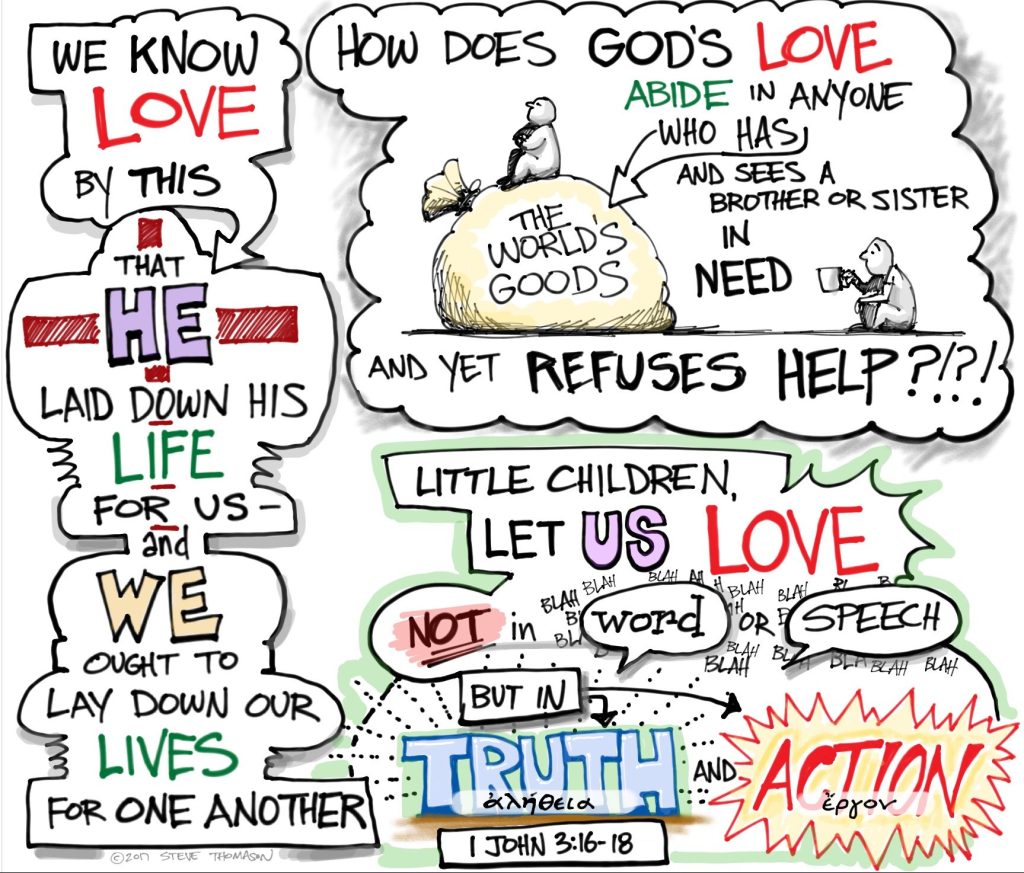
We have all of these “reactions from the ground as they look up at the Cross.”

What are we to make of them still today – in these 21st century times, seasons?

We have not understood, indeed we cannot understand the implications of the the harshness, yet also the beauty of cross unless it has changed us personally.

After Jesus “breathed his last” (Luke 23:46), Luke records for us the reactions of those who witnessed the crucifixion.

“All the crowds that had assembled for this spectacle, when they saw what had taken place, returned home beating their breasts” (v 48).

Yes, there was sadness, but once the spectacle was over, they left to get on with their lives.

Verse 49 then informs us “all his acquaintances … stood at a distance watching” —and we can barely even imagine what was running through all of their minds.

But the most striking and the most personal reaction that Luke captures is that of the Roman centurion, who, seeing what had happened, “praised God, saying, ‘Certainly this man was innocent!’”—or, as the NIV renders it, “Surely this was a righteous man.”

Here, amid the darkness of hypocritical religious leaders, cynical rulers, and callous passersby, the hushed whispers of lingerers, is a tiny glimmer of light.

Perhaps the very last person we would expect to see the truth—a man with no previous connection to Jesus, no background in Old Testament studies, and no predisposition to the things of God, just utterly obeying his Roman bosses—not only grasped what he looked at, but he immediately responded personally to it.

He saw

“what had taken place”—the words of Jesus, the darkness overhead, the manner of His death—and realized, 

Here is no ordinary man. Here is a man who is different from every other man. Here is a man who is entirely innocent, wholly righteous. 

Indeed, the Gospel narrative of Mark adds that the centurion confessed that the man on the cross was undoubtedly none other but “the Son of God” (Mark 15:39).

With his incredible and trained eye for detail, Luke places a clear emphasis on giving his readers a “from the ground up” seeing what took place on the cross.

He probably hoped that some readers would remember that when Jesus had read from the scroll of Isaiah earlier in His ministry, He had said, “The Spirit of the Lord … has anointed me to proclaim good news to the poor … to proclaim liberty to the captives and recovering of sight to the blind” (Luke 4:18).

Indeed, a great theme found throughout the Gospel of Luke is that of darkness being invaded by light—the confusion and hardness of the people’s hearts and their minds being subsequently invaded by the liberating power of God’s truth.

1 Corinthians 1:18-25 Amplified Bible

The Wisdom of God

18 For the message of the cross is foolishness [absurd and illogical] to those who are perishing and spiritually dead [because they reject it], but to us who are being saved [by God’s grace] it is [the manifestation of] the power of God. 19 For it is written and forever remains written,

“I will destroy the wisdom of the wise [the philosophy of the philosophers],
And the cleverness of the clever [who do not know Me] I will nullify.”

20 Where is the wise man (philosopher)? Where is the scribe (scholar)? Where is the debater (logician, orator) of this age? Has God not exposed the foolishness of this world’s wisdom? 21 For since the world through all its [earthly] wisdom failed to recognize God, God in His wisdom was well-pleased through the [a] foolishness of the message preached [regarding salvation] to save those who believe [in Christ and welcome Him as Savior]. 22 For Jews demand signs (attesting miracles), and Greeks pursue [worldly] wisdom and philosophy, 23  but we preach Christ crucified, [a message which is] to Jews a stumbling block [that provokes their opposition], and to Gentiles foolishness [just utter nonsense], 24 but to those who are the called, both Jews and Greeks (Gentiles), Christ is the power of God and the wisdom of God. 25  [This is] because the foolishness of God [is not foolishness at all and] is wiser than men [far beyond human comprehension], and the weakness of God is stronger than men [far beyond the limits of human effort].

Any attempt to articulate Christianity that denies the absolute centrality of the wisdom of God and the wisdom of the Cross can never lead to saving faith.

And while we do not always understand how the Spirit moves in leading men and women to be born again, our message must always and ever be the same:

“But We Preach Christ crucified” (1 Corinthians 1:23).

It is beholding the cross that brings life for anyone who responds to the man who hung there by confessing who He is and praising God for His saving work.

Unless and until the “goodness” of the cross is personal to us, it is essentially to be considered as utterly useless for us.

So, when was the last time you simply looked UP at your Savior on the cross and just walked away?

Or, when was the last time you looked DOWN at your Savior on the cross and up, just walked away into whatever else is about to rush into your hushed mind?

So, when was the last time you simply looked UP at your Savior on the cross and spent the intervening time waiting for the Easter moment and just praised God?

Which one best describes your reaction?

Don’t you find it even minimally amazing that probably the least commendable, the most hushed, the least exemplary response was that from Jesus’ friends?

In these intervening times and seasons, let’s not be just observers of the cross, but rather a people deeply sorrowed by our sins which took Jesus to OUR cross.

However, in our sorrow, let’s make sure we don’t let grief consume us.

Instead, let’s praise God for his grace and the salvation he has provided for us.

Then, rather than walking away, having been hushed by the moment, going into hiding like the fearful friends of Jesus (John 20:19),

Let’s maybe share the confession of the Centurion, and the grace of God with;

O’ Come All Ye Faithful …

Adeste Fidelis …

O’ Come Let Us Adore Him …

Venite Adoremus …

Joyful and Triumphant …

Laeti Triumphantes,

To the King of the Angels …

Regem Angelorum …

To Christ the Lord!

Dominum!

Amen!

In the name of God, the Father and God the Son and God the Holy Spirit,

Let us Pray,

Psalm 24 The Message

24 1-2 God claims Earth and everything in it,
    God claims World and all who live on it.
He built it on Ocean foundations,
    laid it out on River girders.

3-4 Who can climb Mount God?
    Who can scale the holy north-face?
Only the clean-handed,
    only the pure-hearted;
Men who won’t cheat,
    women who won’t seduce.

5-6 God is at their side;
    with God’s help they make it.
This, Jacob, is what happens
    to God-seekers, God-questers.

Wake up, you sleepyhead city!
Wake up, you sleepyhead people!
    King-Glory is ready to enter.

Who is this King-Glory?
    God, armed
    and battle-ready.

Wake up, you sleepyhead city!
Wake up, you sleepyhead people!
    King-Glory is ready to enter.

10 Who is this King-Glory?
    God-of-the-Angel-Armies:
    he is King-Glory.

Holy and Almighty God, Author of my Life, Perfecter of my Faith, my heart breaks that Jesus had to die as a sacrifice for sin … especially my sin. However, I praise you for your plan of grace, for your desire to provide mercy at the expense of your own heartbreak, and for your overwhelming love for people like me. In Jesus’ name.

Adeste Fidelis! Venite Adoremus! Laeti Triumphantes, Dominum.

Gloria! In Excelsis Deo! Alleluia, Alleluia, Alleluia, Amen.

https://translate.google.com/

I Have a Testimony! Why Is the Approaching ‘Lamb of God’ So Significant to Me? John 1:29-34

John 1:29-34 Amplified Bible

29 The next day he saw Jesus coming to him and said, “Look! The Lamb of God [a]who takes away the sin of the world! 30 This is He on behalf of whom I said, ‘After me comes a Man who has a higher rank than I and has priority over me, for He existed before me.’ 31 [b]I did not recognize Him [as the Messiah]; but I came baptizing [c]in water so that He would be [publicly] revealed to Israel.” 32 John gave [further] evidence [testifying officially for the record, with validity and relevance], saying, “I have seen the [d]Spirit descending as a dove out of heaven, and He remained upon Him. 33 I did not recognize Him [as the Messiah], but He who sent me to baptize [e]in water said to me, ‘He upon whom you see the Spirit descend and remain, this One is He who baptizes with the Holy Spirit.’ 34 I myself have [actually] seen [that happen], and my testimony is that this is the Son of God!”

The Word of God for the Children of God.

Adeste Fidelis! Venite Adoremus! Dominum.

Gloria! In Excelsis Deo! Alleluia, Alleluia, Alleluia, Amen.

The Preacher, with an inviting tone, filled the air with, “Who wants to testify about the goodness of the Lord?”

Testimonies of the goodness of God are a sure and certain motivation for the saints of God to keep going forward when the struggles in life weighed heavy.

John the Baptist had a sure, certain testimony about the goodness of God.

John 1:29-34 declares God has invaded the world in the person of Jesus Christ.

John 1:29-34 gives every Christian a sure and certain model testimony that we can draw powerful inspiration from, to learn to give about our own life journey.

First, John the Baptist knew instantaneously that in the salvation business, his ministry was decisively limited, only the perfect Lamb of God can take away sin.

Second, John the Baptist surely and certainly accepted the role of second chair.

He declared without hesitation that he absolutely was not the main thing.

John the Baptist unequivocally said, “A man who comes after me has surpassed me because he was before me.”

He was a humble servant to Jesus.

Third, John the Baptist gave a testimony of what he saw and experienced.

Without hesitation, the story John the Baptist told throughout his ministry is this: “I have seen and I testify that this is God’s Chosen One.”

On this day before Palm Sunday, we too will have a powerful and inspiring testimony: tell your family and friends the story of Jesus, the Lamb of God!

That is our Witness!

That is our Testimony

That is our Coming Story!

“BEHOLD THE LAMB OF GOD WHO TAKETH AWAY THE SINS OF THE WORLD”

Why Is the ‘Lamb of God’ So Significant To Us?

The Bible talks about the “Lamb of God” and often features imagery about lambs.

Spiritually, the Lamb of God is incredibly significant because it expresses the core of our faith.

In these our most contemporary of times, two thousand years after the words of John were first spoken and resoundingly declared, our learning why the Lamb of God is so significant can inspire us too with awe, to deepen our trust in Jesus. 

Who is the Lamb of God?

The phrase “Lamb of God” is a name given to Jesus in the Bible.

The Bible first mentions the Lamb of God in John 1:29, John sees Jesus and declares, “Look, the Lamb of God, who takes away the sin of the world!”.

John the Baptist continues to testify about Jesus and concludes in John 1:34: “I have seen and I testify that this is God’s Chosen One.”

Whenever the Lamb of God appears in the Bible, it refers to Jesus. 

What Does the “Lamb of God” Mean?

Jesus as the Lamb of God expresses significant theological and symbolic meaning.

It highlights the sacrificial nature of Jesus’ mission as the world’s Savior.

Just as lambs – gentle animals who symbolize purity – were offered as sacrifices in the Old Testament to atone for sins, Jesus served as a sacrifice to atone for the sins of humanity.

The phrase “Lamb of God” refers to Jesus as the perfect and ultimate sacrifice provided by God for the single perfect atonement of all the sins of his people. 

Why Is the “Lamb of God” So Significant?

Relating to Jesus as the Lamb of God shows us the heart of why our faith is important.

It is only by trusting Jesus’ sacrifice for our sins we can connect with a holy God.

Otherwise, we would perish. 

John 3:16 celebrates the love behind this core sacrifice: “For God so loved the world that he gave his one and only Son, that whoever believes in him shall not perish but have eternal life.”

John 3:17 declares God’s intent behind this core sacrifice: “For God did not send the Son into the world to judge and condemn the world [that is, to initiate the final judgment of the world], but that the world might be saved through Him.”

It’s important for us to trust Jesus’ work as the Lamb of God in order for us to be able to enjoy relationships with God and grow in holiness and gentleness.

Apostle Paul wrote, “For our sake he [God] made him [Jesus] to be sin who knew no sin, so that in him we might become the righteousness of God” (2 Corinthians 5:21).

Sacrifice is necessary because, as Hebrews 9:22 says, “In fact, the law requires that nearly everything be cleansed with blood, and without the shedding of blood there is no forgiveness.”

The entire sacrificial system established by God in the Old Testament prepares the way for Jesus coming to save the world as the Lamb of God.

In that system, lambs were often sacrificed in temples as offerings to God to atone for people’s sins.

A lamb was sacrificed for the sins of the people every morning and evening in Jerusalem (Exodus 29:38-42).

These sacrifices foreshadowed the perfect sacrifice of Christ on the cross that would happen later.

Interestingly, Jesus died on the cross at the same time the evening sacrifice was being made in the temple.

The Jews at that time were familiar with the Old Testament prophets Jeremiah and Isaiah, who foretold the coming of someone who would be led “like a lamb to the slaughter” (Jeremiah 11:19 and Isaiah 53:7). 

Isaiah 53:5-6 prophesies about how Jesus’ suffering and sacrifice will redeem people: “But he was pierced for our transgressions, he was crushed for our iniquities; the punishment that brought us peace [Isaiah 26:1-3] was on him, and by his wounds we are healed.

We all, like sheep, have gone astray, each of us has turned to our own way; and the Lord has laid on him the iniquity of us all.”

This person was none other than Jesus, the Lamb of God.

God instructed the Israelites to sacrifice a lamb for the Passover feast (Exodus 12:1-30).

The innocent lamb represented purity, and its sacrifice was a symbol of repentance and submission to God’s will.

Similarly, Jesus’ sacrificial death on the cross at Calvary to save humanity from sin shows he is the Lamb of God who makes the ultimate sacrifice necessary to ultimately and finally connect woefully sinful humanity to a perfectly holy God.

In fact, the slaying of the Passover lamb and applying its blood to the doorposts of the houses powerfully depicts Jesus’ atoning work on the cross.

If we trust Jesus as our Savior, we are spiritually covered by his blood, which protects us from spiritual death.

Romans 8:1-4 explains how Jesus’ physical sacrifice has made spiritual freedom possible for people:

“Therefore, there is now no condemnation for those who are in Christ Jesus, because through Christ Jesus the law of the Spirit who gives life has set you free from the law of sin and death. For what the law was powerless to do because it was weakened by the flesh, God did by sending his own Son in the likeness of sinful flesh to be a sin offering. And so he condemned sin in the flesh, in order that the righteous requirement of the law might be fully met in us, who do not live according to the flesh but according to the Spirit.”

Since humanity had sinned in the flesh (physically), and our holy God can’t be corrupted by sin, through Calvary, God made a way for our sins to be atoned for physically so we would no longer be separated from Him because of our sins.

Jesus’ work as the Lamb of God made it possible for all people to enjoy loving relationships with God, despite sin.

1 Peter 1:18-19 celebrates that redemptive work: “For you know that it was not with perishable things such as silver or gold that you were redeemed from the empty way of life handed down to you from your ancestors, but with the precious blood of Christ, a lamb without blemish or defect.”

Jesus has provided all we need to be forgiven forever for all of our sins, and he serves as our advocate for everything we need.

The entire chapter of Hebrews 10 describes the importance of Jesus’ work as the Lamb of God who takes away our sins.

As Hebrews 10:10 proclaims: “… we have been made holy through the sacrifice of the body of Jesus Christ once for all.”

Now, there is no need to sacrifice animals like lambs to God in a temple, because Jesus has provided an everlasting sacrifice on our behalf so we can enjoy relationships with God.

The chapter goes on to encourage us to persevere in our faith with confidence because of Jesus’ ultimate sacrifice for us:

“Therefore, brothers and sisters, since we have confidence to enter the Most Holy Place by the blood of Jesus, by a new and living way opened for us through the curtain, that is, his body, and since we have a great priest over the house of God, let us draw near to God with a sincere heart and with the full assurance that faith brings, having our hearts sprinkled to cleanse us from a guilty conscience and having our bodies washed with pure water. Let us hold unswervingly to the hope we profess, for he who promised is faithful.”

Not only does the Bible look back to Jesus’ crucifixion as the Lamb of God, but it also looks forward to Jesus as the Lamb of God in heaven. 

Revelation 5:6 describes Jesus in heaven as “a Lamb, looking as if it had been slain.”

This image reinforces the sacrificial nature of Jesus’ mission and emphasizes the victory he achieved through his sacrifice.

A few verses later in Revelation 5:11-13,

the Bible reveals all created beings in heaven and earth – angels, people, and other creatures – worshiping Jesus for his work as the Lamb of God:

“Then I looked and heard the voice of many angels, numbering thousands upon thousands, and ten thousand times ten thousand. They encircled the throne and the living creatures and the elders. In a loud voice they were saying: ‘Worthy is the Lamb, who was slain, to receive power and wealth and wisdom and strength and honor and glory and praise!’ Then I heard every creature in heaven and on earth and under the earth and on the sea, and all that is in them, saying: ‘To him who sits on the throne and to the Lamb be praise and honor and glory and power, for ever and ever!’”

This passage shows the importance of our own selves learning, appreciating, the indescribable wonder of God’s work and responding to it with gratitude.

Revelation 7:9 shows Jesus in heaven as the Lamb of God, with a huge amount of people whose souls had been redeemed thanks to his sacrifice on earth:

“After this I looked, and there before me was a great multitude that no one could count, from every nation, tribe, people, and language, standing before the throne and before the Lamb. They were wearing white robes and were holding palm branches in their hands.”

An angel explains to the apostle John in Revelation 17:14 that Jesus, the Lamb of God, will defeat evil and reign victorious over the universe:

“They will wage war against the Lamb, but the Lamb will triumph over them because he is Lord of lords and King of kings – and with him will be his called, chosen and faithful followers.”

Significance of Jesus as the Lamb of God Conclusion

The Lamb of God refers to Jesus as the perfect and ultimate sacrifice for sin.

The significance of the Lamb of God speaks to the core message of Christianity:

that through Jesus’ sacrifice at Calvary, we can be reconciled to God and receive forgiveness for our sins.

The Lamb of God is undeniably significant and central unto the Christian faith!

Because it emphasizes Jesus’ sacrificial mission and symbolizes his innocence, purity, and victory over sin and death.

As we approach tomorrow, the umpteenth time of our “holding up our palm branches, shouting our Hosannas” celebrating Jesus’ arrival into Jerusalem;

As we reflect on the meaning of the Lamb of God, may we be inspired to the utmost by the great love God has for us, the price that Jesus paid to redeem us.

In the name of God, the Father and God the Son and God the Holy Spirit,

Let us Pray,

Loving Heavenly Father, thank You for sending Jesus as the true Lamb of God Who has taken away all my sins. I am so thankful that Jesus died on the Cross for me, becoming the only perfect substitute for my sins. In Jesus’ name I pray, AMEN.

Adeste Fidelis! Venite Adoremus! Dominum.

Gloria! In Excelsis Deo! Alleluia, Alleluia, Alleluia, Amen.

https://translate.google.com/

Our Gracious Host Forever Following, and Our Vigilant Shepherd is Forever Keeping Us Safe Inside His Dwelling Place. Psalm 23:6

Psalm 23 King James Version

23 The Lord is my shepherd; I shall not want.

He maketh me to lie down in green pastures: he leadeth me beside the still waters.

He restoreth my soul: he leadeth me in the paths of righteousness for his name’s sake.

Yea, though I walk through the valley of the shadow of death, I will fear no evil: for thou art with me; thy rod and thy staff they comfort me.

Thou preparest a table before me in the presence of mine enemies: thou anointest my head with oil; my cup runneth over.

Surely goodness and mercy shall follow me all the days of my life: and I will dwell in the house of the Lord for ever.

The Word of God for the Children of God.

Adeste Fidelis! Venite Adoremus! Dominum.

Gloria! In Excelsis Deo! Alleluia! Alleluia! Alleluia! Alleluia! Amen.

https://www.blueletterbible.org/kjv/psa/23/6/t_conc_501006

Throughout Psalm 23, David reveals the intimate, personal nature of his close relationship with the Lord.

David has said “me” a total of six times, “I” four times, and “my” seven times.

In this beloved psalm, David writes a total of seventeen personal references in only six verses, making this passionate song of trust intensely, self-disclosing.

We expect this emphasis, because walking with the LORD by faith involves, first and foremost, a close fellowship with Him.

At its essence, true spirituality is not about going through the empty motions of bare religion.

Nor is it about the mere external activities of longstanding rituals.

Rather, a life with God is about knowing Him and loving His Son, Jesus Christ, in intimate, personal communion. 

As we approach the last verse, verse 6, Psalm 23 steadily builds to this closing crescendo.

David writes, “Surely goodness and lovingkindness will follow me all the days of my life, and I will dwell in the house of the LORD forever” (verse 6).

Here, David builds upon the vivid analogy that he used in the previous verse.

In this context, he sees himself as a special guest in a grand banquet hall, where he is being served a feast by the LORD Himself. 

However, this dining hall is located in a very special place.

It is found in a royal palace—but not merely a worldly ruler’s palace.

It is found in the dwelling place of the highest of nobility—in “the house of the LORD.”

“Surely Goodness and Lovingkindness”

David begins with this emphatic word, “Surely” (ak).

This word could be translated as “indeed,” “absolutely,” “beyond any doubt,” or even “only.”

There is no place for any equivocation in David’s mind about what he says next.

He is deeply persuaded of what he is about to affirm.

This steadfast conviction should mark every believer.

David says that “goodness” (lob) will follow him.

This word speaks of the abundant blessings and lavish benefits God has bestowed upon him.

In this word is evidenced the spiritual prosperity that he has experienced in following the Lord – All that David has needed, God has always provided. 

David also confesses that the “lovingkindness” (hesed) of the LORD has followed him.

This is the Lord’s unconditional, loyal, royal love for David—and for all who put their trust in Him.

This word comes from the Hebrew root (hasad) that means ‘to bend down, to bow down.’

This describes God’s condescending love as He reaches all the way down from heaven to where exactly David is.

Could there be anything greater given to David’s life than the “goodness and lovingkindness” of the LORD?

God has given him the very best portion in His great love.

His steadfast, covenantal love for His own people never wavers, even in the furnace of affliction.

God gave each of us the very best portion of His great love – His Son Jesus.

John 3:16-17 King James Version

16 For God so loved the world, that he gave his only begotten Son, that whosoever believeth in him should not perish, but have everlasting life.

17 For God sent not his Son into the world to condemn the world; but that the world through him might be saved.

“Will Follow Me”

David adds that the Lord’s goodness and lovingkindness “will follow me.”

“Follow” (radap) means ‘to pursue after, to chase after, to run after.’

He knows that God’s mercy and grace are in close pursuit of his life.

No matter wherever he goes, he cannot get away from these ever-following assurances.

Regardless of whatever he does, he cannot escape them.

They will never let him go, even when circumstances seem to deny their reality.

These two attributes of God—“goodness and lovingkindness”—actually represent God Himself, who is continually pursuing David.

It is the figure of speech known as personification, which assigns humanlike qualities to inanimate objects.

To be sure, these two attributes represent God, who is personally following David and caring for his every need. 

By this testimony, David states that God is relentless in His love toward him.

David is assured though he will falter and fail, God will never give up on him.

Regardless of how he may disappoint the LORD, he is persuaded that God will never stop pursuing and caring for him.

Even if he trips and falls, he knows God will never distance Himself from him. 

Instead, God will pick up His servant and continue to walk with him.

David will testify elsewhere, “The steps of a man or established by the LORD, and He delights in his way. When he falls, he will not be hurled headlong, because the LORD is the One who holds his hand” (Psalm 37:23-24).

This is an irrevocable promise firmly established in God’s own faithfulness.

“All the Days of My Life”

God’s love for David will follow him “all the days of my life.”

This tender affection and unchanging allegiance of God will be a never-ending pursuit of David to the end of his days. 

His devotion toward God will surely fluctuate.

There will be times when it will strengthen or subside.

But God’s love for him is ever strong and steadfast.

God’s loyal love for David does not depend upon his love in return.

God’s love for David depends upon God Himself, who never weakens or wavers.

This is why God’s lovingkindness is always following after David.

Likewise, this same love of God is always in hot pursuit of every believer.

This divine love never takes a day off.

It never rests, never sleeps, never stops, never stumbles (Psalm 121:4).

Even in the midst of trying times, the love of God never goes on sabbatical, never takes a vacation.

It is ever strong toward us, ever sure. 

“And I Will Dwell in the House of the Lord”

The last line begins with the word “and,” which indicates that what follows is inseparably connected with what preceded it.

With great certainty, David knows that he will “dwell in the house of the Lord.”

“Dwell” (yasab) means ‘to sit down and stay.’

It conveys the idea of making one’s own abode or home.

This is to say, David will always be at home in the Lord’s presence, always in personal relationship with Him, no matter where he goes.

David pictures this meal in which God serves him as taking place “in the house of the Lord.”

Of course, the temple in Jerusalem has not yet been built by his son Solomon.

Instead, this “house” represents the intimate fellowship that David enjoys with the Lord as he lives in the very presence of God each day.

David is pointing his readership to the close communion, intimate interaction that he has with the Lord.

“Forever”

The relationship between David and the Lord will last “forever.”

What starts in this lifetime will never come to an end.

The word “forever” here means literally ‘for the length of days, for prolonged, never-ending days.’

Once David began this relationship with the Lord, he knew it would never be severed.

In the words of this analogy, once David moves into the house of the Lord, he will never move out.

This is the eternal security of every believer.

The Lord Himself is their dwelling place.

Once they dwell in the house of the Lord, they will always be living in the fullness of His love and grace. 

David wants us to know that the Lord who pursues us with lovingkindness is He who keeps us forever.

The Lord who is ever following us is ever keeping us.

Once God begins His pursuit of us, He will never let us go.

No believer can be separated from the love of God, our great Shepherd, Host, and King.

Jehovah God is dwelling within us exactly right now so that we may dwell with Him, both now and forever more.

Let all of His Children raise up!

Bless His holy name!

Jehovah Ra’a, the Lord is our Shepherd, is with us and exactly right beside us, both now and forever more.

Let all of sheep of His pasture turn their heads and give their fullest attention!

Bless His holy name!

The essential truth of our Christian life is that God has come to save us and live in us as “‘Immanuel,’ which translated means, ‘God with us’” (Matthew 1: 23).

This is the essential truth of our ministering to the Lord as well.

Forever we are Safe, Sitting in His sanctuary, abiding and residing in His house

Ministering unto the Lord, from within the sanctuary our inner temple, this is our response to the truth of Immanuel.

Because God is with us, abiding in us, and calling us to abide in Him, indeed to become one with Him, even as He and the Father are one (John 15:4, 10:14-15, 17:21-24), we joyfully, innately, instinctively, obediently, we respond, as God’s Own New Covenant priesthood (Revelation 1:5-6, 5:9-10, 1 Peter 2:5-9).

“Ministering to the Lord” (Acts 13:2) is surely what we know we must do, what our spirit within desperately, longingly yearns for, because God does live within us.

So it is a right and good and joyful thing for us to frequent the temple of the Holy Spirit within us (1 Corinthians 3:16), our “inner room” (Matthew 6:6), so we may be with our Lord in His presence, offering praise and adoration, stillness and reflection, gratitude and humility, even as He securely envelopes us in His Own “goodness and lovingkindness.”

The simple point I make here is that the more quality time and frequency we spend in God’s house now, dwelling within us, the more consistently sure we will be, every day, that “I will dwell in the house of the Lord forever.” Amen.

Love and dwell with our Lord now and looking forward to our joy of loving Him and our joy of dwelling with Him forever, always remembering with 100% joy that, “we love, because He first loved us” (1 John 4:19), we live because He lives.

We praise, thank, and bless You Lord God. Yes Lord, we gratefully and joyfully dwell in Your house today.

“Surely goodness and lovingkindness will follow me all the days of my life, and I will dwell in the house of the Lord forever.” Hallelujah!

In the name of God, the Father and God the Son and God the Holy Spirit,

Let us Pray,

Psalm 150The Message

150 1-6 Hallelujah!
Praise God in his holy house of worship,
    praise him under the open skies;
Praise him for his acts of power,
    praise him for his magnificent greatness;
Praise with a blast on the trumpet,
    praise by strumming soft strings;
Praise him with castanets and dance,
    praise him with banjo and flute;
Praise him with cymbals and a big bass drum,
    praise him with fiddles and mandolin.
Let every living, breathing creature praise God!
    Hallelujah!

Adeste Fidelis! Venite Adoremus! Dominum.

Gloria! In Excelsis Deo! Alleluia! Alleluia! Alleluia! Amen.

https://translate.google.com/

1 John 3:16-24– By this, do we know the genuine, true love of God? Are we Loving by Deed, and by God’s Truth?

It was perfect LOVE that caused the almighty God act in the affairs of mankind, to send His only begotten Son into the world to become the sin-sacrifice for the entire race of humanity and it was perfect love that caused the Lord Jesus Christ to lay down His life for us. It was perfect love which caused the Lord Jesus to be a perfectly willing sacrifice, to talk the talk and walk the walk all the long and humiliating and painful way to be crucified upon the cruelest criminal’s cross… willingly, so all who believe on Him might not perish but have everlasting life.

Ponder for a while in your 21st century heart those words “perfect love.” What comes into your mind? What thoughts come rushing into your soul that either say; “I can hold my head up high to that one!” or “my head now “comfortably” rests on my knees and my “perfect” shame are resting ever before mine eyes.” Be vigorously and rigorously honest with yourself – God is right beside you!!! Whose standard of “Yeah, I got this love thing down perfectly” “Hallelujah”” are you living, loving, placing before Jesus as your standard of Christianity?

Read and reread Psalm One. Place your standard of “Hallelujah” before God!!!

Now, let us examine today’s text,

1 John 3:16-24 The Message

16-17 This is how we have come to understand and experience love: Christ sacrificed his life for us. This is why we ought to live sacrificially for our fellow believers, and not just be out for ourselves. If you see some brother or sister in need and have the means to do something about it but turn a cold shoulder and do nothing, what happens to God’s love? It disappears. And you made it disappear.

When We Practice Real Love

18-20 My dear children, let’s not just talk about love; let’s practice real love. This is the only way we’ll know we’re living truly, living in God’s reality. It’s also the way to shut down debilitating self-criticism, even when there is something to it. For God is greater than our worried hearts and knows more about us than we do ourselves.

21-24 And friends, once that’s taken care of and we’re no longer accusing or condemning ourselves, we’re bold and free before God! We’re able to stretch our hands out and receive what we asked for because we’re doing what he said, doing what pleases him. Again, this is God’s command: to believe in his personally named Son, Jesus Christ. He told us to love each other, in line with the original command. As we keep his commands, we live deeply and surely in him, and he lives in us. And this is how we experience his deep and abiding presence in us: by the Spirit he gave us.

The Word of God for the Children of God. Gloria! In Excelsis Deo! Alleluia! Amen.

In the most perfect example of love in all history, God sent His only Son into the affairs and works of mankind. For the sake of love alone, the Lord Jesus offered for mankind’s consideration the supreme example of ultimate love when He willingly laid down His life for friends and enemies alike. Jesus’ Perfect Love is made manifest in its highest measure at the cross of Calvary and as His children we might ponder our own hyper dramatic, self-serving standard of perfect love.

Mankind is steadily crumpling under the weight of sin and collapsing under the satanic influence of evil, which is suffocating a world in distress, but the true character of the spiritual Christian is based on a godly love and stands in stark contrast with the evil hatred that reigns supreme over this fallen world system.

From our 21st century context we cannot begin to imagine what it cost God the Father to turn His back on His only begotten Son and pour out the full force of His holy hatred of sin… upon HIM. It was for love of us that God the Father poured out the full force of His holy wrath for the accumulated sin of the whole world, upon His innocent and dearly beloved Son – Whom He had loved from before the conception of the universe. And He did it out of LOVE… for the world.

From our 21st century “smart phone” applications we cannot dare presume to comprehend what it cost the innocent Lord Jesus, Who as God incarnate… had to freely lay aside His eternal majesty and supreme glory and be clothed in our decaying human flesh… and then be made indescribable sin for you and for me.

The eternal Creator God demonstrated His perfect standard of love towards us in that while we were yet sinners (Romans 5:6-8), He laid down His perfect life for us and became a perfect curse and a perfect hissing – as the weight of the accumulated sin of the world was laid perfectly upon His shoulders – and He did it for perfect LOVE of an imperfect you and for perfect LOVE of an imperfect me.

When we look at the cross of Christ and the blood that He shed for us at Calvary – we see incarnate LOVE. and we know what real godly love is by this: that the only Son of God, Christ Jesus perfectly laid down His perfect life for us. Ought not we for HIS sake, imperfectly lay down our lives for our imperfect brethren?

One “soul grabbing” “spiritually sobering” passage of biblical text which grabs our attention in this regard is the message of 1 John 3:16-18, where it is written:

1 John 3:16-18 Amplified Bible

16 By this we know [and have come to understand the depth and essence of His precious] love: that He [willingly] laid down His life for us [because He loved us]. And we ought to lay down our lives for the believers. 17 But whoever has the [a] world’s goods (adequate resources), and sees his brother in need, but has no compassion for him, how does the love of God live in him? 18 Little children (believers, dear ones), let us not love [merely in theory] with word or with tongue [giving lip service to compassion], but in action and in truth [in practice and in sincerity, because practical acts of love are more than words].

What a marvelous, memorable message that is! Let us look at those words and the surrounding context to learn about God’s will for love in our lives.

Love – a recurring theme in this letter. Love for our fellow Christians is one of the dominant themes of this epistle, especially in chapters three and four.

From a whole heavenly host number of angles, the Spirit through John appealed to these first-century disciples to love one another. That is just a part of whom God’s children are, recognizing this truth: “. . . we should love one another” (3:11). Would it be correct to say that God commands members of His church in our own troubled 21st century context to love each other? Read for yourself: “And this is His commandment: that we should believe on the name of His Son Jesus Christ and love one another, as He gave us commandment” (3:23).

Love in word – When we read, “. . . let us not love in word or in tongue” (3:18), that is not a divine decree forbidding children of God from verbalizing their love for one another. The point being made here is that we ought to do 100% more than talk about love – we need to show it in our action. Jesus told His apostles,

“. . . I have loved you” (John 13:1-17, 34-35, John 15:9-17). Paul wrote the same thing to the saints in Corinth, saying, “. . . though the more abundantly I love you, the less I am loved” (2 Corinthians 12:14-15). When it comes from our sincere sacrificial heart, saying, “I love you” doesn’t violate Jesus’ teachings.

Love “in deed and in truth” – Again, that is the plain point of 1 John 3:18. Genuine love for other humans is something that we put into practice.

In this context, we see that such love was exemplified. It was shown by none other than the Lord Himself. What was His greatest manifestation of love for humanity? “By this we know love, because He laid down His life for us” (3:16). What kind of perfect love was that? It was perfect love in perfect action, love sacrificing, love doing what always will be in the very best interest of others.

In this context, we also see that such love is expected of every single follower of the Christ. He exemplified it and He expect it from us, too. In view of what He did for us, we know, “And we also ought to lay down our lives for the brethren” (3:16). In this matter, Cain seriously failed his brother (3:12). We must not do the same. When we see our brother in need of material goods, we need to have compassion, open our hearts and our stockpile of blessings, and help! (3:17). Until we grow to the point of putting love into helpful action, we are just talking and tinkering, prancing and dancing around and maybe, deceiving ourselves.

Love in deed and in truth – love from the heart. Immediately following the charge for you and me to love in deed and in truth (3:18), in each of the next three statements/sentences there is reference made to a Christian’s heart. Look at them: “our hearts before Him” (3:19), “our heart” (3:20), and “our heart” (3:21). Our heart may or may not condemn us (3:20,21). God sees! God knows!

Words are words. Action is action. But do the words and/or action come from the heart? Are they sincere before God and man, or are we like the hypocrites of Jesus’ day who looked great on the outside but were a mess within? (Matthew 23:27,28). Yes, God calls us to put love into action, but none of us should believe the faulty notion that all action shows true love. Such is not the case. Action without proper motivation (love!) is empty, fraudulent and seriously fruitless.

Lack of love – This is not a very pretty picture, but it is one which John sets forth before us. If I fail to love my brother in the Lord, which is the same as hating him, that makes me a murderer (1 John 3:15). Is that relevant today? That is what the Bible says, and such language gets my attention. What else?

If a child of God does not love his brother, he is “not of God” (3:10). Such a disciple of Jesus is acting like Cain (3:12). Raise your hand if you want that label (“Acts Just Like Cain”) for your conduct. The world hates us, and we expect that (3:13), but we do not expect to see such among God’s family. What else?

One who does not love his brother abides in death, which is separation from God (3:14). The saint who hates his brother is a murderer, and the consequence of being a murderer is one does not possess eternal life (3:15). You see, my own relationship with God, depends on exactly “how do I treat other people now?”

Think about it.

Ponder it in your heart.

Ponder it in your soul.

Ponder it in your strength.

Ponder it in your weakness.

Ponder it in all of your imperfections.

In the name of God, the Father and God the Son and God the Holy Spirit,

Let us pray,

Today, O’ God, this is my perfect plea, Lead Me out upon thy Level Ground!

Loving Father of mine, teach me to do your will, for you are my God. May your Holy Spirit lead me forth on level ground. I see your faithfulness and goodness in what you have done for me throughout my life. I think about all these things, and I thirst for you. Let me hear of your unfailing love every morning, for I am trusting you. Show me how to talk. Show me where to walk, for I give my whole self to you. Keep me on firm footing for the glory of your name. Alleluia! Amen.

https://translate.google.com/