Romans 15:4 "For whatever was written in earlier times was written for our instruction, so that through perseverance and the encouragement of the Scriptures we might have hope."
1 John 1:6-10 New Revised Standard Version Updated Edition
6 If we say that we have fellowship with him while we are walking in darkness, we lie and do not do what is true; 7 but if we walk in the light as he himself is in the light, we have fellowship with one another, and the blood of Jesus his Son cleanses us from all sin. 8 If we say that we have no sin, we deceive ourselves, and the truth is not in us. 9 If we confess our sins, he who is faithful and just will forgive us our sins and cleanse us from all unrighteousness. 10 If we say that we have not sinned, we make him a liar, and his word is not in us.
Word of God for the Children of God
Glory be to the Father, and to the Son, and to the Holy Ghost; as it was in the beginning, is now, and ever shall be, world without end. Amen, amen.
Part of growing into mature Christian is the constant confession of sin, with both God and with others.
But in the individualistic society in which we live, people don’t always confess their sin.
In fact, if they fall away from having their daily quiet time with God, it can be months or even years since they’ve confessed sin and been forgiven by God.
When this happens, the habitual sins which they find they’re constantly repeating become even bigger (or less) than they originally thought because they deceive themselves into thinking lies about the sin.
If you find yourself stuck in habitual sin that you can’t get out of, is it possible you’re believing lies about it that is causing a foothold to stay in your life? We believe the enemy’s lies, which can allow sin to remain, creating a hindrance between ourselves and our community with God. Here are five lies sin tells you:
1. It’s No Big Deal
When we first commit a sin, such as lying, our conscience informs us we’ve made the wrong decision. We feel guilt and shame, among other emotions.
That is, until we lie again.
If we continue to commit the act, we deceive ourselves by telling ourselves it’s no big deal.
We may even minimize those lies into what are called white lies, which society sees as less than otherwise.
But the reality is lying is just as bad as any other sin.
It causes us to distort the truth about a situation, ourselves, or others.
It also causes people not to trust us if we get caught.
Soon there’s always a big deal, and every growing Christian needs to have a mature accountability partner with whom they can talk to and confess their sin regularly to.
This person can help them with the work of confession and repentance, to move past this particular sin.
2. No One Will Find Out
Secrets are not always a bad thing.
Matthew 6:4 says,
“But when you pray, go into your room, close the door and pray to your Father, who is unseen. Then your Father, who sees what is done in secret, will reward you.”
In the garden, God told Adam all about the tree of the knowledge of good and evil, before he made Eve.
But in a later chapter, we quickly realized Adam told Eve all about it too.
Does that mean God kept a secret from Eve?
Secrets are bad only if the nature of them is rooted in sin.
Keeping a sinful secret, however, can be detrimental to a healthy spiritual life.
In chapter three of Genesis, God gives Adam and Eve the opportunity to confess their sin before him.
Although they didn’t take responsibility for their sin and instead blamed each other, God still wants us to openly speak to him about our sin.
As we confess our sin to God or to others, it offers us the opportunity to be forgiven and to take responsibility for our actions.
It is necessary for every person to have someone they can talk to about their sin.
By confessing it outwardly, the bondage with which Satan holds us and the shame that comes with it can be broken when we confess our sins openly.
3. God Can’t Forgive This
Some sins in our mind are so severe, we think God can’t possibly forgive us.
For example, if the sin is habitual, like some form of lust (pornography, for example) we realize that sin not only deals with lust but also with adultery, especially if the person looking at it is married.
Matthew 5:28 says, “anyone who even looks lustfully in another woman has committed adultery in his heart.”
But there is no sin God can’t forgive.
By Jesus’ death on the cross, he covered over every sin we have committed or will commit in the future.
We can be assured God forgives us when we confess our sin and repent of our behavior. But sometimes the person we can’t forgive is ourselves. We struggle with the process of forgiving ourselves for the difficult sins we have committed.
Don’t believe the lie that you can’t stop doing what you’re doing.
With God’s help anything is possible.
4. It’s Not as Big as Other People’s Sin
In Galatians 6:4-5, Paul encourages the church to restore someone gently, especially if they are in sin.
He then continues, “Each one should test their own actions. Then they can take pride in themselves alone, without comparing themselves to someone else, for each one should carry their own load.”
It’s easy to get into the trap of comparison and allow pride to enter your heart.
One of the sneakiest sins we commit is pride because it’s so easy to go on and on unchecked.
We then compare our sin to the person who needs to be restored, and believe we are better people because our sin is not as bad as theirs.
But again, we deceive ourselves into thinking certain sins are worse than others.
All sin separates us from the love of God.
All sin needs to be confessed and forgiven.
All behaviors must be repented before freedom can be achieved.
The next time you hear someone else’s sin, don’t be quick to allow pride to enter your heart.
Show gentleness and humility, helping that person and praying for them so that they can achieve the same freedom you’ve come to know.
5. I Can’t Stop
When we are entangled in sin, and repeat the same behavior again, it becomes more difficult to break free.
This is especially true of sins which are still considered shameful in front of society. We can easily lie to ourselves and say we don’t have the willpower to be able to stop this. But our finite willpower isn’t the key to freedom; only Jesus is.
When we lie to ourselves and tell ourselves we cannot stop, we put God in a box.
We underestimate his power and presence in our lives.
If Jesus can raise people from the dead, then he can certainly stop a sin from dominating our lives.
A good place to start is confess your sin to someone.
Tell them you need help to stop. Through a renewed reading of the word, prayer and constant accountability, freedom is possible. It may be hard at first and you may stumble, but don’t give up. All freedom is possible to those who believe.
We live in a divisive society where people don’t want to be judged for their sin.
Therefore, it gets much easier for us to conceal our sin and allow it to become a stronghold in our lives.
But through open confession, prayer, reading the Word of God and renewing our minds, max reliance on Jesus is key. When we rely on Jesus and trust him to remove the sin, we can experience freedom, Shalom, as we never have before.
In the name of God, the Father and God the Son and God the Holy Spirit,
15 O Yahweh, who may reside in your tent? Who may dwell on your holy mountain? 2 He who walks blamelessly and does what is right. He who speaks honestly in his heart. 3 He does not slander with his tongue. He does not harm his friend, nor bring up[b] a disgrace against his neighbor. 4 In his eyes a rejected one is contemptible, but he honors those who respect Yahweh. He takes an oath to his own injury and does not retract it. 5 He does not lend his money at interest, and does not take a bribe against the innocent. He who does these things will never be shaken.
Glory be to the Father, and to the Son, and to the Holy Ghost; as it was in the beginning, is now, and ever shall be, world without end. Amen, amen.
To the chief Musician, Maschil, for the sons of Korah.
1 As the hart panteth after the water brooks, so panteth my soul after thee, O God. 2 My soul thirsteth for God, for the living God: when shall I come and appear before God? 3 My tears have been my meat day and night, while they continually say unto me, Where is thy God? 4 When I remember these things, I pour out my soul in me: for I had gone with the multitude, I went with them to the house of God, with the voice of joy and praise, with a multitude that kept holyday.
5 Why art thou cast down, O my soul? and why art thou disquieted in me? hope thou in God: for I shall yet praise him for the help of his countenance.
6 O my God, my soul is cast down within me: therefore will I remember thee from the land of Jordan, and of the Hermonites, from the hill Mizar. 7 Deep calleth unto deep at the noise of thy waterspouts: all thy waves and thy billows are gone over me. 8 Yet the Lord will command his lovingkindness in the daytime, and in the night his song shall be with me, and my prayer unto the God of my life. 9 I will say unto God my rock, Why hast thou forgotten me? why go I mourning because of the oppression of the enemy? 10 As with a sword in my bones, mine enemies reproach me; while they say daily unto me, Where is thy God?
11 Why art thou cast down, O my soul? and why art thou disquieted within me? hope thou in God: for I shall yet praise him, who is the health of my countenance, and my God.
Word of God for the Children of God
Glory be to the Father, and to the Son, and to the Holy Ghost; as it was in the beginning, is now, and ever shall be, world without end. Amen, amen.
When I visualize a deer, I rather quickly picture the white-tail deer which is commonplace in most of North America.
That default picture in my head could be misleading because in the Bible the word “deer” could mean any one of number of creatures such as an ibex, a gazelle, a mountain goat, and other species in the deer family.
Israel was allowed to eat deer (Deut. 15:22), and, even though it is considered a “clean” (edible) animal, it is nowhere stated to be a sacrificial animal.
They are pictured as beautiful and graceful (Prov. 5:19) and creatures known for their speed, agility, and slender legs.
In Psalm 42, the Psalmist begins with a vivid image:
“As the deer pants for streams of water, so my soul pants for you, my God. My soul thirsts for God, for the living God. When can I go and meet with God?” (Ps. 42:1–2).
This comparison between a deer’s thirst for water and the soul’s thirst for God beautifully captures the essence of our spiritual hunger.
The deer more likely here is in search of water during a season of prolonged drought than one who is frantically trying to escape when it is being hunted.
On a hot day, nothing cools and revives us like water. Whether we drink it, splash our faces with it, or plunge into it—those streams of water refreshes.
Our eyes can thirst for the sight of it and our ears long for the sound of it.
A spectacular waterfall can take our breath away.
There is nothing else in creation like water; it is essential to life.
Our psalmist shares our appreciation.
Stranded far away from God’s temple, which symbolized God’s presence among his people, the psalmist desperately ached to be nearer to God, yearned to be with God in the traditional, non-traditional places of worship. Yet the writer of this Psalm reminded himself that God could always be found close at hand too.
The Psalmist’s expression of deep spiritual longing for God reflects a profound personal awareness of his significant need for divine presence and intimacy.
Deprived of the fresh stream of water that is God, sometimes we try to refill our souls with our tears, but they can’t satisfy our thirst.
Reminding ourselves of what God has done for us in the past can be a refreshing drink; remembering God’s promises can soak us in waves of hope.
When others share stories with us of how God alone has quenched their thirst, they push us into the pool of God’s grace.
These psalms assure us there is plenty of living water to satisfy all our thirst.
Even more, Jesus stands ready at his well of living water, offering us the life-giving Spirit of God as a spring that wells up within us to eternal life (John 4:14).
The Psalmists use of “my soul” in verse 1 instead of just “I” extends the metaphor of thirsting not only for physical water but also for spiritual needs.
Just as water is essential for a deer’s survival, so too is God’s presence essential for our spiritual well-being. The Psalmist’s soul mightily thirsts for the living God, emphasizing that nothing else can ever satisfy this inner spiritual craving.
Have you been refreshed by the water of life?
Go Deeper
Have you ever experienced spiritual dryness and periods of longing?
Do you feel that way today?
Our soul’s thirst for God is a reminder of our dependence on Him and our need to seek His presence continually.
What can you do today to satisfy that need?
In the name of God, the Father and God the Son and God the Holy Spirit,
Pray with Us …
Psalm 63
A Psalm of David, when he was in the wilderness of Judah.
1 O God, thou art my God; early will I seek thee: my soul thirsteth for thee, my flesh longeth for thee in a dry and thirsty land, where no water is; 2 to see thy power and thy glory, so as I have seen thee in the sanctuary. 3 Because thy lovingkindness is better than life, my lips shall praise thee. 4 Thus will I bless thee while I live: I will lift up my hands in thy name. 5 My soul shall be satisfied as with marrow and fatness; and my mouth shall praise thee with joyful lips: 6 when I remember thee upon my bed, and meditate on thee in the night watches. 7 Because thou hast been my help, therefore in the shadow of thy wings will I rejoice. 8 My soul followeth hard after thee: thy right hand upholdeth me. 9 But those that seek my soul, to destroy it, shall go into the lower parts of the earth. 10 They shall fall by the sword: they shall be a portion for foxes. 11 But the king shall rejoice in God; every one that sweareth by him shall glory: but the mouth of them that speak lies shall be stopped.
Lord, we recognize our deep dependence on You. With the Psalmist, we cry out to You: “My soul thirsts for God, for the living God” (Ps. 42:2). Satisfy our spiritual hunger and thirst, we pray, with the living water of Your Word!
Glory be to the Father, and to the Son, and to the Holy Ghost; as it was in the beginning, is now, and ever shall be, world without end. Amen, amen.
12 Therefore, since[a] we also have such a great cloud of witnesses surrounding us, putting aside every weight and the sin that so easily ensnares us[b], let us run with patient endurance the race that has been set before us, 2 fixing our eyes on Jesus, the originator and perfecter of faith, who for the joy that was set before him endured the cross, disregarding the shame, and has sat down at the right hand of the throne of God. 3 For consider the one who endured such hostility by sinners against himself,[c] so that you will not grow weary in your souls and give up.
Word of God for the Children of God
Glory be to the Father, and to the Son, and to the Holy Ghost; as it was in the beginning, is now, and ever shall be, world without end. Amen, amen.
How many crosses do you own?
Where are they, and in what style? Writing and recording this today, I could see several crosses around me. There is the cross I wear around my neck and the wooded one around my neck; I also have a wonderfully hand-crafted cross of nails hanging on my wall. These crosses are all simple, artistic and beautiful.
Such majestic representations of the cross pair well with the regal language we use to describe it.
We may speak about the victory we received or how the simple cross testifies to salvation, love, and forgiveness.
We might sing about the Old Rugged Cross and cherish it deeply.
A favorite hymn of my church growing up described the cross as erected on “some green hill far away outside the city wall.”
It all seems quite regal, quaint, and nostalgic, doesn’t it?
Don’t get me wrong—there is truth in all of this. The cross is a moment of victory, and love and forgiveness coming our way because of it. But there is a deeper too often overlooked truth we must remember: Jesus’s cross was ugly.
Jesus did not die upon some majestic religious symbol.
In the ancient world, the cross was a brutal execution tool, reserved for those deemed unworthy of respect or dignity.
Written in Roman law was the decree that no Roman citizen could be killed on the cross.
The cross was reserved for the worst of the worst, declaring them less than nothing.
The reason why Jesus died on the “green hill far away outside the city wall” wasn’t because this was a place of scenic beauty; no, it was a place wherein the crucified could be mocked. It was the place of the skull, signifying how cut off the crucified was from all life, love, and relationships, and provision for life.
When Jesus hung upon the cross, those standing by Jesus didn’t muse about the love of God; they mocked him.
They derided him.
They insulted him. “You who could save others, save yourself!” they jeer.
“Come down from the cross, if you can,” they cry. And that grand sign above Jesus, “This is the King of the Jews,” was not written as some statement of faith. This was Pilate declaring defeat over any would-be Israelite King.
No. Jesus didn’t take on that which was beautiful or majestic, as if it were something easy and dignified. He endured the cross, taking on its shame.
On the cross, Jesus took upon himself everything that makes us squirm, recoil, and feel uncomfortable.
But it was this that testifies to who Jesus is.
Intersecting Faith and Life
Jesus shows his true nature; reveals his fullness as the Messiah, the Savior, the Lord of all, not because he escapes the cross, nor transforms it into some easy, much desirable symbol.
No, He proves who he is, the salvation he brings by hanging there and taking upon himself not an easy or beautiful cross but of derision, mockery, shame.
Jesus scorns all that the cross represents; he shows that he is the pioneer and perfecter of our faith precisely because he understands this is the will of His Father God, obediently endures the cross, takes it on, and does not forsake it.
The cross, therefore, is the symbol of faith precisely because it is ugly, extreme, and a symbol of shame, abandonment, and derision.
The cross represents everything not beautiful, majestic, nor surrounded by pleasantry and Ease.
It symbolizes faith because it is into that place that Jesus entered.
it is into that place we all must enter and utterly embrace and own the moment.
So, as you think about the cross, dare to take a moment and be uncomfortable today. Dare to be affected. Dare to recognize the very scorn and derision that Jesus felt as he hung brutally beaten and bloodied, dying on the cross for you.
And allow that fact to teach you Jesus doesn’t, will not ever wait for you to feel comfortable and victorious. Jesus doesn’t stand on the sidelines of life trying to avoid the mess. He comes to you in the very place where you should feel the very harshest derision, the utmost profound guilt, and the worst ever shame.
The ugliness of the cross means that Jesus embraces you in all the places where you feel ugly.
So, look to Jesus. Embrace the cross and uncover how Jesus’s love meets us.
In the name of God, the Father and God the Son and God the Holy Spirit,
Praying …
Suffering and Waiting for Deliverance
For the music director; according to The Doe of the Dawn. A psalm of David.[a]
22 My God, my God why have you forsaken me? Why are you far from helping me, far from the words of my groaning? 2 O my God, I call by day and you do not answer, and by night but I have no rest.[b] 3 Yet you are holy, enthroned on the praises of Israel. 4 Our ancestors[c] trusted you; they trusted and you delivered them. 5 They cried to you and were saved; they trusted you and were not ashamed. 6 But I am a worm and not a man, scorned by humankind and despised by people. 7 All who see me mock me. They open wide their lips; they shake the head, saying: 8 “He trusts Yahweh.[d] Let him rescue him. Let him deliver him because he delights in him.” 9 Yet you took me from the belly; you made me trust while on my mother’s breasts. 10 On you I was cast from the womb. From my mother’s belly you have been my God. 11 Do not be far from me because trouble is near; because there is no helper. 12 Many bulls have encircled me; mighty bulls of Bashan have surrounded me. 13 They open their mouth against me like a lion tearing and roaring. 14 I am poured out like water, and all my bones are out of joint. My heart is like wax; it is melted within me.[e] 15 My strength is dry like a potsherd, and my tongue is sticking to my jaws; and you have placed me in the dust of death. 16 Because dogs have surrounded me; a gang of evildoers has encircled me. Like the lion[f] they are at my hands and my feet. 17 I can count all my bones; they gaze, they look at me. 18 They divide my garments among them, and for my clothing they cast lots.[g] 19 But you, O Yahweh, do not remain distant. O my help, hasten to help me. 20 Rescue my life from the sword, my only life from the power of the dogs.[h] 21 Save me from the mouth of the lion, and from the horns of the wild oxen answer me. 22 I will tell your name to my brothers; inside the assembly I will praise you. 23 You who revere Yahweh, praise him! Glorify him, all you seed of Jacob, and be in awe of him, all you seed of Israel, 24 because he has not despised nor abhorred the affliction of the afflicted, and has not hid his face from him; but he listened to him when he cried for help. 25 From you is my praise. In the great assembly, I will pay my vows before those who revere him. 26 The afflicted will eat and will be satisfied. Those who seek him will praise Yahweh. May your[i] heart live forever. 27 All the ends of the earth will remember and turn to Yahweh. All the families of the nations will worship before you. 28 Because the kingship belongs to Yahweh, and he rules over the nations. 29 All the healthy ones[j] of the earth will eat and worship. Before him all of those descending into the dust will kneel, even he who cannot keep his soul alive. 30 Descendants[k] will serve him. Regarding the Lord, it will be told to the next generation. 31 They will come and tell his saving[l] deeds to a people yet to be born, that he has done it.
Glory be to the Father, and to the Son, and to the Holy Ghost; as it was in the beginning, is now, and ever shall be, world without end. Amen, amen.
9-16 How can a young person live a clean life? By carefully reading the map of your Word. I’m single-minded in pursuit of you; don’t let me miss the road signs you’ve posted. I’ve banked your promises in the vault of my heart so I won’t sin myself bankrupt. Be blessed, God; train me in your ways of wise living. I’ll transfer to my lips all the counsel that comes from your mouth; I delight far more in what you tell me about living than in gathering a pile of riches. I ponder every morsel of wisdom from you, I attentively watch how you’ve done it. I relish everything you’ve told me of life, I won’t forget a word of it.
Word of God for the Children of God
Glory be to the Father, and to the Son, and to the Holy Ghost; as it was in the beginning, is now, and ever shall be, world without end. Amen, amen.
As parents, hopefully, we are all concerned for our children’s spiritual growth.
I’m assuming you’ve read this far into this article because you want tangible ways to nurture this growth. The great news is that caring is half the battle.
You’ve cared enough to lay the foundation in their formidable years, but now, as your children enter their adolescence it’s time to pivot. Our children are now critical thinkers and questioning their worldviews.
They will have serious questions about faith, the world, culture, themselves.
It’s time to create a culture within our homes for conversation and even doubt.
In her book Saving Leonardo, Professor Nancy Pearcey references a Fuller Youth Institute study that backs the idea that when adolescents are given their space to wrestle with their doubts, it actually deepens and strengthens their faith.
Becoming a safe space to wrestle with doubts might sound scary to us as parents, but it turns out that our children really, desperately, need this.
So, how do we brave the waters of becoming a safe place for doubt without accidentally wading into deconstructionism?
What is the main idea of deconstructionism?
Deconstruction denotes the pursuing of the meaning of a text to the point of exposing the supposed contradictions and internal oppositions upon which it is founded, grounded—supposedly showing that those foundations are 100% irreducibly complex, unstable, or impossible.
What is the core concept of deconstruction?
It challenges the traditional notions of language, meaning, and truth by exposing the contradictions and inconsistencies within texts and ideas.
At its core, deconstruction argues that all texts and ideas are composed of a series of oppositions or binary pairs, such as good/evil, presence/absence, or male/female.
What do deconstructionists believe?
Essentially, deconstructionists think they can interpret the real meaning of Scripture using their finite, fleshly understanding. They deny the existence of absolute truth because they are filled with confusion, conflict, and doubt.
Deconstructionism argues that logical structures based on binaries, or binary pairs, are the bones of society and language.
What is an example of deconstructionism?
A binary consists of two concepts that are presented as being at odds with each other. Examples include life/death, mind/body, and masculine/feminine.
3 Ways to Help Your Children’s Faith Grow This Summer
Step One: Open Up Your Heart
If you are a parent, which I assume you are because you’re still reading this article, you have an opportunity to meet your child on their terms.
We’ve already discussed all the factors that adolescents are currently facing, but the reality is that we just don’t know what we don’t know.
We don’t know what young people today are internalizing.
We likely don’t know what it’s like to be challenged with worldviews antithetical to a Christian worldview.
We don’t know what it’s like to have LGBTQ+ literature in our middle school libraries (if your child is in public school), we don’t know what it’s like to have gender-neutral bathrooms in our school or to have to compete against trans-athletes or forfeit, and we don’t know what it’s like to our gender challenged by our own peers at such a critical time of physical and cognitive development.
Sure, we had our own challenges in our upbringing, but the challenges our children face are almost incomprehensible to us. Given these factors and more, our hearts must be incredibly tender towards our children and their friends.
Keeping a tender heart opens us up in empathy to pray over the intricate aspects of our children’s lives. It helps us orient ourselves towards prayer, not just for our children but for their friends, the other children in their schools—and by extension—families in our communities.
Step Two: Open Up Your Home
I’ll be completely transparent when I tell you that this part is hard for me. Opening up my home means that I’m inviting loud, messy, stinky and sometimes crude teenage boys into my home.
And when I say stinky, I really mean it. I love a clean house. I love order.
I really love quiet.
Becoming “the house” means that my house is going to get messy, disorderly, and very loud, but becoming “the house” also means that I get to walk out my Christian faith right in front of my children.
Through meals and conversation the gospel is shared.
My children observe that a life dedicated to Christ is a life lived in action.
We do not close ourselves off from the rest of the world, instead we dig in, get messy and become as inclusive as possible.
This summer, consider starting a prayer journal in which you record your prayers over your children and all of their friends.
Next, model this for your children.
Engage your children in prayer, praying with them, over them, and for their friends.
Modeling an active prayer life for your children may have a massive ripple effect.
Step Three: Open Up Your Head
Okay, so you’ve become “the house,” now what?
Now, you listen, serve, and attend to the needs of your children and their friends. You feed them, stay engaged, invite them (youth group or Bible study), and create an environment where your children and their friends can ask the hard questions.
This part may feel somewhat tedious, but creating a safe environment in which young people can ask questions about faith will be fundamental in their spiritual development.
Now, this part might make you feel nervous.
“What if I don’t have all the answers?”
“What if my own child stumps me?”
My 11-year-old grandson stumps me all the time, but I’m willing to engage in a conversation with him.
Sometimes the best response is, “I don’t know the answer, but I’d love to research and pursue that with you.”
The reality is that we don’t have to know it all, but Christian responsibility means being open to learning and wrestling.
Don’t be in a rush to answer questions; instead be humble and willing to grow alongside your children.
Who knows, their questions might actually drive you to a deeper faith.
Bonus Step: Open Up Your Wallet
In opening up my heart, home, and head, I quickly learned that a fourth step was necessary.
I had to open my wallet, because snacks and tacos are expensive.
Gas money for driving all the kids everywhere they want to go is expensive.
Engaging our children and facilitating spiritual growth will always come at a cost, and, more often than not, that cost is monetary.
Additionally, the cost can be our time, or our preferences when we make choices that benefit our children and their friends more than ourselves.
Scripture reminds us time and time again, walking in faith is costly, but hopefully, when it comes to our children’s spiritual growth, we count that cost as gain.
In the name of God, the Father and God the Son and God the Holy Spirit
Praying …
Psalm 19 New American Standard Bible
The Works and the Word of God.
For the music director. A Psalm of David.
19 The heavens tell of the glory of God; And their expanse declares the work of His hands. 2 Day to day pours forth speech, And night to night reveals knowledge. 3 There is no speech, nor are there words; Their voice is not heard. 4 Their [a]line has gone out into all the earth, And their words to the end of the world. In them He has placed a tent for the sun, 5 Which is like a groom coming out of his chamber; It rejoices like a strong person to run his course. 6 Its rising is from [b]one end of the heavens, And its circuit to the [c]other end of them; And there is nothing hidden from its heat.
7 The Law of the Lord is [d]perfect, restoring the soul; The testimony of the Lord is sure, making wise the simple. 8 The precepts of the Lord are right, rejoicing the heart; The commandment of the Lord is pure, enlightening the eyes. 9 The fear of the Lord is clean, enduring forever; The judgments of the Lord are true; they are righteous altogether. 10 They are more desirable than gold, yes, than much pure gold; Sweeter also than honey and drippings of the honeycomb. 11 Moreover, Your servant is warned by them; In keeping them there is great reward. 12 Who can discern his errors? Acquit me of hidden faults. 13 Also keep Your servant back from presumptuous sins; Let them not rule over me; Then I will be innocent, And I will be blameless of great wrongdoing. 14 May the words of my mouth and the meditation of my heart Be acceptable in Your sight, Lord, my rock and my Redeemer.
Glory be to the Father, and to the Son, and to the Holy Ghost; as it was in the beginning, is now, and ever shall be, world without end. Amen, amen.
Acts 16:25-31 New Revised Standard Version Updated Edition
25 About midnight Paul and Silas were praying and singing hymns to God, and the prisoners were listening to them. 26 Suddenly there was an earthquake so violent that the foundations of the prison were shaken, and immediately all the doors were opened and everyone’s chains were unfastened. 27 When the jailer woke up and saw the prison doors wide open, he drew his sword and was about to kill himself, since he supposed that the prisoners had escaped. 28 But Paul shouted in a loud voice, “Do not harm yourself, for we are all here.” 29 The jailer[a] called for lights, and rushing in, he fell down trembling before Paul and Silas. 30 Then he brought them outside and said, “Sirs, what must I do to be saved?” 31 They answered, “Believe in the Lord Jesus, and you will be saved, you and your household.”
Word of God for the Children of God
Glory be to the Father, and to the Son, and to the Holy Ghost; as it was in the beginning, is now, and ever shall be, world without end. Amen, amen.
It started with an earthquake that forced prison doors to open. A jailer’s world literally crumbling around him unto death by his own sword. In that moment of desperation, he discovered what we all eventually find – our strength will never be enough. “What must I do to be saved?” His question pierced the darkness.
For centuries, religion had made salvation complicated. Endless rules. Constant striving. Never quite measuring up. But on that night, in a prison of all places, heaven’s answer rang with breathtaking simplicity: “Believe in the Lord Jesus.”
Not “get better first” or “prove yourself worthy.” Not “try harder” or “do more.” Just believe. Just Trust. Just Receive.
In that moment, a prison became a sanctuary, and a hardened jailer discovered what countless hearts have found since – when we stop trying to save ourselves by our own severely limited resources, we quickly find the One who already has.
That same invitation lights up every dark place today: believe in Jesus.
One of the most important keys to being an effective witness for Christ is to be constantly on the lookout for open doors and open hearts.
We need to ask God for opportunities to share our faith, and we need to keep watch as God opens doors for us.
For the apostle Paul, every place he went was a potential mission field.
Even behind the closed doors of a prison Paul and Silas found open doors for sharing their faith.
First they sang hymns to God at midnight, and later they shared the story of Jesus with the jailer.
Jails have a way of hardening a person’s heart. The seamy side of life can leave one calloused and impenetrable. But the earthquake brought the jailer to his knees both physically and spiritually. He was scared, open, receptive, softened by the circumstances. Paul, Silas, saw the opportunity for a spiritual harvest.
Part of being an effective witness is being able to discern when people are open to hearing the good news. Be 100% assured that God is at work tilling the hard-packed soil of people’s hearts. The Holy Spirit is right now doing his spadework in the lives of many people around us.
That’s why we must always be ready to share the message of Jesus’ love. As 1 Peter 3:15 says, “Always be prepared to give an answer to everyone who asks you to give the reason for the hope that you have.”
1 Peter 3:13-18 The Message
13-18 If with heart and soul you’re doing good, do you think you can be stopped? Even if you suffer for it, you’re still better off. Don’t give the opposition a second thought. Through thick and thin, keep your hearts at attention, in adoration before Christ, your Master. Be ready to speak up and tell anyone who asks why you’re living the way you are, and always with the utmost courtesy. Keep a clear conscience before God so that when people throw mud at you, none of it will stick. They’ll end up realizing that they’re the ones who need a bath. It’s better to suffer for doing good, if that’s what God wants, than to be punished for doing bad. That’s what Christ did definitively: suffered because of others’ sins, the Righteous One for the unrighteous ones. He went through it all—was put to death and then made alive—to bring us to God.
Let grace do what all our striving never could.
1 Peter 3:15-16 Amplified Bible
15 But in your hearts set Christ apart [as holy—acknowledging Him, giving Him first place in your lives] as Lord. Always be ready to give a [logical] defense to anyone who asks you to account for the hope and confident assurance [elicited by faith] that is within you, yet [do it] with gentleness and respect. 16 And see to it that your conscience is entirely clear, so that every time you are slandered or falsely accused, those who attack or disparage your good behavior in Christ will be shamed [by their own words].
The fact that you’re reading these devotions suggests that you probably have some idea of what it means to be saved.
Saved is a familiar word, and yet it can mean different things to people in different places along the journey of faith.
For some, it can mean going back to church.
For others, it may mean agreeing with certain ideas in Christianity.
For yet others, being saved may mean being willing to feel guilty over sins they used to take pride in.
As God leads us, each faith-growing experience inevitably involves some kind of minor surrender—as when you face a crisis and seek direction, looking to God to sustain you along the way.
If you let God lead, guide and direct you along a series of surrenders, you’re eventually going reach a “tipping point” where something inside you realizes that you simply need to hand everything over to the God who’s been guiding you through the fog.
You can tell this has happened when you start worrying less about getting God’s help for what you want and instead start to wonder what he really wants for me and you. Instead of wanting God to find your way, you’re first seeking his way.
Have you been saved like that?
Ask Yourself:
What does it mean to move beyond knowing about Jesus to truly believing in Him?
How has simple faith in Jesus changed your perspective on life?
In the name of God, the Father and God the Son and God the Holy Spirit …
Praying …
Psalm 13 English Standard Version
How Long, O Lord?
To the choirmaster. A Psalm of David.
13 How long, O Lord? Will you forget me forever? How long will you hide your face from me? 2 How long must I take counsel in my soul and have sorrow in my heart all the day? How long shall my enemy be exalted over me?
3 Consider and answer me, O Lord my God; light up my eyes, lest I sleep the sleep of death, 4 lest my enemy say, “I have prevailed over him,” lest my foes rejoice because I am shaken.
5 But I have trusted in your steadfast love; my heart shall rejoice in your salvation. 6 I will sing to the Lord, because he has dealt bountifully with me.
Glory be to the Father, and to the Son, and to the Holy Ghost; as it was in the beginning, is now, and ever shall be, world without end. Amen, amen.
Psalm 17 New Revised Standard Version Updated Edition
Psalm 17
Prayer for Deliverance from Persecutors
A Prayer of David.
1 Hear a just cause, O Lord; attend to my cry; give ear to my prayer from lips free of deceit. 2 From you let my vindication come; let your eyes see the right.
3 If you try my heart, if you visit me by night, if you test me, you will find no wickedness in me; my mouth does not transgress. 4 As for what others do, by the word of your lips I have avoided the ways of the violent. 5 My steps have held fast to your paths; my feet have not slipped.
6 I call upon you, for you will answer me, O God; incline your ear to me; hear my words. 7 Wondrously show your steadfast love, O savior of those who seek refuge from their adversaries at your right hand.
8 Guard me as the apple of the eye; hide me in the shadow of your wings, 9 from the wicked who despoil me, my deadly enemies who surround me. 10 They close their hearts to pity; with their mouths they speak arrogantly. 11 They flush me out;[a] now they surround me; they set their eyes to cast me to the ground. 12 They are like a lion eager to tear, like a young lion lurking in ambush.
13 Rise up, O Lord, confront them, overthrow them! By your sword deliver my life from the wicked, 14 from mortals—by your hand, O Lord— from mortals whose portion in life is in this world. May their bellies be filled with what you have stored up for them; may their children have more than enough; may they leave something over to their little ones.
15 As for me, I shall behold your face in righteousness; when I awake I shall be satisfied, beholding your likeness.
Word of God for the Children of God
Glory be to the Father, and to the Son, and to the Holy Ghost; as it was in the beginning, is now, and ever shall be, world without end. Amen, amen.
The world is filled with injustice.
Just turn on the news or scroll through social media.
It doesn’t take long to see all of the problems everyone faces.
Everyone is going through something, and most of it is unfair.
Even as Christians, we are not immune to times when people have deliberately acted unfairly towards us. The Bible says in the New Testament that we should sometimes expect to be mistreated because we believe in Jesus as Lord, Savior.
How do we trust God, whom we believe is all-powerful, when we face injustice?
Psalm 17 helps teach us how to trust God when we have been hurt by others.
David is the author of Psalm 17, and this chapter is described as a prayer of David. A brief look at David’s life poignantly paints a clear picture of injustice.
David was told he would be king by God, anointed by the prophet Samuel, and for a time loved by King Saul.
Throughout the first part of David’s life, Saul changed his view of David.
Saul began slandering, pursuing, and attacking David. In all this, David had every reason to doubt God’s hand in his life.
Yet in Psalm 17, we read a prayer from a man who obviously still trusted God.
In this psalm, we can see clearly that prayer is the key.
David doesn’t go to his friends, the people in charge, or even an army.
David was wronged, but he went directly to God.
Not only does David cry out to God, but he also calls on God to act.
How many of us hesitate to call out to God?
Maybe we struggle to believe that God is all-powerful.
If God were omnipotent, couldn’t he have stopped the injustice?
Or if he allowed it, doesn’t he have the power to make it right?
Maybe it is because we believe that God doesn’t care.
Do you think God hasn’t stepped in to make your situation fair because maybe God doesn’t love you?
We might be guilty of believing both things about God, but not David.
David’s prayer cuts right to the chase.
In verse 2, David says, “Let my vindication come from Your presence; Let Your eyes look on the things that are upright” (NKJV).
He is saying, “God, I know you care about me, and you know what they did was wrong, so do something!”
David recognized that vengeance would not come from himself, but God would make things right!
God would avenge the wrongs.
Only God has the power to do so, and David truly believed God loved him.
David also tells God that he hasn’t done anything wrong.
We quickly pray for forgiveness, forget that we are innocent in some situations.
Being treated unjustly means a wrong was done to us, without it being our fault.
It is not prideful to tell God, “I didn’t do anything wrong!”
God knows, of course, but reminding ourselves and saying it aloud to God helps to keep our hearts pure.
David must have examined his heart to be able to pray, and after doing so, he declared his innocence.
The rest of the psalm is focused on David declaring who God is and what God will do and has done.
This is so important when we pray!
It is easy to tell God, “This is what is wrong.”
We also like to tell God how we think He should punish the wicked people.
But David doesn’t focus on this.
Instead, David declares to God,
“You will hear me, you will save, you will keep me safe from my enemies.”
These are things that reflect God’s character and His actions.
Focusing our prayers on God’s character and His past and future actions helps us have peace in the present moment.
David tells God to punish those who have acted wickedly against him, but then David settles in his heart that, eventually,everything will be made right.
The last verse says, “As for me, I will see Your face in righteousness; I shall be satisfied when I awake in Your likeness.” (Psalm 17:15 NKJV)
Many scholars believe that David is talking about how everything will be made right when he dies.
Others think he is talking about simply going to sleep at night and waking up knowing God will take care of things.
Both can be true.
When we pass from this life to the next, God will make all things right.
All evil will be punished, and God will be the judge.
Although it is hard, and we want to judge or take matters into our own hands, we can trust God.
Ultimately, we can rest in the fact that God loves us and He will punish for us.
Intersecting Faith & Life:
David, in Psalm 17:6-7,
“I have called upon You, for You will hear me, O God; Incline Your ear to me, and hear my speech. Show Your marvelous lovingkindness by Your right hand, O You who save those who trust in You.”
Pray unto God today, pleading Him of your innocence and how you have been wronged. Call upon God to act and rest, knowing He will execute perfect justice.
When it comes to our hiding in God’s protective embrace, both CEOs and the homeless stand in the same line. Both the exalted and the lowly among all the earth’s people find refuge in the shadow of God’s wings (Psalm 36:7).
Psalm 36:7-9 The Message
7-9 How exquisite your love, O God! How eager we are to run under your wings, To eat our fill at the banquet you spread as you fill our tankards with Eden spring water. You’re a fountain of cascading light, and you open our eyes to light.
It doesn’t matter how isolated, or how lonely, or how afraid of emotions you might be: the Bible invites you to imagine God, in part, as the Lord who not only governs the universe but also shelters you with comforting, bird-like wings.
Isaiah 40:27-31 The Message
27-31 Why would you ever complain, O Jacob, or, whine, Israel, saying, “God has lost track of me. He doesn’t care what happens to me”? Don’t you know anything? Haven’t you been listening? God doesn’t come and go. God lasts. He’s Creator of all you can see or imagine. He doesn’t get tired out, doesn’t pause to catch his breath. And he knows everything, inside and out. He energizes those who get tired, gives fresh strength to dropouts. For even young people tire and drop out, young folk in their prime stumble and fall. But those who wait upon God get fresh strength. They spread their wings and soar like eagles, They run and don’t get tired, they walk and don’t lag behind.
This God not only covers and protects you but also watches and carry’s you too.
In the name of God, the Father and God the Son and God the Holy Spirit …
Praying …
Psalm 121 The Message
121 1-2 I look up to the mountains; does my strength come from mountains? No, my strength comes from God, who made heaven, and earth, and mountains.
3-4 He won’t let you stumble, your Guardian God won’t fall asleep. Not on your life! Israel’s Guardian will never doze or sleep.
5-6 God’s your Guardian, right at your side to protect you— Shielding you from sunstroke, sheltering you from moonstroke.
7-8 God guards you from every evil, he guards your very life. He guards you when you leave and when you return, he guards you now, he guards you always.
Glory be to the Father, and to the Son, and to the Holy Ghost; as it was in the beginning, is now, and ever shall be, world without end. Amen, amen.
Genesis 22:1-14 New Revised Standard Version Updated Edition
The Command to Sacrifice Isaac
22 After these things God tested Abraham. He said to him, “Abraham!” And he said, “Here I am.” 2 He said, “Take your son, your only son Isaac, whom you love, and go to the land of Moriah and offer him there as a burnt offering on one of the mountains that I shall show you.” 3 So Abraham rose early in the morning, saddled his donkey, and took two of his young men with him and his son Isaac; he cut the wood for the burnt offering and set out and went to the place in the distance that God had shown him. 4 On the third day Abraham looked up and saw the place far away. 5 Then Abraham said to his young men, “Stay here with the donkey; the boy and I will go over there; we will worship, and then we will come back to you.” 6 Abraham took the wood of the burnt offering and laid it on his son Isaac, and he himself carried the fire and the knife. And the two of them walked on together. 7 Isaac said to his father Abraham, “Father!” And he said, “Here I am, my son.” He said, “The fire and the wood are here, but where is the lamb for a burnt offering?” 8 Abraham said, “God himself will provide the lamb for a burnt offering, my son.” And the two of them walked on together.
9 When they came to the place that God had shown him, Abraham built an altar there and laid the wood in order. He bound his son Isaac and laid him on the altar on top of the wood. 10 Then Abraham reached out his hand and took the knife to kill[a] his son. 11 But the angel of the Lord called to him from heaven and said, “Abraham, Abraham!” And he said, “Here I am.” 12 He said, “Do not lay your hand on the boy or do anything to him, for now I know that you fear God, since you have not withheld your son, your only son, from me.” 13 And Abraham looked up and saw a ram, caught in a thicket by its horns. Abraham went and took the ram and offered it up as a burnt offering instead of his son. 14 So Abraham called that place “The Lord will provide,” [b] as it is said to this day, “On the mount of the Lord it shall be provided.”[c]
Word of God for the Children of God
Glory be to the Father, and to the Son, and to the Holy Ghost; as it was in the beginning, is now, and ever shall be, world without end. Amen, amen.
A boy and his mother had gone to the corner drug store to buy a few items. And there on the counter was a candy jar. The little boy stood mesmerized looking up at the jar filled with all that candy, and the owner smiled as he watched.
He gently said the boy “you want some of this candy?” The boy nodded, and the manager said “well go ahead and stick your hand in the jar and take a handful”.
But the boy just stood there and didn’t move. Again the owner said, “go ahead.
It’s OK. Just reach in and get a handful of candy”. But the boy still continued to just stand there and stare at the jar. Finally, the owner reached in the jar and pulled out some of the candy and handed off it to the boy who filled his pockets.
When they got outside the mother asked him “why didn’t you take that handful of candy when the man told you it was O.K.?”
The boy smiled and said, “because his hands are bigger than mine”.
That’s one smart kid!
He knew if he put his hand in the jar he wouldn’t get nearly as much candy as when the owner did it for him.
So he waited for the owner to PROVIDE for him!
Because, if the owner provided for him, he’d get more than he would have gotten by himself.
In our text today, we find that Abraham learned that very lesson.
In answer to his son’s question about where the sacrifice was, Abraham said, “God will PROVIDE for himself the lamb for a burnt offering” Genesis 22:8
And later, when God did supply the Ram for the sacrifice “Abraham called the name of that place, “The LORD will provide”; as it is said to this day, “On the mount of the LORD it shall be PROVIDED.” Genesis 22:14
The Hebrew phrase here is “Jehovah Jireh” – which means “The LORD will provide.” We folks don’t often use that phrase “Jehovah Jireh. Instead we have an English term “PROVIDENCE” – which essentially means “God provides.”
Now, what interesting is, outside of Scripture, a lot of folks don’t accept that.
There’s a lot of folks who worship other gods… gods who won’t “provide” for them.
For example, Buddhism… there is no god.
Buddhists technically don’t worship any god.
As a result, there’s NO ONE out there to provide anything to worshipers.
By contrast, in Hinduism there are over 300 million gods, but these gods really don’t “provide” or “love” their worshipers.
A former Hindu noted that “Talking about love and a direct and personal relationship with God is revolutionary for Hindus because they don’t have a connection to the gods. That a god would love us—that’s pure gold”(Sai Anand, https://www.imb.org/2018/10/19/im-a-hindu-and-this-is-what-i-believe/)
Then, there’s the Muslim faith.
They have only ONE God – Allah – but he doesn’t provide anything either.
Muslims see Allah as simply sitting in judgment.
Allah doesn’t really love or really care for his worshipers… he judges.
A former Sunni Muslim named Emir Caner – said that “(Allah) is as close as your jugular vein, which is a place of fear, not of faith.
As Muslims, grace was a foreign word to us” (Comments About Muhammad Originate in Key Islamic Source Norm Miller & Joni B. Hannigan, Baptist Press News Service. 6/14/2002).
And I could go on and on.
But the point is this: OUR GOD is unique. Our God is Jehovah – Jireh. Our God is the God who provides. And that truth is written across every aspect of Scripture.
One of the most beloved passages of Scripture in the Bible is the 23rd Psalm
The LORD is my shepherd; I shall NOT WANT. He makes me lie down in green pastures. He leads me beside still waters. He restores my soul. He leads me in paths of righteousness for his name’s sake.” (Psalm 23:1-3).
What’s that saying? It’s saying the Lord PROVIDES.
Later in Psalms (Psalm 34:10) we’re told that
“The young lions suffer want and hunger; but those who seek the LORD lack no good thing.” Why don’t they lack good things? Because the Lord Provides!
And in the Sermon on the mount Jesus declares:
“seek first the kingdom of God and his righteousness, and all these things will be added to you” (Matthew 6:33).
It’s like a constant drumbeat across Scripture.
God cares for you and He desires to PROVIDE for you.
But now, what I found interesting here (in Genesis 22) is that this seems to be the 1st time that Abraham spoke of God being his “provider.”
Now God had always provided for Abraham, and I’m sure that–in the back of his mind –Abraham had always thought that was true.
But I think Abraham was a lot like us.
His theology was pretty good.
He believed in God and he’d done all kinds of things up to this point because he believed that God existed.
But when he got right down to APPLYING his theology in his life, his trust factor hasn’t been real high.
Now, how could I possibly say that his trust factor wasn’t real high??
I mean, Abraham has been called the Father of the Faithful.
Romans 4:16 talks about “the faith of Abraham, who is the father of us all, And Galatians 3:9 tells us “those who are of faith are blessed along with Abraham, the man of faith.”
So (according to those verses) it’s like Abraham is the Gold Standard of faith.
But James 2:21-23 tells us something more about Abraham: “… Abraham our father justified by works when he offered up his son Isaac on the altar.
You see that faith was ACTIVE along with his works, and faith was COMPLETED by his works; and the Scripture was fulfilled that says,
‘Abraham believed God, and it was counted to him as righteousness’ – and he was called a friend of God.”
In other words, Abraham’s willingness to offer up his son was the point at which he truly put his faith into practice.
It was when his faith was “completed.” If you will… it was where his faith was tested. And that’s why Genesis 22:1 tells us that “…God tested Abraham…”
Test Abraham?
Why would God test Abraham?
Well, apparently because Abraham’s faith was still raw and unproven.
Someone once said that an army that goes thru basic training is not ready for battle. It’s not until soldiers have faced the brunt of battle, and been under fire, that they’re considered to be proven, hardened, worthy.
In order to be quality soldiers, they must be TESTED first.
And a ship can’t prove that it’s sturdily built as long as it stays in dry dock.
It has to get its hull wet; face a storm to demonstrate genuine seaworthiness.
It must be tested first to prove it can withstand the storm. (Joel C. Oregory, Growing Pains of the Soul).
And that’s what God was doing here with Abraham.
He was testing Abraham’s faith.
He was putting Abraham’s faith into a struggle; into a storm.
God wanted to challenge Abraham by putting his faith to test
And that’s what God does with us sometimes.
There are times that God will put us in the midst of a struggle or the middle of a storm. And it will be at those times that our faith will be tested and challenged.
And at those times our faith will be (pause) strengthened.
You see, God has saved us from our sins – but He doesn’t want to stop there.
He wants to challenge us in our faith and make us GROW UP to be true men and women of God.
God will not be satisfied if we come up out of the waters of baptism to stand around as immature children.
How many of you have children or grandchildren?
Have you ever noticed that with those children, there comes a time when they have to make a decision?
They have to make choices… and you can’t help them. They have to make those decisions all by themselves. And its at that point in their lives that the decision they make tells you what kind of adults they’re growing up to be. It tells you if they’re selfish and self-centered, or if they are strong in faith and courage.
That’s what God does with us.
He puts us through a test to help us become more powerful in our faith.
And in that test, He often gives us a “testimony.”
There can be no testimony without a person’s character being tested.
Someone put it this way: “Only God can turn a MESS into a MESSAGE; a TEST into a TESTIMONY; a TRIAL into a TRIUMPH; and a VICTIM into a VICTORY.
It’s only in those uncomfortable and trying times of life that our faith is tested and shown to be the act of men/women of God.
It’s at those times that our faith becomes focused and strong and our witness becomes powerful.
One of the touching examples of this happened on September 2019, a police woman shot and killed an unarmed man in his own apartment in Dallas Texas.
On October 1st the officer was convicted of murder, given a 10-year sentence.
During the sentencing phase, family members were permitted to address the court and explain how the crime has impacted their lives and their families… and that’s when something extra-ordinary occurred.
When the murdered man’s brother – 18 years old – took the stand, he said this;
“I don’t want to say twice or for the hundredth time, what you’ve, or how much you’ve taken from us. I think you know that. But I just … If you truly are sorry — I know I can speak for myself — I, I forgive you. And I know if you go to God and ask Him, He will forgive you. I love you just like anyone else. I’m not going to say I hope you rot and die, just like my brother did. … I personally want the best for you.”
Then he asked the judge if he could go down and hug the defendant.
Why would he do that?
He did that because he was a Christian man – member of the Dallas West Church of Christ.
He’d just lost a brother – not just a physical brother, but a Christian brother – in a senseless act of violence.
But in the midst of this tragedy his faith in God was on full display.
His forgiveness became national news.
Most people praised him, but some condemned him.
But no one could miss the fact that – like Abraham – this young man’s faith had been tested… and he had proved himself to be a man of God.
Perhaps a stronger man of God than any of us here.
And he did what he did because of the one passage about God PROVIDING for us that I haven’t mentioned yet.
We all know that verse: “For God so loved the world that He GAVE His only Begotten son…”
God PROVIDED His only Son so we could be forgiven… just like he forgave the woman who had killed his brother.
The uniqueness of the story here in Genesis 22 is that it shows that God had been planning the giving of HIS only begotten son centuries before Christ came.
Isaac was the mirror image of Jesus.
Both were offered as sacrifices by their fathers… and each was described as the only begotten son of that father.
Genesis 22:2 describes Isaac as “(Abraham’s) only son, whom you love.”
And as the story unfolds, we find that these “only begotten” sons had much in common:
Isaac had a 3-day hike to Mt. Moriah (Genesis 22:4); Jesus had 3 days from the cross to the grave to the resurrection.
Isaac was accompanied by two servants (Genesis 22:3); Jesus by two thieves (Matthew 27:38)
Isaac carried the wood for his own sacrifice (Genesis 22:6); Jesus carried the wood of his cross (John 19:17)
Isaac willingly laid down on the altar (Genesis 22:9); Jesus willingly was laid on the cross (Luke 22:42)
God provided the sacrifice to save Isaac from death (Genesis 22:13); God provided the sacrifice of Jesus to save us from our sins (Hebrews 10:12).
And Abraham believed his son would “brought back” from the dead (Hebrews 11:17-19); while Jesus rose from the dead 3 days after he was crucified (Matthew 28:6,7). (Dr. Larry Petton)
This last connection is interesting.
Hebrews 11 tells us that Abraham was convinced that God would not lie to him.
God had promised him a son (Isaac) and that son had been promised to be the one through whom generations of descendants would be born.
And yet God had asked for Abraham to sacrifice his only son – the son of the promise.
Thus, Abraham “(concluded) that God was able to raise him up, even from the dead, from which he also received him in a figurative sense.” Hebrews 11:19
That’s why he told the servants to wait for them at the base of the mountain and “I and the boy will go over there and worship and come again to you.”
Abraham thoroughly expected to come back with his only son… even if God had to raise the boy from the dead.
And – in a sense – that’s exactly what happened. Abraham received his son back from death, and now he lived.
By contrast, Jesus DID die… but He didn’t stay dead. Jesus came back from the dead, and He did that so we would know – because HE now lives… so will we.
That’s the promise that has been given to us.
And that promise was driven home by the one physical deed that God requires of us to become Christians: baptism.
Romans 6:3-5 says
“Don’t you know that all of us who were baptized into Christ Jesus were baptized into his death? We were therefore buried with him through baptism into death in order that, just as Christ was raised from the dead through the glory of the Father, we too may live a new life. For if we have been united with him in a death like his, we will certainly also be united with him in a resurrection like his.”
Every time we see someone accept Jesus through baptism we see this truth reenacted over and over again.
Why would God do it that way?
Because He wanted to remind us that though He is a God who can provide all our earthly needs, if that’s all He did, eventually we’d die and be buried… and we’d stay in the grave and ultimately go to hell.
But because God provided His only begotten Son for us, that doesn’t have to happen.
Jesus said:
“I am the resurrection and the life. He who believes in me will live, even though he dies; and whoever lives and believes in me will never die. Do you believe this?” (John 11:25-26).
In Genesis 22 God revealed to us that H had planned to send Jesus centuries before He was born of a virgin in Bethlehem. And God PROVIDED that story to us… so that we might believe.
So – do you believe?
even after this enormous passage of time and sinning, Abraham, Jesus to now; do we, can we, yet comprehend, give our testimony to why does God Provide?
In the name of God, the Father and God the Son and God the Holy Spirit …
Praying …
Psalm 103 New Revised Standard Version Updated Edition
Psalm 103
Thanksgiving for God’s Goodness
Of David.
1 Bless the Lord, O my soul, and all that is within me, bless his holy name. 2 Bless the Lord, O my soul, and do not forget all his benefits— 3 who forgives all your iniquity, who heals all your diseases, 4 who redeems your life from the Pit, who crowns you with steadfast love and mercy, 5 who satisfies you with good as long as you live[a] so that your youth is renewed like the eagle’s.
6 The Lord works vindication and justice for all who are oppressed. 7 He made known his ways to Moses, his acts to the people of Israel. 8 The Lord is merciful and gracious, slow to anger and abounding in steadfast love. 9 He will not always accuse, nor will he keep his anger forever. 10 He does not deal with us according to our sins nor repay us according to our iniquities. 11 For as the heavens are high above the earth, so great is his steadfast love toward those who fear him; 12 as far as the east is from the west, so far he removes our transgressions from us. 13 As a father has compassion for his children, so the Lord has compassion for those who fear him. 14 For he knows how we were made; he remembers that we are dust.
15 As for mortals, their days are like grass; they flourish like a flower of the field; 16 for the wind passes over it, and it is gone, and its place knows it no more. 17 But the steadfast love of the Lord is from everlasting to everlasting on those who fear him, and his righteousness to children’s children, 18 to those who keep his covenant and remember to do his commandments.
19 The Lord has established his throne in the heavens, and his kingdom rules over all. 20 Bless the Lord, O you his angels, you mighty ones who do his bidding, obedient to his spoken word. 21 Bless the Lord, all his hosts, his ministers who do his will. 22 Bless the Lord, all his works, in all places of his dominion. Bless the Lord, O my soul.
Glory be to the Father, and to the Son, and to the Holy Ghost; as it was in the beginning, is now, and ever shall be, world without end. Amen, amen.
Psalm 49 New Revised Standard Version Updated Edition
Psalm 49
The Folly of Trust in Riches
To the leader. Of the Korahites. A Psalm.
1 Hear this, all you peoples; give ear, all inhabitants of the world, 2 both low and high, rich and poor together. 3 My mouth shall speak wisdom; the meditation of my heart shall be understanding. 4 I will incline my ear to a proverb; I will solve my riddle to the music of the harp.
5 Why should I fear in times of trouble, when the iniquity of my persecutors surrounds me, 6 those who trust in their wealth and boast of the abundance of their riches? 7 Truly, no ransom avails for one’s life;[a] there is no price one can give to God for it. 8 For the ransom of life is costly and can never suffice, 9 that one should live on forever and never see the Pit.
10 When we look at the wise, they die; fool and dolt perish together and leave their wealth to others. 11 Their graves[b] are their homes forever, their dwelling places to all generations, though they named lands their own. 12 Mortals cannot abide in their pomp; they are like the animals that perish.
13 Such is the fate of the foolhardy, the end of those[c] who are pleased with their lot. Selah 14 Like sheep they are appointed for Sheol; Death shall be their shepherd; straight to the grave they descend,[d] and their form shall waste away; Sheol shall be their home.[e] 15 But God will ransom my soul from the power of Sheol, for he will receive me. Selah
16 Do not be afraid when some become rich, when the wealth of their houses increases. 17 For when they die they will carry nothing away; their wealth will not go down after them. 18 Though in their lifetime they count themselves happy —for you are praised when you do well for yourself— 19 they[f] will go to the company of their ancestors, who will never again see the light. 20 Mortals cannot abide in their pomp; they are like the animals that perish.
Word of God for the Children of God
Glory be to the Father, and to the Son, and to the Holy Ghost; as it was in the beginning, is now, and ever shall be, world without end. Amen, amen.
Without God in the World?
For centuries, Western society has benefited from the widespread influence of the Christian faith.
While the history of the West is filled with examples of stark, grotesques human depravity, where there has been a consistent Christian presence it has, in many ways and at many times, also stayed the hand of evil. Most of us have not had to experience what a society looks like when it completely rejects and forgets God.
Psalm 10 Complete Jewish Bible
10 Why, Adonai, do you stand at a distance? Why do you hide yourself in times of trouble? 2 The wicked in their arrogance hunt down the poor, who get caught in the schemes they think up.
3 For the wicked boasts about his lusts; he blesses greed and despises Adonai. 4 Every scheme of the wicked in his arrogance [says], “There is no God, [so] it won’t be held against me.” 5 His ways prosper at all times. Your judgments are way up there, so he takes no notice. His adversaries? He scoffs at them all. 6 In his heart he thinks, “I will never be shaken; I won’t meet trouble, not now or ever.” 7 His mouth is full of curses, deceit, oppression; under his tongue, mischief and injustice. 8 He waits near settlements in ambush and kills an innocent man in secret; his eyes are on the hunt for the helpless. 9 Lurking unseen like a lion in his lair, he lies in wait to pounce on the poor, then seizes the poor and drags him off in his net. 10 Yes, he stoops, crouches down low; and the helpless wretch falls into his clutches. 11 He says in his heart, “God forgets, he hides his face, he will never see.”
12 Arise, Adonai! God, raise your hand! Don’t forget the humble! 13 Why does the wicked despise God and say in his heart, “It won’t be held against me”? 14 You have seen; for you look at mischief and grief, so that you can take the matter in hand. The helpless commits himself to you; you help the fatherless. 15 Break the arm of the wicked! As for the evil man, search out his wickedness until there is none left.
16 Adonai is king forever and ever! The nations have vanished from his land. 17 Adonai, you have heard what the humble want; you encourage them and listen to them, 18 to give justice to the fatherless and oppressed, so that no one on earth will strike terror again.
The Scriptures, however, do give us more than a few grim pictures of what happens when people have convinced themselves that there is no God.
It is a poignant picture of a rejection of humility, where “the wicked boasts of the desires of his soul” and rejects God in pride (Psalm 10:3-4). Humility is where the knowledge of God begins; therefore, those who reject God reject humility too.
Not only do such proud people reject God; they also revile Him, cursing and renouncing Him (Psalm 10:3).
It is often prosperity that leads people to curse God.
Their lives are going so well that they believe nothing can touch them and they will give no account to their Maker.
Their prosperity gives them a false sense of security.
They think they can live as they like, that “God has forgotten, he has hidden his face, he will never see it” (v 11), and that there will be no repercussions for their behavior.
With no accountability, personal morals, ethics, responsibility, for how people live, there is no need for the powerful to serve or the strong to be gentle: we can treat others however we please, and so the godless man “sits in ambush … he murders the innocent … he lurks that he may seize the poor” (v 8-9).
It is with good reason, then, that the psalmist poignantly says, “Man in all his pomp yet without understanding is like the beasts that perish.”
When we consciously reject and revile God, we foolishly think we are secure in our devices, which convinces us that it’s acceptable for us to mistreat others.
It is tempting to think that passages like this one only describe other people.
But we should not be too quick to look away from ourselves.
Are there ways we ourselves have rejected humility, believing ourselves to be “wholly sufficient” without God?
Have we let our prosperity numb us to our neediness and accountability before God? Has our treatment of those around us been marked by self-interest and arrogance instead of love and service?
We may confess to have faith in God, but perhaps there are still areas of our “Christian” lives that require some serious Psalm 51 measure of repentance.
The picture of man “in his pomp yet without understanding” is indeed a bleak one—both in this life and at its end.
So praise God that this is not our own whole “Mona Lisa” self portrait/selfie.
If you grasp we have a Creator to whom we are valuable and accountable,
and that that Creator has ransomed your soul and will receive you into eternal life (Psalm 49:15),
then all of the pomp of this world will assume its proper place, and in Jesus Christ you will enjoy purpose, hope, forgiveness, and pleasures forevermore.
Psalm 49:15-20 The Message
13-15 This is what happens to those who live for the moment, who only look out for themselves: Death herds them like sheep straight to hell; they disappear down the gullet of the grave; They waste away to nothing— nothing left but a marker in a cemetery. But me? God snatches me from the clutch of death, he reaches down and grabs me.
16-19 So don’t be impressed with those who get rich and pile up fame and fortune. They can’t take it with them; fame and fortune all get left behind. Just when they think they’ve arrived and folks praise them because they’ve made good, They enter the family burial plot where they’ll never see sunshine again.
20 We aren’t immortal. We don’t last long. Like our dogs, we age and weaken. And die.
“Naked I came from my mother’s womb, and naked I will return there. Adonai gave; Adonai took; blessed be the name of Adonai.”
In the name of God, the Father and God the Son and God the Holy Spirit,
Praying …
Psalm 23 Complete Jewish Bible
23 (0) A psalm of David:
(1) Adonai is my shepherd; I lack nothing. 2 He has me lie down in grassy pastures, he leads me by quiet water, 3 he restores my inner person. He guides me in right paths for the sake of his own name. 4 Even if I pass through death-dark ravines, I will fear no disaster; for you are with me; your rod and staff reassure me.
5 You prepare a table for me, even as my enemies watch; you anoint my head with oil from an overflowing cup.
6 Goodness and grace will pursue me every day of my life; and I will live in the house of Adonai for years and years to come.
Glory be to the Father, and to the Son, and to the Holy Ghost; as it was in the beginning, is now, and ever shall be, world without end. Amen, amen.
14 Remind them of these things, charging them before the Lord not to [a]strive about words to no profit, to the ruin of the hearers. 15 Be diligent to present yourself approved to God, a worker who does not need to be ashamed, rightly dividing the word of truth. 16 But shun profane and [b]idle babblings, for they will [c]increase to more ungodliness. 17 And their message will spread like cancer. Hymenaeus and Philetus are of this sort, 18 who have strayed concerning the truth, saying that the resurrection is already past; and they overthrow the faith of some.
Word of God for the Children of God
Glory be to the Father, and to the Son, and to the Holy Ghost; as it was in the beginning, is now, and ever shall be, world without end. Amen, amen.
It seems that whenever anyone quotes from the Bible, it is automatically out of context, or that whatever the Bible says, Christians just believe the opposite.
For example, It says homosexuality is wrong – Christians don’t. It says women should not speak in church – Christians don’t believe this either. Have I now found the right context, do I believe the opposite of whatever the Bible says?
I think one of the biggest issues that we have in Christianity today is that so many “Christians” are biblically illiterate and very liberal in their theology.
So they don’t know or comprehend what the Bible says, and even when they do, they will pick and choose what they want to believe, usually based on feelings, friends’ experiences, or cultures outside the Church.
Actually, I am glad to mention the 1 Corinthians text in your question. For, in response to it, if you put it into the correct context, you will see that the belief of women not speaking at all in church is in fact taking that little paragraph out of context.
1 Corinthians is a reply letter from Paul to the Corinthians. Part of it is what was reported to Paul from members of Chloe’s house-church, and part of it was in response to a previous letter written to him asking about certain issues.
In 1 Corinthians 14:34-35, Paul is addressing the need for order and quiet during the worship service.
Understanding the Bible IN Context
In the context of this passage, the women did not understand everything being preached…it was over their heads.
But instead of asking their OWN husbands (v.35), they were asking other men and other women’s husbands, disrupting the order worship and disturbing the men they were asking, who really wanted to listen.
Notice, IN CONTEXT, Paul tells them they should shut up and wait until after they get home, where they should ask their OWN husbands for understanding.
Paul says it is disgraceful for them to speak in church because the focus is supposed to be fully on the Lord…their disturbances are preventing this (this is also in sync with Paul’s talk about the head coverings).
If you have doubt of this, then notice women were not the only ones Paul tells to shut up in service, but also prophets who were speaking out of turn, as well as those speaking in tongues without interpreters…something you will experience in many tongues-promoting churches, and you will notice the rebuke from Paul if you keep this paragraph in the context in which it was written.
So you see, Paul was not saying that women (in general) should not speak in church (indefinitely), but that these particular women needed to quiet their mouths during worship so as to stop disrupting the focus from Christ.
Misconceptions By Reading the Bible Out Of Context
As for homosexuality, you are correct in saying that it is wrong.
However, I suggest so many people attack gays with the Bible that people’s compassions cause them to see scripture incorrectly, judging it or counting it wrong.
Then they start believing whatever they want (or feel is right), instead of what the Bible actually says.
I think if they were to focus on 1 Corinthians 6:11(“And that is what some of you WERE. But you were washed, sanctified, and justified…”), instead of the verses before it, they will see that it is not a means of tearing gays down in particular,
but helping the Corinthian Christians understand such is not the behavior of those within the Body of Christ — there is supposed to be a transformation by the Holy Spirit — a cleansing, sanctification, justification, and transformation.
Those behaviors mentioned in this chapter are those of the culture outside the Church, thus are unacceptable among those called to be Holy, as God is Holy.
On that note, notice also that Paul does not only mention homosexuals, but many other types of people, also (wrongdoers, idolaters, adulterers, the sexually immoral, thieves, the greedy, drunkards, slanderers, swindlers).
I suggest it is wrong when somebody pulls out parts of scripture and goes after certain groups mentioned in the text, leaving out the others mentioned (notice, people will focus on gays, but say nothing to their buddies who get drunk every weekend or their friends living with their “hetero”-sexual partners).
Sin is sin, and it leads to death, period.
Everybody needs to acknowledge their sin, repent, and accept Jesus Christ as Lord (and their Lord and Savior) if they wish to be cleansed from sin.
Also, you cannot lead somebody to repentance by “attacking” them with the Bible, and nor will they recognize their need to repent if sin is continuously candy-coated as something less serious and deadly than it is, by people who claim to know the only One who can save them from it.
What Happens When You Take the Bible Out of Context?
2 Timothy 2:14-18 The Message
14-18 Repeat these basic essentials over and over to God’s people. Warn them before God against pious nitpicking, which chips away at the faith. It just wears everyone out. Concentrate on doing your best for God, work you won’t be ashamed of, laying out the truth plain and simple. Stay clear of pious talk that is only talk. Words are not mere words, you know. If they’re not backed by a godly life, they accumulate as poison in the soul. Hymenaeus and Philetus are examples, throwing believers off stride and missing the truth by a mile by saying the resurrection is over and done with.
Ever felt confused or misled when reading Scripture? You’re not alone. In this sobering reminder, we’re warned of common mistakes believers make when interpreting the Bible—from ignoring the original language to ripping verses out of context. Before you build your beliefs, learn how to study God’s Word carefully, prayerfully, and accurately—because accurate truth really matters.
The Bible also says,“If we say we have no sin, we deceive ourselves, and the truth is not in us.” So how can anyone claim sinless perfection?
Be very careful to study to understand the languages of the Bible.
Secondly, don’t take a single verse and run with it out of context. Many people have made that mistake.
Some even say, “I’ll just open the Bible, and whatever verse my eyes land on—that’s the verse for me today.”
But Scripture isn’t a lottery.
You need to read the Bible consistently, daily, and in its entirety.
Always ask yourself these questions:
-Who were the original readers? -What was the author trying to communicate to them? -What issues or problems were being addressed?
For example, the Apostle Paul was often answering specific questions sent to him by the churches, like the one in Corinth.
Understanding the context of those questions is essential.
Again, don’t isolate a verse.
Do not put it through a vegetable chopper or a deli meat slicer.
Only after doing that should you apply it to your own life. But don’t start by asking, “What does this mean to me?”That can easily lead you astray.
Instead, ask:
-Why was it written? -What is the context? -How can I rightly apply this truth today?
In the name of God, the Father and God the Son and God the Holy Spirit …
Praying …
Psalm 119:9-16 New Revised Standard Version Updated Edition
9 How can young people keep their way pure? By guarding it according to your word. 10 With my whole heart I seek you; do not let me stray from your commandments. 11 I treasure your word in my heart, so that I may not sin against you. 12 Blessed are you, O Lord; teach me your statutes. 13 With my lips I declare all the ordinances of your mouth. 14 I delight in the way of your decrees as much as in all riches. 15 I will meditate on your precepts and fix my eyes on your ways. 16 I will delight in your statutes; I will not forget your word.
Glory be to the Father, and to the Son, and to the Holy Ghost; as it was in the beginning, is now, and ever shall be, world without end. Amen, amen.
23-26 As soon as Peter and John were let go, they went to their friends and told them what the high priests and religious leaders had said. Hearing the report, they lifted their voices in a wonderful harmony in prayer: “Strong God, you made heaven and earth and sea and everything in them. By the Holy Spirit you spoke through the mouth of your servant and our father, David:
Why the big noise, nations? Why the mean plots, peoples? Earth’s leaders push for position, Potentates meet for summit talks, The God-deniers, the Messiah-defiers!
27-28 “For in fact they did meet—Herod and Pontius Pilate with nations and peoples, even Israel itself!—met in this very city to plot against your holy Son Jesus, the One you made Messiah, to carry out the plans you long ago set in motion.
29-30 “And now they’re at it again! Take care of their threats and give your servants fearless confidence in preaching your Message, as you stretch out your hand to us in healings and miracles and wonders done in the name of your holy servant Jesus.”
31 While they were praying, the place where they were meeting trembled and shook. They were all filled with the Holy Spirit and continued to speak God’s Word with fearless confidence.
Word of God for the Children of God
Glory be to the Father, and to the Son, and to the Holy Ghost; as it was in the beginning, is now, and ever shall be, world without end. Amen, amen.
The apostles, Peter and John, were arrested for healing a man who was lame and giving credit to Jesus.
After spending a night in jail, they boldly claimed that the religious leaders who imprisoned them were murderers.
They tell the religious leaders to their face that Jesus, whom they crucified, is the fulfillment of God’s promises.
He is the Messiah who provides salvation. There is no other name by which we must be saved.
These statements were bold enough to offend the religious leaders, but they could not harm these apostles because they had just healed a man who was lame in front of the temple for the last forty years!
Peter and John went to their friends to let them know the details about what happened.
Imagine how you would feel after going through this.
Would you be excited to be set free?
Would you complain about how you were treated?
Notice that they don’t turn to their friends to complain.
They aren’t angry or rebellious.
They and their friends lift their voices together in praise and prayer unto God.
What do they say?
When it comes to our prayer life, sometimes we start off passionately praying only to end up with routine lifeless prayers or nothing at all.
I along with many others have experienced this.
The reasons we may have dull prayer lives are vast.
Maintaining fervency in prayer is often difficult to do every day, especially during a challenging season.
We may feel as though our words are insufficient and stop short of the ceiling: never making it to God’s ears.
At times, we might even feel like our prayers are ineffective because life’s situations seem to remain the same.
Although this is sometimes our reality it doesn’t have to stay this way.
Fervent prayer doesn’t rest on what we can do alone but it is impacted by the power of God.
When our prayer life seems powerless, we can ask God to make them powerful through the intervention of the Holy Spirit.
We see this in Acts chapter 3 and 4.
Peter healed a lame beggar and then he and John taught the people and also proclaimed in Jesus the resurrection of the dead.
This displeased the priest, captain of the temple guard and the Sadducees so they came up and seized Peter and John and put them in jail until the next day.
They threatened them but ultimately let them go because of the crowd.
Once they were released the immediate and collective response of the believers was prayer to God.
They acknowledged the sovereignty of God, the plots of mankind, and then asked the Lord to enable His servants to speak His word with great boldness.
At a time when they could have been fearful of what might happen to them they boldly prayed to God.
They did not shrink back.
These believers chose to pray more fervently in the midst of a dangerous time.
In Acts, 4:30 they said, “Stretch out your hand to heal and perform miraculous signs and wonders through the name of your holy servant Jesus.”
What does shaken mean in Acts 4:31?
The place was shaken – The word which is translated “was shaken” commonly denotes “violent agitation,” as the raging of the seas, the convulsions of an earthquake, or trees vigorously shaken by the wind, Matthew 11:7; Acts 16:26; Hebrews 12:26. The language here is suited to express the idea of an earthquake.
The believers moved forward, surged forward, indeed marched, courageously and in Acts 4:31 we see the whole place where they were meeting was shaken.
This illustrates the power of prayer in a physical way.
Our prayers have the power to shake the very hardest grounds of our heart and the circumstances of our lives.
Just like the early believers we must trust in God and not doubt.
We must make a conscious decision to pray bold prayers.
As we grow closer to God, He, by the power of His Holy Spirit, causes us to pray these types of prayers.
Our prayer life is not meant to solely focus on us and our problems.
It is meant to be a global battleground where we lay the foundation for God to work in and through us.
If our prayers have grown route and lifeless we can take our cues from the believers in Acts 4.
In doing so we also will acknowledge the sovereignty of God, man’s failed plots to stop the spread of the Gospel, to keep praying and asking the Holy Spirit to enable us to keep speaking the Word of the living God with a great boldness.
This will ensure our faith and our prayer life is anything but dull and boring. Choosing to pray this way might cause us to have the same type of hang-on-by-the-seat-of-your-pants adventures that the early believers experienced.
What is the significance of Acts 4 31?
The emphasis in Acts 4:31 is on “speaking” the Word.
This was the validation of being filled with the Holy Spirit.
I have emphasized this point previously; miracles and signs and wonders are not random. They are uniquely sacred opportunities given by God to either open the door for a verbal gospel witness or confirm the message and the messenger.
Why Should We Speak?
So often, we refuse to speak. Why?
Is it because we know that the world is going to reject it?
Do we think telling people the truth will destroy our relationship with them?
If we speak the truth in love, their rejection is their fault.
If we stay humble, they shouldn’t be proud.
They will be proud and reject the truth, but that’s not on you!
Please don’t feel guilty because people reject the truth.
Please do not be surprised by this or disheartened by this.
Look at the disciples.
They understand that this is to be expected.
But did you know that you will fail to reap if we refuse to spread seed?
Ecclesiastes (Spread your seed)
Luke (Cast your nets on the other side)
Romans (The power is in the gospel)
In Nehemiah, there was an excellent resistance to building the wall.
The greatest thing a church can have?
Are a few people who are persistently bullheaded about evangelism, like Nehemiah was bullheaded about building the wall.
We build anyway.
Conclusion
Acts 4:1-12 New American Standard Bible
Peter and John Arrested
4 As they were speaking to the people, the priests and the captain of the temple guard and the Sadducees came up to them, 2 being greatly disturbed because they were teaching the people and proclaiming [a]in Jesus the resurrection from the dead. 3 And they laid hands on them and put them in prison until the next day, for it was already evening. 4 But many of those who had heard the [b]message believed; and the number of the men came to be about five thousand.
5 On the next day, their rulers and elders and scribes were gathered together in Jerusalem; 6 and Annas the high priest was there, and Caiaphas, John, and Alexander, and all who were of high-priestly descent. 7 When they had placed them in the center, they began to inquire, “By what power, or in what name, have you done this?” 8 Then Peter, [c]filled with the Holy Spirit, said to them, “[d]Rulers and elders of the people, 9 if we are [e]on trial today for a benefit done to a sick man, as to [f]how this man has been made well, 10 let it be known to all of you and to all the people of Israel, that [g]by the name of Jesus Christ the Nazarene, whom you crucified, whom God raised from the dead—[h]by [i]this name this man stands here before you in good health. 11 [j]He is the stone which was rejected by you, the builders, but which became the chief cornerstone. 12 And there is salvation in no one else; for there is no other name under heaven that has been given among mankind by which we must be saved.”
Before we close, please understand and pray through these poignant Acts 4 scriptures that, ultimately God will accomplish his will through evil people.
Isaiah 55:8-11 New American Standard Bible
8 “For My thoughts are not your thoughts, Nor are your ways My ways,” declares the Lord. 9 “For as the heavens are higher than the earth, So are My ways higher than your ways And My thoughts than your thoughts. 10 For as the rain and the snow come down from heaven, And do not return there without watering the earth And making it produce and sprout, And providing seed to the sower and bread to the eater; 11 So will My word be which goes out of My mouth; It will not return to Me empty, Without accomplishing what I desire, And without succeeding in the purpose for which I sent it.
He will spread His Word, His purpose whether it’s through us or someone else.
He will create a love for him, his word, his people, the lost world in someone.
It will be with a denomination up the road if it’s not you.
1 Corinthians 15:50-58 English Standard Version
Mystery and Victory
50 I tell you this, brothers: flesh and blood cannot inherit the kingdom of God, nor does the perishable inherit the imperishable. 51 Behold! I tell you a mystery. We shall not all sleep, but we shall all be changed, 52 in a moment, in the twinkling of an eye, at the last trumpet. For the trumpet will sound, and the dead will be raised imperishable, and we shall be changed. 53 For this perishable body must put on the imperishable, and this mortal body must put on immortality. 54 When the perishable puts on the imperishable, and the mortal puts on immortality, then shall come to pass the saying that is written:
“Death is swallowed up in victory.” 55 “O death, where is your victory? O death, where is your sting?”
56 The sting of death is sin, and the power of sin is the law. 57 But thanks be to God, who gives us the victory through our Lord Jesus Christ.
58 Therefore, my beloved brothers, be steadfast, immovable, always abounding in the work of the Lord, knowing that in the Lord your labor is not in vain.
If you lack boldness, ask for it.
If you are afraid, I understand why you are afraid.
But don’t pray for people to stop resisting the light.
That’s not going to happen.
Instead, let’s ask for boldness to speak the truth in the face of resistance.
Let’s be bullheaded about God’s mission for us.
If the government tells us, threatens us to be silent about God, let’s speak out courageously, even if it means people won’t understand what we are doing.
In the name of God, the Father and God the Son and God the Holy Spirit,
Praying …
Psalm 27 English Standard Version
The Lord Is My Light and My Salvation
Of David.
27 The Lord is my light and my salvation; whom shall I fear? The Lord is the stronghold[a] of my life; of whom shall I be afraid?
2 When evildoers assail me to eat up my flesh, my adversaries and foes, it is they who stumble and fall.
3 Though an army encamp against me, my heart shall not fear; though war arise against me, yet[b] I will be confident.
4 One thing have I asked of the Lord, that will I seek after: that I may dwell in the house of the Lord all the days of my life, to gaze upon the beauty of the Lord and to inquire[c] in his temple.
5 For he will hide me in his shelter in the day of trouble; he will conceal me under the cover of his tent; he will lift me high upon a rock.
6 And now my head shall be lifted up above my enemies all around me, and I will offer in his tent sacrifices with shouts of joy; I will sing and make melody to the Lord.
7 Hear, O Lord, when I cry aloud; be gracious to me and answer me! 8 You have said, “Seek[d] my face.” My heart says to you, “Your face, Lord, do I seek.”[e] 9 Hide not your face from me. Turn not your servant away in anger, O you who have been my help. Cast me not off; forsake me not, O God of my salvation! 10 For my father and my mother have forsaken me, but the Lord will take me in.
11 Teach me your way, O Lord, and lead me on a level path because of my enemies. 12 Give me not up to the will of my adversaries; for false witnesses have risen against me, and they breathe out violence.
13 I believe that I shall look[f] upon the goodness of the Lord in the land of the living! 14 Wait for the Lord; be strong, and let your heart take courage; wait for the Lord!
Glory be to the Father, and to the Son, and to the Holy Ghost; as it was in the beginning, is now, and ever shall be, world without end. Amen, amen.



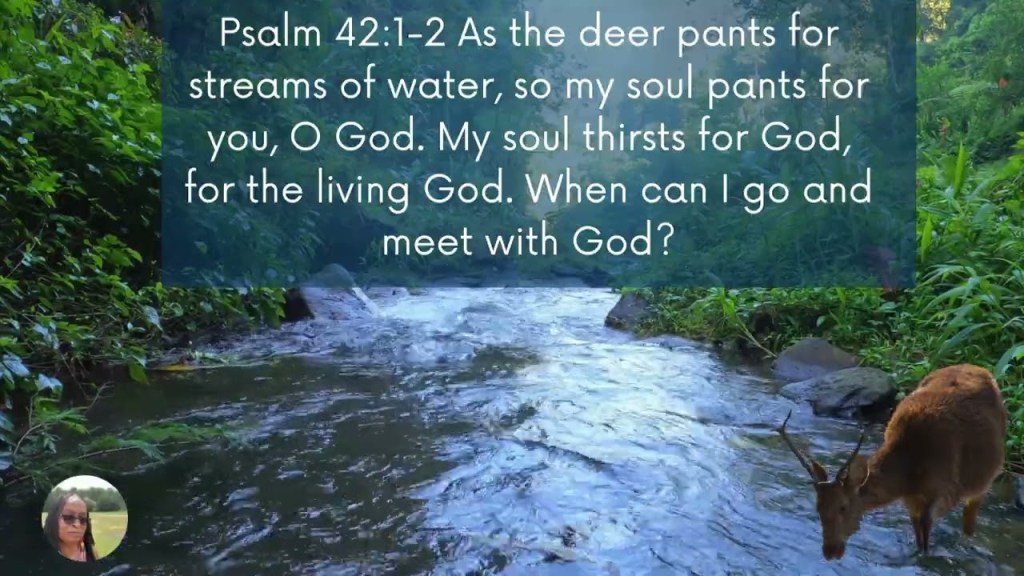
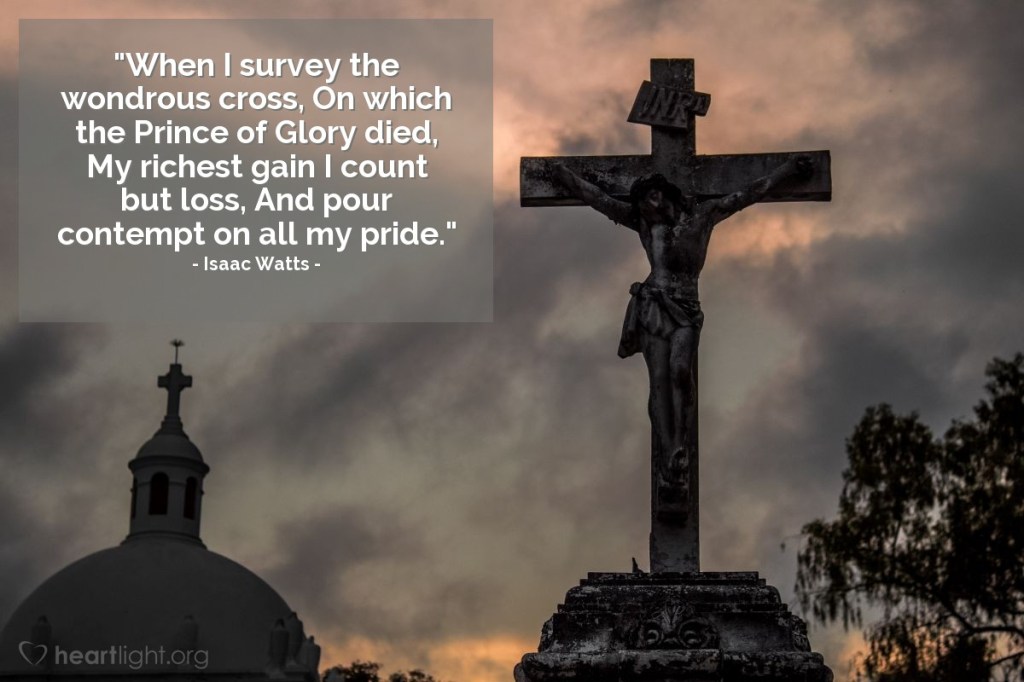

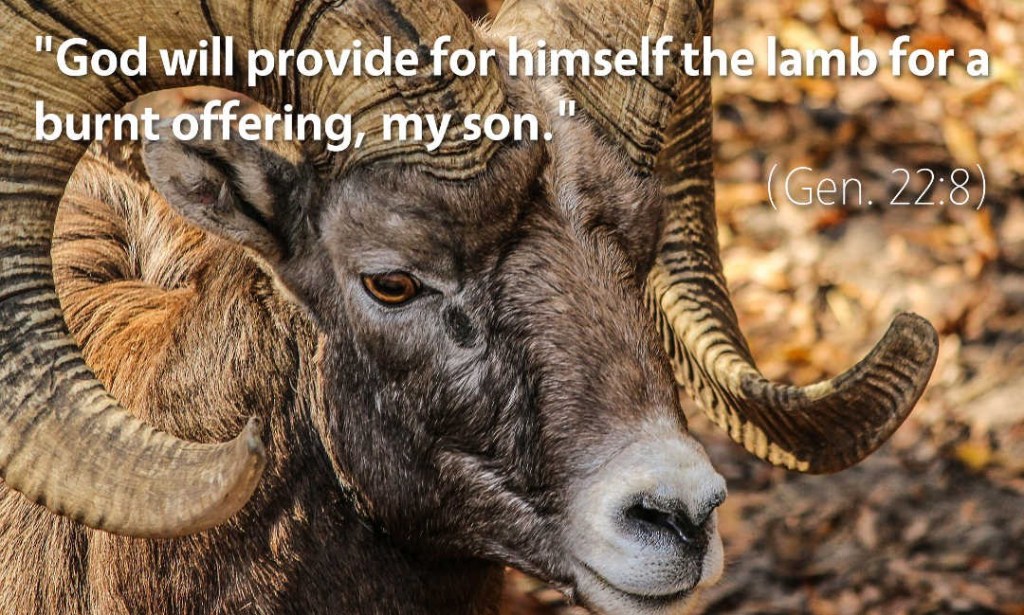

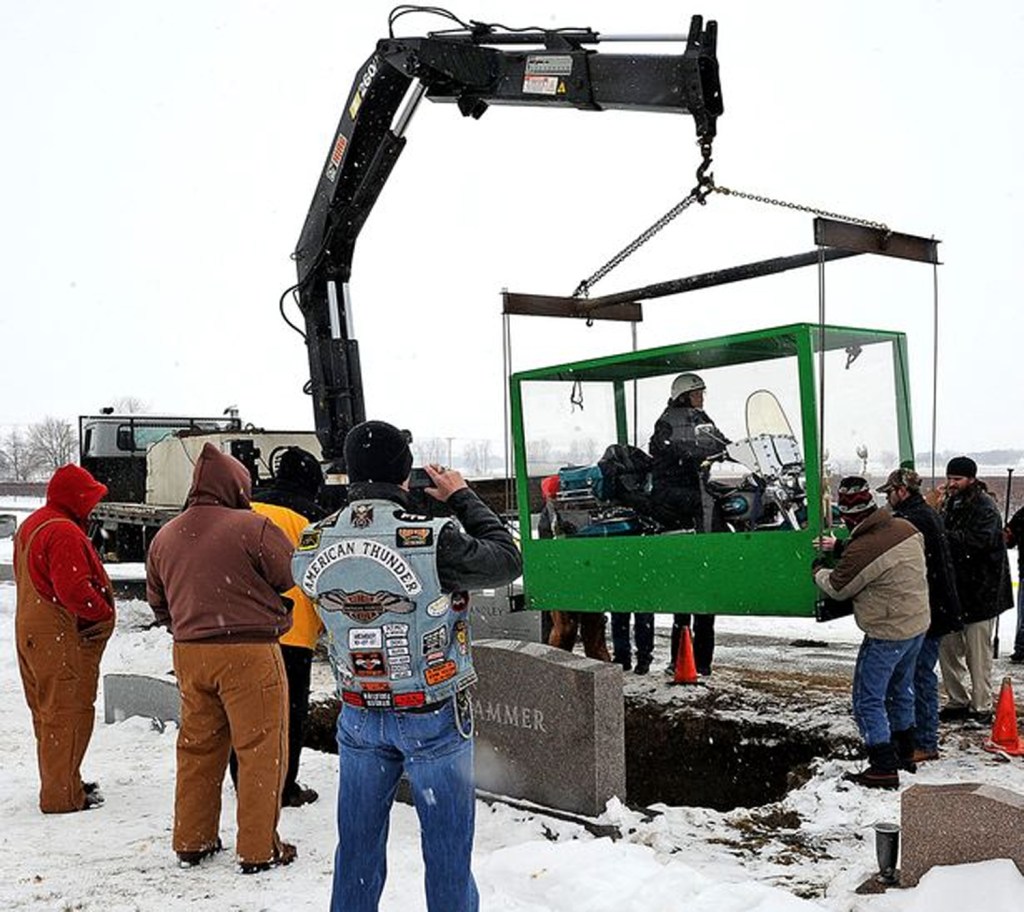


 Loving God, Living God, Loving Hope, Living Hope, Loving Living Life His Way! "Many things are possible for the person who has hope. Even more is possible for the person who has faith. And still more is possible for the person who knows how to love. But everything is possible for the person who practices all three virtues." - Brother Lawrence (1605-1691), Practicing the Presence of God (1692).