Romans 15:4 "For whatever was written in earlier times was written for our instruction, so that through perseverance and the encouragement of the Scriptures we might have hope."
14 Bless those who persecute,[a] bless and do not curse them. 15 Rejoice with those who rejoice; weep with those who weep. 16 Think the same thing toward one another; do not think arrogantly[b], but associate with the lowly. Do not be wise in your own sight[c]. 17 Pay back no one evil for evil. Take thought for what is good in the sight of all people. 18 If it is possible on your part, be at peace with all people. 19 Do not take revenge yourselves, dear friends, but give place to God’s wrath, for it is so written, “Vengeance is mine, I will repay,”[d] says the Lord.
Word of God for the Children of God
Glory be to the Father, and to the Son, and to the Holy Ghost; as it was in the beginning, is now, and ever shall be, world without end. Amen, amen.
It goes without saying that conflict is 100% an inevitable part of our lives, but as followers of Christ we are called to pursue peace and reconciliation.
In the midst of conflict, the Holy Scriptures do not hesitate to admonish us; we will always and forever posses the opportunity to be the first to set that conflict aside and so demonstrate God’s love and bring healing to broken relationships.
Psalm 139:23-24 Authorized (King James) Version
23 Search me, O God, and know my heart: try me, and know my thoughts: 24 and see if there be any wicked way in me, and lead me in the way everlasting.
When facing conflict, we should always begin by praying to God; examining our own hearts, weeding out our mess, seeking humility. We strive to understand the perspectives of others, to respond with kindness, empathy, and forgiveness. Our goal is not to win arguments but to build bridges and restore relationships.
The process of reconciliation requires patience, grace, and bring an authentic willingness to listen. We invite God to work in us and through us, enabling us to extend forgiveness and to seek restoration. As we yield to the Lord’s guidance, he empowers us to respond with love and wisdom.
In dealing with conflict, we must rely on the Holy Spirit to guide our words and actions. We pray for the courage and the strength to lay down our pride, extend forgiveness, and pursue peace. Through our peacemaking efforts, we reflect the character of Christ and become agents of his reconciliation in a broken world.
As Romans 12:18 writes, whenever and wherever possible we’re called by God to live at peace with everyone. This includes those you get along with and like, and with those you don’t. Does it mean that we endure abuse or abusive situations?
Absolutely not. But it does mean that we, first and foremost go unto the Lord in prayer and pursue professional help for these issues when they arise. You can still love your family from a distance and will still honor the Lord in doing so.
John 16:25-33 New Revised Standard Version Updated Edition
Peace for the Disciples
25 “I have said these things to you in figures of speech. The hour is coming when I will no longer speak to you in figures but will tell you plainly of the Father. 26 On that day you will ask in my name. I do not say to you that I will ask the Father on your behalf, 27 for the Father himself loves you because you have loved me and have believed that I came from God.[a]28 I came from the Father and have come into the world; again, I am leaving the world and am going to the Father.”
29 His disciples said, “Yes, now you are speaking plainly, not in any figure of speech! 30 Now we know that you know all things and do not need to have anyone question you; by this we believe that you came from God.” 31 Jesus answered them, “Do you now believe? 32 The hour is coming, indeed it has come, when you will be scattered, each one to his home, and you will leave me alone. Yet I am not alone because the Father is with me. 33 I have said this to you so that in me you may have peace. In the world you face persecution, but take courage: I have conquered the world!”
There is nothing to be ashamed of for acknowledging what you’re experiencing and seeking help. In fact, it’s exactly what the Lord would want us to do! And it’s a wonderful demonstration of the peace of God He asks us all to develop.
In the name of God, the Father and God the Son and God the Holy Spirit,
Praying …
Psalm 42 The Message
42 1-3 A white-tailed deer drinks from the creek; I want to drink God, deep drafts of God. I’m thirsty for God-alive. I wonder, “Will I ever make it— arrive and drink in God’s presence?” I’m on a diet of tears— tears for breakfast, tears for supper. All day long people knock at my door, Pestering, “Where is this God of yours?”
4 These are the things I go over and over, emptying out the pockets of my life. I was always at the head of the worshiping crowd, right out in front, Leading them all, eager to arrive and worship, Shouting praises, singing thanksgiving— celebrating, all of us, God’s feast!
5 Why are you down in the dumps, dear soul? Why are you crying the blues? Fix my eyes on God— soon I’ll be praising again. He puts a smile on my face. He’s my God.
6-8 When my soul is in the dumps, I rehearse everything I know of you, From Jordan depths to Hermon heights, including Mount Mizar. Chaos calls to chaos, to the tune of whitewater rapids. Your breaking surf, your thundering breakers crash and crush me. Then God promises to love me all day, sing songs all through the night! My life is God’s prayer.
9-10 Sometimes I ask God, my rock-solid God, “Why did you let me down? Why am I walking around in tears, harassed by enemies?” They’re out for the kill, these tormentors with their obscenities, Taunting day after day, “Where is this God of yours?”
11 Why are you down in the dumps, dear soul? Why are you crying the blues? Fix my eyes on God— soon I’ll be praising again. He puts a smile on my face. He’s my God.
Glory be to the Father, and to the Son, and to the Holy Ghost; as it was in the beginning, is now, and ever shall be, world without end. Amen, amen.

23 And when they[a] were released, they went to their own people and reported all that the chief priests and the elders had said to them. 24 And when they[b] heard it, [c] they lifted their voices with one mind to God and said, “Master, you are the one who made the heaven and the earth and the sea and all the things in them, 25 the one who said by the Holy Spirit through the mouth of our father David, your servant,
‘Why do the nations[d] rage, and the peoples conspire in vain? 26 The kings of the earth stood opposed, and the rulers assembled together at the same place, against the Lord and against his Christ.’[e]
27 For in truth both Herod and Pontius Pilate, together with the Gentiles and the peoples of Israel, assembled together in this city against your holy servant Jesus whom you anointed, 28 to do all that your hand and plan[f] had predestined to take place. 29 And now, Lord, concern yourself with their threats and grant your slaves to speak your message with all boldness, 30 as you extend your hand to heal and signs and wonders are performed through the name of your holy servant Jesus.” 31 And when[g] they had prayed, the place in which they were gathered was shaken, and they were all filled with the Holy Spirit and began to speak[h] the word[i] of God with boldness.
Word of God for the Children of God.
Glory be to the Father, and to the Son, and to the Holy Ghost; as it was in the beginning, is now, and ever shall be, world without end. Amen, amen.
Danger and threats come against people in many different ways. It can be from other people threatening someone or it can be just natural disasters occurring.
When a person’s life, a person’s life of faith and service is being threatened, people run to others scared; and race into hiding out of fear (1 Kings 19:1-8.)
Having the boldness to face (fight or flight) the mounting gravity of the danger is something that many people do not have.
Fear of dying or going against something larger and stronger, and experienced, than them overcomes their ability to face it.
Luke records in Acts 4:23-31 that when the church was being threatened with persecution, the people prayed to God to address the threats being presented and to give His people more boldness to be able to continue to speak His Word.
With the many threats of the religious rulers lingering over them, Peter and John return to their church family and report what has just happened. And in response to these threats, the community of believers prays together to God.
I am always struck by what they did not pray.
They did not ask God to bring destruction on the religious leaders.
They did not ask God to take them out of their time of trouble.
Instead, they prayed that God would consider the threats against them and enable them to speak with much more boldness. That prayer was specifically answered as the Holy Spirit filled them and the place they were in was shaken.
How could the believers come to pray such a prayer?
The prayer itself gives us the insight that they looked not just to the moment but also surveyed the history of God’s people.
They knew the promises and prophecies of God.
They placed their current situation within the setting of Scripture.
For us, that would be like having the Bible’s teachings in mind as we sift through the daily news.
What’s more, at the beginning of their prayer, the believers put all of their troubles and threats in perspective under the umbrella of God’s sovereignty.
They knew that God was still in control.
What they prayed was they would be able to keep being inspired, empowered, witnesses to the Sovereign Lord, who was still at work in the world he so loved.
The world hates God and anyone who has anything to do with Him. As a result, the world will do what it can to persecute believers in any way possible.
They want to stop all believers from spreading the truth about Jesus.
Inside the church, many people are praying and seeking God for many things.
Most common things being sought for are healing and provision in different ways for self and others.
Some will also pray for God to remove those who are evil and persecuting believers.
While all these types of prayers are good, very seldom do believers pray for boldness in the face of evil.
God has a plan for every believer to be His witness to this fallen world. No one can come to the Lord if no one is willing to speak the truth with boldness.
During times of trouble and hardship, the first thing believers should seek is for God to give them boldness to be His witness.
As one testifies for God, He will be able to do mighty miracles and touch the hearts of the lost.
Trouble is guaranteed to come your way, sometimes as a threat, other times just as difficulties. Facing all of those troubles can be scary and intimidating.
In a world where truth is often vigorously challenged and compromise feels easier, standing for hardcore true and iron clad biblical values requires courage, clarity, and deep reliance on the Holy Spirit.
Just like the early church, we are called to speak His truth—not arrogantly, but boldly and graciously (2 Timothy 2:14-19, 2 Timothy 3:10-17, Hebrews 4:12).
This devotional offers a prayer for those who want to be faithful in word and witness—unafraid to represent Christ in their homes, communities, culture.
Lord God, Thank You for the truth of Your Word that never changes. In a time when biblical truth is often opposed or misunderstood, I ask for boldness to stand for biblical values with both conviction and compassion. Help me not to be silent when I should speak. Let my words reflect Your wisdom and my actions reflect Your grace. When fear rises, remind me that I am not alone—
Your Spirit empowers and goes before me. Teach me to speak the truth in love. To hold fast to righteousness without becoming self-righteous. To represent You well in how I live, love, and lead.
Let me be like those in Acts 4:29 who prayed for boldness—not comfort—when faced with resistance. May my life point others directly to Jesus and stand firm in the foundation of Scripture. In Your mighty name, Amen.
Seek God’s boldness to stand up to those troubles and speak His Word. Jesus has already overcome the world and you have His strength to do the same. You have something the world will never have, the promise of salvation and eternal life.
In the name of God, the Father and God the Son and God the Holy Spirit …
84 How lovely are your dwelling places, O Yahweh of hosts! 2 My soul longs and even fails for the courtyards of Yahweh. My heart and flesh sing for joy to the living God. 3 Even a bird finds a home, and a swallow a nest for herself, where she may lay her young, near your altars, O Yahweh of hosts, my king and my God. 4 Blessed are those who dwell in your house;[b] they can ever praise you. Selah 5 Blessed is the man whose strength is in you; in their heart are the highways to Zion. 6 Passing through the Valley of Baca,[c] they make it a spring. The early rain covers it with blessings[d] as well. 7 They go from strength to strength, until each appears before God in Zion.[e] 8 O Yahweh, God of hosts, hear my prayer; give ear, O God of Jacob. Selah 9 Look at our shield, O God, and have regard for the face of your anointed one. 10 Because better is a day in your courtyards than a thousand elsewhere. I would rather be at the threshold of the house[f] of my God than to dwell in the tents of wickedness. 11 Because Yahweh God is a sun and a shield; Yahweh gives grace and honor. He does not withhold good from those who walk blamelessly. 12 O Yahweh of hosts, blessed is the man who trusts you.
Glory be to the Father, and to the Son, and to the Holy Ghost; as it was in the beginning, is now, and ever shall be, world without end. Amen, amen.
12 Remember also your Creator in the days of your youth, before the evil days come and the years approach when you will say, “I have no pleasure in them”; 2 before the sun and the light, the moon and the stars are darkened, and clouds return after the rain; 3 on the day that the watchmen of the house tremble, and strong men are bent over, the grinders stop working because they are few, and those who look through [a]windows grow [b]dim; 4 and the doors on the street are shut as the sound of the grinding mill is low, and one will arise at the sound of the bird, and all the daughters of song will [c]sing softly. 5 Furthermore, people are afraid of a high place and of terrors on the road; the almond tree blossoms, the grasshopper drags itself along, and the caper berry is ineffective. For man goes to his eternal home while the mourners move around in the street. 6 Remember your Creator before the silver cord is [d]broken and the golden bowl is crushed, the pitcher by the spring is shattered and the wheel at the cistern is crushed; 7 then the dust will return to the earth as it was, and the [e]spirit will return to God who gave it. 8 “Futility of futilities,” says the Preacher, “all is futility!”
Word of God for the Children of God
Glory be to the Father, and to the Son, and to the Holy Ghost; as it was in the beginning, is now, and ever shall be, world without end. Amen, amen.
Have you heard the term “silver cord” before?
Do you know where it comes from? It’s an interesting term to me because it’s unique. The phrase comes from one single place in history: Ecclesiastes 12:6-7: Amplified Bible
6 Earnestly remember your Creator before the silver cord [of life] is broken, or the golden bowl is crushed, or the pitcher at the fountain is shattered and the wheel at the cistern is crushed; 7 then the dust [out of which God made man’s body] will return to the earth as it was, and the spirit will return to God who gave it.
It doesn’t show up anywhere else in the Bible, and yet it’s the term used to describe many metaphysical studies today: the link between the body and the spirit. What does it mean? We can tell from the verses themselves that it’s being used poetically to describe the process of death. But why a silver cord?
E.W. Bullinger’s Companion Bible describes each of these elements via comparing them to actual body parts:
the silver cord: i.e. the spinal cord.
the golden bowl: i.e. the head, or skull.
pitcher: the failure of the heart.
Commentaries typically make similar assertions and leave it at that.
However, I think that this is too much of a scholarly explanation, and lacks the powerful, deeply poetic nuanced message of the divine Christ. There is much more to the silver cord due to the simple fact that it’s different from the rest.
Consider the following:
When a wheel is broken at a well, it is useless and everything stops. No water can come up, and everything falls down
When a pitcher shatters at the spring, the water falls down
When a golden bowl is broken, whatever it was holding falls down
When a silver cord is severed, one side stays up, and the other side falls down
Solomon said that the dust returns to the ground it came from, and the spirit returns to God who gave it.
The silver cord is the only item in the list that has two sides: it binds and it looses, one side goes away and the other side remains.
So we know that it is specifically focused on the connection between the body and the spirit.
But why is it silver?
Shouldn’t the spirit be more valuable than our bodies?
Why would a golden bowl be used to describe our body, when our spirit is eternal?
Since this term was invented by the culture of the time of Solomon, lets engage with his language and his culture.
Silver & the Appointed Time
The word “silver” used by Solomon in Hebrew is kesef (כֶּסֶף). This word is derived from the Assyrian word kaspu (ܟ݁ܶܣܦ݁ܳܐ), which means “pale metal.”
What makes this special is that there is another word in the Bible that shares this same root word. This word is keseh (כֶּסֶא), which means “full moon,” “pale moonlight,” or “appointed time.” Keseh is very unique, as it is a word that only occurs once in the entire Bible.
Where does it occur?
Proverbs 7:19-21 Lexham English Bible
19 For there is no man[a] in his home; he has gone on a long journey.[b] 20 The bag of money he took in his hand, for on the day of the full moon he will come home.” 21 She persuades him with the greatness of her teachings; with her smooth lips she compels him.
Depending on the translation you read, the highlighted words will say full moon, or appointed time.
This will depend on how a given translation treats literal word-for-word translation versus original author intent.
What if the woman’s husband came home early?
His appointed time would certainly have turned into an hour of reckoning.
We understand the literal word for “full moon” here to mean that it is the appointed time, or the hour of reckoning.
Passover, for example, always begins on the 15th day of the Hebrew month of Nisan, which lines up with the lunar cycle and guarantees that a full moon will be present every time.
Passover is a time to remember the hour of reckoning for Egypt, the appointed time when God would deliver his people from out of slavery. A full moon is highly significant in Jewish culture, and many other traditions surround it.
So, what does the connection between silver and the “appointed time” mean?
It helps us understand why the silver cord is not made out of gold.
Silver, a pale metal as the Assyrians would have described it, is a much smaller denomination of currency than gold.
Gold is something the average person at that time would have never touched.
Gold was used to fund wars, vast building projects, and to pay kings.
A debt of gold is especially burdensome, and Jesus compares the debt of sin owed unto God to ten thousand bags of gold:
Matthew 18:23-28 New International Version
23 “Therefore, the kingdom of heaven is like a king who wanted to settle accounts with his servants. 24 As he began the settlement, a man who owed him ten thousand bags of gold[a] was brought to him. 25 Since he was not able to pay, the master ordered that he and his wife and his children and all that he had be sold to repay the debt.
26 “At this the servant fell on his knees before him. ‘Be patient with me,’ he begged, ‘and I will pay back everything.’ 27 The servant’s master took pity on him, canceled the debt and let him go.
28 “But when that servant went out, he found one of his fellow servants who owed him a hundred silver coins.[b] He grabbed him and began to choke him. ‘Pay back what you owe me!’ he demanded.
Silver, on the other hand, is an order of magnitude lower in value than gold. See how the servant has other people owing him merely silver?
The difference is our debt of sin to God compared to our earthly debts with our neighbors.
Silver is of mortal concern, debts we make with one another on earth.
Silver is used to buy or rent smaller things, temporary things that come and go, like a field: Genesis 23:16
Or information: Matthew 26:15
Or people: Genesis 37:28
Silver is used to signify our fleeting life, a pale metal, a memorial for something greater. God used silver trumpets to call the Israelites during any possible time, even times when the moon wasn’t present: Numbers 10:1-2, Numbers 10:10
We see these silver trumpets foreshadowing the final return of Jesus, the day of highest reckoning, when the spirits of Christians are returned to God, and the silver cord is severed: Matthew 24:30-31
Concluding Thoughts …
Throughout scripture we see a pattern of silver being used to signify things that are borrowed, things that are temporarily in our possession.
While we live, our bodies and spirits are connected through the silver cord.
But we must remember God.
God gave the Israelites silver trumpets to be used as a memorial of all he has done for them, and to call them out of the wilderness. One day, Christians will be called with the same silver trumpets to return to God what is owned by God: our spirits. Our spirits belong to him, and will return to him when we die.
When the silver cord is severed, everything we owe to God will be reckoned.
Our bodies belong to the dust, and our spirits belong to God.
Remember that your life is borrowed from God.
We owe him an unsurmountable debt due to our sinful lives.
And yet, Jesus paid the same debt in the parable, ten thousand bags of gold, with his very life so that we could be free.
The silver cord serves as a reminder of who we as Christians belong to, how fleeting and how pale our lives and possessions are, and how we should be desperately, diligently forgiving those who are just as deeply indebted to us: Matthew 18:32-35
If you’re not sure where to begin with forgiving other people, Jesus gives us a simple answer: we should pray.
Pray and remember God before the silver cord is severed.
Matthew 6:9-15 New King James Version
9 In this manner, therefore, pray:
Our Father in heaven, Hallowed be Your name. 10 Your kingdom come. Your will be done On earth as it is in heaven. 11 Give us this day our daily bread. 12 And forgive us our debts, As we forgive our debtors. 13 And do not lead us into temptation, But deliver us from the evil one. [a]For Yours is the kingdom and the power and the glory forever. Amen.
14 “For if you forgive men their trespasses, your heavenly Father will also forgive you. 15 But if you do not forgive men their trespasses, neither will your Father forgive your trespasses.
Life is extremely fragile—the poetry written here by the author of Ecclesiastes is intended to demonstrate just how fragile it is.
It’s like a hanging lamp that is shattered as a result of just one little piece of the cord breaking.
Ecclesiastes 3:2 New King James Version
2 A time [a]to be born, And a time to die; A time to plant, And a time to pluck what is planted;
Our lives here are held by a very, very slender sliver thread.
God created, God Owns, God is, holding the knife blade … ready to sever at our appointed time established by God Himself.
Children of God get ready …
In the name of God, the Father and God the Son and God the Holy Spirit,
90 O Lord, you have been our help[b] in all generations.[c] 2 Before the mountains were born and you brought forth the earth and the world, even from everlasting to everlasting, you are God. 3 You return man to the dust, saying,[d] “Return, O sons of man.” 4 For a thousand years in your eyes are like yesterday when it passes, or like a watch in the night. 5 You sweep them away like a flood. They fall asleep.[e] In the morning they are like grass that sprouts anew. 6 In the morning it blossoms and sprouts anew; by evening it withers and dries up. 7 For we are brought to an end by your anger, and we hasten off[f] by your wrath. 8 You have put our iniquities before you, our hidden sins into the light of your countenance. 9 For all of our days dwindle away in your rage; we complete our years like a sigh. 10 As for the days of our years, within them are seventy years or if by strength eighty years, and their pride[g] is trouble and disaster, for it passes quickly and we fly away. 11 Who knows the strength of your anger, and your rage consistent with[h] the fear due you? 12 So teach us to number our days that we may gain a heart of wisdom. 13 Return,[i] O Yahweh. How long? And have compassion on[j] your servants. 14 Satisfy us in the morning with your loyal love, that we may sing for joy and be glad all our days. 15 Make us glad for as many days as you have afflicted us, for as many years as we have seen calamity. 16 Let your work be visible to your servants, and your majesty to their children. 17 And let the beauty of the Lord our God be upon us, and establish for us the work of our hands, yes, the work of our hands, establish it.
Glory be to the Father, and to the Son, and to the Holy Ghost; as it was in the beginning, is now, and ever shall be, world without end. Amen, amen.
1 Paul, a slave of Christ Jesus, called to be an apostle, set apart for the gospel of God, 2 which he promised previously through his prophets in the holy scriptures, 3 concerning his Son, who was born a descendant[a] of David according to the flesh, 4 who was declared Son of God in power according to the Holy Spirit[b] by the resurrection from the dead of Jesus Christ our Lord, 5 through whom we have received grace and apostleship for the obedience of faith among all the Gentiles[c] on behalf of his name, 6among whom you also are the called of Jesus Christ. 7 To all those in Rome who are loved by God, called to be saints. Grace to you and peace from God our Father and the Lord Jesus Christ.
Word of God for the Children of God
Glory be to the Father, and to the Son, and to the Holy Ghost; as it was in the beginning, is now, and ever shall be, world without end. Amen, amen.
We can become too familiar with some phrases in the Bible, like this one: “a servant of Christ.” When that happens, it’s easy not to pay much attention.
Eugene Petersen, in The Message, his contemporary language version of the Bible, treats those words this way: “I, Paul, am a devoted slave of Jesus Christ on assignment. . . .” That phrasing should definitely catch hold of our attention.
Calling himself a servant says something about Paul. He knew better than we do what servants were and how they fit into the culture of his time. But hearing Paul introduce himself as “a devoted slave on assignment” gives me pause too.
Paul wasn’t just a member in some new movement. He wasn’t just a theologian trying to make sense of new ideas he had come across. He wasn’t just a preacher or a teacher looking for any audience. Paul was a devoted slave of Someone who was not just anyone but the Lord of heaven and earth itself.
For a Roman citizen—which Paul was—to begin a letter to people in Rome that way,rightly demandsall our attention. Paul is unabashedly connected to Jesus— even enslaved to Him by the message of the Gospel. His opening identification highlights his intimate covenant relationship with Christ as Lord.
I now meditate, ponder upon; does that makes us ask, “How do I identify with Jesus?”—because that’s what the Christian faith is all about, first and foremost.
Truthfully, many factors contribute to the formation of our worldview. Our family background. The teaching we received. The community we experienced.
Our education. Our culture. Our media, our obsessive Social media usage and music. The people we admire. The experiences we survived. Each plays a role.
Ultimately, the book of Romans is about worldview.
It is a richly doctrinal letter to the Christians in Rome (mostly Gentiles), but also to us.
Throughout the letter, Paul explains what it means to be justified by faith and the transforming power of the gospel.
When carefully studied and prayerfully received, Romans can rightly anchor our worldview in the most important truths.
In today’s passage, Paul introduces himself by explaining his position and his purpose. Paul was a servant of Christ Jesus, “called to be an apostle” (v. 1).
The word called here iskletos, derived from kaleo.
God placed a special calling on Paul’s life when He appeared to him in a blinding light on the Damascus Road (Acts 9). As an apostle, Paul’s purpose would be to proclaim the gospel of God, the good news of redemption found only in Jesus.
In verses 2–4, Paul elaborates on the gospel message, which is rooted in the Old Testament prophets (v. 2). This good news is dependent on the identity of Jesus—who was both fully human (v. 3) and the divine, resurrected Son of God (v. 4).
Paul’s apostolic calling was not just for his own benefit (vv. 5–6).
Rather, he received this grace in order to directly call (kletos) the Gentiles to a relationship with Christ—
a life of obedience that grows out of faith (v. 5), a position of belonging (v. 6), a relationship of love, and the designation of “holy people” or “saints” (v. 7)—with all of the privileges and promises that God bestows upon His people.
Dare We To Go Deeper Yet?
Verses 5–7 help us understand the general call that Jesus extends to all who believe. If we are a devote Christ-follower, He calls us to that life of obedience, that position of belonging, that relationship of love, and designation of “saint.”
In the name of God, the Father and God the Son and God the Holy Spirit …
27 Yahweh is my light and my salvation; whom shall I fear? Yahweh is the refuge of my life; of whom shall I be afraid? 2 When evildoers drew near against me to eat my flesh— my adversaries and my enemies who drew near to me— they themselves stumbled and fell. 3 Though an army encamp against me, my heart will not fear. Though war arise against me, even in this I will remain confident. 4 One thing I have asked from Yahweh; it I will seek: that I may dwell in the house[b] of Yahweh all the days of my life, to behold the beauty of Yahweh, and to consider[c] his temple. 5 Because he will hide me in his shelter in the day of trouble. He will conceal me in the hiding place of his tent. He will set me high upon a rock. 6 And now my head will be high over my enemies round about me. And I will offer in his tent sacrifices with shouts of joy. I will sing, yes, I will sing praises to Yahweh. 7 Hear, O Yahweh, my voice when I call, and be gracious to me and answer me. 8 On your behalf my heart says, “Seek my face.” Your face, O Yahweh, I do seek. 9 Do not hide your face from me; do not turn your servant away in anger. You have been my help; do not abandon nor forsake me, O God of my salvation. 10 If my father or my mother forsake me, then Yahweh will receive me. 11 Teach me, O Yahweh, your way, and lead me on a level path because of my enemies. 12 Do not give me over to the desire of my enemies, because false witnesses have arisen against me, and each breathing out violence.[d] 13 Surely[e] I believe that I will see the goodness of Yahweh in the land of the living. 14 Wait for Yahweh. Be strong and let your heart show strength, and wait for Yahweh.
Glory be to the Father, and to the Son, and to the Holy Ghost; as it was in the beginning, is now, and ever shall be, world without end. Amen, amen.

15 Then Moses and the Israelites[a] sang this song to Yahweh, and they said,[b]
“Let me sing to Yahweh because he is highly exalted; the horse and its rider he hurled into the sea. 2 Yah[c] is my strength and song, and he has become my salvation;[d] this is my God, and I will praise him—the God of my father—and I will exalt him. 3 Yahweh is a man of war; Yahweh is his name. 4 The chariots of Pharaoh and his army he cast into the sea, and his choice adjutants were sunk in the Red Sea.[e] 5 The deep waters covered them; they went down into the depths like a stone. 6 Yahweh, your right hand is glorious in power; Yahweh, your right hand destroyed the enemy. 7 And in the greatness of your majesty you overthrew those standing up to you; you released your fierce anger, and it consumed them like stubble. 8 And by the breath of your nostrils waters were piled up; waves stood like a heap; deep waters in the middle of the sea congealed. 9 The enemy said, ‘I will pursue, I will overtake, I will divide plunder, my desire will be full of them, I will draw my sword, my hand will destroy them.’ 10 You blew with your breath; the sea covered them; they dropped like lead in the mighty waters. 11 Who is like you among the gods, Yahweh? Who is like you—glorious in holiness, awesome in praiseworthy actions, doing wonders?[f] 12 You stretched out your right hand; the earth swallowed them. 13 In your loyal love you led the people whom you redeemed; in your strength you guided them to the abode of your holiness.[g] 14 Peoples heard; they trembled; anguish seized the inhabitants of Philistia. 15 Then the chiefs of Edom were horrified; great distress seized the leaders of Moab; all of the inhabitants of Canaan melted away. 16 Terror and dread fell on them; at the greatness of your arm they became silent like the stone, until your people passed by, Yahweh, until the people whom you bought passed by. 17 You brought them and planted them on the mountain of your inheritance, a place you made for yourself to inhabit, Yahweh, a sanctuary, Lord, that your hands established. 18 Yahweh will reign as king forever and ever.”
Word of God for the Children of God
Glory be to the Father, and to the Son, and to the Holy Ghost; as it was in the beginning, is now, and ever shall be, world without end. Amen, amen.
Exodus 15 records for us a glorious song in which the Israelites praise God for their deliverance from Pharaoh’s army. This is a song about God’s miraculous deeds! A dozen times in the first 12 verses alone God’s authority is mentioned!
God, the Creator and Redeemer of this world, will always accomplish his goal to redeem his people and restore the world he has made for his glory. The song closes with these words: “The Lord reigns for ever and ever.”
Just as all the Israelites were slaves in Egypt, the Bible teaches us that we are all slaves to sin. “All have sinned and fall short of the glory of God” (Romans 3:23).
Yet today we have uncountable reason to sing! Savior Jesus Christ has delivered us from sin by his death on the cross and his resurrection from the dead.
We too should praise God for his deliverance.
We too would praise God for his deliverance if we were not so weary of all the hustle and bustle of just trying to barely survive our days without going crazy.
In times of uncertainty and struggle, it is often our faith that anchors us.
The ancient timeless words from Exodus 15:2, “The Lord is my strength and my song, And He has become my salvation; This is my God, and I will praise Him; My father’s God, and I will exalt Him,” resonate loudly and profoundly with those who find Shalom, solace healing and restorative power in their spiritual beliefs.
This verse is not merely a proclamation of faith but also a personal testament to God’s transformative presence in our lives.
The Lord as Our Strength
Life’s challenges can sometimes feel insurmountable.
During these moments, the idea of the Lord being our strength offers a truly powerful reminder of the spiritual resilience available to us.
For many believers, recognizing God as the only sure 100% reliable source of strength provides the courage needed to persevere, face hardships and the pray for the wisdom of God, patiently set sail in turbulence, navigate through them.
This humble acknowledgment of God’s support is not just about the absence of weakness but about the acknowledging the authority and the presence of, an everlasting God that 100% guides and sustains us through life’s various battles.
God, Our Song
Amid adversity, the notion of God as our “song” suggests a form of joyful expression, even in less than joyful circumstances.
This metaphor highlights how faith can infuse our lives with a sense of quiet harmony and optimism, echoing through our daily actions and interactions.
It’s about carrying a melody of hope that tunes out the thundering noise of fear and despair, helping us to focus on the steady rhythms of blessings and grace that surrounds us.
Salvation Comes
When the verse speaks of God becoming our salvation, it touches on the truly transformative journey from being lost to being saved, which every believer can appreciate.
Salvation here is both a rescue and a celebration, a fundamental change in how we perceive our existence and purpose.
It reaffirms our faith journey, marking not just a moment of rescue but an ongoing process of being continually saved from despair, doubt, and darkness.
A Personal and Ancestral Faith
Declaring “This is my God, and I will praise Him; My father’s God, and I will exalt Him,” strengthens the personal connection to faith, binding it with familial and ancestral ties.
This line does more than recount personal conviction; it recognizes a legacy of time honored beliefs passed down through generations.
It emphasizes the shared spiritual heritage and the collective memory of faith that shapes our own.
Exalting God
The act of exalting God encompasses both our private devotion and public declaration. It is an expression of utmost respect and reverence, recognizing God’s supreme role in our lives.
Through praise and exaltation, believers not only communicate their faith but also encourage others to reflect on the divine interventions that have shaped their own lives.
Exodus 15:2 encapsulates the essence of a profound spiritual declaration, one that has guided and uplifted countless souls across millennia.
It is a verse that serves as a reminder of God’s enduring presence in our lives, offering strength, joy, and salvation.
For believers, these words are a source of immense comfort and motivation, a call to embrace the divine support that weaves through the fabric of their daily existence.
As we reflect on this ancient passage, let it come to inspire us to carry forward with strength, song, and salvation, exalting our God through all seasons of life.
If we exalt, confess, Jesus Christ as our Savior, one day we will sing, along with all who have been redeemed, “the song of God’s servant Moses and the Lamb.” (Revelation 15:3).
What a day that will be when my Jesus I shall see …
In the name of God, the Father and God the Son and God the Holy Spirit,
Praying ….
Psalm 107 Lexham English Bible
Thanksgiving to Yahweh for His of Deliverance
107 Give thanks to Yahweh, for he is good, for his loyal love is forever. 2 Let the redeemed of Yahweh declare[a] it, those whom he has redeemed from the hand of the enemy 3 and gathered from the lands, from east and from west, from north and from south.[b] 4 They wandered in the wilderness, in a desert. They could find no way[c] to a city to inhabit. 5 Hungry and thirsty, their soul grew faint within them. 6 Then they cried out to Yahweh in their trouble. He delivered them from their distresses 7 and led them by a straight way to get to a city to inhabit. 8 Let them give thanks to Yahweh for his loyal love, and his wonderful deeds for the children of humankind, 9 for he satisfies the longing soul,[d] and the hungry soul he fills with good. 10 Those who sat in darkness and gloom, prisoners of misery and iron— 11 because they rebelled against the words of God and spurned the counsel of the Most High, 12 he therefore humbled their heart with trouble. They stumbled and there was no helper. 13 Then they called to Yahweh for help in their trouble; he saved them from their distresses. 14 He brought them out of darkness and gloom, and tore off their bonds. 15 Let them give thanks to Yahweh for his loyal love and his wonderful deeds for the children of humankind, 16 for he shatters the doors of bronze, and cuts through the bars of iron. 17 Fools, because of their rebellious way and their iniquities, were afflicted. 18 Their soul abhorred all food, and they approached the gates of death. 19 Then they called to Yahweh for help in their trouble. He saved them from their distresses. 20 He sent his word and healed them, and he delivered them from their pits.[e] 21 Let them give thanks to Yahweh for his loyal love, and his wonderful deeds for the children of humankind, 22 and let them offer sacrifices of thanksgiving, and tell of his works with rejoicing. 23 Those who went down to the sea into ships, doing business on the high seas,[f] 24 they saw the works of Yahweh, and his wonderful deeds in the deep. 25 For he spoke and raised up a stormy wind, and it whipped up its waves. 26 They rose to the heavens; they plunged to the depths. Their soul melted in their calamity. 27 They reeled and staggered like a drunkard, and they were at their wits’ end.[g] 28 Then they cried out to Yahweh in their trouble, and he brought them out of their distresses. 29 He made the storm be still and their waves became calm. 30 Then they were glad because they grew silent, so he guided them to their desired harbor. 31 Let them give thanks to Yahweh for his loyal love and his wonderful deeds for the children of humankind, 32 and let them exalt him in the congregation of the people, and praise him in the assembly of the elders. 33 He turns rivers into a wilderness and springs of water into thirsty ground, 34 a fruitful land into a salty place, because of the evil of its inhabitants. 35 He turns a wilderness into a pool of water and a dry land into springs of water. 36 And he settles the hungry there, so that they may establish a city to inhabit, 37 and sow fields and plant vineyards, that they may yield fruit at harvest.[h] 38 And he blesses them and they multiply greatly, and he does not let their cattle become few. 39 When they become few and they are bent down from the oppression of calamity and grief, 40 he pours contempt on princes and causes them to wander in a trackless waste. 41 But he protects[i] the needy from misery, and he makes their families like a flock. 42 The upright see it and are glad, and all wickedness shuts its mouth. 43 Whoever is wise, then let him observe these things, and let them consider Yahweh’s acts of loyal love.
Glory be to the Father, and to the Son, and to the Holy Ghost; as it was in the beginning, is now, and ever shall be, world without end. Amen, amen.
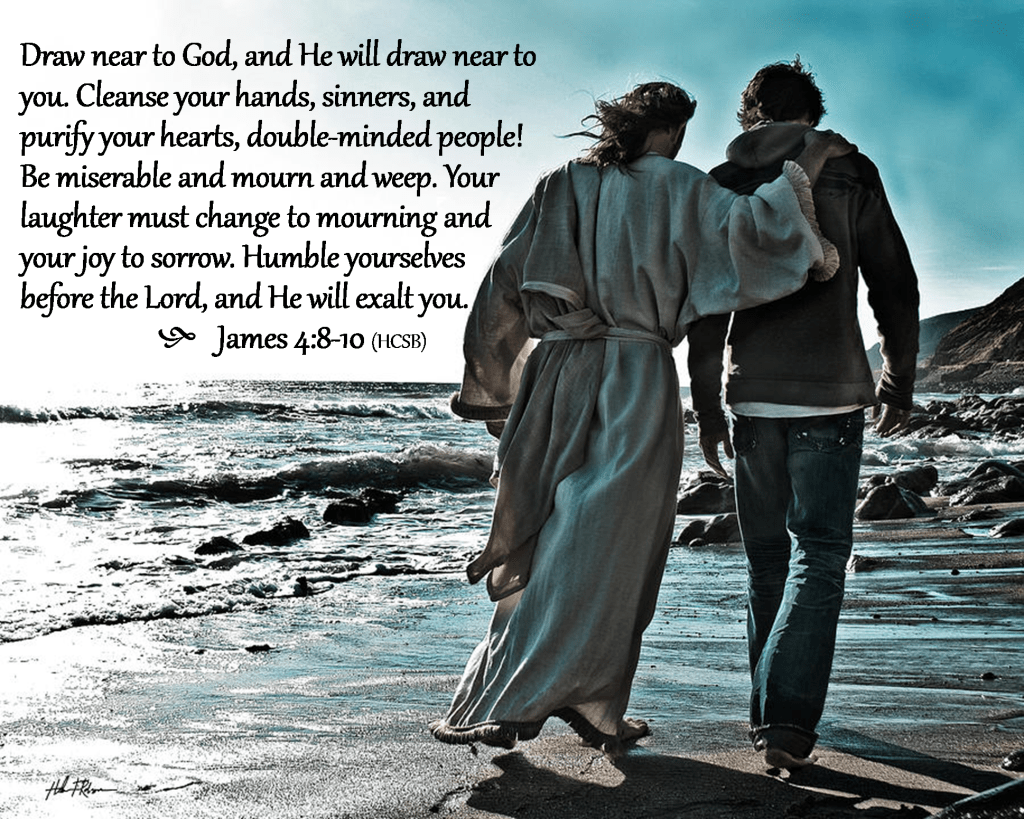
21 “Be reconciled with Him, and be at peace; Thereby good will come to you. 22 Please receive [a]instruction from His mouth, And put His words in your heart. 23 If you return to [b]the Almighty, you will be [c]restored; If you remove injustice far from your tent, 24 And put your [d]gold in the dust, And the gold of Ophir among the stones of the brooks, 25 Then [e]the Almighty will be your [f]gold And abundant silver to you.
Word of God for the Children of God
Glory be to the Father, and to the Son, and to the Holy Ghost; as it was in the beginning, is now, and ever shall be, world without end. Amen, amen.
These are the words of counsel from Eliphaz to his friend, Job during the worst possible time of his life. Job’s children were gone. His wealth gone. Everything God had blessed him with in his lifetime taken from him within a single day.
Even his own physical health compromised, I am quite certain that he was not looking for a long drawn out sermon but a bit of sympathy from his friends.
The story of Job is one, though hard to read and difficult to comprehend, is absolutely necessary to understand true submission to God.
“Submit to God and be at peace with Him.”
This may imply that Eliphaz had decided that Job must have sinned against God to invite such a magnitude of tragedy into his life.
From a human aspect – it would be the natural assumption.
However, his words I believe are led by the Holy Spirit and not his own intellect.
Submission to the Lord in all things will give us peace.
The Holy Spirit produces peace in our life as a fruit.
As our soul prospers so does our life, but I do not believe that God will allow us to prosper in this life if it compromises eternal life. “
“In this way prosperity will come to you.”
Everyone has a natural desire to prosper.
To see increase and live in abundance.
It is a common thread of commerce.
However, peace does not come from financial security but confident faith that there is more to life than this.
A place of eternal rest offered through Jesus Christ.
The Lord has given us His Spirit to produce the kinds of fruit that satisfies our soul and causes our heart and mind to prosper in God’s Word which is His Plan for us.
“Accept instruction from his mouth and lay up his words in your heart.”
I have studied the Word of God nearly every day for the last four years.
Each morning getting up early to read, study and meditate on it.
I want to extract every single truth, promise and blessing hidden within the pages of text.
I do not say this to boast but rather to share even though I have spent countless hours poring over the Word of God, I find new things every single day. It is life to my heart, mind, thoughts and soul. It is never old but always fresh and new.
Romans 10:2-4 (NIV) For I can testify about them that they are zealous for God, but their zeal is not based on knowledge. Since they did not know the righteousness of God and sought to establish their own, they did not submit to God’s righteousness. Christ is the culmination of the law so that there may be righteousness for everyone who believes.
Our zealousness and enthusiasm serving God must be based on His Word.
Faith comes by hearing and found in God’s Word.
We desire righteousness but do not fully understand what it entails.
Pride wants to earn it.
Somehow find a way to deserve the Grace of God.
It is impossible.
Yet still religiosity can interrupt our relationship when pride tells us – “I can do it.” The only way of reconciliation with God is through His Son, Jesus. Jesus is the Way, the Truth and the Life. No one can make it to God except through Him.
The Word made flesh to live among us is none other than Jesus.
I must submit to God’s Righteousness fully accepting His Grace in my many weaknesses. His Power is complete in my life when I do.
The story of Job depicts man’s struggle with pride.
Doing everything right cannot erase our sin or promote a relationship with God.
It is our thriving relationship with Jesus that gives us total access to God the Father and His Power in this life.
Divine discipline as recorded in Hebrews 12 is not in the form of punishment.
It is God’s Love at work in us to remove barriers of pride, fear, and insecurity that keep us from reconciling our life to God through His Son,
Jesus. It is always born of love, mercy and grace.
God cannot punish those who believe as it would be contrary to His Word.
God doesn’t take back His Promises but daily pursues us in order to bless us.
It is His Desire to give us the desires of our heart.
Misalignment spiritually creates conflict in our life. (James 4:1-6)
Our friendship with God makes us enemies of the world.
I want more of God’s Grace.
To have it means moving my life from this world to Kingdom living by constantly pursuing a relationship with God by way of accepting His Grace more and more which means I must decrease and He must increase in me.
Pride is crucified in this place and submission fully embraced as a way of life.
2 Corinthians 5:17-20 (NIV) Therefore, if anyone is in Christ, the new creation has come: The old has gone, the new is here! All this is from God, who reconciled us to himself through Christ and gave us the ministry of reconciliation: that God was reconciling the world to himself in Christ, not counting people’s sins against them. And he has committed to us the message of reconciliation.We are therefore Christ’s ambassadors, as though God were making his appeal through us. We implore you on Christ’s behalf: Be reconciled to God.
To be reconciled with God is to live at peace with Him.
Submission to God comes in the form of acceptance of His Grace as enough for my life. His Power is manifested in my weakness and my inability to accomplish anything of worth outside of my deep abiding relationship with Jesus Christ.
I must become a new creation.
Pride must be executed so the fulfillment of His Purpose can be accomplished in me. I must learn to submit. Humbling myself before the Lord and other people.
God has a plan containing a future and hope that oversteps death into eternity.
By faith, I can achieve it.
I must understand my place as a participant in this process.
I must humble myself before the Lord which means also extending it to other people.
“Submit to God and be at peace with Him” is not any kind of threat or form of punishment.
It is an invitation. Like a wedding invitation all in white tied with a scarlet bow, bidding us to come and participate in the single greatest love story ever written.
To be His Bride.
To await His Coming with real enthusiasm not overrated zeal.
His Word gives us the opportunity to know Him.
His Spirit is the intimate consummation of His Betrothal.
We have a promise, not only of a fantastic future, but blessings for the land of the living.
Pride will never exalt us to the level of confirmation that humility born of absolute trust in the Living God allows. It is the destruction of the platform of pride that spiritual elevation takes to the new levels and life intended by God.
I must live in Christ to find them. He must increase and I must decrease. I must live at peace with God in Christ Jesus to reach my full potential. Sometimes it is the moment when all we have is the Lord, that we find He is all we ever need.
Colossians 1:19-20 (NIV) For God was pleased to have all his fullness dwell in him, and through him to reconcile to himself all things, whether things on earth or things in heaven, by making peace through his blood, shed on the cross.
In the name of God, the Father and God the Son and God the Holy Spirit,
Praying …
Psalm 23
A Psalm of David.
1 The Lord is my shepherd; I shall not want. 2 He maketh me to lie down in green pastures: he leadeth me beside the still waters. 3 He restoreth my soul: he leadeth me in the paths of righteousness for his name’s sake. 4 Yea, though I walk through the valley of the shadow of death, I will fear no evil: for thou art with me; thy rod and thy staff they comfort me. 5 Thou preparest a table before me in the presence of mine enemies: thou anointest my head with oil; my cup runneth over. 6 Surely goodness and mercy shall follow me all the days of my life: and I will dwell in the house of the Lord for ever.
Glory be to the Father, and to the Son, and to the Holy Ghost; as it was in the beginning, is now, and ever shall be, world without end. Amen, amen.

28 And Peter answered him and[a] said, “Lord, if it is you,[b] command me to come to you on the water!” 29 So he said, “Come!” And getting out of the boat, Peter walked on the water and came toward Jesus. 30 But when he[c] saw the strong wind, he was afraid. And beginning to sink, he cried out, saying, “Lord, save me!” 31 And immediately Jesus extended his[d] hand and[e] caught him and said to him, “You of little faith! Why did you doubt?” 32 And when[f] they got into the boat, the wind abated.
Word of God for the Children of God
Glory be to the Father, and to the Son, and to the Holy Ghost; as it was in the beginning, is now, and ever shall be, world without end. Amen, amen.
What is the craziest thing you have ever done, were dared to do?
I could mention a few things from my younger days, but let’s just leave that to the imagination.
How about in your life of faith?
What is the craziest thing God has ever challenged you to do?
Were you up for the challenge, or did you hear excuses in your head about why you couldn’t possibly try?
Did you jump in with both feet and find, to your surprise, that maybe it wasn’t so impossible after all?
I wonder how big the smile was on Jesus’ face when Peter said, “Lord, if it’s you . . . tell me to come to you on the water.”
I love it that Peter was ready to jump in, test his faith even when things looked impossible. He stepped out of the boat looking at Jesus. And as long as he kept his eyes on Jesus, his steps went in the right direction.
Even with little faith, his walk on water was possible.
But when Peter looked around him and saw the wind and deep water, he became afraid, doubted his judgment, and started to sink.
When Jesus asks for our trust, he knows there is always going to be a bigger story to be written.
There are days when circumstances muddy the waters and the trust factor diminishes and we cannot figure out what those ‘first’ next steps should be.
Many people get discouraged by the devastation evident in the world.
Today, we can easily turn on the news and learn about wars, natural disasters, murders, and injustices.
When we see these examples of evil and suffering, doubts can form in our minds.
Why would God allow such terrible things to happen?
What is He doing about these problems?
What is He doing to do about these problems?
Widespread suffering is not the only cause for doubt.
We can also struggle with questions of “why” when disaster, loss, and illness strike close to home.
If we get diagnosed with a long-term illness or a loved one dies, we can feel angry with God.
In our pain and doubt, we start to question the Lord’s loving character.
Nonbelievers and believers alike can struggle with seasons of doubt.
As much as these times can make people feel like everything they know has been tossed like a salad made for serving thousands, leaving them confused and questioning, seasons of doubting are also opportunities for growth, to shed the assumptions and false views we once held.
These are God opportunities to seek the truth, to learn more about God and experience His love.
Doubt is, without question uncomfortable, but God can transform it, like anything else, for our good (Romans 8:28).
If your heart is blocked by doubt, there are ways to move forward.
Consider implementing these five steps to address doubts.
1. Talk to God about Your Struggle with Doubt
Praying is often not on the top of the list for those who are wrestling with doubts. They may feel resentment or bitterness toward God. Some could also feel ashamed of their doubt, assume the Lord does not want to hear from them.
But talking to God is what we should be doing when we are struggling with different feelings and questions about faith. He is not afraid of our doubts or tough questions. Instead of giving the Lord the silent treatment, we need to “gird our loins” and take time to pray when our heart is blocked by doubt.
Scripture shows us many examples of this, especially in the Psalms. David and other psalmists cried out to the Lord, sometimes in sorrow, pain, or anger.
Consider Psalm 10, in which the psalmist asks God, “Why, Lord, do you stand far off? Why do you hide yourself in times of trouble?” (Psalm 10:1).
Or consider the prayer of Heman the Ezrahite, “Why, Lord, do you reject me and hide your face from me?” (Psalm 88:14).
These individuals took their questions, emotions, and struggles to the Lord in pleas and prayers. He inspired these prayers and preserved them in His Word.
We also have the example of the man with the demon-possessed son in the Gospels. He wanted his son to be freed from the oppression of the evil spirit.
Yet, his faith was not overly strong. He told the Lord Jesus, “But if you can do anything, take pity on us and help us” (Mark 9:22, my emphasis added).
Christ affirmed that anything is possible for the one who believes (Mark 9:23).
At this, the man cried out, “I do believe; help me overcome my unbelief!” (Mark 9:24).
Like this man, and the psalmists, we can cry out to God, asking Him to help us with our unbelief and doubts.
None of us are immune to questions, not even believers.
Therefore, praying is not reserved only for when we feel joyful and filled with strong faith.
It also for when we are tired, weak, and doubting.
2. Reflect on What the Bible Says about the Lord’s Character
Although we can have questions about many things in life, the main doubts that people experience are centered on the Lord.
Individuals look at all the evil in the world, and the suffering in their lives, and they want to know why God would allow these things to happen.
If God is all-powerful, then why does He not stop the evil?
And if He is good, then why do people suffer?
The character of God is brought into question.
This is why we should use this opportunity to examine what we believe about God and what the Bible teaches.
Lots of people have faulty assumptions and beliefs, some of which could even have been passed onto them by a church or pastor.
Such views should be questioned and brought into scrutiny – to compare the view with God’s Word.
Asking these questions about evil, suffering, and the goodness of God, then, gives us a chance to delve deeper into the truth of the Bible.
For example, some Christian circles commonly teach that the Lord gives a good life to those who serve Him but punishes those who do wrong with suffering.
The ideology is: “If you do what is right, you will experience a good life. But whenever you sin, God will punish you.”
Of course, in this sense, “good” is usually defined by worldly standards as having wealth and a comfortable life.
The Lord, thus, is presented as a doting grandfather figure who has a vengeful streak.
Another way that people often depict God is some sort of monster – delighting in inflicting pain.
Some churches emphasize rule-keeping and fear of God so much that they distort His biblical character.
People see a God of wrath who does not care about a person’s suffering and has probably sent it because he or she is not checking off religious lists well enough.
Questioning views like this is actually something we should do.
Scripture presents a much different view of God than these two examples.
He is not a God who sends suffering or delights in evil.
He is the Lord who made all things good in the beginning – it was humankind who sinned and brought sin and death into the world.
In the Lord’s compassion and mercy, He made a promise to provide a solution and heal our brokenness (Genesis 3:15).
This He did by sending His Son into the world (John 3:16; Romans 5:8).
As fully God and fully man, Jesus came to save us from sin and death by dying for our sins.
The cross and empty tomb are the answer to the problem of evil and suffering.
God is not a doting, vengeful grandfather or a monster.
He is the loving, merciful, just, holy, death-defeating Savior who loved us and gave Himself for us.
We might still have questions about what we see in the world.
However, the reminder that God is good, loving, and has taken action to save us is comforting and encouraging in a season of doubt.
Perhaps today is a day to refocus where you are looking.
How can you more adeptly keep your eyes on Jesus?
3. Study Areas of God’s Word That Address Questions and Doubts
When individuals are facing difficulties with their faith, it is common for them to avoid reading the Bible, just as they often stop praying.
But like talking to God, we need to listen to Him by reading His Word. For there are many areas in Scripture that address questions and doubts.
One such area, which has already been mentioned, is the Psalms.
During a season of asking “why,” the Psalms give us relatable prayers that can comfort us.
We may even find ourselves praying a psalm regularly, or gleaning strength from specific passages.
Psalm 77 can offer us a place to start, in which we read about Asaph crying out to God in distress. He was honest about his pain, but also directed his thoughts back to God to remember all that the Lord had done in the past.
After asking multiple questions, he said, “I will remember the deeds of the Lord; yes, I will remember your miracles of long ago” (Psalm 77:11).
Choosing to dwell on what God did in the past strengthened Asaph’s faith, and it can strengthen ours.
Another area of the Bible to study when doubt overwhelms us is the book of Job.
Evident in Job’s story is the theme of evil and suffering as we read about Satan causing the loss of Job’s servants and livestock (Job 1:13-17), the death of his children (Job 1:18-19), and his struggle with painful sores (Job 2:7).
Throughout the book, we read various explanations about his suffering that are presented by his friends – the main one being that Job had sinned which is why he encountered trouble in life (Job 4:7-9).
Yet, the book emphasizes that Job had not sinned against the Lord (Job 1:8, 22; 2:10). As we read this biblical account, we are shown that sometimes in life, we will not fully understand why things happen to us. But one thing we can know – The Lord is a powerful, awesome, and good God (Job 38-41).
These books of the Bible, and many others, can help us when our faith feels small, or we have questions for God.
4. Don’t Be Afraid to Ask Questions and Seek the Truth
During the times we doubt God’s goodness or have questions of “why” swirling in our heads, we can allow these feelings to push us to seek truth.
So many of us can fear asking questions about faith or examining our beliefs.
We are afraid that doing so is wrong.
But if we ignore these areas and trudge on, not building our faith on a solid base, then when another cat. 5 storm in life comes, we will likely find greater destruction in its wake.
Instead of shoving questions and doubts aside, we need to acknowledge them and commit ourselves to finding the truth. Jesus encouraged us that those who seek will find (Matthew 7:7-8).
Experiencing doubts is an opportunity for us to cut away unbiblical ideas and reframe our thinking according to the truth of God’s Word.
Thankfully, there are tools we can use as we take the brave step to ask questions and seek answers.
Numerous apologetic materials exist that cover a variety of topics. Whether we have questions about creation/evolution, the problem of evil and suffering, the reliability of Scripture, or the historicity of Jesus’ ministry, among others, we can find sources that help us study these issues from a biblical viewpoint.
Of course, we should not limit ourselves to only scholarly materials, like textbooks. Many people find creative works, such as fiction and poetry, to be just as faith-building as academically intense books or lectures.
C. S. Lewis credited imagination and works of literature, especially Phantastes by George MacDonald, as part of his faith journey toward placing faith in Christ.
Similarly, author Sarah Clarkson has noted how The Lord of the Rings saved her faith when she faced a diagnosis of OCD, struggled with disillusionment with the church and God.
As she stated in this same interview for Word on Fire, “Such novels teach us to look beyond the evil and anger, the grief and despair of the broken world.”
Whether scholarly-based, creative, or a combination of both, God can use many different sources to bolster our faith in Him.
5. Stay Connected to Other Believers
Finally, when we find ourselves flailing with unbelief, we need connection to other believers.
Multiple passages in Scripture encourage the church to strengthen the spiritually weak (James 5:14-16; 1 Thessalonians 5:14).
We should not take this term (spiritually weak) negatively, as if we have a fault.
Rather, we can be grateful that provision has been provided.
The Lord included these instructions in Scripture because He knows there are times when we will struggle with faith.
In His grace, He provides the company of other believers to strengthen and encourage us.
Specifically, we can benefit from sharing our questions and concerns with a trustworthy, mature follower of Christ.
He or she has walked through similar times of doubts and can share insights and suggestions – or perhaps just a listening ear and loving presence.
Although friends and family members may be available to talk with, the perspective of a mature Christian can inspire and challenge us in healthy ways.
He or she will listen to our doubts, but also ask thought-provoking questions, confront faulty assumptions.
Such a relationship is truly an iron-sharpening one (Proverbs 27:17).
Having a Christian mentor come alongside us when our heart is blocked by doubt can remind us there is hope.
We do not have to be alone as we ask difficult, yet important questions or as we seek biblical truth.
In the name of God, the Father and God the Son and God the Holy Spirit …
13 How long, O Yahweh? Will you forget me forever? How long will you hide your face from me? 2 How long must I take counsel[b] in my soul, and sorrow in my heart all the day? How long will my enemy be exalted over me? 3 Consider[c] and answer me, O Yahweh my God. Give light to my eyes lest I sleep the sleep of death, 4 and lest my enemy should say, “I have overcome him,” lest my enemies rejoice because I am shaken. 5 But as for me, I have trusted in your steadfast love.[d] My heart will rejoice in your deliverance. 6 [e] I will sing to Yahweh because he has dealt bountifully with me.
Glory be to the Father, and to the Son, and to the Holy Ghost; as it was in the beginning, is now, and ever shall be, world without end. Amen, amen.
8 1-4 Now, friends, I want to report on the surprising and generous ways in which God is working in the churches in Macedonia province. Fierce troubles came down on the people of those churches, pushing them to the very limit. The trial exposed their true colors: They were incredibly happy, though desperately poor. The pressure triggered something totally unexpected: an outpouring of pure and generous gifts. I was there and saw it for myself. They gave offerings of whatever they could—far more than they could afford!—pleading for the privilege of helping out in the relief of poor Christians.
Word of God for the Children of God
Glory be to the Father, and to the Son, and to the Holy Ghost; as it was in the beginning, is now, and ever shall be, world without end. Amen, amen.

Are you a person who plans and saves and strategizes for your retirement years?
It seems most people will take the time to invest in their long term future on earth yet give little thought or consideration to investing in their eternal home.
Our retirement years are few, but our eternity is a much, much longer time.
It would be prudent of us to have an eternal perspective and invest into your life beyond this short term temporal existence.
The most important investment we can make into heaven is to bring people with us. There is nothing we take to heaven when we die except other people.
Jesus said, “There is joy in the presence of the angels of God over one sinner that repents” (Luke 15:10).
Do we live our lives with the understanding that every soul is precious to God?
Jesus stated that if a man has one hundred sheep, and one goes astray, He will go after the one and rejoice much when the one is found.
Jesus went on to say in Matthew 18:14, “Even so it is not the will of your Father which is in heaven, that one of these little ones should perish.”
He was showing the importance of even one person being saved.
It takes effort to share the gospel with others but Proverbs 11:30 says, “He that wins souls is wise.”
The Bible actually says we are wise when we win people to Christ!
God wants us to have His perspective and His heart for others, try to influence as many people as possible for the kingdom. One of the ways we can naturally be a good witness for Jesus is to be aware of how we represent Him on our jobs.
Jesus said, “Let your light so shine before men, that they may see your good works, and glorify your Father which is in heaven” (Matt. 5:16).
If you want to be a witness to your employer, employees, put in extra effort every day. Show up on time, refrain from negative talk and grumbling, and do your job with excellence. When the opportunity arises to share your faith, your witness in front of other will win you their respect and their attention.
It’s unfortunate that it often takes a tragedy, a severe illness or a catastrophic event to have a conversation with someone about God and the afterlife. How wonderful it would be to see far more people live their lives with the hope and joy of Jesus in their lifetime, and not just when their life is near its end.
Do you believe that having a discussion about God will be uncomfortable and possibly produce some difficult questions?
If you said yes, you are right.
However, in your procrastination, you may miss the only opportunity to have a conversation with someone before it is too late. Would the potential discomfort be worth it if that person found their way to heaven? Of course, it would.
When a person does not know Jesus, there is usually an overwhelming fear that comes as their days draw near to the end.
I have personally observed this so many times in visiting people in the hospital.
They are suddenly ready to listen and be open to the truth.
That can be the only time someone is willing to talk about heaven.
If you are ever faced with this situation, with someone you care about, do not miss the opportunity to share the Gospel with them.
You can help someone find peace with God. You can lead someone to full assurance of salvation and confidence of an eternal home in heaven.
The question is, Are we spiritually astute enough to see this time as a time of eternal opportunity? The stakes are high. The eternal destinies of multitudes at stake.
Every player is needed. We are in the army of God! We do not want to miss the opportunities to be low-profile, high-impact players on the King’s Team. We are hard playing for imperishable crowns to bring glory to the King of Kings.
How indescribably beautiful and so immeasurably valuable it is to wonder how beautiful God is, make investments in eternity by changing the life of another!
In the name of God, the Father and God the Son and God the Holy Spirit,
Praying …
Psalm 19 The Message
19 1-2 God’s glory is on tour in the skies, God-craft on exhibit across the horizon. Madame Day holds classes every morning, Professor Night lectures each evening.
3-4 Their words aren’t heard, their voices aren’t recorded, But their silence fills the earth: unspoken truth is spoken everywhere.
4-5 God makes a huge dome for the sun—a superdome! The morning sun’s a new husband leaping from his honeymoon bed, The daybreaking sun an athlete racing to the tape.
6 That’s how God’s Word vaults across the skies from sunrise to sunset, Melting ice, scorching deserts, warming hearts to faith.
7-9 The revelation of God is whole and pulls our lives together. The signposts of God are clear and point out the right road. The life-maps of God are right, showing the way to joy. The directions of God are plain and easy on the eyes. God’s reputation is twenty-four-carat gold, with a lifetime guarantee. The decisions of God are accurate down to the nth degree.
10 God’s Word is better than a diamond, better than a diamond set between emeralds. You’ll like it better than strawberries in spring, better than red, ripe strawberries.
11-14 There’s more: God’s Word warns us of danger and directs us to hidden treasure. Otherwise how will we find our way? Or know when we play the fool? Clean the slate, God, so we can start the day fresh! Keep me from stupid sins, from thinking I can take over your work; Then I can start this day sun-washed, scrubbed clean of the grime of sin. These are the words in my mouth; these are what I chew on and pray. Accept them when I place them on the morning altar, O God, my Altar-Rock, God, Priest-of-My-Altar.
Glory be to the Father, and to the Son, and to the Holy Ghost; as it was in the beginning, is now, and ever shall be, world without end. Amen, amen.
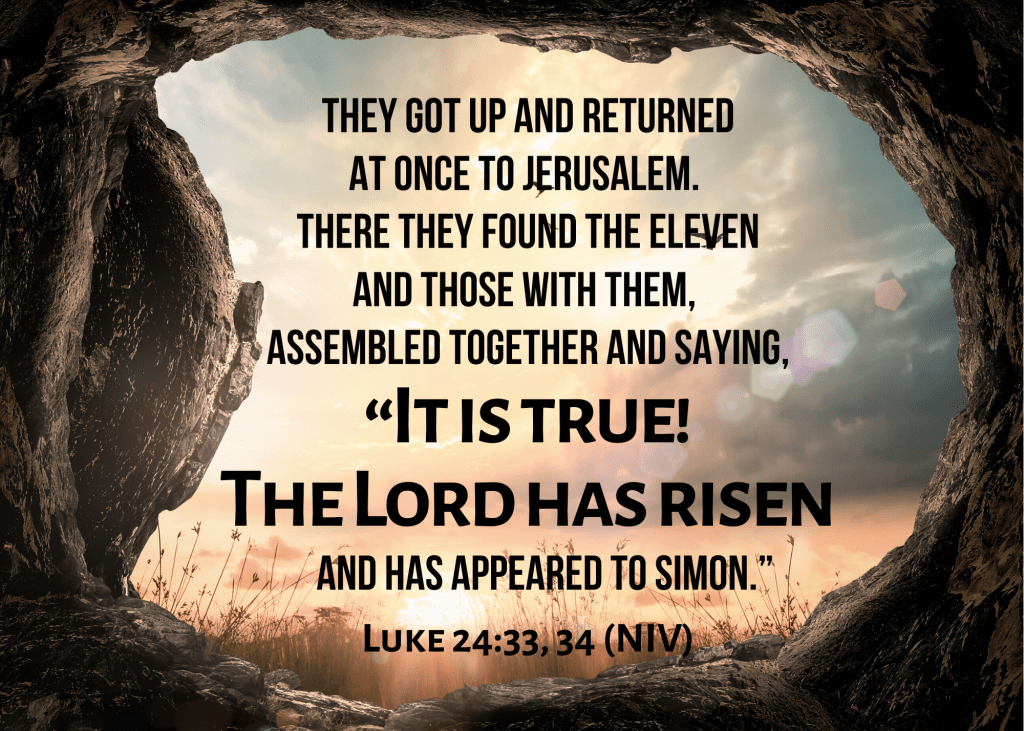
12 Therefore, since[a] we also have such a great cloud of witnesses surrounding us, putting aside every weight and the sin that so easily ensnares us[b], let us run with patient endurance the race that has been set before us, 2 fixing our eyes on Jesus, the originator and perfecter of faith, who for the joy that was set before him endured the cross, disregarding the shame, and has sat down at the right hand of the throne of God. 3 For consider the one who endured such hostility by sinners against himself,[c] so that you will not grow weary in your souls and give up.
Word of God for the Children of God
Glory be to the Father, and to the Son, and to the Holy Ghost; as it was in the beginning, is now, and ever shall be, world without end. Amen, amen.

How many crosses do you own?
Where are they, and in what style? Writing and recording this today, I could see several crosses around me. There is the cross I wear around my neck and the wooded one around my neck; I also have a wonderfully hand-crafted cross of nails hanging on my wall. These crosses are all simple, artistic and beautiful.
Such majestic representations of the cross pair well with the regal language we use to describe it.
We may speak about the victory we received or how the simple cross testifies to salvation, love, and forgiveness.
We might sing about the Old Rugged Cross and cherish it deeply.
A favorite hymn of my church growing up described the cross as erected on “some green hill far away outside the city wall.”
It all seems quite regal, quaint, and nostalgic, doesn’t it?
Don’t get me wrong—there is truth in all of this. The cross is a moment of victory, and love and forgiveness coming our way because of it. But there is a deeper too often overlooked truth we must remember: Jesus’s cross was ugly.
Jesus did not die upon some majestic religious symbol.
In the ancient world, the cross was a brutal execution tool, reserved for those deemed unworthy of respect or dignity.
Written in Roman law was the decree that no Roman citizen could be killed on the cross.
The cross was reserved for the worst of the worst, declaring them less than nothing.
The reason why Jesus died on the “green hill far away outside the city wall” wasn’t because this was a place of scenic beauty; no, it was a place wherein the crucified could be mocked. It was the place of the skull, signifying how cut off the crucified was from all life, love, and relationships, and provision for life.
When Jesus hung upon the cross, those standing by Jesus didn’t muse about the love of God; they mocked him.
They derided him.
They insulted him. “You who could save others, save yourself!” they jeer.
“Come down from the cross, if you can,” they cry. And that grand sign above Jesus, “This is the King of the Jews,” was not written as some statement of faith. This was Pilate declaring defeat over any would-be Israelite King.
No. Jesus didn’t take on that which was beautiful or majestic, as if it were something easy and dignified. He endured the cross, taking on its shame.
On the cross, Jesus took upon himself everything that makes us squirm, recoil, and feel uncomfortable.
But it was this that testifies to who Jesus is.
Intersecting Faith and Life
Jesus shows his true nature; reveals his fullness as the Messiah, the Savior, the Lord of all, not because he escapes the cross, nor transforms it into some easy, much desirable symbol.
No, He proves who he is, the salvation he brings by hanging there and taking upon himself not an easy or beautiful cross but of derision, mockery, shame.
Jesus scorns all that the cross represents; he shows that he is the pioneer and perfecter of our faith precisely because he understands this is the will of His Father God, obediently endures the cross, takes it on, and does not forsake it.
The cross, therefore, is the symbol of faith precisely because it is ugly, extreme, and a symbol of shame, abandonment, and derision.
The cross represents everything not beautiful, majestic, nor surrounded by pleasantry and Ease.
It symbolizes faith because it is into that place that Jesus entered.
it is into that place we all must enter and utterly embrace and own the moment.
So, as you think about the cross, dare to take a moment and be uncomfortable today. Dare to be affected. Dare to recognize the very scorn and derision that Jesus felt as he hung brutally beaten and bloodied, dying on the cross for you.
And allow that fact to teach you Jesus doesn’t, will not ever wait for you to feel comfortable and victorious. Jesus doesn’t stand on the sidelines of life trying to avoid the mess. He comes to you in the very place where you should feel the very harshest derision, the utmost profound guilt, and the worst ever shame.
The ugliness of the cross means that Jesus embraces you in all the places where you feel ugly.
So, look to Jesus. Embrace the cross and uncover how Jesus’s love meets us.
In the name of God, the Father and God the Son and God the Holy Spirit,
Praying …
Suffering and Waiting for Deliverance
For the music director; according to The Doe of the Dawn. A psalm of David.[a]
22 My God, my God why have you forsaken me? Why are you far from helping me, far from the words of my groaning? 2 O my God, I call by day and you do not answer, and by night but I have no rest.[b] 3 Yet you are holy, enthroned on the praises of Israel. 4 Our ancestors[c] trusted you; they trusted and you delivered them. 5 They cried to you and were saved; they trusted you and were not ashamed. 6 But I am a worm and not a man, scorned by humankind and despised by people. 7 All who see me mock me. They open wide their lips; they shake the head, saying: 8 “He trusts Yahweh.[d] Let him rescue him. Let him deliver him because he delights in him.” 9 Yet you took me from the belly; you made me trust while on my mother’s breasts. 10 On you I was cast from the womb. From my mother’s belly you have been my God. 11 Do not be far from me because trouble is near; because there is no helper. 12 Many bulls have encircled me; mighty bulls of Bashan have surrounded me. 13 They open their mouth against me like a lion tearing and roaring. 14 I am poured out like water, and all my bones are out of joint. My heart is like wax; it is melted within me.[e] 15 My strength is dry like a potsherd, and my tongue is sticking to my jaws; and you have placed me in the dust of death. 16 Because dogs have surrounded me; a gang of evildoers has encircled me. Like the lion[f] they are at my hands and my feet. 17 I can count all my bones; they gaze, they look at me. 18 They divide my garments among them, and for my clothing they cast lots.[g] 19 But you, O Yahweh, do not remain distant. O my help, hasten to help me. 20 Rescue my life from the sword, my only life from the power of the dogs.[h] 21 Save me from the mouth of the lion, and from the horns of the wild oxen answer me. 22 I will tell your name to my brothers; inside the assembly I will praise you. 23 You who revere Yahweh, praise him! Glorify him, all you seed of Jacob, and be in awe of him, all you seed of Israel, 24 because he has not despised nor abhorred the affliction of the afflicted, and has not hid his face from him; but he listened to him when he cried for help. 25 From you is my praise. In the great assembly, I will pay my vows before those who revere him. 26 The afflicted will eat and will be satisfied. Those who seek him will praise Yahweh. May your[i] heart live forever. 27 All the ends of the earth will remember and turn to Yahweh. All the families of the nations will worship before you. 28 Because the kingship belongs to Yahweh, and he rules over the nations. 29 All the healthy ones[j] of the earth will eat and worship. Before him all of those descending into the dust will kneel, even he who cannot keep his soul alive. 30 Descendants[k] will serve him. Regarding the Lord, it will be told to the next generation. 31 They will come and tell his saving[l] deeds to a people yet to be born, that he has done it.
Glory be to the Father, and to the Son, and to the Holy Ghost; as it was in the beginning, is now, and ever shall be, world without end. Amen, amen.
10 The brothers immediately sent Paul and Silas away by night to Berea, [a]and when they arrived, they went into the synagogue of the Jews. 11 Now these people were more noble-minded than those in Thessalonica, [b]for they received the word with [c]great eagerness, examining the Scriptures daily to see whether these things were so. 12 Therefore, many of them believed, [d]along with a significant number of prominent Greek women and men. 13 But when the Jews of Thessalonica found out that the word of God had been proclaimed by Paul in Berea also, they came there as well, agitating and stirring up the crowds.
Word of God for the Children of God
Glory be to the Father, and to the Son, and to the Holy Ghost; as it was in the beginning, is now, and ever shall be, world without end. Amen, amen.
How do we know if a preacher is doing a good job?
Do we say the preaching is good because it says what we want to hear, or is it good because we hear what the Bible teaches?
Sometimes our understanding of the gospel can grow narrow or get watered down, and we can fail to embrace the whole counsel of Scripture.
Sometimes in our efforts to protect ourselves from deception, we can close ourselves to new insights from Scripture.
Paul and Silas were bringing to the Jews in Berea a new interpretation of the person and mission of the long-awaited Messiah.
They taught that Jesus was the Messiah, that he suffered and died for the sins of the world–and, indeed, for the sins of the Bereans as well.
Instead of resisting or discarding what they heard, the Jews in Berea examined the Scriptures in close detail in order to know if Paul and Silas’s interpretations were true. They had used their available Scriptures as their standard for truth.
Question: What would it look like for the Holy Spirit to be at work in the life of a particular congregation?
In other words, if the Holy Spirit was truly present with us and active among us, what signs or evidences would we see of his presence and activity?
Some would look for passionate singing, people raising their hands in worship, maybe even people bowing down during worship.
These folks would cite a phenomenon like the 2023 “Asbury Revival” in Wilmore, Kentucky.
Best I can tell, the predominant feature of this revival was a prolonged worship service where an ever-changing group of students refused to leave the chapel.
Others (of a more charismatic stripe) would look for some kind of wild activity like people running the aisles, people speaking in tongues, or people laughing hysterically.
Some in this group would look for signs and wonders, people being slain in the Spirit, prophetic words, and dramatic healings.
Still others in this group would expect exorcisms and encounters with demons.
To be clear, my question is less based on experience, more based on Scripture.
Based on the biblical teaching about the person and the work of the Holy Spirit, what would we expect to see, hear, and experience if the Holy Spirit was truly at work in a local congregation.
I think Scripture points us to at least 7 realities.
The people of God will be focused on the Word of God.
Jesus described the Holy Spirit as the “Spirit of truth” who would help the disciples remember the things Jesus taught (John 14-16).
Luke tells us the early church was devoted to the apostles’ teaching (Acts 2:42).
Paul clearly says that the only people who can receive the truth of God are the people who have the Spirit and are taught by the Spirit (1 Corinthians 1:11-16).
Most importantly, the Bible itself claims to be authored by the Holy Spirit working through human authors (2 Timothy 3:16-17, 2 Peter 1:20-21).
Make no mistake, when the Holy Spirit is at work in a church, the Children of God will be hungry – not for dreams and visions and words of prophecy – but the Holy Spirit inspired Word of God.
People will feel deep, genuine, abiding conviction of sin.
In John 16 Jesus spoke plainly about his “going away” so that the Helper could come to the disciples.
Speaking about the Holy Spirit, Jesus promised, “when he comes, he will convict the world concerning sin and righteousness and judgment.” (John 16:8)
Only the Holy Spirit can work conviction that is deep, genuine, and abiding.
In contrast, man is quite capable of manipulating shallow, manufactured, temporary feelings of remorse.
Paul talks about this very issue in 2 Corinthians 7 when he contrasts “godly grief” that is brought about by the Holy Spirit and “worldly grief” that only ends in death. When the Spirit is at work in a congregation, the people in that congregation will experience “godly grief” that leads to repentance and life.
The miracle of regeneration will result in conversions.
In the Old Covenant, the prophet Ezekiel looked forward to the day when the Spirit of God would remove hearts of stone and replace them with hearts of flesh (Ezekiel 36).
He looked forward to a day when the Spirit of God would bring life to those who were hopelessly dead in sin (Ezekiel 37).
That hope was brought to fruition in the work of regeneration (John 3).
Jesus told Nicodemus that no one would see the kingdom unless they were born again, and he explained that this new birth was the work of the Spirit of God.
The new birth is God’s work (1 Peter 1:3), and it is a work that God brings about through the preaching of the Word of truth (James 1:18).
Left to ourselves we are dead in sin, but the miracle of regeneration gives us life that leads to faith in Christ (Ephesians 2:1-10).
When the Spirit is at work, blowing like the wind and granting new birth, people who are dead in sin will be converted and saved.
The people of God will fix their eyes on Jesus.
All too often, churches that boast about the work of the Holy Spirit have their eyes fixed on the Holy Spirit.
Jesus, however, clearly told his disciples that it was the work of the Holy Spirit to glorify the person and work of God the Son – “He will glorify me,” Jesus said (John 16:14).
This focus on Jesus fits perfectly with Paul’s teaching in Romans 8 where we learn that the Holy Spirit is given to us to help us in sanctification.
That is, it is the work of the Holy Spirit to conform the people of God to the image of the Son of God (Romans 8:29).
This is why Paul can say “for those who love God all things work together for good.” (Romans 8:28).
It’s also why the author of Hebrews can confidently call the people of God to fix their eyes – not on the Holy Spirit – but on Jesus, the author and the perfecter of our faith (Hebrews 12:1-2).
When the Spirit is at work in our midst, he will call us to look to Jesus.
The people of God will be serious about killing sin.
Romans 8:13 is one of the most challenging texts in all of Scripture – not because it’s hard to understand, but because of the call it places on our lives.
Paul says, “For if you live according to the flesh you will die, but if by the Spirit you put to death the deeds of the body, you will live.” (Romans 8:13)
This isn’t legalism or Phariseeism or works-based-salvation.
Paul has laid those charges to rest in Romans 3-5.
Paul here is simply explaining what will happen in the life of a person who has trusted in Jesus and received the gift of the Holy Spirit.
They will kill sin.
Paul’s teaching here in Romans 8 is echoed in Galatians 5 and 1 Corinthians 6.
Believers will walk with the Spirit and not according to the works of the flesh.
Believers are the temple of the Holy Spirit, and their lives will increasingly reflect the holiness of the Spirit.
Rest assured, those who are experiencing the ongoing work of the Holy Spirit will be serious about obedience, discipleship, and holiness.
The people of God will be passionate about missions.
After his death and resurrection, Jesus spoke the words we commonly know as “The Great Commission” …
“All authority in heaven and on earth has been given to me. Go therefore and make disciples of all nations, baptizing them in the name of the Father and of the Son and of the Holy Spirit, teaching them to observe all that I have commanded you. And behold, I am with you always to the end of the age.” (Matthew 28:18-20)
How is it that Jesus, who was going away and ascending to heaven, would be “with” his disciples to the end of the age.
Clearly the book of Acts indicates that the promised presence of Jesus became a reality in the sending of the Holy Spirit.
Matthew 28 reminds us that the precious promise about Jesus’ presence is directly tied to the clear command to make disciples.
Thus, those who enjoy the presence of Jesus through the person of the Holy Spirit will be people committed to making disciples of all nations.
The people of God will long for the return of Christ.
Throughout Romans 8, as Paul talks about the work of the Holy Spirit in our sanctification, Paul also points us forward to the future hope of Christ’s return, the resurrection of our bodies, our heavenly inheritance, our final glorification.
Paul points to this future hope in Romans 8:11, reminding us that the Spirit who dwells in us now will raise our bodies in the future work of glorification.
He also points to this hope in Romans 8:17, when he talks about the Spirit’s work of assuring us of our adoption and our future inheritance – an inheritance that will be ours when we are “glorified with him.”
Paul circles back to this point in Romans 8:26-30 where he begins by telling us the Spirit helps us in our weakness and concludes by talking about the certainty of our future glorification.
When the Spirit is at work in a church, that church will long for the return of Christ and the glorification of believers (Revelation 22:20).
We are also challenged today to embrace the wide truth of the entire Scriptures.
The people in Berea, as our text explains, carefully examined the Scriptures to make sure Paul’s teaching was true.
Smart people need to be wise people, and wise people need to be listened to, talked with, questioned, and accepted if what they are saying is the truth.
Have we made God too small?
Have we limited our understanding of Scripture to only the most familiar parts of the Bible?
Have we placed more confidence in our tradition than in the living Word of God?
What is the foundation of our faith and practice?
In the name of God, the Father and God the Son and God, the Holy Spirit …
Praying …
Psalm 119:105-112 New American Standard Bible
Nun
105 Your word is a lamp to my feet And a light to my path. 106 I have sworn and I will confirm it, That I will keep Your righteous judgments. 107 I am exceedingly afflicted; [a]Revive me, Lord, according to Your word. 108 Be pleased to accept the [b]voluntary offerings of my mouth, Lord, And teach me Your judgments. 109 My [c]life is continually [d]in my hand, Yet I do not forget Your Law. 110 The wicked have set a [e]trap for me, Yet I have not wandered from Your precepts. 111 I have inherited Your testimonies forever, For they are the joy of my heart. 112 I have inclined my heart to perform Your statutes Forever, even to the end.
Glory be to the Father, and to the Son, and to the Holy Ghost; as it was in the beginning, is now, and ever shall be, world without end. Amen, amen.