Romans 15:4 "For whatever was written in earlier times was written for our instruction, so that through perseverance and the encouragement of the Scriptures we might have hope."
2 Be persistent and devoted to prayer, being alert and focused in your prayer life with an attitude of thanksgiving. 3 At the same time pray for us, too, that God will open a door [of opportunity] to us for the word, to proclaim the mystery of Christ, for which I have been imprisoned; 4 that I may make it clear [and speak boldly and unfold the mystery] in the way I should.
5 Conduct yourself with wisdom in your interactions with outsiders (non-believers), make the most of each opportunity [treating it as something precious]. 6 Let your speech at all times be gracious and pleasant, seasoned with salt, so that you will know how to answer each one [who questions you].
Word of God for the Children of God
Glory be to the Father, and to the Son, and to the Holy Ghost; as it was in the beginning, is now, and ever shall be, world without end. Amen, amen.
This short concise section of Scripture offers a great deal of instruction.
Paul addresses the critical concepts of earnest prayer, vigilance in prayer and thanksgiving, praying for open doors of opportunity for communicating and sharing the gospel, and the boldness to teach the gospel clearly, and daily.
He then instructs the members at Colossae to walk in wisdom, not being deceived by those outside the church, and to redeem the time.
His teaching includes graceful speech, and knowledge of just how to answer questions that come your way. While this passage is only five verses, it packs a great deal of teaching into this small, but potent, parcel of information.
The over-arching principles found in this passage are basic thoughts by which to live the Christian life.
Prayer is a lifeline, a power source for the believer.
Prayer should be a priority, a matter of vigilance, and Christians should be thankful for the opportunity to commune with the Creator.
Prayer should involve time with God to speak to Him, to hear from Him, and to pray His word as well.
It also should involve praying for others, as Paul asks the Colossians to pray for his ministry opportunities.
Even though he is in chains, he longs to see the gospel preached and souls saved. Wisdom is another principle expounded upon here. Know well your community and do not be taken advantage of by those who would abuse you.
Wisdom leads to time management and prioritizing the events and tasks of your day in order to achieve more.
Christians should not live haphazard lives, but rather be organized and efficient as well.
Finally, grace is a principle upon which a Christian should base their lives and especially their speech. Our words matter, because how we are received has a lot to do with the feelings we arouse in others as we speak to them. God will direct your words as you seek Him and submit to the Holy Spirit’s leadership.
So, Paul instructs his disciples to pray, use Godly wisdom, to speak with grace.
These are powerful principles for Christians to bring to bear on their lives and relationships.
Seek God deeply and then follow His leadership and direction in your life in every way.
He will direct your paths, your words, and your actions when you spend time with Him, making Him a priority, and listening to His voice.
Be His disciple and live well!
Additional thoughts worth meditating upon …
Proverbs 27:6 Amplified Bible
6 Faithful are the wounds of a friend [who corrects out their of love and concern], But the kisses of an enemy are deceitful [because they serve his hidden agenda].
Some conversations are life-giving, inspiring individuals towards greater hope, while others are draining and difficult.
At times, we can feel as if we are defending ourselves from blows like a warrior shielding himself against the attacks from an enemy.
Or we might be the ones dealing the blows, using our words as weapons, aiming to wound just as we have been wounded. Regardless of our role in the proverbial fight of words, certain talks with others leave us battle-weary and exhausted.
As much as we dislike challenging conversations, they are inevitable in life, as is the possibility that we will misuse words and harmed by the speech of another.
Yet, that does not mean we have to continue treating the relationship as an area of scorched earth war. Even after hard talks, we can bring in elements of grace and healing through a willingness to admit wrongdoing, to quickly forgive, to mutually acknowledge the slippery sloped complexities of the crisis situation.
We can also start adding saltiness to our speech, as Paul advised the Colossian believers to do. Their speech was meant to be appealing and life-giving.
Likewise, graciousness and love should color the way we talk to others, even during heavy conversations in which we may have to give rebuke. Our words are not meant to be sickly sweet like a flatterer or sharp because of rashness, but lovingly honest since “Wounds from a friend can be trusted” (Proverbs 27:6).
In the aftermath of a hard talk, we can use our words to promote healing, even if difficult things had to be said, for the wise will use their speech to heal, not cause more unnecessary harm (Proverbs 12:18).
Proverbs 12:18 Amplified Bible
18 There is one who speaks rashly like the thrusts of a sword, But the tongue of the wise brings healing.
There is value in speaking the truth in love, which does not negate the need to address issues and engage in heavy conversations (Ephesians 4:15).
Ephesians 4:15 Amplified Bible
15 But speaking the truth in love [in all things—both our speech and our lives expressing His truth], let us grow up in all things into Him [following His example] who is the Head—Christ.
However, we should do so with a focus on showing the love and grace of God, affirming our care for the individual.
So, if you have recently experienced a difficult conversation that weighs heavily upon you, take heart.
Healing is possible, as is the ability to start using your words to bring disarming peace into hard talks.
In the name of God, the Father the Son and the Holy Spirit …
Praying …
Psalm 19 Amplified Bible
The Works and the Word of God.
To the Chief Musician. A Psalm of David.
19 The heavens are telling of the glory of God; And the expanse [of heaven] is declaring the work of His hands. 2 Day after day pours forth speech, And night after night reveals knowledge. 3 There is no speech, nor are there [spoken] words [from the stars]; Their voice is not heard. 4 Yet their voice [in quiet evidence] has gone out through all the earth, Their words to the end of the world. In them and in the heavens He has made a tent for the sun, 5 Which is as a bridegroom coming out of his chamber; It rejoices as a strong man to run his course. 6 The sun’s rising is from one end of the heavens, And its circuit to the other end of them; And there is nothing hidden from its heat.
7 The law of the Lord is perfect (flawless), restoring and refreshing the soul; The statutes of the Lord are reliable and trustworthy, making wise the simple. 8 The precepts of the Lord are right, bringing joy to the heart; The commandment of the Lord is pure, enlightening the eyes. 9 The fear of the Lord is clean, enduring forever; The judgments of the Lord are true, they are righteous altogether. 10 They are more desirable than gold, yes, than much fine gold; Sweeter also than honey and the drippings of the honeycomb. 11 Moreover, by them Your servant is warned [reminded, illuminated, and instructed]; In keeping them there is great reward. 12 Who can understand his errors or omissions? Acquit me of hidden (unconscious, unintended) faults. 13 Also keep back Your servant from presumptuous (deliberate, willful) sins; Let them not rule and have control over me. Then I will be blameless (complete), And I shall be acquitted of great transgression. 14 Let the words of my mouth and the meditation of my heart Be acceptable and pleasing in Your sight, O Lord, my [firm, immovable] rock and my Redeemer.
Glory be to the Father, and to the Son, and to the Holy Ghost; as it was in the beginning, is now, and ever shall be, world without end. Amen, amen.
97 How I love your instruction! It is my meditation all day long. 98 Your command makes me wiser than my enemies, for it is always with me. 99 I have more insight than all my teachers because your decrees are my meditation. 100 I understand more than the elders because I obey your precepts. 101 I have kept my feet from every evil path to follow your word. 102 I have not turned from your judgments, for you yourself have instructed me. 103 How sweet your word is to my taste— sweeter than honey in my mouth. 104 I gain understanding from your precepts; therefore I hate every false way.
Word of God for the Children of God
Glory be to the Father, and to the Son, and to the Holy Ghost; as it was in the beginning, is now, and ever shall be, world without end. Amen, amen.
Encouraging believers to immerse themselves in studying the Scriptures, to discern, meditate upon, understand God’s promises, to discern lies, false and fraudulent teaching, so to find strength, wisdom, and comfort in God’s Word.
Laudable goal?
Certifiably impossible?
Worthy of being locked away with all the gold in Fort Knox?
A secret second only to therecipe of Coca Cola … two halves – each half is held by two persons neither of whom knows who the other is.
Today, we are going to dive deep into God’s word, for exploring the immense power of His promises, the deadly poison of lies, and the life-giving habits of Scripture study.
Listen to what Charles Spurgeon once said. “A Bible that’s falling apart usually belongs to someone who isn’t.” Ain’t that the truth? There’s something about immersing ourselves in Scripture that steadies our hearts and clears our minds.
The Power of Promises in Scripture
The power of God’s promises in Scripture is a profound and transformative force in the life of a believer.
These promises are not mere words on a page, but divine assurances that truly provide hope, strength, and guidance in our daily walk with Christ.
They are the bedrock of our faith, the anchor for our souls, and the compass that directs our path.
Delving deeper into the power of God’s promises, we discover that they are not only a source of comfort but also a catalyst for spiritual growth and maturity.
Their inherent truthfulness: Unlike human promises, which can be broken or unfulfilled, God’s promises are infallible and unchanging.
Numbers 23:19 reminds us, “God is not human, that he should lie, not a human being, that he should change his mind. Does he speak and then not act? Does he promise and not fulfill?”
This verse assures us that God’s promises are steadfast and reliable. When God makes a promise, He will undoubtedly fulfill it, regardless of the circumstances.
This unshakeable truthfulness provides us with a sense of security and peace, knowing that we can fully trust in God’s word completely.
They’re incredibly personal: They are not generic or one-size-fits-all, but tailored to our individual needs and circumstances.
Whether it’s a promise of provision, protection, or peace, or purpose, each promise speaks directly to our hearts, addressing our deepest fears, desires, and aspirations.
This personal nature of God’s promises makes them a vastly powerful tool for spiritual growth.
As we claim these promises, experience them, fulfilled in our lives, our faith in God deepens, our connectional relationship with Him becomes more intimate.
They’re transformative: They have the power to change our perspective, attitudes, and actions.
When we grasp the full extent of God’s promises, we begin to see ourselves and our circumstances through the lens of His love and faithfulness.
This new perspective can radically alter how we respond to life’s challenges and opportunities.
Instead of reacting out of fear, doubt, or self-reliance, we can respond with faith, hope, and dependence on God.
This transformative power of God’s promises is beautifully captured in 2 Corinthians 5:17, “Therefore, if anyone is in Christ, the new creation has come: The old has gone, the new is here!”
A source of hope: In a world filled with uncertainty, disappointment, and pain, God’s promises offer beacons of hope shining brightly in the darkness.
They remind us that no matter what we are going through, God is with us, and He has a good plan for our lives.
This hope is not just wishful thinking or blind optimism, but a confident expectation based on the character and promises of God.
Romans 15:13 declares, “May the God of hope fill you with all joy and peace as you trust in him, so that you may overflow with hope by the power of the Holy Spirit.”
They are the words that God has spoken over us, the infallible promises He has made to us, and the truths that He wants us to cling to in every season of life.
Friends, here would be a good place to share a personal testimony about how God’s promises have been true in your own life. How did they affect your faith?
The Poison of Lies
From the very beginning, in the Garden of Eden, we see the destructive power of deception.
The serpent, embodying the father of lies, deceived Eve, leading to the fall of humanity into sin. Lies are not just false statements or untruths; they are a perversion of God’s truth, a distortion of His perfect design. They are a tool of the enemy, used to sow doubt, confusion, and discord among God’s people.
Their subtlety: They often come cloaked in half-truths, making them difficult to discern.
This is why it is so crucial for us to immerse ourselves in God’s Word, to know His truth intimately.
When we know the truth, we can recognize the lies.
Jesus said in John 8:32, “You will know the truth, and the truth will set you free.”
A corrosive effect on our relationships:
This is true both with God and with others.
They create barriers of mistrust and misunderstanding.
They can lead us to doubt God’s goodness and faithfulness, to question His love for us.
Lies can also cause us to view others with suspicion and fear, undermining the unity and love that God desires for His people.
Can lead us into sinful behaviors and attitudes: When we believe the lie that we can find fulfillment and satisfaction living apart from God, we may be tempted to pursue worldly pleasures and desires.
Or when we believe the lie we are not loved or valued, we may seek validation and approval from others, leading us deep into pride, jealousy, and insecurity.
God’s truth brings freedom, peace, and joy: It reveals our true identity as beloved children of God, created in His image.
It assures us of His unfailing love and faithfulness, His power and presence in our lives.
It guides us in the way of righteousness, leading us into a life of purpose and fulfillment.
As Jonathan Edwards once said, “Truth is the agreement of our ideas with the ideas of God.”
When we align our thoughts and beliefs with God’s truth, we are protected from the poison of lies.
We are equipped to discern deception, to reject falsehood, and to walk in the light of God’s truth.
The Habits of Scripture Study
Studying Scripture is not just about reading the Bible.
It’s about immersing ourselves in God’s Word, meditating on it, and applying it to our lives.
It’s about letting the Word of God shape our thoughts, our actions, and our very being.
Psalmist in Psalm 119:97 declares, “Oh, how I love your law! I meditate on it all day long.”
This is the kind of relationship we should strive to have with God’s Word.
Regularity: Just as we need physical food every day, we need spiritual food every day.
We should set aside a specific time each day for Bible study.
It could be early in the morning, during lunch break, or before bed.
The important thing is to make it a daily habit.
Meditation: This is not just about reading the Bible, but thinking deeply about what we read.
It’s about pondering the meaning of the words, asking God for understanding, and letting the Word of God sink deep into our hearts.
It’s about letting the Word of God shape our thoughts and our actions.
Application: James 1:22 warns us, “Do not merely listen to the word, and so deceive yourselves. Do what it says.”
Studying Scripture is not just about gaining knowledge. It’s about transforming our lives.
We need to apply what we learn from the Bible to our daily lives.
We need to live out the truths we learn from God’s Word.
Memorization: Psalm 119:11 says, “I have hidden your word in my heart that I might not sin against you.” Memorizing Scripture helps us all to recall God’s promises in times of need, resist temptation, and share the Gospel with others.
Conclusion
As we wrap up today, let’s remember the power of God’s promises, the danger of lies, and the importance of immersing ourselves in Scripture.
Let’s make it our daily habit to study God’s Word, to meditate on it, and to let it transform us from the inside out.
In the name of God, the Father the Son and the Holy Spirit ….
Psalm 8
God’s Glory, Human Dignity
For the choir director: on the Gittith. A psalm of David.
1 Lord, our Lord, how magnificent is your name throughout the earth! You have covered the heavens with your majesty.[a] 2 From the mouths of infants and nursing babies, you have established a stronghold[b] on account of your adversaries in order to silence the enemy and the avenger.
3 When I observe your heavens, the work of your fingers, the moon and the stars, which you set in place, 4 what is a human being that you remember him, a son of man[c] that you look after him? 5 You made him little less than God[d][e] and crowned him with glory and honor. 6 You made him ruler over the works of your hands; you put everything under his feet: 7 all the sheep and oxen, as well as the animals in the wild, 8 the birds of the sky, and the fish of the sea that pass through the currents of the seas.
9 Lord, our Lord, how magnificent is your name throughout the earth!
Glory be to the Father, and to the Son, and to the Holy Ghost; as it was in the beginning, is now, and ever shall be, world without end. Amen, amen.
19 “There was a certain rich man who was clothed in purple and fine linen and [a]fared sumptuously every day.
20 But there was a certain beggar named Lazarus, full of sores, who was laid at his gate, 21 desiring to be fed with [b]the crumbs which fell from the rich man’s table. Moreover the dogs came and licked his sores.
22 So it was that the beggar died, and was carried by the angels to Abraham’s bosom. The rich man also died and was buried. 23 And being in torments in Hades, he lifted up his eyes and saw Abraham afar off, and Lazarus in his bosom.
24 “Then he cried and said, ‘Father Abraham, have mercy on me, and send Lazarus that he may dip the tip of his finger in water and cool my tongue; for I am tormented in this flame.’ 25 But Abraham said, ‘Son, remember that in your lifetime you received your good things, and likewise Lazarus evil things; but now he is comforted and you are tormented. 26 And besides all this, between us and you there is a great gulf fixed, so that those who want to pass from here to you cannot, nor can those from there pass to us.’
27 “Then he said, ‘I beg you therefore, father, that you would send him to my father’s house, 28 for I have five brothers, that he may testify to them, lest they also come to this place of torment.’ 29 Abraham said to him, ‘They have Moses and the prophets; let them hear them.’ 30 And he said, ‘No, father Abraham; but if one goes to them from the dead, they will repent.’ 31 But he said to him, ‘If they do not hear Moses and the prophets, neither will they be persuaded though one rise from the dead.’ ”
Word of God for the Children of God
Glory be to the Father, and to the Son, and to the Holy Ghost; as it was in the beginning, is now, and ever shall be, world without end. Amen, amen.
The scene is a familiar one.
The mansion with the ornate ironwork front gate.
Marble steps and carved mahogany doors.
Overlooking a well cared for street.
A wealthy street marred only be the presence of a filthy beggar, sprawled beside the entrance to this palatial mansion.
A beggar who hardly moves, except when the garbage is put out, because that’s dinner time.
Inside the gate is the perfume of flowering plants, augmented by the essential oils the rich man used, quarantining him from the reality of the outside world.
Outside the gate is the smell of the street.
The unbearable stench of human waste and rotting flesh.
But the story isn’t so much about externals, as it is about people and their response to God’s word.
Two Actors
There are 2 actors in the story, as well as 5 brothers who take a subsidiary role.
The Rich Man
The first actor is a rich man.
In fact that’s the sum total of all we’re told about him.
“There was a rich man who was dressed in purple and fine linen and who feasted sumptuously every day.”
In fact if you think about it that’s not a very impressive obituary, is it?
You’d hope at the end of your life that people will be able to say more about you than that you were rich.
Even if your riches were achieved by your own efforts and not those of your family or people who worked for you, you’d still hope that there was more to say than just that.
Yet that’s all we’re told.
This man’s whole life is summed up in a sense by his riches.
Perhaps that’s how he saw it himself.
He wouldn’t be the first person to assess his life’s achievements by his bank balance, or by the power he’s able to wield, or by the fine food and clothing he affords himself.
Yet as we’ll see, such things are passing and in the long run don’t amount to anything.
The Poor Man
In stark contrast to the rich man is a man who lives in abject poverty.
He’s sprawled at the rich man’s gate, starving, longing to eat even the scraps that are left over after the rich man has finished feasting.
His skin is covered with sores, no doubt caused by malnutrition.
And the implication is that he’s starving because of the rich man’s neglect.
No doubt the rich man holds his handkerchief to his nose and looks the other way whenever he passes, trying his best to ignore this man.
Forget the call of God’s word to care for the poor.
Let someone else worry about that.
It isn’t my concern.
Who knows how he got himself in this state anyway.
In any case he got himself into it, he can get himself out of it.
And so the rich man ignores the beggar, while, we’re told even the dogs care for him to the extent of licking his sores clean.
Now we miss some of the impact of this throw away statement, because we live in a different culture as far as dogs are concerned.
We think about a dog and our thoughts are warm and rosy.
We think of that cute pet who greets us at the door when we get home.
Who plays chase with a tennis ball or a stick.
Who’s the faithful companion, who never disagrees with us when we complain to him.
But in Jesus’ day, dogs were despised animals, outsiders, curs, confined to wandering the streets.
Yet even these despised animals showed care to this poor beggar.
One Name – Lazarus
But the most striking thing about this man isn’t his poverty, or his sores.
It’s the fact that Jesus names him.
In fact this is the only occasion on which Jesus gives a name to a character in one of his parables.
Now that isn’t because this is based on a real story as some have wondered.
Rather it’s to show that there’s more to this man than his total poverty.
You see a name is important because it indicates a relationship. You only need a name if you’re known to someone. A name distinguishes you as an individual.
Now that doesn’t mean that the rich man didn’t have a name.
But as far as this story is concerned, he might as well not have.
On the other hand the poor man’s name is significant because of its meaning.
His name in fact tells us who he was known by.
’Lazarus’, in Hebrew, would be Eleazar.
And that means ’He whom God helps’.
Jesus gives him this name to indicate that Lazarus is one who waits on God to help him. He does not blame God for his situation. He does not plot revenge.
He simply waits for the vindication of the Lord.
He knows that as bad as his plight might be in this world, there is a life to come that will make this life fade into insignificance.
Here then is a story of contrasts.
Two men who are totally unequal.
One with incredible wealth, yet without identity.
The other poor beyond bearing, yet known personally to God.
2 types of inequality in fact.
Material and spiritual. Jesus wants us to consider which is the more important.
“What does it profit them if they gain the whole world,” Jesus said in Luke 9, “but lose or forfeit themselves?” (Luke 9:25 NRSV)
Two destinies
But not only do these 2 men lead different lives.
They also have 2 very different destinies.
First the poor man dies.
We’re not given any details of a funeral.
We’re probably expected to understand that such a man wouldn’t have been given a funeral.
At best he would have been carried away to a suitable place and his body burnt.
But that’s in fact irrelevant anyway, because we’re told the angels come and carry him to Abraham’s side.
Now, we mustn’t get carried away by the details here.
We have to remember that we’re reading a parable, and a parable is a device that teaches spiritual truths by allegorical means.
So the descriptions Jesus gives for the mode of transport or the details of heaven and hell aren’t meant to be taken literally.
They’re there purely to teach us spiritual truth.
The picture of Lazarus being carried by the angels to Abraham, is perhaps meant to remind us of Elijah, or even Enoch, who weren’t buried but were simply taken to be with God at the end of their lives.
And he’s taken as a sign that God is with him.
By contrast the rich man dies and is buried.
He has the full funeral.
No doubt someone reads an eloquent eulogy about his success in life, about the way God had obviously blessed him.
Yet the reality is far from anything that those mourning his death might imagine.
We find him in Hades, being tormented.
The nature of this torment isn’t commented on, though thirst and heat are implied by his request of Abraham. But again, the detail isn’t important.
What matters here is threefold:
1 Heaven and hell are real, whatever the reality of such states might be. Here’s what we glean from the parable.
Hell and heaven have the following contrast
Isolation or welcome
An awareness of what has been lost or gained
Utter separation from God or intimate companionship with God and his people.
In fact the rich man’s final state simply reflects his life on earth.
It’s simply a continuation of his separation from God.
The only difference is that on earth he was able to hide from himself his true condition.
The comfort and luxury in which he lived shielded him from his true spiritual condition. I guess the other difference is that while he was on earth he was still able to decide for himself exactly how to live. Now his ability to choose is gone.
2 Our personalities survive death in a conscious state.
The nature of heaven and hell could be characterized as God sustaining us in one of 2 states.
Either a state of bliss, in company with all who are believers, as represented by Abraham, or a state of total isolated anguish, represented by this lonely man separated from God by an uncross able chasm.
3 The 2 destinies indicate a great reversal of fortune.
Now again, we need to be careful how we read this story.
It would be easy to argue that this is just a story of how God evens things up in the end. How the rich in this world will suffer in the next and vice versa as though there were some global clearing house of life debts.
Some have used this sort of idea in fact to try to appease those who suffer from injustice in this world by promising the next world will reverse our fortunes: the poor will get revenge and the rich their comeuppance.
But that isn’t the point of this parable.
God isn’t a Galactic Robin Hood, robbing from the rich to give to the poor.
Rather God judges us on how we’ve responded to his word.
That’s the whole point of Abraham’s response in v29. ’They have Moses and the prophets; they should listen to them.’
You see the rich man has no excuse.
The Old Testament is chock full of warnings and instructions about looking after the poor.
God has been described as the God of the Poor, because of the emphasis he places on justice for the downtrodden, on stopping oppression and tyranny and the misuse of power by the rich.
In fact Jesus has just finished teaching about the use of wealth in the preceding passage,
There in v9 he says: “And I tell you, use worldly wealth to make friends for yourselves so when it is gone, they may welcome you into the eternal homes.”
This is what the rich man has failed to do.
He’s ignored the poor at his gate rather than using his wealth to make friends for eternity.
He may even have seen the poor man as a provision of God to show just how much God has blessed him.
The Key – God’s Word
The key to the parable comes in v29.
The rich man begs that Lazarus might be sent back to warn his 5 brothers of what awaits them that side of the grave.
But Abraham says,
“No, they have all the warning they need.”
God’s word has been given so we’ll know what the Lord requires of us.
What does Micah 6:8 say?
“He has told you, O mortal, what is good; and what does the LORD require of you but to do justice, and to love kindness, and to walk humbly with your God?” (Micah 6:8 NRSV)
The failure of the rich man was a failure to hear God’s word.
It was a failure to let God’s word be the arbiter of his actions.
The way we respond to God’s word seals our destiny.
Will we believe the gospel it presents or go on our way pretending all is well?
Will we take its teaching and apply it to our life?
Every time we open God’s Word, whether it’s here on a Sunday or during the week in the privacy of our quiet time, we open our lives to God’s appraisal.
Someone has said that every time we open God’s Word we stand before the gates of heaven and hell.
That’s how serious a matter it is to read God’s Word.
God’s Word is a word that calls for change, for repentance, for reformation.
God isn’t going to send us a Ghost of Christmas to Come like Scrooge saw.
He’s already given us his Word as a lamp to our feet and a light to our path, as a mirror to reflect the way we’re living, the way we’re shaping up or not.
And Jesus is also saying, if you won’t take that Word seriously, you won’t take anything seriously, even someone returning from the dead.
This is a parable, you see, that’s addressed not to the unbeliever.
If that were the case it would be a terrible thing, a message of despair rather than warning.
Rather it’s addressed to believers.
In the first instance of course it was addressed to the Pharisees, but equally it’s addressed to us, who claim to believe in the Word of God.
It’s meant as a warning to make sure that our lives measure up to God’s Word.
The way we act towards others in need matches the way God feels about them.
That we don’t let the busy-ness or the success of our lives hide the reality of the world we live in or the truth about our own spiritual life.
Now let me repeat, we have to be careful how we read this parable.
It’s all too easy to read a parable like this and feel despairing because we don’t measure up.
But that would be to go too far.
You see, the revelation of God has gone beyond Moses and the Prophets.
We now know more about how to please God than was revealed in the Old Testament alone.
Not that care of the needy is any less important to God, but he’s shown us through Jesus Christ how we can truly please him in the first instance.
Listen to what Jesus says in John 6: “They said to him, “What must we do to perform the works of God?” 29Jesus answered them, “This is the work of God, that you believe in him whom he has sent.” (John 6:28-29)
The primary response asked of us by God is that we believe in Jesus Christ.
That is that we believe that he is indeed the Son of God.
That he came in humility to bring us to God.
The failure of the rich man was that he failed to hear the Word of God.
Our failure or success will depend on the same thing: do we hear the Word of God, not just as it relates to riches and poverty, but as it relates to Jesus Christ and his place in our lives.
Of course a right use of our wealth should flow naturally from our faith in Jesus Christ but that’s secondary.
There’s both a warning and a promise in this strange tale of two men.
There’s the warning that to ignore God and those that God cares about in this life will have eternal consequences for us in the next.
But there’s also the promise that those who know and are known by God, who look to him for help, will enjoy his presence in eternity.
Why?
Because Jesus himself came as a Lazarus, as one who had nothing to rely on but the help that God gave him.
Because Jesus hung on a cross to take away the suffering that humanity deserves, to open the gateway to heaven for all who will turn to him for help.
Because he who was rich, for our sake became poor, so that by his poverty we might become rich.
Because Jesus now waits for us at the right hand of the Father.
And on the day of our own death will take us to sit with him and Abraham, and all who call on God as Father.
How can you know the assurance of that promise?
Not as some might think by making sure that we’ve cared for the poor.
That’s not actually the point of this parable.
Rather by first believing and then obeying the word of God.
By believing in Jesus as God’s instrument of salvation.
And as you believe, seeing how God gives his Spirit to live within you to enable you to care for the poor.
“It is no longer I who live, but it is Christ who lives in me. And the life I now live in the flesh I live by faith in the Son of God, who loved me and gave himself for me.” (Galatians 2:20)
Like the prophets who brought God’s Word to the people, Jesus had sympathy for the poor, rebuked rich people who were selfish, did nothing for the poor.
In Jesus’ parable, Lazarus who died was carried by angels to Abraham’s side in heaven, and the rich man was summarily sent to hell, where he was in torment.
The rich man had lived for his own pleasure and had ignored the message of Moses and the Prophets.
Lazarus had had no comfort in life, but in death he received the blessings of life with God in heaven.
This parable was a comfort to many slaves in the American South in the 1800s.
One of their spiritual songs speaks of God as the “Rock of my soul” in “the bosom of Abraham”— an expression referring to “Abraham’s side.”
Where could those slaves find justice when their children were ripped from their arms and sold down the river, when the earthly powers-that-be were stacked against them?
Isaiah 58:7-12 The Message
6-9 “This is the kind of fast day I’m after: to break the chains of injustice, get rid of exploitation in the workplace, free the oppressed, cancel debts. What I’m interested in seeing you do is: sharing your food with the hungry, inviting the homeless poor into your homes, putting clothes on the shivering ill-clad, being available to your own families. Do this and the lights will turn on, and your lives will turn around at once. Your righteousness will pave your way. The God of glory will secure your passage. Then when you pray, God will answer. You’ll call out for help and I’ll say, ‘Here I am.’
A Full Life in the Emptiest of Places
9-12 “If you get rid of unfair practices, quit blaming victims, quit gossiping about other people’s sins, If you are generous with the hungry and start giving yourselves to the down-and-out, Your lives will begin to glow in the darkness, your shadowed lives will be bathed in sunlight. I will always show you where to go. I’ll give you a full life in the emptiest of places— firm muscles, strong bones. You’ll be like a well-watered garden, a gurgling spring that never runs dry. You’ll use the old rubble of past lives to build anew, rebuild the foundations from out of your past. You’ll be known as those who can fix anything, restore old ruins, rebuild and renovate, make the community livable again.
But the Lord saw their plight.
And he will bring eternal judgment to the oppressor.
And bring eternal justice to the oppressed.
In Jesus’ parable, the rich man’s sin was not that he was rich; it was that he refused to care for a person in need.
His stony heart ignored the call to share food with the hungry and to provide shelter and clothing for people in need (Isaiah 58:7-12).
In conclusion, Luke 16:25-26 holds a deep and profound meaning that encompasses themes of justice, mercy, and the consequences of our actions.
The context of this verse within the teachings of Jesus further emphasizes its importance in guiding our lives.
The symbolism present in the reversal of fortunes between the rich man and Lazarus is a powerful reminder of the importance of living a compassionate and righteous life.
Those verses challenges us to prioritize spiritual wealth over material wealth and to show kindness and generosity to those in need.
In the name of God, the Father the Son and the Holy Spirit,
Praying ….
Psalm 140
Prayer for Rescue
For the choir director. A psalm of David.
1 Rescue me, Lord, from evil men. Keep me safe from violent men 2 who plan evil in their hearts. They stir up wars all day long. 3 They make their tongues as sharp as a snake’s bite; viper’s venom is under their lips. Selah
4 Protect me, Lord, from the power of the wicked. Keep me safe from violent men who plan to make me stumble.[a] 5 The proud hide a trap with ropes for me; they spread a net along the path and set snares for me. Selah
6 I say to the Lord, “You are my God.” Listen, Lord, to my cry for help. 7 Lord, my Lord, my strong Savior, you shield my head on the day of battle. 8 Lord, do not grant the desires of the wicked; do not let them achieve their goals. Otherwise, they will become proud. Selah
9 When those who surround me rise up,[b] may the trouble their lips cause overwhelm them. 10 Let hot coals fall on them. Let them be thrown into the fire, into the abyss, never again to rise. 11 Do not let a slanderer stay in the land. Let evil relentlessly[c] hunt down a violent man.
12 I[d] know that the Lord upholds the just cause of the poor, justice for the needy. 13 Surely the righteous will praise your name; the upright will live in your presence.
Glory be to the Father, and to the Son, and to the Holy Ghost; as it was in the beginning, is now, and ever shall be, world without end. Amen, amen.
8 “Behold, I go forward (to the east), but He is not there; I go backward (to the west), but I cannot perceive Him; 9 To the left (north) He turns, but I cannot behold Him; He turns to the right hand (south), but I cannot see Him. 10 “But He knows the way that I take [and He pays attention to it]. When He has tried me, I will come forth as [refined] gold [pure and luminous]. 11 “My feet have carefully followed His steps; I have kept His ways and not turned aside. 12 “I have not departed from the commandment of His lips; I have kept the words of His mouth more than my necessary food
Word of God for the Children of God.
Glory be to the Father, and to the Son, and to the Holy Ghost; as it was in the beginning, is now, and ever shall be, world without end. Amen, amen.
Where Is God in this unyielding fiasco called my life?
Years ago, there were two men I knew who had lost a whole lot of money.
I felt sorry for one of them, but not for the other.
The man I didn’t feel sorry for had applied for a hefty business loan and I had suspected provided a bit of false information; he had also continued to lie as he went from bank to bank and applied and borrowed more and more money.
He used this money to invest in wild and clearly high risk speculative schemes and to live a lavish lifestyle. Eventually his web of lies came apart, he left town, and the bank found that the loan would never be repaid. But the bank was large and this was just one unpaid loan, so the bank was able to continue operating.
The man I felt sorry for was an honest Christian.
He had done business with the other man, had been misled, and had been left with a mountain of mounting late payments due him that would never be paid.
But unlike the large bank, this honest man was ruined financially.
He lost nearly everything he owned.
He wondered why God had allowed this to happen to him and his family.
I pray that this man’s pastor and Christian friends were there for him in his time of crisis.
Even though there were no easy answers to the question “Where is God in this?” the book of Job and many prayers in the Psalms teach us that we may always bring our desperate cries to God. (Psalm 63)
The Thirsting Soul Satisfied in God.
A Psalm of David; when he was in the wilderness of Judah.
63 O God, You are my God; with deepest longing I will seek You; My [a]soul [my life, my very self] thirsts for You, my flesh longs and sighs for You, In a dry and weary land where there is no water. 2 So I have gazed upon You in the sanctuary, To see Your power and Your glory. 3 Because Your lovingkindness is better than life, My lips shall praise You. 4 So will I bless You as long as I live; I will lift up my hands in Your name. 5 My [b]soul [my life, my very self] is satisfied as with marrow and fatness, And my mouth offers praises [to You] with joyful lips.
6 When I remember You on my bed, I meditate and thoughtfully focus on You in the night watches, 7 For You have been my help, And in the shadow of Your wings [where I am always protected] I sing for joy. 8 My [c]soul [my life, my very self] clings to You; Your right hand upholds me.
9 But those who seek my life to destroy it Will [be destroyed and] go into the depths of the earth [into the underworld]. 10 They will be given over to the power of the sword; They will be a prey for foxes. 11 But the king will rejoice in God; Everyone who swears by Him [honoring the true God, acknowledging His authority and majesty] will glory, For the mouths of those who speak lies will be stopped.
Jesus, cried his own prayer from the cross, will bring our cries to his Father.
One of the metaphors that the Bible says about life is that it is a test.
God continually tests people’s character, faith obedience, love, integrity, and loyalty. Christian Character is both developed and revealed by testing.
And the truth of the matter is – All of Life is a Test.
You are always being tested.
God is constantly watching how you respond to people, problems, success, conflict, illness, disappointment and even the weather.
What I like to do today is offer several ways God’s people have been tested.
For you see trials can be:
1. A Test of Patience.
Trials and tribulation can be a test of patience.
The Lord has a timing for fulfilling His plans and purposes.
Often His plans take much longer than we expect.
In the meantime we go through severe trials and tribulations and they seem to last forever.
These seasons are tests of our patience.
Are we willing to wait for God’s timing?
Listen to what the scripture says in James chapter 1.
“My brethren, count it all joy when you fall into various trial, knowing that the testing of your faith produces patience. But let patience have its perfect work, that you may be perfect and complete, lacking nothing.” (NKJV)
Job’s life was a test of patience.
In fact the Bible says in book of James,
“Remember the patience of Job.”
2. A Test of Faith.
Trials can be a test of our faith.
Do we believe in God even in the midst of pain and suffering?
Do we believe in the promises of God even when everything looks impossible?
Do we trust in God even if He does not deliver us?
Do we trust in God even when we do not understand His ways and working in our lives?
Shadrach, Meshach, and Abednego were tested and showed their faith.
Daniel 3:16-18 (HCSB)
16 Shadrach, Meshach, and Abednego replied to the king, “Nebuchadnezzar, we don’t need to give you an answer to this question. 17 If the God we serve exists, then He can rescue us from the furnace of blazing fire, and He can rescue us from the power of you, the king. 18 But even if He does not rescue us, we want you as king to know that we will not serve your gods or worship the gold statue you set up.”
“It’s not that we can’t do it. – It’s that we won’t do it.”
Thought: How do you know if you are faithful unless you are tempted with unfaithfulness?
3. A Test of Love.
Trials can most definitely test our love.
They can reveal whom or what we love most in our lives.
They reveal our priorities and desires.
The Lord wants us to love Him more than anybody else or anything else.
The depth of our love to God is revealed during the seasons of trials.
Peter is an example of this test.
John 21:15-17(HCSB)
15 When they had eaten breakfast, Jesus asked Simon Peter, “Simon, son of John, do you love Me more than these?” “Yes, Lord,” he said to Him, “You know that I love You.” “Feed My lambs,” He told him. 16 A second time He asked him, “Simon, son of John, do you love Me?” “Yes, Lord,” he said to Him, “You know that I love You.” “Shepherd My sheep,” He told him. 17 He asked him the third time, “Simon, son of John, do you love Me?” Peter was grieved that He asked him the third time, “Do you love Me?” He said, “Lord, You know everything! You know that I love You.” “Feed My sheep,” Jesus said.
4. A Test of Endurance.
Trials can be a test of our endurance.
How much are we willing to endure for the Lord?
Will we give up easily from following the Lord?
Will we endure till the end?
The life of Paul is an example of endurance.
2 Corinthians 11:24-27(HCSB)
24 Five times I received from the Jews 40 lashes minus one. 25 Three times I was beaten with rods. Once I was stoned. Three times I was shipwrecked. I have spent a night and a day in the depths of the sea. 26 On frequent journeys, [I faced] dangers from rivers, dangers from robbers, dangers from my own people, dangers from the Gentiles, dangers in the city, dangers in the open country, dangers on the sea, and dangers among false brothers; 27 labor and hardship, many sleepless nights, hunger and thirst, often without food, cold, and lacking clothing.
5. A Test of Humility.
Trials can be a test of humility.
The Lord humbles us by allowing us to go through seasons of trials.
The Lord wants us to have the mind of Christ who humbled Himself to take the form of a lowly servant and became obedient even to the death of the cross.
Moses went through times of trial and his humility shone forth.
Numbers 12:1-3 (HCSB)
1 Miriam and Aaron criticized Moses because of the Cushite woman he married (for he had married a Cushite woman). 2 They said, “Does the Lord speak only through Moses? Does He not also speak through us?” And the Lord heard [it]. 3 Moses was a very humble man, more so than any man on the face of the earth.
Thought: Humility is not thinking less of yourself. It is thinking of yourself less.
6. A Test of Sacrifice.
Trials can be a test of our sacrifice.
Are we willing to sacrifice everything for the Lord?
Are we clinging to the possessions and treasures of this world?
Are we crucified to the world?
When we lay ourselves on the altar and die to our self then we can bear much fruit for the Lord.
The Lord leads us to the point of total surrender by leading us through the path of trials.
He tests the level of our willingness to sacrifice for Him.
He tested Abraham in this way.
Genesis 22:7-8 (HCSB)
7 Then Isaac spoke to his father Abraham and said, “My father.” And he replied, “Here I am, my son.” Isaac said, “The fire and the wood are here, but where is the lamb for the burnt offering?” 8 Abraham answered, “God Himself will provide the lamb for the burnt offering, my son.” Then the two of them walked on together.
7. A Test of Obedience.
Trials can be a test of our obedience to God.
Are we willing to obey God even when He commands us to do what we do not like or what we wish to avoid?
The Lord teaches us obedience by leading us through trails.
Jesus is the prime example of obedience.
Matthew 26:39(HCSB)
Going a little farther, He fell facedown and prayed, “My Father! If it is possible, let this cup pass from Me. Yet not as I will, but as You will.”
Philippians 2:8 (HCSB) He humbled Himself by becoming obedient to the point of death—even to death on a cross.
Jesus Passes the Test for Us
Matthew 4:1-11 New Revised Standard Version Updated Edition
The Testing of Jesus
4 Then Jesus was led up by the Spirit into the wilderness to be tested by the devil. 2 He fasted forty days and forty nights, and afterward he was famished. 3 The tempter came and said to him, “If you are the Son of God, command these stones to become loaves of bread.” 4 But he answered, “It is written,
‘One does not live by bread alone, but by every word that comes from the mouth of God.’ ”
5 Then the devil took him to the holy city and placed him on the pinnacle of the temple, 6 saying to him, “If you are the Son of God, throw yourself down, for it is written,
‘He will command his angels concerning you,’ and ‘On their hands they will bear you up, so that you will not dash your foot against a stone.’ ”
7 Jesus said to him, “Again it is written, ‘Do not put the Lord your God to the test.’ ”
8 Again, the devil took him to a very high mountain and showed him all the kingdoms of the world and their glory, 9 and he said to him, “All these I will give you, if you will fall down and worship me.” 10 Then Jesus said to him, “Away with you, Satan! for it is written,
‘Worship the Lord your God, and serve only him.’ ”
11 Then the devil left him, and suddenly angels came and waited on him.
Since the beginning, human beings have failed God’s test.
In Eden, Satan asked, “Did God say . . . ?” and then misquoted God’s words.
Adam and Eve responded by questioning the word of God and then doing what seemed right in their own eyes.
So do we. Jesus, the Son of God, came to live among us as a human being.
And, in his case, the Spirit led Jesus into the wilderness to be severely tempted.
There Satan made some suggestions that sounded rather reasonable—“have something to eat; show your power; fall into the arms of God.”
Jesus responded to each temptation with a quote from the Scriptures.
Without twisting God’s words, said, in effect, “No, I live by the Word of God.”
This is still our challenge as well.
Will we live by God’s Word, or will we do what seems right in our own eyes?
Like Adam and Eve, we are experts at twisting God’s words to suit our own purposes. We lie, we lust, we get angry, we are greedy, we gossip—and so on.
Rarely does a day pass in which we don’t knowingly yield to some temptation.
We need to rely on the only One who passed the test.
He was “tempted in every way, just as we are—yet he did not sin” (Hebrews 4:15).
What’s more, Jesus also laid down his life to pay the price for our sin—so that we can live forever with God. (Philippians 2:5-11)
If we posses as little as .001% of that mindset…what miracles becomes possible?
In the name of God, the Father the Son and the Holy Spirit … Amen
Praying ….
A Psalm of Fearless Trust in God.
A Psalm of David.
27 The Lord is my light and my salvation; Whom should I fear? The Lord is the [a]defense of my life; Whom should I dread? 2 When evildoers came upon me to devour my flesh, My adversaries and my enemies, they stumbled and fell. 3 If an army encamps against me, My heart will not fear; If war arises against me, In spite of this I am confident.
4 One thing I have asked from the Lord, that I shall seek: That I may dwell in the house of the Lord all the days of my life, To behold the [b]beauty of the Lord And to [c]meditate in His temple. 5 For on the day of trouble He will conceal me in His [d]tabernacle; He will hide me in the secret place of His tent; He will lift me up on a rock. 6 And now my head will be lifted up above my enemies around me, And I will offer sacrifices in His tent [e]with shouts of joy; I will sing, yes, I will sing praises to the Lord.
7 Hear, Lord, when I cry with my voice, And be gracious to me and answer me. 8 When You said, “Seek My face,” my heart said to You, “I shall seek Your face, Lord.” 9 Do not hide Your face from me, Do not turn Your servant away in anger; You have been my help; Do not abandon me nor forsake me, God of my salvation! 10 [f]For my father and my mother have forsaken me, But the Lord will take me up.
11 Teach me Your way, Lord, And lead me on a level path Because of my enemies. 12 Do not turn me over to the [g]desire of my enemies, For false witnesses have risen against me, And the violent witness. 13 I certainly believed that I would see the goodness of the Lord In the land of the living. 14 Wait for the Lord; Be strong and let your heart take courage; Yes, wait for the Lord.
Glory be to the Father, and to the Son, and to the Holy Ghost; as it was in the beginning, is now, and ever shall be, world without end. Amen, amen.
17-24 You got me when I was an unformed youth, God, and taught me everything I know. Now I’m telling the world your wonders; I’ll keep at it until I’m old and gray. God, don’t walk off and leave me until I get out the news Of your strong right arm to this world, news of your power to the world yet to come, Your famous and righteous ways, O God. God, you’ve done it all! Who is quite like you? You, who made me stare trouble in the face, Turn me around; Now let me look life in the face. I’ve been to the bottom; Bring me up, streaming with honors; turn to me, be tender to me, And I’ll take up the lute and thank you to the tune of your faithfulness, God. I’ll make music for you on a harp, Holy One of Israel. When I open up in song to you, I let out lungsful of praise, my rescued life a song. All day long I’m chanting about you and your righteous ways, While those who tried to do me in slink off looking ashamed.
Word of God for the Children of God
Glory be to the Father, and to the Son, and to the Holy Ghost; as it was in the beginning, is now, and ever shall be, world without end. Amen, amen
You know that space between heartbeats?
In the dead of night, when the house is finally quiet, the scroll wheel on your mouse has lost its zing – slows down, the mouse wont track or stops working?
That’s where it finds you.
A vague, shapeless ache.
A whisper thumps in your eardrums, hammering away; This can’t be all there is!
You signed up for life, and life more abundant.
You memorized the Bible verses about peace that pass understanding and joy unspeakable.
But on a sunny afternoon, and you’re stuck in traffic with a low fuel light and a lower spirit, and then the gospel feels like a theory. A beautiful, distant theory.
And you wonder, is it just me? Is my faith broken?
What if it’s not?
What if the problem isn’t the absence of faith but a misunderstanding of its fingerprint? What if the life of a believer isn’t about a glowing, ethereal perfection but a series of quiet, counterintuitive, and deeply human postures that, over time, carve the image of Christ into the very grain of our being?
This isn’t about performing for an audience.
It’s about the seven things that happen when the Audience of One truly takes His seat in your heart as a real Christian.
1. They Listen to a Different Whisper
Speaking from experience, I know for a fact the world’s voice is a crescendo.
It’s the algorithm’s curated envy, the news cycle’s curated panic, and the marketplace’s curated lack of profit for your new roof. It shouts of what you must have, what you must fear, and who you must become to be enough. It’s a heavy yoke, and it’s a yoke we often pick up and carry without a second thought.
But what if somewhere along the way we have learned to tune your ear to a completely different frequency? A lower, quieter, older sound.
It’s the sound you have to get still to hear.
It’s not in the earthquake or the fire, but the “still small voice” (1 Kings 19:12).
A real Christian isn’t someone who never hears the world’s noise; they’re just someone who has practiced recognizing the timbre of the Shepherd’s voice over the din of the crowd.
“My sheep hear my voice,“ Jesus said, “and I know them, and they follow me” (John 10:27).
This is the first, most fundamental difference.
It’s not that real Christians are never afraid; it’s that they’ve learned which voice to answer when fear calls their name. They turn down the volume on the chaos to hear the whisper that says, “I am with you. I am for you. Be still.”
2. They See the World Through a Lens of Ownership—Not Tenancy
Most of us live as tenants.
We pass through spaces—our jobs, our neighborhoods, even our families—with a temporary mindset.
We complain about the mess but feel no real responsibility for cleaning it.
We see the brokenness but feel powerless to mend it.
“It’s not our house; it is not our problem we’re just passing through.”
But a real Christian operates from a wild, paradoxical truth: they are both a pilgrim and a steward.
They understand they are “a stranger and a pilgrim” on this earth, as stated in Hebrews 11:13-16; their ultimate citizenship is elsewhere.
Hebrews 11:13-16 The Message
13-16 Each one of these people of faith died not yet having in hand what was promised, but still believing. How did they do it? They saw it way off in the distance, waved their greeting, and accepted the fact that they were transients in this world. People who live this way make it plain that they are looking for their true home. If they were homesick for the old country, they could have gone back any time they wanted. But they were after a far better country than that—heaven country. You can see why God is so proud of them, and has a City waiting for them.
Yet, this freeing truth doesn’t breed detachment; it fuels radical engagement.
Because they know the Earth is the Lord’s, and everything in it (Psalm 24:1-2).
24 1-2 God claims Earth and everything in it, God claims World and all who live on it. He built it on Ocean foundations, laid it out on River girders.
They are not temporary tenants; they are only stewards of the King’s estate.
This changes everything.
It means the trash on the sidewalk is litter on the King’s highway.
The lonely neighbor is a subject of the King who needs companionship.
The injustice in the city is a stain on the King’s dominion.
They don’t see a world they are trying to escape from, but a creation they are entrusted to care for on behalf of its rightful Owner.
Their work, their charity, their civic engagement, ministry and mission—it’s all an act of stewardship, a way of tending the garden until the Gardener returns.
3. They Hold Their Plans With Open Hands
We clutch our five-year plans like life rafts adrift in the crashing waves.
We white-knuckle our careers, our relationships, and our dreams.
We see a closed door as a personal failure and a detour as a disaster.
Our identity gets tangled up in our itinerary.
But have you ever noticed how often God’s greatest works begin with a divine interruption? A detour on the road to Damascus. A change of route that leads to a Macedonian call. A Messiah who arrived in a feeding trough, not a palace?
The real Christian has a paradoxical relationship with control.
They make plans, yes.
They are diligent.
But they hold those plans loosely, writing “if the Lord wills” in the margins of their life.
Just like it clearly says in James 4:15, “For that ye ought to say, If the Lord will, we shall live and do this or that.”
Nothing but a Wisp of Fog
13-15 And now I have a word for you who brashly announce, “Today—at the latest, tomorrow—we’re off to such and such a city for the year. We’re going to start a business and make a lot of money.” You don’t know the first thing about tomorrow. You’re nothing but a wisp of fog, catching a brief bit of sun before disappearing. Instead, make it a habit to say, “If the Master wills it and we’re still alive, we’ll do this or that.”
This isn’t passive fatalism.
It’s active trust.
It’s the difference between being the author of your own story, frantically trying to control the story plot, and our images of being a beloved character in God’s great narrative, trusting the author’s pen – never in His auto-pen
It’s the freedom that comes when your identity is rooted in who you belong to, not what you are accomplishing.
Understanding the closed door isn’t a tragedy but a redirection.
The interruption isn’t an annoyance; it’s an invitation to a better story.
4. They Find Strength in the Unmasking
The world teaches us to curate.
To present our highlight reel. To armor up with confidence, success, and togetherness. Vulnerability is seen as a weakness, a crack in the façade.
But the kingdom of God operates on a different economy. It’s a kingdom where strength is “made perfect in weakness”(2 Corinthians 12:9).
The real Christian isn’t the one who has it all together in the church foyer.
The real Christian is the one brave enough to unmask in a small group and say, “My marriage is struggling,” or “I’m battling a fear I can’t shake,” or “I feel so alone.”
They understand church is not a museum for saints but hospital for sinners.
It’s in the honest confession of our brokenness that the light of grace gets in.
It’s in admitting we are weak we finally tap into a strength that isn’t our own.
This is the scandalous exchange: our anxiety for His peace, our weariness for His rest, and our mess for His mercy.
We don’t have to pretend anymore.
We can bring our whole, tired, tangled selves to the foot of the cross and find that we are met not with condemnation, but with a love that heals precisely where we are most wounded.
5. They Practice a Gratitude That Doesn’t Ignore the Pain
It’s easy for us to be thankful on the mountaintop. When the sun is shining and the bank account is full and the kids are healthy.
But according to 1 Thessalonians 5:18, the call is to “in everything give thanks.”In everything. Not for everything.
There’s a profound difference.
A real Christian develops a gratitude that is not blind to the darkness but that chooses to acknowledge the single point of light.
It’s a defiant act.
It’s giving thanks for the single flower growing through the crack in the pavement of a devastatingly dry year.
It’s the “sacrifice of praise,” like in Hebrews 13:15, that costs us something—our pride, our self-pity, and our right to be the center of our own tragic story.
This gratitude isn’t a plastic smile.
It’s the raw, honest prayer of the Psalmist who cries out in
Psalm 13:1, 5, “How long, Lord? Will you forget me forever?”
and then, in the very next breath, declares, “But I have trusted in thy mercy; my heart shall rejoice in thy salvation.”
Real Christians can hold the pain and the promise in the same hand and thank God that the story isn’t over yet.
6. They Extend the Mercy They Themselves Desperately Need
We are natural scorekeepers.
We keep mental ledgers of who has wronged us, owes us, and who has failed us.
We withhold forgiveness until we feel the other person has suffered enough.
But then you really, truly understand the gospel.
You realize you are a debtor who has been forgiven a debt so astronomical it could never be repaid.
Ten thousand talents worth.
And that person who cut you off in traffic, relative who betrayed your trust, that coworker taking credit for your work—their debt against you is, by comparison, a hundred pence (Matthew 18:23-35).
The real Christian doesn’t forgive others because they are a doormat.
They forgive because they have been lifted off the floor themselves.
They extend mercy because they are living on a daily supply of it.
They know holding onto offense is like drinking a 10 gallon jug of hemlock and waiting for the other person to get sick.
The command to love our enemies isn’t a weapon for guilt; it’s a prescription for freedom. Matthew 5:43-48
It’s the only way to unlock our own hearts from the prison of bitterness.
7. They Live from a Future Promise in a Present Tense
This is the thread that ties all the others together. Everyone lives with an underlying narrative about how the story ends. For some, it’s a quiet hope in personal legacy. For others, it’s a grim certainty of decay and nothingness.
However, the real Christian lives with a blessed assurance.
A “hope both sure and steadfast” (Hebrews 6:19).
Hebrews 6:17-20 Christian Standard Bible
17 Because God wanted to show his unchangeable purpose even more clearly to the heirs of the promise, he guaranteed it with an oath, 18 so that through two unchangeable things, in which it is impossible for God to lie, we who have fled for refuge might have strong encouragement to seize the hope set before us. 19 We have this hope as an anchor for the soul, firm and secure. It enters the inner sanctuary behind the curtain. 20 Jesus has entered there on our behalf as a forerunner, because he has become a high priest forever according to the order of Melchizedek.
This hope is not a vague wish but an anchor for the soul.
It’s the settled conviction the story ends with restoration, reconciliation, and resurrection.
That every wrong will be made right, and every tear will be wiped away.
And that future promise changes everything about the present tense.
It means our suffering is not meaningless.
It means our labor in the Lord is not in vain.
It means that when we stand for justice, when we create beauty, when we offer comfort, we are not just delaying the inevitable darkness.
We are planting seeds of a coming kingdom. Matthew 13 Parable of the Sower
We are living now as citizens of the world to come.
We are, as Anglican Bishop N.T. Wright says,
“celebrating Easter in the midst of Lent.” We live in the tension of the “already” but “not yet,” and it infuses our present moment with eternal significance.
So the next time that ache finds you in the quiet dark, don’t dismiss it as a failure of faith.
See it as a homing device.
A reminder that you were made for more than this world can offer.
The difference for real Christians isn’t in the absence of the struggle.
It’s in the presence of a companion within it.
It’s not about doing more.
It’s listening, receiving, responding to a love that has already done everything.
In the name of God, the Father the Son and the Holy Spirit ….
Praying …
Psalm 16
Confidence in the Lord
A Miktam of David.
1 Protect me, God, for I take refuge in you. 2 I[a] said to the Lord, “You are my Lord; I have nothing good besides you.”[b] 3 As for the holy people who are in the land, they are the noble ones. All my delight is in them. 4 The sorrows of those who take another god for themselves will multiply; I will not pour out their drink offerings of blood, and I will not speak their names with my lips.
5 Lord, you are my portion[c] and my cup of blessing; you hold my future. 6 The boundary lines have fallen for me in pleasant places; indeed, I have a beautiful inheritance.
7 I will bless the Lord who counsels me— even at night when my thoughts trouble me.[d] 8 I always let the Lord guide me.[e] Because he is at my right hand, I will not be shaken.
9 Therefore my heart is glad and my whole being rejoices; my body also rests securely. 10 For you will not abandon me to Sheol; you will not allow your faithful one to see decay. 11 You reveal the path of life to me; in your presence is abundant joy; at your right hand are eternal pleasures.
Glory be to the Father, and to the Son, and to the Holy Ghost; as it was in the beginning, is now, and ever shall be, world without end. Amen, amen.
44 “The kingdom of heaven is like treasure hidden in a field, which a man found and covered up. Then in his joy he goes and sells all that he has and buys that field.
The Parable of the Pearl of Great Value
45 “Again, the kingdom of heaven is like a merchant in search of fine pearls, 46 who, on finding one pearl of great value, went and sold all that he had and bought it.
Word of God for the Children of God
Glory be to the Father, and to the Son, and to the Holy Ghost; as it was in the beginning, is now, and ever shall be, world without end. Amen, amen.
Robert Louis Stevenson’s Treasure Island is a story about pirate gold, stolen from Spanish sailors, who stole it from the Incas in South America, who had invaded the lands of other people and built an empire in the Andes Mountains.
The pirates had buried the gold on a Caribbean island. After the treasure map was lost and later found, people from all over England went in search of it.
This is a cautionary tale of mutiny, bloodshed, and—in the end—untold riches.
It is a parable about people’s ill-gotten gains and all of the trouble it brings.
In Jesus’ parable about hidden treasure, our Lord doesn’t focus on where the treasure came from, who might have known about it in the past, and so on.
That isn’t why he told the parable. The important points here are that
(1) the kingdom of heaven is a hidden treasure worth more than anything else we could ever have, and (2) sometimes people stumble upon it unexpectedly.
How easy it is to be utterly wrapped up in the struggles of life:
getting an education, landing a job, finding a spouse, raising kids, fending off health problems, growing old, saving for retirement, eventually, facing death.
How easy it would be to brush off eternal life as vague religious stuff, and to listen to the continuous barrage of sneers of people who call it “pie in the sky.”
But what a surprise to find that Jesus came to show God’s love for us sinners!
Eternal life and the kingdom of heaven are as solid as treasure found in a field.
These two parables are like conjoined twins.
They are very similar but they also have marks of individuality.
They both teach the truth that the supreme blessing, by far the most priceless discovery in life, is the discovery of God.
To be in His Kingdom, to be a member of his family, to receive Him and His love and power is the true treasure of living.
They also teach that God is not only VALUABLE but ACCESSIBLE.
John 3:16-21 English Standard Version
For God So Loved the World
16 “For God so loved the world,[a] that he gave his only Son, that whoever believes in him should not perish but have eternal life. 17 For God did not send his Son into the world to condemn the world, but in order that the world might be saved through him. 18 Whoever believes in him is not condemned, but whoever does not believe is condemned already, because he has not believed in the name of the only Son of God. 19 And this is the judgment: the light has come into the world, and people loved the darkness rather than the light because their works were evil. 20 For everyone who does wicked things hates the light and does not come to the light, lest his works should be exposed. 21 But whoever does what is true comes to the light, so that it may be clearly seen that his works have been carried out in God.”
We can all have Him, we all have unlimited access to Him from the very poorest dirt farmer to the wealthiest pearl merchant, the seaman upon the raging seas.
We may find Him in different ways but we have Him when we value Him above all else.
Romans 5:1-5 English Standard Version
Peace with God Through Faith
5 Therefore, since we have been justified by faith, we[a] have peace with God through our Lord Jesus Christ. 2 Through him we have also obtained access by faith[b] into this grace in which we stand, and we[c] rejoice[d] in hope of the glory of God. 3 Not only that, but we rejoice in our sufferings, knowing that our sufferings produces endurance, 4 and endurance produces character, and character produces hope, 5 and hope does not put us to shame, because God’s love has been poured into our hearts through the Holy Spirit who has been given to us.
I. THE VALUE OF DISCOVERING GOD.
The two pictures are simple but powerful.
In first century Palestine, when armies marched across the land, people saved their possessions by burying them.
Rabbis had a saying, “There is only one safe repository for money – the earth.”
A poor dirt farmer is plowing somebody else’s field.
He does it to feed himself and his family.
He knows every clod in that old patch and probably hates each one.
When his plow goes deep and hits something hard he curses the rock. But when he digs it out it is not a rock but a chest – a chest filled with more money than he has ever seen. He buries it and sells everything he owns so he can buy the field.
The second man is a wealthy pearl merchant.
The pearl in that day was like our diamond, a rare treasure.
One day he came across the most beautiful, valuable pearl he had ever seen.
He too sold all he had so he could buy it.
The pearl and the treasure represent, of course, the Kingdom of God, all those blessings and benefits that are ours in being rightly related to Christ.
We often think of religion as something which takes all the joy out of life but, instead, it’s like daily work, finding buried treasure, like finding a perfect jewel.
When God opens our eyes we get our priorities right.
We see that which is truly valuable.
Passengers on a cruise ship give little thought to the life jackets under their bed.
They are crude and ugly and rough and uncomfortable.
But let the ship start to go down and the jackets are prized above all items.
To many, Christianity, like those jackets, is something to fall back on in life’s emergencies, but the rest of the time it is a hindrance to full and free living.
To others, however, Christianity is as valuable, every day and in every way, as a life jacket is to a drowning man.
Jesus is the Bread of Life.
He is the Water of Life.
Just as our bodies starve without bread and water, so our higher nature starves without Him who satisfies the hungers and thirsts of our souls.
Jesus is the most valuable thing in life, the one thing we could not do without.
In the name of God, the Father the Son and the Holy Spirit amen …
Praying …
Ascribe to the Lord Glory
A Psalm of David.
29 Ascribe to the Lord, O heavenly beings,[a] ascribe to the Lord glory and strength. 2 Ascribe to the Lord the glory due his name; worship the Lord in the splendor of holiness.[b]
3 The voice of the Lord is over the waters; the God of glory thunders, the Lord, over many waters. 4 The voice of the Lord is powerful; the voice of the Lord is full of majesty.
5 The voice of the Lord breaks the cedars; the Lord breaks the cedars of Lebanon. 6 He makes Lebanon to skip like a calf, and Sirion like a young wild ox.
7 The voice of the Lord flashes forth flames of fire. 8 The voice of the Lord shakes the wilderness; the Lord shakes the wilderness of Kadesh.
9 The voice of the Lord makes the deer give birth[c] and strips the forests bare, and in his temple all cry, “Glory!”
10 The Lord sits enthroned over the flood; the Lord sits enthroned as king forever. 11 May the Lord give strength to his people! May the Lord bless[d] his people with peace!
Glory be to the Father, and to the Son, and to the Holy Ghost; as it was in the beginning, is now, and ever shall be, world without end. Amen, amen.
1 How well God must like you— you don’t walk in the ruts of those blind-as-bats, you don’t stand with the good-for-nothings, you don’t take your seat among the know-it-alls.
2-3 Instead you thrill to God’s Word, you chew on Scripture day and night. You’re a tree replanted in Eden, bearing fresh fruit every month, Never dropping a leaf, always in blossom.
4-5 You’re not at all like the wicked, who are mere windblown dust— Without defense in court, unfit company for innocent people.
6 God charts the road you take. The road they take leads to nowhere.
Word of God for the Children of God
Glory be to the Father, and to the Son, and to the Holy Ghost; as it was in the beginning, is now, and ever shall be, world without end. Amen, amen.
Finding, embracing our Happiness in What We Avoid
Psalm 1
The Two Ways
1 How happy is the one who does not walk in the advice of the wicked or stand in the pathway with sinners or sit in the company of mockers! 2 Instead, his delight is in the Lord’s instruction, and he meditates on it day and night. 3 He is like a tree planted beside flowing streams[a] that bears its fruit in its season, and its leaf does not wither. Whatever he does prospers.
4 The wicked are not like this; instead, they are like chaff that the wind blows away. 5 Therefore the wicked will not stand up in the judgment, nor sinners in the assembly of the righteous.
6 For the Lord watches over the way of the righteous, but the way of the wicked leads to ruin.
Happiness includes having the courage to avoid destructive situations. We can draw the line in uncertain friendships. We can walk away from compromising situations. We can say no to opportunities that could lead to wrongdoing.
This is how God describes his followers who seek to honor him and to live by his Word. When we are supplied with wisdom from God, we can avoid misfortunes, regrets, and many troubles by learning to exactly how say no before it’s too late.
Rather than walking in step with the wicked, “those who belong to Christ Jesus” can “keep in step with the Spirit” (Galatians 5:24-25).
In Christ, we are given new life and “called to be free” (5:13).
It doesn’t mean we are free to follow our old sinful nature. Rather, we are called to “serve one another humbly in love” (5:13), following the whole law of God.
If we walk in the way of the wicked, stand proudly with sinners, or sit dutifully among mockers, we will be just like them, and we will not enjoy the happiness of life that God wants for us.
We will be blown away like dust in the wind, for “the way of the wicked leads to destruction.”
Psalm 1 is often described as teaching about the two ways: the way of godly wisdom, and the way of foolish wickedness. “Blessed [or happy] is the one who . . .” avoids the way of wickedness but delights in the way of the Lord.
God’s truth will always outweigh and outlive all its detractors.
As the prophet Isaiah proclaims, “The grass withers, the flower fades, but the word of our God will stand forever” (Isaiah 40:8).
As the Psalter opens, we find that the blessed person—the truly happy one—delights in the enduring truth of God’s word.
The very words of the Lord are precious to them; each word tastes sweeter than honey (Psalm 19:10).
Yet such a person doesn’t only delight in the law of the Lord; they also meditateupon it.
Meditation is akin to the process of digestion.
It is possible, in physical terms, just to stick food in your mouth and do nothing with it, but that will add nothing of nutritional value to your body.
We risk the same with God’s word if we come to it Sunday by Sunday and turn to it day by day without intentional meditation.
Often we feel as if our lives are racing by at 100 miles an hour.
Daily time in God’s word becomes a chore to complete, just to say we’ve done it.
Instead, we need to continually find ways to store up God’s word in our hearts (Psalm 119:11).
We need consciously to take time to chew it over, to ask throughout the day, “What does this verse really mean? How should it shape my thoughts and actions in this situation? What is it showing me about the glory of God? How might God use it to conform me to the image of Christ?”
We are not called to snack on the Scriptures but to feast on them.
There is no end to God’s excellencies, there is no end to the riches of His word.
What will it mean for you to meditate on it?
By prayer, seek the help of the Spirit of God to harness your heart and mind to the text.
Carefully consider what the Bible has to say.
Ponder it.
Probe it.
Chew on it
throughout the day to release as many soul-nourishing nutrients as you can.
Psalm 139:23-24 Christian Standard Bible
23 Search me, God, and know my heart; test me and know my concerns. 24 See if there is any offensive[a] way in me; lead me in the everlasting way.
What does Psalm 1:2 teach us?
It explains that in which true blessedness –deep, rich, real, God-bestowed, God-centered happiness– consists. And it does so in the very first sentence.
Psalm 1:1-2 “Blessed is the man” . . . [whose] “delight is in the law of the Lord.”
Notice there is no opposition of blessing and obedience, or of delight and duty.
What is the simple explanation of Psalm 1?
Psalm 1 is called a wisdom psalm because we learn that happiness results from our choice to follow God’s direction of life.
In this psalm the writer sets forth two ways or two directions in life.
One is the right way that leads to happiness, and the other is the wrong way that leads to misery.
What is the moral of Psalms 1?
Psalm 1 proclaims truths echoed in the book of Proverbs: that
following the wisdom of God is the best and wisest way to live.
Like Proverbs, this psalm declares that those who obey God’s teachings can avoid serious consequences arising from committing to sin and disobedience.
What is the warning in Psalm 1?
This Psalm has a warning and a promise.
The warning describes the downward journey of a person who would rather listen to the chorus of this world rather than the word of God.
While the great promise of His happiness is for the righteous only.
And as you meditate on the law of your Lord, ask God not just to increase your knowledge of Him but o change you from the inside out to be more like His Son.
As you see His word go to work in your heart and mind and life, you will come more and more to experience continuous delight in reading it and living by it.
In the name of God, the Father the Son and the Holy Spirit
Praying ….
Psalm 32
The Joy of Forgiveness
Of David. A Maskil.
1 How joyful is the one whose transgression is forgiven, whose sin is covered! 2 How joyful is a person whom the Lord does not charge with iniquity and in whose spirit is no deceit!
3 When I kept silent, my bones became brittle from my groaning all day long. 4 For day and night your hand was heavy on me; my strength was drained[a] as in the summer’s heat.Selah 5 Then I acknowledged my sin to you and did not conceal my iniquity. I said, “I will confess my transgressions to the Lord,” and you forgave the guilt of my sin. Selah
6 Therefore let everyone who is faithful pray to you immediately.[b] When great floodwaters come, they will not reach him. 7 You are my hiding place; you protect me from trouble. You surround me with joyful shouts of deliverance. Selah
8 I will instruct you and show you the way to go; with my eye on you, I will give counsel. 9 Do not be like a horse or mule, without understanding, that must be controlled with bit and bridle or else it will not come near you.
10 Many pains come to the wicked, but the one who trusts in the Lord will have faithful love surrounding him. 11 Be glad in the Lord and rejoice, you righteous ones; shout for joy, all you upright in heart.
Glory be to the Father, and to the Son, and to the Holy Ghost; as it was in the beginning, is now, and ever shall be, world without end. Amen, amen.
15 When one of those who reclined at the table with him heard these things, he said to him, “Blessed is the one who will eat bread in the kingdom of God!”
16 Then he told him, “A man was giving a large banquet and invited many. 17 At the time of the banquet, he sent his servant to tell those who were invited, ‘Come, because everything is now ready.’
18 “But without exception[a] they all began to make excuses. The first one said to him, ‘I have bought a field, and I must go out and see it. I ask you to excuse me.’
19 “Another said, ‘I have bought five yoke of oxen, and I’m going to try them out. I ask you to excuse me.’
20 “And another said, ‘I just got married, and therefore I’m unable to come.’
21 “So the servant came back and reported these things to his master. Then in anger, the master of the house told his servant, ‘Go out quickly into the streets and alleys of the city, and bring in here the poor, maimed, blind, and lame.’
22 “‘Master,’ the servant said, ‘what you ordered has been done, and there’s still room.’
23 “Then the master told the servant, ‘Go out into the highways and hedges and make them come in, so that my house may be filled. 24 For I tell you, not one of those people who were invited will enjoy my banquet.’”
Word of God for the Children of God
Glory be to the Father, and to the Son, and to the Holy Ghost; as it was in the beginning, is now, and ever shall be, world without end. Amen, amen.
Praying, thinking, pondering, meditating about the synoptic gospels reminds us that at the very heart of the Christian faith is a life- changing message of joy.
That’s why I like this parable so much.
Jesus uses a powerful metaphor to describe life with Him in the kingdom of God: a great banquet.
In Jesus’ day, banquets often celebrated important events in the community.
In fact, Jesus’ first miracle took place at a wedding banquet.
To spare this family from social embarrassment when their wine had run out early, Jesus turned several 50 gallon jugs of water into wine (John 2:1-11).
In Luke 14, Jesus tells a story about a wealthy man who is hosting an enormous banquet for his friends.
They all accept the initial invitation, the day of the banquet comes and they are told the food is ready, they make ridiculous excuses, flat rejecting the host’s generosity. The angry frustrated host opens his table to whoever wants to come.
This becomes a picture of the kingdom we are invited to enjoy.
Sometimes this parable is summed up in a way like this:
“God is throwing a party. Are you coming?”
I love that!
This sounds like good news to me!
except, am I even .000001% willing to see that life in Jesus is better and more delightful than anything this world offers?
Am I ready to unbuckle myself from everything worldly and run to the feast?
How the Parable of the Banquet Should Mess With Our Imagination
Studying the Parable(s) of the Banquet, there’s a fairly obvious question we can ask – why is the Kingdom of God described as a banquet in the first place?
It’s a good biblical theme, with roots in Isaiah 25, and a banquet is a picture of fellowship and acceptance, which speaks of God’s grace.
However, all that said, I wonder if we need to embrace the picture in order to give us a more powerful vision of what God’s Kingdom is.
It’s been said people find it easier to envision hell than heaven, and that’s a shame, because surely it’s better to focus our imaginations on the Kingdom of Heaven, the Kingdom of God, both in the future and right here and right now.
So why not take some quality time to envision, picture, how, why God’s image of a indescribably sumptuous banquet should easily capture our imaginations.
Because God’s great banquet isn’t quiet.
God’s great banquet isn’t serious and dull.
There’ll be laughing and singing and dancing.
There’ll undeniably be joy and hope and tears of gratitude.
For those who have been hungry there will be food to eat, and not just rationed portions but an all-you-can-eat perfectly prepared buffet you smell as soon as you walk through the door, cuisine from France and Italy, Japan and China and India and Pakistan, the very best English fish and chips you’ll have ever eaten.
For those of us who are heart-broken, there’s the chance to sit with someone in the kitchen and talk it through, but when we’re ready there’ll be music we can dance to without any guilt.
Those who’ve been down on their luck are still invited in, even if they’re wearing an old pair of trainers and jeans from Oxfam, and the angels on the door may even dig out a tuxedo or a Ralph Lauren evening dress for you.
And for those who are ashamed, who feel like they don’t deserve to be there, who feel like their sins and their past are too shameful for them to even step over the threshold, Jesus himself heads straight for them, he takes their coat and pours their drink because they need to know that the King of Kings who hosts this party wrote their name on the welcome list himself.
Simply because he loves them and wants them to be there, he wants them all to be there so much that he willingly went to the cross to make 100% sure the door to this great banquet could be thrown open to all who want to come.
Eating together, sharing a meal together, is how the Bible shows acceptance and fellowship, and that’s why the central ritual in Christianity isn’t a hymn or sermon, it’s a a simple meal of bread and wine that ultimately reminds us of what Savior Christ did for us that day, and of God’s great love for his people.
The realization of that can change lives: Zacchaeus is a tax collector hated by all, but one meal with Jesus and he’s giving away a fortune to make amends; a woman gatecrashes a party just to anoint Jesus’s feet, and he ends up telling her that she’ll be fondly remembered forever for the truly beautiful thing she did.
Parties with Jesus aren’t about a table of vol au vents and a few glasses of wine, they are all an opportunity for grace, and when you end up partying with Jesus…
Psalm 23:5-6Authorized (King James) Version
5 Thou preparest a table before me in the presence of mine enemies: thou anointest my head with oil; my cup runneth over. 6 Surely goodness and mercy shall follow me all the days of my life: and I will dwell in the house of the Lord for ever.
Psalm 34:8 Authorized (King James) Version
8 O taste and see that the Lord is good: blessed is the man that trusteth in him.
…Life is going to change forever.
In the name of God, the Father the Son and the Holy Spirit
16 Preserve me, O God, for in you I take refuge. 2 I say to the Lord, “You are my Lord; I have no good apart from you.”
3 As for the saints in the land, they are the excellent ones, in whom is all my delight.[b]
4 The sorrows of those who run after[c] another god shall multiply; their drink offerings of blood I will not pour out or take their names on my lips.
5 The Lord is my chosen portion and my cup; you hold my lot. 6 The lines have fallen for me in pleasant places; indeed, I have a beautiful inheritance.
7 I bless the Lord who gives me counsel; in the night also my heart instructs me.[d] 8 I have set the Lord always before me; because he is at my right hand, I shall not be shaken.
9 Therefore my heart is glad, and my whole being[e] rejoices; my flesh also dwells secure. 10 For you will not abandon my soul to Sheol, or let your holy one see corruption.[f]
11 You make known to me the path of life; in your presence there is fullness of joy; at your right hand are pleasures forevermore.
Glory be to the Father, and to the Son, and to the Holy Ghost; as it was in the beginning, is now, and ever shall be, world without end. Amen, amen.
2 Thus the heavens and the earth were finished, along with everything in them. 2 On the seventh day God was finished with his work which he had made, so he rested on the seventh day from all his work which he had made. 3 God blessed the seventh day and separated it as holy; because on that day God rested from all his work which he had created, so that it itself could produce.
Word of God for the Children of God
Glory be to the Father, and to the Son, and to the Holy Ghost; as it was in the beginning, is now, and ever shall be, world without end. Amen, amen.
How often have you uttered any of these statements in the last few moments minutes, hours, days, weeks or months?
“I’m tired.”
“I need a break.”
“I could really use some time off.”
“I wish I had just one more hour of sleep.”
Or even,
“I am so ready for a vacation.”
For some, like my wife, it might be, “I could use a long vacation right now.”
These statements are indicators you need rest.
The challenge is we live in a world that often runs at an exhausting pace, and the last thing we want to do is rest because we feel there is so much more to do.
While you might think there is something more noble in that, the truth tells us something different. God, in his infinitely greater wisdom, commands us to rest, and the benefits of rest are not just a luxury, they are really a necessity.
Exodus 20:10-11 Complete Jewish Bible
10 but the seventh day is a Shabbat for Adonai your God. On it, you are not to do any kind of work — not you, your son or your daughter, not your male or female slave, not your livestock, and not the foreigner staying with you inside the gates to your property. 11 For in six days, Adonai made heaven and earth, the sea and everything in them; but on the seventh day he rested. This is why Adonai had blessed the day, Shabbat, and separated it for himself.
As we consider this weighty topic, I want to be both spiritual and practical because, for as you will see, lack of rest is clearly not in your best interest.
What are the effects of lack of rest?
Sleep deficiency is linked to many chronic health problems, including heart disease, kidney disease, high blood pressure, diabetes, stroke, obesity, and depression. Sleep deficiency is also linked to a higher chance of injury in adults, teens, and children.
What happens to the body if it doesn’t rest?
Higher stress levels
It all comes back to cortisol, the stress hormone: Sleep deprivation may raise cortisol levels, which can contribute to weight gain, heart disease, anxiety, signs of aging and so much more.
Can you get sick from lack of rest?
Yes.
Lack of sleep can affect your immune system.
Studies show that people who don’t get quality sleep or enough sleep are more likely to get sick after being exposed to a virus, such as a common cold virus.
Lack of sleep also can affect how fast you get better if you do get sick.
What happens to your brain when you don’t rest?
Studies indicate that lack of sleep leads to neurological damage in the hippocampus, a part of the brain involved in learning and memory.
God Established the Principle of Rest
Before God ever established the law, he established a principle of rest.
Unlike us, God did not need to rest, because he does not get tired.
He rested because he was setting a standard for us to follow.
Later on, when God gave the law, he further solidified this principle.
Exodus 23:10-12 Complete Jewish Bible
10 “For six years, you are to sow your land with seed and gather in its harvest. 11 But the seventh year, you are to let it rest and lie fallow, so that the poor among your people can eat; and what they leave, the wild animals in the countryside can eat. Do the same with your vineyard and olive grove.
12 “For six days, you are to work. But on the seventh day, you are to rest, so that your ox and donkey can rest, and your slave-girl’s son and the foreigner be renewed.
The Physical Implications of a Lack of Rest
Find yourself tired or exhausted?
It could be you are violating the principle of rest.
It is a lot easier to do that now.
If you go back in time, most businesses used to be closed on Sundays.
Not anymore.
Beyond that, studies have shown we are sleeping less and working more.
Even when we take time off from work, we don’t even know how to enjoy that properly.
59% of people struggle to switch off from work while on vacation.
63% of people feel anxious if they don’t check their work-related messages while on vacation.
86% of people receive relaxation-disrupting calls and messages from colleagues while on vacation.
54% feel guilty if they work while on vacation.
47% feel guilty if they don’t work while on vacation.
One in four admitted that their boss demands them to work on vacations.
34% of people choose to work while on vacation because they love their job. However, 29% do so out of fear of losing it.
This lack of rest ultimately can have physical, emotional, and mental health implications. Within that same article, they mentioned two alarming statistics.
70% of people have experienced mental health issues due to overworking, with 43% suffering from anxiety and one in eight turning to harmful substances.
Two-thirds of workers have experienced alarming physical health issues, such as chronic pain and a weakened immune system, caused by overworking.
Further medical research has connected a lack of rest to several serious issues, including obesity, depression, heart failure, and even dementia.
Employees that don’t get enough rest are far more likely to be unfocused, miss days of work or get injured on the job.
With all these potential consequences from a lack of rest, clearly God knew what he was doing when he commanded us to rest.
He was looking out for our overall well-being.
Lack of Rest Has Spiritual Implications
Matthew 11:28-30 New American Standard Bible 1995
28 “Come to Me, all [a]who are weary and heavy-laden, and I will give you rest. 29 Take My yoke upon you and learn from Me, for I am gentle and humble in heart, and you will find rest for your souls. 30 For My yoke is [b]easy and My burden is light.”
Lack of rest goes beyond just affecting job performance or health.
There are also some serious spiritual consequences that can result from a lack of rest.
Sometimes as Christians, we treat busy and tired as a badge of honor.
If you are extremely busy and exhausted, you must be doing something right.
While it could be true, have you considered it might do more harm than good?
Here is a simple truth I want you to consider.
A tired Christian is a vulnerable Christian.
If you ever watch sports, pay attention to what happens to athletes when they get tired.
They may have lots of energy, fight, and enthusiasm when the game starts.
However, when the game lingers on and fatigue sets in, you may notice their energy levels drop.
The strength and passion they had at the beginning diminishes.
When this happens, they can be a little less focused and pay less attention to details.
They may also lose the will to win.
When you are tired, you are more likely to give up, give in, or give out.
This same principle applies spiritually.
When you are tired, you become more prone to temptation, you may lose patience with other people, which can easily badly damage relationships, and spending time in prayer and in the word becomes less of a priority.
You just may not have the energy to do it.
That’s why you become vulnerable and why rest is so important.
There is a saying that I heard that says fatigue makes cowards of us all.
By ignoring your need for rest and pushing yourself beyond that, you are setting yourself up for failure.
Lack of rest is not a badge of honor but a recipe for disaster.
When you violate God’s principle of rest, as you can see, it comes with some potentially severe, even lethal consequences.
Jesus Spoke and Reiterated the Need for Us to Rest
When Jesus walked the earth, he was cognizant of the need for us to rest.
Going to work, whether secular or sacred, can drain us and we need to recharge.
You cannot pour from an empty cup.
Jesus even recognized this with his disciples.
In Mark’s gospel, Jesus commissions his disciples and sends them out to work.
“Then He went about the villages in a circuit, teaching. And He called the twelve to Himself, and began to send them out two by two, and gave them power over unclean spirits” (Mark 6:6-7).
“So they went out and preached that people should repent. And they cast out many demons, and anointed with oil many who were sick, and healed them” (Mark 6:12-13).
The disciples went out and did this ministry work.
When they returned, look at what Jesus tells his disciples.
“Then the apostles gathered to Jesus and told Him all things, both what they had done and what they had taught. And He said to them, ‘Come aside by yourselves to a deserted place and rest a while.’ For there were many coming and going, and they did not even have time to eat. So they departed to a deserted place in the boat by themselves” (Mark 6:30-32).
The disciples worked so hard they did not even have time to rest or eat.
Jesus told them to stop, get away from the people around you, rest, and eat.
The disciples followed his instructions, got in a boat, and went on a cruise to a deserted place.
How many times have you worked through lunch, skipped a meal, or given up sleep because there was a sudden onslaught of work you needed to finish?
That might be okay for a brief period, but Jesus recognized that is not a good long-term strategy. He clearly defines there is a time to work and a time to rest.
My friends, you do not differ from the disciples.
You need times where you get away from the busyness of life and rest for a while. Take your cue from Jesus and do what the disciples did. Go on a retreat.
Final Thought
As long as you live, there will always be a time to work and a time to rest.
This is the principle and cycle that God established for us from the beginning, and if you violate that principle, eventually you will most assuredly give out.
You will have no strength left, nothing left to offer, cup is empty, you can’t pour anything from an empty cup, so stop believing you can “fake it till you make it.”
Acknowledge that it is okay and wise to rest.
Proverbs 3:5-8 Complete Jewish Bible
5 Trust in Adonai with all your heart; do not rely on your own understanding. 6 In all your ways acknowledge him; then he will level your paths.
7 Don’t be conceited about your own wisdom; but fear Adonai, and turn from evil. 8 This will bring health to your body and give strength to your bones.
God established rest as a principle and then a command. Jesus reinforced that idea. Now you need to incorporate rest into your life. There will always be more to do, but if you don’t get proper rest, then you might not be around to do it.
19 Go, therefore, and make disciples of[a] all nations, baptizing them in the name of the Father and of the Son and of the Holy Spirit, 20 teaching them to observe everything I have commanded you. And remember,[b] I am with you always,[c] to the end of the age.”
Praying …
The Lord Is My Shepherd
A Psalm of David.
23 The Lord is my shepherd; I shall not want. 2 He makes me lie down in green pastures. He leads me beside still waters.[a] 3 He restores my soul. He leads me in paths of righteousness[b] for his name’s sake.
4 Even though I walk through the valley of the shadow of death,[c] I will fear no evil, for you are with me; your rod and your staff, they comfort me.
5 You prepare a table before me in the presence of my enemies; you anoint my head with oil; my cup overflows. 6 Surely[d] goodness and mercy[e] shall follow me all the days of my life, and I shall dwell[f] in the house of the Lord forever.[g]
Glory be to the Father, and to the Son, and to the Holy Ghost; as it was in the beginning, is now, and ever shall be, world without end. Amen, amen.
6 Therefore as you have received Christ Jesus the Lord, walk in [union with] Him [reflecting His character in all the things you do and say—living lives that lead others away from sin], 7 having been deeply rooted [in Him] and now being continually built up in Him and [becoming increasingly more] established [a]in your faith, just as you were taught, and overflowing in it with gratitude.
Word of God for the Children of God
Glory be to the Father, and to the Son, and to the Holy Ghost; as it was in the beginning, is now, and ever shall be, world without end. Amen, amen.
Christ-like or Christ-less?
What does it mean to fake it till you make it?
Fake it till you make it refers to the idea of
projecting a level of self-confidence in order to convince yourself that you can attain a goal that you feel as though you do not yet have the skills to achieve.
In behavioral psychology, the idea of “act as if” and “fake it till you make it”can be a pivotal therapeutic intervention.
This is simply because it is much easier to act ourselves into feeling better than to think ourselves into feeling better, be talked by someone into feeling better.
What causes fake life?
Being dishonest with yourself creates a fake life.
If you are not being honest and lying to yourself about the state of health, or the state of your peace, or happiness, you are living a fake life. The repertoire of lies that we say to others do not harm us as much as the lies we say unto ourselves.
It’s very likely you have heard the famous Las Vegas advertising tagline: “What happens in Vegas, stays in Vegas.”
Think for a moment about what this actually implies.
Hey, you want to cheat on your spouse in Vegas? No problem, it all stays there.
Want to gamble away all your savings? Vegas will never tell.
Want to party until you puke? Fine. The smell will never make it to your home.
The implication of this approach is that it’s okay, even desirable, to live one way in complete secrecy in Las Vegas, then another “normal” way at home.
I fear that for Christians, too many live out their faith in a similar way.
“What happens away from church, stays away from church.”
This reveals a weak, shallow, empty faith that attracts an enormous weight of guilt and frankly, is a lousy way to live.
It’s a compartmentalized faith – a pick-and-choose lifestyle in which a person basically wanders and weaves at will in around and between a Christlike life and a Christ-less life.
Typically, such a person chooses to live God’s way when the church lights are on, sermons are preached, prayers are prayed and Christian friends are looking, but behind closed car and house doors, when no eye can see him, all bets are off.
Here’s my own personal experience following my open heart surgery: when I’m spiritually empty, I will naturally gravitate toward a compartmentalized faith.
I hate to admit it, but when I’m not feeling close to God, the actions of the world are attractive and even seductive to me. Thankfully, as I have matured in my faith, I have also learned how to recognize the signs of my spiritual emptiness.
Now I can usually catch myself before I experience the negative consequences of my actions.
I talk to a lot of Christians who believe living for God means not blowing it in big areas of life: committing adultery, stealing money, murder—kind of thing.
Wrong!
A non-compartmentalized, fully integrated faith means obedience in the small areas too.
Obedience to a managed thoughtful life, speaking kind words and the call to follow God’s way.
It’s what we think at night when no one is around.
It’s that extra jab we do (or don’t) when we have an argument with a friend or spouse. It’s the degree to which we keep (or lose) our cool while fighting traffic.
What’s the solution?
Obedience is much easier when we’re living topped off and spiritually refueled.
When we are consistent in connecting with God, our hearts are full and we’ll desire to live a consistent (non-compartmentalized) faith.
Today, Psalm 46:10-11 it, take time to refuel, by stopping, by being quiet and by making a connection with God.
This can take seconds or hours and it can take place anywhere and at any time.
GOING DEEPER:
In what areas of your life do you find yourself most likely to compartmentalize your faith?
Write out three reasons why you need to be spiritually refueled and focus on the one that gives you the biggest challenge.
In the name of God, the Father and the Son and the Holy Spirit…
Praying …
Psalm 12 Easy-to-Read Version
To the director: With the sheminith. A song of David.
12 Save me, Lord! We can no longer trust anyone! All the good, loyal people are gone. 2 People lie to their neighbors. They say whatever they think people want to hear. 3 The Lord should cut off their lying lips and cut out their bragging tongues. 4 Those people think they can win any argument. They say, “We are so good with words, no one will be our master.”
5 They took advantage of the poor and stole what little they had. But the Lord knows what they did, and he says, “I will rescue those who are poor and helpless, and I will punish those who hurt them.”[a]
6 The Lord’s words are true and pure, like silver purified by fire, like silver melted seven times to make it perfectly pure.
7 Lord, take care of the helpless. Protect them forever from the wicked people in this world. 8 The wicked are all around us, and everyone thinks evil is something to be praised!
Glory be to the Father, and to the Son, and to the Holy Ghost; as it was in the beginning, is now, and ever shall be, world without end. Amen, amen.


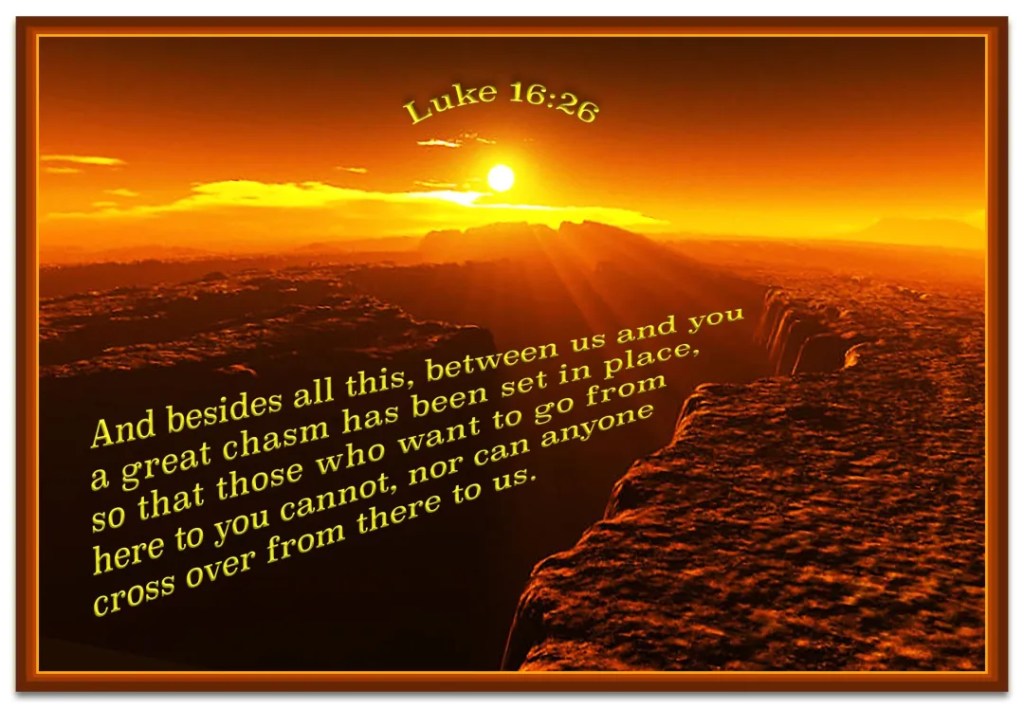


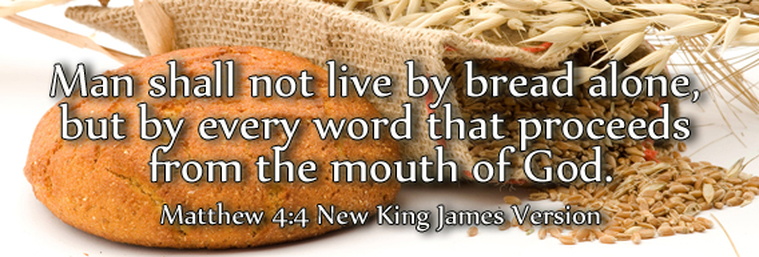



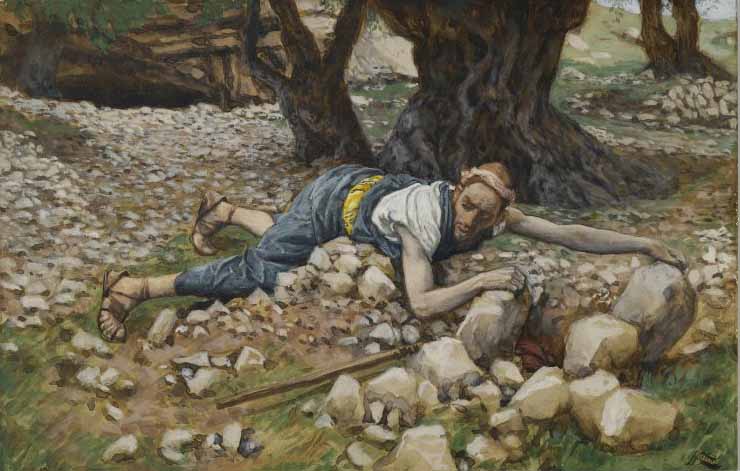





 Loving God, Living God, Loving Hope, Living Hope, Loving Living Life His Way! "Many things are possible for the person who has hope. Even more is possible for the person who has faith. And still more is possible for the person who knows how to love. But everything is possible for the person who practices all three virtues." - Brother Lawrence (1605-1691), Practicing the Presence of God (1692).