Has anyone given any serious talk about turning their Mistakes into something called Spiritual Maturity? Proverbs 24:15-16  

Proverbs 24:15-16 The Message

27

15-16 Don’t interfere with good people’s lives;
    don’t try to get the best of them.
No matter how many times you trip them up,
    God-loyal people don’t stay down long;
Soon they’re up on their feet,
    while the wicked end up flat on their faces.

The Word of God for the Children of God.

Glory be to the Father,
and to the Son, and to the Holy Ghost;
as it was in the beginning,
is now, and ever shall be,
world without end. Amen, amen.

Good men have resilient souls!

Will Lucy of the Peanuts comic strips ever stop enjoying pulling the football away from Charlie Brown when he tries to kick it? Will Charlie Brown ever learn to just stop the insanity and the hurt and the humiliation of falling on his back and instead, just walk away, go somewhere else, far away from Lucy’s antics?

As a young entertainer, Will Rogers’ stage specialty used to be rope tricks. One day, on stage, in the middle of his act, he became tangled in his lariat. But instead of becoming frustrated, Rogers laughed and spoke up in his Oklahoma drawl, “A rope ain’t so bad to get tangled up in if ain’t around your neck!”

The audience just roared at his impromptu response. Encouraged by his warm reception, Rogers began adding commentary and satire to all his performances.

It was his commentary, not his rope tricks, that eventually made him famous.

Had Will Rogers not become tangled in his rope that day, he might never have discovered his ability to wow crowds with his charm, wit and witticisms. That’s because, very often, our mistakes open doors to new possibilities that we never would have ever imagined had things gone the way we had originally intended.

Understanding this can give us a new perspective on our mistakes. When we begin to see our mishaps as opportunities to learn new things and gain new experiences, it completely transforms our outlook on our lives and ourselves.

Don’t let your mistakes discourage you. Instead, look for what God is teaching you through them and swiftly go in new directions. Be willing to turn around, learn blessings from your shortcomings and your mistakes will mature you!

Prayer Challenge

Pray that God would help you to learn blessings instead of curses, positive life lessons from your mistakes that would timely spur you on to spiritual maturity.

Questions for Thought

2 Timothy 3:14-17 The Message

14-17 But don’t let it faze you. Stick with what you learned and believed, sure of the integrity of your teachers—why, you took in the sacred Scriptures with your mother’s milk! There’s nothing like the written Word of God for showing you the way to salvation through faith in Christ Jesus. Every part of Scripture is God-breathed and useful one way or another—showing us truth, exposing our rebellion, correcting our mistakes, training us to live God’s way. Through the Word we are put together and shaped up for the tasks God has for us.

Think of a mistake you’ve made in the past that has actually helped you. What would have happened if things had gone the way you had originally planned?

How can we re-interpret our worldview, seeing our mistakes as true growth opportunities change the way you respond when things don’t go your way?

Did you remember to turn your attention to the Word of God for His Wisdom?

In the name of God, the Father and God the Son and God the Holy Spirit,

Let us Pray,

Psalm 15 The Message

15 God, who gets invited
    to dinner at your place?
How do we get on your guest list?

“Walk straight,
    act right,
        tell the truth.

3-4 “Don’t hurt your friend,
    don’t blame your neighbor;
        despise the despicable.

“Keep your word even when it costs you,
    make an honest living,
        never take a bribe.

“You’ll never get
blacklisted
if you live like this.”

Glory be to the Father,
and to the Son, and to the Holy Ghost;
as it was in the beginning,
is now, and ever shall be,
world without end. Amen, amen.

https://translate.google.com/

Yahweh, if you kept a record of sins, who, Adonai, could remain standing, who’ll escape their condemnation? Psalm 130

Psalm 130 Names of God Bible

Psalm 130

A song for going up to worship.

Yahweh, out of the depths I call to you.
Adonay, hear my voice.
    Let your ears be open to my pleas for mercy.
Yahweh, who would be able to stand
    if you kept a record of sins?
But with you there is forgiveness
    so that you can be feared.
I wait for Yahweh, my soul waits,
    and with hope I wait for his word.
My soul waits for Adonay
    more than those who watch for the morning,
    more than those who watch for the morning.
O Israel, put your hope in Yahweh,
    because with Yahweh there is mercy
        and with him there is unlimited forgiveness.
            He will rescue Israel from all its sins.

The Word of God for the Children of God.

Glory be to the Father,
and to the Son, and to the Holy Ghost;
as it was in the beginning,
is now, and ever shall be,
world without end. Amen, amen.
Many of the Psalms in the Psalter are penitential hymns, where the people of God cry out to Him for confession and forgiveness or plead for His mercy and blessing. Like us, ancient writers knew that the Lord God is faithful to hear our needy prayer and by God’s standard, quick to answer our pitiful cries for help.

From the moment that Adam and Eve fell, the individual sins we all commit and the inherited sin nature we received from our forefathers, inevitably renders us all as 100% guilty sinners before the Lord.

Our transgressions condemn us and separate us from a holy God.

Without any exceptions, We have all sinned and fallen short of the glory of God, and if God were to mark our iniquities not one of us could remain standing. On that hard truth alone, everyman who has been fathered by man is lost in their trespasses and sins and, without any exceptions, be found guilty before God.

The ancient words of the Psalmist are, still today, indeed a chilling reality of what we justly deserve as a member of a rebellious, sinful race of men, for if the Lord should mark our iniquities as we justly deserve, which of us could stand?

But God in His boundless, ceaseless, unlimited mercy, grace, justice, and love sent His Son to us to pay the penalty of every last sin committed by everyman.

Romans 6:23 Names of God Bible

23 The payment for sin is death, but the gift that God freely gives is everlasting life found in Christ Yeshua our Lord.

Romans 6:23 The wages of sin is death but the gift of God is eternal life in Christ Jesus, for as we read: “If the Lord should mark our iniquities, who could stand?”

But there is true forgiveness; eternal forgiveness with our Father, through Jesus Christ the Son, that the Lord may be worshipped and glorified for ever and ever.

Coming to Faith: Trust His Love Has Redeemed Us 

The eternal redemption afforded to us by the powerful sacrifice of Jesus is a wonderful, life-giving demonstration of God’s unconditional, unchanging love.

I’ve gone through much of my life being bullied, scorned. feeling condemned.

My mindset was to look at my thoughts, actions, reactions, and failures and apply my condemning perspective to my perception of my heavenly Father.

But, in reality, over time, he has so faithfully demonstrated his overwhelming love to me through the securing of my redemption. In reality, he truly loves me just as I am even with all my countless failures, failings, mistakes and faults.

Colossians 1:19-22 Names of God Bible

19 God was pleased to have all of himself live in Christ. 20 God was also pleased to bring everything on earth and in heaven back to himself through Christ. He did this by making peace through Christ’s blood sacrificed on the cross.

21 Once you were separated from God. The evil things you did showed your hostile attitude. 22 But now Christ has brought you back to God by dying in his physical body. He did this so that you could come into God’s presence without sin, fault, or blame.

God sees you and me as “holy and blameless.” 

Through his love we have been totally redeemed: set right before the God whose perspectives and beliefs are true above all else. When he says we are redeemed, that truth is now meant to be at the foundation of all we think, believe, and do.

Psalm 130:7 says, “O Israel, hope in the Lord! For with the Lord there is steadfast love, and with him is plentiful redemption.” 

You and I are redeemed apart from anything we do. We are made holy apart from any inherent ability or worthiness we possess. God’s passionate desire for restored relationship with us caused him to secure what you and I could never attain on our own: the eternal redemption of all who believe in Jesus Christ.

So what does it mean for you to be redeemed?

What effect does redemption have on your day today? 

1 Peter 1:14-15 “As obedient children, do not be conformed to the passions of your former ignorance, but as he who called you is holy, you also be holy in all your conduct.” 

Live your life today in greater light of the redemption secured for you by Jesus.

Allow the Holy Spirit to do a mighty work and help you live differently today than you did yesterday. Your past failures and weaknesses do not define you.

Your present misconceptions and sins can be forgiven, healed, and transformed this instant.

Jesus made a clear path for you to live a life worthy of the calling you have received (Ephesians 4:1-6).

Ephesians 4:1-6 Names of God Bible

Christ’s Gifts to the Church

4 I, a prisoner in the Lord, encourage you to live the kind of life which proves that God has called you. Be humble and gentle in every way. Be patient with each other and lovingly accept each other. Through the peace that ties you together, do your best to maintain the unity that the Spirit gives. There is one body and one Spirit. In the same way you were called to share one hope. There is one Lord, one faith, one baptism, one God and Father of all, who is over everything, through everything, and in everything.

All that is required of you, me, we, is to confess with all our heart, believe, trust, open your heart to God, and live today in the constant communion God desires with you. May your day today be filled with all of the life-giving transformation and freedom that comes from living in the light of your present redemption.

Guided Prayer:

1. Meditate on the redemption secured for you by the powerful sacrifice of Jesus.

“In him we have redemption through his blood, the forgiveness of our trespasses, according to the riches of his grace.” Ephesians 1:7

“O Israel, hope in the Lord! For with the Lord there is steadfast love, and with him is plentiful redemption.” Psalm 130:7

“He entered once for all into the holy places, not by means of the blood of goats and calves but by means of his own blood, thus securing an eternal redemption.” Hebrews 9:12

2. Where have sins, lies, past failures, or wounds been causing you to live apart from your redemption? 

Where has your life looked more like the world and less like heaven? Confess those sins and your need of God’s forgiveness, transformation, and presence.

“Repent therefore, and turn back, that your sins may be blotted out, that times of refreshing may come from the presence of the Lord.” Acts 3:19-20

“If we confess our sins, he is faithful and just to forgive us our sins and to cleanse us from all unrighteousness.” 1 John 1:9

3. Receive God’s forgiveness. Spend time opening, surrendering, bit by bit, piece by piece, and chunk by chunk, your heart and receiving his presence.

“If you, O Lord, should mark iniquities, O Lord, who could stand? But with you there is forgiveness, that you may be feared.” Psalm 130:3-4

“My presence will go with you, and I will give you rest.” Exodus 33:14

Our heavenly Father is wholly patient with us as we learn to live out this incredible gift of redemption.

He is perfectly kind and forgiving when we come to him and confess our sin.

And God has a perfect plan every day for our transformation, healing, and freedom if we will but simply make .0001% more space in our lives to spend time with Him, His Son and the Holy Spirit and will receive all he has to give.

Through the diligent study of His Living Word, May we as the body of Christ truly learn what it is to live in light of the glorious inheritance of redemption, and freedom, and abundant life secured for us by the precious blood of Jesus.

In the name of God, the Father and God the Son and God the Holy Spirit,

Let us Pray,

Psalm 15 Names of God Bible

Psalm 15

A psalm by David.

Yahweh, who may stay in your tent?
    Who may live on your holy mountain?

The one who walks with integrity,
    does what is righteous,
        and speaks the truth within his heart.

The one who does not slander with his tongue,
    do evil to a friend,
        or bring disgrace on his neighbor.

The one who despises those rejected by Yahweh
    but honors those who fear Yahweh.

    The one who makes a promise and does not break it,
        even though he is hurt by it.

The one who does not collect interest on a loan
    or take a bribe against an innocent person.

Whoever does these things will never be shaken.

Glory be to the Father,
and to the Son, and to the Holy Ghost;
as it was in the beginning,
is now, and ever shall be,
world without end. Amen, amen.

https://translate.google.com/

From Generation to Generation, One Great Cloud of Witnesses to Another; Praise God to the Heights of Heaven! Psalm 145

Psalm 145 Names of God Bible

Psalm 145[a]

A song of praise by David.

I will highly praise you, my Elohim, the Melek.
    I will bless your name forever and ever.
I will bless you every day.
    I will praise your name forever and ever.

Yahweh is great, and he should be highly praised.
    His greatness is unsearchable.
One generation will praise your deeds to the next.
    Each generation will talk about your mighty acts.
I will think about the glorious honor of your majesty
    and the miraculous things you have done.
People will talk about the power of your terrifying deeds,
    and I will tell about your greatness.
They will announce what they remember of your great goodness,
    and they will joyfully sing about your righteousness.
Yahweh is merciful, compassionate, patient,
    and always ready to forgive.
Yahweh is good to everyone
    and has compassion for everything that he has made.
10 Everything that you have made will give thanks to you, O Yahweh,
    and your faithful ones will praise you.
11 Everyone will talk about the glory of your kingdom
    and will tell the descendants of Adam about your might
12 in order to make known your mighty deeds
    and the glorious honor of your kingdom.
13 Your kingdom is an everlasting kingdom.
    Your empire endures throughout every generation.

14 Yahweh supports everyone who falls.
    He straightens the backs of those who are bent over.
15 The eyes of all creatures look to you,
    and you give them their food at the proper time.
16 You open your hand,
    and you satisfy the desire of every living thing.
17 Yahweh is fair in all his ways
    and faithful in everything he does.
18 Yahweh is near to everyone who prays to him,
    to every faithful person who prays to him.
19 He fills the needs of those who fear him.
    He hears their cries for help and saves them.
20 Yahweh protects everyone who loves him,
    but he will destroy all wicked people.

21 My mouth will speak the praise of Yahweh,
    and all living creatures will praise his holy name
        forever and ever.

The Word of God for the Children of God.

Glory be to the Father,
and to the Son, and to the Holy Ghost;
as it was in the beginning,
is now, and ever shall be,
world without end. Amen, amen.

David’s Generational Psalm of Praise

A. The Psalmist David, speaking on our behalf, on behalf of all generations to come, makes a vow to bless the name of the LORD “forever and ever” (Psalm 145:1); “Every day” to bless Him; to praise His name “for ever and ever” (Psalm 145:2). This is the only Psalm in the book with the words “of praise” in its title.

A lone voice opens the Psalm:

“I” will extol thee; “I” will bless (Psalm 145:1); “I” will bless; “I” will praise (Psalm 145:2).

“I” will speak and declare (Psalm 145:5-6).

The singer refers to the LORD as “my God, O king” (Psalm 145:1), and speaks “of the glorious honour of thy majesty” (Psalm 145:5).

This song of repeated praise is addressed to no earthly king, but to One King whose kingdom ‘is an everlasting kingdom’ (Psalm 145:13).

It is wonderful when, in our alone times with God, in our study and our prayer times, in our worship times, in our fellowship times, meal times, husband and wife times, family times, camping under the stars, we become thus enamored with singing His praises: but what we’ll discover about God, what we discover God to be, is not only for our alone times, but is also to be shared with others.

This is the role of ours and heavens testimony. “Generations” shall praise and declare, one to another (Psalm 145:4). We must not only pray for our children, and children’s children, etc.; but must teach them the great works of God, and obediently pass on to them the mantle of praise down through the generations.

Deuteronomy 6:4-9 Names of God Bible

Listen, Israel: Yahweh is our ElohimYahweh is the only God. Love Yahweh your  Elohim with all your heart, with all your soul, and with all your strength. Take to heart these words that I give you today. Repeat them to your children. Talk about them when you’re at home or away, when you lie down or get up. 8 Write them down, and tie them around your wrist, and wear them as headbands as a reminder. Write them on the doorframes of your houses and on your gates.

The word ‘men’ is not in the Hebrew of Psalm 145:6a, but by the next verse there is a reference to a plurality of persons – “they” – who shall utter and sing (Psalm 145:7).

https://www.blueletterbible.org/kjv/psa/145/6/t_conc_623006

Let the congregation of the Lord’s people, join in the praises of our great God!

https://www.blueletterbible.org/kjv/psa/145/7/t_conc_623007

The reasons for praise are based in the Person, the virtues, and the works of the LORD. He is my God and King (Psalm 145:1; cf. Revelation 19:16).

When we “bless” the LORD (Psalm 145:2) we add nothing to Him, but He shelters us with His Presence (Psalm 145:18Revelation 7:15).

The “great” LORD, whose “greatness is unsearchable” is still “greatly to be praised” (Psalm 145:3; cf. Job 5:9Romans 11:33).

We must adopt the attitude: I will praise Him, no matter what (Philippians 4:4)!

His “works” of Creation and Providence are matched by His “mighty acts” (Psalm 145:4; cf. Exodus 12:26-27 and the miracles of Jesus).

https://www.blueletterbible.org/kjv/psa/145/4/t_conc_623004

The “glorious honor” of His majesty is shown forth in His “wondrous works” (Psalm 145:5; cf. Creation story (Genesis 1,2) the Incarnation, the Cross, the Resurrection of Jesus, His Ascension, His intercession at the right hand of God, His Coming in Glory; also, the day of Pentecost the shedding abroad of the Holy Spirit).

“The LORD is gracious, full of compassion, slow to anger, and of great mercy” (Psalm 145:8).

https://www.blueletterbible.org/kjv/psa/145/9/t_conc_623008

This is similar to the self-revelation of the LORD unto Moses (cf. Exodus 34:6).

It is an integral part of Israel’s understanding of their God (cf. Numbers 14:18Nehemiah 9:17Jonah 4:2).

The last Hebrew word in Psalm 145:8, ‘hesed,’ speaks of covenant love, God not dealing with us as we deserve, but dealing with us as we are in Christ Jesus.

The long-suffering of God is the last thread of hope for a perishing generation (cf. 2 Peter 3:9).

We encounter a word which is translated “all” or “every” seventeen times throughout this Psalm.

There is a sense of inclusiveness here, but also the particularity of “each” (Psalm 145:9).

https://www.blueletterbible.org/kjv/psa/145/9/t_conc_623009

To say that the LORD is good to “all” could be quite general: to say that His tender mercies, or compassion, are over “all” His works, or “all” that He has made, is more specific, much, much deeper in its “heart-soul” implications.

We read in the New Testament about the whole Creation groaning (cf. Romans 8:22), eagerly awaiting the revelation of the children of God (cf. Romans 8:19).

Not only so, but those who have the firstfruits of the Spirit (Christians) are also groaning within ourselves as we await the redemption of the body (cf. Romans 8:23). Even the sufferings of the present time become more endurable when we consider the glory of our Savior God yet to be revealed in us (cf. Romans 8:18).

This psalm shows us the other side of that coin.

All of Creation shall praise the LORD, all His faithful shall bless Him (Psalm 145:10). This “all” is comprehensive, it is extensive, but it also comes down to the level of the ‘each’ as well as the ‘every’ on the uniquely individual level.

As David says in Psalm 103:1, ‘Bless the LORD, O my soul, and all that is within me bless His holy Name!’

Psalm 103:1-5 Names of God Bible

Psalm 103

By David.

Praise Yahweh, my soul!
    Praise his holy name, all that is within me.
Praise Yahweh, my soul,
    and never forget all the good he has done:
        He is the one who forgives all your sins,
            the one who heals all your diseases,
            the one who rescues your life from the pit,
            the one who crowns you with mercy and compassion,
            the one who fills your life with blessings
                so that you become young again like an eagle.

As well as praise, there is conversation (Psalm 145:11).

https://www.blueletterbible.org/kjv/psa/145/11/t_conc_623011

The Creation speaks forth God’s glory (Psalm 19:1).

https://www.blueletterbible.org/kjv/psa/19/1/t_conc_497001

It is also the case that those who are His saints, His faithful, do speak to one another the Word of God (cf. Malachi 3:16Ephesians 5:19Colossians 3:16).

Sharing our testimony is part and parcel of the Christian life.

Sharing heaven’s testimony is part and parcel of the Christian witness.

Psalm 29 Names of God Bible

Psalm 29

A psalm by David.

Give to Yahweh, you heavenly beings.
    Give to Yahweh glory and power.
Give to Yahweh the glory his name deserves.
    Worship Yahweh in his holy splendor.

The voice of Yahweh rolls over the water.
    The El of glory thunders.
        Yahweh shouts over raging water.
The voice of Yahweh is powerful.
    The voice of Yahweh is majestic.
The voice of Yahweh breaks the cedars.
    Yahweh splinters the cedars of Lebanon.
        He makes Lebanon skip along like a calf
            and Mount Sirion like a wild ox.
The voice of Yahweh strikes with flashes of lightning.
The voice of Yahweh makes the wilderness tremble.
    Yahweh makes the wilderness of Kadesh tremble.
The voice of Yahweh splits the oaks[a]
    and strips the trees of the forests bare.
        Everyone in his temple is saying, “Glory!”

10 Yahweh sat enthroned over the flood.
    Yahweh sits enthroned as Melek forever.
11 Yahweh will give power to his people.
    Yahweh will bless his people with peace.

This conversation is not only for the mutual encouragement, edification of those within the church (1 Thessalonians 5:11), but also for those who are outside the church.

https://www.blueletterbible.org/kjv/1th/5/11/t_conc_1116011

“The sons of men” (Psalm 145:12) is also a comprehensive expression, meaning (as some translations have it) “all people”!

https://www.blueletterbible.org/kjv/psa/145/12/t_conc_623012

Those who study Creation may well conclude that there is, after all, a God (and praise His Name, many have); but those who are exposed to genuine Christian conversation have an even better opportunity of discovering just Who He is!

There is also a comprehensiveness of God’s kingdom (Psalm 145:13).

https://www.blueletterbible.org/kjv/psa/145/13/t_conc_623013

It is both eternal and extensive (cf. Psalm 72:17).

Psalm 72:17-19 Names of God Bible

17 May his name endure forever.
    May his name continue as long as the sun shines.
    May all nations be blessed through him and call him blessed.

18 Thank Yahweh Elohim, the Elohim of Israel,
    who alone does miracles.
19 Thanks be to his glorious name forever.
    May the whole earth be filled with his glory.
    Amen and amen!

This is the same ‘kingdom of God’, or ‘kingdom of heaven’ about which Jesus speaks; and it belongs to Him, and all who are found in Him (cf. 2 Peter 1:11).

The LORD cares for the weak and vulnerable (Psalm 145:14).

He heard the cry of the children of Israel in their captivity and set His mind to deliver them (cf. Exodus 3:7-8).

Thereafter He taught His people to care for strangers, widows, and orphans – and the poor (cf. Exodus 22:21-23Exodus 22:25).

This care is continued in the church (cf. Hebrews 13:2James 1:27Galatians 2:9-10).

The LORD cares for those of His own who may otherwise fall (cf. Psalm 73:1-2).

He works ‘all’ things together for good (cf. Romans 8:28), for the good of His ‘peculiar’ people (cf. 1 Peter 2:9).

Whether they know it or not, all flesh is dependent upon the LORD for their daily provision (Psalm 145:15).

Whether they will acknowledge it or not, no man can find sufficient sustenance without the LORD.

It is better therefore to seek Him first, knowing that He will add to us ‘all these things’ (Matthew 6:33).

If God provides for the birds of the air, how much more for you (Matthew 6:25-27). It is good, therefore, to acknowledge God’s hand in all these things, and to gratefully receive His bountiful provision (Psalm 145:16).

Our trust in the LORD is not based in our individual ability to believe, but in His perfections. He is righteous in all His ways: He is just. He is kind in all He does:

He is holy (Psalm 145:17).

It is good that we can view the LORD as a God who is not only transcendent, but also immanent.

He is present within His Creation.

He is “near” to all who call upon Him (Psalm 145:18).

We should, therefore, ‘Seek the LORD while He may be found, call upon Him while He is near’ (Isaiah 55:6).

The one true God, God of all integrity (Deuteronomy 32:4John 14:61 John 5:20Revelation 19:11) draws “nigh” unto all who call upon Him “in truth” with a matching integrity of heart (Psalm 145:18).

It is of the LORD’s mercy that He also hears our petitions (Psalm 145:19).

This is particularly addressed to “those who fear Him” – those who revere His Name.

We may not all presumptuously or blasphemously call out His Name at every approach of trouble: but when we nurture a relationship with him, He is there for us, always.

He grants our desires because our desires are consistent with His. He hears our cry because we are His people. He ‘saves to the uttermost’ all that come to God via Jesus Christ, who forever lives to make intercession for us (Hebrews 7:25).

The LORD preserves all who love Him (Psalm 145:20). This is the other side of our own perseverance: ‘he who endures to the end shall be saved’ (Matthew 24:13). Yet we may not presume upon His grace: the God who is slow to anger (Psalm 145:8), is also the God who will punish the unrepentant (2 Peter 2:9).

The “each” and “every” of God’s 100x% comprehensive care find their final expression as the Psalmist speaks the praise of the LORD, and “all flesh” replies by “blessing” (speaking well of) His holy Name (Psalm 145:21). The groaning Creation (Romans 8:22) at last finds relief in the “for ever and ever.” Amen.

In the name of God, the Father and God the Son and God the Holy Spirit,

Let us Pray,

Psalm 19 Names of God Bible

Psalm 19

For the choir director; a psalm by David.

The heavens declare the glory of El,
    and the sky displays what his hands have made.
One day tells a story to the next.
    One night shares knowledge with the next
without talking,
    without words,
    without their voices being heard.
Yet, their sound has gone out into the entire world,
    their message to the ends of the earth.
    He has set up a tent in the heavens for the sun,
which comes out of its chamber like a bridegroom.
    Like a champion, it is eager to run its course.
        It rises from one end of the heavens.
            It circles around to the other.
                Nothing is hidden from its heat.

The teachings of Yahweh are perfect.
    They renew the soul.
    The testimony of Yahweh is dependable.
    It makes gullible people wise.
The instructions of Yahweh are correct.
    They make the heart rejoice.
    The command of Yahweh is radiant.
    It makes the eyes shine.
The fear of Yahweh is pure.
    It endures forever.
    The decisions of Yahweh are true.
    They are completely fair.
10 They are more desirable than gold, even the finest gold.
    They are sweeter than honey, even the drippings from a honeycomb.
11 As your servant I am warned by them.
    There is a great reward in following them.

12 Who can notice every mistake?
    Forgive my hidden faults.
13 Keep me from sinning.
    Do not let anyone gain control over me.
        Then I will be blameless,
            and I will be free from any great offense.

14 May the words from my mouth and the thoughts from my heart
    be acceptable to you, O Yahweh, my rock and my Go’el.

What is a go el in Hebrew?

redeemer, reclaimant. especially : a next of kin upon whom according to ancient Hebrew custom devolved certain family rights and duties including the avenging of a murdered kin’s blood and the redemption of the person or the property of a relative in debt or helpless circumstances.

Glory be to the Father,
and to the Son, and to the Holy Ghost;
as it was in the beginning,
is now, and ever shall be,
world without end. Amen, amen.

https://translate.google.com/

We Are Created in the Image of God: It’s The Beginning of the Good News. Anyone Ready For it? Genesis 1:26-31

Genesis 1:26-31 Complete Jewish Bible

26 Then God said, “Let us make humankind in our image, in the likeness of ourselves; and let them rule over the fish in the sea, the birds in the air, the animals, and over all the earth, and over every crawling creature that crawls on the earth.”

27 So God created humankind in his own image;
in the image of God he created him:
male and female he created them.

28 God blessed them: God said to them, “Be fruitful, multiply, fill the earth and subdue it. Rule over the fish in the sea, the birds in the air and every living creature that crawls on the earth.” 29 Then God said, “Here! Throughout the whole earth I am giving you as food every seed-bearing plant and every tree with seed-bearing fruit. 30 And to every wild animal, bird in the air and creature crawling on the earth, in which there is a living soul, I am giving as food every kind of green plant.” And that is how it was. 31 God saw everything that he had made, and indeed it was very good. So there was evening, and there was morning, a sixth day.

The Word of God for the Children of God.

Glory be to the Father,
and to the Son, and to the Holy Ghost;
as it was in the beginning,
is now, and ever shall be,
world without end. Amen, amen.
Good news begins right at the beginning. The good news found at the beginning of things in Genesis 1 is there is a God who makes and upholds all that there is, and that we humans, male, female, are made in the image of this amazing God.

We don’t look like God, of course, for God is Spirit—but this means, among other things, that we are God’s representatives. We are called to take care of all that God has made—and not just the creatures mentioned in these ­verses, but also the unfolding of all human history that follows, in all its deep complexity.

Amazing! Mere mortals are endowed by their Creator with the dignity and the honor of representing the infinite God, acting on God’s behalf to care for his creation with all its diverse infinite potential. We are God’s agents with a most prestigious, singularly unique job description – Stewards of Creation. And this leads us, with high joy, gratitude, to a profound sense of identity and calling.

This is good news for everyone, of course—but perhaps especially for people whose sense of identity and purpose are diminished, are uncertain, whose own ability to live creatively, joyfully and fully, completely and purposefully are held back because of poverty or anything else that hinders their participation in life.

Good news for the poor begins with a reminder that they all bear God’s image.

God has been reaching out since the beginning of time—desiring to live in a close relationship with all of humankind But because of our sin…because we have turned our backs on God and (in essence) told Him to butt out of our lives…we are separated from Him.

From the start, God has created a way for us to reconnect to Him by offering us salvation: an incredible gift of grace that comes through the life, death, and resurrection of His son, Jesus.  And we receive this gift of grace the moment we accept Jesus as our Lord and Savior—turning our lives over to Him completely.

Each and everyone of us comes to this decision differently because each and every one of us has a uniquely different experience…or path, journey to Jesus.

Even though each of our journeys is singularly unique, the Bible shows us that there are some key (and consistent) components every true follower of Jesus experiences.

Let’s look at those five key components…

STEP 1 – Hear the Gospel

As you may already know, the “gospel” literally means “good news.” The good news of the gospel begins with God, the Creator of everything. And He is holy…which means He is set apart from anything that is un-holy. And God is perfect (or whole), without any defect. And He is righteous…which means God always does what is right. And He is just. His justice is always fair.

So, because God is the Creator; Holy, Righteous, Perfect and Just, we have a problem. We who are human are none of those things. We are created by God (in his image), but — here’s the bad news — we are everyone of us, without any exceptions, fallen and broken and un-very holy…imperfect, unrighteous and unjust, learned PhD’s in sinning. Just as the Apostle Paul writes in Romans…

“What shall we conclude then? Are we any better? Not at all! We have already made the charge that Jews and Gentiles alike are all under sin. As it is written: There is no one righteous, not even one; there is no one who understands, no one who seeks God. All have turned away, they have together become worthless; there is no one who does good, not even one. And just in case you thought you could try to be good enough to earn good standing with God.” – Romans chapter 3, verses 9-12

Exactly how many broken links (or sins) does it take to break the chain of our connection to God)? The answer: One. All it takes is one broken link or one sin to break our connection God. And all of us have sinned—at least once.

All of us, without exception have broken our connection to God. Another thing we might tell ourselves is, “If I really clean up my act…it will automatically be enough to connect me back to God.”

Once again, as Paul writes…

“All have sinned and fall short of the glory of God.” – Romans 3:23

So there it is. The Bad News.

But here’s the Good News. Here’s the gospel…

“But now a righteousness from God, apart from law, has been made known, to which the Law and the Prophets testify. This righteousness from God comes through faith in Jesus Christ to all who believe. There is no difference, for all have sinned and fall short of the glory of God, and are justified freely by his grace through the redemption that came by Christ Jesus. God presented him as a sacrifice of atonement, through faith in his blood. He did this to demonstrate his justice, because in his forbearance he had left the sins committed beforehand unpunished — he did it to demonstrate his justice at the present time, so as to be just and the one who justifies those who have faith in Jesus.” – Romans 3:21-26

Sin separates us from God. And what is sin? The biblical definition of sin is actually an archery term meaning: missing the mark. We have all sinned or missed the mark of God’s perfection. And the punishment for this is death. Someone has to pay for these mistakes. We all know, deep in our hearts, what justice is. When a wrong has been committed, someone has to pay for it.

The Good News is that Jesus — the Incarnation or God in the Flesh — the one who never sinned or missed the mark, took our place and paid for our mistakes.

Jesus took on ALL our sin when he died on the cross.

The Apostle Paul put it this way…

“Therefore, since we have been justified through faith, we have peace with God through our Lord Jesus Christ, through whom we have gained access by faith into this grace in which we now stand. And we rejoice in the hope of the glory of God. Not only so, but we also rejoice in our sufferings, because we know that suffering produces perseverance; perseverance, character; and character, hope. And hope does not disappoint us, because God has poured out his love into our hearts by the Holy Spirit, whom he has given us. You see, at just the right time, when we were still powerless, Christ died for the ungodly. Very rarely will anyone die for a righteous man, though for a good man someone might possibly dare to die.

But God demonstrates his own love for us in this: while we were still sinners, Christ died for us. Since we have now been justified by his blood, how much more shall we be saved from God’s wrath through him! For if, when we were God’s enemies, we were reconciled to him through the death of his Son, how much more, having been reconciled, shall we be saved through his life! Not only is this so, but we also rejoice in God through our Lord Jesus Christ, through whom we have now received reconciliation.” – Romans 5:1-11

So, while we were still sinners…still living in our sinful way of life, God showed his love for us in Jesus’ sacrificial death on the cross. 

That’s GRACE.

Grace is unmerited favor or getting something wonderful that you didn’t earn or deserve. And you can’t pay for it or earn it.

All you can do is accept this wonderful, eternal gift.

One of the best ways to remember the meaning of grace is this acronym:

Grace = God’s Riches AChrist’s Expense.

STEP 2 – Believe

At some point, after hearing the Gospel, you believe in your heart that all this stuff is true.

That God is holy.

That you, me, we are separated from Him and that you can only be reconciled or reconnected back to God through Jesus.

And that belief is so strong that you are “cut to the heart”.

You have that utter realization that the only way back to God is through Jesus.

This is the way some of the first people to hear the Good News felt…

“When the people heard this, they were cut to the heart and said to Peter and the other apostles, ‘Brothers, what shall we do?’” – Acts 2:37

This “cutting to the heart” can only come from God.

Just as Jesus says here…

“No one can come to me unless the Father who sent me draws him, and I will raise him up at the last day.” – John 6:44

Looking back over this, we Hear the Gospel, then Believe what we’ve heard and then we repent.

STEP 3 – Repent

“To “repent” literally means to “turn away”.

We must turn away from sin or turn our backs to sin…putting our backs to our old way of life. And when we turn from sin, we naturally turn towards God—doing a complete about face. As Jesus was spreading the Good News He said…

“The time has come,” (Jesus said). “The kingdom of God has come near. Repent and believe the good news!” – Mark 1:15

The next logical step to repenting from our old way of life, from our old life of sinning is to share this change in our hearts or to confess to some other people what’s happened.

STEP 4 – Confess

Confession or to confess simply means to say it out loud—to say what is true out loud and publicly recognize that: God is holy and perfect and you are not.

Confessing to other people means our speaking to our true belief that God has reconnected you back to Him through Jesus…because Jesus has taken your sin to the cross, and that you want to repent and so turn away from our sins and from our sinful past.

Paul says it best here…

“That if you confess with your mouth, “Jesus is Lord,” and believe in your heart that God raised him from the dead, you will be saved. For it is with your heart that you believe and are justified, and it is with your mouth that you confess and are saved.” – Romans 10:9-10

But from the beginning it needs to be clearly understood the journey isn’t over.

It continues and will continue on and on and on because this is all about becoming more like Jesus.

As we begin this new life as a follower of Jesus, we have this gift of the Holy Spirit…which is God’s Spirit literally living inside us…guiding us and prompting us to grow and become more and more like Him. More and more like Jesus. And we do this by following Jesus’ words found in the Bible—through Bible study.

And we do this by reminding ourselves we are living and acting as Jesus did.

Doing the things Jesus did, like loving others, caring for the “least of these.” 

In the name of God, the Father and God the Son and God the Holy Spirit,

Let us Pray,

Psalm 8 New American Standard Bible 1995

The Lord’s Glory and Man’s Dignity.

For the choir director; on the Gittith. A Psalm of David.

O Lord, our Lord,
How majestic is Your name in all the earth,
Who have [a]displayed Your splendor above the heavens!
From the mouth of infants and nursing babes You have established [b]strength
Because of Your adversaries,
To make the enemy and the revengeful cease.

When I [c]consider Your heavens, the work of Your fingers,
The moon and the stars, which You have [d]ordained;
What is man that You [e]take thought of him,
And the son of man that You care for him?
Yet You have made him a little lower than [f]God,
And You crown him with glory and majesty!
You make him to rule over the works of Your hands;
You have put all things under his feet,
All sheep and oxen,
And also the [g]beasts of the field,
The birds of the heavens and the fish of the sea,
Whatever passes through the paths of the seas.

O Lord, our Lord,
How majestic is Your name in all the earth!

Glory be to the Father,
and to the Son, and to the Holy Ghost;
as it was in the beginning,
is now, and ever shall be,
world without end. Amen, amen.
https://translate.google.com/

Realizing from the very beginning of everything: it has always been about God’s loving God’s creative Presence. Genesis 1:1-5

Genesis 1:1-5 Complete Jewish Bible

Parashah 1: B’resheet (In the beginning) 1:1–6:8

In the beginning God created the heavens and the earth. The earth was unformed and void, darkness was on the face of the deep, and the Spirit of God hovered over the surface of the water. Then God said, “Let there be light”; and there was light. God saw that the light was good, and God divided the light from the darkness. God called the light Day, and the darkness he called Night. So there was evening, and there was morning, one day.

The Word of God for the Children of God.

Glory be to the Father,
and to the Son, and to the Holy Ghost;
as it was in the beginning,
is now, and ever shall be,
world without end. Amen, amen.

Have you ever stood on top of a cliff, have you ever watched a seagull or a tern that seems to just hang in the air over the waters? The wind may be blustering waves and waters roaring, but the bird still soars calmly over the rough ocean.

That image of hovering over turbulent waters is how the Bible first describes the Spirit of God. The word for “hovering” indicates a high degree of care, even concern, in its action, and it is unmistakably linked to the behavior of protective birds that brood over their nests, guarding and keeping their clutch warm and safe as it develops. From the beginning the Holy Spirit, in his protective love, hovered over the surface of the unformed deep and even now, continues to care.

The story of creation in Genesis was given to God’s people at a time when other stories about the beginning of the world were filled with themes of violence and chaos. Into that unsettled situation, the Genesis story came as a blessed gift revealed God’s purposeful, loving intention to make all things good, beautiful.

At the time, it would have sounded far different from the other creation stories.

And because love and goodness are at the center of this story, it continues to invite people to know God as the loving, protective Creator that he is. As we’ll explore, discover, many other passages in the Bible also teach us something about “in the beginning God ….” through the imagery of the creation story.

In the name of God, the Father and God the Son and God the Holy Spirit,

Let us Pray,

Psalm 19 Complete Jewish Bible

19 (0) For the leader. A psalm of David:

2 (1) The heavens declare the glory of God,
the dome of the sky speaks the work of his hands.
3 (2) Every day it utters speech,
every night it reveals knowledge.
4 (3) Without speech, without a word,
without their voices being heard,
5 (4) their line goes out through all the earth
and their words to the end of the world.

In them he places a tent for the sun,
6 (5) which comes out like a bridegroom from the bridal chamber,
with delight like an athlete to run his race.
7 (6) It rises at one side of the sky,
circles around to the other side,
and nothing escapes its heat.

8 (7) The Torah of Adonai is perfect,
restoring the inner person.
The instruction of Adonai is sure,
making wise the thoughtless.
9 (8) The precepts of Adonai are right,
rejoicing the heart.
The mitzvah of Adonai is pure,
enlightening the eyes.
10 (9) The fear of Adonai is clean,
enduring forever.
The rulings of Adonai are true,
they are righteous altogether,
11 (10) more desirable than gold,
than much fine gold,
also sweeter than honey
or drippings from the honeycomb.
12 (11) Through them your servant is warned;
in obeying them there is great reward.

13 (12) Who can discern unintentional sins?
Cleanse me from hidden faults.
14 (13) Also keep your servant from presumptuous sins,
so that they won’t control me.
Then I will be blameless
and free of great offense.

15 (14) May the words of my mouth
and the thoughts of my heart
be acceptable in your presence,
Adonai, my Rock and Redeemer.

Glory be to the Father,
and to the Son, and to the Holy Ghost;
as it was in the beginning,
is now, and ever shall be,
world without end. Amen, amen.
https://translate.google.com/

How Well Are We Truly Imitating the Father’s Mercy? “Lord, Reveal Mercy, Lord, Have Mercy; Christ Have Mercy Lord Have Mercy on Ungrateful Me.” Psalm 31:20-25

Psalm 31:20-25 Complete Jewish Bible

20 (19) But oh, how great is your goodness,
which you have stored up for those who fear you,
which you do for those who take refuge in you,
before people’s very eyes!
21 (20) In the shelter of your presence
you hide them from human plots,
you conceal them in your shelter,
safe from contentious tongues.

22 (21) Blessed be Adonai!
For he has shown me his amazing grace
when I was in a city under siege.
23 (22) As for me, in my alarm I said,
“I have been cut off from your sight!”
Nevertheless, you heard my pleas
when I cried out to you.

24 (23) Love Adonai, you faithful of his.
Adonai preserves the loyal,
but the proud he repays in full.
25 (24) Be strong, and fill your hearts with courage,
all of you who hope in Adonai.

The Word of God for the Children of God.

Glory be to the Father,
and to the Son, and to the Holy Ghost;
as it was in the beginning,
is now, and ever shall be,
world without end. Amen, amen.

Sometimes the suffering of life feels overwhelming, as if we are under attack surrounded on all sides and can’t find any relief from any one single direction.

We may be debilitated by the grief of losing a loved one. Or maybe we are sick from a medical condition or treatment. Our marriage may be in a whole lot of distress, perhaps even on the brink of separation and divorce. Whatever the case, there are days, long seasons when we feel the weight of the world on us.

And our pleas ring out, cry out,, shriek out; from our places of silent panic;

“Lord, have mercy.”

The psalmist here in Psalm 31 is feeling besieged by relentless human forces, along with the sudden abandonment of his friends. He uses words like distress, anguish, groaning, affliction, forgotten, and terror. He fears that he will die at the hands of his enemies, and he cries out to God in agony.

“Lord, have mercy.”

Perhaps we can all recall a time or two or three when we felt that way, when the walls, ceiling the roof of the house seemed to be closing, collapsing in on you.

While my personal suffering pales in comparison to that of a whole population of people contending with one of a host of debilitating chronic illnesses, I do remember feeling particularly burdened when—I was urgently admitted for open heart surgery—my sister who came down to help my wife ended up in the same hospital as I did with a bad cellulitis in both feet and was unable to walk.

In our mutual efforts at recovering, a group of compassionate nurses made it possible for us to see each other – her in her reclining chair and me in mine. We had a chance to have a deeply meaningful brother older sister talk, prayer time.

Now, almost 15 months later, we are able to look back on those turbulent times, we can see how the Lord was with us, delivered us from our tumult. God 100% answers cries of his people, shines his loving face on us, lighting up our dark.

This one isolated testimony out of undoubtedly the million if not billions more of our God mercifully answering the cries and shrieks of His suffering Children.

Perhaps now is a good time to recount your own story of God “on your jobsite.”

Perhaps even become inspired to imitate, to act, as God acted on your behalf?

More Like Our Rabbi: Imitating the Father’s Mercy

Matthew 7:7-14 Amplified Bible

Prayer and the Golden Rule

[a]Ask and keep on asking and it will be given to you; seek and keep on seeking and you will find; knock and keep on knocking and the door will be opened to you. For everyone who keeps on asking receives, and he who keeps on seeking finds, and to him who keeps on knocking, it will be opened. Or what man is there among you who, if his son asks for bread, will [instead] give him a stone? 10 Or if he asks for a fish, will [instead] give him a snake? 11 If you then, evil (sinful by nature) as you are, know how to give good and advantageous gifts to your children, how much more will your Father who is in heaven [perfect as He is] give what is good  and advantageous to those who keep on asking Him.

12 “So then, in everything treat others the same way you want them to treat you, for this is [the essence of] the Law and the [writings of the] Prophets.

The Narrow and Wide Gates

13 “Enter through the narrow gate. For wide is the gate and broad and easy to travel is the path that leads the way to destruction and eternal loss, and there are many who enter through it. 14 But small is the gate and narrow and difficult to travel is the path that leads the way to [everlasting] life, and there are few who find it.

Luke 6:35-36 Amplified Bible

35 But love [that is, unselfishly seek the best or higher good for] your enemies, and do good, and lend, [a]expecting nothing in return; for your reward will be great (rich, abundant), and you will be sons of the Most High; because He Himself is kind and gracious and good to the ungrateful and the wicked. 36 Be merciful (responsive, compassionate, tender) just as your [heavenly] Father is merciful.

“Be merciful, even as your Father is merciful” is a summary statement of Jesus’ famous teaching in the Beatitudes (Luke 6:20-23) and indeed would be a good motto for every believer’s life.

These words underscore all Jesus has previously said concerning how we are to treat others—especially those who hate us for our faithfulness to Him (v 22).

Luke 6:20-23Amplified Bible

The Beatitudes

20 And looking toward His disciples, He began [a]speaking: “Blessed [spiritually prosperous, happy, to be admired] are you who are poor [in spirit, those devoid of spiritual arrogance, those who regard themselves as insignificant], for the kingdom of God is yours [both now and forever]. 21 Blessed [joyful, nourished by God’s goodness] are you who hunger now [for righteousness, actively seeking right standing with God], for you will be [completely] satisfied. Blessed  [forgiven, refreshed by God’s grace] are you who weep now [over your sins and repent], for you will laugh [when the burden of sin is lifted]. 22 Blessed [morally courageous and spiritually alive with life-joy in God’s goodness] are you when people hate you, and exclude you [from their fellowship], and insult you, and scorn your name as evil because of [your association with] the Son of Man. 23  Rejoice on that day and leap for joy, for your reward in heaven is great  [absolutely inexhaustible]; for their fathers used to treat the prophets in the same way.

This should, however, also prompt us to pray:

“God, what does being merciful actually look like?” “Open my eyes, unclog my ears that I may hear their crying, their shrieks for help, that I may see visions of mercy thou hast for me, them, open mine ears, mine eyes and illumine me, Spirit Divine.”

As our wiser and tender and compassionate Shepherd, Jesus does not leave us to figure out this principle for ourselves. Rather, He gives us specific instructions on exactly what it means for you, me, we, imitate our merciful heavenly Father.

God “is kind to the ungrateful and the evil.”

As His children, we must realize that we are so mightily challenged by these Gospel Words, called to demonstrate this same kindness by loving our enemies, returning goodness and kindness for evil, giving to others without expecting anything in return. Notice Jesus lists no exemptions or get-out clauses here.

Having called us to be vessels of God’s kindness, Jesus then immediately says that we are not to judge others (Luke 6:37-38).

Luke 6:37-38 Amplified Bible

37 [a]Do not judge [others self-righteously], and you will not be judged; do not condemn [others when you are guilty and unrepentant], and you will not be condemned [for your hypocrisy]; pardon [others when they truly repent and change], and you will be pardoned [when you truly repent and change]. 38 Give, and it will be given to you. They will pour into your lap a good measure—pressed down, shaken together, and running over [with no space left for more]. For with the standard of measurement you use [when you do good to others], it will be measured to you in return.”

He is not asking us to suspend our critical faculties in our relationships; we have to use our minds to discern between truth and error or good and evil.

Likewise Jesus is not teaching that we are to turn a blind eye to sin or refuse to offend others, point out errors. Rather, when Jesus commands us not to judge, He is condemning a spirit of self-righteous, self-exalting, hypocritical, harsh judgmentalism—an approach which seeks to highlight, shine the brightest neon lights on the faults of others, always brings with it the flavor of bitterness.

An unkind spirit completely violates Jesus’ exhortation to overflow with mercy towards both friend and enemy. Each and everyone of us needs to identify any spirit of judgment we may be harboring, to root it out, and to replace cruelty with kindness and harshness with patience, self-control and understanding.

This is how we show to others the kind of mercy that God has shown to us.

A (possibly apocryphal) story is told of how, when Queen Elizabeth II was a girl, she and her sister, Margaret, would be told by their mother before they went to a party, “Remember: royal children, royal manners.”

Their behavior would not make them members of the royal family, but it would demonstrate their royal character and royal membership in that royal family.

Fellow Christians, you and I are members of the royal family of the universe, with the King of creation as our Father. Be sure that your manners reflect who you are and whose you are. Be merciful, even as your Father is 100% merciful.

In the name of God, the Father and God the Son and God the Holy Spirit,

Let us Pray,

Psalm 23 Easy-to-Read Version

A song of David.

23 The Lord is my shepherd.
    I will always have everything I need.[a]
He gives me green pastures to lie in.
    He leads me by calm pools of water.
He restores my strength.
    He leads me on right paths[b] to show that he is good.
Even if I walk through a valley as dark as the grave,[c]
    I will not be afraid of any danger, because you are with me.
    Your rod and staff[d] comfort me.
You prepared a meal for me in front of my enemies.
    You welcomed me as an honored guest.[e]
    My cup is full and spilling over.
Your goodness and mercy will be with me all my life,
    and I will live in the Lord’s house[f] a long, long time.[g]

Glory be to the Father,
and to the Son, and to the Holy Ghost;
as it was in the beginning,
is now, and ever shall be,
world without end. Amen, amen.

https://translate.google.com/

For Those Who Will Dare to Gather; What a Day of Solemn Recalling This Will Be! “Whenever we eat this Bread, we Drink from this Cup, we Proclaim The Lord’s Death Until He Comes.” 1 Corinthians 11:23-26

1 Corinthians 11:23-26 Amplified Bible

The Lord’s Supper

23 [a]For I received from the Lord Himself that [instruction] which I passed on to you, that the Lord Jesus on the night in which He was betrayed took bread; 24 and when He had given thanks, He broke it and said, “This is (represents) My body, which is [offered as a sacrifice] for you. Do this in [affectionate]  remembrance of Me.” 25 In the same way, after supper He took the cup, saying, “This cup is the new covenant [ratified and established] in My blood; do this, as often as you drink it, in  [affectionate] remembrance of Me.” 26 For every time you eat this bread and drink this cup, you are [symbolically] proclaiming [the fact of] the Lord’s death until He comes [again].

The Word of God for the Children of God.

Glory be to the Father,
and to the Son, and to the Holy Ghost;
as it was in the beginning,
is now, and ever shall be,
world without end. Amen, amen.

A Time for Silent Recall, for Proclaiming the Sacrifice

1 Corinthians 11:23-26 Disciples’ Literal New Testament

The Lord’s Supper Is a Remembrance of What He Did For Us

23 For I received from the Lord what I also handed-over[a] to you— that the Lord Jesus, in the night on which He was being handed-over, took bread. 24 And having given-thanks, He broke it and said “This is My body, the one being given[b] for you. Be doing this for My remembrance”. 25 Similarly also the cup after the dining[c], saying, “This cup is the new covenant in My blood. Be doing this, as-often-as you drink it, for My remembrance”. 26 For as-often-as you eat this bread and drink the cup, you are proclaiming the death of the Lord, until which time He comes.

Today is Sunday, and if you attend a worship service today, you might celebrate the Lord’s Supper, or Holy Communion. Many churches around the world will gather and focus on the simple loaf of bread and cup and hear these powerful words: “This is my body, given for you. . . . This is my blood, shed for you.”

In a way, the tangible elements of bread and grape juice (or wine) bear witness to the limitless love of Jesus shown in his sacrifice on the cross. We are invited to take and eat so that we may remember and believe that in Jesus’ death and resurrection we find forgiveness and new life. We are also reminded that when we participate in communion, we “recall and proclaim the Lord’s death” until he returns. Communion itself is a witness unto Jesus and all he has done for us.

I remember an enormously powerful experience of communion many years ago.

It was on the day of my wife’s and mine wedding.

As the Clergy proceeded through the liturgy of Marriage, in the background was the Bread and the Cup of Communion waiting for the moment of consecration.

In the modest sized Methodist Church where we were Married, the wife and I were both excited for each other, profoundly humbled before the Lord our God.

For the Wife and I what mattered the most was not just the moment of joining but the above and beyond all other things, celebrating, recalling Jesus’ place in our lives, in this holy moment of marriage – God #1 Jesus #1 Holy Spirit #1.

Love and sacrifice and service unto God first and foremost, then our neighbors and then each other. (Mark 12:28-34 Complete Jewish Bible)

28 One of the Torah-teachers came up and heard them engaged in this discussion. Seeing that Yeshua answered them well, he asked him, “Which is the most important mitzvah of them all?” 29 Yeshua answered, “The most important is,

Sh’ma Yisra’el, Adonai Eloheinu, Adonai echad [Hear, O Isra’el, the Lord our God, the Lord is one], 30 and you are to love Adonai your God with all your heart, with all your soul, with all your understanding and with all your strength.’[a]

31 The second is this:

‘You are to love your neighbor as yourself.’[b]

There is no other mitzvah greater than these.” 32 The Torah-teacher said to him, “Well said, Rabbi; you speak the truth when you say that he is one, and that there is no other besides him; 33 and that loving him with all one’s heart, understanding and strength, and loving one’s neighbor as oneself, mean more than all the burnt offerings and sacrifices.” 34 When Yeshua saw that he responded sensibly, he said to him, “You are not far from the Kingdom of God.” And after that, no one dared put to him another sh’eilah.

*sh’eilah* The word in Hebrew means simply “question,” but among Jews speaking English it means “a question about Torah or halakhah” …

Halakhah, in Judaism, the totality of laws and ordinances that have evolved since biblical times to regulate religious observances and the daily life and conduct of the Jewish people.

As my Wife and I held those symbols of Jesus’ death in our hands, we saw with fresh eyes how his sacrifice brings life. We had both brought our “baggage,” and we placed them upon His Altar, sacrificing them as Christ sacrificed for us.

As we served the Elements, as we first served God, as we served the assembled wedding guests and officiants, we prayed that we set an example for the guests of the absolute primacy of God, the Father and God the Son and God Holy Spirit in our wedded lives and by divine extension into wedded lives of the assembled.

We decided God alone brought us together. God had decided that our purpose here wasn’t finished. In life in the primacy of service to God, our neighbors and ourselves, and in death, we all belong to him—the one who gave his all for us.

As you each proceed to receive holy Communion, recall first and foremost, in and echelons above all that we our ever so flawed and finite selves hold being primary, having all or nothing primacy in our day to day lives, Jesus, you are the bread of life. As we worship you, may we experience close communion with you and our brothers and sisters in faith. Thank you for the gift of your life. Alleluia! Amen.

In the name of God, the Father and God the Son and God the Holy Spirit,

Let us Pray,

Psalm 23 Complete Jewish Bible

23 (0) A psalm of David:

(1) Adonai is my shepherd; I lack nothing.
He has me lie down in grassy pastures,
he leads me by quiet water,
he restores my inner person.
He guides me in right paths
for the sake of his own name.
Even if I pass through death-dark ravines,
I will fear no disaster; for you are with me;
your rod and staff reassure me.

You prepare a table for me,
even as my enemies watch;
you anoint my head with oil
from an overflowing cup.

Goodness and grace will pursue me
every day of my life;
and I will live in the house of Adonai

for years and years to come.

Tehillim 23 Orthodox Jewish Bible

23 (Mizmor of Dovid). Hashem is my Ro’eh (Shepherd); I shall not lack.

He maketh me to lie down in green pastures; He leadeth me beside the mei menuchot (tranquil waters).

He restoreth my nefesh; He guideth me in the paths of tzedek l’ma’an Shmo (righteousness for the sake of His Name).

Yea, though I walk through the Gey Tzalmavet (Valley of the Shadow of Death), I will fear no rah (evil); for Thou art with me; Thy shevet (rod) and Thy staff they comfort me.

Thou preparest a shulchan before me in the presence of mine enemies: Thou anointest my head with shemen (olive oil); my kos runneth over.

Surely tov and chesed shall follow me kol y’mei chaiyyai (all the days of my life): and I will dwell in the Bais Hashem l’orech yamim (for length of days, whole life.

Glory be to the Father,
and to the Son, and to the Holy Ghost;
as it was in the beginning,
is now, and ever shall be,
world without end. Amen, amen.

https://translate.google.com/

Does Anyone Seriously Try to Get in Touch With, Envision, Connect With, The Day-to-Day Life of Rabbi Jesus? John 4:1-6

John 4:1-6 New Living Translation

Jesus and the Samaritan Woman

Jesus[a] knew the Pharisees had heard that he was baptizing and making more disciples than John (though Jesus himself didn’t baptize them—his disciples did).  So he left Judea and returned to Galilee.

He had to go through Samaria on the way. Eventually he came to the Samaritan village of Sychar, near the field that Jacob gave to his son Joseph.  6 Jacob’s well was there; and Jesus, tired from the long walk, sat wearily beside the well about noon time.

The Word of God for the Children of God.

Glory be to the Father,
and to the Son, and to the Holy Ghost;
as it was in the beginning,
is now, and ever shall be,
world without end. Amen, amen.

When in Bible Study, when we try to share a brief story of Jesus with others, we often focus on his birth, his death for our sake, and his resurrection. We might also mention some of those amazing things about his teachings and miracles.

But how often do we talk about or think of what Jesus’ day-to-day life was like?

Jesus was fully God and fully human, which means that he got thirsty, tired, and hungry. We are going to go on, presume being human, he had normal bodily functions, had to go to the bathroom to relieve himself sometime during the day, perhaps several times, one way or the other, every single day from birth.

Several passages in the Bible describe Jesus’ spending time with his followers and doing very human things: he feasts at a wedding, he walks, travels with his disciples, and in our reading today we observe that he also gets tired and gets weary and has to sit down by a well, where he asks a Samaritan woman for a drink of water—ends up in a friendly chat, telling her that he is the Messiah!

I wonder how many meals Jesus ate with his followers, how many walks he went on, and how many jokes he cracked over a campfire at night. I wonder if he ever took time out from the seriousness of his ministry and mission to just have some serious and prolonged efforts at just “cutting loose,” fun with the guys?

Did the infant Jesus burn his hand on a hot pot which was that day’s dinner? Did he as a growing and maturing youth and teenager, play neighborhood games?

I wonder how much the disciples learned by just seeing their Rabbi act just like one of the guys, smiling, crying, getting angry, chit chatting about who cares?

I wonder how much of Rabbi Jesus “rubbed off” on influencing his disciples just simply by his day to day actions, chit chats, calm moods, ‘in a crisis’ behaviors?

Mark 4:35-41 New Living Translation

Jesus Calms the Storm

35 As evening came, Jesus said to his disciples, “Let’s cross to the other side of the lake.” 36 So they took Jesus in the boat and started out, leaving the crowds behind (although other boats followed). 37 But soon a fierce storm came up. High waves were breaking into the boat, and it began to fill with water.

38 Jesus was sleeping at the back of the boat with his head on a cushion. The disciples woke him up, shouting, “Teacher, don’t you care that we’re going to drown?”

39 When Jesus woke up, he rebuked the wind and said to the waves, “Silence! Be still!” Suddenly the wind stopped, and there was a great calm. 40 Then he asked them, “Why are you afraid? Do you still have no faith?”

41 The disciples were absolutely terrified. “Who is this man?” they asked each other. “Even the wind and waves obey him!”

I wonder if Jesus’ disciples experienced God’s glory as much through Jesus’ everyday conversations and the way he lived each day as they did through his teachings, his ministry and mission, parables and miracles among the people.

We read much in the Gospels of the profound impact Rabbi Jesus had in drawing great crowds of the curious, the followers, the healed, the fed, the enlightened.

John 6:22-24 English Standard Version

I Am the Bread of Life

22 On the next day the crowd that remained on the other side of the sea saw that there had been only one boat there, and that Jesus had not entered the boat with his disciples, but that his disciples had gone away alone. 23 Other boats from Tiberias came near the place where they had eaten the bread after the Lord had given thanks. 24 So when the crowd saw that Jesus was not there, nor his disciples, they themselves got into the boats and went to Capernaum, seeking Jesus.

Maybe reading and studying and fellowshipping, we might come to see and to identify with Jesus and his disciples and come to the conclusion living a life like Jesus shared daily with his disciples is not nearly as intimidating as it sounds.

It should not be that difficult for us to see He did lots of ordinary things in his day-to-day living, just as we do. How can we help to bring the presence of Jesus in ordinary ways as we spend time with the people God has placed around us?

1 Corinthians 11:1 Amplified Bible

Christian Order

11 Imitate me, just as I imitate Christ.

Apostle Paul writes to the followers at Corinth

“imitate me, just as I imitate Christ.”

Was this meant that Paul had divine powers and the Corinthians should likewise display their divine powers as Paul did who was imitating Savior Jesus Christ?

Not by a long shot …

Paul knew he had no such divinity, did try to pass himself off as having them.

Neither were the Corinthians being led to believe that they had divine abilities.

Matthew 5:43-48 Amplified Bible

43 “You have heard that it was said, ‘You shall love your neighbor (fellow man) and hate your enemy.’ 44 But I say to you, [a]love [that is, unselfishly seek the best or higher good for] your enemies and pray for those who persecute you, 45 so that you may [show yourselves to] be the children of your Father who is in heaven; for He makes His sun rise on those who are evil and on those who are good, and makes the rain fall on the righteous [those who are morally upright] and the unrighteous [the unrepentant, those who oppose Him]. 46 For if you love [only] those who love you, what reward do you have? Do not even the tax collectors do that? 47 And if you greet only your brothers [wishing them God’s blessing and peace], what more [than others] are you doing? Do not even the Gentiles [who do not know the Lord] do that? 48 You, therefore, will be perfect [growing into spiritual maturity both in mind and character, actively integrating godly values into your daily life], as your heavenly Father is perfect.

Paul is here teaching them to be Imitator’s of Christ Like Behaviors … Love, Mercy, forgiveness, compassion, generosity, service, living Spiritual Gifts, actions towards towards God, one’s enemies, towards each other’s neighbor, getting your hands and feet and the rest of yourself into the work of ministry.

1 Corinthians 15:55-58 Amplified Bible

55 O death, where is your victory? O death, where is your sting?” 56 The sting of death is sin, and the power of sin [by which it brings death] is the law; 57 but thanks be to God, who gives us the victory [as conquerors] through our Lord Jesus Christ.

58 Therefore, my beloved brothers and sisters, be steadfast, immovable, always excelling in the work of the Lord [always doing your best and doing more than is needed], being continually aware that your labor [even to the point of exhaustion] in the Lord is not futile nor wasted [it is never without purpose].

What Jesus Did for us everyday! ‘Became A Weary Savior!’

John 4:4-6 Amplified Bible

Now [a]He had to go through [b]Samaria. So He arrived at a Samaritan town called Sychar, near the tract of land that Jacob gave to his son Joseph; and Jacob’s well was there. So Jesus, tired as He was from His journey, sat down by the well. It was then about the sixth hour (noon). 

Jesus took the “shortcut” between Judea in the south and Galilee in the north. He went through Samaria. He was weary and tired, thirsty and hungry from his long journey around his homeland – we can truly envision he was exhausted.

He rested by the historic site of Jacob’s well.

So much history and promise come together in this moment.

We expect something grand to happen. Jesus has come to the well dug by Father Israel. (Jacob’s name was changed to Israel. [1]) [1] Genesis 32:22-28.

What great word do we hear from Jesus?

What triumphant deed does he do?

None. At least, not at first.

Jesus’ primary initial action was simply to sit down.

He was a weary Savior.

He was an exhausted Savior!

He was thirsty, hungry and exhausted just as we would be on that journey.

Sounds almost bizarre as our hearts exalt, hold Jesus in the highest of places.

At the same time, something wondrous is once again revealed to us all: Jesus became flesh. Human flesh. Mortal flesh. Wearying flesh. He knows us not only because he is God, but also because he was one of us whose feet got dirty, whose arms and legs grew very tired, and whose stomach growled when it was empty.

Jesus is a Savior who knows us; he knows us not just because he is God, but also because has lived in our world, sharing our burdens, and feeling our weariness.

Can you begin to connect with, relate to Him who came to us to love, redeem us?

In the name of God, the Father and God the Son and God the Holy Spirit,

Let us Pray,

Psalm 42 Complete Jewish Bible

Book II: Psalms 42–72

42 (0) For the leader. A maskil of the descendants of Korach:

2 (1) Just as a deer longs for running streams,
God, I long for you.
3 (2) I am thirsty for God, for the living God!
When can I come and appear before God?

4 (3) My tears are my food, day and night,
while all day people ask me, “Where is your God?”
5 (4) I recall, as my feelings well up within me,
how I’d go with the crowd to the house of God,
with sounds of joy and praise from the throngs
observing the festival.

6 (5) My soul, why are you so downcast?
Why are you groaning inside me?
Hope in God, since I will praise him again
for the salvation that comes from his presence.
7 (6) My God, when I feel so downcast,
I remind myself of you
from the land of Yarden, from the peaks of Hermon,
from the hill Mizar.
8 (7) Deep is calling to deep
at the thunder of your waterfalls;
all your surging rapids and waves
are sweeping over me.
9 (8) By day Adonai commands his grace,
and at night his song is with me
as a prayer to the God of my life.
10 (9) I say to God my Rock,
“Why have you forgotten me?
Why must I go about mourning,
under pressure by the enemy?
11 (10) My adversaries’ taunts make me feel
as if my bones were crushed,
as they ask me all day long,
‘Where is your God?’ ”

12 (11) My soul, why are you so downcast?
Why are you groaning inside me?
Hope in God, since I will praise him again
for being my Savior and God.

Glory be to the Father,
and to the Son, and to the Holy Ghost;
as it was in the beginning,
is now, and ever shall be,
world without end. Amen, amen.
https://translate.google.com/

Does the Bible speak to us? As if, and when, we will want the Bible to Speak to us, what aught it to teach to us that God’s Word Is a Lamp Unto My Feet? Psalm 119:105

Psalm 119:105-112 Complete Jewish Bible

נ (Nun)

105 Your word is a lamp for my foot
and light on my path.
106 I have sworn an oath and confirmed it,
that I will observe your righteous rulings.
107 I am very much distressed;
Adonai, give me life, in keeping with your word.
108 Please accept my mouth’s voluntary offerings, Adonai;
and teach me your rulings.
109 I am continually taking my life in my hands,
yet I haven’t forgotten your Torah.
110 The wicked have set a trap for me,
yet I haven’t strayed from your precepts.
111 I take your instruction as a permanent heritage,
because it is the joy of my heart.
112 I have resolved to obey your laws
forever, at every step.

The Word of God for the Children of God.

Glory be to the Father,
and to the Son, and to the Holy Ghost;
as it was in the beginning,
is now, and ever shall be,
world without end. Amen, amen.
To be called a Christian is to believe in Jesus Christ and the supporting text that talks of life before, during, and after His time walking amongst people.

That text is the Bible, God’s Holy Word.

Within Scripture itself, aside from the various stories and characters we read about, there are several verses that give us insight into why God has blessed us with His Word to begin. One such verse is written in the Book of Psalms.

“Your word is a lamp for my feet and a light on my path.” (119:105)

Verses such as this are rare areas where the Bible talks about itself.

These verses highlight the importance of not only hearing God’s Word but living accordingly.

In order to live life according to God’s will, we first have to know how He has called us to live.

In order to know that, we cannot rely first on our own thinking, but instead, must actively read, study, listen to and discipline to hear what the Bible says.

This verse from Psalms 119 embodies the wisdom we receive from reading the Bible. The verse also reveals an important truth – to live like a Christian is to live like Christ, sacrificed all He had, who lived out God’s teachings perfectly.

How Is God’s Word a Lamp Unto My Feet?

The phrase “God’s word is a lamp unto my feet” is a metaphorical statement meant to emphasize the wisdom that comes from following God’s instruction.

This particular chapter 119 in the Book of Psalms is authored by an unknown person. Over the course of this passage, the author writes in an acrostic pattern, including twenty-two stanzas with eight lines each.

Each stanza begins with a letter of the Hebrew alphabet.

This chapter lacks a cohesive narrative as each stanza is written with varying topics and tones.

One underlying theme that is present throughout is the idea of understanding God’s Word. The writer assures people who follow God’s Word are blameless (119:3). The speaker wants to do better in following God, and that only occurs when living by the Lord’s precepts. The phrase “God’s word is a lamp unto my feet” appears far into the writing, as the 105 verse.

“Your word is a lamp for my feet and a light on my path.” (Psalm 119:105)

This verse furthers the idea that dependence, reliance, on God’s Word is the only way to successfully live as a Christian. Lamps are used in society to create a light for their movement and activity. The Hebrew word for lamp is niyr.

This description of a lamp is more equivalent to the subtle light of a candle.

The implication then is that there is limited visibility of the surrounding area, but just enough light to navigate.

With enough light to navigate through life, God gives us the narrowed direction that we need, not all at once, but as needed.

In this way, God’s Word operates for the speaker as a form of direction.

In the verses following 105, the writer continues on to ask God for teaching (Psalm 119:108). The speaker wants to learn from God. This illustrates God’s Word operating as a lamp in bringing wisdom into the mind of a believer.

When they compare God’s Word to being a light on a path, that pathway is life.

Within the details of Psalm 119, abiding by God’s word in every instance creates a more fulfilling life.

Walking in the light is very distinctive from walking in the ways of the wicked (Psalm 119:110). If God’s Word is a lamp, helping us to navigate the pathway of life, then we know God’s Word is intended to help us live prosperously.

God does not fully reveal the future with the lamp He gives us.

However, our prosperity in living by God’s Word is not contingent upon how much of the path ahead we can see. That prosperity is not contingent on any financial and occupational standards, but on a closeness with God. And He gives us just enough of the light of grace to be successful in life (2 Corinthians 12:9).

God is the speaker’s chief concern in Psalm 119 and according to Jesus is to be our chief concern too (Matthew 22:35-37).

If we can focus on loving God, obeying His Word, then we will have better lives.

This idea is not only present in Psalm 119 but also in other passages where God reveals similar commentary on His Word.

What Does God Say about His Word?

In addition to what we read in Psalm 119, there are other areas in the Bible where the Bible talks about itself and offers key insight into why reading God’s Word is vital for any Christian.

These other passages from Scripture complement the message from Psalm 119.

Upon reading, we can confirm that the Bible is intended to offer God’s wisdom alone to believers, and help us all to live according to God’s commandments, not other ideas that we sometimes confuse with God.

“For the word of God is alive and active. Sharper than any double-edged sword, it penetrates even to dividing soul and spirit, joints and marrow; it judges the thoughts and attitudes of the heart.” (Hebrews 4:12)

The Bible when followed or when ignored, reveals certain truths and emotions that lay in our hearts.

If God’s word is meant to edify our behavior, how we respond to His teachings will reveal characteristics about our beliefs, personality, and more.

For example, the Bible says to forgive others just as we ask God for forgiveness (Matthew 6:15).

If we find that exercising forgiveness is difficult, then God’s Word has revealed truth to us.

“Jesus answered, ‘It is written: ‘Man shall not live on bread alone, but on every word that comes from the mouth of God.’” (Matthew 4:4)

Reading, interpreting, and living by God’s Word is as essential as our daily food and drink. Jesus himself indicates the significance of applying God’s word to our lives. Just as we instinctively know to eat and drink to live and survive, and we make plans to do so, we should instinctively respond likewise to Scripture.

“All Scripture is God-breathed and is useful for teaching, rebuking, correcting and training in righteousness, so that the servant of God may be thoroughly equipped for every good work.” (2 Timothy 3:16-17)

Certain translations indicate that Scripture is God “inspired” rather than breathed. Whatever the translation or word choice, the Bible makes full admission that God Himself did not physically write the Bible.

Neither is Jesus known to have written anything.

Nevertheless, the purpose of the Bible is consistent throughout each book. By reading, we learn how and why we should aim to be more Christ-like. In this way, God redeems us from our sinful nature.

“Heaven and earth shall pass away: but my words shall not pass away.” (Mark 13:31)

The tangible things and people in our lives, and the ideas that they exclusively represent pass away with time. However, since the beginning of time, God’s Word has been true and has endured throughout the generations.

“This book of the law shall not depart out of thy mouth; but thou shalt meditate therein day and night, that thou mayest observe to do according to all that is written therein: for then thou shalt make thy way prosperous, and then thou shalt have good success.” (Joshua 1:8)

To live according to God’s Word is not as simplistic as rehearsing or reciting what Scripture says. Instead, to live by God’s Word means to narrowly design your life in a way that reflects, reveals, His teachings. God wants us to live so in tune with Scripture that we think about what He teaches throughout the day.

Why Reading Your Bible Is Important

The aforementioned verses from the Bible highlight God’s desire to improve our lives. By following His commandments we will live a life that is more mature, spiritually prosperous than what we would have outside of Him.

Recognizing that God’s Word is intended to redeem us by making us better people is important for any Christian to do early on in their faith journey.

If we call ourselves believers in Christianity, then we should understand what our religious text, the Bible, says about the high value of God’s truth, our faith.

The more disciplined, the more studious, the better versed we are in the Bible, the more we can learn what it means and looks like to become more like Jesus.

The more like Jesus we are, the more God can call us to His purpose, His service.

Not only will we be transformed, redeemed, but we can help God redeem others.

In the name of God, the Father and God the Son and God the Holy Spirit,

Let us Pray,

Psalm 119:1-16 Complete Jewish Bible

א (Alef)

119 How happy are those whose way of life is blameless,
who live by the Torah of Adonai!
How happy are those who observe his instruction,
who seek him wholeheartedly!
They do nothing wrong
but live by his ways.
You laid down your precepts
for us to observe with care.
May my ways be steady
in observing your laws.
Then I will not be put to shame,
since I will have fixed my sight on all your mitzvot.
I thank you with a sincere heart
as I learn your righteous rulings.
I will observe your laws;
don’t completely abandon me!

ב (Bet)

How can a young man keep his way pure?
By guarding it according to your word.
10 I seek you with all my heart;
don’t let me stray from your mitzvot.
11 I treasure your word in my heart,
so that I won’t sin against you.
12 Blessed are you, Adonai!
Teach me your laws.
13 I proclaim with my mouth
all the rulings you have spoken.
14 I rejoice in the way of your instruction
more than in any kind of wealth.
15 I will meditate on your precepts
and keep my eyes on your ways.
16 I will find my delight in your regulations.
I will not forget your word.

Glory be to the Father,
and to the Son, and to the Holy Ghost;
as it was in the beginning,
is now, and ever shall be,
world without end. Amen, amen.
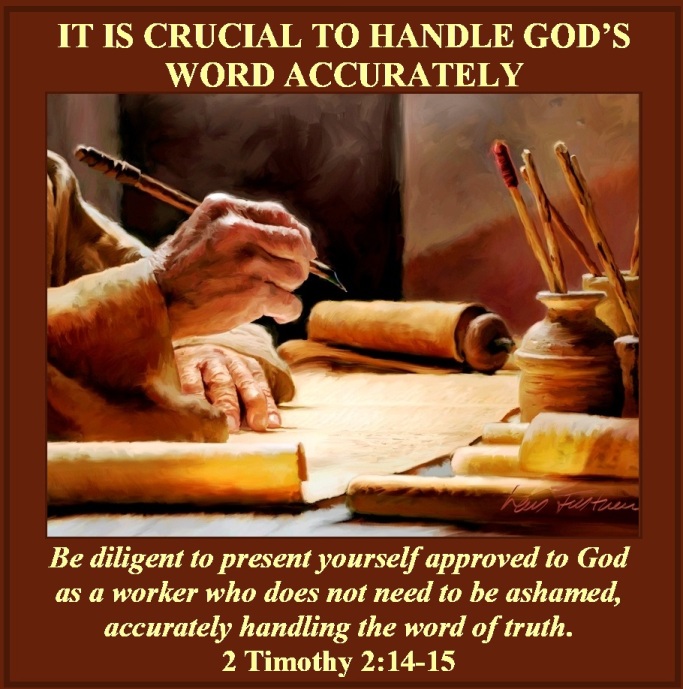
https://translate.google.com/

What Do We Think, Just What Do We Believe, What Do We Actually Know It Means to “Work Out Our Salvation?” Philippians 2:12-13

Philippians 2:9-13 Complete Jewish Bible

Therefore God raised him to the highest place
and gave him the name above every name;

10 that in honor of the name given Yeshua,
every knee will bow —
in heaven, on earth and under the earth —
11 and every tongue will acknowledge[a]
that Yeshua the Messiah is Adonai —
to the glory of God the Father.

12 So, my dear friends, just as you have always obeyed when I was with you, it is even more important that you obey now when I am away from you: keep working out your deliverance with fear and trembling,[b] 13 for God is the one working among you both the willing and the working for what pleases him.

The Word of God for the Children of God.

Glory be to the Father,
and to the Son, and to the Holy Ghost;
as it was in the beginning,
is now, and ever shall be,
world without end. Amen, amen.

Do any of you love to work out?

Do any of you love to get on a treadmill and either walk or jog or run or sprint from what amounts to from the gym to the furthest, remotest place on earth?

What about lifting those weights – doing those bar bells in ever increasing weights, working those abdominal muscles to get those 6 or 12 pack of abs?

Anyone out there, male and female, who who are trying to become, or on their way to becoming a professional competitive body builder, weight lifter or the world’s strongest athlete, compete in an Olympic level Decathlon or Marathon?

If you are, I say … keep it up, get in shape, be competitive, follow your dreams, Exercise those heart muscles, lower your blood pressure, lower blood sugars.

God the Father Bless You! God the Son Bless You! God the Holy Spirit Bless You!

From my own personal experience from 18 1/2 years of military service, from my efforts to keep my own vital signs and sugar levels down, Triple Bypass Open Heart Surgery one year ago, from what I understand, it’s a fluid time ebbing and flowing from an acquired taste to an absolute medical necessity.

A person may begin a workout regimen and hate it right off the bat and quit, but then as they push themselves, keep at it week after week, they may begin to see positive results mentally, physically, or both. The hard work of working out almost becomes addicting and before they know it, they’ll do love to work out!

The bottom line is anything good for us requires hard work, whether it be monetarily, emotionally, physically, or even spiritually, and with that hard work, pain may come at the start. Seems to contradict the goal, doesn’t it?  

However, I believe that humans, by nature, have a desire to work out things for themselves. We read it in the Bible and we will see it in certain religions, where doing hard works is more palatable than accepting God’s free gift of salvation.  

So how do we reconcile Paul’s statement in Philippians 2:12b,

“Work out your salvation with fear and trembling?”

Doesn’t that contradict the fact that we cannot work our way into heaven and too God has given us the free gift of His Son Jesus who finished the work on the cross? 

Philippians 2:13 gives us the answer,  “For it is God who is at work in you, both to will and to work for His good pleasure.”

You might respond, “Okay, so… how do I work out my salvation?”

 Let’s look at how together:

Recognize God’s Power Within You

As we discussed above, working out takes willpower, discipline, and a stick-to-it attitude. There needs to be a strong desire to start working out, discipline to continue, and a spirit hardened stick-to-it attitude for it to become a habit.

We can apply this same series of attitudes to our walk of obedience to the Lord by first recognizing God’s power within us to renew our minds to that end.

The Apostle Paul tells us in the verse mentioned earlier that it is GOD who works in us!

Jeremiah 32:17 expands upon that further:

“We believe that you made the heavens and the earth by your great power and your outstretched arm. And that nothing is too hard for you, Lord God. So we pray boldly for things that are impossible apart from you.”  

So how do we apply this to working out our salvation?

By recognizing God’s power within us “both to will and to work for His good pleasure” (Philippians 2:13b).

Obedience unto God is hard.

Yes, I said it.

In our sinful state, even as children of God, we can easily fall prey to our selfish hearts and choose what we want rather than what God has called us to do.

Sometimes it can feel impossible to stop sinning. Like Romans 7:18b-19 says,

“For I have the desire to do what is good, but I cannot carry it out. For I do not do the good I want to do, but the evil I do not want to do—this I keep on doing.”  

Step 1 = the hardest one = If we want to recognize God’s power within us …

When we recognize God’s power within us, we will pray boldly for things that are impossible apart from God.

We need to ask God to help us with any besetting sin we might have and seek Him with our whole heart for help to walk in obedience day after day.

In doing so, we will be working out our salvation through the power of God at work within us.

Obey the Spirit’s Leading

Like me, I’m sure we have all had that “little nudge” from the Holy Spirit prompting us to do something.

Too often, though, we might respond like Moses in Exodus 4:13:

“But Moses said, ‘Pardon your servant, Lord. Please send someone else.’”

Moses felt that he did not have the gift of speech even though God told Him He would give Him the words to speak!

That being said, did Moses really even want to go?

It would appear that he didn’t want to under any other caveats and conditions other than his own. We can be like that, right? We try to justify our reasons, but the reality is, for whatever reason, we just don’t want to do it. It could be fear, it could be selfishness, it could be any number of reasons, all of which have their root in our adversary Satan trying to hard stop us in our tracks in serving God.  

Ephesians 2:10 says, “For we are God’s handiwork, created in Christ Jesus to do good works, which God prepared in advance for us to do.”

This is how we work out our salvation, by submitting, obeying the Holy Spirit’s leading, completing the works He prepared for us to do before the world began.

Repent of Anything Contrary to God’s Will

Even though we have received the free gift of salvation, it doesn’t mean that we have a free pass to sin or to live our lives independent from Christ.

I know I’m stating the obvious, but sometimes, we can and in truth, do, will act that way without even realizing we are doing it.

How do we act that way?

Through selfishness. And I’m sure you all would be nodding your heads in agreement. Selfishness is a real struggle for most people. It makes sense. Of course, we want to look out for ourselves, but we end up taking that too far.

I would say that a majority of the difficult stories (Jonah) in the Bible all had their root in selfishness and pride. Wanting what they wanted at any cost.

All acts of wars, all wars, will start in this manner. Most crimes are a result of complete hardened selfishness. Selfishness is wanting our will and not God’s.  

Philippians 2:3-7, leads up to our passage on working out salvation, says,

“Do nothing from selfishness or empty conceit, but with humility of mind regard one another as more important than yourselves; do not merely look out for your own personal interests, but also for the interests of others. Have this attitude in yourselves which was also in Christ Jesus, who, although He existed in the form of God, did not regard equality with God a thing to be grasped, but emptied Himself, taking the form of a bond-servant, and being made in the likeness of men.”

Here, we see in context that this is a means of working out our salvation.

How do we put this into practice?

By repenting of our selfishness whenever a selfish thought comes to mind and repenting immediately. We would then find that a lot of the issues we deal with such as anger, frustration and anxiety would all disappear.  

By becoming disciplined in this manner, immediately repenting of anything contrary to God’s will, we will indeed be working out our salvation through our accountability to God, Jesus and the Holy Spirit with every selfish thought.

In that moment, He will renew our minds to seek after His will. (Romans 12:1-2)

Loving Your Neighbor as Yourself

The interesting revelation about our topic on working out your salvation is how the entire passage in Philippians 2 is basically giving us God’s instructions on how to obey the second commandment which is “Love your neighbor as yourself” (Mark 12:30-31).

“Work out your salvation with fear and trembling” (Philippians 2:12b) is literally bookended by those admonitions.

What does it mean to workout your own salvation with fear and trembling?

This biblical statement implies a need to live out—to practice, demonstrate, and exhibit—the salvation which believers have in Christ. The concept of “fear and trembling” addresses worshipful respect for God. This echoes back to the context of every knee bowing before the Lord mentioned in verse 11.

Let’s take a look at Philippians 2:14-16b which are Paul’s final exhortations regarding working out your salvation.

“Do all things without grumbling or disputing;  so that you will prove yourselves to be blameless and innocent, children of God above reproach in the midst of a crooked and perverse generation, among whom you appear as lights in the world, holding fast the word of life.”

Now more than ever we need to work out our salvation by being lights in this fallen world through loving our neighbor as ourselves.  

This past April, we had the privilege of being able to see total eclipse of the sun.

There are no words to describe the experience.

When the moon fully covered the sun and we could take our eclipse glasses off, to see the licks of fire shooting out all around and to watch the darkness fall and the stars come out, we felt like we had a special glimpse into God’s handiwork.

I was especially struck by the sight when there was just the slightest sliver of sun showing through before the total eclipse, yet there was still a dusk-like lighting outside.

It amazed me so little of the sun could be showing and still create that much light!  

If you feel like you don’t have much to offer in the Kingdom of God, that you don’t have spiritual gifts that could do great things for God, I’m here to tell you that you do!

Even if you are not a great evangelist filling stadiums with thousands of people, your light has great impact.

You may feel your light is small, but like my experience with the eclipse, even though your perception of how you light up the world may seem small, I am now here telling you that your light is significantly impactful to those you come in contact with. 

Don’t ever feel that your light doesn’t matter because it does! 

Matthew 5:14-16 says,

“You are the light of the world. A city that is set on a hill cannot be hidden. Nor do they light a lamp and put it under a basket, but on a lampstand, and it gives light to all who are in the house. Let your light so shine before men, that they may see your good works and glorify your Father in heaven”.

When we show, reveal, the love of Christ to others and let our light shine to all mankind, we are working out our salvation.

So, What does it mean to workout your own salvation with fear and trembling?

This biblical statement implies a need to live out—to practice, demonstrate, and exhibit—the salvation which believers have in Christ. The concept of “fear and trembling” addresses reverent, worshipful respect for God. This echoes back to the context of every knee bowing before the Lord mentioned in verse 11.

Have you ever wondered why a visit to the gym is called a “workout”?

Maybe it’s because somewhere deep inside you is a strong, svelte, and trained body ready for rigorous competition.

But that body is not present here and now—it needs to be worked out!

It’s similar with farming.

Through plowing, planting, seeding, irrigation, fertilization, and weed control a farmer works out the results of a potential crop. One can only work out results if something already has potential to work hard, harder, hardest hardcore at it.

In today’s text, Philippians 2:12-13 Paul is urging us to engage in a spiritual workout and to take it seriously.

By grace, God—through the work of Jesus Christ—has placed into our lives the most precious of gifts: salvation to new life!

We do not earn our salvation by our own efforts; rather, we are each called to cultivate and develop this gift of God, provided at the cost of his own Son’s life.

We are to work it out to its full potential.

The Holy Spirit is our personal trainer for this workout.

Pointing us to Jesus, he urges us to be

“like-minded, having the same love, being one in spirit and of one mind. Do nothing out of selfish ambition or vain conceit. Rather, in humility value others above yourselves, not looking to your own interests but each of you to the interests of others” (Philippians 2:3-4).

That’s a big challenge, and it reminds us all that we still have much to work out.

May we all work out our salvation not in our own strength but by truly allowing GOD’s strength to showcase His power and the free gift of salvation that lives within us by recognizing God’s power, obeying the Spirit’s leading, repenting of anything contrary to God’s will, and loving God, our neighbors, as ourselves.

In the name of God, the Father and God the Son and God the Holy Spirit,

Let us Pray,

Psalm 27 Complete Jewish Bible

27 (0) By David:

(1) Adonai is my light and salvation;
whom do I need to fear?
Adonai is the stronghold of my life;
of whom should I be afraid?
When evildoers assailed me
to devour my flesh,
my adversaries and foes,
they stumbled and fell.
If an army encamps against me,
my heart will not fear;
if war breaks out against me,
even then I will keep trusting.

Just one thing have I asked of Adonai;
only this will I seek:
to live in the house of Adonai
all the days of my life,
to see the beauty of Adonai
and visit in his temple.
For he will conceal me in his shelter
on the day of trouble,
he will hide me in the folds of his tent,
he will set me high on a rock.
Then my head will be lifted up
above my surrounding foes,
and I will offer in his tent
sacrifices with shouts of joy;
I will sing, sing praises to Adonai.

Listen, Adonai, to my voice when I cry;
show favor to me; and answer me.
“My heart said of you, ‘Seek my face.’”
Your face, Adonai, I will seek.
Do not hide your face from me,
don’t turn your servant away in anger.
You are my help; don’t abandon me;
don’t leave me, God my savior.
10 Even though my father and mother have left me,
Adonai will care for me.
11 Teach me your way, Adonai;
lead me on a level path
because of my enemies —
12 don’t give me up to the whims of my foes;
for false witnesses have risen against me,
also those who are breathing violence.

13 If I hadn’t believed that I would see
Adonai’s goodness in the land of the living, . . .
14 Put your hope in Adonai, be strong,
and let your heart take courage!
Yes, put your hope in Adonai!

Glory be to the Father,
and to the Son, and to the Holy Ghost;
as it was in the beginning,
is now, and ever shall be,
world without end. Amen, amen.

https://translate.google.com/