Romans 15:4 "For whatever was written in earlier times was written for our instruction, so that through perseverance and the encouragement of the Scriptures we might have hope."
15 He is the image of the invisible God, the firstborn over all creation. 16 For everything was created by him, in heaven and on earth, the visible and the invisible, whether thrones or dominions or rulers or authorities— all things have been created through him and for him. 17 He is before all things, and by him all things hold together. 18 He is also the head of the body, the church; he is the beginning, the firstborn from the dead, so that he might come to have first place in everything. 19 For God was pleased to have all his fullness dwell in him, 20 and through him to reconcile everything to himself, whether things on earth or things in heaven, by making peace through his blood, shed on the cross.[a]
Word of God for the Children of God
Glory be to the Father, and to the Son, and to the Holy Ghost; as it was in the beginning, is now, and ever shall be, world without end. Amen, amen.
Imagine a universe in which everything is completely random.
There is no order; there is no consistency; there is no purpose.
What a horrible place that would be!
Yet those who believe in a purely naturalistic explanation for the origin of the universe find themselves in precisely such a place.
I’m thankful that we can know that there is purpose, there is direction, and that there is order in the universe.
This universe was designed, laid out, and is maintained by the Creator, the God of the universe, Himself.
The laws of physics are such a beautiful picture of the great order that God gives to His creation. Not only has God created this world, but He is 100% intimately involved in keeping everything orderly, running according to His perfect plan.
This truth actually brings us great comfort.
I don’t know if you’ve figured this out, but I have noticed many times over the many years that I’ve been alive that life does not actually turn out the way that I thought it would when I was much younger. As a matter of fact, life regularly takes twists and turns that I never would have ever imagined in my early years.
Unexpected tragedies come.
We experience loss.
We experience pain, heartache, sorrow, failure, and despair.
But knowing that God reigns on His throne on high is an incredible comfort.
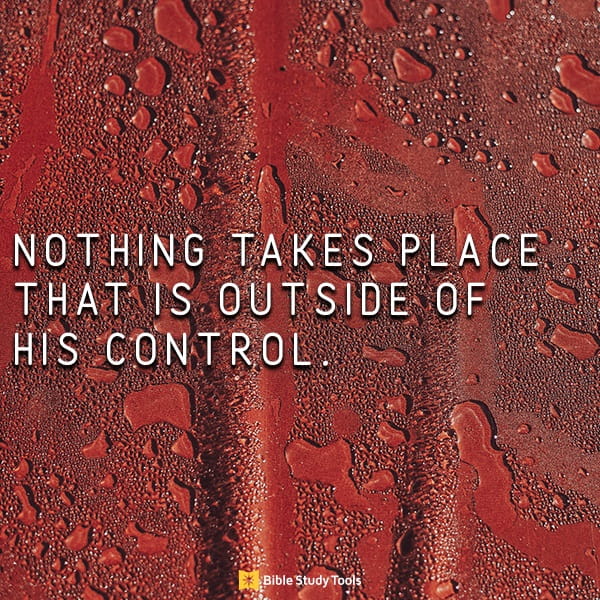
We can be assured that nothing takes place that is outside of His control.
Take a moment to think about God’s perspective on this universe.
Consider God’s perspective on your problems.
God is not stressed out.
God is not sitting on His throne wringing his hands in worry about how things are going to turn out.
As you go throughout this day, take time to ponder God’s sovereignty.
Meditate on the reality that He is in control of everything.
Take time to ponder His sovereignty and how it makes a difference in your life.
Consider how big of a deal that is.
TODAY’S BIG IDEA:“God is in control, and you can relax and trust in Him.”
In the name of God, the Father and God the Son and God the Holy Spirit,
Praying …
Psalm 24
A psalm by David.
1 The earth and everything it contains are Yahweh’s. The world and all who live in it are his. 2 He laid its foundation on the seas and set it firmly on the rivers.
3 Who may go up Yahweh’s mountain? Who may stand in his holy place? 4 The one who has clean hands and a pure heart and does not long for what is false[a] or lie when he is under oath. 5 This person will receive a blessing from Yahweh and righteousness from Elohim, his savior. 6 This is the person who seeks him, who searches for the face of the El of Jacob.[b] Selah
7 Lift your heads, you gates. Be lifted, you ancient doors, so that the Melek of glory may come in.
8 Who is this Melek of glory? Yahweh, strong and mighty! Yahweh, heroic in battle!
9 Lift your heads, you gates. Be lifted, you ancient doors, so that the Melek of glory may come in.
10 Who, then, is this Melek of glory? Yahweh Tsebaoth is the Melek of glory! Selah
Glory be to the Father, and to the Son, and to the Holy Ghost; as it was in the beginning, is now, and ever shall be, world without end. Amen, amen.
1 Paul, a servant of Christ Jesus, called as an apostle[a] and set apart for the gospel of God— 2 which he promised beforehand through his prophets in the Holy Scriptures— 3 concerning his Son, Jesus Christ our Lord, who was a descendant of David[b] according to the flesh 4 and was appointed to be the powerful Son of God according to the Spirit of holiness[c] by the resurrection of the dead. 5 Through him we have received grace and apostleship to bring about[d] the obedience of faith for the sake of his name among all the Gentiles,[e]6 including you who are also called by Jesus Christ.
7 To all who are in Rome, loved by God, called as saints.
Grace to you and peace from God our Father and the Lord Jesus Christ.
Word of God for the Children of God
Glory be to the Father, and to the Son, and to the Holy Ghost; as it was in the beginning, is now, and ever shall be, world without end. Amen, amen.
“What do you want to be when you grow up?”
Maybe you heard this question as a child or a teenager.
Our responses usually focus on some kind of career path or occupation.
And as we grow older, we realize that we need some kind of work or career to help us with the costs of living.
Yet consider the nuance of the question.
It doesn’t ask, “What do you want to do?” It asks, “What do you want to be?”
Being has to do with our essence, our character, our identity. And in God’s carefully crafted economy, being goes ahead of doing. We are so that we can do.
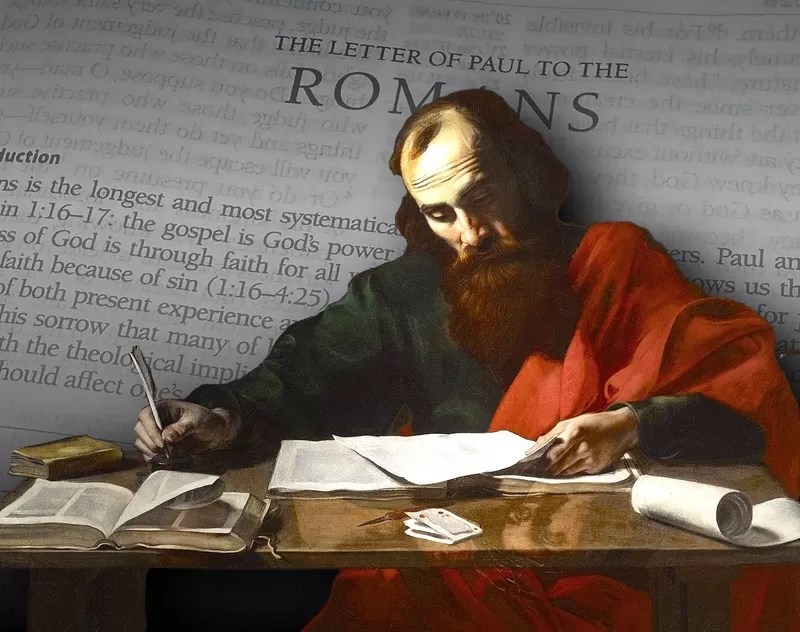
The apostle Paul opens his letter to the Romans with a defining statement:
“Paul, a servant of Christ Jesus, called to be an apostle and set apart for the gospel of God. . . .”
On the face of it, this statement addresses the question “Who am I?”
Yet, looking deeper, we can see that it’s more about “Whose am I?”
Paul’s identity is inseparable from his relationship with Jesus.
Paul identifies himself as a servant—or, more precisely, a bondservant—of Christ Jesus.
What is a bondservant according to the Bible?
A bondservant is one owned by another. They do not have anything that is their own—even their time belongs to their master. They wake up each day seeking to know and do the will of their master above all else. Do we live to do the Lord’s will, doing “all things for the sake of His gospel”?
What is the difference between a servant and a bondservant?
A bond-servant was a slave who had been offered his freedom, but who, of his own volition, who chose to remain a slave and serve his master faithfully.
The master didn’t force him or threaten or coerce him to stay, to do his bidding, but it was the slave who chose joyfully and willingly to take on the role of slave.
What does Paul mean when he calls himself a bondservant?
Paul willingly embraced the title of bondservant because it referenced Christ’s ownership of his life.
Just like a master paid the price to purchase a slave, Christ came and purchased our lives with His own lifeblood. This means we are no longer slaves to sin, but we are slaves to Christ, bound unto a life of service to a perfect, loving Master.
In essence, Paul belongs to Jesus, his Redeemer, who called and commissioned him. He no longer lives to please and serve himself but to please and serve the One who has rescued him.
This radical Christ-centeredness is the character that every believer takes on.
Like Paul’s, our own identity becomes quite literally inseparable from our transformative relationship with Jesus Christ.
What does separated unto the gospel mean?
Paul is saying that the ultimate purpose for his separation to the Gospel was to get lost people saved; to get people to put their faith in the living and glorified Christ Who died for their sins, was buried, rose again for their justification.
What is the lesson learned in Romans Chapter 1?
After telling the Christians in Rome he is eager to come see them and preach the gospel there, Paul declares that the gospel is God’s power to save everyone who believes in Jesus. We need to be saved, because our sin has earned God’s wrath.
As a whole, humanity has rejected God as creator and provider.
How to apply the Word of God to everyday life?
Consider a few suggestions:
Read and meditate daily. Reading and meditating alone will not bring application, but you have to start somewhere. …
Pray for wisdom. As you meditate on the Word, ask the Lord to give you understanding and discernment. …
Ask Questions. …
Look for situations. …
Make changes.
Who am I according to God’s Word?
I am the righteousness of God—I have right standing with Him—in Jesus Christ (2 Corinthians 5:21).
My body is a temple of the Holy Spirit; I belong to Him (1 Corinthians 6:19).
I am the head and not the tail, and I only go up and not down in life as I trust and obey God (Deuteronomy 28:13).
In the name of God, the Father and God the Son and God the Holy Spirit
Praying …
Psalm 8
God’s Glory, Human Dignity
For the choir director: on the Gittith. A psalm of David.
1 Lord, our Lord, how magnificent is your name throughout the earth! You have covered the heavens with your majesty.[a] 2 From the mouths of infants and nursing babies, you have established a stronghold[b] on account of your adversaries in order to silence the enemy and the avenger.
3 When I observe your heavens, the work of your fingers, the moon and the stars, which you set in place, 4 what is a human being that you remember him, a son of man[c] that you look after him? 5 You made him little less than God[d][e] and crowned him with glory and honor. 6 You made him ruler over the works of your hands; you put everything under his feet: 7 all the sheep and oxen, as well as the animals in the wild, 8 the birds of the sky, and the fish of the sea that pass through the currents of the seas.
9 Lord, our Lord, how magnificent is your name throughout the earth!
Glory be to the Father, and to the Son, and to the Holy Ghost; as it was in the beginning, is now, and ever shall be, world without end. Amen, amen.
14 Remind them of these things, charging them before God[a] not to fight about words; this is in no way profitable and leads to the ruin of the hearers. 15 Be diligent to present yourself approved to God, a worker who doesn’t need to be ashamed, correctly teaching the word of truth. 16 But avoid irreverent, empty speech, for this will produce an even greater measure of godlessness. 17 And their word will spread like gangrene; Hymenaeus and Philetus are among them. 18 They have deviated from the truth, saying that the resurrection has already taken place, and are overturning the faith of some.
Word of God for the Children of God
Glory be to the Father, and to the Son, and to the Holy Ghost; as it was in the beginning, is now, and ever shall be, world without end. Amen, amen.
One of Christians’ most important responsibilities is to study the Scriptures.
Church is essential, and we learn a lot from the man of God in the pulpit, but it is up to us to study and grasp what God says: “Study to shew thyself approved unto God, a workman that needeth not to be ashamed, rightly dividing the word of truth.”2 Timothy 2:15.
2 Timothy 2:15 teaches us five things about studying the Word of God:
1. “Study to shew thyself approved unto God,”
We get God’s approval when we think it is important enough to study what God has written for us in the Bible’s preserved words.
Notice that it says “study” and not “read.”
We are to delve into it like we want to pass life’s tests and know God’s mind.
It is the only source that will help us get through life’s difficulties and learn more about the Father.
Reading is different from studying.
We read scriptures on their surface for a short time, while studying requires much more time for rereading, comparing Scriptures with Scripture, and so much prayer.
It takes “work,”, a labor, a commitment, and a determination to get the most out of God’s Word diligently.
2. “a workman that needeth not to be ashamed ”
When we study the Bible, we will not be embarrassed by believing the wrong things. God will show us what is the Way, Truth, Life. And as we are not afraid to suffer shame for Christ’s now, we will not be ashamed before Him at His coming.
3. “rightly dividing the word of truth. ”
In studying the Word of God, “rightly dividing” implies handling the Scriptures accurately, not just as an intellectual exercise but guided by the Holy Spirit.
John 14:26 declares, “But the Comforter, which is the Holy Ghost, whom the Father will send in my name, he shall teach you all things, and bring all things to your remembrance, whatsoever I have said unto you.”
Through the Holy Spirit, we can understand how the Word is divided and then allow His Word to divide us (Hebrews 4:12). Thus, proper digging into God’s Word will expose our sinful nature and shape our lives to abide in His Word.
God’s Word is called the “word of truth.” It is not a collection of accurate statements, but it is the truth from our Creator.
It is the TRUTH, and we don’t need to justify it because the TRUTH requires no justification. It is the only source of truth on Earth, and God has preserved it for not just the select few but for all to read!
David declares in Psalms 12:6–7: “The words of the LORD are pure words: as silver tried in a furnace of earth, purified seven times. Thou shalt keep them, O LORD, thou shalt preserve them from this generation for ever.”
The reverse teaching of 2 Timothy 2:15 is that, if one does not study God’s word, he is not approved of God! — That is a hard truth to swallow. Looking at it that way, one should put a higher priority on one’s Bible study.
As we diligently study, rightly dividing the truth, we learn the Word incarnate, Jesus Christ.
John 1:14 echoes this truth: “And the Word was made flesh and dwelt among us.”
Every page turned, every chapter we study, and every verse pondered points to the living Word, who brings grace, truth, and the fullness of God’s revelation.
Brethren, as born-again believers in Christ, we are called His “ambassadors.”
We are His “workmanship” (Ephesians 2:8–10).
God expects every Christian to be His “workman”! We are to study the word by rightly dividing the truth, and then allow the Truth to divide us (Hebrews 4:12).
May our studies be more than just academic exercises; let it be a faithful work, digging into the depths of God’s wisdom and the beauty of His Son, Jesus Christ.
Isaiah 2:1-5 The Message
Climb God’s Mountain
2 1-5 The Message Isaiah got regarding Judah and Jerusalem:
There’s a day coming when the mountain of God’s House Will be The Mountain— solid, towering over all mountains. All nations will river toward it, people from all over set out for it. They’ll say, “Come, let’s climb God’s Mountain, go to the House of the God of Jacob. He’ll show us the way he works so we can live the way we’re made.” Zion’s the source of the revelation. God’s Message comes from Jerusalem. He’ll settle things fairly between nations. He’ll make things right between many peoples. They’ll turn their swords into shovels, their spears into hoes. No more will nation fight nation; they won’t play war anymore. Come, family of Jacob, let’s live in the light of God.
I Am a Student
Always Begin With God…
In the first two to three decades of life, most people are students.
The instruction we receive during that time provides us with the building blocks we need for a productive life.
As believers in Christ, we are also students. We need to learn God’s Word and grow in the grace and knowledge of the Savior.
We need to absorb God’s Word continuously in order to be transformed by the power of his Spirit, who works in us, teaches us, the truth and wisdom of God.
On a daily basis we need to walk in step with the Lord and his Spirit, growing to know God and to share his love with others everywhere.
There’s a tale of a man on a stroll who hears a voice say to him: “Gather some pebbles.” Though he sees no one, the voice persists: “Gather some pebbles and put them in your pocket, and tomorrow you will truly be both glad and sorry.”
Intrigued, the man thinks, “Why not?” So he picks up a few pebbles and puts them in his pocket. The next day he discovers they have all been transformed into diamonds. Then he feels gladness for taking some, and he is sorry for not taking more.
Similarly, our study of God’s Word may not reveal its benefits right away.
Yet over time, nuggets of truth and wisdom will prove to be invaluable treasures—blessing our lives in countless ways.
In the name of God, the Father and God the Son and God the Holy Spirit,
Praying …
Psalm 19 New American Standard Bible
The Works and the Word of God.
For the music director. A Psalm of David.
19 The heavens tell of the glory of God; And their expanse declares the work of His hands. 2 Day to day pours forth speech, And night to night reveals knowledge. 3 There is no speech, nor are there words; Their voice is not heard. 4 Their [a]line has gone out into all the earth, And their words to the end of the world. In them He has placed a tent for the sun, 5 Which is like a groom coming out of his chamber; It rejoices like a strong person to run his course. 6 Its rising is from [b]one end of the heavens, And its circuit to the [c]other end of them; And there is nothing hidden from its heat.
7 The Law of the Lord is [d]perfect, restoring the soul; The testimony of the Lord is sure, making wise the simple. 8 The precepts of the Lord are right, rejoicing the heart; The commandment of the Lord is pure, enlightening the eyes. 9 The fear of the Lord is clean, enduring forever; The judgments of the Lord are true; they are righteous altogether. 10 They are more desirable than gold, yes, than much pure gold; Sweeter also than honey and drippings of the honeycomb. 11 Moreover, Your servant is warned by them; In keeping them there is great reward. 12 Who can discern his errors? Acquit me of hidden faults. 13 Also keep Your servant back from presumptuous sins; Let them not rule over me; Then I will be innocent, And I will be blameless of great wrongdoing. 14 May the words of my mouth and the meditation of my heart Be acceptable in Your sight, Lord, my rock and my Redeemer.
Glory be to the Father, and to the Son, and to the Holy Ghost; as it was in the beginning, is now, and ever shall be, world without end. Amen, amen.
19 The heavens tell of the glory of God; And their expanse declares the work of His hands. 2 Day to day pours forth speech, And night to night reveals knowledge. 3 There is no speech, nor are there words; Their voice is not heard. 4 Their [a]line has gone out into all the earth, And their words to the end of the world. In them He has placed a tent for the sun, 5 Which is like a groom coming out of his chamber; It rejoices like a strong person to run his course. 6 Its rising is from [b]one end of the heavens, And its circuit to the [c]other end of them; And there is nothing hidden from its heat.
7 The Law of the Lord is [d]perfect, restoring the soul; The testimony of the Lord is sure, making wise the simple. 8 The precepts of the Lord are right, rejoicing the heart; The commandment of the Lord is pure, enlightening the eyes. 9 The fear of the Lord is clean, enduring forever; The judgments of the Lord are true; they are righteous altogether. 10 They are more desirable than gold, yes, than much pure gold; Sweeter also than honey and drippings of the honeycomb. 11 Moreover, Your servant is warned by them; In keeping them there is great reward. 12 Who can discern his errors? Acquit me of hidden faults. 13 Also keep Your servant back from presumptuous sins; Let them not rule over me; Then I will be innocent, And I will be blameless of great wrongdoing. 14 May the words of my mouth and the meditation of my heart Be acceptable in Your sight, Lord, my rock and my Redeemer.
Word of God for the Children of God
Glory be to the Father, and to the Son, and to the Holy Ghost; as it was in the beginning, is now, and ever shall be, world without end. Amen, amen.
What should motivate us to read the Bible?
Reminding ourselves of the benefits of reading the Bible may help us to make it a priority in our lives.
In this post, I discuss the beauty of God’s Word, based on Psalm 19:7-11.
Today I’ll visit verses 7 and 8 to identify four important benefits we receive when we read the Scripture (based on the NIV Bible).
1. God’s Word refreshes the soul (v7).
The idea here is “being brought back.”
If we are not actively seeking God, we will drift away from Him, leading to a spiritual drought.
As we become more focused on the world around us and less on spiritual things, God may feel far away.
Our prayers may not seem effective.
However, as we spend more time in God’s Word, our focus will return to God, and our souls will be fed.
Our relationship with God will be renewed.
James 1:5-7 New International Version
5 If any of you lacks wisdom, you should ask God, who gives generously to all without finding fault, and it will be given to you. 6 But when you ask, you must believe and not doubt, because the one who doubts is like a wave of the sea, blown and tossed by the wind. 7 That person should not expect to receive anything from the Lord.
2. God’s Word makes the simple wise (v7).
Who couldn’t use more wisdom?
Sometimes we all have questions about marriage, parenting, or just life in general. We may read self-help books, ask our friends for advice, or attend seminars or conferences, hoping to have our questions answered.
However, the Bible seems to be the last place we go.
There’s nothing wrong with books or our friend’s advice, as long as they point us to the Bible.
God has given us the answers to all of life’s important questions in His Word (2 Peter 1:3).
Confirming One’s Calling and Election
3 His divine power has given us everything we need for a godly life through our knowledge of him who called us by his own glory and goodness.
3. God’s Word gives joy to the heart (v8).
Sometimes, joy may be lacking in our lives, due to the pressures and demands of life.
We may be in a particularly hard or sorrowful time.
However, we are commanded to rejoice always (Philippians 4:4).
We are to be joyful no matter what circumstances we find ourselves in.
That is really hard to do when we are not spending enough time in God’s Word.
As we read God’s promises in the Bible, we can find many reasons for joy.
You can find a list of 10 Bible promises to bring you joy here.
4. God’s Word gives light to the eyes (v8).
Have you ever stumbled your way through a dark room, only to trip or bump into something?
A light is extremely useful in the darkness.
It lets us see clearly what is around us and it keeps us safe.
The Bible does this for us as we try to stumble our way through the dark world.
Only in the light (John 8:12) of the truth of Scripture can we see the sinful world as it really is. If we obey God’s commands, we will stay safe on the right path.
With benefits like these we can’t afford not to spend time in God’s Word.
Reading our Bible regularly keeps us close to God.
It also gives us wisdom, joy, and guidance.
I know my days are far better when I’m consistently spending time with God.
Whether you read it in a book or on your phone, an iPad, whether you listen to it on an app, whether you read a lot or a little—any time, every time you do spend in God’s Word will absolutely benefit you, and in turn, benefit those around us.
2 Timothy 3:14-17 New International Version
14 But as for you, continue in what you have learned and have become convinced of, because you know those from whom you learned it, 15 and how from infancy you have known the Holy Scriptures, which are able to make you wise for salvation through faith in Christ Jesus. 16 All Scripture is God-breathed and is useful for teaching, rebuking, correcting and training in righteousness, 17 so that the servant of God[a] may be thoroughly equipped for every good work.
Will you covenant with God, making the reading and studying and praying and application of God’s Word an absolute priority in your day, every single day?
In the name of God, the Father and God the Son and God, the Holy Spirit,
Praying …
Psalm 119:9-16 Complete Jewish Bible
ב (Bet)
9 How can a young man keep his way pure? By guarding it according to your word. 10 I seek you with all my heart; don’t let me stray from your mitzvot. 11 I treasure your word in my heart, so that I won’t sin against you. 12 Blessed are you, Adonai! Teach me your laws. 13 I proclaim with my mouth all the rulings you have spoken. 14 I rejoice in the way of your instruction more than in any kind of wealth. 15 I will meditate on your precepts and keep my eyes on your ways. 16 I will find my delight in your regulations. I will not forget your word.
Glory be to the Father, and to the Son, and to the Holy Ghost; as it was in the beginning, is now, and ever shall be, world without end. Amen, amen.
16 But He said to him, “A man was giving a big dinner, and he invited many; 17 and at the dinner hour he sent his slave to tell those who had been invited, ‘Come, because everything is ready now.’ 18 And yet they all alike began to make excuses. The first one said to him, ‘I purchased a field and I need to go out to look at it; [a]please consider me excused.’ 19 And another one said, ‘I bought five yoke of oxen, and I am going to try them out; [b]please consider me excused.’ 20 And another one said, ‘I took a woman as my wife, and for that reason I cannot come.’ 21 And the slave came back and reported this to his master. Then the head of the household became angry and said to his slave, ‘Go out at once into the streets and lanes of the city and bring in here those who are poor, those with disabilities, those who are blind, and those who are limping.’ 22 And later the slave said, ‘Master, what you commanded has been done, and still there is room.’ 23 And the master said to the slave, ‘Go out into the roads and the hedges and press upon them to come in, so that my house will be filled. 24 For I tell you, none of those men who were invited shall taste my dinner.’”
Word of God for the Children of God
Glory be to the Father, and to the Son, and to the Holy Ghost; as it was in the beginning, is now, and ever shall be, world without end. Amen, amen.
Receiving an invitation is usually seen as an honor, and most people welcome a gracious request to join in the celebration and meal In God’s kingdom, our main approach should be simply to invite people to “come and see” what God offers us in Christ—salvation and full life forever! This is often more effective than getting into a debate about a teaching or criticizing others for their beliefs.
Psalm 34:8-10 New American Standard Bible
8 Taste and see that the Lord is good; How blessed is the man who takes refuge in Him! 9 Fear the Lord, you His saints; For to those who fear Him there is no lack of anything. 10 The young lions do without and suffer hunger; But they who seek the Lord will not lack any good thing.
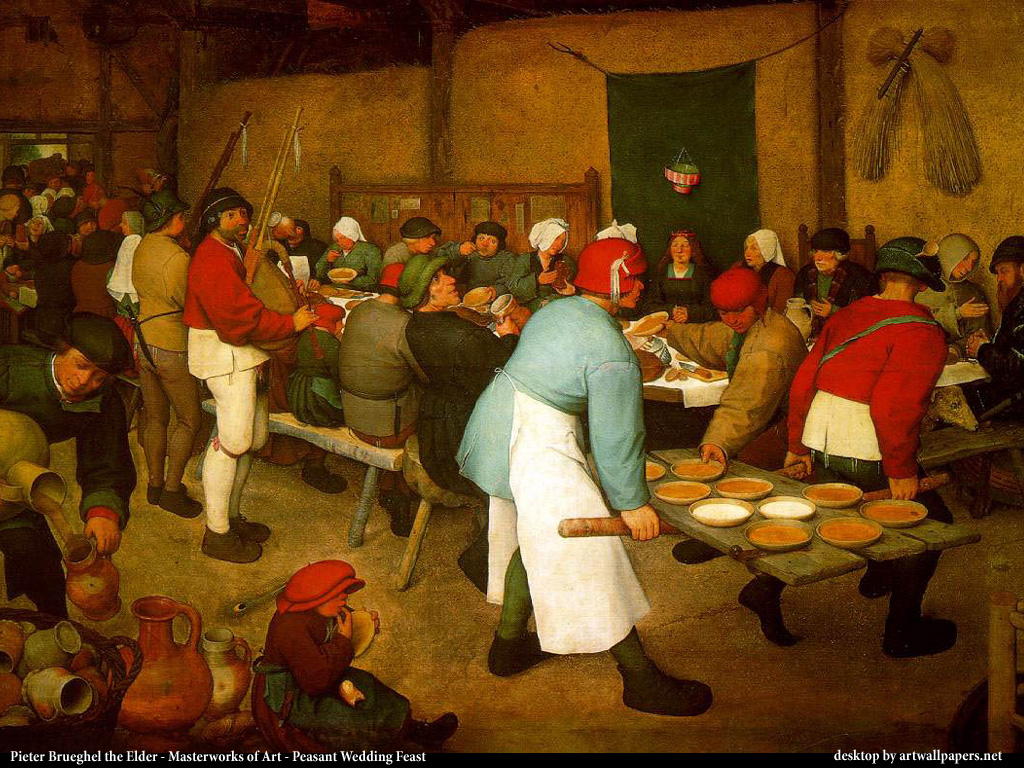
In Jesus’ parable of the great banquet, God the Father is portrayed as a generous host who wants to share of his limitless abundance and fullest joy with others.
The host prepares a feast, ensuring that everything is taken care of.
God undertakes everything needed for our salvation—even footing the bill by sacrificing his own Son for our sake.
And he opens the doors of his kingdom, extending his invitation to all.
Ultimately God wants his house filled with all whom he has invited.
And as followers of Jesus who have become God’s servants, we receive an expanded role.
We become inviters and bringers, actively seeking and urging others to join us.
This role has sometimes been described as “one beggar telling another beggar where to find food”—or, as in this parable, one invited guest informing another guest about the indescribable banquet hall brimming with our eternal blessings.
What does Luke chapter 14 verse 23 mean?
People who are outcast and Gentiles, even robbers waiting to waylay travelers, are welcome. Jesus compels them to come: He does not force them, but He does work hard to show them why it’s a good idea. Parables are meant to teach, apply a certain moral and ethical lesson—not to be taken with any wooden literalism.
What is the moral lesson of the parable of the Great Banquet?
Because those invited were too busy with things, they made their lame excuses and turned down the invitation from the master and missed the great feast!
In this parable the invitation to the banquet is Jesus’ invitation for us to accept His salvation. Accepting this invitation to salvation means that we ask Jesus to enter our hearts, forgive our sins and choose to do the things He wants us to do.
In the name of God, the Father and God the Son and God, the Holy Spirit,
Praying …
Psalm 84 New American Standard Bible
Longing for the Temple Worship.
For the music director; [a]on the Gittith. A Psalm of the sons of Korah.
84 How lovely are Your dwelling places, Lord of armies! 2 My soul longed and even yearned for the courtyards of the Lord; My heart and my flesh sing for joy to the living God. 3 The bird also has found a house, And the swallow a nest for herself, where she may put her young: Your altars, Lord of armies, My King and my God. 4 Blessed are those who dwell in Your house! They are ever praising You. Selah
5 Blessed is the person whose strength is in You, In [b]whose heart are the roads to Zion! 6 Passing through the Valley of [c]Baca they make it a [d]spring; The early rain also covers it with blessings. 7 They go from strength to strength, [e]Every one of them appears before God in Zion.
8 Lord God of armies, hear my prayer; Listen, God of Jacob! Selah 9 See our shield, God, And look at the face of Your anointed. 10 For a day in Your courtyards is better than a thousand elsewhere. I would rather stand at the threshold of the house of my God Than live in the tents of wickedness. 11 For the Lord God is a sun and shield; The Lord gives grace and glory; He withholds no good thing [f]from those who walk with integrity. 12 Lord of armies, Blessed is the person who trusts in You!
Glory be to the Father, and to the Son, and to the Holy Ghost; as it was in the beginning, is now, and ever shall be, world without end. Amen, amen.
“Don’t let the wise brag of their wisdom. Don’t let heroes brag of their exploits. Don’t let the rich brag of their riches. If you brag, brag of this and this only: That you understand and know me. I’m God, and I act in loyal love. I do what’s right and set things right and fair, and delight in those who do the same things. These are my trademarks.” God’s Decree.
Word of God for the Children of God
Glory be to the Father, and to the Son, and to the Holy Ghost; as it was in the beginning, is now, and ever shall be, world without end. Amen, amen.
We live, some days it is more like barely existing, in a culture of self-promotion which encourages us to follow, to trust, only in ourselves instead of our Creator.
Aware of our need to battle against self-reliance, God speaks to us through His living Word, encouraging us to boast—to find our confidence—in Him alone.
In an attempt to find wisdom apart from God, some pursue instead education and knowledge. Some are more prone to rely primarily on physical strength or beauty, ignoring the reality that our bodies will decay and eventually fail us.
Still others are enticed to look to money and riches and social status rather than God as their ultimate provider.
It’s a delusion, though, says Jeremiah, to think even for a nanosecond that we can boast in an agile mind, a healthy body, or a fat financial portfolio.
Where, then, are we to place our confidence?
The prophet’s answer is clear: we are to place our trust in God Himself.
We can trust God because He is a God of justice.
He rules in equity, He deals in truth, He is not arbitrary in what He does. We can all have full assurance that His actions are always in keeping with His character.
We can trust God because He is characterized by His steadfast covenant love for His people—a love made known to us in the person, work of Lord Jesus Christ.
And because of the depth of the Father’s love for us, we are “called children of God” (1 John 3:1)!
Therefore, we are to take refuge in His righteousness, not our own.
Our confidence rests in Jesus, who fulfilled the Father’s will so that we may know Him and love Him as our Creator and Sustainer, as our Savior and King.
A biblical worldview does not denigrate people’s aspirations in the pursuit of wisdom, the exercise of physical prowess, or the ability to earn.
But it does stand against the idea that our identity, satisfaction, or salvation can successfully be based on any of these things.
There is still a glory that outshines these lesser lights.
Our lives should proclaim purposefully, graciously, and straightforwardly that God created us to give Him glory by our walking humbly before Him, enjoying Him into eternity.
Where is your confidence for today, for tomorrow, and forever?
What do you look to to get you through difficult days?
Living in a world with information at our fingertips, we must learn that the knowledge we need is really wisdom applied with the compassion of Christ.
It includes an awareness of God’s covenant laws and a concern for life calling for obedience, discipline even when doing so may be difficult. Jesus showed the Way, the Truth, the Life by submitting to his Father’s will. He is our example.
In the name of God, the Father God the Son and God the Holy Spirit,
Praying …
Psalm 34 English Standard Version
Taste and See That the Lord Is Good
[a] Of David, when he changed his behavior before Abimelech, so that he drove him out, and he went away.
34 I will bless the Lord at all times; his praise shall continually be in my mouth. 2 My soul makes its boast in the Lord; let the humble hear and be glad. 3 Oh, magnify the Lord with me, and let us exalt his name together!
4 I sought the Lord, and he answered me and delivered me from all my fears. 5 Those who look to him are radiant, and their faces shall never be ashamed. 6 This poor man cried, and the Lord heard him and saved him out of all his troubles. 7 The angel of the Lord encamps around those who fear him, and delivers them.
8 Oh, taste and see that the Lord is good! Blessed is the man who takes refuge in him! 9 Oh, fear the Lord, you his saints, for those who fear him have no lack! 10 The young lions suffer want and hunger; but those who seek the Lord lack no good thing.
11 Come, O children, listen to me; I will teach you the fear of the Lord. 12 What man is there who desires life and loves many days, that he may see good? 13 Keep your tongue from evil and your lips from speaking deceit. 14 Turn away from evil and do good; seek peace and pursue it.
15 The eyes of the Lord are toward the righteous and his ears toward their cry. 16 The face of the Lord is against those who do evil, to cut off the memory of them from the earth. 17 When the righteous cry for help, the Lord hears and delivers them out of all their troubles. 18 The Lord is near to the brokenhearted and saves the crushed in spirit.
19 Many are the afflictions of the righteous, but the Lord delivers him out of them all. 20 He keeps all his bones; not one of them is broken. 21 Affliction will slay the wicked, and those who hate the righteous will be condemned. 22 The Lord redeems the life of his servants; none of those who take refuge in him will be condemned.
Glory be to the Father, and to the Son, and to the Holy Ghost; as it was in the beginning, is now, and ever shall be, world without end. Amen, amen.
18 For you have not come to what may be touched, a blazing fire and darkness and gloom and a tempest 19 and the sound of a trumpet and a voice whose words made the hearers beg that no further messages be spoken to them. 20 For they could not endure the order that was given, “If even a beast touches the mountain, it shall be stoned.” 21 Indeed, so terrifying was the sight that Moses said, “I tremble with fear.” 22 But you have come to Mount Zion and to the city of the living God, the heavenly Jerusalem, and to innumerable angels in festal gathering, 23 and to the assembly[a] of the firstborn who are enrolled in heaven, and to God, the judge of all, and to the spirits of the righteous made perfect, 24 and to Jesus, the mediator of a new covenant, and to the sprinkled blood that speaks a better word than the blood of Abel.
25 See that you do not refuse him who is speaking. For if they did not escape when they refused him who warned them on earth, much less will we escape if we reject him who warns from heaven. 26 At that time his voice shook the earth, but now he has promised, “Yet once more I will shake not only the earth but also the heavens.” 27 This phrase, “Yet once more,” indicates the removal of things that are shaken—that is, things that have been made—in order that the things that cannot be shaken may remain. 28 Therefore let us be grateful for receiving a kingdom that cannot be shaken, and thus let us offer to God acceptable worship, with reverence and awe, 29 for our God is a consuming fire.
Word of God for the Children of God
Glory be to the Father, and to the Son, and to the Holy Ghost; as it was in the beginning, is now, and ever shall be, world without end. Amen, amen.
This verse introduces us to the Christian goals of being grateful and worshiping God acceptably and reverently.
But how exactly can we show that such aims have become a reality in our lives?
The answer is provided in part in the following chapter: we are to love one another, show hospitality to strangers, remember those who are in prison, and maintain sexual purity within marriage (Hebrews 13:1-4).
These attitudes of gratitude and worship are founded upon and a response to all of the previous twelve chapters in the book of Hebrews. The writer has made it clear that he is writing to those who have already come to hold firmly to Christ.
In other words, they have acknowledged their sin, they have embraced Christ as their Savior, and they have been included in the family of faith. They have been given a place in “a kingdom that cannot be shaken”—a perfect, eternal realm that will inevitably encompass the whole renewed world when its King returns.
So worship does not precede kingdom membership; it reveals it. It is because we are members of that kingdom that we live lives of gratitude and worship.
God’s commands are not a list of regulations that allow individuals to make themselves acceptable to God and to one another. Ourlifestyle is an evidence of our life. These godly behaviors do not create the life. They simply reveal it.
God will never exhort you to do something without providing you with the resources to be able to fulfill it.
When He says He wants you to love others, care for the stranger, and remember the prisoner, He also provides the grace that enables you to do it. You are called to genuinely care for people because He, the Lord Jesus, looked on people and saw them as sheep without a shepherd (Matthew 9:36; Mark 6:34).
You are called to a life of purity because you were bought with “the precious blood of Christ, like that of a lamb without blemish or spot” (1 Peter 1:19).
What, then, are your actions saying to your friends, to your neighbors, to your family, and to your entire sphere of influence—no matter how big or small?
Be known for your “God is always going to be first.”
Be known for your steadfast belief in living according to Biblical Principles.
Be known for your gratitude.
Be known for your worship.
But do not finish reading this and simply determine to be more grateful, more worshipful, and more obedient. Finish it rejoicing that you have been given “a kingdom that cannot be shaken,” ruled by a King who “cannot be defeated.”
It is as you look at Him, and not at yourself, that you will find yourself filling with sheer gratitude and desiring to worship Him throughout all of your life.
We are receiving the triumphant and glorious victory of God in his Kingdom.
We will join with the angels and the saints of old and live with the Father forever in victorious and never ending joy.
But this Kingdom doesn’t just begin when Jesus returns.
This Kingdom has started now in his Church, his people, those in whom God’s will is cherished and obeyed. So our worship should be filled with awe that the holy God of Israel is also the lowly God in Jesus who has redeemed us and made us to be a holy people unto himself.
What else can we do but reverently worship with heartfelt thanksgiving, wonder struck awe.
Verse 28 of Hebrews 12 is the culmination of a process, which starts in Psalm 110, in that King Jesus must sit by His Father, the Ancient of Days.
Verse 27 gives us the lead into verse 28:
Yet once more, signifieth the removing of those things that are shaken, as of things that are made, that those things which cannot be shaken may remain KJV.
This speaks to the process we go through to see ourselves in the “receiving” of that Kingdom in v28.
For us to receive the Kingdom Jesus needs to receive it first, for which Daniel 7 shows us very clearly.
God gave Him Dominion, power and a Kingdom.
Jesus in Psalm 110, revealed by Peter in Acts 2, is at the Right Hand of the Ancient of Days to see the completion of the restoration of all things, in the earth and in the heavens.
This establishes the program of God.
For that to happen there has been removal by shaking.
I believe we are in a season of preparation, and v28 of Hebrews 12 tells us.
There comes a time when we are preparing to be in place to receive the fullness of the Kingdom. Where we see King Jesus rule in our lives bringing harmony, bringing a resolution to issues which we have long left dormant in our being.
What He needs to reveal are the building blocks of our calling. We are much more than working, eating and sleeping, and the weekend social times, even church meetings. Even things which can be so mechanical. We could have been regularly teaching and preaching, now we are finding time to reflect and write.
What I see is we are being prepared for greater trials before us, and persecution. I see a great harvest ahead too. However the world, and many of those who live in sin and wickedness will transform into the image of that wickedness. What God does when He removes from us, is strengthen that which remains. What remains is Kingdom! This Kingdom is ruled in peace and joy in the Holy Spirit!
What God is building in us, which cannot be shaken are the pillars of truth and faith which will bring in the last harvest, come with Jesus to judge the earth.
For so long believers have been the tail and not the head.
This is the preparation time, and this part is coming to an end.
John 14:1-7 English Standard Version
I Am the Way, and the Truth, and the Life
14 “Let not your hearts be troubled. Believe in God;[a] believe also in me. 2 In my Father’s house are many rooms. If it were not so, would I have told you that I go to prepare a place for you?[b]3 And if I go and prepare a place for you, I will come again and will take you to myself, that where I am you may be also. 4 And you know the way to where I am going.”[c]5 Thomas said to him, “Lord, we do not know where you are going. How can we know the way?” 6 Jesus said to him, “I am the way, and the truth, and the life. No one comes to the Father except through me. 7 If you had known me, you would have known my Father also.[d] From now on you do know him and have seen him.”
A new Way is ahead. …
A new season is ahead. …
A new live is ahead. …
A new Truth is before us. …
A new Lifestyle is before us. …
In the name of God, the Father God the Son and God the Holy Spirit,
Praying …
Psalm 110 English Standard Version
Sit at My Right Hand
A Psalm of David.
110 The Lord says to my Lord: “Sit at my right hand, until I make your enemies your footstool.”
2 The Lord sends forth from Zion your mighty scepter. Rule in the midst of your enemies! 3 Your people will offer themselves freely on the day of your power,[a] in holy garments;[b] from the womb of the morning, the dew of your youth will be yours.[c] 4 The Lord has sworn and will not change his mind, “You are a priest forever after the order of Melchizedek.”
5 The Lord is at your right hand; he will shatter kings on the day of his wrath. 6 He will execute judgment among the nations, filling them with corpses; he will shatter chiefs[d] over the wide earth. 7 He will drink from the brook by the way; therefore he will lift up his head.
Glory be to the Father, and to the Son, and to the Holy Ghost; as it was in the beginning, is now, and ever shall be, world without end. Amen, amen.
(1) Bless Adonai, my soul! Everything in me, bless his holy name! 2 Bless Adonai, my soul, and forget none of his benefits!
3 He forgives all your offenses, he heals all your diseases, 4 he redeems your life from the pit, he surrounds you with grace and compassion, 5 he contents you with good as long as you live, so that your youth is renewed like an eagle’s.
6 Adonai brings vindication and justice to all who are oppressed. 7 He made his ways known to Moshe, his mighty deeds to the people of Isra’el. 8 Adonai is merciful and compassionate, slow to anger and rich in grace. 9 He will not always accuse, he will not keep his anger forever. 10 He has not treated us as our sins deserve or paid us back for our offenses, 11 because his mercy toward those who fear him is as far above earth as heaven. 12 He has removed our sins from us as far as the east is from the west.
13 Just as a father has compassion on his children, Adonai has compassion on those who fear him. 14 For he understands how we are made, he remembers that we are dust. 15 Yes, a human being’s days are like grass, he sprouts like a flower in the countryside — 16 but when the wind sweeps over, it’s gone; and its place knows it no more. 17 But the mercy of Adonai on those who fear him is from eternity past to eternity future, and his righteousness extends to his children’s children, 18 provided they keep his covenant and remember to follow his precepts.
19 Adonai has established his throne in heaven; his kingly power rules everything. 20 Bless Adonai, you angels of his, you mighty warriors who obey his word, who carry out his orders! 21 Bless Adonai, all his troops, who serve him and do what he wants! 22 Bless Adonai, all his works, in every place where he rules! Bless Adonai, my soul!
Word of God for the Children of God
Glory be to the Father, and to the Son, and to the Holy Ghost; as it was in the beginning, is now, and ever shall be, world without end. Amen, amen.
Most of us are always trying to improve something in our lives: leveling-up our skills at work, education, managing our money better, enhancing relationships with loved ones, and even going to a gym dropping pounds as a new year’s goal.
But in our relentless pursuit of self-improvement, it’s so also too easy to fall into the trap of self-criticism. We push ourselves harder and harder, set higher expectations, our inner voice becomes our harshest judge. Then when we have stumble, we respond with mounting frustration, self-doubt, or even shame.
But what if I told you there’s a better way?
A way that feels lighter, more sustainable, and more empowering—one that fosters growth not through force but through grace?
A way that also will be far more effective in actually achieving those self-improvement goals.
That better way is self-compassion.
Why self-criticism holds us back
Many of us mistakenly believe that being hard on ourselves will motivate us to do better. After all, if we hold ourselves to impossibly high standards, we’ll be forced to rise to the occasion, right?
Unfortunately, and in reality, self-criticism often has just the opposite effect.
Instead of propelling us forward, it drags us down. It erodes our confidence, feeds negative narratives, and traps us in cycles of stress and resistance.
When we constantly criticize ourselves, we create an environment where fear of failure takes center stage.
We focus on the wrong thing! Therefore, growth becomes a stressful process driven by the avoidance of mistakes rather than the pursuit of progress.
This mindset robs us of joy, creativity, and the ability to see opportunities for what they are: lessons, not setbacks.
So, what is self-compassion, anyways?!
Self-compassion is the practice of extending kindness, understanding, and patience to ourselves—especially when we fall short of our own expectations.
I like to think of it as treating ourselves exactly the way we would treat your best friend!
For instance, imagine your best friend coming to you, heartbroken over a mistake or failure.
Would you berate them?
Call them a failure?
Tell them that they’ll never be able to get it right?
Of course not!
You would comfort them, encourage them, and remind them that they are still worthy and capable of growth.
Essentially, you would believe in them and help them to do the same.
So why don’t we do the same for ourselves?
Psalm 13 Complete Jewish Bible
13 (0) For the leader. A psalm of David:
2 (1) How long, Adonai? Will you forget me forever? How long will you hide your face from me? 3 (2) How long must I keep asking myself what to do, with sorrow in my heart every day? How long must my enemy dominate me?
4 (3) Look, and answer me, Adonai my God! Give light to my eyes, or I will sleep the sleep of death. 5 (4) Then my enemy would say, “I was able to beat him”; and my adversaries would rejoice at my downfall.
6 (5) But I trust in your grace, my heart rejoices as you bring me to safety. (6) I will sing to Adonai, because he gives me even more than I need.
“But IF I trust in your grace …”
What is TRUST anyway …?
“WILL my heart rejoice as God brings me to safety?”
What is rejoicing anyway …?
What does being brought to safety …?
Will I be “safe” while I am “being brought to safety? …
Psalm 107:23-30 Complete Jewish Bible
23 Those who go down to the sea in ships, plying their trade on the great ocean, 24 saw the works of Adonai, his wonders in the deep.
25 For at his word the storm-wind arose, lifting up towering waves. 26 The sailors were raised up to the sky, then plunged into the depths. At the danger, their courage failed them, 27 they reeled and staggered like drunk men, and all their skill was swallowed up.
28 In their trouble they cried to Adonai, and he rescued them from their distress. 29 He silenced the storm and stilled its waves, 30 and they rejoiced as the sea grew calm. Then he brought them safely to their desired port.
Will I be “safer” when I reach my final, ultimate “safest” haven? …
Can you relate?
Have you ever experienced a setback, which may have been an innocent occurrence, to speak judgment upon your life?
Have you ever felt the crush of discouragement or self-recrimination because of a struggle or obstacle you face?
I don’t know about you, but I can judge myself negatively when such times occur.
I tell myself that if I were a better Christian, pastor, or prayer warrior, none of this would happen to me.
If God helps those who help themselves, but I am in a place where I need help, well, then God’s not with me, right?
And with these thoughts speaking all too loudly, I render swift harsh judgment upon myself. I vigorously condemn myself far worse than God ever does.
Do you believe setbacks in your life testify to a lack of God’s love?
Do you see struggles or frustrations as testimonies to faithlessness – signs that maybe God isn’t as close as you think?
If you have ever judged yourself negatively because of a setback in your life, then let these words wash over you: “The Lord is compassionate and gracious.”
These words describe the Lord’s fundamental character and elucidate the deepest level of God’s identity.
God does not change like shifting shadows; God is not one thing in one moment and another thing in the next. Our God is eternally compassionate and gracious, abounding in love; these attributes are stalwart, trustworthy, and dependable.
The word “compassion” means “to suffer with”; it means to enter the life of another lovingly. In compassion, there is no judgment or retribution.
This means we can be confident in the Lord’s care over us because the Lord of compassion is not the Lord who will hurl lightning bolts of misfortune at us or deem us unlovable for our struggles. The compassionate love of God embraces us, even when we stumble. We all receive grace upon grace in the hands of Jesus.
Jesus, as the incarnation of God, comes to us, not to yell or scream, but to be compassionate, to love us in our weaknesses, to embrace us in all our humanity.
Jesus joins us in our lives, and the cross testifies to his compassion because it is the eternal sign he suffers with and for us.
And so, we can be confident, amid setbacks, that we are not alone.
And so, if Jesus shows compassion for us amid our setbacks and struggles, shouldn’t we be compassionate to ourselves?
What might it look like to refuse setbacks to speak the final word?
Instead of looking at our stumbles or failings, can we set our sights on our desire to journey closer to Jesus?
Faith rarely exists in palaces of ease and problem-free times.
We all face discouragements, But our faith grows when we dare to hold onto the love of Jesus during those moments.
Like Peter sinking in the sea, Jesus doesn’t turn away leave us treading water – he reaches out to us. And if he reaches out to us, we can sigh with ease, knowing that Christ’s loving compassion has the final word, is indeed, the final Word.
Let’s Pray:
Gracious and compassionate Lord, how blessed is your love over my life?
How all-encompassing it is. How transformative! I thank you for your love for me, which frees me from the need to work my way to you. I thank you, and your grace testifies that your presence in my life is a gift to be embraced, not an award that I need to earn. Lord Jesus Christ, when tempted to be self-critical for my failings and setbacks, help me live in light of your incarnation.
Help me remember that as you entered the fullness of human life, so too do you embrace the fullness of my humanity. You are one who sympathizes with all my weaknesses and is available to me in all my struggles. Lord, allow me to extend compassion on myself – a compassion permanently rooted in your loving care.
Please help me to turn away from the voice of self-doubt, self-recrimination, and self-condemnation. And when these voices rise within me, may your words of compassionate grace speak more loudly, truthfully, authentically, into my divided heart. I turn to you and I choose to live as your beloved child. Amen.
Psalm 8 Complete Jewish Bible
8 (0) For the leader. On the gittit. A psalm of David:
2 (1) Adonai! Our Lord! How glorious is your name throughout the earth! The fame of your majesty spreads even above the heavens!
3 (2) From the mouths of babies and infants at the breast you established strength because of your foes, in order that you might silence the enemy and the avenger.
4 (3) When I look at your heavens, the work of your fingers, the moon and stars that you set in place — 5 (4) what are mere mortals, that you concern yourself with them; humans, that you watch over them with such care?
6 (5) You made him but little lower than the angels, you crowned him with glory and honor, 7 (6) you had him rule what your hands made, you put everything under his feet — 8 (7) sheep and oxen, all of them, also the animals in the wilds, 9 (8) the birds in the air, the fish in the sea, whatever passes through the paths of the seas.
10 (9) Adonai! Our Lord! How glorious is your name throughout the earth!
Glory be to the Father, and to the Son, and to the Holy Ghost; as it was in the beginning, is now, and ever shall be, world without end. Amen, amen.
26 For the [whole] earth is the Lord’s, and everything that is in it. 27 If one of the unbelievers invites you [to a meal at his home] and you want to go, eat whatever is served to you without asking questions [about its source] for the sake of your conscience.28 But if anyone says to you, “This meat has been offered i n sacrifice to an idol,” do not eat it, out of consideration for the one who told you, and for conscience’s sake— 29 and by conscience I mean for the sake of the other man’s, not yours. For [a]why is my freedom [of choice] judged by another’s conscience [another’s ethics—another’s sense of right and wrong]? 30 If I take my share [of food] with thankfulness, why am I accused because of something for which I give thanks?
31 So then, whether you eat or drink or whatever you do, do all to the glory of [our great] God. 32 Do not offend Jews or Greeks or even the church of God [but live to honor Him]; 33 just as I please everyone in all things [as much as possible adapting myself to the interests of others], not seeking my own benefit but that of the many, so that they [will be open to the message of salvation and] may be saved.
Word of God for the Children of God
Glory be to the Father, and to the Son, and to the Holy Ghost; as it was in the beginning, is now, and ever shall be, world without end. Amen, amen.
If I was limitless, why would I need a relationship with the Creator of all things?
I wouldn’t need strength, I wouldn’t need help, I wouldn’t need a Savior. By the grace of God, our Heavenly Father chose to send His son to bridge the gap.
He sent His son first and foremost to replace our sins, but He also sent Jesus to bless us by meeting us in our weakness.
We see this throughout the Bible. When the people of God look as if they will be consumed, God saves them.
We see this with Noah and the Ark; we also witness this through the prayer of Jehoshaphat in 2 Chronicles 20, and we see it as the walls come tumbling down at the battle of Jericho. Again and again, God proves Himself 100% faithful in our weakness.
When Paul wrote his two letters to the church in Corinth, he admonished and enlightened believers to boast in Christ alone and rejoice in the limits God had put on them, which showed His great power within us.
“For consider your calling, brothers: not many of you were wise according to worldly standards, not many were powerful, not many were of noble birth. But God chose what is foolish in the world to shame the wise; God chose what is weak in the world to shame the strong; God chose what is low and despised in the world, even things that are not, to bring to nothing things that are, so that no human being might boast in the presence of God. And because of him you are in Christ Jesus, who became wisdom from God, righteousness and sanctification and redemption, so that, as it is written, “Let the one who boasts, boast in the Lord.”
This portion of scripture split me wide open earlier this year. God chose what is low and despised in the world, meaning people and places with limitations, and used them to put His glory on display.
Think about what could shift in your life if you surrendered the areas where you felt weak and rested in Christ for your strength.
So much would change. Both on the inside and the outside.
Your heart would become more dependent on the Lord and more willing to trust that He will give you what you need to make it through the road ahead of you.
When you trust and see God’s faithfulness, an overflow effect happens.
You begin sharing with those around you what He has done; He takes your weakness and strengthens His name.
In the name of God, the Father and God the Son and God the Holy Spirit,
Praying …
Father, thank you for taking the areas of my life where I feel weak and using them to reveal your strength. I’m blessed beyond measure to serve a God who desires to use me for the Kingdom in ways I’d never imagined were possible. Father, if I’m withholding any weaknesses and gripping them with pride to “prove something,” help me release these things to you. As I hand them over, I pray to sense your peace and be washed over with the reminder that your power is perfect in my weakness. You are a good and faithful Father; help me be bold with the gifts you gave me and humble enough to come to you when I need help. In Jesus’ name, amen.
The Thirsting Soul Satisfied in God.
A Psalm of David; when he was in the wilderness of Judah.
63 O God, You are my God; with deepest longing I will seek You; My [a]soul [my life, my very self] thirsts for You, my flesh longs and sighs for You, In a dry and weary land where there is no water. 2 So I have gazed upon You in the sanctuary, To see Your power and Your glory. 3 Because Your lovingkindness is better than life, My lips shall praise You. 4 So will I bless You as long as I live; I will lift up my hands in Your name. 5 My [b]soul [my life, my very self] is satisfied as with marrow and fatness, And my mouth offers praises [to You] with joyful lips.
6 When I remember You on my bed, I meditate and thoughtfully focus on You in the night watches, 7 For You have been my help, And in the shadow of Your wings [where I am always protected] I sing for joy. 8 My [c]soul [my life, my very self] clings to You; Your right hand upholds me.
9 But those who seek my life to destroy it Will [be destroyed and] go into the depths of the earth [into the underworld]. 10 They will be given over to the power of the sword; They will be a prey for foxes. 11 But the king will rejoice in God; Everyone who swears by Him [honoring the true God, acknowledging His authority and majesty] will glory, For the mouths of those who speak lies will be stopped.
Glory be to the Father, and to the Son, and to the Holy Ghost; as it was in the beginning, is now, and ever shall be, world without end. Amen, amen.
5 Thomas said to him, “Lord, we do not know where you are going. How can we know the way?” 6 Jesus said to him, “I am the way, and the truth, and the life. No one comes to the Father except through me. 7 If you had known me, you would have known my Father also.[a] From now on you do know him and have seen him.”
Word of God for the Children of God
Glory be to the Father, and to the Son, and to the Holy Ghost; as it was in the beginning, is now, and ever shall be, world without end. Amen, amen.
Today it is just a small matter of speaking into our smart phones or if you drive a newer model vehicle with navigation, and saying; “siri, Alexa, google, take me to such a place, and step by step, turn by turn directions will appear and as you are driving, it will speak to you in a male or female voice where, when to turn.
If you miss your turn, GPS might say; “recalculating, recalculating …” and will give you another set of directions and verbally communicate them back to you.
People are always looking for ways to get from point A to point B. With GPS today, many of us can find our way easily around town or on a trip. Most routes are clearly marked, and we just have to hear, listen to and follow the directions.
People also search out new ways of doing things. Innovators try to find better ways to make things work. Medical researchers seek out ways to cure cancer.
Business owners look for ways to expand and to improve their bottom line.
In today’s Scripture, Jesus talks about being the way—and he is referring to the way to real, everlasting life.
This is the most important thing for all of us to know.
We may reach a destination, find a cure for cancer, and make a business more efficient and profitable.
But if we do not know the way to full life with God, what have we really, truly attained?
Finding cures and new ways to improve things in life may be helpful blessings for a while, but they do not solve all of our problems and struggles.
Only God can do that, in eternity.
There are always people who claim that there are many ways to God.
But there is really only one way—through Jesus, who himself is God.
He is the one who came from heaven, lived, died for our sake, conquered death for us, and then ascended to rule at the right hand of the Father in heaven.
He is the ONLY way, and he invites us to journey into full life forever with him!
Many days, but not all, I feel, something brewing.
Some fresh glimmers of hope and encouraging change on the horizon.
And following a slow, stretched-out season of what has felt like the same ole, same ole, laced with increased anxiety, chronic pain, dwindling energy, and swelling isolation, and any potential change is absolutely very much welcome.
And I give God all the glory for the potential opportunities, including promising pain relief. But even still, this thick thorn remains in my side.
A raging roadblock in my spirit, weighing me down and instilling doubt.
It’s the narrative in my inner being—words of insufficiency and incompetence and just flat-out inability.
I’ve been relentlessly praying for God to work in and through me—to show me his way. And he has certainly opened some sun-shiny doors.
But if I’m being honest, I can’t see how I can carry out and work through all the things he seems to be calling me to.
Do you ever wonder how you will conquer the missions and ministry’s before you? How will you take on all of those commitments you’ve committed to?
How will you take the steps toward the dream opportunities stirring up desire within you?
Or wonder how you’ll do it all well?
I do.
I asked myself over and over again,
“Where will I find the time, the energy, and the mental and emotional capacity?”
I bet you’ve had similar thoughts.
Psalm 139:1-12 English Standard Version
Search Me, O God, and Know My Heart
To the choirmaster. A Psalm of David.
139 O Lord, you have searched me and known me! 2 You know when I sit down and when I rise up; you discern my thoughts from afar. 3 You search out my path and my lying down and are acquainted with all my ways. 4 Even before a word is on my tongue, behold, O Lord, you know it altogether. 5 You hem me in, behind and before, and lay your hand upon me. 6 Such knowledge is too wonderful for me; it is high; I cannot attain it.
7 Where shall I go from your Spirit? Or where shall I flee from your presence? 8 If I ascend to heaven, you are there! If I make my bed in Sheol, you are there! 9 If I take the wings of the morning and dwell in the uttermost parts of the sea, 10 even there your hand shall lead me, and your right hand shall hold me. 11 If I say, “Surely the darkness shall cover me, and the light about me be night,” 12 even the darkness is not dark to you; the night is bright as the day, for darkness is as light with you.
But, we are neglecting a truth amidst these circumstances and contemplations.
If God truly leads us to these things, won’t he also lead us through these things?
I read a familiar verse the other morning in my devotion time, and it spoke truth directly to my wondering, wearying heart.
In verse five of Chapter 14, in the book of John, the disciple Thomas says to Jesus, “Lord, we don’t know where you are going, so how can we know the way?”
This is a sentiment many of us feel when we’ve come to a confusing crossroads of potential choices, tasks, or opportunities, joined by what seems to be a lack of ability, margin, and resources.
We might ask God, What is all this, and how am I supposed to handle it?
But as I kept reading, my fresh perspective on the first statement of the following verse—so familiar to us as Christians—fueled my confidence in the answer to the “how will I manage”thoughts.
Verse six reads, “Jesus answered, ‘I am the way and the truth and the life.’”
John 14:6 Amplified Bible
6 Jesus said to him, “[a]I am the [only] Way [to God] and the [real] Truth and the [real] Life; no one comes to the Father but through Me.
Jesus is the only way.
When we don’t know, or can’t see, the way forward and through.
Jesus is the only way forward and through.
This means that as long as I remain in him and with him, and he is thus also in me and with me, I don’t have to fear my faithful steps and choices.
Because the way will be with me, he will make a way, because he is the way.
And he is in me just like he is in you.
Intersecting Faith and Life:
The Great Commission
16 Now the eleven disciples went to Galilee, to the mountain which Jesus had designated. 17 And when they saw Him, they worshiped Him; but some doubted [that it was really He]. 18 Jesus came up and said to them, “All authority (all power of absolute rule) in heaven and on earth has been given to Me. 19 Go therefore and make disciples of all the nations [help the people to learn of Me, believe in Me, and obey My words], baptizing them in the name of the Father and of the Son and of the Holy Spirit, 20 teaching them to observe everything that I have commanded you; and lo, I am with you always [remaining with you perpetually—regardless of circumstance, and on every occasion], even to the end of the age.”
Friend, the Lord led you to where you are.
He opened the perfect doors, and he carved the precise path.
So keep following him closely, and remain in him always.
He will sufficiently strengthen, steer, guide and supply you with all you need. All the way. Because our sovereign loving Lord is… remains … the ONLY way.
In the name of God, the Father and God the Son and God the Holy Spirit,
Praying …
16 (0) Mikhtam. By David:
(1) Protect me, God, for you are my refuge. 2 I said to Adonai, “You are my Lord; I have nothing good outside of you.” 3 The holy people in the land are the ones who are worthy of honor; all my pleasure is in them.
4 Those who run after another god multiply their sorrows; To such gods I will not offer drink offerings of blood or take their names on my lips.
5 Adonai, my assigned portion, my cup: you safeguard my share. 6 Pleasant places were measured out for me; I am content with my heritage.
7 I bless Adonai, my counselor; at night my inmost being instructs me. 8 I always set Adonai before me; with him at my right hand, I can never be moved; 9 so my heart is glad, my glory rejoices, and my body too rests in safety; 10 for you will not abandon me to Sh’ol, you will not let your faithful one see the Abyss. 11 You make me know the path of life; in your presence is unbounded joy, in your right hand eternal delight.
Glory be to the Father, and to the Son, and to the Holy Ghost; as it was in the beginning, is now, and ever shall be, world without end. Amen, amen.









 Loving God, Living God, Loving Hope, Living Hope, Loving Living Life His Way! "Many things are possible for the person who has hope. Even more is possible for the person who has faith. And still more is possible for the person who knows how to love. But everything is possible for the person who practices all three virtues." - Brother Lawrence (1605-1691), Practicing the Presence of God (1692).