Romans 15:4 "For whatever was written in earlier times was written for our instruction, so that through perseverance and the encouragement of the Scriptures we might have hope."
3 I am the man who has seen affliction under the rod of his fury, 2 He has led me and made me walk in darkness and not in light. 3 Against me alone he turns his hand again and again, all day.
4 He has worn away my skin and flesh, he has broken my bones. 5 He has besieged and surrounded me with bitterness and hardship. 6 He has made me live in darkness, like those who are long dead.
7 He has walled me in, so I can’t escape; he has weighed me down with chains. 8 Even when I cry out, pleading for help, he shuts out my prayer. 9 He has barred my way with blocks of stone, he has made my paths crooked.
10 He lies in wait for me like a bear, like a lion in hiding. 11 He has forced me aside and torn me to pieces, leaving me stunned. 12 He has bent his bow and used me as a target for his arrows.
13 He has pierced my vital organs with shafts from his quiver. 14 I’m a laughingstock to all my people, the butt of their taunts all day long. 15 He has filled me with bitterness, sated me with wormwood.
16 He has broken my teeth with gravel and pressed me down into ashes. 17 I have been so deprived of peace, I have so forgotten what happiness is, 18 that I think, “My strength is gone, and so is my hope in Adonai.”
19 Remember my utter misery, the wormwood and the gall. 20 They are always on my mind; this is why I am so depressed.
21 But in my mind I keep returning to something, something that gives me hope — 22 that the grace of Adonai is not exhausted, that his compassion has not ended. 23 [On the contrary,] they are new every morning! How great your faithfulness! 24 “Adonai is all I have,” I say; “therefore I will put my hope in him.
Word of God for the Children of God
Glory be to the Father, and to the Son, and to the Holy Ghost; as it was in the beginning, is now, and ever shall be, world without end. Amen, amen.
How much good news, bad news, worse news can any human being take before they just launch up every single white flag within a fifty thousand mile radius?
The book of Lamentations is situated in a most disquieting and uncomfortable setting, for it is the reflections of the prophet Jeremiah upon the circumstances of God’s people when Jerusalem was taken by Babylon and carried off into exile.
Lamentations is exactly what its title suggests: a long hard series of poems that explicitly express those people’s most intimate sorrow for what’s taken place.
Lamentations begins in absolute desolation: “How lonely sits the city that was full of people!” (Lamentations 1:1).
In the face of such prolonged hardcore catastrophe, it’s common to think that evil has defeated good or that God has washed His hands, given up on sinners.
But in the case of Jerusalem’s fall, nothing could be further from the truth.
God was still in charge.
It was He who allowed the powers of Babylon to rise up that His people would become aware their sinfulness and neediness and cry out to God in repentance.
The Lord afflicted His people “on the day of his fierce anger”(Lamentations 1:12).
Yet in the midst of their deep sorrow, He also brought a deeply comforting word. His people may have been brought low, but they had not been forsaken.
Psalm 56:8-9 English Standard Version
8 You have kept count of my tossing’s;[a] put my tears in your bottle. Are they not in your book? 9 Then my enemies will turn back in the day when I call. This I know, that[b] God is for me.
They had experienced the ending of many things: the end of peace, the end of security, and the end of home. But two things they would never experience the end of: God’s always abundant, steadfast love and God’s undeserved mercies.
Those were always new, and always sufficient, every single morning.
The people would learn far, experience far more, about their God’s faithfulness in their place of exile than they ever had acknowledged in the comfort of home.
Jeremiah 29:4-7 Amplified Bible
4 “So says the Lord of hosts, the God of Israel, to all the captives whom I have sent into exile from Jerusalem to Babylon, 5 ‘Build houses and live in them; plant gardens and eat their fruit. 6 Take wives and have sons and daughters; take wives for your sons and give your daughters in marriage, that they may bear sons and daughters; multiply there and do not decrease [in number]. 7 Seek peace and well-being for the city where I have sent you into exile, and pray to the Lord on its behalf; for in its peace (well-being) you will have peace.’
Indeed, it is often in our darkest moments that the faithful character of God shines most brightly to us. When things are going well, we’re tempted to think we’re sufficient on our own. But in moments of despair, we can always cling to God’s faithfulness, and in times of failure, we can always appreciate His mercy.
You may someday find yourself in a similar situation to that of the citizens of the ransacked Jerusalem—a situation in which all the wheels have come off and you feel bereft of joy. Perhaps, with scripture we find our place of Shalom today.
In moments like these, when our life is set in a badly out of tune minor key, you will always need this deeply comforting reminder: the faithful steadfast love of the Lord never ceases. His mercy will never run dry. Psalms 23, 121 are forever!
His faithfulness toward you will never fail.
In those hard harsh moments when we have lost much, we can always rely on this: we’ll never be forsaken, lose His love, and we will never lose His mercy.
In the name of God, the Father the Son and the Holy Spirit ….
Praying ….
Psalm 29AKJV
A Psalm of David.
1 Give unto the Lord, O ye mighty, give unto the Lord glory and strength. 2 Give unto the Lord the glory due unto his name; worship the Lord in the beauty of holiness.
3 The voice of the Lord is upon the waters: the God of glory thundereth: the Lord is upon many waters. 4 The voice of the Lord is powerful; the voice of the Lord is full of majesty. 5 The voice of the Lord breaketh the cedars; yea, the Lord breaketh the cedars of Lebanon. 6 He maketh them also to skip like a calf; Lebanon and Sirion like a young unicorn. 7 The voice of the Lord divideth the flames of fire. 8 The voice of the Lord shaketh the wilderness; the Lord shaketh the wilderness of Kadesh. 9 The voice of the Lord maketh the hinds to calve, and discovereth the forests: and in his temple doth every one speak of his glory.
10 The Lord sitteth upon the flood; yea, the Lord sitteth King for ever. 11 The Lord will give strength unto his people; the Lord will bless his people with peace.
Glory be to the Father, and to the Son, and to the Holy Ghost; as it was in the beginning, is now, and ever shall be, world without end. Amen, amen.
1 Thessalonians 5:12-18 New American Standard Bible
Christian Conduct
12 But we ask you, brothers and sisters, to recognize those who diligently labor among you and [a]are in leadership over you in the Lord, and give you [b] instruction, 13 and that you regard them very highly in love because of their work. Live in peace with one another. 14 We urge you, brothers and sisters, admonish the [c]unruly, encourage the fainthearted, help the weak, be patient with everyone. 15 See that no one repays another with evil for evil, but always seek what is good for one another and for all people.
16 Rejoice always, 17 pray without ceasing, 18 in everything give thanks; for this is the will of God for you in Christ Jesus.
Word of God for the Children of God
Glory be to the Father, and to the Son, and to the Holy Ghost; as it was in the beginning, is now, and ever shall be, world without end. Amen, amen.
1 Thessalonians 1:2-5 New American Standard Bible
2 We always give thanks to God for all of you, making mention of you in our prayers; 3 constantly keeping in mind your work of faith and labor of love and [a] perseverance of hope [b]in our Lord Jesus Christ in the presence of our God and Father, 4 knowing, brothers and sisters, beloved by God, His choice of you; 5 for our gospel did not come to you in word only, but also in power and in the Holy Spirit and with full conviction; just as you know what kind of men we proved to be among you for your sakes.
1 Thessalonians 2:14-16 New American Standard Bible
14 For you, brothers and sisters, became imitators of the churches of God in Christ Jesus that are in Judea, for you also endured the same sufferings at the hands of your own countrymen, even as they did from the Jews, 15 who both killed the Lord Jesus and the prophets, and [a]drove us out. [b]They are not pleasing to God, [c]but hostile to all people, 16 hindering us from speaking to the Gentiles so that they may be saved; with the result that they always[d]reach the limit of their sins. But wrath has come upon them [e]fully.
1 Thessalonians 3:1-8 New American Standard Bible
Encouragement of Timothy’s Visit
3 Therefore, when we could no longer endure it, we thought it best to be left behind, alone at Athens, 2 and we sent Timothy, our brother and God’s fellow worker in the gospel of Christ, to strengthen and encourage you for the benefit of your faith, 3 so that no one would be [a]disturbed by these afflictions. For you yourselves know that we have been destined for this. 4 For even when we were with you, we kept telling you in advance that we were going to suffer affliction; [b]and so it happened, [c]as you know. 5 For this reason, when I could no longer endure it, I also sent to [d] find out about your faith, for fear that the tempter might have tempted you, and our labor would be for nothing.
6 But now that Timothy has come to us from you, and has brought us good news of your faith and love, and that you always think kindly of us, longing to see us just as we also long to see you, 7 for this reason, brothers and sisters, in all our distress and affliction we were comforted about you through your faith; 8 for now we really live, if you stand firm in the Lord.
1 Thessalonians 4:13-18 New American Standard Bible
Those Who Died in Christ
13 But we do not want you to be uninformed, brothers and sisters, about those who [a]are asleep, so that you will not grieve as indeed the rest of mankind do, who have no hope. 14 For if we believe that Jesus died and rose from the dead, so also God will bring with Him those who have fallen asleep [b]through Jesus. 15 For we say this to you by the word of the Lord, that we who are alive [c]and remain until the coming of the Lord will not precede those who have fallen asleep. 16 For the Lord Himself will descend from heaven with a [d]shout, with the voice of the archangel and with the trumpet of God, and the dead in Christ will rise first. 17 Then we who are alive, who remain, will be caught up together with them in the clouds to meet the Lord in the air, and so we will always be with the Lord. 18 Therefore, [e]comfort one another with these words.
1 Thessalonians 5:15-18 New American Standard Bible
15 See that no one repays another with evil for evil, but always seek what is good for one another and for all people. 16 Rejoice always,17 pray without ceasing, 18 in everything give thanks; for this is the will of God for you in Christ Jesus.
What message was Paul trying so hard to convey to the Thessalonian church he planted with his constant repetition and implications, of the word “always?”
First Question … What does always from 1 Thessalonians 5:12-18 mean?
Paul says that we must always seek after that which is good for them.
This word “always” tells us that we cannot pick and choose when or to whom we will do this. It doesn’t distinguish from who did or did not commit an evil act against you. It doesn’t depend on how many times they did it. It doesn’t depend on how much it hurt or how much it may have blessed, healed or rewarded you.
Do you ever think the Bible’s commands seem impossibly all-encompassing?
Paul’s first letter to the Thessalonians is chock-full of such directives:
“Rejoice always” (1 Thessalonians 5:16).
“Pray without ceasing” (v 17).
Sometimes verses like these seem to raise far more rhetorical questions than provide authentic true biblical answers for.
A bit of detail or a few caveats couldn’t hurt, could they?
And what about the command in verse 15? “Seek to do good.”
For whom? “Everyone.”
When? “Always.” That’s a whole lot of good to a whole lot of people for a whole lot of applied effort, a whole lot of sacrifices of time and material resources!
But perhaps instead of thinking of a command like this as impossibly general, a better way to think of it is that it is abundantly generous.
We have a God who gives and gives and keeps on giving.
No matter how many times we fail Him, He still meets us with both guidance, inspiration, kindness and sometimes fatherly discipline (Hebrews 12:4-11).
Along with Paul, we should ask ourselves,
“What do you have that you did not receive?” (1 Corinthians 4:7).
The answer, of course, is absolutely nothing. It is simply in God’s nature and disposition to overflow with kindness, mercy, and grace—and as His children, we should be always, continually, learning to imitate Him as best we can.
We all have bad days, of course.
Inevitably, we will displease, or even hurt, someone at some point.
But what if we went through today or tomorrow with the aim of always seeking to do good to everyone?
What do you think would change?
How would others respond?
Perhaps instead of seeing others as obstacles or roadblocks, we’d see them more as men and women with dignity, who are worthy of love and respect?
Or perhaps instead of us treating some people like enemies, we would begin to try to understand their positions and even genuinely begin to appreciate them.
Whatever the specific situations we encounter, God has placed us in this world for good.
It is our privilege and our good pleasure to share His always abundant kindness and His always abundant goodness with anyone and everyone we possibly can.
Gratitude in Community
1 Thessalonians 5:12-18 The Message
The Way He Wants You to Live
12-13 And now, friends, we ask you to honor those leaders who work so hard for you, who have been given the responsibility of urging and guiding you along in your obedience. Overwhelm them with appreciation and love!
13-15 Get along among yourselves, each of you doing your part. Our counsel is that you warn the freeloaders to get a move on. Gently encourage the stragglers, and reach out for the exhausted, pulling them to their feet. Be patient with each person, attentive to individual needs. And be careful that when you get on each other’s nerves you don’t snap at each other. Look for the best in each other, and always do your best to bring it out.
16-18 Be cheerful no matter what; pray all the time; thank God no matter what happens. This is the way God wants you who belong to Christ Jesus to live.
One of the most gratifying experiences in life, I believe, is to see all of Christ’s followers living as Christ’s followers.
I often get glimpses when I visit a person who is sick and I see the many cards they have received, about a meal someone brought the night before, learn that another church member will be bringing them to an appointment the next day.
I get glimpses when I see Christ’s followers teaching Sunday school, sharing their resources with people in need, leading Bible studies in prisons, serving meals to people who are struggling to pay for their next meals for themselves or homeless, or working toward justice and peace in our world. I could go on.
As Paul describes the way we should live and serve and be the church together, I feel both challenged and thankful and regretful I didn’t try harder to help them.
I’m challenged in realizing that living for Jesus is hard work. Perhaps the Lord’s hardest instruction is to live peacefully together and to always strive to do good to others, including, those with whom we deeply disagree. (Matthew 5:38-48)
It must be why Paul calls us to always remember our rootedness in Christ.
Jeremiah 17:8 New American Standard Bible
8 For he will be like a tree planted by the water That extends its roots by a stream, And does not fear when the heat comes; But its leaves will be green, And it will not be anxious in a year of drought, Nor cease to yield fruit.
like a tree planted by the water That extends its roots by a stream, always rejoice and always pray and always be thankful, always and continually to honor God.
To be clear, ‘continually’ isn’t about skipping through life with our head buried in the ground or so haughty that we can smell and taste and touch the clouds.
It’s about remembering, in all we do, the sacrificial love and grace we’ve been shown in Christ.
Carrying gratitude around with us daily, as Christ carried his Cross, helps to shape our testimony and our witness of Christ’s true saving love to the world.
In the name of God, the Father the Son and the Holy Spirit ……
Praying ….
The Excellency of Brotherly Unity.
A Song of Ascents, of David.
133 Behold, how good and how pleasant it is For brothers to live together in unity! 2 It is like the precious oil on the head, Running down upon the beard, As on Aaron’s beard, The oil which ran down upon the edge of his robes. 3 It is like the dew of Hermon Coming down upon the mountains of Zion; For the Lord commanded the blessing there—life forever.
Glory be to the Father, and to the Son, and to the Holy Ghost; as it was in the beginning, is now, and ever shall be, world without end. Amen, amen.
29 He who is slow to anger has great understanding [and profits from his self-control], But he who is quick-tempered exposes and exalts his foolishness [for all to see]. 30 A calm and peaceful and tranquil heart is life and health to the body, But passion and envy are like rottenness to the bones.
Word of God for the Children of God
Glory be to the Father, and to the Son, and to the Holy Ghost; as it was in the beginning, is now, and ever shall be, world without end. Amen, amen.
A tranquil heart is life to the body, But passion is rottenness to the bones. Proverbs 14:30
Proverbs 14:29-30 The Message
29 Slowness to anger makes for deep understanding; a quick-tempered person stockpiles stupidity.
30 A sound mind makes for a robust body, but runaway emotions corrode the bones.
The heart is physically one of the most important organs of our body.
If the heart is stopped the body will die.
But what we read in today’s proverb is not dealing with the physical heart.
It speaks of the heart as the innermost region of our lives. The Hebrew mind looked at the heart as the central, spiritual, inward aspect of our souls.
So when we examine today at the issue of the heart and whether it is tranquil and strong – or whether it is tossed about and weak – means everything to the blessedness of the individual who struggles with issues of the heart.
The tranquil heart is the quiet one.
What God is saying here is that this person’s heart is strong and quiet.
Their inner life is like the clear, mirror-like, state of the water in the early morning on a lake.
This person’s peace and calm is not disturbed by things that happen around it.
The “soul-life” is strong and they can deal with problems and difficulties.
There is an ultimate sense of peace here, because this one knows that God is sovereign over all things.
They know they are in God’s hand no matter what their circumstances look like.
The Word of God is their comfort – they’ll hold to it no matter what information in life seems to contradict it.
32 How blessed is he whose wrongdoing is forgiven, Whose sin is covered! 2 How blessed is a person whose guilt the Lord does not take into account, And in whose spirit there is no deceit!
3 When I kept silent about my sin, my [b]body wasted away Through my [c]groaning all day long. 4 For day and night Your hand was heavy upon me; My [d]vitality failed as with the dry heat of summer. Selah 5 I acknowledged my sin to You, And I did not hide my guilt; I said, “I will confess my wrongdoings to the Lord”; And You forgave the guilt of my sin. Selah 6 Therefore, let everyone who is godly pray to You [e]in a time when You may be found; Certainly in a flood of great waters, they will not reach him. 7 You are my hiding place; You keep me from trouble; You surround me with [f]songs of deliverance. Selah
8 I will instruct you and teach you in the way which you should go; I will advise you with My eye upon you. 9 Do not be like the horse or like the mule, which have no understanding, Whose trappings include bit and bridle to hold them in check, Otherwise they will not come near to you. 10 The sorrows of the wicked are many, But the one who trusts in the Lord, goodness will surround him. 11 Be glad in the Lord and rejoice, you righteous ones; And shout for joy, all you who are upright in heart.
On the other hand there is a person who has “passion” in his life.
The proverb tells us that this passion is like a rottenness in his bones.
Things like jealousy, anger, over-zealousness, and envy run rampant in this one’s heart.
As a result there is no stability in him.
These things run roughshod over his peace and contentment.
There is a constant passion running wild within this man – almost pushing and pulling him, as in a tug-of-war, from one extreme to another.
And like a rottenness in his bones – he feels more and more like all stability and peace is gone from him.
Isaiah 43:1-4 The Message
When You’re Between a Rock and a Hard Place
43 1-4 But now, God’s Message, the God who made you in the first place, Jacob, the One who got you started, Israel: “Don’t be afraid, I’ve redeemed you. I’ve called your name. You’re mine. When you’re in over your head, I’ll be there with you. When you’re in rough waters, you will not go down. When you’re between a rock and a hard place, it won’t be a dead end— Because I am God, your personal God, The Holy of Israel, your Savior. I paid a huge price for you: all of Egypt, with rich Cush and Seba thrown in! That’s how much you mean to me! That’s how much I love you! I’d sell off the whole world to get you back, trade the creation just for you.
One might wonder the source of such a peace.
John 14:25-27 The Message
25-27 “I’m telling you these things while I’m still living with you. The Friend, the Holy Spirit whom the Father will send at my request, will make everything plain to you. He will remind you of all the things I have told you. I’m leaving you well and whole. That’s my parting gift to you. Peace. I don’t leave you the way you’re used to being left—feeling abandoned, bereft. So don’t be upset. Don’t be distraught.
It’s our knowledge of the gospel, our experiences, our disciplined prayer life, that quickens us moves us, guides us, brings us to that place of peace with God.
James 5:16-18 The Message
16-18 Make this your common practice: Confess your sins to each other and pray for each other so that you can live together whole and healed. The prayer of a person living right with God is something powerful to be reckoned with. Elijah, for instance, human just like us, prayed hard that it wouldn’t rain, and it didn’t—not a drop for three and a half years. Then he prayed that it would rain, and it did. The showers came and everything started growing again.
If there is peace between us and our God, then we are at peace with Him – and we know there is peace in our souls.
I’ve watched, witnessed, as strong believers have gone through the most trying of times, but they do so with tranquility.
That is what the gospel of Jesus Christ looks like – even more what it produces.
James 5:16-18 The Message
16-18 Make this your common practice: Confess your sins to each other and pray for each other so that you can live together whole and healed. The prayer of a person living right with God is something powerful to be reckoned with. Elijah, for instance, human just like us, prayed hard that it wouldn’t rain, and it didn’t—not a drop for three and a half years. Then he prayed that it would rain, and it did. The showers came and everything started growing again.
If our sovereign God holds us and holds all the universe – we can trust Him.
In the name of God, the Father the Son and the Holy Spirit ….
Praying …
Psalm 23
A Psalm of David.
1 The Lord is my shepherd; I shall not want. 2 He maketh me to lie down in green pastures: he leadeth me beside the still waters. 3 He restoreth my soul: he leadeth me in the paths of righteousness for his name’s sake. 4 Yea, though I walk through the valley of the shadow of death, I will fear no evil: for thou art with me; thy rod and thy staff they comfort me. 5 Thou preparest a table before me in the presence of mine enemies: thou anointest my head with oil; my cup runneth over. 6 Surely goodness and mercy shall follow me all the days of my life: and I will dwell in the house of the Lord for ever.
Glory be to the Father, and to the Son, and to the Holy Ghost; as it was in the beginning, is now, and ever shall be, world without end. Amen, amen.
8 And he went into the synagogue and for three months spoke boldly, reasoning and arguing and persuading them about the kingdom of God. 9 But when some were becoming hardened and disobedient [to the word of God], discrediting and speaking evil of [a]the Way (Jesus, Christianity) before the congregation, Paul left them, taking the disciples with him, and went on holding [b]daily discussions in the lecture hall of Tyrannus [instead of in the synagogue]. 10 This continued for two years, so that all the inhabitants of [the west coast province of] Asia [Minor], Jews as well as Greeks, heard the word of the Lord [concerning eternal salvation through faith in Christ].
Word of God for the Children of God
Glory be to the Father, and to the Son, and to the Holy Ghost; as it was in the beginning, is now, and ever shall be, world without end. Amen, amen.
Acts 19:8 in the King James Version (KJV) of the Bible reads:
“And he went into the synagogue, and spake boldly for the space of three months, disputing and persuading the things concerning the kingdom of God.”
This verse comes from the book of Acts, which is the fifth book in the New Testament.
It was written by Luke, the same author of the Gospel of Luke, and it follows the spread of the early Christian church and the ministry of the apostles after the death and resurrection of Jesus Christ.
The verse specifically focuses on the missionary work of the apostle Paul in Ephesus.
In historical context, Paul’s visit to the synagogue in Ephesus represents his total commitment to spreading the message of Jesus Christ to both Jews and Gentiles.
The synagogue was a central place of worship and teaching and fellowship for the Jewish community. Paul’s decision to speak boldly there for three months shows his unyielding dedication to sharing the gospel with those who were familiar with the Old Testament scriptures and Jewish religious traditions.
The theme of boldness and perseverance in the face of opposition is prominent in this verse. Paul’s willingness to engage in such disputes and debates about the kingdom of God demonstrates his strong conviction, passion for spreading the message of salvation through Jesus Christ.
This passage serves as a reminder for all us contemporary Christians to boldly proclaim the truth of the gospel, even when faced with resistance or skepticism.
The phrase “the things concerning the kingdom of God” refers to the central message of Jesus’ ministry and the early Christian church.
The kingdom of God encompasses God’s sovereign rule and reign over all of creation, as well as the establishment of righteousness, peace, and salvation for humanity through faith in Jesus Christ.
Paul’s preaching and persuasion about the kingdom of God would have included teachings about Jesus’ identity as the Messiah, his death and resurrection, and the persistent call to repentance and faith in him for salvation.
The symbolism of Paul’s three-month ministry in the synagogue also carries significance as well.
In biblical numerology, the number three is often associated with divine completeness, such as the Trinity (Father, Son, and Holy Spirit) and the three days of Jesus’ burial before his resurrection.
Paul’s extended time in the synagogue demonstrates his thorough and his comprehensive approach to teaching and explaining the kingdom of God to the Jewish community in Ephesus.
Overall, Acts 19:8 from the King James Version captures the boldness, and the persistence, and commitment of the early apostles in proclaiming the message of Jesus Christ.
It also highlights the importance of engaging with different audiences and communities, regardless of any resistance or opposition encountered.
This verse serves as a powerful example and inspiration for contemporary Christians to boldly and faithfully share the gospel of the kingdom of God in their own spheres of influence.
Preaching the Kingdom of God
It was impossible to be in Paul’s company for very long without hearing from him about one subject: the kingdom of God.
When he arrived at a new city and, as was his custom, sought out a Jewish synagogue in which to begin his proclamation of Jesus Christ, it was the kingdom that was his theme.
When he was under house arrest in Rome, he welcomed visitors and seized the opportunity to talk to them (Acts 28:30-31).
In this, Paul was following his Lord, who, when He began His public ministry, preached, “The kingdom of God is at hand; repent and believe in the gospel” (Mark 1:15).
But what is the “kingdom of God”?
When thinking about this kingdom, the Jewish mind looked for the overthrow of their Roman oppressors, the rebuilding of the Jerusalem temple, and the establishing of justice.
Yet Paul knew that wasn’t the story.
He knew that the kingdom of God had been realized in the kingship of the Lord Jesus Christ. The oppressor He had defeated was far worse than the Romans.
The access to God He had secured was far more wonderful than that enjoyed at the temple. The justice He guaranteed was greater than anything yet seen in this world, and it lay in the future, awaiting His return to make all things new.
Yet the kingdom was and remains not only a future reality but a present one in the lives of those who have bowed the knee to its King.
Paul routinely spoke about the kingdom of God to people who were concerned about oppression and justice.
If we’re not careful, we can present people with the claims of Jesus in such a way that we give the impression that we don’t, and He doesn’t, actually care about any of the issues of our day.
But people should have real questions about the troubles of this world—and we should have answers.
When faced with such questions, we shouldn’t respond with superficial, triumphalist statements.
Simplistic Christianese platitudes aren’t going to cut it.
Our answer should be to say,
“Yes, I am concerned about oppression.
Yes, I am concerned that people in the world are subjugated.
Yes, I am concerned about justice.
The Bible has a lot to say about these things.”
Then we need to show people the answer to our world’s frictions and fractures is ultimately found in King Jesus,
who overturns oppression and sets captives free and abolishes the dividing wall of hostility and makes a new people who are committed to justice in this world without forgetting that there is a world to come
—one of perfect justice and one that has only one entry point: faith in Jesus Christ.
Is our view of the kingdom big enough?
How well do we see that it is not just as a future reality but also as a present one, changing everything as it moves, transforms what men and women believe and how men and women live?
Will we live as members of that kingdom, proclaim that kingdom, as Paul did?
In the name of God, the Father the Son and the Holy Spirit …..
Praying ……
Psalm 40
Thanksgiving and a Cry for Help
For the choir director. A psalm of David.
1 I waited patiently for the Lord, and he turned to me and heard my cry for help. 2 He brought me up from a desolate[a] pit, out of the muddy clay, and set my feet on a rock, making my steps secure. 3 He put a new song in my mouth, a hymn of praise to our God. Many will see and fear, and they will trust in the Lord.
4 How happy is anyone who has put his trust in the Lord and has not turned to the proud or to those who run after lies! 5 Lord my God, you have done many things— your wondrous works and your plans for us; none can compare with you. If I were to report and speak of them, they are more than can be told.
6 You do not delight in sacrifice and offering; you open my ears to listen.[b] You do not ask for a whole burnt offering or a sin offering. 7 Then I said, “See, I have come; in the scroll it is written about me. 8 I delight to do your will, my God, and your instruction is deep within me.”
9 I proclaim righteousness in the great assembly; see, I do not keep my mouth closed[c]— as you know, Lord. 10 I did not hide your righteousness in my heart; I spoke about your faithfulness and salvation; I did not conceal your constant love and truth from the great assembly.
11 Lord, you do not[d] withhold your compassion from me. Your constant love and truth will always guard me. 12 For troubles without number have surrounded me; my iniquities have overtaken me; I am unable to see. They are more than the hairs of my head, and my courage leaves me. 13 Lord, be pleased to rescue me; hurry to help me, Lord.
14 Let those who intend to take my life be disgraced and confounded. Let those who wish me harm be turned back and humiliated. 15 Let those who say to me, “Aha, aha!” be appalled because of their shame.
16 Let all who seek you rejoice and be glad in you; let those who love your salvation continually say, “The Lord is great!” 17 I am oppressed and needy; may the Lord think of me. You are my helper and my deliverer; my God, do not delay.
Glory be to the Father, and to the Son, and to the Holy Ghost; as it was in the beginning, is now, and ever shall be, world without end. Amen, amen.
23 About that time there arose no little stir concerning the Way. 24 For a man named Deme′trius, a silversmith, who made silver shrines of Ar′temis, brought no little business to the craftsmen. 25 These he gathered together, with the workmen of like occupation, and said, “Men, you know that from this business we have our wealth. 26 And you see and hear that not only at Ephesus but almost throughout all Asia this Paul has persuaded and turned away a considerable company of people, saying that gods made with hands are not gods. 27 And there is danger not only that this trade of ours may come into disrepute but also that the temple of the great goddess Ar′temis may count for nothing, and that she may even be deposed from her magnificence, she whom all Asia and the world worship.”
28 When they heard this they were enraged, and cried out, “Great is Ar′temis of the Ephesians!” 29 So the city was filled with the confusion; and they rushed together into the theater, dragging with them Ga′ius and Aristar′chus, Macedo′nians who were Paul’s companions in travel. 30 Paul wished to go in among the crowd, but the disciples would not let him; 31 some of the A′si-archs also, who were friends of his, sent to him and begged him not to venture into the theater.
Word of God for the Children of God
Glory be to the Father, and to the Son, and to the Holy Ghost; as it was in the beginning, is now, and ever shall be, world without end. Amen, amen.
The magnificent temple of Artemis in Ephesus was famous all over the world.
People traveled from many places to worship at the beautiful temple and participate in all it had to offer.
Anyone who might threaten any of the processes and practices of idol worship had to be stopped.
Losing idolatry as the center of life in Ephesus threatened the livelihoods of many in Ephesus.
The crowd of people whose livings were tied to idol worship went berserk when they realized the potential impact of the teaching about Jesus.
They feared losing their money more than they wanted to know the truth.
They feared losing their financial income and the prestige of their city more than they wanted to be people of character.
A riot ensued, and the Roman government would not tolerate social unrest.
Paul’s friends and the Holy Spirit kept him safely away from the trouble, and as a result of the Gospel message about Jesus, a cluster of house churches formed a Christian beachhead in the very religious but very lost city of Ephesus.
Paul’s subsequent letter to these believers speaks about the Holy Spirit, prayer, the power within us, the armor of God, our battle against dark and evil forces.
Culturally, socially, and economically, everything was stacked against monotheistic faith in Jesus as God come to be with us.
Nevertheless, propelled by the power of the Spirit, the message of Jesus was unstoppable, even in the heart of an idolatrous stronghold!
The threat that the powers of darkness felt should be good news for us.
Jesus brings grace, deliverance and profound wisdom for people enslaved by dark powers, ignorance, false spirituality, and cultural slavery.
Idols may have been more apparent during the time of the very early church.
Individuals could purchase idols of wood, silver, stone from local craftsmen.
Many cities even had large idols housed within temples, such as in Ephesus where the famous statue of Artemis stood.
These small shrines of Artemis were what brought Paul and his companions trouble when they visited Ephesus to preach the gospel.
When Demetrius the silversmith noticed many people in Ephesus were turning away from worshiping the silver shrines of Artemis that he created, he feared the loss of his livelihood (Acts 19:24-27). Stirring up the other tradesmen and people in the city, they rioted against Paul and his companions (Acts 19:29).
Believers often disposed of their household gods after placing faith in Christ.
In many parts of the world today, this practice continues as new Christians remove idols from their home to demonstrate their devotion to Jesus. Yet, the problem of idolatry is not restricted to bowing down in front of carved images.
For many believers, especially those in the West, the temptation to worship an idol comes in abstract ways.
We might not kneel before coins or dollars, but we can worship wealth and greedily grasp onto our money.
Or we sacrifice all we have for the sake of a company or position.
Other idols, though, come in disguised forms.
The casual observer may assume we are merely engaging with cultural practices or staying abreast of current trends.
But there are times when we form idols from specific identities, roles, or activities.
This form of idolatry can be unexpected, so we must be mindful of our attitudes and do as those early Christians did – dispose of the idols to demonstrate our devotion to Christ.
For, as our Lord said, we cannot serve two masters (Matthew 6:24).
An Ideal Version of Ourselves
Social media makes it easier for us to compare our lives to others; we see their outfits, families, homes, and highlight reels.
From this position of comparison, we begin to envision an “ideal version” of ourselves. We decide that to achieve happiness and fulfillment, we must chase after this imagined version of life with the perfect body, spouse, family, house, job, etc.
An ideal becomes our idol.
Lots of us may not at first notice this new enthronement in our heart, since we might draw inspiration from those we follow online.
Our patchwork imitation may start as an innocent interest as we copy recipes online or start buying similar outfits to what we see on our feed.
But we quickly fall headlong into the trap of worshiping a “perfect” image of ourselves by pursuing a specific physical look or imitating experiences to achieve an aesthetic.
Eventually, this pursuit becomes more important than following Christ.
To identify and topple this idol, we must examine our thoughts and actions.
Do we think that this ideal life will bring us fulfillment?
Are we placing too much of our time and energy into this pursuit?
The clearest sign that we have formed an idol is if we have unilaterally focused our resources on achieving this imagined goal.
Jesus told us that “where your treasure is, there your heart will be also” (Matthew 6:21).
The goal of the Christian life is not to look more like those we see online or to copy all the trends that we think will make us happy.
Worshiping an ideal will never bring us contentment; rather, we will experience abundant joy when we truly follow Jesus. It is Him we are meant to imitate, and to His image we are being conformed (Romans 8:29; see also Ephesians 5:1-2).
A Social Media Influencer, Celebrity, or Christian Teacher
The same impulse that tempts us to enthrone a “perfect” version of ourselves is the same one that makes us elevate a person or group of people highly admired.
In a culture filled with athletes, social media influencers, celebrities, and even famous Christian teachers and pastors, it is too easy to idolize a human being.
We watch interviews of our favorite actors or artists and become enamored – if only we could be like them.
Our social media feed is filled with videos and posts from an influencer, and we start aligning ourselves more with their views.
Or we find ourselves focusing more on what a beloved Christian teacher says than what God’s Word teaches.
There is a real danger of idolatry if we keep our hearts unchecked in these types of scenarios.
The problem is not the internet or videos.
Nor is it the fault of the individual, though they should be wary of fan worship (i.e., if a person is treated as “a god”, they might start to believe they are one).
No, the real issue lies in focusing on the creature and ignoring the Creator (Romans 1:25).
God is the One who endowed people with skills and gifts.
Instead of idolizing someone for their practiced musical ability or posts online, we should praise the Lord for the variety of skills He has given to humankind.
Their talent does not originate within them since every person was made for the glory of the Lord (Isaiah 43:7).
Whatever gifts they may have – whether musical, theatrical, or practical – they come from the Creator. We should express thanksgiving for such gifts, turning our eyes away from the “Ideal” person to the One God who created all things.
Family
Families are a significant part of lives and should be viewed as gifts from the Lord (James 1:17).
Many husbands and wives are working to ensure their children mature with a solid foundation of biblical truth and emphasize modeling a love for Christ.
We need more families who are committed to following Jesus in the world, and authentically showing their neighbors the beauty of knowing the Lord our God.
Yet, there are some believers who overemphasize the role of the family.
Yes, it is important and good, but following Jesus should be the main priority of every believer.
Our Lord modeled this when He answered the people who said his mother and brothers were looking for Him:
“Pointing to his disciples, he said, ‘Here are my mother and my brothers. For whoever does the will of my Father in heaven is my brother and sister and mother’” (Matthew 12:49-50).
If we discover our theological views are more formed by family members than by a rigorous study of the Bible, or that we allow devotion to parents or children to override obedience to God, then we have transformed our family into an idol.
Our characters, our heart and our worship are focused inwardly towards those around us, establishing blood relatives as the greatest authority and source of wisdom in our lives.
We have taken that which is good and disfigured it by misplacing our priorities.
To love our families as the Lord intends, we must love God wholeheartedly and treasure Him more than anything else in life.
He has made us His children, and we are now part of a new family, one which is not defined by any physical relation but by the blood of Christ (John 1:12-13).
Even if parents, siblings, children, aunts, or grandparents decide to disown and forsake us, we would have family to welcome us: the community of believers.
Psalm 27:8-10 Revised Standard Version
8 Thou hast said, “Seek ye my face.” My heart says to thee, “Thy face, Lord, do I seek.” 9 Hide not thy face from me.
Turn not thy servant away in anger, thou who hast been my help. Cast me not off, forsake me not, O God of my salvation! 10 For my father and my mother have forsaken me, but the Lord will take me up.
May we praise God for the gift of family while also avoiding the temptation to shape it into an idol.
We do not live for the approval or acceptance of relatives, but to please the Lord (Galatians 1:10).
A Spouse
Like family, marriage is a blessing from the Lord.
In fact, God instituted marriage for the benefit of humankind.
He said it was not good for man to be alone, and so He made Eve as a suitable helper and equal partner for Adam (Genesis 2:18).
In the New Testament, the image of marriage took on greater meaning as the church was compared to a bride being prepared for her husband, Christ.
Our Lord demonstrated the greatest act of love by sacrificing His life for the sake of the church (see Ephesians 5:25).
Humans have distorted this gift, though, by changing marriage into something different than God created.
Non-Christians and Christians often worship the idea of having a spouse.
They assume that being married will fix their problems and bring unending happiness. Thus, being a husband or wife becomes their greatest purpose and, for many, is perceived as a divine calling.
Some churches have sadly fueled this by teaching that marriage is necessary for becoming mature in Christ.
Married couples are not immune to this form of idolatry.
A husband or wife could become obsessed with attempting to be the perfect spouse or by placing their identity in this role.
We can spot this idol by the way we talk or use our time.
Do we regularly talk about how great our spouse is without acknowledging flaws, even to the point of using vocabulary that should only be ascribed to God?
Or do we get jealous when we hear of a friend’s engagement?
Are we obsessively consuming marriage-themed content in the form of books and podcasts, rarely focusing on growing spiritually, learning more about God?
If we think marriage is the ultimate purpose in life, then we need to remember the temporary nature of being a wife or husband (Matthew 22:30).
What is eternal is being the Bride of Christ.
Comfort
There is nothing quite like the feeling of wrapping ourselves in a blanket or drinking a warm mug of tea.
Simple pleasures in life, including the basic comforts of shelter, water, warmth, and food, are reasons for gratitude.
Far too many people in the world do not have basic access to these necessities, which provides a greater reason for not taking them for granted.
But those of us in Western society often assume comfort should be our default position.
As it is, we live in a culture that profits from comfort – –advertisements highlight cozy moments or encourage us to buy many items as a way to treat ourselves. The message we receive from these ads and items is that discomfort is something to be avoided at all costs, or at least seriously minimized.
But if we start basing decisions, rhythms in life on what is most comfortable in the situation, then we’ll often find ourselves in opposition to God’s commands.
Turning the other cheek can be painful.
Loving our enemies is difficult.
Expressing generosity entails sacrifice.
The Christian life is, by the Lord’s definition, uncomfortable; we must deny ourselves and follow Him (Matthew 16:24-25).
Enjoying comfort is not sinful; neither is giving thanks for an opportunity to treat ourselves and others.
However, idolatry arises when we prioritize our sense of ease over obeying the Lord. We must remember diligence and hard work are needed in the Christian walk, just as much as rest.
Our Opinions
With widespread access to online forums and posts, individuals can easily voice their opinions about any topic.
Had an unpleasant experience with a product?
We can comment on the company’s review page.
Outraged about current events?
Social media allows us to vent our feelings.
Everyone has their unique perspectives and views.
And there are times when we should share our thoughts with others, such as when building others up or offering advice.
However, we fall into idolatry when we begin equating our opinions with 100% authoritative truth.
Anything we believe is more important than what others say.
We place our views over the good of others, thinking our perspective trounces the biblical command to love our neighbor (Mark 12:31).
Noticing this idol in our lives is challenging, but we can discern its influence by taking note of our attitude.
Are we intolerant of others when they voice a thought disagreeing with our own?
Do we take a narrow view, believing only those who align with our perspective are following the truth?
Scripture is the Word of God; our opinions are not (see 2 Timothy 3:16).
No one can claim to understand every issue perfectly, as everyone will continue to mature in their knowledge. For example, our view on certain issues will likely evolve and mature as we submit ourselves unto the Lord and study His Word.
We should stand firm in the truth of Scripture, acknowledging Jesus as our Lord and Savior, but recognize that our opinions are always secondary to God’s truth.
We misplace our views by setting them over God. Instead of rushing to make our thoughts known about issues, we can practice the biblical command to be “quick to listen, slow to speak and slow to become angry”(James 1:19).
In the name of God, the Father the Son and the Holy Spirit ….
Praying …..
Psalm 84 Complete Jewish Bible
84 (0) For the leader. On the gittit. A psalm of the sons of Korach:
2 (1) How deeply loved are your dwelling-places, Adonai-Tzva’ot! 3 (2) My soul yearns, yes, faints with longing for the courtyards of Adonai; my heart and body cry for joy to the living God.
4 (3) As the sparrow finds herself a home and the swallow her nest, where she lays her young, [so my resting-place is] by your altars, Adonai-Tzva’ot, my king and my God.
5 (4) How happy are those who live in your house; they never cease to praise you! (Selah) 6 (5) How happy the man whose strength is in you, in whose heart are [pilgrim] highways.
7 (6) Passing through the [dry] Baka Valley, they make it a place of springs, and the early rain clothes it with blessings. 8 (7) They go from strength to strength and appear before God in Tziyon.
9 (8) Adonai, God of armies, hear my prayer; listen, God of Ya‘akov. (Selah) 10 (9) God, see our shield [the king]; look at the face of your anointed. 11 (10) Better a day in your courtyards than a thousand [days elsewhere]. Better just standing at the door of my God’s house than living in the tents of the wicked.
12 (11) For Adonai, God, is a sun and a shield; Adonai bestows favor and honor; he will not withhold anything good from those whose lives are pure.
13 (12) Adonai-Tzva’ot, how happy is anyone who trusts in you!
Glory be to the Father, and to the Son, and to the Holy Ghost; as it was in the beginning, is now, and ever shall be, world without end. Amen, amen.
8 Finally, [a]believers, whatever is true, whatever is honorable and worthy of respect, whatever is right and confirmed by God’s word, whatever is pure and wholesome, whatever is lovely and brings peace, whatever is admirable and of good repute; if there is any excellence, if there is anything worthy of praise, think continually on these things [center your mind on them, and implant them in your heart]. 9 The things which you have learned and received and heard and seen in me, practice these things [in daily life], and the God [who is the source] of peace and well-being will be with you.
Word of God for the Children of God
Glory be to the Father, and to the Son, and to the Holy Ghost; as it was in the beginning, is now, and ever shall be, world without end. Amen, amen.
Breaking Free from Negative Thoughts ….
Have you ever felt stuck in a mental loop of “I’m not good enough” or “Everything’s going wrong”? You’re not alone in this mental tug-of-war.
As someone who’s been there and occasionally still visits, I can tell you that negative thought patterns are about as common as donut shops—they are everywhere, and sometimes it feels like they’re on every corner of our minds.
But here’s the thing: just as we can choose which donut shop to frequent, we can also choose which thoughts to entertain. The Bible puts it beautifully ….
Philippians 4:8.“Finally, brethren, whatsoever things are true, whatsoever things are honest, whatsoever things are just, whatsoever things are pure, whatsoever things are lovely, whatsoever things are of good report; if there be any virtue, and if there be any praise, think on these things.”
Let’s be real—this isn’t about slapping a “good vibes only” sticker on your water bottle and calling it a day.
It’s about recognizing that while negative thoughts might be frequent visitors, they don’t have to be permanent residents in your mind.
God has given us all the tools to renovate our thinking, and just like any good home improvement project, it starts with acknowledging what needs to change.
Remember, even the disciples had their moments of doubt and negativity.
Peter, the rock upon whom Christ would build His church, once let fear override his faith and began to sink while walking on water.
But Jesus didn’t let him drown in his negative thoughts—he reached out His hand.
That same hand is extended to all of us today.
Understanding the Power of the Mind
Your mind, my mind, is the command center of a sophisticated spacecraft—it influences everything from your emotional climate to our spiritual trajectory.
The writer of Proverbs knew this when he wrote in
Proverbs 23:7, “For as he thinketh in his heart, so is he.” This spiritual principle is as relevant today as it was thousands of years ago.
Pray about it—have you ever noticed how fast a single negative thought can snowball faster than a winter storm in the Rockies?
One day you’re worried about a project at work, before you know it, you’re mind is updating your resume, wondering if you’ll end up moving into your parents’ basement. Our minds are powerful engines, and the octane we choose matters.
But here’s the good news: the same mind that can spiral into negativity can also be transformed into a powerhouse of faith and possibility.
The Apostle Paul understood this when he wrote to the Romans in Romans 12:2, encouraging them to “be transformed by the renewing of your mind.”
He wasn’t suggesting a simple attitude adjustment; he was outlining a complete mental renovation project.
Now, I’m not saying this transformation happens as quickly as instant coffee dissolves in hot water.
It’s more like brewing a perfect cup of pour-over—it takes time, attention, and the right technique.
But just as that carefully crafted coffee is worth the wait, so is the renewal of your mind.
Consider King David, who often found himself in situations that could have easily led to negative thought patterns.
Yet time and again, we see him redirecting his thoughts to God’s faithfulness.
I’m sure that a typical example of one such moment was when he wrote
Psalm 42:11, “Why art thou cast down, O my soul? And why art thou disturbed within me? Hope thou in God, for I shall yet praise him, who is the health of my countenance and my God.”
In this verse, it’s clear that he was almost having a nervous breakdown from whatever troubles he was going through, but rather than cave into negativity, he showed reverence and trust in God.
Breaking Free: Practical Steps
Now, let’s get down to breaking free from negative thought patterns.
Let’s look at practical, Bible-based strategies that work in real life, not just in theory.
First up is the Replace and Renew Method.
When a negative thought pops up, usually at the most inconvenient time, counter it with God’s truth.
If your mind whispers, “You’re not enough,” respond with, “I can do all things through Christ, who strengthened me” (Philippians 4:13). It is like playing spiritual whack-a-mole; you must be prepared to counter those thoughts as they arise.
The next step is gratitude, which is a game changer.
It’s hard to stay negative when you’re actively practicing thankfulness.
Imagine the Apostle Paul writing from prison—a situation that could breed negative thoughts!
He said in 1 Thessalonians 5:18, “In everything, give thanks, for this is the will of God in Christ Jesus concerning you.”
The idea is to start small—thank God for basic things happening in your life, such as morning coffee, the sunshine, or even the fact that you’re breathing.
Also thank God for the lives of your friends and loved ones.
Then we can take it a step further by acknowledging his involvement in specific events in your life, community, workplace, or country.
Before you know it, you’ll find reasons for gratitude everywhere.
Then there’s the community connection.
Surrounding yourself with faith-filled believers isn’t just good churchmanship; it’s essential mental health practice.
As Proverbs 27:17 puts it, “as Iron sharpens iron; so a man sharpens the countenance of his friend.”
Having spiritually inclined support from family, friends, neighbors, or church members helps us as believers. They serve as our support in times of weakness.
They are the vessels God uses to comfort and inspire us in our distress.
So, when you’re struggling with negative thoughts, sometimes you need to reach out in faith to someone else to remind you of God’s promises.
Let’s not forget the prayer pause.
When negative thoughts start swirling, take a moment to pause and pray.
Remember the instruction in Philippians 4:6, which says,
“Be careful for nothing; but in everything, by prayer and supplication with thanksgiving, let your requests be made known unto God.”
And trust God, the simple act of turning our worries into prayers can break the cycle of negative thinking.
Living in Renewed Freedom
As you consistently apply these tools, you’ll notice a change.
It might be subtle at first—like the days getting longer as winter turns to spring.
But gradually, you’ll find your default thinking patterns shifting from “worst-case scenario” to “God’s got this.”
Remember, this journey isn’t about achieving perfect thinking—it’s about progress, not perfection.
Even Paul, that giant of faith, admitted to an ongoing battle with his thoughts and desires (Romans 7:15-20).
The difference is that you are now prepared to fight back when negative thoughts attempt to take over.
As you continue on this path of mental renewal, you’ll discover that
“the peace of God, which passes all understanding, shall keep your hearts and minds through Christ Jesus” (Philippians 4:7).
This doesn’t mean you’ll never have another negative thought; it means you’ll know how to handle them when they come.
You’re not alone in this battle. God hasn’t left you to figure this out by yourself.
He’s provided His Word as a roadmap, His Spirit as a guide, and His people as companions on the journey.
From today onwards, commit to taking your thoughts captive (2 Corinthians 10:5).
When negative patterns try to establish themselves in your mind, remember that you have the power, through Christ, to choose a different path.
Your mind is valuable real estate—don’t let negative thoughts be squatters there any longer.
Isaiah 26:3 says, “Thou wilt keep him in perfect peace, whose mind is stayed on thee, because he trusted in thee.”
As you learn to anchor your thoughts in God’s truth, you’ll find that peace isn’t just a destination—it becomes your constant companion on the journey.
In the name of God, the Father the Son and the Holy Spirit ….
Praying ….
Psalm 42 Complete Jewish Bible
0) For the leader. A maskil of the descendants of Korach:
2 (1) Just as a deer longs for running streams, God, I long for you. 3 (2) I am thirsty for God, for the living God! When can I come and appear before God?
4 (3) My tears are my food, day and night, while all day people ask me, “Where is your God?” 5 (4) I recall, as my feelings well up within me, how I’d go with the crowd to the house of God, with sounds of joy and praise from the throngs observing the festival.
6 (5) My soul, why are you so downcast? Why are you groaning inside me? Hope in God, since I will praise him again for the salvation that comes from his presence. 7 (6) My God, when I feel so downcast, I remind myself of you from the land of Yarden, from the peaks of Hermon, from the hill Mizar. 8 (7) Deep is calling to deep at the thunder of your waterfalls; all your surging rapids and waves are sweeping over me. 9 (8) By day Adonai commands his grace, and at night his song is with me as a prayer to the God of my life. 10 (9) I say to God my Rock, “Why have you forgotten me? Why must I go about mourning, under pressure by the enemy? 11 (10) My adversaries’ taunts make me feel as if my bones were crushed, as they ask me all day long, ‘Where is your God?’ ”
12 (11) My soul, why are you so downcast? Why are you groaning inside me? Hope in God, since I will praise him again for being my Savior and God.
Glory be to the Father, and to the Son, and to the Holy Ghost; as it was in the beginning, is now, and ever shall be, world without end. Amen, amen.
21-25 Thank you for responding to me; you’ve truly become my salvation! The stone the masons discarded as flawed is now the capstone! This is God’s work. We rub our eyes—we can hardly believe it! This is the very day God acted— let’s celebrate and be festive! Salvation now, God. Salvation now! Oh yes, God—a free and full life!
Word of God for the Children of God
Glory be to the Father, and to the Son, and to the Holy Ghost; as it was in the beginning, is now, and ever shall be, world without end. Amen, amen.
The beauty of fall colors is both breathtaking and brief.
We look outside and see the brilliant reds, oranges, and yellows of fall leaves, and we feel inspired when we’re enjoying the sight of them.
But we also know the truth: those same leaves will soon dry up and fall to the ground. Their beauty doesn’t last forever. The colorful fall foliage season is fleeting, and if we don’t pay attention, we might miss the chance to enjoy it.
The opportunities God gives us to enjoy each day are also temporary.
Time keeps moving, and each day comes and goes only once. If we aren’t making the most of our time, we may let those opportunities slip by.
Every single day is a gift from God.
God makes each day with good purposes, and he places us in it to rejoice and be glad by fully embracing the opportunities it brings us.
But how often do we forget this?
We constantly rush through our schedules, get caught up in stress, or focus on disappointments, thoughts drift toward what went wrong yesterday or what might go wrong tomorrow.
Meanwhile, the gift of today quietly slips through our fingers.
It’s like standing under a tree during the season of peak fall colors and never once looking up to enjoy the wonder that’s around us.
The Bible tells us to rejoice in this day.
Not yesterday, which is already gone.
Not tomorrow, which hasn’t come yet.
God wants us to enjoy this day we’re living right now.
Our days won’t all be easy.
Many days in our fallen world bring challenging circumstances into our lives.
We may not feel glad.
But God’s call to rejoice and be glad doesn’t depend on our circumstances. It depends on our relationships with him. God made this day, and he is with us in it. God’s presence with us throughout each day is enough reason to be glad.
The beauty of fall leaves is precious because it doesn’t last forever.
In the same way, today is precious because it won’t come again.
We can’t repeat it, and we can’t hold onto it once it passes.
This truth can inspire us to pay closer attention to all the opportunities God gives us to feel glad.
We can start to notice and celebrate by sharing a meal with our friends and families, laughing with our children, watching a sunset, or just, sit, enjoying listening to music. Everything we enjoy is a reason to thank God and celebrate!
We can feel glad even when we feel pain at the same time.
When we’re going threw challenging situations, remembering that our good God is still with us helps us notice the good that God brings into each day.
We can choose not to waste today’s blessings just because they’re mixed in with painful circumstances.
The more we look for God’s goodness, the more we can find it and appreciate it.
Every day we wake up is another opportunity from God to enjoy our lives.
When we practice rejoicing today, we can build lives full of gladness every day.
We can become people who live fully each day God gives us.
Psalm 118 was the final prayer song in the liturgy of the Passover feast, which celebrated Israel’s freedom from slavery.
Israel was the stone that the builders of civilization had rejected, but God made his people the cornerstone of his plan for the world.
The apostles referred to Jesus also as the stone that was rejected, and he is now the all-important cornerstone of God’s kingdom.
Jesus is the Messiah who rode into Jerusalem as Israel’s king.
Though rejected by the Jews, he became the foundation stone for a new temple.
And he will come again as the heavenly sovereign Judge.
He ultimately is the one who says, “I will not die but live.”
Jesus the Messiah rises from the depths to the heights, and in the process he takes us along with him.
The rejected stone becomes the new cornerstone, and we become living stones essential to God’s new building (1 Peter 2:5).
The word for “cornerstone” can also be interpreted as “capstone,” indicating that Jesus becomes the crowning glory of the building that is the temple or the kingdom of God, and we will share in his glory (Romans 8:17).
No longer rejected but precious; no longer worthless but important—that’s our new identity in Christ.
Let’s pay attention to the wonder of God’s work in our lives every day so we don’t miss everything God wants us to enjoy today. When we do so, we’ll find plenty of blessings from our God to celebrate before the very next day comes!
In the name of the Father and of the Son and of the Holy Spirit …
Praying …..
29 1-2 Bravo, God, bravo! Gods and all angels shout, “Encore!” In awe before the glory, in awe before God’s visible power. Stand at attention! Dress your best to honor him!
3 God thunders across the waters, Brilliant, his voice and his face, streaming brightness— God, across the flood waters.
9 But you are a chosen race, a royal priesthood, a consecrated nation, a [special] people for God’s own possession, so that you may proclaim the excellencies [the wonderful deeds and virtues and perfections] of Him who called you out of darkness into His marvelous light. 10 Once you were not a people [at all], but now you are God’s people; once you had not received mercy, but now you have received mercy.
Word of God for the Children of God
Glory be to the Father, and to the Son, and to the Holy Ghost; as it was in the beginning, is now, and ever shall be, world without end. Amen, amen.
On my mind today is formulating A Prayer to See Myself Through God’s Eyes.
Am I praying for revelation from God of the very final digit of the value of Pi?
105 trillion digits
Pi calculated to 105 trillion digits, smashing world record. A U.S. computer storage company has calculated the irrational number pi to 105 trillion digits, breaking the previous world record. The calculations took 75 days to complete and used up 1 million gigabytes of data. For trivia buffs that number is 6 six.
What is the 300 trillion digit of pi? For Trivia fanatics that digit is 5 five.
Will pi ever be solved?
The number π is an irrational number, meaning that it cannot be expressed exactly as a ratio of two integers, although fractions such as 22/7 are quite commonly used to approximate it.
Consequently, its decimal representation never ends, nor enters a permanently repeating pattern.
It is a transcendental number, meaning that there cannot be a solution of an algebraic equation involving only finite sums, products, powers, and integers.
So, I guess then, that to expect a revelation from God; A Prayer to See Myself Through God’s Eyes; will not occur any time soon, if at all – perhaps the very exacting last moment of Eternity? But by then, where will be to recognize it?
If we could see ourselves through God’s eyes, can we imagine how light we would feel?
What a weight would be lifted. All the burdens, condemnation, and judgment would be gone.
We can be so hard and judgmental on ourselves that we believe God thinks the same way towards us.
That’s why I’m reminding you that God sees us through Jesus Christ’s finished work on the cross.
Remember, God’s thoughts are not our thoughts, and his ways are not our ways.
Isaiah 55:6-9 Amplified Bible
6 Seek the Lord while He may be found; Call on Him [for salvation] while He is near. 7 Let the wicked leave (behind) his way And the unrighteous man his thoughts; And let him return to the Lord, And He will have compassion (mercy) on him, And to our God, For He will abundantly pardon. 8 “For My thoughts are not your thoughts, Nor are your ways My ways,” declares the Lord. 9 “For as the heavens are higher than the earth, So are My ways higher than your ways And My thoughts higher than your thoughts.
It is so easy to doubt our salvation and dismiss our righteousness, forgetting it is our own.
The first is a gift, and the other was imputed to us through Jesus’ sacrifice.
When God looks at us, He sees that our debt has been paid in full, He sees the righteousness we wear through Christ, He sees we are chosen by Him, royal priests, a holy nation, and His very own royal possession.
The sacrifice of Jesus was so complete and perfect that no one is able to pluck us out of God’s hands. Once we belong to him, we are His forever.
Our God doesn’t do half jobs; what he starts, he absolutely completes.
In God’s eyes, even before the world began, before Jesus chose to be the sacrificial lamb, the Godhead saw our worth. They wanted to give humanity a way out because we were all destined to a Christ-less eternity.
That is when Jesus chose to die for us.
When parents are blessed with a child, whether through adoption or biological birth, we see those children as beautiful.
The way they smell, their complexion, down to their tiny toes, is just perfect.
God saw us vulnerable, helpless, and destined for hell and chose to love us and save us. When we see ourselves through God’s eyes, we see ourselves as loved.
Not on a surface level, but unconditionally. Whether we love him back or not.
If we mess up after we trust him, he still loves us.
His loving gaze towards us is steadfast, unchanging, and unfailing.
Where we fall short is when we think of God as merely human.
We would write off those who treat us unjustly, but God is not a man that he should lie.
John 3:16 is very true.
God loves us.
When he looks at us, we have been forgiven.
Our sins have been cast into the sea of forgetfulness, never to be used against us again.
The Bible says as far as the east is from the west, so far has our God removed our transgressions.
Knowing that when God looks at us, he is not looking at us in condemnation should cause us to give him praise.
It makes me want to worship, sing, dance, and magnify the name of the Lord.
I stand in awe of his mercy and grace and thank God that I get to love him back and praise Him.
I also want to share my faith with those outside the fold.
Sin separates us from God, so seeing myself through God’s eyes motivates me to live a holy life. It doesn’t cause me to want to sin but encourages me to resist temptation so I can continue to enjoy the sweetest fellowship God and I share.
In the name of God, the Father the Son and the Holy Spirit ….
Praying ….
Psalm 27
By David.
1 Yahweh is my light and my salvation. Who is there to fear? Yahweh is my life’s fortress. Who is there to be afraid of?
2 Evildoers closed in on me to tear me to pieces. My opponents and enemies stumbled and fell. 3 Even though an army sets up camp against me, my heart will not be afraid. Even though a war breaks out against me, I will still have confidence in the Lord.
4 I have asked one thing from Yahweh. This I will seek: to remain in Yahweh’s house all the days of my life in order to gaze at Yahweh’s beauty and to search for an answer in his temple. 5 He hides me in his shelter when there is trouble. He keeps me hidden in his tent. He sets me high on a rock. 6 Now my head will be raised above my enemies who surround me. I will offer sacrifices with shouts of joy in his tent. I will sing and make music to praise Yahweh. 7 Hear, O Yahweh, when I cry aloud. Have pity on me, and answer me. 8 When you said, “Seek my face,” my heart said to you, “O Yahweh, I will seek your face.”[a] 9 Do not hide your face from me. Do not angrily turn me away. You have been my help. Do not leave me! Do not abandon me, O Elohim, my savior! 10 Even if my father and mother abandon me, Yahweh will take care of me. 11 Teach me your way, O Yahweh. Lead me on a level path because I have enemies who spy on me. 12 Do not surrender me to the will of my opponents. False witnesses have risen against me. They breathe out violence. 13 I believe that I will see the goodness of Yahweh in this world of the living.
14 Wait with hope for Yahweh. Be strong, and let your heart be courageous. Yes, wait with hope for Yahweh.
Glory be to the Father, and to the Son, and to the Holy Ghost; as it was in the beginning, is now, and ever shall be, world without end. Amen, amen.
2 But as for you, proclaim the things which are fitting for sound doctrine. 2 Older men are to be [a]temperate, dignified, self-controlled, sound in faith, in love, in [b] perseverance.
3 Older women likewise are to be reverent in their behavior, not malicious gossips nor enslaved to much wine, teaching what is good, 4 so that they may [c]encourage the young women to love their husbands, to love their children, 5 to be sensible, pure, workers at home, kind, being subject to their own husbands, so that the word of God will not be dishonored.
6 Likewise urge the young men to be [d]sensible; 7 in all things show yourself to be an example of good deeds, with [e]purity in doctrine, dignified, 8 sound in speech which is beyond reproach, so that the opponent will be put to shame, having nothing bad to say about us.
Word of God for the Children of God
Glory be to the Father, and to the Son, and to the Holy Ghost; as it was in the beginning, is now, and ever shall be, world without end. Amen, amen.
Have you seen the car commercial that talks about having “this or that” and how much better it is to have “this and that and the other”?
That commercial illustrates how I feel about the local church I get the privilege of being an Associate Pastor in. We are planted in the quiet rural backroads of Jarrettsville, Maryland and what started simply as a “old country church” has become something far more complex and in need of repairs —yet beautiful.
Many of the churches in our area swing far to one side of the pendulum: they are either comprised of mainly small families, or they have few families but a large group of diverse aged students. Rarely does a church have much of both, but by God’s grace, we are blessed by a small mix of young and order families.
We are the and We need each other
Psalm 71:18 says,
“Even to old age and gray hairs, O God, do not forsake me, until I proclaim your might to another generation, your power to all those to come.”
Likewise, Psalm 145:4 declares,
“One generation shall commend your works to another, and shall declare your mighty acts.”
Hebrews 10:19-25 New American Standard Bible
A New and Living Way
19 Therefore, brothers and sisters, since we have confidence to enter the holy place by the blood of Jesus, 20 by a new and living way which He inaugurated for us through the veil, that is, through His flesh, 21 and since we have a great priest over the house of God, 22 let’s approach God with a [a]sincere heart in full assurance of faith, having our hearts sprinkled clean from an evil conscience and our bodies washed with pure water. 23 Let’s hold firmly to the confession of our hope without wavering, for He who promised is faithful; 24 and let’s consider how to [b]encourage one another in love and good deeds, 25 not abandoning our own meeting together, as is the habit of some people, but encouraging one another; and all the more as you see the day drawing near.
Throughout the Biblical Canon we clearly see that each generation is called to nurture one another, build on the foundation passed on from the previous one.
Mark 4:13-20 New American Standard Bible
Explanation of the Parable
13 And He *said to them, “Do you not understand this parable? How will you understand all the parables? 14 The sower sows the word. 15 These are the ones who are beside the road where the word is sown; and when they hear, immediately Satan comes and takes away the word which has been sown in them. 16 And in a similar way these are the ones sown with seed on the rocky places, who, when they hear the word, immediately receive it with joy; 17 and yet they have no firm root in themselves, but are only temporary; then, when affliction or persecution occurs because of the word, immediately they [a]fall away. 18 And others are the ones sown with seed among the thorns; these are the ones who have heard the word, 19 but the worries of the [b]world, and the deceitfulness of wealth, and the desires for other things enter and choke the word, and it [c]becomes unfruitful. 20 And those are the ones sown with seed on the good soil; and they hear the word and accept it and bear fruit, thirty, sixty, and a hundred times as much.”
What this illustrates in our local churches context is that in each successive generation, we all absolutely need each other in order to produce Kingdom fruit; a healthy fruitful local church and see Jesus’ mission going very forward.
Mentoring Discipleship
Deuteronomy 6:4-12 New American Standard Bible
4 “Hear, Israel! The Lord is our God, the Lord is one! 5 And you shall love the Lord your God with all your heart and with all your soul and with all your strength. 6 These words, which I am commanding you today, shall be on your heart. 7 And you shall repeat them diligently to your sons and speak of them when you sit in your house, when you walk on the road, when you lie down, and when you get up. 8 You shall also tie them as a [a]sign to your [b]hand, and they shall be as [c]frontlets [d]on your forehead. 9 You shall also write them on the [e]doorposts of your house and on your gates.
10 “Then it shall come about when the Lord your God brings you into the land that He swore to your fathers, to Abraham, Isaac, and Jacob, to give you, great and splendid cities which you did not build, 11 and houses full of all good things which you did not fill, and carved cisterns which you did not carve out, vineyards and olive trees which you did not plant, and you eat and are satisfied, 12 be [f]careful that you do not forget the Lord who brought you out of the land of Egypt, out of the house of [g]slavery.
We need older men and women planting their know how and maturity into younger men and women. This is how we help build godly character, invest in future generations, and help ensure legacies of faith in Jesus going forward.
Sacrificial Service
Psalm 118:24-29 New American Standard Bible
24 This is the day which the Lord has made; Let’s rejoice and be glad in it. 25 Please, O Lord, do save us; Please, O Lord, do send prosperity! 26 Blessed is the one who comes in the name of the Lord; We have blessed you from the house of the Lord. 27 The Lord is God, and He has given us light; Bind the festival sacrifice [a]to the horns of the altar with cords. 28 You are my God, and I give thanks to You; You are my God, I exalt You. 29 Give thanks to the Lord, for He is good; For His mercy is everlasting.
In all aspects of life we have been covenanted by God to give our sacrifices of praise and thanksgiving in the house of the Lord to serve Jesus and one another.
With a church of multi-generational families the opportunities to sacrifice and serve are innumerable – as the effort of our counting the stars in the night sky.
Carrying our Crosses, Bearing our Burdens, Trusting God
Proverbs 3:5-10 New American Standard Bible
5 Trust in the Lord with all your heart And do not lean on your own understanding. 6 In all your ways acknowledge Him, And He will make your paths straight. 7 Do not be wise in your own eyes; Fear the Lord and turn away from evil. 8 It will be healing to your [a]body And refreshment to your bones. 9 Honor the Lord from your wealth, And from the first of all your produce; 10 Then your barns will be filled with plenty, And your vats will overflow with new wine.
Each of us has probably already made many decisions today. And for the rest of the day, we will continue to make conscious and not-so conscious decisions.
The choices we make say something about who we are and whom we serve.
Is life “all about me,” or am I aware that what I do is really my response to my Creator and Provider?
We read, “In all your ways submit to him.”
That calls for implicitly trusting that God’s ways are good, that following them leads to bearing Kingdom fruit, and living life to the full, as God intends for us.
When Joshua challenged Israel,
“Choose for yourselves this day whom you will serve, whether the gods which your fathers served, which were beyond the Euphrates River, or the gods of the Amorites in whose land you are living; but as for me and my house, we will serve the Lord.”” (Joshua 24:15),
Joshua knew that his decision to serve the Lord shaped all his other decisions.
When we trust in Jesus Christ as our Lord and Savior, all our other decisions are based on obeying his teachings, not relying on our own “best understanding.”
Guided by the God, Jesus, Holy Spirit and God’s Word, we know what to do.
We know God’s Spirit will not tell us to do what God’s Word says we may not.
And obedience eventually leads to being on the right path, whatever the cost.
Knowing what to do comes more readily with a whole-hearted commitment to serving Jesus and our neighbors. Then, like Jesus, we will be focused on our own calling to be fruitful disciples who make decisions based on knowing God’s will.
In the name of God, the Father the Son and the Holy Spirit ….
Praying ….
Psalm 119:33-40 Complete Jewish Bible
ה (Heh)
33 Teach me, Adonai, the way of your laws; keeping them will be its own reward for me. 34 Give me understanding; then I will keep your Torah; I will observe it with all my heart. 35 Guide me on the path of your mitzvot, for I take pleasure in it. 36 Bend my heart toward your instructions and not toward selfish gain. 37 Turn my eyes away from worthless things; with your ways, give me life. 38 Fulfill your promise, which you made to your servant, which you made to those who fear you. 39 Avert the disgrace which I dread, for your rulings are good. 40 See how I long for your precepts; in your righteousness, give me life!
Glory be to the Father, and to the Son, and to the Holy Ghost; as it was in the beginning, is now, and ever shall be, world without end. Amen, amen.
16 Get wisdom—it’s worth more than money; choose insight over income every time.
17 The road of right living bypasses evil; watch your step and save your life.
18 First pride, then the crash— the bigger the ego, the harder the fall.
19 It’s better to live humbly among the poor than to live it up among the rich and famous.
20 It pays to take life seriously; things work out when you trust in God.
21 A wise person gets known for insight; gracious words add to one’s reputation.
Word of God for the Children of God
Glory be to the Father, and to the Son, and to the Holy Ghost; as it was in the beginning, is now, and ever shall be, world without end. Amen, amen.
I would describe today’s proverbs as “general proverbs” that offer counsel to those who desire the best of life.
Proverbs 16:16 states a value system that runs contrary to the world.
Proverbs 16:16 – “How much better [precious; pleasant; favorable] is it to get [acquire] wisdom [godly wisdom; spiritual discernment] than gold! and to get understanding [knowledge] rather to be chosen [selected] than silver!”
It is the fallen nature of man to pursue temporal riches over eternal rewards.
In the same way Eve was tantalized by forbidden fruit (Genesis 3:6), mankind lusts after gold and silver, diamonds and rubies and pearls of greatest quality.
Matthew 13:45-46 The Message
45-46 “Or, God’s kingdom is like a jewel merchant on the hunt for exquisite pearls. Finding one that is flawless, he immediately sells everything and buys it.
Let’s take a practical approach to verse 16, consider its application to our lives.
What is the “end goal” of your life and daily pursuits?
Are we numbered among those poor souls who rise from bed, go to work and pursue gold, pearls and silver with little, if any thought of God, the eternal destiny of your soul?
King Solomon challenged his son to learn that his pursuit of godly wisdom, understanding, insight and discernment were of far greater value than all of those temporal possessions of gold and silver and pearls and precious gems.
Proverbs 16:17 – “The highway [course; way; path] of the upright [just; righteous] is to depart [turn] from evil [sin; wickedness]: he that keepeth [guard; watch] his way [journey; course of life] preserveth [guard; put a hedge about] his soul.”
Men instinctively, impulsively pursue many highways and byways and winding paths and dirt roads in life; however, only one path, one way keeps, preserves a man’s eternal soul—that way is through Jesus Christ and Him alone. (John 14:6)
Solomon warned his son there are ways and paths men take that seem right and prefect to them; however, recall “the end thereof are the ways of death” (Proverbs 14:12; 16:25).
There are many religions, but only one way.
John 14:6 – “Jesus saith unto him, I am the way, the truth, and the life: no man cometh unto the Father, but by me.”
The way of the upright is to turn from sin, trust Jesus Christ as Savior, the Only Begotten Son of God crucified for our sin, buried raised from the dead by God, the Father on the third day.
Proverbs 16:18-19 – “Pride [arrogance] goeth before destruction [calamity; breach in an ocean wall], and an haughty [proud; self-sufficient] spirit before a fall [ruin]. 19Better [pleasing; good as pure gold] it is to be of an humble [low; modest] spirit with the lowly [humble means, weak, meek], than to divide [apportion; distribute] the spoil [plunder; booty] with the proud [arrogant].”
Pride and humility are the subject of Proverbs 16:18-19.
Pride, that spirit of self-sufficiency independent of one’s Creator, sows the seeds of self-destruction.
Pride precedes calamity and a “haughty spirit” is too proud to seek counsel and too pre-occupied with self to look to the end of its way.
Arrogance is the complete opposite of humility.
Humility means to have a modest view of one’s own importance.
But when someone has an over-inflated opinion of himself or herself, they will often act out in an overbearing way.
That is called arrogance, which is always an irritating unattractive quality.
Did you know for every 100 successful people, there is maybe one who can deal with great success and keep his/her head on straight?
The temptation to give into prideful arrogance is huge.
Arrogance and pride are one and the same!
So how can people blessed with success not be overcome with pride?
Gratitude: Remember all good things come from God: this includes your talents, abilities, and opportunities.
Humility: There’s really no such thing as a self-made man. Every successful person had some help along the way. It’s important to remember the journey.
Self-Awareness: The people with the biggest pride problems often don’t recognize that they have a problem. It’s an inability to self-reflect and identify their areas of growth or weakness; this attitude can stunt personal growth.
PursueChrist-likeness: We are most like the Devil when we are filled with arrogant pride. We are most like Jesus when we are fulfilling God’s will for God’s glory.
If you are struggling with arrogant pride, ask God for forgiveness.
Ask Him to help you leave pride behind and learn to walk in gratitude, and in humility, to become more self-aware as you pursue a life walking with Christ.
It might not happen overnight, it most certainly won’t always be an easy road, but you’ll be a better person for it.
Then as the world around you starts to take notice, you’ll have a great platform to point toward your relationship with Jesus.
There’s no time like the present to begin.
As Jesus’ earthly life set the standard for Christians: It is far better to live by humble means than share the lifestyle of the wicked who divide the spoil of ill-gotten gain among themselves with little to no thought of God’s justice.
In the name of God, the Father the Son and the Holy Spirit,
Praying ….
Psalm 1 The Message
1 How well God must like you— you don’t walk in the ruts of those blind-as-bats, you don’t stand with the good-for-nothings, you don’t take your seat among the know-it-alls.
2-3 Instead you thrill to God’s Word, you chew on Scripture day and night. You’re a tree replanted in Eden, bearing fresh fruit every month, Never dropping a leaf, always in blossom.
4-5 You’re not at all like the wicked, who are mere windblown dust— Without defense in court, unfit company for innocent people.
6 God charts the road you take. The road they take leads to nowhere.
Glory be to the Father, and to the Son, and to the Holy Ghost; as it was in the beginning, is now, and ever shall be, world without end. Amen, amen.















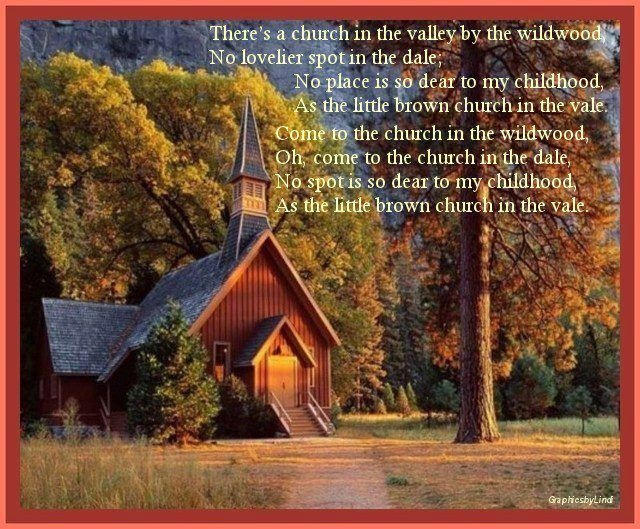
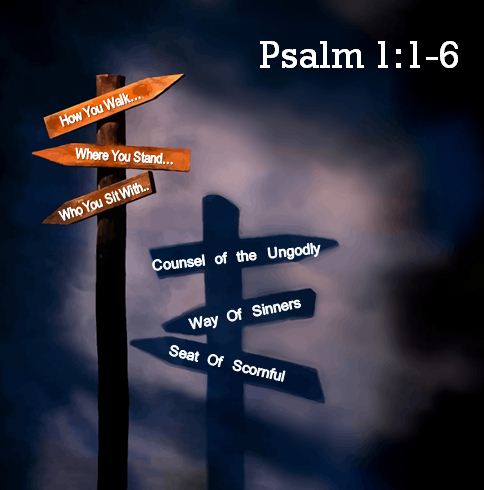
 Loving God, Living God, Loving Hope, Living Hope, Loving Living Life His Way! "Many things are possible for the person who has hope. Even more is possible for the person who has faith. And still more is possible for the person who knows how to love. But everything is possible for the person who practices all three virtues." - Brother Lawrence (1605-1691), Practicing the Presence of God (1692).