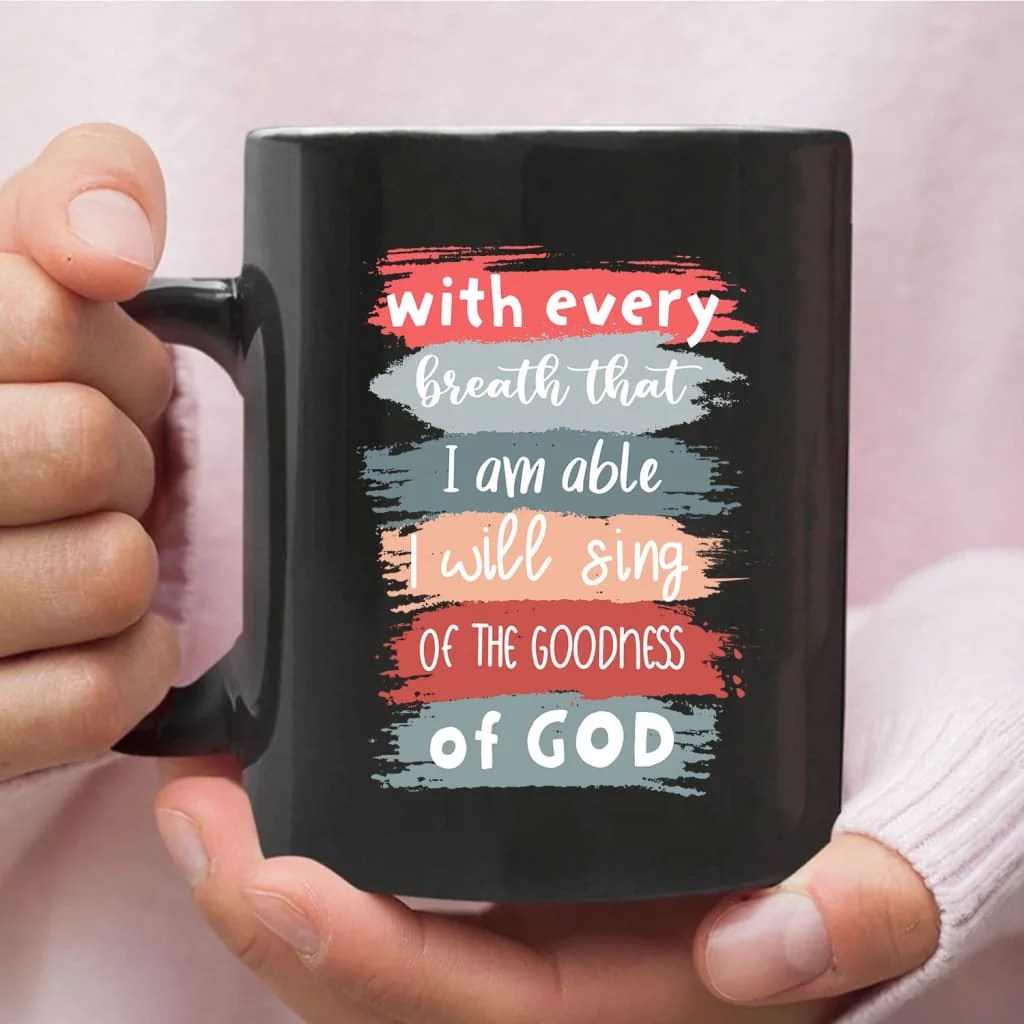
Are We So Confident in God that We Will Sing the Goodness of God in An Exuberant Earth, in Our Lifetimes? Psalm 27:13-14

God is good all the time.

It’s easy to see God’s goodness when life is tastes like an Ice cold glass of lemonade on the hottest days of Summer.

When our hearts are happy our eyes are open to His glorious presence, His plan for our lives, and the beauty of His creation all around us.

But sometimes life is just so hard.

Life is just too bitter.

Life is just too disappointing.

Life seems to be so completely empty of anything which might be even loosely, so minimally defined, as being “good” and being “worthy.”

It’s in these times we must hold fast to this simple truth: “God is good” “God is GOOD all the time.”

But can we, will we, could we, should we, sing of it, actually “mean it?”

Psalm 27 The Message

27 Light, space, zest—
    that’s God!
So, with him on my side I’m fearless,
    afraid of no one and nothing.

When vandal hordes ride down
    ready to eat me alive,
Those bullies and toughs
    fall flat on their faces.

When besieged,
    I’m calm as a baby.
When all hell breaks loose,
    I’m collected and cool.

I’m asking God for one thing,
    only one thing:
To live with him in his house
    my whole life long.
I’ll contemplate his beauty;
    I’ll study at his feet.

That’s the only quiet, secure place
    in a noisy world,
The perfect getaway,
    far from the buzz of traffic.

God holds me head and shoulders
    above all who try to pull me down.
I’m headed for his place to offer anthems
    that will raise the roof!
Already I’m singing God-songs;
    I’m making music to God.

7-9 Listen, God, I’m calling at the top of my lungs:
    “Be good to me! Answer me!”
When my heart whispered, “Seek God,”
    my whole being replied,
“I’m seeking him!”
    Don’t hide from me now!

9-10 You’ve always been right there for me;
    don’t turn your back on me now.
Don’t throw me out, don’t abandon me;
    you’ve always kept the door open.
My father and mother walked out and left me,
    but God took me in.

11-12 Point me down your highway, God;
    direct me along a well-lighted street;
    show my enemies whose side you’re on.
Don’t throw me to the dogs,
    those liars who are out to get me,
    filling the air with their threats.

13-14 I’m sure now I’ll see God’s goodness
    in the exuberant earth.
Stay with God!
    Take heart. Don’t quit.
I’ll say it again:
    Stay with God.

The Word of God for the Children of God.

Adeste Fideles! Laeti Triumphantes! Venite Adoremus! Dominum.

Gloria! In Excelsis Deo! Alleluia, Alleluia, Alleluia, Amen.

Freedom and Confidence “In the Land of the Living”

Psalm 27:13-14Amplified Bible

13 
I would have despaired had I not believed that I would see the goodness of the Lord
In the land of the living.
14 
Wait for and confidently expect the Lord;
Be strong and let your heart take courage;
Yes, wait for and confidently expect the Lord.

In a culture, in any society that prizes self-confidence and on a positive self-image, we are most surely and certainly tempted to think, if not wholeheartedly believe, that any relationship we claim to have with God should make a priority of focusing exclusively on ourselves, our own needs, our sense of self-worth.

But now, please consider what happens when self-assured people pray to God.

People who believe their relationship with God, not God’s relationship based on them, is based in their own merit and interests, will find prayer an empty ritual.

They will almost certainly tend to see little need for prayer, take little time for actual prayer and they don’t and probably will not see the results “they” expect.

Prayers offered in our own strength rise no higher than the roof over our heads.

Fervent and sincere Prayers “offered up to God” in our own confidence of our being “blessed by the goodness of God” being answered by God in our own way will invariably be the source of the “bitterness of our own disappointments.”

the “bitterness of our disappointments” will become our “bitterness’s in our God.”

Bitterness in anything translates to the severe diminishment in our confidence in whatever or why ever or whoever it is we have become badly embittered by.

The Word of God for His Children reveals what happens to the embittered heart:

Genesis 27:33-34 Amplified Bible

3Then Isaac trembled violently, and he said, “Then who was the one [who was just here] who hunted game and brought it to me? I ate all of it before you came, and I blessed him. Yes, and he [in fact] shall be (shall remain) blessed.” 34 When Esau had heard the words of his father, he cried out with a great and extremely bitter cry and said to his father, “Bless me, even me also, O my father!”

Our Bitterness in the Goodness of Man or Confidence in the Goodness of our God in the Land of the Living?

“I am 100% confident that all of mankind is inherently bad and bitter.”

What emotion(s) does that global statement stir up inside of your soul?

“I am 100% confident in saying that God is good, all the time, God is good.”

What emotion(s) does that statement of affirmation and faith stir up in you?

I know for some one statement stirs up much anger and resentment in all that is associated with all of the actions and activities of mankind upon this earth.

I know that for some the other phrase stirs up within them unspeakable joy, while others of us seem to be overly immune to any one emotion in our lives.

I believe the issue for many of us is that the repetition of phrase “God is good” is so frequently said, so frequently exhorted and so infrequently experienced.

For many of us we are just told that God is always good from a young age, but we are seldom given the chance to experience any negativity in that goodness.

Negativity is something God has always meant to be experienced by mankind.

Disappointment in mankind, disappointment in God were always meant by God to be experienced by mankind that the experiences of all our disappointments might be utilized by God, should be transformed by God into a stronger faith.

Job 1:20-21 Amplified Bible

20 Then Job got up and tore his robe and shaved his head [in mourning for the children], and he fell to the ground and worshiped [God]. 21 He said,

“Naked (without possessions) I came [into this world] from my mother’s womb,
And naked I will return there.
The Lord gave and the Lord has taken away;
Blessed be the name of the Lord.”

Bitterness is something we were always meant to experience and mature from.

Disappointment is something we were always meant by God to experience – not to be protected nor to be shielded from by the highest of parental castle walls.

Perhaps mankind is too embittered, too disappointed by the fact that it is 100% impossible for them to build and fortify their walls enough to prevent the bad, to prevent the bad and the ugly from being seen and then “max” experienced.

Ecclesiastes 3:11-15 Amplified Bible
God Set Eternity in the Heart of Man

11 He has made everything beautiful and appropriate in its time. He has also planted eternity [a sense of divine purpose] in the human heart [a mysterious longing which nothing under the sun can satisfy, except God]—yet man cannot ever hope to find out (comprehend, grasp) what God has done (His overall plan) from the beginning to the end.

12 I know that there is nothing better for them than to rejoice and to do good as long as they live; 13 and also that every man should eat and drink and see and enjoy the good of all his labor—it is the gift of God. 14 I know that whatever God does, it endures forever; nothing can be added to it nor can anything be taken from it, for God does it so that men will fear and worship Him [with awe-filled reverence, knowing that He is God]. 15 That which is has already been, and that which will be has already been, for God seeks what has passed by [so that history repeats itself].

Everyone always want the better side of living life for the coming generations.

But this too is the worst expression of vanity mankind can have confidence in.

We all need the fullness of both in our and our children’s lives to know we will always need the fullness of something far greater than all our bitterness in life, that being the absolute fullness of Goodness which only comes from our God.

Goodness is something which was meant by God, always meant by God, to be, by measures and degrees experienced, then believed, not the other way around.

From Psalm 27 verse 13 David said that he had the highest confidence he would look upon the goodness of the Lord in the land of the living.

He could in highest confidence say such a thing, possess such a high level of “blessed assurance in God” because he had also known the greatest bitterness.

In his great personal failures as a father – with his relationship with Absalom.

In his relationship with his wife and his adultery with Bathsheba, his personal relationship and deep personal confidence, friendship with Uriah the Hittite, the husband of Bathsheba, Uriah the Hittite whom David conspired to murder.

Ultimately confronted by Nathan with the indescribable scope of his failures, of his crimes against his family and friends, David recognized the greater and far more to be prioritized, valued, and be treasured, Goodness of God (Psalm 32)

From within his own greatest bitterness, his greatest disappointments, He had already seen God’s goodness in his life and believed that he would see it again.

READ, STUDY AND PRAY INTO THE DEPTHS OF DAVID’S HEART: PSALM 51

He also knew for a fact that ultimately he was missing the mark in life but God was always on target, always good, ergo, he sought to experience goodness.

It’s that same heart that the Sons of Korah had in the famous Psalm 84, singing, 

“How lovely is your dwelling place, O Lord of hosts! My soul longs, yes, faints for the courts of the Lord; my heart and flesh sing for joy to the living God . . . For a day in your courts is better than a thousand elsewhere. I would rather be a doorkeeper in the house of my God than dwell in the tents of wickedness” (Psalm 84:1-2,10).

It sounds like the worship of a good God, a goodness that is to be experienced.

Intersecting the Facts of Life with our Faith in God.

When was the last time you experienced the goodness of God? 

Psalm 33:5 says, “The earth is full of the goodness of the Lord.” 

God’s goodness is always here, and always just waiting to be experienced. 

James 1:17, “Every good gift and every perfect gift is from above, coming down from the Father of lights with whom there is no variation or shadow due to change.” 

God is always good, every good and perfect gift you’ve received is from God!

He demonstrates his goodness to us in innumerable ways, all the time.

How is it then that we don’t recognize it?

How is it then we are always quicker to recognize bitterness, disappointment?

How is it that we can be surrounded by God’s goodness and not experience it?

God has repeatedly proven throughout Scripture that God works in our midst, continuously, perpetually, demonstrating His goodness, but we have to cast off our bitterness so as to take time to listen and respond to these demonstrations.

In Psalm 27 verse 4 God says to David, “Seek my face,” and David responds, “All the days of my life My heart (confidently) says to you, your face, Lord, do I seek.” 

When God says “seek” He uses a Hebrew word that is meant for more than one person.

God calls all of us, God’s Children, to “set bitterness aside” “confidently seek my face.” then in our natural response we are to say, “Your face, Lord, do I seek.”

Take time to consider the depths of your bitterness and disappointments.

Take time today to prayerfully respond to God’s invitation of His Goodness.

Seek to look upon his face and to experience his goodness.

He has laid a banquet table before us in the presence of our enemies named “bitterness and disappointment.”

And God is simply asking, inviting, us to come forward and dine with Him.

In the name of God, the Father and God the Son and God the Holy Spirit,

Let us Pray,

Psalm 27 The Message

27 Light, space, zest—
    that’s God!
So, with him on my side I’m fearless,
    afraid of no one and nothing.

When vandal hordes ride down
    ready to eat me alive,
Those bullies and toughs
    fall flat on their faces.

When besieged,
    I’m calm as a baby.
When all hell breaks loose,
    I’m collected and cool.

I’m asking God for one thing,
    only one thing:
To live with him in his house
    my whole life long.
I’ll contemplate his beauty;
    I’ll study at his feet.

That’s the only quiet, secure place
    in a noisy world,
The perfect getaway,
    far from the buzz of traffic.

God holds me head and shoulders
    above all who try to pull me down.
I’m headed for his place to offer anthems
    that will raise the roof!
Already I’m singing God-songs;
    I’m making music to God.

7-9 Listen, God, I’m calling at the top of my lungs:
    “Be good to me! Answer me!”
When my heart whispered, “Seek God,”
    my whole being replied,
“I’m seeking him!”
    Don’t hide from me now!

9-10 You’ve always been right there for me;
    don’t turn your back on me now.
Don’t throw me out, don’t abandon me;
    you’ve always kept the door open.
My father and mother walked out and left me,
    but God took me in.

11-12 Point me down your highway, God;
    direct me along a well-lighted street;
    show my enemies whose side you’re on.
Don’t throw me to the dogs,
    those liars who are out to get me,
    filling the air with their threats.

13-14 I’m sure now I’ll see God’s goodness
    in the exuberant earth.
Stay with God!
    Take heart. Don’t quit.
I’ll say it again:
    Stay with God.

The Word of God for the Children of God.

Adeste Fideles! Laeti Triumphantes! Venite Adoremus! Dominum.

Gloria! In Excelsis Deo! Alleluia, Alleluia, Alleluia, Amen.

Guided Prayer:

1. Take time to quiet yourself and receive God’s presence. Meditate on this verse:

“You make known to me the path of life; in your presence there is fullness of joy; at your right hand are pleasures forevermore.” Psalm 16:11

2. Respond to his goodness by telling the Lord:

“My heart says to you, Your face, Lord, do I seek.” Psalm 27:8

3. Make David’s prayer yours today:

“One thing have I asked of the Lord, that will I seek after: that I may dwell in the house of the Lord all the days of my life, to gaze upon the beauty of the Lord and to inquire in his temple.” Psalm 27:4

Take time to make that prayer your own throughout your day today.

Memorize it.

Write it on your heart so you can experience the goodness of God throughout your day.

It only takes a moment to receive his presence and have the joy and the perfect peace, the SHALOM, SHALOM, that can only be found in our Savior Christ Jesus.

For God’s Sake, Let Us Speak! Testify! Witness! Let us Be Holy! For the Lord Our God is Holy. Leviticus 19:1-4

Leviticus 19:1-4 Common English Bible

Living as holy people

19 The Lord said to Moses, Say to the whole community of the Israelites: You must be holy, because I, the Lord your God, am holy. Each of you must respect your mother and father, and you must keep my sabbaths; I am the Lord your God. Do not turn to idols or make gods of cast metal for yourselves; I am the Lord your God.

The Word of God for the Children of God.

Adeste Fideles! Laeti Triumphantes! Venite Adoremus! Dominum.

Gloria! In Excelsis Deo! Alleluia, Alleluia, Alleluia, Amen.

Though it is often ridiculed by those that have not read it, or misunderstood by those who do not have spiritual discernment, the fourth book of the Torah, Leviticus, is a book that directly concentrates its readers upon holiness – the 100% ultimate holiness of God and the need for the nation of Israel to be holy. 

“You shall be holy,”  God informed His chosen nation through Moses.

“You shall be holy, for I the LORD your God am holy.” Leviticus 19:2

From start to finish, Leviticus is a book that points the faithful to Christ.

He is pictured in the perfect Law of Moses in many ways, and by careful reading and studying its words, He can be identified in the various sacrificial offerings.

The person and work of Christ can also be seen in the holy articles of the Tabernacle, the function of the priesthood, and the feasts of the Lord.

The book of Leviticus points to Christ in many ways – for His “One and Done” atoning sacrifice of his own blood alone forever takes away the sin of the world.

Jesus is the Second Person of the Trinity, Who was fully and finally, ultimately revealed to the world through the birth, life, death, and Resurrection, Ascension of the Lord Jesus Christ.

He is undeniably the eternal Son of God, Who did tabernacle among us, for a time and a season while He walked and talked and who had taught, healed and ministered unto the ancient people of the early first century Israel.

He is the perfect Word of God made flesh, through Whom the world was made and in Whom is life eternal, through which darkness and death have no power.

He is the eternal Lamb of God, Who takes away the sin of the world.

And He is the sinless Son of Man, Who was sent by His Father to live among us, to set the example of life, set aside His heavenly glory to become like one of us.

Jesus is the Second Person of the immortal, invisible, almighty, HOLY God.

He is the only Member of the Holy Trinity Who was clothed in human flesh, so sinful men and women might be saved by grace – through faith in His sacrificial work at Calvary.

Throughout the Hebrew [Old] Testament, God gradually revealed His character, His attributes, His name, His miraculous redemptive plan for mankind, through the writings of specifically anointed holy men of God, many prophetic voices.

But in these last days, God has spoken to us in His Son, Whom He appointed Heir of all things, and through Whom also He made the world.

However, hidden deep within the pages of the Hebrew [Old] Testament, are many concealed references to Christ Jesus.

For those with eyes to see and a teachable spirit, we discover many ‘types’ and pictures of His person, His mission, His atoning work, and His supernatural life.

Numerous prophecies give details of His coming to earth as a newborn babe in a manger in Bethlehem, His ministry on earth, His sacrificial death, His glorious Resurrection, His ultimate victory over sin, over death and ultimately, Satan.

And Scripture records His coming millennial rule as King of kings and Lord of lords, for He is God’s appointed Messiah of Israel, He is the Savior of the world.

Moses was one such prophetic voice in Scripture, and he was inspired by God to write the book of Leviticus.

He was the man that God chose to become the first great leader of His people.

He was God’s anointed mouthpiece unto Pharaoh and the one who finally led millions of God’s redeemed people out of Egypt, on that first Passover night.

It was Moses through whom the Law was first written down and given to God’s chosen nation, and it was Moses who led, guided, directed, and instructed His people how to live as God’s own people, if they were to receive God’s blessings.

It was Moses who warned them what would happen if they disobeyed the Lord’s command and Moses was instructed by God to

“Speak to all the congregation of the sons of Israel and say to them, ‘You shall be holy, for I the LORD your God am holy.'”

Israel was to be set apart from the gentile nations.

They were to be a separated nation, a covenanted people, an atypical race that was holy to the Lord.

They were to be God’s unique nation and a people for His own possession.

They were chosen out of all the people groups who live on the face of the earth, to have a holy relationship with the one and only, holy God.

Israel was to be a holy people unto the Lord their God.

They were to be sanctified unto the Lord – a peculiar people unto Himself.

They were to be an example of a nation that was consecrated to God.

Israel was to be God’s earthly light to the pagan nations and an example of a holy community, who honored the Lord.

They had seen God move before them as pillars of fire and smoke and they had witnessed the mighty miracles that decimated their proud Egyptian overlords.

They had made a covenant with the Lord and had promised to do all that the Lord had commanded – which is why God said to Moses, 

“speak to all the congregation of the sons of Israel and say to them, ‘You shall be holy, for I the LORD your God am holy.'”

The call to holiness still stands for Christians in this epoch of the grace of God.

Like Israel, we are also instructed to be obedient children who are to be holy unto the Lord.

Like them, we are not to be conformed to the lusts of the flesh and pride of life.

Like Israel we are also instructed to be holy ourselves also in all of our behaviors – because as it was covenanted and written then and is still covenanted, written for us today, “You shall be holy, for I am holy.”

As God’s “Holy” People in the World Today?

Proverbs 27:17-19 Common English Bible

17 As iron sharpens iron,
    so one person sharpens a friend.
18 Those who tend a fig tree will eat its fruit,
    and those who look after their master will be honored.
19 As water reflects the face,
    so the heart reflects one person to another.

When God created us, He created us in His image.

Because we are, we should reflect every aspect of who He is because His image in stamped and engraved in us.

In Leviticus 19:2 God instructs Moses to tell the Children of Israel to be holy because God is holy.

That applies to us today as well.

Our words should be holy.

Our actions should be holy.

Our thoughts should be holy.

The way we live should be holy.

Other characteristics of God includes: merciful, forgiving, grace, truthful, keeps his promises, righteous, just, faithful, and unconditional and unfailing love.

As beings created in our Creator’s image, we should reflect these attributes in our everyday lives.

Colossians 3:10 says, “And have put on the new self, which is being renewed in knowledge after the image of its creator.”

And in Ephesians 4:24, Paul wrote, “And to put on the new self, created after the likeness of God in true righteousness and holiness.”

In Proverbs 27:19, Solomon wrote, “As water reflects the face, so the heart reflects the person.”

Whatever is living in and within our hearts is what is reflected in our lives.

Is our heart reflecting the holiness of God and His attributes/characteristics?

In the name of God, the Father and God the Son and God the Holy Spirit,

Let us Pray,

God, my Heavenly Father, thank You for the uncountable, invaluable lessons that Your Church can learn through the history of Israel and for the many types and pictures of Jesus that are hidden within the sacred pages of Scripture. Thank You that like Israel, I have also been called to be holy, because You are holy. It is humbling to realize that as part of Christ’s Body, we have also been chosen, in Him, to be kings and priests unto God – to be a chosen people, who tell the world that Jesus died for their sin and rose again, so that by faith in Him we may be holy, as He is holy. Thank You that by faith in Christ, I have been called to be Your very own, and to proclaim the wonderful deeds of Him Who called me out of darkness into His marvelous light. May I live and work from this day forward, to be more like Jesus, and to live a holy life that is separated from this fallen world system. In Jesus’ name I pray, AMEN.

Adeste Fideles! Laeti Triumphantes! Venite Adoremus! Dominum.

Gloria! In Excelsis Deo! Alleluia, Alleluia, Alleluia, Amen.

https://translate.google.com/

I Have a Testimony! Why Is the Approaching ‘Lamb of God’ So Significant to Me? John 1:29-34

John 1:29-34 Amplified Bible

29 The next day he saw Jesus coming to him and said, “Look! The Lamb of God [a]who takes away the sin of the world! 30 This is He on behalf of whom I said, ‘After me comes a Man who has a higher rank than I and has priority over me, for He existed before me.’ 31 [b]I did not recognize Him [as the Messiah]; but I came baptizing [c]in water so that He would be [publicly] revealed to Israel.” 32 John gave [further] evidence [testifying officially for the record, with validity and relevance], saying, “I have seen the [d]Spirit descending as a dove out of heaven, and He remained upon Him. 33 I did not recognize Him [as the Messiah], but He who sent me to baptize [e]in water said to me, ‘He upon whom you see the Spirit descend and remain, this One is He who baptizes with the Holy Spirit.’ 34 I myself have [actually] seen [that happen], and my testimony is that this is the Son of God!”

The Word of God for the Children of God.

Adeste Fidelis! Venite Adoremus! Dominum.

Gloria! In Excelsis Deo! Alleluia, Alleluia, Alleluia, Amen.

The Preacher, with an inviting tone, filled the air with, “Who wants to testify about the goodness of the Lord?”

Testimonies of the goodness of God are a sure and certain motivation for the saints of God to keep going forward when the struggles in life weighed heavy.

John the Baptist had a sure, certain testimony about the goodness of God.

John 1:29-34 declares God has invaded the world in the person of Jesus Christ.

John 1:29-34 gives every Christian a sure and certain model testimony that we can draw powerful inspiration from, to learn to give about our own life journey.

First, John the Baptist knew instantaneously that in the salvation business, his ministry was decisively limited, only the perfect Lamb of God can take away sin.

Second, John the Baptist surely and certainly accepted the role of second chair.

He declared without hesitation that he absolutely was not the main thing.

John the Baptist unequivocally said, “A man who comes after me has surpassed me because he was before me.”

He was a humble servant to Jesus.

Third, John the Baptist gave a testimony of what he saw and experienced.

Without hesitation, the story John the Baptist told throughout his ministry is this: “I have seen and I testify that this is God’s Chosen One.”

On this day before Palm Sunday, we too will have a powerful and inspiring testimony: tell your family and friends the story of Jesus, the Lamb of God!

That is our Witness!

That is our Testimony

That is our Coming Story!

“BEHOLD THE LAMB OF GOD WHO TAKETH AWAY THE SINS OF THE WORLD”

Why Is the ‘Lamb of God’ So Significant To Us?

The Bible talks about the “Lamb of God” and often features imagery about lambs.

Spiritually, the Lamb of God is incredibly significant because it expresses the core of our faith.

In these our most contemporary of times, two thousand years after the words of John were first spoken and resoundingly declared, our learning why the Lamb of God is so significant can inspire us too with awe, to deepen our trust in Jesus. 

Who is the Lamb of God?

The phrase “Lamb of God” is a name given to Jesus in the Bible.

The Bible first mentions the Lamb of God in John 1:29, John sees Jesus and declares, “Look, the Lamb of God, who takes away the sin of the world!”.

John the Baptist continues to testify about Jesus and concludes in John 1:34: “I have seen and I testify that this is God’s Chosen One.”

Whenever the Lamb of God appears in the Bible, it refers to Jesus. 

What Does the “Lamb of God” Mean?

Jesus as the Lamb of God expresses significant theological and symbolic meaning.

It highlights the sacrificial nature of Jesus’ mission as the world’s Savior.

Just as lambs – gentle animals who symbolize purity – were offered as sacrifices in the Old Testament to atone for sins, Jesus served as a sacrifice to atone for the sins of humanity.

The phrase “Lamb of God” refers to Jesus as the perfect and ultimate sacrifice provided by God for the single perfect atonement of all the sins of his people. 

Why Is the “Lamb of God” So Significant?

Relating to Jesus as the Lamb of God shows us the heart of why our faith is important.

It is only by trusting Jesus’ sacrifice for our sins we can connect with a holy God.

Otherwise, we would perish. 

John 3:16 celebrates the love behind this core sacrifice: “For God so loved the world that he gave his one and only Son, that whoever believes in him shall not perish but have eternal life.”

John 3:17 declares God’s intent behind this core sacrifice: “For God did not send the Son into the world to judge and condemn the world [that is, to initiate the final judgment of the world], but that the world might be saved through Him.”

It’s important for us to trust Jesus’ work as the Lamb of God in order for us to be able to enjoy relationships with God and grow in holiness and gentleness.

Apostle Paul wrote, “For our sake he [God] made him [Jesus] to be sin who knew no sin, so that in him we might become the righteousness of God” (2 Corinthians 5:21).

Sacrifice is necessary because, as Hebrews 9:22 says, “In fact, the law requires that nearly everything be cleansed with blood, and without the shedding of blood there is no forgiveness.”

The entire sacrificial system established by God in the Old Testament prepares the way for Jesus coming to save the world as the Lamb of God.

In that system, lambs were often sacrificed in temples as offerings to God to atone for people’s sins.

A lamb was sacrificed for the sins of the people every morning and evening in Jerusalem (Exodus 29:38-42).

These sacrifices foreshadowed the perfect sacrifice of Christ on the cross that would happen later.

Interestingly, Jesus died on the cross at the same time the evening sacrifice was being made in the temple.

The Jews at that time were familiar with the Old Testament prophets Jeremiah and Isaiah, who foretold the coming of someone who would be led “like a lamb to the slaughter” (Jeremiah 11:19 and Isaiah 53:7). 

Isaiah 53:5-6 prophesies about how Jesus’ suffering and sacrifice will redeem people: “But he was pierced for our transgressions, he was crushed for our iniquities; the punishment that brought us peace [Isaiah 26:1-3] was on him, and by his wounds we are healed.

We all, like sheep, have gone astray, each of us has turned to our own way; and the Lord has laid on him the iniquity of us all.”

This person was none other than Jesus, the Lamb of God.

God instructed the Israelites to sacrifice a lamb for the Passover feast (Exodus 12:1-30).

The innocent lamb represented purity, and its sacrifice was a symbol of repentance and submission to God’s will.

Similarly, Jesus’ sacrificial death on the cross at Calvary to save humanity from sin shows he is the Lamb of God who makes the ultimate sacrifice necessary to ultimately and finally connect woefully sinful humanity to a perfectly holy God.

In fact, the slaying of the Passover lamb and applying its blood to the doorposts of the houses powerfully depicts Jesus’ atoning work on the cross.

If we trust Jesus as our Savior, we are spiritually covered by his blood, which protects us from spiritual death.

Romans 8:1-4 explains how Jesus’ physical sacrifice has made spiritual freedom possible for people:

“Therefore, there is now no condemnation for those who are in Christ Jesus, because through Christ Jesus the law of the Spirit who gives life has set you free from the law of sin and death. For what the law was powerless to do because it was weakened by the flesh, God did by sending his own Son in the likeness of sinful flesh to be a sin offering. And so he condemned sin in the flesh, in order that the righteous requirement of the law might be fully met in us, who do not live according to the flesh but according to the Spirit.”

Since humanity had sinned in the flesh (physically), and our holy God can’t be corrupted by sin, through Calvary, God made a way for our sins to be atoned for physically so we would no longer be separated from Him because of our sins.

Jesus’ work as the Lamb of God made it possible for all people to enjoy loving relationships with God, despite sin.

1 Peter 1:18-19 celebrates that redemptive work: “For you know that it was not with perishable things such as silver or gold that you were redeemed from the empty way of life handed down to you from your ancestors, but with the precious blood of Christ, a lamb without blemish or defect.”

Jesus has provided all we need to be forgiven forever for all of our sins, and he serves as our advocate for everything we need.

The entire chapter of Hebrews 10 describes the importance of Jesus’ work as the Lamb of God who takes away our sins.

As Hebrews 10:10 proclaims: “… we have been made holy through the sacrifice of the body of Jesus Christ once for all.”

Now, there is no need to sacrifice animals like lambs to God in a temple, because Jesus has provided an everlasting sacrifice on our behalf so we can enjoy relationships with God.

The chapter goes on to encourage us to persevere in our faith with confidence because of Jesus’ ultimate sacrifice for us:

“Therefore, brothers and sisters, since we have confidence to enter the Most Holy Place by the blood of Jesus, by a new and living way opened for us through the curtain, that is, his body, and since we have a great priest over the house of God, let us draw near to God with a sincere heart and with the full assurance that faith brings, having our hearts sprinkled to cleanse us from a guilty conscience and having our bodies washed with pure water. Let us hold unswervingly to the hope we profess, for he who promised is faithful.”

Not only does the Bible look back to Jesus’ crucifixion as the Lamb of God, but it also looks forward to Jesus as the Lamb of God in heaven. 

Revelation 5:6 describes Jesus in heaven as “a Lamb, looking as if it had been slain.”

This image reinforces the sacrificial nature of Jesus’ mission and emphasizes the victory he achieved through his sacrifice.

A few verses later in Revelation 5:11-13,

the Bible reveals all created beings in heaven and earth – angels, people, and other creatures – worshiping Jesus for his work as the Lamb of God:

“Then I looked and heard the voice of many angels, numbering thousands upon thousands, and ten thousand times ten thousand. They encircled the throne and the living creatures and the elders. In a loud voice they were saying: ‘Worthy is the Lamb, who was slain, to receive power and wealth and wisdom and strength and honor and glory and praise!’ Then I heard every creature in heaven and on earth and under the earth and on the sea, and all that is in them, saying: ‘To him who sits on the throne and to the Lamb be praise and honor and glory and power, for ever and ever!’”

This passage shows the importance of our own selves learning, appreciating, the indescribable wonder of God’s work and responding to it with gratitude.

Revelation 7:9 shows Jesus in heaven as the Lamb of God, with a huge amount of people whose souls had been redeemed thanks to his sacrifice on earth:

“After this I looked, and there before me was a great multitude that no one could count, from every nation, tribe, people, and language, standing before the throne and before the Lamb. They were wearing white robes and were holding palm branches in their hands.”

An angel explains to the apostle John in Revelation 17:14 that Jesus, the Lamb of God, will defeat evil and reign victorious over the universe:

“They will wage war against the Lamb, but the Lamb will triumph over them because he is Lord of lords and King of kings – and with him will be his called, chosen and faithful followers.”

Significance of Jesus as the Lamb of God Conclusion

The Lamb of God refers to Jesus as the perfect and ultimate sacrifice for sin.

The significance of the Lamb of God speaks to the core message of Christianity:

that through Jesus’ sacrifice at Calvary, we can be reconciled to God and receive forgiveness for our sins.

The Lamb of God is undeniably significant and central unto the Christian faith!

Because it emphasizes Jesus’ sacrificial mission and symbolizes his innocence, purity, and victory over sin and death.

As we approach tomorrow, the umpteenth time of our “holding up our palm branches, shouting our Hosannas” celebrating Jesus’ arrival into Jerusalem;

As we reflect on the meaning of the Lamb of God, may we be inspired to the utmost by the great love God has for us, the price that Jesus paid to redeem us.

In the name of God, the Father and God the Son and God the Holy Spirit,

Let us Pray,

Loving Heavenly Father, thank You for sending Jesus as the true Lamb of God Who has taken away all my sins. I am so thankful that Jesus died on the Cross for me, becoming the only perfect substitute for my sins. In Jesus’ name I pray, AMEN.

Adeste Fidelis! Venite Adoremus! Dominum.

Gloria! In Excelsis Deo! Alleluia, Alleluia, Alleluia, Amen.

https://translate.google.com/