
Proverbs 19:15 Amplified Bible
15
Laziness casts one into a deep sleep [unmindful of lost opportunity],
And the idle person will suffer hunger.
Proverbs 19:15 Complete Jewish Bible
15 Laziness makes people fall asleep,
and an idle person will go hungry.
Proverbs 19:15 The Message
15 Life collapses on loafers;
lazybones go hungry.
The Word of God for the Children of God.
Glory be to the Father,
and to the Son, and to the Holy Ghost;
as it was in the beginning,
is now, and ever shall be,
world without end. Amen, amen.
Long ago, in the bustling marketplace of a small ancient town, a group of merchants and townspeople gathered around a well-known teacher named Ezra. The sun beat down on the dusty streets as Ezra, a wise and respected figure in the community, began to share his teachings from the Book of Proverbs. To the ever busy merchants His words were filled with wisdom and insight, drawing in a large, curious crowd eager to learn from his knowledge.
Among the listeners was a young man named Jacob, who had come to the marketplace for the first time to sell his goods. Intrigued by the teachings of Ezra, Jacob decided to set business aside and stay and listen, finding himself captivated by the new wisdom being shared. As the discussion continued, more people joined the group, eager to soak in the words of wisdom being imparted.
The scene was filled with a sense of community and learning, as people from all walks of life came together to set their busyness aside for a few moments, listen and reflect on this time of teachings of Proverbs. The marketplace buzzed with conversation and contemplation, as Ezra’s words now resonated with all those gathered around him, sparking introspection and discussion among the crowd.
What is Proverbs 19:15 about?
This verse from Proverbs is highlighting the contrast between two different attitudes and their respective outcomes in life.
Laziness is depicted as a negative trait that can lead to poverty, indicating that when one is not willing to put in the necessary effort and work hard, they are likely to severely suffer from lack, and insufficiency and poverty and hunger.
On the other hand, diligence is shown as a positive quality that results in wealth and honor. Individuals demonstrate a commitment to their work or tasks by being diligent, leading to success, prosperity, and respect from others.
We can and should vigorously search ourselves as we reflect on this verse: are we approaching our responsibilities and goals with laziness or with diligence?
Are we willing to put in the effort and hard work needed to achieve success and honor, or are we more convenience in taking shortcuts and avoiding hard work?
It serves as a reminder that our attitudes and actions have direct consequences on our outcomes in life.
Choosing to be diligent sets us up for a future filled with abundance and respect, while succumbing to laziness may lead us down a path of lack and mediocrity.
Let’s strive to cultivate a mindset of diligence in all aspects of our lives to reap the rewards of wealth and honor.
Understanding what Proverbs 19:15 really means
Proverbs 19:15 New American Standard Bible 1995
15 Laziness casts into a deep sleep,
And an idle [a]man will suffer hunger.
Proverbs 19:15 delves into the repercussions of laziness and underscores the significance of diligence in our daily endeavors.
Positioned within the wisdom literature of the Bible, this verse offers practical guidance for navigating life’s challenges.
The phrase “Laziness brings on deep sleep” vividly portrays how idleness can plunge individuals into a state of physical and spiritual unawareness.
It serves as a stark reminder of the consequences of inactivity, urging us to remain cognizant, vigilant and purposeful in our actions. Similarly, the assertion that “The shiftless go hungry” emphasizes that those who fail to exert effort or take initiative are bound to experience scarcity and deprivation.
Drawing parallels with other biblical passages enhances our understanding of Proverbs 19:15’s timeless wisdom.
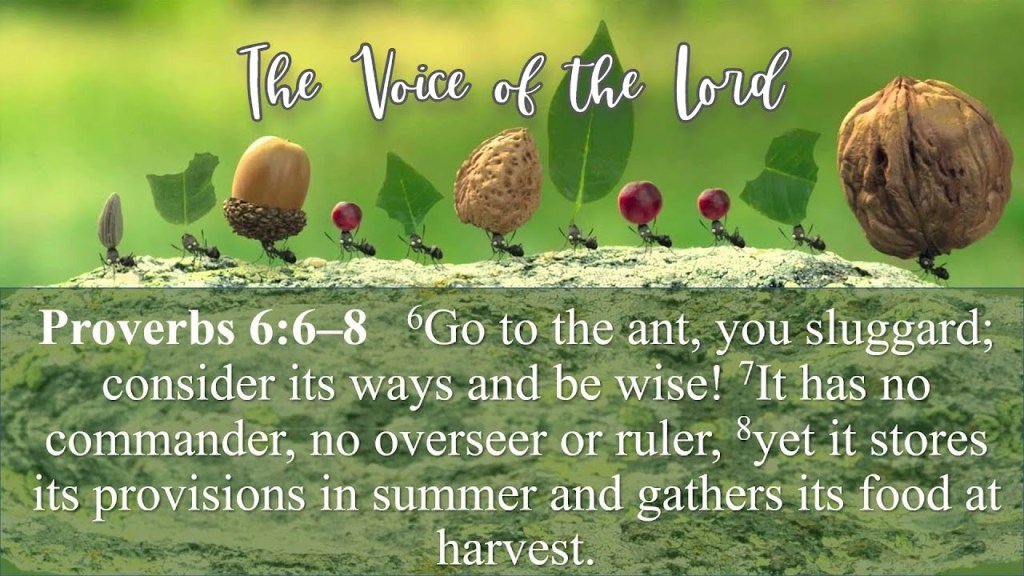
Proverbs 6:6-11, extols the greater virtues of industriousness by highlighting the ant’s diligent nature and contrasting it with the outcomes of slothfulness.
Complete Jewish Bible
6 Go to the ant, you lazybones!
Consider its ways, and be wise.
7 It has no chief, overseer or ruler;
8 yet it provides its food in summer
and gathers its supplies at harvest-time.
9 Lazybones! How long will you lie there in bed?
When will you get up from your sleep?
10 “I’ll just lie here a bit, rest a little longer,
just fold my hands for a little more sleep” —
11 and poverty comes marching in on you,
scarcity hits you like an invading soldier.
In 2 Thessalonians 3:10-15, Apostle Paul underscores the important principle that one who simply refuses to work should not partake in the fruits of labor, emphasizing personal responsibility and the high value of industriousness.
10 For even when we were with you, we gave you this command: if someone won’t work, he shouldn’t eat! 11 We hear that some of you are leading a life of idleness — not busy working, just busybodies! 12 We command such people — and in union with the Lord Yeshua the Messiah we urge them — to settle down, get to work, and earn their own living. 13 And you brothers who are doing what is good, don’t slack off! 14 Furthermore, if anyone does not obey what we are saying in this letter, take note of him and have nothing to do with him, so that he will be ashamed. 15 But don’t consider him an enemy; on the contrary, confront him as a brother and try to help him change.
Ecclesiastes 10:18 further elucidates the tangible repercussions of negligence, illustrating how laziness can lead to structural decay and material want.
Ecclesiastes 10:10-18 Complete Jewish Bible
10 If the [hatchet’s] iron [blade] is blunt,
and [its user] doesn’t sharpen it,
he will have to exert more effort;
but the expert has the advantage of his skill.
11 If a snake bites before it is charmed,
the snake-charmer has no advantage.
12 The words spoken by the wise bring them favor,
but the lips of a fool swallow him up.
13 What he says starts with foolishness
and ends with wicked madness.
14 A fool keeps talking and talking,
yet no one knows what the future will bring —
can anyone tell a person
what will happen after he’s gone?
15 The efforts of a fool wear him out;
he doesn’t even know the way to town!
16 Woe to you, land, when your king is a child,
and your leaders start their parties in the morning!
17 Happy are you, land, when your king is well-born,
and your princes eat at the proper time,
in order to stay strong, not to get drunk!
18 When the owner is lazy, the roof sags;
when hands are idle, the house leaks.
The relevance of Proverbs 19:15 in contemporary society is quite striking, particularly in a world where distractions and procrastination abound.
It serves as a poignant reminder of the importance of proactive engagement and the perils of complacency.
In a culture that often glorifies instant gratification and shortcuts, this verse prompts us to embrace diligence and conscientious effort.
By heeding its counsel, we can avert the pitfalls of laziness and ensure that our needs are adequately met.
Consider a student who habitually delays assignments, reveling in fleeting moments of leisure until impending deadlines loom ominously.
As pressure mounts and stress escalates, the student may find themselves ensnared in a cycle of unmet obligations and missed opportunities.
This narrative mirrors the consequences of “deep sleep” and “hunger” delineated in Proverbs 19:15, offering a tangible illustration of the verse’s enduring relevance in everyday life.
In conclusion, Proverbs 19:15 stands as a beacon of timeless wisdom, urging us to embrace diligence and conscientiousness in all our pursuits. By cultivating a spirit of hard work and responsibility, we can sidestep the snares of laziness and ensure our well-being. Let us now heed the call to reflect on our habits, striving to embody the virtues of diligence and industry in our daily lives.
Are we seeking His wisdom or pursuing folly in life?
We are presented with a choice in life of whether to pursue wisdom or folly.
Seeking wisdom leads to growth, understanding, and making sound decisions that benefit both oneself and others.
Wisdom enables us to navigate life’s challenges with clarity and discernment, ultimately leading to a meaningful and fulfilling existence.
On the contrary, pursuing folly only brings about negative consequences, confusion, and ultimately, regret. Folly leads us astray from the path of righteousness and leaves us in a state of ignorance and foolishness.
Therefore, it is clear that seeking wisdom is the path to a flourishing and successful life, while continually pursuing folly only leads to destruction and disappointment.
We can cultivate a life of purpose, peace, and fulfillment by aligning our actions with wisdom. We should each continually strive to seek wisdom, learn from our experiences, and make sounder choices that reflect on the values of wisdom and understanding as we navigate the rapidly accelerating complexities of our lives.
Application
Are you harnessing the power of knowledge and understanding in your journey through life? J
Just like tending to your career or nurturing your loved ones, nurturing wisdom is vital for your spiritual growth. Dive deep into the depths of the Word, letting it illuminate your path with wisdom like a guiding light in the darkness. How can you let the teachings of Proverbs 19:15 shape your quest for enlightenment and insight, guiding your steps as you navigate the complexities of modern life?
In the name of God, the Father and God the Son and God the Holy Spirit,
Let us Pray,
Psalm 16 Complete Jewish Bible
16 (0) Mikhtam. By David:
(1) Protect me, God,
for you are my refuge.
2 I said to Adonai, “You are my Lord;
I have nothing good outside of you.”
3 The holy people in the land are the ones
who are worthy of honor; all my pleasure is in them.
4 Those who run after another god
multiply their sorrows;
To such gods I will not offer
drink offerings of blood
or take their names on my lips.
5 Adonai, my assigned portion, my cup:
you safeguard my share.
6 Pleasant places were measured out for me;
I am content with my heritage.
7 I bless Adonai, my counselor;
at night my inmost being instructs me.
8 I always set Adonai before me;
with him at my right hand, I can never be moved;
9 so my heart is glad, my glory rejoices,
and my body too rests in safety;
10 for you will not abandon me to Sh’ol,
you will not let your faithful one see the Abyss.
11 You make me know the path of life;
in your presence is unbounded joy,
in your right hand eternal delight.
Glory be to the Father,
and to the Son, and to the Holy Ghost;
as it was in the beginning,
is now, and ever shall be,
world without end. Amen, amen.
 Loving God, Living God, Loving Hope, Living Hope, Loving Living Life His Way! "Many things are possible for the person who has hope. Even more is possible for the person who has faith. And still more is possible for the person who knows how to love. But everything is possible for the person who practices all three virtues." - Brother Lawrence (1605-1691), Practicing the Presence of God (1692).