Ash Wednesday: Deciding, Will We Ever Consent to Give Any Living Hope to Our Ailing and Hurting Hearts? Joel 2:12-14

Joel 2:12-14Amplified Bible

12 
“Even now,” says the Lord,
“Turn and come to Me with all your heart [in genuine repentance],
With fasting and weeping and mourning [until every barrier is removed and the broken fellowship is restored];
13 
Rip your heart to pieces [in sorrow and contrition] and not your garments.”
Now return [in repentance] to the Lord your God,
For He is gracious and compassionate,
Slow to anger, abounding in lovingkindness [faithful to His covenant with His people];
And He relents [His sentence of] evil [when His people genuinely repent].
14 
Who knows whether He will relent [and revoke your sentence],
And leave a blessing behind Him,
Even a grain offering and a drink offering [from the bounty He provides you]
For the Lord your God?

The Word of God for the Children of God.

Adeste Fidelis. Venite Adoremus. Dominum.

Gloria. In Excelsis Deo. Alleluia, Alleluia, Alleluia, Amen.

Lent Begins … Does Hope Also Begin For Hurting Hearts?

In a large number of churches today, the ancient words of today’s Scripture reading will be read every year in the traditional Ash Wednesday liturgy.

Ash Wednesday, which falls this year on February 22, is the first day of Lent, a season in the church calendar that invites believers in God and non-believers as well, to maybe start paying special attention to the suffering and death of Jesus.

Why are these instructions about rending hearts and not garments significant?

In the Bible the rending and tearing of clothes is a sign of mourning and is often accompanied by the placing of ashes on one’s head.

Biblically, Jacob tore his clothes when he heard a report that his son, Joseph, had been killed (Genesis 37:34).

And when young King Josiah heard the words of the Book of the Law after it was rediscovered in the temple, he tore his robes as a sign of grief over the nation’s sin (2 Kings 22:11).

The Patriarch Job, when he had suddenly lost everything – including his health, he sat down on the ground and covered himself from head to toe with ashes.

Sometimes, the harsh and harshest realities of life will cause us to sit ourselves own on the ground and desire to “cover ourselves from head to toe with ashes.

Sometimes the reality of sin is enough to break our hearts.

The season of Lent reminds us that no one felt the pain of sin more than Jesus.

Jesus had already given up everything he was at home with His Heavenly Father to come to us and to offer up to His maxed out example of genuine Godly living. [John 3:16-18, Philippians 2:1-11]

John 3:16-18 The Message

16-18 “This is how much God loved the world: He gave his Son, his one and only Son. And this is why: so that no one need be destroyed; by believing in him, anyone can have a whole and lasting life. God didn’t go to all the trouble of sending his Son merely to point an accusing finger, telling the world how bad it was. He came to help, to put the world right again. Anyone who trusts in him is acquitted; anyone who refuses to trust him has long since been under the death sentence without knowing it. And why? Because of that person’s failure to believe in the one-of-a-kind Son of God when introduced to him.

Philippians 2:5-11 The Message

5-8 Think of yourselves the way Christ Jesus thought of himself. He had equal status with God but didn’t think so much of himself that he had to cling to the advantages of that status no matter what. Not at all. When the time came, he set aside the privileges of deity and took on the status of a slave, became human! Having become human, he stayed human. It was an incredibly humbling process. He didn’t claim special privileges. Instead, he lived a selfless, obedient life and then died a selfless, obedient death—and the worst kind of death at that—a crucifixion.

9-11 Because of that obedience, God lifted him high and honored him far beyond anyone or anything, ever, so that all created beings in heaven and on earth—even those long ago dead and buried—will bow in worship before this Jesus Christ, and call out in praise that he is the Master of all, to the glorious honor of God the Father.

When he was arrested, beaten, humiliated, crowned then crucified, Jesus was fully and completely, utterly, publicly stripped of his dignity and his garments.

More than that, his heart broke under the weight of our sin.

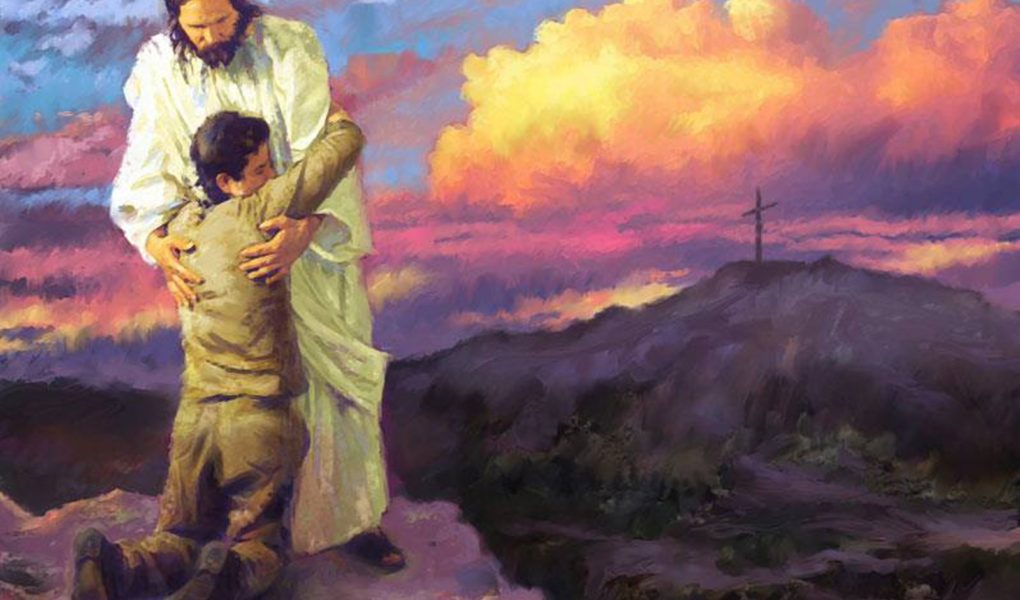
Joel’s reading for today is God’s invitation to return to him is answered by our looking to the cross of Christ, asking forgiveness through his sacrifice for us.

God promises to come unto us, wash away our sin and give us new life through the One whose torn garments, broken heart bring 100% healing for the world.

We Must Answer the Question: Will I Give My Heart Any Hope?

Joel 2:12-14 The Message

Change Your Life

12 But there’s also this, it’s not too late—
    God’s personal Message!—
“Come back to me and really mean it!
    Come fasting and weeping, sorry for your sins!”

13-14 Change your life, not just your clothes.
    Come back to God, your God.
And here’s why: God is kind and merciful.
    He takes a deep breath, puts up with a lot,
This most patient God, extravagant in love,
    always ready to cancel catastrophe.
Who knows? Maybe he’ll do it now,
    maybe he’ll turn around and show pity.
Maybe, when all’s said and done,
    there’ll be blessings full and robust for your God!

Joel is the prophet who compares the coming Day of the Lord with a succession of locust invasions, which sequentially devour every crop and all vegetation in an unrelenting, visibly shocking, path of progressive destruction.

Both grain and fruit harvests fail due to the devastating onslaught of this four-pronged locust infestation.

The total destruction of Israel’s wheat and barley crops, along with the failure of the entire fruit harvest, causes all the people and priests alike to mourn and lament bitterly at how hopeless everything had become before their very eyes.

Not only were the priests instructed to mourn and call for a sacred assembly, but the entire nation was commanded to fast and to cry out to the Lord their God, in sincere repentance of heart.

Israel failed to heed the past prophetic warnings of earlier prophets.

Joel’s heartfelt appeal for repentance, his warning of coming destruction, is one more demonstration of the nation’s continued rebellion against the God of their forefathers, their refusal to heed His Word and obey the covenant promises they made at Mount Sinai.

What the chewing locusts left was eaten by the swarming locusts.

And what they did not devour, was taken by the crawling locusts and then the consuming ones.

In like manner, the prophesied day of the Lord will be one of the greatest destructions to befall the rebellious nation of Israel.

It will be a time such as the world has never seen, nor would ever see again.

However, it will be a time when Israel calls out to the Lord and He will hear and rescue His people.

The entire passage compares the advance and destruction of this terrible locust invasion with speedy horses.

It likens them to a vast army of marching men of war who steadily advance with unrelenting menace, in a strict formation – but who plunder everything in their path like a well organized band of marauders and thieves.

Israel’s rebellion against the Lord, which included sloth and drunkenness, resulted in the barrage of these devouring locusts.

And the consequences of their continued rebellion, apostasy, and disobedience, would result in judgement – the coming ‘Day of the Lord’.

Joel’s entire prophecy was given to the nation of Israel.

Although it was partially fulfilled on the day of Pentecost when many men of Israel repented of their sins and believed on the Lord Jesus Christ, the full and final fulfilment of Joel’s prophecy, which begins with a day of thick darkness and progresses into the glories of the Millennial Kingdom of Christ,

will take place at the end of Daniel’s 70th week i.e. the Great Tribulation, which is sometimes called the Time of Jacobs Trouble.

The continued grace and mercy of God can be seen in His divine appeal to the people of Judah to repent of their sins and return to the Lord – for we read:

“Even now,” declares the LORD, “return to Me with all your heart, and with fasting, weeping and mourning.” [verse 12]

Both for the nation of Israel and for unsaved Gentiles alike, the precious truth of this passage is that it is never too late for sinners or backsliders to turn away from their sins, to return to the Lord with all their heart, and to believe on the Lord Jesus Christ for forgiveness and salvation.

It is a beautiful demonstration the goodness, grace, and mercy of our long-suffering God, remains fully open to ALL who will simply trust in His Word,

remember His goodness, genuinely return to Him with heart and soul – and believe on the Lord Jesus Christ for the forgiveness of sins and life everlasting.

It shows that fasting, with weeping and morning, is often associated with true repentance of heart.

And although, there is no written covenant, set rules, or legalistic regulations which are required of Church-age believers, it is very important and wise to take note of things that outwardly demonstrate an inward change of heart.

That is why the LORD says,
     “Turn to me now, while there is time.
Give me your hearts.
     Come with fasting, weeping, and mourning.
Don’t tear your clothing in your grief,
     but tear your hearts instead.”
Return to the LORD your God,
     for he is merciful and compassionate,
slow to get angry and filled with unfailing love.
     He is eager to relent and not punish.
— Joel 2:13 NLT

God is far more concerned about hearts genuinely loving Him and longing to be in a relationship with Him than He is about a lot of external religious trappings.

The Hebrew Testament prophets emphasized that God’s people often lost their hearts to what was false and only gave lip service to God in their rituals. 

Jesus also emphasized that God wanted us to love Him and serve Him from our hearts and not just by going through religious motions.

For us to make the max best decision possible “hope for our hearts,” We must hear several of Joel’s key phrases passionately speaking God’s invitation to us:

  • “Give me your hearts…”
  • “Don’t tear your clothing… tear your hearts instead.”

God pleads for us to return to Him, wholeheartedly: 

“Turn to me now, while there is time.” 

Why would the Almighty God plead with His lowly creations?

Because YHWH loves us and longs for us to come home to Him, and love Him — heart, soul, mind, and strength.

Our “Abba” Father is full and maxed out of unfailing love [John 3:16-18]

even now yearns to be utterly received, “merciful and compassionate” to us!

The amazing, awe-inspiring truth is as simple and straightforward as it is glorious: The Creator of the universe, with all of its vastness, mystery, and beauty, 100% knows us and longs for us to draw near to Him and know Him.

Let’s come to this God seeking to hug Him, and embrace Him and love Him and know Him and experience Him exactly as we are now loved and known by Him!

In the name of God, the Father and God the Son and God the Holy Spirit,  

Let us Pray,

Merciful God, you called us forth from the dust of the earth; you claimed us for Christ in the waters of baptism. Look upon us as with mercy and forgiveness as we enter these next Forty Days bearing the mark of ashes, and torn and rendered hearts and please bless the journey through the desert of Lent to the blessed font of rebirth. As we remember our mortality and seek penitence today, we know you to be a God who is rich in forgiveness and abounding in steadfast love, love that culminates in eternal life with you. Guide our steps this Lent, so that we might find greater fulfillment in your promises and better serve others with a heart that’s reflective of you. Amen.

Adeste Fidelis. Venite Adoremus. Dominum.

Gloria. In Excelsis Deo. Alleluia, Alleluia, Alleluia, Amen.

https://translate.google.com/

Lenten Preparation for Repentance: When Our Defenses Crumble, Where Will We Run to take Refuge? Psalm 11

Psalm 11 Amplified Bible

The Lord a Refuge and Defense.

To the Chief Musician. A Psalm of David.

11 In the Lord I take refuge [and put my trust];
How can you say to me, “Flee like a bird to your mountain;

For look, the wicked are bending the bow;
They take aim with their arrow on the string
To shoot [by stealth] in darkness at the upright in heart.

“If the foundations [of a godly society] are destroyed,
What can the righteous do?”


The Lord is in His holy temple; the Lord’s throne is in heaven.
His eyes see, His eyelids test the children of men.

The Lord tests the righteous and the wicked,
And His soul hates the [malevolent] one who loves violence.

Upon the wicked (godless) He will rain coals of fire;
Fire and [a]brimstone and a dreadful scorching wind will be the portion of their cup [of doom].

For the Lord is [absolutely] righteous, He loves righteousness (virtue, morality, justice);
The upright shall see His face.

The Word of God for the Children of God.

Adeste Fidelis. Venite Adoremus. Dominum.

Gloria. In Excelsis Deo. Alleluia, Alleluia, Alleluia, Amen.

What does it mean to ‘rend the heart,’ and not just the clothing?

Much more than simply giving a whole array of apologies for bad behaviour.

David the Psalmist is urging the people to remember God’s covenant promises.

It’s easy to make outward shows of penitence without reaching inward to the heart.

David calls for the same depth of repentance which Jesus calls for.

To that end, as we once again prepare ourselves for tomorrow, Ash Wednesday for me to reminds each of us that Lent is so very much more than simply a time apologize for our “weaknesses” so just to ‘get my life back on track,’ as it were.

Lent is a time of focusing what ought to be our habit of seeing the heart anyway.

Above all, Lent reminds us of the character of God, which we all too easily lose sight of when we stray from those habits of the heart: forgiving and gracious, merciful and compassionate, slow to anger and abounding in steadfast love.

But, once we commit ourselves to the works of God, the Father, Son and Holy Spirit, once we send our hearts into engaging with the sword of God’s Word,

It is promised by the Lord that changes and transformations will take place.

When those changes and transformations start and God is getting under our skins, into our souls, there is no stopping God from achieving His desired ends.

It is only a matter of choosing our desired response – run to self or run to God.

Build our own Castles, taking safe refuge in our own self defense mechanisms, or as the Prophet Isaiah predicted would one day have to happen to humanity;

Isaiah 2:2-5Amplified Bible


Now it will come to pass that
In the last days
The mountain of the house of the Lord
Will be [firmly] established as the [a]highest of the mountains,
And will be exalted above the hills;
And all the nations will stream to it.


And many peoples shall come and say,
“Come, let us go up to the mountain of the Lord,
To the house (temple) of the God of Jacob;
That He may teach us His ways
And that we may walk in His paths.”
For the law will go out from Zion
And the word of the Lord from Jerusalem.


And He will judge between the nations,
And will mediate [disputes] for many peoples;
And they will beat their swords into plowshares and their spears into pruning hooks.
Nation will not lift up the sword against nation,
And never again will they learn war.


O house of Jacob, come, let us walk in the light of the Lord.

In our hearts an in our souls …

The Mountain of the Lord is firmly established as the Highest Mountain.

When the people say … come, let us go up to the Mountain of the Lord,

To the House of the God of Jacob;

That He may teach us His ways …

That we may walk in His paths…”

Then the Revival of our Hearts and our Souls may truly have their re-birth.

O’ House of Jacob …

O’ Body of Christ …

O’ Child of God …

COME …

Choose This Day Where You Should Run For Refuge

11 In the Lord I take refuge [and put my trust];
How can you say to me, “Flee like a bird to your mountain;
[Psalm 11:1]

When it comes to degrees and measures of crises in our life, it is not a matter of whether they will come but when and then just how hardcore they will be.

When they do arrive in whatever capacity and catastrophe, our response will be to flee to a safe refuge— a safe haven somewhere or something or someone we implicitly trust will keep us safe and protect us from all the pounding storms.

So the question then will not be whether we will flee but where we will flee to.

Some of us will take the advice of David’s friends in Psalm 11.

These advisors urged him to “flee like a bird to your mountain.”

Difficulty had come for David, seemingly in the form of threats to his life, with wicked people preparing to aim their arrows at him (Psalm 11:2).

The counsel he received was essentially to head for the hills, to get away, to go somewhere that removed him from adversity as fast as he could if not faster.

David did not heed this advice.

But what about you?

But what about me?

While you and I likely will never face armed foes threatening you with violence, and for those whose lives intersected with combat zones, crisis will come to you someday, in one form or another, in some measure and some degree or another.

It could be social pressure, peer pressure, to compromise biblical convictions, an unwanted diagnosis, or intense relational or financial or an personal strife.

Where will you flee?

Where will I flee?

Will we too head for the hills, finding some form of escapism, be it an effort at numbing yourself with endless media consumption or abusing a substance, or throwing yourself into hyperdrive, frenetic activity in another part of your life?

Or will you and I be able to say with David, “In the LORD I take refuge”?

David had seen God deliver him from bears, lions, and a Philistine giant.

The Lord had more than sufficiently proven Himself to be a trustworthy refuge, and David remembered those moments and took that to heart, relying on God.

David knew the Lord was a mighty refuge; that had been borne out again and again in his life – his trust in God was grounded and rooted deep in experience, making it sturdy enough to withstand life’s darkness and the Evil One’s darts.

Have your eyes been opened to God’s trustworthiness?

Have you trusted Him in response?

If you are a Christian, remember that your new life began by taking refuge in the Lord Jesus Christ.

Once, you were facing the wrath of an eternal God, with no hope to be found.

The only hope you had was to cast yourself on God’s mercy and embrace the salvation offered in Christ, and so you fled to Him and found eternal refuge.

God desires for you and me to seek refuge in Him not only at the beginning of the journey but until Christ returns or calls us home, and not only for eternal salvation but in the measures and degrees of storms of this concourse of life.

Trouble will come—and when it does, you can either head for the hills or you can lift up your eyes beyond the hills and to the Lord “who made heaven and earth” (Psalm 121:2), facing the crisis with 100% confidence and, yes, even joy.

100% Trust, Confidence and yes, even Joy … in God, the Father.

100% Trust, Confidence and yes, even Joy … in God, the Son.

100% Trust, Confidence and yes, even Joy … in God, the Holy Spirit.

In the name of God, the Father and God the Son and God the Holy Spirit,

Let us Pray,

Lord God Almighty, shaper and ruler of all creatures, we pray for your great mercy, that you guide us towards you, for we cannot find our way. And guide us to your will, to the need of our soul, for we cannot do it ourselves. And make our mind steadfast in your will and aware of our soul’s need. Pray, Lord, to shield us against our foes, seen and unseen. Teach us to do your will, that we may inwardly love you before all things with a pure mind. For you alone are our maker and our redeemer, our help, our very best friend, comfort, our trust, our hope; praise and glory be to you now and forever.

Adeste Fidelis. Venite Adoremus. Dominum.

Gloria. In Excelsis Deo. Alleluia, Alleluia, Alleluia, Amen.

https://translate.google.com/

Asking Ourselves the Hard Questions, Preparing for Lent, How Is God’s Power Made Perfect in All of Our Weaknesses? 2 Corinthians 12:7-10

2 Corinthians 12:7-10Amplified Bible

A Thorn in the Flesh

Because of the surpassing greatness and extraordinary nature of the revelations [which I received from God], for this reason, to keep me from thinking of myself as important, a thorn in the flesh was given to me, a messenger of Satan, to torment and harass me—to keep me from exalting myself! Concerning this I pleaded with the Lord three times that it might leave me; but He has said to me, “My grace is sufficient for you [My lovingkindness and My mercy are more than enough—always available—regardless of the situation]; for [My] power is being perfected [and is completed and shows itself most effectively] in [your] weakness.” Therefore, I will all the more gladly boast in my weaknesses, so that the power of Christ [may completely enfold me and] may dwell in me. 10 So I am well pleased with weaknesses, with insults, with distresses, with persecutions, and with difficulties, for the sake of Christ; for when I am weak [in human strength], then I am strong [truly able, truly powerful, truly drawing from God’s strength].

The Word of God for the Children of God.

Adeste Fidelis. Venite Adoremus. Dominum.

Gloria. In Excelsis Deo. Alleluia, Alleluia, Alleluia, Amen.
A Thorn in the Flesh …

The apostle Paul was dedicated to God.

But Paul had a “thorn in the flesh”—possibly a persistently challenging and spiritually demanding circumstance or disease that bothered him quite a lot.

He called it “a messenger of Satan, to torment” him.

We don’t know exactly what it was, but somehow it made Paul physically or spiritually [or both] weaker than he wanted to be.

Thorns prick, scratch, and wound.

However, the point of Paul’s example is that because of his thorn in the flesh, God was able to work through him and his weaknesses ever more powerfully.

Although Paul had pleaded three times with the Lord to take his thorn away, the Lord only responded saying to Paul,

“My grace is sufficient for you, for my power is made perfect in weakness.”

Paul notes that he was given his thorn “in order to keep . . . from becoming conceited.”

This means Paul knew if he did not have this thorn, he could have become self-reliant and proud of his ability to “power through anything by his own will.”

So Paul is teaching us that his thorn in the flesh was actually a good thing.

It was a sign of God’s grace to keep him focused on God, dependent on God, reliant on God and away from his becoming a proud “iron willed” follower.

And we can surely thank God for that.

This does not mean we should ask God to give us a thorn in the flesh.

We can trust that God knows what is best for us.

But if God does allow us to have a particular kind of suffering, we can also trust that he can use it to do good.

As Paul writes in another place,

“We know that in all things God works for the good of those who love him, who have been called according to his purpose” (Romans 8:28).

How Is God’s Power Made Perfect in Weakness?

Although being a Christian doesn’t grant us the power to endure every physical difficulty, it does grant us ready access to the Holy Spirit who abides within us.

His Holy Spirit may not be a superpower, but it’s a genuine supernatural power.

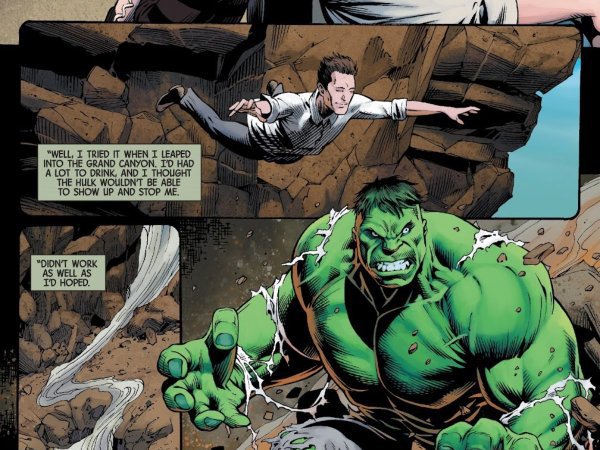
It may not enable us to look like the Hulk when it comes to both spiritual and physical challenges, but Holy Spirit provides us with an otherworldly strength to live into our oncoming circumstances and to conquer the challenges of life.

This is the kind of strength that can only be manifested in our weaknesses.

In 2 Corinthians 12:9, Paul wrote, “But he said to me, ‘My grace is sufficient for you, for my power is made perfect in weakness.’” 

So what is this power, and how can we, as believers, come to access it during the up and coming Post-Pandemic Lenten season and strenuous challenges of life?

What Does ‘My Power Is Made Perfect in Weakness’ Mean?

We often try to come across as the I-can-do-it-all Christian—making perfect grades in school or raising well-behaved children while maintaining the ultra squeaky-clean Christian reputation in church.

If we come across a challenge that seems too much for us to handle, we often blame ourselves for not being “strong enough.”

As though we some how an in some way believe that God automatically expects us to do all the things with “ease” and never cave beneath the pressures of life.

But we were simply never created to bear this life through our own strength.

In fact, we don’t even have within ourselves the ability to bear its weight!

So why should we or do we, try so hard to look like Miss or Mr. Independent “Iron” Christian when, really, God frowns upon this type of approach to life?

It is impossible for us to conquer anything apart from God’s sufficient grace.

Writing this, I wonder if God purposely created our bodies to cave beneath pressure—so we could realize we can do nothing apart from Him (see John 15:5).

But rather than allowing this to make us frustrated, get all of our faults and all failures and failings all bunched up inside our heads, perhaps we should instead use these weaknesses to propel us closer to our Savior Jesus Christ, and drawing supernatural strength from the power of the Holy Spirit – to rely more on God?.

God intended us to rely on this Holy Spirit day-by-day, moment-by-moment.

This is why Jesus said this to His disciples before He was crucified:

“But in fact, it is best for you that I go away, because if I don’t, the Advocate won’t come. If I do go away, then I will send him to you.” [John 16:7]

John 16:7Amplified Bible

But I tell you the truth, it is to your advantage that I go away; for if I do not go away, the [a]Helper (Comforter, Advocate, Intercessor—Counselor, Strengthener, Standby) will not come to you; but if I go, I will send Him (the Holy Spirit) to you [to be in close fellowship with you].

It is for our benefit that Jesus left the “Advocate,” which is the Holy Spirit.

If we did not have the Spirit abiding within us, then we would not have access to this power.

We would struggle through life, relying only on our own mental an physical muscles to face life’s battles.

But we do have the Holy Spirit.

This means as we abide in Him, we can draw strength from Him rather than ourselves.

We can ask Him to give us what we need to overcome this life.

Confessing ourselves before Him: “No, me, myself, I, simply cannot do it all.”

That’s a good thing!

If we could, then we would never have the opportunity to allow God’s power—which is far stronger than any human strength—to be made apparent within us.

We would continue through life as Miss or Mrs. or Mr. Iron Clad Independent Christian, never having a need to depend on God alone and gain access to His grave-conquering power.

What Is the Context of 2 Corinthians 12:9?

In this chapter, Paul shares about a heavenly vision God gave him that gained him access to spiritual revelations.

He was not permitted to share these insights with anyone and did not want to receive the credit for them.

To keep him humble, he says that God intentionally allowed him to have a “thorn in the flesh” (see verse 7).

Paul goes on to discuss the pain of this suffering, as well as its eventual advantage, in verses 8-10:

“Three times I pleaded with the Lord to take it away from me. But he said to me, ‘My grace is sufficient for you, for my power is made perfect in weakness.’ Therefore I will boast all the more gladly about my weaknesses, so that Christ’s power may rest on me. That is why, for Christ’s sake, I delight in weaknesses, in insults, in hardships, in persecutions, in difficulties. For when I am weak, then I am strong.”

Obviously, the strength he refers to in the final verse is not human strength but a supernatural strength.

And it is only through experiencing the weakness that he was he able to receive this power.

In other words, Paul recognized that it was not through an independent attitude that he could boast, but rather a complete dependency, reliance upon God.

It was this dependency and reliance on God that kept him humble as well.

It is also interesting to take a look at the meaning of the Greek words used in this passage.

The phrase “is sufficient” is arkei, which means to assist, benefit, and to be satisfied.

Christ’s grace benefits us in our weaknesses by allowing us to grow stronger—not in our might, but in His.

Thus, we are more equipped to face the challenges and sufferings of life.

The word “power” here is dynamis, which implies a force and miraculous power.

It is pretty miraculous when His strength becomes manifested in our weaknesses!

“Is perfected” is teleitai, which implies bringing to completion, to accomplish and fulfill.

When we receive His miraculous power to strengthen us, we don’t just receive a portion of it.

We can receive it to the full—and all for the singular purpose of accomplishing His perfect will.

Finally, the phrase “may rest” is episkēnōsē.

This is translated to mean to pitch a tent upon or to dwell and abide within.

How interesting is that?

So, If you like camping out under the stars …

So, if you like staying dry against the rains …

In a strong, dependable, reliable, long lasting, enduring, well staked tent,

Psalm 19Amplified Bible

The Works and the Word of God.

To the Chief Musician. A Psalm of David.

19 The heavens are telling of the glory of God;
And the expanse [of heaven] is declaring the work of His hands.

Day after day pours forth speech,
And night after night reveals knowledge.

There is no speech, nor are there [spoken] words [from the stars];
Their voice is not heard.

Yet their voice [in quiet evidence] has gone out through all the earth,
Their words to the end of the world.
In them and in the heavens He has made a tent for the sun,

Which is as a bridegroom coming out of his chamber;
It rejoices as a strong man to run his course.


The sun’s rising is from one end of the heavens,
And its circuit to the other end of them;
And there is nothing hidden from its heat.


The law of the Lord is perfect (flawless), restoring and refreshing the soul;
The statutes of the Lord are reliable and trustworthy, making wise the simple.

The precepts of the Lord are right, bringing joy to the heart;
The commandment of the Lord is pure, enlightening the eyes.

The fear of the Lord is clean, enduring forever;
The judgments of the Lord are true, they are righteous altogether.

10 
They are more desirable than gold, yes, than much fine gold;
Sweeter also than honey and the drippings of the honeycomb.
11 
Moreover, by them Your servant is warned [reminded, illuminated, and instructed];
In keeping them there is great reward.
12 
Who can understand his errors or omissions? Acquit me of hidden (unconscious, unintended) faults.
13 

Also keep back Your servant from presumptuous (deliberate, willful) sins;
Let them not rule and have control over me.
Then I will be blameless (complete),
And I shall be acquitted of great transgression.
14 
Let the words of my mouth and the meditation of my heart
Be acceptable and pleasing in Your sight,
O Lord, my [firm, immovable] rock and my Redeemer.

Let that love for camping become one more “JEHOVAH” sized reminder …

Christ’s power can literally descend upon us as we dwell and abide in Him.

This “tent” of Christ can remain our safe place of refuge.

It’s interesting to note, too, how the phrase “may rest” in this passage compares to the phrase “made His dwelling” in John 1:14:

“The Word became flesh and made his dwelling among us.”

The passage “made His dwelling” is translated eskēnōsen, which means to dwell in a tent, to occupy or to reside.

So, Jesus came to earth so that He could dwell with us—and when He departed, He gave us the Holy Spirit so that He could continue to do the same.

He still dwells with us, and we can dwell in Him.

But we must crucify our desires to work and face this life apart from Christ.

After all, it is only as we abide and dwell in Him that we will display His full power within us, bearing “much fruit,” as mentioned in John 15.

What Does the Bible Have to Say about Weakness?

The word “weakness” in 2 Corinthians 12:9 implies suffering, insults, and persecution.

These aren’t exactly physical limitations but rather limitations we face in our everyday lives, such as the temptation to sin, heartache, and distress.

It is evident throughout the Bible that God does not intend to remove these weaknesses from our life.

If He did, then we would never have the pleasure of witnessing His power overcome.

We would never have the privilege of allowing our weaknesses to find their rest and completion in His strength.

Sadly, the idea of depending on someone may look like a weakness itself to our society.

We love to come across as strong, independent, and self-reliant, needing nothing and no one.

It is true humans are strong and intelligent—but this type of “Iron and Steel” independent mentality is frowned upon in God’s eyes.

And our strength is nothing to boast about, because according to 1 Corinthians 1:25, “God’s weakness is stronger than the greatest of human strength.”

So if God’s weakness is even stronger than our greatest strength, then why shouldn’t we willingly want to receive His power?

One of the reasons why God allowed His Son to come to earth was so that He could understand our human condition.

Basically, He wanted to become familiar with our weaknesses. 

Hebrews 4:15-16 makes this clear:

For we do not have a high priest who is unable to sympathize with our weaknesses, but one who in every respect has been tempted as we are, yet without sin. Let us then with confidence draw near to the throne of grace, that we may receive mercy and find grace to help in time of need.”

Jesus understands our sufferings.

Why, then, should we try to stubbornly fix our issues by ourselves when the One who has already conquered this world invites each and every single one of us to completely, utterly, and fully, rely on Him?

It is only when we relent in our own efforts and apply the above Scripture to our lives that we will then fully appreciate and abundantly receive the help we need.

God’s power being made evident in our weaknesses is also illustrated in stories throughout the Old Testament, such as David conquering Goliath, as well as in the following verses:

“He gives power to the weak, And to those who have no might He increases strength” Isaiah 40:29.

“So he said to me, “This is the word of the Lord to Zerubbabel: ‘Not by might nor by power, but by my Spirit,’ says the Lord Almighty” Zechariah 4:6.

Apostle Paul also spoke of God’s strength being made known in his weakness in Philippians 4:11-13: 

“Not that I was ever in need, for I have learned how to be content with whatever I have. I know how to live on almost nothing or with everything. I have learned the secret of living in every situation, whether it is with a full stomach or empty, with plenty or little. For I can do everything through Christ, who gives me strength.”

When I read these passages of scripture, enormous joy arises within me because I realize just exactly how empowered I am.

Whatever trials or temptations God allows into my life, I can overcome.

Not in my own strength, of course, but in God’s power being made perfect in my weakness.

Another reference to our fragility finding completion in God’s strength is in 2 Corinthians 4:7, where Paul wrote: 

“We now have this light shining in our hearts, but we ourselves are like fragile clay jars containing this great treasure. This makes it clear that our great power is from God, not from ourselves.”

Perhaps this is why God often uses the weak of the world to demonstrate His greatest power and to “shame the wise” (see 1 Corinthians 1:27):

So that more of His glory can be on display.

When we overcome a weakness we would not be able to conquer on our own, then it is obvious, just like the above verse says, the great power came from God and not from ourselves.

And shouldn’t that remain our main goal as Christians?

To spread more of His glory rather than our own? 

But the only way we can gain this strength is to give up our independent tendencies and learn how to rely on the Holy Spirit within us. 

Ephesians 3:16 says, “I ask that out of the riches of His glory He may strengthen you with power through His Spirit in your inner being.”

I believe God is searching for Christians who can admit their weaknesses and shortcomings, because only in doing that will His purposes be accomplished.

This is why Jesus left behind the Holy Spirit, after all.

So as we dwell in Him, we could be empowered to embrace the uncomfortable, including sufferings and persecution.

All for the sake of extending His Kingdom.

This means that the weaker we are, the more His power can be displayed within us and through us.

Apostle Paul was right—we now have every right to boast in our weaknesses!

This Lenten Season, Let’s choose to Go ‘camping’ with God, Son, Holy Spirit.

In the name of God, the Father and God the Son and God the Holy Spirit,

Let us Pray,

Heavenly Father, thank You that Your grace is sufficient for all my needs. Help me to recognise and rejoice in the knowledge that Your power is made perfect in my own weakness. Help me to boast all the more gladly in my inabilities so that Your great ability may be manifest in my life. By thy Holy Spirit, May everything I do be to Your praise and glory, my Lord and my God. Creating and eternal God, whose grace is sufficient for us and whose power is made perfect in weakness, in our weakness and insufficiency, we offer our lives and the gifts of our living for the work of your mustard seed kingdom; in our Lord, King and Savior Jesus’ name. AMEN.

https://translate.google.com/