When We Feel Stuck, When We Are Not At All Convinced We Can Still Make a Difference With Our Life. John 21:15-19

John 21:15-19 Amplified Bible

The Love Motivation

15 So when they had finished breakfast, Jesus said to Simon Peter, “Simon, son of John, do you love Me more than these [others do—with total commitment and devotion]?” He said to Him, “Yes, Lord; You know that I [a]love You [with a deep, personal affection, as for a close friend].” Jesus said to him, “Feed My lambs.” 16  Again He said to him a second time, “Simon, son of John, do you love Me [with total commitment and devotion]?” He said to Him, “Yes, Lord; You know that I love You [with a deep, personal affection, as for a close friend].” Jesus said to him, “Shepherd My sheep.” 17 He said to him the third time, “Simon, son of John, do you love Me [with a deep, personal affection for Me, as for a close friend]?” Peter was grieved that He asked him the third time, “Do you [really] [b]love Me [with a deep, personal affection, as for a close friend]?” And he said to Him, “Lord, You know everything; You know that I love You [with a deep, personal affection, as for a close friend].” Jesus said to him, “Feed My sheep.

Our Times Are in His Hand

18 I assure you and most solemnly say to you, when you were younger you dressed yourself and walked wherever you wished; but when you grow old, you will stretch out your hands and arms, and someone else will dress you, and carry you where you do not wish to go.” 19 Now He said this to indicate the [c]kind of death by which Peter would glorify God. And after saying this, He said to him, “Follow Me [walk the same path of life that I have walked]!”

The Word of God for the Children of God.

Adeste Fideles! Laeti Triumphantes! Venite Adoremus! Dominum.

Gloria! In Excelsis Deo! Alleluia, Alleluia, Alleluia, Amen.

(Psalm 144:4) Man is like a mere breath;
His days are like a shadow that passes away.

Perhaps there exists something so natural to us we take it too much for granted.

Perhaps that something which so very natural to us is our time alive, our time allotted to us by God to simply breathing and moving and living on this earth.

Do we take the time to ponder exactly how Time is so precious — time with our families, children, parents, friends, brothers and sisters in Christ – With God?

How do we invest our time?

When do we invest our time?

Where do we invest our time?

With whom do we invest our time?

Why do we invest our time with whomever we invest our times?

You know, when it comes right down to it, getting back to the basics of life, our time with God and each other is really more valuable than the money we invest.

Once the present time and its opportunities are gone, they can’t be reclaimed.

So as we begin each day, as we look at the sunshine through the rain, perhaps contemplate “time management” “thought management,” ask God we will be able to “know His time,” to see it for what it is, to use it for its greatest good.

Irretrievably so, time – God’s Time” passes quickly, like the shadows of early evening, it’s not long before it is absorbed into the gathering darkness of night.

When We Feel “Forever Stuck” In The Moment?

From time to time, while in the process of drafting a new devotional, I find myself in a deep mental conundrum – my mind and my spirit seem to go blank.

The kind of blankness I so desperately want to escape, but as every cliched movie villain always says, “escape is futile, resistance to change is futile”

Sometimes the same conundrum affects me on an emotional level, even spiritually – what difference is anything I write about a particular subject I believe the Holy Spirit provides, going to make in anyone I truly care about?

I feel a certain way and don’t want to, but the villain tells me yet again, escape is futile – In other words, I’m feeling stuck in my moment- or so I tell myself.

The first kind of hindrance is writer’s block, something every author eventually faces during his or her artistic pursuits.

Then there’s the kind of barrier we can all relate to, where we’re looking for a change on an emotional or spiritual level, but find ourselves confused, maybe even miserable – we are longing for answers but find none – That’s a life block.

We encounter them in our relationship with God, with each other.

We find them on the job and at home and on vacations.

We find them in ourselves and of ourselves.

In other words, we contend with a seemingly insurmountable problem; but only to us, the problem is not seemingly, but definitely perceived as insurmountable.

We’re stuck in a moment of time, or in a memory, or so we will take great pains to try to sell it that way to ourselves.

Escape is futile, we keep talking to ourselves and therefore we come to believe.

Yet, the reality is, deep down, we know the movie villain is 100% exaggerating.

For the dramatic effect and for their audiences, they will always exaggerate.

There is a way through the barrier, a way to get unstuck, a way back to writing those stories, transforming perspectives, having the right perspective of God.

Though the frustration and confusion may be too deep, ceaseless, unrelenting, too aggravating, too anger provoking, the solution is simple and two-fold.

First, take a break; not in the sense of giving up, but in the sense of ending your striving.

There’s only so much we can control in our lives.

The sooner we realize this, the more peace we will find.

After you take a break, either wait or look for inspiration.

Sometimes finishing a devotional requires that I stop writing for ten minutes so that I can go for a walk or have a quick moment to wander around my home.

Sometimes finishing a devotional requires me to temporarily set it aside, to pray to God and then as God will’s it, come back after a day or longer.

That time off from the writing effort is useful for conjuring up, discerning new ideas, letting the Holy Spirit work and gaining insight from God or other people.

Creating distance from the problem at hand often helps with developing a more objective perspective.

The same applies when we’re navigating relational conflict, battling addiction, battling mental health issues, family issues or just trying to discern God’s will.

After we take a break from all the struggles of doing things our own way, we can find “Father, Son and Holy Spirit” inspiration for tackling our circumstances.

Proverbs 16:1-4 Amplified Bible

Contrast the Upright and the Wicked

16 The plans and reflections of the heart belong to man,
But the [wise] answer of the tongue is from the Lord.

All the ways of a man are clean and innocent in his own eyes [and he may see nothing wrong with his actions],
But the Lord weighs and examines the motives and intents [of the heart and knows the truth].

[a]Commit your works to the Lord [submit and trust them to Him],
And your plans will succeed [if you respond to His will and guidance].

The Lord has made everything for its own purpose,

Even the wicked [according to their role] for the day of evil.

Inspiration comes only through our connection to God, sometimes through people, sometimes through nature, and sometimes through so much more.

Inspiration also finds us through God’s Word, the wisdom of the Cross, and a visit from Jesus helping us see with a perspective that doesn’t come naturally.

Stuck in His Guilt, Peter is Restored to Discipleship

John 21:18-19 Amplified Bible

Our Times Are in His Hand

18 I assure you and most solemnly say to you, when you were younger you dressed yourself and walked wherever you wished; but when you grow old, you will stretch out your hands and arms, and someone else will dress you, and carry you where you do not wish to go.” 19 Now He said this to indicate the [a]kind of death by which Peter would glorify God. And after saying this, He said to him, “Follow Me [walk the same path of life that I have walked]!”

On the night Jesus was arrested, Peter had instantly revoked his discipleship.

Under threat of arrest and exposure and potential death sentence, by those in the courtyard he had denied three times that he was a follower of Jesus – each time he publicly proclaimed his denials more desperate than the previous one.

Luke 22:54-62 Amplified Bible

Peter’s Denials

54 Then they seized Him, and led Him away and brought Him to the [elegant] house of the [Jewish] [a]high priest. And Peter was following at a [safe] distance. 55 After they had kindled a fire in the middle of the courtyard and had sat down together, Peter sat among them. 56 And a servant-girl, seeing him as he sat in the firelight and looking intently at him, said, “This man was with Him too.” 57 But Peter denied it, saying, “Woman, I do not know Him!” 58 A little later someone else saw him and said, “You are one of them too.” But Peter said, “Man, I am not!” 59 After about an hour had passed, another man began to insist, “This man was with Him, for he is a Galilean too.” 60 But Peter said, “Man, I do not know what you are talking about.” Immediately, while he was still speaking, a rooster crowed. 61 The Lord turned and looked at Peter. And Peter remembered the word of the Lord, how He had told him,  “Before a rooster crows today, you will deny Me three times.” 62 And he went out and wept bitterly [deeply grieved and distressed].

Again, to emphasis, the power of the moment, its deep significance, when he realized what he had done, he went out and wept bitterly (Matthew 26:69-75).

In that moment frozen forever in time, He was indescribably overwhelmed by incalculable shame and immeasurable guilt.

Luke 24:36-43 Amplified Bible

Other Appearances

36 While they were talking about this, Jesus Himself [suddenly] stood among them and said to them, “Peace be to you.” 37 But they were startled and terrified and thought that they were seeing a spirit. 38 And He said, “Why are you troubled, and why are doubts rising in your hearts? 39 Look at [the marks in] My hands and My feet, [and see] that it is I Myself. Touch Me and see; a spirit does not have flesh and bones, as you see that I have.” 40 After saying this, He showed them His hands and His feet. 41 While they still did not believe it because of their joy and amazement, He asked them, “Do you have anything here to eat?” 42 They gave Him a piece of broiled fish, 43 and He took it and ate it in front of them.

Even as Peter with the other disciples in the Upper Room, heard the words from the resurrected Jesus – “Peace be To You,” the question – “why are you troubled and why are doubts rising in your hearts,” having been offered the opportunity to look at the marks in His hands and feet, to even touch them for his own self,

We can say that Peter’s heart, despite all of the irrefutable evidence offered by the resurrected Jesus to the contrary, Peter kept significant doubts of himself.

He looked directly into his Messiah’s eyes when he betrayed Him and wept bitterly and inconsolably – only an exchange of words with eye to eye contact would make any significant and lasting difference which did not happen here.

Such a moment required utmost discretion couples with the utmost presence of God in Christ and the utmost intimacy and the utmost compassion, forgiveness.

Jesus comes to the lakeshore.

After breakfast, Jesus and Peter together, go much further down the beach.

Jesus quietly looked into Peter’s eyes and quietly asked Peter a few questions.

But the questions were not “What were you thinking?” “Why did you abandon me when I needed you?” or “Why didn’t you have the guts to stick up for me?”

It was simply “Do you love me?”

Jesus had died on the cross for Peter’s sins.

What Jesus wanted to know now was only whether or not Peter still loved him.

Peter’s sins were in the past; Peter’s expression of love would shape his future.

When Peter said, “Yes, Lord, you know that I love you,”

Jesus, the conqueror of sin and death and the Lord of life, graciously invited him to take up his discipleship again and forgiven, follow him into the future.

Doing the same with us, Jesus is astonishingly gracious.

He doesn’t bring up our past sins, betrayals, or infidelities.

He simply wants to know if we love him.

He simply wants to know, to hear He can still make a difference in Peter’s life.

He simply wants to hear Peter acknowledge he still believed in himself, in his ability to move through and beyond his transgressions, to make a difference in the lives he will come to engage with until his own death at some future point.

Did Peter believe, though still being stuck in the brutality of his mistakes, he could still make a significant difference, significant impact in God’s kingdom?

Forward through the Ages for Christ’s sake – for that makes all the difference.

Whatever horrendous mess you might be stuck in now, are you seeking Jesus?

Forward in His Forgiveness, Forward through the Ages,

Do you Still love Him as He still loves you?

Will you still serve Him as He first Served you (Mark 10:35-45, Luke 19:9-10)?

Micah 6:6-8 Amplified Bible

What God Requires of Man


With what shall I come before the Lord [to honor Him]
And bow myself before God on high?
Shall I come before Him with burnt offerings,
With yearling calves?


Will the Lord be delighted with thousands of rams,
Or with ten thousand rivers of oil?
Shall I present my firstborn for my acts of rebellion,
The fruit of my body for the sin of my soul?


He has told you, O man, what is good;
And what does the Lord require of you
Except to be just, and to love [and to diligently practice] kindness (compassion),
And to walk humbly with your God [setting aside any overblown sense of importance or self-righteousness]?

He invites us to go out and serve him today!
Steadfast and Immovable Gracious and Compassionate In Him.

In the name of God, the Father and God the Son and God the Holy Spirit,

Let us Pray,

Eternal God, please give me the wisdom to use the time given me today to do what is best, right, good, and profitable for Your Kingdom. I want to better invest my time in what is truly enduring and redemptive and transformative, living in and loving out from the depths of resurrection, from the depths of your mercy and forgiveness for all my sins. Please help me use my time to influence and bless all those with whom I may interact with so that they too are brought closer to you. In Jesus’ name, I pray.

Adeste Fideles! Laeti Triumphantes! Venite Adoremus! Dominum.

Gloria! In Excelsis Deo! Alleluia, Alleluia, Alleluia, Amen.
https://translate.google.com/

Will The Cross Open Wide Our Eyes Too? The Centurion’s Unexpected Confession: His Declaration Of Jesus’ Innocence. Luke 23:44-49

Luke 23:44-49 Amplified Bible

44 It was now about the sixth hour (noon), and darkness came over the whole land until the ninth hour (3:00 p.m.), 45 because the sun was [a]obscured; and the veil [of the Holy of Holies] of the temple was [b]torn in two [from top to bottom]. 46 And Jesus, crying out with a loud voice, said, “Father, into Your hands I commit My spirit!” Having said this, He breathed His last. 47 Now when the centurion saw what had taken place, he began praising and honoring God, saying, “Certainly this Man was innocent.” 48 All the crowds who had gathered for this spectacle, when they saw what had happened, began to return [to their homes], beating their breasts [as a sign of mourning or repentance]. 49 And all His acquaintances and the women who had accompanied Him from Galilee were standing at a distance, watching these things.

The Word of God for the Children of God.

Adeste Fidelis! Venite Adoremus! Dominum.

Gloria! In Excelsis Deo! Alleluia, Alleluia, Alleluia, Amen.

It was to become the Greatest Injustice in the History of Mankind.

As Prophesied by Jesus Himself three times to His Disciples.

Betrayed, Falsely Accused, a Bevy of False Witness testified against him.

A Kangaroo Court held in the darkest of street corners, behind locked doors.

By His own people who once declared the triumph of his life and ministry.

Pilate Himself declared his innocence, tried everything to release him alive.

But Jesus’ own people would have none of it – Crucify! Crucify! Crucify!

Beaten and Scourged and Humiliated to almost beyond recognition.

Forced to carry his own means of death.

Both Hands and Both Feet Nailed to the Cross in the most painful of ways.

Raised up for all the great gathered crowds to bear their ugliest witness to.

Ceaseless, Unrelenting Mockery and Scorn shouted and heard far and wide.

Finally, more quieted and Hushed Words are uttered and heard but by a few.

“I am Thirsty.”

“Father, Forgive them for they know not what they do.”

“It is Finished.”

“Father, into Your hands I Commend My Spirit.”

And finally, all the words come to their ends, Jesus is dead …

But into this moment when all else is suddenly hushed …

But the hushed flow of words continues from unexpected sources …

Luke 23:47 Amplified Bible

47 Now when the centurion saw what had taken place, he began praising and honoring God, saying, “Certainly this Man was innocent.”

Who else had heard these words spoken by the Centurion, the man with the authority to command and lead others to do his bidding, the man under the even greater authority of Pilate, under ultimate authority of his Emperor.

Yes, who else heard these hushed words of the Centurion …

Luke 23:48 Amplified Bible

48 All the crowds who had gathered for this spectacle, when they saw what had happened, began to return [to their homes], beating their breasts [as a sign of mourning or repentance].

The Word of God for His Children was undoubtedly rare and and far rarer still were the Words of God for His Children to remain hush, unspoken in those days.

Now, it is two thousand some odd number of years later and we “hear” again.

Through the Word of God for His Children and Song we remembered the scene.

Good Friday has passed us by, we have returned to the comfort of our homes.

To quietly await the quiet and hushed arrival of the sunrise on Easter Morning.

In that between time, on that day of whatever comes rushing to your mind – perhaps the final rush of housework, shopping and meal preparation for the final assembly of family and friends and perhaps even your neighbors too …

Question: What happens in your heart when you think of Jesus on the cross?

Probably not too much because like most you are waiting for the Preacher to lead the morning worship and Preach their messages on Sunday morning.

A day meant for personal reflection, perhaps family devotionals is what …?

Perhaps, if you are like me and perhaps a few others who went home “beating their breasts in hushed acts of confession and reflection and repentance, it is a time of inviting the Holy Spirit to intercede into your all too hushed moments.

I guess it is too hard to spend any extra time with God (Matthew 6:6-7) to try to imagine the indescribable, immeasurable depths of injustice on Good Friday.

His suffering is especially hard to imagine during this season of the year when we are still perhaps remembering his Advent and thinking about his birth too.

Our hearts are filled with emotion – the joy, and triumph and the Glory of God, the single greatest act of God’s love and God’s Justice of all time. (John 3:16-17)

The hearts of those who witnessed the Lord’s suffering were filled with all sorts of emotions, too.

Like the Centurion’s, Does The Cross Opens Our Eyes?

Luke 23:47 Amplified Bible

47 Now when the centurion saw what had taken place, he began praising and honoring God, saying, “Certainly this Man was innocent.”

The seasoned Roman officer handling the execution praised God and knew this man Jesus was not guilty of any crime.

The crowd went home with deep sorrow.

John and Jesus’ mother Mary and a few others stood by the Cross …

John 19:25-27 Amplified Bible

25 So the soldiers did these things.

But standing by the cross of Jesus were His mother, His mother’s sister [[a]Salome], [b]Mary the wife of Clopas, and Mary Magdalene. 26 So Jesus, seeing His mother, and the [c]disciple whom He loved (esteemed) standing near, said to His mother, “[Dear] woman, look, [here is] your son!” 27 Then He said to the disciple (John), “Look! [here is] your mother [protect and provide for her]!” From that hour the disciple took her into his own home.

Most of Jesus’ friends went home in repentance or watched from a distance.

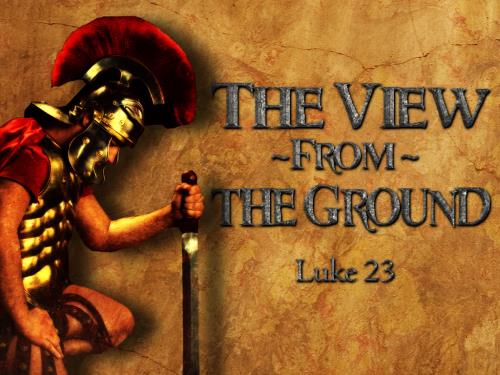
We have all of these “reactions from the ground as they look up at the Cross.”

What are we to make of them still today – in these 21st century times, seasons?

We have not understood, indeed we cannot understand the implications of the the harshness, yet also the beauty of cross unless it has changed us personally.

After Jesus “breathed his last” (Luke 23:46), Luke records for us the reactions of those who witnessed the crucifixion.

“All the crowds that had assembled for this spectacle, when they saw what had taken place, returned home beating their breasts” (v 48).

Yes, there was sadness, but once the spectacle was over, they left to get on with their lives.

Verse 49 then informs us “all his acquaintances … stood at a distance watching” —and we can barely even imagine what was running through all of their minds.

But the most striking and the most personal reaction that Luke captures is that of the Roman centurion, who, seeing what had happened, “praised God, saying, ‘Certainly this man was innocent!’”—or, as the NIV renders it, “Surely this was a righteous man.”

Here, amid the darkness of hypocritical religious leaders, cynical rulers, and callous passersby, the hushed whispers of lingerers, is a tiny glimmer of light.

Perhaps the very last person we would expect to see the truth—a man with no previous connection to Jesus, no background in Old Testament studies, and no predisposition to the things of God, just utterly obeying his Roman bosses—not only grasped what he looked at, but he immediately responded personally to it.

He saw

“what had taken place”—the words of Jesus, the darkness overhead, the manner of His death—and realized, 

Here is no ordinary man. Here is a man who is different from every other man. Here is a man who is entirely innocent, wholly righteous. 

Indeed, the Gospel narrative of Mark adds that the centurion confessed that the man on the cross was undoubtedly none other but “the Son of God” (Mark 15:39).

With his incredible and trained eye for detail, Luke places a clear emphasis on giving his readers a “from the ground up” seeing what took place on the cross.

He probably hoped that some readers would remember that when Jesus had read from the scroll of Isaiah earlier in His ministry, He had said, “The Spirit of the Lord … has anointed me to proclaim good news to the poor … to proclaim liberty to the captives and recovering of sight to the blind” (Luke 4:18).

Indeed, a great theme found throughout the Gospel of Luke is that of darkness being invaded by light—the confusion and hardness of the people’s hearts and their minds being subsequently invaded by the liberating power of God’s truth.

1 Corinthians 1:18-25 Amplified Bible

The Wisdom of God

18 For the message of the cross is foolishness [absurd and illogical] to those who are perishing and spiritually dead [because they reject it], but to us who are being saved [by God’s grace] it is [the manifestation of] the power of God. 19 For it is written and forever remains written,

“I will destroy the wisdom of the wise [the philosophy of the philosophers],
And the cleverness of the clever [who do not know Me] I will nullify.”

20 Where is the wise man (philosopher)? Where is the scribe (scholar)? Where is the debater (logician, orator) of this age? Has God not exposed the foolishness of this world’s wisdom? 21 For since the world through all its [earthly] wisdom failed to recognize God, God in His wisdom was well-pleased through the [a] foolishness of the message preached [regarding salvation] to save those who believe [in Christ and welcome Him as Savior]. 22 For Jews demand signs (attesting miracles), and Greeks pursue [worldly] wisdom and philosophy, 23  but we preach Christ crucified, [a message which is] to Jews a stumbling block [that provokes their opposition], and to Gentiles foolishness [just utter nonsense], 24 but to those who are the called, both Jews and Greeks (Gentiles), Christ is the power of God and the wisdom of God. 25  [This is] because the foolishness of God [is not foolishness at all and] is wiser than men [far beyond human comprehension], and the weakness of God is stronger than men [far beyond the limits of human effort].

Any attempt to articulate Christianity that denies the absolute centrality of the wisdom of God and the wisdom of the Cross can never lead to saving faith.

And while we do not always understand how the Spirit moves in leading men and women to be born again, our message must always and ever be the same:

“But We Preach Christ crucified” (1 Corinthians 1:23).

It is beholding the cross that brings life for anyone who responds to the man who hung there by confessing who He is and praising God for His saving work.

Unless and until the “goodness” of the cross is personal to us, it is essentially to be considered as utterly useless for us.

So, when was the last time you simply looked UP at your Savior on the cross and just walked away?

Or, when was the last time you looked DOWN at your Savior on the cross and up, just walked away into whatever else is about to rush into your hushed mind?

So, when was the last time you simply looked UP at your Savior on the cross and spent the intervening time waiting for the Easter moment and just praised God?

Which one best describes your reaction?

Don’t you find it even minimally amazing that probably the least commendable, the most hushed, the least exemplary response was that from Jesus’ friends?

In these intervening times and seasons, let’s not be just observers of the cross, but rather a people deeply sorrowed by our sins which took Jesus to OUR cross.

However, in our sorrow, let’s make sure we don’t let grief consume us.

Instead, let’s praise God for his grace and the salvation he has provided for us.

Then, rather than walking away, having been hushed by the moment, going into hiding like the fearful friends of Jesus (John 20:19),

Let’s maybe share the confession of the Centurion, and the grace of God with;

O’ Come All Ye Faithful …

Adeste Fidelis …

O’ Come Let Us Adore Him …

Venite Adoremus …

Joyful and Triumphant …

Laeti Triumphantes,

To the King of the Angels …

Regem Angelorum …

To Christ the Lord!

Dominum!

Amen!

In the name of God, the Father and God the Son and God the Holy Spirit,

Let us Pray,

Psalm 24 The Message

24 1-2 God claims Earth and everything in it,
    God claims World and all who live on it.
He built it on Ocean foundations,
    laid it out on River girders.

3-4 Who can climb Mount God?
    Who can scale the holy north-face?
Only the clean-handed,
    only the pure-hearted;
Men who won’t cheat,
    women who won’t seduce.

5-6 God is at their side;
    with God’s help they make it.
This, Jacob, is what happens
    to God-seekers, God-questers.

Wake up, you sleepyhead city!
Wake up, you sleepyhead people!
    King-Glory is ready to enter.

Who is this King-Glory?
    God, armed
    and battle-ready.

Wake up, you sleepyhead city!
Wake up, you sleepyhead people!
    King-Glory is ready to enter.

10 Who is this King-Glory?
    God-of-the-Angel-Armies:
    he is King-Glory.

Holy and Almighty God, Author of my Life, Perfecter of my Faith, my heart breaks that Jesus had to die as a sacrifice for sin … especially my sin. However, I praise you for your plan of grace, for your desire to provide mercy at the expense of your own heartbreak, and for your overwhelming love for people like me. In Jesus’ name.

Adeste Fidelis! Venite Adoremus! Laeti Triumphantes, Dominum.

Gloria! In Excelsis Deo! Alleluia, Alleluia, Alleluia, Amen.

https://translate.google.com/

What does it mean for us to have no other gods before God? Exodus 20:1-3

Exodus 20:1-3Amplified Bible

The Ten Commandments

20 Then God spoke all these words:

“I am the Lord your God, who has brought you out of the land of Egypt, out of the house of slavery.

“You shall have no other gods before Me.

The Word of God for the Children of God.

Adeste Fidelis. Venite Adoremus. Dominum.

Gloria. In Excelsis Deo. Alleluia, Alleluia, Alleluia, Amen.

Perhaps the most basic truth about the God of Scripture is He is the only one.

There is no other.

This truth ought to simplify things for us because it teaches us that there is only one who is the worthy object of our love, loyalty, and devotion.

But the hearts of men and women are not so easily convinced or instructed.

And so it is necessary for God to give us the first commandment: “You shall have no other gods before me.”

The danger is not that there are actual other gods for us to worship but that we have a proclivity for making them.

On first glance, this first command is straightforward.

To live for a god other than the true God would be like taking a second spouse while your first spouse is still alive and still happy to be your spouse.

Worse, it would be like taking a second spouse who is in truth a figment of your imagination.

It would be a seriously severe breach of an exclusive relationship.

We must not kid ourselves that we are immune from the possibility of breaking this commandment.

Many of us read it and then picture people bowing down before statues or going through elaborate rituals, and those mental images assure us that we are not in much danger of violating it.

Yet the commandments are not restricted to our outward actions but also relate to the disposition of our minds and hearts.

From this perspective, there is the tough realization we may not be as far from those mental images as we assume.

We may not have statues to which we bow down, but maybe we have segments of our lives that we keep away from God, preserving them under the authority and exclusive sovereignty of some other little “deity”—ourselves, perhaps.

Ask yourself:

“Do I joyfully acknowledge God’s exclusive comprehensive claim on my life?”

“Is God in Alpha to Omega charge of my family, my work, my relationships, my money, my dating, my use of my time, my talents, my gifts and my services?”

Take a close and honest look to see if there are portions of life you try to keep from Him.

In addition to our keeping, “secreting” things away from God, another form of danger is functionally replacing Him.

When we put our family, our job, our hobbies, or anything else in the place that is God’s alone, we violate the first commandment.

To the degree that we allow anyone or anything besides obedience to God to direct our course day to day, we defy His law.

So we are not so safe from the possibility of breaking this commandment as we may think!

While we must acknowledge the truth that there is one God, we must also beware our own ability to put things in His place.

If we do not daily submit ourselves to Him and entrust the entirety of our lives to Him, something will take His place.

We are made to worship.

The question is, are you going to worship the living God or are you going to pretend there is another?

Put serious focus on these words: ‘Thou shalt have no other gods before me.’

God’s Word leads us to the full life Christ died for us to live.

The Ten Commandments are guardrails for our modern-day lives.

We no longer live in the Old Testament church, where animal sacrifices upon altars were required for breaking God’s laws.

Today, we live under the new covenant, ushered in by Christ Jesus and His sacrifice on the cross to forgive our multitude of sins.

We cannot follow the Ten Commandments through our own sheer will but can aim to through the power of the Holy Spirit given to us at salvation.

Still, we will never hit the mark of perfection as Christ did. He loved the Father with His whole heart, soul, and mind.

Thankfully, perfection is not required of us.

What Does ‘Thou Shalt Have No Other Gods before Me’ Mean?

“Jesus replied: ‘Love the Lord your God with all your heart and with all your soul and with all your mind.’ This is the first and the greatest commandment. And the second is like it: ‘Love your neighbor as yourself.'” Matthew 22:37-39

In ancient times, and in some places and people groups around the globe today, people worship a variety of gods.

God clearly stated, “I am,” and commands His people to worship Him alone.

“No deity, real or imagined, is to rival the one true God in Israel’s heart and life” (NIV Study Bible).

Worshipping other gods gives a false sense of security from a source other than God, who is everywhere, all-powerful, and all-knowing.

The Hebrew, often translated as ‘besides me’ or ‘before me,’ means ‘in my presence.

The point is that nothing else can qualify as god in your life.

The true God is not only to be number one but the only one. 

Other gods can also constitute things we place higher than God in our lives.

The Bible defines these as idols, and they can be anything from money and possessions to food and working out or people and relationships.

Anything or anyone we place above God is another god.

As Christians, we are a “chosen people, a royal priesthood, a holy nation” 1 Peter 2:9). 

We are God’s people, set apart to live according to his ways.

His ways are not, and never will be, our ways.

Our tendencies are to cave to the cravings of our flesh and fall prey to the thinking they will give us the comfort and happiness we need.

God is faithful to bless us in this life, but there is no blessing bigger and more important than the source of the blessing.

Our marriages, best friends, jobs, houses, habits, and hobbies all take a serious backseat to the ONLY One who numbers our days.

Why Is it Important That ‘Thou Shalt Have No Other Gods before Me’ Is the First Commandment?

“For there is one God and one mediator between God and mankind, the man Christ Jesus, who gave himself as a ransom for all people.” [1 Timothy 2:5]

God’s laws are for our own good.

He is a loving Father who provides rules, boundaries, and discipline for His children as any good parent/caregiver does.

We don’t earn or keep our salvation by following God’s rules.

Obedience is a heart issue, which expresses our faith and trust in the Lord by instilling limits in our lives.

He has our best interest in mind.

Though Christians do not believe achieving the law is demanded for salvation, they still see the Ten Commandments as the establishment of God’s moral law. 

Jesus called people to an even higher standard by obeying the commandments not only in their behavior but also in their hearts and minds.

When we take the time to be with God each day through prayer, worship, and the Word, we get to know Him better.

We’re not promised an understanding of all of the ways of God, but the deeper our relationship is with Him, the more we trust and obey.

God’s timing in waiting until the third order to give the commandments was no coincidence.

He had already proven Himself as their Deliverer and Provider and it was time to test their faith and reveal His divine standards for them.

God’s people knew then He who He was to them: their Provider and Deliverer.

He is unchanging.

He’s still our Provider and Deliverer today, and so much more.

Why Did God Need to Say ‘Thou Shalt Have No Other Gods before Me’?

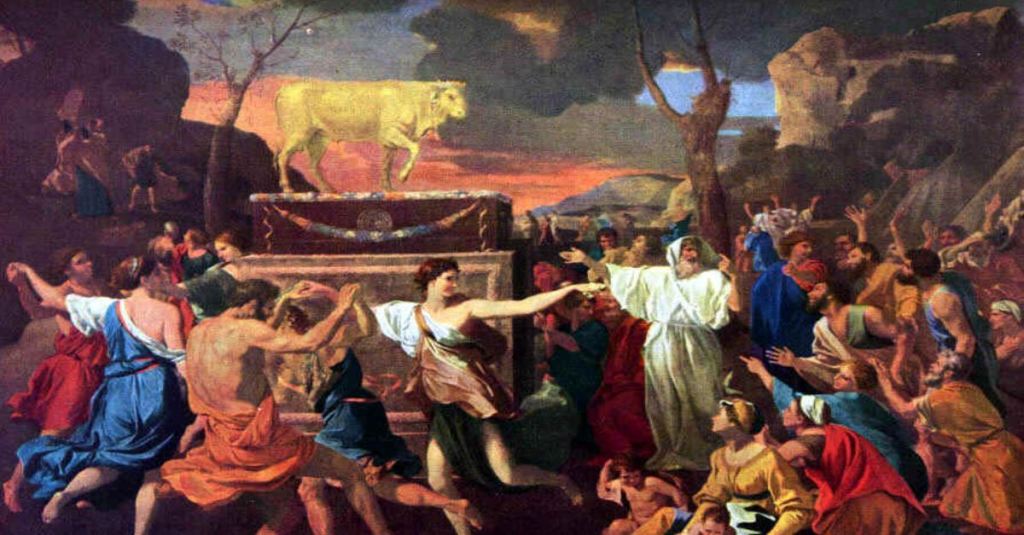
“When the people saw that Moses was so long in coming down from the mountain, they gathered around Aaron and said, ‘Come, make us gods who will go before us. As for this fellow Moses who brought us up out of Egypt, we don’t know what has happened to him.'” Exodus 32:1

God’s people struggled with faithfulness to Him.

In their fickleness, impatience, and lack of faith, they quickly turned to the temptation to worship as other nations did.

This time, it was by creating a golden calf representing Baal to worship.

But over time, Scripture mentions others gods they worshipped, too: Molek, Chemosh, Dagon, Asherah, and more.

In ancient times, this law steered people away from the many false gods worshipped by various cultures. 

God’s people were surrounded by other nations who worshipped other gods.

I imagine, much like we easily compare ourselves to others who live different lifestyles today, God’s ancient people often wondered what life would be like if they worshiped other gods.

It’s a temptation they often fell into and angered God with.

What Other Gods Might Christians Be Tempted to Bow Down to Today?

“Jesus said to him, ‘Away from me, Satan! For it is written: ‘Worship the Lord your God, and serve him only.'” Matthew 4:10

Before we are tempted to think of God’s ancient people in a bad light, we have to realize that the devil tempted even Jesus to worship other gods!

In the modern, new covenant age we live in, we are tempted every day to look outside of the providence, provision of God for something the world promises to give us.

In fact, the world will always tempt us to believe we are entitled to certain things, such as amenities and circumstances.

When we genuinely seek to obey it with all our hearts, the first commandment guards us against falling for those lies.

In Modern times, this Commandment is a warning against elevating money or other worldly things to god-like status in our lives.

We could include social media, the Internet, shopping, coffee, or even our gym memberships.

Anything we are tempted to find happiness and peace in other than God is a lie that will end up failing us. 

Outside of Christ, we are only wretched.

But in Christ Jesus, united to him, we are completely forgiven of our constant failure to keep them, his constant and perfect keeping of them is credited to us.

Jesus died for us, knowing we would not only be tempted by these things but fall prey to them, too.

Sometimes, we dive right in without much convincing or swaying.

The hope of Christ Jesus assures us forgiveness when we turn from those idols and other gods- no matter how deep we’re in – and come back to the Lord, who is our all in all.

The first commandment addresses a very human struggle, unavoidable even to the most faithful. Following this commandment perfectly is not God’s goal.

He knows we can’t do that.

He is much more concerned with our hearts, our trust in and obedience to Him.

The Holy Spirit will convict us when we’re falling off the rails.

And when we are genuinely repentant to turn back to Jesus, over and over again, He eagerly welcomes us all, washes us with His living water, again and again.  

God always has our best interest in mind.

He loves us so much He sacrificed His one and only Son Jesus on the cross for the forgiveness of our sins.

He saved us from ourselves before we saw our first fleck of sunlight.

He knit us in our mother’s womb with such care, gifted us with talents, and gave each of us a unique purpose on this earth no one else can accomplish.

Our God loves us wholly, perfectly, and completely.

In Him, we find peace and happiness, hope and comfort, encouragement and love.

The true gauge of our lives is measured only by God, the Father, through our relationship with Him through Christ Jesus, our Savior.

He alone knows, and can plumb the deepest depths of our hearts and our souls.

In the name of God, the Father and God the Son and God the Holy Spirit,

Let us Pray,

A Prayer to Have No Other Gods before God

Abba, Father. 

You are the best Father to us. Yahweh, You are the path to peace, hope, and grace. Christ Jesus, Messiah, we come to the Father through You alone, by Your sacrifice to forgive our sins. Holy Spirit, You convict and counsel us when we fall away and stray from the guardrails intended to help us live our lives to the full. Help us to cling to this commandment, to love You alone, God. May our lives bring glory to You, today and always. Help us to grow a love for Your Word that inspires us to come to You daily through it, Father. You tell us to pray about everything. Let us each take Your wisdom into every day of our lives and let it fill our hearts to the brim. We pray to saturate our minds with Your wisdom so that we follow it in our daily lives, Father. 

Adeste Fidelis. Venite Adoremus. Dominum.

Gloria. In Excelsis Deo. Alleluia, Alleluia, Alleluia, Amen.

https://translate.google.com/

Our Rejection of God: How Dare We Call Ourselves Christians? Jeremiah 7:16-26.

It is so endearing at times to see little children in a big supermarket or shopping mall. They come in crying with mom or dad, but as soon as they see something interesting—toys, candies, pets, or anything else that moves—their moods are in change mode, they go their own way and forget everything else around them.

And then at some point, suddenly, they look up and look around and realize that their mom or dad are not there anymore. They look mystified, turn around, first carefully walking, then running and checking out places. and then when they cannot find their parents, they start shouting, crying, “Mommy!!! Daddy!!!”

And when even that doesn’t help, you see their faces change from hope to fear and then to a sense of rejection. They think that they will never see mommy or daddy again. The result is a heart-rending crying that won’t stop until their parents have found them, or someone from the store comes to comfort them.

Eventually, there will be a message over the store’s call system asking the mom and dad to return to the customer service area – “that someone very special is waiting for them there.”

Mom and Dad are also likewise in a high state of fear because they cannot find their child. Of course, we know they would not ever reject their child just like that – the child not rejecting mom and dad, “wanders off” after some candy!

Eventually, Mom and Dad and Child are re-united, and everything is all “hugs and kisses, smiles and “don’t worry (_____), Mommy and Daddy love You!”

All is as it should be! The store is happy! Family is back together again!

And life in the “big city” “small town” neighborhood can go on as before.

All is bliss and blessed ……

The Good News is Mommy and Daddy did not reject their child after all.

Perhaps the Better News is their child did not reject their Mommy and Daddy when they were reunited.

Parents will give the best years of their lives to their children.

They give whatever they can, sacrifice their time, their strength, their resources—everything—in order to give all of their children all the best possible in life.

But then, when they in turn start being in need of their children, they may just find a stunning lack of gratitude, a stunning lack of a “return” commitment.

They are just expected to understand that the children have a life of their own.

They need their privacy. They need time and energy to develop their careers. They now have children of their own that take up so many of their resources.

And the parents try to understand, I am sure.

They explain to others with an air of pride how their kids are so busy, because they have such a responsible job and are taking so good care of their own kids.

But deep down inside, there may just be the maturing, searing pain of rejection, too great and too deep to describe, too shameful to freely share with any others.

It is certainly not true in all families –

But it is true is many families and too often goes un-noticed – except by God.

but here also lies an injustice – the rejection of our God, who is our Father!

We can call ourselves Christians, go to church, give our tithes, etc. and yet have rejected God effectively.

The picture God’s Prophet Jeremiah gives of life in Judah comes close to our life in the Christian West, with several gods competing for our loyalty.

Jeremiah 7:16-26Amplified Bible

16 “Therefore, do not pray for this people [of Judah] or lift up a cry or entreaty for them or make intercession to Me, for I do not hear you. 17 Do you not see what they are doing in the cities of Judah and in the streets of Jerusalem? 18 The children gather wood, the fathers kindle the fire, and the women knead the dough to make cakes for the [a]queen of heaven; and they pour out drink offerings to other gods that they may offend and provoke Me to anger. 19 Do they offend and provoke Me to anger?” says the Lord. “Is it not themselves [they offend], to their own shame?” 20 Therefore thus says the Lord God, “Behold, My anger and My wrath will be poured out on this place, on man and beast, on the trees of the field and the fruit of the ground; and it will burn and [the fire will] not be quenched.”

21 Thus says the Lord of hosts, the God of Israel, “Add your burnt offerings to your sacrifices and eat the meat. 22 For in the day that I brought them out of the land of Egypt, I did not speak to your fathers or command them concerning burnt offerings or sacrifices. 23 But this thing I did command them: ‘Listen to and obey My voice, and I will be your God, and you shall be My people; and you will walk in all the way which I command you, so that it may be well with you.’ 24 But they did not obey Me or bend their ear [to hear Me], but followed the counsels and the stubbornness of their [own] evil heart (mind), and [they turned and] went backward instead of forward. 25 Since the day that your fathers came out of the land of Egypt until this day, I have [persistently] sent you all My servants the prophets, sending them daily, early [and late]. 26 Yet they did not listen to Me and obey Me or bend their ear [to hear Me] but stiffened their neck; they did more evil and behaved worse than their fathers.

The Word of God for the Children of God. Gloria! In Excelsis Deo! Alleluia! Amen.

God is like a rejected parent.

Jeremiah 7 reveals to our souls the “anger” which “burns inside” a God who has been repeatedly rejected by his people—their Father in heaven whose children have repeatedly let him down, repeatedly turned their backs on him.

There are some seriously dramatic words in Jeremiah 7—even shocking—when God speaks to Jeremiah:

“Don’t pray for this people! Don’t offer any plea or petition for them! Don’t plead with me, for I will not listen!”

Wow! That’s tough language, isn’t it? Jeremiah is told that he is no longer allowed to pray for the people of God. And if he does, God will simply put his fingers in his ears, so to say, and make sure he does not hear a single word.

Have you ever seen parents doing that to their children? I have.

My father did that to me several times – he just turned off his hearing aids. If I tried to carry on our conversation or our arguments – he reached up to his ears and he simply, one by one, removed both of his hearing aids from his ears.

Again, we need not go further than the supermarket to see it happening all the time. Kids find their way to the candy department and start begging for candies.

Mom and dad will answer with a firm “no”.

“Today is not candy day. Some other time.”

But kids are not good at taking “no” for an answer.

So, they keep on asking, they insist, they become stubborn and impossible to handle. Everyone is now at a place where they all need to have “their space!”

And that is where many parents lose their patience.

It doesn’t mean that they stop loving their kids.

It doesn’t mean that they stop caring for them.

It doesn’t mean that they don’t want to give their very best to their children.

It only means at that point they come to the conclusion that their kids now need a firm foundational teaching on the need to hear, listen, respect their parents.

They need to understand that sometimes “no” really, truly, fully means “no”. They need to “straighten up,” obey their parents and accept their authority.

Jeremiah lived in a time when the people of Israel had turned away from God.

They did not think of him any longer as “the” God of Israel. At best, he was “a” god—one among a lot of colleagues and competitors.

For Israel, God’s law and parental authority had become “highly negotiable.”

People felt they were no longer dependent on him.

After all, they could always turn to other gods who were more amendable, more apt to condescend, to compromise, simply adjust to their needs and demands.

Look, for example, at how Jeremiah 7 describes life in the towns of Judah and the streets of Jerusalem:

(Verse 18) “The children gather wood, the fathers light the fire, and the women knead the dough and make cakes to offer to the Queen of Heaven. They pour out drink offerings to other gods to arouse my anger.”

What we see here is this: The people of Judah had broken faith with God.

They had committed spiritual adultery with other gods, which they had adopted from the cultures around them.

They still went to the temple to bring petty sacrifices.

They had a little time set apart for God. But it was not quality time. Their offerings did not come from the heart. They were just a routine ritual.

They thought by going through the motions of ritual, they could make God happy; They could make God believe they still loved and respected him.

But when the duties in the temple were done with, the families gathered together for quality time—a sort of barbeque party, you could say.

The kids went to pick twigs and branches for the fire. Dad lit the fire—after all, that was the man’s job. And mom was in the kitchen baking delicacies.

The cakes she made had the form of a woman.

It was the goddess Asherah, the “Queen of Heaven”.

You may have read that after the reign of king Solomon, the Jewish nation had been divided into a northern kingdom, Israel, and a southern kingdom, Judah.

By the time that God called Jeremiah, the northern kingdom of Israel had already ceased to exist.

Almost a century earlier, the Assyrian army had come and conquered the nation.

Many of the people had been killed or taken into exile, and groups of Assyrians came and settled in Samaria.

That should have been a clear warning sign for Judah in the south.

But everything shows that Judah had not learned its lesson. How come?

Why was it so hard for the Jews to stay faithful to the God who—as they firmly believed—had led them out of slavery in Egypt, given them the Promised Land?

Why did they ever so eagerly embrace other gods—the Queen of Heaven, the Assyrian goddess of the family; or Mammon, the Aramaic god of wealth and trade; or Baal, the Canaanite god of agriculture?

Why did they reject their own God Yahweh, the Creator of heaven and earth?

When I look at the life of Israel, from the moment they left Egypt to the time of Jeremiah and even beyond, I can come up with two answers.

First, their God was “too limited.”

And second, he was “too demanding.”

Let me try to spell that out for you.

Throughout the history of Israel, God appears as a very patriarchal God.

He was the God of Abraham, Isaac and Jacob, not the God of Sarah, Rebekah, Leah and Rachel. He was the God of Moses and Aaron, not the God of Miriam.

The creation story depicts God as inherently both male and female.

But in the history and tradition of his people, he seemed to communicate primarily from man to man, and take sides with the men.

He assigned all worship duties to male Levites and priests.

God seemed to endorse a strongly patriarchal society, where women were owned by their father or husband.

In the law he gave to Moses, women were given lesser rights than the men, even though, we must admit, in Israel women were treated with far, far more respect and equality than anywhere else in the Middle East.

But of course, they did not know, nor would they ever come to acknowledge it.

At times, God threatened to abandon his people in the desert.

At other times he threatened to wipe them from the face of the earth altogether.

He was distant.

They couldn’t see him; He would not allow to have pictures or statues made of him.

They couldn’t hear him, because he would only “speak through his prophets.”

To make things worse, he put a lot of demands on the people.

I don’t mean the ritual worship and sacrifices.

I mean the demands for moral integrity, for love and respect for one another and even for the foreigners living among them or traveling through their land.

God demanded that they take care of the needy, especially the widows and orphans, since there were no institutional social services.

God demanded at regular intervals debts were cancelled and slaves set free.

In short: God demanded the highest form of personal integrity and social justice.

But for those in power—the kings and tribal chiefs, the landowners and those who had made a fortune in trade—these demands were appalling.

The idea one day out of seven they were not allowed to do business or make their slaves and hired hands work on the land felt like a terrible waste of time and resources.

No wonder, then, that the people grew tired of God.

No wonder, then, that they looked for alternatives.

There was an obvious demand for a woman god—a goddess—who was more empathetic, easier to approach, and closer to the life of the family—a goddess with whom particularly the women could identify.

There was an obvious demand for a god who blessed business and trade and allowed a great measure of moral freedom, as long as you made money.

I believe in that respect our time is not so different from the time of Jeremiah.

Our Christian Church is not so far removed from the Jewish nation in Jeremiah’s time.

In the west, New Age spirituality has mixed with the faith of many Christians.

People go shopping, as it were, to fill their religious shopping cart with a nice religious mix that they feel good about.

These are the obvious forms of idolatry—the obvious ways in which God is being rejected as the one and only true God.

But there are also less obvious parallels between Jeremiah’s time and ours.

Every Christian knows the Great Commandment:

“Love the Lord your God with all your heart and with all your soul and with all your mind. And love your neighbor as yourself.”

But how many of us are really serious about this?

Oh, I know, it is easy to come to worship on Sunday and sing or pray: “Oh, Lord God! How Great thou Art! How I love you! Oh Lord Jesus! or How I adore you!”

But when it comes down to all the choices and decisions we make Monday through Saturday, to the way we deal with our family and friends,

with the people at school or at work, in the bus or the metro; with the beggars in the streets or the customers on the phone

… can everybody see that our lives are maybe not so much actually, genuinely driven by steadfast, immovable commitments to the Great Commandment?

Look at the way you spend your time and your money.

Look at the friends you choose and the friendships you neglect.

Look at your priorities. Listen to your words when you are angry or excited.

What do these tell you, others about your love for God and for your neighbor and for yourself? That is a question we should all ask ourselves—every day!

I see yet another parallel in the way we respect or disrespect the authority of God in our lives.

The simple truth is that God’s won’t necessarily always coincide with ours.

More often than not there seems to be a conflict of interests between God and us.

Just like the little kid in the supermarket, who is determined that she must have an ice cream right now.

To her great disappointment, she may find that her parents have a very different, and most disagreeable view on the matter.

God speaks with authority through the Bible, which we often call the Word of God. Luther called the Bible the supreme authority in matters of faith and living. That does not mean that everything we read in the Bible is normative.

Not everything that is normative is unambiguous and self-explanatory.

Not everything that is unambiguous and self-explanatory is independent of time, place or culture.

But it doesn’t really matter.

Isaiah 6:8-12Amplified Bible

Isaiah’s Commission

Then I heard the voice of the Lord, saying, “Whom shall I send, and who will go for Us?” Then I said, “Here am I. Send me!” And He said, “Go, and tell this people:

‘Keep on listening, but do not understand;
Keep on looking, but do not comprehend.’
10 
“Make the heart of this people insensitive,
Their ears dull,
And their eyes dim,
Otherwise, they might see with their eyes,
Hear with their ears,
Understand with their hearts,
And return and be healed.”

11 Then I said, “Lord, how long?” And He answered,

“Until cities are devastated and without inhabitant,
And houses are without people
And the land is utterly desolate,
12 
The Lord has removed [His] people far away,
And there are many deserted places in the midst of the land.

The question is: when we recognize God speaking to us through the Bible, do we try to “genuinely” hear Him, “actually” listen to Him, to respect his authority?

Is it our heart’s desire and our will’s determination to seek to obey him?

Or are we selective in applying only what we are comfortable with and what we feel good about?

Think of the events in the Garden of Eden in Genesis 3.

Adam and Eve heard God loud and clear: “Don’t eat from that tree.”

But they chose to ignore him and disobey what they knew was God’s command.

First, there was doubt creeping in: “Did God really say that?”

Then, there was distortion of God’s command: “He said we cannot touch the tree.”

It all stems from a hugely distorted image of God as a stern and bossy and unreasonable God who wants to make our lives miserable by denying us the good side of life, and who demands the impossible from us day and night.

As individual believers, and as the Body of Christ—the Church in God’s own neighborhood, and, if possible, as a society built upon the foundation of the Christian faith and tradition—we should take God’s authority seriously.

We should pay heed to his voice crying out in a broken world against social injustice, various forms of abuse and exploitation, discrimination and racism.

And it is not enough that we just refrain from going along with them.

As Christians, we should echo that voice and obey it.

We should encourage one another to live our lives the way God meant our lives to be (Philippians 2:1-4).

And perhaps, the best way to do so is to be imitators of Christ: to love like he loved, to care like he cared, to heal like he healed, and to sacrifice ourselves for others the way he sacrificed his life for us. (Ephesians 5:1-2, 1 John 4:7-21)

We can call ourselves Christians, go to church, give our tithes, etc. and yet have rejected God effectively. The picture Jeremiah gives of life in Judah comes close to life in the Christian West, with several “gods” competing for our loyalty.

Psalm 2:1-3Amplified Bible

The Reign of the Lord’s Anointed.

2 Why are the [a]nations in an [b]uproar [in turmoil against God],
And why do the people devise a vain and hopeless plot?

The kings of the earth take their stand;
And the rulers take counsel together
Against the Lord and His Anointed (the Davidic King, the Messiah, the Christ), saying,

“Let us break apart their [divine] bands [of restraint]
And cast away their cords [of control] from us.”

Three Consequences of Rejecting God’s Authority

If you’ve ever been on a road trip with a toddler, you’ve probably experienced the struggle of trying to keep them buckled in their car seat for hours on end.

They don’t have the necessary maturity to understand that the restraints are keeping them safe, and that ultimately, you love them and know what is best.

So it is with mankind and their Maker.

From the beginning of creation until now, people have tried to cast off every restraint placed on them by the loving hand of God.

Not willing to yield to the perfect will of the Father, nations have rejected God’s authority again and again.

Though the Lord remains faithful, He also maintains justice, and there are consequences to rejecting His authority. Here are 3 of them listed in the Bible:

1. They get what they ask for.

They soon forgot His works; they did not wait for His counsel, but lusted exceedingly in the wilderness, and tested God in the desert. And He gave them their request but sent leanness into their soul. Psalm 106:13-15 NKJV

Nations that disregard God’s counsel in favor of their own lusts eventually get what they ask for. Sadly, though their flesh is satisfied, their soul is parched like a dry and thirsty land with no water.

Let us come to the Fountain of Living Water—to the well that never runs dry—and drink to the full of God’s goodness and mercy! (John 4:10)

2. They suffer unnecessarily.

Therefore, as the fire devours the stubble, and the flame consumes the chaff, so their root will be as rottenness, and their blossom will ascend like dust; because they have rejected the law of the Lord of hosts and despised the word of the Holy One of Israel. Isaiah 5:24

The horrendous aftermath of a wildfire may be an accurate word picture of the consequences that a nation without God will suffer. Consumed by their own falsehoods, those who reject the Word of the Lord will suffer unnecessarily.

However! The Lord is faithful and just to forgive. (1 John 1:9)

He longs for us to return to Him with all of our heart, mind, soul, and strength.

He longs to cover us with His mighty hand and be our Protector.

Let us repent and humble our hearts before Him that He might come and heal our land! (2 Chronicles 7:14)

3. They are left to their own devices.

Of the Rock of Ages who begot you, you are unmindful, and have forgotten the God who fathered you. (Psalm 139:13-18, 23 and 24)

And when the Lord saw it, He spurned them, because of the provocation of His sons and His daughters.

And He said:

‘I will hide My face from them, I will see what their end will be, for they are a perverse generation, children in whom is no faith. Deuteronomy 32:18-20 NKJV

Rejection of the Lord’s sovereignty and provision only leads to a desolate ending.

Without faith in the One who made us, we are empty, lacking, and ultimately left to our own devices.

Let us turn back to our Rock and remember our Maker.

Just like the father, who was waiting at the window for the return of his prodigal son, so the Lord is waiting for us to return to Him!

“In an acceptable time, I have heard you, and in the day of salvation I have helped you.”

Behold, now is the accepted time; behold, now is the day of salvation. 2 Corinthians 6:2 NKJV

Psalm 34:8-11Amplified Bible


O taste and see that the Lord [our God] is good;
How blessed [fortunate, prosperous, and favored by God] is the man who takes refuge in Him.

O [reverently] fear the Lord, you His saints (believers, holy ones);
For to those who fear Him there is no want.
10 
The young lions lack [food] and grow hungry,
But they who seek the Lord will not lack any good thing.
11 
Come, you children, listen to me;
I will teach you to fear the Lord [with awe-inspired reverence and worship Him with obedience].

Proverbs 9:10 says, “The fear of the Lord is the beginning of wisdom.”

The Hebrew word for “fear” in this expression refers to a loving reverence and awe of God, coupled with our own actual and genuine willingness to obey him, knowing that he always wants what is best for us.

Our relationship with the Lord is built not on terror but on appropriate respect and awe for our Father.

A healthy respect and understanding of God as loving Creator, faithful Lord, and righteous Judge is the foundation of wisdom. (Psalm 111:10; Proverbs 1:7.)

People who lack reverence for God are like children who do not honor their parents.

They throw a tantrum to try to manipulate God into giving them what they want.

When that fails, they storm off defiantly to do their own thing, ignoring the wisdom and authority of their Father God.

Of course, we are all inclined toward such childish rebellion.

On the cross Jesus paid for our sin of dishonoring God.

And when we accept the gift of his death for our sin, we enter into a new and intimate relationship with ABBA, the Father.

But God is not our pal. He cannot be outsmarted, used, or tricked.

God is the Creator of the universe, infinite, eternal, and all knowing.

The very essence of his being, though, is love (1 John 4:8).

Are you growing to know your loving Father?

In the name of God, the Father and God the Son and God the Holy Spirit,

Let us Pray,

ABBA, Father, teach me to do your will, for you are my God. May your Holy Spirit lead me on level ground. I see your faithfulness and goodness in what you have done for me throughout my life. I think about these things, and I thirst for you. Let me hear of your unfailing love every morning, for I am learning how to listen, learning the blessings of trusting you. Show me where to walk, for I give myself to you. Keep me on firm footing for the glory of your name. Amen.

https://translate.google.com/