
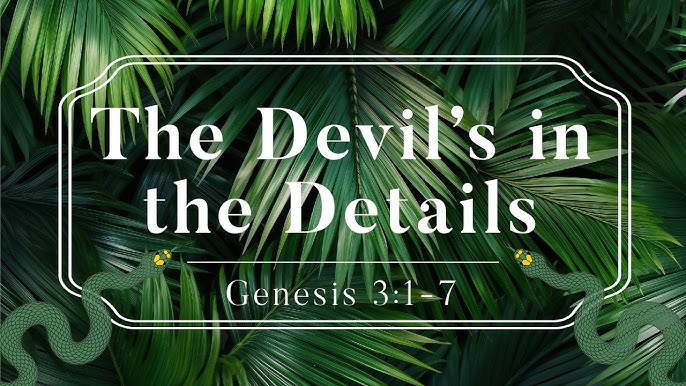
Genesis 3:1-7 Christian Standard Bible
The Temptation and the Fall
3 Now the serpent was the most cunning of all the wild animals that the Lord God had made. He said to the woman, “Did God really say, ‘You can’t eat from any tree in the garden’?”
2 The woman said to the serpent, “We may eat the fruit from the trees in the garden. 3 But about the fruit of the tree in the middle of the garden, God said, ‘You must not eat it or touch it, or you will die.’”
4 “No! You will certainly not die,” the serpent said to the woman. 5 “In fact, God knows that when[a] you eat it your eyes will be opened and you will be like God, knowing good and evil.” 6 The woman saw that the tree was good for food and delightful to look at, and that it was desirable for obtaining wisdom. So she took some of its fruit and ate it; she also gave some to her husband, who was with her, and he ate it. 7 Then the eyes of both of them were opened, and they knew they were naked; so they sewed fig leaves together and made coverings for themselves.
Word of God for the Children of God
Glory be to the Father,
and to the Son, and to the Holy Ghost;
as it was in the beginning,
is now, and ever shall be,
world without end. Amen, amen.
The passage is the well-known narrative of the Fall of Man, which has deep theological and symbolic significance.
It illustrates the entrance of sin into the world and its consequences for humanity.
The passage begins with the introduction of the character of the serpent, described as “more subtil than any beast of the field.”
In Christian theology, the serpent is often identified as Satan or the devil, who seeks to tempt and deceive humanity.
The serpent engages Eve in a conversation, questioning the commandment of God and subtly sowing doubt in her mind.
This sets the stage for the temptation and subsequent fall of Adam and Eve.
The serpent’s tactic of casting doubt on God’s commandment is a theme that has been repeated throughout history.
The passage serves as a warning about the dangers of our succumbing to temptation and the consequences of disobedience to God’s will.
The dialogue between the serpent and Eve highlights the themes of deception and disobedience. The serpent’s cunning words lead Eve to question the commandment of God, and ultimately, to disobey it. This emphasizes the importance of obedience and the consequences of straying from God’s will.
Notice that Eve’s response to the serpent reveals her understanding of God’s commandment, but also her vulnerability to temptation.
Despite knowing they should not eat from the tree, the serpent’s persuasive twisting of God’s words lead her to doubt and ultimately disobey God.
The passage also deals with the theme of the knowledge of good and evil.
The serpent suggests to Eve that by eating the forbidden fruit, she and Adam will become like gods, knowing good and evil.
This is a temptation to attain a level of knowledge and wisdom not meant for them, signifies the desire for autonomy and self-determination apart from God.
The act of eating the forbidden fruit represents the disobedience and rebellion of Adam and Eve against God’s command.
The consequences of their actions are immediate and profound.
Their eyes are opened, they become aware of their nakedness and vulnerability.
This newfound awareness leads them to sew fig leaves together to cover their naked selves, symbolizing awareness of their shame and guilt.
The narrative of the Fall of Man in Genesis 3:1-7 is rich in symbolism and theological implications.
It serves as a cautionary tale about the dangers of disobedience and the consequences of succumbing to temptation.
It also explores themes of deception, disobedience, the desire for autonomy apart from God.
Ultimately, the passage sets the stage for the need for redemption and the hope of restoration through the promised Messiah.
The serpent only asked a provocative question which led both Adam and Eve into temptation:
“Did God really say, ‘You must not eat from any tree in the garden’?”
Eve replied, “He said we could eat from all the trees except for the one in the center, and if we did, we would die!”
Then the serpent contradicted God:
“You will not die! Instead, you will be like God!”
That’s how “that ancient serpent [who is] called the devil, or Satan” led “the whole world astray” (Revelation 12:9).
Eve ate some of the fruit, and she gave some to Adam, and he ate it.
In one way Satan was right: after eating the fruit, they did not choke to death immediately.
But their souls were fatally poisoned.
And we are all caught in the same trap.
Can you relate to Adam and Eve?
Satan still whispers seductively, “Did God really say [your temptation] is bad or wrong?”
This warning still applies: “Your enemy the devil prowls around like a roaring lion looking for someone to devour” (1 Peter 5:8).
If we are not careful, we will find ourselves lost, naked, and ashamed in our personal wilderness, vainly trying to escape God’s all-seeing gaze.
Thankfully, his great love for us in Christ wins the day.
God’s hope-filled question from Eden reaches us today:
“Where are you?”
When Satan whispers, listen not to him but the Father, look to the Savior, and trust the Spirit to overcome.
A prayer to recognize deception before it leads to destruction
Genesis chapter 3, discussing questions that arise when unpacking the text.
Where was Adam when the Serpent was talking to Eve?
Was the Serpent an actual snake or something like a snake?
How long was the conversation before Eve ate the apple?
Piqued with questions reading and studying the first few chapters of God’s Word, it is natural to ask questions which we can only speculate for answers.
While there has been an onslaught of proposed theories to answer questions we have no answers to, one thing is abundantly clear: how easy it is to slip into sin.
When examining the interaction between the Serpent and Eve (Genesis 3:1-6), here’s what we do know.
The serpent is Satan, who Scripture describes as crafty, which means he was more intelligent, more cunning, trickier than any of the creatures God made.
If you’re like me, when you read texts like this, the questions start coming at you rapidly.
Instead of making a statement, he tactfully posed a question, and then added for effect an additional layer of uncertainty.
“Did God really say?” With that, for the first time in Scripture, we see humanity doubting God’s words, and ultimately, God’s authority He introduced to Eve.
The interaction between the serpent and Eve continues,
“The woman said to the serpent, ‘We may eat fruit from the trees in the garden, but God did say, ‘You must not eat fruit from the tree that is in the middle of the garden, and you must not touch it, or you will die.”
“You will not certainly die,” the serpent said to the woman. “For God knows that when you eat from it, your eyes will be opened, and you will be like God, knowing good and evil, (Genesis 3:5).”
Why does Eve respond to a snake in the garden and question God instead of running away?
I don’t know, but it’s the reason why, centuries later, our natural response to temptation is not to flee but to lean in.
Another thing we see through Eve’s interaction with the serpent is his ability, through the power of suggestion, to alter what God really said, which affects Eve’s remembrance of what God actually said.
Looking back in Scripture, God did not say they couldn’t touch the tree; He just said they couldn’t eat from it.
With Eve’s inaccurate account of God’s command, the serpent exploits God’s truth by offering a half-truth.
Eve is deceived by the father of lies (John 8:44), and it leads to her (and the rest of humanity’s) destruction.
Lest we think we too would have been able to resist the devil’s seduction, we are just as prone to deception.
We, too, convince ourselves “it’s okay to look,” then go one step further, “it won’t hurt to touch,” and before we know it, we have eaten the forbidden fruit,
leaving us to experience the consequences of sin.
Genesis 3:16 Revised Standard Version
16 To the woman he said,
“I will greatly multiply your pain in childbearing;
in pain you shall bring forth children,
yet your desire shall be for your husband,
and he shall rule over you.”
Genesis 3:17-19 Revised Standard Version
17 And to Adam he said,
“Because you have listened to the voice of your wife,
and have eaten of the tree
of which I commanded you,
‘You shall not eat of it,’
cursed is the ground because of you;
in toil you shall eat of it all the days of your life;
18 thorns and thistles it shall bring forth to you;
and you shall eat the plants of the field.
19 In the sweat of your face
you shall eat bread
till you return to the ground,
for out of it you were taken;
you are dust,
and to dust you shall return.”
The Tricks And Deceptions Of The Devil.
Let us not be deceived or distracted or divisive or divided, our enemy wants to confuse, divide, steal, and destroy, and lead God’s Children into destruction.
Perhaps our first parents did not know the history of the fall of Lucifer, the day star in Isaiah 14:12-21 and Ezekiel 28:11-19.
But it did not take long for the cunning serpent to draw them into his pernicious scheme to undermine the LORD who made us.
How susceptible are we to the devil’s suggestions?
The serpent began his enticement of the primeval couple by casting a shadow over the gracious and wonderful provision of God.
The question posed is structured in such a way as to extract a negative answer.
What the LORD had told the man was that he may eat of all except one tree (cf. Genesis 2:16-17).
The tempter turned this into the negative, “Has God said, You shall not eat of every tree of the garden?” (GENESIS 3:1).
A subtle twist, but please be aware that it is part of Satan’s armory to question the Word of God.
When we are enticed by the devil, we suddenly find ourselves leaping to defend the word of God.
But the minute we begin to add to what God has said, we are on dangerous ground. Like Eve, we begin to lose sight of our covenant relationship with the LORD, speaking of Him as a “God” who is always remote from our experience.
The woman refuted the devil’s accusation against God, but added words of her own: “and neither shall you touch it” (GENESIS 3:3).
Then the serpent began to question the certainty of death, and accused God of holding back something necessary for our human existence.
It is not wrong to want to better ourselves, but it is never the case that the end justifies the means!
Adam and Eve desired knowledge.
But rather than steadily growing into it in the God-appointed way they chose rather to listen first to Satan’s lies about there being a far simpler short cut.
Not only this, the tree with which they were being tempted was good for food.
Despite having all the fruit of all the other trees to choose from, why should we not eat the forbidden fruit?
And the tree was, after all, part of the beautiful ‘all very good’ creation of God.
The devil’s lie concerning the certainty or uncertainty of death was taking root in their mind.
Let us beware of ‘the lust of the flesh, the lust of the eyes, and the pride of life’ (cf. 1 John 2:16) –
“when the woman saw the tree was good for food, and that it was pleasant to the eyes, and a tree to be desired to make one wise, she took of the fruit thereof, and did eat, and gave also unto her husband with her; and he did eat” (GENESIS 3:6).
Adam was the representative head of the human race, and when he partook of the forbidden fruit he brought disaster and death upon all of his descendants.
Spiritual death, separation from God, was immediate.
Suddenly man and his wife realized that they were naked!
Physical death became an unavoidable prospect for mankind.
Without the intervention of the LORD, there was nothing between man and hell.
A Sad Song With a Ray of Hope?
Genesis 3:17-19 Complete Jewish Bible
17 To Adam he said, “Because you listened to what your wife said and ate from the tree about which I gave you the order, ‘You are not to eat from it,’ the ground is cursed on your account; you will work hard to eat from it as long as you live. 18 It will produce thorns and thistles for you, and you will eat field plants. 19 You will eat bread by the sweat of your forehead till you return to the ground — for you were taken out of it: you are dust, and you will return to dust.”
How radically the song about creation in Genesis has changed—from “very good” to “cursed.” What has happened?
Genesis 2 retells the creation story with a special emphasis on man and woman as the pinnacle of God’s creation.
But trouble entered Paradise. Satan, who once belonged to the angelic beings who worshiped the Creator, had foolishly, pridefully, tried to take God’s place.
From that moment on the war between good and evil was on, and God ousted Satan from his presence (see Revelation 12).
Satan tempted Adam and Eve to disobey God, and by their disobedience they brought destruction and death to God’s amazing creation.
This sad song of curses sums up the drastic results of human disobedience.
Yet all was not lost—not then and not now.
God’s frightening song shines a ray of hope.
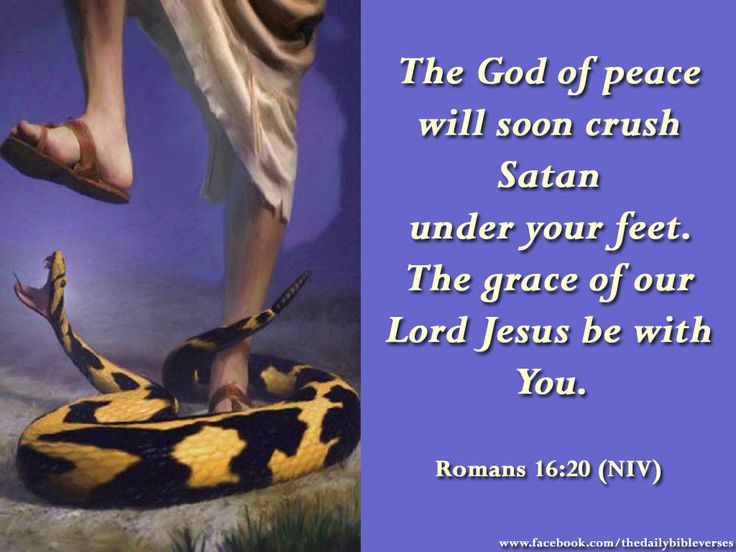
Eve’s offspring would one day crush the head of the serpent.
A day came!
Jesus, conceived of the Holy Spirit, born of the virgin Mary, triumphed over Satan, paid the ultimate price to redeem us from the curse of sin and death.
Through his death on a cross for us and by his resurrection, Jesus brought us final victory over sin, death, and Satan.
Today we can still say, “It is good.”
We can sing a song of redemption, because God is good.
Thank the Lord the story does not end here, that Jesus came to save us. Amen.
In the name of the Father, and of the Son, and of the Holy Spirit ...
Praying ….
Psalm 91 Complete Jewish Bible
91 You who live in the shelter of ‘Elyon,
who spend your nights in the shadow of Shaddai,
2 who say to Adonai, “My refuge! My fortress!
My God, in whom I trust!” —
3 he will rescue you from the trap of the hunter
and from the plague of calamities;
4 he will cover you with his pinions,
and under his wings you will find refuge;
his truth is a shield and protection.
5 You will not fear the terrors of night
or the arrow that flies by day,
6 or the plague that roams in the dark,
or the scourge that wreaks havoc at noon.
7 A thousand may fall at your side,
ten thousand at your right hand;
but it won’t come near you.
8 Only keep your eyes open,
and you will see how the wicked are punished.
9 For you have made Adonai, the Most High,
who is my refuge, your dwelling-place.
10 No disaster will happen to you,
no calamity will come near your tent;
11 for he will order his angels to care for you
and guard you wherever you go.
12 They will carry you in their hands,
so that you won’t trip on a stone.
13 You will tread down lions and snakes,
young lions and serpents you will trample underfoot.
14 “Because he loves me, I will rescue him;
because he knows my name, I will protect him.
15 He will call on me, and I will answer him.
I will be with him when he is in trouble.
I will extricate him and bring him honor.
16 I will satisfy him with long life
and show him my salvation.”
Glory be to the Father,
and to the Son, and to the Holy Ghost;
as it was in the beginning,
is now, and ever shall be,
world without end. Amen, amen.
 Loving God, Living God, Loving Hope, Living Hope, Loving Living Life His Way! "Many things are possible for the person who has hope. Even more is possible for the person who has faith. And still more is possible for the person who knows how to love. But everything is possible for the person who practices all three virtues." - Brother Lawrence (1605-1691), Practicing the Presence of God (1692).