Affirming Other’s Doubts, Receiving, Answering the Hard Questions About Our Lord’s Resurrection, Are All Very Necessary Steps Forward Towards Guiding Others unto Belief in Jesus. John 20:24-29

John 20:24-29 New Living Translation

Jesus Appears to Thomas

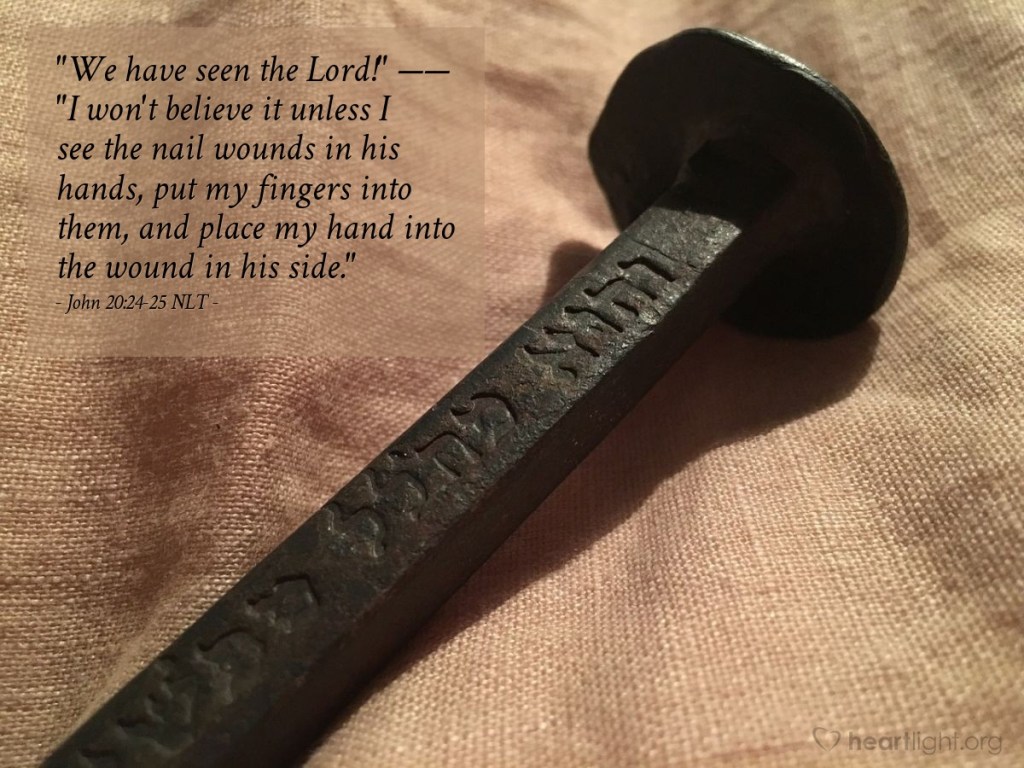
24 One of the twelve disciples, Thomas (nicknamed the Twin),[a] was not with the others when Jesus came. 25 They told him, “We have seen the Lord!”

But he replied, “I won’t believe it unless I see the nail wounds in his hands, put my fingers into them, and place my hand into the wound in his side.”

26 Eight days later the disciples were together again, and this time Thomas was with them. The doors were locked; but suddenly, as before, Jesus was standing among them. “Peace be with you,” he said. 27 Then he said to Thomas, “Put your finger here, and look at my hands. Put your hand into the wound in my side. Don’t be faithless any longer. Believe!”

28 “My Lord and my God!” Thomas exclaimed.

29 Then Jesus told him, “You believe because you have seen me. Blessed are those who believe without seeing me.”

The Word of God for the Children of God.

Adeste Fidelis! Laeti Triumphantes! Venite Adoremus! Dominum.

Gloria! In Excelsis Deo! Alleluia, Alleluia, Alleluia, Amen.
Answering the Kingdom of God’s Hardest Questions

What is the hardest question we, as Christians will ever ask another person?

Reverend John Wesley, founder of Methodism gives the very simplest answer:

“How is it with your your Soul today?”

A very simple, non threatening, open ended openly friendly question to be sure.

But one that is not so frequently asked perhaps for the fear that someone might actually and truly take 20 minutes to “chew your ear off” giving their response.

Who is actually ready to suddenly separate 20 minutes, perhaps even more, for the extra donut and coffee, out of their day to truly engage this inspired soul?

Not going to risk being late for work?

Picking up one’s child from school?

Missing the wife’s best meatloaf dinner?

Being late for the opening pitch of your home teams baseball game?

Not really interested in risking that new friendship which might transpire?

Not really interested in receiving tough theological questions you are unsure you are able to give a sufficient non threatening answer for – “who is Jesus?”

Some churches don’t want you or me to ask those hard and honest questions.

Their mindset is they are reluctant or do not to respond to those questions which have no obvious and clear cut answers, which present no evidence of God, His existence, His attributes, His Miracles, His Sovereignty or Authority.

That’s sad, I think.

If we have been Christians awhile in these churches, we kind of get trained to know which questions we find easiest to ask and which ones to simply let go.

That’s where Curious Unbelievers and New Christians can be so refreshing.

They ask bold and fresh and honest and naïve, thought provoking questions.

They’re not afraid to seek for the Lord and find his answers.

Thomas is our designated doubter.

His doubts and questions enable our doubts to be expressed and to receive an answer from the Lord himself.

All A Necessary Part of God’s Plan All Along

First things first: The Resurrection of Jesus Christ is 100% central to our Beliefs.

For their is no other name under Heaven by which man is saved! (Acts 4:8-12)

and also …

Romans 10:9-13 New Living Translation

If you openly declare that Jesus is Lord and believe in your heart that God raised him from the dead, you will be saved. 10 For it is by believing in your heart that you are made right with God, and it is by openly declaring your faith that you are saved. 11 As the Scriptures tell us, “Anyone who trusts in him will never be disgraced.” [a] 12 Jew and Gentile[b] are the same in this respect. They have the same Lord, who gives generously to all who call on him. 13 For “Everyone who calls on the name of the Lord will be saved.”[c]

Jesus in The Synoptic Gospels

Though Jesus mentioned many times that He would rise from the dead, it never seemed to penetrate the minds and hearts and souls of any one of His disciples.

After all, the crucifixion would have left them completely dumbfounded.

They would not know what to respond with do or how to handle the prophecy.

They would or could never be sure where they should go or what they should do.

And when they finally heard that Jesus was alive, it came as a surprise to them.

Mark’s Gospel says,

“Then Jesus began to tell them that the Son of Man must suffer many terrible things and be rejected by the elders, the leading priests, and the teachers of religious law. He would be killed, but three days later he would rise from the dead” (8:31 NLT).

The disciples couldn’t begin to wrap their minds around the idea that the ugly crucifixion was or could possibly be any part of God’s plan for their prosperity.

How could something as ugly and brutal like that be called any “good thing?”

How could all that brutal humiliation, suffering and sacrifice have any value?

But it would be through Jesus’ death that death is defeated, eternal life came.

Jesus was saying,

“I’m in control. I know it sounds radical when I say that I will suffer and die. But I’m also saying that I will rise again. This is part of the plan. I know what I’m doing.”

This is what God says to us as well.

There are times in our lives as Christians when we may not understand what God is doing.

Why did He allow this thing to happen?

How could He allow this thing to happen?

Why did He allow those problems?

How could He allow these problems?

Why did He allow that tragedy?

How could He allow to that tragedy

And why hasn’t He intervened?

Why doesn’t He intervene?

It is hard to know why sometimes.

It is hard to receive the questions that are being asked here.

Because we simply have no way of giving any reasonable or correct answer.

But Jesus is saying to all generations,

“I am in control. I know what I am doing. I always know what I am doing.” (Psalm 46:10-11 AKJV)

10 Be still, and know that I am God:
I will be exalted among the heathen,
I will be exalted in the earth.
11 The Lord of hosts is with us;
the God of Jacob is our refuge. Selah.

The absolute truth for every Christian is whatever we give up to follow Jesus will be more than made up to us in this life and in the life to come.

It will be worth it all.

It was all a part of God’s plan all along to reveal and to affirm the pathway it is necessary for any one, whether a non-believer, new believer or mature believer, to travel first declaring their unbelief, need for miracle to believe, then believe.

This Roadmap to Belief? God’s Plan For Us All Along

Hebrews 10:12-18 New Living Translation

12 But our High Priest offered himself to God as a single sacrifice for sins, good for all time. Then he sat down in the place of honor at God’s right hand. 13 There he waits until his enemies are humbled and made a footstool under his feet. 14  For by that one offering he forever made perfect those who are being made holy.

15 And the Holy Spirit also testifies that this is so. For he says,

16 “This is the new covenant I will make
    with my people on that day,[a] says the Lord:
I will put my laws in their hearts,
    and I will write them on their minds.”[b]

17 Then he says,

“I will never again remember
    their sins and lawless deeds.”[c]

18 And when sins have been forgiven, there is no need to offer any more sacrifices.

It’s hard to fathom Christ’s final, agonizing hours upon a Roman cross.

The floggings, torture, and humiliation He endured were reserved for the worst of criminals.

It is no wonder, then, that with His last breath, Jesus cried out in a loud voice, Tetelestai!—“It is finished” (John 19:30).

But what was this cry?

Was Jesus simply announcing His own death?

Was it an acknowledgment that the cruelty and pain were now finished?

Was it even something of a cry of defeat?

On this point, the Bible is clear: Jesus’ final word was actually a shout of victory, of triumphant recognition (Colossians 2:15; Hebrews 10:12-14; 1 Peter 3:18).

He had fully accomplished the work He had come to earth to do.

In the realm of eternity, in perfect fellowship and harmony with one another, the Father had planned, and the Son along with the Spirit had willingly agreed, that this would be the way—and now their purpose was being accomplished.

So we must always remember that Christ’s sacrificial death was according to the Father’s plan.

Christ was chosen to bear the penalty of mankind’s sins “before the foundation of the world” (1 Peter 1:20).

Likewise, Isaiah prophesied concerning the Suffering Servant who was to come, saying, “It was the will of the LORD to crush him” (Isaiah 53:10).

From all of eternity, the Father chose the Son to be the Perfect one who would provide an “one and done for all time” atoning sacrifice for the sins of many.

The Father’s plan is paralleled by the Son’s sacrifice.

When Jesus walked onto the stage of human history, He was clear concerning His role and mission: “I have come down from heaven, not to do my own will but the will of him who sent me” (John 6:38).

The sacrifice of the Lord Jesus was not coerced.

Rather, He laid down His life in full awareness of and voluntary submission to the Father’s plan.

The truth and reality of this covenant plan of redemption is applied to our lives by the Spirit’s testimony.

The Spirit of God repeatedly affirms and continually testifies through God’s Word, in no uncertain terms, reminding us all of the wonder of what God has accomplished for us through Christ Jesus’ finished work on the cross (Hebrews 10:15).

Christ’s offering means we stand perfected in God’s sight.

Our sin has been removed by His Son, and we are clothed in the righteousness of His Son.

The death and resurrection of the Lord Jesus Christ was never Plan B.

Nothing could be further from the truth!

In eternity past, the triune God determined that the road to Calvary would be the only way of salvation.

Bow today under the simple beauty and wisdom of God’s redemption plan, asking the Holy Spirit to help you understand more fully and appreciate more deeply what it meant for the Son of God to bear and take away your sin.

Receive the doubting Thomas’ who all too often choose to remain anonymous and separate from the joy and triumph first found in that Upper Room that day.

Let’s not be so anxious asking any one of those doubting Thomas’ the question:

“How is it with your soul, today?”

Let’s be careful not to squash asking those honest and seeking questions.

Of course,

Our goal isn’t so much in asking the question, but in our and some Thomas receiving an authentic faith in the Lord, who is the answer to our questions!

“Are We Able … to Ask of the Master …

In the name of God, the Father and God the Son and God the Holy Spirit,

Let us Pray,

Father, stir my heart to continue to seek after you. I want to know more about you, and I also want to be more aware of your presence in my life. I want my character to be conformed unto your will. So please know that my doubts and questions are my seeking you and not my seeking some random tidbit of knowledge. Give me the Spirit of revelation to know you more completely so that I might be transformed by your will rather than being conformed to the culture around me. In Jesus’ name, I pray.

Adeste Fidelis! Laeti Triumphantes! Venite Adoremus! Dominum.

Gloria! In Excelsis Deo! Alleluia, Alleluia, Alleluia, Amen.
https://translate.google.com/

Will My God Ever Give Up On Me As I Have Given Up on Him? Luke 22:54-62

Luke 22:54-62 Amplified Bible

Peter’s Denials

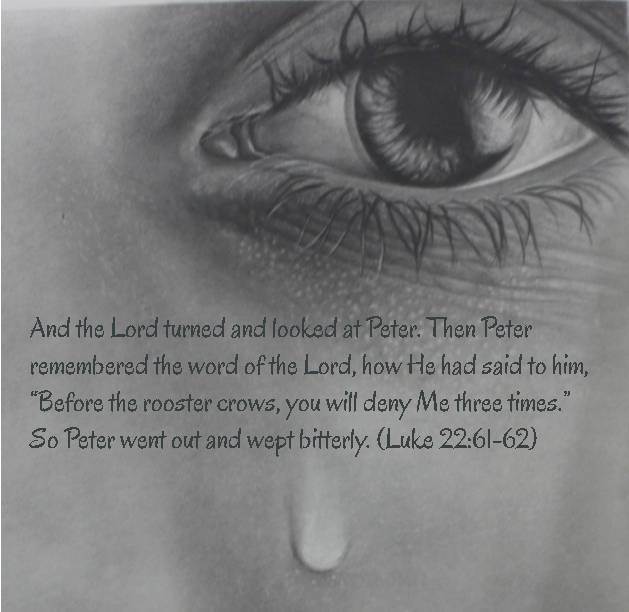
54 Then they seized Him, and led Him away and brought Him to the [elegant] house of the [Jewish] [a]high priest. And Peter was following at a [safe] distance. 55 After they had kindled a fire in the middle of the courtyard and had sat down together, Peter sat among them. 56 And a servant-girl, seeing him as he sat in the firelight and looking intently at him, said, “This man was with Him too.” 57 But Peter denied it, saying, “Woman, I do not know Him!” 58 A little later someone else saw him and said, “You are one of them too.” But Peter said, “Man, I am not!” 59 After about an hour had passed, another man began to insist, “This man was with Him, for he is a Galilean too.” 60 But Peter said, “Man, I do not know what you are talking about.” Immediately, while he was still speaking, a rooster crowed. 61 The Lord turned and looked at Peter. And Peter remembered the word of the Lord, how He had told him,  “Before a rooster crows today, you will deny Me three times.” 62 And he went out and wept bitterly [deeply grieved and distressed].

The Word of God for the Children of God.

Adeste Fidelis! Laeti Triumphantes! Venite Adoremus! Dominum.

Gloria! In Excelsis Deo! Alleluia, Alleluia, Alleluia, Amen.
I remember a secular song popular many years ago called “River”.

To this day, lines from that rather somber Joni Mitchell song stick with me.

She sang, “I’m always hard to handle. I’m selfish and I’m sad. Now I’ve gone and lost the best baby that I ever had.”

The words came to mind again this week while reading a post from a Christian who said, “I still struggle with being angry, ungrateful, and cranky.”

I added her words to what several people have written recently about Apostle Peter in today’s discourse from Luke 22.

As much effort as Peter made to assure and then reassure Jesus and the other disciples to never give up on Jesus – no matter the circumstances – He failed.

He failed in the worst way possible.

He failed himself.

He failed his friends and fellow disciples.

He failed his mother and his father

He failed to uphold every single thing he held to about his faith in God.

He failed his sworn and covenanted oath to God.

He failed his Messiah – denying him thrice times and very publicly.

When his Messiah needed and required him to be there for Him, as Messiah had predicted, before the cock crowed three times, Peter was nowhere declaring his his utmost confidence and faith in his Messiah nor his willingness to even die.

How much worse could it possibly get in that moment?

Then that fateful glance in the courtyard where Peter’s and Jesus’ eyes met after Peter thrice times emotionally, very publicly refuted his association with Jesus.

61 The Lord turned and looked at Peter. And Peter remembered the word of the Lord, how He had told him, “Before a rooster crows today, you will deny Me three times.” 62 And he went out and wept bitterly [deeply grieved and distressed].

They have preached this passage, taken a long look at this passage, been very self-introspective of this text as it was preached to them – and they CRIED TOO!

We can probably, without much effort, safely guess what emotions were going on in Peter’s much anguished heart and soul: “Will God Now Give Up On Me?!?”

They cried, proclaimed – “I was not there when my Savior needed me most!”

They cried and declared – “I got so very tired, so very much worn out by it all!”

The cried and declared – “I feel like I have simply given up on God, My Savior!”

They have likewise asked of themselves, “Will God ever give up on me?” 

Gravely worried because they think they have already and repeatedly done the one single thing that’s “finally too much for God to take,” they are feeling fear.

Many Will Worry About Keeping God’s Love

Now, their concerns aren’t just about their repeated failures toward conquering their anger, their fears, their broken promises, their ingratitude, or crankiness.

Some are worried about other things like unrelenting unswerving doubts, their waning and waxing faith, a fresh sin committed, or a repeated sin committed.

But, this lingering question comes rushing back to many people at different times, at too many inopportune times

Does God give up on us as we all too often give up on Him?

A significant question with what they believe has severe eternal implications.

I can safely confess here that despite what I staunchly believe is a steadfast and immovable faith – a “Superman Faith” if you will, I’ve certainly had that fear. 

Have you?

At times, I’ve wondered if I have let God down too much or too severely or made that “one too big a mistake” with the severest of eternal implications possible.

It hurts my spirit.

It puts a giant strain, an immovable millstone upon my heart and upon my soul.

I will simply never have the necessary knowledge nor the required wisdom nor any of the maximum allowable strength to even begin to move it or remove it.

Responding to the Lord’s “Once In a Lifetime” Look

Luke 22:61-62 Amplified Bible

61 The Lord turned and looked at Peter. And Peter remembered the word of the Lord, how He had told him, “Before a rooster crows today, you will deny Me three times.” 62 And he went out and wept bitterly [deeply grieved and distressed].

Two captivating stories are happening at the same time.

Inside the high priest’s court Jesus reveals his true identity as the Messiah.

Outside near the fire in the courtyard Peter denies his Lord three times.

Then the climax brings the two story lines crashing together.

Jesus’ eyes look directly at Peter’s eyes and quite literally changes everything.

Peter surrendered to the paralyzing fear of his faith’s ability at standing alone.

But fortunately Jesus enabled Peter to break out of the cage of conformity.

The rooster’s crow activated the alarm of Peter’s conscience.

Immediately he repented.

In extreme sorrow, Peter wept bitterly.

Do We Lose God When We Are Selfish and Sad?

As in Joni Mitchell’s sobering song, do we lose the best loved one we’ve ever had – our God and our Savior – when we are selfish and/or broken or sad? 

No!

Absolutely Not!

It’s a guarantee that after we receive Jesus Christ as Savior, we still won’t be perfect! 

And God knows that! 

Instead, we all have a lot of “cleaning up” to do even at that point. 

But, that is something only God can do in your life.

Yes, you and I must cooperate, we must be and remain willing participants.

The way we do that is to believe Him that He loves us and has changed us.

That He IS always and forever changing us.

And, in addition, you and I must learn, and re-learn, how to receive His love.

With regards to Peter and His coming to terms with his catastrophic failures;

Later in the Upper Room he reaffirmed his love for Jesus by being there and not running away, fleeing from His presence, when Jesus appeared to the disciples.

Still later, doubts intact, Peter is recommissioned as the Lord’s representative.

John 21:15-17 Amplified Bible

The Love Motivation

15 So when they had finished breakfast, Jesus said to Simon Peter, “Simon, son of John, do you love Me more than these [others do—with total commitment and devotion]?” He said to Him, “Yes, Lord; You know that I [a]love You [with a deep, personal affection, as for a close friend].” Jesus said to him, “Feed My lambs.” 16  Again He said to him a second time, “Simon, son of John, do you love Me [with total commitment and devotion]?” He said to Him, “Yes, Lord; You know that I love You [with a deep, personal affection, as for a close friend].” Jesus said to him, “Shepherd My sheep.” 17 He said to him the third time, “Simon, son of John, do you love Me [with a deep, personal affection for Me, as for a close friend]?” Peter was grieved that He asked him the third time, “Do you [really] [b]love Me [with a deep, personal affection, as for a close friend]?” And he said to Him, “Lord, You know everything; You know that I love You [with a deep, personal affection, as for a close friend].” Jesus said to him, “Feed My sheep.

In John 21 we find that Jesus refused to let Peter cover up his unresolved past.

Three times the Resurrected Jesus asked Peter how much he loved his Lord.

And Peter asserted repeatedly, “Lord, you know that I love you.”

Jesus then empowered Peter, gave divine approval and permission, God’s own blessings, to just put his past behind him and walk confidently into his future.

Jesus’ aim is to come to us, bless us, reassure us, reconcile with and rehabilitate us whenever we feel the full weight of our millstones, when we fall from grace.

And our conscience can halt us before we yield to temptation.

But even when if we inevitably slip back into sin, God wants to restore us.

God does not stand behind home plate like an umpire at a baseball game with a great cloud of witnesses present waiting to signal and then shout, “You’re out!”

Instead, He comes to us on our lakeshores, draws us to Himself with kindness.

For us this means responding to the raucous alarm of our conscience, removing ourselves from the moment and place of temptation, repenting of our sin, give God permission to take our millstone, to reaffirming our loyalty to Jesus Christ.

In the name of God, the Father and God the Son and God the Holy Spirit,

Let us Pray,

Psalm 13 The Message

13 1-2 Long enough, God—
    you’ve ignored me long enough.
I’ve looked at the back of your head
    long enough. Long enough
I’ve carried this ton of trouble,
    lived with a stomach full of pain.
Long enough my arrogant enemies
    have looked down their noses at me.

3-4 Take a good look at me, God, my God;
    I want to look life in the eye,
So no enemy can get the best of me
    or laugh when I fall on my face.

5-6 I’ve thrown myself headlong into your arms—
    I’m celebrating your rescue.
I’m singing at the top of my lungs,
    I’m so full of answered prayers.

Psalm 139:23-24 The Message

23-24 Investigate my life, O God,
    find out everything about me;
Cross-examine and test me,
    get a clear picture of what I’m about;
See for yourself whether I’ve done anything wrong—
    then guide me on the road to eternal life.

Lord, we read Your text from Luke’s Gospel and we know that your convicting look is filled with thy convincing, affirming grace. Thank you for your transforming power!

Adeste Fidelis! Laeti Triumphantes! Venite Adoremus! Dominum.

Gloria! In Excelsis Deo! Alleluia, Alleluia, Alleluia, Amen.

https://translate.google.com/

Come! Please Look For Yourselves! To Witness The Stone is Now Rolled Away, Testify Death Is Now Utterly Defeated! Luke 24:1-8

Luke 24:1-8 New King James Version

He Is Risen

24 Now on the first day of the week, very early in the morning, they, [a]and certain other women with them, came to the tomb bringing the spices which they had prepared. But they found the stone rolled away from the tomb. Then they went in and did not find the body of the Lord Jesus. And it happened, as they were [b]greatly perplexed about this, that behold, two men stood by them in shining garments. Then, as they were afraid and bowed their faces to the earth, they said to them, “Why do you seek the living among the dead? He is not here, but is risen!  Remember how He spoke to you when He was still in Galilee, saying, ‘The Son of Man must be delivered into the hands of sinful men, and be crucified, and the third day rise again.’ ” And they remembered His words.

The Word of God for the Children of God.

Adeste Fidelis! Laeti Triumphantes! Venite Adoremus! Dominum.

Gloria! In Excelsis Deo! Alleluia, Alleluia, Alleluia, Amen.

There is a new song of Triumph coming forth from the Heavens above.

Psalm 19 The Message

19 1-2 God’s glory is on tour in the skies,
    God-craft on exhibit across the horizon.
Madame Day holds classes every morning,
    Professor Night lectures each evening.

3-4 Their words aren’t heard,
    their voices aren’t recorded,
But their silence fills the earth:
    unspoken truth is spoken everywhere.

4-5 God makes a huge dome
    for the sun—a superdome!
The morning sun’s a new husband
    leaping from his honeymoon bed,
The daybreaking sun an athlete
    racing to the tape.

That’s how God’s Word vaults across the skies
    from sunrise to sunset,
Melting ice, scorching deserts,
    warming hearts to faith.

7-9 The revelation of God is whole
    and pulls our lives together.
The signposts of God are clear
    and point out the right road.
The life-maps of God are right,
    showing the way to joy.
The directions of God are plain
    and easy on the eyes.
God’s reputation is twenty-four-carat gold,
    with a lifetime guarantee.
The decisions of God are accurate
    down to the nth degree.

10 God’s Word is better than a diamond,
    better than a diamond set between emeralds.
You’ll like it better than strawberries in spring,
    better than red, ripe strawberries.

11-14 There’s more: God’s Word warns us of danger
    and directs us to hidden treasure.
Otherwise how will we find our way?
    Or know when we play the fool?
Clean the slate, God, so we can start the day fresh!
    Keep me from stupid sins,
    from thinking I can take over your work;
Then I can start this day sun-washed,
    scrubbed clean of the grime of sin.
These are the words in my mouth;
    these are what I chew on and pray.

Accept them when I place them
    on the morning altar,
O God, my Altar-Rock,
    God, Priest-of-My-Altar.

Except, who is listening to these raucous words of song and triumph?

The heavens sing their words of the Glory and Triumph of God!

They emanate from the deepest reaches of heaven down to the earth below.

They begin echoing outward unto a sleeping humanity from a place of death.

Hushed and Quiet though they may be in this moment at that place of death, they are none the less quite real and quite audible to those who will come to it.

The song will come unexpectedly to those whose hearts and whose souls were prepared to be curious about it, receive it and see it and then utterly believe it!

In this place of uncleanness and death, there is a sure and certain witness here!

In this place of darkness and stench, there is a sure and certain testimony here!

Let us now lend our eyes and ears to what this witness and testimony might be.

“Welcome to this Happy morning!”

“Welcome all ye curious ones!”  

“Welcome all ye despondent ones!”

“Welcome all ye silent and tearful and mournful ones!”

“Welcome all ye defeated, downtrodden and broken ones!”

“Welcome all ye faith-filled and faithful and hope-filled hopeful ones!”

“It is wonderful to gather in our beautiful Kingdom of God to celebrate the glory and triumph of God and the Resurrection of our Lord and Savior Jesus Christ.”

Yes! there is, emanating from here a new, fresh song of witness and testimony.  

Except, no one in particular is hearing, even listening to the words of welcome.

In fact, if we were to look at this place in that moment, we would see nobody.

Perhaps because the deafening silence of the glorious words “He is not here!” “praise God” are coming from an empty tomb which has been beckoning others where no others are paying attention, in close proximity or listening distance.

The expectancy of the glorious and triumphant message found from within the empty tomb is not one that is even the least bit anticipated, shared nor shouted.

The “Behold, Our God Wins!” witness and the living breathing testimony of the empty tomb sits all alone in a darkened silence in a place of the unclean dead.

Now, finally – a group of women come over the hill and down a path leading to the tomb of the one whom in life had been believed to be their “Messiah King.”

Three days ago, he had been brutally killed, humiliated as the ultimate criminal.

Because of Sabbath rules, he had been hastily buried and sealed behind a rock.

The women came bearing spices which they had prepared to finish preparing the not so pleasant smelling body of their dead best friend and their king.

But instead of finding a sealed tomb they came upon an open one.

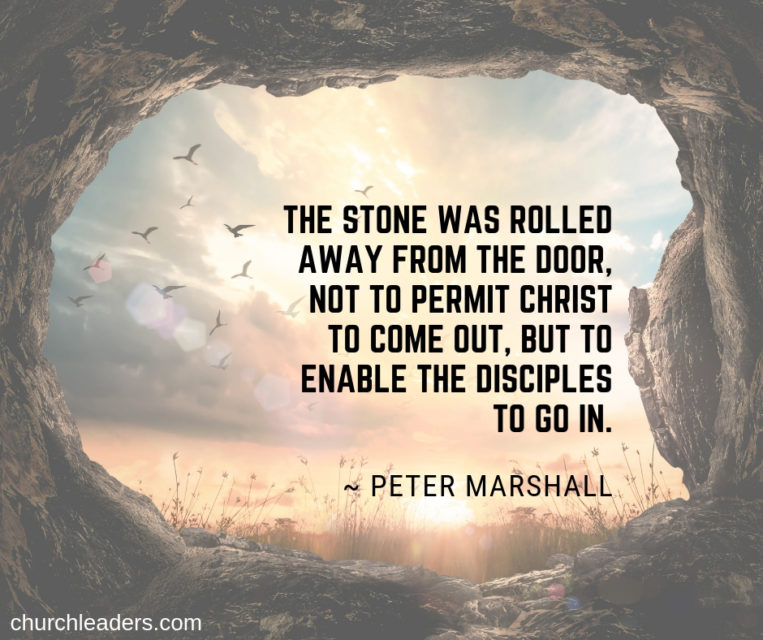
Amazingly, unexpectedly, the stone had somehow been rolled off to the side.

Curious and probably just a wee bit afraid of what they would or would not find, they enter the tomb of their Rabbi and find it empty – there was just no corpse.

The women had come to anoint his body for the burial when they suddenly encountered a pair of angels asking this question – “so, why are you here?”

Followed up by the good news, “He is not here; he has risen!

What a great and wholly unexpected sequence of “GOD” events for their souls.

Such wonderful good news.

The faith-filled faithful of God went to the tomb before all others were awake.

With their whole selves, in the darkness, their eyes beheld an open tomb and a rock much too heavy for them to remove by themselves rolled off to the side.

Instead of running away and screaming into the night to tell somebody else, the curiosity of the words to a new song reached their souls, so they all went inside.

They lingered inside and witnessed to an unanticipated, unexpected, emptiness inside the tomb of their fallen Rabbi they could not understand nor easily grasp.

As they were all greatly perplexed by this sequence of events, they clearly see the two men in shiny garments standing there, they clearly hear their words:

Then, as they were afraid and bowed their faces to the earth, they said to them, “Why do you seek the living among the dead? He is not here, but is risen!  Remember how He spoke to you when He was still in Galilee, saying, ‘The Son of Man must be delivered into the hands of sinful men, and be crucified, and the third day rise again.’ ”

“He is NOT here!”

“But, IS Risen!”

Jesus is alive!

Death is defeated!

Witness to, Testify that, The Stone Was Rolled Away

Luke 24:5-8 The Message

4-8 They were puzzled, wondering what to make of this. Then, out of nowhere it seemed, two men, light cascading over them, stood there. The women were awestruck and bowed down in worship. The men said, “Why are you looking for the Living One in a cemetery? He is not here, but raised up. Remember how he told you when you were still back in Galilee that he had to be handed over to sinners, be killed on a cross, and in three days rise up?” Then they remembered Jesus’ words.

The gospel of Luke opened with angels delivering messages to Zacharias, Mary, some shepherds quietly going about their everyday duties protecting the sheep.

And to the shepherds, it was a melodious message of great joy for all people.

The message delivered here was also a message of great joy to all people.

Death had been conquered.

Jesus had defeated the power of death.

No longer do we have to fear death.

Where, O death, is your victory? Where, O death, is your sting?(1 Corinthians. 15:55).

Implications: the Witness and Testimony of a Rock Rolled Away

When we consider Jesus as Messiah, most of us think immediately in personal terms: Jesus is my Messiah. He forgives my sins. He lives in me. 

All of which, of course, is true.

But 1st-century Jewish expectations concerning the messiahship of Jesus were far broader than that.

If we had talked with a 1st-century Jew about his or her messianic expectations, we would have discovered hopes that were, in a sense far grander in their scope.

The Jews anticipated that their long-awaited Messiah would come to defeat the pagans who held sway over them, to decisively conquer their enemies, then to rebuild the temple, and to once again establish God’s just rule upon the earth.

Theirs was a nationalistic hope—a hope that the Messiah would come and vindicate the nation of Israel.

Jesus’ arrival, together with the miracles He performed, stories He told, and the prophecies He fulfilled, built to a great crescendo of high expectation among His followers, that Jesus was in fact sent of God as their true conquering king.

But just when they began to think that He really would be the one to politically redeem the people of Israel, at Calvary they saw all of their messianic hopes hanging up on a Roman gibbet, a gallows, an ugly instrument of pain and death.

And when Jesus cried out, “It is finished” (John 19:30), many of them must have quite literally agreed – any hope for their future of prosperity – was “finished.”

Now the question beckons us: How, then, did this group of believers, whose messianic hopes had been buried in a Palestinian tomb, not only continue to believe that Jesus was the Messiah but stand in the streets near where He had been executed and make an unashamed declaration of His messiahship?

The answer comes reverberating through the pages of the New Testament is found in the witness of an immovable rock having been summarily removed, somebody physically entering an empty tomb: the bodily resurrection of Jesus!

The angelic announcement to the women who had brought spices to embalm a corpse provoked a radical reassessment of what the believers had witnessed on the past Friday and a complete change in their view of their lives and futures.

When the Messiah reappeared among them, as alive as ever, these previously sad, sorrowful, defeated, brokenhearted disciples were radically transformed into bold, joyful witnesses with the loudest heartfelt songs of God’s triumph.

They now have a sure and certain witness, bearing testimony to the reality of Christ resurrected with a body that could be seen, handled, and touched, and yet also possessing capacities to do what His pre-resurrection body had not done.

His earthly work of salvation was finished;

His life and His reign were most certainly not!

By His Resurrection,

By God’s own Authority and only through God’s power,

His life and His reign were most certainly never going to end

Only in the disciples’ actions that night, seeing the rock moved away, their display of courage and not fear, to physically enter the tomb, enter, witness its emptiness, exit the tomb, hear the words of the two white clad angels, their recognition of His risen presence did Christ’s messiahship finally make sense.

Indeed, what the early Jewish believers discovered when they “found the stone rolled away from the tomb” (Luke 24:2) and saw “Jesus himself stood among them” entering through a locked and sealed door and into the Upper Room (v 36) was that an eternal hope, joy, and triumphant power ignited within their hearts.

And these remain available to all who put their trust in Jesus, the resurrected Messiah.

It is the triumph of the resurrection, and only the triumph of the resurrection, changes our witness of sadness, sorrow, and defeat into hope, joy, and power.

It is the resurrection, and only the resurrection, that declares that our Messiah will defeat His enemies, will restore His people, and will rule from sea to sea.

The Glory of God, The Triumph of God that morning, The resurrection of Jesus our Lord, Savior will change everything about how you go about your day today.

In the name of God, the Father and God the Son and God the Holy Spirit,

Let us Pray,

We Are One with the Risen Christ

Lord of life, we lift our hearts to you. As the dawn breaks, may we carry the unity we share into every moment knowing that we are one with the risen Christ. Lord, we lift our eyes to you. As the sunrises, may this moment stay with us, reminding us to look for the beautiful colors of promise in your word. Lord, we lift our prayers to you. As the dew air falls, may we breathe this morning in and know that like the earth, you sustain us, keep us and work within us always. And so, we lift our voices to you. We celebrate the greatest day in history, when Jesus rose from death, defeated darkness and bathed the world in stunning resurrection light. May we ever live to praise you! Thank you Lord of my my life and my Salvation that, in you, I no longer need to fear death and its great unknown. Instead, I can face it with confidence, knowing that you have truly defeated it. And, that on the other side of death, I will be with you forever.

Adeste Fidelis! Laeti Triumphantes! Venite Adoremus! Dominum.

Gloria! In Excelsis Deo! Alleluia, Alleluia, Alleluia, Amen.

https://translate.google.com/

Jesus is Washing His Disciples Feet: Healing is in our Becoming a Servant. John 13:1-17

John 13:1-17 New King James Version

Jesus Washes the Disciples’ Feet

13 Now before the Feast of the Passover, when Jesus knew that His hour had come that He should depart from this world to the Father, having loved His own who were in the world, He loved them to the end.

And [a]supper being ended, the devil having already put it into the heart of Judas Iscariot, Simon’s son, to betray Him, Jesus, knowing that the Father had given all things into His hands, and that He had come from God and was going to God, rose from supper and laid aside His garments, took a towel and girded Himself. After that, He poured water into a basin and began to wash the disciples’ feet, and to wipe them with the towel with which He was girded. Then He came to Simon Peter. And Peter said to Him, “Lord, are You washing my feet?”

Jesus answered and said to him, “What I am doing you do not understand now, but you will know after this.”

Peter said to Him, “You shall never wash my feet!”

Jesus answered him, “If I do not wash you, you have no part with Me.”

Simon Peter said to Him, “Lord, not my feet only, but also my hands and my head!”

10 Jesus said to him, “He who is bathed needs only to wash his feet, but is completely clean; and you are clean, but not all of you.” 11 For He knew who would betray Him; therefore He said, “You are not all clean.”

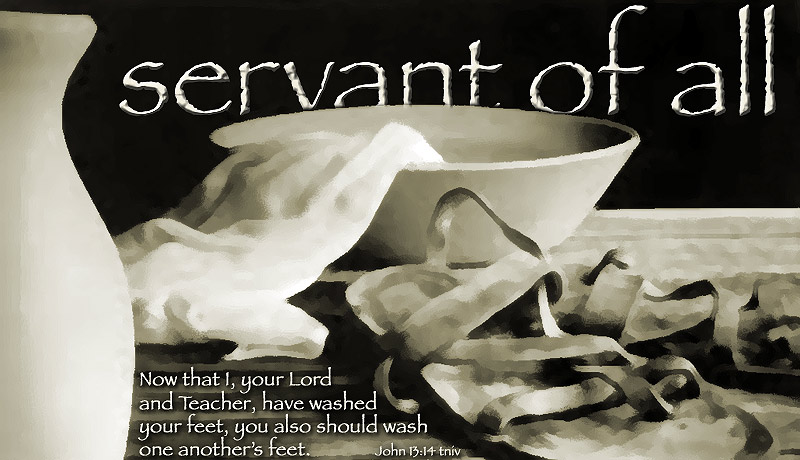
12 So when He had washed their feet, taken His garments, and sat down again, He said to them, “Do you [b]know what I have done to you? 13 You call Me Teacher and Lord, and you say well, for so I am. 14 If I then, your Lord and Teacher, have washed your feet, you also ought to wash one another’s feet. 15 For I have given you an example, that you should do as I have done to you. 16 Most assuredly, I say to you, a servant is not greater than his master; nor is he who is sent greater than he who sent him. 17 If you know these things, blessed are you if you do them.

The Word of God for the Children of God.

Adeste Fidelis! Venite Adoremus! Dominum.

Gloria! In Excelsis Deo! Alleluia, Alleluia, Alleluia, Amen.

Jesus came to model for us, show us what the Kingdom of Heaven is so we could become a dynamic, functional and living part of it.

Spending time reading the Gospels and studying and praying about who he was is a great way to remind ourselves that of all the rich and transformational ways Jesus is never what we expect but, in every way, is better than our expectations.

The story of Jesus redefining kingdom expectations, of kneeling to the floor and as host, gently handing his disciples feet so all could comfortably dine together is truly one of the most profound pictures of our Savior’s heart of love for us!

Jesus, like His Father in Heaven, cared so very much about the minutest details of his followers’ lives!

He was willing to completely surrender himself to the moment His Father set aside, to move into his destiny, to not shy away from God’s plan, get messy, to reach, teach, and show undeserved compassion to his ragtag group of disciples.

This is still true today!

Jesus cares about even the most minute details of your life and still come to us, still willing to model, set the example get messy to show you that you are loved.

None of your fears are too small, too inconsequential, needs much too silly, or stresses too insignificant or too great that God does not care about them all.

He cares about it all… even our stinky feet!

Jesus’ actions in this passage set an example of what it means to imitate him with our lives.

We are called to be more and more like Jesus every day, without exception, the servant of others, selflessly to live with humility, and love in every situation.

Christ-Followers are called to a selfless life as servant, conduct themselves in a very radical counter-cultural fashion – in unity, healing, instead of dividing.

Let’s learn more about what we can learn from the story of Jesus washing his disciples’ feet at Passover.

Where Does the Bible Talk about Jesus Washing the Disciples’ Feet?

The story of Jesus washing his disciples’ feet is recorded in John 13:1-17.

This event occurred in the upper room during the Last Supper.

In the biblical account, we read that when Jesus’ disciples arrived at a special gathering Jesus took the role of the ultimate servant of the house and humbly surrendered to His Father’s will and began washing each of his disciples’ feet.

This gathering, this time of communion, of the breaking and sharing of the bread, fruit of the vine, would later come to be known as the Last Supper.

It was the last time Jesus and his disciples broke bread together before his death on the cross.

It was during this Passover meal that Rabbi Jesus served as host, took the first communion with the disciples and also quietly identified Judas as his betrayer.

The act of feet washing was a necessary custom during this time period when gathering to have a communal meal.

The men would have come in with their feet dust-covered and dirty from their walking the undoubtedly, the decidedly unhygienic sun baked Roman roads.

Cleaning of the feet would have been necessary because the group would have likely been reclining together at a low table and dirty feet would not be the least bit welcomed so close to their food.

It was the servant of a household’s job to wash the feet of incoming guests.

Why Did Jesus Do This and What Was the Significance of Washing Their Feet?

In the Old Testament, priests performed and received ceremonial foot washings before they entered the temple for worship.

Foot washing was a serious matter: a basin for foot washing would have been placed between the Tent of Meeting and the altar so Aaron and his sons could wash before entering the Tent of Meeting, “Whenever they enter the Tent of Meeting, they shall wash with water so that they will not die” (Exodus 30:20).

Disregarding the ritual cleansing meant death to a priest.

In John 13:4-5, Jesus “got up from the meal, took off his outer clothing, and wrapped a towel around his waist. After that, he poured water into a basin and began to wash his disciples’ feet, drying them with the towel that was wrapped around him.” 

Jesus has placed the basin between the disciples and the altar, His cross.

Through the witness of His death and the testimony of His resurrection, Jesus makes holy all who do come to the cross through the power of the Holy Spirit.

Through Christ’s atoning work on the cross the disciples and all believers are made holy and righteous before God and then cleansed of their sin and set apart by GOD for service in His body, the Church, a holy priesthood of believers.

Jesus set himself aside, washes his disciples’ feet to purify and cleanse them for their service to God: “Unless I wash you, you have no part with me” (John 13:8).

Jesus, knowing his coming destiny, washing the feet of his disciples came with so much significance for both his disciples in this intimate moment and for all Christians who strive to live, to love, to follow Jesus’ example and teachings.

This selfless act displayed Jesus’ amazing humility!

He took the role of a servant to wash the dusty and dirt-covered feet of his disciples.

Rabbi Jesus was setting an incredible example of what it is to be “Christ-like” through his decidedly humble actions.

Status, pride, or even dirt did not stop him from rolling up his sleeves to serve the men who had been at his side throughout the duration of his ministry.

Prior to this encounter, the disciples had been fighting amongst themselves trying to determine who was the “greatest” among them (Luke 22:24).

Jesus was in a very hands-on way showing them that in his Kingdom the last shall be first and the first shall be last (Matthew 20:16).

Jesus even prompts his disciples to show the same heart of service for each other (John 13:15).

He is clear that servanthood is essential to what it means to be his follower.

This washing also is symbolic of the cleansing power of the blood of Jesus to wash away our sins.

Peter objects to Jesus’ actions but then Jesus rebukes him by saying that unless he washed him, Peter had no part in him (John 13:7-8).

Peter then in a display of passion for the Lord asks him to then wash him from head to toe!

Jesus explains Peter does not need to be washed from head to toe because his actions were symbolic of the cleansing power that being a Christ-follower has in our lives (John 13:10).

Once washed by the blood of a lamb you are free from the stains of sin!

Jesus anoints the disciples for their new role as priests in the new temple that God Himself will raise up.

Jesus ordains them so they can serve His church when He leaves this world, returning to the Father.

Through the act of purification, Jesus imparts His holiness to the disciples so they will be set apart from the world even though they will remain in the world.

Jesus teaches his disciples that His holiness, salvation, and purity will all come through Him and His suffering.

Through the cleansing blood of our Savior – No repeat washing is necessary.

Our Healing is in our Becoming a Servant

John 13:14-15 New King James Version

14 If I then, your Lord and Teacher, have washed your feet, you also ought to wash one another’s feet. 15 For I have given you an example, that you should do as I have done to you.

In our culture today, sadly we don’t have an automatic equivalent to Jesus’ instruction to wash one another’s feet.

But we can figure out that it’s mainly about showing hospitality and serving one another.

The roads of Palestine were unpaved, and with sandals as common footwear, people’s feet would get really dirty—sometimes caked with dust and mud.

As a result, before you entered someone’s home, a servant would come with a pitcher of water, a basin and a towel and wash your feet, an act of hospitality.

It was a customary act of hospitality—like someone offering to hang up your coat and scarf on a cold day as you entered their warm home.

On the night of the last supper, Jesus took the role of a servant as he got up from the meal and began washing his disciple’s feet.

In doing this, Jesus was teaching his disciples an important spiritual principle.

We come to Jesus with nothing of our own, and we must receive from him and be ministered to by him before we have anything to give.

Then, having been served, we go and do the same, we surrender ourselves to God, serving, sharing with others the fullness God has poured into our hearts.

In this example, Jesus provided a profound symbol of his call to servanthood.

Following him is not about position, power, or prestige.

We serve because Jesus Christ came to us as sinners, yet he has served us first.

Jesus shows no squeamishness: He performs this ceremonial washing of His disciples’ feet with a solemn purpose – so others may be prepared to serve.

Setting aside their squeamishness to serve all others as Jesus first served all.

Jesus’ determination made me want to explore the Scriptures more deeply.

What Does Jesus Show When He Washes the Disciples’ Feet?

Through this simple act of foot washing, Jesus demonstrates to His disciples His eternal role as God’s High Priest and Mediator and the disciples part in the priesthood.

Even though He, Jesus must suffer and die and be raised again, the disciples can by faith in the empty tomb be certain He will never leave them or forsake them. 

Scripture says, “During the days of Jesus’ life on earth, he offered up prayers and petitions with loud cries and tears to the one who could save him from death, and he was heard because of his reverent submission. Although he was a son, he learned obedience from what he suffered and, once made perfect, he became the source of eternal salvation for all who obey him and was designated by God to be high priest in the order of Melchizedek” (Hebrews 5:7-10). 

Jesus is the High Priest of Heaven.

Through the foot washing, He ordained His disciples to be priests of the church in the world.

1 Peter 2:4-10 New King James Version

The Chosen Stone and His Chosen People

Coming to Him as to a living stone, rejected indeed by men, but chosen by God and precious, you also, as living stones, are being built up a spiritual house, a holy priesthood, to offer up spiritual sacrifices acceptable to God through Jesus Christ. 6 Therefore it is also contained in the Scripture,

“Behold, I lay in Zion
A chief cornerstone, elect, precious,
And he who believes on Him will by no means be put to shame.”

Therefore, to you who believe, He is precious; but to those who [a]are disobedient,

“The stone which the builders rejected
Has become the chief cornerstone,”

and

“A stone of stumbling
And a rock of offense.”

They stumble, being disobedient to the word, to which they also were appointed.

But you are a chosen generation, a royal priesthood, a holy nation, His own special people, that you may proclaim the praises of Him who called you out of darkness into His marvelous light; 10 who once were not a people but are now the people of God, who had not obtained mercy but now have obtained mercy.

Christ, our permanent High Priest, sitting at the right hand of the Father;

He will offer up prayers on their behalf, “he always lives to intercede for them” (Hebrews 7:25), and will empower them through the Holy Spirit to perform their priestly duties to the glory of God. 

3 Lessons from Jesus Washing the Disciples’ Feet

1. God’s Kingdom Works In Reverse Order

Matthew 18:4 says, “Therefore, whoever takes the lowly position of this child is the greatest in the kingdom of heaven.”

Humility, trust, simplicity, joy, full of wonder, and playfulness are all words that could be used to characterize children.

In Jesus’ Kingdom what seems logical to adults oftentimes goes against the way God works. Jesus calls the last to be first (Matthew 20:16).

His Word prompts us to serve one another in love (Galatians 5:13).

The Bible teaches us to humble ourselves before the Lord (James 4:10).

In Matthew 5:38-40, Jesus teaches that when we are wronged not to fight back but to offer our offenders more of ourselves!

All of these ideas go against everything that seems logical, right, or justified in our world!

We live in a world where pride, greed, and ambition rule our systems.

Money talks, looking out for yourself is prized, and caring for those who are hurt so you can get ahead is not often considered.

Jesus intentionally sets an example of how we are to live as his followers through his actions at the Last Supper.

He makes it clear that we are called to be the feet washers of our community.

Our mission as Believers is to be those who love beyond reason every chance we get.

2. Jesus Washes Us Clean

Isaiah 1:18 says, “Come now, let us reason together, says the Lord: though your sins are like scarlet, they shall be as white as snow; though they are red like crimson, they shall become like wool.”

The prophet foretold of the cleansing power of Jesus years before Jesus physically walked the earth.

His followers would have seen the feet washing and the breaking of bread and sharing of wine at the first communion that happened at the Last Supper as symbolic of Jesus’ cleansing power.

When we bring our sins to the Lord he is willing and able to wash us clean.

All Jesus did led up to the work of the cross, where he took the weight of our sins onto himself, so we could be forgiven.

Don’t be ashamed of your “dirty feet” bring all that you are to the Lord and he is willing and able to set you free.

3. Jesus Was Not What the World Expected

Peter was shocked by Jesus’ actions and asked him to stop because in his mind his king and Savior wouldn’t stoop to the level of a feet-washing-servant.

Jesus was not what the world expected.

They were looking for a political liberator, someone who would help restore power to the Jewish people, and they thought their Messiah would be powerful in the same way the world measures power.

Jesus was full of heavenly ability and did many miracles but he never strove for a place of worldly power or influence.

Jesus rebuked the Pharisees (Matthew 23), avoided political confrontation (John 18:10-11), and took the posture of a servant throughout his ministry.

Meanwhile, his disciples were concerned about who would get the best seat in Heaven next to Jesus.

It wasn’t until Jesus’ death and resurrection that the full picture of Jesus as a Messiah as their foretold Savior was fully understood because while on Earth he never did as they were expecting.

When we think of what it means to be a Christ-Follower do our expectations line up with the example of Jesus?

It is easy to put God in a box, thinking he should work in ways that make sense to our worldly sensibilities.

The Bible reminds us that God rarely plays by our rules.

Jesus came to show us what the Kingdom of Heaven is so we could become a part of it.

Spending time reading the Gospels and studying and Praying over who he was is a great way to remind ourselves of all the ways Jesus is never what we expect but, in every way, abundantly, utterly, infinitely better than our expectations.

In the name of God, the Father and God the Son and God the Holy Spirit,

Let us Pray,

“Unless I wash you

you have no share with me.”

If only it were otherwise.

If only I could present my credentials,

show my record of service,

get some kind of unlimited pass.

In every area of my life

I am more used

to proving how adequate I am,

presenting a polished image,

gaining certain privileges.

But you, Lord,

you bring me down

to where you are kneeling,

and take hold

of the feet I prefer to hide.

We are here together,

near the ground,

and in this humble position

I am touched by you

and made clean.

Adeste Fidelis! Venite Adoremus! Dominum.

Gloria! In Excelsis Deo! Alleluia, Alleluia, Alleluia, Amen.

https://translate.google.com/

Jesus’ Triumphal Entry! Our Great Expectations? What About A King Paraded on the back of a Donkey? Matthew 21:1-11

Matthew 21:1-11 Amplified Bible

The Triumphal Entry

21 When they approached Jerusalem and had reached Bethphage, at the Mount of Olives, Jesus sent two disciples [ahead], saying to them, “Go into the village opposite you, and at once you will find a donkey tied, and a colt with her; untie them and bring them to Me. If anyone says anything to you, you should say, ‘The Lord needs them,’ and without delay the owner will send them [with you].” This happened so that what was spoken by the prophet would be fulfilled, saying:


“Tell the daughter of Zion (the people of Jerusalem),
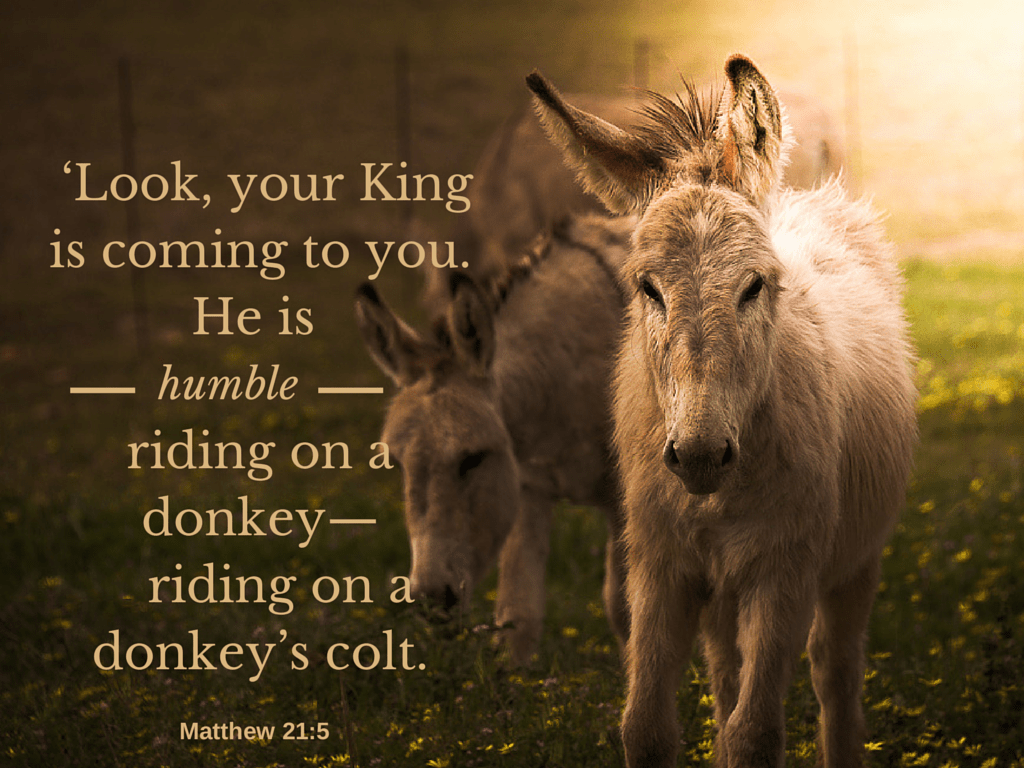
‘Behold, your King is coming to you,
Gentle and mounted on a donkey,
Even on a colt, the foal of a beast of burden.’”

Then the disciples went and did as Jesus had instructed them, and they brought the donkey and [a]the colt, and [b]placed their coats on them; and Jesus sat on the coats. Most of the crowd spread their coats on the road [as before a king], while others were cutting branches from the trees and spreading them on the road. The crowds that went ahead of Him, and those that followed Him, were shouting [in praise and adoration],

[c]Hosanna to the Son of David (Messiah);
Blessed [praised, glorified] is He who comes in the name of the Lord;
Hosanna in the highest [heaven]!”

10 When He entered Jerusalem, all the city was trembling [with excitement], saying, “Who is this?” 11 And the crowds were saying, “This is the prophet Jesus, from Nazareth in Galilee.”

The Word of God for the Children of God.

Adeste Fidelis! Venite Adoremus! Dominum.

Gloria! In Excelsis Deo! Alleluia, Alleluia, Alleluia, Amen.

Triumphal Entry? Great Expectations? A King on His Donkey?

At first observation after a few readings of this narrative account of the entry of Jesus into Jerusalem, I realized something about the two images disconnected.

The picture would have been perfect if Jesus had been riding a white horse, used in those days by warrior kings to symbolize conquering power, decisive victory.

But the narrator Matthew specifically highlighted: Jesus rode on the back of a donkey – the disciples celebrated and paraded their Messiah King on a donkey.

Why?

What image were they hoping, planning to project to the gathered crowds?

What were they expecting the gathering crowds to see and understand of this?

What of the gathering crowds at the gates of the city of Jerusalem?

What were their expectations of the coming of their “Messiah King?”

What were we expecting to see?

What “coming new thing” were we expecting to learn about or be reminded of?

An unarmed conquering warrior Itinerant Master Rabbi?

Long ago, prophet Zechariah said the Messiah would come in righteousness, riding on a donkey, a symbol of humility and peace (Zechariah 9:9 Amplified).

Rejoice greatly, O Daughter of Zion!
Shout aloud, O Daughter of Jerusalem!
Behold, your King (Messianic King) is coming to you;
He is righteous and endowed with salvation,
[a]Humble and unassuming [in submission to the will of the Father] and riding on a [b]donkey,
Upon a colt, the foal of a donkey.

Though most of the people would have probably seen Jesus fulfilling this prophecy as their Messiah (see also Psalm 118:25-26 Amplified),

25 
O Lord, save now, we beseech You;
O Lord, we beseech You, send now prosperity and give us success!
26 
Blessed is the one who comes in the name of the Lord;
We have blessed you from the house of the Lord [you who come into His sanctuary under His guardianship].

Jesus came in triumph into His city under God’s guardianship, they expected him to announce the arrival of a war of rebellion against Roman oppressors.

But he didn’t.

Instead he had no army behind him, nobody is waving any swords or spears.

He was not even armed with a spear or a sword nor did anyone hand him one!

Perhaps with expectations crushed that’s why the chanting crowds changed their tune from “Hosanna” to “Crucify him!” 5 days later (Matthew 27:22-23).

Matthew 27:22-23 Amplified Bible

2Pilate said to them, “Then what shall I do with Jesus who is called Christ?” They all replied, “Let Him be crucified!” 23 And he said, “Why, what has He done that is evil?” But they continued shouting all the louder, “Let Him be crucified!”

Considering our state of current events, I don’t guess, and I wont prophesize that things will have actually changed much from then until now, have they?

People are still willing to rally around the banner of Christ if it goes along with their own interests, if their expected understanding of Christ comes to them as they always expected, approved because their expectations have been fully met.

We also desire, even to go so far as to expect we can maintain a good Christian confession while trying to avoid standing too close to the lingering shadows of the cross, or getting too close to actually running to the tomb to see emptiness.

But Jesus, the King who actually rode on an actual donkey, calls us to actually examine our much paraded walk with him as we come to the cross this Friday.

Center yourselves and dig deep and CRY,

“Am I just here for the Parade?“

Am I just coming along side of everyone else, because everyone else is here right now or everyone else is going along for the ride because it all looks so very interesting and might even be a measure of fun or something I and my business might profit from?

If I have to actually get serious about all this, to decide between God and my job, my reputation, something else in my life—will I also change my expectations?”

The celebration of Palm Sunday is about King Jesus riding to the cross in total obedience to his Father – about His grace and peace come by way of the cross.

Will we with our packed luggage of preconceived expectations receive him in the same way he was presented by the Gospel narrator Matthew in chapter 21?

Our Expectations – A Humble, Triumphant King?

Matthew 21:5-11 Amplified Bible


“Tell the daughter of Zion (the people of Jerusalem),
‘Behold, your King is coming to you,
Gentle and mounted on a donkey,
Even on a colt, the foal of a beast of burden.’”

Then the disciples went and did as Jesus had instructed them, and they brought the donkey and [a]the colt, and [b]placed their coats on them; and Jesus sat on the coats. Most of the crowd spread their coats on the road [as before a king], while others were cutting branches from the trees and spreading them on the road. The crowds that went ahead of Him, and those that followed Him, were shouting [in praise and adoration],

[c]Hosanna to the Son of David (Messiah);
Blessed [praised, glorified] is He who comes in the name of the Lord;
Hosanna in the highest [heaven]!”

10 When He entered Jerusalem, all the city was trembling [with excitement], saying, “Who is this?” 11 And the crowds were saying, “This is the prophet Jesus, from Nazareth in Galilee.”

Jesus was getting near the end of His ministry.

He had been telling the disciples that He would be killed.

Now He comes riding into the city, sitting on donkey’s foal.

This was to fulfill a prophecy made by Zechariah.

Kings, leaders, presidents and others in high authority are known for arriving with a lot of pomp and circumstance – it is expected to show them great respect.

There is always a lot of fanfare going on to bring in someone of high leadership.

Whenever the President of the United States arrives at a building where he is going to speak, he arrives with a great fanfare and a great entourage of people.

There are multiple vehicles in front and behind him.

When he walks out into a room, there is always some music playing, people rise up for him, and He is announced.

The same goes for famous celebrities.

Standing room only crowds

There is a lot of pictures and videos being taken.

All kinds of busyness, posting and sharing activity across social media outlets.

Celebrities arrive in a large limousine.

There is flashing of jewelry and expensive clothing.

There are red carpets.

There are lots and lots of television and journalists, and paparazzi’s.

It is a show of pride and luxury, with no sign of humility.

In many countries, when their leader arrives, there is also a great show of their military power.

Soldiers, weapons, and military equipment tour d’ force go paraded before the visiting leader to show who is in control and who exactly has all the power .

Jesus did not do any of this.

He came in riding on a baby donkey.

In the biblical times, a king would arrive on a horse showing great power.

Jesus did not show any of that, even though He had more power than all the kings on the earth combined.

He created the earth and all who are in it (John 1:1-5).

John 1:1-5 Amplified Bible

The Deity of Jesus Christ

1 In the beginning [before all time] was the Word ([a]Christ), and the Word was with God, and [b]the Word was God Himself. He was [continually existing] in the beginning [co-eternally] with God. All things were made and came into existence through Him; and without Him not even one thing was made that has come into being. In Him was life [and the power to bestow life], and the life was the Light of men. The Light shines on in the [c]darkness, and the darkness did not understand it or overpower it or appropriate it or absorb it [and is unreceptive to it].

The purpose of His arriving in that way, was to show love and compassion.

He is a king who can understand where people are, so He comes in humility.

Most people do not have the grand horse to ride on, but just have the donkey.

Even today, our Savior, our King Jesus comes to you in love and compassion.

He does have the power, but will not show a force of threat to get you to follow.

Jesus wants you and me to want to follow Him.

He understands where we and our “great expectations” are and is there for you.

As we proceed through this Holy Week,

Let’s take a slightly longer look at our “great expectations,”

our Godly versus Worldly priorities;

Matthew 6:33Amplified Bible

33 But first and most importantly seek (aim at, strive after) His kingdom and His righteousness [His way of doing and being right—the attitude and character of God], and all these things will be given to you also.

He is not unapproachable.

He is not unknowable.

He is not unreachable.

He is not untouchable.

Do not fear your king.

Do not fear your Savior.

He is gentle.

He is always and forever in and within our very midst …

In the name of God, the Father and God the Son and God the Holy Spirit,

Let us Pray,

1. Come, thou long expected Jesus,
born to set thy people free;
from our fears and sins release us,
let us find our rest in thee.
Israel’s strength and consolation,
hope of all the earth thou art;
dear desire of every nation,
joy of every longing heart.

2. Born thy people to deliver,
born a child and yet a King,
born to reign in us forever,
now thy gracious kingdom bring.
By thine own eternal spirit
rule in all our hearts alone;
by thine all sufficient merit,
raise us to thy glorious throne.

___Charles Wesley___ 1707-1788

I pray today that you will know this Jesus riding on the donkey’s back as your king; you will know Jesus is gentle and loving; that you and I will seek him as he seeks you and me to find Jesus in our life; that we will show His love and humility in your life. Lord Jesus, may we ever so lovingly and willingly obey you and joyfully follow you, the King of kings, the Lord of lords, Savior of us all, in whose name we pray. Amen.

Adeste Fidelis! Venite Adoremus! Dominum.

Gloria! In Excelsis Deo! Alleluia, Alleluia, Alleluia, Amen.