
Are The Disciples Asking Themselves: How Can We Know and Can We Trust God Will Keep Us in His Perfect Peace? John 20:19-23, Isaiah 26:1-4

John 20:19-23 Amplified Bible

Jesus among His Disciples

19 So when it was evening on that same day, the first day of the week, though the disciples were [meeting] behind barred doors for fear of the Jews, Jesus came and stood among them, and said, “[a]Peace to you.” 20 After He said this, He showed them His hands and His side. When the disciples saw the Lord, they were filled with great joy. 21 Then Jesus said to them again, “Peace to you; as the Father has sent Me, I also send you [as My representatives].” 22 And when He said this, He breathed on them and said to them, “Receive the Holy Spirit. 23 If you forgive the sins of anyone they are forgiven [because of their faith]; if you retain the sins of anyone, they are retained [and remain unforgiven because of their unbelief].”

The Word of God for the Children of God.

Adeste Fidelis! Laeti Triumphantes! Venite Adoremus! Dominum.

Gloria! In Excelsis Deo! Alleluia, Alleluia, Alleluia, Amen.
In those moments of the death and resurrection, behind those barred doors of the Upper Room, can we even begin to imagine those disciples’ state of mind?

Many of Jesus’ followers had scattered for fear of their lives, and his closest disciples were hiding behind closed doors in fear of the religious authorities.

Their much beloved Rabbi (“Teacher”) had been crucified and then buried.

They had walked with Him for three long years and witnessed much, they had believed in him as the Messiah (the “Anointed One”), their promised deliverer.

Now, “cast off” doubts came rushing in – had it all been “too good to be true”?

Sure, they had just heard Mary’s highly excited message that Jesus had risen.

Peter and John had run to see the now-empty tomb, but that wasn’t even close to being the same thing as what Mary had experienced – seeing “Jesus IS alive!”

Was Mary mistaken?

Was it all “wishful thinking?”

Standing at the tomb in the dark, in her indescribable, immeasurable grief, had she only imagined seeing Jesus, through tear stained eyes, in an empty garden?

Did she see only what her impossibly desperate state of mind needed, wanted, to see, that she might find the only means of coping with the unbelievability?

Had others taken the body?

And Mary could not “handle the gravity” nor implications of, that possibility?

Where was her Rabbi that believed in her when no one else had dared to believe?

Bad news can be so easily believable!

Good news can seem so easily unbelievable!

Crucified and buried men don’t roll away unmovable stones, walk out of graves!

Were they being asked to believe: “impossible” witness and testimony of Mary?

Jesus didn’t keep his disciples waiting long.

That evening, “Jesus came and stood among them and said, ‘Peace be with you!’”

He stood before them, and then He spoke these words to them.

He showed them his wounds.

He greeted them with a familiar blessing, “Peace Be With You.”

Jesus gave them the peace and presence they had been missing.

And they were overjoyed.

Things had not been the way they were supposed to be, but now they were!

Today we too celebrate that God is with us!

God’s Peace is With Us!

Christ has risen!

He is alive, and he lives in us! Hallelujah!

Peace is possible!

But, how can we know such a magnitude of God’s Peace through Christ is real?

I cannot claim any similar experience as those disciples in the Upper Room.

I do not know if anyone outside of those disciples in the Upper Room can claim the Resurrected Jesus just appeared to them in their homes or anywhere else?

So we read the post resurrection texts from the Gospels of Luke and John and because I believe in the Word of God for His Children, I “accept” their efforts.

But still, there are the questions being asked by everyone of this moment such a sequence of events are wholly, miraculously unique to the Christian experience.

How about our giving God, through Christ Jesus the benefits, prayers of doubts?

How about our confidence in the Word of God regarding “God’s Perfect Peace?”

How about our confidence in ourselves such a magnitude of Peace is achievable?

You know, actually believing more in the promises of God than the promises of our enemies rust laden promises which we grow fat on, we obsessively feed on?

How Can We Know God Will Keep Us in Perfect Peace?

Isaiah 26:1-4 Amplified Bible

Song of Trust in God’s Protection

26 In that day this song will be sung in the land of Judah:

“We have a strong city;
He sets up salvation as walls and ramparts.


“Open the gates, that the righteous nation may enter,
The one that [a]remains faithful and trustworthy.


“You will keep in [b]perfect and constant peace the one whose mind is steadfast [that is, committed and focused on You—in both [c]inclination and character],
Because he trusts and takes refuge in You [with hope and confident expectation].


“Trust [confidently] in the Lord forever [He is your fortress, your shield, your banner],
For the Lord God is an everlasting Rock [the Rock of Ages].

Peace is possible even in our stressful, troubled world.

In Isaiah 26:3, the Bible promises that God and God alone “will keep in perfect peace those whose minds are steadfast, because they trust in you.”

Here’s what it means to do that, so you can experience peace in any situation.

What Does ‘He Will Keep in Perfect Peace’ Mean?

Everyone who chooses to keep their minds steadfast because they trust in God can count on experiencing perfect peace while they do so, according to this verse.

That means you can enjoy a state of perfect peace as long as you focus your mind from beyond your circumstances to God, and trust him to help you no matter what.

As a result of choosing to trust God, you welcome God’s peace into your mind.

Some people chase after peace of mind from worldly achievements, such as through the wanton pursuit health and wealth and wellness.

Good circumstances may help you enjoy a temporary feeling of peace.

However, only God can actually provide complete and lasting peace.

God, who alone is perfect, is the only reliable source of peace.

Thankfully, God is willing to give that perfect peace to everyone who decides to trust him to provide it.

Trusting God involves being at peace with God through Jesus Christ since Jesus made it possible for all humanity to have relationships with God. 

Ephesians 2:14 says about Jesus: “For he himself is our peace” and Ephesians 2:17-18 points out that, “He came and preached peace to you who were far away and peace to those who were near. For through him we both have access to the Father by one Spirit.”

When we have that close connection to God, we can experience peace even during the most challenging circumstances, because “We know that all things work together for good to those who love God and are called according to his purpose” (Romans 8:28).

John Gills Commentary puts it this way:

“this peace is true, real, and solid; in which sense the word “perfect” is used, in opposition to a false and imaginary one; and it will end in perfect peace in heaven: moreover, the word “perfect” is not in the Hebrew text, it is there “peace, peace”; which is doubled to denote the certainty of it, the enjoyment of it, and the constancy and continuance of it; and as expressive of all sorts of peace, which God grants unto his people, and keeps for them, and them in; as peace with God and peace with men, peace outward and peace inward, peace here and peace hereafter; and particularly it denotes the abundance of peace that believers will have in the kingdom of Christ in the latter day.”

What Is the Context and Background of Isaiah 26:3?

Isaiah 26:3 is part of a song of praise in which the biblical prophet Isaiah celebrates God’s trustworthiness to provide all that people need, including their ultimate need: salvation.

Isaiah sings about how Israel will be judged for their sins yet also restored by God, in his mercy. Isaiah predicts that God will save people from their sins.

Although people may sometimes be faithless toward God, God will always be faithful to his people, Isaiah emphasizes.

God is willing to redeem and restore, and his perfect peace enters the souls of all who decide they have worn out their trust in the world to just trust in Him.

So, Isaiah urges readers to trust in God.

He writes that it is “because they trust” in God that God “will keep in perfect peace those whose minds are steadfast”.

The very next verse after Isaiah 26:3 emphasizes trust: “Trust in the Lord forever, for the Lord, the Lord himself, is the Rock eternal” (Isaiah 26:4).

How Can We Be Sure That We Will Be Kept in Perfect Peace?

We can be sure that God will keep us in perfect peace.

The Holy Spirit will renew our minds whenever we ask for help doing what’s necessary to be at peace: focusing on God and trusting him. 

Romans 12:2 urges us all:

“Do not conform to the pattern of this world but be transformed by the renewing of your mind. Then you will be able to test and approve what God’s will is – his pleasing and perfect will.”

The Spirit will help us access the perfect peace that God offers us.

Jesus promises in John 14:26-27:

“But the Counselor, the Holy Spirit, whom the Father will send in my name, he will teach you all things, and bring to your remembrance all that I have said to you. Peace I leave with you; my peace I give to you; not as the world gives do I give to you. Let not your hearts be troubled, neither let them be afraid.”

Peace is one of the nine “fruit of the Spirit” listed in Galatians 5:22-23.

As you invite the Holy Spirit to renew your mind, you can count on the Spirit’s help to do what Isaiah 26:3 calls you to do: trust in God with a steadfast mind.

A powerful way to pursue peace is to pursue wonder because experiencing wonder expands your awareness of God’s work in your life, and that gives you the assurance you need to trust God and be at peace.

And it can be a wonderful way for anyone to seek the perfect peace that only comes from God.

Here’s how it works:

Visualize Jesus on the cross, visualize the specific things that are troubling you.

Then see yourself walking toward Jesus and laying those things down at the foot of the cross for him to take care of for you.

Through a brief prayer, ask Jesus for help with every specific thing you’ve left there for him.

Entrust it all to his care.

See yourself walk away afterward, with your mind and heart open to receiving peace from Jesus.

Prayer ushers peace into your heart and mind,

according to Philippians 4:6-7, which says:

“Be anxious for nothing, but in everything by prayer and supplication, with thanksgiving, let your requests be made known to God; and the peace of God which surpasses all understanding, will guard your hearts and minds through Christ Jesus.”

Characteristics of God’s Perfect Peace

We can be confident that the perfect peace God gives us will last.

The temporary peace of mind we may find from good circumstances in our lives can relieve some stress and anxiety for a while.

However, the peace that God gives isn’t limited to certain times or tied to specific circumstances.

The perfect peace of God is much more than simply the absence of stress and anxiety; it’s a deep and abiding knowledge of being loved and cared for by God no matter what.

Although that peace is beyond our understanding, it will guard our hearts and minds, promises Philippians 4:7: “And the peace of God, which transcends all understanding, will guard your hearts and your minds in Christ Jesus.”

Psalm 139 describes how near God’s Spirit is to us at all times and in all places.

Verses 7-10 point out:

“Where can I go from your Spirit? Where can I flee from your presence? If I go up to the heavens, you are there; if I make my bed in the depths, you are there. If I rise on the wings of the dawn, if I settle on the far side of the sea, even there your hand will guide me, your right hand will hold me fast.”

We can be sure that we’re never out of the Holy Spirit’s reach.

So, we’re always able to access the perfect peace that God offers us through his Spirit.

After celebrating God’s sovereignty over all circumstances in life, the psalmist ends with a plea for God to renews his mind:

“Search me, God, and know my heart; test me and know my anxious thoughts. See if there is any offensive way in me, and lead me in the way everlasting.”

That can be our prayer in any situation.

When we pray to experience God’s peace through a steadfast mind that is focused on him, we can count on that happening.

The Holy Spirit will strengthen our faith by renewing our minds, and peace will come to us as a result.

“Since we have been justified through faith, we have peace with God through our Lord Jesus Christ” Romans 5:1 explains.

When you follow the advice of Isaiah 26:3, you can be confident that you’ll experience perfect peace from God.

Simply pray and ask the Holy Spirit to renew your mind whenever you need help centering your focus on God.

The Spirit may direct your attention to a wondrous sign of God’s work in your life, or simply quiet your mind.

In the process, perfect peace will flow into your soul!

Perhaps that is why John added the words of John 20:22 to this narrative:

John 20:22 Amplified Bible

22 And when He said this, He breathed on them and said to them, “Receive the Holy Spirit.

Words of Purpose!

The first words Jesus spoke to his frightened disciples after his resurrection were words of reassurance: “Peace be with you!”

Then he quickly gave them a renewed sense of purpose: “As the Father has sent me, I am sending you.”

With those words, Jesus was passing his mission on to his followers.

Perhaps you’ve seen a relay race in which one runner comes up behind the next and passes off the baton.

That’s what Jesus was doing here.

He was passing off the baton to his followers and saying, “Go! Finish the race!

Carry on the mission I began!

I ran the first leg; now you run the next.

Just as God the Father sent me into the world, now I am sending you into the world! Go!” (See John 17:18.)

18 Just as You commissioned and sent Me into the world, I also have commissioned  and sent them (believers) into the world.

Later, Jesus would remind his disciples again of that mission:

“Go and make disciples of all nations, baptizing them in the name of the Father and of the Son and of the Holy Spirit, and teaching them to obey everything I have commanded you” (Matthew 28:19-20).

With whom can you and I share this good news of God’s Ultimate Peace today?

In the name of God, the Father and God the Son and God the Holy Spirit,

Let us Pray,

Dear Lord, Help me daily to remember you are indeed Lord of my life. You have the right to rule all that I think, believe and do. When I allow my mind to run to places that destroy my peace, remind me these are unauthorized thoughts. You do not want me to dwell on thoughts and emotions that contribute to unreasonable fears. I know my mind will remain in perfect peace as I fix my thoughts on you; so Lord Jesus, let your peace rule in my heart. Remind me of the peace I have in the shadow of Your Cross and in your family, and I pray the Holy Spirit to teach me how to be thankful for those circumstances that cause me to run to you, focus on you, and abide in you. I never need to live with fearful, anxious thoughts. Truth is, you alone are in control!

Adeste Fidelis! Laeti Triumphantes! Venite Adoremus! Dominum.

Gloria! In Excelsis Deo! Alleluia, Alleluia, Alleluia, Amen.
https://translate.google.com/

Come! Please Look For Yourselves! To Witness The Stone is Now Rolled Away, Testify Death Is Now Utterly Defeated! Luke 24:1-8

Luke 24:1-8 New King James Version

He Is Risen

24 Now on the first day of the week, very early in the morning, they, [a]and certain other women with them, came to the tomb bringing the spices which they had prepared. But they found the stone rolled away from the tomb. Then they went in and did not find the body of the Lord Jesus. And it happened, as they were [b]greatly perplexed about this, that behold, two men stood by them in shining garments. Then, as they were afraid and bowed their faces to the earth, they said to them, “Why do you seek the living among the dead? He is not here, but is risen!  Remember how He spoke to you when He was still in Galilee, saying, ‘The Son of Man must be delivered into the hands of sinful men, and be crucified, and the third day rise again.’ ” And they remembered His words.

The Word of God for the Children of God.

Adeste Fidelis! Laeti Triumphantes! Venite Adoremus! Dominum.

Gloria! In Excelsis Deo! Alleluia, Alleluia, Alleluia, Amen.

There is a new song of Triumph coming forth from the Heavens above.

Psalm 19 The Message

19 1-2 God’s glory is on tour in the skies,
    God-craft on exhibit across the horizon.
Madame Day holds classes every morning,
    Professor Night lectures each evening.

3-4 Their words aren’t heard,
    their voices aren’t recorded,
But their silence fills the earth:
    unspoken truth is spoken everywhere.

4-5 God makes a huge dome
    for the sun—a superdome!
The morning sun’s a new husband
    leaping from his honeymoon bed,
The daybreaking sun an athlete
    racing to the tape.

That’s how God’s Word vaults across the skies
    from sunrise to sunset,
Melting ice, scorching deserts,
    warming hearts to faith.

7-9 The revelation of God is whole
    and pulls our lives together.
The signposts of God are clear
    and point out the right road.
The life-maps of God are right,
    showing the way to joy.
The directions of God are plain
    and easy on the eyes.
God’s reputation is twenty-four-carat gold,
    with a lifetime guarantee.
The decisions of God are accurate
    down to the nth degree.

10 God’s Word is better than a diamond,
    better than a diamond set between emeralds.
You’ll like it better than strawberries in spring,
    better than red, ripe strawberries.

11-14 There’s more: God’s Word warns us of danger
    and directs us to hidden treasure.
Otherwise how will we find our way?
    Or know when we play the fool?
Clean the slate, God, so we can start the day fresh!
    Keep me from stupid sins,
    from thinking I can take over your work;
Then I can start this day sun-washed,
    scrubbed clean of the grime of sin.
These are the words in my mouth;
    these are what I chew on and pray.

Accept them when I place them
    on the morning altar,
O God, my Altar-Rock,
    God, Priest-of-My-Altar.

Except, who is listening to these raucous words of song and triumph?

The heavens sing their words of the Glory and Triumph of God!

They emanate from the deepest reaches of heaven down to the earth below.

They begin echoing outward unto a sleeping humanity from a place of death.

Hushed and Quiet though they may be in this moment at that place of death, they are none the less quite real and quite audible to those who will come to it.

The song will come unexpectedly to those whose hearts and whose souls were prepared to be curious about it, receive it and see it and then utterly believe it!

In this place of uncleanness and death, there is a sure and certain witness here!

In this place of darkness and stench, there is a sure and certain testimony here!

Let us now lend our eyes and ears to what this witness and testimony might be.

“Welcome to this Happy morning!”

“Welcome all ye curious ones!”  

“Welcome all ye despondent ones!”

“Welcome all ye silent and tearful and mournful ones!”

“Welcome all ye defeated, downtrodden and broken ones!”

“Welcome all ye faith-filled and faithful and hope-filled hopeful ones!”

“It is wonderful to gather in our beautiful Kingdom of God to celebrate the glory and triumph of God and the Resurrection of our Lord and Savior Jesus Christ.”

Yes! there is, emanating from here a new, fresh song of witness and testimony.  

Except, no one in particular is hearing, even listening to the words of welcome.

In fact, if we were to look at this place in that moment, we would see nobody.

Perhaps because the deafening silence of the glorious words “He is not here!” “praise God” are coming from an empty tomb which has been beckoning others where no others are paying attention, in close proximity or listening distance.

The expectancy of the glorious and triumphant message found from within the empty tomb is not one that is even the least bit anticipated, shared nor shouted.

The “Behold, Our God Wins!” witness and the living breathing testimony of the empty tomb sits all alone in a darkened silence in a place of the unclean dead.

Now, finally – a group of women come over the hill and down a path leading to the tomb of the one whom in life had been believed to be their “Messiah King.”

Three days ago, he had been brutally killed, humiliated as the ultimate criminal.

Because of Sabbath rules, he had been hastily buried and sealed behind a rock.

The women came bearing spices which they had prepared to finish preparing the not so pleasant smelling body of their dead best friend and their king.

But instead of finding a sealed tomb they came upon an open one.

Amazingly, unexpectedly, the stone had somehow been rolled off to the side.

Curious and probably just a wee bit afraid of what they would or would not find, they enter the tomb of their Rabbi and find it empty – there was just no corpse.

The women had come to anoint his body for the burial when they suddenly encountered a pair of angels asking this question – “so, why are you here?”

Followed up by the good news, “He is not here; he has risen!

What a great and wholly unexpected sequence of “GOD” events for their souls.

Such wonderful good news.

The faith-filled faithful of God went to the tomb before all others were awake.

With their whole selves, in the darkness, their eyes beheld an open tomb and a rock much too heavy for them to remove by themselves rolled off to the side.

Instead of running away and screaming into the night to tell somebody else, the curiosity of the words to a new song reached their souls, so they all went inside.

They lingered inside and witnessed to an unanticipated, unexpected, emptiness inside the tomb of their fallen Rabbi they could not understand nor easily grasp.

As they were all greatly perplexed by this sequence of events, they clearly see the two men in shiny garments standing there, they clearly hear their words:

Then, as they were afraid and bowed their faces to the earth, they said to them, “Why do you seek the living among the dead? He is not here, but is risen!  Remember how He spoke to you when He was still in Galilee, saying, ‘The Son of Man must be delivered into the hands of sinful men, and be crucified, and the third day rise again.’ ”

“He is NOT here!”

“But, IS Risen!”

Jesus is alive!

Death is defeated!

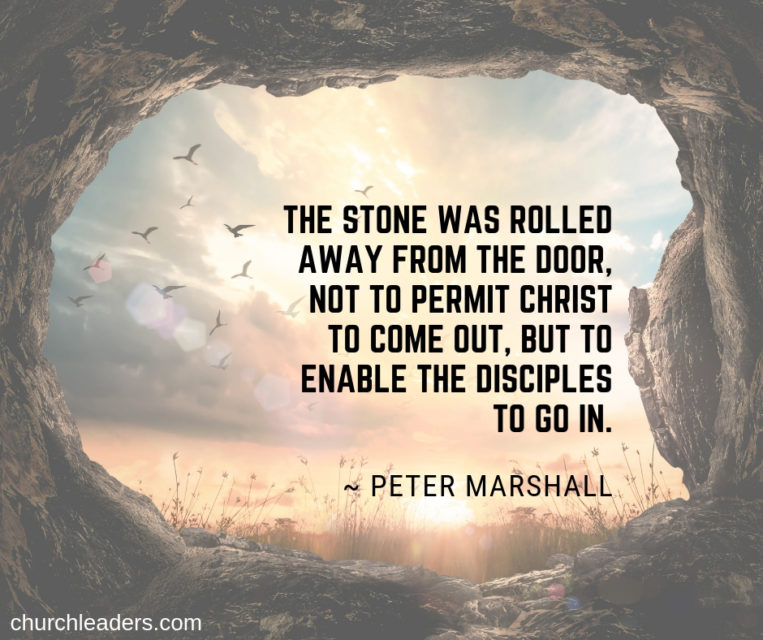
Witness to, Testify that, The Stone Was Rolled Away

Luke 24:5-8 The Message

4-8 They were puzzled, wondering what to make of this. Then, out of nowhere it seemed, two men, light cascading over them, stood there. The women were awestruck and bowed down in worship. The men said, “Why are you looking for the Living One in a cemetery? He is not here, but raised up. Remember how he told you when you were still back in Galilee that he had to be handed over to sinners, be killed on a cross, and in three days rise up?” Then they remembered Jesus’ words.

The gospel of Luke opened with angels delivering messages to Zacharias, Mary, some shepherds quietly going about their everyday duties protecting the sheep.

And to the shepherds, it was a melodious message of great joy for all people.

The message delivered here was also a message of great joy to all people.

Death had been conquered.

Jesus had defeated the power of death.

No longer do we have to fear death.

Where, O death, is your victory? Where, O death, is your sting?(1 Corinthians. 15:55).

Implications: the Witness and Testimony of a Rock Rolled Away

When we consider Jesus as Messiah, most of us think immediately in personal terms: Jesus is my Messiah. He forgives my sins. He lives in me. 

All of which, of course, is true.

But 1st-century Jewish expectations concerning the messiahship of Jesus were far broader than that.

If we had talked with a 1st-century Jew about his or her messianic expectations, we would have discovered hopes that were, in a sense far grander in their scope.

The Jews anticipated that their long-awaited Messiah would come to defeat the pagans who held sway over them, to decisively conquer their enemies, then to rebuild the temple, and to once again establish God’s just rule upon the earth.

Theirs was a nationalistic hope—a hope that the Messiah would come and vindicate the nation of Israel.

Jesus’ arrival, together with the miracles He performed, stories He told, and the prophecies He fulfilled, built to a great crescendo of high expectation among His followers, that Jesus was in fact sent of God as their true conquering king.

But just when they began to think that He really would be the one to politically redeem the people of Israel, at Calvary they saw all of their messianic hopes hanging up on a Roman gibbet, a gallows, an ugly instrument of pain and death.

And when Jesus cried out, “It is finished” (John 19:30), many of them must have quite literally agreed – any hope for their future of prosperity – was “finished.”

Now the question beckons us: How, then, did this group of believers, whose messianic hopes had been buried in a Palestinian tomb, not only continue to believe that Jesus was the Messiah but stand in the streets near where He had been executed and make an unashamed declaration of His messiahship?

The answer comes reverberating through the pages of the New Testament is found in the witness of an immovable rock having been summarily removed, somebody physically entering an empty tomb: the bodily resurrection of Jesus!

The angelic announcement to the women who had brought spices to embalm a corpse provoked a radical reassessment of what the believers had witnessed on the past Friday and a complete change in their view of their lives and futures.

When the Messiah reappeared among them, as alive as ever, these previously sad, sorrowful, defeated, brokenhearted disciples were radically transformed into bold, joyful witnesses with the loudest heartfelt songs of God’s triumph.

They now have a sure and certain witness, bearing testimony to the reality of Christ resurrected with a body that could be seen, handled, and touched, and yet also possessing capacities to do what His pre-resurrection body had not done.

His earthly work of salvation was finished;

His life and His reign were most certainly not!

By His Resurrection,

By God’s own Authority and only through God’s power,

His life and His reign were most certainly never going to end

Only in the disciples’ actions that night, seeing the rock moved away, their display of courage and not fear, to physically enter the tomb, enter, witness its emptiness, exit the tomb, hear the words of the two white clad angels, their recognition of His risen presence did Christ’s messiahship finally make sense.

Indeed, what the early Jewish believers discovered when they “found the stone rolled away from the tomb” (Luke 24:2) and saw “Jesus himself stood among them” entering through a locked and sealed door and into the Upper Room (v 36) was that an eternal hope, joy, and triumphant power ignited within their hearts.

And these remain available to all who put their trust in Jesus, the resurrected Messiah.

It is the triumph of the resurrection, and only the triumph of the resurrection, changes our witness of sadness, sorrow, and defeat into hope, joy, and power.

It is the resurrection, and only the resurrection, that declares that our Messiah will defeat His enemies, will restore His people, and will rule from sea to sea.

The Glory of God, The Triumph of God that morning, The resurrection of Jesus our Lord, Savior will change everything about how you go about your day today.

In the name of God, the Father and God the Son and God the Holy Spirit,

Let us Pray,

We Are One with the Risen Christ

Lord of life, we lift our hearts to you. As the dawn breaks, may we carry the unity we share into every moment knowing that we are one with the risen Christ. Lord, we lift our eyes to you. As the sunrises, may this moment stay with us, reminding us to look for the beautiful colors of promise in your word. Lord, we lift our prayers to you. As the dew air falls, may we breathe this morning in and know that like the earth, you sustain us, keep us and work within us always. And so, we lift our voices to you. We celebrate the greatest day in history, when Jesus rose from death, defeated darkness and bathed the world in stunning resurrection light. May we ever live to praise you! Thank you Lord of my my life and my Salvation that, in you, I no longer need to fear death and its great unknown. Instead, I can face it with confidence, knowing that you have truly defeated it. And, that on the other side of death, I will be with you forever.

Adeste Fidelis! Laeti Triumphantes! Venite Adoremus! Dominum.

Gloria! In Excelsis Deo! Alleluia, Alleluia, Alleluia, Amen.
https://translate.google.com/

Will The Cross Open Wide Our Eyes Too? The Centurion’s Unexpected Confession: His Declaration Of Jesus’ Innocence. Luke 23:44-49

Luke 23:44-49 Amplified Bible

44 It was now about the sixth hour (noon), and darkness came over the whole land until the ninth hour (3:00 p.m.), 45 because the sun was [a]obscured; and the veil [of the Holy of Holies] of the temple was [b]torn in two [from top to bottom]. 46 And Jesus, crying out with a loud voice, said, “Father, into Your hands I commit My spirit!” Having said this, He breathed His last. 47 Now when the centurion saw what had taken place, he began praising and honoring God, saying, “Certainly this Man was innocent.” 48 All the crowds who had gathered for this spectacle, when they saw what had happened, began to return [to their homes], beating their breasts [as a sign of mourning or repentance]. 49 And all His acquaintances and the women who had accompanied Him from Galilee were standing at a distance, watching these things.

The Word of God for the Children of God.

Adeste Fidelis! Venite Adoremus! Dominum.

Gloria! In Excelsis Deo! Alleluia, Alleluia, Alleluia, Amen.
It was to become the Greatest Injustice in the History of Mankind.

As Prophesied by Jesus Himself three times to His Disciples.

Betrayed, Falsely Accused, a Bevy of False Witness testified against him.

A Kangaroo Court held in the darkest of street corners, behind locked doors.

By His own people who once declared the triumph of his life and ministry.

Pilate Himself declared his innocence, tried everything to release him alive.

But Jesus’ own people would have none of it – Crucify! Crucify! Crucify!

Beaten and Scourged and Humiliated to almost beyond recognition.

Forced to carry his own means of death.

Both Hands and Both Feet Nailed to the Cross in the most painful of ways.

Raised up for all the great gathered crowds to bear their ugliest witness to.

Ceaseless, Unrelenting Mockery and Scorn shouted and heard far and wide.

Finally, more quieted and Hushed Words are uttered and heard but by a few.

“I am Thirsty.”

“Father, Forgive them for they know not what they do.”

“It is Finished.”

“Father, into Your hands I Commend My Spirit.”

And finally, all the words come to their ends, Jesus is dead …

But into this moment when all else is suddenly hushed …

But the hushed flow of words continues from unexpected sources …

Luke 23:47 Amplified Bible

47 Now when the centurion saw what had taken place, he began praising and honoring God, saying, “Certainly this Man was innocent.”

Who else had heard these words spoken by the Centurion, the man with the authority to command and lead others to do his bidding, the man under the even greater authority of Pilate, under ultimate authority of his Emperor.

Yes, who else heard these hushed words of the Centurion …

Luke 23:48 Amplified Bible

48 All the crowds who had gathered for this spectacle, when they saw what had happened, began to return [to their homes], beating their breasts [as a sign of mourning or repentance].

The Word of God for His Children was undoubtedly rare and and far rarer still were the Words of God for His Children to remain hush, unspoken in those days.

Now, it is two thousand some odd number of years later and we “hear” again.

Through the Word of God for His Children and Song we remembered the scene.

Good Friday has passed us by, we have returned to the comfort of our homes.

To quietly await the quiet and hushed arrival of the sunrise on Easter Morning.

In that between time, on that day of whatever comes rushing to your mind – perhaps the final rush of housework, shopping and meal preparation for the final assembly of family and friends and perhaps even your neighbors too …

Question: What happens in your heart when you think of Jesus on the cross?

Probably not too much because like most you are waiting for the Preacher to lead the morning worship and Preach their messages on Sunday morning.

A day meant for personal reflection, perhaps family devotionals is what …?

Perhaps, if you are like me and perhaps a few others who went home “beating their breasts in hushed acts of confession and reflection and repentance, it is a time of inviting the Holy Spirit to intercede into your all too hushed moments.

I guess it is too hard to spend any extra time with God (Matthew 6:6-7) to try to imagine the indescribable, immeasurable depths of injustice on Good Friday.

His suffering is especially hard to imagine during this season of the year when we are still perhaps remembering his Advent and thinking about his birth too.

Our hearts are filled with emotion – the joy, and triumph and the Glory of God, the single greatest act of God’s love and God’s Justice of all time. (John 3:16-17)

The hearts of those who witnessed the Lord’s suffering were filled with all sorts of emotions, too.

Like the Centurion’s, Does The Cross Opens Our Eyes?

Luke 23:47 Amplified Bible

47 Now when the centurion saw what had taken place, he began praising and honoring God, saying, “Certainly this Man was innocent.”

The seasoned Roman officer handling the execution praised God and knew this man Jesus was not guilty of any crime.

The crowd went home with deep sorrow.

John and Jesus’ mother Mary and a few others stood by the Cross …

John 19:25-27 Amplified Bible

25 So the soldiers did these things.

But standing by the cross of Jesus were His mother, His mother’s sister [[a]Salome], [b]Mary the wife of Clopas, and Mary Magdalene. 26 So Jesus, seeing His mother, and the [c]disciple whom He loved (esteemed) standing near, said to His mother, “[Dear] woman, look, [here is] your son!” 27 Then He said to the disciple (John), “Look! [here is] your mother [protect and provide for her]!” From that hour the disciple took her into his own home.

Most of Jesus’ friends went home in repentance or watched from a distance.

We have all of these “reactions from the ground as they look up at the Cross.”

What are we to make of them still today – in these 21st century times, seasons?

We have not understood, indeed we cannot understand the implications of the the harshness, yet also the beauty of cross unless it has changed us personally.

After Jesus “breathed his last” (Luke 23:46), Luke records for us the reactions of those who witnessed the crucifixion.

“All the crowds that had assembled for this spectacle, when they saw what had taken place, returned home beating their breasts” (v 48).

Yes, there was sadness, but once the spectacle was over, they left to get on with their lives.

Verse 49 then informs us “all his acquaintances … stood at a distance watching” —and we can barely even imagine what was running through all of their minds.

But the most striking and the most personal reaction that Luke captures is that of the Roman centurion, who, seeing what had happened, “praised God, saying, ‘Certainly this man was innocent!’”—or, as the NIV renders it, “Surely this was a righteous man.”

Here, amid the darkness of hypocritical religious leaders, cynical rulers, and callous passersby, the hushed whispers of lingerers, is a tiny glimmer of light.

Perhaps the very last person we would expect to see the truth—a man with no previous connection to Jesus, no background in Old Testament studies, and no predisposition to the things of God, just utterly obeying his Roman bosses—not only grasped what he looked at, but he immediately responded personally to it.

He saw

“what had taken place”—the words of Jesus, the darkness overhead, the manner of His death—and realized, 

Here is no ordinary man. Here is a man who is different from every other man. Here is a man who is entirely innocent, wholly righteous. 

Indeed, the Gospel narrative of Mark adds that the centurion confessed that the man on the cross was undoubtedly none other but “the Son of God” (Mark 15:39).

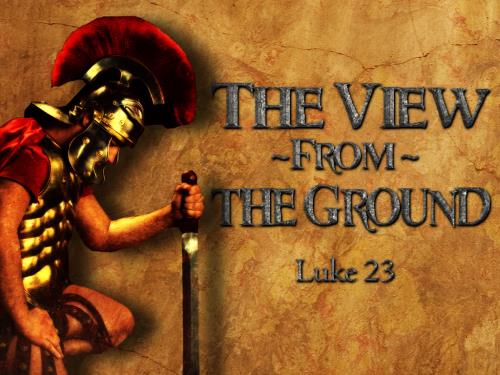
With his incredible and trained eye for detail, Luke places a clear emphasis on giving his readers a “from the ground up” seeing what took place on the cross.

He probably hoped that some readers would remember that when Jesus had read from the scroll of Isaiah earlier in His ministry, He had said, “The Spirit of the Lord … has anointed me to proclaim good news to the poor … to proclaim liberty to the captives and recovering of sight to the blind” (Luke 4:18).

Indeed, a great theme found throughout the Gospel of Luke is that of darkness being invaded by light—the confusion and hardness of the people’s hearts and their minds being subsequently invaded by the liberating power of God’s truth.

1 Corinthians 1:18-25 Amplified Bible

The Wisdom of God

18 For the message of the cross is foolishness [absurd and illogical] to those who are perishing and spiritually dead [because they reject it], but to us who are being saved [by God’s grace] it is [the manifestation of] the power of God. 19 For it is written and forever remains written,

“I will destroy the wisdom of the wise [the philosophy of the philosophers],
And the cleverness of the clever [who do not know Me] I will nullify.”

20 Where is the wise man (philosopher)? Where is the scribe (scholar)? Where is the debater (logician, orator) of this age? Has God not exposed the foolishness of this world’s wisdom? 21 For since the world through all its [earthly] wisdom failed to recognize God, God in His wisdom was well-pleased through the [a] foolishness of the message preached [regarding salvation] to save those who believe [in Christ and welcome Him as Savior]. 22 For Jews demand signs (attesting miracles), and Greeks pursue [worldly] wisdom and philosophy, 23  but we preach Christ crucified, [a message which is] to Jews a stumbling block [that provokes their opposition], and to Gentiles foolishness [just utter nonsense], 24 but to those who are the called, both Jews and Greeks (Gentiles), Christ is the power of God and the wisdom of God. 25  [This is] because the foolishness of God [is not foolishness at all and] is wiser than men [far beyond human comprehension], and the weakness of God is stronger than men [far beyond the limits of human effort].

Any attempt to articulate Christianity that denies the absolute centrality of the wisdom of God and the wisdom of the Cross can never lead to saving faith.

And while we do not always understand how the Spirit moves in leading men and women to be born again, our message must always and ever be the same:

“But We Preach Christ crucified” (1 Corinthians 1:23).

It is beholding the cross that brings life for anyone who responds to the man who hung there by confessing who He is and praising God for His saving work.

Unless and until the “goodness” of the cross is personal to us, it is essentially to be considered as utterly useless for us.

So, when was the last time you simply looked UP at your Savior on the cross and just walked away?

Or, when was the last time you looked DOWN at your Savior on the cross and up, just walked away into whatever else is about to rush into your hushed mind?

So, when was the last time you simply looked UP at your Savior on the cross and spent the intervening time waiting for the Easter moment and just praised God?

Which one best describes your reaction?

Don’t you find it even minimally amazing that probably the least commendable, the most hushed, the least exemplary response was that from Jesus’ friends?

In these intervening times and seasons, let’s not be just observers of the cross, but rather a people deeply sorrowed by our sins which took Jesus to OUR cross.

However, in our sorrow, let’s make sure we don’t let grief consume us.

Instead, let’s praise God for his grace and the salvation he has provided for us.

Then, rather than walking away, having been hushed by the moment, going into hiding like the fearful friends of Jesus (John 20:19),

Let’s maybe share the confession of the Centurion, and the grace of God with;

O’ Come All Ye Faithful …

Adeste Fidelis …

O’ Come Let Us Adore Him …

Venite Adoremus …

Joyful and Triumphant …

Laeti Triumphantes,

To the King of the Angels …

Regem Angelorum …

To Christ the Lord!

Dominum!

Amen!

In the name of God, the Father and God the Son and God the Holy Spirit,

Let us Pray,

Psalm 24 The Message

24 1-2 God claims Earth and everything in it,
    God claims World and all who live on it.
He built it on Ocean foundations,
    laid it out on River girders.

3-4 Who can climb Mount God?
    Who can scale the holy north-face?
Only the clean-handed,
    only the pure-hearted;
Men who won’t cheat,
    women who won’t seduce.

5-6 God is at their side;
    with God’s help they make it.
This, Jacob, is what happens
    to God-seekers, God-questers.

Wake up, you sleepyhead city!
Wake up, you sleepyhead people!
    King-Glory is ready to enter.

Who is this King-Glory?
    God, armed
    and battle-ready.

Wake up, you sleepyhead city!
Wake up, you sleepyhead people!
    King-Glory is ready to enter.

10 Who is this King-Glory?
    God-of-the-Angel-Armies:
    he is King-Glory.

Holy and Almighty God, Author of my Life, Perfecter of my Faith, my heart breaks that Jesus had to die as a sacrifice for sin … especially my sin. However, I praise you for your plan of grace, for your desire to provide mercy at the expense of your own heartbreak, and for your overwhelming love for people like me. In Jesus’ name.

Adeste Fidelis! Venite Adoremus! Laeti Triumphantes, Dominum.

Gloria! In Excelsis Deo! Alleluia, Alleluia, Alleluia, Amen.

https://translate.google.com/

Jesus is Washing His Disciples Feet: Healing is in our Becoming a Servant. John 13:1-17

John 13:1-17 New King James Version

Jesus Washes the Disciples’ Feet

13 Now before the Feast of the Passover, when Jesus knew that His hour had come that He should depart from this world to the Father, having loved His own who were in the world, He loved them to the end.

And [a]supper being ended, the devil having already put it into the heart of Judas Iscariot, Simon’s son, to betray Him, Jesus, knowing that the Father had given all things into His hands, and that He had come from God and was going to God, rose from supper and laid aside His garments, took a towel and girded Himself. After that, He poured water into a basin and began to wash the disciples’ feet, and to wipe them with the towel with which He was girded. Then He came to Simon Peter. And Peter said to Him, “Lord, are You washing my feet?”

Jesus answered and said to him, “What I am doing you do not understand now, but you will know after this.”

Peter said to Him, “You shall never wash my feet!”

Jesus answered him, “If I do not wash you, you have no part with Me.”

Simon Peter said to Him, “Lord, not my feet only, but also my hands and my head!”

10 Jesus said to him, “He who is bathed needs only to wash his feet, but is completely clean; and you are clean, but not all of you.” 11 For He knew who would betray Him; therefore He said, “You are not all clean.”

12 So when He had washed their feet, taken His garments, and sat down again, He said to them, “Do you [b]know what I have done to you? 13 You call Me Teacher and Lord, and you say well, for so I am. 14 If I then, your Lord and Teacher, have washed your feet, you also ought to wash one another’s feet. 15 For I have given you an example, that you should do as I have done to you. 16 Most assuredly, I say to you, a servant is not greater than his master; nor is he who is sent greater than he who sent him. 17 If you know these things, blessed are you if you do them.

The Word of God for the Children of God.

Adeste Fidelis! Venite Adoremus! Dominum.

Gloria! In Excelsis Deo! Alleluia, Alleluia, Alleluia, Amen.

Jesus came to model for us, show us what the Kingdom of Heaven is so we could become a dynamic, functional and living part of it.

Spending time reading the Gospels and studying and praying about who he was is a great way to remind ourselves that of all the rich and transformational ways Jesus is never what we expect but, in every way, is better than our expectations.

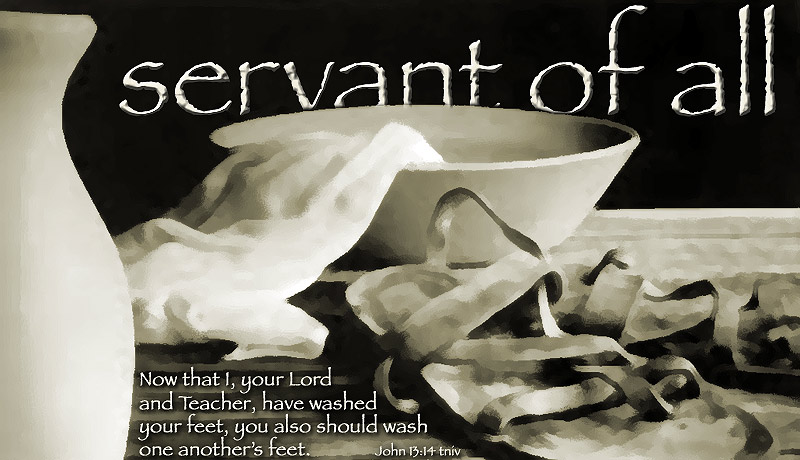
The story of Jesus redefining kingdom expectations, of kneeling to the floor and as host, gently handing his disciples feet so all could comfortably dine together is truly one of the most profound pictures of our Savior’s heart of love for us!

Jesus, like His Father in Heaven, cared so very much about the minutest details of his followers’ lives!

He was willing to completely surrender himself to the moment His Father set aside, to move into his destiny, to not shy away from God’s plan, get messy, to reach, teach, and show undeserved compassion to his ragtag group of disciples.

This is still true today!

Jesus cares about even the most minute details of your life and still come to us, still willing to model, set the example get messy to show you that you are loved.

None of your fears are too small, too inconsequential, needs much too silly, or stresses too insignificant or too great that God does not care about them all.

He cares about it all… even our stinky feet!

Jesus’ actions in this passage set an example of what it means to imitate him with our lives.

We are called to be more and more like Jesus every day, without exception, the servant of others, selflessly to live with humility, and love in every situation.

Christ-Followers are called to a selfless life as servant, conduct themselves in a very radical counter-cultural fashion – in unity, healing, instead of dividing.

Let’s learn more about what we can learn from the story of Jesus washing his disciples’ feet at Passover.

Where Does the Bible Talk about Jesus Washing the Disciples’ Feet?

The story of Jesus washing his disciples’ feet is recorded in John 13:1-17.

This event occurred in the upper room during the Last Supper.

In the biblical account, we read that when Jesus’ disciples arrived at a special gathering Jesus took the role of the ultimate servant of the house and humbly surrendered to His Father’s will and began washing each of his disciples’ feet.

This gathering, this time of communion, of the breaking and sharing of the bread, fruit of the vine, would later come to be known as the Last Supper.

It was the last time Jesus and his disciples broke bread together before his death on the cross.

It was during this Passover meal that Rabbi Jesus served as host, took the first communion with the disciples and also quietly identified Judas as his betrayer.

The act of feet washing was a necessary custom during this time period when gathering to have a communal meal.

The men would have come in with their feet dust-covered and dirty from their walking the undoubtedly, the decidedly unhygienic sun baked Roman roads.

Cleaning of the feet would have been necessary because the group would have likely been reclining together at a low table and dirty feet would not be the least bit welcomed so close to their food.

It was the servant of a household’s job to wash the feet of incoming guests.

Why Did Jesus Do This and What Was the Significance of Washing Their Feet?

In the Old Testament, priests performed and received ceremonial foot washings before they entered the temple for worship.

Foot washing was a serious matter: a basin for foot washing would have been placed between the Tent of Meeting and the altar so Aaron and his sons could wash before entering the Tent of Meeting, “Whenever they enter the Tent of Meeting, they shall wash with water so that they will not die” (Exodus 30:20).

Disregarding the ritual cleansing meant death to a priest.

In John 13:4-5, Jesus “got up from the meal, took off his outer clothing, and wrapped a towel around his waist. After that, he poured water into a basin and began to wash his disciples’ feet, drying them with the towel that was wrapped around him.” 

Jesus has placed the basin between the disciples and the altar, His cross.

Through the witness of His death and the testimony of His resurrection, Jesus makes holy all who do come to the cross through the power of the Holy Spirit.

Through Christ’s atoning work on the cross the disciples and all believers are made holy and righteous before God and then cleansed of their sin and set apart by GOD for service in His body, the Church, a holy priesthood of believers.

Jesus set himself aside, washes his disciples’ feet to purify and cleanse them for their service to God: “Unless I wash you, you have no part with me” (John 13:8).

Jesus, knowing his coming destiny, washing the feet of his disciples came with so much significance for both his disciples in this intimate moment and for all Christians who strive to live, to love, to follow Jesus’ example and teachings.

This selfless act displayed Jesus’ amazing humility!

He took the role of a servant to wash the dusty and dirt-covered feet of his disciples.

Rabbi Jesus was setting an incredible example of what it is to be “Christ-like” through his decidedly humble actions.

Status, pride, or even dirt did not stop him from rolling up his sleeves to serve the men who had been at his side throughout the duration of his ministry.

Prior to this encounter, the disciples had been fighting amongst themselves trying to determine who was the “greatest” among them (Luke 22:24).

Jesus was in a very hands-on way showing them that in his Kingdom the last shall be first and the first shall be last (Matthew 20:16).

Jesus even prompts his disciples to show the same heart of service for each other (John 13:15).

He is clear that servanthood is essential to what it means to be his follower.

This washing also is symbolic of the cleansing power of the blood of Jesus to wash away our sins.

Peter objects to Jesus’ actions but then Jesus rebukes him by saying that unless he washed him, Peter had no part in him (John 13:7-8).

Peter then in a display of passion for the Lord asks him to then wash him from head to toe!

Jesus explains Peter does not need to be washed from head to toe because his actions were symbolic of the cleansing power that being a Christ-follower has in our lives (John 13:10).

Once washed by the blood of a lamb you are free from the stains of sin!

Jesus anoints the disciples for their new role as priests in the new temple that God Himself will raise up.

Jesus ordains them so they can serve His church when He leaves this world, returning to the Father.

Through the act of purification, Jesus imparts His holiness to the disciples so they will be set apart from the world even though they will remain in the world.

Jesus teaches his disciples that His holiness, salvation, and purity will all come through Him and His suffering.

Through the cleansing blood of our Savior – No repeat washing is necessary.

Our Healing is in our Becoming a Servant

John 13:14-15 New King James Version

14 If I then, your Lord and Teacher, have washed your feet, you also ought to wash one another’s feet. 15 For I have given you an example, that you should do as I have done to you.

In our culture today, sadly we don’t have an automatic equivalent to Jesus’ instruction to wash one another’s feet.

But we can figure out that it’s mainly about showing hospitality and serving one another.

The roads of Palestine were unpaved, and with sandals as common footwear, people’s feet would get really dirty—sometimes caked with dust and mud.

As a result, before you entered someone’s home, a servant would come with a pitcher of water, a basin and a towel and wash your feet, an act of hospitality.

It was a customary act of hospitality—like someone offering to hang up your coat and scarf on a cold day as you entered their warm home.

On the night of the last supper, Jesus took the role of a servant as he got up from the meal and began washing his disciple’s feet.

In doing this, Jesus was teaching his disciples an important spiritual principle.

We come to Jesus with nothing of our own, and we must receive from him and be ministered to by him before we have anything to give.

Then, having been served, we go and do the same, we surrender ourselves to God, serving, sharing with others the fullness God has poured into our hearts.

In this example, Jesus provided a profound symbol of his call to servanthood.

Following him is not about position, power, or prestige.

We serve because Jesus Christ came to us as sinners, yet he has served us first.

Jesus shows no squeamishness: He performs this ceremonial washing of His disciples’ feet with a solemn purpose – so others may be prepared to serve.

Setting aside their squeamishness to serve all others as Jesus first served all.

Jesus’ determination made me want to explore the Scriptures more deeply.

What Does Jesus Show When He Washes the Disciples’ Feet?

Through this simple act of foot washing, Jesus demonstrates to His disciples His eternal role as God’s High Priest and Mediator and the disciples part in the priesthood.

Even though He, Jesus must suffer and die and be raised again, the disciples can by faith in the empty tomb be certain He will never leave them or forsake them. 

Scripture says, “During the days of Jesus’ life on earth, he offered up prayers and petitions with loud cries and tears to the one who could save him from death, and he was heard because of his reverent submission. Although he was a son, he learned obedience from what he suffered and, once made perfect, he became the source of eternal salvation for all who obey him and was designated by God to be high priest in the order of Melchizedek” (Hebrews 5:7-10). 

Jesus is the High Priest of Heaven.

Through the foot washing, He ordained His disciples to be priests of the church in the world.

1 Peter 2:4-10 New King James Version

The Chosen Stone and His Chosen People

Coming to Him as to a living stone, rejected indeed by men, but chosen by God and precious, you also, as living stones, are being built up a spiritual house, a holy priesthood, to offer up spiritual sacrifices acceptable to God through Jesus Christ. 6 Therefore it is also contained in the Scripture,

“Behold, I lay in Zion
A chief cornerstone, elect, precious,
And he who believes on Him will by no means be put to shame.”

Therefore, to you who believe, He is precious; but to those who [a]are disobedient,

“The stone which the builders rejected
Has become the chief cornerstone,”

and

“A stone of stumbling
And a rock of offense.”

They stumble, being disobedient to the word, to which they also were appointed.

But you are a chosen generation, a royal priesthood, a holy nation, His own special people, that you may proclaim the praises of Him who called you out of darkness into His marvelous light; 10 who once were not a people but are now the people of God, who had not obtained mercy but now have obtained mercy.

Christ, our permanent High Priest, sitting at the right hand of the Father;

He will offer up prayers on their behalf, “he always lives to intercede for them” (Hebrews 7:25), and will empower them through the Holy Spirit to perform their priestly duties to the glory of God. 

3 Lessons from Jesus Washing the Disciples’ Feet

1. God’s Kingdom Works In Reverse Order

Matthew 18:4 says, “Therefore, whoever takes the lowly position of this child is the greatest in the kingdom of heaven.”

Humility, trust, simplicity, joy, full of wonder, and playfulness are all words that could be used to characterize children.

In Jesus’ Kingdom what seems logical to adults oftentimes goes against the way God works. Jesus calls the last to be first (Matthew 20:16).

His Word prompts us to serve one another in love (Galatians 5:13).

The Bible teaches us to humble ourselves before the Lord (James 4:10).

In Matthew 5:38-40, Jesus teaches that when we are wronged not to fight back but to offer our offenders more of ourselves!

All of these ideas go against everything that seems logical, right, or justified in our world!

We live in a world where pride, greed, and ambition rule our systems.

Money talks, looking out for yourself is prized, and caring for those who are hurt so you can get ahead is not often considered.

Jesus intentionally sets an example of how we are to live as his followers through his actions at the Last Supper.

He makes it clear that we are called to be the feet washers of our community.

Our mission as Believers is to be those who love beyond reason every chance we get.

2. Jesus Washes Us Clean

Isaiah 1:18 says, “Come now, let us reason together, says the Lord: though your sins are like scarlet, they shall be as white as snow; though they are red like crimson, they shall become like wool.”

The prophet foretold of the cleansing power of Jesus years before Jesus physically walked the earth.

His followers would have seen the feet washing and the breaking of bread and sharing of wine at the first communion that happened at the Last Supper as symbolic of Jesus’ cleansing power.

When we bring our sins to the Lord he is willing and able to wash us clean.

All Jesus did led up to the work of the cross, where he took the weight of our sins onto himself, so we could be forgiven.

Don’t be ashamed of your “dirty feet” bring all that you are to the Lord and he is willing and able to set you free.

3. Jesus Was Not What the World Expected

Peter was shocked by Jesus’ actions and asked him to stop because in his mind his king and Savior wouldn’t stoop to the level of a feet-washing-servant.

Jesus was not what the world expected.

They were looking for a political liberator, someone who would help restore power to the Jewish people, and they thought their Messiah would be powerful in the same way the world measures power.

Jesus was full of heavenly ability and did many miracles but he never strove for a place of worldly power or influence.

Jesus rebuked the Pharisees (Matthew 23), avoided political confrontation (John 18:10-11), and took the posture of a servant throughout his ministry.

Meanwhile, his disciples were concerned about who would get the best seat in Heaven next to Jesus.

It wasn’t until Jesus’ death and resurrection that the full picture of Jesus as a Messiah as their foretold Savior was fully understood because while on Earth he never did as they were expecting.

When we think of what it means to be a Christ-Follower do our expectations line up with the example of Jesus?

It is easy to put God in a box, thinking he should work in ways that make sense to our worldly sensibilities.

The Bible reminds us that God rarely plays by our rules.

Jesus came to show us what the Kingdom of Heaven is so we could become a part of it.

Spending time reading the Gospels and studying and Praying over who he was is a great way to remind ourselves of all the ways Jesus is never what we expect but, in every way, abundantly, utterly, infinitely better than our expectations.

In the name of God, the Father and God the Son and God the Holy Spirit,

Let us Pray,

“Unless I wash you

you have no share with me.”

If only it were otherwise.

If only I could present my credentials,

show my record of service,

get some kind of unlimited pass.

In every area of my life

I am more used

to proving how adequate I am,

presenting a polished image,

gaining certain privileges.

But you, Lord,

you bring me down

to where you are kneeling,

and take hold

of the feet I prefer to hide.

We are here together,

near the ground,

and in this humble position

I am touched by you

and made clean.

Adeste Fidelis! Venite Adoremus! Dominum.

Gloria! In Excelsis Deo! Alleluia, Alleluia, Alleluia, Amen.
https://translate.google.com/

Where the Hurt and Healing Collide, There is A Wounded Healer’s Heart. There is a Savior: Jesus! Isaiah 53:1-6

Isaiah 53:1-6 Amplified Bible

The Suffering Servant

53 Who has believed [confidently trusted in, relied on, and adhered to] our message [of salvation]?
And to whom [if not us] has the arm and infinite power of the Lord been revealed?

For He [the Servant of God] grew up before Him like a tender shoot (plant),
And like a root out of dry ground;
He has no stately form or majestic splendor
That we would look at Him,
Nor [handsome] appearance that we would [a]be attracted to Him.


He was despised and rejected by men,
A Man of sorrows and pain and acquainted with grief;
And like One from whom men hide their faces
He was despised, and we did not appreciate His worth or esteem Him.


But [in fact] He has borne our griefs,
And He has carried our sorrows and pains;
Yet we [ignorantly] assumed that He was stricken,
Struck down by God and degraded and humiliated [by Him].


But He was wounded for our transgressions,
He was crushed for our wickedness [our sin, our injustice, our wrongdoing];
The punishment [required] for our well-being fell on Him,
And by His stripes (wounds) we are healed.

All of us like sheep have gone astray,
We have turned, each one, to his own way;
But the Lord has caused the wickedness of us all [our sin, our injustice, our wrongdoing]
To fall on Him [instead of us].

The Word of God for the Children of God.

Adeste Fidelis! Venite Adoremus! Dominum.

Gloria! In Excelsis Deo! Alleluia, Alleluia, Alleluia, Amen.

Someone Familiar With Our Suffering

“You can’t truly know people unless you walk a mile in their shoes,” we sometimes say.

Two thousand ago, a man named Jesus walked into humanity’s full view, in our shoes, and showed that he genuinely knew the full range of human experience.

The Word of God for His Children often reminds them that Jesus was one of us.

The Word of God comes right out of God’s mouth to reveal to human kind He experienced joy and suffering and sorrow, feasting and hunger, the fruits of hard work and the setbacks of humiliation, injustice, poverty, life and death.

He also knew the grief of losing a close friend, which led him to weep (John 11:32-35).

In addition, Jesus was sometimes discouraged by the spiritual numbness of his disciples (Matthew 16:8-12), and weary from hot, dusty travel (John 4:6).

He became angry when people mistreated God and others (Matthew 21:12-13), he also took children in his arms, taught and blessed them (Matthew 19:13-14).

Countless times we read of him healing the sick and destitute, individually and by the village full, approaching the unapproachable, touching the untouchable.

In the account of his crucifixion, as Isaiah foretold, Jesus even experienced total rejection, complete betrayal and unimaginable physical and spiritual suffering.

The reality: Our salvation wasn’t won in the beauty and safety of a royal palace.

Jesus pioneered our salvation through the experience of human living in this world.

He faced all the temptations and struggles we meet daily—and yet he never sinned (Hebrews 4:15).

There is not one single human heart who can claim it has never been wounded.

There is not one single human heart which can claim it has not ever suffered.

His words from the cross “I am thirsty” (John 19:28) assure us that he willingly and obediently dealt with all human experiences as he worked to defeat sin.

For humanity, there must eventually, gradually, subtly, suddenly, come the realization that there is a very real place in God’s divine order – where all our hurting, our woundedness, our suffering, our brokenness, sin, come together.

From Genesis to Revelation, The Word of God reveals to all of God’s children Jesus is our ultimate example of the type of heart we need to turn to, we need to surrender to, because by his crucifixion, He is our healer, our wounded healer.

And we see this heart, the heart of Jesus, not only from His life but also in the death He died for us, not only by the death He died for us, but by the witness of the EMPTY tomb, the angels’ words, by His resurrection and by His Ascension.

A Wounded Healer’s Heart

Jesus is a Wounded Healer

He experienced our wounds by coming in flesh so He could feel what we feel.

“But He was wounded for our transgressions, He was bruised for our iniquities; The chastisement for our peace was upon Him, and by His stripes we are healed.” Isaiah 53:5. NKJV.

Are You A Wounded Healer?

Am I A Wounded Healer?

You and I may not even know there is a name for it; you are too busy doing what needs to be done.

You and I have almost certainly, surely been gravely wounded, hurt, maybe too even abused, maybe even bullied, maybe even betrayed, maybe even humiliated.

Somehow, by some means, in too many ways, we are all wounded throughout our lives, physically, emotionally, psychologically; some of us have been hurt in more ways than we can remember – the measure of trauma is too inconceivable.

Wounded Healer is one who, although they have been wounded time and time again; discern they learn to take those experiences and use them to help others, to minister like Jesus, during their time of loss, tragedy, grief, pain or illness.

Even from hospital beds, with bodies wracked by severe illnesses, like Jesus, they realize that though they are suffering, have suffered in their bodies, they have also learned, by prayer, witness and their testimony of the work of their Savior Jesus in their lives, they can now benefit all others from that suffering.

Now they have become a Wounded Healer.

God isn’t causing their pain but He can use their pain to get your attention and help you and me and others grow, teach the many of compassion and grace.

By their example, you and I can learn how we too can share all our Savior Jesus Christ, minister to others in the middle of our own pain and it helps them heal!

Hebrews 13:1-2 Amplified Bible

The Changeless Christ

13 Let love of your fellow believers continue. Do not neglect to extend hospitality to strangers [especially among the family of believers—being friendly, cordial, and gracious, sharing the comforts of your home and doing your part generously], for by this some have entertained angels without knowing it.

When this passage in Hebrews was anonymously written, people were expected to show generous hospitality to travelers and strangers who might otherwise have nowhere else to stay as they went from village to village and town to town.

The context of this advice urges believers in God to show love and care for one another as well for others who may be in need, such as strangers, travelers.

This advice echoes the words of Jesus in Matthew 25:31-46, where Rabbi Jesus teaches us all that caring for the needs of others is like doing the same for him.

This passage in Hebrews also invites us to consider that a stranger or visitor we encounter might be an angel—that is, a messenger from God (also Genesis 18).

The point is that we should treat anyone we meet as being so valuable and fully worthy of our time that they might be sent from God, and that showing love and care and compassion to them would be like doing the same for the Lord himself.

This can be hard to imagine, especially if hospitality is not so common anymore in our culture and we need to be ever so much more wary of “stranger danger.”

But here the Spirit of God is challenging us simply to treat others well, showing love and kindness to everyone, no matter who they are.

In other words, we are called, even from the midst of our suffering, to love and care for others just as our Lord, Savior Jesus Christ has done for us at Calvary.

Angels of Mercy who will probably not have a set of initials after their name, they won’t ever claim to know it all, and they won’t ever have all the answers.  

But they know how to listen, they know how to care, whose families will show up with a casserole, a care package, or sit with you through the night if need be.

Sometimes they say nothing at all.

They do not have to because they have been there.

They were wounded, they know.

Silence is golden, a hug is infinitely better than words.

Where Our Hurt and Our Healing Collides

Isaiah 53:3-5 Amplified Bible


He was despised and rejected by men,
A Man of sorrows and pain and acquainted with grief;
And like One from whom men hide their faces
He was despised, and we did not appreciate His worth or esteem Him.


But [in fact] He has borne our griefs,
And He has carried our sorrows and pains;
Yet we [ignorantly] assumed that He was stricken,
Struck down by God and degraded and humiliated [by Him].


But He was wounded for our transgressions,
He was crushed for our wickedness [our sin, our injustice, our wrongdoing];
The punishment [required] for our well-being fell on Him,
And by His stripes (wounds) we are healed.

Our Lord and Savior Jesus Christ is all of mankind’s Wounded Healer

He experienced our wounds by coming in flesh so He could feel what we feel.

“But He was wounded for our transgressions, He was bruised for our iniquities; The chastisement for our peace was upon Him, and by His stripes we are healed.” Isaiah 53:5. NKJV.

If you have damaged emotions and physical and emotional scars, ABBA God the Father and Jesus His Son and God the Holy Spirit, are able to take care of those.

For God so loved the World that God sent His Son into the World that we should be saved – NOT CONDEMNED for our sins as we all so very righteously deserve.

Jesus gave His life at Calvary and rose again so that we could have eternal life AND be healers on this earth.

We cannot have open wounds and be a healer, we must have those taken care of.

Our resurrected Jesus is the only One who can overcome and heal our hurts so we can then recognize His Sovereignty and become the blessing God intended.

Maybe from your ailing’s you have never thought you had anything to offer.

My friend, I am certain you do.

If the Lord has forgiven you and restored you, pray for opportunities to give others hope and a light at the end of their tunnel.

Pray for the wisdom of God’s testimony and Jesus’ witness at Calvary above all, it is not an easy road to walk the road of suffering, but there are great rewards.

Are there areas in your life where you have opportunity to be a Wounded Healer?

I would love to hear about them!

Has someone else been a Wounded Healer to you?

Feel free to share Jesus Christ, your thoughts and encourage others here today.

In the name of God, the Father and God the Son and God the Holy Spirit,

Let us Pray,

Gracious God,

on this day we gather to remember the suffering death of Jesus.

He was despised and rejected,

oppressed and afflicted,

yet he was prepared to be wounded for our transgressions.
We come overwhelmed by the depth of Jesus’ love for us,

and his commitment to defeat evil,

even when that meant his own suffering and his own death.

In his willingness to make us righteous, he poured himself out to death, even death on a cross, and so, in response to such love and sacrifice, we commit all of ourselves as his disciples to overcome evil with Your good, our suffering with Your wholeness, with love and compassion, acceptance and mercy for all, meeting oppression with Your justice. Thank you, Jesus, for being willing to enter the grit and grime of our humanity to save us. There has never been a greater sacrifice! Let that be our Witness and let that we our sure and certain Testimony unto the world. Jesus’ name, we pray. 

Adeste Fidelis! Venite Adoremus! Dominum.

Gloria! In Excelsis Deo! Alleluia, Alleluia, Alleluia, Amen.

https://translate.google.com/

What is Redemption? Important Meaning for Christians from the Bible. Romans 8:18 (22-23)-25

Romans 8:18-25 Amplified Bible

18 For I consider [from the standpoint of faith] that the sufferings of the present life are not worthy to be compared with the glory that is about to be revealed to us and in us! 19 For [even the whole] creation [all nature] waits eagerly for the children of God to be revealed. 20 For the creation was subjected to frustration and futility, not willingly [because of some intentional fault on its part], but by the will of Him who subjected it, in hope 21 that the creation itself will also be freed from its bondage to decay [and gain entrance] into the glorious freedom of the children of God. 22 For we know that the whole creation has been moaning together as in the pains of childbirth until now. 23 And not only this, but we too, who have the first fruits of the Spirit [a joyful indication of the blessings to come], even we groan inwardly, as we wait eagerly for [the sign of] our adoption as sons—the redemption and transformation of our body [at the resurrection]. 24 For in this hope we were saved [by faith]. But hope [the object of] which is seen is not hope. For who hopes for what he already sees? 25 But if we hope for what we do not see, we wait eagerly for it with patience and composure.

The Word of God for the Children of God.

Adeste Fidelis! Venite Adoremus! Dominum.

Gloria! In Excelsis Deo! Alleluia, Alleluia, Alleluia, Amen.

So, how is your day so far today?

Did you dread getting out of bed this morning?

Will you be irritated by traffic on the way to work?

Are you facing unreasonable demands from your employer?

Is there ongoing tension in your marriage?

Do you find that your children are ever more appreciative of what you do on their behalf?

Did the evening news cheer you at the end of the day?

Are you simply tired of the same old routine, and longing for something new?

Chances are you feel burdened about one or more issues above.

You are certainly not alone.

In fact, the Bible states,

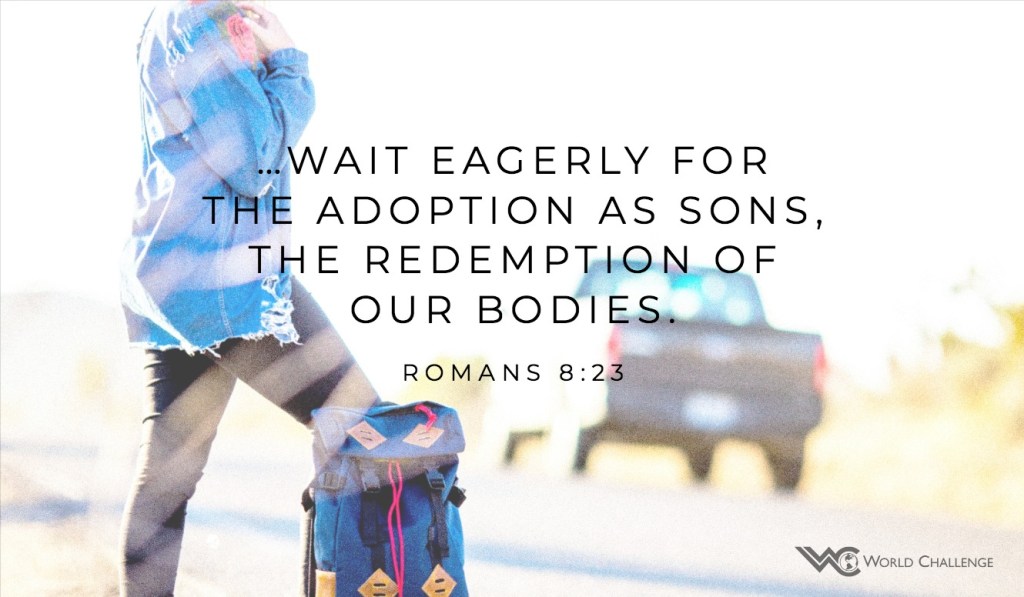
“For we know that the whole creation has been groaning together with labor pains until now. Not only that but we ourselves who have the Spirit as the first fruits – we also groan within ourselves, eagerly waiting for adoption, the redemption of our bodies” (Romans 8:22-23).

All of creation groans, longing for redemption. 

The Definition of Redemption

The dictionary defines redemption as:

1. the action of saving or being saved from sin, error, or evil.

2. the action of regaining or gaining possession of something in exchange for payment, or clearing a debt.

Romans 5:8-11 specifies,

“But God demonstrates his own love for us in this: While we were still sinners, Christ died for us. Since we have now been justified by his blood, how much more shall we be saved from God’s wrath through him! For if, while we were God’s enemies, we were reconciled to him through the death of his Son, how much more, having been reconciled, shall we be saved through his life! Not only is this so, but we also boast in God through our Lord Jesus Christ, through whom we have now received reconciliation.”

Redemption is used in both the Old and New Testaments of the Bible.

The Old Testament.

In the Old Testament, redemption involves deliverance from bondage based on the payment of a price by a redeemer.

The Hebrew root words used most often for the concept of redemption are pada, gaal, and kapar.

The verb pada is a legal term concerning the substitution required for the person or animal delivered.

The verb gaal is a legal term for the deliverance of some person, property, or right to which one had a previous claim through family relation or possession.

The meaning of the third verb, kapar, is to cover.

Fundamental to the message of the New Testament is the announcement that Jesus of Nazareth is the fulfillment of Israel’s messianic hope and that, in him, the long-awaited redemption has arrived.

Deliverance of humankind from its state of alienation from God has been accomplished through the death and resurrection of Christ (Romans 4:25; 2 Corinthians 5:18-19).

In the New Testament, redemption requires the payment of a price, but the plight that requires such a ransom is moral, not material.

Humankind is held in the captivity of sin from which only the atoning death of Jesus Christ can liberate. (“Entry for ‘Redeem, Redemption'”. “Evangelical Dictionary of Theology”)

Redemption is Necessary

When life gets hard we tend to say that we need a break.

What we really need, however, is redemption.

Instead of gaining a momentary respite from the madness that surrounds us, redemption is the promise of God to deliver us from the power and presence of sin.

If this promise sounds too good to be true, consider the fact that the world used to work this way.

Prior to their rebellion, Adam and Eve had unbroken fellowship with God, unparalleled intimacy with each other and undisturbed enjoyment in their Edenic environment.

There has never been a time such as theirs when humans exercised biblical dominion over creation, complemented each other so completely and joyously lived every moment of every day under the rule of God.

But there will be again.

The Bible envisions a day when these broken relationships will be forever restored.

God’s people will inherit a new earth that bears abundant food apart from the sweat of their brow and without the threat of thorns (Revelation 22:2).

They will never feel pain or cause others to experience hurt of any kind as their tears have been eternally wiped away (Revelation 21:4).

Death will no longer haunt the living as gentle lambs will rest side by side with formerly carnivorous wolves (Isaiah 11:6).

Best of all, God will dwell with his people (Revelation 22:3).

Nothing unclean will be allowed to enter the new creation.

There will be no trees that trick or serpents that tempt.

Worship, not worry, will characterize the family of God in a world without end.

In a word, this fallen world will be redeemed.

Thus, the Christian worldview is premised on two realities:

God’s good world spoiled by human sin (fall) and sinful humans made fit to enjoy God forever (redemption).

In spite of the fall, the world continues to work – sort of.

After the fall, Adam and Eve’s oldest son proved remarkably adept at navigating through life.

Cain married a woman and loved their son (Genesis 4:17).

The curse of the ground notwithstanding, Cain became a farmer and then a city builder (Genesis 4:3, 17).

Even Cain’s descendants were known for their creative prowess, including advancements in shepherding livestock, playing musical instruments and developing sturdy weaponry (Genesis 4:20-22).

Put simply, even fallen people in a fallen world somehow manage to contribute to human progress.

On the other hand, even morally upright people manage to confirm the human predicament.

Noah is such a man who, in the midst of a moral sewer, managed to find favor in God’s eyes (Genesis 6:8).

His craftsmanship is demonstrated through his ability to build an ark that withstood the most destructive storm ever.

His attention to detail spared not only his life but that of his family and the entire animal kingdom (Genesis 6:14-22).

Nevertheless, in spite of God’s grace towards him, Noah later became drunk and passed out naked in his tent (Genesis 9:20-21).

When he awoke he cursed generations yet to be born (Genesis 9:24).

This is hardly the behavior one would expect from the man God used to rescue the world but Noah’s life confirms that “there is no one righteous, not even one” (Romans 3:10).

Redemption is Already Accomplished but Not Yet Complete

Humans still retain the image of God, which accounts for any semblance of goodness and enables any sense of progress (Genesis 1:26-27; 9:6).

However, life is not as it should be in this fallen world.

Theologians have differed over the means by which Adam’s sin has been passed down to every person but the reality of death provides sufficient confirmation that no one is exempt (Romans 5:12).

Though Charles Manson and Billy Graham took completely different paths with their lives, both are subject to the death sentence as are you and I.

The Bible thus describes our common plight: we are “dead” in our “trespasses and sins” and we are “by nature children under wrath” (Ephesians 2:1,3).

Redemption is the reversal of the fall.

In part, this reversal means that those who were spiritually dead are made alive (Ephesians 2:4) and those who were children of wrath are now children of God (1 John 3:1).

Though the Bible recognizes fallen people may make positive contributions to the world as a whole, the Bible is quite clear that no one can contribute anything positive to their own redemption (Romans 3:23-28).

The only person qualified to undo the effects of the fall is Jesus Christ who, as the eternal Son of God incarnated through the Virgin Mary. by the Holy Spirit.

This is not to say that he was not tempted as he lived in a fallen world and experienced genuine struggles that all humans face (Hebrews 2:14-18).

However, the Bible unflinchingly states that Jesus never sinned (2 Corinthians 5:21; Hebrews 4:15; 1 Peter 2:22) and thus focuses on him alone as the one who can make sinful humans fit to worship a holy God (Acts 4:12).

Even the death of Jesus was not the result of any sin he committed but rather the most gracious act of love ever displayed, where he took upon himself the sins of the world so that all who believe in him will be saved (Romans 5:6-11).

The Big Picture of Redemption in the Bible

The doctrine of redemption extends even beyond the matter of individual salvation.

During his lifetime, Jesus provided abundant proof of his ability to completely restore a fallen world.

He demonstrated his lordship over heaven when he calmed the storms on the sea (Mark 4:35-41);

he demonstrated his lordship over hell when he exorcised demons from a troubled man (Mark 5:1-20);

he demonstrated his lordship over life when he healed a woman of her incurable disease (Mark 5:24-34);

and he demonstrated his lordship over death when he raised a young girl from the dead (Mark 5:35-43).

With these and countless other unwritten miracles (John 20:30-31; 21:25), Jesus provided ample reason for us all to conclude that this troubled world is not our home – in the end, He himself will make all things new (Revelation 21:5).

The final book of the Bible is, therefore, a fitting end to the story of the fall with its triumphant declaration of full redemption:

“Then he showed me the river of living water, sparkling like crystal, flowing from the throne of God and of the Lamb down the middle of the broad street of the city. The tree of life was on both sides of the river, bearing 12 kinds of fruit, producing its fruit every month. The leaves of the trees are for healing the nations, and there will no longer be any curse. The throne of God and of the Lamb will be in the city, and His slaves will serve Him. They will see His face, and His name will be on their foreheads. Night will no longer exist, and people will not need lamplight or sunlight, because the Lord God will give them light. And they will reign forever and ever” (Revelation 22:1-5).

Living in Light of Redemption

Living in a fallen world as Christians means we will experience trials and tribulations and will continue to struggle with our own temptations.

We are forgiven, but God is not finished with us yet (Philippians 1:6).

Consequently, longing for a better world, even a perfect world, is not a form of escapism.

Rather, it is the Christian’s rightful anticipation of a promise made by the One who justly pronounced a curse on this world and then lovingly took that curse upon Himself in order to, for once and all time, redeem people for His glory.

What are some practical steps that you can use to share the story of redemption with others? 

Recognize that we are all products of the fall and in need of redemption.

It’s easy to forget that people who bother us are often people just like us.

We are all affected and afflicted by the fall.

When we view people through the lens of being fallen (instead of expecting them to live as if they were fully redeemed), we can be more sympathetic.

Thus, instead of bearing a grudge against them we should recognize the need to point them to their Redeemer.

Jesus stated it this way: “‘Love the Lord your God with all your heart and with all your mind.’ This is the first and greatest commandment. And the second is like it: ‘Love your neighbor as yourself.’ All the Law and the Prophets hang on these two commandments” (Matthew 22:35-40).

Realize that the sufferings of this world are temporary.

This is not to diminish the pain we feel when our bodies fail or when friends betray us.

Pain is hurtful and we will feel it.

Yet, the promise of redemption is that our pain and hurt are not final.

We have hope because God Himself has promised to redeem all of creation.

If we want others to share in our story of redemption, we do this best when we live in light our future redemption. 

1 Corinthians 2:9 states,

“But as it is written, ‘What no eye has seen, no ear has heard, and no human heart has conceived’ – God has prepared these things for those who love him.”

Respond to God’s grace in your life by offering grace to others.

One of the joys we will experience in the new heavens and new earth is knowing that we are there because someone shared the good news of the gospel with us.

How much more will our joy be to know that someone has been redeemed because we shared the story of redemption with them!

We can do this with gentleness and kindness: “But in your hearts revere Christ as Lord. Always be prepared to give an answer to everyone who asks you to give the reason for the hope that you have. But do this with gentleness and respect” (1 Peter 3:15).

Creation is Groaning as in the Pains of Childbirth.

Romans 8:22 Amplified Bible

22 For we know that the whole creation has been moaning together as in the pains of childbirth until now.

God created a paradise and sin ruined it.

Fortunately for us that is not the end of the story, creation is longing to be restored to the state it was created to be in, based on the promise of God.

This promise was fulfilled in Jesus and now Paul describes the physical fulfillment of this promise as something creation is in anticipation for.

He likens this waiting period to the labor pains of childbirth.

The process might be hard and might take awhile but once started there is no way to stop it.

And the end result makes the whole thing worth it.

Many people look around and make a judgment call based on what they see.

They look at the state of our natural realm and see death and decay.

Our news channels are filled with warnings of global warming ruining our environment.

Many organizations rally the governments and it’s citizens to save the planet.

However, the Bible says that creation as already been saved.

After taking all of this in it would be easy to say that God hasn’t fulfilled his promise to creation yet based on the natural evidence of this.

However, when Jesus came, I John says, that he came to destroy the works of the devil (1 John 3:8).

Since he has already come, Satan’s power over creation has been destroyed.

We know this because Jesus came the first time to reconcile us to the Father and he will come the second time to redeem us and take us home.

Based on this we understand that creation has already received the first fruits of it’s redemption because Jesus has sent to us the Holy Spirit to testify that we are his children.

Paul said earlier in this chapter that this revelation of the sons of God is what creation has been waiting for (Romans 8:19).

Paul uses the illustration of childbirth to illuminate this very truth and to help us understand that just because we cannot see it, does not mean it has not happened yet.

Pregnancy is a sign that new life is something which is already taking place, awaiting the moment when God and God alone calls the new life into being.

Psalm 29:8-10 Amplified Bible


The voice of the Lord shakes the wilderness;
The Lord shakes the wilderness of Kadesh.


The voice of the Lord [a]makes the doe labor and give birth
And strips the forests bare;
And in His temple all are saying, “Glory!”

10 
The Lord sat as King at the flood;
Yes, the Lord sits as King forever.

When a child is conceived within the womb of the mother, the evidence of this isn’t apparent for a time, even to the women – but changes are already starting.

Psalm 139:13-18 Amplified Bible

13 
For You formed my innermost parts;
You knit me [together] in my mother’s womb.
14 
I will give thanks and praise to You, for I am fearfully and wonderfully made;
Wonderful are Your works,
And my soul knows it very well.
15 
My frame was not hidden from You,
When I was being formed in secret,
And intricately and skillfully formed [as if embroidered with many colors] in the depths of the earth.

16 
Your eyes have seen my unformed substance;
And in Your book were all written
The days that were appointed for me,
When as yet there was not one of them [even taking shape].

17 
How precious also are Your thoughts to me, O God!
How vast is the sum of them!
18 
If I could count them, they would outnumber the sand.
When I awake, I am still with You.

The body of the mother is already beginning to adjust itself to receive the new life and attach it to the walls of the uterus where it may be nourished by mom as it steadily comes together and grows and grows as God has ordained it to be so.

A women doesn’t become pregnant when there is evidence to support that she is bearing a child, a women becomes pregnant at the conception of this child.

This illustration helps us to understand that the physical evidence always follows the act.

The spiritual always births the physical.

Creations’ redemption is already complete in the spiritual realm and now it is experiencing the labor pains which have started announcing to the reader the physical manifestation of this.

The amazing thing about labor and childbirth is that afterward comes fullness of joy.

The pains and hardship experienced are quickly forgotten once a baby is held in arms.

Countless women cannot recall any details of their labor because the joy of motherhood is so great.

Knowing what this type of suffering produces gives courage to all to endure it.

The same is true with creation.

Expectation of being restored to a perfect sinless existence is enough to endure hardship right now.

Creation is waiting in anticipation for it’s final redemption because it knows the One who promised is faithful.

Today, I join with creation in praising our God, looking forward to that day when I will see him face to face.

May you also join with us in celebration our full redemption through Christ Jesus, Amen!

The First Fruits of the Spirit

Romans 8:23 Amplified Bible

23 And not only this, but we too, who have the first fruits of the Spirit [a joyful indication of the blessings to come], even we groan inwardly, as we wait eagerly for [the sign of] our adoption as sons—the redemption and transformation of our body [at the resurrection].

Heart change comes quickly on the heels of Salvation.

This is because at Salvation our entire being and nature is completely changed when we get the Holy Spirit deposited inside of us testifying to the fact that we now belong to the family of God.

The Holy Spirit is given to us as the first fruits of our eternal redemption through Christ Jesus.

This is a foretaste of the blissful things that are to come.

Our bodies long to be clothed with Christ and like creation, we groan inwardly a waiting for this adoption to take place.

If the world and it’s desires held anything over you, once you are born again, the illusions of this world seem to fade away.

Replacing them comes a longing to be reunited with Christ.

Paul talks in detail about this desire.

In 2 Corinthians 5 Paul talks about a inward groaning in which we long to be further clothed and fitted with our heavenly dwelling.

On this earth we long and groan under the burden of this body because we are being fitted with a heavenly body fashioned after Jesus (2 Corinthians 5:2-5).

But in the same way that he is preparing us and making us fit for this heavenly body, the Holy Spirit is given to us as a guarantee of the fulfillment of this promise while on this earth (2 Corinthians 5:5 Amp).

So in this we can rejoice knowing that we have already received the first fruits of our redemption.

The amazing thing about knowing this promise is that we can rest assured of our future with God.

He left nothing up to chance but has done everything to bring restoration to us through his son Jesus.

Today I am so blessed to be called a child of God.

I am so blessed to have the Holy Spirit inside of me to testify to this wonderful truth every moment of the day.

I pray that this scripture based truth will come to bless you mightily today!

Amen!

In the name of God the Father and God the Son and God the Holy Spirit,

Let us Pray,

Everlasting God, as our hearts yearn and groan within us waiting for the fullness of your kingdom, help us to pray, help us to wait, help us to not be misled by deception, but with undivided hearts look for the true light of your coming. Heavenly Father, thank You that in Christ I have been made a new creation. Thank You that the day is coming when the curse on the whole of Your groaning creation will be lifted. Until that time I pray I may live and work to Your praise and glory in Jesus name I pray,

Dear Father, you have blessed me with so many wonderful blessings. I thank you for each and every one of them. At the same time, dear Father, I do long to be brought into your presence in glory as your child. The pain and heartache of the world, the fragility of my body, and my frustration with my own vulnerability to sin keeps me longing for the day that your Son returns in glory. Until that day, help me as I try to be your holy child, let the Body of Christ be Your Church. In Jesus’ name I pray. Amen.

Adeste Fidelis! Venite Adoremus! Dominum.

Gloria! In Excelsis Deo! Alleluia, Alleluia, Alleluia, Amen.

https://translate.google.com/

Jesus’ Triumphal Entry! Our Great Expectations? What About A King Paraded on the back of a Donkey? Matthew 21:1-11

Matthew 21:1-11 Amplified Bible

The Triumphal Entry

21 When they approached Jerusalem and had reached Bethphage, at the Mount of Olives, Jesus sent two disciples [ahead], saying to them, “Go into the village opposite you, and at once you will find a donkey tied, and a colt with her; untie them and bring them to Me. If anyone says anything to you, you should say, ‘The Lord needs them,’ and without delay the owner will send them [with you].” This happened so that what was spoken by the prophet would be fulfilled, saying:


“Tell the daughter of Zion (the people of Jerusalem),
‘Behold, your King is coming to you,
Gentle and mounted on a donkey,
Even on a colt, the foal of a beast of burden.’”

Then the disciples went and did as Jesus had instructed them, and they brought the donkey and [a]the colt, and [b]placed their coats on them; and Jesus sat on the coats. Most of the crowd spread their coats on the road [as before a king], while others were cutting branches from the trees and spreading them on the road. The crowds that went ahead of Him, and those that followed Him, were shouting [in praise and adoration],

[c]Hosanna to the Son of David (Messiah);
Blessed [praised, glorified] is He who comes in the name of the Lord;
Hosanna in the highest [heaven]!”

10 When He entered Jerusalem, all the city was trembling [with excitement], saying, “Who is this?” 11 And the crowds were saying, “This is the prophet Jesus, from Nazareth in Galilee.”

The Word of God for the Children of God.

Adeste Fidelis! Venite Adoremus! Dominum.

Gloria! In Excelsis Deo! Alleluia, Alleluia, Alleluia, Amen.

Triumphal Entry? Great Expectations? A King on His Donkey?

At first observation after a few readings of this narrative account of the entry of Jesus into Jerusalem, I realized something about the two images disconnected.

The picture would have been perfect if Jesus had been riding a white horse, used in those days by warrior kings to symbolize conquering power, decisive victory.

But the narrator Matthew specifically highlighted: Jesus rode on the back of a donkey – the disciples celebrated and paraded their Messiah King on a donkey.

Why?

What image were they hoping, planning to project to the gathered crowds?

What were they expecting the gathering crowds to see and understand of this?

What of the gathering crowds at the gates of the city of Jerusalem?

What were their expectations of the coming of their “Messiah King?”

What were we expecting to see?

What “coming new thing” were we expecting to learn about or be reminded of?

An unarmed conquering warrior Itinerant Master Rabbi?

Long ago, prophet Zechariah said the Messiah would come in righteousness, riding on a donkey, a symbol of humility and peace (Zechariah 9:9 Amplified).

Rejoice greatly, O Daughter of Zion!
Shout aloud, O Daughter of Jerusalem!
Behold, your King (Messianic King) is coming to you;
He is righteous and endowed with salvation,
[a]Humble and unassuming [in submission to the will of the Father] and riding on a [b]donkey,
Upon a colt, the foal of a donkey.

Though most of the people would have probably seen Jesus fulfilling this prophecy as their Messiah (see also Psalm 118:25-26 Amplified),

25 
O Lord, save now, we beseech You;
O Lord, we beseech You, send now prosperity and give us success!
26 
Blessed is the one who comes in the name of the Lord;
We have blessed you from the house of the Lord [you who come into His sanctuary under His guardianship].

Jesus came in triumph into His city under God’s guardianship, they expected him to announce the arrival of a war of rebellion against Roman oppressors.

But he didn’t.

Instead he had no army behind him, nobody is waving any swords or spears.

He was not even armed with a spear or a sword nor did anyone hand him one!

Perhaps with expectations crushed that’s why the chanting crowds changed their tune from “Hosanna” to “Crucify him!” 5 days later (Matthew 27:22-23).

Matthew 27:22-23 Amplified Bible

2Pilate said to them, “Then what shall I do with Jesus who is called Christ?” They all replied, “Let Him be crucified!” 23 And he said, “Why, what has He done that is evil?” But they continued shouting all the louder, “Let Him be crucified!”

Considering our state of current events, I don’t guess, and I wont prophesize that things will have actually changed much from then until now, have they?

People are still willing to rally around the banner of Christ if it goes along with their own interests, if their expected understanding of Christ comes to them as they always expected, approved because their expectations have been fully met.

We also desire, even to go so far as to expect we can maintain a good Christian confession while trying to avoid standing too close to the lingering shadows of the cross, or getting too close to actually running to the tomb to see emptiness.

But Jesus, the King who actually rode on an actual donkey, calls us to actually examine our much paraded walk with him as we come to the cross this Friday.

Center yourselves and dig deep and CRY,

“Am I just here for the Parade?“

Am I just coming along side of everyone else, because everyone else is here right now or everyone else is going along for the ride because it all looks so very interesting and might even be a measure of fun or something I and my business might profit from?

If I have to actually get serious about all this, to decide between God and my job, my reputation, something else in my life—will I also change my expectations?”

The celebration of Palm Sunday is about King Jesus riding to the cross in total obedience to his Father – about His grace and peace come by way of the cross.

Will we with our packed luggage of preconceived expectations receive him in the same way he was presented by the Gospel narrator Matthew in chapter 21?

Our Expectations – A Humble, Triumphant King?

Matthew 21:5-11 Amplified Bible


“Tell the daughter of Zion (the people of Jerusalem),
‘Behold, your King is coming to you,
Gentle and mounted on a donkey,
Even on a colt, the foal of a beast of burden.’”

Then the disciples went and did as Jesus had instructed them, and they brought the donkey and [a]the colt, and [b]placed their coats on them; and Jesus sat on the coats. Most of the crowd spread their coats on the road [as before a king], while others were cutting branches from the trees and spreading them on the road. The crowds that went ahead of Him, and those that followed Him, were shouting [in praise and adoration],

[c]Hosanna to the Son of David (Messiah);
Blessed [praised, glorified] is He who comes in the name of the Lord;
Hosanna in the highest [heaven]!”

10 When He entered Jerusalem, all the city was trembling [with excitement], saying, “Who is this?” 11 And the crowds were saying, “This is the prophet Jesus, from Nazareth in Galilee.”

Jesus was getting near the end of His ministry.

He had been telling the disciples that He would be killed.

Now He comes riding into the city, sitting on donkey’s foal.

This was to fulfill a prophecy made by Zechariah.

Kings, leaders, presidents and others in high authority are known for arriving with a lot of pomp and circumstance – it is expected to show them great respect.

There is always a lot of fanfare going on to bring in someone of high leadership.

Whenever the President of the United States arrives at a building where he is going to speak, he arrives with a great fanfare and a great entourage of people.

There are multiple vehicles in front and behind him.

When he walks out into a room, there is always some music playing, people rise up for him, and He is announced.

The same goes for famous celebrities.

Standing room only crowds

There is a lot of pictures and videos being taken.

All kinds of busyness, posting and sharing activity across social media outlets.

Celebrities arrive in a large limousine.

There is flashing of jewelry and expensive clothing.

There are red carpets.

There are lots and lots of television and journalists, and paparazzi’s.

It is a show of pride and luxury, with no sign of humility.

In many countries, when their leader arrives, there is also a great show of their military power.

Soldiers, weapons, and military equipment tour d’ force go paraded before the visiting leader to show who is in control and who exactly has all the power .

Jesus did not do any of this.

He came in riding on a baby donkey.

In the biblical times, a king would arrive on a horse showing great power.

Jesus did not show any of that, even though He had more power than all the kings on the earth combined.

He created the earth and all who are in it (John 1:1-5).

John 1:1-5 Amplified Bible

The Deity of Jesus Christ

1 In the beginning [before all time] was the Word ([a]Christ), and the Word was with God, and [b]the Word was God Himself. He was [continually existing] in the beginning [co-eternally] with God. All things were made and came into existence through Him; and without Him not even one thing was made that has come into being. In Him was life [and the power to bestow life], and the life was the Light of men. The Light shines on in the [c]darkness, and the darkness did not understand it or overpower it or appropriate it or absorb it [and is unreceptive to it].

The purpose of His arriving in that way, was to show love and compassion.

He is a king who can understand where people are, so He comes in humility.

Most people do not have the grand horse to ride on, but just have the donkey.

Even today, our Savior, our King Jesus comes to you in love and compassion.

He does have the power, but will not show a force of threat to get you to follow.

Jesus wants you and me to want to follow Him.

He understands where we and our “great expectations” are and is there for you.

As we proceed through this Holy Week,

Let’s take a slightly longer look at our “great expectations,”

our Godly versus Worldly priorities;

Matthew 6:33Amplified Bible

33 But first and most importantly seek (aim at, strive after) His kingdom and His righteousness [His way of doing and being right—the attitude and character of God], and all these things will be given to you also.

He is not unapproachable.

He is not unknowable.

He is not unreachable.

He is not untouchable.

Do not fear your king.

Do not fear your Savior.

He is gentle.

He is always and forever in and within our very midst …

In the name of God, the Father and God the Son and God the Holy Spirit,

Let us Pray,

1. Come, thou long expected Jesus,
born to set thy people free;
from our fears and sins release us,
let us find our rest in thee.
Israel’s strength and consolation,
hope of all the earth thou art;
dear desire of every nation,
joy of every longing heart.

2. Born thy people to deliver,
born a child and yet a King,
born to reign in us forever,
now thy gracious kingdom bring.
By thine own eternal spirit
rule in all our hearts alone;
by thine all sufficient merit,
raise us to thy glorious throne.

___Charles Wesley___ 1707-1788

I pray today that you will know this Jesus riding on the donkey’s back as your king; you will know Jesus is gentle and loving; that you and I will seek him as he seeks you and me to find Jesus in our life; that we will show His love and humility in your life. Lord Jesus, may we ever so lovingly and willingly obey you and joyfully follow you, the King of kings, the Lord of lords, Savior of us all, in whose name we pray. Amen.

Adeste Fidelis! Venite Adoremus! Dominum.

Gloria! In Excelsis Deo! Alleluia, Alleluia, Alleluia, Amen.


Hosanna! It Is Our Palm Sunday! Is Our Jesus Our Center or Periphery of Life? John 12:12-19

John 12:12-19 Amplified Bible

The Triumphal Entry

12 The next day, when the large crowd who had come to the Passover feast heard that Jesus was coming to Jerusalem, 13 they took branches of palm trees [in homage to Him as King] and went out to meet Him, and they began shouting and kept shouting “Hosanna! Blessed (celebrated, praised) is He who comes in the name of the Lord, even the King of Israel!” 14 And Jesus, finding a young donkey, sat on it; just as it is written [in Scripture], 15 “Do not fear, Daughter of Zion; Behold, Your King is coming, seated on a donkey’s colt.” 16  His disciples did not understand [the meaning of] these things at first; but when Jesus was glorified and exalted, they remembered that these things had been written about Him and had been done to Him. 17 So the people, who were with Him when He called Lazarus out of the tomb and raised him from the dead, continued to tell others about Him. 18 For this reason the crowd went to meet Him, because they heard that He had performed this [miraculous] sign. 19 Then the Pharisees [argued and] said to one another, “You see that your efforts are futile. Look! The whole world has gone [running] after Him!”

The Word of God for the Children of God.

Adeste Fidelis! Venite Adoremus! Dominum.

Gloria! In Excelsis Deo! Alleluia, Alleluia, Alleluia! Amen.

Open your Bible to John’s gospel chapter 12.

We have come to the last week of Jesus.

On Saturday, He had been in Bethany with Mary, Martha, and Lazarus in the home of Simon the ex-leper.

Then on Monday, He left Bethany, and headed towards Jerusalem riding on the foal of a donkey.

Soon the people took palm branches and shouted: John 12:13 “Hosanna!” “Blessed is he who comes in the name of the Lord” Blessed is the King of Israel.”

So, when Jesus comes into the city of Jerusalem on this occasion with the word going everywhere about raising Lazarus from the dead, they are all thrilled and have broken off their palm branches, waved, hailed the arrival of Jesus as king.

John 12:13-15 Amplified Bible

13 they took branches of palm trees [in homage to Him as King] and went out to meet Him, and they began shouting and kept shouting “Hosanna! Blessed (celebrated, praised) is He who comes in the name of the Lord, even the King of Israel!” 14 And Jesus, finding a young donkey, sat on it; just as it is written [in Scripture], 15 “Do not fear, Daughter of Zion; Behold, Your King is coming, seated on a donkey’s colt.”

In John’s narrative account of Jesus’ ride into Jerusalem, the crowd shouts the right things about Jesus, “Hosanna! blessed is He who comes in the name of the Lord, even the King of Israel” but we soon find out that even Jesus’ disciples really “did not understand all this.”

Then we read in the very next verse that His disciples were mysteriously blank.

They didn’t realize the true gravity of this event was a prophetic fulfillment of an Old Testament prophecy (Zechariah 9:9) until after Jesus rose into heaven.

Zechariah 9:9 Amplified Bible


Rejoice greatly, O Daughter of Zion!
Shout aloud, O Daughter of Jerusalem!
Behold, your King (Messianic King) is coming to you;
He is righteous and endowed with salvation,
[a]Humble and unassuming [in submission to the will of the Father] and riding on a [b]donkey,
Upon a colt, the foal of a donkey.

The crowd had come out to meet Jesus only because they had seen or they heard that Jesus had raised someone named Lazarus from the dead earlier.

And the Pharisees saw Jesus’ popularity as a threat to their own power and position (John 11:47-50; 12:9-11).

Why do or did you come out of wherever it is you live to attend Palm Sunday?

Were you aware of the words of prophecy of Zechariah 9:9?

Are you at Palm Sunday worship service because you only briefly heard of Jesus?

Do you even know of the name of Lazarus and his biblical connection to Jesus?

Are, were you, there because it is an “old family tradition” of uncertain origin or because being there is fulfilling a favor to someone even though you do not, have no plan to believe in God, the Father or God the Son or God the Holy Spirit?

Or are we those who consider ourselves totally committed loving GOD 1000%?

It’s easy to think that we would do better.

It’s easy to think that we know who Jesus really is.

But most longtime followers of Christ would agree that Jesus is a mystery.

He is not any easier to get to know than anyone else we might meet.

In fact, we wouldn’t be wrong to assume that it would take more effort to know the Son of God than to know anyone else.

And yet we can grow to know Jesus.

We can acknowledge that Jesus spends more time as an out layer of our life.

We can recognize where, when Jesus spends too much time on our periphery.

Our relationships with our family members, with our neighbors, co-workers.

Our relationships with strangers on the streets, our fellow communities of faith in our shared efforts to provide volunteer services, meals, a glass of cold water.

We can learn how to gradually move Jesus into the center of our lives where we are the ones who are most eager to not just wave our Palms but to lead Jesus in.

Taking the reins of the colt while Jesus sits next to us on the colt and enters in.

Setting the pace of the colt with Jesus sitting on its back.

Crowds of people see, witness our lives at the center of where Jesus is coming.

Directed display of Discipleship in action.

It takes time to move out from the crowds, work on our part, we are not alone.

The Spirit of Jesus himself comes into our hearts, teaches us (see John 16:7-15).

By the Holy Spirit, John and the other disciples eventually did understand what was going on here, what their closeness and proximity to Jesus meant to others.

And as we diligently study the Bible as God’s living Word, asking for the Holy Spirit’s guidance, we can grow, greatly mature to know, experience Jesus too.

It can take some mightily significant work, but the Holy Spirit will help us, and there is no better relationship to invest in than our relationship with our King.

Palm Sunday … Jesus is Being Led into the City

Palm Sunday is a Christian celebration that marks the beginning of the Holy Week leading to Easter Sunday.

It commemorates Jesus’ triumphant entrance into Jerusalem, when people laid down palms and branches in front of him as a sign of honor.

In modern times, churches hold Palm Sunday services in which assembled worshippers are each given a palm branch or cross made from palm leaves.

The celebration involves singing hymns, reading Scripture, and sometimes even a parade or procession with the palms around the church or community.

Palm Sunday is a timeless reminder of the selfless love Jesus showed by laying down his life for us, entering directly into the center of our lives and it is a time to reflect on our own lives, how we can show that same love to those around us.

Palm Sunday is the day we each remember and celebrate the day Jesus entered Jerusalem as our coming Savior and King.

As Jesus rode a donkey into the town of Jerusalem, a large crowd gathered and laid palm branches, their cloaks across the road, giving Jesus royal treatment.

Hundreds, perhaps thousands of people shouted, “Hosanna to the Son of David! Blessed is he who comes in the name of the Lord! Hosanna in the highest heaven!”

Palm Sunday is a moveable holiday that changes yearly based on Lent and the spring equinox.

Many churches celebrate Palm Sunday by waving palm branches, singing traditional hymns, and making crosses out of palm fronds for the children.

But while this is a triumphal entry, it is Jesus’ first step toward His death.

Many churches celebrate Palm Sunday.

Maybe your church has their member congregants, the children, even complete strangers collectively waving palm branches to help them connect to the story.

But while this is our triumphal entry, it was Jesus’ first step toward His death.

Matthew 21:4 tells us:

‘This took place to fulfill what was spoken by the prophet, saying, ‘Say to the daughter of Zion, ‘Behold, your king is coming to you, humble, and mounted on a donkey, and on a colt, the foal of a beast of burden.’

*The prophecy is cited from Zechariah 9:9 and Isaiah 62:11.

Palm Sunday Bible Story – Triumphal Entry

Matthew 21:1-11 – Jesus Comes to Jerusalem as King

As they approached Jerusalem and came to Bethphage on the Mount of Olives, Jesus sent two disciples, saying to them, “Go to the village ahead of you, and at once you will find a donkey tied there, with her colt by her. Untie them and bring them to me. If anyone says anything to you, say that the Lord needs them, and he will send them right away.” This took place to fulfill what was spoken through the prophet: “Say to Daughter Zion, ‘See, your king comes to you, gentle and riding on a donkey, and on a colt, the foal of a donkey.’ ” The disciples went and did as Jesus had instructed them. They brought the donkey and the colt and placed their cloaks on them for Jesus to sit on. A very large crowd spread their cloaks on the road, while others cut branches from the trees and spread them on the road. The crowds that went ahead of him and those that followed shouted, “Hosanna to the Son of David!” “Blessed is he who comes in the name of the Lord!”“Hosanna in the highest heaven!” When Jesus entered Jerusalem, the whole city was stirred and asked, “Who is this?” The crowds answered, “This is Jesus, the prophet from Nazareth in Galilee.”

In this closing of this Lenten season as we reflect on the sacrifice of Christ, we see him riding a donkey as he comes to Jerusalem as King.

This animal was symbolic of humility, peace, and King David’s royalty (see also King Solomon’s Procession 1 Kings 1:33).

Jesus rode into Jerusalem on the back of a donkey to show everyone publicly that he was the chosen Son of David (another name for the promised Messiah).

We might have expected a stallion.

But this surprising King rides a donkey.

Jesus identifies with the the common man and woman, with the lowly of heart.

The kingdom of God is totally different from the here-today, gone-tomorrow kingdoms of the world.

Don’t mistake this King on a donkey for the kind of ruler we usually see in this world.

From Jesus we learn that being a king in God’s kingdom is about service and humility.

A king serves.

So, as we fulfill our own calling, we will serve the Lord, we serve one another.

As we live by the guidance of the Spirit, visit people who are sick, care for those who are poor, feed the hungry, and we will learn to love our neighbors as much we love our God, we are servant kings and queens of the kingdom of heaven.

That is when we are most like Jesus, when Jesus finds His way delicately weaved into the center of our lives who calls us to reign with him today and for eternity.

Jesus once came riding on a donkey.

Next he will come riding on the clouds of heaven to reign over us, claim us as His own, to live with us in the new heaven and earth forever (Revelation 21- 22).

Come, Lord Jesus, Come!

On the heels of this, another Palm Sunday, as we begin this Holy Week, may we constantly, centrally, be reminded of its significance, value for our lives today.

That very important day in history, when Jesus centered Himself directly, and decisively into the eternal affairs of man, began His journey towards the cross.

Yet maybe again, ultimately centrally, amid busy lives, on the heels of Spring Break, or in all the upcoming thoughts about Easter, the real central meaning of it may, even unintentionally, get missed – again – until the next Palm Sunday.

One day, Palm Sunday will be an every day celebration of the centrality of Jesus!

His Word becomes central, reveals such great truths in every part of this story.

Truths that draw us closer towards Christ, reminding us that He alone is King…

Palm Sunday reminders Centering Christ as Our King

1. God’s Word tells us the people cut palm branches, waved them in the air, and laid them out on the ground before Jesus as He rode into the city.

The palm branch represented goodness and victory and was symbolic of the final victory He would soon fulfill over death.

“O death, where is your victory? O death, where is your sting?” 1 Corinthians 15:55

2. Jesus chose to ride in on a donkey, which directly fulfilled the Old Testament prophecy of Zechariah. 9:9.

In Biblical times, it was common for kings or important people to arrive by a procession riding on a donkey.

The donkey symbolized peace, so those who chose to ride them showed that they came with peaceful intentions.

Jesus even then reminded us that He is the Prince of Peace.

“Rejoice greatly, O daughter of Zion! Shout aloud, O daughter of Jerusalem! Behold, your king is coming to you; righteous and having salvation is he, humble and mounted on a donkey, on a colt, the foal of a donkey.” Zechariah. 9:9

3. When the people shouted “Hosanna!” they were hailing Christ as King.

That word actually means “save us now,” and though in their own minds, they waited for an earthly king, God had a different plan of bringing true salvation to all who would trust in Him.

“Blessed is he who comes in the name of the LORD!” Psalm 118:26

“If you confess with your mouth that Jesus is Lord and believe in your heart that God raised him from the dead, you will be saved.” Romans 10:9

4. The Bible says that Jesus wept for Jerusalem.

Amid the praise of the moment, He knew in His heart that it wouldn’t be long that these same people would turn their backs on Him, betray Him, and crucify Him, truly His heart broke with the reality of how much they needed a Savior.

“As he approached Jerusalem and saw the city, he wept over it, and said, “If you, even you, had only known on this day what would bring you peace–but now it is hidden from your eyes.” Luke 19:41-42

5. Palm Sunday reminds us that the reign of Christ is far greater than any man’s mind could ever conceive or plan.

Man looked for someone to fight their battles in the present day world.

Yet God had the ultimate plan of sending His Son to fight the final battle over the grave and death itself.

This is the greatness of why we celebrate this week.

Because of Christ’s ultimate sacrifice, we can be set free of death.

“Jesus said to her, ‘I am the resurrection and the life; he who believes in Me will live even if he dies,'” John 11:25

We have so much to be grateful for this week.

The enemy knows that, and you can bet, the enemy will do everything he can to distract us from this Holy Week’s true meaning.

Don’t let him win.

In this Holy Week, I fervently pray may God direct our thoughts and attention towards the exact center what and who matters most, Jesus Christ our King…

Let’s choose to center our focus on worshipping our Lord, thanking Him for the gift of His sacrifice, celebrating the power of the Resurrection, and the new life found in only one place, being the exact, exacting center of Him and Him alone.

Let us center our day, celebrate Palm Sunday as the crowds that greeted Christ that day, singing Hosanna! Blessed is he who comes in the name of the Lord!” 

In the name of God, the Father and God the Son and God the Holy Spirit,

Let us Pray,

O Lord Jesus Christ,
when you entered Jerusalem,
great crowds waved palm branches and cried “Hosanna.”

Save us now from our sins,
and make us to rejoice in you,
our only Redeemer;

through your mercy, O our God,
you are blessed,
and live and govern all things,
now and forever. Amen.

Adeste Fidelis! Venite Adoremus! Dominum.

Gloria! In Excelsis Deo! Alleluia, Alleluia, Alleluia, Amen.

https://translate.google.com/

I Have a Testimony! Why Is the Approaching ‘Lamb of God’ So Significant to Me? John 1:29-34

John 1:29-34 Amplified Bible

29 The next day he saw Jesus coming to him and said, “Look! The Lamb of God [a]who takes away the sin of the world! 30 This is He on behalf of whom I said, ‘After me comes a Man who has a higher rank than I and has priority over me, for He existed before me.’ 31 [b]I did not recognize Him [as the Messiah]; but I came baptizing [c]in water so that He would be [publicly] revealed to Israel.” 32 John gave [further] evidence [testifying officially for the record, with validity and relevance], saying, “I have seen the [d]Spirit descending as a dove out of heaven, and He remained upon Him. 33 I did not recognize Him [as the Messiah], but He who sent me to baptize [e]in water said to me, ‘He upon whom you see the Spirit descend and remain, this One is He who baptizes with the Holy Spirit.’ 34 I myself have [actually] seen [that happen], and my testimony is that this is the Son of God!”

The Word of God for the Children of God.

Adeste Fidelis! Venite Adoremus! Dominum.

Gloria! In Excelsis Deo! Alleluia, Alleluia, Alleluia, Amen.

The Preacher, with an inviting tone, filled the air with, “Who wants to testify about the goodness of the Lord?”

Testimonies of the goodness of God are a sure and certain motivation for the saints of God to keep going forward when the struggles in life weighed heavy.

John the Baptist had a sure, certain testimony about the goodness of God.

John 1:29-34 declares God has invaded the world in the person of Jesus Christ.

John 1:29-34 gives every Christian a sure and certain model testimony that we can draw powerful inspiration from, to learn to give about our own life journey.

First, John the Baptist knew instantaneously that in the salvation business, his ministry was decisively limited, only the perfect Lamb of God can take away sin.

Second, John the Baptist surely and certainly accepted the role of second chair.

He declared without hesitation that he absolutely was not the main thing.

John the Baptist unequivocally said, “A man who comes after me has surpassed me because he was before me.”

He was a humble servant to Jesus.

Third, John the Baptist gave a testimony of what he saw and experienced.

Without hesitation, the story John the Baptist told throughout his ministry is this: “I have seen and I testify that this is God’s Chosen One.”

On this day before Palm Sunday, we too will have a powerful and inspiring testimony: tell your family and friends the story of Jesus, the Lamb of God!

That is our Witness!

That is our Testimony

That is our Coming Story!

“BEHOLD THE LAMB OF GOD WHO TAKETH AWAY THE SINS OF THE WORLD”

Why Is the ‘Lamb of God’ So Significant To Us?

The Bible talks about the “Lamb of God” and often features imagery about lambs.

Spiritually, the Lamb of God is incredibly significant because it expresses the core of our faith.

In these our most contemporary of times, two thousand years after the words of John were first spoken and resoundingly declared, our learning why the Lamb of God is so significant can inspire us too with awe, to deepen our trust in Jesus. 

Who is the Lamb of God?

The phrase “Lamb of God” is a name given to Jesus in the Bible.

The Bible first mentions the Lamb of God in John 1:29, John sees Jesus and declares, “Look, the Lamb of God, who takes away the sin of the world!”.

John the Baptist continues to testify about Jesus and concludes in John 1:34: “I have seen and I testify that this is God’s Chosen One.”

Whenever the Lamb of God appears in the Bible, it refers to Jesus. 

What Does the “Lamb of God” Mean?

Jesus as the Lamb of God expresses significant theological and symbolic meaning.

It highlights the sacrificial nature of Jesus’ mission as the world’s Savior.

Just as lambs – gentle animals who symbolize purity – were offered as sacrifices in the Old Testament to atone for sins, Jesus served as a sacrifice to atone for the sins of humanity.

The phrase “Lamb of God” refers to Jesus as the perfect and ultimate sacrifice provided by God for the single perfect atonement of all the sins of his people. 

Why Is the “Lamb of God” So Significant?

Relating to Jesus as the Lamb of God shows us the heart of why our faith is important.

It is only by trusting Jesus’ sacrifice for our sins we can connect with a holy God.

Otherwise, we would perish. 

John 3:16 celebrates the love behind this core sacrifice: “For God so loved the world that he gave his one and only Son, that whoever believes in him shall not perish but have eternal life.”

John 3:17 declares God’s intent behind this core sacrifice: “For God did not send the Son into the world to judge and condemn the world [that is, to initiate the final judgment of the world], but that the world might be saved through Him.”

It’s important for us to trust Jesus’ work as the Lamb of God in order for us to be able to enjoy relationships with God and grow in holiness and gentleness.

Apostle Paul wrote, “For our sake he [God] made him [Jesus] to be sin who knew no sin, so that in him we might become the righteousness of God” (2 Corinthians 5:21).

Sacrifice is necessary because, as Hebrews 9:22 says, “In fact, the law requires that nearly everything be cleansed with blood, and without the shedding of blood there is no forgiveness.”

The entire sacrificial system established by God in the Old Testament prepares the way for Jesus coming to save the world as the Lamb of God.

In that system, lambs were often sacrificed in temples as offerings to God to atone for people’s sins.

A lamb was sacrificed for the sins of the people every morning and evening in Jerusalem (Exodus 29:38-42).

These sacrifices foreshadowed the perfect sacrifice of Christ on the cross that would happen later.

Interestingly, Jesus died on the cross at the same time the evening sacrifice was being made in the temple.

The Jews at that time were familiar with the Old Testament prophets Jeremiah and Isaiah, who foretold the coming of someone who would be led “like a lamb to the slaughter” (Jeremiah 11:19 and Isaiah 53:7). 

Isaiah 53:5-6 prophesies about how Jesus’ suffering and sacrifice will redeem people: “But he was pierced for our transgressions, he was crushed for our iniquities; the punishment that brought us peace [Isaiah 26:1-3] was on him, and by his wounds we are healed.

We all, like sheep, have gone astray, each of us has turned to our own way; and the Lord has laid on him the iniquity of us all.”

This person was none other than Jesus, the Lamb of God.

God instructed the Israelites to sacrifice a lamb for the Passover feast (Exodus 12:1-30).

The innocent lamb represented purity, and its sacrifice was a symbol of repentance and submission to God’s will.

Similarly, Jesus’ sacrificial death on the cross at Calvary to save humanity from sin shows he is the Lamb of God who makes the ultimate sacrifice necessary to ultimately and finally connect woefully sinful humanity to a perfectly holy God.

In fact, the slaying of the Passover lamb and applying its blood to the doorposts of the houses powerfully depicts Jesus’ atoning work on the cross.

If we trust Jesus as our Savior, we are spiritually covered by his blood, which protects us from spiritual death.

Romans 8:1-4 explains how Jesus’ physical sacrifice has made spiritual freedom possible for people:

“Therefore, there is now no condemnation for those who are in Christ Jesus, because through Christ Jesus the law of the Spirit who gives life has set you free from the law of sin and death. For what the law was powerless to do because it was weakened by the flesh, God did by sending his own Son in the likeness of sinful flesh to be a sin offering. And so he condemned sin in the flesh, in order that the righteous requirement of the law might be fully met in us, who do not live according to the flesh but according to the Spirit.”

Since humanity had sinned in the flesh (physically), and our holy God can’t be corrupted by sin, through Calvary, God made a way for our sins to be atoned for physically so we would no longer be separated from Him because of our sins.

Jesus’ work as the Lamb of God made it possible for all people to enjoy loving relationships with God, despite sin.

1 Peter 1:18-19 celebrates that redemptive work: “For you know that it was not with perishable things such as silver or gold that you were redeemed from the empty way of life handed down to you from your ancestors, but with the precious blood of Christ, a lamb without blemish or defect.”

Jesus has provided all we need to be forgiven forever for all of our sins, and he serves as our advocate for everything we need.

The entire chapter of Hebrews 10 describes the importance of Jesus’ work as the Lamb of God who takes away our sins.

As Hebrews 10:10 proclaims: “… we have been made holy through the sacrifice of the body of Jesus Christ once for all.”

Now, there is no need to sacrifice animals like lambs to God in a temple, because Jesus has provided an everlasting sacrifice on our behalf so we can enjoy relationships with God.

The chapter goes on to encourage us to persevere in our faith with confidence because of Jesus’ ultimate sacrifice for us:

“Therefore, brothers and sisters, since we have confidence to enter the Most Holy Place by the blood of Jesus, by a new and living way opened for us through the curtain, that is, his body, and since we have a great priest over the house of God, let us draw near to God with a sincere heart and with the full assurance that faith brings, having our hearts sprinkled to cleanse us from a guilty conscience and having our bodies washed with pure water. Let us hold unswervingly to the hope we profess, for he who promised is faithful.”

Not only does the Bible look back to Jesus’ crucifixion as the Lamb of God, but it also looks forward to Jesus as the Lamb of God in heaven. 

Revelation 5:6 describes Jesus in heaven as “a Lamb, looking as if it had been slain.”

This image reinforces the sacrificial nature of Jesus’ mission and emphasizes the victory he achieved through his sacrifice.

A few verses later in Revelation 5:11-13,

the Bible reveals all created beings in heaven and earth – angels, people, and other creatures – worshiping Jesus for his work as the Lamb of God:

“Then I looked and heard the voice of many angels, numbering thousands upon thousands, and ten thousand times ten thousand. They encircled the throne and the living creatures and the elders. In a loud voice they were saying: ‘Worthy is the Lamb, who was slain, to receive power and wealth and wisdom and strength and honor and glory and praise!’ Then I heard every creature in heaven and on earth and under the earth and on the sea, and all that is in them, saying: ‘To him who sits on the throne and to the Lamb be praise and honor and glory and power, for ever and ever!’”

This passage shows the importance of our own selves learning, appreciating, the indescribable wonder of God’s work and responding to it with gratitude.

Revelation 7:9 shows Jesus in heaven as the Lamb of God, with a huge amount of people whose souls had been redeemed thanks to his sacrifice on earth:

“After this I looked, and there before me was a great multitude that no one could count, from every nation, tribe, people, and language, standing before the throne and before the Lamb. They were wearing white robes and were holding palm branches in their hands.”

An angel explains to the apostle John in Revelation 17:14 that Jesus, the Lamb of God, will defeat evil and reign victorious over the universe:

“They will wage war against the Lamb, but the Lamb will triumph over them because he is Lord of lords and King of kings – and with him will be his called, chosen and faithful followers.”

Significance of Jesus as the Lamb of God Conclusion

The Lamb of God refers to Jesus as the perfect and ultimate sacrifice for sin.

The significance of the Lamb of God speaks to the core message of Christianity:

that through Jesus’ sacrifice at Calvary, we can be reconciled to God and receive forgiveness for our sins.

The Lamb of God is undeniably significant and central unto the Christian faith!

Because it emphasizes Jesus’ sacrificial mission and symbolizes his innocence, purity, and victory over sin and death.

As we approach tomorrow, the umpteenth time of our “holding up our palm branches, shouting our Hosannas” celebrating Jesus’ arrival into Jerusalem;

As we reflect on the meaning of the Lamb of God, may we be inspired to the utmost by the great love God has for us, the price that Jesus paid to redeem us.

In the name of God, the Father and God the Son and God the Holy Spirit,

Let us Pray,

Loving Heavenly Father, thank You for sending Jesus as the true Lamb of God Who has taken away all my sins. I am so thankful that Jesus died on the Cross for me, becoming the only perfect substitute for my sins. In Jesus’ name I pray, AMEN.

Adeste Fidelis! Venite Adoremus! Dominum.

Gloria! In Excelsis Deo! Alleluia, Alleluia, Alleluia, Amen.

https://translate.google.com/

A Ransom Paid in Full: Reflecting, Understanding, the Justice of God. Matthew 20:24-28

Matthew 20:24-28 Amplified Bible

24 And when the [other] ten heard this, they were resentful and angry with the two brothers. 25 But Jesus called them to Himself and said, “You know that the rulers of the Gentiles have absolute power and lord it over them, and their great men exercise authority over them [tyrannizing them]. 26 It is not this way among you, but whoever wishes to become great among you shall be your servant, 27 and whoever wishes to be first among you shall be your [willing and humble] slave; 28 just as the Son of Man did not come to be served, but to serve, and to give His life as a ransom for many [paying the price to set them free from the penalty of sin].”

The Word of God for the Children of God.

Adeste Fidelis! Venite Adoremus! Dominum.

Gloria! In Excelsis Deo! Alleluia, Alleluia, Alleluia, Amen.

Background: He Who Has Ears, Let Them Hear …

Matthew 20:17-19Amplified Bible

Death, Resurrection Foretold

17 As Jesus was going up to Jerusalem, He took the twelve [disciples] aside, and along the way He said to them, 18 “Listen carefully: we are going up to Jerusalem; and the Son of Man will be handed over to the chief priests and scribes (Sanhedrin, Jewish High Court), and they will [judicially] condemn Him and sentence Him to death,  19 and will hand Him over to the Gentiles (Roman authorities) to be mocked and scourged and crucified, and He will be raised [to life] on the third day.”

On the journey to Jerusalem Jesus predicts that his death will take place there.

Jesus takes his disciples aside to report to them that it will include wholesale betrayal, humiliation and condemnation by the religious leaders of his people.

Those who should be welcoming him as the promised Messiah will instead sentence him to suffering and death, thoughtlessly handing him over to to a brutal time and season of mocking, flogging, and crucifixion by the Romans.

Then Jesus also shockingly predicted that he would rise again three days after!

But it seems that after hearing the predictions about Jesus’ suffering and death, the disciples somehow tuned out.

It’s as if they missed hearing the promise that “on the third day” he would be “raised to life!”

When the time came and Jesus died on a cross, the disciples were a despondent group of followers wondering about the suddenness what had just happened.

As predicted, in the Garden of Gethsemane they scattered in fear, at the arrival of the Temple Authorities unjustly leaving the burial, preparations to others. (See Matthew 26:56; 27:45-28:10.)

In this critical moment, there was no expectation of Jesus’ coming to life again!

In our own day and age, considering the number of years which have come, and passed us by since those events transpired, is our own “hearing” any different?

As we again, for the umpteenth time approach Jesus’ entry into Jerusalem, as we again come to the umpteenth recitation and those sermons of Palm Sunday, as we again try to come to realization of what we know is to come, has already transpired, has already been written and narrated – why is any of this relevant?

We have not heard with our own ears the actual voice of Jesus as the disciples.

We could not immediately begin the process of giving it our fullest attention.

We could not be stunned in the same way as the disciples were upon hearing it.

We could not be apathetic or excited or wondering or stunned or any of that.

We did not talk, or walk, hear or listen to and with Jesus in that moment – in a more contemporary colloquial sense of the moment – “walk and chew gum and do everything else (preparing ourselves for the Passover) all at the same time.

Nowadays, we do not all concern ourselves to prepare to celebrate the Passover.

We are not looking for donkeys or mules or horses to ride to be paraded about.

We are not looking for “Upper Rooms” – Just sanctuaries inside our churches.

No Gardens of Gethsemane …

It is doubtful to the utmost we are worried about our running away naked in the middle of the night with thoughts of running away, betraying our own Savior.

Jesus will not be arrested again.

He will not be betrayed, mocked and humiliated in such a horrible way again.

We will not have to subject ourselves to the sight, witnessing him dying again.

All these things have already come to pass and by faith we believe and accept it.

Now, what experiences do we have to substitute for those of what the disciples witnessed first hand, experienced to the utmost first hand, threatened by too?

We hear pandemic, dire economic warnings or a doctor’s frightening diagnosis, and we’ll soon forget Jesus’ words: “I am with you always” (Matthew 28:20).

We experience ridicule or rejection and forget that God’s Word warns that we may be called to share in Christ’s sufferings (John 15:18-20; Romans 8:17).

Facing them throughout the year is hard enough, but how much of that effort includes an intense time of self examination, reflection upon the Cross itself?

Facing them mutually, letting God work, let’s remember Jesus was raised to life.

We know what happened then to Jesus – three days later, as promised, he arose!

Our belief in the Resurrection of our Savior is core central to our Christian faith.

Yes! We absolutely love and live for and utmost sacrificially serve a risen Savior!

But the lingering question, the utmost intense question we probably devote so precious little of our time to study, reflecting upon: what relevance is the Cross?

A Personal Reflection: Why the Cross?

24-28 When the ten others heard about this, they lost their tempers, thoroughly disgusted with the two brothers. So Jesus got them together to settle things down. He said, “You’ve observed how godless rulers throw their weight around, how quickly a little power goes to their heads. It’s not going to be that way with you. Whoever wants to be great must become a servant. Whoever wants to be first among you must be your slave. That is what the Son of Man has done: He came to serve, not be served—and then to give away his life in exchange for the many who are held hostage.”

Why does Jesus take his disciples aside to shock, awe them with his prophecy?

Why are such momentous words and such miraculous history transforming events still to be read and found, studied and prayed over and celebrated too?

Why is such a detailed, embarrassing account of the failure of the disciples?

Why do we celebrate ourselves being re-subjected to these terrible moments?

To give us another opportunity to run away from Jesus, recoil from them, him?

To mostly learn and then relearn to repeatedly avoid re-living the indescribable intensity of those moments, to make them our own as God repeatedly call us to?

Why the ugliness of the Cross … to learn, to relearn to hug its wondrous beauty?

Why such an intense concentration, centralized focus on the Cross at Calvary?

Why such an ugly, not so gentle, intentional, purposeful, graphic reminder?

Why didn’t God simply say, “Look, everyone, I know you have sinned against Me, but I am going to pardon you right now. It’s okay. I forgive all of you!”

God didn’t do that because it doesn’t work with His nature and character.

The justice of God requires obedience and sacrifice.

He could not accept us into fellowship with Himself unless we paid the penalty—or someone paid it on our behalf.

Romans 3:25 tells us, “For God presented Jesus as the sacrifice for sin. People are made right with God when they believe that Jesus sacrificed his life, shedding his blood. This sacrifice shows that God was being fair when he held back and did not punish those who sinned in times past” (NLT).

The cross demonstrates the ultimate expression of the justice of God.

At the cross of Calvary, the love and justice of God met.

Yes, God had to satisfy His justice.

The Scriptures say, “The person who sins is the one who will die” (Ezekiel 18:20 NLT), “the wages of sin is death” (Romans 6:23 NLT), and “without the shedding of blood, there is no forgiveness” (Hebrews 9:22 NLT).

God was saying, “My righteous requirements must be met.

But I love humanity beyond their ability to acknowledge, fully measure and comprehend, and there is no way they can do it on their own.

So, I must, and I WILL help them.”

Therefore, He sent His only begotten Son Jesus to bridge the gap. (John 3:16-17)

This is why Jesus Christ is the only way to God.

People like to say that all roads lead to God.

People also like to say that the road to hell is paved with our good intentions.

It really concerns me when I hear Christians parrot statements to that effect.

There is only one path.

There is only one way.

If that were not true, then why did Jesus have to die?

If all roads lead to God, then why did Jesus go through the indescribable anguish, the immeasurable humiliation, torture, and pain of the cross?

Matthew 20:26-28 Amplified Bible

26 It is not this way among you, but whoever wishes to become great among you shall be your servant, 27 and whoever wishes to be first among you shall be your [willing and humble] slave; 28 just as the Son of Man did not come to be served, but to serve, and to give His life as a ransom for many [paying the price to set them free from the penalty of sin].”

The primary reason Jesus came to this earth was to save us, to die for our sins.

Paid in Full

Jesus’ mission was a matter of “search and rescue.”

He came to seek and save those who were lost (Luke 19:10).

He not come to be served but to serve, give his life as a ransom for many.

Mark 10:42-45 Amplified Bible

42 Calling them to Himself, Jesus said to them, “You know that those who are recognized as rulers of the Gentiles lord it over them; and their powerful men exercise authority over them [tyrannizing them]. 43 But this is not how it is among you; instead, whoever wishes to become great among you must be your servant, 44 and whoever wishes to be first and most important among you must be slave of all. 45 For even the Son of Man did not come to be served, but to serve, and to give His life as a [a]ransom for many.”

He fulfilled that mission by giving his life at Calvary “as a ransom for many.”

As Jesus hung on the cross and spoke the words “It is finished” (John 19:30), he was announcing that his mission was now accomplished.

Because he was obedient and faithful to His Father, offered his perfect life as the sacrifice for sin, God was pleased to welcome home all his lost children!

https://www.blueletterbible.org/esv/jhn/19/30/t_conc_1016030

https://www.blueletterbible.org/lexicon/g5055/esv/mgnt/0-1/

The brief sentence “It is finished” translates from just a single word teleō in the original Greek text.

The same word was used by shopkeepers to announce that someone’s bill was finally paid.

When the final payment was made on a purchased item, the merchant would say “Tetelestai” (“It is finished”) – in other words, the debt was paid in full.

When I made the last payment on the first car I ever bought, I remember how good it felt to see the bank teller stamp “Paid in Full” on my loan documents.

Never again would another payment be required!

As Jesus said “It is finished” on the cross, he was assuring us that his mission was complete.

He had paid in full all the costs required for our sin.

And when we faithfully focus our lives, when we centralize our lives now place our full faith-filled trust in him, our debt for sin is forever wiped off the books!

On that Hill far away, stood an Old Rugged Cross, the emblem of suffering and shame. And on that old cross Jesus suffered and died to pardon and sanctify me.

In the name of God, the Father and God the Son and God the Holy Spirit,

Let us Pray,

Loving Lord, I praise and thank You for Jesus, my Mighty Savior and Servant King. Lord, today I pour out my life as an offering to You. I pray that I would serve You wholeheartedly and my service would bless those around me and be a witness to bring many to the knowledge of salvation in Jesus. O God, thank you that Jesus has bought salvation for me! He has done everything needed for me to know you, love you, and serve you now and forever! Amen. Thank You that Jesus gave His life as a ransom for me and for all who would believe in His name. In Jesus’ name, AMEN.

Adeste Fidelis! Venite Adoremus! Dominum.

Gloria! In Excelsis Deo! Alleluia, Alleluia, Alleluia, Amen.

https://translate.google.com/