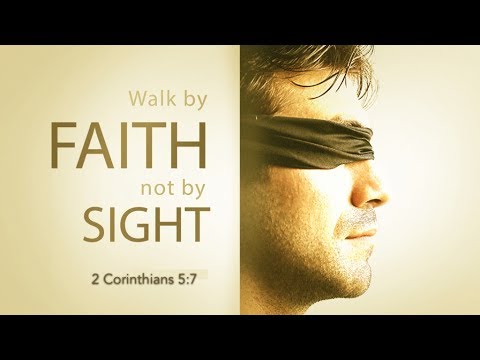
While We Are All Walking By Faith and Not By Sight, Are We Pondering any Prayers for Our Blindly Leaning, into Our Never to be Seen God’s Equipping? 2 Corinthians 5:7

2 Corinthians 5:6-10 Easy-to-Read Version

So we always have confidence. We know that while we live in this body, we are away from the Lord. We live by what we believe will happen, not by what we can see. So I say that we have confidence. And we really want to be away from this body and be at home with the Lord. Our only goal is to always please the Lord, whether we are living here in this body or there with him. 10 We must all stand before Christ to be judged. Everyone will get what they should. They will be paid for whatever they did—good or bad—when they lived in this earthly body.

The Word of God for the Children of God.

Adeste Fideles! Laeti Triumphantes! Venite Adoremus! Dominum.

Gloria! In Excelsis Deo! Alleluia, Alleluia, Alleluia, Amen.

“Life is a Journey, Not a Destination”

Ralph Waldo Emerson said, “Life is a journey, not a destination.”

While each one of us on a journey in life, that journey does lead to a destination – either eternal life in heaven, or eternal torment in hell.

But our devotional text from 2 Corinthians 5:7, focuses on the journey.

Paul wrote to the young, heavily divided and struggling Corinthian church and said, “For we walk by faith, not by sight.”

Whether we are a believer in God, or we do not believe in God, or we are right now struggling to believe or to continue to believe, every individual must now choose which path their journey will take – the path of life or the path of sight.

Walking by faith, living by believing in what will happen as opposed to seeing what will happen is like our leaving our homes, taking journey with a blindfold on, “walking in some direction” and trusting God to get you He’s leading you.

But if you leave your home, look at and pick your own direction, you walk by sight where you want to go, then you see the path and each step along the way.

You see what is before you – you see the potential obstacles, the potential risks and the potholes and the pitfalls – you see them and then automatically avoid.

But, how does all that change if you cannot see where you are going?

If you cannot assess the quality of the terrain and the environment you travel?

You can’t see the raised portions of the side walks which present a trip hazard?

You cannot see the puddles of water sure to get your socks, shoes and feet wet?

Where are the curbs you need to stop at to avoid walking into oncoming traffic?

Walking by what we can see is easy and such listed obstacles and threats to our physical health and spiritual wellbeing are otherwise so very easily avoidable.

Paul understood well this analogy on the Damascus Road when he went from walking by faith and fury after the new followers to sudden blindness courtesy of the risen Jesus when Paul encountered, experienced the very brightest light.

Suddenly and without explanation and with no time for defense of self, he was blinded by the incomparable light of the risen Jesus.

Now he could no longer rely on his vast knowledge of himself, his own survival skills to live and visually walk his own path and road from one town to another.

In an instant he was full of all the self confidence in the world, then reduced to that anxious and fearful someone who needed help with literally everything.

From immediate instant confidence into an immediate, instant helplessness.

He had no idea when or if ever he would regain his sight.

He had to figure out what all that change meant to the rest of his life.

And standing there on that Damascus Road, the risen Jesus left him with no instructions, no road maps, no guide books, no walking sticks, no nothing!

His companions took him to someone’s home and there Saul sat – in Prayer and in Fasting until some response was to come from somewhere, somehow.

The operative thing we each need to see is the choice of responses Saul had available to him and how he how fast and how instinctively he chose prayer.

We read nowhere in the Word of God Saul went into wild, flailing, hysterics.

His first instinctive response was to the spiritual disciplines of prayer, fasting.

How about our own most instinctive, most immediate response to any crisis?

Praying and Leaning into God’s Equipping

2 Corinthians 5:7 Easy-to-Read Version

We live by what we believe will happen, not by what we can see.

It is always disheartening to feel as though I have reached a significant point in my journey only to ask, “Now what, Lord?”

God has put a desire in my heart to write for Him which I cannot calm.

I wrestle and fight, clawing for any direction or insight or wisdom not my own.

God tells me to listen, watch, do the next thing, and wait. 

He reminds me not to worry about the future, but to wait on Him.

Obediently, I try my best to research, learn, write, pursue, listen, follow …and wait. 

I choose to trust Who is leading me, even when it feels like I am always walking with blinders on, I have no walking stick to use and I can’t see and cannot know and cannot watch the results of my efforts unfold before me and my own eyes.

God gave me the desire to write and keep right on writing, but it is up to me to raise up every morning to pray and to fast and to study, to put all the work in.

A work He promised to equip me for!  

Isaiah 55:8-11 Easy-to-Read Version

People Cannot Understand God

The Lord says, “My thoughts are not like yours.
    Your ways are not like mine.
Just as the heavens are higher than the earth,
    so my ways are higher than your ways,
    and my thoughts are higher than your thoughts.

10 “Rain and snow fall from the sky
    and don’t return until they have watered the ground.
Then the ground causes the plants to sprout and grow,
    and they produce seeds for the farmer and food for people to eat.
11 In the same way, my words leave my mouth,
    and they don’t come back without results.
My words make the things happen that I want to happen.
    They succeed in doing what I send them to do.

The road and the devotionals can be can be long and precarious, and often we don’t know the destination … what God is going to do with them, but God does. 

He will equip us when we don’t feel capable or worthy of His calling on our lives.

Our calling is to do the work He has assigned us, wait for Him to clear the way.

I am learning to take each day as it comes, trusting Him to lead and guide my steps and my writings.

I try to plant my boots and my roots in securely into His ways and His truth.

I am too often overwhelmed with all the roads I could veer off onto, but He quietly reassures me with each effort that He alone will guide me through.

I feel dwarfed among thousands of Christian theologians, commentators and writers, but He gently tells me He’ll help my voice reach who it is intended for.

It may not be the masses; it may only be intended for one.

It may be for someone tomorrow; it may be for someone years down the road.

Philippians 2:12-13 Easy-to-Read Version

Be the People God Wants You to Be

12 My dear friends, you always obeyed what you were taught. Just as you obeyed when I was with you, it is even more important for you to obey now that I am not there. So you must continue to live in a way that gives meaning to your salvation. Do this with fear and respect for God. 13 Yes, it is God who is working in you. He helps you want to do what pleases him, and he gives you the power to do it.

God did not call me nor anyone and everyone else into something big only to leave us hanging and struggling on the side of some ditch to figure our life out.

He is not reliant on our human ability to pick the right road.

He works within us.

It is our calling to fully rely on God instead of ourselves.

It is our calling to fully relay on our Savior Jesus instead of ourselves.

It is our calling to fully rely on God, the Holy Spirit instead of ourselves.

Even when the road ahead of us is full of seen and unseen fog, seen and unseen potholes, pitfalls, stumbling blocks we can keep our both eyes fully on Jesus.

Psalm 121 The Message

121 1-2 I look up to the mountains;
    does my strength come from mountains?
No, my strength comes from God,
    who made heaven, and earth, and mountains.

3-4 He won’t let you stumble,
    your Guardian God won’t fall asleep.
Not on your life! Israel’s
    Guardian will never doze or sleep.

5-6 God’s your Guardian,
    right at your side to protect you—
Shielding you from sunstroke,
    sheltering you from moonstroke.

7-8 God guards you from every evil,
    he guards your very life.
He guards you when you leave and when you return,
    he guards you now, he guards you always.

Even if we cannot nor ever see the words of the Psalmist before our eyes;

We can 100% trust Him with each day, task, and notion to do things for Him. 

In the name of God, the Father and God the Son and God the Holy Spirit,

Let us Pray,

Lord, You have placed a desire and calling on my life. I have heard Your voice and know the direction You want me to go. However, I am overcome by discouragement. I can’t see the road ahead and need Your strength to keep moving forward. I need Your sight, Lord, and Your leading. Forgive me, Lord, for taking hold of things that do not belong to me. Forgive me for striving in my power to try and manifest things that were never intended for me. Help me to see clearly what You have for me. I surrender my calling to You and place it securely in Your ever more wise, ever more capable hands. Reveal and inspire me with Your Holy Spirit. I trust You to equip me for all You want me to say and to do. You did not call me to do Your will because of my ability but because of my willingness. Take my worry and strife and turn it into glory-filled work. Give me discernment when I start to go down the wrong path. 

I rebuke the enemy and the distractions that he is placing in my path. I pray for strength against laziness or complacency. I come against the lies that enslave me, telling me I am not good enough, I don’t have what it takes, or that I will never get to where I want to go. I stand firmly on the truth and promise that You are with and will never leave me. I surrendered all my heart’s desires and ask You to lead every moment of every day. Thank You, Jesus, for Your everlasting love, and the many treasures of life You have stored up for me in the heavens I have never, ever seen.

Adeste Fideles! Laeti Triumphantes! Venite Adoremus! Dominum.

Gloria! In Excelsis Deo! Alleluia, Alleluia, Alleluia, Amen.
 https://translate.google.com/

For We Walk by Faith and Not by Sight. 2 Corinthians 5:6-10

2 Corinthians 5:6-10Amplified Bible

6 So then, being always filled with good courage and confident hope, and knowing that while we are at home in the body we are absent from the Lord— for we walk by faith, not by sight [living our lives in a manner consistent with our confident belief in God’s promises]— we are [as I was saying] of good courage and confident hope, and prefer rather to be absent from the body and to be at home with the Lord. 9 Therefore, whether we are at home [on earth] or away from home [and with Him], it is our [constant] ambition to be pleasing to Him. 10 For we [believers will be called to account and] must all appear before the [a]judgment seat of Christ, so that each one may be repaid for what has been done in the body, whether good or [b]bad [that is, each will be held responsible for his actions, purposes, goals, motives—the use or misuse of his time, opportunities and abilities].

The Word of God for the Children of God.

Adeste Fidelis! Venite Adoremus! Dominum.

Gloria! In Excelsis Deo! Alleluia! Alleluia! Alleluia! Amen.

What does it mean to live by Faith?

Those words seem simple enough, yet it may be a lot tougher than we think.

It requires tremendous courage and strength.

Preaching the gospel to the world brought Paul and his co-workers much suffering.

Yet they continued the work contending for the faith.

They refused to quit and “pressed toward the mark of the high calling of God in Christ Jesus.” (Philippians 3:14)

Living in the end times requires living by faith and not by what we see going on around us.

Yet it is a journey of tremendous hope, blessing and reward.

Walking by faith and not by sight requires you to trust God, not knowing where you are at times in the larger scope of God’s plan and purpose.

Take the example of Abraham, “when called to go to a place he would later receive as his inheritance, obeyed and went, even though he did not know where he was going”. (Hebrews 11:8)

That’s walking by faith.

Walking by faith requires a strong determination to follow God’s plan as outlined in the bible, regardless what life throws your way.

Like 2 Corinthians 4:18 urges us, “So we fix our eyes not on what is seen, but on what is unseen, since what is seen is temporary, but what is unseen is eternal.”

It is a deep trust in what cannot be seen that provides hope.

Paul wrote to the church at Corinth that “we walk by faith and not by sight” (2 Corinthians 5:7).

Jesus stated, “Blessed are those who have not seen and yet have believed” (John 20:29).

Jesus ascended and left his Spirit as a guarantee.

Walking by faith is sometimes lonely, except for the presence of Christ by his Spirit, left to all believers as a “guarantee” (2 Corinthians 5:5).

Christians are frequently called to stand firm in spite of the isolated place their faith leads them to.

Our faith is reasonable, but there are aspects of the gospel we accept on faith and are unable to see.

What are these invisible things?

And what is the walk of faith?

The Second Letter to Corinth

First of all, here is some context for 2 Corinthians 5:7.

Paul’s relationship with the church at Corinth was a difficult one.

Paul had led them to faith with the assistance of mature believers in Christ, but when Paul was gone the church was easily swayed by outsiders who opposed his teaching.

In Paul’s absence, they fell apart and it was easy for opponents to convince the church that his suffering was a sign that Paul’s faith was actually folly.

If Jesus Christ has really come to save sinners, how could the apostle’s life be so horrendous?

To Paul’s mind, his way of life represented faith.

How else could someone suffer so much, if not for the reasonable expectation of eternal gain? (ESV Study Bible, Introduction to 2 Corinthians).

The Corinthian church was struggling, and Apostle Paul’s letter suggests a big part of the problem was the followers trusting the Holy Spirit to work in their lives and coming to that place in their life of trusting in the promise of Heaven.

Faith is trust.

Fabulous Adventures In Trusting Him!

Fantastic Adventures In Trusting Him!

Fulfilling Adventures In Trusting Him!

Futuristic Adventures In Trusting Him!

But faith in Christ does not come in the exact instant we snap our fingers.

Time and effort, trials and tribulations, radically counter cultural responses.

Faith not in what we see ‘Now’ but what we cannot see in Eternity

2 Corinthians 5:1-5Amplified Bible

The Temporal and Eternal

5 For we know that if the earthly tent [our physical body] which is our house is torn down [through death], we have a building from God, a house not made with hands, eternal in the heavens. For indeed in this house we groan, longing to be clothed with our [immortal, eternal] celestial dwelling, so that by putting it on we will not be found naked. For while we are in this tent, we groan, being burdened [often weighed down, oppressed], not that we want to be unclothed [separated by death from the body], but to be clothed, so that what is mortal [the body] will be swallowed up by life [after the resurrection]. Now He who has made us and prepared us for this very purpose is God, who gave us the [Holy] Spirit as a pledge [a guarantee, a down payment on the fulfillment of His promise].

What does the gospel tell us which we cannot prove by way of anything other than faith?

For one thing, we cannot see what awaits the faithful around the next bend in their roadways, over the next mountain— eternal life in the Kingdom of God.

Apostle Paul is confident: “For we know that if the tent that is our earthly home is destroyed, we have a building from God” (verse 1).

That building is the individual body, the church body, a real Kingdom, invisible to us for now. “We know,” says Paul; not “we believe,” or “we imagine.”

The original Greek uses “eidó,” which means “be aware, behold, consider, perceive.” “Knowing” in this sense combines knowledge with an intelligent perception of an idea, which cannot be physically represented —just yet.

Paul based his belief in eternal life on sound, objective evidence as well as his subjective, personal experience of Christ.

His suffering could have become a distraction from this truth — it certainly was for the Corinthians.

To Paul, his counter cultural response to immediate suffering was supposed to demonstrate his deep trust in what could not be seen, provide a reason to hope.

Christians “look not to the things that are seen but to the things that are unseen. For the things that are seen are transient, but the things that are unseen are eternal” (2 Corinthians 4:18).

A Connecting Faith

Christ’s message of eternal salvation through his death and resurrection was explosive.

Master Pharisee Saul, before becoming Paul, had originally sought to persecute these blasphemers, run them all to ground, imprison them all until he realized that the Old Testament had been leading Israel unto the empty tomb all along.

When Apostle Paul described the body as a “tent” (2 Corinthians 5:1), he was also connecting the new church with the Old Testament.

God’s people had frequently been sojourners, both in the days before Solomon and during Jesus’ ministry.

Moses and the Israelites followed a pillar of smoke and a pillar of fire, setting up temporary Sukkoth shelters to cover themselves against cold desert nights.

They had nowhere to permanently call “home” until Solomon built the temple.

The body as a “tent” evokes the Israelite’s trust God would meet their needs day by day.

A tent is impermanent, just like a body is temporary, but once this covering is shed God provides something eternally better.

Faith in the Spirit

2 Corinthians 3:15-18Amplified Bible

15 But to this day whenever Moses is read, a veil [of blindness] lies over their heart; 16 but whenever a person turns [in repentance and faith] to the Lord, the veil is taken away. 17 Now the Lord is the Spirit, and where the Spirit of the Lord is, there is liberty [emancipation from bondage, true freedom]. 18 And we all, with unveiled face, continually seeing as in a mirror the glory of the Lord, are progressively being transformed into His image from [one degree of] glory to [even more] glory, which comes from the Lord, [who is] the Spirit.

As believers, to some extent, we already see more than those who choose to turn their faces from God.

We have an “unveiled face,” although we only see “in a mirror dimly” for now, it is by faith we believe we will one day see Christ “face to face” (1 Corinthians 13:12).

Meanwhile, we have the Holy Spirit.

Here is one aspect of the Christian life we cannot lay hands on and inspect up close.

There are ways to detect the Spirit in us; evidence of “fruit.” 

Galatians 5:22-23 describes this fruit: “Love, joy, peace, patience, kindness, goodness, faithfulness, gentleness, self-control.”

When one has grown in any of these ways, the Holy Spirit is responsible, and we are invited to delve into and recognize this gift living inside of us and in others.

The Spirit is not a virus or an implant; it cannot be scrutinized with the naked eye or under a microscope.

Everyone holds a belief in something, and Paul says we can be confident.

That is the word used in the NIV and KJV for “courage” so “we are always of good courage” (2 Corinthians 5:6, ESV) is a statement of certainty.

Faith is not blind; it merely sees in other ways.

Every Faithful, Faith-Filled Christian

1 Peter 3:13-15Amplified Bible

13 Now who is there to hurt you if you become enthusiastic for what is good? 14  But even if you should suffer for the sake of righteousness [though it is not certain that you will], you are still blessed [happy, to be admired and favored by God]. Do not be afraid of their intimidating threats, nor be troubled or disturbed [by their opposition]15 But in your hearts set Christ apart [as holy—acknowledging Him, giving Him first place in your lives] as Lord. Always be ready to give a [logical] defense to anyone who asks you to account for the hope and confident assurance [elicited by faith] that is within you, yet [do it] with gentleness and respect.

Every faithful believer sees something that is not visceral but still real — much of our knowledge is like that.

We believe someone is trustworthy based on actions, which demonstrate their character.

We know that an event took place in history based on statements of witnesses and on physical remains.

We must examine the evidence and be ready to give our testimony, “always being prepared to make a defense to anyone who asks you for a reason for the hope that is in you” (1 Peter 3:15).

We all live by faith in something, although not the same things.

It is theologically accurate to say and to insist that the Christian must always seek to live by faith and trust in God and his promises, and not be motivated by only what he or she can see and hear in their present circumstances.

But the Apostle Paul says the church at Corinth is already doing that.

Apostle Paul “directly and unequivocally says that we, all believers, do, in fact, live by faith.”

This faith must also stand firmly by the strength of internal reasoning, against external forces, and without an apostle to hold one’s hand in a spiritual sense.

The Corinthians’ faith was strong in the presence of mature disciples such as Priscilla and Aquila (Acts 18:18) but definitely blindsided by “partisanship, with the Corinthians factionalizing behind rival leaders.”

Paul knew what made “considerate and appropriate relating especially hard at Corinth,” which was an “unusually diverse” and tough, working-class culture.

Paul sought to “overcome the tensions these differences were bringing into the community” by talking about how to just love one another in Christ-like ways.

What Does it Mean to Walk by Faith?

Ephesians 4:1-6 Amplified Bible

Unity of the Spirit

4 So I, the prisoner for the Lord, appeal to you to live a life worthy of the calling to which you have been called [that is, to live a life that exhibits godly character, moral courage, personal integrity, and mature behavior—a life that expresses gratitude to God for your salvation], with all humility [forsaking self-righteousness], and gentleness [maintaining self-control], with patience, bearing with one another [a]in [unselfish] love. Make every effort to keep the oneness of the Spirit in the bond of peace [each individual working together to make the whole successful]. There is one body [of believers] and one Spirit—just as you were called to one hope when called [to salvation]— one Lord, one faith, one baptism,one God and Father of us all who is [sovereign] over all and [working] through all and [living] in all.

And what about the action of walking in faith? “I therefore, a prisoner for the Lord, urge you to walk in a manner worthy of the calling to which you have been called,” wrote Paul (Ephesians 4:1).

Our walk as Christians should be identifiably different from the walk of one who does not believe and has been saved by grace.

There is a practical element, which must not be overlooked, for if we love God there will be an outpouring of that love towards others.

Jesus embodied a unifying love for the marginalized and Paul taught that their Savior was the best example of “what a Christian leader should look like. It could hardly be more dramatically countercultural, and Paul lived out this leadership style in person.”

Yet walking, or living, by faith, is also about our relationship with Christ “God is looking for not only a clinging bride but also a walking partner.”

13 No one has greater love [nor stronger commitment] than to lay down his own life for his friends. 14 You are my friends if you keep on doing what I command you. 15 I do not call you servants any longer, for the servant does not know what his master is doing; but I have called you [My] friends, because I have revealed to you everything that I have heard from My Father. 16 You have not chosen Me, but I have chosen you and I have appointed and placed and purposefully planted you, so that you would go and bear fruit and keep on bearing, and that your fruit will remain and be lasting, so that whatever you ask of the Father in My name [as My representative] He may give to you. (John 15:13-16)

When we walk with him, we recognize that worship of Christ is not so much a “catalyst” to action but “an everyday walk of unbroken communion with our Lord and friend.”

Jesus calls us “friend,” and we are called to live our lives close to him, confident and worshipful.

This is personal and real — other people cannot fill in for Jesus, whether they are our pastors or mentors or BFFs.

Such individuals promote growth, but they are not the vine.

Only Jesus is the vine (John 15).

Is Sight Coming?

Will we see Jesus when we die?

Paul says it himself: We see dimly today, but the mist will lift one day revealing his face – the veil between God and man was torn when Jesus died on the cross.

John 20:11-18Amplified Bible

11 But Mary [who had returned] was standing outside the tomb sobbing; and so, as she wept, she stooped down and looked into the tomb; 12 and she saw two angels in white sitting there, one at the head and one at the feet, where the body of Jesus had lain. 13 And they said to her, “Woman, why are you crying?” She told them, “Because they have taken away my Lord, and I do not know where they have laid Him.”  14  After saying this, she turned around and saw Jesus standing there, but she did not know that it was Jesus. 15 Jesus said to her, “Woman, why are you crying? For whom are you looking?” Supposing that He was the gardener, she replied, “Sir, if you are the one who has carried Him away from here, tell me where you have put Him, and I will take Him away.” 16  Jesus said to her, “Mary!” She turned and said to Him in [a] Hebrew, “Rabboni!” (which means, Teacher)17 Jesus said to her, “[b]Do not hold Me, for I have not yet ascended to the Father; but go to My brothers and tell them, ‘I am ascending to My Father and your Father, and to My God and your God.’” 18 Mary Magdalene came, reporting to the disciples that she had seen the Lord and that He had said these things to her.

So, while we cannot fully see him as Mary Magdalene did right now, this definitely does not mean that we are cut off from fellowship with the Lord.

Living by faith, not by sight, is no hindrance to communion with our Savior.

In the name of God, the Father and God the Son and God the Holy Spirit,

Let us Pray,

Psalm 24The Message

24 1-2 God claims Earth and everything in it,
    God claims World and all who live on it.
He built it on Ocean foundations,
    laid it out on River girders.

3-4 Who can climb Mount God?
    Who can scale the holy north-face?
Only the clean-handed,
    only the pure-hearted;
Men who won’t cheat,
    women who won’t seduce.

5-6 God is at their side;
    with God’s help they make it.
This, Jacob, is what happens
    to God-seekers, God-questers.

Wake up, you sleepyhead city!
Wake up, you sleepyhead people!
    King-Glory is ready to enter.

Who is this King-Glory?
    God, armed
    and battle-ready.

Wake up, you sleepyhead city!
Wake up, you sleepyhead people!
    King-Glory is ready to enter.

10 Who is this King-Glory?
    God-of-the-Angel-Armies:
    he is King-Glory.

Adeste Fidelis! Venite Adoremus! Dominum.

Gloria! In Excelsis Deo! Alleluia! Alleluia! Alleluia! Amen.

https://translate.google.com/