Romans 15:4 "For whatever was written in earlier times was written for our instruction, so that through perseverance and the encouragement of the Scriptures we might have hope."
We have perfectly powerful guidance in Scripture and the Holy Spirit.
The pairing of God’s written word and the very God who authored the word have the power to lead us into a life of all wisdom, understanding, and revelation.
But we must choose to live this life in light of eternity.
We must choose success in heaven over success in the world’s eyes.
Scripture and the teaching of the Holy Spirit only have power in our lives if we follow their leadership and principles.
Choose today to be a doer of the word instead of a hearer only and discover freeing and empowering wisdom that has the power to transform your life.
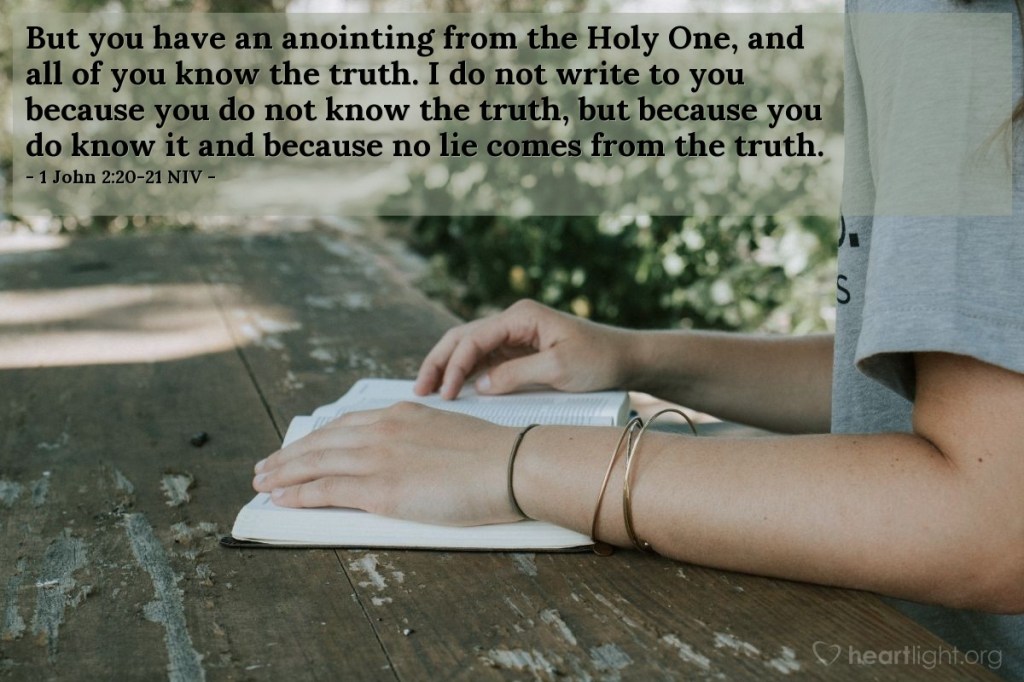
1 John 2:20-21 Amplified Bible
20 But you have an anointing from the Holy One [you have been set apart, specially gifted and prepared by the Holy Spirit], and all of you know [the truth because He teaches us, illuminates our minds, and guards us from error]. 21 I have not written to you because you do not know the truth, but because you do know it, and because no lie [nothing false, no deception] is of the truth.
Gloria! In Excelsis Deo! Alleluia, Alleluia, Alleluia, Amen.
As believers in God and our Savior Jesus, we have been given the Holy Spirit as an Advocate, Helper, Intercessor, Teacher, Friend, and Seal for the promised inheritance of eternal life with God.
His living presence, guidance, and wisdom ministering, working in and within our lives, are our greatest gifts while here on earth.
Through Holy Spirit, we have access, we have a direct line, and an unbreakable connection with our heavenly Father.
Through him we receive spiritual gifts to empower us.
And through him we are able to bear the incredible fruit of abundant life.
In our response to these gifts of presence, and purpose, open your heart and mind to all the Holy Spirit would give you, show you, and lead you to this week.
God’s Holy Fire: ‘The Promised Coming’
John 14:26-27 The Message
25-27 “I’m telling you these things while I’m still living with you. The Friend, the Holy Spirit whom the Father will send at my request, will make everything plain to you. He will remind you of all the things I have told you. I’m leaving you well and whole. That’s my parting gift to you. Peace. I don’t leave you the way you’re used to being left—feeling abandoned, bereft. So don’t be upset. Don’t be distraught.
We have in the Holy Spirit the same Teacher who faithfully breathed the perfect and practical words of Scripture to imperfect men across thousands of years.
And Jesus said in John 14:26,“But the Helper, the Holy Spirit, whom the Father will send in my name, he will teach you all things and bring to your remembrance all that I have said to you.”
Not only did the Holy Spirit teach the disciples, but he also longs to teach us.
He longs to reveal to us the depths of God so that we might learn what it is to be a true follower of our Lord, Jesus Christ.
Holy Spirit longs to show us the wisdom of God, reveal His Ways, His Truths, His Life, so that we might live and minister to and into the Kingdom of God as men and women empowered and inspired by God rather than nearly complete fools who only seek and find their knowledge only in the matters of the world.
Let us take a few steps back into His Humility, let’s open our minds and hearts to receive the wisdom that can only come from God himself in the Holy Spirit.
Paul writes in 1 Corinthians 2:10, “These things God has revealed to us through the Spirit. For the Spirit searches everything, even the depths of God.”
The Holy Spirit who dwells within us searches the depths of God and longs to reveal to us the ways of our heavenly Father.
He longs to teach us what it is to be a lover of God in a world set in opposition to the ways of God.
He longs to reveal to us the greater wisdom of God’s plans above our own and show us the folly, Psalm 14:1 foolishness, that comes from living for the world.
Being Taught by the Holy Spirit
1 John 2:20-21 The Message
20-21 But you belong. The Holy One anointed you, and you all know it. I haven’t been writing this to tell you something you don’t know, but to confirm the truth you do know, and to remind you that the truth doesn’t breed lies.
The Holy Spirit desires to be your Teacher today.
The questions before you and me today are:
Are you and I willing to be his diligent and disciplined student?
Are you and I willing to submit our submit and surrender our understanding to the Holy Spirit, to live and move and minister and build in light of his teaching?
Are you and I willing to appear foolish for God at times when the world doesn’t understand the wisdom of God, to speak, teach above that misunderstanding?
Are you and I willing to live wholeheartedly and steadfastly unashamed for the gospel, the pleasure of our heavenly Father over the fleeting opinions of man?
If we will surrender ourselves to the humility of Jesus, open our heart and mind today to being taught only by the Spirit, will we discover, explore a wealth of truth having the power to set us free from the bonds and burdens of this world?
The undefinable measure of truth coming from diligently studying Scripture will begin to change your life as the Holy Spirit reveals to us how these words written thousands of years ago are entirely 100% applicable to your life today.
Receiving the teaching of the Holy Spirit is as simple as submitting our lives to Him one day at a time, making time to listen to Him, study the word with Him.
As important, helpful, as gifted and inspired as they are, we don’t all have to be pastors, ministers, theologians, or scholars to understand what the Bible says, to speak, to teach, to live, what the Word of God for His Children means .
The Holy Spirit will be our teacher the way he was for the disciples.
He will teach us how Scripture applies to our life, guide us into the way of truth.
It’s incredibly important that we make time to study Scripture, but it’s equally important we all read the Bible along with the Spirit instead of apart from him.
The Bible is an immensely comprehensive, thoroughly practical message meant to greatly impact the lives of those who read it under the influence of the Spirit.
It’s a manual for living life in the abundance of relationship with God, not a book to be read apart from the reality of God’s nearness.
Scripture is meant to guide us into direct connection, direct communication with our heavenly Father, not substitute real, direct relationship with him.
Proverbs 3:5-6 says, “Trust in the Lord with all your heart, and do not lean on your own understanding. In all your ways acknowledge him, and he will make straight your paths.”
Trust in the leading, ministering and teaching of the Holy Spirit today.
Lean into and upon His wisdom instead of your own.
Acknowledge the reality of his nearness in your life.
And discover knowledge that has the power to fill you with abundant life.
In the name of God, the Father and God the Son and God the Holy Spirit,
Let us Pray,
Guided Prayer:
1. Meditate on the Holy Spirit’s desire to be your teacher.
“But the Helper, the Holy Spirit, whom the Father will send in my name, he will teach you all things and bring to your remembrance all that I have said to you.” John 14:26
“But you have been anointed by the Holy One, and you all have knowledge.”1 John 2:20
2. Choose to be a student of the Holy Spirit.
Choose to follow what He reveals to you to be wisdom over the ways of the world.
Choose His opinion over man’s.
“Trust in the Lord with all your heart, and do not lean on your own understanding. In all your ways acknowledge him, and he will make straight your paths.” Proverbs 3:5-6
“But the anointing that you received from him abides in you, and you have no need that anyone should teach you. But as his anointing teaches you about everything, and is true, and is no lie—just as it has taught you, abide in him.”1 John 2:27
3. Spend time studying Scripture with the Holy Spirit.
Pray and ask the Spirit to reveal to you what wisdom He wants to show you.
Ask Him to show you the meaning of the words you are reading.
Allow Him to apply Scripture directly to your life.
“These things God has revealed to us through the Spirit. For the Spirit searches everything, even the depths of God.” 1 Corinthians 2:10
“If any of you lacks wisdom, let him ask God, who gives generously to all without reproach, and it will be given him.” James 1:5
We have perfectly powerful guidance in Scripture and the Holy Spirit.
The pairing of God’s written and living word and the very God who authored the word have the ultimate power to lead, guide and direct and move each of us into a life of all wisdom, understanding, and revelation.
But we must choose to live this life in light of eternity.
We must choose success in heaven over success in the world’s eyes.
Scripture and the teaching of the Holy Spirit only have power in our lives if we follow their leadership and principles.
Choose today to be a doer of the word instead of a hearer only and discover freeing and empowering wisdom that has the power to transform your life.
O Father, I join my heart with the words of your servant David, who said: “Search me, God, and know my heart; test me and know my anxious thoughts. See if there is any offensive way in me, and lead me in the way everlasting.” Please transform my thinking and my living by your Holy Spirit. In Jesus’ name, I pray. Amen.
Healthy relationships are all about people savoring time together.
Sometimes it may happen with the need to take care of a family matter. Sometimes it may happen when we’re not quite sure what to do next and find comfort in simply being together.
That’s probably what was happening with the apostles when God’s Spirit lit them up and enabled them to “come out of their normal character” and do the unexpected.
Acts 2:1-13 English Standard Version
The Coming of the Holy Spirit
2 When the day of Pentecost arrived, they were all together in one place. 2 And suddenly there came from heaven a sound like a mighty rushing wind, and it filled the entire house where they were sitting. 3 And divided tongues as of fire appeared to them and rested[a] on each one of them. 4 And they were all filled with the Holy Spirit and began to speak in other tongues as the Spirit gave them utterance.
5 Now there were dwelling in Jerusalem Jews, devout men from every nation under heaven. 6 And at this sound the multitude came together, and they were bewildered, because each one was hearing them speak in his own language. 7 And they were amazed and astonished, saying, “Are not all these who are speaking Galileans? 8 And how is it that we hear, each of us in his own native language? 9 Parthians and Medes and Elamites and residents of Mesopotamia, Judea and Cappadocia, Pontus and Asia, 10 Phrygia and Pamphylia, Egypt and the parts of Libya belonging to Cyrene, and visitors from Rome, 11 both Jews and proselytes, Cretans and Arabians—we hear them telling in our own tongues the mighty works of God.” 12 And all were amazed and perplexed, saying to one another, “What does this mean?” 13 But others mocking said, “They are filled with new wine.”
Gloria! In Excelsis Deo! Alleluia, Alleluia, Alleluia, Amen.
What Happened at Pentecost, and Why Does It Matter Today?
At His first coming, our Lord Jesus Christ inaugurated His kingdom on earth.
The disciples expected a triumphant warrior king, but instead, Jesus likened His kingdom unto a mustard seed that expands progressively and grows organically (Matthew 13:31–32).
The church now occupies the time when the kingdom comes progressively as the word of the Gospel goes out to the ends of the earth.
Christ has ascended and sent His Spirit, and so we live between two fixed points: Pentecost and the Parousia (Christ’s second coming).
During this time in between, we are to advance the Gospel until Jesus returns.
Only then, at His final advent, will Christ’s kingdom come universally.
If we want to understand our place in redemptive history, then we ought to understand something of that first point of our period in salvation history:
Pentecost. Only when we begin to grasp the events of that momentous day recorded in Acts 2 will we comprehend our church mission between the times.
Questioning the Restoring of the Kingdom
To understand Pentecost, we have to consider the conversation that sets up the story.
Just before the Lord Jesus ascended, the apostles asked Him, “Lord, will you at this time restore the kingdom to Israel?” (Acts 1:6).
Jesus responded, “It is not for you to know times or seasons that the Father has fixed by his own authority” (verse 7).
Even after the resurrection, the apostles expected a triumphant kingdom to break in.
But the book of Acts goes on to describe the progressive expansion of the kingdom not by force but by the preaching of the Gospel.
In Acts 1:8, Jesus provides the framework for the entire book:
“But you will receive power when the Holy Spirit has come upon you, and you will be my witnesses in Jerusalem and in all Judea and Samaria, and to the end of the earth” (emphasis added).
After this, the apostles were left “gazing into heaven” upon witnessing Christ ascend (v. 10).
They were also left waiting for the Holy Spirit, as the Lord instructed them (verse 4).
What Happened at Pentecost?
Pentekoste—Greek for “fiftieth”—was the second of three great annual festivals that brought Jews from all over the world to Jerusalem.
Fifty days after the Passover, many would make their pilgrimage to celebrate Pentecost, which was a time of thanksgiving and praise to God for the first wheat harvest of the season.
Acts 2:1–4 describes what happened on that day when God poured out His Spirit on the apostles:
When the day of Pentecost arrived, they were all together in one place. And suddenly there came from heaven a sound like a mighty rushing wind, and it filled the entire house where they were sitting. And divided tongues as of fire appeared to them and rested on each one of them. And they were all filled with the Holy Spirit and began to speak in other tongues as the Spirit gave them utterance.
We can describe what took place at Pentecost using four adjectives.
1. Unmistakable
Pentecost was unmistakable because of its three distinct phenomena, which served to make it perfectly clear that Jesus had indeed come to His people by His Spirit.
First, there was an unmistakable “sound like a mighty rushing wind” that “filled the entire house” where the believers had gathered.
Second, there were what seemed to be “tongues … of fire” dividing and resting upon them individually.
And third, being “filled with the Holy Spirit,” the believers “began to speak in other tongues”—that is, languages other than their own—“as the Spirit gave them utterance.”
Each of these signs by itself would have been miraculous.
Taken together, they leave us without any room for questioning that God did a mighty work by His Spirit.
2. Unconditional
Pentecost was also unconditional.
There was no requirement, no description of process, no indication of pattern.
Rather, God acted irrespective of any man-made conditions.
This has to be pointed out because from time to time, people will say,
“Well, you see, if we are really going to be Holy Spirit people, then we would have to go back through the same process, the same pattern, and fulfill the same conditions as the early church.”
But that was simply not the case with Pentecost.
If there was any condition, it was the condition we the Children of God had to wait patiently—which could hardly be described as any real condition at all.
3. Unavoidable
Pentecost was also unavoidable in the sense that what happened in the house where they were gathered spilled out into the community.
The rushing wind, the tongues of fire, and the new languages being spoken caused such a commotion the “devout men from every nation under heaven” could not avoid the hubbub (Acts 2:5) and began hearing “the mighty works of God” in their own languages (verse 11).
Upon hearing, some “were amazed and perplexed” (verse 12), while others mocked (verse 13).
Nevertheless, none could avoid the events of Pentecost.
4. Unrepeatable
Lastly, we need to view the miraculous events of Pentecost in terms of the whole story of Jesus—His incarnation, death, resurrection, and ascension.
When we do, we see that Pentecost is unrepeatable.
Neither the death of Jesus nor His ascension is a repeatable event.
The same is true for Pentecost.
This is not to say that the experience of God the Spirit in the life of the church was somehow locked two thousand years ago.
But at Pentecost, when the river was opened and the pouring out took place in this unmistakable, unconditional, unavoidable fashion, it was also done in an unrepeatable way.
There is no need for a second Pentecost.
The Good News of Pentecost
All that unfolded at this particular Pentecost surely was equal parts spectacular and confusing.
The apostle Peter heard the questions and cries from the crowd and quickly went on to explain the events that had just happened:
“This Jesus God raised up, and of that we all are witnesses. Being therefore exalted at the right hand of God, and having received from the Father the promise of the Holy Spirit, he has poured out this that you yourselves are seeing and hearing.” (Acts 2:32–33)
Just as Jesus had abstained from earthly ministry until His baptism, when the Holy Spirit came upon Him, so He had made clear to His followers, You need divine enablement for understanding and proclamation.
He had anticipated, promised the Spirit in His own ministry (Luke 24:49; John 14:26).
When Peter quoted from Joel 2:32 (Acts 2:16–21), he showed that Pentecost was in God’s plan all along and highlighted the very best news of his day and ours:
“It shall come to pass that everyone who calls upon the name of the Lord shall be saved.”
Amid the chaos and upheavals of life, we can yet find gladness in God’s presence when we call upon the name of Jesus Christ.
Acts 2:37–39 then shows us what it looks like to “call upon the name of the Lord” in more detail.
The Jews who were “cut to the heart” asked Peter and the apostles, “Brothers, what shall we do?” Peter responded, “Repent and be baptized every one of you in the name of Jesus Christ for the forgiveness of your sins, and you will receive the gift of the Holy Spirit” (emphasis added).
To repent is more than simply being sorry for your wrongdoings.
It means changing your mind about sin itself.
It means viewing sin the way God does: as having overstepped His boundaries and missed the mark.
It means acknowledging the wrong direction you’ve been going.
It involves a change of heart, a change of mind, and a change of direction.
Baptism, meanwhile, is the unashamed public announcement that you’re fully committed to a new life in Christ.
When we call upon the name of Jesus, God offers us a whole new start, a whole new beginning.
God can and in truth, does, give us when we confess our belief and faith in Christ that fresh start because He grants the Holy Spirit to come and live in us.
Notice, though, that this new beginning is for “those who received his word” (verse 41, emphasis added), not for those who merely heard it.
You see, the Bible does not teach we are automatically forgiven just because Jesus died on the cross.
You and I must individually receive Christ and make Him your own.
Babel Reversed
With the coming of the Spirit and the forgiveness of sins being proclaimed in at least fifteen languages (Acts 2:9–11), Pentecost was essentially a reversal of what had happened at Babel, when human languages were confused and the nations were scattered (Genesis 11:1–9).
On that unforgettable day in Jerusalem, the language barrier was supernaturally overcome as a sign that the nations would be gathered together in Christ.
Instead of assimilating all of God’s people under a common tongue, Pentecost makes clear that every language is an appropriate vehicle for the praise and the proclamation of Jesus.
The heart language of men and women and children, in their own native land, of their birth, will be able to receive this fantastic news, just as at Pentecost.
We don’t want people to have to learn English as a second language solely in order to discover and experience “the mighty works of God” (Acts 2:11).
We want even the most remote, unreached people groups to rejoice in God the Father, God the Son and Holy Spirit with us all in their own unique languages.
Ultimately, this is why Pentecost happened, why God has left us His Spirit: so that we can continue the great work of proclaiming the good news of the Gospel to the ends of the earth (Acts 1:8).
One day, we will see with the apostle John “a great multitude that no one could number, from every nation, from all tribes and peoples and languages.” And these people of every tongue will be singing the same song together: “Salvation belongs to our God who sits on the throne, and to the Lamb!” (Revelation 7:9–10).
Actions Always Speak Louder Than Words
There is an old saying that “Actions Will Always Speak Louder Than Words.”
We read about the day of Pentecost in Acts 2, where we find Jesus’ disciples and 120 other of his followers, including his mother, Mary, along with some of his brothers, all huddled in an upstairs room in Jerusalem.
They are hiding out for fear of local religious authorities, but they are also waiting for something Jesus, their beloved teacher and leader, has promised them, “some days hence” – being the outpouring of the Holy Spirit.
Suddenly, a sound like a violent wind fills the room where the disciples are hunkered down and tongues of fire seem strangely to hover over their heads.
Even stranger, those gathered in the room miraculously begin to speak in the languages of the wide variety of pilgrims gathered in Jerusalem to celebrate the Festival of Weeks.
The Spirit of God gave Jesus’ apostles the ability to speak in many languages on that day of Pentecost written about in Acts 2, and the same Spirit enables us to speak and to act in winsome ways today.
Through the power of the Holy Spirit, God’s kingdom is advancing, and God has called has equipped each and every single one of us who believe, who have faith to be his witnesses in whatever circumstances we may find ourselves.
Because in one single moment on any given day anointed, designated by God, we have to walk outside of our Upper Rooms, meet the ministry calling of God.
There are people outside that door that God has deliberately placed in our path.
Pilgrims on their own spiritual journey and we cannot tell them to “get lost” or “get out of our way because they bother us.”
And we cannot form a cordon of body guards or Roman Centurions to move out in front of us and unceremoniously move them at spear point out of our way.
God desires them to receive the Gospel of Jesus Christ too.
They are going to want to know what is going on and God wants them to know what is going on and we need to be mightily responsive to this the Will of God.
In that crowd outside the Upper Room, Some of these pilgrims, seeing this strange sight, ask, “Are these fishermen drunk this early in the morning?”
There is an old saying that “Actions Will Always Speak Louder Than Words.”
Then Peter, filled with the Holy Spirit, filled with more courage, more boldness than at any other time in his life separates himself from his normal character.
Because sometimes God no longer has any good use for “normal characters.”
Because we will one day come to realize that reality about ourselves too.
We no longer have any good use for our “normal characters” either.
And in a move which is completely, and radically shocking to our “normal characters, we realize the will of our God and our Savior is superior to ours.
And we suddenly find we are placing our whole selves on God’s path for us all.
Then the Apostle Peter, filled with the Holy Spirit, rejects the explanation of drunkenness for this miraculous event, seizes the moment and preaches one of the most powerful and most important sermons in the entire New Testament.
Peter points us to the prophet Joel’s words in the Old Testament (Joel 2:28-32) promising an outpouring of the Holy Spirit on all of God’s people, which fulfills a promise that Jesus had made in the Upper Room.
Then a very sober Peter suddenly opened his mouth, gave the people the Word:
This Jesus, whom you crucified, Peter informs the crowd, is the Messiah, the Christ, God’s promised Savior who conquered sin and death.
When the crowd hears Peter’s piercing words, many are “cut to the heart,” and come rushing forward to ask, “What should we do?”
There is an old saying that “Actions Will Always Speak Louder Than Words.”
Peter calls on them to repent and believe in Jesus as their Lord and Savior.
The Holy Spirit moves among the thousands gathered and starts convicting.
Many hearts are touched, many souls are moved, many lives are shaken up.
Many in the gathered crowd do, and three thousand are baptized on Pentecost.
What Then Becomes The Significance of Pentecost?
In short, Pentecost, though originally a Hebrew religious festival, becomes the high watershed moment in God’s plan of salvation.
God, The Creator and Shaker of the Universe chose the exact moment to send forth the Holy Spirit which was during the Jewish national holiday, known as Pentecost, the Feast of Harvest, which was 50 days after the crucifixion of Jesus.
It was the celebration of the wheat harvest, and was intended to remind the people of their 400 years of bondage spent in Egypt and it marked the giving of the Ten Commandments on Mount Sinai.
They were there to bring their first fruit offerings to God to celebrate with great rejoicing in music, dance because they had been delivered from their bondage.
Everyone was invited to this feast, including Levites, servants, sons and daughters, the fatherless, the widow, even strangers (Deuteronomy 16:9-12).
The Day of Pentecost was so incredible, so utterly miraculous that it affected the entire human race and their relationship to God and their Savior Christ.
The Holy Spirit of God was sent forth, given as a gift from the Father as the confirmation that the New Covenant of grace – paid for by the shed blood of Jesus, and now written on the heart of every Christian – is more effectual than the Law given at Mount Sinai that was written on stone (2 Corinthians 3:3-18).
It also confirms that those who place their trust in Jesus find true deliverance and healing from the penalty of sin.
There was and is no better reason or rationale to celebrate with great rejoicing in music and dance on that day – that very first birthday of the Body of Christ!
Why Did the First Believers Receive the Holy Spirit Via Tongues of Fire?
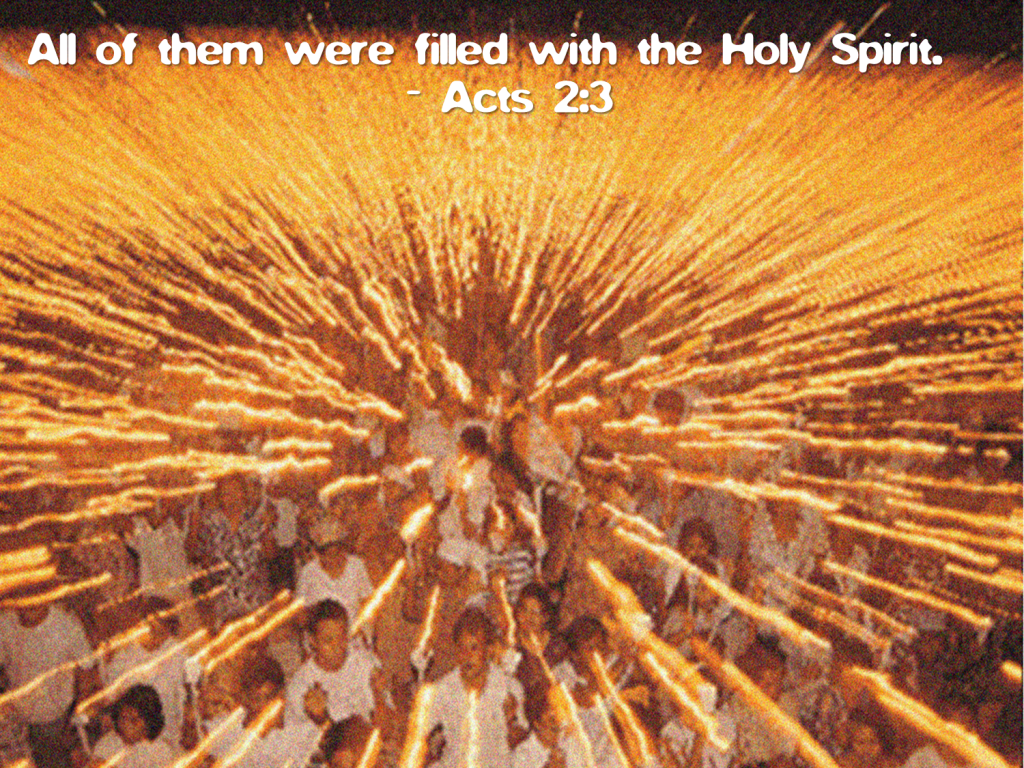
When the feast of Pentecost arrived, “tongues of fire” descended upon each disciple (Acts 2:3).
“Fires will always attract people.”
Acts 2, the disciples were waiting in Jerusalem for the coming of the Holy Spirit.
Jesus had given the Great Commission but then told them to wait for the power of the Holy Spirit they would need to be his witnesses (Luke 24:19).
So they waited.
When the feast of Pentecost arrived, the Spirit descended, and “tongues of fire” were upon each disciple (Acts 2:3).
The disciples went out into the city and began speaking in other languages, declaring the mighty works of God.
Inevitably, subtly, not so subtly, great gatherings of people took notice.
Thousands had their curiosity “tickled” had elbows stuck into their ribcage heard the message from Peter that day, believed and received the Holy Spirit.
Fires attract people.
People will come from miles in every direction just to see what is burning.
Pentecost Day was no different.
God was counting on that human nature, that inane curiosity being peaked.
This is commonly known as the birth of the church, the beginning of the gathering of disciples and the ministry Jesus had set out for them, further detailed in the rest of Acts through Peter and Paul.
The Gospel of the Kingdom was preached.
Fire also inevitably spreads in whatever direction it wants to go.
And as the Winds of God blow where they may, Holy Spirit fire spreads out.
As the Winds of God are unstoppable, so are the Fires of the Holy Spirit!
For all who would come to God, confess Jesus Christ as their Lord and Savior, the following are three hugely significant and timeless truths of Pentecost.
Pentecost and the outpouring of the Holy Spirit reminds and assures us that Jesus keeps his promises. Now, when old and young, women and men, and people from every other race and ethnicity, as well as every walk of life, claim Jesus as their Lord and Savior, they receive new life through the Holy Spirit. Moreover, the Holy Spirit unites us to Jesus and assures us deep in our hearts that we belong to God and that nothing will ever separate us from his love.
Pentecost also marks the birthday of the church. In the Old Testament, God’s people consisted only of Israel. Pentecost heals the divisions and animosity of the Tower of Babel (Genesis 11:1-9), where because of pride and arrogance, people were divided by language and race. At Pentecost, through the outpouring of the Holy Spirit, people from every tongue, race, and nation are brought together in Jesus Christ. God has reconciled us individually to himself through his son Jesus, and through him we have been made one body in the church.
Finally, Pentecost reminds us of the church’s primary purpose: to share the love of Jesus to the ends of the earth. Throughout the remaining chapters of Acts, we see the Apostles and all of Jesus’ followers continue his mission to proclaim God’s love. Significantly, Acts’ open-ended conclusion clearly indicates the church’s mission to proclaim the gospel is to continue until Jesus comes again. When the church shares the love of Jesus in word and deed, it carries out God’s purpose and plan to redeem and restore our fallen world.
Today we celebrate God, His Son Jesus and the gift of the fires of the Holy Spirit.
But our celebration of Pentecost is not so much meant to be talked about as it is to be lived—in word and deed – which need to speak far louder than the worlds.
By the incomparable power of the Spirit working through us, our words and fruit-filled actions are the building tools God uses to build up His kingdom.
Somewhere, somehow, we need to model the boldness and courage of Peter.
We need to realize that God has no more use for our “normal characters” as God had no more use for Peter’s “normal character.”
God simply does not need, nor does God require anyone’s “normal characters.”
Our “normal characters” accomplish exactly nothing for the Kingdom of God.
One day, our “normal characters” will have that full on encounter with their Creator God, the Way, Life and Truth of Jesus and the fires of the Holy Spirit.
Then when that happens,
I want to be there to witness what happens to that so called “normal character.”
I pray too that many others will gather at that bonfire to witness God at work.
I pray many others will also come to their time of repentance, belief in God, the Father and God the Son and God the Holy Spirit in a time of Holy celebration.
In the name of God, the Father and God the Son and God the Holy Spirit,
Let us Pray,
Come, Holy Spirit, fill the hearts of Your faithful and kindle in us the fire of Your love. Send forth Your Spirit and we shall be created. And You shall renew the face of the earth. O, God, Who by the light of the Holy Spirit did instruct the hearts of the faithful, grant that by the same Holy Spirit we, the church may be truly wise and ever enjoy Your consolations. Through Christ who is our Lord, our Savior and our Eternal King.

 Loving God, Living God, Loving Hope, Living Hope, Loving Living Life His Way! "Many things are possible for the person who has hope. Even more is possible for the person who has faith. And still more is possible for the person who knows how to love. But everything is possible for the person who practices all three virtues." - Brother Lawrence (1605-1691), Practicing the Presence of God (1692).