Romans 15:4 "For whatever was written in earlier times was written for our instruction, so that through perseverance and the encouragement of the Scriptures we might have hope."
The Twelve Disciples standing behind Jesus as he rides the donkey?
The crowd which is before Jesus as he is about to enter the city gates?
The small man in the tree – remember the newly repentant Zacchaeus?
The small man in front of the donkey holding the palm in his hand?
The donkey itself as it carries Jesus on its back with a small smile on its face?
The owner of the donkey who gave his ascent to his animal being taken away by men he never met before who told him simply: “The Lord Hath Need of It?”
The City of Jerusalem itself now in the midst of celebrating the Passover?
The citizens of Jerusalem aware and/or unaware of Jesus’ arrival?
The Priests and Workers of the Temple – the Center of Religious Life for the Jewish people. Where people come to worship and sacrifice as God requires?
How about the mountain – “The Mount of Olives?”
How about the rocks on the ground which the people and donkey walk on?
How about the man, Itinerant Master Rabbi Jesus Himself?
A whole lot of revelation is going on here – each one singularly unique!
Each one saying to themselves ….
Each one shouting unto and into the heavens ….
“MY GOD! MY GOD! THE LORD HATH NEED OF ME!”
“MY GOD! MY GOD! THE LORD HATH NEED OF ME?”
And so, Jesus comes unto the city …. on the back of a donkey ……
This is the moment they were living in, as the events unfolded.
It is now the 21st Century, the year of our Lord and Savior 2022.
Today is Palm Sunday – we will gather for worship this morning.
We will have our families with us.
Those who only come once or twice a year – will miraculously appear.
We have those who cannot or will not come to church – but have some connection to a social media site – Facebook, or You Tube, or ZOOM.
God will (hopefully, prayerfully) have their undivided attention again.
We still have the ancient stories of the Gospel narratives.
We have the benefit of history.
We have the benefit of their struggles and the fruits of their labors.
We have the benefit of the full Biblical Canon, God’s Holy Scriptures.
We have the benefit of commentaries and sermons and devotions.
We read, re-read these Gospel Narratives year after year after year.
As we consider one angle after another trying to be original, trying to reach the older generations and communicate to current and coming generations of both believers and non-believers alike – unto into those “great clouds of witnesses,” “MY GOD! MY GOD! THE LORD HATH NEED OF ME!?!
What are we to anticipate in the coming minutes and hours ahead?
As we consider the words – “THE LORD HATH NEED OF ME ….”
Relevant or Irrelevant?
Absolutely Meaningful or Utterly Useless?
Are we exclaiming it or are we questioning it?
Are we accepting the possibility or are we brushing it away and denying it?
Is anybody even seriously reading or studying, listening or praying, teaching or preaching the critically true meaning and absolute importance to the words?
“MY GOD! MY GOD! THE LORD HATH NEED OF ME!?!
Luke 19:28-40 Amplified Bible
The Triumphal Entry
28 After saying these things, Jesus went on ahead [of them], going up to Jerusalem.
29 When He approached Bethphage and Bethany, at the mount that is called Olivet, He sent two of the disciples, 30 saying, “Go into the village ahead of you; there, as you enter, you will find a [donkey’s] [a]colt tied, on which no one has ever sat. Untie it and bring it here. 31 If anybody asks you, ‘Why are you untying the colt?’ you will say, ‘The Lord needs it.’” 32 So those who were sent left and found the colt just as He had told them. 33 As they were untying the colt, its owners asked them, “Why are you untying the colt?” 34 They said, “The Lord needs it.”35They brought it to Jesus, and [b]they threw their robes over the colt and put Jesus on it. 36 As He rode along, people were spreading their coats on the road [as an act of homage before a king]. 37 As soon as He was approaching [Jerusalem], near the descent of the Mount of Olives, the entire multitude of the disciples [all those who were or claimed to be His followers] began praising God [adoring Him enthusiastically and] joyfully with loud voices for all the miracles and works of power that they had seen, 38 shouting,
“Blessed (celebrated, praised) is the King who comes in the name of the Lord! Peace in heaven and glory (majesty, splendor) in the highest [heaven]!”
39 Some of the Pharisees from the crowd said to Him, “Teacher, rebuke Your disciples [for shouting these Messianic praises].” 40 Jesus replied, “I tell you, if these [people] keep silent, the stones will cry out [in praise]!”
The Word of God for the Children of God. Gloria! In Excelsis Deo! Alleluia! Amen.
The Lord Needs It – Luke 19:34
I wonder how much our faith, hope and love would affect our daily lives if we lived to exclusively serve Christ’s needs instead of our own?
Is that even possible? Would our churches be filled with people on Sundays because the Lord needed them to be there? Would missions throughout the world be fully funded because the Lord needs affluent Christians in the West to ‘pony up’ and provide from their ample resources all that is needed by Christ to medicate, educate, feed and clothe people living in poverty across the globe?
If we are 100% comfortable doing religious things without being challenged by the radical nature of the surprise and scandal of the Gospel, then we are going to go through life as spiritually shallow people.
However, if we take time to really think about what Christ needs us to do with our lives and resources, then everything will change about how we ‘do’ church and how we share our faith.
The owners of the colt in today’s Gospel passage (Luke 19:28-36) could have told the disciples to “get lost or I will call the cops”, or that it was inconvenient, or that it would be okay the next day. They didn’t do that; when they heard the words “The Lord Needs It,” they gave over the colt freely and perhaps gladly.
In these 21st century times, would we be so accommodating or dismissive?
The Lord hath need of many things from each and every one of us ……
YEA OR NAY ……
21 So get rid of all uncleanness and [a]all that remains of wickedness, and with a humble spirit receive the word [of God] which is implanted [actually rooted in your heart], which is able to save your souls. 22 But prove yourselves doers of the word [actively and continually obeying God’s precepts], and not merely listeners [who hear the word but fail to internalize its meaning], deluding yourselves [by unsound reasoning contrary to the truth]. 23 For if anyone only listens to the word [b]without obeying it, he is like a man who looks very carefully at his natural face in a mirror; 24 for once he has looked at himself and gone away, he immediately forgets [c]what he looked like. (James 1:21-24 Amplified)
Questions for personal reflection
What does the Lord need of me?
Am I willing to give my time, talents, and resources to Him for His work?
In the name of God, the Father and God the Son and God the Holy Spirit,
Let us Pray,
Lord Jesus, Your Gospel brings goodness and forgiveness, strength and love into our lives. It also presents us with unique challenges and causes us to reflect upon our daily choices. Help us so to live according to Your needs and liberate us from our insecurities, as well as our desires. In Your Holy Name, we cheerfully pray. Amen.
The Patriarch Job wrote in Chapter Seven verses 1 – 6 (Message) these words.
There’s Nothing to My Life
7 1-6 “Human life is a struggle, isn’t it? It’s a life sentence to hard labor. Like field hands longing for quitting time and working stiffs with nothing to hope for but payday, I’m given a life that meanders and goes nowhere— months of aimlessness, nights of misery! I go to bed and think, ‘How long till I can get up?’ I toss and turn as the night drags on—and I’m fed up! I’m covered with maggots and scabs. My skin gets scaly and hard, then oozes with pus. My days come and go swifter than the click of knitting needles, and then the yarn runs out—an unfinished life!
The Bible tells us that even believers struggle with trusting God because life is hard and cruel at times. But we know there is hope and that joy is 100% possible because of the eternal life we have with Christ. Therefore, God wants us to be full of faith and grow in His divine direction, comforted by the Holy Spirit. In this complete trust of our Lord and Savior, we can live with true peace and joy.
Today, we have the opportunity to renew our perspective. Be encouraged, learn to walk through each day with a Romans 5:8 joyful spirit and a refocused mind.
Remember the Gospel hope found in God’s promises.
Take comfort in God’s divine plan for your life.
Rejoice in God’s presence.
Reconnect with the true Gospel life-changing hope found in the Bible.
Share with others the answer to their deepest problem and greatest need.
The Struggle is Absolutely Real ….
But GOD is also absolutely 100% REAL!
Romans 5:6-8 Easy-to-Read Version
6 Christ died for us when we were unable to help ourselves. We were living against God, but at just the right time Christ died for us. 7 Very few people will die to save the life of someone else, even if it is for a good person. Someone might be willing to die for an especially good person. 8 But Christ died for us while we were still sinners, and by this God showed how much he loves us.
The Word of God for the Children of God. Gloria! In Excelsis Deo! Alleluia! Amen.
God’s people have been struggling for millennia to understand the love of God.
They have misunderstood him, taken him for granted, ignored him, and sinned against him, but he has never stopped showing his love to them.
Ultimately, Jesus left his throne in heaven to come and show us once and for all exactly how deep the love of God is for us. You and I have to 100% believe that.
You and I have to acknowledge the love of God for us.
That’s my greatest prayer.
The way to your salvation is by trusting the God of all Life that tells this story.
You and I can have love like this, and it does not even matter we’re a sinner, because Christ died for sinners. In fact, he died only for sinners. So, if we see our need for a love like this, we 100% qualify for that love. We can all come to him, and he will not cast us out because God shows his love to a surprising people.
God shows his Gospel love unto a surprising people.
The kind of person that God shows his love to is surprising. He shows his love to sinners. The text is plain and simple, Paul writes, “while we were still sinners”.
If we had the all-seeing eye of God, we would be appalled at not only the sin we see in each other but the sin we see in our own hearts.
I’d venture to say we are aware of about 5% of our sin. But God sees all of it.
We need to understand what our sin looks like to God. Our sins aren’t mistakes.
We like to use that word. It softens it. But the Bible uses words like evil and wickedness in regard to our sin. How often have we called ourselves evil or wicked? But you and I are! We are all one big hot mess. Our sin has ruined us.
Every one of us has experienced this. Every one of us has done something that we do not even want to think nor talk about. And yet God looks down at us in that condition, God sees everything in us! God knows everything of that sin, and says I’ve died for that sin. You are free. For freedom Christ has set us free.
In fact, our sin is our only qualification.
Look at the verse again. God shows his love for us in that while we were still sinners, Christ died for us. It is in the midst of our sin that Christ saves us.
Our sin is the ONLY qualification, and we must still be in that sin to qualify, which of course we are.
God shows [commendeth], present tense. Christ died, past tense.
The death of Savior Jesus Christ still shows the love of God. That one event was enough to show us for all time his love because of the magnitude of the one who died and who he died for. God died for his enemies. Our sin qualifies us, and our faith justifies us through the redeeming work of Christ on the cross at Calvary.
Even the way Paul words this is both fascinating and surprising.
What Paul is saying here is there has been a changing of the guard.
Something has come in and something has gone out.
The Greek text here is saying that in the death of Christ, we sinners have been redeemed.
Even the syntax of the sentence is showing the gospel!
Not just the words, but how the words are arranged.
God shows his love to us in that while we were still sinners, Christ died for us.
God shows his love to us at a surprising cost.
Why did Jesus die for us?
The simple answer is because he loved us, to love us till the end he had to die.
But you may say, “There must have been another way. Surely someone didn’t have to die in order to save me!”
The Bible says God saves sinners and the only way to save sinners is for the sin to be paid for by someone.
And the Bible later says that the wages of sin is death. (Romans 6:20-23)
Therefore, there are 2 options: either we die for our sins or someone else does.
In God’s mercy, the gospel tells us that someone else has died in our place.
But what does this look like? Is the Father an angry God who only wants blood while Jesus is the loving, kind-hearted Son who desperately wants his Father’s heart to change? By no means! God is not unjust, and he is not unloving. But for God’s justice and God’s love to remain 1000% compatible a death had to occur.
It hurts the Father to lose his Son, but he does it because he loves us.
The death of Jesus was costly. He is the most glorious person in existence.
He was there from the beginning – not the beginning of the world, but from the beginning of eternity past. It was he through whom and by whom and for whom all things were created. It is he who upholds the universe by the word of his power. It is he who is seated at the right hand of the Father in heaven. It is he who was promised, and he who has come, and he who has died, and he who is reigning now and will reign forever. (John 1:1-5, Colossians 1:5-20, Hebrews 1)
It is he to whom every knee shall one day bow.
It is he, of whom the prophet Isaiah says, “he who is splendid in his apparel, marching in the greatness of his strength.”
It is also he of whom Isaiah says, “He was pierced for our transgressions; he was crushed for or iniquities; upon him was the chastisement that brought us peace, and with his wounds we are healed.”
It is he that has given us access to the throne of grace.
This is Jesus, the King of kings and Lord of Lords.
The Son of God, the Son of man, the Alpha and the Omega, the one who was and is and is to come, the Messiah, the Christ.
This is your Savior! This is God.
And there was no greater pain in the universe than the exact moment Jesus died on the cross for the sins of the elect.
In that moment the Father turned his face away from the Son and gave him over to death so he might bring us who believe to glory.
It cost something to gain us back.
It cost the most valuable person in all existence.
It cost God himself.
You are bought with a price.
God isn’t angry with you because he has done everything, he needs to do to be happy with you forever. The price has already been paid in the midst of your sin so that you can be free from the consequences of your sin.
That is surprising!
THAT IS LOVE!
That is the surprising gospel!
So, if you are prone to think you are too good for God’s love: can you now see that you are a sinner in need of Christ’s saving work? Only when you see, only when you acknowledge this need can you have the righteousness you long for.
And if you are prone to think you are too unworthy for God’s love: can you now see that God saves sinners and sinners alone? Only when you and I see that, only we acknowledge that, then will we be able to have the joy we all long for.
Let’s all lean into the third way of the gospel:
God shows his love for us in that while we were still sinners (we are worse than we think), Christ died for us (we are more loved than we imagined).
Let me close with these words from Charles Spurgeon, 19th century preacher,
“If today you feel that sin is hateful to you, believe in Him who has said, ‘It is finished.’ Let me link your hand in mine. Let us come together, both of us, and say, ‘Here are two poor naked souls, good Lord; we cannot clothe ourselves,’ and He will give us a robe, for ‘it is finished.’ . . . ‘But must we not add tears to it?’ ‘No,’ says He, ‘no, it is finished, there is enough.’ Child of God, will you have Christ’s finished righteousness today, and will you rejoice in it more than you ever have before?”
Receive this good news.
Come to Christ.
See what he has done for you.
Come and live.
God shows his love for us in that while we were still sinners, Christ died for us.(5:8)
In the name of God, the Father and God the Son and God the Holy Spirit,
Let us Pray,
Lord Jesus Christ, your power is beyond compare. You turned water into wine. You cleansed the Leper, restored sight to the blind and made the deaf hear. You made the lame to walk. You healed the sick and raised the dead. You conquered death in your resurrection. Everything you touch is powerfully transformed. Let me know that powerful touch in my life. Lord, bless me and keep me, make your face shine upon me. Through your mighty name, Gloria! Alleluia! Amen.
The Love of God. It’s a complicated thing. Every generation tries to understand love, fall in love, and explain love. People have gone to extremes to display their love for others, and thousands of years ago God did just that for each one of us.
In Romans 5:8, Paul tells us God demonstrated His love for us this way: “While we were still sinners, Christ died for us.” Out of the abundance of God’s great love for us He sent His only Son to pay the debt for our sins, even though we were all His enemies, powerless and ungodly. God’s display of love was not conditional.
It was not based on anything we had done or could ever do for Him. God knew that without His timely intervention we would be forever separated from Him.
Jesus’ obedience displayed grace in an amazing way. Jesus poured out His life for the forgiveness of our sins so we could be reconciled with God. Each of us, through faith, can have the opportunity to enter into a relationship with Jesus Christ and experience peace with God, hope in every situation, and eternal life.
Having a relationship with Jesus doesn’t mean life is always easy. Rather, it provides us with the ability to face anything that comes our way. We can have hope in all situations, confident of God’s grace, His faithfulness, and His 100% willingness to do whatever it takes to fully restore our relationship with Him.
Romans 5:6-8 Amplified Bible
6 While we were still helpless [powerless to provide for our salvation], at the right time Christ died [as a substitute] for the ungodly. 7 Now it is an extraordinary thing for one to willingly give his life even for an upright man, though perhaps for a good man [one who is noble and selfless and worthy] someone might even dare to die. 8 But God clearly shows and proves His own love for us, by the fact that while we were still sinners, Christ died for us.
The Word of God for the Children of God. Gloria! In Excelsis Deo! Alleluia! Amen.
The Apostle Paul tells us here in Romans 5:8 that God has shown us his love in the death of Christ. The One who created the heavens and the earth, the One who rules overall, the One who is in the heavens and does whatever he pleases—this One has shown his love to us in the death of his only Son. John 3:16 rings gracefully in our ears, “For God so loved the world that he gave his only Son.”
This verse explains what Jesus said in John 15:13 when he told his disciples, “Greater love has no one than this, that someone lay down his life for his friends.”
What Jesus says in John 15 he accomplishes at the cross in John 19 and Paul explains it to us here in Romans 5:8. This is the single most important story the world has ever known. The scale of this sacrifice is still being weighed today.
In fact, for all eternity we will see that the cost and the prize do not seem to balance, but there is glory in this gospel that fills up the throne room of heaven and shoots joy down to our hearts like lightening. This is a surprising gospel.
Romans 5:8 explains this surprising gospel by revealing how God shows his love to us in a surprising way, to a surprising people, and at surprising cost.
God shows his love in a surprising way.
I want us to linger here for quite a few minutes. Let this sink in, because this is abundantly and completely glorious. God shows. God is not a quiet, reserved, no-big-deal king. He’s not afraid to shake the world. He’s ambitious and he’s bold, he loves radically. The very expanse of heaven declares the glory of God.
Why else do stars exist? Why are sunsets as beautiful as they are? What purpose do they serve outside of lighting your heart on fire? God puts on display his love.
These two words, “God shows”, speak to both camps of people, those who think they are too good, those who believe they are too unworthy for the love of God.
From every which direction of our circumstances, we are confronted here with what God does. He shows. He is a relentless lover. He is always inviting us, not just so that we will agree on a limited intellectual level that we are loved, but also beckoning all of us to feel deep in our hearts we are both invited and loved.
It’s as if he is speaking to each one of us from the depths of eternity, “Look. I know some of you think you don’t need me. Some of you think you can’t have any part of me. What made you doubt my love?” “What can I do to change your mind?”
Do we realize the surprising ways in which God loves each and everyone of us?
He doesn’t stop with mere words we may never read or study, he does not stop with parting seas, he doesn’t stop at pillars of fire, or clouds of glory, he doesn’t stop with breaking down walls at the sounds of hundreds of great trumpets, he doesn’t stop with voices from heaven or angels standing before us. He doesn’t stop with a promise we’re just as likely as not to completely, abundantly ignore.
He doesn’t stop with a great or lesser earthly king. He doesn’t stop with one nation, mighty or weak. He doesn’t stop with only one people group. He doesn’t stop with “just good enough”. He doesn’t stop with perfect teaching or with amazing miracles. No, he stops with the death of the Son on the cross. God the Father loves so intensely that he could not give anything less than the absolute best that he had to offer himself in the person of Jesus Christ, the Son.
God shows his love to us in a multitude of ways but the supreme way he shows his love to us is in the death of Christ for us. What greater love is there?
We, in all our sin and all our messiness – WE – were loved enough by God that he would die for you. He did not just tell us that. He showed it two thousand years ago at 3:00 in the afternoon on a hill called Calvary outside of Jerusalem.
And, even more surprising,heyet, he still shows his love in the death of Christ.
These words are in the present active tense. God, today, now in this moment, is showing us the love, he has for us through the death of his Son, Jesus Christ.
What we see right here in our Bibles – this black text on a white page – is lifting Jesus up before us right now so that we can see with the eyes of our heart the very love of God for us. Do you see it? Oh, I pray you do! Father, open our eyes!
Now, in this exact and exacting moment, that’s the kind of Gospel love we need, the kind of surprise we each need, that’s the unrelenting kind of love God has.
Is not that even 0.01% surprising to you?
Today, surprise yourself and surprise a friend or two or three and Reflect:
Have you ever seriously asked Jesus into your life? If so, take some time to thank God for His grace. If not, please surprise God, learn more about His salvation.
How can you surprise someone – show grace to someone today?
Do you have hope God can get you through any situation? Why or why not?
In the name of God, the Father and God the Son and God the Holy Spirit,
Let us Pray,
God, from the beginning, you were the word. You sent your only son to save us all and he even allowed himself to be tortured and crucified to obey you. Bless me with the gift of understanding and of unshaken faith in you. Let me know the meaning of your words in the Bible and how to live accordingly. Open the door of my heart, fill me with your light and understanding. Alleluia! Amen.
Another Part Tomorrow …… Struggling with the Surprise
Interestingly, the Bible does not ever just say that God loves us.
Instead, it says: “When we were at our very darkest moment, God demonstrated MAX his love…” “In this is MAX love, not that we loved God, but that God loved us [TO THE MAX] and gave…” “For God so MAX loved the world that he gave…”
Do we see Love is more than an emotion or intention? True love, redemptive love, God-styled love is active; it does something. For us, Jesus did more than something; he sacrificed everything. What’s more, he did it when we most needed it. He demonstrated the core of his love when we were yet sinners!
Romans 5:6-8 The Message
6-8 Christ arrives exactly right on time to make this happen. He did not, and doesn’t, wait for us to get ready. He presented himself for this sacrificial death when we were far too weak and rebellious to do anything to get ourselves ready. And even if we had not been so weak, we would not have known what to do anyway. We can understand someone dying for a person worth dying for, and we can understand how someone good and noble could inspire us to selfless sacrifice. But God put his love on the line for us by offering his Son in sacrificial death while we were of no use whatever to him.
The Word of God for the Children of God. Gloria! In Excelsis Deo! Alleluia! Amen.
8 But God commendeth his love toward us, in that, while we were yet sinners, Christ died for us.Romans 5:8 (AKJV)
This short verse from Paul’s letter to the Romans gives us insight into the core Gospel love of God.
What is God’s love like?
How does God love?
Who does God love, anyway?
Does he love you?
Does he love me?
Does he really love the world?
There are some verses in the Bible that hold more power than the very sun.
This is one of those verses. These 18 words are some of the most glorious in the entire Bible. If you’re wondering about the love of God, this verse explains it.
The primary goal of my devotionals is to preach the gospel wherever I can.
Martin Luther, the great reformer, said, “I preach the gospel to my people every week because they forget it every week.”
Reverend Dr. Timothy Keller, a pastor in New York City, said recently, “One of the signs you may not grasp the unique radical nature of the gospel is that you’re certain you think you do.”
The truth is: We are forgetful people. We are a proud people. But we have a God who humbles himself to remind us of his love. He is not far from any of us. Let’s say our prayers, coming to him and asking for his blessing on our time together.
What Jesus did to save us is the most loving action that has ever taken place in the universe. What took place on the cross was a once in history-type event.
It has happened but the effects of it are forever ongoing. It didn’t just change history; history was created for it. It didn’t just accomplish something in the past but has penultimate power to change the future. There is nothing like it.
But let us not lose the wonder of it. Let us not lose the vision for the beauty in the hideous death of Christ on our behalf. Let us never lose the meaning of the cross. Let it be always treasured by our hearts. We must fight against losing the truth of this verse, because the apex of all history has already happened, and we have seen the maximum love of God for us on a scale that should blow us away.
What do you genuinely believe about the maximum love of God?
Most often we think about the love of God in two categories: either we are too good for it (“Of course God loves me, he’s God! God loves all of his creation. But I’m not sure whether I actually need his love. I do just fine on my own.”)
or we are too unworthy for it (“I’ve sinned my way out of God’s love. Perhaps I could try and get it back, but my sin has overtaken me. I’m really a lost cause at this point. I want to love God but I’m just not sure he could love me.”)
But the Gospel truth is we are all actually worse than we think we are and yet we are more loved than we could ever truly imagine. That’s what the Bible says about us.
So, there is a third way to think about the love of God. It’s the gospel way, which tells us we are too bad for his goodness, but we can have him anyway through the life, death, and resurrection of Jesus.
The gospel humbles the proud and exalts, lifts up the humble. The love of God is transformative.
We do not deserve it, yet we can have it. We need it to live, and yet he gives it to us without cost. What we think about the love of God will determine everything about how we live. What kind of love does God have for us? “But God shows his [maximum] love for us in that while we were still sinners, Christ died for us.”
Your life, my life, includes the story of sacrificial death on your behalf. God died for you. and he died for me! You are loved so much, I am loved so much, we all are loved, that God was willing to nail his own Son to a cross to gain you back.
My fervent prayer for each of us today is that every single one of us walks out from reading this devotion fully convinced that God loves each and every one of us. Truly, the way to salvation is not in what we do, but in whom we trust. What do you believe about the MAX love of God? Your answer determines your fate.
Stay tuned for Part 2 tomorrow —–
In the name of God, the Father and God the Son and God the Holy Spirit,
Let us Pray,
Father God, I thank you for loving me. I love you. I love you for what you have done. I love you for who you are. I love you for your promises. I love you for your faithfulness. Most of all, dear Father, help me to remember I love you because of Jesus who showed me just how much you love me. Please empower me to show my love by serving and giving to others as Jesus did. In his name I pray. Gloria! In Excelsis Deo! Alleluia! Alleluia! Alleluia! Amen.
Peter quoted from the Psalms as he answered the religious powerbrokers about the power, he had invoked to heal the man at the gate of the Temple. While he quoted only one verse, those religious scholars would have known the context and the MAX message that surrounded the verse and should have heard Peter’s poignant and urgent message to them about the gate of the LORD and salvation:
Open to me the gates of righteousness, that I may enter through them and give thanks to the LORD. This is the gate of the LORD; the righteous shall enter through it. I thank you that you have answered me and have become my salvation. The stone that the builders rejected has become the cornerstone. This is the LORD’s doing; it is marvelous in our eyes. This is the day that the LORD has made; let us rejoice and be glad in it. (Psalm 118:19-24 ESV)
Even though Peter spoke to those who intended to harm him, he was extending the offer of salvation outward into eternity. YAHWEH, the LORD, the covenant God of Israel, had done through Jesus all that is in this great Messianic psalm.
The assembled religious leaders Peter was addressing could turn and accept Jesus as the cornerstone and be saved or not. It could be a day of rejoicing and not of accusation. For rejoicing to reign, people must turn to Jesus, recognize what he has done as being marvelous in their eyes because he is the only name, the only person, who is the foundation of grace and by whom we are saved!
Acts 4:1-12 NRSV
Peter and John before the Council
4 While Peter and John[a] were speaking to the people, the priests, the captain of the temple, and the Sadducees came to them, 2 much annoyed because they were teaching the people and proclaiming that in Jesus there is the resurrection of the dead. 3 So they arrested them and put them in custody until the next day, for it was already evening. 4 But many of those who heard the word believed; and they numbered about five thousand.
5 The next day their rulers, elders, and scribes assembled in Jerusalem, 6 with Annas the high priest, Caiaphas, John, [b] and Alexander, and all who were of the high-priestly family. 7 When they had made the prisoners[c] stand in their midst, they inquired, “By what power or by what name did you do this?” 8 Then Peter, filled with the Holy Spirit, said to them, “Rulers of the people and elders, 9 if we are questioned today because of a good deed done to someone who was sick and are asked how this man has been healed, 10 let it be known to all of you, and to all the people of Israel, that this man is standing before you in good health by the name of Jesus Christ of Nazareth,[d] whom you crucified, whom God raised from the dead. 11 This Jesus[e] is
‘the stone that was rejected by you, the builders; it has become the cornerstone.’[f]
12 There is salvation in no one else, for there is no other name under heaven given among mortals by which we must be saved.”
The Word of God for the Children of God. Gloria! In Excelsis Deo! Alleluia! Amen.
The book of Acts is filled with stories of amazing devotion, and it reads like the script of a movie.
Acts 3, when Peter and John were going up to the temple at the hour of prayer. They were both evidently on their way to a large colonnaded area known as Solomon’s Portico. As they entered the temple there was a lame man sitting in front of the Gate Beautiful, and he asked them for a gift.
Peter said, “Silver and gold have I none, but such as I have give I to thee. In the name of Jesus of Nazareth, rise up and walk.”
Peter reached down and grabbed the man’s hand and pulled him to his feet. Suddenly the man’s feet and legs received strength and he want walking and leaping and praising God into the temple. A great crowd gathered on Solomon’s Portico, and Peter began preaching the, Gospel But his sermon was interrupted when the temple police came, pushed through the crowd and arrested the two disciples. That’s where we pick up the devotional story today in chapter 4.
When he is giving testimony in Acts 4, Peter asks the Temple Authorities if the healing of a lame man is a good deed or not. If this is an act of kindness, then it must come from God. The obvious answer seems to be yes, it is a good deed from God. If they agree it is a good deed from God, then they have a problem:
Peter states the man was healed by the name of Jesus of Nazareth, the one put to death by this very council only two months before!
The problem for the High Priest is obvious. If Peter healed the man “in the name of Jesus” that means that Jesus was, at the very least, an innocent man and God is now doing miracles “in the name of Jesus.”
If Jesus was innocent, then the High Priest is guilty of killing an innocent man. If he was Messiah and actually raised to the right hand of God, then the coming messianic age has begun, and the High Priest finds himself “on the outside.”
The last line of Peter’s defense is a classic statement of the gospel: “There is no other name under heaven given to men by which we must be saved” (Acts 4:12).
This is a bold, strong statement of total dedication to Jesus Christ. There is no possibility of religious pluralism, Jesus is in fact the only way, truth and life. If humans (these people before Peter or any human) expect to be right with God, they can only do it through the name of Jesus.
This is really an outgrowth of the belief that God raised Jesus from the dead and seated him on his right hand. The name of Jesus is now the highest authority possible, so Paul can say in Phil 2 that at the name of Jesus every knew will bow.
There is a remarkable and radical boldness in this statement which must not be under-estimated, but from the modern perspective of religious pluralism. The boldness is that uneducated Galilean Peter is saying this to a group of highly educated, highly respected, highly religious Jews who thought that they were the only ones who held the right way to salvation. “If you wanted to be right with God, you had to “humbly” come to them and hear their interpretation of the Law and participate in worship only in the Temple, which they control.
Peter is saying that salvation now comes through Jesus, not the Temple. Little wonder why these men were shocked at Peter’s boldness!
The Great Rabbi Gamaliel had cautioned them.
If all of this were an invention of man’s mind alone – it will very soon go away.
If it were a thing of God – there was nothing anyone could ever do to stop it.
Now, everything was becoming real!
Now, the stark implications of these past two months since the crucifixion was revealing for all, a living and unstoppable thing of God in the eyes of the people.
It was coming from an uneducated man – a man close to the everyday people. The people saw uneducated Peter stand boldly before thousands and speak the same words Jesus spoke as he walked among them. Jesus died. But the Word is continuing to emanate forth with an authority not of the Temple Leadership.
The people were listening to Peter. They heard the tongues being spoken. Had heard Peter recite God’s Holy Scriptures, and were convicted by the Holy Spirit.
They came to Peter literally by the thousands and were baptized and the Church was born. They gathered as a believing community as they had not done under the authority of the Temple leadership. The Temple leaders were losing ground. They were fast losing the respect of the people. Jesus whom they killed – LIVED!
Now it was real.
The words of this man Jesus were coming to life too – and they could not stop it! They could not command the people to not speak of Jesus without losing it all! It was all becoming crystal clear to them – they could only remember the events which had led up to this “no return now” moment of incalculable implications
Before, they heard Jesus had taught his disciples about what would happen to them because of him and his name. He had told them that they would be his witnesses to the ends of the earth. He had told them that they would be hated because of him. He told them that they would be handed over to rulers and authorities–and much worse–because of him. They thought it had all ended when they had him humiliated as the ultimate criminal – crucified – crucified!
Now Peter and John were before them, under arrest of the Sanhedrin, perhaps eerily familiar to what happened to their beloved Teacher not too long before. All were gathered – they were experiencing exactly what Jesus had foretold.
But, instead of fear, there was a definite change, there was boldness. Peter and John did not back down. Would they, could they refuse to talk about Jesus? And would, could they obey men rather than God? They couldn’t and they wouldn’t.
Why? Why be so resilient? Why ignore the threat of prison, torture, or death?
Why?
They had surveyed the humiliation of cross for themselves.
Had a long three-day chance to think about it, its implications for them.
They had both peered into Rabbi Jesus’ tomb and found it to be EMPTY!
The Jesus Himself returned to the Upper Room – through a locked door!
Convinced beyond any shadow of a doubt – They stood before the authorities.
Peter gives us the only reason that matters: Salvation is found in no one else, for there is no other name under heaven given to men by which we must be saved.
Peter and John were convinced! Had their lives changed because they came to know salvation through Jesus. They also knew that other people had to know about this too, for there is no other way of salvation except through Jesus alone!
No other message mattered to them in that moment! So today, we Christians who also are persecuted. Perhaps not in America at the same level as the early disciples were, or even as other Christians around the globe are persecuted.
But regardless of how much or little we are oppressed or persecuted now or in the future, the message remains – Salvation is in Jesus! We will not back down!
1. When I survey the wondrous cross on which the Prince of Glory died; my richest gain I count but loss, and pour contempt on all my pride.
2. Forbid it, Lord, that I should boast, save in the death of Christ, my God; all the vain things that charm me most, I sacrifice them to his blood.
3. See, from his head, his hands, his feet, sorrow and love flow mingled down. Did e’er such love and sorrow meet, or thorns compose so rich a crown.
4. Were the whole realm of nature mine, that were an offering far too small; love so amazing, so divine, demands my soul, my life, my all. (Isaac Watts, 1707)
God has worked in our hearts faith to know and believe salvation through Jesus.
That faith is so empowering, so overwhelming that we also can’t help but boldly share what we have seen and heard. Other people need to know about Jesus to.
So fellow Christian, without ceasing: Testify! Witness! Preach! Teach! The only name, no other power, no other option under heaven that matters for Salvation!
I Pledge My Allegiance to the Lamb of God …..
In the name of God, the Father and God the Son and God the Holy Spirit,
Let us Pray,
O LORD God, Father of Abraham, Isaac, Jacob, and Jesus, you are my only Abba Father. I love you. I see your love for me poured out in what Jesus did for me and for all others because we all need salvation. Thank you for sending him — thank you for YOU coming in human flesh in Jesus to show us this love. Your work, your plan, your salvation, and, most of all, a Savior sent for me are marvelous. Thank you for such a great salvation. In Jesus’ name, I offer my thanks and my heart. Gloria! In Excelsis Deo! Alleluia! Alleluia! Alleluia! Amen.
The mightily influential, Late Evangelist Reverend Dr. Billy Graham wrote,
The human soul is a lonely thing. It must have the assurance of companionship. Left entirely to itself, it cannot enjoy anything. God said in the beginning, “It is not good that man should dwell alone” (Genesis 2:18). The creation of Eve was the beginning of human companionship. God’s people are a body, not intended to function separately, not intended to be unconcerned for one another.
The only true body in the world is the Church. The world may talk grandly of brotherhood, but in reality, its philosophy is “each man for himself.” All of God’s children are guaranteed the richest and truest friendship, both here and hereafter. Only in a true friendship and a true love do we find a genuine basis for peace. Only God can break down the national and racial barriers that divide men today. Only God can supply that love that we must have for our fellowman.
We will never build brotherhood of man upon earth until we are believers in Christ Jesus. The only true cohesive power in the world is Christ the Lord. He alone can bind all generations of human hearts together in one genuine love.
Proverbs 27:17 Amplified Bible
17 As iron sharpens iron, So, one man sharpens [and influences] another [through discussion].
The Word of God for the Children of God. Gloria! In Excelsis Deo! Alleluia! Amen.
Within the Hebrew (Old) Testament, there are many nuggets of wisdom to take in, with whole books dedicated to the subject. The wisest man to ever walk the earth, King Solomon, wrote several books, including Proverbs. Many of these proverbs come in a poetic form; some of them are long, symbolic narratives, while others are but the briefest of couplets full of truth. One such statement is, “Iron sharpens iron, and one man sharpens another” (Proverbs 27:17).
Sometimes these metaphoric statements can be complex and rather difficult to understand, especially when they are taken out of context. Most Christians thinkers believe this statement regarding iron sharpening iron only relates to having a good friend, honesty that improves one’s character and calls out sin in a loving way; though there are some who believe it refers to also someone who brings down another, and argue it is a negative statement.
Either way, the phrase “iron sharpens iron” from Proverbs 27:17 highlights the important truth that people affect and influence one another, words and actions define relationships for better or worse, and they change people, so people need to act accordingly.
Proverbs 27 falls towards the end of the book, as there are 31 chapters. It is grouped with several other chapters which are labelled as having been written by King Solomon, the son of David and the builder of the temple, copied later by men who worked for King Hezekiah of Judah. Solomon’s reign was around 970-931 BC, while Hezekiah’s was from 715-686 BC, two centuries later.
The verses in Proverbs are chocked full of advice, many of which are about positive and negative interactions and behaviors. Some examples include:
“Let another praise you and not your own mouth; a stranger, and not your own lips” (Proverbs 27:2).
“Better is open rebuke than hidden love” (Proverbs 27:5).
“As in water face reflects face, so the heart of man reflects the man” (Proverbs 27:19).
“Sheol and Abaddon are never satisfied, and never satisfied are the eyes of man” (Proverbs 27:20).
In the middle of these verses is, “iron sharpens iron, and one man sharpens another.” However, the back half is sometimes given as, ‘…sharpens the face of another.’ Like many of the Proverbs, it uses metaphor to make its point.
What Does “Iron Sharpens Iron” Mean?
When creating and shaping a metal blade, it is often sharpened, and then it is maintained through its life, by dragging it against a harder metal. Without this periodic maintenance, a blade will eventually become quite dull and less useful.
During the life of Solomon, many weapons, pieces of armor, and tools were made of iron. It would not have been a highly refined version of metal, like steel. It was also not necessarily consistent in how hard or soft it was.
A tool would have been sharpened, ground against something harder, to make it smoother, remove deformities, and to maintain its ability to cut. When iron is scraped against another material in this way, it too becomes more refined. The metaphor in the first half of the verse refers to a common practice with which many of that day would have been extraordinarily acquainted, familiar with.
The second half of the verse explains the metaphor. Like a piece of hard iron will sharpen another piece of iron, the interactions between two people will shape and change one another. Most scholars and theologians interpret this changing as a refinement of character. Being in the presence of a truly strong believer, within their sphere of influence, can help refine another person too.
Earlier verses in chapter 27 reflect this idea, “Better is open rebuke than hidden love. Faithful are the wounds of a friend; profuse are the kisses of an enemy” (Proverbs 27:5-6). An honest acquaintance will lovingly address when someone they care about is doing something wrong or struggling with a decision.
It is also in alignment with philosophies of behavior encouraged in the New Testament; “Therefore encourage one another and build one another up, just as you are doing” (1 Thessalonians 5:11). Calling out sin, encouraging each other, and lifting one another up in prayer are all ways of sharpening one another.
Like both metals are altered by the sharpening process, both believers who interact with one another have an impact on each other. If a believer disciples another, they grow as well. Their understanding of the Bible can grow, they can deepen their relationship with God, and each other and have new experiences.
Where Else in the Bible Do We See Believers Strengthening One Another?
God wants Christians to challenge one another and strengthen the community in love as a family and in fellowship (Acts 2:43-47), because they are all the sons and daughters of God. In the New Testament, particularly in the epistles, the writers decidedly, deliberately, put a particularly strong emphasis on it.
Some of these verses include:
“Let no corrupting talk come out of your mouths, but only such as is good for building up, as fits the occasion, that it may give grace to those who hear” (Ephesians 4:29).
“So then let us pursue what makes for peace for mutual upbuilding” (Romans 14:19).
“But exhort one another everyday, as long as it is called ‘today’, that none of you may be hardened by the deceitfulness of sin” (Hebrews 3:13).
“Is anyone among you suffering? Let him pray. Is anyone cheerful? Let him sing praise” (James 5:13).
“But you, beloved, building yourselves up in your most holy faith and praying in the Holy Spirit, keep yourselves in the love of God, waiting for the mercy of our Lord Jesus Christ that leads to eternal life” (Jude 1:20-21).
“My brothers, if anyone among you wanders from the truth and someone brings him back, let him know that whoever brings back a sinner from his wandering will save his soul from death and will cover a multitude of sins” (James 5:19-20).
How Can We Sharpen One Another Today?
These many ways of lifting one another up mentioned in the Bible still apply today. Singing songs to God together, reading the Word, and praying for one another is a great start. Learning more about one another so as to help each other in their specific weaknesses is a way to be supportive and grow stronger in character. Devoting yourselves to innovatively teaching generations about being a success, about mentoring, modeling for each other Christian character.
Availability is so important. Many serve one another by providing meals, time, and energy in each other’s daily lives. This builds trust, meaning believers can challenge each other in more personal ways, people do not live in a vacuum, and the way they are all positively influenced and treated will leave a lasting impact.
True and lasting friendship seems to be a rare gift these days. Many people have made themselves too busy to truly invest the time and energy it takes to develop significant relationships. Often, we will hear people say to each other, “We’ll have to get together soon”–but it seldom happens, and opportunities are lost.
Individuals and communities want to be taught they can come together and be strong in the Lord, believe in themselves – believe in their diverse strengths, to share hopes and dreams for something better than where they find themselves. As the Lord has promised, there is always going to be a time of a greater future.
It is a tough lesson to learn. It is an even far tougher lesson to devote oneself to communicating and teaching, modeling and mentoring, living and sacrificing for. And this is the lesson of the life and ministry, death and resurrection of our Savior Jesus Christ, who for the joy, which was before Him, endured the Cross!
Good friends are one of God’s greatest gifts. Not one of us is ever meant to go through life alone and without help. God longs to use you as his hands and feet to those he has placed in your midst. He longs to make you a friend as God is a great friend to us, in order to bless others and extend the reach of his kingdom.
God is calling you and me to love our friends “at all times.” He is calling you and me to a lifestyle of service and grace. What friend of yours needs your help right now? Who can we choose to serve over ourselves? What friend is God calling you to influence and love with the love and influence He has shown all of us today?
1. Pray and Meditate upon God’s desire for us to pursue godly friendship. Allow Holy Scriptures to stir up our desire to influence and love friends well today.
2. How can you be a better friend today? In what ways can you and I love those whom God has given us as friends? Ask the Holy Spirit to reveal to your ways you can better love and influence those around you today.
3. Ask God to empower you to be a friend who loves unconditionally. Ask him to make you more like himself every day. Spend quality time just resting in his presence and allowing his love to fill you and influence you and empower you.
In the name of God, the Father and God the Son and God the Holy Spirit,
Let us Pray,
Heavenly, Father, there are times in my life when I need true and genuine friends, a comforting arm, a listening ear, a shoulder to cry on, or even just sensible good advice. But there are no true friends to turn to. No one who I can relate to, who truly understands exactly how I feel. It leaves me feeling broken, empty, and lost. Fill me, Lord with Your divine holy presence. Allow me to feel Your tender, warm embrace wrapped around me, as I sit here and cry out to You. Gloria! In Excelsis Deo! Alleluia! Alleluia! Alleluia! Amen.
We all face situations in life when we feel scared and alone. We are in that pit of indecision. “Do I stand still and do nothing – Am I a Coward?” or “Do I stand my ground as David did before his Goliath?” “Do I go forward?” or “Do I retreat?” “Do I stay in the pit I have probably dug for myself or fight, claw my way out?”
“Do I turn to the right or to the left?” “Do I take out my compass?” “Do I stand firm in the faith, hope, love and trust of my Savior Jesus Christ?” “Do I stand upon the power, presence of God as revealed through His Word?” Or do I just choose: “talk a great game when I need to because I’m waiting for another to come along and give me a vaccination against the call of God for my lifetime?
Many tough and very legitimate questions believers and non-believers alike are confronted by. However, we can all take some measure of courage from what today’s Bible verse offers our tendency to commit to a course of timidity. We don’t have to be scared or dismayed because the Lord is with us wherever we go.
One too many times, we can want to turn away from situations that seem scary or overwhelming. such as the calling God has placed into our hearts. However, we can face those situations with confidence when we begin believing what this verse says. We begin to believe that we’re not alone and that we’ve got God with us wherever we go we can face any situation. We’ve got God’s help on our side!
Joshua 1:1-9 Holman Christian Standard Bible
Encouragement of Joshua
1 After the death of Moses the Lord’s servant, the Lord spoke to Joshua[a] son of Nun, who had served Moses: 2 “Moses My servant is dead. Now you and all the people prepare to cross over the Jordan to the land I am giving the Israelites. 3 I have given you every place where the sole of your foot treads, just as I promised Moses. 4 Your territory will be from the wilderness and Lebanon to the great Euphrates River—all the land of the Hittites—and west to the Mediterranean Sea. [b]5 No one will be able to stand against you as long as you live. I will be with you, just as I was with Moses. I will not leave you or forsake you.
6 “Be strong and courageous, for you will distribute the land I swore to their fathers to give them as an inheritance. 7 Above all, be strong and very courageous to carefully observe the whole instruction My servant Moses commanded you. Do not turn from it to the right or the left, so that you will have success wherever you go. 8 This book of instruction must not depart from your mouth; you are to recite[c] it day and night so that you may carefully observe everything written in it. For then you will prosper and succeed in whatever you do. 9 Haven’t I commanded you: be strong and courageous? Do not be afraid or discouraged, for the Lord your God is with you wherever you go.”
The Word of God for the Children of God. Gloria! In Excelsis Deo! Alleluia! Amen.
There he was, a summer camper, about halfway up a 100-foot-high rock face.
He started the climb with plenty of self-confidence, but now his palms were sweating, calves were quivering, and fingertips were slipping. He looked down, confirmed the instructor was definitely right when he said not to look down.
How much longer could he hold on?
One of the main reasons he came to rock-climbing camp was to show to his friends exactly how “strong and courageous” he was. He thought they’d all be suitably impressed when he “scampered up the rock wall like a mountain goat chugging a gallon of energy drink.” And now everything was coming unraveled.
Joshua 1:9 These ancient words speak to us today, “Have I not commanded you? Be strong and courageous. Do not be frightened, and do not be dismayed, for the Lord your God is with you wherever you go.” What are they saying to you now?
Rock climbing takes a good healthy dose of both strength and courage. And God definitely calls us to be “strong and courageous.” In fact, He repeats it 3 times!
In fact, in this verse, he COMMANDS it. That’s no mere polite suggestion. If you believe in God, it should inspire confidence and courage for everything you face! Ah, but here’s the catch: This whole “strong and courageous” thing isn’t really about rock climbing, and it isn’t about your strength and courage.
Notice what this verse says is the basis of our strength: “for the Lord your God is with you wherever you go.” This verse is not describing a kind of strength and a courage that’s based on our own ability to be “strong and courageous.”
No, it’s an invaluable lesson on character building and development: strength and courage based only on who God is; on how strong and courageous HE is.
Like when the neighborhood bully was about to give you a new “lesson in life” (so nice of him), but as the lesson was to begin, you both saw your dad coming.
A new surge of strength and courage rushed over you, not because you were suddenly bigger and stronger, but because of the strength and courage of your dad, and you trusted in that. That’s the kind of “strong and courageous” this verse is talking about. This kind of courage is based on something stronger than us: Something significantly, immeasurably, undeniably stronger outside of us.
Back to our climber left dangling on the rock face. At just about the point, he was going to give up, the guide yelled down “I’ve got you! Just sit back in your harness and take a break: lean into the strength of the rope.”
See, he began the ascent by strapping into a harness and attaching that to a rope so that he couldn’t fall. He leaned back on the rope for a moment. His legs stopped shaking. Arms stopped quivering. His toenails recovered. He realized he was safe. He couldn’t fall. Even if he slipped. He was soon able to relax himself, regain his strength and footing and his courage and continue up the mountain.
When you encounter the difficult trials of life, you can try to lean on your own strength and courage for some measure of time and long concourse of seasons, but there comes a point you need something stronger than yourself to continue.
Lean into the strength and the courage and the wisdom of the Lord.
Lean into the promises and truths of the Word of God.
Use God’s Rope, His Knot, Live Life Upheld by God – Ecclesiastes 4:9-12
Who do you think of when you think of someone who is modeling “strong and courageous?” What person comes to mind? How do you want to be like them? What do you think is their main source of strength and courage? What area of life do you feel like you need a healthy injection of strength or courage today?
In the name of God, the Father and God the Son and God the Holy Spirit,
Let us Pray,
God, My Father, we all face situations every day when we need strength and courage. And we are often too tempted to lean on our own strength and courage, to depend on ourselves. Help us to look unto you first and foremost and to lean upon the strength and courage of who you are in every situation. Give us your strength and courage to boldly trust you completely to meet our every need. I pray this in the strength of the name echelons above all other names – Jesus Christ, My Life, My Lord, My Rock of My Salvation! Alleluia! Alleluia! Amen.
Some roads to healing and wholeness are rather long journeys. Even though we live in a quick fix, microwave fast sort of world, we don’t always see the results we desire immediately. When results are slow in coming, we need to be both patient and persistent in our pursuit of bringing our concerns before the Lord. We know that He hears us and that His heart is to bring us up out of the dark pit we’re currently enduring, but the question remains, why is there a delay.
Perhaps, like Job the angel assigned to respond to you is being delayed or maybe there’s a divine timing and alignment of circumstances that needs to happen first. It’s OK to bring this concern over delay to the Lord and ask Him to show you why there is a delay. Is there a specific need in your life where it feels like you just aren’t getting an answer to your prayers? Are we extending our arms upward? Are we keeping our arms extended until we feel the presence of God?
Even strongest and mightiest of arms gets tired trying to stay raised. It is true also that even the strongest most mature of souls get tired of waiting upon the Lord!
Psalm 40:1-3 NRSV
Psalm 40
Thanksgiving for Deliverance and Prayer for Help
To the leader. Of David. A Psalm.
1 I waited patiently for the Lord; he inclined to me and heard my cry. 2 He drew me up from the desolate pit,[a] out of the miry bog, and set my feet upon a rock, making my steps secure. 3 He put a new song in my mouth, a song of praise to our God. Many will see and fear, and put their trust in the Lord.
The Word of God for the Children of God. Gloria! In Excelsis Deo! Alleluia! Amen.
One of the great benefits of reading the psalms is that they present us with patterns of life that the godly go through in every age. And in doing that they encourage us that we are made of the same stuff as the saints of old, and they give us guidance how to follow the pattern of godliness through to the end.
One of the cyclical patterns of life recurring in the psalms is getting in the pits, staying there for a time and a season and getting out again. And my favorite statement of this pattern comes from David’s experience found in Psalm 40.
We are going to focus only on verses 1–3.
We will read the whole psalm so not to miss any insight the context might give.
Psalm 40 (New Revised Standard Version)
Thanksgiving for Deliverance and Prayer for Help
To the leader. Of David. A Psalm.
1 I waited patiently for the Lord; he inclined to me and heard my cry. 2 He drew me up from the desolate pit,[a] out of the miry bog, and set my feet upon a rock, making my steps secure. 3 He put a new song in my mouth, a song of praise to our God. Many will see and fear, and put their trust in the Lord.
4 Happy are those who make the Lord their trust, who do not turn to the proud, to those who go astray after false gods. 5 You have multiplied, O Lord my God, your wondrous deeds and your thoughts toward us; none can compare with you. Were I to proclaim and tell of them, they would be more than can be counted.
6 Sacrifice and offering you do not desire, but you have given me an open ear.[b] Burnt offering and sin offering you have not required. 7 Then I said, “Here I am; in the scroll of the book it is written of me.[c] 8 I delight to do your will, O my God; your law is within my heart.”
9 I have told the glad news of deliverance in the great congregation; see, I have not restrained my lips, as you know, O Lord. 10 I have not hidden your saving help within my heart, I have spoken of your faithfulness and your salvation; I have not concealed your steadfast love and your faithfulness from the great congregation.
11 Do not, O Lord, withhold your mercy from me; let your steadfast love and your faithfulness keep me safe forever. 12 For evils have encompassed me without number; my iniquities have overtaken me, until I cannot see; they are more than the hairs of my head, and my heart fails me.
13 Be pleased, O Lord, to deliver me; O Lord, make haste to help me. 14 Let all those be put to shame and confusion who seek to snatch away my life; let those be turned back and brought to dishonor who desire my hurt. 15 Let those be appalled because of their shame who say to me, “Aha, Aha!”
16 But may all who seek you rejoice and be glad in you; may those who love your salvation say continually, “Great is the Lord!” 17 As for me, I am poor and needy, but the Lord takes thought for me. You are my help and my deliverer; do not delay, O my God.
Verses 1–3 present a pattern of life at least part of which every Christian knows about firsthand. My goal today, though, is that we all be enabled to follow the whole pattern all the way through to its exciting conclusion.
David leads us through six stages of his experience, and I want us to follow him closely.
First, David is in a muddy pit;
Second, he cries to God for help;
Third, he waits for the Lord;
Fourth, God draws him out of the pit to safety;
Fifth, God gives David a new song to sing (probably the one we are reading);
Sixth, many others come to trust God when they see this pattern of life.
The king’s pit, the king’s cry, the king’s patience, the king’s rescue, the king’s song, and the king’s influence. Here is King David, a man after God’s own heart.
Let us see if we can make his pattern part of our life.
David Is in the Pits
First, the king is in the pits (v. 2).
What is this experience? What are we supposed to feel with the king when we read that it is like being caught in a desolate pit and in miry clay?
I looked up this word translated “destruction” in the NASB and “horrible” in the KJV and “desolate” in the RSV.
What I found was it refers elsewhere to roaring or tumult, like stormy waves.
When you consider that the usual meaning of “pit” is a well or a cistern, the image you get is striking. It is as if David had descended into a deep, dark well and plunged not into a clean, placid pool but a roaring storm like Hurricane Katrina, only all dark and underground.
Then alongside that picture is the image of mire and mud. The two don’t seem to go together. But don’t forget these are images that are supposed to make us feel what David was feeling. “Feeling” what David “feels” we are stirred to live.
They are not photographs.
It helped me to get a picture of this mud to read what King Zedekiah did to Jeremiah when he wanted to get rid of him.
It says in Jeremiah 38:6, “So they took Jeremiah and cast him into the cistern of Malchiah, the king’s son, which was in the court of the guard, letting Jeremiah down by ropes. And there was no water in the cistern, but only mire, and Jeremiah sank in the mire.”
There is one other time David wrote about an experience similar to the one here in Psalm 40, and there, too, he combined the images of mud and flood.
Psalm 69:1–2 says, “Save me, O God, for the waters have come up to my soul. I have sunk in deep mire and there is no foothold; I have come into deep waters and a flood overflows me.”
So perhaps what we are to most likely to imagine is our falling into a well and sinking deep in the smelly sludge at the bottom and going deeper every time we try to do what comes naturally to us: to lift a foot and then all of a sudden there is roaring water coming from somewhere and it rushes around us in the dark.
And then comes the sense of helplessness and desperation, and all of a sudden air, just air, is worth a million dollars, worth more than all the world’s money.
Helplessness, desperation, apparent hopelessness, the breaking point for the overworked businessman, the outer limits of exasperation for the mothers and fathers raising their children, their special needs children, it is the impossible expectations of too many classes to finish in school for graduation, the grinding stress of a lingering illness, the imminent attack of a vastly powerful enemy.
It is good that we don’t know what the experience was. It makes it easier to see ourselves in the pits with the king. Anything that causes a sense of helplessness and desperation and threatens to ruin life or take it away—that is the king’s pit.
David Cries Out to the Lord
Now the king’s cry (v. 1):
“I waited patiently for the Lord; he inclined to me and heard my cry.” One of the reasons God loved David so much was because he cried so much.
Psalm 6:6, “I am weary with my mourning; every night I flood my bed with tears; I drench my couch with my weeping.”
Psalm 56:8, “Put my tears in thy bottle; are they not in thy book?” Indeed, they are, because, “blessed are they that mourn.”
It is a beautiful thing when a broken man genuinely cries out to God. Not like the athlete who gets a cramp while swimming but struggles to get to shore unassisted lest he appear to be weak, but like the little child who wanders too far out in the surf and starts to get taken out by the undertow and cries out immediately, “Daddy! Daddy!” God loves to answer all our childlike prayers.
But make sure the cry is to God and for God, not to man. Notice the inference David draws in verse 4: “Blessed is the man who has made the Lord his trust and has not turned to the proud.” Some are willing to say they need help but will seek it anywhere but from the Lord.
But God is very displeased with such behavior.
A good example is King Asa. God punished him for relying on Syria as an ally instead of relying on God. But Asa refused to learn his lesson and at the end of his life, it says in 2 Chronicles 16:12, “In the 39th year of his reign, Asa was diseased in his feet, and his disease became severe, yet even in his disease he did not seek the Lord but sought help from physicians.”
The point here is not that doctors are bad, but that it is bad to make a doctor your God . . . to think that with him alone is healing.
Whatever benefit comes through physicians comes from the Lord and therefore his help is to be sought.
Psalm 118:8, 9: “It is better to take refuge in the Lord than to trust in man; it is better to take refuge in the Lord than to take trust in princes.”
Or as one of my favorite passages puts it: “Do not trust in princes, in mortal man, in whom there is no salvation. His spirit departs, he returns to the earth; in that very day his thoughts perish. How blessed is he whose help is the God of Jacob, whose hope is the Lord his God!” (Psalm 146:3–5).
Therefore, when we are in the pit, we don’t just cry out to anybody, cry to God.
David Waits for the Lord
And then—and then is a very important part of the pattern—you wait. Verse 1: “I waited patiently for the Lord.” Or more literally, I waited intently for the Lord. The reason this is so important for us to hear is that it guards us from slipping into unbelief (Mark 9:23:24) when God’s help seems long in coming.
We can draw no deadlines for God. He hastens or he delays as he sees fit.
He knows the time for joy and truly Will send it when He sees it meet, When He has tried and purged thee duly And found thee free from all deceit.
Waiting for the Lord is a great part of the Christian life.
There are at least two essential elements in the way we should wait with the king: humility and hope.
Look upon the words of the Psalmist Psalm 37:9, “Evildoers will be cut off, but those who wait for the Lord, they will inherit the land.” Then in verse 11 the same promise is repeated, but in the place of those who wait it is the meek or the humble: “But the humble will inherit the land and will delight themselves in abundant prosperity.” Those who wait are the humble.
Have you ever been in a large waiting room at a doctor’s office when the doctor is late returning from a call and the patients are stacked up?
Who are the ones who get feisty with the receptionist, grumble to everybody?
Not the meek, not the humble. Humble people can wait. They are not so presumptuous about their rights. So, it is in waiting for God. We simply show how badly we need the chastisement of his delay when we do not wait patiently.
Secondly, those who wait patiently hope in God.
Psalm 39:7, “And now, Lord, for what do I wait? My hope is in thee.”
Psalm 130:5, “I wait for the Lord, my soul does wait, and in his word do I hope.”
The soul of one who waits for God is not listless. It is not like a weathervane pointing this way, then blowing that way as the winds blow through it.
But it is like a hungry animal straining toward his food, longing for his food.
“As a deer pants for the water brooks, so my soul pants for thee, O God. My soul thirsts for God, for the living God” (Psalm 42:1, 2). Those who wait like David strain toward the moment when God will come, and they hope in him. When will he come? At the right time. That is all we can know. And that is enough.
The Lord Delivers David
When he comes, he will lift us out of the pit.
Verse 2:“He brought me up out of the pit of tumult, out of the miry clay; and he set my feet upon a rock making my steps firm.”
There is a world of difference between quicksand and rock.
God moves, stirs us, when he comes, from a sense of desperation to a sense of security. In the pit we had not forgotten God, but our sense of his presence and comfort was not nearly as lively as when he rescues us. In fact, the essence of the rescue is the restoration of that strong feeling of God’s nearness and help.
For David, the rescue may have been the healing of some disease as well.
This was the case in Psalm 30:2, “O Lord, my God, I cried to thee for help, and thou didst heal me.”
Or it may have been deliverance from his enemies as in Psalm 69, “Save me, O God . . . those who hate me without a cause are more than the hairs of my head; those who would destroy me are powerful.”
Or it may have been deliverance from the oppressive guilt of the great sin he had committed as in Psalm 51, “Be gracious to me, O God, . . . wash me thoroughly from my iniquity and cleanse me from my sin.”
The Lord Gives David a New Song to Sing
God can deliver from every sort of pit and mire and will deliver his servants from any plight that would destroy their faith. And when he does, we will sing.
Verse 3: “He put a new song in my mouth, a song of praise to our God.” People who never sing, at least in their heart, are people who do not cherish anything very deeply, or feel intense gratitude for anything. They are the sort of people who take all of life for granted. They never soar with a sense of joy in their heart.
In tines and seasons of life, all of us gravitate to that condition because of our fallen nature. And one of the ways God keeps us awake is by letting us hit the pits, leaving us there for a time and a season and then bringing us out into the fresh air of his unconditional forgiveness, his grace and his mercy again.
Do you know of any other way to get someone to love air besides letting them almost be suffocated and breathe again?
During Navy Basic Training, I was ordered to step off a high diving platform into pool one time, about ten feet deep. I do not like going underwater for fear of drowning. Still, I had to obey orders and off the platform I stepped plunging all the way to the bottom of the pool. As I submerged underneath the water – fear instantly arose. I was in a state of panic feeling certain my life was over.
In a matter of seconds air was almost all I cared about. I was almost good for about fifteen more seconds, before one of the divers grabbed me and brought me back to the surface so I could take a breath and feel like I was going to live. I had to feel what it was like to be drowning so I could then discipline, train my mind and my body to literally struggle and fight for every last breath of my life.
I cried out to God, and he set me upon the concrete deck and put a new song in my mouth, a hymn to air, precious air, sweet air, priceless air, and unto God.
That is the kind of love God wants from us for himself. And if he must, he will get it by hiding himself for a time and a season, until we finally crave him like a drowning person craves air. And when he shows himself again and we come up gasping for life into his presence, we will surely sing like never before. All the old songs will become new. And if they are not adequate, we will write our own.
Others See and Are Saved
Who knows how many people might see, fear and put their trust in the Lord?
That is the end of verse 3, and the final step in the pattern of life described in these three verses. Isn’t it tremendous that whenever God gives us deliverance from the pit and puts a new song in our mouth, his aim is not only our benefit but also the benefit of others through us?
Let us never view our own song as the stopping place of God’s mercies. God aims for us to sing others into the kingdom. How does this happen?
They see, fear, and put their trust in God. What do they see?
They see a person who, contrary to human nature, was humble in distress and who never lost hope, banked on God and who when he was delivered gave God the glory.
They see something real, genuine, authentic, something that rings true in the human heart.
As the conviction starts to build, to grow and to mature in the aching unbeliever that there is truth and reality in the life of the godly, the soul begins to fear, fear the implications of his own unbelief: “What if nothing is done about this fear?”
If God is exactly that real and can be depended on to help those who hope in him, then probably those who disregard him and pin their hopes on all sorts of other things are in trouble (cf. Philippians 1:28).
And by the grace of God many will make the final move and put their trust in the Lord. The music of the rescued saints is a tremendous means of evangelism.
What a surprise!
The whole story turns out to be a lesson in personal evangelism.
How shall we win others to Christ?
In that time and in that season, when you are in the pits with the king, cry out to the Lord like a helpless child; then humbly and hopefully wait patiently for the Lord; and when he comes in his own time and makes you secure, then sing a new song to his grace so people can see and fear and put their trust in the Lord.
In the name of God, the Father and God the Son and God the Holy Spirit,
Let us now pray,
Heavenly Father, thank you your name is powerful. At your name, mountains shake and seas roar. At your name, all of creation sings with joy. At your name, demons flee. At your name, every knee will bow, and every tongue confess that you are Lord. In your powerful name, I offer my prayer for breakthrough. Give me assurance that there is no power greater than your name. Work your power in my life. Through Jesus Christ, our Lord, Alleluia! Alleluia! Alleluia! Amen.
I remember back to my earliest days of Sunday School when the subject of the day was Prayer. The question was raised by one of the other children who asked the teacher: “How do you converse with God?” The Sunday School teacher said, “As you talk with your daddy and your daddy talks to you, you talk with God.”
At five years old, I responded in return, “When I talk to my daddy, my daddy always removes both of his hearing aids, and then he stops talking to me.”
Psalm 68:5 has recently taken on a whole new meaning to me. The God of the universe–The one who created me, knitted me together in my mother’s womb, and despite all of my gravest faults and failures and also my father’s faults and failures, preserved me through my “fatherless” empty childhood–is also a true father to the fatherless! Let’s think about that for a second; I can probably think of so many other things that He could be doing, seeing that He is God and all.
But no, He’s a model dad! He’s the one who kisses every boo-boo, cradles us in the big, perfect hug that only a genuine father has and can, and always has the best stash of band-aids and words to make the pain of an empty childhood go away. It’s probably a good thing Iam not God because I highly doubt, I would take time for knowing of those simple things. But I am very thankful He does.
Psalm 68:5 Holman Christian Standard Bible
5 God in His holy dwelling is a father of the fatherless and a champion of widows.
The Word of God for the Children of God. Gloria! In Excelsis Deo! Alleluia! Amen.
Reverend Dr. A.W. Tozer says, “What comes into our minds when we think about God is the most important thing about us” (The Knowledge of the Holy). What we think about our heavenly Father says a whole lot about who we are.
But what if our thoughts about our heavenly Father are entangled with and stained by the abuse and abandonment of our earthly father? Anyone who has experienced the acute pain of dad walking out knows it can be all-consuming.
I have, and I know. Dad, greatly afflicted by the harsh memories of the Korean War, copious amounts of alcohol and severe hearing loss made worse by war, stole the thing I believed to be indestructible, superhuman even: my family.
But family turned out to be more fluid than I once thought . . . and hoped. Like a permanent smudge on the lens through which we see the world, the dissolution of the family distorts all that we know and all that we are. Our hearts beat out of rhythm. Our thoughts weigh heavier upon our minds. Our tears flow faster. The only voice that once calmed us in the middle of the night is suddenly silent. The picture frame that preserved our family on the wall is either gone or it is empty.
Instinctively human beings have a need of a loving and compassionate father, who will feed us when we are hungry, love us when we are lonely, and care for us when we are crying. We long for a “smiling” dad, who will listen to us when we have questions, encourage us when we are discouraged, and discipline us when we do wrong. A father who cares and also takes time with the little things, who extends wisdom when we are concerned, and who most of all prays and seeks to know, understand God’s will and direction before acting on his own.
God placed within us a desire to be loved by our father. Some fathers do well, and others do not. Some are extremely successful, and others fail miserably.
Warped by such confusion and despair, just how do we paint accurate, biblical portraits of our Father’s goodness and faithfulness? When our fathers turn off their hearing aids or remove them from their ears instead of listening to their children, we’ve a very much harder time seeing who God promises to be for us.
The Bible articulates the truth we need, but believing the Bible isn’t always so easy either. When advice seems too thin, though, and life too cruel, God’s word is the only truly reliable brush for the suffering, painting fresh strokes of God’s character onto the marred canvas of our hearts and experience.
He draws near unto, the brokenhearted and ready to care for you, his precious son or daughter. (Psalm 34:18)
Fortunately, God is the perfect model of a faithful father, and He fills the gaps left by our earthly father as we seek Him each day. Therefore, we should listen to Him and honor Him in everything that we think, say and do.
Fathers need to learn to have a relationship with God, even if they did not or do not have a relationship with their earthly father. This is fully realized through the reading, studying and understanding of the Scriptures, where a father will gain and grow in wisdom, grace and the ability to raise kids to the glory of God.
Fathers, who accept God as their #1 penultimate Father, which also have made Jesus Christ their Lord and Savior are God’s children and learn from Him and in turn, unhesitatingly, teach their children the truths and treasures of the Bible.
1. Your Father will never leave you.
No one wants to suffer through the absence of a father who might walk away or remove their hearing aids from their ears at any moment. It’s agonizing riding the bus home from school wondering if dad’s truck will be in the driveway, if his clothes will still be in the closet, he will listen to you with both hearing aids.
God does not leave us in that suspense. God is deeply, unshakably committed to fathering you. You never have to ask whether he will stay or leave or listen. God himself promises, “I will never leave you nor forsake you” (Hebrews 13:5). He will hear our cries, our pleas from the furthest reaches of eternity (Psalm 18:6-19).
No matter what you’ve been through with your father, if you are God’s child through faith, he promises to never pack up his suitcase and leave you peering out from the kitchen window. In the middle of your loneliness, God is 10000% right there with you (John 14:16–18). Even when your earthly dad is somewhere else, God will not forget or neglect the commitment He has made unto you.
2. Your Father will protect you, not hurt you.
Sadly, some fathers hinder and hurt, rather than help. They bring pain, rather than protection. As a child, even into adulthood, you may have suffered both physical and emotional pain because of your dad. Your home wasn’t a safe place for you. Instead, it was a “Roman” arena of anger, tears, fears and uncertainty.
Pray! Take hope: your Father in heaven will never hurt you like this.
He will always protect you, keeping you safe from attacks against you. His hand of protection is unmoved and never tires.
Even when he must discipline us, he introduces pain in grace and love, and for our greatest good (Proverbs 3:12).
No matter what dangers you face, God remains an unparalleled source of safety and help. He will not let danger overtake you (Isaiah 43:2–3).
He is a Father of ceaseless comfort and protection, not of terror and abuse.
3. Your Father knows what you need.
In a single-parent home, provision for the family can be a daily struggle and anxiety. Meals uncertain. Clothes borrowed. Aren’t our parents supposed to provide for our basic needs? When dad is gone, and with him a major source of income, when dad stops hearing and listening to their children, we must fight to see through the fog and fight to trust that God remains faithful to provide.
His resources never end (Psalm 50:10). He loves to provide for you, because you are a great delight to him. Your most fundamental needs will always ultimately be met in your heavenly Father (Philippians 4:19), not your earthly parents.
Even when Adam and Eve, God’s very first children, disobeyed, not only did God clothe their nakedness and also cover their shame, he promised us the ultimate provision of Christ for their sin, as well as for our sin (Genesis 3:15, 21). In Jesus, the Father has not left us wanting. He promises to eventually provide an eternal home, one where his children will never be crying or wanting (John 14:1–3).
4. Your Father takes great delight in you.
Without any love or encouragement from our dad, we can too easily question whether we are even loved at all. It’s normal to wonder how much we are worth, whether we’re a source of pleasures or problems for others.
But where our dad might be absent and silent, God has spoken. God affirms that we always and forever bring him great delight. He says, “You are precious in my eyes” (Isaiah 43:4). As His Children, we are a unique source of pleasure for him.
Rest in this: you and I are a constant delight to God, not because you, I, bring something to him, but because he loves us freely. He showers us with shouts of deliverance, love, and gladness (Zephaniah 3:17).
Questioning whether you are a delight to your dad is a real insecurity for many. It may be excruciatingly hard to believe that you are loved, but your heavenly Father does not ever leave us in doubt. If we are his, we are infinitely loved!
5. Your Father does not love you because of you.
Those of us who have watched dad remove his hearing aids, watched dad walk away have wrestled with trying to earn our father’s love and affection. Maybe we fight for the merits of academic or athletic success. This was my hardest fight as a young son, deeply desiring the unhindered love and affection of my dad. Whatever the perceived standard may be, it’s no way to live as a child.
Thankfully, our heavenly Father’s love for us is not conditional.
He does not love us based on our successes. Instead, God loves us because he loves us. That’s who he is. Even when we’re disobedient and rebellious, his love covers us. Even when we run away from him, he patiently waits for us to come home — a Father ready to wrap his arms around you, kiss you, and shower you with forgiveness and grace (Luke 15:20–24).
As it is truly written somewhere, there is more mercy in God than sin in you.
God reached out to you in great love when you were at your worst, not your best (Romans 5:6–8).
Child of God, LIVE! Run freely into your heavenly Father’s embrace, trusting the Father’s arms to hold you because his Son’s arms were stretched out for you on the cross. He is a living hope for the defeated, abandoned and forsaken, a refuge and a haven like no other can ever be for the fearful, a Father to the fatherless.
Our earthly fathers deserve respect. Our heavenly Father deserves our respect, commands our maximum love because He is always there, totally trustworthy.
What God says, He does. God our heavenly Father, will not let us down, He knows what we need and when we need it. At times it may feel as if He is not with us, but He is. He is probably speaking but we are not listening. Or is it maybe He is silent because He wants to grow our faith and our trust in Him?
In the name of God, our Father, God the Son and God the Holy Spirit,
Let us Pray,
Great is thy faithfulness, O God my Father; …... Thomas O. Chisolm, 1923
Father may my life, my compassion and my ministry reflect your heart for those who need care and protection and love. Give me eyes to see this need more clearly and a heart to responded more certainly so that your love may be demonstrated through me. In the precious name of my Savior Jesus, I pray.
Lord, today we pray specifically for fathers and fatherhood across our land.
Your Word faithfully teaches fathers to bring up their children in the discipline, instruction of the Lord (Ephesians 6:4). God, we do thank You for the men who are leading their families according to Your statutes and the ones that are laying their lives down for Your purposes.
We pray You will continue to use these men to lead their families and other men. We pray You will strengthen the fathers of our nation and that You will continue to empower churches, organizations, and individuals to 100% invest in fathers, fatherhood for the sake of Your children. Gloria! In Excelsis Deo! Alleluia! Alleluia! Alleluia! Amen.
The real question behind this promise is very simple: How do I define success for my plans? The answer is very simple as well: bringing glory to God for his grace (see Eph. 1:6, 12, 14). Committing our works and plans unto God means surrendering them into to God’s will (James 4:13-15), trusting that God will be 100% glorified in them (Col. 3:17), and recognizing that it is not in our power to properly guide our own steps (Prov. 16:9). God longs to bless us and empower us — not for our own selfish ambition (James 3:16), but for our eternal good (Rom. 8:28) and God’s glory. Like Jesus, when we commit our plans and works unto, into, to the Lord, we are saying, “Not my will, Father, but yours be done!”
Proverbs 16:3 NRSV
3 Commit your work to the Lord, and your plans will be established.
The Word of God for the Children of God. Gloria! In Excelsis Deo! Alleluia! Amen.
This verse tells us we should rely on God in all things. Whether the matters are great or small, we should entrust them to God and look up to Him, because God holds sovereignty over everything and there is nothing difficult if we rely on God. However, in reality, when we encounter difficulties, we don’t first come before God to pray or search, rather, we plan this or that for our selfish desires.
As a result, we take detours, always fail, and cannot see God’s blessings. When we pray to God sincerely, commit our real difficulties to Him, and put aside our selfish desires and intentions, God will always open a way out for us, allowing us the opportunity to observe, see His great power and authority in experience.
The length and breadth of God’s Word reveals to us a rather simple message:
God says,
“It’s very simple now: Look upon Me with your heart and your spirit will immediately become strong, you will have a path to practice, and I will guide your every step. My word shall be revealed to you at all times and in all places. No matter where or when, or how adverse the environment is, I will show you clearly and My heart shall be revealed to you if you look to Me with your heart; this way you will run down the road ahead and never lose your way.”
Relevant Words of God:
In that blessed moment, when you take that first baby step, look to God with your whole self, it is possible that He does not give you any feeling or any clear ideas, much less any clear directions, but He allows you some understanding.
Or maybe it is this time you have not understood anything, yet it is right that you first look to God. People practicing in this way is not done to follow rules, but rather it is the need of their hearts and is how man should first practice.
It is not that you can obtain enlightenment and guidance every time you look to God and call on God; this spiritual state in man’s life is normal and natural, and looking foremost to God is the normal interaction with God in people’s hearts.
Sometimes, looking to God does not mean asking God to do something using specific words, or asking Him for specific guidance or protection. Rather, it is that when people encounter some issue, they are able to call on Him sincerely.
So, what is God doing there when people call on Him?
When someone’s heart stirs and they realize they have this thought: “Oh God, I can’t do this myself, I don’t know how to do it, and I feel weak and negative…,”
When these thoughts arise in them, does God not know about it?
When these thoughts arise in people, are their hearts sincere?
When they call on God sincerely in this way, does God assent to help them?
Despite the fact that they may not have spoken a word, they show sincerity, and so God assents to help them.
When someone encounters an especially thorny difficulty, when they have no one to turn to, and when they feel particularly helpless, they put their only hope in God. What are their prayers like? What is their state of mind? Are they trying to be genuinely sincere? Is there any adulteration within them at that time?
It is only when you trust God as though He were the very last straw that you clutch onto to save your life, hoping that He will help you, that your heart is sincere. Though you may not have said much, your heart has already stirred.
That is, you give your sincere heart to God, and God listens. When God listens, He sees your difficulties, and He will enlighten you, guide you, and help you.
Lots of times, we lean far too much on ourselves for things. We might not have had the best parents, or upbringing, or teaching, or mentors, or best of friends and it can cause us to mightily doubt God’s love and ability to help in our lives. When people have let us down, it can be easy to not want to trust God for things.
Today’s Bible verse from Proverbs 16:3 really comes down to our trust. It’s a challenge to put your trust in God. Rather than relying solely on yourself for everything, it asks you to trust God. Trust doesn’t always come easily, however.
It can be really hard to trust something as big as your future and plans to God.
YET! That’s what this verse is commanding us to figure out how to do. It is saying the only path to abundant life is to trust God with your plans, trust Him with your efforts. Can you 100% trust God with these things because He’s good?
Faith …..
Hope …..
Love …..
But the greatest of these is ……
I just noticed, The Apostle Paul never mentioned TRUST in 1 Corinthians 13:13!
Deliberate and Intentional or Unplanned and Unintentional?
What do you think about that oversight?
What do you believe about that oversight?
What does your very own intimately personal experience tell you?
Is there a similar place for TRUST in that verse from 1 Corinthians 13:13?
Trust in our fellow man is a dangerous proposition (Psalm 118:8-9) Arriving at that exact conclusion is a time-honored process of trial and error and hurting.
Trusting in God is a dangerous proposition too but for different and much safer reasons (Psalm 4:8, Psalm 12:5 18:1-3, Psalm 23, Psalm 91, Psalm 107 et. al).
Give God a chance. Give Jesus a chance! Give the Holy Spirit a chance! He isn’t going to let you down like people may have in your life. He’s going to always be there to walk you through the challenges life brings. So, PRAY! Decide today to grow trust in God for your future. Trust in Him and watch your plans succeed!
Come and Find the Quiet Center … Shirley Erena Murray, Hope Publishing, 1992
Come and find the quiet center
     in the crowded life we lead,
          find the room for hope to enter,
               find the frame where we are freed:
clear the chaos and the clutter,
     clear our eyes, that we can see
          all the things that really matter,
               be at peace, and simply be.

Silence is a friend who claims us,
     cools the heat and slows the pace,
          God it is who speaks and names us,
               knows our being, touches base,
making space within our thinking,
     lifting shades to show the sun,
          raising courage when we're shrinking,
               finding scope for faith begun.

In the Spirit let us travel,
     open to each other's pain,
          let our loves and fears unravel,
               celebrate the space we gain:
there's a place for deepest dreaming,
     there's a time for heart to care,
          in the Spirit's lively scheming
               there is always room to spare!
In the name of God, the Father and God the Son and God the Holy Spirit,
Let us Pray,
Father, I want your will to be my plans. I want your glory to be my goal. I have things that I want to do. However, if these plans are not for your glory, if these plans are not a blessing to my family or those over whom I have influence, then please defeat me in those plans. Please guide me into other areas of blessing. I want you to be above all else glorified in what I do. I only want to go where your grace leads me. I commit my ways, my plans, and my works to you and to your glory. In Jesus’ name I pray. Alleluia! Alleluia! Alleluia! Amen.

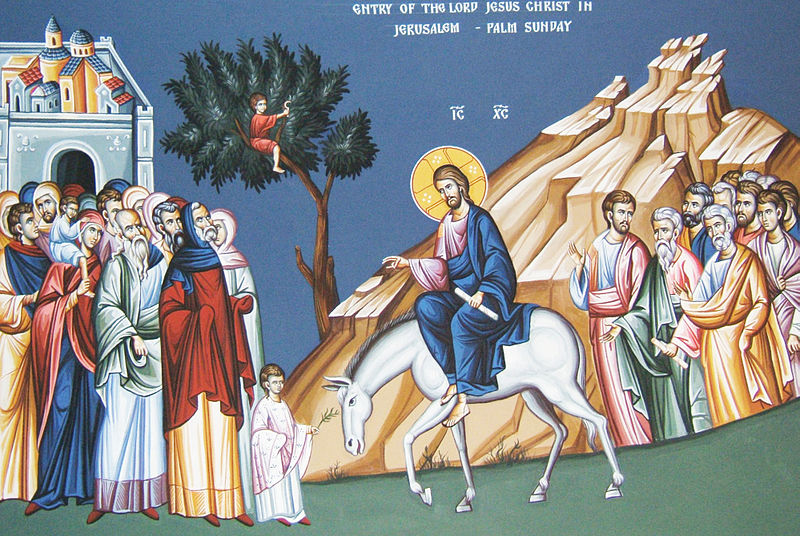





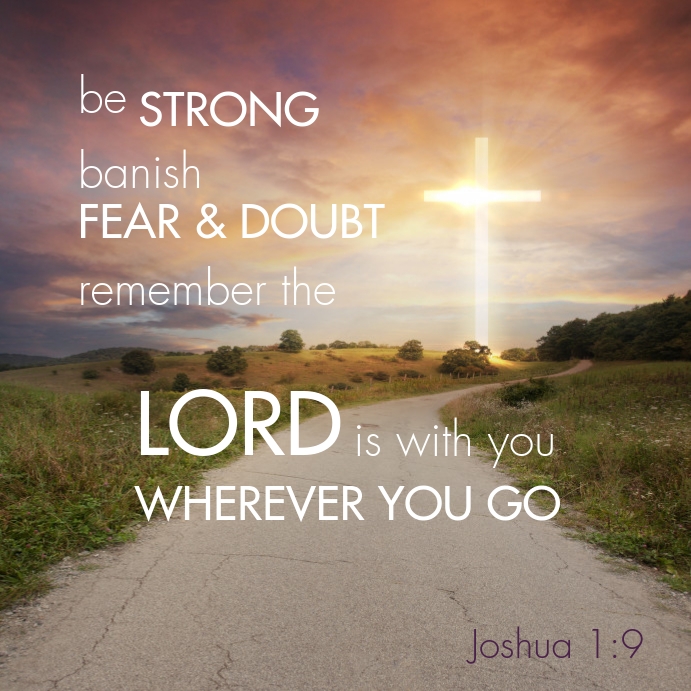



 Loving God, Living God, Loving Hope, Living Hope, Loving Living Life His Way! "Many things are possible for the person who has hope. Even more is possible for the person who has faith. And still more is possible for the person who knows how to love. But everything is possible for the person who practices all three virtues." - Brother Lawrence (1605-1691), Practicing the Presence of God (1692).