Examining My Perception of Myself. What about Changing my Thinking, Revolutionizing my Life? Job 9:20-21

“Be careful how you think; your life is shaped by your thoughts.”

“I am unsure. I think I am who I say I am, or I believe I am who I say I am.”

“My thoughts of myself are exactly that: MY own thoughts of MY own self!”

“Debate me, PLEASE! We are who we think we are.”

“I am the best judge of my own thoughts. Ergo, LEAVE ME ALONE!”

“I am the best judge of exactly who I am!”

“Judge me not! No one can ever know me better than I know myself!”

Does anyone out there reading this see a definite pattern developing?

One of the most important steps we can take toward achieving our greatest potential in life is to learn to monitor our thoughts and its impact on our attitudes towards ourselves and all those who just happen to be around us.

Everything we perceive in the physical world has its origin in the invisible, inner world of our thoughts and beliefs.

To become the master of our earthly destiny, we must learn to control the nature of our dominant, habitual thoughts. The conscious human mind is capable of great good and equally extraordinary evil.

“Our mind is the master builder and that which we think upon may become misery or miracles.”

Our thoughts determine our destiny. Minds are really an amazing creation. 

Our minds, thoughts and words are horrible things to waste upon ourselves.

Imagine yourself just for a few breaths and heartbeats thinking like Job.

Imagine yourself having this “mindset of Job” right in this very moment.

How long could you stand yourself living day to day with this mindset?

Job 9:13-35 Amplified Bible

13 
“God will not turn back His anger;
The [proud] helpers of Rahab [the arrogant monster of the sea] bow under Him.
14 
“How can I answer Him [and plead my case],
Choosing my words [to reason] with Him?
15 
For though I were righteous, I could not answer.
I must appeal for mercy to my Opponent and Judge.
16 
“If I called and He answered me,
I could not believe that He was listening to my voice.
17 
“For He bruises me with a tempest
And multiplies my wounds without cause.
18 
“He will not allow me to catch my breath,
But fills and saturates me with bitterness.
19 
“If it is a matter of strength and power, behold, He is mighty!
And if of justice, who can summon and challenge Him?
20 
“Though I am innocent and in the right, my own mouth would pronounce me guilty;
Though I am blameless, He would denounce me as guilty.
21 
“[Though] I am blameless,
I do not care about myself;
I despise my life.
22 
“It is all one; therefore I say,
‘He destroys [both] the blameless and the wicked.’
23 
“When [His] scourge kills suddenly,
He mocks at the despair of the innocent.
24 
“The earth is given into the hands of the wicked;
He covers the faces of its judges [so that they are blind to justice].
If it is not He, then who is it [that is responsible for all this injustice]?

25 
“Now my days are swifter than a runner;
They vanish, they see no good.
26 
“They pass by like the [swift] boats made of reeds,
Like an eagle that swoops down on its prey.
27 
“If I say, ‘I will forget my complaint,
I will leave off my sad appearance, and be cheerful and brighten up,’
28 
I am afraid of all my pains and worries [yet to come];
I know that You will not acquit me and leave me unpunished.
29 
“I am accounted wicked and held guilty;
Why then should I labor in vain [to appear innocent]?
30 
“If I were to wash myself with snow
And cleanse my hands with lye,
31 
You would still plunge me into the pit,
And my own clothes would hate me [and refuse to cover my foul body].
32 
“For God is not a [mere] man, as I am, that I may answer Him,
That we may go to court and judgment together.
33 
“There is no arbitrator between us,
Who could lay his hand upon us both [would that there were].
34 
“Let Him take His rod away from me,
And let not the dread and fear of Him terrify me.
35 
Then I would speak [my defense] and not fear Him;
But I am not like that in myself.

The Word of God for the Children of God. Gloria! In Excelsis Deo! Alleluia! Amen.

It is estimated that our brain contains over 100 billion nerve cells. Each individual nerve cell is then connected with 10 thousand other neurons.

Ask yourself – Think about – Exactly how complex is this brain of mine?

Research indicates that most people will speak at a rate of 150 to 200 words per minute, but the internal dialogue that you carry on with yourself (self-talk) you do at a rate over six times that of approximately 1300 words per minute.

Think about that for a moment.

We may not be that person. We may not be like “most of those people” but our innate ability to become like “most of those people” is actually quite stunning

The problem is, in all that self-talk, a lot of people are Negative.

Take the time one day to write down your words and your thoughts.

Repeat the process on another day and for as many days as you think about it –

Count the positive words and thoughts.

Count the negative words and thoughts.

What is the ratio of “positive thoughts” to “negative thoughts?”

What do you think about the results of your own self-examination?

What do you think about yourself based upon your own self-examination?

Whatever your circumstance today – rich or poor, success or a failure, happy or sad – is nothing but the product of your thoughts.

In a very simple manner, you are a product of your thoughts.

You become what you think about, 

Where is your mindset right now?

What is your perception of your life right in this exact moment?

Is your glass of water always half full or always half empty?

Like Job says in verses 20 and 21,

Job 9:20-21 Amplified Bible

20 
“Though I am innocent, and, in the right, my own mouth would pronounce me guilty;
Though I am blameless, He would denounce me as guilty.
21 
“[Though] I am blameless,
I do not care about myself;
I despise my life.

If someone feeds his mind with negative thoughts of worries, fear, anxiety and confusion, his life becomes one of frustration, fear anxiety and worry.

On the other hand, if another person feeds his mind with positive thoughts of a better tomorrow, good and worthwhile goals and work towards them, it will become a reality, because that is what he thinks about.

If you keep feeding your mind with negative thoughts, you achieve negative results. If you keep feeding your mind with positive thoughts, you’ll achieve positive results. This effort is basically referred to as; “self-affirmation.”

Self-Affirmation is not a skill. It is an attitude. It is a mindset we must learn.

Neither mindset of self-affirmation nor self-deprecation is ever final.

The way your mind is programmed determines your mindset. Your mindset determines your character which has overwhelming impact on your attitudes.

American Educator, Philosopher, Historian, Psychologist William James (1842-1910) said, “the greatest discovery of my generation is that human beings can alter their lives by altering their attitude of mind.”

To get what you want,

change who you are by simply changing the way you think. 

Proverbs 23:7, says “For as he thinks in his heart, so is he.”

People do not attract that which they want, but that which they are.

To attract good people, you must be good.

To attract godly people, you must be godly.

Instead of going to work on them, you go to work on yourself.

Your circumstances may be out of your control, but recall God is in control of everything.

Your thoughts shape who you are, but you can change the way you think.

Therefore, if you are not satisfied with your present circumstance in life and you want to change it, you need to change your thoughts.

Think and act like the person you want to become.

Before you can do something, you first must be something.

Try not to become a man of success, but rather try to become a man of value.

Think about this: You become valuable when you value what God values.

Proverbs 3:5-8 Amplified Bible


Trust in and rely confidently on the Lord with all your heart
And do not rely on your own insight or understanding.


[a]In all your ways know and acknowledge and recognize Him,
And He will make your paths straight and smooth [removing obstacles that block your way].


Do not be wise in your own eyes;
Fear the Lord [with reverent awe and obedience] and turn [entirely] away from evil.


It will be health to your body [your marrow, your nerves, your sinews, your muscles—all your inner parts]
And refreshment (physical well-being) to your bones.

Transformation comes when we allow God’s Word to change our thinking.

How do you eliminate negative thoughts so you can become a refine person?

It’s the principle of replacement:

Colossians 3:1-4 Amplified Bible

Put On the New Self

3 Therefore if you have been raised with Christ [to a new life, sharing in His resurrection from the dead], keep seeking the things that are above, where Christ is, seated at the right hand of God. Set your mind and keep focused habitually on the things above [the heavenly things], not on things that are on the earth [which have only temporal value]. For you died [to this world], and your [new, real] life is hidden with Christ in God. When Christ, who is our life, [a]appears, then you also will appear with Him in glory.

Philippians 4:6-8Amplified Bible

Do not be anxious or worried about anything, but in everything [every circumstance and situation] by prayer and petition with thanksgiving, continue to make your [specific] requests known to God. And the peace of God [that peace which reassures the heart, that peace] which transcends all understanding, [that peace which] stands guard over your hearts and your minds in Christ Jesus [is yours].

Finally, [a]believers, whatever is true, whatever is honorable and worthy of respect, whatever is right and confirmed by God’s word, whatever is pure and wholesome, whatever is lovely and brings peace, whatever is admirable and of good repute; if there is any excellence, if there is anything worthy of praise, think continually on these things [center your mind on them, and implant them in your heart].

As your thinking changes, your feelings, decisions, actions and attitude will change and conform to the mind of Christ.

We have the power to transform our lives. 

Romans 12:1-5New Living Translation

A Living Sacrifice to God

12 And so, dear brothers and sisters, [a] I plead with you to give your bodies to God because of all he has done for you. Let them be a living and holy sacrifice—the kind he will find acceptable. This is truly the way to worship him. [b] Don’t copy the behavior and customs of this world, but let God transform you into a new person by changing the way you think. Then you will learn to know God’s will for you, which is good and pleasing and perfect.

Because of the privilege and authority[c] God has given me; I give each of you this warning: Don’t think you are better than you really are. Be honest in your evaluation of yourselves, measuring yourselves by the faith God has given us. [d] Just as our bodies have many parts and each part has a special function, so it is with Christ’s body. We are many parts of one body, and we all belong to each other.

There is an intensity and urgency in Scripture’s earnest pleading to guard your heart and your thoughts about all else, and in scripture the heart is understood to be the seat of our thoughts, our self- will, the conscience and the emotions.

Our heart is the storehouse for wisdom and all that influences the life and character of an individual.

Jesus reminds us that from our whole heart, we should love the Lord our God with all our heart, soul, mind and strength, with every part of our inner being.

We have been endowed by our Creator with reason and choices, with emotions and a will, which is bound up in the “wholeness,” “hole-ness and holiness” of our hearts – and we have been given them all by God to glorify not one blessed inch or neuron or brain cell of ourselves, but only Him and to enrich our lives.

But they should never be given free rein to rule our lives, dictate our decisions for unguarded feeling can fluctuate; unguarded emotions can twist and turn on a whim; unguarded thoughts can toss to and for like the wave of the sea and an unguarded will can lead you away from the path of peace.

The heart is more deceitful than anything else, and unless checked, double-checked and guarded above all things, it will surely and certainly influence our lives for evil and not for good.

– yes, we are to guard our hearts as the highest priority –guarded above all else.

We are never forsaken by God nor never left alone. We are never left to guess at the reason for the intensity and urgency in this earnest plea to guard our hearts above all else – for the heart is the source and well-spring of life, our hearts are the repositories for God’s life, treasury for His truth, warehouse of His wisdom.

Christ is our whole life and our whole truth, and our whole wisdom and the Lord searches the heart and tests the mind, and we are to guard the gospel truth that has been shed into our hearts – the knowledge of Him Who has brought us out of darkness into His glorious light, who has taken us from the doorways of our death and breathed into us the breath of the new-life in our Savior Jesus Christ.

Psalm 16:5 Amplified Bible


The Lord is the portion of my inheritance, my cup [He is all I need];
You support my lot.

So, is your cup half full or half empty?

HMMMM …..

I wonder ….

I think it is ….

I believe it is ….

In the name of God, the Father and God the Son and God the Holy Spirit,

Let us pray,

Lord, my teacher, I’m often confused when I need to make important decisions about my family, my work, my relationships, my health, or finances. Show me the way I should go when I don’t know which way to turn. Help me remember to leave me, come to you, rather than trying to figure everything out on my own.

Guide me along the best pathway for my life. Let Your Holy Spirit advise me and watch over me. Help me to listen to your guidance and not resist it. I thank you that your unfailing love surrounds those who trust you. Gloria! Alleluia! Amen.
https://translate.google.com/

See! I am raising my un-holy hands. I have Made my decision to Speak, my demands to be Heard. But tell me who is there to hear me, to come between me, my friends and my God? Job 9.

(Job’s) Prayer for Help, and Praise for Its Answer.

A Psalm of (Job first?) then David.

28 To you I call, O Lord,
My rock, do not be deaf to me,
For if You are silent to me,
I will become like those who go down to the pit (grave).


Hear the voice of my supplication (specific requests, humble entreaties) as I cry to You for help,
As I lift up my hands and heart toward Your innermost sanctuary (Holy of Holies)
.

Job was a righteous man before God. Job was a prosperous man, a family man. It was a good life for Job, he was confident in how he was living that life. It seemed that nothing could go wrong that could not be effectively, efficiently, handled. I can see Job, even be jealous of Job for living such an endlessly successful life.

We want to move into Job’s home. We want to live and prosper like Job lived and prospered. It is everybody’s lifelong dream to model their whole lives as Job did. We have control over what happens around us. God is Good and it shows daily.

Until that goodness of God suddenly disappears faster than we can blink an eye.

It does not just disappear at warp speed; it disappears in the most traumatic of ways. The whirlwind of trauma grows ever stronger and its more unstoppable than we could ever have allowed ourselves to imagine possible. Levels of trauma from which there’s no apparent avenue of recovery, can things get even worse?

Suddenly, there seems to be no words which are sufficient to respond with. It suddenly becomes a giant vacuum for which words seem to get stuck within us. Suddenly this “growing zone of silence” is introducing itself, surrounding us.

The inevitable question is “Why Me? Why Now, come on explain yourself God “

What does Job hope to hear?

Job is sure of God’s response because Job is “faith on steroids” and he knows God is always responsive to the max with those who are faithful to God. But all Job hears is complete silence from God and the bleating voices of his friends.

Not exactly what Job desires, wants or needs to hear in this ultra-critical “Faith shaping” time and season. Job’s problem is that he has no way to examine God, to “Call God Out” and that is what he goes on to state in very eloquent terms.

Exasperated, He says that God’s wisdom is beyond man: How can you get hold of a God like that to debate with Him the issues that are causing the pain of life?

What can I do?

How can I get at this whole “God is Silent” problem? 

Exasperated, Job makes his case before his friends and before his God.

AND BEFORE EVERY SINGLE ONE OF US RIGHT THIS EXACT MOMENT!

Job 9:1-12 Amplified Bible

Job Says There Is No Arbitrator between God and Man

Then Job answered and said,


“Yes, I know it is true.
But how can a mortal man be right before God?

“If one should want to contend or dispute with Him,
He could not answer Him once in a thousand times.

God is wise in heart and mighty in strength;
Who has [ever] defied or challenged Him and remained unharmed?

It is God who removes the mountains, and they do not know it,
When He overturns them in His anger;

Who shakes the earth out of its place,
And its pillars tremble;

Who commands the sun, and it does not shine;
Who seals up the stars [from view];

Who alone stretches out the heavens
And tramples down the [a]waves of the sea;

Who made [the constellations] the Bear, Orion, and the Pleiades,
And the [vast starry] spaces of the south;
10 
Who does great things, [beyond understanding,] unfathomable,
Yes, marvelous and wondrous things without number.
11 
“Behold, He passes by me, and I do not see Him;
He moves past me, but I do not perceive Him.
12 
“Behold, He snatches away; who can restrain or turn Him back?
Who will say to Him, ‘What are You doing?’

The Word of God for the Children of God. Gloria! In Excelsis Deo! Alleluia! Amen.

Job has decisions to he has make in assessing and evaluating and living out his relationship with God and with mankind. Job deeply needs to hear from God.

He asserts his desire to hear from the Lord who has ever been 100% faithful to him, he asserts his desire to let God know he intends to be ever the more faithful in spite of all the absolute mess that is whirling, swirling, going on around him

Out of the deep darkness that surrounds this “patient” suffering saint, comes a ray of light breaking through. It is the first significant break in Job’s gloom. 

Job’s realization, acknowledgement, what is needed is a mediator, an arbitrator who can come between man, who understands us both and brings us together, 

Job says. For the first time in this book, we begin to see what God is producing in this man, why he is putting him through this protracted trial.

For now, Job begins to feel, deep in his bones, the nature of reality: the terrible gulf between the pleas of man and God that must be bridged by another party.

We who live in the full light of the New Testament know that he is crying out and feeling deep within the need for just such a mediator as Jesus himself.

Job is laying the foundation here in his own understanding for the tremendous revelation that comes in the New Testament when God hears, becomes a man.

When we in our sin believe with all of our heart God has suddenly gone silent,

God Absolutely Listens!

God Absolutely Hears!

God Absolutely Acts!

God Absolutely Intercedes in the affairs of Mankind

God Absolutely Sent His Son at the appropriate time.

God takes our place, God lives as we live, feels as we feel, solves the great problem between us and God, and brings the two—God and man—together.

For the first time in the long suffering words and pleas of Job and his friends, we begin to sense something mighty is taking shape, what God is driving at.  

Psalm 119:65-72 Authorized (King James) Version

ט  Teth

65 Thou hast dealt well with thy servant, O Lord,
according unto thy word.
66 Teach me good judgment and knowledge:
for I have believed thy commandments.
67 Before I was afflicted, I went astray:
but now have I kept thy word.
68 Thou art good, and doest good;
teach me thy statutes.
69 The proud have forged a lie against me:
but I will keep thy precepts with my whole heart.
70 Their heart is as fat as grease;
but I delight in thy law.
71 It is good for me that I have been afflicted;
that I might learn thy statutes.
72 The law of thy mouth is better unto me
than thousands of gold and silver.

You and I can learn theology from a book, and we can study it and get it clear in your mind, but until you go through the hurts and difficulties and trials of life.

We never really understand what God’s truth is. It takes suffering to get a clear vision of what God is saying to us, and that is what the book of Job is all about.

Because we live in a fallen world, there will be times in our life when we will all have to endure trials and difficulty. Job went through such a time; however, he realized that had Someone to stand in his defense. Job called Him his Redeemer.

Job’s suffering helped inform and shape and transform his understanding of the Whole truth of God. The New Testament reveals far more of who God is.

How might Job’s experience, his friends’ experiences, inform, shape and transform our own personal understanding of the “silence” of our God???

In the name of God, the Father and God the Son and God the Holy Spirit,

Let us Pray,

God of truth, sometimes I am not sure if I’m actually hearing your voice, or if it’s just my own sinful thoughts, my friends’ thoughts or even another spirit.

Please God, sharpen my spiritual hearing, Lord, so I can recognize your words when you are speaking to me.

Author of my Life, Shaper of my heart and my soul, help me know it’s really you, with no long shadow of doubt or reason for any of my second-guessing.

When I’m asking for your guidance in important decisions, by your mercy, give me your place of peace that surpasses understanding with your answer. Help me remember that your words to me will never go against your written word in the Bible. Give me a clear mind and push out all my confusion. Alleluia! Amen.

https://translate.google.com/

God speaks into One ear, and we end up coming out the other. Our habit of Selective Listening, Elective Hearing.

“I do not know why I should say anything to anyone anymore. It only goes in one ear and comes straight out the other with no stops anywhere in between!”

George Stewart – In One Ear and out the Other (1978) Lyrics

When someone talks, be sure you listen
When someone speaks, be sure you hear
‘Cause only if you listen to what they say
Then what they say will be perfectly clear

Don’t let it go in
One ear and out the other
Don’t let it go in
One ear and out the other
Don’t let those messages slip away
Be sure you know, you know what people say
Don’t let it go in
One ear and out the other
Don’t let it go in
One ear and out the other

When someone talks, you’re gonna listen
When someone speaks, you’re gonna hear
‘Cause if you really listen to what they say
Then what they say will be perfectly clear

Don’t let it go in
One ear and out the other
Don’t let it go in
One ear and out the other
Don’t let those messages slip away
Be sure you understand what people say
Don’t let it go in
One ear and out the other
Don’t let it go in
One ear and out the other

Don’t let God’s messages slip away
You’ll understand what the King of Heaven says
Don’t let it go in
One ear and out the other

Listen to what people say

When teachers talk, children will listen
When parents speak, the kids will hear
If everybody listens to what they say
Then what they say will be perfectly clear

Don’t let it go in
One ear and out the other
Don’t let it go in
One ear and out the other
Don’t let those messages slip away
Be sure you know, you know what people say
Don’t let it go in
One ear and out the other…

1 Kings 22:13-18 New American Standard Bible

Micaiah Predicts Defeat

13 Then the messenger who went to summon Micaiah spoke to him saying, “Behold now, the words of the prophets are [a]unanimously favorable to the king. Please let your word be like the word of one of them, and speak favorably.” 14 But Micaiah said, “As the Lord lives, whatever the Lord says to me, I shall speak it.”

15 When he came to the king, the king said to him, “Micaiah, should we go to battle against Ramoth-gilead, or should we refrain?” And he said, “Go up and succeed, for the Lord will hand it over to the king!” 16 Then the king said to him, “How many times must I make you swear that you will tell me nothing but the truth in the name of the Lord?” 17 So he said,

“I saw all Israel
Scattered on the mountains,
Like sheep that have no shepherd.
And the Lord said,
‘These people have no master.
Each of them is to return to his house in peace.’”

18 Then the king of Israel said to Jehoshaphat, “Did I not tell you that he would not prophesy anything good regarding me, but only bad?”

The Word of God for the Children of God. Gloria! In Excelsis Deo! Alleluia! Amen.

One problem that plagues the church of our day is the plague of “Selective Hearing”. In other words, we hear only that part of a message that agrees with our own point of view, and we discard anything that doesn’t agree with us.

As a retired professional Psychiatric Registered Nurse, I have often run into this attitude in counseling sessions. I know that the first duty, and probably the most important thing that we can do as a counselor is to just sit and listen as those who come for counseling sit, vent their feelings, frustrations and anger.

Most often people who want to counsel really don’t want to hear the truth, or to even hear the counselor’s opinion, they just want to talk to someone who will listen and then return their self-opinion of what is wrong. That’s all they want.

This is the story of Ahab, King of Israel, who persuades Jehoshaphat, King of Judah to join him in a battle for Ramoth-Gilead. Syria had won this territory from Israel in a battle some three years prior and had occupied it for all that time. Now Ahab wanted it back.

Ahab was the evilest king that Israel ever had.

In the beginning of I Kings chapter 21 we can read the story of how that he wanted to purchase or trade a vineyard from Nabaoth that was adjacent to the king’s palace.

When Nabaoth refused to trade or sell the land of his ancestors, Ahab went into his room, crying, pouting, lying across his bed, refused to eat like a spoiled brat.

His wife Jezebel came in and made matters worse by plotting to get the vineyard for nothing. She sent word to all the nobles in the city to call a fast and to place Nabaoth in a high position among the nobles. Then she had hired two “sons of belial” or sons of the devil, to falsely accuse Nabaoth of blasphemy against God.

Nabaoth was stoned to death and the king took the vineyard by default.

In 1 Kings 21:25 we read God’s opinion of the character of Ahab, “But there was none like unto Ahab, which did sell himself to work wickedness in the sight of the LORD, whom Jezebel his wife stirred up.”

Just to make a quick point here, I know that Ahab had to answer for his own evil heart, and he really had no one to blame for his idolatry than himself.

He could have chosen to not listen to Jezebel. But I wonder if he would have been a better king if he had not married an idolatrous and evil plotting queen?

She certainly pressed him on to disobey God and fall deeper into sin. Jezebel was a heathen princess, beautiful to look upon, but with a heart of malicious sin!

I wonder about Ahab since he does repent at one point because he recognized the judgment of God that was to come but Jezebel wouldn’t allow that to happen for long.

Throughout his reign as King, Ahab had been held accountable to his evil deeds by the prophets of God who dared stand up to him.

One of those prophets was Micaiah.

Micaiah was well known in the court of Ahab because Micaiah had come time and again to warn Ahab of the consequences of his evil deeds. Ahab dreaded the appearance of Micaiah, yet he knew that he could not kill Micaiah or face the wrath of the people of Israel who had confidence in the prophet.

Now Ahab’s heart was set for war to regain his lost territory and to regain his prestige in the land of Israel. No king would sit for long without attempting to win back that which was taken from him in battle and Ahab was no different.

Ahab, evil though he was, still understood that Israel needed to think that the Lord God was with them before they went into battle, so he called for 400 “prophets” to come and prophesy for his coming victory over Syria.

These so called “prophets” were nothing more than “yes men” or false prophets who ticked the ears of Ahab and always had good things to say to him.

After all, that was exactly what Ahab wanted to hear and they were no fools.

If Ahab didn’t like your prophecy, he could, without a second thought, or fear of recrimination, simply put you to death. As a result of this threat hanging over them, they told Ahab exactly what they thought Ahab would want to hear.

Have you ever felt that you needed an answer from God concerning anything in your life, but you were afraid of what the answer would be?

It’s far more pleasant to have someone say something good about your life than to hear the truth.

In fact, we often go to great lengths so that we don’t have to hear the truth. We will choose to talk to and listen to only those who we already know will agree with us. We avoid anyone who may want to disagree with us like a plague.

We don’t want to really know the truth. We just want someone else to just agree with us and put a stamp of approval on what we wanted in the first place.

It is as though their agreement with us gives us a false sense of being right and we rush headlong into disobedience of the Word of God.

All 400 of these false prophets and “yes men” prophesied good things to Ahab.

They foretold of great victories, of the coming glory to Ahab and Jehoshaphat in the war just ahead, but Jehoshaphat wasn’t satisfied with their prophesying.

Something just seemed to be wrong. It was as though all of these 400 men had planned in advance to all say exactly the same thing much as a bunch of parrots.

Ahab was content to hear what he wanted to hear and didn’t care if it were true or not. Either that or he just disregarded anything disagreeable that anyone had said and decided to do what he wanted no matter what the prophets foretold.

But Jehoshaphat still feared God and asked if there were any prophets in Israel who were not “yes men” to the king? Was there one man, in all of Israel, who would truthfully give the Word of the Lord without fear of Ahab’s revenge?

Sometimes we have to stand alone in our faith in God. Remember this: that God alone makes a majority and it’s always best to be on his team regardless of how many people raise up, shout, disagree or stand against you and persecute you.

Matthew 10:28 says it another way,

“… fear not them which kill the body but are not able to kill the soul: but rather fear him which is able to destroy both soul and body in hell.”

Just think about it.

Even if we lose the battle of “political correctness” and “theological semantics” with men, we still win with God as long as we speak all truth from God’s Word.

Ahab was so determined to do his own will and to hear nothing but positive things that he did his best to keep any negative prophet from coming into his court but now he had no choice for he knew that Jehosphaphat would not join him in the battle unless a true prophet of God were brought forth.

Ahab hated Micaiah! He despised this true man of God. Ahab is like so many in our churches today who would rather believe a lie than to hear the truth.

Speaking of the last days and the coming of the man called the “Antichrist,” Paul had this to say about the hearts of the people who were on the face of the earth at that time, “And for this cause God shall send them strong delusion, that they should believe a lie: That they all might be damned who believed not the truth but had pleasure in unrighteousness.” 2 Thessalonians 2:11-12

Right now, the only thing that keeps Satan at bay is the Holy Spirit operating through the church as a watchdog against Satan’s evils.

Matthew 24:36-41 NIV

The Day and Hour Unknown

36 “But about that day or hour no one knows, not even the angels in heaven, nor the Son, [a] but only the Father. 37 As it was in the days of Noah, so it will be at the coming of the Son of Man. 38 For in the days before the flood, people were eating and drinking, marrying and giving in marriage, up to the day Noah entered the ark; 39 and they knew nothing about what would happen until the flood came and took them all away. That is how it will be at the coming of the Son of Man. 40 Two men will be in the field; one will be taken and the other left. 41 Two women will be grinding with a hand mill; one will be taken and the other left.

What do you think will happen when the true church, the Body of Christ, is taken away in the rapture?

I shudder to think of the flood of evil, sin and great debauchery that will cover the earth to an even greater depth than the flood of water in Noah’s day.

Yes, Jesus said, just as it was in the days of Noah, evil will abound, and the heart of man will be deceived into believing a lie from the devil that will end in man’s eternal damnation.

As we can see that spirit of the antichrist was already living in the heart of Ahab and he loved the lies more than the truth.

It would eventually bring destruction upon him and his household.

It was foretold in I Kings chapter 21 that anyone of Ahab’s house who died in the city would be eaten by the dogs and anyone who died outside of the city would be eaten by the fowls of the air, and that Ahab’s own blood would be licked from the city streets by dogs.

The fearsome news of these prophecies had actually brought Ahab to a place of repentance for a while, but his repentance was short lived. As soon as the shock had passed and he had time to forget about it, he was back to business as usual.

Ahab warned Jehoshaphat that Micaiah would have nothing good to say.

Ahab had never heard one prophetic utterance from the mouth of this prophet to encourage him in doing what Ahab wanted to do.

Ahab never realized that the reason he never heard any good thing is that he was continuing to walk in disobedience to God. How could he expect to hear anything good when all he did was evil in the sight of God?

There are many in the church today who say preachers who preach full gospel messages of impending judgment from God are just negative individuals who should be disregarded or even silenced so that peace could reign.

Most people don’t want to hear the truth. They love to hear teaching of love, mercy, grace and they praise those voices that foretell those better times are soon coming and that man will ultimately usher in his own age of peace and prosperity.

The truth is this – They simply don’t want to hear the full truth.

What they fail to understand is that it is only those preachers who are telling the truth. All others are false prophets who have the spirit of antichrist to deceive as many as possible into believing their lies.

There are multitudes of “ministers” who claim to be God’s messengers to the church who refuse to even admit that judgment is coming.

Their message of peace and prosperity is very easy to swallow but leads to a complacent, weak, even dead church that will face eternity without God.

It is God’s “very toughest” expressions of love, mercy and grace that allows his true ministers to speak the truth of the coming judgment so that perhaps some will come to God in true repentance through the true preaching of the gospel.

Ahab sent a messenger to get Micaiah.

This messenger was convinced that Ahab was the one to follow.

I read this passage over and over again and I cannot help but wonder if he really genuinely understood where Ahab was leading him?

Like so many so-called “Good Sunday Christians” in our modern-day church, he was only faithfully going to go so far following the orders of the king (the preacher) and didn’t question whether he was really in the will of God or not.

In fact, he copied his leaders thoughts, actions and mannerisms and even attempted to stop trouble by asking Micaiah to say the same things that the other 400 prophets said so that there would be no trouble.

Are we aware enough to know that by our selective hearing, sometimes the lie of the “sons of belial” comes from the lips of those who we think are spiritually minded? If we are not very careful, we can also be one of those used to hinder or even stop the flow of the Holy Spirit and spread the lies of Satan to stop the truth from being told?

Micaiah came into the court of Ahab, with Jehoshaphat listening, and began to say the same thing that all of the other prophets had said. He “prophesied” of great victory for Ahab against Syria.

But Ahab believed he knew, in his heart, that Micaiah was just mocking him.

1 Kings 22:16, “And the king said unto him, How many times shall I adjure thee that thou tell me nothing but that which is true in the name of the LORD?”

Even in his sinful condition Ahab knew the difference between the truth and a lie. “All right, quit mocking, and tell me the truth. I know you have something negative to say, so just get it over with,” was the attitude of Ahab as he spoke to Micaiah.

The world knows the difference between the truth and the lie. So does every member of the church. The Holy Spirit will ever be a reminder of what is truth and what is not. Even when we refuse the listen and obey the truth, we will still know when we are in disobedience.

We can harden our hearts, refuse to repent, and continue in sin but our own heart will condemn us because God won’t let us forget what the truth is.

No man will have an excuse when we stand before God in judgment. Every man will know exactly where he stands before he ever faces God.

We can keep on practicing Selective Hearing but that will be no excuse for living in disobedience to God’s Word. Ignorance of the Law is no excuse in the courts of man and it will be no excuse in the court of the Lord God either.

Now the truth was said as God directed Micaiah – Ahab would be defeated, and the people of Israel would be scattered as though they had no shepherd.

What was Ahab’s reaction? 

1 Kings 22:16, … Ahab looked over at Jehoshaphat in total disgust and said something like this (just like our modern thinking), “Didn’t I tell you? He never has a good prophecy for me! Everything he tells me is nothing but bad news!”

“That’s why I didn’t want to call him in the first place! Now look at what you have forced me to do. I didn’t want to hear any negative! All I ever wanted was positive talk! Now it’s going to take me all day to get that negative thought out of my mind! These just ruins everything!”

You have to have Father, Son and Holy Spirit positive thoughts, picture their victory in your mind, write good slogans all over the refrigerator, the mirrors in the dressing room and everywhere to get the right results, not hear and listen to some negative old prophet with a message of repentance and acknowledgment God’s truth isn’t always going to be the palatable to eat and pleasant to hear.

It’s not always sweet to taste and easy to swallow. Sometimes it’s downright the most bitter food to take into our mouths. But, like a bad tasting medicine that helps us to heal, if the truth of God is heard and obeyed it brings healing to our souls, healing to our land and life that is more abundant and eternal.

One of the saddest parts of this whole scenario is that King Jehoshaphat was also fooled and became an unwitting part of Ahab’s disobedience.

Here was a king who was attempting to live in God’s will. He had every solid appearance of being a good king except for one all important things. He didn’t remove the idols from Judah that were already there when he became king.

Because he was used to compromising, it was easy for him to be led astray by Ahab. When the battle started, he was chased from the battlefield by the Syrians who thought that he was Ahab.

Meanwhile, Ahab disguised himself so that he would be harder to find and kill.

How many ministers do we know which have disguised themselves and have gone into deep hiding or have simply blended in with the rest of their misled congregations? They have trapped themselves and others by their own lies.

You can’t hide from God (Psalm 139). His judgments are sure! Whether you believe them or not, or whether you accept them or not, is immaterial! The fact is that God’s judgments will come, and his perfect will must be accomplished.

How does this prophetic story end? The hidden Ahab was shot by a stray arrow.

One of the Syrian archers just drew back his bow and shot into the air at no specific target. That arrow was like a guided missile, led by the laser sight of God’s own hand of judgment, it struck Ahab right between the shoulder blades.

Ahab died in his chariot. His blood was washed from the chariot at the same spot where Nabaoth died, and the dogs licked up Ahab’s blood from the ground.

God’s judgments are sure!

Ahab died because he had selective hearing! He only heard and wanted to hear those things that he agreed with or that made him feel “theologically” good.

In closing let me say that we cannot afford to have selective hearing any more than Ahab could. We must hear and obey the truth of God’s Word!

There is coming a day of judgment soon. Only those who have opened their ears to hear the truth and have learned to obey God will enter Heaven’s glory. Get rid of your selective hearing and let’s hear the whole counsel of God’s truth.

In the name of God, the Father and God the Son and God the Holy Spirit,

Let us Pray,

Dear God, I desire to do according to your will. I desire to walk in your ways. I desire to have a heart that is more like yours. Lord, I desire this so I can be illuminated in my heart and mind. I pray for this because I want to recognize your word and hear your voice. I do not want to be deceived by preachers and prophets who claim to preach your word but actually are false teachers. I ask that you grant me these desires, oh Lord. Alleluia! Alleluia! Alleluia! Amen.

https://translate.google.com/

Genuinely, Do We 100%, Each Honestly Believe Everyone Who Calls Upon the Name of the Lord Will Truly Be Saved? Romans 10:8-13

Take any empty cola 2L bottle sometime and fill it half full of water. Then, take some vegetable oil and fill it the rest of the way. Then try to shake it with all of your might and strength so it will become all mixed up. What happens? The moment you stop shaking, it begins to separate from one another, doesn’t it? What is the moral? The moral is, by their very nature, oil and water do not mix.

The same is true with Godliness and worldliness. For many ages many people have remarked that there was too much world in the church. I agree. But if that is even minimally true, it’s true because there is too much world in each of us.

You might say “well, we live here, and we need to be in the world.” We might need to be in the world, but does so much of the world have to be within us?

In Ephesians 2:19, we are told that we are each citizen and members of God’s household. We are no longer citizens of this world, and as the song says, “This World is Not My Home, I’m Just a Passing Through.”

Since we belong to God; since we are citizens of heaven working as ambassadors here on earth; we need to focus more on God and less on the world, but to do so, we need to make sure that we really believe in God, and not just “think we do.”

Well, perhaps now is as good a time as any other to ask ourselves;

JUST WHAT DO WE BELIEVE OF GOD’S PROMISE OF SALVATION FOR ALL?

Romans 10:8-13 Disciples’ Literal New Testament

But what does it say? “The word is near you, in your mouth and in your heart”, that is, the word of [a] faith which we are proclaiming, that[b] if you confess with your mouth Jesus as Lord and you believe in your heart that God raised Him from the dead, you will be saved. 10 For it is believed with the heart resulting-in righteousness, and it is confessed with the mouth resulting in salvation.

The Scripture Says Faith Leads To Salvation For Both Jew And Greek

11 For the Scripture says [in Isaiah 28:16] “everyone putting-faith upon Him will not be put-to-shame”. 12 For there is no distinction between both Jew and Greek— for the same Lord is Lord of all, being rich toward all of the ones calling – upon Him. 13 For “everyone who calls-upon the name of the Lord will be saved” [Joel 2:32].

The Word of God for the Children of God. Gloria! In Excelsis Deo! Alleluia! Amen.

When I was going to school, I had a physics professor who was teaching us about the law of the pendulum. We all know what a pendulum is, right? It swings from side to side, and it always decreases in the length of its ark with every swing.

I remember vividly the professor had nailed a rope to the wall just above the blackboard. To this rope, he had attached a baseball. He asked how many of us really believed in the law of the pendulum and we all raised our hands.

With that, he pulled the rope to one side and marked where it was on the board.

Then he let go of it and every time it swung back to his side, he put another mark where it stopped. The end result was that he had many marks, all closer to the center than the one before, proving the law was true. He asked again how many of us really believed in the law, and we all raised our hands once again.

Then he took us to the auditorium, where he had hung a thick nylon cord from the rafters just above the stage. Attached to this chord was a 50-pound weight.

He asked for a volunteer. He had a chair sitting on the side of the stage and he had the man who volunteered sit in it. He then took the gym weight, which was hanging in the middle of the stage and carried it over to about an inch from the boy’s face. He asked him again and again and again if he believed in the law of the pendulum, and the boy, starting to get a little worried by now, said he did.

With that, the professor let go of the weight and it swung clear to the other side of the stage, and then began to come back. I do not believe I have never seen anyone move so fast in my life as that young man trying to get out of the way.

Did he believe in the Law of the Pendulum, or did he just think he believed?

This is not a particularly long devotional, rather it is particularly short, but I felt I should talk about the true belief Christians have, at least, should have.

The first thing we need is…

1. A BELIEVING HEART

In JOHN 1:7, we are told that Jesus came so that all men might believe. That is how we come to believe, through Jesus Christ. Without Jesus there is no belief.

That is confirmed in JOHN 20:31, when it says that by believing in Jesus Christ, one may have life in His name.

In order to be a real Christian, and in order to receive eternal life, we must be real believers. We must have a burning in our hearts to be with Jesus; to know more about Him; and to know Him more.

Remember the story about the young man who sat on the chair wondering and waiting for the 50-pound gym weight about to swing back towards his face?

There are many Christians who have the same type of faith in their belief in Jesus. They think they believe, say they believe, but when push comes to shove, and Jesus “swings back their way” they get out of the way as fast as they can.

Remember when Peter told Jesus he would follow him into death if necessary?

A few verses later, we see where Peter denied Jesus three times.

Peter was just like that young man on stage, too. He thought he believed, but when he was pushed, he moved his chair away from the table just as fast as he could physically move it. And we cannot have faith unless we really believe.

Everybody believes in something. Everybody has to believe in at one thing.

What is it that you believe in? And how much do you really believe in it?

It is very easy to think you believe when there is no risk involved. It is more difficult to truly believe when you risk losing something very important.

Just like the student, we need to know the basics of what is offered to us. He needed to know what the law of the pendulum was, and we need to know what the law of salvation is. It is eternal life in heaven, with God who is our Creator.

Once we understand what is offered, we are ready to find out …

2. WHAT IT IS WE REALLY BELIEVE IN

In ISAIAH 55:8, we are told,

For My thoughts are not your thoughts, neither are your ways My ways, declares the Lord.’

Why are we so fully and completely intent on taking God’s Word and trying to change and shape it and transform it to fit our desires instead of just accepting His word as the law we should live by? But by our works is how we live, isn’t it?

We must earn the respect of others and earn promotions at work. We can sing about the best things in life being free, but when it comes to the things of this world, it all has to be earned. And that is how most people come to think about going to heaven; it must be earned by what titanic efforts we put into our life.

The Israelites had a believing heart, but what they believed in wasn’t helping them. They believed they had to follow all the laws of the Old Testament to get into heaven. They were just like the people today; good and earnest people who have an incomplete picture when thinking about their relationship to heaven.

Those who believe in works or some other way of getting to heaven besides believing in Jesus are not bad people. They are wonderful people who have the right heart, but their heart is misdirected. The trouble with works getting you to heaven is that you have to be in 100% compliance – in everything, all the time.

That, in itself, is impossible for us to do. That is the same thing as saying you can never make any mistakes. Not one of us could live up to that expectation.

Mark Twain once said that if doing good was what got us to heaven, you could not get in, but your dog could. Like Paul says, you cannot be good enough to get into heaven any more than you can stand on top of earth and touch the stars.

The Bible is very clear in what we should believe in. It does not mince words and it uses no metaphors to explain it. Pure and simply this, we each need to 100% believe that Jesus Christ is the Son of God, sent to be our ONLY way to heaven. He is our Redeemer and our Savior. He is THE path, not ONE OF THE paths.

So, we need a believing heart, we need to realize just what we really believe in.

Once we have these down pat, (at least believe we do) we are then ready to …

3. STOP RUNNING AWAY

The student restless sat in the chair, and when the weight started swinging back his way, he quickly jumped out of his chair and ran away. He believed, but he believed only until he believed he had to risk losing something, like his head.

Many Christians are the same way, too. They will all go to church and do all the things, and they will continue to do that until a serious challenge comes along.

With our finite minds, we must have certain logical steps to take us into Christian maturity. God knew this, so we find His instructions in the Bible.

In MARK 9, we read Jesus healed a demon-possessed boy and then the boy’s father came up and said, “I do believe, but help me overcome my unbelief.”

We are much like that boy’s father.

We all believe, but we also sometimes … don’t fully believe. In other words, we believe with our intellect, but we do not believe with our whole heart. We need to do like the boy’s father did and ask Jesus to help us have a bit more belief.

We need to do the same thing Jesus told Thomas about the scars in His side. In the last part of JOHN 20:27, Jesus said, “Stop doubting and believe!”

We have a natural tendency to run away before we commit. We see that all the time with people who say they are Christians but will not go to anybody and tell them about Jesus. I believe that being non-committal towards Jesus is a sin. If we do not know Him here, I truly believe He has promised to not know us there.

Let me ask you a question. Picture yourself at your wedding. You are standing there, and the minister asks you if you will take your fiancé for better or worse, etc. What do you think would happen if you just looked around, and walked out?

What do you believe now? Do you believe you might have hurt your fiancé?

If the minister asked you if you took that person to be your spouse, what do you think the response would be if you were to simply remain absolutely silent?

Again, do you think or believe you would hurt your fiancé? Do you think or do you believe you would be helping yourself? No, you would be doing far more damage to that person and to yourself than you could ever possibly calculate.

That is the same with your relationship to Jesus. Many people freeze up when asked to state their relationship to Jesus. Many people would actually rather deny Him than take the risk of having somebody mock them by confessing Jesus. Isn’t that what Peter did on the exact night that they arrested Jesus?

ROMANS 10:9 promises us,

‘… if you confess with your mouth, “Jesus is Lord”, and believe in your heart that God raised Him, you will be saved.

Now, before we go any further, let me say we must believe in Him, and we must confess Him. And, if we confess Jesus as Savior Lord, we have Him in our hearts, doesn’t it make sense we would also be striving to do what He wants us to do?

In ACTS 2:38, we are told to repent and be baptized. It means just that.

Stop running! Get on B.A.S.E. with God.

BELIEVE – ADMIT – SURRENDOR – EXPRESS

Believe that Jesus is Lord.

Admit to yourself that He is your Savior.

Surrender your heart to Him today.

Express Him to others around you.

The young man who sat in the chair on the stage had a decision to make.

He could trust the truth, or he could run when it got uncomfortable.

We have that same choice to make today.

We can choose to actually have a genuinely believing heart; then ponder and study what it is we actually believe; then stop running long enough to cement our relationship with Christ or contemplate Jesus in our path then run away.

The problem with running, is that one day you will have no other place to run to, and you will find yourself in that long line, waiting to be judged one-on-one with the Lord. When you find yourself standing there, what are you going to feel like when He looks directly at you, into your eyes and soul and says, “NEXT”?

I personally believe the only ETERNAL option we have today is to be absolutely sure we are ETERNALLY protected against everyone of tomorrow’s onslaughts.

Do we really believe in the revealed truth contained within the Word of God?

Do we believe we are protected by the Blood of the Lamb of God?

Do we believe we would you like to be protected by the Blood of the Lamb?

Do we think we should better prepare ourselves for the reality of Salvation?

Is it a good a time as any to ask yourself –

“What exactly do I believe – Is there is no other name under heaven …?”

In the name of God, the Father and God the Son and God the Holy Spirit,

Let us Pray,

Father, my Guide, illuminate my mind so I can understand how you want me to live. Your Word tells me people of integrity who follow your instructions are joyful. You have said those who obey your laws and search for you with all their hearts are blessed and happy. I want joy! Holy Spirit, please guard me against allowing evil to influence what I believe and do. Help to me walk only in your paths. May my actions consistently reflect what you have said is right and good. Gloria! In Excelsis Deo! Alleluia! Alleluia! Alleluia! Amen.

https://translate.google.com/

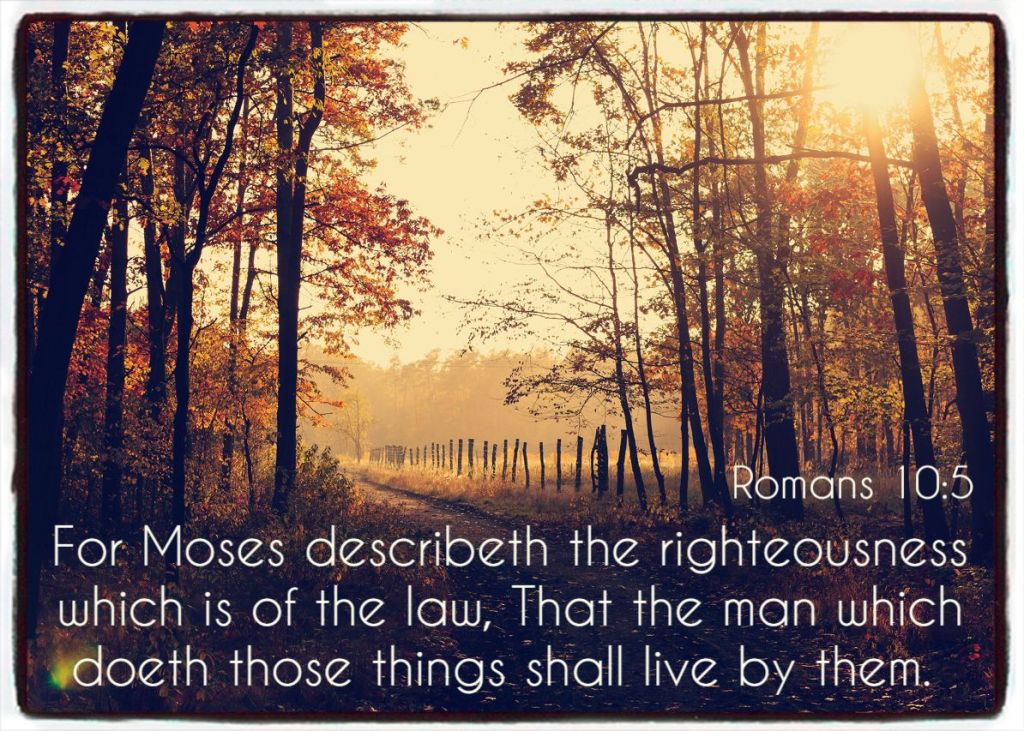
“I Know the Way by Heart!” Moses Described the Way of Righteousness That Is by The Law—Romans 10:5

Travel back to your days in High School or College English Literature class.

Recall a poem by Robert Frost titled,

“The Road Not Taken” (1951)

Two roads diverged in a yellow wood,

And sorry I could not travel both

And be one traveler, long I stood

And looked down one as far as I could

To where it bent in the undergrowth;

Then took the other, as just as fair,

And having perhaps the better claim,

Because it was grassy and wanted wear;

Though as for that the passing there

Had worn them really about the same,

And both that morning equally lay

In leaves no step had trodden black.

Oh, I kept the first for another day!

Yet knowing how way leads on to way,

I doubted if I should ever come back.

I shall be telling this with a sigh

Somewhere ages and ages hence:

Two roads diverged in a wood, and I–

I took the one less traveled by,

And that has made all the difference.

Robert Frost talks about living life in two different ways.

As the narrator of the poem, he chose to live a different way than most people: one perhaps more challenging, and one perhaps requiring more of a personal investment and commitment than the other.

One way is a legalistic way. It’s the way of rote obedience, of diligently following all the rules, of faithfulness to religious expectations to a fault.

The other way of having a relationship with God involves faith.

It involves believing in the love of God in such a way that can’t be known by the mind but can only be known by the heart.

Now I’m the kind of person that can handle just about anything, as long as I know what’s coming, what to expect.

Car repairs, medical procedures, home improvements – it doesn’t matter. I believe I can deal with almost anything if I know what’s going on and what’s about to happen. I’m a person that likes to do my research and be informed.

But being informed, doesn’t address all of my needs. That the doctors know what medical procedure I need to have done, and can explain it all to me, doesn’t make the physician care for me on a personal, intimate level. The expertise of my personal mechanic doesn’t address my concerns and anxiety.

I can read up on my medical condition, I can take a class in automotive repairs, but it doesn’t change the fact that I still have a problem and doesn’t mean the doctor or mechanic will raise themselves up, be my Savior in my time of need.

Paul talks about two ways of knowing, and only one of those-knowing God by heart rather than by mind, knowing God by faith- is one able to truly know God.

I know exactly how to “live in the world” by “heart.”

I also know its exact “message” of “salvation.” by “heart.”

The Question is – Do I know how-to live-in God’s Kingdom “by heart?”

Do I know God’s message of Salvation “by heart?”

Romans 10:5 Disciples’ Literal New Testament

The Law Requires Performance; True Righteousness Comes By Faith In Christ

For Moses writes [in Lev 18:5] as to the righteousness of the Law that “The person having done them will live by them”.

The Word of God for the Children of God. Gloria! In Excelsis Deo! Alleluia! Amen.

There is a difference between the righteousness that the Law offers and the righteousness that comes by faith. Paul started out chapter ten by saying the Israelites were zealous for God, but their zeal wasn’t based upon the truth of Jesus and because of it they sought to establish their own righteousness based upon the law (Romans 10:2, Romans 10:3).

Then in verse 4 made an amazing declaration that Christ was the end (the aim, the goal) of the law so we could be righteous and holy by faith (Romans 10:4).

Thinking about this for a while, this is truly an amazing truth, but difficult to accept unless one’s heart is in alignment with this truth from God’s word.

Our relationship with God has always been based upon a heart change even at the time that the Law was given this was the objective.

Moses warned the Israelites when he gave them the law the man who obeys them will live by them (Leviticus 18:5). It wasn’t based on Ten commandments; it was more extensive and based on over four hundred laws and precepts.

If you religiously followed one law, then you had to follow all laws. Moses warned them about this. However, he also understood that this revelation of God’s decrees was simply intended to get them to practice God’s presence, get ready for the coming of the promised Messiah and not to be a means to an end.

It outlined everything Messiah would be, it showed us how He would be the one true, perfect sacrifice before God in our stead. Moses warned that if anyone was set upon hyper trusting in the law to save them, they would soon discover how completely impossible it was. If you live by the law, then you will die by the law.

James said the same thing, “For whoever keeps the whole law and yet stumbles at just one point is guilty of breaking all of it” (James 2:10). 

The Law is an all or nothing thing. So, in that sense it is impossible to live by it because of the sinful nature with which we were born.

Fortunately for us we do not have to live this way because “but the righteous will live by his faith” (Habakkuk 2:4). The Amplified Version of the Bible put it in this way, “but the [rigidly] just and the [uncompromisingly] righteous man shall live by his faith and in his faithfulness” (Habakkuk 2:4 Amplified). 

Meaning that our faith in Christ is how and what we must live by, and this faith fulfills the law in our own hearts and souls. Because the law looked forward to Christ and made him its bullseye. Jesus brings us into relationship with God and inevitably our hearts and our souls changes and aligns to His in the process.

What does Jesus say about the Law?

Questioned about it by the Pharisees and Scribes, Jesus quickly responded, 

“Love the Lord your God with all your heart and with all your soul and with all your mind.’ This is the first and greatest commandment. And the second is like it: ‘Love your neighbor as yourself.’ All the Law and the Prophets hang on these two commandments” (Matthew 22:37-40).

Fulfilling the first commandment can only be accomplished with true lasting heart change. We cannot hope to love God with all of our hearts when it is only perceived and acted upon as an exercise in being an intellectual ritualistic thing.

To love God takes every ounce of our being we can only do this when our heart is aligned to his heart. This only happens when we experience the love of Christ. John said, “we love because he first loved us” (I John 4:19). 

Our love is a natural response to His love towards us. We can all 100% love him with everything we are because through grace alone we are a redeemed and holy people. By loving God in this way, we fulfill the intent of the law because we are looking to become dependent on him for everything, not relying on ourselves.

In the same way, because of His love pouring out of us we can love others where before we couldn’t. TBT, we can love others more by accident than on purpose.

This is because we are living our lives from a real change of heart that focuses on God for everything. It is not a self-centered thing. Love flowed from the cross and overflows into our hearts and we have become like Him through the regenerating power of the Holy Spirit.

Paul encourages us with the same thought elsewhere, 

“The entire law is summed up in a single command: “Love your neighbor as yourself.” (Galatians 3:14).

“Let no debt remain outstanding, except the continuing debt to love one another, for he who loves his fellowman has fulfilled the law.” (Romans 13:8). 

This love is based upon Christ who is the end of the law (Romans 10:4).

Today, my heart and my soul are indescribably thankful that Moses foresaw the coming Messiah and insightfully challenged the Israelites to look beyond and then forward to Messiah in faith instead of living by the dictates of the Law.

I am unbelievably thankful Christ has come in the flesh to redeem mankind. By trusting in Jesus, you are 100% saved and 100% loved and equipped to love one another. May the truth of this revelation of Jesus Christ bless you today, Amen!

In the name of God, the Father and God the Son and God the Holy Spirit,

let us Pray,

All Praise to You, Lord Jesus Christ, King of endless glory. You have the words of eternal life, and we have believed and have come to know that You are the Holy One of God. Gloria! In Excelsis Deo! Alleluia! Alleluia! Alleluia! Amen.

https://translate.google.com/

WHO IS THIS JESUS? (ROMANS 3:21-26)

We are now confronted by the realities of the Resurrection of Jesus Christ!

But now comes the challenge of all the ages; what do we do with this reality?

The choices and decisions and possibilities are as counting the grains of sand on the seashore or looking into a desert expanse and counting those grains of sand. We can never hope to count each and every one of them, but we must each still grapple with the reality that the sands are there, and we all must do something.

We cannot avoid the temptation to kneel down and pick up a handful of sand and let it course through our fingers and over our hands just for wonderment. Letting that handful of sand return to the earth before we reach down into a different section of sand, repeat the process wondering “did I pick up more?”

How long do we keep scooping up the sand into our hands before we just decide we are more interested in getting to know more about the actual sand we hold?

On the surface, that seems a whole lot easier than trying to count to numbers we have never heard of, nor could we ever hope to keep track of in our heads.

Over-all there is still an incredible wealth of knowledge and wisdom we can gain simply by taking the time to study and compare the contrasting qualities and characteristics and attributes of the sand, applying it to the reality of life.

Such is the nature of the quest to study the question: Who really is this Jesus?

Romans 3:21-26 New American Standard Bible

Justification by Faith

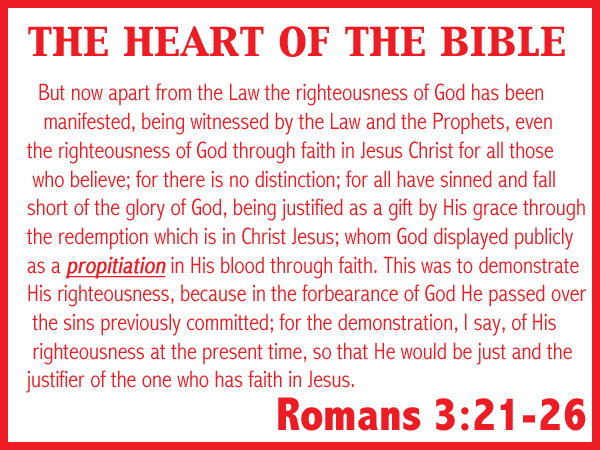
21 But now apart [a]from the Law the righteousness of God has been revealed, being witnessed by the [b]Law and the Prophets, 22 but it is the righteousness of God through faith in Jesus Christ for all those [c]who believe; for there is no distinction, 23 for all [d]have sinned and fall short of the glory of God, 24 being justified as a gift by His grace through the redemption which is in Christ Jesus, 25 whom God displayed publicly as a [e]propitiation [f]in His blood through faith. This was to demonstrate His righteousness, [g]because in God’s merciful restraint He let the sins previously committed go unpunished; 26 for the demonstration, that is, of His righteousness at the present time, so that He would be just and the justifier of the one who [h]has faith in Jesus.

The Word of God for the Children of God. Gloria! In Excelsis Deo! Alleluia! Amen.

Sorting out the most basic implications of the Resurrection and now the Life.

Living into the reality of Resurrection ……

Loving into the reality of Resurrection …..

Moving into the reality of Resurrection ……

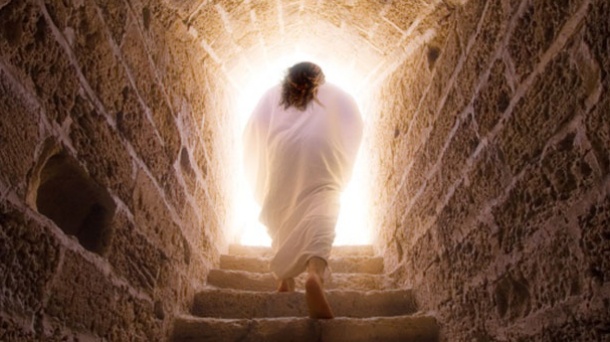
We start with acknowledging the reality of the Resurrection of Christ Jesus.

This reality is center mass to being Christian – it is at the heart of who we are. The tomb is absolutely empty – the disciples Peter and John have looked inside; we believe their witness – we believe what their eyes have seen and not seen.

We examine the witness of the disciples behind a locked door in the Upper Room. We study the witnesses, affirmation of faith of the disciple Thomas.

We find them to be absolutely credible and worthy of our acceptance and our belief because this is exactly what the Holy Spirit reveals to be trustworthy and true. We examine the Scriptures as a whole from Genesis through Revelation.

What does such a thorough examination reveal to me?

Today’s Bible verses shows us that none of us are excused from sin.

We were born sinners.

There’s no amount of trying or working that would get us out of our sinful state.

Also, there’s no way that our good could ever outweigh our bad. It’s literally impossible to come to the father except through Jesus. That’s the bad news.

The good news is that whoever this Jesus is, he didn’t leave us dangling there. He gave us His own life for the forgiveness of sin, righteousness as a free gift.

The starting place of receiving this gift is to first understand that we are a sinner and desperately need His grace. Salvation is only possible when one knows they are a sinner, and they completely throw their trust on Jesus.

Today, if we have not experienced the saving power of Jesus in our life, we can.

We simply have to ask Jesus to be the Lord of your life.

He will come in and save us, cleanse us and make us like new.

Then we simply live out of our new nature in Him.

We’ll want to spend time talking to God, getting to know Him on a deeper level.

Knowing Him is the best thing that God offers.

When you know Jesus, and love Him, your life has meaning and purpose.

So today, we begin to live out our choice to live for Him in everything we do.

JESUS IS THE PROMISED OLD TESTAMENT CHRIST WHO OFFERS “A NEW WAY” (ROMANS 3:21-22)

Romans 3:21 begins with a dramatic “but now”. When is this ‘now’? It is a ‘now’ after Genesis 3, after God has shown us our sinful state.

It signals for us a turning point, where “the righteousness of God had been manifested…” and that something objective has been done in history so that something is different now.

Ever since the fall of man in sin, mankind has been trying to work our way back to paradise, that state of blessed righteousness and peace with God.

We have all done so by covering up sins with fig leaves or trying to live good lives and be good people.

This “but now” is the appearing of Jesus Christ on the scene of history – the Son God promised to reverse the curse. 

Now, a “righteousness of God … apart from the law” has been made known.

What is this and what does it mean?

The righteousness of God has been shown apart from the law, meaning that a righteousness separate from the law is now present and Scripture (i.e., the Law and the Prophets) actually bears witness to it.

Romans 3 is basically saying that there is a way to become perfect not through obeying and keeping the law.  It is what Luther calls an “alien righteousness”- a righteousness that does not come from my own work or effort of keeping of the law.

Rom 3:21, Paul says that a non-law righteousness is now available. Sinners can now cross the bar without actually crossing the bar.  

This new way is through faith in Jesus, for He is the “Christ”, the promised one spoken of in the Law and the Prophets. 

JESUS IS THE SAVIOR WHO PROPITIATES, REDEEMS AND JUSTIFIES (ROMANS 3:23-25)

Rom 3:23 presents a problem that we all face.

It tells us that all have sinned in Adam and that we have fallen short of the glory of God. We have all run away from God and have shut him out of our lives. This is the sin that we have all committed. Gen 6:5 shows us the extent of our sins.

We are not just flawed or are flawed people with innumerable problems. We all share the sin nature of our ancestors – fearful, lustful, irresponsible and more. 

Verses 24 to 25 then go one to show us what Christ did for sinners like us. Jesus propitiates, redeems and justifies. Propitiation borrows the language of temple worship and means “to make favourable to” or “to satisfy”.

This is directed towards God to satisfy his wrath, the wrath of a righteous, holy God against sin, and this wrath means sinners naturally deserve death. Romans 3:25 tells us this Jesus was put forward by God as a propitiation of this wrath.

What does this mean?

The Bible tells us that God has no more wrath for sinners because Jesus Christ has satisfied God’s righteous judgment.

How did He do this? He lived the perfect life we were supposed to live and, on the Cross, died the death we ought to die as guilty sinners (Isaiah 53:4-6).

There, on the cross, He was punished as a rebel against God as our substitute, going through hell in our place (1 Peter 3:18). Jesus Christ gave His life for us because He loved us (Romans 5:8). This means those who receive and accept His work on their behalf are now absolutely at peace with God (Romans 5:1).

Redemption has taken place because of propitiation. Because Savior Jesus has propitiated God’s wrath, He has redeemed us.  

The word comes from economic language or the language of the marketplace.

It speaks of transfer of ownership. Thus, when the Bible speaks of redemption, it means we are freed from our former master, but we now serve Christ. We are never our own masters, but Jesus is our master, and He is one who justifies.

Because Jesus was put forward as the propitiation, and we have been redeemed, we are also justified. Because of what Jesus has done, we are justified sinners in God’s sight. That is the legal status we receive because of Christ. 

JESUS IS THE EVIDENCE OF GOD’S CHARACTER – HIS RIGHTEOUSNESS, MERCY, & WISDOM (ROMANS 3:26)

No matter how hard we try, how good we are, how much we work, we can never measure up to the only standard that matters — the glory of Almighty God.

Thankfully, God doesn’t require us to pretend to be what we are not — perfect, spotless, and holy. Instead, God makes us to be these (cf. Colossians 1:21-23) by grace, through the gift of his Son who purchased for us our pardon and gave us his righteousness (2 Corinthians 5:21).

Praise God. Praise our Savior, Christ Jesus.

Now let’s live with Jesus as our Lord; not to earn or secure our salvation, but to thank him for what he has so freely given us!

Romans 3:25b tells us that God did much more than show us his love at the cross. You see, God had another problem. He had passed over sins in his divine forbearance, leaving them unpunished. What does this mean?

Verse 25 tells us God left sins unpunished all the way until Jesus and if God did not deal with those sins, He would be an incompetent, partial and poor judge.

His integrity and justice would be compromised. 

The Apostle Paul teaches in Romans 3:26b that in Jesus Christ, God shows His wisdom by not only radically, scandalously loving us in forgiveness, but also justly satisfying what righteousness demands.

The cross shows us God’s love for those who could not be righteous on their own and yet, the fulfillment of His righteous requirement for divine justice.

What can we learn about God’s character through Jesus Christ?  We see his kindness to pardon us, but also in a way that satisfies his justice. God knows what to do with sin — either in hell, or it is all charged to Jesus on the cross.

Romans 3 shows us the incalculable depths and riches of God’s love. We have all the firewood and kindling stacked up high, to set our hearts ablaze by faith. Do you dare believe all that’s written here? Let the saving work of Jesus move you. 

In the name of God, the Father and God the Son and God the Holy Spirit,

Let us now Pray,

Most precious holy Father, all I can say to your marvelous grace is thank you! Please know that while these words are woefully inadequate, they are genuine. Dear Father, I look forward to showing you through the rest of my life just how much I appreciate all that you have done for me. In Jesus’ glorious name, I pray. Gloria! In Excelsis Deo! Alleluia! Alleluia! Alleluia! Amen.

Victory In Jesus! (Eugene M. Bartlett, 1939)

https://translate.google.com/

Countdown to Calvary: Walking with the Chief Priests and Pharisees into Pilates Palace. “Order the Tomb to be made secure!” (Matthew 27:62-66)

Our Countdown to Calvary has one more day to account for. The day of silence when the disciples have all been scattered – they have gone their own ways for fear of being hauled away from the homes, livelihoods, arrested, found guilty of being a follower of Jesus and crucified. Who knows where they are hiding now?

While they are in their very best hiding places, what we do have is the location of the Chief Priests and the Pharisees as they walk into Pilates Palace. They too are in fear of their future – What if Jesus actually rises from the tomb? What will become of them? Will the people arise against them, demand their crucifixions? What will happen to the Temple, its community, its role and its religious order?

Yes! They are afraid for the future of what they have worked hard to out into its place and the life of the people who have relied on them for being taught about God, facilitating their God-covenanted commitments, righteous community according to all the Laws of Moses and to the teachings of the great Prophets. There has been much invested by them here. They have too much to protect not the least of which is their positions of power and prestige and great influence.

But, instead of hiding away, they’re acting decisively, with great determination. We cannot find any of the disciples so we will now walk with the Chief Priests and the Pharisees to see what their intentions are in this very critical moment. We will walk alongside of them to learn just how the establishment responds.

Matthew 27:62-66 New Revised Standard Version

The Guard at the Tomb

62 The next day, that is, after the day of Preparation, the chief priests and the Pharisees gathered before Pilate 63 and said, “Sir, we remember what that impostor said while he was still alive, ‘After three days I will rise again.’ 64  Therefore command the tomb to be made secure until the third day; otherwise his disciples may go and steal him away, and tell the people, ‘He has been raised from the dead,’ and the last deception would be worse than the first.” 65 Pilate said to them, “You have a guard[a] of soldiers; go, make it as secure as you can.” [b] 66 So they went with the guard and made the tomb secure by sealing the stone.

The Word of God for the Children of God. Gloria! In Excelsis Deo! Alleluia! Amen.

It’s the Sabbath, the day of rest for the Jewish people. Jesus’s followers, hiding, devastated by his death, are resting: “On the Sabbath day they rested according to the commandment” (Lk 23:56).

But “the Chief Priests and the Pharisees” are busily at work. They have insisted on having an appointment with Pilate. They demand that he set people to work securing Jesus’s tomb. When Pilate tells them to use their very own “guard of soldiers” for the task, they don’t hesitate. They supervise the Jewish soldiers’ labor in “sealing the stone and setting a guard.”

These are the same religious leaders who got so mad at Jesus if he so much as healed anyone or even plucked heads of grain on the Sabbath. What’s got into them that they’re now so ready to work and to put other people to work on this obligatory day of rest?

The reason they give is inadequate: “Lest his disciples go and steal him away and tell the people, ‘He has risen from the dead.’” Well, yes, but a fraud like that would be exposed fairly quickly by the discovery of the stolen body, or it would just fade away when the risen Jesus himself remained an embarrassing absence, failing to appear in person.

So, what do the religious leaders really fear?

Let’s look at some of what’s happened in the last twenty-four hours or so.

For three hours, while Jesus was on the cross, “there was darkness over the whole land …, while the sun’s light failed” (Luke 23:44-45).

Whether or not this was a solar eclipse or divine intervention of another sort, it would have been deeply unnerving. Solar eclipses were read as threatening omens back then and for many centuries afterward.

There was also an earthquake, apparently with a specific target.

At the moment of Jesus’s death, “the curtain of the temple was torn in two, from top to bottom” (Mark 15:37-38).

This was the curtain that blocked entrance to the Holy of Holies at the heart of the temple to anyone but the high priest on the Day of Atonement.

With Jesus’s death, the barrier was removed. Tombs were opened, as well, and “many bodies of the saints who had fallen asleep were raised.” Although the risen saints did not “appear to many” in Jerusalem until after Jesus’s own resurrection, rumors of resurrection must have been heavily in the air.

All this was enough to persuade at least one centurion that Jesus was both “innocent” (Lk. 23:47) and truly “the Son of God” (Matt. 27:54), but it must have given “the chief priests and the Pharisees” the exalted heebie-jeebies.

Is it possible they are afraid of more than the theft of a body? They don’t admit this to Pilate. They probably haven’t voiced the fear to one another or even, perhaps, allowed themselves to be conscious of the true reason for their fear.

But is it possible that they were terrified that they’d made a dreadful mistake and that Jesus really would rise from the dead and prove himself to be the Christ, the Son of God? Given all that had happened, it wouldn’t be an irrational fear. And only an unspoken fear of such magnitude would plausibly explain their demand, on the Sabbath day, that soldiers work to seal the tomb and guard it against not just body snatchers but—God forbid! —a resurrection.

If that’s what’s making their stomachs churn, they do not have many options.

Do they really think that sealing the tomb will keep a risen Christ inside?

Or that a guard of armed soldiers might arrest and conceal the risen Christ?

These are desperate and inadequate measures. The portents of imminent supernatural intervention are staring them in the face, and they are flailing helplessly. Even Pilate has no confidence in their efforts. He says, “Go, make [the tomb] as secure as you can.” He’s being more than just a little bit ironic. He knows they can never make it secure. Not against what’s about to happen.

The fears of these religious leaders may be profoundly characteristic of fallen human beings in general. Even in our times, those who minimize or deny the resurrection of Christ may, at some level, be afraid that it might just be true.

They would readily deny their doubt, of course, certainly to us and probably to themselves. But if, as we believe, Jesus really did rise from the dead on that first Easter Sunday, then his resurrection threatens a spiritual earthquake in the life of anyone who prefers not to answer to (or even to be loved by) a risen Christ. It must seem easier to guard against perceived threats to their established faith.

Many today are still incredibly uncertain of what to make of the resurrection. Many today still prefer to remain “restful” and in hiding from the reality of the moment. They prefer to acknowledge more truth to the fact the tomb is now heavily guarded “by the guards of the temple establishment” and see no viable reason to raise themselves up challenge it or to question it or protest against it.

With the humility we have been taught by the man, Rabbi Jesus, we’ll go ahead, gracefully acknowledge they have their questions and legitimate concerns. We meet with them as Jesus met Levi/Matthew as the Tax Collector. We will “walk” across their paths in the prayerful hope they will freely engage us as Levi did. In the prayerful, faith-filled, living hope that we will be invited into their ‘homes.’

God invites all of us to have an abiding relationship with Him. He extends His invitation in His time and in His own way. This “day of our silence” is His way. This day of silence is His time for us to walk across that “Levi/ Matthews path.”

It is an enormously powerful moment to receive the skeptic and their questions.

While they may only see the “heavily guarded tomb,” God is busy working His miracle of resurrection beyond the guards, beyond the rock, inside the tomb. We just need to be ready to invite the skeptics to come back with us tomorrow.

We who, by God’s grace, have been allowed to believe that Christ not only died for our sins but was also “raised for our justification” (Rom. 4:25) are blessed to await Easter Sunday morning not with fear but with sure hope and great joy.

May we each take time today to “accidently” cross paths with, pray for those who minimize, question, deny the resurrection. May we pray that their fear, too, might be replaced with a joyous living faith in the love of God in Christ.

For tomorrow, COMES THE SON RISE ….

In the name of God, the Father and God the Son and God the Holy Spirit,

Let us Pray,

ABBA Father, today we pray we would have a refreshed perspective of all that has Jesus endured for us. He humbly served those He loved, even His betrayer. We pray that if we have become too callused or familiar with His suffering that our hearts would be softened again. We pray that His resurrection would give us a renewed, empowered and inspired and inspiring confidence all things are still possible, and that greater things are surely yet to come. Alleluia! Alleluia! Amen.

https://translate.google.com/

Countdown to Calvary. On the very prospect of Suffering for our faith – Do Not be Surprised! Only Rejoice in the Lord Always! (1 Peter 4:12 – 19)

Today, we are walking alongside Peter. We are curious to what he is thinking.

Calvary is before us, though we realize it not. If we are in realization, we are not yet in a place where we can even begin to comprehend its awesome magnitude.

Three times, our Rabbi Jesus has told us of his having to suffer at the hands of his betrayers. He has prophesized that he must suffer unbelievable humiliation at the hands of the people – that he will be crucified, and he will be killed. We do not believe this is possible for such a one as our Rabbi – we will never allow it to happen as long as we are alive, can expend all strengths, and able to prevent it.

But, to our surprise, our Rabbi sharply rebukes us. He tells us we are to get out of his way – do not try to prevent his coming suffering. It is ordained by God! I cannot wrap my head or my heart or my suffering soul around such a notion. I am struggling with the notion that Rabbi suffering is a God ordained necessity.

I understand what it means to struggle and suffer – I have spent many days in my father’s boats – struggling and suffering to bring in the nets filled with my days catch. I also understand what it means to suffer and to struggle when the nets are empty at the end of the day, and that I have no fish to sell in the local market or to feed my family, friends and neighbors or donate to the Temple. I am used to such days and count them as the cost of doing what I choose to do.

But now, with these words of my Rabbi, weaving into and out of my soul, I do not believe I really know, nor comprehend what suffering he is referring to. I have seen people being crucified – and it frightens me to the core of my being. My own Rabbi tells me he must absolutely experience this for my greater good. These are strange words to me! These are surprising words to me! What now?

So, I continue to walk with my Rabbi as we prepare to celebrate the Passover ….

1 Peter 4:12-19 Easy-to-Read Version

Suffering as a Follower of Christ

12 My friends, do not be surprised at the painful things that you are now suffering, which are testing your faith. Do not think that something strange is happening to you. 13 But you should be happy that you are sharing in Christ’s sufferings. You will be happy and full of joy when Christ shows his glory. 14 When people say bad things to you because you follow Christ, consider it a blessing. When that happens, it shows that God’s Spirit, the Spirit of glory, is with you. 15 You may suffer, but do not let it be because you murder, steal, make trouble, or try to control other people’s lives. 16 But if you suffer because you are a “Christ-follower,” do not be ashamed. You should praise God for that name. 17 It is time for judging to begin. That judging will begin with God’s family. If it begins with us, then what will happen to those who do not accept the Good News of God?

18 “If it is hard for even a good person to be saved,
    what will happen to the one who is against God and full of sin?”

19 So if God wants you to suffer, you should trust your lives to him. He is the one who made you, and you can trust him. So, continue to do good.

The Word of God for the Children of God. Gloria! In Excelsis Deo! Alleluia! Amen.

What ought we to learn from such a lesson as Peter dictates to us?

I want to highlight important four truths from this text.

First, don’t be surprised when you suffer for your faith in Jesus Christ (v. 12).

Second, rejoice, and glorify God when you suffer for your faith in Jesus Christ (vv. 13-14).

Third, don’t be ashamed to suffer for your faith in Jesus Christ (vv. 15-18).

Fourth, trust God when you suffer for your faith in Jesus Christ (v. 19).

In order to understand vv. 12-19, I will first discuss two introductory points about the context of our text.

1. Context of 1 Peter 4:12-19.

First, in my own personal view, Peter wrote this letter to exhort Christians who have suffered for their faith in Jesus Christ to be holy and to hope in God as they suffered for their faith in Christ.

For example, in 1:6-7, Peter states that these Christians should rejoice although they suffer “various trials” so that their faith would be tested (i.e., refined) and proven to be real at the revelation of Jesus Christ.

In 1:13, he exhorts them to hope in the saving grace of Jesus Christ, grace that will be offered to them when Jesus returns (see also 1:13-16).

In 2:18-25, he exhorts Christian slaves to endure their suffering at the hands of both unjust masters and just masters in a manner that honors Christ.

In 3:14, Peter exhorts these Christians not to fear their oppressors if they suffer for righteousness (i.e., if they suffer as a Christian).

Finally, in 4:12-19, Peter exhorts these Christians to honor Christ even if they are insulted, reviled, and ridiculed for their Christian faith.

Thus, in my view, Peter wrote this letter to exhort Christians who suffered for their faith in Jesus to be holy and to hope (i.e., trust/wait) for their salvation in Christ as they suffered for Christ.

Second, Peter grounds his exhortations to be holy and to hope in God and God’s sovereign work of salvation in Christ.

For example, in 1:1-2, Peter calls these Christians, scattered throughout Pontus, Cappadocia, Asia, Galatia, and Bithynia, elect (chosen by God) in accordance with his foreknowledge (i.e., in accordance with his covenantal love that he chose to place on them before the foundation of the world).

In 1:2, Peter further states that these Christians are the people of God when he refers to their conversion with the words elect by the sanctification of the Spirit for obedience and for sprinkling with the blood of Jesus Christ.

In 1:3-5, Peter further explains to his audience they are the people of God by emphasizing God himself has reached down from heaven and supernaturally entered their lives by causing them to be born again to a living hope according to his great mercy by the resurrection of Jesus Christ from the dead unto an incorruptible, unfading, and undefiled inheritance,

which is being kept in heaven for them, who are being kept by the power of God for an eschatological salvation that has invaded this present evil age and that will be revealed on the last day.

Then, Peter says, in verses 6-12, although they suffered various trials in this life, they should rejoice, because they would receive the goal of their faith, namely, the salvation of their souls.

Their suffering was a means by which their future salvation would be realized.

Based on Peter’s brief doxology about God’s sovereign work of salvation on behalf of his people in 1:3-12, Peter then exhorts these Christians in 1:13 until the end of the letter to be holy as they are suffering for their faith in Christ.

Therefore, before considering 4:12-19, we must remind ourselves that Peter grounds his gospel imperatives to be holy and to hope in the gospel indicatives of God’s own sovereign work of salvation in the lives of his people who were suffering for their faith in Christ.

This reminder takes me to my first point from 4:12-19.

First, don’t be surprised when you suffer for your faith in Jesus Christ (v. 12).

Don’t be surprised by the fiery trial (12)Peter begins verse 12 by exhorting his audience not to be surprised/shocked by this fiery trial that has come upon them as though something strange/foreign has come upon them. The fiery trial refers to suffering for their faith in Jesus Christ.

More specifically, it refers to suffering insults, revilements, social ostracism from the society in which these Christians lived, because Peter states in verse 14 these Christians are blessed if they are reviled/insulted for the name of Jesus. This latter point is supported elsewhere in 1 Peter (e.g., 1 Pet 2:12, 18-25; 3:14).

Peter calls this trial “fiery” because he associates it with God’s chastening or judgment of his people for the sake of purifying their faith.

In 1 Peter 1:7, Peter refers to the suffering of these Christians with an analogy of gold being refined through fire. He asserts in 1:7 that their tested faith, is more precious than gold refined by fire, will be proven to be real when Jesus returns.

Furthermore, in 4:17-18, Peter associates this fiery trial with God’s judgment and chastening of his people when he states that judgment begins with God’s people at God’s house first and that the righteous will be saved by means of difficulty (i.e., by means of suffering).

In 4:19, he declares that it is God’s will for Christians to suffer.

Consequently, if we read 1:7 beside of 4:12-19, we can infer that God brings the fiery trial of suffering for faith in Jesus Christ upon these Christians through evil antagonists of the Christian faith to be a means by which he keeps them in order to strengthen the faith of these Christians so that they will be saved from God’s eschatological wrath when Jesus returns.

Second, rejoice when you suffer for your faith in Jesus (vv. 13-14).

The tension between suffering and joy (13):

This verse introduces us to one of the many tensions of the Christian faith: namely, the tension of joy co-existing with suffering.

Peter says if “you participate in the sufferings of Christ” (by which I think he mentions you suffer for righteousness as a Christian), “then rejoice.”2 I do not expect Peter to say “rejoice” when you suffer!

Honestly, in light of verse 12, verse 13 comes as a shock to me since Christians who heard this exhortation and who have read this exhortation throughout history have suffered severely.

Nevertheless, Peter’s exhortation to rejoice is not a contradiction, but it is an exhortation to hope in God’s promise of eschatological salvation.

That is, he is exhorting these Christians to look to the eschatological salvation for which they have been saved and which God will reveal to them on the last day when Jesus returns.

In the midst of the certainty of their suffering for their faith in Jesus Christ, Peter reminds these Christians of the certainty of their future salvation, which has invaded this present evil age.

This interpretation seems right for the following reasons.

First, in the first half of verse 13, Peter says “but to the degree that you share/ participate in the sufferings of Christ, you rejoice!” In the second half of verse 13, he gives the reason for the command: “so that at the revelation of his glory” (i.e., at the second coming) “you may rejoice with much exultation.”

Second, in 1:6-9, Peter exhorts these Christians to hope in their various trials in this life because their suffering is a direct means by which they will truly inherit future salvation.

Finally, in 1:13, Peter exhorts these Christians to hope in their salvation that God will give to them when Jesus returns.

Therefore, in 4:13, Peter exhorts these Christians to hope in the certainty of God’s eschatological salvation in the midst of the shame and dishonor that their persecutors brought upon them for their faith.

Instead of being ashamed of suffering for Jesus, they should be rejoicing because they will be saved from their suffering and from God’s wrath when Jesus returns since they are the people of God.

The Spirit of God and of glory rests upon those who suffer (v. 14):

I believe verse 14 further supports the preceding interpretation. The Spirit rests upon the people of God in 1 Peter.

In 1:2, Peter states these Christians have been sanctified by the Holy Spirit: i.e., they have been converted.

Thus, Peter’s point in 4:14 seems to be when Christians suffer for their faith in Christ, this particular suffering proves they have the Spirit, it proves they are the people of God, and their suffering for Christ proves they will be saved on the last day when Jesus returns. Therefore, Christians should rejoice (i.e., hope in Christ’s salvation) when they suffer, because we are indeed blessed by God.

Third, don’t be ashamed when you suffer for your faith in Jesus Christ (vv. 15-18).

In verses 15-18, Peter further explains the argument he has been making in verses 12-14.

Namely, in verses 12-14, the argument is don’t be shocked/surprised when you suffer for your faith in Jesus Christ as though this is a strange thing.

But instead rejoice now when you suffer for your faith in Jesus Christ, so you will rejoice on the last day when Jesus returns in his glory, because if you suffer for your faith in Christ, then such suffering proves that you are converted.

In verse 15, Peter now says be ashamed to suffer for unrighteousness because that kind of suffering brings dishonor in God’s eschatological law-court.

There is no honor when one suffers as a murderer or as a thief or as a busy-body or as an evil-doer, for these acts bring shame in society and in God’s eschatological law-court (v. 15).

But Christians should not be ashamed to suffer as a Christian (i.e., for their faith in Christ) because suffering for Christ brings honor in God’s eschatological law-court although it brings shame in this life.

Christians should, nevertheless, glorify God by suffering for the name of Jesus Christ when non-Christian’s dishonor and shame them for their faith in Christ.

In v. 16, the command to glorify God by the name of Christ is another way of talking about hoping in God (cf. 1:13) and trusting God (cf. v. 19).

In verse 17-18, with an appeal to Proverbs 11:31 from the Septuagint (LXX), Peter specifically offers a reason why Christians should not be ashamed to suffer for their faith in Christ.

Namely, God judges his people in the current evil age by means of suffering via evil opponents of the Christian faith (v. 17).

In v. 18, he confirms this interpretation by asserting that the righteous (i.e., Christians [v. 16]) will be saved by means of difficulty, whereas the ungodly and the sinner (i.e., the non-Christian) will experience God’s wrath (vv. 17-18).

Although vv. 17-18 do not explicitly state the latter point, the context supports it since Peter has emphasized throughout the letter up to 4:18 that Christians are the people of God and that they will be saved from God’s future wrath.

The implication of 4:17-18 is that non-Christians will not escape God’s wrath since they reject Christ, which they demonstrate by persecuting Christians.

Fourth, trust God when you suffer for Christ (v. 19).

Peter concludes 4:12-19 with v. 19 by exhorting these Christians to implicitly trust God when they suffer in accordance with his will (i.e., when they suffer for righteousness as Christians) as they live righteously. (Consider Isaiah 43 here!)

The Long and the Short of this text is this …. against our 21st Century context,

Any “Suffering” sucks. Suffering for Christ is something else altogether.

To suffer for Jesus is something we should expect according to Jesus Himself.

He said that the world would be hostile to His followers and suffering through persecution was something we needed to prepare for. (Consider John 17)

That is because Christians were meant to shake up the world with a message of radical love, mercy, grace, forgiveness, salvation, and transformation.

But, WHERE IN GOD’S KINGDOM DO WE NOTE SUCH RADICAL BEHAVIOR?

Even though the world needed to know the truth, it would not take it easily.

There would be resistance and even fear, all directly and decisively, maliciously aimed at the messengers of The Gospel Message.

If we are honest, we do not want this to be our common faith experience.

Yet, we must absolutely acknowledge the struggle and suffering of churches in countries where communicating the message of the Gospel comes with a heavy price – imprisonment, torture, public humiliation, even worse is their death.

We must pray for the “underground churches” their leaders and congregants.

Where and when possible, support them with our abundance of resources.

https://americanbible.org/

https://lp.billygraham.org/ukrainian-fundraiser/

We have more freedom here in America to follow Jesus, but unfortunately, I don’t know if that has made us bolder or more urgent with God’s message.

If anything, the culture is indifferent to Christians, because sadly, maybe that is how indifferently we live for Jesus too.

We are in a weird situation. We can be free to be faithful.

The prospect of suffering for our faith is low.

You would think the church would be thriving and believers emboldened and on fire for God’s work.

That is not the case at all.

If anything, Christians seem to blend in with the secular culture more and more.

The church does not struggle with suffering, rather, things like a how to have a more convenient and comfortable faith.

We have lost the edge that can only be sharpened through pressure and testing.

The irony is that the world around us is suffering.

People are struggling and broken without Jesus.

They are looking for hope and a way out.

While that is not pleasant, suffering for being a Christian would at least mean people recognize you are a Christian and you are living in a way that stands out.

However, persecution is not really a threat or reality for most of us.

I can’t say if that a good or bad thing.

What I can say is that a faith that you have to fight and stand up for is a stronger and more enduring faith, simply because it has been tested.

I firmly believe some of the believers reading this devotion right now would identify more with today’s Word because they would have come from countries where living for Jesus has a real price and potentially lethal consequences.

We need those stories and that faith experience to impact our churches here.

We know, or should make a point to know, that there are believers suffering for Christ all over the world.

We are richer for those who have suffered for Christ and come up the other end still standing.

Perhaps, a first step and response to a faith that is relatively free, is to wake up and seize that God-given opportunity by living boldly and recklessly for Jesus.

Believe thou this!

Think about that.

Pray without ceasing about that.

Do something ASSERTIVE about that ……

In the name of God, the Father and God the Son and God the Holy Spirit,

Let us Pray,

Heavenly Father, thank You for the Lord Jesus Christ and all that He has done for me. Thank You that in Him, I have eternal life and am secure in Your hands, no matter what I may have to suffer in this life. Thank You that by His blood, I have been fully and finally redeemed and forgiven of my sin. I pray that those who abuse me and cause me to suffer because of my faith in Jesus, may then be convicted of their sin and come to a saving faith in Christ. Thank You that Your grace is sufficient for everything I may have to face. May my life bring honor to You and Your Son’s suffering. In Jesus’ name, Alleluia! Alleluia! Alleluia! AMEN.

https://translate.google.com/

Countdown to Calvary: Humility, We See Jesus – Dying to Bear Much Fruit. Lessons in our Living John 12:20 – 26

Today, I want to try to tell you a short story about two men and their wheat.

One man had a grain of wheat and he loved it very much. He spent the majority of his time and energies on securing the best possible container for his wheat.  

When it came to moving his wheat from one place to another, he spared no expense. He loved his wheat, so he bought the best. He made sure his grain of wheat stayed out of harm’s way; if wheat gets wet you know it will quickly spoil.

So, he was very careful to be sure to always do what the wheat experts told him to do in order to see his grain of wheat stay strong even into old age. This man was sold out for his wheat, and it showed. Then the man died.

The other man also had a grain of wheat but what he did was very different. 

He went out into the backyard, dug a hole, threw his wheat in to it, covered it with dirt, and poured water all over it thus completely ruining the wheat. 

Then the man died.

Sometime after both men were dead and buried a news reporter got wind of these two unusual men and their wheat. The reporter decided to do a follow up. 

Where the first man had lived the grain of wheat was easily spotted surrounded by the best. But when the lid was removed, and the cameras pulled in close the sight was saddening; that grain of wheat though greatly prized and protected had been ruined. Stuck away in the dark of selfishness that wheat had spoiled

The reporter got back in her car and assumed she was about to go from bad to worse. If the first man had done everything to protect his wheat and it had all been for nothing, then what would there be to show for the other man who just threw his in the ground and wasted it?

As she drove closer, she noticed these tall and vibrant green plants along the side of the road; very strange. As she pulled into the driveway the entire yard of the second man was covered in three-foot-tall green grass. Now filled with curiosity the reporter asked the neighbor, “What are all these plants.” And he responded, “It’s this man’s wheat”

One man protected his wheat and lost it all. 

The other man threw his wheat into the ground, and it produced much fruit. 

Christ’s life is that single grain of wheat. He is glorious and he has done many glorious things. But if he doesn’t die there is no salvation for you or for me. If Jesus is not the suffering Servant/Savior of Isaiah 53, then he is no savior at all. 

But if he did come to die and if he did die and rise again, then he will produce much fruit. There will be lives changed. There will be a great harvest of joy-filled Christ-followers. Jesus came to die, and he died so to bear much fruit.

John 12:20-26 Holman Christian Standard Bible

Jesus Predicts His Crucifixion

20 Now some Greeks were among those who went up to worship at the festival. 21 So they came to Philip, who was from Bethsaida in Galilee, and requested of him, “Sir, we want to see Jesus.”

22 Philip went and told Andrew; then Andrew and Philip went and told Jesus. 23 Jesus replied to them, “The hour has come for the Son of Man to be glorified.

24 “I assure you: Unless a grain of wheat falls to the ground and dies, it remains by itself. But if it dies, it produces a large crop. [a] 25 The one who loves his life will lose it, and the one who hates his life in this world will keep it for eternal life. 26 If anyone serves Me, he must follow Me. Where I am, there My servant also will be. If anyone serves Me, the Father will honor him.

The Word of God for the Children of God. Gloria! In Excelsis Deo! Alleluia! Amen.

I. Eternal life requires more than fearing God and being interested in Jesus (20-23)

As we look into these verses from John, we need to realize that we are at a turning point in salvation history. God’s plan to reconcile the world to himself through the seed of the woman is about to advance at a rapid pace.  

Here’s the point

A.  The glorification of Jesus Christ is required for the salvation of the nations.

The Pharisees in verse 19 make the observation that, “the world has gone after [Jesus].” In the triumphal entry and in the people’s loud praises the Pharisees see the popularity of Jesus. That confession in verse 19 leads us to the account of “some Greeks” in verses 20-22.

Now among those who went up to worship at the feast were some Greeks. So these came to Philip, and asked him, “Sir, we wish to see Jesus.” Philip went and told Andrew; Andrew and Philip went and told Jesus.

Literally the people and nations are coming to Jesus. They want to see him. Now this phrase means more than look at him. These Greeks want to talk with Jesus.

They are hesitant. Possibly because they have just witnessed Jesus clean out the court of the Gentiles when he cleansed the temple; that’s a bit intimidating. So, they instead go to Philip who probably spoke Greek and asked for an audience with Jesus. The people and the nations are mightily curious coming to Christ.

And Jesus responds with a surprising and an unexpected word, verse 23, “The hour has come for the Son of Man to be glorified.”

Up to this point in the life of Christ when Jesus has spoken of “his hour” it has always been in the future tense.

In John 2:4 he told Mary, “My hour has not yet come.”

In John 7:30 we read, “So they were seeking to arrest him, but no one laid a hand on him, because his hour had not yet come.”

In John 8:20 we read, “These words he spoke in the treasury, as he taught in the temple; but no one arrested him, because his hour had not yet come.” 

From here on, from the coming of the Greeks on, Jesus will emphasize the fact that his hour is here.

In John 12:27, “Father, save me from this hour? But for this purpose, I am come to this hour.”

Using the language of the time to glorify the Son Jesus says in John 13:31, “Now is the Son of Man glorified, and God is glorified in him. If God is glorified in him, God will also glorify him in himself, and glorify him at once.”

It is possible that Jesus is only 4 days from the cross. Jesus is fully aware that his death his required for the salvation of the people and the nations.

And Jesus is fully aware that now is the appointed time of his glorification. He must be glorified in order for these Greeks to be saved. He must be glorified in order for you, me to be saved. No one from Adam to the last of God’s children will see eternal life if Jesus does not fulfill the Father’s plan of redemption.

Let’s drive this point home

B.  Your salvation depends upon Jesus’ glorification

Let’s bring in some of the terminology from verse 23. Unless Jesus is glorified, unless the grain of wheat is put into the ground, he will not bear fruit.  Unless Jesus be glorified no one will be saved.

That’s how crucial the cross is. That’s how important this hour is; salvation depends on it.

We should expect the theme of glory to be central from here on in John and it is. We’ll unpack this more, Lord willing, I just want you to see what glorification is.

Look down to verses 28-33.

‘Father, glorify your name.’ Then a voice came from heaven: ‘I have glorified it, and I will glorify it again… verse 31…’Now is the judgment of this world; now will the ruler of this world be cast out. And I, when I am lifted up from the earth, will draw all people to myself’ He said this to show by what kind of death he was going to die.

The glorification of God is displayed through the judgment of sin when God’s wrath for poured out on Jesus. The glorification of God is displayed through the defeat of Satan when his power is broken through the resurrection of Jesus.

The glory of God is about to be displayed through Jesus’ finished work on the cross, resurrection from the grave, ascension back to God’s glorious right hand, and the salvation of the people and the nations who come to Him.

Our salvation and the salvation of the nations, depends on the Son of man being glorified.  The death, resurrection, and ascension of Jesus do not just show us something they secure something.  The glorious work of Jesus Christ on your behalf secures your salvation. 

If this hour doesn’t ever come, then we are lost and hopeless but if Jesus has been glorified then we are saved and we are all born again into a living hope.

These Greeks in John 12 were God-fearers who were willing to submit to God’s laws. They were interested in meeting and learning from Jesus.

But that’s not what is required for salvation. We must be connected by faith, by hope and by love, to the glorified Jesus crucified, resurrected, and ascended.

Where are you today? Does our religion consist only of some rule keeping and occasional interest in Jesus?

If so, you and I would do well to fear that we are missing salvation all together (Hebrews 4:1).  Salvation depends on you being connected to the glorified Jesus.

By faith you and I are joined to him. And with him we are as righteous as God and have power over the grave. Jesus has been glorified. There is salvation and eternal life for you. But you and I must absolutely be connected to him by faith.

Salvation is a promise because salvation depends on the completed work of Jesus Christ. Jesus’ death is a necessity. – The Single Seed must Be Planted!

II. Nature proves that a harvest requires death (24)

A.  Jesus illustrates the necessity of his death by pointing to the planting and harvesting of wheat. Verse 24

Truly, truly, I say to you, unless a grain of wheat falls into the earth and dies, it remains alone; but if it dies, it bears much fruit.

We grow vast fields of wheat to make bread.

Here is what a grain of wheat looks like. 

If you do nothing with this single wheat, then as a whole, it is 100% worthless.

But if you plant that wheat there comes a miracle. By continual harvesting and sowing, one grain of wheat can produce millions of grains of wheat. But what is required to make that harvest happen? You absolutely have to plant the wheat.

You must make it for the moment ruined. Once that grain of wheat is put in the ground and watered you cannot dig it up, grind it up, and make bread out of it. 

But when it dies it bears much fruit.

Jesus obviously isn’t giving us instructions for our gardens.

He’s giving us hope for our souls.

If Jesus skips the cross, if he does not die, then there is no salvation.

But since Jesus endured the cross dying in our place then there is salvation.

Just as millions of grains of wheat come from the death of one grain so the salvation of the people, the nations, comes from the death of the only Son of God.  Eternal life depends on the death of Jesus Christ.

All of the Realm of Nature illustrates this clearly.

Here’s our third point that comes out of Jesus’ death on our behalf.

III. You are the fruit (24-25)

A.  God, The Father is the Lord of the harvest, Jesus the Son is the single grain which starts the harvest, and all that we are and do is a part of the harvest

You and I must fight to keep the call of verses 25 and26 grounded in the work of Christ explained in verse 23 and 24. You and I will live life rightly, enjoy eternal life, serve Jesus, follow Jesus, be with Jesus, and be honored by God as we cling to the glorified Jesus.

All that we are as a Christian is a direct product of all that Jesus has done. God doesn’t demand our death for your salvation. God saves only those who have the glorification of Jesus credited to their souls.

B.  I was quite surprised! Verse 25 is not what I expect

I thought verse 25 should read, “Whoever loves his life loses it, and whoever hates his life in this world bears much fruit.

But the teaching here is not that you and I should die to bear fruit.

That is true and Jesus is going to teach us all about that in John 15.

But before we get to chapter 15, we need to get this point. 

Our redeemed life, our experience of eternal life this very moment, is the produce of Jesus’ death, resurrection, and ascension.

If we get our place wrong when you think about God’s will for all of creation, then we’ll get our life wrong, and we’ll be frustrated by a lack of fruit bearing.

Let’s lay a foundation and hold fast to it.  Our salvation and the salvation of others realized through our good works is ultimately the result of Jesus’ work. 

Since Jesus is the grain of wheat that fell into the earth and died, and since Jesus bears much fruit, we are saved and so are others.  Eternal life today is the result of the glorification of Jesus Christ 2000 years ago.

C.  Your Christian Life is “found” not by protecting yourself but in your gaining the Life of Jesus Christ

Look at John 12:25, Whoever loves his life loses it, and whoever hates his life in this world will keep it for eternal life.

When we read the bible there is a repetition of someone loving a person and hating another person.

Romans 9:13 reiterates the facts that God loved Jacob and hated Esau.

Now let us read and study and pray over Genesis 29:30 – 32

30 So Jacob…loved Rachel more than Leah and served Laban for another seven years. 31 When the Lord saw that Leah was hated, he opened her womb, but Rachel was barren.

Hate is not necessarily the emotional disgust that we feel when we say we hate something. Love and hate in this context have more to do with priorities.

Think about it this way, “Whoever focuses on his life loses it, and whoever forgets his life in this world will keep it for eternal life.”

Have you and I ever been so focused on one thing that we completely forget everything else? That’s the idea. If you focus on your life, your wants, your plans, and yourself then you will also forget, lose your focus on Christ. 

But as we focus on Christ, his wants, his plans, and his self then we will forget our life.

Look at God’s promised product: if we love our life, we will destroy our life.

We are like Lennie from Of Mice and Men by John Steinbeck.

Our thinking is off and so we end up destroying the thing we love the most. 

By protecting ourselves and looking out for ourselves and taking care of numeral uno we ultimately end up destroying ourselves. That is warning.

But here is the promise of John chapter 12: whoever hates his life in this world will keep it for eternal life.

I believe it’s important that the verbs loving, loses, hating, and keeping are present active indicatives. That means they keep right on happening.

These are not one-time events but characteristics, a way of living.

A life primarily focused on Christ will necessarily be a life which neglects self.

You can’t love yourself and Christ. You will love the one and hate the other.

Please do not be fooled into thinking there is a healthy balance between loving self and loving Jesus. There is no such place as a “middle ground.” To attempt to be there is to be disgusting. Jesus promises to vomit you out of his mouth.

We love Jesus.

So, here’s how to pursue this self-hating Christ loving life: follow Christ. 

We must never set out to hate or neglect our lives.

What we must set out to do is focus on, prioritize, and follow Christ. 

This is the connection between verses 25 and 26. It leads to our final point.

IV. Following Christ entails serving now, and gaining heaven and honor then (26)

A.  Following Christ is forgetting self

You can’t protect yourself and follow Christ because going after Christ means following the One who came to die.

Look at verse 26, “If anyone serves me; he must follow me.” 

This is Christianity: finding life not in yourself but in the glorified Jesus.

Adopt his plans as your plans.

Do the things he did. Care about the things he cared about.

Christianity is not keeping the rules and being somewhat interested in Jesus. 

Please notice something.

Twice the word ‘serve’ is repeated in these two verses.

Christians are those people who see the glorified Jesus and serve him.

We are those who are changed by the work of Christ so that we give ourselves to the work of Christ.

Christians work the works God sent Jesus to do.

Christians serve Christ and follow Christ by joining in the grain harvest. Serving and following Jesus demand our everything.

This is why in a similar passage Jesus tells us to count the cost (Luke 14:25-33).

Notice, eternal life is not something we get after we die because of a decision we made as a kid with little consequence for the time in between. 

Eternal life is the time span in which we will enjoy the life Christ has given us.

When we forget ourselves and follow Christ, we will gain a life that is worth living and enjoying for all of eternity. Our self-centered lives would make for a miserable eternity. God’s Christ-centered life makes for an amazing eternity.

Here’s the promise of heaven, verse 26, “and where I am, there will my servant be also.” 

Jesus said in John 14:3, “If I go and prepare a place for you, I will come again and will take you to myself, that where I am you may be also.” 

The promise of heaven, everlasting life and joy in the presence of God, is held out to both you and to me today. 

Follow Christ. 

Serve Christ. 

Ground yourself in the glorification of the only Son. 

Heaven is for you.

Plant your hopes in the death, resurrection, and ascension of Jesus.

You will not be disappointed.

There’s more.

Verse 26, Jesus promises, “If anyone serves me, the Father will honor him.” 

Jesus knows nothing of bait-and-switch. Hating your life is not going to turn out to be a bad idea. If you trust Christ and let him shape your desires and your direction, then look what you’ll get.

Do you see it in verse 26? God himself will honor you. 

Every honor bestowed on man by man goes no farther than this earth and our graves and that appointed day we are all laid therein – never to be seen again.

But every honor bestowed on the servants of Christ is eternal and unceasing.

The honor given by God to you because of Christ cannot be taken away, revoked, or destroyed. There is a meaningful substantial life for you and for me,

and it all depends on Jesus.

V. Imagine with me that your lunch plans have changed and instead of what you had planned you’re going to sit down with Jesus on a public park bench and review your life

Would it become evident that the reason you do what you do and have a family and come to worship and live where you live is so that you can get something for yourself?

Or would it become evident that the reason for everything you do is because you are caught up in the great harvest that depends on the glorified Jesus?

Do you do what you do because of you?

Or do you do what you do because Jesus has been glorified?

Jesus has been glorified. Your salvation, your life, and your future can be secure but only if you give your life over to him. Turn from your sin and insufficiency and utterly trust in the Jesus who makes you pure and is himself Sufficiency.

There is an amazing harvest going on all over this globe and in our community. 

We are a people who have faith in the work of Jesus and will get engaged in his works.  Because Jesus is glorified giving us eternal life we serve him, follow him, and look forward to the honor of eternal life. 

Look around your neighborhood and your work and the grocery store. the fields are indescribably vast and white for harvest. Let’s plant the seed of Jesus! Let’s praise the Lord of the harvest and go from this place to be a part of the harvest.

In the name of God, the Father and God the Son and God the Holy Spirit,

Let us Pray,

Dear Heavenly Father, how I praise and thank You for Your amazing plan of redemption and that the Lord Jesus was ready and willing to forgo all human glory and praise and be led as a lamb to the Cross, so that His death could pay the price for my sin and the sin of the whole world.

Thank You that Jesus lived a perfect life, foregoing any honor, in order to be made sin on my account and died a cruel death on Calvary’s Cross so that by faith in Him I might be forgiven of my sin and receive life everlasting. Praise Your Holy Name, and thank You, Lord Jesus, Alleluia! Alleluia! Alleluia! AMEN.

https://translate.google.com/

Countdown to Calvary: We Walk into Jerusalem with Jesus. Jesus Wants us to see Humble Service – Philippians 2

We begin our countdown. We count down the days to our Calvary. We have just followed our Rabbi Jesus into the city of Jerusalem. We behold all the sights and sounds of a great city in preparation for their greatest celebration of Passover. There is so much to see and so much to take in. We walk close by our Teacher.

Our natural inclination is to place ourselves in the centre of everything and to think how we are going to be affected by it all, before we consider the needs, necessities or feelings of others – before we consider the desire of God’s heart.

Indeed, even when we do try our best to exhibit the ‘caring concern’, our Rabbi has taught us these past three years, how often our choices are rooted in selfish pride, knowing our ‘thoughtful’ actions will excite the applause of others and feed our ego, which only results in a selfish smugness or a self-absorbed pride!!

We are so incredibly self-centered. And yet, his was not the attitude of the Lord Jesus Who set aside His heavenly glory in order to be made in the likeness of sinful man. Jesus looked to the needs of others before He considered Himself.

We see the man, the One Who is the very essence of God, and Who is complete in Himself considered our needs and mine before His own, when He emptied Himself… and took upon Himself the form of a slave – for He knew that the sacrifice of Himself was the only way that we could be saved from our scarlet sins; our gross sinfulness; our selfish smugness and our self-absorbed pride.

We walk with the man and we do not think about, know how or why God the eternal Son and divine Creator did not try to keep hold of all that is His by right of His unique position and person, but humbled Himself on the back of a foal and laid aside His kingly glory, in order to become subject to His Father and live as man was originally created to live – only doing those things that He heard from His Father and only acting only on the instructions of the Holy Spirit.

These things are not in our minds. But they should be. They should be focused on the lessons yet to be learned, on the life yet to be lived in these coming days. There is so much left to be grasped – we cannot comprehend even .001% of it. There is so much going on around us – too much “traditional preparation” to consider – to be sure we get everything our Rabbi needs to recount the Passover.

But what lessons are being lost in our impossible haste to make all preparation? What are we too busy to see? What ‘things of man’ do we scramble around for? What things of heaven are we “stepping over” as we prepare for our Passover? In those ancient moments these Disciples lived, what were they interested in?

We have the benefit of history – they the unrecognized blessings of the moment as each moment proceeded. They were focused on following in the dust of their Rabbi – How were they to know, prepare themselves for the reality of Calvary? What did they “know” of their Rabbi? What did they accept of these moments?

So, we enter into our own countdown of days to our Calvary. We are challenged daily to let THIS mind be in us that was in Christ Jesus… to choose to follow the path of the cross by setting aside our own natural inclination to place self on the throne of our lives – and in the power of the indwelling Holy Spirit… by means of the new life of Christ – to finally empty ourselves of ‘Self’ become a servant of all – for His sake Who loved us so much that He died that we all might live.

I just want to speak the name of Jesus ….

I just want to think with the mind of Jesus ….

I just want to live life as Jesus teaches us to live ….

I just want to love God as Jesus teaches us to Love God ….

I just want to love my neighbor as Jesus taught me to love my neighbor ….

I just want to love life as Jesus teaches us to love life ….

I just want to serve as Jesus teaches us to serve …..

But first, I must make my walk to my Calvary as Jesus did ….

Let the countdown of days begin ….

For the JOY which was before Him ….

In the name of God, the Father and God the Son and God the Holy Spirit,

Let us Pray,

God who is my Father, by your grace, teach me to do your will, for you are my God. May your Holy Spirit lead me on level ground. I see your faithfulness and goodness in what you have done for me throughout my life. I think about these things, and I thirst for you. Let me hear of your unfailing love every morning, for I am trusting you. Show me where to walk, for I give myself to you. Keep me on firm footing for the glory of your name. Gloria! Alleluia! Alleluia! Amen.

https://translate.google.com/