Romans 15:4 "For whatever was written in earlier times was written for our instruction, so that through perseverance and the encouragement of the Scriptures we might have hope."
A friend of mine told me her son just could not take any tests. He excels in his classwork, but when it comes to test-taking, his mind goes blank, and he fails.
That was the reason he failed his classes. That was the reason he would do so poorly in his academic classes. As hard as he tried, he could not take any tests.
Discouraged, he moved from one menial job after another until he latched onto a mechanic friend of his who took him under his tutelage for several long years.
He never became a success as he had always hoped he would be. He always seemed to fall short of where he knew he could be and indeed, should be. It always became for him a long litany of one “same old” excuse after another
His mom told me he never developed the self-confidence or self-esteem. It discouraged her enormously because she knew her son could always be more.
Somewhere along the line, her son decided to believe this lie. Over the years, defeat became etched into his mind like a river carves itself through a mountain base. Deeper and deeper, it flows. Then it became a Bonafide reality gripping itself to his leg like a ball and chain, and eventually, become an excuse to fail.
Excuses in our lives give us permission to settle for less than God’s best and justify our shortcomings. We blame something or someone else for our less-than-stellar lot in life. It is never our fault. Sadly, we brand our insecurities.
We declare this is how it always is and always must be for us, for our families.
We inhale the status quo and exhale the mundane.
Most failures come from a history of old excuses and a lack of perseverance.
Closed doors don’t always mean NO. Most of the time they mean that God has a bigger and better door. No more excuses! Move forward and keep knocking.
“Ask, and it will be given to you; seek, and you will find; knock, and it will be opened to you.” (Matthew 7:7 ESV)
Do we get so fully and completely immersed inside our past we can’t see hope staring at us through the dirty windows of our own self-appointed limitations?
We construct imaginary walls with bricks labeled “excuses,” confine ourselves.
We can get so stuck in the rut of excuses we even make excuses for our excuses.
Genesis 3:8-13Amplified Bible
8 And they heard the sound of the Lord God walking in the garden in the cool [afternoon breeze] of the day, so the man and his wife hid and kept themselves hidden from the [a]presence of the Lord God among the trees of the garden. 9 But the Lord God called to Adam, and said to him, “Where are you?” 10 He said, “I heard the sound of You [walking] in the garden, and I was afraid because I was naked; so, I hid myself.” 11 God said, “Who told you that you were naked? Have you eaten [fruit] from the tree of which I commanded you not to eat?” 12 And the man said, “The woman whom You gave to be with me—she gave me [fruit] from the tree, and I ate it.” 13 Then the Lord God said to the woman, “What is this that you have done?” And the woman said, “The serpent beguiled and deceived me, and I ate [from the forbidden tree].”
The Word of God for the Children of God. Gloria! In Excelsis Deo! Alleluia! Amen.
The Lord God called out to Adam – “Where are You?”
Adam’s response: 10 He said, “I heard the sound of You [walking] in the garden, and I was afraid because I was naked; so, I hid myself.”
When Mom and Dad called out to me and asked; “Where am I? ….”
When my Mom or Dad asked me that question of me, if I said anything at all except; “Here I am, I am right here.” I got into enormous trouble because they expected me to account for myself exactly in that moment – out of my respect.
By Adam’s response, God could easily discern something was seriously amiss.
Verse 10: Bibles very first excuse – Adam’s excuse for not being accountable.
The Lord God pushed the conversation:
verse 11:11 God said, “Who told you that you were naked? Have you eaten [fruit] from the tree of which I commanded you not to eat?”
Adam’s response – verse 12: 12 And the man said, “The woman whom You gave to be with me—she gave me [fruit] from the tree, and I ate it.”
The Bibles second excuse: “Blame the Woman whom YOU gave to be with me.”
Can we sense a raising crescendo here on the Lord God’s part?
The Lord God turned His attention to Eve, pushed her for truth in the matter.
Verse 13a: Then the Lord God said to the woman, “What is this that you have done?”
Eve responds with the Bibles third excuse –
Verse 13b: And the woman said, “The serpent beguiled and deceived me, and I ate [from the forbidden tree].”
Eve responds not with words of “accountability and responsibility” but with ….
Her Excuse – “the devil made me do it.” ergo, God, “Blame the Other Guy!”
Do we think or believe or maybe actually know the Lord God had heard enough from both of them in that moment?
Do we think or believe or maybe actually know the Lord God had heard enough dishonesty and disrespect for those brief moments the conversation took place?
As we read these passages for ourselves, and try to insert our own rationales for why those very first words from the mouths of Adam and Eve were “excuses?”
Are we now rationalizing with our own 21st century vernacular – saying -?
“Oh, they did not know any better? How could they have known better?”
“Oh, being unaware or unknowledgeable of the truth ….” “Expectations …?”
“Oh, never having been introduced to what honesty and integrity were …?”
“Oh. never having been taught the difference between telling a lie or the truth?
“Oh, being inexperienced in telling the truth ….”
“Oh, they were just young and immature and naive.”
“Oh, just give them a chance … they will learn, they will do better next time?”
And whatever other rationale(s) we can derive from our own “Life’s efforts ….
“It is not, it was not, it never will be my fault because …. someone else failed.
Ergo, blame the devil – “the devil made me do it.”
Ergo – blame God for being the bad parent – not teaching His Children.
Excuses! Excuses! Excuses!
We make excuses because we do not want to take on responsibilities or face consequences. Similarly, afraid of punishment, Adam blamed Eve, and Eve in quick response then blamed the serpent after they disobeyed God’s command.
What are our excuses?
Are they the same or different or more naive or more simple or complex?
What has God NOT heard us say when he “asked” us: “Where are you?”
Do we think or believe or rationalize our relationship with God might change, but then again, it may not or even won’t because we have confessed Christ as our personal Savior and therefore, we will automatically be forgiven 100%?
Our accountability to God, the Father, Son and Holy Spirit ends when we make our most sincere, most heartfelt confessions of faith to God? (Romans 10:9-13)
We now have all the rationale we need to “take the grace of God for granted?”
Personal accountability to God therefore becomes immaterial and irrelevant?
Do not our Honesty, Integrity, Personal Accountability come naturally to us?
For Adam, Eve, by excusing, their relationship with God changed completely.
The formerly close relationship of walking with God changed into one of hiding and deceiving then to divine punishment for all (Genesis 3:14-19, Isaiah 59:2).
Whether dealing with God or with people, the best and only way to live is to come clean, not hide behind excuses, no matter how carefully crafted they are.
Excuses don’t fool anyone.
Excuses do not fool God, our Creator!
Excuses do not fool Jesus our Savior!
Excuses do not fool God the Holy Spirit, our Guide, our Guardian, our Teacher.
Will you, or I ask our God for a session or two of personal accountability today?
In the name of God, the Father and God the Son and God the Holy Spirit,
If our “Christianity” is all about true and genuine Accountability to God,
Let us Pray,
My Savior Jesus, Giver of peace, I so easily get distracted when I’m trying to focus and hear your Holy Spirit. Help me quiet my mind in the middle of my busy life. Help me to pause and to make space to listen to the most important voice of all. Empower me to be a good listener to the gentle whispers of your Spirit. Help me follow the example of Jesus, who would slip away in the evening or the early morning to be alone with you. Teach me to abide in you. Amen.
An old proverb states that truth is the best advertising, propaganda and public relations tool.
Fact-supported truth is a powerful narrative.
Unfortunately, the truth can be hidden, ignored, obscured or inundated by error, creating what is identified as a weaponized narrative.
The concept of a narrative has become increasingly popular in contemporary society.
One American President popularized the idea of the narrative in political and social discussions.
This concept of “the narrative” has been trumpeted by talk-show hosts and politicians of various stripes during the past decade.
Promoting the idea of a narrative implies manipulation of perception to ensure a particular outcome during any debate between proponents of opposing views.
Narratives as currently employed have a tangential relationship to truth, at the best.
Increasingly, the idea of a narrative is being weaponized in contemporary society.
I suppose this movement to weaponize the narrative was inevitable since the concept has been aggressively promoted by the media in support of favored political views.
Narrative warfare embraces more than Public Relations and propaganda campaigns.
Narrative warfare employs “weaponized narratives” which are spun from “highly selective truth,” outright lies, false accusations, distorted and altered quotations, emotional appeals, sensational outrage, fear mongering, blame-shifting, intimidating threats, victim posturing, virtue signaling and fabricated imagery. These are all facets of contemporary argument.
Indeed, these disruptive and often destructive techniques have been in the human political and psychological warfare tool kit since our first parents first appeared in the Garden of Eden.
Tragically, modern mass media and digital communications can quickly and pervasively spread the weaponized narrative, often without challenge.
Emotional arguments tend to overwhelm logic and reason.
Narrative warfare advocates argue that a powerful psychological weapon is capable of many things, including influencing national and international opinion. Worse still, weaponized narratives are employed among the faithful.
The inevitable result is devastating to the Faith.
When I speak of weaponized narratives, I am speaking of the creation and employment of a narrative driving the activity of those who hear the narrative.
Among the faithful, we witness an increasing appeal to narratives rather than the truth.
The narratives sound reasonable, though they are false; they have the ring of truthiness, though they lack either evidence or logic.
Ofttimes, the narratives have the ring of veracity, though they do not tell the whole story; they are partial truths.
Remember, a half-truth is a total lie.
That is what makes them so dangerous!
The unwary are susceptible to succumbing to the error promoted by these false narratives.
Romans 3:5-8Amplified Bible
5 But if our unrighteousness demonstrates the righteousness of God, what shall we say? God is not wrong to inflict His wrath [on us], is He? (I am speaking in purely human terms.)6 Certainly not! For otherwise, how will God judge the world? 7 But [as you might say] if through my lie God’s truth was magnified and abounded to His glory, why am I still being judged as a sinner? 8 And why not say, (as some slanderously report and claim that we teach) “Let us do evil so that good may come of it”? Their condemnation [by God] is just.
The Word of God for the Children of God. Gloria! In Excelsis Deo! Alleluia! Amen.
The devotional message I am bringing today is intended to challenge us to think Christianly.
I want us to give some consideration of the narratives which are mistakenly treated as valid in the realm of the Faith.
I am challenging each of us to weigh what is promoted through such narratives in light of what is revealed in the Word of God.
I am asking and indeed, challenging, God’s people to lay a foundation for solid Christian service that equips us for honorable and truthful service to the cause of Christ the Lord, the Son of God. I do want to encourage believers to think, to act with discretion, and then to serve as God would have His people serve.
NARRATIVES THAT MARGINALISE REVEALED TRUTH —
“If our unrighteousness serves to show the righteousness of God, what shall we say? That God is unrighteous to inflict wrath on us? (I speak in a human way)” [Romans 3:5].
The Apostle Paul has presented a solemn truth.
We are unrighteous.
However, our unrighteousness reveals the righteousness of God.
If we are recognizing our condition, it means there is a standard by which we ourselves are able to gauge our actions. If there is a standard, and we recognise that standard, we are accountable to the One who judges by that standard.
Breaking this down, the particular point the Apostle makes in this verse is sobering for anyone who actually grapples with the thought we must give an accounting to the One who is qualified by His inherent righteousness to judge.
It means there is a judgement.
It means that we are held to a standard outside of our own condition.
It means that judgement is pending for all mankind.
Thus, it should not be surprising that almost all the narratives constructed for millennia revolves around our vain attempt to evade responsibility for our own character. The narratives constructed by us, humankind, seek to reduce God to a mere caricature, easily dismissing the wickedness of man’s fallen character.
Ultimately, all narratives attempt to avoid facing our pending, well deserved and well-justified, judgement by God who is our ultimate Judge.
Since time immemorial, sinful people have endeavored to marginalize God.
No doubt, well-meaning individuals are just as guilty of constructing narratives to fit their particular point of view.
Nevertheless, a favorite effort of sinful people is to construct a narrative that sounds reasonable, so long as the narrative is not examined too closely.
The narrative we construct presents a god who is pleasant and nice; this god is inclined to grant mankind’s desires rather than being holy and righteous.
What people want is “good;” holiness and righteousness are “bad.”
This newly constructed god is a fantasy of mankind, a fabrication of minds enamored of this dying world without commitment to the True and Living God.
However, the construct is dangerous precisely because it is attractive.
What are some of these narratives?
The first narrative to be considered was popularized some years ago, having been pushed hard by one major campus organization:
“God loves you and has a wonderful plan for your life.”
This particular narrative is popular; it is undoubtedly loved by many who have repeated it during past years.
The narrative certainly has an appeal, beginning as it does with the love of God.
In Scripture, we are taught,
“By this we know that we abide in him and he in us, because he has given us of his Spirit. And we have seen and testify that the Father has sent his Son to be the Savior of the world. Whoever confesses that Jesus is the Son of God, God abides in him, and he in God. So, we have come to know and to believe the love that God has for us. God is love, and whoever abides in love abides in God, and God abides in him. By this is love perfected with us, so that we may have confidence for the day of judgment, because as he is, so also are we in this world. There is no fear in love, but perfect love casts out fear. For fear has to do with punishment, and whoever fears has not been perfected in love. We love because he first loved us. If anyone says, “I love God,” and hates his brother, he is a liar; for he who does not love his brother whom he has seen cannot love God whom he has not seen. And this commandment we have from him: whoever loves God must also love his brother” [1 John 4:13-21].
None of us would ever argue against the truth that God loves mankind.
After all, God created mankind; He gave us life.
God does love the creature He made.
The evidence for this affirmation is that He sent His Son to be the Saviour of the world. Everyone has heard JOHN 3:16:
“This is the way God loved the world: He gave his one and only Son, so that everyone who believes in him will not perish but have eternal life.”
God’s love is not that icky, treacle-sweet sort of emotion that supposedly gives people a warm, fuzzy feeling from the top of their head to the soles of their feet.
God’s love is real, practical, tangible.
God’s love is muscular.
Above all else, God’s love is transformative. Those who receive the love of God cannot remain as they were, for the Spirit of God will take up residence in the life of those who have received that love, and HE will change the individual!
One great problem with this particular narrative is the revelation of God’s hatred. Perhaps you will recall this statement from the Prophecy of Malachi.
“‘I have loved you,’ says the LORD. But you say, ‘How have you loved us?’ ‘Is not Esau Jacob’s brother?’ declares the LORD. ‘Yet I have loved Jacob, but Esau I have hated. I have laid waste his hill country and left his heritage to jackals of the desert’” [Malachi 1:2-3].
Later, the Apostle Paul would cite this passage when teaching of God’s election of the righteous. Paul would write,
“As it is written, ‘Jacob I loved, but Esau I hated’” [Romans 9:13].
As an example that the LORD is capable of hatred, the Wise Man informs us,
“There are six things that the LORD hates,
seven that are an abomination to him:
haughty eyes, a lying tongue,
and hands that shed innocent blood,
a heart that devises wicked plans,
feet that make haste to run to evil,
a false witness who breathes out lies,
and one who sows discord among brothers.”
[Proverbs 6:16-19]
The Psalmist gives us startling insight into God’s character when he writes,
“God is a righteous judge,
and a God who feels indignation every day.
If a man does not repent, God will whet his sword;
he has bent and readied his bow;
he has prepared for him his deadly weapons,
making his arrows fiery shafts.”
[Psalm 7:11-13]
Indeed, God is love; but we must never forget that God is holy, and His holiness excludes unrighteousness from His presence.
Any who fail to receive the grace of God, that one who has never been made righteous through faith in the Son of God, must face God’s wrath.
Jesus warns, “I will warn you whom to fear: fear him who, after he has killed, has authority to cast into hell. Yes, I tell you, fear him” [Luke 12:5]!
Let me be very clear on this. I do not want anyone to conclude from the knowledge that God does hate that He is some sort of cosmic killjoy, a celestial ogre constantly glaring down at mankind while seeking opportunity to strike down anyone who expresses joy or who happens to engage in pleasant acts.
God seeks the best for mankind, and that includes our joy.
We so easily confuse happiness with joy; we constantly and fruitlessly pursue “happiness.”
But happiness is never promised in the Word of God;
joy is the heritage of the children of the Living God.
Jesus promised His disciples,
“If you keep my commandments, you will abide in my love, just as I have kept my Father’s commandments and abide in his love. These things I have spoken to you, that my joy may be in you, and that your joy may be full” [John 15:10-11].
Jesus is concerned that His followers possess joy, and He intends for that joy to be full, overflowing.
OVERFLOWING JOY IS THE HERITAGE OF THOSE WHO LOVE THE MASTER.
Again, preparing those who followed Him for His departure, Jesus said,
“Truly, truly, I say to you, you will weep and lament, but the world will rejoice. You will be sorrowful, but your sorrow will turn into joy. When a woman is giving birth, she has sorrow because her hour has come, but when she has delivered the baby, she no longer remembers the anguish, for joy that a human being has been born into the world. So also, you have sorrow now, but I will see you again, and your hearts will rejoice, and no one will take your joy from you. In that day you will ask nothing of me. Truly, truly, I say to you, whatever you ask of the Father in my name, he will give it to you. Until now you have asked nothing in my name. Ask, and you will receive, that your joy may be full” [John 16:20-24].
The Master promised to pour out His goodness so that His followers may overflow with an abundance of joy! That is genuine joy!
Yet another narrative which has been weaponized states, “God is too good to judge a person.”
This narrative is an expression of the philosophy that we have come to know as universalism.
Though you may not have heard the term universalism, you will no doubt recognise it as a variant of the Apostle’s statement in the fifth verse of the text.
There, the Apostle has written, “If our unrighteousness serves to show the righteousness of God, what shall we say? That God is unrighteous to inflict wrath on us? (I speak in a human way.)” [Romans 3:5].
The instruction is crafted in such a way that we must answer in the affirmative concerning God’s judgement.
Throughout the New Testament are warnings concerning “the wrath of God.”
Here are just a few examples to illustrate the point.
As he opens the Letter to the Saints in Rome, Paul warns,
“The wrath of God is revealed from heaven against all ungodliness and unrighteousness of men, who by their unrighteousness suppress the truth. For what can be known about God is plain to them, because God has shown it to them. For his invisible attributes, namely, his eternal power and divine nature, have been clearly perceived, ever since the creation of the world, in the things that have been made. So, they are without excuse” [Romans 1:18-20].
After listing a dark catalogue of wicked acts (sexual immorality, all impurity, greed, filthiness, foolish talk and crude joking), the Word of God solemnly warns,
“Let no one deceive you with empty words, for because of these things the wrath of God comes upon the sons of disobedience” [Ephesians 5:6].
Those who engage in such practices or who tolerate them are identified as “the sons of disobedience.” Clearly, God means to punish those so identified.
A similar passage warning against such acts is found in the Letter to Christians in Colossae.
There, Paul has written, “Put to death therefore what is earthly in you: sexual immorality, impurity, passion, evil desire, and covetousness, which is idolatry. On account of these the wrath of God is coming” [Colossians 3:5-6].
Clearly, if Scripture is held to be authoritative, the Lord not only disapproves of such acts, but He holds those who engage in these acts 100% responsible for all of their own actions. His wrath will be poured out on sinful people.
Let’s come right out and everyone admit we are fearful of a God who is holy.
Intuitively, we prefer a god characterized by what we might call “benevolent neglect.”
We want a god who delights to give us what we want, a god who doesn’t interfere with our mad pursuit of getting what we want, a god who keeps his hands off our lives, allowing us to do whatever it is that we want.
Because our desires dictate the sort of god, we imagine we want, we choose to focus on God’s goodness to the exclusion of recognizing His holiness.
By exalting our own desires over the character of God, we craft a narrative that shields us from the harsh reality that our holy God demands of us our holiness.
I freely acknowledge and confess that I am speaking in sweeping generalities when I make such a statement.
Nevertheless, the most of mankind is greatly and heavily and mightily angered at the mere thought we are not in control of our lives, we should need to give an account to anyone, especially unto the Living God! We want a “genial god” who smilingly approves of our choices, doting upon us, giving us what we all want.
Peter’s words have proven to be a source of consternation for every single one of us in this modern world.
You will remember that Peter instructed Christ’s followers,
“Preparing your minds for action, and being sober-minded, set your hope fully on the grace that will be brought to you at the revelation of Jesus Christ. As obedient children, do not be conformed to the passions of your former ignorance, but as he who called you is holy, you also be holy in all your conduct, since it is written, ‘You shall be holy, for I am holy.’ And if you call on him as Father who judges impartially according to each one’s deeds, conduct yourselves with fear throughout the time of your exile, knowing that you were ransomed from the futile ways inherited from your forefathers, not with perishable things such as silver or gold, but with the precious blood of Christ, like that of a lamb without blemish or spot. He was foreknown before the foundation of the world but was made manifest in the last times for the sake of you who through him are believers in God, who raised him from the dead and gave him glory, so that your faith and hope are in God” [1 Peter 1:13-21].
Among one prominent group of cultists, and tragically even among a surprising number of allegedly “professed Christians,” who are obviously untaught, we will often hear the vehement protests,
“Why, I wouldn’t I throw firebombs at police cars – they are the enemy.”
“If my “cause is just” I know God won’t condemn sinners to eternal flames.”
Undoubtedly, none of us would throw firebombs at police cars.
Such an action betrays a sick mind to even contemplate such a thing.
Police are not the ultimate enemy. I don’t want to see anyone come to harm.
You will recognise this narrative as a variant of the previous narrative.
Essentially, this narrative argues that because I am kind (at least according to my own standards), God is at least as good as me! I don’t believe that I would torment anyone; and those holding to this particular narrative take this to mean that God won’t pronounce judgement that causes eternal pain to anyone.
What is not so immediately apparent is those who are advancing this “cause – effect” argument have, without any authority whatsoever, brought God down to the level of a mere human rather than raising people up to God’s level of living.
I must reiterate—I would never throw any firebombs anywhere at any time.
The implication is that eternal judgment is somehow gratuitous torture, and no one will accuse God of delighting in torture!
The Lord God has no pleasure in the death of sinners.
God, speaking through Ezekiel, declares,
“Cast away from you all the transgressions that you have committed and make yourselves a new heart and a new spirit! Why will you die, O house of Israel? For I have no pleasure in the death of anyone, declares the Lord GOD; so, turn, and live” [Ezekiel 18:31-32].
We know that the immediate focus of God’s pleading was Israel, however, the overarching emphasis is applicable to anyone.
Again, God pleads with lost people when He appeals through the same prophet,
“As I live, declares the Lord GOD, I have no pleasure in the death of the wicked, but that the wicked turn from his way and live; turn back, turn back from your evil ways, for why will you die” [Ezekiel 33:11]
What is missed, or ignored, when people appeal to this narrative is that God does not send anyone to hell.
Let me iterate: GOD CASTS NO ONE INTO THE FIRES OF HELL.
People who have rejected the grace of God have positioned themselves with the devil and the demons who are opposed to God and under sentence of eternal condemnation.
The fact is that people do choose to pursue their own desires, knowing that the consequences of what is chosen leads to eternal death.
Is that not the warning presented in the Word?
We read, “All have sinned and fall short of the glory of God” [Romans 3:23].
Because this is true, the warning must be announced,“The wages of sin is death” [Romans 6:23a].
I am so grateful there is a corollary to that warning when God promises,
“The free gift of God is eternal life in Christ Jesus our Lord” [Romans 6:23b].
Should an individual stumble into hell, that person will stumble into eternal damnation having stepped over the grace of God, having ignored the pleas of the godly and the warnings of those who are saved.
The lost will have decided, if only through deliberate neglect, they prefer the prospect of eternity without the mercy of God to the glory that flows from the grace of God.
Therefore, lost people choose, they receive, the consequences of their choice.
Yet another narrative says, When you’re dead, that’s it—you’re finished, you’re done.
Again, this is a variant of an earlier narrative already considered.
Nevertheless, it is necessary to address the narrative, if for no other reason than that the unthinking imagine it is unanswerable.
This narrative is wishful thinking, a case of people whistling past the graveyard.
It is assuredly not a matter of conviction growing out of what is written in the Word.
Does death end it all?
However much an individual may wish that was the case, every expectation leads us to reject that view.
We demand accountability of those who do evil.
Since we are incapable of exacting retribution on the wicked of this world after death, we expect justice beyond this existence.
Sometime past, we watched a situation illustrating the danger of adopting a narrative rather than seeking truth.
A native activist supposedly advocating for native rights accused a group of youth from a Catholic School of “stealing his narrative.”
This is the language of the social justice warrior and not the language of reason, it is not the language of logic.
There was scant logic in his complaint and no logic whatsoever. This activist felt the youths had “stolen his narrative,” so, he refused to sit down with them to seek a peaceful resolution to the situation his own actions had precipitated.
It soon became apparent that this man was only casually acquainted with the truth. This illustrates one major tragedy of a narrative—those holding the narrative become wed to what they have created rather than seeking the truth.
As though such narratives are the “hot as hell-button” stuff of our modern journalism, we have also witnessed an actor who fabricated a story of being assaulted simply because he is black and/or because he is a homosexual.
He claimed he was assaulted by two men whom he identified as “far right thugs.” However, the Chicago police demonstrated that this man was lying.
Here is the narrative that is so hurtful!
The story became the means for news outlets, for politicians and for Hollywood stars and starlets to very publicly and very verbally attack and threaten those whom they fervently considered to be politically right of their own positions.
The narrative became the story. Even after it was demonstrated that the actor had lied, apologists continue to argue for the necessity of the story. Thus, a lie enters into the “stinking” thinking of the populace as though it was the truth.
Narratives almost always mask reality, deceiving those who buy into the narrative. Grave as that situation is for us, the adoption of narratives among the people of God creates a real and present danger that threatens righteousness.
GOD’S TRUTH — The real danger of narratives is that they so easily become substitutes for facts.
When narratives are substituted for facts, those individuals that have become wedded to a narrative tend to deny what they are hearing because it doesn’t fit exactly, politically and precisely into their ever so carefully crafted narrative.
What I happen to believe is ultimately immaterial—what matters is the truth, and truth is, by absolute necessity, completely independent of my assessment.
What God has written in His Word is truth. As a young Christian, a saying often heard among the saints stated, “God said it. I believe it. That settles it for me.”
Undoubtedly, those reciting this couplet thought it sounded impressive—at first glance it was impressive.
Nevertheless, my own analytical mind forced me to correct the couplet to say, “God said it. THAT SETTLES IT!”
It does not matter what I believe about a given issue. What matters is what God has said. I need to know what God says, and not what others wish He had said.
The smallest words recorded in the Bible, words that some might argue are insignificant, are given for our sake by God who seeks what’s best for us.
You may recall Jesus’ affirmation concerning the Word.
The Master said, “Do not think that I have come to abolish the Law or the Prophets; I have not come to abolish them but to fulfill them. For truly, I say to you, until heaven and earth pass away, not an iota, not a dot, will pass from the Law until all is accomplished” [Matthew 5:17-18].
Elsewhere, the Saviour is recorded as saying,
“Heaven and earth will pass away, but my words will not pass away” [Matthew 24:35].
I believe all that has been recorded as the Word of God for the Children of God is morally essential toward a fuller understanding of the mind of the Living God.
God has provided a perfect revelation of His character and of His will in His Holy Word.
The seemingly least significant words are essential for a complete revelation of the Person of God.
This is apparent in multiple instances, but at one point when the Apostle is presenting an argument in his Letter to the Christians in Rome this truth is emphasized in dramatic fashion.
Paul had just made the argument that Abraham’s faith was counted to him as righteousness. Then, ensuring that we grasp the correct application of what he had presented, the Apostle wrote,
“The words ‘it was counted to him’ were not written for his sake alone, but for ours also. It will be counted to us who believe in him who raised from the dead Jesus our Lord, who was delivered up for our trespasses and raised for our justification” [Romans 4:23-25].
Paul’s point is that we must not pass over seemingly insignificant words such as these, “it was counted to him.”
God carefully guided the writers as they penned the words we now read in the Bible.
Peter emphasized this precise truth when he wrote,
“We did not follow cleverly devised myths when we made known to you the power and coming of our Lord Jesus Christ, but we were eyewitnesses of his majesty. For when he received honor and glory from God the Father, and the voice was borne to him by the Majestic Glory, ‘This is my beloved Son, with whom I am well pleased,’ we ourselves heard this very voice borne from heaven, for we were with him on the holy mountain. And we have the prophetic word more fully confirmed, to which you will do well to pay attention as to a lamp shining in a dark place, until the day dawns and the morning star rises in your hearts” [2 PETER 1:16-19].
More germane to the issue now before us, the Big Fisherman informed readers,
“No prophecy of Scripture ever comes about by the prophet’s own imagination, for no prophecy was ever borne of human impulse; rather, men carried along by the Holy Spirit spoke from God” [2 Peter 1:20b-21 Net BIBLE].
“Men carried along by the Holy Spirit spoke from God.”
We are informed that the Holy Spirit of God was both the motivator and the divine guide ensuring what God wanted to be recorded was what was written.
God did this for our benefit, so that we would have a firm foundation on which to base our faith.
In the Letter to Roman Christians, we are taught that Abraham’s faith was sufficient for salvation.
The point of this information is that if Abraham’s faith sufficed for salvation, then our own faith in God’s promise is enough for salvation.
God was showing by this means that He is not attempting to mask what He has done for fallen people.
The Living God has acted openly so that no one need feel that God somehow was unfair or unjust.
All people alike are invited to come to life in the Beloved Son of God.
In other words, we are instructed by God with the very thoughts of God because the Spirit of God was overseeing Paul, directing Him as he wrote, to ensure that what was written would be precisely what God wanted to be written.
This was done to ensure what is written would be beneficial for His redeemed people. God did this so we would not fall into the trap of crafting a narrative, but that we would reflect His perfect will.
Therefore, we are not attempting to construct a narrative, we are carefully presenting what God has revealed through His Word.
This is the truth expressed through the Apostle’s plea,
“Do your best to present yourself to God as an approved worker who has nothing to be ashamed of, handling the word of truth with precision” [2 Timothy 2:15 ISV].
Our responsibility as witnesses is not to make the teaching of the Word “more” palatable or acceptable to those who hear us, our responsibility is to strive for accuracy in declaring what God has already revealed.
The Spirit of God will work in the hearts of those who hear us as we teach.
He will “prov[e] the world wrong concerning sin and righteousness and judgement” [John 16:8 Net BIBLE].
It is instructive to observe how the arch-deceiver of mankind operates.
We have an example of Satan’s methods revealed when he approached Eve.
Satan did not begin by calling God a liar; he raised doubt in Eve’s mind. Satan approached Eve with the seemingly innocuous question, “Did God actually say, ‘You shall not eat of any tree in the garden’” [Genesis 3:1b]?
This was not a direct attack against God’s warning—it was tangential, asymptotic, it was Satan’s sidling up to the woman in an attempt to disarm her.
Satan couldn’t topple God with one question, though toppling God was the ultimate goal.
Satan sought only to generate doubt in Eve’s mind.
The devil seldom will come to the child of God and say, “God is a liar!”
No! He will seek to create lingering doubt, which leads to dishonoring God in our mind. The ultimate goal of Satan is to cause us to cease worshipping God; but the immediate act will always seem quite completely innocuous.
Having raised the question of what God said, or what He might have meant, Satan then dismissed God’s warning, saying
“You will not surely die. For God knows that when you eat of it your eyes will be opened, and you will be like God, knowing good and evil” [Genesis 3:4b-5].
Eve sinned.
The text makes it apparent that she walked into sin knowingly; nevertheless, she was deceived, just as people continue to be deceived.
John warns believers,
“All that is in the world—the desires of the flesh and the desires of the eyes and pride of life—is not from the Father but is from the world. And the world is passing away along with its desires, but whoever does the will of God abides forever” [1 John 2:16-17].
The world can offer “the desires of the flesh and the desires of the eyes and pride of life,” but the world cannot offer life.
The world can promise complete satisfaction, but the world can never deliver.
Perhaps you will recall the proverb that states:
“Sheol and Abaddon are never satisfied,
and never satisfied are the eyes of man.”
[Proverbs 27:20]
How many ways to our Sunday Worship does that proverb condemns us?
Nothing ever satisfies the desires that bubble up from within!
The human condition seems to create a thirst for more.
Whatever acquisition we believe will satisfy the longing that drives us, it is certain that obtaining that thing will not satisfy.
What we believe will satisfy can never quench the thirst driving us in our mad pursuit to acquire more.
Later in this same collection of sayings of the wise, we read,
“The leech has two daughters:
‘Give! Give!’
There are three things that are never satisfied,
four that never say, ‘Enough’—
the grave, the barren womb,
land that is not satisfied with water,
and fire that never says, ‘Enough!’”
[Proverbs 30:15-16 NET BIBLE]
Eve sinned in the areas that plague us to this day.
Therefore, Scripture reveals, “So when the woman saw that the tree was good for food, and that it was a delight to the eyes, and that the tree was to be desired to make one wise, she took of its fruit and ate” [Genesis 3:6a].
We are told that Eve saw “that the tree was good for food.”
What is described is nothing less than the desire of the flesh.
She also saw that “[the fruit of the tree] was a delight to the eyes.”
What can this be other than the desire of the eyes?
Then, Eve saw “that the tree was to be desired to make one wise.”
She succumbed to “the pride of life.”
What is described are the same elements that cause us to stumble to this day.
The great need for each one who follows the Risen Son of God is to ensure that he or she is conversant with the truth.
This means that we must know the Word, we must know what the Lord has caused to be written, especially since it was given for our benefit.
We know the Word when we are familiar with the Word; and this means that we have actually read the Word.
We are not to be content with reading about the Word, we are to read the Word.
We allow the Spirit of God to guide us as we read so that we are instructed by Him.
Then, having more than a passing familiarity with the Word, we must invest time speaking with the Author of the Word.
This is nothing less than getting back to basics!
THE CONCLUSION OF MAN’S PUERILE EFFORTS
— Followers of the Christ are responsible to know the Word He has given.
We are susceptible to being put off stride primarily because we are ignorant of what the Master has said.
We fail to have a viable theology, and that is the most dangerous theology of all.
The theology we espouse too often consists or a few trite phrases divorced from daily life.
Our theology is most often stale and flaccid at best, or utterly detrimental and dangerous at the worst.
We want a theology that makes our life easy now, with Heaven thrown in as a bonus. We want to live as though our reward for our obedience was given now!
Much as was true for the Corinthians, so it is true for too many of the saints in this day.
Paul confronted these saints with their discordant attitude that dishonored the Spirit of Christ when he wrote,
“Already you have all you want! Already you have become rich! Without us you have become kings! And would that you did reign, so that we might share the rule with you” [1 CORINTHIANS 4:8]!
They seemingly held the attitude that being a Christian was all about fulfilling their desires. Perhaps they saw Jesus Christ as some sort of genie in a bottle. Certainly, that attitude is not unheard of among professed saints in this day.
Paul concludes the passage that serves as our devotional text today by observing of those who rely on narratives,
“Their condemnation is just” [Romans 3:8b].
That is significantly more than a dismissive remark, it is an acknowledgement that God holds us accountable for what we teach by His word and by our lives.
When we distort the Word of God, whatever the reason, we place ourselves in conflict with the Lord who is holy.
Should we turn others away from pursuing righteousness, we must answer God.
If we fail to receive the grace that He offers, we will have ensured that our soul is in eternal danger.
There is no recovery from the disaster of presumptuous sin.
David pleaded with God,
“Who can discern his errors?
Declare me innocent from hidden faults.
Keep back your servant also from presumptuous sins;
let them not have dominion over me!
Then I shall be blameless,
and innocent of great transgression.”
[Psalm 19:12-13]
The Psalmist realized how easy it is to drift into error, which is bad enough in its own right; however, he truly feared presuming against the LORD.
To act in such a manner is to exalt oneself against God; and there is scant chance that one can recover from such sin.
Do you recall the pronouncement against Saul that Samuel voiced when the king had spared the life of Agag, king of Amalek?
“Has the LORD as great delight in burnt offerings and sacrifices,
as in obeying the voice of the LORD?
Behold, to obey is better than sacrifice,
and to listen than the fat of rams.
For rebellion is as the sin of divination,
and presumption is as iniquity and idolatry.”
[1 Samuel 15:22-23a]
That is a frightful thought.
A choice that fails to consider the will of the Lord, a choice which exalts our own self-interest above the will of the Savior, means we’ve all positioned ourselves as inviting divine judgement.
The Apostle Paul wrote of his fear that after preaching to others, he himself could be disqualified [see 1 CORINTHIANS 9:27].
I confess that I have the same fear.
I constantly check what I am writing, investing time in prayer as I seek God’s guidance.
I do not want to lapse into delivering narratives. Rather, my concern is that together we may know the truth and thus honor the Lord who redeems us.
I struggle for the redeemed to walk in holiness, to pursue a life that honors the Lord. I am convinced that God redeems us, giving us eternal life.
We cannot be cast away when we sin, but we can dishonor Him.
We can lose rewards and cease to be effective in our service to His cause.
Few thoughts distress me more than the thought that I may act in a manner that dishonors the Lord who redeems me.
Therefore, I seek what pleases Him.
I want to know what His will is and how I can glorify Him.
And that is what I want for His holy people.
I want you to walk in holiness, to learn to choose and speak wisely how to respond to the challenges of life.
Paul voiced his concern for the saints in Corinth, just as I have concerns for you, for your walk with the Master.
The Apostle revealed his heart when he wrote these saints,
“I feel a divine jealousy for you, since I betrothed you to one husband, to present you as a pure virgin to Christ. But I am afraid that as the serpent deceived Eve by his cunning, your thoughts will be led astray from a sincere and pure devotion to Christ” [2 Corinthians 11:2-3].
I want you, for whom Christ gave me charge, to walk in purity before the Lord, to avoid adopting your own narratives, choosing rather to pursue truth through knowledge of the Word and through talking and walking with the Risen Savior.
My desire is to so live that I need not be ashamed and so that you will not be ashamed of me. Above all, I want to honors Christ the Lord by a holy life.
To the lost, this is the call of God: “Believe on the Lord Jesus, and you will be saved” [Acts 16:31].
Here is life.
“If you confess with your mouth that Jesus is Lord and believe in your heart that God raised Him from the dead, you will be saved. For with the heart, one believes and is justified, and with the mouth one confesses and is saved” [Romans 10:9-10].
Salvation is this simple:
“Everyone who calls on the Name of the Lord will be saved” [Romans 10:13].
Here is life, if you are willing to receive it.
In Christ, you will find hope and the forgiveness of sin.
Do this now. Believe Him and be saved. Alleluia! Alleluia! Alleluia! Amen.
In the name of God, the Father and God the Son and God the Holy Spirit,
Let us Pray,
Father, my Guide and Guardian, illuminate my mind so I can understand how you want me to live. Your word tells me that people of integrity who follow your instructions are joyful. You have said that those who obey your laws and search for you with all their hearts are blessed and happy. I want that joy! Holy Spirit, please guard me against allowing evil to influence what I believe and do. Help me walk only in your paths. May my actions consistently reflect what you have said is right and good. Alleluia! Alleluia! Alleluia! Amen.
Probably most of us have heard people speaking about their faith in humanity as a very intimate and private thing, something you feel in your heart, in your soul, with all of your might, all of your strength something you don’t talk about.
Sometimes you hear politicians say that they have a deep personal faith in God, but they assure us that they won’t let their religion, or lack of it, have any sway or influence on the decisions they make in office on behalf of the people served.
Corporate executives are expected to toe the line of maximizing profits above all else and not worrying about the impact that their decisions have on society.
And they might just face severe backlash and stockholder lawsuits if they stray.
Social commentator, Glen Beck has said if you are in a church and the pastor is about to teach or sermonize about social justice, quickly get out of that church.
He felt rather strongly that talk of social justice has no place in church.
I must confess right here and right now, that until rather recently, I would have readily agreed with the Social Commentator, avoided such teaching, sermons.
Right now, my attitude about “social justice” and the Body of Christ, the Church in God’s neighborhood, God in God’s own neighborhood, is being re-written by my intentional and my purposeful engagement with our God’s Holy Scriptures.
My own deeply held personal beliefs wrought through the fires and floods and furnaces and crucibles of my lifetime of experiences, I now find were informed by biases and prejudices I was not wholly aware of nor would ever acknowledge.
My information was faulty and based almost exclusively on my floods, my fires, my crucibles and my furnaces.
My purposeful, intentional engagement with the “deepest truths” of my God’s Word is now being weaved into and throughout my heart, my soul, by my God.
I am learning to ask questions – learning to challenge my biases, my prejudices, and where God, the Father, God the Son and God the Holy Spirit inform my soul differently through His Scriptures, I repent of the former, to seek out the latter.
Isaiah 1:10-26Amplified Bible
God Has Had Enough
10 Hear the word of the Lord [rulers of Jerusalem], You rulers of [another] Sodom, Listen to the law and instruction of our God, You people of [another] Gomorrah. 11 “What are your multiplied sacrifices to Me [without your repentance]?” Says the Lord. “I have had enough of [your] burnt offerings of rams And the fat of well-fed cattle [without your obedience]; And I take no pleasure in the blood of bulls or lambs or goats [offered without repentance]. 12 “When you come to appear before Me, Who requires this of you, this trampling of My [temple] courts [by your sinful feet]? 13 “Do not bring worthless offerings again, [Your] incense is repulsive to Me; [Your] New Moon and Sabbath [observances], the calling of assemblies— I cannot endure wickedness [your sin, your injustice, your wrongdoing] and [the squalor of] the festive assembly. 14 “I hate [the hypocrisy of] your New Moon festivals and your appointed feasts. They have become a burden to Me; I am weary of bearing them. 15 “So when you spread out your hands [in prayer, pleading for My help], I will hide My eyes from you; Yes, even though you offer many prayers, I will not be listening. Your hands are full of blood!
16 “Wash yourselves, make yourselves clean; Get your evil deeds out of My sight. Stop doing evil, 17 Learn to do good. Seek justice, Rebuke the ruthless, Defend the fatherless, Plead for the [rights of the] widow [in court].
“Let Us Reason”
18 “Come now, and let us reason together,” Says the Lord. “[a]Though your sins are like scarlet, They shall be as white as snow; Though they are red like crimson, They shall be like wool. 19 “If you are willing and obedient, You shall eat the best of the land; 20 But if you refuse and rebel, You shall be devoured by the sword.” For the mouth of the Lord has spoken.
Zion Corrupted, to Be Redeemed
21 How the faithful city has become a prostitute [idolatrous, despicable], She who was full of justice! Right standing with God once lodged in her, But now murderers. 22 Your silver has turned to [b]lead, Your wine is diluted with water. 23 Your rulers are rebels And companions of thieves; Everyone loves bribes And chases after gifts. They do not defend the fatherless, Nor does the widow’s cause come before them [instead they delay or turn a deaf ear].
24 Therefore, the Lord God of hosts, The Mighty One of Israel, declares: “Ah, I will be freed of My adversaries And avenge Myself on My enemies. 25 “And I will turn My hand against you, And will [thoroughly] purge away your dross as with lye And remove all your tin (impurity). 26 “Then I will restore your judges as at the first, And your counselors as at the beginning; Afterward you will be called the city of righteousness, The faithful city.”
The Word of God for the Children of God. Gloria! In Excelsis Deo! Alleluia! Amen.
For our scripture text this morning we are still in Isaiah chapter 1.
Will God ever let us get out of chapter 1?
It takes 66 chapters to save all of Isaiah’s writings; will we ever get out of chapter 1?
Yes, eventually, by God’s grace alone we will be released from chapter 1.
But first, there are still many important lessons we can take with us into 2022.
But please remember, chapter 1 introduces many of the themes developed in the following 65 chapters, so I’m happy to hang out in chapter 1 for a while longer.
Our scripture lesson is Isaiah 1:10-26. After I read it, and then re-read it, I now challenge you to read it and re-read. You tell me whether Isaiah saw religion as an inward thing, related to the realms of personal faith and feelings, or whether he saw religion as something impacting all of life, even including social justice.
Yesterday we talked about God’s complaint against the people of Judah, which was a very personal complaint. They were his beloved children and he wanted them to love him as He loved them, but we read they were rebelling and getting themselves into serious trouble and he really wanted them all to come back.
By reading and re-reading these verses, I hope and pray you heard that for God, being a Christian, even in 2022, can never stop with just a heart relationship with God. It also includes a right-relationship with our fellow human beings.
And this day, which the Lord hath made for you and me and all of His children, I want to try to look quickly at 5 commands in verse 17 that make that concrete.
God told His Children, the people of Israel to “always learn how to do good.”
In the New Testament the apostle Paul repeatedly told the early Christians to do good works, and when he specifies what he’s talking about, often the context is clearly the good work of sharing with others in need.
That’s a Christianity that goes many echelons beyond feeling good and secure inside. It’s a Christianity that purposely, intentionally, reaches out for others.
Then, also in verse 17, Isaiah tells the people of Judah to “always learn how to seek out justice and learn how to always walk humbly with your God.”
Now there are a lot of different ways of defining justice.
There’s a kind of justice which says,
“I’ve got mine, and nobody’s going to take it from me.”
And we believe in protecting personal and property rights.
We are against theft and criminal behavior.
That’s kind of, sort of, a start to defining, writing, an encyclopedia of justice.
But Isaiah tells the people of Judah, and he tells us, too, that we need to go beyond that encyclopedia.
“I’ve got mine” justice can be content to look at a kid whose lost his parents or is born into a one parent situation where one party felt incapable of meeting the demands of parenthood and maybe feel sorry for the kid but feels no obligation to go “the extra mile or two or three or more if necessary” to volunteer, “help.”
And that’s no justice at all. It’s not fair to that kid at all.
The kid has very little chance in life. The kid is really hurting inside. Justice shouts out to us, “When the parents aren’t there, we need to help that kid.”
“I’ve got mine” justice can build a really nice life for itself, but it takes upon itself limited accountability, personal. professional, responsibility for others.
The Word of God revealed through Isaiah in chapter 1 tells us that justice is about more than me. And our responsibilities in life never stop with just me.
These verses from the first chapter of Isaiah calls for God’s kind of justice that intentionally, purposely watches for the oppressed, those who are held down.
And what are we supposed to do when we see them?
Are we supposed to feel sorry for them?
Are we supposed to analyze whose fault it is that they are in that shape?
Are we supposed to argue about whose job it is to help them, the government, the church, business or private charity?
God’s Prophet Isaiah does not let those arguments distract him.
What do we do if we see someone oppressed? Strive to Rescue them?
And who is that talking about?
The idea is someone who is weighed down, held down, doesn’t have a fair chance. How does one, in 2022, define what “have a fair chance” means?
If we’re talking about people who are oppressed, how about the people whose homes and businesses and livelihoods were just wiped out by “Acts of God?”
UMCOR is there.
FEMA will carry the bulk of the assistance, but UMCOR is great about finding the people who fall between the cracks and for sending in teams long after the immediate emergency to help people clean up, rebuild, restore what can be.
UMCOR goes straight to the United Methodist Churches who have been on the spot, who know the needs, who know who is hurting, so it can intentionally do the most good, efficiently, purposely, conscientiously, serve the most people.
Isaiah gives another example of what biblical justice looks like by calling us to defend the orphan.
What theory of justice in this world could say “I’ve got mine, too bad about that orphan”?
For Example ….
Today, it is estimated that Africa has some 17 million children who have lost their parents to AIDS.
How big a number is 17 million orphans?
Take the entire population of metro Chicago, some 8.9 million, and then add to that population the entire population of San Antonio, Texas being 2.413 million plus the population of the Baltimore, Maryland metro area being 2.845 million plus the population of the Portland Oregon Metro area being 2.5 million plus the population of the Buffalo, New York metro area being 1.137 million people.
That’s approximately how many children are AIDS orphans in Africa today.
What chance do they have as orphans in villages where there isn’t much hope of healthy food, clean water, quality healthcare for kids who have both parents?
What justice would there be in a world that does “not nearly enough” to defend, place greater value on the sanctity of the lives and wellbeing of those children?
Well, Praise and thank God for volunteers, organizations like World Vision and UMCOR and many others who are there. And let us do all we can to help them.
But there are a lot of vulnerable children and adults in all areas, too.
What about underserved kids whose parents are failing them, in jail or even abusing them so badly that the court needs to take them out of their home?
We have dedicated social workers to help them, but as budgets have been cut their ability to give the kids the support they need is really, really stretched.
What about the Homeless populations? The Homeless Veteran populations?
Right now, our nation is in a major crisis as we have spent a whole lot more money out of the national treasury than we could afford, and we are desperately looking for places to more efficiently, more intentionally, purposely, love our God in His Neighborhood, serve our communities, our neighbors in some way.
Let’s remember that Isaiah calls us, that God calls us through these timeless and most ancient of words from Isaiah chapter 1, to defend the orphans.
And I think it’s exceedingly, abundantly fair to expand that to include children who have both parents, and those single parent households where economically parents can’t provide proper nutrition or proper medical care for their children.
And in all the talk of needing to cut our government deficits, too often it is programs to defend vulnerable children that people want to cut. I think that rigorous and vigorous advocacy is most definitely appropriate ‘social justice.’
And, finally, the words of Isaiah chapter 1 tell us to plead for the widow.
Isaiah lived long before social security, in a time when women may not have even had clear property rights.
And if their husband died, they could be in big trouble. Today our government has stepped in with social security and Medicare and they really, really help.
But any sense of God’s justice calls us to watch out for our widows, to comfort, advocate and support them as they grieve, to support them as they may struggle with maintaining their homes, providing meals, and to visit them when lonely.
While we are engaging God in His neighborhood, what more can be done here?
But still, the lingering questions always remain when we engage our Faith in Humanity with our Faith in an Engaging and Intimate and Loving and God.
1 John 4:7-21Amplified Bible
God Is Love
7 Beloved, let us [unselfishly] [a]love and seek the best for one another, for love is from God; and everyone who loves [others] is born of God and knows God [through personal experience]. 8 The one who does not love has not become acquainted with God [does not and never did know Him], for God is love. [He is the originator of love, and it is an enduring attribute of His nature.] 9 By this the love of God was displayed in us, in that God has sent His [One and] only begotten Son [the One who is truly unique, the only One of His kind] into the world so that we might live through Him. 10 In this is love, not that we loved God, but that He loved us and sent His Son to be the propitiation [that is, the atoning sacrifice, and the satisfying offering] for our sins [fulfilling God’s requirement for justice against sin and placating His wrath].11 Beloved, if God so loved us [in this incredible way], we also ought to love one another. 12 No one has seen God at any time. But if we love one another [with unselfish concern], God abides in us, and His love [the love that is His essence abides in us and] is completed and perfected in us. 13 By this we know [with confident assurance] that we abide in Him and He in us, because He has given to us His [Holy] Spirit. 14 We [who were with Him in person] have seen and testify [as eyewitnesses] that the Father has sent the Son to be the Savior of the world.
15 Whoever confesses and acknowledges that Jesus is the Son of God, God abides in him, and he in God. 16 We have come to know [by personal observation and experience], and have believed [with deep, consistent faith] the love which God has for us. God is love, and the one who abides in love abides in God, and God abides continually in him. 17 In this [union and fellowship with Him], love is completed and perfected with us, so that we may have confidence in the day of judgment [with assurance and boldness to face Him]; because as He is, so are we in this world. 18 There is no fear in love [dread does not exist]. But perfect (complete, full-grown) love drives out fear, because fear involves [the expectation of divine] punishment, so the one who is afraid [of God’s judgment] is not perfected in love [has not grown into a sufficient understanding of God’s love]. 19 We love, because [b]He first loved us. 20 If anyone says, “I love God,” and hates (works against) his [Christian] brother he is a liar; for the one who does not love his brother whom he has seen, cannot love God whom he has not seen. 21 And this commandment we have from Him, that the one who loves God should also [unselfishly] love his brother and seek the best for him.
Before we begin to or continue engaging with God in God’s Neighborhood,
Before making a personal decision about where we engage our neighbors,
Many, Many Examples of Essential Questionsto ponder with God about:
Decisions, Actions, and Consequences
What is the relationship between decisions and consequences?
How do we know how to make good decisions?
How can a person’s decisions and actions change his/her life?
How do the decisions and actions of characters reveal their personalities?
How do decisions, actions, and consequences vary depending on the different perspectives of the people involved?
Social Justice
What is social justice?
To what extent does power or the lack of power affect individuals?
What is oppression and what are the root causes?
How are prejudice and bias created? How do we overcome them?
What are the responsibilities of the individual in regard to issues of social justice?
How can literature serve as a vehicle for social change?
When should an individual take a stand against what he/she believes to be an injustice? What are the most effective ways to do this?
What are the factors that create an imbalance of power within a culture?
What does power have to do with fairness and justice?
When is it necessary to question the status quo? Who decides?
What are the benefits and consequences of questioning / challenging social order?
How do stereotypes influence how we look at and understand the world?
What does it mean to be invisible? (context: minorities)
In what ways can a minority keep their issues on the larger culture’s “radar screen?”
What creates prejudice, and what can an individual overcome it?
What are the causes and consequences of prejudice and injustice, and how does an individual’s response to them reveal his/her true character?
What allows some individuals to take a stand against prejudice/oppression while others choose to participate in it?
What are the causes and consequences of prejudice and how does an individual’s response to it reveal his/her morals, ethics, and values?
Culture: Values and Beliefs, Traditions and Rituals
How do individuals develop values and beliefs?
What factors shape our values and beliefs?
How do values and beliefs change over time?
How does family play a role in shaping our values and beliefs?
Why do we need beliefs and values?
What happens when belief systems of societies and individuals come into conflict?
When should an individual take a stand in opposition to an individual or larger group?
When is it appropriate to challenge the beliefs or values of society?
To what extent do belief systems shape and/or reflect culture and society?
How are belief systems represented and reproduced through history, literature, art, and music?
How do beliefs, ethics, or values influence different people’s behavior?
How do individuals reconcile competing belief systems within a given society (e.g., moral beliefs conflicting with legal codes)?
When a person’s individual choices are in direct conflict with his/her society, what are the consequences?
What is morality and what are the factors that have an impact on the development of our morality?
What role or purpose does religion / spirituality serve in a culture?
What purpose or function do ethics / philosophy have in governing technological advances?
How do our values and beliefs shape who we are as individuals and influence our behavior?
There are undoubtedly many more questions to ponder as anyone individually seeks to engage God side by side with His Words of hard truth and harder love.
In such weighty matters, be patient with God and be patient with yourself ….
Matthew 6:25-33Amplified Bible
The Cure for Anxiety
25 “Therefore I tell you, stop being worried or anxious (perpetually uneasy, distracted) about your life, as to what you will eat or what you will drink; nor about your body, as to what you will wear. Is life not more than food, and the body more than clothing? 26 Look at the birds of the air; they neither sow [seed] nor reap [the harvest] nor gather [the crops] into barns, and yet your heavenly Father keeps feeding them. Are you not worth much more than they? 27 And who of you by worrying can add one [a]hour to [the length of] his life? 28 And why are you worried about clothes? See how the lilies and wildflowers of the field grow; they do not labor, nor do they spin [wool to make clothing], 29 yet I say to you that not even Solomon in all his glory and splendor dressed himself like one of these. 30 But if God so clothes the grass of the field, which is alive and green today and tomorrow is [cut and] thrown [as fuel] into the furnace, will He not much more clothe you? You of little faith! 31 Therefore do not worry or be anxious (perpetually uneasy, distracted), saying, ‘What are we going to eat?’ or ‘What are we going to drink?’ or ‘What are we going to wear?’ 32 For the [pagan] Gentiles eagerly seek all these things; [but do not worry,] for your heavenly Father knows that you need them. 33 But first and most importantly seek (aim at, strive after) His kingdom and His righteousness [His way of doing and being right—the attitude and character of God], and all these things will be given to you also.
This morning I want to affirm, with Isaiah, that our faith in God is not just an awkward, inward, personal thing. Our God is very concerned we “do good; seek justice, rescue the oppressed, defend the orphan, plead for the widow.” AMEN?
1 Corinthians 15:58Amplified Bible
58 Therefore, my beloved brothers and sisters, be steadfast, immovable, always excelling in the work of the Lord [always doing your best and doing more than is needed], being continually aware that your labor [even to the point of exhaustion] in the Lord is not futile nor wasted [it is never without purpose].
In the name of God, the Father and God the Son and God the Holy Spirit,
Let us Pray,
Father, Son and Holy Spirit ……
“I am no longer my own, but thine. Put me to what thou wilt, rank me with whom thou wilt. Put me to doing, put me to suffering. Let me be employed by thee or laid aside for thee, exalted for thee or brought low for thee. Let me be full, let me be empty. Let me have all things, let me have nothing. I freely and heartily yield all things to thy pleasure and disposal. And now, O glorious and blessed God, Father, Son, and Holy Spirit, thou art mine, and I am thine. So be it. And the covenant which I have made on earth, let it be ratified in heaven. Amen.”
I have always been told there are several ways to do things.
There are “always” several ways to “get things done” by the “right way.”
There are always several ways to get things done by the “legal” way.
By My Way!
By Your Way!
By No One’s Specific Way!
By Everyone Else’s Way!
By Any and ‘All’ ‘Legal’ Means Necessary!
By the Highway!
By the Churches Way!
By the Book – step by step by step!
By the Manufacturers Manual!
By the “Bosses” Manual! (Who is the ‘Boss’?)
By the “hands on” Way which is generally found somewhere in between!
There is the way of man defined and shaped and molded by their own hands.
Then there is the Master’s Way ….
The Master’s Way which is(?) held to be Sovereign above all other ways.
So, now we have the place where resistance and conflict inevitably collide.
Just who is “The Master?” “Who is Sovereign?” “Who is it who holds sway?”
Deep Questions … Shall a Mighty Debate now Ensue between “the Master’s?”
Or should one “Master” simply recognize their sovereignty is as nothing?
We are aware there is a well-known hymn entitled, “Have Thine Own Way.”
The first line of this hymn says,
“Have Thine own way, Lord! . . . Thou art the potter, I am the clay! Mold me and make me after Thy will, while I am waiting, yielded and still.”
When Adelaide Pollard wrote the words to this hymn she was speaking of the ancient biblical imagery of God as the Master Potter, which is used many times throughout the length and breadth and width and heights of God’s Scriptures.
The prophet Isaiah used the imagery of the potter to stress God’s sovereignty.
For example, Isaiah 29:16 says,“Shall the potter be esteemed as the clay; for shall the thing made say of him who made it, ‘He did not make me?’ Or shall the thing formed say of him who formed it, ‘He has no understanding?’”
God’s Prophet Isaiah was saying that people have no perception of the ways of God, and to question Him is foolish, for we are just weak and fragile vessels.
Romans 9:21 The Apostle Paul used the imagery of the potter when people were complaining that God is unjust.
He asked, “Does not the potter have power over the clay, from the same lump to make one vessel for honor and another for dishonor?” Paul was saying, “Who are we to question God? He can do whatever He wants with our lives!”
From our biblical text today, we are going to look at how Jeremiah used the imagery of God as the potter, as he was trying to communicate the Lord’s sovereignty concerning his life and our lives.
Let’s pray we can see what our Sovereign God led Jeremiah to share with the people of Judah, or southern Israel, and let’s try to apply it to our lives today.
Jeremiah 18:1-6 Amplified Bible
The Potter and the Clay
18 The word which came to Jeremiah from the Lord: 2 “Arise and go down to the potter’s house, and there I will make you hear My words.” 3 Then I went down to the potter’s house and saw that he was working at the wheel. 4 But the vessel that he was making from clay was spoiled by the potter’s hand; so, he made it over, reworking it and making it into another pot that seemed good to him.
5 Then the word of the Lord came to me: 6 “O house of Israel, can I not do with you as this potter does?” says the Lord. “Look carefully, as the clay is in the potter’s hand, so are you in My hand, O house of Israel.
The Word of God for the Children of God. Gloria! In Excelsis Deo! Alleluia! Amen.
Jeremiah went to the potter’s house as the Lord commanded him, and while he was there, he saw a potter spinning his wheel and molding a piece of clay.
The potter’s wheel in that ancient day and time was actually two wheels linked together by a pedestal. The potter would spin the bottom wheel with his feet, while the clay spun on the upper wheel to be moistened, shaped by his hands.
Jeremiah was standing in awe as he watched the potter fashion a piece of clay.
He saw the potter’s fingers ever so naturally and gently glide along the slippery clay, shaping and molding it with the slightest touch.
The potter with his vision, only had to touch the tip of his finger against the clay, and its shape would be changed. Jeremiah said that the clay was marred in the potter’s hand, and he made it again into another vessel that pleased him.
If a potter is displeased with the shape of the clay he is molding, all he has to do is squash it flat and start over again.
Jeremiah realized that this is a picture of our lives. Our lives are as fragile as wet clay in the hands of a potter, and the Lord has the ability to reshape our lives.
The potter uses several implements, or tools, to bring the clay to a place where it is usable:
First, he uses a shovel.
This is the tool he uses to dig the clay from the earth.
This is a picture of the Spirit of God who comes to where we are in sin and speaks to us in convicting power and draws us to Jesus.
Secondly, he uses a mallet.
After the clay has been cleansed and processed, it is laid on a table and beaten with a wooden mallet.
The potter does this to remove any air bubbles that might be trapped in the clay.
If he doesn’t, the air bubble will form a pocket that will produce a weak spot and cause the vessel to be fragile and unusable.
This is a picture of the trials . . . and chastisements of life that tend to work together to mold us and to shape us into the image of the Lord Jesus Christ.
Thirdly he uses the wheel.
Jeremiah saw the wheel turning constantly, bringing the clay against the potter’s hand.
The wheel stands for the turning circumstances of our life, under the control of the Potter . . . As our life is being shaped and molded by the Great Potter, it is the circumstances of our life, the wheels of circumstance . . . which bring us again and again under the Potter’s hand, under the pressure of [His] molding fingers.
Fourthly he uses his hands.
While the clay spins around on the wheel, it is never out of contact with the potter’s hands. He is in constant contact, molding, shaping and bringing the clay along through his loving guidance.
If the potter were to ever remove his hand, the clay would spin right off the wheel and would be splattered everywhere in the room and lost. Therefore, he stays there, in contact with the clay . . . until it become what he desires it to be.
As the Great Potter, God’s desire is to make us into a beautiful creation that is useful to Him. The key we must remember is that the Lord can only shape us if we stop “naturally resisting,” submit to His loving hands, allow Him to do so.
You Can Be Remolded (vv. 5-10)
Jeremiah 18:5-10Amplified Bible
5 Then the word of the Lord came to me: 6 “O house of Israel, can I not do with you as this potter does?” says the Lord. “Look carefully, as the clay is in the potter’s hand, so are you in My hand, O house of Israel. 7 At one moment I might [suddenly] speak concerning a nation or kingdom, that I will uproot and break down and destroy; 8 if that nation against which I have spoken turns from its evil, I will [a]relent and reverse My decision concerning the devastation that I intended to do. 9 Or at another time I might [suddenly] speak about a nation or kingdom that I will build up or establish; 10 and if they do evil in My sight by not obeying My voice, then I will reverse My decision concerning the good with which I had promised to bless them.
Judah had been disobedient to the Lord by worshipping other gods.
Through Jeremiah, the Lord informed the people of Judah that if they didn’t repent, they would be destroyed. While people are in God’s hands, meaning under His shaping influence, it is much easier to humble oneself and repent.
Proverbs 16:1-3 Amplified Bible
Contrast the Upright and the Wicked
16 The plans and reflections of the heart belong to man, But the [wise] answer of the tongue is from the Lord. 2 All the ways of a man are clean and innocent in his own eyes [and he may see nothing wrong with his actions], But the Lord weighs and examines the motives and intents [of the heart and knows the truth]. 3 [a]Commit your works to the Lord [submit and trust them to Him], And your plans will succeed [if you respond to His will and guidance].
In other words, beloved Children of God, brothers and sisters in Christ, when God asks us to repent, we had better do so before we decide to go our own way.
Pay close attention, dear Body of Christ, God’s Church in God’s Neighborhood,
Once He allows us to make our own choices, then our way leads to destruction.
The late Country Music singer John Denver said,
“The potter’s wheel takes love and caring, skill and patience fast and slow. The works it makes are easily broken, once they survive the potter’s throw.”
What he meant is that when the clay survives the throwing and molding process on the wheel, and then becomes fired in the kiln, at this point it is easily broken.
If someone drops a pot that has been hardened as glass, it will so easily shatter.
While clay is still wet in the potter’s hands it has a chance to be reshaped, made into a new creation, but once it has been set and fired in the kiln and made hard, it cannot be reshaped.
The only way it can change its shape after it is dried is when it’s thrown on the ground and shattered into tiny pieces, which not a shape to be desired.
In Isaiah 30:14, the prophet told the people of Israel that if they failed to repent, then God
“shall break it like the breaking of the potter’s vessel, which is broken in pieces; He shall not spare. So, there shall not be found among its fragments a shard to take fire from the hearth, or to take water from the cistern.”
If the nation of Israel became set in her ways and did not listen to the Lord, then she could no longer be molded.
The nation would soon be dropped and broken into countless pieces.
If the Lord is speaking to your heart this evening to accept Jesus Christ, then you had better do so before it’s too late.
If you continually deny Jesus, then your heart will become hardened to Him, like a pot that has been fired in the kiln. If you harden your heart to Jesus, then you are no longer moldable by the Great Potter. You are heading for a great fall, and when you hit the ground, you will break! It’s not going to be a pretty sight!
You Must Repent Now (v. 11)
Jeremiah 18:11Amplified Bible
11 Now then, say to the men of Judah and to the citizens of Jerusalem, ‘Thus says the Lord, “Behold, I am shaping a disaster and working out a plan against you. Turn back, each of you from his evil way; correct your habits and change your actions for the better.”’
God spoke through Jeremiah and told Judah to repent. He said that if Judah didn’t turn from her evil ways immediately then she was heading for destruction. When God said, “I am fashioning as disaster and devising a plan against you,” He was telling Judah that He was getting ready to drop her on the ground to be shattered to pieces. We know the outcome of this situation. Judah was indeed shattered and broken to pieces when her people were taken captive by other nations and separated like a glass jar that has burst apart and its pieces scattered abroad.
Revelation 2:25-27 Jesus says we should be faithful to Him until the very end.
He says of those who are unfaithful,
“They shall be dashed to pieces like the potter’s vessels.”
If you have not given your life over to Jesus Christ, then you are headed for destruction. I encourage you to give your life to Him now, before it’s too late.
Jeremiah said everyone then and ergo, now, is to
“return now from his evil way.”
To “return now” means this very minute.
You see, we don’t know for certain if we have another minute left to live.
We could die as we leave for work or shopping today, or Jesus could return to take His people home. We are not guaranteed another minute, so we should accept Jesus Christ into our hearts right now. Paul said, “Behold, now is the accepted time; behold, now is the day of salvation” (2 Corinthians 6:2b).
Time of Reflection
What Jeremiah has revealed to us is that the Lord continually and continuously loves us and desires for us to be in contact with His loving hands at all times.
He wants us to drop our natural resistance, welcome His touch, connect with His entire vision for our lives, be sensitive to the shaping forces of His fingers.
If we are choosing to remain naturally insensitive and go our own way and do our own thing, “shape our own vessels” then we are saying that we don’t need His sovereign guidance. We are saying we are already in our preferred shape.
If we fail to give our lives to the Master Potter, then He will let us be whom we desire.
We may be some ugly, deformed pot and not even know it, but the Lord will send us to the kiln to be fired as we are.
If we do not innately turn our lives over to the Potter and remain in His hands to be continually remolded and made anew, the Lord will stop shaping us, and He will let us alone. When He lets us alone, we are in a very fragile state. One wrong move could send us unceremoniously crashing, shattering all over the ground.
If you have never known God in an intimate and personal relationship, then you need to allow the Potter, Jesus Christ, to make you anew.
Hearts of stone to hearts of flesh. From our death, raised unto new life, He will come into your heart and give you a newfound joy if you will allow Him to do so.
He who has Ears – let them Hear!
He who has Eyes – let them See!
He who has a Mouth – let them Speak!
He who has a Voice – let them Sing!
He who has Hands and Feet – let them Serve!
He who has THEIR OWN ‘SOVEREIGN’ WAYS …. What do you do NOW?
In the name of God, the Father and God the Son and God the Holy Spirit,
Let us Pray,
A Covenant Prayer in the Wesleyan Tradition
I am no longer my own, but thine. Put me to what thou wilt, rank me with whom thou wilt. Put me to doing, put me to suffering. Let me be employed by thee or laid aside for thee, Exalted for thee or brought low for thee. Let me be full, let me be empty. Let me have all things, let me have nothing. I freely and heartily yield all things to thy pleasure and disposal. And now, O Glorious and blessed God, Father, Son, and Holy Spirit, Thou art mine, and I am thine. So be it. And the covenant which I have made on earth, Let it be ratified in heaven. Amen
“It is under the greatest adversity that there exists among us the greatest potential for doing good, both for oneself and others.” ― Dalai Lama XIV
I recently searched the Internet for the most selfless people in history. As I looked through online discussions, I discovered a lot of people consider Saint Mother Teresa, Saint John Paul II, Harriet Tubman, Frederick Douglass, and Mahatma Ghandi, Oskar Schindler as excellent examples of selflessness. Each of them received little reward in spite of making tremendous contributions.
Christ’s kingdom calls us to a life of modelling selflessness. Jesus told his disciples that anyone who would follow him would have to be willing to set aside their own ideas of satisfaction in order to follow the way of the cross.
Do we take the time to search our own souls to appreciate what that means?
What is the true meaning of selflessness?
Devoted to others’ welfare or interests and not one’s own; unselfish; altruistic. Showing or prompted by unselfishness or altruism; self-sacrificing. a selfless act.Concern more with the needs and wishes of others than with one’s own.
“The event of falling in love is of such a nature that we are right to reject as intolerable the idea that it should be transitory. In one high bound it has overleaped the massive of our selfhood; it has made appetite itself altruistic, tossed personal happiness aside as a triviality and planted the interests of another in the centre of our being. Spontaneously and without effort we have fulfilled the law (towards one person) by loving our neighbour as ourselves. It is an image, a foretaste, of what we must become to all if Love Himself rules in us without a rival. It is even (well used) a preparation for that.” ― C.S. Lewis, The Four Loves
Luke 1:26-38Amplified Bible
Jesus’ Birth Foretold
26 Now in the sixth month [of Elizabeth’s pregnancy] the angel Gabriel was sent from God to a city in Galilee called Nazareth, 27 to a virgin [a]betrothed to a man whose name was Joseph, a descendant of the house of David; and the virgin’s name was Mary. 28 And coming to her, the angel said, “Greetings, favored one! The Lord is with you.” 29 But she was greatly perplexed at what he said and kept carefully considering what kind of greeting this was. 30 The angel said to her, “Do not be afraid, Mary, for you have found favor with God. 31 Listen carefully: you will conceive in your womb and give birth to a son, and you shall name Him Jesus. 32 He will be great and eminent and will be called the Son of the Most High; and the Lord God will give Him the throne of His father David; 33 and He will reign over the house of Jacob (Israel) forever, and of His kingdom there shall be no end.” 34 Mary said to the angel, “How will this be, since I am a virgin and have no intimacy with any man?” 35 Then the angel replied to her, “The Holy Spirit will come upon you, and the power of the Most High will overshadow you [like a cloud]; for that reason the holy (pure, sinless) Child shall be called the Son of God. 36 And listen, even your relative Elizabeth has also conceived a son in her old age; and she who was called barren is now in her sixth month. 37 For with God nothing [is or ever] shall be impossible.” 38 Then Mary said, “[b]Behold, I am the servant of the Lord; may it be done to me according to your word.” And the angel left her.
The Word of God for the Children of God. Gloria! In Excelsis Deo! Alleluia! Amen.
“Above all the grace and the gifts that Christ gives to his beloved is that of overcoming self.” ― St. Francis of Assisi
Selflessness brings out the best in others.
It builds relationships.
What does it mean to be selfless?
It means you think a little less of yourself and a little more of others.
The opposite of selflessness is selfishness.
It’s the number one cause of conflict and arguments.
The Bible says,
“What causes fights and quarrels among you? Don’t they come from your desires that battle within you? You want something but don’t get it” (James 4:1-2 NIV).
Self-centeredness destroys relationships.
The problem is, being selfish is human nature.
We naturally think about our interests, our hurts, how we look, and how we feel.
Even culture tells us:
“Do what you think is best for you.” But the Bible says, “Look out for one another’s interests, not just for your own” (Philippians 2:4 GNT).
What happens when you and I
“only look out for one another’s interests, not just exclusively for your own”?
Not only will it transform the moment – but it will also transform you and me!
Not only will it transform our relationships—it will transform people.
Not only will it transform people – but it will transform neighborhoods.
Not only will it transform neighborhoods – but it will transform communities.
Not only will it transform communities – but it’ll transform cities and beyond.
It causes the other person to change because you are not the same person anymore, allowing them to relate to you and me in a radically different way.
I’ve seen it many times: When you treat cranky, unlikable people with kindness, instead of treating them the way they deserve, they transform into nice people.
The greatest lesson in life is learning to how and why we ought to be unselfish—but it won’t happen overnight. It’s going to take the rest of your life.
The good news is, God doesn’t leave you all alone to learn how to be selfless. Romans 8:26 says, “The Holy Spirit helps us in our weakness” (NLT).
To live life selflessly in the service of others is noble.
Never stop making the effort to be more selfless.
God’s Spirit is with you and me to help us break free of the destructive cycle of selfishness! And it’s then will you see transformation in all your relationships.
God’s neighborhood calls us to a life of selflessness.
Rabbi Jesus frequently told his disciples that anyone who would follow him into His Father’s neighborhood to serve their neighbors would have to be willing to set aside their own ideas of satisfaction in order to follow the way of the cross.
Mary demonstrated this kind of unconditional self-sacrifice when she was told she had found “true favor with God” and would be the mother of the Messiah.
She seemed to immediately understand that this path would bring her trouble and heartache, but when the angel reassured her that God was using her to be part of his divine plan, she submitted, saying that she was the Lord’s servant.
To be saved by Christ includes an unmistakable call to serve beyond oneself.
Christ’s model of unconditional selflessness in becoming human, suffering the indescribable indignity of unconditionally loving, living in a sinful world, and joyously submitting to death on a cross for our sake, for his enemy’s sake, was not intended to give us a life of personal leisure without concern for others.
Our lives exclusively in Christ has an unsearchable meaning that goes echelons beyond our exclusive personal benefit as we seek to be part of his greater plan.
Think about God’s Neighborhood. Think about a relationship in your life. In what ways do you act with selfish and selfless motives in that relationship?
What neighborly selfless act can you do today that is uncharacteristic of you?
Has someone ever acted selflessly toward you when you didn’t deserve it? How did it impact you? How did it impact them and too the neighborhood of God?
What would you do in life if you lived to model, like Christ, a truly selfless life?
In the name of God, the Father and God the Son and God the Holy Spirit,
Let us Pray,
God, my Rock and my Salvation, my Guide and my Guardian, guide me this day according to Your will, help me become a genuine servant of my neighbors. A servant entering your neighborhood, whose life is a worthy example to others.
Give me courage, Father, to claim the spiritual riches that You have promised, and show me Your plan for my life, today and forever. In Jesus’ name. Amen.
There is an African – American Spiritual which declares to each of us today,
There is a balm in Gilead To make the wounded whole There is a balm in Gilead To heal the sin-sick soul
Sometimes I feel discouraged And deep I feel the pain In prayers the holy spirit Revives my soul again
There is a balm in Gilead To make the wounded whole There is a balm in Gilead To heal the sin-sick soul.
Let’s take a feeling test this morning.
Let Me Ask each of us these questions:
What are you and I feeling now?
What all did you and I feel yesterday?
What do you and I hope and pray you and I will feel tomorrow?
Who felt loving, happy, sad, hateful, angry, joyful, thankful, disappointed, depressed, jealous, ambitious, surprised, convicted, hopeful and who felt as though God’s love wanted to use them to make a difference in someone’s life?
Today we are going to take a brief biblical look at emotional health.
That is how to deal with how you feel.
Yesterday we talked about the heartbeat of love and hate.
“I Hate to Love!” and “I Love to Hate!”
Today we are going to begin looking at how to manage your emotions.
Moving into a “GOD” direction of “I Love to Love!” and “I Hate to Hate!”
I am pretty sure we all know the answer to this question …
When has anyone of us here ever had a change, good or bad, take place in their life because they did not keep your range of Love and Hate emotions in check?
We are going to look at what the Bible says about our emotional health and how to perhaps, even hopefully and prayerfully, successfully manage your emotions.
In the name of Father, Son and Holy Spirit, how to deal with how you and I feel.
Mark 12:28-34 Amplified Bible
28 Then one of the scribes [an expert in Mosaic Law] came up and listened to them arguing [with one another], and noticing that Jesus answered them well, asked Him, “Which commandment is first and most important of all?” 29 Jesus answered, “The first and most important one is: ‘Hear, O Israel, the Lord our God is one Lord; 30 and you shall love the Lord your God with all your heart, and with all your soul (life), and with all your mind (thought, understanding), and with all your strength.’ 31 This is the second: ‘You shall [unselfishly] [a]love your neighbor as yourself.’ There is no other commandment greater than these.” 32 The scribe said to Him, “Admirably answered, Teacher; You truthfully stated that He is One, and there is no other but Him; 33 and to love Him with all the heart and with all the understanding and with all the strength, and to [unselfishly] love one’s neighbor as oneself, is much more than all burnt offerings and sacrifices.” 34 When Jesus saw that he answered thoughtfully and intelligently, He said to him, “You are not far from the kingdom of God.”And after that, no one would dare to ask Him any more questions.
The Word of God for the Children of God. Gloria! In Excelsis Deo! Alleluia! Amen.
Mark 12:34 … Young’s Literal Translation
34 And Jesus, having seen him that he answered with understanding, said to him, `Thou art not far from the reign of God;’ and no one any more durst question him.
Today we will begin to explore how emotional health and trust are linked.
Truth is, thanks be to God, we are all emotional beings and how we are doing emotionally (positively and negatively) affects all of us on a regular basis.
God our Creator, the Author of our entire Life has something to say about yours and mine emotional health, and it is my fervent hope you, the readership, are and become greatly encouraged and feel the touch of just one of the tears Jesus cried for you and receive a fresh anointing from the Holy Spirit, come to know how deeply you and I are loved by the Lord as we focus in on this truth today.
Do you know that God cares deeply about your emotions?
Gospel Truth is this: Your heavenly Father longs for your life to be marked by emotional joy, fulfillment, satisfaction, and peace. He longs for your emotions to be rooted and grounded in his steadfast love and goodness.
Our Savior is an emotional Savior. He is not void of feelings.
We feel because he feels.
We have emotions because we are made in his image.
For much of my Christian life I thought my emotions had to be based on my circumstances.
I felt happy or sad based on others’ opinions, the pressures of life, and opportunities I had or didn’t have.
As a result, I was on a constant emotional roller coaster following the ups and downs of this shaky world. I found myself controlled by the things of the world rather than the foundation of love laid before me by the sacrificial love of Jesus.
Scripture continually describes a link between emotional health and trust.
Isaiah 26:3-4 says, “You keep him in perfect peace whose mind is stayed on you, because he trusts in you. Trust in the Lord forever, for the Lord God is an everlasting rock.”
Psalm 56:3-4 says, “When I am afraid, I put my trust in you. In God, whose word I praise, in God I trust; I shall not be afraid. What can flesh do to me?”
And Psalm 33:21 says, “For our heart is glad in him, because we trust in his holy name.”
We are robbed of having our emotions rooted in God whenever we take on more pressure than we are meant to carry.
Our emotional health is directly linked to our level of trust.
We feel pressure at work when we look to our job and co-workers for our provision, identity, purpose, and fulfillment.
We feel pressure in our relationships when our worth isn’t based on God’s perspective but the opinions of others.
We are robbed of peace when we try and plan our own steps rather than following our Good Shepherd into the green pastures and still waters.
In John 14:27 Jesus says,
“Peace, I leave with you; my peace I give to you. Not as the world gives do I give to you. Let not your hearts be troubled, neither let them be afraid.”
God’s heart is to fill you with peace.
He longs for you to have all the fruit of the Spirit dwelling within you.
He has consistent, constant peace available to you.
But you must trust him in every area of your life.
You must hand over the reins of your relationships, job, identity, and plans to your Good Shepherd.
You must love and trust that he will guide you perfectly into an abundant life.
Mark 12:29-30 Jesus says this
“The most important commandment is this, You must love the Lord your God with all your heart and all your soul and all your mind and all your strength.”
Do you understand the emotion involved in this passage?
If this verse had said, you must love your favorite football team, or favorite singer, or favorite actor with all of your heart, soul, mind and strength,
what imagery comes to your mind?
How are you going to act at the game, at the concert, or at the movie?
Would people think you were a little radical, a little nuts?
God is saying, I want to have an emotional relationship with you, where you throw everything, you have into it.
God even complains when we don’t do it.
He says, these people honor me with their lips, but their hearts are far from me.
Have you ever seen somebody do something, and though they did it right, you could tell their heart just wasn’t in it.
God wants us to be emotionally involved in our relationship to him.
Look to your heavenly Father for peace.
Find rest in his abundant love.
Find your self-worth in the fact that God so desired relationship with you that he laid down his own life to have it.
UNDERSTAND MY EMOTIONS
Let me give you some truths about your emotions before we get into this.
1. First, Our Savior has emotions.
Jesus was God in the flesh.
Can you imagine the whole range of emotions he went through riding on the back of the foal as he entered the city gates of Jerusalem?
“Hosanna! Hosanna! Hosanna!” “Save us we Pray! Save us we Pray!” the crowd of people joyously shouted at the top of their lungs as Jesus recalled his destiny
He was happy to see the people turn out in large numbers.
He was thankful for the praises of the people.
He was disappointed that the Pharisees could not see what was taking place.
He was angry that religious leaders wanted him to silence the crowd.
He was so angry when He entered the Temple grounds, he turned over tables and yelled above the raucous din and activity of the “marketplace” inside.
He was sad that the people didn’t understand their true need.
He cried because he knew the destruction the Roman army would inflict on some of the people there.
He felt rejection because he knew the cross was still less than a week away.
Our Savior Jesus has emotions.
The only reason you have emotions is because you’re made in God’s image.
If our Savior was not an emotional Savior, we wouldn’t have any emotions.
We would not read: “Jesus Wept!”
2. My ability to feel is a gift from God.
Your emotions are a gift from God.
They may not always seem that way.
But even the negative ones have a role in your life.
God can use them to show you your need for him.
Emotions are a great asset.
They’re the one thing that make you and me human.
If you and I didn’t have emotions, you and I would just be a robot.
How many of you would want to be married to a robot?
It is our emotional ability that allows us to love and create and to be faithful and loyal and kind and generous and all the range of the emotions that are attached to both the good and bad and catastrophic things in life.
One of the most astounding verses in the Bible is
Genesis 1:26 “Let us make man in our image.”
In OUR Image.
As I said the only reason you have emotions is because God gave them to you.
And you were made in his image.
3. There are two extremes to avoid.
There are two extremes you need to avoid in dealing with emotions.
One is called emotionalism and the other is called stoicism
Emotionalism means all that matters is how I feel.
Emotionalism is the extreme of saying the only thing that matters in life is how I feel.
It does not matter what I think, it doesn’t matter what’s right or wrong, it doesn’t matter what’s popular or unpopular, good or bad.
What matters is doing and responding to what you feel.
If it feels good, do it.
If I am full of Emotionalism, my emotions, they control my life, they dominate my life, they run my life and I am a very emotionally centered person.
Stoicism – feelings aren’t important at all. Stoicism is the exact opposite. It basically says feelings aren’t important at all. The only thing that matters is the measure of your intellect and your will – your volition and your intelligence.
So, the stoics say emotions are not part of life; feelings do not really matter.
We lean one way or the other and have a tendency to marry someone on the other end. One of us wants to tell the whole story with all the drama, and the other one just wants to hear the basic facts.
Like Joe Friday, from Dragnet, we say “the facts mam, just the facts.”
Actually, both of these are extreme positions.
And the happy medium is where you really want to be.
It’s not emotionalism or stoicism.
You want to know how to worship God with your emotions as shown by the facts of the truth of the Word of God.
God gave us our emotions for a reason.
God wants us to worship him emotionally.
God wants us to feel it.
In fact, God complains in the Scripture many times you’re just worshiping with your lips but not with your emotions, not with your heart.
You don’t really feel it.
By the way the word “emotion” isn’t used that often in the Bible because the Bible uses the word “passions” or “affections” or the number one term for emotions is “heart.”
We still use that today.
When you fall in love, what part of your body do you symbolically give to the person to show it.
You say, “I give you, my whole heart.”
Heart is the symbol of love and emotions.
Even today we say, “I love you with all my heart.”
In the bible, the word of God, the mind represents the intellect and the heart represents emotions. Both of them are involved in the worship of our God.
We come to church to learn about God and to feel the presence of God. That’s why our praise and our worship is as important as hearing the preached word.
We now know that those are actually two different circuit systems in your brain.
Your emotions have an amazing system as well as your thoughts do.
Some things you just react emotionally without even thinking about it.
4. GOD GAVE US THE PSALMS IN ORDER TO UNDERSTAND OUR EMOTIONS.
If you have a hard time with some emotions in your life you need to spend a lot of time in the book of Psalms.
Psalms has every emotion known to man in it – the good ones and the bad ones.
The positive and the negative.
You read some of those psalms and you think,
“Why is this chapter in the Bible?”
It’s there to teach you about even those negative emotions.
Because not all psalms are about praise and thanksgiving.
There are psalms of anger and there are psalms of complaining and psalms of lament and sorrow.
There are psalms of arguing with God.
Every emotion known to man is in the Psalms and God is saying all of these are legitimate.
127 Unless the Lord builds the house, They labor in vain who build it; Unless the Lord guards the city, The watchman keeps awake in vain.
Psalm 100 Amplified Bible
All Men Exhorted to Praise God.
A Psalm of Thanksgiving.
100 Shout joyfully to the Lord, all the earth. 2 Serve the Lord with gladness and delight; Come before His presence with joyful singing. 3 Know and fully recognize with gratitude that the Lord Himself is God; It is He who has made us, [a]not we ourselves [and we are His]. We are His people and the sheep of His pasture.
4 Enter His gates with a song of thanksgiving And His courts with praise. Be thankful to Him, bless and praise His name. 5 For the Lord is good; His mercy and lovingkindness are everlasting, His faithfulness [endures] to all generations.
Psalm 70 Amplified Bible
Prayer for Help against Persecutors.
To the Chief Musician. A Psalm of David, to bring to remembrance.
70 O God, come quickly to save me; O Lord, come quickly to help me! 2 Let those be ashamed and humiliated Who seek my life; Let them be turned back and humiliated Who delight in my hurt. 3 Let them be turned back because of their shame and disgrace Who say, “Aha, aha!”
4 May all those who seek You [as life’s first priority] rejoice and be glad in You; May those who love Your salvation say continually, “Let God be magnified!” 5 But I am afflicted and needy; Come quickly to me, O God! You are my help and my rescuer; O Lord, do not delay.
In Psalm 70 we read today, in just those first five verses, we found desperation, frustration, anger, encouragement, confidence, humility and hope AND GOD!
So, we’re going to take some quality time at how to deal with how WE feel.
It is important for us to learn how to deal with managing our emotions and how to deal with an unwanted devotion.
Your Father counts you worthy of the death of his only Son.
Trust him today.
Place your entire life in his capable hands.
And experience God’s abundant life in the area of your emotions, rooting and grounding yourself in his unconditional, available love.
May your life be marked by increasing emotional health as you grow in trust.
Tomorrow, we’re going to try and examine why we must take quality time with God in our shared efforts to learn how to in Jesus’ name, manage our emotions.
In the name of God, the Father and God the Son and God the Holy Spirit,
Prayer
1. Meditate on the link between trust and emotional health. Allow Scripture to stir up your desire and willingness to trust God with every area of your life.
“For our heart is glad in him, because we trust in his holy name.”Psalm 33:21
“When I am afraid, I put my trust in you. In God, whose word I praise, in God I trust; I shall not be afraid. What can flesh do to me?”Psalm 56:3-4
2. Where are you not experiencing abundant life in your emotions? Where are you feeling void of peace, joy, passion, and purpose?
3. Ask God to help you discern what part of your life you are not trusting to him. Hand over that area to him and find peace and rest in his trustworthiness.
“You keep him in perfect peace whose mind is stayed on you, because he trusts in you. Trust in the Lord forever, for the Lord God is an everlasting rock.”Isaiah 26:3-4
“Do not be anxious about anything, but in everything by prayer and supplication with thanksgiving let your requests be made known to God. And the peace of God, which surpasses all understanding, will guard your hearts and your minds in Christ Jesus.”Philippians 4:6-7
“Peace, I leave with you; my peace I give to you. Not as the world gives do I give to you. Let not your hearts be troubled, neither let them be afraid.”John 14:27
9-16 How can a young person live a clean life? By carefully reading the map of your Word. I’m single-minded in pursuit of you; don’t let me miss the road signs you’ve posted. I’ve banked your promises in the vault of my heart so I won’t sin myself bankrupt. Be blessed, God; train me in your ways of wise living. I’ll transfer to my lips all the counsel that comes from your mouth; I delight far more in what you tell me about living than in gathering a pile of riches. I ponder every morsel of wisdom from you, I attentively watch how you’ve done it. I relish everything you’ve told me of life, I won’t forget a word of it.
The Word of God for the Children of God. Gloria! In Excelsis Deo! Alleluia! Amen.
Have you ever had to walk a distance in the deep cold of winter or in the hottest hot of the summer months? It is a discipline to keep doing either one or even both depending upon the seasons where-ever you choose to call your home. I knew that if I had to discipline on learning how to do that – day in and day out – for the sake of I familiarity, I always tried to remember to take the same path.
It is easiest to walk a path that has been heavily tread, one in which the snow has already been compacted or the dried hard ground is hard, tamped down.
The Psalmist writes that he will fix his eyes on God’s ways. The word “ways” is translated from orach, referring to a well-trodden path. This is a path walked by many and clearly visible; having been taken many times before, the outcome is predictable. Author God makes His ways clearly known to us through scripture, including the quality of outcome for those who choose His well-trodden path.
Think about the flattened snow path: you don’t have to lift your legs as high to walk, and you don’t sink down into the powder with every step. Walking upon dry and compressed, well-trodden paths worn down over time, will take you to your destination, using less energy. Such is the discipline of “meditating” upon the Word of God for the Children of God. God has already done the hard work for you – He gave us His Word, fulfilled the law. His is the path you want to be on.
The phrase “fix my eyes” comes from the root word nabat, meaning to look intently at something, regarding it with pleasure, favor, or care. The Psalmist is determined to fix his eyes on the well-trodden path that God has provided for him. Just as a horse might wear blinders to keep it focused on the path ahead with no peripheral distraction, we should be looking so intently at God’s way, regarding it with so much favor and pleasure, that the cares of the world would disappear from our peripheral. Let our hearts and our souls, let our eyes be so utterly GOD fixed that no distraction could pull us off of the well-trodden path.
How can we keep our gaze affixed on God’s ways? First, the Psalmist states that he will mediate on God’s precepts. Meditate is translated from the word siyach and means to ponder or converse with oneself. Scripture calls us to meditate on the word day and night (Joshua 1:8, Psalm 1:2). The Psalmist’s daily goal (as ours ought, should be) is to fill his thoughts with scripture, with things above (Colossians 3:2), and with all that is good (Philippians 4:8).
Second, the Psalmist determines to 100% delight in God’s statutes. Delight is translated fromsha’a’, which means to be fond of, or pleased with. We must renew our minds (Romans 12:2) and not to think of scripture as only a list of rules that we must strictly adhere to and follow. Instead, we can delight in the freedom of God’s way – the freedom to sin no more and the freedom to do what is right. His commandments are not burdensome (John 8:1-11, 1 John 5:3).
Lastly, the Psalmist declares that he will not forget God’s word. Forget can also be translated as “mislay” (as in misplacing your car keys) or “obliviousness due to lack of attention.”
When it is time to act, when there is a decision to be made, and even as day to day routines are being lived out, we do not want to be blatantly oblivious to God’s ways because we have each neglected (given no attention to) His word.
We want the sword of the Spirit, which is the word of God (Ephesians 6:17), ready at our side at all times. When it’s go-time we do not want to be searching for God’s word like misplaced car keys. We want it at the forefront of our mind and on the tip of our tongue. How can we obey the word if we do not know it?
How can we know God’s plan, intentions and purpose if we know not His Word?
“Do all the good you can, By all the means you can, In all the ways you can, In all the places you can, At all the times you can, To all the people you can, As long as ever you can.” ― John Wesley
Let us be equipped for every good work (2 Timothy 3:17).
Today I encourage you start disciplining yourself into beginning a new daily habit. That to daily examine whether you are on God’s well-trodden path or if you are trying to forge your own path through the snow or over the sunbaked ground, whether you are expending needless energy or learning stewardship of the Word of God. Either way, you can choose to follow the Psalmist’s example:
Day and night, fix your eyes on God’s way, study, mediate and pray on and over and above, through His word, delight in His word, and do not forget His word.
Why is quality meditation so important? Joshua 1:8 tells us why: This book of the law shall not depart from your mouth, but you shall meditate on it day and night, so that you may be careful to do according to all that is written in it; for then you will make your way prosperous, and then you will have success. (NASB)
Our Christian responsibility and duty to each other? To ponder and meditate on God’s word for by it we become obedient to Him. We cannot hope to succeed without carefully doing all that is written in the Bible. Now this does not mean that if we do not meditate on God’s word like this that we are somehow not saved, but I cannot stress enough how much fuller our lives will be if we give ourselves quality time to ponder what God is saying to us through His word.
Psalm 119:9-16 New American Standard Bible
Beth
9 How can a young man keep his way pure? By keeping it according to Your word. 10 With all my heart I have sought You; Do not let me wander from Your commandments. 11 I have treasured Your word in my heart, So that I may not sin against You. 12 Blessed are You, Lord; Teach me Your statutes. 13 With my lips I have told of All the ordinances of Your mouth. 14 I have rejoiced in the way of Your testimonies, [a]As much as in all riches. 15 I will meditate on Your precepts And [b]regard Your ways. 16 I shall [c]delight in Your statutes; I will not forget Your word.
The Word of God for the Children of God. Gloria! In Excelsis Deo! Alleluia! Amen.
In the name of God, the Father and God the Son and God the Holy Spirit,
Let us pray,
Jesus, Giver of peace, I so easily get distracted when I’m trying to focus and hear your Holy Spirit. Help me quiet my mind in the middle of my busy life. Help me to pause and to make space to listen to the most important voice of all. God, empower me to be a more disciplined listener to the gentle whispers of your Spirit. Help me follow the example of Jesus, who would slip away in the evening or the early morning to be alone with you. Teach me to abide in you. Amen.




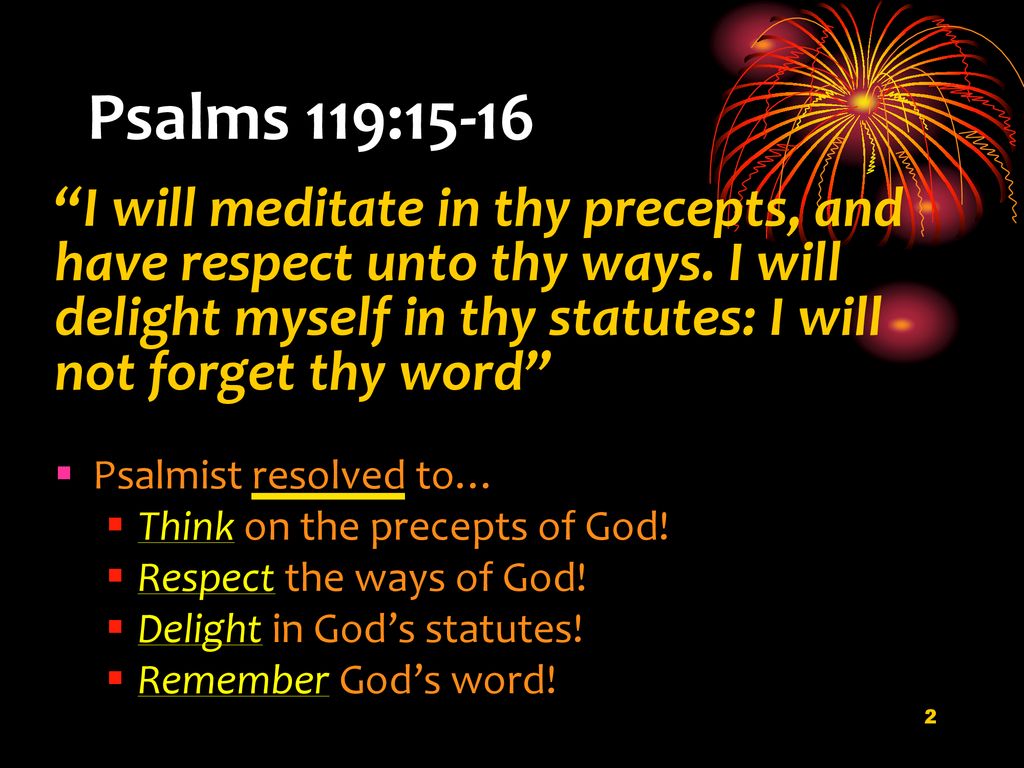
 Loving God, Living God, Loving Hope, Living Hope, Loving Living Life His Way! "Many things are possible for the person who has hope. Even more is possible for the person who has faith. And still more is possible for the person who knows how to love. But everything is possible for the person who practices all three virtues." - Brother Lawrence (1605-1691), Practicing the Presence of God (1692).