Soaking Ourselves in Envy or in God: Worship Perspective of God’s People. Proverbs 23:15-19

It’s tempting to admire rich and famous people who just seem to have every guilty pleasure in this world.

They always seem to have every­thing at their fingertips—money, fine food, adventurous travels, sleek cars and other toys, beautiful houses in beautiful places, big vacations where ever they want, power in business and politics.

Don’t they just seem to have everything in the world at their finger tips?

The Bible often cautions against having too much desire for the things other people have. That can lead to internal unrest that’s unhealthy for the soul.

Proverbs 23:15-18 English Standard Version

15 My son, if your heart is wise,
    my heart too will be glad.
16 My inmost being[a] will exult
    when your lips speak what is right.
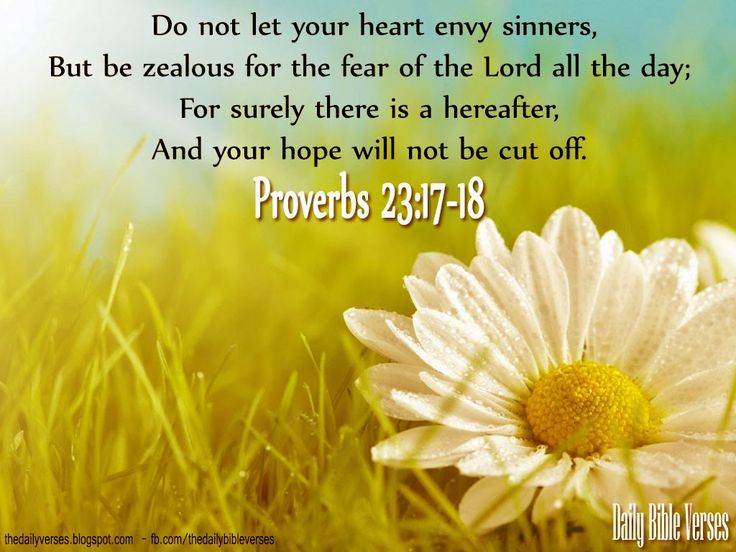
17 Let not your heart envy sinners,
    but continue in the fear of the Lord all the day.
18 Surely there is a future,
    and your hope will not be cut off.

The Word of God for the Children of God.

Adeste Fideles! Laeti Triumphantes! Venite Adoremus! Dominum.

Gloria! In Excelsis Deo! Alleluia, Alleluia, Alleluia, Amen.

It’s tempting to admire rich and famous people who just seem to have every guilty pleasure in this world.

They always seem to have every­thing at their fingertips—money, fine food, adventurous travels, sleek cars and other toys, beautiful houses in beautiful places, big vacations where ever they want, power in business and politics.

Don’t they just seem to have everything in the world at their finger tips?

The Bible often cautions against having too much desire for the things other people have. That can lead to internal unrest that’s unhealthy for the soul.

Envy is cultivated in our hearts at such an early age.

Right from the get go, Society immerses, ingrains, soaks, teaches us to want all of those hidden and known treasures that the world offers at a very young age.

The commercials on television show kids with all of the newest fantastic toys and then envy is born and flourishes when another receives it and one does not.

Steadily exerting its subtle influence upon our souls, Envy often involves not only a desire for something but also a demand that no one else should have it.

And under its not so subtle influence, the sin of envy might tempt us to commit more sin in order to get what we want—to lie, cheat, steal, or to even kill for it.

Envy is a sin because it reveals all of our not so subtle ingratitude toward the abundant blessings that God has graciously bestowed upon God’s Children.

Is it more offensive to God when we envy those who gain through corruption and dishonesty?

I could not answer this but ingratitude towards God is wrong.

Contentment with what we have has to be a sincere form of praise to God.

It is acceptable to dream of good things to come or to want things, but when it creates envy then we have abandoned contentment.

God calls this coveting. Does this next verses sound familiar.

You shall not covet your neighbor’s house; you shall not covet your neighbor’s wife, nor his male servant, nor his female servant, nor his ox, nor his donkey, nor anything that is your neighbor’s. (Exodus 20:17 NKJV)

Our treasure and reward is accumulating and being stored for each of us in heaven.

We will have the healthy fear of the Lord when we care more about doing for God than getting from God.

If that is the desire of your heart, envy cannot get a foothold.

The only time contentment would not reign in our hearts is when we desire to do more for God than the current conditions allow.

If you find envy in your heart, especially envy for those that gain but do not know God, remember that your treasures are in heaven.

Use that energy that envy is sapping from you and turn it into service for the Kingdom.

It is not about pleasing ourselves but is always about pleasing the Lord.

“Soak Yourself in the Fear of God”

Proverbs 23:17-18 The Message

14

17-18 Don’t for a minute envy careless rebels;
    soak yourself in the Fear-of-God—
That’s where your future lies.
    Then you won’t be left with an armload of nothing.

The writer of our passage from Proverbs 23:17-18 says that even for today, it is far better to pursue doing things God’s way.

When we live God’s way, when we immerse ourselves in God’s way, when we soak our lives to maximum saturation in God’s way, our future will be secure, even if it does not seem so exciting or so extravagant by the world’s standards.

In fact, when we are truly wise and striving to live our lives in tune with God, we will have as much, if not ever so much more desire for God’s way as we might be tempted to have for the life of people who forever just seem to have everything.

The Worship Perspective of God’s People

That’s where your future lies.
    Then you won’t be left with an armload of nothing.”
Psalm 73:1-5 The Message

73 1-5 No doubt about it! God is good—
    good to good people, good to the good-hearted.
But I nearly missed it,
    missed seeing his goodness.
I was looking the other way,
    looking up to the people
At the top,
    envying the wicked who have it made,
Who have nothing to worry about,
    not a care in the whole wide world.

The psalmist Asaph struggled with the age-old question of why the wicked prosper.

In Psalm 73 he wrote, “But as for me, I almost lost my footing. My feet were slipping, and I was almost gone. For I envied the proud when I saw them prosper despite their wickedness” (verses 2–3 NLT).

We definitely live in a time when people celebrate and flaunt ungodly lifestyles.

And like Asaph, we wonder to ourselves and sometimes rather out loud just how long do they believe they are going to get away with it.

As hopeful, hope-filled, faithful, faith-filled followers of our Lord and Savior Jesus Christ, we try to live our life by God’s Word, and people mock us for it.

So, we will say, or we will even sing, shout, out great raucous choruses of;

“This just isn’t fair. That’s a horrible thing they’re doing. They shouldn’t be able to get away with that.”

David, too, reflected on the life of the godly, the ungodly and contrasted them.

He looked at the priorities they have.

Psalm 5 The Message

1-3 Listen, God! Please, pay attention!
    Can you make sense of these ramblings,
    my groans and cries?
    King-God, I need your help.
Every morning
    you’ll hear me at it again.
Every morning
    I lay out the pieces of my life
    on your altar
    and watch for fire to descend.

4-6 You don’t socialize with Wicked,
    or invite Evil over as your houseguest.
Hot-Air-Boaster collapses in front of you;
    you shake your head over Mischief-Maker.
God destroys Lie-Speaker;
    Blood-Thirsty and Truth-Bender disgust you.

7-8 And here I am, your invited guest—
    it’s incredible!
I enter your house; here I am,
    prostrate in your inner sanctum,
Waiting for directions
    to get me safely through enemy lines.

9-10 Every word they speak is a land mine;
    their lungs breathe out poison gas.
Their throats are gaping graves,
    their tongues slick as mudslides.
Pile on the guilt, God!
    Let their so-called wisdom wreck them.
Kick them out! They’ve had their chance.

11-12 But you’ll welcome us with open arms
    when we run for cover to you.
Let the party last all night!
    Stand guard over our celebration.
You are famous, God, for welcoming God-seekers,
    for decking us out in delight.

And in Psalm 5 he wrote, “You will destroy those who tell lies. The Lord detests murderers and deceivers. Because of your unfailing love, I can enter your house; I will worship at your Temple with deepest awe” (verses 6–7 NLT).

David was saying, “Nonbelievers can do what they want to do and live the way they want to live.

But, Guess What World?

“I’m going to go to the house of the Lord and Celebrate God.” (Verses 11-12)

Asaph arrived at a similar conclusion.

Psalm 73:15-20 The Message

15-20 If I’d have given in and talked like this,
    I would have betrayed your dear children.
Still, when I tried to figure it out,
    all I got was a splitting headache . . .
Until I entered the sanctuary of God.
    Then I saw the whole picture:
The slippery road you’ve put them on,
    with a final crash in a ditch of delusions.
In the blink of an eye, disaster!
    A blind curve in the dark, and—nightmare!
We wake up and rub our eyes. . . . Nothing.
    There’s nothing to them. And there never was.

He wrote, “Then I went into your sanctuary, O God, and I finally understood the destiny of the wicked. Truly, you put them on a slippery path and send them sliding over the cliff to destruction” (Psalm 73:17-18 NLT).

When we gather with God’s people, pray with God’s people, and to study God’s Word together, celebrating God as God celebrates us we will see the big picture.

We will steadily realize that sin eventually catches up with everyone.

We will steadily desire to celebrate all of God than celebrating .01% of our sins.

And as followers of Jesus Christ, we will know that we’ve made the right choice.

To utterly Celebrate God, the Father as God the Father celebrates us!

To utterly Celebrate God, the Son and God the Son celebrates us!

To utterly Celebrate God the Holy Spirit as God the Holy Spirit celebrates us!

In the name of God, the Father and God the Son and God the Holy Spirit,

Let us Pray,

Father God, you give to us abundantly and exactly what we need. Your blessings flow every morning anew. Our greatest blessing is your Son. Forgive us when we envy others for the material things that this world offers. Those things are fleeting and never eternal. Help us see how serving you is worth more than anything of this world. We pray that our eyes always focus on your glory. Provider God, give us our daily bread today, to celebrate You and help us not to be tempted to do anything sinful to get more. We pray that we always bring honor to your holy name. Amen.

Adeste Fideles! Laeti Triumphantes! Venite Adoremus! Dominum. Gloria! In Excelsis Deo! Alleluia, Alleluia, Alleluia, Amen.


https://translate.google.com/

If Hope Does Not Disappoint Us, Why Then Are Christians Disappointed All the Time? Romans 5:3-5

Author Hal Lindsey said, “Man can live about forty days without food, about three days without water, about eight minutes without air… but only for one second without hope.”

Hope not only affects how we live, it determined whether or not some people survive such catastrophic events such as natural disasters, devastating family, financial or healthcare news or the sudden unexpected loss of a loved one.

So, how is your hope?

Does it bounce back after being hit?

Or does it pop like a balloon lanced by a pin?

On what or WHO is your hope based?

The Bible shows us that people of faith are people of hope.

That makes sense, doesn’t it?

Those who trust God have more reason for hope than those who don’t.

But hardcore problems without visible solutions test the faith and challenge the hope of even the most devout.

Even when we are “poster children” for disappointment, guess what …

The Bible says to encourage each other every day (Hebrews 4:13).

Romans 5:3-5 The Message

3-5 There’s more to come: We continue to shout our praise even when we’re hemmed in with troubles, because we know how troubles can develop passionate patience in us, and how that patience in turn forges the tempered steel of virtue, keeping us alert for whatever God will do next. In alert expectancy such as this, we’re never left feeling shortchanged. Quite the contrary—we can’t round up enough containers to hold everything God generously pours into our lives through the Holy Spirit!

The Word of God for the Children of God.

Adeste Fideles! Laeti Triumphantes! Venite Adoremus! Dominum.

Gloria! In Excelsis Deo! Alleluia, Alleluia, Alleluia, Amen.

Romans 4, the Apostle Paul recounts the story of the Patriarch Abraham.

Romans 4:1-3 English Standard Version

Abraham Justified by Faith

4 What then shall we say was gained by Abraham, our forefather according to the flesh? For if Abraham was justified by works, he has something to boast about, but not before God. For what does the Scripture say? “Abraham believed God, and it was counted to him as righteousness.”

For the new followers in Rome, Paul greatly emphasized Abraham’s faith.

Paul said even Abra­ham, who was considered a God-fearing and good man, was praiseworthy not because he was so good but because in faith, he believed God.

If we ourselves go read the story of Abraham in Genesis, we will find quite a few examples of Abraham making substantial mistakes and committing great sins.

For example, twice focused only on what mattered most to himself and he lied and told an Egyptian that his wife, Sarah, was his sister (Genesis 12 and 20).

Abraham was a good man in many ways, but he was an ordinary, flawed person, like anyone else.

The great thing about Abraham was not anything about Abra­ham himself; it was his focus on the “one thing:” he faithfully put his trust and hope in God.

Abraham slowly disciplined his focus on what mattered most: believed God’s promises, Abraham faithfully put his hope in God’s being true to his ­promises.

The same is very much true for our disciplining our focus away from us today.

If we focus all of our hope in our own power or our own goodness or strength, we will constantly and continuously be indescribably hopelessly disappointed.

In ourselves, we do not have enough goodness to give us hope for the future.

Focus on faith in God, given to us by Holy Spirit, is the surest source of hope.

Do you and I have any of that self same disciplined focus on hope in God alone?

A Disciplined Focus on God’s Brand of “Sure Hope”

Hebrews 12:1-3 The Message
Discipline in a Long-Distance Race

12 1-3 Do you see what this means—all these pioneers who blazed the way, all these veterans cheering us on? It means we’d better get on with it. Strip down, start running—and never quit! No extra spiritual fat, no parasitic sins. Keep your eyes on Jesus, who both began and finished this race we’re in. Study how he did it. Because he never lost sight of where he was headed—that exhilarating finish in and with God—he could put up with anything along the way: Cross, shame, whatever. And now he’s there, in the place of honor, right alongside God. When you find yourselves flagging in your faith, go over that story again, item by item, that long litany of hostility he plowed through. That will shoot adrenaline into your souls!

A disciplined focus on Hope.

It’s the oxygen our souls need to thrive.

Hope is the wild-eyed creature that pops up after the enemy tries to eradicate the very beating of faith in our hearts.

It’s the essence of being a disciplined Christ-follower and as a hopeless, broken world watches us under an electron Microscope, as they scornfully question, “If hope does not disappoint us, why are you Christians disappointed all the time?”

However, before we can answer that question, we need to define what hope is.

Hope looks like light, seeing hundreds of fireflies lighting up a dark night.

Hope is the long barren heavily scorned and mocked Hannah praying fervently, disciplined in her knowing God hears her while she’s taken for a drunken fool.

Hope is a father staying at hope forgiving his undisciplined wayward child.

Hope is the oxygen our souls need to breathe to stay alive.

Hope is a category 5 torrential downpour that washes the world clean.

Hope is uncountable millions of little green shoots being nourished, unearthed after a long and cold winter’s nap and stretching and reaching to the heavens.

Hope is praying your loved one will be found alive after tragedy strikes.

Hope is knowing we will be reunited with our loved ones on the other side of heaven.

Hope is the soldier at war in a far away land who begged God to use His words to care for, to heal and to love his son or daughter miles away.

Hope is a foster child finally finding his forever home in a family that fiercely loves, protects and cares for them.

Hope is watching your autistic child make a friend.

Hope is walking hand in hand with God the Father, Jesus Christ, Holy Spirit.

What Does ‘Hope Does Not Disappoint Us’ Mean?

The biblical definition of hope is “confident expectation.” 

Christian hope is rooted in faith in the divine salvation in Christ (Galatians 5:5) and through the love poured into us through God’s Holy Spirit (Romans 5:5).

What have you and I been hoping for?

Have we been trying to discipline our hope away from the world and unto God?

Where have we been disciplining our minds, where are we focusing our Hope?

Did anything above resonate with your heart?

Or have you given up?

Maybe you and I are too afraid to invest in hope again because we dread the possibility that if we try too hard to discipline ourselves, we will lose all hope?

Or perhaps we simply don’t remember what hope even feels like anymore.

We are physically, mentally, spiritually exhausted from trying to recall what hope looks, tasted, feels, sounds like – we do not care to know what hope is.

If you’re in this camp, we need to go back to the Bible, discipline ourselves back unto Word of God, to understand God’s hope isn’t the same as the world’s hope.

God’s hope is not and never will be the same as the world’s definition of hope.

Both denote a positive expectation, but the world’s hope is rooted in a fallible person, situation, or thing. God’s hope is rooted in Him.

The basis of Christian hope is found Hebrews 11:1, “Now faith is the substance of things hoped for.”

The Greek word for hope in this passage is ‘hypostasis.  

The anonymous author wrote in the book of Hebrews, “Faith is the ‘hypostasis of things hoped for…” which literally means “that which underlies.”

Meaning our faith in Christ underlies our hope, the deeper our faith is, the more difficult it is for hope to be overthrown and turned into disappointment.

A hope that does not disappoint means God has given us hope that raises up to our defense – to become our sword and shield in the midst of disappointment.

This kind of hope is found not in our avoidance of suffering but our working through it with God the Father, Son and Holy Spirit because, suffering produces joy, perseverance; perseverance, character; and character, hope. (James 1:2-4)

What Is the Context of Romans 5:5?

“Therefore, since we have been declared righteous (justified) through faith, we have peace with God through our Lord Jesus Christ, through whom we have gained access by faith into this grace in which we now stand. And we boast in the hope of the glory of God. Not only so, but we also glory in our sufferings, because we know that suffering produces perseverance; perseverance, character; and character, hope. And hope does not put us to shame, because God’s love has been poured out into our hearts through the Holy Spirit, who has been given to us,” Romans 5:1-5.

We learn what hope means in God’s kingdom through the words of Paul beginning in the fifth chapter of Romans. Full

Here, Paul tells us we have justice, peace, grace, perseverance, character, and hope which is all built on the faith we have in Christ.

The kind of hope that does not disappoint that Paul is talking about here is the kind of disciplined hope that only God can give.

This kind of hope Fully Relies On God—His power, His promises, and the sacrifices He alone made for us.

This type of hope carries a promise because of what He has accomplished.

As we read through the rest of Romans 5, we learn we have this hope because Jesus died for us while we were yet his utterly worst enemies (Romans 5:8).

We have been justified and we will be delivered from all things.

God didn’t save us based on our own righteousness.

We were saved because of our faith, hope and belief and love for God’s Son.

This hope points directly to the glory of God – “we boast in our hope of sharing in the glory of God” (Romans 5:2).

This means, no matter what comes our way: suffering, turmoil, tragedy, death, and heartbreak. God will conquer it all.

In other words, “Hope has a sanctifying effect. We who look expectantly for the return of Christ, knowing that when we see him we shall become like him, and purify ourselves “as he is pure” (1 John 3:3 ).

Hope also stimulates good works.

Following his teaching on the resurrection of the dead, Paul exhorts readers to do be “steadfast and immovable doing the Lord’s work abundantly since such “labor is not in vain” (1 Corinthians 15:51-58 ).”

Then, How Exactly Can Christians Hope When They Experience Disappointments?

Throughout Scripture, we find the same message trusting in God’s promises and hoping in the Lord:

“Let us hold unswervingly to the hope we profess, for he who promised is faithful” Hebrews 10:23.

“I pray that your hearts will be flooded with light so that you can understand the confident hope he has given to those he called—his holy people who are his rich and glorious inheritance” Ephesians 1:18.

“I wait for the LORD, my whole being waits, and in his word, I put my hope” Psalm 130:5.

If we read in between the vast array of scriptures about hope, we will also find hundreds of people inside the Bible who experienced true utter disappointment: Adam, Eve, Hagar, Job, Hannah, Moses, Sarah, David, Jacob, Gideon, Jeremiah, Isaiah, Jonah, the exiles, Nehemiah, Jesus, the Disciples, Paul, Elijah, others.

Yes! Even Jesus experienced disappointment during his ministry: when the people didn’t receive His message, when His disciples struggled with doubt, or when He encountered those legalistic religious leaders who wanted to kill Him.

Yet, each and every one of these biblical accounts of real-life people are marked by moments of every single one of them decisively overcoming disappointment.

They also went to accomplish great things for God and some even accomplished things beyond their wildest dreams.

The common thread of each of them was their hope in God.

Their belief in God was bigger than their disappointment.

Instead of blaming God when tragedy struck, instead, they turned to God.

“Hope in God transcends the lost hopes of human frailty and sin and begins to take effect in our lives precisely when human hopes are gone” (Romans 4:18).

How can Christians hope when we experience disappointments?

We put our hope in the Lord as we look at Paul’s example in Philippians 4:4.

Here, Paul was suffering greatly but he was writing to the church in Philippi which happened to be a church that was exceptionally poor.

But Paul was writing to them from a Roman Prison to encourage them to keep a disciplined, focused hope as they learn to be content with having much or little.

Paul wrote to encourage them through his example walking with Christ, even in the midst of disappointment, he could deal with humble means or prosperity.

No matter the circumstance Paul persevered through hope because no matter what came, he “can do all things through Christ’s strength, (Philippians 4:13, ESV).

The exact same One whose Grace strengthened Paul and provided contentment, courage, and a disciplined and focused hope is exact the same One working all things together—even disappointment—for our good too (Romans 8:28).

Because of the Sovereignty of God, Jesus’ resurrection power at work in us, the Holy Spirit interceding and praying for us when we have not the wherewithal to intercede for self, we can breathe in His kind of Hope that does not disappoint.

In the name of God, the Father and God the Son and God the Holy Spirit,

Let us Pray,

Prayer for a Hope That Does Not Disappoint

Lord God, our Creator, Author of our Life and Perfecter of our Hope, we raise our hearts, our souls, our hands high to thank you for your peace and for being our true source of hope. No matter what we walk through, may we lean on you. I believe that the hope you give us will not disappoint. You are working through every struggle and hardship we face. We will not be disappointed because of the salvation and blessing of a heavenly inheritance through Jesus Christ. Help us to abound in joy and to rest in your loving arms. Give us grace, strength, to lean on your powerful promises today.

Dear God, we praise you because you are true to your promises, we thank you that you are the true source of hope. Help us, by your Holy Spirit, to put our hope in you.

Adeste Fideles! Laeti Triumphantes! Venite Adoremus! Dominum.

Gloria! In Excelsis Deo! Alleluia, Alleluia, Alleluia, Amen.

https://translate.google.com/

Today’s Choice: We Can All Fully Give Up, Or We Can All Fully Rely on God Who is Supposed to be Number One. 2 Corinthians 1:8-11

If you have ever traveled in the deep country, where there are nothing but narrow two lane and rutted dirt roads, then you’ve probably seen the sign,

“Pick your rut carefully, you’ll be in it for the next 20 miles.”

You know what it is like.

A story is told of a frog who was hopping across a dirt road and he fell into a rut.

He tried to jump out of it, but he couldn’t.

He cried out to his friends, “Help me, I’m stuck in this rut.”

Well his friends could not pull him out but they offered him encouragement and support, telling him what they had done when they had recently been in similar situations, assuring him he could do it, but he said he had tried and he couldn’t.

After a short while it was time for all his friends to leave, everyone was very sad, but there was nothing more they could do.

You can imagine their surprise when the next morning they saw all their friends at the riverbank.

“What happened?” they asked, “We thought you were stuck in the rut.”

“Well, so did I” their friend answered, “I thought it was a hopeless situation, when all of a sudden a sanitation truck came down the road and its tires were traveling in my rut! We had no choice but to rely on our survival to hop to it.”

Someone once said the only difference between a rut and a grave is the depth.

2 Corinthians 1:9-11 The Message

8-11 We don’t want you in the dark, friends, about how hard it was when all this came down on us in Asia province. It was so bad we didn’t think we were going to make it. We felt like we’d been sent to death row, that it was all over for us. As it turned out, it was the best thing that could have happened. Instead of trusting in our own strength or wits to get out of it, we were forced to trust God totally—not a bad idea since he’s the God who raises the dead! And he did it, rescued us from certain doom. And he’ll do it again, rescuing us as many times as we need rescuing. You and your prayers are part of the rescue operation—I don’t want you in the dark about that either. I can see your faces even now, lifted in praise for God’s deliverance of us, a rescue in which your prayers played such a crucial part.

The Word of God for the Children of God.

Adeste Fideles! Laeti Triumphantes! Venite Adoremus! Dominum.

Gloria! In Excelsis Deo! Alleluia, Alleluia, Alleluia, Amen.
If you have ever traveled in the deep country, where there are nothing but narrow two lane and rutted dirt roads, then you’ve probably seen the sign,

“Pick your rut carefully, you’ll be in it for the next 20 miles.”

You know what it is like.

A story is told of a frog who was hopping across a dirt road and he fell into a rut.

He tried to jump out of it, but he couldn’t.

He cried out to his friends, “Help me, I’m stuck in this rut.”

Well his friends could not pull him out but they offered him encouragement and support, telling him what they had done when they had recently been in similar situations, assuring him he could do it, but he said he had tried and he couldn’t.

After a short while it was time for all his friends to leave, everyone was very sad, but there was nothing more they could do.

You can imagine their surprise when the next morning they saw all their friends at the riverbank.

“What happened?” they asked, “We thought you were stuck in the rut.”

“Well, so did I” their friend answered, “I thought it was a hopeless situation, when all of a sudden a sanitation truck came down the road and its tires were traveling in my rut! We had no choice but to rely on our survival, to hop to it.”

Someone once said the only difference between a rut and a grave is the depth.

It Always Takes Great Pressure to Make Diamonds

2 Corinthians 1:8-9 Amplified Bible

For we do not want you to be uninformed, brothers and sisters, about [a]our trouble in [the west coast province of] Asia [Minor], how we were utterly weighed down, beyond our strength, so that we despaired even of life [itself]. Indeed, we felt within ourselves that we had received the sentence of death [and were convinced that we would die, but this happened] so that we would not trust in ourselves, but in God who raises the dead.

The Christian life is full of utterly impossible challenges.

Do we think we can overcome our sin and live a holy life in our own strength?

Have at it, my friend!

Come back in six months and tell me how it’s going for you.

You think you have enough wisdom and experience to help your children whatever their age, navigate all the landmines, pitfalls of their young life?

Well huzzah for you! (Side note: we really need to bring the word “huzzah” back into usage.)

Do you think you have enough personal insight to untangle the sticky relational or financial mess you, your family might be finding themselves in right now?

Do you think you have the strength to sufficiently lead your co-workers, small group, a worship team, a counseling team, a church planting team, or a church?

Do you believe you have the strength to sufficiently lead your own two feet to the floor of your bedroom when you first wake up after a “night” of slumber.

Right.

God bless,

Have at it my friend.

I’ll pray for you to have a soft bed in a padded room waiting for your return.

The reality is, God constantly finds us in situations of our own making that are impossibly far beyond our ability to bear up to.

He looks every which direction for us and always finds us smack dab inside the middle of befuddling, perplexing, overwhelming, even crushing circumstances.

Why does God keep looking for, finding us in these places?

Why does God keep on perpetually nudging us in our ribcages – “I AM here’

To assure us.

To humble us.

To quiet us.

To subtly or not so subtly redirect our spiritual eyesight.

To emphasize and indeed even over emphasize this point, to make us painfully aware, sharply remind us, we cannot make it through this life apart from him.

To shine the brightest lights in our eyes, cause us to look up and away from the catastrophe directly in front of us, highlight our desperate dependence on him.

God strips us of our own strength to make us totally reliant upon his strength.

God allowed Paul to be pushed and pressed, hit and hammered, beaten and even ship wrecked and even sentenced to “death,” SO THAT he would not rely upon himself, but straight upon the grace, the power of the God who raises the dead. (2 Corinthians 12:7-10)

God allows us to get into situations that are so far beyond our ability to survive so that when failure comes, deliverance comes, only God can receive the glory.

Speaking of pastoral ministry (but this quote applies equally to a million other situations), 19th Century English Theologian Charles Bridges says:

“Did we depend upon the failing support of human agency [strength], or upon the energy of mere moral suasion [our ability to persuade] – we should cry out, prostrate in heartless despondency – “Who is sufficient for these things?” But the instant recollection – that “our sufficiency is of God” – “lifts up our hearts in the ways” and work of the Lord.” (The Christian Ministry, page 19)

Are you in a situation that is too hard for you?

Are you being stretched beyond your spiritual gifts and abilities?

Are you pushed down and crushed, even to the point of despair?

Do you feel like butter scraped over too much bread?

Do you feel like you want to run and hide in some cave like David frequently did?

Maybe dig up your backyard and install an underground bunker, lock all doors?

You really only have two options.

2 Corinthians 1:8-9 Amplified Bible

For we do not want you to be uninformed, brothers and sisters, about [a]our trouble in [the west coast province of] Asia [Minor], how we were utterly weighed down, beyond our strength, so that we despaired even of life [itself]. Indeed, we felt within ourselves that we had received the sentence of death [and were convinced that we would die, but this happened] so that we would not trust in ourselves, but in God who raises the dead.

Behind door number one: throw your hands up not in praise but to give up.

Let the mounting lack of self-control, despair, anger, impatience and unbelief wash over you like an acidic shower, slowly dissolving eating away at your faith.

Start calling yourself: “highly educated motivated professional worldly realist.”

Allow all of the class 5 storms of unbridled cynicism to have their way with you.

OR…

2 Corinthians 1:10-11 Amplified Bible

10 He rescued us from so great a threat of death, and will continue to rescue us. On Him we have set our hope. And He will again rescue us [from danger and draw us near], 11 while you join in helping us by your prayers. Then thanks will be given by many persons on our behalf for the gracious gift [of deliverance] granted to us through the prayers of many [believers].

Behind door number two: Fully rely upon the God who raises from the dead.

Throw aside any foolish remnants of self-sufficiency and depend wholly upon our mighty, powerful God.

Depend upon God alone to work in your rebellious children.

Fully Rely On God who alone is Always #1

Depend upon God alone to work mightily in your shaky financial condition.

Fully Rely On God who alone is Always #1

Depend upon God alone to save your “un-savable” relative.

Fully Rely on God who alone is Always #1

Depend upon God alone to give you physical and emotional strength to serve your family.

Fully Rely on God who alone is Always #1

Depend upon the God who slays giants, shuts lions’ mouths, and rescues out of fiery furnaces.

Fully Rely on God who alone is Always #1

God does incredible things, God does the incomparable, does the impossible when we finally stop relying upon our own abilities and start relying on him.

He does incredible things, the incomparable things, the impossible things when we finally “raise a white flag” on our own abilities, find all our strength in him.

Come out from the darkness, into the Kingdom of God, in the Strength of God!

In the name of God the Father and God the Son and God the Holy Spirit,

Let us Pray,

Dear Lord Jesus,

I know you must have countless reasons for allowing me to go through difficult circumstances, but here in your word I find one that comforts me. You are teaching me not to rely on myself. That’s a big job. I was born wanting to be in charge and my raising in this culture is geared toward making me self sufficient. So, when life is too big for me, that’s okay. I’m constantly learning that it’s not too big for you. You are, from everlasting to everlasting, bigger than the complexities of my life and will deliver me from my troubles. You send help in a myriad of ways. Some I have not even thought of yet. I will set my hope on you that you will deliver me from all my troubles. Help me remember this passage today as I face health issues, mechanical failures, relationship stresses and challenges in my work. Help to remember that you are a prayer away from delivering me. Don’t let me drive myself to your hospital. I will call your 911 and you pick me up. You loved me and finally you died for me, your grave was empty, were raised, were resurrected, how would you ever not rescue me?

Adeste Fideles! Laeti Triumphantes! Venite Adoremus! Dominum.

Gloria! In Excelsis Deo! Alleluia, Alleluia, Alleluia, Amen.

https://translate.google.com/

Do We Really ‘Feel’ What This Means Anymore: “We Love Because He First Loved Us?” 1 John 4:17-21

Sometimes, one too many times, believing God loves us so deeply can be hard.

When we mess up, we make bad choices, it can be difficult to believe God cares.

We are likely to ask of ourselves “why should God care about me anyway, I know what I have done, surely God knows what I have done, so why should He love me?”

The thing of it is – we are only likely to be asking this of ourselves, to ourselves.

In the real world we encounter today, we do not openly express such thoughts in an outward manner – we are not likely to be shouting this on the city streets.

We will be internalizing these ideas, blasting them against the walls of our souls until even the most ardent believer will find themselves poking very substantial holes, if not trying to dig vast canyons into their steadfast and immovable faith.

When we see all our failures and flaws we can often think that we’re unlovable.

Vulnerability overtakes us – we can’t help it nor can we seen to slow it or stop it.

However, in the midst of all our failures and shortcomings, and sudden onsets of unconquerable vulnerabilities – guess what – God chooses to love us anyway!

1 John 4:17-21 The Message

To Love, to Be Loved

17-18 God is love. When we take up permanent residence in a life of love, we live in God and God lives in us. This way, love has the run of the house, becomes at home and mature in us, so that we’re free of worry on Judgment Day—our standing in the world is identical with Christ’s. There is no room in love for fear. Well-formed love banishes fear. Since fear is crippling, a fearful life—fear of death, fear of judgment—is one not yet fully formed in love.

19 We, though, are going to love—love and be loved. First we were loved, now we love. He loved us first.

20-21 If anyone boasts, “I love God,” and goes right on hating his brother or sister, thinking nothing of it, he is a liar. If he won’t love the person he can see, how can he love the God he can’t see? The command we have from Christ is blunt: Loving God includes loving people. You’ve got to love both.

The Word of God for the Children of God.

Adeste Fideles! Laeti Triumphantes! Venite Adoremus! Dominum.

Gloria! In Excelsis Deo! Alleluia, Alleluia, Alleluia, Amen.

Sometimes, one too many times, believing God loves us so deeply can be hard.

When we mess up, we make bad choices, it can be difficult to believe God cares.

We are likely to ask of ourselves “why should God care about me anyway, I know what I have done, surely God knows what I have done, so why should He love me?”

The thing of it is – we are only likely to be asking this of ourselves, to ourselves.

In the real world we encounter today, we do not openly express such thoughts in an outward manner – we are not likely to be shouting this on the city streets.

We will be internalizing these ideas, blasting them against the walls of our souls until even the most ardent believer will find themselves poking very substantial holes, if not trying to dig vast canyons into their steadfast and immovable faith.

When we see all our failures and flaws we can often think that we’re unlovable.

Vulnerability overtakes us – we can’t help it nor can we seen to slow it or stop it.

However, in the midst of all our failures and shortcomings, and sudden onsets of unconquerable vulnerabilities – guess what – God chooses to love us anyway!

God’s love for us should energize us to love other people.

When we focus on all God has done for us, it makes loving other people easier.

God’s love is empowering.

God’s love is an overcoming love.

It gives us the strength and motivation to truly love others.

So when you have those onset moments when you struggle with vulnerability, struggle with loving a “someone” who is less than lovable (including yourself), realize that you have got the power to yet do “love” because God loved you first.

When you were your own first and worst enemy, when you were convinced that didn’t deserve anybody’s “first love” and were an enemy of God, God loved you.

That knowledge gives you first burst of knowing what you need to love others.

What Does the Word of God Say of “First Loves?”

First love. 

The phrase evokes powerful feelings.

For many this phrase evokes the image of a newborn baby just placed on its mothers chest immediately after birth and the two make their “first contact.”

For some this phrase evokes the image of a new father looking at their very first newborn child for the very first time, and all the love in his world becomes real.

For many, the term conjures images of a first crush when a toddler recognizes mom for the first time or as a teenager, or impressions of “love at first sight.”

But first love is a much more intimate concept than simply a first recognition of of mom or dad or any raging hormones and pictures of pulsing cartoon hearts.

It’s God, Himself. 

1 John 4:8 tells us that God is love.

This means that any worldly love falls short of the true definition.

Think about the most dynamic couples, real or fictional, that are well known throughout history—Romeo and Juliet, Robert and Elizabeth Barrett Browning, Billy and Ruth Graham, President Jimmy and, Rosalynn Carter to name a few.

Now think about current celebrity match-ups in the media that make you sort of swoon – Bob and Betty Hope, George Burns and Gracie Allen, Fred Astaire and the incomparable Ginger Rogers, Humphry Bogart and Lauren Bacall.

As romantic as any of those might seem right now, those examples aren’t true love.

Without God involved in the process, without that cord of three strands that is not so easily broken (Ecclesiastes 4:9-12), no human relationship could ever be real love – it will always and forever “miss the mark.” 

1 Corinthians 13, known as the “love chapter,” states that “faith, hope, and love abide, these three; but the greatest of these is love.” 

I believe it’s important to note the greatest of these character traits only comes from God!

He is the source of love—not romance novels, not sonnets and poetry, and certainly not Hollywood.

Here are three things the Word of God reveals to each of us about “first loves.”

1. God Loved Us First

Everything springs from this. 

Such a beautiful message of hope is found in 1 John 4:19.

“We love, because He first loved us.” 

We don’t love because we manage to “dig deep down” and “conjure up our best effort”—no, we love because God put it in us first, via the Holy Spirit, to do so.

Any desires toward love, holiness, purity, etc. toward others or toward the Lord only come from God.

We are incapable of love on our own—yet we love because God first loved us.

What a relief!

Don’t you feel the burden rolling off your shoulders?

Love is a gift from God, who is love Himself—Who became love in the flesh through Jesus Christ, who came to “deliver us from the domain of darkness and transfer us to the kingdom of His beloved Son” (Colossians 1:13).

“You did not choose Me but I chose you, and appointed you that you would go and bear fruit, and that your fruit would remain, so that whatever you ask of the Father in My name He may give to you.” (John 15:16)

Let the depth of this truth saturate your weary and vulnerable soul… let it seep in, let it comfort you and hug you with all the coziness of your favorite quilt. 

You are held.

You are loved. A

nd it has nothing to do with you or what you bring to the table, and everything to do with the God who created you, who knew you from before the foundations of time (Jeremiah 1:5), planned every one of your days way long before you were even in your mother’s womb (Psalm 139:16).

2. We Often Leave Our First Love (GOD)

As comforting as it is to sit and bask in the reality of God’s love for us, we must also acknowledge and recognize the sobering concept of leaving our first love.

“But I have this against you, that you have left your first love.” (Revelation 2:4)

Even as believers, we are not immune to apathy.

Sometimes, we lose our fervor and passion for the things of the Lord.

When we are busy catering to our sin rather than confessing it, we are blocking communication with the Holy Spirit.

Conviction becomes fewer and farther between.

We grow farther away from Christ.

We stop praying, we stop reading and studying the Word, disciplining our lives and start listening to the lies that we can never love or worse—be loved—again.

Rather than heeding the dark deceptions from the enemy, we should recognize our behavior, turn, and repent.

Do we have unconfessed sin in your life?

Admit it already.

God already knows.

Avoiding prayer will only keep you feeling more and more disconnected, leaving ample room for the enemy to continue to tempt you.

There have been times in my Christian walk where it felt like my prayers hit the ceiling and stopped and splattered there and it made me prone to not pray at all.

In those times, the only prayer we need is “Lord, give me the want to want to.”

Rather than hide in our vulnerability and shame when we’re “prone to wander” and aren’t feeling a desire toward the things of God, we must shine truth on those dark thoughts, bring them to the light, simply ask for God’s desires again.

The Holy Spirit is infinitely more than capable of filling us back up.

In my experience, believers tend to occasionally disregard various disciplines of the faith because “that’s not what saves them.”

I agree—it’s not.

But I also realize when we only go through the motions of daily Bible reading, daily prayer, consistent fellowship with the church, we’re more prone to stay in communion with the Holy Spirit and on the right path in our Christian walk.

Sometimes, sitting down with the Word of God despite “not wanting to” will be exactly what’s needed to bring forth the desire.

Actions often breed feelings, and this is one of the greatest offenses we have against spiritual warfare.

The Word of God is our sword! 

Ephesians 6:17 says, “Take the helmet of salvation and the sword of the Spirit, which is the word of God.”

“For the word of God is living and active, sharper than any two-edged sword, piercing to the division of soul and of spirit, of joints and of marrow, and discerning the thoughts and intentions of the heart…” (Hebrews 4:12)

Even when we don’t feel like it—maybe especially when we don’t feel like it—pick up your sword anyway and start swinging it against your vulnerabilities.

Psalm 84: 8-9 The Message

8-9 God-of-the-Angel-Armies, listen:
    O God of Jacob, open your ears—I’m praying!
Look at our shields, glistening in the sun,
    our faces, shining with your gracious anointing.

Standing tall, Steadfast and Immovable, Protect and Fight for your first love.

3. We’re to Stay with Our Second “First Love”

“Let your fountain be blessed, And rejoice with the wife of your youth.” (Proverbs 5:18)

Christ is and should always be our first love.

But on earth, we are granted the blessing of marriage between a man and a woman (that won’t be recognized in heaven –Mark 10:5-9) that reflects the union of Christ and His bride—the church.

It’s a holy and sacred covenant before the Lord himself, because it reflects His relationship with His beloved.

To participate in that reflection is a gift and an honor.

It’s not to be taken lightly.

Unfortunately, in our current culture, marriage today is often considered to be “open to man’s socio-cultural interpretation” or an extreme version of dating, where choices of divorce are made as recklessly as high schoolers speed dating.

Mark 10:9 says, “What therefore God has joined together, let not man separate.”

This verse does not mean that all divorce is forbidden.

There are unfortunately circumstances of abandonment where spouses didn’t have a choice (Malachi 2:16), or marriages of physical abuse and unrepentant adultery (Matthew 5:31-32), the Bible allows for the dissolving of a marriage.

It’s impossibly painful to those involved and indescribably messy, regardless of the circumstances, and every story is unique to the person who then carries it.

But far too often, marriages dissolve solely for the lack of commitment and desire to keep them going—lack of reverence for the covenant they represent.

“For I feel a divine jealousy for you, since I betrothed you to one husband, to present you as a pure virgin to Christ.” (2 Corinthians 11:2)

“Let us rejoice and exult and give him the glory, for the marriage of the Lamb has come, and his Bride has made herself ready; it was granted her to clothe herself with fine linen, bright and pure”—for the fine linen is the righteous deeds of the saints.” (Revelation 19:7-8)

While our ultimate first love is the Lord, our first love on earth—or what I’ve termed our “second first love” is our spouse.

They deserve to be respected and treated as such.

They are worthy to the utmost to be maximally protected, cherished, guarded, and loved for as long as both spouses shall live.

It’s so vitally and critically important to remember that it’s impossible to follow through with our role in a godly marriage if the very first truth of our very first love, about first love isn’t recognized—that “God is love, that He first loved us.”

In the name of God, the Father and God the Son and God the Holy Spirit,

Let us Pray,

God, you are LOVE! Absolute, from everlasting to everlasting , perfect, unconditional, incomparable, pure, incomprehensible. And all creation is of your love. We are all born of this love. And your splendored love, ever existent, commands us to love you unceasingly, wholly, with all our minds, hearts, souls, strength. And to love our neighbor as ourselves. Lord, we are your chosen people and as Christians, who are born again, of the Spirit, as your children, we are set apart and identified by our love.

Jesus, in obedience of your Will, has taught us the meaning of true love, in serving our fellowmen with humility, and with compassion, without prejudice and without judgement. Father, you are the fountain of love, which emanates from you to us, and if we love as you do, it is because you are the source and origin of selfless love. Love, not just to our own, but also to our detractors, our enemies and our persecutors.

Loving Father, Precious Savior, Intercessor Holy Spirit, nothing more animates and inflames our love, than the One truth of the existence of your love for us, before ours, which shows that it is free, true, sovereign, and unmerited. Living in Savior Christ, aspiring to work and obtain salvation by our faith and your free grace, we know that when we stand before you, it will be because we have lived in obedience to your Will, have finally risen above pride, arrogance, ego, and have decreased ourselves in the purity of love, thereby increasing Christ, living in the counsel of the Spirit, in Christ.

Adeste Fideles! Laeti Triumphantes! Venite Adoremus! Dominum.

Gloria! In Excelsis Deo! Alleluia, Alleluia, Alleluia, Amen.

https://translate.google.com/

The Gift of Godly Friends. Acts 27:1-8

Godly friendships are those special relationships between friends that are based on mutual respect, trust, support and a love for God.

These types of friendships are built on a strong foundation of shared values and common interests, and they are typically characterized by a very deep sense of loyalty and companionship with Christ directly at the exact center.

Godly friendships are not always easy to find, but they are definitely worth the effort to cultivate.

These are the types of relationships that can help you weather the storms of life and come out stronger on the other side.

You pray for each other through the messes of life.

If you are fortunate enough to have a godly friendship in your life, cherish it, always and forever exceedingly abundantly value it, never take it for granted.

Acts 27:1-8 English Standard Version

Paul Sails for Rome

27 And when it was decided that we should sail for Italy, they delivered Paul and some other prisoners to a centurion of the Augustan Cohort named Julius. And embarking in a ship of Adramyttium, which was about to sail to the ports along the coast of Asia, we put to sea, accompanied by Aristarchus, a Macedonian from Thessalonica. The next day we put in at Sidon. And Julius treated Paul kindly and gave him leave to go to his friends and be cared for. And putting out to sea from there we sailed under the lee of Cyprus, because the winds were against us. And when we had sailed across the open sea along the coast of Cilicia and Pamphylia, we came to Myra in Lycia. There the centurion found a ship of Alexandria sailing for Italy and put us on board. We sailed slowly for a number of days and arrived with difficulty off Cnidus, and as the wind did not allow us to go farther, we sailed under the lee of Crete off Salmone. Coasting along it with difficulty, we came to a place called Fair Havens, near which was the city of Lasea.

The Word of God for the Children of God.

Adeste Fideles! Laeti Triumphantes! Venite Adoremus! Dominum.

Gloria! In Excelsis Deo! Alleluia, Alleluia, Alleluia, Amen.

How Godly Friendships Work

Godly friendships are those special relationships between friends that are based on mutual respect, trust, support and a love for God.

These types of friendships are built on a strong foundation of shared values and common interests, and they are typically characterized by a very deep sense of loyalty and companionship with Christ directly at the exact center.

Godly friendships are not always easy to find, but they are definitely worth the effort to cultivate.

These are the types of relationships that can help you weather the storms of life and come out stronger on the other side.

You pray for each other through the messes of life.

If you are fortunate enough to have a godly friendship in your life, cherish it, always and forever exceedingly abundantly value it, never take it for granted.

What Is The Importance Of Godly Friendships

The Bible tells us that as iron sharpens iron, so one person sharpens another (Proverbs 27:17).

In other words, we need godly friends in our lives to help us grow in our faith.

Just as our physical bodies need exercise and healthy food to stay strong, our souls need spiritual nourishment to stay healthy.

Godly friendships provide that spiritual nourishment. When we spend time with friends who love and follow Jesus, we are encouraged and challenged to do the same.

We learn from their example, and they help us to see things from a different perspective.

They also help us to hold on to our faith when things get tough.

So if you’re looking for ways to grow in your faith, seek out godly friendships.

These relationships will be a blessing to you, and you will be a blessing to them as well.

Because our relationship with God should be our priority, we should be seeking to please Him above all else.

Having godly friends means that we will have people in our lives who share our values and who will encourage us to grow in our faith.

This is an understated undervalued and ever so vital part of the Christian life, and it is something that we should, in these days of isolation, all be striving for.

Characteristics Of A Godly Friend

God the Father and God the Son and God the Holy Spirit is a God of perfect friendship and sets the only tone of how we should be friends to each other.

A godly friend is…

  1. Encouraging
  2. Focuses you back to God’s Word
  3. Walks in love, forgiveness and healthy boundaries
  4. Prays for you
  5. Brings out your best
  6. Sticks with you through the best of times and the worst of times.

Placing Proper Value on God’s Gift of Godly Friends.

The day had finally dawned, and Apostle Paul’s great longing to go to Rome was nearing its realization.

He was one of a number of prisoners whose destination was the great city at the center of the known world.

But at the outset of their journey, narrator Luke provides us with details that appear at first glance to be completely extraneous and mostly irrelevant.

He and Paul, he tells us, were “accompanied by Aristarchus, a Macedonian from Thessalonica.”

Aristarchus is not a well-known Bible character.

From the few places where he’s mentioned, we know that he was a good man to have around at any time, but especially during difficult times.

He first appears in Acts 19:29, where he ends up in harm’s way when Paul and his companions are set upon by a mob.

He is also mentioned at the end of Colossians (Colossians 4:10) and of Philemon (Philemon 24).

If these two epistles were written from Rome, while Paul was a prisoner there as is likely, then this companion named Aristarchus evidently remained with Paul throughout his entire journey to Rome and likely his subsequent imprisonment.

The mere mention of Aristarchus’s presence with Paul reminds us that even this great apostle to the Gentiles was not at all beyond the need of friendship.

Paul is such a significant figure that we may be tempted almost to deify him, assuming that he was echelons above and beyond such “worldly necessities.”

But in actual fact, he very much cherished friendship.

When he wrote his second letter to Timothy at the end of his life, he finished the epistle by asking not only for scrolls and his cloak (2 Timothy 4:13) but also the quick arrival of his young protégé Timothy (v 9).

The scrolls would stimulate his mind.

His cloak would deal with the cold.

But he needed Timothy because, to Paul, his friendship really mattered.

Paul’s need for friendship is revealed again when Luke tells us that, upon reaching Sidon on the way to Rome, Paul was allowed by the centurion Julius who kindly oversaw the prisoners; “to go to his friends and be cared for.”

Was it out so very of place for the mighty apostle to be cared for by others?

Not at all! Paul embraced his weakness and dependence on others because he knew that Christ’s “power is made perfect in weakness” (2 Corinthians 12:9).

The sooner we discover how powerless and weak we really are alone, the sooner we learn the value of friendship.

No matter how strong or gifted you and I may be, you and I are not Superman, nor are we expected by God to be Superman.

If this mighty apostle needed friends and companions in his life, then you and I do as well.

Friendship is a wonderful gift God has given so that we might be encouraged and supported as we journey through this life.

Today, then, consider the godly friends that the Lord has placed around you.

Offer thanks for their love and support.

And above all, do pray for their endurance and encouragement in the faith, knowing that just as you need them to point you to Christ, so they need you.

How Do You Build Godly Friendships

There are many ways to build godly friendships, but here are five key ways:

  1. Pray together. This is a great way to get to know each other and to build a strong bond.
  2. Study the Bible together. This will help you to grow in your faith together and to learn more about each other.
  3. Serve together. Doing things for others is a great way to build friendships. You can serve at your church, in your community, or even in your neighborhood.
  4. Hang out together. Just spending time together is a great way to build friendships. You can go for coffee, go for a walk, or even just have a conversation.
  5. Encourage each other in the Lord. This is a great way to show that you care about each other and to build a strong friendship.

How Do We Know If A Friendship Is From God?

First and foremost, a friendship that is from God will be rooted in love, kindness, and respect.

It will be a friendship that honors God and seeks to reflect His character.

This means that your friend will encourage you to grow in your faith and will pray for you regularly.

They will also be a positive influence in your life and help you to become a better person.

Another sign of a friendship that is from God is that it will be based on mutual trust and transparency.

You should be able to share your thoughts and feelings with your friend without fear of judgment or condemnation.

Your friend should also be willing to share their own struggles and weaknesses with you, and together you can support each other and grow in your faith.

Finally, a friendship that is from God will be one that is marked by love, and joy, patience and peace, self-control and mutual understanding and contentment.

Even in difficult times, you will be able to find comfort and encouragement in your friendship.

Your friend will be a source of strength and encouragement to you, and together you can overcome any obstacle.

Ultimately, the best way to know if a friendship is from God is to pray about it and seek His guidance.

Ask God to reveal to you whether this friendship is from Him, and trust in His wisdom and guidance.

Remember that friendships that are from God are a gift, and they can be a powerful source of inspiration, support and encouragement in your life.

In the name of God, the Father and God the Son and God the Holy Spirit,

Let us Pray,

Abba Father, everlasting BFF, I pray for godly friendships in my life. I pray for friends who will be there for me through the good times and the bad. I pray for friends who will encourage me in my faith and help me to grow closer to You. I pray for friends who will be honest with me and who will challenge me to be the best that I can be. I pray for friends who will make me laugh and who will help me to enjoy life. I pray for friends who will be there for me when I need them, and who I can be there for in return. Also, Lord, make me this kind of friend. Thank You for the friends You have already given me, and I pray for many more blessed friendships soon. In Jesus’ name,

Adeste Fideles! Laeti Triumphantes! Venite Adoremus! Dominum.

Gloria! In Excelsis Deo! Alleluia, Alleluia, Alleluia, Amen.

https://translate.google.com/

Wisdom of the Wiser: What God Chooses to Accomplish His Will. 1 Corinthians 1:26-31

In 1 Corinthians chapters 1 and 2, Paul assigned his readers an important task: the confident preaching of Christ crucified.

The Gospel message, he wrote, is foolishness to the world (1:18-25) and yet the undeniable truth of the message means quite literally everything to believers—and God chooses to use not the most powerful but the very weak to proclaim it.

Beginning in a process of conversion, the core of being a Christian is living a life of discipleship — of following Jesus in everything we do — so that we can step up and step out to help change the world into the Kingdom Jesus told us about.

This is the lifestyle Jesus chose to attract others to him that they might come to the moment where their desire to know Him and His Father, God is priority #1.  

Stepping up and stepping into this lifestyle of witness ourselves prayerfully attracts others to our faith, gives us opportunities to explicitly share our faith.

1 Corinthians 1:26-31 New American Standard Bible

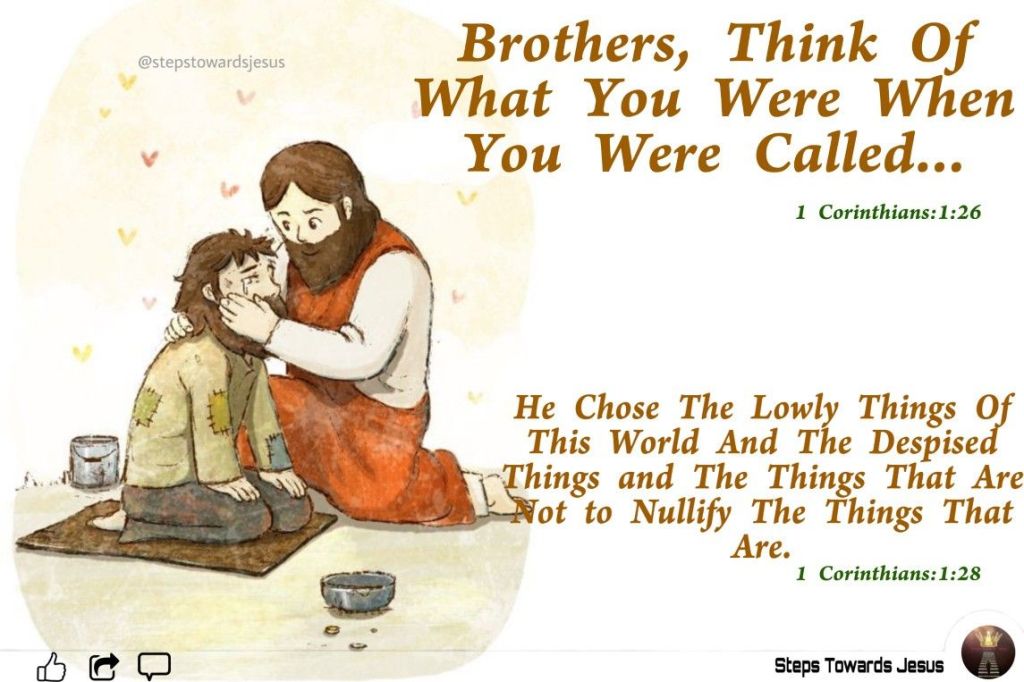
26 For [a]consider your calling, brothers and sisters, that there were not many wise according to [b]the flesh, not many mighty, not many noble; 27 but God has chosen the foolish things of the world to shame the wise, and God has chosen the weak things of the world to shame the things which are strong, 28 and the [c]insignificant things of the world and the despised God has chosen, the things that are not, so that He may nullify the things that are, 29 so that no [d]human may boast before God. 30  But it is [e]due to Him that you are in Christ Jesus, who became to us wisdom from God, [f]and righteousness and sanctification, and redemption, 31 so that, just as it is written: “Let the one who boasts, boast in the Lord.”

The Word of God for the Children of God.

Adeste Fideles! Laeti Triumphantes! Venite Adoremus! Dominum.

Gloria! In Excelsis Deo! Alleluia, Alleluia, Alleluia, Amen.

In 1 Corinthians chapters 1 and 2, Paul assigned his readers an important task: the confident preaching of Christ crucified.

The Gospel message, he wrote, is foolishness to the world (1:18-25) and yet the undeniable truth of the message means quite literally everything to believers—and God chooses to use not the most powerful but the very weak to proclaim it.

Beginning in a process of conversion, the core of being a Christian is living a life of discipleship — of following Jesus in everything we do — so that we can step up and step out to help change the world into the Kingdom Jesus told us about.

This is the lifestyle Jesus chose to attract others to him that they might come to the moment where their desire to know Him and His Father, God is priority #1.  

Stepping up and stepping into this lifestyle of witness ourselves prayerfully attracts others to our faith, gives us opportunities to explicitly share our faith.

What God Chooses to Accomplish His Will

1 Corinthians 1:27-29 New American Standard Bible

27 but God has chosen the foolish things of the world to shame the wise, and God has chosen the weak things of the world to shame the things which are strong, 28 and the [a]insignificant things of the world and the despised God has chosen, the things that are not, so that He may nullify the things that are, 29 so that no [b]human may boast before God.

When have you not ever felt the nudge to do something, say something, or try something that felt even .01% outside your ability to conceive?

As soon as the thought came into your head another did as well, discrediting your so called self perceived, self-conceived time limited “qualifications”.

Yet, somehow the very idea brought a momentary quickening in your heart.

The undeniable feeling this could be great.

The undeniable feeling this could be exciting.

The undeniable feeling this could be transformational.

The undeniable feeling this could be life changing to the utmost and uppermost.

The undeniable feeling this could be a major league professional difference maker.

These are those miracle moments when God wants to step in to do something bigger than what “we believe” is possible with our seemingly unqualified lives.

Isaiah 57:13-15 New American Standard Bible

13 When you cry out, let your collection of idols save you.
But the wind will carry them all up,
And a breath will take them away.
But the one who takes refuge in Me will inherit the land
And possess My holy mountain.”

14 And it will be said,
“Build up, build up, prepare the way,
Remove every obstacle from the way of My people.”

15 For this is what the high and exalted One
Who [a]lives forever, whose name is Holy, says:
“I dwell in a high and holy place,
And also with the contrite and lowly of spirit
In order to revive the spirit of the lowly
And to revive the heart of the contrite.

The amazing truth is that we are never left to ourselves in these moments!

Miraculously, when God plants the thought into our thoughts, our souls, God lays something on our heart to do or brings on a challenge for us to conquer for Him, then God is the ONLY one who is going to be sufficient to see us through!

God pushes us into uncomfortable places so that we are able to recognize it is time for a difference to be made somewhere and recognize His power at work.

If God only called us to what we felt only barely capable to do, then would we even recognize God’s hand at work in our lives?

When we feel like we have it all together, when things make sense in our own minds then we stop seeking God for his help.

Our worldly malignant pride so easily raises up, steals our need for a Savior.

It is for this reason God allows us to face obstacles that feel insurmountable at the moment.

In these moments we must be faithful to take a step of faith.

God will meet us and miraculously provide so His glory can be seen in our lives.

God enables his people to accomplish what He desires them to do with their lives.

What then is Apollos? And what is Paul? Servants through whom you believed, even as the Lord gave opportunity to each one. I planted, Apollos watered, but God was causing the growth. So then neither the one who plants nor the one who waters is anything, but God who causes the growth. (1 Corinthians 3:5-7 NASB)

Making Sense of the Value of our Christian Witness

God’s plan for humanity is not one that we can make sense of on our own.

God came in a form that no one expected, performed miracles no one would have considered to be possible, died a criminal’s death, and yet used these lowly circumstances as the tool to free humanity from the chains of sin and death.

If we are to be ones called away by God, separated by God from the world who accomplishes God’s plan or even be among those few who are able to accept the truth of the cross, we have to be obedient, willing to lay aside our expectation, known limitations, and step out in faith that God will meet us where we are.

Two thousand some years ago, God used a foolish cross to redeem our lives.

He gives us the strength we need to minister to those who need His love in our daily lives.

God will carry us through dark days.

He will provide for our families when we see no way forward.

God is infinitely able and uses our vast measures and degrees of powerlessness to show His great ability to carry us through whatever it is that He calls us to.

Pause for just a few precious moments to prayerfully consider how you need to invite God to “tap your shoulder” to show His mighty hand at work in your life?

Are you only relying on what “makes sense” to you or is there an area in your life in which God is nudging you to step out in faith so He can do something great?

God only gave the Israelites in the desert the manna and Quail they needed each day so that they would have to learn to trust in God as their only true provider.

Pray and Learn: how is God teaching you to trust in him as your daily provider?

In the name of God, the Father and God the Son and God the Holy Spirit,

Let us Pray,

Dear Father, God Almighty, Creator of all things, you alone of whom we now boast,

Why have you chosen the weak, the foolish, the despised? You have done this so that no human being can boast. And we do not! We cast our lives at your feet. You alone are worthy! You are above all things, you alone are the source of our lives in Christ Jesus, whom you made to be everything to us. He alone is our wisdom and He alone is our righteousness. He alone is our sanctification and He alone is our redemption. Therefore, as it is written, “Let him who boasts, boast of the Lord” – and we do! In the name of Savior Jesus, by his wisdom and authority, I ask these things. Amen.

Adeste Fideles! Laeti Triumphantes! Venite Adoremus! Dominum. Gloria! In Excelsis Deo! Alleluia, Alleluia, Alleluia, Amen.

https://translate.google.com/

A Lifestyle of Urgency. Acts 20:22-24

As Paul took his leave of the Ephesian elders in Acts 20, the Apostle felt an urgent compulsion from the Holy Spirit to go back to the city of Jerusalem.

He declared to all present he had no idea what would happen to him when he got there, but he had a clear sense hard times and imprisonment awaited him.

Then he made this incredibly valuable and impossibly staggering statement:

“I do not account my life of any value.”

Acts 20:22-24 The Message

22-24 “But there is another urgency before me now. I feel compelled to go to Jerusalem. I’m completely in the dark about what will happen when I get there. I do know that it won’t be any picnic, for the Holy Spirit has let me know repeatedly and clearly that there are hard times and imprisonment ahead. But that matters little. What matters most to me is to finish what God started: the job the Master Jesus gave me of letting everyone I meet know all about this incredibly extravagant generosity of God.

The Word of God for the Children of God.

Adeste Fideles! Laeti Triumphantes! Venite Adoremus! Dominum.

Gloria! In Excelsis Deo! Alleluia, Alleluia, Alleluia, Amen.

As Paul took his leave of the Ephesian elders in Acts 20, the Apostle felt an urgent compulsion from the Holy Spirit to go back to the city of Jerusalem.

He declared to all present he had no idea what would happen to him when he got there, but he had a clear sense hard times and imprisonment awaited him.

Then he made this incredibly valuable and impossibly staggering statement:

“I do not account my life of any value.”

“I do not account my life of any value.”

What an incredibly shocking statement summarizing Paul’s own deep, abiding passion for the urgent way he personally views the sum total of his valued life.

“If my life isn’t of any value, it’s not precious to me, I got one thing I’m focused on, and that’s the ministry I have received from the Lord Jesus, testifying to the gospel of his grace.”

This was not first century mindset of masochism—some strange utter hatred of personal joy, happiness, self control, peace, or spiritual health, or physical life.

So what, then, did Paul mean by declaring his life completely valueless?

Simply this:

that solely for the sake of His Savior Jesus and the Kingdom of God, he did not regard his own life as so precious a possession as to be held on to at all costs!

What value we assign to our lives is summarized by people often nonchalantly saying, “Well, as long as I have got breath, and health, that’s all that matters!”

“I am happy I am still breathing, my heart is still beating and I am standing!”

Yes!

Absolutely!

Value all of these things and so much more!

Be happy you are still breathing, your heart is beating and you are standing!

But that is not all that is to be valued, all that matters in the Kingdom of God!

Be Comforted but also recall our invaluable bodies are steadily passing away. (Isaiah 40:1-9)

We are crumbling even as we live and breathe.

We may have our health today, but a day will come when we do not.

Unless we are able to say with Paul, “To live is Christ,” we cannot legitimately affirm with him, “and to die is gain” (Philippians 1:21).

The only way that death can be a valued gain is if Christ is urgently everything.

And if Savior Christ is valued as urgently everything, as Paul says He is, then we can declare with him, My life is not ultimate. I don’t need to protect it as the most precious thing I have. I want to spend it for the most precious person I’ll ever know.

What mattered most to Paul was that he finished his life trusting Christ and carried out to the best of his abilities the ministry Christ had given him.

He felt a compelling, overwhelming resolve to complete the task of testifying to “the gospel of the grace of God” everywhere he could reach by foot or by boat. 

There’s a task! 

There’s a purpose, significance, an agenda, a calling!

There is a Christian lifestyle which matters to the Kingdom of God!

There is a Christian lifestyle worthy of being valued!

And this is the task entrusted to all of us—the Great Commission to (Matthew 28:16-20) to let everyone we meet know the good news of God’s amazing grace.

Matthew 28:16-20 English Standard Version

The Great Commission

16 Now the eleven disciples went to Galilee, to the mountain to which Jesus had directed them. 17 And when they saw him they worshiped him, but some doubted. 18 And Jesus came and said to them, “All authority in heaven and on earth has been given to me. 19 Go therefore and make disciples of all nations, baptizing them in [a]  the name of the Father and of the Son and of the Holy Spirit, 20 teaching them to observe all that I have commanded you. And behold, I am with you always, to the end of the age.”

“If Only I May Finish My Course …”

Acts 20:22-24 Amplified Bible

22 And now, compelled by the Spirit and obligated by my convictions, I am going to Jerusalem, not knowing what will happen to me there, 23 except that the Holy Spirit solemnly [and emphatically] affirms to me in city after city that imprisonment and suffering await me. 24 But I do not consider my life as something of value or dear to me, so that I may [with joy] finish my course and the ministry which I received from the Lord Jesus, to testify faithfully of the good news of God’s [precious, undeserved] grace [which makes us free of the guilt of sin and grants us eternal life].

From time to time, I will silently pray about each of these verses in Acts 20:22-24 and as I do quietly pray through them I will find myself constantly driven, then more urgently praying for the spread of the gospel through all our lives.

It then feels like every chapter and verse I can recall and prayer that flows from every verse and every chapter has got to help me to faithfully share the gospel.

That’s exactly what Paul is expressing here.

Think about it.

Paul knows he’s on this earth specifically for the spread of the gospel.

He urgently desires, and he says later, “I want to depart and be with Christ, but it’s better that I’m here.

Philippians 1:21-24 Amplified Bible

To Live Is Christ

21 For to me, to live is Christ [He is my source of joy, my reason to live] and to die is gain [for I will be with Him in eternity]. 22 If, however, it is to be life here and I am to go on living, this will mean useful and productive service for me; so I do not know which to choose [if I am given that choice]. 23 But I am hard-pressed between the two. I have the desire to leave [this world] and be with Christ, for that is far, far better; 24 yet to remain in my body is more necessary and essential for your sake.

In God’s wisdom. He’s left me here for the spread of the gospel. This is what I want to do. I want to testify of his grace.”

Acts 20:24 Reminds Us of the Bible’s Teaching

Let’s look at our lives in a similar way.

I’m not saying this is the only thing we do in the world.

This is obviously not what the Bible is teaching, but the Bible is teaching that this is primary.

We are here on this earth for the spread of the gospel of the grace of God.

We are here exclusively to help other people know how good, and great, and gracious, and glorious and invaluable God, Jesus and the Holy Spirit are to all.

This is the opportunity God has given us every day and the place where he has put us in the world to make this good news to others.

A billion years from now what’s going to matter most is whether or not we have made this good news known to as many others as is possible in ones lifetime.

Acts 20:24 Leads Us to Have a Right Perspective

God, we ought to be urgently praying:

“Please give us a right perspective on our lives here.”

“God, Help us not to miss this glorious purpose you’ve entrusted to us.”

“We want to be a part of testifying to the gospel of your grace, telling other people about your love in Christ.”

“Lord, we don’t want to get to the end of our lives and look back and not have done this, not have given our whole lives to this, not having spent our lives doing this.”

In all the places I find myself, and I think about my life, my schedule this week.

I think about each person who’s praying this and their lives, their schedule, the different workplaces where they are, the different places where they live, the different people around them who probably don’t know Christ as their Savior.

“Lord, help us all. Help us all, we pray, to be faithful to testify to the gospel of your grace. And, Lord, help us not to neglect this most important ministry.”

This Reminds Us of Our Duty to Proclaim the Gospel

Obviously, we know we are not Paul in the same way that he was an apostle in the New Testament.

But we do know that, like the Apostle Paul, we have been urgently sent out by Christ with an urgent message, a gospel of God’s abundant and eternal life so to proclaim.

“Dear God, Help us urgently, we pray, to do it faithfully.”

“May I say in my own hearts my life I don’t count of any value.”

“Precious unto myself.”

“If only by your grace, I may finish this race and complete this ministry that I have been given from you, this opportunity that you have given to me, to urgently testify to, and witness exclusively unto, the gospel of your exceedingly amazing grace.”

“God, help me to be faithful to run that race today and to do this work today.”

For the exclusive glory of your name and for the exclusive and urgent spread of your gospel, we pray, in Jesus’ name. Amen.

Living Out and Into A Lifestyle of Urgency

In these most contemporary of “lets hurry up and wait” how are you and I, like Paul, to live a life of urgency so that you and I might keep going until the end?

You and I must run our race with all our might, with the finish line in view.

Do not look for any opportunity to bow out or slow down before the final lap is over and urgently run with all our strength and running right through the tape, gripped by Christ’s love, energized by God’s Spirit, and guided by God’s Word.

In the name of God, the Father and God the Son and God the Holy Spirit,

Let us Pray,

Heavenly God, Author of my life, Perfecter of my faith, be with me as I run the race of becoming more like your son Jesus. I pray God that you remove my selfishness so I follow what’s best for You, not what’s best for me. When I am tired, please give me strength to finish the race with joy. Let my actions, my witness and my testimony show the meaning of the gospel, reveal the invaluable message of Christ my Savior.

Adeste Fideles! Laeti Triumphantes! Venite Adoremus! Dominum.

Gloria! In Excelsis Deo! Alleluia, Alleluia, Alleluia, Amen.

https://translate.google.com/

Finding the Courage to Be Different. John 15:18-19

John 15:18-19 The Message

Hated by the World

18-19 “If you find the godless world is hating you, remember it got its start hating me. If you lived on the world’s terms, the world would love you as one of its own. But since I picked you to live on God’s terms and no longer on the world’s terms, the world is going to hate you.

The Word of God for the Children of God.

Adeste Fideles! Laeti Triumphantes! Venite Adoremus! Dominum.

Gloria! In Excelsis Deo! Alleluia, Alleluia, Alleluia, Amen.

A Hated People

John 15:18 Amplified Bible

Disciples’ Relation to the World

18 “If the world hates you [and it does], know that it has hated Me before it hated you.

This may be one of Jesus’ hardest teachings—especially if anyone of us tends to prefer being a people pleaser.

Jesus wants us to understand that his followers will sometimes be at odds with the values of the world.

As a result, there will be times when we pay a relational price for following him.

But will we be hated?

Disliked? Probably.

Misunder­stood? Sure.

But hated? That sounds pretty extreme.

Well, hatred is a pretty extreme and polarizing emotion.

Hatred is a high energy radically divisive way of immediately shutting down the course of events of that moment – say the words “I hate you” and life just stops.

Yet Jesus deliberately chooses this strong language here for a reason.

And Jesus knew that it absolutely had to be said and Jesus knew his disciples had to be prepared to receive the hatred – even to the point of their death on a cross.

Putting God first in our life will absolutely create friction—being different from everyone around you — well, guess what? it’s going to be a significant threat to people and unto world systems which have a deep and vested interest in their own selfish ambitions and much preferred ways of doing “their own” things.

Jesus invited people into the kingdom of God, to hate the world, and this will result in his arrest, public humiliation and his suffering and death on a cross.

Why? Because his teachings represented a threat to the religious leadership.

Following Jesus meant great personal sacrifice, having less power, status, and attention, so their response was to get rid of the competition and protect their own interests (see John 11:48 Amplified).

48 If we let Him go on like this, everyone will believe in Him, and the Romans will come and take away both our [holy] place (the temple) and our nation.”

Since we read in Scripture this is how Jesus was treated, should we be surprised to encounter such a hardship in our own lives because of our faith in him? No.

Yet, in spite of resistance in this world, God remains faithful to his people.

Through the Holy Spirit, we can be emboldened, empowered and inspired and refreshed to continue the most challenging of Kingdom work God calls us to do.

And in community we can find the prayer and support to keep following Jesus, no matter what it costs us.

John 17:6-12 Amplified Bible

“I have manifested Your name [and revealed Your very self, Your real self] to the people whom You have given Me out of the world; they were Yours and You gave them to Me, and they have kept and obeyed Your word. Now [at last] they know [with confident assurance] that all You have given Me is from You [it is really and truly Yours]. For the words which You gave Me I have given them; and they received and accepted them and truly understood [with confident assurance] that I came from You [from Your presence], and they believed  [without any doubt] that You sent Me. I pray for them; I do not pray for the world, but for those You have given Me, because they belong to You; 10 and all things that are Mine are Yours, and [all things that are] Yours are Mine; and I am glorified in them. 11 I am no longer in the world; yet they are still in the world, and I am coming to You. Holy Father, keep them in Your name, the name which You have given Me, so that they may be one just as We are. 12 While I was with them, I was keeping them in Your name which You have given Me; and I guarded them and protected them, and not one of them was lost except [a]the son of destruction, so that the Scripture would be fulfilled.

With the power and strength of Such deep Prayerful Support – what becomes possible?

The COURAGE to be DIFFERENT!

John 15:19 Amplified Bible

19 If you belonged to the world, the world would love [you as] its own and would treat you with affection. But you are not of the world [you no longer belong to it], but I have chosen you out of the world. And because of this the world hates you.

Against the Grain

My father who grew up in the Depression era and was a combat veteran of the Korean Conflict, used to say the times have changed, a sentiment I now echo.

A child of the sixties and seventies, the world looked so very different during my own childhood; some resulted from my idyllic imaginings, and some from a much darker more brutal and bullied reality now most thankfully long past.

Today, the world, especially whether it is my country, or most anyone else’s country, looks darker, uncertain, bullied, terrorized and war-like and divided.

My Judeo-Christian faith now shines brighter than ever, and too many days I have never felt so alone, misunderstood and out of place. 

Born and baptized a Christian, My family and I grew up Jewish when being Christian was much more in fashion, even ubiquitous.

Kids pretended to be Christian even when they weren’t.

I do not guess that is as true now as it was then – Not anymore.

It was the sixties and seventies – Haight Ashbury, the Vietnam War, Protests, Anti War Sentiments and campus riots were 5 minutes from my parents home.

There was the iconic transformative Woodstock on a farm in Bethel New York.

There was the Watergate Scandal and a US President was compelled to Resign.

This was our era – which we and my family lived, grew up in, were shaped by.

Each era seems to have its own iconic mind-bending, setting, transformative events which served to change the thinking of those who were born and raised.  

Nowadays, many people hide their faith for fear of being offensive.

There seem to be fewer open prayers when out in public and less mention of God in school. 

The challenges are mind bending, mind setting, controversial, transformative, divisive, politically high charged: Abortion. Homosexuality. Race. Transgender.

Violence, school shootings, walk into a church or any other place and spray bullets and bombs all over, among many other things which could easily take their place in bending, breaking, shaping, transforming billions of minds.

Uttering an unpopular opinion or a fact that goes against the grain is far more consequential than just merely taboo.

So for those of us seeking to stand firm in the faith, our absolute belief in God, the Father, God the Son and God the Holy Spirit, what exactly are we left to do?

Finding the courage to be different today comes with consequences like job loss, public ostracization with threats of physical violence, legal repercussions, fines, and maybe at some point, death. 

From those first century days, it is not too far fetched to believe or wonder if it’s not significantly more counter-cultural to be that faithful, faith-filled, hopeful hope-filled, publicly prayerful, publicly praying Christian in today’s society.

The question is, do we have even the the minimal courage to be max different?

Intersecting Faith and Life:

The world hated Jesus.

There should be no surprise when we receive the same treatment.

If you are a Christian who finds yourself in harmony with the world, that’s an indication to rethink your faith.

We are called live differently, like Christ. 

He didn’t have an easy life.

Why would we? 

Why should we?

Christ told His disciples there would be suffering in the world.

Yet, despite suffering, through Him, they could find peace.

Through Him, they found the strength needed to live out their faith.

That same peace and strength are available to us today. 

We’ll need it if we are to be different.

Different in the Way We Talk

Scripture prescribes a certain way to communicate.

Our words are supposed to build another up, those in the faith and outside.

That doesn’t mean every word spoken from our mouths is soft and gentle, but that also doesn’t mean our words should be extremely harsh and ultra divisive.

Where the world seeks to offend, we should make peace.

Where the world stresses peace, we should boldly speak the truth of the Gospel of our Lord, Savior Jesus Christ in “tough” love to people who need to hear it.

Different in the Way We Walk

Modern society glorifies the value of an individual’s happiness, priorities, needs, and wants. Our faith prioritizes the values of God.

We recognize we are not the center of the universe, which causes us to value getting married and starting families.

We value impartially serving others as opposed to serving ourselves. (James 2:1-13)

We value children in and outside of the womb. (Psalm 139:13-18)

Different in How We Think

Our primary motivations as Christians should be to love God and, secondly, to love our neighbors as much or as little as God commands us to love ourselves.

These are the greatest commandments.

Society commands the love of self.

If we aren’t happy, the culture encourages us to change our circumstances through divorce, jobs, etc.

Scripture helps us understand happiness is not just transitory but something we are not entitled to for simply existing.

God blesses us with good, but He also blesses us, allows for the bad and even the catastrophic and for very good reasons!

Different in What We Believe

Those in the world reject God when they can’t see the evidence but are quick to believe science without viewing the evidence – the methodology, the variables, the data, etcetera.

Knowing ‘the science’ proves something is enough for some people.

As Christians, we believe science helps us understand the natural world, but we also recognize there is also a supernatural one.

God allows us to see where conventional insight fails or deceives. 

Being different is a challenge today, but walking with God was never meant to be easy.

Jesus’ life, death, and resurrection are proof. 

Proverbs 29:18Amplified Bible

18 
Where there is no vision [no revelation of God and His word], the people are unrestrained;
But happy and blessed is he who keeps the law [of God].

Choosing courage over comfort means embracing the unknown.

It pushes you to new experiences and makes you open and accommodating when you are tired of working for world instead of working for Savior Jesus.

Serving as Jesus did? It requires courage and confidence to do what your mind would otherwise assume and ignore because it anticipates failure or challenges.

Comfort will keep you back from pursuing your goals, fulfilling your dreams, and living up to your potential.

Courage, on the other hand, gives us prophetic vision (Proverbs 29:18) to see what others cannot see, to pursue what others would not dare to go after.

In the name of God, the Father and God the Son and God the Holy Spirit,

Let us Pray,

God Almighty, God my Father, I come before you now with a fresh anointing of your Gospel from John 15:18-19, with a plea and a prayer for courage. Please be with me on these dark and challenging days. No matter how alone I may feel, remind me you are my ever-present company. Whatever obstacles I face and my mindset faces, help me to live out the faith consistently and constantly. When the world seeks hate me as it hated your Son Jesus, seeks to deceive and sell me on falsehoods as Satan did your Son, direct me again towards truth. Please direct me to you. Being different is hard and scary, and some days God, I wonder what life would be like to be of the world. But I want to remain steadfast. I wish to remain with you. So, Lord, please give me the courage to be different, especially when I need it the most. In Jesus’ name. Amen.

Adeste Fideles! Laeti Triumphantes! Venite Adoremus! Dominum.

Gloria! In Excelsis Deo! Alleluia, Alleluia, Alleluia, Amen.

https://translate.google.com/

Today’s Legitimate Dose of Life’s Reality: When God is Excluded from our Life, All Our Things Are Vanity. Ecclesiastes 1:1-11

Ecclesiastes 1:1-11 English Standard Version

All Is Vanity

The words of the Preacher,[a] the son of David, king in Jerusalem.

Vanity[b] of vanities, says the Preacher,
    vanity of vanities! All is vanity.
What does man gain by all the toil
    at which he toils under the sun?
A generation goes, and a generation comes,
    but the earth remains forever.
The sun rises, and the sun goes down,
    and hastens[c] to the place where it rises.
The wind blows to the south
    and goes around to the north;
around and around goes the wind,
    and on its circuits the wind returns.
All streams run to the sea,
    but the sea is not full;
to the place where the streams flow,
    there they flow again.
All things are full of weariness;
    a man cannot utter it;
the eye is not satisfied with seeing,
    nor the ear filled with hearing.
What has been is what will be,
    and what has been done is what will be done,
    and there is nothing new under the sun.
10 Is there a thing of which it is said,
    “See, this is new”?
It has been already
    in the ages before us.
11 There is no remembrance of former things,[d]
    nor will there be any remembrance
of later things[e] yet to be
    among those who come after.

The Word of God for the Children of God.

Adeste Fideles! Laeti Triumphantes! Venite Adoremus! Dominum.

Gloria! In Excelsis Deo! Alleluia, Alleluia, Alleluia, Amen

When God is Excluded All of Our Things Are Vanity

From start to finish, the book of Ecclesiastes declares the utter futility and complete meaninglessness of life without God.

Whether it is referring to work or pleasure, or wisdom or wealth, power or prestige, entertainment or virility, life or death, ALL is considered futile and worthless whenever God is excluded from the equation.

It is Solomon who is credited with the authorship of Ecclesiastes.

He was chosen by God to succeed his father, King David as Israel’s anointed king, and when faced with the great responsibility of leading the nation, he humbly confessed that he was unable to do so without help from the Lord.

Despite his humble confession to God and his magnificent prayer at the dedication of the Temple, Solomon set out to discover the meaning of life using his own reasoning power and without the leading, guidance, direction of God.

The conclusion he was forced to reach was: “Vanity of vanities! All is vanity.”

At the end of his life, Solomon discovered his long search for fulfilment through his many accomplishments, was nothing more than just chasing after the wind.

Despite his great wisdom, power, fame, and fortune, his search for the meaning in life proved completely, ultimately profitless – because he had chosen to set out to explore the meaning of life, its significance, in his own human strength.

The entire book of Ecclesiastes amounts to Solomon’s discovery that when God is excluded from one’s existence, the benefits of wisdom and learning are futile.

Small achievements, great achievements, vast possessions, no possessions skillful work, also linguistic expertise, and various accomplishments prove to be ultimately profitless and quite futile when that is ALL that life has to offer.

Solomon recognized that death is the ultimate equalizer of both the king in his palace and the beggar at his gate.

He realized that competition between one person and another is profitless and life is very transitory, like the grass of the field which is here today but come a single moment of next tomorrow is almost immediately cast into the bonfires. 

“Vanity of vanities,” says the Preacher, “Vanity of vanities! All is vanity.”

In Romans, Paul reminds us that the whole of the creation was made subject to vanity because of sin and its consequences.

The whole premise of the Preacher of Ecclesiastes is true – for there is truly NOTHING that can be pursued or gained on earth that can provide everlasting fulfilment for a man’s soul.

The Preacher in Ecclesiastes states his conclusion that “all is vanity,” at the very beginning of his dialogue and again at the end.

Were it not for a little verse tucked away in the middle of Ecclesiastes, his whole treaties could become very depressing for anyone who reads it, because without God, literally everything is vain and futile for this is the condition of every man.

Yet, there is one last verse that identifies well the meaning and purpose of life:

“When all has been heard, the conclusion of the matter under consideration is: fear God and keep His commands, for this is the whole duty of all mankind.”  (12:13-14)

A Legitimate Dose of Reality Regarding Change

Twenty years ago when I was visiting an ancient abbey on the Isle of Iona in Scotland, I wandered upon an ancient graveyard with many Celtic Crosses.

As I walked among the tombstones, I observed a variety of ages chiseled into their surfaces.

As near as I could tell with many stones barely or nearly unreadable, some of the people appeared to had lived to be quite old, while others not live past 30.

Yet when all these ages were taken together, it seemed that the average life span was around 65-70—just as the Bible says:

“The years of our life are seventy, or even by reason of strength eighty” (Psalm 90:10).

And more time than that had gone by since most of these people had passed.

This sobering reminder of life’s brevity returned me to a question that all of us ask at one point or another: Is this pursuit of all things in life all there is?

The book of Ecclesiastes addresses this deep question by giving us a solid dose of legitimate reality.

Truthfully, most of us don’t do well with reality; we prefer fantasy, mirage, and distraction.

Yet the author of Ecclesiastes, Solomon, begins his discourse by encouraging us to carefully, thoughtfully and completely reflect upon the absolutely mindless, utter meaninglessness of life, stating bluntly, “Vanity of vanities! All is vanity.”

Solomon seeks to prove his thesis by showing us life is marked by drudgery:

“What does man gain by all the toil at which he toils under the sun? A generation goes, and a generation comes, but the earth remains forever” (Ecclesiastes 1:3-4).

Life, in other words, is just a perpetual series of clocking in and clocking out until we die.

No matter who you are—whether you are an executive, a schoolteacher, or a stay-at-home mom—life “under the sun” contains much toil, and then it ends.

Does this leave you thoroughly depressed?

It should—if you rule out the existence of God.

When God is taken out of the equation, life truly has no meaning.

There is a reason why some people desire to escape reality through a drug-induced stupor or through mindless indulgence in pleasure and entertainment.

What may seem like strange behavior to us may actually be the best considered response of the one who has gotten a heavy, albeit incomplete, dose of reality.

Studying the book of Ecclesiastes forces us to try and consider the deep, deeper, deepest implications, meanings of life without God, in view of inevitable death.

But such an image is seldom if ever given even the most minimal measure or degree of consideration because nowadays too many Christians discount God.

Not just discount God but openly state in a pulpit that “God is 100% nothing!”

Not just declare from a church pulpit on a regular Sunday morning worship service that “God is 100% nothing!” but God never existed or is “100% dead.”

But read the rest of the Bible and you will discover that you may receive eternal life by trusting in Him, Him being Jesus, who said, “I am the way, and the truth, and the life. No one comes to the Father except through me” (John 14:6).

Only through God, the Father, God the Son, our Savior Jesus and the Holy Spirit will we 100% discover life’s true meaning, find the reason why all is not vanity.

Only if you remember the undeniable reality of Christ’s Resurrection, there absolutely is life beyond the grave, will we be able to live with joy, meet with all the ups and downs of life with a healthy perspective, on this side of the grave.

Life Changing Dose of Legitimate Reality: Everything Absolutely Revolves Around Father God, Son, Spirit.

Ecclesiastes 1:1-3 New American Standard Bible
The Futility of All Endeavors

The words of the Preacher, the son of David, king in Jerusalem.

“Futility of futilities,” says the Preacher,
“Futility of futilities! All is futility.”

What advantage does a person have in all his work
Which he does under the sun?

And thus begins one of the more depressing books in all of the Bible, but I would submit depressing in a good way, and here’s the reason I would say that.

When we come to Ecclesiastes, we read in these words, in these dispassionate chapters, a picture of life lived apart and separate from belief God.

Of life apart, of life separate from the reality of who God is, and all that’s in His character, of His love, His forgiveness, His justice, His mercy, His power, of His incomparable presence and indomitable and unsearchable wisdom.

Apart from the wisdom, power, love, justice, mercy of God, indeed, all is vain.

Ecclesiastes 1:2–3 Teaches Us Our Life is Vain Apart from God

The author of Ecclesiastes says this five times in one verse.

“Vanity of vanities. All is vanity.”

The point is clear, that all is in vain, everything lacks meaning apart from the reality of who God is.

The world revolves around God.

You take away the center around which the world revolves, and everything falls apart and so as you read through Ecclesiastes, as we likewise pray study and we pray through these different verses in Ecclesiastes, let’s all be reminded of the God-centeredness of the universe, and the need in each of our lives for God to be at the center of it all, knowing everything is meaningless apart from him.

The complete absence of God in our life is the Ultimate expression of Vanity!

Ecclesiastes 1:2–3 Reminds Us God is Our Rest

And so let’s pray based on Ecclesiastes 1:2–3.

Oh God, you are our everything, and we fix our eyes, our minds, our hearts on you today and we say that apart from you, everything is vain. You are our life, you are the author of our life, you are the Creator of our lives, you’re the sustainer of our lives, you’re the only one who can satisfy our lives. God, you are everything to us, oh God. You are our Creator, our Savior, our One and Only true King, our Ruler, our Lord.

You are literally everything and we are as nothing without you. And we pray that you would help us to live today with our intemperate minds and sin laden hearts and tiny attention span and fickle affections centered around you, as we do for you, oh God to infuse meaning and purpose into everything we do. And fulfillment in our hearts. Our hearts, as Saint Augustine said years ago, are restless until they find their rest in you.

In the name of God, the Father and God the Son and God the Holy Spirit,

Let us Pray,

Our Heavenly Father, thank You for this honest assessment and exploration of living life in this fallen world, without our ever living Savior Jesus Christ. I pray this day to please keep me from chasing after any of the inevitably vain things this world offers, knowing that there is nothing on earth that has lasting value except to know You. May I place You in the center of my life, knowing that the whole duty and delight of man is to worship and praise You for Your goodness, grace to all men. In Jesus’ name.

Adeste Fideles! Laeti Triumphantes! Venite Adoremus! Dominum.

Gloria! In Excelsis Deo! Alleluia, Alleluia, Alleluia, Amen

https://translate.google.com/

Seeking and Finding the Disconnect in Our Connection with the Lord Our God. Matthew 6:31-34

Matthew 6:31-34 New King James Version

31 “Therefore do not worry, saying, ‘What shall we eat?’ or ‘What shall we drink?’ or ‘What shall we wear?’ 32 For after all these things the Gentiles seek. For your heavenly Father knows that you need all these things. 33 But seek first the kingdom of God and His righteousness, and all these things shall be added to you. 34 Therefore do not worry about tomorrow, for tomorrow will worry about its own things. Sufficient for the day is its own trouble.

The Word of God for the Children of God.

Adeste Fideles! Laeti Triumphantes! Venite Adoremus! Dominum.

Gloria! In Excelsis Deo! Alleluia, Alleluia, Alleluia, Amen.

During a small group Bible Study one night a friend once told me he set his alarm for 6:33 a.m. for a stretch of time during his teenage and young adult years.

He would wake up, put his feet on the floor, see his alarm, and immediately be reminded of Matthew 6:33 and his absolute need to “seek first the kingdom of God and His righteousness.”

To me, it was a pointed example, in one way, of Matthew 6:33 in action.

The question to me then was what impact would it have on someone, anyone who did not know the meaning of “the kingdom of God” (at the time – me) and “His righteousness” and did not know how to “seek” them?

The myriad of ideas floating around about the Kingdom of God is evidence that the devil has successfully deceived millions of people about the true meaning of the Kingdom of God—the center of Jesus’ message.

Even to this day, Satan actively obscures the heart and core of Jesus’ teaching, leading many sincere Christians to confidently say the Kingdom of God is the warm, fuzzy feeling people experience when they “invite Jesus” into their lives.

Yet God’s Word testifies that Jesus preached “the gospel of the kingdom of God”—not just a message about Himself, but the good news of a literal, world-ruling government to be set up on this earth (Mark 1:14).

So, just what is the Kingdom of God, and how does one go about seeking it?

What exactly is “His righteousness”?

What “things” will be added to us if we prioritize seeking the Kingdom and His righteousness?

What does Matthew 6:33 say that believers should do?

Matthew 6:33 is a foundational scripture that directs our focus and attention to what God considers to be the most important goal a person can have.

In order to weave this critical verse into our own lives, we need to have a biblical understanding of its core concepts.

“But Seek First the Kingdom of God”

The New Testament has much to say about the Kingdom of God, but one of the most memorable visions of God’s government replacing human governments can be found in the Old Testament book of God’s Prophet Daniel.

In Daniel chapter 2 Nebuchadnezzar, the ancient king of the Babylonian Empire, dreamed about a great image or statue—presumably of a man—with a head of gold, chest and arms of silver, belly and thighs of bronze, legs of iron, and feet of iron and clay.

But as the dream went on, the image was eventually shattered by a cataclysmic stone (Daniel 2:31-34).

Unsure of the dream’s meaning, Nebuchadnezzar turned to the prophet Daniel for its interpretation.

Under God’s inspiration, Daniel explained, “You [Nebuchadnezzar] are this head of gold. But after you shall arise another kingdom inferior to yours; then another, a third kingdom of bronze, which shall rule over all the earth. And the fourth kingdom shall be as strong as iron . . . and like iron that crushes, that kingdom will break in pieces and crush all the others” (Daniel 2:38-40).

According to Daniel’s interpretation, the statue represented the rise and fall of four great, successive empires.

These empires, or kingdoms, have been identified in history as the Babylonian Empire, the Medo-Persian Empire, Greco-Macedonian Empire and the Roman Empire. 

With this understanding in mind, notice what Daniel said about the symbolism of the stone that came and broke the image:

“And in the days of these kings the God of heaven will set up a kingdom which shall never be destroyed; and the kingdom shall not be left to other people; it shall break in pieces and consume all these kingdoms, and it shall stand forever” (Daniel 2:44, emphasis added throughout).

This kingdom that “stands forever” is the Kingdom of God, a literal kingdom with territory, subjects, laws and rulers just like the other great empires.

The Kingdom of God will be:

  • Set up here on earth (territory).
  • Ruling over and serving human beings (subjects) during Christ’s millennial reign.
  • Governed through God’s commandments and statutes (laws).
  • Ruled by Christ and the saints (rulers).

The Kingdom of God is not figurative nor is it another way of saying going to heaven, as many passionately argue.

It is the very real government of God to be established here on earth at Christ’s return.

Those who will inherit God’s Kingdom are called the “saints of the Most High,” they will “possess the kingdom forever, even forever and ever” (Daniel 7:18).

To “seek” that Kingdom is to have a strong desire to enter it—a willingness to go to any length to do so.

Matthew 6:33 tells us that this must be the main priority of a Christian’s life.

“And His Righteousness”

After instructing His followers to prioritize the Kingdom of God, Rabbi Jesus added that they also need to prioritize not just any kind of righteousness, but “His righteousness” – His righteousness meaning God’s righteousness.

What is the biblical definition of God’s righteousness? 

Psalm 119:172 says, “All Your commandments are righteousness.”

Take careful notice that the verse does not say “a few” “some” or “half” or “two thirds” “three quarters” “nine out of 10” (excluding the commandment to keep the Sabbath day holy), but rather it says “all” of God’s commandments.

Understanding the biblical definition of righteousness, this verse could read: “Seek first the Kingdom of God and obey all His commandments.”

Unfortunately, obedience is a very unpopular message in a society where people are obsessed with the idea of freedom to do whatever they please, no matter how much harm that kind of liberty may pose to themselves or others.

The result is people who lack self-esteem, self-respect and lack any respect for any authority figure and contemptibly refuse to yield one inch to that authority.

Many of the laws of the land—let alone God’s laws—have become more of a suggestion than anything mandatory.

They’re viewed as something that is optional for those who “feel” like obeying.

People nowadays bristle at the idea of someone else telling them what to do.

Yet the Bible is replete with scriptures that prove, beyond a shadow of a doubt, obedience to God’s law is absolutely necessary to be a true Christian.

Here is one of the plainest of those scriptures: “He who says, ‘I know Him,’ and does not keep His commandments, is a liar, and the truth is not in him” (1 John 2:4).

For those who follow the clear teachings of Scripture and value obedience, there is a special blessing in place.

Take extra careful notice of Revelation 22:14: “Blessed are those who do His commandments, that they may have the right to the tree of life, and may enter through the gates into the city.”

The blessing is entry into the Kingdom of God.

That is the reward for those who seek God’s righteousness.

Righteousness and the Kingdom of God are inextricably linked together!

“And All These Things Shall Be Added Unto You”

To know what this part of the verse refers to, we have to examine the context.

Matthew 6:25-32 New King James Version

Do Not Worry

25 “Therefore I say to you, do not worry about your life, what you will eat or what you will drink; nor about your body, what you will put on. Is not life more than food and the body more than clothing? 26 Look at the birds of the air, for they neither sow nor reap nor gather into barns; yet your heavenly Father feeds them. Are you not of more value than they? 27 Which of you by worrying can add one [a]cubit to his [b] stature?

28 “So why do you worry about clothing? Consider the lilies of the field, how they grow: they neither toil nor spin; 29 and yet I say to you that even Solomon in all his glory was not [c]arrayed like one of these. 30 Now if God so clothes the grass of the field, which today is, and tomorrow is thrown into the oven, will He not much more clothe you, O you of little faith?

31 “Therefore do not worry, saying, ‘What shall we eat?’ or ‘What shall we drink?’ or ‘What shall we wear?’ 32 For after all these things the Gentiles seek. For your heavenly Father knows that you need all these things.

In verses 25-32 Jesus instructs His disciples not to fret or be anxious about the physical necessities of life.

Food, water and clothing and shelter will always be the very basic must-haves for our very good health and happiness as long as we are living human beings.

But prioritizing any single one of these things or all of them over a disciplined life of prayer, study, obedience and a close relationship with God would be a potentially dangerous misallocation of our focus and attention upon our God.

In reassuring fashion, Jesus reminded His disciples,

“Do not worry, saying, ‘What shall we eat?’ or ‘What shall we drink?’ or ‘What shall we wear?’ . . . For your heavenly Father knows that you need all these things.”

“Father” is a fitting description of our loving God!

God could have designated Himself using any number of titles, but Father communicates His authority, strength and, most of all, His tender love.

The Sermon on the Mount can, in some ways, be seen as an explanation of why God is called our Heavenly Father.

Again and again throughout Matthew 5-7, we vividly see God’s function as our ultimate provider. 

Recognizing God’s commitment to protect and look out for His children is what this part of Matthew 6:33 is all about.

Again, please take careful notice of Matthew 7:9-11:

“Or what man is there among you who, if his son asks for bread, will give him a stone? Or if he asks for a fish, will he give him a serpent? If you then, being evil, know how to give good gifts to your children, how much more will your Father who is in heaven give good things to those who ask Him!”

The point is, God always knows.

God always sees.

God is not blind to our needs or desires.

God promises to provide for the physical necessities of this life if we prioritize His Kingdom and His righteousness.

Please look to these life transformative scriptures and claim God’s promises if you have been seeking God with your whole being but find you are struggling to make ends meet and are overwhelmed with life’s demands.

What Does Matthew 6:33 Really Mean?

In a nutshell, Matthew 6:33 serves as every Christian’s marching orders.

Our ability to seek first God’s Kingdom and His righteousness can be hampered if we become entangled with the cares of this life.

Nonetheless, diligently, prudently, regularly practicing spiritual disciplines like fellowship, and prayer, Bible study, meditation and the occasional fast can help refocus our minds, support the notion of reprioritizing on what matters most.

As much or as little we strive do our part to make our relationship with God our highest priority, God will surely do His part to provide for our every need, which is something we can count on.

This means always putting Him first in our lives, even the first few moments of our day.

He is the One who graciously woke us up, gave us the breath in our lungs, and provided us the opportunity to live another day.

He deserves our fullest possible measure of devotion the moment our eyes pop open, even if it is a mere “thank you, God” before our feet even hit the floor.

Intersecting Faith and Life and Matthew 6:33

As we strive to figure out life in the great information age, we are bombarded with an infinite measure of opportunities to fill our time and our minds with many things that can so easily replace our time of fellowship with the Lord.

The information available to us, literally at our fingertips, at all times, is a wonderful gift, but that mobile device we carry around in our purses and pockets can also be a mobile distraction that follows us everywhere we go.

Although our cell phones, smartphones, tablets, laptops, etc. are not evil, I do believe we need to be extra cautious as to how much time we devote to them.

We need to be more aware of where we are directing our focus.

We need to be attentive to what is “moving in” and capturing our attention.

Perhaps you may not have an issue with technology distracting you from the Lord- that’s great!

Stay strong and become an accountability partner for those around you who have easily pulled away from the things of God because of the ever-increasing information age.

But if you are like me (a stay-at-home/work-from-home, caregiving retired person,) you are finding yourself with limited time to spend with Jesus in prayer and the Word, I challenge you to prioritize seeking out the Lord if there is some way you can arrange in your schedule to allow better time management.

Also, ask Him if perhaps He would like for you to prioritize a fast (technology, that is) something which could be causing a division between you and Him. 

Prioritize devoting specific time every day to spend some quiet time in quiet fellowship with God and reading your Bible, without your cellphone or iPad within reach- to “turn them off” during that time and perhaps put a timer on the most-used apps that you access throughout your day.

Be thankful for the benefits of the tools and global connections that technology brings us, but also do not allow this technology to rob you of your connection to Jesus – un-connect technology for a while, refocus, reconnect with the Lord!

Always keep the Kingdom of God and His righteousness at the forefront of life.

“But Put God First” — That is the life-changing meaning of Matthew 6:33.

In the name of God, the Father and God the Son and God the Holy Spirit,

Let us Pray,

Sovereign Majesty, God and Ruler over all creation, since the beginning of time you have been our Provider, our Refuge, our Shelter, Defender, Protector and Redeemer. Your covenant with the human race, is from everlasting to everlasting and all that we possess and will ever possess, comes from you. Father, we have sinned greatly against you, but being a God of Righteousness, you have exhibited and manifested your steadfastness and faithfulness which prevails forever, through which we are saved, when we turn all of us over to you with fervent hearts and complete trust.

Your unshakable promises reflects your perfect attributes, for whatever we do in our arrogant and sinful nature makes your incomprehensible compassion more evident, proving you will never abandon us, will rescue all who are lost. Jesus has revealed to us the honor and glory of his Father, and we have the assurance that you will never leave us orphans, but have, through your plan of Redemption and Eternal Salvation, obediently fulfilled by Jesus your only Son, made us citizens, co-heirs of heaven.

By our deep faith, our belief, our resolve to focus on you and to obediently follow your Divine Providence for us, knowing that you have provided and taken care of all our needs, we concentrate on studying the right path to heaven, and promote your kingdom in the world, to bring hearts into subjection to your Will. We seek only your Holy Grace and hope to bring others to the obedience of faith, for we need not worry about the things of this world, since you have bestowed upon us all that we need and our only hope is in beholding your beatific face and be added to the ranks of the elite of your kingdom, in blessed, in highest possible exaltation of Jesus’ Name. Amen

Adeste Fideles! Laeti Triumphantes! Venite Adoremus! Dominum.

Gloria! In Excelsis Deo! Alleluia, Alleluia, Alleluia, Amen.

https://translate.google.com/