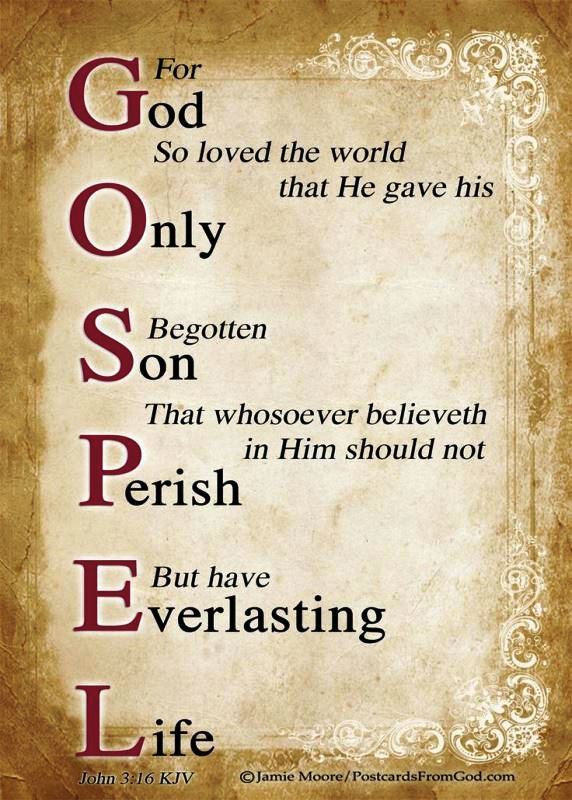
Who Am I in God? Who Am I God that you would desire to be in relationship with me? Who Am I to even want or desire to be in relationship with God?

Who Are You? Who Am I? Who Are We? Who is Anyone Apart from God?

Are you and I having trouble discovering who we really are? Have we all been searching for our identity, but can’t seem to find it? The reason you’ve been having trouble is because your true identity can only be found in Jesus Christ. Have we discovered how amazing our life in Christ is truly meant to be? Our ID’s reveal the truth about who God created us all to be and how He wants us to live!

Ephesians 1:1-14 English Standard Version

Greeting

Paul, an apostle of Christ Jesus by the will of God,

To the saints who are in Ephesus, and are faithful[a] in Christ Jesus:

Grace to you and peace from God our Father and the Lord Jesus Christ.

Spiritual Blessings in Christ

Blessed be the God and Father of our Lord Jesus Christ, who has blessed us in Christ with every spiritual blessing in the heavenly places, even as he chose us in him before the foundation of the world, that we should be holy and blameless before him. In love he predestined us[b] for adoption to himself as sons through Jesus Christ, according to the purpose of his will, to the praise of his glorious grace, with which he has blessed us in the Beloved. In him we have redemption through his blood, the forgiveness of our trespasses, according to the riches of his grace, which he lavished upon us, in all wisdom and insight making known[c] to us the mystery of his will, according to his purpose, which he set forth in Christ 10 as a plan for the fullness of time, to unite all things in him, things in heaven and things on earth.

11 In him we have obtained an inheritance, having been predestined according to the purpose of him who works all things according to the counsel of his will, 12 so that we who were the first to hope in Christ might be to the praise of his glory. 13 In him you also, when you heard the word of truth, the gospel of your salvation, and believed in him, were sealed with the promised Holy Spirit, 14 who is the guarantee[d] of our inheritance until we acquire possession of it, [e] to the praise of his glory.

The Word of God for the Children of God. Gloria! In Excelsis Deo! Alleluia! Amen.

Too often we get our self-esteem and self-value from other people. We get the picture of “who we are supposed to be” from society and from the media. Then we compare ourselves with others to see if we have “made it”. We’re told that if we don’t do this, wear that, go there, drink this (etc.) then we are a wimp, ugly, weak, unfulfilled (etc.) And for some unknown rationale, we believe this stuff!!

No wonder it’s so hard for people to be Christians these days – they’re bombarded with so much TRASH. It’s tough too, because this ‘trash’ is so appealing. Each one of us are targets. “If you don’t own a brick and tile house in a nice part of town and still have enough time to take out the four wheel drive at the weekend then you haven’t made it”.

In other words, our personal value can only be expressed in the things we have or do. And as Christians, we are not immune to that way of thinking and acting.

And so, our devotional reading today is from Paul’s letters to the Ephesians is a direct and decisive counter to that false way of thinking. It is intended to give us some understanding of the value that we have in our relationship with God. Our new relationship with God arising from the redeeming work and Jesus Christ.

Who Am I? Who Are You? Who are we? We are Adopted

First of all, we see that in our relationship with God we are Adopted. In verse 5 we see that in love, God destined us to be his sons. And, of course, today, in this politically correct age, his daughters as well. In ancient Roman law, the act of adoption had much greater significance than we might imagine or to consider.

This was no legal convenience or formality arranging guardianship.

An adopted child or indeed adult was subjected to a legal process which had far reaching effects.

There were four main consequences of this process of adoption.

First, the adopted person lost all rights in his old family and gained all the rights of the legitimate son in his new family. And so, in the most binding legal way, they got a new father.

Secondly, it followed that they became heirs to their new father’s estate. Sometimes, a young man might be adopted if his adoptive father had no children or heirs. However even if other children were afterwards born, it did not affect the adopted child rights. He was inalienably a co-heir with them.

Thirdly, in law the old life of the adopted person was completely wiped out. For instance, all debts were cancelled. He was regarded as a new person entering into a new life with which the past had nothing to do.

Fourthly in the eyes of the law, the adopted child was considered absolutely the son of his new father. So, for example the adopted child could not marry a daughter of his adopted father except by special legislation.

You will see quite clearly what Paul is trying to say. As Christians we are adopted into God’s family. This is no comforting phrase or mere analogy. But we really do gain a new father, we really do become co-heirs with Christ, we really do have our old life and our old debts cancelled and we really are absolutely the children of God. We are truly adopted as God’s children in a total and real way.

Who Am I? Who Are You? Who Are We? We are blessed!

Secondly, we read and observe that in our new relationship with God we are blessed. In verse 3 we see that God has “blessed us in Christ with every spiritual blessing in the heavenly places”. Just ponder and meditate about that for a while! Every spiritual blessing in the heavenly places is a blessing for me, you and us.

Now the word blessing can have several strands of meaning.

So, it can mean to make something Blessed, and so that in the course of and as a result of the blessing the person becomes consecrated to God.

It can also mean to cause to prosper. It can also mean to make happy. But this happiness is a special kind of happiness.

The English word happiness is to some extent a creature of chance. The word hap means a chance and so in English the word happiness has an essence of something dependent on the vagaries of life which may come and may go.

It’s a bit like good luck. But the Christian blessing and blessedness is not subject to any of those kinds of vicissitudes. It is that joy unspeakable. It is that joy, which is deep, serene, which is untouchable, which is self-contained, which is completely independent of the changes and chances of life.

The Beatitudes speak of that joy, that blessedness which seeks us and carries us through pain and sorrow and loss. …. And all those circumstances of life are unable to come close to touching or influencing that joy, that blessedness, which is constant which is unchanging.

And so, the Christian has a blessing from God which is not here today and gone tomorrow but it is consistent it is permanent, and it comes from God himself.

Who Am I? Who Are You? Who Are We? We are chosen!

Thirdly we see that in our relationship with God we are chosen by God.

In verse 4 we read that ’God chose us in him (that is in Christ) before the foundation of the world’.

Now you and I may be relieved to know that I do not intend to get involved in a major Theologian discussion about the balance between God’s choosing us and our choosing him. In theological terms, the balance between election and predestination, free will. That is the subject of an entire message on its own.

However, You and I do need to try and get our heads around what it means to be chosen. Our God, if he is to be God, must be all-knowing, all powerful, and must have a divine purpose.

John Calvin, the great theologian of predestination puts it in this following way. ’Predestination we call the eternal decree of God, by which he has determined in himself, what he would have to become of every individual of mankind.’

For us, as we consider what it means to be in God, this speaks of the amazing facts of God’s timeless involvement in our lives. It speaks of the sovereignty of God in our lives and the sovereignty of God in a world that would try to deny it.

If you and I read around this topic, look at other references to Gods choosing, we see for example in Corinthians 1:27-30 that God chose particular kinds of people to be in the church. He did not just choose the church and leave its composition to man. He chose foolish individuals and called them into Christ.

He chose some weak individuals and called them into Christ. He chose some low and truly despised individuals and called them into Christ. So that no one might boast in anyone but the Lord.

Then to make this crystal clear he said in verse 30 NIV: “It is because of him that you are in Christ Jesus.” In other words, it is just as though Paul knew someone would come along some day and say that God does not choose who is in Christ, but only chooses Christ and any who put themselves in Christ.

So, he writes and teaches, in verses 27-29 that God chose the individuals who would make up the church in Christ. And he says in verse 30 that it is by God’s design and doing and thoroughly ordered plan that they are all put in Christ.

The glorious, unshakable, objective foundation of you and we being a Christian is that God chose you and me to be one. God put you and me in Christ. So, I say with Paul (in verse 26) “Consider your calling!” Consider how you came to be in Christ! Think about it. It will take all boasting off of man and put it all on God.

So, verse 31 ends the section: “Let him who boasts boast in the Lord.” This is the boast of assurance. – seeing that it’s all of God and feeling a tremendous peace and confidence and courage and strength and love well up inside to keep us going in the face any opposition. Because “who can bring any charge against God’s elect!” (Romans. 8:33).

James (2:5) teaches the very same thing from a slightly different angle: God chose the poor to come to faith and be in the church, so be careful that you not discriminate against him.

Here again God has chosen not an undefined mass of people, but particular poor individuals to be deeply rich in their faith and to be treated in a certain way. The personal, individual nature of election has very practical consequences. If God has chosen to bring the poor into Christ, we ought not dishonor any of them!

So, I come back to Ephesians 1:4, “God chose us in Christ before the foundation of the world.” Before the creation of the universe God thought of me. He fixed his gaze on me and you and chose me and you for himself. He did not choose me, and you because we were already in Christ of our own doing, but that you and I might be in Christ.

He did not choose you and me because he saw you and me as a believer, but so that you and I might become a believer. He did not choose you and me because I and you chose him, but so that you and I might choose him. He did not choose you and me because we were holy or good but so we might become holy, good. Everything you and I are and all you and I ever hope to be is rooted in God’s freely choosing me. My faith, our hope, our work is not the ground of electing grace but only its effect. And so, there is no ground for boasting except in God.

Our existence in God is Eternal

Finally, we see that our being, our existence, in God is Eternal. It is not here today and gone tomorrow. For we see in v 4 that God chose us ‘before the foundation of the world’. Before the beginning of time. And we see in v 10 this relationship with God is part of ‘a plan for the fullness of time’.

This phrase, the fullness of time, is talking about the completion of Gods plans. And that completion is made when all things in heaven and on earth are united in Christ. This speaks in shorthand of the blessed time when Savior Jesus Christ returns again in glory and his eternal kingdom is 100% established for all time.

In God, we are blessed beyond our ability to comprehend.

In God, we have been chosen in love.

In God, we have a purpose to our lives.

In God, we are part of his eternal plan.

https://joycemeyer.org/everydayanswers/ea-teachings/knowing-who-i-am-in-christ

In the name of God, the Father and God the Son and God the Holy Spirit,

Let us pray,

Merciful God, we come before You with praise and thanksgiving! Through Jesus Christ our Savior, you have freely lavished on us every spiritual blessing we could possibly imagine! Before the world was created, you already knew us and loved us. You adopted us as your own children and redeemed us through the blood of Christ. Even more, you have made us your heirs, and given us your own Spirit as a sign and guarantee. How we praise you! Open our hearts and minds to your presence among us here. May our humble acts of worship this day bring you honor and glory, for you alone are worthy of our praise. Alleluia! Amen.
https://translate.google.com/

What if I Really allowed God to Love Me? Developing A Great and Intimate Relationship with God, The Father.

Forgetting God’s Love. Ignoring God’s Love. Believing that God only sometimes loves us because we only sometimes love ourselves. Sometimes we will believe because of all that is happening around us, an overwhelming negativity has too much influence and directional control over our existence, and God does not, is not immediately stepping in or we believe we are being unreasonably punished by an inconsiderate, uncaring, totally lacking in empathy God, our anger arises! Our hearts are hurting more than we can know, we want God now, we love God still, but His unknowability, His invisibility, assures us our relationship is done.

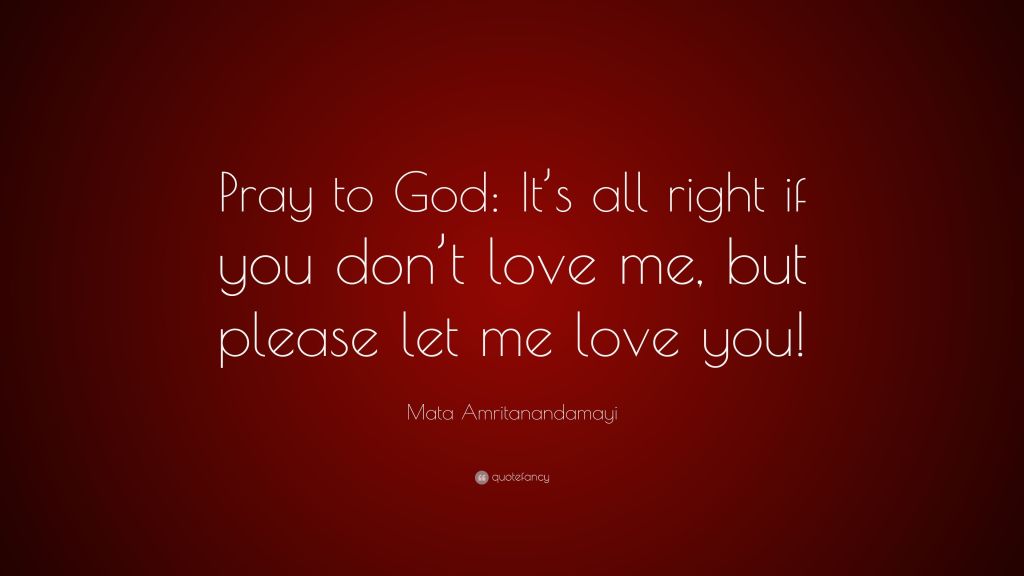
I pray to God, my Father, I guess it is alright if you do not love me right now. I suppose you have your reasons and I believe your reasons to be 100% righteous and purposeful and true. I guess I will just have to figure out for myself, how I can get back into Your Book of Life again. but please know, “I Love You, Yet!”

Psalm 13Authorized (King James) Version

Psalm 13

To the chief Musician, A Psalm of David.

How long wilt thou forget me, O Lord? for ever?
how long wilt thou hide thy face from me?
How long shall I take counsel in my soul,
having sorrow in my heart daily?
how long shall mine enemy be exalted over me?
Consider and hear me, O Lord my God:
lighten mine eyes, lest I sleep the sleep of death;
lest mine enemy say, I have prevailed against him;
and those that trouble me rejoice when I am moved.
But I have trusted in thy mercy;
my heart shall rejoice in thy salvation.
I will sing unto the Lord,
because he hath dealt bountifully with me.

The Word of God for the Children of God. Gloria! In Excelsis Deo! Alleluia! Amen.

Yesterday, we had considered the wisdom of God from 1 John 4:7-21 (NASB)

God Is Love

7 Beloved let’s love one another; for love is from God, and everyone who loves has been born of God and knows God. 8 The one who does not love does not know God, because God is love. 9 By this the love of God was revealed [a]in us, that God has sent His only Son into the world so that we may live through Him. 10 In this is love, not that we loved God, but that He loved us and sent His Son to be the [b] propitiation for our sins. 11 Beloved, if God so loved us, we also ought to love one another. 12 No one has ever seen God; if we love one another, God remains in us, and His love is perfected in us. 13 By this we know that we remain in Him and He in us, because He has given to us of His Spirit. 14 We have seen and testify that the Father has sent the Son to be the Savior of the world.

15 Whoever confesses that Jesus is the Son of God, God remains in him, and he in God. 16 We have come to know and have believed the love which God has [c]for us. God is love, and the one who remains in love remains in God, and God remains in him. 17 By this, love is perfected with us, so that we may have confidence in the day of judgment; because as He is, we also are in this world. 18 There is no fear in love, but perfect love drives out fear, because fear [d]involves punishment, and the one who fears is not perfected in love. 19 We love, because He first loved us. 20 If someone says, “I love God,” and yet he hates his brother or sister, he is a liar; for the one who does not love his brother and sister whom he has seen, cannot love God, whom he has not seen. 21 And this commandment we have from Him, that the one who loves God must also love his brother and sister.

But that conversation lacks thoroughness without our also considering just the opposite. Because there are those among us who for their given circumstances spend a great deal of their time, energies and lifetimes believing the opposite is true. They possess an image of their God which is quite diametrically opposed to what the Apostle John wrote in our devotional text for today. They have their reasons which have been born of a crucible of time amidst life experiences that leave more room for doubt than room for acceptance. We 100% acknowledge this view of God, the Father, Son and Holy Spirit, is real to them and unto God.

Therefore, for the sake of God’s grace, in prayer for their souls, in our efforts at understanding their views, I give unto you these essential Questions to Ponder

1. Do you see man as a “tyrant”? Do you see God as a tyrant? If so, why?

2. Do you feel you cannot come or go to Him for everything? If so, why?

3. Are you fearing Him to the point of not talking to them, Him? If so, why?

4. Are you mad at God and or mankind for your life or current situation? If so, name and claim the situation.

5. Are you unhappy with how He created you? Are you unhappy that God created you (Psalm 138:13-18)? If so what is it you believe you don’t like about yourself?

6. Do you see God as your Earthly father or as your Heavenly Father? If so, how?

7. Who do you believe to be in more control of your life right now? Yourself, Mankind or God? Why do you believe this to be true? How might it be false?

We are in this mess called Pandemic where it seems everything under the sun is being controlled by someone other than ourselves – air travel. mask mandates, social gatherings, being in and among crowds in a shopping mall or in markets. New Year’s Eve is but a few days away and we are human, and we love to PARTY! Do we trust the person sitting next to us or near to us in our favorite restaurant?

Regulation after regulation is coming from well-meaning people to protect life. Perhaps it is the sum total of everything about your and my life which are right now converging into this moment, into this season. Perhaps we are simply tired of it all, quite overwhelmed, spiritually exhausted. Perhaps these feelings which have been represses, suppressed by our belief in Father, Son and Holy Spirit are being rigorously and vigorously challenged as the Patriarch Job found himself. Maybe the Lord of all Creation, this sovereign God who is all about “first love.” is inserting Himself once again directly into the affairs and works of mankind?

His Question becomes even for faithful in Jesus Christ – Okay, where are You? “I see you are getting distracted again like my faithful, faith-filled servant Job was by all of the blessings I gave to him over his many years of devotion. Job needed a “reality check” and I saw zero reason why I should not learn for myself where my servant Job’s life was zeroed in on – his abundance or MY abundance alone.” “I had to have an answer directly and decisively from the soul of Job himself!”

So, as many or as few as may find themselves righteously questioning the very presence and sovereignty of God, the value of His scriptures, His promises from His scriptures, the genuine trueness of His “FIRST LOVE,” ask of yourselves the questions which would otherwise go unasked if pandemic were non-existent. It is a good time and a proper season to question exactly where God is, His Son is, where His Holy Spirit is. Take the other side of the belief question for a while.

From the position of those who question God’s FIRST love, dare to ask yourself this day; What about God’s FIRST LOVE is losing its luster for me, for my family and for my friends and for my neighbors and my community and my church? I am asking you to prayerfully take the time to reconsider “church” in your soul. How is it we can reach unbelievers to be 2022 Acts 2, Acts 3 and Acts 4 church? How is it we can overcome our own doubts to reach into our neighbor’s doubts?

God the Father and God the Son and God the Holy Spirit really want to know if we ourselves truly know what the plan is for the continuance of God’s kingdom. To reach the unreachable. To teach the unteachable, Preach to the unreceptive. The year of our Lord and Savior Jesus Christ 2022 is a critically pivotal season. What confidence do we have to put on full display, to witness, our Testimony? What about a prospect of developing a “pandemic free” intimate relationship?

What if we 100% really, genuinely allowed God to get that close to us and His Children again? What if we genuinely gave God, Jesus, Holy Spirit permission, unconditionally reveal, unconditionally unleash His FIRST LOVE to us again?

How would our pandemic conditioned responses, respond to such a revelation?

HMM …

I SHALL NOW LEAVE YOU IN GOD’S MOST CAPABLE HANDS TO PONDER THIS!

In the name of God, the Father and God the Son and God the Holy Spirit,

Let us now pray the prayer Jesus taught His disciples to pray,

Our Father, which art in heaven, Hallowed be thy Name. Thy Kingdom come. Thy will be done in earth, As it is in heaven. Give us this day our daily bread. And forgive us our trespasses, As we forgive them that trespass against us. And lead us not into temptation, But deliver us from evil. For thine is the kingdom, The power, and the glory, For ever and ever. Alleluia! Alleluia! Alleluia! Amen.

https://translate.google.com/

By what standard ought We to Love all others? By Whose standard? We love only because God first loved us!

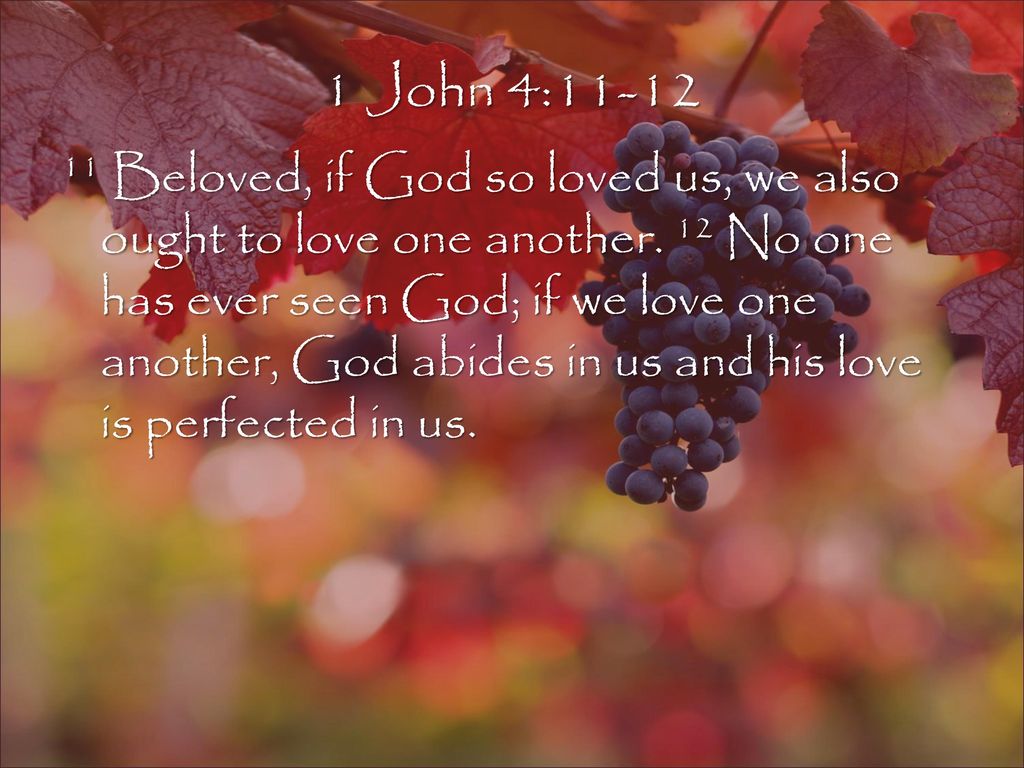
11 Beloved, if God so loved us, we also ought to love one another. 12 No one has ever seen God; if we love one another, God abides in us and his love is perfected in us.

The eternal God loves us in three tenses: past, present and future – for He is the same yesterday today and forever. It is a divine love that cannot be compared with the inadequate love of fallen man, but is a love so penetrating, that He sent the unique, and only begotten Son of His love to be the propitiation for our sins.

That single act of the Father should stagger us to the core of our being… that our God sent Christ as a gift of His grace… to be made the penultimate curse for us – so that, for the sake of love we might be made the righteousness of God, in Him.

But having redeemed us He sent His Holy Spirit to abide in our heart and day by day, He seeks to transform us from ugly, bitter, antagonistic sinners into good, obedient and mature children of God, having the same, godly nature as the Lord Jesus Christ, Himself.

But His love extends into the never-ending, eternal future, for no eye has seen, nor ear has heard – nor has it entered into the imagination of man the glories that God has prepared for those who love Him. Since the eternal God loves us in three, staggering tenses – the standard set, we ought also to love one another.

1 John 4:7-21 English Standard Version

God Is Love

Beloved, let us love one another, for love is from God, and whoever loves has been born of God and knows God. Anyone who does not love does not know God, because God is love. In this the love of God was made manifest among us, that God sent his only Son into the world, so that we might live through him. 10 In this is love, not that we have loved God but that he loved us and sent his Son to be the propitiation for our sins. 11 Beloved, if God so loved us, we also ought to love one another. 12 No one has ever seen God; if we love one another, God abides in us, and his love is perfected in us.

13 By this we know that we abide in him and he in us, because he has given us of his Spirit. 14 And we have seen and testify that the Father has sent his Son to be the Savior of the world. 15 Whoever confesses that Jesus is the Son of God, God abides in him, and he in God. 16 So we have come to know and to believe the love that God has for us. God is love, and whoever abides in love abides in God, and God abides in him. 17 By this is love perfected with us, so that we may have confidence for the day of judgment, because as he is so also are we in this world. 18 There is no fear in love, but perfect love casts out fear. For fear has to do with punishment, and whoever fears has not been perfected in love. 19 We love because he first loved us. 20 If anyone says, “I love God,” and hates his brother, he is a liar; for he who does not love his brother whom he has seen cannot[a] love God whom he has not seen. 21 And this commandment we have from him: whoever loves God must also love his brother.

The Word of God for the Children of God. Gloria! In Excelsis Deo! Alleluia! Amen.

Today’s passage is all about love. The first couple of things that probably pop into your mind when you hear “love” likely involve romance, dating, marriage, I know because it did for me the very first time, I remember reading the text!

Today, we will be devoting our time to talking about a love that is much greater, very much stronger, and much more powerful than any love we could possibly conjure up or imagine we can bound within our human limits. The answer to “What kind of standard of love is that?” God because God is love, so God’s love. 

The New Covenant text for today explores the scope of God’s love and the vast implications of it: how that love was presented to us, how it was displayed in Jesus Christ, and how that standard of love both transforms and changes us.

A short caveat: for the organizational purposes of exploring these three topics, the verses referenced in this devotional offering might be a bit out of order, so just be aware of that. Man’s boundaries all come back to the center who is God!

How the standard of God’s love is presented to us

The first thing I wanted to take a look at today is how this beloved passage from 1 John answers for us the question of “How is/was God’s love presented to us?”

There are two verses in particular which begin to address that question today:

1 John 4:10Authorized (King James) Version

10 Herein is love, not that we loved God, but that he loved us, and sent his Son to be the propitiation for our sins.

1 John 4:19Authorized (King James) Version

19 We love him, because he first loved us.

What is so special about these two verses?

They both show the initiative of God. Who loved first? God loved first. This isn’t meant to be a dive into any meaningful discourse or theological discussion on predestination or whatever, but to really take a well-considered look at the initiative that God takes in setting before us, His children, his standard of love.

And this exercise of personal initiative is significant, because it shows reveals to us God is in no identifiable way shape or form passive. God does not just sit back and twiddle His thumbs and leave us alone to figure this sin problem out, but rather, He takes and is taking an indescribably active role in the redemption of his children. Let’s let our fingers wander back to the first couple of the books of the Bible and bring to remembrance some of the events and characters there.

The Creation Story. Who initiates it? Who speaks creation into being? God!

Noah and the ark. Who initiates there? It was God!

Abraham and his covenant. Who initiates there? Again, it was God!

Moses and the burning bush. Who initiates there? Once again, God! 

And once we realize this pattern in the Old Testament of God initiating and taking an unimaginably active role, we can recognize that it doesn’t end there. As we keep thumbing through the pages, God’s undeniably active role continues in the sweep towards the sacrificial work of Jesus on the cross unto Revelation.

How God’s love was displayed through Christ Jesus

And now, with God’s initiative in mind, let us advance our thoughts into and unto the second topic. We are able to allow our souls to genuinely and deeply appreciate how God displays his love through Jesus. Let’s take a look at our text:

1 John 4:9-10 Authorized (King James) Version

In this was manifested the love of God toward us, because that God sent his only begotten Son into the world, that we might live through him. 10 Herein is love, not that we loved God, but that he loved us, and sent his Son to be the propitiation for our sins.

How was God’s love displayed and made known to us?

Through the death through which Jesus paid, and in return, the life that was given to us. His atoning death has led to the forgiveness of our sin. But what makes that love so grand and almost baffling? It’s that God is not obligated to send Jesus for the forgiveness of sin, he does not have to do it, but he does so willingly. He takes the divine initiative and unconditionally loves us first, even if it is for a people that do not––and may not–– ever, ever, ever love him back.

God’s standard of unconditional love inevitably transforms and changes us all

The final thought I wanted to take a look at regarding this passage is how God’s love transforms and changes us. At the beginning of this post, I had mentioned how powerful God’s love is, and this entire passage really brings that into focus:

He that loveth not knoweth not God; for God is love. (1 John 4:8 AKJV)

11 Beloved, if God so loved us, we ought also to love one another. 12 No man hath seen God at any time. If we love one another, God dwelleth in us, and his love is perfected in us. (1 John 4:11-12 AKJV)

17 Herein is our love made perfect, that we may have boldness in the day of judgment: because as he is, so are we in this world. 18 There is no fear in love; but perfect love casteth out fear: because fear hath torment. He that feareth is not made perfect in love. (1 John 4:17-18 AKJV)

20 If a man say, I love God, and hateth his brother, he is a liar: for he that loveth not his brother whom he hath seen, how can he love God whom he hath not seen? 21 And this commandment have we from him, that he who loveth God love his brother also. (1 John 4:20-21 AKJV)

Again, God’s love is never a passive love. And in that same way, God’s love does not act passively in us. It drives us, it transforms, and it changes us. It drives us to love one another (v.11), to care for our brothers and sisters (vv. 20-21), gives us confidence towards God even in judgement (vv. 17-18), and transforms us to be more like Christ (v. 17).

As God was willing to take and exercise His divine initiative to love and sacrifice His ONLY Son, for these people, surely, I can go out of my way to love them too. 

God’s love does not, has never and will never act the least bit passively in us. It constantly and continuously drives us, it transforms, and it 1000% changes us. God’s love is inevitable! It never changes! It can never change because our God never changes. God’s love is limitless! His love is not bound by our standards! His love can never be bound up or be held in bondage by frail human standards! These thoughts ought to just blow our minds outside the bounds of what we will tightly tape, wrap up securely inside gift boxes titled “impossible and possible.”

With what I fervently pray is a much better understanding today of how God exercises initiative in his love, how can we, today, take initiative in our love?

What does it look like to take initiative to love a friend in a mental health crisis? A difficult to talk to neighbor. A family member with different political views?

Maybe it is something “smaller,” like asking and then listening well to how someone’s been doing. Or maybe it’s something a bit bigger, like apologizing to someone, asking for their forgiveness from a mistake which caused them grief.

Regardless, we do not love because it’s something we have to do, or because we are obligated to do, but because God’s love drives us to do it. As much or as little as we follow Jesus, we serve a loving God who decided to take initiative to give His one and only Son as a “paid in full” ransom in exchange for many. And that should charge, change us, and transform us, to take some initiative of our own.

The only questions and answers we need to give a maximum accounting unto God for is: What did that God driven, Jesus loved, Holy Spirit inspired initiative look like? Did we recognize the divine nature of it? Were we obedient unto it or we all too deeply living and loving from deep inside our all too typical passivity?

In the name of God, the Father and God the Son and God the Holy Spirit, let us now collectively gather as the Body of Christ, God’s Ecclesia, in some prayer.

Gracious God, you give us the Word that turns us again and again to you. You give us Jesus who is the greatest manifestation of your word, your love and your purpose. Help us to live fully as baptized people, those grafted into Jesus the branch, the crucified and risen One. God of the risen Jesus, hear our prayer.

God of all dominion and power, God of love; we can love only because you first loved us. Empower us by your Holy Spirit to be and do the same. When we rest in your love, fear—though present—cannot overpower us. Help us to rest there always. God of the risen Jesus, hear our prayer. Alleluia! Alleluia! Alleluia! Amen

https://translate.google.com/

Christmas 2021! The Glory of God’s Incarnation! Hallelujah! Hallelujah!

From beginning to end, the whole Bible is about Jesus. This is true of the New Testament, which tells the story of Jesus’ coming to live with us. And it is true of the Hebrew (Old) Testament, written long before Jesus is born in Bethlehem.

The New Testament and the Hebrew (Old) Testament make up the whole Bible, and together they tell the story of God’s unconditional love for the world. That love comes into clearest focus in the coming of Jesus: through his prophesied birth, through his actual birth life and work, through death and resurrection.

Sometimes we think this fulfillment is only about those things in the story of Jesus which were predicted in the Hebrew Testament. But there is much more to it. Fulfillment is especially about words, events in the Old Testament finding a more profound meaning in our story of Jesus. We will go back to the beginning!

John 1:1-5, 12-14 Authorized (King James) Version

In the beginning was the Word, and the Word was with God, and the Word was God. The same was in the beginning with God. All things were made by him; and without him was not any thing made that was made. In him was life; and the life was the light of men. And the light shineth in darkness; and the darkness comprehended it not.

12 But as many as received him, to them gave he power to become the sons of God, even to them that believe on his name: 13 which were born, not of blood, nor of the will of the flesh, nor of the will of man, but of God. 14 And the Word was made flesh, and dwelt among us, (and we beheld his glory, the glory as of the only begotten of the Father,) full of grace and truth.

The Word of God for the Children of God. Gloria! In Excelsis Deo! Alleluia! Amen.

“In the beginning was…” is Deity’s statement of fact. “In the beginning…”  are words pregnant with meaning that subordinate logic, philosophy, psychology, and science. “In the beginning…” is a concept that astounds both the religious thinker and confounds the secular theorist. It impacts both the believer’s mind and the atheist’s imaginings but, “In the beginning, was the WORD, and the Word was with God, and the Word was God.” (John 1:1) Before time and before space were created, before angelic voices chorused their harmonic, “holy, holy, holy”, in heavenly places, was ‘The Word’. Do we appreciate the beginning?

The Gospel of John is a portrait of Jesus Christ in the flesh, and his saving work. It focuses on the last three years of Jesus’s life and especially on his death and resurrection. Its purpose is clear in John 20:30-31 “Now Jesus did many other signs in the presence of the disciples, which are not written in this book; but these are written so that you may believe that Jesus is the Christ, the Son of God, and that by believing you may have life in his name.” The book of John is written to try and help people come to know who God is, believe on Christ and have eternal life.

When John says, “These are written so that you may believe that Jesus is the Christ, the Son of God, and that by believing you may have life in his name,” he meant that he was writing to awaken faith in unbelievers and sustain faith in believers — and in that way lead both to eternal life. And there may be no better book in the Bible to help you keep on trusting and treasuring Christ above all.

This portrait of Jesus is a written testimony by an eyewitness who was part of these infinitely important events. Five times in this Gospel we find the unusual words “the disciple whom Jesus loved” (John 13:23; 19:26; 20:2, 7; 21:20). John wrote this book as his divinely inspired testimony and witness to the events of Jesus’s life, how John came to be changed and, today, what they mean for us.

John’s First Three Verses

Those words — “word of God”— bring us to the beginning words of John’s Gospel. John 1:1-3: “In the beginning was the Word, and the Word was with God, and the Word was God. He was in the beginning with God. All things were made through him, and without him was not any thing made that was made.”

These are the verses we focus on today.

‘The Word’: Jesus

First, we focus on the term word. “In the beginning was the Word.” The most important thing to know about this Word is found in verse 14: “And the Word became flesh and dwelt among us, and we have seen his glory, glory as of the only Son from the Father, full of grace and truth.”

The Word refers to Jesus Christ.

John knows what he’s about to write in his Gospels 21 chapters. He is going to tell us the story of what Jesus Christ did and what he taught. This is a divinely inspired book about the life and work of the man Jesus Christ — the man that John knew and saw and heard and touched with his hands (1John 1:1).

He had flesh and blood. He was not a ghost or an apparition appearing and vanishing. He ate and drank and got tired, and John knew him very closely. Jesus’s mother lived with John in the last part of her life (John 19:26).

Therefore, what John is doing in John 1:1-3 is telling us the most penultimate things about Jesus that he can. It took John more than three years to figure out the fullness of who Jesus was. But he does not want any of his readers to take more than three verses to find out what took him so long to know. He wants us today to have in our minds, fixed and clear, from the beginning of his Gospel, of the eternal majesty and deity and Creator rights of Jesus Christ in the flesh.

Christmas celebrates the incarnation of God… (the Word becoming human – flesh and blood)

…in the years of our Lord 2020 and 2021, however – on the human level – or the family level These have been “non-incarnation” Christmases (!)

… if incarnation means to take on flesh and blood – to show up in person …. well, not this year!

Instead of an incarnation Christmas we might call it a “virtual Christmas” …

Christmas on the screen – on smart phones, on face time… on Zoom… on Twitter… on Facebook Messenger… indeed it is Christmas on the screen!

The new and emerging reality threatening us is Family cannot come home (easily)… travel is being restricted. “It won’t be the same this Christmas…”

“this year will be different”

Maybe this coming year we can appreciate a little more of what God did to overcome the obstacles of “long, long distance” travel to visit our planet…

To visit the nations… to visit our families… to visit our “neighbors”… our “shut-ins”… visit our prisons… and hospitals… our street people… our refugee camps.

1 John 1:1-3 Authorized (King James) Version

That which was from the beginning, which we have heard, which we have seen with our eyes, which we have looked upon, and our hands have handled, of the Word of life; (for the life was manifested, and we have seen it, and bear witness, and shew unto you that eternal life, which was with the Father, and was manifested unto us;) that which we have seen and heard declare we unto you, that ye also may have fellowship with us: and truly our fellowship is with the Father, and with his Son Jesus Christ.

MERRY INCARNATION 2021 (and beyond)!

How did God do this?

How did he pull it off?

Where did he get the idea?

I mean it’s unprecedented!!! Never been done before… never been done since… never will be done ever again!

Not that the original incarnation was a 33 year experiment… it wasn’t;

I mean the Son of God being eternally pre-existent – he always was. He is not a “creature” – by that I mean …he isn’t created.

But something happened in that stable in Bethlehem that continues even today – God took on human form – and he’s never discarded it!

Even now…Christ our Lord – risen from the dead, ascended to the right hand of the Father, retains his full humanity.

Yes, the incarnation was for real – and it’s still real.

Because we are made in the image of God, we also have a desire to be physically present.

Nowadays, Church is in a similar situation (!) – it’s infinitely more convenient to stay home and watch worship online – but it can never be quite the full church experience – it’s virtual church – not incarnational church!

Think about it… no make-up… don’t shave… no dressing up… get a coffee anytime… no annoying people to tolerate… you can even mute the sermon, and no one will know (sort of …except God himself – God will know!) … now who wouldn’t prefer that!!!

Do not get me wrong here, I believe virtual church is a good thing for those who could not otherwise, for whatever reason not including ‘100% laziness’ get to a physical church building… but it’s more like an on-ramp… it’s not the highway!

It’s a good entry point – but it’s not flesh and blood community!

*** Christmas is about God going “all in” to reach humanity — God knew that we needed Him to “show-up” … to enter the human experience fully!

Watching from the throne room of heaven wasn’t going to reach us… he had already sent prophets aplenty…he had to “come down” … get into the dust and the flies… into a family… into a country… into a culture… into a language… into a tradition… into working with his hands… into fishing…and carpentry…so he did – in fact he came right into an occupied military state… no electricity… not one piece of “smart” technology… no internet! …No cars, RV’s … no refrigeration…

God Before Christmas/Incarnation: V. 1-4

Creation/new creation language

With God/ was God

All things were made by him…

Matthew 1:18-25Authorized (King James) Version

18 Now the birth of Jesus Christ was on this wise: When as his mother Mary was espoused to Joseph, before they came together, she was found with child of the Holy Ghost. 19 Then Joseph her husband, being a just man, and not willing to make her a public example, was minded to put her away privily. 20 But while he thought on these things, behold, the angel of the Lord appeared unto him in a dream, saying, Joseph, thou son of David, fear not to take unto thee Mary thy wife: for that which is conceived in her is of the Holy Ghost. 21 And she shall bring forth a son, and thou shalt call his name JESUS: for he shall save his people from their sins. 22 Now all this was done, that it might be fulfilled which was spoken of the Lord by the prophet, saying, 23 Behold, a virgin shall be with child, and shall bring forth a son, and they shall call his name Emmanuel, which being interpreted is, God with us. 24 Then Joseph being raised from sleep did as the angel of the Lord had bidden him and took unto him his wife: 25 and knew her not till she had brought forth her firstborn son: and he called his name JESUS.

God “broke into” the ages long silence of the darkness which overcame that world as that first couple had come to know it, being under Roman oppression.

But Philippians 2:6-8 tells us he emptied himself of the exercise of his divine attributes {“Kenosis”}’

Who, being in very nature God,

did not consider equality with God something to be used to his own advantage;

rather, he made himself nothing by taking the very nature of a servant,

being made in human likeness. And being found in appearance as a man,

he humbled himself by becoming obedient to death—even death on a cross!

Quote:

“The incarnation was a historical and unrepeatable event with permanent benefits… Reigning at God’s right hand today is the man Christ Jesus, still human as well as divine, though now his humanity has been glorified. Having assumed our human nature, he has never discarded it, and he never will. …Reverend John Stott

Dear sisters and brothers,

On this Christmas Day, we have a text from the Gospel according to Saint John (John 1:1-14) for our reflection:

“In the beginning was the Word,

and the Word was with God,

and the Word was God.

He was in the beginning with God.

All things came to be through him,

and without him nothing came to be.

What came to be through him was life,

and this life was the light of the human race;

the light shines in the darkness,

and the darkness has not overcome it.

A man named John was sent from God.

He came for testimony, to testify to the light,

so that all might believe through him.

He was not the light,

but came to testify to the light.

The true light, which enlightens everyone, was coming into the world.

He was in the world,

and the world came to be through him,

but the world did not know him.

He came to what was his own,

but his own people did not accept him.

But to those who did accept him

he gave power to become children of God,

to those who believe in his name,

who were born not by natural generation

nor by human choice nor by a man’s decision

but of God.

And the Word became flesh

and made his dwelling among us,

and we saw his glory,

the glory as of the Father’s only Son,

full of grace and truth.

John testified to him and cried out, saying,

“This was he of whom I said,

‘The one who is coming after me ranks ahead of me

because he existed before me.’”

From his fullness we have all received,

grace in place of grace,

because while the law was given through Moses,

grace and truth came through Jesus Christ.

No one has ever seen God.

The only Son, God, who is at the Father’s side,

has revealed him.”

The search for the true meaning of Christmas is a recurring and ever changing one.

And yet, too often the answers we provide, even from the church pulpit, are more sentimentality, comfortable traditions than they are any deep reflection on the significance of the Incarnation for humanity.

It is not about the ‘spirit of giving’ or the ‘quest for global peace’, or the ‘importance of family’, or the beauty of a snow-decorated ‘silent night.’

Sure, we can immediately say that Christmas celebrates the birth of Jesus Christ.

But…

Exactly, why is that fact so significant beyond the affirmation of a historical fact or a creedal confession?

How does or how should, the meaning of Christmas impact our lives on a daily basis as the people of God?

Perhaps for an answer, we need to return to the beginning biblical narratives, apart from all the traditions that we have heaped around them to make them more entertaining and more coherent to modern ways of thinking to make meaning of Christmas during the pandemic.

At the heart of the nativity narratives in both Matthew and Luke, is a simple, but too overlooked, uncommunicated fact: amid the struggle of a people who had longed for many years for God to act in the world in new ways, God came to be with them in a way that totally identified himself with us, as human beings.

Amidst the most unlikely of circumstances, to the most unlikely of people, God became human for the truest love, salvation of all people, and the entire world.

I personally also meditate the true meaning of Christmas is about possibility.

It is not the kind of possibility that comes from a confidence in our own skill, knowledge, ability, or a positive mental attitude.

It is a possibility that comes solely from the fact that God is the kind of God who comes into our own human existence to reveal himself and call us to himself.

It is a possibility which is so surprising at its birth we are caught unaware, and so are left with wonder at the simplicity of its expression in this infant child.

It is a possibility that is easily symbolized by a helpless infant that has nothing of its own by which to survive; but an infant that, because He is Immanuel (God with us, God within us), will surely, forever change the world and all humanity.

It is this same God who has promised to be with us, with His people, with the Church and with us individually, as we live, we love, as His people in the world.

It is not just a superficial, temporary hope defined by the bounds of our finite lives, as if it were wishful thinking that things will get better when they cannot.

It is hope incarnated into flesh, a hope that can be held in a mother’s arms, a hope that expresses a reality that will live beyond endings and death itself.

It is the genuine, undeniable hope, the 100% possibility, which springs forth from seemingly impossible, insignificant beginnings, infused with the power of God through the Son and Holy Spirit fully blossoming into a light to the nations.

It is this possibility, this Incarnate Word, this Almighty God that we celebrate at Christmas.

And we do celebrate with a confidence that a child who is the Son of God born not of our own desire for it, but for the purpose it has from the birth of a child over 2,021 years ago.

Once we understand the mystery of the birth of Jesus Christ among us, we celebrate with those who have nothing…rather than otherwise.

It is in the right spirit of the season that we try to discover what is real Christmas in our lives.

God had sent many prophets, priests, messengers and angels but people ignored them and He sent His only Son Jesus Christ.

It is given in every Christmas time.

Do we ever think of ‘why?’

The answer lies in your heart when we hear…whisper of Child Jesus in the manger.

“I come as an ordinary.

My parents are ordinary couple struggling for survival.

I was born in a manger.

I am not a food for animals.

I am the bread of life for all of you.”

Our God is the God of impossible.

He came to us.

He dwelt among us.

He gave us eternal life.

He lives in us as the Spirit as he was in the apostles.

He promised us that He is with us till the end of our age.

In this Christmas, let us not lose our hope.

In this Christmas, let us discern the new possibilities, so that we can make this world a beautiful place to live with love and forgiveness.

In this Christmas, let us realize that the true meaning of Christmas is also to be the presence of Jesus to others, who are in need of us, who are depressed, who are marginalized, who are treated badly and suppressed physically, spiritually and psychologically, who need our presence and our prayers in their sorrow and to continuously communicate and freely give the message of God’s love to ALL!

It is an invitation…for us to help our Incarnate Word to pitch his tent among these people identifying ourselves with them.

God’s Message of salvation was with him at creation. In fact, by nature, the one who was the Message was God himself. John wants us to know that Jesus, God’s Word and ultimate Message, was with God from the very beginning. The one who turns water to wine, feeds the 5000, and raises Lazarus didn’t make his human appearance on earth until he was born in Bethlehem, but he has always been there. He is God with us, as Matthew puts it (Matthew 1:23). He is God come to visit us as Luke tells us (Luke 7:16). He is the Son of God as Mark reminds (Mark 1:1). He is God’s ultimate and final Word (Hebrews 1:1-2)!

Let us make a difference.

Let us add the real meaning of coming of Jesus in our lives and others.

Finally, I firmly believe the Incarnation is a simple fact that amid the struggle of each one of us, who long for many days, weeks, months, and years for God to act in new ways in our struggling lives and in the pandemic darkened world, the Incarnate Word, comes to be with us in a way which totally identified himself with us, as human beings giving, communicating to us new hopes, possibilities.

Wish you a Happy INCARNATIONAL Christmas…

May the Incarnate Word dwell among us and in each one’s, heart radiating his unconditional incarnational love by our words and actions and deeds so that we may be another incarnate for our families, friends, communities and neighbors.

May the Heart of Jesus live in the hearts of all. Amen…

In the name of God. the Father, God the Son and God the Holy Spirit, let us pray,

Father in heaven, I worship and praise Your holy name for Your wonderful plan of salvation. Thank You for sending Jesus, the Word, Who was with the Father before the world began. He came to earth willingly, in human flesh, so that a sinner such as I may be redeemed by His precious blood. Praise Your name and praise Jesus, in Whose name I pray, Gloria! Alleluia! Alleluia! Alleluia! AMEN.

https://translate.google.com/

It is Christmas Eve 2021, and we are going to be Interrupting the Silence. The Poetry and Carols of Christmas! And the Angels Sing Joy to the World!

The Christmas Silence

Words: Margaret Deland, 1907

Hushed are the pigeons cooing low
    On dusty rafters of the loft;
    And mild-eyed oxen, breathing soft,
Sleep on the fragrant hay below.

Dim shadows in the corner hide;
    The glimmering lantern’s rays are shed
    Where one young lamb just lifts his head,
Then huddles ‘gainst his mother’s side.

Strange silence tingles in the air;
    Through the half-open door a bar
    Of light from one low-hanging star
Touches a baby’s radiant hair.

No sound: the mother, kneeling, lays
    Her cheek against the little face.
    Oh human love! Oh heavenly grace!
‘Tis yet in silence that she prays!

Ages of silence end to-night;
    Then to the long-expectant earth
    Glad angels come to greet His birth
In burst of music, love, and light!

Luke 2:8-14 Authorized (King James) Version

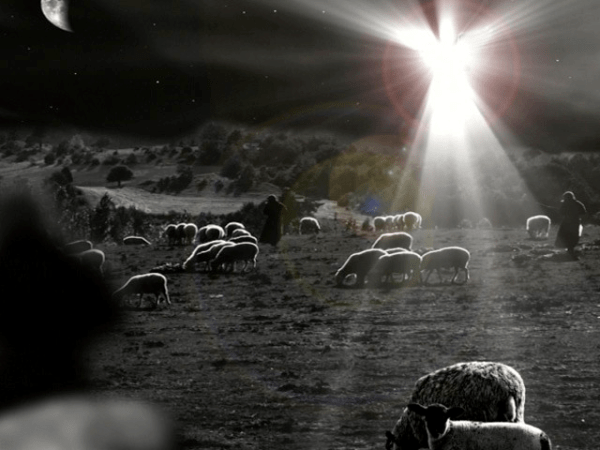
And there were in the same country shepherds abiding in the field, keeping watch over their flock by night. And, lo, the angel of the Lord came upon them, and the glory of the Lord shone round about them: and they were sore afraid. 10 And the angel said unto them, Fear not: for, behold, I bring you good tidings of great joy, which shall be to all people. 11 For unto you is born this day in the city of David a Saviour, which is Christ the Lord. 12 And this shall be a sign unto you; Ye shall find the babe wrapped in swaddling clothes, lying in a manger. 13 And suddenly there was with the angel a multitude of the heavenly host praising God, and saying, 14 Glory to God in the highest, and on earth peace, good will toward men.

The Word of God for the Children of God. Gloria! In Excelsis Deo! Alleluia! Amen.

It is Christmas Eve in the year of our Lord and Savior Jesus Christ, 2021.

I pray all of God’s blessings and abundance upon your homes and families.

I pray for that place of Shalom, Shalom, to come upon each of your spirits.

I pray that the Good News of our Savior discovers, lifts up, inspires, your soul.

These are indeed days when Shalom, Shalom probably means social distancing, mask on and mask off mandates of some interpretation and variation. It means you have perhaps had to curtail those Christmas plans with family living apart, near and distant, perhaps even across the oceans, seas and mountain ranges. It is not at all a very welcome interruption to any of our family traditions of travel. Somehow, we will have to make do with communicating by social media, ZOOM. It is definitely not nearly the same as traditional family gatherings and meals.

One of the things of which I have become more and more aware of lately is that the Seasons of Advent and Christmas happens amidst the drudgery of ordinary circumstances of life. Meditate about that first ancient Christmas: an emperor issuing decrees and taxing people, a simple everyday couple that is unmarried and pregnant, a no vacancy sign, field hands working the night shift. Those are real life circumstances and real life is always the world of Christmas. It was then and it is today. The jobs are undeniably different and infinitely more diverse.

For some people that means Christmas is a hard time of year. It’s difficult and painful. They have to work Christmas Day. For others it’s the best time of year. It is joyful and exciting. For most of us, I suspect, it varies from year to year.

Just for a change of pace, take just a few moments from wrapping, and think back over the past year. How has your life changed since last Christmas? In what ways is your world today different from then? Has it been a difficult and painful year, or has it been a year of joy and thanksgiving? Was it a memorable year or one you would like to forget? Maybe it was a mixture of all the above.

Regardless of what the last year has or has not represented for us and whether or not we choose to consider the changes it brought to be for better or for worse it is deeply rooted in the Good News of that very first, ancient, Christmas story.

I am not talking about the then and there Christmas story, the one that starts out “In those days” and takes place “in that region.” I am talking about the here and now Christmas story, the one that is taking place in these days and in your very region. After all, that’s really the only Christmas story that matters.

  • What good is it to us or the church, if Jesus is laid in a manger in Bethlehem if he is not also cradled in the manger of our contemporary 2021/2022 heart?
  • What good is it to us or the church, if the angels announcing good news of great joy to the shepherds living and working in the fields if none of that good news is not also announced in the night fields of our contemporary 2021/2022 lives?
  • What good is it to us or the church, if the shepherds go to see this event that has taken place if we do not also see in our contemporary 2021/2022 lives, this truly miraculous once in anybody’s lifetime event that has happened?
  • What good is it to us or the church, if Mary ponders and treasures how these things can be if we do not also wonder, deep within our own 2021/2022 souls, at the imponderable mystery of God’s life and love with us in our time and place?

Every year we come to this night to hear the Christmas story.

The story never changes. We count on that. Every year it’s the same story with the same characters, the same locations, the same plot, and the same ending.

The everyday couple, Mary and Joseph betrothed. Mary, the teenager pregnant with her first child and in those days, scandalously so, she is very unmarried.

Roman Emperor Augustus issues a decree of taxation. Mary and Joseph go to Bethlehem where Joseph’s family is from. There’s no room at the inn. Mary gives birth to Jesus, places him in a manger. The angel announces this good news to the shepherds. They come and see this thing that has happened. Mary treasures, ponders the words of the shepherds, and they return to their fields.

You know that story as well as I do. You’ve probably heard it and told it multiple times. But have you ever considered or pondered in your hearts, the quiet and raucous poetry of Christmas? I’m talking about the images and metaphors that tell the story behind the story. The facts of Christmas remain the same every year, but the poetry of Christmas is what keeps the story alive, has preserved it through the ages, and allows us to relive it again every year for the first time.

I believe that’s the real reason we come to this night each year with celebration. We come for the poetry. Not to be read, but to be sung in the traditional hymns of the season. We want to know despite our changing story and despite what has happened over the past year, Christmas is still true and still happening.

We want to be reminded that light is still shining in the darkness, that good news is still being announced, that the child is still being born anew, and that God is still with us, Angels are still heralding unto our contemporary times.

Yes, it is still true. All of it. Christmas is happening in whatever, wherever the circumstances of our lives might be this Christmas Eve. Christmas is happening tomorrow in whatever changes you’ve experienced over the last year. Christmas is as genuine, is as exactly real and present in the difficult and painful times of life as it is in the joyful and exciting times. The LOGOS is still forever with us!

I do not pretend to know or even try to understand how exactly or even why that happens. I only know, by the grace of God, it does happen. I have experienced it over the past year in my life and I have also very definitely and decisively seen it happen in the lives of many others. I cannot begin to tell you how it all happens, but I can truly tell you. It’s all about the poetry. Let me give you some examples.

  • Have you ever loved so deeply that your heart ached? And all you wanted to do was pour yourself into the life of another?
  • Who are the people, the Josephs, that have accompanied, protected, and cared for you through this life?
  • Have you ever looked in the face of a newborn child and marveled at the miracle of life? Been inspired to be a better person? Wished for that kind of gentleness and innocence in your life and world?
  • Have you ever had someone show up in your life and say or do exactly what you needed? They came and announced to you good news when you needed it most.
  • Think of a time that was so perfect, so beautiful, so profound that you were speechless and all you could do was treasure and ponder the moment.
  • Have you ever woken up to the beauty and possibilities of a new day after living through a night of darkness?
  • Recall a time when hope, strength, and courage were born anew in you.
  • Have you ever experienced peace and contentment in circumstances that were neither peaceful nor what you wanted?
  • When was the last time you danced with joy to the music of laughter and a chorus of smiles?
  • Have you ever done what seemed to you impossible or gotten through a hard time and not known how you did that? In fact, you didn’t think you could or would.
  • What are you cradling and cherishing in your heart this Christmas Eve which you know beyond any shadow of any measure of doubt is a gift from God?

Guess What? That’s all poetry. Those and a thousand other verses like them are the poetry of Christmas. And it is O’ so much more than the facts of Christmas.

https://www.hymnsandcarolsofchristmas.com/HTML/Christmas_Poetry_And_Prose1.html

The Gospel facts of Christmas are just the starting point. Every year the verses of Christmas poetry are written anew using the circumstances of our lives. The reality of Christmas, God with us, Emmanuel, is always happening.

That’s never, in anyone’s lifetime, going ever to be even minimally in question.

So, for a change of pace, take a minute or an hour or two and tell yourself the story of Christmas once again but this time, open thy soul, listen for the poetry.

What is the poetry of Christmas for you this year?

Why not take a period of time away from wrapping or meal preparation, and just sit down with a pad of paper, a pencil in your hand, (no computers or any smart phones or virtual reality devices allowed), write your Christmas Poem!

In the name of God, the Father, God the Son and God the Holy Spirit, let us pray,

Heavenly Father,

Thank You that I have peace with God, and as Your born-again child, that I have received Your goodwill and grace, not only in this age but in the ages to come.

Thank You that because I am positioned in Christ and I am swaddled in His righteousness, I am identified with Him, have found favour in Your sight, and the peace of God in my heart. I know that without Jesus there is nothing I could have done to warrant peace with You, for I acknowledge that I am a sinner, deserving of death – but glory to God in the highest, that genuine peace has been granted to men with whom You are pleased.

Praise Your holy name that both peace with God and the peace of God, is available to who place their faith in the only begotten Son of God, in Whose name I pray, Alleluia! Alleluia! Alleluia! AMEN.

Joy to the World” is an English Christmas Carol. Written in 1719 by the English minister and hymnwriter Sir Isaac Watts, the carol’s lyrics are written and composed based on a Christian interpretation of Psalm 98, Psalm 96 (verses 11 and 12), and Genesis 3:17-18). This beloved carol, “Joy to the World” is usually sung to an 1848 arrangement by the American composer Lowell Mason.

Since the 20th century, this much beloved and cherished Carol, “Joy to the World” has been the most-published Christmas hymn in North America.

https://translate.google.com/

John 3:16! We Believe! We Belong! We A.B.I.D.E.! Now, We Must Bear Fruit! Our Bearing Fruit as a 2021 Christian.

Henri Nouwen gives us these profound words of wisdom from his experiences.

We belong to a generation that wants to see the results of our work. We want to be productive and see with our own eyes what we have made. But that is not the way of God’s Kingdom. Often our witness for God does not lead to tangible results. Jesus himself died as a failure on a cross. There was no success there to be proud of. Still, the fruitfulness of Jesus’ life is beyond any human measure. As faithful witnesses of Jesus, we have to trust that our lives too will be fruitful, even though we cannot see their fruit. The fruit of our lives may be visible only to those who live after us.

What is important is how well we love. God will make our love fruitful, whether we see that fruitfulness or not.”

I give you these words to ponder and pray over, give them your due diligence as we turn now to the transcending Word of God for this, today’s devotional effort.

John 15:1-17 NASB

Jesus Is the Vine—Followers Are Branches

15 “I am the true vine, and My Father is the vinedresser. Every branch in Me that does not bear fruit, He takes away; and every branch that bears fruit, He [a]prunes it so that it may bear more fruit. You are already [b]clean because of the word which I have spoken to you. Remain in Me, [c]and I in you. Just as the branch cannot bear fruit [d]of itself [e]but must remain in the vine, so neither can you unless you remain in Me. I am the vine, you are the branches; the one who remains in Me, and I in him [f]bears much fruit, for apart from Me you can do nothing. If anyone does not remain in Me, he is thrown away like a branch and dries up; and they gather them and throw them into the fire, and they are burned. If you remain in Me, and My words remain in you, ask whatever you wish, and it will be done for you. My Father is glorified by this, that you bear much fruit, and so [g]prove to be My disciples.

Just as the Father has loved Me, I also have loved you; remain in My love. 10 If you keep My commandments, you will remain in My love; just as I have kept My Father’s commandments and remain in His love. 11 These things I have spoken to you so that My joy may be in you, and that your joy may be made full.

Disciples’ Relation to Each Other

12 “This is My commandment, that you love one another, just as I have loved you. 13 Greater love has no one than this, that a person will lay down his life for his friends. 14 You are My friends if you do what I command you. 15 No longer do I call you slaves, for the slave does not know what his master is doing; but I have called you friends, because all things that I have heard from My Father I have made known to you. 16 You did not choose Me, but I chose you, and appointed you that you would go and bear fruit, and that your fruit would remain, so that whatever you ask of the Father in My name He may give to you. 17 This I command you, that you love one another.

The Word of God for the Children of God. Gloria! In Excelsis Deo! Alleluia! Amen.

John 15 is one of the best-loved of all the gospel readings, and with good reason. We all want to flourish! And here, in His final words to His disciples, Jesus tells his disciples that if they stay “in him” – rooted in him through the Word and Sacraments – they will lead the kind of fruitful lives that marks his disciples. If they’ll live as Jesus has taught them to live: BELIEVING on God, God, the Son, (John 14:6) they will experience BELONGING to God’s family (Romans 1:6-7), They will A.B.I.D.E. in God’s love through Jesus Christ (John 15:4-6 AKJV).

Building up and Growing Inwardly and Outwardly, Maturing upon each of these, they will inevitably, undeniably, BEAR FRUIT for the Kingdom of God. The ministry and mission and work of God the Holy Spirit will see to all this!

John 16:12-16 Authorized (King James) Version

12 I have yet many things to say unto you, but ye cannot bear them now. 13 Howbeit when he, the Spirit of truth, is come, he will guide you into all truth: for he shall not speak of himself; but whatsoever he shall hear, that shall he speak: and he will shew you things to come. 14 He shall glorify me: for he shall receive of mine, and shall shew it unto you. 15 All things that the Father hath are mine: therefore said I, that he shall take of mine, and shall shew it unto you. 16 A little while, and ye shall not see me: and again, a little while, and ye shall see me, because I go to the Father.

There are three truths I am compelled by John 3:16 to bring to your attention.

16 For God so loved the world, that he gave his only begotten Son, that whosoever believeth in him should not perish, but have everlasting life.

For God so LOVED the world that He gave us His Son … The Logos (John 1:1-5)

In the beginning was the Word, and the Word was with God, and the Word was God. The same was in the beginning with God. All things were made by him; and without him was not anything made that was made. In him was life; and the life was the light of men. And the light shineth in darkness; and the darkness comprehended it not.

In these days of great tribulation, socially distant, socially isolated, masks on, mask off, mask and vaccine mandated, are we vaccinated or not, boosted or not, quarantined, virus tested, virus retested, sanitized, government regulated days, there is One who has, against the most catastrophic odds, has OVERCOME it all!

John 16:32-33Authorized (King James) Version

32 Behold, the hour cometh, yea, is now come, that ye shall be scattered, every man to his own, and shall leave me alone: and yet I am not alone, because the Father is with me. 33 These things I have spoken unto you, that in me ye might have peace. In the world ye shall have tribulation: but be of good cheer; I have overcome the world.

Living Father, Son and Holy Spirit, being a believing, belonging, abiding and fruit bearing Christian, under the shadow of these indescribably, undeniably enormous wings, living with absolute maximum confidence in God’s truth, we can all still live impossible Acts 2, Acts 3 and Acts 4 kingdom growth ministry.

1. Remain in the Vine

One of the things which always strikes me about a fruit tree is its innate ability to stand so quiet, without strain or mayhem, while still getting things done. I mean, how does a branch produce fruit without the swirl? Do you know what I mean by the swirl? It’s the striving and chaos and energy I often leave in my wake when I am still trying to make things happen, sometimes even for God. In this passage from John 15, Jesus presents us with an entirely different way.

The word “remains” (abide or dwell) in the Greek means: “not to depart; to continue, to be present; to be held, kept, continually; to continue to be, not to perish, to last, endure” (Vines Bible Dictionary)

https://www.studylight.org/dictionaries/eng/ved.html

https://www.studylight.org/dictionaries/eng/ved/r/remain.html

The idea is that this is a very restful place to be. If we as the branches remain in Him as the Vine, we draw energy and marrow to produce the fruits of change and transformation He longs to bring about in each of our lives. It’s all about our attachment and connectedness to Him. This doesn’t mean our lives will be void of activity or the high expending of energy, simply that we’re able to draw everything we need to bring forth meaningful fruit that will last. As restfully as a tree beside still waters, because have you ever seen an apple tree freaking out?

2. Embrace The Pruning

Earlier in the chapter Jesus points out that God the Father is the One who prunes our lives so we will be even more fruitful (vs 2). The problem for me, historically, has been quite simple: I don’t always enjoy how God’s pruning process, turns out.

Maybe you and I are in one of those places where God is refining our character by cutting out a massive tumor of greed or vanity or malignant pride. The harsh disease of bitterness is being scraped back. Perhaps that particular false god you were really quite attached to just got lopped off, plummeting to the ground in a most unpleasant way.

As I have learned a bit about gardening over the years, pruning spares the nourishment of the vine for the branches that are most viable. If God is paring back an area that is presently painful, it is only for the bearing of more fruit—A life of greater impact for His glory (vs 8). So let God do His transformational work and have His way in our lives. Don’t resist the “tough love” He is doing.

3. Expect A Harvest

When Jesus says that if we remain in Him, we will bear fruit, this is a promise.

Part of the greatest beauty of a fruit tree is that its prolific bounty is an annual and rather predictable offering. No one looking on any orchard of any fruit tree seems to be all that taken with the fact that these trees will have fruit hanging from its branches – even in the most tribulating of times and nature’s seasons.

In October, for example the Michigan apple is to be expected. In Georgia it is the Peach and In Florida it is the Orange Tree. You can count on them. They have locked within them essential pieces of our existence—like apple cider, apple pie and cider donuts, all kinds of Jams, Jellies, Pies, Desserts uncountable and so on—We have come to depend on the inevitability of these tasty, reliable realities.

How much more can we rely on the spiritual premise that remaining in Jesus means bearing fruit that will last?  In other words, as we abide in our Savior Jesus Christ, we can confidently, equally, expect the fruit He will bring about.

In these most troubling of times of this 21st century, yay we abide in Him so our fruit bearing activity is loving, peaceful, not full of strife. When the Gardener sharpens his shears, may we let Him have His loving way with us. And as we all dwell in the Vine, let us expect the certainty of bearing fruit. Fruit that will last.

We Hold God’s John 3:16 Promises and God’s Truths to be Wholly Self Evident …

In the name of God, the Father, God the Son and God the Holy Spirit, let us pray.

Here’s a contemporary Welsh prayer I discovered in my Face Book Feed.

Lord, we would grow with you
New shoots reaching out
Hands stretched upward
Like leaves newly formed
Soaking up your light and warmth
Lord, we would grow with you

Lord, we would grow with you
In sunshine and rain
In darkness and light
In cold days and summer days
From Springtime to Winter
Lord, we would grow with you

Lord, we would grow with you
And bring forth fruit
That is pleasing to you
Fed by your living water
Giving sustenance to others
Lord, we would grow with you.

Gloria! In Excelsis Deo! Alleluia! Alleluia! Alleluia! Amen.

https://translate.google.com/

A.B.I.D.E. The Experience of Knowing and Loving God in Jesus Christ Today

Knowing is not the same as Experiencing! “Knowing” Christ is not mere head knowledge about the Bible and about Christian doctrine. Nor is it just having emotions. To know the Lord Jesus Christ certainly includes intelligent thinking and having feelings, but it is primarily a spiritual experience with the reality of the living God. This knowledge is supernatural (initiated and sustained by God through our trust in him) and it reaches from the heavens to the inner depths of persons, then flows out to other people and the environment. To know Christ today is to experience an interactive relationship with him in the Kingdom of God.

This concept of “Abiding in Christ” is one of the most important experiences we can have and learn life from. The word itself is a verb. Abiding is therefore an action and means to continue, remain, dwell, live, or to lodge. We can then say that to abide in Christ is to remain and continue in, to live and dwell in Christ.

John 15:1-8 J.B. Phillips New Testament

Jesus teaches union with himself

15 1-8 “I am the real vine, my Father is the vine-dresser. He removes any of my branches which are not bearing fruit and he prunes every branch that does bear fruit to increase its yield. Now, you have already been pruned by my words. You must go on growing in me and I will grow in you. For just as the branch cannot bear any fruit unless it shares the life of the vine, so you can produce nothing unless you go on growing in me. I am the vine itself; you are the branches. It is the man who shares my life and whose life I share who proves fruitful. For the plain fact is that apart from me you can do nothing at all. The man who does not share my life is like a branch that is broken off and withers away. He becomes just like the dry sticks that men pick up and use for the firewood. But if you live your life in me, and my words live in your hearts, you can ask for whatever you like, and it will come true for you. This is how my Father will be glorified—in your becoming fruitful and being my disciples.

The Word of God for the Children of God. Gloria! In Excelsis Deo! Alleluia! Amen.

When Jesus tells us to abide in Him, there’s a very good reason. So, let’s take a look at this section of Scripture. Let’s take a few moments, devote ourselves, to know why abiding is so critically important to living the Christian experience.

“He who abides in Me, and I in him, bears much fruit; for without Me you can do nothing.” (John 15:5b NKJV)

Here our abiding in Christ directly affects our work and responsibilities

“If anyone does not abide in Me, he is cast out as a branch and is withered; and they gather them and throw them into the fire, and they are burned.” (John 15:6 NKJV)

Here our abiding in Christ, or lack thereof, directly affects our eternal life

“If you abide in Me, and My words abide in you, you will ask what you desire, and it shall be done for you.” (John 15:7 NKJV)

Here our abiding in Christ directly affects our communication with God

“Whoever abides in Him does not sin.” (1 John 3:6a NKJV)

Here our abiding in Christ directly affects our walk with God

A proper understanding of what it means to Abide in Christ is therefore critical.

We discover it was such an abiding relationship that Jesus had with the Father, which energized and defined His ministry. When he’s confronting the religious leaders who said He was blaspheming by calling Himself the Son of God, Jesus said,

“If I do not do the works of My Father, do not believe Me; but if I do, though you do not believe Me, believe the works, that you may know and believe that the Father is in Me, and I in Him” (John 10:37-38 NKJV)

When Philip asked Jesus to show them the Father, Jesus said,

“Do you not believe that I am in the Father, and the Father in Me? The words that I speak to you I do not speak on My own authority; but the Father who dwells in Me does the works” (John 14:10 NKJV)

Speaking of the coming resurrection of believers, Jesus talks about how vital this connection with His Father is.

I can of Myself do nothing. As I hear, I judge; and My judgment is righteous, because I do not seek My own will but the will of the Father who sent Me” (John 5:30 NKJV)

Jesus had an intimate abiding relationship with the Father, and we must then ask ourselves this important question; if this relationship was necessary for His ministry, then how important today such an intimate abiding relationship with Jesus is required if we are going to live fruitful, effective lives here on earth.

This is actually Jesus’ prayer for us.

“That they all may be one, as You, Father, are in Me, and I in You; that they also may be one in Us, that the world may believe that You sent Me” (John 17:21 NKJV)

Returning back to our text, Jesus says that just as a branch needs to be vitally connected to the vine, so believers need to be vitally connected to Him. Just as Jesus could do nothing outside the Father’s will, we can do nothing on our own. We need this vital connection, and then we can say like the Apostle Paul, “I can do all things through Christ who strengthens me.” (Philippians 4:10-13 NKJV)

Therefore, when we DO learn how to abide in Christ, He will provide life and strength so we can live productive and effective lives. But even more, we can experience intimate fellowship with God, experience belonging to His family.

Being welcomed members of God’s family, we have all the power and privileges that go along with it. Our only problem is while it’s all ours, we don’t know how to fully experience them, because we have not learned how to abide in Christ.

The more we actively share Christ’s life and let Him share ours, the more we’ll enjoy the full benefits of being branches attached to the vine, that is, members of His body and sharers of His grace and belonging to His Kingdom. We also tap into His utterly limitless protection, strength, guidance, and companionship.

This knowledge of the reality of God’s presence and action in our lives is the true foundation of life and faith. Biblical faith in God (our trust or confidence in him) as opposed to sight (physical circumstances and our feelings about them), not knowledge. By Faith We Experience, We Understand. Now faith is the substance of things hoped for, the evidence of things not seen. For by it the elders obtained a good testimony. (Hebrews 11:1-2 NKJV). Experiencing Christ =’s our Testimony.

Faith is based on previous experience and previous knowledge of reality and then extends outward echelons beyond that. We can know the reality of Christ — historically and reasonably, certainly, but also personally and spiritually.

“Now this is eternal life,” Jesus prayed, “that they may know you, the only true God, and Jesus Christ, whom you have sent.” (John 17:3)

Are WE Experiencing Intimacy with Jesus?

We call this knowledge of God “Intimacy with Jesus.” It’s us having the kind of relationship with Jesus which he has with the Father — he shows us this divine life throughout the Gospels and provided our access to this through his cross and resurrection. Jesus’ word for this divine intimacy is abide. Recall that Jesus said, “Abide in me as I abide in the Father, and you will bear much fruit.” (My paraphrase; see John 15:1-17.)

Intimacy with Jesus is the source of everything that is good in our lives. The blessing of enjoying God’s love, the wisdom to live right and well, and the power to advance God’s kingdom all are based in our intimacy with Jesus. But how do we know if we’re truly intimate with Jesus? What does it mean to abide in Christ? There are a lot of different ideas about this floating around today!

The experience of knowing Christ today is somewhat unique to each person but it includes some interrelated aspects that anyone can experience. Once we’ve had a taste of intimacy with Jesus, we find it so wonderful we want to experience it all the time! We might even secretly wish that we could bottle it! Except, our experience of intimacy with Jesus is not under our control; it ebbs and flows — varying by personality, season of life, and the sovereign work of the Holy Spirit.

It is ONLY but by the Grace of God that We A-B-I-D-E in Christ Together!

It’s only by God’s grace to us through Jesus Christ that we can know him personally and collectively. But grace does not mean being passive. Grace is opposed to earning, but not effort. It’s up to each of us to respond to God’s initiative and learn to, “Grow in the grace and knowledge of our Lord and Savior Jesus Christ” (2 Peter 3:18).

To grow in grace begins with being “born from above” (John 3:3). It’s only as we confess our sins and put our trust in Jesus Christ as our Lord and Savior that the Holy Spirit comes to live in us, and we enter into the eternal kind of life with Jesus in the Kingdom of the Heavens. Abiding in Christ begins with the new birth.

The grace of God is meant to go beyond forgiving our sins, it also to heal our hurts, fill our emptiness, and give us strength for life and work. Ultimately, God’s grace is not just “underserved merit,” but it’s also God acting powerfully and kindly in our lives. 

This is essential because we need God! But are we connected with our needs and emotions? If not, then we cannot very well connect to God. To know and experience God at work in our lives requires that we be emotionally honest and vulnerable with God and with people we trust in the body of Christ.

To understand abiding we need to remember our relationships with God, and with others, and with self are very much intertwined. God is a community and relationship with God is communal. The Greatest Commandment that Jesus gave us is a golden triangle of love (Mark 12:29-31). “We love because God first loved us” (1 John 4:19) and a primary way which God shows his love for us is through our genuine “love one another” relationships in the Body of Christ.

A-B-I-D-E in Christ

Let’s highlight five essential and diverse aspects of abiding in an interactive relationship with Christ.

To A-B-I-D-E in Christ is:

Awe-Filled Wonder for God

Psalm 100 The Message

100 1-2 On your feet now—applaud God!
    Bring a gift of laughter,
    sing yourselves into his presence.

Know this: God is God, and God, God.
    He made us; we didn’t make him.
    We’re his people, his well-tended sheep.

Enter with the password: “Thank you!”
    Make yourselves at home, talking praise.
    Thank him. Worship him.

For God is sheer beauty,
    all-generous in love,
    loyal always and ever.

“I am the true vine, and my Father is the vinedresser… I am the vine; you are the branches. Whoever abides in me and I in him, he it is that bears much fruit, for apart from me you can do nothing.” (John 15:1, 5, ESV)

  • This is the focus of knowing Christ today.
  • Worshiping Jesus and his Father — it’s about God, not me! We worship God not just by singing songs of praise to him but by bringing our daily lives straight into his kingdom or government and doing that together.
  • Appreciating God (e.g., the beauty of his creation, forgiveness for our sins, and the gift of eternal living with him).
  • Being humbled in God’s presence — even in adoring silence, looking to him and waiting on him.

Becoming like Jesus

1 John 2:4-6 The Message

4-6 If someone claims, “I know him well!” but doesn’t keep his commandments, he’s obviously a liar. His life doesn’t match his words. But the one who keeps God’s word is the person in whom we see God’s mature love. This is the only way to be sure we’re in God. Anyone who claims to be intimate with God ought to live the same kind of life Jesus lived.

“If you keep my commandments, you will abide in my love, just as I have kept my Father’s commandments and abide in his love… This is my commandment, that you love one another as I have loved you.” (John 15:10, 12, ESV)

  • This is the bottom line of knowing Christ (this is observable by others).
  • Becoming like Jesus is more than behavioral obedience, it means your character — who you are when you’re not performing on stage — is being transformed by God’s grace to be the kind of person who obeys Jesus’ teachings from your heart.
  • We are to manifest the fruit of the Holy Spirit, especially love for one another in the Body of Christ and love for our neighbors, but also (gasp) to show love even for our enemies (e.g., “Bless those that curse you.”)

In-formed by the Word

Romans 12:1-2 The Message

Place Your Life Before God

12 1-2 So here’s what I want you to do, God helping you: Take your everyday, ordinary life—your sleeping, eating, going-to-work, and walking-around life—and place it before God as an offering. Embracing what God does for you is the best thing you can do for him. Don’t become so well-adjusted to your culture that you fit into it without even thinking. Instead, fix your attention on God. You’ll be changed from the inside out. Readily recognize what he wants from you, and quickly respond to it. Unlike the culture around you, always dragging you down to its level of immaturity, God brings the best out of you, develops well-formed maturity in you.

“If you abide in me, and my words abide in you, ask whatever you wish, and it will be done for you.” (John 15:7, ESV)

  • This is the reasonableness of knowing Christ today.
  • To be in-formed by Scripture is more than head knowledge — it’s relying on God’s words through study, meditation, and prayer so that they live in you and draw you closer to Jesus.
  • We’re to live in an ongoing conversational relationship with God, guided by the teachings of the Bible (like the Psalmist).

Devoted to God

Psalm 63:1-4 The Message

God—you’re my God!
    I can’t get enough of you!
I’ve worked up such hunger and thirst for God,
    traveling across dry and weary deserts.

2-4 So here I am in the place of worship, eyes open,
    drinking in your strength and glory.
In your generous love I am really living at last!
    My lips brim praises like fountains.
I bless you every time I take a breath;
    My arms wave like banners of praise to you.

“As the Father has loved me, so have I loved you. Abide in my love… No longer do I call you servants, for the servant does not know what his master is doing; but I have called you friends, for all that I have heard from my Father I have made known to you.” (John 15:9, 15)

  • This is the heart of knowing Christ today.
  • Devotion to God is not just an emotion or impulse that comes and goes, it’s the soul’s longing for more and more of God, to love him more and to experience him more.
  • We cry out for God because we need his love to cover our sins, heal our hurts, and empower us to overcome our struggles.
  • If your heart is for God then you’ll be affectionate with him, showing a special tenderness for the Lord which at special times may be felt as “the Jesus burn” like the disciples on the Road to Emmaus experienced.
Experiencing the Holy Spirit

“Speak Lord, for your servant is listening.” (1 Samuel 3:9 and 10, NIV)

Jesus says, “Come to me, all who labor and are heavy laden, and I will give you rest… My yoke is easy, and my burden is light.” (Matthew 11:28, 30, ESV)

“These things I have spoken to you, that my joy may be in you, and that your joy may be full.” (John 15:11, ESV)

  • This is the blessing of knowing Christ today.
  • To experience life with God is to enjoy the “easy yoke” and “light burden” that Jesus offers in your day-to-day life — the hope that is an anchor for the soul, the peace that passes understanding, the joy unspeakable and full of glory.
  • “Experience” is not the same thing as emotions, though it normally includes our feelings. Experiencing involves all the functions of our person: thinking, awareness, observations of our environment, memory, emotions, willing/choosing, bodily sensations and activity, social connections, and soul.
  • We can grow in our confidence and courage to Venture on God and then finding that indeed the hand of the Lord was at work, what you accomplished was more than you could’ve done on your own.
  • Occasionally we may also experience supernatural manifestations like hearing God’s voice (usually as divinely inspired thoughts or impressions), feeling the “warmth of the Spirit” or tingling in your body, or having visions.

What does “abiding” in Christ look like? Praying about everything, feeding on and experiencing wondrous truth, His Word daily, and obediently following His lead throughout the week. It is our listening to and singing worship music that helps you to focus your whole being on praising and believing and trusting Him.

Every Christian I know wants to live an effective life for Jesus. The #1 key to our succeeding in this is striving, abiding in him. Abiding in Christ is foundational to centering our whole life around God. Tapping into Christ’s presence and His power is what will allow us to bear good fruit in this life. It is my true hope after today we’re more equipped and empowered to live out a life centered about God.

In the name of God, the Father, God the Son and God the Holy Spirit, let us pray,

Dear Father, Who art in heaven, I raise to thank You that You are my heavenly Husbandman and that You tend my life with such care and concern. Cleanse me and prune me and take away anything that you discover in me that does not glorify Your holy name.

Thank You, Father, that I am a heavenly branch that is united to my heavenly Vine, the lovely Lord Jesus Christ. May His life flow through mine as sap flows through the branch that is engrafted into its parent stem. Fill me with His fullness so that I may live and move and grow and bear fruit as I abide more and more in Him. In Jesus’ name, Alleluia! Alleluia! Alleluia! Amen.

https://translate.google.com/

Belonging! The Good News of Jesus Christ! The Good News of Belonging!

Why does God love people? Many believe He only loves those who do good. This belief stems from the idea that one must first “be good” and “change” and then God will love them. Is His loved based on our fallible human ability to change?

God’s love is not contingent on the person changing, but just the opposite. That change is solely based on God’s love. Christians are not those who are earning love from God, but rather Christians are those who already are loved by God.

God loves His people in the same way He loves His Son. This love is based purely on His grace, and it is a love that has the power to change. Because of His love, Christians are called the beloved; they are called saints. The motivation to change is no longer based upon human hope that God might accept them. The motivation to change now comes from the call: “Be who you are” because you and I belong to God. Christians are indeed the beloved of God, let them display it. If they are indeed saints, let them show that they are saints. Christians are who they are by grace and distinct from the world, that they may glorify God.

Romans 1:1-7 Amplified Bible

The Gospel Exalted

Paul, a [a]bond-servant of Christ Jesus, called as an apostle (special messenger, personally chosen representative), set apart for [preaching] the [b]gospel of God [the good news of salvation], which He promised beforehand through His prophets in the sacred Scriptures— [the good news] regarding His Son, who, as to the flesh [His human nature], was born a descendant of David [to fulfill the covenant promises], and [as to His divine nature] according to the Spirit of holiness was openly designated to be the Son of God with power [in a triumphant and miraculous way] by His resurrection from the dead: Jesus Christ our Lord. It is through Him that we have received grace and [our] apostleship to promote obedience to the faith and make disciples for His name’s sake among all the Gentiles, and you also are among those who are called of Jesus Christ to belong to Him;

[I am writing] to all who are beloved of God in Rome, called to be saints (God’s people) and set apart for a sanctified life, [that is, set apart for God and His purpose]: Grace to you and peace [inner calm and spiritual well-being] from God our Father and from the Lord Jesus Christ.

The Word of God for the Children of God. Gloria! In Excelsis Deo! Alleluia! Amen

What does the Word of God have to teach us about “BELONGING?”

In Romans 1:6, Paul greets the church in Rome by saying, “including you who are called to belong to Jesus Christ.”

The entirety of God’s Holy Scriptures shouts to the world that we belong to God! In the beginning, humanity was created to be in perfect union with God and belong to Him, for we are His creation (Genesis 1:26).

There is an intimacy which has always been a part of His original design for our connection, our marriage relationship with Him. We are His masterpiece and reflect the image of God in this world (Ephesians 2:10).

Savior Christ’s motivation to bring us back to Himself is the very premise of the incarnation. God came down and entered into the muck and mire of this world. Why? Because we are His sheep, we belong to Him. Psalm 95:6-8, Psalm 100:3

Humanity was always created to be in intimate proximity to God. It’s in that relationship that we know how to love one another (1 John 4:19). As the world will know that we are His disciples by our love for one another (John 13:35).

This attitude of love is the essence of true belonging. Jesus desires to make a space at the table for everyone. Men, women and especially children from all walks of life and context have a space to find true belonging in Jesus. John 14:6

Jesus said in Matthew 19, “Let the little children come to me and do not hinder them, for to such belongs the kingdom of heaven.” From children, which at this point in history, many thought to be the lowest of culture and society, to the adult children of God, the woman at the well (John 4) an outcast, to Nicodemus (John 3) the academic and spiritual elite of his time, and Zacchaeus (Luke 19) a conformist unwanted nobody. Each of them finds their belonging in Christ.

The great biblical account of Jesus’ interaction with Zacchaeus (Luke 19:1-10) provides the essential framework of how Christ did ministry relationally. Jesus was passing through Jericho and there was a tiny, little man hanging out in a sycamore tree. You see Zacchaeus fit the mold of a conformist unwanted nobody. He was a tax collector. Like most tax collectors at the time, he took advantage of his position to profit from adding fees beyond the tax desired to be collected. This didn’t make him anyone’s friend or favorite person. Scripture even captures the consternation of the people. It says, and when they saw it, they all grumbled, “He has gone in to be the guest of a man who is a sinner.”

We all have a great hope to belong because of Jesus’ interaction with Zacchaeus. Notice what Jesus does in this story. Jesus calls Zacchaeus by name. There’s a deeply, undeniably intimate connection which drives the rest of that story.

Jesus instantly closed the great chasm between Him and Zacchaeus. Jesus says, “Zacchaeus, hurry and come down, for I must stay at your house today.” Think for a moment of all the invites and gatherings that Zacchaeus must have missed because of who he was formerly known to be. Finally, Savior Jesus breaks down and smashes through barriers, wants to gain a deeply personal level of entry into Zacchaeus’ daily life. There’s something very personal about our inviting someone, anyone into their home. Everything is on display. The good, bad and ugly. Vulnerability! It’s all there in living color, that’s where Jesus wants to be.

In the life of Zacchaeus following Savior Jesus’ entry into his life or in our own lives, Jesus knows our name. Jesus wants to close the gap between us and Him, and He wants to gain access to our most intimate spaces. And the beauty of this story is that Zacchaeus was forever changed. He was gifted with “BELONGING!”

Consider the connections and relationship depths of “BELONGING” from Dr. Luke’s Parable of the Prodigal Son. (Luke 15:11-32)

Discussion Questions — Parable of the Lost Son (Luke 15: 11-32)

What is this story about? Money? Wild living? Stubbornness? Forgiveness?
Anger, something unspoken, even deeper – his security of “BELONGING?

• Who wants his share of the family inheritance? Why? Is there some sort of mounting sibling rivalry? A sense that one “belongs more” than the other?
• Are you aware that both boys receive their inheritance at the same time?
• Who received more? (The older usually receives a double portion)
• What does the younger brother do with his money? Why does the younger brother spend his money so wastefully? The exaggerated need to “belong?”

Was the famine in the land representative of the son’s behavior or was it a real famine, like Joseph experienced in Egypt.
• What must it have been like for everyone to desert him?
• Have you ever found that if you have some money, everyone wants to belong to your close circle of friends until the money is gone when suddenly belonging to your circle of friends no longer matters.
• What was this experience telling him about “belonging” and true friendship?
• How do you make friends? Do you make friends? Do you want to make them?
• What is important in a friendship? How important is “BELONGING” to one?

• Did his dad kick him out of the house for asking for his inheritance? That he no longer belonged in the household for challenging the authority of the father?
• How do you think his mother felt about this? (she’s not in the story, but think about her response anyway because a mother’s opinion matters to us 1000%)

Think about the Prodigal’s struggle to belong anywhere, his shattered security which communicates very clearly, “What’s left? I do not belong anywhere!”

• Where did the son go when he was penniless?
• What did he end up doing to earn food and shelter?
• Why was this a repulsive activity? (Jews saw pigs as unclean)
• What did he think about while feeding the swine?
• What did he decide to do?

Do you now notice the not-so-subtle shift in his thought processes? Can you sense there deeply personal, even intimate thoughts of “I got this wrong?” The overarching belief he did not belong anywhere were actually grossly distorted. Can we or do we see or observe there is an agent of change working within him?

• Can you see or feel just how much he disliked belonging in a pig pen, feeding swine, hating it so much he was willing to “do anything to belong somewhere, anywhere but a pig pen,” return home to a situation that caused him to leave?

Do we actually take into account the enormity of the decision the Prodigal made to leave the pig pen far behind, then the enormity of his taking that first step?

What are his thoughts about “BELONGING” as he is walking back to his home? How is he processing the idea of RETURNING to his father’s house? How will he believe or accept BELONGING in a house which he angrily walked away from?

• When he returns, how does his father greet him – with anger? with “I told you
so”? Does he greet his son’s return with conditional or unconditional love?
• What does the father do to make the son feel he still BELONGS in his fathers’ home?
• How might the mother have welcomed him, greeted him? How might she have communicated “BELONGING” to her formerly spin thrifty and wayward son?
• Why does the older brother get angry? Where was his sense of “BELONGING?”

What was the father’s message to the younger son?
What was the father’s message to the older son? Was it the same or was it different? How might it have been different?

• Was this a case of a father’s unconditional love? Why and how so?

• If you were the older brother, what do you think the father/mother should have done to your brother?
• Why did the older brother think the younger brother should be punished?
• Do you want to see people punished before you forgive them?
• What things are happening in the world today that require forgiveness?
• What do you think of the father’s handling of things?
• What makes a good father?
• What qualities would make a good mother in this instance?
• Are these the same qualities you find in God as Mother?
• What qualities would make a good brother?
• What do you learn about judging others from this story?
• Think of a modern-day story that would be like the Prodigal son.

Place yourself in the shoes of the Woman at the well. In the shoes of the tax collector Zacchaeus, inside and outside the home and life of the Prodigal.

What do these stories communicate to you about “BELONGING” to God, the Father, “BELONGING” to God the Son, “BELONGING” to God the Holy Spirit?

In the name of God, the Father, God the Son and God the Holy Spirit, let us pray.

Heavenly Father, thank You that I am also the called of Jesus Christ, by grace through faith in Him. Keep me low at the cross and willing to say, thy will be done in my life, in Jesus’ name I pray, Alleluia! Alleluia! Alleluia! AMEN.

Heavenly Father, how I thank You for the good news of the gospel of Christ and the truth it has revealed, so that by faith in Christ I have been redeemed by His precious blood and become beloved of God and called to be set apart to Your praise and glory. May Your equipping grace and perfect peace pour through me to others, so that the love of Christ may be shed abroad to the honor of Your name. In Jesus’ name I pray, Alleluia! Alleluia! Alleluia! AMEN.

https://translate.google.com/

Believe! For God so Loved the World!

At times in life, we need to stop or at least pause and get back to the basics. This upcoming series of devotions places our focus upon the “Basics of the Christian Life, Believe, Belong, Abide, and Bear Fruit.” Today we will begin by focusing on the role of belief in our Christian lives. Ask yourselves, “Who do we believe in?”

John 3:16-18 English Standard Version

For God So Loved the World

16 “For God so loved the world, [a] that he gave his only Son, that whoever believes in him should not perish but have eternal life. 17 For God did not send his Son into the world to condemn the world, but in order that the world might be saved through him. 18 Whoever believes in him is not condemned, but whoever does not believe is condemned already, because he has not believed in the name of the only Son of God.

The Word of God for the Children of God. Gloria! In Excelsis Deo! Alleluia! Amen

At times in life, we need to stop or at least pause. Maybe my life has become too hurried, busy or stressful. Maybe we have over-committed or made things more complicated than they have to be. Maybe it is the covid virus, their variants, the upcoming snowstorm, or balancing work and home. It just becomes too much.

This can also apply to our spiritual lives. Perhaps we have gotten too distracted, apathetic, too rigid, or overzealous. Perhaps we are trying too hard to be to be too superficial or super-spiritual and at some point, our faith stopped being a blessing, stopped becoming relevant, lost its luster, and turned into a burden.

We need to get back to the basics. That is what we are going to try to do for the next four days or so. Today we are starting a new devotional series focusing on the “Basics of the Christian Life.” In the days ahead we will strive to keep focus on these four significant themes, “Believe, Belong, Abide, and Bear Fruit.”

Today we will begin by focusing on the role of “believe” in our Christians lives.

In Acts 16. the Apostle Paul and his companion Silas are unjustly beaten and thrown into a Philippi prison. The story continues in verse 25, “About midnight Paul and Silas were praying and singing hymns to God, and the prisoners were listening to them, and suddenly there was a great earthquake, so that the very foundations of the prison were physically shaken. And immediately all of the prisons’ doors were opened, and everyone’s bonds were unfastened.”

The story then relates how the jailer saw the damage, and thinking that the prisoners had escaped, drew his sword and was about to kill himself. But the apostle Paul cried out “Do not harm yourself, for we are all here. And the jailer called for lights and rushed in and trembling with fear he fell down before Paul and Silas. Then he brought them out and stunningly asked them, “Sirs, what must I do to be saved?” Paul responded with these words, “Believe on the Lord Jesus Christ, and you will be saved.” Belief in John 3:16 is the doorway to salvation.

In John 6:47 Jesus says, “Truly, truly, I say to you, whoever believes has eternal life.” From the very dark corners, talking in secret with Nicodemus in John 3:16; Jesus says, “For God so loved the world, that he gave his only Son, that whoever believes in him should not perish but have eternal life.” Throughout the length and breadth of scripture we see this same truth. Whether the biblical writer uses the word belief or faith we can see that we are saved by trusting in Jesus Christ.

Belief is what brings us into connection, into a saving relationship with Jesus Christ. It is the doorway. It is by grace through faith that we are saved. Without belief in John 3:16 no one will enter the kingdom of God (Ephesians 2:8-10).

With this in mind it puts away all other definitions.

Attending church regularly does not make a person a Christian. Giving money to the church or to people in need does not make a person a Christian. Being from a family or country that calls themselves Christian does not make a person a Christian. Praying, fasting and reading one’s Bible does not make a person a Christian. Being baptized does not make a person a Christian. Saying a prayer or even volunteering within our communities does not make a person a Christian.

All of these things are good and should flow out of the Christian life, but even trying to be a good person does not make one a Christian. We all have sinned against God in many ways and this sin separates us from God (Isaiah 59:2).

We are all deserving of death and condemnation (Romans 3:23; 6:23). The only way a person could earn salvation is if they had not committed one sin in their entire life, and none of us have done that. The only way one can become a Christian is by fully trusting in Jesus Christ. As one turns from their sin and believes in God their sins are forgiven and they are made righteous with God.

Some might legitimately ask these questions, why is it saving faith and not saving love or saving obedience or saving forgiveness?

Think about it. If salvation was through any of these it would have been earned, but there is nothing we can do to earn salvation. Jesus, through His death and resurrection, did everything that was needed for us to be reconciled to God. We are saved by simply believing. God stirs in our hearts, He draws us to Himself, reveals the truth of the gospel, grants us faith and as we believe we are saved.

A saving faith or belief is more than just believing historical information. It is more than just believing that Napoleon lived or that World War II was a real event. It is putting 1000% full trust in Jesus Christ for today and for eternity.

It is a belief that puts one´s entire life into the hands of Jesus Christ. Forsaking all and making Jesus Christ our first love, only hope and our greatest treasure.

This type of saving belief always and forever starts with God. Scripture shows us time and again that we are not wise nor mature enough to believe in ourselves, we cannot of our own finite devices believe in anything or anyone on our own. Our criteria are too fallible. Without the Spirit’s leading, man will always view the gospel as foolishness. It is only through revelation that we come to believe.

Matthew 16:15-17 is an important passage as we seek to understand how one comes to salvation in Jesus Christ. At one point Jesus asked His disciples, “Who do you say that I am?” Simon Peter replied, “You are the Christ, the Son of the living God.” And Jesus answered him, “Blessed are you, Simon Bar-Jonah! For flesh and blood has not revealed this to you, but my Father who is in heaven.”

This is God-given faith, saving faith, personal faith. Not just believing that mankind has sinned, but that I have sinned. Not just admitting that Christ has paid for sin, but Christ has paid for my sin. Not just believing that Christ is Lord but genuinely submitting to Christ as my Lord. Not just knowing that one can be saved by believing in Jesus, but genuinely believing in Jesus and being saved. A saving faith is made up of our knowing, agreeing, applying, experiencing John 3:16.

Biblical faith has the same components. One watches evidence of the love of Jesus Christ at work in the lives of others around them. Through God’s Word they then begin to learn about who the Jesus of John 3:16 is and what He has done. The Holy Spirit then comes and convicts us of our sin and convinces us of the truth of scripture’s claims that mankind can be saved through Jesus Christ.

We then personally apply the truths of salvation through Jesus to our life by putting 1000% of our faith in Him, not in ourselves. This is belief, knowing, agreeing, applying, experiencing who Jesus is and what He has done for us.

Once one believes in Jesus Christ, the work of God takes over in one’s life and it cannot ever be revoked. Those who are believers are given the Mind of Christ (1 Corinthians 2:6-16). Their minds are renewed (Ephesians 4:17-24). The Holy Spirit now intercedes, intervenes, guides, ministers the believer into all truth.

In Christ they are saved. They are bought by His blood. They are forgiven of all sin (Colossians 2:13). They are declared righteous before God (Romans4; 5:1). They are redeemed and ransomed (1 Peter 1:18-19). They are justified by faith (Romans 5:1-11). By their faith and belief, they are promised eternal life (John 3:16-18). They are adopted as God’s children (Galatians 3:26-4:7). They are a new creature in Christ (2 Corinthians 5:17). They are born again (John 3:3).

They are no longer slaves to sin (Romans 8:1-4). They are sealed by His Spirit (Ephesians 1:13-14). They are given a new nature (Colossians 3:10). They are in Christ, and He is in them. They are renewed in the spirit of their minds and are created after the likeness of God in true righteousness and holiness (Ephesians 4:24).

The Spirit of God dwells in them (1 Corinthians 3:16). They have been given direct, unlimited access to God (Hebrews 4:12-16). Their inner man is being renewed day by day (2 Corinthians 4:16). They have been granted repentance, a turning of their hearts away from sin and towards transformation thru Christ.

All of that happens when one believes in Jesus Christ John 3:16, but that is just the beginning. Belief is not only the doorway of salvation it is the pathway that carries us through every day of the Christian life. Faith brings grace at the point of salvation and at every other point of the John 3:16 Christian life that follows. 

In the name of God, the Father, God the Son and God the Holy Spirit, let us pray,

Dear God, thank you for sending your Son to come to Earth to live the life I could not live, be the example I could not achieve, and be the sacrifice for my sins. I believe in You. I ask for Jesus to be the Lord of my life and I commit my life to you. Alleluia! Alleluia! Alleluia! Amen.

https://translate.google.com/

Advent Week Four: The GOSPEL of God! The Greatest Christmas Ever!

There is only one God and no other. And God is Trinity. The Father has sent and revealed himself in His son Jesus and the Holy Spirit who has descended and has been sanctifying the world. On this Fourth Sunday of Advent, 2021, As we gather to give our worship to our Triune God, we also become instruments and channels of God’s saving love to humanity. Today, the faithful are encouraged to celebrate an incomprehensive moment, with pure love just like the love that God has been giving us. It was love which moved God the Father to send his Son Jesus to save us. It is because of God’s love that we enjoy life. Love is the reason why God is still present among us through His Spirit, the Advocate, the Helper.

John 3:16-18 Authorized (King James) Version

16 For God so loved the world, that he gave his only begotten Son, that whosoever believeth in him should not perish, but have everlasting life. 17 For God sent not his Son into the world to condemn the world; but that the world through him might be saved. 18 He that believeth on him is not condemned: but he that believeth not is condemned already, because he hath not believed in the name of the only begotten Son of God.

The Word of God for the Children of God. Gloria! In Excelsis Deo! Alleluia! Alleluia! Alleluia! Amen.

Christianity is the only organized religion and faith-system in the world wherein God also became man like the rest of us. This is really unimaginable and unfathomable to some—for God becoming man like us. God became flesh in Jesus who was born from a woman whose name was Mary. He lived among us, grew up, He ministered unto a people, and had done great things in the name of his Father in heaven. Jesus, the Son of God, was obedient to his Father until his death. He practically did everything except to commit sin, as He is God.

In the Hebrew (Old) Testament, God our Father through His Spirit had been calling, inviting, anointing, and sending people to the world as his messengers. We have witnessed God’s heart throughout the stories shared with us and in the prophesies found in the scriptures. In the different testimonies and messages of the patriarchs, prophets, judges, kings, and most significantly from the simple and lowly people, we come to know the heart of God. God who revealed Himself to the very heart of mankind who knew how to listen, keep his commandments.

The ancient prophecies have been fulfilled in Jesus: “For God so loved the world that he sent His only begotten son to save the people and would have eternal life with Him.”

In the New Testament, Jesus’ life and ministry is unfolded and was revealed to all who listened. The promise of love and salvation came to fulfillment in Jesus who was sent by the God so we may not perish and in order that we may live in forever God’s presence.

It was because of an immeasurable love, the love of the Father to us that he gave us his only Son for our ransom, so we may all live, so we may be restored to life.

This much-beloved verse of Scripture outlines the glorious GOSPEL of grace so clearly and simply. It reveals to everyone Jesus Christ died a sacrificial death on the Cross to pay the price for our sin and break its power in our lives. It tells that Jesus was sent of the Father as a glorious expression of the indescribable love of God our Father for us, Listen! “For God so loved the world that He gave His only Son, so that whosoever believes in Him will not perish but have eternal life.”

This astonishing truth was told to Rabbi Nicodemus by Jesus, as He unfolded heavenly truths to this secretive, synagogue leader. He explained the kingdom of heaven was only open to those born of the Spirit, who look in faith to Christ – their Kinsman-Redeemer. He explained when Moses lifted up a brass serpent on a pole in the wilderness to heal all who believed; it was a type of Himself – the Son of Man Who would also be lifted up as the sacrifice for sin – and that ALL who believe on Him would be healed, declared righteous, and live eternally.

God hates sin, hates sin with a passion we cannot understand, and God hates with equal passion this long corrupted world-system, which is blinding the perishing to the glorious GOSPEL of grace and leading many more into a lost eternity. But sin must be punished because God is righteous, and the wage of sin is death. Every member of the human race is a sinner who has fallen short of God’s glory, so all are equally deserving of death – eternal separation from God. 

It was God Who purposed that the only way man’s death sentence could be ever reversed was if a perfect, sinless Man was willing to pay the price for sin. But no man was good enough for all are sinners. And so out of love for us, God gave His only begotten Son as the sacrifice for sin and to take the punishment that WE deserve, “so that all who believe in Him will not perish but have eternal life.”

The maximum force of God’s wrath had to be poured out on a sinless member of the human race if the price of sin was to be paid, and God determined before the foundation of the world, that the eternal Son of God would become the sinless Son of Man. He would be born into His own creation and willingly pay the ultimate price for the sin of the world through His substitutionary death. 

It was out of an unfathomable love for His creation that God gave His only Son… out of love for fallen humanity who were made in His image… yet who sinned against their Creator God, causing an unbridgeable gulf to be erected between man and his Maker. But in His infinite goodness, grace, mercy, and love, He gave us His beloved Son to live a perfect life and die a sacrificial death – so that all who came to believe in Him will not be condemned but shall live eternally.

The enormity of God’s sacrificial love should never be underestimated. The entire world was condemned to divine judgement because man sinned. God loves sinners with an unequalled passion but cannot look in sin – and so He Who knows the end from the beginning, had predetermined in eternity past to redeem His fallen race by providing a substitute for sin – One perfect Man Who would pay the price of sin and receive the punishment that WE deserve… so that WHOSOEVER believes on Him would not perish but have eternal life. GOSPEL!

The once and for all-time forgiveness of sin, life everlasting, and the gates of heaven itself are flung open wide to whosoever will believe on the Lord Jesus Christ for everlasting salvation. There is no need for even one member of the human race to perish, for God’s invitation for salvation is open to ALL (Isaiah 1: 16-20, 2:1-5, 55:1-13) The only condition placed upon man, receive His free gift of salvation and to believe on the Lord Jesus Christ – and you will be saved.

The eternal Son of God set aside His glory and was born into the fallen race of man, to die on Calvary for your sin and mine (Philippians 2:5-11). If you and I were to miraculously travel back to the furthest reaches of the universe, or go back to the beginning of time, there we will find love … for “God is love” …. the most precious treasure in the universe is know the reality of His love – by faith.

Come! Let us ask ourselves, how are we in our following of Jesus? Are we truly enjoying life and salvation in Him? Have we somehow arrived at that moment in time when we have genuinely changed our old ways to the GOSPEL of God?

Do we follow His will heartily just like Jesus who obeyed his Father until his last moment here on earth? Do we bring the gift of ultimate love and salvation unto our families, into our circle of friends, our neighbors, or into our communities?

The Lord has not condemned the world even if the people have disobeyed and displeased Him very much. He has come to save us all and do we believe in this?

During the time of Jesus, a few faithful faith-filled men and women believed in him and followed him. Though we are not always faithful and obedient, God’s mercy is enough for us. It is not of human standards but of God’s. Jesus is God’s best gesture of his love for us for only thru Jesus that we are reconnected to God every time we stumble over our own two feet, falter and fail. Do we truly believe the great love of God to us? Faith is a gift for those who are willing to receive it.

When a person has love, one has salvation. When a person has love, one truly experiences God. When a person has love, one is not condemned but they are saved. When a person has love, one grows in grace and lives in peace. The fact is, God the Father sent his Son, and the Son obeyed so too must we obey to God. When we are sent to love, do we love without conditions and boundaries? When we are sent to share His love, do we share it willingly and joyfully with others?

Let us pray, reflect, and ask ourselves:

Do I believe the GOSPEL of GOD?

Do I believe that Jesus is the only Son of the Father who saves and gives life?

Do I believe that God the Father, Son, and Holy Spirit are One, “One God” in three persons/characters?

Do I share the Trinitarian love with those who do not know God and to those who had gone away from God?

In the name of God, the Father, God the Son and God the Holy Spirit, let us pray,

Almighty and Ever-living God, we thank you for saving and loving us through Jesus your Son, who is our Lord, Savior, and brother. Thank you for giving us a life lived in grace through the blood of Christ. May we not forget your love for us and so we do our part of loving and serving others, friends and strangers. May your saving Word inspire us to take the challenge, task of new evangelization in our much-troubled world today. This we ask through Christ our Lord, who lives and reigns with you, and the Holy Spirit, one God, forever and ever. Amen.

https://translate.google.com/