What Jesus Did! ‘Beyond Mourning’ ‘Beyond our Grieving’— Matthew 5:4

The Apostle Paul wrote to the Christians at Rome, at the very center of greatest human sufferings, where Christians were subject to great, sudden persecution, where they could be randomly arrested, separated from their families, arrested as whole families and thrown into prison. A prison which all too often would result in their being a part of the “gladiatorial spectacle” Christians versus Gladiators, Christians versus wild animals, Christians versus fiery Crucifixion.

He wrote in the midst of all that: Romans 12:9-13 Amplified, 9 Love is to be sincere and active [the real thing—without guile and hypocrisy]. Hate what is evil [detest all ungodliness, do not tolerate wickedness]; hold on tightly to what is good. 10 Be devoted to one another with [authentic] brotherly affection [as members of one family], give preference to one another in honor; 11 never lagging behind in diligence; aglow in the Spirit, enthusiastically serving the Lord; 12 constantly rejoicing in hope [because of our confidence in Christ], steadfast and patient in distress, devoted to prayer [continually seeking wisdom, guidance, and strength], 13 contributing to the needs of God’s people, pursuing [the practice of] hospitality.

Paul told Christians in Rome, “Weep with those who weep” (Romans 12:15).

Mankind faces sadness and suffering from every which direction. Disciples face great sadness for many reasons. Discipleship is not about always being happy.

It’s about following the path of Jesus who was “a man of sorrows, acquainted with deepest grief” (Isaiah 53:3). He surrendered his rights in order to bless others. He surrendered his life in order to forgive the very ones crucifying him. He saw through the facades of his culture and felt the indescribably real needs of people whether they were ill, possessed, or simply blind or lame to the truth.

To be a Christian — a disciple of Jesus — means to care about people, their problems, and to “weep with those who weep.” Such mourning means comfort. Our sufferings, hardships, and struggles will melt away in the eternal light of God’s presence and grace. Our heartbreak for those broken in our world will be replaced with rejoicing when many we love to join us at God’s side eternally. Those who mourn, who are deeply sad, they will be immeasurably comforted!

Matthew 5:4Amplified Bible

“Blessed [forgiven, refreshed by God’s grace] are those who mourn [over their sins and repent], for they will be comforted [when the burden of sin is lifted].

The Word of God for the Children of God. Gloria! In Excelsis Deo! Alleluia! Amen.

God cares about you and me with an unmatchable intensity.

God loves you and me with an unmatchable intensity.

God cries with you and me with an unmatchable intensity.

God collects yours and mine tears in a bottle against the day we meet Him.

Jesus cries with you and me with an intensity we cannot match.

Jesus cries the tears we cannot cry but long to cry with an unmatchable intensity.

Jesus mourns over you and me with an intensity we cannot ever hope to match.

God the Holy Spirit grieves with you, and alongside of you, intercedes on your behalf with unmatchable intensity.

What won’t the Father, Son and Holy Spirit do to demonstrate their unmatchable, unequivocal capacity to absolutely care, have absolute compassion for you and me?

You mourn and I mourn with an intensity that longs to be unleashed, and unmatchable.

What won’t we do to return that unmatchable, unequivocal compassion toward us?

God, our Father Cares,

Our Savior Jesus Cares,

God the Holy Spirit Cares,

We care too – there is never to be any question about “Christian” measures of caring. Our desired measure is to care and have compassion for others on God’s level. This is not achievable nor even reachable, but it is still the struggle of our struggles to care for all others as God, the Father, God the Son and God the Holy Spirit the same way, with the same unmatchable intensity as He cares for us all.

O’ for the grace to Love God More!

O’ for the Grace to Love our neighbors as we Love God before we love ourselves.

O’ for the grace to have uncompromising, unyielding, unmatchable compassion on our fellow man as God has uncompromising, unyielding compassion for us.

Matthew 5:4 Amplified Bible

“Blessed [forgiven, refreshed by God’s grace] are those who mourn [over their sins and repent], for they will be comforted [when the burden of sin is lifted].

The prerequisite to receiving God’s comfort is that we mourn. It’s not wrong to grieve and we need to give ourselves permission to feel the pain of our losses.

Yet we don’t mourn “like the rest of men, who have no hope” (1 Thessalonians 4:13). Our mourning is different because of our hope in Jesus who has overcome the power of death. And also, because Jesus is our High Priest who has shared our humanity and is able to sympathize with us (Hebrews 4:15). At Lazarus’ graveside, Jesus entered into the pain of the moment, and wept. He showed us that tears and grief are part of the process of coming to terms with our losses.

Even when we experience smaller losses, we still need to acknowledge the pain and mourn. The “stiff-upper-lip mentality” isn’t God’s idea. I once heard a worship leader make this comment, “Let the hurts of a lifetime flow into his nail-scarred hands.” Once we have felt the pain, we are then free to let it go. Even then it’s a marathon process of navigating between a level ground and “vehicle swallowing” potholes and pitfalls and is never an instant painkiller.

Being a Christian doesn’t guarantee us a life without tragedy but being a Christian means we have access to God’s resources. He promises us his comfort when we mourn, but if we don’t mourn, we can’t receive God’s comfort.

God encourages us to come to his “throne of grace with confidence so that we may receive mercy and find grace to help us in our time of need” (Hebrews 4:16).

We mourn with an unmatched intensity for those not in covenant relationship with Father, Son and Holy Spirit. We grieve, we cry for those who God cried for.

Psalm 130 The Message

130 1-2 Help, God—I’ve hit rock bottom!
    Master, hear my cry for help!
Listen hard! Open your ears!
    Listen to my cries for mercy.

3-4 If you, God, kept records on wrongdoings,
    who would stand a chance?
As it turns out, forgiveness is your habit,
    and that’s why you’re worshiped.

5-6 I pray to God—my life a prayer—
    and wait for what he’ll say and do.
My life’s on the line before God, my Lord,
    waiting and watching till morning,
    waiting and watching till morning.

7-8 O Israel, wait and watch for God—
    with God’s arrival comes love,
    with God’s arrival comes generous redemption.
No doubt about it—he’ll redeem Israel,
    buy back Israel from captivity to sin.

Blessed Are the Mourners

What is the type of mourning that Jesus is looking for as characteristics of people who enter into the kingdom of heaven?

Is God saying that we all just need to be sad all of the time to be citizens of his kingdom? Sadness is not the concept that we see in the scriptures. There is a time and season of mourning that is needed but it is not being sad for sadness’ sake. The scriptures give us a clear picture of the mourning that Jesus desires.

Draw near to God, and he will draw near to you. Cleanse your hands, you sinners, and purify your hearts, you double-minded. Be wretched and mourn and weep. Let your laughter be turned to mourning and your joy to gloom. (James 4:8–9 ESV)

My eyes shed streams of tears, because people do not keep your law. (Psalm 119:136 ESV)

God wants a mourning over sin.

The first statement of blessing in the Sermon on the Mount was the blessed were those who were poor in spirit. These are people who recognize their sinfulness. These are people who see their sin and know that there is nothing they can do before God to redeem themselves. They are the people like the tax collector who simply say, “God, be merciful to me, a sinner!”

Those who are in the kingdom of heaven are those who are stripped of all self-righteousness, self-sufficiency, and self-security. Now let us consider for a moment: if we are doomed because of our sins with nothing that we can offer to God to save ourselves or redeem ourselves, then what does God desires but those who mourn over their sinfulness.

When someone comes to me and they have done something wrong, it matters greatly if they are sorrowful for what they have done. If they do not care about their violation, then that will receive a very different response from me as a parent than if the children 1000% care about their violation and is remorseful.

This is the kind of mourning that God desires of his people. Notice again that the Beatitudes follow Isaiah 61, a prophecy about the coming Messiah and what he would do.

The Spirit of the Lord God is upon me, because the Lord has anointed me to bring good news to the poor; he has sent me to bind up the brokenhearted, to proclaim liberty to the captives, and the opening of the prison to those who are bound; to proclaim the year of the Lord’s favor, and the day of vengeance of our God; to comfort all who mourn; to grant to those who mourn in Zion— to give them a beautiful headdress instead of ashes, the oil of gladness instead of mourning, the garment of praise instead of a faint spirit; that they may be called oaks of righteousness, the planting of the Lord, that he may be glorified. (Isaiah 61:1–3 ESV)

Notice that Christ has come to “bind up the brokenhearted” and “to comfort all who mourn.” The grace of God is to melt our hearts in the face of our sins, causing us to be sorrowful and full of shame. True mourning focuses on what we have done to our God, how we have violated his very nature and character.

We mourn because we grasp the profound loss in our lives because we have separated ourselves from God because of our sins. Think about the faithful people of God that we read about in and throughout the scriptures. Think about some of the powerful confessions of sin contained in the Psalms. These people do not excuse their sins. They do not belittle their sins or ignore their sins. They cry with an unmatched remorse over their sins. They do not make excuses but deeply mourn over what they have done. This is what God has always wanted.

The sacrifices of God are a broken spirit; a broken and contrite heart, O God, you will not despise. (Psalm 51:17 ESV)

All that God has wanted was for people to recognize their sinfulness (poor in spirit) and then mourn over those sins. Listen how God declared this truth through the prophecy of Jeremiah.

Also, on your skirts is found the lifeblood of the guiltless poor; you did not find them breaking in. Yet in spite of all these things you say, ‘I am innocent; surely his anger has turned from me.’ Behold, I will bring you to judgment for saying, ‘I have not sinned.’ (Jeremiah 2:34–35 ESV)

Go, and proclaim these words toward the north, and say, “’Return, faithless Israel, declares the Lord. I will not look on you in anger, for I am merciful, declares the Lord; I will not be angry forever. Only acknowledge your guilt, that you rebelled against the Lord your God and scattered your favors among foreigners under every green tree, and that you have not obeyed my voice, declares the Lord. (Jeremiah 3:12–13 ESV)

Notice what Jeremiah says the problem was. In Jeremiah 2 God says he will bring them into judgment, not because they have sinned, but because they refuse to acknowledge that they have sinned. The same plea is made in Jeremiah 3. They just needed to acknowledge their guilt and rebellion and God would be merciful toward them. But they refused to mourn over their sins.

You will notice that the mourning over sins is tied very closely with confession of sins and repentance. Listen to Ezekiel’s prophecy and then Joel’s prophecy.

And the Lord said to him, “Pass through the city, through Jerusalem, and put a mark on the foreheads of the men who sigh and groan over all the abominations that are committed in it.” (Ezekiel 9:4 ESV)

“Yet even now,” declares the Lord, “return to me with all your heart, with fasting, with weeping, and with mourning; and rend your hearts and not your garments.” Return to the Lord your God, for he is gracious and merciful, slow to anger, and abounding in steadfast love; and he relents over disaster. (Joel 2:12–13 ESV)

God gave the same message in Ezekiel and Joel. In Ezekiel, the people who are mourning over the sins of the city are marked for spiritual protection, but the rest are doomed. In Joel, God tells the people to tear their hearts!

Come to God in mourning, weeping, and fasting and God will receive you.

Jesus is teaching the same principle of the kingdom in Matthew 5:4.

In Dr. Luke’s account, Jesus taught what happens to those who do not mourn over their sins now. Woe to you who laugh now, for you shall mourn and weep. (Luke 6:25 ESV) If you will not be broken by your sins and weep for them now but take pleasure in your sins now, you will be made to mourn and weep in the coming judgment.

Blessed, For They Shall Surely Be Comforted

Rather than ignoring our sins or excusing our sins, God wants mourning for our sins. God does not want fake contrition, but heart wrenching pain over our sins. But notice the blessing that comes to those who truly mourn over their sins. They shall be comforted. If we return to Isaiah’s prophecy we see this imagery.

The Spirit of the Lord God is upon me, because the Lord has anointed me to bring good news to the poor; he has sent me to bind up the brokenhearted, to proclaim liberty to the captives, and the opening of the prison to those who are bound; to proclaim the year of the Lord’s favor, and the day of vengeance of our God; to comfort all who mourn; to grant to those who mourn in Zion— to give them a beautiful headdress instead of ashes, the oil of gladness instead of mourning, the garment of praise instead of a faint spirit; that they may be called oaks of righteousness, the planting of the Lord, that he may be glorified. (Isaiah 61:1–3 ESV)

The brokenhearted are healed. The mourners are comforted. The mourners are granted a beautiful headdress or crown and the oil of gladness. They are given the garment of praise and called oaks of righteousness that are planted by the Lord. Jesus’ purpose is to come with comfort for those who are crushed by their sins. Notice this point was made when baby Jesus was brought into the temple.

Now there was a man in Jerusalem, whose name was Simeon, and this man was righteous and devout, waiting for the consolation of Israel, and the Holy Spirit was upon him. (Luke 2:25 ESV)

Jesus came to bring comfort and consolation to sinners. There is no comfort to those who deny their sins. There is no consolation to those who act like their sins are no big deal. Comfort is to those who are broken by sins.

Think about Luke 7:36-50 where we see the sinful woman weeping over the feet of Jesus. Jesus said to her, “Your sins are forgiven.” To the woman caught in adultery in John 8 Jesus said to her, “Neither do I condemn you. Go and from now on sin no more.” Do you see that Jesus is the comfort to the sinners?

Christian maturity is a growing and maturing sorrow over our sins. We do not deny our weakness or our sinfulness.

Rather, we accept our guilt, confess our sins, and mourn over our actions. The mourners are comforted because only they will have their sins forgiven.

Understanding the unyielding grace of God will only lead us to a greater sorrow over our sins. It is our sins that caused Jesus to go to the cross and die for us.

We mourn our sinfulness and then stand amazed at the grace of God to comfort us with forgiveness because we love him so much. Forgiveness is given to the brokenhearted. Forgiveness is offered to the contrite. Forgiveness is extended to those who are crushed by their sins. Mercy and Compassion are all available.

What is it we mourn as God mourns over today?

What is it which causes us to cry with an unmatched intensity?

Ponder the words: Beyond Grieved, Beyond Mourning, Beyond Blessed, Beyond Comforted, Echelons Beyond my tears …. Beyond my perceived hopelessness ….

Bring Christ your broken life today and submit to his sovereignty and ways.

In the name of God, the Father and God the Son and God the Holy Spirit,

Let us Pray,

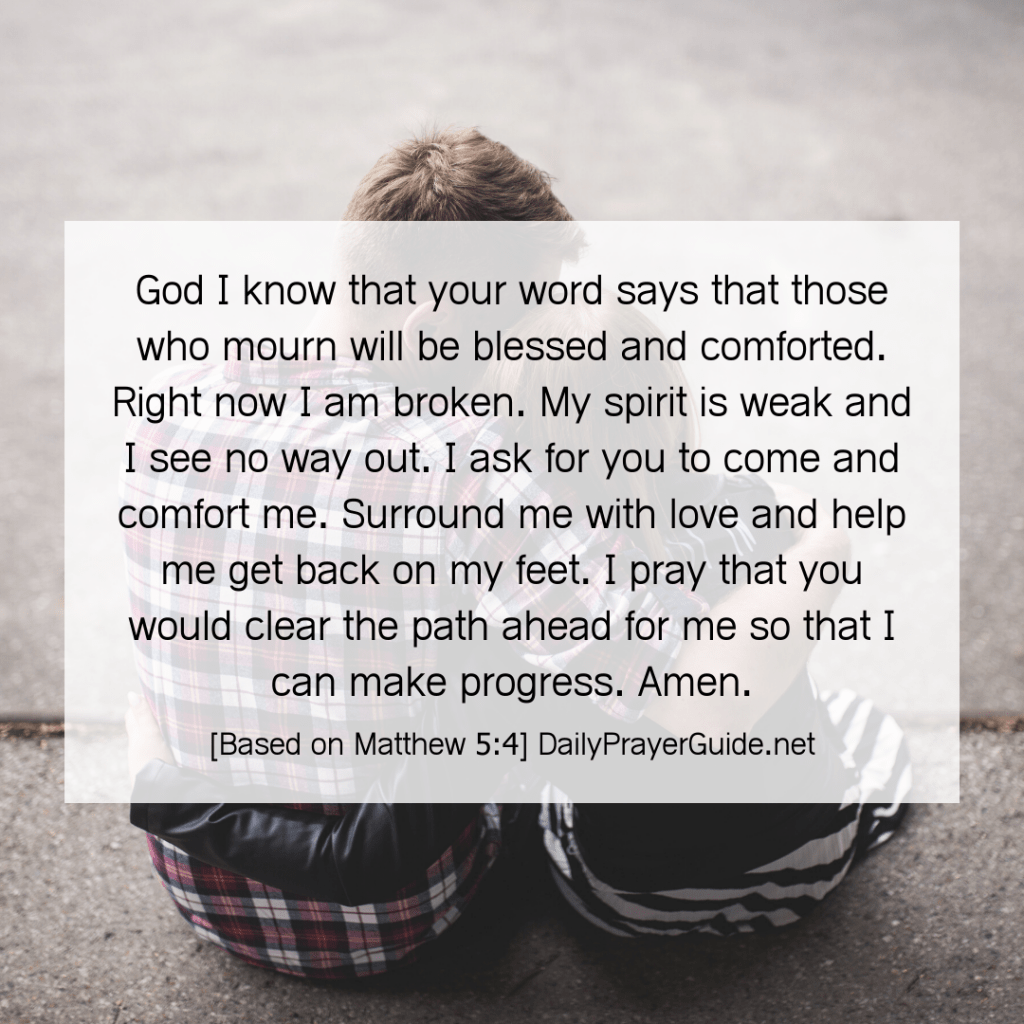
Heavenly Father, I have just been diagnosed with an incurable disease called ‘sin’. I am worn out, long scared, and depressed from fighting against it. I don’t know where to turn to, but I know you’re with me always. Fight my battles, dear Lord rescue me from this pit and help me to walk in the divine health that Jesus died on the cross for me to have. Uproot fear from my heart and help me to walk in boldness, knowing that the final report comes only from You. In Jesus’ name, I grieve! I mourn! I plead and cry unto You and I want to believe and pray, Amen
https://translate.google.com/

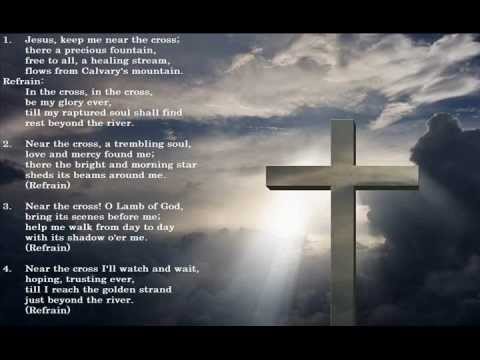
My Jesus, My Savior of All Comfort, I Pray You will keep Me Near thy Cross!

  1. Jesus, keep me near the cross,
    There a precious fountain—
    Free to all, a healing stream—
    Flows from Calv’ry’s mountain.
    • Refrain:
      In the cross, in the cross,
      Be my glory ever;
      Till my raptured soul shall find
      Rest beyond the river.
  2. Near the cross, a trembling soul,
    Love and Mercy found me;
    There the bright and morning star
    Sheds its beams around me.
  3. Near the cross! O Lamb of God,
    Bring its scenes before me;
    Help me walk from day to day,
    With its shadows o’er me.
  4. Near the cross I’ll watch and wait
    Hoping, trusting ever,
    Till I reach the golden strand,
    Just beyond the river.

Fannie Crosby, Published in 1869.

2 Corinthians 1:1-4 English Standard Version

Greeting

Paul, an apostle of Christ Jesus by the will of God, and Timothy our brother,

To the church of God that is at Corinth, with all the saints who are in the whole of Achaia:

Grace to you and peace from God our Father and the Lord Jesus Christ.

God of All Comfort

Blessed be the God and Father of our Lord Jesus Christ, the Father of mercies and God of all comfort, who comforts us in all our affliction, so that we may be able to comfort those who are in any affliction, with the comfort with which we ourselves are comforted by God.

The Word of God for the Children of God. Gloria! In Excelsis Deo! Alleluia! Amen.

The Gospel Truth: Our God is with us when we experience pain, loss, regret, sadness, and all manner of pain. He is not only with us but promises to bring us the comfort we need when we face troubles. He is with us through all things.

“God of Comfort” can also be translated as “God of Compassion.” To have compassion is to have concern and empathy for the sufferings of others. This first shows us God recognizes our need to be seen, to receive the empathy and care of others. God is interested in what we are going through. He does not casually dismiss our current circumstances or minimize our daily stressors as insignificant. He absolutely cares about and is absolutely there for each and every up and down that we face. He gathers our tears in a bottle (Psalm 56:8)

It’s easy for many of us to think our heartbreak doesn’t count because others have gone through worse. While we should realize the uncountable ways we are blessed, that does not mean God doesn’t see your pain as “minimal” compared to others. Compassion and comfort from Jesus are available whenever we need them! God’s grace is not reserved solely for our hardest moments; it’s available to each and every one of us on a day-by-day, even moment-by-moment basis!

We can call on God’s powerful Holy Spirit when we need comfort because we are having trouble resolving a conflict with those closest to us, when plans have to be scrapped due to unforeseen circumstances, or when sudden disappointment attempts to steal our joy. God comforts us when we face job losses, unmet goals, loneliness, grief, illness, separation, depression, anxiety, and relational strife; whatever we face we must remember that we can have absolute confidence in the absolute power of God to absolutely help us through the trials in our lives.

The beautiful thing is that God offers us his peace not just to carry us through our own circumstances but so we can also “comfort those in any trouble with the comfort we ourselves receive from God.” In God’s economy, nothing is wasted, no opportunity is ever lost! His power is multiplied through us. His grace overflows from our lives and spills into the lives of those around us.

God gives purpose to our hard places. 

Joseph said to his brothers who tried to kill him, betrayed him into Egyptian slavery; Genesis 50:20 says, “You intended to harm me, but God intended it all for good. He brought me to this position so I could save the lives of many people.”

From the beginning, God has re-written the stories of people’s lives for His glory. Joseph, who utters the words from Genesis about God’s grace over this life, endured many hardships that began when his brothers sold him into slavery due to jealousy. Rather than letting bitterness steal his future, he relied on God’s comforting strength to help change the narrative of his life. There is 100% no circumstance that God can’t heal and then use as a blessing to others.

When you and I face difficulties remember God’s Holy Spirit is always at your disposal. While we suffer God comforts. As we heal God mercifully uses our lives to bless others who need a listening ear, wise counsel, or a love-filled embrace. Praise our God for He is a God of all Comfort! All of God’s hugs are 100% FREE!

No Matter Where You Are in Life, It’s Never Too Late. Allow Yourself New Hope.

  • What kind of affliction are you facing right now? How overwhelming is it?
  • Where do you tend to first turn for comfort? Or do you choose to suffer?
  • How long does it take you to remember God is your Father?
  • How long does it take you to remember Jesus is your Savior?
  • How long does it take you to remember the Holy Spirit is your Comforter?
  • Do you remember How God, Jesus, Holy Spirit brought you comfort in the past?
  • Did you know God, Jesus and the Holy Spirit are comforting you right now?
  • Are you grateful? Are you humbled? Are you mindful of His Presence now?
  • How do you express your gratitude to God for His blessings you’ve received?
  • How can you share God’s comfort with others?
  • How DO you share God’s comfort right now?
  • Do you share God’s comfort with anyone, or do you try to keep it all to yourself?
  • Having carefully pondered these questions, what is your Prayer right now?

Write YOUR prayer here ________________________________

In the name of God, the Father and God the Son and God the Holy Spirit,

Let us pray,

Lord, my comfort, I’m often confused when I need to make important decisions about my work, my relationships, my health, or finances. Show me the way I should go when I don’t know which way to turn. Help me remember to come to you, rather than trying to figure everything out on my own. Guide me along the best pathway for my life. Advise me and watch over me. Help me to listen to your guidance and not resist it. I thank you that your unfailing love surrounds those who trust you. Let my life be the example You need it to be. Amen. Amen.

https://translate.google.com/

When You Need Hope for Your Day: A Prayer and 5 Truths from Psalm 121.

The Promise of God: The LORD keeps you from all harm and watches over your life. The LORD keeps watch over you as you come and go, both now and forever.

At first glance, Psalm 121 offers tremendous assurance. The Lord will keep us from all harm! Wow! That sounds impossibly wonderful. If I only live my life in relationship with God, then I will be kept from all harm. I won’t suffer hardship or pain. My life will be filled only with good things. O’ What Blessed Assurance!

But wait! The question must be asked when our health is subject to something we cannot see, but yet, threatens each and every one of us with greatest harm, Is this song of assurance really true? I have had my share of difficulties in life, and I know people whose suffering far exceeds my own. I think of Christians in far-away places of the world where they regularly experience persecution, even including martyrdom. Is God keeping them from all harm? It doesn’t seem so.

Other passages in the Psalms bear witness to the reality that God’s people can suffer harm. In Psalm 6, for example, we read, “I am worn out from my groaning. All night long I flood my bed with weeping and drench my couch with tears” (Psalm 6:6). The psalm writer laments because he has been the victim of those who “do evil” (Psalm 6:7).

Similarly, in Psalm 71:20 we read, “Though you have made me see troubles, many and bitter, you will restore my life.” The Hebrew word translated here as “bitter” is the same word found in Psalm 121:7, where the word is translated as “harm.” So, in one psalm the Lord keeps us from all harm. In another psalms, the psalmist experiences harm and attributes this to the Lord himself. What are we to make of this apparent inconsistency? What is the truth are we to pray for?

Psalm 121 Complete Jewish Bible

121 (0) A song of ascents:

(1) If I raise my eyes to the hills,
from where will my help come?
My help comes from Adonai,
the maker of heaven and earth.
He will not let your foot slip —
your guardian is not asleep.
No, the guardian of Isra’el
never slumbers or sleeps.

Adonai is your guardian; at your right hand
Adonai provides you with shade —
the sun can’t strike you during the day
or even the moon at night.

Adonai will guard you against all harm;
he will guard your life.
Adonai will guard your coming and going
from now on and forever.

The Word of God for the Children of God. Gloria! In Excelsis Deo! Alleluia! Amen.

We all need help at times in life.

The Beatles used to sing: “I get by with a little help from my friends.”

It’s good for mankind to have a reliable and trustworthy support system in place, but we need to look further than that. Because history and experience mightily teach us that no safety plan, no insurance policy, no security system can keep you absolutely safe in this life. You can follow all the safety rules, take every precaution, exercise and eat well, and things can still definitely go wrong.

And that’s why we need to lift up our eyes unto the heavens beyond the hills and the vast majestic grandeur and ranges of mountains, to look only to God for our help. It was Ben Franklin who said, “God helps those who help themselves,” but the Scriptures clearly and succinctly teach us that God helps those who seek his help (Psalm 13, Psalm 23). None of us are safe until we take refuge in God.

Psalm 121 is a psalm about trusting in God’s providential care. It is a travel Psalm. In fact, many families read this Psalm out loud together before going on a trip. Devout Jews recite portions of this Psalm when they leave or enter their homes. They attach a small cylinder called a Mezuzah with some Scriptures in it (Deuteronomy 6:4-9, 11:13-21) to their right door frame.

And whenever they leave or enter their home, they touch the Mezuzah and recite Psalm 121 verses 5 and 8.

Do you find yourself in need help, be it a little or a whole lot this day? Then this psalm is for you. This is a good one to memorize and have handy for the journey of life. Psalm 121 teaches us five big truths about God’s help and care for you. 

 Let’s look at all five of these as we learn to put more and more of our trust in God’s providence and care for our lives each moment of everyday God gives.

Choosing today, to set my eyes on God. For if He made all of heaven and earth, surely and most certainly, He has a Sovereign, incredible plan, for you and for me. He 1000% knows our way in this journey of life, and He’s a “with us” God.

5 Truths from Psalm 121 that Give Us Hope for Today:

  • “My help comes from the Lord, who made heaven and earth.” v. 2 He’s All-powerful. God is a mountain mover and Creator of heaven and earth. He’s with us, always. He breathes His help and strength into our souls, into our day.
     
  • “He will not allow your foot to slip; He who keeps you will not slumber.” v. 3 He won’t allow us to fall. We may find ourselves on slippery slopes, or the path we’re walking seems to be full of potholes and obstacles. But the God who knows all, knows our way. And even when we stumble, as our eyes are fixed on Him, He will keep our footsteps firm. For He watches over us and never sleeps or slumbers. He watches over us 24 hours a day, every day so we can all sleep.
     
  • “The Lord is your keeper; the Lord is your shade on your right hand.” v. 5 He keeps us, safe, in His care. He protects us like the shade protects from the heat of the day. Why the “right hand?” Because it is known as the hand that works, so we can be assured that whatever He’s given us to do in this life, His covering of protection rests over all of our work and efforts.
     
  • “The Lord will protect you from all evil; He will keep your soul.” v. 7 He protects us from “all evil,” not some, but “all.” It does not have the final say over our lives. Fear of death, disease, and hardship has lost its sting, for our lives are hidden with Christ in God. No matter who or what we’re rubbing shoulders with each day, God’s power is greater than whatever darkness we might face. For He is the soul-keeper, and He holds all of our tomorrows.
     
  • “The Lord will guard your going out and your coming in from this time forth and forever.” v. 8 He watches over us, constantly, His eyes are towards us. He cannot look away from those He loves. He watches our coming and our going, and all in between. He watches over our family and children, even when we cannot see. We do not have to worry, for He strongly supports those whose hearts are His.
     
  • For the eyes of the LORD move to and fro throughout the earth that He may strongly support those whose heart is completely His.” 2 Chronicles 16:9

He is our Everlasting Hope for an Everlasting Future!

Reflect:

  • Do you find it challenging to believe that God will provide the help and protection He promises? Why or why not?
  • What are some lesser things you rely on for protection or provision in difficult times?
  • What is one step God is calling you to take that you can’t do without His help?
  • What is the one step you can take without any reservation to trust God more?
  • What is the one step you WILL take without any reservation to trust God more?

In the name of God, the Father and God the Son and God the Holy Spirit,

Let us pray,

Psalm 121 The Message

121 1-2 I look up to the mountains;
    does my strength come from mountains?
No, my strength comes from God,
    who made heaven, and earth, and mountains.

3-4 He won’t let you stumble,
    your Guardian God won’t fall asleep.
Not on your life! Israel’s
    Guardian will never doze or sleep.

5-6 God’s your Guardian,
    right at your side to protect you—
Shielding you from sunstroke,
    sheltering you from moonstroke.

7-8 God guards you from every evil,
    he guards your very life.
He guards you when you leave and when you return,
    he guards you now, he guards you always.

Gloria! In Excelsis Deo! Alleluia! Alleluia! Alleluia! Amen.

https://translate.google.com/

How firm a foundation you saints of the Lord, is laid for your faith in his excellent Word! What more can He say than to you He has said, to you who for refuge to Jesus have fled? Praying for Wisdom | James 1:5-8

It has been suggested that a knowledge of one’s own ignorance is the beginning of wisdom and recognizing our lack of wisdom is the first prudent step towards understanding. Proverbs 1:1-7 reminds us of this truth: fear of the Lord is the beginning of wisdom, that a knowledge of the holy brings true understanding.

Life is full of pitfalls and snares, and we often make wrong choices, but it is comforting to know that no matter what trials we may be called upon to face, or what foolish choices we have made in the past, what foolish choices we will definitely and decisively make in the future, how righteous is it to know that we can go to the Lord, ask Him for godly insight and spiritual understanding, and He has promised to give us all the wisdom we can handle, is needed for the task.

1 How firm a foundation, you saints of the Lord,
is laid for your faith in his excellent Word!
What more can he say than to you he has said,
to you who for refuge to Jesus have fled?

James 1:5-8 The Message

5-8 If you don’t know what you’re doing, pray to the Father. He loves to help. You’ll get his help and won’t be condescended to when you ask for it. Ask boldly, believingly, without a second thought. People who “worry their prayers” are like wind-whipped waves. Do not think you are going to get anything from the Master that way, adrift at sea, keeping all your options open.

The Word of God for the Children of God. Gloria! In Excelsis Deo! Alleluia! Amen.

A man was given a tour of heaven in a dream. As the tour ended, he noted one particular building was skipped over. The angel sternly warned that he did not want to see the inside of the building. This only heightened the man’s curiosity. The angel finally showed him. It was a building filled with beautifully wrapped presents. When the man asked what these were, the angel answered these were gifts which God had prepared for his children that were never claimed in prayer.

How many mansions does God have set aside for us? How many rooms are in all of those many mansions? How many are full? How many are empty? How many are unoccupied by God’s children but are used only as simple storehouses? If it’s one building, one mansion in heaven, storing and housing unclaimed gifts, how many boxes would contain unclaimed, unwanted gift of wisdom? When facing trials, we pray for provision, healing, strength, protection, intervention, miracles, deliverance, and so very many other things, besides God’s wisdom.

In this short passage, James, the half-brother of the Lord Jesus, is particularly referencing the wisdom of God we need when compassed about by the various difficulties we encounter in our everyday lives and the tough choices we are all required to make. Until Christ’s resurrection, James was at enmity with God and scornful towards his older sibling. It must have been shocking for this young man to discover that the brother whom he had treated with such contempt, during his life, was his Lord, his Savior, was the source of all the best wisdom.

This bondservant of Christ may have lacked wisdom in his earlier days but was ready to admit his folly and willing to share with us how easy it is to gain godly wisdom and spiritual understanding. James began his lesson on wisdom by pointing out that the suffering of this life produces patient endurance, which will furnish us with spiritual maturity. “However,” he continues, “if any of you lacks wisdom, let him ask of God, who gives to all generously and without reproach, and it will be given to him.” If we do really, seriously, unreservedly, want to know how we can set our ultra-unwise selves aside, James writes.

  • Don’t ask how we entered into or exactly how can get out of our trials.
  • But PRAY! God, the Father, Son, Spirit, what we can get out of our trials?

There are times when we do not know what to do or which way to turn, and I am sure James was shocked and mortified when the resurrected Christ visited his petulant, younger brother. But James was a young man with a teachable spirit, who was quick to embrace the wisdom of faith he lacked and encourages those of us who are deficient in spiritual insight to ask the Lord for all the necessary wisdom we need – and never to doubt that God will provide for us liberally.

James also knows that trusting the Lord for godly wisdom as we travel through life… is a tool the Lord uses to test and strengthen our faith in Him, and which helps to produce in us the patient endurance that is so needful for our spiritual growth – we are reminded to stand fast in the faith unwaveringly – if we are to honor the Lord Who bought us with His precious blood, to come forth as gold.

How much we all need God’s heavenly wisdom in the tests and trials of life’s disappointments and difficulties, which are so much a part of our everyday lives. How much we need His guidance in the choices we have to make, a willingness to admit our faults, a readiness to learn the lessons God desires to teach us, and an eagerness to put into practice the truth we have learned.

James 1:1-4 The Message

I, James, am a slave of God and the Master Jesus, writing to the twelve tribes scattered to Kingdom Come: Hello!

Faith Under Pressure

2-4 Consider it a sheer gift, friends, when tests and challenges come at you from all sides. You know that under pressure, your faith-life is forced into the open and shows its true colors. So don’t try to get out of anything prematurely. Let it do its work, so you become mature and well-developed, not deficient in any way.

James is saying, Pray for the unclaimed, unwanted, but precious gift of wisdom.

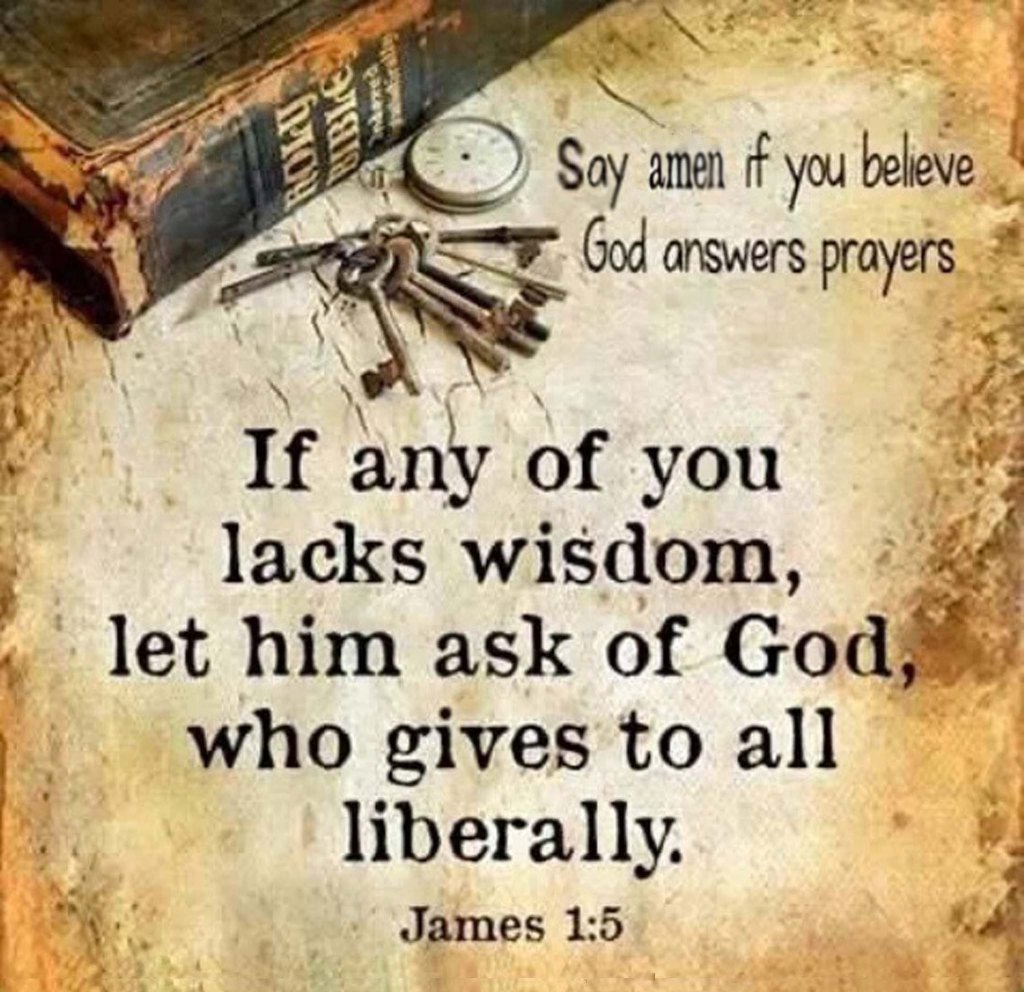
James 1:5 says, “If any of you lacks wisdom, let him ask God, who gives generously to all without reproach, and it will be given him.” This verse is a continuation of the previous paragraph. Verses 2-4 says, “Count it all joy, my brothers, when you meet trials of various kinds, for you know that the testing of your faith produces steadfastness. And let steadfastness have its full effect, that you may be perfect and complete, lacking in nothing.”

Then here it seems that James abruptly shifts to the subject of prayer. But the two passages are connected. The link is the word “lack.” Verse 4 says that the purpose of trials is to become “perfect and complete, lacking nothing.” Verse 5 says, “If any of you lacks wisdom, let him ask God.”

It is God’s will for you to become a mature Christian that lacks no good thing. But we need to grow up. But we need our trials to know how to “gird ourselves” to mature in our faith. Our faith is always going to somehow be incomplete. We consistently lack needed virtues for godly living against all situations. We can in no way predict who, what, where when and why of every exact situation. One thing we always lack is wisdom. God uses trials to expose our need for wisdom.

James 1:5-8 teaches that God freely provides wisdom to face life’s trials to those who come to him in believing prayer. Vance Havner said it well: “If you lack knowledge, go to school. If you lack wisdom, get to God on your knees!”

How do you access the wisdom you need to face life’s trials?

Ask God for Wisdom.

Verse 5 says, “If anyone of you lacks wisdom, let him ask God, who gives generously to all without reproach, and it will be given him.”

The Problem. Verse 5 begins: “If any of you lacks wisdom…” This conditional statement does not suggest some do not need wisdom. James states the fact in a way that requires each person to examine himself and be humble enough to confess need for wisdom. No one is perfect in wisdom! (1 Corinthians 1:18-25)

What is wisdom? In scripture, wisdom is not academic, philosophical, or intellectual. Wisdom is not knowledge. Wisdom requires knowledge. But you can have knowledge and not be wise. You can be an “over-educated fool.” Our world is truly filled with them. We live in truly the most skilled, knowledgeable, and advanced generation ever. We also live in the most profane, violent, and hedonistic generation ever. We have our knowledge. We lack God’s wisdom.

Wisdom begins with a certain kind of knowledge. Psalms 14:1 says, “The fool says in his heart, ‘There is no God.’” Proverbs 9:10 says, “The fear of the Lord is the beginning of wisdom, and the knowledge of the Holy One is insight.” This knowledge of God comes through God’s self-revelation of himself in scripture. The wisdom of God is found in the word of God.

Our Lord and Savior Jesus Christ is the incarnate wisdom of God. (John 1:1-5)

Colossians 2:3 says in Christ “are hidden all the treasures of wisdom and knowledge.” When Adan and Eve sinned in the Garden of Eden, they made fools of us all. But God sent his Son into the world to live a righteous life, die on the cross for our sins, and rise from the dead to give us new life. The gospel is able to make you wise for salvation through faith in Christ. But saving faith does not automatically produce perfect wisdom. Jesus is the answer. That does not mean you will not have to face life’s difficult questions.

Proverbs 4:7 says, “Get wisdom, and whatever you get, get insight.”

The Prescription. God is the source of all wisdom. To receive wisdom to face life’s trials, ask God for it. The prescription for wisdom is simple yet dynamic. You do not need time, experience, or education to be wise. The young, naive, and unlearned can ask God for wisdom. There is never a time God is unavailable.

The prescription is personal: “let him ask God.” You need godly people in your life to intercede for you. But there are things you need from God you will not receive from the intercession of others. You must ask God for yourself. If you need wisdom, you do not have only to go to your pastor, visit a counselor, inform your prayer partners, or go to your family and friends. They are 100% important. But true wisdom you need to face life’s trials is only a prayer away.

God gives. After commanding to us ask God for wisdom, James describes the character of God that makes him inclined to grant our request. God is a giving God. It is wrong to view God with clenched fists that must be pried open. God’s arms are outstretched. God’s hands are full, open, and ready to give. God’s pitcher is tilted toward his children to pour out blessings (Matthew 7:11).

God gives generously. The word “generously” means to be simple, single, or sincere. It is that which is pure. James uses the term to say God’s gifts are true gifts. Proverbs 23:1-3 says, “When you sit down to eat with a ruler, observe carefully what is set before you, and put a knife to you throat if you are given to appetite. Do not desire his delicacies, for they are deceptive food.” Sometimes a person’s generosity is not genuine generosity. That is not the case with God (Romans 11:35). God gives generously, liberally, purely, sincerely, and freely.

God gives generously to all. Divine generosity is nondiscriminatory. God does not play favorites. He is no respecter of persons. In Matthew 20:1-16, Jesus tells a parable about a landowner who kept going to the marketplace to hire workers. He hired workers early in the morning. he hired workers before the end of the workday. But he chose to pay them all the same things. The early birds whined, grumbled against the landowner. The landowner responded, “Don’t I have the right to do what I want with what belongs to me?” Indeed, God has the right to do what he wants. In his sovereign grace, he chooses to be generous to all.

God gives generously to all without reproach. You may know people who could help in your time of need. But are they the first people you want to help because of the lecture you will hear when you ask for help? You would never hear the end of it after they help. God will never chastise you for asking him for His wisdom.

  • You do not have to worry God is too busy running the world to help you.
  • You do not have to worry God may mock you for not knowing how to face life’s trials.
  • You do not have to worry God will become irritated because you ask for the same thing.

The Promise. When Solomon became king of Israel, God signed a blank check and gave it to him. In 1 Kings 3:5, God said to Solomon, ask what I shall give you.” What should you ask for if you had a guarantee that God would grant your request? In 1 Kings 3:9, Solomon asked, “Give your servant an understanding mind to govern your people, that I may discern between good and evil, for who is able to govern this your great people?”

Solomon asked for wisdom. This request so pleased God that he gave Solomon wisdom and threw in wealth, longevity, and success. The wisdom God gave Solomon was not an exclusive gift. God has signed a check and made it out to any believer in Christ who asks for wisdom. All you have to do is endorse it in prayer. Verse 5 says, “If any of you lacks wisdom, let him ask God, who gives generously to all without reproach, and it will be given him.”

James 1:5 promises those who ask God will receive wisdom, not answers. All too often, answers become idols. We are in many ways like Job, who demanded to interrogate God about his suffering. When God finally took the witness stand, Job was interrogated with questions and never answered one of Job’s questions. Yet Job emerged with greater wisdom. This is precisely how Savior God works.

Wisdom is not a spiritual navigation system with turn-by-turn directions. It is spiritual alertness to see the potholes in the road, or the guy who darts in front of you, and respond in a wiser way that does not ruin your Christian wisdom, dishonor the Lord, or discourage other believers.

Trust God for Wisdom.

There is a natural and critical progression in the text. Trials demand wisdom. Wisdom demands prayer. Prayer demands faith.

Verse 5 commands us to ask God for wisdom. Verses 6-8 explain how to ask God for wisdom. Verse 5 is an open gift every Christian can claim. Verse 6-8 establish an essential condition for receiving the promise. As you ask God for wisdom, trust God for wisdom.

God responds to the one who prays in faith. Verse 6 says, “But let him ask in faith.” God generously gives wisdom without reproach to all who ask him. But God requires that we ask in faith. This requirement applies to anything you ask.

Hebrews 11:6 says, “And without faith it is impossible to please him, for whoever would draw near to God must believe that he exists and that he rewards those who seek him.”

Whatever you ask in prayer must be asked in faith. James specifies that when you pray for wisdom, you must ask in faith. In Mark 11:22-24, Jesus says, “Have faith in God. Truly I say to you, whoever says to this mountain, ‘Be taken up and thrown into the sea,’ and does not doubt in his heart, but believes what he says will come to pass, it will be done for him. Therefore, I tell you, whatever you ask in prayer, believe that you have received it, and it will be yours.”

God rejects the one who prays with doubt. Verse 6 says, “But let him ask in faith, with no doubting.” There is a sense in which double is a friend of faith, not its enemy. Doubt is the ants in the pants of faith. It keeps faith alive, awake, and alert. Yet James commands us to ask in faith with no doubting. It is a prohibition against spiritual indecisiveness that wavers between trust and double. Doubt your doubts and believe your beliefs!

What God thinks about the doubter. Verse 6 says, “But let him ask in faith, with no doubting, for the one who doubts is like a wave of the sea that tis driven and tossed by the wind.”

This marine analogy is one of many images from nature in James. Growing up with his half-brother Jesus near the Sea of Galilee, James was familiar with storms at sea. Winds drove the waves in one direction, then another. Winds tossed the waves, lifting them high and then crashing them down. It is the kind of storm the disciples experienced that caused them to wake up Jesus and ask, “Teacher, do you not care that we are perishing?” (Mark 4:38) The one who doubts is like a wave of the sea driven and fearfully tossed about by the wind.

Psalm 107:23-30 Authorized (King James) Version

23 They that go down to the sea in ships,
that do business in great waters;
24 these see the works of the Lord,
and his wonders in the deep.
25 For he commandeth, and raiseth the stormy wind,
which lifteth up the waves thereof.
26 They mount up to the heaven,
they go down again to the depths:
their soul is melted because of trouble.
27 They reel to and fro, and stagger like a drunken man,
and are at their wits’ end.
28 Then they cry unto the Lord in their trouble,
and he bringeth them out of their distresses.
29 He maketh the storm a calm,
so that the waves thereof are still.
30 Then are they glad because they be quiet;
so he bringeth them unto their desired haven.

What the doubter thinks about God. The doubter lives with a foolish assumption. He supposed he can pray with doubt and receive an answer to his prayers. She supposes God will grant her request even though she does not trust God for what she asks. The doubter is confused about who God is and how God works. James disabused the doubter of this erroneous supposition.

James 1 Verse 7 says, “For that person must not suppose that he will receive anything from the lord.” James 1:2, James addresses his readers as “brothers,” a term of spiritual communion used throughout this letter. James addresses the doubter in verse 6 as “that person,” disassociating himself from the one who prays with doubt.

“For that Person must not suppose he will receive anything from the Lord.” “Anything” is not absolute. Matthew 5:45 says, God “makes his sun rise on the evil and the good and sends his rain on the just and on the unjust.” This is called “common grace.” It is the favor of God put out one all humanity.

James does not mean God refuses to do absolutely anything for the one who doubts. “Anything” must be understood in the context of prayer.

God does many things for doubters. But the doubter should never think he or she will receive anything they ask God for in prayer.

James states this as a divine command: “For that person must not suppose that he will receive anything from the Lord.” Doubt receives God’s rejection slip that reads: “Request denied due to insufficient faith.”

Verse 8 gives readers a final, devastating description of the one who believes but doubts: “he is a double-minded man,” unstable in all his ways.” “Double-minded” is unique to this epistle. Scholars believe James coined the term. It means to have two souls. It is to be two different people. Yet the term does not suggest duplicity or deceitfulness. It describes something far worse: Doubt rooted in divided loyalties.

Deuteronomy 6:4-5 declares, “Hear, O Israel: The Lord our God, the Lord is one. You shall love the Lord your God with all your heart and with all your soul and with all your might.”

There is one God. This One God alone demands every last ounce of your total devotion. Doublemindedness is exact the opposite of such complete devotion.

James 4:8 says, “Draw near to God, and he will draw near to you. Cleanse your hands, you sinners, and purify your hearts, you double-minded.”

The doubled minded has a sinful heart which needs to be purified to draw near to God (Psalm 51).

This is how a 21st Century version of James would describe the one who doubts.

  • He is a double-minded man.
  • He is a fence-straddler.
  • He is “Mr. Facing-Both-Ways.”
  • He is a walking civil war.
  • He trusts, but he doubts.
  • He hopes for the best but expects the worst.
  • He tries to be a “best friend forever” of the world and God at the same time.

In 1 Kings 18:21, Elijah the prophet confronts the double-minded children of Israel: “How long will you go limping between two different opinions? IF the Lord is God, follow him; but if Baal, then follow him.”

Proverbs 3:5-6 says,

“Trust in the Lord with all your heart, and do not lean on your understanding. In all your ways acknowledge him, and he will make straight your paths.”

How Firm a Foundation Author: K. (1787)Author (attributed to): George Keith (1787)Author (attributed to): R. Keen (c. 1787)

1 How firm a foundation, you saints of the Lord,
is laid for your faith in his excellent Word!
What more can he say than to you he has said,
to you who for refuge to Jesus have fled?

2 “Fear not, I am with you, O be not dismayed,
for I am your God and will still give you aid;
I’ll strengthen you, help you, and cause you to stand,
upheld by my righteous, omnipotent hand.

3 “When through the deep waters I call you to go,
the rivers of sorrow shall not overflow,
for I will be with you, your troubles to bless,
and sanctify to you your deepest distress.

4 “When through fiery trials your pathway shall lie,
my grace all sufficient shall be your supply;
the flames will not hurt you; I only design
your dross to consume and your gold to refine.

5 “The soul that on Jesus has leaned for repose
I will not, I will not, desert to its foes;
that soul, though all hell should endeavor to shake,
I’ll never, no never, no never forsake!”

In the name of God, the Father and God the Son and God the Holy Spirit,

Let us Pray,

Lord of wisdom, I sometimes finding understanding the Bible to be difficult. I know you want me to apply your word to my life. I thank you for giving me your word so I can grow in my relationship with you. Help me grasp what you want me to know as I read your revealed word. Open my eyes to see the wonderful truths in your instructions. Be my teacher, so I can live and obey your word. Thank you for your ever greater, wiser advice. Alleluia! Alleluia! Alleluia! Amen.

https://translate.google.com/

Matthew 5:6, Blessed Are Those Who Hunger and Thirst for Righteousness

Understanding the fourth beatitude turns on the readers understanding what Jesus meant by righteousness. In ancient Judaism, righteousness meant “to acquit, vindicate, restore to a right relationship.” The righteous are those who maintain right relationships—with God and with the people around them. On the basis of right relationships, those who commit infractions are acquitted of guilt provided If your hearts were genuinely in the right relationship with God.

Have you received the blessing of being filled with right relationships? It flows from meekness (the third beatitude) because we can only form genuinely right relationships with others when we cease making all our actions revolve around ourselves. Do you hunger and thirst for right relationships—with God, with your co-workers, with your family, and your community? Hunger is a sign of life. We are genuinely hungry for good relationships if we yearn for others for their own sake, not just as candy or snack food for meeting our own needs. If we see we have God’s grace for this, we will hunger, thirst for right relationships, not only with God, but with the people, neighbors, with whom we work or live.

When you’re really hungry or thirsty, you’ll do anything you can to get food or drink. In fact, it becomes all you can think about. When you are desperate for a drink, you don’t want to chat with a friend for two hours about your neighbors’ best recipes. Instead, you want to do whatever you can to quench your thirst.

This is a lot like what today’s Bible verse is challenging us with. It’s telling us that we should be hungry and thirsty for righteousness. Doing the right things for God’s Kingdom. It should be something that we’re going after and wanting.

Challenge yourself today to zealously pursue after righteousness. Don’t become so used to your friends and what’s going on around you that you forget that you should be hungering and thirsting to get to know God better, to become .001% more like Him every day. Determine to hunger and thirst after righteousness.

Matthew 5:6 The Message

“You’re blessed when you’ve worked up a good appetite for God. He’s food and drink in the best meal you’ll ever eat.

The Word of God for the Children of God. Gloria! In Excelsis Deo! Alleluia! Amen.

We each understand the concept of hunger quite differently. You might be hungry, even desperately starving for the want of a bowl of rice right now. I do not know what hunger feels like to other people, but I can only tell you what it feels like to me. What usually starts out as a mild feeling of discomfort from the stomach turns into a growing and maturing hunger that affects my entire body.

I know that if I allow my hunger to go on long enough, I get a big headache and experience dizziness. My body is screaming into my mind to tell my feet and my hands to get into the kitchen and do something fast! I am told that other people do not feel this way. That is why they will eat a later dinner at 8pm at night. The hunger pangs in my body would become so great I could never wait that long.

Thirst operates in the same way. When you are thirsty you can hardly think of anything else. Your mind becomes consumed with needing water to drink. There is nothing better than a cold glass of water when you are truly thirst.

After working outside noon day heat, you do not want anything else to drink than water. Nothing else will satisfy the needs of the body more. You do not want to do anything else – just drink. Hunger and thirst will become so great that you cannot do anything else. When our desperate hunger and thirst kick in, life not so subtly stops, and we drink, quench our thirst and eat, fill our hunger.

This has become a metaphor for a having a strong desire. When a sports team wins a game, the coaches and athletes will often talk about being hungry for being and becoming a champion. The idea is that of a driving pursuit and a growing and maturing passion that comes from deep within the soul of that person. Another word which may help us to understand the idea is ambition.

Hunger and Thirst

With this in mind, let us listen to the words of Jesus as he continues to teach the crowds which have now come and gathered to hear him speak on the mountain. “Blessed are those who hunger and thirst for righteousness, for they shall be satisfied.” (Matthew 5:6 ESV)

Therefore, hungering and thirsting is not any one person’s mild desire. To say that you are hungry for something does not mean that you do not really care if you have it or not. To say that you are thirsting for something does not mean that you are presently content or satisfied. Hungering and thirsting speaks of having a deep craving, a zealous yearning, and wildly passionate pursuit. The scriptures speak of having this brand of hunger and thirst in a number of places.

As a deer pants for flowing streams, so pants my soul for you, O God. My soul thirsts for God, for the living God. When shall I come and appear before God? (Psalm 42:1–2 ESV)

Like a deer panting and thirsting for flowing streams of water is the thirst that David and his whole entire being has for the living God. Listen to David again:

O God, you are my God; earnestly I seek you; my soul thirsts for you; my flesh faints for you, as in a dry and weary land where there is no water. (Psalm 63:1 ESV)

We are reading these so we can have a sense of what the scriptures mean to hunger or thirst for the things of God. David does not speak of being mildly interested in God. He earnestly seeks the Lord. His souls’ thirsts for the Lord.

His flesh faints for the Lord. Do you hear the passion? Do you hear the desire dripping from his words? Now let us turn our attention back to Matthew 5:6, notice what Jesus says those who belong to his kingdom hunger and thirst for.

For Righteousness

Notice that Jesus says that our passionate pursuit is not simply for the Lord but for righteousness. Righteousness is used a few different ways in the scriptures.

When we read the writings of the apostle Paul, righteousness refers to the idea of justification. Paul will often write about how we are not righteous, but God makes us righteous through the cross of Jesus.

Justification is the word that we typically use to describe this.

Is Jesus saying the kingdom of heaven belongs to the people who desire to be justified, by God? While we could argue that this is true, in Matthew’s gospel the word righteousness is never used in this way like the Apostle Paul uses it.

To see how Matthew uses the word righteousness in his gospel, we can look a few sentences down the page and understand the meaning. Look further into the Sermon on the Mount.

Blessed are those who are persecuted for righteousness’ sake, for theirs is the kingdom of heaven. (Matthew 5:10 ESV)

For I tell you, unless your righteousness exceeds that of the scribes and Pharisees, you will never enter the kingdom of heaven. (Matthew 5:20 ESV)

Beware of practicing your righteousness before other people in order to be seen by them, for then you will have no reward from your Father who is in heaven. (Matthew 6:1 ESV)

We will examine the meaning of these teachings in later lessons.

For now, it is enough for us to observe Matthew is not using righteousness in these places to describe God justifying us or declaring us righteous.

Rather, righteousness is here used in Matthew’s gospel in terms of personal righteousness by doing God’s will.

God’s people are those who passionately, zealously desire to do God’s will and equally pursue to keep God’s requirements. They look at God’s laws and ways as spiritual necessities to be desired just as food and drink are physical necessities for physical life. Covenanting to, conforming to God’s will be the highest desire.

The character of God’s people is that deep inside their souls they long so much for a godly life and relationship with God as much as a starving person long for his next meal or as a parched tongue longs for drops of water. God’s people are desperate for the things of God. All which we desire is to be right with our God.

It is an interesting and sad to note how modern Christianity seems to have no concern for right living or holiness. Right living appears to be inconsequential in these days. People think that they are Christians or that they serve the Lord while their desires are for any and everything else but God. Their desire for God is mild curiosity and not a burning passion or raging hunger. We cannot think that a luke warm, mild interest in God is what Jesus is calling for in today’s text. Listen very carefully to what Jesus said unto the Samaritan woman at the well.

“If you knew the gift of God, and who it is that is saying to you, ‘Give me a drink,’ you would have asked him, and he would have given you living water.” (John 4:10 ESV)

Just slow down over those words, “If you knew the gift of God” and if you knew who is speaking to you, you would have asked him for the drink and received Living water. Those who know the gift of God and comprehend who Jesus is and what he is offering hunger and thirst for righteousness. Right living becomes as passionately, zealously important to them as food and drink. These are the ones who can never get enough of feasting and thirsting God’s word. They see their relationship with God as Isaiah pictured it: the eating of rich food (Isaiah 55:1).

Satisfied

Looking for satisfaction is the pursuit and goal of our culture.

All magazine headlines and television advertisements suggest that what they offer you will truly satisfy. Everyone wants to be satisfied. We try to fill our hunger and thirst with what will only eventually rust and be thrown away.

It is sad how often we desire lesser things. The prophet Jeremiah pictured this problem in the second chapter of his book where the people are described as having broken cisterns that do not hold water.

The reason it is so foolish is because God is offering flowing, clean, clear water. Yet we try to drink old, stale water thinking we will be satisfied in this way.

This is why the scriptures so often tell us to be godly and pursue righteousness and holiness decisively, exactly and exactingly like our lives depended on them. Satisfaction can only come through living such a lifestyle. Those in the kingdom understand that only filling and satisfaction is Christ. Listen to Jesus again:

Jesus said to them, “I am the bread of life; whoever comes to me shall not hunger, and whoever believes in me shall never thirst.” (John 6:35 ESV)

The more we are satisfied with God, the more we are dissatisfied with “rust worthy” substitutes. What Jesus has done is create in us a hunger for God. The pursuit of His righteousness destroys our own self-righteousness because the pursuit reinforces our poverty of spirit, insufficiency, and need for repentance.

What Jesus says challenges each and every one of us to ask ourselves what we hunger and thirst for. Salvation comes only to those who truly and deeply want every last ounce and scrap of it. Our spiritual poverty and mourning over our sins should compel us to 100% desire salvation, restoration, reconciliation, and righteousness. Those who hunger for God desire to conform to the will of God.

I am going to say this another way I hope will make us a little uncomfortable so that we clearly get Jesus’ message. Jesus is calling for starving believers. We are fanatical about eating and drinking. We never miss meals and very regimented in our eating, drinking throughout the day. We absolutely must eat and drink!

Now we have read all of these passages that tell us that Jesus is to be our food and drink. We want Jesus and we do not want any substitute. We want time with him, and nothing can change us from that effort and passionate pursuit. Jesus is zealously upon our minds like food and drink are when we all hunger and thirst. We are called to be 1000% consumed with Jesus and desire his ways in our lives.

What is your passionate pursuit in life? What satisfies you? What do you hunger and thirst for? Your hungry heart, Your thirsty soul, Your time, your money will reveal those answers to you. Only Jesus can satisfy. Give your life to him today.

Turn Your Eyes Upon Jesus

Helen Howarth Lemmel, 1922

O soul are you weary and troubled
No light in the darkness you see
There’s light for a look at the Savior
And life more abundant and free

Turn your eyes upon Jesus
Look full in his wonderful face
And the things of earth will grow strangely dim
In the light of his glory and grace

His word shall not fail you he promised
Believe him and all will be well
Then go to a world that is dying
His perfect salvation to tell

Turn your eyes upon Jesus
Look full in his wonderful face
And the things of earth will grow strangely dim
In the light of his glory and grace

O soul are you weary and troubled
No light in the darkness you see
There’s light for a look at the Savior
And life more abundant and free

Turn your eyes upon Jesus
Look full in his wonderful face
And the things of earth will grow strangely dim
In the light of his glory and grace

In the name of God, the Father and God the Son and God the Holy Spirit,

Let us Pray,

Father, my Guide, illuminate my mind so I can understand how you want me to live. Your word tells me that people of integrity who follow your instructions are joyful. You have said that those who obey your laws and search for you with all their hearts are blessed and happy. I want that joy! Holy Spirit, please guard me against allowing evil to influence what I believe and do. Help me walk only in your paths. May my actions consistently reflect what you have said is right and good. Gloria! In Excelsis Deo! Alleluia! Alleluia! Alleluia! Amen.

https://translate.google.com/

1 John 3:16-24– By this, do we know the genuine, true love of God? Are we Loving by Deed, and by God’s Truth?

It was perfect LOVE that caused the almighty God act in the affairs of mankind, to send His only begotten Son into the world to become the sin-sacrifice for the entire race of humanity and it was perfect love that caused the Lord Jesus Christ to lay down His life for us. It was perfect love which caused the Lord Jesus to be a perfectly willing sacrifice, to talk the talk and walk the walk all the long and humiliating and painful way to be crucified upon the cruelest criminal’s cross… willingly, so all who believe on Him might not perish but have everlasting life.

Ponder for a while in your 21st century heart those words “perfect love.” What comes into your mind? What thoughts come rushing into your soul that either say; “I can hold my head up high to that one!” or “my head now “comfortably” rests on my knees and my “perfect” shame are resting ever before mine eyes.” Be vigorously and rigorously honest with yourself – God is right beside you!!! Whose standard of “Yeah, I got this love thing down perfectly” “Hallelujah”” are you living, loving, placing before Jesus as your standard of Christianity?

Read and reread Psalm One. Place your standard of “Hallelujah” before God!!!

Now, let us examine today’s text,

1 John 3:16-24 The Message

16-17 This is how we have come to understand and experience love: Christ sacrificed his life for us. This is why we ought to live sacrificially for our fellow believers, and not just be out for ourselves. If you see some brother or sister in need and have the means to do something about it but turn a cold shoulder and do nothing, what happens to God’s love? It disappears. And you made it disappear.

When We Practice Real Love

18-20 My dear children, let’s not just talk about love; let’s practice real love. This is the only way we’ll know we’re living truly, living in God’s reality. It’s also the way to shut down debilitating self-criticism, even when there is something to it. For God is greater than our worried hearts and knows more about us than we do ourselves.

21-24 And friends, once that’s taken care of and we’re no longer accusing or condemning ourselves, we’re bold and free before God! We’re able to stretch our hands out and receive what we asked for because we’re doing what he said, doing what pleases him. Again, this is God’s command: to believe in his personally named Son, Jesus Christ. He told us to love each other, in line with the original command. As we keep his commands, we live deeply and surely in him, and he lives in us. And this is how we experience his deep and abiding presence in us: by the Spirit he gave us.

The Word of God for the Children of God. Gloria! In Excelsis Deo! Alleluia! Amen.

In the most perfect example of love in all history, God sent His only Son into the affairs and works of mankind. For the sake of love alone, the Lord Jesus offered for mankind’s consideration the supreme example of ultimate love when He willingly laid down His life for friends and enemies alike. Jesus’ Perfect Love is made manifest in its highest measure at the cross of Calvary and as His children we might ponder our own hyper dramatic, self-serving standard of perfect love.

Mankind is steadily crumpling under the weight of sin and collapsing under the satanic influence of evil, which is suffocating a world in distress, but the true character of the spiritual Christian is based on a godly love and stands in stark contrast with the evil hatred that reigns supreme over this fallen world system.

From our 21st century context we cannot begin to imagine what it cost God the Father to turn His back on His only begotten Son and pour out the full force of His holy hatred of sin… upon HIM. It was for love of us that God the Father poured out the full force of His holy wrath for the accumulated sin of the whole world, upon His innocent and dearly beloved Son – Whom He had loved from before the conception of the universe. And He did it out of LOVE… for the world.

From our 21st century “smart phone” applications we cannot dare presume to comprehend what it cost the innocent Lord Jesus, Who as God incarnate… had to freely lay aside His eternal majesty and supreme glory and be clothed in our decaying human flesh… and then be made indescribable sin for you and for me.

The eternal Creator God demonstrated His perfect standard of love towards us in that while we were yet sinners (Romans 5:6-8), He laid down His perfect life for us and became a perfect curse and a perfect hissing – as the weight of the accumulated sin of the world was laid perfectly upon His shoulders – and He did it for perfect LOVE of an imperfect you and for perfect LOVE of an imperfect me.

When we look at the cross of Christ and the blood that He shed for us at Calvary – we see incarnate LOVE. and we know what real godly love is by this: that the only Son of God, Christ Jesus perfectly laid down His perfect life for us. Ought not we for HIS sake, imperfectly lay down our lives for our imperfect brethren?

One “soul grabbing” “spiritually sobering” passage of biblical text which grabs our attention in this regard is the message of 1 John 3:16-18, where it is written:

1 John 3:16-18 Amplified Bible

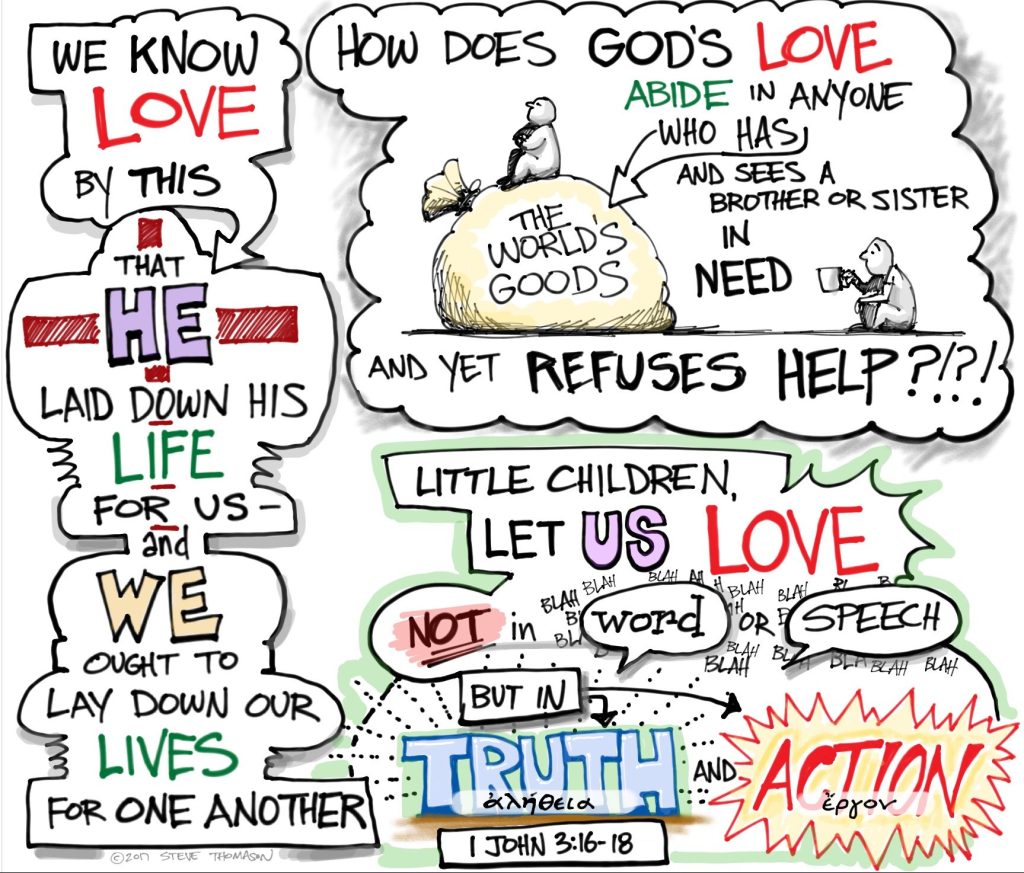
16 By this we know [and have come to understand the depth and essence of His precious] love: that He [willingly] laid down His life for us [because He loved us]. And we ought to lay down our lives for the believers. 17 But whoever has the [a] world’s goods (adequate resources), and sees his brother in need, but has no compassion for him, how does the love of God live in him? 18 Little children (believers, dear ones), let us not love [merely in theory] with word or with tongue [giving lip service to compassion], but in action and in truth [in practice and in sincerity, because practical acts of love are more than words].

What a marvelous, memorable message that is! Let us look at those words and the surrounding context to learn about God’s will for love in our lives.

Love – a recurring theme in this letter. Love for our fellow Christians is one of the dominant themes of this epistle, especially in chapters three and four.

From a whole heavenly host number of angles, the Spirit through John appealed to these first-century disciples to love one another. That is just a part of whom God’s children are, recognizing this truth: “. . . we should love one another” (3:11). Would it be correct to say that God commands members of His church in our own troubled 21st century context to love each other? Read for yourself: “And this is His commandment: that we should believe on the name of His Son Jesus Christ and love one another, as He gave us commandment” (3:23).

Love in word – When we read, “. . . let us not love in word or in tongue” (3:18), that is not a divine decree forbidding children of God from verbalizing their love for one another. The point being made here is that we ought to do 100% more than talk about love – we need to show it in our action. Jesus told His apostles,

“. . . I have loved you” (John 13:1-17, 34-35, John 15:9-17). Paul wrote the same thing to the saints in Corinth, saying, “. . . though the more abundantly I love you, the less I am loved” (2 Corinthians 12:14-15). When it comes from our sincere sacrificial heart, saying, “I love you” doesn’t violate Jesus’ teachings.

Love “in deed and in truth” – Again, that is the plain point of 1 John 3:18. Genuine love for other humans is something that we put into practice.

In this context, we see that such love was exemplified. It was shown by none other than the Lord Himself. What was His greatest manifestation of love for humanity? “By this we know love, because He laid down His life for us” (3:16). What kind of perfect love was that? It was perfect love in perfect action, love sacrificing, love doing what always will be in the very best interest of others.

In this context, we also see that such love is expected of every single follower of the Christ. He exemplified it and He expect it from us, too. In view of what He did for us, we know, “And we also ought to lay down our lives for the brethren” (3:16). In this matter, Cain seriously failed his brother (3:12). We must not do the same. When we see our brother in need of material goods, we need to have compassion, open our hearts and our stockpile of blessings, and help! (3:17). Until we grow to the point of putting love into helpful action, we are just talking and tinkering, prancing and dancing around and maybe, deceiving ourselves.

Love in deed and in truth – love from the heart. Immediately following the charge for you and me to love in deed and in truth (3:18), in each of the next three statements/sentences there is reference made to a Christian’s heart. Look at them: “our hearts before Him” (3:19), “our heart” (3:20), and “our heart” (3:21). Our heart may or may not condemn us (3:20,21). God sees! God knows!

Words are words. Action is action. But do the words and/or action come from the heart? Are they sincere before God and man, or are we like the hypocrites of Jesus’ day who looked great on the outside but were a mess within? (Matthew 23:27,28). Yes, God calls us to put love into action, but none of us should believe the faulty notion that all action shows true love. Such is not the case. Action without proper motivation (love!) is empty, fraudulent and seriously fruitless.

Lack of love – This is not a very pretty picture, but it is one which John sets forth before us. If I fail to love my brother in the Lord, which is the same as hating him, that makes me a murderer (1 John 3:15). Is that relevant today? That is what the Bible says, and such language gets my attention. What else?

If a child of God does not love his brother, he is “not of God” (3:10). Such a disciple of Jesus is acting like Cain (3:12). Raise your hand if you want that label (“Acts Just Like Cain”) for your conduct. The world hates us, and we expect that (3:13), but we do not expect to see such among God’s family. What else?

One who does not love his brother abides in death, which is separation from God (3:14). The saint who hates his brother is a murderer, and the consequence of being a murderer is one does not possess eternal life (3:15). You see, my own relationship with God, depends on exactly “how do I treat other people now?”

Think about it.

Ponder it in your heart.

Ponder it in your soul.

Ponder it in your strength.

Ponder it in your weakness.

Ponder it in all of your imperfections.

In the name of God, the Father and God the Son and God the Holy Spirit,

Let us pray,

Today, O’ God, this is my perfect plea, Lead Me out upon thy Level Ground!

Loving Father of mine, teach me to do your will, for you are my God. May your Holy Spirit lead me forth on level ground. I see your faithfulness and goodness in what you have done for me throughout my life. I think about all these things, and I thirst for you. Let me hear of your unfailing love every morning, for I am trusting you. Show me how to talk. Show me where to walk, for I give my whole self to you. Keep me on firm footing for the glory of your name. Alleluia! Amen.

https://translate.google.com/

Psalm 1: God’s Stability within an Unstable World: The Blessed Man Feeds Himself, and He Nourishes Himself, by the Whole Word of God.

Is there any way in which we can be secured in this ever-changing world? Is our “impossible” dream of stability possible? Is revival and renewal even possible within our hearts and within our souls today? The lessons in Psalms One serves as great encouragement for those who dare to walk upright in a fallen world.

Psalm 1 The Message

How well God must like you— [when]
    you don’t walk in the ruts of those blind-as-bats,
    you don’t stand with the good-for-nothings,
    you don’t take your seat among the know-it-alls.

2-3 Instead you thrill to God’s Word,
    you chew on Scripture day and night.
You’re a tree replanted in Eden,
    bearing fresh fruit every month,
Never dropping a leaf,
    always in blossom.

4-5 You’re not at all like the wicked,
    who are mere windblown dust—
Without defense in court,
    unfit company for innocent people.

God charts the road you take.
The road they take leads to nowhere.

The Word of God for the Children of God. Gloria! In Excelsis Deo! Alleluia! Amen.

Is there any way that we can be secured in this ever-changing world? Is our “impossible” dream of stability possible? Do we all still accept that the word “impossible” ought to be spoken? Is revival and renewal even possible today! Is it possible that our hearts and our souls and our hands and our feet and our lives can once again reach our atrophying spirits? Are we so weighed down by the whole host of worldly concerns that our heavenly focus is been distorted, pressed down to the thinness of a penny or a dime through an arcade machine?

There is only one important difference between saints and sinners, and that is the life blood of our Lord and Savior Jesus. There is nothing else that separates us. We are Godly for one reason and one reason only, because we have accepted the full sovereignty of God, the Father, God the Son and God the Holy Spirit in our lives and been born from above and have taken on the nature of Christ by believing in the full life, death, burial, and resurrection of Jesus through faith.

The lessons in Psalms one serves as great encouragement for those who dare to walk upright in a fallen world. Are these verses then instructing us not to ever or even associate with sinners? Not really. Jesus hung out with the sinners of His day – the tax collectors and even the “questionable” women, but he did it to redeem them, not to gain their supposed “wisdom”. There is a difference.

These verses are instructing us to not draw wisdom from the “counsel of the ungodly” or hang out with the “scornful” – those who dare to mock God.

So many times, we try to gain wisdom from universities, scholars, and leaders in our country that don’t know God. They don’t have any understanding of what is right or wrong, or what is truth. Listening to them can give us knowledge, but they don’t hold ultimate wisdom. We have to pray that we are not led down the wrong “rabbit trail,” the wrong path as “knowledge puffs up” (1 Corinthians 8:2).

That is why who we are listening to and whom we are walking with alongside and within our lives is so critically important. Priority 1: We need godly wisdom.

True wisdom is only found in one place as it says in verse 2, the “law of the LORD”. The blessed man finds his delight in the “law of the LORD”.

First the psalmist makes it clear that there are only two roads in life. There are only two paths of life. The godly path or the ungodly path are manifested in the choices we make. Our decisions are important. First, everyone must decide.

God graciously granted us the gift of “self-determination.” Everyone single one of us freely choose the “path of life” as he or she pleases. The decision is yours. The decision is mine as are the consequences. Secondly, not choosing is not an option. Even our indecision is a choice either for God or against God. Finally, no one gets to freely choose the consequences of the choice. Each choice is leading us somewhere. Every decision is drawing us closes to God or a way from God.

We must choose to decide whether or not to allow God access into our lives. In order to experience change, we must desire change. We must desire to embrace either the ways of the acculturated world or God, God’s word. It is a choice. We must be opened to God. If we are going to live stable in an unstable world, then make good choices about where you walk, where you sit and where you stand.

Psalm 63 The Message

63 God—you’re my God!
    I can’t get enough of you!
I’ve worked up such hunger and thirst for God,
    traveling across dry and weary deserts.

2-4 So here I am in the place of worship, eyes open,
    drinking in your strength and glory.
In your generous love I am really living at last!
    My lips brim praises like fountains.
I bless you every time I take a breath;
    My arms wave like banners of praise to you.

5-8 I eat my fill of prime rib and gravy;
    I smack my lips. It’s time to shout praises!
If I’m sleepless at midnight,
    I spend the hours in grateful reflection.
Because you’ve always stood up for me,
    I’m free to run and play.
I hold on to you for dear life,
    and you hold me steady as a post.

9-11 Those who are out to get me are marked for doom,
    marked for death, bound for hell.
They’ll die violent deaths;
    jackals will tear them limb from limb.
But the king is glad in God;
    his true friends spread the joy,
While small-minded gossips
    are gagged for good.

Every moment we are alive and upright and breathing we are constantly and continuously at a crossroads we cannot always see or even be aware of in life. We will constantly and continuously encounter a series of choices and then more choices after that with each breath we take and with every step we take. Some are so easy we do not even think about them overmuch – its automatic. Then we inevitably run into to those moral and ethical crossroads where the decision of what path to take becomes muddled by “what everyone else does.”

Every crossroads has an end point where we must stop what we are doing in that exact and exacting moment and ponder, decide to go to the left or to the right of to go straight or to stay put. Now, what is it which dictated direction?

There are thousands upon thousands of books which offer a whole host of ideas, guidance, recommendations and suggestions. Many are quite worthy to giving serious consideration to. Very intelligent and well-meaning people write them. Their hearts are in a good place. Their experiences are completely legitimate. Their honesty and integrity in communicating their care of others is crystal. I consider quite a few of these writings in my researching for each devotional.

Yet, to get the maximum balance of “do I or do I not” apply their principles, I weigh them heavily with and against the Word of God revealed in Scriptures. God has got a far better grip on my and everyone else’s reality than I ever do. I accept that God’s wisdom has some very significant lessons for me to ponder over through a disciplined course of study and prayer and waiting on my God. God has all of the answers I will ever need in my life – His methods are better!

What does that mean?

The law of the Lord is the instructions, teachings, and words of God that are superior to the words of man. That is where the “blessed man” finds his hope, and what we need to cleave to. The blessed man (or woman) knows that above all his earthly wisdom and thoughts, he can run to the words of God and find truth and life. He (or she) knows above everything that his bread and his food, his nourishment for life are found exclusively in one place – the Word of God.

So, what does he and she do?

The blessed man meditates on the “law” and the teachings of God “day and night”. He or she cannot ever get enough. He and she always put the words of God always before them and chews on them over and over and over again. He does not stop regardless of how difficult the words are [to hear and obey].

The blessed man who is constantly meditating on the Word of God is BLESSED. He is like a deeply rooted tree that grows fruit and is nourished by the waters of God. He doesn’t get weak or get sickly; the blessed man, woman is producing life and has vibrancy. This verse says that “whatever he does shall prosper.”

Why is he prospering? Why is he or she blessed?

Because they have found THE source of life – the Word of God, the teachings of the law, the teachings of Jesus. They have found stability and freedom and will produce good fruit that is eternal because they are focused on eternal things.

Colossians 3:1-4 The Message

He Is Your Life

1-2 So if you’re serious about living this new resurrection life with Christ, act like it. Pursue the things over which Christ presides. Don’t shuffle along, eyes to the ground, absorbed with the things right in front of you. Look up and be alert to what is going on around Christ—that’s where the action is. See things from his perspective.

3-4 Your old life is dead. Your new life, which is your real life—even though invisible to spectators—is with Christ in God. He is your life. When Christ (your real life, remember) shows up again on this earth, you’ll show up, too—the real you, the glorious you. Meanwhile, be content with obscurity, like Christ.

I sometimes wish prosperity in our souls and in our families happened by osmosis. I wish a fairy godmother just waves a wand and we would prosper.  

I wish that prosperity where our businesses or jobs just flourished was the result of just a snap of our fingers, but it was never meant to work that way.

It takes hard work and being connected to a Source. It takes running to God and staying tied to the Source of Life especially on these days when the adversary is fighting tooth and nail to keep us from the presence of God. If we are planted by the deeply refreshing rivers of the presence of God, we know what we will reap eventually. We will reap prosperity in our souls, our families, our finances, and our lives. We will find the ultimate HOPE and PROSPERITY which is JESUS.

That is God’s desire for us that we would be fully fed and watered, so that we will produce fruit. Isn’t that your desire as well?

Proverbs 5:15 says “Drink water from your own cistern and running water from your own well.”

It is time for the 21st century manifestation of the Body of Christ to grow up and just learn how to water and feed themselves. That is why the Psalms are such a crucial starting place, because they are easy to digest. We cannot continue to depend on others to feed us – we must learn to feed ourselves the Word of God.

1. Make good decisions about where you walk, where you sit and where you stand.

Psalm 1:1-3 AKJV “Blessed is the man that walketh not in the counsel of the ungodly, nor standeth in the way of sinners, nor sitteth in the seat of the scornful. But his delight is in the law of the Lord; and in his law doth he meditates day and night. And he shall be like a tree planted by the rivers of water, that bringeth forth his fruit in his season; his leaf also shall not wither; and whatsoever he doeth shall prosper.”

a. Refuse to walk in the counsel of the ungodly (listen, follow the advice, be influenced by their actions and opinions)

b. Refuse to stand in the way of sinners (live by their choices, practice their lifestyle, nor adopted their attitude)

c. Refuse to sit in their company and partake in their sin (they take comfort in opposition against God)

There are ways that we can be secured in this ever-changing world.

There is a way to fulfil the “impossible” dream God has for us. We can be stable in an unstable environment.

After all the ups and downs experienced in the Joseph’s life, the bible said: Genesis 41:52 Joseph named his second son Ephraim, for he said, “God has made me fruitful in this land of my suffering.” The word “fruitful” means productive, rich, abundant, successful, fertile and rewarding.

In other words, stability in the midst of instability is very much possible even in this chaotic world which is full of uncertainty and sufferings. In Psalm 1, the Lord reveals to us the secret on how we can be stable in this unstable world. If we are going to live stable lives in an unstable world, study God’s Word, make good choices about where you walk, and where you sit and where you stand.

2. Make good decisions about what we delight in and what we meditate on.

Psalm 1:2 “But his delight is in the law of the LORD, and on his law, he meditates day and night.” Those who are blessed by God not only must turn and flee from evil, but they must also build their lives up around the Words of the Lord. They must seek to diligently obey God’s will out of hearts that genuinely take great pleasure in knowing God’s way and word. Their heart must be captivated by His Living Word (Hebrews 4:12). Meditating on His word allows God’s word to shape our thinking, guide our actions, control our emotions and transform our lives.

3. Make good decisions about where we are planted because where we are planted determines our productivity.

Psalm 1:3 “He is like a tree planted by streams of water, which yields its fruit in season and whose leaf does not wither. Whatever he does prospers.”

The outcome of those who faithfully seek God and His word is fruitfulness. The word planted talks about stability. It is one of the CONDITIONS which should be met before our lives become spiritually fruitful. The word of God has become the moral FOUNDATION of their life. (Psalm 119:105, 2 Timothy 3:10-17)

This third verse from Psalm One describes the benefits of a stable life as a life full of God’s blessing and favor. I believe these verses contain the secret of a fruitful and stable life in this unstable world. We must choose an upright walk against the evil system of the world. “Blessed is the man who does not walk in the counsel of the wicked.” We must choose a righteous stand with God and His word which is contrary to acculturated ways of the world. We must choose not to stand in the way of sinners or to sit on compromising seat with the scorners.

If we are going to live stable in an unstable world, I must choose to witness to sinners but the fellowship of the saints. I must develop a heart full of passion for the word of God. I choose to delight is in the law of the LORD and to fill my mind with the word of God by meditating in it day and night.

4. Make good decisions about what it means to be a godly and righteous.

The righteous in these verses are those whose lives are marked by consistency and stability between their Christian walk and talk. How consistent are you?

Their lives are certified by effectiveness, productivity. How productive are you?

John 14:11-14 The Message

11-14 “Believe me: I am in my Father and my Father is in me. If you can’t believe that, believe what you see—these works. The person who trusts me will not only do what I’m doing but even greater things, because I, on my way to the Father, am giving you the same work to do that I’ve been doing. You can count on it. From now on, whatever you request along the lines of who I am and what I am doing, I’ll do it. That’s how the Father will be seen for who he is in the Son. I mean it. Whatever you request in this way, I’ll do.

The righteous are those lives which are proven by evidence of transformation and productivity and recovery. How much sin do you tolerate in your life?

Finally, their lives are those which are confirmed by God’s favor, success and prosperity. “Whatever he does prospers”

Are you a prosperous person in your walk with God?

The strength of our stability always depends on the foundation where we stand. Christ and his word should always be the foundation of our life. A favorable environment increasing productivity and the blessings of God flow freely!

We must be born again with His life, filled with His Holy Spirit, and then discipled and disciplined into His daily food and water – the Word of God. This is the only sure and genuine path to maturity, substance, and true prosperity.

“For the LORD knows the way of the righteous,
But the way of the ungodly shall perish.” (Verse 6)

Psalm 1:6

I love the promise in verse 6 that the “LORD knows the way of the righteous.”  The Lord is aware of where we are going. He is intimately involved in our lives, and he has numbered even the hairs on our heads. (Matthew 10:30) It is so comforting to know that God cares about you and me and that if we call on the Name of the Lord that we will be saved (Acts 2:21). We can rest in those truths.

In the name of God, the Father and God the Son and God the Holy Spirit,

Let us Pray,

When I see, O Lord, the power of your Word, I wonder if I can see the power in my own life? I see the mistakes, and all of the times I walked in the way of the wicked. Forgive me. I have sat down at the table of the ungodly. Your law reveals the path away from evil. Your word is my delight, my satisfaction. I can find no other thing to fill me. Sinful habits, selfish ambitions, unbridled pride all try to fill me up with good things. Like the chaff, the wind blows away the pleasures and I’m left empty. And alone. For God, you see my life when I walk in righteousness. Not because I have to be perfect, but because walking with you makes me righteous. Help me to walk. Help me to meditate. Help me to grow in your instruction. My joy, my fruit, my peace will come from the streams of your living waters. Alleluia! Alleluia! Alleluia! Amen.

https://translate.google.com/

Our Other Serenity Prayer: You have said, “Seek MY face.” My heart says to you, “Your face, Lord, do I Seek.” — Psalms 27:8 (ESV)

Prayer for Serenity

God, grant me the serenity
to accept the things I cannot change,
the courage to change the things I can,
and the wisdom to know the difference.
Living one day at a time,
enjoying one moment at a time;
accepting hardship as a pathway to peace;
taking, as Jesus did,
this sinful world as it is,
not as I would have it;
trusting that You will make all things right
if I surrender to Your will;
so that I may be reasonably happy in this life
and supremely happy with You forever in the next.

Amen.

                                            Reinhold Niebuhr

Psalm 27:4-8 Names of God Bible

I have asked one thing from Yahweh.
    This I will seek:
    to remain in Yahweh’s house all the days of my life
        in order to gaze at Yahweh’s beauty
            and to search for an answer in his temple.
He hides me in his shelter when there is trouble.
    He keeps me hidden in his tent.
    He sets me high on a rock.
Now my head will be raised above my enemies who surround me.
    I will offer sacrifices with shouts of joy in his tent.
    I will sing and make music to praise Yahweh.
Hear, O Yahweh, when I cry aloud.
    Have pity on me, and answer me.
When you said,
    “Seek my face,”
        my heart said to you,
            “O Yahweh, I will seek your face.”[a]

The Word of God for the Children of God. Gloria! In Excelsis Deo! Alleluia! Amen.

There is something very tender and heartwarming about an all-powerful God urging us, mere humans to draw close to Him.  When we are drawing too close to ourselves and our own carefully manicured well shaven mirrored images. It is in this moment, these moments, when we subtly become most self-critical. It is the place where we do not feel the need or the want or desire to value ourselves.

When God is asking us to move our faces away from our mirrors, seek His face it is His desire for us to learn more of Him, swiftly and thoroughly discard those distorted self-images which separate us from the reality of God’s knowledge of us, from His greater character and His heart. This exposure, this focus on His face causes us to know who He is instead of what He can give. God yearns for fellowship with us and created mankind for this very purpose. His passion and desire for fellowship is fully evident when He calls us His children and friends.

Why should God have us to turn away from ourselves to ask us to seek His face? He is the one who created us in His image, who has woven us together inside our mother’s womb before our mom’s knew of our existence, gave us life and breath and blessed us abundantly. But He does ask us because that is His heart’s very deepest longing, against our fleshly desires, selfish, self-centered selves.  

If we are willing to turn our faces away from our carnival mirrors, to give God our Father greater sovereignty over our created image, He will place His desires within our hearts so that they would replace our own desires, so we walk closely with Him.  As we do, we are blessed abundantly just by being in His presence.  

He calls to our deepest places because He longs for intimacy. God is a God of covenant relationship and calls us away and unto a love encounter with Him.    

King David answered this love call with urgency. Nothing hindered their love for one another. There was no question David could be very hard on himself. David had a vast number of serious personal faults and failures. The Hebrew Testament is strewn with stories of failed fatherhood, adultery, criminality and nearly impossible to imagine levels of intrigue which alienated many from him. Many were the people who wanted no part of David’s character or personality. David could not avoid knowledge and awareness of them. David could not also avoid his own very deep, intimate feelings about Himself turning against him.

Are we ourselves any different from this biblical version of David, the man who God Himself declared to be the “Man after His own Heart?” Not one of us could ever stand up to the full weight of revelation should we genuinely unleash all of our personal mess against ourselves. There is no mirror we would not shatter! There is no tear we would not cry a thousand, thousand times over and over. It is inconceivable we would ever look at ourselves again, have anyone look at us.

But thanks be to God our Father, that we have such a promise from Psalm 27.

Something leaps high and mightily within me when I read how the heart of God responds to our cries and our pleas! In this passage, the first thing we see is the Psalmist acknowledging that the idea of seeking God’s face originated not with us but with God. God extends the invitation to all, but who will hear the cry of His heart and respond? My observation has been that while many acknowledge the face of God, few take time to wait for His presence and to listen to His voice.

Jesus said in the Sermon on the Mount, “’Seek and keep on seeking and you will find’” (Matthew 7:7, AMP), which echoes the word of the prophet Jeremiah to the Israelites, “You will seek me and find me, when you seek me with all of your heart” (Jeremiah 29:13, ESV). God absolutely wants to be found, and even absolutely guarantees our success, as long as we absolutely don’t dare give up.

I’ve often felt that God wants to be pursued by us, because that is a sign of our genuine love, so he doesn’t always make it easy to sense his presence and hear his voice. And it is not simply a matter of being a genuine sign of our love – there is something in our faith, hope, love-minded pursuit of God’s face that stirs our hearts to greater love, as long as we don’t let discouragement come in. All God desires to do a “face exchange and transplant.” His beauty for our ugly!

In Psalm 27, however, we see the reply of a willing soul, who responds from the depth of his or her being — from the heart. And from the heart of those weary arises the cry, “I am seeking, and will continue to seek until I find.” After such a pledge, the Psalmist struggles with some doubt, but eventually concludes that he will be successful, if he doesn’t give up: “I believe that I shall look upon the goodness of the Lord in the land of the living! Wait for the Lord; be strong and let your heart take courage; wait for the Lord!” (Psalms 27:13-14, ESV).

Let us this day strive join our self-weary heart with the Psalmist’ words in his unwavering pursuit, not giving up until we have seen the face of God! There is also no question as to the intent of God’s request unto David and by the vast expansion of time and space and Scriptures. It is an open invitation from a Holy God and requires a response which is full of an absolute expectancy and desire.

Seeking someone else’s image in our mirrors because we are tired of our own, it should be far beyond exciting to seek God’s face and understand Him better.

He constantly gives us this invitation; He continually gives us this incredibly gracious choice so that we might come to see our relationship with Him as free and not like we’re puppets. Our desire for God must be sincere and passionate.

There ought to be nothing more on this earth more important than seeking over own God’s own face and desiring to know Him intimately. The Creator of the Universe created us in His image to share quality fellowship with Him. His love is this simple; His request is simpler………He is saying, “Just be with Me,” that’s all.

One of these days we will simply have to stop beating ourselves up over nothing. Someday we have to agree that it is God’s face alone which is staring back at us when we look into our bathroom or bedroom mirrors. Unto that day, O’ LORD!

Challenge: Seek God’s face. Feed your spirit in the Word.  Ask Him questions about who He is and ask Him to awaken in you a passionate desire to know Him.

In the name of God, the Father and God the Son and God the Holy Spirit,

Let us pray,

Faithful Father, thank you that your word revives my soul, gives wisdom to my mind and produces joy in my heart. Your word says that, if I abide in you, I will produce much fruit. Please help me to abide in you and experience your favor, you are able to do far more abundantly than all that I ask or imagine, according to the power at work within me. To you be glory throughout all our generations, forever and ever. Through Jesus Christ, our Lord and Savior, Alleluia! Amen.

https://translate.google.com/

Turn your Eyes upon Jesus. Look Full into His Wonderful Face. The Things of this Earth will Grow Strangely Dim in the Light of His Glory and Grace.

Colossians 3:1-4 New American Standard Bible

Put On the New Self

Therefore, if you have been raised with Christ, keep seeking the things that are above, where Christ is, seated at the right hand of God. 2 [a]Set your minds on the things that are above, not on the things that are on earth. For you have died, and your life is hidden with Christ in God. When Christ, who is our life, is revealed, then you also will be revealed with Him in glory.

The Word of God for the Children of God. Gloria! In Excelsis Deo! Alleluia! Amen.

Human beings will all tend to agree that different people have different styles. Different style for our dressing, our getting work done, schedules, you name it.

The daily routine for the average adult is sleep, eat, work, exercise and relax and occasionally a minute or two when they remember to pray. Is this how God expects us to live? This is the world’s prescription that promises to improve your live style but is this really true. If not, why do we even continue doing it?

Why do we not accept God’s prescription to “seek first the kingdom of God and His righteousness.” (Matthew 6:33) Seeking first the kingdom of God is what really benefits the soul, and the human soul is a priceless treasure that is more valuable than the whole world. “For what profit is it to a man if he gains the whole world, and loses his own soul? Or what will a man give in exchange for his soul?” (Matthew 16:26)

Unfortunately, many today are more concerned about the world than about their souls. Is that not the reason why a person would swallow cocaine pellets knowing that it could lead to death? Is that not the reason why a person would risk his or her life to steal a pair of sneakers or a mobile phone? These people give God little place or visible identity in their daily lives, are more concerned about pleasing themselves rather than pleasing God. They set their hearts on “lethal” earthly temporal things rather than “set their hearts on things above”.

Lifestyles will certainly go a long way to define a person, because other people can watch that person in action. Clearly the lifestyle of worldly values would be different from that of Christian values. Does wearing a necklace with cross on it, make you a person with Christian lifestyle? Instead of asking the question, what is the lifestyle of any particular Christian denomination, it would most certainly be far better for us to ask ourselves the question, what is the lifestyle of faith?

God has not called you and Me to live just for ourselves. Rather, God has called you and me to be some measure of blessing to others. God wants you and me to sacrificially use our hands and feet and gifts and talents to point others to Him.

So, if you’re good at music, begin to look for ways to use that gift to show others the grace, mercy, forgiveness of Jesus. If you’re good at baking, make cupcakes, sell them and use the money to give to missions. Do not let your life be simply all about yourself. Instead, look for any opportunity to be a blessing to others.

You might not feel like you have anything of any worth or value to give. Perhaps you even feel like you are going through something really hard and can’t help someone else in this moment. However true, don’t let those things be excuses. Pray! Strive to not allow your perceived “limitations and challenges” limit God! Beyond “yourself” You are infinitely more powerful than you can ever imagine!

Instead, purpose each day to look to opportunities. All around you, there are people who are in need of comfort. You can take two minutes out of your day and quietly pray for someone. God has placed opportunities all around you. Believe in yourself with the same measure of passion and purpose you believe in God, the Father and God the Son and God the Holy Spirit as they believe in you!

Determine today to be the day you refocus your priorities and your mindset and deliberately see all the opportunities around you. As you begin to look for them, you will undoubtedly be surprised how many genuinely exist. Pick one and then choose to quietly act on it today. See God doing something great through you!

I am reminded, The Hymn “Turn Your Eyes upon Jesus” was written by Helen Lemmel, but the real story is about two remarkable women who had much in common; they were contemporaries; both with amazing artistic talents that merged to create one of the most loved spiritual songs of the 19th century. The other woman, her contemporary, was named Fannie Crosby, the blind hymnist.

In 1907, at the age of 43, Helen went to Germany for four years of intensive vocal training, where she met and married her husband. They moved back to the United States in 1911 and she continued singing in the gospel music circuits. Eventually, she became the vocal music teacher at the Moody Bible Institute in Chicago, Illinois.

But then tragedy struck. She developed an affliction that resulted in blindness. Her husband could not cope with the thought of a blind wife, so he abandoned her. She had nowhere to turn but to wholly trust her whole life unto the Lord.

She retired from Moody Bible Institute and then moved to Seattle, Washington where she continued to spend her time to write poems and set them to music. In complete blindness, she would pick out the notes on a small keyboard and call on friends come to her home to record her melodies before she forgot them.

Along the whole long concourse of her years, whenever her friends asked how she was, her frequent reply was, “I am fine in all of the things that count.”

She continued eyes on Him who was sent from heaven, inspired to write her poems until she died at age of 97 years. In all, she authored about 500 hymns.

There are some fascinating similarities between Helen H. Lemmel and Fanny Crosby. Both ladies were very prolific hymn writers and, being totally blind, both used the imagery of looking at and seeing their Savior through the eyes of faith. They could both literally no longer see the world except through Jesus!

Pease pray over living a lifestyle of faith over a lifestyle of “It is no big deal!” Please pray over loving a lifestyle of faith over a lifestyle of “It is no big deal!”

Please pray over living a lifestyle of faith over a lifestyle of “I am no big deal!” Please pray over loving a lifestyle of faith over a lifestyle of “I am no big deal!”

O soul are you weary and troubled
No light in the darkness you see
There’s light for a look at the Savior
And life more abundant and free.

Turn your eyes upon Jesus
Look full in his wonderful face
And the things of earth will grow strangely dim
In the light of his glory and grace. Helen Howarth. Lemmel, 1922

In the name of God, the Father and God the Son and God the Holy Spirit,

Let us pray,

Loving Father, help me to understand the precious relationship I have with Christ and what it means to be in Christ and to be seated with Him in heavenly places. Help me to set my heart on the wonderful things that You have prepared for those that love You, and, more and more, may I be a visual and visualized reflection of Savior Christ to all those I meet today. In His name I pray, AMEN.

 https://translate.google.com/

A New Position, A New Reality, A New Focus, A New Perspective – Heavens!!

The death, burial and resurrection of Jesus Christ are at the center of everything which we believe as Christians (1 Corinthians 15:1-5). Without this sacrificial example of life, death of Jesus and His victorious resurrection we have no hope.

As we come to Colossians 3 Paul is eager for the Colossians and all Christians to understand the correlation between the physical death and resurrection of Jesus and the spiritual realities we live and love into, experience as those who believe.

When we come to faith in Jesus our old nature, our old perceptions of self, is put to death. Just as Jesus lived and died, we live and die. In the same way, just as Jesus rose from the dead, we are raised with Him. Through faith we died and through faith we are raised to new life in Him (Romans 6:1-11; Colossians 2:12-13).

All that being said, in Colossians 3 Paul’s whole purpose goes beyond helping us come to understand our position in Christ; he desperately wants believers to understand how this new position should impact the way we live. As those who have a new position and a new reality, we should have a new focus. Our position in Christ as our Lord and Savior should change our affections and our desires.

Colossians 3:1-4The Message

He Is Your Life

1-2 So if you’re serious about living this new resurrection life with Christ, act like it. Pursue the things over which Christ presides. Don’t shuffle along, eyes to the ground, absorbed with the things right in front of you. Look up and be alert to what is going on around Christ—that’s where the action is. See things from his perspective.

3-4 Your old life is dead. Your new life, which is your real life—even though invisible to spectators—is with Christ in God. He is your life. When Christ (your real life, remember) shows up again on this earth, you’ll show up, too—the real you, the glorious you. Meanwhile, be content with obscurity, like Christ.

The Word of God for the Children of God. Gloria! In Excelsis Deo! Alleluia! Amen.

Our Calling from the Throne Room of Creator God: A New Perspective (3:1-2)

As the passage begins Paul makes it clear who his audience is: He’s addressing those who have been raised to new life in Christ. With this established Paul describes the perspective or the focus of those who are in Christ.

Check Your Heart at the Gates of Heaven: What are you pursuing? (vs. 1)

  • Seek the Things– The call is to evaluate your affections. What do you long for, what are you pursuing, what do you desire?
  • That Are Above – Paul defines “above” as the place where Christ is, or more correctly, the position He holds. Savior Christ holds the position of all rule and authority (Ephesians 1:20-23).
  • To seek the things that are above is a call for the Colossians to set their hearts and to orient their minds in light of the ultimate and eternal rule of Christ. Pursue things that are eternal (Matthew 6:33; Matthew 16:13-20; Mark 8:27-30; Luke 9:18-21; Ephesians 1:13-23; Philippians chapter 2; Philippians 3:12-16).

Check Your Mind at the Gates of Heaven: What are you focused on? (vs. 2)

  • How do we seek the things that are above? The next part of the passage gives the answer: it begins by setting our minds on eternal things. As we set our minds on eternal things our pursuits and desires and ambitions (what we seek) will follow.
  • If we are going to faithfully pursue eternal things, we must guard our hearts and our minds and our souls and fight to keep our attention on the things of Christ (Psalm 90:10-12; Proverbs 4:23, 15:11, 21:2; Ezekiel 36:25-28; Matthew 5:8, 6:19-22, Romans 12:1-3; 2 Corinthians 3:1-6; Philippians 3:17-4:1). 

The Reason for placing ourselves at Heaven’s gate: A New Position (3:3-4)

After explaining the call Paul returns to the reason for his admonition: our new perspective is a result of our new position.

  • Our Present Position (vs. 3) As those who are in Christ, we have been united with Him in His death and resurrection; we are “in Him.” Because of our union with Him Christ lives in and through us (Galatians 2:19-21). We have been crucified with Him and we have died with Him and now our whole lives are His, therefore everything we do and say should be impacted by our identity in Him.
  • Our Future Position (vs. 4) Even though we have been given a new position in Christ we are still constrained by the flesh, but this is only temporary. One day Christ will return, and we will join Him in glory (1 Corinthians 15:50-58).

We are Standing at Heaven’s Gate looking for our Direction and Application

  • When live in light of who we are in Christ and set our minds on things above it will keep us from loving the world too much and creating idols out of things that will ultimately let us down. (Matthew 5:1-12, 13-16, Mark 4:21-25)
  • When we live in light of who we are in Christ and set our minds on things above we will be guarded against despair when the pressures of life are hard to bear (John 16:29-33, John 17, John 21).
  • When we live in light of who we are in Christ and set our minds on things above we have an anchor for our souls secured in God’s throne room, have strength when the world opposes us and what we believe (Hebrews 6:13-20, 12:1-3.)
  • When we live in light of who we are in Christ and set our minds on things above it will motivate us in our fight against sin (1 John 3:1-3; Romans 6:1-12).
  • When we live in light of who we are in Christ and set our minds on things above we will be more ready and willing to tell others of the hope that we have in Him and of their need for Him (1 Peter 1:13-23).

In the name of God, the Father and God the Son and God the Holy Spirit,

Let us Pray,

Holy God, I ask you to raise me. Teach me like a parent teaches a child. Open my eyes so I seek heavenly things, not earthly things. Change my focus so that I see Christ, and not sin. Love me and nurture me as I grow. Guide me through trials and temptation. In Jesus’ name, Alleluia! Alleluia! Alleluia! Amen.

https://translate.google.com/