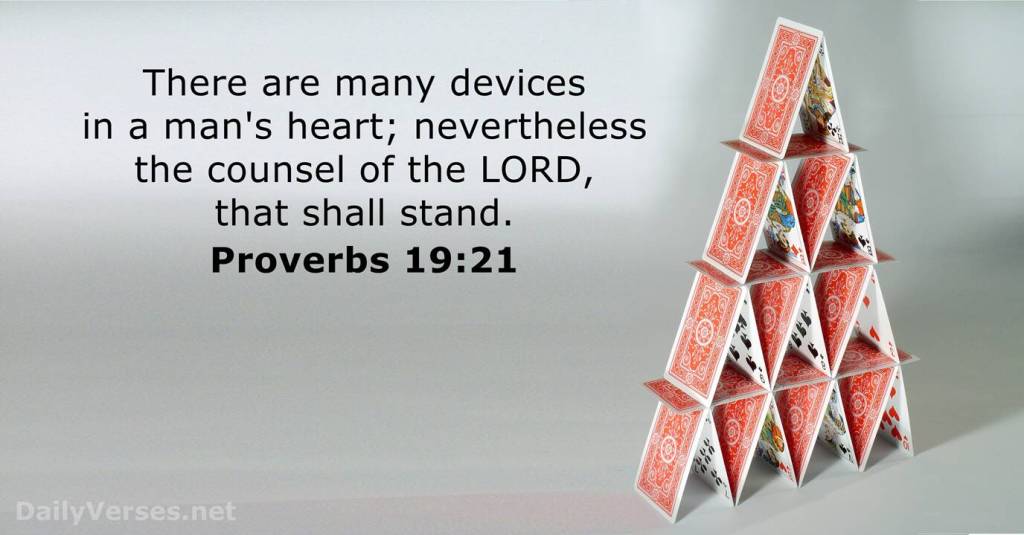
Authentically, Genuinely, Faithfully, Following God and Graduating Into Our God’s Life Long Desires for Us. Proverbs 19:20-21

It is graduation season.

It is a time for celebrating God and celebrating families, celebrating what we have learned and the prospect of living into our life’s dreams and aspirations for our soon to future.

Every true follower of Jesus Christ says he wants to do the will of God, yet most Christians think of God’s will as something that is imposed on them — something distasteful and difficult that they are forced to do.

They picture God demanding that they give in to a hard set of rules and conditions: “Do it my way or you’re on your own!”

How very wrong they are.

When a believer knows the glory of doing the Lord’s perfect will, he embraces it with joy and hope. To embrace means “to clasp, as in your arms” as an expression of love and affection.

God’s will is not just for ministers or deeply spiritual saints, but for all his children.

The New Testament exhorts us, “[God makes] you complete in every good work to do His will, working in you what is well pleasing in His sight” (Hebrews 13:21).

God desires that you enter into his plan and will today.

The early apostles had one desire for all the churches — that every single member know God’s perfect will and embrace it.

Paul wrote of a brother named Epaphras “who is one of you, a bondservant of Christ … always laboring fervently for you in prayers, that you may stand perfect and complete in all the will of God” (Colossians 4:12).

Epaphras knew God had a perfect will for everyone in the congregation and that if they entered into it, they would find joy and have their needs met.

Christ told his disciples, “I do not seek My own will but the will of the Father who sent Me” (John 5:30).

“For I have come down from heaven, not to do My own will, but the will of Him who sent Me” (6:38).

There was never a moment in Jesus’ life when he wasn’t aware that his purpose on earth was to do the will of the Father. And this ought to be true of you and me as well.

Once you and I explore, discover, then embrace the will of God, something incredible happens—Jesus manifests himself to you and me in new ways!

Proverbs 19:20-21 The Message

20 Take good counsel and accept correction—
    that’s the way to live wisely and well.

21 We humans keep brainstorming options and plans,
    but God’s purpose prevails.

The Word of God for the Children of God.

Adeste Fideles! Laeti Triumphantes! Venite Adoremus! Dominum.

Gloria! In Excelsis Deo! Alleluia, Alleluia, Alleluia, Amen.

Life Is No Different than Building a Mansion of Cards

Proverbs 19:20-21 Amplified Bible

20 
Listen to counsel, receive instruction, and accept correction,
That you may be wise in the time to come.
21 
Many plans are in a man’s mind,
But it is the Lord’s purpose for him that will stand (be carried out).

We all have dreams and high aspirations for our lives.

Now that Graduation season is upon us in full force, dreams and aspirations are practically all that is being talked about, dreamt about, extensively planned out.

Some may dream of being a ballerina, a singer, an actress, a teacher, a doctor or a lawyer, successful business person, an accountant, a nurse or a social worker.

As many jobs and opportunities as there are, possibilities are literally endless.

As many careers and career paths there are we are only too limited by ourselves.

If you can think of it, they say, you can quite literally do anything when you put your heart, body, soul, mind and strength and resources to do that something.

High School and College students are often encouraged to have a 5-year or 10-year plan for their life, a backup plan if their first career goal doesn’t happen.

No matter what our age group, we all have dreams and aspirations we have high hopes of accomplishing – being successful, going into business for ourselves.

We do not want to be stagnant nor stagnated in our career paths – we deeply desire to prosper at what we set out to do in life and we will work very hard.

Sometimes we get the itch to try dream higher, aspire higher, to something completely different, something more exciting and challenging and fun too.

We will then plan our resources to go back into school for new career paths.

New vocational opportunities are always presenting themselves at various points in our life – we consider them – then decide on if it is the right time.

Ultimately, we are encouraged to go for our dreams and not to be distracted. 

But what happens when we struggle, when our dreams are slow or slower to develop to bear our desired fruits, or slowed or in the end, do not come true?

Is all hope lost?

Should we just give up on our dreams and aspirations and throw in the towel?

Should we necessarily settle for a life dream far less than what we imagined?

I believe that depends on your perspective – worldly view or heavenly view.

There is a transition going on here which we may not be fully appreciating.

Aside from high school or university guidance and career counselors, are we “faithfully” making our own plans without consulting our faithful God first?

Are we faithfully praying to the Lord, asking Him to align our will with His?

As parents or step parents or grandparents of these new graduates, are any of us faithfully counselling the graduate to pray or are we praying with, for them?

The Bible says, “But seek first his kingdom and his righteousness, and all these things will be given to you as well” (Matthew 6:33 NIV).

Are we teaching our children from the Word of God about making wise choices?

Are we teaching our children from the Word of God about making hard choices?

Are we teaching our children from the Word of God the meaning, the wisdom of and behind the admonition of Jesus: “let your YES be YES and your NO be NO?”

Are we teaching children from the Word of God about God’s wisdom over ours?

Over-all, are parents teaching their children about life from the Word of God?

I believe those things include teaching children about the dreams of our hearts.

Then again, are we teaching and admonishing each other from the Word of God as adults to adults from and within whatever age groups these biblical truths?

How to raise children (of whatever their ages are) in the “way they should go?”

Teenagers are still somebody’s children and have to navigate an extraordinary level of life’s complexities – as do the young adults in their college age years.

Even more mature adults well into their careers and family’s require parental guidance from time to time as they make their own major life path decisions.

However, as much as our own life lessons taught us about pursuing our dreams, for graduates, it can be a great adventure that will only work if we put God first. 

A few days ago, I remembered I heard a sermon from Pastor Steven Furtick.

In it, he said something that still resonates with me today.

When I heard it a few years ago, I recall in so many words, he explained,

“The Bible doesn’t tell us to follow our dreams. It tells us to follow God!” 

After many fruitless efforts of trying it on my own, I found that to be true.

Raised in the USA, I have always heard phrases like, “Follow your heart” and “No pain – No Gain” “Take your passion and by all means, make it happen!” 

But the older I got, the more I remembered my life’s “best efforts” then recalled how the Bible says that “the heart is deceitful above all things” (Jeremiah 17:9).

So, why are we so focused on what our heart desires?

The circumstances of life can change in less time than it takes for one heartbeat.

In the time it takes for us to take one short or long breath, our world, our own dreams, our own aspirations are undone, thoroughly being turned upside down.

Just ask the Patriarch Abram when He was commanded to leave his home and his family behind for some far off place which he had not one single clue where.

Just ask the Patriarch Job whose entire life was upended.

Just ask the Patriarch Noah when all of a sudden God told him to build an ark of immense proportions and do it alone- Did Noah possess those carpentry skills?

Just ask the Prophet Jonah when God commanded him to travel to Nineveh and to become everyone’s evangelist – demanding repentance and transformation?

And with Jonah, what if those desires of God were not even minimally believed to be any part of our own destinies – do we flat out reject God and all His ideas?

Whether we are teaching our children the way they should go (Proverbs 22:6) or as we are growing older and more mature we are planning for our retirements, we can easily be led astray by self if we let our hearts lead us instead of Jesus.

However, the Bible also advises all of His beloved Children to delight ourselves in the Lord (not self), and He will give us the desires of our hearts. (Psalm 37:4)

So there is hope – in the Lord much more so than hope in ourselves, right?

God cares about everything that affects us, including our 5-to-10-year plan.

He wants you and me to dream, not by following your heart but by following His heart first and foremost.

The Bible does not say we need to have everything single thing figured out.

But it does say we need to trust God in everything, more than we do ourselves and He’ll make our paths straight, it will be health to thy navel refreshment for our bones (Proverbs 3:5-8 KJV). 

It gives me comfort and hopes to know God cares about my children’s dreams and my own and my wife’s and that He’s willing to give all of us the desires of our hearts according to His will – not one centimeter according to our own.

If my dreams and plans are outside God’s will for my life, they will not happen.

I am more than okay with that because the Bible says in Proverbs 14:12, “What you think is the right road may lead to death.” (GNT)

What a powerful point!

It helps me remember God knows best.

That the will of God is more faithful, more genuine, more authentic than mine!

The Genuine Article, The Authenticity of God’s Will

Sometimes the dream we desperately want to come true could end our lives.

We cannot see that from our limited human perspective.

However, we serve a God who can see the end from the beginning (Isaiah 46:10), so counselling each other toward asking Him for His plans for our lives is vital.

You and I can rest assured God knows you better than you know yourself.

He knows what path will bring you the most joy and peace.

He knows the gifts and talents He’s given us and the best way those blessings can be discovered and explored, developed and encouraged, and be shared too. 

Remember, God’s dreams for you and me are not just to help you and me to be an individual success story but also help the world by edifying God’s Kingdom.

If we encourage each other, ask Him to align our will with His, we will want to align, then realign our Kingdom dreams the same Kingdom dreams He wants.

Often, you and I may actually discover the dream God has for you and me is far greater than you or I could ever possibly imagine and will make us the happiest.

Our Authentic, Genuine, Faithful Alignment With God

1 Peter 1:6-7 The Message

6-7 I know how great this makes you feel, even though you have to put up with every kind of aggravation in the meantime. Pure gold put in the fire comes out of it proved pure; genuine faith put through this suffering comes out proved genuine. When Jesus wraps this all up, it’s your faith, not your gold, that God will have on display as evidence of his victory.

Some things can only be tested by time.

If you have ever attempted to buy a new car, a house, or a dresser or cabinet at a reasonable price, perhaps you’ve considered whether to buy a used vehicle first, a secondhand piece for nearly the same price, a new piece from a discount store.

The problems associated with a new vehicle are obvious – you do not know how it was driven, how well it was maintained, traded in because of a nuisance issue.

The drawback is that such pieces of furniture may prove, when they’re opened and closed, have doors and drawers that are warped, won’t go back into place.

The vehicle may be clean and wonderful on the outside – but when driven off the lot for a couple of hundred miles – may quickly become a mechanical WOW!

We may find ourselves paying our favorite mechanic more than we first paid.

The item of furniture quickly becomes a real mess.

It may look good on the outside on first inspection, but the real issue is with its day-by-day use and what the test of time will show, which will prove whether you and I have the genuine article or an authentic unsellable, unusable, mess.

On the same note, how do we know whether or not our faith is the real thing?

The answer, at least in part, is that authentic, genuine faith is to be discovered in our day-by-day “opening and closing” “success and failure responses—in facing up to the subtle, not so subtle challenges and trials that come our way.

Some suggest, even teach and worse preach that victorious Christian living means the absence of trials—that if we are really men and women of authentic, genuine faith, then trials will be an uncommon experience because of “grace.”

Peter says the exact opposite is true: the experience of trials and difficulties is not uncommon, unusual, or unproductive in a Christian’s life, but is purposeful and an authentic and essential, absolutely genuine component, of God’s plan.

We must rigorously, vigorously teach this as preparation for Kingdom living.

We prove to ourselves and those who may be watching that our faith is genuine when we face challenges and refuse to run away, instead holding on to our trust in Christ’s goodness no matter how difficult the path He is leading us all along.

By such preparation, when (not if,) trials come and everything goes askew, we find out whether our testimonies and the professions we’ve made about God’s grace, peace, and securing providence are authentic, genuine, faithful to God.

Reverend Charles Haddon Spurgeon wrote in Morning and Evening,

“The one who would glorify his God must be prepared to meet with many trials. No one can be illustrious before the Lord unless his conflicts are many. If, then, yours is a much-tried path”—that is, a path of many trials—“rejoice in it, because you will be better able to display the all-sufficient grace of God. As for His failing you, never dream of it—hate the thought. The God who has been sufficient until now should be trusted to the end.

Will your faith, will my own faith, will your graduates faith in God over self prove authentic, genuine through life’s current, coming greatest challenges?

By learning from success and learning from our failures, it is not only possible to hold on by God’s grace, but it is also profitable on account of God’s grace.

As we learn from success and failure, as we fall, but then learn how to raise again, as we trust in His grace, we will discover we can rejoice, because our happiness ultimately is not tied to circumstances but found in persevering in your faith—in knowing the sufficiency of Christ in circumstances would never would have chosen, in looking forward to the day when your Savior is revealed.

When I Survey the Wondrous Cross with my Children

What dreams and aspirations has God placed on your heart?

What dreams and aspirations has God placed on your graduates heart?

How does it bring you hope to know following God’s plan for your life is best?

How does it bring the promise of hope to your graduate to know God’s will?

What hopes and aspirations and dreams does it raise up inside my own heart?

What about all the opportunities, possibilities, the Holy Spirit just revealed?

“Come Holy Ghost My Heart is Now Inspired – Come, Let us Build a Mansion.”

In the name of God, the Father and God the Son and God the Holy Spirit,

Let us Pray,

Father God, We pray for graduates in their walks with You. Give them a hunger to know You more deeply, more intimately, and more personally than they ever have before. We know that You are the Living Water that can quench their spirits, and Lord we pray that You would pour out Your Spirit upon them.  We pray that they would see their lives in the present and in retrospect with the full comprehension that You are working and weaving things together for their good. We pray for them to have a strong relationship with You that will withstand any storms life throws at them.

Adeste Fideles! Laeti Triumphantes! Venite Adoremus! Dominum.

Gloria! In Excelsis Deo! Alleluia, Alleluia, Alleluia, Amen.

https://translate.google.com/

Can We Give Any Timely Answer: What About the Kingdom of God? Mark 1:14-15

Mark 1:14-15 Common English Bible

Jesus’ message

14 After John was arrested, Jesus came into Galilee announcing God’s good news, 15 saying, “Now is the time! Here comes God’s kingdom! Change your hearts and lives, and trust this good news!”

The Word of God for the Children of God.

Adeste Fideles! Laeti Triumphantes! Venite Adoremus! Dominum.

Gloria! In Excelsis Deo! Alleluia, Alleluia, Alleluia, Amen.

Your Kingdom Come

Mark 1:15 Amplified Bible

15 and saying, “The [appointed period of] time is fulfilled, and the kingdom of God is at hand; repent [change your inner self—your old way of thinking, regret past sins, live your life in a way that proves repentance; seek God’s purpose for your life] and believe [with a deep, abiding trust] in the good news [regarding salvation].”

Jesus was the greatest preacher who ever lived.

Do we know the main topic of his sermons?

Jesus’ most important theme, undoubtedly His most important message, was to announce the good news of the kingdom of God.

This declaration captured the core of his teaching.

He boldly announced God had broken into the affairs of human history, that through Jesus himself God’s rightful reign over creation, human history, and every human being had arrived – and was now ready to be personally engaged.

All of Jesus’ sermons, talks, and healings revolved around this good news of God’s kingdom coming.

When we pray the second petition of the Lord’s Prayer, “Your kingdom come” (Matthew 6:10), we long for God’s rule to be more fully realized in our world.

As Jesus Himself taught us – we pray, we plead, we cry out, we ask, God to show everyone who He is through his Word and through his Holy Spirit.

We ask that the Body of Christ, His church in the World, His children spread throughout the world, may prosper and grow.

We ask God to push away and protect against any power that works against his good and perfect will.

Jesus announced that the kingdom has come, but we are still waiting for the kingdom to come fully.

How do we know that will happen?

We know because Jesus has risen from the dead, has ascended to rule in heaven, and will come again to bring his kingdom fully on the earth (Revelation 21-22).

In all our work and prayer today, the longing for God’s kingdom should be in our hearts and on our lips as we pray, “Your kingdom come.”

Can We Give Any Timely Answer to the Question: What About the Kingdom of God?

What is the Kingdom of God really?

Where will it be established?

When will it come?

How can we prepare for the Kingdom of God and enter into it?

Is the Kingdom of God a literal place?

Yes!

The Kingdom of God is an actual Kingdom that will be established on the earth after Christ’s second coming.

What is the Kingdom of God in the Bible?

In short, the Kingdom of God is the central theme of Jesus’ teaching and the fundamental message of the Church founded by Him through His disciples.

As Mark explains in his Gospel account,

“Now after John was put in prison, Jesus came to Galilee, preaching the gospel of the kingdom of God, and saying, ‘The time is fulfilled, and the kingdom of God is at hand. Repent, and believe in the gospel.’”

The Gospel of the Kingdom of God

Matthew and Luke likewise record that Jesus’ message was the “gospel,” or “glad tidings,” of the Kingdom (Matthew 4:23; Luke 8:1).

Even though Matthew referred to it as “the kingdom of heaven” (Matthew 4:17; Matthew 5:3, 10, 19-20) and Paul once called it “the kingdom of Christ and God” (Ephesians 5:5), the predominant name in Scripture is “the kingdom of God.”

Jesus consistently taught this same message of hope—“gospel” means good news—of the Kingdom throughout His ministry.

His parables—stories with spiritual lessons—often dealt with this Kingdom, which God the Father and His Son had prepared prior to the existence of man at “the foundation of the world’” (Matthew 25:34).

Preaching the Kingdom of God

After training His 12 disciples, Jesus sent them out “to preach the kingdom of God and to heal the sick” (Luke 9:2).

After His crucifixion and resurrection, Jesus appeared before His disciples and continued “speaking of the things pertaining to the kingdom of God” (Acts 1:3).

Later, the apostle Paul likewise many times described his ministry as preaching “the kingdom of God” (Acts 14:22; Acts 19:8; Acts 20:25; Acts 28:31; 1 Corinthians 6:9-10; 1 Corinthians 15:24) and referred to his fellow ministers as “workers for the kingdom of God” (Colossians 4:11).

Kingdom of God a Literal or a Figurative Kingdom?

What is the real meaning of the Kingdom of God?

Is it a literal or a figurative kingdom?

Since Jesus came preaching the Kingdom was “at hand” (Mark 1:15), some think it is literally here on earth through the Church or figuratively in our hearts.

Others, recognizing that “flesh and blood cannot inherit the kingdom of God” (1 Corinthians 15:50), say it is not yet here.

“And in the days of these kings the God of heaven will set up a kingdom which shall never be destroyed; and the kingdom shall not be left to other people; it shall break in pieces and consume all these kingdoms, and it shall stand forever” (Daniel 2:44).

The Kingdom of God will thus replace the governments of this earth. Jesus himself termed it a “mystery.”

Mark 4:11-12 Amplified Bible

11 He said to them, “The mystery of the kingdom of God has been given to you [who have teachable hearts], but those who are outside [the unbelievers, the spiritually blind] get everything in parables, 12 so that they will continually look but not see, and they will continually hear but not understand, otherwise they might turn [from their rejection of the truth] and be forgiven.”

So what did the disciples understand?

What did Jesus and the prophets foretell?

The Bible answers the question, What is the Kingdom of God?

The Kingdom of God is a literal kingdom. 

God gave King Nebuchadnezzar a dream of an image of a man with a head of gold, chest and arms of silver, belly and thighs of bronze, legs of iron and feet partly of iron and partly of clay.

God revealed the meaning of the dream through Daniel, showing that there would be four world-ruling empires (Daniel 2:31-43).

History has shown these to be the Babylonian, Medo-Persian, Greco-Macedonian and Roman empires.

Concluding this explanation, Daniel wrote: “And in the days of these kings the God of heaven will set up a kingdom which shall never be destroyed; and the kingdom shall not be left to other people; it shall break in pieces and consume all these kingdoms, and it shall stand forever” (verse 44).

The Kingdom of God is a real government that will thus replace the governments of this earth.

The Kingdom of God will be established on earth when Jesus returns. 

The time that the Kingdom is established will be after Christ’s return to earth. Revelation 11:15 states: “Then the seventh angel sounded: And there were loud voices in heaven, saying, ‘The kingdoms of this world have become the kingdoms of our Lord and of His Christ, and He shall reign forever and ever!’”

Jesus told His disciples that when the Kingdom is established, they will

“sit on twelve thrones, judging the twelve tribes of Israel” (Matthew 19:28, also compare Luke 22:30).

We prepare for the Kingdom by living according to the rules of the Kingdom now. 

Explaining how one might enter the Kingdom of God, Jesus told Nicodemus that one must be “born again” (John 3:1-8).

This process begins with baptism, which signifies the death of the former sinful man and the beginning of a new life dedicated to Christ (Romans 6:1-4).

It culminates in a change from mortal flesh and blood to immortal spirit at Christ’s return (1 Corinthians 15:50-53; 1 Thessalonians 4:16-17).

Once we embark on this process, we are symbolically “conveyed” into the Kingdom (Colossians 1:13), and our “citizenship” is now described as being in heaven (Philippians 3:20).

At the completion of the process of being born again, we will be changed into immortal beings and become kings and priests serving in God’s Kingdom on earth (Revelation 1:6; Revelation 5:10).

What is the Kingdom of God like?  

An insightful overview of Christ’s rule in the coming Kingdom of God is found in Isaiah 2:2-4:

“Now it shall come to pass in the latter days that the mountain of the LORD’s house shall be established on the top of the mountains, and shall be exalted above the hills; and all nations shall flow to it.

“Many people shall come and say, ‘Come, and let us go up to the mountain of the LORD, to the house of the God of Jacob; He will teach us His ways, and we shall walk in His paths.’ For out of Zion shall go forth the law, and the word of the LORD from Jerusalem.

“He shall judge between the nations, and rebuke many people; they shall beat their swords into plowshares, and their spears into pruning hooks; nation shall not lift up sword against nation, neither shall they learn war anymore.”

This prophecy—also repeated in Micah 4:1-3—describes a time when God’s laws will be the standard of conduct for all peoples.

People will want to learn God’s ways because they will see the many benefits of doing so.

Peaceful Kingdom

The world will truly be at peace; human sicknesses and ailments will be healed (Isaiah 35:5-6); and the ground will become abundantly productive (Isaiah 35:1-2; Amos 9:13).

More importantly, Christ’s rule on earth will offer all humans the opportunity to receive God’s Spirit and have a relationship with Him leading to eternal life (Jeremiah 31:31-34).

Worship of God in the Kingdom of God

Worship of God during this 1,000-year period will include the same basic practices God expects of people today.

God states the seventh day of the week, the Sabbath will be the weekly day of worship.

Speaking of this time, God says, “And it shall come to pass … from one Sabbath to another, all flesh shall come to worship before Me” (Isaiah 66:23).

God’s annual holy days, the ones given to ancient Israel and the ones observed by Jesus and His apostles, will also be observed.

As Zechariah notes, “And it shall come to pass that everyone who is left of all the nations which came against Jerusalem shall go up from year to year to worship the King, the LORD of hosts, and to keep the Feast of Tabernacles” (Zechariah 14:16).

How To Enter The Kingdom of God

In the Kingdom parables of the Bible (ones that often begin, “The kingdom of heaven is like …”), Jesus explained what the Kingdom will be like and what we must do to enter the Kingdom.

Some of the lessons include understanding the universal rule of God’s coming Kingdom (Matthew 13:33) and the importance of valuing one’s invitation to be in that Kingdom (verses 44-46).

Believing and following Jesus’ instructions about how to live is our pathway to eternal life (John 3:15-16; 14:15; Matthew 19:17).

Our understanding this point is critically important in terms of entering the Kingdom of God because “flesh and blood cannot inherit the kingdom of God” (1 Corinthians 15:50).

Even though Jesus will establish the Kingdom of God on earth and rule over physical human beings, only those who have been changed into spirit will be able to actually inherit His Kingdom.

Seek Ye First the Kingdom of God

Now that we prayerfully have an expanded knowledge of what the Kingdom of God is, we need to come to understand how to follow Jesus’ command to seek first the Kingdom of God and His righteousness (Matthew 6:33).

Your task is to learn what God’s laws are and then to begin living in accordance with the rules of His Kingdom.

Faith—How We Look At Things

In the atrium of our church one Sunday, I noticed one of our senior members standing quietly just off to the side, all alone and obviously, deep in thought.

His face wasn’t happy, but it was welcoming.

I understood the look of tiredness and concern he showed.

His wife was now permanent resident in a long term memory-care center.

He had taken care of her for several years, but now, he no longer could.

His own health was not robust having had at least two heart attacks.

And yet he was there, at church fellowshipping among the worshipers.

I reached out to shake his hand and asked, “How are you doing?”

His less-than-enthusiastic response: “Okay, I guess.”

After a pause he stated bluntly,

“I don’t really believe I care about anything anymore as much as I did my wife.”

Surprised, I asked, “Nothing?”

He shifted a bit and then said,

“There was a time when we liked boats, sailing and cars and randomly traveling anywhere a tank of gas would take us and lots and lots of things. We got excited about them. But right now, they do not mean anything to me or her anymore.”

I began to understand.

Material things no longer grabbed his attention.

Desire for stuff no longer preoccupied him.

As his wife of 65 years lost her ability to relate to others, and as she increasingly depended on others to care for her most basic needs, he realized he had grown used to her memory loss, feeling the wearing, weary­ing effects of caring for her.

His perspective on life had changed.

Outside of caring for her, things decreased in importance, and relationships—with God, with family, with church—slowly, achingly became his new priority.

This brother in Christ was learning more deeply the meaning of seeking first the kingdom of God and his righteousness.

Even in his obvious weariness, His quiet strength was felt, was a heartwarming testimony to those of us who had grown to know him and his wife’s zest for life.

Then he bowed his head and quietly broke into song,

O soul are you weary and troubled
No light in the darkness you see
There’s light for a look at the Savior
And life more abundant and free

Turn your eyes upon Jesus
Look full in his wonderful face
And the things of earth will grow strangely dim
In the light of his glory and grace

Mark wanted us to see that Jesus’ baptism by John, Jesus’ temptations in the wilderness, John’s arrest immediately led to the beginning of Jesus’ ministry.

Jesus went to Galilee, the place of ministry in Mark’s Gospel.

He began to preach “God’s Good News” about the nearness of God’s Kingdom.

This nearness of the Kingdom and this presentation of Good News means that people must respond by their repenting, and the turning away from their sins.

God’s will must reign in our hearts if we are to receive this Kingdom.

God’s Good News must call us from our sin if we are to experience the power of this Kingdom in our own lives.

So the question comes to you and to me: Have I welcomed Jesus and the Good News of eternal salvation and turned from my sins?

Perhaps it is time we each considered our own search for the Kingdom of God.

For the Kingdom of God has come near to us.

For the Kingdom of God is always very near to us.

“Turn Your Eyes Upon Jesus …”

“Turn Your Ears Upon Jesus …”

“Turn Your Hearts Upon Jesus …”

“Release Your Souls Upon Jesus …”

In the name of God, the Father and God the Son and God the Holy Spirit,

Let us Pray,

Holy and righteous Father, God of mercy and grace, I believe that your Son has brought to my ears the message of your Good News. I believe you want to have the power of your Kingdom reign in my heart and be seen in the fruit of righteousness produced in my life. I gladly offer you my heart, soul, strength, and mind to show you my love for you and for others and show you my desire to honor you. In Jesus’ name.

Adeste Fideles! Laeti Triumphantes! Venite Adoremus! Dominum.

Gloria! In Excelsis Deo! Alleluia, Alleluia, Alleluia, Amen.

https://translate.google.com/