Romans 15:4 "For whatever was written in earlier times was written for our instruction, so that through perseverance and the encouragement of the Scriptures we might have hope."
As the children of God, our goal in life is to be sinless.
That means we are seeking to be imitators of God, to follow and live out the example of His Son Jesus in the ways and truths the Bible communicates. As Christians, we are all disciples of Christ and we therefore seek to imitate him, his life, truth, his attitudes and his desire to always do the will of the Father.
We are all aware that this is a lofty goal and that we will fail at times. (In fact, the more we recognize the holiness of God, the more we realize how far short we fall of being like him.) The good news is that as long as this is our goal and we are striving every day for that perfection, we confess our weakness, and our sinfulness and by His grace and mercy God promises to continue to forgive us.
As an essential part of that goal, we seek to make the words of our mouths and the thoughts of our hearts pleasing in the sight of God. Our actions begin with our thoughts and our thoughts are controlled by what we put into our minds.
So, to walk in his light, we must fill our minds with His light, the things of God, the things which are right, pure, wholesome and lovely. This means we must be ever so very careful of spiritually dining on the things of this world; the ungodly entertainment that fills the radio, television, internet and other forms of media. As a man thinks in his heart; so is he. As his heart beats so his life beats away.
We are covenanted by God to daily desire more and more of Him in our lives. As we make this our greatest desire, our most sincere effort, our heart is changed. It beats not in tune with the godlessness of the world but with God’s true life.
Is that not what we should most desire – a heart which beats to keep us upright and living? A sin corroded; sin sickened heart will die and leave us in our graves. There has to something, someone, somewhere to be more desired than a grave.
David provides us with his insights through these final verses from Psalm 19.
Psalm 19:12-14 English Standard Version
12 Who can discern his errors? Declare me innocent from hidden faults. 13 Keep back your servant also from presumptuous sins; let them not have dominion over me! Then I shall be blameless, and innocent of great transgression.
14 Let the words of my mouth and the meditation of my heart be acceptable in your sight, O Lord, my rock and my redeemer.
The Word of God for the Children of God. Gloria! In Excelsis Deo! Alleluia! Amen.
So far, we have looked at what Psalm 19 teaches us about how creation recounts the glory of God and we have looked at and studied what Psalm 19 teaches us about the other book God has written, the Bible. Specifically, David praises the beauty and the perfection of the Law in Psalm 19, which raised an important question for us: As Christians, how should we read and understand the Law?
I recently heard someone helpfully explain the Law like this: Before we came to Christ, the Law was our enemy because it exposed our sin and our guilt before a holy and righteous God. But after we came to Christ, the Law became our friend because we have no better teacher than the Law for learning how to desire God to the utmost and to please the God whom we have come to know and to love.
This is what David explains in the final verses of Psalm 19
Let’s break this down into a few guiding principles to help us interpret this.
David Uses the Law to Expose His Sin, Not to Forgive It
The first thing I pray we each recognize about what David does in this prayer is that he isn’t citing the Law as evidence for his innocence.
He isn’t pointing to the Law and saying, “O LORD, my rock and my redeemer, I am innocent from hidden faults and blameless before you!”
He understands that he hasn’t yet achieved perfection under the Law.
In fact, he assumes that he has faults that are “hidden” from him.
The word used here for “errors” describes a sin that is committed in ignorance (e.g., Lev. 4:13 or Job 6:24).
The fact that the sin happened unintentionally doesn’t make it acceptable, but that kind of sin wasn’t judged as harshly as sins that were committed willfully.
David’s relationship to the Law is to use it as a “diagnostic tool” to find out where he is still guilty, and not as justifying tool to proclaim himself innocent.
This is the main contention of the New Testament writers to write strongly against the wrong use of the Law. It is not that they are rejecting the Law altogether, but they absolutely reject any idea that we can use the Law as a platform to declare ourselves righteous. The Law simply doesn’t work that way.
The only way for anyone to be saved—at any point throughout salvation history—is through their sincere heartfelt confession faith in Jesus Christ as Savior.
People like David didn’t necessarily know or comprehend the details of who Jesus would be, so they were required to have faith that God would fulfill his covenant promises, but we do know what God has done to save his people.
He sent his Son Jesus to be born under the Law so that he could fulfill the Law, perfectly obeying the Law in ways that we could not and suffering under the full weight of the curse of the Law in our place, as we ever so righteously deserved.
Jesus is our only hope for salvation—not the Law.
David Longs for Communion with God
So instead of misunderstanding David as a legalist, let’s listen more closely to his real desire.
David wants to be blameless…
In these final verses, he pleads for God to help him to discern his ignorant sins so that he can be declared innocent from hidden faults.
(The word for “hidden” is the same word used to describe how there is nothing “hidden” from the sun’s heat in Psalm 19:6.)
Then, he asks God to graciously hold him back from presumptuous sins. And finally, he pleads that every word of his mouth and meditation of his heart would be “acceptable in your sight, O LORD, my rock and my redeemer.”
But why? What’s David’s motivation behind his desire for blamelessness?
Quite simply, David longs for everlasting communion with God.
In the context of the whole Psalm, here is what is happening.
David is first standing in awe of God’s majesty and glory as he listens to the praises of creation.
Then, as he reads, studies and prays Yahweh’s Law and finds it to be perfect, reviving, sure, etc., he wants nothing more than to know the God of creation who has crafted such a perfect Law.
There is wisdom found here, and David wants to know the wise God who gave this Law—to know this God is the great reward David mentioned in Psalm 19:11.
David wants to be accepted by this God: “Let the words of my mouth and the meditation of my heart be acceptable in your sight, O LORD, my rock and my redeemer.” He wants to be embraced by God and to know him better and better.
Union vs. Communion
This isn’t the same thing as being justified by God.
David doesn’t embrace the Law in order to make himself righteous before God, because he knows only God can make sinners righteous, by grace through faith.
Our union with God was established perfectly at the death and resurrection of Jesus Christ, and the ebbing and flowing of our obedience and holiness before the Lord can do nothing to affect it.
Theologians, however, make an important distinction between our union with God and our communion with God.
Think about it like a marriage.
If you had an affair, that wouldn’t automatically sever yourunion with your spouse. Legally, you would still be considered married to your spouse unless you both went through the divorce proceedings to break that union.
But an affair would absolutely destroy the communion you have with your spouse. Even if you tried to cover it up, that violation of your spouse’s trust would be an onerous burden on any kind of relational intimacy you might have otherwise had until you were both able to somehow work with God through it.
Our union with Christ is inviolable, and there is nothing that we could ever do to destroy it. Even the most severe spiritual adultery is something that Jesus Christ has already died for, and he extends grace to us through the victory he won over sin through his resurrection.
Shout this to whoever will hear it:
There is more than sufficient grace for even the very vilest of sinners! Nothing you do can separate you from the love that God has for you in Jesus Christ!
But our communion with Christ can absolutely change over the course of our lives. Sin clouds our intimacy with him, and what David teaches us here in these verses is to learn to love the Law of God as a tool for exposing our hidden faults as well as illuminating the imminent danger of presumptuous sins.
David is not interested in blamelessness for its own sake, or for the sake of trumpeting his own “not so high and mighty” righteousness to the world.
His goal is simply this, he wants to be blameless so that nothing at all will stand between his heart, his soul, his God—that is, between his Rock and Redeemer.
Or as Charles Albert Tindley would later write … (1906)
1. Nothing between my soul and my Savior, naught of this world’s delusive dream; I have renounced all sinful pleasure; Jesus is mine, there’s nothing between. Refrain: Nothing between my soul and my Savior, so that his blessed face may be seen; nothing preventing the least of his favor; keep the way clear! let nothing between.
2. Nothing between, like worldly pleasure; habits of life, though harmless they seem, must not my heart from him ever sever; he is my all, there’s nothing between. (Refrain)
3. Nothing between, like pride or station; self or friends shall not intervene; though it may cost me much tribulation, I am resolved, there’s nothing between. (Refrain)
4. Nothing between, e’en many hard trials, though the whole world against me convene; watching with prayer and much self denial, I’ll triumph at last, there’s nothing between. (Refrain)
In the name of God, the Father and God the Son and God the Holy Spirit,
Let us Pray,
O Lord, my God and my Father, I thank you for revealing your Living Word. Lord of wisdom, I sometimes finding understanding the Bible to be difficult. I know you want me to apply your word to my life. I thank you for giving me your word so I can grow in my relationship with you. Help me grasp what you want me to know as I read your revealed word. Open my eyes to see the wonderful truths in your instructions. Be my teacher, so I can live and obey your word. Thank you for your wise advice. Amen.
Have you asked yourself what it really means to delight yourself in the LORD?
If you are even .01% like me, then the answer is almost certainly yes, then you have been brought by GOD to the right place.
Today, let me try to discuss the real meaning of Psalm 37:4-6 which most people either do not know about or care or reach out, dare to know about!
Psalm 37:1-6 NASB
Security of Those Who Trust in the Lord, and Insecurity of the Wicked.
A Psalm of David.
37 Do not get upset because of evildoers, Do not be envious of wrongdoers. 2 For they will wither quickly like the grass, And decay like the green plants. 3 Trust in the Lord and do good; Live in the land and [a]cultivate faithfulness. 4 Delight yourself in the Lord; And He will give you the desires of your heart. 5 Commit your way to the Lord, Trust also in Him, and He will do it. 6 He will bring out your righteousness as the light, And your judgment as the noonday.
The Word of God for the Children of God. Gloria! In Excelsis Deo! Alleluia! Amen.
For however long we have been a Christian, a short time or for a long time, there are those certain words and phrases which have a subtle tendency to settle into your vernacular, become commonplace, and lose their potency.
Any new believer, well-versed believer is certainly familiar with and, truthfully has probably memorized, David’s beautiful invitation in Psalm 37:4, “Delight yourself in the Lord; And He will give you the desires of your heart.”
But what does it mean to delight yourself in someone—especially ‘the Lord’?
We’ve all had those days. “Do I believe in God?” “Why should I believe today?”
Circumstances go from bad to impossibly worse, creating an undercurrent of fear so strong that it tugs at your hope and threatens to pull you under. While you and I are trying to believe, to stay afloat on God’s promises, guilt sets in.
“Joy in the midst of trials is the mark of a true Christian,” you tell yourself.
In enters doubt with all the what-ifs that make your burden heavier.
Work, phone, binge-watching, ministry, mission—any of these should do.
But they don’t.
Somehow, they just seem to fall of the steepest cliffs into the deepest abyss.
Why does the call to ‘delight yourself in the Lord’ seem so distant in times of trouble?
What Does It Mean to ‘Delight Yourself in the Lord’?
Think back to a specific moment in time when you freely enjoyed the company of a loved one.
What made that moment special and memorable?
Did you laugh or cry together—like good friends often do.
Did you bond through the thrill of a shared experience? Did you boisterously celebrate a long-awaited victory together? Or perhaps you sat with each other in loving silence, grateful to know you didn’t have to carry a burden alone.
To experience deep, satisfying fellowship is a gift like no other.
But that kind of connection doesn’t happen overnight.
It’s silly to think we could find heartfelt delight with a stranger.
The same is true when it comes to delighting ourselves in the Lord.
What is the Psalm 37 4 meaning?
Psalm 37:4 is no doubt one of the most popular passages in the book of Psalms.
Why not?
After all, it is a wonderful promise from God that many people hold on to.
Psalm 37 is a psalm of David in which he reassures the righteous not to be dismayed at the sight of evildoers. In this Psalm, David explains what will happen to the wicked, but at the same time, what the righteous should also do.
Since the fate of the wicked is already prophesied and understood, the righteous should not worry about them anymore, rather they should place their sole focus on their relationship with God, the Father and God the Son and God the Holy Spirit.
That’s where Psalm 37 verse 4 comes in.
Psalm 37:4 is just one of the instructions David mentioned in Psalm 37.
As you can read:
Verse 3 – Trust in the LORD and do good
Verse 5 – Commit your way to the LORD
Verse 7 – Rest in the LORD
Verse 8 – Cease from anger, and forsake wrath
These are just some of David’s admonition in Psalm 37.
As you can see, Psalm 37:4 is part of a greater list of instructions.
But for now, let us focus on the meaning of Psalm 37:4.
What does delight mean in Psalm 37:4?
The first thing we need to ask is, what does the word “delight” mean?
If we put everything together, Psalm 37:4 tells us that we must take pleasure, we must be joyful, we must be excited about Yahweh.
It means our only source of joy and happiness should be our Heavenly Father.
Is it the right time to confess our real truth? Exactly Who or what is our source of delight?
However, as we look around us, where do people get their happiness?
Where do people usually take delight from?
They take delight in worldly and sensual things. They take delight in watching inappropriate and immoral entertainment. They take pleasure in material possessions. They take pleasure in people. Worst, they take pleasure in sin.
But the absolute bottom line truth be told – we ALL fall impossibly short.
This utterly dismal failure on our parts must not go unaddressed – otherwise, it will very definitely, very decisively not go unnoticed and unpunished by God.
Mark 1:14-15 NKJV
Jesus Begins His Galilean Ministry
14 Now after John was put in prison, Jesus came to Galilee, preaching the gospel [a]of the kingdom of God, 15 and saying, “The time is fulfilled, and the kingdom of God [b]is at hand. Repent, and believe in the gospel.”
Out of the most indescribable act of Love known, God acted, God sent His Son.
Sent to save the World, NOT TO CONDEMN IT as would be His right to do so.
Salvation in no other name or condemnation in no other name?
Absolute Delight in YAHWEH or Absolute delight in the World?
These realities are ever before every one of us – if we acknowledge them!
Some choose to acknowledge, come to believe – their delight is YAHWEH.
Others, refuse to acknowledge, do NOT make the decision or flat refuse the invitation to believe and subject to condemnation – delight – the World.
We must examine ourselves, then.
How about us?
Where do our joy and delight come from?
If we look at our activities and schedule for the day, can you find God in it?
Can you honestly say that you are delighting in God?
Does the very thought of studying the Bible make you excited?
Or do you simply make it an optional thing, that you only do it when you have extra time?
Do you still find time for prayer and meditation? Or are you too busy that you don’t have time to pray?
Does preaching and teaching the Gospel of Jesus Christ make you happy and blessed? You think it’s boring and useless? Divisive or politically incorrect?
Is your mind filled with God’s word, peace, and love? Or are you filled with worries, anxiety, and fear?
The answers to these questions would determine whether you truly delight in Yahweh or not.
How Psalm 37:4 changes your life?
Now, here’s something you need to realize.
Psalm 37:4 is a life-changing verse.
It literally changes your perspective in life.
If you delight in Yahweh, you take on a new mindset.
No matter what happens in your life, as long as you delight in God, you are still at peace.
You are still filled with Joy.
You still feel blessed.
I strongly believe we, as individuals, need to delight in God more than ever.
As we go through these Ecclesiastes 3:1-8 times and seasons under the sun, we are coerced, forced to make many difficult moral choices and ethical decisions.
Choices and decisions which no one can claim would be delightful or desirous.
If we don’t delight in God, we all can easily drift away. We can all easily become weak in faith and eventually, forget about our brothers and sisters in Christ.
But as we continually delight in the Eternal, what then become the possibilities?
Connection of Psalm 37:4 to gratefulness
Here’s another important key we should not forget about delighting in God. It is being grateful both for the things we have and the things that we don’t have.
Take note of this:
No one can never truly delight in Yahweh without FIRST and FOREMOST being grateful and you can’t be truly grateful without delighting in Yahweh.
Instead of complaining about how unfair life is, be thankful, you’re still alive.
What I’m telling you is that people who truly delight in God see His blessings.
These blessings move them to be more grateful and worship God.
All these are part of delighting yourself in the LORD.
Psalm 37:4 and the REAL desires of our heart
Now, what happens when we delight in Yahweh,
we read the rest of Psalm 37:4, “He will give you the desires of your heart.”
This verse does not mean that if we delight in God, He will give us any desires of our hearts!
Now, that’s a dangerous teaching.
Why?
Because not all desires that we have are good for us!
You see, friends, it doesn’t mean that if you delight in God, you will become rich, you will have a new smartphone, you’ll have a big house.
You’ll have a lot of money in the bank.
It doesn’t mean that everything you want would be given to you.
No, that’s not how it really works.
Listen to this very carefully:
If we truly and genuinely delight in Yahweh, the desires of our hearts will eventually align with God’s will and purpose in our lives.
This means that your ultimate desire will not be limited in this world anymore, but it will be God’s desire.
The problem with so many people, and that includes you and me, is that we determine our desires first before we delight in God!
Instead, what happened should be is that we FIRST delight in God so that we will have the right and proper desires in our hearts.
I hope that we come to the point that whether we receive what we ask from God or not, we are still thankful and would still delight in God.
If God gives what we’ve asked, then, praise God!
If God doesn’t give it, then we still praise Him because you know that He has your best interest in mind.
That’s exactly what it means to delight in God.
It is never conditional.
Whether God grants our prayers or not, we still choose to delight in Him.
God has become our ultimate source of happiness, joy, and peace.
So, friends, let me end this devotional by reading Psalm 37:4 again:
“Delight yourself in the Yahweh, and He shall give you the desires of your heart.”
What does Psalm 37:4 mean?
In conclusion,
Psalm 37:4 means that we must delight in Yahweh, the supreme Ruler of this vast universe.
It means that the object of our gladness, joy, and delight should be God.
Psalm 37:4 should remind us that the ultimate Source of our joy should be our Heavenly Father.
When we delight in God, He will give our desires, but our desires have already been in line with His will and purpose in our lives.
Romans 8:28New King James Version
28 And we know that all things work together for good to those who love God, to those who are the called according to His purpose.
In the name of God, the Father and God the Son and God the Holy Spirit,
Let us Pray,
My ABBA, My Heavenly Father, forgive me for the times when I have delighted myself in wrong things. Keep me from fretting over much over evildoers in this increasingly confusing world and help me to keep the eyes of my heart on Jesus and to delight myself in the things of God.
Align my thoughts to Your thoughts, I pray, and my will to the will of God. May the desires of my heart unite with Your perfect will and eternal purposes, for Your everlasting praise and glory. This I ask in Jesus’ name, Alleluia! AMEN.
God has, in fact, written two books, not just one. Of course, we are all familiar with the first book he wrote, namely Scripture. But he has written a second book called creation.
This incredibly insightful sentiment arises directly from Psalm 19.
In our latest devotions, we looked at the incessant, universally reaching message in God’s book of creation in Psalm 19:1-6.
Theologians call this the witness of creation general revelation, because God has revealed something about himself in what he has made.
In particular, creation endlessly focuses on recounting the glory of our Creator God and the wonder of his handiwork (Psalm 19:1).
But natural revelation is not the only way in which God has revealed to us something about himself.
When God speaks to us directly in his Word, theologians call that special revelation, which gives us an altogether different quality of revelation.
Differently from general revelation where we can only infer certain aspects of God’s attributes, in special revelation God speaks directly to us—through His covenantname to us.
We should not miss the transition from Psalm 19:1-6, David speaks of what creation teaches us about “God,” to Psalm 19:7-11, as David now speaks of his understanding of the LORD, Yahweh, which is God’s covenantal name.
As we go forward, pay very close attention to the intimate, personal reflections David offers about the Law as he turns his attention from the Book of Nature to the Book of Scripture in Psalm 19:7-11:
Psalm 19:7-11 New King James Version
7 The law of the Lord is perfect, [a]converting the soul; The testimony of the Lord is sure, making wise the simple; 8 The statutes of the Lord are right, rejoicing the heart; The commandment of the Lord is pure, enlightening the eyes; 9 The fear of the Lord is clean, enduring forever; The judgments of the Lord are true and righteous altogether. 10 More to be desired are they than gold, Yea, than much fine gold; Sweeter also than honey and the [b]honeycomb. 11 Moreover by them Your servant is warned, And in keeping them there is great reward.
The Word of God for the Children of God. Gloria! In Excelsis Deo! Alleluia1 Amen.
This is a fascinating meditation on the Scripture that in many ways anticipates the more extended reflection on the Law in Psalm 119.
But for now, there are three aspects of this passage that I want to highlight.
The Law Gives Us the Wisdom that Adam and Eve Sought from the Tree of the Knowledge of Good and Evil
One of the very first things that David says about the Law is that it is “sure, making wise the simple” (Psalm 19:7).
In the book of Proverbs, the “simple” are those to whom Lady Wisdom calls out, pleading with them to turn in to her so that she can make them wise (Proverbs 8:5; 9:4); however, the “simple” are also those whom Dame Folly targets and seduces to their destruction (Proverbs 7:7; 9:16).
However, the wisdom that David has in mind here is more precisely the wisdom which both Adam and Eve sought out in the Garden of Eden from the Tree of the Knowledge of Good and Evil.
God had told them not to eat of that Tree, promising them that they could eat of the Tree of Life if they obeyed him.
The decisive reason that they had disobeyed God, however, was Eve judged the tree to be “to be desired to make one wise” (Genesis. 3:6).
Instead of trusting God, Adam and Eve chose to seek out wisdom according to their own understanding—listening to the snake rather than God.
Because of their sin, they died to their sin, along with the rest of humanity after them.
Look at a couple of other ways in which David alludes back to the first chapters of Genesis here in Psalm 19:7-11 …
In verse 8, David says “the commandment of the LORD is pure, enlightening the eyes.” In Genesis 3:5, the serpent had promised Eve that when she ate from the Tree of the Knowledge of Good and Evil, “your eyes will be opened,” and one of the factors for disobeying Yahweh was Eve had judged the Tree to be “a delight to the eyes” (Genesis 3:6).
In verse 10, David describes the rules of the LORD as “More to be desired are they than gold…” As mentioned earlier, Eve judged the Tree of the Knowledge of Good and Evil “to be desired to make one wise” (Genesis 3:6). Eve desired the wrong source of wisdom.
The Law Outlines for Pure and Righteous Living
But David also describes a different angle on the Law—that the Law gives us a blueprint for what pure, righteous, and holy living should look like.
In these verses, David says that the Law is “perfect,” “sure,” “right,” “pure,” “clean,” “true,” and “righteous altogether.”
If you want to know what God loves and what God hates, look to the Law. God poured out the burdens of his heart into the Law, establishing guidelines for seeking justice and for living righteously in his sight.
The Law is More Desirable than Anything on Earth
It’s important to understand, then, David loves the Law because he loves God.
David understands that pleasing God through obeying the Law is far better—and “more to be desired”— than gold, or “even much fine gold” (Psalm 19:10).
The Law is not only better than absolute finest gold, but it’s “sweeter also than the sweetest honey and drippings of the honeycomb.” And finally, David envisions, recognizes there is “great reward” by keeping the Law—implicitly, that the Law offers a far better reward than any other reward he might seek.
The Lesson of the Law: Desire God in His Holiness
Honestly, this kind of “love” language makes Christians a little uncomfortable.
We get squeamish when we read people in the Bible praising the Law because we worry about becoming legalists. If we praise the Law, are we suggesting that we can be saved apart from the atoning death and resurrection of Jesus Christ?
If we do, then we have completely missed the beauty of the Law.
The New Testament teaches very clearly that the Law does not have any power to save us, but we also learn in the New Testament that the Law is good.
Jesus insisted that he did not come to abolish the law, but to fulfill every iota and dot of it (Matthew 5:17-20).
The Apostle John insisted that only those who keep God’s commandments abide in God, and God abides in them (1 John 3:24).
Even Paul, who so fiercely contended for the doctrine of justification by faith alone, insisted that “the law is good, if one uses it lawfully” (1 Timothy 1:8).
What the Law teaches us, then—and what David tells us at every turn in Psalm 19—is that God is holy, and that his holiness is the most desirable thing that we could ever hope to possess for ourselves.
The Law is perfect, reviving, sure, wise, right, joyful, pure, enlightening, clean, everlasting, true, righteous, valuable, sweet, and rewarding.
Who wouldn’t want to know the ‘Way, Truth, Life’ God whom the Law reveals?
So how does the Law fit into the life of the Christian?
How are we to understand the Law and relate to it as people who find our justification only in Christ by grace and through faith? We’ll talk about that more tomorrow as we finish out Psalm 19 with verses 12-14.
But, until then, get yourself a jar of the sweetest honey you can find, grab a spoon and get ready to dip that spoon deep down into that jar of honey.
Then pick up your Bibles and dig in deep and deeper still into the Word of God.
Read and Study and Pray over those verses which the Holy Spirit reveals to you.
Taste and see of the absolute goodness of the LORD, YAHWEH.
Magnify your APPETITE, your desire for the WISDOM OF LORD YAHWEH ….
In the name of God, the Father and God the Son and God the Holy Spirit,
Let us Pray,
I have Come into this sacred space to worship YAHWEH whose teaching is perfect; whose directions are sure. I have Come into this holy place to worship YAHWEH whose standards are right; whose commandment is clear; whose judgements are true. I have Come with holy fear – to be given life, and made wise, to have my heart stirred and my eyes opened wide. I have Come with a desirous heart— let me now worship YAHWEH. Let the words of my mouth and the faintest whisperings of my heart be according to your will, O’ YAHWEH. My Redeemer. Amen.
I felt it was important for us to examine the idea of creation as it relates to the gospel. Literally, how we understand creation will ultimately bring clarity or confusion, wisdom and order from chaos to our understanding of the gospel.
Genesis 1:1 In the beginning, God created the heavens and the earth.
There are only two options when it comes to creation.
The two options are: there is a God who personally created everything, including you, or there is not.
Those are the only two options. If there is not, then everything is an impossible, implausible, irrational result of incessant random chance and risk assessment.
The equation I give you now is: “nothing + nothing cannot equal something.”
If scripture is false, if the gospel is not, If God is not the creator, then He is not the sovereign. If creation did not take place according to how Genesis records it, then we are each without hope because evolution deposes God from His throne.
Why do we as Christian still to take our interpretation of Genesis from secular scientists who wants nothing more than to get rid of the God of the Bible?
These same people want to alleviate themselves from accountability, morality, and God’s final judgment.
As I feel more and more encouraged to quiet by disbelief, As I become more and more motivated to believe, I fight against the thought that if God is not our creator, then He is not our Redeemer, will not have the authority to create new heavens, new earth, life and hope as the New Testament tells us.
Psalm 19:1-6New King James Version
The Perfect Revelation of the Lord
To the Chief Musician. A Psalm of David.
19 The heavens declare the glory of God; And the firmament[a] shows [b]His handiwork. 2 Day unto day utters speech, And night unto night reveals knowledge. 3 There is no speech nor language Where their voice is not heard. 4 Their [c]line has gone out through all the earth, And their words to the end of the world.
In them He has set a [d]tabernacle for the sun, 5 Which is like a bridegroom coming out of his chamber, And rejoices like a strong man to run its race. 6 Its rising is from one end of heaven, And its circuit to the other end; And there is nothing hidden from its heat.
The Word of God for the Children of God. Gloria! In Excelsis Deo! Alleluia! Amen.
Psalm 19:1The heavens declare the glory of God, and the sky above proclaims his handiwork.
As we consider and study the creation account, we see how theistic evolution is impossible if we genuinely hold this creative account as the final authority.
If we genuinely believe this universe is the sole product of a Creator God with an infinite amount of intelligence and power, is it possible for us to know Him?
Well, there’s only one answer, if He created us and if He chose to tell us He created us; that’s the only way we can ever know. Not only did he create us. Not only did he choose to reveal Himself and provide for us His revelation.
But He Himself crossed through all time to enter His creation as the person of Jesus so that we can know the way
I cannot overemphasize the point that creation is the basis of everything else.
It is not merely an issue of biology or genetics, but it affects our morality, our ethics, our “world vs. God” view of redemption, salvation, sin, the family, our marriage, our community relationships, the sanctity of life, the dignity of men.
Psalm 19:4–6 Their voice goes out through all the earth, and their words to the end of the world. In them he has set a tent for the sun, 5 which comes out like a bridegroom leaving his chamber, and, like a strong man, runs its course with joy. 6 Its rising is from the end of the heavens, and its circuit to the end of them, and there is nothing hidden from its heat.
One of the things that science has discovered in modern times is that the sun is in orbit. We talk about the sun as the center of our solar system and everything orbiting around it.
However, did you know the sun itself has an orbit, and this orbit goes from one end of the infinite space to the other.
The sun is moving and dragging our entire solar system with it. It is not fixed any more than the things that revolve around it are fixed.
So, the psalmist says here in verses 4 – 6 that you can look up and you can look at the whole of the universe and look at the breadth of creation and it gives you the loudest possible testimony to the glory of God, to the utter majesty of His intelligence, to the indescribable character of His power to create all of this.
Hebrews 1 also tells us God made the world and it is a testimony to His infinite power, the wisdom of knowledge. Everything about this requires of you and me only one thing: faith.
Hebrews 1:10 And, “You, Lord, laid the foundation of the earth in the beginning, and the heavens are the work of your hands;
If you reject God as creator, then you reject God as all-powerful, all-knowing, and all-encompassing.
The only way you are going to know Him is through faith.
We are natural; God is supernatural. The natural cannot comprehend the supernatural; so, on our own, we can’t find God.
We’re locked in a time-space world unable to crawl out of it and into eternity to comprehend what is incomprehensible.
No scientist, no matter how smart they claim they may be cannot even begin to comprehend the majesty of God or His creative power.
The only things we know about God are those things that He has revealed to us, told us, and that’s why He gave us the Bible.
Do WE believe that?
The word Genesis means “origins” or “beginnings.” And I want you to note 16 different origins or beginnings found in genesis.
1. You find the origin of the universe. Genesis 1:1 is unique in all literature, all science, and all philosophy. Every other explanation of the universe starts with eternal matter or energy in some form. Only the book of Genesis starts with eternal God.
2. Origin of order and complexity. Man’s universal observation of his world is an orderly world. It functions on fixed rules, and it is profoundly complex. Order and complexity will not come from chaos.
3. The origin of the solar system. In the midst of this vast, limitless universe, God created the earth, the sun, and moon, the planets, all the stars of heaven
4. The origin of the atmosphere and the hydrosphere. The earth is uniquely equipped with a great body of liquid water and an extensive blanket of oxygen-nitrogen gaseous mixture, both of which are necessary for life, and are accounted for only by special creation by God
5. The origin of life, the marvels of the reproductive process.
6. The origin of man. Man is the most highly organized and complex entity in the universe.
Beyond his biology, there is a nature that can contemplate abstract emotions of beauty and love, and worship. Man is capable of understanding and thinking about his own meaning. We find that we are made in the image of our creator.
7. In Genesis you also find the origin of marriage, the remarkable universal and stable institution of marriage, and the home. Monogamous marriage is here now established and given to man by the Creator.
The home and the family unit are established by God, not man’s choice, and polygamy, infanticide, promiscuity, divorce, abortion, and homosexuality, and all the corruptions developed after the fall are the corruption of God’s order.
8. The origin of evil and sin. The origin of physical and moral evil in the universe is explained in Genesis as a kind of temporary intrusion into God’s perfect world and allowed for the continuation of human freedom and for God to reveal Himself to man as Man’s Redeemer
9. The origin of judgment on evil. All the forms of God’s wrath are set in motion and illustrated in Genesis.
10. The origin of salvation by grace through God’s mercy. God was merciful to Adam and Eve and doesn’t destroy them. The plan of redemption leading to Christ is even referred to in Genesis 3:15.
11. The origin of language. You know, one of the things evolutionists struggle with is how we go from apes grunting and making unintelligible noises to the miracle of human speech of all diverse kinds of languages and dialects.
The chasm between the instinctive chattering of animals to abstract, symbolic communication of man is impossible by any evolutionary process. But Genesis also tells us the origin of all the different languages
12. The origin of government; organized systems of human government for the maintenance of orderly social, economic, cultural structures through systems of accountability, responsibility, law, justice and diverse forms of punishment.
13. The origin of culture. We find in Genesis urbanization, the development of technology, music, agriculture, farming, writing, education, navigation,
14. The origin of nations; and that is related, of course, again to the Tower of Babel, the table of nations as the only source you’ll ever find of how we have so many different peoples scattered all over the earth with different languages and cultures.
15. The origin of religion; both the true religion and false religions appear.
16. The origin of the people of Israel who were the conduit for God’s revelation to all of the world. It was Israel through whom God’s continual revelation came and whom the saving covenant came in Genesis 12 to Abraham, and it would be the Jewish people whom God the Messiah enters the world.
1 Timothy 3:16 we confess, is the mystery of godliness: He was manifested in the flesh, vindicated by the Spirit, seen by angels, proclaimed among the nations, believed on in the world, taken up in glory.
2 Timothy 3:16 All Scripture is breathed out by God and profitable for teaching, for reproof, for correction, and for training in righteousness,
So, either we are going to believe Genesis as Scripture, or we don’t.
How can anyone who claims Christ as their Savior uphold Genesis as Scripture, but reject Genesis 1 and 2 or dismiss it as allegory or lore?
Or may you dismiss Adam and Eve, the Tower of Babel, or the Flood?
Where are you going to draw the line and who gave the right to stand in that kind of judgment on Scripture. Even more, why would any believer in Jesus Christ bow a knee to secular scientists as the authority over Scripture?
What kind of precedent does that establish over the rest of Scripture?
When we capitulate over this, then we abdicate the authority of Scripture over other sacred issues like life, liberty, government, and marriage and family.
‘Responding to God’s Revelation.’ The word “revelation” implies the fact that God wants to be known, must make Himself known to us. In other words, we cannot know God on our own. So, revelation must come from God’s initiative.
Theologian Wayne Grudem says this about revelation: “If we are to know God at all, it is necessary that he reveal himself to us.”
Looking at the skies, whether by day or by a star filled clear night we can learn so much about God’s greatness, His power and His control. The sun, moon, stars and the whole universe are a permanent reminder of God’s glory.
So, general revelation is without words, and it is universal in its scope. It transcends human communication without the use of speech, words, and sounds. Yet, the message is constantly communicated to the whole world.
General revelation continues to point all people unto God, and it is available to everyone. So, no one in the world is ignorant of God.
Simply by opening our eyes and ears, we can witness the divinely created and sustained media which brings the message that God is powerful and glorious.
Indeed, all of God’s creation reaches all of God’s people, at all times.
So, general revelation should lead people to seek God.
Brothers and sisters, God has revealed Himself generally to all people through His creation.
In other words, we can know so many things about God as we witness His amazing creation.
We know that He is Creator because we see His handiwork. Creation declares His existence and glory, the truth of His Gospel.
So, let us train ourselves to appropriately respond to God’s creation. When we see some aspect of His creation that impresses us, let us learn to worship God.
One day, perhaps today and then every day, may we with highest motivations and the most profound measures of inspiration and encouragement shout out;
“GOD, you are great. Thank you for allowing me to catch even the briefest of glimpses of Your glory, to gain the tiniest measures of thy Gospels wisdom!”
In the name of God, the Father and God the Son and God the Holy Spirit,
Let us Pray,
Your glory, O God is declared in the holy silence of the heavens, and told in the silent succession of day and night. No speech, or word or voice is heard; yet they speak to all the world, and their words reach to the ends of the earth. The sun joyfully leaps across the sky, from one end of the heavens to the farthest reaches, and nothing is hidden from its heat or light. So nothing that we do or say or whisper in our hearts is hidden from you, Lord God. Release us from darkness we hide deep within our lives. Let our lives be radiant with holy fear; delighting in your teaching, receiving insight from your commandments and wisdom from your encouraging. Enliven our desire for your everlasting judgements over wealth or fame: to enjoy the sweet drippings of the honeycomb, that are to be found in right relationship with those around us, and with you. Alleluia! Alleluia! Alleluia! Amen.
As Christ-followers, we serve a God who is not surprised at all by what we face each day. God is sovereign, so he knows all about panic, pandemics, chaos, and confusion. And he is with us no matter what we face. This is His PROMISE!
God has also left us His Word, so we can go to it any time we need reassurance of his presence. And in His Word, we find Psalm 18:2. In this one short verse, we can discover incredible measures of encouragement and motivation to believe in God. We can find and discover God gives us eight promises we can proclaim—about who He is and how He always finds us and helps in all our circumstances.
Psalm 18:1-2 King James Version
18 I will love thee, O Lord, my strength.
2 The Lord is my rock, and my fortress, and my deliverer; my God, my strength, in whom I will trust; my buckler, and the horn of my salvation, and my high tower.
The Word of God for the Children of God. Gloria! In Excelsis Deo! Alleluia! Amen.
1. The Lord Is My Rock
In times of trouble, when we feel shaky with life’s circumstances, it’s mightily inspiring and encouraging to know that God is our rock. God Someone who is extremely strong and mighty. Someone we can bear hug and hold onto when we feel the entire earth under our souls moving. It invigorates and motivates my soul to believe there is no one we can trust who is more reliable than the Lord.
In the chorus of the song The Solid Rock, by Edward Mote, he writes:
On Christ the solid rock I stand, all other ground is sinking sand, all other ground is sinking sand.
Christ is also referred to as the Rock of Ages in the hymn by Augustus Montague Toplady.
So often the words of hymns have brought me comfort as they tend to take my eyes off my circumstances and instead place them where they ought to be, on the Lord.
Rock of ages, cleft for me, let me hide myself in thee.
The picture I get in my mind is of a small child being afraid who runs to his parent for protection. Once there, the child feels as if everything will be okay.
2. The Lord Is My Fortress
When the word, “fortress,” refers to a person, it means that person is not susceptible to outside influence or disturbance.
The Lord is Almighty. He cannot be influenced, and nothing shakes the Lord. It reminds me of when Jesus was brought into the wilderness for 40 days and Satan tried to tempt him. Each time, the Lord responded in the same way. He used the words, “It is written…” He quoted verses straight from the scriptures.
God is our mighty fortress. Nothing is more powerful than our God.
Nothing can defeat him. The enemy tries to make us fearful by scaring us about what could happen, what might transpire. But God is aware of his tactics, and we can trust in His power.
3. The Lord is my Deliverer
To deliver means that you are removed from pain or from a situation. At times, it could also mean you will be delivered from whatever is going on around you. God delivered Daniel from the lion’s den. He was not physically delivered, but instead, God took the danger away by shutting the mouths of the lions (Daniel 6:19-23). God used an angel to ensure Daniel’s safety.
Because of what Jesus did on the cross, we have been delivered from the penalty of sin. And God has also delivered us from the power of sin, because we’re told if the Son therefore shall make you free, you shall be free indeed (John 8:36).
One day we will be in a new heaven and earth where there is no sin, but where righteousness dwells (2 Peter 3:13). All because the Lord is our deliverer.
4. God Is My God
All the attributes of God are wonderful, but what makes them so great is that God is my God. He’s someone I can call on at any time of the day or night. He has given me total access to his throne room where I am invited to bring him my petitions, knowing that God will answer them according to his perfect will.
God and I don’t think alike. He tells us that his ways are higher than our ways and his thoughts are higher than our thoughts (Isaiah 55: 8-9).
God loved us so much he sacrificed his precious Son and when we accept Jesus, what he did for us, our Creator becomes our Father. And God becomes my God.
I know God cares about me and tells me to cast my cares on him (1 Peter 5:7). I also know whatever circumstances I experience in life; God will work together for good for those who believe (Romans 8:28).
But truly, knowing that God will never leave me nor forsake me leaves me speechless, because everyone else in our lives can leave us—but our heavenly Father promises he won’t (Deuteronomy 31:6).
5. God is my Refuge
A refuge is a shelter of protection from danger or distress. It is like finding a safe place during a storm. The fears we face about these times cause even faithful Christian’s moments of unrest. And while we can focus on what is happening around us, it is much to our benefit if, like Peter, we keep our eyes on the Lord instead of focusing on the wind and waves crashing around us. (Matthew 14:29-32)
David was often running from enemies and in danger, yet he called out to God.
The same God who helped him when he was a boy, facing a lion and a bear. And later, as he stood facing the huge Philistine, Goliath. The youthful Shepherd David remembered the same God who had helped him before would give him what he needed now (1 Samuel 17:37).
All of us can probably remember when God delivered us from danger. The Holy Spirit is faithful in reminding us God never changes (Psalm 102:25-27).
6. God is my Shield
God provides protection for us. Our adversary, Satan, walks about like a roaring lion, seeking someone to devour (1 Peter 5:8). Yet, God reminds us that if we have accepted the Lord, we are God’s children and that the Spirit of God who abides in us is greater than the enemy who is in the world (1 John 4:4).
We remember when God told Abram that he was Abram’s shield and exceeding great reward (Genesis 15:1). God cares for his own. He is a loving father. And I know that if an earthly parent has this inborn desire to protect his family, how much more would the God of the universe protect his children?
7. God is the Horn of my Salvation
The horn is representative of Jesus’ sacrifice on the cross. It is a promise of future protection for believers. The kind of horn meant is the deadly weapon of the wild ox. In scripture it says, “thou has exalted my horn like that of the wild ox” (Psalm 92:9).
The horn is a sign of strength and a means of sure, and certain victory. God tells Jerusalem, “Arise and thresh, O daughter of Zion, for I will make your horn iron and your hoofs bronze…” (Micah 4:13).
God is the horn of salvation because he uses his power to secure and protect his people. God isn’t the horn of our salvation merely to liberate us, but also to make us holy and righteous people who don’t live in fear because we trust God.
8. God is my Stronghold
A stronghold is something which has been heavily fortified, so it is protected against the very worst forms and methods of attack. I love the idea that God has fortified us. He’s given us his Word, which guides us and gives us wisdom.
God has also told us in Scripture about how we are to put on the armor of God.
With the full armor of God, we will be able to stand against the rulers, the authorities, and the powers of this dark world, as well as stand against the spiritual forces of evil. The full armor of God will protect us from the devil’s schemes (Ephesians 6:10-18).
When Paul sought the Lord because of an infirmity, God did not remove what was hurting Paul, but instead, God encouraged and reminded Paul that God’s grace would be all-sufficient, for God’s power is made perfect in weakness.
Encouraged, Inspired and motivated, Paul then realized he would be wiser to boast of his weaknesses, as well as his hardships and calamities because in Paul’s weakness, God’s strength was evident (2 Corinthians 12:9-10).
In our lives, there are many times when things look impossible. And even then we are reminded that Jesus said impossible things are possible with God (Matthew 19:26).
Yes, God is my rock, my fortress, and my deliverer, my God, my rock in whom I take refuge, my shield and the horn of my salvation, my stronghold.
In Psalm chapter 18, we read David’s response to the Lord after being delivered from the hands of his oppressors, his enemies. David walked through the fire and was now able to look back and affirm God’s great love for him through his trails and tribulations.
We, too, walked through our own modern-day fires, (Ecclesiastes 3:1-8), and each of our natural inclinations just might be to turn from truth instead of towards truth. Yet, I love the vivid example we have in this portion of Scripture. David uses powerful descriptions in verses one and two, all of which can apply to us
In the name of God, the Father and God the Son and God the Holy Spirit,
Let us Pray,
Father God, I thank you for your protection. I thank you that you are Almighty and that nothing can touch us unless you allow it. Even in times like this, Lord, you are our refuge. You are our hiding place (Psalm 32:7). You are our only sufficiency (2 Corinthians 3:5). You are the Alpha and the Omega, who is and who was and who is to come (Revelation 1:8). And we look forward to living eternally with you. Thank you, Lord, for your protection. We praise you for being our God. And we pray others will see us trusting you and want to know about the hope within us (1 Peter 3:15). We pray all this in your Son’s precious name. In Jesus’ name, Amen.
If the heavens declare GOD’S GLORY, today, what do your eyes behold?
If the Earth declares GOD’S GLORY, today, what do your eyes behold?
Psalm 19:1-6 Complete Jewish Bible
19 (0) For the leader. A psalm of David:
2 (1) The heavens declare the glory of God, the dome of the sky speaks the work of his hands. 3 (2) Every day it utters speech, every night it reveals knowledge. 4 (3) Without speech, without a word, without their voices being heard, 5 (4) their line goes out through all the earth and their words to the end of the world.
In them he places a tent for the sun, 6 (5) which comes out like a bridegroom from the bridal chamber, with delight like an athlete to run his race.
The Word of God for the Children of God. Gloria! In Excelsis Deo! Alleluia! Amen.
If the heavens and the earth declare HIS GLORY, today, what do our eyes behold? What do we see with our eyes? What do we hear with our two ears? What gets our hearts and our souls pumping and thumping deep within us?
I pondered this thought as I was outdoors enjoying the new colors of Spring and began thinking and praying about the bigger picture of the whole cycle of the tree from death to life to bud, blossom and bloom, to leaf then fruit and the colorful changes of the Autumn season, then of the inevitable course, the falling leaves for the food and nourishment for the next generation or season of life.
For everyone who has ever lived, this is a grand design of the Great CREATOR, HIS Masterpiece spread out all over the earth for the world to see HIS GLORY.
Too many times in life we only look at the season we are facing and miss out on the bigger picture. We narrow our vision of God, the breadth of His handiwork.
I love the verse(s) so often repeated throughout scripture that says, “and it came to pass” repeated 463 times throughout the bible’s pages in the AKJV.
We need remember to envision this: whether facing mountain top (full color) experiences or the shadows of the deepest darkest depths of winter. HE is there shaping our lives to HIS purpose in History. And all these things will soon pass.
But it’s what we do with our vision of that moment, whether we learn or turn, whether we remain steadfast and faithful or deny HIS presence. HE said in HIS WORD, I will never leave nor forsake you, then God gifted to us all of complete length and breadth and height and depths of all Creation as His LIVING proof!
Thus, saith the Lord our God, this is MY Handiwork, and This is MY Promise….
God is 100% TRUE! HE will continue to do the work HE has started in us.
We can trust our God given; God gifted senses. We can live the 100% full life HE offers if we would only surrender to HIS will, power and presence in our lives.
So today as I look at the brilliant colors of Spring, I see HIS GLORY. As I think and pray through each season in the life of a tree, as I slowly ponder my own existence… as I go through these seasons in my life, I so thoroughly believe I still see HIS GLORY in my very own life. I very much believe HE is molding me with HIS personal touch as the Potter with the Clay, Sharpening me with the two Edges of HIS WORD.
Leading me by the still small voice of HIS HOLY SPIRIT.
Showing me HIS GRACE AND MERCY and LOVE by HIS own blood on the cross.
I so thoroughly believe MY GOD in whom I utterly trust has everything I need.
In the beginning God spoke into the chaos and chaos gave way to new creation. Chaos could not resist the voice of GOD, could not resist GOD’s creative hands.
Whether it is our springtime, our summer, our autumn or our winter season, living life with all our mistakes, the sins we bare, we must fully rely on Jesus as HE commands us to put our burdens upon HIM and take HIS yoke, HIS leading.
Some people say, “all I need is Jesus”,
but when it comes to HIS forgiveness and HIS presence in my life, MY abilities, MY capabilities, and HIS promise of HIS Eternal life to all who believe in HIM.
I return to the Words of the Psalmist David; I humble myself by what I see:
Psalm 19:1-6 Amplified Bible
The Works and the Word of God.
To the Chief Musician. A Psalm of David.
19 The heavens are telling of the glory of God; And the expanse [of heaven] is declaring the work of His hands. 2 Day after day pours forth speech, And night after night reveals knowledge. 3 There is no speech, nor are there [spoken] words [from the stars]; Their voice is not heard. 4 Yet their voice [in quiet evidence] has gone out through all the earth, Their words to the end of the world. In them and in the heavens He has made a tent for the sun, 5 Which is as a bridegroom coming out of his chamber; It rejoices as a strong man to run his course. 6 The sun’s rising is from one end of the heavens, And its circuit to the other end of them; And there is nothing hidden from its heat.
Reading, pondering and praying these words what I’ve come to realize is this…
All I ‘have’…
is this vision of God my Father and Jesus His Son and the Holy Spirit!
Without Trinity, I ‘have’ no vision of any future thing I want any part of.
No forgiveness, no mercy, no grace, no hope, no life, no love and no future.
NO FAITH AND FINALLY NOTHING WHATSOEVER TO 100% BELIEVE IN!
So, therefore, if I have nothing, I ‘am’ therefore, nothing.
Yet, I believe I realize with Father, Son and Holy Spirit, I ‘have’ everything.
I ‘have’ it all and more than what I could ever imagine.
My life is completed by HIM. Therefore to ‘have’ Christ, is to ‘have’ everything.
If I have everything, then my life is important here.
AND I AM SOMEBODY!
John 1:9-13 The Message
9-13 The Life-Light was the real thing: Every person entering Life he brings into Light. He was in the world, the world was there through him, and yet the world didn’t even notice. He came to his own people, but they didn’t want him. But whoever did want him, who believed he was who he claimed and would do what he said, He made to be their true selves, their child-of-God selves. These are the God-begotten, not blood-begotten, not flesh-begotten, not sex-begotten.
And in CHRIST JESUS, I have and am to Declare HIS GLORY.
HIS GLORY IS ALL I HAVE NEED OF IN MY LIFE.
And in that day when I enter into HIS Presence in ETERNITY, I will know and experience the fullness of HIS GLORY.
Today,
I am encouraged and I am motivated ….
I strive to ‘see’ HIS GLORY revealed by HIS GRAND DESIGN all around me.
Today, HIS BLESSINGS AND GLORY encompass and surround you…run, walk, stand, sit, lie down and rest in it.
Today, I pray you too will be likewise encouraged and motivated ….
Be Blessed in your spirit today…
In the name of God, the Father and God the Son and God the Holy Spirit,
Let us Pray,
GOD, author of all Creation ….
The Heavens declare your Glory,
The Earth we walk on declares your Glory,
The warmth of the sun’s embrace the gentle breeze swept in by incoming tide the rhythm of seasons of new birth death and recreation All these speak so clearly of your love your power and your beauty All are expressions of your creativity and more importantly of yourself As an artist might share his personality within each brushstroke so within the myriad colours of a butterfly’s wing you share the exuberance of your love
That we can glimpse you within creation is a beautiful thought but also tells us that you desire to be seen to be found and known Open our eyes, Lord as we walk through this world feel the wind and sunshine see the majesty of creation unfolding before our eyes Help us to see you.
Gloria! In Excelsis Deo! Alleluia! Alleluia! Alleluia! Amen.
Get up early in the morning and witness the sunrise. Stay up late at night and behold the colors of the sunset arrayed against the far, untouchable horizon. The magnificence of the immense universe declares the wonderful handiwork of our Creator God. It forever tells of the amazing work of His creative hand.
It speaks to every single person who has ever lived on this terrestrial globe… of a caring God, Who, in the beginning, created the heavens; formed the earth and spoke, fashioned all that was made in those six astonishing days of creation.
Not one person could be indifferent to the heavenly glories of the day-time sky and the countless wonders of the stunning night-time sphere… as we gaze on the sun and moon and countless array of twinkling stars, which God in His own grace placed into the heavens on the third day of creation.
And God placed them there for signs and seasons… for endless days and for years. They were created to shed their radiant glow and life-giving warmth onto the earth. They were fashioned to rule the day and establish the night, as a perpetual reminder of God’s eternal goodness and His immeasurable greatness.
I need no other encouragement or motivation to know with all of my heart and with all of my soul and all of my mind and strength – to 100% believe in God.
Psalm 19:1-6 Authorized (King James) Version
Psalm 19
To the chief Musician, A Psalm of David.
1 The heavens declare the glory of God; and the firmament sheweth his handywork. 2 Day unto day uttereth speech, and night unto night sheweth knowledge. 3 There is no speech nor language, where their voice is not heard. 4 Their line is gone out through all the earth, and their words to the end of the world. In them hath he set a tabernacle for the sun, 5 which is as a bridegroom coming out of his chamber, and rejoiceth as a strong man to run a race. 6 His going forth is from the end of the heaven, and his circuit unto the ends of it: and there is nothing hid from the heat thereof.
The Word of God for the Children of God. Gloria! In Excelsis Deo! Alleluia! Amen.
Psalm 19 is one of the more well-known, beloved psalms—it’s been one of my favorites for as long as I can remember. After studying it a bit more closely, I came away with not only a better appreciation of the psalm itself, but for the true glory of God, which is the David’s whole reason for writing the psalm.
In this psalm, David sits down against the whole backdrop of his native land, from sunrise to sunset he contemplates everything which is before him, listens to what all of creation says about the glory of God, what the Scriptures teach us about the righteousness of God, and how we ought to respond in our prayers.
The Heavens Declare the Glory of God
David opens his psalm by observing the ceaseless speech of creation to glorify God:
1The heavens declare the glory of God, and the sky above proclaims his handiwork.
2Day to day pours out speech, and night to night reveals knowledge.
The ESV has a great English version of Psalm 19, but there is always a lot lost in translation, no matter how faithful you can be to the text.
Look at the tremendously vivid verbs David selects to describe how creation announces the glory of God:
“The heavens declare the glory of God…” would be more literally translated recount, because it’s the word used for actual counting and numbering. When you say that someone recounts a story, however, there’s a sense that they are including every part of the story, bit by bit. All of the heavens have not merely declared the glory of God; they are enumerating every single wondrous detail of God’s glory.
“Day to day pours out speech…” is a very good word equivalent, because this word is used in Proverbs 18:4 to describe a flowing river.
“Night to night reveals knowledge…” property means “breathes out.” The exhaled breath of the night’s speech forms a gentler parallel image to the rushing water of the day’s speech.
Overall, the point of the first two verses is to declare the ceaselessnature of creation’s speech. There is never a silent moment during day or night when creation ceases to pour forth and breathe out its unified witness to God’s glory.
So, we might ask a brief question at this point: Why don’t we hear it? Is this speech bottled up in some kind of soundproof area so that we can’t hear it?
Not at all. Over the next few verses, David insists that the reach of creation’s voice is universal, so that there is no one who fails to hear it.
Creation’s Voice Praises God Through All the Earth
David continues his psalm:
3There is no speech, nor are there words, whose voice is not heard.
4Their voice goes out through all the earth, and their words to the end of the world. In them he has set a tent for the sun,
5which comes out like a bridegroom leaving his chamber, and, like a strong man, runs its course with joy.
6Its rising is from the end of the heavens, and its circuit to the end of them, and there is nothing hidden from its heat.
Notice the insistence on the reach of creation’s voice:
“There is no speech, nor are there words, whose voice is not heard” (v. 3)
“Their voice goes out through all the earth” (v. 4)
“Their words [go out] to the end of the world” (v. 4)
The course of the sun “is from the end of the heavens, and its circuit to the end of them, and there is nothing hidden from its heat” (v. 6)
If creation’s single message is to announce the glory of God, and if creation’s voice reaches to the ends of the earth and beyond—so that there is absolutely nothing hidden from its reach—question then, how is it that we go through our lives mostly numb and oblivious to what creation is shouting at us at all times?
Certainly, there are points in life where a sunrise or a sunset catches our breath, or where we experience the overwhelming joy of looking out across a region of mountains after hiking to the top of one of the peaks, or perhaps where we are humbled to feel small in comparison to the vastness of all the world’s oceans.
But I believe that David clearly (heavenly) has something more in mind here.
All of creation is always declaring to us God’s glory. Every single microscopic organism and every furious tornado recounts the detail, creativity, and power of our Creator. For those who have eyes to see. for those who have ears to hear, let them be thoroughly still, to hear this sermon of praise to our God in heaven.
Why Christians Should Love God’s Creation
If this is true, then here are a few things we should consider in response.
First, this probably means that most of us need to get outside more often—and I’m thinking primarily about myself.
I’d much prefer to be in the artificially created comforts of my heated and air-conditioned home, sheltered from the rawness of nature, but I should probably consider how that short-circuits my ability to understand God.
Creating a carefully tamed environment to live out my days probably is not the single best teacher for understanding God as he is.
Second, this is a great motivation for Christians to pursue science, especially younger Christians who are trying to decide what to do with their lives.
In the current intellectual climate, many Christians are inherently suspicious of science, but Psalm 19 gives us a firm theological foundation for doing science, because science is the systematic exploration of God’s glory in creation.
In point of fact, the scientific revolution would never have happened without Christianity, because it was Christian theology that drove many of the first scientists to desire to discover horizons, exploring God’s world more closely.
The confusion today is that too many scientists actually promulgate a kind of philosophy (or even a religion) which takes as its first principle the belief that Psalm 19 isn’t true—that creation has nothing to do with proclaiming the glory of God. But as Bible believing Christians, I pray we know differently. Our science enlarges possibilities, expands our reach, view of God rather than shrinking it.
Finally, we need to make a mental note to allow ourselves to listen to creation’s praise of God. We are so busy in our lives that we fail to notice some spectacular beauty and wonder and terror within creation most of the time. Every second of every minute of every hour of every day and every night Creation is preaching to us a sermon every day of the week, if we would but listen to it – we’d know God!
As Christians, we should love creation, because creation is God’s handiwork.
In the name of God, the Father and God the Son and God the Holy Spirit,
Let us Pray,
Heavenly Father, when I look into the heavens and see the splendour of Your handiwork and the glories of Your creative power, I am moved as was David to proclaim Your glory and to declare the wonderful works of Your mighty hand. But when I look to the cross of Calvary and see Christ: – born, died, buried and resurrected to life… so that by faith in Him I might be reconciled back to God; be forgiven of my sins and become Your child and heir – I am lost in wonder love and praise, speak to me again and again, enlighten, illuminate me once more. Gloria! In Excelsis Deo! Alleluia! Alleluia! Alleluia! AMEN.
It can be really easy to get caught in the trap of wanting more and getting more. We might be saving for those new shoes, a new phone, and trying to get a new car or the home we have always wanted for ourselves and our families.
We will motivate ourselves to work very hard; we will encourage ourselves to sacrifice very much with the fervent hope our return of investment will be what we hoped. Getting things can seem really important at times, however, the Bible challenges us, encourages us to not make getting the main priority in our life.
Instead, the Bible encourages us, it motivates us to live differently. Instead, the Bible encourages and motivates us to be radical givers. And the awesome part about being a giver is God rewards those who give. So, when you give, you’re not throwing away your time or money. Everything you give to God is always given back to you in many ways. God wants to reward you for your giving.
So, decide, perhaps today to make giving a habit in your life. Choose to begin to give and see how God will provide and reward you for your faithfulness to give.
Rabbi Jesus repeatedly teaches us about radical graciousness and generosity, he sums it up with two simple principles: 1) Our blessings will be based on our willingness to bless others, and 2) our measure of treating and judging others will be the basis used for how we are treated and judged by others and by God.
In other words, God has been radically gracious with us; and we can either share that graciousness or abuse it. Grace is wonderful and free until we take it off the market and out of circulation in our relationships. If we stymie, hold, or remove God’s grace from circulation, it becomes damaged and lost with us. This stern warning reminds us again how seriously God takes our generosity with others.
Luke 6:37-38 Disciples’ Literal New Testament
Do Not Judge or Condemn Others. Pardon And Give to Them
37 “And do not be judging[a], and you will never be judged. And do not be condemning, and you will never be condemned. Be pardoning, and you will be pardoned. 38 Be giving, and it will be given to you. They[b] will give a good measure— having been pressed down, having been shaken, running over— into your fold[c] [of the garment]. For with what measure you measure, it will be measured-back to you”.
The Word of God for the Children of God. Gloria! In Excelsis Deo! Alleluia! Amen.
The First Law of Christian Giving
The man, Rabbi Jesus said to those disciples; Give, and it will be given to you. A good measure, pressed down, shaken together and running over, will be poured into your lap. For with the measure you use, it will be measured to you.
This morning as I studied for this devotional offering, I made an interesting discovery. Although this saying of Jesus is very well-known, it is not often discussed. In looking through several commentaries, I generally found not more than one or two sentences devoted to this verse. And I couldn’t find any based entirely on Luke 6:38. In general, I observed verse 37 always attached.
I find that intriguing since most of us have known these words for many years.
If you attended Sunday School as a child, you probably memorized these words.
Perhaps you have them cross-stitched and framed in your kitchen or you may have them on a plaque on or above your desk. Many people who don’t know much about the Bible have heard this phrase: “Give and it will be given to you.”
This verse isn’t as famous as the Golden Rule, but it’s close.
Yet we rarely examine these words closely. They have become a proverb or a Christian motto that we repeat without thinking. This morning I would like to discuss what these words really mean and how they apply to our lives today.
Luke 6:38 is a call for “Christian liberalism.” That in itself is unusual because many churches are quite conservative in their theology. We make no bones about what we believe in almost every area. We are unashamedly conservative when it comes to the great moral issues of the day. We are not moderate nor are we middle-of-the-road. We are strongly conservative in doctrine and morality.
All that is well and good, but it doesn’t encompass every aspect of the Christian life. There are time and places where liberalism ought to be the rule of the day. One of those areas is 100% Radically Encouraged, Radically Motivated Christian giving. In our text Jesus calls on his disciple to be liberals in the area of giving.
I. The Promise Jesus Made
Let’s begin by taking a look at the background of this promise.
Luke 6:27-36 NKJV
Love Your Enemies
27 “But I say to you who hear: Love your enemies, do good to those who hate you, 28 bless those who curse you, and pray for those who spitefully use you. 29 To him who strikes you on the one cheek, offer the other also. And from him who takes away your cloak, do not withhold your tunic either. 30 Give to everyone who asks of you. And from him who takes away your goods do not ask them back. 31 And just as you want men to do to you, you also do to them likewise.
32 “But if you love those who love you, what credit is that to you? For even sinners love those who love them. 33 And if you do good to those who do good to you, what credit is that to you? For even sinners do the same. 34 And if you lend to those from whom you hope to receive back, what credit is that to you? For even sinners lend to sinners to receive as much back. 35 But love your enemies, do good, and lend, [a] hoping for nothing in return; and your reward will be great, and you will be sons of the Most High. For He is kind to the unthankful and evil. 36 Therefore be merciful, just as your Father also is merciful.
It helps to know that this is part of the famous Sermon on the Mount. You can find the longer version in Matthew 5-7; the shorter version is found in Luke 6.
Our text is part of a larger section that begins in verse 27 and stretches through verse 38.
All 12 verses deal with the area of human relationships, especially the vexing question of how to deal with difficult people.
I read, pray, and understand these “Beatitudes” primarily in two ways:
The man, Rabbi Jesus is encouraging us, and trying to motivate us to be
First as: “Radically Motivated Love in Action”
Second as: “Radically Motivated through acts of Christian Kindness.”
Jesus begins with 5 staccato commands:
Love your enemies (27)
Do good to those who hate you (27)
Bless those who curse you (28)
Pray for those who mistreat you (28)
Give to everyone who asks you (30)
His teachings climax with the Golden Rule in verse 31: “Do to others as you would have them do to you.”
In Jewish law this was often found in the negative, “Do not do to other what you do not want done to you.”
However, by now stating the command positively Jesus offered a revolutionary, pro-“God” active way of encouraging, motivating and treating others. We are not simply to avoid retaliation; we are to treat others as we want to be treated.
The next few verses give us 5 encouraging reasons for these radical commands:
1. You must go beyond what sinners do 32-34
2. You will win a great reward from God 35
3. You will prove to be the sons of God 35
4. You will reflect God’s character 36
5. You will be treated as you treat others 37
To Market, To Market
That brings us to our key verse.
In order to grasp the meaning, we need to know that it is set in the context of a Middle Eastern market where the buyers and sellers would haggle together or prices, quality, and amount.
It is a scene often repeated in Third World countries today.
Farmers bring their grain—wheat, corn, barley—and spread it on a mat on the ground. Potential customers examine the grain, they make an offer, and the haggling begins. When a price is finally set, the customer offers his container—usually a large bowl or pot—and the seller uses a scoop to fill the container.
It’s exactly at this point that the process becomes really fascinating. In Jesus’ day there were basically four stages of measuring grain for a given customer:
First, the seller fills the container to the top.
Second, he presses the grain down and fills some more.
Third, he shakes the container so the grain will settle and then fills some more.
Finally, he fills the container until it overflows.
The seller would catch the overflow grain and pour it into the pouch of his robe.
That pouch acted as a kind of carry-all bag so the man or woman could bring food home from the market.
In short, Jesus is describing a situation that took place every time a person went to market. It’s unusual to us because everything we buy at our supermarkets is already precisely measured, vacuum sealed, and wrapped up with shrink wrap.
It’s also very carefully labeled on the outside “Contents sold by weight not by volume.” But in Jesus’ day grain was sold by volume not by weight. That’s why the verse mentions that the grain was pressed down and shaken together.
What Does It Mean?
With that as background, we may ask the simple question:
What precisely is Jesus teaching us here about Christian giving?
I think there are two simple answers to that question.
1. When you give, God gives back to you
2. God uses the same measure you use!
Or to put it in modern terms …
If you are stingy, God will be stingy in return!
If you are generous, God will be generous in return!
Before I go any further, let me say that I realize this teaching may not be often heard, preached or taught in all church circles. For diverse various reasons this teaching is more likely to be found in other kinds of evangelical churches.
You may in fact wonder if I am interpreting this verse correctly. Before you jump to any conclusions, Let’s take a look at the most famous teaching in the New Testament regarding Christian giving, 2 Corinthians 9:6-11.
Remember this:
Whoever sows sparingly will also reap sparingly, and whoever sows generously will also reap generously. That’s a principle drawn from the farm. Sow a little, reap a little. Sow a lot, reap a lot.
Each man should give what he has decided in his heart to give, not reluctantly or under compulsion, for God loves a cheerful giver. That’s the application to all of us. When we give our offering, we do not have a gun to our heads as the plates are being passed. That would not be legal, and it would not be moral or ethical.
We want people to give because they want to, not because they have to.
Four “Alls”
And God is able to make all grace abound to you, so that in all things at all times, having all that you need, you will abound in every good work. Notice the word “all” is repeated 4 times in one verse.
“All grace”—that’s the source
“All things”—that’s the extent
“All times”—that’s the duration
“All that you need”—that’s the result
This is God’s promise to those who dare to become generous givers.
You will have everything you need.
Maybe not everything you want, but God will not let generous givers go unrewarded.
As it is written:
Psalm 112:8-9 NIV
8 Their hearts are secure, they will have no fear; in the end they will look in triumph on their foes. 9 They have freely scattered their gifts to the poor, their righteousness endures forever; their horn[a] will be lifted high in honor.
Now he who supplies seed to the Sower and bread for food will also supply and increase your store of seed and will enlarge the harvest of your righteousness.
You will be made rich in every way so that you can be generous on every occasion, and through us your generosity will result in thanksgiving to God.
Here God makes a very plain promise.
If you need more seed, he’ll give it to you. God will make you rich in every way so that you can be generous on every occasion.
Have you ever heard an appeal for money and felt like you wanted to give, but just couldn’t afford it? Perhaps the call came from a ministry or mission you greatly respect or from a school you support or from a church you greatly love.
Perhaps you know of a need and wish you could do something about it.
“You Go First!”
What do you do when you are running short on money but see a need and you want to get involved? I believe the answer is clear. You give whatever you can and trust God to take care of you. It may not be a lot. Indeed, it may be very small. The amount doesn’t matter. What matters is the attitude of the heart.
Both in Luke 6:38 and 2 Corinthians 9:6-11, God specifically promises to take care of generous givers. And he promises to give back to you in accordance with the measure of generosity you use in your “heart” giving in the first place.
In essence, God says, “You go first.” We don’t like that. We want God to go first.
We say, “You give me the money and then I’ll give.”
God says, “I’ve given you, my Word. Isn’t that enough?”
“Well, your Word is nice, but I’d like some cash to go along with it.”
To all our bargaining, God says, “Trust me. You give and I’ll take care of you. And I promise you’ll never be disappointed.”
II. The Principle Behind the Promise
Now that we (prayerfully) better understand what Luke 6:38 means, it’s very important to understand the principle behind the promise.
Everything Jesus says rests in the character of God. When Jesus said, ‘It will be given to you,” he based that promise on the truth of who God is.
He is a generous, benevolent God who loves to give good things to his children.
Because it is in his nature to give, he will always give more to us than we will to him. This to me is the First Law of Christian Giving. You cannot out-give God
In just a few weeks we will gather to celebrate Pentecost.
As we each prepare our heart, consider the first three verses of Psalm 103—The Thanksgiving Psalm—from the King James Version:
“Bless the LORD, O my soul: and all that is within me, bless his holy name. Bless the LORD, O my soul, and forget not all his benefits.”
I love that last phrase. What a wonderful command for celebrating this season of the year: “FORGET NOT ALL HIS BENEFITS!”
If we’ve forgotten them already, David lists five of them for us in verses 3-5.
1. He forgives all your sins
2. He heals all your diseases
3. He redeems your life from destruction
4. He crowns you with love and compassion
5. He satisfies your desires with good things
Soon, as we get closer to Pentecost, I hope to begin an interesting bit of Bible study. Taking my concordances and commentaries, I will attempt to list all the things the Bible says that God encourages and motivates his people to give.
I may never finish the study because the list is too long. You would have to read the entire Bible verse by verse to find everything that God gives his children.
But I do pray God grants me the gift of His wisdom and time to at least make “substantial headway, edifying His Kingdom,” in the spread of His Gospel.
A Short List of God’s Gifts
But here’s a short list of God’s gifts I pray I can give some justice to:
victory, peace, hope, life, success, what is good, wisdom, knowledge, understanding, strength, health, discretion, wealth, honor, power, love, children, a heart to know him, songs in the night, joy in the morning, answers to prayer, food to the hungry, water to the thirsty, rest to the weary, good gifts to those who ask, eternal life, living water, all things, a spirit of unity, the new birth, the crown of life, the light of heaven, and the Word of God.
It will require a good deal of stretching myself where I have not been before.
But I am encouraged and motivated by my Savior’s radically generous words.
And what is his greatest gift? Is it not found in the greatest verse, John 3:16?
“For God so loved that he gave his only begotten Son, that whosoever believeth in him should not perish, but have everlasting life.” God so loved that he gave. The whole truth of the gospel is in those six words.
That’s the Kind of God He Is
Have you ever wondered why God loves sinners? Or have you ever looked in the mirror (especially after doing something really radically backwards) and then saying, “If I were God, I wouldn’t love a person like me.”
Most of us have had that experience because most of us have fouled up in a major way and felt ashamed and embarrassed many times. Deep inside we doubt God’s love for us because we know the truth about who we really are.
Why does God love people like you and me?
I know of only one answer to that question.
He loves us because that’s the kind of God he is.
It’s in his nature to love sinners and (I saw this reverently) he could not stop loving us even if he wanted to. His love for us is so eternal and his character so faithful that his love does not depend on anything we say or do. He loves us just the way we are because that’s the way he is.
Four Facts to Remember
How does this truth about God’s character apply to motivated Christian giving?
Let me suggest four answers.
1. You can’t out-give God
2. God will be no one’s debtor
3. He invites us to trust his Word
4. He challenges us to put him to the test
When God says, “You go first,” we say, “No, you go first.” “But I did go first,” he replies, “I went first when I gave my Son to die on the cross for you.”
God’s Goodness and Our Giving
What does all this have to do with our giving?
You may agree with everything I have just said, still wonder what this has to do with highly encouraging, highly motivated, highly ‘generous’ Christian giving.
I will offer these two answers to that question.
1. Generous givers are not the people with a large bank account, but the people with a large view of God.
Mark 12:41-44 NRSV
The Widow’s Offering
41 He sat down opposite the treasury and watched the crowd putting money into the treasury. Many rich people put in large sums. 42 A poor widow came and put in two small copper coins, which are worth a penny. 43 Then he called his disciples and said to them, “Truly I tell you; this poor widow has put in more than all those who are contributing to the treasury. 44 For all of them have contributed out of their abundance; but she out of her poverty has put in everything she had, all she had to live on.”
We often look at people who give generously and think, “They must be rich.”
But it is not so. Poor people are often very generous and rich people can be very stingy. Generosity has nothing to do with how much money you have. But it has everything to do with your view of God, whether you believe the tomb is empty
If your God is big, you will be generous. If he is small, you will be stingy.
If you struggle with your giving, it may be because your God is too small. The bigger your God, the emptier the tomb, the easier it will be for you to give.
2. When we give generously, we do so because we truly believe God will reward us one way or the other.
Note what the text says, “Give and it will be given to you.” Not might be given or may be given or could be given but will be given.
Our only problem comes with our interpretation of the nature of God’s reward.
Too often we focus on money or material gain as if there were the only way God could reward us.
But 2 Corinthians 9 speaks of receiving a bountiful “harvest of righteousness.”
God’s blessings are often material, but his absolute best blessings cannot be added up on anyone’s pocket calculator.
Luke 2:25-32 NRSV
25 Now there was a man in Jerusalem whose name was Simeon; [a] this man was righteous and devout, looking forward to the consolation of Israel, and the Holy Spirit rested on him. 26 It had been revealed to him by the Holy Spirit that he would not see death before he had seen the Lord’s Messiah. [b] 27 Guided by the Spirit, Simeon[c] came into the temple; and when the parents brought in the child Jesus, to do for him what was customary under the law, 28 Simeon[d] took him in his arms and praised God, saying,
29 “Master, now you are dismissing your servant[e] in peace, according to your word; 30 for my eyes have seen your salvation, 31 which you have prepared in the presence of all peoples, 32 a light for revelation to the Gentiles and for glory to your people Israel.”
So how does God reward his generous children?
–Might be with money
–Mighty be with answered prayer
–Might be with deep inner joy
–Might be with new friendships
–Might be with more opportunities to give
–Might be with a new revelation of His power in our lives.
–Might be with amazing miracles
–Might be with the peace that passes all understanding.
-Might be with HIS vision of a Tomb that is Undeniably EMPTY!
In the name of God, the Father and God the Son and God the Holy Spirit,
Let us Pray,
Lord, my guide, my guardian and my teacher, I’m often confused when I need to make important decisions about my work, my relationships, my health, or finances. Show me the way I should go when I don’t know which way to turn. Help me remember to come to you, rather than trying to figure everything out on my own. Guide me along the best pathway for my life. Advise me and watch over me. Help me to listen to your guidance and not resist it. I thank you that your unfailing love surrounds those who trust you. Alleluia! Alleluia! Amen.
1. Ye servants of God, your Master proclaim, and publish abroad his wonderful name; the name all-victorious of Jesus extol, his kingdom is glorious and rules over all.
2. God ruleth on high, almighty to save, and still he is nigh, his presence we have; the great congregation his triumph shall sing, ascribing salvation to Jesus, our King.
3. “Salvation to God, who sits on the throne!” Let all cry aloud and honor the Son; the praises of Jesus the angels proclaim, fall down on their faces and worship the Lamb.
4. Then let us adore and give him his right, all glory and power, all wisdom and might; all honor and blessing with angels above, and thanks never ceasing and infinite love.
Hebrews 10:19-25Disciples’ Literal New Testament
Therefore, Let Us Approach God in Full Assurance of Faith and Hold on Without Wavering
19 Therefore, brothers, having confidence for the entering of the Holies by the blood of Jesus— 20 which fresh[a] and living way He inaugurated for us through [b] the curtain, that is[c], His flesh— 21 and having a great Priest over the house of God, 22 let us be approaching God with a true heart in full-assurance of faith, having our hearts sprinkled[d] from an evil conscience, and having our body washed[e]with clean water. 23 Let us be holding-on- to the confession of our hope without-wavering, for the One having promised is faithful. 24 And let us be considering[f] one another for the provoking love and good works, 25 not forsaking the gathering-together of ourselves as is a habit with some, but exhorting[h]one another, and so-much more by-as-much-as you see the day drawing-near.
The Word of God for the Children of God. Gloria! In Excelsis Deo! Alleluia! Amen.
Ye Servants of God, What Exactly Are We Doing with our Life Which Points to Jesus?
When you get up in the morning and you face a day, what do you say to yourself about your hopes for the day? What do you do to motivate yourself? When you look from the beginning of the day to the end of the day, what do you want to happen because you have lived? What difference do you want your life to make?
If you say, I don’t even think like that, I just get up and do what I’ve got to do, then you are cutting yourself off from a basic means of grace and a source of guidance and strength and fruitfulness and joy.
It is crystal clear throughout the Bible, including this text from Hebrews, that God means for us to aim consciously at something significant in our days.
Gods revealed will for us is that when we get up in the morning, we don’t drift aimlessly through the day letting mere circumstances alone dictate what we do, but that we aim at something — that we focus on a certain kind of purpose.
I’m talking about children here, and teenagers, and adults — single, married, widowed, moms, every age, every season of life and every walk, every trade.
Aimlessness is akin to lifelessness. Dead leaves in the back yard may move around more than anything else — more than the dog, more than the children.
The wind blows this way, they go this way. The wind blows that way, they go that way. They tumble, they bounce, they skip, they press against a fence, but they have no aim whatsoever. They are full of motion and empty of real life.
God did not create humans in his image to be aimless, purposeless wanderers, like a mound of lifeless leaves blown around in the backyard of life. He created us to be motivated, purposeful — to have a focus and an aim for all our days.
And this is not the least bit oppressive. It’s not slavery. It’s not depleting.
To find what we were made for and to do it with all God’s might (Colossians 1:29), is freeing (Galatians 5:13) and energizing. Jesus said, “My food is to do the will of Him who sent Me” (John 4:34). Food! Aiming day by day to do what we were meant to do is like eating: it gives and nourishes life and energy, rather than taking it away. You will eventually die if you do what you were meant to do.
You and I may be young, or we may be old. That is God’s choice, not ours. But when live and die doing what we were meant to do, we live, die well and full.
Ye Servants of God, what do we consider the Aim, Focus of Our Lives as Christians?
Would you please consider with me what these verses from Hebrew teach us about the aim and focus of our lives as Christians?
I fervently pray God may use them to bring crystal-clear focus to your life. He may use them to blow away all the confusion and fog, the excuses and fear, and shall give a lucid, bright, crisp, spring-morning clarity to the aim of your days.
1. Ye Servants of God, Embrace Your Living Hope
First, verse 23 says, “Let us hold fast the confession of our hope without wavering, for He who promised is faithful.”
Now that is not something you do with your hands or your feet. You don’t go to the kitchen to do this, or to the den or across the street or to the office or to school. This is not done where anyone can see. This is an affair of the heart.
Embrace your living hope.
Hold fast to your living hope.
Be a hopeful, hope-filled person. Hope in God.
Because God has made promises to you, and he is faithful.
He has promised to write the law on your heart (Hebrews 10:16) and work in you what is pleasing in his sight (Hebrews 13:21);
He has promised to remember your sins no more (Hebrews 10:17);
He has promised that we will be perfected for all time by a single sacrifice (Hebrews 10:14);
He has promised never to leave us or forsake us (Hebrews 13:59);
He has promised to bring good from all our pain (Hebrews 12:10).
And so, Ye Servants of God, believe with all your heart God keeps his word.
But that does not provide you with a sufficient focus for the day?
God did not create you to curl up under the covers and hope in God all day in bed. Without some effect on your life, hope in God would be invisible and bring no public glory to God’s power and wisdom and goodness and trustworthiness.
If the act of hoping in God were all that he created you to aim at, then verse 24 would be wasted words.
But they are not.
God created you first to hope in him, and then to make that hope visible by the effect that it has on your life. And that effect is given in verse 24, and it is to be the aim of your daily life. This is why God wakes everyone up in the morning.
2. Ye Servants of God, Motivate yourself to Motivate others – Stir Up Each Other to Love and Good Deeds
Let’s read it. Verse 24: “Let us consider how to stimulate one another to love and good deeds.”
Here is the focus for our life. Here is what we aim at from morning till night as a Christian. Notice carefully: it is not what you might expect. It is not: consider how to love each other and do good deeds. That would be Biblical and right.
But it’s different: “Consider how to stimulate each other to love and good deeds.” Focus on helping others become loving people. Aim at stirring up others to do good deeds.
And of course, the implication would then also be that if others need help and stirring, we do too, and so we would be aiming at what diverse sorts of ways we can think and feel and talk and act that will likewise stir each other up to love and to do good deeds. The true aim of our lives is not just loving and doing good deeds but likewise helping to stir up others to love and to good deeds.
3. Ye Servants of God, Consider Each Other
But let’s be more precise. There is something in this text that is very hard to bring over into English.
The word “consider,” (“Let us consider how to . . .”) is used one other time in the book, namely, Hebrews 3:1, where the writer says, “Consider Jesus.”
That is, look at him; think about him, focus on him, study him, let your mind be occupied with him.
“Jesus” is the direct object of the verb “consider.” “Consider Jesus.”
Consider what? Consider Jesus. Well, in Hebrews 10:24 the grammar is the same: the direct object of the word “consider” is “one another.” Literally, it says, “Consider the Savior Jesus Christ in one another.”
Ye Servants of God – God’s Call for Everyone
Consider one another. But this is almost impossible to bring over into English with the rest of the sentence, because it would be so awkward.
It would have to go something like this: “Consider one another toward the stimulating of love and good works.” Now that is terrible English — good Greek word order but terrible English. The best we can do, it seems, is to say, “Consider how to stimulate one another to love and good deeds.”
But I want you to get this nuance of the original so you can feel the force of this as a daily aim and focus for your life.
Literally, this is God’s call on each of us to consider one another, that is, to look at one another, think about one another, focus on one another, to study one another, to let your mind be occupied with one another. And the goal of this focus on others is to think of ways of stimulating them to love and good deeds.
I ever so strongly urge you to hear God’s word in Hebrews 10:24. When you get up in the morning, Consider — think about, ponder, deliberate, meditate, mull over — other people, with this conscious goal: what can I do today so that they will be stirred up to radical, random, Christian acts love and to good deeds?
Now there is a reason to live and a focus for every day that will never be boring.
Every day is new and different. People change. Their circumstances change. You change. But the call remains the same: consider, consider, consider these people you will be around today.
What are they like? What am I like? What will the situation be like?
What helps a person become more loving?
What is the origin of genuine good deeds?
This is a reason for living that is focused enough to be practical and big enough to last a lifetime.
Ye Servants of God, Motivate yourself to Get Together, to Encourage One Another in God.
So, let’s look at the text to find the answer to how we go about this. Verse 24 gives the focus and aim: “Let us consider how to stimulate one another to love and good deeds.” Then verse 25 gives us instructions how. It says, “not forsaking our own assembling together, as is the habit of some, but also encouraging one another.” Two things. First, don’t neglect to get together.
Second, encourage one another.
When I was growing up, I heard this text referred to most often as an argument for regular attendance at worship services. “Do not forsake the assembling of yourselves together — come to church regularly.”
And that is not a wrong application of the text since one of the most important kinds of encouragements and exhortations we get is from our preaching and our sharing, fellowship and talking of God’s word in the power of God’s Spirit.
(Hebrews 13:22 calls the book of Hebrews a “word of encouragement.”)
But in the context, the kind of coming together in view seems to be one where the members “encourage one another.” Verse 25 is explicit: come together and encourage one another. The “one another” implies that there is something mutual going on. One is encouraging another, and another is encouraging one. Each is doing or saying something that encourages.
If you ask what that corresponds to in our church, I would say the closest thing is the small groups — which is why I regard this ministry as so utterly crucial.
I am a great believer in preaching. There is something about the word of God that begs to be heralded and trumpeted and exulted over — as well as discussed and taught. But I have no illusions preaching is enough in the life of a believer.
The New Testament — and especially this book of Hebrews — calls us again and again to a specific kind of mutual ministry that involves all the believers in encouraging others.
So, I ask you to take stock of your life: Where are you in verse 25?
There are two groups: those who gather to encourage each other, and those who have formed the habit of not gathering.
See that little phrase in verse 25: “Not forsaking our own assembling together, as is the habit of some.” Non-participation in a fellowship group can be habit-forming and rather nonproductive to God’s Kingdom aims.
How are we doing?
Ye Servants of God, Consider What Kind of Encouragement Motivates & Stimulates?
Which leaves one last question remaining for us to ask ourselves:
What kind of encouragement stimulates others to love and good deeds? It’s not obvious to some that this question has anything to do with God.
Lots of people think that love and good deeds are a good thing to seek after, and many would say that encouraging others is the way to do it — and they might not even be Christians. Or they might be Christians who put little focus on God.
For example, I have repeatedly read where one church was described like this:
“While [the pastor] spoke of sending out missionaries, the feeling was that his congregation existed to heighten only to edify the self-esteem of its members.”
Whether or not that’s an accurate description of that church, the point is this: a lot of churches would try to stimulate love and good deeds that way.
But it’s not even close to being the biblical way.
The key to encouraging love biblically is given in verse 23: “Let us hold fast the confession of our hope without wavering, for He who promised is faithful.”
The key to love, in the New Testament — the kind of love that magnifies God and not man — is hope rooted in the faithfulness of God. Embrace your hope! Cherish your hope! Because I know God is faithful. He keeps all his promises.
Without this kind of faith and hope, sustaining us day by day through all the disheartening frustrations and crushing disappointments, we would not have any strength or energy or joy to stir anybody up to love and good deeds.
But if we bank on God, not on ourselves, we always have that extra something encouraging and hope-giving to say, namely, “God can be absolutely trusted, God can be utterly trusted. I have no strength, but God can be 100% trusted.”
Ye Servants of God, Do This All the More
Make the aim of your life to consider others — study them, know them, figure them out — to the end that you stimulate them to love and good deeds.
Be sure that you do this by getting together often with other believers for the specific purpose of encouraging each other.
And let the heart of that encouragement be reminders of how great our hope is in Christ and that God can be trusted.
And as you see the end of the age drawing near, verse 25 says, do this all the more, not less.
Why?
As Jesus said, “Because lawlessness is increased, most people’s love will grow cold. But the one who endures to the end, he shall be saved” (Matthew 24:12).
In the name of God, the Father and God the Son and God the Holy Spirit,
Let us Pray,
Heavenly Father, thank You for loving me so much that while I was still dead in my trespasses and sins, Christ completed His finished work on the cross… so that by grace through faith in Him, I might have forgiveness of sin and life everlasting.
Thank You, my Savior, for those who taught me about the Lord Jesus and who demonstrated the love of Christ in their own lives – provoking me to love and good works in my own life. Help me to be so in tune with You that others may be provoked unto love and good works through my witness, as Christ lives in me and I in Him. Gloria! In Excelsis Deo! Alleluia! Alleluia! Alleluia! AMEN.
May the Word of God speak unto “Our Excuses and Our Mighty Mouths”
All of us attempt to justify our actions at one time or another with excuses. When people give an excuse, they give a reason or explanation to defend or justify an action or an inaction, a fault or offense; Usually we will give others a reason for NOT doing something, or a reason why something went wrong.
“Excuse” comes from the Latin meaning “out of cause”: We offer a cause or a reason for not doing something that we should…. we give a bizarre “excuse.”
Billy Sunday, the baseball star turned evangelist who lived from 1862 – 1935, said that “An excuse is the Skin of a Reason, Stuffed with a Lie.” Today, we are going to look at a few excuses Apostle Paul states Israel used for not believing.
Romans 10:15-21Disciples’ Literal New Testament
15 And how may they proclaim if they are not sent-forth?— just as it has been written[a] [in Isaiah 52:7]: “How beautiful are the feet of the ones announcing-good-news–of good things!” 16 But[b] they did not all obey the good-news, for Isaiah says [in Isaiah 53:1], “Lord, who put-faith-in our report?” 17 So[c] the faith[d]comes from a report-hearing[e], and the report-hearing through a word[f]about[g] Christ.
But It Is Not As Though Israel Did Not Hear
18 But I say[h]— it is not that they did not hear[i], is it ? On the contrary: “Their voice went-out into all the earth, and their words to the ends of the world” [Psalm 19:4].
And It Is Not As Though Israel Did Not Know
19 But I say— it is not that Israel did not know[j], is it? First, Moses says [in Deuteronomy 32:21] “I will provoke you to jealousy over what is not a nation. I will provoke you to anger over a nation without-understanding[k]”. 20 And Isaiah is very bold and says [in Isaiah 65:1] “I was found by the ones not seeking Me. I became visible[l]to the ones not asking-for Me”. 21 But with-regard-to Israel He says [in Isaiah 65:2], “I held-out[m] My hands the whole day toward a disobeying[n] and contradicting[o] people”.
The Word of God for the Children of God. Gloria! In Excelsis Deo! Alleluia! Amen.
The most meticulous and thorough presentation of the glorious Gospel of Christ is found in the book of Romans. It also meticulously details man’s own depravity, humanities estrangement from God and man’s reconciliation back to God. The book of Romans could be called the seedbed for all Christian doctrine… giving us a systematic, step-by-step teaching of the fundamentals of our faith.
Paul pounds home the truth that God’s gracious offer of righteousness is by faith. He points out that it is equally accessible to Jew and Gentile alike… for all are sinners and have fallen short of the Glory of God (Romans 3:23).
All have the sentence of death over their heads.. and without exception, all of us need a Savior. Paul points out that no-one, Jew or Gentile alike, is exempt from God’s condemnation for all have sinned and are in need of a Savior – all need to be justified by grace, through an abiding faith in the Son of God – Christ Jesus.
It baffles the mind of those that have taken up God’s free gift of salvation.. that His offer of reconciliation should be quickly, summarily rejected by so many.
It is astonishing that so many refuse to believe on His name and be rescued from condemnation and an eternity in hell.
And yet throughout the old and new testaments we discover with no small amount of astonishment.. the foolish depravity to which the human race has fallen and man’s arrogant refusal to accept God’s free gift of salvation.
Prophets like Jeremiah grieved at the unbelief in the heart of man when his call for Israel to return to the Lord was treated with such blind, malicious contempt.
Isaiah mourned at the hardness of men’s heart, when he wrote:
LORD: who has believed our report?’
Who has believed the saving message that God has tried to deliver through so many prophets?
Who has believed the word of the Lord and who is willing to admit that there are none that are righteous – not even one.
How few see the need to turn from their sins and believe on the Word of the Lord – and the gospel of grace?
In the first part of chapter 10 of Romans, God tells us what happens to a heart that calls on, believes in, and confesses the name of the Lord Jesus Christ .
We concluded with the prophecy which was first fulfilled in Christ and now is fulfilled in us as the Church in Romans 10:15: “Just as it is written, “HOW BEAUTIFUL ARE THE FEET OF THOSE WHO BRING GOOD NEWS (the Gospel) OF GOOD THINGS!” (Quoted from Isaiah. 52:7)
The Lord Jesus set His feet on this earth from His Heaven and proclaimed the Gospel in His Life, Death, Resurrection and Ascension.
His Ministry of miracles and healing proved beyond the shadow of a doubt, that no one but God could do those things! He proved over and over again HE WAS MESSIAH, THE ONE PROMISED from God, who would DIE FOR OUR SINS.
But, still, there was disbelief, there was unacceptance of the Gospel message.
Excuse #1: A Hearing Problem?
WHO COULD POSSIBLY REJECT THE Power and Clarity of the GOSPEL of God’s Grace in Jesus Christ?
Paul, under the inspiration of the Holy Spirit continues in Romans 10:16: “However, (UH-oh!) they did not all heed the good news; for Isaiah says, “LORD, WHO HAS BELIEVED OUR REPORT?”
The truth is that VERY FEW believed the report. Israel killed the prophets who preached God’s Word, and then they killed THE ONE, the LORD JESUS, which the prophets had foretold. But that does not change the way that God works:
Romans 10:17 “So faith comes from hearing, and hearing by the word of Christ.” 18 But I say, surely they have never heard, have they?”
Paul is saying: With such clear and powerful prophecy, could it at all be possible that Israel never heard the MESSAGE of the Gospel? Could it be possible that MOST of Israel had a “self-centered” hearing problem? Can Israel honestly stand up and give the excuse: We didn’t hear the message of salvation?
Paul responds with the second half of verse 18: Indeed they have; (NO WAY! NO EXCUSE; THEY HAVE HEARD THE MESSAGE) “THEIR VOICE HAS GONE OUT INTO ALL THE EARTH, AND THEIR WORDS TO THE ENDS OF THE WORLD.”
Here Paul quotes Psalm 19:4: “Their sound has gone out through all the earth, And their utterances to the end of the world.” Psalm 19:1 begins: “The heavens are telling of the glory of God; And their expanse is declaring the work of His hands.” Day and night, CREATION SPEAKS LOUDLY AND CLEARLY of the Glory and the power and the work of the Almighty God.
The excuse does not stand because Creation sings the Father’s song:
Romans 1:18-23Disciples’ Literal New Testament
God’s Wrath Is Upon All Sin
18 For the wrath of God is revealed from heaven against all ungodliness[a] and unrighteousness[b]of people holding-down[c] the truth in[d] unrighteousness.
Because God Revealed Enough of Himself In Creation For The World To Be Without Excuse
19 Because the thing known of God is evident[e] in[f] them, for God made it [self] evident to them. 20 For His invisible things— both His eternal power and divine-nature— are clearly-seen, being understood since the creation of the world in the things made, so that they are without-excuse.
And Having Known This Truth About God, The World Did Not Honor Him As God
21 Because having known God, they did not glorify Him as God or give-thanks, but became futile in their thoughts, and their senseless heart was darkened.
They Turned From The Glory of The Immortal God To Their Crafted Images of God
22 While claiming to be wise, they became-foolish 23 and exchanged the glory of the immortal God for a likeness— an image of a mortal person and of birds and of four-footed-animals and of reptiles.
If you go back to the beginning of Romans, read Romans 2-3, you find that NO ONE IS RIGHTEOUS and there is not one single usable excuse, and everyone is liable! No one can say: I don’t believe because I never heard.
Excuse # 2: Lack of Understanding?
Here’s excuse number two:
Romans 10:19 “But I say, surely Israel did not KNOW, did they?”
OK let’s bury deep the first excuse: We can admit Israel heard the word, but maybe they just didn’t UNDERSTAND (know) the Word. Could that be valid?
That they heard it but didn’t understand it? Could Israel’s excuse be that over the long course of years, “we just didn’t understand the message of salvation?”
“First Moses says, “I WILL MAKE YOU JEALOUS BY THAT WHICH IS NOT A NATION, BY A NATION WITHOUT UNDERSTANDING WILL I ANGER. (YOU)”
Paul’s response comes from:
Deuteronomy 32:21-22 New American Standard Bible
21 They have made Me jealous with what is not God; They have provoked Me to anger with their [a]idols. So I will make them jealous with those who are not a people; I will provoke them to anger with a foolish nation, 22 For a fire has flared in My anger, And it burns to the lowest part of [b]Sheol, And devours the earth with its yield, And sets on fire the foundations of the mountains.
In essence, Israel caused God to be jealous by going after other gods, so God’s hope is to arouse jealousy within them, not by rejecting them, but by drawing other people outside of Israel to come to His Salvation.
How could anyone possibly not understand the message of salvation?
Not only did God give Israel the general revelation which He gave to EVERY CREATURE on this planet, but He gave to them HIS WORD and LAW, and they still disobeyed and followed other Gods.
We looked at the first part of Psalm 19 where the theme of God’s General revelation in creation is explained.
If you look at the second half of Psalm 19, you hear that Israel received the Perfect WORD and LAW of God, and they STILL rejected God.
So both of Israel’s excuses are groundless: They HEARD and UNDERSTOOD and still rejected God’s Grace. God’s response is heard in Roman 10:20:
Romans 10: 20 And Isaiah is very bold and says, “I WAS FOUND BY THOSE WHO DID NOT SEEK ME, I BECAME MANIFEST TO THOSE WHO DID NOT ASK FOR ME.” (from Isaiah 65:1: “I permitted Myself to be sought by those who did not ask for Me; I permitted Myself to be found by those who did not seek Me. I said, ‘Here am I, here am I,’ To a nation which did not call on My name.”
The overwhelming majority of the nation of Israel both heard and understood the message of God’s salvation of justification faith, but did not believe God’s promise, and when His Promised ONE arrived, they rejected and crucified Him.
They would NOT admit they needed God’s salvation nor submit by faith and grace. They were offended by the hearing and understanding of God’s Word and Grace and by a righteousness which comes by faith.
They were quite content to remain in their own self-righteousness and sin.
Their response to Deuteronomy 32 was basically: “Go ahead, give your grace to the Gentiles; at least we have our Judaism and we’re happy with that! We don’t want or need anything else.”
Romans 10:16 Disciples’ Literal New Testament
16 But[a] they did not all obey the good-news, for Isaiah says [in Isaiah 53:1], “Lord, who put-faith-in our report?”
What a disheartening thing to know that not everyone will accept Christ Jesus as Lord. Eventually they will confess this with their mouths (Philippians 2:11) but the timeframe to accept this gospel message is while we are in the world.
Christ came to redeem the world, although he knew, not everyone would accept him.
John said,
John 1:11-13 Disciples’ Literal New Testament
11 He came to His own things, and His own ones did not accept Him. 12 But all who did receive Him, He gave them— the ones believing in His name— the right[a] to become children of God, 13 who were born not of bloods[b], nor of the will of the flesh, nor of the will of a husband, but of God[c].
Jesus came first to the nation of Israel and proclaimed peace between them and God. However, they received him not.
Paul says the same thing in today’s passage,
“not all the Israelites accepted the good news. For Isaiah says, “Lord, who has believed our message?” (Romans 10:16).
Isaiah foretold that the Israelites would reject Jesus.
Paul is quoting from Isaiah 53, which is a passage about Jesus. This is one of the most powerful chapters in the entire Old Testament.
It foretold everything Jesus would suffer on the cross. Isaiah starts out this beautiful word with saying,
“Who has believed our message and to whom has the arm of the LORD been revealed? He grew up before him like a tender shoot, and like a root out of dry ground. He had no beauty or majesty to attract us to him, nothing in his appearance that we should desire him. He was despised and rejected by men, a man of sorrows, and familiar with suffering. Like one from whom men hide their faces he was despised, and we esteemed him not. (Isaiah 53:1-3).
Christ knew that his own people would reject him and esteem him not. Yet he still came to redeem them, what a marvelous thing.
Why did the 1st Century Israelites reject Jesus?
For us, in 2022, we can look back through the Hebrew (Old) Testament with Jesus as our filter and identify every passage that was spoken about him. We can even read these passages out loud to others without telling them where they were found and the listener can tell you that it is talking about Christ, often the assumption is that the passage is actually the New Testament.
However, the Israelites read these same passages but looked for something entirely different than what Christ turned out to be.
They were looking for a warrior king and not a servant.
When the Word became flesh and dwelt among us, that Word fell on deaf ears, fulfilling what Isaiah prophesied about them.
” ‘Be ever hearing, but never understanding; be ever seeing, but never perceiving.’ Make the heart of this people calloused; make their ears dull and close their eyes. Otherwise, they might see with their eyes, hear with their ears, understand with their hearts, and turn and be healed.” (Isaiah 6:9-10).
Jesus spoke about the same truth in the parable of the Sower of the seed.
There are four kinds of soil to sow and depending on the condition of the soil is whether or not the seed grows and bears’ fruit. Jesus spoke this parable to this nation and when the disciples asked him what was meant by it, he quoted this passage in Isaiah. He spoke to them in parables because of the condition of their heart which kept them blind and deaf to these amazing truths. If their heart would have been ready to hear it, he would have turned and healed them.
The Israel of the 1st Century in this case was the first kind of soil.
The farmer went out to sow seed, but it fell upon the path and the birds ate it up quickly. When Jesus told this parable to the disciples, he explained…
“This is the meaning of the parable: The seed is the word of God. Those along the path are the ones who hear, and then the devil comes and takes away the word from their hearts, so that they may not believe and be saved” (Luke 8:11-12, Mark 4:13-18).
Jesus told in Matthew’s version the reason the seed is quickly stolen,
“When anyone hears the message about the kingdom and does not understand it, the evil one comes and snatches away what was sown in his heart. This is the seed sown along the path” (Matthew 13:18-19).
Now the condition of the soil made it easy for the seed to be eaten up by the birds, because the soil fell upon a path. A worn path is hard and compacted. In many cases it is impenetrable by something like a seed. For a seed to germinate it has to get down into the soil. But when it falls upon hard ground germination is not possible. The seed can be easily eaten because it is lying upon the surface.
Jesus said the seed was the word of God and Satan comes to steal it. If we don’t understand the word and the word falls upon deaf ears and the condition of the heart is impenetrable than stealing the word takes no effort.
In this case, 1st Century Israel was the first kind of soil. They were expecting a Messiah that was entirely different than Jesus, so their notions blinded them to the truth of God’s word.
Like Isaiah said, their hearts are calloused, their ears dull and their eyes are closed (Isaiah 6:10). As Jesus spoke to them, Satan walked right behind him and picked up the seeds of eternal life that he spoke.
They allowed him to steal the word of God that had the power to save them because they had not prepared their hearts to receive it.
What a discouraging thing this must have been.
But this stands as a warning for us.
Paul said in the very next verse of Romans 10 that “Faith comes from hearing the message, and the message is heard through the word of Christ” (Romans 10:17).
This is how faith comes, by hearing the gospel and believing and receiving it.
This message comes from Christ and just like the hard condition of the heart blocked the words of life, the fourth kind of soil received it with gladness and produced an abundant crop.
“But the one who received the seed that fell on good soil is the man who hears the word and understands it. He produces a crop, yielding a hundred, sixty or thirty times what was sown” (Matthew 13:23, Mark 4:20, Luke 8:15).
When called, separated by God, we will always have our excuses to either act on that calling or not act on that calling. Invariably, our first choice is to reject the Word of the Lord as Samuel did, but with help and guidance from others, we will respond to God as He needs, requires us, to respond. (1 Samuel 3:1-10)
The Word of God is the Word of God. The seed is the seed, but the condition of the soil determines the abundance of the crop or even whether it sprouts at all.
Praise God the message of salvation continues to be equally efficacious for Jew and Gentile alike, and in his epistle to the Roman followers, the Apostle Paul presents in minute detail every aspect of God’s righteous condemnation of sinful man… and his gracious offer of reconciliation through the death burial and resurrection of Christ our God and Savior.
Let us undertake to read, mark, learn, inwardly digest its truth and tell others the message of reconciliation and redemption – although sadly the are likely to be those who do not obey the message through pride, unbelief and rebellion.
This is a good word for us today; we can hear the Word of God; we can prepare our hearts to receive the Word of God, then speak of them. It is my prayer that we keep your heart soft and pliable before the Lord ready to receive his word.
Be the fourth kind of cultivated soil and receive this word with gladness. Let this seed penetrate and germinate in your heart yielding much eternal fruit, amen.
In the name of God, the Father and God the Son and God the Holy Spirit,
Let us Pray,
God, from the beginning, you were the word. You sent your only son to save us all and he even allowed himself to be tortured and crucified to obey you. Bless me with the gift of understanding and of unshaken faith in you. Let me know the meaning of your words in the Bible and how to live accordingly. Open up to me the door of my heart and fill me with your light and understanding. Amen.

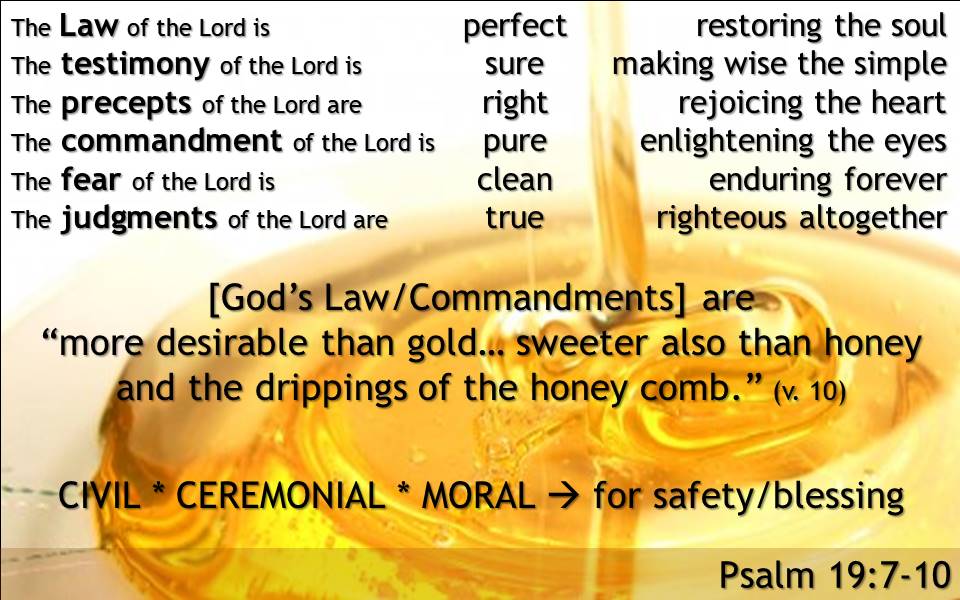

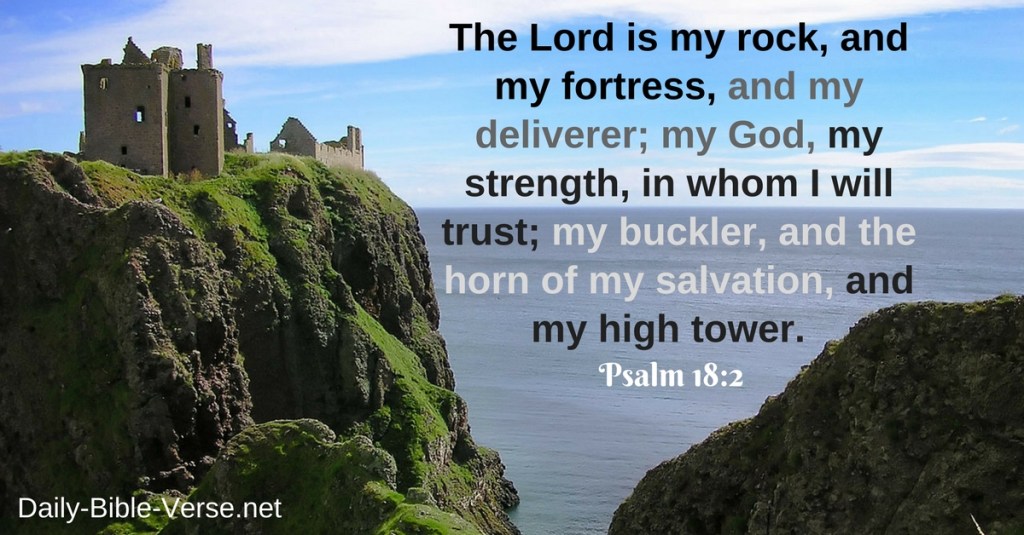
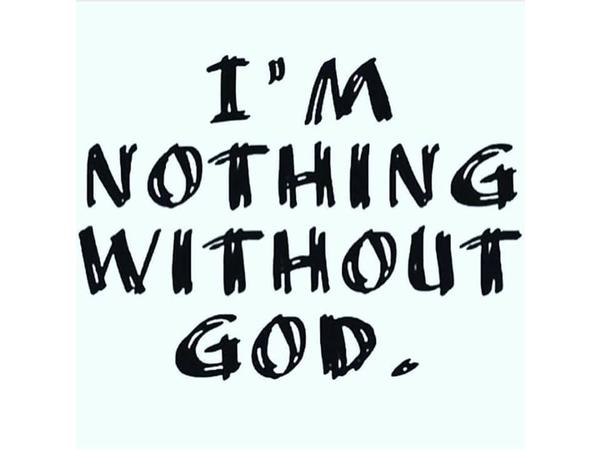


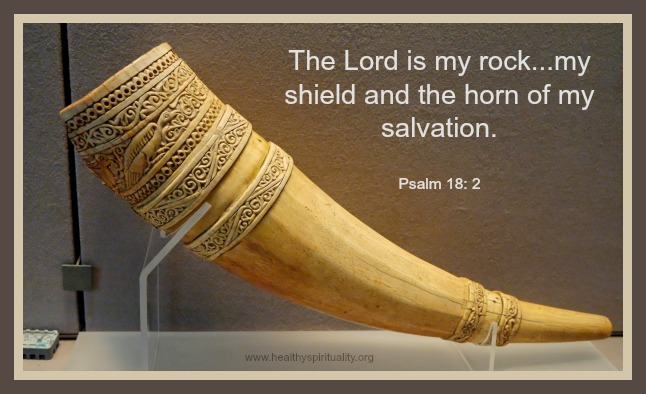





 Loving God, Living God, Loving Hope, Living Hope, Loving Living Life His Way! "Many things are possible for the person who has hope. Even more is possible for the person who has faith. And still more is possible for the person who knows how to love. But everything is possible for the person who practices all three virtues." - Brother Lawrence (1605-1691), Practicing the Presence of God (1692).