Romans 15:4 "For whatever was written in earlier times was written for our instruction, so that through perseverance and the encouragement of the Scriptures we might have hope."
We sometimes get frustrated when people outside of Christ do not seem to be able to understand the teaching of Scripture.
However, we must not forget that there are two realities to the truth of Scripture that non-believers do not experience.
First, the Holy Spirit, who inspired Scripture and uses Scripture to form us, also helps followers of Jesus understand the truth that God has given us.
Second, the truth of Scriptures often becomes more understandable as we obey it. The Holy Spirit is at work helping us understand the Scriptures he inspired!
Whether we might be rookies or veterans, let’s never approach our time in Bible study without asking for the Holy Spirit to make God’s truth known unto us!
Years ago, I remember hearing Campus Crusader founder Bill Bright teaching on the Holy Spirit. In his message, he talked about a man to whom he had been in the throes of witnessing to. One of the “Problems” with the Christian faith was he had tried to read the Bible several times but could not “figure it out.”
Then the man received Jesus Christ as his personal Savior and went back to talk again with Dr. Bright about one week later. He had an amazing story to tell him.
During that weeks’ time, he said, it was as though somebody had re-written his Bible. Suddenly, he said, the Scriptures came alive to him. The understanding of them had broken into his thoughts as when quick lightning strikes the ground.
How had it happened? The Teacher – the Holy Spirit, had taken up residence in his soul. What had once been obscure and confusing drivel was now pulsating with most profound degrees, measures of meaning, encouragement and hope.
1 Corinthians 2:6-12Amplified Bible
6 Yet we do speak wisdom among those spiritually mature [believers who have teachable hearts and a greater understanding]; but [it is a higher] wisdom not [the wisdom] of this present age nor of the rulers and leaders of this age, who are passing away; 7 but we speak God’s wisdom in a mystery, the wisdom once hidden [from man, but now revealed to us by God, that wisdom] which God predestined before the ages to our glory [to lift us into the glory of His presence]. 8 None of the rulers of this age recognized and understood this wisdom; for if they had, they would not have crucified the Lord of glory; 9 but just as it is written [in Scripture],
“Things which the eye has not seen, and the ear has not heard, And which have not entered the heart of man, All that God has prepared for those who love Him [who hold Him in affectionate reverence, who obey Him, and who gratefully recognize the benefits that He has bestowed].”
10 For God has unveiled them and revealed them to us through the [Holy] Spirit; for the Spirit searches all things [diligently], even [sounding and measuring] the [profound] depths of God [the divine counsels and things far beyond human understanding]. 11 For what person knows the thoughts and motives of a man except the man’s spirit within him? So also no one knows the thoughts of God except the Spirit of God. 12 Now we have received, not the spirit of the world, but the [Holy] Spirit who is from God, so that we may know and understand the [wonderful] things freely given to us by God.
The Word of God for the Children of God. Gloria! In Excelsis Deo! Alleluia! Amen.
To be the person God has called you to be.
And that got me thinking. Yes dangerous, I know.
You see I believe that the Holy Spirit does do amazing things in people today.
I believe that right now He is doing stuff in each of us, to refine us, to change us, to bless us.
What I started thinking about was,
what if instead of becoming the person God has called me to be,
I had become the person I myself desired to be?
What kind of person would I be today if the Holy Spirit had not led me?
Where would I have been this morning if I had chosen not to allow the Spirit to lead me?
If God were not guiding you according to His plan, and His purpose, who would you have followed?
Who would have been your role model?
What would you be like if you could become anyone you could want to be?
Would you be a scientist or an artist?
Would you be a musician or a mime?
Would you be a best selling author or a teacher?
Would you be a butcher, baker or candlestick maker?
Would you be a politician?
Would you be a professional sports athlete?
Would you be a banker, an industrialist, a world leader?
Would you have been like some Greek mythological hero born of Hollywood?
If you could desire above all other possibilities to become anyone, would you be willing to become the humble servant person that God has called you to be?
Let’s face it, you are who you are, for a reason today you are you because you are you.
But, are you, all the you, you can be today?
Are you allowing the Spirt to work in you today?
What would your life be like if you allowed yourself to fully be the person God wants you to be?
What differences would there be in your life tomorrow if you allowed the Spirit to work in you today?
Today as part of this seasons Pentecost experience I want to encourage you, to genuinely challenge you, to examine where you are where you really want to be.
The verse I want you to focus on this day is
1 Corinthians 2:10-12 (NIV) which says:
“God has revealed it to us by his Spirit. The Spirit searches all things, even the deep things of God. For who among men knows the thoughts of a man except the man’s spirit within him? In the same way no-one knows the thoughts of God except the Spirit of God. We have not received the spirit of the world but the Spirit who is from God, that we may understand what God has freely given us.”
The NLT translates this verse:
It was to us that God revealed these things by his Spirit. For his Spirit searches out everything and shows us God’s deep secrets. No one can know a person’s thoughts except that person’s own spirit, and no one can know God’s thoughts except God’s own Spirit. And we have received God’s Spirit (not the world’s spirit), so we can know the wonderful things God has freely given us.
For so many people in the world today there are times in life that nothing seems to happen, then times where everything is boring without sense or meaning.
So many people want to be someone else simply because they feel their own life is empty.
Be honest, in your own spiritual walk, have there been times when you have complained that everything is the same, no growth and no direction, yet when you have felt the Spirit prompt you to do something, you have chosen not to?
Maybe there have been times in your life when doubt has stopped you moving forward.
Stopped you from allowing the Holy Spirit to work in your life.
Maybe there have been times when you have asked why?
Maybe there are times when you have refused to ask yourself why?
So, let me ask you why.
From our text, let me form a question for you from the bible verses we have read.
Why when, we have not received the spirit of the world but the Spirit who is from God, that we may understand what God has freely given us – why do we choose to accept less than God has freely given us?
Why do we spend so much time desiring to be like someone else and ignore who God is calling us to be?
How can we move past the feeling that something is wrong and allow God to work in our lives today?
How can we have greater joy in our lives?
How can we be satisfied?
How can we be the people that God has called us to be?
The simple answer is we must allow the Spirit to work in our lives so that we can become the people God has called us to be.
Do you allow the Spirit to work in your life?
Are you thankful for the blessings God has freely given you to enjoy everyday?
When was the last time you thanked God for the beauty of His creation?
When was the last time you thanked God for what He is doing in your life?
When was the last time you thanked God for what He provides you with everyday? Your bed, your food, your clothes.
When was the last time you thanked God for His love, His grace, His Mercy?
When was the last time you allowed the Spirit to work in you and through you for God’s glory?
When was the last time you thanked God for the work of the Holy Spirit in your life?
When was the last time you asked the Spirit to work in your life to help you be the person God has called you to be?
It is true to say that God knows your past, God knows your today, and He knows your future.
You know your past, you are living in your today, and I’m sure you have a hope for your future.
Does your plan for the future align with God’s plan for your future?
Actually, does your plan for today align with God’s plan for you today?
So often we try and prepare for things in our own strength, and too often we wonder why things didn’t go according to our plan when we never stopped to find out what God’s perfect plan for us was.
The past, the present and the future belongs to God and we need to be willing to allow the Holy Spirit to lead us into our destiny.
We must be open to the leading of the Spirit.
Are you willing to become the person God has called you to be by allowing the Spirit to work in you today?
Are you willing to give control of your life to God?
Are you willing to allow the full power of the Holy Spirit into your life, in your home, in your family, in your workplace.
We will never experience the full joy and contentment that God wants us to have if we do not allow the Holy Spirit to work in us.
We all need the empowerment of the Holy Spirit.With His power our life can become a blessing to others.
With His power others will see and experience the love of Jesus Christ through us.
Today, do you consider your life to be a living witness for Christ?
Today, would you allow the Holy Spirit to help you share the truth of Jesus with others?
Friends, you may look at others as role models, as people you aspire to be like, are you willing to be the person God has called you to be?
Are you willing to allow God to use you to bring glory to Him?
Are you willing to open your life to the Holy Spirit and be a blessing to people you meet?
Remember we have received, not the spirit of the world, but the Spirit who is from God, that we might know the things that have been freely given to us by God.”
As Christians we received the Spirit who is from God and not of the world, that we might know the things that have been freely given to us by God
So that we might use the gifts and talents God has given us, so that we can be the People that God has called us to be.
God has called us to communicate the truth with others, are you sharing the truth?
You can do it verbally, you can do it in the written word, you can do it on Facebook or Twitter, but are you doing it?
Are you allowing the Holy Spirit to work through you today?
Are you allowing the Holy Spirit to work in you today to become the person that God has called you to be?
Let me encourage you to become the person God has called you to be.
Allow the Holy Spirit to work in you today.
Share the Good News of God’s Saving work in your life.
Allow the Holy Spirit to help you become the person God has called you to be.
In the name of God, the Father and God the Son and God the Holy Spirit,
Let us Pray,
Jesus, Giver of peace, I so easily get distracted when I’m trying to focus and hear your Holy Spirit. Help me quiet my mind in the middle of my busy life. Help me to pause and to make space to listen to the most important voice of all.
Empower me to be a good listener to the gentle whispers of your Spirit. Help me follow the example of Jesus, who would slip away into the evening or the early morning to be alone with you. Teach me to abide in you. Amen.
Savior Jesus, you sent the Holy Spirit to your disciples so they would have a helper and a guide at all times. I pray that you send to me your Holy Spirit to be my helper. May your Spirit pour light into my heart and make my spirit glow in your glory. I seek to understand and to stay in your word, oh Lord. Illuminate my heart with your Spirit. Gloria! In Excelsis Deo! Alleluia! Alleluia! Amen.
A man told me not too long ago that he wanted to be a Christian “someday.” He told me it was “not convenient at the moment” to “disrupt his life that much.”
He was too busy living his life in his definition and understanding of his “fast lane” and he was having “too much fun with his moment in the sun” and could not take the time nor make any effort to “just start all over again at his age.”
The first thought that went straight through my spirit was “well, because it was not ‘convenient’ in that ‘moment’ for the man to lice life with Christ as Savior, it was not going to be ‘minimally’ convenient for him to get into heaven either.
There is going to be a day when that decision has to be made or risk later on in life that “it will be too late,” and then the choice will “no longer be available.”
Some will come to the Lord as their Savior and will know freedom, eternal life.
Others we will watch walk away from that moment – into who knows what.
We have our Savior Christ with us and living within us and we watch as that one soul walks or runs away, into their “who knows what or when, where or why.”
What about those phrases – “It will be too late?” “Become no longer available?”
What about them phrases roaming and rummaging around through our souls?
Are our souls sufficiently stirred up by what we are witnessing in that moment?
What of our ” in all OUR WAYS” trusting in the ways of the Lord?
What of our profession of Christian bravado to “go forth in Jesus’ name”?
What of our much-acclaimed adherence to our “Affirmation of Faith?”
Make me a servant Humble and meek Lord let me lift up those who are weak And may the prayers of my heart always be Make me a servant Make me a servant Make me a servant today
Make me a servant Humble and meek Lord let me lift up those who are weak And may the prayers of my heart always be Make me a servant Make me a servant Make me a servant today
Make me a servant Humble and meek Lord let me lift up those who are weak And may the prayers of my heart always be Make me a servant Make me a servant Make me a servant today
And may the prayers of my heart always be Make me a servant Make me a servant Make me a servant today
Acts 2:37-41Amplified Bible
The Ingathering
37 Now when they heard this, they were cut to the heart [with remorse and anxiety], and they said to Peter and the rest of the apostles, “Brothers, what are we to do?” 38 And Peter said to them, “Repent [change your old way of thinking, turn from your sinful ways, accept and follow Jesus as the Messiah] and be baptized, each of you, in the name of Jesus Christ because of the forgiveness of your sins; and you will receive the gift of the Holy Spirit. 39 For the promise [of the Holy Spirit] is for you and your children and for all who are far away [including the Gentiles], as many as the Lord our God calls to Himself.” 40 And Peter solemnly testified and continued to admonish and urge them with many more words, saying, “[a]Be saved from this crooked and unjust generation!” 41 So then, those who accepted his message were baptized; and on that day about [b]3,000 souls were added [to the body of believers].
The Word of God for the Children of God. Gloria! In Excelsis Deo! Alleluia! Amen.
As many times as I have read this passage of text and have had it preached to me over and over again in the Lectionary weeks following “Pentecost Sunday,” the message has always and forever been centered around those thousands who “accepted his message and were baptized and added to the “body of believers.”
Today, however, as I was reading and studying this text for today’s devotional, I subtly was made aware of a different interpretation and understanding of verse 41. It’s 100%great news thousands were added to the Body of Believers that day.
But I could not help but think about and ponder this: “Just three thousand?”
There had to be more than just the “mere three thousand” there. There were those who were just allowed to walk away to focus on those who were baptized.
It is sobering to me in this moment to ‘realize’ there were those hundreds of thousands who ‘shrugged their shoulders, walked away from the “Pentecost Moment.” Scripture is silent on what happened and did not happen to them. It is relatively silent on the new Churches response to their just “walking away.”
It is said that “decisions determine destiny”.
Your life tomorrow will be the direct result of the decisions you make today.
It is estimated that we make approximately 35,000 decisions per day!
There will be consequences for each of those decisions.
These consequences may not be immediate, but they are inevitable.
If you choose to spend more money than you take in, eventually you will go bankrupt. If you choose to lay out of work, eventually you will find yourself unemployed. If you choose to eat too much, you will gain weight. If you choose to neglect your spouse or your children, it may well cost you your marriage.
In the spiritual realm choices have eternal consequences. When our choices are sinful… there will be severe consequences!
Just ask Adam and Eve, Cain and Abel, Noah, Abraham and Sarah, Jacob and Esau, Joseph and his brothers, Saul and David, Samson and Delilah, Elijah and the priests of Baal, the Children of Israel Simon Peter and many, many others!
While I was preparing to write the message for today, the Holy Spirit asked me,
“Where are my people getting their meat from?” As I began writing the first words, the Holy Spirit asked me again, “Where are my people getting their milk from?” With each word I began to write, the question became more intense.
The barrage of questions began to be accompanied by images. These images were not images of lollipops, rainbows, pots of gold, and purple gumdrops. These images were not of any smiling faces running through the factory with Willie Wonka to smell and taste all of the chocolate and taste the wallpaper.
These images were of grief and sorrow, shame, of destruction and brokenness.
If anyone remembers the 1971 movie, the original movie, titled, Willie Wonka and the Chocolate Factory, they should remember when Willie Wonka takes the children, and the adults with them, to the area that was lined with wallpaper.
This wallpaper was an invention created which allowed 1 dimensional images which resembled fruit to taste like real fruit.
In this scene, Willie Wonka stated, “I must show you this. Lickable wallpaper for nursery school walls. Go ahead, try it. The oranges taste like oranges, the raspberries taste like raspberries, the shnozberries taste like shnozberries.”
The Lord began to deal with me and my soul and revealed that what we are seeing is being projected to the movie going public, a substitute for real fruit.
The Lord then led me to the following verse:
1Peter 2:2-3 AMP — Like newborn babies you should crave (thirst for, earnestly desire) the pure (unadulterated) spiritual milk, that by it you may be nurtured and grow unto (completed) salvation, 3if in fact you have [already] tasted [a]the goodness and gracious kindness of the Lord.
The Holy Spirit, then, led me to another set of verses:
1Corinthians 3:1-3 Amplified—
Foundations for Living
3 However, brothers and sisters, I could not talk to you as to spiritual people, but [only] as to [a]worldly people [dominated by human nature], mere infants [in the new life] in Christ! 2 I fed you with milk, not solid food; for you were not yet able to receive it. Even now you are still not ready. 3 You are still [b]worldly [controlled by ordinary impulses, the sinful capacity]. For as long as there is jealousy and strife and discord among you, are you not [c]unspiritual, and are you not walking like ordinary men [unchanged by faith]?
The Lord, then, declared:
“My people are craving spiritual milk, but I am disturbed because instead of feeding themselves with the Word, they are choosing to feed themselves with the world. Their actions, their words, their relationships, their finances, and the fruit they bear are direct results of the substitutes they are consuming.”
You didn’t hear me. So, let me repeat it:
The Lord declared that “their actions, their words, their relationships, their finances, and the fruit they bear are direct results of the substitutes they are consuming.”
My God, My God. This is too heavy a revelation and burden to bear.
The Lord is saying that the many issues we face have a direct correlation to the substitutes we choose to consume.
The world cannot provide us with the real thing.
The world cannot supplement our spiritual needs.
The world can only provide us with a substitute.
And just like in Willie Wonka, after you finish tasting all the candy and all of the chocolate and licking the wall, you’ll still find yourself still abundantly hungry.
The world cannot fulfill the needs that only God can. The Word says that God can, and will, fulfill every need. Anything else is just 100% never good enough.
Just like you cannot substitute Ramen Noodles for pasta and say that you have an authentic Italian meal, you cannot be fed by the world and say that you are being fed the real deal. Only the Word of God from His mouth is that real deal.
Feasting on the Word will lead you to true satisfaction and real manifestations.
Just like with eating a whole bunch of Ramen Noodles, when you allow the world to feed you with substitutes, you will look back later in life, still hungry, wondering why you have high blood pressure, why your blood sugars are high,
wondering why no relationships ever lasted, wondering why you have a table and a medicine cabinet full of all manner of different medicines to treat the myriad effects of the effects of the medicine designed to treat an original issue.
The food of the world will always leave you with all types of issues.
Heartache, heartbreak, uncontrollable health issues, brokenness, depression, anxiety, addictions, and much more, but the Word will lead you to everything that the world cannot give being: healing, prosperity, a sense of positive self-worth, the right relationships, peace, a sense of real belonging, deliverance.
Being or living solely as a “Christian OF the world” is just never going to be good enough for those we know who have chosen to shrug their shoulders, found it to be “too inconvenient” or even “unnecessary” to profess Christ.
Many years later, after the actual Day of Pentecost,
God gave us His recommendations on this matter as Paul would write:
2 Corinthians 2:14-17Amplified Bible
14 But thanks be to God, who always leads us in triumph in Christ, and through us spreads and makes evident everywhere the sweet fragrance of the knowledge of Him. 15 For we are the sweet fragrance of Christ [which ascends] to God, [discernible both] among those who are being saved and among those who are perishing; 16 to the latter one an aroma from death to death [a fatal, offensive odor], but to the other an aroma from life to life [a vital fragrance, living and fresh]. And who is adequate and sufficiently qualified for these things? 17 For we are not like many, [acting like merchants] peddling God’s word [shortchanging and adulterating God’s message]; but from pure [uncompromised] motives, as [commissioned and sent] from God, we speak [His message] in Christ in the sight of God.
2 Corinthians 3:1-6Amplified Bible
Ministers of a New Covenant
3 Are we starting to commend ourselves again? Or do we need, like some [false teachers], letters of recommendation to you or from you? [No!] 2 You are our letter [of recommendation], written in our hearts, recognized and read by everyone. 3 You show that you are a letter from Christ, delivered by us, written not with ink but with the Spirit of the living God, not on tablets of stone but on tablets of human hearts.
4 Such is the confidence and steadfast reliance and absolute trust that we have through Christ toward God. 5 Not that we are sufficiently qualified in ourselves to claim anything as coming from us, but our sufficiency and qualifications come from God. 6 He has qualified us [making us sufficient] as ministers of a new covenant [of salvation through Christ], not of the letter [of a written code] but of the Spirit; for the letter [of the Law] kills [by revealing sin and demanding obedience], but the Spirit gives life.
And this brings me to lesson for today:
Stop acting like a Christian who has all the time in the world to be selfless.
Because not one single one of us have all the time in this world to be selfless.
To begin, I would have to say, that the preface to this message, was a great start to looking at what we need to quit.
The world would like us to believe we can find all of the answers within the world.
The world would like us to believe that we will be just fine on our own just as long as we stay within the confines of its boundaries.
The world would like us to believe that the demands on who we are can be reconciled if we just work harder.
The world wants us to find our identity within precepts of the world.
But I contend that this line of thinking is wrong.
I contend that,
if we seek out the truth of God,
if we find our identity in Christ,
if we seek of the Holy Spirit a fresh anointing,
if we move our focus away from the world and onto Father, Son and Holy Spirit,
if we release our will to God’s will, we will begin to see our Chief Priest, Jesus Christ, providing all of our needs, supplying us abundantly and exceedingly above anything and everything we will ever ask for, and filling us to overflow.
I am convinced that most of what we find hard will become easy.
The world wants us to focus on the results.
God will provide the results when we truly follow Him.
I know the Christian walk may be hard at times, but the fruits of our walk will come without much effort.
What I mean is, having the focus the world wants us to have,
where we are working hard to get a good job, working hard to get the right relationship, working hard to pay our bills, working hard to get more money, working hard to overcome depression, anxiety, and other health issues–and be “Genuinely Christian living with Jesus,” what we are looking for will come easy.
The requirement is that we build an earnest relationship with Jesus and live our lives under the requirements Jesus set for us.
This is how we receive what Jesus has already promised us.
The things we focus on will change,
The people we focus on will change,
and when it all changes to Jesus, in Jesus, transformation 100% happens.
Those who makes the Word of God their guide, and takes to heart its teachings, will find that they are on the right track.
They will clearly see the path.
They will be able to see the road they should be on and know which way to go.
Following the Word of God will allow us to avoid all those other paths which would definitely and decisively lead us astray.
The Word of God will give us insight and a sense of discernment to know when we may turn off from the main path.
Isn’t amazing to know God has truly blazed a trail for us and we have access to knowing which way to go by simply following the handbook we call the Bible?
If we take the Bible to heart and build a relationship with God, we will surely find the things that have been holding us back cannot hold us back anymore.
We will begin to see things for what it is.
When Jesus gave the man sight, it wasn’t just talking about a physical blind man, necessarily. It was talking about, as some call it today……being woke.
With Jesus we can move from a state of ignorance to a state of enlightenment.
We once were blind but now we see…as the song says.
God’s Word is a version of God’s glory. While we wait for Jesus, let the Word of God, and the prophecies within it, shine so bright that it causes the light in you to shine even brighter.
As we begin to digest the Word and allowing it to light our path, don’t keep it in.
There are too many Christians who aren’t doing anything with the gifting God gave them.
There are too many Christians hold in for themselves.
We aren’t called to look out for ourselves.
We are called to help others.
Don’t be like that.
Don’t get Constipated with the Word!
Let it out!
When we allow God to order our steps, God will direct our paths.
-When we release our will to God’s will, we are giving up us and our fleshly desires to allow God to access to our steps. When we have released our will to God’s will, we begin the process of deepening our relationship with Him.
It’s because of this relationship with Him, where we move according to God’s purpose, and design, we begin to see manifestations in our lives that can only be of God–things begin occurring in our lives that we hadn’t seen before; these things are difficult to explain by the logic, and the intellectual capacity, of man.
Things we needed to occur in our lives start to happen. We, even, begin to see connections created that fix things that we didn’t even know were broken.
-When we release our will to God’s will, and allow God to order our steps, God will not only order what we see as “needs to be met,” God will order everything.
When God orders our “Christian” steps, He also orders our life’s environment.
The more we let God in, the more we shine the Word on our life, the clearer we become about who we are in the name of God the Father, Son and Holy Spirit.
God wants you to know that you were made perfect.
The world doesn’t define you; He does.
And, once you and I finally, eternally, take hold of that fact, you and I will begin to see advanced manifestations of God’s miraculous, infinitely enduring love.
Your “new” perfect manifestation is soon to be revealed.
A New Affirmation of Faith takes life and takes shape deep within our souls;
“I Quit!”
When I see others walking away from Christ …
I quit — shrugging my shoulders
I quit–believing I’m less than I am.
I quit–seeing myself the way the world sees me.
I quit–being defined by others in my life.
I quit–wearing the mask the world dictates I wear.
I quit–walking away from God!
I quit–leaving my light in a corner.
I quit — looking only in my mirror and living for myself
I quit! I quit! I quit!
because …
John 10:15-18 Amplified Bible
15 … even as the Father knows Me and I know the Father—and I lay down My [very own] life [sacrificing it] for the benefit of the sheep. 16 I have [a]other sheep [beside these] that are not of this fold. I must bring those also, and they will listen to My voice and pay attention to My call, and they will become [b]one flock with one Shepherd. 17 For this reason the Father loves Me, because I lay down My [own] life so that I may take it back. 18 No one takes it away from Me, but I lay it down voluntarily. I am authorized and have power to lay it down and to give it up, and I am authorized and have power to take it back. This command I have received from My Father.”
In the name of God, the Father and God the Son and God the Holy Spirit,
Let us Pray,
Emmanuel, God with us! God within us, Lord God Almighty, I praise Your holy name. Today, Lord, I feel so tired, weary and discouraged. The only way I see out of this personal valley is to give up totally. Things seem ever so gloomy.
I welcome the Presence of the Holy Spirit. Let Him be my Intercessor, let Him be my Comforter and my Reassurance and Guide. I acknowledge before You that I see “other shoulders shrugging” and may need to make difficult changes in my own life. But, making changes isn’t giving up, doing nothing when I need to, is.
Help me my Lord, and my Savior to give control of my life over to You in every way, and to become the Christian You would have me be. Thank You Lord, that You have not given up on me and I ask You to teach me Your way from this day forward. In Jesus’ name I pray, Gloria! In Excelsis Deo! Alleluia! Alleluia! Amen.
The first Pentecost after Jesus’ death and resurrection was the birthday of Jesus’ church.
The Holy Spirit moved in Jesus’ apostles; they suddenly proclaimed the good news to people from many parts of the Mediterranean area (Acts 2:8-11).
Thousands were baptized, forgiven of their sins, and given the Holy Spirit as God’s gift.
But even in the unquestionable greatness of that day, there was the promise of more unquestionably great days to come.
The promise of God’s forgiveness and the gift of the Holy Spirit are for all whom the Lord calls, including us and others he will call.
Like all unquestionably great stories with unquestionably great promises of an unquestionably great future attached to it, they must all begin with a minimum of at least one someone somewhere who will take the risk to jump in with both feet with at least a minimal degree of belief it will actually, absolutely be true.
Someone, somewhere, somehow must dare to question the “truth” of such an unquestionably great promise – it must somehow be proven if it is to continue.
Life must be lived – but we have that choice to determine how we should do so.
“Nothing Ventured – Nothing Gained”
“Go for the Gusto or Just plain Go Away.”
Live as if it is only according to the principle of “maintaining the Status quo.”
Live as if there is the possibility that the unquestionably great promise being offered of unquestionably great things coming your way – if you’ll take a risk.
“As a guiding principle, life shrinks, and life expands in direct proportion to your willingness to assume risk.” Casey Neistat
The Holy Spirit moved in an unquestionably powerful way that first Pentecost Day.
Unquestionably remarkable and unquestionably miraculous events took place in the thousands of lives of those who had gathered Jerusalem that day.
Lives were unquestionably changed.
Unquestionably a great promise had been fulfilled by God to come among them.
Now, how would these people respond to such an unquestionably great event.
A shrug of the shoulders and the maintenance of “Status Quo?”
Somebody “girding their loins” learning how to get trained up in the operation of the Gospel Train of God – because now people could know – that God is now completely on our whole life’s train track – and there’s no stopping God now!
Peter makes a promise for all those everywhere who will turn their hearts to God and submit themselves to him in baptism, fully trusting in Jesus as their Lord and Savior!
They will be filled with God’s Spirit and forgiven of their sins because of the mighty name and gracious work of Jesus Christ.
This whole passage (Acts 2:33-47) demonstrates that Peter and the apostles had begun fulfilling Jesus’ Great Commission (Matthew 28:18-20):
they were making disciples by going, baptizing, and teaching people to obey what the Lord commanded.
Like those early disciples, let’s accept the challenge, share this grace so the whole world can unquestionably know Jesus is not only our Lord, He is also unquestionably Savior and King for all who hear God’s call and trust in him.
God’s great promise of Holy Spirit guiding, getting our whole life on His track!
This unquestionably great promise of God is extended too literally everyone!
Without exception – one promise for literally everyone to come to and “LIVE!”
If that first person would dare to come forward out of the crowd – and prove it!
By the power of the Holy Spirit, have you or anyone you know ever shared this life transitioning message of promise, forgiveness, and power with others?
Acts 2:37-39Amplified Bible
The Ingathering
37 Now when they heard this, they were cut to the heart [with remorse and anxiety], and they said to Peter and the rest of the apostles, “Brothers, what are we to do?” 38 And Peter said to them, “Repent [change your old way of thinking, turn from your sinful ways, accept and follow Jesus as the Messiah] and be baptized, each of you, in the name of Jesus Christ because of the forgiveness of your sins; and you will receive the gift of the Holy Spirit. 39 For the promise [of the Holy Spirit] is for you and your children and for all who are far away [including the Gentiles], as many as the Lord our God calls to Himself.”
The Word of God for the Children of God. Gloria! In Excelsis Deo! Alleluia! Amen.
The Bible says in Acts 2:38
“Then Peter said unto them, Repent, and be baptized every one of you in the name of Jesus Christ for the remission of sins, and ye shall receive the gift of the Holy Ghost”.
The word repent is to express sincere regret, remorse one’s wrongdoing and sins. Repentance is the action we ourselves choose to exercise of turning away from that wrongdoing and sin and our choosing not to partake in that again.
The thing we really need to understand is that repentance is not a one-time event that one does to receive salvation.
True repentance causes a person to say,
“I want to live in Christ, prove it with a 180-degree change of their direction.”
Repentance requires true brokenness.
It is NOT asking our God for forgiveness with the intent to sin again, but is an honest, regretful acknowledgement of sin with a true and total commitment to change – to choose between sin’s “status quo” and freedom in Christ Jesus.
I remember some years ago while I was still young in “my Christianity” we had a Pastor at our spiritual retreat, and I remember him saying to us one Sunday:
“We all need to change every day therefore we need all to repent everyday”.
I was then still in the ‘young’ mind-set that repentance was something just for salvation until I found myself having to repent not committing some atrocious sin prese but omitting something, like not studying like I should, not fasting in the “prescribed biblical way” and when I was or was not praying like I should.
Since God was dealing with my “youthful Christianity” as the first partaker with that message, I had to repent because I began to see what I was omitting and falling short of the glory of God in my life personally (Romans 3:23).
I began to be like David and pray like he did in Psalm 51:6-10
“Behold, thou desirest truth in the inward parts: and in the hidden part thou shalt make me to know wisdom. Purge me with hyssop, and I shall be clean: wash me, and I shall be whiter than snow. Make me to hear joy and gladness; that the bones which thou hast broken may rejoice. Hide thy face from my sins and blot out all mine iniquities. Create in me a clean heart, O God; and renew a right spirit within me”.
Now before someone gets the wrong impression, I am not talking about my committing a sin that is punishable with Hell’s damnation, but I am talking about realizing your personal short comings, being totally pleasing unto God.
There’s a saying that confession is good for the soul. It comes from an old Scottish proverb, which said in full, “Open confession is good for the soul.”
There is biblical truth in that!
When John the Baptist was preparing people to meet Jesus, his first advice was to repent.
Peter then on the Day of Pentecost in Acts 2:38 said
“Repent and be baptized every one of you in the name of Jesus Christ for the remission of sins, and ye shall receive the gift of the Holy Ghost”.
I remember being handed a two-sided bookmark for my Bible which had this prayer printed on its front and its back –
A Prayer for Daily Repentance
Dear Lord, thank you for your forgiveness. Thank you for not abandoning us to our mistakes, but for reaching out instead to bring us home. Help convict me of sin and help me accept your mercy without shame. Thank you for the love you have poured out for me and all your children. Help me live out of that love today. In Jesus’ Name, Amen.
That was almost seventeen years ago, and I believe I still have that bookmark.
I truly believe my “Christianity” has grown up and matured just a bit in these intervening years since my long weekend attendance that spiritual retreat.
But sometimes I find that my premise of a “more mature” Christian life being tested by the unquestionably life changing events of these last several months.
We have experienced unprecedented life events that leave us bewildered at best.
The truth of the matter is that these past two years have changed society as a whole and will continually and continuously change many of us personally in ways unlike any we could not have even imagined, for many more months.
For many, the old pattern of life has been broken, and a new one has come into play. Social distancing has changed the way we will each choose to interact with people probably forever. Hand shaking and the ever-popular hug except for our close family members will if ever done again will be done with extreme caution.
When we look back over the last two years, we have been inundated with events, information, rather good or bad, racism played out to the fullest, hatred spewed from the mouths of leaders both political and spiritual, never before imagined acts of gun violence being done in the United States carried out by Americans.
We see the War in the Ukraine.
We have seen hospitals pushed to the limits; deaths reaching and seemingly passing Biblical proportions. We have experienced seismic paradigm shifts in politics, life and religion, today is so majorly different then it was only a year ago. In the prophetic, immortal words of Marvin Gaye “What’s Going On”.
I can honestly say for myself and maybe for a lot of you I haven’t watched CNN or other major news stations as much as I have these past two years in my life.
I, like many of you, am completely inundated by my television set with all the bad news, all the intrigue, killings, politics, civil uprisings, unbelievable reports of increasingly lethal mass shootings, deaths, panic, Breaking News Headlines.
I saw this statement that said there are more televisions in the average home than there are people. And this does not include other electronic devices upon which television shows and programming can be watched.
I believe it can literally be blamed that the increase in violence, unrest, hatred, and godless upheaval being seen in our society today is a direct result of what is coming across our computer and television and other social media outlets.
The Bible says it like this in Galatians 6:7“Whatever a man sows, this he will also reap.”
“We must reap the change which only comes from living Christ to the fullest.”
For 20 years, I “grew and matured in my faith” in the church and I know for a fact many times this scripture will be used when it comes time for the offering.
However, today I am going to deal with something different because we need to understand we reap what we sow more today than probably any time in history.
We are sowing not so much monetarily into a ministry or church organization, but we are sowing and having sown more than you realize into your spirit. We are allowing things to affect us in ways more than we normally would. Many of us have developed new patterns and habits that we did not have just a year ago.
Now is the time that we need to be cognizant of the influences of our lives and what is being sown into our spirit.
Proverbs 4:23 says “Keep thy heart with all diligence; for out of it are the issues of life”.
In the Old Testament the word “heart” is used more than 800 times, but more than 200 times it deals with one’s thoughts, emotions, and the wellsprings of the choices we make about living life, those things that motivate and mold us.
Solomon says in Proverbs 23:7 “For ah he thinketh so, is he?” WHY – Because this will control the rest of your life. What you think is what you are.
Your thoughts rather positive, negative, good, or bad control your attitudes.
Your attitudes are the sum of your thoughts.
Your attitudes lead to your actions.
That is why we must guard our hearts and be careful with what we allow to be sown or what we sow into our spirit.
It is so easy to be influenced by what we see on T.V., the internet, read in the paper or are texted across and upon the whole host of social media outlets.
Luke 22:31 says “And the Lord said, Simon, Simon, behold, Satan hath desired [to have] you, that he may sift [you] as wheat”.
That means to continually and continuously confuse and poison your heart.
Don’t be confused by the manipulation of people.
The devil wants to continually and continuously contaminate and corrupt your WHOLE heart. You must guard your heart against contamination from jealousy, philosophies, traditions, speculation, arrogance, pride, lies and everything else.
God, the Father, Son and Holy Spirit wants your heart for Himself.
It was the basis of your original union with Him.
God didn’t appeal to your intellect; He asked for faith.
The enemy despises your heart because it is with your heart that you believe unto righteousness.
Romans 10:10 says “For with the heart man believeth unto righteousness; and with the mouth confession is made unto salvation”
Reaching for the promises of God, the unquestionable truth of abundant life in Christ, we must live to fully protect our hearts from being contaminated at all.
We must guard our hearts from anything that is contrary to the Word of God.
When you realize how much is sown into your heart by the avenue of your eyes or your ears, then unquestionably, we need to pray, ask God for a clean heart.
I’m not asking for high men to know my name, I’m not asking for fortune or my “15 minutes of fame” but give me ‘Lord a clean heart and I’ll follow thee.’
The best way to guard your heart with all diligence is to seek God with your whole heart.
Seeking God with All Your Heart!
The Bible promises that if you seek God with all your heart, then you will find Him.
If you seek to know God in real and personal ways with all your heart, then you will get to know God by Him revealing Himself to us.
I believe this is called Progressive Revelation!
When I say progressive revelation, I believe it is a move originated from God, not man which God brings us through spiritual infancy to spiritual maturity.
It is a growing process that is done by the planting of good seed.
This is what the devil is trying to stop from happening in your and my life at any chance he can.
Luke 22:31 says “And the Lord said, Simon, Simon, behold, Satan hath desired [to have] you, that he may sift [you] as wheat”.
Meaning of Seeking God
In the Bible the words for “seek God with all your heart” means to: to seek the face of God, the glory of God and not just His hand.
It is to desire Him more than one desires oneself.
Psalm 42:1 says, “As the hart panteth after the water brooks, so panteth my soul after thee, O God”.
It is fixing our conscious and focusing our attention and our heart’s affection on God.
This setting of the mind is the opposite of mental coasting.
It is a conscious choice to direct the heart toward God.
This is what Paul desires for the church in 2 Thessalonians 3:5“May the Lord direct your hearts to the love of God and to the steadfastness of Christ”.
It is a conscious effort on our part.
To seek God with all your heart is all about having a love and desire to know Him.
Paul said in Philippians 3:10“That I may know him, and the power of his resurrection, and the fellowship of his sufferings, being made conformable unto his death”.
1 Chronicles 22:9 says, “Now set your heart and your soul to seek the LORD your God”.
Understand this is not some emotional aspect of seeking God like He is lost, God is not lost, but striving to find that which has been hidden.
Proverbs 25:2 says, “It is the glory of God to conceal a thing: but the honor of kings is to search out a matter”.
There is always something through which or around we must go to meet God spiritually, emotionally, and consciously.
It is this going through or around is what seeking is.
Paul said I press toward the mark for the prize of the high calling of God.
The woman with the issue of blood came in the press to “just touch the hem of His garment.”
My own repentance was due to the fact that I was unquestionably letting things block me from seeking His face like I should have but the honor was my own making the living choice, searching Him out in the midst of what was going on.
Please Understand there are always going to be obstacles which we so need to avoid, seeds that are trying to be planted that bring nothing but weeds in our lives that try to block out our sight of God, that try to slow or stop our maturity.
Matthew 13:25-26 says, “But while men slept, his enemy came and sowed tares among the wheat, and went his way. But when the blade was sprung up, and brought forth fruit, then appeared the tares also”.
We must be aware of the tricks of the enemy and know the things which causes us to become insensitive to God and the try to block us from seek Him with our whole heart.
That is, unquestionably, what unquestionably seeking God with our whole heart and unquestionably our whole soul is all about.
Isaiah 55:6 says, “Seek the Lord while he may be found; call upon him while he is near”.
The Lord is always near – Acts 2:1-13
Job 8:5 says, “If thou wouldest seek unto God betimes, and make thy supplication to the Almighty”.
This is what David was doing in Psalm 51:6-10
“Behold, thou desirest truth in the inward parts: and in the hidden part thou shalt make me to know wisdom. Purge me with hyssop, and I shall be clean: wash me, and I shall be whiter than snow. Make me to hear joy and gladness; that the bones which thou hast broken may rejoice. Hide thy face from my sins and blot out all mine iniquities. Create in me a clean heart, O God; and renew a right spirit within me”.
and what I did this week. WATCH THIS:
– Unquestionably seeking God involves my calling and pleading unto the Lord.
“O Lord, have mercy on me, open my eyes, my ears, my heart to be sensitive to you Lord. Unquestionably remove anything that is not like you, unquestionably cleanse me from all unrighteousness for I want to unquestionably know you Lord. “
This is humility which is essential in seeking God.
Psalm 10:4 says, “The wicked, through the pride of his countenance, will not seek after God: God is not in all his thoughts”.
We must avoid pride in order to seek God with our whole heart.
Remember in the beginning of this devotional we talked about reaping what we sow. We guard our ever-questioning hearts, and we can seek all of God with our whole heart by unquestionably reducing the trash that we put into our spirit.
Guarding your heart is more about feeding your soul than avoiding sin.
When our heart is strong, we can resist the temptations that cause many to stumble.
Minimize the trash in will reduce the trash out.
Unquestionably guarding your heart includes unquestionably seeking God, but we cannot ignore the instruction to strive to minimize the trash from our lives.
Some trash is easy to identify. Moral corruption, perverse sexual behavior, evil towards others. Other trash is more difficult to discern and to remove.
A lack of faith, unforgiveness, materialism, pride, hatred, racism, bigotry envy, strife. Trash, big or small, is still, unquestionably, nothing but stinking trash.
Hebrews 12:1-2 says
“Wherefore seeing we also are compassed about with so great a cloud of witnesses, let us lay aside every weight, and the sin which doth so easily beset us, and let us run with patience the race that is set before us, Looking unto Jesus the author and finisher of our faith; who for the joy that was set before him endured the cross, despising the shame, and is set down at the right hand of the throne of God”.
Unquestionably guarding your heart is unquestionably critical to experiencing all that God unquestionably desires for your life.
God in His infinite wisdom knew that we would have problems with guarding our heart with all diligence, so He created us and made it impossible to be able to focus on more than one thing at a time.
So here is a little secret on how to unquestionably guard your heart, seek God.
Philippians 4:8-9 unquestionably says to our questioning hearts and souls,
“Finally, brethren, whatsoever things are true, whatsoever things are honest, whatsoever things are just, whatsoever things are pure, whatsoever things are lovely, whatsoever things are of good report; if there be any virtue, and if there be any praise, think on these things. Those things, which ye have both learned, and received, and heard, and seen in me, do and the God of peace shall be with you!”
In the name of God, the Father and God the Son and God the Holy Spirit,
Let us Pray,
Praise to you Almighty and gracious Father. You have given me hope when there was none. You have given me unquestionable strength when my questionable resolve was gone. You have unquestionably blessed me with grace and poured your love into my heart through your Holy Spirit, your gift from above. For your love, grace, forgiveness, salvation, and Holy Spirit, I praise you. In Jesus’ name. Gloria! In Excelsis Deo! Alleluia! Alleluia! Alleluia! Amen.
How often do we really seriously pause and meditate upon God’s desire to be close to us and among us? It should be an important part of our understanding of God. After all, God created us all to love, serve and communicate with him.
The God of the Old and New Testaments is a Triune God who wants to be with and among His creation and His children in such a way as to celebrate them.
That’s us! So, He moves in his spirit as close to us as we will allow him to come.
In the beginning, when God created the heavens, the earth and then us, God came down and walked and talked to us, with us and among us in the garden.
God was exactly that close. God was interested in being “talking and walking” close to us, exactly because God wanted to be “talking and walking close to us.
Even after we somehow managed to get ourselves into serious trouble with sin, separated ourselves from his presence, he continually “stayed home.” He never gave up on us, let us out of his sight. God rescued humanity over and over again.
And Scripture tells us that in the fullness of time, God came to earth where the sin problem was, and still is. Jesus, the word became flesh and lived among us.
This was certainly something new, God becoming flesh! God coming among us.
Nothing, whether political, social, moral, economic or spiritual would ever be the same again. Yet although this looked different, it turns out to be the same story. It was God wanting to be among his people and to restore us to his image.
That very first Pentecost marks and celebrates the powerful beginning of a global movement of the power of God’s presence sweeping across the earth.
As we again read the account of what happened as the Spirit descended with power on God’s people, place yourself in their midst. Imagine for more than just this one Sunday’s day of Worship, what it would look like, sound like, and feel like to witness firsthand such a powerful movement of God’s Spirit.
Pentecost means so much to us as believers. The day of Pentecost changed everything for us. Today we will celebrate! Today we’ll explore walking with the Holy Spirit and how he affects our daily life so much. May your heart grow in gratitude and friendship with the Spirit today as a result of your time with him.
Today, as we gather, may there be a fresh anointing of the Holy Spirit upon you!
Acts 2:1-13 Amplified Bible
The Day of Pentecost
2 When the day of [a]Pentecost had come, they were all together in one place, 2 and suddenly a sound came from heaven like a rushing violent wind, and it filled the whole house where they were sitting. 3 There appeared to them tongues resembling fire, which were being distributed [among them], and they rested on each one of them [as each person received the Holy Spirit]. 4 And they were all filled [that is, diffused throughout their being] with the Holy Spirit and began to speak in other [b]tongues (different languages), as the Spirit was giving them the ability to speak out [clearly and appropriately].
5 Now there were Jews living in Jerusalem, devout and God-fearing men from every nation under heaven. 6 And when this sound was heard, a crowd gathered, and they were bewildered because each one was hearing those in the upper room speaking in his own language or dialect. 7 They were completely astonished, saying, “Look! Are not all of these who are speaking Galileans? 8 Then how is it that each of us hears in our own language or native dialect? 9 [Among us there are] Parthians, Medes and Elamites, and people of Mesopotamia, Judea and Cappadocia, Pontus and [c]Asia [Minor], 10 Phrygia and Pamphylia, Egypt and the districts of Libya around Cyrene, and the visitors from Rome, both Jews and proselytes (Gentile converts to Judaism), 11 Cretans and Arabs—we all hear them speaking in our [native] tongues about the mighty works of God!” 12 And they were beside themselves with amazement and were greatly perplexed, saying one to another, “What could this mean?” 13 But others were laughing and joking and ridiculing them, saying, “They are full of sweet wine and are drunk!”
The Word of God for the Children of God. Gloria! In Excelsis Deo! Alleluia! Amen.
The Holy Spirit is our greatest gift.
When the disciples received the Spirit, they began living as Jesus did.
They believed in the promise of God to always be with and among them. They finally began believing in themselves. speaking to, healing, and transforming a “conquered” world that had known no restored relationship with their Creator.
And Scripture makes it clear that our lives are to follow their example.
We have been given the same Holy Spirit as those first disciples, the same Holy Spirit who moved so powerfully in the Creation Story, revealing to us our loving heavenly Father to a world in desperate need of relationship with their Creator.
What a glorious vision comes to my soul of God quite literally; “among us!”
With that vision clearly before me, I feel there are three areas in which the Spirit would anoint us more powerfully today as he did the disciples at Pentecost.
Let’s boldly seek out all that the Spirit would do in our hearts and lives today.
The first act of the disciples upon being filled with the Spirit at Pentecost was to come out from behind the Upper Rooms “locked” doors to ‘speak’ to all who had gathered in Jerusalem to celebrate God’s long covenanted Day of Pentecost.
All who had gathered to worship God in the Temple, who had brought their required sacrifices of “first fruits,” a captive audience” to be blessed of God for a good harvest and a prosperous life that year, who would ‘listen,’ to the Priests and scribes explaining all the powerful acts that were going on around them.
Except, this harvest celebration was immediately recognized as being different. It was not the Priests nor the Scribes nor the Elders of the Temple speaking and preaching and teaching them. It was no longer “Temple Business” as usual.
It was a complete newcomer – Peter, it is an uneducated Galilean fisherman!
And this complete newcomer’s words were speaking mightily different words to them. Words they’d undoubtedly never heard spoken before and much to their surprise, the were words they could understand and be mightily inspired by – in every one of their own native tongues and dialects of their own native lands.
And with the preaching of Peter several thousand listeners accepted the free gift of salvation in the name of someone whom they’d probably never met nor had ever talked to nor walked side by side with nor shared a meal with or heard on any street corner nor transacted any business with – Jesus Christ of Nazareth.
In these 21st century days, we too will gather amongst people whom we have seldom or never met, whom we never or seldom shared meals with, or heard on any street corner, nor ever seriously thought to share in any celebration of God with. We are now that world community gathered outside the Temple that day.
Like those first century thousands who gathered in Jerusalem, we too, who are marked by the Spirit’s presence are disciples who move forth the power of love.
Acts 1:8“But you will receive power when the Holy Spirit has come upon you, and you will be my witnesses in Jerusalem and in all Judea and Samaria, and to the end of the earth.”
The Spirit longs to use us to proclaim the goodness of God’s love to this lost and dying world.
The Holy Spirit longs to fill us with the desire to love this world the way he does.
1 Corinthians 16:14 says, “Let all that you do be done in love.”
Galatians 5:22-23 Amplified says,
22 But the fruit of the Spirit [the result of His presence within us] is love [unselfish concern for others], joy, [inner] peace, patience [not the ability to wait, but how we act while waiting], kindness, goodness, faithfulness, 23 gentleness, self-control. Against such things there is no law.
And in Mark 12:31, Jesus says that the second greatest commandment is,“You shall love your neighbor as yourself.”
Is your life marked by love for others?
Does our life “bear good fruit” for God’s Kingdom in the name of the Father, the Son, Holy Spirit?
Or does it bear “bad fruit” “sour wine” for ‘worldly’ consumption, drunkeness?
Do you live your life in service to your heavenly Father and his children?
Seek out a fresh encounter with the Holy Spirit today.
It’s the Spirit who bears the fruit of love in your life.
You cannot love nor serve others on your own, for true love and service comes solely from God.
But the Spirit longs to fill you with a desire and anointing to love and serve all others around you that they might better know the love of the heavenly Father.
The coming of the Holy Spirit also brought powerful unity to the disciples.
Acts 2:44-47Amplified says,
44 And all those who had believed [in Jesus as Savior] [a]were together and had all things in common [considering their possessions to belong to the group as a whole]. 45 And they began selling their property and possessions and were sharing the proceeds with all [the other believers], as anyone had need. 46 Day after day they met in the temple [area] continuing with one mind, and breaking bread in various private homes. They were eating their meals together with joy and generous hearts, 47 praising God continually, and having favor with all the people. And the Lord kept adding to their number daily those who were being saved.
Only the Spirit can bring unity between broken, competitive, and needy people.
Only through the Holy Spirit do we have the ability to love and accept others regardless of our differences and unite toward the common goal of loving God and others wholeheartedly.
Paul writes in Ephesians 4:1-3 Amplified,
Unity of the Spirit
4 So I, the prisoner for the Lord, appeal to you to live a life worthy of the calling to which you have been called [that is, to live a life that exhibits godly character, moral courage, personal integrity, and mature behavior—a life that expresses gratitude to God for your salvation], 2 with all humility [forsaking self-righteousness], and gentleness [maintaining self-control], with patience, bearing with one another [a]in [unselfish] love. 3 Make every effort to keep the oneness of the Spirit in the bond of peace [each individual working together to make the whole successful].
In and amongst our own generations, can we genuinely say we too are a disciple marked by a desire to “maintain the unity of the Spirit in the bond of peace?”
In and amongst our own generations, can we genuinely say before God, we too are a genuine Christian marked by grace-filled love for your fellow believers?
In and amongst our own generations, we all absolutely and desperately need to seek out, with all vigor, a greater anointing, desire from the Spirit toward unity.
We cannot be selfless in our own strength.
We need the help of the God of perfect love to pursue unity through humility.
In and amongst our own generations, seek out a desire and anointing to be a person who works tirelessly toward the goal of unity instead of division today.
In and amongst our own generations, we absolutely need to spend time in God’s presence together allowing him to transform our hearts to look more like HIS!
Lastly, Pentecost filled the disciples with the ability to connect directly to God through the avenue of the Holy Spirit.
Paul writes in 1 Corinthians 2:6-10 Amplified,
6 Yet we do speak wisdom among those spiritually mature [believers who have teachable hearts and a greater understanding]; but [it is a higher] wisdom not [the wisdom] of this present age nor of the rulers and leaders of this age, who are passing away; 7 but we speak God’s wisdom in a mystery, the wisdom once hidden [from man, but now revealed to us by God, that wisdom] which God predestined before the ages to our glory [to lift us into the glory of His presence]. 8 None of the rulers of this age recognized and understood this wisdom; for if they had, they would not have crucified the Lord of glory; 9 but just as it is written [in Scripture],
“Things which the eye has not seen, and the ear has not heard, And which have not entered the heart of man, All that God has prepared for those who love Him [who hold Him in affectionate reverence, who obey Him, and who gratefully recognize the benefits that He has bestowed].”
10 For God has unveiled them and revealed them to us through the [Holy] Spirit; for the Spirit searches all things [diligently], even [sounding and measuring] the [profound] depths of God [the divine counsels and things far beyond human understanding].
Acts 15:27-29 Amplified says,
27 So we have sent Judas and Silas, who will report by word of mouth the same things [that we decided in our meeting]. 28 For it seemed good to the Holy Spirit and to us not to place on you any greater burden than these essentials: 29 that you abstain from things sacrificed to idols, and from [consuming] blood, and from [eating the meat of] things that have been strangled, and from sexual impurity. If you keep yourselves from these things, you will do well. Farewell.”
These first century disciples knew God’s desires, received revelation from him, were steadily being inspired, transformed into the likeness of Christ through fellowshipping with God the Father, God the Son and God the Holy Spirit.
We as disciples are to be marked by direct connection with the Holy Spirit.
Paul and Peter had no special human ability to talk to God.
Prior to the coming of the Holy Spirit, Peter was an uneducated fisherman. Paul was zealously persecuting the followers of the very God he was trying to serve.
Peter chose his own personal safety over the very life of Jesus, who had shown him such an immeasurable degree of wisdom, forgiveness, love and grace.
It was only with the Holy Spirit that these men were able to connect to God so deeply, and we can have that same connection today.
So, in and amongst our own generations, are you a believer who is genuinely marked by direct connection with the Holy Spirit?
In and amongst our own generations, can we genuinely say before God, we all spend quality time and abundant energy, seeking his presence, his wisdom, his truth, his counsel, and his fresh “every single day of our lives,” anointing?
In and amongst our own generations, let’s be children of God who pursue deeper connection with our heavenly Father today.
In and amongst our own generations, let’s seek the face of God as the early disciples did and be believers marked by relationship with the Holy Spirit.
Spend time during guided prayer pursuing all that the Spirit would do in you.
Open your heart and mind to be transformed by his love. And commit to living your life with direct connection to the God who dwells within you.
In the name of God, the Father, God the Son and God the Holy Spirit,
1. Meditate on the Spirit’s desire and ability to anoint us with the power and desire to love others.
Ask him to show you how to better love others today. Ask his forgiveness for any way in which you have been hurtful to those whom he loves. And receive the anointing to love people from his heart and strength rather than your own.
“But you will receive power when the Holy Spirit has come upon you, and you will be my witnesses in Jerusalem and in all Judea and Samaria, and to the end of the earth.” Acts 1:8
“You shall love your neighbor as yourself.”Mark 12:31
2. Now meditate on God’s desire to use you to bring unity to his children.
Confess to God anyone who annoys you or angers you. Confess anyone whom you have a hard time loving. Ask him for his heart for that person. Ask him to fill you up with a supernatural ability to love those who are difficult or different. Ask him to help you be a person who pursues unity.
“And all who believed were together and had all things in common. And they were selling their possessions and belongings and distributing the proceeds to all, as any had need. And day by day, attending the temple together and breaking bread in their homes, they received their food with glad and generous hearts, praising God and having favor with all the people. And the Lord added to their number day by day those who were being saved.”Acts 2:44-47
“I therefore, a prisoner for the Lord, urge you to walk in a manner worthy of the calling to which you have been called, with all humility and gentleness, with patience, bearing with one another in love, eager to maintain the unity of the Spirit in the bond of peace.”Ephesians 4:1-3
3. Now seek after a direct connection to the Holy Spirit.
Ask him to guide you into the knowledge of his presence. Ask him to show you the overwhelming love, grace, and anointing he has for you today. Seek out answers to any questions you have of him. May you discover a wellspring of friendship in the Holy Spirit today.
“But for me it is good to be near God; I have made the Lord God my refuge, that I may tell of all your works.”Psalm 73:28
“These things God has revealed to us through the Spirit. For the Spirit searches everything, even the depths of God.”1 Corinthians 2:10
“And we impart this in words not taught by human wisdom but taught by the Spirit, interpreting spiritual truths to those who are spiritual.”1 Corinthians 2:13
Go
It’s crucial that we as children of God seek out all that he longs to give us.
Relationship with God is meant to be anything but stale, stagnant, and weak.
The disciples demonstrated that those filled with the Spirit of God are to be marked by adventure, mystery, and the miraculous.
God has a story for the ages written with you in mind.
He has a plan beyond what you could ever imagine if you will seek him out, trust him, and follow him.
Rest today in the fact God loves you enough to lead you away from a mundane life. Pursue his plans and watch as he fills your life with adventure and wonder.
In the name of God, the Father and God the Son and God the Holy Spirit,
Let us Pray,
Absolute Joy of Heaven, we are so blessed that You came to dwell in each of us on Pentecost, when Your church was born. Surely, through Your Spirit, we have died to sin and are alive to holiness. May we each serve You faithfully, in praise, prayer, and loving service to others, as we are changed from glory to glory. May we each walk as children of the light, in all goodness, righteousness, and truth. Gloria! In Excelsis Deo! Alleluia! Alleluia! Alleluia! Amen.
There is a teaching in the church that on the Day of Pentecost, only the 12 Disciples were filled with the Holy Spirit, and not all of the 120 who were in the Upper Room, including Mary, the surrogate mother of Jesus.
There are those people use the term “ghost” from the King James Version of the Bible to refer to the third person of the Trinity.
However, the word is an improper translation of the Greek word ‘pneuma’ which refers to the Holy Spirit, wind, or the breath of God.
The English word “ghost” refers to the spirit of the dead or a phantasm.
The Greek word translated as ‘ghost’ is ‘phantasma’ and is never used in reference to God.
Creator God chose to send the Holy Spirit during the Jewish national holiday, known as Pentecost, the Feast of Harvest, which was 50 days following after the crucifixion of Jesus.
It was the celebration of the wheat harvest and was intended to remind all of the people of their harshest time spent in Egypt and it marked the giving of the Ten Commandments on Mount Sinai.
They were to bring offerings to God to celebrate with great rejoicing in music and dance because they had been delivered from their bondage. Everyone was invited to this harvest feast, including Levites, servants, sons and daughters, the fatherless, the widow, and even strangers (Deuteronomy 16:9-12).
Pentecost was so incredible that it affected the entire human race and their relationship to God.
The Holy Spirit was given as a gift from the Father on that day as the truest confirmation that the New Covenant of grace – paid for by the shed blood of Jesus, and now written on the heart of every Christian – is more effectual than the Law given at Mount Sinai that was written on stone (2 Corinthians 3:3-18).
It also confirms that those who place their trust in Jesus find true deliverance and healing from the penalty of sin. There is no better reason to all peoples to gather together, celebrate with great rejoicing in music and dance on that day!
Acts 1:4-8New American Standard Bible
4 [a]Gathering them together, He commanded them not to leave Jerusalem, but to wait for [b]what the Father had promised, “Which,” He said, “you heard of from Me; 5 for John baptized [c]with water, but you will be baptized [d]with the Holy Spirit [e]not many days from now.”
6 So, when they had come together, they began asking Him, saying, “Lord, is it at this time that You are restoring the kingdom to Israel?” 7 But He said to them, “It is not for you to know periods of time or appointed times which the Father has set by His own authority; 8 but you will receive power when the Holy Spirit has come upon you; and you shall be My witnesses both in Jerusalem and in all Judea, and Samaria, and as far as the remotest part of the earth.”
The Word of God for the People of God. Gloria! In Excelsis Deo! Alleluia! Amen.
The Baptism of the Holy Spirit
It was during the Last Supper that Jesus gave farewell instructions to the Apostles.
He declared to them
(John 14:12 NASB): 12 Truly, truly I say to you, the one who believes in Me, the works that I do, he will do also; and greater works than these he will do; because I am going to the Father.
The promise was the sending of the Holy Spirit, “the Counselor… from the Father” who would “testify” or prove, affirm, and demonstrate that Jesus is Lord so that all those who would put their trust in Him would “receive power” to be His “witnesses…both in Jerusalem, and in all Judaea, and in Samaria, and unto the uttermost part of the earth” (John 15:26; Acts 1:8 NIV).
This was not a new promise.
The gift of the Holy Spirit had been promised in the Old Testament:
“…for with stammering lips and another tongue will He speak to this people. To whom He said, This is the rest wherewith ye may cause the weary to rest, and this is the refreshing…” (Isaiah 28:11-12 KJV)
The difference between the Old and New Testament ministries of the Holy Spirit is that, prior to the Day of Pentecost, His power came upon spiritual leaders at particular times but did not take up residence within them.
Before a person becomes Born-Again and transformed at the moment of salvation, the Holy Spirit is WITH them to draw them to Jesus, but this is not the same as being IN them.
Jesus promised the Disciples before He was crucified and resurrected that He would “ask the Father, and he will give you another Counselor” who would not just live with them but would take up permanent residence within them when they become a Christian (John 14:16-17).
The Baptism of the Holy Spirit takes place at the moment a person becomes Born-Again.
It is this baptism which makes the Christian complete in Christ.
All that the Father is, Jesus is.
All the “fullness of the Godhead bodily” dwells in Jesus (Colossians 2:9 NIV).
This means that Jesus is the physical presentation of all that the Father is.
A person can’t be a Christian and belong to God if the Holy Spirit is not 100% fully living inside them because “if anyone does not have the Spirit of Christ, he does not belong to Christ” (Romans 8:9-11 NIV).
From within the text from His High Priestly Prayer, we read Jesus prayed,
“… that all of them may be one, Father, just as you are in me, and I am in you. May they also be in us so that the world may believe that you have sent me.” (John 17:21-22 NIV)
The Gospel is essentially the death, burial, and resurrection of Jesus.
It is obtained by faith and faith alone, plus absolutely nothing. Through the Baptism of the Holy Spirit, the Christian is placed in Jesus because they “have been crucified with Christ… and…Christ lives in” them” (Galatians 2:20 NIV).
When Jesus died, the Christian died in their position with Him.
In the same way, when Jesus was buried, they were “buried with Him by baptism,” and just as Jesus was raised from the dead, they are “risen with Him” (Colossians 2:9-12 NIV).
After a person is converted and becomes Born-Again by repenting of their sins and receiving Jesus Christ as their Lord and Savior, they each receive all of the Father, Son, and the Holy Spirit.
There is no partial filling.
They are now “baptized into one body (the Church), whether we be Jews or Gentiles, whether we be bond or free; and have been made to drink into one Spirit” and placed “in” Christ (1 Corinthians 12:13 NIV).
The Christian is made “complete in Him” and immediately they enter into the “the kingdom of God” because they received “Christ,” “the hope of glory.” (Colossians 1:27; 2:10; Luke 17:21 NIV)
They are now a child “of God” and are given the power to overcome the enemy “because the one who is in you is greater than the one who is in the world.” (Romans 8:15; 1 John 4:4 NIV)
The Bible says every Christian has “been baptized into Christ” and has been “clothed…with Him” (Galatians 3:27 NIV).
When a person comes to faith in Jesus, they receive all the blessings that are in Christ.
These blessings are not received one day in the future once they reach some self-assumed place of ‘real’ holiness.
God’s blessings are entirely the possession of the Christian because they have already received them through Jesus.
The blessings are received when they first called upon Jesus to forgive them of their sins and become the Lord of their life.
There is absolutely nothing that can be found outside of Christ that has any eternal value to it!
Like a Mighty Wind
“When the day of Pentecost came, they were all together in one place. Suddenly a sound like the blowing of a violent wind came from heaven and filled the whole house where they were sitting. They saw what seemed to be tongues of fire that separated and came to rest on each of them. All of them were filled with the Holy Spirit and began to speak in other tongues as the Spirit enabled them.” (Acts 2:1-4 NIV)
“All,” not just a few, of the people there were “filled with the Holy Spirit.”
In the Bible, the wind is often a picture of the “breath of the Almighty” that releases creative power and “gives me life” (Job 33:4 KJV).
In the Hebrew text, “wind,” “spirit,” and sometimes “breath” are the same word (ruwach).
The Bible declares that at the beginning of Creation, God first breathed His breath upon the waters of the Earth “…And the Spirit of God moved upon the face of the waters” (Genesis 1:2 NIV).
God formed human beings “from the dust of the ground and breathed into it the breath of life. And man became a living person” (Genesis 2:7 TLB).
It took His breath to create the Universe; “By the word of the LORD were the heavens made, their starry host by the breath of his mouth” (Psalm 33:6 NIV).
At the beginning of Jesus’ public ministry, He read from the Book of Isaiah to declare that the “ruwach” of the Lord God was upon Him (See Luke 4:17-21).
God promised He would “pour out” His “Spirit on ALL people” (Joel 2:28 NIV – emphasis mine).
After His resurrection, and before the Day of Pentecost, Jesus re-generated ten of the Apostles when He “breathed on them and said, “Receive the Holy Spirit. If you forgive anyone his sins, they are forgiven; if you do not forgive them, they are not forgiven” (John 20:22-23 NIV).
At that moment, they were Born-Again because they received the Holy Spirit.
A person cannot receive salvation by becoming Born-Again unless they are 100% filled with Him (John 3:3-4).
However, those 10 Apostles were not yet endued with power until the Day of Pentecost. For them, that was an entirely separate and distinct experience.
The other 110 Disciples who were with them in the Upper Room were still not yet regenerated/born from above through salvation.
They believed in Jesus, but they had yet to receive Him and become Born-Again.
Believing that Jesus is God is not the same as receiving Him. Even “the demons believe that and shudder” (James 2:19 NIV).
This is also the case with the people of Samaria, Ephesus, and those at Cornelius’s house who were not yet Born-Again because they had not yet received the Holy Spirit (Acts 8:14; 10:44; 18:24).
Tongues of Fire
The tongues of fire were a sign to the Jewish people God was exceedingly pleased with those who had received Jesus, the promised Messiah, as their personal Lord and Savior.
God showed the people their sins were forgiven through the death of Jesus, and He was stopping the plague of sin’s eternal consequence, showing those who become Born-Again are now His dwelling place – His temple, the new Holy of Holies.
On at least three previous occasions, I found that God sent fire from above to consume a sacrifice because He was pleased (1 Chronicles 21:26; 2 Chronicles 7:1; 1 Kings 18:36-39).
Each time this happened, He was making an important point.
In David’s case, God forgave his sin, halting a plague in Israel and choosing where the future temple would be built.
In Solomon’s case, God consecrated that location as the place where His name would dwell forever (2 Chronicles 7:16).
The people’s reaction was to worship the Lord and say, “He is good; his love endures forever” (2 Chronicles 7:3 NIV).
God was telling the crowd of people at Pentecost that those who become Born-Again by receiving Jesus as the promised Messiah become consecrated for His glory. He would dwell within them forever.
In Elijah’s case, God shamed the prophets of Baal, whose god sent no fire, and claimed His rightful title as Lord God of Israel.
The people on Mount Carmel “fell prostrate and cried, ‘The LORD – he is God! The LORD – he is God!'” (1 Kings 18:39 NIV)
God showed the people on the day of Pentecost that He alone is almighty and deserves to be worshiped, honored, and praised forevermore.
The Power of Pentecost
Acts 2:14-21New American Standard Bible
Peter’s Sermon
14 But Peter, taking his stand with the other eleven, raised his voice and declared to them: “Men of Judea and all you who live in Jerusalem, [a]know this, and pay attention to my words. 15 For these people are not drunk, as you assume, since it is only the [b]third hour of the day; 16 but this is what has been spoken through the prophet Joel:
17 ‘And it shall be in the last days,’ God says, ‘That I will pour out My Spirit on all [c]mankind; And your sons and your daughters will prophesy, And your young men will see visions, And your old men will [d]have dreams; 18 And even on My male and female [e]servants I will pour out My Spirit in those days, And they will prophesy. 19 And I will [f]display wonders in the sky above And signs on the earth below, Blood, fire, and [g]vapor of smoke. 20 The sun will be turned into darkness And the moon into blood, Before the great and glorious day of the Lord comes. 21 And it shall be that everyone who calls on the name of the Lord will be saved.’
After the Holy Spirit was poured out, the crowd was amazed at what was happening.
Peter stood up before them, along with the 11 Disciples, and spoke to the “Men of Judea and all who dwell in Jerusalem,” including women and children.
The word “men” was a common term used in addressing a company of people, and could include women and children, not just men alone.
Peter then quoted the prophet Joel and told the crowd that the giving of the Holy Spirit on the Day of Pentecost was for ALL people, both male and female, and not just the 12 Disciples.
Both men and women are baptized in the Holy Spirit at the moment of salvation to receive the power to spread the Gospel (Acts 2:17-18; also 1 Corinthians 11:4-6; 14:3,31).
Pentecost was the birthday of the Church universal.
It began the ministry of the Holy Spirit who is now the agent and executive of God on earth to carry on the work of Jesus (Acts 1:2-8; 5:9; 8:29,39; 10:19; 11:12; 13:2-4; 15:28; 16:6; 20:28; 21:4-11; 1 Corinthians 2:1-14; 12:1-30; 2 Corinthians 3:8; Ephesians 2:22; 3:5).
The Sacred Secret of God Revealed
On the day of Pentecost, something else happened that was incredible and had never happened before – the Holy Spirit came to reveal the sacred secret held hidden for all of eternity past, the new covenant of grace.
He came as a love gift from the Father to dwell within those who receive Jesus as their personal Lord and Savior.
“Surely you have heard about the administration of God’s grace that was given to me for you, that is, the mystery made known to me by revelation, as I have already written briefly.” (Ephesians 3:2-3 NIV)
There are two Greek words used in Scripture for the word “mystery” They are ‘kruptos’ and ‘musterion.’
The Greek word ‘kruptos’ is where the word “crypt” comes from.
It was used when something was secret or hidden away (Matthew 6:3-4, Luke 8:17, Romans 2:16, 1 Corinthians 14:25).
The English word “mystery” means something incomprehensible, unknowable, and beyond understanding.
The Greek word “musterion” was only used for secrets in the religious realm, including mystery religions.
In the Bible, they are sacred secrets.
A secret is something that can be known, but every person does not know it.
The things of God are not mysterious or impossible to understand. They are secret only to those who don’t take the time to study God’s Word, the Bible.
When Jesus taught a Parable, He spoke with a facet, or portion, of the sacred secret of the kingdom of Heaven (Matthew 13:10-11). However, now it is no longer a mystery (Romans 16:25,26, Colossians 1:26, also Ephesians 1:9).
The enemy and the hordes of Hell didn’t know this secret.
If they had, they would have never allowed Jesus to be crucified.
No human eye had ever seen, no ear had ever heard – no mind had conceived what God had prepared for those who love Him because they were hidden until the Cross (1 Corinthians 2:6-10).
When the Holy Spirit came upon a person in the Old Testament, they often gave a word of prophecy.
In the New Testament – the Church Age of the sacred secret – when a person gives their life to Jesus, they receive the Holy Spirit and the right and privilege to receive the manifold sacred secret of Heaven.
The Holy Spirit indwells and seals the Christian at the moment of salvation and gives them the daily anointing with power for the work of ministry.
Before Pentecost (excluding the 10 Disciples in John 20:22), a person could not be Born-Again and receive eternal life.
The Facets of the Father
God intended that through the church:
“… the manifold wisdom of God should be made known to the rulers and authorities in the heavenly realms, according to his eternal purpose which he accomplished in Christ Jesus our Lord” (Ephesians 3:10-12 NIV).
The word “manifold” means ‘many-faceted,’ and the wisdom of God’s sacred secret was revealed after the Cross.
Starting from the creation of Adam and Eve until the Day of Pentecost that was spoken of in the book of Acts, God had dealt with humanity as a master would to an indentured servant.
However, that changed because of the blood sacrifice of Jesus on the Cross.
The Church is one Body with Jesus as the Head because of the Cross.
The Father chose to lavish His great love on those who would receive Jesus and willfully choose to become a Christian (1 John 3:1; 1 Peter 1:23).
Every Christian is a child of God and a member of His body.
They are spiritually identified with Jesus.
Christians are partakers of the divine nature and are now a new creation (2 Peter 1:4; 2 Corinthians 5:17).
Jesus has anointed and set His seal of ownership on them and placed the Holy Spirit in their hearts as a deposit, guaranteeing what is to come.
Nothing can separate them from God’s love! (Romans 8:38-39, 12:4-5, 1 Corinthians 10:17, 12:12-27, 2 Corinthians 1:21-22,5:22, Ephesians 1:14, 2:16, 4:4; Col 3:15)
When Jesus was crucified, the Christian was crucified.
When He died, they died.
When He was buried, they were buried.
When He was raised, they were raised.
When He ascended, they ascended.
When Jesus sat down at the Father’s right hand, they sat down as well! (Romans 6:4,6,8; Ephesians 2:6)
The sacred secret revealed that God is now working through His Church – each member of His Body – to do those things that He did directly before the Cross.
Every Christian has been given power and glory, unlike anything that has existed on the face of the Earth before.
It is their covenanted responsibility to make God’s wisdom known by living naturally in that glory and power, teaching the truth, and turning people from darkness to light through the love and goodness of God.
The Age of Grace
“For this reason, I, Paul, the prisoner of Christ Jesus for the sake of you Gentiles—Surely you have heard about the administration of God’s grace that was given to me for you” (Ephesians 3:1-2 NIV).
The Church has now entered into the age of grace.
The Law that dominated the Old Testament was a “ministry that brought death” (2 Corinthians 3:7 ESV).
The all-encompassing sacred secret is that the Church has entered into a new age which is much more glorious than the Law because it brings righteousness (2 Corinthians 3:3-10).
This truth was hidden, but now it has been made known.
The administration of the grace of God is the administration of the multi-faceted sacred secret.
It is now the covenanted responsibility of every Christian to live in the power and glory of what God’s wisdom has revealed.
“For it is by grace you have been saved through faith–and this not from yourselves, it is the gift of God–not by works so that no one can boast.” (Ephesians 2:8-10 NIV)
CONCLUSION – Empowered to Serve
“Pursue love, and earnestly desire the spiritual gifts, especially that you may prophesy.” (1 Corinthians 14:1 ESV)
Salvation makes the Christian “complete” in Christ. ALL that the Father is, Jesus is. “All the fullness of the Godhead bodily” dwells in Jesus Christ, and the Holy Spirit dwells within the Christian (Colossians 2:9-10 NKJV).
Because Jesus is the same yesterday, today, and forever, all of His promises and spiritual gifts have never changed, nor will they ever change.
Every Christian was “given the one Spirit to drink” and is positioned “in” Jesus, and He is “in” every Christian (1 Corinthians 12:13 NIV).
Over 100 verses in the Bible describe the Christian as “in” Jesus.
Because the Christian has Jesus living in them, they possess and have access to all of His promises and the spiritual things of God because He is the giver of the gift of the Holy Spirit who helps them to do “greater works” than Jesus.
The “greater works” are far more than just evangelism.
The Father anointed Jesus with the power to do good works and to bring healing (Acts 10:38).
It goes hand in hand with His first public declaration to:
“…bring Good News to the poor.”… “…to proclaim that captives will be released, that the blind will see, that the oppressed will be set free, and that the time of the LORD’s favor has come.” (Luke 4:18-19 NLT)
The Apostle Paul declared:
“And he said unto me, My grace is sufficient for thee: for my strength is made perfect in weakness. Most gladly therefore will I rather glory in my infirmities, that the power of Christ may rest upon me.” (2 Corinthians 12:9 KJV)
The word “power” is the Greek word ‘endunamoo’ which means to empower.
It is a compound word from the Greek word ‘en,’ meaning within, and ‘dunamis,’ meaning power.
Words such as dynamite, dynamo, and dynamic come from ‘dunamis.’
The understanding of this word in Greek is to receive power within.
Christians are to depend upon God’s power because they are weak without Him.
God desires that His children move naturally in power He has given to all Christians beginning on the Day of Pentecost.
Jesus offered the rebirth by the Holy Spirit on the day of His resurrection (John 20:21-22).
The apostle Paul prayed that the Church would come to know:
“… the exceeding greatness of his power to us-ward who believe, according to the working of his mighty power.” (Ephesians 1:19 NIV)
Paul also declared that this power was the same power that raised Jesus from the dead.
“But if the Spirit of him that raised up Jesus from the dead dwell in you, he that raised up Christ from the dead shall also quicken your mortal bodies by his Spirit that dwelleth in you.” (Romans 8:11 KJV)
The Holy Spirit has not stopped operating in the life of the Christian because the canon of Scripture is now complete – and neither have the spiritual gifts.
The active use of the supernatural gifts does not undermine the finality and sufficiency of God’s Word – instead, they serve to validate and complement the Scriptures.
The Church has been living in the end times since the day of Pentecost.
God has yet to pour out His Spirit on all flesh thoroughly.
There is no absence of miraculous gifts in church history since the first century.
Walking naturally in the supernatural should be the normal spiritual state of the Christian.
Sadly, far too many never experience it, and many never maintain it, primarily due to immaturity and pride, but mainly to a lack of knowledge.
“Brothers, I could not address you as spiritual but as worldly — mere infants in Christ. I gave you milk, not solid food, for you were not yet ready for it. Indeed, you are still not ready. You are still worldly. For since there is jealousy and quarreling among you, are you not worldly? Are you not acting like mere men?” (1 Corinthians 3:1-4 NIV)
The gift of the Holy Spirit, who was poured out on the 120 Disciples on the Day of Pentecost, was promised to each and every one, without exception, who truly repents of their sin and receives Jesus Christ as their Lord and Savior.
There is “neither Jew nor Greek, there is neither slave nor free, there is no male and female, for you are all one in Christ Jesus” (Ephesians 3:28 ESV).
When we SEEK the Holy Spirit we will find the Holy Spirit, when we KNOCK on the doors of heaven with our prayers for the Holy Spirit that God will open up to us the wonders of knowing Him.
And when the Spirit comes, He’s coming with POWER! Yes!
Power to walk uprightly in a world given to sin.
Power to avoid the temptations of the flesh.
Power to resist the devil.
Power over drugs and alcohol.
Power over anger and sexual sin.
Power to understand the word of God.
Power to teach and preach God’s Word.
But not only that, when the disciples received the Holy Spirit they were given
power to speak the word of God with boldness even when their lives were on the line.
They were given POWER to speak in languages they had not spoken in before and to interpret those languages.
God confirmed their testimony with miracles, signs and wonders (Heb. 2:4).
The sick were healed.
The dead were raised to life.
The blind received their sight.
They prophesied.
They casted out demons.
They served one another with a love and concern they had never expressed before.
And those who sat in darkness saw the light of the glory of God and the veil which Satan had placed on the hearts and minds of unbelievers was ripped away as they trusted in Jesus for their salvation (2 Corinthians. 4:3-4).
I invite every single reader to join me at the altar – let’s get on our knees and ask God to give us that power to accomplish his purpose.
Ask for the Holy Spirit to be evident in our life…
Seek him in the area that He’s placed on your heart.
Knock on the doors of heaven for God to open up to you the gift of His Spirit.
In order for the Promise of the Holy Spirit to be fulfilled in our lives we have to believe the promise of salvation.
Because sin entered our world God the Father sent God the Son to save us from His wrath against sin.
Jesus lived a perfect life unlike anyone else and He died in your place.
He was crucified on a cross for YOU.
He was buried in a borrowed tomb for YOU.
And on the third day He rose from the grave by the power of the Holy Spirit of God for YOU.
Because He loves you, He is offering you forgiveness for your sins an eternal life through faith in Jesus Christ.
Our heavenly Father says that “everyone who calls on the name of the Lord will be saved” (Acts 2:21; Romans 10:13).
The Promise of the Father begins with Jesus.
He is the Author and Finisher of our faith.
In the name of God, the Father and God the Son and God the Holy Spirit,
Let us Pray,
Heavenly Father, thank You that You have not hidden the truth from us but have revealed it in the perfect truth of Your Living, Life Transforming Word.
Thank You that I am part of that great cloud of Church-age witnesses to the truth of the glorious gospel of grace – which was started at Pentecost, and which has spread to every nation and tribe, every people and language.
Thank You that I have been born again by the power of the Holy Spirit and baptized into the body of Christ, which had its beginning in that special room, on that first day of Pentecost, when Holy Spirit was sent to be the permanently, indwelling Helper for all Christians – Thank You in Jesus name AMEN.
1. Marvelous grace of our loving Lord, grace that exceeds our sin and our guilt! Yonder on Calvary’s mount outpoured, there where the blood of the Lamb was spilt. Refrain: Grace, grace, God’s grace, grace that will pardon and cleanse within; grace, grace, God’s grace, grace that is greater than all our sin!
People love to receive presents, especially good ones that are useful, and that reveal how the giver put forth some thought and effort into the purchase.
In the Bible we are continuously told of the best and most beneficial gift of all.
Many will seek the favor of a [a]generous person, And every person is a friend to him who gives gifts. (Proverbs 19:6NASB)
12 I know that there is nothing better for them than to rejoice and to do good in one’s lifetime; 13 moreover, that every person who eats and drinks sees good in all his labor—this is the gift of God. 14 I know that everything God does will remain forever; there is nothing to add to it and there is nothing to take from it. And God has so worked, that people will [a]fear Him.(Ecclesiastes 3:12-14)
7 “[a]Ask, and it will be given to you; [b]seek, and you will find; [c]knock, and it will be opened to you. 8 For everyone who asks receives, and the one who seeks finds, and to the one who knocks it will be opened. 9 Or what person is there among you [d]who, when his son asks for a loaf of bread, [e]will give him a stone? 10 Or [f]if he asks for a fish, he will not give him a snake, will he? 11 So if you, despite being [g]evil, know how to give good gifts to your children, how much more will your Father who is in heaven give good things to those who ask Him!(Matthew 7:7-11 NASB)
The Apostle Paul proclaimed, “The gift of God is eternal life in Christ Jesus our Lord” (Romans 6:23b)!
God offers to everyone, without exception, the free gift of eternal life, and the free gift of His grace to make the choice to walk in, experience spiritual victory.
Even so, there are those individuals who have refused eternal life in the Son; and there are even those within the body of Christ who are not abiding in their God-given freedom.
The reason why some people are not living in victory is because they have not yet understood or received God’s grace.
Those who have not fully received His grace are walking about in judgment and condemnation.
For the “unbeliever” who has not accepted the gift of God,
he or she is indeed condemned to eternal separation from the Lord.
But your wrongdoings have caused a separation between you and your God, And your sins have hidden His [a]face from you so that He does not hear. (Isaiah 59:2 NASB)
and a fiery judgment
11 “But when the king came in to look over the [a]dinner guests, he saw a man there who was not dressed in wedding clothes, 12 and he *said to him, ‘Friend, how did you get in here without wedding clothes?’ And the man was speechless. 13 Then the king said to the servants, ‘Tie his hands and feet, and throw him into the outer darkness; there will be weeping and gnashing of teeth in that place.’ (Matthew 22:11-13 NASB).
The Bible is abundantly clear in this matter.
For the “believer” who has not fully comprehended the gift of God, he or she is living in bondage from a self-imposed form of condemnation or self-reproach.
God offers the free gift of His grace and a complete pardon from sin; however, His gift does no good just sitting there all wrapped up and looking pretty.
God’s gift must be received and opened; and in this devotional message today,
Faithfully, hopefully, prayerfully, Gracefully, our goal is that we are going to come to a more informed understanding of what is entailed in receiving and benefiting from the greatest gift of all time.
Paul Shared God’s Gift of Grace.
Today, we are going to look at some words shared by the Apostle Paul. Paul is someone who felt compelled to emphasize “the free gift of God.”
In both Romans and Ephesians (2:8, 3:7, 4:7) he taught extensively about the gift of God’s grace, for he believed that receiving this gift was essential for redemption unto God and eternal life.
In Romans chapter five, Paul stressed in great detail the significance of what he called “the free gift of God.”
Right now, I want to invite us to brush off the dust on the covers of our bibles, to open them together with me in humble honor of the reading of God’s Word.
Romans 5:15-21 New American Standard Bible
15 But [a]the gracious gift is not like the offense. For if by the offense of the one the many died, much more did the grace of God and the gift by the grace of the one Man, Jesus Christ, overflow to the many. 16 The gift is not like that which came through the one who sinned; for on the one hand the judgment arose from one offense, [b]resulting in condemnation, but on the other hand the gracious gift arose from many offenses, [c]resulting in justification. 17 For if by the offense of the one, death reigned through the one, much more will those who receive the abundance of grace and of the gift of righteousness reign in life through the One, Jesus Christ.
18 So then, as through one offense [d]the result was condemnation to all mankind, so also through one act of righteousness [e]the result was justification of life to all mankind. 19 For as through the one man’s disobedience the many were made sinners, so also through the obedience of the One the many will be made righteous. 20 [f]The Law came in so that the offense would increase; but where sin increased, grace abounded all the more, 21 so that, as sin reigned in death, so also grace would reign through righteousness to eternal life through Jesus Christ our Lord.
The Word of God for the Children of God. Gloria! In Excelsis Deo! Alleluia! Amen.
In this passage Paul emphasized the word “gift” six times.
If we view the original Greek, there are two words from which the English word gift has been translated.
When he utilized the phrase “free gift” he used the word charisma, which by definition means “a favor with which one receives without any merit of his own,” and “a pardon of sin and eternal salvation.”
The words for “free gift” (charisma) and “grace” (charis) are interchangeable; therefore, when Paul spoke of the “free gift” (Rom 5:15, 16, 18) he was referring to the free gift of grace.
In Ephesians 3:7, Paul declared, “I became a servant of this gospel by the gift of God’s grace” (3:7a NIV).
The Bible teaches that God’s grace is a free gift that He offers willingly to those who will freely receive it.
There Is One Who Receives the Gift
The One who offers the gift of grace is God.
The Bible says, “For God so loved the world that he gave . . .” (Jn 3:16).
The Lord “gave” to the world – to each and every person. Love is not so much shown in the words “I love you” as it is demonstrated by action.
John said, “Let us not love in word or in tongue, but in deed and in truth” (1 John 3:18); he also said,
“In this is love, not that we loved God, but that He loved us and sent His Son to be the propitiation for our sins” (1 John 4:10).
God revealed His love by “sending” or “giving” the gift of His Son “to be the propitiation,” or rather the atoning sacrifice, to pay the penalty for the sins of mankind.
Notice the word used to express the degree and measure of that Love – Agape.
The word “gift” is translated from the Greek word charisma, meaning grace.
The “gift of God” is therefore the “grace of God.” God is the gift giver, and He offers the gift of His grace.
Paul identified the gift as “the grace of God” (Romans 5:15), the “abundance of grace” and “the gift of righteousness” (Romans 5:17).
Grace is the Lord’s gift of righteousness to mankind.
The Bible says that through Jesus all who believe in Him are to become the “righteousness of God in Him” (2 Corinthians 5:21).
Therefore, God saw that mankind needed to receive the gift of righteousness.
The Gift Giver Considers the Need
When someone wants to give a gift, then he or she must first consider the need. So, why is an abundance of grace and righteousness necessary for mankind?
Paul spoke of the death, judgment, and condemnation that resulted from the one man’s offense, disobedience and sin.
The “one man” he referred to was Adam (Romans 5:14), the very first man created. If you will recall the biblical account, he and his wife Eve ate of the forbidden fruit of the tree of the knowledge of good and evil.
God had commanded the man and woman not to eat of this tree, and when they acted in disobedience and ignored God’s commands, sin entered the world.
At that moment they were evicted from paradise and separated from God (cf. Gemesis 2:16-17, 3:1-24).
Adam committed the very first sin in history, and sin has plagued mankind ever since (Romans 5:14).
Adam demonstrated how sin results in death, judgment and condemnation.
Paul said, “Through one man’s offense judgment came to all men, resulting in condemnation” (Romans 5:18).
When Adam sinned then all mankind became enslaved to sin.
Paul said elsewhere, “For all have sinned and fall short of the glory of God” (Romans 3:23).
There is not one single person on earth who is without sin (Romans 3:10), and sin results in death. Paul stated, “The wages of sin is death” (Romans 6:23);
and the death he referred to was a spiritual death of eternal separation from God in the flames of hell.
Mankind was condemned to death, and the Lord saw that the need was for life.
The Gift Comes with a Price Tag
Every gift comes with a price tag, meaning there is a purchase price to be paid.
Just as sin came through the “one man” Adam, the gift of grace came through the “one Man” Jesus Christ (Romans 5:15, 17-19, 21).
We read that this gift came by way of His “righteous act” (Romans 5:18), or His act of payment.
What was the price for God’s grace and forgiveness to be shown to the world?
In Acts, Paul said that Christ “purchased [us] with His own blood” (20:28).
He also mentioned how “Christ died for our sins according to the Scriptures” (1 Corinthians 15:3),
and that “when we were still without strength, in due time Christ died for the ungodly” (Romans 5:6).
Jesus purchased the world’s freedom with His own life.
The story goes,
When Billy Graham was driving through a small southern town, he was stopped by a policeman and charged with speeding.
Graham admitted his guilt but was told by the officer that he would have to appear in court.
The judge asked, “Guilty, or not guilty?”
When Graham pleaded guilty, the judge replied, “That’ll be ten dollars – a dollar for every mile you went over the limit.”
Suddenly the judge recognized the famous minister.
“You have violated the law,” he said. “The fine must be paid – but I am going to pay it for you.”
He took a ten-dollar bill from his own wallet, attached it to the ticket, and then took Graham out and bought him a steak dinner!
“That,” said Billy Graham, “is exactly how God treats repentant sinners!”
The price of your redemption unto God was Jesus’ death. The Bible says that everyone is supposed to die for his or her sins (Romans 6:23);
however, Christ stepped in and took your place in death.
He took the penalty upon Himself, so that those who believe in Him (Romans 10:9) would not have to perish.
In Galatians, Paul said,
“Grace to you and peace from God the Father and our Lord Jesus Christ, who gave Himself for our sins, that He might deliver us from this present evil age, according to the will of our God and Father” (Galatians 1:3-4).
Jesus died for all mankind in order that those who choose to believe will have life.
Paul stated that the life he now possessed was “by faith in the Son of God, who loved me and gave Himself for me” (Galatians 2:20).
The Receiver Appreciates Its Worth
God has given the free gift of His grace, which is His divine favor and pardon from sin.
Paul declared, “For the wages of sin is death, but the gift of God is eternal life in Christ Jesus our Lord” (Romans 6:23).
In order to receive this gift, you must first appreciate its worth.
What did it cost? It cost God His one and only Son.
John said, “For God so loved the world that He gave His only begotten Son, that whoever believes in Him should not perish but have everlasting life. For God did not send His Son into the world to condemn the world, but that the world through Him might be saved” (John 3:16-17).
The forgiveness of sin is impossible to earn.
It could have only come by way of God’s perfect Son.
The Bible further says,
“For by grace you have been saved through faith, and that not of yourselves; it is the gift of God, not of works, lest anyone should boast” (Ephesians 2:8-9).
You and I must make the sincere effort to realize the cost of our salvation and recognize that the cost is far greater than anything you could pay by yourself.
If you and I believe that you and I can work our way into heaven, then you and I will forever be working and always owing.
Paul said, “Now to him who works, the wages are not counted as grace but as debt” (Romans 4:4).
Jerome was a church father who translated the Greek manuscripts into Latin and put the Bible in the language of the people.
He purposefully lived in Bethlehem where Jesus was born.
One night, Jerome had a dream that Jesus visited him.
In the dream, he collected all of his money and offered it to Jesus as a gift.
The Lord said, “I don’t want your money.”
So, Jerome rounded up all of his possessions and tried to give them to Jesus.
The Lord said, “I don’t want your possessions.”
Jerome then recalled the moment in his dream when he turned to Christ and asked, “What can I give you? What do you want?” Jesus simply replied, “Give to me your sin. That’s what I came for; I came to take away your sin.”
The Receiver Recognizes the Sacrifice
In order for us to receive God’s free gift of grace, we must also recognize and acknowledge Jesus’ great sacrifice.
Do you and I truly understand what Jesus did for us, and do you and I know what it is He offers us?
Jesus told the woman at the well,
“If you knew the gift of God, and who it is who says to you, ‘Give Me a drink,’ you would have asked Him, and He would have given you living water” (John 4:10).
If you and I truly understand the gift of God’s grace, and we realize that Jesus is offering you the gift of Himself and the gift of living water and eternal life,
then we should be unhesitant in receiving this indescribable gift!
You and I should be impossibly eager to take hold of it immediately!
The Receiver Must Unwrap the Gift
Once you and I appreciate the worth and recognize the sacrifice involved in the gift of grace, then you and I must receive it and unwrap it.
Grace will not take effect in your life until it is embraced.
In verse 17, Paul spoke of the need to receive.
He said,
“Those who receive abundance of grace and of the gift of righteousness will reign in life through the One, Jesus Christ” (Romans 5:17b).
You and I obtain life in Christ by “receiving” the abundance of His grace; and once you and I have received the gift then you and I must unwrap it.
The Bible shares how to lift the corner of the wrapping paper and open the gift of eternal life.
Romans 10:9-10 says,
“If you confess with your mouth the Lord Jesus and believe in your heart that God has raised Him from the dead, you will be saved. For with the heart one believes unto righteousness, and with the mouth confession is made unto salvation.”
When you and I finally recognize the sacrifice of God’s one and only Son who paid the price for your sin, then our understanding must move from the head knowledge unto and into our heart knowledge before grace will take effect.
You and I must not only know in your mind what Jesus did, but you and I must believe and confess with all of your heart that He died for your sin and mine.
God offers you the free gift of His grace this very moment.
He has seen yours and my own futile attempts at becoming right with Him.
The Lord knows you and I are helpless sinners,
and that is why He gave His one and only Son.
Jesus wants to be our atoning sacrifice to step in and pay the price for your sin. He wants to give you the gift of eternal life.
Will you and I genuinely allow Him?
2. Sin and despair, like the sea waves cold, threaten the soul with infinite loss; grace that is greater, yes, grace untold, points to the refuge, the mighty cross. (Refrain)
Grace, grace, God’s grace, grace that will pardon and cleanse within; grace, grace, God’s grace, grace that is greater than all our sin!
3. Dark is the stain that we cannot hide. What can avail to wash it away? Look! There is flowing a crimson tide, brighter than snow you may be today. (Refrain)
4. Marvelous, infinite, matchless grace, freely bestowed on all who believe! You that are longing to see his face, will you this moment his grace receive? (Refrain)
In Revelation we read,
“The Spirit and the bride say, ‘Come!’ And let him who hears say, ‘Come!’ Whoever is thirsty, let him come; and whoever wishes, let him take the free gift of the water of life” (22:17 NIV).
If you and I genuinely desire God’s gift of grace and salvation then you and I have to reach out and take it, tear into it with enthusiasm, and unwrap it!
I want to extend Jesus’ invitation to come, and invite you, the reader, to receive the gift of grace, the 100% free gift of salvation from your sins and eternal life.
In the name of God, the Father and God the Son and God the Holy Spirit,
Let us Pray,
Heavenly Father, the more I recognise my sinfulness, the more I understand the incredible grace that is being poured out on me and on all humanity. Thank You that the more my sin is exposed, the much more I realize what amazing grace has been bestowed on me – and on all who have trusted Christ for salvation, for the forgiveness of sins, and life everlasting. Thank You in Jesus’ name, AMEN
Believing what we are “seeing!” Doubting Thomas became Believing Thomas when he “saw” with his very own eyes, the risen Christ standing before him.
From our unbelief to belief. From our “seeing” to believing. The development of a disciple’s faith in Jesus as their God, their Savior, can be followed, traced from the time of John the Baptist to the final chapters of John’s Revelation.
Recall what has come before this. For the three years of Christ’s own ministry, we see in the disciples’, tiny bits of evidence of little seeds of faith taking root, growing, maturing and blossoming into a firm foundation of unshakable faith.
It was revealed to Peter, Jesus was the Christ, the Son of the living God… and the content of John’s Gospel was written so we may believe that Jesus is the Christ, the Son of God, and that by believing on Him we might have life in His name.
Thomas was absent from that initial “appearance” of Resurrected Christ. As a consequence, Thomas did not “see” as the Disciples first “saw” 8 days prior.
We do not know where he was. Scripture is not clear in this matter. What is clear in this matter is none of the disciple’s present that first appearance, who “saw” the Resurrected Jesus, had made no such declaration of “My Lord and my God!”
We only read from John 20:19-20 NASB: “19 Now when it was evening on that day, the first day of the week, and when the doors were [a]shut where the disciples were together due to fear of the [b]Jews, Jesus came and stood in their midst, and *said to them, “Peace be to you.” 20 And when He had said this, He showed them both His hands and His side. The disciples then rejoiced when they saw the Lord.
Verse 20 suggests they only had an “emotional response” – They rejoiced when they “saw” the Lord. Had they come to a true state of “belief” in that moment?
This suggests to me that there is something significantly deeper to explore here with “doubting” Thomas’ response of “My Lord, and my God!”
John 20:26-29 Amplified Bible
26 Eight days later His disciples were again inside the house, and Thomas was with them. Jesus came, though the doors had been barred, and stood among them and said, “Peace to you.” 27 Then He said to Thomas, “Reach here with your finger, and see My hands; and put out your hand and place it in My side. Do not be unbelieving, but [stop doubting and] believe.” 28 Thomas answered Him, “My Lord and my God!” 29 Jesus said to him, “Because you have seen Me, do you now believe? Blessed [happy, spiritually secure, and favored by God] are they who did not see [Me] and yet believed [in Me].”
The Word of God for the Children of God. Gloria! In Excelsis Deo! Alleluia! Amen.
Thomas, called Didymus – which means twin, was chosen by Christ to be one of His 12 apostles. He was a zealous disciple who demonstrated a fearless attitude.
When Jesus set His face as a flint to go to Jerusalem to face the unbelieving Jews who desired to kill Him, Thomas boldly cried, “Let us also go to Jerusalem, with Him – so that we may die with Jesus!”(John 11:16 NASB)
Thomas was also a deep thinker who paid heed to Christ’s words of wisdom, but he did not always understand the depth of meaning behind Christ’s discourses.
“Lord, we do not know where You are going,” (John 14:5 NASB) was his quick complaint when Jesus revealed that He was soon to leave them and return to His Father in heaven, “so how can we know the way?” was his earnest query.
But it was his reliance on the logic of man, his inability to see truth beyond his physical senses, caused him to become labelled with the uncomplimentary title, ‘doubting Thomas’, for he would not accept the multiple eyewitness accounts of Christ’s Resurrection because he himself, had not seen His Resurrected Lord with his own eyes, nor had he touched the risen Savior with his own hands –
and so, in his initial response he made the astonishingly determined claim, “unless I “see” in His hands the imprint of the nails and put my finger into the place of the nails, and put my hand into His side, (ergo) I will not believe.”
When taken in isolation, this passage appears to declare Jesus IS God.
Every serious Bible student will agree, however, that it’s never a good idea to evaluate a verse apart from its context.
What then is the immediate, as well as the broader, context in which Thomas’ confession appears?
We’ll look at both, and in the process discover what Thomas meant when he said, “My Lord and my God.”
My Lord and My God: The Immediate Context
As we read the immediate context surrounding Thomas’ confession, please do notice how many times the words “see” or “seen” are used in conjunction with the word “believe” in its various forms.
John 20:24-29New American Standard Bible
24 But Thomas, one of the twelve, who was called [a]Didymus, was not with them when Jesus came. 25 So the other disciples were saying to him, “We have seen the Lord!”But he said to them, “Unless I see in His hands the imprint of the nails and put my finger into the place of the nails, and put my hand into His side, I will not believe.”
26 [b]Eight days later His disciples were again inside, and Thomas was with them. Jesus *came, the doors having been [c]shut, and stood in their midst and said, “Peace be to you.” 27 Then He *said to Thomas, “Place your finger here, and see My hands; and take your hand and put it into My side; and do not continue in disbelief, but be a believer.” 28 Thomas answered and said to Him, “My Lord and my God!” 29 Jesus *said to him, “Because you have seen Me, have you now believed? Blessed are they who did not see, and yet believed.”
When used literally it means to see with one’s eye.
For example, Thomas plainly stated that his belief in a resurrected Christ was predicated on seeing Jesus with his own eyes.
When used figuratively horaô means to perceive or to discern, that is, to “see” with the mind or with one’s understanding.
This figurative usage is common in English as well.
We say, “I see what you mean,” that is, “I understand.”
Jesus said those who believed (understood) that he was alive without literally seeing him were blessed.
Broader Context: What does Bible say about literally seeing God?
The Bible has much to say about seeing God. When Moses asked God to show him His glory, God answered him without ambiguity:
Exodus 33:20 (NASB) But He said, “You cannot see My face, for no man can see Me and live!” (Emphasis added)
Exodus 33:20 NASB
The apostle Paul also communicates this truth on more than one occasion when he writes that God is “invisible,” and that “no man has seen or can see” Him. In addition, the apostle John echoes these same emphatic statements:
1 John 4:12a (NASB) No one has seen God at any time… (emphasis added)
1 John 4:12a (NASB)
It is important to realize that John penned these words after tens of thousands of people had seen Jesus during his earthly ministry.
Moreover, at least 500 people saw him after his resurrection.
And most important for our discussion, even after Thomas had seen Jesus and supposedly declared him to be God, John still wrote, “No one has seen God at any time” (emphasis added).
The contradiction between the Trinitarian view that Thomas was declaring Jesus to be God, and the numerous passages that unequivocally state that God cannot be seen, is rather glaring.
To say that Thomas “saw God” contradicts Scripture.
Therefore, there must be another way to understand his words.
What did Jesus teach his disciples about seeing God?
The solution to this obvious contradiction lies in what Jesus taught his disciples about “seeing God.”
John 12:44-45 (NASB) And Jesus cried out and said, “He who believes in Me, does not believe in Me but in Him who sent Me. 45 “He who sees Mesees the One who sent Me. (emphasis added)
In this passage the word “sees” in Greek is theôreô, and it means to look closely at; to gaze with interest or careful observation.
Figuratively it can mean to comprehend or recognize.
It is a synonym of horaô.
Thus, Jesus uses “seeing” as a metaphor for comprehending or knowing.
In doing so, he conveys an important truth to his disciples: if you see me, it means that you also “see”–perceive, discern, comprehend and recognize–the One who sent Me, that is, the One who can’t be seen.
Jesus could say this because he perfectly represented the Father.
The apostle Paul expresses this truth beautifully:
2 Corinthians 4:6 (NASB) For God, who said, “Light shall shine out of darkness,” is the One who has shone in our hearts to give the Light of the knowledge of the glory of Godin the face of Christ. (Emphasis added)
In this context, Paul is comparing Jesus to Moses who reflected the glory of God after having spent 40 days and nights on Mt. Sinai in God’s presence.
Moses wasn’t God, but he reflected God’s glory.
Similarly, Jesus isn’t God, but he reflects the glory of God, thus enabling us to know Him.
Paul wrote something similar to the church in Colossae:
Colossians 1:15 (NASB) He [Jesus] is the image of the invisible God, the firstborn of all creation. (emphasis added)
Jesus is the image of the God who can’t be seen.
An image is not the original, rather it is a picture or a reflection of the original.
The word “image” in this passage is the Greek eikôn, and it literally means a statue.
Figuratively, it means a representation.
Jesus used eikôn in this way when he responded to the Jews’ question about the legality of the poll-tax.
Jesus told them to bring him a denarius, a coin imprinted with Caesar’s likeness:
Matthew 22:20-21 (NASB) And He *said to them, “Whose likeness and inscription is this?” 21 They *said to Him, “Caesar’s.” Then He *said to them, “Then render to Caesar the things that are Caesar’s; and to God the things that are God’s.” (emphasis added)
Matthew 22:20-21 (NASB)
The word “likeness” is eikôn, the same word used in Colossians 1:15 where it is translated as “image.”
Obviously, the image or likeness of Caesar on the coin was not literally Caesar.
Rather it was a representation of him.
Similarly, Jesus is the image of God and not the original.
How did Jesus reflect or image God to mankind?
By speaking only, the words God gave him to speak, by doing only the works God gave him to do, and by obeying God’s will and denying his own.
This is how he could say in John 12:45: when you see me, you see God who sent me. Not surprising, this idea is in perfect keeping with Hebraic thought.
The night Jesus was arrested
On the night Jesus was arrested, he gathered his disciples in the upper room and taught them about knowing and seeing God.
This discourse provides us with further critical insight into the meaning behind Thomas’ confession:
John 14:3-6 (NASB) “If I go and prepare a place for you, I will come again and receive you to Myself, that where I am, there you may be also. 4 “And you know the way where I am going.” 5 Thomas *said to Him, “Lord, we do not know where You are going, how do we know the way?” 6 Jesus *said to him, “I am the way, and the truth, and the life; no one comes to the Father but through Me. (emphasis added)
Notice that the Father is the objective, while Jesus is the means by which the objective is reached.
Furthermore, Thomas is specifically mentioned as being an active part of the discussion that evening.
What follows are some of the last words Jesus spoke to his disciples before being arrested and ultimately crucified.
John 14:7 (NASB) “If you had known Me, you would have known My Father also; from now on you know Him and have seen Him.” (Emphasis added)
The word “know” here, along with its various forms, is the Greek word ginôskô, and it means to come to know, recognize, perceive.
The word “seen” is horaô.
You will please recall that it can mean to see, perceive, to discern.
Again, Jesus uses “seeing” as a metaphor for “knowing.”
He does not mean that when they look at him, they are literally looking at the Father.
For one reason, God cannot be seen, and for another reason, Jesus is not the Father.
Rather, Jesus is saying that when they see or observe him, they also come to “see” and know God.
Philip, however, misses Jesus’ point:
John 14:8-9 (NASB) Philip *said to Him, “Lord, show us the Father, and it is enough for us.” 9 Jesus *said to him, “Have I been so long with you, and yet you have not come to know Me, Philip? He who has seenMe has seen the Father; how can you say, ‘Show us the Father’? (emphasis added)
Jesus questions their failure to understand that to see him is to “see” the Father especially since he had been revealing the Father to them for so long.
After Jesus’ Resurrection
After God raised Jesus from the dead, he appeared to the disciples. Thomas, however, was not present:
John 20:24-25 (NASB) But Thomas, one of the twelve, called Didymus, was not with them when Jesus came. 25 So the other disciples were saying to him, “We haveseen the Lord!” But he said to them, “Unless I see in His hands the imprint of the nails, and put my finger into the place of the nails, and put my hand into His side, I will not believe.” (emphasis added)
The point here is that Thomas refused to believe Jesus was alive, even though there were eyewitness.
Several days later, Jesus appeared to the group a second time.
Thomas is now among them.
John 20:26-29 (NASB) After eight days His disciples were again inside, and Thomas with them. Jesus *came, the doors having been shut, and stood in their midst and said, “Peace be with you.” 27 Then He *said to Thomas, “Reach here with your finger, and see My hands; and reach here your hand and put it into My side; and do not be unbelieving, but believing.” 28 Thomas answered and said to Him, “My Lord and my God!” 29 Jesus *said to him, “Because you have seen Me, have you believed? Blessed are they who did not see, and yet believed.”
John 20:26-29 (NASB)
The Meaning of Thomas’ Confession
In view of the context we have examined, Thomas finally understands what Jesus has been trying to teach him all along:
“Not only do I see my risen Lord, but I also now “see” or perceive that you are indeed the image of the invisible God. You have been revealing the Father to us all along!”
Thomas finally sees his Lord and perceives his God.
Understanding Thomas’ confession in this way resolves the conflict created by the Trinitarian interpretation which claims that Thomas sees Jesus as God when Scripture repeatedly says God cannot be seen.
Furthermore, it is in keeping with Hebraic thought which views the one sent, in this case Jesus, as being the personal presence of the sender, that is God.
In addition, Jesus’ statement in John 17– that God the Father is the only true God, while he is the Christ–remains intact, and no complicated formula is required for dealing with a multi-personal God.
It also helps explain why Thomas’ confession is not included within the other gospels; something we would expect to see if he were truly confessing Jesus to be deity.
It’s important to note that no other disciple declares Jesus is God.
Not one.
Perhaps most telling is the reason John gave for writing his gospel.
A mere two verses after Thomas’ so-called confession of Jesus’ deity,
John says his purpose for penning his gospel is that we might believe Jesus is the Christ. John does not say one word about the supposed recent revelation about Jesus’ deity, which, if it were true, would eclipse Jesus being the Christ.
John 20:30-31 (NASB) Therefore many other signs Jesus also performed in the presence of the disciples, which are not written in this book; 31 but these have been written so that you may believe that Jesus is the Christ, the Son of God; and that believing you may have life in His name.
If Thomas’ confession was actually a declaration that Jesus was God, you can be sure John would have featured it as a reason for writing his gospel.
God made it possible for Jesus to be seen.
There is one last point that is worthy of inclusion in this examination of John 20:28.
Peter provides us with an important detail regarding Jesus’ post resurrection appearances.
He says that Jesus was made visible because God made it possible for him to be seen:
Acts 10:40-41 (NASB) “God raised Him up on the third day and granted that He become visible, 41 not to all the people, but to witnesses who were chosen beforehand by God, that is, to us who ate and drank with Him after He arose from the dead.
Acts 10:40-41 (NASB)
If Jesus is God, why would someone else named God have to grant him the ability to be physically seen, and only by certain witnesses of God’s choosing?
Would not Jesus have the right, the authority and the ability as God to do this himself?
It makes no sense unless Jesus is the human Messiah and not the God-man the 4th century Church Fathers interpreted him to be.
By examining both the immediate and broader contexts surrounding Thomas’ confession, we see a continuity between Jesus’ teaching that to see him is to “see God” and Thomas’ realization his Lord (literally), his God (figuratively) were before his eyes.
Jesus’ teaching is relevant for us today.
We, too, are blessed if we believe in Jesus even though we have not seen him with our eyes. It’s no wonder Peter writes:
1 Peter 1:8-9 (NASB) and though you have not seen Him [Jesus], you love Him, and though you do not see Him now, but believe in Him, you greatly rejoice with joy inexpressible and full of glory, 9 obtaining as the outcome of your faith the salvation of your souls.
1 Peter 1:8-9 (NASB)
We can only barely imagine the depth of sweet joy, bitter shame, and utter astonishment, when Christ came and stood before Thomas.
The doors were locked, the disciples were assembled, and this time Thomas was with them.
Jesus came and stood in the midst of them and said, “Thomas – reach here with your finger, and see My hands; and reach here your hand and put it into My side; and do not be unbelieving but believing.”
Then Thomas answered and proclaimed to Him, “My Lord and my God!”
What a confession from Thomas!
What an incredible declaration.
What a wonderful truth – for Jesus is alive and has broken the power of death in the lives of all who believe.
When Thomas saw his Lord, his cocky comments and disdainful disbelief must have frozen on his lips – his only response could be, “My Lord and my God!”
Indeed, how grateful we are these words of Thomas are here recorded in the inspired, God-breathed Scriptures… for Jesus is indeed our God and our Savior.
We were nowhere near the Upper Room. You and I do not have the opportunity to see the risen Lord Jesus in the same way that Thomas saw Him
– but Jesus also added these words of comfort… especially for you and for me,
“Blessed are they who have not seen, and yet have believed.”
In the name of God, the Father and God the Son and God the Holy Spirit,
Let us Pray,
Heavenly Father, thank You that Jesus is our risen, ascended, and glorified God and Lord, Who died to redeem us and Who rose to give us His resurrected life.
Thank You that even when we doubt You and are faithless, You remain faithful to Your promise that whosoever believes in Jesus for the forgiveness of sins will not perish but have everlasting life. Thank You! In Jesus’ holy name, AMEN.
“And with that he breathed on them and said, ‘Receive the Holy Spirit’” John 20:22.
Our personal journey of faith travels past many milestones where God “simply shows up,” sometimes in surprising ways and sometimes in rather subtle ones.
There’s no rhyme or reason for us to be sitting around waiting for God to do something supernatural in our lives.
If we have responded to God’s call on our lives, we need to be moving forward in those areas we already know God would have us travel.
God will equip us further as we progress on our very personal spiritual journey.
Today’s verse reminds us we need to be open to what God might do when God in Christ Jesus enters into what we believe, even prefer to be, our “locked away” lives, living like our ideas are set in concrete, thinking now we are Christians.
“God hasn’t anything further for us.”
“God may want to equip us for something we don’t feel ready to do it.”
I’m reasonably sure the disciples didn’t feel like being “sent” anywhere there might be an “arrest warrant,” a Roman spear or sword to greet them (verse 22).
At this point, these disciples were still “meeting alone” behind locked doors.
Then without any notice whatsoever, catching each and every one of them,
inside their own uniquely personal “I’m too busy getting my story straight in their own heads in case the door should be splintered” moment,
Jesus enters.
His sudden presence – “ALIVE?” materializes – Can they be any more shaken?
What can the presence of Jesus bring into our lives behind our locked doors?
What happens when we allow Jesus’ presence to come through our locked doors and straight into our hearts, our minds and our souls?
Let’s look at what Jesus did for these disciples and discover what He can do for all of us this morning.
John 20:19-23 Amplified Bible
Jesus among His Disciples
19 So when it was evening on that same day, the first day of the week, though the disciples were [meeting] behind barred doors for fear of the Jews, Jesus came and stood among them, and said, “[a]Peace to you.” 20 After He said this, He showed them His hands and His side. When the disciples saw the Lord, they were filled with great joy. 21 Then Jesus said to them again, “Peace to you; as the Father has sent Me, I also send you [as My representatives].” 22 And when He said this, He breathed on them and said to them, “Receive the Holy Spirit. 23 If you forgive the sins of anyone they are forgiven [because of their faith]; if you retain the sins of anyone, they are retained [and remain unforgiven because of their unbelief].”
The Word of God for the Children of God. Gloria! In Excelsis Deo! Alleluia! Amen.
Grace and peace from God the Father, Son and Holy Spirit!
Have you ever been in a room when suddenly (or subtly) someone walks into your seclusion and suddenly there is this air of electricity; this certain spark of energy that accompanies them?
Is it you or is it I as we are bristling at our privacy suddenly ending?
It seems that certain people just possess an added bit of charisma or charm that can change the very atmosphere of a room or a meeting. They possess a certain “uniqueness,” a “specialness” which causes people to stop and pay attention.
Some would see this as an intentional, malicious act of major annoyance and maximum rudeness and almost immediately be “turned off” and “ticked off.”
In spite of how we feel in that exact moment when our privacy ended without our permission, have you ever noticed that certain people defuse our annoyance with their ability to possess an extra amount of charisma, charm, and allure?
Their presence makes a room come alive. There is a magnetic pull towards them as they begin to talk and walk around.
They have that something “special” that causes people to stop and listen. They have that something “special” that speaks to the very heart of people’s lives.
When they walked into a room, the whole atmosphere of the room changed.
You knew immediately someone important was present. You rushed forward, people rushed through you to be near them and hushed to hear them speak.
People like Elvis Presley. Elvis was able to electrify audiences with his voice and presence even before his band played a note or before he sang his first words.
However, there is one that possessed more charisma, more of that something “special” than any of those that I have mentioned.
As charismatic, as charming, electrifying as all of the most charismatic men throughout history, there were none who had more power to change the atmosphere of a room than our Savior and LORD Jesus Christ. No one.
Jesus was able to immediately command the attention of thousands of men, women and children for hours, for days at a time. He possessed charisma plus.
Our reading (John 20:19-23) this morning deals with one of those electric moments in the life of Jesus and his followers.
It deals with one of those singularly unique times when Jesus’ mere presence in a room immediately transformed everything.
Instantly, with Jesus’ presence things went from negative to positive.
With Jesus in the room there came courage and faith where there once was fear and doubt.
With Jesus in the room there was laughter and joy where once there had been sorrow and despair.
And what Jesus was able to do in that room so long ago, I believe this morning He wants to do in our lives and in our Church Services each and every worship session, every bible study session, every prayer and fellowship session.
I believe when encounter Christ, we invite Jesus into our sinful humanity, to be with us and within us, to be present among us, we will experience seasons of newness, joy, peace, transformation, salvation, courage, faith in amazing ways.
Ways that will certainly unsettle us in unanticipated ways, change not only the atmosphere of our worship settings, but ways that will change all of us as well.
In our passage this morning, we see Jesus doing the same thing.
The Disciples locked away in that Upper Room were all wondering in their own way if their Messiah Jesus had really died, was actually dead or actually alive.
Then suddenly Jesus comes into the disciples’ room and the whole atmosphere inside that locked Upper Room is transformed.
Things go from being downcast and negative to becoming electrifying and positive.
The disciples go from being anxiety ridden and fearful to possessing courage.
They go from experiencing feelings of severe uncertainty, anger, fear, anxiety, confusion and sorrow to experiencing blessed assurance, joy, peace, happiness.
I. Jesus’ Presence Brought Peace and Stability
In verse 19 we read where Jesus’ disciples were hiding behind a locked door because they were afraid.
Even though they had heard the message of the Risen Lord from the women and had then listened intently to what Mary had said, listened intently to Peter and John to the “apparent emptiness” they had witnessed at the “empty tomb” they were still very much afraid of “My God! My God! What could possibly be next?”
They were afraid for their lives and for the lives of their families.
Down deep, the disciples knew it would not be long before the Sadducees and the Pharisees would want them silenced.
They knew that both Pilate and the Temple would be doing all they could to destroy any teachings or influence of the Jesus Movement.
After all, the Temple had been successful in finding Jesus guilty of both treason and blasphemy.
That meant that Jesus’ disciples could also be arrested for the same things, treason and blasphemy.
They could find themselves arrested, beaten and at the very least thrown into prison and at the very worst hanging on a cross taking their last breaths of life.
I am sure the people huddled down in that room were wondering how long they would have to hide out in Jerusalem until things died down.
How long would it take before they could safely go back to Galilee and disappear back into the woodwork of their old lives?
What would they do now?
+Could Andrew, Peter, James and John go back to fishing?
+Could Matthew go back to being a tax collector?
+Could Simon the Zealot get back into politics?
+Could Bartholomew go back to his royal family?
Would they or their families ever be safe?
What would the new normal look like?
Just as they were perhaps wondering about all of those things it happened.
Suddenly, in the middle of all their anxiety and angst Jesus appears.
Right there standing in front of them was Jesus, alive and well.
I am sure it had to startle them.
After all, the doors were shut. But right here in front of them was Jesus.
There was no denying that it was Jesus.
He showed them His hands and feet.
They saw the nail prints and they heard His voice speaking peace
– “Peace be with you.”
“Peace – Be – With – You”
There is no fussing about why they were not at the tomb.
There is no fussing about locking the door in fear.
There is no fussing about how they had abandoned him.
There is no judgment or condemnation.
There was just the voice of peace.
There was just the voice able to bring harmony, stability, courage and calmness.
That is what happens when Jesus enters our rooms when they are filled with fear, with doubt and despair.
That is what happens when Jesus enters our rooms when they are filled with uncertainty, confusion and chaos.
Jesus brings peace.
Our Risen Lord brings tranquility.
He replaces doubt and despair with peace and salvation.
He removes the negative and replaces it with positivity.
Remember Psalm 107?
It is a song about peace.
A song of praise and worship and prayerful contemplation centered on how the LORD brought peace to four diverse and uniquely different groups of people:
+Verses 1-9 – Wanderers who have nowhere to go
+Verses 10-16 – People who find themselves imprisoned
+Verses 17-22 – People injured by their own sinfulness
+Verses 23 – 32 – Sailors who are overcome by a storm
All four groups are beleaguered and overwhelmed.
In each case their only hope is in God.
Only God can rescue them.
Only God can bring them peace.
Only God can bring them harmony, stability and joy and in all four cases God does bring them peace, harmony and stability.
It’s why we love some of the old hymns that speak of peace in the midst of trials and tribulations:
+I Need Thee, Every Hour
+It is Well with My Soul
+Peace Like a River
+Blessed Assurance
+Amazing Grace
+To God be the Glory
+Great is Thy Faithfulness
and our own singularly unique lists which are far too long to be placed here.
They all remind us that in Christ there is peace.
They all remind us that when we feel like shutting and locking the doors, we need to invite the Presence of Jesus.
They all remind us that when fear, doubt and worry overtake us we need to understand that in the midst of it all is our Lord and Savior Jesus wanting to bring to us an amazing measure of peace, salvation, stability and tranquility.
Today, no matter what we are going through the truth is right beside us is the Risen One. Right beside us is the Alpha and the Omega. Right beside us is the pre-existing one who can bring peace to our troubled hearts, minds and souls.
Jesus can bring us a peace and a stability that is tangible. Jesus can bring a peace that passes all understanding (John 14:25-27, Philippians 4:4-9)
II. Secondly, Jesus’ Presence brought Great Joy and Forgiveness
Not only did Jesus bring peace into the room but He brought a great deal of joy and forgiveness.
When those disciples saw Jesus’ hands and His side it revealed to them that what the women had said was true.
Jesus had in fact risen from the dead.
The proof was right there in front of them.
He was there to see, to feel and to experience.
Can you imagine how much joy suddenly rushed into that room?
The one they thought was dead was not dead; He was right there with them.
Jesus had risen from the dead. He was alive. Their friend, their teacher and Lord was alive. There was no doubt now that Jesus was the Messiah, the Son of God.
Today, there are a great many people trying their best to manufacture their own joy.
Often, they take a similar route taken by the Prodigal Son we read about in Luke 15:11-32 (Parable of the Prodigal Son.)
+If you remember that young man thought that he could find ultimate joy in possessing certain material goods or belonging to the right crowd.
+If he could just enjoy certain physical pleasures then he would have joy.
+If he could just have enough money then he could have joy.
He did everything he could to manufacture true joy.
He spent everything to experience joy but, in the end, he discovered that true joy had escaped him.
Instead of finding true joy he found himself sitting in a hog lot wishing that he had it as well as the hogs.
We know deep down that true joy cannot be bought.
It can’t come from immoral pleasures.
It can’t come from just having a bank account full of riches.
The young man found joy when he went back to His Father.
He found true joy when he found himself surrounded again with people that truly loved and cared for him.
He found lasting joy when he found himself surrounded with people that understood how to forgive him, accept him and that wanted him.
This is the joy that Jesus gives. It is the joy that Jesus’ church is able to give.
III. Jesus’ Presence Brought the Holy Spirit
In verse 21 we read where Jesus simply breathed on them His Holy Spirit. He filled the air with His Spirit for them to receive, enjoy and experience.
This is the same Holy Spirit that we read about in Genesis chapter one that helped creation take form.
It is the same Holy Spirit that God breathes into a lump of clay called Adam and he comes alive.
It is the same Holy Spirit that we read about in Ezekiel chapter thirty-seven where a valley of dry, dead bones comes to life.
And now Jesus breathes on those gathered there and gives them
+Peace +Stability +Joy +Forgiveness +New Purpose
They no longer have to live under their own power.
They are now able to live with the breath of God inside of them,
the Holy Spirit in their lives, revealing to them how to live and leading them into what Jesus earlier called the Abundant Life.
It is astonishing, utterly amazing what the Holy Spirit can do in a person’s life.
John 20:20 After he said this, he showed them his hands and side. The disciples were overjoyed when they saw the Lord.
The disciples were overcome with joy when Jesus arrived in their midst.
More than anything they needed and wanted to be with Jesus.
Joy is such a wonderful thing and yet for all to many people it is evasive.
These disciples learned that true joy is relational in nature.
That is to say, true, lasting joy happens between people.
Our society promotes that true joy can be found in things and in the possession of things.
All you have to do is watch a car or phone commercial.
The idea is that if you own this item or that item you will surely, suddenly be overwhelmed with great lasting joy and happiness.
And yet, history is littered with stories that belie that premise.
Joy lasts about as long as the shine does on our new toy. In a matter of days people are again overwhelmed with a sense of loneliness and despair. Often because after the shine wears off the payments continue on and on.
The disciple rejoiced that day – peace and joy filled that little house – because the resurrected Jesus was in their midst.
Joy replaced fear and sorrow because of Jesus being there.
Joy, laughter and celebration filled the air.
If we could only experience this as we gather together as His people today.
If only Jesus’ disciples today could only experience His presence of joy, laughter and celebration in the same way those first disciples did amongst themselves.
How different would be the air in our sanctuaries. Our services, our study times, our prayers, must be saturated by His Peace and His Joy.
And what a big difference that would make in how we learn to respond to the presence of God, what we do here, what we experience here each Lord’s Day.
Pope Francis is right when he stated;
— “An evangelizer must never look like someone who has just come back from a funeral.” (“Evangelii Gaudium,” Nov. 24, 2013).
In other words – in our churches there should be a spirit of joy, of laughter and celebration. For in the Church there is life – in the world there is death. In the Church there is peace and joy – in the world there is sorrow, pain and despair.
But without Jesus – the Church will look and feel forlorn.
Without Jesus these disciples were full of gloom, heartache and despair.
Without Jesus they could only hide and lock their doors.
But with Jesus – there is JOY.
Breathe on Me, Breath of God by Edwin Hatch, 1835-1889
1. Breathe on me, Breath of God, fill me with life anew, that I may love what thou dost love, and do what thou wouldst do.
2. Breathe on me, Breath of God, until my heart is pure, until with thee I will one will, to do and to endure.
3. Breathe on me, Breath of God, till I am wholly thine, till all this earthly part of me glows with thy fire divine.
4. Breathe on me, Breath of God, so shall I never die, but live with thee the perfect life of thine eternity.
There is a spirit of enjoyment, there is an atmosphere of praise.
Is it not time we allow Jesus to bring joy back into our fellowships?
It is not time to cast out doom and gloom from our faces?
Paul tells us to rejoice, to rejoice evermore (1 Thessalonians 5:16-18).
Because this is the power of the resurrection living and breathing within us,
This is the covenant call of Christ Jesus on our lives!
In the name of God, the Father and God the Son and God the Holy Spirit,
Let us Pray,
Lord God, my Way-maker, I know you have a destiny for me to achieve in this life. I want to follow the plan that you have laid out. Help me to understand and follow your call. Show me your will for my life and what I need to do right now to get started. Enable me to know who I am in Christ, and the special gifts and abilities you have given me. Give me the spirit of wisdom and revelation as I seek to know you more intimately. Gloria! In Excelsis Deo! Alleluia! Amen.
“Are ye able,” said the Master, “to be crucified with me?” “Yea,” the sturdy dreamers answered, “to the death we follow thee.”
“Doubt sees the obstacles;
Faith sees the way.
Doubt sees the darkest night;
Faith sees the day.
Doubt dreads to take a step;
Faith soars on high.
Doubt questions, “Who believes?”
Faith answers, “I!”
Faith always has its doubts.
I once had the impression that if you doubted, you could not have faith — that faith and doubt were contrary to one another.
But I gradually began to understand that this is not true.
Doubt is the very proof of faith. Doubt is actually an attack upon the very faith we have. You cannot have doubts unless you have faith.
Faith is the way God works, and so the enemy is bound to attack your faith immediately as he sees you beginning to act and live and walk by faith.
Therefore, doubts will always begin to arise and seek to live— as a result of Satan’s attempt to overthrow your faith. There is no faith without doubts.
Jesus himself, though he always lived by faith, and everything he did was by faith, nevertheless was subjected to times of severe doubt.
Otherwise, he was not one who in every respect has been tempted as we are, yet without sinning,(Hebrews 4:15 RSV).
Doubt is part of the life of faith.
If you and I are trying to walk by faith in a promise God has given you, and you and I are troubled by doubts, this is the proof you and I are really living by faith.
We are all supposed to have doubts and we are supposed to have questions.
God gave us our free will.
When we were being formed in our mother’s womb, God gave us our emotions though yet unformed and undefined, totally unknown and unexpressed by us.
From the time we were born – without our realizing it or knowing it, we took our very first crying session and blessed every last pair of ears within hearing distance. God created us and authored our whole lives, and we went and lived.
We went forth from our mother’s womb and God being God, knowing the full length and breadth of humanities sinful ways, then God gave us the Psalms.
Hang in there!
God knows who we are.
We are not always too sure who God is.
So, we have our doubts, and we have our questions.
Still, Jesus comes to our doubts and answers.
Jesus gives us an opportunity to see him.
Jesus gives us an opportunity to know him.
When our doubts are severe, and questions are many and deep.
Jesus notices us, He looks at us and He acknowledges us fully.
Jesus lets us come to him.
Jesus lets us touch him.
Jesus lets us question him.
Are we learning to see our doubts as corollary to our faith?
Do we process our doubts through what we have proven to be true?
Have we experienced the holy fear of living into an audacious faith?
“Lord, we are able. Our spirits are thine. Remold them, make us, like thee, divine. Thy guiding radiance above us shall be a beacon to God, to love, and loyalty.”
John 20:24-29Amplified Bible
24 But Thomas, one of the twelve [disciples], who was called Didymus (the twin), was not with them when Jesus came. 25 So the other disciples kept telling him, “We have seen the Lord!” But he said to them, “Unless I see in His hands the marks of the nails, and put my finger into the nail prints, and put my hand into His side, I will never believe.”
26 Eight days later His disciples were again inside the house, and Thomas was with them. Jesus came, though the doors had been barred, and stood among them and said, “Peace to you.” 27 Then He said to Thomas, “Reach here with your finger, and see My hands; and put out your hand and place it in My side. Do not be unbelieving, but [stop doubting and] believe.” 28 Thomas answered Him, “My Lord and my God!” 29 Jesus said to him, “Because you have seen Me, do you now believe? Blessed [happy, spiritually secure, and favored by God] are they who did not see [Me] and yet believed [in Me].”
The Word of God for the Children of God. Gloria! In Excelsis Deo! Alleluia! Amen.
Each of the four synoptic Gospels – Matthew, Mark, Luke and John – include in their Passion/Resurrection narratives a series of startling episodes related to the appearances of the risen Christ to his disciples locked behind a heavy door.
In these episodes the remaining disciples (minus Judas who betrayed Jesus), after having passed through a phase of doubt, unbelief, trouble, confusion and astonishment, come to the point of believing that Jesus has been risen indeed.
There is, however, a special episode preserved by the Gospel of John that stands out from among the post-resurrection scenes.
This is the incident of the appearance of the risen Lord to Thomas, brilliantly narrated by John (Jn. 20:24-29).
The specialty and the importance of this event lie in the fact that it presents the relation between doubting, seeing and believing in God, in the resurrection of our Savior Jesus the Christ, in a truly splendid, superbly formulated manner.
More specifically, it reveals the significance of believing after, or because of, having seen the risen Christ, and believing without having seen him.
Therefore, the Thomas incident as it is reported in John 20:24-29, is worthy our investigation and discussion.
The Appearance of the Risen Christ to his Disciples
John is the only Evangelist who has preserved the story in which Thomas is depicted as moving from unbelief to belief after his encounter with the risen Lord (John. 20:24-29).
The episode took place one week after Jesus had appeared to the disciples in the absence of Thomas (John 20:19-23).
In the above-mentioned appearance of Jesus to his disciples, he showed them his hands and his side (edeixen autois tas cheiras kai ten pleuran autou), and the disciples were glad when they saw the Lord (idontes ton Kyrion) (John. 20:20).
What we have here, despite the brevity of the description, is the emphasis on the visible aspect of the appearance, even to the very specific mentioning of the “placing our fingers and our thoughts and doubts” in his hands and of his side.
The two main verbs at the center of the narrative are verbs of optical impression, of seeing: Jesus showed … The disciples saw (edeixen … idontes).
In the scene that immediately follows, namely John 20:24-26, the disciples tell Thomas, “We have seen the Lord” (eorakamen ton Kyrion) (John 20:25).
Here, a basic verb of seeing (eorakamen) is employed by John the Evangelist as a startling expression of the experience of these disciples’ encounter with Savior Jesus Christ the resurrected, and of their questions, their doubts, faith in him.
Thomas’ response to the information/witness offered by the other disciples, includes in an emphatic way the very same verb of sight:
“Unless I see in his hands the print of the nails … I will not believe” (ean me idon … ou me pisteuso) (John. 20:25).
Disciple Thomas without “explicitly dismissing out of hand the other disciples’ confession,” refuses, nonetheless, to confess his personal believe that Jesus is risen from the dead, is alive and there, unless he sees him with his own eyes.
The condition imposed by Thomas is clear and absolute: personal verification by sight, direct access by eye contact and nothing less.
Thomas even intensifies his terms by adding the need not only to see but also to touch Jesus at the very marks of his crucifixion:
“Unless I see in his hands the print of the nails and place my finger in the mark of the nails, and place my hand in his side, I will not believe” (John. 20:25)
Thus, Thomas makes his own individual test, his personal direct seeing of the visible marks of the crucifixion and even the touching of these marks, the absolute condition and the strictest, non-negotiable term for our believing.
Any other evidence is inadmissible. The disciples’ affirmation that they have seen the Lord is treated with utter skepticism that borders on rejection.
An unyielding attitude of greatest doubt is being described here, a situation where our believing seems to be unthinkable without seeing, without direct “hands on, eyes on, ears upon” physical evidence and strictest verification.
Have you ever had that degree and measure of doubt in God and resurrection?
I believe there isn’t a person alive who hasn’t lived that doubt in his or her life.
In his book The Thomas Factor, Winkie Pratney says that
“One of the major reasons that God will allow doubt in our lives is because we have not grown.” (Winkie Pratney. The Thomas Factor. Old Tappan. Chosen Books, 1989, p. 103).
He says that “Doubt comes when we take our eyes off God” (page 94).
In the whole passage of this scripture (John 20:19-31) we see that Thomas is struggling with his “growing pains”. He is struggling mightily with his lack of faith. It is as if he is on the exacting border between believing and doubting.
Considering Thomas’ struggles as we read today in John’s narrative,
As we consider what we know to be our own deeply personal struggles …
We must ask ourselves, “Who is the object of our faith God or ourselves?”
This is a question all of us must confront at times when our faith is being tested.
As much as it was devastatingly true for Thomas as he himself lived in those days, directly effected, and affected by the depth of his emotions and course of events as they actually played out, took place, is it also as mightily true for us?
Today, as we move towards the celebration of the Pentecost, I want you to think about the ways that you see that Thomas’s doubt is mirrored in your own lives.
I want you to think about how the Gospel of John mentions Thomas in three different ways,
Thomas the courageous believer,
Thomas the inquisitive and
Thomas the doubter.
THOMAS THE COURAGEOUS
How would you define courage?
1) An athlete’s definition:
Would it be as the late Tennis Star Arthur Ashe described it?
“True heroism is remarkably sober, very undramatic. It is not the urge to surpass all others at whatever cost, but the urge to serve others at whatever the cost”.
2) An actor’s definition: Or would it be as the late actor John Wayne said,
“Courage is being scared to death but saddling up and riding ahead anyway”.
3) A disciple’s definition: Or would it be one of Jesus’s own disciples Thomas defined it,
“a faithfulness unto death” (John 11:16).
Can you imagine a modern-day press conference where journalists might try to question Thomas with a gotcha question?
Imagine their piercing questions.
The interview is going fine, and Thomas is calm until they ask this question:
“You once said that you would follow Jesus. Your exact words were, “Let us go that we might die with Him” (John 11:16). What happened?”
All of a sudden, the interviewee, Thomas, begins to appear intimidated and angry that they put him on the spot.
Take it a step further,
imagine that you are Thomas in this interview.
How would you have responded to all of the cameras and microphones?
How would you have responded to the sudden barrage of repeated questions from every corner of the room, reporter and journalist, at the same time?
THOMAS THE INQUISITIVE
Recall Thomas’s question to Jesus about where it is He is going in John 14:6?
1) A hope graph: If you could graphically picture Thomas’s hope on a scale, then what would it look like between when Thomas had confidently expressed his “faithfulness unto death” up to the moment where he wanted to know the way?
2) A silent minority? Already, you can see the character of Thomas shifting toward doubt in this very question as compared to the courageous statement that he made in John 11:16.
Notice how Thomas says “we” when he really seems to be speaking for himself, at least for the time being.
3) Is seeing always believing? But then we get to Philip’s request to see the Father (John 14:8) and it becomes apparent that maybe there is a “we” after all.
It seems that he might have a little bit in common with Thomas’s need to see in order to believe.
Jesus clarified not only His direction, but also His identity.
1) Jesus’s answer: In answering Thomas’s question, Jesus said,
“I am the way, the truth and the life. No one comes to the Father except through me” (John 14:6).
2) Our future: Not only was Jesus telling them that He was soon going to die (John 13:33), but He was also telling them about where He was going.
He also spoke of hearts having no fear, of the rooms He was preparing in the Father’s house when He would come and receive each of them (John 14:1-4).
That promise is true for all of His believers.
THOMAS THE DOUBTER
The other disciples had already seen Jesus, but Thomas was not there when they saw Him.
We have to remember that by this time, that there were only 11 other disciples because Judas had hung himself as the result of his severe doubts and anguish.
Ten of those 11 had seen the resurrected Jesus.
1) Jesus’ appearance behind locked doors:
Those 10 disciples were present in the room with the doors locked in fear of the Jewish authorities when the resurrected Jesus appeared among them, saying, “Peace be with you” (John 20:19).
2) Needing proof: It was not until eight days later that Thomas saw Jesus Christ resurrected (John 20:26).
It was not until Thomas saw Jesus just over a week later that he believed.
He said that he would not believe unless he put his hand in Jesus’s hands where the nails were and the wound in His side.
Jesus told him to do just that.
John’s narrative does not specifically mention it. We do not know if Thomas actually physically touched both the nail scared hands and wounded side.
Thomas had to live in doubt for over a week. I know a lot of people who say that they do not like to miss church because they do not feel right all week long.
3) Feeling awkward because of absence:
There have been those rare times in history when we have had to practice social distancing for a great length of time.
Going to church is not something that we do for somebody else.
Going to church is something that we do for ourselves!
We go to church to nurture our faith as well as to encourage one another in the faith.
From John’s narrative, we are not told why Thomas was absent. We are told that his absence made him insecure and doubtful where the others were secure.
4) Needing peace:
We all need that blessing of peace that Jesus gives to us (John 20:19).
Thomas still seemed to be afraid.
Maybe he was still afraid of death. The others were liberated from the prison of that fear whereas Thomas was still one of its prisoners.
Until Thomas saw Jesus resurrected himself, he said that he would not believe.
Faith in Jesus is not something that we just talk about.
Faith gives a bridge over troubled waters!
It is something that we all have to walk on and cross over whenever we find ourselves facing our own barrage of ever greater questions and our doubts.
Satan would love nothing more than to use our doubt to his advantage.
He is betting against us. Satan will try to cheat in order to win.
He tries to use our doubt for leverage.
St. Augustine of Hippo ever so eloquently stated it this way:
“Faith is to believe what you do not yet see; the reward of faith is to see what you believe.”
“For what we see now we see dimly as a poor reflection in a mirror, then we shall see face to face” (1 Corinthians 13:12)
Until we are able to have the reward of faith—to see what we believe,
we will have to walk by faith until we receive our sight.
As I mentioned at the beginning of this devotional,
Doubt sees the obstacles;
Faith sees the way.
Doubt sees the darkest night;
Faith sees the day.
Doubt dreads to take a step;
Faith soars on high.
Doubt questions, “Who believes?”
Faith answers, “I!”
If we are honest with ourselves, then we will admit that there are lots of times when we possess doubt as Thomas did.
When Jesus came to Thomas and told him put his finger in the holes of his hands and side from His crucifixion scars, Thomas began to believe.
In much the same way, God uses our faith to help others to develop the eyes of faith so that they, too, may begin to believe without having to rely on sight.
They see us having peace that passes all understanding in spite of the trials of everyday life.
It is then our faith becomes a living testimony of trusting and believing in the resurrected Christ so unbelievers may want to have the faith that gives us hope in knowing Christ holds our future just as much as He helps us in the present.
It’s the place where we can confidently connect the question with our response:
1. “Are ye able,” said the Master, “to be crucified with me?” “Yea,” the sturdy dreamers answered, “to the death we follow thee.” Refrain: Lord, we are able. Our spirits are thine. Remold them, make us, like thee, divine. Thy guiding radiance above us shall be a beacon to God, to love, and loyalty.
In the name of God, the Father, God the Son and God the Holy Spirit,
Let us pray,
Father, stir my heart to continue to seek after you. I want to know more about you, and I also want to be more aware of your presence in my life. I want my character to be conformed to your will. So please know that my doubts and questions are my seeking you and not my seeking some random tidbit of knowledge. Give me the Spirit of revelation to know you more completely so that I might be transformed by your will rather than being conformed to the culture around me. In Jesus my Savior’s name, I pray. Gloria! Alleluia! Amen.
Well, today Memorial Day. Itis the close of the Memorial Day weekend.
And it’s an important holiday.
Not just because people get off work. And not because we get to see so many families, and friends, inaugurate summer Barbecue season in our own back yards or at beaches or in some other traditional way and place.
Even though those things are nice. It is important because of what it’s all about.
Memorial Day in America began after the Civil War, as a day to recognize the fallen soldiers who died fighting for what they believed in.
It was originally called Decoration Day as families would decorate the graves of the fallen soldiers with flowers, flags, and ribbons.
It didn’t become an official holiday until 1967. And it’s vitally important that we do never forget those who have given their lives in the service to their country.
Americans will break out the flags, hot dogs and red, white and blue apparel to celebrate Memorial Day on the last Monday of the month of May.
But while they aren’t all on the same date, countries around the world have their own celebration days and traditions to commemorate fallen soldiers.
Australia and New Zealand—Anzac Day
Anzac Day, April 25, is the anniversary of the first major military action fought by Australian and New Zealand forces during the World War I.
The day begins with commemorative services at dawn, followed by marches of former military men and women.
People also play two-up on Anzac Day, a gambling game that involves betting on which way pennies will land on the table that was often played by Australian soldiers in World War I.
The Netherlands—Dodenherdenking
Dodenherdenking, which means “remembrance of the dead” in Dutch, is held every year on May 4, and celebrates and remembers all civilians and military members from the Netherlands who have died in conflicts since World War II.
The main ceremony of the day is observed in Amsterdam at the National Monument on Dam Square, attended by the royal family.
At 8 p.m., two minutes of silence are observed throughout the country; even public transportation is halted.
England—Remembrance Day
Celebrated on Nov. 11, Remembrance Day marks the end of fighting in World War I.
It is celebrated throughout the British Commonwealth, but in England, the British Royal Family assembles outside for two minutes of silence beginning at 11 a.m. Poppies have become the symbol of the day in England; wreaths of them are laid at war memorials and small artificial ones are worn on clothing.
On November 11 at 11 a.m.—the time of the signing of the armistice—the UK holds a two-minute silence.
“Remembrance poppies” are worn and displayed as per a tradition inspired by the Canadian poet John McCrae’s “In Flanders Fields:”
In Flanders’ fields the poppies blow Between the crosses, row on row, That mark our place: and in the sky The larks, still bravely singing, fly Scarce heard amid the guns below.
Canadian Poet John McCrae
Belgium—Armistice Day
Belgium also celebrates the end of World War I on Nov. 11.
The nation holds a Last Post ceremony at the Menin Gate in Ypres.
The Last Post was a bugle call played by armies to mark the end of the day, and it is now used by the country to celebrate, remember fallen soldiers.
At the end of the ceremony, people lay wreaths of poppies and the flowers are released from the top of the gate.
South Korea
South Koreans observe Memorial Day on June 6, the same month that the Korean War began, to honor servicemen and civilians who have died for their country. The nation holds a one-minute silence at 10 a.m.
France
Armistice Day in France is solemnly observed on Nov. 11 with ceremonies, special church services and poppy adornments. In recent years, the holiday has come to recognize all of the country’s war dead in addition to the 1.4 million people killed in the First World War.
The point of this is this, country’s all over the globe remember their people as they remember, seek to celebrate their service men and women and population following the close of some great conflict their countries fought and died in.
Memorial Day, in whatever form or under whatever title a country chooses to call it, is celebrated quite literally in all corners of our Globe – as it should be!
We celebrate sacrifice. We celebrate struggle. We celebrate hard fought victory!
To help us to always remember the high cost of freedom.
The unquantifiable high cost to our own humanity of fighting for that freedom.
But unfortunately; a lot of folks don’t remember… even though we have this national holiday.
To many, it’s not about the lost lives, it’s about getting a day off of work and back yard bar-b-ques, going out for that great celebration – summer vacation.
The purpose of the holiday seems to be forgotten.
But I guess that shouldn’t be all that surprising… because I believe a whole lot of people just as easily forget about God, Jesus and the Holy Spirit as well.
I want you to take your Bibles, open them up to Deuteronomy 8:11-19 (AMP)
I ask you to read the passage that talks about what happens when we forget.
11 “Beware that you do not forget the Lord your God by failing to keep His commandments and His judgments (precepts) and His statutes which I am commanding you today; 12 otherwise, when you have eaten and are satisfied, and have built good houses and lived in them, 13 and when your herds and flocks multiply, and your silver and gold multiply, and all that you have Increases, 14 then your heart will become lifted up [by self-conceit and arrogance] and you will forget the Lord your God who brought you from the land of Egypt, out of the house of slavery. 15 He led you through the great and terrible wilderness, with its fiery serpents and scorpions and thirsty ground where there was no water; it was He who brought water for you out of the flinty rock. 16 He fed you manna in the wilderness, [a substance] which your fathers did not know, so that He might humble you [by dependence on Him] and that He might test you, to do good [things] for you at the end. 17 Otherwise, you may say in your heart, ‘My power and the strength of my hand made me this wealth.’ 18 But you shall remember [with profound respect] the Lord your God, for it is He who is giving you power to make wealth, that He may confirm His covenant which He swore (solemnly promised) to your fathers, as it is this day. 19 And it shall come about if you ever forget the Lord your God and follow other gods and serve them and worship them, I testify against you today that you will most certainly perish.
The Word of God for the Children of God. Gloria! In Excelsis Deo! Alleluia! Amen.
This is one of those devotions I have prayed about writing for quite some time.
What is on my heart and deep within my soul is a reality I pray is not too real.
What I believe I need to say is going to be reasonably controversial and too some degree represents some misinterpretation of belief verses unbelief.
Where you might believe, based on your own experience and remembrances, to be different from what I do say and have held to be “true”, please enlighten me, please educate me, please correct my perceptions and my misrepresentations.
With those caveats in mind, here we go ….
There are days when I really truly believe that one of the biggest problems the modern-day Church faces is not what or who we remember but that we forget.
We forget that God is God – and we are not.
We forget that He is sovereign, Almighty, and in control – and we are not.
We forget that Jesus is Lord, and that He alone is the way, the truth, and the life.
We forget that God’s Word is authoritative and that it’s through His Word that God saves us, changes us, sanctifies us, matures us, and transforms us.
I want to share a quote with you from the late pastor, theologian R.C. Sproul.
“The majority of American’s claim to be Christian, and only a small percentage claim to be actual atheists. But the truth is – many within the Church are functional atheists. In other words, they would never say that they do not believe in God, but they live their lives like there is no God. Truly, they profess Christ with their lips, but their hearts are far from Him.”
Now, I have to think about this for a second: Atheists do not pray, and neither do functional atheists… even though they say there’s a God, they don’t pray.
Their behavior doesn’t line up with their profession.
Atheists don’t believe in the authority of God’s Word, and neither do functional atheists…
They might say they believe it’s God’s Word, but it doesn’t rule their lives.
Atheists do not believe in laying up treasures in heaven, and neither really do functional atheists – they’re too busy seeking all their treasures here on earth.
Atheists only live for themselves and live for today.
Functional atheists are no different.
Now here’s the difference: Atheists believe that there is no God… functional atheists say they believe in God, but their lives show that they really don’t.
Basically, the functional atheist is trying to hedge his bets, just in case.
He’s become aware of the possibility that there is a God, and he’s aware of the possibility that God is real, and so he’s trying to play the odds and cover all his bases.
But the problem is – it doesn’t work that way. Jesus doesn’t give us the option of riding or straddling the fence.
He says, “Those who are not with Me, are against Me.”
He says, “If you’re lukewarm, I’ll spit you out of My mouth.”
He says, “You can’t love two masters.”
All through the New Testament He makes this distinction.
He separates the sheep and the goats.
He separates the wheat and the chaff.
He says, “This is My Church, My Body… and this over here isn’t.”
So basically; the functional atheist is someone who has forgotten God.
Now what does it mean to forget something, or someone?
Well basically it means that thing, or that person; are not in your thoughts, or in your mind.
And that happens when other things are in your thoughts or in your mind.
Those other things or people have taken the forefront.
You’ve set your minds, and your thoughts, and your desires on them. And you dismiss or disregard the thoughts of that other thing… or another person.
And that’s what the functional atheist does.
Monday through Saturday, the thoughts of God don’t cross their mind.
The thoughts of living for Christ, learning about Christ, loving Christ, worshiping Christ… it’s there only one day a week.
But the rest of the week, their hearts are far from Him.
And church – here’s the thing… this is something WE ALL have to be watchful of. You, me, and every other Christian out there.
Let’s go back to our text in Deuteronomy and look at verse 11 again.
God says this to His people…
“Take care lest you forget the Lord your God…”
In other words, “Be careful that this doesn’t happen to you.”
“Take precautions that you’re not forgetting God.”
That’s what this says.
But look at the last part of that verse…
God says, “Take care so you don’t forget… and here’s how you do that – keep His commandments and His rules, and His statutes.”
How do you forget God?
By not keeping His commandments, and His rules, and His statutes.
He goes on and says, “Take care that you don’t forget God… because when life is good, and things are going well, and you’re comfortable and content with your place in life… you’ll be tempted to forget about God.”
You’ll not be going to Him every morning asking for your daily bread.
You’ll believe the lie that pastor down at such and such church tells that this is your best life now.
Well, it’s not!
What happens is that a person becomes content with the poor substitutes this world offers, and their focus shifts.
What does it mean to genuinely remember God?
Remembering God’s goodness moves us to respond to our world in hope rather than fear.
Remembering God’s love for us fuels our love for others.
The discipline of remembering inspires us to act.
Throughout the Bible, God’s people are exhorted to place their trust in him and join him as he restores and redeems our world.
Instead of their goal being going out and making disciples their goal is maintaining mankind’s standards of comfort, safety and sustainability.
Instead of their goal being to see more disciples made, their goal is maintaining and sustaining what they have already got.
Instead of their goal being to strive towards living for Christ, they live for themselves.
You see; I believe here’s the thing: All of us, as fallen human beings are born with atheistic hearts.
We are born with a tendency to forget God.
But if you go back to our text and look at what the Lord has Moses write in verses 14 – 16 we’ll notice He reminds them of what He has done for them.
This is the second way God helps us TO NOT forget…
first – He told us to keep His commands…
Second, we need to remind ourselves of what He’s done in our lives.
You know, one of the best ways you can talk to someone about God, and even share the Gospel with them is by sharing your testimony and by telling them what God has done in your life.
It doesn’t have to have a whole lot of theological jargon…
it’s as simple as saying,
“This is what God has done for me!” “I was blind, but now I see.” “I was an alcoholic, but now I’m free.” “I was an angry, violent person, but now I have love and peace in my heart.” “I was promiscuous, but now I’m faithful.” “I was an idolater, but now I love Jesus.” “I once was lost, but now I’m found.”
WHAT HAS GOD DONE FOR YOU?
Has He forgiven you?
Has He delivered you?
Has He changed you?
Has He set you free from sin?
We need to remind ourselves of those things.
And we need to share those things with others.
So, The Lord is telling us… the way we don’t forget about God is –
We keep His commands, and we continually remind ourselves of what He’s done in our lives, and what He’s done in history.
But then you go on to verse 17 and He gives us another warning.
He says, “Beware, lest you say in your heart…”
So, it doesn’t even have to be with words… you can say this in your heart…
“Beware, lest you say in your heart, ‘My power and the might of my hand have gotten me this wealth.’”
Now that’s the sin of pride…
that’s the sin of saying, “I don’t need God. I can and will do it on my own. I can and will make it on my own because that is what I have always done.”
And again; most people would probably never verbalize that.
But they can say it in their heart… and our lives display what’s in our heart.
Did you know; that in the New Testament, when it talks about Jesus, it refers to Him 24 times as Savior. But it refers to Him over 600 times as Lord. Functional atheism comes from putting yourself on the throne. You are not lord… JESUS IS LORD!
That means He’s our master. He’s the one who is to have control of us. He is our ruler. He’s our boss. He owns us. He bought us with a price. And here’s what Jesus says to us… Matthew 16:24
“If anyone would come after Me, let him deny himself and take up his cross and follow Me.”
The Cross serves one purpose – death. Jesus is saying that we have to die to sin, and die to self, take ourselves off the throne and acknowledge that He is Lord.
Church – the purpose of Memorial Day is so that we don’t forget what it costs to be free.
It’s different than the 4th of July… on Independence Day we celebrate our freedom, but on Memorial Day we remember what our freedom cost.
But please do not think that taking just one day out of the year is enough to adequately remember.
It’s not enough… one day out of the year is not enough for anything.
If you eat one day out of the year – you’ll die.
If you work at a job, one day out of the year, you’ll be homeless and have nothing.
If you mow your yard one day out of the year, it’s going to be an overgrown mess.
If you bathe one day out of the year – you’ll be one nasty, stinky dude.
We know, one day is not enough.
We have to continually remember; we have to remind ourselves.
We have to diligently maintain what we have.
This nation is the greatest nation on earth, but it’s not what it used to be.
And what’s really interesting is that if our nation is going to get back to what it once was…
it’s not about taking up arms, and it’s not about voting the right kind of people in, and it’s not about legislation or politics… it’s about what our text says…
it’s about remembering God.
It’s about remembering Jesus Christ.
It’s about remembering Holy Spirit.
It’s about following Him, and obeying Him, and living for Him.
God tells us – in the very last verse of our text,
“If you forget the Lord your God and go after other gods and serve them and worship them… YOU WILL SURELY PERISH.”
So, today, let’s ask ourselves –
do we live our lives as if there is no God?
Are we serving the Lord Jesus Christ, or ourselves?
Who is seated on the throne of our hearts?
Are we functional atheists or are we following Jesus Christ the Lord?
When we sing that hymn – “I Surrender All” Do you really mean it?
Maybe you are here reading this morning
and you’re saying to yourself,
“if I’m being honest, I’d have to say that there are things in my life that I haven’t surrendered to the Lordship of Christ, and if I’m being honest, I’m scared to do that… what if Jesus calls me to do something that’s hard? What if He tells me to give up something that I really like? What if He calls me to something that takes me out of my comfort zone?”
Those are all legitimate and honest questions, and if you’re asking them you might want to look again at verses 12 – 13 of our text there in Deuteronomy.
And then I would encourage you that our God is good. He is a loving Father.
And it’s so much better to know Him, and walk with Him, and be in fellowship with Him, than it is to be comfortable in this world.
It’s so much better to be in His presence, and in His will than to have anything this world offers.
Because this world is temporary and it’s passing away, but eternity is forever.
What is the perfect way to remember God?
5 Creative ways to remember God’s goodness in 2022 and beyond:
Start a Gratitude Journal. “Give thanks in all circumstances; for this is God’s will for you in Christ Jesus.” …
Make a Miracle Jar. …
Keep a Prayer journal. …
Keep God’s Word as your best reference – as a visual reminder. …
Be a Living Breathing Reminder, source of remembrance for Others.
Here are some things to do throughout the day to spend your time more intentionally with God.
Remember this is the day that the Lord hath made for you.
Remember to rejoice, be glad in the day which the Lord hath given you.
Grab a devotional,
Open your bible,
Start Your Day … “I Love You God because You …”
Pray Intentionally. …
Write Down Things You Are Thankful For. …
Write down … “This is where I saw the Goodness of God today …”
Notice Your Complaints and Turn Them into Praise. …
Celebrate God exactly as much as God Celebrates You!
Go outside and Enjoy God’s Creation. …
Love Others. …
Love Yourself.
Remember God as God remembers you! (John 3:16-17)
Remember Jesus as Jesus remembers you! (Matthew 28:18-20)
Remember Holy Spirit as Holy Spirit remembers you. (Romans 8:26-28)
Let’s open our eyes to look for evidence of God with us in our daily life and in our trials. What has He already done for us? What blessings have we already received? Let’s thank Him and ask Him to open our eyes to His presence.
In the name of God, the Father and God the Son and God the Holy Spirit,
Let us Pray,
Lord, help me to recognize you are with me today. Forgive me for so easily forgetting your presence when I get busy or feel stressed by the worries of this life. Lord, remind me I am walking on holy ground, right where I am in the middle of my challenges, because you are, now and forever, exactly there.
I choose to remember. I choose to recall. I choose to believe that you see me, you hear me, and you care for me. Give me grace to draw near to you. I want to know you better; Lord, reveal yourself to me. I long to see you more fully and know your great love, power, and faithfulness.Gloria! Alleluia! Alleluia! Amen.






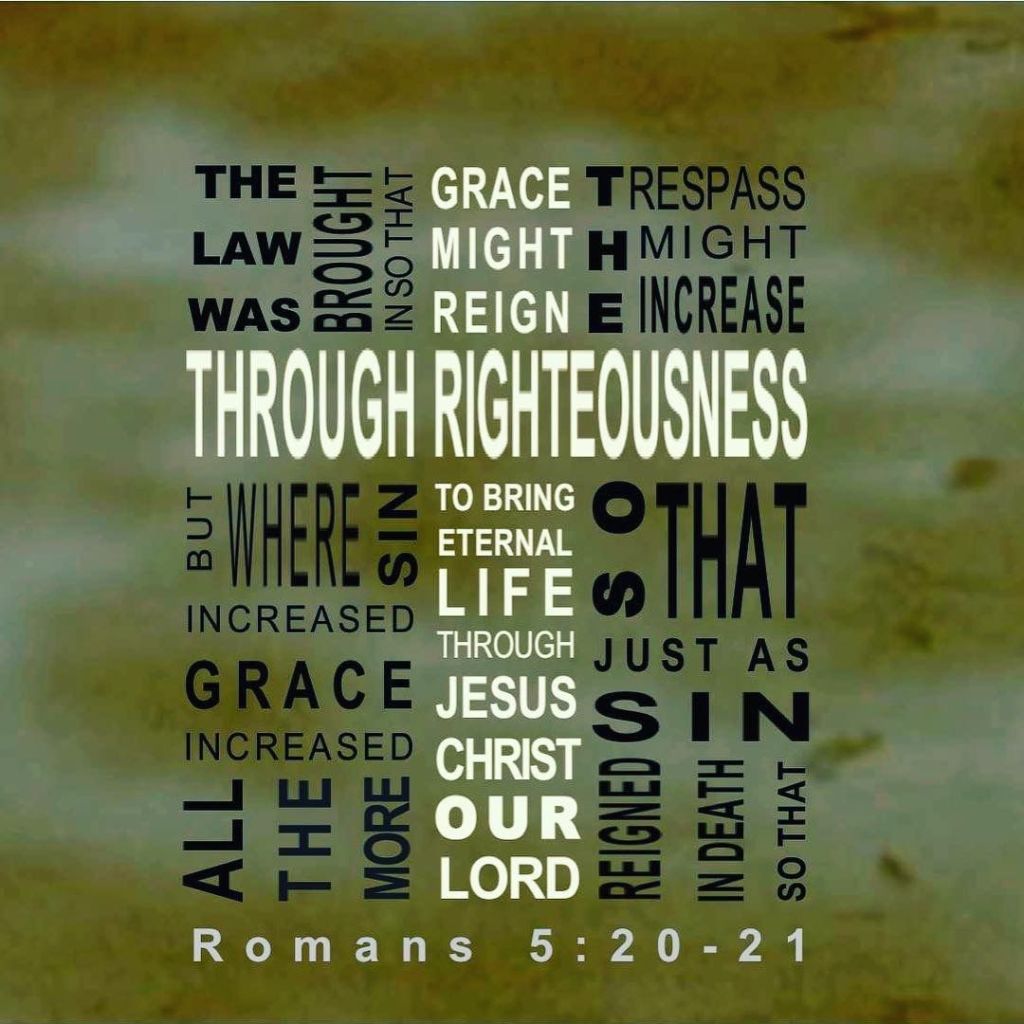


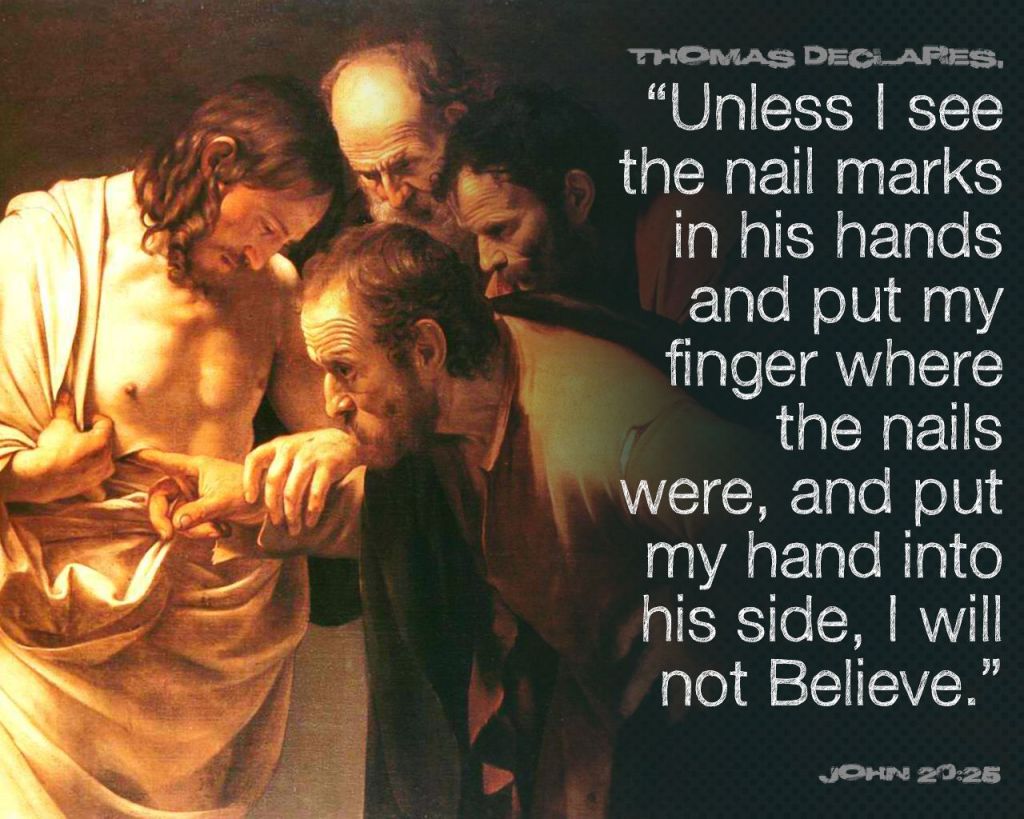

 Loving God, Living God, Loving Hope, Living Hope, Loving Living Life His Way! "Many things are possible for the person who has hope. Even more is possible for the person who has faith. And still more is possible for the person who knows how to love. But everything is possible for the person who practices all three virtues." - Brother Lawrence (1605-1691), Practicing the Presence of God (1692).