The Compelling Truth: What is the Importance of Family Devotions? Deuteronomy 6:4-9

Deuteronomy 6:4-9 Amplified Bible

“Hear, O Israel! The Lord is our God, the Lord is one [the only God]! You shall love the Lord your God with all your heart and mind and with all your soul and with all your strength [your entire being]. These words, which I am commanding you today, shall be [written] on your heart and mind. You shall teach them diligently to your [a]children [impressing God’s precepts on their minds and penetrating their hearts with His truths] and shall speak of them when you sit in your house and when you walk on the road and when you lie down and when you get up. And you shall bind them as a sign on your hand (forearm), and they shall be used as [b]bands (frontals, frontlets) on your forehead. You shall write them on the [c]doorposts of your house and on your gates.

The Word of God for the Children of God.

Adeste Fidelis! Venite Adoremus! Dominum.

Gloria! In Excelsis Deo! Alleluia, Alleluia, Alleluia! Amen.

Parents, Grandparents and God’s Children of all ages and walks of and among life, what first comes to our mind when we meditate about “family devotions”?

Does it include regular times set apart for your family read Scripture? Prayer? Worship in song? Formal Bible instruction with age-appropriate resources?

Yes, all these things and quite a few things more characterize family devotions.

And all serve to glorify and honor God and too will definitely come to benefit our children and our families as we instruct them in what is most important.

I don’t think there’s a mandate to be found in sacred Scripture that is more solemn than this one. That we are to teach our children the truth of God’s Word is a sacred, holy responsibility that God gives to His people. And it’s not something that is to be done only one day a week in Sunday school. We can’t abdicate the responsibility to the church. The primary responsibility for the education of children according to Scripture is the family, the parents.

(R. C. Sproul, “The Most Solemn Mandate in the Bible for Parents,” ligonier.org)

God instructed the nation of Israel in Deuteronomy 6:6–9,

“And these words that I command you today shall be on your heart. You shall teach them diligently to your children, and shall talk of them when you sit in your house, and when you walk by the way, and when you lie down, and when you rise. You shall bind them as a sign on your hand, and they shall be as frontlets between your eyes. You shall write them on the doorposts of your house and on your gates.”

This ancient passage of text makes it abundantly clear that God’s forever intent is for parents to teach their children and each other about God and His ways.

God’s Word should be at the forefront of our lives and the center of our homes.

Thousands of years later, Apostle Paul echoes the importance of these words.

Ephesians 6:4 says, “Fathers, do not provoke your children to anger, but bring them up in the discipline and instruction of the Lord.” One way we teach our children this truth is by coming together as a family to be in God’s Word and praying together.

The wisest of the wise King Solomon: Proverbs 22:6 gives this wisdom: “Train up a child in the way he should go; even when he is old he will not depart from it.”

As parents who love God and who deeply believe and cherish Him, we want to help our, and future generations of children also come to love and believe Him.

Deliberately, Intentionally, Purposefully, our setting aside time for our family devotions each day will show our children that God is the very center of our lives, and spending time with Him is our priority, and we desire to do His will.

We want to show them that it’s okay, God can be the center of their lives, too.

We also want them to be taught, see how God guides them through life in their community, schools, family, and decisions – so they may teach their children.

To raise them up with critically important biblical values that they may one day, as might be needed, to emphasize these values before school board authorities.

Advocate, Communicate, Educate, the highest values of acceptance and sanctity of all life which God indelibly places upon everyone – without any exceptions.

Living, Loving, Moving, Being enveloped in the Word feeds us with everything we need from advice, to wisdom, to morals and ethics and unto His salvation.

It sets us up with a rock solid, sure and certain and steadfast and immovable foundation, a place for all to turn to in times of trials, tribulations, and praise.

Family devotions are a wonderful time for discussions with your children.

As you and your family read through God’s Word together, you can discuss the ways in which it is inescapably relevant to their lives.

For example, some of your discussions might include the ways in which God’s character applies to our understanding of our morals, attitudes and behaviors.

Be sure to not only discuss troublesome behaviors, but positive ones as well.

Your discussions might also include questions about how and why the world works the way it does.

You might just find yourselves talking about your relationships with others and all the ways in which God’s character and His commands help transform those.

These discussions can help your children see that God’s Word is “living and active” (Hebrews 4:12) and “profitable for teaching, for reproof, for correction, and for training in righteousness, that the man of God may be complete, equipped for every good work” (2 Timothy 3:16b–17).

Family devotions help create a firm foundation for your children’s spiritual growth.

In diligently and prudently practicing the spiritual disciplines of reading and studying God’s Word of fellowship and praying together, you help train your children to incorporate and carry these “God” practices with them through life.

You’re also helping them to learn the immeasurable dimensions, the infinite applications of the truth of God’s Word and to come to know, love, Him better.

When we dive into God’s Word, we are teaching our children that God loves and cares about them and us relentlessly.

When we come together to God to pray, to seek Him, we are showing our children we have access to a God who is holy, loving, able to meet our needs.

Our family devotions will likely challenge our faith and contribute infinitely to our spiritual growth as well.

Family devotions also help us meaningfully connect with our children in the midst of a sometimes hectic world.

Taking time to pause to focus on God together is the sweet intimacy of Christian fellowship.

A family time that is deliberately, intentionally, personally, purposely set apart can also serve as a time to honor God and each other, to relate with one another.

As we share our joys and our concerns, our struggles and trials, prayer requests or discuss how God’s Word applies to our lives, we are sharing God in our lives.

Dedicating this time to focus on your children and on God can help strengthen your relationships with your child.

Family devotions do not have to be elaborate.

You can keep them as simple as reading through a passage that pertains to issues you might be facing in your family, to reading through a certain book of the Bible, or purchasing age-appropriate devotional books.

You can include time for worshiping with music if you desire.

Psalm 139:23-24 Amplified Bible

23 
Search me [thoroughly], O God, and know my heart;
Test me and know my anxious thoughts;
24 
And see if there is any wicked or hurtful way in me,
And lead me in the everlasting way.

There is no set time-length that family devotions have to last, but you can be assured that you will soon find this experience to be a joyful time together.

At the conclusion of your time together, pray for God’s goodness in your family, any requests of friends and family, and for His abundant guidance in your lives.

Psalm 139:1-18 Amplified Bible

God’s Omnipresence and Omniscience.

To the Chief Musician. A Psalm of David.

139 O Lord, you have searched me [thoroughly] and have known me.

You know when I sit down and when I rise up [my entire life, everything I do];
You understand my thought from afar.

You scrutinize my path and my lying down,
And You are intimately acquainted with all my ways.

Even before there is a word on my tongue [still unspoken],
Behold, O Lord, You know it all.

You have enclosed me behind and before,
And [You have] placed Your hand upon me.

Such [infinite] knowledge is too wonderful for me;
It is too high [above me], I cannot reach it.


Where can I go from Your Spirit?
Or where can I flee from Your presence?

If I ascend to heaven, You are there;
If I make my bed in Sheol (the nether world, the place of the dead), behold, You are there.

If I take the wings of the dawn,
If I dwell in the remotest part of the sea,
10 
Even there Your hand will lead me,
And Your right hand will take hold of me.

11 
If I say, “Surely the darkness will cover me,
And the night will be the only light around me,”

12 
Even the darkness is not dark to You and conceals nothing from You,
But the night shines as bright as the day;
Darkness and light are alike to You.

13 
For You formed my innermost parts;
You knit me [together] in my mother’s womb.

14 
I will give thanks and praise to You, for I am fearfully and wonderfully made;
Wonderful are Your works,
And my soul knows it very well.
15 
My frame was not hidden from You,
When I was being formed in secret,
And intricately and skillfully formed [as if embroidered with many colors] in the depths of the earth.

16 
Your eyes have seen my unformed substance;
And in Your book were all written
The days that were appointed for me,
When as yet there was not one of them [even taking shape].

17 
How precious also are Your thoughts to me, O God!
How vast is the sum of them!
18 
If I could count them, they would outnumber the sand.
When I awake, I am still with You.

Remember to always praise God for His answers to your prayers, too.

Create an environment that is calm, loving, and memorable, one that your children will want to foster, nurture, impress, upon the lives of their children.

“But grow in the grace and knowledge of our Lord and Savior Jesus Christ. To him be the glory both now and to the day of eternity. Amen” (2 Peter 3:18).

Family devotions are a crucial means of declaring, living out family priorities.

By turning to God’s Word and prayer together every day (or most days, at least), we model the uncompromising centrality of these practices in our Christian life.

These daily times together will also prove an important means of our building closeness within our family…

Our devotions call us to a family experience each day.

Hebrews 6:19-20 Amplified Bible

19 This hope [this confident assurance] we have as an anchor of the soul [it cannot slip and it cannot break down under whatever pressure bears upon it]—a safe and steadfast hope that enters within the veil [of the heavenly temple, that most Holy Place in which the very presence of God dwells],20 where Jesus has entered [in advance] as a forerunner for us, having become a High Priest forever according to the order of [a]Melchizedek.

Our time away with God, the Father, Son and Holy Spirit and each other gives expression to this “confident assurance” we have all an anchor for our souls.

We each have our own hopes and dreams we desire to see lived in each other.

And while few of them are remarkably miraculous on their own, it is their gradual and steadfast accumulation which will add up to something special.

And then there is the benefit of building a habit that adds structure and stability to the family’s shared life.

As we have emphasized family devotions, we will gradually find out it becomes a kind of disciplined, organizing structure to the God life we all share together…

Through disciplined family devotions we model our own discipline of personal devotions, for the two closely, inextricably, inescapably, resemble one another.

By relating to the Lord as a family, we teach how to relate to him as individuals.

Growing up in a prayer-filled home is a beautiful and powerful thing.

Parents can pray over their children from the moment they are conceived through adulthood.

Children can learn alongside their parents how to pray to the Lord themselves.

Siblings can pray for and with one another as they resolve conflict and build strong relationships.

Extended family can cover loved ones in prayer through both joyful and challenging seasons.

Families can pray together more often than just before dinner, and it can be a life-changing and spiritually transformative experience that not only brings family members closer to God, but blessedly, ultimately closer to one another! 

It is the kind of disciplined habit, perhaps like eating and praying together, and attending church together, that anchors family to the centrality of Jesus Christ.

In the name of God, the Father and God the Son and God the Holy Spirit,

Let us Pray,

“Let the message of Christ dwell among you richly as you teach and admonish one another with all wisdom through psalms, hymns, and songs from the Spirit, singing to God with gratitude in your hearts. And whatever you do, whether in word or deed, do it all in the name of the Lord Jesus, giving thanks to God the Father through him.” Colossians 3:16-17

Lord, I pray that the message of Christ and his sacrifice is the root of gratitude in my and my family’s heart. That His gracious gift leads me and my family into thankful living, setting a timeless example for the rest of my family and their children. That they will have their own truly abiding relationship with Jesus one day, and that You would grow gratitude in their hearts out of the acceptance of Jesus as their Savior. Lead us to do everything in the name of Jesus and give thanks to You through Him.

Adeste Fidelis! Venite Adoremus! Dominum.

Gloria! In Excelsis Deo! Alleluia, Alleluia, Alleluia, Amen.

https://translate.google.com/

Hearing God’s Voice? 1 Samuel 3:1-10

1 Samuel 3:1-10 English Standard Version

The Lord Calls Samuel

Now the boy Samuel was ministering to the Lord in the presence of Eli. And the word of the Lord was rare in those days; there was no frequent vision.

At that time Eli, whose eyesight had begun to grow dim so that he could not see, was lying down in his own place. The lamp of God had not yet gone out, and Samuel was lying down in the temple of the Lord, where the ark of God was.

Then the Lord called Samuel, and he said, “Here I am!” and ran to Eli and said, “Here I am, for you called me.” But he said, “I did not call; lie down again.” So he went and lay down.

And the Lord called again, “Samuel!” and Samuel arose and went to Eli and said, “Here I am, for you called me.” But he said, “I did not call, my son; lie down again.” Now Samuel did not yet know the Lord, and the word of the Lord had not yet been revealed to him.

And the Lord called Samuel again the third time. And he arose and went to Eli and said, “Here I am, for you called me.” Then Eli perceived that the Lord was calling the boy. Therefore Eli said to Samuel, “Go, lie down, and if he calls you, you shall say, ‘Speak, Lord, for your servant hears.’” So Samuel went and lay down in his place.

10 And the Lord came and stood, calling as at other times, “Samuel! Samuel!” And Samuel said, “Speak, for your servant hears.”

The Word of God for the Children of God.

Adeste Fidelis! Venite Adoremus! Dominum.

Gloria! In Excelsis Deo! Alleluia, Alleluia, Alleluia, Amen.

Hearing the voice of God is something that everyone, Christian or not, wants to experience.

Although we all want to hear God, actually doing it, for most of us, is sort of a mysterious process.

We often don’t know how to hear God consistently, if at all.

Yet hearing and understanding what God is saying is critical for our spiritual development.

As we look at people in the Bible who heard from God, Samuel was one of the best.

The story of Samuel is found in 1 Samuel 3:1-10.

Samuel, who was just a boy, was living and serving the priest in the temple.

We are told that, “the word of the LORD was rare in those days” (v.1 ESV).

Not many people were hearing the voice of God.

Yet this rare young man was about to experience something people in the land of Israel had not seen nor had heard for quite some time; Samuel was about to clearly and succinctly hear his name called from the LORD three times.

As we look at this story about Samuel, we can discern there are six steps which can take some of the mystery out of clearly, succinctly hearing the voice of God:

1. Position Yourself Close to God

Samuel set his bed up in the temple, “where the ark of God was(v.3 ESV).

Samuel had never heard God speak before.

Samuel did not know what to expect, but what he did know was that if he hung around the temple, God would eventually show up.

Through Bible Study, personal devotions, times of fellowship, and regular church attendance, are we now putting ourselves in a place where God is?

2. Find a Place of Regular Service to God

In v.1 it says, “Samuel was ministering to the LORD in the presence of Eli(ESV).

If we want to hear the voice of God, we have to be doing the things of God.

If we’re not serving, don’t wonder why we are not hearing the voice of God.

3. Listen for God’s voice

Eli was “lying down in his usual place(v.2 NIV), too set in his own ways, too set, too accepting in the past lack, the rarity of revelation, too preoccupied with his own, son’s interests, his own physical and spiritual limitations to hear God.

When God began speaking, he was not used to listening.

He too easily accepted the unchangeable; the precious rarity of God’s voice.

Status Quo was the Status Quo …

Who before him had taught and mentored him on how to listen for God?

Many times to hear what God is saying we have to slow down and take time to get close to God.

We have to put aside our interests and lean in to hear what God is saying.

How close was Eli to God?

How accepting was Eli that even at his current season and stage and condition of life, he could still get closer to God – “teaching an old soul new ‘God’ truths?

How accepting are we ourselves, in our current seasons, stages and conditions of life, that we too can still get closer to God – “teaching us new ‘God’ truths?

4. When God Calls, Respond Eagerly

When we hear our parents calling to us, we look to respond eagerly.

When we hear our spouses calling to us, we look to respond eagerly.

When we hear our children calling to us, we look to respond eagerly.

When Samuel first heard his name called, even in the middle of the night he got out of his bed, rushed to Eli’s bedside to inquire of Eli: “why have you called?”

This repeated itself three times until Eli finally realized it was truly God calling.

When Samuel heard, recognized the voice of the Lord he was immediately up and moving (v.4) and declaring – “Speak Lord, for Your Servant is Listening!”

If we want to hear the voice of God, we need to be not just ready to put ourselves into action eager to do what He tells us – we need to be obedient enough to do it!

James 1:17-22 English Standard Version

17 Every good gift and every perfect gift is from above, coming down from the Father of lights, with whom there is no variation or shadow due to change.[a]  18 Of his own will he brought us forth by the word of truth, that we should be a kind of first fruits of his creatures.

Hearing and Doing the Word

19 Know this, my beloved brothers: let every person be quick to hear, slow to speak, slow to anger; 20 for the anger of man does not produce the righteousness of God. 21 Therefore put away all filthiness and rampant wickedness and receive with meekness the implanted word, which is able to save your souls.

22 But be doers of the word, and not hearers only, deceiving yourselves.

5. When God Speaks, Obey Him

Starting in this passage and throughout the rest of his life, Samuel consistently obeyed the Lord.

No matter what God told him, Samuel did it.

From that point on, “the LORD was with him and let none of his words fall to the ground(1 Samuel 3:19 ESV).

For us, probably the quickest way to turn off God’s voice is to disobey him.

6. Read and Study the Word of God

After God spoke to him in this passage, the Bible tells us,

The LORD continued to appear at Shiloh, and there He revealed Himself to Samuel through His Word (1 Samuel 3:21 NIV).

If you want to hear from God, you have to know what the Bible says.

God is speaking.

God wonders to what extent we are genuinely listening.

God wonders to what extent we are genuinely hearing Him.

He wants to give you wisdom to lead your family, at your job, in your church, and in every area of life.

The questions we have to be asking ourselves is not whether God is speaking, but whether or not we are hearing Him, and whether or not we are listening?

In the name of God, the Father and God the Son and God the Holy Spirit,

Let us Pray,

Savior Jesus, Giver of boundless peace and wisdom, I so easily get distracted when I’m trying to focus and hear your Holy Spirit. Help me to quiet my mind in the middle of my busy life. Help me to pause and to make space to listen to the most important voice of all. Empower me to be a good listener to the gentle whispers of your Spirit. Help me follow the example of Jesus, who would slip away in the evening or the early morning to be alone with you. Teach me to listen, to hear and to abide in you. Amen.

https://translate.google.com/

Becoming Like Christ: Steps Towards Spiritual Freedom. 2 Corinthians 3:17

2 Corinthians 3:12-18 Amplified Bible

12 Since we have such a [glorious] hope and confident expectation, we speak with great courage, 13 and we are not like Moses, who used to put a veil over his face so that the Israelite’s would not gaze at the end of the glory which was fading away. 14 But [in fact] their minds were hardened [for they had lost the ability to understand]; for until this very day at the reading of the old covenant the same veil remains unlifted, because it is removed [only] in Christ. 15 But to this day whenever Moses is read, a veil [of blindness] lies over their heart; 16 but whenever a person turns [in repentance and faith] to the Lord, the veil is taken away. 17 Now the Lord is the Spirit, and where the Spirit of the Lord is, there is liberty [emancipation from bondage, true freedom]. 18 And we all, with unveiled face, continually seeing as in a mirror the glory of the Lord, are progressively being transformed into His image from [one degree of] glory to [even more] glory, which comes from the Lord, [who is] the Spirit.

The Word of God for the Children of God.

Adeste Fidelis! Venite Adoremus! Dominum.

Gloria! In Excelsis Deo! Alleluia, Alleluia, Alleluia, Amen.

Becoming Like Christ

2 Corinthians 3:15-18 Amplified Bible

15 But to this day whenever Moses is read, a veil [of blindness] lies over their heart;  16 but whenever a person turns [in repentance and faith] to the Lord, the veil is taken away. 17 Now the Lord is the Spirit, and where the Spirit of the Lord is, there is liberty [emancipation from bondage, true freedom]. 18 And we all, with unveiled face,  continually seeing as in a mirror the glory of the Lord, are progressively being transformed into His image from [one degree of] glory to [even more] glory, which comes from the Lord, [who is] the Spirit.

If the Holy Spirit’s work in us is like the work of a master gardener, what is the Spirit growing in us?

The Spirit wants to reproduce Jesus’ character in us.

Our reading from 2 Corinthians today states that we “are being transformed into [Jesus’] image with ever-increasing glory.”

In other words, the Holy Spirit’s aim is to make us more and more like Jesus.

The Holy Spirit’s work is to nudge us, prod us, move us, transform us and shape us to think and act and be more like our Savior Jesus, for us to better mirror Jesus in our character, to increasingly help us love like Jesus in our daily life.

Of course, it’s not an overnight rush job.

The Spirit doesn’t guarantee delivery in full by 8:00 a.m. the next day—or even within a few days, months, years or decades.

This isn’t the work of a courier driver.

This is the work of the Master Gardener, the One with a master’s vision of the finished garden, the One who daily, gradually toils and works in our lives until the desired spiritual fruit eventually sprouts, blossoms, unto the glory of God.

There are times when the Holy Spirit’s work in us will be immediate, dramatic, and maybe even spectacular.

But usually the Spirit’s work in us is slow, subtle and gentle.

That’s the Holy Spirit’s trademark.

We are made in God’s image, in the image of God we are created, (Genesis 1:26-27) but that sacred image became spoiled and polluted in us because of sin.

So now God is slowly remaking that image in us—to be like our Savior Jesus!

Steps Towards Spiritual Freedom

Have we truly noticed that most of our unrest comes from ourselves?

We get stuck ruminating on the things we can’t change or control.

Un-forgiveness stops us from moving toward healing in our relationships.

Pervasive negativity prevents us from enjoying the moment.

Exhaustion keeps us functioning as only a shadow version of ourselves.

Repeated excuses keep us trying the same things over and over again that are no longer capable of working, are burning bridges and stop us from changing.

Fear, guilt and shame stop us cold from accepting God’s free gift of grace. 

Our unhappiness lives in our souls and finding peace starts as a process of Holy Spirit-led self-discovery.

How many of us will spend our lives turning a blind eye to our own hangups?

In our own stubborn blindness, we refuse to consider that maybe the rhythm of frustration we are up against might be something we have the power to change.

It’s so much easier to render our judgments, and then blame our surroundings.

To point out the sliver in our neighbor’s eye, all while avoiding our own planks. (Matthew 7:1-5)

We so often live stuck in a giant sheet of bubble wrap we wrapped around us.

Thank God He is patient with us! 

Thank God that God knows exactly what to do with bubble wrap – POP IT!

How, then, do we allow ourselves to be “popped by God” to get us past our blindness and grab onto the gracious freedom that God promises each of us?

1. Freedom comes when we abandon pride. 

The path towards freedom begins with a surrendering of the pride we each hold that claims we have what we need to fix ourselves all on our own.

This pride tells us to be ashamed, embarrassed, fearful and humiliated when we don’t live up to our own internal standards.

It relies on rules and religion rather than grace and a relationship with Jesus.

Step one towards freedom and making peace with the people God created us to be is to abandon our pride.

The Bible teaches that pride comes before a fall (Proverbs 16:18), and the humble find wisdom (Proverbs 11:2). 

2. God’s wisdom teaches us how to change. 

Wisdom helps us change.

Only through God’s miraculous truth can we see the way past the same thought processes which keep us trapped, wrapped, in our own fears, shame, bitterness. 

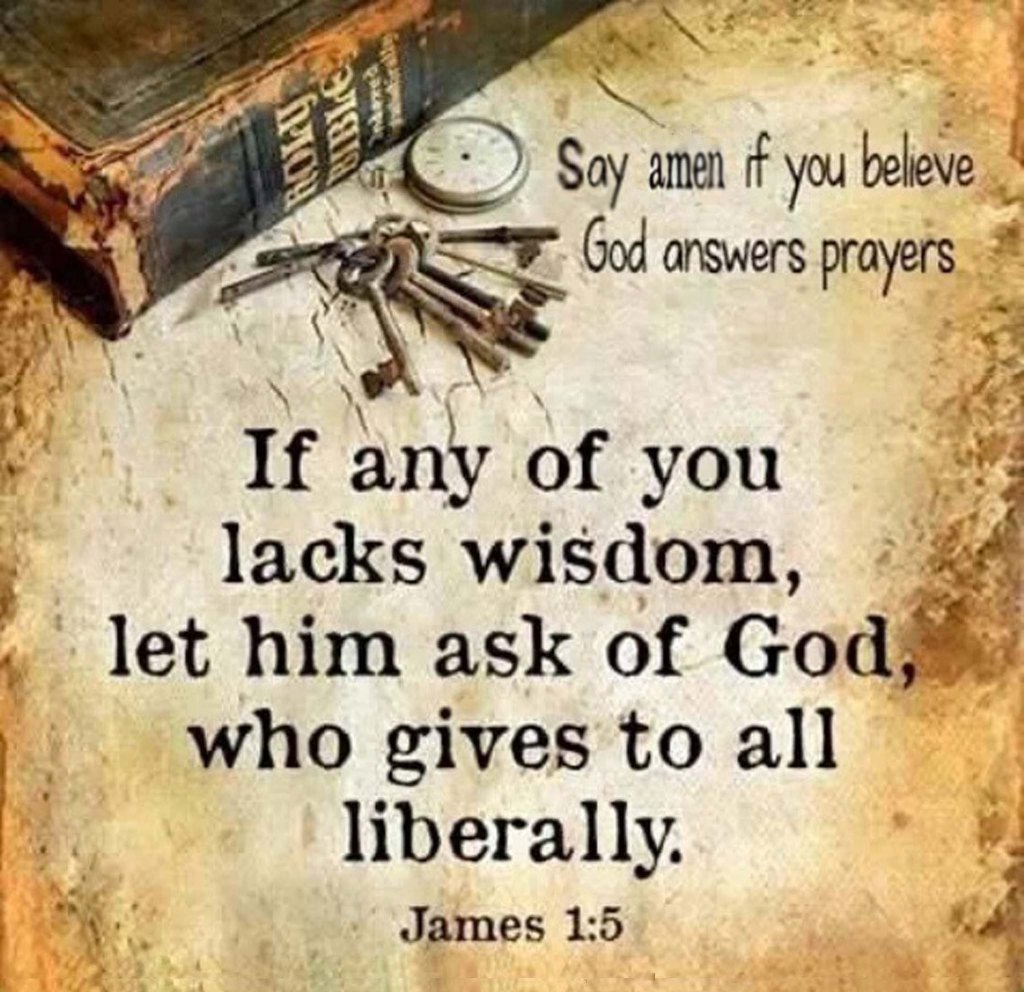
James 1:5 prompts us to ask God for wisdom when we don’t have it.

He gives it freely when we have a humble heart.

When we read and study God’s Word, spend time in his church, seek Him and His Kingdom through prayer, we discover what godly wisdom looks like.

Proverbs 1:7 instructs us that wisdom is found in the context of community.

We have to be willing to accept advice and instruction when we are stuck and looking for a new way forward. 

Proverbs 3:7 tells us that wisdom turns away from evil.

If our own set patterns get us stuck in sin over and over, then God’s wisdom, and our Savior’s Cross, His Resurrection power moves us away from that evil temptation that keeps repeatedly keeps maliciously tugging at our souls.  

3. Freedom points us towards others.

Interestingly God gives us the internal power through the Holy Spirit to find spiritual freedom, not so we can just enjoy ourselves better.

Even though a free you is a happier you and is a you that you can be confident in and enjoy.

The purpose of this Christ-purchased freedom is that we can serve others.

Isaiah 61:1 tells us God’s spirit in our lives gives us the ability to bring good news to the poor, assist the brokenhearted, and set free those imprisoned in this world!

We are set free, so we can help others find that same freedom.

When we find ourselves stuck, wrapped in our own frustrations or even upset with others in our lives because their sin nature is making our lives harder, we are invited to draw on God’s spirit to see new ways to love and to serve others.  

4. God’s spirit sets us free. 

2 Corinthians 3:17 says, “Now the Lord is the Spirit, and where the Spirit of the Lord is, there is freedom.”

There is a mysterious element to spiritual freedom.

Freedom is an indescribable moment or journey that can take time where Heaven meets us here on Earth.

Areas I’ve sought freedom in has been anxiety over diabetes management.

For me, this freedom journey has taken years, but God has been my faithful teacher and sustainer through step forward and backward, each up and down.

Other times our freedom is like a dam breaking all at once.

The old life is washed away in an instant, and a new one is ready to begin.

Why does God work one way in my life and a different way in yours?

That is part of the mystery of the Spirit.

God is connectional and relational and not a rule-based God, which is why each of us has a singularly unique and diverse and vastly different spiritual journey.

One thing the Bible does tell us is that if we want to find freedom in our lives, we have to seek His Kingdom through His Holy Spirit.  

Matthew 6:33 Amplified Bible

33 But first and most importantly seek (aim at, strive after) His kingdom and His righteousness [His way of doing and being right—the attitude and character of God], and all these things will be given to you also.

John 8:36 says, “So if the Son sets you free, you will be free indeed.”

Jesus came to Earth, so we could not only escape death and join his family, but so we could experience freedom in our lives here on Earth.

I am so thankful that God has not left me as I was.

He is always renewing my mind and spirit.

May you, by God’s grace, take steps toward spiritual growth and freedom today.

In the name of God, the Father and God the Son and God the Holy Spirit,

Let us Pray,

Jesus, my Savior, I have been listening to too many lies for far too long. I have been tricked one too many times by the enemy and I am frustrated. I need to be free from these lies. Jesus, I know that You are true and that the truth will set me free. Jesus, help me to rejoice in the truth. I need to believe the truth. I pray that it really would set me free. Help me with my unbelief, Jesus. Holy Spirit, You know my heart, and know that I need help believing. Thank You, Jesus, that You offer truth to Your children. Thank You for Your patience with me. In Your glorious name, I pray.

Adeste Fidelis! Venite Adoremus! Dominum.

Gloria! In Excelsis Deo! Alleluia! Alleluia! Alleluia! Amen.

https://translate.google.com/

How firm a foundation you saints of the Lord, is laid for your faith in his excellent Word! What more can He say than to you He has said, to you who for refuge to Jesus have fled? Praying for Wisdom | James 1:5-8

It has been suggested that a knowledge of one’s own ignorance is the beginning of wisdom and recognizing our lack of wisdom is the first prudent step towards understanding. Proverbs 1:1-7 reminds us of this truth: fear of the Lord is the beginning of wisdom, that a knowledge of the holy brings true understanding.

Life is full of pitfalls and snares, and we often make wrong choices, but it is comforting to know that no matter what trials we may be called upon to face, or what foolish choices we have made in the past, what foolish choices we will definitely and decisively make in the future, how righteous is it to know that we can go to the Lord, ask Him for godly insight and spiritual understanding, and He has promised to give us all the wisdom we can handle, is needed for the task.

1 How firm a foundation, you saints of the Lord,
is laid for your faith in his excellent Word!
What more can he say than to you he has said,
to you who for refuge to Jesus have fled?

James 1:5-8 The Message

5-8 If you don’t know what you’re doing, pray to the Father. He loves to help. You’ll get his help and won’t be condescended to when you ask for it. Ask boldly, believingly, without a second thought. People who “worry their prayers” are like wind-whipped waves. Do not think you are going to get anything from the Master that way, adrift at sea, keeping all your options open.

The Word of God for the Children of God. Gloria! In Excelsis Deo! Alleluia! Amen.

A man was given a tour of heaven in a dream. As the tour ended, he noted one particular building was skipped over. The angel sternly warned that he did not want to see the inside of the building. This only heightened the man’s curiosity. The angel finally showed him. It was a building filled with beautifully wrapped presents. When the man asked what these were, the angel answered these were gifts which God had prepared for his children that were never claimed in prayer.

How many mansions does God have set aside for us? How many rooms are in all of those many mansions? How many are full? How many are empty? How many are unoccupied by God’s children but are used only as simple storehouses? If it’s one building, one mansion in heaven, storing and housing unclaimed gifts, how many boxes would contain unclaimed, unwanted gift of wisdom? When facing trials, we pray for provision, healing, strength, protection, intervention, miracles, deliverance, and so very many other things, besides God’s wisdom.

In this short passage, James, the half-brother of the Lord Jesus, is particularly referencing the wisdom of God we need when compassed about by the various difficulties we encounter in our everyday lives and the tough choices we are all required to make. Until Christ’s resurrection, James was at enmity with God and scornful towards his older sibling. It must have been shocking for this young man to discover that the brother whom he had treated with such contempt, during his life, was his Lord, his Savior, was the source of all the best wisdom.

This bondservant of Christ may have lacked wisdom in his earlier days but was ready to admit his folly and willing to share with us how easy it is to gain godly wisdom and spiritual understanding. James began his lesson on wisdom by pointing out that the suffering of this life produces patient endurance, which will furnish us with spiritual maturity. “However,” he continues, “if any of you lacks wisdom, let him ask of God, who gives to all generously and without reproach, and it will be given to him.” If we do really, seriously, unreservedly, want to know how we can set our ultra-unwise selves aside, James writes.

  • Don’t ask how we entered into or exactly how can get out of our trials.
  • But PRAY! God, the Father, Son, Spirit, what we can get out of our trials?

There are times when we do not know what to do or which way to turn, and I am sure James was shocked and mortified when the resurrected Christ visited his petulant, younger brother. But James was a young man with a teachable spirit, who was quick to embrace the wisdom of faith he lacked and encourages those of us who are deficient in spiritual insight to ask the Lord for all the necessary wisdom we need – and never to doubt that God will provide for us liberally.

James also knows that trusting the Lord for godly wisdom as we travel through life… is a tool the Lord uses to test and strengthen our faith in Him, and which helps to produce in us the patient endurance that is so needful for our spiritual growth – we are reminded to stand fast in the faith unwaveringly – if we are to honor the Lord Who bought us with His precious blood, to come forth as gold.

How much we all need God’s heavenly wisdom in the tests and trials of life’s disappointments and difficulties, which are so much a part of our everyday lives. How much we need His guidance in the choices we have to make, a willingness to admit our faults, a readiness to learn the lessons God desires to teach us, and an eagerness to put into practice the truth we have learned.

James 1:1-4 The Message

I, James, am a slave of God and the Master Jesus, writing to the twelve tribes scattered to Kingdom Come: Hello!

Faith Under Pressure

2-4 Consider it a sheer gift, friends, when tests and challenges come at you from all sides. You know that under pressure, your faith-life is forced into the open and shows its true colors. So don’t try to get out of anything prematurely. Let it do its work, so you become mature and well-developed, not deficient in any way.

James is saying, Pray for the unclaimed, unwanted, but precious gift of wisdom.

James 1:5 says, “If any of you lacks wisdom, let him ask God, who gives generously to all without reproach, and it will be given him.” This verse is a continuation of the previous paragraph. Verses 2-4 says, “Count it all joy, my brothers, when you meet trials of various kinds, for you know that the testing of your faith produces steadfastness. And let steadfastness have its full effect, that you may be perfect and complete, lacking in nothing.”

Then here it seems that James abruptly shifts to the subject of prayer. But the two passages are connected. The link is the word “lack.” Verse 4 says that the purpose of trials is to become “perfect and complete, lacking nothing.” Verse 5 says, “If any of you lacks wisdom, let him ask God.”

It is God’s will for you to become a mature Christian that lacks no good thing. But we need to grow up. But we need our trials to know how to “gird ourselves” to mature in our faith. Our faith is always going to somehow be incomplete. We consistently lack needed virtues for godly living against all situations. We can in no way predict who, what, where when and why of every exact situation. One thing we always lack is wisdom. God uses trials to expose our need for wisdom.

James 1:5-8 teaches that God freely provides wisdom to face life’s trials to those who come to him in believing prayer. Vance Havner said it well: “If you lack knowledge, go to school. If you lack wisdom, get to God on your knees!”

How do you access the wisdom you need to face life’s trials?

Ask God for Wisdom.

Verse 5 says, “If anyone of you lacks wisdom, let him ask God, who gives generously to all without reproach, and it will be given him.”

The Problem. Verse 5 begins: “If any of you lacks wisdom…” This conditional statement does not suggest some do not need wisdom. James states the fact in a way that requires each person to examine himself and be humble enough to confess need for wisdom. No one is perfect in wisdom! (1 Corinthians 1:18-25)

What is wisdom? In scripture, wisdom is not academic, philosophical, or intellectual. Wisdom is not knowledge. Wisdom requires knowledge. But you can have knowledge and not be wise. You can be an “over-educated fool.” Our world is truly filled with them. We live in truly the most skilled, knowledgeable, and advanced generation ever. We also live in the most profane, violent, and hedonistic generation ever. We have our knowledge. We lack God’s wisdom.

Wisdom begins with a certain kind of knowledge. Psalms 14:1 says, “The fool says in his heart, ‘There is no God.’” Proverbs 9:10 says, “The fear of the Lord is the beginning of wisdom, and the knowledge of the Holy One is insight.” This knowledge of God comes through God’s self-revelation of himself in scripture. The wisdom of God is found in the word of God.

Our Lord and Savior Jesus Christ is the incarnate wisdom of God. (John 1:1-5)

Colossians 2:3 says in Christ “are hidden all the treasures of wisdom and knowledge.” When Adan and Eve sinned in the Garden of Eden, they made fools of us all. But God sent his Son into the world to live a righteous life, die on the cross for our sins, and rise from the dead to give us new life. The gospel is able to make you wise for salvation through faith in Christ. But saving faith does not automatically produce perfect wisdom. Jesus is the answer. That does not mean you will not have to face life’s difficult questions.

Proverbs 4:7 says, “Get wisdom, and whatever you get, get insight.”

The Prescription. God is the source of all wisdom. To receive wisdom to face life’s trials, ask God for it. The prescription for wisdom is simple yet dynamic. You do not need time, experience, or education to be wise. The young, naive, and unlearned can ask God for wisdom. There is never a time God is unavailable.

The prescription is personal: “let him ask God.” You need godly people in your life to intercede for you. But there are things you need from God you will not receive from the intercession of others. You must ask God for yourself. If you need wisdom, you do not have only to go to your pastor, visit a counselor, inform your prayer partners, or go to your family and friends. They are 100% important. But true wisdom you need to face life’s trials is only a prayer away.

God gives. After commanding to us ask God for wisdom, James describes the character of God that makes him inclined to grant our request. God is a giving God. It is wrong to view God with clenched fists that must be pried open. God’s arms are outstretched. God’s hands are full, open, and ready to give. God’s pitcher is tilted toward his children to pour out blessings (Matthew 7:11).

God gives generously. The word “generously” means to be simple, single, or sincere. It is that which is pure. James uses the term to say God’s gifts are true gifts. Proverbs 23:1-3 says, “When you sit down to eat with a ruler, observe carefully what is set before you, and put a knife to you throat if you are given to appetite. Do not desire his delicacies, for they are deceptive food.” Sometimes a person’s generosity is not genuine generosity. That is not the case with God (Romans 11:35). God gives generously, liberally, purely, sincerely, and freely.

God gives generously to all. Divine generosity is nondiscriminatory. God does not play favorites. He is no respecter of persons. In Matthew 20:1-16, Jesus tells a parable about a landowner who kept going to the marketplace to hire workers. He hired workers early in the morning. he hired workers before the end of the workday. But he chose to pay them all the same things. The early birds whined, grumbled against the landowner. The landowner responded, “Don’t I have the right to do what I want with what belongs to me?” Indeed, God has the right to do what he wants. In his sovereign grace, he chooses to be generous to all.

God gives generously to all without reproach. You may know people who could help in your time of need. But are they the first people you want to help because of the lecture you will hear when you ask for help? You would never hear the end of it after they help. God will never chastise you for asking him for His wisdom.

  • You do not have to worry God is too busy running the world to help you.
  • You do not have to worry God may mock you for not knowing how to face life’s trials.
  • You do not have to worry God will become irritated because you ask for the same thing.

The Promise. When Solomon became king of Israel, God signed a blank check and gave it to him. In 1 Kings 3:5, God said to Solomon, ask what I shall give you.” What should you ask for if you had a guarantee that God would grant your request? In 1 Kings 3:9, Solomon asked, “Give your servant an understanding mind to govern your people, that I may discern between good and evil, for who is able to govern this your great people?”

Solomon asked for wisdom. This request so pleased God that he gave Solomon wisdom and threw in wealth, longevity, and success. The wisdom God gave Solomon was not an exclusive gift. God has signed a check and made it out to any believer in Christ who asks for wisdom. All you have to do is endorse it in prayer. Verse 5 says, “If any of you lacks wisdom, let him ask God, who gives generously to all without reproach, and it will be given him.”

James 1:5 promises those who ask God will receive wisdom, not answers. All too often, answers become idols. We are in many ways like Job, who demanded to interrogate God about his suffering. When God finally took the witness stand, Job was interrogated with questions and never answered one of Job’s questions. Yet Job emerged with greater wisdom. This is precisely how Savior God works.

Wisdom is not a spiritual navigation system with turn-by-turn directions. It is spiritual alertness to see the potholes in the road, or the guy who darts in front of you, and respond in a wiser way that does not ruin your Christian wisdom, dishonor the Lord, or discourage other believers.

Trust God for Wisdom.

There is a natural and critical progression in the text. Trials demand wisdom. Wisdom demands prayer. Prayer demands faith.

Verse 5 commands us to ask God for wisdom. Verses 6-8 explain how to ask God for wisdom. Verse 5 is an open gift every Christian can claim. Verse 6-8 establish an essential condition for receiving the promise. As you ask God for wisdom, trust God for wisdom.

God responds to the one who prays in faith. Verse 6 says, “But let him ask in faith.” God generously gives wisdom without reproach to all who ask him. But God requires that we ask in faith. This requirement applies to anything you ask.

Hebrews 11:6 says, “And without faith it is impossible to please him, for whoever would draw near to God must believe that he exists and that he rewards those who seek him.”

Whatever you ask in prayer must be asked in faith. James specifies that when you pray for wisdom, you must ask in faith. In Mark 11:22-24, Jesus says, “Have faith in God. Truly I say to you, whoever says to this mountain, ‘Be taken up and thrown into the sea,’ and does not doubt in his heart, but believes what he says will come to pass, it will be done for him. Therefore, I tell you, whatever you ask in prayer, believe that you have received it, and it will be yours.”

God rejects the one who prays with doubt. Verse 6 says, “But let him ask in faith, with no doubting.” There is a sense in which double is a friend of faith, not its enemy. Doubt is the ants in the pants of faith. It keeps faith alive, awake, and alert. Yet James commands us to ask in faith with no doubting. It is a prohibition against spiritual indecisiveness that wavers between trust and double. Doubt your doubts and believe your beliefs!

What God thinks about the doubter. Verse 6 says, “But let him ask in faith, with no doubting, for the one who doubts is like a wave of the sea that tis driven and tossed by the wind.”

This marine analogy is one of many images from nature in James. Growing up with his half-brother Jesus near the Sea of Galilee, James was familiar with storms at sea. Winds drove the waves in one direction, then another. Winds tossed the waves, lifting them high and then crashing them down. It is the kind of storm the disciples experienced that caused them to wake up Jesus and ask, “Teacher, do you not care that we are perishing?” (Mark 4:38) The one who doubts is like a wave of the sea driven and fearfully tossed about by the wind.

Psalm 107:23-30 Authorized (King James) Version

23 They that go down to the sea in ships,
that do business in great waters;
24 these see the works of the Lord,
and his wonders in the deep.
25 For he commandeth, and raiseth the stormy wind,
which lifteth up the waves thereof.
26 They mount up to the heaven,
they go down again to the depths:
their soul is melted because of trouble.
27 They reel to and fro, and stagger like a drunken man,
and are at their wits’ end.
28 Then they cry unto the Lord in their trouble,
and he bringeth them out of their distresses.
29 He maketh the storm a calm,
so that the waves thereof are still.
30 Then are they glad because they be quiet;
so he bringeth them unto their desired haven.

What the doubter thinks about God. The doubter lives with a foolish assumption. He supposed he can pray with doubt and receive an answer to his prayers. She supposes God will grant her request even though she does not trust God for what she asks. The doubter is confused about who God is and how God works. James disabused the doubter of this erroneous supposition.

James 1 Verse 7 says, “For that person must not suppose that he will receive anything from the lord.” James 1:2, James addresses his readers as “brothers,” a term of spiritual communion used throughout this letter. James addresses the doubter in verse 6 as “that person,” disassociating himself from the one who prays with doubt.

“For that Person must not suppose he will receive anything from the Lord.” “Anything” is not absolute. Matthew 5:45 says, God “makes his sun rise on the evil and the good and sends his rain on the just and on the unjust.” This is called “common grace.” It is the favor of God put out one all humanity.

James does not mean God refuses to do absolutely anything for the one who doubts. “Anything” must be understood in the context of prayer.

God does many things for doubters. But the doubter should never think he or she will receive anything they ask God for in prayer.

James states this as a divine command: “For that person must not suppose that he will receive anything from the Lord.” Doubt receives God’s rejection slip that reads: “Request denied due to insufficient faith.”

Verse 8 gives readers a final, devastating description of the one who believes but doubts: “he is a double-minded man,” unstable in all his ways.” “Double-minded” is unique to this epistle. Scholars believe James coined the term. It means to have two souls. It is to be two different people. Yet the term does not suggest duplicity or deceitfulness. It describes something far worse: Doubt rooted in divided loyalties.

Deuteronomy 6:4-5 declares, “Hear, O Israel: The Lord our God, the Lord is one. You shall love the Lord your God with all your heart and with all your soul and with all your might.”

There is one God. This One God alone demands every last ounce of your total devotion. Doublemindedness is exact the opposite of such complete devotion.

James 4:8 says, “Draw near to God, and he will draw near to you. Cleanse your hands, you sinners, and purify your hearts, you double-minded.”

The doubled minded has a sinful heart which needs to be purified to draw near to God (Psalm 51).

This is how a 21st Century version of James would describe the one who doubts.

  • He is a double-minded man.
  • He is a fence-straddler.
  • He is “Mr. Facing-Both-Ways.”
  • He is a walking civil war.
  • He trusts, but he doubts.
  • He hopes for the best but expects the worst.
  • He tries to be a “best friend forever” of the world and God at the same time.

In 1 Kings 18:21, Elijah the prophet confronts the double-minded children of Israel: “How long will you go limping between two different opinions? IF the Lord is God, follow him; but if Baal, then follow him.”

Proverbs 3:5-6 says,

“Trust in the Lord with all your heart, and do not lean on your understanding. In all your ways acknowledge him, and he will make straight your paths.”

How Firm a Foundation Author: K. (1787)Author (attributed to): George Keith (1787)Author (attributed to): R. Keen (c. 1787)

1 How firm a foundation, you saints of the Lord,
is laid for your faith in his excellent Word!
What more can he say than to you he has said,
to you who for refuge to Jesus have fled?

2 “Fear not, I am with you, O be not dismayed,
for I am your God and will still give you aid;
I’ll strengthen you, help you, and cause you to stand,
upheld by my righteous, omnipotent hand.

3 “When through the deep waters I call you to go,
the rivers of sorrow shall not overflow,
for I will be with you, your troubles to bless,
and sanctify to you your deepest distress.

4 “When through fiery trials your pathway shall lie,
my grace all sufficient shall be your supply;
the flames will not hurt you; I only design
your dross to consume and your gold to refine.

5 “The soul that on Jesus has leaned for repose
I will not, I will not, desert to its foes;
that soul, though all hell should endeavor to shake,
I’ll never, no never, no never forsake!”

In the name of God, the Father and God the Son and God the Holy Spirit,

Let us Pray,

Lord of wisdom, I sometimes finding understanding the Bible to be difficult. I know you want me to apply your word to my life. I thank you for giving me your word so I can grow in my relationship with you. Help me grasp what you want me to know as I read your revealed word. Open my eyes to see the wonderful truths in your instructions. Be my teacher, so I can live and obey your word. Thank you for your ever greater, wiser advice. Alleluia! Alleluia! Alleluia! Amen.

https://translate.google.com/