Romans 15:4 "For whatever was written in earlier times was written for our instruction, so that through perseverance and the encouragement of the Scriptures we might have hope."
Learning to seek the face of God is the foundation for experiencing the amazing life Jesus died to give us.
We have available to us through Christ all the wonders, excellencies, and satisfaction we can fathom. God has granted us grace upon grace, mercy upon mercy, affection upon affection, and love upon love.
When we pursue him through all the avenues available to us, a door is opened in which we discover all our heavenly Father longs to give us.
May you grow in your pursuit of God this week as we study various ways we have been given to seek his face.
Matthew 4:1-4 Amplified Bible
The Temptation of Jesus
4 Then Jesus was led by the [Holy] Spirit into the wilderness to be tempted by the devil. 2 After He had gone without food for forty days and forty nights, He became hungry. 3 And the tempter came and said to Him, “If You are the Son of God, command that these stones become bread.” 4 But Jesus replied, “It is written and forever remains written, ‘Man shall not live by bread alone, but by every word that comes out of the mouth of God.’”
Gloria! In Excelsis Deo! Alleluia, Alleluia, Alleluia, Amen.
Nice weather, family barbeques, parades, fireworks and red, white and blue everything – Americans all over the world are in the process of preparing to celebrate Independence Day today with time-honored and beloved traditions.
Known now as a day of patriotism and enjoying time off from work.
The Fourth of July began the journey to becoming a quintessential American holiday in 1776, when the Second Continental Congress adopted the Declaration of Independence.
Though 12 of the 13 American colonies had already approved the resolution by July 2, 1776, even prompting John Adams to write his daughter with predictions of future July Second festivities, the actual document declaring independence from Britain wasn’t officially adopted until July 4, 1776.
Some Americans began celebrating the very same year, though the practice would not become widespread until the aftermath of the War of 1812.
Congress finally passed a bill making the celebration of Independence Day a federal holiday on June 28, 1870.
In 1941, the law was amended to make it a paid holiday for federal employees.
Though some traditions associated with the Fourth of July have changed or disappeared over time – such as hosting mock funerals for the king of England, for example – many have remained righteous and true to their roots in the almost 250 years since the declaration was signed.
Barbeques and Picnics
Independence Day falling in early July is probably reason enough to enjoy a meal outside to take advantage of the warm summer weather.
The urge to fire up the grill and lay a picnic blanket out on the grass, however, can also be tied back to original holiday celebrations.
What we now know as barbeque food began as a form of cooking brought to the Americas by enslaved Africans.
It would take many years before it would become a staple of the national diet.
Instead, revelers of the day probably would have attended a community pig or bull roast or seafood boil.
It wasn’t until about 100 years after independence that barbeque went from being a food for poor, enslaved people to being popularized on a national scale.
Feasting and drinking “was true of really elite people but also of the really poor, and the common, even enslaved people, not just on the Fourth of July, but other holidays would come to use this idea of BARBECUE and COOKOUTS as a chance to kind of build community and think about what it meant to be an American.
Seeking and Feasting on the Lord through Scriptures
Deuteronomy 8:1-3 Amplified Bible
God’s Gracious Dealings
8 “Every commandment that I am commanding you today you shall be careful to do, so that you may live and multiply, and go in and possess the land which the Lord swore [to give] to your fathers. 2 And you shall remember [always] all the ways which the Lord your God has led you these forty years in the wilderness, so that He might humble you and test you, to know what was in your heart (mind), whether you would keep His commandments or not. 3 He humbled you and allowed you to be hungry and fed you with manna, [a substance] which you did not know, nor did your fathers know, so that He might make you understand [by personal experience] that man does not live by bread alone, but man lives by every word that proceeds out of the mouth of the Lord.
Israel had spent four hundred years of their existence suffering under the yoke of hardcore slavery in Egypt – building Egyptian cities and its infrastructure.
Finally, God sent Moses to Egypt and after great, powerful and miraculous displays of His power over the land of Egypt, and Israel had their freedom.
Israel had then spent forty years of fasting on manna and water in the desert, but Moses still had to so much to teach them what that long fast was all about.
In their wanderings they needed to be shepherded to know that every moment of their lives utterly and completely depended on God and his Word for them.
Israel had plenty to eat when they left Egypt, for they had taken their flocks and herds with them (Exodus 12:38).
But the food that really kept them alive was the daily manna which God spoke into existence, and the drink that really quenched their thirst was the water that God sweetened and the water that flowed from rocks split by his mighty Word (see Exodus 15:22-17:7).
When Israel left behind the food of Egypt and limited themselves to their own herds, that was not fasting.
In the desert God’s people received a new menu: “every word that comes from the mouth of the Lord.”
In a nutshell it comes down to this: “Celebrate the Lord, Feast on the Lord, Love the Lord thy God with everything you have, and love your neighbor as yourself.“
Fasting enables Christ’s disciples to eat from the new menu, the Word of God.
Real fasting imitates the example of Christ, who did not give in to temptations to make his own food during his forty-day fast, who lived only by every word that comes from the mouth of God, and who repeatedly said: “It is written.”
Are you following Christ’s example today?
Am I following Christ’s example today?
Is the Body of Christ, God’s Church in the World, following Christ’s example?
Celebrating and Seeking The Lord Through Scripture
Matthew 4:1-4 GOD’S WORD Translation
The Temptation of Jesus
4 Then the Spirit led Jesus into the desert to be tempted by the devil. 2 Jesus did not eat anything for 40 days and 40 nights. At the end of that time, he was hungry.
3 The tempter came to him and said, “If you are the Son of God, tell these stones to become loaves of bread.”
4 Jesus answered, “Scripture says, ‘A person cannot live on bread alone but on every word that God speaks.’ ”
From Genesis to Revelation, the pages of Scripture are filled with declarations of the wonderful, mysterious, powerful, loving nature of our heavenly Father.
Holy Scripture is one of God’s greatest gifts to his people, who so easily forget the vast labor of love He has undergone to gain restored relationship with us.
The Bible is the truest and most loyal and faithful companion to all those who long to seek and find the invisible God who so greatly desires to be discovered.
Let’s open our hearts today to Scripture and the Holy Spirit and receive fresh revelation on how God longs to use his word to guide us as we seek his face.
In Matthew 4:4 Jesus rebukes Satan’s words of temptation saying, “Man shall not live by bread alone, but by every word that comes from the mouth of God.”
From Genesis to Revelation, the truths of God’s Holy Scriptures is meant to be the very sharpest of rebukes to the smooth talking temptations of Satan’s lies.
There is no truth to be found anywhere in the words of Satan, the Father of Lies.
2 Timothy 3:15-16 GOD’S WORD Translation
15 From infancy you have known the Holy Scriptures. They have the power to give you wisdom so that you can be saved through faith in Christ Jesus. 16 Every Scripture passage is inspired by God. All of them are useful for teaching, pointing out errors, correcting people, and training them for a life that has God’s approval.
From Genesis to Revelation, every single word of Scripture is meant to fill us with the truths of abundant life by leading us directly to our heavenly Father.
The matchless power of Scripture lies in the fact that its pages are filled with the spoken words of a God who is still ALIVE, active, powerful, and loving.
Early in my Christian walk I realized I went years using Scripture incorrectly.
I viewed it as a set of rules I needed to read and try to keep rather than as a guide to experiencing the adventure of communion with my heavenly Father.
I viewed reading and studying Scripture as an insufferable chore rather than the Words of God meant specifically as the ultimate source of nourishment for me.
I finally came to the realization that if I wanted to authentically read the Bible, I would have to willingly place myself on a “40 day 40 night fast” from the world.
Celebrating and Feasting on my worldly God, my problem wasn’t a lack of will but rather, a lack of revelation on God’s intention behind authoring the Bible.
My problem was that I hadn’t experienced a life lived in the wilderness where the Spirit of God sent me “by every word that comes from the mouth of God.”
Wherever you and I are in our reading, studying, understanding of Scripture, please know that God has a fresh desire for His word in store for us all today.
He longs to fill each and every single one of His Children with a desire to read, study and consume and feast on the words that will guide us to abundant life.
The Holy Spirit longs to speak directly to each and every single one of God’s Children through “Milk and Honey” words written thousands of years ago.
Our Bible is a powerful miracle safeguarded throughout the ages for the benefit of all who would seek to be nourished, who’ll seek out the face of its Creator.
May we all come to have an appetite for the heart of the Psalmist and grow and be nourished and sustained in our love of Scripture and the God who inspired it:
Oh how I love your law! It is my meditation all the day. Your commandment makes me wiser than my enemies, for it is ever with me. I have more understanding than all my teachers, for your testimonies are my meditation. I understand more than the aged, for I keep your precepts. I hold back my feet from every evil way, in order to keep your word. I do not turn aside from your rules, for you have taught me. How sweet are your words to my taste, sweeter than honey to my mouth! Through your precepts I get understanding; therefore I hate every false way (Psalm 119:97-104).
In the name of God, the Father and God the Son and God the Holy Spirit,
Guided Prayer:
1. Meditate on the power of Scripture in seeking God.
“If you keep my commandments, you will abide in my love, just as I have kept my Father’s commandments and abide in his love. These things I have spoken to you, that my joy may be in you, and that your joy may be full.” John 15:10-11
“Man shall not live by bread alone, but by every word that comes from the mouth of God.” Matthew 4:4
2. Where do you need the help of Scripture in seeking God? What lie do you believe about the character of God? What thought or perspective is keeping you from pursuing God with all your heart? Scripture is a powerful tool to combat incorrect thinking with God’s truth.
3. Ask the Spirit to guide you to a passage of Scripture that will speak directly to your situation. Pay attention for a passage or book that comes to mind, or search online for key verses.
May you have ears to hear the voice of God speaking to you through the pages of Scripture. May your heart become soft and open to God’s presence as you open his Word. And may you experience the delight that comes from the knowledge of God’s will for you as found in the pages of the Bible.
We thank you, Lord of all Creation, for the manna, for the quail, for the Honeycomb, for our daily bread, for the bread of heaven who came to feed us with His Way, His truth and His Life. Help us to live by every word that comes from the mouth of God.
At times, you may feel too alone, and think that you have no one to care for you.
Know that all of us are God’s children, and he never allows us to stay alone.
There’s no point in keeping yourself aloof from the rest of the world, for God is always there even when we are too emotional to acknowledge it, to help guide and move you out into the light from your entire struggle.
You may feel that you have not got anyone to be there for you, and support for you.
Although it is easier said than done, we often tend to suffer from such kinds of frustrations and suppressing thoughts.
However, you need to understand that you are not alone. You are never alone, for God is always there with you and you have your guardian angels to pave your ways, no matter how tough the situations get! Just be humble, have patience and get going!
Nothing is hidden from the Almighty, and he has been keeping an eye upon you all the time. He is there to guide you in all your odds, and even when life has been making you walk through the hurdles, you have Him.
Believe me, God is always there for you and he has been working behind the scenes of your life. You may find it difficult to get going, but if you have faith, things will surely start falling in their places all by themselves.
God is always there to talk care of you, even when you aren’t aware of it. He is going to take over when things go out of your hand. In any case, if situations seem to be pushing you to the last extent, keep your trust upon God’s powers and God’s promises and in time, by God’s grace, things are going to work out all by themselves, sooner or later.
Psalm 137 GOD’S WORD Translation
137 By the rivers of Babylon, we sat down and cried as we remembered Zion. 2 We hung our lyres on willow trees. 3 It was there that those who had captured us demanded that we sing. Those who guarded us wanted us to entertain them. ⌞They said,⌟ “Sing a song from Zion for us!”
4 How could we sing the Lord’s song in a foreign land? 5 If I forget you, Jerusalem, let my right hand forget ⌞how to play the lyre⌟. 6 Let my tongue stick to the roof of my mouth if I don’t remember you, if I don’t consider Jerusalem my highest joy.
7 O Lord, remember the people of Edom. Remember what they did the day Jerusalem ⌞was captured⌟. They said, “Tear it down! Tear it down to its foundation.” 8 You destructive people of Babylon, blessed is the one who pays you back with the same treatment you gave us. 9 Blessed is the one who grabs your little children and smashes them against a rock.
Gloria! In Excelsis Deo! Alleluia, Alleluia, Alleluia, Amen.
The book of Psalms is a book of poetry; most often each Psalm is a song written for a specific purpose.
These songs and poems consist of praises to God, sorrowful lamentations, and joyous celebrations.
Psalm 137 falls into the sorrowful lamentation category.
The Psalmist here is speaking of Israel’s captivity in Babylon (vs. 1).
The southern tribes of Israel, the land of Judah, were all that remained of Israel after the Assyrians had captured the northern tribes (2 Kings 15-17).
Later, the southern kingdom was taken captive by Babylon (2 Kings 24-25).
In this Psalm, the psalmist is lamenting that the captors of the Jews, the Babylonians, are asking them to sing songs about Jerusalem, or Zion.
Because these were songs of worship and praise to God, they would remind the people of their sin against God, the thing which led to their painful captivity.
These songs would also remind them of their longing to be back in Jerusalem.
The second stanza of the Psalm is a self-reflection of what the author would wish upon himself if he were to ever forget Jerusalem.
The final stanza is what revenge the Psalmist wishes upon his captors.
While the picture is disturbing and graphic, it gives us a real portrait of how desperate the Jews were and how badly they wished to be freed from captivity.
It also reveals to us the incredible depth of emotions these exiles were feeling.
The depths of rage, anger and of depressive sadness is quite palpable and for us who would come to read those hard words, quite emotionally provocative also.
God had sent His chosen people into a seventy year exile for their sins against Him – and the beginning of that exilic road to Babylon was exceedingly brutal and one could easily use the word merciless unto the very absolute maximum.
But God is a God of Mercy, of Grace, Slow to Anger and abounding in steadfast love, forgiving of transgressions, remembering them no more, casting them into the sea of forgetfulness, as far as the east is to the west – just max gone!
So, it leaves open to the reader of such scriptures the very significant question;
Does God Authentically Care About Our Feelings?
Ever feel like God gave up on you, does not care about your feelings?
You are absolutely not alone.
This assumption is one that can promote a sense of invalidation within our relationship with God.
In many ways, this belief can frame our faith in such a way that it leaves us quick to mask the messiness of our emotions for the sake of spiritual maturity.
If we authentically feel our feelings, does that mean our faith is fragile?
When our emotions overwhelm us, is God actually 100% for us or against us?
This disconnect between emotional health and Christian theology has been at odds for some time.
The common Christian response to uncomfortable emotions is phrases like “You just need to pray more” and “trust the Lord in all circumstances,” which risks adding to the distortion that our distress impairs our spiritual maturity.
I whole-heartedly believe that the spiritual disciplines found in Scripture were never meant to invalidate our pain and problems, but rather not so subtly invite us into expressing our feelings openly and freely unto a loving and caring God.
Here is the truth: You absolutely matter to God, feelings and all.
Never in Scripture do we see Jesus dismiss the feelings of others or invalidate those in distress.
On the contrary, God’s Word repeatedly reiterates the safety found in seeking God as our refuge when we are weak (Psalm 46:1–3), and as a shelter when we are suffering (Psalm 62:8).
When we are faced with a depth of feelings that shake our faith to the core of our being, we must go back to Scripture and be reminded that our emotions, created by God, are meant to bring us closer to Him, not pull us farther away.
In my frequent exploration of this concept, I have found 4 ways God responds to my feelings which have ultimately strengthened my faith, comforted my soul.
1. God Is Present in My Feelings
In Psalm 34:18-19, David speaks of how God is attentive in our distress saying:
“The Lord is near to the brokenhearted
and saves the crushed in spirit.
Many are the afflictions of the righteous,
but the Lord delivers him out of them all.”
God does not leave us in our distress or dismiss the weight of our worries, but graciously and mercifully comes near to us as a father comforts his dear child.
His awareness of all things at all times is absolutely active 100% of the time.
The passage states God saves the crushed in spirit, delivering them out of pain.
What is even more powerful about this passage is that in the original Hebrew, the term for saves is translated as “to be safe.”
God is not simply standing with us, around us, by us, but He actively provides absolute safety for us in His presence.
2. God Values My Feelings
In addition to God’s attentiveness, He also values emotions.
Throughout Jesus’ ministry, we see His expression of emotion and how He values caring for those who were suffering.
Jesus wept with those who experienced loss (John 11:34-36) and comforted many with compassion and consideration (Mark 6:50).
The intersection of emotional expression and feelings validation was first modeled for us by God throughout the Old Testament, and then again by Jesus throughout the narratives of the 4 gospels and Paul’s letters to the followers.
We see how God so gently guided the Israelites to their promised land flowing with milk and honey and manna and quail and water and shelter against the sun despite all of their rebellion and complaining throughout the book of Exodus.
Similarly, Jesus speaks to many emotions in his Sermon on the Mount saying,
“Blessed are the poor in spirit,
for theirs is the kingdom of heaven.
Blessed are those who mourn,
for they will be comforted” (Matthew 5:3-4).
The apostle Paul in Romans speaks on this same value of emotional expression, encouraging believers to, “Rejoice with those who rejoice, weep with those who weep. Live in harmony with one another” (Romans 12:15).
I wonder what it would look like if we too were to authentically begin to value the emotions we experience and authentically own all the freedom to express them, knowing our God is near and desires to comfort us with His compassion.
3. God Challenges My Feelings
Within God’s attentiveness and compassion for His children, He challenges the feelings that no longer have a place in our lives and hearts.
Paul writes on this disputation of futile feelings, encouraging his young protégé Timothy to not be overcome by the spirit of fear but to remember his faith first.
He says, “For this reason, I remind you to fan into flame the gift of God, which is in you through the laying on of my hands, for God gave us a spirit, not a spirit of fear but power and love and self-control” (2 Timothy 1:6-7).
This very Pauline response to my own feelings is one that helps me identify the foundation of my emotions.
As I seek to understand God’s Word and His truth, I am reminded to focus upon my aligning my feelings with the myriad of God’s promises found in Scripture.
This passage reminds me of the truth of the Holy Spirit of God at work in me.
4. God Reframes My Feelings
Finally, I believe that God’s Word so beautifully helps us to reframe and to refocus our emotions by placing our focus and intention back on God’s power, God’s provision, God’s strength, and God’s ability to meet us in our emotions.
One of my favorite passages that help reframe my feelings and focus on my faith is found in Paul’s prison letter of Philippians 4:8-9 where Paul writes,
“Finally, brothers, whatever is true, whatever is honorable, whatever is just, whatever is pure, whatever is lovely, whatever is commendable, if there is any excellence, if there is anything worthy of praise, think about these things. What you have learned and received and heard and seen in me—practice these things, and the God of peace will be with you.”
Then further bolstered by these words of God assurance, Christ like confidence;
Philippians 4:10-14 GOD’S WORD Translation
Thanks for Your Gifts
10 The Lord has filled me with joy because you again showed interest in me. You were interested but did not have an opportunity to show it. 11 I’m not saying this because I’m in any need. I’ve learned to be content in whatever situation I’m in. 12 I know how to live in poverty or prosperity. No matter what the situation, I’ve learned the secret of how to live when I’m full or when I’m hungry, when I have too much or when I have too little. 13 I can do everything through Christ who strengthens me. 14 Nevertheless, it was kind of you to share my troubles.
Paul’s thoughtful and timely words subtly remind me how to slow down and replace my thoughts that have led to distress and distortions within my heart.
When feelings flood our minds and muddy the truth of God’s goodness and grace, we are invited to renew our minds in the truths found in His Word.
Romans 12:1-3 GOD’S WORD Translation
Dedicate Your Lives to God
12 Brothers and sisters, in view of all we have just shared about God’s compassion, I encourage you to offer your bodies as living sacrifices, dedicated to God and pleasing to him. This kind of worship is appropriate for you. 2 Don’t become like the people of this world. Instead, change the way you think. Then you will always be able to determine what God really wants—what is good, pleasing, and perfect.
3 Because of the kindness [a] that God has shown me, I ask you not to think of yourselves more highly than you should. Instead, your thoughts should lead you to use good judgment based on what God has given each of you as believers.
So, whatever you may be feeling, acknowledge them, just remember that God is near and desires to be involved in the fears and failures, the loss and laughter.
His Living and Active Word continually reminds us to always feel and to be free from the false kind of faith negating the weight of legitimately raw emotions.
Let us continue to seek after God, training our hearts, tuning our hearts, to find rest in the absolute truth (Matthew 11:28-30, John 5:1-9, John 11:35, John 14:1-6), knowing God authentically cares about all of our feelings no matter how deep.
In the name of God, the Father and God the Son and God the Holy Spirit,
Let us Pray,
Psalm 23 King James Version
23 The Lord is my shepherd; I shall not want.
2 He maketh me to lie down in green pastures: he leadeth me beside the still waters.
3 He restoreth my soul: he leadeth me in the paths of righteousness for his name’s sake.
4 Yea, though I walk through the valley of the shadow of death, I will fear no evil: for thou art with me; thy rod and thy staff they comfort me.
5 Thou preparest a table before me in the presence of mine enemies: thou anointest my head with oil; my cup runneth over.
6 Surely goodness and mercy shall follow me all the days of my life: and I will dwell in the house of the Lord for ever.
O happy day that fixed my choice
On Thee, my Savior and my God!
Well may this glowing heart rejoice,
And tell its raptures all abroad.
Happy day, happy day,
When Jesus washed my sins away!
He taught me how to watch and pray,
And live rejoicing every day;
Happy day, happy day,
When Jesus washed my sins away!
Philippians 4:8-9 The Message
8-9 Summing it all up, friends, I’d say you’ll do best by filling your minds and meditating on things true, noble, reputable, authentic, compelling, gracious—the best, not the worst; the beautiful, not the ugly; things to praise, not things to curse. Put into practice what you learned from me, what you heard and saw and realized. Do that, and God, who makes everything work together, will work you into his most excellent harmonies.
Gloria! In Excelsis Deo! Alleluia, Alleluia, Alleluia, Amen.
A Stranger in the Room? Think About These Things
Have you ever walked into a room and felt you didn’t belong?
The first day for a new Pastor, their very first Sunday in the Pulpit leading their new to them Congregations through the very first of many worship experiences.
Nobody really knows who each other are.
What are the myriad of myriad expectations of the new congregations of their new to them Pastors and vice versa – Pastors know very little of their new flock.
Who knows whose name and their histories and their experiences on those first few initial “break the ice” Sundays before all the wonderful times of fellowship.
Been there and done that.
And please, give all glory to God and pray heavily and mightily for Your New Pastors, and their new to them congregations in this season of Transition.
As it is with new Pastors in new Pulpits, those first few days of anything new are always those of someone’s greatest excitement and anticipation and eagerness.
That first day of class for someone whose entering a new middle or high school.
The first day of College when the new High School graduates move into their dorm rooms and meet their new room mates for the very first time.
Fresh with the excitement of their College Degrees in their hands, that very first day of someone’s first job, first responsibilities following college graduations.
A new Job for an experienced worker in a new Company or new Organization in a new city, in a new state, in a new country – and those promises of promotions.
Those first few days of a young or veteran Service Member returning to Civilian Life, perhaps trying to adjust, re-adjust to civilian life after Surviving Combat.
Those first new experiences for a Cancer survivor when they finally get to ring the Bell to celebrate, declare themselves to be “Last Chemo”, “Cancer Free” or “In Remission” and now they have to rebuild their strength for life afterwards.
How about those first days and weeks and months when first time Parents are bringing home their first born child – and first being introduced to Parenthood.
How many personal “first time” experiences can readers bring to life here?
I have entered more than a few meetings, and I felt nobody wanted me there.
Frowns and furrowed and grimaced brows graced their faces.
It almost instantly spiraled me into a series of “what now” negative thoughts.
I thought I wasn’t good enough, likable, or worthy of acknowledgment.
I struggled to bring my attention to the purposes of the meetings because I felt the high likelihood of being heavily scrutinized, new boy on the block rejected.
Perceived rejection is assuming rejection before it has happened.
I am, among many, a genius at pre-rejecting myself on someone else’s behalf.
I will interpret the squint of the eyes as disapproval and the purse of the lips as annoyance toward me.
I may also assume I’m already rejected to protect myself in those first days, but this behavior leads me into a cycle of being rejected and rejecting other people.
I became aware of this tendency when one day the Word of the Lord revealed how the fear of rejection prevented me from walking in the ways He had for me.
God longs relationships with His Children, for us to grow and for us to mature in true friendship, consolation and compassion, forgiveness and reconciliation, kindness and mercy, peace and unity of mind, building, edifying His Kingdom.
He wants us to know who we are in Christ, which is chosen, approved, desired, transformed and discipled by the renewal of our minds away from the world.
Yet, when we get stuck in patterns of pre-rejection, we wrestle with all these.
We somehow automatically assume the very worst about ourselves and others.
Our focus drills inward until we can only see ourselves through a rejected lens.
This sin dark rejected lens prevents us from seeing someone else’s struggles and worries.
It interferes mightily with Christ Like compassion toward others.
It takes us down a path of biased and unchallenged prejudicial assumptions, leading to a barrage of needless misunderstandings and broken relationships.
While so many of us have external struggles with home, family, work, and finances, we also deal with internal battles of self esteem and God esteem.
Our mind is one of the greatest places of battle, where external battles are won or lost.
An automatic mindset of pre-rejection steals our peace and promotes anxious thoughts, pre-emptively, wrongly influencing our faith actions and attitudes.
It’s amazing how easily we can morbidly gorge ourselves on a feast of “hot and spicy” rejection when we automatically assume we have been or are about to be rejected, or we ourselves are about to move into our own “automatic rejection” of others mode – put some “100 octane into our motors and slam on the Gas”.
When I start from a place of 100 octane assuming rejection, it severely impacts my personal perspective of new opportunities and potential new relationships.
If I am 100 Octane closed off and self-protecting, the risk is it will leave a badly soured taste inside the mouths of others, it makes me seem cold and unfriendly.
This is not who I am, but when I’m ruled by 100 Octane fear, it’s what I display.
Slowly, I’ve learned the secret to overcoming this tendency lies in my thoughts.
And this is the critically important lesson we can each teach and each of us share with our children, our spouses, family, friends and to all our neighbors:
Romans 12:1-2 The Message
Place Your Life Before God
12 1-2 So here’s what I want you to do, God helping you: Take your everyday, ordinary life—your sleeping, eating, going-to-work, and walking-around life—and place it before God as an offering. Embracing what God does for you is the best thing you can do for him. Don’t become so well-adjusted to your culture that you fit into it without even thinking. Instead, fix your attention on God. You’ll be changed from the inside out. Readily recognize what he wants from you, and quickly respond to it. Unlike the culture around you, always dragging you down to its level of immaturity, God brings the best out of you, develops well-formed maturity in you.
Romans 12:1-2 educates, encourages us to allow “all of ourselves” to first and foremost “be transformed by the renewal” of our minds, and our pre-rejecting ourselves on behalf of someone else who assumes the worst possible outcome.
The Apostle Paul heavily encouraged the Philippians to guard their hearts.
Guarding our hearts promotes peace within ourselves and our relationships, but we must work hard every day at it – sacrificing all our pre-conceived rejections.
Our sin darkened minds naturally run along negative tracks, but we can, by the study of the Word of God, and intercession of Holy Spirit, retrain our thoughts.
Imagine what would happen if we dared concentrated on whatever is good, and when we walk into a room, we dare think about whatever is truest Shalom, is honorable, meditating on things true, noble, reputable, authentic, compelling, gracious—the best, not the worst; the beautiful, not the ugly; things to praise, not things to curse – can we dare to imagine the distance between us and Satan?
100 Octane rejecting ourselves, rejecting others because we are afraid someone might first 100 Octane reject us doesn’t honor God or you or the other person.
One of the ways to overcome this tendency is to look for the good in others.
I realized when I automatically assume someone has rejected me, I am also automatically projecting all my irrational fear of rejection back onto them.
I have prepackaged, prewrapped, pre-nailed tighter than a drum, a crate filled with every single preconceived personal biases and my 100 Octane prejudices.
I am just waiting for the mailing or shipping address so I can surprise them.
In my sin broken mind-set, they might be inwardly frowning in my direction, not because of my presenting myself, but because of something in their life.
Instead of responding with compassion and outward focus, we react with self-protection and self-focus.
I still walk into meetings with the “Do they like me?” “Will they like me?” “Do I like them?” “Will I like them?” game playing over and over inside my soul.
But I’m learning to refocus my thoughts on myself and asking the Lord, “How can I show them more you?” It starts in our minds and then translates into actions.
Imagine the state of God’s Kingdom if we actually took into our hears and souls;
If in the fellowship of God, the Father and God the Son and God the Holy Spirit,
We who are the Body of Christ, we who are supposed to be modeling and are supposed to be like Christ, God’s Church in the vastness of this diverse world;
In a moment of authentic Holy Spirit in an Ignited Philippians 4:8-9 mind-set;
Philippians 4:8-9 Amplified Bible
8 Finally, [a]believers, whatever is true, whatever is honorable and worthy of respect, whatever is right and confirmed by God’s word, whatever is pure and wholesome, whatever is lovely and brings peace, whatever is admirable and of good repute; if there is any excellence, if there is anything worthy of praise, think continually on these things [center your mind on them, and implant them in your heart]. 9 The things which you have learned and received and heard and seen in me, practice these things [in daily life], and the God [who is the source] of peace and well-being will be with you.
Fellowshipped, Worshipped Prayed as one Community as God is in Community?
Oh, what a God-Gifted day of rejoicing that would be!!!
But, dare we too ever conceive or imagine or spontaneously plan for such a day?
In the name of God, the Father and God the Son and God the Holy Spirit,
Let us Pray,
Heavenly Father, on this day of first experiences for many of Your Children, Thank you that you give us all the tools we need to live this life for you. Forgive us when we too easily forget to use them, let our thoughts scatter to unhealthy and life-stealing pathways. We want to focus on you. You are honorable, lovely, true, commendable, just, and excellent, and when we think about you in these terms, you help us think about others in them too. Help us refocus our thoughts today. In Jesus’ name, Amen.
1. Faith of our fathers, living still,
in spite of dungeon, fire, and sword;
O how our hearts beat high with joy
whene’er we hear that glorious word!
Refrain:
Faith of our fathers, holy faith!
We will be true to thee till death.
2. Faith of our fathers, we will strive
to win all nations unto thee;
and through the truth that comes from God,
we all shall then be truly free.
(Refrain)
3. Faith of our fathers, we will love
both friend and foe in all our strife;
and preach thee, too, as love knows how
by kindly words and virtuous life.
Genesis 25:7-11 The Message
7-11 Abraham lived 175 years. Then he took his final breath. He died happy at a ripe old age, full of years, and was buried with his family. His sons Isaac and Ishmael buried him in the cave of Machpelah in the field of Ephron son of Zohar the Hittite, next to Mamre. It was the field that Abraham had bought from the Hittites. Abraham was buried next to his wife Sarah. After Abraham’s death, God blessed his son Isaac. Isaac lived at Beer Lahai Roi.
Gloria! In Excelsis Deo! Alleluia, Alleluia, Alleluia, Amen.
Why Should We Be Contemplating Abraham’s Legacy?
What if, like Job and his 3 friends, if you and I had been sitting with Abraham at the very moments of him making his decision in his life, like Job’s friends, we might often have pitied him, counseled against, questioned the wisdom, of each and every single decision, then inserted our own “invaluable life experiences”:
When he left Ur, we might have said, Abraham, you poor fool, do you mean you are going to wander away from home into the desert, perhaps live in a tent the rest your life, when you could keep the enjoyment of home, all of its blessings?
When he allowed Lot to choose the best of the land, perhaps some of us might have thought, “Abraham, are you crazy, don’t throw away your rights like that!”
You are the older one.
You have the first right to choose.
Why let Lot take that choice piece while you are left with this dry old pasture?
You are throwing away your rights.
Instead of exercising his rights, Abraham let Lot choose, and God chose for him.
Do we remember when King of Sodom offered all the riches of his city to him, Abraham said, “I’ll not take even one of your shoelaces; I don’t want any of it.”
Some of us would have been tempted to say,
“Now wait, one minute, Abraham, as your CPA, you are carrying this a little too far. You could have deducted all this richness and wealth from your income tax, just think what you are missing, future you are walking away from. Your family could have all the vast riches of Sodom. Think how you could use it in the Lord’s work.”
But Abraham chose God every time, and his was a life of fullness.
Scripture tells us that Patriarch Abraham lived 175 years, and every one was packed full, spiced with excitement and adventure, filled with challenge and interest, rich in possessions, rich in faith, rich in obedience and in blessing.
He was finally “gathered to his people,” he died an old man, full of days.
There is the promise of a legacy, a full life to those who live in the Spirit.
In verse 8 there is an indication that Abraham, our man of faith and obedience and integrity, had divine fellowship; saying “he was gathered to his people.”
What does that mean?
It means he was gathered to those before him who had modeled themselves after Abraham, who had exercised a like level of faith and obedience in God.
He was with those righteous ones who all through that intervening time of history had been spending their length of days walking upright with God.
Enoch, Noah were examples of such men who learned to know the living God.
Those are Abraham’s people, just as the people who are ours are not the fleshly people, but the ones to whom we are spiritually bound to walk with in our faith.
By no means did Abraham’s legacy of faith end four thousand years ago.
Matthew 22:29-33 The Message
29-33 Jesus answered, “You’re off base on two counts: You don’t know what God said, and you don’t know how God works. At the resurrection we’re beyond marriage. As with the angels, all our ecstasies and intimacies then will be with God. And regarding your speculation on whether the dead are raised or not, don’t you read your Bibles? The grammar is clear: God says, ‘I am—not was—the God of Abraham, the God of Isaac, the God of Jacob.’ The living God defines himself not as the God of dead men, but of the living.” Hearing this exchange the crowd was much impressed.
In Matthew’s narrative,
when the Sadducees—who did not believe in the resurrection of the dead—asked Jesus a question, He answered them:
Have you not read what God said to you, ‘I am the God of Abraham, the God of Isaac, and the God of Jacob?’ He is not the God of the dead, but of the living (Matthew 22:31b-32).
By this He was answering those who did not believe in life after death.
He was saying that Abraham is living.
What a picture Abraham’s life is!
His was a life like yours and mine!
Originally, there was nothing unusual about him; nevertheless, God had made him an extraordinary person whose life of faith and obedience to God reaches far beyond the realms of earth, out into furthest and widest depths of eternity.
His life is one of blessing, fellowship, and fullness.
The written legacy of faith and obedience of Abraham’s long life stands out as a living testimony to anyone who should walk on the path of faith, walks in their integrity, leaves a life of faith and obedience to be modeled, walks by God’s way.
Comprehending the Joys of Faith and of Obedience
Psalm 119:1-8 The Message
119 1-8 You’re blessed when you stay on course, walking steadily on the road revealed by God. You’re blessed when you follow his directions, doing your best to find him. That’s right—you don’t go off on your own; you walk straight along the road he set. You, God, prescribed the right way to live; now you expect us to live it. Oh, that my steps might be steady, keeping to the course you set; Then I’d never have any regrets in comparing my life with your counsel. I thank you for speaking straight from your heart; I learn the pattern of your righteous ways. I’m going to do what you tell me to do; don’t ever walk off and leave me.
When it comes to our looking backwards and forwards at our own legacies of spiritual pursuits, many people discover they only put in the bare minimum.
They will engage in the daily pursuit of spiritual things only when it can be fit into their schedules, between their appointments and generally during a crisis.
When everything is going well, when the sky is blue, the sun is out, and all the bluebirds of happiness are singing, they don’t really have a thought about God.
But when a crisis looms on their horizon hits, when the storm clouds gather over their heads, then suddenly they are calling on the Lord out of necessity.
Some people pray only in a time of crisis or when they think of it.
They read the Bible only when they have time.
But that is not the faith-filled, faithful and obediently way to live for God.
The Bible says, “Joyful are people of integrity, who follow the instructions of the Lord” (Psalm 119:1 NLT).
God’s commands are not something we should fear, minimize or shun.
Yet some Christians will still say, “I’m not under the law; I’m under grace.”
In a sense that’s true.
As we choose obedience to God, put our faith in Jesus Christ, we are no longer under the curse of the law, which we are unable to keep in our own strength.
But let’s also remember that Jesus said, “Don’t misunderstand why I have come. I did not come to abolish the law of Moses or the writings of the prophets. No, I came to accomplish their purpose” (Matthew 5:17 NLT).
We do not keep the law to earn God’s approval.
But it also doesn’t mean that we disregard it.
It doesn’t mean that we can do whatever we want.
It does not mean that we can live live whatever we want.
It does not mean that we can or should live the way culture would prefer.
We know all too well how culture wants us to live by its expectations, by its own shamefully weak worldly standards of “faithful, faith-filled, and obedient lives.
Christians, are by no means strangers to everyone else’s “great expectations.”
Yet, Jehovah God has His own “Great Expectations” His own exceedingly wiser standards of our own legacy of living faithful, faith-filled and obedient lives.
Exodus 20:1-17 New American Standard Bible
The Ten Commandments
20 Then God spoke all these words, saying,
2 “I am the Lord your God, who brought you out of the land of Egypt, out of the house of [a]slavery.
4 “You shall not make for yourself [c]an idol, or any likeness of what is in heaven above or on the earth beneath, or in the water under the earth. 5 You shall not worship them nor serve them; for I, the Lord your God, am a jealous God, inflicting the [d]punishment of the fathers on the children, on the third and the fourth generations of those who hate Me, 6 but showing [e]favor to thousands, to those who love Me and keep My commandments.
7 “You shall not take the name of the Lord your God in vain, for the Lord will not [f] leave him unpunished who takes His name in vain.
8 “Remember the Sabbath day, to keep it holy. 9 For six days you shall labor and do all your work, 10 but the seventh day is a Sabbath of the Lord your God; on it you shall not do any work, you, or your son, or your daughter, your male slave or your female slave, or your cattle, or your [g]resident who [h]stays with you. 11 For in six days the Lord made the heavens and the earth, the sea and everything that is in them, and He rested on the seventh day; for that reason the Lord blessed the Sabbath day and made it holy.
12 “Honor your father and your mother, so that your days may be prolonged on the land which the Lord your God gives you.
13 “You shall not murder.
14 “You shall not commit adultery.
15 “You shall not steal.
16 “You shall not [i]give false testimony against your neighbor.
17 “You shall not covet your neighbor’s house; you shall not covet your neighbor’s wife, or his male slave, or his female slave, or his ox, or his donkey, or anything that belongs to your neighbor.”
The principles of the law, the Ten Commandments all surely still apply today.
Yet, we must still recognize our habits of being unfaithful and disobedient also.
Instead of being, or our by navigating through a long list of 614 rules that were basically unobtainable for us in our own strength, God’s laws have now all been written on the fleshly tablets of our hearts, as faith-filled, faithful and obedient Ministers of a New Covenant as Scripture says (see 2 Corinthians 3:1-3 NASB).
Ministers of a New Covenant
3 Are we beginning to commend ourselves again? Or do we need, as some, letters of commendation to you or from you? 2 You are our letter, written in our hearts, known and read by all people, 3 revealing yourselves, that you are a letter of Christ, [a] delivered by us, written not with ink but with the Spirit of the living God, not on any tablets of stone but on tablets of [b]human hearts.
They, the laws of God are weaved into our DNA, they become our delight.
They become our joy -and we obey them because it’s 100% our desire to do so.
In so doing, we will find the same lasting legacy of blessings Abraham lived out.
In the name of God, the Father and God the Son and God the Holy Spirit,
Let us Pray,
Psalm 16 The Message
16 1-2 Keep me safe, O God, I’ve run for dear life to you. I say to God, “Be my Lord!” Without you, nothing makes sense.
3 And these God-chosen lives all around— what splendid friends they make!
4 Don’t just go shopping for a god. Gods are not for sale. I swear I’ll never treat god-names like brand-names.
5-6 My choice is you, God, first and only. And now I find I’m your choice! You set me up with a house and yard. And then you made me your heir!
7-8 The wise counsel God gives when I’m awake is confirmed by my sleeping heart. Day and night I’ll stick with God; I’ve got a good thing going and I’m not letting go.
9-10 I’m happy from the inside out, and from the outside in, I’m firmly formed. You canceled my ticket to hell— that’s not my destination!
11 Now you’ve got my feet on the life path, all radiant from the shining of your face. Ever since you took my hand, I’m on the right way.
1. Guide me, O thou great Jehovah,
pilgrim through this barren land.
I am weak, but thou art mighty;
hold me with thy powerful hand.
Bread of heaven, bread of heaven,
feed me till I want no more;
feed me till I want no more.
Genesis 24:10-14The Message
10-14 The servant took ten of his master’s camels and, loaded with gifts from his master, traveled to Aram Naharaim and the city of Nahor. Outside the city, he made the camels kneel at a well. It was evening, the time when the women came to draw water. He prayed, “O God, God of my master Abraham, make things go smoothly this day; treat my master Abraham well! As I stand here by the spring while the young women of the town come out to get water, let the girl to whom I say, ‘Lower your jug and give me a drink,’ and who answers, ‘Drink, and let me also water your camels’—let her be the woman you have picked out for your servant Isaac. Then I’ll know that you’re working graciously behind the scenes for my master.”
Gloria! In Excelsis Deo! Alleluia, Alleluia, Alleluia, Amen.
A Servant’s Prayer
Genesis 24:12 New American Standard Bible
12 And he said, “Lord, God of my master Abraham, please [a]grant me success today, and show kindness to my master Abraham.
Our reading for today opens with Abraham calling his most trusted servant to a special task – to swear an oath to go forth into his homeland and find a wife for his son, Isaac – from those who authentically worship Jehovah God not idols.
The servant makes a vow, gathers his master Abraham’s gifts on his camels and sets out on a journey to find a wife for Isaac from among Abraham’s relatives.
We do not know much about this “senior and most trusted” servant, but we can tell he has truly seen God at work in the lives of Abraham, Sarah, and now Isaac.
Mother Sarah is dead and Father Abraham is old, and he wants Isaac to marry.
Abraham is trying to arrange for a bride for Isaac, but only Jehovah God is the one who will really provide “our success” so that God’s promises are fulfilled.
Before the servant starts any conversations with the young women of the area, he prays to the God of his master and asks God to show kindness to his master.
Success for the servant will come by God’s taking the next step in this mission.
Why is the name of the servant not shared in this story?
Maybe it helps us focus on God as the primary actor in this drama – a servant who prays for success turns not to his own abilities but to the kindness of God.
Not knowing the name of the servant helps us put ourselves in his sandals.
How do we define “success”?
In this case, the servant’s success is the completion of Jehovah God’s mission by the most senior, most trusted servant for his master the Patriarch Abraham.
The master’s success is the ultimate goal of the servant.
Have we prayed the servant’s prayer lately?
Praying Our Great Expectations of God Will Be Met
The major emphasis of this passage is centered on what we might call the cooperation of the Spirit.
This is the missing note in much personal evangelism.
Many men and women have heard the command of God, Go into all the world and preach the good news to all creation(Mark 16:15).
Mark 16:14-16 The Message
14-16 Still later, as the Eleven were eating supper, he appeared and took them to task most severely for their stubborn unbelief, refusing to believe those who had seen him raised up. Then he said, “Go into the world. Go everywhere and announce the Message of God’s good news to one and all. Whoever believes and is baptized is saved; whoever refuses to believe is damned.
They have recognized this is a command, but then, in their uncertainty, in their “stubborn unbelief” they go out, acting as if all success all depends upon them.
This is where the grim-faced, fever-eyed fanatic comes from, on the one hand and, on the other, the fanatically shy, timid, blushing, flustered Christian who hardly dares to utter a word believing success is that thing they all desire least.
There is a failure to recognize that not only has God commanded us to do this, but he has also provided the Holy Spirit by which we will overcome, to go do it.
This is what we see as the story progresses.
Here is a man, a loyal servant, greatly expecting God to work for our success.
He does not go into this land and say to himself,
“Well now, I guess the success or failure of this whole job is up to me and me alone. I have to find this girl, and how in the world am I going to find “the right one”? And after that, I must somehow persuade her to come. How am I going to do that?”
For this loyal servant of Father Abraham, it is very simple for this man, because he knows within the deepest parts of his soul he is not left alone to do this task.
Hebrews 11:1-2 The Message
Faith in What We Don’t See
11 1-2 The fundamental fact of existence is that this trust in God, this faith, is the firm foundation under everything that makes life worth living. It’s our handle on what we can’t see. The act of faith is what distinguished our ancestors, set them above the crowd.
An invisible partner is at work, going ahead of him, preparing the way for him.
I wish we would pray to successfully learn this lesson about our own witness.
Jehovah God has not left it to us to do alone.
John 3:16-18 The Message
16-18 “This is how much God loved the world: He gave his Son, his one and only Son. And this is why: so that no one need be destroyed; by believing in him, anyone can have a whole and lasting life. God didn’t go to all the trouble of sending his Son merely to point an accusing finger, telling the world how bad it was. He came to help, to put the world right again. Anyone who trusts in him is acquitted; anyone who refuses to trust him has long since been under the death sentence without knowing it. And why? Because of that person’s failure to believe in the one-of-a-kind Son of God when introduced to him.
The work of going forth into our own homelands, to pagan lands reaching men and women for Christ is not a matter of human persuasion, but it is a divine call.
Luke 10:1-9 GOD’S WORD Translation
Jesus Sends Disciples to Do Mission Work
10 After this, the Lord appointed 70 [a] other disciples to go ahead of him to every city and place that he intended to go. They were to travel in pairs.
2 He told them, “The harvest is large, but the workers are few. So ask the Lord who gives this harvest to send workers to harvest his crops. 3 Go! I’m sending you out like lambs among wolves. 4 Don’t carry a wallet, a traveling bag, or sandals, and don’t stop to greet anyone on the way. 5 Whenever you go into a house, greet the family right away with the words, ‘May there be peace in this house.’ 6 If a peaceful person lives there, your greeting will be accepted. But if that’s not the case, your greeting will be rejected. 7 Stay with the family that accepts you. Eat and drink whatever they offer you. After all, the worker deserves his pay. Do not move around from one house to another. 8 Whenever you go into a city and the people welcome you, eat whatever they serve you. 9 Heal the sick that are there, and tell the people, ‘God’s kingdom is near you!’
We are called and sent – not just into all of the easiest places as Abraham sent his servant into – with that highest expectation of our own personal success.
As the stark reality of Luke’s narrative plainly puts before us in Luke 10:1-9 we are also summoned and called by God to try and to evangelize even the wolves.
We are also called by God to try and evangelize those who would not even give us the time of day or would offer to sell us us drugs at the point of a revolver.
We are also called by God to go and move and evangelize among those who are marginalized, untouchable, viewed by us as being too far gone even for our God to make even .01% difference, are too deeply inside our own “abhorrence zone.”
Overcoming our “abhorrence zones” thru the intercessory work of Holy Spirit.
Recalling first and foremost John 16:31-33 The Message
31-33 Jesus answered them, “Do you finally believe? In fact, you’re about to make a run for it—saving your own skins and abandoning me. But I’m not abandoned. The Father is with me. I’ve told you all this so that trusting me, you will be unshakable and assured, deeply at peace. In this godless world you will continue to experience difficulties. But take heart! I’ve conquered the world.”
Jehovah God is the One who is continuously and miraculously at work to move, to overcome hate, to shape, to develop, to transform the lives and hearts of all.
Do you notice how Abraham’s servant does it?
Genesis 24:11-14 Names of God Bible
Abraham’s Servant Finds a Wife for Isaac
11 The servant had the camels kneel down outside the city by the well. It was evening, when the women would go out to draw water. 12 Then he prayed, “Yahweh, Elohim of my master Abraham, make me successful today. Show your kindness to Abraham. 13 Here I am standing by the spring, and the girls of the city are coming out to draw water. 14 I will ask a girl, ‘May I please have a drink from your jar?’ If she answers, ‘Have a drink, and I’ll also water your camels,’ let her be the one you have chosen for your servant Isaac. This way I’ll know that you’ve shown your kindness to my master.”
First, he prays, revealing his expectation that God is at work.
In his simple prayer he asks God to make the way clear, to indicate the one to whom God would have him speak.
As he prays about his problem, he confidently, greatly, expects God to answer.
This is a wonderful concept to remember when we’re testifying and witnessing.
When I get behind the wheel of my personal vehicle, or go on a cruise ship or go someplace where I may be in contact with someone who doesn’t know the Lord, I try hard to recall to ask God to indicate who is the one He wants me to talk too.
Maybe there is no one; maybe the Lord wants me to spend my time reading or studying and praying and observing all of those neighbors placed into my path.
But very likely He does have someone He wants me to encounter and to engage with at some point in my future – I don’t know with whom God is working, but I know He will certainly direct me through ways of which I am hardly conscious.
“Jehovah, Lead, Guide, Direct my Steps. Break My Heart for What Breaks Yours.”
In the name of God, the Father and God the Son and God the Holy Spirit,
Let us Pray,
Psalm 37:23-34 The Message
23-24 Stalwart walks in step with God; his path blazed by God, he’s happy. If he stumbles, he’s not down for long; God has a grip on his hand.
25-26 I once was young, now I’m a graybeard— not once have I seen an abandoned believer, or his kids out roaming the streets. Every day he’s out giving and lending, his children making him proud.
27-28 Turn your back on evil, work for the good and don’t quit. God loves this kind of thing, never turns away from his friends.
28-29 Live this way and you’ve got it made, but bad eggs will be tossed out. The good get planted on good land and put down healthy roots.
30-31 Righteous chews on wisdom like a dog on a bone, rolls virtue around on his tongue. His heart pumps God’s Word like blood through his veins; his feet are as sure as a cat’s.
32-33 Wicked sets a watch for Righteous, he’s out for the kill. God, alert, is also on watch— Wicked won’t hurt a hair of his head.
34 Wait passionately for God, don’t leave the path. He’ll give you your place in the sun while you watch the wicked lose it.
Master, Creator, make me a servant of your peace. Help me continue to pray and seek for your will to be done on earth, in me, as it is in heaven. In your name, O Jehovah.
Personal evangelism is sharing the message of Jesus Christ with others.
It is showing and telling and serving others— with, through both word and deed — who Jesus is and how it’s possible to have a relationship with Him.
Think of individual evangelism in light of our own and everyone else’s life’s journeys.
Personal evangelism is simply the privilege of entering into the spiritual journey of another person, living into and out from God’s summons, and discovering how God is at work, and the undeniable role that we can play.
Genesis 24:1-9 GOD’S WORD Translation
Abraham Instructs His Servant
24 By now Abraham was old, and the Lord had blessed him in every way. 2 So Abraham said to the senior servant of his household who was in charge of all that he owned, “Take a solemn oath. 3 I want you to swear by the Lord God of heaven and earth that you will not get my son a wife from the daughters of the Canaanites among whom I’m living. 4 Instead, you will go to the land of my relatives and get a wife for my son Isaac.”
5 The servant asked him, “What if the woman doesn’t want to come back to this land with me? Should I take your son all the way back to the land you came from?”
6 “Make sure that you do not take my son back there,” Abraham said to him. 7 “The Lord God of heaven took me from my father’s home and the land of my family. He spoke to me and swore this oath: ‘I will give this land to your descendants.’
“God will send his angel ahead of you, and you will get my son a wife from there. 8 If the woman doesn’t want to come back with you, then you’ll be free from this oath that you swear to me. But don’t take my son back there.” 9 So the servant did as his master Abraham commanded and swore the oath to him concerning this.
Gloria! In Excelsis Deo! Alleluia, Alleluia, Alleluia, Amen.
And Father Abraham Said Unto His Servant, “GO!”
Abraham’s wife Sarah has died (Genesis 23:2).
Isaac is the only son left through whom God will make a great nation of people.
So, the question naturally arises,
“Does not Isaac need a wife if he’s going to have children, bless generations ?”
Abraham is old, and he knows he won’t live much longer.
There is one more thing he needs to take care of – get a wife for his son Isaac.
Of one thing he is very sure: he cannot let Isaac take a bride from the Canaanite women who worship false gods.
Abraham calls on his most trusted servant and commissions him to find a wife for Isaac from among his kin.
Abraham is very clear that Isaac is not to go; he must stay in the land the Lord has promised them.
So, the loyal servant of Abraham swears an oath to Abraham and “Goes Forth.”
That’s the story we come to next.
In Genesis Chapter 24, however, we must first take careful note in our text that we have four main persons: the father, the son, the servant, and the bride.
This is very meaningful.
As we move forward in time and come to the writings of the New Testament, we should see that the Triune God is working, laboring together to obtain a bride for the Son….The subject of the New Testament is the Triune God, the Father, the Son, the Spirit, working, laboring together to obtain the bride for the Son.
From the start, The Father made the plan, the Spirit carries out the Father’s plan, the Son enjoys what the Father has planned, what the Spirit carries out.
Who is the bride?
The bride is that chosen part of the human race which will marry the Son and become His counterpart .
Upon Closer Scrutiny-With One Eye Towards Eternity
If we read this chapter through carefully, we will find that the central character in the text is not Rebekah, who is to become the bride of Abraham’s son Isaac.
Very little of her reaction is actually recorded here; she has a secondary part.
The spotlight of the story really follows Abraham and Abraham’s unnamed senior and most trusted, most faithful servant, who is the central character.
For us, this is a picture of the Holy Spirit’s work.
But remember, the Spirit of God chooses to do His work largely through men and women, through those of us who are His.
This is especially true in the work of the calling out a people for God’s name.
God has given us the responsibility and the privilege of being His instruments to go into the world and faithfully seek out and call His bride out of the world.
So this whole story from Genesis chapter 24 becomes for us a precursor, an ancient beautiful picture of the whole process of PERSONAL EVANGELISM.
PERSONAL EVANGELISM: The process of we, Father God’s loyal and trusted servants bringing others to Christ begins with the command of God the Father.
Genesis 24:1-4 New American Standard Bible
A Bride for Isaac
24 Now Abraham was old, advanced in age; and the Lord had blessed Abraham in every way. 2 Abraham said to his servant, the oldest of his household who was in charge of all that he owned, “Please place your hand under my thigh, 3 and I will make you swear by the Lord, the God of heaven and the God of earth, that you shall not take a wife for my son from the daughters of the Canaanites, among whom I live; 4 but you will go to my country and to my relatives, and take a wife for my son Isaac.”
The initiative here is with Father Abraham, he knew he was advanced in age and his length of years would soon end, and he knew well God blessed in every way.
Abraham sends his most senior and trusted servant, who has authority over everything Abraham owns, to do this work, binds him to the task with an oath.
When the servant puts his hand under Abraham’s thigh, he is simply practicing an oriental custom that recognized the loins of the thigh were the source of life.
For the trusted servant, it was a representation of being bound in a solemn oath.
As we apply this to our own situation and see God the Father standing in the place of Abraham here, He is asking every servant to give himself to this task.
The servant is unnamed here so that you and I can put our own names here.
The Father calls us His servants, commands us to go and take a wife for His Son.
This is not an option for a believer in Jesus Christ.
God has said, not only in the fashion we see here but also in direct statements in the Word of God, the obligation rests upon believers to give themselves over to the sacred task of reaching to others for the coming Bride Groom Jesus Christ.
God has commanded, us, His most trusted servants, to take a wife for my Son.
And so unto this end, the Holy Spirit of God has come into our hearts to dwell.
His whole purpose of coming into your life and mine is that He might be what He is and do what He came to do – send us out into the world to find a “Bride.”
Our Lord Jesus is the one dwelling within, and we are told what He came to do.
45 It’s the same way with the Son of Man. He didn’t come so that others could serve him. He came to serve and to give his life as a ransom for many people.”Mark 10:45
He said, For the Son of Man came to seek and to save what was lost(Luke 19:10).
If this is what He came to do, we will find Him doing exactly that in our lives, if we give Him the opportunity – we authentically become that “Trusted Servant.”
Do we recognize and live by our servant mandate as disciples of the Lord Jesus?
Are we being .01% authentically responsive to the prompting of the Holy Spirit?
Are we being .01% authentic, responsive to Acts 1:8 “go forth into the world?”
In the name of God, the Father and God the Son and God the Holy Spirit,
Let us Pray,
A Prayer for Opportunity
God, My Father, Like Abraham’s loyal servant I long to be sent forth, the chance to serve you, for the opportunity to proclaim the goodness of Your name. I long to seek others, engage with them, pray with them, be a servant unto them, draw them closer to you, for service in your Kingdom. As I go out today, please bring me into contact with those who have been given eyes to see, ears to hear. Direct my steps and lead me into those conversations You want me to have today, Jesus. In Jesus’ name, I pray.
84 Your dwelling place is lovely, O Lord of Armies!
2 My soul longs and yearns
for the Lord’s courtyards.
My whole body shouts for joy to the living God.
3 Even sparrows find a home,
and swallows find a nest for themselves.
There they hatch their young
near your altars, O Lord of Armies, my king and my God.
4 Blessed are those who live in your house.
They are always praising you. Selah
5 Blessed are those who find strength in you.
Their hearts are on the road ⌞that leads to you⌟.
6 As they pass through a valley where balsam trees grow,[a]
they make it a place of springs.
The early rains cover it with blessings.[b]
7 Their strength grows as they go along
until each one of them appears
in front of God in Zion.
8 O Lord God, commander of armies, hear my prayer.
Open your ears, O God of Jacob. Selah
9 Look at our shield, O God.
Look with favor on the face of your anointed one.
10 One day in your courtyards is better than a thousand ⌞anywhere else⌟.
I would rather stand in the entrance to my God’s house
than live inside wicked people’s homes.
11 The Lord God is a sun and shield.
The Lord grants favor and honor.
He does not hold back any blessing
from those who live innocently.
12 O Lord of Armies, blessed is the person who trusts you.
Genesis 22:12-18 GOD’S WORD Translation
12 “Do not lay a hand on the boy,” he said. “Do not do anything to him. Now I know that you fear God, because you did not refuse to give me your son, your only son.”
13 When Abraham looked around, he saw a ram behind him caught by its horns in a bush. So Abraham took the ram and sacrificed it as a burnt offering in place of his son. 14 Abraham named that place The Lord Will Provide. It is still said today, “On the mountain of the Lord it will be provided.”
The Lord’s Seventh Promise to Abraham
15 Then the Messenger of the Lord called to Abraham from heaven a second time 16 and said, “I am taking an oath on my own name, declares the Lord, that because you have done this and have not refused to give me your son, your only son, 17 I will certainly bless you and make your descendants as numerous as the stars in the sky and the grains of sand on the seashore. Your descendants will take possession of their enemies’ cities. 18 Through your descendant all the nations of the earth will be blessed, because you have obeyed me.”
Gloria! In Excelsis Deo! Alleluia, Alleluia, Alleluia, Amen.
God Sends an Obedient Abraham and Isaac Home
When I was reading and then re-reading these verses, I was thunder struck, not just by the promises of God’s blessings to Abraham here which only seem huge.
They’re abundant, and we’ve seen those in different places.
Genesis 12, Genesis 15, Genesis 17, but here in Genesis 22, remember the story.
This is when God tells Abraham to sacrifice his only son.
The long promised miraculous son, Isaac, on the altar, and Abraham showed God that he was willing to humble himself out of reverence of his God to do it.
He calls his son Isaac to his side.
Obediently, Isaac goes to his fathers side.
Abraham tells his son they are going to build an altar and worship God.
He takes his son.
He gathers all of the wood.
Abraham, with Isaac, goes to where God is sending him
He builds his altar.
He lays his son on the altar and ties him down, he’s got his knife raised above him because this is what God has commanded him to do-no question or debate.
But, observing Abraham and his readiness to obey Him and stops the sacrifice, provides a ram to sacrifice, so Isaac is able to live. God shows that he provides.
Abraham returned home with his son after sacrificing the goat.
Abraham had been faithful and obedient, he was ready to sacrifice everything which was most precious to God for the blessings he, his family had received.
Following this act of faith, and obedience God had promised Abraham and his growing family that He would bless them and their coming generations more than the stars in the skies and grains of sands in the desert and on the seashore.
Abraham’s family was overjoyed.
Giving Our All in All We Illuminate God’s Blessings
But when I read these verses, Genesis 22:13–18, and God, through the angel of the Lord, says to Abraham,
“Because you’ve done this and have not withheld your son, your only son, I will surely bless you. I’ll bless you all these ways because you have obeyed by voice.”
Genesis 22:18 says, and I just think in my own life, I want that to be said of me,
“I did not withhold anything from God, that I didn’t hold on to anything in my life, even my life itself, that my life and everything I have was before God as an offering to be used by him, for him, his purposes, his glory, however he wants.”
God gave me everything therefore I do not want to withhold anything from God.
I want to likewise encourage you the reader not to withhold anything from God.
The whole point here, in Genesis 22:15–18, is that God is faithful to provide for those who in faith are obedient to the utmost and in the utmost, trust in Him.
I just want to encourage you, as I have, to trust in him with everything we have.
Let’s obey his voice, surrender to His will, do whatever He tells us to do because our lives and everything we have come to treasure, even up to all which is most precious to us, ultimately came from His and ergo, belongs ultimately to Him.
The story of Abraham and Isaac teaches us to have maximum trust, faith in God.
As mentioned in the story, Isaac the son of Abraham was saved by God himself.
Another important lesson we can learn from the story is that oftentimes when we are faced with hardcore choices, adverse circumstances, we must try and believe in doing good as God will show kindness to those who believe in Him.
God was, is and forever shall be above our circumstances and in His time, He will prevail over them and He will let us know He was the One who prevailed.
When We Give Our ALL, What God Gives Back to Us
Genesis 22:15-18 The Message
15-18 The angel of God spoke from Heaven a second time to Abraham: “I swear—God’s sure word!—because you have gone through with this, and have not refused to give me your son, your dear, dear son, I’ll bless you—oh, how I’ll bless you! And I’ll make sure that your children flourish—like stars in the sky! like sand on the beaches! And your descendants will defeat their enemies. All nations on Earth will find themselves blessed through your descendants because you obeyed me.”
In Obedience, when Abraham gave his son back to God, then God said that by His own oath, His very promise of fruitfulness would be immediately fulfilled.
The rivers of living waters would now begin to flow out from him to bless all the nations of the earth as God had promised.
It was when Isaac came back from the dead, so to speak, in resurrection power that God said, “Now the fruitfulness of your life will be maximized and manifest.”
Even God’s least and greatest gifts to us are of no value until we are willing, if necessary,to lose them so that God might reign without a rival in our hearts.
When we have to come to that place to which the Spirit of God wants to bring us, that perfect relationship with the Father when God means more to us than anything, and we are even willing to give up the very gift that God has given,
then in resurrection power that gift will be a blessing to everyone it touches.
We all have been given gifts from God.
Maybe God has given you a special gift, a specialized and a singularly unique talent, and you are asked to take a job where perhaps you can’t use that talent.
You wonder about it and perhaps rebel over it.
But please remember Abraham, and when summoned, give it back to God.
Face the possibility of not using that talent, and the God of resurrection will take that talent and return it to you and make it a blessing to many hearts.
Perhaps you have a loved one, and a situation arises in which you have to part from that one or break that relationship.
This is an enormous struggle, but Abraham’s faith and trust in God says that if God asks you to do it, surrender it and then there is blessing beyond if you obey.
Maybe you are living in a situation of retired comfort and happiness, but you are needed in another place not nearly as pleasant, nor desirable, and you say,
“Lord, why do I have to give up my home, my retirement and my relationships that I enjoy and go there?”
Remember, however, if God calls us into His Work, His Labor, we must obey.
Beyond the apparent heartbreak and death lies resurrection.
In obedience to that Summons from God, In the resurrection of that experience, by God’s very own oath, God will give you back that gift and make it a blessing.
Is not this the record of every man and woman we read of in the Scriptures whose life has ever counted for God, who have been willing to give up the very areas they thought were God’s choice blessing for them when God called?
When Noah was called by God to build an Ark in the face of harshest criticisms.
When a young shepherd boy named David was called away from protecting his father’s flocks to protecting the integrity, reputation of Israel against Goliath.
David was also secretly anointed by Samuel to become Israel’s greatest King.
For such a time was Esther called to become Queen of a foreign nation that she might boldly step in, risk her life, so to save her people from total destruction.
Examine the summons of God’s prophets – Jeremiah, Isaiah, Ezekiel, Daniel, Jonah, Amos and the rest – called into a time of reluctant obedience unto God.
Study, and examine the summons of the first twelve Apostles by Jesus Himself.
In so doing, by their full throated obedience to God, God made them a blessing.
Proverbs 3:5-12 The Message
5-12 Trust God from the bottom of your heart; don’t try to figure out everything on your own. Listen for God’s voice in everything you do, everywhere you go; he’s the one who will keep you on track. Don’t assume that you know it all. Run to God! Run from evil! Your body will glow with health, your very bones will vibrate with life! Honor God with everything you own; give him the first and the best. Your barns will burst, your wine vats will brim over. But don’t, dear friend, resent God’s discipline; don’t sulk under his loving correction. It’s the child he loves that God corrects; a father’s delight is behind all this.
God’s summons on our lives can be in minor or major areas.
Requiring degrees and measures of personal sacrifice – up to our own lives.
This is the principle of walking the road to the Cross throughout all our lives.
We maximize our efforts, we willingly surrender our whole lives unto God, we willingly sacrifice those things which gives us maximum comforts, pleasure.
We surrender ourselves, we give to God our maximum “all in all” knowing that in the end, in God’s anointed and appointed end – there will be our resurrection.
That knowledge, faith and trust – this is what makes resurrection life possible.
When it looks as though we are throwing away every chance of blessing, God transforms in a moment the very exact thing we give up into the most richly rewarding and abundantly blessed, meaningful experience we have ever had.
I dare you to act upon this opportunity to discover what God has for you in the place and places which you previously deemed unreachable and unsearchable!
I don’t know what this sacrifice might mean for be for you, or your family, but I can say with a high degree of confidence, to know this is true, God has written your life’s account so we may know that this is His way in the affairs of people.
These Verses Lets Us Know that by God’s own Oath, God is Always With Us!
In the name of God, the Father and God the Son and God the Holy Spirit,
Let us Pray,
Psalm 23 The Message
23 1-3 God, my shepherd! I don’t need a thing. You have bedded me down in lush meadows, you find me quiet pools to drink from. True to your word, you let me catch my breath and send me in the right direction.
4 Even when the way goes through Death Valley, I’m not afraid when you walk at my side. Your trusty shepherd’s crook makes me feel secure.
5 You serve me a six-course dinner right in front of my enemies. You revive my drooping head; my cup brims with blessing.
6 Your beauty and love chase after me every day of my life. I’m back home in the house of God for the rest of my life.
So God, I just want to most humbly pray this on behalf of others reading this.
God, we surrender our lives to you. God, everything belong to you. Everything we are, everything we have, God, we want to trust you with it all so we lay it before you as an offering, and we pray, use us, use all that we have to accomplish your purposes, and we trust that you will be faithful to provide all along the way. There’s no better place, no better hands, to put our lives in, our families in, our future in, our plans, our surest certainties, our wildest hopes, dreams, our rusting possessions in, than your hands.
ABBA, Father, God Almighty, You are so faithful, so good and so very gracious. You are working for our good. You’re working for your glory, and you will use everything we put in your hands towards that end, so God, we trust in you. We surrender to you. Please help all who are listening right now, not to hold on tightly to anything in our lives, to hold loosely to it, to place it before you that you might use it however you want, that you might use us, our whole lives, and everything we put in your hands for your purposes as we trust you as our provider. In Jesus’ name we pray. Amen.
The only way to discover the limits of the possible is to deliberately go beyond them and charge headlong into the impossible.
It is our duty as men and women to proceed through life as though the limits of our abilities do not exist.
Once we accept our limits, when are we compelled to go beyond them?
Genesis 22:1-14 The Message
22 After all this, God tested Abraham. God said, “Abraham!”
“Yes?” answered Abraham. “I’m listening.”
2 He said, “Take your dear son Isaac whom you love and go to the land of Moriah. Sacrifice him there as a burnt offering on one of the mountains that I’ll point out to you.”
3-5 Abraham got up early in the morning and saddled his donkey. He took two of his young servants and his son Isaac. He had split wood for the burnt offering. He set out for the place God had directed him. On the third day he looked up and saw the place in the distance. Abraham told his two young servants, “Stay here with the donkey. The boy and I are going over there to worship; then we’ll come back to you.”
6 Abraham took the wood for the burnt offering and gave it to Isaac his son to carry. He carried the flint and the knife. The two of them went off together.
7 Isaac said to Abraham his father, “Father?”
“Yes, my son.”
“We have flint and wood, but where’s the sheep for the burnt offering?”
8 Abraham said, “Son, God will see to it that there’s a sheep for the burnt offering.” And they kept on walking together.
9-10 They arrived at the place to which God had directed him. Abraham built an altar. He laid out the wood. Then he tied up Isaac and laid him on the wood. Abraham reached out and took the knife to kill his son.
11 Just then an angel of God called to him out of Heaven, “Abraham! Abraham!”
“Yes, I’m listening.”
12 “Don’t lay a hand on that boy! Don’t touch him! Now I know how fearlessly you fear God; you didn’t hesitate to place your son, your dear son, on the altar for me.”
13 Abraham looked up. He saw a ram caught by its horns in the thicket. Abraham took the ram and sacrificed it as a burnt offering instead of his son.
14 Abraham named that place God-Yireh (God-Sees-to-It). That’s where we get the saying, “On the mountain of God, he sees to it.”
Pushed to the Limits: Faith, Trust, Obedience To God
Genesis 22:1-5 GOD’S WORD Translation
God Tests Abraham
22 Later God tested Abraham and called to him, “Abraham!”
“Yes, here I am!” he answered.
2 God said, “Take your son, your only son Isaac, whom you love, and go to Moriah. Sacrifice him there as a burnt offering on one of the mountains that I will show you.”
3 Early the next morning Abraham saddled his donkey. He took with him two of his servants and his son Isaac. When he had cut the wood for the burnt offering, he set out for the place that God had told him about. 4 Two days later Abraham saw the place in the distance. 5 Then Abraham said to his servants, “You stay here with the donkey while the boy and I go over there. We’ll worship. After that we’ll come back to you.”
“Take Your Only Son and Sacrifice Him as a Burnt Offering Unto Me.”
The Word of God is silent about the strong, sudden, hugely private, emotional reaction of Abraham here – God had commanded him to Give Up His Own Son.
It was extraordinarily Private.
He could not tell anyone of this task.
The Ultimate Secret which if known, would surely ruin everything for everyone.
If known, no one would let him go anywhere near the mountain, he would be tied up, imprisoned – never to be let loose for fear of the lost life of the child.
Such a thought of sacrificing one’s own child in response to a “command from God” today is absolutely unthinkable truly meriting extensive legal protections.
But in those most ancient and primitive of times, “God Commanded Abraham.”
A most private of times to be hardcore struggling with ourselves, with our God.
A most unexpected command from God.
A most bizarre, head shaking, soul quaking, bone chilling command from God.
But from our text we find Abraham making all preparations to follow through.
What is going on here?
Has Abraham lost his sanity, his connections to all of reality?
He was hiding his emotions pretty well because we do not see nor hear nor read of anyone, including his wife Sarah, going crazy to stop Abraham from his task.
A very determined Abraham is expertly hiding his greatest anguish from all of his friends, his servants, his most trusted advisors, and especially, his wife.
God commands – Abraham Goes!
We read nowhere in the text from Genesis 22:1-14, Abraham arguing or debating with God as to the merits and the wisdom of this task – unless it’s subconscious.
But we are not privy to those thoughts, nor do we have any access to what is now undoubtedly going on deep within Father Abraham’s heart and his soul.
But we have only to put ourselves in his place to sense what he felt, how his heart was utterly and completely torn, how he hides, avoids telling Isaac, the fearful truth until the very last possible moment, how Abraham perhaps deeply trembles within when Isaac finally asks the One question, “Where is the lamb?”
Answer Jehovah Jireh: Trust God Will Provide
Genesis 22:8 Names of God Bible
8 Abraham answered, “Elohim will provide a lamb for the burnt offering, Son.”
The two of them went on together.
In the context of that exact moment of exchange between Father and Son,
A mysterious answer to be sure.
An evasive answer to be sure.
A very frightening and “is my life in danger?” scary answer to be certain.
“Just Trust Me, My Son! God will Provide!”
How well did Abraham, his tone of voice, his upright or slouched posture, his eye to eye contact, his averting his gaze, his obvious evasiveness, communicate the message of “Jehovah Jireh blessed assurance” to the soul of his only Son?
How well would our own tone of voice, our posture, our own eye to eye contact with our own children communicate or not communicate our maximum faith, our actually authentic, our beyond genuine reproach trust, in our “Jehovah Jireh?”
What do we know of Isaac’s faith and trust in his father, his assuring words?
What do we know of young Isaac’s personal belief system in his dad and God?
What do we know of Abraham’s education of his Son Isaac on trusting God?
What do we know of our own children’s education when it comes down to the critical issues of faith and trusting their fathers, faith and trusting their God?
We know there is no real answer to either Father Abraham’s, Isaac’s questions until we run through intervening centuries and read, listen, study of the New Testament and to John the Baptist standing before the people of Israel saying,
Look, the Lamb of God, who takes away the sin of the world (John 1:29).
Where did this grief stricken father named Abraham find even the minimal strength to not argue and debate with God, carry through this fearsome task?
The answer is found in one brief phrase in verse 5.
Abraham said to his servants, ‘Stay here with the donkey while I and the boy go over there. We will worship and then we will come back to you.’
Abraham is not trying to outwardly deceive these men, but somewhere in the quiet meditations of that awful night when this word first came to him, there came the awareness, consciousness that God could do something to raise this boy from the dead, and Abraham trusted God and he believed in resurrection.
That is where he found the peace of faith and hope to follow God’s command.
In the undeniable struggles of that night, he began to reason, to reckon on God.
He must have thought something like this:
“God has given me promises, and I have lived with God long enough to know that when God gives a promise, He carries it through. God has said that in my son Isaac all the nations of the earth shall be blessed. Isaac is necessary to the fulfillment of the promise. It can’t be any other; He has said this boy is the one who is going to be the fulfillment of the promise. Well then, if God has asked me now to offer him up as a sacrifice, there is only one response, one explanation. Choose Faith, God intends to bring His good from this act of obedience of mine and raise him from the dead.“
Patriarch Abraham had never had, as we have today, the experience or the faith record of anyone witnessing nor testifying to having anyone rise from the dead.
Yet so firm is his faith and trust in the character of God that he comes to, he ascends unto, a clear and rational realization of the coming resurrection.
This is confirmed in Hebrews 11:
By faith Abraham offered Isaac. . . Abraham reasoned that God could raise the dead… (Hebrews 11:17,19).
Abraham risked everything he owned, most precious to him, and faith-filled, faithfully loved on the character of God, found Him to be a God of resurrection.
Because of this wonderful triumph in his life, Abraham calls this place, God will provide – Jehovah Jireh.
And based on this miracle there sprang up a little saying in Israel, a proverb: “When you get to the mount, it will be provided.”
God’s ways with people are such that even when all seems to be hopeless, yet still our hearts and our souls scream out “obedience unto God at all costs”andit seems as though deliverance and redemption and restoration will never come,
One truth will always and absolutely remain true: Jehovah Jireh is 100% ALIVE!
For us and our Children, for countless ages, generations, yet to be born of God.
Psalm 100 Names of God Bible
Psalm 100
A psalm of thanksgiving.
1 Shout happily to Yahweh, all the earth. 2 Serve Yahweh cheerfully. Come into his presence with a joyful song. 3 Realize that Yahweh alone is Elohim. He made us, and we are his.[a] We are his people and the sheep in his care. 4 Enter his gates with a song of thanksgiving. Come into his courtyards with a song of praise. Give thanks to him; praise his name.
5 Yahweh is good. His mercy endures forever. His faithfulness endures throughout every generation.
Give all thanks unto God, unto Jehovah Jireh, God who provides even if it seems that you will never be delivered.
But, by learning from Abraham’s faith, his obedience to his God, as you go on, when you get to the mount, model Abraham’s trust in God, all will be provided.
People’s personal struggles with disappointments are all God’s appointments.
His divine appointments for our steadfast belief in Jireh’s divine anointing’s.
It is never too late for God.
It is never too late for us even as we mightily struggle, even as Abraham had been required to carry the bloody business through, his father’s heart was quiet in restful peace because he knew God would soon raise his son from the dead.
Abraham and Isaac: Our Faith, Trust and Obedience
Abraham must have been heartbroken.
We would be also.
God had told him to sacrifice his beloved son.
Through this only heir, Abraham and his descendants were to be blessed (Genesis 17:19).
It could not have made any amount or degree of sense to Abraham, but yet he trusted God and in an an impossible act of faith, he responded in obedience.
Isaac too, somewhere deep inside knew the love of his father, Abraham, and trusted him, obeyed his earthly father to enough to follow his instructions.
Abraham modeled obedience to God for Isaac to see.
If his father said that God would provide, that was enough.
They did not know God’s plan, but they trusted God to be in charge.
By faith “Abraham reasoned that God could even raise the dead, and so in a manner of speaking he did receive Isaac back from death” (Hebrews 11:19).
It is hard to trust God when we do not understand his plan, when we cannot make sense of what God is calling us to be steadfastly, immovably obedient to.
Rather, we long to preserve the illusion that we are in charge of our life.
We will always want God to work things out according to our plan, “our will be done,” but that is not the way God works. God asks us to trust him and to obey.
Can we model steadfast, immovable faith in God even as life makes no sense?
Can we model steadfast, immovable trust in God even as life makes no sense?
Can we model steadfast, immovable obedience even when life makes no sense?
Others, including our children will look to model their lives after our own, at our measure of integrity of our lives to see if we really live by the words we say.
Do we model lives of faith, trust and obedience for our spouses to see?
Do we model lives of faith, trust and obedience for our children to see?
Do we model lives of faith, trust and obedience for our neighbors to see?
Do we model lives of faith, trust and obedience for our co-workers to see?
And if we looked into a mirror at ourselves and saw God looking back at us?
In the name of God, the Father, and God the Son and God the Holy Spirit,
Let us Pray,
Heavenly Father, I know we are called to live by faith and not by sight, signs, logic, or intuition. Lord, help me to know you more each day and to trust you to care for me. Let my life, as hard, difficult, as it might be for me in any moment, be characterized by a steadfast obedience to you so that others may be drawn to you. I believe Your Word and do not want anything or anyone in my life, to take Your place. Father, I want to offer You my life as a living sacrifice. I want to listen to Your voice and to obey all that I am called upon to do, and I pray that in the power of the Holy Spirit, I may die to my own desires and live for Christ alone, God, thank You that regardless of what You call me to lay on the altar in obedience to You, You always know what is good, better and best, and You always have a plan. This I ask in Jesus’ name, AMEN.
For the Roman governor Pilate, it was not that he might have known better if he’d just had more information. It was not that he might have acted differently if he’d had a better understanding of how things worked among the people he ruled in the province of Judea. The case that confronted Pilate was not vague or unclear.
Several times Pilate gave the Jewish high priests the chance to submit all the evidence they could. Repeatedly Pilate recognized that the evidence added up to no case at all under Roman law.
Pilate had personally interrogated Jesus. Perhaps he figured that something Jesus might say would prove incriminating, even if the priests’ evidence had not. After these thorough reviews, Pilate returned each time with the same judgment. There has been no crime; there is no basis for charges, no reason for a sentence of any kind. The obvious legal outcome of this case was to release the defendant.
But Pilate sentenced Jesus to death by crucifixion. Why? Because he recognized the power of the priests. They could make or break his governorship; they could cooperate in keeping things running smoothly in Judea, or they could make things difficult. Jesus had no power that mattered to Pilate. Jesus could be discarded, dispensed with.
And so he was, and in God’s design, for the sake of all of us.
Luke 23:13-25 The Message
13-16 Then Pilate called in the high priests, rulers, and the others and said, “You brought this man to me as a disturber of the peace. I examined him in front of all of you and found there was nothing to your charge. And neither did Herod, for he has sent him back here with a clean bill of health. It’s clear that he’s done nothing wrong, let alone anything deserving death. I’m going to warn him to watch his step and let him go.”
18-20 At that, the crowd went wild: “Kill him! Give us Barabbas!” (Barabbas had been thrown in prison for starting a riot in the city and for murder.) Pilate still wanted to let Jesus go, and so spoke out again.
21 But they kept shouting back, “Crucify! Crucify him!”
22 He tried a third time. “But for what crime? I’ve found nothing in him deserving death. I’m going to warn him to watch his step and let him go.”
23-25 But they kept at it, a shouting mob, demanding that he be crucified. And finally they shouted him down. Pilate caved in and gave them what they wanted. He released the man thrown in prison for rioting and murder, and gave them Jesus to do whatever they wanted.
Gloria! In Excelsis Deo! Alleluia, Alleluia, Alleluia, Amen.
Imagine a Moment: When a Decision Has to Be Made
As governor over Judea, Pontius Pilate was responsible for maintaining order and quelling civil disruption within his jurisdiction.
He was accustomed to using and wielding his power and influence to determine the outcome for any issue brought before him, those awaiting their sentence.
But imagine if you can the undeniable tension of Jesus’ arrival in his courtroom which immediately confronted Gov. Pilate with the greatest dilemma of his life.
Accompanied by a large crowd of religious officials, with the gathering of the mob of people curious at what is going on, Jesus was now brought before Pilate.
When Pilate pressed the mob and asked them explicitly, “What evil has he done?” all they seemed able to do was to raise their chorus of voices louder.
Now, I have always been taught that a raised voice is often indicative of a weak or non existent argument.
King Herod had examined Jesus and found Jesus was no threat and sent him back to Pilate for his final judgement.
Governor Pilate knew that Jesus was innocent, there were no charges to be brought against Jesus and so he essentially declared to all those assembled,
“I find no guilt in this man.
But the cries of the Temple Authorities and the crowd grew more demanding and more insistent, and more threatening to the authority of Pilate and Peace in the land and I can hear how Pilate must have started big time doubting himself, asking himself, “I have to decide now, What can I do with this Jesus of Nazareth?
“Not Guilty” But Being Sentenced to Die Anyway
Essentially, Governor Pilate, the chief political authority had to decide in that exact moment; “What do I do now with this wild mob, this innocent man Jesus?”
“Yield to the obviously right thing to do – to release an innocent Man?”
“Yield to the Temple Authorities whom he must still peacefully govern Judea?”
“Yield to the growing unrest of the gathered mob who were probably unaware or generally uninformed or minimally educated of the whole purpose of the gathering or like the Temple Authorities, wanted Jesus to be gone from their midst because they were more afraid of Caesar and his well trained Armies?”
“Yield to the Ultimate Authority and absolute Sovereignty of God without whom Governor Pontius Pilate would have no authority over anyone (John 19:11)?”
Pilate wanted to release Jesus.
He knew that he should release Jesus.
The Political Pilate had all the political authority he needed to release Jesus.
But Pilate instead capitulated to his desire to placate the crowd and to maintain favor with the religious leaders, and the voices of the frenzied throng prevailed.
Governor Pilate’s dilemma is not unfamiliar to us.
In fact, it is the great dilemma that confronts men and women in authority: having that authority, wielding that power, what to do with Jesus of Nazareth.
Pilate came face-to-face with the Son of God and heard His testimony from His own lips—and still he chose the world, all of the noise of that rising crescendo attached to the “mob mentality” over bending his knee to the King of kings.
Political Decisions made at the highest levels of Government swaying to those who make the loudest noise, threaten the greatest violence to peace in the land.
“100% Pro” God, the Father and God the Son and God the Holy Spirit?
“100% Crucify” God, the Father, God the Son and God the Holy Spirit?
Who do we fear the most?
The Authority and the Armies of Caesar?
What do we value the most?
The loss of our own authority, the loss of our control, the loss of our jobs?
What becomes our Steadfast and Immovable, Unyielding Affirmation of Faith?
No matter what or who may come, we value the Lord our God over everything?
Deuteronomy 6:4-9 The Message
4 Attention, Israel!
God, our God! God the one and only!
5 Love God, your God, with your whole heart: love him with all that’s in you, love him with all you’ve got!
6-9 Write these commandments that I’ve given you today on your hearts. Get them inside of you and then get them inside your children. Talk about them wherever you are, sitting at home or walking in the street; talk about them from the time you get up in the morning to when you fall into bed at night. Tie them on your hands and foreheads as a reminder; inscribe them on the doorposts of your homes and on your city gates.
Or we let the political authorities and the noise of every single mob who comes to threaten our peace, threaten our belief systems with shouts of “crucify him?”
What was God Doing in that “Pressure Cooker?”
Even with and within all of that adverse pressure of the moment, In Jesus’ sentencing, God’s eternal plan of salvation unfolded in a moment in time.
Jesus always claimed the absolute sovereignty of God over him and everything else including the weight of the politics and the violent intentions of the mob.
Jesus was unwavering in his stated beliefs that God absolutely remained God.
No matter what else happened to him, God was always in absolute command.
Jesus knew he had no reason to be afraid of what would happen to him.
The Temple Authorities were not ever going to change their minds.
The mob was not going to lessen their call for crucifixion one tiny bit.
If anything, the mob would only get bigger and even significantly louder.
Jesus knew the truth, the whole truth ,nothing but the truth of Almighty God.
Jesus was not accused and condemned for His own sin.
He was not dying for Himself.
He was dying for us.
He who was totally innocent became totally guilty in order that we who are totally guilty might be declared completely innocent. (2 Corinthians 5:21)
All of Pilate’s attempts to dismiss Jesus, to turn Him over for other officials to pass judgment, to wipe his hands clean of the matter, didn’t work.
All of the scorning and violence of the gathered mobs did not compel Jesus to put down his cross and renounce his Father in Heaven, and walk off the stage.
Neither will anyone’s politics.
Neither will anyone’s polling or winning vote count.
Neither will anyone’s Governing political authority or influence cause a believer to renounce their steadfast, immovable, unyielding faith, in their Savior Jesus.
Neither will anyone’s efforts to use the battering ram of “mob mentality.”
Neither will anyone else’s efforts at censorship to dismiss the resurrection.
Our only authentic hope, our only genuinely living hope in life and in our death is to praise, respond in our hearts to the glory of what happened on the cross.
Like Governor Pontius Pilate, we face a choice: either we bow our knee to Christ and His lordship or we capitulate to the pressures of the surrounding culture.
And while that is a choice, decision we make in the privacy of our hearts, it is one that ultimately reveals itself, as it did with Pilate, in what we say when all those around us are urging us to deny the rule or goodness of our Savior Christ.
However loud those voices become,
We too will always have our private and public choices to make,
We will always be pressured by the politics of the moment and the politicians and every single sway and nuances of their political ideologies, to sway us into some range of similar thinking that we would continue to vote then into office.
But ultimately, if you and I are God’s Children, then be ready to stand for Him!
I believe in God, the Father almighty, Creator of heaven and earth, and in Jesus Christ, his only Son, our Lord, who was conceived by the Holy Spirit, born of the Virgin Mary, suffered under Pontius Pilate, was crucified, died and was buried; he descended into hell; on the third day he rose again from the dead; he ascended into heaven, and is seated at the right hand of God the Father almighty; from there he will come to judge the living and the dead.
I believe in the Holy Spirit, the holy catholic Church, the communion of saints, the forgiveness of sins, the resurrection of the body, and life everlasting.
Amen.
In the name of God, the Father and God the Son and God the Holy Spirit,
Let us Affirm our Faith and Pray,
Affirmation
I refuse to believe that we are unable to influence the events around us.
I refuse to believe we are bound by the politics of racism, war, and injustice.
I believe those around me are my brother and my sister in Christ Jesus.
I believe in dignity every day and that our brokenness can be healed.
I believe in integrity every day and that God is the Way, the Truth, the Life.
I believe we can overcome oppression and violence, without resorting to it.
This means I seek to know more of God, to reject revenge and retaliation.
I remember, “Hate cannot drive out hate: only the light, love of God can.”
Here we are Lord,
on our knees, Crying mercy; Mercy for our souls, Mercy for one another, Mercy for our churches, Mercy for our nation, mercy for our world.
Here we are again Standing in your presence in awe of you your holiness, your otherness, your mystery, and your incarnation
We stand bringing the needs of our friends, family, church,
community, nation and world to lay at your feet. We cry out in pain for the struggles of the world. We cry out for those who are in pain, sick, in the hospital, rehab,
homebound, nursing homes and those on their death bead. We cry out for the divisions and conflict that seems to be in our lives,
our families, our churches, our communities, our nation and our world. We cry out for those who live in poverty, those who are starving,
those who are in prisons, and those who live under oppression.
Lord, pour out your mercy like healing, comforting rain. Amen.
As followers of Jesus, we are committed to living by God’s standards, such as integrity—saying what we mean and doing what we say.
Proverbs 21:3 says, “To do what is right and just is more acceptable to the LORD than sacrifice.”
Integrity means being “honest” and “whole and undivided.” First, we have to be honest with ourselves by asking:
Do I say I will do things that don’t get done?
Do I make excuses for not following through?
Do I substitute words when actions are needed?
Ecclesiastes 5:2 says, “Do not be quick with your mouth…”
The Bible doesn’t teach us not to use words, but to use them wisely and back them up with consistent actions.
Jesus says, in Matthew 25:21, the “master replied, ‘Well done, good and faithful servant! You have been faithful with a few things; I will put you in charge of many things. Come and share your master’s happiness!’”
The master says “well done,” not, “well said.”
If we struggle with integrity, there is hope. Romans 8:1 says. “.. there is now no condemnation for those who are in Christ Jesus.”
Start with the first tiny step of an honest self-assessment.
Then choose to follow Jesus to the next step in integrity, and keep following Him day by day.
Psalm 78:65-72 The Message
65-72 Suddenly the Lord was up on his feet like someone roused from deep sleep, shouting like a drunken warrior. He hit his enemies hard, sent them running, yelping, not daring to look back. He disqualified Joseph as leader, told Ephraim he didn’t have what it takes, And chose the Tribe of Judah instead, Mount Zion, which he loves so much. He built his sanctuary there, resplendent, solid and lasting as the earth itself. Then he chose David, his servant, handpicked him from his work in the sheep pens. One day he was caring for the ewes and their lambs, the next day God had him shepherding Jacob, his people Israel, his prize possession. His good heart made him a good shepherd; he guided the people wisely and well.
Gloria! In Excelsis Deo! Alleluia, Alleluia, Alleluia, Amen.
An Integrity Filled Heart
When we are talking about the qualities that are necessary for a Christian heart, integrity is one quality that cannot, and should not, ever be ignored.
The reason is because that’s the exact type of heart which God desires and uses.
72 So David shepherded them according to the integrity of his heart; And guided them with his skillful hands.Psalm 78:72 Amplified
It was with such an integrous heart that God commended David.
In Acts 13:22 the Lord’s testimony of David says, “I have found David the son of Jesse, a man after My own heart, who will do all My will.”
If David had a heart after God’s heart, and if David’s heart was integrous, therefore it can be concluded that integrity is an integral part of God’s own heart, in other words, integrity is one of God’s qualities we should seek after.
This is seen in something Moses said about God’s character.
“God is not a man, that He should lie, nor a son of man, that He should repent. Has He said, and will He not do? Or has He spoken, and will He not make it good?” (Numbers 23:19 NKJV)
And so, a Christian’s heart needs to be an integrous heart because an integrous heart, a heart filled with integrity is part of God’s own heart, we should desire it with the same fervor, tenacity as God Himself possesses it, desires to share it.
Therefore, I think it’s safe to say that integrity is needed now more than ever.
There are several reasons why.
First, we also live in a society where what was once called good and integrous, is now being called hate-filled and evil, and what was once called hateful and evil is now being called good and true and the most desirable to be possessed by all.
What is evil is being taught, advocated for and celebrated in schools at all levels.
What is good and righteous is declared to be extremist, worthy of a prison cell.
What was once considered backwards, abhorrent is fast becoming acceptable conduct, praise worthy conduct, taught to be an acceptable medical practice.
How radically backwards has become so common place and acceptable in our day to day conversations in such a short span of time is truly mind-boggling.
How bad is this in the eyes and heart of God.
Remember, integrity is a part of God’s own heart.
Well, Isaiah prophesied this, “Woe to those who call evil good, and good evil; who put darkness for light, and light for darkness…” (Isaiah 5:20 NKJV)
But also, our society drowning in lies.
We are living in a world that is living more by the lie than by the truth, and the sad part is that most people shrug shoulders, don’t think it is that big a deal.
But it is a big deal, and the Bible calls it sin.
In fact, it’s such a huge deal to God in how it hurts our relationship with Him and others that He makes it one of His big ten, that is, the Ten Commandments.
This one is the ninth to be exact.
“You shall not bear false witness against your neighbor.” (Exodus 20:16 NKJV)
But, before we can continue looking at what is an integrity filled heart, I believe it is vitally important we come to know and understand what integrity means.
Understanding What Integrity Means
Psalm 15 Amplified Bible
Description of a Citizen of Zion.
A Psalm of David.
15 O Lord, who may lodge [as a guest] in Your tent? Who may dwell [continually] on Your holy hill? 2 He who walks with integrity and strength of character, and works righteousness, And speaks and holds truth in his heart. 3 He does not slander with his tongue, Nor does evil to his neighbor, Nor takes up a reproach against his friend; 4 In his eyes an evil person is despised, But he honors those who fear the Lord [and obediently worship Him with awe-inspired reverence and submissive wonder]. He keeps his word even to his own disadvantage and does not change it [for his own benefit]; 5 He does not put out his money at interest [to a fellow Israelite], And does not take a bribe against the innocent. He who does these things will never be shaken.
Having integrity is adhering to truth and a code of values, and for Christians, it means adhering to the Way and the Truth and the Life found only God’s Word.
Synonyms would include: being honest, a person of high moral character, a person of virtue, who lives their lives in accordance with the morals, ethics and values set forth by God Himself in the Bible, values they say they believe in.
Therefore, integrity is about being honest, fair, and having a strong sense of what is right and wrong.
It’s adhering to the moral and ethical principles set forth in God’s Word, which speaks directly to a person’s private, public character, being, who they truly are.
But it also has a second definition, and that is a person who is undivided and thus unwavering in their belief and trust in God.
Integrity is not so much about what we do as it is about who we are.
It means we privately, publicly live according to what we say and believe in.
It’s about who we are on the inside more than what we portray on the outside.
It’s doing right even when no one else is looking, and who we are, how we each act and behave in the dark more than what we do in the light.
Integrity, therefore, is best defined by how it’s fleshed out in our lives.
• It’s about keeping our word even when it hurts.
• It’s about being honest in all our dealings.
• It’s practicing morality in both our bodies and in our minds.
• It’s about admitting mistakes and doing what’s necessary to make them right.
This is why integrity of heart is something God is searching for in His people.
King David said that it’s only with an integrous heart that we can dwell in God’s presence.
So, if we want to dwell in the presence of God, then we have to have integrity, and thus walk and talk and live our lives by it.
“Lord, who may abide in Your tabernacle? Who may dwell in Your holy hill? He who walks uprightly, and works righteousness, and speaks the truth in his heart.” (Psalm 15:1-2 NKJV)
In fact, God is pleased when we do walk with integrity in our hearts.
Proverbs 11:18-20 Amplified Bible
18 The wicked man earns deceptive wages, But he who sows righteousness and lives his life with integrity will have a true reward [that is both permanent and satisfying]. 19 He who is steadfast in righteousness attains life, But he who pursues evil attains his own death. 20 The perverse in heart are repulsive and shamefully vile to the Lord, But those who are blameless and above reproach in their walk are His delight!
In Proverbs 11:20 the Lord says that while He detests people with crooked and twisted hearts, He does mightily and muchly delights in those with integrity.
Integrity of Job
Job 27:3-6 Amplified Bible
3 As long as my life is within me, And the breath of God is [still] in my nostrils, 4 My lips will not speak unjustly, Nor will my tongue utter deceit. 5 “Far be it from me that I should admit you are right [in your accusations against me]; Until I die, I will not remove my integrity from me. 6 “I hold fast my uprightness and my right standing with God and I will not let them go; My heart does not reproach me for any of my days.
Job was such a man with a heart filled with integrity
Job said, “As long as my breath is in me … my lips will not speak wickedness, nor my tongue utter deceit … Till I die I will not put away my integrity from me. My righteousness I hold fast, and will not let it go; my heart shall not reproach me as long as I live.” (Job 27:3-6 NKJV)
In fact, not only is God pleased with such an integrous heart, but He also brags on it. We actually see God brag on Job when Satan came before God’s throne.
The Lord said,
“Have you considered My servant Job, that there is none like him on the earth, a blameless and upright man, one who fears God and shuns evil?” (Job 1:8 NKJV)
God, therefore, looks for integrity and an integrous heart is what He desires for His leaders.
It was a heart of integrity that distinguished the leadership of King David.
“And David shepherded them with integrity of heart; with skillful hands he led them.” (Psalm 78:72 NIV)
While an integrous heart is manifested in our lives, in other words, people can see it, people can readily and instinctively recognize it, it’s really an inside job.
Integrity is an Inside Job
Matthew 23:25-26 Amplified Bible
25 “Woe to you, [self-righteous] scribes and Pharisees, hypocrites! For you clean the outside of the cup and of the plate, but inside they are full of extortion and robbery and self-indulgence (unrestrained greed). 26 You [spiritually] blind Pharisee, first clean the inside of the cup and of the plate [examine and change your inner self to conform to God’s precepts], so that the outside [your public life and deeds] may be clean also.
In speaking about the hypocrisy of the religious leaders, Jesus said,
“Woe to you, scribes and Pharisees, hypocrites! For you cleanse the outside of the cup and dish, but inside they are full of extortion and self-indulgence. Blind Pharisee, first cleanse the inside of the cup and dish, that the outside of them may be clean also.” (Matthew 23:25-26 NKJV)
The term “hypocrite” in the Greek language comes from the theater.
In Greek theater one actor would often play more than one part, so they wore masks to cover their face for the different parts.
Hypocrisy therefore means someone is wearing a mask (or masks) to hide his or her true nature; therefore, hypocrisy is in direct opposition to integrity.
Integrity, therefore, begins on the inside, which is probably why Jesus tells us to cleanse the inside.
Psalm 51:5-8 Amplified Bible
5 I was brought forth in [a state of] wickedness; In sin my mother conceived me [and from my beginning I, too, was sinful]. 6 Behold, You desire truth in the innermost being, And in the hidden part [of my heart] You will make me know wisdom. 7 Purify me with [a]hyssop, and I will be clean; Wash me, and I will be whiter than snow. 8 Make me hear joy and gladness and be satisfied; Let the bones which You have broken rejoice.
When we do, we will then be clean on the outside, or in how we deal with others.
If integrity is an inside job, and seeing how within the human heart, that is, the spiritual side of our hearts, there exists nothing but evil and wickedness bent on deceiving, as the Lord says in Jeremiah 17:9, “The heart is deceitful above all things, and desperately wicked,” how can we possibly clean it?
We can’t wash it out with soap and water, but we can confess and repent.
Psalm 51:1-6 The Message
51 1-3 Generous in love—God, give grace! Huge in mercy—wipe out my bad record. Scrub away my guilt, soak out my sins in your laundry. I know how bad I’ve been; my sins are staring me down.
4-6 You’re the One I’ve violated, and you’ve seen it all, seen the full extent of my evil. You have all the facts before you; whatever you decide about me is fair. I’ve been out of step with you for a long time, in the wrong since before I was born. What you’re after is truth from the inside out. Enter me, then; conceive a new, true life.
“If we confess our sins, He is faithful and just to forgive us our sins and to cleanse us from all unrighteousness.” (1 John 1:9 NKJV)
So, a heart of integrity is a heart that is free from hypocrisy and a heart that is honest about it’s true condition before a holy and righteous God.
It’s a heart that does not put on a mask to hide its true identity making people think that it’s someone who is not and something that it’s not, but rather it’s a heart that honestly and openly confesses its faults, shortcomings, and sins, and actively seeks to turn them over to His Father God and far far away from them.
Another aspect of integrity I like to talk about is that what erodes our integrity.
Erosion of Integrity
Genesis 3:8-13 Amplified Bible
8 And they heard the sound of the Lord God walking in the garden in the cool [afternoon breeze] of the day, so the man and his wife hid and kept themselves hidden from the [a]presence of the Lord God among the trees of the garden. 9 But the Lord God called to Adam, and said to him, “Where are you?” 10 He said, “I heard the sound of You [walking] in the garden, and I was afraid because I was naked; so I hid myself.” 11 God said, “Who told you that you were naked? Have you eaten [fruit] from the tree of which I commanded you not to eat?” 12 And the man said, “The woman whom You gave to be with me—she gave me [fruit] from the tree, and I ate it.” 13 Then the Lord God said to the woman, “What is this that you have done?” And the woman said, “The serpent beguiled and deceived me, and I ate [from the forbidden tree].”
Now the simple answer is sin, but it isn’t the one time sin that does it; rather it is a combination of sins that are not being dealt with, that is, they are not being confessed or repented of, or as some would say, it is all those wee little mistakes we allow without seeking them out, mining them and out making them right.
This then leads us to the second thing about integrity.
Integrity is About the Little Things
Integrity isn’t built nor is it destroyed in one fell swoop, but in little bits and pieces.
In Solomon’s song he says that it’s the little foxes that spoil the vine, and therefore they must be captured (Song of Solomon 2:15).
Rome was never built in a day, and neither was it destroyed in a day.
It was over an extended period, especially in its downfall as it decayed from the inside through moral and ethical perversion.
And it’s this same moral and ethical decay we’re seeing in our own country.
America is no longer the shining beacon to the world, instead it has been decaying little by little, year after year, and the cracks are getting bigger, crumpling the integrous foundation laid by our nations’ founding fathers.
Someone I know bought a nice house in an exclusive neighborhood, but the foundation wasn’t laid correctly, the concrete did not have enough rebar.
And so, the house has cracks not only in its foundation, but also throughout its walls and into the ceiling.
With one really good shake the house could conceivably come down.
Jesus said,
“Everyone who hears these sayings of Mine, and does not do them, will be like a foolish man who built his house on the sand: and the rain descended, the floods came, and the winds blew and beat on that house; and it fell. And great was its fall.” (Matthew 7:26-27 NKJV)
Therefore, integrity doesn’t happen overnight, nor is it lost overnight because of one mistake or sin.
Rather, integrity is built over time and lost the same way.
We need to be careful then and not blame our circumstances when these cracks begin to develop.
This leads me to another aspect of having an integrous heart.
If we fail to come to belief in Jesus Christ, then our foundation won’t be built on anything solid, when the storms of life hit and rage all around us, then the risk is that our foundation will crumble, and the houses of our lives will come down.
When we violate God’s word or break one of His commands, when our integrity is compromised, small cracks begin to form in the foundations of our lives, and if left neglected, that is, unconfessed, unrepented for, then the firm foundation and our lives will begin to crumble.
How can we prevent the small cracks from getting bigger?
They must be sealed through the process of confession, forgiveness, and heart felt Psalm 32 and Psalm 51 repentance.
This will restore the foundation and make it as stronger than it ever was.
Jesus said,
“Whoever can be trusted with very little can also be trusted with much, and whoever is dishonest with very little will also be dishonest with much.” (Luke 16:10 NKJV)
If people can’t trust us in the small matters, how can trust us when things get serious, and our help is really needed.
Integrity Is Not Determined by Circumstances
“But the child (Samuel) ministered to the Lord before Eli the priest. Now the sons of Eli were corrupt; they did not know the Lord.” (1 Samuel 2:11b-12 NKJV)
Even though our upbringing and the circumstances we face in this life affect us, we still have the power to choose either good or evil.
Two people can grow up in the same environment, even in the same household, but turn out completely different.
One may have integrity, while the other may not.
Take for instance the high priest Eli’s two sons and Samuel.
They all grew up in the tabernacle under Eli’s tutelage.
Samuel grew up to be a man of integrity, while Eli’s two sons were corrupt.
If circumstances really could determine our ability to be a person of integrity, Joseph would be the classic example to follow.
Circumstances weren’t kind to Joseph as he was sold by his brothers into slavery, lied about by Potiphar’s wife, and thrown into prison and forgotten by a top official in Pharaoh’s court.
Yet he never allowed the negative circumstances he encountered to dictate his actions, rather he kept his integrity through it all.
Looking at the circumstances that assailed Joseph and his not wavering in keeping his integrity leads me to the last aspect about having integrity.
Integrity is Expensive
Matthew 16:24-26 The Message
24-26 Then Jesus went to work on his disciples. “Anyone who intends to come with me has to let me lead. You’re not in the driver’s seat; I am. Don’t run from suffering; embrace it. Follow me and I’ll show you how. Self-help is no help at all. Self-sacrifice is the way, my way, to finding yourself, your true self. What kind of deal is it to get everything you want but lose yourself? What could you ever trade your soul for?
Joseph’s integrity cost him dearly.
It cost him his freedom, but in the end, God blessed him, raised him up into a position of highest responsibility and saved his family through him as a result.
There is something that I tell everyone I counsel when things don’t go their way and they are tempted to take the easy way out.
I tell them that when we honor God, God will honor us.
Having an integrous heart will lead to problems, relational conflicts, loss of business, and possibly loss of a job – but in the end, it will lead to real benefits.
Benefits and Blessing of Integrity
a. Safety and Security
“He who walks with integrity walks securely.”(Proverbs 10:9 NKJV)
b. Protection
“Let integrity and uprightness preserve me.” (Psalm 25:21 NKJV)
c. Guidance
“The integrity of the upright will guide them.” (Proverbs 11:3 NKJV)
d. Family
“The righteous man walks in his integrity; His children are blessed after him.” (Proverbs 20:7 NKJV)
And so, while our integrity will cost us, in the end it will bring real and lasting benefits that money can’t buy.
Now that we’ve determined a heart of integrity, the question becomes “What Does an Integrous Heart Do?”
What Does an Integrous Heart Do?
Speak the Truth
Luke 6:43-45 The Message
Work the Words into Your Life
43-45 “You don’t get wormy apples off a healthy tree, nor good apples off a diseased tree. The health of the apple tells the health of the tree. You must begin with your own life-giving lives. It’s who you are, not what you say and do, that counts. Your true being brims over into true words and deeds.
Jesus said that the mouth speaks what the heart is full of (Luke 6:45).
And so a heart that is integrous is going to speak the truth.
Jesus said, “All you need to say is simply ‘Yes’ or ‘No’; anything beyond this comes from the evil one.” (Matthew 5:37 NIV)
Long explanations are not necessary, a simple yes or no will do the trick.
Our words need to be so reliable that nothing more than a simple statement or word is needed.
Solomon said, “Put away from you a deceitful mouth, and put perverse lips far from you.” (Proverbs 4:24 NKJV)
A person with an integrous heart won’t be found speaking from both sides of their mouth.
Hypocrisy and lies would not be considered acceptable.
And while speaking the truth will cost, there is a larger cost involved when we tell a lie.
It might cost us our marriage, our relationship with God, our children’s future, as well as friendships, career, and the list goes on.
Paul adds a quality to our need to speak the truth, and that is the quality of love (Ephesians 4:25).
25 What this adds up to, then, is this: no more lies, no more pretense. Tell your neighbor the truth. In Christ’s body we’re all connected to each other, after all. When you lie to others, you end up lying to yourself. (The Message)
We are told to speak the truth in love.
The reason is because we have the tendency to launch the truth at people like a guided missile intending to blow away all opposition to our point of view.
In the end we may feel good for speaking the truth, but the other person is laying there with their guts splattered all over the place.
So, an integrous heart speaks the truth through a loving spirit, looking to heal; not hurt.
But besides speaking the truth, an integrous heart also stands for the truth.
Integrity Stands for the Truth
Standing for the truth is taking our speaking the truth to the next level by putting it into action.
“For we can do nothing against the truth, but for the truth.” (2 Corinthians 13:8 NKJV)
In our society today there’s a prevalent attitude that whatever someone believes in, that it is affirmed and above board honest truth, whether it’s true or it’s not.
It’s called subjective truth.
It means that whatever is true for one person must automatically be true for all others, whether it is or not.
What this is doing is kicking objective truth to the curb or throwing it out the window.
Today subjective truth is going by the name of political correctness, tolerance, which when bisected and exposed to the light of God, is anything but tolerant.
What is needed are Christians who are willing to stand for the truth and against the wrongs of society.
We are to be people of an integrous heart that not only speaks the truth, but also witnesses to the truth and testifies to it and stand upon the truth of God’s Word.
The Apostle James says, “Therefore, to him who knows to do good and does not do it, to him it is sin.” (James 4:17 NKJV)
Therefore, not speaking the truth and standing for what is wrong is sin.
More Thoughts on Our Desiring an Integrous Heart
Integrity is a vital element to a Christian’s heart and one that needs to be constantly nourished and maintained, because it’s out the abundance of our heart we speak, and it’s our hearts that determine who and what we are, therefore we need to guard our hearts, and the best defense is a heart that is totally sold out for Jesus Christ and is filled with the truth of God’s Word.
I would like to end with what I said at the beginning, because when we finally understand this, having a heart of integrity will be something that we strive for.
And it was about King David.
If David had a heart after God’s heart, and if David’s heart was integrous, therefore it can be concluded integrity is an integral part of God’s own heart.
Therefore, our hearts need to be disciplined, integrous, because an integrous heart, a heart filled with integrity, is part of God’s own heart He readily shares.
In the name of God, the Father and God the Son and God the Holy Spirit,
Let us Pray,
Confessing My Lack Of Integrity And Praying To Change
Psalm 51:7-15 The Message
7-15 Soak me in your laundry and I’ll come out clean, scrub me and I’ll have a snow-white life. Tune me in to foot-tapping songs, set these once-broken bones to dancing. Don’t look too close for blemishes, give me a clean bill of health. God, make a fresh start in me, shape a Genesis week from the chaos of my life. Don’t throw me out with the trash, or fail to breathe holiness in me. Bring me back from gray exile, put a fresh wind in my sails! Give me a job teaching rebels your ways so the lost can find their way home. Commute my death sentence, God, my salvation God, and I’ll sing anthems to your life-giving ways. Unbutton my lips, dear God; I’ll let loose with your praise.
Heavenly Father, Your are good and righteous altogether and I come to You today, confessing that I have not lived my life the way that You would have wanted, nor did I choose the path that You would have wished for me to take.
I confess my lack and come to You in humility of spirit, knowing that in Your loving-kindness, You forgive those that are of a contrite heart. Father, I want to turn my life around and live in a way that is transparent before You. I want to live a godly life that is pleasing to You and a life that brings glory to Your name. Lord, I do not want to grieve or quench the work of the Holy Spirit in my life any more, and know that the only way to please You is to walk in spirit and truth, and to live each day in submission to Your guidance, and empowered by Your grace.
Cleanse my heart of sin, forgive my stupidity and teach me Your ways I pray. Lord, I want to change my behavior to reflect those of the Lord Jesus, I want the thoughts of my mind to be pleasing in Your sight. I want to be a person of integrity, and live a life that is godly and full of grace, and I can only do so as I abide in You and rest in Your love. Teach me Your ways and give me a teachable spirit so that in the days to come I may live godly in Christ Jesus, knowing that this is Your will for my life.
Thank You that You have been faithful to me even when I proved unfaithful, and in Your grace, I step out into the future with my hand in Yours. In Jesus’ name I pray.

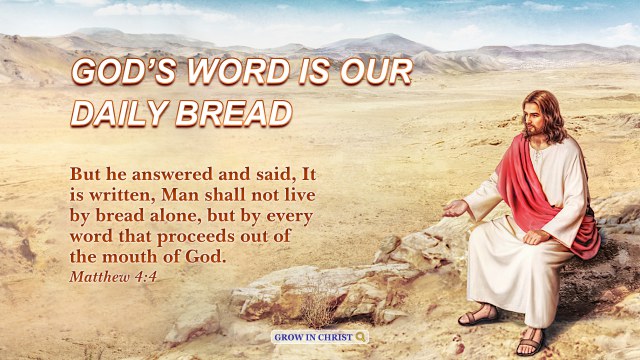











 Loving God, Living God, Loving Hope, Living Hope, Loving Living Life His Way! "Many things are possible for the person who has hope. Even more is possible for the person who has faith. And still more is possible for the person who knows how to love. But everything is possible for the person who practices all three virtues." - Brother Lawrence (1605-1691), Practicing the Presence of God (1692).