Blog: “Discovering His Living Hope”

So, What is Everyone Waiting For to Happen? A Random or Timely Prayer or Something? Psalm 62

Psalm 62 Complete Jewish Bible

62 (0) For the leader. Set in the style of Y’dutun. A psalm of David:

2 (1) My soul waits in silence for God alone;
my salvation comes from him.
3 (2) He alone is my rock and salvation,
my stronghold; I won’t be greatly moved.

4 (3) How long will you assail a person
in order to murder him, all of you,
as if he were a sagging wall
or a shaky fence?

5 (4) They only want to shake him from his height,
they take delight in lying —
with their mouths they bless,
but inwardly they curse. (Selah)

6 (5) My soul, wait in silence for God alone,
because my hope comes from him.
7 (6) He alone is my rock and salvation,
my stronghold; I won’t be moved.

8 (7) My safety and honor rest on God.
My strong rock and refuge are in God.
9 (8) Trust in him, people, at all times;
pour out your heart before him;
God is a refuge for us. (Selah)
10 (9) Ordinary folks are merely a breath
and important people a sham;
if you lay them on a balance-scale, they go up —
both together are lighter than nothing.
11 (10) Don’t put your trust in extortion,
don’t put false hopes in robbery;
even if wealth increases,
don’t set your heart on it.

12 (11) God has spoken once, I have heard it twice:
strength belongs to God.
13 (12) Also to you, Adonai, belongs grace;
for you reward all as their deeds deserve.

The Word of God for the Children of God.

Glory be to the Father,
and to the Son, and to the Holy Ghost;
as it was in the beginning,
is now, and ever shall be,
world without end. Amen, amen.
Psalm 62 is about waiting.

What are you waiting for?

Do you find it hard to wait?

Do you sometimes feel like God doesn’t hear your prayers?

Do you struggle with the distance between when you pray, when God answers?

Psalm 62 is in the Bible to convince you, remind you, that God is worth the wait.

Psalm 62 English Standard Version

My Soul Waits for God Alone

For God alone my soul waits in silence;
    from him comes my salvation.
He alone is my rock and my salvation,
    my fortress; I shall not be greatly shaken.

How long will all of you attack a man
    to batter him,
    like a leaning wall, a tottering fence?
They only plan to thrust him down from his high position.
    They take pleasure in falsehood.
They bless with their mouths,
    but inwardly they curse.

For God alone, O my soul, wait in silence,
    for my hope is from him.
He only is my rock and my salvation,
    my fortress; I shall not be shaken.
On God rests my salvation and my glory;
    my mighty rock, my refuge is God.

Trust in him at all times, O people;
    pour out your heart before him;
    God is a refuge for us.

Those of low estate are but a breath;
    those of high estate are a delusion;
in the balances they go up;
    they are together lighter than a breath.
Put no trust in extortion;
    set no vain hopes on robbery;
    if riches increase, set not your heart on them.

Once God has spoken;
    twice have I heard this:
that power belongs to God,
    and that to you, O Lord, belongs steadfast love.
For you will render to a man
    according to his work.

Psalm 62 is arguing for the importance of waiting for God. Now, here’s what you need to understand.

Waiting on God is not like the purposeless waiting that you do in a doctor’s office. You know, say you’re a man, you’re waiting in the doctor’s office, and you’ve waited so long, you’ve read all the men’s magazines that are there, and you’re reading Ladies Home Journal, then the Doctors’ professional literature. 

All that professional stuff does not hold any interest, And you’re back reading the chicken recipe and you’re thinking, “I didn’t know that went in chicken.”

You know you’ve waited too long!

You still have a very long day ahead of you with meetings and a plane to catch.

You are tempted to just get up and tell the secretary, you will call to reschedule and get up and leave all flustered as you waited 6 months for this appointment.

That’s not what waiting for God is like.

I want you to studiously hear this principle; it’s really argued in this Psalm 62.

Waiting on God is not about waiting for what you expect or hope, dream you get at the end of the long wait; waiting on God is what you become as you’ve waited.

Let me say that again. Waiting on God is not just about what you get at the end of the wait, but about what God already knows what you’ll become as you wait.

You see, waiting changes you.

You begin to learn that there is no salvation apart from God, that there’s no rock to stand on in life apart from him, that there is no fortress to be found outside of the Lord. You learn that to hope in him will never disappoint you.

You learn that you can pour out whatever is in your heart to him, and he won’t reject you, and he won’t turn his back on you, he won’t turn a deaf ear to you.

While you wait he is answering! You learn that when power is fading, and riches are fading, and you put the rich man and the poor man in a balance, and there’s not much difference, that real power and real steadfast love belong to the Lord.

You see, you need both of those.

If God just were awesome in power, he would be terrifying. If he was just all love but had no power, he couldn’t help you. If he was weak in character, he would not probably help you. You need the power and the love of the Lord, and as you wait on the Lord, you become more deeply convinced he’s 100% worth the wait.

He’s an immovable rock; he’s an indestructible fortress; he is an unchangeable hope. He can handle absolutely anything in your heart, orders chaos around.

It’s that 1 invaluable reminder for us all that he’s that indescribably beautiful combination between power, infinite power, and inexhaustible steadfast love.

Isaiah 40:28-31 Amplified Bible

28 
Do you not know? Have you not heard?
The Everlasting God, the Lord, the Creator of the ends of the earth
Does not become tired or grow weary;
There is no searching of His understanding.
29 
He gives strength to the weary,
And to him who has no might He increases power.
30 
Even youths grow weary and tired,
And vigorous young men stumble badly,
31 
But those who wait for the Lord [who expect, look for, and hope in Him]
Will gain new strength and renew their power;
They will lift up their wings [and rise up close to God] like eagles [rising toward the sun];
They will run and not become weary,
They will walk and not grow tired.

No matter how much time has passed, or how much time will pass before you recognize and acknowledge His answer, waiting on God is never purposeless.

It’s not just about what you get at the end of the wait; it’s about God already knows what you will become, what you have already become, as you waited!


Suggested Questions for Personal Reflection or Group Discussion

1. Why do you think waiting on God can feel so difficult? So purposeless? So frustrating? Do you struggle with the distance between when you pray and when God answers? If so, why do you think that waiting time is so hard for you? Can you remember a time when you waited on God? What was that experience like for you?

2. If waiting on God is not like waiting in a doctor’s office, what makes the two so different? Why is waiting on God not just about what you get at the end of the wait, but about what you become as you wait? How can you intentionally make choices to shift your perspective about waiting on God and allow it to change you?

3. As you come to process the all encompassing truth that God is all powerful and simultaneously all loving, how can that change your perspective on waiting for him? Do you authentically believe that he can handle anything that’s going on in your heart? If so, go ahead, pour out every vestige of your heart to him right now, confess that you struggle with waiting on him and his timing. Admit to him you’ve felt as if your waiting was purposeless. Now admit that you are in need of him to help you change and become a different person as you wait on his perfect timing.

4. As are reading or you have read and studied and pondered, discussed and prayed through the length and breadth and height and width and depth of this Psalm 62, repeat the same process for this passage text from the Gospel Narrative of Matthew;

Matthew 11:25-30 Amplified Bible

Come to Me

25 At that time Jesus said, “I praise You, Father, Lord of heaven and earth [I openly and joyfully acknowledge Your great wisdom], that You have hidden these things  [these spiritual truths] from the wise and intelligent and revealed them to infants [to new believers, to those seeking God’s will and purpose]. 26 Yes, Father, for this way was well-pleasing in Your sight. 27 All things have been handed over to Me by My Father; and no one fully knows and accurately understands the Son except the Father; and no one fully knows and accurately understands the Father except the Son, and anyone to whom the Son  [deliberately] wills to reveal Him.

28 “Come to Me, all who are weary and heavily burdened [by religious rituals that provide no peace], and I will give you rest [refreshing your souls with salvation]. 29  Take My yoke upon you and learn from Me [following Me as My disciple], for I am gentle and humble in heart, and you will find rest (renewal, blessed quiet) for your souls. 30 For My yoke is easy [to bear] and My burden is light.”

While we Wait and look at our Watches, Is Jesus the Answer?

A song we sang over and over again at a three day Christian retreat worship service had these words:

“The world is searching for answers. Whom can we turn to?” And it answered: “There is someone—he is the answer. His name is Jesus. A ray of hope in a hopeless world.”

https://www.musixmatch.com/de/songtext/GroupMusic/Light-of-the-World

But if Jesus is the answer, why do we still have so many unanswered questions? Why so many problems, and why are we waiting, and why so much suffering?

God himself gave us the only answer we require to many of our questions on the day Jesus was born more than 2,000 years ago.

His one and only answer came in the form of a baby, his one and only Son, who came to save the world and all who confessed to believe in him (John 3:16-17).

In today’s Bible passage the Lord Jesus explains why he is the answer.

He offers us His Living Word to give us rest for our souls by making us God’s children. He is, in the words of that song, “A ray of hope in a hopeless world.”

All we need to do is accept his invitation to come to him—and when we do, we will find rest for our souls. Then will we know that he truly is the only answer.

In the name of God, the Father and God the Son and God the Holy Spirit,

Let us Pray,

Psalm 29 The Message

29 1-2 Bravo, God, bravo!
    Gods and all angels shout, “Encore!”
In awe before the glory,
    in awe before God’s visible power.
Stand at attention!
    Dress your best to honor him!

God thunders across the waters,
Brilliant, his voice and his face, streaming brightness—
God, across the flood waters.

God’s thunder tympanic,
God’s thunder symphonic.

God’s thunder smashes cedars,
God topples the northern cedars.

The mountain ranges skip like spring colts,
The high ridges jump like wild kid goats.

7-8 God’s thunder spits fire.
God thunders, the wilderness quakes;
He makes the desert of Kadesh shake.

God’s thunder sets the oak trees dancing
A wild dance, whirling; the pelting rain strips their branches.
We fall to our knees—we call out, “Glory!”

10 Above the floodwaters is God’s throne
    from which his power flows,
    from which he rules the world.

11 God makes his people strong.
God gives his people peace.

Glory be to the Father,
and to the Son, and to the Holy Ghost;
as it was in the beginning,
is now, and ever shall be,
world without end. Amen, amen.
https://translate.google.com/

Who is .1% like the Lord our God, the One who sits enthroned on high . . . ? Psalm 113

5 Halleluyah! Who is like the LORD our God, the One who sits enthroned on high …

Psalm 113 Complete Jewish Bible

113 Halleluyah!

Servants of Adonai, give praise!
Give praise to the name of Adonai!
Blessed be the name of Adonai
from this moment on and forever!
From sunrise until sunset
Adonai’s name is to be praised.
Adonai is high above all nations,
his glory above the heavens.
Who is like Adonai our God,
seated in the heights,
humbling himself to look
on heaven and on earth.

He raises the poor from the dust,
lifts the needy from the rubbish heap,
in order to give him a place among princes,
among the princes of his people.

He causes the childless woman
to live at home happily as a mother of children.

Halleluyah!

Glory be to the Father,
and to the Son, and to the Holy Ghost;
as it was in the beginning,
is now, and ever shall be,
world without end. Amen, amen.

A Day of Praise, Prayer, Beginning and Ending with ‘Halleluyah

Psalm 113 AKJV

Praise ye the Lord.

Praise, O ye servants of the Lord,
praise the name of the Lord.
Blessed be the name of the Lord
from this time forth and for evermore.
From the rising of the sun unto the going down of the same
the Lord’s name is to be praised.

The Lord is high above all nations,
and his glory above the heavens.
Who is like unto the Lord our God,
who dwelleth on high,
who humbleth himself to behold the things that are in heaven, and in the earth!
He raiseth up the poor out of the dust,
and lifteth the needy out of the dunghill;
that he may set him with princes,
even with the princes of his people.
He maketh the barren woman to keep house,
and to be a joyful mother of children.

Praise ye the Lord.

When I pray with people and for people, I ­often like to give them words of encouragement in the form of a spiritual challenge. For example, I’ll invite them to begin each morning with praise as the first activity of the day. Like the psalmist, they can sing and shout a hallelujah praise to recognize who God is.

I wonder, as I write this devotional, why didn’t I, just before I started writing this, why I did not apply and then practice what I am now about to write about?

Thus, I have been humbled, this first thing this morning, by the LORD my God who sits enthroned on high in the heavens and took some time from His eternal vigil over all the universe He created, to give me a divine nudge in my ribcage.

This much beloved psalm was often sung just before people took up the first cup of wine at the Passover meal. They were praising, remembering, the goodness and faithfulness of God to the people of Israel when delivered from bondage.

It is the first of the Hallel Psalms.

Psalms 113—118 are known as the Hallel Psalms, or simply the Hallel (Hallel means “praise”).

While many psalms praise God, this set of psalms became associated with  the Passover due the mention of the deliverance from Egypt in Psalm 114.

The focus on the exodus is the reason these psalms are also sometimes referred to as the Egyptian Hallel.

These psalms were recited at Jewish feasts, especially Passover.

Depending upon which tradition was being followed, one or two of the psalms were recited before the meal, and the rest after.

Here is a brief description of each of the Hallel Psalms:

Psalm 113 is a short psalm of praise without reference to any historical context.

Verse 3 may be the best known from this psalm: “From the rising of the sun to its setting, the name of the Lord is to be praised!” (ESV).

 The Bible verse Psalms 113:5, from the King James Version, reads: “Who is like unto the Lord our God, who dwelleth on high.” This verse is found within the larger text of Psalm 113, which is a psalm of praise and thanksgiving to God.

Verse 5 of this psalm exclaims the greatness and uniqueness of the Lord our God. It presents a rhetorical question, “Who is like unto the Lord our God?”

This question implies that there is no one like God, and the answer is obvious – no one is like Him.

The verse further emphasizes the exalted position of God stating “who dwelleth on high.”

This phrase speaks to the transcendence and sovereignty of God, highlighting the idea He is above all creation and rules from a position of ultimate authority.

The theme of the greatness and uniqueness of God is central to this verse.

It conveys the idea that there is no comparison to God, no one can match His power, glory, and sovereignty, a central theme as echoed throughout the Bible, emphasizing the indelible truth of omnipotence and unmatched nature of God.

In the context of the larger Psalm 113, this verse is part of a hymn of praise to God.

The psalmist begins by exalting the name of the Lord and blesses it from that time forth and forevermore (verse 2).

The focus point of the psalm then shifts unto the character and actions of God, specifically the way He stoops down to look upon the earth and lift the poor and needy from the dunghill (verse 6-7).

This psalm likewise celebrates God’s magnificence, care for His people, verse 5 serves as a heart grabbing, powerful declaration of God’s unmatched greatness.

Symbolically, the phrase “who dwelleth on high” conveys the idea of God’s exaltation and position of authority.

It refers to the heavenly realm where God dwells as the transcendent ruler of the universe.

This stunning imagery reflects the belief in God’s divine kingship, reinforces the idea of His sovereignty. It also speaks to the idea of God’s elevation above all earthly concerns and His ability to govern all creation from His lofty position.

The verse also symbolizes the comparison and contrast between the nature of God and the limitations of humanity. It highlights the insufficiency of human power and the inability of any mortal being to compare to the greatness of God.

This vivid symbolism serves to inspire us, to highly both exalt God, humble humanity, emphasizing the vast difference between the Creator, His creation.

Overall, Psalm 113:5 is a powerful declaration of the greatness and uniqueness of God. It encapsulates the theme of divine sovereignty and transcendent authority, while serving as a reminder of God’s unmatched power and majesty.

The verse is a profound expression of praise and adoration for the Lord our God, recognizing His unparalleled position, acknowledging an unmatched greatness.

Psalm 114 is also a short psalm that poetically relates the Hebrews’ deliverance from Egypt: “The sea looked and fled. . . . The mountains skipped like rams. . . . [the Lord] turns the rock into a pool of water” (verses 3–4, 8).

Psalm 115 is slightly longer and contrasts those who trust in the Lord with those who trust in the idols of the surrounding nations.

“Their idols are silver and gold, the work of human hands. They have mouths, but do not speak; eyes, but do not see. They have ears, but do not hear; noses, but do not smell. They have hands, but do not feel; feet, but do not walk; and they do not make a sound in their throat. Those who make them become like them; so do all who trust in them” (verses 4–8, ESV).

Psalm 116 is written from the perspective of an individual who has been freed, delivered, from a dire situation.

“I love the Lord, because he has heard my voice and my pleas for mercy. Because he inclined his ear to me, therefore I will call on him as long as I live” (verses 1–2 ESV).

Psalm 117 is both the shortest psalm and the shortest “chapter” in the Bible, with only 2 verses (although psalms are not technically chapters).

This is the whole psalm:

“Praise the Lord, all nations! Extol him, all peoples! For great is his steadfast love toward us, and the faithfulness of the Lord endures forever. Praise the Lord!” (ESV).

Psalm 118 is the longest of the Hallel Psalms.

It admonishes both the nation and the individual to praise the Lord and expresses confidence that the Lord will save those who call on Him.

It begins and ends with the well-known exhortation, “Oh give thanks to the Lord, for he is good; for his steadfast love endures forever!” (ESV).

Also well-known is verse 14: “The Lord is my strength and my song; he has become my salvation” (ESV).

Also well known is verse 24: “This is the day that the Lord has made;
    let us rejoice and be glad in it.
(ESV)

Taken as a group, the Hallel Psalms focus on deliverance, both nationally and individually.

It is quite possible when Jesus finished the Last Supper and He and His disciples sang a hymn (Mark 14:26), the hymn they sang was this group of Hallel Psalms.

At the Last Supper, Jesus took the Passover meal and infused it with a deeper, newer meaning. The salvation that He promised was not deliverance from physical danger or human bondage but salvation from spiritual bondage and the grave eternal dangers of the penalty of sin.

In the conclusion to the great chapter on salvation, Paul in Romans 8:31 asks, “If God is for us, who can be against us?”

This may be an allusion to one of the Hallel Psalms: “The Lord is with me; I will not be afraid. What can mere mortals do to me?” (Psalm 118:6).

The Hallel Psalms were a fitting passage to be included in Passover celebrations and a deeply significant fitting for today’s New Covenant believer to praise God the whole day long and celebrate salvation from the power, the penalty of sin.

Saying “Praise the Lord” (Hebrew: “Hallelujah”) is also the perfect way for us to start the day, remembering the goodness and faithfulness of God.

It helps to set the tone for the day, and it puts our atti­tude in the right place.

It also reminds us that God is always and forever going to be infinitely bigger than our worst of circumstances and that no one else is like the Lord our God.

We can also sing God’s praises before going to sleep at the end of the day.

When we praise someone, it means we know something significant about that person and what they have done. The more we experience the fullness of God in our Savior Jesus Christ and deep in our lives, the easier our praise of God will be.

Now, in this exact moment, as we recall God, renew our practice, morning and evening, sing praises to God’s name, we are reminded that we have a heavenly Father and a best friend who is always with us and provides everything we need.

In the name of God, the Father and God the Son and God the Holy Spirit,

Let us Pray,

Psalm 19 Complete Jewish Bible

19 (0) For the leader. A psalm of David:

2 (1) The heavens declare the glory of God,
the dome of the sky speaks the work of his hands.
3 (2) Every day it utters speech,
every night it reveals knowledge.
4 (3) Without speech, without a word,
without their voices being heard,
5 (4) their line goes out through all the earth
and their words to the end of the world.

In them he places a tent for the sun,
6 (5) which comes out like a bridegroom from the bridal chamber,
with delight like an athlete to run his race.
7 (6) It rises at one side of the sky,
circles around to the other side,
and nothing escapes its heat.

8 (7) The Torah of Adonai is perfect,
restoring the inner person.
The instruction of Adonai is sure,
making wise the thoughtless.
9 (8) The precepts of Adonai are right,
rejoicing the heart.
The mitzvah of Adonai is pure,
enlightening the eyes.
10 (9) The fear of Adonai is clean,
enduring forever.
The rulings of Adonai are true,
they are righteous altogether,
11 (10) more desirable than gold,
than much fine gold,
also sweeter than honey
or drippings from the honeycomb.
12 (11) Through them your servant is warned;
in obeying them there is great reward.

13 (12) Who can discern unintentional sins?
Cleanse me from hidden faults.
14 (13) Also keep your servant from presumptuous sins,
so that they won’t control me.
Then I will be blameless
and free of great offense.

15 (14) May the words of my mouth
and the thoughts of my heart
be acceptable in your presence,
Adonai, my Rock and Redeemer.

Glory be to the Father,
and to the Son, and to the Holy Ghost;
as it was in the beginning,
is now, and ever shall be,
world without end. Amen, amen.

https://translate.google.com/

A Journey of Repentance: Who Is It You and I and We Are Looking for? 1 John 2:1-2

1 John 2:1-2 Amplified Bible

Christ Is Our Advocate

My little children (believers, dear ones), I am writing you these things so that you will not sin and violate God’s law. And if anyone sins, we have an Advocate [who will intercede for us] with the Father: Jesus Christ the righteous [the upright, the just One, who conforms to the Father’s will in every way—purpose, thought, and action].  And He [that same Jesus] is the propitiation for our sins [the atoning sacrifice that holds back the wrath of God that would otherwise be directed at us because of our sinful nature—our worldliness, our lifestyle]; and not for ours alone, but also for [the sins of all believers throughout] the whole world.

The Word of God for the Children of God.

Glory be to the Father,
and to the Son, and to the Holy Ghost;
as it was in the beginning,
is now, and ever shall be,
world without end. Amen, amen.

Christianity hinges on the message of forgiveness.

Other religions may offer moralism.

What do we mean by moralism?

Moralism is a philosophy that arose in the 19th century that concerns itself with imbuing culture, society with a certain set of “correct and proper and civilized” morals, usually traditional behavior, but also “justice, freedom, and equality”.

Moralism reforms behavior and conforms to standards. Moralism is given to reform on one’s own and is often substituted for the gospel. It is the belief the “the Gospel of Christ can, should be reduced to improvements in behavior,” that “we humanity, can achieve righteousness by means of proper behavior.”

Moralists may offer methods that will help us “tidy up our public and private lives or make us feel that we are good people if only we will behave ourselves.

Christianity, however, is for the untouchable, the unworthy, the lost, the beleaguered, the oppressed, the scorned, and the sinful. It’s for people who need to hear that they can, will, be forgiven. In other words, it’s for everyone.

From first to last, the gospel is about what God does, not about what we must do. It is God, by His mercy, who gives us the desire to even want to be forgiven—and it is only when we put our 100% faith in Jesus that we are fully pardoned.

John 20:11-18 Amplified Bible

11 But Mary [who had returned] was standing outside the tomb sobbing; and so, as she wept, she stooped down and looked into the tomb; 12 and she saw two angels in white sitting there, one at the head and one at the feet, where the body of Jesus had lain. 13 And they said to her, “Woman, why are you crying?” She told them, “Because they have taken away my Lord, and I do not know where they have laid Him.” 14  After saying this, she turned around and saw Jesus standing there, but she did not know that it was Jesus. 15 Jesus said to her, “Woman, why are you crying? For whom are you looking?” Supposing that He was the gardener, she replied, “Sir, if you are the one who has carried Him away from here, tell me where you have put Him, and I will take Him away.” 16  Jesus said to her, “Mary!” She turned and said to Him in [a] Hebrew, “Rabboni!”  (which means, Teacher). 17 Jesus said to her, “[b]Do not hold Me, for I have not yet ascended to the Father; but go to My brothers and tell them, ‘I am ascending to My Father and your Father, and to My God and your God.’” 18 Mary Magdalene came, reporting to the disciples that she had seen the Lord and that He had said these things to her.

When we 100% turn to Him in genuine “search me, O God, investigate my life, test me and know my thoughts, see if there is any wicked way in me, show me the narrow pathway to righteousness, everlasting life” repentance and faith, we are able to look back and say; ‘Thank God, we’ve been saved from sin’s penalty.’

As with Mary standing alone at the empty Tomb, waiting for who knows who, who knows what, to both reassure and us of the truth of the resurrection, all the sin and her terrible choices in life that was against her, and now that is and was against us, all that kept us from knowing God, all that kept us from discovering His love and His goodness—all of the penalty that we deserve—has been fully eradicated, erased through the saving work of God’s Son Jesus, on the cross.

As believers, then, we can—we should—assuredly rejoice in the truth that sin no longer rules over us. Yet the reality is that in our earthly lives, we still sin.

We still miss the mark; as Adam and Eve, we still fail to reach God’s standard.

Genesis 3:1-7 Amplified Bible

The Fall of Man

3 Now the serpent was more crafty (subtle, skilled in deceit) than any living creature of the field which the Lord God had made. And [a]the serpent (Satan) said to the woman, “Can it really be that God has said, ‘You shall not eat from  [b]any tree of the garden’?” And the woman said to the serpent, “We may eat fruit from the trees of the garden, except the fruit from the tree which is in the middle of the garden. God said, ‘You shall not eat from it nor touch it, otherwise you will die.’” But the serpent said to the woman, “You certainly will not die!  For God knows that on the day you eat from it your eyes will be opened [that is, you will have greater awareness], and you will be like God, knowing [the difference between] good and evil.” And when the woman saw that the tree was good for food, and that it was delightful to look at, and a tree to be desired in order to make one wise and  insightful, she took some of its fruit and ate it; and she also gave some to her husband [c]with her, and he ate. Then the eyes of the two of them were opened [that is, their awareness increased], and they knew that they were naked; and they fastened fig leaves together and made themselves coverings.

And when we do, the Evil One loves to still whisper, “Are you really saved? Will God really forgive you this time?” To which we must answer, “Yes, I am; and yes, He will, for the one who died for me is at this moment advocating for me.”

Knowing forgiveness is not a license to sin; indeed, John wrote with the purpose “that you may not sin no more.” When we sin, the joy we have found in God begins to fade. While He remains our heavenly Father, it should be no surprise that if we harbor sin, we will fail to enjoy all the blessings He intends for us.

And so we seek to live in obedience to our Lord, and yet, since we will not do so perfectly, we also must live in repentance to our Lord.

In the Upper Room, Rabbi Messiah Jesus underscored the genuine need for and importance of daily repentance in John 13 when, while He was in the midst of washing His disciples’ feet, Peter protested and said, “You shall never wash my feet.” Jesus responded, “If I do not wash you, you have no share with me” (13:8).

Forgiveness is not ours until we are washed by Jesus, confess with our whole heart Jesus’ Messiahship, Jesus’ Lordship over our entire lives, and then He continues to wash us through our daily discipline of repentance and faith.

One day, you and I and we, will all be taken to heaven and saved from sin’s presence. But until that great day, your Christian life, my Christian life, and our Christian life is to be a journey of repentance, acknowledge Jesus calling out our names, acknowledging with Rabboni – master teacher, my only 100% salvation.

I have been saved You have been saved.

I will be saved You will be saved.

But for now, in this moment, in this time and this season, minute by minute, day by day, you are mercifully being saved as you repent and turn back to Jesus.

Who Is It We Are Looking for? Self? Gardner? God? Serpent?

John 20:11-16Amplified Bible

11 But Mary [who had returned] was standing outside the tomb sobbing; and so, as she wept, she stooped down and looked into the tomb; 12 and she saw two angels in white sitting there, one at the head and one at the feet, where the body of Jesus had lain. 13 And they said to her, “Woman, why are you crying?” She told them, “Because they have taken away my Lord, and I do not know where they have laid Him.” 14 After saying this, she turned around and saw Jesus standing there, but she did not know that it was Jesus. 15 Jesus said unto her,  “Woman, why are you crying? For whom are you looking?” Supposing that He was the gardener, she replied, “Sir, if you are the one who has carried Him away from here, tell me where you have put Him, and I will take Him away.” 16  Jesus said to her, “Mary!” She turned and said to Him in [a]Hebrew, “Rabboni!” (which means, Teacher).

There are times in life when we have to do some things we don’t want to do.

Tough things. There’s that phone call we have to make. Or that task ahead of us that looks bigger than we bargained for. Or maybe we have received news that shatters our thinking, and we can’t imagine how we can deal with the situation.

The only things that seem to fill our souls are those “serpent” like words, I am way out of my league with this one, I have no morals, ethics, strength of character.

I have no experience, no courage in myself or in my God because I do not see Him.

I have hope after hope after hope but nothing in my life has ever panned out for me.

I have always been a failure in my life, why should I expect anything different now?

I am sure that some permutation of the above self-deprecating statements is how probably Mary felt. Her heart was so heavy with the news of Jesus’ death.

She knew that his body was placed in the tomb, and she and some others had wanted to make sure his body was prepared properly (Mark 16:1-7; Luke 24:1-12).

Imagine the shock and surprise when entering in, the tomb was very empty.

Where is He?

Who has taken Him?

How could this be?

What does all this mean?

After sharing the news with Jesus’ disciples (John 20:1-2), Mary went back to the tomb and stood there, not knowing what to expect, would anyone show up?

Who would be there, who would come there, to call, to tell her the 100% truth?

Her heart was heavy, and the tears for her Lord trickled down her face.

Someone else was there too.

A gardener?

Perhaps he might know something.

A serpent in wolf’s clothing …?

A Roman Soldier who was guarding the tomb against intruders?

A complete stranger wandering among the tombs?

Perhaps the truth. at least some truth, will come out now?

The stranger speaks …

He said, “Why are you crying? Who is it you are looking for?”

Then he spoke her name.

MARY …

And exactly in that moment, she absolutely knew it was a living Jesus.

Her whole outlook changed.

What a glorious encounter!

Whatever circumstances you are in, I am in, we are in, and no matter what struggles we are facing, we are confronted by in our worst of times, be 100% assured that Jesus is with you (Matthew 28:20) and that he knows your name.

In the name of God, the Father and God the Son and God the Holy Spirit,

Let us Pray,

Psalm 63 Complete Jewish Bible

63 (0) A psalm of David, when he was in the desert of Y’hudah:

2 (1) O God, you are my God;
I will seek you eagerly.
My heart thirsts for you,
my body longs for you
in a land parched and exhausted,
where no water can be found.
3 (2) I used to contemplate you in the sanctuary,
seeing your power and glory;
4 (3) for your grace is better than life.
My lips will worship you.
5 (4) Yes, I will bless you as long as I live;
in your name I will lift up my hands.
6 (5) I am as satisfied as with rich food;
my mouth praises you with joy on my lips
7 (6) when I remember you on my bed
and meditate on you in the night watches.

8 (7) For you have been my help;
in the shadow of your wings I rejoice;
9 (8) my heart clings to you;
your right hand supports me.

10 (9) But those who seek to destroy my life —
may they go to the lowest parts of the earth.
11 (10) May they be given over to the power of the sword;
may they become prey for jackals.

12 (11) But the king will rejoice in God.
Everyone who swears by him will exult,
for the mouths of liars will be silenced.

Glory be to the Father,
and to the Son, and to the Holy Ghost;
as it was in the beginning,
is now, and ever shall be,
world without end. Amen, amen.

https://translate.google.com/

Can I confess I just do not have one ounce of sufficient intellect to know God is 100% smarter, wiser than me? Proverbs 30:1-6

Proverbs 30:1-4 Complete Jewish Bible

30 The words of Agur the son of Yakeh, the prophecy. The man says to Iti’el, to Iti’el and Ukhal:

I am more boorish than anyone,
    I lack human discernment;
I have not learned enough wisdom
    to know the Holy One.

Who has gone up to heaven and come down?
Who has cupped the wind in the palms of his hands?
Who has wrapped up the waters in his cloak?
Who established all the ends of the earth?
What is his name, and what is his son’s name?
Surely you know!

Every word of God’s is pure;
    he shields those taking refuge in him.
Don’t add anything to his words;
    or he will rebuke you, and you be found a liar.

The Word of God for the Children of God.

Glory be to the Father,
and to the Son, and to the Holy Ghost;
as it was in the beginning,
is now, and ever shall be,
world without end. Amen, amen.

A young pastor once told s of purchasing his first pickup truck. And he also said that he had bought a book on gasoline engines because he was so afraid of being ripped off at the service station.

He wrote:

“The first time I took the truck in to the mechanic for repairs, I smugly wrote down what the problem was and what needed to be fixed, put it on the seat.”

That night when he returned for the truck, he found this short note attached to the windshield:

“I fixed the problem in your truck, but in order for me to fix the problem you described, you’ll have to bring in your 30 year old lawnmower. I suggest you go back to the front of the book for when it was written. My grandfather had the very same book and gave his to me on the very first day I opened this garage.”

While making me laugh hysterically, that story greatly puzzled me.

This young pastor buys a book in a gas station that he doesn’t understand.

Further, he does not take the time, or exercise enough wisdom to open the book to the first few pages to determine when it was written-how up to date it is and just what exactly it was written for and what engine was written about to repair.

He writes down his concerns to the mechanic about his V8 truck engine from the guide book written for repair of an array of small 2 cylinder gas engines.

And he takes his note and his truck to a mechanic he’s not sure he can trust.

Excuse me – if I do not think I can trust a mechanic I’m not going to take my vehicle to him. I take my car to MY mechanic because I trust him… and because I know I am not smart enough to fix the problem on my note but maybe he can?

In Proverbs – chap 30– Agur, a gentile, is warning us to be careful NOT to treat God or His Word the same or similar way that pastor had treated his mechanic.

Agur starts out by trying to get us to understand that we are not intelligent enough, nor wise enough to first know all about God, and ergo, correct God.

He says of himself: “I’m not smart enough!” “I am not discerning enough!” “I am more boorish than anyone alive!” I’ve not learned enough wisdom either!”

“I am the most ignorant of men; I do not have a man’s understanding. I have not learned wisdom, nor have I knowledge of the Holy One.” Proverbs 30:2

In other words… I’m not smart enough to say “I am too stupid to know it all!”

But then Agur implies he has observed people who thought they were “smart enough”. He had seen people who misused Scripture because they thought they were smarter, wiser than God, thought they knew more than the “Mechanic”.

“Who has gone up to heaven and come down? Who has gathered up the wind in the hollow of his hands? Who has wrapped up the waters in his cloak? Who has established all the ends of the earth? What is his name, and the name of his son? Tell me if you know!” Proverbs 30:3-4

Then, lastly, Agur compared the wisdom of Scripture to the supposed wisdom of man.

He wrote: “Every word of God is flawless (but man’s words aren’t flawless); he is a shield to those who take refuge in him. Do not add to his words, or he will rebuke you and prove you a liar.” Proverbs 30:5-6

Essentially, Agur is saying that you cannot begin to improve on God’s Word. And he tells us not to even presume to think that we are wiser than God can know Him perfectly and completely and utterly to add anything to His Words… because God kind of takes offense at that, takes that very deeply, personally.

But that has never stopped people from presuming they possess the capability and the level of “smarts” from doing it anyway.

Jesus condemned the Pharisees for “teaching for doctrines the commandments of men” Matthew 15:9

Paul told the church in Galatia “… some people are throwing you into confusion and are trying to pervert the gospel of Christ.” Galatians 1:7

And Paul warned the Elders at Ephesus to be wary because “Even from your own number men will arise and distort the truth in order to DRAW AWAY DISCIPLES AFTER THEM.” Acts 20:30

Now there’s the key to the problem.

People freely distort the Scriptures, they add to God’s Word because they want people to pay attention to them. They want people to follow THEIR teachings.

And that’s an easy temptation to give in to.

Better churches than ours has fallen prey to it.

Better pastors and preachers than I have been enticed by it.

And in my earliest days of preaching and teaching I not so innocently, definitely fell deep into the prey-predator relationship, was “consumed,” grounded for it.

That’s why I personally try to protect myself from placing my own opinions above and beyond that of Scripture.

If, during a sermon, I want to introduce a thought I have about something I don’t think I can comfortably or sufficiently substantiate from Scripture I try to over emphasize that it is MY opinion, My interpretation which the congregation should feel free to fully test and examine afterwards from the Holy Scriptures.

My opinions can be wrong, but Scripture never can. I strive to do this because I am attempting to protect myself from even accidentally distorting God’s truth.

If the congregation examines and tests my sermon and finds discrepancies or has questions about what I presented, to feel free to come to me and to ask.

And that’s why I have developed a couple of mottos I pray will keep us focused.

One is:

“Where The Bible Speaks… We Speak, Where The Bible Is Silent… We’re Silent.”

In other words, we don’t want to add or take away from anything from what the Bible says because we aren’t even close to being smarter, wiser than the Author.

Another is “Bible Words For Bible Things”.

That is: if the Bible uses a word in a certain way… that’s the way we try to use it.

https://www.blueletterbible.org/

https://www.biblegateway.com/

https://www.biblestudytools.com/concordances/strongs-exhaustive-concordance/

https://www.eliyah.com/lexicon.html

In Proverbs 30, we see that the weakness of humility is God’s greatest strength.

Jesus’ crucifixion is humble and weak, and His resurrection is so stunning, but they are infinitely more powerful than all man’s high philosophies and power.

1 Corinthians 1:18-25 Easy-to-Read Version

God’s Power and Wisdom in Christ Jesus

18 The teaching about the cross seems foolish to those who are lost. But to us who are being saved it is the power of God. 19 As the Scriptures say,

“I will destroy the wisdom of the wise.
    I will confuse the understanding of the intelligent.”

20 So what does this say about the philosopher, the law expert, or anyone in this world who is skilled in making clever arguments? God has made the wisdom of the world look foolish. 21 This is what God in his wisdom decided: Since the world did not find him through its own wisdom, he used the message that sounds foolish to save those who believe it.

22 The Jews ask for miraculous signs, and the Greeks want wisdom. 23 But this is the message we tell everyone: Christ was killed on a cross. This message is a problem for Jews, and to other people it is nonsense. 24 But Christ is God’s power and wisdom to the people God has chosen, both Jews and Greeks. 25 Even the foolishness of God is wiser than human wisdom. Even the weakness of God is stronger than human strength.

Proverbs 30 and 31 are the only chapters of Proverbs written by non-Jews.

They’re evidence that God’s wisdom is not confined to a particular people.

God’s wisdom belongs to anyone who fears the Lord.

Agur, our first Gentile philosopher, wants you to walk away from his chapter understanding the inevitable consequences of misplaced malignant pride and the ironic success of the truly humble and meek.

Agur begins by humbly listing what he doesn’t know in a series of rhetorical questions (Proverbs 30:2-4) before admitting that God’s words are the only words that will prove true.

Any prideful attempt to add to God’s wisdom will be shown for foolishness (Proverbs 30:6).

So Agur, in the only prayer in Proverbs, asks God to make him content with a humble life—a life of neither poverty nor riches. Agur knows that either too much or too little will bend his heart away from God, so he asks God to spare him from either temptation (Proverbs 30:7-9).

Proverbs 30:7-9 Complete Jewish Bible

[God,] I have asked two things of you;
    don’t deny them to me as long as I live —
keep falsehood and futility far from me,
    and give me neither poverty nor wealth.
Yes, provide just the food I need today;
for if I have too much, I might deny you
    and say, “Who is Adonai?”
And if I am poor, I might steal
    and thus profane the name of my God.

Are You Wise Enough: “Where is the Gospel?”

Agur agrees with the apostle Paul who said that “God chose the foolish things of the world to shame the wise; God chose the weak things of the world to shame the strong.” (1 Corinthians 1:27).

Our world does not come close to believing this. Our world values strength, power, and competence (or, at the very least, the appearance of those things).

But God has determined to destroy the wisdom of the world (1 Corinthians 1:19).

He’s chosen to use things like badgers and ants and crucified men “to nullify the things that are, so that no one may boast before him.” (1 Corinthians 1:28-29).

Agur’s wisdom is that, as ironic as it seems, there are rewards waiting for those who humble themselves.

In Jesus and his cross, we see God himself completely humiliated.

The world will look at that and say it’s foolishness.

But while the “message of the cross is foolishness to those who are perishing, but to us who are being saved it is the power of God…  For the foolishness of God is wiser than human wisdom, and the weakness of God is stronger than human strength” (1 Corinthians 1:18, 25).

For anyone willing to accept Jesus’ foolishness as being infinitely greater their cleverness and their cunning and slyness and strength “as a wolf” and abandon their ‘strength’ of pride, the mysteries, powers of humility will become theirs.

While an ant’s storehouse, a locust’s organization, and a lizard’s stealth are impressive, they are nothing when compared to the resurrection power of Jesus Christ in the life of those who are humble and meek. Matthew 5:5

Matthew 5:5 Amplified Bible

“Blessed [inwardly peaceful, spiritually secure, worthy of respect] are the [a] gentle [the kind-hearted, the sweet-spirited, the self-controlled], for they will inherit the earth.

While we might feel unimpressive, the Gospel of Jesus’ humble death makes us into a mystery that angels stand on tiptoe to see (1 Peter 1:12).

1 Peter 1:10-13 Amplified Bible

10 Regarding this salvation, the prophets who prophesied about the grace [of God] that was intended for you, searched carefully and inquired [about this future way of salvation], 11 seeking to find out what person or what time the Spirit of Christ within them was indicating as He foretold the sufferings of Christ and the glories [destined] to follow. 12 It was revealed to them that their services [their prophecies regarding grace] were not [meant] for themselves and their time, but for you, in these things [the death, resurrection, and glorification of Jesus Christ] which have now been told to you by those who preached the gospel to you by the [power of the] Holy Spirit [who was] sent from heaven. Into these things even the angels long to look.

13 So prepare your minds for action, be completely sober [in spirit—steadfast, self-disciplined, spiritually and morally alert], fix your hope completely on the grace [of God] that is coming to you when Jesus Christ is revealed.

The realization of God’s greatness drove Agur to adoration.

In the only prayer in Proverbs, Agur asks God to give him a meaningful life and to provide what he needs to get by every day. 

This was a dramatically different attitude than the society he lived in. When Agur looked around, he didn’t see people who were awestruck with God.

Instead, he saw a generation that looks a lot like ours: disrespectful, self-righteous, prideful, arrogant, and fiercely oppressive (Proverbs 30:11-14)

The same happens to us when we get a glimpse of how truly amazing God is.

Our lives are forever changed by the realization that God is perfect and we are not. Because it’s only when we acknowledge our stupidity, acknowledge God’s majesty, that we will humble ourselves and meekly begin to learn from Him. 

Reflect: 

  • How did God first reveal Himself to you? If you can’t remember a time when you put God first in your life, read, study and pray – His Spirit will reveal it!  
  • What are a few qualities about God that leave you awestruck? Tell Him today. 

In the name of God, the Father and God the Son and God the Holy Spirit,

Let us Pray,

Psalm 8 Complete Jewish Bible

(0) For the leader. On the gittit. A psalm of David:

2 (1) Adonai! Our Lord! How glorious
is your name throughout the earth!
The fame of your majesty
spreads even above the heavens!

3 (2) From the mouths of babies and infants at the breast
you established strength because of your foes,
in order that you might silence
the enemy and the avenger.

4 (3) When I look at your heavens, the work of your fingers,
the moon and stars that you set in place —
5 (4) what are mere mortals, that you concern yourself with them;
humans, that you watch over them with such care?

6 (5) You made him but little lower than the angels,
you crowned him with glory and honor,
7 (6) you had him rule what your hands made,
you put everything under his feet —
8 (7) sheep and oxen, all of them,
also the animals in the wilds,
9 (8) the birds in the air, the fish in the sea,
whatever passes through the paths of the seas.

10 (9) Adonai! Our Lord! How glorious
is your name throughout the earth!

Glory be to the Father,
and to the Son, and to the Holy Ghost;
as it was in the beginning,
is now, and ever shall be,
world without end. Amen, amen.
https://translate.google.com/

Why Are You and Everyone Else Still Sleeping, Still So Very Silent? This Long Night Is Only Just Beginning! Mark 14:32-42

Mark 14:32-42 The Message

Gethsemane

32-34 They came to an area called Gethsemane. Jesus told his disciples, “Sit here while I pray.” He took Peter, James, and John with him. He sank into a pit of suffocating darkness. He told them, “I feel bad enough right now to die. Stay here and keep vigil with me.”

35-36 Going a little ahead, he fell to the ground and prayed for a way out: “Papa, Father, you can—can’t you?—get me out of this. Take this cup away from me. But please, not what I want—what do you want?”

37-38 He came back and found them sound asleep. He said to Peter, “Simon, you went to sleep on me? Can’t you stick it out with me a single hour? Stay alert, be in prayer, so you don’t enter the danger zone without even knowing it. Don’t be naive. Part of you is eager, ready for anything in God; but another part is as lazy as an old dog sleeping by the fire.”

39-40 He then went back and prayed the same prayer. Returning, he again found them sound asleep. They simply couldn’t keep their eyes open, and they didn’t have a plausible excuse.

41-42 He came back a third time and said, “Are you going to sleep all night? No—you’ve slept long enough. Time’s up. The Son of Man is about to be betrayed into the hands of sinners. Get up. Let’s get going. My betrayer has arrived.”

The Word of God for the Children of God.

Glory be to the Father,
and to the Son, and to the Holy Ghost;
as it was in the beginning,
is now, and ever shall be,
world without end. Amen, amen.
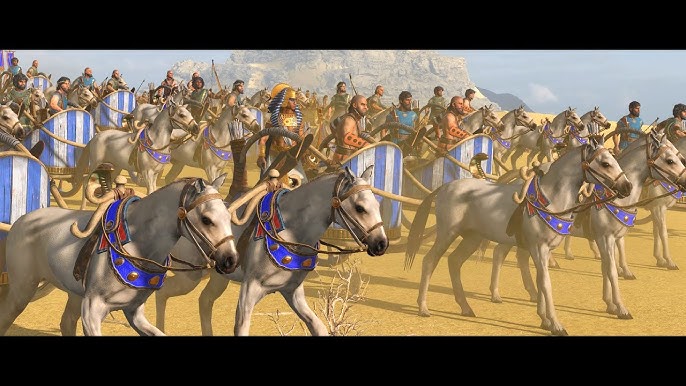
You have had a full meal, and it has been a long day of running errands. You had gotten up earlier than usual to get your children our of bed, dressed, washed up and ready for this first day, this most hectic, tiring, of the long long school year.

In fact, the past several days have been really challenging—emotionally and physically. It has been a long summer of traveling. You are worn out and tired.

Even in the cool night air, you can barely stay awake. You know you need to pay attention because Jesus has asked you to keep watch on the kids, your eyelids are getting heavier by the moment. Soon your head bobs, you are fast asleep.

You didn’t plan it that way. It is going to be a long year. Jesus nudges you awake and asks, “Couldn’t you keep watch for one hour?” Startled, you hear him say, “Watch and pray. . . .” You nod in agreement, feeling horrible that you haven’t managed to stay awake. He steps away, and the great heaviness settles in again.

Your eyelids close. Later he wakes you again, and you don’t know what to say.

Then a third time you are awakened—but now there is a large crowd coming, the trouble is just turning the corner. Eyes wide open, sleep vanishes. You look up at the one who asked you to pray, and he is in the hands of his enemies!

The longest most exhausting night of their lives had just passed them by, they let their guards down, let their Messiah down, they had failed, they ran away.

Though our lives today are much different from the disciples’, the need for our staying alert during those long exhausting nights which challenge our faith and those extra few critical moments of alertness, of praying without ceasing is not.

Our still sleeping, exhausted world is in greatest need of our attention, and the Lord is calling us to be awake, stand watch. It is encouraging to know Jesus is now seated at the right hand of the Father, praying for us (Romans 8:34), but today he still needs us to do the same for his world, for all God’s children in it.

The Spirit Is Always Willing, Flesh is Always Weak

Mark 14:37-42 Amplified Bible

37 And He came back and found them sleeping, and He said to Peter, “Simon, are you asleep? Were you unable to keep watch for one hour? 38 Keep  [actively]  watching and praying so that you do not come into temptation; the spirit is willing, but the [a]body is weak.” 39 He went away again and prayed, saying the same words. 40 And again He came back and found them sleeping, because their eyes were very heavy; and they did not know how to answer Him. 41 He came back a third time and said to them, “Are you still sleeping and resting? Enough [of that]! The hour has come. Look, the Son of Man is being betrayed into the hands of sinners. 42 Get up, let us go. Look, my betrayer is near!”

We rarely see those worst, weakest flaws in our character until we are tested.

Jesus asked his disciples to watch and pray with him, but they dozed off – not just once, not just twice but three times – each time after being awakened and reawakened by Jesus. By surrendering to a small temptation, these disciples lacked the high endurance of spiritual strength to fight off a much greater one.

The much spirited disciples gave in to the weakness of the tired flesh, and as a result they were not prepared to support Jesus during his trial and crucifixion.

Even now, we are tired, our flesh is our own weak-willed human nature without the power of God. Our natural capabilities fail in the midst of temptation, so we need a divine infusion of persistence and endurance from the Holy Spirit. With the Spirit, we have the ability to defeat any temptation (1 Corinthians 10:13).

Throughout the Bible we learn that the Holy Spirit equips us for many tasks.

The Holy Spirit mightily empowers the community of believers in many ways.

As Mark shows, the Spirit of God leads Jesus’ followers into and through struggles and adversity. We do not have to be worried if we are in trying circumstances, because the Holy Spirit will give us words to speak that come from God himself, the inspiration to be alert, to know exactly when our mouth should become engaged in the sure, truest defense of the Gospel (Mark 13:11).

Mark 13:9-13 Amplified Bible

“But be on your guard; they will turn you over to courts, and you will be beaten in synagogues, and you will stand [as accused] before governors and kings for My sake, as a testimony to them. 10 The gospel [that is, the good news regarding the way of salvation] must first be preached to all the [Gentile] nations. 11 When they take you and turn you over [to the court], do not worry beforehand about what to say, but say whatever is given to you [by God] in that hour; for it is not you who speak, but it is the Holy Spirit [who will speak through you]. 12 Brother will betray brother to [be put to] death, and a father [will hand over] his child; and children will rise up and take a stand against parents and have them put to death. 13 You will be hated by everyone because of [your association with] My name, but the one who [patiently perseveres empowered by the Holy Spirit and] endures to the end, he will be saved.

We live in the age of the Spirit today. We can each call upon the Holy Spirit to strengthen our spirits to resist any temptation. What a gift from our God who never stops giving himself for us. Ask, seek, and knock—call on the Lord!

In the name of God, the Father and God the Son and God the Holy Spirit,

Let us Pray,

Psalm 121 The Message

121 1-2 I look up to the mountains;
    does my strength come from mountains?
No, my strength comes from God,
    who made heaven, and earth, and mountains.

3-4 He won’t let you stumble,
    your Guardian God won’t fall asleep.
Not on your life! Israel’s
    Guardian will never doze or sleep.

5-6 God’s your Guardian,
    right at your side to protect you—
Shielding you from sunstroke,
    sheltering you from moonstroke.

7-8 God guards you from every evil,
    he guards your very life.
He guards you when you leave and when you return,
    he guards you now, he guards you always.

Glory be to the Father,
and to the Son, and to the Holy Ghost;
as it was in the beginning,
is now, and ever shall be,
world without end. Amen, amen.

https://translate.google.com/

In Love with God or in Love with the World? Our 2024 Wisdom: As we are ‘Allegedly’ Laboring, Serving, in our Communities: Gauging our Maturity. 1 John 2:12-14

 John 2:12-14 GOD’S WORD Translation

Don’t Love the World

12 I’m writing to you, dear children, because your sins are forgiven through Christ.

13 I’m writing to you, fathers, because you know Christ who has existed from the beginning.

I’m writing to you, young people, because you have won the victory over the evil one.

14 I’ve written to you, children, because you know the Father.

I’ve written to you, fathers, because you know Christ, who has existed from the beginning.

I’ve written to you, young people, because you are strong and God’s word lives in you. You have won the victory over the evil one.

The Word of God for the Children of God.

Glory be to the Father,
and to the Son, and to the Holy Ghost;
as it was in the beginning,
is now, and ever shall be,
world without end. Amen, amen.

The purpose of the church is to bring God’s people to maturity in Jesus Christ.

The apostle John has given us a helpful way to gauge various levels of maturity.

When John speaks of certain Christians as little children, the fact which characterizes them is that they know their sins are forgiven.

Certainly that is the first thing a new Christian learns.

Therefore, as long as they are celebrating in that stage of understanding, glorying in the fact that their sins are forgiven, they can be lovingly classified as little children. 

John doesn’t mean, of course, that they are to forsake their initial excitement over having their sins forgiven.

On the contrary, they should have a continually increasing awareness of the forgiveness of sin as they go through life. He simply means that a focus on the joy of being forgiven marks the initial stage of the Christian life — not maturity.

Then he says, I am writing to you, fathers, because you know him who is from the beginning. 

For a long time, I thought John was referring to God the Father, the One who is from the beginning.

But thinking back to the way he opens the letter, I began to realize that this is really a reference to the Son: That which was from the beginning, which we have heard, which we have seen with our eyes, which we have looked at and our hands have touched — this we proclaim concerning the Word of life (1 John 1:1).

Here he is obviously referring to the Lord Jesus Himself.

The mark of being a spiritual father, then, is a deep, thorough understanding of the deity and the humanity of Jesus, the fullness of the revelation that has come to us through the Son.

It is to have a deep sense of closeness to him, having walked with him through much of life.

Out of that closeness comes a clarity of understanding of Jesus’ words to such a degree that there is a grasp of the great doctrines which he came to reveal.

This level of maturity means to display an understanding and a manifestation of the same character which Jesus displayed, along with the strong evidence of compassion, tolerance, patience, justice, and forgiveness from which only a long term relationship with the Son of God can produce.

Finally, the young men are characterized as having overcome the evil one, as having reached a stage of maturity where there is an understanding and a practice of the way to resist temptation and distinguish between good and evil.

As Hebrews puts it, But solid food is for the mature, who by constant use have trained themselves to distinguish good from evil.” (Hebrews 5:14).

The kind of person who is overcoming the wicked one is able to see evil as evil (even when it looks too too good!) by the revelation of the Scriptures and by the individuals prayer life which comes from an understanding given by the Spirit.

Romans 8:12-17 The Message

12-14 So don’t you see that we don’t owe this old do-it-yourself life one red cent. There’s nothing in it for us, nothing at all. The best thing to do is give it a decent burial and get on with your new life. God’s Spirit beckons. There are things to do and places to go!

15-17 This resurrection life you received from God is not a timid, grave-tending life. It’s adventurously expectant, greeting God with a childlike “What’s next, Papa?” God’s Spirit touches our spirits and confirms who we really are. We know who he is, and we know who we are: Father and children. And we know we are going to get what’s coming to us—an unbelievable inheritance! We go through exactly what Christ goes through. If we go through the hard times with him, then we’re certainly going to go through the good times with him!

We may find we have a lot of big questions about the truths and mysteries of the Christian faith that we each need to learn how to live with by praying it through.

But there’s nothing quite so precious as the assurance deep down inside that we belong to God–no matter what!

While some people claim such certainty is not possible, Paul says it is.

We can be sure!

We come to this assurance through an accumulation of evidence.

We confess our sins and ask God for mercy in Jesus’ name, and we’re told no one will be turned away (Romans 10:4-13).

Romans 10:4-13 The Message

4-10 The earlier revelation was intended simply to get us ready for the Messiah, who then puts everything right for those who trust him to do it. Moses wrote that anyone who insists on using the law code to live right before God soon discovers it’s not so easy—every detail of life regulated by fine print! But trusting God to shape the right living in us is a different story—no precarious climb up to heaven to recruit the Messiah, no dangerous descent into hell to rescue the Messiah. So what exactly was Moses saying?

The word that saves is right here,
    as near as the tongue in your mouth,
    as close as the heart in your chest.

It’s the word of faith that welcomes God to go to work and set things right for us. This is the core of our preaching. Say the welcoming word to God—“Jesus is my Master” —embracing, body and soul, God’s work of doing in us what he did in raising Jesus from the dead. That’s it. You’re not “doing” anything; you’re simply calling out to God, trusting him to do it for you. That’s salvation. With your whole being you embrace God setting things right, and then you say it, right out loud: “God has set everything right between him and me!”

11-13 Scripture reassures us, “No one who trusts God like this—heart and soul—will ever regret it.” It’s exactly the same no matter what a person’s religious background may be: the same God for all of us, acting the same incredibly generous way to everyone who calls out for help. “Everyone who calls, ‘Help, God!’ gets help.”

We claim Jesus Christ as Lord and Savior of our life, and we know we can do this only by the work of the Holy Spirit (1 Corinthians 12:3).

1 Corinthians 12:1-3 The Message

Spiritual Gifts

12 1-3 What I want to talk about now is the various ways God’s Spirit gets worked into our lives. This is complex and often misunderstood, but I want you to be informed and knowledgeable. Remember how you were when you didn’t know God, led from one phony god to another, never knowing what you were doing, just doing it because everybody else did it? It’s different in this life. God wants us to use our intelligence, to seek to understand as well as we can. For instance, by using your heads, you know perfectly well that the Spirit of God would never prompt anyone to say “Jesus be damned!” Nor would anyone be inclined to say “Jesus is Master!” without the insight of the Holy Spirit.

We see the growth of fruit in our life, and we know that’s the work of the Holy Spirit (Galatians 5:22-23).

Galatians 5:22-24 The Message

22-23 But what happens when we live God’s way? He brings gifts into our lives, much the same way that fruit appears in an orchard—things like affection for others, exuberance about life, serenity. We develop a willingness to stick with things, a sense of compassion in the heart, and a conviction that a basic holiness permeates things and people. We find ourselves involved in loyal commitments, not needing to force our way in life, able to marshal and direct our energies wisely.

23-24 Legalism is helpless in bringing this about; it only gets in the way. Among those who belong to Christ, everything connected with getting our own way and mindlessly responding to what everyone else calls necessities is killed off for good—crucified.

As Paul points out, in the final analysis God’s work of giving us assurance of salvation happens deep within us.

Think of it–the third person of the Trinity speaks with our internal spirit, testifying, reassuring, promising that we are children of God (Romans 8:16).

Assurance like that remains deeply rooted no matter what troubles come, no matter how often our spiritual apathy, doubts, trials and tribulations try to talk us out of faith, no matter how much we are confronted by all our unworthiness.

Say it to yourself over and over today: I belong to God!

In the name of God, the Father and God the Son and God the Holy Spirit,

Let us Pray,

Ecclesiastes 10:5-7 The Message

5-7 Here’s a piece of bad business I’ve seen on this earth,
An error that can be blamed on whoever is in charge:
Immaturity is given a place of prominence,
While maturity is made to take a backseat.
I’ve seen unproven upstarts riding in style,
While experienced veterans are put out to pasture.

Glory be to the Father,
and to the Son, and to the Holy Ghost;
as it was in the beginning,
is now, and ever shall be,
world without end. Amen, amen.
https://translate.google.com/

Recognition and Response: Fostering Christian Community, Relationships. John 21:1-9

John 21:1-8 New American Standard Bible 1995

Jesus Appears at the Sea of Galilee

21 After these things Jesus [a]manifested Himself again to the disciples at the Sea of Tiberias, and He manifested Himself in this way. Simon Peter, and  Thomas called [b]Didymus, and Nathanael of Cana in Galilee, and the sons of Zebedee, and two others of His disciples were together. Simon Peter *said to them, “I am going fishing.” They *said to him, “We will also come with you.” They went out and got into the boat; and that night they caught nothing.

But when the day was now breaking, Jesus stood on the beach; yet the disciples did not know that it was Jesus. So Jesus *said to them, “Children, you do not have [c]any fish, do you?” They answered Him, “No.” And He said to them, “Cast the net on the right-hand side of the boat and you will find a catch.” So they cast, and then they were not able to haul it in because of the great number of fish. Therefore that disciple whom Jesus loved *said to Peter, “It is the Lord.” So when Simon Peter heard that it was the Lord, he put his outer garment on (for he was stripped for work), and threw himself into the sea. But the other disciples came in the little boat, for they were not far from the land, but about [d]one hundred yards away, dragging the net  full of fish.

The Word of God for the Children of God.

Glory be to the Father,
and to the Son, and to the Holy Ghost;
as it was in the beginning,
is now, and ever shall be,
world without end. Amen, amen.

Picture the scene. When the unknown figure standing on the shore told the fishermen to cast their net on the other side of the boat—and when those fishermen saw that, having caught nothing all night, their nets were now bulging—they began to recognize who it was who had called out to them.

Everything was happening too quickly for these disciples. They had pledged the entirety of their whole lives to their Messiah. The past three years they had all come from separate and diverse backgrounds. They were independent sorts. Each independently, individually, going about their business, days and lives.

From out of nowhere, their lives were individually disrupted by Jesus, as he summoned each of them-“come, and I will show you how to be fishers of men.”

Each one came, without hesitation or question, just walking away from their independence and uniquely individual existences, to become a small classroom.

A collection of independent individuals used to doing things their own way, to feed their themselves and their families, meet their friends, conduct business.

Over the past three years, following in the dust kicked up by the sandals of their Rabbi, witnessing miraculous events, healings, twice feeding of the thousands. They had heard, listened to profound teachings different from their upbringing.

They were sent out 2×2 into the surrounding villages to be teachers and healers.

Three years of such a high intensity of learning unlike any they had experienced probably since they were 13 year old children under the tutelage of the Temple.

Over these last three years they had learned how to bond, how to come together. Not as unique individuals under their own uniquely individual standards, but as under the undeniable authority, tutelage, of this itinerant Master Rabbi Jesus.

For three years they formed their own small classroom, their small community.

They had pretty much done everything together, becoming supportive of each other, friends with each other, partners with each other learning from Jesus.

Then came their celebration of the Great Passover in the Upper Room. Jesus did announce his personal destiny – his coming betrayal, humiliation, crucifixion.

He gave them his last will and testament – even more incredibly powerful but hopeful words of life after he was dead and buried. Individually, they processed the teachings, but slowly you can sense an underlying departure from their own collective mindset of community of mutual support to “individual oriented self preservation” – every man for himself as quickly as was then humanly possible.

In the Garden, they all scattered in their own directions when the soldiers came.

The breakdown of community Jesus had worked so hard to foster among them.

Now, it was back to their own individual devices.

Community and togetherness was now quite dangerous, potentially lethal.

They locked themselves in the Upper Room.

Jesus came back to them through the locked door.

Announced his presence and made an effort to Comfort them, sharing a meal of fish and bread. “We have seen the Lord and ate with him-he is truly fully alive!”

Thoroughly shaken by the death of their Messiah, shocked by resurrection, in a state of near total confusion about the next steps to take, they just went fishing.

Perhaps up and until now they had been supernaturally kept from identifying Him, like the men on the Emmaus road (Luke 24:16). Or perhaps in the early morning mist or the distance from land to the boat was what kept them from fully recognizing the unknown man shouting out advice as being their Savior.

Whichever was the case, it was not long before John, “that disciple whom Jesus loved,” realized who spoke to them—and as soon as he shared his dawning insight with Peter, Peter was the first to act, launched himself back into action.

John’s recognition, Peter’s reaction make up a partnership that just beautifully displays God’s intent for learning how to be a Christian community under the Authority of Jesus, each one a full display of shared, complementary diversity.

Please notice how God, through Christ takes the Johns and the Peters of this world, and He puts them together, he reunites them, adding back confidence and trust in God, so that they may each be what they cannot be on their own.

Throughout John’s Gospel, we see John display a contemplative, steady faith.

When he and Peter visited the empty tomb, he considered the meaning of the graveclothes lying empty where a body was to have been, believed (John 20:8).

His declaration from the boat likewise reveals a man who did not consider his circumstances hastily but rather pondered them and then confidently believed.

When John realized before everyone it was Jesus before him, he immediately made that known to Peter. Peter looked up, responded to John’s recognition as he often did: by taking faith-filled, impassioned, impulsive, immediate action.

You can just imagine him getting dressed up again from his dirty fishing clothes jumping into the water and then thrashing about, half swimming, half walking, straining desperately to get to his Savior on the shore. He showed no hesitation in getting out (leaping out) of the boat. His only thought was to reach his Lord.

Without the contemplative, insightful nature of Johns, the Peters of this world would burn out in feverish activity.

Without the quick immediate boldness of the Peters, the Johns of this world would waste away, wallowing in introspection. We all need partners to serve Christ well. Whether you are a Peter or a John, or whatever your particular temperament, God made you as you are to serve a purpose in His kingdom.

Many of us spend far too much time wishing we were more like Peter or John.

Others of us have no problem recognizing our personality type or particular strengths, but we do have a problem with humbly using them in the service of others or with being patient with the ways of others who are different from us.

Psalm 34:8-10 New American Standard Bible 1995

O taste and see that the Lord is good;
How blessed is the man who takes refuge in Him!
O fear the Lord, you His saints;
For to those who fear Him there is no want.
10 The young lions do lack and suffer hunger;
But they who seek the Lord shall not be in want of any good thing.

What would change in how you see yourself and how you do see your kingdom purpose if you realized that every last aspect of our temperament is God-given, and that God intends for you to use it not for your own ends but in obedience to Him, in the company, in the community of His people, for the glory of His Son?

Acts 2:37-47 New American Standard Bible 1995

The Ingathering

37 Now when they heard this, they were [a]pierced to the heart, and said to Peter and the rest of the apostles, “[b]Brethren, [c]what shall we do?” 38 Peter said to them, “Repent, and each of you be baptized in the name of Jesus Christ for the forgiveness of your sins; and you will receive the gift of the Holy Spirit.  39 For the promise is for you and your children and for all who are far off, as many as the Lord our God will call to Himself.” 40 And with many other words he solemnly testified and kept on exhorting them, saying, “[d]Be saved from this perverse generation!” 41 So then, those who had received his word were baptized; and that day there were added about three thousand [e]souls. 42 They were continually devoting themselves to the apostles’ teaching and to fellowship, to the breaking of bread and [f]to prayer.

43 [g]Everyone kept feeling a sense of awe; and many wonders and [h]signs were taking place through the apostles. 44 And all those who had believed [i]were together and had all things in common; 45 and they began selling their property and possessions and were sharing them with all, as anyone might have need. 46  Day by day continuing with one mind in the temple, and breaking bread [j]from house to house, they were taking their [k]meals together with gladness and [l] sincerity of heart, 47 praising God and having favor with all the people. And the Lord was adding [m]to their number day by day those who were being saved.

When we look at the discontinuity of our Christian and Secular Communities, what do we observe from them? Should these observations shape our faith? Shape and inform our trust in God, Jesus, Holy Spirit to bring us back together?

Bad work gets paid with a bad check;
    good work gets solid pay.

Take your stand with God’s loyal community and live,
    or chase after phantoms of evil and die.

God can’t stand deceivers,
    but oh how he relishes integrity.

In the name of God, the Father and God the Son and God the Holy Spirit,

Let us Pray,

Psalm 133 Amplified Bible

The Excellency of Brotherly Unity.

A Song of [a]Ascents. Of David.

133 Behold, how good and how pleasant it is
For brothers to dwell together in unity!

It is like the precious oil [of consecration] poured on the head,
Coming down on the beard,
Even the beard of Aaron,
Coming down upon the edge of his [priestly] robes [consecrating the whole body].

It is like the dew of [Mount] Hermon
Coming down on the hills of Zion;
For there the Lord has commanded the blessing: life forevermore.

Glory be to the Father,
and to the Son, and to the Holy Ghost;
as it was in the beginning,
is now, and ever shall be,
world without end. Amen, amen.

https://translate.google.com/

Building Up Our Christian Marriages: Our Strength Upon Strength; Finding God’s Forgiveness Within Ourselves; Forgiving the Unforgiveable People, Repeatedly, as God Did Forgive Us All. Ephesians 4:28-32

Ephesians 4:30-32 The Message

30 Don’t grieve God. Don’t break his heart. His Holy Spirit, moving and breathing in you, is the most intimate part of your life, making you fit for himself. Don’t take such a gift for granted.

31-32 Make a clean break with all cutting, backbiting, profane talk. Be gentle with one another, sensitive. Forgive one another as quickly and thoroughly as God in Christ forgave you.

The Word of God for the Children of God.

Glory be to the Father,
and to the Son, and to the Holy Ghost;
as it was in the beginning,
is now, and ever shall be,
world without end. Amen, amen.
Forgiving your spouse can be one of the most difficult elements of marriage.

It’s not that we necessarily want to hold grudges or stay bitter, but there’s something somewhat frightening about extending forgiveness to the person who has the capability of betraying our trust, our oaths, hurting us the most.

And yet, the Bible commands we do so. 

Colossians 3:12-13 covenants husbands and wives to a very specific course of action and a carefully considered, and well ordered set of moral behaviors, 

Put on then, as God’s chosen ones, holy and beloved, compassionate hearts,  kindness, humility, meekness, and patience, bearing with one another and, if one has a complaint against another, forgiving each other; as the Lord has forgiven you, so you also must forgive.

It might help to remember that forgiveness doesn’t equal acceptance nor does it mean condoning. By forgiving your spouse, you aren’t saying that what they did or said was okay or right. It doesn’t mean they get to do it again. And it doesn’t even mean there won’t be very necessary, often required by God consequences. 

Matthew 19:1-12 The Message

Divorce

19 1-2 When Jesus had completed these teachings, he left Galilee and crossed the region of Judea on the other side of the Jordan. Great crowds followed him there, and he healed them.

One day the Pharisees were badgering him: “Is it legal for a man to divorce his wife for any reason?”

4-6 He answered, “Haven’t you read in your Bible that the Creator originally made man and woman for each other, male and female? And because of this, a man leaves father and mother and is firmly bonded to his wife, becoming one flesh—no longer two bodies but one. Because God created this organic union of the two sexes, no one should desecrate his art by cutting them apart.”

They shot back in rebuttal, “If that’s so, why did Moses give instructions for divorce papers and divorce procedures?”

8-9 Jesus said, “Moses provided for divorce as a concession to your hard heartedness, but it is not part of God’s original plan. I’m holding you to the original plan, and holding you liable for adultery if you divorce your faithful wife and then marry someone else. I make an exception in cases where the spouse has committed adultery.”

10 Jesus’ disciples objected, “If those are the terms of marriage, we haven’t got a chance. Why get married?”

11-12 But Jesus said, “Not everyone is mature enough to live a married life. It requires a certain aptitude and grace. Marriage isn’t for everyone. Some, from birth seemingly, never give marriage a thought. Others never get asked—or accepted. And some decide not to get married for kingdom reasons. But if you’re capable of growing into the largeness of marriage, do it.”

Those consequences might vary, but the act of forgiving isn’t an option.

It’s a command for believers.

Jesus told Peter and the others gathered in Matthew 18 to forgive not once, but seventy times seven. This isn’t to say, grab a calculator and keep tabs on how many times your spouse messes up, so you can both be off the hook. Rather, this is an example of how we are covenanted, called to forgive over and over.

And before you begin to think that’s impossible or unfair, consider Jesus’ next words in Matthew 18.

He points out the parable of the man who was forgiven a great debt, yet turned around and held another’s debt over his head until he paid every last penny.

The one who canceled the man’s debt was furious at his lack of compassion.

“Then the master called the servant in. ‘You wicked servant,’ he said, ‘I canceled all that debt of yours because you begged me to. Shouldn’t you have had mercy on your fellow servant just as I had on you?’ In anger, his master handed him over to the jailers to be tortured, until he should pay back all he owed. “This is how my heavenly Father will treat each of you unless you forgive your brother or sister from your heart.”

This is a reminder that we have each sinned greatly, and Christ has forgiven us.

Therefore, we can and must turn around and forgive others. 

**Disclaimer** The Bible doesn’t advocate, expect, for spouses to stay subjective to a spouses physical, emotional, spiritual harm, child abuse, substance abuse, sexual abuse or other forms of violence. It doesn’t mean if your spouse beats you up that you have to simply forgive and let them do it again and again. Now, If this is your situation, definitely talk to the police, a counselor or call 800.799.SAFE (7233) and get the help you need. You can work on forgiveness and healing from a safe place.

That same teaching is backed up here in Mark. 

Mark 11:25 (ESV) And whenever you stand praying, forgive, if you have anything against anyone, so that your Father also who is in heaven may forgive you your trespasses.

All sin either will be, or has been, dealt with.

There’s no need to avenge ourselves.

You might think that because there wasn’t an earthly punishment that the person got away with it.

Not so, my friend. Every offense, every crime, every single thing done wrong against you will be addressed.

Either it was punished through Christ on the cross, or it’ll be dealt with in Hell.

For us to withhold forgiveness means we’re essentially saying one of two things: either this person hurt us so badly that even the eternal fires of Hell isn’t a good enough punishment, or that the finished work of Christ on the cross wasn’t effective enough, strong enough, to cover this particular offense. 

Yikes.

I don’t know about you, but I don’t want to be found by God Capital Level guilty of either of those extreme mindsets (Philippians chapter 2)

As difficult and nearly impossible as it can be to be hurt by your spouse or feel like you’re constantly forgiving them for similar things over and over again, the Bible sternly commands each of us to respond with grace, love, compassion and forgiveness as that’s exactly how God responds to us thru Savior Jesus Christ.  

In the name of God, the Father and God the Son and God the Holy Spirit,

Let us Pray,

Psalm 23 The Message

23 1-3 God, my shepherd!
    I don’t need a thing.
You have bedded me down in lush meadows,
    you find me quiet pools to drink from.
True to your word,
    you let me catch my breath
    and send me in the right direction.

Even when the way goes through
    Death Valley,
I’m not afraid
    when you walk at my side.
Your trusty shepherd’s crook
    makes me feel secure.

You serve me a six-course dinner
    right in front of my enemies.
You revive my drooping head;
    my cup brims with blessing.

Your beauty and love chase after me
    every day of my life.
I’m back home in the house of God
    for the rest of my life.

Glory be to the Father,
and to the Son, and to the Holy Ghost;
as it was in the beginning,
is now, and ever shall be,
world without end. Amen, amen.

https://translate.google.com/

Veiled, Unveiled, Christian Lifestyles: Our Sin and the High Holiness of God. Exodus 34:29-35

Exodus 34:29-35 Christian Standard Bible

Moses’s Radiant Face

29 As Moses descended from Mount Sinai—with the two tablets of the testimony in his hands as he descended the mountain—he did not realize that the skin of his face shone as a result of his speaking with the Lord.[a] 30 When Aaron and all the Israelites saw Moses, the skin of his face shone! They were afraid to come near him. 31 But Moses called out to them, so Aaron and all the leaders of the community returned to him, and Moses spoke to them. 32  Afterward all the Israelites came near, and he commanded them to do everything the Lord had told him on Mount Sinai. 33 When Moses had finished speaking with them, he put a veil over his face. 34 But whenever Moses went before the Lord to speak with him, he would remove the veil until he came out. After he came out, he would tell the Israelites what he had been commanded,  35 and the Israelites would see that Moses’s face[b] was radiant. Then Moses would put the veil over his face again until he went to speak with the Lord.

The Word of God for the Children of God.

Glory be to the Father,
and to the Son, and to the Holy Ghost;
as it was in the beginning,
is now, and ever shall be,
world without end. Amen, amen.

As the Word of God reveals, living an unveiled lifestyle is the way in which we experience the fullness of what’s available to us in our restored relationship with God. It’s a powerful lifestyle of faith, direct encounters with our heavenly Father, and life transformation. It’s when we live our lives in light of the perfect sacrifice of Jesus we begin to experience all his death was purposed to bring us.

God longs for his children to, like an unveiled Moses did, radiate His glory, walk confidently in intimacy with him directly connected to his wellspring of love for us, that those who are veiled, those who are walking with sins blinders guiding them through their spiritually narrowed life, may walk in the same confidence.

As we make an elevated effort, to enlighten each other with the Word of God for his Children, May you, me, we, come to experience a more tangible, loving, and powerful connection with your heavenly Father in these days and weeks ahead.

My Hope is Built on Nothing Less than…Rock or Sinking Sand?
My hope is built on nothing less Author: Edward Mote (1834)

Refrain:
On Christ, the solid Rock, I stand:
all other ground is sinking sand;
all other ground is sinking sand.

2 When darkness veils his lovely face,
I rest on his unchanging grace;
in every high and stormy gale,
my anchor holds within the veil. [Refrain]

Our heavenly Father is both entirely full of love and completely holy. And in the greatest tragedy of all time, our sin caused the love and holiness of our God to be at opposition with one another. His greatest desire was for unadulterated, perfect relationship with us. And with Adam and Eve that longing was fulfilled.

He could enjoy communion with us without separation. But when sin entered the grand narrative of human history God’s unshakable, holy nature could not allow him to walk in perfect communion with us any longer. Our sin caused an wide impassable rift between us and him that his love could not yet overcome.

Genesis 3:22-24 Holman Christian Standard Bible

22 The Lord God said, “Since man has become like one of Us, knowing good and evil, he must not reach out, take from the tree of life, eat, and live forever.” 23 So the Lord God sent him away from the garden of Eden to work the ground from which he was taken. 24 He drove man out and stationed the cherubim and the flaming, whirling sword east of the garden of Eden to guard the way to the tree of life.

So great and unsearchable and unviewable, is the holiness of our God and so great was the depth, enormity of our sin that a veil was placed between us and our heavenly Father, a veil signifying the horrific separation of God and man.

In a description of the veil, Exodus 26:31-33 says, “And you shall make a veil of blue and purple and scarlet yarns and fine twined linen. It shall be made with cherubim skillfully worked into it. And you shall hang it on four pillars of acacia overlaid with gold, with hooks of gold, on four bases of silver. And you shall hang the veil from the clasps, and bring the ark of the testimony in there within the veil. And the veil shall separate for you the Holy Place from the Most Holy.”

Only one man, chosen to go before God as Israel’s representative, was allowed to pass through the veil once a year on the Day of Atonement.

And so great was God’s holiness and unsearchable the un-holiness of our sin that if anyone else was to enter, the power of God’s holiness would kill them.

In Leviticus 16:2, God commanded Moses, “Tell Aaron your brother not to come at any time into the Holy Place inside the veil, before the mercy seat that is on the ark, so that he may not die. For I will appear in the cloud over the mercy seat.”

In order to appreciate the power of Christ’s sacrifice, we must acknowledge the status from which we have been redeemed.

In Luke 7:47, in reference to the depth of a prostitute’s love for him, Jesus says, “Therefore I tell you, her sins, which are many, are forgiven—for she loved much. But he who is forgiven little, loves little.” 

We have been forgiven much regardless of what lifestyle you have come from.

So great was the chasm our sin created we were incapable of communion with our Creator.

Luke 16:19-31 Christian Standard Bible

The Rich Man and Lazarus

19 “There was a rich man who would dress in purple and fine linen, feasting lavishly every day. 20 But a poor man named Lazarus, covered with sores, was lying at his gate. 21 He longed to be filled with what fell from the rich man’s table, but instead the dogs would come and lick his sores. 22 One day the poor man died and was carried away by the angels to Abraham’s side.[a] The rich man also died and was buried. 23  And being in torment in Hades, he looked up and saw Abraham a long way off, with Lazarus at his side. 24 ‘Father Abraham!’ he called out, ‘Have mercy on me and send Lazarus to dip the tip of his finger in water and cool my tongue, because I am in agony in this flame!’

25 “‘Son,’[b] Abraham said, ‘remember that during your life you received your good things, just as Lazarus received bad things, but now he is comforted here, while you are in agony. 26 Besides all this, a great chasm has been fixed between us and you, so that those who want to pass over from here to you cannot; neither can those from there cross over to us.’

27 “‘Father,’ he said, ‘then I beg you to send him to my father’s house— 28 because I have five brothers—to warn them, so that they won’t also come to this place of torment.’

29 “But Abraham said, ‘They have Moses and the prophets; they should listen to them.’

30 “‘No, father Abraham,’ he said. ‘But if someone from the dead goes to them, they will repent.’

31 “But he told him, ‘If they don’t listen to Moses and the prophets, they will not be persuaded if someone rises from the dead.’”

Without the sacrifice of Christ we would have no restored relationship with God, no Holy Spirit dwelling within us, no grace, mercy, or total forgiveness.

So that we might be enlightened, that we might be unburdened, recall, greatly love your heavenly Father today, spend time in prayer focusing on the depth of our sin, which has been sacrificially redeemed by the love of Savior Jesus Christ.

In the name of God, the Father and God the Son and God the Holy Spirit,              

Guided Prayer:

1. Meditate on the depth of your inherited sin. 

We were, by nature, utterly separated from the love of your heavenly Father.

“We all once lived in the passions of our flesh, carrying out the desires of the body and the mind, and were by nature children of wrath, like the rest of mankind.” > Ephesians 2:3

“For the wages of sin is death, but the free gift of God is eternal life in Christ Jesus our Lord.” > Romans 6:23

“For all have sinned and fall short of the glory of God.” > Romans 3:23

2. Take time to reflect on what your life would be like without relationship with your heavenly Father. 

What would it be like to be without God’s grace and forgiveness? What would it be like to be without his presence for all our days? How thick was Moses’s Veil that it would completely contain and hide the unviewable glory of God from us? Did God just “dull their minds” to quell the significance of their sin, their fears?

3. Take time to thank God for the abundance of his goodness. 

Worship him for his sacrifice.

Love him greatly in response to the depth of your sins.

“I give you thanks, O Lord, with my whole heart; before the gods I sing your praise; I bow down toward your holy temple and give thanks to your name for your steadfast love and your faithfulness, for you have exalted above all things your name and your word. On the day I called, you answered me; my strength of soul you increased.” Psalm 138:1-3

“So I have looked upon you in the sanctuary, beholding your power and glory. Because your steadfast love is better than life, my lips will praise you. So I will bless you as long as I live; in your name I will lift up my hands.” Psalm 63:2-4

“The Lord is gracious and merciful, slow to anger and abounding in steadfast love. The Lord is good to all, and his mercy is over all that he has made.” Psalm 145:8-9

Hebrews 6:17-20 Christian Standard Bible

17 Because God wanted to show his unchangeable purpose even more clearly to the heirs of the promise, he guaranteed it with an oath, 18 so that through two unchangeable things, in which it is impossible for God to lie, we who have fled for refuge might have strong encouragement to seize the hope set before us. 19  We have this hope as an anchor for the soul, firm and secure. It enters the inner sanctuary behind the curtain. 20 Jesus has entered there on our behalf as a forerunner, because he has become a high priest forever according to the order of Melchizedek.

Seeing our sin in light of God’s holiness is a difficult, hardcore, but wonderful reminder of how greatly God has loved us.

Jesus sacrificed everything when we were deserving of nothing.

May we live today in response to God’s unmerited favor and grace on your life.

Psalm 103 Christian Standard Bible

Psalm 103

The Forgiving God

Of David.

My soul, bless the Lord,
and all that is within me, bless his holy name.
My soul, bless the Lord,
and do not forget all his benefits.

He forgives all your iniquity;
he heals all your diseases.
He redeems your life from the Pit;
he crowns you with faithful love and compassion.
He satisfies you[a] with good things;
your youth is renewed like the eagle.

The Lord executes acts of righteousness
and justice for all the oppressed.
He revealed his ways to Moses,
his deeds to the people of Israel.
The Lord is compassionate and gracious,
slow to anger and abounding in faithful love.
He will not always accuse us
or be angry forever.
10 He has not dealt with us as our sins deserve
or repaid us according to our iniquities.

11 For as high as the heavens are above the earth,
so great is his faithful love
toward those who fear him.
12 As far as the east is from the west,
so far has he removed
our transgressions from us.
13 As a father has compassion on his children,
so the Lord has compassion on those who fear him.
14 For he knows what we are made of,
remembering that we are dust.

15 As for man, his days are like grass—
he blooms like a flower of the field;
16 when the wind passes over it, it vanishes,
and its place is no longer known.[b]
17 But from eternity to eternity
the Lord’s faithful love is toward those who fear him,
and his righteousness toward the grandchildren
18 of those who keep his covenant,
who remember to observe his precepts.
19 The Lord has established his throne in heaven,
and his kingdom rules over all.

20 Bless the Lord,
all his angels of great strength,
who do his word,
obedient to his command.
21 Bless the Lord, all his armies,
his servants who do his will.
22 Bless the Lord, all his works
in all the places where he rules.
My soul, bless the Lord!

Glory be to the Father,
and to the Son, and to the Holy Ghost;
as it was in the beginning,
is now, and ever shall be,
world without end. Amen, amen.

https://translate.google.com/

When we trespass against ourselves, do we believe we’ll have the minimal ability to sincerely forgive ourselves? Proverbs 28:13-14

Proverbs 28:13-14 Amplified Bible

13 
He who conceals his transgressions will not prosper,
But whoever confesses and [a]turns away from his sins will find compassion and mercy.
14 
Blessed and favored by God is the man who fears [sin and its consequence] at all times,
But he who hardens his heart [and is determined to sin] will fall into disaster.

The Word of God for the Children of God.

Glory be to the Father,
and to the Son, and to the Holy Ghost;
as it was in the beginning,
is now, and ever shall be,
world without end. Amen, amen.

Why Can’t We, Will We, Won’t We, Forgive Ourselves?

Several years ago I knew a man convicted of a violent crime against someone he dearly love. He acted in a momentary rage. He had never been violent before. It shocked him. Now he’s in prison. But the iron bars are not his greatest problem.

He’s repented to the victim’s family, and the victim’s forgave him; and he has accepted Savior Christ repented to God, and he believes God forgives him too.

His problem, as he told it to me was that he could not ever forgive himself.

He’s confessed all known sins, prayed the sinner’s prayer, and claimed the blood of Christ. He knows he is forgiven by others, but he is still shocked and shamed by his own aggression against a loved one. How could he have done that?

If we’ve ever done something awful, accidentally, impulsively, purposely, it’s easy to swim in a sea of self-disgust afterwards. When other people nauseate us, we can avoid them, but we cannot so easily escape our own self-loathing. Our undying disappointments ceaselessly hammer their hateful messages:

How could you have done that? You are repulsive. What is wrong with you?

Whatever awful act we committed, from abandonment to adultery to betrayal, to violence against another to neglect, lying, holding embarrassing secrets, we cannot see how we be will ever be able to live with ourselves with our shame.

Whoever conceals his transgressions (even from himself) will not prosper, but he who confesses and forsakes them will obtain mercy.” Proverbs 28:13

Think of the debacle of King David when he committed adultery and then he afterwards tried every thing he could to keep it all from her husband, a loyal soldier – even taking advantage of his inability to read, to hand off his hand written order to the field commander to send him to his own certain death.

How many lies can we pull out from that story? How many betrayals could we easily identify from this story? How many criminal acts could we indict him? What was the magnitude of human cost – Bathsheba was severely violated? Could we not also protest, rebel, riot, against him? Goal of dethroning him?

We would hope that being king, a self proclaimed man after God’s own heart, would be honest, display much much higher magnitude of personal integrity.

But, his first choice, his only choice was to hide everything from everyone.

David might well have been proud of himself having been so clever, who would be the one to confront the King? Who would bravely walk into the throne room of the sitting King at the very highest risk of losing their lives to confront him?

In his highest royal arrogance, He must have felt immune to any judgement.

Then Nathan, his trusted advisor walked into the throne room and told David a story, a story of someone else’s severest dishonesty and deep covetous thievery.

David got instantly angry and ordered the death of that dishonest, covetous, person – saying no one deserved death more than the one who committed it.

He demanded to know who had committed the heinous act, to bring him before the king for judgement and punishment – then Nathan pointed towards David.

David was the person who committed the act – he conspired, covered it all up, and while no other person would dare to be confrontational – God saw it All!

Discovered, David arose from his throne, removed his own royal vestments, left his kingship behind with no reasonable expectation of God letting him return.

He sat himself down in the tent of meeting and placed himself before his God.

From thence … we have Psalm 51 and later Psalm 32 and Psalm 103.

Ultimately David was allowed to remain King as God had promised, but the punishment was that the unborn child of the adulterous act would not live.

Being honest with ourselves, BEFORE OUR RIGHTEOUS JUDGE GOD, how are we going to respond when we’re ourselves discovered in our secret sins by Nathan?

Don’t believe you have any secret sins?

Wrong! Wrong! Wrong! — Romans 3:21-25

Justification by Faith

21 But now the righteousness of God has been clearly revealed [independently and completely] apart from the Law, though it is [actually] confirmed by the Law and the [words and writings of the] Prophets. 22 This righteousness of God comes through faith in Jesus Christ for all those [Jew or Gentile] who believe [and trust in Him and acknowledge Him as God’s Son]. There is no distinction, 23 since all have sinned and continually fall short of the glory of God, 24 and are being justified [declared free of the guilt of sin, made acceptable to God, and granted eternal life] as a gift by His [precious, undeserved] [a]grace, through the redemption [the payment for our sin] which is [provided] in Christ Jesus, 25  whom God displayed publicly [before the eyes of the world] as a [life-giving] [b]sacrifice of atonement and reconciliation (propitiation) by His blood [to be received] through faith. This was to demonstrate His righteousness [which demands punishment for sin], because in His forbearance [His deliberate restraint] He passed over the sins previously committed [before Jesus’ crucifixion].

God, Forgive us our trespasses as we sincerely forgive ourselves of our own trespasses against ourselves?

Matthew 6:14-15 Amplified Bible

14 For if you forgive [a]others their trespasses [their reckless and willful sins], your heavenly Father will also forgive you. 15 But if you do not forgive others [nurturing your hurt and anger with the result that it interferes with your relationship with God], then your Father will not forgive your trespasses.

… But if you do not forgive others {up to and including including yourselves}

Proverbs 28:13-14 The Message

13 You can’t whitewash your sins and get by with it;
    you find mercy by admitting and leaving them.

14 A tenderhearted person lives a blessed life;
    a hardhearted person lives a hard life.

As Christians striving to fully love God, love others, and love ourselves, with all our bodily strength, mind and spirit as well as we love ourselves, and live deep in obedience to the covenants of God, commands of Christ, we often are harder, unforgiving and more self critical, on ourselves, than our heavenly Father is.

Deuteronomy 6:4-9 Complete Jewish Bible

(A:vi, S: v) “Sh’ma, Yisra’el! Adonai Eloheinu, Adonai echad [Hear, Isra’el!  Adonai our God, Adonai is one]; and you are to love Adonai your God with all your heart, all your being and all your resources. These words, which I am ordering you today, are to be on your heart; and you are to teach them carefully to your children. You are to talk about them when you sit at home, when you are traveling on the road, when you lie down and when you get up. Tie them on your hand as a sign, put them at the front of a headband around your forehead, and write them on the door -frames of your house and on your gates.

If we are ever going to authentically allow ourselves to experience the depths of God’s love in all seasons, we must open ourselves to learn to forgive ourselves.

Psalm 51:1-17 The Message

51 1-3 Generous in love—God, give grace!
    Huge in mercy—wipe out my bad record.
Scrub away my guilt,
    soak out my sins in your laundry.
I know how bad I’ve been;
    my sins are staring me down.

4-6 You’re the One I’ve violated, and you’ve seen
    it all, seen the full extent of my evil.
You have all the facts before you;
    whatever you decide about me is fair.
I’ve been out of step with you for a long time,
    in the wrong since before I was born.
What you’re after is truth from the inside out.
    Enter me, then; conceive a new, true life.

7-15 Soak me in your laundry and I’ll come out clean,
    scrub me and I’ll have a snow-white life.
Tune me in to foot-tapping songs,
    set these once-broken bones to dancing.
Don’t look too close for blemishes,
    give me a clean bill of health.
God, make a fresh start in me,
    shape a Genesis week from the chaos of my life.
Don’t throw me out with the trash,
    or fail to breathe holiness in me.
Bring me back from gray exile,
    put a fresh wind in my sails!
Give me a job teaching rebels your ways
    so the lost can find their way home.
Commute my death sentence, God, my salvation God,
    and I’ll sing anthems to your life-giving ways.
Unbutton my lips, dear God;
    I’ll let loose with your praise.

16-17 Going through the motions doesn’t please you,
    a flawless performance is nothing to you.
I learned God-worship
    when my pride was shattered.
Heart-shattered lives ready for love
    don’t for a moment escape God’s notice.

In human form Jesus revealed to us what God is like.

From within Psalm 51 He exposed our self defeating projections for all of what our “secret” idolatry that they are and gave us the way to become free of them.

It takes a profound Psalm 51 type conversion to accept that God is relentlessly tender and compassionate toward us just as we are—not in spite of our sins and faults (that would not be total acceptance), but with them. Though God does not condone or sanction evil, He doesn’t withhold his love because there’s evil in us.

Our Father loves us unconditionally. His grace and mercy will never run out.

He is never surprised when we sin or fall short of the life to which we’ve been called because he knows our need of him. He knows that without his help we will never succeed in living a lifestyle of obedience. He knows that without consistent encounters with his love we will never be able to fully love others.

And he knows that without being consistently filled with the Holy Spirit we will never be empowered to live in the freedom from sin Christ’s death affords us.

1 John 2:1-16 Complete Jewish Bible

2 My children, I am writing you these things so that you won’t sin. But if anyone does sin, we have Yeshua the Messiah, the Tzaddik, who pleads our cause with the Father.  Also, he is the kapparah for our sins — and not only for ours, but also for those of the whole world.

The way we can be sure we know him is if we are obeying his commands.  Anyone who says, “I know him,” but isn’t obeying his commands is a liar — the truth is not in him. But if someone keeps doing what he says, then truly love for God has been brought to its goal in him. This is how we are sure that we are united with him. A person who claims to be continuing in union with him ought to conduct his life the way he did.

Dear friends, I am not writing you a new command. On the contrary, it is an old command, which you have had from the beginning; the old command is the message which you have heard before. Yet I am writing you a new command, and its reality is seen both in him and in you, because the darkness is passing away and the true light is already shining. Anyone who claims to be in this light while hating his brother is still in the dark. 10 The person who keeps loving his brother remains in the light, and there is nothing in him that could make him trip. 11 But the person who hates his brother is in the dark — yes, he is walking in the dark, and he doesn’t know where he is going, because the darkness has blinded his eyes.

12 You children, I am writing you
    because your sins have been forgiven for his sake.
13 You fathers, I am writing you
    because you have known him who has existed from the beginning.
You young people, I am writing you
    because you have overcome the Evil One.
14 You children, I have written you
    because you have known the Father.
You fathers, I have written you
    because you have known him who has existed from the beginning.
You young people, I have written you
    because you are strong —
    the Word of God remains in you,
    and you have overcome the Evil One.

15 Do not love the world or the things of the world. If someone loves the world, then love for the Father is not in him; 16 because all the things of the world — the desires of the old nature, the desires of the eyes, and the pretensions of life — are not from the Father but from the world.

https://etzion.org.il/en/holidays/yom-kippur/meaning-kappara-atonement-torah

Your heavenly Father is beckoning you to forgive yourself today.

He’s waiting to fill you with his mercy and grace to overflowing.

He’s ready to lead you into a lifestyle of loving yourself as he has loved you.

Run out to meet him today. Allow him to clothe you with love, honor, and grace.

Allow him to show you the depths of his compassion for you.

And live today in light of the glorious grace of Jesus.

In the name of God, the Father and God the Son and God the Holy Spirit,

Guided Prayer:

1. Meditate on the importance of forgiving yourself. 

Allow Scripture to give you God’s perspective of grace and mercy.

“But he was pierced for our transgressions; he was crushed for our iniquities; upon him was the chastisement that brought us peace, and with his wounds we are healed.” Isaiah 53:5

“I do not nullify the grace of God, for if righteousness were through the law, then Christ died for no purpose.” Galatians 2:21

“For all have sinned and fall short of the glory of God.” Romans 3:23

2. Where do you need to forgive yourself today? 

What mistake or failure are you carrying around like a weight? Where are you not offering yourself the grace and mercy offered by your heavenly Father?

3. Ask God to share with you his perspective. 

Ask him to help you see yourself as he sees you. Spend quality time resting in his love and compassion and being filled with his affections to overflowing.

“No, in all these things we are more than conquerors through him who loved us. For I am sure that neither death nor life, nor angels nor rulers, nor things present nor things to come, nor powers, nor height nor depth, nor anything else in all creation, will be able to separate us from the love of God in Christ Jesus our Lord.” Romans 8:37-39

Often we carry the weight of our mistakes because we are unwilling to ask forgiveness from others.

Confessing and repenting to those we’ve wronged is a vital part of the Christian life. Admitting our weaknesses and faults to ourselves, others, helps remove us from the pursuit of perfection and guide us to a life of surrender and humility.

Pray! Confess your sins and ask for forgiveness from anyone you’ve wronged.

And authentically allow the authentic forgiveness of your heavenly Father to fill you with His joy, love, and freedom where only sin and shame abounded before.

Psalm 139:23-24 The Message

23-24 Investigate my life, O God,
    find out everything about me;
Cross-examine and test me,
    get a clear picture of what I’m about;
See for yourself whether I’ve done anything wrong—
    then guide me on the road to eternal life.

Psalm 23 Complete Jewish Bible

23 (0) A psalm of David:

(1) Adonai is my shepherd; I lack nothing.
He has me lie down in grassy pastures,
he leads me by quiet water,
he restores my inner person.
He guides me in right paths
for the sake of his own name.
Even if I pass through death-dark ravines,
I will fear no disaster; for you are with me;
your rod and staff reassure me.

You prepare a table for me,
even as my enemies watch;
you anoint my head with oil
from an overflowing cup.

Goodness and grace will pursue me
every day of my life;
and I will live in the house of Adonai
for years and years to come.

Glory be to the Father,
and to the Son, and to the Holy Ghost;
as it was in the beginning,
is now, and ever shall be,
world without end. Amen, amen.

https://translate.google.com/