“Come Holy Spirit, and Gift Unto Us a Prayer to Live With Eternity in Mind” Ecclesiastes 3:9-13

“Faith and love are apt to be spasmodic in the best of minds. Men and women live on the brink of mysteries and harmonies into which they never enter, and with their hand on the door latch, they die outside.” ~ Christian Apologist, G. K. Chesterton

When I read and re-read this quote from Chesterton today on my Facebook feed yesterday, as I closed out the activities for my 62nd Birthday, it reminded me of that passage in Ecclesiastes, a passage that said God “put eternity in our hearts.”

All the while I was in my Mother’s womb, God weaved “eternity into my heart.”

Somewhere, somehow, God, my Creator, weaved “eternity deep into my DNA.”

Ecclesiastes 3:9-13 English Standard Version

The God-Given Task

What gain has the worker from his toil? 10 I have seen the business that God has given to the children of man to be busy with. 11 He has made everything beautiful in its time. Also, he has put eternity into man’s heart, yet so that he cannot find out what God has done from the beginning to the end. 12 I perceived that there is nothing better for them than to be joyful and to do good as long as they live; 13 also that everyone should eat and drink and take pleasure in all his toil—this is God’s gift to man.

The Word of God for the Children of God.

Adeste Fideles! Laeti Triumphantes! Venite Adoremus! Dominum.

Gloria! In Excelsis Deo! Alleluia, Alleluia, Alleluia, Amen.

“Faith and love are apt to be spasmodic in the best of minds. Men and women live on the brink of mysteries and harmonies into which they never enter, and with their hand on the door latch, they die outside.” ~ Christian Apologist, G. K. Chesterton

When I read and re-read this quote from Chesterton today on my Facebook feed yesterday, as I closed out the activities for my 62nd Birthday, it reminded me of that passage in Ecclesiastes, a passage that said God “put eternity in our hearts.”

All the while I was in my Mother’s womb, God weaved “eternity into my heart.”

Somewhere, somehow, God, my Creator, weaved “eternity deep into my DNA.”

Because God did this to me and for me, before I was even aware, of God, I can never shake the irrepressible feeling deep within my soul that there absolutely has to be something infinitely more waiting for me in eternity than in this life.

Collectively, in our response to this inner sense of eternity, we can and often do spend our lives either unaware of it, denying it, sidestepping it, fleeing from it, or attempting to resolve it without the assistance of the One who placed it there.

And this only leaves only leaves us in that empty space we call “wanting more.”

What we are called to do instead is turn to the One of whom it is said, “from him and through him and to him are all things” (Romans 11:36)(ESV).

Romans 11:33-36 English Standard Version

33 Oh, the depth of the riches and wisdom and knowledge of God! How unsearchable are his judgments and how inscrutable his ways!

34 “For who has known the mind of the Lord,
    or who has been his counselor?”
35 “Or who has given a gift to him
    that he might be repaid?”

36 For from him and through him and to him are all things. To him be glory forever. Amen.

We turn to the only One in whom we find our origin, our purpose, our destiny.

We can know the only One who holds for each of His Children, in His righteous right hand, the indescribable feeling for eternity that He placed in our hearts.

Jesus said, “I am the way, and the truth, and the life. No one comes to the Father except through me” (John 14:6)(ESV).

Jesus said, unto his disciples a day before he died;

John 14:25-27 The Message

25-27 “I’m telling you these things while I’m still living with you. The Friend, the Holy Spirit whom the Father will send at my request, will make everything plain to you. He will remind you of all the things I have told you. I’m leaving you well and whole. That’s my parting gift to you. Peace. I don’t leave you the way you’re used to being left—feeling abandoned, bereft. So don’t be upset. Don’t be distraught.

This is the only path that will satisfy that nagging sense of greater things and the only path that leads us all to both reconciliation and an eternity with God.

The Gift of A Prayer to Live with Eternity in Mind

2 Corinthians 4:16-18 The Message

16-18 So we’re not giving up. How could we! Even though on the outside it often looks like things are falling apart on us, on the inside, where God is making new life, not a day goes by without his unfolding grace. These hard times are small potatoes compared to the coming good times, the lavish celebration prepared for us. There’s far more here than meets the eye. The things we see now are here today, gone tomorrow. But the things we can’t see now will last forever.

Eternity is a simple word but a complex concept.

Charles Spurgeon once said, “Time is short. Eternity is long. It is only reasonable that this short life be lived in the light of eternity.”

  • We waited in line for something relatively inconsequential for an eternity.
  • We are waiting for the blessed announcement of a baby being born.
  • We are waiting for the announcement that someone has passed away.
  • We are waiting for the arrival of family on Christmas or Easter Day.
  • We are waiting for laboratory and radiology test results to be read.
  • We are waiting for the bank to approve our very first Mortgage.
  • We think spring will never come; winter has lasted for an eternity.
  • We have a vacation planned for only a few weeks away, but it feels like an eternity on the calendar.
  • We are waiting for our Lord and Savior Jesus Christ to Return – “as promised.”

The undeniable reality is that, as humans, we cannot truly fathom eternity.

We know that God has provided eternal life to those who trust in His Son Jesus, but our understanding of the weight of eternity is beyond our comprehension.

Recently, I have come across numerous sermon series, devotional articles, and books, social media posts encouraging believers to live with eternity in mind.

But what exactly does that mean? 

Paul encourages us in 2 Corinthians 4:18, “So we don’t look at the troubles we can see now; rather, we fix our gaze on things that cannot be seen. For the things we see now will soon be gone, but the things we cannot see will last forever (NLT).”

Life in a fallen world is tough; there’s no escaping the effects of sin in our lives.

But, we can shift our priorities, our mindsets our perspective, focusing on the things that matter to God (the eternal) and sacrificing ourselves, surrendering ourselves, letting go of those things that don’t matter (the things of this world).

Romans 12:1-2 The Message
Place Your Life Before God

12 1-2 So here’s what I want you to do, God helping you: Take your everyday, ordinary life—your sleeping, eating, going-to-work, and walking-around life—and place it before God as an offering. Embracing what God does for you is the best thing you can do for him. Don’t become so well-adjusted to your culture that you fit into it without even thinking. Instead, fix your attention on God. You’ll be changed from the inside out. Readily recognize what he wants from you, and quickly respond to it. Unlike the culture around you, always dragging you down to its level of immaturity, God brings the best out of you, develops well-formed maturity in you.

As one of my favorite preachers sermonized, “preaches easy, lives hard.”  

We are ever so easily, quickly distracted, discouraged, and disillusioned daily.

It is impossibly challenging to “keep on persevering, keep on pushing forward in our faith, and remain steadfast and immovable always abounding in God’s work.”

The world’s message is “live your best life now,” but God’s word preaches us so utterly and radically different, stating “your forever life is yet to come.”

If we back up a verse to 2 Corinthians 4:17, Apostle Paul again reminds us,

“For this light momentary affliction is preparing for us an eternal weight of glory beyond all comparison.”  

What we are experiencing today will one day come to an end.

Even if the season of steadfast and immovable sorrow drags on forever or your difficult circumstances continue to stay the same day after day, God will still make everyone and everything new one day – and in this new world, His eternal kingdom, there will be no more tears and pain – Just LIFE (Revelation 21:1-4).

I am not sure what anyone of you readers are going through today but PLEASE be ENCOURAGED, be EMPOWERED and take heart; God sees and cares for you.

Psalm 121 The Message

121 1-2 I look up to the mountains;
    does my strength come from mountains?
No, my strength comes from God,
    who made heaven, and earth, and mountains.

3-4 He won’t let you stumble,
    your Guardian God won’t fall asleep.
Not on your life! Israel’s
    Guardian will never doze or sleep.

5-6 God’s your Guardian,
    right at your side to protect you—
Shielding you from sunstroke,
    sheltering you from moonstroke.

7-8 God guards you from every evil,
    he guards your very life.
He guards you when you leave and when you return,
    he guards you now, he guards you always.

On this side of Heaven, you may continue to experience the consequences of sin, but please be INSPIRED, be an INSPIRATION, God’s great mercy provided a way for all His Children to have eternal peace through salvation in Christ Jesus.

Be the ENCOURAGER, Pray, Cling, to the eternal hope we have in our salvation, and let the presence of the Holy Spirit fill you as you live with eternity in mind.

In the name of God, the Father and God the Son and God the Holy Spirit,

Let us Pray,

Dear Heavenly Father, thank you for being a God who cares about our burdens. We know that you are God who sees and hears the cries and prayers of your children. Help us to live with eternity in mind. Blessed Intercessor Holy Spirit of God, We pray fervently you will Be with us as we strive to focus more on the eternal, shifting our perspective from temporary things that distract us from living a life for Your glory alone. Forgive us when we sin against you, and be with us as we pursue holiness.

We love you, Lord; we are undeserving of your grace and mercy but thankful that you freely grant us both. We ask that you strengthen and help us as we share the Gospel in a broken world. Guide our conversations, and direct our paths to those who need to experience the eternal hope of salvation through Christ Jesus. In Jesus’ Name.

Adeste Fideles! Laeti Triumphantes! Venite Adoremus! Dominum.

Gloria! In Excelsis Deo! Alleluia, Alleluia, Alleluia, Amen.

https://translate.google.com/

How Can We Have an Eternal Mindset Here on Earth? 2 Corinthians 4:16-18

Lately, I have been thinking a whole lot about delayed gratification.

As in, doing now, in the immediate what will hopefully, if correctly planned for will pay off later, versus what only feels good or is easy in the exact moment.

It’s a great concept, right?

Living with an eye on the future, and planning and making choices that will result in a positive outcome a few months or even years down the road (while also avoiding a negative outcome).

But, that kind of advanced planning is not always so very simple to do.

2 Corinthians 4:16-18 English Standard Version

16 So we do not lose heart. Though our outer self[a] is wasting away, our inner self is being renewed day by day. 17 For this light momentary affliction is preparing for us an eternal weight of glory beyond all comparison, 18 as we look not to the things that are seen but to the things that are unseen. For the things that are seen are transient, but the things that are unseen are eternal.

The Word of God for the Children of God.

Adeste Fideles! Laeti Triumphantes! Venite Adoremus! Dominum.

Gloria! In Excelsis Deo! Alleluia, Alleluia, Alleluia, Amen.

Lately, I have been thinking a whole lot about delayed gratification.

As in, doing now, in the immediate what will hopefully, if correctly planned for will pay off later, versus what only feels good or is easy in the exact moment.

It’s a great concept, right?

Living with an eye on the future, and planning and making choices that will result in a positive outcome a few months or even years down the road (while also avoiding a negative outcome).

But, that kind of advanced planning is not always so very simple to do.

For example,

I’ve been trying for quite a while to control my stubborn blood sugar.

I know that the key is to keep my eye on the prize, and remember that what I do today will affect how I feel (how well me and my body will function) tomorrow.

It’s not easy, but that’s what I need to remember!

Because otherwise, what’s to keep me from just binging on chocolate lava cakes all day on my birthday, with zero regard to the outcome on my bodily systems?

Likewise, we should have the same thought process with regards to eternity (that is, life after death).

We focus so very much on the here and now—this short life on earth—and yet eternity is so much longer!

But because it always seems to be so far off, it’s easier put it on the back burner…as in, “I’ll worry about that later. Today, I have too much to do!”

Except, that time and place called eternity – It’s not that far off though, is it?

Not one of us knows exactly how long we will live, or when Jesus will return, or anything that the future holds.

How Do I Set My Mind On Things Above?

But, you might ask, what does it actually mean to actually have an eternal perspective?

And how do we do that?

I think it boils down to the HOPE of heaven.

In this life, even the seemingly wonderful things (like money or fame), will eventually lead to a grave full of freezing cold emptiness.

God is all about LOVE … so if we want to discipline ourselves to focus on having an eternal perspective, we have to focus on the God who is Love (1 John 4:7-11).

What is an eternal mindset?

And is this something we can, or should, have while living here on this earth?

This devotional effort will explore these two questions, as well as how we can develop an eternal mindset.

What Is an Eternal Mindset?

Merriam-Webster defines mindset as “a mental attitude or inclination.”

It is what we think about something or what our attitude is regarding it.

I have a particular financial and political mindset, an environmental mindset, a brother and sister mindset, a husband and a step parent/grandparent mindset, and many more – and all of those mindsets are all reflected in how I live my life.

Eternal is a word used in a few different ways in the Scripture.

Most commonly, it is part of the expression “eternal life.”

We often think of this as life without end, and it does involve that.

But Jesus defines eternal life as a relationship.

It is knowing God the Father and Jesus his Son (John 17:3).

But here in 2 Corinthians 4:18, Paul uses the word in a very different sense.

He tells us, “What is seen is temporary, but what is unseen is eternal.”

Eternal has the connotation of unending existence.

But it is infinitely more than that.

Here Paul is referring to the unseen realm.

What is unseen is eternal, while what we can see with our earthly eyes is only temporary.

This verse is key to understanding what an eternal mindset is.

The whole verse says, “So we fix our eyes not on what is seen, but on what is unseen, since what is seen is temporary, but what is unseen is eternal.”

An eternal mindset is a mind focused on the unseen realm, on things above rather than on the outward and subject to rust temporary things of this life.

It is a mindset that understands the physical world is not all there is.

There is a greater reality that is unknowable to our human senses.

This greater reality, particularly the kingdom of God, is revealed to us in the Scripture and seen through the eyes of faith.

Hebrews 11:1-3 English Standard Version

By Faith

11 Now faith is the assurance of things hoped for, the conviction of things not seen. For by it the people of old received their commendation. By faith we understand that the universe was created by the word of God, so that what is seen was not made out of things that are visible.

An eternal mindset keeps the kingdom of God front and center in all one does.

Is This Something That We Should Have?

So, is having an eternal mindset something that is expected of all believers?

The passage quoted above from 2 Corinthians 4:18 answers this question in the affirmative.

Apostle Paul expressed that his eyes were fixed on the unseen, the eternal.

Paul used inclusive terminology in this verse: “we fix our eyes.”

The implication is that this should be true for all believers, not just a select few.

This is reinforced by passages like Colossians 3:1-2, where we are told to set our hearts and minds on things above.

Put On the New Self

3 If then you have been raised with Christ, seek the things that are above, where Christ is, seated at the right hand of God. Set your minds on things that are above, not on things that are on earth.

In Hebrews 3:1-2, we are told to fix our thoughts on Jesus.

Jesus Greater Than Moses

3 Therefore, holy brothers,[a] you who share in a heavenly calling, consider Jesus, the apostle and high priest of our confession, who was faithful to him who appointed him, just as Moses also was faithful in all God’s[b] house.

And Hebrews 12:1-2, where we are instructed to fix our eyes on Jesus.

Jesus, Founder and Perfecter of Our Faith

12 Therefore, since we are surrounded by so great a cloud of witnesses, let us also lay aside every weight, and sin which clings so closely, and let us run with endurance the race that is set before us, looking to Jesus, the founder and perfecter of our faith,  who for the joy that was set before him endured the cross, despising the shame, and is seated at the right hand of the throne of God.

This is not something we are to do only on Sunday mornings, but we should all learn to discipline ourselves to focus our lives on Jesus and things above the rest of the days, weeks months, regardless of where we are and what we are doing.

In 1 Corinthians 7:29-31,

29 This is what I mean, brothers: the appointed time has grown very short. From now on, let those who have wives live as though they had none, 30 and those who mourn as though they were not mourning, and those who rejoice as though they were not rejoicing, and those who buy as though they had no goods, 31 and those who deal with the world as though they had no dealings with it. For the present form of this world is passing away.

Paul tells us that the time is short, and this world is passing away.

So, even as we live in this world, we should not be engrossed in it.

Live in the now.

But keep your hope fixed on what lies ahead, on the eternal.

Don’t let your activities here distract you from the eternal.

What Does an Eternal Mindset Look Like?

We often call the eleventh chapter of Hebrews the Hall of Faith.

This chapter recalls many people from the Old Testament who, by faith, did something extraordinary with their lives which called the author to write it

But this is more than just a roll call of people who lived by faith.

Hebrews 11:9-10 says of Abraham, “By faith he made his home in the promised land like a stranger in a foreign country; he lived in tents, as did Isaac and Jacob, who were heirs with him of the same promise. For he was looking forward to the city with foundations, whose architect and builder is God.”

Hebrews 11:13-16 develops this idea further, showing that these people acted in faith because they looked forward to something beyond this life.

13 These all died in faith, not having received the things promised, but having seen them and greeted them from afar, and having acknowledged that they were strangers and exiles on the earth. 14 For people who speak thus make it clear that they are seeking a homeland. 15 If they had been thinking of that land from which they had gone out, they would have had opportunity to return. 16 But as it is, they desire a better country, that is, a heavenly one. Therefore God is not ashamed to be called their God, for he has prepared for them a city.

They each had a mindset that was disciplined and focused upon the life that awaited them beyond the grave, an eternal mindset.

Peter also identifies us as foreigners in this world (1 Peter 1:17; 2:11) and urges us to live that way.

We should never forget our citizenship is as members of the kingdom of God.

While we live in this world, we are to be distinct from it.

Living, not solely to satisfy our temporary desires, but living in a much more disciplined way that will please our heavenly Father.

But this does not mean that we ignore the world we live in, being so heavenly-minded that we are no earthly good.

We still need to work to support ourselves and our families.

We need to care for what God has blessed us with.

We need to relate to the people around us.

And we should be looking to make this world a better place.

But while we do those things, we should always keep sight of whose we are and the future God has prepared for us.

Living a life of faith, trusting God to care for us and bring us safely to that heavenly city without foundations that Abraham was looking forward to.

Our time here is short.

And as we live here, we should hold loosely to the things of this world.

Using them, but not placing great value on them (1 Corinthians 7:31).

Our security should not be in our possessions or any earthly institution.

Instead, it should be in the Lord who is preparing us for our eternal home.

We should also not become overwhelmingly discouraged when life gets hard, or the world seems to be steadily descending into the abysses of chaos and evil.

Instead, trust God with your life (Philippians 4:6-7) and seek to live a holy life (1 Peter 1:15-16) of love (1 John 4:10-11).

How Can We Develop an Eternal Mindset?

The Scripture teaches us that an eternal mindset is appropriate for all believers.

But what does it take to develop a mindset that looks into the future rather than being wrapped up in the subject to rust temporary things of this life?

Paul’s words in Philippians 3:12-14 can help us with this.

Straining Toward the Goal

12 Not that I have already obtained this or am already perfect, but I press on to make it my own, because Christ Jesus has made me his own. 13 Brothers, I do not consider that I have made it my own. But one thing I do: forgetting what lies behind and straining forward to what lies ahead, 14 I press on toward the goal for the prize of the upward call of God in Christ Jesus.

He expressed that he had not yet reached his goal of Christlikeness, but he was straining and striving toward that.

He was not living in the past.

Instead, he was “straining toward what was ahead, pressing on toward the goal to win the prize for which God had called him heavenward in Christ Jesus.”

There are three aspects to what Paul has to say here.

First, he had a goal.

His goal was to become like Christ.

If we want to develop an eternal mindset, it needs to be our primary goal.

It will not happen by accident.

Nor can your goal be just a wish.

It needs to be something that we will actively pursue.

Second, we need to let go of anything that would interfere with reaching that goal.

For Paul, that was thoroughly giving up, surrendering the past, his heritage, training, accomplishments, and plans for what he originally wanted to become.

We each may have different things we need to leave in our past, things that hold us back – but whatever it may be, we need to make the sacrifice, leave it behind.

And finally, Paul was striving toward his goal.

He knew what he wanted to become.

And he was working at it with all that he was.

I will not develop an eternal mindset just by wishing for it.

Nor by investing a only a few hours a week.

It is a commitment of your whole life in pursuit of the goal.

That includes a commitment to spending time reading the Bible and making its teaching a part of your life.

Time should also be spent in prayer and communion with our heavenly Father, in fellowship with other believers, actively involved in the life of a local church.

These disciplines should take highest priority over many of the activities we might otherwise be engaged in.

Rabbi Jesus illustrates this for us with his parable of the pearl of great price in 

Matthew 13:45-46.

The Parable of the Pearl of Great Value

45 “Again, the kingdom of heaven is like a merchant in search of fine pearls, 46 who, on finding one pearl of great value, went and sold all that he had and bought it.

Here a merchant sold everything he had to purchase a pearl of great value.

He gave up all he had to have this pearl.

And that is what we need to do.

Give up everything we have to obtain the life that God has called us to.

The development of an eternal mindset is something that we can only do with the Holy Spirit.

Paul’s prayer for the Ephesian church in Ephesians 1:17-19 might be considered a prayer for an eternal mindset:

having spiritual eyes open to the hope we have in Christ, recognizing God’s inheritance in the saints, and knowing his power at work for us who believe.

Benefits of Keeping an Eternal Mindset

For me, it was a strong desire to be assured a place in heaven, that first led me to repentance and a relationship with Jesus. (Okay, fear of judgement and not wanting to go to hell might be more accurate).

In the years since, I have tasted and seen that God is good (Psalm 34:8),

Oh, taste and see that the Lord is good!
    Blessed is the man who takes refuge in him!

and I’ve lived the blessings of developing an eternal perspective on life.

But still, it’s not always easy to keep up that eternal mindset in the face of distractions and shiny things of this world!

However, it’s so worth it.

Let’s explore just a few benefits of fixing our eyes on the “prize” of heaven…

1) Eternity Reminds Us To Seek God’s Kingdom FIRST.

First and foremost, an eternal mindset will help us to keep the #1 thing the #1 thing.

And that #1 thing is God’s kingdom—specifically, Jesus’ charge to us, to share the good news.

While we look forward to eternity, we know there are still many people who don’t know Jesus, and thus do not have that same hope.

We need to keep a kingdom mindset, and to share the hope we have in Jesus.

1 Peter 3:14-16English Standard Version

14 But even if you should suffer for righteousness’ sake, you will be blessed. Have no fear of them, nor be troubled, 15 but in your hearts honor Christ the Lord as holy, always being prepared to make a defense to anyone who asks you for a reason for the hope that is in you; yet do it with gentleness and respect, 16  having a good conscience, so that, when you are slandered, those who revile your good behavior in Christ may be put to shame.

2) Eternity Helps Us Weather The Storms Of Life!

In the midst of trials, the thought of spending eternity with God (where there will be no more tears, pain, or death—Revelation 21:4), makes our struggles seem much smaller.

This life may sometimes seem long and full of pain, but it’s just a blip on the radar on comparison to eternity.

It really does help to set your mind on Jesus!

After all, it was Jesus who said this: “In this world, you will have trouble. But take heart! I have overcome the world.” (John 16:33)

3) Eternity Causes Us To Focus On Things That Really Matter.

Loving God, and loving our neighbors… Celebrating God and celebrating our neighbors – it’s what we did in LOVE that we will all carry with us into eternity (and, that will prayerfully stay with our loved ones who are still on earth too).

In the context of eternity and building up treasures of love, does that argument really matter?

Is it really important to gain promotions, if it takes us away from our family?

I could go on, but I believe you get the idea.

4) Eternity Causes Us To Invest In Heavenly Things!

Like a 5-year-old kid who you’re already saving for college for, and a 12-year-old already thinking about scholarships and GPA’s, it’s good to consider life as prep school for heaven.

How are we investing our time and our talents today?

Just imagine, when you get to heaven, you meet all the people you led to Jesus, all the folks who were hungry and you gave them a meal and something to drink or if you are a teacher all the students you taught, or the people you encouraged.

The people and purposes you choose to invest in MATTER.

Every day we should strive to discipline ourselves to remember, that the things of this world are like cheap baubles: they look amazing at first, but after a while, the glitter will gradually flake off, rhinestones fall out, they’ll lose their luster.

In contrast, eternal things are like real diamonds and gold. 

By keeping an eternal mindset, we can store up for ourselves our treasures in heaven (Matthew 6:19-21), and along the long concourse of our lives, prevent ourselves from being continually deceived by the false lure of earthly things.

Being heavenly-minded makes a person more mindful and fruitful for Christ and provides a place of peace for self and others amid the chaos of the world.

Those who are disciplined and focused on eternity are significantly far more impactful for Christ than those who get caught up in the things of the world.

In the name of God the Father and God the Son and God the Holy Spirit,

Let us Pray,

Father God, it is too easy to get caught up in the baubles of mundane of natural living. Sometimes we only see what is around the next corner. We need the Holy Spirit to lift our perspective so we can see things from heaven’s perspective. Thy Holy Spirit reminds us of the long view. Ultimately, we in faith believe that Jesus will one day return in triumph and the victory will be totally ours. Let this prayer reminds us of this immutable truth and let us ask thy Holy Spirit to calibrate and recalibrate our perspective. If this prayer ministers to you, then please share it with all your friends.

Intercessory Holy Spirit, I pray you will set my mind on heavenly things and help me to see more from a heavenly perspective than an earthly one. This should be natural for a person that is living in God by living in Christ. You are teaching me to rule and reign with my Savior and King Jesus. One day I will appear with Him in the sky. Prepare me for that day now. Develop the mindset of heaven in me in Jesus name,

Adeste Fideles! Laeti Triumphantes! Venite Adoremus! Dominum.

Gloria! In Excelsis Deo! Alleluia, Alleluia, Alleluia, Amen.

https://translate.google.com/

Soaking Ourselves in Envy or in God: Worship Perspective of God’s People. Proverbs 23:15-19

It’s tempting to admire rich and famous people who just seem to have every guilty pleasure in this world.

They always seem to have every­thing at their fingertips—money, fine food, adventurous travels, sleek cars and other toys, beautiful houses in beautiful places, big vacations where ever they want, power in business and politics.

Don’t they just seem to have everything in the world at their finger tips?

The Bible often cautions against having too much desire for the things other people have. That can lead to internal unrest that’s unhealthy for the soul.

Proverbs 23:15-18 English Standard Version

15 My son, if your heart is wise,
    my heart too will be glad.
16 My inmost being[a] will exult
    when your lips speak what is right.
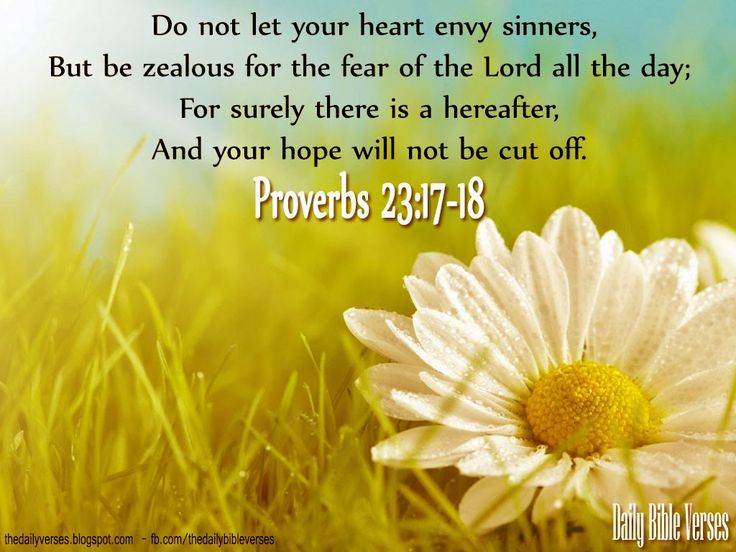
17 Let not your heart envy sinners,
    but continue in the fear of the Lord all the day.
18 Surely there is a future,
    and your hope will not be cut off.

The Word of God for the Children of God.

Adeste Fideles! Laeti Triumphantes! Venite Adoremus! Dominum.

Gloria! In Excelsis Deo! Alleluia, Alleluia, Alleluia, Amen.

It’s tempting to admire rich and famous people who just seem to have every guilty pleasure in this world.

They always seem to have every­thing at their fingertips—money, fine food, adventurous travels, sleek cars and other toys, beautiful houses in beautiful places, big vacations where ever they want, power in business and politics.

Don’t they just seem to have everything in the world at their finger tips?

The Bible often cautions against having too much desire for the things other people have. That can lead to internal unrest that’s unhealthy for the soul.

Envy is cultivated in our hearts at such an early age.

Right from the get go, Society immerses, ingrains, soaks, teaches us to want all of those hidden and known treasures that the world offers at a very young age.

The commercials on television show kids with all of the newest fantastic toys and then envy is born and flourishes when another receives it and one does not.

Steadily exerting its subtle influence upon our souls, Envy often involves not only a desire for something but also a demand that no one else should have it.

And under its not so subtle influence, the sin of envy might tempt us to commit more sin in order to get what we want—to lie, cheat, steal, or to even kill for it.

Envy is a sin because it reveals all of our not so subtle ingratitude toward the abundant blessings that God has graciously bestowed upon God’s Children.

Is it more offensive to God when we envy those who gain through corruption and dishonesty?

I could not answer this but ingratitude towards God is wrong.

Contentment with what we have has to be a sincere form of praise to God.

It is acceptable to dream of good things to come or to want things, but when it creates envy then we have abandoned contentment.

God calls this coveting. Does this next verses sound familiar.

You shall not covet your neighbor’s house; you shall not covet your neighbor’s wife, nor his male servant, nor his female servant, nor his ox, nor his donkey, nor anything that is your neighbor’s. (Exodus 20:17 NKJV)

Our treasure and reward is accumulating and being stored for each of us in heaven.

We will have the healthy fear of the Lord when we care more about doing for God than getting from God.

If that is the desire of your heart, envy cannot get a foothold.

The only time contentment would not reign in our hearts is when we desire to do more for God than the current conditions allow.

If you find envy in your heart, especially envy for those that gain but do not know God, remember that your treasures are in heaven.

Use that energy that envy is sapping from you and turn it into service for the Kingdom.

It is not about pleasing ourselves but is always about pleasing the Lord.

“Soak Yourself in the Fear of God”

Proverbs 23:17-18 The Message

14

17-18 Don’t for a minute envy careless rebels;
    soak yourself in the Fear-of-God—
That’s where your future lies.
    Then you won’t be left with an armload of nothing.

The writer of our passage from Proverbs 23:17-18 says that even for today, it is far better to pursue doing things God’s way.

When we live God’s way, when we immerse ourselves in God’s way, when we soak our lives to maximum saturation in God’s way, our future will be secure, even if it does not seem so exciting or so extravagant by the world’s standards.

In fact, when we are truly wise and striving to live our lives in tune with God, we will have as much, if not ever so much more desire for God’s way as we might be tempted to have for the life of people who forever just seem to have everything.

The Worship Perspective of God’s People

That’s where your future lies.
    Then you won’t be left with an armload of nothing.”
Psalm 73:1-5 The Message

73 1-5 No doubt about it! God is good—
    good to good people, good to the good-hearted.
But I nearly missed it,
    missed seeing his goodness.
I was looking the other way,
    looking up to the people
At the top,
    envying the wicked who have it made,
Who have nothing to worry about,
    not a care in the whole wide world.

The psalmist Asaph struggled with the age-old question of why the wicked prosper.

In Psalm 73 he wrote, “But as for me, I almost lost my footing. My feet were slipping, and I was almost gone. For I envied the proud when I saw them prosper despite their wickedness” (verses 2–3 NLT).

We definitely live in a time when people celebrate and flaunt ungodly lifestyles.

And like Asaph, we wonder to ourselves and sometimes rather out loud just how long do they believe they are going to get away with it.

As hopeful, hope-filled, faithful, faith-filled followers of our Lord and Savior Jesus Christ, we try to live our life by God’s Word, and people mock us for it.

So, we will say, or we will even sing, shout, out great raucous choruses of;

“This just isn’t fair. That’s a horrible thing they’re doing. They shouldn’t be able to get away with that.”

David, too, reflected on the life of the godly, the ungodly and contrasted them.

He looked at the priorities they have.

Psalm 5 The Message

1-3 Listen, God! Please, pay attention!
    Can you make sense of these ramblings,
    my groans and cries?
    King-God, I need your help.
Every morning
    you’ll hear me at it again.
Every morning
    I lay out the pieces of my life
    on your altar
    and watch for fire to descend.

4-6 You don’t socialize with Wicked,
    or invite Evil over as your houseguest.
Hot-Air-Boaster collapses in front of you;
    you shake your head over Mischief-Maker.
God destroys Lie-Speaker;
    Blood-Thirsty and Truth-Bender disgust you.

7-8 And here I am, your invited guest—
    it’s incredible!
I enter your house; here I am,
    prostrate in your inner sanctum,
Waiting for directions
    to get me safely through enemy lines.

9-10 Every word they speak is a land mine;
    their lungs breathe out poison gas.
Their throats are gaping graves,
    their tongues slick as mudslides.
Pile on the guilt, God!
    Let their so-called wisdom wreck them.
Kick them out! They’ve had their chance.

11-12 But you’ll welcome us with open arms
    when we run for cover to you.
Let the party last all night!
    Stand guard over our celebration.
You are famous, God, for welcoming God-seekers,
    for decking us out in delight.

And in Psalm 5 he wrote, “You will destroy those who tell lies. The Lord detests murderers and deceivers. Because of your unfailing love, I can enter your house; I will worship at your Temple with deepest awe” (verses 6–7 NLT).

David was saying, “Nonbelievers can do what they want to do and live the way they want to live.

But, Guess What World?

“I’m going to go to the house of the Lord and Celebrate God.” (Verses 11-12)

Asaph arrived at a similar conclusion.

Psalm 73:15-20 The Message

15-20 If I’d have given in and talked like this,
    I would have betrayed your dear children.
Still, when I tried to figure it out,
    all I got was a splitting headache . . .
Until I entered the sanctuary of God.
    Then I saw the whole picture:
The slippery road you’ve put them on,
    with a final crash in a ditch of delusions.
In the blink of an eye, disaster!
    A blind curve in the dark, and—nightmare!
We wake up and rub our eyes. . . . Nothing.
    There’s nothing to them. And there never was.

He wrote, “Then I went into your sanctuary, O God, and I finally understood the destiny of the wicked. Truly, you put them on a slippery path and send them sliding over the cliff to destruction” (Psalm 73:17-18 NLT).

When we gather with God’s people, pray with God’s people, and to study God’s Word together, celebrating God as God celebrates us we will see the big picture.

We will steadily realize that sin eventually catches up with everyone.

We will steadily desire to celebrate all of God than celebrating .01% of our sins.

And as followers of Jesus Christ, we will know that we’ve made the right choice.

To utterly Celebrate God, the Father as God the Father celebrates us!

To utterly Celebrate God, the Son and God the Son celebrates us!

To utterly Celebrate God the Holy Spirit as God the Holy Spirit celebrates us!

In the name of God, the Father and God the Son and God the Holy Spirit,

Let us Pray,

Father God, you give to us abundantly and exactly what we need. Your blessings flow every morning anew. Our greatest blessing is your Son. Forgive us when we envy others for the material things that this world offers. Those things are fleeting and never eternal. Help us see how serving you is worth more than anything of this world. We pray that our eyes always focus on your glory. Provider God, give us our daily bread today, to celebrate You and help us not to be tempted to do anything sinful to get more. We pray that we always bring honor to your holy name. Amen.

Adeste Fideles! Laeti Triumphantes! Venite Adoremus! Dominum. Gloria! In Excelsis Deo! Alleluia, Alleluia, Alleluia, Amen.

https://translate.google.com/

Where Exactly Is Our Hope Placed? Temporary Centrality of Our Hope Only In Ourselves. Proverbs 11:4-8

In a worship song from the early 2000s, singer/songwriter Brian Doerksen sings, “Jesus, hope of the nations/ Jesus, comfort for all who mourn/ You are the source of heaven’s hope on earth.”

Looking outward into the world for all of the hope to be found and mined from the ground in all of the far reaching places we have ever traveled on this planet?

Looking upward into the heavens and the uncountable number of far reaching constellations of stars and planets we can never hope to reach – we are limited to this time – to this place – unto these bodies – to these tents which wear out.

But, why should we seek to limit ourselves and where we look for our hope, to look in all the places where the only thing likely to be found is disappointment?

If the only thing we believe we can ever find in life is one disappointment after the other, how is we can continue to justify our personal search for true hope?

Proverbs 11:4-8 The Message

A thick bankroll is no help when life falls apart,
    but a principled life can stand up to the worst.

Moral character makes for smooth traveling;
    an evil life is a hard life.

Good character is the best insurance;
    crooks get trapped in their sinful lust.

When the wicked die, that’s it—
    the story’s over, end of hope.

A good person is saved from much trouble;
    a bad person runs straight into it.

The Word of God for the Children of God.

Adeste Fideles! Laeti Triumphantes! Venite Adoremus! Dominum.

Gloria! In Excelsis Deo! Alleluia, Alleluia, Alleluia, Amen.

Where is Your Hope?

There is a well known country song with the title of “I’ve Been Everywhere.”

Some of the places which account for having “been everywhere” include:

I’ve been to Reno, Chicago, Fargo, Minnesota
Buffalo, Toronto, Winslow, Sarasota
Wichita, Tulsa, Ottawa, Oklahoma
Tampa, Panama, Mattawa, La Paloma
Bangor, Baltimore, Salvador, Amarillo
Tocapillo, Baranquilla, and Perdilla, I’m a killer

I’ve been to Boston, Charleston, Dayton, Louisiana
Washington, Houston, Kingston, Texarkana
Monterey, Faraday, Santa Fe, Tallapoosa
Glen Rock, Black Rock, Little Rock, Oskaloosa
Tennessee to Tennessee Chicopee, Spirit Lake
Grand Lake, Devils Lake, Crater Lake, for Pete’s sake

I’ve been to Louisville, Nashville, Knoxville, Ombabika
Schefferville, Jacksonville, Waterville, Costa Rica
Pittsfield, Springfield, Bakersfield, Shreveport
Hackensack, Cadillac, Fond du Lac, Davenport
Idaho, Jellico, Argentina, Diamantina,
Pasadena, Catalina, see what I mean

I’ve been to Pittsburgh, Parkersburg, Gravelburg, Colorado
Ellensburg, Rexburg, Vicksburg, El Dorado
Larimore, Atmore, Haverstraw, Chatanika
Chaska, Nebraska, Alaska, Opelika
Baraboo, Waterloo, Kalamazoo, Kansas City
Sioux City, Cedar City, Dodge City, what a pity

I’ve been everywhere, man
Crossed the desert’s bare, man
I’ve breathed the mountain air, man
Of travel I’ve had my share, man
I’ve been everywhere

Where exactly in all of those places the song writer has claimed to have been, where exactly was their hope for what ever it was they hoped for, searched for, which compelled them, moved them from one geographical locale to another?

In a worship song from the early 2000s, singer/songwriter Brian Doerksen sings, “Jesus, hope of the nations/ Jesus, comfort for all who mourn/ You are the source of heaven’s hope on earth.”

Looking outward into the world for all of the hope to be found and mined from the ground in all of the far reaching places we have ever traveled on this planet?

Looking upward into the heavens and the uncountable number of far reaching constellations of stars and planets we can never hope to reach – we are limited to this time – to this place – unto these bodies – to these tents which wear out.

But, why should we seek to limit ourselves and where we look for our hope, to look in all the places where the only thing likely to be found is disappointment?

If the only thing we believe we can ever find in life is one disappointment after the other, how is we can continue to justify our personal search for true hope?

Recognizing God’s Sovereignty, Letting God Be True

Luke 12:16-21 English Standard Version

16 And he told them a parable, saying, “The land of a rich man produced plentifully, 17 and he thought to himself, ‘What shall I do, for I have nowhere to store my crops?’ 18 And he said, ‘I will do this: I will tear down my barns and build larger ones, and there I will store all my grain and my goods. 19 And I will say to my soul, “Soul, you have ample goods laid up for many years; relax, eat, drink, be merry.”’ 20 But God said to him, ‘Fool! This night your soul is required of you, and the things you have prepared, whose will they be?’ 21 So is the one  who lays up treasure for himself and is not rich toward God.”

In actuality for all of their bravado, sinners have a little fun – while alive.

They make huge plans for pleasure and posterity.

They expect and hope to do bigger and better things.

They plan to get everything rolling along more perfectly.

Then they die.

Then they have nothing but a casket to show for it.

Then they are nothing – except the book of memories from their funerals.

Death is the great equalizer.

It mercilessly rips from the rich all their wealth; it tears from the strong any athletic prowess; it corrupts the face, body, and hair of the beautiful; it removes the wits and memories of the intelligent; it neuters the authority and power of leaders; it takes from parents their beloved children; it leaves homeless those who loved their fine homes.

No matter what the sinners expected or hoped to do, Our Sovereign God sends His Shepherd to us on our deathbeds and just like that, God takes it all away.

And still we sinners must somehow still find and focus on these words of hope:

Job 1:20-21 English Standard Version

20 Then Job arose and tore his robe and shaved his head and fell on the ground and worshiped. 21 And he said, “Naked I came from my mother’s womb, and naked shall I return. The Lord gave, and the Lord has taken away; blessed be the name of the Lord.”

Instead of focusing on the ‘hope’ found from these words: “Curse God and Die.”

From the Parable in Luke’s Narrative, Jesus told of a rich man who planned new barns to hold his great wealth, and he said to himself, “Soul, thou hast much goods laid up for many years; take thine ease, eat, drink, and be merry.”

But God said to him, “Thou fool, this night thy soul shall be required of thee: then whose shall those things be, which thou hast provided?” (Luke 12:16-21).

Worldly men and woman arrive in life very naked and ignorant, and without exception, they leave the same helpless way – ignorant of what heaven holds.

Ignorant of what incomparable, indescribable, hope the Hope of Heaven has.

Yet they will still waste their lives chasing goals that disappear in one second – the second they die.

They see others die and take nothing with them, yet they keep running as fast as they can on the unmerciful treadmill of ambition, greed, and covetousness until it lets them go, hurls them and sends them off into their death and hell.

Psalm 14:1 New King James Version

Folly of the Godless, and God’s Final Triumph

To the Chief Musician. A Psalm of David.

14 The fool has said in his heart,
“There is no God.”
They are corrupt,
They have done abominable works,
There is none who does good.

One just wants to shout: “Curse God and Die,”

What fools!

Then they have nothing.

Then they are nothing.

Are such words too harsh?

Are such words not harsh enough?

They are nothing compared to the shock of the first second in hell.

In a horrible flash of understanding, every sinner will know there is a God, that their whole earthly life was a waste, that they’ll have an eternity of unbearable torment ahead.

They will not think for a second about the legacy of their big plans on earth, for in an instant they’ll be entirely gone – and remembered by only a precious few.

Why do we think strong warnings about such a future are unabashedly harsh?

Am I deceived by my illusion of the importance of my personal sovereignty?

Are you also deceived of the importance of your own personal sovereignty?

The world is insane!

They set goals of high salaries, prestigious positions, large houses, fancy cars, fine clothes, the most expensive schools for their children, and other ambitions.

Some of them say, even more will find their bully pulpits and charismatically preach and teach and so live like, “He who dies with the most toys – wins.”

They chase after their neighbors “accomplishments” daily to make sure they are not left behind in the mad rush to accumulate things, experience pleasure.

Then “here today then gone tomorrow” they lose everything in one second.

Consider what David wrote about this madness in Psalm 39.

He wrote, “Surely every man walketh in a vain shew: surely they are disquieted in vain: he heapeth up riches, and knoweth not who shall gather them” (Psalm 39:6).

Solomon, after experimenting with more than you can even imagine, added this summary: “I have seen all the works that are done under the sun; and, behold, all is vanity and vexation of spirit” (Ecclesiastes 1:14).

Believe it!

Consider what David wrote in Psalm 49.

Psalm 49:16-20 English Standard Version

16 Be not afraid when a man becomes rich,
    when the glory of his house increases.
17 For when he dies he will carry nothing away;
    his glory will not go down after him.
18 For though, while he lives, he counts himself blessed
    —and though you get praise when you do well for yourself—
19 his soul will go to the generation of his fathers,
    who will never again see light.
20 Man in his pomp yet without understanding is like the beasts that perish.

There the Lord ridiculed the insanity of the rich and their ambitions.

It is a sermon to warn all men of the vanity of worldly riches.

Whether a man or a woman is wise or foolish, they die, and they cannot take anything with him.

There is nothing a rich man or woman can do to buy their way out of death.

Everything sinners hope for and plan for ends at death – their expectations and hopes perish.

All they valued is totally wiped out by the reality of the grave they’ll rest in.

They will never again be able to travel across the vast expanses of the earth, watch another Super Bowl, attend a World Series, or bet on March Madness.

But righteous people have eternal hope in their death (Proverbs 10:28; 14:32), for their expectation is of another world that infinitely far outstrips this world by every degree and measure as light is infinitely superior to chaos and darkness.

Centrality of Hope Found Only in the Resurrection

1 Corinthians 15:51-58 New King James Version

51 Behold, I tell you a [a]mystery: We shall not all sleep, but we shall all be changed— 52 in a moment, in the twinkling of an eye, at the last trumpet. For the trumpet will sound, and the dead will be raised incorruptible, and we shall be changed. 53 For this corruptible must put on incorruption, and this mortal must put on immortality. 54 So when this corruptible has put on incorruption, and this mortal has put on immortality, then shall be brought to pass the saying that is written: “Death is swallowed up in victory.”

55 “O[b] Death, where is your sting?
O Hades, where is your victory?”

56 The sting of death is sin, and the strength of sin is the law. 57 But thanks be to God, who gives us the victory through our Lord Jesus Christ.

58 Therefore, my beloved brethren, be steadfast, immovable, always abounding in the work of the Lord, knowing that your labor is not in vain in the Lord.

As believers in Jesus Christ, we recognize and worship Jesus Christ as the only true hope of the world, and yet it remains undeniably astounding how often we still pin the length, breadth, depths and heights of our hopes on ­human beings.

In all of our history books, it is clear that people are more inclined to find hope in sinful leaders, politicians, and celebrities rather than upon the one true God.

Why do we do this?

Proverbs 11:4-8 continually warns readers even today that placing ‘forever’ hope in humans is futile because human power will 100% come to nothing.

As the apostle Paul tells us, “There is no authority except that which God has established” (Romans 13:1).

By saying this, Paul is assuring believers that in all situations, even in the midst of national turmoil and global crises, God forever remains the only one who has all the Sovereignty and will 100% perpetually hold on to all of God’s ­authority.

Jeremiah 29:10-14 English Standard Version

10 “For thus says the Lord: When seventy years are completed for Babylon, I will visit you, and I will fulfill to you my promise and bring you back to this place. 11  For I know the plans I have for you, declares the Lord, plans for welfare[a] and not for evil, to give you a future and a hope. 12 Then you will call upon me and come and pray to me, and I will hear you. 13 You will seek me and find me, when you seek me  with all your heart. 14 I will be found by you, declares the Lord, and I will restore your fortunes and gather you from all the nations and all the places where I have driven you, declares the Lord, and I will bring you back to the place from which I sent you into exile.

Any human who has “power” has it only because God allows it to be so.

In other words, our hopes and desires must be found, must lie, must rely on and with the only One who created and sits upon the throne of the universe.

Our prayers must be oriented toward Christ, for he is truly the only hope—

The only one with the Authority and the Sovereignty and the Power who can change our minds, transform hearts, disperse powers, and bring restoration.

Children of God, make no boast of tomorrow, for you do not know what will happen tomorrow (Proverbs 27:1).

Proverbs 27:1 New King James Version

My Son, Be Wise

27 Do not boast about tomorrow,
For you do not know what a day may bring forth.

While God allows us to make business plans, God expects us to do so in prudent wisdom, because we will not even, ever, know if we will be alive tomorrow, so we are to submit your plans to God’s will with these words: “For that ye ought to say, If the Lord will, we shall live, and do this, or that” (James 4:15).

We need the breath of life and the breath of God, for any of our plans to work.

In the name of God the Father and God the Son and God the Holy Spirit,

Let us Pray,

Psalm 19 The Message

19 1-2 God’s glory is on tour in the skies,
    God-craft on exhibit across the horizon.
Madame Day holds classes every morning,
    Professor Night lectures each evening.

3-4 Their words aren’t heard,
    their voices aren’t recorded,
But their silence fills the earth:
    unspoken truth is spoken everywhere.

4-5 God makes a huge dome
    for the sun—a superdome!
The morning sun’s a new husband
    leaping from his honeymoon bed,
The daybreaking sun an athlete
    racing to the tape.

That’s how God’s Word vaults across the skies
    from sunrise to sunset,
Melting ice, scorching deserts,
    warming hearts to faith.

7-9 The revelation of God is whole
    and pulls our lives together.
The signposts of God are clear
    and point out the right road.
The life-maps of God are right,
    showing the way to joy.
The directions of God are plain
    and easy on the eyes.
God’s reputation is twenty-four-carat gold,
    with a lifetime guarantee.
The decisions of God are accurate
    down to the nth degree.

10 God’s Word is better than a diamond,
    better than a diamond set between emeralds.
You’ll like it better than strawberries in spring,
    better than red, ripe strawberries.

11-14 There’s more: God’s Word warns us of danger
    and directs us to hidden treasure.
Otherwise how will we find our way?
    Or know when we play the fool?
Clean the slate, God, so we can start the day fresh!
    Keep me from stupid sins,
    from thinking I can take over your work;
Then I can start this day sun-washed,
    scrubbed clean of the grime of sin.
These are the words in my mouth;
    these are what I chew on and pray.
Accept them when I place them
    on the morning altar,
O God, my Altar-Rock,
    God, Priest-of-My-Altar.

Creator God, you made every living thing, and you hold all things together. Lord, bring restoration to this world that desperately needs your leadership and authority.

Adeste Fideles! Laeti Triumphantes! Venite Adoremus! Dominum.

Gloria! In Excelsis Deo! Alleluia, Alleluia, Alleluia, Amen.

https://translate.google.com/

If Hope Does Not Disappoint Us, Why Then Are Christians Disappointed All the Time? Romans 5:3-5

Author Hal Lindsey said, “Man can live about forty days without food, about three days without water, about eight minutes without air… but only for one second without hope.”

Hope not only affects how we live, it determined whether or not some people survive such catastrophic events such as natural disasters, devastating family, financial or healthcare news or the sudden unexpected loss of a loved one.

So, how is your hope?

Does it bounce back after being hit?

Or does it pop like a balloon lanced by a pin?

On what or WHO is your hope based?

The Bible shows us that people of faith are people of hope.

That makes sense, doesn’t it?

Those who trust God have more reason for hope than those who don’t.

But hardcore problems without visible solutions test the faith and challenge the hope of even the most devout.

Even when we are “poster children” for disappointment, guess what …

The Bible says to encourage each other every day (Hebrews 4:13).

Romans 5:3-5 The Message

3-5 There’s more to come: We continue to shout our praise even when we’re hemmed in with troubles, because we know how troubles can develop passionate patience in us, and how that patience in turn forges the tempered steel of virtue, keeping us alert for whatever God will do next. In alert expectancy such as this, we’re never left feeling shortchanged. Quite the contrary—we can’t round up enough containers to hold everything God generously pours into our lives through the Holy Spirit!

The Word of God for the Children of God.

Adeste Fideles! Laeti Triumphantes! Venite Adoremus! Dominum.

Gloria! In Excelsis Deo! Alleluia, Alleluia, Alleluia, Amen.
Romans 4, the Apostle Paul recounts the story of the Patriarch Abraham.

Romans 4:1-3 English Standard Version

Abraham Justified by Faith

4 What then shall we say was gained by Abraham, our forefather according to the flesh? For if Abraham was justified by works, he has something to boast about, but not before God. For what does the Scripture say? “Abraham believed God, and it was counted to him as righteousness.”

For the new followers in Rome, Paul greatly emphasized Abraham’s faith.

Paul said even Abra­ham, who was considered a God-fearing and good man, was praiseworthy not because he was so good but because in faith, he believed God.

If we ourselves go read the story of Abraham in Genesis, we will find quite a few examples of Abraham making substantial mistakes and committing great sins.

For example, twice focused only on what mattered most to himself and he lied and told an Egyptian that his wife, Sarah, was his sister (Genesis 12 and 20).

Abraham was a good man in many ways, but he was an ordinary, flawed person, like anyone else.

The great thing about Abraham was not anything about Abra­ham himself; it was his focus on the “one thing:” he faithfully put his trust and hope in God.

Abraham slowly disciplined his focus on what mattered most: believed God’s promises, Abraham faithfully put his hope in God’s being true to his ­promises.

The same is very much true for our disciplining our focus away from us today.

If we focus all of our hope in our own power or our own goodness or strength, we will constantly and continuously be indescribably hopelessly disappointed.

In ourselves, we do not have enough goodness to give us hope for the future.

Focus on faith in God, given to us by Holy Spirit, is the surest source of hope.

Do you and I have any of that self same disciplined focus on hope in God alone?

A Disciplined Focus on God’s Brand of “Sure Hope”

Hebrews 12:1-3 The Message
Discipline in a Long-Distance Race

12 1-3 Do you see what this means—all these pioneers who blazed the way, all these veterans cheering us on? It means we’d better get on with it. Strip down, start running—and never quit! No extra spiritual fat, no parasitic sins. Keep your eyes on Jesus, who both began and finished this race we’re in. Study how he did it. Because he never lost sight of where he was headed—that exhilarating finish in and with God—he could put up with anything along the way: Cross, shame, whatever. And now he’s there, in the place of honor, right alongside God. When you find yourselves flagging in your faith, go over that story again, item by item, that long litany of hostility he plowed through. That will shoot adrenaline into your souls!

A disciplined focus on Hope.

It’s the oxygen our souls need to thrive.

Hope is the wild-eyed creature that pops up after the enemy tries to eradicate the very beating of faith in our hearts.

It’s the essence of being a disciplined Christ-follower and as a hopeless, broken world watches us under an electron Microscope, as they scornfully question, “If hope does not disappoint us, why are you Christians disappointed all the time?”

However, before we can answer that question, we need to define what hope is.

Hope looks like light, seeing hundreds of fireflies lighting up a dark night.

Hope is the long barren heavily scorned and mocked Hannah praying fervently, disciplined in her knowing God hears her while she’s taken for a drunken fool.

Hope is a father staying at hope forgiving his undisciplined wayward child.

Hope is the oxygen our souls need to breathe to stay alive.

Hope is a category 5 torrential downpour that washes the world clean.

Hope is uncountable millions of little green shoots being nourished, unearthed after a long and cold winter’s nap and stretching and reaching to the heavens.

Hope is praying your loved one will be found alive after tragedy strikes.

Hope is knowing we will be reunited with our loved ones on the other side of heaven.

Hope is the soldier at war in a far away land who begged God to use His words to care for, to heal and to love his son or daughter miles away.

Hope is a foster child finally finding his forever home in a family that fiercely loves, protects and cares for them.

Hope is watching your autistic child make a friend.

Hope is walking hand in hand with God the Father, Jesus Christ, Holy Spirit.

What Does ‘Hope Does Not Disappoint Us’ Mean?

The biblical definition of hope is “confident expectation.” 

Christian hope is rooted in faith in the divine salvation in Christ (Galatians 5:5) and through the love poured into us through God’s Holy Spirit (Romans 5:5).

What have you and I been hoping for?

Have we been trying to discipline our hope away from the world and unto God?

Where have we been disciplining our minds, where are we focusing our Hope?

Did anything above resonate with your heart?

Or have you given up?

Maybe you and I are too afraid to invest in hope again because we dread the possibility that if we try too hard to discipline ourselves, we will lose all hope?

Or perhaps we simply don’t remember what hope even feels like anymore.

We are physically, mentally, spiritually exhausted from trying to recall what hope looks, tasted, feels, sounds like – we do not care to know what hope is.

If you’re in this camp, we need to go back to the Bible, discipline ourselves back unto Word of God, to understand God’s hope isn’t the same as the world’s hope.

God’s hope is not and never will be the same as the world’s definition of hope.

Both denote a positive expectation, but the world’s hope is rooted in a fallible person, situation, or thing. God’s hope is rooted in Him.

The basis of Christian hope is found Hebrews 11:1, “Now faith is the substance of things hoped for.”

The Greek word for hope in this passage is ‘hypostasis.  

The anonymous author wrote in the book of Hebrews, “Faith is the ‘hypostasis of things hoped for…” which literally means “that which underlies.”

Meaning our faith in Christ underlies our hope, the deeper our faith is, the more difficult it is for hope to be overthrown and turned into disappointment.

A hope that does not disappoint means God has given us hope that raises up to our defense – to become our sword and shield in the midst of disappointment.

This kind of hope is found not in our avoidance of suffering but our working through it with God the Father, Son and Holy Spirit because, suffering produces joy, perseverance; perseverance, character; and character, hope. (James 1:2-4)

What Is the Context of Romans 5:5?

“Therefore, since we have been declared righteous (justified) through faith, we have peace with God through our Lord Jesus Christ, through whom we have gained access by faith into this grace in which we now stand. And we boast in the hope of the glory of God. Not only so, but we also glory in our sufferings, because we know that suffering produces perseverance; perseverance, character; and character, hope. And hope does not put us to shame, because God’s love has been poured out into our hearts through the Holy Spirit, who has been given to us,” Romans 5:1-5.

We learn what hope means in God’s kingdom through the words of Paul beginning in the fifth chapter of Romans. Full

Here, Paul tells us we have justice, peace, grace, perseverance, character, and hope which is all built on the faith we have in Christ.

The kind of hope that does not disappoint that Paul is talking about here is the kind of disciplined hope that only God can give.

This kind of hope Fully Relies On God—His power, His promises, and the sacrifices He alone made for us.

This type of hope carries a promise because of what He has accomplished.

As we read through the rest of Romans 5, we learn we have this hope because Jesus died for us while we were yet his utterly worst enemies (Romans 5:8).

We have been justified and we will be delivered from all things.

God didn’t save us based on our own righteousness.

We were saved because of our faith, hope and belief and love for God’s Son.

This hope points directly to the glory of God – “we boast in our hope of sharing in the glory of God” (Romans 5:2).

This means, no matter what comes our way: suffering, turmoil, tragedy, death, and heartbreak. God will conquer it all.

In other words, “Hope has a sanctifying effect. We who look expectantly for the return of Christ, knowing that when we see him we shall become like him, and purify ourselves “as he is pure” (1 John 3:3 ).

Hope also stimulates good works.

Following his teaching on the resurrection of the dead, Paul exhorts readers to do be “steadfast and immovable doing the Lord’s work abundantly since such “labor is not in vain” (1 Corinthians 15:51-58 ).”

Then, How Exactly Can Christians Hope When They Experience Disappointments?

Throughout Scripture, we find the same message trusting in God’s promises and hoping in the Lord:

“Let us hold unswervingly to the hope we profess, for he who promised is faithful” Hebrews 10:23.

“I pray that your hearts will be flooded with light so that you can understand the confident hope he has given to those he called—his holy people who are his rich and glorious inheritance” Ephesians 1:18.

“I wait for the LORD, my whole being waits, and in his word, I put my hope” Psalm 130:5.

If we read in between the vast array of scriptures about hope, we will also find hundreds of people inside the Bible who experienced true utter disappointment: Adam, Eve, Hagar, Job, Hannah, Moses, Sarah, David, Jacob, Gideon, Jeremiah, Isaiah, Jonah, the exiles, Nehemiah, Jesus, the Disciples, Paul, Elijah, others.

Yes! Even Jesus experienced disappointment during his ministry: when the people didn’t receive His message, when His disciples struggled with doubt, or when He encountered those legalistic religious leaders who wanted to kill Him.

Yet, each and every one of these biblical accounts of real-life people are marked by moments of every single one of them decisively overcoming disappointment.

They also went to accomplish great things for God and some even accomplished things beyond their wildest dreams.

The common thread of each of them was their hope in God.

Their belief in God was bigger than their disappointment.

Instead of blaming God when tragedy struck, instead, they turned to God.

“Hope in God transcends the lost hopes of human frailty and sin and begins to take effect in our lives precisely when human hopes are gone” (Romans 4:18).

How can Christians hope when we experience disappointments?

We put our hope in the Lord as we look at Paul’s example in Philippians 4:4.

Here, Paul was suffering greatly but he was writing to the church in Philippi which happened to be a church that was exceptionally poor.

But Paul was writing to them from a Roman Prison to encourage them to keep a disciplined, focused hope as they learn to be content with having much or little.

Paul wrote to encourage them through his example walking with Christ, even in the midst of disappointment, he could deal with humble means or prosperity.

No matter the circumstance Paul persevered through hope because no matter what came, he “can do all things through Christ’s strength, (Philippians 4:13, ESV).

The exact same One whose Grace strengthened Paul and provided contentment, courage, and a disciplined and focused hope is exact the same One working all things together—even disappointment—for our good too (Romans 8:28).

Because of the Sovereignty of God, Jesus’ resurrection power at work in us, the Holy Spirit interceding and praying for us when we have not the wherewithal to intercede for self, we can breathe in His kind of Hope that does not disappoint.

In the name of God, the Father and God the Son and God the Holy Spirit,

Let us Pray,

Prayer for a Hope That Does Not Disappoint

Lord God, our Creator, Author of our Life and Perfecter of our Hope, we raise our hearts, our souls, our hands high to thank you for your peace and for being our true source of hope. No matter what we walk through, may we lean on you. I believe that the hope you give us will not disappoint. You are working through every struggle and hardship we face. We will not be disappointed because of the salvation and blessing of a heavenly inheritance through Jesus Christ. Help us to abound in joy and to rest in your loving arms. Give us grace, strength, to lean on your powerful promises today.

Dear God, we praise you because you are true to your promises, we thank you that you are the true source of hope. Help us, by your Holy Spirit, to put our hope in you.

Adeste Fideles! Laeti Triumphantes! Venite Adoremus! Dominum.

Gloria! In Excelsis Deo! Alleluia, Alleluia, Alleluia, Amen.

https://translate.google.com/

Today’s Choice: We Can All Fully Give Up, Or We Can All Fully Rely on God Who is Supposed to be Number One. 2 Corinthians 1:8-11

If you have ever traveled in the deep country, where there are nothing but narrow two lane and rutted dirt roads, then you’ve probably seen the sign,

“Pick your rut carefully, you’ll be in it for the next 20 miles.”

You know what it is like.

A story is told of a frog who was hopping across a dirt road and he fell into a rut.

He tried to jump out of it, but he couldn’t.

He cried out to his friends, “Help me, I’m stuck in this rut.”

Well his friends could not pull him out but they offered him encouragement and support, telling him what they had done when they had recently been in similar situations, assuring him he could do it, but he said he had tried and he couldn’t.

After a short while it was time for all his friends to leave, everyone was very sad, but there was nothing more they could do.

You can imagine their surprise when the next morning they saw all their friends at the riverbank.

“What happened?” they asked, “We thought you were stuck in the rut.”

“Well, so did I” their friend answered, “I thought it was a hopeless situation, when all of a sudden a sanitation truck came down the road and its tires were traveling in my rut! We had no choice but to rely on our survival to hop to it.”

Someone once said the only difference between a rut and a grave is the depth.

2 Corinthians 1:9-11 The Message

8-11 We don’t want you in the dark, friends, about how hard it was when all this came down on us in Asia province. It was so bad we didn’t think we were going to make it. We felt like we’d been sent to death row, that it was all over for us. As it turned out, it was the best thing that could have happened. Instead of trusting in our own strength or wits to get out of it, we were forced to trust God totally—not a bad idea since he’s the God who raises the dead! And he did it, rescued us from certain doom. And he’ll do it again, rescuing us as many times as we need rescuing. You and your prayers are part of the rescue operation—I don’t want you in the dark about that either. I can see your faces even now, lifted in praise for God’s deliverance of us, a rescue in which your prayers played such a crucial part.

The Word of God for the Children of God.

Adeste Fideles! Laeti Triumphantes! Venite Adoremus! Dominum.

Gloria! In Excelsis Deo! Alleluia, Alleluia, Alleluia, Amen.

If you have ever traveled in the deep country, where there are nothing but narrow two lane and rutted dirt roads, then you’ve probably seen the sign,

“Pick your rut carefully, you’ll be in it for the next 20 miles.”

You know what it is like.

A story is told of a frog who was hopping across a dirt road and he fell into a rut.

He tried to jump out of it, but he couldn’t.

He cried out to his friends, “Help me, I’m stuck in this rut.”

Well his friends could not pull him out but they offered him encouragement and support, telling him what they had done when they had recently been in similar situations, assuring him he could do it, but he said he had tried and he couldn’t.

After a short while it was time for all his friends to leave, everyone was very sad, but there was nothing more they could do.

You can imagine their surprise when the next morning they saw all their friends at the riverbank.

“What happened?” they asked, “We thought you were stuck in the rut.”

“Well, so did I” their friend answered, “I thought it was a hopeless situation, when all of a sudden a sanitation truck came down the road and its tires were traveling in my rut! We had no choice but to rely on our survival, to hop to it.”

Someone once said the only difference between a rut and a grave is the depth.

It Always Takes Great Pressure to Make Diamonds

2 Corinthians 1:8-9 Amplified Bible

For we do not want you to be uninformed, brothers and sisters, about [a]our trouble in [the west coast province of] Asia [Minor], how we were utterly weighed down, beyond our strength, so that we despaired even of life [itself]. Indeed, we felt within ourselves that we had received the sentence of death [and were convinced that we would die, but this happened] so that we would not trust in ourselves, but in God who raises the dead.

The Christian life is full of utterly impossible challenges.

Do we think we can overcome our sin and live a holy life in our own strength?

Have at it, my friend!

Come back in six months and tell me how it’s going for you.

You think you have enough wisdom and experience to help your children whatever their age, navigate all the landmines, pitfalls of their young life?

Well huzzah for you! (Side note: we really need to bring the word “huzzah” back into usage.)

Do you think you have enough personal insight to untangle the sticky relational or financial mess you, your family might be finding themselves in right now?

Do you think you have the strength to sufficiently lead your co-workers, small group, a worship team, a counseling team, a church planting team, or a church?

Do you believe you have the strength to sufficiently lead your own two feet to the floor of your bedroom when you first wake up after a “night” of slumber.

Right.

God bless,

Have at it my friend.

I’ll pray for you to have a soft bed in a padded room waiting for your return.

The reality is, God constantly finds us in situations of our own making that are impossibly far beyond our ability to bear up to.

He looks every which direction for us and always finds us smack dab inside the middle of befuddling, perplexing, overwhelming, even crushing circumstances.

Why does God keep looking for, finding us in these places?

Why does God keep on perpetually nudging us in our ribcages – “I AM here’

To assure us.

To humble us.

To quiet us.

To subtly or not so subtly redirect our spiritual eyesight.

To emphasize and indeed even over emphasize this point, to make us painfully aware, sharply remind us, we cannot make it through this life apart from him.

To shine the brightest lights in our eyes, cause us to look up and away from the catastrophe directly in front of us, highlight our desperate dependence on him.

God strips us of our own strength to make us totally reliant upon his strength.

God allowed Paul to be pushed and pressed, hit and hammered, beaten and even ship wrecked and even sentenced to “death,” SO THAT he would not rely upon himself, but straight upon the grace, the power of the God who raises the dead. (2 Corinthians 12:7-10)

God allows us to get into situations that are so far beyond our ability to survive so that when failure comes, deliverance comes, only God can receive the glory.

Speaking of pastoral ministry (but this quote applies equally to a million other situations), 19th Century English Theologian Charles Bridges says:

“Did we depend upon the failing support of human agency [strength], or upon the energy of mere moral suasion [our ability to persuade] – we should cry out, prostrate in heartless despondency – “Who is sufficient for these things?” But the instant recollection – that “our sufficiency is of God” – “lifts up our hearts in the ways” and work of the Lord.” (The Christian Ministry, page 19)

Are you in a situation that is too hard for you?

Are you being stretched beyond your spiritual gifts and abilities?

Are you pushed down and crushed, even to the point of despair?

Do you feel like butter scraped over too much bread?

Do you feel like you want to run and hide in some cave like David frequently did?

Maybe dig up your backyard and install an underground bunker, lock all doors?

You really only have two options.

2 Corinthians 1:8-9 Amplified Bible

For we do not want you to be uninformed, brothers and sisters, about [a]our trouble in [the west coast province of] Asia [Minor], how we were utterly weighed down, beyond our strength, so that we despaired even of life [itself]. Indeed, we felt within ourselves that we had received the sentence of death [and were convinced that we would die, but this happened] so that we would not trust in ourselves, but in God who raises the dead.

Behind door number one: throw your hands up not in praise but to give up.

Let the mounting lack of self-control, despair, anger, impatience and unbelief wash over you like an acidic shower, slowly dissolving eating away at your faith.

Start calling yourself: “highly educated motivated professional worldly realist.”

Allow all of the class 5 storms of unbridled cynicism to have their way with you.

OR…

2 Corinthians 1:10-11 Amplified Bible

10 He rescued us from so great a threat of death, and will continue to rescue us. On Him we have set our hope. And He will again rescue us [from danger and draw us near], 11 while you join in helping us by your prayers. Then thanks will be given by many persons on our behalf for the gracious gift [of deliverance] granted to us through the prayers of many [believers].

Behind door number two: Fully rely upon the God who raises from the dead.

Throw aside any foolish remnants of self-sufficiency and depend wholly upon our mighty, powerful God.

Depend upon God alone to work in your rebellious children.

Fully Rely On God who alone is Always #1

Depend upon God alone to work mightily in your shaky financial condition.

Fully Rely On God who alone is Always #1

Depend upon God alone to save your “un-savable” relative.

Fully Rely on God who alone is Always #1

Depend upon God alone to give you physical and emotional strength to serve your family.

Fully Rely on God who alone is Always #1

Depend upon the God who slays giants, shuts lions’ mouths, and rescues out of fiery furnaces.

Fully Rely on God who alone is Always #1

God does incredible things, God does the incomparable, does the impossible when we finally stop relying upon our own abilities and start relying on him.

He does incredible things, the incomparable things, the impossible things when we finally “raise a white flag” on our own abilities, find all our strength in him.

Come out from the darkness, into the Kingdom of God, in the Strength of God!

In the name of God the Father and God the Son and God the Holy Spirit,

Let us Pray,

Dear Lord Jesus,

I know you must have countless reasons for allowing me to go through difficult circumstances, but here in your word I find one that comforts me. You are teaching me not to rely on myself. That’s a big job. I was born wanting to be in charge and my raising in this culture is geared toward making me self sufficient. So, when life is too big for me, that’s okay. I’m constantly learning that it’s not too big for you. You are, from everlasting to everlasting, bigger than the complexities of my life and will deliver me from my troubles. You send help in a myriad of ways. Some I have not even thought of yet. I will set my hope on you that you will deliver me from all my troubles. Help me remember this passage today as I face health issues, mechanical failures, relationship stresses and challenges in my work. Help to remember that you are a prayer away from delivering me. Don’t let me drive myself to your hospital. I will call your 911 and you pick me up. You loved me and finally you died for me, your grave was empty, were raised, were resurrected, how would you ever not rescue me?

Adeste Fideles! Laeti Triumphantes! Venite Adoremus! Dominum.

Gloria! In Excelsis Deo! Alleluia, Alleluia, Alleluia, Amen.

https://translate.google.com/

Do We Really ‘Feel’ What This Means Anymore: “We Love Because He First Loved Us?” 1 John 4:17-21

Sometimes, one too many times, believing God loves us so deeply can be hard.

When we mess up, we make bad choices, it can be difficult to believe God cares.

We are likely to ask of ourselves “why should God care about me anyway, I know what I have done, surely God knows what I have done, so why should He love me?”

The thing of it is – we are only likely to be asking this of ourselves, to ourselves.

In the real world we encounter today, we do not openly express such thoughts in an outward manner – we are not likely to be shouting this on the city streets.

We will be internalizing these ideas, blasting them against the walls of our souls until even the most ardent believer will find themselves poking very substantial holes, if not trying to dig vast canyons into their steadfast and immovable faith.

When we see all our failures and flaws we can often think that we’re unlovable.

Vulnerability overtakes us – we can’t help it nor can we seen to slow it or stop it.

However, in the midst of all our failures and shortcomings, and sudden onsets of unconquerable vulnerabilities – guess what – God chooses to love us anyway!

1 John 4:17-21 The Message

To Love, to Be Loved

17-18 God is love. When we take up permanent residence in a life of love, we live in God and God lives in us. This way, love has the run of the house, becomes at home and mature in us, so that we’re free of worry on Judgment Day—our standing in the world is identical with Christ’s. There is no room in love for fear. Well-formed love banishes fear. Since fear is crippling, a fearful life—fear of death, fear of judgment—is one not yet fully formed in love.

19 We, though, are going to love—love and be loved. First we were loved, now we love. He loved us first.

20-21 If anyone boasts, “I love God,” and goes right on hating his brother or sister, thinking nothing of it, he is a liar. If he won’t love the person he can see, how can he love the God he can’t see? The command we have from Christ is blunt: Loving God includes loving people. You’ve got to love both.

The Word of God for the Children of God.

Adeste Fideles! Laeti Triumphantes! Venite Adoremus! Dominum.

Gloria! In Excelsis Deo! Alleluia, Alleluia, Alleluia, Amen.

Sometimes, one too many times, believing God loves us so deeply can be hard.

When we mess up, we make bad choices, it can be difficult to believe God cares.

We are likely to ask of ourselves “why should God care about me anyway, I know what I have done, surely God knows what I have done, so why should He love me?”

The thing of it is – we are only likely to be asking this of ourselves, to ourselves.

In the real world we encounter today, we do not openly express such thoughts in an outward manner – we are not likely to be shouting this on the city streets.

We will be internalizing these ideas, blasting them against the walls of our souls until even the most ardent believer will find themselves poking very substantial holes, if not trying to dig vast canyons into their steadfast and immovable faith.

When we see all our failures and flaws we can often think that we’re unlovable.

Vulnerability overtakes us – we can’t help it nor can we seen to slow it or stop it.

However, in the midst of all our failures and shortcomings, and sudden onsets of unconquerable vulnerabilities – guess what – God chooses to love us anyway!

God’s love for us should energize us to love other people.

When we focus on all God has done for us, it makes loving other people easier.

God’s love is empowering.

God’s love is an overcoming love.

It gives us the strength and motivation to truly love others.

So when you have those onset moments when you struggle with vulnerability, struggle with loving a “someone” who is less than lovable (including yourself), realize that you have got the power to yet do “love” because God loved you first.

When you were your own first and worst enemy, when you were convinced that didn’t deserve anybody’s “first love” and were an enemy of God, God loved you.

That knowledge gives you first burst of knowing what you need to love others.

What Does the Word of God Say of “First Loves?”

First love. 

The phrase evokes powerful feelings.

For many this phrase evokes the image of a newborn baby just placed on its mothers chest immediately after birth and the two make their “first contact.”

For some this phrase evokes the image of a new father looking at their very first newborn child for the very first time, and all the love in his world becomes real.

For many, the term conjures images of a first crush when a toddler recognizes mom for the first time or as a teenager, or impressions of “love at first sight.”

But first love is a much more intimate concept than simply a first recognition of of mom or dad or any raging hormones and pictures of pulsing cartoon hearts.

It’s God, Himself. 

1 John 4:8 tells us that God is love.

This means that any worldly love falls short of the true definition.

Think about the most dynamic couples, real or fictional, that are well known throughout history—Romeo and Juliet, Robert and Elizabeth Barrett Browning, Billy and Ruth Graham, President Jimmy and, Rosalynn Carter to name a few.

Now think about current celebrity match-ups in the media that make you sort of swoon – Bob and Betty Hope, George Burns and Gracie Allen, Fred Astaire and the incomparable Ginger Rogers, Humphry Bogart and Lauren Bacall.

As romantic as any of those might seem right now, those examples aren’t true love.

Without God involved in the process, without that cord of three strands that is not so easily broken (Ecclesiastes 4:9-12), no human relationship could ever be real love – it will always and forever “miss the mark.” 

1 Corinthians 13, known as the “love chapter,” states that “faith, hope, and love abide, these three; but the greatest of these is love.” 

I believe it’s important to note the greatest of these character traits only comes from God!

He is the source of love—not romance novels, not sonnets and poetry, and certainly not Hollywood.

Here are three things the Word of God reveals to each of us about “first loves.”

1. God Loved Us First

Everything springs from this. 

Such a beautiful message of hope is found in 1 John 4:19.

“We love, because He first loved us.” 

We don’t love because we manage to “dig deep down” and “conjure up our best effort”—no, we love because God put it in us first, via the Holy Spirit, to do so.

Any desires toward love, holiness, purity, etc. toward others or toward the Lord only come from God.

We are incapable of love on our own—yet we love because God first loved us.

What a relief!

Don’t you feel the burden rolling off your shoulders?

Love is a gift from God, who is love Himself—Who became love in the flesh through Jesus Christ, who came to “deliver us from the domain of darkness and transfer us to the kingdom of His beloved Son” (Colossians 1:13).

“You did not choose Me but I chose you, and appointed you that you would go and bear fruit, and that your fruit would remain, so that whatever you ask of the Father in My name He may give to you.” (John 15:16)

Let the depth of this truth saturate your weary and vulnerable soul… let it seep in, let it comfort you and hug you with all the coziness of your favorite quilt. 

You are held.

You are loved. A

nd it has nothing to do with you or what you bring to the table, and everything to do with the God who created you, who knew you from before the foundations of time (Jeremiah 1:5), planned every one of your days way long before you were even in your mother’s womb (Psalm 139:16).

2. We Often Leave Our First Love (GOD)

As comforting as it is to sit and bask in the reality of God’s love for us, we must also acknowledge and recognize the sobering concept of leaving our first love.

“But I have this against you, that you have left your first love.” (Revelation 2:4)

Even as believers, we are not immune to apathy.

Sometimes, we lose our fervor and passion for the things of the Lord.

When we are busy catering to our sin rather than confessing it, we are blocking communication with the Holy Spirit.

Conviction becomes fewer and farther between.

We grow farther away from Christ.

We stop praying, we stop reading and studying the Word, disciplining our lives and start listening to the lies that we can never love or worse—be loved—again.

Rather than heeding the dark deceptions from the enemy, we should recognize our behavior, turn, and repent.

Do we have unconfessed sin in your life?

Admit it already.

God already knows.

Avoiding prayer will only keep you feeling more and more disconnected, leaving ample room for the enemy to continue to tempt you.

There have been times in my Christian walk where it felt like my prayers hit the ceiling and stopped and splattered there and it made me prone to not pray at all.

In those times, the only prayer we need is “Lord, give me the want to want to.”

Rather than hide in our vulnerability and shame when we’re “prone to wander” and aren’t feeling a desire toward the things of God, we must shine truth on those dark thoughts, bring them to the light, simply ask for God’s desires again.

The Holy Spirit is infinitely more than capable of filling us back up.

In my experience, believers tend to occasionally disregard various disciplines of the faith because “that’s not what saves them.”

I agree—it’s not.

But I also realize when we only go through the motions of daily Bible reading, daily prayer, consistent fellowship with the church, we’re more prone to stay in communion with the Holy Spirit and on the right path in our Christian walk.

Sometimes, sitting down with the Word of God despite “not wanting to” will be exactly what’s needed to bring forth the desire.

Actions often breed feelings, and this is one of the greatest offenses we have against spiritual warfare.

The Word of God is our sword! 

Ephesians 6:17 says, “Take the helmet of salvation and the sword of the Spirit, which is the word of God.”

“For the word of God is living and active, sharper than any two-edged sword, piercing to the division of soul and of spirit, of joints and of marrow, and discerning the thoughts and intentions of the heart…” (Hebrews 4:12)

Even when we don’t feel like it—maybe especially when we don’t feel like it—pick up your sword anyway and start swinging it against your vulnerabilities.

Psalm 84: 8-9 The Message

8-9 God-of-the-Angel-Armies, listen:
    O God of Jacob, open your ears—I’m praying!
Look at our shields, glistening in the sun,
    our faces, shining with your gracious anointing.

Standing tall, Steadfast and Immovable, Protect and Fight for your first love.

3. We’re to Stay with Our Second “First Love”

“Let your fountain be blessed, And rejoice with the wife of your youth.” (Proverbs 5:18)

Christ is and should always be our first love.

But on earth, we are granted the blessing of marriage between a man and a woman (that won’t be recognized in heaven –Mark 10:5-9) that reflects the union of Christ and His bride—the church.

It’s a holy and sacred covenant before the Lord himself, because it reflects His relationship with His beloved.

To participate in that reflection is a gift and an honor.

It’s not to be taken lightly.

Unfortunately, in our current culture, marriage today is often considered to be “open to man’s socio-cultural interpretation” or an extreme version of dating, where choices of divorce are made as recklessly as high schoolers speed dating.

Mark 10:9 says, “What therefore God has joined together, let not man separate.”

This verse does not mean that all divorce is forbidden.

There are unfortunately circumstances of abandonment where spouses didn’t have a choice (Malachi 2:16), or marriages of physical abuse and unrepentant adultery (Matthew 5:31-32), the Bible allows for the dissolving of a marriage.

It’s impossibly painful to those involved and indescribably messy, regardless of the circumstances, and every story is unique to the person who then carries it.

But far too often, marriages dissolve solely for the lack of commitment and desire to keep them going—lack of reverence for the covenant they represent.

“For I feel a divine jealousy for you, since I betrothed you to one husband, to present you as a pure virgin to Christ.” (2 Corinthians 11:2)

“Let us rejoice and exult and give him the glory, for the marriage of the Lamb has come, and his Bride has made herself ready; it was granted her to clothe herself with fine linen, bright and pure”—for the fine linen is the righteous deeds of the saints.” (Revelation 19:7-8)

While our ultimate first love is the Lord, our first love on earth—or what I’ve termed our “second first love” is our spouse.

They deserve to be respected and treated as such.

They are worthy to the utmost to be maximally protected, cherished, guarded, and loved for as long as both spouses shall live.

It’s so vitally and critically important to remember that it’s impossible to follow through with our role in a godly marriage if the very first truth of our very first love, about first love isn’t recognized—that “God is love, that He first loved us.”

In the name of God, the Father and God the Son and God the Holy Spirit,

Let us Pray,

God, you are LOVE! Absolute, from everlasting to everlasting , perfect, unconditional, incomparable, pure, incomprehensible. And all creation is of your love. We are all born of this love. And your splendored love, ever existent, commands us to love you unceasingly, wholly, with all our minds, hearts, souls, strength. And to love our neighbor as ourselves. Lord, we are your chosen people and as Christians, who are born again, of the Spirit, as your children, we are set apart and identified by our love.

Jesus, in obedience of your Will, has taught us the meaning of true love, in serving our fellowmen with humility, and with compassion, without prejudice and without judgement. Father, you are the fountain of love, which emanates from you to us, and if we love as you do, it is because you are the source and origin of selfless love. Love, not just to our own, but also to our detractors, our enemies and our persecutors.

Loving Father, Precious Savior, Intercessor Holy Spirit, nothing more animates and inflames our love, than the One truth of the existence of your love for us, before ours, which shows that it is free, true, sovereign, and unmerited. Living in Savior Christ, aspiring to work and obtain salvation by our faith and your free grace, we know that when we stand before you, it will be because we have lived in obedience to your Will, have finally risen above pride, arrogance, ego, and have decreased ourselves in the purity of love, thereby increasing Christ, living in the counsel of the Spirit, in Christ.

Adeste Fideles! Laeti Triumphantes! Venite Adoremus! Dominum.

Gloria! In Excelsis Deo! Alleluia, Alleluia, Alleluia, Amen.

https://translate.google.com/

What Might Jesus “Make” of Our “Mother’s Day?” Mark 3:31-35

More than one hundred years ago, just before the outbreak of World War I, Congress passed a resolution to honor mothers on the second Sunday in May.

For the last century, we have celebrated Mother’s Day as a day of reverence for the unique and sacred institution of motherhood.

But, let us recall there is more to God’s Family than just the basic family unit celebrated by “Mother’s Day.”

Jesus’ family can be found where the words of Jesus and the will of God are cherished and obeyed.

This is not said to slight those with whom we have biological family ties.

However, it is a reminder that our family relationship in the Spirit of God is stronger than even our ties to our physical families.

Jesus’ family is the forever-family of people who love him, obey him, and allow his Holy Spirit to lead, guide, and empower them.

Mark 3:31-35 English Standard Version

Jesus’ Mother and Brothers

31 And his mother and his brothers came, and standing outside they sent to him and called him. 32 And a crowd was sitting around him, and they said to him, “Your mother and your brothers[a] are outside, seeking you.” 33 And he answered them, “Who are my mother and my brothers?” 34 And looking about at those who sat around him, he said, “Here are my mother and my brothers! 35 For whoever does the will of God, he is my brother and sister and mother.”

The Word of God for the Children of God.

Adeste Fideles! Laeti Triumphantes! Venite Adoremus! Dominum.

Gloria! In Excelsis Deo! Alleluia, Alleluia, Alleluia, Amen.

More than one hundred years ago, just before the outbreak of World War I, Congress passed a resolution to honor mothers on the second Sunday in May.

For the last century, we have celebrated Mother’s Day as a day of reverence for the unique and sacred institution of motherhood.

Today, however, our culture is increasingly confused about a mother’s role.

Some influential voices disparage motherhood in the name of liberation: “The home,” they say, “is your prison! Free yourself by joining the job market!”

At the same time, women who pursue the privilege of motherhood are not always valued as the sacred and beautiful gifts to humanity Scripture declares them to be.

God, in response to such a confusion, gives us the Bible, which unambiguously affirms that the freedom available only through Jesus Christ extends to all areas of our lives—including the details of of God’s gift to humankind: motherhood.

Mothers are one of the greatest signposts God ever fixed on the earth, carrying on daily with indomitable strength, love, consistency, the healing art, and just knowing exactly the right words to say at just exactly the right time to be said.

The amazing love and effectiveness mothers display demonstrates, in tens of thousands of ways, that forever behind them there is a God who also cares.

And where even the best of mothers cannot reach us, heal us, or offer the right words, there is someone even infinitely stronger, and more perfect and more availing.

Loving mothers point us to a loving God.

Being a mother, God reminds us, is a God-given privilege that is worthy of all honor and respect.

Through important responsibilities such as loving her family, making a home, and following the leadership of her husband, a Godly mother has the potential for great influence in her holy calling in the Godly life of her biological family.

Yet, we must also remember that God cannot be limited by our definitions and our celebrations of who and what we believe and hold sacred as “Our Family.”

Jesus’ family can be found where the words of Jesus and the will of God are cherished and obeyed.

This is not said to even minimally slight those with whom we have biological family ties.

However, it is a reminder that our family relationship in the Spirit of God is stronger than even our ties to our physical families.

Jesus’ family is the forever-family of people who love him, obey him, and allow his Holy Spirit to lead, guide, and empower them.

What Might Jesus “Make” of our “Mother’s Day?”

Mark 3:31-35 The Message

Jesus’ Mother and Brothers

31-32 Just then his mother and brothers showed up. Standing outside, they relayed a message that they wanted a word with him. He was surrounded by the crowd when he was given the message, “Your mother and brothers and sisters are outside looking for you.”

33-35 Jesus responded, “Who do you think are my mother and brothers?” Looking around, taking in everyone seated around him, he said, “Right here, right in front of you—my mother and my brothers. Obedience is thicker than blood. The person who obeys God’s will is my brother and sister and mother.”

Though most of us love our families, we know there can be times of making mistakes, hurting one another, and dis­agreeing with each other.

When conflicts come up, we should try to resolve them.

And when we need wisdom, it can help to be able to rely on the family of God, which can offer love and support as well.

Today’s episode took place early in Jesus’ ministry.

Jesus was attracting large crowds because of his teaching and healing.

His family members had heard some reports, and they thought Jesus might be “out of his mind”—though he wasn’t, of course.

When he was told they had come looking for him, he gave what might seem a surprising answer.

Jesus began with a question: “Who are my mother and my brothers?”

He was not disrespecting his biological family here; he used this as a “teaching moment” for all his listeners—including us.

He pointed out a much larger and more important family, the family of God.

Then he explained how to become part of this family: “Whoever does God’s will is my brother and sister and mother.”

Jesus, God’s Son, invites all of us into his family.

And to all who receive him and believe in his name, he gives “the right to become children of God.”

Trust in Jesus today as your Lord and Savior, and you will be part of his forever family.

Who is My Family?

Again, in today’s Gospel Narrative, we find Rabbi Jesus sharing life and ministry with the people in his closest circle, the ones who believed in him and had given up everything to follow him.

Together they were doing the will of God the Father.

They were Jesus’ spiritual family.

The point of Jesus’ naming his followers as family was not to dismiss the importance of his biological relatives but to show that the connection with fellow believers was vitally important.

God wills for his people to be in community, to strengthen one another in faith, to rejoice with those who rejoice and mourn with those who mourn (Romans 12:15).

Our witness to the world as Christ-followers, as God’s family, can be that we clearly reveal our love for our family of God: “love one another” (John 13:34-35).

Sometimes our biological families disappoint, discourage, or dismiss us.

But we also need to remember that God also calls us unto a higher and wider network—to be the family of God to­gether.

When we love and support one another, seeking to faithfully do God’s will and faithfully come together, to walk and work together, we follow Jesus’ example of cherishing our spiritual brothers and sisters as we each fellowship together.

We Are All Related to God by Faith in His Son Jesus

In many countries at some time of the year there is a focus of gratitude and celebration for the life and influence of mothers.

Today is such a day as we come together and we celebrate Mothers Day.

On this day we generally celebrate the mothers who gave us birth, or adopted us, or stood in a mother’s place for us (such as an aunt or grandmother).

We give thanks to God for and rightly honor the people who have faithfully, sometimes not so faithfully, gave us her womb, cared for us and loved us.

In God’s family the basis of our relationships is Godly love and care as well.

Being part of God’s family is about recognizing the love and provisions we receive from God, coming to faith by God’s grace, and then connecting with others who have a similar relationship with God—and inviting still others whom God wants us to take the time to invite and welcome into his family.

As we learn about how the early church developed, we see that the mother of Jesus became part of the household of his faithful, faith-filled disciple John.

By tradition, She also became a “mother” unto John and took care of him.

Before he died, Jesus made sure that this relationship of mutual adoption framed both their futures even as he paid the ultimate price for all our sin.

Let’s not forget about this important link between Mother Mary and John.

The early church was noted for their faithful love for one another in Christ.

“Jesus formed a new family, no longer based on natural ties but on faith in Him, on His love which welcomes us and unites us to each other, in the Holy Spirit.  All those who welcome Jesus’ word are children of God and brothers and sisters among themselves.   Welcoming the word of Jesus makes us brothers and sisters, makes us Jesus’ family. Speaking ill of others, destroying others’ reputations, makes us the devil’s family. Jesus’ response was not a lack of respect for His mother and His brethren. Rather, for Mary it is the greatest recognition, precisely because she herself is the perfect disciple who completely obeyed God’s will.  May the Virgin Mother help us to live always in communion with Jesus, recognizing the work of the Holy Spirit who acts in him and in the Church, regenerating the world to new life.”…Pope Francis – Angelus, 10 June 2018

May we follow that faithful example today too, live into, out of, that legacy.

In the name of God, the Father and God the Son and God the Holy Spirit,

Let us Pray,

God, today, we celebrate mothers, but the truth is, we ought to celebrate them every single day. Their love manifests in small, subtle ways each day–in the mundane that sometimes we can take for granted. We thank you for their sacrificial love and ask you alone to uplift them today. Thank you for the gift they are in our lives. When our mothers are tired, Lord, give them strength. When they feel alone, give them comfort. When they feel overwhelmed with the challenges of parenting, help them to know peace. In their darkest moments, be their Light. At times in our lives, our mothers are everything to us, meeting our every need. We ask You to provide them today with whatever gift they need. In gratitude, we pray. In Your name alone we pray. Amen.

Heavenly Father, how amazing to realize that by grace through faith in our Savior Christ I have become a member of Your holy, heavenly family and that in Him I have mercy and the forgiveness of sins and life everlasting. Lord, give us your eyes to see and your heart to love all who are walking in faith along with us. May our love for you finally unite us as your family. Father God, in your family help us to live by love, hospitality, and generosity for Jesus’ sake. Thank You for this amazing relationship that I have in Christ Jesus and I pray that by Your grace I may present my body as a living sacrifice, holy, acceptable to You – for Your praise and glory. in Jesus name.

https://translate.google.com/

The Gift of Godly Friends. Acts 27:1-8

Godly friendships are those special relationships between friends that are based on mutual respect, trust, support and a love for God.

These types of friendships are built on a strong foundation of shared values and common interests, and they are typically characterized by a very deep sense of loyalty and companionship with Christ directly at the exact center.

Godly friendships are not always easy to find, but they are definitely worth the effort to cultivate.

These are the types of relationships that can help you weather the storms of life and come out stronger on the other side.

You pray for each other through the messes of life.

If you are fortunate enough to have a godly friendship in your life, cherish it, always and forever exceedingly abundantly value it, never take it for granted.

Acts 27:1-8 English Standard Version

Paul Sails for Rome

27 And when it was decided that we should sail for Italy, they delivered Paul and some other prisoners to a centurion of the Augustan Cohort named Julius. And embarking in a ship of Adramyttium, which was about to sail to the ports along the coast of Asia, we put to sea, accompanied by Aristarchus, a Macedonian from Thessalonica. The next day we put in at Sidon. And Julius treated Paul kindly and gave him leave to go to his friends and be cared for. And putting out to sea from there we sailed under the lee of Cyprus, because the winds were against us. And when we had sailed across the open sea along the coast of Cilicia and Pamphylia, we came to Myra in Lycia. There the centurion found a ship of Alexandria sailing for Italy and put us on board. We sailed slowly for a number of days and arrived with difficulty off Cnidus, and as the wind did not allow us to go farther, we sailed under the lee of Crete off Salmone. Coasting along it with difficulty, we came to a place called Fair Havens, near which was the city of Lasea.

The Word of God for the Children of God.

Adeste Fideles! Laeti Triumphantes! Venite Adoremus! Dominum.

Gloria! In Excelsis Deo! Alleluia, Alleluia, Alleluia, Amen.

How Godly Friendships Work

Godly friendships are those special relationships between friends that are based on mutual respect, trust, support and a love for God.

These types of friendships are built on a strong foundation of shared values and common interests, and they are typically characterized by a very deep sense of loyalty and companionship with Christ directly at the exact center.

Godly friendships are not always easy to find, but they are definitely worth the effort to cultivate.

These are the types of relationships that can help you weather the storms of life and come out stronger on the other side.

You pray for each other through the messes of life.

If you are fortunate enough to have a godly friendship in your life, cherish it, always and forever exceedingly abundantly value it, never take it for granted.

What Is The Importance Of Godly Friendships

The Bible tells us that as iron sharpens iron, so one person sharpens another (Proverbs 27:17).

In other words, we need godly friends in our lives to help us grow in our faith.

Just as our physical bodies need exercise and healthy food to stay strong, our souls need spiritual nourishment to stay healthy.

Godly friendships provide that spiritual nourishment. When we spend time with friends who love and follow Jesus, we are encouraged and challenged to do the same.

We learn from their example, and they help us to see things from a different perspective.

They also help us to hold on to our faith when things get tough.

So if you’re looking for ways to grow in your faith, seek out godly friendships.

These relationships will be a blessing to you, and you will be a blessing to them as well.

Because our relationship with God should be our priority, we should be seeking to please Him above all else.

Having godly friends means that we will have people in our lives who share our values and who will encourage us to grow in our faith.

This is an understated undervalued and ever so vital part of the Christian life, and it is something that we should, in these days of isolation, all be striving for.

Characteristics Of A Godly Friend

God the Father and God the Son and God the Holy Spirit is a God of perfect friendship and sets the only tone of how we should be friends to each other.

A godly friend is…

  1. Encouraging
  2. Focuses you back to God’s Word
  3. Walks in love, forgiveness and healthy boundaries
  4. Prays for you
  5. Brings out your best
  6. Sticks with you through the best of times and the worst of times.

Placing Proper Value on God’s Gift of Godly Friends.

The day had finally dawned, and Apostle Paul’s great longing to go to Rome was nearing its realization.

He was one of a number of prisoners whose destination was the great city at the center of the known world.

But at the outset of their journey, narrator Luke provides us with details that appear at first glance to be completely extraneous and mostly irrelevant.

He and Paul, he tells us, were “accompanied by Aristarchus, a Macedonian from Thessalonica.”

Aristarchus is not a well-known Bible character.

From the few places where he’s mentioned, we know that he was a good man to have around at any time, but especially during difficult times.

He first appears in Acts 19:29, where he ends up in harm’s way when Paul and his companions are set upon by a mob.

He is also mentioned at the end of Colossians (Colossians 4:10) and of Philemon (Philemon 24).

If these two epistles were written from Rome, while Paul was a prisoner there as is likely, then this companion named Aristarchus evidently remained with Paul throughout his entire journey to Rome and likely his subsequent imprisonment.

The mere mention of Aristarchus’s presence with Paul reminds us that even this great apostle to the Gentiles was not at all beyond the need of friendship.

Paul is such a significant figure that we may be tempted almost to deify him, assuming that he was echelons above and beyond such “worldly necessities.”

But in actual fact, he very much cherished friendship.

When he wrote his second letter to Timothy at the end of his life, he finished the epistle by asking not only for scrolls and his cloak (2 Timothy 4:13) but also the quick arrival of his young protégé Timothy (v 9).

The scrolls would stimulate his mind.

His cloak would deal with the cold.

But he needed Timothy because, to Paul, his friendship really mattered.

Paul’s need for friendship is revealed again when Luke tells us that, upon reaching Sidon on the way to Rome, Paul was allowed by the centurion Julius who kindly oversaw the prisoners; “to go to his friends and be cared for.”

Was it out so very of place for the mighty apostle to be cared for by others?

Not at all! Paul embraced his weakness and dependence on others because he knew that Christ’s “power is made perfect in weakness” (2 Corinthians 12:9).

The sooner we discover how powerless and weak we really are alone, the sooner we learn the value of friendship.

No matter how strong or gifted you and I may be, you and I are not Superman, nor are we expected by God to be Superman.

If this mighty apostle needed friends and companions in his life, then you and I do as well.

Friendship is a wonderful gift God has given so that we might be encouraged and supported as we journey through this life.

Today, then, consider the godly friends that the Lord has placed around you.

Offer thanks for their love and support.

And above all, do pray for their endurance and encouragement in the faith, knowing that just as you need them to point you to Christ, so they need you.

How Do You Build Godly Friendships

There are many ways to build godly friendships, but here are five key ways:

  1. Pray together. This is a great way to get to know each other and to build a strong bond.
  2. Study the Bible together. This will help you to grow in your faith together and to learn more about each other.
  3. Serve together. Doing things for others is a great way to build friendships. You can serve at your church, in your community, or even in your neighborhood.
  4. Hang out together. Just spending time together is a great way to build friendships. You can go for coffee, go for a walk, or even just have a conversation.
  5. Encourage each other in the Lord. This is a great way to show that you care about each other and to build a strong friendship.

How Do We Know If A Friendship Is From God?

First and foremost, a friendship that is from God will be rooted in love, kindness, and respect.

It will be a friendship that honors God and seeks to reflect His character.

This means that your friend will encourage you to grow in your faith and will pray for you regularly.

They will also be a positive influence in your life and help you to become a better person.

Another sign of a friendship that is from God is that it will be based on mutual trust and transparency.

You should be able to share your thoughts and feelings with your friend without fear of judgment or condemnation.

Your friend should also be willing to share their own struggles and weaknesses with you, and together you can support each other and grow in your faith.

Finally, a friendship that is from God will be one that is marked by love, and joy, patience and peace, self-control and mutual understanding and contentment.

Even in difficult times, you will be able to find comfort and encouragement in your friendship.

Your friend will be a source of strength and encouragement to you, and together you can overcome any obstacle.

Ultimately, the best way to know if a friendship is from God is to pray about it and seek His guidance.

Ask God to reveal to you whether this friendship is from Him, and trust in His wisdom and guidance.

Remember that friendships that are from God are a gift, and they can be a powerful source of inspiration, support and encouragement in your life.

In the name of God, the Father and God the Son and God the Holy Spirit,

Let us Pray,

Abba Father, everlasting BFF, I pray for godly friendships in my life. I pray for friends who will be there for me through the good times and the bad. I pray for friends who will encourage me in my faith and help me to grow closer to You. I pray for friends who will be honest with me and who will challenge me to be the best that I can be. I pray for friends who will make me laugh and who will help me to enjoy life. I pray for friends who will be there for me when I need them, and who I can be there for in return. Also, Lord, make me this kind of friend. Thank You for the friends You have already given me, and I pray for many more blessed friendships soon. In Jesus’ name,

Adeste Fideles! Laeti Triumphantes! Venite Adoremus! Dominum.

Gloria! In Excelsis Deo! Alleluia, Alleluia, Alleluia, Amen.

https://translate.google.com/

Wisdom of the Wiser: What God Chooses to Accomplish His Will. 1 Corinthians 1:26-31

In 1 Corinthians chapters 1 and 2, Paul assigned his readers an important task: the confident preaching of Christ crucified.

The Gospel message, he wrote, is foolishness to the world (1:18-25) and yet the undeniable truth of the message means quite literally everything to believers—and God chooses to use not the most powerful but the very weak to proclaim it.

Beginning in a process of conversion, the core of being a Christian is living a life of discipleship — of following Jesus in everything we do — so that we can step up and step out to help change the world into the Kingdom Jesus told us about.

This is the lifestyle Jesus chose to attract others to him that they might come to the moment where their desire to know Him and His Father, God is priority #1.  

Stepping up and stepping into this lifestyle of witness ourselves prayerfully attracts others to our faith, gives us opportunities to explicitly share our faith.

1 Corinthians 1:26-31 New American Standard Bible

26 For [a]consider your calling, brothers and sisters, that there were not many wise according to [b]the flesh, not many mighty, not many noble; 27 but God has chosen the foolish things of the world to shame the wise, and God has chosen the weak things of the world to shame the things which are strong, 28 and the [c]insignificant things of the world and the despised God has chosen, the things that are not, so that He may nullify the things that are, 29 so that no [d]human may boast before God. 30  But it is [e]due to Him that you are in Christ Jesus, who became to us wisdom from God, [f]and righteousness and sanctification, and redemption, 31 so that, just as it is written: “Let the one who boasts, boast in the Lord.”

The Word of God for the Children of God.

Adeste Fideles! Laeti Triumphantes! Venite Adoremus! Dominum.

Gloria! In Excelsis Deo! Alleluia, Alleluia, Alleluia, Amen.

In 1 Corinthians chapters 1 and 2, Paul assigned his readers an important task: the confident preaching of Christ crucified.

The Gospel message, he wrote, is foolishness to the world (1:18-25) and yet the undeniable truth of the message means quite literally everything to believers—and God chooses to use not the most powerful but the very weak to proclaim it.

Beginning in a process of conversion, the core of being a Christian is living a life of discipleship — of following Jesus in everything we do — so that we can step up and step out to help change the world into the Kingdom Jesus told us about.

This is the lifestyle Jesus chose to attract others to him that they might come to the moment where their desire to know Him and His Father, God is priority #1.  

Stepping up and stepping into this lifestyle of witness ourselves prayerfully attracts others to our faith, gives us opportunities to explicitly share our faith.

What God Chooses to Accomplish His Will

1 Corinthians 1:27-29 New American Standard Bible

27 but God has chosen the foolish things of the world to shame the wise, and God has chosen the weak things of the world to shame the things which are strong, 28 and the [a]insignificant things of the world and the despised God has chosen, the things that are not, so that He may nullify the things that are, 29 so that no [b]human may boast before God.

When have you not ever felt the nudge to do something, say something, or try something that felt even .01% outside your ability to conceive?

As soon as the thought came into your head another did as well, discrediting your so called self perceived, self-conceived time limited “qualifications”.

Yet, somehow the very idea brought a momentary quickening in your heart.

The undeniable feeling this could be great.

The undeniable feeling this could be exciting.

The undeniable feeling this could be transformational.

The undeniable feeling this could be life changing to the utmost and uppermost.

The undeniable feeling this could be a major league professional difference maker.

These are those miracle moments when God wants to step in to do something bigger than what “we believe” is possible with our seemingly unqualified lives.

Isaiah 57:13-15 New American Standard Bible

13 When you cry out, let your collection of idols save you.
But the wind will carry them all up,
And a breath will take them away.
But the one who takes refuge in Me will inherit the land
And possess My holy mountain.”

14 And it will be said,
“Build up, build up, prepare the way,
Remove every obstacle from the way of My people.”

15 For this is what the high and exalted One
Who [a]lives forever, whose name is Holy, says:
“I dwell in a high and holy place,
And also with the contrite and lowly of spirit
In order to revive the spirit of the lowly
And to revive the heart of the contrite.

The amazing truth is that we are never left to ourselves in these moments!

Miraculously, when God plants the thought into our thoughts, our souls, God lays something on our heart to do or brings on a challenge for us to conquer for Him, then God is the ONLY one who is going to be sufficient to see us through!

God pushes us into uncomfortable places so that we are able to recognize it is time for a difference to be made somewhere and recognize His power at work.

If God only called us to what we felt only barely capable to do, then would we even recognize God’s hand at work in our lives?

When we feel like we have it all together, when things make sense in our own minds then we stop seeking God for his help.

Our worldly malignant pride so easily raises up, steals our need for a Savior.

It is for this reason God allows us to face obstacles that feel insurmountable at the moment.

In these moments we must be faithful to take a step of faith.

God will meet us and miraculously provide so His glory can be seen in our lives.

God enables his people to accomplish what He desires them to do with their lives.

What then is Apollos? And what is Paul? Servants through whom you believed, even as the Lord gave opportunity to each one. I planted, Apollos watered, but God was causing the growth. So then neither the one who plants nor the one who waters is anything, but God who causes the growth. (1 Corinthians 3:5-7 NASB)

Making Sense of the Value of our Christian Witness

God’s plan for humanity is not one that we can make sense of on our own.

God came in a form that no one expected, performed miracles no one would have considered to be possible, died a criminal’s death, and yet used these lowly circumstances as the tool to free humanity from the chains of sin and death.

If we are to be ones called away by God, separated by God from the world who accomplishes God’s plan or even be among those few who are able to accept the truth of the cross, we have to be obedient, willing to lay aside our expectation, known limitations, and step out in faith that God will meet us where we are.

Two thousand some years ago, God used a foolish cross to redeem our lives.

He gives us the strength we need to minister to those who need His love in our daily lives.

God will carry us through dark days.

He will provide for our families when we see no way forward.

God is infinitely able and uses our vast measures and degrees of powerlessness to show His great ability to carry us through whatever it is that He calls us to.

Pause for just a few precious moments to prayerfully consider how you need to invite God to “tap your shoulder” to show His mighty hand at work in your life?

Are you only relying on what “makes sense” to you or is there an area in your life in which God is nudging you to step out in faith so He can do something great?

God only gave the Israelites in the desert the manna and Quail they needed each day so that they would have to learn to trust in God as their only true provider.

Pray and Learn: how is God teaching you to trust in him as your daily provider?

In the name of God, the Father and God the Son and God the Holy Spirit,

Let us Pray,

Dear Father, God Almighty, Creator of all things, you alone of whom we now boast,

Why have you chosen the weak, the foolish, the despised? You have done this so that no human being can boast. And we do not! We cast our lives at your feet. You alone are worthy! You are above all things, you alone are the source of our lives in Christ Jesus, whom you made to be everything to us. He alone is our wisdom and He alone is our righteousness. He alone is our sanctification and He alone is our redemption. Therefore, as it is written, “Let him who boasts, boast of the Lord” – and we do! In the name of Savior Jesus, by his wisdom and authority, I ask these things. Amen.

Adeste Fideles! Laeti Triumphantes! Venite Adoremus! Dominum. Gloria! In Excelsis Deo! Alleluia, Alleluia, Alleluia, Amen.

https://translate.google.com/