

Why does God love people? Many believe He only loves those who do good. This belief stems from the idea that one must first “be good” and “change” and then God will love them. Is His loved based on our fallible human ability to change?
God’s love is not contingent on the person changing, but just the opposite. That change is solely based on God’s love. Christians are not those who are earning love from God, but rather Christians are those who already are loved by God.
God loves His people in the same way He loves His Son. This love is based purely on His grace, and it is a love that has the power to change. Because of His love, Christians are called the beloved; they are called saints. The motivation to change is no longer based upon human hope that God might accept them. The motivation to change now comes from the call: “Be who you are” because you and I belong to God. Christians are indeed the beloved of God, let them display it. If they are indeed saints, let them show that they are saints. Christians are who they are by grace and distinct from the world, that they may glorify God.
Romans 1:1-7 Amplified Bible
The Gospel Exalted
1 Paul, a [a]bond-servant of Christ Jesus, called as an apostle (special messenger, personally chosen representative), set apart for [preaching] the [b]gospel of God [the good news of salvation], 2 which He promised beforehand through His prophets in the sacred Scriptures— 3 [the good news] regarding His Son, who, as to the flesh [His human nature], was born a descendant of David [to fulfill the covenant promises], 4 and [as to His divine nature] according to the Spirit of holiness was openly designated to be the Son of God with power [in a triumphant and miraculous way] by His resurrection from the dead: Jesus Christ our Lord. 5 It is through Him that we have received grace and [our] apostleship to promote obedience to the faith and make disciples for His name’s sake among all the Gentiles, 6 and you also are among those who are called of Jesus Christ to belong to Him;
7 [I am writing] to all who are beloved of God in Rome, called to be saints (God’s people) and set apart for a sanctified life, [that is, set apart for God and His purpose]: Grace to you and peace [inner calm and spiritual well-being] from God our Father and from the Lord Jesus Christ.
The Word of God for the Children of God. Gloria! In Excelsis Deo! Alleluia! Amen
What does the Word of God have to teach us about “BELONGING?”
In Romans 1:6, Paul greets the church in Rome by saying, “including you who are called to belong to Jesus Christ.”
The entirety of God’s Holy Scriptures shouts to the world that we belong to God! In the beginning, humanity was created to be in perfect union with God and belong to Him, for we are His creation (Genesis 1:26).
There is an intimacy which has always been a part of His original design for our connection, our marriage relationship with Him. We are His masterpiece and reflect the image of God in this world (Ephesians 2:10).
Savior Christ’s motivation to bring us back to Himself is the very premise of the incarnation. God came down and entered into the muck and mire of this world. Why? Because we are His sheep, we belong to Him. Psalm 95:6-8, Psalm 100:3
Humanity was always created to be in intimate proximity to God. It’s in that relationship that we know how to love one another (1 John 4:19). As the world will know that we are His disciples by our love for one another (John 13:35).
This attitude of love is the essence of true belonging. Jesus desires to make a space at the table for everyone. Men, women and especially children from all walks of life and context have a space to find true belonging in Jesus. John 14:6
Jesus said in Matthew 19, “Let the little children come to me and do not hinder them, for to such belongs the kingdom of heaven.” From children, which at this point in history, many thought to be the lowest of culture and society, to the adult children of God, the woman at the well (John 4) an outcast, to Nicodemus (John 3) the academic and spiritual elite of his time, and Zacchaeus (Luke 19) a conformist unwanted nobody. Each of them finds their belonging in Christ.
The great biblical account of Jesus’ interaction with Zacchaeus (Luke 19:1-10) provides the essential framework of how Christ did ministry relationally. Jesus was passing through Jericho and there was a tiny, little man hanging out in a sycamore tree. You see Zacchaeus fit the mold of a conformist unwanted nobody. He was a tax collector. Like most tax collectors at the time, he took advantage of his position to profit from adding fees beyond the tax desired to be collected. This didn’t make him anyone’s friend or favorite person. Scripture even captures the consternation of the people. It says, and when they saw it, they all grumbled, “He has gone in to be the guest of a man who is a sinner.”
We all have a great hope to belong because of Jesus’ interaction with Zacchaeus. Notice what Jesus does in this story. Jesus calls Zacchaeus by name. There’s a deeply, undeniably intimate connection which drives the rest of that story.
Jesus instantly closed the great chasm between Him and Zacchaeus. Jesus says, “Zacchaeus, hurry and come down, for I must stay at your house today.” Think for a moment of all the invites and gatherings that Zacchaeus must have missed because of who he was formerly known to be. Finally, Savior Jesus breaks down and smashes through barriers, wants to gain a deeply personal level of entry into Zacchaeus’ daily life. There’s something very personal about our inviting someone, anyone into their home. Everything is on display. The good, bad and ugly. Vulnerability! It’s all there in living color, that’s where Jesus wants to be.
In the life of Zacchaeus following Savior Jesus’ entry into his life or in our own lives, Jesus knows our name. Jesus wants to close the gap between us and Him, and He wants to gain access to our most intimate spaces. And the beauty of this story is that Zacchaeus was forever changed. He was gifted with “BELONGING!”
Consider the connections and relationship depths of “BELONGING” from Dr. Luke’s Parable of the Prodigal Son. (Luke 15:11-32)
Discussion Questions — Parable of the Lost Son (Luke 15: 11-32)
What is this story about? Money? Wild living? Stubbornness? Forgiveness?
Anger, something unspoken, even deeper – his security of “BELONGING?“
• Who wants his share of the family inheritance? Why? Is there some sort of mounting sibling rivalry? A sense that one “belongs more” than the other?
• Are you aware that both boys receive their inheritance at the same time?
• Who received more? (The older usually receives a double portion)
• What does the younger brother do with his money? Why does the younger brother spend his money so wastefully? The exaggerated need to “belong?”
Was the famine in the land representative of the son’s behavior or was it a real famine, like Joseph experienced in Egypt.
• What must it have been like for everyone to desert him?
• Have you ever found that if you have some money, everyone wants to belong to your close circle of friends until the money is gone when suddenly belonging to your circle of friends no longer matters.
• What was this experience telling him about “belonging” and true friendship?
• How do you make friends? Do you make friends? Do you want to make them?
• What is important in a friendship? How important is “BELONGING” to one?
• Did his dad kick him out of the house for asking for his inheritance? That he no longer belonged in the household for challenging the authority of the father?
• How do you think his mother felt about this? (she’s not in the story, but think about her response anyway because a mother’s opinion matters to us 1000%)
Think about the Prodigal’s struggle to belong anywhere, his shattered security which communicates very clearly, “What’s left? I do not belong anywhere!”
• Where did the son go when he was penniless?
• What did he end up doing to earn food and shelter?
• Why was this a repulsive activity? (Jews saw pigs as unclean)
• What did he think about while feeding the swine?
• What did he decide to do?
Do you now notice the not-so-subtle shift in his thought processes? Can you sense there deeply personal, even intimate thoughts of “I got this wrong?” The overarching belief he did not belong anywhere were actually grossly distorted. Can we or do we see or observe there is an agent of change working within him?
• Can you see or feel just how much he disliked belonging in a pig pen, feeding swine, hating it so much he was willing to “do anything to belong somewhere, anywhere but a pig pen,” return home to a situation that caused him to leave?
Do we actually take into account the enormity of the decision the Prodigal made to leave the pig pen far behind, then the enormity of his taking that first step?
What are his thoughts about “BELONGING” as he is walking back to his home? How is he processing the idea of RETURNING to his father’s house? How will he believe or accept BELONGING in a house which he angrily walked away from?
• When he returns, how does his father greet him – with anger? with “I told you
so”? Does he greet his son’s return with conditional or unconditional love?
• What does the father do to make the son feel he still BELONGS in his fathers’ home?
• How might the mother have welcomed him, greeted him? How might she have communicated “BELONGING” to her formerly spin thrifty and wayward son?
• Why does the older brother get angry? Where was his sense of “BELONGING?”
What was the father’s message to the younger son?
What was the father’s message to the older son? Was it the same or was it different? How might it have been different?
• Was this a case of a father’s unconditional love? Why and how so?
• If you were the older brother, what do you think the father/mother should have done to your brother?
• Why did the older brother think the younger brother should be punished?
• Do you want to see people punished before you forgive them?
• What things are happening in the world today that require forgiveness?
• What do you think of the father’s handling of things?
• What makes a good father?
• What qualities would make a good mother in this instance?
• Are these the same qualities you find in God as Mother?
• What qualities would make a good brother?
• What do you learn about judging others from this story?
• Think of a modern-day story that would be like the Prodigal son.
Place yourself in the shoes of the Woman at the well. In the shoes of the tax collector Zacchaeus, inside and outside the home and life of the Prodigal.
What do these stories communicate to you about “BELONGING” to God, the Father, “BELONGING” to God the Son, “BELONGING” to God the Holy Spirit?
In the name of God, the Father, God the Son and God the Holy Spirit, let us pray.
Heavenly Father, thank You that I am also the called of Jesus Christ, by grace through faith in Him. Keep me low at the cross and willing to say, thy will be done in my life, in Jesus’ name I pray, Alleluia! Alleluia! Alleluia! AMEN.
Heavenly Father, how I thank You for the good news of the gospel of Christ and the truth it has revealed, so that by faith in Christ I have been redeemed by His precious blood and become beloved of God and called to be set apart to Your praise and glory. May Your equipping grace and perfect peace pour through me to others, so that the love of Christ may be shed abroad to the honor of Your name. In Jesus’ name I pray, Alleluia! Alleluia! Alleluia! AMEN.

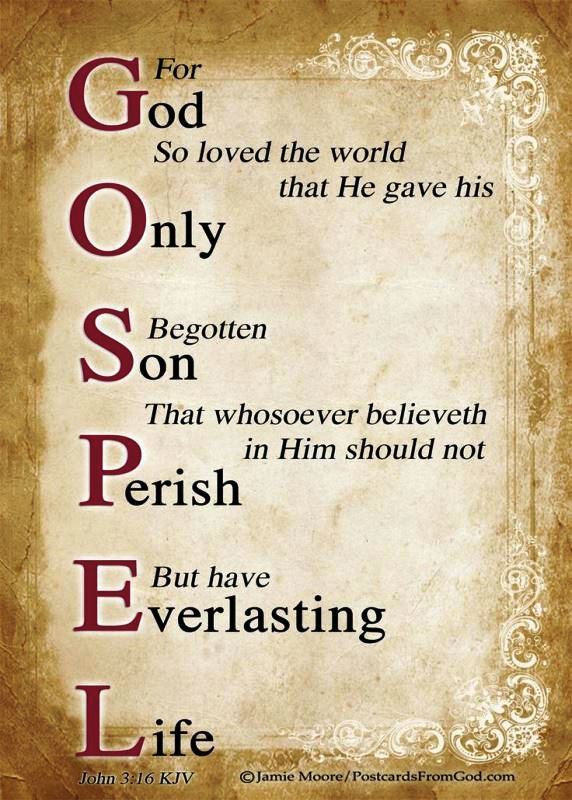






 Loving God, Living God, Loving Hope, Living Hope, Loving Living Life His Way! "Many things are possible for the person who has hope. Even more is possible for the person who has faith. And still more is possible for the person who knows how to love. But everything is possible for the person who practices all three virtues." - Brother Lawrence (1605-1691), Practicing the Presence of God (1692).