
How Can We Have an Eternal Mindset Here on Earth? 2 Corinthians 4:16-18

Lately, I have been thinking a whole lot about delayed gratification.

As in, doing now, in the immediate what will hopefully, if correctly planned for will pay off later, versus what only feels good or is easy in the exact moment.

It’s a great concept, right?

Living with an eye on the future, and planning and making choices that will result in a positive outcome a few months or even years down the road (while also avoiding a negative outcome).

But, that kind of advanced planning is not always so very simple to do.

2 Corinthians 4:16-18 English Standard Version

16 So we do not lose heart. Though our outer self[a] is wasting away, our inner self is being renewed day by day. 17 For this light momentary affliction is preparing for us an eternal weight of glory beyond all comparison, 18 as we look not to the things that are seen but to the things that are unseen. For the things that are seen are transient, but the things that are unseen are eternal.

The Word of God for the Children of God.

Adeste Fideles! Laeti Triumphantes! Venite Adoremus! Dominum.

Gloria! In Excelsis Deo! Alleluia, Alleluia, Alleluia, Amen.
Lately, I have been thinking a whole lot about delayed gratification.

As in, doing now, in the immediate what will hopefully, if correctly planned for will pay off later, versus what only feels good or is easy in the exact moment.

It’s a great concept, right?

Living with an eye on the future, and planning and making choices that will result in a positive outcome a few months or even years down the road (while also avoiding a negative outcome).

But, that kind of advanced planning is not always so very simple to do.

For example,

I’ve been trying for quite a while to control my stubborn blood sugar.

I know that the key is to keep my eye on the prize, and remember that what I do today will affect how I feel (how well me and my body will function) tomorrow.

It’s not easy, but that’s what I need to remember!

Because otherwise, what’s to keep me from just binging on chocolate lava cakes all day on my birthday, with zero regard to the outcome on my bodily systems?

Likewise, we should have the same thought process with regards to eternity (that is, life after death).

We focus so very much on the here and now—this short life on earth—and yet eternity is so much longer!

But because it always seems to be so far off, it’s easier put it on the back burner…as in, “I’ll worry about that later. Today, I have too much to do!”

Except, that time and place called eternity – It’s not that far off though, is it?

Not one of us knows exactly how long we will live, or when Jesus will return, or anything that the future holds.

How Do I Set My Mind On Things Above?

But, you might ask, what does it actually mean to actually have an eternal perspective?

And how do we do that?

I think it boils down to the HOPE of heaven.

In this life, even the seemingly wonderful things (like money or fame), will eventually lead to a grave full of freezing cold emptiness.

God is all about LOVE … so if we want to discipline ourselves to focus on having an eternal perspective, we have to focus on the God who is Love (1 John 4:7-11).

What is an eternal mindset?

And is this something we can, or should, have while living here on this earth?

This devotional effort will explore these two questions, as well as how we can develop an eternal mindset.

What Is an Eternal Mindset?

Merriam-Webster defines mindset as “a mental attitude or inclination.”

It is what we think about something or what our attitude is regarding it.

I have a particular financial and political mindset, an environmental mindset, a brother and sister mindset, a husband and a step parent/grandparent mindset, and many more – and all of those mindsets are all reflected in how I live my life.

Eternal is a word used in a few different ways in the Scripture.

Most commonly, it is part of the expression “eternal life.”

We often think of this as life without end, and it does involve that.

But Jesus defines eternal life as a relationship.

It is knowing God the Father and Jesus his Son (John 17:3).

But here in 2 Corinthians 4:18, Paul uses the word in a very different sense.

He tells us, “What is seen is temporary, but what is unseen is eternal.”

Eternal has the connotation of unending existence.

But it is infinitely more than that.

Here Paul is referring to the unseen realm.

What is unseen is eternal, while what we can see with our earthly eyes is only temporary.

This verse is key to understanding what an eternal mindset is.

The whole verse says, “So we fix our eyes not on what is seen, but on what is unseen, since what is seen is temporary, but what is unseen is eternal.”

An eternal mindset is a mind focused on the unseen realm, on things above rather than on the outward and subject to rust temporary things of this life.

It is a mindset that understands the physical world is not all there is.

There is a greater reality that is unknowable to our human senses.

This greater reality, particularly the kingdom of God, is revealed to us in the Scripture and seen through the eyes of faith.

Hebrews 11:1-3 English Standard Version

By Faith

11 Now faith is the assurance of things hoped for, the conviction of things not seen. For by it the people of old received their commendation. By faith we understand that the universe was created by the word of God, so that what is seen was not made out of things that are visible.

An eternal mindset keeps the kingdom of God front and center in all one does.

Is This Something That We Should Have?

So, is having an eternal mindset something that is expected of all believers?

The passage quoted above from 2 Corinthians 4:18 answers this question in the affirmative.

Apostle Paul expressed that his eyes were fixed on the unseen, the eternal.

Paul used inclusive terminology in this verse: “we fix our eyes.”

The implication is that this should be true for all believers, not just a select few.

This is reinforced by passages like Colossians 3:1-2, where we are told to set our hearts and minds on things above.

Put On the New Self

3 If then you have been raised with Christ, seek the things that are above, where Christ is, seated at the right hand of God. Set your minds on things that are above, not on things that are on earth.

In Hebrews 3:1-2, we are told to fix our thoughts on Jesus.

Jesus Greater Than Moses

3 Therefore, holy brothers,[a] you who share in a heavenly calling, consider Jesus, the apostle and high priest of our confession, who was faithful to him who appointed him, just as Moses also was faithful in all God’s[b] house.

And Hebrews 12:1-2, where we are instructed to fix our eyes on Jesus.

Jesus, Founder and Perfecter of Our Faith

12 Therefore, since we are surrounded by so great a cloud of witnesses, let us also lay aside every weight, and sin which clings so closely, and let us run with endurance the race that is set before us, looking to Jesus, the founder and perfecter of our faith,  who for the joy that was set before him endured the cross, despising the shame, and is seated at the right hand of the throne of God.

This is not something we are to do only on Sunday mornings, but we should all learn to discipline ourselves to focus our lives on Jesus and things above the rest of the days, weeks months, regardless of where we are and what we are doing.

In 1 Corinthians 7:29-31,

29 This is what I mean, brothers: the appointed time has grown very short. From now on, let those who have wives live as though they had none, 30 and those who mourn as though they were not mourning, and those who rejoice as though they were not rejoicing, and those who buy as though they had no goods, 31 and those who deal with the world as though they had no dealings with it. For the present form of this world is passing away.

Paul tells us that the time is short, and this world is passing away.

So, even as we live in this world, we should not be engrossed in it.

Live in the now.

But keep your hope fixed on what lies ahead, on the eternal.

Don’t let your activities here distract you from the eternal.

What Does an Eternal Mindset Look Like?

We often call the eleventh chapter of Hebrews the Hall of Faith.

This chapter recalls many people from the Old Testament who, by faith, did something extraordinary with their lives which called the author to write it

But this is more than just a roll call of people who lived by faith.

Hebrews 11:9-10 says of Abraham, “By faith he made his home in the promised land like a stranger in a foreign country; he lived in tents, as did Isaac and Jacob, who were heirs with him of the same promise. For he was looking forward to the city with foundations, whose architect and builder is God.”

Hebrews 11:13-16 develops this idea further, showing that these people acted in faith because they looked forward to something beyond this life.

13 These all died in faith, not having received the things promised, but having seen them and greeted them from afar, and having acknowledged that they were strangers and exiles on the earth. 14 For people who speak thus make it clear that they are seeking a homeland. 15 If they had been thinking of that land from which they had gone out, they would have had opportunity to return. 16 But as it is, they desire a better country, that is, a heavenly one. Therefore God is not ashamed to be called their God, for he has prepared for them a city.

They each had a mindset that was disciplined and focused upon the life that awaited them beyond the grave, an eternal mindset.

Peter also identifies us as foreigners in this world (1 Peter 1:17; 2:11) and urges us to live that way.

We should never forget our citizenship is as members of the kingdom of God.

While we live in this world, we are to be distinct from it.

Living, not solely to satisfy our temporary desires, but living in a much more disciplined way that will please our heavenly Father.

But this does not mean that we ignore the world we live in, being so heavenly-minded that we are no earthly good.

We still need to work to support ourselves and our families.

We need to care for what God has blessed us with.

We need to relate to the people around us.

And we should be looking to make this world a better place.

But while we do those things, we should always keep sight of whose we are and the future God has prepared for us.

Living a life of faith, trusting God to care for us and bring us safely to that heavenly city without foundations that Abraham was looking forward to.

Our time here is short.

And as we live here, we should hold loosely to the things of this world.

Using them, but not placing great value on them (1 Corinthians 7:31).

Our security should not be in our possessions or any earthly institution.

Instead, it should be in the Lord who is preparing us for our eternal home.

We should also not become overwhelmingly discouraged when life gets hard, or the world seems to be steadily descending into the abysses of chaos and evil.

Instead, trust God with your life (Philippians 4:6-7) and seek to live a holy life (1 Peter 1:15-16) of love (1 John 4:10-11).

How Can We Develop an Eternal Mindset?

The Scripture teaches us that an eternal mindset is appropriate for all believers.

But what does it take to develop a mindset that looks into the future rather than being wrapped up in the subject to rust temporary things of this life?

Paul’s words in Philippians 3:12-14 can help us with this.

Straining Toward the Goal

12 Not that I have already obtained this or am already perfect, but I press on to make it my own, because Christ Jesus has made me his own. 13 Brothers, I do not consider that I have made it my own. But one thing I do: forgetting what lies behind and straining forward to what lies ahead, 14 I press on toward the goal for the prize of the upward call of God in Christ Jesus.

He expressed that he had not yet reached his goal of Christlikeness, but he was straining and striving toward that.

He was not living in the past.

Instead, he was “straining toward what was ahead, pressing on toward the goal to win the prize for which God had called him heavenward in Christ Jesus.”

There are three aspects to what Paul has to say here.

First, he had a goal.

His goal was to become like Christ.

If we want to develop an eternal mindset, it needs to be our primary goal.

It will not happen by accident.

Nor can your goal be just a wish.

It needs to be something that we will actively pursue.

Second, we need to let go of anything that would interfere with reaching that goal.

For Paul, that was thoroughly giving up, surrendering the past, his heritage, training, accomplishments, and plans for what he originally wanted to become.

We each may have different things we need to leave in our past, things that hold us back – but whatever it may be, we need to make the sacrifice, leave it behind.

And finally, Paul was striving toward his goal.

He knew what he wanted to become.

And he was working at it with all that he was.

I will not develop an eternal mindset just by wishing for it.

Nor by investing a only a few hours a week.

It is a commitment of your whole life in pursuit of the goal.

That includes a commitment to spending time reading the Bible and making its teaching a part of your life.

Time should also be spent in prayer and communion with our heavenly Father, in fellowship with other believers, actively involved in the life of a local church.

These disciplines should take highest priority over many of the activities we might otherwise be engaged in.

Rabbi Jesus illustrates this for us with his parable of the pearl of great price in 

Matthew 13:45-46.

The Parable of the Pearl of Great Value

45 “Again, the kingdom of heaven is like a merchant in search of fine pearls, 46 who, on finding one pearl of great value, went and sold all that he had and bought it.

Here a merchant sold everything he had to purchase a pearl of great value.

He gave up all he had to have this pearl.

And that is what we need to do.

Give up everything we have to obtain the life that God has called us to.

The development of an eternal mindset is something that we can only do with the Holy Spirit.

Paul’s prayer for the Ephesian church in Ephesians 1:17-19 might be considered a prayer for an eternal mindset:

having spiritual eyes open to the hope we have in Christ, recognizing God’s inheritance in the saints, and knowing his power at work for us who believe.

Benefits of Keeping an Eternal Mindset

For me, it was a strong desire to be assured a place in heaven, that first led me to repentance and a relationship with Jesus. (Okay, fear of judgement and not wanting to go to hell might be more accurate).

In the years since, I have tasted and seen that God is good (Psalm 34:8),

Oh, taste and see that the Lord is good!
    Blessed is the man who takes refuge in him!

and I’ve lived the blessings of developing an eternal perspective on life.

But still, it’s not always easy to keep up that eternal mindset in the face of distractions and shiny things of this world!

However, it’s so worth it.

Let’s explore just a few benefits of fixing our eyes on the “prize” of heaven…

1) Eternity Reminds Us To Seek God’s Kingdom FIRST.

First and foremost, an eternal mindset will help us to keep the #1 thing the #1 thing.

And that #1 thing is God’s kingdom—specifically, Jesus’ charge to us, to share the good news.

While we look forward to eternity, we know there are still many people who don’t know Jesus, and thus do not have that same hope.

We need to keep a kingdom mindset, and to share the hope we have in Jesus.

1 Peter 3:14-16English Standard Version

14 But even if you should suffer for righteousness’ sake, you will be blessed. Have no fear of them, nor be troubled, 15 but in your hearts honor Christ the Lord as holy, always being prepared to make a defense to anyone who asks you for a reason for the hope that is in you; yet do it with gentleness and respect, 16  having a good conscience, so that, when you are slandered, those who revile your good behavior in Christ may be put to shame.

2) Eternity Helps Us Weather The Storms Of Life!

In the midst of trials, the thought of spending eternity with God (where there will be no more tears, pain, or death—Revelation 21:4), makes our struggles seem much smaller.

This life may sometimes seem long and full of pain, but it’s just a blip on the radar on comparison to eternity.

It really does help to set your mind on Jesus!

After all, it was Jesus who said this: “In this world, you will have trouble. But take heart! I have overcome the world.” (John 16:33)

3) Eternity Causes Us To Focus On Things That Really Matter.

Loving God, and loving our neighbors… Celebrating God and celebrating our neighbors – it’s what we did in LOVE that we will all carry with us into eternity (and, that will prayerfully stay with our loved ones who are still on earth too).

In the context of eternity and building up treasures of love, does that argument really matter?

Is it really important to gain promotions, if it takes us away from our family?

I could go on, but I believe you get the idea.

4) Eternity Causes Us To Invest In Heavenly Things!

Like a 5-year-old kid who you’re already saving for college for, and a 12-year-old already thinking about scholarships and GPA’s, it’s good to consider life as prep school for heaven.

How are we investing our time and our talents today?

Just imagine, when you get to heaven, you meet all the people you led to Jesus, all the folks who were hungry and you gave them a meal and something to drink or if you are a teacher all the students you taught, or the people you encouraged.

The people and purposes you choose to invest in MATTER.

Every day we should strive to discipline ourselves to remember, that the things of this world are like cheap baubles: they look amazing at first, but after a while, the glitter will gradually flake off, rhinestones fall out, they’ll lose their luster.

In contrast, eternal things are like real diamonds and gold. 

By keeping an eternal mindset, we can store up for ourselves our treasures in heaven (Matthew 6:19-21), and along the long concourse of our lives, prevent ourselves from being continually deceived by the false lure of earthly things.

Being heavenly-minded makes a person more mindful and fruitful for Christ and provides a place of peace for self and others amid the chaos of the world.

Those who are disciplined and focused on eternity are significantly far more impactful for Christ than those who get caught up in the things of the world.

In the name of God the Father and God the Son and God the Holy Spirit,

Let us Pray,

Father God, it is too easy to get caught up in the baubles of mundane of natural living. Sometimes we only see what is around the next corner. We need the Holy Spirit to lift our perspective so we can see things from heaven’s perspective. Thy Holy Spirit reminds us of the long view. Ultimately, we in faith believe that Jesus will one day return in triumph and the victory will be totally ours. Let this prayer reminds us of this immutable truth and let us ask thy Holy Spirit to calibrate and recalibrate our perspective. If this prayer ministers to you, then please share it with all your friends.

Intercessory Holy Spirit, I pray you will set my mind on heavenly things and help me to see more from a heavenly perspective than an earthly one. This should be natural for a person that is living in God by living in Christ. You are teaching me to rule and reign with my Savior and King Jesus. One day I will appear with Him in the sky. Prepare me for that day now. Develop the mindset of heaven in me in Jesus name,

Adeste Fideles! Laeti Triumphantes! Venite Adoremus! Dominum.

Gloria! In Excelsis Deo! Alleluia, Alleluia, Alleluia, Amen.

https://translate.google.com/

A Lesson about Wholly Refreshing Our Priorities: What is the significance to us to make, take time, with the Holy One? Mark 1:35-39

Mark 1:35-39 New International Version

Jesus Prays in a Solitary Place

35 Very early in the morning, while it was still dark, Jesus got up, left the house and went off to a solitary place, where he prayed. 36 Simon and his companions went to look for him, 37 and when they found him, they exclaimed: “Everyone is looking for you!”

38 Jesus replied, “Let us go somewhere else—to the nearby villages—so I can preach there also. That is why I have come.” 39 So he traveled throughout Galilee, preaching in their synagogues and driving out demons.

The Word of God for the Children of God.

Adeste Fideles! Laeti Triumphantes! Venite Adoremus! Dominum

Gloria! In Excelsis Deo! Alleluia, Alleluia, Alleluia! Amen.

What’s least important?

What’s most important?

What has no priority whatsoever?

We usually consider whatever is the most urgent to be the most important.

When we need to use the bathroom, for example, that particular need becomes both urgent and important, something that must for the moment take priority over everything else lest we risk great personal, perhaps public embarrassment.

For a Diabetic individual, monitoring their blood sugar levels throughout the day on a regular basis is quite important as is meal planning and Insulin shots.

Many things take a top priority spot in our lives.

Many things take a low priority spot in our lives.

Higher priority items might sometimes be a classic movie or television show we watched in our youths and now we’ve been waiting to see the reruns streamed.

It might be planning, a “bucket list” trip we want to take, or a special event we want to arrange – a wedding anniversary or attend – your child’s violin recital.

Sometimes it might be something we want to buy, maybe some new music, a pair of jeans, a computer, or have been saving a long time for: a car or a house.

The priority might be education, a relationship, a job, a job promotion, a fun long term project.

It might be recovery, rest and rehabilitation from an illness, an accident, a crime, tragedy or a difficult ordeal – a parent or spouse or child passed away.

Making Time, Taking Time, Giving Time Away

In the streaming series The Chosen, one episode depicts Jesus returning to a camp where he and his disciples are staying for the night.

It is late, and Jesus has spent the day healing crowds of people.

He stumbles into camp, exhausted from the day’s ministry.

The disciples can only watch him, surprised at how tired he is.

His teaching and healing work must have been exhausting.

Though he was fully God, Jesus was also fully human, so he still got tired and still needed his sleep to recover from the days busyness. (Mark 4:38; John 4:6).

A Lesson About Assessing Reassessing Our Priorities

Mark 1:35-39 New Living Translation

Jesus Preaches in Galilee

35 Before daybreak the next morning, Jesus got up and went out to an isolated place to pray. 36 Later Simon and the others went out to find him. 37 When they found him, they said, “Everyone is looking for you.”

38 But Jesus replied, “We must go on to other towns as well, and I will preach to them, too. That is why I came.” 39 So he traveled throughout the region of Galilee, preaching in the synagogues and casting out demons.

Prayer is a Priority

Prayer is the kind of priority that lies at the root of all the others — at the root of life itself.

It’s a lot like eating; if we rarely eat, our physical health will suffer.

We’ll be weak and sick.

It will affect our ability to carry on the activities of life.

In a similar way, if we rarely pray, our spiritual life will lack vitality.

We will approach the challenges and successes of life on our own, as though we are not totally dependent on God even for life itself.

Without prayer, we prioritize pride, begin to take credit for the good things in our lives, chalking them all up to our skill, knowledge, wisdom and hard work.

We begin to forget that all our skill, knowledge, wisdom and hard work are gifts of God—God alone gave us the mind, body and circumstances of life which have enabled us to have and develop those attributes.

On the other hand, without the discipline of prayer, we fall into fear, anxious worry and even despair at the failures, frustrations and bad events in our lives.

We become unsure of God’s love for us, unsure that God stands with us, God is always accessible and always available, always receptive in each our problems.

The length and breadth of God’s Word reminds us we will definitely feel alone and afraid, doubtful about our ability to cope with what life is heaping onto us.

The disciplined practice of Prayer is the grease, we might say, which keeps the gears and wheels of life well and sufficiently lubricated, in good working order.

Without prayer, we see ourselves as alone against the world, left to fend off the storms of life on our own wits and brawn.

It is in the course of bending our souls in prayer we learn to see the true state of things — that we are all creatures within God’s creation, creatures dependent on our Maker, on all of the other parts of the creation, and as such, never alone.

Hard to Find Time

It’s a crowded, hectic world for most people.

Opportunities for time alone, much less for prayer, are more and more limited.

Life already has its cascade of immediate demands, its already duly scheduled priorities lined up to overwhelm us and keep us forever playing catch-up—jobs, classes, homework, housework, yard work, kids, church, health problems, car repairs, home repairs, accidents, ants, traffic, crowds, lines, appointments and, oh yes, hopefully prayerfully enough time to experience that good quality sleep.

Of course, there might well also be a considerable amount of time that we could devote to prayer that we use on other things — things that don’t really have the kind or measure of priority that the discipline of prayer should should receive.

For example, most of us have our favorite television show, and that’s fine.

But how often do we find ourselves sitting in front of the television — watching shows we do not really care about, just “lazy television” — just because nobody had the proper measure of motivation to get up and turn the infernal thing off?

We make priorities out of things we care about.

It isn’t that we don’t care about the discipline of regular prayer, it’s just that it often seems like it just becomes one more chore on top of all the other chores we have to get done around the house, and since God does not cry or whine when God does not get his dinner or send collection agents out to repossess the washing machine, we’ll automatically put prayer farther down the priority list.

It might be helpful to see the discipline of prayer in a different light from that of one more chore to get done before supper (or after) turn off the light at night.

Time with God is different from all other time.

It defuses the stress, refreshes and rejuvenates the heart, spirit and the soul.

It relaxes the mind and body to release unto God our worries, our anger, fear and anxieties.

It’s a better antidote to frustration than nibbling on donuts or chocolate bars.

It sufficiently fills our need for intimacy better than affairs or pornography.

It’s a far more productive way to handle anger than exploding at our spouses and children. It lasts; those alternatives don’t.

Therapy, Not a Duty

It’s easy to view prayer as a duty, an obligation.

When we do that, prayer becomes hard, something to put off, a burden and pressure all by itself.

What a tragedy.

We would hardly consider talking to our best friends a duty.

We talk to them because we like them.

It’s a spiritual lift to talk to them.

It helps us feel better, reminds us we are actually not alone in this world, gives us strength to carry on.

It’s harder with God.

God’s invisible.

And God does verbally not say much.

Sometimes we wonder if God’s even there at all.

We have the Bible, but a book is not the actually same as an oral conversation.

Talking to God takes place, you could say, in our heads, by faith, not by sight, taste or touch or sound.

We cannot look God in the eye, smell him, shake his hand or pat his back.

Instead, we “sense” his presence in some spiritual, unseen way.

We believe.

We trust.

We have faith.

The Holy Spirit, also invisible, tasteless and odorless, communicates God’s reality to us on a level other than our five physical senses.

We do not understand it; we can only experience it.

Spending this quality time with God is great therapy.

Therapy is necessary remedial treatment of a bodily disorder, whether physical, emotional or psychological.

When we think of prayer as much needed therapy, rather than as “our Christian duty,” it puts prayer into a clearer perspective, I personally believe.

When we go through our daily, weekly, monthly routines without consciously acknowledging God as the root and core of our lives (which he is), our attitudes, emotions, psyche, even the bones in our bodies (Psalm 6:2, Psalms 31:10, 32:3, Psalm 42:10, Psalm 102:3) suffer the ill effects of trying to live as though we are self-existent — not dependent on God and his creation for our life and being.

To hand over our concerns to God, whether for ourselves or for others, reminds us that our present lives and the remaining future of our life are in God’s hands.

Even our past, with all its baggage of sin, selfishness and ignorance, is in God’s redemptive hands.

The act of acknowledging God as the loving, wise and powerful Being that he is is remedial treatment for fear, worry and frustration.

It’s like an expert massage, removing tension and stress from our muscles, only better.

Who would not appreciate a great massage from God’s own hands every day?

Prayer is the perfect therapy for our tense, knotted and stressed spirits, and the best thing about it … it’s absolutely free!

We can take a moment for a quick spiritual “rubdown” in the form of silent prayer just about any time we want during the day.

And we can set aside time for a good, long session at times that work with our schedules.

Think about it: if we had an unlimited valued gift certificate for a free full-body massage every day, we would likely find a way to work it into our schedules as regularly as possible — even if we had to get up set our alarms before everybody else and hightail it down to the gym or the spa before it opened up at 5:30 a.m.

We would do that because we know what good therapy it is and how good it makes us feel.

Not a Substitute For Action

There is another thing we can learn and appreciate from Jesus’ early morning hike to a solitary place for prayer.

When it’s time for action, it’s time for action.

When your child or your spouse needs your attention, it is not the time to go off and play a round of golf, but is an absolute time for us to stop, drop and to pray.

And the again, when you need to repair a faucet, or make a call, or to prepare a meal, it’s not the time make excuses and to disappear for an hour in a closet.

We can and should be able to pray any time, any place, while we go about our business – but we absolutely need to attend to the business of caring for home.

The time to go to a solitary place for extended prayer is a time when we don’t have other more pressing priorities, duties, responsibilities and obligations.

How did Jesus do it?

In the instance cited in this passage, he got up early, before the regular day’s activities began.

You might find that other times work better for you.

The point is, see prayer as a priority that will make all your other priorities more manageable and less stressful.

Let your prayer time be a time to relax, to let God’s love bathe and salve your frayed nerves, your taut emotions, your exhausted and frightened heart.

Let prayer time be your time to rest in God, to let him renew your strength, brighten your hope, sharpen your faith.

Has prayer slipped to the bottom of your “to do” list? Why not set aside some time today for an overdue therapy session with the Master Therapist?

For reflection:

  • Does prayer seem like a chore to you? Why or why not?
  • Do you have trouble thinking of things to pray about? Have you thought of sitting quietly with God as a valuable part of your prayer time?
  • What are some of the ways prayer has helped you?
  • How would you describe “answered prayer”?
  • What is your favorite place for prayer?

Take Time for the Holy One

Mark 1:35-37 New International Version
Jesus Prays in a Solitary Place

35 Very early in the morning, while it was still dark, Jesus got up, left the house and went off to a solitary place, where he prayed. 36 Simon and his companions went to look for him, 37 and when they found him, they exclaimed: “Everyone is looking for you!”

Our reading for today explains that after a long day of teaching and healing, Jesus rose early in the morning to pray. Jesus needed time to connect with his Father in prayer, resting in his Father’s presence and focusing on his purpose.

He had come to do much more than heal people in Capernaum, even though that was clearly important while he was there.

When the disciples went out and found him, he said, “Let us go somewhere else—to the nearby villages—so I can preach there also. That is why I have come.”

Jesus deliberately, intentionally, purposely moved off quietly, spent time alone in prayer with his Father in Heaven, and he remained focused upon his purpose.

If this was important to Jesus, it is certainly important for his followers too.

There is perhaps no better gage of a man’s spiritual maturity than his secret devotion to God in prayer.

You show me someone that is lax in private prayer, I will show you someone that is a spiritual infant.

I don’t care how long they have known Christ, if they have no secret devotion to God; they remain in a stage of immaturity.

Our public prayers will tend to be ritualistic; they will tend to be mechanical, often repetitious, and sometimes ostentatious.

We will have no appetite for the Word; we will have no burden for the lost.

We will be infatuated with the pleasures of this world.

People without a private prayer life will lack power in ministry.

The theme of Christ will seldom be prominent in their conversations because it’s not dominant in their heart.

In fact I have never met a person with a robust private prayer life who struggles with debilitating depression, addictions, or some life-dominating sin.

I have never heard a spouse complain about a husband or wife who is faithful in private prayer.

I’ve never heard a child weep because they have a father or mother that prays too much.

I would ask everyone, do they only prayer before meals or do they ever pray before dawn?

Most if they are honest, would say their prayer life is limited to before meals.

Or when some great crisis comes into their lives.

But frankly, most people are unfamiliar with the mercy seat.

They are strangers to the throne of grace.

Communing with the Savior of their souls is just not as high priority as it should be because it is not the first and foremost desire of their hearts.

And why is this?

Well partly because we are a very undisciplined people, but primarily also it’s because we prioritize love of other things more than we love the Lord our God.

I have learned that prayer is the drill that bores deep into the caverns of living water.

I have learned that prayer is what calls upon the Spirit to give fresh life to the spiritually dead and dissolve hardened hearts.

As a Lay Pastor, I have learned that it is prayer that ignites a preacher with holy zeal and transforms his clumsy long winded rhetoric into tongues of holy fire.

I have learned, beloved, that it is the personal exercise of prayer, disciplined, fervent, private, persistent prayer that transforms weak, shallow, cowardly Christians, and their “skin and bones” Christianity into mighty warriors of the Cross and that is what Christ wants, I want for you, that is what I want for me.

Dear Christian, secret prayer was our Savior’s habit, the question is, is it ours?

If not, why not?

If the Son of God who had no sin had such an indescribably intense desire to labor in private prayer, how much more should we being so prone to our sin?

Frankly most Christians are mere “spiritual loiterers”, they are not laborers in prayer, and yet this is not the example of the Lord.

As we look at verse 35, again, where we read, “In the morning, while it was still dark, Jesus got up, left the house, and went away to a secluded place, and was praying there.”

I believe there are 4 great lessons emerging from this text which I pray each of us will take some quality and quantity of time to focus carefully upon:

  1. Prayer reveals an intense longing to commune with God
  2. Prayer should be the first priority to prepare our day.
  3. Solitude is the Sanctuary of prayer.
  4. Prayer is as important in times of blessing as it is in times of distress.

So first, Prayer reveals an intense longing to commune with God.

Let’s look at this more closely.

Now any of us who have ever spent time teaching know it is an exhausting task especially when you are interacting with people as the Lord had done that day.

Then if we have ever experienced intense, powerful healing encounters, and certainly I have never experienced it like Jesus, we cannot appreciate tiredness.

My friends that is utterly exhausting.

Yet, we see here,

He doesn’t give up, He doesn’t stay in bed and sleep.

Instead, we see the incarnate Christ who was without sin, therefore without any need for confession, He had no pleading, no need for forgiveness of sin, and no need for restoration, instead He longs to be with His Father and the Holy Spirit.

Remember, Jesus knew that His source of strength (certainly the place where He would go to supplicate for all that the Father had given Him) was His Father.

But we see in this text from Mark’s narrative that His intense longing for intimate communion was motivated primarily by His perfect love and His intimate enjoyment of “taking time away” his sweet fellowship with Him.

Again, does this describe you?

Hopefully you’ve experienced this at some human level.

Just think of your husband or you wife, those of you that are married.

I know that the times that I have that I can spend with my dear wife is done not out of duty, but out of intense love and intense desire.

It’s motivated by my love for her and her love for me, which results in the true oneness of fellowship and the joy that flows from that.

How much more the soul satisfying perfections of the triune Godhead.

Now think about it very long and very deeply and very intently and purposely,

no man—save the God-man Jesus—has ever known the soul satisfying joy of perfect fellowship and communion with God the Father and the Holy Spirit.

While every saint enjoys some level of faith, joy and fellowship, because of the varying places we are with respect to our walk with Christ, we still, even though our fellowship is imperfect, we still enjoy spending time with the Lord.

How much more so the Lord Jesus?

I think about the imperfect fellowship that we have right now.

Our communion is hampered because of remaining sin, because of our unredeemed bodies that await their final glorification.

That is why Paul said in 1 Corinthians 13:9:

“we (only) know in part…but when the perfect comes (eternal state), the partial will be done away…For now we see in a mirror dimly, but then face to face; (can you imagine what that will be like), now I know in part, but then I shall know fully just as I also have been fully known.”

But folks even now in our state of unredeemed humanness, chronic sin, that sweetness, that ineffable joy of communing with the lover of our souls is the single greatest experience that we have available to us this side of heaven.

If that does not ring true of you, then you know nothing of a secret devotion to God in prayer.

All who have truly tasted of the Lord, who have experienced the inexpressible joy of being in His presence, have experienced His power, want more and more.

We are never satisfied – that is why David declared in Psalm 34:8. “O taste and see that the LORD is good; how blessed is the man who takes refuge in Him.”

Be sure to spend personal time with the Father, Son, and Holy Spirit each day.

Joyful Rest in a Frantic World

Psalm 4:6-8 English Standard Version

There are many who say, “Who will show us some good?
    Lift up the light of your face upon us, O Lord!”
You have put more joy in my heart
    than they have when their grain and wine abound.

In peace I will both lie down and sleep;
    for you alone, O Lord, make me dwell in safety.

The great majority of humans are forever striving after the four winds.

We chase all sorts of things to satisfy our souls but keep ending up empty-handed.

We wonder, “Who will show us some good?”

Put differently, as Mark’s gospel narrative intimates; “Where can I find joy, meaning, and hope in the frenetic pace and frustrating pursuits of this life?”

Thankfully, the psalmist does not leave us to wonder about what we need most:

“Lift up the light of your face upon us, O LORD.”

The great need of David’s day—and our day, thousands of years later—is to embrace and be embraced by the living God.

So David points out just how the greatest pleasures pale in comparison to finding the one true, living God.

Abounding in life’s good gifts, be they grain or wine or anything else, is certainly no bad thing.

But knowing God through the discipline of prayer is infinitely, gloriously better.

How many people today live in the hope that the experience of tomorrow will bring the joy they seem to lack today?

“Just a little more money; then I can be happy. Just a little more of this or that, and then I will be satisfied.”

But it’s not the promise of a nicer car, a bigger house, a perfect spouse, or a better job that truly gives us lasting peace and rest.

There is only one way to be able to lie down and sleep in peace, content and secure.

What makes such rest possible?

“You alone, O Lord, make me dwell in safety.”

Only when we find all we need in studying scripture, knowing the Lord and know He is smiling at us will we be able to lie down without anxiety or regret.

As we lie down on our bed at night (as Jesus did) and reflect on the day (as Jesus did), or as all of tomorrow’s to-dos race through your mind (as Jesus did), how will we possibly hold it together (again as Jesus did) that very next morning?

What will give you the stability and security that every human being in the world longs for?

In the end, it won’t be the money in your account.

It won’t be the home-security system.

It won’t be enjoying admiration from your community.

It is the example of the disciplined practice of prayer set before us by the Lord Jesus alone, who leads all His beloved children to true peace, rest, and security.

In the arms of the Good Shepherd, you can dwell in safety and rest in peace.

Be sure, when you lie down tonight (as Jesus did) or when worries rear their heads today, to remember our Savior prays for you and is looking after you.

Jesus had a regular, disciplined time to be alone with his Father each day.

His quiet time with his Father was intentional; it was a priority he himself built into his day, and it required his fullest effort — effort to wake up early before everyone else, and effort to go out away from everyone else so he could talk with the Father by himself.

How intentional and how disciplined is your daily prayer time with the Father?

That is where our rest and peace are truly and faithfully, eternally to be found.

In the name of God, the Father and God the Son and God the Holy Spirit,

Let us Pray,

O loving and tender Father, God Almighty who has the power to save, forgive me for those periods in my life when I have let my time with you suffer. I now confess that I let other things and the hectic pace of my life steal away my time with you. It is my prayer that you Empower, inspire, my resolve to fully and faithfully and finally place you first in my whole heart and hard set in my daily schedule. In Jesus’ name, I pray.

https://translate.google.com/

God’s Gift of Grace For Every Failure. John 21:15-19

John 21:15-19 New American Standard Bible

The Love Question

15 Now when they had finished breakfast, Jesus *said to Simon Peter, “Simon, son of John, do you [a]love Me more than these?” He *said to Him, “Yes, Lord; You know that I [b]love You.” He *said to him, “Tend My lambs.” 16 He *said to him again, a second time, “Simon, son of John, do you [c]love Me?” He *said to Him, “Yes, Lord; You know that I [d]love You.” He *said to him, “Shepherd My sheep.” 17 He *said to him the third time, “Simon, son of John, do you [e]love Me?” Peter was [f]hurt because He said to him the third time, “Do you [g]love Me?” And he said to Him, “Lord, You know all things; You know that I [h]love You.” Jesus *said to him, “Tend My sheep.

Our Times Are in His Hand

18 Truly, truly I tell you, when you were younger, you used to put on your belt and walk wherever you wanted; but when you grow old, you will stretch out your hands and someone else will put your belt on you, and bring you where you do not want to go.” 19 Now He said this, indicating by what kind of death he would glorify God. And when He had said this, He *said to him, “Follow Me!”

The Word of God for the Children of God.

Adeste Fideles! Laeti Triumphantes! Venite Adoremus! Dominum.

Gloria! In Excelsis Deo! Alleluia, Alleluia, Alleluia, Amen.

The Gift of Failure

“You’ve got to crack a few eggs to make an omelet. Sometimes you’re the eggs; a baker’s dozen, But dang it, I’ll be the finest of all omelets one day. 

Failure is a fact.

Repeated Failure is a fact.

Recovery from repeated failures – not so much a fact but a condition for living.

We could sugar coat it and dress it up as something out of my control but that won’t tell the whole story.

We fail and we repeatedly fail.

Sometimes privately, but most times our failures are cannon fodder for the public eye, a place for others to publicly point their fingers and opinions in our general directions – at every opportunity I remember I am embarrassed about it and the thought of repeatedly coming back empty handed makes me nauseous.

Failure is an inevitable part of life that everyone experiences at some point.

It is a natural occurrence that shapes our character develops our resilience, and teaches us valuable lessons that can eventually, by God’s Grace, lead to success.

Many people see failure as the end of their journey, but in reality, it is just the beginning of a new one.

Failure is an opportunity to learn, grow, and become better.

By embracing failure, we open ourselves to new experiences, perspectives, and opportunities that would otherwise be unavailable.

Failure is not a measure of our worth as a person.

We are not defined by our failures but by how we respond to them.

The fear of failure can prevent people from pursuing their dreams, trying new things, and taking risks, risking humiliation and public defeat and reputations.

But it’s important to remember that failure is necessary for success.

Even When We Do Everything Right, We Can Still And Do Fail

Despite our very best efforts and intentions, we may still experience repeated failures of various and diverse degrees and measures and resultant setbacks.

This can be a brutal reality, the more times we fail, the harder we fail, and the harder we fall but we must understand success is not always within our control.

Many believe success results only from remembering what our parents taught us, their discipline, hard work, determination, and making the right decisions.

While these qualities are essential, they do not guarantee success.

No matter how well-prepared or competent we are, sometimes things don’t work out as planned.

Whether due to internal or external factors, wrong timing, or bad luck, bad calls by the umpires, failure can occur even when we have done everything “right.”

By learning that failure does not define us, by embracing this perspective and focusing on the process rather than the outcome, we can develop a healthier relationship with failure and be more “God” resilient in the face of setbacks.

Doing so can increase our chances of success, success being not letting failure win, and experience greater fulfillment in our personal and professional lives.

Peter’s Very Public “Catastrophic” Failure in the Courtyard

Luke 22:61-62 New American Standard Bible

61 And then the Lord turned and looked at Peter. And Peter remembered the word of the Lord, how He had told him, “Before a rooster crows today, you will deny Me three times.” 62 And he went out and wept bitterly.

These verses are right after Peter has denied that he knew him the third time, and thus fulfilled the prophesy earlier in the evening.  

The Peter that we see here is a very different Peter than we see Peter become later in the scriptures.  

This Luke 22:61-62 Peter’s world is shattered, and what he has trusted in for so long seems to be lost.  

He did so many things, he said so many strong, brave, bold and courageous things because he trusted in Jesus as the Christ, but now that seems to be gone, he’s in a severe state of spiritual crisis–not sure what to do, or how to stop it.  

God’s Gift of Grace For Every Failure

Luke 24:28-35 English Standard Version

28 So they drew near to the village to which they were going. He acted as if he were going farther, 29 but they urged him strongly, saying, “Stay with us, for it is toward evening and the day is now far spent.” So he went in to stay with them. 30 When he was at table with them, he took the bread and blessed and broke it and gave it to them. 31 And their eyes were opened, and they recognized him. And he vanished from their sight. 32 They said to each other, “Did not our hearts burn within us while he talked to us on the road, while he opened to us the Scriptures?” 33 And they rose that same hour and returned to Jerusalem. And they found the eleven and those who were with them gathered together, 34  saying, “The Lord has risen indeed, and has appeared to Simon!” 35 Then they told what had happened on the road, and how he was known to them in the breaking of the bread.

The New Testament mentions twice that the risen Christ appeared to Peter: once in this passage from Luke 24 :34 and again in 1 Corinthians 15:5.

Why would the poster boy for failure Peter, of all people, receive such special treatment from the writers of the New Testament Canon?

After all, not long before this event on the Road to Emmaus, Peter had quite severely failed himself, his friends, his family, his Master in His darkest hour.

Just before Jesus was arrested, He told Peter that a trial lay ahead:

“Simon, Simon, behold, Satan demanded to have you, that he might sift you like wheat, but I have prayed for you that your faith may not fail.” Peter responded, rather audaciously, “Lord, I am ready to go with you both to prison and to death.”

But Jesus knew Peter’s heart: “I tell you, Peter, the rooster will not crow this day, until you deny three times that you know me” (Luke 22:31-34).

As it turned out, Peter heart and soul were not as ready to face prison and death as he had boasted, blustered and falsely allowed himself, everyone else around him within ear shot, to have imagined – quite a public display of false bravado.

We all know now, as did Jesus that very day, that Peter would, did indeed go on to very publicly and very loudly deny his Lord three times in the courtyard.

And afterward, when Peter recalled what Jesus had predicted and realized what he had done, he was suddenly reduced to tears (Matthew 26:75; Luke 22:62).

So why does the New Testament emphasize that the risen Lord Jesus appeared specifically to the afore named Peter – why are our eyes, ears and souls here?

Certainly not because Peter deserved it more than anybody else.

But it’s fair to wonder if Jesus appeared to Peter because in these make or break moments, the resurrected Jesus knew Peter needed it more than anybody else.

Peter knew that he had blown it completely—and yet while Peter had denied Jesus, Jesus didn’t deny Peter.

What mercy, what goodness, what kindness, what grace, what compassion, what forgiveness, what Grace that Jesus still chose to go to the cross for His flawed disciple and then specially chose to make a special appearance to him!

We have stumbled. We have been deniers, deserters, swaggerer’s.

We know that we do not deserve for God to specifically, especially, come to us.

And yet as we go to God’s word and as we open our lives to its truth, it’s almost as though Jesus comes, sits right down beside us, and says, “I’m here. I LOVE you, I want to speak to you. I want to assure and reassure you. I want to forgive you. I want you to be able to forgive yourself and I want to send you out in My power.”

John 21:15-19 English Standard Version

Jesus and Peter

15 When they had finished breakfast, Jesus said to Simon Peter, “Simon, son of John,  do you love me more than these?” He said to him, “Yes, Lord; you know that I love you.” He said to him, “Feed my lambs.” 16 He said to him a second time, “Simon, son of John, do you love me?” He said to him, “Yes, Lord; you know that I love you.” He said to him, “Tend my sheep.” 17 He said to him the third time, “Simon, son of John, do you love me?” Peter was grieved because he said to him the third time, “Do you love me?” and he said to him, “Lord, you know everything; you know that I love you.” Jesus said to him, “Feed my sheep. 18 Truly, truly, I say to you, when you were young, you used to dress yourself and walk wherever you wanted, but when you are old, you will stretch out your hands, and another will dress you and carry you where you do not want to go.” 19 (This he said to show by what kind of death he was to glorify God.) And after saying this he said to him, “Follow me.”

Peter knew he had failed Jesus.

No one had to tell him twice.

But the resurrected Jesus used that catastrophic failure to help Peter grow.

How can Jesus use failure for our spiritual growth?

Failure in whatever measure or degree is never fatal in the eyes of Jesus.

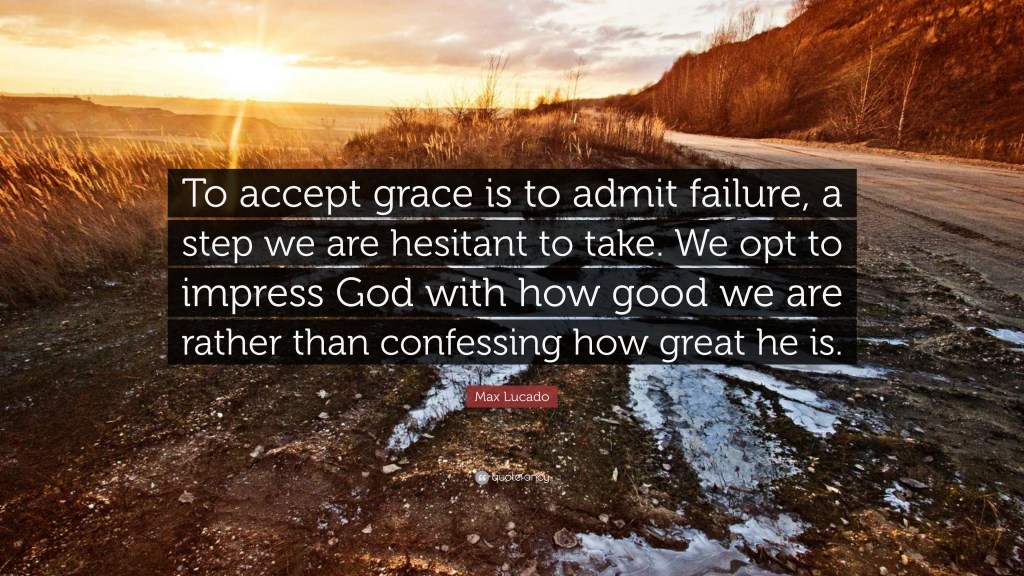
God’s Gift of Failure teaches us that we have an answer – we need a Savior.

God, the Father and God the Son and God the Holy Spirit are the only answer!

From the inconceivable depths of his failure, Peter suddenly, repeatedly and quietly heard the word “love” from the lips of the resurrected Jesus again.

Jesus was not testing him but reaffirming His unconventional, everlasting love for Peter by gently and repeatedly asking him to reaffirm his own love for Jesus.

Peter also learned the answer to the most important question on his mind – that Jesus had cast him aside, not forsaken him, and had not given up on him.

Jesus came directly to him and called him to lead again.

Jesus offered Peter an opportunity to lead by dying to himself.

Jesus even predicted that in his death Peter would glorify God.

Peter had wandered, so Jesus had to get him back on track.

As Lord and Savior, Jesus Christ, He calls all of the shots in our lives.

Failure of whatever degree and measure mankind can generate, can bring us back to the Lord, who finds us and gives us another opportunity to follow him.

From behind our own eyes, behind our own thoughts and application of justice, from behind our own reluctance to forgive as Jesus did, Peter didn’t deserve one ounce of the compassion he received from Jesus—and honestly, neither do we.

Our failures show us time and time again that we are immeasurably far from being .0000000000000000000000000000000001% worthy of God’s grace.

But in His mercy, He is pleased to give it anyway—and then give some more.

He is just that kind of Best Forever Friend. (Proverbs 17:17, 18:24, 27:17)

He is just that kind of God. (Isaiah 53:5)

He is just that kind of Savior. (Romans 5:7-10)

And you and me, like Peter, get to be His beloved disciple.

Acts 10:34-43 English Standard Version

Gentiles Hear the Good News

34 So Peter opened his mouth and said: “Truly I understand that God shows no partiality, 35 but in every nation anyone who fears him and does what is right is acceptable to him. 36 As for the word that he sent to Israel, preaching good news of peace through Jesus Christ (he is Lord of all), 37 you yourselves know what happened throughout all Judea, beginning from Galilee after the baptism that John proclaimed: 38 how God anointed Jesus of Nazareth with the Holy Spirit and with power. He went about doing good and healing all who were oppressed by the devil, for God was with him. 39 And we are witnesses of all that he did both in the country of the Jews and in Jerusalem. They put him to death by hanging him on a tree, 40 but God raised him on the third day and made him to appear, 41 not to all the people but to us who had been chosen by God as witnesses, who ate and drank with him after he rose from the dead. 42 And he commanded us to preach to the people and to testify that he is the one appointed by God to be judge of the living and the dead. 43 To him all the prophets bear witness that everyone who believes in him receives forgiveness of sins through his name.”

Later though, after Christ has been resurrected and returned, Peter transforms, and instead of just being an advocate, believer in, and supporter of Christ’s teachings, he starts becoming more like him… taking on his characteristics.  

To be clear, I’m not trying to knock Peter at all.  

He was an amazing man, and stronger than I will likely ever be.

I think his story is highly instructive and valuable because it shows us so much growth, and it is a transition that I think maybe we all have to make in our lives.

We have to move beyond just praising God and believing that God can do anything, to believing that WE

“can do all things through Christ which strengthens” us (Philippians 4:13).  

That’s a tough transition.  

Although we have a lot of pride to believe we know which way things should go, having confidence and a steadfast and immovable faith in ourselves is different than, and mostly opposite to, our pride–especially when we have to be humble enough to kick failure to the curb, to listen to God’s plan instead of our own plan.

Peter learned God was always going to be there for him even when he wasn’t always going to be physically present.  

He learned that he could be powerful and lead and help and work to feed God’s sheep, even without his Lord and mentor beside him.  

He still worshipped and praised God, but now he worked and loved and spread the gospel further, not just as a follower, but as a leader of others.  

Today, let’s try working on that same transition.  

Let’s realize how powerful we can be, echelons beyond our failures, as we work to forgive ourselves, love and have mercy upon ourselves, to do the Lord’s will.  

Let’s stop ourselves every now and then from knocking ourselves to the ground, talk to God, discern what He wants to do for us, by us, to help us feed his sheep.  

Let’s not deny our beliefs out of fear of failure or shame.  

Let’s not deny ourselves access to the Gift of God’s Grace and His Favor.

Let’s stand up for God, and share our hope and blessings with others.

Let’s walk for awhile, sit for a while longer with the resurrected Jesus.

Listen to His Words. (Hebrews 4:12)

Digest His Words. (Psalm 34:8)

Receive the Gift of the Holy Spirit that we may recall the works of the Lord!

In the name of God, the Father and God the Son and God the Holy Spirit,

Let us Pray,

Psalm 34 The Message

34 I bless God every chance I get;
my lungs expand with his praise.

I live and breathe God;
if things aren’t going well, hear this and be happy:

Join me in spreading the news;
together let’s get the word out.

God met me more than halfway,
he freed me from my anxious fears.

Look at him; give him your warmest smile.
Never hide your feelings from him.

When I was desperate, I called out,
and God got me out of a tight spot.

God’s angel sets up a circle
of protection around us while we pray.

Open your mouth and taste, open your eyes and see—
    how good God is.
Blessed are you who run to him.

Worship God if you want the best;
worship opens doors to all his goodness.

10 Young lions on the prowl get hungry,
but God-seekers are full of God.

11 Come, children, listen closely;
I’ll give you a lesson in God worship.

12 Who out there has a lust for life?
Can’t wait each day to come upon beauty?

13 Guard your tongue from profanity,
and no more lying through your teeth.

14 Turn your back on sin; do something good.
Embrace peace—don’t let it get away!

15 God keeps an eye on his friends,
his ears pick up every moan and groan.

16 God won’t put up with rebels;
he’ll cull them from the pack.

17 Is anyone crying for help? God is listening,
ready to rescue you.

18 If your heart is broken, you’ll find God right there;
if you’re kicked in the gut, he’ll help you catch your breath.

19 Disciples so often get into trouble;
still, God is there every time.

20 He’s your bodyguard, shielding every bone;
not even a finger gets broken.

21 The wicked commit slow suicide;
they waste their lives hating the good.

22 God pays for each slave’s freedom;
no one who runs to him loses out.

Lord, forgive me when I fail, and help me to learn that even my failure can be used for your glory. Keep me focused on you, and help me to serve you faithfully. In Jesus,

Adeste Fideles! Laeti Triumphantes! Venite Adoremus! Dominum.

Gloria! In Excelsis Deo! Alleluia, Alleluia, Alleluia, Amen.

https://translate.google.com/