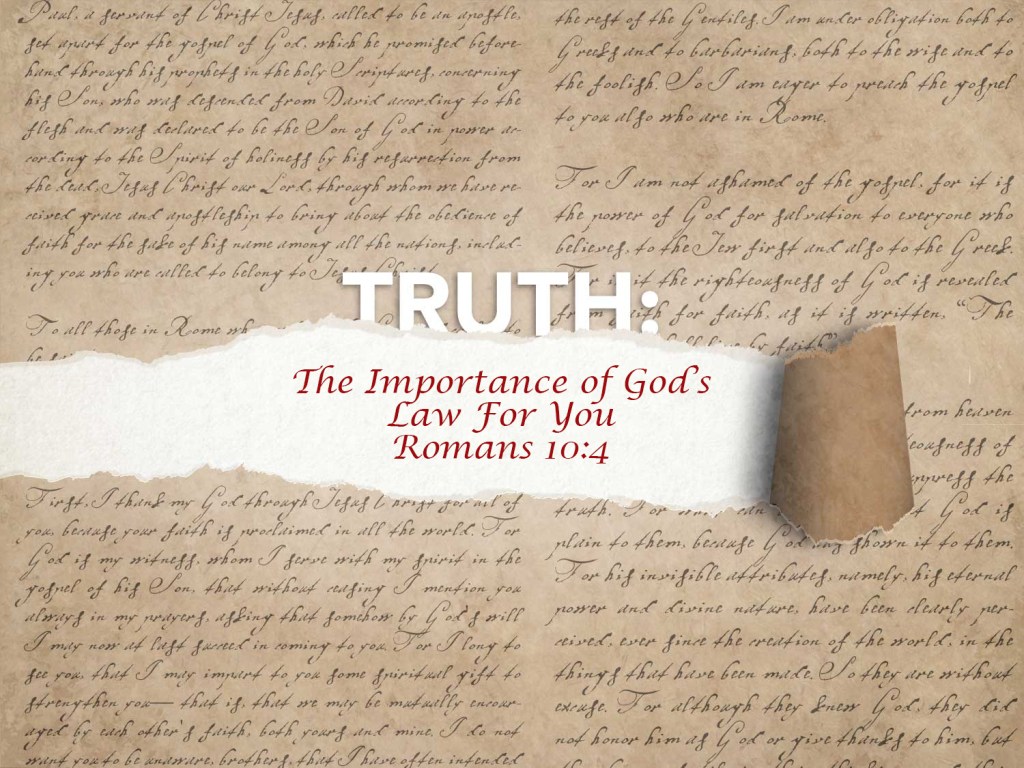
What does it mean to say Jesus Christ is the End of The Law—Romans 10:4

Throughout the long course of Paul’s letter to the Romans he wrote extensively about how the Law could not justify us before God. Rather he is trying to teach the true intent of the law which, from the beginning, was to point us to Christ.

After building his case against mankind in the first two chapters, Paul wrote in Romans 3, “But now a righteousness from God, apart from law, has been made known, to which the Law and the Prophets testify. This righteousness from God comes through faith in Jesus Christ to all who believe. There is no difference” (Romans 3:21, Romans 3:22). 

He showed that this way had always been God’s plan from the very beginning.

Both the Law and the Prophets of God testified about Jesus as the means for justification. We were never supposed to cling to the Law to bring us into right relationship with God. The Law was meant to condemn us; this is why Paul said in Corinthians the letter kills, but the Spirit gives life” (2 Corinthians 3:6). 

Then went on to call the Law the “ministration of death” because that is what it was (2 Corinthians 3:7). It only brought us death. It accused us before God, it showed us our guilt before God, and it magnified our sin before God. It could never justify us, instead it silenced us and held us accountable (Romans 3:19).

But do we really grasp what it means to say; “Christ is the End of the Law?”

Romans 10:4 English Standard Version

For Christ is the end of the law for righteousness to everyone who believes. [a]

The Word of God for the Children of God. Gloria! In Excelsis Deo! Alleluia! Amen.

Do we genuinely know what Romans 10:4 really means? Because of the great misunderstanding of this verse, a lot of Christians missed its real meaning. Join me now as we try to discover what it means for Christ to be the end of the law.

Christ is the end of the law.

That is what Romans 10:4 says.

However, a lot of people believe this verse proves we don’t have to keep the law.

Is this what Romans 10:4 really mean?

Let’s try to sort it out and try to find out what God, through Paul is teaching us.

Examining the Greek word

Romans 10:4 tells us:

“For Christ is the end of the law for righteousness to everyone who believes.”

To better understand this verse, we need to look into the original Greek word of “end.”

According to Strong’s Hebrew and Greek Dictionary,

the word “end” in Romans 10:4 came from the Greek word, telos,” which means, “to set out for a definite point or goal).”

https://www.blueletterbible.org/esv/rom/10/4/t_conc_1056004

https://www.blueletterbible.org/lexicon/g5056/esv/mgnt/0-1/

Now, compare this definition to Thayer’s Greek Definitions where it says telos means “termination, the limit at which a thing ceases to be (always of the end of some act or state, but not of the end of a period of time).” 

Thayer also defines it as “the end to which all things relate, the aim, purpose.”

Vine’s Complete Expository Dictionary of Old and New Testament Words include variations in meaning such as “‘the aim or purpose’ of a thing.”

Looking into these diverse and various meanings, telos can mean the “end” or the “aim or goal.”

What does Romans 10:4 mean?

Now, we must ask, which one of these meanings does Paul really intend to use? 

Most Christians would say telos means “the end” and thus, Romans 10:4 tells us that Christ is the end of the law. They conclude that the law ceases from being effective and that all we need is faith.

In short, faith voids the law.

However, I believe this understanding runs contrary to what the Apostle Paul says in the same letter, Romans 3:31: “Do we then make VOID the law through faith? Certainly not! On the contrary, we establish the law.”

What does Romans 10:4 mean when it says, “Christ is the end of the law?”

Paul clearly tells us that faith does not negate the law of God. He goes on to say that instead of putting an end to the law, we, as Christians, should establish it!

Obviously, the main purpose of Paul in Romans 10:4 isn’t to end the law, but Christ is the aim of the law.

1 Timothy 1:5 English Standard Version

5 The aim of our charge is love that issues from a pure heart and a good conscience and a sincere faith.

https://www.blueletterbible.org/esv/1ti/1/5/t_conc_1120005

https://www.blueletterbible.org/lexicon/g5056/esv/mgnt/0-1/

Notice how telos is properly translated in I Timothy 1:5:

  • New King James Version – Now the purpose of the commandment is love from a pure heart, from a good conscience, and from sincere faith.
  • New Revised Standard Version – But the aim of such instruction is love that comes from a pure heart, a good conscience, and sincere faith.
  • New American Standard Bible – But the goal of our instruction is love from a pure heart, from a good conscience, and from a sincere faith.
  • New English Translation – But the aim of our instruction is love that comes from a pure heart, a good conscience, and a sincere faith.
  • English Standard Version – The aim of our charge is love that issues from a pure heart and a good conscience and a sincere faith.

That should be enough to tell us the word telos doesn’t entirely mean the end or put a stop, but rather it can be translated as “goal,” “aim,” and “purpose.”

So, back to Romans 10:4, this verse can and should be properly translated as:

“For Messiah [Christ] is the goal of the law for righteousness to everyone who believes.”

What is the true meaning of Romans 10:4?

Because of the wrong interpretation of most Christians, it is really possible they have missed the genuine magnitude of Paul’s real message in Romans 10:4.

In English, when we say, “end,” it can mean objective or goal.

You probably heard of the famous but wrong belief of Sergey Nechayev, the 19th century Russian revolutionary, “The end justifies the means.”

In this expression, we understand the word “end” here means goal, purpose, or aim. How do we know?

Because the main reason why Sergey said this is he believes as long as the “end” or goal is morally acceptable, whatever means you use would also be acceptable.

Of course, we know that’s incorrect, but the point I’m getting to get at here is that the English word “end” varies in meaning and you need to get the context to know its real intention.

In the same way, Romans 10:4 tells us that Christ is the end [the goal, the aim] of the law. We need to dig deeper to get the context to know its real meaning.

In the initial verses of Romans 10, we read:

“Brethren, my heart’s desire and prayer to God for Israel is that they may be saved. For I bear them witness that they have a zeal for God, but not according to knowledge. For they being ignorant of God’s righteousness, and seeking to establish their own righteousness, have not submitted to the righteousness of God” (Romans 10:1-3).

Paul was saying here that Israel is zealous, but they are doing it with the wrong understanding. For many Jews during the time of Paul, they are trying to earn their salvation by keeping the law of God.

Now, please try to understand, it doesn’t mean it is wrong for them to keep the law, but their motivation and their purpose were misguided. They thought that by themselves, by their works, they can earn salvation and gain God’s grace.

That’s why the Apostle Paul needed to explain to them that they need the sacrifice of Yahshua or Jesus Christ to be cleansed of their sins.

By believing and accepting the sacrifice of Yahshua, they can now submit to the “righteousness of God” instead of establishing their “own righteousness.”

When Paul wrote in Romans 10:4 the Messiah is the goal or aim of the law, Paul was pointing them, and us today, in 2022, to Yahshua.

He was saying to all who would believe, we must make it our goal, our aim to develop the mind, character of our Savior and Master, Yahshua the Messiah!

That’s the deeper truth and the critically important point of Apostle Paul here.

He was not trying to abolish the law in Romans 10:4, but rather, he was teaching that our ultimate goal in keeping the law is to become more and more like Yahshua.

Remember, Yahshua is the living Word of God.

He is the perfect representation of how we must keep the law, what our motivation should be in keeping the law, and what the law really teaches.

So, when we obediently follow God’s laws and commandments, bear in mind that we keep them to help us develop Christ’s character, mind, and wisdom.

Understanding the implications of this profound truth will completely free you in every sense of the word. We are called to a higher goal, a higher aim, to live a life of freedom and this also includes after we come to Christ. Many understand salvation by grace, but no sooner than they come to accept the transformation of Christ’s salvation they put on the yoke of slavery again.

Many start out accepting this grace that Christ offers only to return to the Law as a means to live. We pick it up again to dictate the Christian life instead of living in the freedom to which we were called.

As Christians the Law is not for us it was nailed to the cross with Jesus. We do not need it as a basis of how to live because we have the Holy Spirit as our guide to lead us into all truth (John 14:26, John 16:13-15).

God said, through the Apostle Paul that “Christ is the end of the law …” (Romans 10:4), and this rings true especially for Christians.

Today I am so thankful my righteousness came through Christ. I am glad that he has cancelled the written code that stood and accused me. He has become the end of the Law and the aim in my life so I can live by faith. Today, I pray we all understand this blessed truth and experience this freedom in our life, Amen!

In the name of God, the Father and God the Son and God the Holy Spirit,

Let us Pray,

Heavenly Father, thank You for sending the Lord Jesus Christ to be the end of the Law to all who trust in Him as Saviour. I confess that of myself I can-do no-good thing but praise Your holy name that I can do all things through Christ, Who has become my righteousness, and in Whose name I pray. AMEN.

https://translate.google.com/

Countdown to Calvary: Walking with the Chief Priests and Pharisees into Pilates Palace. “Order the Tomb to be made secure!” (Matthew 27:62-66)

Our Countdown to Calvary has one more day to account for. The day of silence when the disciples have all been scattered – they have gone their own ways for fear of being hauled away from the homes, livelihoods, arrested, found guilty of being a follower of Jesus and crucified. Who knows where they are hiding now?

While they are in their very best hiding places, what we do have is the location of the Chief Priests and the Pharisees as they walk into Pilates Palace. They too are in fear of their future – What if Jesus actually rises from the tomb? What will become of them? Will the people arise against them, demand their crucifixions? What will happen to the Temple, its community, its role and its religious order?

Yes! They are afraid for the future of what they have worked hard to out into its place and the life of the people who have relied on them for being taught about God, facilitating their God-covenanted commitments, righteous community according to all the Laws of Moses and to the teachings of the great Prophets. There has been much invested by them here. They have too much to protect not the least of which is their positions of power and prestige and great influence.

But, instead of hiding away, they’re acting decisively, with great determination. We cannot find any of the disciples so we will now walk with the Chief Priests and the Pharisees to see what their intentions are in this very critical moment. We will walk alongside of them to learn just how the establishment responds.

Matthew 27:62-66 New Revised Standard Version

The Guard at the Tomb

62 The next day, that is, after the day of Preparation, the chief priests and the Pharisees gathered before Pilate 63 and said, “Sir, we remember what that impostor said while he was still alive, ‘After three days I will rise again.’ 64  Therefore command the tomb to be made secure until the third day; otherwise his disciples may go and steal him away, and tell the people, ‘He has been raised from the dead,’ and the last deception would be worse than the first.” 65 Pilate said to them, “You have a guard[a] of soldiers; go, make it as secure as you can.” [b] 66 So they went with the guard and made the tomb secure by sealing the stone.

The Word of God for the Children of God. Gloria! In Excelsis Deo! Alleluia! Amen.

It’s the Sabbath, the day of rest for the Jewish people. Jesus’s followers, hiding, devastated by his death, are resting: “On the Sabbath day they rested according to the commandment” (Lk 23:56).

But “the Chief Priests and the Pharisees” are busily at work. They have insisted on having an appointment with Pilate. They demand that he set people to work securing Jesus’s tomb. When Pilate tells them to use their very own “guard of soldiers” for the task, they don’t hesitate. They supervise the Jewish soldiers’ labor in “sealing the stone and setting a guard.”

These are the same religious leaders who got so mad at Jesus if he so much as healed anyone or even plucked heads of grain on the Sabbath. What’s got into them that they’re now so ready to work and to put other people to work on this obligatory day of rest?

The reason they give is inadequate: “Lest his disciples go and steal him away and tell the people, ‘He has risen from the dead.’” Well, yes, but a fraud like that would be exposed fairly quickly by the discovery of the stolen body, or it would just fade away when the risen Jesus himself remained an embarrassing absence, failing to appear in person.

So, what do the religious leaders really fear?

Let’s look at some of what’s happened in the last twenty-four hours or so.

For three hours, while Jesus was on the cross, “there was darkness over the whole land …, while the sun’s light failed” (Luke 23:44-45).

Whether or not this was a solar eclipse or divine intervention of another sort, it would have been deeply unnerving. Solar eclipses were read as threatening omens back then and for many centuries afterward.

There was also an earthquake, apparently with a specific target.

At the moment of Jesus’s death, “the curtain of the temple was torn in two, from top to bottom” (Mark 15:37-38).

This was the curtain that blocked entrance to the Holy of Holies at the heart of the temple to anyone but the high priest on the Day of Atonement.

With Jesus’s death, the barrier was removed. Tombs were opened, as well, and “many bodies of the saints who had fallen asleep were raised.” Although the risen saints did not “appear to many” in Jerusalem until after Jesus’s own resurrection, rumors of resurrection must have been heavily in the air.

All this was enough to persuade at least one centurion that Jesus was both “innocent” (Lk. 23:47) and truly “the Son of God” (Matt. 27:54), but it must have given “the chief priests and the Pharisees” the exalted heebie-jeebies.

Is it possible they are afraid of more than the theft of a body? They don’t admit this to Pilate. They probably haven’t voiced the fear to one another or even, perhaps, allowed themselves to be conscious of the true reason for their fear.

But is it possible that they were terrified that they’d made a dreadful mistake and that Jesus really would rise from the dead and prove himself to be the Christ, the Son of God? Given all that had happened, it wouldn’t be an irrational fear. And only an unspoken fear of such magnitude would plausibly explain their demand, on the Sabbath day, that soldiers work to seal the tomb and guard it against not just body snatchers but—God forbid! —a resurrection.

If that’s what’s making their stomachs churn, they do not have many options.

Do they really think that sealing the tomb will keep a risen Christ inside?

Or that a guard of armed soldiers might arrest and conceal the risen Christ?

These are desperate and inadequate measures. The portents of imminent supernatural intervention are staring them in the face, and they are flailing helplessly. Even Pilate has no confidence in their efforts. He says, “Go, make [the tomb] as secure as you can.” He’s being more than just a little bit ironic. He knows they can never make it secure. Not against what’s about to happen.

The fears of these religious leaders may be profoundly characteristic of fallen human beings in general. Even in our times, those who minimize or deny the resurrection of Christ may, at some level, be afraid that it might just be true.

They would readily deny their doubt, of course, certainly to us and probably to themselves. But if, as we believe, Jesus really did rise from the dead on that first Easter Sunday, then his resurrection threatens a spiritual earthquake in the life of anyone who prefers not to answer to (or even to be loved by) a risen Christ. It must seem easier to guard against perceived threats to their established faith.

Many today are still incredibly uncertain of what to make of the resurrection. Many today still prefer to remain “restful” and in hiding from the reality of the moment. They prefer to acknowledge more truth to the fact the tomb is now heavily guarded “by the guards of the temple establishment” and see no viable reason to raise themselves up challenge it or to question it or protest against it.

With the humility we have been taught by the man, Rabbi Jesus, we’ll go ahead, gracefully acknowledge they have their questions and legitimate concerns. We meet with them as Jesus met Levi/Matthew as the Tax Collector. We will “walk” across their paths in the prayerful hope they will freely engage us as Levi did. In the prayerful, faith-filled, living hope that we will be invited into their ‘homes.’

God invites all of us to have an abiding relationship with Him. He extends His invitation in His time and in His own way. This “day of our silence” is His way. This day of silence is His time for us to walk across that “Levi/ Matthews path.”

It is an enormously powerful moment to receive the skeptic and their questions.

While they may only see the “heavily guarded tomb,” God is busy working His miracle of resurrection beyond the guards, beyond the rock, inside the tomb. We just need to be ready to invite the skeptics to come back with us tomorrow.

We who, by God’s grace, have been allowed to believe that Christ not only died for our sins but was also “raised for our justification” (Rom. 4:25) are blessed to await Easter Sunday morning not with fear but with sure hope and great joy.

May we each take time today to “accidently” cross paths with, pray for those who minimize, question, deny the resurrection. May we pray that their fear, too, might be replaced with a joyous living faith in the love of God in Christ.

For tomorrow, COMES THE SON RISE ….

In the name of God, the Father and God the Son and God the Holy Spirit,

Let us Pray,

ABBA Father, today we pray we would have a refreshed perspective of all that has Jesus endured for us. He humbly served those He loved, even His betrayer. We pray that if we have become too callused or familiar with His suffering that our hearts would be softened again. We pray that His resurrection would give us a renewed, empowered and inspired and inspiring confidence all things are still possible, and that greater things are surely yet to come. Alleluia! Alleluia! Amen.

https://translate.google.com/

Countdown to Calvary. An Agonizing Walk into the Garden of Gethsemane. Jesus and Us. – MATTHEW 26:36-46

Today is Good Friday.

The question beckons us today as we continue our countdown to Easter,

Was Jesus’ coming crucifixion the most agonizing moment of his life?

Surely it must be ranked among the very highest we read of in the bible. Death on a Roman cross was excruciating pain, and none of that was spared to Jesus.

Perhaps considering the magnitude of this moment, for Jesus, what happened in the Garden of Gethsemane was suffering just as great as crucifixion.

When the Passover meal was eaten Jesus left with his disciples, except Judas, who had already gone to fetch soldiers to arrest Jesus.

Jesus and the other disciples went to Gethsemane, an area filled with olive trees. The man, Rabbi Jesus needed his time and space to pray, to pour out his heart to His Father God, and he took along three of the disciples to stay close to him.

In the hour or two that follows, we read from our incoming text, Jesus bares the unbelievable weight of his grief in his soul, and we see pain beyond imagining.

Matthew 26:36-46 New American Standard Bible

The Garden of Gethsemane

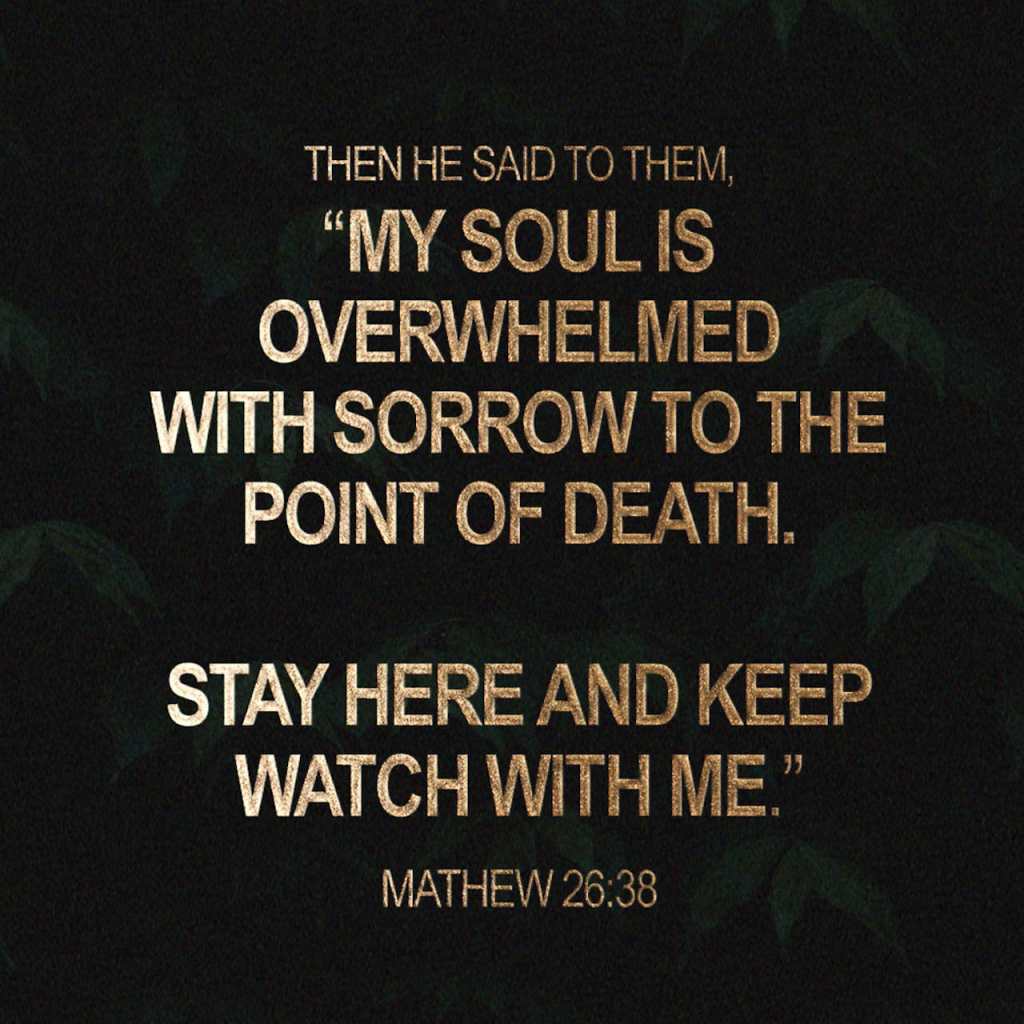
36 Then Jesus *came with them to a place called [a]Gethsemane, and *told His disciples, “Sit here while I go over there and pray.” 37 And He took Peter and the two sons of Zebedee with Him, and began to be grieved and distressed. 38 Then He *said to them, “My soul is deeply grieved, to the point of death; remain here and keep watch with Me.”

39 And He went a little beyond them, and fell on His face and prayed, saying, “My Father, if it is possible, let this cup pass from Me; yet not as I will, but as You will.” 40 And He *came to the disciples and *found them sleeping, and He *said to Peter, “So, you men could not keep watch with Me for one hour? 41 Keep watching and praying, so that you do not come into temptation; the spirit is [b] willing, but the flesh is weak.”

42 He went away again a second time and prayed, saying, “My Father, if this cup cannot pass away unless I drink from it, Your will be done.” 43 Again He came and found them sleeping, for their eyes were heavy. 44 And He left them again, and went away and prayed a third time, saying the same thing once more. 45  Then He *came to the disciples and *said to them, “[c]Are you still sleeping and resting? Behold, the hour [d]is at hand and the Son of Man is being betrayed into the hands of sinners. 46 Get up, let’s go; behold, the one who is betraying Me is near!”

The Word of God for the Children of God. Gloria! In Excelsis Deo! Alleluia! Amen.

Three things mark out the time in Gethsemane.

1. It is a time of deep agony.

Several of the words in verses 37 and 38 are filled with appalling pain and anguish for Jesus. He was “sorrowful” and “troubled.” He told the disciples: “My soul is overwhelmed with sorrow to the point of death.”

The gospels don’t often describe any emotion of Jesus other than compassion.

So, the gospel narrators saw this time and this experience in Gethsemane as something almost unique and certainly important to record.

There are martyrs who have gone silent or with brave words to their death, as if it is nothing to them that they will be burned at the stake or torn by wild dogs or executed with a sword.

Not Jesus. Inside him is a sorrow and an agony so strong, so all-consuming that he feels he might die there and then, and he pours out that sorrow to God.

Why such pain?

Above all, perhaps two reasons.

For one thing, Jesus knew that crucifixion lay ahead.

Death on a cross was death by prolonged torture.

The piercing of hands and feet with nails, the exposure to burning sun or bitter cold, the humiliation by mocking crowds, the near-impossible strain of lifting the collapsed body to breathe, the physical frame becoming weaker, the mind becoming delirious… all excruciating pain.

And it lasted a very long time, maybe hours, maybe days. Crucifixion was an intentional slow death, so the condemned person experienced maximum agony and so those who watched learned the lesson – never to rebel against the state.

Crucifixion was so cruel that the Romans usually crucified only slaves, pirates, or their enemies and not their own citizens.

Jesus knew crucifixion lay just ahead. Who would not be in an agony of soul?

For another thing, Jesus’ death would be no ordinary death.

Yes, he would suffer and die like any man. But he would be the man whose suffering included bearing the sins of the whole world in his own body.

No one can know all that meant for him – perhaps more intensified pain, perhaps separation from his perfect communion with his Father.

Whatever exactly was before Jesus, it was a ‘cup’ he dreaded drinking. Bishop N.T. Wright says: “He had looked into the darkness and seen the grinning faces of all the demons in the world looking back at him. And he begged and begged his father not to bring him to the point of going through with it.”

Whatever the trials or suffering of our lives, whatever the reality is, however great our darkness or our pain, Jesus understands. He knows deep agony, he knows what it is to dread what lies ahead, he knows the need to get down on the ground and cry out to God to be released. He knows what we all need to know!

2. It is a time of wrestling and resolution.

Jesus’ prayer in the Garden is remarkable for its straightforward honesty.

“My Father, if it is possible, may this cup be taken from me. Yet not as I will, but as you will” (v. 39).

We have all known people who prayed for a dreadful future to go away:

  • The person diagnosed with an incurable neurodegenerative disease, or with an inoperable cancer or severe cardiac disease which will lead inevitably to death.
  • The mother who was just told by their doctor that the baby in her womb was anencephalic, and without full development of the child’s brain and skull the baby could not and in fact would not live for more than a few hours after birth.
  • The parents of any beautiful seven-year-old boy or girl diagnosed with a brain tumor, or in a severe auto accident, life supported only by medical equipment, waiting for the inevitable day the child’s time in this world would certainly end.
  • The Husbands or Wives who were just told that their spouses had Alzheimer’s.
  • Ask any Ukranian Citizen who just had their lives upended by bullets flying in and through their kitchens or living rooms or bedrooms where they were just going to sleep, watching TV, listening to music with the children close at hand.

For these people and so many others like them, their deepest longing was that somehow that unimaginably dreadful future would not exist. If only somehow – by a miracle of miracles – what they know will happen will not happen. If only the impossible could become possible. How can we or they not pray for any of that?

So, the man, Rabbi Jesus went off to be alone and he prayed, “My Father, if it is possible, may this cup be taken from me.” Is Jesus simply voicing his agony and his longing? Or did Jesus truly think the cup of suffering could be taken away?

When Jesus prays the prayer the second time, he seems to know the answer.

The words are slightly different. “My Father, if it is not possible for this cup to be taken away unless I drink it, may your will be done” (v. 42).

Had Jesus sensed the answer to his prayer was ‘no’?

Perhaps that is reading too much into the slight change of words, because Matthew records that Jesus prayed the same prayer a third time (v. 44).

But it sure makes sense that Jesus would ask if he could be released from the appalling suffering of death on the cross. There is a deep inner wrestling here.

But Jesus was not rejecting God’s will. 

He was not trying to avoid the will of His Father God; he was ensuring this cup of suffering was the will of God. Certainly, his flesh recoiled from the prospect of dying in agony, and certainly it was an unimaginable burden to absorb the pain and sin of the world in his body, but the heart of his prayer was always “may your will be done.” He wanted nothing other than what His own Father wanted for him. He had no alternate agenda other than to do the Father’s will.

And as he rose from prayer and returned to his disciples, the matter was settled.

There was no more time for questioning. It was resolved, and Jesus would go forward into the hands of those who would betray, arrest, beat and crucify him.

3. It is a time of weakness and failure.

The disciples persistently let Jesus down. At the start he told them to keep watch with him (v. 38).

After his first time of prayer, Jesus returned to them, found them sleeping and urged them again to watch and pray (v. 41).

A short time later he came back to them again, and again found them sleeping (v. 43). And when his prayer was then finished and he rejoined them, it was no different. “Are you still sleeping and resting?” he asked them (v. 45).

It was the night and therefore no surprise they were tired and fell asleep.

But Jesus needed them.

One of the greatest struggles of all human history was happening only a few paces away, but these men curled up and went to sleep. Even though they were asked several times to stay awake, still they slept. What Jesus wanted was not very difficult to understand and not impossible to do. But they let him down.

We are no different. We don’t sin out of ignorance. We sin because of weakness, unwillingness, selfishness, or carelessness. At times when the deep spiritual battles are at stake, we’re not on the alert, not at our posts, not playing our part.

Thankfully Jesus did not give up on these disciples, just got them to their feet since the force coming to arrest him was in sight (v. 46).

Jesus does not give up on us either.

That does not mean our failures don’t matter, only that Jesus won’t let us wallow in past mistakes for there are new challenges to face just ahead.

What then shall we say of this walk through the Garden called Gethsemane:

A time of deep agony.

A time of wrestling and resolution.

A time of weakness and failure.

There are three short but important lessons.

1) Prayer is not always answered as we might wish.

Jesus, the perfect Son of God, poured out his heart.

There is no doubt he longed to escape the cross. But God said ‘No.’

There was no fault in the person praying.

There was nothing wrong with the prayer. It would have made no difference if the prayer time had lasted all night, or if the prayer had been repeated a million times by a million people. The answer from God would still have been ‘No.’

The lessons?

  1. We can and should pour out our hearts to God, but with humility and meekness let us recognize that the will of God we find may find on the door stops of our hearts may not be the same as the will we agonizingly brought to the prayer.
  2. The deepest of inner agonies can be shared with God.

Jesus was troubled, and he tells his disciples his soul is overwhelmed with sorrow to the point of death.

Some Christians believe any form of depression as weakness of faith.

If that were true, then many of the Bible’s greatest saints were weak. And Jesus was weak in the Garden of Gethsemane. He was, but it was no sin.

Weakness is common to human experience, and, at times, it is the very thing that drives us to God.

There is no sin in being real about our feelings, and no sin in coming to God confessing our struggles. God copes very well with honest people. Cures are rarely instant but being open before God is always the right start.

3. God’s will does get done.

Jesus prayed for that: “…not as I will, but as you will” (v. 39). And God’s will was done.

We may never face death on a cross, but we may see some other appalling future that sends dread through our whole being. At times like that we are tempted to say: ‘How can God be so absent or impotent?

Where is God at a time like this?’

The answer is God is right there. Just as he was in Gethsemane, as he was at the cross, and as he was at the tomb raising Jesus back to life.

Through all of it, God was there.

Our challenges and our agonies overwhelm us, and we feel so alone.

But God is there, always there. He is not hiding, not gone astray, not become unwilling. And God is at work, and his work is always good.

When Jesus left Gethsemane, the challenge of the future was still there.

The agony of the cross was still ahead. Easter was about to come.

But Jesus came through Gethsemane strengthened in knowing God’s will more certain and surer and he could face anything God allowed in his life. Because of what happened in his Gethsemane, he was now prepared even for the cross.

As we walk around and through the Garden, observing the events of that day,

May God also make us all more ready for his perfect will, whatever it may be!

In the name of God, the Father and God the Son and God the Holy Spirit,

Let us Pray,

Eternal God, your power is unlimited, and your strength has no end. You have said that faith, hope and love as small as a mustard seed can move mountains. Fill me with the measures of faith, hope and love for a breakthrough in my own circumstances. I believe You are able to do far more than all that I ask or can even dare imagine, according to the power at work within me. To you be glory throughout all generations, forever and ever. Through Jesus Christ, our Lord, Gloria! In Excelsis Deo! Alleluia! Alleluia! Alleluia! Amen.

https://translate.google.com/

Romans 5:6-8 |The Surprise Gospel | We Shall All See God as He Really Is!!!

When you and I see God as He really is, we will Worship Him in the beauty of His Holiness and not ours. We’ll truly worship Him as He desires to be worshipped. We shall have Communion with Him. We’ll all share in this surprising moment.

When Moses saw God and worshipped Him, He ended up giving us the Law – the Ten Commandments. When Job saw God as He really was and worshipped Him, his whole family and estate was magnified and restored to him, Job received his second chance at living life. When Isaiah saw the Lord high and lifted up, he was given a glimpse of His throne room, inducted into the role of a Prophet of God.

I introduce you to the Pharisee Saul, in his zealousness when he was blinded by the holiness of God on the Damascus Road, he repented, was healed and became Paul, the greatest missionary evangelist who ever lived and gave us the bulk of the New Testament Writings from which we study and learn who Jesus really is.

And when John saw God and fell down before him as dead, he got up and wrote the Book of Revelation, the great Apocalyptic story of the New Testament. As he himself walked behind and alongside his Rabbi for three years with the twelve disciples, he looked upon Jesus as He really was, hung upon the cross and dying. With Peter, He looked into the empty tomb and witnessed to the power of God.

When we finally see God as He really is, we will look forward to the day when we too will be like Him. In the New Testament we are told that someday we shall be like Him because we will see Him as He really is. On that day, we will be holy in perfection. We will be changed, and the sins of our lives will be taken away. We are going to be beautiful in our worship because God is beautiful in His holiness.

Romans 5:1-8 Authorized (King James) Version

Therefore being justified by faith, we have peace with God through our Lord Jesus Christ: by whom also we have access by faith into this grace wherein we stand, and rejoice in hope of the glory of God. And not only so, but we glory in tribulations also: knowing that tribulation worketh patience; and patience, experience; and experience, hope: and hope maketh not ashamed; because the love of God is shed abroad in our hearts by the Holy Ghost which is given unto us.

For when we were yet without [inner] strength, in due time Christ died for the ungodly. For scarcely for a righteous man will one die: yet peradventure for a good man some would even dare to die. But God commendeth his love toward us, in that, while we were yet sinners, Christ died for us.

The Word of God for the Children of God. Gloria! In Excelsis Deo! Alleluia! Amen.

Unconditional love! WOW! This is the “LOVE” God has for us. 

A PICTURE OF GOD’S UNCONDITIONAL LOVE FOR HUMANITY is found in John 3:16-For God so loved the world that He gave His only begotten Son, that whoever believes in Him should not perish, but have eternal life.

In spite of the wrong and sinful things we have done, the unclean places we have gone in our deeds, the unpleasing sinful acts we have committed and continues to commit, the ugly things we have said or the evil thoughts that crosses our minds can, surprisingly, God’s love never leaves us.

God’s love for humanity transcends our sinful condition because even in the midst of them, He showed us His unconditional love.

In other words, there is nothing we can do to make God stop loving us.

There are a vast multitude of sinful things, i.e. (idolatry and unbelief) that we can do to cause us to be separated from a personal relationship with God, but not from His love for each one of us.

Nothing we do can stop God from loving us. Calvary proved that! Yes, it was at Calvary where the “LOVE” of God for humanity was put on display.

Even after salvation, regardless of what we may have to endure through long suffering, hardship, etc.,  Apostle Paul surprisingly declares this concerning God’s love for us in Romans 8:38-39 For I am persuaded that neither death nor life, neither angels nor principalities nor powers, neither things present nor things to come, 39 neither height nor depth, nor any other created thing, shall be able to separate us from the love of God, which is in Christ Jesus our Lord.

Surprisingly, regardless of my diverse tests and trials, I am “PERSUADED” that NOTHING can separate me from the Love God has for me through Christ Jesus!

It comes as no surprise to me then that I can read and study and pray through the full length and breadth of God’s Holy Scriptures and just want to worship!

My living hope is built on nothing less than Jesus Blood and His Righteousness.

Romans 5:5 This hope does not disappoint us, for God has poured out his love into our hearts by means of the Holy Spirit, who is God’s gift to us.

If you are saved and have accepted Jesus Christ as your Savior by faith, you are daily tasting the outpouring of God’s “LOVE” in your hearts through God’s Holy Spirit whom He was given to us at our point of salvation.

If you do not know Jesus for the pardon of your sins, invite Him in on today by first asking Him to forgive you of your sins and to open the eyes of your heart to His “UNCONDITIONAL LOVE” for you.

When you have made your confession of your desperate need for God, not only is He faithful and just to forgive you, but He is willing to lead, guide and direct the rest of your life by the leading of His Holy Spirit.

Not surprisingly Warrior, King, Master Poet, even master sinner, David declares these words concerning God “LOVE” in Psalm 34:8-Taste and see that the LORD is good; blessed is the one who takes refuge in him.

It should not come as such a surprise that God’s “LOVE” is an everlasting love.

New life in the “SPIRIT” is available to you on today. 

The Great Exchange is God’s love for our sins. WOW! What an exchange. 

Unconditional “LOVE” is found at the foot of the cross. 

Run to Jesus for He alone offers you UNCONDITIONAL LOVE!

This kind of love cannot be found in nothing or no one else.

When nothing else could help me, “LOVE” was broken for me!

When nothing else could help me, “LIVING LOVE” lifted me!

JESUS IS UNCONDITIONAL LOVE!

DO NOT LET THIS BE SUCH A SURPRISE TO YOU!

SHARE COMMUNION WITH GOD AS HE FIRST SHARED IT WITH US!

God bless.

In the name of God, the Father and God the Son and God the Holy Spirit,

Let us Pray,

God of enlightenment, help me to read, study and understand your word. Give me insight into the meaning of your commandments and how I should follow them in their beauty and their truth. As I meditate on your wonderful miracles, As I search your beauty, wonder who you really are, may I be encouraged and empowered. As I study how you have fought our battles from the stories in the Bible, may I be built up and strengthened. Help me to know how you want me to put the hope of your word into real practice. Assist me to know you more fully through your word, be pleasing to you. Gloria! In Excelsis Deo! Alleluia! Amen.

Imagine the Possibility! I am Finding Myself at a Loss for Words! Escaping the Thought Trap!!! |Joshua 1:7 – 9|

Wonderful Words of Life (Philip P. Bliss, 1838-1876)

1. Sing them over again to me,
wonderful words of life;
let me more of their beauty see,
wonderful words of life;
words of life and beauty
teach me faith and duty.
Refrain:
Beautiful words, wonderful words,
wonderful words of life.
Beautiful words, wonderful words,
wonderful words of life.

2. Christ, the blessed one, gives to all
wonderful words of life;
sinner, list to the loving call,
wonderful words of life;
all so freely given,
wooing us to heaven.
(Refrain)

3. Sweetly echo the gospel call,
wonderful words of life;
offer pardon and peace to all,
wonderful words of life;
Jesus, only Savior,
sanctify forever.
(Refrain)

Joshua 1:7-9 English Standard Version

Only be strong and very courageous, being careful to do according to all the law that Moses my servant commanded you. Do not turn from it to the right hand or to the left, that you may have good success[a] wherever you go. This Book of the Law shall not depart from your mouth, but you shall meditate on it day and night, so that you may be careful to do according to all that is written in it. For then you will make your way prosperous, and then you will have good success. Have I not commanded you? Be strong and courageous. Do not be frightened, and do not be dismayed, for the Lord your God is with you wherever you go.”

The Word of God for the Children of God. Gloria! In Excelsis Deo! Alleluia! Amen.

Someone, somewhere at some point in time, began to ponder and pray …..

They have probably been pondering these questions for quite some time …..

So, we have been gazing at the unsearchable beauty of the Lord our God.

We have been craning our necks upward – mightily focusing on His face.

We have been craning our necks and eyes upwards until it now hurts us.

Not just our necks hurt, not just a struggle against keeping our eyes open,

But now we also find steadily creeping into our heads – new thoughts we do not recognize – or as much as we recognize them – we deem them 100% unwanted.

We search for God, turning our faces and our thoughts away from the world.

Now, without our permission, our day-to-day thoughts are being muddled.

We like it- we like it (maybe) – we like it not – we realize it – we are not sure?

We cannot stop these thoughts – we try to re-shape them – but no success?

Are we struggling against our worldly thoughts leaving our heads?

Might this be true?

Without realizing – are we struggling against God trying to get into our heads?

Struggling with negative thoughts? Maybe low self-esteem? Self-putdowns?

When I think about these thought struggles, I am both awed, amazed and (gasp) very scared at how easy it is to adopt or fall into a bad thought habit.

That’s right I said it, “habit.” All our thought patterns are, in fact, habits.

Our whole lives, we have all been taught, trained on how to think and what to think and why to think what we should think until they become 100% natural.

And these habits can even impact our ability to problem solve and our ability to decide how, what we use to filter truth vs untruth. Even learned helplessness is copied and can gradually develop into (negative) thought and behavioral habits.

Sometimes, these thoughts become a significant burden we know not what to do with the breadth of them. Scratch heads? Move forward? Stand still? Retreat?

We are looking for the indescribable, unknowable, unsearchable, face of God anywhere and everywhere we can. We want to cannot look upon His face, to look upon His visage, crawl or walk up to Him – look directly into His eyes!

But that is not possible to do and survive.

But survivability is not our concern – we only want to be eye to eye with Him.

Beholding His face – Looking into His eyes – knowing His thoughts for us, is very much where we all prefer to be. We will brave everything for this chance.

We cannot know the thoughts of God for us and that disturbs us – we are all called to look upon Him, but reality is we cannot do so – but our thoughts are still on God – YET our eyes and our souls our thoughts remain 100% fixated.

We are now fixated on God despite our thought habits! This is great news because just as we develop bad habits, we can retrain our thinking and learn new habits. It’s really pretty simple but requires truth, faith, commitment.

Let me introduce you to the one presenting us with this array of questions.

He is Joshua, Son of Nun …. His reality has just been seriously altered ….

Before him, the prospect of replacing Moses as leader of millions of people.

Prepared to lead? Prepared to stand still? Prepared instead to retreat?

Prepared to think, act and believe according to his understanding?

And what would that accomplish for him, his family, his people, His nation?

God knows all of our thoughts before we even have them – but in the midst of our sorting out our own stuff – are we realizing that God is trying to overcome, overwhelm the unrelenting burden of our thoughts at the exact same time?

How? God persistently speaks His greater thoughts over our lesser thoughts …

Only be strong and very courageous, being careful to do according to all the law that Moses my servant commanded you. Do not turn from it to the right hand or to the left, that you may have good success[a] wherever you go. (Joshua 1:7 ESV)

“This Book of the Law shall not depart from your mouth, but you shall meditate on it day and night, so that you may be careful to do according to all that is written in it. For then you will make your way prosperous, and then you will have good success.” (Joshua 1:8, ESV)

What are we to make of this seldom considered, thought-provoking revelation?

Whatever the time, whenever the season of life, it’s 100% safe to say we are the sum total of our habits. If you want to know your future, just look at your habits today! It will show you where your thoughts and behaviors will be tomorrow.

God says ….

For my thoughts are not your thoughts,
    neither are your ways my ways, declares the Lord.
For as the heavens are higher than the earth,
    so are my ways higher than your ways
    and my thoughts than your thoughts.

10 “For as the rain and the snow come down from heaven
    and do not return there but water the earth,
making it bring forth and sprout,
    giving seed to the sower and bread to the eater,
11 so shall my word be that goes out from my mouth;
    it shall not return to me empty,
but it shall accomplish that which I purpose,
    and shall succeed in the thing for which I sent it.
(Isaiah 55:8-11 ESV)

The finite Mind and wayward Thoughts of Man Repeat ….

Trust in the Lord with all your heart,
    and do not lean on your own understanding.
In all your ways acknowledge him,
    and he will make straight your paths.
Be not wise in your own eyes;
    fear the Lord, and turn away from evil.
It will be healing to your flesh[a]
    and refreshment[b] to your bones.
(Proverbs 3:5-8 ESV)

Thorns and snares are in the way of the crooked;
    whoever guards his soul will keep far from them.
Train up a child in the way he should go;
    even when he is old he will not depart from it.
(Proverbs 22:5-6 ESV)

Set your minds on things that are above, not on things that are on earth.” (Colossians 3:2)

When I allow myself to think about setbacks, hurts and the many different pains of life we experience through people, places, things or events, I realize there is ever a choice we can make; there is a crossroad before us; a decision:

Do I hand myself and my emotions over to my own thoughts, hardships of life and allow them to define me? To permit my thought to dictate how I should feel and ought to live? Or do I, in my pain, bring it to God and find healing and rest?

I guess that’s the difference between freedom and chains. You may be afraid and have it in great abundance, but fear doesn’t have to have abound in you.

Over seasons. the stories and scripts we tell ourselves are powerful. What we tell ourselves not only threatens to define our behavior but also predicts our future.

Do we speak negativity and lies in opposition to the Word of God, or do we speak the truth of God as medicine over our hurting souls and against the lies and narratives we have been taught? Being set free is to experience the truth of the gospel showing up in every area of our lives, even in our thought life.

To fight my thought battles, I use Scripture to correct false assumptions and to confront bad behaviors. When our experiences and thoughts don’t line up with biblical truth, we should always yield our thoughts and accept the 100% truth of Scripture in all its authoritative truth. Make it our filter and meditate on it over and over until God develops our new thought habits. It will replace the old one!

The Truth Will Set You Free (John 8:31-32 ESV)

31 So Jesus said to the Jews who had believed him, “If you abide in my word, you are truly my disciples, 32 and you will know the truth, and the truth will set you free.”

Our thought habits can be such a pervasive trap. Or they can be the source of a pure spring that flows from the Word of God, deposited deep into our lives.

We are not to be continuously chained to negative thinking anymore. Living Word of God: We no longer have to be. Yield to the truth that can set you free.

In the name of God, the Father and God the Son and God the Holy Spirit,

God, my Wisdom, Speak, them over again to me, thy Wonderful Words of Life ….

Lord of wisdom, I sometimes finding understanding the Bible to be difficult. I know you want me to apply your word to my life. I thank you for giving me your word so I can grow in my relationship with you. Help me grasp what you want me to know as I read your revealed word. Open my eyes so to see the wonderful truths in your instructions. Be my teacher, be my wisdom, be my truth, so I can live and obey your word. Thank you for your wise advice. Gloria! Alleluia! Amen.

https://translate.google.com/

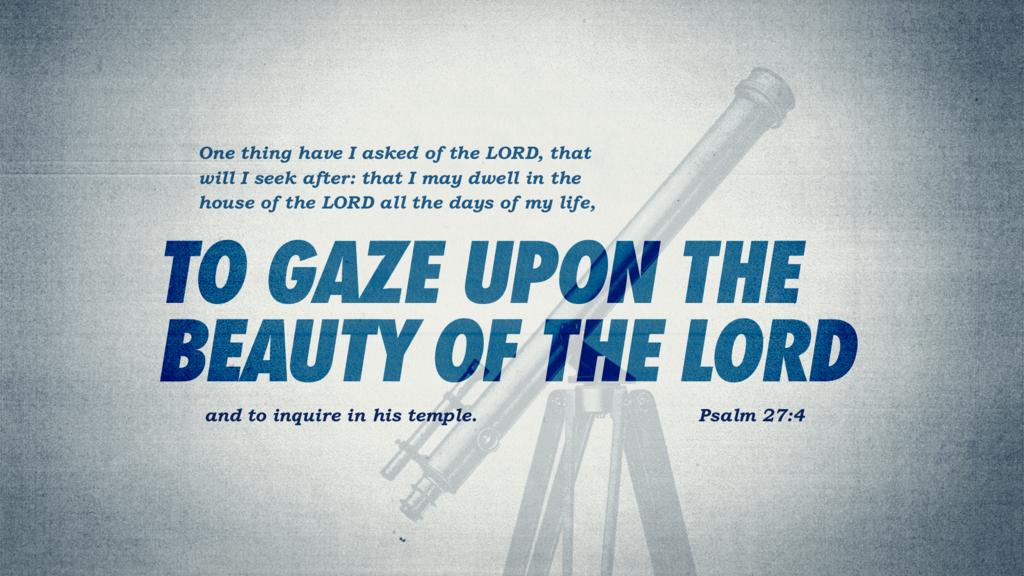
Gazing upon the unseen face of God changes our Perspective. Psalm 27:4

A goal of mine has always been to grow closer to my God, so I began researching verses and passages relating to this vision. Throughout my long and prayerful search for the “perfect” verse, I came across Psalm 27:4, which yet proclaims,

One thing have I desired of the Lord, that will I seek after;
that I may dwell in the house of the Lord all the days of my life,
to behold the beauty of the Lord, and to enquire in his temple.
(AKJV)

This hit me like a ton of living stones. The vision of dwelling in the house of the Lord and gazing upon His unseeable unknowable face, His unsearchable beauty. At that precise moment of prayer, God answered! He struck a deep chord in my heart. He strummed the heart right strings which started my soul unto singing.

From this, I knew that now was the moment where I should live in such a way that I actively seek God. I came to realize that God was teaching me to seek Him and gaze upon His beauty despite the rocky road of life, which has transformed my sinfully limited and skewed perspective on the current events of the world.

It has granted me the ability to envision perseverance through trying times, the ability to envision my developing a godlier character, and the ability to have and believe I can actually grasp, hold onto, a hope which lasts longer than 1 minute.

Little did I realize God had given me this simple verse which I have read 1,000 times to radically change the way I envision pursuing the Lord. This leads me to say God does not always roar in our lives in the way we would expect; rather, He quietly nudges us back to the basic, simple principles in which we should rest. It is in looking for God in all the places we see every moment of every day, we live!

God struck a new musical chord deep in David’s heart at the exact moment he needed it. From this, I can testify! We have these amazing words which found my heart at the exact moment, three thousand some odd number of years later.

Pray! what place in His Holy Scriptures is He nudging you back to envisioning?

Psalm 27:1-4 AKJV

Psalm 27

A Psalm of David.

The Lord is my light and my salvation; whom shall I fear?
the Lord is the strength of my life; of whom shall I be afraid?
When the wicked, even mine enemies and my foes, came upon me to eat up my flesh,
they stumbled and fell.
Though an host should encamp against me, my heart shall not fear:
though war should rise against me, in this will I be confident.
One thing have I desired of the Lord, that will I seek after;
that I may dwell in the house of the Lord all the days of my life,
to behold the beauty of the Lord, and to enquire in his temple.

The Word of God for the Children of God. Gloria! In Excelsis Deo! Alleluia! Amen.

In the name of God, the Father and God the Son and God the Holy Spirit,

Let us Affirm and Pray,

I Believe

In spite of many unanswered questions, I believe.

I believe I see in the living God, the joy of the universe,

  who is the pulse and purpose of all things seen and unseen,

  who from the dust of earth calls up living beings to be children of eternity,

  who through countless ages has provided for us many liberators

  and tirelessly seeks to bring victory out of defeat and life out of decay.

I believe I see in Jesus the Christ, God’s true Son,

  who is bone of our bone and flesh of our flesh,

  who took upon himself the healing of the human race,

  who bearing the burden of our sins went to Golgotha carrying his cross,

  who was betrayed, crucified, dead and buried in a borrowed tomb,

  who on the third day was found to be gloriously alive,

  meeting with those who trust him and serve him to the end of the world.

I believe I see in the Holy Spirit of God,

  within and among all who cherish Christ and his way,

  who brings hope out of despair, love out of apathy, and joy out of sorrow,

  who unceasingly regenerates and reforms the church

  that it may always be the contemporary body of the risen Christ,

  loving the world through prayer, word and deed.

I believe that even I am caught up in the resurgent life of Christ Jesus,

  and that nothing in life or death can separate me from his love and joy.

In spite of unanswered questions, YES! I believe I YET see the face of God.

Amen!

https://translate.google.com/

A Father to the Fatherless. What to Believe When “Dad” Walks Away? What to Believe of God, our Father?

I remember back to my earliest days of Sunday School when the subject of the day was Prayer. The question was raised by one of the other children who asked the teacher: “How do you converse with God?” The Sunday School teacher said, “As you talk with your daddy and your daddy talks to you, you talk with God.”

At five years old, I responded in return, “When I talk to my daddy, my daddy always removes both of his hearing aids, and then he stops talking to me.”

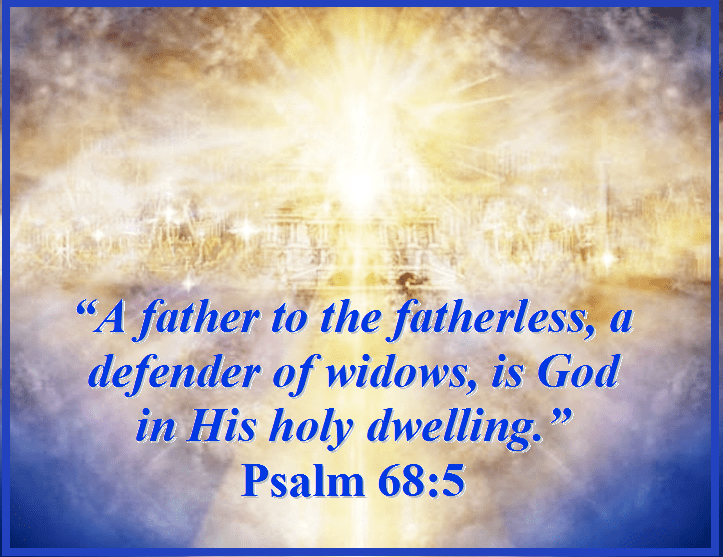
Psalm 68:5 has recently taken on a whole new meaning to me. The God of the universe–The one who created me, knitted me together in my mother’s womb, and despite all of my gravest faults and failures and also my father’s faults and failures, preserved me through my “fatherless” empty childhood–is also a true father to the fatherless! Let’s think about that for a second; I can probably think of so many other things that He could be doing, seeing that He is God and all.  

But no, He’s a model dad! He’s the one who kisses every boo-boo, cradles us in the big, perfect hug that only a genuine father has and can, and always has the best stash of band-aids and words to make the pain of an empty childhood go away. It’s probably a good thing Iam not God because I highly doubt, I would take time for knowing of those simple things. But I am very thankful He does.

Psalm 68:5 Holman Christian Standard Bible

God in His holy dwelling is
a father of the fatherless
and a champion of widows.

The Word of God for the Children of God. Gloria! In Excelsis Deo! Alleluia! Amen.

Reverend Dr. A.W. Tozer says, “What comes into our minds when we think about God is the most important thing about us” (The Knowledge of the Holy). What we think about our heavenly Father says a whole lot about who we are.

But what if our thoughts about our heavenly Father are entangled with and stained by the abuse and abandonment of our earthly father? Anyone who has experienced the acute pain of dad walking out knows it can be all-consuming.

I have, and I know. Dad, greatly afflicted by the harsh memories of the Korean War, copious amounts of alcohol and severe hearing loss made worse by war, stole the thing I believed to be indestructible, superhuman even: my family.

But family turned out to be more fluid than I once thought . . . and hoped. Like a permanent smudge on the lens through which we see the world, the dissolution of the family distorts all that we know and all that we are. Our hearts beat out of rhythm. Our thoughts weigh heavier upon our minds. Our tears flow faster. The only voice that once calmed us in the middle of the night is suddenly silent. The picture frame that preserved our family on the wall is either gone or it is empty.

Instinctively human beings have a need of a loving and compassionate father, who will feed us when we are hungry, love us when we are lonely, and care for us when we are crying. We long for a “smiling” dad, who will listen to us when we have questions, encourage us when we are discouraged, and discipline us when we do wrong. A father who cares and also takes time with the little things, who extends wisdom when we are concerned, and who most of all prays and seeks to know, understand God’s will and direction before acting on his own.  

God placed within us a desire to be loved by our father. Some fathers do well, and others do not. Some are extremely successful, and others fail miserably. 

Warped by such confusion and despair, just how do we paint accurate, biblical portraits of our Father’s goodness and faithfulness? When our fathers turn off their hearing aids or remove them from their ears instead of listening to their children, we’ve a very much harder time seeing who God promises to be for us.

The Bible articulates the truth we need, but believing the Bible isn’t always so easy either. When advice seems too thin, though, and life too cruel, God’s word is the only truly reliable brush for the suffering, painting fresh strokes of God’s character onto the marred canvas of our hearts and experience.

He draws near unto, the brokenhearted and ready to care for you, his precious son or daughter. (Psalm 34:18)

Fortunately, God is the perfect model of a faithful father, and He fills the gaps left by our earthly father as we seek Him each day. Therefore, we should listen to Him and honor Him in everything that we think, say and do.

Fathers need to learn to have a relationship with God, even if they did not or do not have a relationship with their earthly father. This is fully realized through the reading, studying and understanding of the Scriptures, where a father will gain and grow in wisdom, grace and the ability to raise kids to the glory of God.

Fathers, who accept God as their #1 penultimate Father, which also have made Jesus Christ their Lord and Savior are God’s children and learn from Him and in turn, unhesitatingly, teach their children the truths and treasures of the Bible.

1. Your Father will never leave you.

No one wants to suffer through the absence of a father who might walk away or remove their hearing aids from their ears at any moment. It’s agonizing riding the bus home from school wondering if dad’s truck will be in the driveway, if his clothes will still be in the closet, he will listen to you with both hearing aids.

God does not leave us in that suspense. God is deeply, unshakably committed to fathering you. You never have to ask whether he will stay or leave or listen. God himself promises, “I will never leave you nor forsake you” (Hebrews 13:5). He will hear our cries, our pleas from the furthest reaches of eternity (Psalm 18:6-19).

No matter what you’ve been through with your father, if you are God’s child through faith, he promises to never pack up his suitcase and leave you peering out from the kitchen window. In the middle of your loneliness, God is 10000% right there with you (John 14:16–18). Even when your earthly dad is somewhere else, God will not forget or neglect the commitment He has made unto you.

2. Your Father will protect you, not hurt you.

Sadly, some fathers hinder and hurt, rather than help. They bring pain, rather than protection. As a child, even into adulthood, you may have suffered both physical and emotional pain because of your dad. Your home wasn’t a safe place for you. Instead, it was a “Roman” arena of anger, tears, fears and uncertainty.

Pray! Take hope: your Father in heaven will never hurt you like this.

He will always protect you, keeping you safe from attacks against you. His hand of protection is unmoved and never tires.

Even when he must discipline us, he introduces pain in grace and love, and for our greatest good (Proverbs 3:12).

No matter what dangers you face, God remains an unparalleled source of safety and help. He will not let danger overtake you (Isaiah 43:2–3). 

He is a Father of ceaseless comfort and protection, not of terror and abuse.

3. Your Father knows what you need.

In a single-parent home, provision for the family can be a daily struggle and anxiety. Meals uncertain. Clothes borrowed. Aren’t our parents supposed to provide for our basic needs? When dad is gone, and with him a major source of income, when dad stops hearing and listening to their children, we must fight to see through the fog and fight to trust that God remains faithful to provide.

His resources never end (Psalm 50:10). He loves to provide for you, because you are a great delight to him. Your most fundamental needs will always ultimately be met in your heavenly Father (Philippians 4:19), not your earthly parents.

Even when Adam and Eve, God’s very first children, disobeyed, not only did God clothe their nakedness and also cover their shame, he promised us the ultimate provision of Christ for their sin, as well as for our sin (Genesis 3:1521). In Jesus, the Father has not left us wanting. He promises to eventually provide an eternal home, one where his children will never be crying or wanting (John 14:1–3).

4. Your Father takes great delight in you.

Without any love or encouragement from our dad, we can too easily question whether we are even loved at all. It’s normal to wonder how much we are worth, whether we’re a source of pleasures or problems for others.

But where our dad might be absent and silent, God has spoken. God affirms that we always and forever bring him great delight. He says, “You are precious in my eyes” (Isaiah 43:4). As His Children, we are a unique source of pleasure for him.

Rest in this: you and I are a constant delight to God, not because you, I, bring something to him, but because he loves us freely. He showers us with shouts of deliverance, love, and gladness (Zephaniah 3:17).

Questioning whether you are a delight to your dad is a real insecurity for many. It may be excruciatingly hard to believe that you are loved, but your heavenly Father does not ever leave us in doubt. If we are his, we are infinitely loved!

5. Your Father does not love you because of you.

Those of us who have watched dad remove his hearing aids, watched dad walk away have wrestled with trying to earn our father’s love and affection. Maybe we fight for the merits of academic or athletic success. This was my hardest fight as a young son, deeply desiring the unhindered love and affection of my dad. Whatever the perceived standard may be, it’s no way to live as a child.

Thankfully, our heavenly Father’s love for us is not conditional.

He does not love us based on our successes. Instead, God loves us because he loves us. That’s who he is. Even when we’re disobedient and rebellious, his love covers us. Even when we run away from him, he patiently waits for us to come home — a Father ready to wrap his arms around you, kiss you, and shower you with forgiveness and grace (Luke 15:20–24).

As it is truly written somewhere, there is more mercy in God than sin in you.

God reached out to you in great love when you were at your worst, not your best (Romans 5:6–8).

Child of God, LIVE! Run freely into your heavenly Father’s embrace, trusting the Father’s arms to hold you because his Son’s arms were stretched out for you on the cross. He is a living hope for the defeated, abandoned and forsaken, a refuge and a haven like no other can ever be for the fearful, a Father to the fatherless.

Our earthly fathers deserve respect. Our heavenly Father deserves our respect, commands our maximum love because He is always there, totally trustworthy.

What God says, He does. God our heavenly Father, will not let us down, He knows what we need and when we need it. At times it may feel as if He is not with us, but He is. He is probably speaking but we are not listening. Or is it maybe He is silent because He wants to grow our faith and our trust in Him?

In the name of God, our Father, God the Son and God the Holy Spirit,

Let us Pray,

Great is thy faithfulness, O God my Father; …... Thomas O. Chisolm, 1923

Father may my life, my compassion and my ministry reflect your heart for those who need care and protection and love. Give me eyes to see this need more clearly and a heart to responded more certainly so that your love may be demonstrated through me. In the precious name of my Savior Jesus, I pray.

Lord, today we pray specifically for fathers and fatherhood across our land.

Your Word faithfully teaches fathers to bring up their children in the discipline, instruction of the Lord (Ephesians 6:4). God, we do thank You for the men who are leading their families according to Your statutes and the ones that are laying their lives down for Your purposes.

We pray You will continue to use these men to lead their families and other men. We pray You will strengthen the fathers of our nation and that You will continue to empower churches, organizations, and individuals to 100% invest in fathers, fatherhood for the sake of Your children. Gloria! In Excelsis Deo! Alleluia! Alleluia! Alleluia! Amen.

 https://translate.google.com/

Help Me to Trust in You, O’ Lord! Be Thou My Wisdom! |Proverbs 3:5–6|

Trust. It can’t be half-hearted. Either it is a full trust, or it is ‘trust’ clouded with suspicion and doubt. So, as we face the everyday challenges of life, or as we look for answers to deep and difficult problems, let’s put our full trust in the LORD.

Pray! Let’s ask for his wisdom and guidance as we make our choices. Let’s give him praise for the good in our life and seek his blessing for the long days ahead. Why? Because he longs to bless us with a wise life, both now, and forevermore.

Proverbs 3:5-8 New Revised Standard Version

Trust in the Lord with all your heart,
    and do not rely on your own insight.
In all your ways acknowledge him,
    and he will make straight your paths.
Do not be wise in your own eyes;
    fear the Lord, and turn away from evil.
It will be a healing for your flesh
    and a refreshment for your body.

The Word of God for the Children of God. Gloria! In Excelsis Deo! Alleluia! Amen.

Faith ….

Hope ….

Love ….

And the Greatest of these is …..

Resigning yourself into God’s care is an act of faith. It’s easy for Christians to say in a hopeful general way, “The Lord’s will be done,” but it’s another matter entirely for us to resign ourselves into the Lord’s loving hands about a specific circumstance which we have no answer. In the Bible when someone approached this walk of self-resignation, it was done with great seriousness of thought.

And the Greatest of these is …… TRUST?

Can there be faith, hope and love absent a maximum measure of genuine trust?

Merely saying the words, “I trust the Lord completely,” isn’t sufficient to prove that we possess a total 100% ‘genuine’ trust in him. It must be a free and willing surrender. Consider Egypt’s Pharaoh: Only when he could not hold out against God’s plagues any longer did, finally resigns to let Israel take their wilderness journey toward the Promised Land (see Exodus 12:29-32).

Likewise, many people living in these higher than high -risk contemporary of times has said, “I give in, I commit, I trust,” only after they have seen no other way out of their situations. But true resignation, the kind that pleases God, is done willingly to His Standard, prior to our coming to our wit’s end. We are to act in covenant with the Lord, giving him a blank check and letting him fill it in.

God cannot and will not accept no less than our all. If we resign our lives to him only half-heartedly, with any kind of reservation, we are as guilty as Ananias and Sapphira. They pretended to give their all to the Lord, but in reality, they held back a part and they paid with their lives (see Acts 5:1-11). There can be no deals or restrictions placed on our Lord. Contrast Acts 2:43-47 with 5:1-11!

“Trust in the Lord with all your heart, and lean not on your own understanding; in all your ways acknowledge Him, and He shall direct your paths” (Proverbs 3:5-6).

“Trust in Him at all times, you people; pour out your heart before Him” (Psalm 62:8).

Although the psalmists say we’re to trust in God at all times, our pride always makes us want to keep control of our lives. It is surprising how stubborn and fleeting and woefully willful each one of us can be. Our surrender to him — in our thoughts, our actions, our desires — is by nature a daily, ongoing work.

We are repeatedly reminded, (gently, not so gently) “The just shall live by his faith” (Habakkuk 2:4). How reassuring to know that as we reach to him in faith, our Master will carry us through all hardships and natural impossibilities. How reassuring to know, to experience, as we stretch our finite hopes heavenward, it is our resurrected Savior Jesus who rose from the grave – turned our dying hope unto an ever-lasting and ever-living hope for a prosperous and blessed future.

We often get too easily wrapped up in the pursuit of happiness. It’s easy to think that if we could just do or be better that we would have it made. So, we work, and we work, trying to get more friends, or improve our grades to get into a better college. We do things like getting a job after school so we can get a car. We believe if we can do enough, be enough or have enough, we will be happy.

The problem with our doing more, with our being more, or our having more is that these things are empty. There’s no number of good grades that will truly make us happy in the long run. No number of friends, or money will complete us. We can try and work to fill our life with stuff, still feel impossibly empty.

Today’s Bible verse addresses these issues.

The last part of this verse from Proverbs 3 talks about not depending on our own understanding. What that means is do not depend too heavily on what we think seems good. Don’t depend on what we see on TV or what we hear in the halls at school from our friends to tell us what will make us all 1000% happy.

True happiness comes from a relationship of maturing trust with Jesus Christ.

When you let 100% of Jesus into your life, He will show you how He sees you.

It’s when you get to know and trust Jesus, you will find true happiness. If you want to be happy and live your life to the fullest, you need to choose to do what this verse says. You need to trust the Lord with all your heart. This isn’t always easy, it is not always supposed to be easy, but if you’ll spend some time getting to know God, you will see trusting in Him brings you true maturing happiness.

So, choose today to trust in the Lord. Don’t get caught up in all the things of life and let them steal your happiness. Trust in God and look to Him for answers.

Psalm 27

Triumphant Song of Confidence

Of David.

The Lord is my light and my salvation;
    whom shall I fear?
The Lord is the stronghold[a] of my life;
    of whom shall I be afraid?

When evildoers assail me
    to devour my flesh—
my adversaries and foes—
    they shall stumble and fall.

Though an army encamp against me,
    my heart shall not fear;
though war rise up against me,
    yet I will be confident.

One thing I asked of the Lord,
    that will I seek after:
to live in the house of the Lord
    all the days of my life,
to behold the beauty of the Lord,
    and to inquire in his temple.

For he will hide me in his shelter
    in the day of trouble;
he will conceal me under the cover of his tent;
    he will set me high on a rock.

Now my head is lifted up
    above my enemies all around me,
and I will offer in his tent
    sacrifices with shouts of joy;
I will sing and make melody to the Lord.

Hear, O Lord, when I cry aloud,
    be gracious to me and answer me!
“Come,” my heart says, “seek his face!”
    Your face, Lord, do I seek. (Psalm 27:1-8 NRSV)

In the name of God, the Father and God the Son and God the Holy Spirit,

Let us Pray,

O Lord my God, my eternal Father, thank you that you are my ever-present help in times of trouble. Help me to trust in what is unseen. Remind me of the truth of your power, that you surround me, and that you are fighting for me. Give me favor and breakthrough in my life. You are the King of ages, immortal, invisible, the only wise God, my Savior. To you be all measures of honor and glory forever and ever.  Through Jesus Christ, our Lord, Alleluia! Alleluia! Alleluia! Amen.

https://translate.google.com/

Why “Faith, Hope, and Love” Are So Important and WILL Last Forever. 

Faith, Hope and Love. These three things will last forever. Love as described in 1 Corinthians 13 is best understood as being a way of life, lived in imitation of Jesus Christ, as focused not on oneself but on the “other” and his or her good.

Love is about action, how a person lives for the Lord and obeys him and how a person lives for others and serves them.

Yet it is also about being. This is because its foundation is in God who is love, and in Christ who shows that love and the Holy Spirit. The sense that this is about more than simply how people behave is seen in passages like Paul’s prayer of Ephesians 3:14–19, particularly as he prays that Christians will be “rooted and grounded in love.” To “know the love of Christ” is to experience his presence “through faith” in their “hearts.” God’s people are to look and become more and more like Christ, and it is this for which Paul prays here.

It is because being and actions are so closely tied together in God and in Christ, first, but then also in his people, that Paul calls love a “more excellent way” (12:31b). It is the way of the new kingdom which has been ushered in with the appearance of the Messiah, who has shown it in his life, passion, and death, but who has also exhibited it in his coming, in his being, His death and resurrection.

Love is the way of existence in the heavenlies. As this break into the present in Christ, his people, filled with the Spirit of Christ, are to take on this way of existence and develop a life where love guides their approach to all things. Of course, this will immediately be seen in how they live and speak and think. Even so, when all that is mentioned here is done, the meaning of love for the believer is by no means diminished, minimized, defeated, exhausted in its importance!

1 Corinthians 13:13 AKJV

13 And now abideth faith, hope, charity, these three; but the greatest of these is charity.

The Word of God for the Children of God. Gloria! In Excelsis Deo! Alleluia! Amen.

In 1 Corinthians, the Apostle Paul describes various spiritual gifts and ways we can demonstrate Godly living in the world. He touches on the gift of tongues, prophecy with understanding, and faith that could move mountains.

Yet somehow, he passes all of these things for just one thing: Love. 

In 1 Corinthians 13:13 he says, “Three things will last forever: faith, hope, and love-and the greatest of these is love.” 

I have found myself skipping over this verse with a thought of “Yep, got that one down.” I have heard it and read it so often that I forget the application and power of it. What is this for? Why are these the things – faith, hope, love – that last forever? The greatest power of our lives is contained in this verse. We just have the high task of unfolding the purpose behind it in order to connect to it.

The Purpose of Faith

Faith is one of the first things we learn about as Christians.

It often starts with the quote from Jesus in Luke 17:6 where He says, “If you had faith even as small as a mustard seed, you could say to this mulberry tree, ‘May you be uprooted and thrown into the sea,’ and it would obey you!” Hebrews 11:1 gives this clear definition of faith: “Faith is the confidence that what we hope for will actually happen; it gives us assurance about things we cannot see.”

In my maturing years of my Christianity, I genuinely believed these Scriptures to be that I had the power and authority to believe something “as hard as I could” and it would be done, even if it meant defying the physical realm. I did this patiently for months before I started to lose hope and I began weeping to God. “Why! I truly believe you could deny this from me! Why won’t you do it!?” 

The purpose of faith is not to influence my own comfort. The purpose of faith is to lead forward to know the heart of God and then trust His ways to guide us. It is practical exercise reminding us of our place on the vine. We are the branches, and we can do nothing apart from the vine (John 15:5).

Hebrews 11:1 is a great definition of faith, but I believe Hebrews 11:6 gives us the life application of it. It states, “For we come to God in faith knowing that He is real and that He rewards the faith of those who passionately seek Him.” (TPT)

The Purpose of Hope

Hope is defined by Google as “a feeling of expectation and desire for a certain thing to happen.” It can also be defined as “a feeling of trust.” So, faith is the belief that there is something significantly better to seek and to discover, while hope is the expectation, or the certainty, that it is absolutely there. Hope is the 100-octane fuel that keeps our faith alive in our quest to seek and find love.

The way that faith, which is the seeking of the Lord, connects with hope, which is the expectation of finding Him, is through wisdom. 

Proverbs 24:14 says, In the same way, wisdom is sweet to your soul. If you find it, you will have a bright future, and your hopes will not be cut short.”

Jesus is our model of constantly seeking after wisdom. Often in our spiritual development, we hit a place of complacency where we are good with what we have. It is a great thing to be grateful, but there is more for your life when you continually seek wisdom. At each level we should be graduating, moving, and growing, constantly adding to what we understand.

This is what keeps hope alive. As we seek more, we learn more, and we store up confidence in who we are on the vine. In Luke 2:52 we get a subtle, yet powerful, picture of Jesus’ character that reveals the deep foundation of his influence and confidence. It says, Jesus kept increasing in wisdom and stature, and in favor with God and men.” Jesus is our only true King! Jesus is our Savior! We should follow his authority, lead by constantly seeking wisdom and relationship with others.

The Purpose of Love

Paul makes it very clear in 1 Corinthians 13:13 that the greatest of all spiritual gifts is love. Based on this, we know that love is the MAX result that we see of our faith and our hope. Love is the pen-ultimate goal. How wonderful is it to understand the goal! When you start a new game, the biggest hurdle is often obtaining an understanding more than physical limitations. If you understand the goal, you can use what gifts and graces you have been gifted to get there.

The purpose of love is evident in 1 John 4:7-8 that it is the clearest picture of God that we have. It states, Dear friends, let us love one another, for love comes from God. Everyone who loves has been born of God and knows God. Whoever does not love does not know God, because God is love. It goes on to say in verse 19 that we love because God first loved us.” So, the purpose of love is twofold. First, it is revelation of identity. It tells us who God is and who we are in God, God alone.

Second, it is the very power that allows us to do the work of Jesus and even unto greater works as Jesus described in John 14:12. He says, Whoever believes in me will also do the works I have done, and even greater works, because I am going to be with the Father.” Love has the power to help us believe again and restore hope in others. It is the ultimate momentum engine that drives all of our spiritual lives.

Faith, Hope, and Love: The Perpetual Cycle of Life

If faith, hope, and love are the things that last forever, it becomes clear these are the things we should pursue with our lives. Some may feel concerned at the thought of knowing what the end goal is, that perhaps there is no point to life if there is nothing left to discover. But there is life in these things that will never be diminished, defeated, minimized, exhausted or drowned or burned out!

In the beginning, we are born with no other understanding besides faith.

As newborn babies, we instinctively, naturally, reach out to our parents, seek care and to be nurtured. We confidently look for someone to give us the care that we need. As we earn the badges of life, we become scarred by experiences which can strip our faith and our hope away, and in turn, we forget our natural instinct to love as we become too consumed with finding a new starting point.

Finding faith, hope, and love for ourselves does not mark the end of anything.

It can, however, mark the exact beginning for someone else. If you have ever been in a broken place, you have spent time trying to find “bottom” then you know the power of someone else showing you kindness or believing in you.

It is a true progression of divinely orchestrated events. When you are shown love, you ignite a new belief of what you could be. Then you become hopeful that there is still good in this world. Then you love yourself. Then you share love with others and spark this cycle over and over again. This is our beginning, our new beginnings, and our forever and ever amen, both for us and fellow man.

Imitating Christ’s love

A further explanation why love comes to function as the marker par excellence of the true believer lies in the imitation of Christ. Christ stands as the supreme example of love through the whole of his life, but specially in his death.

In 1 Corinthians 1 the death of Christ was at the center of Paul’s understanding of God’s wisdom (his plan) to save his people. It was the “word of the cross” that was the power of God to those “being saved” (1:18). Supremely in Christ’s death the love of God and of Christ was shown. The link is explicit in Romans 5:8: “God shows his love for us in that while we were still sinners, Christ died for us” (ESV). It is also clear in Ephesians 5:2: “Walk in love, as Christ loved us and gave himself up for us, a fragrant offering and sacrifice to God” (ESV).

Finally, perhaps the great surprise of chapter 13 is the MAX depth of intimacy of the love relationship Paul described. It is surely infinitely more than could have been imagined, especially as Paul looks forward to seeing “face to face” and writes, “Then I shall know fully even as I have been fully known” (v. 12).

Through a disciplined devotion to prayer, reading, studying Scripture, we shall know God, not in the sense of having the same omniscience as God has, but “even as” he has known us personally with such extraordinary depths of love.

But this life is the first step into an eternity of love with God; the love of God and our love for God, and these three graces of faith, hope and love must of necessity all continue beyond this mortal sphere, for the attributes of God are incomparable in their beauty, His perfections are unlimited in their number, His excellence is everlasting in its duration, splendour is absolute in its span.

In the name of God, the Father and God the Son and God the Holy Spirit,

A Prayer for Faith, Hope, and Love

We can start with this prayer from 2 Corinthians 1:3-4“All praise to God, the Father of our Lord Jesus Christ. God is our merciful Father and the source of all comfort. He comforts us in all our troubles so that we can comfort others. When they are troubled, we will be able to give them the same comfort God has given us.”

God, thank you for loving me. Thank you for starting my cycle of life and giving me the wisdom needed to walk with you. I pray I will continually be interested in wisdom so that my faith and my hope cannot be cut off. I pray that as I stay full, I will look for ways to carry out your work to help someone else in need. Gloria! In Excelsis Deo! Alleluia! Alleluia! Alleluia! Amen.

https://translate.google.com/

James 1:12 Trust and Obey. For there is No Other Way. But to be Happy in Jesus. To Trust! Obey! Live! Blessed Is the One Who Perseveres Under Trials.

Why must we endure trials? The truth is that even Christ had to suffer. Jesus Christ was born perfect and never sinned, but to be prepared for what God had sent him to do, he had to suffer. Luke 24:26 says it was “necessary.” Hebrews 2:18 says that Christ “suffered” when he was tempted. Hebrews 5:8-9 says, “Son though he was, he learned obedience from what he suffered and once made perfect, he became the source of eternal salvation for all who obey him.”

For God so LOVED the world! He sent His Son – not to condemn but to offer life – life in an unimaginable abundance! If Christ suffered, why would we not, and for the same reason? Peter said we are in the furnace of affliction to be purified (1 Peter 1:7). God is our good Father, and a good Father disciplines his children whom he loves (Proverbs 3:12). If you are not facing trial, you will. Accept it!!! Walk through it! faithfully, obediently trusting God. let Savior God work in you!!!

James 1:12-18 New American Standard Bible

12 Blessed is a man who perseveres under trial; for once he has [a]been approved, he will receive the crown of life which the Lord has promised to those who love Him. 13 No one is to say when he is tempted, “I am being tempted [b]by God”; for God cannot be tempted [c]by evil, and He Himself does not tempt anyone. 14 But each one is tempted when he is carried away and enticed by his own lust. 15 Then when lust has conceived, it gives birth to sin; and sin, when it has run its (full) course, brings forth death. 16 Do not be [d]deceived, my beloved brothers and sisters17 Every good thing given, and every perfect gift is from above, coming down from the Father of lights, with whom there is no variation or [e]shifting shadow. 18 In the exercise of His will He gave us birth by the word of truth, so that we would be [f]a kind of first fruits [g]among His creatures.

The Word of God for the Children of God. Gloria! In Excelsis Deo! Alleluia! Amen.

We are definitely living in uncertain times. There is much going on around us which is not even minimally pleasing to any of our six senses. There is much going on around us which we do not understand, and much which others would rather we not try to understand – just accept and muddle through as best as we can figure out for ourselves and those within our limited spheres of influence.

From the midst of all that which surrounds us and threatens to envelop us, we seek out, receive the greater wisdom and truth from the Word of God. We read now and should prepare ourselves to receive our God’s encouragement to His Children from James 1:12-18. Such should serve as a protection for us. It should guard us from having distorted views of God and of our situation. James offers three reminders that should help us think rightly about God in times of trial.

As We Face Trials, We Must Remember that God Has Promised a Good Reward for Those Who Love Him (1:12)

  • A blessed people– We don’t usually equate suffering with being blessed, but this is the adjective James uses to describe those who remain firm in their faith and confident in God amid trials. 
  • The promise of God– While this verse has much to say about our response to suffering, the main focus is on the promise of God. God has promised eternal life to those who love Him (the crown of life).
  • Remaining steadfast– The call to steadfastness is a call to faith and trust in God. While this may seem to imply a works based salvation, we know from Scripture that our love for God and our enduring faith are both gifts from Him given by His grace.

As we Face Trials, We Must Remember that God does not use Trials to Tempt Us to Sin (1:13-15)

  • Let no one say– James understands human nature well and he knows that when the pressure is really and heavily upon us, we will be tempted to sin. Amid that temptation we may also be inclined to point the finger at God and to accuse Him of being the source of our temptation. James wants to impart wisdom to us to understand God rightly. He warns us against accusing God of being a tempter.
  • The character of God – God is holy (vs. 13)– In order to prove his point James speaks and writes and he appeals to the holiness of God. Because God is holy and cannot sin, He cannot be tempted, and He will not tempt anyone to sin.
  • The actual source of temptations – Our own desires (vs. 14) – In verse 14 James explains our temptation to sin does not come from outside of us. Temptation is not an outside force, but an inner battle. The source of our temptations is the evil desires of our hearts. (Mark 7:14-15 21-23Romans 7:18-25; Jeremiah 17:9)
  • The results of giving into evil desires – Sin and death (vs. 15) – Reverend Dr. Daniel Doriani, Professor of Biblical and Systematic Theology at Covenant Theological Seminary [James] personifies evil, saying temptations and desires come together to “conceive.” Their offspring is named “sin.” Sin grows up and sin becomes a parent too. The name of its child is “death.” As surely as our physical conception leads to birth, this kind of ‘sin’ conception “gives birth to death.”

As We Face Trials, We Must Remember that God is the Giver of Good Gifts (1:16-18)

  • The character of God as the giver of good gifts (vs. 16-17) – God is holy. Since He is holy everything that comes from Him is good and perfect and that even extends to our trials. Even our trials can be seen as good gifts that God allows in order to produce something greater in us. God does not give us anything that is intended to harm us or cause us to sin; everything that comes from His hand is intended grow us and to mature us and strengthen us with God’s own wisdom.
  • The unchanging God– In times that are uncertain and inconsistent we can find a living hope in recognizing God’s unchanging and never wavering character.
  • God’s greatest gift – Our salvation (vs. 18) – As James brings this section to a close, he ends with the reminder of the greatest gift that God has given, namely our salvation. Our world is cursed by sin and struggles, but God has promised to make all things new. We are a kind of firstfruits as even now God is making us more and more into the image of His Son.

Summary – We are living in an unprecedented time and now more than ever we must strive to think rightly about God and His dealing with us. Regardless of what we face we can be confident in what God has promised, that He remains the giver of every good and perfect gifts. We can also be sure, certain, that any temptation to sin is not from Him, but from our own hearts. Thankfully we know that in Christ we can have victory over the sinful desires of our hearts.

Jesus said the greatest commandment is to “Love the Lord your God with all your heart and with all your soul and with all your mind” (Matthew 22:37).

He said that the whole law is summed up in this one command, especially combined with the covenant command of loving your neighbor as yourself.

Indeed, can sin be committed without first breaking this Great Commandment? For those who love the Lord, there is the promise of the “crown of life.” “The crown of life” seems most likely to be another term for abundant life, eternal life, and heavenly reward. Some make distinctions between different crowns listed throughout Scriptures, but it seems to generally mean eternal reward.

James notes that this reward is available only to those who love God. The question then becomes, what does it mean to love God? This answer can be found in three passages within Deuteronomy.

1) Maintaining Fullness of Heart (Deuteronomy 6:5; also, Matthew 23:37Mark 12:30; and Luke 10:27) – In this verse, we see one must love God with their whole heart. This is a complete commitment and one’s love of God cannot be defined by a partial undertaking.

When Christ called people to follow Him, it was exhaustive, requiring that one give their whole life (Luke 14:25-33). This call included the entirety of one’s heart. Therefore, one is to have a whole heart directed towards Him. Your heart cannot be divided between two worlds, which means that even the smallest corner must be given over to Him in service and sacrifice (See Romans 12:1-2).

2) Maintaining His Ways (Deuteronomy 10:12) – The people of God are called to walk according to the precepts of God. God has outlined His will for every believer, and if one loves Him, they will indeed walk according to that will.

The idea of walk here indicates this is to be a steadfast way of life. Walking according to the ways of God is not something that one chooses to do only part of the time. Remembering each of us continuously battles our sinful nature, each person must make it a priority to put the ways of God first, so that God is made known by the way in which one lives.

3) Maintaining His Word (Deuteronomy 11:1) – Finally, one who loves God will keep the charge of God, the statutes of God, rules of God, and commandments of God. As one who loves God, a believer will keep His law.

Throughout the Bible, the authors (through divine inspiration of course!) refer to it as the law. Being all sufficient (2 Timothy 3:16) the Scripture is meant to be both a guideline and the authority for how you live. Therefore, be in it daily and seek just how to live it, doing so in an act of obedience because you love God.

James has issued the call to persevere through trials, knowing that a person will be made complete through them, noting that they will receive the crown of life.

This crown of life is the motivation of obedience for every believer, not because they desire to have a crown, but because they desire to be in the presence of the true and holy God. Therefore, maintain His ways as outlined in His word, with a fullness of heart. May God, know we love Him by our deeds of trust, obedience.

In the name of God, the Father and God the Son and God the Holy Spirit,

Let us Pray,

The Prayer of St. Patrick, Patron Saint of Ireland

I arise today
Through a mighty strength, the invocation of the Trinity,
Through belief in the Threeness,
Through confession of the Oneness
of the Creator of creation.
I arise today
Through the strength of Christ’s birth with His baptism,
Through the strength of His crucifixion with His burial,
Through the strength of His resurrection with His ascension,
Through the strength of His descent for the judgment of doom.
I arise today
Through the strength of the love of cherubim,
In the obedience of angels,
In the service of archangels,
In the hope of resurrection to meet with reward,
In the prayers of patriarchs,
In the predictions of prophets,
In the preaching of apostles,
In the faith of confessors,
In the innocence of holy virgins,
In the deeds of righteous men.
I arise today, through
The strength of heaven,
The light of the sun,
The radiance of the moon,
The splendor of fire,
The speed of lightning,
The swiftness of wind,
The depth of the sea,
The stability of the earth,
The firmness of rock.
I arise today, through
God’s strength to pilot me,
God’s might to uphold me,
God’s wisdom to guide me,
God’s eye to look before me,
God’s ear to hear me,
God’s word to speak for me,
God’s hand to guard me,
God’s shield to protect me,
God’s host to save me
From snares of devils,
From temptation of vices,
From everyone who shall wish me ill,
afar and near.
I summon today
All these powers between me and those evils,
Against every cruel and merciless power
that may oppose my body and soul,
Against incantations of false prophets,
Against black laws of pagandom,
Against false laws of heretics,
Against craft of idolatry,
Against spells of witches and smiths and wizards,
Against every knowledge that corrupts man’s body and soul;
Christ to shield me today
Against poison, against burning,
Against drowning, against wounding,
So that there may come to me an abundance of reward.
Christ with me,
Christ before me,
Christ behind me,
Christ in me,
Christ beneath me,
Christ above me,
Christ on my right,
Christ on my left,
Christ when I lie down,
Christ when I sit down,
Christ when I arise,
Christ in the heart of every man who thinks of me,
Christ in the mouth of everyone who speaks of me,
Christ in every eye that sees me,
Christ in every ear that hears me.
I arise today
Through a mighty strength, the invocation of the Trinity,
Through belief in the Threeness,
Through confession of the Oneness
of the Creator of creation.

https://translate.google.com/