My Personal Faith. Social Justice and our God’s Call for Justice. Isaiah 1:10-26.

Probably most of us have heard people speaking about their faith in humanity as a very intimate and private thing, something you feel in your heart, in your soul, with all of your might, all of your strength something you don’t talk about.

Sometimes you hear politicians say that they have a deep personal faith in God, but they assure us that they won’t let their religion, or lack of it, have any sway or influence on the decisions they make in office on behalf of the people served.

Corporate executives are expected to toe the line of maximizing profits above all else and not worrying about the impact that their decisions have on society.

And they might just face severe backlash and stockholder lawsuits if they stray.

Social commentator, Glen Beck has said if you are in a church and the pastor is about to teach or sermonize about social justice, quickly get out of that church.

He felt rather strongly that talk of social justice has no place in church.

I must confess right here and right now, that until rather recently, I would have readily agreed with the Social Commentator, avoided such teaching, sermons.

Right now, my attitude about “social justice” and the Body of Christ, the Church in God’s neighborhood, God in God’s own neighborhood, is being re-written by my intentional and my purposeful engagement with our God’s Holy Scriptures.

My own deeply held personal beliefs wrought through the fires and floods and furnaces and crucibles of my lifetime of experiences, I now find were informed by biases and prejudices I was not wholly aware of nor would ever acknowledge.

My information was faulty and based almost exclusively on my floods, my fires, my crucibles and my furnaces.

My purposeful, intentional engagement with the “deepest truths” of my God’s Word is now being weaved into and throughout my heart, my soul, by my God.

I am learning to ask questions – learning to challenge my biases, my prejudices, and where God, the Father, God the Son and God the Holy Spirit inform my soul differently through His Scriptures, I repent of the former, to seek out the latter.

Isaiah 1:10-26Amplified Bible

God Has Had Enough

10 
Hear the word of the Lord [rulers of Jerusalem],
You rulers of [another] Sodom,
Listen to the law and instruction of our God,
You people of [another] Gomorrah.
11 
“What are your multiplied sacrifices to Me [without your repentance]?”
Says the Lord.
“I have had enough of [your] burnt offerings of rams
And the fat of well-fed cattle [without your obedience];
And I take no pleasure in the blood of bulls or lambs or goats [offered without repentance].
12 
“When you come to appear before Me,
Who requires this of you, this trampling of My [temple] courts [by your sinful feet]?
13 
“Do not bring worthless offerings again,
[Your] incense is repulsive to Me;
[Your] New Moon and Sabbath [observances], the calling of assemblies—
I cannot endure wickedness [your sin, your injustice, your wrongdoing] and [the squalor of] the festive assembly.
14 
“I hate [the hypocrisy of] your New Moon festivals and your appointed feasts.
They have become a burden to Me;
I am weary of bearing them.
15 
“So when you spread out your hands [in prayer, pleading for My help],
I will hide My eyes from you;
Yes, even though you offer many prayers,
I will not be listening.
Your hands are full of blood!

16 
“Wash yourselves, make yourselves clean;
Get your evil deeds out of My sight.
Stop doing evil,
17 
Learn to do good.
Seek justice,
Rebuke the ruthless,
Defend the fatherless,
Plead for the [rights of the] widow [in court].

“Let Us Reason”

18 
“Come now, and let us reason together,”
Says the Lord.
[a]Though your sins are like scarlet,
They shall be as white as snow;
Though they are red like crimson,
They shall be like wool.
19 
“If you are willing and obedient,
You shall eat the best of the land;
20 
But if you refuse and rebel,
You shall be devoured by the sword.”
For the mouth of the Lord has spoken.

Zion Corrupted, to Be Redeemed

21 
How the faithful city has become a prostitute [idolatrous, despicable],
She who was full of justice!
Right standing with God once lodged in her,
But now murderers.
22 
Your silver has turned to [b]lead,
Your wine is diluted with water.
23 
Your rulers are rebels
And companions of thieves;
Everyone loves bribes
And chases after gifts.
They do not defend the fatherless,
Nor does the widow’s cause come before them [instead they delay or turn a deaf ear].

24 
Therefore, the Lord God of hosts,
The Mighty One of Israel, declares:
“Ah, I will be freed of My adversaries
And avenge Myself on My enemies.
25 
“And I will turn My hand against you,
And will [thoroughly] purge away your dross as with lye
And remove all your tin (impurity).
26 
“Then I will restore your judges as at the first,
And your counselors as at the beginning;
Afterward you will be called the city of righteousness,
The faithful city.”

The Word of God for the Children of God. Gloria! In Excelsis Deo! Alleluia! Amen.

For our scripture text this morning we are still in Isaiah chapter 1.

Will God ever let us get out of chapter 1?

It takes 66 chapters to save all of Isaiah’s writings; will we ever get out of chapter 1?

Yes, eventually, by God’s grace alone we will be released from chapter 1.

But first, there are still many important lessons we can take with us into 2022.

But please remember, chapter 1 introduces many of the themes developed in the following 65 chapters, so I’m happy to hang out in chapter 1 for a while longer.

Our scripture lesson is Isaiah 1:10-26. After I read it, and then re-read it, I now challenge you to read it and re-read. You tell me whether Isaiah saw religion as an inward thing, related to the realms of personal faith and feelings, or whether he saw religion as something impacting all of life, even including social justice.

Yesterday we talked about God’s complaint against the people of Judah, which was a very personal complaint. They were his beloved children and he wanted them to love him as He loved them, but we read they were rebelling and getting themselves into serious trouble and he really wanted them all to come back.

By reading and re-reading these verses, I hope and pray you heard that for God, being a Christian, even in 2022, can never stop with just a heart relationship with God. It also includes a right-relationship with our fellow human beings.

And this day, which the Lord hath made for you and me and all of His children, I want to try to look quickly at 5 commands in verse 17 that make that concrete.

God told His Children, the people of Israel to “always learn how to do good.”

In the New Testament the apostle Paul repeatedly told the early Christians to do good works, and when he specifies what he’s talking about, often the context is clearly the good work of sharing with others in need.

That’s a Christianity that goes many echelons beyond feeling good and secure inside. It’s a Christianity that purposely, intentionally, reaches out for others.

Then, also in verse 17, Isaiah tells the people of Judah to “always learn how to seek out justice and learn how to always walk humbly with your God.”

Now there are a lot of different ways of defining justice.

There’s a kind of justice which says,

“I’ve got mine, and nobody’s going to take it from me.”

And we believe in protecting personal and property rights.

We are against theft and criminal behavior.

That’s kind of, sort of, a start to defining, writing, an encyclopedia of justice.

But Isaiah tells the people of Judah, and he tells us, too, that we need to go beyond that encyclopedia.

“I’ve got mine” justice can be content to look at a kid whose lost his parents or is born into a one parent situation where one party felt incapable of meeting the demands of parenthood and maybe feel sorry for the kid but feels no obligation to go “the extra mile or two or three or more if necessary” to volunteer, “help.”

And that’s no justice at all. It’s not fair to that kid at all.

The kid has very little chance in life. The kid is really hurting inside. Justice shouts out to us, “When the parents aren’t there, we need to help that kid.”

“I’ve got mine” justice can build a really nice life for itself, but it takes upon itself limited accountability, personal. professional, responsibility for others.

The Word of God revealed through Isaiah in chapter 1 tells us that justice is about more than me. And our responsibilities in life never stop with just me.

These verses from the first chapter of Isaiah calls for God’s kind of justice that intentionally, purposely watches for the oppressed, those who are held down.

And what are we supposed to do when we see them?

Are we supposed to feel sorry for them?

Are we supposed to analyze whose fault it is that they are in that shape?

Are we supposed to argue about whose job it is to help them, the government, the church, business or private charity?

God’s Prophet Isaiah does not let those arguments distract him.

What do we do if we see someone oppressed? Strive to Rescue them?

And who is that talking about?

The idea is someone who is weighed down, held down, doesn’t have a fair chance. How does one, in 2022, define what “have a fair chance” means?

If we’re talking about people who are oppressed, how about the people whose homes and businesses and livelihoods were just wiped out by “Acts of God?”

UMCOR is there.

FEMA will carry the bulk of the assistance, but UMCOR is great about finding the people who fall between the cracks and for sending in teams long after the immediate emergency to help people clean up, rebuild, restore what can be.

UMCOR goes straight to the United Methodist Churches who have been on the spot, who know the needs, who know who is hurting, so it can intentionally do the most good, efficiently, purposely, conscientiously, serve the most people.

Isaiah gives another example of what biblical justice looks like by calling us to defend the orphan.

What theory of justice in this world could say “I’ve got mine, too bad about that orphan”?

For Example ….

Today, it is estimated that Africa has some 17 million children who have lost their parents to AIDS.

How big a number is 17 million orphans?

Take the entire population of metro Chicago, some 8.9 million, and then add to that population the entire population of San Antonio, Texas being 2.413 million plus the population of the Baltimore, Maryland metro area being 2.845 million plus the population of the Portland Oregon Metro area being 2.5 million plus the population of the Buffalo, New York metro area being 1.137 million people.

That’s approximately how many children are AIDS orphans in Africa today.

What chance do they have as orphans in villages where there isn’t much hope of healthy food, clean water, quality healthcare for kids who have both parents?

https://www.unicef.org/eap/press-releases/child-was-infected-hiv-every-two-minutes-2020-unicef#:~:text=In%202020%2C%20sub%2DSaharan%20Africa,were%20in%20sub%2DSaharan%20Africa.

What justice would there be in a world that does “not nearly enough” to defend, place greater value on the sanctity of the lives and wellbeing of those children?

Well, Praise and thank God for volunteers, organizations like World Vision and UMCOR and many others who are there. And let us do all we can to help them.

But there are a lot of vulnerable children and adults in all areas, too.

What about underserved kids whose parents are failing them, in jail or even abusing them so badly that the court needs to take them out of their home?

We have dedicated social workers to help them, but as budgets have been cut their ability to give the kids the support they need is really, really stretched.

What about the Homeless populations? The Homeless Veteran populations?

Right now, our nation is in a major crisis as we have spent a whole lot more money out of the national treasury than we could afford, and we are desperately looking for places to more efficiently, more intentionally, purposely, love our God in His Neighborhood, serve our communities, our neighbors in some way.

Let’s remember that Isaiah calls us, that God calls us through these timeless and most ancient of words from Isaiah chapter 1, to defend the orphans.

And I think it’s exceedingly, abundantly fair to expand that to include children who have both parents, and those single parent households where economically parents can’t provide proper nutrition or proper medical care for their children.

And in all the talk of needing to cut our government deficits, too often it is programs to defend vulnerable children that people want to cut. I think that rigorous and vigorous advocacy is most definitely appropriate ‘social justice.’

And, finally, the words of Isaiah chapter 1 tell us to plead for the widow.

Isaiah lived long before social security, in a time when women may not have even had clear property rights.

And if their husband died, they could be in big trouble. Today our government has stepped in with social security and Medicare and they really, really help.

But any sense of God’s justice calls us to watch out for our widows, to comfort, advocate and support them as they grieve, to support them as they may struggle with maintaining their homes, providing meals, and to visit them when lonely.

While we are engaging God in His neighborhood, what more can be done here?

But still, the lingering questions always remain when we engage our Faith in Humanity with our Faith in an Engaging and Intimate and Loving and God.

1 John 4:7-21Amplified Bible

God Is Love

Beloved, let us [unselfishly] [a]love and seek the best for one another, for love is from God; and everyone who loves [others] is born of God and knows God [through personal experience]. The one who does not love has not become acquainted with God [does not and never did know Him], for God is love. [He is the originator of love, and it is an enduring attribute of His nature.] By this the love of God was displayed in us, in that God has sent His [One and] only begotten Son [the One who is truly unique, the only One of His kind] into the world so that we might live through Him. 10 In this is love, not that we loved God, but that He loved us and sent His Son to be the propitiation [that is, the atoning sacrifice, and the satisfying offering] for our sins [fulfilling God’s requirement for justice against sin and placating His wrath]. 11 Beloved, if God so loved us [in this incredible way], we also ought to love one another. 12 No one has seen God at any time. But if we love one another [with unselfish concern], God abides in us, and His love [the love that is His essence abides in us and] is completed and perfected in us. 13 By this we know [with confident assurance] that we abide in Him and He in us, because He has given to us His [Holy] Spirit. 14 We [who were with Him in person] have seen and testify [as eyewitnesses] that the Father has sent the Son to be the Savior of the world.

15 Whoever confesses and acknowledges that Jesus is the Son of God, God abides in him, and he in God. 16 We have come to know [by personal observation and experience], and have believed [with deep, consistent faith] the love which God has for us. God is love, and the one who abides in love abides in God, and God abides continually in him. 17 In this [union and fellowship with Him], love is completed and perfected with us, so that we may have confidence in the day of judgment [with assurance and boldness to face Him]; because as He is, so are we in this world. 18 There is no fear in love [dread does not exist]. But perfect (complete, full-grown) love drives out fear, because fear involves [the expectation of divine] punishment, so the one who is afraid [of God’s judgment] is not perfected in love [has not grown into a sufficient understanding of God’s love]. 19 We love, because [b]He first loved us. 20 If anyone says, “I love God,” and hates (works against) his [Christian] brother he is a liar; for the one who does not love his brother whom he has seen, cannot love God whom he has not seen. 21 And this commandment we have from Him, that the one who loves God should also [unselfishly] love his brother and seek the best for him.

Before we begin to or continue engaging with God in God’s Neighborhood,

Before making a personal decision about where we engage our neighbors,

Many, Many Examples of Essential Questions to ponder with God about:

Decisions, Actions, and Consequences

  1. What is the relationship between decisions and consequences?
  2. How do we know how to make good decisions?
  3. How can a person’s decisions and actions change his/her life?
  4. How do the decisions and actions of characters reveal their personalities?
  5. How do decisions, actions, and consequences vary depending on the different perspectives of the people involved?

Social Justice

  1. What is social justice?
  2. To what extent does power or the lack of power affect individuals?
  3. What is oppression and what are the root causes?
  4. How are prejudice and bias created? How do we overcome them?
  5. What are the responsibilities of the individual in regard to issues of social justice?
  6. How can literature serve as a vehicle for social change?
  7. When should an individual take a stand against what he/she believes to be an injustice? What are the most effective ways to do this?
  8. What are the factors that create an imbalance of power within a culture?
  9. What does power have to do with fairness and justice?
  10. When is it necessary to question the status quo? Who decides?
  11. What are the benefits and consequences of questioning / challenging social order?
  12. How do stereotypes influence how we look at and understand the world?
  13. What does it mean to be invisible? (context: minorities)
  14. In what ways can a minority keep their issues on the larger culture’s “radar screen?”
  15. What creates prejudice, and what can an individual overcome it?
  16. What are the causes and consequences of prejudice and injustice, and how does an individual’s response to them reveal his/her true character?
  17. What allows some individuals to take a stand against prejudice/oppression while others choose to participate in it?
  18. What are the causes and consequences of prejudice and how does an individual’s response to it reveal his/her morals, ethics, and values?

Culture: Values and Beliefs, Traditions and Rituals

  1. How do individuals develop values and beliefs?
  2. What factors shape our values and beliefs?
  3. How do values and beliefs change over time?
  4. How does family play a role in shaping our values and beliefs?
  5. Why do we need beliefs and values?
  6. What happens when belief systems of societies and individuals come into conflict?
  7. When should an individual take a stand in opposition to an individual or larger group?
  8. When is it appropriate to challenge the beliefs or values of society?
  9. To what extent do belief systems shape and/or reflect culture and society?
  10. How are belief systems represented and reproduced through history, literature, art, and music?
  11. How do beliefs, ethics, or values influence different people’s behavior?
  12. How do individuals reconcile competing belief systems within a given society (e.g., moral beliefs conflicting with legal codes)?
  13. When a person’s individual choices are in direct conflict with his/her society, what are the consequences?
  14. What is morality and what are the factors that have an impact on the development of our morality?
  15. What role or purpose does religion / spirituality serve in a culture?
  16. What purpose or function do ethics / philosophy have in governing technological advances?
  17. How do our values and beliefs shape who we are as individuals and influence our behavior?

There are undoubtedly many more questions to ponder as anyone individually seeks to engage God side by side with His Words of hard truth and harder love.

In such weighty matters, be patient with God and be patient with yourself ….

Matthew 6:25-33Amplified Bible

The Cure for Anxiety

25 “Therefore I tell you, stop being worried or anxious (perpetually uneasy, distracted) about your life, as to what you will eat or what you will drink; nor about your body, as to what you will wear. Is life not more than food, and the body more than clothing? 26 Look at the birds of the air; they neither sow [seed] nor reap [the harvest] nor gather [the crops] into barns, and yet your heavenly Father keeps feeding them. Are you not worth much more than they? 27 And who of you by worrying can add one [a]hour to [the length of] his life? 28 And why are you worried about clothes? See how the lilies and wildflowers of the field grow; they do not labor, nor do they spin [wool to make clothing], 29 yet I say to you that not even Solomon in all his glory and splendor dressed himself like one of these. 30 But if God so clothes the grass of the field, which is alive and green today and tomorrow is [cut and] thrown [as fuel] into the furnace, will He not much more clothe you? You of little faith! 31 Therefore do not worry or be anxious (perpetually uneasy, distracted), saying, ‘What are we going to eat?’ or ‘What are we going to drink?’ or ‘What are we going to wear?’ 32 For the [pagan] Gentiles eagerly seek all these things; [but do not worry,] for your heavenly Father knows that you need them. 33 But first and most importantly seek (aim at, strive after) His kingdom and His righteousness [His way of doing and being right—the attitude and character of God], and all these things will be given to you also.

This morning I want to affirm, with Isaiah, that our faith in God is not just an awkward, inward, personal thing. Our God is very concerned we “do good; seek justice, rescue the oppressed, defend the orphan, plead for the widow.” AMEN?

1 Corinthians 15:58Amplified Bible

58 Therefore, my beloved brothers and sisters, be steadfast, immovable, always excelling in the work of the Lord [always doing your best and doing more than is needed], being continually aware that your labor [even to the point of exhaustion] in the Lord is not futile nor wasted [it is never without purpose].

In the name of God, the Father and God the Son and God the Holy Spirit,

Let us Pray,

Father, Son and Holy Spirit ……

“I am no longer my own, but thine.
Put me to what thou wilt, rank me with whom thou wilt.
Put me to doing, put me to suffering.
Let me be employed by thee or laid aside for thee,
exalted for thee or brought low for thee.
Let me be full, let me be empty.
Let me have all things, let me have nothing.
I freely and heartily yield all things
to thy pleasure and disposal.
And now, O glorious and blessed God,
Father, Son, and Holy Spirit,
thou art mine, and I am thine. So be it.
And the covenant which I have made on earth,
let it be ratified in heaven. Amen.”
https://translate.google.com/

Church Worship which truly Counts: “I am the Church. You are the Church. We are the Church Together.” Isaiah 1:10-17

“A man’s got to take care of himself!” Yeah, we do have to be responsible folks. But part of being responsible, part of being blessed — at least as God sees it — is to care for others, to stick up for the disadvantaged, and to intervene when someone else is being exploited. After all, we are our “brother’s and sister’s keeper!”

Poverty in any form, in all forms, in all circumstances, is too often caused by injustice. While justice occurs where relationships are “just right,” injustice happens when by some human mechanism, those relationships are broken.

Injustice includes the misuse of power, exploitation of the weak, denial of basic human rights, valuing money more than people, and self-indulgence in the face of all human sufferings. It can take many forms. It can be personal or societal.

One thing we know for sure is that God hates such injustice because it harms his children, whom he loves. Through His prophet Isaiah, God shows that even our own best worship can be utterly distasteful to him if we do not practice justice.

Injustice makes our religious practices unacceptable to God. Prayers, songs, lavish worship services—they are all 100% meaningless if we do not do justice.

The role of prophets was to call people back to faithful living, to repent of their unjust practices, to embrace justice as a lifestyle.

Isaiah talks about seeking justice, advocating and defending the oppressed, and speaking up for the fatherless and the widow, and in Isaiah chapter 58 he adds that we should share of our abundance with the hungry, provide shelter to the poor wanderer, and more and far more. God’s prophet Micah adds we should all “act justly,” “all love mercy,” and “all walk humbly” with our God (Micah 6:8).

The good news is that God yet loves those who are unjust, summons them and accepts repentance and transforms us to do justice out of joyful service to him.

Isaiah 1:10-17Amplified Bible

God Has Had Enough

10 
Hear the word of the Lord [rulers of Jerusalem],
You rulers of [another] Sodom,
Listen to the law and instruction of our God,
You people of [another] Gomorrah.
11 
“What are your multiplied sacrifices to Me [without your repentance]?”
Says the Lord.
“I have had enough of [your] burnt offerings of rams
And the fat of well-fed cattle [without your obedience];
And I take no pleasure in the blood of bulls or lambs or goats [offered without repentance].
12 
“When you come to appear before Me,
Who requires this of you, this trampling of My [temple] courts [by your sinful feet]?
13 
“Do not bring worthless offerings again,
[Your] incense is repulsive to Me;
[Your] New Moon and Sabbath [observances], the calling of assemblies—
I cannot endure wickedness [your sin, your injustice, your wrongdoing] and [the squalor of] the festive assembly.
14 
“I hate [the hypocrisy of] your New Moon festivals and your appointed feasts.
They have become a burden to Me;
I am weary of bearing them.
15 
“So when you spread out your hands [in prayer, pleading for My help],
I will hide My eyes from you;
Yes, even though you offer many prayers,
I will not be listening.
Your hands are full of blood!

16 
“Wash yourselves, make yourselves clean;
Get your evil deeds out of My sight.
Stop doing evil,
17 
Learn to do good.
Seek justice,
Rebuke the ruthless,
Defend the fatherless,
Plead for the [rights of the] widow [in court].

The Word of God for the Children of God. Gloria! In Excelsis Deo! Alleluia! Amen.

Justice.

What does your heart hear when it hears that word uttered in your company?

What does your soul hear when it hears that word uttered in your company?

What do your hands and feet want to do when your heart and soul summons them into some manner of action when that word is uttered in your presence?

“Justice” is one of those words that is loaded with meanings and different interpretations.

Definitions, Perceptions, Understandings, “Hands On, Hands Off” Applications of “justice” swiftly divide people, political parties, countries, even churches.

While “justice” is almost impossibly hard to define, and apply, many people of note have tried to describe it or illustrate it. Here are just a few examples:

  • “The more laws, the less justice” (Cicero).
  • “True peace is not merely the absence of war; it is the presence of justice” (Jane Addams).
  • “Justice that loves gives is a surrender, justice that law gives is a punishment” (Gandhi).
  • “The moral arc of the universe is long, but it bends toward justice” (MLK).
  • “Injustice anywhere is a threat to justice everywhere” (MLK).
  • “Never forget that justice is what love looks like in public” (Dr. Cornel West).

The best definition, illustration, and description of “justice” are the words of Jesus, “Do to others what you would have them do to you” (Matthew 7:12).

What does that look like in real life?

Jesus shows us in His parable of the Sheep and the Goats in Matthew 25:31-46.

In that parable Jesus says that true disciples feed the hungry, give water to the thirsty, show hospitality to the immigrant (regardless of their legal standing), clothing the naked which includes taking care of the homeless, providing health care for the sick, and advocating and speaking out against mass incarceration.

All of these are “social justice” issues. Jesus makes them a heaven and hell issue. Thus, ought they better be a central part of our 2022 church’s mission?

Justice and the Kingdom of God

The Old Testament idea of “justice” became the New Testament concept of the “kingdom of God” or “kingdom of heaven.” 

During the four-hundred-year period between the close of the Old Testament and the birth of Jesus, the phrase, “Kingdom of God” became a rallying cry for the Jews, creating an anticipation of the coming of the Messiah.

At that time, what God wants done in heaven will be realized on earth.

By the time of Jesus’ birth, the anticipation that the Messiah would soon come was at a fever pitch. Before Jesus came, there were others who came, claiming to be the Messiah, and the Roman Empire killed them all!

After His baptism, Jesus proclaimed, “The time has come…the kingdom of God is near. Repent and believe the good news” (Mark 1:15).

God’s kingdom would be characterized by love of justice, love of mercy and walking humbly with God.

By stating God’s kingdom was “near,” 

Jesus was proclaiming that His kingdom had arrived (present reality), is arriving (continued presence), and will arrive in the future (future hope).

Thus, the kingdom of God is both “now and not yet.” 

You see the “now and not yet” of the kingdom in Jesus’ words, reading from the Prophet Isaiah, in Luke 4:18-19, “The Spirit of the Lord is on me, because he has anointed me to preach good news to the poor. He has sent me to proclaim freedom for the prisoners and recovery of sight for the blind, to release the oppressed… (this is the NOW of the kingdom of God) …to proclaim the year of the Lord’s favor” 

(a reference to the Year of Jubilee, the NOT YET of the kingdom). 

Justice, and a just society, are at the very heart of who God is and what He wants His people to be!

But justice is, by no one’s definition, easy work and neither is it glamorous.

Advocating and fighting for justice will make you infamous, not famous.

It is dirty work. It requires sacrifice.

It can ruin your reputation and your life.

It could lead to “crucifixion.”

But advocating and fighting for justice is what it means to follow Jesus.

Dr. Cornel West said, “Justice is what love looks like in public.” 

I would most definitely add, “Justice is what Jesus looks like in public.”

The Prophet Isaiah

Since the Old Testament idea of “justice” is the New Testament concept of the “kingdom of God,” and since Jesus quoted from Isaiah more than any other Old Testament book or person, I now draw your prayerful attention to Isaiah 1:17.

Isaiah prophesied during a time when both Israel and Judah had reached their zenith in prosperity and political power. (Sound familiar?)

But the people of God had turned their backs on God. (Sound Familiar?)

Not in obvious ways, but in subtle ways of saying they trusted in God but were relying on their own prosperity and political power. (Sound familiar?)

Their problem was not atheism, but syncretism, adding other philosophies and world views into your faith in God. (Sound Familiar?) In other words, the people were not denying God, but “adding” to their belief in God. (Sound familiar?)

Furthermore, there were two competing political ideologies vying for their attention, allegiance. (Sound familiar?) One was Egypt. The other was Syria.

With whom would God’s people align themselves and their “ideologies”?

Isaiah, whose name means, “the Lord is salvation, comes on the scene and says, “You, God’s people, don’t pledge your allegiance to anything or anyone but God, Himself, who is the only source of true salvation.” 

Isaiah, more than any other prophet, prophesies that God is going to send the Messiah, who will set up a new government, a new nation, and a new way of life.

Our citizenship is in His kingdom, not in any kingdoms of this world. 

And that new kingdom, God’s kingdom, is characterized by the love of justice, love of mercy, and “their love” of their walking humbly with their loving God.

In chapter one, Isaiah condemns God’s people for being a rebellious nation. Listen to what God says through His prophet…

  • “…I reared children and brought them up, but they have rebelled against me…” (v. 2).
  • “…the ox knows his master, the donkey his owner’s manger, but Israel does not know, my people do not understand…” (v. 3). Could I re-word this verse? “The elephant knows his master, the donkey his owner’s manger, but my people neither know me nor understand me.”
  • “…they have forsaken the LORD; they have spurned the Holy One of Israel…” (v. 4).
  • “…your country is desolate, your cities burned with fire…” (v. 7).
  • “…the multitude of your sacrifices—what are they to me?’ says the LORD…” (v. 11).
  • “…stop bringing meaningless offerings…” (v. 13).
  • “…when you spread out your hands in prayer, I will hide my eyes from you; even if you offer many prayers, I will not listen…” (v. 15).

After fifteen verses of strong condemnation, Isaiah’s tone and tenor starts to change.

He writes, “Wash and make yourselves clean. Take your evil deeds out of my sight! Stop doing wrong, learn to do right!” (vv. 16-17).

Now, notice the very first thing Isaiah tells the people of God to do after telling them to “Stop doing wrong, learn to do right!”

It wasn’t to go out and build large churches.

It wasn’t to go out and create incredible youth programs so kids don’t get bored.

It wasn’t to coddle up to people in power so you can have a seat at the table.

It wasn’t even a list of personal sins you need to confess.

NO!

The very first thing God tells His people to do is to “Seek justice” (v. 17).

And if you are unclear on where to start, “…encourage the oppressed. Defend the cause of the fatherless, plead the case of the widow” (v. 17).

Two things stand out for me about the biblical idea of justice in this verse.

First, justice is at the very core of who God is.

Second, justice is about standing with and speaking with the most vulnerable in our society.

The simplest meaning of the Hebrew word for justice, mishpat (pronounced mish-past) is to treat people equitably.

The idea is to grant people their rights, giving people what they are due.

Mishpat occurs over 400 times in the Old Testament.

Ultimately, the biblical idea of justice is about restoration and reconciliation more than it is about punishment.

Proverbs 31:8 reads, “Speak up for those who cannot speak for themselves, for the rights of all who are destitute.” 

In ancient days, the “destitute,” the extremely vulnerable, were categorized in four groups:

(1) The widows. The Hebrew word, almanah, denotes not just a woman whose husband had died but also a once married and now divorced or abandoned woman who is need of financial and legal support.  

(2) The orphans. The Hebrew word, yathom, means “fatherless.” Thus, a child of a single mom was also an “orphan.” 

(3) The immigrants.

(4) The poor. The Bible is full of verses about our care for these “destitute” and vulnerable people. Here is just a sampling:

  • Deuteronomy 10:17-18 – “For the LORD your God is God of gods and Lord of lords, the great God, mighty and awesome, who shows no partiality and accepts no bribes. He defends the cause of the fatherless and the widow…”
  • Exodus 22:22-24 – “Do not take advantage of a widow or an orphan. If you do and they cry out to me, I will certainly hear their cry. My anger will be aroused, and I. Will kill you with the sword.”
  • Deuteronomy 27:19 – “Cursed is the man who withholds justice from the alien, the fatherless or the widow.”
  • Psalm 35:10 – “Who is like you, O Lord? You rescue the poor from those too strong for them, the poor and needy from those who rob them.”
  • Psalm 72:4 – “He will defend the afflicted among the people and save the children of the needy; he will crush the oppressor.”
  • Proverbs 13:223 – “A poor man’s field may produce abundant food, but injustice sweeps it away.”

“Added to the quartet of widows, orphans, immigrants, and poor would be all those who suffer at the hands of injustice. It could be the prisoner, the leper, the prostitute, the drug addict, the sinner (including sexual sins of all orientation), the person with AIDS or some other communal disease, the mentally disabled—the list could go on. If the good news of God’s kingdom is not good news to the least and the last—the widow, the orphan, the immigrant, and the poor—then it is not good news for anyone” (Evangelism for the 21st Century, p. 84).

In addition to people, the Bible also talks about systemic injustices that the church is to be addressing.

Just like there were four categories of people, there are four categories of systems:

(1) Economics. (2) Equality. (3) The environment. (4) The sanctity of life.

Here is just a brief sampling of what the Bible says:

  • Proverbs 22:16 – “He who is kind to the poor lends to the LORD, and he will reward him for what he has done.”
  • Proverbs 20:23 – “The LORD detests differing weights, and dishonest scales do not please him.”
  • Acts 10:34-35 – “Then Peter began to speak: ‘I now realize how true it is that God does not show favoritism but accepts men from every nation who fear him and do what is right.”
  • Galatians 3:28 – “There is neither Jew nor Greek, slave nor free, male nor female, for you all one in Christ Jesus.”
  • Jeremiah 2:7 – “I brought you into a fertile land to eat its fruit and rich produce. But you came and defiled my land and made my inheritance detestable.”

“Standing up for life most definitely means vigorously fighting for the rights of the unborn, but it could also mean speaking out against capital punishment…We need to expand sanctity of life to include fighting against human trafficking and for affordable housing, affordable, and available education. Furthermore, it should include speaking out against war…Finally, included in a comprehensive sanctity of life would be understanding the need for better and more affordable, healthcare for all” (Evangelism for the 21st Century, p. 94).

CONCLUSION

Look back with me at the beginnings of this 1st chapter of God’s Prophet Isaiah.

After a very strong condemnation in Isaiah 1:1-15, God tells us what we, as His people, are to be doing, and it’s all about, (gasp! gulp! gasp!) dare I even say it,

“Social Justice.”

Isaiah then concludes this section of his prophecy by stating something that if you have been in church for any amount of time have heard.

These are very familiar verses.

And I bet you have heard them, but every time you have heard them it has been in the context of confessing your personal sins so you can receive forgiveness.

But notice, in context, these verses are not about personal sins, rather, they are about the sin of God’s people not fighting for justice in their society!

Isaiah says, “‘Come now, let us reason together,’ says the LORD. ‘Though your sins are like scarlet, they shall be as white as snow; though they are red like crimson, they shall be like wool. If you are willing and obedient, you will eat the best from the land; but if you resist and rebel, you will be devoured by the sword.’ For the mouth of the LORD has spoken” (Isaiah 1:18-20 AMP).

May we understand that justice is at the very heart of God. Thus, fighting for justice should be at the very core of who we are, and what we do, as His people.

May the church understand justice is at the heart of God. Thus, our fighting for justice should be at the very core of who we are, and what we do, as His people.

I am the church! 
You are the church!
We are the church together!
All who follow Jesus,
all around the world!
Yes, we're the church together!

(Richard K. Avery and Donald S. Marsh 1972)

In the name of God, the Father and God the Son and God the Holy Spirit,

Let us Pray,

Remove the hearts of stone, of division and of selfishness, O God, which keeps me and your church from caring for the downtrodden, abused, forgotten, and broken. Give us your eyes of concern and Jesus’ heart of compassion to see them and minister to them. In his name, the Lord Jesus Christ, I pray. Alleluia! Amen.

https://translate.google.com/

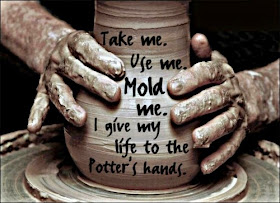
How might our Church Respond to our God’s Sovereignty over its Life: “Mold Me and Make Me, This is what I Pray?”

I have always been told there are several ways to do things.

There are “always” several ways to “get things done” by the “right way.”

There are always several ways to get things done by the “legal” way.

By My Way!

By Your Way!

By No One’s Specific Way!

By Everyone Else’s Way!

By Any and ‘All’ ‘Legal’ Means Necessary!

By the Highway!

By the Churches Way!

By the Book – step by step by step!

By the Manufacturers Manual!

By the “Bosses” Manual! (Who is the ‘Boss’?)

By the “hands on” Way which is generally found somewhere in between!

There is the way of man defined and shaped and molded by their own hands.

Then there is the Master’s Way ….

The Master’s Way which is(?) held to be Sovereign above all other ways.

So, now we have the place where resistance and conflict inevitably collide.

Just who is “The Master?” “Who is Sovereign?” “Who is it who holds sway?”

Deep Questions … Shall a Mighty Debate now Ensue between “the Master’s?”

Or should one “Master” simply recognize their sovereignty is as nothing?

We are aware there is a well-known hymn entitled, “Have Thine Own Way.”

The first line of this hymn says,

“Have Thine own way, Lord! . . . Thou art the potter, I am the clay! Mold me and make me after Thy will, while I am waiting, yielded and still.”

When Adelaide Pollard wrote the words to this hymn she was speaking of the ancient biblical imagery of God as the Master Potter, which is used many times throughout the length and breadth and width and heights of God’s Scriptures.

The prophet Isaiah used the imagery of the potter to stress God’s sovereignty.

For example, Isaiah 29:16 says, “Shall the potter be esteemed as the clay; for shall the thing made say of him who made it, ‘He did not make me?’ Or shall the thing formed say of him who formed it, ‘He has no understanding?’”

God’s Prophet Isaiah was saying that people have no perception of the ways of God, and to question Him is foolish, for we are just weak and fragile vessels.

Romans 9:21 The Apostle Paul used the imagery of the potter when people were complaining that God is unjust.

He asked, “Does not the potter have power over the clay, from the same lump to make one vessel for honor and another for dishonor?” Paul was saying, “Who are we to question God? He can do whatever He wants with our lives!”

From our biblical text today, we are going to look at how Jeremiah used the imagery of God as the potter, as he was trying to communicate the Lord’s sovereignty concerning his life and our lives.

Let’s pray we can see what our Sovereign God led Jeremiah to share with the people of Judah, or southern Israel, and let’s try to apply it to our lives today.

Jeremiah 18:1-6 Amplified Bible

The Potter and the Clay

18 The word which came to Jeremiah from the Lord: “Arise and go down to the potter’s house, and there I will make you hear My words.” Then I went down to the potter’s house and saw that he was working at the wheel. But the vessel that he was making from clay was spoiled by the potter’s hand; so, he made it over, reworking it and making it into another pot that seemed good to him.

Then the word of the Lord came to me: “O house of Israel, can I not do with you as this potter does?” says the Lord. “Look carefully, as the clay is in the potter’s hand, so are you in My hand, O house of Israel.

The Word of God for the Children of God. Gloria! In Excelsis Deo! Alleluia! Amen.

Jeremiah went to the potter’s house as the Lord commanded him, and while he was there, he saw a potter spinning his wheel and molding a piece of clay.

The potter’s wheel in that ancient day and time was actually two wheels linked together by a pedestal. The potter would spin the bottom wheel with his feet, while the clay spun on the upper wheel to be moistened, shaped by his hands.

Jeremiah was standing in awe as he watched the potter fashion a piece of clay.

He saw the potter’s fingers ever so naturally and gently glide along the slippery clay, shaping and molding it with the slightest touch.

The potter with his vision, only had to touch the tip of his finger against the clay, and its shape would be changed. Jeremiah said that the clay was marred in the potter’s hand, and he made it again into another vessel that pleased him.

If a potter is displeased with the shape of the clay he is molding, all he has to do is squash it flat and start over again.

Jeremiah realized that this is a picture of our lives. Our lives are as fragile as wet clay in the hands of a potter, and the Lord has the ability to reshape our lives.

The potter uses several implements, or tools, to bring the clay to a place where it is usable:

First, he uses a shovel.

This is the tool he uses to dig the clay from the earth.

This is a picture of the Spirit of God who comes to where we are in sin and speaks to us in convicting power and draws us to Jesus.

Secondly, he uses a mallet.

After the clay has been cleansed and processed, it is laid on a table and beaten with a wooden mallet.

The potter does this to remove any air bubbles that might be trapped in the clay.

If he doesn’t, the air bubble will form a pocket that will produce a weak spot and cause the vessel to be fragile and unusable.

This is a picture of the trials . . . and chastisements of life that tend to work together to mold us and to shape us into the image of the Lord Jesus Christ.

Thirdly he uses the wheel.

Jeremiah saw the wheel turning constantly, bringing the clay against the potter’s hand.

The wheel stands for the turning circumstances of our life, under the control of the Potter . . . As our life is being shaped and molded by the Great Potter, it is the circumstances of our life, the wheels of circumstance . . . which bring us again and again under the Potter’s hand, under the pressure of [His] molding fingers.

Fourthly he uses his hands.

While the clay spins around on the wheel, it is never out of contact with the potter’s hands. He is in constant contact, molding, shaping and bringing the clay along through his loving guidance.

If the potter were to ever remove his hand, the clay would spin right off the wheel and would be splattered everywhere in the room and lost. Therefore, he stays there, in contact with the clay . . . until it become what he desires it to be.

As the Great Potter, God’s desire is to make us into a beautiful creation that is useful to Him. The key we must remember is that the Lord can only shape us if we stop “naturally resisting,” submit to His loving hands, allow Him to do so.

You Can Be Remolded (vv. 5-10)

Jeremiah 18:5-10Amplified Bible

Then the word of the Lord came to me: “O house of Israel, can I not do with you as this potter does?” says the Lord. “Look carefully, as the clay is in the potter’s hand, so are you in My hand, O house of Israel. At one moment I might [suddenly] speak concerning a nation or kingdom, that I will uproot and break down and destroy; if that nation against which I have spoken turns from its evil, I will [a]relent and reverse My decision concerning the devastation that I intended to do. Or at another time I might [suddenly] speak about a nation or kingdom that I will build up or establish; 10 and if they do evil in My sight by not obeying My voice, then I will reverse My decision concerning the good with which I had promised to bless them.

Judah had been disobedient to the Lord by worshipping other gods.

Through Jeremiah, the Lord informed the people of Judah that if they didn’t repent, they would be destroyed. While people are in God’s hands, meaning under His shaping influence, it is much easier to humble oneself and repent.

Proverbs 16:1-3 Amplified Bible

Contrast the Upright and the Wicked

16 The plans and reflections of the heart belong to man,
But the [wise] answer of the tongue is from the Lord.

All the ways of a man are clean and innocent in his own eyes [and he may see nothing wrong with his actions],
But the Lord weighs and examines the motives and intents [of the heart and knows the truth].

[a]Commit your works to the Lord [submit and trust them to Him],
And your plans will succeed [if you respond to His will and guidance].

In other words, beloved Children of God, brothers and sisters in Christ, when God asks us to repent, we had better do so before we decide to go our own way.

Pay close attention, dear Body of Christ, God’s Church in God’s Neighborhood,

Once He allows us to make our own choices, then our way leads to destruction.

The late Country Music singer John Denver said,

“The potter’s wheel takes love and caring, skill and patience fast and slow. The works it makes are easily broken, once they survive the potter’s throw.”

What he meant is that when the clay survives the throwing and molding process on the wheel, and then becomes fired in the kiln, at this point it is easily broken.

If someone drops a pot that has been hardened as glass, it will so easily shatter.

While clay is still wet in the potter’s hands it has a chance to be reshaped, made into a new creation, but once it has been set and fired in the kiln and made hard, it cannot be reshaped.

The only way it can change its shape after it is dried is when it’s thrown on the ground and shattered into tiny pieces, which not a shape to be desired.

In Isaiah 30:14, the prophet told the people of Israel that if they failed to repent, then God

“shall break it like the breaking of the potter’s vessel, which is broken in pieces; He shall not spare. So, there shall not be found among its fragments a shard to take fire from the hearth, or to take water from the cistern.”

If the nation of Israel became set in her ways and did not listen to the Lord, then she could no longer be molded.

The nation would soon be dropped and broken into countless pieces.

If the Lord is speaking to your heart this evening to accept Jesus Christ, then you had better do so before it’s too late.

If you continually deny Jesus, then your heart will become hardened to Him, like a pot that has been fired in the kiln. If you harden your heart to Jesus, then you are no longer moldable by the Great Potter. You are heading for a great fall, and when you hit the ground, you will break! It’s not going to be a pretty sight!

You Must Repent Now (v. 11)

Jeremiah 18:11Amplified Bible

11 Now then, say to the men of Judah and to the citizens of Jerusalem, ‘Thus says the Lord, “Behold, I am shaping a disaster and working out a plan against you. Turn back, each of you from his evil way; correct your habits and change your actions for the better.”’

God spoke through Jeremiah and told Judah to repent. He said that if Judah didn’t turn from her evil ways immediately then she was heading for destruction. When God said, “I am fashioning as disaster and devising a plan against you,” He was telling Judah that He was getting ready to drop her on the ground to be shattered to pieces. We know the outcome of this situation. Judah was indeed shattered and broken to pieces when her people were taken captive by other nations and separated like a glass jar that has burst apart and its pieces scattered abroad.

Revelation 2:25-27 Jesus says we should be faithful to Him until the very end.

He says of those who are unfaithful,

“They shall be dashed to pieces like the potter’s vessels.”

If you have not given your life over to Jesus Christ, then you are headed for destruction. I encourage you to give your life to Him now, before it’s too late.

Jeremiah said everyone then and ergo, now, is to

“return now from his evil way.”

To “return now” means this very minute.

You see, we don’t know for certain if we have another minute left to live.

We could die as we leave for work or shopping today, or Jesus could return to take His people home. We are not guaranteed another minute, so we should accept Jesus Christ into our hearts right now. Paul said, “Behold, now is the accepted time; behold, now is the day of salvation” (2 Corinthians 6:2b).

Time of Reflection

What Jeremiah has revealed to us is that the Lord continually and continuously loves us and desires for us to be in contact with His loving hands at all times.

He wants us to drop our natural resistance, welcome His touch, connect with His entire vision for our lives, be sensitive to the shaping forces of His fingers.

If we are choosing to remain naturally insensitive and go our own way and do our own thing, “shape our own vessels” then we are saying that we don’t need His sovereign guidance. We are saying we are already in our preferred shape.

If we fail to give our lives to the Master Potter, then He will let us be whom we desire.

We may be some ugly, deformed pot and not even know it, but the Lord will send us to the kiln to be fired as we are.

If we do not innately turn our lives over to the Potter and remain in His hands to be continually remolded and made anew, the Lord will stop shaping us, and He will let us alone. When He lets us alone, we are in a very fragile state. One wrong move could send us unceremoniously crashing, shattering all over the ground.

If you have never known God in an intimate and personal relationship, then you need to allow the Potter, Jesus Christ, to make you anew.

Hearts of stone to hearts of flesh. From our death, raised unto new life, He will come into your heart and give you a newfound joy if you will allow Him to do so.

He who has Ears – let them Hear!

He who has Eyes – let them See!

He who has a Mouth – let them Speak!

He who has a Voice – let them Sing!

He who has Hands and Feet – let them Serve!

He who has THEIR OWN ‘SOVEREIGN’ WAYS …. What do you do NOW?

In the name of God, the Father and God the Son and God the Holy Spirit,

Let us Pray,

A Covenant Prayer in the Wesleyan Tradition

I am no longer my own, but thine.
Put me to what thou wilt, rank me with whom thou wilt.
Put me to doing, put me to suffering.
Let me be employed by thee or laid aside for thee,
Exalted for thee or brought low for thee.
Let me be full, let me be empty.
Let me have all things, let me have nothing.
I freely and heartily yield all things to thy pleasure and disposal.
And now, O Glorious and blessed God,
Father, Son, and Holy Spirit,
Thou art mine, and I am thine. So be it.
And the covenant which I have made on earth,
Let it be ratified in heaven. Amen

https://translate.google.com/

The Gospel of our GOD in a Nutshell. Servanthood in God’s Neighborhood.

“It is under the greatest adversity that there exists among us the greatest potential for doing good, both for oneself and others.” ― Dalai Lama XIV

I recently searched the Internet for the most selfless people in history. As I looked through online discussions, I discovered a lot of people consider Saint Mother Teresa, Saint John Paul II, Harriet Tubman, Frederick Douglass, and Mahatma Ghandi, Oskar Schindler as excellent examples of selflessness. Each of them received little reward in spite of making tremendous contributions.

Christ’s kingdom calls us to a life of modelling selflessness. Jesus told his disciples that anyone who would follow him would have to be willing to set aside their own ideas of satisfaction in order to follow the way of the cross.

Do we take the time to search our own souls to appreciate what that means?

What is the true meaning of selflessness?

Devoted to others’ welfare or interests and not one’s own; unselfish; altruistic. Showing or prompted by unselfishness or altruism; self-sacrificing. a selfless act. Concern more with the needs and wishes of others than with one’s own.

“The event of falling in love is of such a nature that we are right to reject as intolerable the idea that it should be transitory. In one high bound it has overleaped the massive of our selfhood; it has made appetite itself altruistic, tossed personal happiness aside as a triviality and planted the interests of another in the centre of our being. Spontaneously and without effort we have fulfilled the law (towards one person) by loving our neighbour as ourselves. It is an image, a foretaste, of what we must become to all if Love Himself rules in us without a rival. It is even (well used) a preparation for that.”
― C.S. Lewis, The Four Loves

Luke 1:26-38Amplified Bible

Jesus’ Birth Foretold

26 Now in the sixth month [of Elizabeth’s pregnancy] the angel Gabriel was sent from God to a city in Galilee called Nazareth, 27 to a virgin [a]betrothed to a man whose name was Joseph, a descendant of the house of David; and the virgin’s name was Mary. 28 And coming to her, the angel said, “Greetings, favored one! The Lord is with you.” 29 But she was greatly perplexed at what he said and kept carefully considering what kind of greeting this was. 30 The angel said to her, “Do not be afraid, Mary, for you have found favor with God. 31 Listen carefully: you will conceive in your womb and give birth to a son, and you shall name Him Jesus. 32 He will be great and eminent and will be called the Son of the Most High; and the Lord God will give Him the throne of His father David; 33 and He will reign over the house of Jacob (Israel) forever, and of His kingdom there shall be no end.” 34 Mary said to the angel, “How will this be, since I am a virgin and have no intimacy with any man?” 35 Then the angel replied to her, “The Holy Spirit will come upon you, and the power of the Most High will overshadow you [like a cloud]; for that reason the holy (pure, sinless) Child shall be called the Son of God. 36 And listen, even your relative Elizabeth has also conceived a son in her old age; and she who was called barren is now in her sixth month. 37 For with God nothing [is or ever] shall be impossible.” 38 Then Mary said, “[b]Behold, I am the servant of the Lord; may it be done to me according to your word.” And the angel left her.

The Word of God for the Children of God. Gloria! In Excelsis Deo! Alleluia! Amen.

“Above all the grace and the gifts that Christ gives to his beloved is that of overcoming self.” ― St. Francis of Assisi

Selflessness brings out the best in others.

It builds relationships.

What does it mean to be selfless?

It means you think a little less of yourself and a little more of others.

The opposite of selflessness is selfishness.

It’s the number one cause of conflict and arguments.

The Bible says, 

“What causes fights and quarrels among you? Don’t they come from your desires that battle within you? You want something but don’t get it” (James 4:1-2 NIV).

Self-centeredness destroys relationships.

The problem is, being selfish is human nature.

We naturally think about our interests, our hurts, how we look, and how we feel.

Even culture tells us:

“Do what you think is best for you.” But the Bible says, “Look out for one another’s interests, not just for your own” (Philippians 2:4 GNT).

What happens when you and I

“only look out for one another’s interests, not just exclusively for your own”?

Not only will it transform the moment – but it will also transform you and me!

Not only will it transform our relationships—it will transform people.

Not only will it transform people – but it will transform neighborhoods.

Not only will it transform neighborhoods – but it will transform communities.

Not only will it transform communities – but it’ll transform cities and beyond.

It causes the other person to change because you are not the same person anymore, allowing them to relate to you and me in a radically different way.

I’ve seen it many times: When you treat cranky, unlikable people with kindness, instead of treating them the way they deserve, they transform into nice people.

The greatest lesson in life is learning to how and why we ought to be unselfish—but it won’t happen overnight. It’s going to take the rest of your life.

The good news is, God doesn’t leave you all alone to learn how to be selfless. Romans 8:26 says, “The Holy Spirit helps us in our weakness” (NLT).

To live life selflessly in the service of others is noble.

Never stop making the effort to be more selfless.

God’s Spirit is with you and me to help us break free of the destructive cycle of selfishness! And it’s then will you see transformation in all your relationships.

God’s neighborhood calls us to a life of selflessness.

Rabbi Jesus frequently told his disciples that anyone who would follow him into His Father’s neighborhood to serve their neighbors would have to be willing to set aside their own ideas of satisfaction in order to follow the way of the cross.

Mary demonstrated this kind of unconditional self-sacrifice when she was told she had found “true favor with God” and would be the mother of the Messiah.

She seemed to immediately understand that this path would bring her trouble and heartache, but when the angel reassured her that God was using her to be part of his divine plan, she submitted, saying that she was the Lord’s servant.

To be saved by Christ includes an unmistakable call to serve beyond oneself.

Christ’s model of unconditional selflessness in becoming human, suffering the indescribable indignity of unconditionally loving, living in a sinful world, and joyously submitting to death on a cross for our sake, for his enemy’s sake, was not intended to give us a life of personal leisure without concern for others.

Our lives exclusively in Christ has an unsearchable meaning that goes echelons beyond our exclusive personal benefit as we seek to be part of his greater plan.

  • Think about God’s Neighborhood. Think about a relationship in your life. In what ways do you act with selfish and selfless motives in that relationship?
  • What neighborly selfless act can you do today that is uncharacteristic of you?
  • Has someone ever acted selflessly toward you when you didn’t deserve it? How did it impact you? How did it impact them and too the neighborhood of God?
  • What would you do in life if you lived to model, like Christ, a truly selfless life?

In the name of God, the Father and God the Son and God the Holy Spirit,

Let us Pray,

God, my Rock and my Salvation, my Guide and my Guardian, guide me this day according to Your will, help me become a genuine servant of my neighbors. A servant entering your neighborhood, whose life is a worthy example to others.

Give me courage, Father, to claim the spiritual riches that You have promised, and show me Your plan for my life, today and forever. In Jesus’ name. Amen.

https://translate.google.com/

The Gospel in a Nutshell: The Son of Man Came to Serve. Mark 10:35-45.

Ladies and Gentlemen, we are all on top of the world! The glittering prizes of “our wealth and honor – our fame and fortune – of intellectual prowess our great importance” is highly prized in today’s world system but can too often bedazzle the eyes of believers as well, and even Christ’s own disciples were not exempt.

How petty and self-serving can we get? How petty and self-serving were these two disciples – James and John? They wanted special favors from their Rabbi.

They were arguing about who was to be the most important in their little group and were jostling for the highest and best position in Christ’s coming kingdom.

James and John? They thought more highly of themselves. But what a shocking silence must have descending on each person, when Rabbi Jesus stunned them into silence with these head scratching words: that even the Son of Man did not come to be served, but to serve, and to give His life -as a ransom for many.

SELF-SERVING

How are the decisions we make impacting those around us?

Rabbi Jesus said that we should seek to love others as we would love ourselves (Matthew.22:39). Nothing could be more central to that command than for us to spend more time considering how our plans, actions, and words will either serve us or serve others, help, hurt, hinder, the people in our circle of influence.

As Christians we no longer “live to serve ourselves” (Romans14:7)—or at least we shouldn’t. God’s will for us is to see our lives as instruments of Christ to aid, build up, positively enhance the well-being of all the ‘neighbors’ in our lives.

Having been called by the humility of our Savior Jesus, to no longer simply look out for our own interests, but also for the interests of others (Philippians 2:4), we should instead be driven to carefully ponder how pursuing our desires in that purchase, this move, or that meeting is going to affect and benefit others.

The world will continue to tell us to “Look out for number one!”

I’m all for that—as long as we remember that we’re not number one! Christ is.

And he has directed us to look out for the interests of the people with whom he has sovereignly surrounded us. Yes, every day we will make decisions for our own good, but they should all be evaluated with a willingness to modify them or even abandon them as we prayerfully consider their impact on others.

Sometimes we allow ourselves to think we are the centre of the universe. We get so wrapped up in our own world and issues of daily life, we forget about others and their struggles. The incredibly little word ‘me’ becomes most important. We somehow think all of ‘everything’ revolves (or should revolve) around ourselves.

All too often we think all of our feelings and ideas are the most important in all of the world. But guess what: often times, others probably have better ideas than we do. Life has a habit of jolting us into reality, and a lot of things don’t work out as we expect them to. We need to learn we can be wrong sometimes.

Some people love to talk, mainly about themselves, and can be quite dismissive about the point of view of others.

They are not all that interested in what you’ve got to say—they have already worked out their response before you can say too much.

You know people like that?

Does my opinion matter? Probably not.

The New American Webster Dictionary has a really great definition for selfish people: 

“they are much too busy absorbing their whole selves into themselves.”

It’s like everything revolves around them, and no-one else. It’s all about me, myself and I. The self-centered person loves no-one else except themselves.

James and John, Sons of Thunder, tried to bargain with their Rabbi for quite the most prominent places in the Kingdom Jesus is leaving behind, for themselves.

James and John, sons of Thunder, were in pursuit of all the wrong things – and even after they heard the words of their Rabbi, could not begin to understand the staggering implication of His words: “Give my Life as a Ransom for Many!”

Mark 10:35-45Amplified Bible

35 James and John, the two sons of Zebedee, came to Him, saying, “Teacher, we want You to do for us whatever we ask of You.” 36 And He replied to them, “What do you want Me to do for you?” 37 They said to Him, “Grant that we may sit [with You], one on Your right and one on Your left, in Your glory [Your majesty and splendor in Your kingdom].” 38 But Jesus said to them, “You do not know what you are asking. Are you able to drink the cup that I drink, or to be baptized with the baptism [of suffering and death] with which I am baptized?” 39 And they replied to Him, “We are able.” Jesus told them, “The cup that I drink you will drink, and you will be baptized with the baptism with which I am baptized. 40 But to sit on My right or left, this is not Mine to give; but it is for those for whom it has been prepared [by My Father].”

41 Hearing this, the [other] ten became indignant with James and John. 42  Calling them to Himself, Jesus said to them, “You know that those who are recognized as rulers of the Gentiles lord it over them; and their powerful men exercise authority over them [tyrannizing them]. 43 But this is not how it is among you; instead, whoever wishes to become great among you must be your servant, 44 and whoever wishes to be first and most important among you must be slave of all. 45 For even the Son of Man did not come to be served, but to serve, and to give His life as a [a]ransom for many.”

The Word of God for the Children of God. Gloria! In Excelsis Deo! Alleluia! Amen.

We are going to take a step back in time today to conceptualize, contextualize what Jesus meant when He asked Bartimaeus: “Come. What Can I Do for You?”

Jesus was asking Bartimaeus, “How will you, then, serve the Kingdom of God?”

When Bartimaeus receives his miraculous healing from Jesus – whom will he be most grateful to, whom will he follow and serve – His Savior God or himself?

45 For even the Son of man came not to be ministered unto, but to minister, and to give his life a ransom for many.

Here is the heart of our Lord and Savior, Jesus, given in one simple statement.

The foundation and basis of servanthood is giving – and Jesus gave His life as a ransom for all who believe in Him.

No one “took” His life – He willingly gave it up. 

Jesus, with all of His power and might did not come to be served as He deserves, but by His love and grace, came down to serve us. 

He served us by giving us a way to spend eternal life with Him even though we do not deserve it, nor can we earn it on our own merit. 

He gave His life freely so that we might have eternal life. 

He served us by being the payment for our sins.

Romans 6:23 tells us that the wages of sin is death, but Jesus paid the price for us. He was our “ransom.”

The word “ransom” refers to the price one paid in Jesus’ day to release a slave.

We are slaves to sin, but Jesus’ life became our ransom that set us free from the bonds of sin.

To be a servant of Jesus, as Jesus himself modeled servanthood, means we must be willing to give up all rights to our life and to do anything God wants us to do.

When we look at Jesus’ ministry, we can see how Jesus served others, just as the disciples had seen Him do: they saw Him touch those that were unclean.

Without any partiality or bias, they saw him heal the sick, deaf, blind, and mute.

Without any partiality or prejudices, they saw Him raise people back to life.

Without any single thought given as to how they were different from him, they saw their Rabbi Jesus feed thousands with just a small amount of bread and fish.

Without biases or prejudices, knowing all their hearts down to the most finite of details, even knowing who would betray him, they saw Him wash all their feet.

They saw Him beaten and nailed to a cross.

Face to Face, Eye to Eye, Soul to Soul, Heart to Heart;

they quite literally watched Him die – for them.

Over and over again Jesus – the only Son of God – for the JOY, which was before Him, placed Himself in humble service to others – even death on a CROSS!

After he was arrested in Gethsemane, Jesus told Peter after Peter had struck the Temple Servant, Malchus:

“He had ten thousand angels at His disposal if his true intention was to call them down to ultimately “Subdue, and then Lord Himself over his Captors.”

He was in the Beginning! He was the Creator of the world!

He shared in the glory of the Father and the Holy Spirit.

Yet He gave up all of Heaven to come to earth, born to a poor virgin girl in a stable with only an animal feeding trough for a bed.

He gave up his own majesty for the humility of needing his diaper changed. 

For JOY, He willingly accepted the humiliation and torture of the cross.

And we esteemed Him not?

And He went to the Cross ANYWAY?

Luke 16:15 AKJV 15 And he said unto them, Ye are they which justify yourselves before men; but God knoweth your hearts: for that which is highly esteemed among men is abomination in the sight of God.

Romans 5:8-10 AKJV But God commendeth his love toward us, in that, while we were yet sinners, Christ died for us. Much more then, being now justified by his blood, we shall be saved from wrath through him. 10 For if, when we were enemies, we were reconciled to God by the death of his Son, much more, being reconciled, we shall be saved by his life.

Why would He do that for you and me?

Why should He do that for you and me?

Why did He do that for you and me?

His only reason for doing so, was to utterly and completely minister, utterly serve all of humanity throughout all the ages through His willing sacrificial death in our place so we could all one day spend eternity in Heaven with Him.

The greatest servant of all gave us the greatest gift of all because of His greatest expression of unconditional love for us. (Matthew 22:34-40, Mark 12:28-34)

We often talk today about our desire to utterly and completely “serve” God.

And certainly, we should be completely obedient to do what He asks us to do.

But we also need to remember Jesus did not come to earth to be ministered to.

He came so that he could utterly and completely minister unto us.

He still wants to utterly and completely minister to us today.

We don’t have to do life on our own.

He ready to utterly and completely help us.

When we are utterly and completely exhausted or anxious or fearful,

He tells us to cast all our care on Him because He cares for us (1 Peter 5:7).

When we need wisdom, He tells us to ask Him for it and He will give it to us generously (James 1:5).

When life gets busy and overwhelming, Jesus says, “Be still and know that I am God.” (Psalm 46:10).

Whatever it is we face in life, Jesus utterly, completely, stands ready to minister to us.

If He utterly and completely loves us enough to die for us, you can bet it all He stands completely ready to help us through every single moment of our life.

How utterly humbling it is to know the Son of God longs to serve one like me.

“Even the Son of Man did not come to be served, but to serve, and to give his life as a ransom for many.” Mark 10:45

Jesus is speaking in broad terms as he describes what people in power can be like. They can freely coerce, intimidate, bully, threaten, and seek to control.

In contrast, Jesus says, we are called to live differently.

We must not follow the way of the world with its structures of riches, privilege, race, class castes, culture, nationalities, influence, politics, or religious elitism.

Jesus says we are to be counter cultural servants, following HIS example. He came not to be served but to serve and “to give his life as a ransom for many.”

All our relationships—parent-child, wife-husband, pastor-congregation, teacher-student—need to be refreshed from tendencies to control and manipulate. Instead, the focus should be on serving others, helping people to flourish, and empowering everyone to honor, worship, and follow Christ.

Are you a servant in the example of Christ in your circles of influence?

In what ways are you serving others as a neighbor, friend, spouse, parent, family member, teacher, or church member?

We are children of the heavenly Father and disciples of Jesus, who did not consider glory a thing to be grasped, but who humbled himself to die on a cross (Philippians 2:5-11).

Christ’s life was the exemplary witness to the truth of these words.

He was the eternal Son of God – the King of kings and Lord of lords.

All power in heaven and earth had been entrusted to Him, but He did not demand the service of others but knelt to wash His disciple’s feet.

The One before Whom all creation will one day bow in humble adoration, came to be Servant to all…

and His final act of Service to the children of men, was to become the pivotal point in the history of the universe –

when for the JOY which was before Him, He gave His life as a ransom for many.

Because of Jesus, we offer ourselves as living sacrifices so that the name and kingdom of God are made known.

His words must be our legacy. His example must be the pattern for our lives.

By His death and Resurrection, Jesus bought us out of Satan’s grasp and brought us to an everlasting freedom through the ransom price he paid.

We are now called to follow his example and live his life in our world. We are to serve and sacrifice for others. Living to serve others is the Jesus-way of life!

May we, in these radically challenging contemporary times we must navigate, be endowed with the mind of Christ – for although He was the Son of God,

He learned obedience by the things that He suffered – and humbled Himself by becoming obedient to the point of death, even death on a cross, to pay the price for the sin of humanity – and to ransom ALL of those who trust in His name.

In the name of God, the Father and God the Son and God the Holy Spirit,

Let us Pray,

Jesus, thank you for you dying in my place so that my sins could be forgiven. Help me to live my life so that it brings honor and glory to you. May I learn from your example of servanthood to serve others that you have placed in my life so that your love shines through every act of service and every spoken word. Help me, please, Holy Spirit so to remember you stand ready to serve, to minister to me in every situation, I face in life. 

Lord God, Author of my life, I pray for wisdom and grace to know how to suffer with You in this life and to give my life in service to others and to You. Keep me from my hankering after every glitz and glamour of this world and may I, like Christ humble myself, become truly obedient to Your word, selflessly follow in Your footsteps – so that Your name may be glorified, in Jesus’ name I pray, Alleluia! Alleluia! AMEN.

https://translate.google.com/

God, our Creator and Our Emotional Health. Connecting our whole selves with the Word of God. Mark 12:28-34

There is an African – American Spiritual which declares to each of us today,

There is a balm in Gilead
To make the wounded whole
There is a balm in Gilead
To heal the sin-sick soul

Sometimes I feel discouraged
And deep I feel the pain
In prayers the holy spirit
Revives my soul again

There is a balm in Gilead
To make the wounded whole
There is a balm in Gilead
To heal the sin-sick soul.

Let’s take a feeling test this morning.

Let Me Ask each of us these questions:

What are you and I feeling now?

What all did you and I feel yesterday?

What do you and I hope and pray you and I will feel tomorrow?

Who felt loving, happy, sad, hateful, angry, joyful, thankful, disappointed, depressed, jealous, ambitious, surprised, convicted, hopeful and who felt as though God’s love wanted to use them to make a difference in someone’s life?

Today we are going to take a brief biblical look at emotional health.

That is how to deal with how you feel.

Yesterday we talked about the heartbeat of love and hate.

“I Hate to Love!” and “I Love to Hate!”

Today we are going to begin looking at how to manage your emotions.

Moving into a “GOD” direction of “I Love to Love!” and “I Hate to Hate!”

I am pretty sure we all know the answer to this question …

When has anyone of us here ever had a change, good or bad, take place in their life because they did not keep your range of Love and Hate emotions in check?

We are going to look at what the Bible says about our emotional health and how to perhaps, even hopefully and prayerfully, successfully manage your emotions.

In the name of Father, Son and Holy Spirit, how to deal with how you and I feel.

Mark 12:28-34 Amplified Bible

28 Then one of the scribes [an expert in Mosaic Law] came up and listened to them arguing [with one another], and noticing that Jesus answered them well, asked Him, “Which commandment is first and most important of all?” 29 Jesus answered, “The first and most important one is: ‘Hear, O Israel, the Lord our God is one Lord; 30 and you shall love the Lord your God with all your heart, and with all your soul (life), and with all your mind (thought, understanding), and with all your strength.’ 31 This is the second: ‘You shall [unselfishly] [a]love your neighbor as yourself.’ There is no other commandment greater than these.” 32 The scribe said to Him, “Admirably answered, Teacher; You truthfully stated that He is One, and there is no other but Him; 33 and to love Him with all the heart and with all the understanding and with all the strength, and to [unselfishly] love one’s neighbor as oneself, is much more than all burnt offerings and sacrifices.” 34 When Jesus saw that he answered thoughtfully and intelligently, He said to him, “You are not far from the kingdom of God.” And after that, no one would dare to ask Him any more questions.

The Word of God for the Children of God. Gloria! In Excelsis Deo! Alleluia! Amen.

Mark 12:34 … Young’s Literal Translation

34 And Jesus, having seen him that he answered with understanding, said to him, `Thou art not far from the reign of God;’ and no one any more durst question him.

Today we will begin to explore how emotional health and trust are linked.

Truth is, thanks be to God, we are all emotional beings and how we are doing emotionally (positively and negatively) affects all of us on a regular basis.

God our Creator, the Author of our entire Life has something to say about yours and mine emotional health, and it is my fervent hope you, the readership, are and become greatly encouraged and feel the touch of just one of the tears Jesus cried for you and receive a fresh anointing from the Holy Spirit, come to know how deeply you and I are loved by the Lord as we focus in on this truth today.

Do you know that God cares deeply about your emotions?

Gospel Truth is this: Your heavenly Father longs for your life to be marked by emotional joy, fulfillment, satisfaction, and peace. He longs for your emotions to be rooted and grounded in his steadfast love and goodness.

Our Savior is an emotional Savior. He is not void of feelings.

We feel because he feels.

We have emotions because we are made in his image.

For much of my Christian life I thought my emotions had to be based on my circumstances.

I felt happy or sad based on others’ opinions, the pressures of life, and opportunities I had or didn’t have.

As a result, I was on a constant emotional roller coaster following the ups and downs of this shaky world. I found myself controlled by the things of the world rather than the foundation of love laid before me by the sacrificial love of Jesus.

Scripture continually describes a link between emotional health and trust.

Isaiah 26:3-4 says, “You keep him in perfect peace whose mind is stayed on you, because he trusts in you. Trust in the Lord forever, for the Lord God is an everlasting rock.” 

Psalm 56:3-4 says, “When I am afraid, I put my trust in you. In God, whose word I praise, in God I trust; I shall not be afraid. What can flesh do to me?” 

And Psalm 33:21 says, “For our heart is glad in him, because we trust in his holy name.”

We are robbed of having our emotions rooted in God whenever we take on more pressure than we are meant to carry.

Our emotional health is directly linked to our level of trust.

We feel pressure at work when we look to our job and co-workers for our provision, identity, purpose, and fulfillment.

We feel pressure in our relationships when our worth isn’t based on God’s perspective but the opinions of others.

We are robbed of peace when we try and plan our own steps rather than following our Good Shepherd into the green pastures and still waters.

In John 14:27 Jesus says, 

“Peace, I leave with you; my peace I give to you. Not as the world gives do I give to you. Let not your hearts be troubled, neither let them be afraid.” 

God’s heart is to fill you with peace.

He longs for you to have all the fruit of the Spirit dwelling within you.

He has consistent, constant peace available to you.

But you must trust him in every area of your life.

You must hand over the reins of your relationships, job, identity, and plans to your Good Shepherd.

You must love and trust that he will guide you perfectly into an abundant life.

Mark 12:29-30 Jesus says this

“The most important commandment is this, You must love the Lord your God with all your heart and all your soul and all your mind and all your strength.”

Do you understand the emotion involved in this passage?

If this verse had said, you must love your favorite football team, or favorite singer, or favorite actor with all of your heart, soul, mind and strength,

what imagery comes to your mind?

How are you going to act at the game, at the concert, or at the movie?

Would people think you were a little radical, a little nuts?

God is saying, I want to have an emotional relationship with you, where you throw everything, you have into it.

God even complains when we don’t do it.

He says, these people honor me with their lips, but their hearts are far from me.

Have you ever seen somebody do something, and though they did it right, you could tell their heart just wasn’t in it.

God wants us to be emotionally involved in our relationship to him.

Look to your heavenly Father for peace.

Find rest in his abundant love.

Find your self-worth in the fact that God so desired relationship with you that he laid down his own life to have it.

UNDERSTAND MY EMOTIONS

Let me give you some truths about your emotions before we get into this.

1. First, Our Savior has emotions.

Jesus was God in the flesh.

Can you imagine the whole range of emotions he went through riding on the back of the foal as he entered the city gates of Jerusalem?

“Hosanna! Hosanna! Hosanna!” “Save us we Pray! Save us we Pray!” the crowd of people joyously shouted at the top of their lungs as Jesus recalled his destiny

He was happy to see the people turn out in large numbers.

He was thankful for the praises of the people.

He was disappointed that the Pharisees could not see what was taking place.

He was angry that religious leaders wanted him to silence the crowd.

He was so angry when He entered the Temple grounds, he turned over tables and yelled above the raucous din and activity of the “marketplace” inside.

He was sad that the people didn’t understand their true need.

He cried because he knew the destruction the Roman army would inflict on some of the people there.

He felt rejection because he knew the cross was still less than a week away.

Our Savior Jesus has emotions.

The only reason you have emotions is because you’re made in God’s image.

If our Savior was not an emotional Savior, we wouldn’t have any emotions.

We would not read: “Jesus Wept!”

2. My ability to feel is a gift from God.

Your emotions are a gift from God.

They may not always seem that way.

But even the negative ones have a role in your life.

God can use them to show you your need for him.

Emotions are a great asset.

They’re the one thing that make you and me human.

If you and I didn’t have emotions, you and I would just be a robot.

How many of you would want to be married to a robot?

It is our emotional ability that allows us to love and create and to be faithful and loyal and kind and generous and all the range of the emotions that are attached to both the good and bad and catastrophic things in life.

One of the most astounding verses in the Bible is 

Genesis 1:26 “Let us make man in our image.”

In OUR Image.

As I said the only reason you have emotions is because God gave them to you.

And you were made in his image.

3. There are two extremes to avoid.

There are two extremes you need to avoid in dealing with emotions.

One is called emotionalism and the other is called stoicism

Emotionalism means all that matters is how I feel.

Emotionalism is the extreme of saying the only thing that matters in life is how I feel.

It does not matter what I think, it doesn’t matter what’s right or wrong, it doesn’t matter what’s popular or unpopular, good or bad.

What matters is doing and responding to what you feel.

If it feels good, do it.

If I am full of Emotionalism, my emotions, they control my life, they dominate my life, they run my life and I am a very emotionally centered person.

Stoicism – feelings aren’t important at all. Stoicism is the exact opposite. It basically says feelings aren’t important at all. The only thing that matters is the measure of your intellect and your will – your volition and your intelligence.

So, the stoics say emotions are not part of life; feelings do not really matter.

We lean one way or the other and have a tendency to marry someone on the other end. One of us wants to tell the whole story with all the drama, and the other one just wants to hear the basic facts.

Like Joe Friday, from Dragnet, we say “the facts mam, just the facts.”

Actually, both of these are extreme positions.

And the happy medium is where you really want to be.

It’s not emotionalism or stoicism.

You want to know how to worship God with your emotions as shown by the facts of the truth of the Word of God.

God gave us our emotions for a reason.

God wants us to worship him emotionally.

God wants us to feel it.

In fact, God complains in the Scripture many times you’re just worshiping with your lips but not with your emotions, not with your heart.

You don’t really feel it.

By the way the word “emotion” isn’t used that often in the Bible because the Bible uses the word “passions” or “affections” or the number one term for emotions is “heart.”

We still use that today.

When you fall in love, what part of your body do you symbolically give to the person to show it.

You say, “I give you, my whole heart.”

Heart is the symbol of love and emotions.

Even today we say, “I love you with all my heart.”

In the bible, the word of God, the mind represents the intellect and the heart represents emotions. Both of them are involved in the worship of our God.

We come to church to learn about God and to feel the presence of God. That’s why our praise and our worship is as important as hearing the preached word.

We now know that those are actually two different circuit systems in your brain.

Your emotions have an amazing system as well as your thoughts do.

Some things you just react emotionally without even thinking about it.

4. GOD GAVE US THE PSALMS IN ORDER TO UNDERSTAND OUR EMOTIONS.

If you have a hard time with some emotions in your life you need to spend a lot of time in the book of Psalms.

Psalms has every emotion known to man in it – the good ones and the bad ones.

The positive and the negative.

You read some of those psalms and you think,

“Why is this chapter in the Bible?”

It’s there to teach you about even those negative emotions.

Because not all psalms are about praise and thanksgiving.

There are psalms of anger and there are psalms of complaining and psalms of lament and sorrow.

There are psalms of arguing with God.

Every emotion known to man is in the Psalms and God is saying all of these are legitimate.

I give these Words to you.

Psalm 127:1 Amplified Bible

Prosperity Comes from the Lord.

A Song of [a]Ascents. Of Solomon.

127 Unless the Lord builds the house,
They labor in vain who build it;
Unless the Lord guards the city,
The watchman keeps awake in vain.

Psalm 100 Amplified Bible

All Men Exhorted to Praise God.

A Psalm of Thanksgiving.

100 Shout joyfully to the Lord, all the earth.

Serve the Lord with gladness and delight;
Come before His presence with joyful singing.

Know and fully recognize with gratitude that the Lord Himself is God;
It is He who has made us, [a]not we ourselves [and we are His].
We are His people and the sheep of His pasture.


Enter His gates with a song of thanksgiving
And His courts with praise.
Be thankful to Him, bless and praise His name.

For the Lord is good;
His mercy and lovingkindness are everlasting,
His faithfulness [endures] to all generations.

Psalm 70 Amplified Bible

Prayer for Help against Persecutors.

To the Chief Musician. A Psalm of David, to bring to remembrance.

70 O God, come quickly to save me;
O Lord, come quickly to help me!

Let those be ashamed and humiliated
Who seek my life;
Let them be turned back and humiliated
Who delight in my hurt.

Let them be turned back because of their shame and disgrace
Who say, “Aha, aha!”


May all those who seek You [as life’s first priority] rejoice and be glad in You;
May those who love Your salvation say continually,
“Let God be magnified!”

But I am afflicted and needy;
Come quickly to me, O God!
You are my help and my rescuer;
O Lord, do not delay.

In Psalm 70 we read today, in just those first five verses, we found desperation, frustration, anger, encouragement, confidence, humility and hope AND GOD!

So, we’re going to take some quality time at how to deal with how WE feel.

It is important for us to learn how to deal with managing our emotions and how to deal with an unwanted devotion.

Your Father counts you worthy of the death of his only Son.

Trust him today.

Place your entire life in his capable hands.

And experience God’s abundant life in the area of your emotions, rooting and grounding yourself in his unconditional, available love.

May your life be marked by increasing emotional health as you grow in trust.

Tomorrow, we’re going to try and examine why we must take quality time with God in our shared efforts to learn how to in Jesus’ name, manage our emotions.

In the name of God, the Father and God the Son and God the Holy Spirit,

Prayer

1. Meditate on the link between trust and emotional health. Allow Scripture to stir up your desire and willingness to trust God with every area of your life.

“For our heart is glad in him, because we trust in his holy name.” Psalm 33:21

“When I am afraid, I put my trust in you. In God, whose word I praise, in God I trust; I shall not be afraid. What can flesh do to me?” Psalm 56:3-4

2. Where are you not experiencing abundant life in your emotions? Where are you feeling void of peace, joy, passion, and purpose?

3. Ask God to help you discern what part of your life you are not trusting to him. Hand over that area to him and find peace and rest in his trustworthiness.

“You keep him in perfect peace whose mind is stayed on you, because he trusts in you. Trust in the Lord forever, for the Lord God is an everlasting rock.” Isaiah 26:3-4

“Do not be anxious about anything, but in everything by prayer and supplication with thanksgiving let your requests be made known to God. And the peace of God, which surpasses all understanding, will guard your hearts and your minds in Christ Jesus.” Philippians 4:6-7

“Peace, I leave with you; my peace I give to you. Not as the world gives do I give to you. Let not your hearts be troubled, neither let them be afraid.” John 14:27

https://translate.google.com/

What Does the Bible Teach us About Sexual Orientation? What is our God’s Answer for the Complex Question of our Sexual Orientation? Genesis 1:26-28

When a baby is born, the first thing usually said is, “It’s a boy!” or “It’s a girl!”

The sex of a child is based on biology-anatomy and chromosomes. But, for some individuals, their sense of gender does not always match their sex.

That mismatch was brought to our attention in 2015 when Olympic superstar Bruce Jenner announced that he no longer wanted to be Bruce. Several months later he was introduced on the front cover of Vanity Fair as Caitlyn Jenner.

That same year, same sex marriage was legalized in all fifty states on June 26, 2015, by an act of the United States Supreme Court.

Who would have thought that momentous decision was possible but just a few short years earlier?

But the speed at which our culture’s view on gender and sexuality has changed with lightning speed.

I remember reading that the Facebook in the U.S. used to list over 50 gender alternatives, if the word ‘alternatives’ are the right terminology whereas in the United Kingdom. a person has over 70 gender alternatives!

However, I believe that now one is able to custom list one’s gender preference throughout social media. So, I do not know how many options there are today?

When I was praying and considering what topic my devotional time to today, I felt directed to this one on Sexual Orientation and what God has to say about it.

I believe this extraordinarily complex topic was important for us to examine in light of the current socio-cultural conditions.

Not only is there real divisive pressure in the contemporary culture to accept modern conceptions of sex and gender, but children are also being taught that at school too. “Drag Queens” are reading books to children in Public Libraries.

Where young children are involved, parents become, rightly so, very protective.

While I could write a multitude of sessions on this topic, I am going to cover it in only one session.

Therefore, this devotional will be necessarily cursory.

However, I believe, at least I pray I believe, it will be sufficient (by the grace of God) to give a biblical answer to the issue of sexual (and gender) orientation.

I have become aware of the book; The Gospel & Sexual Orientation by Michael Lefebvre (2012) and I am going to my Kindle to read it to better educate myself.

I have also become aware of the book; Gender as Calling: The Gospel & Gender Identity (2017) and I am going to my Kindle to read it to better educate myself.

I encourage my readers to read them to better educate and inform themselves.

I should also mention that I have no University Degrees, expertise in medicine, biological sciences, or any branch of social work or psychology or counseling.

My perspective on this is this – 40 years ago, the circumstances of my life required me to “fight this battle of intimacy and orientation” with my soul.

I fought it very privately for the first twenty years with no thought of God other than extreme anger and even stronger feelings of the absolute worst betrayal.

Then, circumstances changed drastically, and I accepted Christ as my Savior.

I spent the next eight years privately trying to sort things out with God and then in 2008 I met the woman who in 2010 became my wife of twelve + years now.

There are reasons and rationales galore why I remained a bachelor for 48 years.

God alone knows them all.

God alone collected and recorded in His Book, every single one of my tears.

Psalm 56: 8 Amplified.

You have taken account of my wanderings;
Put my tears in Your bottle.
Are they not recorded in Your book?

It’s only but by the Grace of God, My Savior

– I fought the wars, I ‘bled,’ carried the scars, cried the tears and then

ULTIMATELY GOD WON!

I leave the details, for obvious reasons, strictly between my God and Me and those I have learned by time and tragedy and betrayal to implicitly trust.

I also will point out that I have no Seminary training nor Ordination license.

My training is “limited” to what I try to read and grasp in God’s Scriptures.

And so, I believe my approach to this topic is more theological and pastoral.

My concern in this devotional is what the Bible teaches about this topic, and also how we as Christians and as the Body of Christ – the church should help, counsel, those wrestling with issues related to sexual and gender orientation.

As the Body of Christ, God’s Church in the world, it is a very righteous effort to rigorously and vigorously examine the Word of God as it relates to such issues.

“One God – Father, Son and Holy Spirit – One Faith – One Baptism.” Amen!

God is absolutely Sovereign over His own Creation.

God is the Author of all life – Psalm 139:13-18 Amplified.

Turn your eyes upon Jesus
Look full in his wonderful face
And the things of earth will grow strangely dim
In the light of his glory and grace

Genesis 1:26-28Amplified Bible

26 Then God said, “Let Us (Father, Son, Holy Spirit) make man in Our image, according to Our likeness [not physical, but a spiritual personality and moral likeness]; and let them have complete authority over the fish of the sea, the birds of the air, the cattle, and over the entire earth, and over everything that creeps and crawls on the earth.” 27 So God created man in His own image, in the image and likeness of God He created him; male and female He created them. 28 And God blessed them [granting them certain authority] and said to them, “Be fruitful, multiply, and fill the earth, and subjugate it [putting it under your power]; and rule over (dominate) the fish of the sea, the birds of the air, and every living thing that moves upon the earth.”

The Word of God for the Children of God. Gloria! In Excelsis Deo! Alleluia! Amen.

Let me briefly define a few terms so that we are thinking about the same thing:

* Sex-refers to the biological classification of a person as male or female based on physical features.

* Gender-refers to the social and psychological classification of a person as male or female based on personal perception.

There are a few instances in which a person’s physical anatomy is different from his or her chromosome make-up. That is very rare, and very difficult emotionally, very difficult pastorally, and beyond the scope of this writing.

Historically, a person’s physical sex and social gender were regarded as unified.

So, a physical male was also a social male, and physical female was also social female.

Today, however, this historical view has been challenged.

A person’s sex and gender are no longer regarded as necessarily matching.

Today, a physical male may be gendered as a female, or vice versa.

That is where the term transgender comes in: a transgender is a person whose sex and gender do not match.

Lesson

What is God’s answer for the issue of sexual orientation?

Let’s use the following outline:

1. Current Concerns about the Issue of Sexual Orientation

2. Culture’s Answers to the Issue of Sexual Orientation

3. God’s Answer to the Issue of Sexual Orientation

I. Current Concerns about the Issue of Sexual Orientation

First, let’s look at current concerns about the issue of sexual orientation. Why do we even need to examine this issue?

Sexual orientation and gender identity are at the forefront of today’s culture. A tremendous amount has been written about it. Laws have been changed. The media accepts that sex and gender do not need to match for people. And as I said, even social media, like Facebook, allows people to self-identify.

People who wrestle with sexual orientation and gender identity issues often struggle very deeply, and very privately although admittedly not all do.

A Transgender Remembrance Day poster stated,

“34% of trans people attempt suicide. 64% are bullied. 73% of trans people are harassed in public. 21% of trans people avoid going out in public due to fear.”

If these numbers are accurate, even if they are not close, that is sad testimony.

Our culture has been pressing very hard, especially in recent years, to accept whatever sexual orientation or gender identity a person chooses.

However, as we consider issues of sexual orientation and gender identity, we must be sure that any answers are in complete agreement with God’s Word.

We must not capitulate to “political correctness,” social media posts, medicine, science, or psychology unless its propositions are consistent with God’s Word.

Second, notice culture’s answers to the issue of sexual orientation.

One current view promoted is sexual orientation is determined by our biological make-up. They say sexual orientation is akin to eye color or left-handedness.

And with regard to gender, transgender activist and entertainer, Chaz Bono, said,

“There’s a gender in your brain and a gender in your body. For 99% of people, those things are in alignment. For transgender people, they’re mismatched. That’s all it is. It’s not complicated, it’s not a neurosis. It’s a mix-up. It’s a birth defect, like a cleft palate.”

The Question is being asked, researched and only relatively briefly studied:

Is Homosexuality in our Genetic make- up? I have no Idea whatsoever.

Is there a “Homosexual Gene?” Again, I have no Idea whatsoever.

It is far beyond my expertise ergo I can give no answers, nor I can offer one.

I suppose it is possible that future science will more thoroughly demonstrate that the biological factors associated with such conditions are truly causative.

I suppose that even the opposite may eventually be scientifically demonstrated.

Eventually it may even be discovered that there is indeed a “gay gene,” so that even homosexuality can be said to be congenital.

Again, this is beyond my expertise, and I leave it to the scientific community to do all of the necessary research and studies and the certainly inevitable debates.

The answers to these questions are extremely important; however, I believe they do not in and of themselves call for any reform of the church’s historic doctrine of man, of human sexuality, the undeniable impact of original sin.

Another current view promoted is that sexual orientation is determined by psychological and environmental factors.

Alfred Kinsey eventually stated,

“I have come to the conclusion that homosexuality is largely a matter of conditioning.”

Perhaps this is why sex authorities Masters and Johnson emphasized,

“It is of vital importance that all professionals in the mental health field keep in mind that the homosexual man or woman is basically a man or woman by genetic determination and homosexually oriented by learned preference.”

There are people who have “same-sex attraction” (SSA).

And there are also people who have what is known as “gender dysphoria,”

which is defined as an experience of clinically significant distress due to a “marked incongruence between one’s experienced/expressed gender and assigned gender, of at least six months duration.”

Our culture’s answers to the issue of sexual orientation and gender identity are inadequate. The vast majority of people dealing with these issues still struggle.

So, then, the question: what is God’s answer to the Body of Christ – HIS Church?

Matthew 28:18-20 Amplified Bible

18 Jesus came up and said to them, “All authority (all power of absolute rule) in heaven and on earth has been given to Me. 19 Go therefore and make disciples of all the nations [help the people to learn of Me, believe in Me, and obey My words], baptizing them in the name of the Father and of the Son and of the Holy Spirit, 20 teaching them to observe everything that I have commanded you; and lo, I am with you always [remaining with you perpetually—regardless of circumstance, and on every occasion], even to the end of the age.”

Matthew 10:16Amplified Bible

A Hard Road before Them

16 “Listen carefully: I am sending you out like sheep among wolves; so be wise as serpents, and innocent as doves [have no self-serving agenda].

So, what is God’s answer?

III. God’s Answer to the Issue of Sexual Orientation

Third, let’s examine God’s answer to the issue of sexual orientation.

Biblically, a person’s social gender is identified with his or her anatomical sex.

People are created by God with a male or female anatomical sex, and that sexual identity marks the person’s gender identity.

(There are, however, a very small number of people born with ambiguous anatomy, but that is echelons beyond the scope of this devotional message.)

The Bible’s foundational statement on sexual orientation and gender identity is Genesis 1:26-28:

“Then God said, ‘Let us make man in our image, after our likeness. And let them have dominion over the fish of the sea and over the birds of the heavens and over the livestock and over all the earth and over every creeping thing that creeps on the earth.’ So, God created man in his own image, in the image of God he created him; male and female he created them. And God blessed them. And God said to them, ‘Be fruitful and multiply and fill the earth and subdue it and have dominion over the fish of the sea and over the birds of the heavens and over every living thing that moves on the earth.'”

Note this passage of text introduces God’s design for humanity as “male” and “female.”

These two categories are not merely descriptive of all humans; they are prescriptive.

These are not the two outer ranges, with a gradation between them.

No, there are only two categories: male and female.

This passage of text also conflates sex and gender.

The biological classification is exactly the same as the social classification.

The reproductive and social duties of the man is presented within the same gender, as it is for the woman.

Lefebvre notes,

“Nowhere in Scripture are men or women exhorted to question their gender identity based on tastes or mannerisms-let alone their sexual orientation.”

Modern proponents for the sexual revolution say the Bible does not condemn homosexuality when it is properly understood.

They say that homosexual promiscuity in the Bible related to cultic prostitution or to rape or to pederasty.

They argue that the Bible approves of homosexual relationships, if they are true committed, life-long, monogamous relationships.

The theological problem is Scripture simply does not teach what they assert.

There are a number of passages in Scripture dealing with the complex issue of homosexuality.

These are: 

Genesis 19:1-29 (the account of Sodom and Gomorrah), 

Judges 19:1-30 (the Levite’s concubine), 

Leviticus 18:22; 20:13 (the Mosaic prohibitions), 

Romans 1:26-27 (Paul on unnatural desire), 

1 Corinthians 6:9-11 (Paul’s list of defilements), 

1 Timothy 1:8-11 (Paul’s application of the Ten Commandments), 

Jude 5-7 (Sodom and Gomorrah remembered).

We don’t have time to examine each of these texts, but I do definitely invite readers to do their own process of discernment and independent studies.

God’s answer, however, must also, by necessity, be given pastorally.

First, the Bible clearly teaches that there are only two sexes: male and female.

There are two genders, and these genders correspond to our biological sex.

Second, if you are experiencing sexual orientation or gender identity issues, please find qualified professional help, talk with someone whom you trust.

Third, grace is available to all.

All of us deal with sin and suffering in our lives.

Paul struggled with an unnamed affliction that God never removed from him (2 Corinthians 12:8-10). But God did promise that his grace was sufficient for him.

Fourth, the gospel provides the only hope for us to fulfill the Great Commission.

Luke 18:9-14 Amplified Bible

The Pharisee and the Tax Collector

He also told this parable to some people who trusted in themselves and were confident that they were righteous [posing outwardly as upright and in right standing with God], and who viewed others with contempt: 10 “Two men went up into the temple [enclosure] to pray, one a Pharisee and the other a tax collector. 11 The Pharisee stood [ostentatiously] and began praying to himself [in a self-righteous way, saying]: ‘God, I thank You that I am not like the rest of men—swindlers, unjust (dishonest), adulterers—or even like this tax collector. 12 I fast twice a week; I pay tithes of all that I get.’ 13 But the tax collector, standing at a distance, would not even raise his eyes toward heaven, but was striking his chest [in humility and repentance], saying, ‘God, be merciful and gracious to me, the [especially wicked] sinner [that I am]!’ 14 I tell you, this man went to his home justified [forgiven of the guilt of sin and placed in right standing with God] rather than the other man; for everyone who exalts himself will be humbled, but he who humbles himself [forsaking self-righteous pride] will be exalted.”

God promises the total redemption of our whole man in Christ Jesus, our Savior.

In this life, we must continually make humble use of the means of grace, gifted to us by God, to Scripturally deal with our sin, grow, mature in Christlikeness.

John 8:1-11 Amplified Bible

The Adulterous Woman

8 But Jesus went to the Mount of Olives. Early in the morning He came back into the temple [court], and all the people were coming to Him. He sat down and began teaching them. Now the scribes and Pharisees brought a woman who had been caught in adultery. They made her stand in the center of the court, and they said to Him, “Teacher, this woman has been caught in the very act of adultery. Now in the Law Moses commanded us to stone such women [to death]. So, what do You say [to do with her—what is Your sentence]?” They said this to test Him, hoping that they would have grounds for accusing Him. But Jesus stooped down and began writing on the ground with His finger. However, when they persisted in questioning Him, He straightened up and said, “He who is without [any] sin among you, let him be the first to throw a stone at her.” Then He stooped down again and started writing on the ground. They listened [to His reply], and they began to go out one by one, starting with the oldest ones, until He was left alone, with the woman [standing there before Him] in the center of the court. 10 Straightening up, Jesus said to her, “Woman, where are they? Did no one condemn you?” 11 She answered, “No one, Lord!” And Jesus said, “I do not condemn you either. Go. From now on sin no more.”]

2 Corinthians 5:17-21Amplified Bible

17 Therefore if anyone is in Christ [that is, grafted in, joined to Him by faith in Him as Savior], he is a new creature [reborn and renewed by the Holy Spirit]; the old things [the previous moral and spiritual condition] have passed away. Behold, new things have come [because spiritual awakening brings a new life]. 18 But all these things are from God, who reconciled us to Himself through Christ [making us acceptable to Him] and gave us the ministry of reconciliation [so that by our example we might bring others to Him], 19 that is, that God was in Christ reconciling the world to Himself, not counting people’s sins against them [but canceling them]. And He has committed to us the message of reconciliation [that is, restoration to favor with God].

20 So we are ambassadors for Christ, as though God were making His appeal through us; we [as Christ’s representatives] plead with you on behalf of Christ to be reconciled to God. 21 He made Christ who knew no sin to [judicially] be sin on our behalf, so that in Him we would become the righteousness of God [that is, we would be made acceptable to Him and placed in a right relationship with Him by His gracious lovingkindness].

Finally, let us be a fellowship of God’s people who love all people, regardless of the issue with which they are struggling.

It grieves my heart greatly when I hear people make off-color comments about those struggling with sexual orientation gender identity issues.

May we celebrate and love others as God first celebrated and loved Us. Amen.

In the name of God, the Father and God the Son and God the Holy Spirit,

Let us Pray,

Heavenly Father, thank you that nothing is impossible for you. Hear my prayer for a miracle. Fill me with faith that you can answer. What seems impossible to me is within your power. When I can’t think of a solution, you are still able to act. Please help me believe that nothing I face in life can compare to you. You are the God of the impossible. Neither death or life, angels or rulers, things present or future, height or depth, or anything else in all creation, will be able to separate me from your love. Through Jesus Christ, our Lord, Alleluia! Amen.

 https://translate.google.com/

Happy, Blessed, Highly Favored are those whose Strength is in the Lord: The Secret of Usefulness. Psalm 84

At the end of the celebration of Passover, in Jewish homes scattered throughout the world, the parting toast is, ‘Next year in Jerusalem!’

The sentiment echoes a common consciousness, a deep restlessness if you will, which is forever drawing God’s people back from “the near uselessness of their place of exile” towards “the usefulness of their roots in the land of their forefathers.

The Psalmist was one of those who had been familiar with the days of worship in the tabernacle in the holy land.

Immediately prior to the building of the Temple by Solomon, the tabernacle had been situated in the City of David, just below the Temple Mount in Jerusalem.

It has been suggested that Psalm 84 was written by King David when he left Jerusalem during the rebellion led by his son Absalom.

David belonged seated on the Throne of Israel. That is where God placed him. This is [place where King David was the most useful to God and His Kingdom.

But David’s fatherly judgement became severely impaired. Absalom took great advantage of that and by force of Arms, compelled David to leave his throne.

A King not seated on his throne – in “exile,” in “hiding’ was of no use to God.

David could not wield his Kingly power – becoming essentially useless to his people, to his nation and too his God – there needed to be a significant change.

The progression:

Useful to Self – Useless to God – then in Christ, 100% usefulness to God.

Psalm 84Complete Jewish Bible

84 (0) For the leader. On the gittit. A psalm of the sons of Korach:

(1) How deeply loved are your dwelling-places,
Adonai-Tzva’ot!
(2) My soul yearns, yes, faints with longing
for the courtyards of Adonai;
my heart and body cry for joy
to the living God.

(3) As the sparrow finds herself a home
and the swallow her nest, where she lays her young,
[so my resting-place is] by your altars,
Adonai-Tzva’ot, my king and my God.

(4) How happy are those who live in your house;
they never cease to praise you! (Selah)
(5) How happy the man whose strength is in you,
in whose heart are [pilgrim] highways.

(6) Passing through the [dry] Baka Valley,
they make it a place of springs,
and the early rain clothes it with blessings.
(7) They go from strength to strength
and appear before God in Tziyon.

(8) Adonai, God of armies, hear my prayer;
listen, God of Ya‘akov. (Selah)
10 (9) God, see our shield [the king];
look at the face of your anointed.
11 (10) Better a day in your courtyards
than a thousand [days elsewhere].
Better just standing at the door of my God’s house
than living in the tents of the wicked.

12 (11) For Adonai, God, is a sun and a shield;
Adonai bestows favor and honor;
he will not withhold anything good
from those whose lives are pure.

13 (12) Adonai-Tzva’ot,
how happy is anyone who trusts in you!

The Word of God for the Children of God. Gloria! In Excelsis Deo! Alleluia! Amen.

“How lovely is your tabernacle, O LORD of hosts,” he intoned (Psalm 84:1).

Not that God dwells in tents or buildings or any other human habitations: but nevertheless, our soul is only ever satisfied (as Augustine of Hippo is often quoted as saying) when it finds its rest in the LORD (Psalm 84:2).

In fact, our ultimate rest is only found in Jesus, the Word who became flesh and dwelt (tabernacled!) among us (John 1:14).

The Psalmist compares his soul to the sparrow, and to the swallow, little birds that are forever flitting around seeking a home (Psalm 84:3).

Not that either of these could ever safely nest on the altar of sacrifice (!) – but his soul has found its rest in the altars (plural) of the LORD of hosts.

Without the shedding of blood, there is no remission of sins (Hebrews 9:22), and his rest and ours is found first in the altar of burnt offering, where the sacrifice is presented (representing to us the Cross of Calvary) and next in the altar of incense, where the risen Lord Jesus lifts our prayers, mingled with His, up to the LORD.

The Psalmist calls the LORD of hosts, “my King and my God” (Psalm 84:3).

The Christian faith is deeply personal, a relationship rather than a religion.

Blessed are those who abide in Christ, and He in them (John 15:4; John 15:7):

THEY “shall ever be praising Him” (Psalm 84:4), and THEY ‘shall have confidence and not be ashamed before Him at His coming’ (1 John 2:28). “Selah.”

Think on this.

Pray over and upon this,

“Blessed is the man whose strength is in thee, in whose heart are the ways” (Psalm 84:5).

So reads the Hebrew, without adding any extra words into the translation.

The word for “ways” here speaks of a prepared way, as for when a ruling monarch is approaching on their royal tour (cf. Isaiah 40:3-4; Matthew 3:1-3).

So, ponder these questions for just a few moments, what kind of person is able to genuinely say, ‘my strength is in the LORD’ (cf. Psalm 84:5) or ‘I can do all things through Christ who strengthens me’ (Philippians 4:13)?

It is a person whose heart has been prepared by the Holy Spirit, that they may ‘repent’ (meaning ‘change their mind about God’)!

The light of God has shined into their hearts (2 Corinthians 4:6), and they are made new people in Christ (2 Corinthians 5:17).

Not only are we made new people, but now we are enabled to “walk uprightly” (Psalm 84:11) upon the path of righteousness.

We have a new purpose, a new direction, a new usefulness in our lives. ‘This is the way, walk ye in it,’ says the Holy Spirit (Isaiah 30:21).

When we are walking in God’s way, it is the LORD who leads us (Genesis 24:27).

When we face trials in “the valley of tears” (Psalm 84:6), we can each be 100% assured that the LORD knows our way, and will not only bring us through, but will bring us out better (Psalm 23:4Job 23:10).

In all these things we are made ‘more than conquerors through Him that loved us’ (Romans 8:37-39).

The pilgrimage of this life may well be for us a vale of tears, but nevertheless we go on from our strength to His strength, our uselessness to His usefulness and will at last appear before God (Psalm 84:7; cf. 2 Corinthians 4:17; Romans 8:18).

‘In this world you shall have tribulation,’ said Jesus, ‘but be of good cheer; I have overcome the world’ (John 16:33).

In our sin, we are essentially useless to God.

Lives lived in a “never-ending” state of being called: complete uselessness

The promise of Hope: “But be of Good Cheer; I have overcome the World”

Translation: Jesus overcame our sin and has made us 100% useful to God!

God lives – We live and our sin dies – crucified with Christ! (Galatians 2:20)

In our sin we were Useful only to ourselves, Useless to God

By profession of faith in Christ Jesus (Romans 10:9-13) – Usefulness to God.

Here the secret of usefulness is set forth by God before us in Psalm 84:5-6 CJB

5 (4) How happy are those who live in your house;
they never cease to praise you! (Selah)
6 (5) How happy the man whose strength is in you,
in whose heart are [pilgrim] highways.

Many of us have either been “useful” or “useless” Christians for a long time.

When you get in difficulties or troubles or pressures, where is your strength?

Have you found that your strength is not within yourself but in God alone, that He is the ONLY One who genuinely makes a difference?

One Saturday night I came home after a rather long day away from my church responsibilities, and I was very tired and looking forward to some useful rest.

My wife told me some of the things that had been happening, some of the pressures that had come that day from the church and from the family.

They were the kind of things I would normally want to lay before the Lord and pray about.

Except, on this particular Saturday, I didn’t feel like praying. I was tired, and I only wanted to go straight to bed. I just thought to myself, What’s the use of praying now, anyway? I’m so tired that my prayers wouldn’t have any power.

Then it struck me: What a thing to say! What difference does it make how I feel?

My reliance isn’t upon my prayers but upon God’s power.

It always bothers me to hear Christians talk about the power of prayer. 

There isn’t any power in our prayer or our praying.

There is only power in the God who answers prayer.

I was swiftly rebuked in my own spirit by the remembrance that it makes no difference how tired or exhausted I happen to be.

So, consequently in that exact moment I prayed–very briefly, because the power of prayer doesn’t lie in the length of it, either.

Charles Spurgeon used to speak of those who had the idea that the power of the ministry lay in the lungs of the preacher.

But it doesn’t lie there, either.

Power lies in the power of God who is behind prayer. 

Blessed are those whose strength is in you.” meaning our strength is in God alone and not ourselves as we look at ourselves looking back at us in a mirror.

Some time ago I was trying to sell my car.

Intending to put an ad in the paper, I read through several car ads to learn how to phrase it.

I noticed a phrase that appeared again and again throughout the ads.

It said, “Power all around.” 

At first, I didn’t know what it meant. Then I realized it meant power steering, power brakes, automatic transmission, power windows, power doors, power seats, power mirrors and, in the case of a convertible, a power top.

Literally Power all around!

All this power is designed to take the terrible strain out of driving so that all you need to do is sit there and push a few little buttons and things will happen.

What a tremendous description of the “useful” Christian life!

Power all around!

The Power of God!

The Power of the Resurrection of Jesus Christ raising us unto Eternal Life!

The Power of the Holy Spirit – Pentecost!

Not one ounce of any of Father, Son and Holy Spirit power is ever useless!

We just have to a useful way to plug our “useless” selves into it and stay there!

In the name of God, the Father and God the Son and God the Holy Spirit,

Let us Pray,

God of power and might—we give thanks for a song in our hearts.
Our souls long for You;
Our heart and our flesh sing for joy to the living God.
Happy are those who
live in your house, ever singing your praise.

Hear our prayer; give ear, O God!

Behold our shield, O God of our Salvation;
Guide us in times of trouble, through night of sorrow,
and days when deceit lives in our heart more than love,
and hate for the stranger, more than love.
Speak gently to your anointed ones, that we may hear.

Hear our prayer; give ear, O God!

Help us see the stranger, who comes because Your song
is in his heart and on her tongue, ringing through—
help us to hear, to see, to embrace You—
in him, in her, in you, even, in me—
with outstretched arms and mighty hands.

Hear our prayer; give ear, O God!

God of my Strength—we give thanks for a song in our hearts!  Amen.

https://translate.google.com/

Imagine the Possibility! I am Finding Myself at a Loss for Words! Escaping the Thought Trap!!! |Joshua 1:7 – 9|

Wonderful Words of Life (Philip P. Bliss, 1838-1876)

1. Sing them over again to me,
wonderful words of life;
let me more of their beauty see,
wonderful words of life;
words of life and beauty
teach me faith and duty.
Refrain:
Beautiful words, wonderful words,
wonderful words of life.
Beautiful words, wonderful words,
wonderful words of life.

2. Christ, the blessed one, gives to all
wonderful words of life;
sinner, list to the loving call,
wonderful words of life;
all so freely given,
wooing us to heaven.
(Refrain)

3. Sweetly echo the gospel call,
wonderful words of life;
offer pardon and peace to all,
wonderful words of life;
Jesus, only Savior,
sanctify forever.
(Refrain)

Joshua 1:7-9 English Standard Version

Only be strong and very courageous, being careful to do according to all the law that Moses my servant commanded you. Do not turn from it to the right hand or to the left, that you may have good success[a] wherever you go. This Book of the Law shall not depart from your mouth, but you shall meditate on it day and night, so that you may be careful to do according to all that is written in it. For then you will make your way prosperous, and then you will have good success. Have I not commanded you? Be strong and courageous. Do not be frightened, and do not be dismayed, for the Lord your God is with you wherever you go.”

The Word of God for the Children of God. Gloria! In Excelsis Deo! Alleluia! Amen.

Someone, somewhere at some point in time, began to ponder and pray …..

They have probably been pondering these questions for quite some time …..

So, we have been gazing at the unsearchable beauty of the Lord our God.

We have been craning our necks upward – mightily focusing on His face.

We have been craning our necks and eyes upwards until it now hurts us.

Not just our necks hurt, not just a struggle against keeping our eyes open,

But now we also find steadily creeping into our heads – new thoughts we do not recognize – or as much as we recognize them – we deem them 100% unwanted.

We search for God, turning our faces and our thoughts away from the world.

Now, without our permission, our day-to-day thoughts are being muddled.

We like it- we like it (maybe) – we like it not – we realize it – we are not sure?

We cannot stop these thoughts – we try to re-shape them – but no success?

Are we struggling against our worldly thoughts leaving our heads?

Might this be true?

Without realizing – are we struggling against God trying to get into our heads?

Struggling with negative thoughts? Maybe low self-esteem? Self-putdowns?

When I think about these thought struggles, I am both awed, amazed and (gasp) very scared at how easy it is to adopt or fall into a bad thought habit.

That’s right I said it, “habit.” All our thought patterns are, in fact, habits.

Our whole lives, we have all been taught, trained on how to think and what to think and why to think what we should think until they become 100% natural.

And these habits can even impact our ability to problem solve and our ability to decide how, what we use to filter truth vs untruth. Even learned helplessness is copied and can gradually develop into (negative) thought and behavioral habits.

Sometimes, these thoughts become a significant burden we know not what to do with the breadth of them. Scratch heads? Move forward? Stand still? Retreat?

We are looking for the indescribable, unknowable, unsearchable, face of God anywhere and everywhere we can. We want to cannot look upon His face, to look upon His visage, crawl or walk up to Him – look directly into His eyes!

But that is not possible to do and survive.

But survivability is not our concern – we only want to be eye to eye with Him.

Beholding His face – Looking into His eyes – knowing His thoughts for us, is very much where we all prefer to be. We will brave everything for this chance.

We cannot know the thoughts of God for us and that disturbs us – we are all called to look upon Him, but reality is we cannot do so – but our thoughts are still on God – YET our eyes and our souls our thoughts remain 100% fixated.

We are now fixated on God despite our thought habits! This is great news because just as we develop bad habits, we can retrain our thinking and learn new habits. It’s really pretty simple but requires truth, faith, commitment.

Let me introduce you to the one presenting us with this array of questions.

He is Joshua, Son of Nun …. His reality has just been seriously altered ….

Before him, the prospect of replacing Moses as leader of millions of people.

Prepared to lead? Prepared to stand still? Prepared instead to retreat?

Prepared to think, act and believe according to his understanding?

And what would that accomplish for him, his family, his people, His nation?

God knows all of our thoughts before we even have them – but in the midst of our sorting out our own stuff – are we realizing that God is trying to overcome, overwhelm the unrelenting burden of our thoughts at the exact same time?

How? God persistently speaks His greater thoughts over our lesser thoughts …

Only be strong and very courageous, being careful to do according to all the law that Moses my servant commanded you. Do not turn from it to the right hand or to the left, that you may have good success[a] wherever you go. (Joshua 1:7 ESV)

“This Book of the Law shall not depart from your mouth, but you shall meditate on it day and night, so that you may be careful to do according to all that is written in it. For then you will make your way prosperous, and then you will have good success.” (Joshua 1:8, ESV)

What are we to make of this seldom considered, thought-provoking revelation?

Whatever the time, whenever the season of life, it’s 100% safe to say we are the sum total of our habits. If you want to know your future, just look at your habits today! It will show you where your thoughts and behaviors will be tomorrow.

God says ….

For my thoughts are not your thoughts,
    neither are your ways my ways, declares the Lord.
For as the heavens are higher than the earth,
    so are my ways higher than your ways
    and my thoughts than your thoughts.

10 “For as the rain and the snow come down from heaven
    and do not return there but water the earth,
making it bring forth and sprout,
    giving seed to the sower and bread to the eater,
11 so shall my word be that goes out from my mouth;
    it shall not return to me empty,
but it shall accomplish that which I purpose,
    and shall succeed in the thing for which I sent it.
(Isaiah 55:8-11 ESV)

The finite Mind and wayward Thoughts of Man Repeat ….

Trust in the Lord with all your heart,
    and do not lean on your own understanding.
In all your ways acknowledge him,
    and he will make straight your paths.
Be not wise in your own eyes;
    fear the Lord, and turn away from evil.
It will be healing to your flesh[a]
    and refreshment[b] to your bones.
(Proverbs 3:5-8 ESV)

Thorns and snares are in the way of the crooked;
    whoever guards his soul will keep far from them.
Train up a child in the way he should go;
    even when he is old he will not depart from it.
(Proverbs 22:5-6 ESV)

Set your minds on things that are above, not on things that are on earth.” (Colossians 3:2)

When I allow myself to think about setbacks, hurts and the many different pains of life we experience through people, places, things or events, I realize there is ever a choice we can make; there is a crossroad before us; a decision:

Do I hand myself and my emotions over to my own thoughts, hardships of life and allow them to define me? To permit my thought to dictate how I should feel and ought to live? Or do I, in my pain, bring it to God and find healing and rest?

I guess that’s the difference between freedom and chains. You may be afraid and have it in great abundance, but fear doesn’t have to have abound in you.

Over seasons. the stories and scripts we tell ourselves are powerful. What we tell ourselves not only threatens to define our behavior but also predicts our future.

Do we speak negativity and lies in opposition to the Word of God, or do we speak the truth of God as medicine over our hurting souls and against the lies and narratives we have been taught? Being set free is to experience the truth of the gospel showing up in every area of our lives, even in our thought life.

To fight my thought battles, I use Scripture to correct false assumptions and to confront bad behaviors. When our experiences and thoughts don’t line up with biblical truth, we should always yield our thoughts and accept the 100% truth of Scripture in all its authoritative truth. Make it our filter and meditate on it over and over until God develops our new thought habits. It will replace the old one!

The Truth Will Set You Free (John 8:31-32 ESV)

31 So Jesus said to the Jews who had believed him, “If you abide in my word, you are truly my disciples, 32 and you will know the truth, and the truth will set you free.”

Our thought habits can be such a pervasive trap. Or they can be the source of a pure spring that flows from the Word of God, deposited deep into our lives.

We are not to be continuously chained to negative thinking anymore. Living Word of God: We no longer have to be. Yield to the truth that can set you free.

In the name of God, the Father and God the Son and God the Holy Spirit,

God, my Wisdom, Speak, them over again to me, thy Wonderful Words of Life ….

Lord of wisdom, I sometimes finding understanding the Bible to be difficult. I know you want me to apply your word to my life. I thank you for giving me your word so I can grow in my relationship with you. Help me grasp what you want me to know as I read your revealed word. Open my eyes so to see the wonderful truths in your instructions. Be my teacher, be my wisdom, be my truth, so I can live and obey your word. Thank you for your wise advice. Gloria! Alleluia! Amen.

https://translate.google.com/

The Beautiful Significance of “Let the Words of My Mouth and Meditation of My Heart” spoken in Psalm 19:14!

Exactly, what are our words? They are more than just what we speak from our mouths but they each originate from our mind as we think, and we ponder their meaning. As we reach a conclusion based on what we think and what influences us regarding the topic. It then becomes a seed we allow to be planted not only in our minds but also in our hearts and others. As these lifeless seeds get fed by outside circumstances, they begin to grow deep roots, are not easy to remove.

We cannot see what is inside these seeds. We cannot see their inherent beauty or their potential for bringing forth great fields of the very ugliest of weeds. I can only see the outside shell of the seed and know something will grow from it. I can’t control the measure of beauty or the indescribable potential for ugliness. I can only trust the care and compassion I use to plant it will bear all of its fruit. Watch my words, my thoughts become as the sunshine or become barrenness.

Psalm 19:11-14 The Message

11-14 There’s more: God’s Word warns us of danger
    and directs us to hidden treasure.
Otherwise, how will we find our way?
    Or know when we play the fool?
Clean the slate, God, so we can start the day fresh!
    Keep me from stupid sins,
    from thinking I can take over your work;
Then I can start this day sun-washed,
    scrubbed clean of the grime of sin.
These are the words in my mouth;
    these are what I chew on and pray.
Accept them when I place them
    on the morning altar,
O God, my Altar-Rock,
    God, Priest-of-My-Altar.

The Word of God for the Children of God. Gloria! In Excelsis Deo! Alleluia! Amen.

The Bible says we speak out of things stored in our hearts. If we are serving and seeking God on a consistent basis. And we are also taking every thought captive to the mind of Christ so that it’s all based and founded on the truths and sacred principles plumbed, discovered from the Word of God, we have nothing to fear.

In these times of prolonged social distancing, if we are basing our thoughts and decisions from the worldly point of views and ways established in darkness. We risk polluting the gardens of our heart with seeds that in time will only corrupt and badly tarnish the good seeds. Then the plants and roots will need to be dug up and burned as well as purifying the soil so new seeds will not be corrupted.

The Bible teaches that words are generative, and they wield great power and influence to transform, renew our minds. Science backs this up as we’re always learning more about the plasticity of our brains and how thinking new thoughts can have a profoundly positive or grievously negative impact on overall health.

Throughout the pages of Scripture, we also learn that what we meditate on in our hearts reveals what we treasure. Also, that the “words of my mouth” or what we choose to say, comes from what’s within the heart (Luke 6:45).

The Book of Psalms can be experienced as a literal outpouring of words on the hearts of those seeking and appreciating God. Offering us poetry and songs of praise, lament, and thanksgiving from Moses, David, Solomon, Asaph, Heman, Ethan—and a host of anonymous authors—psalms can feel like a window into our own deeply personal even intimate longings. The words bear witness and give a stark testimony deep inside the meditations in the hearts of humanity.

What the Psalmist Means by “Words of My Mouth and the Meditation of My Heart”

Psalm 19 is a psalm of praise, for all the glorious works of God in creation, and how they offer a “still small, nearly imperceptible voice” we all understand. As it opens, we see a beautiful portrait of the heavens declaring, and day and night pouring forth… refreshing us in the way the Law of the Lord refreshes the soul.

As David closes in Psalm 19:11-14, he is imploring God to make him blameless through meditating, seeking, searching and forgiving him, he seeks a right and righteous relationship with God. As he sings out to God “may these words of my mouth and this meditation on my heart be pleasing in your sight,” he is 1000% surrendering to God’s guidance, and praising him as his Rock and Redeemer.

The psalm relates the voice of God to a treasure infinitely more precious than gold, and infinitely more sweeter than honey straight from the honeycomb. David is asking in Psalm 19:11-14 for this God of unmatchable worth to warn, search, forgive, and keep him from thoughts and words that lead to sin.

It is by his own passionate confession that he needs his words to come from the Provider who moves the sun and earth…not from the sinful desires of his heart.

This psalm is praying for a power infinitely greater than ourselves to search, and cleanse our thoughts, reveal our errors, and hear our prayers. It is an act of relinquishing self-absorption and inviting God to direct us in ways that please and reflect his heart. In Psalm 19 we hear a song of celebration that when we ask God to guide our words and thoughts, there is great reward (Psalm 19:11).

Two ways to test the state of your heart is to

1.) record the words and thoughts you have on a particular day especially during times of stress when it’s easy to let it fly without giving it a second thought.

I understand we are not perfect and will make mistakes. But it’s during those moments I discover what’s in my heart by how I speak, react to those moments.

2.) the second way which is easier to do but harder to face, respond accordingly.

Be honest and bold enough to ask God to show you what’s in your heart.

Either way, things must be dealt with if we are to continue to grow and mature in our relationship with God. There is no shortcut to this process and the longer we put it off the more painful it will be to overcome.

God patiently waits for us to turn to him in these matters so that he can give us the keys to victory provided by the resurrection power of Christ. I believe this is what the Psalmist meant as he beautifully prayed to God in humility to examine his heart so that he might only speak life and not death to those around him.

Psalm 19:14 concludes that when we make the choice to come away from the world and move our whole beings, praise and meditate on the wonders of God’s creation and redemption, the gratitude we feel inevitably creates thoughts and words and deeds transforming the stark reality of our world, bringing forth joy.

The Context around Psalm 19:14

Having experienced a God who dictated the Law through Moses, David sings in Psalm 19 of how the Law of the Lord revives us. These first five books of the Bible that comprise the Pentateuch would have been well-known to David, as Jewish boys memorized the Torah.

What David knows so very well, and indeed, quite intimately, as he sings this psalm, is that God’s Law proves that God is the creator, rescuer, and father who has from the beginning been relational in the trinity and with his creation.

David trusts the Law of the Lord because he has seen his deliverance and the reality of his commandments. David not only desired to be fully pardoned and cleansed from the sins he had discovered and confessed, but also from any he may have overlooked that only God could see.

https://www.blueletterbible.org/study/parallel/paral18.cfm

One theological resource proposes Psalm 19 might have been inserted toward the end of David’s life, as was the beloved Psalm 23. It’s fitting then that David surrenders in Psalm 19 wholeheartedly in thought and speech to a God who has seen him through seasons of giant-conquering, adulterous sin, and terrifying persecution. This is definitely and definitively a psalm of a man who has no doubt in his mind that he met God in the wilderness, in a cave, and in victory.

According to David, exposing ourselves to the beauty of God, letting the beauty of God go to work inside of us, over the darkness of the revealed world, having our sins exposed by the light of truth of God, revives our souls, and brings sweet joy. And even though Christ would not restore us all on the cross for 1,000 years from the singing of this psalm, we know that every single word of Psalm 19 is God-breathed and directly points to the restoration of humanity through Jesus.

This means that no matter what state our heart is in, or what state our soul is finding itself wallowing in, or what words we’ve been spewing that may not be pleasing to God, we lift up our heart, soul and voice unto Him…and He restores.

How Might We Apply Psalm 19:14 Today?

The Bible teaches that our mouths speak of the things which fill our hearts.

…For the mouth speaks what the heart is full of. – Matthew 12:34

And when Psalm 19 concludes in verse 14 with “May these words of my mouth and this meditation of my heart be pleasing in your sight, Lord, my Rock and my Redeemer,” we sense from within the heart and soul of David an openness and selflessness which focuses squarely on God’s sight and might. It acknowledges that our very own thoughts and words can definitely be renewed in the light and power of the forgiveness of the Lord alone, not by our own wayward tendencies.

It admits that we need an unaltering, unshifting Rock and Redeemer to deliver us from our spoken and secret sins. And as with any and all of God’s word, we can ask, seek, explore, discover, find, experience new life in this song of David.

Here are three ways I suggest we try to apply Psalm 19:14 to our lives today:

1. Seek God in His creation.

There’s nothing quite like allowing yourself to be overwhelmed by the glory of God’s creation. Imagine, as the psalm suggests, that the heavens are pitched in the sky by God like a silken tent for the sun. Start with a heart of praise as you stary your day by inviting, weaving, Creator God into your thoughts and words.

2. Pray! Ask God to cleanse your heart.

Because the world is always warring for your attention, and troubles can stir up things in your heart that you wish weren’t there…remember you can always ask God for help. He can find and forgive your “hidden faults” (Psalm 19:12) and keep you from willful sins. Ask God to reveal what needs healing, and to keep you “blameless and innocent of great transgression.” (Psalm 19:13)

3. Ask God to give you the words He desires.

Although David emotes so beautifully and eloquently in Psalm 19, he gives glory ultimately to God in Psalm 19:14 for making his thoughts and words pleasing. When you feel shackled, imprisoned by your thoughts within, or afraid of what you will say or will do, God gives us this example of calling on him in Psalm 19.

God knows we all can misspeak, say hurtful things, or harbor ungratefulness in our hearts. He is showing us in Psalm 19 that he is absolutely faithful to save us from these things. And if we genuinely want what’s in our hearts to produce pleasing words, we can ask God to give us the words He desires for us to say.

Remember, God has given us his Word. His Word reveals the goodness of his heart. Let’s make an honest and humble effort to meditate on it, and let it purify the volume of words we share…so that they may draw others to the glory of God.

In the name of God, the Father and God the Son and God the Holy Spirit,

Let us pray,

Holy, Creating, Creative God,
We sing from the depths of our sorrow.
We sing from the abundance of our joy.
We sing in voices separate and unique.
We sing with one voice as your body.
May the words of our mouths, whether in speech or song,
and the meditations of our hearts, whether in prose or poetry,
be pleasing in your sight. Alleluia! Alleluia! Alleluia! Amen.

https://translate.google.com/