Romans 15:4 "For whatever was written in earlier times was written for our instruction, so that through perseverance and the encouragement of the Scriptures we might have hope."
God’s tireless Prophet Jeremiah enduringly wrote some 2650 years ago; blessed is the man who trusts in the Lord, and whose hope is in the Lord. For he shall be like a tree planted by the waters, which spreads out its roots by the river, and he will not fear when heat comes; but its leaf will be green and will not be anxious in the year of drought, nor will cease from yielding fruit.(Jeremiah 17:7-8 NKJV)
The person who loves God is like a tree with deep roots. During a drought, when all the other trees are perishing, the single tree planted by the river will remain healthy and strong – drawing its nourishment from all the waters flowing by it. There is no anxiety, for the commitment of that single tree reaches far beyond the circumstances, life threatening effects, of the drought which surrounds it.
If we are to succeed in the midst of the swirling circumstances which threaten to continually define and continuously overwhelm our day-to-day existence, and if we are not trying to quit on God or our neighbors or ourselves when the going gets tough, we need to get our roots planted by the rivers of living water steadily flowing forever down unto us from the very throne room of God itself.
We need to set a covenant goal to commit our life unto our Savior Jesus Christ. A covenant commitment which plants, then grows stronger, matures far beyond than what overwhelms us, until only the commitment to Christ remains known.
Galatians 6:9-10 The Message
9-10 So let’s not allow ourselves to get fatigued doing good. At the right time we will harvest a good crop if we don’t give up or quit. Right now, therefore, every time we get the chance, let us work for the benefit of all, starting with the very people closest to us in the community of faith.
The Word of God for the Children of God. Gloria! In Excelsis Deo! Alleluia! Amen.
The major theme of Paul’s letter to the Galatians is that we are saved by faith, and not by works. Yet what I do as a believer is important. True salvation is not just my accepting Jesus into my heart with an eye toward heaven in the future. It is an ongoing relationship with Jesus as my Lord. And that is what is reflected clearly in this closing instruction in Paul’s letter to the churches of Galatia.
Do not become weary in doing good to all. Especially to other believers. We are summoned, “Called to Do Good” But what does that mean to ‘Do Good’?
What Does it Mean to Do Good?
‘Doing good’ is not the same thing as doing no harm. Doing no harm is a quiet passive activity – it is staying seated upon our couches in our living rooms. But doing good is all active. It is something that takes effort on my part. Something that I could grow weary of. And something that is directed toward other people.
Doing good means that when I see an opportunity to help another person, I take it. It may be something simple and with little cost. Or it may be more costly and time consuming too. Doing good simply means that I do what I can to help you.
For God so loved the world, He sent His Son to us to continually love us, not to continuously condemn us. He came unto us that we might find goodness and abundance beyond our ability to comprehend or to receive in one lifetime. This instruction to do commit to a lifestyle of being abundantly good, sharing all of God’s abundant goodness is all inclusive, all of the time, has all people in mind.
Even those who are not believers. And even those that I may not get along with. If I can do good for someone, regardless of my relationship to them, I should.
But it is especially true for those within the family of believers. They are the ones I should care most about. I should actively seek out, look for ways to do good; to be helpful and hopeful and joyous to them. As you live your life with Christ, be doing good to all people, especially within the community of faith.
The simple gospel of grace is to come to Christ and believe – for we are saved by grace alone and not by doing good works, lest any may should boast. But once we do believe and are saved, we should then become a true disciple and take up our cross, follow daily after Jesus – for this is God’s desire for all His children.
If we are going to root ourselves in Christ, if we are to truly grow in grace and mature in the faith, we are to do the good works that God has already prepared for us to do. If we are to mature in the faith and press onward to the goal of our calling, we ought to be living our lives as unto the Lord – and “not lose heart in doing good, for in due time, God’s time, we will reap, if we do not grow weary.”
“Give me one hundred preachers who fear nothing but sin, and desire nothing but God, and I care not a straw whether they be clergymen or laymen; such alone will shake the gates of hell and set up the kingdom of heaven on Earth.” ― John Wesley
“Do all the good you can, By all the means you can, In all the ways you can, In all the places you can, At all the times you can, To all the people you can, As long as ever you can.” ― John Wesley
In the name of God, the Father and God the Son and God the Holy Spirit,
Let us pray,
Loving Father, I want to press on in my Christian life, to become more and more like the Lord Jesus. I know that it will require me to put my hand to the plough and press on, with the patient endurance that only comes from You. I pray that I may not lose heart or fatigue or growing weary in doing the good works which You have prepared for me to do. Thank You that in due time I may reap a fruitful reward, if I do not give up on you. In Jesus’ name, Alleluia! Alleluia! AMEN.
An anthropologist once visited a primitive village in Western Africa to study the customs of the very primitive people who lived there. When he returned to the U.S., he sent back a sun dial to those people to express his real thanks for their practical cooperation. The natives were delighted with their gift, and they were concerned that nothing happen to it, so they immediately built a thatched roof over it to protect it. In so doing, however, they made it of no practical value.
The foolishness of this is obvious to us all, but James says the foolishness is not always obvious to Christian people when they do the very same thing with their religion. They will take it home after church on Sunday, and they hang it in the closet with their Sunday clothes, and there it stays until the next week. It is as worthless as a sun dial under a roof. James warns us that if our Christianity is not practical, and we only hear and do not do, then we are deceiving ourselves.
James 1:26-27 Easy-to-Read Version
The True Way to Worship God
26 You might think you are a very religious person. But if your tongue is out of control, you are fooling yourself. Your careless talk makes your offerings to God worthless. 27 The worship that God wants is this: caring for orphans or widows who need help and keeping yourself free from the world’s evil influence. This is the kind of worship that God accepts as pure and good.
The Word of God for the Children of God. Gloria! In Excelsis Deo! Alleluia! Amen.
A Christianity that is not real or practical is not a real, practical Christianity. If it does not control your conduct, and it does not change your character, and make you more sensitive to the will of God and the world’s need, then you better stop and ask some very serious questions about the practical reality of your religion.
In these last two verses of chapter 1 James has a lesson for us on how to test the reality of our religion. If your religion does not really change you, then you had better change the practical applications of your religion. James implies there are three questions that we must be able to answer with a definite “yes” if we are to be confident that our religion is not vain, but of real and practical value to God, to the real world, and to our real and practical selves living in the “real” world.
The first question that grows out of what James says is-
I. AM I PRUDENT IN MY SPEECH? Verse 26.
James is saying in a different way what Jesus said when He made the statement, “It is not what goes into a man but what comes out of him that defiles him.”
Jesus was referring to the tongue just as James is.
The Bible makes it quite clear that one of the greatest responsibilities which men have is the wise use of their tongue.
Jesus said, “By your words you shall be justified and by your words you shall be condemned.”(Matthew 12:37)
A real Christian is one who does not say, “I have freedom of speech, and so I can use my tongue as I please.” A real and practical Christian – He is one who will freely present his body a living sacrifice unto God, and that includes his tongue. He is one who is truthful with his tongue, and practical and wise with his words.
A man who can go to church on Sunday and then curse on Monday and tell a few dirty stories at the office or plant on Monday is only deceiving himself, “for out of the abundance of the heart the mouth speaks.”
If that is what comes out of his mouth, we know his heart is filled with the language of the world and not that of the Word of God.
James is saying that the man’s religion is vain, and it has no real value to anyone. He is a double minded man who will receive nothing from the Lord.
It is amazing how many people are deceived at this point. Out of the very same mouth comes both sweet and bitter. I have known men who could talk about their church work, and of how they help the church in so many ways, and then a few minutes later hear them using filthy language and do so with no respect for others in their presence.
He thinks he is very religious, but James would say because he cannot bridle his tongue, he fails the test of real religion. A foul and filthy tongue characterized the ancient world, the Christians who were won out from this type of society had a difficult time in keeping their tongues committed to the glory of Christ.
This same problem exists today, where foul language is even very common in the public schools, in modern so-called movies, as well as the workplace. It is easy for the Christian to get caught up in the common expressions of the world and thereby cease to be different from the world.
This can totally ruin your real and practical testimony and witness, make your religious commitment of no real or practical value.
The Apostle Paul was concerned about this problem also, and he wrote to the followers at Colossians and said in 3:8-10,
“But now you must rid yourselves of all such things as these: Anger, rage, malice, slander and filthy language from your lips. Do not lie to each other, since you have taken off your old self with its practices and have put on a new self,which is being renewed in knowledge in the image of its Creator.”
This brings us to the basic idea that James is getting at. It has to do with the use of our tongue in relationship to other Christians. When Paul says we are to put away anger, wrath, malice, and lie not to one another, he is saying what James means when he says we must bridle our tongue.
William Penn put it this way: “Men who fight about religion have no religion to fight about.”
We mentioned before that the Christians to whom James is writing were caught up in a great deal of real religious controversy. And real unbridled tongue could cause much damage. A tongue not under the control of reason and the Holy Spirit will race wildly across the field of a man’s character, kicking, bucking, and trampling it without pity, and the result will be a real victory for Satan.
Most all great men of God suffer much sorrow because of the severe criticism they receive from Christians. The speed with which Christians are ready to blast out at other Christians is the speed by which they make themselves useless to God, the world, themselves. All the good a person may do vanishes rapidly when the tongue is filled with malice and contempt for a brother or sister in Christ.
A critical and malicious tongue is a sign of self-righteousness. When a Christian becomes satisfied with his own attainment, he really tends to become critical of others. He feels if only others could be as wonderful as he is the church could get somewhere.
So, he builds a fence around his religion to protect it. He becomes narrow and bigoted, and he sets out to straighten the world according to his standard. The end result is that he does more harm than good, and his religion is as worthless as a sun dial covered over by a thatched hut without the sun and its real light.
He is trying to be a Christian without the spirit of Christ. There are many more areas where the unbridle tongue is a curse. It is clear what James is getting at, and we must be able to say that we are aware of the power of the tongue, and that we will strive to use its power according to the will of God.
If we cannot say that we had better, ask God really quick to forgive us and help us to gain the victory in this area, or our life will count for practically nothing in the kingdom of God. We may still be saved by faith in Christ, but it will be sad that all of our works will be consumed by fire, for they will not stand the test.
The second question is
II. AM I PRACTICAL IN MY SERVICE? v. 27
Before we can answer this question, we must understand what James means by religion. This is one of the most misunderstood verses in the Bible. Many have used it to deny the basic truths of Christianity itself.
They say that religion is really and practically about our real, and practical good works, and so we can start an orphan or widow’s home, or do social work for the needy and widows, and we will get to heaven according to the Bible.
But though this seems to be logically based on this verse, we know it contradicts the rest of the Bible, and the rest of the letter of James itself. Realize, there is no salvation apart from faith in Christ.
James knows that, and in Chapter 2 verse 1 he speaks of the faith of our Lord Jesus Christ. In Chapter 1:1, he is the servant, and all through the chapter he stresses prayer and the Word of God which is able to save souls. Why is all this left out when he tells us what pure religion is? We would expect him to include all these fundamental truths.
The problem is not with James, but with our context and with our language.
The practical words that James used really meant “The external service of God, and not one’s inner state before God.”
I believe James here is referring to the real and practical results of our faith in Christ, prayer, and fellowship with Christ. He is saying that if these things are real, we will be able to know it because it will show itself in our practical service. True religion is not seen in ritual observance but is deeply inside our real trust of our Savior Jesus and inside our own practical obedience to the Word of God.
What James is saying can be illustrated by really saying the same thing about a mother’s love. If I said, “Pure motherly love and undefiled before God is to wash and feed her child.” I would not mean by this that love is merely a matter of keeping a child clean and fed. I would mean that if the love of a mother is real it would show itself in a practical way in her care for her child’s basic need.
This is not the whole of love, but it is the practical result that proves the love is real. So, to really have a sympathetic concern for human need is not the whole of being a Christian, but it is the real and practical result that must be seen to know that the vital factor of faith in Christ is real.
In other words, being real and practical and good will show itself in doing good. As John said, if you can see a brother in real need and have no real compassion, how does the love of God dwell in you?
The world was filled with impractical religion then, and it always has been.
Christianity is the only pure and undefiled religion, for if God’s Word is obeyed and put into practice it will lead to the compassion of God, which, in turn, leads to vital service that makes a difference in this world of endless needs. People can come to a temple offer sacrifices, burn incense, bow and pray, and lay in “real and true” submission before God, or go through any number of practices of ritualistic religion, but if they do not go out and serve God in a real practical manner, all of this is vain and worthless.
Masses of people think they are religious because of their ritual before God, but they never show the compassion of God in the real world. Here, James says that if there is no real and practical service that grows out of one’s religion, it is not the Christian religion, but is instead a really cheap and impractical imitation.
The particular examples that James used to illustrate Christian service are the two that are used all through the Bible. In the ancient world the orphans and widows were the subjects of great injustice. There were no orphan homes, and no social security to help widows. They were often at the mercy of anyone who sought to do them harm or take their property by any means necessary.
Jesus sharply rebuked all the Pharisees who thought of themselves as the most religious of persons. He said, “Woe unto you Scribes and Pharisees, hypocrites! For you devour widows’ houses, and for a (real) pretense make long prayers.” (Matthew. 23:14). This was a long-time practice, and they were blind to how really inconsistent it was with the nature of God.
It is really amazing to me how often people in the Old Testament had to be commanded, reminded, not to oppress the widows and the fatherless. They were constant victims of an ungodly world.
One of the characteristics that God proclaims of Himself over and over is His concern for the orphans and widows.
In Deuteronomy. 10:17-18, “For the Lord your God is God of gods and Lord of lords, the great God, mighty and awesome, who shows no partiality and accepts no bribes. He defends the cause of the fatherless and the widow….”
Keep in mind that James was the brother of Jesus, and his mother Mary was a widow. Joseph died leaving her to raise her family as a single parent. James was using the most common examples of human need in the world of his day.
He does not limit Christian compassion to these examples, but he uses them to illustrate that a religion that does nothing to help the needs of those who are in need of help is not any religion but can be called Christian. Throughout history, real Christians have been shown the greatest source of compassion in history.
If we keep our “real and practical” Christianity a matter of theology, feelings, and ideas, and never get “genuinely real and genuinely practical,” we are not real nor practical nor spiritual from God’s point of view.
We have looked at two test questions:
Are we prudent in our speech and are we practical in our service? If we can say yes to the first, but not to the second, our religion is not realistic enough to even minimally please God. And if we can say yes to both, but not to the third, we are still seriously and severely and catastrophically falling short of the glory of God,
and the third test is this-
III. AM I PURE IN MYSELF? v. 27.
To make our real religion practical we have to get out into the world to meet its needs, but James wants to make it clear we must be in the world but not of it. In other words, don’t become contaminated by the world as you seek to lift it. This means we need a constant reliance upon God.
The sacrifices of the Old Testament were to be without spot or blemish, and so in the New Testament we are to present our bodies a living sacrifice, holy and acceptable and without blemish unto God. The only way we can keep from being spotted by the world is by a careful walk and constant confession.
The Christian who is careless about the purity of his or her life has not quite understood the price that was paid to redeem him from the present evil world. There is a lack of realism in his and her religion, and it does not ring true.
The only one who can ever lift the world is the one who is above it. This does not mean to shut self-off from the world, but, like Christ, to be so busy doing good there is no time to get involved with the real world on its level of corruption.
As Phillips Brooks said,“The life of Christ was like an open stream that keeps the sea from flowing up into it by the eager force with which it flows down into the sea.”What a real masterpiece of what the practical Christian life should be-a real stream of practical activity flowing into the ocean of the world’s needs with none of the salinity of the world’s ocean waters getting near or into the stream.
True purity is gained by being “real” and genuinely positive, and not by doing nothing so as to avoid doing wrong. He who stays pure by doing nothing is evil, nonetheless, for he is a hearer and not a doer, and only deceives himself if he thinks he pleases God. God demands of us all a positive and practical purity.
We have asked three questions: Am I prudent in my speech? Am I practical in my service? Am I pure in myself? These questions test the reality of our religion. If we pass this test, it means we represent the only religion that is from above.
God does not and will not ever lower his standard to fit man. He promises His grace and power to help them grow to His standard if they hunger and thirst after His righteousness. We could never fully reach that standard. Christ was the only perfect Christian. Paul never attained it, but he kept pressing on.
All of us, without one exception, are, and will forever remain really imperfect and impractical Christians, but if our life is a constant striving to be able to say yes to the three questions we have looked at, we are real Christians, and we are practical Christians, and our religion is really, genuinely pleasing to our Lord.
In the name of God, the Father and God the Son and God the Holy Spirit,
Let us pray,
Father, my Guide and Guardian, illuminate my mind so I can understand how you want me to live. Your word tells me that people of integrity who follow your instructions are joyful. You have said that those who obey your laws and search for you with all their hearts are blessed and happy. I want that joy! Holy Spirit, please guard me against allowing evil to influence what I believe and do. Help me walk only in your paths. May my real actions (Acts 3:1-10) consistently reflect what you have said is right and good. Alleluia! Alleluia! Alleluia! Amen.
We cannot trust a person until we know him or her. It is the same with God too. How well do you actually know God and how well do you genuinely know God? How have you experienced God working in you through those difficult places? Do you 100% believe there is even a 0.1% chance of breakthrough in your life? I pray you will come to find out the truth of “breakthrough!” This devotional will throw light on knowing and trusting God through all the situations of our life.
Psalm 91:1-2 New American Standard Bible
Security of One Who Trusts in the Lord.
91 One who dwells in the shelter of the Most High Will lodge in the shadow of the Almighty. 2 I will say to the Lord, “My refuge and my fortress, My God, in whom I trust!”
The Word of God for the Children of God. Gloria! In Excelsis Deo! Alleluia! Amen.
For those of us who were born and brought up in Christian homes, Psalm 91 is a familiar one, which many of us may have read or even memorized as a child. Nonetheless, in this devotional we will explore as to what it means to trust in God as the Psalmist declared about God in the above-mentioned verse.
Truth be Revealed, we will only truly trust a person only when we get to know him or her. It is the same with God, we can trust Him only when we know who He is, and only when we are able to comprehend His divine attributes. When Jesus lived here on earth, he chose twelve men to be His disciples. A closer look at their lives will perhaps help us understand why they decided to trust in Jesus.
1. Peter, the fisherman
Peter was a fisherman by profession, but the day he met Jesus who filled his empty nets with a miraculous and bountiful catch, Peter chose to follow and trust Jesus immediately without any hesitation. The reason Peter gave up his livelihood which included his boat and nets to follow after Jesus, was because Peter instantly trusted Jesus. Peter believed that if he made Jesus his Master, He would take care of him, and provide him with all that he ever needed.
2. Matthew, the tax collector
Levi/Matthew who was another disciple, was a tax collector for the Roman government. Matthew always sought to align himself with the powerful and when he heard the call of Jesus, he understood that Jesus was much greater than the Roman Government that he was working for. So, at the call of Jesus, he too surrendered his riches and left everything as it was and followed after Jesus.
Every disciple of Jesus who followed Him did so because they curious what might be waiting if they trusted Him, as a result heeded His call to follow Him.
We too have at some point in our life must make a decision to trust someone. I am not an island; you are not an island unto ourselves. To get through this life feeling as though we are not and never were alone, and never have to be alone, we must (timidly) step forth in faith, baby-steps to trust on at least one front. Humanity is too likely to repeatedly let us down, serving their own interests,
We look to the examples set forth by God through His Scriptures to follow Jesus and to be “hip to hip” alongside His disciples. The point that each of us need to ponder is whether we have learnt to completely trust Him in all circumstances.
Trusting Jesus through the storms
We read in Matthew 8:23-24(NRSV), “23 And when he got into the boat, his disciples followed him. 24 A windstorm arose on the sea, so great that the boat was being swamped by the waves; but he was asleep.
Some of the disciples of Jesus who accompanied Him on the boat that day were seasoned fishermen who had probably encountered many fierce storms in the very same sea. Strangely, the storm that challenged them that day seemed to be unlike any that they had seen before. The winds were so fierce and the waves so boisterous that they were quickly overwhelmed with the fear of sudden death. In the midst of such a raging storm, Jesus was fast asleep in that same boat.
When the disciples set out with Jesus, they got into the boat following Jesus.
We read in Matthew 8:23 that the disciples simply did so because Jesus went on board a fishing boat. When the storm raged on with intensity, and threatened their very lives, they might have wondered if they did the right thing to follow Jesus into that boat. They had probably decided to follow Jesus with hope that they would have absolute safety and personal security, no storms whatsoever.
But the storm they encountered, proved to be contradictory to their belief.
There may be those who are stressed out with such incredible hardships and are praying, wondering as to why the Lord has not intervened or revealed Himself, to somehow, in some way ease or even miraculously eliminate their situation.
Do keep in mind that we have a God who is altogether trustworthy. Our many difficulties might make us speculate if we made the right decision to follow Jesus. Our Savior Jesus wants to assure such people that there is no need to be perturbed, for the Lord is with us all the time.
For others who might pontificate that they are weak in their faith, let us be comforted that even the disciples of Jesus, who were with Him, and saw all the wonders He performed, were completely perplexed in the midst of that storm.
We read in Matthew 8:25 (NRSV),“25 And they went and woke him up, saying, “Lord, save us! We are perishing!”
Jesus and the disciples were all in the exact same boat, but the way they each addressed Jesus was as if He were somewhere else, and not with them in their crisis. That is why they said to Jesus, “Master, save us, we are drowning!”
What they failed to realize was that Jesus was in their boat, and as long as He was there, there would be no way that their boat would drown, and they would not die without fulfilling their life’s mission. Jesus woke up, got up and ordered the winds “to be still,” the waves “to be still,” they immediately calmed down.
In the midst of our fears, let us say along with the Psalmist, ‘my God, in whom I (with maximum possible confidence) trust’ for when we affirm this over and over again, our faith will “grow up,” and our hearts will be filled with courage.
We read in Psalm 107:1-3 (NRSV),
Thanksgiving for Deliverance from Many Troubles
1 O give thanks to the Lord, for he is good; for his steadfast love endures forever. 2 Let the redeemed of the Lord say so, those he redeemed from trouble 3 and gathered in from the lands, from the east and from the west, from the north and from the south.[a]
This is the word of steadfast and immovable encouragement from the Lord that we should trust Him completely in all life’s situations for all our breakthroughs.
The truths which are so intricately intertwined within this beautiful Psalm 91 are precious promises that every one of God’s blood-bought children are able to claim as their own. However, the majority of theologians correctly identify this section as a Messianic psalm… for our Lord and Savior Jesus is the only One Who truly dwells in the shelter of the Most High. He is the Man of men, Who abides forever in the shadow of the Almighty.
When the eternal Son of God was born into His own creation as the perfect Son of Man, He lived His life dwelling in the shelter of the Most High God. He abodes in the shadow of the Almighty.
He depended entirely on the Father as His refuge, strength and fortress and demonstrated to us all how a man should live – by trusting God in all things.
In many respects, the Lord Jesus is the only Man Who can legitimately claim God as His refuge and fortress – His God in Whom He trusted implicitly. But praise God that even when we fail, “GOD IS still our refuge and our strength,” because of our position IN Christ.
Our Lord and Savior Jesus is the one and the only Person Who could honestly claim God as His refuge and fortress – and He did this on our account because He went to the Cross for us – in obedience to His Father’s will.
Ephesians 2:8-10 We who are saved by grace through faith, find our everlasting refuge in Christ, Who took the ultimate punishment for our sin and became our strong Fortress, strength, our everlasting Refuge, and the Rock of our salvation.
Jesus is the only One who can legitimately confess that the Lord is My God, in Whom I place my trust, and Who will deliver me from the snare of the fowler and the deadly pestilence.
Throughout His earthly life, the Lord Jesus was hidden under the shadow of His Father’s wings, in Whom He sought ultimate refuge. God was His hiding place Who preserved Him from all trouble, and because we are IN Christ, we can also sing songs of deliverance for God’s faithfulness and favour towards us. We can also claim and trust our God to be our mighty Shield and an eternal Bulwark.
Throughout His earthly life, the Lord Jesus maintained ongoing and never-failing fellowship with His Father. He only did the things which He heard from His Father. He only did those things that He saw His Father doing.
Throughout His earthly ministry, the Lord Jesus was ready and willing to say, “Thy Will, not Mine be done.” He was 100% able to trust the Lord with every circumstance of His life, for His undivided hope was in God.
Jesus was free from every fear because His trust was in God, and in the power of the Almighty, He fulfilled all righteousness and became qualified to become the perfect, sinless sacrifice for the sake of mankind.
And we are called to imitate the way He lived. We are to hide under the shadow of His wings every moment of the day and say to Him – You are my Refuge and Fortress. You are my God, in Whom I trust.
Although the Lord Jesus was fully God, in full trust, he literally surrendered all He was and had. He lived His entire life as a Man. He lived His life and faced His death in utter and total dependence upon His heavenly Father for everything.
Although the Lord Jesus was the eternal God, He lived His life as a perfect Man, setting an example to every member of the human race… showing every child of God how our heavenly Father expects each one of us to live.
Can there be any doubt left that the man who penned this Messianic psalm was himself absolutely convinced of the wonderful security that is found in the Lord his God because his faith was credited to him as righteousness, and he could legitimately confess that his trust was in the Most High God – the Almighty King of all Creation Who is a thousand times a thousand times magnified as the Sovereign Ruler of all, the Divine Protector of those that believe on His name.
But the psalmist was inspired to write words that would look forward to the God-Man, Who was wounded for our transgressions and bore the sin of the world on His shoulders, so that all who trust in Him can identify with His death, burial, and resurrection to a new life, and state confidently 100%, “He who dwells in the shelter of the Most High, will abide in the shadow of the Almighty. I will say to the LORD, ‘You are my refuge and my fortress, my God, in whom I trust!”
In the name of God, the Father and God the Son and God the Holy Spirit,
Let us pray,
O Lord, my God, I am here to say thank you that your work is perfect, your ways are 100% just, you are a God of faithfulness. You have said that in all things at all times, you will supply all that I need. Please help me to trust in your power to bring breakthroughs in situations where I cannot find a solution. Be exalted far above me and far above the heavens, O Savior God. Let Your glory be above all the earth. Through Jesus Christ, our Lord, Alleluia! Alleluia! Alleluia! Amen.
Well, I hope we have decided that we will sit in God’s witness chair and let Him have free reign and ask whatever question He wants. And we have decided we are going to give Him all the answers He requires into the depths with which he needs. The questions will undoubtedly be tough and probing and quite rigorous. This questioning will by no means be comfortable – nor is it ever meant to be so for our sakes. Who knows how long we’ll be sitting there, how many questions we will be barraged by? But we have chosen to stay seated in the witness seat.
The question is … Why should we willingly stay seated for such in-depth times.
Psalm 139:23-24 New Revised Standard Version
23 Search me, O God, and know my heart; test me and know my thoughts. 24 See if there is any wicked[a] way in me, and lead me in the way everlasting.[b]
The Word of God for the Children of God. Gloria! In Excelsis Deo! Alleluia! Amen.
Psalm 139 begins with David’s acknowledgement that God has “examined” his heart. The Lord knows everything about him (Ps. 139:1). Nothing about David or his life can be hidden from God, who knows even what David will say before he says it (Ps. 139:4). If he tried to escape from the Lord, in every place God would be present (Ps. 139:7-13). In fact, God knew David even in his mother’s womb as he knit him together wonderfully (Ps. 139:13-16).
The first eighteen verses of Psalm 139 celebrate the Lord’s intimate knowledge of David. Verse 19 changes the subject abruptly: “O God, if only you would destroy the wicked! Get out of my life, you murderers!” (Ps. 139:19). It’s as if the memory of those who sought David’s life interrupted his celebration of God’s presence and filled his heart with a sudden rush, hatred for his enemies.
Then Psalm 139 takes another unexpected turn, concluding with a prayer for the Lord to examine David’s heart: “Search me, O God, and know my heart; test me and know my anxious thoughts. Point out anything in me that offends you and lead me along the path of everlasting life” (Ps. 139:23-24). Perhaps David realized that his hatred exceeded an appropriate zeal for justice, love for God.
Perhaps he remembered that, like his enemies, he himself had done things that badly dishonored the Lord. So, he invited God to search him and reveal anything offensive. “Put me in your witness chair! O God of my salvation!!!” The implied understanding is that David would repent of those sins in order that God might “examine [him] lead [him] along the path of everlasting life” (Ps. 139:24).
With a reluctant heart I confess I need God to search me in this way. Don’t you? Though a part of me resists dealing with what is wrong in my heart, I know that I need to see my sin as God sees it, so that I might confess and be forgiven, and so that I might find hope, turn from my sin to follow the Lord more completely.
The great unknown from sitting in His witness chair. How does God reveal my sin to me? In many ways: through reading Scripture, through hearing the Word of God preached, through the challenging love of friends, and through the still small voice of the Spirit. In asking God to search me, I am inviting him also to open my heart so that I might receive the conviction of his Spirit. I am saying, “Go ahead! Point out anything in me that offends you, and I will listen to you!”
David’s “disquieting thoughts” are those thoughts that caused him to become troubled, or anxious. Again, the challenge is whether we are at peace with our thought life. When the light of God’s truth is shone upon our lives, do we or do we not squirm and hide, or do we or do we not stand up with confidence? Do we or do we not want our sin to be illuminated by our Heavenly Father, so He might lead us away from that path to the eternal path? Or do we or do we not want to hide our sin away from God, and protect it from the Lord’s cleansing grace?
The challenge of Psalm 139? We need to be willing to let go of all that disquiets us–every sinful thought, desire, and motive. Our chief desire is not only to have a blameless reputation before men, but more importantly, to have a character that glorifies God in its reflection of His goodness and purity. This requires us exposing ourselves to His refining fire, allowing Him to search out our hearts and draw out of us the remaining sin in our lives. It won’t be pleasant, but it’s necessary if we are to be sanctified and useful unto the Lord in His kingdom.
QUESTIONS FOR REFLECTION:
Can I really be ready? Take my life and let it be, consecrated Lord to thee ….
Search my heart, O God! Take my life and let it be, consecrated unto thee ….
Ask any question, O God! Take my life and let it be, consecrated unto thee ….
Ask all questions, O God! Take my life and let it be, consecrated unto thee ….
I am fearful an anxious but, go right on ahead and ask your questions anyway!
Take my life and let it be, consecrated Lord to thee ….
Take my moments and my days; let them flow in ceaseless praise. Take my hands, and let them move at the impulse of thy love. Take my feet, and let them be swift and beautiful for thee.
2. Take my voice, and let me sing always, only, for my King. Take my lips, and let them be filled with messages from thee. Take my silver and my gold; not a mite would I withhold. Take my intellect, and use every power as thou shalt choose.
3. Take my will, and make it thine; it shall be no longer mine. Take my heart, it is thine own; it shall be thy royal throne. Take my love, my Lord, I pour at thy feet its treasure-store. Take myself, and I will be ever, only, all for thee.
Take your place upon God’s witness stand …. contemplate His questions ….
Have there been times in your life when God has revealed things to you that were hard, but essential, for you to hear? What helps you to attend to the all- convicting voice of God’s Spirit? Are you ready for God to point out anything in your life that offends him? What might help you to get ready, if you’re not?
In the name of God, the Father and God the Son and God the Holy Spirit,
Let us pray,
O Lord my God, my eternal Father, thank you that you are my ever-present help in times of trouble. Help me to trust in what is unseen. Remind me of the truth of your power, that you surround me, and you are fighting for me. Never give up on me! Give me favor and breakthrough in my life. You are the Sovereign King of all ages, immortal, invisible, the only wise God. To you be honor and glory forever and ever. Through Jesus Christ, our Savior, Alleluia! Alleluia! Amen.
Relationships take time. And as time passes, as growth takes place, as maturity enters in, we can decide whether we want to go to the next level with a person and eventually, “safely” come to that uniquely “safe” place, open up to them.
This doesn’t have to be a husband or wife thing. It applies to every relationship.
Hopefully, over a period of time, we will all have someone we can safely tell our deepest, most sensitive secrets to. Someone we know can keep our confidence.
Such friends like these seem to know when there is something wrong with us, even when others don’t. They have been our friends for so long they can sense our mood, they can sense our innermost thoughts without even talking to us.
With an acquaintance, it’s different. We might tell them a little about our life, but we usually keep them from knowing all of the good stuff going on within us. We establish “safe zones,” weave our safety nets, protect ourselves and them.
Ironically, we will sometimes try to weave our “safety nets” underneath Jesus.
The further irony becomes our lack of awareness, God does know us. We cannot pretend we are something we are not with him. He knows us — inside and out, through and through. Ironically such knowledge as that should liberate us to share a remarkable degree of intimacy with him, but most of us run away from such a close relationship with our Father. Do we really want such a connection?
We declare to ourselves that it is no longer “safe” to be either around God. Yet, IF our “sincerest” “safest” desire, is to indeed become more like him, the only way to be transformed is by “risking our personal safety,” inviting him in to unceremoniously cross-examine all our hearts, our motivations, our desires!
Are we really, actually, genuinely, ready to risk such an “unsafe” eventuality?
I am not so sure we are if we were to seriously examine what God is saying here.
Psalm 139:23-24The Message
23-24 Investigate my life, O God, find out everything about me; Cross-examine and test me, get a clear picture of what I’m about; See for yourself whether I’ve done anything wrong— then guide me on the road to eternal life.
The Word of God for the Children of God. Gloria! In Excelsis Deo! Alleluia! Amen.
Standing Toe to Toe with God … (Job Chapter 19)(Psalm 13 NRSV)
Standing Face to Face with God …. (Psalm 27:7-11 NRSV)(Jonah 1 – 2 NRSV)
“Investigate my life, O God,”
(What!?! Wait a Minute! Cringing and cowering)
“Find out EVERYTHING about me; “
(“Hold on, there … STOP!” Cringing, and cowering and gasping)
“Cross – Examine AND Test me,”
(“You mean put me on the witness stand? I was only joking around!”)
“Get a clear picture of what I am about”
(You mean me raising my right hand, making me swear an oath on a Bible?)
“See for yourself whether I have done anything ‘wrong’ ….”
(“I mean, you are actually taking me super-duper serious, right now, God?)
THEN and ONLY then, if there is anything left of me worthy enough,
(Me and my big mouth have always gotten me into a whole lot of serious trouble, but I would never, ever even remotely imagine anything like this!)
“Then Guide Me on the Road to Eternal life ….”
(“On second thought, maybe, just maybe it might all be worth it after all!”)
In the name of God, the Father and God the Son and God the Holy Spirit,
Let us Pray (“Yes! Lord! Absolutely? or Nope! No Way! No How! or …?”)
Take My Life, and Let It Be by Frances R. Havergal, 1836-1879
1. Take my life, and let it be consecrated, Lord, to thee. Take my moments and my days; let them flow in ceaseless praise. Take my hands, and let them move at the impulse of thy love. Take my feet, and let them be swift and beautiful for thee.
2. Take my voice, and let me sing always, only, for my King. Take my lips, and let them be filled with messages from thee. Take my silver and my gold; not a mite would I withhold. Take my intellect, and use every power as thou shalt choose.
3. Take my will, and make it thine; it shall be no longer mine. Take my heart, it is thine own; it shall be thy royal throne. Take my love, my Lord, I pour at thy feet its treasure-store. Take myself, and I will be ever, only, all for thee.
King David’s desire toward the end of his life was to build a great Temple for the Lord. Except, God said “No! David, You are not the one who will build it!” He was required to forgo the longings of his heart in favour of his son, whom God had decided would be the man to erect the House of God – for His greater glory.
God’s call on David’s life was to fight the enemies of His people and to establish peace in the Promised Land, and so to unify a nation. King David was permitted to make preparations for the foundation of the Temple, but the building and beautifying of the House of the Lord was to be carried out by his son, Solomon.
We all have great hopes and dreams for our futures. But sometimes – it is NO! It is not meant to be. It is not for lack of want nor any lack for giving our efforts, it that sometimes our greatest dreams must be passed on to others to be fulfilled. It breaks our hearts to have to surrender them to another – unless it’s unto God.
2 Samuel 7:18-29 The Message
18-21 King David went in, took his place before God, and prayed: “Who am I, my Master God, and what is my family, that you have brought me to this place in life? But that’s nothing compared to what’s coming, for you’ve also spoken of my family far into the future, given me a glimpse into tomorrow, my Master God! What can I possibly say in the face of all this? You know me, Master God, just as I am. You’ve done all this not because of who I am but because of who you are—out of your very heart! —but you’ve let me in on it.
22-24 “This is what makes you so great, Master God! There is none like you, no God but you, nothing to compare with what we’ve heard with our own ears. And who is like your people, like Israel, a nation unique in the earth, whom God set out to redeem for himself (and became most famous for it), performing great and fearsome acts, throwing out nations and their gods left and right as you saved your people from Egypt? You established for yourself a people—your very own Israel!—your people permanently. And you, God, became their God.
25-27 “So now, great God, this word that you have spoken to me and my family, guarantee it permanently! Do exactly what you’ve promised! Then your reputation will flourish always as people exclaim, ‘The God-of-the-Angel-Armies is God over Israel!’ And the house of your servant David will remain sure and solid in your watchful presence. For you, God-of-the-Angel-Armies, Israel’s God, told me plainly, ‘I will build you a house.’ That’s how I was able to find the courage to pray this prayer to you.
28-29 “And now, Master God, being the God you are, speaking sure words as you do, and having just said this wonderful thing to me, please, just one more thing: Bless my family; keep your eye on them always. You have already as much as said that you would, Master God! Oh, may your blessing be upon my family permanently!”
The Word of God for the Children of God. Gloria! In Excelsis Deo! Alleluia! Amen.
The way David responded to God’s correction and the new Word from the Lord is a good example to follow for any Christian. For David could then be humbled, thoroughly overwhelmed by a tall sense of God’s grace, goodness and promises.
While David’s proposal has been turned aside, God’s acceptance of David’s desire is not denied. God takes the desire of David’s heart to build Yahweh’s house and sovereignly declares that He will build an everlasting house for David. While God had other plans for David’s life, God has dramatically and astoundingly promised to respond to the desire of David’s heart by making an everlasting covenant promise to him.
It was with great gratitude and awe that David learned of God’s gracious plans for him and his descendants. For he is overwhelmed at the magnitude of the Lord’s promise. His emotions tumble over one another as they seek expression.
There is thankfulness, delight, gratitude, and praise. God has superseded, reciprocated, to the prayer request of David’s heart (Psalm 37:4) and has done so in ways that far exceeded his wildest dreams. [Knowing that only God could do it David addressed Him as ‘Adonai Yahweh Sovereign Lord (NIV, LORD God, NASB) seven times (vv. 18-20, 22, 28-29).]
The Lord still delights to abundantly honor those who serve Him. Often, we react to a negative response from Him or life in ways He never intended. We then blindly ignore His numerous blessings that He has lavished and continues to lavish upon us as we bemoan our supposed loss.
The way David responded to God’s correction and the new Word from the Lord is a good example to follow for any Christian. For David could then be over-whelmed by a sense of God’s grace. He humbles himself before God and called himself the servant of God ten times. His prayer of praise and thanksgiving acknowledges the Sovereignty of God and the magnitude of His promises.
The covenant God had just established with David was unconditional. All David had to do was to affirm it and let God do the work. So, David pours out his heart before the Lord in thanksgiving for God’s promises to him and his people.
I. PRAISE FOR THE PRESENT PROMISE, 18-21.
II. PRAISE FOR THE PAST PROVIDENCE, 22-24.
III. PRAYER FOR THE FUTURE PROMISE, 25-29.
David’s initial response to this magnificent revelation concerning the covenant of eternal kingship was to acknowledge the Lord’s graciousness in bestowing it (vv.18-21). David is so overwhelmed all he can do in verse 18 is leave his palace, go before the Lord to sit down and wonder about the majesty of the moment. “Then David the king went in and sat before the Lord, and he said, “Who am I, O Lord God, and what is my house, that You have brought me this far?”
David has just heard God tell him the answer is no. God states in verse 10 that, “I have a plan to establish a center of worship, but not now, and not by you.” You’re not going to fulfil your dream. I’m going to honor you though, because such a noble dream was in your heart, but it is not part of My plan for your life.
David does not question the veracity of Nathan’s visionary words. He accepts them as coming personally from the Lord. He requires no further confirmation of God’s will. He goes and in humility sits in the presence of the Lord. Then in wonderment asks, “Why would You allow me to be a part of this grand plan?”
There is a genuine sense of humility. David picked up on God’s reminder that He had taken him “from the sheepfold” (v. 8) and then quietly raised the question many reflective Christians raise: “Who am I that You have brought me this far?”
Separating himself, now sitting before the Lord, David’s mind ran back to the beginning, to Samuel’s visit to his father’s house. He was overwhelmed at the memory of all the good things which God had done from that day on to bring him to the throne in Jerusalem and to bring peace and prosperity to Israel.
In these most uncertain of 21st century days, one of our great temptations is to take for granted the presence of the blessings of God. It is good for our spiritual life to leave our comforts, sit before God, remember how far He has brought us.
David softened God’s “forever” in verse 16 to “a far distant future” in verse 19. “And yet this was insignificant in Your eyes, O Lord God, for You have spoken also of the house of Your servant concerning the distant future. And this is the way of man, O Lord God.”
As David sits in God’s presence, he sees himself as he really is and the king recognizes his weakness, his insignificance. Thus, he is overwhelmed with a sense of gratitude for God’s promises. It was God’s grace which had brought David this far-from the sheep’s pen to Israel’s throne-and now God had spoken about his descendants far into the future. Only as we realize our shortcomings can we then be struck with awe and wonder that God would bless us as He has.
David had lived through several periods of great intrigue and uncertainty, not sure whether he would remain king over Israel. And now he has God’s promise that one of his descendants would be king forever and ever over God’s people.
Contemplate for a while the absolute magnitude of that promise within your very own circumstance. If that promise of God was now YOURS to live into!
In verse 20 David acknowledges he doesn’t know what to say in response to God’s promise. “Again, what more can David say to You? For You, Lord God, know Your servant!”
A poet and a songwriter, David was a very verbal man. But here he was tongue-tied, silenced by God’s grace and kindness.
But in his being still before the Lord the realization of God’s covenant promise is being prayed over and processed and sinking in deeper and deeper still.
Able to keep quiet no longer, praise begins to flow from David’s heart in verse 2.
“For the sake of Your word, and according to Your own heart, You have done all this greatness to let Your servant know.
David is overwhelmed.
He says Lord, You have blessed my life beyond my worth and You have blessed my house beyond my earthly vision and comprehension. You have brought me from leading my dad’s sheep to giving me this magnificent throne? Who am I?“
You know, it’s important that every once in a while, we sit down, take a long look at our short lives, and just count our many blessings.
Who are we to have been protected from the snows and rains that fell, the ice and the mud that slid or the floods that drowned -leaving hundreds homeless?
Who are we that He has blessed our house, in our neighborhood, in our little community and kept it safe? Warm in the winter and cool in the summer.
Who am I, Lord, that You should give me health and strength to be able to go to school, hold a job or pursue this career or get this degree?
Or to have parents, siblings who have encouraged me? To find my soulmate for life or to have children and to watch them grow. Who am I? . . .to be so blessed?
“Fulfilled dream or no dream, I’m a blessed person,” says David. Here is more evidence that David was a man after God’s own heart.
What a powerful moment. What a statement of praise David offers to God, even when he has just received what must have been huge disappointment for him.
II. PRAISE FOR THE PAST PROVIDENCE, 22-24.
Next David praises God’s incomparable sovereignty which has been evidenced particularly in God’s selection of and marvelous provision for Israel in the past (vv. 23-24).
Verse 22 thanks and praises God for who He is, as demonstrated by His works on behalf of Israel and David. “For this reason, You are great, O Lord God; for there is none like You, and there is no God besides You, according to all that we have heard with our ears.”
All praises be unto our Creator God who has revealed himself down through history, particularly Israel’s history as we read it here in our biblical text.
God alone is God. There is no other true god; there is no God like Him. There can never be another God like Him. He is the great and awesome God. This is in full and maximum possible accord with all that we have heard of Him, from Him.
God has done great things for David, but these were not done for David.
God has worked in David and through David, to bring about the fulfillment of His promises to the nation Israel.
Verses 23 and 24 recount the greatness of God as revealed in His acts on behalf of His people, Israel. “And what one nation on the earth is like Your people Israel, whom God went to redeem for Himself as a people and to make a name for Himself, and to do a great thing for You and awesome things for Your land, before Your people whom You have redeemed for Yourself from Egypt, from nations and their gods? [24] “For You have established for Yourself Your people Israel as Your own people forever, and You, O Lord, have become their God.
David has recovered sufficiently to compare the God of Israel with the gods of the other nations as he places God’s gifts to him in a historical context. David understood that these promises had come to him and his descendants that Israel might benefit from them. God design has always been that through the nation of Israel the whole world would be blessed (Gen. 12:1-3).
God is the Lord of all nations, but He did great things for Israel, His chosen people. David recognized the wonderful truth that God had chosen Israel to be His people forever! [Wiersbe, Warren. The Bible Exposition Commentary. Joshua-Esther. David Cook. 2003. Colorado Springs, CO. p.325].
III. PRAYER FOR THE FUTURE PROMISE, 25-29.
Then David prayed his heart out that the promise God had made might indeed find its fulfillment to the glory of His of His own holy name—so that His name would be great forever (vv. 25-29)
In verse 25 David begins to lay before God the promises that God has made to him. “Now therefore, O Lord God, the word that You have spoken concerning Your servant and his house, confirm it forever, and do as You have spoken,
God gave the promise, David believed it and prayed for the Lord to fulfill it.
The Lord intends when He promises something we should confirm that we understood it and remind Him of it. God’s promises were never meant to be wasted but to be used.
Whenever God gives a promise, if a man does not use that promise, the promise fails in effect to that man, and God’s greatest intention it contained is in some measure, sadly, frustrated. God sent the promise for He desires it to be used.
If I receive a Promissory note, it is a promise for a certain amount of money, I take it and use it. But dear friends too often we do not cash in God’s promises.
Nothing pleases God better than to see His promises put into circulation.
He loves to see His children bring them up to him, and say, “Lord, fulfill Your promise.”[Spurgeon, Charles.] [Vv. 22 and 25 use “Yahweh Elohim,” the God of power.]
Verse 26 indicates that it glorifies God when He fulfills His promises. “That Your name may be magnified forever, by saying, ‘The Lord of Hosts is God over Israel’; and may the house of Your servant David be established before You.”
David reminds himself again of the true greatness of God as reflected in His promises. He asks for the house of God’s servant to be established before God and for God to be magnified through Israel.
That God’s name be magnified forever is the desire of ever faithful believer. I pray it is the desire of your life also (1 Corinthians 10:31).
David confesses in verse 27 that it is because of the word he has had the courage to ask such request of God. “For You, O Lord of Hosts, the God of Israel, have made a revelation to Your servant, saying, ‘I will build you a house’; therefore, Your servant has found courage to pray this prayer to You.
The thrust of verse 28 is the accepting of God’s will and a final pleading that God makes good on His true words. “Now, O Lord God, You are God, and Your words are truth, and You have promised this good thing to Your servant.
In true humility, David desired no more than God’s word, he expected no less.
Even though it was mightily disappointing to David that he wasn’t going to be allowed to build a house for God, he focuses on the centrality of what God’s will for him was. “Thy Kingdom comes. Thy will be done! O Lord Amen” Our prayer should be: “Your will, nothing more, nothing less, nothing else. Amen.”
In 1902 ADELAIDE POLLARD was hoping to go to Africa as a missionary. Despite her best efforts she was unable to raise the funds needed to make that journey.
In her great discouragement she attended a local prayer meeting. And as she sat there, she overheard another elderly woman quietly praying, “It really does not matter what You do with us, Lord, just have Your own way with our lives.”
Those words burned into the heart and mind of Adelaide Pollard. And she long pondered those words: “It really doesn’t matter what You do with us, Lord, just have Your own way with our lives.”
Before she went to bed that night.
Ms. Adelaide Pollard wrote four stanzas of a poem.
What was the poem?
‘Have Thine own way, Lord! Have Thine own way!’
Have Thine own way, Lord! Have Thine own way!
Thou art the Potter, I am the clay.
Mold me and make me after Thy will,
While I am waiting, yielded and still.
Have Thine own way, Lord! Have Thine own way!
Search me and try me, Master, today!
Whiter than snow, Lord, wash me just now,
As in Thy presence humbly I bow.
Have Thine own way, Lord! Have Thine own way!
Wounded and weary, help me, I pray!
Power, all power, surely is Thine!
Touch me and heal me, Savior divine.
Have Thine own way, Lord! Have Thine own way!
Hold o’er my being absolute sway!
Fill with Thy Spirit ’till all shall see
Christ only, always, living in me.
IN CLOSING
In our passage from 2 Samuel 7, David receives grace by receiving God Promise.
First, he humbled himself and gave praise for the promise, then he prays into the promise. Guess what, friends? That’s a winning combination. When you read the Scriptures, give praise for what you are reading, then pray it through!
My prayer is that you would marvel that God has built you a house, that He lives in your heart, and that He’ll build your house to the glory of His Son.
Perhaps instead of asking “why?” or “why not?” concerning the “woes” of our “broken dreams” we should be humbly asking and praying “what?” as in, “OK, God, what do you want me to do with this situation?” or “OK, Very well! Lord. What do you require, what do you need me to do now in light of your answer?”
Our attitude in responding to God will make all of the difference of receiving His blessing or not receiving it.
If we realize that sometimes the answer is “no” and understand that it is “no” for our own good, we, too, can begin to praise God for His blessings on our lives!!!
In the name of God, the Father and God the Son and God the Holy Spirit,
Let us pray,
As we are gathered here today, we ask you, our living God, to shower onto us the blessings of your great wisdom and your knowledge. We pray that as we listen, as we hearken unto your word, we may have the ability to clearly see what God has called us to do. We seek to live to fulfill your purpose so that we can see your kingdom. Illuminate our darkened eyes, reveal to us your glory. Alleluia! Amen.
The world is all too often a hostile place for believers. Goliaths no longer try to hide themselves from public view or from public judgement. They stand tall in their perceived invulnerability; surround, abound around every street corner. Goliath says, “you cannot touch me! “You cannot beat me!” “You are nothing!” We are intimidated by the sheer force of their size, their strength, their words. We shake and we quake in our boots – too easily accept unconditional defeat!
God wants his spiritual children to know, however, that they are not alone. He lives in us with His Son, our Savior Jesus, through his Spirit. We can be assured, therefore, that no matter what evil design someone else may have, the Holy Spirit of God is greater, more powerful, and more glorious. The victory is ours because God’s presence in us is infinitely greater than any force we will ever face. We have our victory assured over all forces, powers, spirits, or opponents.
The Question remains to be answered – if we are to claim such an overwhelming victory through God, the Father and God the Son and God the Holy Spirit, if we are to claim it and own it and possess it as the greatest gift, treasure, there is, to fully live into everything God has set aside for those who believe and conquered, then whose eyes do we look through whose perspective do we make all our own?
Our perspective through our finite eyes and limited wisdom and understanding?
Defined by our shame? Our Guilt? Our brokenness? Our weaknesses? Mistakes?Someone else’s opinion thrust upon us by those rampaging, ranting Goliaths?
God’s perspective through God’s eyes, knowledge and wisdom? (Psalm 139)
1 John 4:4-6 Authorized (King James) Version
4 Ye are of God, little children, and have overcome them: because greater is he that is in you, than he that is in the world. 5 They are of the world: therefore, speak they of the world, and the world heareth them. 6 We are of God: he that knoweth God heareth us; he that is not of God heareth not us. Hereby know we the spirit of truth, and the spirit of error.
The Word of God for the Children of God. Gloria! In Excelsis Deo! Alleluia! Amen.
Whether we like it or not, or realize, admit it or not, in our humanity, we are finite. We have a beginning; we have an end. It is the natural flow of our lives and is seen in everything from a good day’s work to a bedtime story for our kids. But when we brush up against eternity, we find that it has neither beginning, nor an ending. It always was, and it always will be. Such is the nature of love.
Scripture tells us in 1 John 4 that God is love. Therefore, since we know that God is eternal, we can reasonably assume that God’s love is also eternal. Love begins and love ends with God. But God is not stingy with this love. He longs to share Himself with every person on the face of the earth, and the tangible expression of that love is His Church, redeemed by the blood of His Son, our Savior, Jesus.
When you and I go to the source of love and find that we are indeed beloved by the God of the universe, it changes everything. Once our hearts are filled with His love and truth, we are given new eyes for others, and can’t help but want to share the priceless treasure we have found!
In his groundbreaking book, The Life of the Beloved: Spiritual Living in a Secular World, Henri Nouwen says this,
“When we claim and constantly reclaim the truth of being the chosen ones, we soon discover within ourselves a deep desire to reveal to others their own chosenness. Instead of making us feel that we are better, more precious or valuable than others, our awareness of being chosen opens our eyes to the chosenness of others. That is the great joy of being chosen: the discovery that others are chosen as well. In the house of God there are many mansions. There is a place for everyone – a unique, special place. Once we deeply trust that we ourselves are precious in God’s eyes, we are able to recognize the preciousness of others and their unique places in God’s heart.”
Whatever you and I are facing in life, or whatever is coming in your future, God has already given you the steadfast faith, the living hope and deepest love for it. It may not look like it now, and you may not feel like you have what it takes to overcome, but faith in God is never based on our circumstances or how we feel.
The enemy would like for you to believe that you don’t have a chance in life, that you’re a loser, too weak, too poor, too whatever. But God has a different perspective of you (Psalm 139). God sees you through the eyes of love. He sees not what you can be, but what He has invested in you, not what you or others may see from the egregiously limited perspective we have “worldly” learned.
Seeing yourself the way God sees you leads to a life of overwhelming victory. Living into that vision God has always had of us offers to us many challenges.
But it takes faith. You can’t just hear that God loves you and sees you as His child, you have to believe it. It takes faith to move forward and overcome the challenges of life. And faith does you no good if you don’t know how to release it, how to unleash it. You have to release your 100% faith in order for it to work.
We release faith through our words, actions and, of course, through prayer. It’s up to us to act.
1 John 4:4 is a scripture we quote a lot, and almost anytime I say this verse in a church or meeting, everybody claps and cheers. But how many people really do believe these words; “He who is in you is greater than he who is in the world?”
The truth is, the One in you is greater and He loves you. So, stretch your faith today, stretch your hopes today and stretch your love today and see yourself the exact way God sees you. It doesn’t matter what the enemy wants you to see or how things might look. Our faith overcomes through the One who lives in us!
In the name of God, the Father and God the Son and God the Holy Spirit,
Let us pray,
Father, my Guide, illuminate my mind so I can understand how you want me to live. Your word tells me that people of integrity who follow your instructions are joyful. You have said that those who obey your laws and search for you with all their hearts are blessed and happy. I want that joy! Holy Spirit, please guard me against allowing evil to influence what I believe and do. Help me walk only in your paths. May my actions consistently reflect what you have said is right and good. Alleluia! Alleluia! Alleluia! Amen.
What’s one of the greatest answers to our prayers? The gift of God’s cleansing, justifying, sanctifying, saving, empowering, and indwelling Holy Spirit! If our fathers know how to give good gifts, don’t you think the Father in heaven will give us and empower us with his Holy Spirit? So, pray! remember today you and I belong to Savior Jesus. Let’s ask, expect, and receive this incomparable gift.
Luke 11:9-13 New American Standard Bible
9 “So I say to you, [a]ask, and it will be given to you; [b]seek, and you will find; [c]knock, and it will be opened to you. 10 For everyone who asks receives, and the one who seeks finds, and to the one who knocks, it will be opened. 11 Now [d] which one of you fathers will his son ask for a [e]fish, and instead of a fish, he will give him a snake? 12 Or he will even ask for an egg, and his father will give him a scorpion? 13 So if you, despite being [f]evil, know how to give good gifts to your children, how much more will [g]your heavenly Father give the Holy Spirit to those who ask Him?”
The Word of God for the Children of God. Gloria! In Excelsis Deo! Alleluia! Amen.
We are sinners in the hands of a singing and dancing God!
How do we imagine God to be when we pray? Is He far from us or near? Is He assertive or passive or aggressive? Is He disgusted with us or in love with us? Is He a mean old unjust vengeful man, or is He a kindly grandpa-type, or neither? Is He deaf? Does He have even one or both His hearing aids in? Is He listening? Is He even looking in our direction? Does He even care for us? Can He help us?
What you believe about Father God is the most important thing contained in your heart and your mind and inside your soul. It affects everything about you. Specifically, what you and I believe about God affects the way you and I pray.
Unfortunately, there are many wrong perceptions of God that are commonly believed. These misconceptions distort our prayers and, in some cases, prevent people from praying altogether. For too many people, God seems far remote, impersonal, and unknowable. Because of that, even Christians suffer from an inability to feel merciful, forgiven, nagging doubt, mistrust of God, and even bouts with hyper-perfectionism, suffer from too much of our own humanity.
Our prayers are shaped by the way we picture God. A dysfunctional picture of God results in a dysfunctional way of praying and preaching.
Jesus revealed this truth;
“What father among you, if his son asks for a fish, will instead of a fish give him a serpent; or if he asks for an egg, will give him a scorpion? If you then, who are evil, know how to give good gifts to your children, how much more will the heavenly Father give the Holy Spirit to those who ask him!” (Luke 11:11-13 ESV)
Those which had a father who was never around when they needed him or has experienced trauma, abuse, or extreme discipline will have a challenging time preaching about personally pursuing an intimate, loving, singing, and trusting relationship with God as their Father.
They will see Him as a vengeful judge – spewing out wrath and retribution when sinners do by nature what they do best – sin! That’s why we need a Savior! Jesus forgave all sinners – in the past, present, and future – on the Cross.
It is up to humanity to accept the free gift of forgiveness through the shed blood of Jesus by asking Him to become the Lord of their life and repenting of their sin and rejection of Him so that they can be reconciled back to God and experience an intimate relationship with their singing and dancing, celebrating Creator.
EVER PRESENT
“God is our refuge and strength, an ever-present help in trouble.”(Ps 46:1 NIV)
God is right here, right now. Amid our trials and tribulations, He is there for us. We are never separated from His love and strength. The great Almighty God, the infinite Creator of the universe, takes great delight and unsurpassed joy from our relationship with Him.
“The Lord your God is in your midst, a mighty one who will save; he will rejoice over you with gladness; he will quiet you by his love; he will exult over you with loud singing.”(Zephaniah 3:17 ESV)
“The Lord your God is in your midst, A Warrior who saves. He will rejoice over you with joy; He will be quiet in His love [making no mention of your past sins], He will rejoice over you with shouts of joy.” (Zephaniah 3:17 Amplified)
This verse is quite possibly one of the most poignant passages inside the Bible because it depicts the heavenly Father singing over His children and finding joy, celebrating in their presence, just as any good and loving parent would do.
VERSE BY VERSE
Let’s unpack the verse word by word.
“The Lord” (Heb: Yehovah = the self-existent eternal one)
“Your God” (Heb: Elohiym = the plural supreme God)
“Is in your midst” (Heb: Qereb = the nearest part at the center of it all)
“a mighty one” (Heb: Gibbor = a valiant and mighty warrior)
“who will save” (Heb: Yasha = to set free in safety)
“he will rejoice” (Heb: Sus/Siys = to be jubilant, leap for joy, to find a cause to be exceedingly happy over)
“over you” (Heb: Al = above, over, upon)
“with gladness” (Heb: Simhah = to be filled with joy and happiness; to be exceedingly pleased)
“he will quiet you” (Heb: Charash = to renew; engrave His rest upon you to be silent about your failures/sins)
“by His love” (Heb: Ahabah = a powerful and intimate covenant of faithful and affectionate love)
“he will exult over you” (Heb: Giyl/Al = to emotionally spin around over you rejoicing (i.e., dance!)
“with loud singing” (Heb: Rinnah = joyful crying out by shouting and singing of many songs)
In Scripture, the love of God is often expressed using the Hebrew word ‘hesed,’ which means a committed love that never fails and lives in the will as much as in the heart. As noted, the word used for “love” in Zephaniah is ‘ahaba.’
It is also used in the Bible regarding the passionate love of Jacob for Rachel (Genesis 29:20), Michal for David (1 Samuel 18:28), the warmhearted love of Jacob for Joseph (Genesis 37:3), Uzziah’s devotion to gardening (2 Chronicles 26:10), Jonathan’s deep friendship with David (1 Samuel 18:3), and also the devotee’s delight in the Lord’s law (Psalm 119:97).
This is also the definition of God’s love for His people, a love that delights Him and makes Him contemplate YOU with wordless adoration, a love that cannot be contained but bursts into ecstatic singing (Hosea 3:1; Zephaniah 3:17).
The verse is saying the self-existent, mighty, and powerful Triune God is in the exact center of our life. His covenant of faithful and affectionate love has saved us from our failures, both small and large, and from our sins. It will cause Him to be silent over us in His rest as He jubilantly sings and celebrates and leaps for and highly rejoices and dances over you with great joy and happiness because He is pleased with you (i.e., our choice to receive Jesus as our Lord and Savior).
Can you imagine God singing and dancing around wildly over you as He shouts in rejoicing? Having the joy of God is hard to contain! Savior Jesus is our joyful Redeemer! We celebrate God, Jesus, the Holy Spirit, as He utterly celebrates us
“looking to Jesus, the founder and perfecter of our faith, who for the joy that was set before him endured the cross, despising the shame, and is seated at the right hand of the throne of God.” (Hebrews 12:2 ESV).
The Author of joy, is breaking out into singing!
The God of history is dancing a jig over you!
The pleasure of heaven is expressed over you!
You ravish his heart, for He takes great “delight in you as a bridegroom rejoices over his bride” (Isaiah 62:4-5 NIV).
The Father’s passionate rejoicing echoes throughout the heavenlies. Jesus paints a beautiful picture of unbridled joy:
“I tell you that in the same way, there will be more rejoicing in heaven over one sinner who repents than over ninety-nine righteous persons who do not need to repent.” (Luke 15:7 NIV)
Repentance is the catalyst for experiencing both joy in heaven and freedom on earth.
THE DELIGHT OF GOD
God promises that He “will make an everlasting covenant with them: I will never stop doing good to them, and I will inspire them to fear me, so that they will never turn away from me. I will rejoice in doing them good and will assuredly plant them in this land with all my heart and soul”(Jeremiah 32, 40-41 NIV).
God takes “delight in prospering you” (Deuteronomy 30:9). King David understood the love of the Father and exclaimed to the world that “no good thing does [God] withhold from those who walk uprightly”(Psalm 84:11 NIV).
“Surely goodness and mercy shall follow me all the days of my life, and I shall dwell in the house of the Lord forever.”(Psalm 23:6 ESV)
The Bible tells us that God works together with us in everything to produce good (See Romans 8:28). When we delight ourselves in Him, He will give us the desires of our heart because they align with His (Psalm 37:4).
As His people, we should also sing and shout because of all that He has done for us! He has guaranteed that we need never be afraid because He is our eternal King and Redeemer. Living the Christian life means letting Jesus live His life through us. He has taken away our punishment, defeated our enemies, and come to dwell within us as His new Holy of Holies.
“Or do you not know that your body is a temple of the Holy Spirit within you, whom you have from God? You are not your own, for you were bought with a price.”(1 Corinthians 6:19-20 ESV)
Beloved – please catch this: Jesus – your forgiver, the hope of glory, and the Creator of the universe – lives inside you. He spoke the Universe into existence, yet so many Christians struggle with their day-to-day existence.
Since the Creator of the universe lives inside every Born-Again Christian, no one should ever have a hard time dealing with problems and struggle as though God were a million miles away.
What you and I believe about Father God is the most important thing contained in our hearts, our minds and within our souls. It affects everything about us.
Being right with God is based on what God has done outside of you and outside of me. Jesus chose to dwell in us when we accepted Him. Isn’t that wonderful!
He came from everywhere we cannot go to live in you and me. We teach our little ones Jesus lives in their heart, so it shouldn’t be hard for an adult Believer to appropriate this truth as well. He has come to dwell and permanently live in you. You and I are now His dwelling place, we are the temple of His Holy Spirit.
God holds us next to His heart just as a loving mother holds their baby and quiets them with their love – and even sings to them!
This image shows God is not some distant, nebulous force somewhere out there in the immeasurable and unknowable universe, but a God who assures forgiven sinners that He loves, and is with them, so they have nothing to fear – ever!
The Triune God of Abraham, Isaac, and Jacob is a “singing” God (Zephaniah 3:17). God, the Son, Jesus, sang at the close of the Passover Feast and then went to the Garden to pray (Matthew 26:30). Jesus also sang after His triumphant resurrection from the dead (Psalm 22:22; Hebrews 2:12).
God, the Holy Spirit, sings today through the hearts and lips of every Born-Again Christian who praises God in the Spirit (Ephesians 5:18-21).
THE FULLNESS OF GOD
The Bible admonishes us to live our lives “overflowing with thanksgiving,” and in doing so, we will grow “strong and vigorous in the truth”(2 Corinthians 9:12 NIV).
He warns us to make sure that no one is led astray “with empty philosophy and high-sounding nonsense that come from human thinking and from the evil powers of this world” rather than on Jesus (Colossians 2:8 NIV).
Within Jesus, all “the fullness of God lives in a human body” (Colossians 1:19 NIV). As a Born-Again Christian, we have been made complete in Him “who is the Lord over every ruler and authority in the universe” (Colossians 2:2-10 NLT).
This “completeness” is conditional to a certain degree in how we appropriate it. God has given us all of His fullness at the moment of salvation. However, it is up to us to stay constantly connected to Him in every condition and circumstance in which we might find ourselves so that we will experience His fullness daily.
The Lord God is in the midst of you. He will rejoice over you with great joy – even “as the bridegroom rejoiceth over the bride”(Isaiah 62:5 KJV); so, will the Lord “rejoice in Jerusalem, and joy in His people” (Isaiah 65:19 NIV).
God will rest in His love for YOU, content with it as His supreme delight because YOU chose Jesus to be your Lord and Savior (Luke 15:7,10).
He will no longer hold YOU eternally accountable for your sins because of the sacrifice Jesus made (Psalm 32:2; Exodus 33:16; Ephesians 5:2; Hebrews 10:12).
When we train our focus on God’s endless love, power, and deliverance, we can experience hope in times of difficulty. Jesus is our King (Zephaniah 3:15), our Savior (v 3:16-17), and our Beloved (v 3:17)! We are eternally held tightly in the hands and heart of a singing and dancing and celebrating God!
What’s one of the greatest answers to our prayers?
The gift of God’s cleansing, justifying, sanctifying, saving, empowering, and indwelling Holy Spirit! If fathers know how to give good gifts, don’t you think the Father in heaven will give us and empower us with his Holy Spirit? So, let’s ask, expect, and receive, then sing and dance, celebrate, this incomparable gift.
In the name of God, the Father and God the Son and God the Holy Spirit,
Let us Pray,
Holy and gracious God, you are the greatest of all. You are full of wonders that no mere human can comprehend. Lord, I seek to understand you and your ways so that I can live according to your commandments. I now humbly pray for your divine illumination in my heart and mind. Help me see what you intend for me to see. Help me understand what you intend for me to understand. Open my eyes and my ears to see you and hear your whispers. Alleluia! Alleluia! Amen.
A godly character that reflects the likeness of Christ, is one that loves others as Christ loved us. The love about which the Bible speaks, is different from every other type of human love, and is uniquely imparted to the child of God from the indwelling Spirit of truth and love. It is comparatively easy to love in word and tongue. It is reasonably simple to say, ‘I love you’ to other people, but the test of genuine love is expressed in-deed and in truth. It is much harder to actually do!
1 John 3:18-20 The Message
When We Practice Real Love
18-20 My dear children, let’s not just talk about love; let’s practice real love. This is the only way we’ll know we’re living truly, living in God’s reality. It’s also the way to shut down debilitating self-criticism, even when there is something to it. For God is greater than our worried hearts and knows more about us than we do ourselves.
The Word of God for the Children of God. Gloria! In Excelsis Deo! Alleluia! Amen.
True or False?
“Actions speak louder than words.”
“True or False?” “Actions speak louder than words!” These are very familiar questions and phrases and words you can and do hear from people who are in a relationship or are spoken from the hearts, mouths of people who expect other people’s affection and love. These are also the very words we will hear in our surroundings and the very thought preached in movies, books and fairytales.
Good news is, it is not only preached in the movies we see or the books we read, but God also wants us to do this in actual practice. In our verses today, He is telling us to love not just in thoughts and words but with actions and in truth.
The Bible is talking about so many types of love and this time God is referring to the love He gave to us— His agape love. Jesus Christ laid His own life for His friends and enemies. He sacrificed His life for us all, so we don’t have to receive God’s wrath. Therefore, it is just right and righteous for us all to do the same.
We are directed to lay down our lives to our brothers and sisters and sacrifice for them. However, though sometimes true, God does not want us to literally die for them, but He wants us to serve one another to the highest level.
It is just very easy to say “I love you” to many people and to the people we hold most dear. It is easy to love in thoughts and in words, but the truest test of genuine love is expressed through our actions and in truth. Loving does not mean only expressing it through our feelings or words but through giving up ourselves in complete service for others, no matter what the cost is, may it be money, time, reputation, and everything we can offer. (John 19:30, Acts 3:1-10)
An act of true love should be like the love of Jesus. It is all about “dying to self” and “living in Christ”. The love of Jesus is the complete and perfect example of loving in deeds and in truth and as we receive this love, this will manifest in our lives, and we will be able to actually reveal it, genuinely show it to others too.
To love in words and in thoughts means expressing how much we love that specific person, but it should be accompanied with actions and truth. It can never be true if it is without action. For our true love can only be found in our Savior Jesus, now, we can also give this love to others through Him. As the Bible said, this saving faith we have can produce good deeds. By Grace, we are saved through faith and with this it can produce good works. (Ephesians 2:8-10)
Through this good work that is produced by our faith in Jesus Christ, it will mirror His love and we will be able to shine it onto others too. For in the book of Romans said that we are living sacrifices, and this is our true act of worship.
Therefore, as we worship the Lord, let us also become like Lady Wisdom people who have mirrored God’s love unto the people who have not known, nor have they seen yet what God has in store for their whole lives. (1 Corinthians 2:6-16)
However, let us always remember we can never do this no matter how hard we try. We can never give what we do not have, and we can never give this through our own finite stores of strength. So first, we must be able to recognize where this unconditional love came from and submit everything to Jesus and through this, we will, with continuous, continual practice, will soon be able to love the grand diversity of people around us not just in words but in actions and truth.
Living in spirit, loving and moving in spirit, in truth, in-deed is a manifestation of someone who died from self-preservation nature has become made new in Christ. It is true evidence of someone who lives in Christ and abides with Him.
Are Deeds a Better Sign of Love Than Words?
The same apostle who said, “Let us not love in word or talk but in-deed and in truth” (1 John 3:18), also recorded Jesus saying, “These things I speak . . . that they may have my joy fulfilled in themselves” (John 17:13), and “The words that I have spoken to you are spirit and life” (John 6:63).
If the “speaking” of Jesus imparts joy, and the “words” of Jesus give spiritual life, then surely such speaking is love.
It has always troubled me that 1 John 3:18 could also easily be taken to imply that what we do with our mouths is a less real or less frequent form of love than what we do with our hands. “Little children, let us not love in word or talk but in-deed and in truth.” It seems to me that we each have practical and biblical reasons for saying that the muscle of the tongue is much more frequently the instrument of true love than any other muscle throughout the entire body.
So, let’s step back and see what John is saying in 1 John 3:18 and to take some quality time to examine and discover what the wider witness of Scripture is.
Notice the context, the structure of his words, and what other witnesses say.
1. The Context
The preceding verses give us a clue what John means:
By this we know love, that he laid down his life for us, and we ought to lay down our lives for the brothers. But if anyone has the world’s goods and sees his brother in need, yet closes his heart against him, how does God’s love abide in him? (1 John 3:16–17)
Sometimes, as on an actual battlefield, in an actual combat situation, if it comes down to choosing your life over my life, and I take the bullet meant for someone else, and I am actually wounded or even killed, no demonstration of friendship, or exercise of truest love, could ever possibly be greater. “Greater love has no one than this, that someone lay down his life for his friends” (John 15:13).
Then John draws out a principle of love which is more pervasive and less dramatic: “If anyone has the world’s goods and sees his brother in need, yet closes his heart against him, how does God’s love abide in him?” In other words, true love not only gives its life for the loved ones, but also its goods.
This is what James was saying: “If a brother or sister is poorly clothed and lacking in daily food, and one of you says to them, ‘Go in peace, be warmed and filled,’ without giving them the things needed for the body, what good is that?” (James 2:15–16). This is what John is criticizing: Saying, “Be warmed and be filled,” but giving no food and clothing when you have them to give?!? NO!
So, the first thing John has in mind is people who say they love others, but when it comes down to practical sacrifices, and actual and genuine acts of self-denial, they do not do them. That’s what John means by loving “in word or talk.” It’s not real, its only superficial lip service. Deeds of sacrifice validate words of love.
2. The Structure of His Words
But there are even more clues. You can’t see this one in the English translation, but the contrasting pairs of words (“word or talk” vs. “deed and truth”) are not exactly parallel. The first two are dative, and the second two are objects of the repeated preposition ‘en‘. Hence literally what is being said here is this: “Little children, let us not love by word or by talk but in-deed and in truth.”
The difference may be incidental. Or perhaps there is a sound theological reason for it: “Let us not think nor believe of love as only the actions of instruments like tongues and the guttural sounds, they make (words). Let us rather think and believe of love as a reality that is happening in our deeds and in truth.”
In other words, love can never be reduced to sounds (words) or muscle movements (whether the tongue or any other muscle). Rather, love is always something real within and beneath those actions. Something true.
That’s why Paul said, “If I give away all I have, and if I deliver up my body to be burned but have not love . . .” (1 Corinthians 13:3). Deeds by themselves are never love. Never. Love is “in” the deeds. So, John’s point is: Don’t identify love with words or tongue-acts. Love is deeper. It is active in muscle actions but is never identical with such instruments. The words, “in truth,” push the issue deeper.
But even more important than the grammar is the surprising contrast between “tongue” and “truth.” “Little children, let us not love by word or talk but in deed and in truth.” We expect the contrast between “word” and “deed.” But not “talk” and “truth.” We might have expected something like “not by talk but by hand.”
The simplest lesson to draw from this is: Don’t make loving promises with your tongue that don’t come true in actual “in the moment” reality. If you say you are going to come to help, come. The promise is encouraging, therefore loving. But encouragement dies when you don’t show up. Tell the truth. Love in truth.
A second lesson to draw from the contrast between tongue and truth is that truth itself is a wonderful gift. “You will know the truth, and the truth will set you free” (John 8:32). Speaking the truth to others, whether they like it or not, is a great gift. “The words that I have spoken to you are . . . life” (John 6:63). That was true for Jesus and for the apostles: “Speak to the people all the words of this Life” (Acts 5:20).
Which means that when the tongue and its sounds (words) are “in truth,” they become acts of love. The line of lovelessness is not drawn between speaking and doing, but between speaking and doing in the truth, and speaking and doing in emptiness. Truth turns word-love into deed-love.
3. What Other Witnesses Say
The concern I raised at the beginning was that 1 John 3:18 could also be taken to imply that what we do with our mouths is a less real or less frequent form of love than what we do with our hands and feet. I don’t believe John was saying that.
Here is how real and frequent and important mouth-love is.
With the mouth everlasting joy is imparted:
“These things I speak in the world, that they may have my joy fulfilled in themselves.” (John 17:13)
With the mouth faith is awakened:
Faith comes from hearing, and hearing through the word of Christ. (Romans 10:17)
With the mouth courage imparts profitable things:
“I did not shrink from declaring to you anything that was profitable.” (Acts 20:20)
With the mouth blessing comes:
Bless those who persecute you; bless and do not curse them. (Romans 12:14)
With the mouth grace is given:
Let no corrupting talk come out of your mouths, but only such as is good for building up . . . that it may give grace to those who hear. (Ephesians 4:29)
We will be judged according to our mouth-deeds as much as by our hand-deeds:
“On the day of judgment people will give account for every careless word they speak, for by your words you will be justified, and by your words you will be condemned.” (Matthew 12:36–37)
Two Ways we tend to Get it Wrong
When John says, “Little children, let us not love in word or talk but in deed and in truth,” he does not diminish the reality or frequency or importance of loving with our words.
In fact, even though the most dramatic and decisive expression of love may be the deep sacrifices we make for those we love, two things remain true.
One is that there are sacrifices which have ulterior motives and are not real love (again, 1 Corinthians 13:3 says, “If I deliver up my body to be burned . . .”). Love is not identical to deeds. Ever. It is always “in” the deeds, or not.
The other is, “Out of the abundance of the heart the mouth speaks” (Matthew 12:34).
Therefore, the most frequent witness to the love of our hearts is what comes out of our mouths.
In this sense, our words are deeds. And God knows when they are true.
But let us never treat the mouth-deed or the hand-deed with neglect, or preference. Many fails as lovers by thinking they can replace words with deeds. And many fail, thinking words are enough. Rather let us always think: Both! Both word and work! Mouth-work and handwork! Both!
Whatever you do, in word or deed, do everything in the name of the Lord Jesus. (Colossians 3:17)
I will not venture to speak of anything except what Christ has accomplished through me to bring the Gentiles to obedience — by word and deed. (Romans 15:18)
May God . . . comfort your hearts and establish them in every good work and word. (2 Thessalonians 2:16–17)
Living, Loving and actually moving forth in spirit, in word, in deed, and in truth is evidenced in, evidenced through, the life of one who has died to the self-life, abides in Christ, and is able to say with the apostle Paul, “It is not I that live my life, but Christ, whose life is in me and living through me.”
In the name of God, the Father and God the Son and God the Holy Spirit,
Let us pray,
Heavenly Father, thank You that I am Your child and that Christ died to pay the price for my sin. Thank You that He rose again so that I could become a new creation in Christ, receiving my new life in Him. May the love of the Lord Jesus so flood and fill my being, that it not only flows out to others in thought and word, but in spirit, in truth, and in my every action and attitude. This I ask in Jesus’ name, Alleluia! Alleluia! Alleluia! AMEN.
The prophet Joel had a broken heart, troubled soul, for the people of his day.
They had gone far too long with their hearts turned away from God. God had sent judgment on them and continued to do so until they turned back to Him.
The word that is used to describe their turning back to Him is repentance. It is a “turning away from something, a changing of directions.” Many times, in our walk with God we ask for forgiveness, but we don’t repent. We do not turn away from the sin. We ask God to forgive us, but we do not turn from our sin. Our God wants our whole hearts to be turned from their sin and to be turned to Him. The people had gotten away from God and God is asking them to return to Him with fasting and weeping and mourning. They should be broken because of their sin.
Joel 2:12-14 New American Standard Bible
12 “Yet even now,” declares the Lord, “Return to Me with all your heart, And with fasting, weeping, and mourning; 13 And tear your heart and not merely your garments.” Now return to the Lord your God, For He is gracious and compassionate, Slow to anger, abounding in mercy And relenting of catastrophe. 14 Who knows, He might turn and relent, And leave a blessing behind Him, Resulting in a grain offering and a drink offering For the Lord your God.
The Word of God for the Children of God. Gloria! In Excelsis Deo! Alleluia! Amen.
We have all had moments when we became angry. A lot has been said about driving lately, but many things can push us towards this emotion. At work, we might experience something that isn’t justified, and we get angry. At home one of our children or our spouse might say something that, while true, hurts and causes anger. Or perhaps a friend misses a get-together with us, and we are angry. Perhaps this has happened between you and God. You wanted something to go one way, and it went a different way, and anger at God was the result.
While our anger may seem justified, in the end what does it hide? This emotion can really put some major blinders on us and cause us to miss out on something indescribably exciting and special which God’s planned for us. While we are in this emotional condition, we just might not see, hear, or otherwise experience something good for us. More than likely, we’ve all had this experience. It’s as if our anger has closed our senses off to life and we became focused on its cause.
Perhaps today, even today, try stopping, consider taking another approach, consider staying a little longer in an attitude of prayer, reflecting on the times when you have been angry in the last few days, and confessing them to Jesus.
Throughout your time of self-reflection, confession, recite the Jesus Prayer: “Lord Jesus, Son of God, have mercy on me a sinner.” My hope for you is that this time will be uplifting and will give you freedom! Then, as you go through your day, and that feeling begins to come, focus on what we read in Philippians 4:8, and change your focus from anger to what’s given in the passage of Joel.
8 Finally, brothers and sisters, whatever is true, whatever is honorable, whatever is right, whatever is pure, whatever is [a]lovely, whatever is commendable, if there is any excellence and if anything, worthy of praise, think about these things.
God only wants to make our hearts whole
Yes! We can absolutely trust God with our whole hearts. Joel writes: “He is gracious, merciful, slow to anger, and abounding in steadfast love.
Abounding in steadfast love – When I hear that phrase, I picture overflowing love that floods out from our God, envelops and surrounds and covers us.
That is the God we serve. One who slows His anger, embraces and heals hearts.
Joel chapter 2, Verse 13 is such an encouragement.
We are to have a broken heart on the inside. God doesn’t want us to appear broken and put on some sort of show, but He wants us to have a broken heart. The encouraging thing is that we can turn back to Him and that He is gracious and compassionate. He is not sitting there waiting for us to return to Him so that He can make our lives miserable. He is so gracious and compassionate.
When we turn back to Him and turn away from our sin, His love for us is so incredible. As Joel says in verse 14, “who knows…He may leave behind a blessing.” What a great thought. We can turn from our sin and turn back to our loving God, and He might even bless our lives for that! God wants to bless us. God wants to do amazing things in our lives. Sometimes, we have to turn from our sin and turn our hearts back to Him and allow Him to be God in our lives.
Spend some quality time reflecting back up on yourself in prayer and ask God if there are things in your life you need to repent from. (Psalm 51 and 139:23-24)
Priorities? Have you started chasing after sin and stopped chasing after God?
Change Directions? Do you need to return back to God with all of your heart?
Today, try to make it your practice to keep your eyes open to things in your life that have caused you to turn away from God and to look for ways to turn your heart and your soul and your strengths back to Him. Repent. He is gracious!! Repent. He is slow to anger!! Repent. He is abounding in His steadfast mercy!!
Come to the Well where the Waters of God’s Life wait to refresh, restore you.
Leave behind what absolutely needs to be left behind at the foot of the Well.
Then turn around. Leave it all behind!! Leave it all behind!! Leave it all behind!!
In the name of God, the Father and God the Son and God the Holy Spirit,
Let us pray,
My Lord and Savior Jesus Christ, your power is beyond compare. You turned water into wine. You restored sight to the blind and made the deaf hear. You made the lame walk. You healed the sick and raised the dead. You conquered death in your resurrection. Everything you touch is powerfully transformed. Let me know that powerful touch in my life. Lord, bless me and keep me, make your face shine upon me, be gracious unto me. Through your mighty name, Amen.



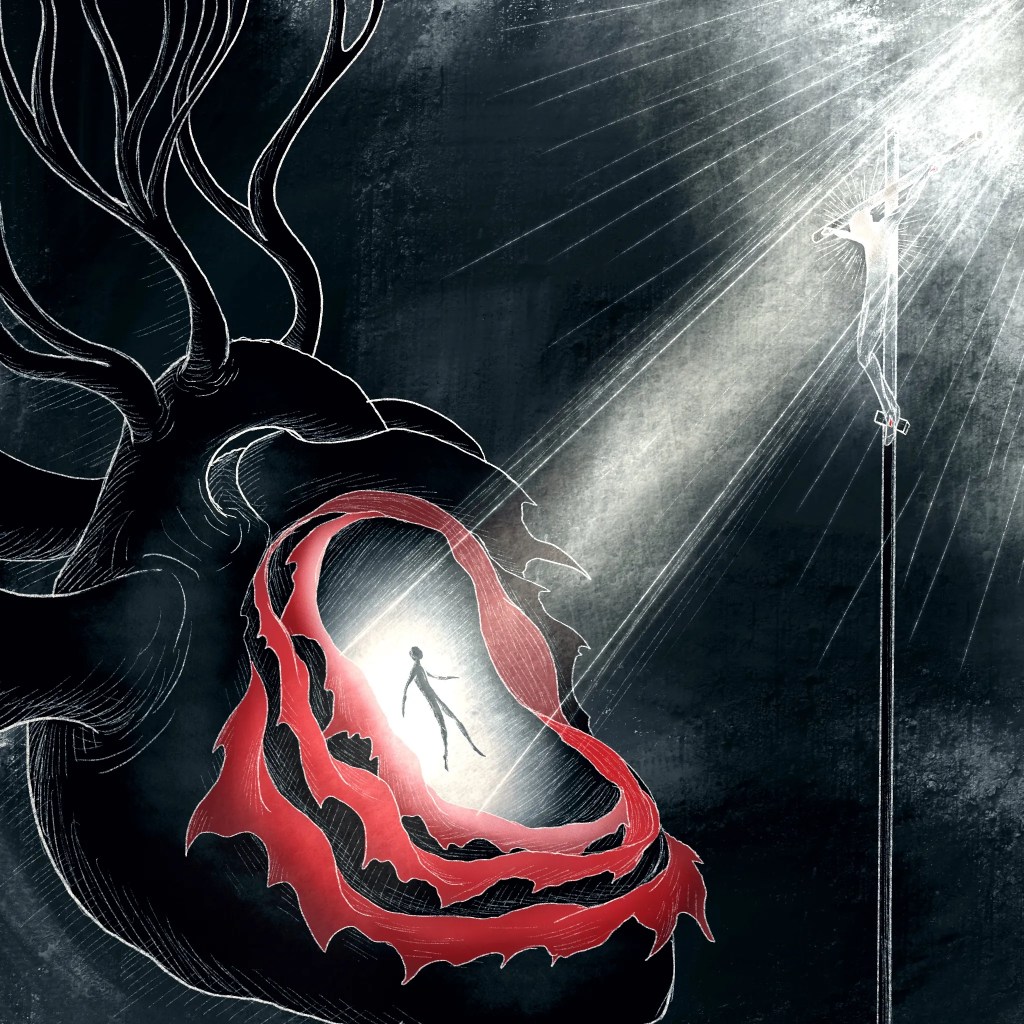



 Loving God, Living God, Loving Hope, Living Hope, Loving Living Life His Way! "Many things are possible for the person who has hope. Even more is possible for the person who has faith. And still more is possible for the person who knows how to love. But everything is possible for the person who practices all three virtues." - Brother Lawrence (1605-1691), Practicing the Presence of God (1692).